TTCI R&D Testing of: a prototype flangebearing derail design Derails, or derailers, are a vital component of railroad safety and have become a standard feature across the freight and transit rail industry. Current derail design, however, is not without limitations. by Ben Bakkum, senior engineer II; Rafael Jimenez, senior engineer I; Duane Otter, PE
T
ransportation Technology Center, Inc. (TTCI), designed and evaluated a prototype flangebearing design for a low cost, highly reliable derail at the Facility for Accelerated Ser vice Testing (FAST) in Pueblo, Colo. The prototype design attempts to address issues with derails used in the industry today and is a departure from typical derail designs in that the prototype is entirely flange-bearing. This feature permits the design to raise the vehicle a shorter distance; thus requiring less work to derail a vehicle. The results of the prototype flange-bearing design have been very promising. The changes in derail design reduce the ver tical impact loading from the car striking the derail and require substantially less crowding (diverging) force as a result of the derail bearing on the backside of the flange only. Traditional low-cost derail design practice has been to provide a ramp on which the wheel tread climbs
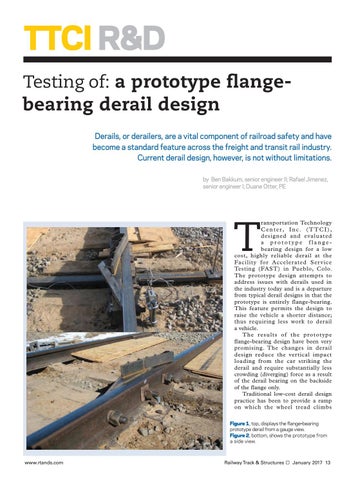
Figure 1, top, displays the flange-bearing prototype derail from a gauge view. Figure 2, bottom, shows the prototype from a side view.
www.rtands.com
Railway Track & Structures
January 2017 13