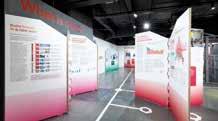
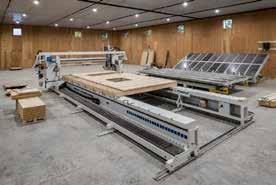
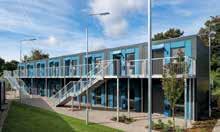
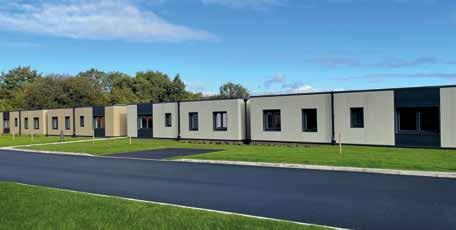
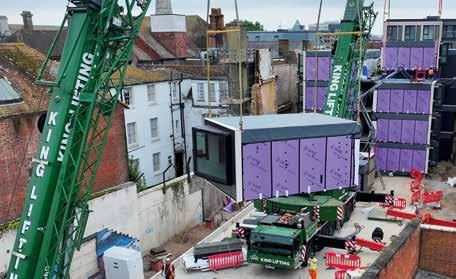
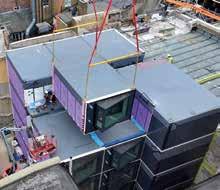
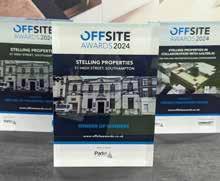
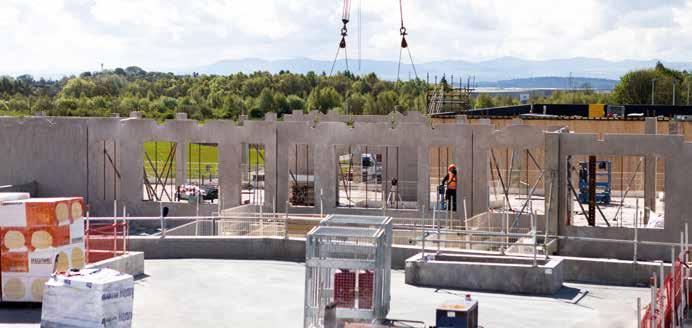
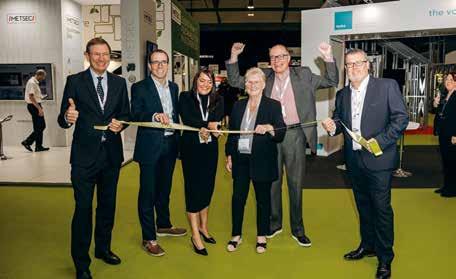
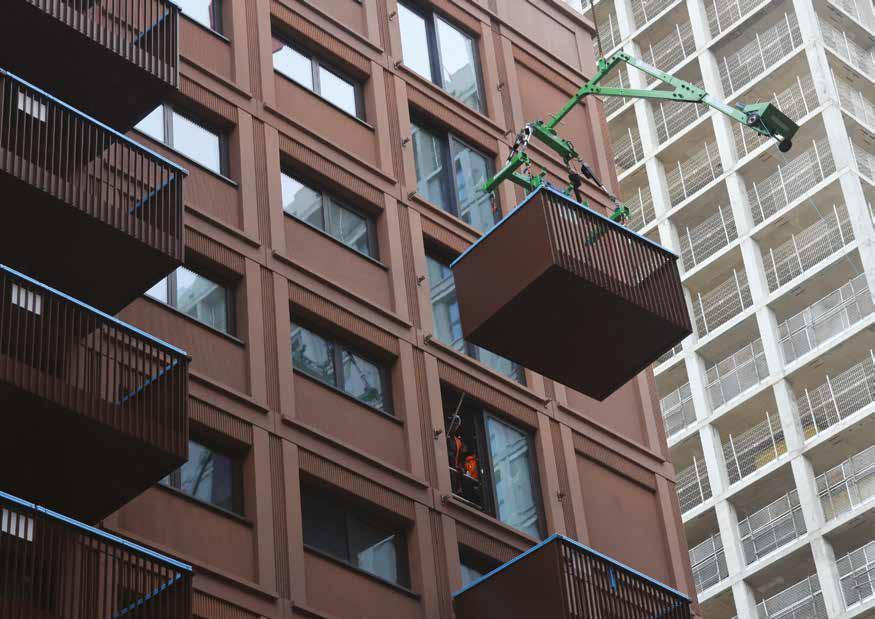
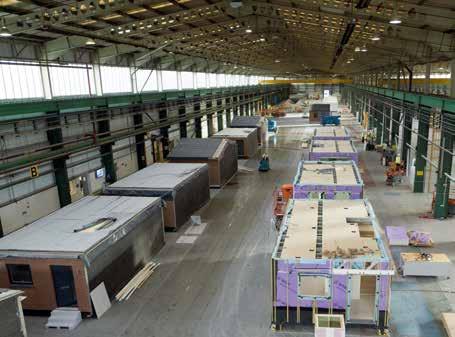
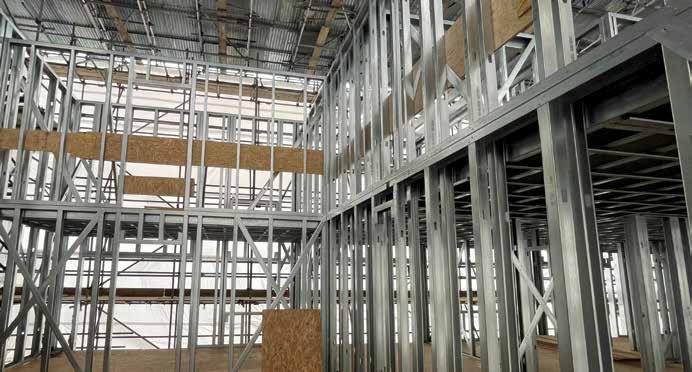
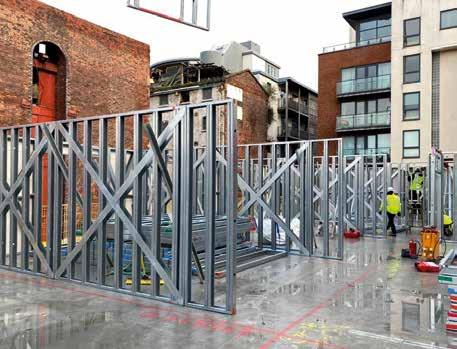
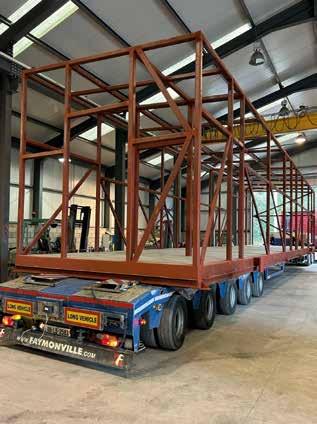
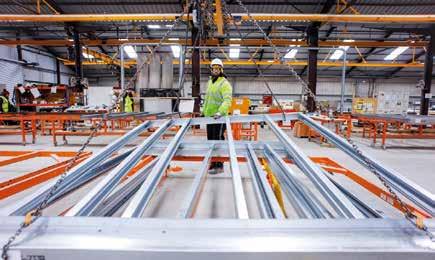
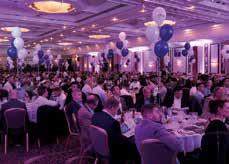
The future of offsite manufacture is in good hands as this year’s 10th Anniversary winners showed P64
OVERCOMING BOTTLENECKS AND BARRIERS
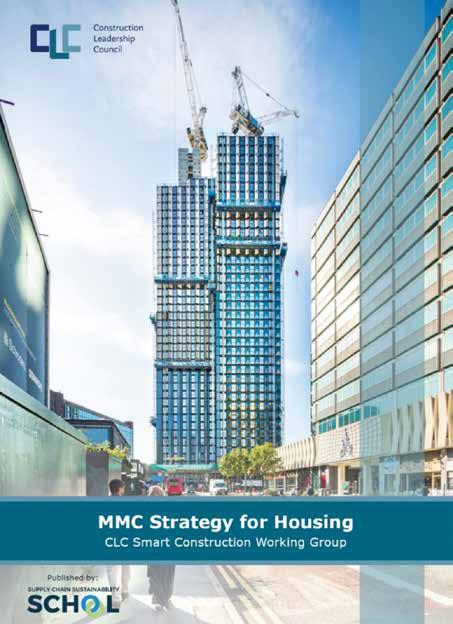
The CLC and SCSS combine to offer a clear strategy for offsite development and housing supply P78
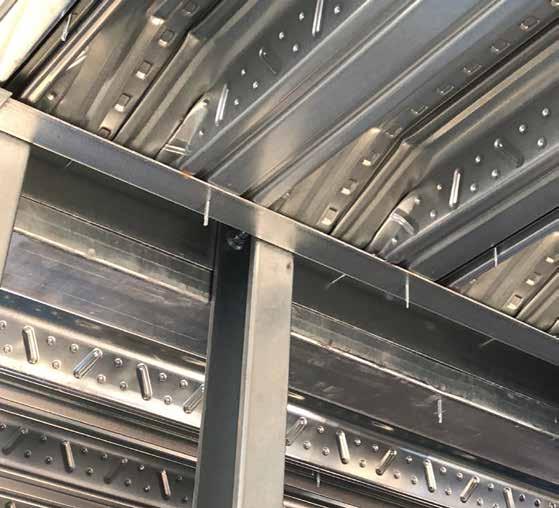
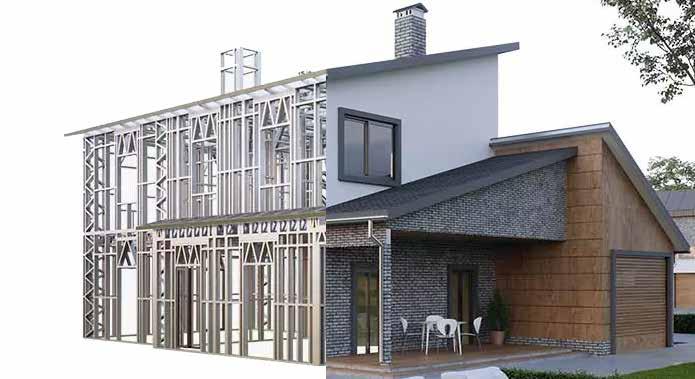
GATEWAY TO THE GOLDEN THREAD
The Building Safety Act, light steel frame and having the correct information at your fingertips
Providing the foresight for offsite...
Our product solutions are ideal for use in modern methods of construction and our expertise will help to meet your future design and build requirements.
• Bespoke and adaptable products make stunning designs possible
• Easy and quick installation
• Technical advice and support
• Simple and safe to transport
• Robust and adaptable onsite
• UK manufacture/supply
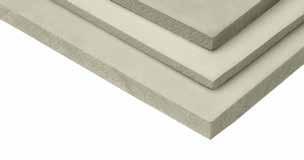
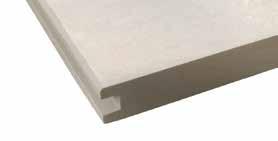
• A1 non-combustible fire-rated boards
PUBLISHING
FRONT COVER Innovaré Offsite
PRINTED ON: FSC Mix paper by Buxton Press
PUBLISHER:
Offsite Magazine is produced and published by Offsite Media Ltd
This magazine is a bimonthly publication and the annual subscription fee for UK postage is £29.70 plus VAT for all six issues (£4.95 per copy). Visit www.offsitemagazine.co.uk
ADVERTISING ENQUIRIES PLEASE CONTACT:
Julie Williams // T: 01743 290001
E: julie.williams@offsitemagazine.co.uk
SEND US YOUR NEWS:
Gary Ramsay // T: 01743 290001
E: gary.ramsay@offsitemagazine.co.uk
BACK ISSUES VISIT: www.offsitemagazine.co.uk
FOR OFFSITE ENQUIRIES PLEASE CONTACT: E: info@offsitemagazine.co.uk
DISCLAIMER: The content of Offsite Magazine does not necessarily reflect the views of the editor or publishers and are the views of its contributors and advertisers. The digital edition may include hyperlinks to third-party content, advertising, or websites, provided for the sake of convenience and interest. The publishers accept no legal responsibility for loss arising from information in this publication and do not endorse any advertising or products available from external sources. The publisher does not accept any liability of any loss arising from the late appearance or non-publication of any advertisement. Content including images and illustrations supplied by third parties are accepted in good faith and the publishers expect third parties to have obtained appropriate permissions, consents, licences or otherwise. The publisher does not accept any liability or any loss arising in the absence of these permissions for material used in both physical and digital editions. No part of this publication may be reproduced or stored in a retrieval system without the written consent of the publishers. All rights reserved.
KEEP IN TOUCH:
CLARITY OF PURPOSE
Welcome to the latest edition of Offsite Magazine. Inside we wrap the year up with a selection of winning projects from the OFFSITE AWARDS 2024 plus we close everything off with a section dedicated to the world of light steel frame.
The OFFSITE AWARDS always reveals a vast array of talent from across the offsite landscape, and as you will find inside, one of the big winners was Stelling Properties. Impressing the judges across multiple categories, the team came away with the Winner of Winners award for its volumetric modular work in Southampton to deliver contemporary student living behind an historic façade.
Volumetric modular has been the ‘poster technology’ for offsite in recent years, touted to solve many of the UK’s housing issues. News that a recent BPI auction featuring the ‘entire assets of a major modular building manufacturer’ – allegedly those of TopHat – was a sobering and sad development. Hopefully the last in a lengthy line of business exiting the offsite sector in the last few years. Although each has floundered for differing reasons, the trajectory of their rise and fall has been a familiar one. What are the reasons why and what do others need
to do to avoid similar pitfalls? Cogent Consulting’s Managing Director Darren Richards has plenty to say about this.
What may be required are ‘10 interventions’ that may change the way homes are designed and delivered. Highlighted in a new report from the Construction Leadership Council and published by the Supply Chain Sustainability School, it lays out a ‘clear strategy for offsite development and housing supply improvements’ and for many these will chime with the wider industry sentiment that the offsite model is sound but needs a collective push to iron out some fundamental creases.
To finish on a positive note, it was great to see the return of ‘Beattie’ with a continuing focus on its Passivhaus approach to housing. The built environment’s need to reduce embodied and operational carbon continues unabated – especially if we are to get remotely close to PM Keir Starmer's COP29 ‘promise’ to cut the UK's carbon emissions by 81% within the next decade.
A final thanks to all our contributors, advertisers and supporters for their help. It is massively appreciated, and the team look forward to working with you all in 2025.
Gary Ramsay Consultant Editor
Email: gary.ramsay@offsitemagazine.co.uk
ADDRESSING CONSTRUCTION PRODUCTIVITY CHALLENGES HEAD ON
SPEAKERS INCLUDE:
28 JANUARY 2025
30 EUSTON SQUARE, LONDON
The Construction Productivity Conference will get to the core of an issue which has plagued the construction industry for decades. Taking place on 28 January 2025 at 30 Euston Square, London, the hard-hitting conference programme looks to address the UK construction ‘productivity puzzle’ head on.
With rising building costs, reducing margins and increasing risk profiles – attempts to improve productivity have proven difficult in a sector too often defined by low profits, aggressive procurement practices, talent shortages and uncertain work pipelines.
Demonstrate your authority and reputation as a business on the cutting edge of the construction sector, by joining a wealth of industry leaders at Construction Productivity Conference 2025.
Positioning your business alongside those at the forefront of innovations in products, processes and people management, the conference is currently offering a variety of exhibitor opportunities.
For more information on the Exhibition & Sponsorship Opportunities still available, contact: ellie.guest@radar-communications.co.uk
Anthony Impey - Be the Business, Jaimie Johnston MBE - Bryden Wood, Graham M Winch - The Productivity Institute, Trudi Sully – Mott MacDonald, James Rowbotham - Landsec, Campbell Middleton - University of Cambridge, Dick Clerkin - Lean Construction Institute, Sam Ward - Laing O’Rourke, Simon Rawlinson - Arcadis, Hannah Vickers – Mace, Martin Plant - McKinsey and Company, Mark Worrall - BBI Services
COVER STORIES
P06 | A NATURAL CONNECTION
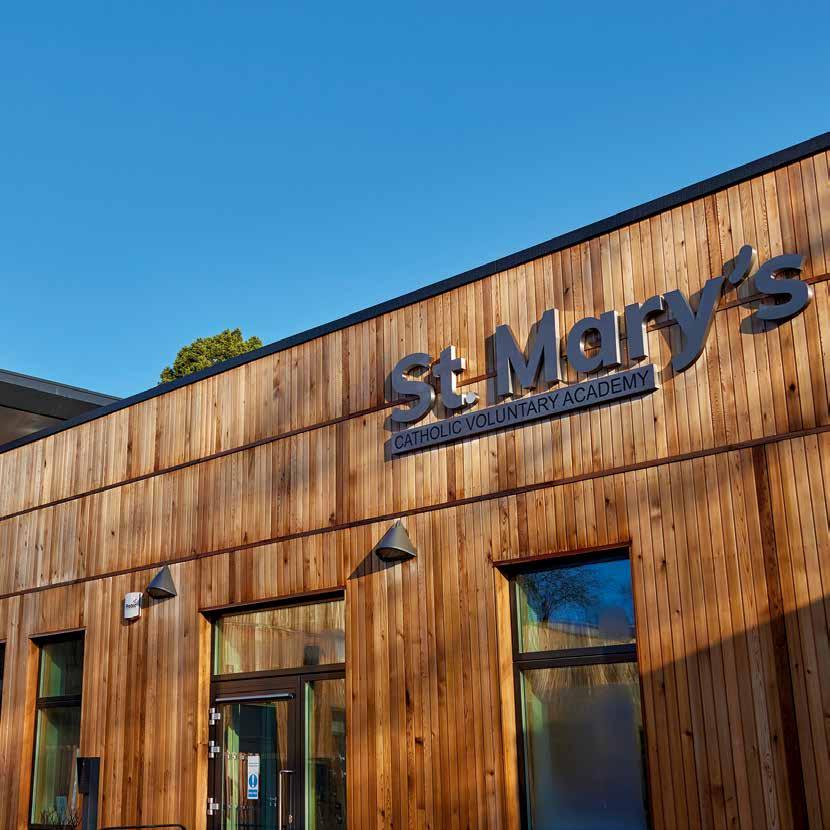
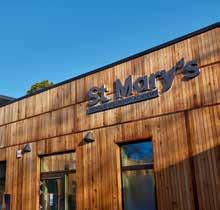
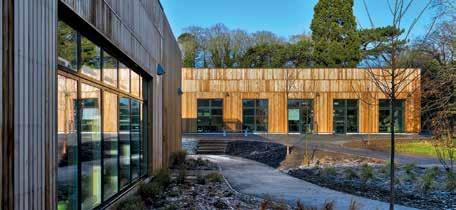
St Mary’s Catholic Voluntary Academy is being hailed as the UK’s first biophilic school by introducing exceptional levels of energy efficient, structural insulated panels (SIPs) design, to blend in with the natural environment and focus on health and wellbeing.
P64 | OVERCOMING BOTTLENECKS AND BARRIERS
A new report from the Construction Leadership Council and published by the Supply Chain Sustainability School lays out a clear strategy for offsite development and housing supply improvements and recommends 10 ‘interventions’, SCSS Consultant, David Emery, explains more.
P26 | THE OFFSITE SUPERSTARS
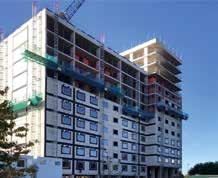
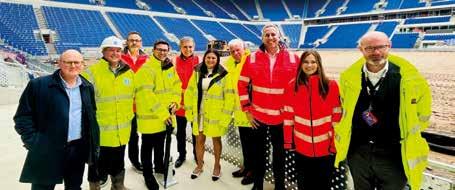
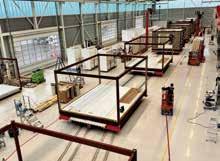
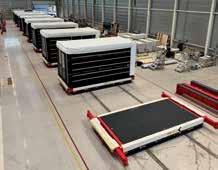
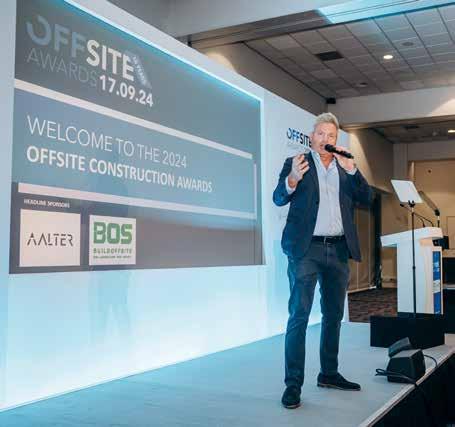
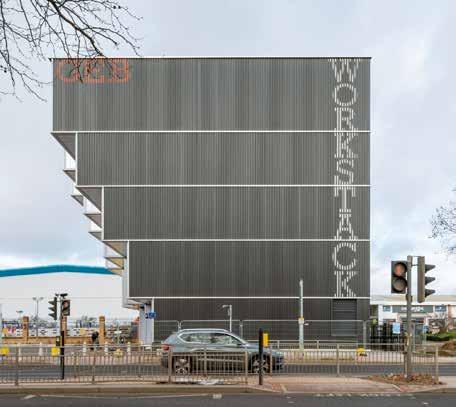
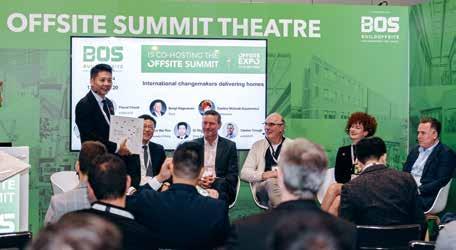
In a 10th anniversary year, the OFFSITE AWARDS 2024 rewarded the many projects, people and products driving forward offsite manufacture across the UK and internationally. For those that missed out, here’s a recap on the evening’s big winners.
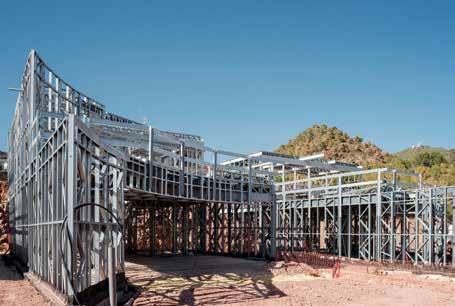
A special section covering one of the offsite sector’s key materials including a focus on the Building Safety Act and its ‘Gateways’, from voestalpine Metsec plus a range of light steel frame news and industry updates from SCI and BSCA.
FEATURES
08 | Industry News
News and developments from across the UK offsite industry and wider construction arena including: West London’s tallest volumetric building, Enclave: Acton, reaches its maximum height at 106m, CCG Group completes pioneering research into whole-life carbon, throughout the housebuilding lifecycle, Integra Buildings reports best financial year ever and Liverpool gets MMC focused.
34 | High Praise for 31 High Street
A highly successful Offsite Awards 2024 saw Stelling Properties walk away with three prizes including the coveted Winner of Winners for its work restoring and reviving a historic site in the centre of Southampton.
36 | Precast Concrete & Passivhaus
The recently opened £120million Dunfermline Learning Campus is the UK’s largest ever Passivhaus school and demonstrates precast concrete’s potential for use in sustainable buildings.
40 | Revolutionising Construction
Fareita Udoh offers some insights from Buildoffsite during Offsite Expo 2024 as the UK construction industry faces rising costs and labour shortages that require innovative and urgent solutions.
48 | BOS Innovation Challenge Winners
Qube Buildings and Abode Industries demonstrate why they earned this year’s top prize and recognition for their innovative contributions to the future of sustainable construction.
54 | Reframing the Offsite Market
The UK’s offsite manufacturing sector has experienced troubled times over the last three years. Cogent Consulting’s Managing Director, Darren Richards, sheds some light on the key reasons why.
56 | Adopting Automation to Boost Productivity
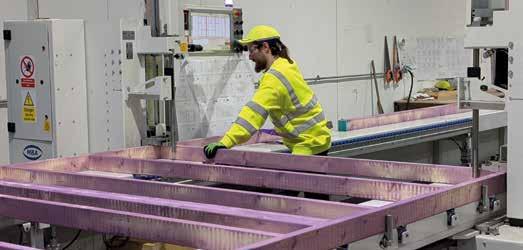
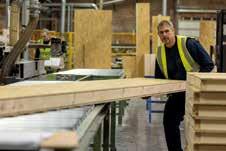
Walker Timber Engineering has been at the forefront of timber frame construction in the UK for over 100 years and has boosted productivity with cutting edge MBA Technology.
58 | The Seismic Impact of Stalling Public Projects
More than half of the 40 new hospitals planned by the former Conservative administration could be postponed, Jackie Maginnis, Chief Executive of the MPBA believes Westminster needs to reconsider.
60 | Repeatability & UK Prisons
Ian Astley, Regional Director for Premier Modular, describes how offsite construction can support prison estate expansion initiatives such as A4NP and provide capacity quickly during demand spikes.
68 | A Taste of Offsite
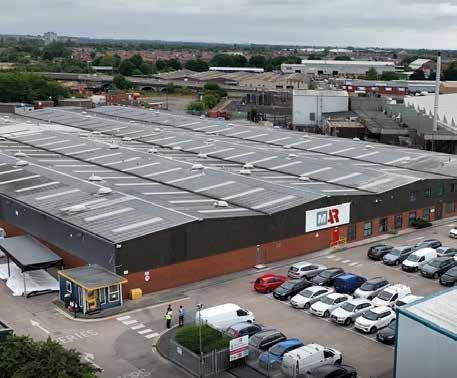
During Offsite Construction Week a special factory tour programme saw several key manufacturers open their doors to visitors to explain more about how they are approaching MMC.
P75 | LIGHT STEEL FRAME FOCUS
A NATURAL CONNECTION
St Mary’s Catholic Voluntary Academy is being hailed as the UK’s first biophilic school by introducing exceptional levels of energy efficient, structural insulated panels (SIPs) design, to blend in with the natural environment and focus on health and well-being.
Innovaré Offsite specialises in offsite construction using SIPs. The company was launched in 2007 and has an impressive track record of delivery and to date has delivered over 300 education projects.
The Innovaré Offsite process reduces the construction period and provides greater certainty of programme delivery essential to reduce disruption to student’s learning. The i-FAST and Psi-FAST panelised system offer a levels of design flexibility such that site constraints and stakeholder requirements can be met with production parameters. An optimal learning environment is delivered with thermal comfort, acoustic attenuation and daylighting integrated in the early design stages. The aspirations of education building clients to deliver inspiration buildings to net zero carbon, Passivhaus standards, and to new innovative biophilic designs have all been delivered by Innovaré Offsite.
The biophilic approach
Following a devastating arson attack that destroyed the previous building, St Mary’s Catholic Voluntary Academy in Derby was selected by the Department for Education (DfE) as an innovative pilot scheme. The biophilic design focuses on connecting the internal environment with nature, with the goal of promoting physical and mental health.
Moving away from the typical single building arrangement, the Academy comprises five single-storey buildings consisting of a primary school and nursery and is made up of a series of pavilions linked by a covered central walkway, The design promotes high levels of natural light and access to the surrounding landscape. The buildings are naturally ventilated with photovoltaic solar panels and heating via air source heat pumps. Roofs are green wildflower seeded, to maximise biodiversity and local ecology. Learning from and in nature
is important for this Academy and therefore it was fitting that a groundbreaking Low Carbon Fire Safe structural timber system was used for the project to create the new ecobuilding.
Biophilic design is a concept used within the building industry to increase occupant connectivity to the natural environment using direct nature, indirect nature, and space and place conditions. Biophilic design focuses on connecting that inside with nature, with the goal of promoting physical and mental health. The new building is designed and targeted to be net zero carbon in operation which means that the amount of carbon emissions added is no more than the amount taken away.
Innovaré Offsite collaborated with main contractor Tilbury Douglas to support design, engineering, manufacture, supply and installation of the sustainable superstructure.
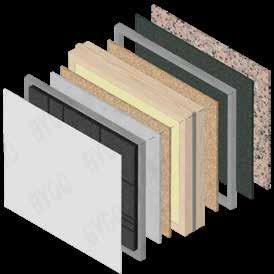
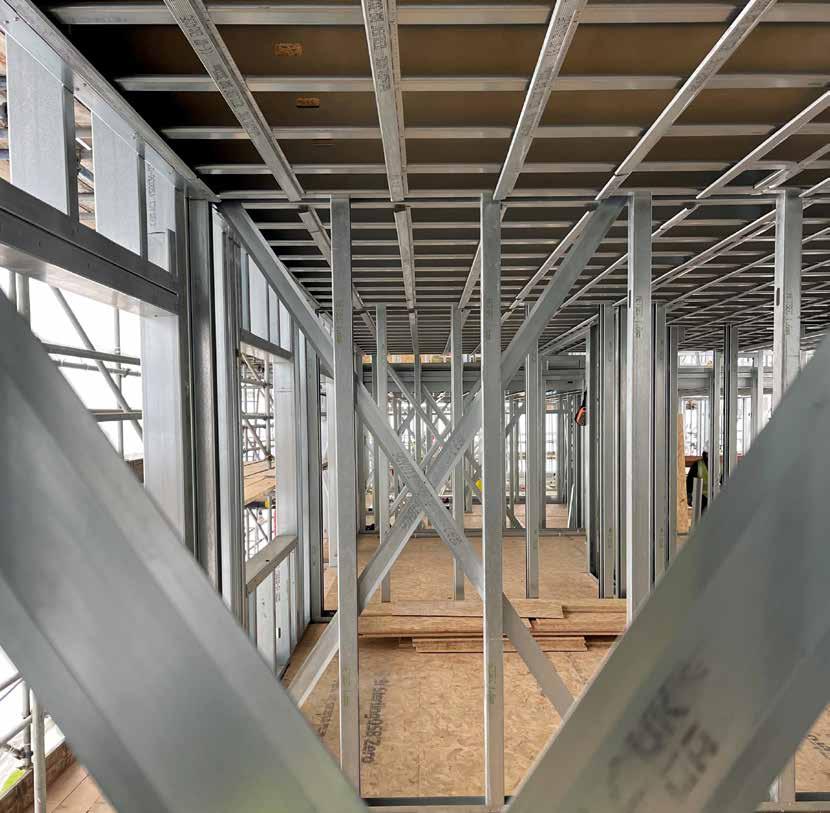
Taking just 12 weeks to install, the Psi-FAST system formed the full building envelope, complete with insulation, cladding, doors and windows. The academy is designed to achieve prominent levels of insulation combining sustainability and full fire compliance. With A1 non-combustible boards and insulation, class 0 surface spread of flame rating, and 60 minutes of standalone fire resistance, PsiFAST technology provides a safe and sustainable solution.
Net zero carbon in operation
The Innovaré Offsite team used Revit to design the structures, ensuring the completed buildings are robust, resilient and net zero carbon in operation. The guaranteed fit and airtightness improves the overall thermal performance, reducing energy consumption in operation. Moving forward the school will be part of a research programme, with the University of Derby monitoring various innovative elements of the building and reporting on pupil health and wellbeing results. This will help provide lessons learned for the DfE and future schools. This project exemplifies research and development programme to advance the application of offsite manufactured Psi-FAST system. The new school embraces key Construction Playbook themes, being net zero carbon in operation, low embodied carbon and a modern methods of construction (MMC) exemplar, including a fully embraced digital strategy.
Fire testing
Innovaré Offsite specialise in timberbased structural insulated panel systems. Producing a system that complies with the latest DfE Output Specification was a major driving force behind the Psi-FAST panelised innovation. Psi-FAST has been
COVER STORY INNOVARÉ OFFSITE
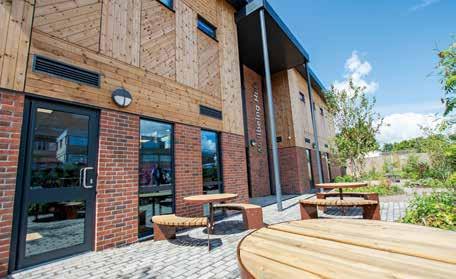
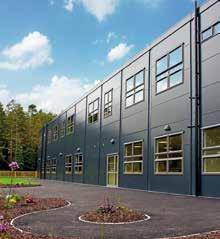
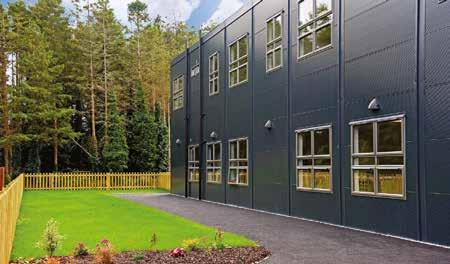
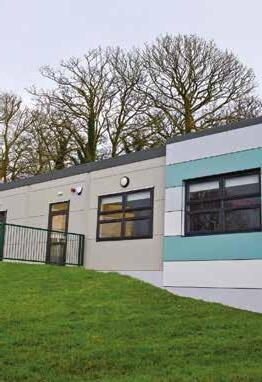
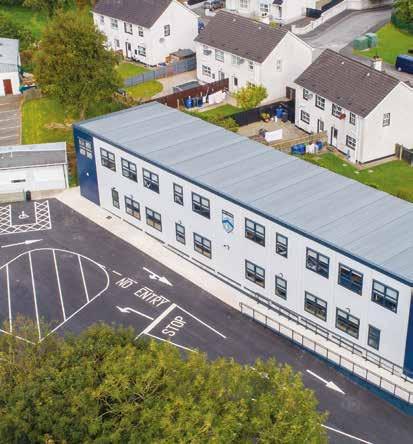
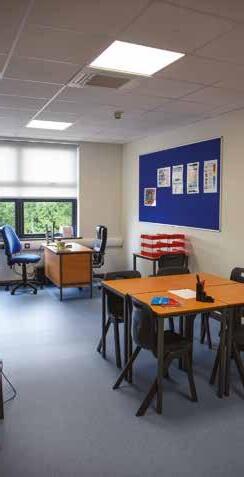
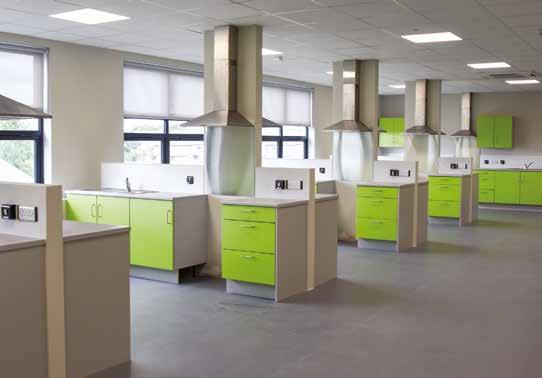
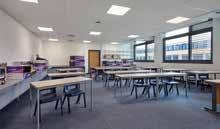
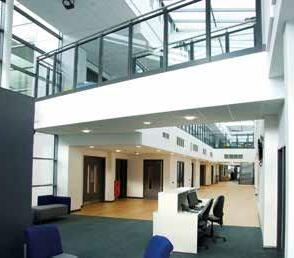
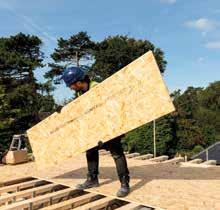
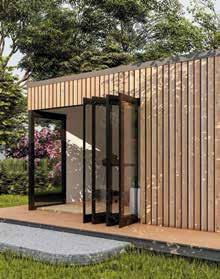
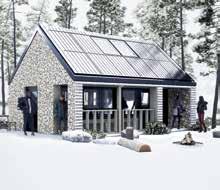
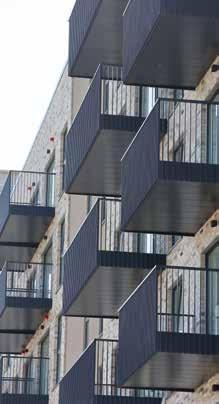
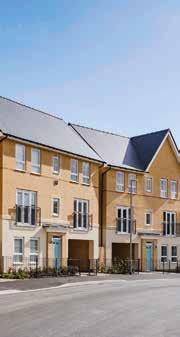
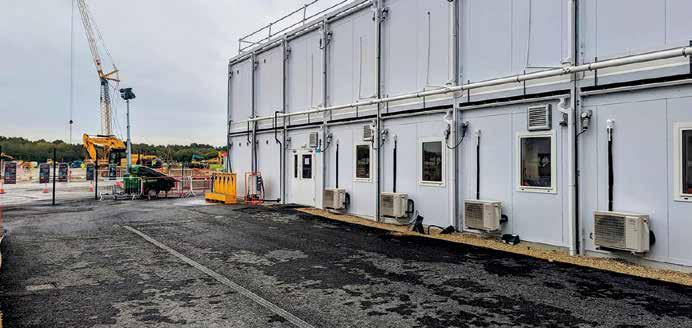
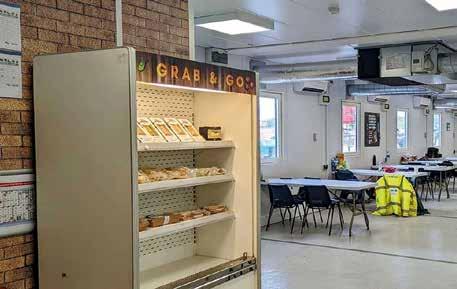
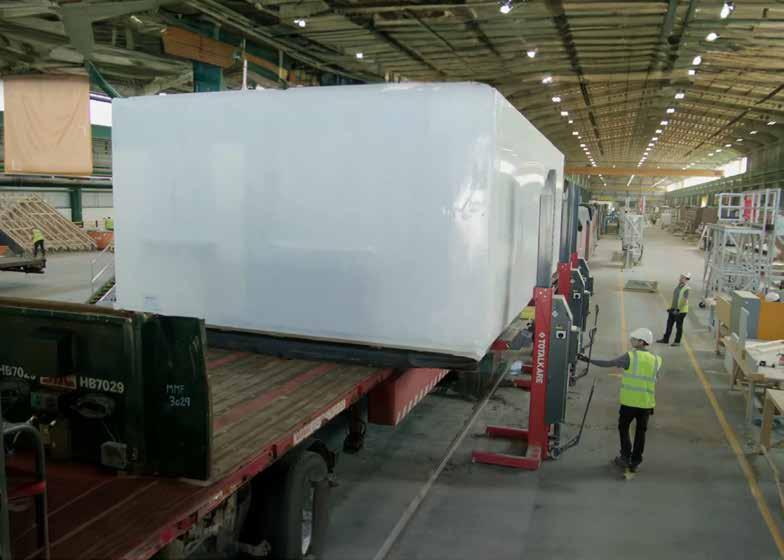
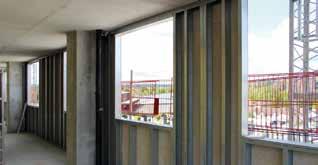
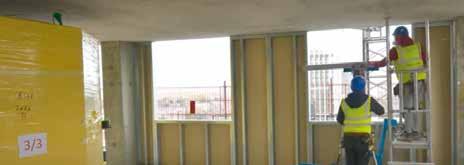
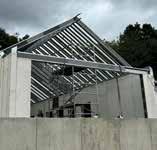
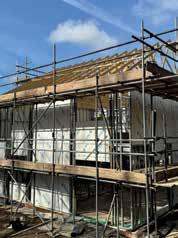
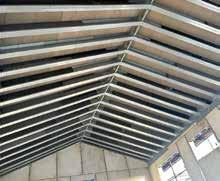
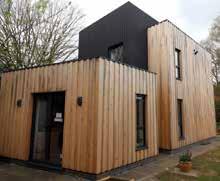
Images: 01-04. St Mary’s Catholic Voluntary Academy shows what is possible using a highly sustainable SIPs approach to school design. Courtesy Matthew Ling Photography 3 2 4
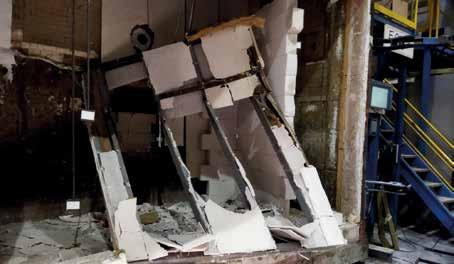
developed using market research and rigorous fire resistance testing to achieve a higher-performance integrated system delivering fire safety, thermal, and acoustic insulation with loadbearing capabilities. Taking a leap within the construction industry, earning acclaim from L H Fire Ltd, leading fire consultancy, for its groundbreaking fire resistance testing. Innovaré Offsite’s cutting-edge testing of its i-FAST timber Low Carbon Fire Safe panel system in Dubai, has been hailed as a game-changer for fire safety engineering, positioning the company at the forefront of the industry.
The fire resistance testing on loadbearing panels of 5m in height produced critical data, offering unprecedented insights for Low Carbon Fire Safe design. Loren Hughes, Director of L H Fire Ltd, emphasised the significance of this achievement saying: “The rigorous and detailed data provided by Innovaré Offsite is invaluable, setting a new standard for fire safety.” Innovaré Offsite’s unwavering commitment to delivering empirical data and
technical support has established its role as a leader in Low Carbon Fire Safe solutions. This collaborative effort reflects their relentless pursuit of innovation and its dedication to supporting the construction industry with evidence-based solutions.
The completed St Mary’s Catholic Voluntary Academy, consists of a primary school and nursery and is a single storey, made up of a series of pavilions arranged along a central canopy. In the design each age group – early years, infants, and juniors – has a practical shared learning resource space. This pioneering new. net zero in carbon operation eco-building, is now complete and welcomed staff and students in December 2023.
For more information visit: www.innovareoffsite.co.uk
UK INDUSTRY NEWS
West London’s Tallest Volumetric Building Tops Out
Outpost Management recently announced that its latest build to rent development, Enclave: Acton, has reached its maximum height. Standing at 106m, the development is West London’s tallest volumetric building.
Castlemere Developments to Deliver £1.35m Airspace Project
Airspace property developers Castlemere Developments have secured a prime London location for its next residential project. The Windsor-based company is to build five one-bedroom airspace apartments at Nicholas Court, Burnt Ash Hill, in Grove Park, London.
The development, which will cost a total of £1.35million when complete, will replicate its current airspace schemes by using offsite construction methods before being lifted into place to complete the work. Nicholas Court, which is a three-storey apartment block, will deliver aspirational and affordable modular penthouse living. The project is expected to be completed by early 2025, with the apartments expected to be on the market for around £260,000 - £270,000 each.
Kris Collett, Managing Director of Castlemere Developments, said: “We have exchanged contracts on securing Nicholas Court and will be delivering
Enclave: Acton will open ahead of programme in Summer 2025 and is a 32-storey, 220,000sq ft residential-led, mixed-use scheme, designed by Tide Construction in conjunction with HTA. It will feature 462 co-living apartments, with 18,000sq ft of amenity space across five floors, including a spa, bar lounge, private dining and co-working spaces, a library, state of the art gym, cinema, karaoke room, sports simulation suite, basketball court and games lounge. Residents will also be able to enjoy a 2,000sq ft landscaped roof terrace on the 32nd floor, giving extensive views across London.
Troy Tomasik, CEO, Outpost Management CEO, said: “We’re excited to see Enclave: Acton taking shape so quickly and proud to have reached this important construction milestone on West London’s tallest volumetric modular building and highest quality co-living asset. We’re looking forward to opening next summer, with a fantastic amenity offer, equipping residents to be productive, healthy, and social aligned with our concept to deliver effortless living. We can’t wait to welcome them to their new homes.”
Employing volumetric construction, the development is being built by developer-contractors Tide Construction and will complete ahead of programme. Tide is delivering the project using its offsite manufacturing arm, Vision. This development demonstrates the ongoing market appetite for Tide and Vision’s volumetric technology, which delivers construction times of up to 50% faster, while significantly reducing embodied carbon and importantly, vastly reduces the disruption to the local community.
Outpost Management acquired The Castle site earlier this year to deliver the Enclave: Acton scheme. Enclave: Acton will open ahead of programme in summer 2025.
Christy Hayes, Chief Executive of Tide and Vision, added: “The Castle exemplifies the transformative potential of volumetric construction in addressing the UK's housing needs. It enables the efficient development of high-quality homes delivering them with speed, scale, and the precision of factory production. We are delighted to mark this milestone in our partnership with BlackRock Real Estate and Outpost Management, following their acquisition of The Castle earlier this year. This follows on from the successful collaboration of the 817 bed co-living development Enclave: Croydon in 2023.”
James Halstead, CIO European Value-Add real estate BlackRock, said: “Reaching this milestone so rapidly underscores the programme benefits of volumetric construction. We’re excited to be investing in the delivery of much-needed housing in a more sustainable manner. The Enclave partnership resonates with the wider investment strategy for our flagship European value add series that has high conviction in sectors with strong tailwinds and growing investor appetite.”
Image: Courtesy Tom Campbell
Source: www.tideconstruction.co.uk
properties that are focused on being starter homes and that appeal to first time buyers. The price of these one-bedroom apartments is going to be very reasonable based on the London property market. There is a huge demand for residential properties, and we will continue to source suitable locations that we can develop to help meet this need.”
Nicholas Court will be built offsite, as Castlemere Developments purposely chose this method so that it can deliver projects much quicker than on-site developments, reduce the disruption to current residents, and ensure its developments are as environmentally friendly as possible.
Collett added: “We have chosen to adopt MMC best practices as it is more cost effective, quicker and also we believe that building airspace apartments offsite is less complex.”
This development adds to Castlemere Development’s growing airspace portfolio across London and the South East. It is in the process of the final stages of an 11-unit scheme in Tunbridge Wells, Kent, and has recently announced a £1.8million project to add five apartments at Vision House in Wimbledon Chase.
Source: www.castlemere-developments.co.uk
UK INDUSTRY NEWS
Minister Visits
New Everton FC Stadium
A powerhouse delegation, headed by the Government’s Lisa Nandy MP (Secretary of State for Digital, Culture, Media and Sport), visited Everton Stadium during the Labour party’s annual conference in Liverpool.
Lisa Nandy, the MP for Wigan, was accompanied on the tour of the Club’s new waterfront home by Steve Rotheram, the Mayor of the Liverpool City Region, Andy Burham, Mayor of Greater Manchester and Jade Botterill MP prior to their attendance at the conference, which is regarded as one of the biggest political gatherings in Europe.
The political VIPs, along with senior Government civil servants and policy makers, were impressed to hear how advanced manufacturing, digital technology and assembly techniques had been utilised on this ‘oncein-a-generation’ development.
Everton’s Interim CEO Colin Chong hosted the group with Laing O’ Rourke’s CEO Cathal O’Rourke, as they toured the stadium. As well as learning more about The Plaza, the refurbished Grade II Listed hydraulic tower and the Club’s steadfast commitment to accessibility, the delegation also learnt how more than £280million of social value had been created during the build.
Lisa Nandy said: “Everton is a Club with a rich and proud history – this new stadium will play an important part in not only the club’s next chapter, but also the future of Liverpool City Region. Both Andy and Steve have expressed the incredible contribution that Everton Football Club makes to the local community, and we absolutely share their excitement for the official opening in August 2025.”
Everton Stadium, which has been under construction since the summer of 2021, is widely recognised as one of the largest single-site private sector developments in the country, contributing an estimated £1.3billion boost to the UK economy, creating tens of thousands of jobs and is estimated to attract 1.4million visitors to the city of Liverpool, annually.
Colin Chong, Everton’s Interim CEO, said: “It was great to have to the opportunity of hosting the Secretary of State and Lisa’s Labour colleagues at Everton
Stadium. I’d like to thank Lisa, Steve, Andy, Jade and all the civil servants for taking the time out of their busy conference schedule to see this important development for themselves.
“I know they were impressed with the stadium and how the Club’s Stadium Operations team and Laing O’Rourke have harnessed digital technologies and modern methods of construction to deliver a project of the highest quality. As the project nears completion, they also saw how transformative it will be for city as the Club’s ambitious plans continue to provide new opportunities, raise aspirations and create a lasting legacy.”
Cathal O’Rourke, Group Chief Executive at Laing O’Rourke, added: “It was a pleasure to welcome the Secretary of State and Mayors of Liverpool and Manchester as well as their Labour colleagues to Everton Stadium to see the incredible progress our team is making. As a result of our manufacturing led approach to construction, in less than three and a half years we have gone from a water-filled dock to a world-class stadium that is now just months from completion. We are proud to be working with Everton on a project that is the catalyst for the regeneration of this part of north Liverpool, and which has created employment, training and educational opportunities for thousands of local people.”
The 52,888-capacity Everton Stadium is due to be completed on schedule later this year and the Club is planning a series of test events early next year in anticipation of playing their first competitive fixture at the new waterfront home in August 2025.
Image: (L-R) Paul Novak, TUC General Secretary; Colin Chong, Everton Chief Executive Officer; Paul McNerny, Director UK Building, Laing O’Rourke; Andy Burnham, Metro Mayor, Greater Manchester; Steve Rotheram, Metro Mayor, Liverpool City Region; Lisa Nandy MP, Secretary of State for Digital, Culture, Media and Sport; Cllr Graham Morgan, Leader of Knowsley Council; Cathal O’Rourke, Group Chief Executive Officer, Laing O’Rourke; Jade Botterill MP; Gareth Jacques, Project Director. Laing O’Rourke.
Source: www.laingorourke.com www.evertonfc.com
Beattie Launches with a Renewed Focus on Passivhaus and Net Zero
Beattie is a new design and technology company with over 15 years of expertise in Passivhaus solutions and more than 30 years of experience in construction. Building on the legacy of Beattie Passive, the company has built a strong foundation in sustainable building practices and was the first to develop and patent a complete Passivhaus build system certified by the Passivhaus Institute in Germany.
Founded in 2009, the original Beattie Passive business entered administration in March this year. Employing nearly 50 people at its Norwich manufacturing facility, it had the capacity to build 200 homes per year. Problems stemmed from cashflow gaps from housebuilding project delays, planning system complications and wider macroeconomic conditions.
Beattie is focusing on delivering innovative solutions for the built environment, with a particular emphasis on Passivhaus and net zero construction. Ron Beattie, Managing Director (pictured) said: “We believe that the mission to improve housing and promote net zero and Passivhaus is more important now than ever before. This is why, after reflecting and regrouping, we have reintroduced ourselves as Beattie. Our passion for sustainability and high-performance building remains strong, and we are excited to continue helping our clients achieve their environmental goals.”
With a track record of delivering hundreds of Passivhaus homes across the UK, Beattie continues to provide cost-effective, practical solutions for achieving net zero goals without compromising architectural vision. Their new focus is on licensing the Beattie build system while offering technical design and consultancy services. This approach allows clients to meet their sustainability commitments while navigating the complexities of decarbonisation.
Nathan Beattie, Commercial Director of Beattie, added: “We work closely with our clients to deliver pragmatic, tailored Passivhaus and net zero solutions. Our years of experience, combined with a future-focused mindset, allow us to create bespoke approaches that meet the specific needs of each project, ensuring the success of our clients’ sustainability goals.”
Source: www.beattie.io
UK INDUSTRY NEWS
Frameclad Changes Ownership
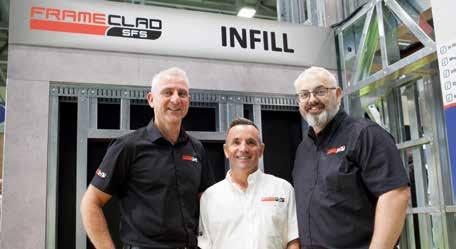
Light steel frame specialist Frameclad, have announced that following a transitional period, Joint Managing Directors Nicholas Teagle and Martin Jamieson, have acquired the company from founders Mark Munns and his wife Diane.
Back in 2022 they were invited to become joint Managing Directors as Frameclad’s founder intended to eventually step back from his day-to-day role. During the last two years they have been working collectively to make strategic decisions to ensure a smooth handover of the business.
“We are excited to share the news that this transition is now complete, and we have officially acquired Frameclad,” said Nicholas Teagle. “We have many plans to build on the success Mark and Diane achieved, and we will continue with our long-term strategy of ‘investment and innovation’ which is yielding positive results. I’m delighted to report that there will be no major changes in Frameclad’s management team, manufacturing output or our procedures. Delivering high quality light steel frame systems, backed by excellent customer service, will remain our priority.”
Martin Jamieson added: “We would like to thank our team for their incredible support throughout this
MTX Awarded Contract for Clacton Hospital UTC
East Suffolk and North Essex NHS Foundation Trust has chosen MMC specialist MTX Contracts Ltd to upgrade healthcare facilities at Clacton Hospital with a new Urgent Treatment Centre (UTC). The project is the latest phase in a multi-million-pound upgrade to ensure patients using Clacton Hospital receive high quality healthcare in state-of-the-art surroundings providing an improved experience in terms of both physical access to healthcare and the clinical environment.
Work has now started on demolishing parts of the existing Urgent Treatment Centre to make way for the two-storey extension to house the new UTC. Plans for the new facility include nine consulting/examination rooms, a dedicated isolation room, three triage rooms, eye and plaster rooms, and a dedicated mental health consulting room. A prefabricated roof top room will enclose mechanical equipment serving the building, and ground and first floor walkways will link the new UTC into existing buildings to be refurbished.
Naomi Palmer, Project Manager for East Suffolk and North Essex NHS Foundation Trust, said: “We are delighted that Clacton Hospital is benefitting from such a significant investment. The work that has
time. We are proud of the skills and specialisms we have within our Frameclad community and as many know, people are at the very heart of our operation. We look forward to growing our relationship with all our clients, partners and suppliers as we continue to deliver cost effective light steel solutions that are designed and manufactured to outstanding building safety standards.”
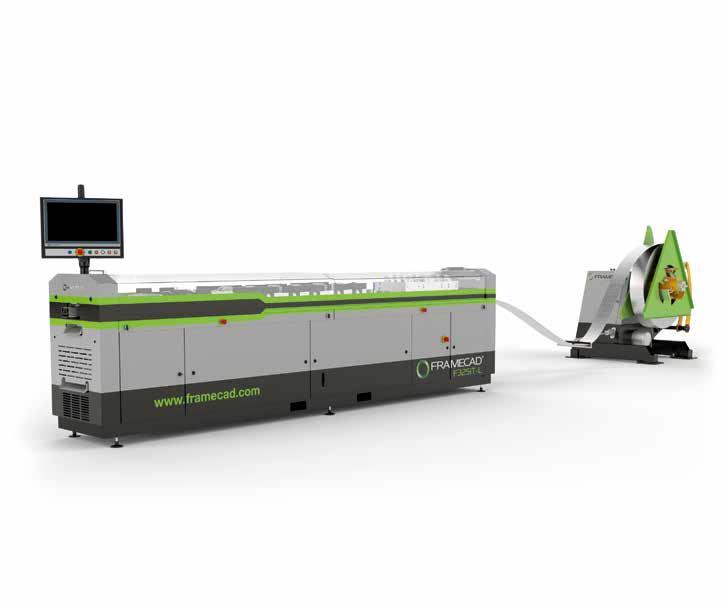
In line with Frameclad’s strategy, on the back of launching the company’s Lightweight Engineered Adjustable Frame – LEAF, the new owners have purchased a further five cold-roll forming machines and have increased their design and engineering team from 12 to 14.
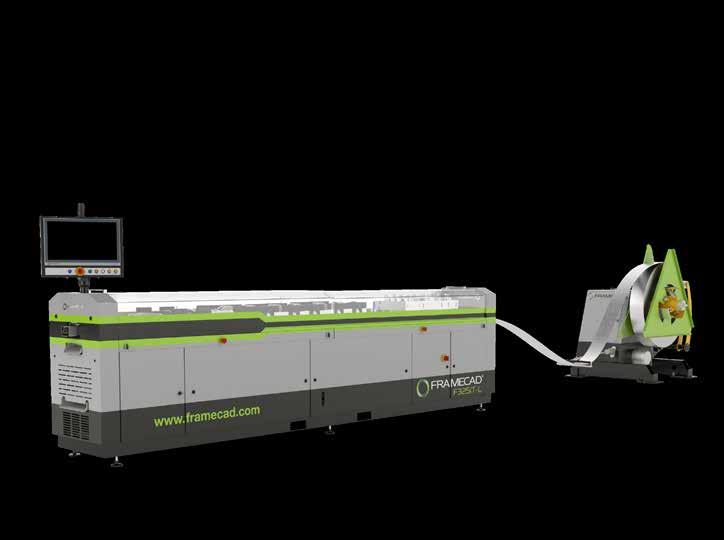
As a leading BOPAS-accredited manufacturer of steel framing systems and components, Frameclad has invested significantly in state-of-the-art manufacturing technology and the in-house design and engineering team provides cost estimates within 10 days and detailed designs within one week. The precision steel roll-forming machinery produces one of the largest ranges of steel sections available in the UK today from a single manufacturer.
Image: (L-R) Nicholas Teagle, Mark Munns and Martin Jamieson
Source: www.frameclad.com
taken place so far has brought essential diagnostic services closer to home while vastly improving the environment in which our patients receive care.
The next phase of this major project will see a new, easy-to-access UTC created, along with extra clinical spaces. The work has been planned carefully so that patients can continue to access these services throughout construction without the need to travel further afield.”
MTX Managing Director David Hartley MTX added: “MTX has a proven track record in supporting NHS Trusts in the delivery of vitally needed new facilities and has extensive experience in delivering healthcare projects while ensuring minimum disruption to staff and patients on busy hospital sites. We have a long-standing relationship with East Suffolk and North Essex NHS Foundation Trust and are delighted to have been chosen to deliver this high-quality
upgrade at Clacton Hospital faster, greener, safer and more cost effectively using innovative and advanced modern methods of construction.”
This follows news that a new Surgical Elective Centre incorporating seven new operating theatres will be built at the John Radcliffe Hospital in Oxford by MTX Contracts. The six-storey surgical hub for Oxford University Hospitals (OUH) NHS Foundation Trust will be built at the John Radcliffe Hospital and will connect to the theatre suites in the existing West Wing building.
The facility will include dedicated hybrid theatres designed to give the Trust a leading edge and enable it to offer the most up-to-date procedures in suitable facilities, and across multiple specialities.
Source: www.mtx.co.uk
Donaldson Timber Systems Recognised as ‘Skillmaker’
Leading UK offsite timber frame manufacturer, Donaldson Timber Systems (DTS) has been awarded ‘Skillmaker’ status by West Herts College. This accolade is in recognition of the ongoing commitment by DTS to the development of sustainable construction skills, specifically by supporting West Herts College’s Level 2 Site Carpentry & Modern Methods of Construction (MMC) apprenticeship programme.
The Skillmakers network comprises over 80 businesses, which are leading the way by shaping education, developing workforce skills and generating employment opportunities. DTS has been working with West Herts College since 2018, when it was appointed to the Hertfordshire Off-Site Manufacturing (OSM) framework. This included supporting a regional consortium of housing providers and local authorities to improve the delivery of affordable housing at a local level and to develop local enterprise partnerships.
Since the start of the partnership, DTS has provided regular timber frame workshops to the apprentices and constructed a timber frame demonstration training facility within the college to showcase MMC. In 2022, DTS placed and sponsored a West Herts College apprentice to work with one of their subcontractors, coinciding with DTS partnering with the
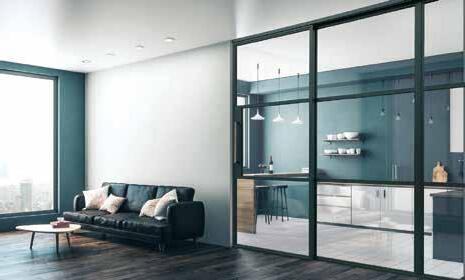
Get creative with space & light
Our AluSpace Interior Screening System is designed to divide or delineate both residential and commercial spaces, while at the same time providing an effective acoustic barrier.
Choose from hinged single, double doors, pivot or sliding doors to accompany our stylish fixed glazed screen. This flexible and versatile system provides almost limitless design options whilst requiring minimal maintenance. AluSpace will provide many years of assured, reliable and robust performance. For more information visit smartsystems.co.uk/aluspace E sales@smartsystems.co.uk /SmartArchitecturalAluminium
UK INDUSTRY NEWS
college to offer a bespoke apprenticeship programme in support of the next generation of talent for timber frame construction.
Amanda Washbrook, Deputy Principal, Partnerships and Business Development at West Herts College Group, said: “We are delighted to recognise DTS as a Skillmaker. This status is in recognition of the fantastic work and support provided to us by Simon and the team at DTS. We’re incredibly grateful for the commitment they have shown to the development of skills across the sustainable construction sector. Their contributions are extremely important to us and highly commendable.”
“Enhancing the qualifications we offer through employer-led masterclasses and developing jobspecific skills enables us to fully prepare our students for the workplace. This is a great example of social responsibility and business working with further education to develop the next generation and tackle skills shortages.”
Simon Horn, Technical Development Manager and Joe Romo, Construction Development Manager at DTS, manage the relationship with West Herts College. Simon said: “The relationship with West Herts College has gone from strength to strength since 2018 and has delivered more than we ever imagined. Supporting skills development in the next generation is crucial to the ongoing evolution of the UK construction industry, and is something we’re committed to at DTS, so working with the College to grow and support talent has been an excellent fit. We see great benefit in the partnership and hope it continues long into the future.”
Image: (L-R) WHC Level 2 Apprentices and Simon Horn, Technical Development Manager, DTS
Source: www.donaldsontimbersystems.com
Proud members of
UK INDUSTRY NEWS
Integra Buildings Hits £50m
Turnover in
Best
Year Ever
Modular construction business Integra Buildings has celebrated a record year as a string of major contracts underpinned impressive growth. Yorkshirebased Integra recorded turnover of £50million in 2023 for the first time in the company’s 27-year history, as newly released accounts detail its strong financial performance. Income reached £50.4million in the year ending December 31, 2023, up 18% on the previous 12 months, with pre-tax profits of £6.6million, up from £2.8million in 2022.
Key to the success were a series of showpiece projects, including the delivery of a £6million new facility for a world-class sports organisation, as well as contracts won with blue chip clients including Network Rail and Transport for London. Integra’s impressive financial performance comes as it continues to deliver major investments at its headquarters site in Paull, near Hull, including an expanded head office and wide-reaching sustainability initiatives.
With a healthy order book and future pipeline of work, Integra has set its sights on exceeding £60million turnover in 2025 and is investing in its team to lay the foundations for continuing growth.
Integra CEO Gary Parker said: “Hitting £50million turnover for the first time reflects a hugely successful period for Integra, delivering impactful projects for clients spanning both the public and private sectors. As we have grown organically, we have evolved from a modular manufacturer to a full-service modular construction company which is delivering turnkey projects spanning design, consultation, planning, manufacture, delivery and installation. Throughout our history, we’ve remained focused on delivering buildings of outstanding quality. Our reputation for excellence and consistently exceeding expectations is driving ever-growing numbers of enquiries from clients looking for modular solutions to their projects.”
Chris Turner, Managing Director at Integra, added: “Our strong performance is in line with a structured growth plan which was put in place to ensure we remain at the forefront of a fast-growing modular construction industry. It means, as a business, we are well placed for the next chapter of our story, as we continually look to evolve the services we offer to our clients. I’d like to take the opportunity to thank all of our team who have played a massive part in what was the most successful year in Integra’s history.”
Integra is also midway through a £2million investment programme at its East Yorkshire site, including a selfbuilt expansion to Integra’s modular head office. Over the past six years, Integra’s workforce has grown from a team of 80 to around 180, and the new space will cater for the company’s expanding office-based team.
Sustainability forms a crucial part of the investment programme, with Integra having embarked on an ambitious pathway to become a carbon neutral business by 2038. More than £1million has been invested in projects including a comprehensive rooftop solar installation, the introduction of electric forklift trucks and welding equipment, a waste compactor which reduces trips to landfill, and replacing company vehicles with electric models.
Integra has also formed a new pre-construction team, with a focus on offering a broader, complete service to clients. It means the company is involved in projects from an earlier design and planning stage, taking the client right through to completion and handover of the building. With a commitment to excellence across all its operations, Integra has retained its three ISO accreditations for Quality Management, Environment and Health and Safety. The business is also working towards ISO 19650, an international standard which helps companies securely manage information over the whole lifecycle of a built asset using building information modelling.
Source: www.integrabuildings.co.uk
New Appointment at Saint-Gobain Off-Site Solutions
Saint-Gobain Off-Site Solutions has appointed Graham Mackie as Technical Director. Graham brings a wealth of timber frame and engineering experience to the role, having worked for over 20 years within the timber frame industry. Graham will have overall responsibility for the Group’s product and solution technical requirements, working with external suppliers and internal teams across a comprehensive portfolio, including Pasquill, Roofspace Solutions, Intrastack and Scotframe.
Commenting on his new role, Graham (pictured) said: “I'm really looking forward to the challenges that the new role will bring and to working with a talented team of technical support, compliance and quality managers that have proven experience in navigating the regulatory landscape. As we prepare for the introduction of the Future Homes Standard in 2025, housebuilders and developers alike are seeking sound advice from their suppliers on how they can improve the long-term energy performance of homes. Our role is to provide expert technical guidance on incorporating high-performing materials into the building's structure, and with our breadth of product solutions, our technical teams can help to deliver a quality solution, manufactured efficiently offsite."
Ross Baxter, Managing Director, Saint-Gobain Off-Site Solutions added: “We are delighted to welcome Graham to the Off-Site Solutions team. Alongside safety, ensuring technical performance is critical to the construction industry, and something we take incredibly seriously at Saint-Gobain Off-Site Solutions. I look forward to working with Graham – utilising his extensive technical knowledge to support our customers as they deliver their projects.”
Transform Your Modular Construction Vision into Reality with A. Proctor Group.
Discover
Collaborate with A. Proctor Group today and stay ahead in the industry with our groundbreaking
UK INDUSTRY NEWS
UK Net Zero Carbon Buildings Standard Pilot Launched
A pilot version of the UK’s first cross-industry standard for net zero carbon aligned buildings was launched on 24 September. Leading organisations BBP, BRE, the Carbon Trust, CIBSE, IStructE, LETI, RIBA, RICS, and UKGBC have joined forces to champion this initiative.
The UK Net Zero Carbon Buildings Standard (‘the Standard’) is a free-to-access technical standard that will enable the built environment to robustly prove that built assets align with the UK’s carbon and energy budgets. Until this point, there has been no single, agreed methodology for defining what ‘net zero carbon’ means for buildings in the UK. Consequently, the area has been rife with spurious claims around the topic. The Standard provides a set of consistent rules to create a level playing field around such claims.
The Standard is for anyone who wants to fund, procure, design, or specify a net zero carbon building, and for anyone who wishes to definitively demonstrate that their building is net zero carbon aligned. As a robust industry-backed initiative, the Standard should be useful to policymakers as it outlines what is needed to support the UK’s net zero carbon transition.
It has been developed and agreed through collaboration between built environment organisations and industry leaders spanning architects, engineers, carbon assessors, developers, and more. Over 350 experts from across the industry have supported
Bellway Home Space Driven by Timber
Following successful trials across the Group in recent years, major UK housebuilder Bellway is targeting an increase in timber frame usage, to around 30% of housing output by 2030. This will partly be delivered through Bellway Home Space, its new proprietary timber frame production facility.
Outlined in the Group’s Preliminary Results published in October, Bellway Home Space is part of the long-term growth strategy, to increase the use of sustainably sourced timber frame construction across the Group.
the Technical Steering Group during the Standard’s development phase. Wider stakeholder engagement and feedback through roundtables up and down the country, as well as through public consultation, captured the views of over 700 individuals. The Standard’s mandatory requirements for building performance and construction quality are ambitious but achievable. They cover a range of topics such as upfront carbon, operational energy use, avoidance of fossil fuel uses on-site, renewables and refrigerants.
The pilot version contains the technical details on how a building should meet the Standard, including what limits and targets it needs to meet, the technical evidence needed to demonstrate this, and how it should be reported. Details on the subsequent verification process will be published separately. The built environment industry is encouraged to use the pilot version to prepare for the process of verifying buildings as net zero carbon aligned.
Katie Clemence-Jackson, Chair of the Standard’s Technical Steering Group, said: “The Standard has been created not just using industry data on what is achievable, but also cross referencing this with ‘top down’ modelling of what is needed to decarbonise our industry in line with 1.5°C aligned carbon and energy budgets. It covers all the major building sectors, as well as both new and existing buildings.
Group Chief Executive, Jason Honeyman (pictured) said: “Timber frame construction offers a proven range of operational, financial and environmental benefits, and we have been expanding its use, on a trial basis, in several Bellway divisions in recent years, in addition to its long-established use in our two Scottish divisions.
“As a modern method of construction (MMC), the use of timber frame in housebuilding is of growing importance in the UK, and the Government is supporting the increased use of MMC as part of its plans to increase the supply of high-quality, sustainable new housing. We expect to generate a range of benefits from the use of timber frame in the years ahead and this has been corroborated from our on-site trials.
“These include faster build speed, reduced waste and improved construction quality, as offsite manufacturing can drive higher levels of quality control and consistency compared to traditional construction methods. In turn, these build efficiencies should support improvements in the Group’s asset turn, together with strengthening customer care scores. Compared to other mainstream building materials, timber requires minimal processing and has very low relative levels of embodied carbon.”
“With access to the Standard, the built environment industry is equipped to target, design and operate buildings to be net zero carbon aligned, driving the positive change that we need to meet our climate goals. I would like to thank all our volunteers from across the built environment who have contributed their time, experience and knowledge to allow us to develop a robust Standard. This has been an immensely collaborative process, and we couldn’t have achieved it without your support.”
David Partridge, Chair of the Standard’s Governance Board, added: “The Standard brings together data from thousands of buildings submitted by professionals from across the built environment and will be an important step towards a net zero carbon economy. I encourage everyone within the built environment and real estate sector, from investors, funds and lenders, through developers to building designers, managers and contractors, to start to use the pilot version of the Standard. We will shortly be launching a pilot testing programme to glean feedback on applying the process on real projects.”
You can download the UK Net Zero Carbon Buildings Standard at: www.nzcbuildings.co.uk
Bellway Home Space is expected to operate from a 134,000sq ft facility near Mansfield, Nottinghamshire. Bellway Home Space will have the capability to manufacture open-panel systems, together with preinsulated closed-panel systems, where both insulation and the inner sheath are assembled within the factory environment, further improving thermal efficiency and reducing on-site waste.
Honeyman continued: “We currently expect to produce our first homes from the facility in mid2026, with a gradual increase to full capacity of up to 3,000 homes per annum by 2030. All management, manufacturing and materials control will be undertaken by Bellway, ensuring the Group benefits from its overall investment in the factory and machinery, while also providing the opportunity to innovate product and control costs.
“The full benefits of timber frame construction will require some operational changes to the business, including the redesign of our Artisan house-types to accommodate the requirements of timber frame and the Future Homes Standard. We expect this process to complete by the end of calendar year 2025. Overall, we are confident that our investment in timber frame in the years ahead will underpin the delivery of our strategic priorities.”
Source: www.bellway.co.uk
McAvoy Completes
New Orsett Heath Academy School
Construction of the new Orsett Heath Academy in Essex has been completed by leading offsite manufacturer McAvoy. The 8,610sqm three-storey design and build project, which is McAvoy’s largest to date, comprises 209 modules encompassing collaborative breakout areas, a double-height dining area and a performing arts hub. McAvoy was also responsible for the extensive hard and soft landscaping, including car and bicycle parking provision, the creation of a new cycle path, new sports playing fields and the installation of a Multi-Use Games Area (MUGA).
The school was procured through the Department for Education’s (DfE) Mod C framework and completed over the course of 15 months, one week ahead of schedule. McAvoy was instrumental in the swift delivery of the new 1,200 pupil capacity school, for ages 11-16, through close stakeholder collaboration at every stage.
Manufacturing and ground works took place concurrently, and installation of the modules was completed during winter 2023. The offsite manufacturing process was not only efficient but served to avoid delays from weather disruption by having 70% of works, including screed floors, completed at McAvoy’s manufacturing facility. McAvoy also procured and liaised with utilities providers to manage the installation of the new power substation and water infrastructure for the school. To provide flexible delivery, McAvoy hired a local airfield close to the site, which alleviated road delivery restrictions and limited disruption.
Gavin Ward, Contracts Manager at McAvoy, commented: “The new Orsett Heath Academy is an exemplary educational institution, demonstrating the strong capabilities and benefits that offsite manufacturing can provide, at the scale required to help the education sector quickly meet growing demand for fit-for-purpose education facilities. As our biggest project to date, this scheme also represents the growth and skill of our experienced team to deliver excellent education facilities on complex brownfield sites.
“Throughout the process, McAvoy has managed and delivered solutions to enable the quick and efficient turnaround of the school, to all necessary standards and building regulation requirements. We are thrilled with the final result and positive feedback received from teachers, students and the local community, who are all now benefitting from the great internal facilities and carefully considered external landscaping.”
Steve Munday, Chief Executive Officer at South West Essex Community Education Trust added: “We are
thrilled to see the completion of this exciting new facility for Orsett Heath Academy, made possible by McAvoy’s unique approach. The attention to detail, from state-of-the-art learning spaces to the expansive sports facilities, reflects our vision to create a nurturing and dynamic environment for our students. We are excited to see the positive impact this new school will have on our community, and we look forward to watching our students thrive in this exceptional space for years to come."
Amy Tait, Project Director at the Department for Education, commented: “Orsett Heath Academy is a fantastic facility and offers excellent learning spaces to support the South West Essex Community Education Trust in continuing to offer high quality education to their students. McAvoy have worked closely with the Trust and the Local Authority to deliver this impressive educational facility which includes high quality outdoor sports pitches to support the school in providing excellent education and opportunities to students.”
Source: www.mcavoygroup.com
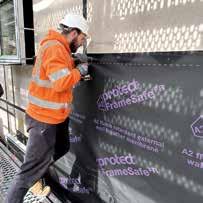
Glidevale Protect has strengthened its flame retardant offering with the launch of its Protect FrameSafe 5000 FR external wall membrane designed for open façade cladding applications. Manufactured only with printed lap lines and with no logos to the external face of the membrane to improve the architectural aesthetic of an open façade, Protect FrameSafe 5000 FR is an unbranded version of standard Protect FrameSafe FR, achieving the same Class A2-s1, d0 reaction to fire rating, when used as a system with Protect FR sealing tape.
Designed for use on the external side of the frame on open joint rainscreen cladding applications where gaps are included as a design feature, the membrane is suited for low, medium and high-rise buildings over 11m or 18m in height or seven or more storeys, including those multi-occupancy, high risk buildings covered by the Building Safety Act. The membrane was subjected to robust testing in an oven with artificial, accelerated UV ageing for 5,000 hours
followed by heat ageing at 70 degrees for ninety days, in accordance with EN 13859-2. The result of the aged testing showed no significant impact on tensile strength and elongation as well no change to the membrane’s W2 watertightness rating to BS EN 13111. The membrane’s strong UV stability means it can withstand exposure of up to six months during construction.
Both Protect FrameSafe 5000 FR and Protect FrameSafe FR feature an intricately woven glass fibre fabric with a uniquely developed waterproof and fire-resistant coating. This can help improve the reaction to fire of the overall wall structure when used to integrate with the façade. FrameSafe FR and FrameSafe 5000 FR as its unprinted counterpart, exceed the requirements detailed within the Building Regulations for all countries within the UK and in Ireland.
Source: www.glidevaleprotect.com
Glidevale Protect Expands Fire Rated Wall Membrane Range
UK INDUSTRY NEWS
‘Trad’
Firms
Join
£800m MMC framework for Social Landlords
Twenty traditional construction companies and two MMC firms have been appointed to a newbuild framework, where they will carry out principal contractor duties on social housing offsite projects. The Integrated Traditional Build & MMC framework has been launched by Procurement for Housing (PfH) and Building Better, the National Housing Federationbacked alliance of housing associations and councils working together to boost the use of modern methods of construction (MMC) in social housing.
NG Bailey Net Zero Target Validated by SBTi
NG Bailey has become one of the first construction and engineering companies in the UK to have its long-term target to achieve net zero emissions by 2045, approved by the Science Based Targets Initiative (SBTi).
The UK’s largest independent engineering and services business has set a target to achieve net zero by 2045 for its scope 1, 2 and 3 greenhouse gas emissions. As part of its long-term target, NG Bailey has committed to reduce greenhouse gas emissions for sources it owns or controls directly (Scope 1 and 2) by 90%, as well as reducing emissions from its wider supply chain (Scope 3) by 90% by 2045.
The new target is in addition to its existing nearterm targets, approved in 2022, which include a commitment to reduce absolute Scope 1 and Scope 2 greenhouse gas emissions by 50% by 2031, and that 75% of its suppliers will have science-based targets in place themselves by FY2027. As well as setting future targets, NG Bailey has already taken significant steps to reduce its own emissions as part of its Net Positive responsibility strategy.
All the electricity at sites where NG Bailey has operational control are now from renewable sources.
PfH and Building Better set up the framework following feedback from social housing organisations who said they wanted trusted local building firms to lead MMC projects and deliver traditional construction elements, where they were needed. The 22 building firms have been appointed across 37 different regions of England and Wales, ensuring that housing associations and local authorities can always work with contractors from their own communities.
The £800million framework will run over four years and supports social housing providers to procure principal contractor services for a range of MMC projects, including low and medium rise housing, apartments and extra care homes.
The traditional construction firms appointed are: AMMCASS Group, Bugler Developments, CG Fry & Son, Classic Builders, Elkins Construction, Ermine Construction Services, Feltham Construction, Hale Group, Hill Holdings, J. Harper & Sons (Leominster), Keon Homes, Langstone Construction, LIFE Build Solutions, MY Construction Group, Seddon Construction, SMD, Snowdon Homes, Wates Residential, Whitfield & Brown and Wiggett Construction. The MMC firms appointed are: Agile Property and Homes, and Enevate Homes.
Tony Woods, Technical Manager – Construction & Sustainability for PfH said: “Over recent years we’ve seen MMC companies focusing more on manufacturing their systems rather than providing a turnkey service. It makes sense to bring in
traditional builders with a strong reputation in a local area to manage these MMC projects and deliver any traditional build elements, too. We’ve also appointed two MMC firms that provide excellent turnkey services. All 22 firms are experienced lead contractors, and often have a relationship with social housing providers already. This framework provides councils and housing associations with a compliant route to procuring principal contractor services for MMC sites.”
Jamie Watkins, Operations Manager at Elkins Construction, said: “We are delighted to be accepted onto this new framework, giving registered providers access to our services, where we can offer newbuild residential solutions using either traditional or MMC. Over the last few years, we have seen increased requirements from our clients for net zero homes and this has meant the need to use more innovation in our construction practices. By using MMC or hybrid construction we can cut down time on-site, reducing disruption to the communities we work in, improve quality through offsite manufacturing and reduce our carbon footprint, whilst providing our clients with highly energy efficient homes for their residents.”
For further information about the Integrated Traditional Build & MMC framework visit: https://procurementforhousing.co.uk/ frameworksa-z/
It is phasing out diesel and petrol cars within its fleet by 2025, with 91% of its company car fleet now battery or electric plug-in hybrid. It is also undertaking a trial of electric vans within its fleet and looking to the future and what alternative fuel solutions may be available, including for plant.
Natalie Wilkinson, Head of Responsibility at NG Bailey, said: “We have a long history of being a responsible business and were proud to become one of the first UK construction and engineering businesses in the UK to have our near-term science-based targets validated in 2023. Receiving this latest validation from the SBTI for our long-term net zero target demonstrates just how seriously we are taking this as
a business and our ongoing commitment to put more into society, the environment, and the global economy than we take out.
“Climate change is a growing threat to our business, our customers and future generations. The latest climate science, described by the UN as a ’code red for humanity’, shows the urgency with which we must all take action. Our vision as a business is to create exceptional environments for present and future generations, which means that cutting greenhouse gas emissions and taking significant and credible action on climate change is absolutely essential.”
Source: www.ngbailey.com
BR LLIANT FFS TE M DULAR PR DUCT DEAS
Innovative award-winning products and systems
• ALIMATS®
• Stacker Packers
• Hole Covers
• Shutter Clip
• Instant Pipe Shutter
• Safety Net Recovery System
UK INDUSTRY NEWS
Liverpool Looks to MMC Housing
Liverpool City Region Mayor Steve Rotheram has launched a ground-breaking initiative aimed at transforming the housing sector through innovative, zero-energy-bill homes. The Future Homes LCR project was unveiled in September as a programme that positions the Liverpool City Region at the forefront of sustainable, affordable housing in the UK.
A newly constructed house, built outside the ACC Liverpool, showcases innovative modern methods of construction (MMC) that not only promise faster build times but also drastically reduce energy consumption. This project is a powerful statement of intent, highlighting the region’s ambition to lead the way in creating low-energy, zero-carbon homes that directly address the housing crisis, cut energy costs for residents, and help the UK meet its carbon reduction targets.
It represents a critical step toward transforming the way homes are built and lived in, making the Liverpool City Region a centre of excellence for offsite construction and green housing solutions. In addition to providing homes, the project will drive economic growth by creating green jobs and reducing the region’s carbon footprint, ensuring long-term benefits for the local economy. It also demonstrates that the Liverpool City Region is more than ready to do its part to meet the government’s stretching new housebuilding targets.
Mayor Steve Rotheram emphasised the potential of the flagship scheme saying: “The country is in the
midst of a housing crisis that’s pushing up prices and holding back economic growth. For far too long, this issue has been neglected by successive national governments. But now, we have an opportunity to tackle it head-on. Keir Starmer’s pledge to build 1.5 million homes is exactly the bold action we need, and I want as many of those homes built here in the Liverpool City Region as possible. With innovative solutions like modular construction, we can make a significant dent in that target and deliver homes faster, more affordably, and sustainably.
“As Mayor, I’m committed to overseeing an affordable housing revolution in our region – including the return of large-scale council house building. We’ve got the skills, the expertise, and the determination to make this a success, and we stand ready to work with the government and local housebuilders to make it happen. Future Homes LCR shows exactly what’s possible when innovation and collaboration come together – creating a brighter, more sustainable future for everyone.”
The Future Homes LCR waterfront house has been built using a light gauge steel frame, clad with insulation and brick slips to create a super-insulated, airtight building with an energy performance (EPC) rating of 100%. The two-storey house has been built by Starship Group. The three-bedroom family home, constructed in just one week at Starship’s factory at Wirral Waters and installed within a few days, would normally come with a 10-year guarantee from Octopus Energy, ensuring residents will not receive
any energy bills for 10 years. Equipped with solar panels, a heat pump and a battery, the house offers a glimpse into the future of sustainable living.
Dave Dargan, Founder and CEO at Starship Group, said: “These are exciting and challenging times, where combining innovative construction methods with new technologies, allows us to deliver next generation housing today. As one of the key partners of Future Homes Liverpool City Region, we can now showcase the region as a centre of excellence in delivering low-energy and zero bills’ homes. Building at scale and pace we can provide housing that transforms people’s lives while making a major contribution to tackling the national housing crisis.”
The build is part of a broader ambition to harness modular building techniques to make full use of the 700 brownfield sites in the Liverpool City Region, which have the potential to accommodate 42,000 homes.
Image: (L-R) Combined Authority Cabinet Member for Housing and Leader of Knowsley Council Cllr Graham Morgan, Minister for Energy Consumers Miatta Fahnbulleh, Mayor of the Liverpool City Region Steve Rotheram and Liverpool City Council Leader and Lead Member for Innovation at the Combined Authority, Cllr Liam Robinson outside the ‘zero bills’ home.
Source: www.liverpoolcityregion-ca.gov.uk
Charles Walsh
Mobile (+353) 85 8152440
Office (+353) 62 71102
Email cwalsh@odwyersteel.ie
UK INDUSTRY NEWS
CCG Group Unveils ‘Whole-Life Carbon’ Research
The CCG Group has completed pioneering research into Whole-Life Carbon, providing crucial insights into carbon emissions throughout the housebuilding lifecycle, and strategies for reducing them to achieve net zero.
The research aims to help CCG make informed decisions on responsible sourcing of materials, design detailing and construction practice – all focused on reducing the total carbon footprint, helping to meet future emissions targets and building standards. This research is among the most advanced in the UK and builds on the company's applied research into net zero homes which began in 2018.
In partnership with Carbon Futures a leading independent consultancy who specialise in building simulation modelling and analysis – the research was structured into three key stages of assessment. It began with analysing 'Embodied Carbon' emissions, which are associated with raw material extraction, manufacturing, transportation, and the construction process to complete a new build home. The second stage examined 'Operational Carbon' emissions from fixed services such as heating, cooling, lighting, pumps, and fans during the home's occupancy. Finally, the assessment considered emissions at the home's end-of-life, including demolition, recycling, and material re-use.
The analysis was modelled on a CCG house type that adopted three different approaches to energy strategy. For each approach, the house type retained the same foundation solution and structural composition – using CCG’s offsite manufactured, closed panel ‘iQ’ Timber System for the superstructure and their own windows and doors
– as well as the same mechanical, electrical, and plumbing (MEP) services, and materials for the walls, roof, and internal finishes. A final comparison of the CCG Net Zero Home build standard was made with a theorised Passivhaus-accredited version of the same house type.
David Wylie, Managing Director of CCG, said: “Since 1 April this year, all newbuild homes applying for a building warrant have been required to use non-fossil fuel (‘non-polluting’) heating systems. The ‘New Build Heat Standard’ was something we anticipated as far back as 2018. We recognised early on that to stay ahead of market changes, we would need to invest in and adopt new techniques and technologies, ensuring a seamless transition for both our business, our customers and the homeowner.
“This forward-looking approach will also apply to Whole-Life Carbon, and the results show just how far CCG has already come in reducing emissions. Our construction methods and the products we create naturally help to lower emissions due to the materials we use and where they are sourced from, and reduced vehicle movements at every stage of the project delivery process. This deeper understanding places us ahead of the industry and will only add value in the long term as building standards evolve and we continue our net zero transition. However, the potential introduction of the Scottish Passivhaus Equivalent is particularly significant.”
The research is one most advanced studies of its kind in the UK and builds on the introduction of the CCG Net Zero Home build standard which has been used by the firm in Scotland since 2021. The Net Zero Home is a mass-market solution designed to address the operational energy performance of housing. It utilises a mix of an enhanced building fabric, using CCG’s own manufactured timber system to minimise heat loss, and zero direct emissions heating solutions to future-proof homes and push performance towards operational net zero.
Andrew Money, Director of Carbon Futures, said: “This project really demonstrates the importance of collaboration and highlights the positive impact it can have on the wider construction industry. As we strive to reduce the energy consumption in our homes and build to higher standards, we must also address the underlying emissions from material sourcing, transportation, and manufacturing processes. Only by considering and mitigating these factors can we make meaningful progress towards a net zero future and lessen our impact on the environment.”
Image: (L-R) David Wylie, CCG (Scotland) Managing Director, Andrew Money, Director, Carbon Futures
Source: www.c-c-g.co.uk
New Homes in New Ways: MMC
Exhibition Now Open
The New Homes in New Ways (NHNW) exhibition is now open at the Building Centre, London. The interactive exhibition shines a light on the UK’s deficit of social rent homes and the growing temporary accommodation crisis.
The exhibition is co-curated by the Building Centre and Housing Festival, the ‘think-and-do tank’ based in Bristol. It draws on the recently released Social Rent Housing at Pace Playbook, which demonstrates the opportunity for the public sector to incubate a new supply chain of factory-manufactured housing, while unlocking ‘unlikely’ land and rethinking the economics.
The New Homes in New Ways exhibition will tell the story of how modern methods of construction (MMC) can accelerate the supply of new homes, with an emphasis on delivering the social rent housing needed at pace amidst the current housing emergency.
The exhibition will include case studies, expert talking heads and full-scale installations, and a showcase of the latest in new housing technology and discuss the environmental, social and financial benefits of providing homes built through MMC. Amidst calls for, and promises of, genuinely affordable new homes – the exhibition will highlight the growing temporary accommodation crisis and demonstrate how new high-quality, low-carbon homes can be delivered at scale and pace.
The event series (online and in-person) will also highlight international references and case studies and by discussing MMC at an international and national scale, the hope is to bring change at local level and encourage new housing to be built with quality. It will also explore how a human-centric, outcomeled approach that embeds values into the design and delivery of new homes could benefit residents, communities and wider society.
‘Collaboration and Innovation through Modern Methods of Construction’ is on until 21 February 2025. There will also be a NHNW Summit February 12 & 13 2025. The Building Centre is open to the public five days a week and all exhibitions are free to enter.
"The UK will fail to build 1.5 million new homes and rebuild 500 schools announced in the Budget unless it embraces innovation. Without adopting new methods of construction and materials it won’t be able to rebuild Britain at the pace outlined in the government’s £5billion housing plan designed to deliver change and growth." These are the views of an innovative and sustainable business which has received backing from leading built environment organisation BE-ST and national innovation agency Innovate UK.
Gary Robertson, VASO Build Ltd Group Strategist, said: “If the construction industry doesn’t adopt new methods and new ways of thinking to meet the housing shortfall then it will continue to fail to deliver at the pace required. Now is the time we have to challenge the status quo and stop thinking that traditional building is the only answer to the housing crisis and the government’s ambition.
“We are already 80,000 homes per year short on targets due to traditional methodologies. Traditional build companies can continue to operate at a pace which seems to suit them and deliver their share of the market. But to meet the government’s targets and bridge the shortfall to give people one of the most basic necessities of life - a roof over their heads - we need to change, and we need to ramp up.
“The only way to achieve that as an industry and as a nation is to invest in sustainable, long-lasting, valuefor-money innovations. At VASO Build we are open to collaborating and co-creating solutions with any organisation which is keen to unlock the potential of what innovative solutions can bring to the construction sector.”
VASO Build Limited is a ‘world-first circular housebuilding innovation’ creating building solutions for homes or schools and other structures using MMC and a new sustainable panelling system manufactured mostly from recycled glass. VASO’s solution overcomes traditional supply chain issues and skills shortages in the sector by creating a new build system and module with a short timeframe construction. VASO will use MMC to deliver affordable, low carbon dwellings for Registered Social Landlords (RSLs), social housing providers and private housebuilders.
VASO’s innovative composite panels and build system are also ideally placed to deliver the 5,200 homes the UK government has targeted from £68million funding to 54 councils through the Brownfield Land Release Fund, to turn neglected land into new homes, transforming communities and helping families onto the property ladder.
VASO was chosen to be part of BE-ST Circular and Advance Materials in Construction Accelerator and was presented at BE-ST Fest 2023 - the UK’s biggest zero carbon-built environment festival. VASO was also invited by Innovate UK to attend a showcase
event at the British Antarctic Survey HQ in Cambridge in May this year in relation to concrete and building materials innovation. Company Co-Founder and CEO Eddie Black (pictured) was also invited to Lagos earlier this year to present VASO Build as part of Innovate UK’s Global Alliance Africa delegation to the Future Cities Africa Green Building Summit. VASO’s majority shareholder is Eco Group, a diverse multiindustry solutions business based in Dumfries and Galloway, Scotland.
Source: www.vasobuild.eco
UK INDUSTRY NEWS
Modular Micro
Homes for Homeless Underway in Chelmsford
A new collection of 24 modular DuoHaus homes that will provide accommodation for homeless people is being installed near Chelmsford. Delivered by The Hill Group, the purpose-built, self-contained homes will be run by CHESS Homeless – the Essex-based charity that supports people suffering from homelessness.
DuoHaus homes are innovative, low-cost modular homes designed specifically to support and protect vulnerable residents. The concept was developed by award-winning housebuilder, The Hill Group, as a follow-on housing solution to help address the homeless crisis. Hill is installing the DuoHaus homes to replace an obsolete motel in West Hanningfield near Chelmsford, which CHESS Homeless has been running as a homeless hostel since the start of the COVID-19 pandemic. The project was made possible through support from the government’s Single
Remagin Powers Affordable Retirement Community
Leeds-based offsite construction manufacturer Remagin, part of Etex Group, is playing a pivotal role in the development of a new affordable retirement community in Oldham, Greater Manchester. Using Remagin’s light gauge steel frame (LGSF) technology, Sydney Grange is being developed by McCarthy Stone and will deliver 51 affordable homes for older people in the region.
All the panels for the Sydney Grange development were manufactured at Remagin’s factory in Leeds and assembled on-site, supporting local employment and helping to speed up the construction process and reduce costs. The project is the first of its kind to use Remagin’s MMC solutions in full alongside the Older Persons Shared Ownership (OPSO) scheme, with apartments available for just £95,000 based on 50% ownership.
Shahi Islam, Director of Affordable Housing at Homes England, recently visited the groundbreaking retirement community which will open later this year, saying: “McCarthy Stone's Failsworth development is
Homelessness Accommodation Programme (SHAP), Chelmsford City Council, various trusts, grant-makers, individuals, and pro bono contributions from the teams involved.
Designed with a 60-year lifespan, each DuoHaus home is designed for up to two residents and is built to meet Future Homes Standards, exceeding building regulations for energy-efficiency and sound insulation. They come fully furnished and equipped including a fitted kitchen and white goods, providing a safe, comfortable environment for residents before they find somewhere more permanent.
Andy Hill OBE, founder and Group Chief Executive of The Hill Group, commented: “We're proud to be supplying these DuoHaus homes for vulnerable individuals in the Chelmsford area who need a safe space to get back on their feet. The design of DuoHaus means it is both cost and energy efficient, providing a flexible low-cost housing solution for those most in need.”
The DuoHaus homes are part of The Hill Group’s broader SoloHaus initiative, which has been providing safe, high-quality modular housing for homeless individuals since 2020.
The 24 DuoHaus homes will be stacked on two levels and each home arrives ready for installation as they are prefabricated by Hill’s manufacturing partner, Volumetric Modular Ltd. The homes are set to be complete and ready for new residents to move in by late spring 2025, just 18 months since this project was first initiated. The development gained planning
an excellent example of high-quality and affordable housing for older people. We are pleased to support it through our older persons shared ownership scheme which forms a key part of Homes England’s efforts to provide suitable housing and build strong communities. Expanding the use of MMC is also a priority for Government so I’m delighted to see the success of the partnership with Remagin. We look forward to supporting this model and seeing it progress.”
Patrick Balemans, Head of Division at Etex New Ways and Remagin, said: “This project demonstrates how MMC can be used to meet the increasing demand for affordable, energy efficient and high-quality housing. By manufacturing the panels at our Leeds facility, we’ve not only reduced build times but also contributed to the local economy and created jobs in the regional supply chain. We look forward to continuing our work on similar projects that combine speed, value and cost-efficiency."
Sydney Grange is the first in a series of projects that McCarthy Stone and Remagin plan to deliver across the Midlands and the North, with a focus on addressing the growing need for affordable homes for older people. The use of MMC is expected to reduce construction timelines by up to 50%, while also offering sustainable, energy-efficient homes that lower ongoing costs for residents.
permission recently and demolition of the former motel building and site groundworks are already underway.
Rob Saggs, Chief Executive Officer of CHESS Homeless, commented: “The redevelopment of the temporary hostel into brand new DuoHaus homes will be game-changing for us as a charity and the level of support we can offer to people moving on from homelessness. This will be a safe and secure environment, where our residents can rest, heal and move forward with purpose. Our thanks go to all the partners that have made this happen so rapidly and gifted their time to the project.”
Allia Future Homes, a specialist in supported modular home communities that tackle homelessness, has been advising CHESS Homeless on the project since its inception. Daniel Renn, Housing Development Lead at Allia Future Homes, said: “We are proud to have been part of the incredible team that brought this vital project to life. With the homelessness crisis escalating across the UK, supported modular communities are an essential part of the solution. The success of this project has been driven by the shared values and commitment of the organisations involved, many of whom have generously contributed their expertise and resources free of charge. We hope this initiative serves as a model for similar projects nationwide, offering a practical and sustainable response to one of the country’s most pressing challenges.”
Source: www.solohaus.co.uk www.volumetric.co.uk
John Tonkiss, CEO at McCarthy Stone, said: “We are delighted to showcase the first of what will be many more affordable retirement communities that we’ll build in partnership with Homes England and Remagin. It is a truly groundbreaking model that provides new retirement apartments at affordable prices and in parts of the country where development previously would not have been viable.
Image (L-R) Martin Brown, MD Special Projects, McCarthy Stone; Ruth Ryan, Assistant Director, Affordable Homes Programme, Homes England; Shahi Islam, Director, Affordable Homes Programme, Homes England; John Tonkiss, CEO, McCarthy Stone; Scott Bibby, Country Manager UK & Ireland, Remagin, Clive Webberley, Head of Technical, Quality and Compliance UK & Ireland, Remagin; Patrick Balemans, Head of Division, Etex New Ways
Source: www.remagin.world
A HOUSING CRISIS FAST-TRACK SOLUTION
As part of their residential strategy, Daiwa House Modular Europe UK (DHME UK) have developed a viable solution to the emergency accommodation crisis.
Daiwa House Group is one of the world’s largest industrial builders with Daiwa House Modular Europe being a European giant of modern methods of construction (MMC) and a leading provider of modular and sustainable building solutions in Europe.
The charity Shelter England revealed a staggering £2.3billion was spent in England last year on emergency accommodation, whilst Shelter Cymru highlighted £99million was spent in Wales.
DHME UK have developed temporary homes that are fully Building Regulations compliant. These homes are designed to be redeployed and reconfigured into permanent houses, meeting Nationally Described Space Standards (NDSS), Welsh Development Quality Requirements (WDQR) or other relevant standards.
DHME UK offer a fast-track emergency accommodation solution that not only meets immediate needs but also reinvests the initial capital expenditure into the development of permanent affordable housing.
This solution redresses the situation noted in ‘Social Rent Housing at Pace: The MMC Playbook’ “Living in temporary accommodation affects
1
people very badly in terms of physical health and mental health,” says Signe Gosmann from the Justlife Foundation. “It is traumatising, or re-traumatising and it creates a whole segment of society that struggles to move on in life.”
Providing a better standard of emergency accommodation gives residents a greater sense of independence and dignity. The ability to cook meals and wash their own clothes provides residents a place they can call home. A resident from a recently completed DHME UK project commented: “The bungalow is lovely – nice, spacious kitchen area and living room and I love the garden. Having somewhere to stay like this has really helped me, mentally. Although only temporary it feels like home.”
The BOPAS-accredited system is built offsite to ISO 19650 BIM standards. Featuring a hot-rolled steel frame with a concrete floor in a stackable volumetric design, enabling rapid deployment to disused land areas. With the option of using a convenient precast pad foundation system with integrated holding down bolts, it can be ready for delivery to any site within weeks, rather than months or years, eliminating the need for extensive and costly groundworks.
2
3
Daiwa House Modular Europe's original goal was to provide a fast, affordable MMC housing solution for Housing Associations and Local Authorities across the UK. However, while developing the UK standard housing offerings, it became clear that the demand for emergency accommodation was even more urgent.
Daiwa House Modular Europe’s housing solutions are developed in complete harmony with people and society and with an eye to the future.
For more information, please contact Nicky Jones, Business Development Manager UK. Email: n.jones@dhme.eu or visit www.daiwahousemodular.eu
OFFSITE AWARDS 2024
THE OFFSITE SUPERSTARS
The OFFSITE AWARDS 2024 rewarded the many projects, people and products driving forward offsite manufacture across the UK and internationally. For those that missed out, here’s a recap on the evening’s big winners.
Celebrating a major milestone anniversary, it’s now 10 years since the OFFSITE AWARDS were launched. Over the last decade they have notched up over 1,750 entries, with 1,218 of these reaching the finals and 179 outstanding winners picking up a prestigious trophy. The list of winners across the decade reads like a ‘who’s who’ of offsite manufacture – and it’s not only the major players and the iconic buildings picking up plaudits –the OFFSITE AWARDS are renowned for unearthing those projects that may be small in stature but awesome in terms of innovation.
All roads lead to the Coventry Building Society Arena on 17 September
during OFFSITE EXPO – the OFFSITE AWARDS 2024 saw over 600 guests gather to celebrate the many ground-breaking achievements and successful projects revitalising the built environment, alongside cutting-edge new technologies, innovative product developments all using factory-based methods and approaches.
The last 12 months has been one of transition, with struggles for the volumetric modular sector and a change in Government. But it has also seen many positive developments that has seen offsite construction move higher than ever up the client agenda and become a serious contender to deliver sustainable and
lasting change, as society grapples with net zero and macroeconomic pressures. With an increased focus on better performance, productivity improvements, streamlined manufacturing and delivering safer, more energy efficient buildings, offsite is helping to drive a healthier construction landscape.
Every year, the awards offer an insight into the breadth and complexity of offsite projects being developed for all sectors. The 2024 Awards received over 200 entrants across 23 categories, with countless examples of pioneering projects, innovative products and inspirational people helping to deliver
Stelling Properties picked up the Winner of Winners Award
OFFSITE AWARDS 2024
them. Each year sees an increase in the number of projects entered to give the judging panel to analyse, and the job of choosing the winner is never an easy one.
This year the saw the return of a familiar face in Mark Durden-Smith as host, who ensured that the celebrations flowed smoothly and were highly entertaining. This followed a relaxed, informal drinks reception, offering the perfect opportunity for the finalists to network and discover more about the inspiring entries.
Among the multi-category winners on the night were B&K Structures, Kier, MTX and PCE with the big winner of the evening being Stelling Properties, picking up the trophies for Best Use of Volumetric Technology, Product Innovation (in collaboration with Aalter.ai) and the all-important Winner of Winners award. You can read more about Stelling’s 31 High Street, Southampton project inside this issue, where they helped restore and revive an historic site in the centre of Southampton to provide a five-storey modular extension, including 121 self-contained studio apartments to help meet the undersupply of student accommodation in the city.
The judges said: “This was an excellent submission and a standout project demonstrating all the benefits that offsite brings. It had high levels of innovation in its design and delivery. The challenges of working on a heritage site and a constrained city centre location were overcome by intelligent use of volumetric technology along with traditional elements. A sophisticated and elegant solution emerged.”
Huge congratulations to all the 2024 winners. You can see them all over the next few pages.
2025 SPONSORSHIP OPPORTUNITIES
The OFFSITE AWARDS will return to the Coventry Building Society on 16 September 2025, alongside OFFSITE EXPO that will be taking place on 16-17 September 2025 There are 24 categories that cover every aspect of the industry. It is completely FREE to enter both single and multiple categories.
The OFFSITE AWARDS provides one of the most effective platforms for targeting the offsite industry, presenting the ideal opportunity to maximise exposure and penetrate this economically important market. The 2025 marketing campaign will be launching soon with the Awards entry platform opening in January 2025.
To discuss 2025 promotional opportunities please contact Emily Dyer on 01743 290025 or email: emily.dyer@radar-communications.co.uk
To keep up to date with developments and find out more about the 2025 OFFSITE AWARDS visit: www.offsiteawards.co.uk
OFFSITE AWARDS 2024
THE FULL LIST OF 2024 AWARD WINNERS ARE...
Building Performance Award Engenuiti, Holmes Miller Architects, KLH UK & Rolton Group - Buntingford First School
Architect of the Year
Bond Bryan Architects - Kitchener Barracks
Best use of Concrete Technology PCE - HMP Millsike
Best use of Steel Technology Metek - Heaps Mill, Park Lane, Liverpool
Best use of Volumetric Technology
Stelling Properties - 31 High Street, Southampton
Best use of MEP & Pod Technology
SES Engineering Services - AESC UK
Client of the Year
Ministry of Justice - HMP Fosse Way
Best use of Timber Technology B&K Structures, dRMM, ARUP & Stora Enso - WorkStack, Charlton
OFFSITE AWARDS 2024
Contractor of the Year
Kier - HMP Millsike
Commercial Project of the Year
B&K Structures, AKT II, Stiff & Trevillion, Stora Enso & Knight Harwood - Arding & Hobbs
BIM/Digital Construction Award
Kier with Ministry of Justice - HMP Millsike
Education Project of the Year
B&K Structures, Hopkins, Engenuiti, Integral Engineering Design, Stora Enso & Kier - Haileybury SciTech
Healthcare Project of the Year
MTX Contracts - Clatterbridge Hospital – The Cheshire and Merseyside Surgical Hub and Community Diagnostic Centre
Installer of the Year
VKE Contractors - Town Quays Development - Block A
International Project of the Year
Summary - 4 Modular Kindergartens, Lisbon
Offsite Pioneer of the Year
Robert Hairstans, NMITE & Edinburgh Napier UniversityTimber Offsite Research and Education
EGGER Peel Clean Xtra Large
Your Offsite MMC Solution
EGGER Peel Clean Extra Large is designed for offsite timber flooring cassette manufacturing. The 2400 x 1200 x 22mm T&G2 panel ensures faster installation, reduced material handling, minimised gluing, and less wastage. The finished floor can remain exposed to the elements for up to 60 days* and its recyclable, anti-slip film prevents moisture ingress and ensures a clean floor ready for handover. Launching in January 2025
*KIWA BDA Agrément BAF-19-129-S-A-UK
For more information visit to.egger.link/pcx
OFFSITE AWARDS 2024
Product Innovation Award
Stelling Properties in collaboration with Aalter.ai - The Stelling Properties Building Configurator
Project/Construction Manager of the Year
Peter Skinner - Wilberforce Consulting - Bridge Court, Desborough Road, High Wycombe
Retail/Leisure Project of the Year
Armadilla - Knock Shrine Accommodation Pods
Social Housing Project of the Year
Royal Borough of GreenwichGilbourne Road
Winner of Winners
Stelling Properties - 31 High Street, Southampton
Private Housing Project of the Year
Citu - Stãll
HIGHLY COMMENDED
Engineer of the Year
MJH Structural Engineers - College Road, Croydon
Best use of Steel Technology
British Offsite - Abbey Quay, Barking, Weston Homes
Education Project of the Year
SES Engineering Services - Life and Mind Building (LaMB)
Private Housing Project of the Year
Bond Bryan & Tophat - Kitchener Barracks
Private Housing Project of the Year
PCE - Fulton & Fifth
Best Use of Hybrid Technology
PCE - The Fitzrovia W1
OFFSITE AWARDS 2025
Many thanks to everyone that took the time to enter the 2024 OFFSITE AWARDS.
The levels of expertise shown in every category was exceptional and the panel of judges were overwhelmed with the entry quality.
The 2025 Entry Platform will be open in January 2025.
HIGH PRAISE FOR 31 HIGH STREET
A highly successful Offsite Awards 2024 saw Stelling Properties walk away with three prizes including the coveted Winner of Winners for its work restoring and reviving a historic site in the centre of Southampton.
131 High Street is a pioneering regeneration project in Southampton which has brought a fire damaged building back to life after it remained derelict for more than a decade. The development represents a £12million investment by Stelling Properties to develop this prominent and highly constrained site using advanced modular technology.
The listed Portland stone façade of the former Bank of England building has been restored and other parts of the original building have been retained including the historic bank
vaults in the basement. A five-storey modular extension has provided 121 high specification, self-contained studio apartments to help meet the critical undersupply of student accommodation in the city.
Steel-framed, 8m long modules, each weighing up to 12 tonnes, contained a single apartment and arrived on-site completely finished, with kitchenettes, shower rooms, fitted and loose furniture, flooring, doors, and glazing already in place. These were lifted into position over a six-week installation phase and using a 230-tonne crane.
According to Dan Smith, COO of Stelling Properties: “31 High Street has been a hugely challenging and constrained site to develop. It demonstrates the enormous potential of offsite construction and our technical capabilities very well. The site is completely enclosed on three sides, which would have been extremely difficult for in-situ construction as there is no storage space for plant, materials or equipment.”
“This is a locally listed building in a Conservation Area but with a fantastic modular design developed by our inhouse team and the retained Portland stone façade, it will blend sympathetically into the locality. Speed of construction was absolutely critical to reduce disruption in the city centre. By manufacturing and fully fitting out the apartments offsite, we reduced time on site by around 50 per cent. The tremendous progress so far is a real credit to our design, production and site teams.”
The studio apartments will be operated by Unilife, its COO Richard Powell, said: “Stelling has done an incredible job to deliver a project of this scale in just a few months and to such high quality, sustainability, energy efficiency and architectural standards. As well as helping to meet the growing demand for student accommodation in the city, this project will breathe new life into the centre of Southampton, and into a previously derelict but historic building.”
To complement the local architecture and reflect the heritage aesthetic of the retained façade, the studio apartments will be finished in light stone-coloured external cladding. The final phase of-construction included mechanical and electrical connections on site, fitting out the extensive social and amenity spaces for residents in the original retained part of the building, roofing works, solar panel installations and landscaping of a large roof terrace.
Stelling Properties was presented with the award for Best Use of Volumetric Technology for this groundbreaking project plus the Winner of Winners Award. Stelling Properties was also awarded the Product Innovation Award in collaboration with Aalter 2
OFFSITE AWARDS WINNER OF WINNERS 2024
3
for the Stelling Properties Building Configurator.
According to the Judges: “This was an excellent submission and a standout project demonstrating all the benefits that offsite brings. It had high levels of innovation in its design and delivery. The challenges of working on a heritage site and a constrained city centre location were overcome by intelligent use of volumetric technology along with traditional
5
to push the boundaries of modular technology in the residential sector.”
“31 High Street demonstrates the enormous potential of our offsite construction solutions and the technical capabilities of our teams – from architectural design to manufacturing, offsite fitout and on-site refurbishment of a locally listed building. This site is completely enclosed on three sides and would have been extremely difficult to develop using traditional construction methods.”
4
elements. A sophisticated and elegant solution emerged. Very well done to the Stelling Properties team.”
Speaking about the night, Jose Ignacio Alverez, Founder and Executive Chair of Stelling Properties, said: “We are absolutely thrilled to receive this industry recognition, and particularly the Winner of Winners award. These accolades are such a credit to our teams across the business who do such outstanding work and who continue
THE STELLING PROPERTIES BUILDING CONFIGURATOR
“To deliver a scheme of this scale in just a few months and to such high quality, sustainability, energy efficiency and architectural standards, is an incredible achievement. It also showcases really well how offsite construction can be applied to regeneration and refurbishment schemes, as well as to new build residential developments. We were also delighted to receive the award that has recognised our commitment to digital innovation, alongside our partner, Aalter. Our new building configurator leverages digital technology to streamline and enhance every phase of our modular design and construction processes.”
Images:
01-02. Modules being craned in at 31 High Street, Southampton 03-04. The historic facade will front 121 self contained student apartments
05. The Offsite Awards 2024 saw Stelling Properties pick up three industry prizes
Created in collaboration with Aalter.ai technologies, the Configurator is an innovative tool that has been adapted to Stelling Properties’ unique product offering, allowing designers to automate early design stages, optimising design options with real-time data and rendering. By drastically reducing project time costs, it empowers faster, smarter decision-making. represents a significant leap forward in the application of modular construction for major multi-occupancy residential developments by automating design workflows to radically reduce project time and cost, and to empower smarter decision making. For more on Aalter.ai see page 63. For more information visit: www.stellingproperties.com
PRECAST CONCRETE & PASSIVHAUS
The recently opened £120million Dunfermline Learning Campus is the UK’s largest ever Passivhaus school and demonstrates precast concrete’s potential for use in highly sustainable buildings.
Dunfermline Learning Campus replaces two schools – Woodmill High School and St. Columba’s RC High School – and has surpassed minimum compliance levels within current Building Regulations and school design standards and adopted Passivhaus principles. Fife Council had ambitious goals to create a state-of-the-art facility with a number of high-quality facilities that enable progressive teaching and the crossfertilisation of ideas in a building designed to push the boundaries for collaborative working.
With energy reduction and sustainability high on the priority list, Fife Council stipulated that the design should achieve Passivhaus Classic Certification, whilst also setting a lower embodied carbon value for the project, as per RIBA 2025 targets. In addition, this was one of the first construction projects to apply the Scottish Government and Scottish Futures Trust’s new ‘Net Zero Public Sector Buildings Standard’, a voluntary
standard designed to support public bodies to define objectives for their construction project in pursuit of a credible path to net zero operational energy.
This is one of a growing number of certified Passivhaus projects in the UK, including schools. In 2012, the UK’s first zero carbon school built to the Passivhaus standard, Montgomery Primary School, also utilised a precast concrete structure, as did the first house in England to receive Passivhaus accreditation: Underhill House.
The Passivhaus approach relies on ultra-low levels of air permeability, which means that all schemes require mechanical ventilation with heat recovery. Other key elements of Passivhaus construction include very high levels of insulation, low or ‘no’ thermal bridging and highperformance windows. This strategy keeps heat loss so low that little or no additional heating is needed, beyond passive sources such as the building
occupants. Concrete’s inherent solidity provides a simple and robust air barrier, with high performance demonstrated in numerous Passivhaus projects.
“There are numerous examples of Passivhaus accredited projects constructed using concrete, including precast, cast in-situ concrete and masonry structures,” says Elaine Toogood, Director of Architecture & Sustainable Design at the Concrete Centre. “While the standard itself is material neutral, there are additions benefits of using a structure with high thermal mass, like concrete. Utilising thermal mass provides more opportunity for natural light and external views as there is less reliance on smaller, shaded window openings to limit overheating.”
Focus on the building form at Dunfermline Learning Campus AHR Architects were tasked with designing the new building to accommodate Woodmill High School
and St. Columba’s RC High School. Its Glasgow team worked closely with Fife Council’s architect John Peden to bring the vision to fruition with main contractor BAM Construction.
AHR recognised the importance of embracing key Passivhaus principles from the outset, firstly in respect of the building form. In Passivhaus projects, the ‘form factor’ must be considered to ensure the ratio of the external envelope to the floor area is minimised, thus lowering the potential for heat loss. This resulted in a design with the accommodation arranged over three floors and a relatively compact form which avoided complexities such as external soffits and multiple steps in the massing.
Simplification of the build process was also significantly important for a building of this scale. In particular, how to ensure the building’s main frame could be built efficiently whilst also achieving super-high levels of airtightness.
An analysis of the frame options was undertaken early in the design at RIBA Stage 1-2 to assess which approach would achieve the airtightness level of 0.6 air changes per hour (ACH), expressed as ≤ 0.6 h-1 @ 50 Pa. From this, the decision was made to use precast concrete for the main building frame.
Delivering on precast concrete’s airtightness promise Choosing precast concrete for the main building frame maximised delivery of an airtight envelope and simplification of detailing. This is because concrete is inherently airtight, which makes it easier to track the airtightness line through the building, and it does not rely on membranes and tapes to achieve performance throughout the building’s operational life.
In addition, because the joints between the precast panels could be pressure grouted, this further assists in maintaining an airtightness. In contrast to other forms of construction, the airtightness barrier is not hidden within the wall build up, but inherent in the concrete structure and visible internally, allowing for ease of tracking and resolution of any issues throughout the build.
PRECAST CONCRETE
BAM Construction and precast supplier FP McCann expertly translated these inherent advantages into the structure as built today. With such tight standards to meet, quality manufacture is vital, something synonymous with offsite concrete. FP McCanns package included the manufacture and delivery of approximately 1,500 units including precast walls, stairs, lift shafts, floor planks and columns.
The precast concrete frame was built over a 27-week period between October 2022 and May 2023, with a large crane lifting the panels into position on arrival to site. Some of these precast panels were particularly large, with seven measuring 12m in length for the construction of the three-storey high dining hall.
Quality focus key to success
The BAM team in Scotland recognised that the key difference between this project and non-Passivhaus building projects was intense scrutiny on quality and detailing, and the initial advice provided by their colleagues in Germany, with extensive Passivhaus experience, was simply put – ‘build it with concrete’.
The result of this attention to detail and continuous quality focus delivered an airtightness level that surpassed the target. In the precast concrete framed building, airtightness of 0.4 h-1 @ 50 Pa was recorded. A very high level of airtightness was
not the only benefit of using precast concrete, however. Superior acoustic performance could be achieved more easily due to the floor-to-floor spans of the precast units, and they also reduced the need for linings in the stairwells, which is a vulnerable area.
Lessons for future Passivhaus projects One of the most important outcomes of this project is that it challenges current perceptions of concrete construction and demonstrates that concrete is compatible with highly sustainable construction. The benefits of precast concrete over the lifetime of these school buildings, particularly in respect of helping to minimise energy consumption for heating and cooling will far outweigh the carbon emissions resulting from the production of its raw materials and its manufacture.
Applying Passivhaus principles to the construction of the new Woodmill High School and St. Columba’s RC High School was an ambitious step by Fife Council, but it has delivered outstanding results thanks to the positive approach of the whole project team and a dedication to design quality.
For more information visit: www.thisisukconcrete.co.uk
Images: 01-03. Dunfermline Learning Campus challenges current perceptions of concrete and highly sustainable construction. Courtesy FP McCann 2 3
BUILDING MOMENTUM FOR #MOVETOZERO
The team at modular specialist, Mac Zero Modular Buildings, has a wealth of experience delivering projects at scale across the UK and Ireland. Spearheaded by former directors of one of the UK’s largest offsite manufacturing specialists, Conor McAvoy and sister, Orla McAvoy-Corr, Mac Zero launched back in 2021.
The business’s exponential growth over the past few years reflects the deep and extensive understanding that both directors and their wider team have of the modular buildings sector. With an overarching vision to help businesses and organisations #movetozero, Mac Zero brings expert design, manufacturing, and project delivery skills together to create highquality modular buildings that are built for the future.
The Directors of Mac Zero feel their business is part of a new breed of modular construction businesses.
“When Conor and I opened the doors to Mac Zero,” says Orla. “We were 100% committed to driving the sustainability agenda through the provision of future-proofed, airtight modular buildings to private and public organisations. 'Sustainable modular building - nothing less’ was our vision, with innovation, value, and staying close to our customers central to our delivery.
“Fast forward to almost four years later, and I’m exceptionally proud that these commitments in the early
days are much of the reason for the business’s success today. Our principles are one: Buildings that reflect our customers' values and project vision: two: a collaborative team approach and thirdly: less is more, quality over quantity. We have a highly skilled, excellent team who passionately buy-in to what we aim to achieve. Our commitment to quality, health and safety and the environment is further demonstrated by our ISO accreditations which include:
ISO 19650:2, ISO 9001, ISO 14001 and ISO 45001.
But how are all these principles applied at Mac Zero? “It’s in everything we do,” says Conor. “We’re agile, personable and customer centric. We invest time in our clients to ensure we understand their end goal and work back from that, to create spaces built through greener building practices that will stand the test of time.
“We’re a team, and both Orla and I are very proud that we run this business true to the family values that we’re known for. Furthering modular construction agenda is important for
us all, and that’s one of the reasons why Mac Zero is a Founding Company of MMC Ireland, who are doing great work on behalf of the sector. Lastly, ‘Less is more’ – this is an important one and something we’ve really worked hard on – both in terms of sustainability and manufacturing. With the launch of our additional production facility, our increased capacity has enabled us to increase our PMV to 80% (premanufactured value). This offers major benefits including a reduction in waste, more control in the initial manufacturing phase, and less time on-site.
As Orla points out: “Simply put, we are experts in the design and build of modular buildings. From design and manufacturing to groundworks and installation, we create sustainable spaces for businesses and organisations in the public and private sectors. We can deliver projects at scale anywhere in the UK and Ireland, and we work across the commercial, education, community, healthcare and interim accommodation sectors. We’re exceptionally proud of the quality of our builds, and how Mac Zero’s modular buildings are helping communities and clients to advance towards net zero and #movetozero.
Mac Zero is now active in all aspects of construction where modular buildings are the solution, offering modular buildings for both sale and hire.
For more information visit: www.maczero.com
Images:
01. Orla McAvoy-Corr and Conor McAvoy at the new Mac Zero factory 02. Roscommon Community College modular building
SUSTAINABLE MODULAR BUILDINGS Nothing less
Working towards building greener futures for communities across UK and Ireland and further afield, at Mac Zero our focus is clear. We’re continually striving for zero: zero carbon, zero waste, zero delays
We work collaboratively with our clients, consultants and supply chain to provide integrated, practical and sustainable building solutions with a focus on health, wellbeing, social value and advancing net zero for multiple sectors:
REVOLUTIONISING CONSTRUCTION: INSIGHTS FROM OFFSITE EXPO 2024
The UK construction industry faces rising costs and labour shortages and innovative solutions are urgently needed. As Fareita Udoh explains, Offsite Expo highlighted how offsite construction addresses these challenges – here are some key show takeaways and how Buildoffsite (BOS) is driving change.
The BOS Offsite Summit convened industry experts to explore trends and innovations through events like the BOS Innovation Hub Challenge. This summit underscored the sector's shift towards scalable, efficient, and environmentally friendly building practices. Advanced tools, including Building Information Modelling (BIM), were showcased for their ability to streamline processes and enhance project timelines. Sustainable materials and carbon reduction efforts also took centre stage, positioning offsite construction as an eco-friendly response to labour shortages and project delays.
Dave Roberts of Aston University emphasised the need for clients and design teams to fully understand the cost implications of standardisation to unlock the potential of offsite methods. Techno Metal Post, a BOS member specialising in helical pile foundations, showcased rapid, sustainable construction techniques to address labour shortages and boost efficiency.
Global and UK Perspectives on sustainability
Sustainability was a dominant theme, with speakers discussing offsite construction’s role in meeting net zero targets. In the session ‘Global Infrastructure: Major Projects Driving Innovation,’ experts shared how large-scale projects can reduce waste, boost energy efficiency, and minimise environmental impact. Key legislative changes in the UK, effective 2026, were noted as vital to advancing sustainable practices across sectors, including manufacturing, construction, energy, and transportation.
Offsite Expo hosted international speakers who provided diverse perspectives. Dr Sherman S. L. Yip from Hong Kong’s Department of Housing discussed sustainable housing, while Professor Wei Pan of the University of Hong Kong highlighted how modular integrated construction (MiC) significantly reduces energy usage and waste in urban areas. Pascal Chazal from France’s Groupe HORS SITE
and Damien Crough from prefabAUS in Australia emphasised that offsite construction shortens timelines, reduces material waste, and enhances quality.
European leaders also presented significant advancements. Ewelina Wozniak-Szpakiewicz of DMDmodular outlined energy-efficient volumetric modular solutions that accelerate construction while setting new standards for sustainability. TALO’s Bengt Magnussen detailed Finland’s approach to meeting net zero energy standards through offsite building systems that integrate energy-efficient design and renewable materials.
Addressing industry challenges: labour, cost, and quality control
Also under the spotlight was offsite construction’s potential to address labour shortages, enhance cost efficiency, and improve quality. Ian Pritchett of Greencore Construction highlighted the benefits of factory environments for quality control, reducing defects and ensuring consistency.
The role of collaboration: Offsite Expo as a catalyst
Collaboration was a recurring theme. The event facilitated knowledge exchange among industry leaders, and Nigel Fraser emphasised the need to involve clients in the offsite conversation to drive adoption. “We need to get clients in the room and show them how offsite can solve their problems,” he said, advocating for greater understanding of offsite methods outside the construction sector.
Offsite methods are transforming prison construction as well.
BUILDOFFSITE chaired a discussion with the Ministry of Justice on modern prison design, featuring HMP Millsike, the UK’s first all-electric prison. The Ministry’s innovative use of digital tools to track construction components is reducing the carbon footprint of prison projects.
Celebrating leaders: Stelling Properties triumphs Stelling Properties, a BOS member, won several awards at the 10th Offsite Awards for projects that exemplify volumetric technology. Their restoration of a historic, fire-damaged building in Southampton into student accommodation won the Best Use of Volumetric Technology award, along with the Overall Winner of Winners Award. Stelling’s founder, Jose Ignacio Alverez, praised his team’s ability to push modular technology boundaries in the residential sector.
Innovation Hub Challenge: showcasing the future
The BOS Innovation Hub Challenge returned for its second year, sponsored by Radar Communications, to highlight forward-thinking initiatives in sustainable construction. Finalists such as Abode Industries and Qube Buildings presented groundbreaking ideas competing for a £5,000 marketing package. Abode’s BYGO modular system, designed for rapid assembly of zero-carbon buildings, and Qube Buildings’ Bio-SIP panels, which use recycled plastic for ecofriendly insulation, were celebrated for their potential to transform construction practices – you can read much more about these on p48 and p50).
Preparing for growth: the next 12 months
Speakers at Offsite Expo agreed that offsite construction is on the brink of substantial growth. Technologies like BIM, AI, and robotics are set to shape the industry, making processes more efficient and adaptable. However, in the UK, offsite construction has yet to be fully optimised. “Offsite is more cost-effective and sustainable when done right,” said Nigel Fraser, urging improved design and client engagement to unlock offsite’s full potential.
Looking ahead: a sustainable future Offsite Expo underscored the offsite construction industry’s potential for
growth and sustainability. OneClick LCA and Incredible Husk highlighted the Carbon Board Adjustment Mechanism (CBAM), which encourages the use of low-carbon materials and sustainable practices. BOS has promoted CBAM since early 2024, advocating its advantages for offsite construction in meeting the UK’s net zero targets.
CBAM, to be implemented in the UK by 2027, levels the playing field by supporting transparent, ecofriendly supply chains and promoting digital tools for carbon tracking. This approach aligns with the industry’s goals of waste reduction and emissions control while strengthening ESG credentials and supporting resilient supply chains. International collaboration will further position the offsite sector to lead the charge in decarbonising the built environment. The offsite construction sector stands at the forefront of change, with events
like Offsite Expo playing a crucial role in shaping its future. Through collaboration and innovation, it fosters relationships and ideas that will define the next generation of construction practices.
With an urgent focus on transparency and carbon accountability, offsite construction is set to revolutionise the industry.
For more information visit: www.buildoffsite.com
Images:
01. Dirk Vennix (far left) BOS CEO at the opening of Offsite Expo 2024
02. International Changemakers (L-R) Dr Sherman Yip, Professor Wei Pan, Bengt Magnussen, Pascal Chazal, Ewelina Szpakiewicz, Damian Crough
ALGECO UK COMPLETES STATE-OF-THE-ART £28MILLION NORTHAMPTON SCHOOL SITE IN RECORD TIME
1
3 4 2
Algeco UK has completed the state-of-the-art £28million Northampton School in record time using volumetric modular technology.
Northampton School is the biggest school build ever undertaken by Algeco UK, which was secured through the MMC Framework for the Department of Education (DfE). The site, which is one of the most modern learning facilities in the UK, was completed by the industry-leading supplier of portable and modular buildings within just 18 months.
The school, which is run by the Northampton School for Boys (NSB) Academy Trust, is a state-of-the-art facility for the teaching of secondary school pupils, with dedicated sports, drama, science, music rooms, and much more. The school will eventually accommodate a total of 1,200 boys and girls between the ages of 11 and 18 from across Northamptonshire.
The buildings were created utilising modern methods of construction (MMC) in a quality-controlled offsite environment, ensuring the highest standards of workmanship and health and safety. Algeco developed the project through a two-phase approach that followed the receipt of the DfE’s feasibility approval. It was designed in collaboration with the school and all stakeholders and manufactured using an MMC approach, which involved constructing the school in modules and transferring them to site following completion.
This method means the build was completed within just 18 months compared to the typical three-year time frame. Algeco’s experts started laying the foundations in January 2023. A total of 210 modules were created at the company’s factory in Carnaby and transported by road to the Northampton site. The company also provided temporary decant classrooms and all of the construction site welfare
and associated services while the main building was being constructed.
Phil Pavey, Managing Director at Algeco Offsite Solutions (OSS), said: “This is one of the most exciting projects Algeco UK has worked on –planning and constructing a series of buildings to ensure the students of Northampton have the best possible education has been very motivational for all of us. We sincerely hope the new Northampton School is a place the teachers and students find welcoming and inspirational, as well as being a fantastic focal point in the community.”
Gary Greenhoff, Algeco Offsite Solutions (OSS) Project Manager added: “Using modular construction meant this facility was ready much faster than traditional methods, and the flexibility it offered means the school has everything it could want and much more. I’m immensely proud of the school, everyone has worked very hard to make this an amazing facility for the people of Northamptonshire. There were a few challenges along the way, including the heavy rain in the spring, but we overcame them all and was ready to hand the school over to the teachers and pupils ready for termtime.”
For more information visit: www.algeco.co.uk
Images: 01 -04. A total of 210 modules were created at the Algeco UK factory in Carnaby and transported to the Northampton site
Algeco UK would like to thank all the 137 staff and contractors involved in the project. In particular, the company would like to credit: Sean Brind, Contract Manager; Abbass Mahmood, Senior Quantity Surveyor; Gary Greenhoff, Project Manager; Alison Orme, Design Manager; Ashley James, Head of Design; Mike Swain, Site Manager and Harrison Parkin, Assistant Site Manager.
Offsite Construction. Onsite Benefits.
Algeco Offsite Solutions is part of Europe’s leading provider of innovative, cost-effective and energy-efficient modular buildings.
Our speciality is the creation of high-quality permanent buildings that provide all the benefits of our offsite manufacturing processes.
Certainty of programme, enables ‘Speed to Market’
Standardisation unlocks efficiencies in design, commercials, and programmes
Up to 50% quicker. Reduced programme time equates to working capital saving
Best value – recycle, reuse or repurpose your modular store
Faster completion, certainty of supply, all equal a better ROI
Quality throughout – NPS score of 100 on our retail store deliveries
Contact us for the right modular building solution on 0808 304 9151 or offsite@algeco.com
SOUND OPTIONS FOR FLOORING
MEDITE SMARTPLY, the leading manufacturer of sustainable woodbased panels, has completed extensive testing with a UKAS-accredited laboratory on its SMARTPLY MAX DB and SMARTPLY SURE STEP DB flooring solutions.
These Oriented Strand Board (OSB) panels, as part of a flooring system, have demonstrably achieved the airborne sound insulation performance of 40dB as required by Building Regulations in England, Wales, and Northern Ireland – making them an ideal fit for use in timber flooring systems for internal residential floors.
Compared to the traditionally used chipboard solution, these flooring systems offer a host of benefits. Choosing SMARTPLY MAX DB enables a thinner, stronger and 30% lighter alternative, while opting for SMARTPLY SURE STEP DB provides improved durability and slip resistance performance – ticking all the boxes for operational goals.
“Peace and quiet are essential for a comfortable and healthy home environment,” says Roly Ward, Head of Business Development at MEDITE SMARTPLY. “We are excited to bring
to the market new applications for our products that have been tested in flooring systems and offer sound reduction while providing the construction industry with a lighter, safer, airtight and sustainable flooring solution as an excellent alternative to traditionally used materials.”
MEDITE SMARTPLY has tested its 18mm SMARTPLY MAX DB in internal flooring systems. The systems successfully achieved 40dB of sound insulation, which is required for internal residential floors under the Building Regulations in England, Wales and Northern Ireland. This allows residents and families to ensure their homes are comfortably soundproofed, meaning that those upstairs are not disrupted by the activities of those downstairs, and vice versa.
SMARTPLY SURE STEP DB is an airtight, tongue-and-groove panel with a high-performance coating. Using
it as an airtight layer for flooring or decking can contribute to sustainable building practices and reduce energy consumption for heating. This solution complies with building regulations and is certified as airtight. This means that SMARTPLY SURE STEP DB can help tenants living in social housing save money on heating costs, especially during colder months.
For more information visit: www.mdfosb.com 1 2
SMARTPLY OSB is a sustainable material that can add value throughout the supply chain. Sourced from sustainably managed and accredited Irish forests, SMARTPLY woodbased panels not only store carbon during the growth of trees but also continue to lock it in throughout the manufacturing process and the entire lifespan of the product and the buildings in which they are used.
SMARTPLY’s OSB panels are fully certified, UKCA & CE marked and sustainable. Since OSB is made of wood strands, the whole tree is used, and nothing is wasted. The entire SMARTPLY OSB range has been manufactured using no added formaldehyde, contributing towards healthier environments for dwellers in England, Wales, and Northern Ireland. “SMARTPLY OSB has one of the lowest embodied carbon values of any mainstream building material,” adds Roly Ward. “This makes it ideal for building energy-efficient homes – offering a warmer home and a reduction in energy consumption –keeping us on track towards a net-zero future.”
MEDITE SMARTPLY
MEDITE SMARTPLY is part of Coillte, an innovative, FSC certified Irish forestry and forest products manufacturer. Based in Clonmel and Waterford, Ireland, MEDITE SMARTPLY produces a versatile range of Medium Density Fibreboard (MDF) and Oriented Strand Board (OSB) building products.
Images:
01. SMARTPLY MAX DB
02. SMARTPLY SURE STEP DB
Reliable products, competitive prices and the kind of service and delivery you can depend on from BeA Fastening Systems UK.
Reliable products, competitive prices and the kind of service and delivery you can depend on from BeA Fastening Systems UK.
Reliable products, competitive prices and the kind of service and delivery you can depend on from BeA Fastening Systems UK. Fastening Technologies for Future Generations
Reliable products, competitive prices and the kind of service and delivery you can depend on from BeA Fastening Systems UK.
sales.uk@bea -group.com
sales.uk@bea -group.com
sales.uk@bea -group.com
sales.uk@bea-group.com
01482 889911
01482 889911
01482 889911
01482 889911
Website
Website
Website
Website
A NEW MISSION IN ROLL-FORMING
Kirschberg Technologies has successfully delivered state-of-the-art roll-forming systems to Drywall Steel Sections. Their Directors Dylan Kirschberg and Mayank Gupta, talk about their journey, vision, and ambitions for the offsite sector.
Q: Kirschberg Technologies has made an impression as a newcomer in the industry. How did you manage to launch with such impact?
Dylan Kirschberg (DK): “It may seem like we’ve just burst onto the scene, but this journey has been years in the making. We’ve been working diligently, building our business in other directions, namely by trading materials used in these roll forming systems around the globe. We've developed these machines over the last few years, working closely with our engineers and software developers to bring something genuinely advanced to market. My career in this industry began with my first job and after working with leading machine manufacturers, it was time to create a new lane and push the boundaries of what this technology can do.”
“Our philosophy is straightforward –continuous improvement is essential. We want to create an ecosystem where customers can rely on us for any roll-forming need, even if that just means connecting them with the right resources or parties. Our mission goes beyond sales: it’s about educating, collaborating, and elevating the industry. We believe we can cultivate a thriving sector that embraces innovation more rapidly, benefiting everyone involved.”
Q: What is your broader vision for the offsite industry?
DK: “The benefits of offsite construction methods are clear, but traditional methods still dominate, often due to industry inertia. We want to change that by bringing a fresh approach as a newgeneration manufacturer focused on transformative impact. Our goal is to be a driving force, not only for innovation but also for attracting new talent to the industry. We’re looking to speak to a new generation. By working with universities and young professionals, we can show them that working with advanced technology is not only more exciting than traditional methods but crucial to shaping the future of construction.”
Q: Why was Kirschberg Technologies chosen or this project?
Mayank Gupta (MG): “I’ve worked with Dylan before, and his expertise in rollforming technology is unparalleled. When he founded Kirschberg Technologies, we maintained a good relationship, and I was impressed by his commitment to meeting our exact specifications. Dylan and his team didn’t just deliver a machine – they worked closely with us to ensure every detail matched our needs, from engineering to testing.”
Q: How has your experience been with Kirschberg Technologies so far?
For more information visit: www.kirschbergtechnologies.com 1 2
MG: “As a family business, we value personal relationships, and Kirschberg Technologies brought that same approach to our project. They were available at all hours, and we had extensive discussions about every design specification, right down to logistics and testing. This wasn’t a ‘one size fits all’ solution – Kirschberg Technologies listened to our ideas, added their own, and customised the system to ensure precision and efficiency. The design and engineering team were well-experienced and knew what they were talking about. The main focus of this machinery was precision, we needed exact tolerances for a key account. They fully understood this and delivered a solution that met these demands without compromise.”
By delivering advanced roll-forming systems and framing solutions, Kirschberg Technologies and Drywall Steel Sections are pushing boundaries and driving faster adoption and greater innovation across the sector.
Images: 01. (L-R) Dylan Kirschberg, Kirschberg Technologies and Mayank Gupta, Drywall Steel Sections 02. The main focus of the roll-forming technology was precision where exact tolerances were essential
LIGHTWEIGHT & HEAVY DUTY
YB Fixings Ltd is a UK and Ireland distributor holding unique connections with MAX & Beck Fastenings.
With over 30 years of experience supplying the timber frame, modular and light gauge steel industries, we offer unique, innovative, time and costsaving solutions for all applications. We provide the industry with tailor-made solutions rather than just products. Our wide range of fastening solutions are supplied to many markets, including modular and portable buildings, light gauge steel industries, timber frame and many more.
The MAX HN90F: Lightweight and Powerful Timber, Steel & Concrete Coil Nailer
The MAX HN90F is a professionalgrade coil nailer used for its lightweight design and impressive driving power. Weighing in at a
mere 2.6kg, it's approximately 40% lighter than many competitor models, making it ideal for extended use without fatigue. Despite its compact size, the HN90F delivers exceptional performance, capable of driving nails up to 90mm in length.
Powered by MAX's Powerlite® compressor, the HN90F uses the high-pressure system that ensures consistent nail penetration and secure fastening. It's versatile enough for a wide range of applications, including framing, sheathing, decking, furring, siding, subflooring, and crate and box assembly. The HN90F is equipped with a variety of user-friendly features that enhance its functionality and safety. From its adjustable depth drive for precise nail placement, a dual safety trigger mechanism to prevent accidental firing, to a large magazine capacity of 300 nails for uninterrupted operation.
Whether you are a seasoned professional or starting in the industry, the MAX HN90F is an excellent choice for those seeking a lightweight, powerful, and versatile coil nailer. For all enquiries or to find how YB Fixings can help you with your next project contact us at 01793 838400, email: enquiries@ybfixings.com or find out more at www.ybfixings.com
PLASTIC BOTTLES TO PASSIVHAUS
Pioneering a sustainable future in construction, we hear from the winners of the BUILDOFFSITE innovation challenge. CEO, Joe Walsh shares how Bio-SIP is providing an eco-friendly, light and fast alternative to building solutions.
1
The Bio-SIP™ system ingeniously fuses natural fibres and recycled plastic bottles into a structural solution that rivals and even surpasses traditional building systems. Bio-SIP™ harnesses the power of more than 2,000 discarded plastic bottles per unit combined with natural fibres like hemp and flax to create a sustainable alternative to conventional structural insulated panels (SIP).
We envision a future where construction not only reduces environmental impact but actively reverses it. Our diverse team –comprising experts in architecture, engineering and composites – has spent years rigorously researching and testing our designs to ensure maximum sustainability and performance.
Transforming Spaces with Bio-SIP™
From garden rooms that offer luxurious outdoor escapes to microhomes that address the housing crisis, Bio-SIP™ is reshaping the way we think about eco-friendly living spaces. Our Bio-SIP™ Garden Rooms, made from
2
88% post-consumer waste, provide superior insulation and soundproofing, ensuring year-round comfort.
The versatile Bio-SIP™ Microhomes, designed for rapid construction in just eight weeks, bring energy-efficient, stylish housing options to rural areas or as temporary housing solutions. These units not only offer premium living conditions but also align with Bio-SIP’s goal to revolutionise construction by minimising waste and energy consumption.
Unparalleled Performance
What sets Bio-SIP™ apart is its exceptional performance. Achieving Passivhaus Standards with 37% better thermal efficiency than traditional SIP systems, Bio-SIP™ drastically cuts down on heating and cooling costs. With a U-value of 0.10 W/m²K, it stands as a market leader in insulation. Moreover, Bio-SIP™ panels are durable, weatherproof and come with a 25-year structural warranty – ensuring sustainability is matched with lasting strength.
INNOVATION HUB CHALLENGE WINNER
Each day at the Offsite Summit held at Offsite Expo 2024, culminated in the BOS Innovation Hub Challenge where industry leaders, innovators, and enthusiasts converged to explore the next big breakthroughs in sustainable construction. Participants had ten minutes to deliver their pitch and five minutes to respond to rapid-fire questions from the judges, with the audience deciding the champion through live voting.
A BOS spokesperson said: “Special congratulations to Bio-SIP for their impressive win in the BOS Innovation Hub Challenge. Your pitch truly impressed both the judges and the audience. We are excited to see how your ideas will shape the future of sustainable construction.”
In line with circular construction principles:
• Each Bio-SIPTM panel is made from 88% waste materials
• 2,000 discarded plastic bottles are repurposed into every panel
• 87% reduction in CO2 compared to traditional SIP systems
• At the end of life simply dismantle each panel and then re-use
• Weathertight assembly within days not weeks.
Your decisions today make a difference to the future of the environment.
For more information on Bio-SIPTM visit: www.bio-sip.co.uk
Images: 01-02. Experience rapid, sustainable living solutions with Bio-SIP garden rooms and microhomes
New SIP on the block
Sustainable Panelised Construction
Improve Your Sustainability Street Cred
87% Less CO2 Than Traditional SIPS
Bio-SIP™ technology ingeniously fuses natural fibres and recy bottles to create a structural solution that rivals traditional building systems.
20% Cost Savings*
37% More energy efficient
60% Faster return on investment
At least 2,000 recycled plastic bottles per panel
100% saving on machinery as no lifting gear is required
Trade prices backed by a 25 year structural warranty – 1000’s of low rise applications
BOS INNOVATION CHALLENGE
DESIGNED TO DISRUPT
Winner of the BUILDOFFSITE Innovation Hub challenge 2024 with their ground-breaking modular BYGO system. Abode Industries cofounders John Arthur and Robert Barker, explain how the volumetric modular landscape was the motivation for this development.
The construction industry will face some difficult challenges over the next decade. With the targets set by the new Labour government to build 370,000 homes a year, combined with rising environmental requirements.
Factory built modular has long been promoted as the solution to deliver high quality, high output at a manageable cost. Even before the new targets, many modular manufacturing companies have tried to step up to meet these challenges. They have found to their detriment that increasing their output of volumetric units is fraught with challenges, resulting in some high-profile unsuccessful attempts. It seems the bigger the turnover, the bigger the losses.
Standardisation is the key to scaling up production, yet customers do not all want the same product. This means that each order can result in time and cost to adapt designs and modify production. This Non-Recurring Engineering (NRE) is the bane of profitability. Furthermore, new orders are likely to be delayed by existing
Work In Progress (WIP) and cancelled orders can lead to unrecoverable losses. The new housing targets will not resolve these fundamental issues.
Adaptability, interchangeability and scalability
The strategy applied to manufacture today’s volumetric modules is largely unchanged in principle to 1950s prefab homes – large building elements, manufactured offsite, factory finished and delivered by wide loaders. But large heavy building parts, involving numerous ‘trades’ is not well suited to the ‘hands off’ automated machinery needed for rapid production. Furthermore, where producers may wishfully hope that everyone would accept living in an identical house, one size does not fit all. Only a customisable system is likely to meet the needs of an ever more diverse housing market.
Despite best efforts and not an insignificant amount of intellectual strength, the current approach may never be made to work. Even the best cannot make a flawed business model, successful. There are three vital and
key factors required – adaptability, interchangeability and scalability. These cannot be achieved using a traditional modular approach to construction.
Interchangeable kit-of-parts
This has led Abode to take a completely different approach. Our BYGO system of small modules, is specifically suited to automated manufacturing, yet completely customisable. No surprise then that the name is a nod to another great building system – LEGO. BYGO incorporates a comprehensive and interchangeable kit-of-parts. From the substructure right through to the finishes, fixtures and fittings – this allows easy assembly of ultra-high quality, zero-carbon homes in almost any configuration and with any finish. A small, automated factory has the potential to make a module every few seconds and construct buildings with an overall tolerance of a few millimetres whilst manufacturing 25,000 buildings per annum. This annual production number sounds overly optimistic until you compare this to a typical car, which has
BOS INNOVATION CHALLENGE
approximately 30,000 components and can be produced every two minutes on a modern production line. A BYGO module has typically only 70 parts, orders of magnitude less complex than a car and far simpler to manufacture in volume on fully autonomous single piece flow production lines manned by robots, not unlike all volume car production facilities today.
During the development of the BYGO system, Abode has discussed the manufacture of subcomponents and prototypes with multiple UK construction companies only to be told by some that manufacturing to an accuracy of less than 3mm is impossible. In the automotive industry, components are rarely manufactured with a tolerance greater than 0.1mm, this clearly demonstrates the huge gap between some attitudes in the construction industry and modern production line manufacturing capability and why Abode believe that this step change is not only possible, but very practical and essential.
The manufacture in volume of interchangeable BYGO modules allows the same parts to be used for houses, offices, schools and multi-storey apartment buildings with no change in the design, no tooling changes and no bespoke items. Furthermore, factory modules can be produced to exacting standards, with a certified embodied carbon and zero carbon performance.
A different business model Abode see their business model as fundamentally different from the volumetric modular production business model. Smaller modules are lighter, quicker and cheaper to handle – in the factory, through transit, and onsite. A single BYGO factory can make enough modules for 5,000 homes per annum but with a little change and only a few extra staff, could be increased to 25,000 homes per annum. A vast increase in factory size is not required.
The difference with volumetric manufacturing is obvious. Thousands of customers buying individual homes or multiple major builders, constructing estates of hundreds of houses can be supported simultaneously with no design work, no NRE, and no investment. The aim is to build in technology to facilitate a customer being able to: choose a template building design online, customise it to suit their style and budget, before adding it to a basket for a fixed-price next-day delivery. It sounds highly ambitious until you realise that many other industries have already done this.
OUT OF THE BOX
4
2 3
Founded by John Arthur, a prominent automotive and aerospace engineer and Professor Robert Barker, an acclaimed architect and developer – Abode Industries brings together expertise from diverse fields to pioneer the future of construction.
Abode is interested in sites and open to investment. Curious and want to find out more – visit: www.abodeindustries.com
Images: 01-04. The advanced composite modules interlock with each other to form whole buildings.
BYGO is an ultra-high tech composite building system of interlocking modules made in factories but assembled on-site. Automated production lines are used to guarantee cost and quality. Standardised parts are designed to meet regulations – out of the box.
BYGO Delivers:
• Flexibility of design with endless possibilities
• Transportation using traditional road haulage methods
• Fast, accurate assembly on-site
• Zero capital investment for each design, hundreds of customers with thousands of different designs can all be supported simultaneously with no factory setup delays
• Full interchangeability of product between different customers
• Limited skilled staff required for offsite manufacture and final onsite construction
• Multiple scalable factories to support the UK market and reduce the carbon footprint
• No specialised lifting equipment required to construct the final building on-site
• WIP is minimised and crucially none of it is customer specific.
SECURING SAFETY IN BALCONY DESIGN
The safety of end-users and residents should always be the top priority. Sapphire Balconies discusses how balcony safety starts with design and should be considered at every stage.
1
Materials
Fire risk is an important consideration for balcony manufacturers and construction developers. To avoid another disaster like that at Grenfell Tower in 2017, we must take steps to mitigate against fire spread. This can involve better choice of materials and discouragement of fire risks for our end-users.
In the UK, using non-combustible materials is mandatory on taller buildings under Part B of the Building
SAPPHIRE BALCONIES
2
Regulations to avoid unnecessary fire risk or spread. Ideally, strong materials with flexible design possibilities would be used for balconies, and materials that maintain their integrity throughout their lifespans should be a priority. Materials like aluminium are therefore perfect, allowing for the extrusion of different types and shapes of balustrading.
Construction
The next step to ensuring balcony safety is through the methods of
Sapphire Balconies is a balcony manufacturer and supplier specialising in the mid-tohigh-rise residential construction market. Sapphire focuses on bringing lightweight, innovative aluminium balcony projects to apartment complexes across the globe.
To learn more about Sapphire Balconies visit: www.balconies.global, or contact support@balconies.global
construction. Mechanically connecting a balcony is the simplest way to ensure connection safety. In poor examples, adhesives have been used to connect fascias and trims from the facade to the balcony, but this can be hazardous. Using mechanical fixings and using materials like stainless steel, which do not lose their structural integrity over time, can benefit development.
Offsite manufacture must be tightly controlled with safety procedures and quality control at every step of the process. Minimising the dependence on an individual’s competency is crucial for balcony safety. High dependence on the skill of a single labourer is a potential risk area. By simplifying the product junctions, the risk of workers relying on a single staff member's competency can further be avoided.
Maintenance
Balcony maintenance should be simple to carry out, regular and thorough. When left amongst the elements, no matter the construction material, balconies are at risk of the adverse effects of ageing. Maintenance should therefore be carried out whenever necessary and, where possible, regularly scheduled.
"Balconies should be designed with maintenance in mind. Urgent maintenance should not require scaffolds to be set up, so balconies should be designed to be maintained from the apartment where they belong."
As an example, a balcony can have its decking raised to view the soffits below, meaning essential maintenance can be carried out both quickly and thoroughly to avoid incidence.
REFRAMING THE OFFSITE MARKET
There can be no doubt that the UK’s offsite manufacturing sector has experienced troubled times over the last three years – but why? Cogent Consulting’s Managing Director, Darren Richards, sheds some light on the key reasons behind recent business failures.
2 1
The offsite manufacturing (OSM) sector in the UK has been hailed as a solution to address critical challenges in the construction industry, such as housing shortages, rising costs, and sustainability goals by offering numerous benefits, including speed, cost efficiency, and quality control by producing building components or entire structures in factory-controlled settings.
However, despite its potential, the sector has experienced several notable business failures in the Category 1 3D/volumetric modular sector – albeit operating in the UK’s low-rise residential space – and this warrants further investigation. There have been many disruptors entering the sector with noble aims – not least L&G Modular Homes, ilke Homes and TopHat – pledging to shake-up housebuilding in the UK. High aspirations, deep pockets, and a healthy dose of naivety and
lack of experience in some cases. Combined losses and write-offs by these businesses in the past five years exceeds £500million plus the costs of the ripple effect down the component supply chain, hindered the growth and success of offsite manufacture generally. Never mind the negative social and reputational impact of the sector.
Economic uncertainty and market volatility
One of the most significant factors contributing to the failure of offsite manufacturing businesses in the low-rise housing sector has been the economic uncertainty brought about by events such as Brexit and the COVID-19 pandemic. The pandemic created disruptions in the supply chain for critical materials used in offsite manufacturing and Brexit has led to increased tariffs, customs delays, and a loss of seamless trade with the EU – a major source of building
materials – leading to project delays, cost overruns, and revenue shortfalls. Post-Brexit restrictions on immigration limited access to skilled labour, which is crucial for both construction and manufacturing roles.
The overall economic slowdown resulted in reduced demand for construction projects. With fewer projects in the pipeline, some companies struggled to maintain cash flow and cover their operational costs.
High capital investment and cash flow issues
Offsite manufacturing requires significant upfront capital investment in factories, machinery, and technology. Many companies underestimated the financial burden associated with maintaining a highly capital-intensive business model that involves substantial capital outlay for advanced machinery, equipment, and robotics, along with the cost
of factory space. Without a steady stream of large projects to cover their operational expenses, costs quickly became unsustainable. Cash flow issues were exacerbated by delayed payments from clients or project delays, which became common during the pandemic. As a result, many businesses found themselves unable to meet short-term financial obligations, leading to liquidity crises and eventual insolvency.
Challenges in scaling and adapting business models
Many of the companies that have failed struggled with the complexity of scaling up – something that requires significant planning, co-ordination, and sustained investment. Companies that ‘overinvested’ in manufacturing capacity without a steady pipeline of projects, found themselves with idle facilities and high overhead costs. This mismatch led to wasted resources and financial losses.
Also, there is still a lack of standardisation. The offsite manufacturing sector in the UK is still relatively fragmented, with many companies operating bespoke or niche solutions. This lack of standardisation in building components, regulations, and client requirements meant that companies could not easily scale their operations to serve a broader market.
Overreliance on public sector contracts
Several UK offsite manufacturers have been heavily reliant on government and public sector contracts, particularly in the low-rise housing sector, as part of efforts to address the housing crisis – this reliance posed several risks –not least policy changes and funding cuts. These shifting priorities left many companies in a vulnerable position. The public sector procurement process can be slow and bureaucratic, resulting in lengthy delays between bidding for projects and receiving contracts. For companies relying on these contracts to fill their production pipelines, such delays created financial strain and uncertainty.
Market demand and communication
While offsite manufacturing offers clear benefits, the adoption of Category 1 offsite construction methods has been slower than anticipated and along with many parts of the construction industry
INDUSTRY OPINION
haunted by resistance to change. The housing industry has traditionally been slow to adopt new technologies and methods. This resistance to change has limited the number of projects using offsite solutions, reducing the potential client base for manufacturers. We must communicate better on the benefits of offsite solutions. Many construction firms and developers are unaware of the cost savings, speed, and sustainability advantages of offsite methods. Without a concerted effort to educate the market, demand for offsite solutions has remained lower than expected. The offsite industry must work harder at developing a clear and tangible evidence base including detailed data to provide a robust argument for offsite adoption.
Regulatory challenges and compliance
The regulatory landscape for construction in the UK is complex, and offsite manufacturers face additional hurdles due to the relative ‘novelty’ of the approach. When it comes to building regulations and approvals, offsite construction methods often require additional approvals or certifications to comply. The lack of standardised codes and guidelines for offsite construction can lead to delays in project approval and increased compliance costs. This adds a layer of complexity that traditional construction firms do not face, putting offsite manufacturers at a disadvantage.
Where next?
The offsite manufacturing sector in the UK holds massive potential to transform the construction industry. The column inches devoted to ‘offsite’ and ‘modern methods of construction (MMC)’ has never been bigger and the overall level of acceptance to offsite as a route to a better built environment has never been wider. But to gain further traction, offsite manufacturers must find ways to mitigate the challenges I have pointed out. As the sector continues to mature, companies that can adapt to these market pressures will be best positioned to capitalise on the long-term opportunities that offsite manufacturing presents.
For more information, help and advice with any offsite projects you are working on or new manufacturing facilities that you are planning, you can find us at: www.cogent-consulting.co.uk or call: 01743 290010
Images: 01. Darren Richards, Managing Director, Cogent Consulting 02-03. Facilities such as those of ilke Homes and M-AR required huge upfront capital investment and struggled without a steady stream of projects to fill them
ADVANCED MANUFACTURING
ADOPTING AUTOMATION TO BOOST PRODUCTIVITY
Walker Timber Engineering, a respected division of the James Walker Leith Group, has been at the forefront of timber frame construction in the UK for over 100 years and has boosted productivity with MBA Technology.
With more than three decades of experience supplying high-quality timber frame structures, Walker Timber Engineering has consistently aimed to deliver superior services through its dual UK facilities in Staffordshire and Cambridgeshire, currently producing up to 30 units per week for national housebuilders. The company’s focus has always been to provide a full supply and erect service to the highest standards in compliance with their Gold Membership status, awarded by the Structural Timber Association (STA).
Faced with an increasingly challenging market in the aftermath of the pandemic – characterised by fluctuating material costs and tightening profit margins – Walker Timber Engineering sought a strategy to enhance productivity and maintain quality through innovative investment.
The Challenge: sustaining growth amidst market pressures
Paul Wilson, Production Director at Walker Timber Engineering, is responsible for ensuring the company manufacture and supply timber frame kits safely, on time, and to the highest quality standards. Paul highlighted the urgency for a robust solution: “We needed to find a cost-effective way to improve our productivity while maintaining our high standards of
2
1
quality in an extremely competitive market. Our old semi-automatic lines were showing their age, leading to reduced output and quality, resulting in the transition to bench manufacturing in 2021. We knew we needed a more sustainable solution as demand was increasing.”
The Solution: partnering with MBA to automate timber frame processes
After careful research, Walker Timber Engineering chose the MBA X-Frame automatic framing assembly station as the ideal upgrade. This heavyduty, automated station specialises in squaring and nailing timber frame panels, providing the precision and efficiency necessary to enhance production.
The X-Frame’s design allows operators to manually position timber components safely and ergonomically, enabling single-operator usage while maintaining output quality. The new setup increased output per man hour by 20%, reinforcing Walker Timber Engineering’s commitment to quality and productivity. “The new framing station allows frames to be put together ready for the installation of insulation, external boarding and breather membrane,” adds Paul. “Not only has this increased output, but it has given us the flexibility to add in additional stations at a later date, such as a nailing bridge, to make the transition towards a semi-automatic line producing finished panels.”
Michael Stanley, Sales Manager at MBA, adds: “It’s gratifying to see our technology making such a meaningful
3
impact. Walker Timber Engineering’s decision to integrate our X-Frame solution demonstrates how wellconceived automation can solve real industry challenges and pave the way for future advancements in timber frame construction.”
Productivity gains and a vision for the future
The successful implementation of the X-Frame assembly station has prompted Walker Timber Engineering to consider further enhancements. The company is now evaluating the addition of a nailing bridge to extend the production line, which would further automate the application of insulation, OSB and breather membranes – a significant step towards semi-automated production that could ultimately phase out bench manufacturing.
Expressing confidence in the future, Paul said: “The partnership with MBA has enabled us to achieve the productivity gains we anticipated, even in a challenging market. This investment lays the groundwork for our next phase, where we aim to integrate more advanced automation and continue delivering exceptional quality to our clients.”
For more information contact MBA on 0151 548 9000 or email: info@modularbuildingautomation.eu
Images:
01. MBA X-Frame automatic framing assembly at Walker Timber Engineering
02. MBA's automated station specialises in squaring and nailing timber frame panels
03. Operators can manually position timber components safely and ergonomically
At Jones Engineering Manufacturing Ltd., our mission is to drive the transformation of the construction industry through Modern Methods of Construction (MMC).
Our purpose-built manufacturing facility established in 2019, is a 15,000m² production site with a multi-discipline specialist team
bringing a change towards a more e cient process for our customers; allowing our Clients to maximise the potential of their project under one roof from Design through to O -Site Manufacture & Assembly.
We serve sectors including Data Centres, Biotech, Life Sciences, Food & Beverage, Energy, and Infrastructure.
THE SEISMIC IMPACT OF STALLING PUBLIC PROJECTS
More than half of the 40 new hospitals planned by the former administration could be postponed, the Health Secretary recently admitted. But as Jackie Maginnis, Chief Executive of the MPBA points out, Westminster needs to consider the wider implications of delayed delivery of public projects.
Modern methods of construction (MMC) are fundamental to the Hospital Building Programme. One thing we have learned from the residential sector is that the stop-start nature of housebuilding is not conducive to maintaining the operation of hightech volumetric modular factories. Vast investment is required in digital construction and advanced manufacturing technologies and what is needed to maintain these operations, is a regular pipeline of work.
Health Secretary Wes Streeting said the cost of the New Hospital Programme had “risen by billions” and that the government was considering changing the timetable for 25 of the new hospitals. In an interview with the BBC, he stated that this may be
over a longer time frame, saying: “I’ve got to make sure, firstly the money is there, secondly that the timetables are realistic and we’ve got the supply chain, the labour and the resources that we will need, and thirdly I’ve got to balance the need for new bricks and mortar alongside the need for new technology.”
I find his comments concerning on many levels. Slowing or even stalling the build of the 25 new hospital schemes under the programme will have a massive impact on the NHS and patient care, together with many of our members involved in the delivery programme who worked 24/7 during the pandemic to rapidly bring much needed facilities on stream. We have the supply chain in place, but any substantial delays will put this at risk.
Across the years, the MPBA and our members have been lobbying government to not only raise political awareness of volumetric modular construction but gain an in-depth understanding of the technologies involved and fully embrace the benefits these advanced construction methods bring to public projects. Referring to ‘bricks and mortar’ shows a lack of understanding of new design and manufacturing technologies that are driven by smart and responsive construction materials.
Scope of the review
The terms of reference for the review mean more than three in five of the hospitals could now face delays, with some likely to extend beyond the 2030 deadline set by Boris Johnson. According to the government’s
website, the number of NHS patients waiting for tests, surgery and routine treatment in England is at a record high of 5.5 million and could potentially reach 13 million over the next few years.
The review will assess the appropriate schedule for delivery for schemes within the New Hospital Programme and wider health infrastructure priorities, while also looking at where improvements can be made. Out of scope will be schemes that have approved full business cases, and any associated phases that have specific commitments. The review assumes these will continue to their current delivery timelines. Also out of scope will be the critical seven hospitals with reinforced autoclaved aerated concrete (RAAC), which the government say, “will proceed at pace” due to the substantive safety risks associated with these projects.
With no time frame identified, the information will feed into the spending review process, where decisions on the outcome will be taken in the round and the government will confirm the outcome of the review as part of that process.
Wider implications
According to the ONS, the construction industry employed 6.0% of the UK workforce in March 2024 and generated 6.1% of total gross value added in the country in Q1 2024. The latest analysis from PwC reported that the UK construction sector is set to experience a modest decline in activity this year, with a return to growth expected in 2025. But this report did not take into account the stalling of major public projects.
The Modular and Portable Building Association plays a key role in supporting all sections of the industry. Leading best practice principles, the association is represented on many committees for the benefit of members. Most importantly, the MPBA ensure evolving government policies and decisions are not made on behalf of the construction industry without due consideration for the impact they may have on the volumetric modular sector. For more information visit: www.mpba.biz
We understand the challenges facing healthcare providers – stalling or delaying the delivery timeframe of capital construction programmes will create ripples throughout the associated supply chain. The knock-on effect needs to be carefully considered before taking drastic action. Planning only for the here and now is not what healthcare or the construction industry needs – we must have a long-term strategy – an investment plan for the future. We firmly believe the benefits of volumetric manufactured buildings begin in the factory, continue on to the construction site and last through the lifetime of the building.
Images:
Willowfield Building, King’s College Hospital. Courtesy Premier Modular
Southmead Hospital Trust Executive Offices. Courtesy Wernick Group
Good Hope Hospital: Courtesy McAvoy Group
MPBA
REPEATABILITY & UK PRISONS
Ian Astley, Regional Director for Premier Modular describes how offsite construction can support prison estate expansion initiatives such as A4NP and provide capacity quickly during demand spikes.
1
Concerns over the UK’s prison capacity crisis reached a head in September, with one report from the Independent Monitoring Board (IMB) raising issues over the number of prisoners becoming homeless after their early release. Scrutiny of prison conditions has been mounting since the General Election, and with delays now
2
expected to some of the Alliance 4 New Prisons (A4NP) initiative, the great prison rejuvenation seems further out of reach. But could a focus on ancillary facilities offer an interim solution?
The prison crisis has been building for some time, with the population of prisoners in England and Wales
doubling over the last 30 years. Continued budget cuts and inaction from successive governments have stalled Ministry of Justice projects to a point where urgent measures are now required.
On 10 September, the government released approximately 1,700 prisoners on license into the community who were serving determinate sentences of less than five years. Historically, prisoners have had to serve at least 50% of their sentence before being released on license, however, this was recently reduced to 40% to alleviate overcrowding pressures. As of 22 October, those serving determinate sentences of more than five years can be released under the same terms, meaning around 5,500 prisoners will have been released over these two periods.
However, with the prison population still expected to rise to 94,500 in England and Wales by November of this year, expanding the prison estate at speed is now non-negotiable. Labour has pledged to finish the prison building programme started by the previous Conservative government and promised to create 20,000 new prison places, 10,000 of which will be provided through new builds. The A4NP initiative is at the heart of this effort and includes the UK’s first, all-electric prison. As one of the four main contractors behind A4NP, ISG’s administration is likely to delay some of the promised additional prison space but there is still significant weight and expertise driving new prison construction forward.
Increasingly, offsite construction is finding use to support initiatives such as A4NP and the wider prison expansion. Whilst the main application of offsite rental building solutions is dedicated to supporting the construction workforce, there is now
Putting fire safety in the frame
High performance, Class A2 external flame retardant breather membrane
Fire protection in the design and construction of buildings is paramount. That’s why we’ve used our 40 year industry experience to meticulously develop a new fire rated wall membrane, exceeding Building Regulations Part B requirements.
Protect FrameSafe FR is independently fire tested and achieves Class A2 reaction to fire, both free hanging and as part of a system with sealing tape.
Providing up to six months’ UV exposure to suit all building heights, it’s time to choose the hidden protector you can trust.
*For technical fixing details, fire classification test reports and substrate information for Protect FrameSafe FR, contact us on +44 (0)161 905 5700 or e-mail info@glidevaleprotect.com
www.glidevaleprotect.com/framesafe
VOLUMETRIC MODULAR
a pressing opportunity for their use as rapid deployment cells (RDC) and ancillary facilities.
Fast and easily configured after installation, modular RDCs can increase prison capacity quickly during demand spikes. Where traditional construction methods are typically earmarked for the higher security Category A to C prisons, introducing more RDCs in Category D prisons can provide a short-term, quality-controlled alternative to the early release of prisoners. Their scalability allows capacity to be upped or decreased as needed and ensures the expectations of quality prison conditions are met –simultaneously lessening the need for drastic measures such as early release initiatives.
However, it isn’t just the single cell approach where offsite construction can assist. The repeatability of modular, Category D housing blocks also provides a time-effective solution to rehabilitation demands. Given that the prison ethos is now changing with more emphasis on re-training and reeducation, the speed and scalability of modular solutions means rehabilitative facilities can be introduced more quickly and flexibly to suit specific prison needs.
The scope for using rental building solutions for low security ancillary facilities, such as medical centres, multi-faith spaces and educational areas, is broad too. As the government looks for answers to reduce reoffending, key leaders, including
the chief inspector of prisons, have been outspoken on the importance of education, rehabilitation and training.
For now at least, prison building is the priority. However, the time may come when the government takes strident steps to reduce the rate of reoffending in the UK, with current estimates suggesting this figure fluctuates between 23.1 and 31.8% of adult and juvenile prisoners. Should this happen, an investment in educational and other rehabilitation facilities could quickly follow, with modular rental solutions offering a strong resource. Reusable facilities that can be modified or removed and recycled after a required period afford the prison estate both a flexible and sustainable means of providing rehabilitation to a changing prisoner population.
There’s no question that prison capacity is a pressure cooker problem needing more than a quick fix. A refocus on how space can be efficiently increased for both the short and long term could be key to keeping overcrowding at bay.
For more information visit: www.premiermodular.co.uk
Images: 01. Ian Astley, Regional Director, Premier Modular 02-04. The custodial sector is prime territory for modular construction providers
BUILDING CONFIGURATORS: DESIGN AUTOMATION AND AI
Aalter outline how they are transforming architectural workflows by integrating generative and parametric design solutions tailored to its clients’ needs.
Using cutting-edge AI and real-time rendering technology, we empower architects, designers, and developers to streamline complex processes while fostering creativity and collaboration.
Our bespoke configurators deliver immersive, real-time virtual experiences, bridging the gap between design vision and project execution. Fully integrated with CAD/BIM software, these tools allow stakeholders to visualise, customise, and refine designs with precision. By providing access to real-time data metrics and taking instant CGI’s, our platform supports informed decision-
making, accelerates project timelines, and ensures greater accuracy and alignment across teams.
Aalter’s mission is to create betterdesigned spaces that are sustainably built and uniquely tailored to individual needs. Drawing from the gaming industry, full-stack web development, and traditional architecture, we’ve developed a suite of tools that enhance collaboration and drive better outcomes at every stage of the project lifecycle.
From concept to completion, Aalter equips industry professionals with innovative tools to deliver exceptional results. Our solutions connect stakeholders with fully interactive, immersive experiences, enabling endusers to visualize and customize their spaces before moving in – redefining what’s possible in architectural design and project delivery.
Images: 01-02. Bespoke configurators can deliver immersive, real-time virtual experiences when designing buildings
Using Totalkare’s mobile column lifts with infill plates when loading modular buildings for dispatch can save significant time and money.
Ask us about our flexible finance options - including hire - today!
OVERCOMING BOTTLENECKS AND BARRIERS
A new report from the Construction Leadership Council and published by the Supply Chain Sustainability School (SCSS) lays out a clear strategy for offsite development and housing supply improvements. SCSS Consultant, David Emery, explains more.
History has a way of repeating itself. One of my favourite columnists, the late L.J.K. Setright – a most educated and erudite author – claimed that he never read newspapers. His reasoning was that stories never seemed to change, only the names of the participants. As far as I know, Mr Setright never wrote about the construction industry but, if he did, he would have found little to disprove his theory, especially if the story was the housing crisis of 70-80 years ago compared to now.
Back then – as now – the UK experienced a pressing need for new homes. Back then – as now – a potential solution to providing new homes quickly was felt to be through prefabrication. Back then – although perhaps unlike now – the Government was a catalyst and driver for the mass delivery of new homes via offsite construction.
Back then, the exact combination of drivers for offsite construction reflected the unique circumstances
that arose from the ending of WWII. Today, the UK is again suffering from an almost unprecedented housing shortage, the partial solution to which could be offsite construction. What, if anything, should Government’s role be in supporting this approach? Should Government be involved at all? Alternatively, does the construction industry need Government to intervene?
The SCSS is not, nor ever will be, a lobbying organisation. We do, however, engage with bodies that represent industry and two of our team sit on the Construction Leadership Council’s (CLC) Modern Methods of Construction (MMC) Working Group. The group comprises a broad crosssection of stakeholders, including housing providers, architects, combined authorities, framework providers, local authorities, MMC suppliers and manufacturers, professional and trade bodies and other organisations such as Homes England, the Greater London Authority (GLA) and The Department for Business Energy and Industrial Strategy (BEIS) – all with knowledge and experience in the successful delivery of MMC projects and all with a belief that MMC offers a means to deliver housing at scale.
As an aside, given the amount of prefabrication of buildings that took place in the UK more than 50 years ago, the group also believes that the MMC acronym needs to be replaced, since an industrialised approach to construction is no longer ‘modern’ per se, but for now let’s not be distracted by semantics.
As readers of this publication are no doubt aware, ‘MMC’ describes a vast range of products, systems and innovations, so the opportunities to
industrialise housing production are correspondingly wide-ranging.
But the delivery of housing is far from being a simple issue of manufacturing new products – there needs to be a clear strategy for the support of MMC in the housing sector, and recognising that this takes time and resource, the CLC MMC Working Group recommends in its ‘MMC Strategy for Housing’ report that an MMC Taskforce be convened and funded with the goal of producing this strategy within the first six months of its operation.
So, what are the issues that need to be addressed? The report recommends 10 interventions, as follows:
Clustering of industries
Successful manufacturing sectors are often clustered together, offering a pool of skills, services and support. The co-location of suppliers and consultants strengthens the supply chain. This can lead to increased levels of commercial competition which in turn raises standards and increases value for money.
Long-term procurement contracts
A move to long term strategic partnerships and contracts could progressively improve performance and capacity. Wider adoption of multiparty framework alliance contracts would result in reduced procurement costs, improved value and reduced risks.
Project finance
Manufacturing needs short-term specific financial support which could be recycled from project-to-project.
Standardised data collection
The construction sector should leverage common metrics and benchmarks to compare performance
and make robust decisions on affordability, meaning better systems for data collection need to be developed.
A regulatory requirement to report on embodied carbon
The report proposes that the UK legislates for embodied carbon to be calculated as part of the Building Regulations process, with a clear timetable to introduce limits on carbon per square metre once sufficient data is available to set the limits.
Ensure that traditional construction and manufacturing are using appropriate regulations
The report proposes that the Government provides regulatory support to the offsite industries by creating an additional pathway to
certification. The outcome would be a healthier pipeline of new products entering the construction market with support from Government to give clients and designers confidence that the products or processes have been adequately tested.
The need for a training plan for the offsite industry
With a culture of continuous improvement delivering an industrialised construction industry, quality will improve, sustainability impacts will be reduced, profitability will rise, safety will be enhanced, and certainty of delivery will be the new norm.
Lack of alignment between planning aims and manufacturing timescales Major planning applications should
propose the use of offsite construction – major Urban Extensions and New Towns should have a mandated percentage of MMC of 70% to drive innovation in the market.
Skills gap and future skills
The report proposes an accelerated approach to skills development for MMC. Multi-skilled operatives will help ensure the successful delivery of MMC projects with consequent benefits such as improved productivity, reduced sustainability impacts, higher quality, project certainty, Health and Safety improvements and so on.
Growing the market for MMC
The UK construction sector’s ability to deliver housing at scale has been damaged by the constant changes in housing policy. The industry needs independent leadership which is not connected to politics, and which has the ability to hold Government to account for setting targets for housing delivery.
Speaking in the Foreword to the report, Mike Wolliscroft, the CLC Housing Group Chair, says: “A comprehensive review of the housing system is required – bottlenecks and barriers need to be removed and measures that significantly improve productivity need to be introduced. This paper sets out the need and opportunity associated with a new Government strategic strategy for MMC. The sector has invested heavily in MMC over recent years with varying success, but we should see it as essential that this experience and investment is built upon and the journey to a more modern approach to housing delivery is completed, thus realising the productivity, sustainability, commercial and quality benefits that result.”
The report ‘MMC Strategy for Housing: CLC Smart Construction Working Group’ is free to access by registering at https://learn. supplychainschool.co.uk/local/ resourcelib/catalogitem.php?id=8712
For more information visit: www.supplychainschool.co.uk
Images:
01. David Emery, Consultant, Supply Chain Sustainability School
02. The MMC Strategy for Housing report recommends 10 interventions for an improved strategy to grow MMC uptake.
NEW GUIDES TO TIMBER VIABILITY
A major collaboration between property developers, insurers, and technical experts has led to the launch of the UK’s first Commercial Timber Guidebook – the new industry guide reflects consensus on good practice to support adoption of large-scale timber offices in the UK.
Commercial buildings make up 16% of all new UK buildings, according to the Office for National Statistics (March 2023). The Guidebook aims to promote the use of structural timber in office construction and represents a key step toward broader adoption of sustainable timber construction practices within the commercial building sector.
The initiative is spearheaded by Elliott Wood, Waugh Thistleton Architects and OFR Consultants, working with specialist insurance consultants Lignum Risk Partners to engage the wider sector. The project, kickstarted with a €200,000 grant from the Built by Nature network and fund, also attracted co-funding and support from major developers Stanhope PLC, British Land, Lendlease, Related Argent, Derwent London, Landsec, MUSE, Berkeley Estate Asset Management (BEAM) and Great Portland Estates -- all seeking to overcome existing barriers to mass timber adoption.
The Guidebook aims to drive the adoption of timber by demonstrating both its technical viability and its insurability. The project team worked directly with architects, developers, and engineers to create a consensus of good practice on how to incorporate structural timber into new office buildings. For example, the Guidebook has input from the country’s
STA RELEASE GUIDE TO COMMERCIAL VIABILITY
The Structural Timber Association (STA) have released their ‘Guide to Commercial Viability’ to illustrate and quantify the true commercial benefits of building with a structural timber system.
This guide is the first of a series developed to support the commercial teams within construction and housebuilding industries to generate an accurate project appraisal. This will aid housebuilders and contractors to adopt structural timber build systems so that the UK can meet its target to build 1.5million homes over the next five years.
Within the ‘Guide to Commercial Viability’ a range of findings and tips are presented to demonstrate the commercial value of building using structural timber. For example, many housebuilders find that building a timber frame home can be as much as 50% quicker than that of masonry construction in some cases. Additionally, the time taken to make a house weathertight, is between 6-10 weeks shorter. Further examples of time and resource savings are presented within the guide, making it a go-to for anyone considering or actively using structural timber.
To download the ‘Guide to Commercial Viability’ visit: www.timefortimber.org/how-timber/commercial-viability/
leading fire engineers, resulting in an unprecedented cross-industry consensus around how to achieve fire safety in timber office buildings of various typologies.
By providing clear and agreed guidelines, the Guidebook helps developers, designers and insurers align risk mitigation strategies, ensuring that timber buildings can be constructed with confidence.
Commenting on the launch of the Guidebook, Built by Nature CEO Paul King said: “This Guidebook is a very significant demonstration of the collaboration that is emerging across the industry, with major developers, designers and insurers coming together to overcome the perceived barriers to using low-carbon timber and natural construction materials in large-scale commercial projects.”
It is the latest addition to an inventory of practical knowledge, supported by Built by Nature. The network and grant funder has previously worked in partnership with industry leaders on a series of technical guides to promote the use of mass timber, including the City Handbook for Carbon Neutral Buildings, the New Model Building and the Mass Timber Insurance Playbook.
To amplify its impact, the Guidebook will be published by Timber Development UK and distributed across key industry networks, including the UK Green Building Council, the Better Buildings Partnership, and the Institution of Structural Engineers.
For more information visit: www.timberdevelopment.uk/ resources/commercial-timberguidebook/
Images: 01. The CTGB is published by Timber Development UK
A TASTE OF OFFSITE
During Offsite Construction Week (OCW) a series of events revolved around OFFSITE EXPO with one being a special factory tour programme, with organisers overwhelmed with the level of enquiries to see what makes offsite manufacture tick.
Taking place on 16, 19 and 20 September, over 500 applications were received to attend the factory and site study tours which saw Vistry Group, Innovaré Offsite, SIPCO, British Offsite and Laing O’Rourke’s Explore Manufacturing facility, open their doors to visitors to explain more about how they are approaching modern methods of construction (MMC) in their own individual ways.
Using a different option, site study tour host Hadley Group, offered construction professionals the opportunity to experience first-hand the speed, quality and performance values that could be achieved through advanced offsite technology with a guided visit to Nightingale Quarter – the light steel manufacturers major residential project in Derby.
Vistry Group: Behind the Scenes at the UK’s Only All-In-One Timber Frame Housebuilder
Vistry Group is the UK’s leading provider of affordable mixed tenure homes and allowed visitors a snapshot of its state-of-the-art Coalvillebased Vistry Works timber home manufacturing site, along with the Vistry Innovation Centre (VIC).
VIC is a unique, ‘sector-leading facility incorporating cutting-edge technologies that will be used to help meet the company’s net zero ambitions as well as the delivery of the Future Homes Standard coming into operation in 2025.’
Leading the tour of VIC was Paul Bilbie, Factory Director at Vistry Group, who explained the inner workings of the
factory: “We’ve added floor cassette lines which are the actual floors where people go on the first floor of a house,” said Paul. “Then we expanded into high joist cutting. We've now gone into making our own trusses and we are the only housebuilder that does this. That line went live as of September, so it's brand new. It's the most advanced truss line in Europe and we’re quite proud of it because it’s unique in what it does and the volume it can produce.”
These production lines allow Vistry to produce thousands of houses a year. Paul added: “From here we create around 2,400 houses on line 1 and on line 2 about 1,500. And then we can produce over 6,000 floor cassettes.
“As a business we do everything. We develop the walls, floor cassettes,
The perfect partner for the offsite sector
James Latham is one of the UK and Ireland’s largest independent distributors of timber, panels and decorative surfaces.
With a huge stockholding, solid supply chains and market-leading environmental credentials, we can supply everything you need, from standard construction products to high performing specialist materials
Scan the QR code to find out more Nationwide depots Product knowledge Huge stockholding Carbon data available Great service Rapid delivery
Or visit our website at www.lathamtimber.co.uk
In terms of strength, workability, consistency and certification, WISA-Spruce Special is perfect for an industry that prizes quality, repeatability and accuracy.
• Structurally robust
• Dimensionally consistent
• Also available as a Class-B (B-s1,d0 and Bfl-s1) fire rated variant (WISA Spruce FR)
• Fully certified and sustainable
OCW FACTORY TOURS
spandrel panels, and we manufacture the trusses internally as well. We’ve basically internalised our supply chain for the superstructure of the house, we don't rely on anyone from outside the business to supply anything for the superstructure. That's quite disruptive in the industry. We know we're the only one that's doing that, but we needed it as a business from the point of view of the security of supply and because demand is growing so much.”
Joining Paul on the tour was Hannah Rapson, Vistry Group’s Technical Innovation Co-ordinator. Her role at Vistry was to help establish the housebuilder’s Innovation Centre, which showcases potential technologies of the future.
“Our Innovation Centre is one of our most common three-bedroom house types, built in timber frame,” explained Hannah. “The panels were manufactured in 95 minutes on the production line in Warrington and wrapped in 12 hours here on-site, which just demonstrates the sheer speed and scale which you can achieve with timber frame construction. The house isn’t finished, it’s got loads of wall reveals and things so you can see it in different build stages.
“We've got over 100 products in there from 54 different product suppliers, to show you what we've been doing from 2021, some possibilities for 2025, and looking at some innovations for 2030 as well – It's really exciting to have it all
SIPCO: BUILDING TOMORROW’S HOMES TODAY
On 20 September, SIPCO hosted visitors as part of its OCW factory tour, offering a firsthand experience on how they are reshaping construction and to see SIPCO’s groundbreaking AdaptaHaus system in action. AdaptaHaus demonstrates how offsite construction can deliver affordable, high-quality homes at scale. Built with advanced structural insulated panels (SIPs), the system takes inspiration from Frank Lloyd Wright’s 1930s Usonian homes, known for their energy efficiency and quick build times. SIPCO has refined this technology to meet today’s housing demands.
SIPCO’s focus on precision was evident throughout the tour. Visitors saw customisable designs ranging from two to five bedrooms, with options including a ‘room in the roof’ for larger families. The highlight, however, was speed: each home can be assembled in just four days, slashing construction timelines by up to 50%. This is key to meeting the UK’s goal of building 1.5 million homes by 2029. With a pre-manufactured value (PMV) exceeding 60% and a lifespan of over 60 years, these homes are built to last. Additionally, AdaptaHaus meets both the Future Homes Standard and net zero targets, proving that sustainability and efficiency can go hand in hand.
For more information visit: www.thesipcompany.com
Images:
01-02. Built using SIPs, AdaptaHaus demonstrates how offsite construction can deliver affordable, high-quality homes at scale.
in one centre. We call it an ‘innovation centre’ because it's a centre of exploration. Each room has a different theme – water efficiency, sustainable materials, overheating, timber frame reveals, smart home technology. Lots of different things in store.”
Speaking about the tour, Sajjad Bhanji from Henkel Construction said: “Such a great experience. The Vistry Innovation Centre exemplifies a forward-thinking approach to offsite construction. Seamlessly integrating cuttingedge technology with sustainable building methods. I was particularly impressed by the advanced systems and processes, together with the team's commitment to innovation in both design and execution. The centre clearly reflects Vistry’s vision for shaping the future of construction by embracing efficiency, precision, and sustainability. The experience at the centre provided invaluable insights into how these innovations could transform the way we approach construction projects in the future.”
For more information visit: www.vistrygroup.co.uk/about-us/ vistry-works/innovation-centre
01-02. Visitors were shown how Vistry is providing a step change in the production of timber frame homes 2 1
Visitors were shown how Vistry is providing a step change in the production of timber
Images:
CONSTRUCTION
GET TO GRIPS WITH PRODUCTIVITY CHALLENGES
With construction productivity levels under scrutiny across the UK, a new conference taking place in 2025 will explore what is slowing the sector down and understand how these challenges can be overcome.
The Construction Productivity Conference will get to the core of an issue which has plagued the construction industry for decades. Taking place on 28 January 2025 in central London, the hard-hitting conference programme looks to address the UK construction ‘productivity puzzle’ head on.
With rising building costs, reducing margins and increasing risk profiles – attempts to improve productivity have proven difficult in a sector too often defined by low profits, aggressive procurement practices, talent shortages and uncertain work pipelines.
But critical to ‘get Britain building again’ the construction sector must significantly increase productivity. According to government statistics, since 1997 the annual rate of improvement has been circa 21% lower than the wider economy. The Construction Productivity Conference will take a forensic look at the issues affecting efficiency and growth rates, focusing on root causes and possible solutions – IT/digital adoption, culture and behaviour, capacity, skills and training, policy and investment, measurement techniques, resource effectiveness, and smart business strategies.
The industry has acknowledged the problem and there are various initiatives designed to drive change. In 2020 the Construction Productivity Taskforce was launched, bringing together clients, contractors, supply chains and consultants to identify and trial new ways of making the sector more productive. This has resulted
in the Private Sector Construction Playbook, a measurement framework and guiding principles distilled from best practice and collective experience from leading companies across the sector.
But four years on, are these initiatives just ramping up the rhetoric or really driving incremental change? The successes and failures will be interrogated and debated during frank and open discussions at the conference, led by industry leading lights that are successfully challenging the status quo.
Closing the Productivity Gap
The government is reliant on the private sector to reach the stretching targets to build at least 300,000 new homes a year across the lifetime of this parliament. This represents a major opportunity for the sector but is the construction industry up to the job? More recently, the Construction Leadership Council (CLC) set the
ENHANCE THE SAFETY, STORAGE & EFFICIENCY OF YOUR LOGISTICS WITH COMBILIFT
Combilift’s
CONTACT US TODAY
To
CONSTRUCTION PRODUCTIVITY CONFERENCE 2025
SPEAKERS INCLUDE:
industry the challenge to close the productivity gap between construction and the rest of the UK industries by 2035. The CLC make the case that doing this offer ‘one of the biggest and most easily deliverable opportunities to grow the UK economy’ generating an additional £45billion of added value each year for the wider economy – equivalent of 2% of GDP.
Against this backdrop a recent RICS Productivity Survey found that over one in five respondents from the UK and Ireland construction sector said they never measure productivity. So how can efficiencies be made if output is not assessed? The construction sector needs to sharpen up. Can you imagine managers in the manufacturing sector saying they never measure workflows?
Key Conference Themes
By scrutinising the sum of the parts that have a major impact on
SECURE YOUR PLACE
productivity or the lack of it, the conference programme will take a deep dive into technological advancements, improving skills and training, streamlining collaboration and regulations, and investing in innovative offsite manufacturing and industrialised construction methods. A co-ordinated approach that addresses these challenges holistically can unlock significant productivity gains, driving long-term success in the industry.
The Need for Speed
The aim of the Construction Productivity Conference is to explore how offsite manufacturing and industrialised construction backed by digital technologies can in practical terms boost effectiveness. The RICS Productivity Survey undoubtedly signals that modern construction methods are very much part of the solution.
Taking place on 28 January 2025 at 30 Euston Square, London, as part of National Productivity Week, the Construction Productivity Conference pulls no punches and looks to address the ‘productivity puzzle’ head on. Tickets are £245 + VAT which includes access to the conference, pop-up exhibition and networking area, lunch and refreshments throughout the day. For the full speaker lineup and to secure your place, head to: www.constructionproductivity.co.uk
There is clearly no ‘silver bullet’ but improving speed and quality of output through offsite construction can significantly increase productivity by shifting much of the work to controlled factory environments where production is constantly measured and scrutinised. Reducing build times by circa 30% and material costs by 20%, taking the construction process offsite offers vast savings in time, costs and mitigates onsite delays caused by weather and labour shortages. But traditional construction practices need to evolve in parallel too if the improvements offered are to be realised.
Analysing Success
The conference will interrogate the issues affecting productivity but most importantly, will also analyse success stories. The UK is increasingly reliant on a narrow group of highperforming companies to drive its productivity growth. The most efficient 10% of companies, dubbed ‘frontier’ businesses by the ONS — produced nearly four times as much output compared with those of average productivity. Scrutinising and understanding these success stories will be right at the top of the Construction Productivity Conference agenda.
Dick Clerkin Clerkin Consulting
James Rowbotham Landsec
Jaimie Johnston MBE Bryden Wood
Trudi Sully Mott MacDonald
Anthony Impey Be the Business
Hannah Vickers Mace
Campbell Middleton University of Cambridge
Sam Ward Laing O'Rourke
Martin Plant McKinsey & Company
Graham M Winch The Productivity Institute, Alliance Manchester Business School
Simon Rawlinson Arcadis
Mark Worrall BBI Services
LIGHT STEEL FRAMING MAGAZINE
THE LATEST IN LIGHT STEEL FRAMING TECHNOLOGY DEVE LOPMENT
GATEWAY TO THE GOLDEN THREAD
UNDERSTANDING WHAT INFORMATION IS REQUIRED TO KEEP BUILDINGS AND PEOPLE SAFE
LIGHT STEEL FRAMING MAGAZINE
P80
BEST USE OF STEEL TECHNOLOGY
Who
AWARDS
Testing
Kingframe SFS
Pre-panelised Framing Systems
Kingframe SFS Pre-panelised Framing Systems
Kingframe SFS Pre-panelised Framing Systems
Kingframe SFS is a proven, cost-effective, rapid build cladding support system now available delivered to site in the following factory-assembled options for increased build speed on concrete framed buildings:
Kingframe SFS is a proven, cost-effective, rapid build cladding support system now available delivered to site in the following factory-assembled options for increased build speed on concrete framed buildings:
Kingframe SFS is a proven, cost-effective, rapid build cladding support system now available delivered to site in the following factory-assembled options for increased build speed on concrete framed buildings:
Kingframe SFS Pre-panelised Frame with factory-fitted external sheathing board.
Kingframe SFS Pre-panelised Frame with factory-fitted external sheathing board.
Kingframe SFS Pre-panelised Frame with factory-fitted external sheathing board.
Kingframe SFS Pre-panelised Frame with factory-fitted K-Roc™ Karrier panel. (both of these options include a factory fitted deflection head detail)
Kingframe SFS Pre-panelised Frame with factory-fitted K-Roc™ Karrier panel. (both of these options include a factory fitted deflection head detail)
Kingframe SFS Pre-panelised Frame with factory-fitted K-Roc™ Karrier panel. (both of these options include a factory fitted deflection head detail)
Rapid installation - up to 135 m2 day compared to 45 m2 per day with conventional ‘stick build’ (framing only, no sheathing board).
Rapid installation - up to 135 m2 day compared to 45 m2 per day with conventional ‘stick build’ (framing only, no sheathing board).
Rapid installation - up to 135 m2 day compared to 45 m2 per day with conventional ‘stick build’ (framing only, no sheathing board).
Rapid dry envelope - reduces time to achieve a watertight structure.
Rapid dry envelope - reduces time to achieve a watertight structure.
Rapid dry envelope - reduces time to achieve a watertight structure.
Reduced site costs - installed from the inside of the building with edge protection in place eliminating the need for standing scaffold.
Reduced site costs - installed from the inside of the building with edge protection in place eliminating the need for standing scaffold.
Reduced site costs - installed from the inside of the building with edge protection in place eliminating the need for standing scaffold.
Consistent quality and reduced waste - world class factory manufacturing with enhanced quality control reduces materials waste and optimizes on-site manpower and machine time.
Consistent quality and reduced waste - world class factory manufacturing with enhanced quality control reduces materials waste and optimizes on-site manpower and machine time.
Consistent quality and reduced waste - world class factory manufacturing with enhanced quality control reduces materials waste and optimizes on-site manpower and machine time.
Enhanced health and safety working - reduces time spent working at height.
Enhanced health and safety working - reduces time spent working at height.
Enhanced health and safety working - reduces time spent working at height.
Kingspan Steel Building Solutions
108 Fort Dunlop | Fort Parkway | Birmingham | B24 9FD
Kingspan Steel Building Solutions 108 Fort Dunlop | Fort Parkway | Birmingham | B24 9FD
T: +4 4 (0) 1944 712000
+4 4 (0) 1944 712000
E: enquiries@kingspansbs.com
E: enquiries@kingspansbs.com www.kingspan.com/gb/en/products/steel-building-solutions/ DIDKNOWYOU WE NOW OFFER A LOWER EMBODIEDCARBON (LEC) VARIANT OF OUR KINGFRAME SFS SYSTEM?
www.kingspan.com/gb/en/products/steel-building-solutions/ DIDKNOWYOU WE NOW OFFER A LOWER EMBODIEDCARBON (LEC) VARIANT OF OUR KINGFRAME SFS SYSTEM?
DIDKNOWYOU WE NOW OFFER A LOWER EMBODIEDCARBON (LEC) VARIANT OF OUR KINGFRAME SFS SYSTEM?
THE REAL STEEL DEAL
Welcome to one of our regular special magazine sections. This issue we highlight projects and businesses operating within the light steel frame sector. These include a feature from voestalpine Metsec on using the Golden Thread of information – a key aspect of the Building Safety Act – and approval ‘Gateways’ which must be passed at the planning, design, construction and occupation stages. Building safety is critical and companies such as voestalpine Metsec are investing heavily in providing comprehensive details on the design, manufacture and installation of their systems to keep both the ‘building and people safe, now and in the future’.
There have been some big changes at Frameclad recently – not least joint Managing Directors Nicholas Teagle and Martin Jamieson, acquiring the company from its founders. Back in 2022 they were invited to become joint Managing Directors as Frameclad’s founder stepped back from his day-to-day role. During the last two years they have been working collectively to make strategic decisions to ensure a smooth handover of the business. Some updates from Nick to follow inside, as they confirm that a strategy of ‘investment and innovation’ will be at the forefront of everything they do.
We also have a quick run through some news and project updates from light steel providers – and of keen interest to the offsite sector – is the British Constructional Steelwork Association (BCSA) announcement that it has launched the first National Light-Gauge Steelwork Specification, to support a national drive to tackle the housing crisis and build on the long-term success of steel systems. Get familiarised with its requirements as NLSS will come into force from April 2025.
FRONT COVER:
Voestalpine Metsec
OVERLEAF…
78 80 82 86 88 96
GATEWAY TO THE GOLDEN THREAD
Voestalpine Metsec outlines what can be understood from the series of ‘stop/go’ checks known as Gateways, held within the Golden Thread of information that is central to the Building Safety Act.
BEST USE OF STEEL TECHNOLOGY
The OFFSITE AWARDS 2024 showcased many innovations with the Best Use of Steel Technology category featuring stiff competition, with five standout finalists. These projects demonstrated the remarkable adaptability of steel framing solutions across a wide range of applications.
FRAMECLAD: STRATEGY OF INVESTMENT AND INNOVATION
With the recent acquisition, staff promotions, a new product launch and investment in fire testing and machinery, Nik Teagle Joint Managing Director of Frameclad, updates us on recent events and what to look forward to next.
LSF HARMONY WITH NLSS
The British Constructional Steelwork Association (BCSA) has launched the first National Light-Gauge Steelwork Specification (NLSS), providing a uniform set of requirements for the manufacture and construction of light-gauge steel structures.
NEWS & PROJECT SNAPSHOTS
A collection of news stories from all aspects of the light steel frame sector over the last few weeks that you may have missed, including projects from British Offsite, Datum Group and Intrastack among many others.
FIRE RESISTANCE OF LOADBEARING LIGHT STEEL WALLS
The behaviour of loadbearing light steel walls exposed to fire on two sides was investigated by the Steel Construction Institute (SCI) – supported by members of the Light Steel Forum – and has recently been updated. What do you need to look out for?
GATEWAY TO THE GOLDEN THREAD
AS THE BUILDING SAFETY ACT PLACES BUILDING SAFETY AT THE CORE OF EVERY PROJECT, WHETHER NEWBUILD, REFURBISHMENT, REPURPOSING –AND OCCUPIED OR NOT - BUILDING MATERIALS MANUFACTURERS, SUCH AS VOESTALPINE METSEC, ARE INVESTING HEAVILY TO PROVIDE COMPREHENSIVE INFORMATION ON THE DESIGN, MANUFACTURE AND INSTALLATION OF THEIR SYSTEMS.
The Building Safety Act (BSA) includes specific requirements for what are termed ‘Higher Risk Buildings’ (HRBs). Buildings of more than 18m or seven storeys in height which contain at least two residential units, and include care homes, student accommodation and hospitals which fall within these height parameters. HRBs do not encompass prisons, hotels or military accommodation. For the building materials/systems manufacturer possibly the most significant of changes brought about by the BSA are the ‘Golden Thread’ of information and approval ‘Gateways’ which must be passed at the planning, design, construction and occupation stages.
The Golden Thread
The concept of a Golden Thread of information has been around for some
time and the BSA sees the formalisation of the Golden Thread, defining it as ‘the information that allows you to understand a building and the steps needed to keep both the building and people safe, now and in the future’.
Whilst no standardised system for holding the Golden Thread of information has yet been established, it must be held in an electronic format. Throughout the project’s development process, information needs to be retained which describes the building and how it complies with regulations. The information needs to be held securely, presented in a way that people can use, available to people who need it to do their job and available when required. In short, the right information available to the right people at the right time.
Gateways
The BSA establishes a new approvals process through a series of ‘stop/ go’ checks known as Gateways, usefully termed Gateways 1, 2 and 3, which must be passed at key stages of the project’s planning, design, construction and occupation. Duty holders must demonstrate that relevant regulations have been satisfied at each of the Gateways before the project can progress to the next stage of development:
Gateway 1 – establishes the key responsible parties for the project, including client, principal designer and potentially principal contractor. The mandatory submission must demonstrate that the designer has prepared a ‘safe design’ and identified the appropriate regulations applicable to the building.
Gateway 2 – replaces the previous ‘deposit of plans’ stage and must be passed before any construction work begins. It contains comprehensive information on how the design proposals will meet building regulations. It will include the design, performance and implementation/installation details of systems/products specified for the project and will form an essential part of the Golden Thread.
Gateway 3 – occurs at the final completion stage of HRBs and must be successfully passed before the building can be occupied. The dutyholders must demonstrate that the completed building is safe for occupancy and that the appropriate competences have been utilised throughout the project. Gateway 3 is the stage where the ‘Golden Thread’ of information will be utilised as a digital record of the evidence and submissions completed throughout the process.
Gateway to Success
As stated, manufacturers’ product/ system information will form a key part of the submissions made at Gateway 2 and the Golden Thread of information held on the project when it progresses to Gateway 3 and subsequent occupation. The manufacturer can also make a significant contribution towards a successful Gateway 1 submission.
At Gateway 1, submissions need to establish competences and the approach to design in relation to the building regulations. Building material manufacturers’ CPD presentations, such as the accredited seminars available from voestalpine Metsec, give designers an overview of products and systems as well as instilling awareness of the fire performance data required
at the design stage. The seminars also demonstrate the design competence of the manufacturer’s engineering department.
Supply chain agreements provide similar information to the main contractors and communicate warranty and insurance information.
To meet the requirements at Gateway 2, design teams need easy access to clear, accurate and verified information from product manufacturers.
Here again, voestalpine Metsec offers a range of resources that can support this. Key amongst these is the hosting of the company’s ‘through-wall’ systems on NBS, the leading digital specification platform. System information includes comprehensive specification data on performance, sustainability, materials and components, all of which can be easily added direct to the project specification via NBS Source or NBS Chorus. Other resources offered by voestalpine Metsec include a comprehensive specification manual, the company’s own digital product selector, project design, Metwall Perform Pack, BIM families, installer training and Metsec toolbox talks.
Gateway 2 requires the project’s complete design information to be submitted and competences to be established before construction can be started. voestalpine Metsec’s in-house engineering team creates a detailed design in the required format for the project, whilst approved installer contacts can be provided to ensure that sub-contractors with the relevant abilities can tender for the supply and installation of appropriate solutions.
In preparing for Gateway 3 submission, voestalpine Metsec site visits incorporate inspection of the work completed to ensure that it is to the expected standards. Gateway 3 is also where the Golden Thread of information is crucial. voestalpine Metsec’s investment in electronic design and manufacturing systems ensures that a project’s design information is collected throughout the entire process and is available in an accessible digital format.
On a broader level, voestalpine Metsec has undertaken several initiatives to ensure that information is accurate, accessible and effectively managed. Chief amongst these is the verification of products under the Code for Construction Product Information (CCPI), a cultural management process that ensures information is managed by competent team members and verified as being accurate, up to date, unambiguous and accessible.
For more information visit: www.metsec.com
IMAGES
01-04. Supporting Golden Thread requirements, Metsec invest in systems which provide details on the design, manufacture and installation of their systems, including performance data.
THE STEEL FINALISTS
INNOVATIONS IN LIGHT STEEL FRAME FEATURE PROMINENTLY AT THE OFFSITE AWARDS EACH YEAR. THE 2024 BEST USE OF STEEL TECHNOLOGY CATEGORY FEATURED STIFF COMPETITION, WITH FIVE STANDOUT FINALISTS. THESE PROJECTS DEMONSTRATED THE REMARKABLE ADAPTABILITY OF STEEL FRAMING SOLUTIONS ACROSS A WIDE RANGE OF APPLICATIONS.
BEST USE OF STEEL TECHNOLOGY –WINNER: METEK
The Metek System
Metek offers a loadbearing frame solution tailored to meet specific project requirements by their enhanced technical team using a comprehensive range of sections.
The innovative solution is up to 50% lighter than conventional systems and is lighter than timber frame options. The dimensionally accurate members are not subject to differential movement due to thermal expansion or contraction and do not experience settlement or cracking over time from drying out.
Metek’s system also accommodates both lightweight steel and concrete flooring options making it suitable for low to medium-rise buildings such as Heaps Mill with fire resistance of up to 120 minutes.
The system can also integrate stair and lift cores without requiring secondary structures. Additionally, it boasts an A or A+ rating under the BRE Green Guide, allows for high levels of airtightness, and supports ultra-low U values for fabric-first applications.
For more information visit: www.metek.co.uk
Heaps Mill is a former rice factory that dates back to the late 1700s. The entire site is set to be transformed into a £140 million residential development, with Metek providing a light steel frame solution for an apartment block of 104 units which will offer a mix of one and two-bedroom homes.
Previously operated by Joseph Heap and Sons, the mill once processed rice for Kellogg’s Rice Krispies and is one of the last remaining warehouse complexes in the area. Metek was approached in January 2023 by a contact familiar with the Metek light steel system.
Due to access restrictions and the close proximity of existing buildings, space for traditional scaffolding was not feasible. To address this challenge, Metek provided an edge protection system to ensure safe operations. Once Metek demonstrated compliance and a cost-effective solution, the site owners approved the project’s initiation, marking a rapid start for such a complex undertaking.
Work on site began in September 2023 with a planned 31-week schedule, which included a two-week Christmas shutdown. The project was completed by May 2024, highlighting the exceptional skills of Metek’s site team in overcoming the challenges presented by the site conditions.
PROJECT TEAM
Architect – Falconer Chester Hall
Structural Engineer – Mason Navarro Pledge
Client – Legacie Developments Ltd
FINALIST: FRAMECLAD
The Chocolate Factory located in London’s Wood Green takes its name from the old Barratt & Co confectionery plant that once stood on the site. Frameclad were responsible for delivering the secondary structural framework from design and engineering to fabrication and on site delivery.
The development of 71 apartments and nine duplex houses combines a light steel infill solution to the concrete mainframe on the lower floors and panelised loadbearing frames to construct an additional sixth floor on top of the building. One of the challenges of this development was the weight of the assembled panels to form the top floor. To overcome this challenge, the Frameclad team utilised customised Tekla software to check, modify and split frames into more logistically feasible sizes and weights before manufacture.
For more information visit: www.frameclad.com
FINALIST: BRITISH OFFSITE
Abbey Quay, located along the River Roding in Barking & Dagenham, offers luxurious one, two, and three-bedroom apartments within a vibrant urban village.
Utilising the light steel UNisystem, designed for buildings over six storeys, the project enhanced construction speed and sustainability. Prefabricated panels, including insulation, windows, and doors, were installed swiftly, reducing construction time by up to 30 per cent. The recyclable steel components and precision manufacturing optimised material use, supported productivity, and minimised waste and environmental impact.
For more information visit: www.britishoffsite.com
FINALIST: EVOLUTION HOME AND LEISURE
Evolution Home and Leisure manufactured the Matrix panel system, which, in collaboration with Core Architects and Starline Construction, resulted in a ground-breaking swimming pool. The project, rooted in innovation, was initiated by Core Architects, who introduced this unique structural vision to the clients. Together, they paved the way for an innovative application of offsite construction. By utilising the patented Matrix LGS system, which employed light gauge steel throughout the entire structure without cavities or cold bridging, the project demonstrated a pioneering approach to construction.
For more information visit: www.evolutionhomeandleisure.co.uk
FINALIST: INTRASTACK
Ennerdale Avenue is a development focused on providing affordable homes in the Manchester area and Intrastack’s light steel structure was chosen as the solution for the project. Intrastack’s low-rise housing system was used for eight homes on the Ennerdale Avenue development, which consisted of four semi-detached family homes and four cottage flats. Built on a plot which had limited space, the flexibility of construction was essential and Intrastack’s just in time approach to deliveries ensured no additional space was taken up by material storage, making the build possible and efficient.
The Ennerdale Avenue development also benefitted from Intrastack’s commitment to reducing carbon and waste on-site. As the project entailed a detailed design process, this meant the exact quantities were known ahead of time, so only the materials needed were used on-site.
For more information visit: www.intrastack.co.uk
The OFFSITE AWARDS will return on the evening of Tuesday 16 September 2025 and the entry platform will open in January 2025. For a full list of categories, including Best Use of Steel Technology visit: enter.offsiteawards.co.uk or contact emily.dyer@radar-communications.co.uk
FRAMECLAD: STRATEGY OF INVESTMENT AND INNOVATION
WITH
THE RECENT ACQUISITION, STAFF PROMOTIONS, A NEW PRODUCT LAUNCH AND INVESTMENT IN FIRE TESTING AND MACHINERY, NIK
TEAGLE
JOINT MANAGING DIRECTOR OF FRAMECLAD UPDATES US ON RECENT EVENTS AND WHAT TO LOOK FORWARD TO NEXT.
When Martin Jamieson and I were invited to become Joint Managing Directors of Frameclad we were well aware this move was all about succession planning. Frameclad founder Mark Munns and his wife Diane had plans to step back and over the past few years we have been making collaborative decisions to ensure the transfer to our ownership was seamless for our valued clients and talented team. Our first move was to put our proverbial ‘flag in the ground’ and confirm our strategy of investment and innovation would be at the forefront of everything we do.
Production and Promotions
We already produce one of the largest ranges of light steel sections available in the UK today from a single manufacturer, but our investment in a further five cold-roll forming machines
strengthens this leading position. Don’t get me wrong, manufacturing and digital construction technology is massively important but with Frameclad, our strength lies in our people and the technical know-how within the team. We have increased our in-house design and engineering teams from 12 to 14 to meet the demand for our feasibility studies, on-site inspections, cost estimating and consultancy services.
I am pleased to announce that Steve Goodenough has been promoted to the role of Business Development Director. Since joining the Frameclad team in 2016, Steve has been instrumental in the success of the business. His customer first approach, considerable knowledge and willingness to go that extra mile ensures our projects meet rapid turnaround times.
Paul Kent has been promoted to National Sales Director. Driven by a will to succeed, over the last year or so, Paul has been dedicated to delivering exceptional sales support services. With his in-depth technical know-how, Paul has delivered optimum outcomes for our light steel construction clients that are designed and manufactured to outstanding building safety standards.
Marking a New Era in Infill Delivery
The launch of our latest innovation LEAF – a Lightweight Engineered Adjustable Frame has gone better than we could have ever hoped. Bringing a unique system to market is not without risk but we are an intrepid bunch, and we combined our technical might to design, engineer and manufacture this ‘fit first time’ solution. Simple in form yet revolutionary in application, the
four-axis adjustable light steel frame infill system can be extended and aligned in all directions to overcome the challenges associated with mainframe dimensional discrepancies.
LEAF Specified for Landmark Development
100 West Cromwell Road is a landmark mixed-use development offering 462 private residential apartments across seven blocks, with the highest reaching 33 storeys – making it one of the tallest buildings in the Royal Borough of Kensington and Chelsea.
We are proud to work alongside AC1 Construction supporting main contractor Ardmore Group and architects Corstorphine & Wright together with engineers AKT II Envelopes. This unique construction challenge involves working both above and beneath an operational Tesco store and car park located next to a major Network Rail line.
To help overcome these challenges, around 25,000sqm of our infill walling system LEAF is currently being designed
and manufactured in readiness for installation. Pre-boarded with Obex Cortex External Sheathing Board, LEAF can be designed and tested to meet fire safety regulations so can be used in high-rise buildings over 18 metres.
What sets LEAF infill panels apart is that the system can be adjusted on site in all directions with total ease without the use of any specialist tools, cutting or welding equipment. Advancing the development and reputation of offsite technology, our product innovation will increase the wider market opportunities for light steel infill frames by offering assurances to installers and contractors. Safeguarding our ‘fit first time’ ethos, LEAF offers installers the flexibility to compensate for dimensional issues. Ensuring that the aperture is totally infilled, improves airtightness within the building envelope to enhance thermal performance and support net zero goals.
Fire Testing
Frameclad has commissioned a comprehensive series of fire tests. As an individual company we have been
As a leading BOPAS-accredited manufacturer of steel framing systems and components, Frameclad offers a complete package of services to customers. The business has invested significantly in state-of-the-art manufacturing technology and the in-house design and engineering team provides cost estimates within 10 days and detailed designs within one week. The precision steel roll-forming machinery produces one of the largest ranges of steel sections available in the UK today from a single manufacturer.
For more infomation visit: www.frameclad.com
testing our own product innovations. In association with our clients, we have been testing bespoke project solutions. As part of a light steel collaboration, we have been supporting the Steel Construction Institute (SCI) with extensive tests to establish the behaviour of loadbearing light steel walls when exposed to fire on two sides. This growing suite of test data will shortly be available to download from our website.
Collaboration
Coming together for the good of the industry, we are firm believers in a partnership approach and are always interested to hear of collaborative ventures with construction clients, installers and other light steel frame manufacturers.
We have taken time to fully understand the requirements of the Building Safety Act and help our clients navigate through the gateways. By supplying comprehensive information on our system buildups and performance evidence, we support Golden Thread regulations. So if you have a project that may benefit from a feasibility study, or our expertise then please do get in touch.
IMAGES
01. (L-R) Martin Jamieson and Nik Teagle new owners of Frameclad. Image credit: Focus on Framing 02. Landmark development 100 West Cromwell Road specifies LEAF . Image credit: Ardmore Group 03. Frameclad supplied the steel framing system for the Chocolate Box. Image Credit: Delta Architects
STALART: LEADERS IN SFS
INNOVATION AND SUSTAINABILITY
STALART, A PIONEERING COMPANY IN THE STRUCTURAL STEEL FRAMING SECTOR IN SPAIN, HAS TAKEN A SIGNIFICANT STEP IN ITS MISSION TO TRANSFORM THE CONSTRUCTION INDUSTRY. WITH A STRONG COMMITMENT TO QUALITY, EFFICIENCY, AND SUSTAINABILITY –THE COMPANY HAS SOLIDIFIED ITS POSITION AS A MARKET LEADER BY OBTAINING IMPORTANT CERTIFICATIONS AND EXPANDING ITS CAPACITY TO EXECUTE LARGER-SCALE PROJECTS.
Excellence Certifications and Commitment to Quality
STALART continues to demonstrate its dedication to excellence by obtaining certifications such as ISO 9001, ISO 14001, and EN UNE 1090-1 (CE Marking), which reflects its commitment to quality management, environmental care, and compliance with European regulations. These certifications strengthen its reputation as a trusted partner in the construction sector. Additionally, the company has obtained quality certificates for the materials used, including EPD (Environmental Product Declarations), LEED (Leadership in Energy and Environmental Design) and Green Steel – ensuring that the materials employed in its projects meet
the highest standards of sustainability and energy efficiency.
STALART Powered by REMAGIN
One of STALART’s most notable developments is its entry into the mid-rise building market, expanding its capacity to execute projects for buildings up to 15 storeys high. As a result of an agreement with REMAGIN, the industrialised construction division of the Etex Group, STALART is fully entering the high-rise market.
This advancement allows the company to tackle more complex and largerscale projects, offering structural solutions for a variety of buildings, including residential developments,
affordable housing, build to rent projects, and hotels.
Advantages of the STALART Structural System
Developers who have already embraced the STALART structural system highlight several key benefits that are revolutionising the way construction is done in Spain. Among the main advantages are quick returns on investment, thanks to the speed and efficiency of project execution. The quality of the work is another hallmark of STALART, ensuring that each project is completed to high standards and within predictable timelines.
Moreover, STALART’s steel frame system provides cost certainty, which is highly valued in a sector where financial surprises are frequent. This transparency and control over the budget allow developers to plan their investments with greater precision.
In terms of sustainability, STALART is at the forefront. Buildings constructed with its structural system not only meet the most demanding energy efficiency standards but also generate significant savings in consumption throughout the building’s lifecycle. This translates into a reduced environmental impact and increased profitability for building owners and operators.
Commitment to Sustainability and the Future of Construction
STALART’s commitment to sustainability goes beyond project execution. By using structural steel that contains more than 80% recycled material and is also recyclable, STALART positions itself as the preferred option for projects seeking a high level of sustainability. This approach not only contributes to reducing the carbon footprint during the construction phase but also ensures that structures built with its systems maintain a reduced environmental impact throughout their lifecycle.
With these advances and its firm commitment to innovation and sustainability, STALART is paving the way for a greener and more efficient future in construction in Spain. To discover more, go to: www.stalart.es
GET INVOLVED…
Through the strength in our numbers and the power of a united voice, the Light Steel Frame Association (LSFA) drives positive influence and engagement to increase market share for the light steel framing sector.
Membership of the LSFA gives access to numerous high-value opportunities, resources and direct representation within the wider construction industry.
JOIN US!
Help us to drive the industry forwardFind out more about LSFA membership by visiting
NATIONAL LIGHT-GAUGE STEELWORK SPECIFICATION PUBLISHED
To support the more widespread use of cold-formed, galvanized light steel, the British Constructional Steelwork Association (BCSA) BCSA has launched the first National Light-Gauge Steelwork Specification (NLSS), to support a national drive to tackle the housing crisis and build on the long-term proven success of the material in residential and other buildings. The new Specification has been developed with input from the wider construction and the light-gauge steelwork industry.
The Specification is intended to be incorporated into construction contracts, giving clients, designers, contractors and manufacturers confidence that lightgauge steelwork is being produced and used to the highest regulatory standards.
“Light-gauge steel frame structures use galvanized cold-formed steel sections as the primary structural components which can be assembled into prefabricated panels,” said BCSA’s CEO Jonathan Clemens (pictured). “Light-gauge steel is an integral part of modular construction because it is strong, lightweight, durable and is becoming a more significant solution for residential buildings.
“The introduction of the Building Safety Act has focused the construction industry on competence and capability to ensure that building projects are robust and are designed and constructed to ensure the safety of those living and working in residential and office buildings. The NLSS sets out a framework of requirements to reassure designers, clients and contractors that the light-gauge steelwork industry is able to establish and maintain high standards in all areas of its operations.”
The NLSS will establish what the high standards are exactly and provide the industry with clarity of expectations, outputs and outcomes. Modern methods of construction (MMC) are widely expected to prove invaluable in tackling the UK’s housing shortages over the coming years, and light-gauge steel will have a key role to play.
The NLSS will come into force from April 2025 and will immediately harmonise both the approach to its use, and the terms used in the industry, providing transparency that reduces risk. It also aims to improve communication and quality standards, so it describes the information to be included in a project specification such as:
• Materials used
• Transfer of design information
• Manufacture
• Assembly
• Installation
• Requirements for protective treatment
• Quality management.
The NLSS provides a uniform set of requirements for the manufacture and construction of light-gauge steel structures in compliance with the requirements of European Standards. The Specification also includes a section on quality management, which requires the designers, manufacturers and installers of light-gauge steel structures to have the necessary facilities, skills and quality management systems in place.
The specification will initially be voluntary, but support is being given by all the relevant key trade associations, so its use is expected to be widespread. It is intended that the specification should be invoked as part of the individual Project
Specification, and thus be part of the total building contract.
The NLSS is available to purchase from the BCSA website visit: www.bcsa.org.uk/ resources/fabrication-technical-design/ nlss/
BCSA is the national organisation for the constructional steelwork industry and has represented the UK structural steel sector for over a century. It is a focal point at local, national and international level for the steel construction industry, acting as its representative body and central management services organisation. The aim is to influence the trading environment in which member companies must operate in order to improve their profitability. BCSA group companies undertake the design, fabrication and erection of steelwork for all forms of construction in building and civil engineering.
EXPANDING FRAMING OPTIONS
At Evolution Home & Leisure, we have taken our previous experience’s from working in other cutting-edge industries such as Formula One, Aerospace and the mass production of cars to hone our vision and thoughts of precision, quality and speed towards the construction industry.
In these combined industries we’ve witnessed innovation and the evolution of manufacturing and development of the highest possible standards in both single focus manufacturing and mass production developing cutting-edge technology to achieve their goals. Combining this knowledge and mindset the founders of the Matrix Panel System have created our steel frame insulated (SFI) panel, and the potential is endless.
Based in Telford, Shropshire located near the famous Ironbridge, world
renowned for being the birthplace of the Industrial Revolution. Evolution manufacture panels with the detail, accuracy and efficiency of all the above. Our panels are designed for all uses, including and not exclusively, quality homes for all sorts of clients including self-builders, councils, social housing, garden rooms, park homes, all types of leisure and offices for commercial clients.
Working with likeminded people from all areas of construction, we have the flexibility in our design process to execute anything that comes our way. The speed of our system creates better opportunities for our clients, whether
they are self-builders or contractors. Anyone can build our panels and structures, with no prior construction experience. We have simplified the complexity of Formula One and aerospace while maintaining the same levels of accuracy and production.
For more information visit: www.evolutionhomeandleisure.co.uk
IMAGE
01-02. The steel frame insulated (SFI) panel has endless potential and is suitable for many building types
One tool does it all.
Here at to make your dreams a reality. From homes to garden rooms, leisure lodges to offices. There are a million possibilities, but only one port of call.
LSF INTEGRATED SYSTEM
ACCELERATES
DELIVERY OF 171 HOMES
The use of British Offsite’s light steel frame solution has seen the build programme of a housing estate in Bury St Edmunds reduced by around five months.
The Tayfen Court residential project features the installation of 513 UNipanels for external walls, 397 UNiwall panels for internal compartmentalisation, combined with the UNifloor system. This marks the first use of
DRONE SHOTS SHOW DRAMATIC PROGRESS AT LYTTON WAY
Work is progressing at Stanta’s project with Hill Partnerships in Stevenage, with recent photos, including drone shots, showing the scale of the development
The Icon development on Lytton Way is replacing a former commercial space with apartment buildings that will provide up to 576 new homes.
Stanta's work on the project includes the installation of the steel frame infill wall system with Benx Facades Densglass Boards, Coverock Insulation, Hadley Group Brick Channel, OBEX UK EPDM, Visqueen Cavity Trays, and NorDan UK windows and doors.
Lytton Way is located close to Stevenage Old Town, New Town and the railway station. The project involves the construction of seven buildings, with open green spaces and public areas. The buildings range from seven to 16 storeys and include studio, one, two and three-bedroom apartments available for affordable rent, private rental and market sale.
British Offsite’s integrated UNisystem, a solution designed for buildings up to six storeys and a maximum finished floor height of 18m.
The system which includes external wall panels and internal compartmentalisation walls is loadbearing and structurally self-supporting. Tailored to Weston Homes' specifications, these panels are pre-installed with head shutters, windows and doors to form the core of Tayfen Court. The panels are equipped with internal and external insulation, as well as brick tie
channels, ensuring airtightness, thermal efficiency, acoustic performance, and fire safety.
In using this system, the project timeline has been significantly reduced to 13 months, compared to the typical 18 months for traditional brick-and-block construction, with an average installation rate of 15 panels per day. The first panel was installed on 01 August and topping out began in late October. Initial completions are anticipated by March 2025.
British Offsite Managing Director, Shaun Weston, said: “We are thrilled that UNisystem panels are being delivered and installed on-site in Bury St Edmunds. Tayfen Court showcases the potential of our UNisystem technology in delivering high-quality, energy-efficient homes swiftly and reliably.
“Our product is fast, adaptable, reliable and competitive, making it an ideal solution for modern construction needs. This partnership exemplifies our commitment to innovation and excellence in offsite construction.”
Image: Tayfen Court in Bury St Edmunds Image courtesy: British Offsite
Source: www.britishoffsite.com
The buildings have been designed to create three brick-led styles that respond to the site’s conditions. Tall, slender sections act as visual markers for the Old and New Towns, while smaller blocks create connected areas with a central green space for children’s play.
Lytton Way’s location supports Stevenage’s transport system, pedestrian paths and cycling routes, and is within a five-minute walk of the town centre.
Image: Drone shots showing the current progress of the Lytton Way development
Image courtesy: Stanta Source: www.stanta.com
FRAMECAD LAUNCH LIGHT STEEL PRODUCTION SOFTWARE
Framecad has announced the launch of the first end-to-end production management platform, designed specifically for coldformed steel framing.
The software, known as Nexa, aims to give cold-formed steel panelisers and modular builders visibility and control of their operations. It also includes a free version that allows manufacturers to seamlessly bring production-ready files into the Framecad manufacturing process from any design software.
It is hoped that manufacturers and contractors using Nexa's platform will benefit from visibility to production scheduling and monitoring, traceability of materials and better coordination between factories and job sites. The software delivers a continuous, real-time flow of project data within a single platform, with the aim of streamlining projects. Ray Bagley, Director of Enterprise solutions at FRAMECAD, said: “Until now, cold-formed
steel manufacturers had to rely on numerous disconnected solutions to manage their operations, resulting in a lack of visibility into project progress, ineffective communication and time-consuming processes.
“With decades of experience working with coldformed steel manufacturers, we saw a clear need for a single production management platform. With Nexa, we are unlocking access to critical data and making the platform open to any design software so
our customers can manage operations and projects in a way that furthers relationships and collaboration with owners, general contractors and other stakeholders. It’s a win-win on the path to more efficient, sustainable and profitable construction.”
Image: Framecad’s new software will help streamline projects
Image courtesy: Framecad
Source: www.framecad.com
GOOD PROGRESS AT KENNINGTON LANE PROJECT
Strong progress is being made on HG Construction’s Kennington Lane project, thanks to proactive work by light steel frame installers Datum Group.
The new Kennington Lane scheme for HG Living comprises 185 student rooms across a nine-storey block, with amenities including study areas, a laundry room and communal spaces.
Ancillary accommodation is provided at ground floor level alongside a community cafe, with external works comprising cycle parking, an amenity terrace, landscaping and associated works.
Constructed with a concrete frame and brick facade, the BREEAM ‘Excellent’ design includes sustainable prefabricated elements such as HG’s self-delivery bathroom pods.
Kierin Oliver, Senior Contract Manager at Datum Group, said: “Level four steel framing systems have been delivered on-site by Kingspan Group and we are all steaming ahead with offloading and installing. “As November brings wet and colder days, we need to ensure the site is watertight and that work is progressing. Datum Group is making sure that the SFS division stays on track, advancing the internal works and preparing the building to become warmer for continued work both internally and externally.
“This week, Kingspan Group delivered on schedule, ensuring all preparations were sorted. I coordinated the offloading on-site, supervisors checked in and workers were loaded out. We are moving forward without delays, with each week bringing new floors and completed work.
“The Datum Group SFS division, managed by me and overseen by Glen Linnane, continues to push the team towards closing out this project.”
Image: Progress being made on the Kennington Lane project
Image courtesy: Datum Group
Source: www.datumgroupltd.com
LEVERAGING LIGHT STEEL PANELISED CONSTRUCTION TO ADDRESS SKILLS SHORTAGES
Panelised steel frame buildings combined with intelligent software models and AI could help the industry tackle the impacts of the ongoing construction skills shortage, says Andy Higson, Business Director of Intrastack.
With the latest Construction Skills Network report predicting that an additional 50,300 extra workers will be required each year to meet UK construction output by 2028,
now is an opportune time for the industry to embrace the benefits of offsite construction and panelised steel frame solutions for multi-storey and low-rise housing.
By pre-fabricating components in a factorycontrolled environment, offsite construction can help address this skills shortage, freeing up valuable skilled workers on-site for other specialist tasks – and enabling projects to run to schedule despite a limited labour pool.
Speed of construction is another key area, with project start to completion times reduced significantly alongside a positive impact on safety, by removing many of the hazardous construction methods away from the building site.
It is essential that a balance is struck between the use of offsite, prefabrication and the availability of onsite skills that cannot be replicated in a factory environment.
This is where the use of intelligent software solutions and AI has a key role to play, offering a viable solution to make day-to-day tasks more efficient.
Such software models are most useful in the earlier stages of a project and can complete a large percentage of estimating or take-off services, when used appropriately and alongside the expertise of a professional estimator. Software is also playing a role in design procedures and system component development, helping to keep processes lean, cost-effective and efficient.
• Visualise and incorporate multiple materials within one model
• Directly integrate information between software and machinery
• Add multiple layers and customise insulation properties
• Fully detail cold-rolled steel, hot-rolled steel, and concrete
Easily perform all these tasks within the same model using the Framing Tools extension in Tekla Structures. Tempted to give it a try?
tek.la/structures-free-trial
LSF FIRM SECURES CONTRACT FOR AWARD WINNING PROJECT
TudorMay has secured a contract to install the drylining on an award-winning scheme in London.
Regent’s View, an under-construction gasworks regeneration project in Bethnal Green, includes five cylindrical buildings, with two placed inside
the restored gasholder frames. These buildings will provide 555 private and affordable homes and over 45,000sqft of commercial and community space.
Managing Director of TudorMay, Sam Faux, said: “As part of Berkeley Group Plc‘s scheme
T Lott Ltd has been selected by GRAHAM Construction to deliver the light steel framing for a landmark education project in Ebbsfleet Garden City, Kent. The £80million Alkerden Academy will provide over 2,200 places for primary and secondary school students, making it one of Kent's largest educational facilities.
Spanning an 11.1-hectare site within the Whitecliffe Eastern Quarry Development, the academy will feature an all-through school, including an eight-form entry, five-storey secondary school and a two-form entry, two-storey primary school. The campus will also host a community sports hall, sports pitches, car parking and access roads. Construction is already underway, with completion scheduled for July 2026.
to deliver 555 new homes with three acres of open space, we have been entrusted with the drylining package.
“Securing the type and scale of recent projects we have, is a testament to our growing reputation in the industry and the effort our entire team, from office to production are putting in.
“Ensuring we continue to offer our clients the right service while following our strategic plan is paramount to our growth and success.”
The project, delivered by St William (a Berkeley Group company) and designed by architecture firm RSHP, received the Future Project award in the Residential category at the World Architectural Festival in Singapore.
The design of Regent’s View incorporates the industrial history of this 4.5-acre site in east London, restoring two Victorian gasholders as the main features of a new mixed-use neighbourhood. The project will also open a section of Regent’s Canal that has been closed for over 150 years and create 1.75 acres of public space, including a play area and natural habitats.
Image: An artists impression of the Regent’s View project
Image courtesy: Berkeley Group
Source: www.tudormay.com
To minimise disruption, the project will be delivered in a single phase, with a design prioritising sustainability and targeting a BREEAM Excellent rating. It also incorporates BIM Level 2 standards for advanced project management and efficiency. T Lott’s responsibilities include installing Knauf SFS and external sheathing boards, metal stud partition systems, wall linings, and suspended plasterboard ceilings with a plastered finish.
A spokesman for T Lott said: “We are delighted to announce that we have been awarded the SFS and internal drylining works at the Alkerden Academy for GRAHAM Construction. This project in Kent will consist of both a primary and secondary school with our works due to commence in early 2025.”
Image: A rendering of the new academy
Image courtesy: T Lott Ltd
Source: www.tlottltd.co.uk
T LOTT LTD JOINS
£80M ALKERDEN ACADEMY PROJECT
LIGHT
Our dedicated Supply Only team are happy to help with customers design and installation queries.
Our product range and crushed end finish are perfect for the light gauge solution.
Due to demand, our dedicated production line manages large volumes and quick delivery times.
SCI are proud to launch a brand new publication, providing design guidance on the specific case of loadbearing light steel framed walls exposed to fire on two sides.
The prospect of using alternative fire scenarios is discussed in P442. These include the consideration of parametric or natural fires in the two-sided fire case and the potential delay of a fire spreading from one side to the other.
This publication is a supplement to SCI publication P424 which provides comprehensive design guidance on the more general topic of fire resistance of light steel framing.
As well as a detailed explanation of the design process and the technical background, P442 includes a full example design calculation for a typical loadbearing light steel framed wall exposed to fire on two sides.
REVOLUTIONISING UK MODULAR AND PANELISED CONSTRUCTION
POWERED BY ARKITECH’S FRAMER TECHNOLOGY, ADVANCED SOFTWARE AND A WEALTH OF RESOURCES. THE UK’S MODULAR AND PANELISED CONSTRUCTION INDUSTRY IS ENTERING A NEW ERA.
Arkitech’s Framer system offers manufacturers an automated, precise method for producing light gauge steel (LGS) frames directly from digital designs. This combination of speed, precision and reduced waste makes it a game-changer for modular and panelised construction.
Arkitech’s innovative software seamlessly integrates design and production, ensuring error-free manufacturing and allowing for realtime adjustments. Manufacturers can create highly detailed, customised LGS structures faster, while maintaining exceptional quality. The intuitive 3D design tools not only enhance efficiency but also make it possible to tackle complex architectural projects with ease.
What truly sets Arkitech apart is its support through a robust library of resources, including detailed technical documentation, case studies, and learning materials. These resources enable UK manufacturers to confidently implement Arkitech’s technology, streamline their workflows, and maximise productivity. The company’s expertise and guidance ensure that manufacturers can stay competitive and deliver high-quality, sustainable structures in line with the UK’s green building goals.
Additionally, Arkitech’s solutions are versatile, catering to various sectors — from residential and commercial buildings to healthcare and education — allowing manufacturers to address the diverse needs of the UK market.
The system’s ability to adapt to various applications further strengthens its role as a vital tool in the UK construction sector’s future.
By embracing Arkitech’s Framer, software and resources, UK modular and panelised manufacturers are well-equipped to lead the way in the next generation of construction. With a focus on sustainability, efficiency, and precision, Arkitech’s technology ensures that UK manufacturers are ready to meet the demands of a fastevolving industry while building a more sustainable future.
For more information visit: arkitech.com.tr
IMAGE
01. Arkitech’s technology streamlines workflows and maximises productivity
ARKITECH LIGHT STEEL FRAMING SYSTEM
ARKITECH
LIGHT STEEL FRAMING SYSTEM
ARKITECH LIGHT STEEL FRAMING
Arkitech is a premier manufacturer and developer of Light Gauge Steel (LGS/CFS) technology. Our in-house design, manufacturing, and software development ensure efficient, high-volume production of LGS frames, enhancing construction efficiency and profitability. With over 15 years of experience, we provide reliable solutions for residential, commercial, and industrial projects, including modular and multistorey buildings, bathroom pods, site units, and prefabricated modules.
Arkitech is a premier manufacturer and developer of Light Gauge Steel (LGS/CFS) technology. Our in-house design, manufacturing, and software development ensure efficient, high-volume production of LGS frames, enhancing construction efficiency and profitability. With over 15 years of experience, we provide reliable solutions for residential, commercial, and industrial projects, including modular and multi-storey buildings, bathroom pods, site units, and prefabricated modules.
Arkitech is a premier manufacturer and developer of Light Gauge Steel (LGS/CFS) technology. Our in-house design, manufacturing, and software development ensure efficient, high-volume production of LGS frames, enhancing construction efficiency and profitability. With over 15 years of experience, we provide reliable solutions for residential, commercial, and industrial projects, including modular and multistorey buildings, bathroom pods, site units, and prefabricated modules.
Arkitech places a strong emphasis on machine and software development for all aspects of the LGS (CFS) construction industry.
By continually advancing its technology offerings, Arkitech aims to drive innovation and efficiency in LGS (CFS) construction and manufacturing processes, enabling clients to achieve higher productivity, cost savings, and superior quality in their projects whilst also contributing to carbon reduction efforts.
Our sustainable solutions align with environmental goals, supporting the reduction of carbon emissions in the construction sector.
Arkitech is a premier manufacturer and developer of technology. Our in-house design, manufacturing, and software efficient, high-volume production of LGS frames, enhancing profitability. With over 15 years of experience, we provide reliable solutions for residential, commercial, and industrial projects, including modular and multistorey buildings, bathroom pods, site units, and prefabricated modules.
Arkitech Advanced Construction Technologies
By its Arkitech
efficiency in LGS (CFS) construction and to achieve higher productivity, cost savings, and superior quality in their projects whilst also contributing to carbon reduction efforts. Our sustainable solutions align with environmental goals, supporting the reduction of carbon emissions in the construction sector.
technology offerings, Arkitech aims to drive innovation and
Malıköy Anadolu OSB Mahallesi 8. Cadde No:21 Sincan 06909 Ankara Türkiye +90 312 496 55 77 | info@arkitech.com.tr www.arkitech.com.tr
efficiency in LGS (CFS) construction and manufacturing processes, enabling clients to achieve higher productivity, cost savings, and superior quality in their projects whilst also
efficiency in LGS (CFS) construction and manufacturing achieve higher productivity, cost savings, and superior quality contributing to carbon reduction efforts Our sustainable solutions goals, supporting the reduction of carbon emissions in the construction
Arkitech Advanced Construction
FIRE RESISTANCE OF LOADBEARING LIGHT STEEL WALLS
THE POTENTIAL FOR LOADBEARING WALLS TO BE EXPOSED TO FIRE ON TWO SIDES WAS IDENTIFIED IN CROSS REPORT 1116. THIS CONDITION ONLY APPLIES TO LOADBEARING WALLS WITHIN A FIRE COMPARTMENT. NONETHELESS, A METHOD FOR THE DESIGN OF SUCH WALLS WAS REQUIRED.
Loadbearing light steel frame walls are used in the construction of various types of multi-storey buildings where the walls are typically fire protected using layers of gypsum-based boards. The fire resistance of the walls is demonstrated by fire testing of loaded walls exposed to fire from each side separately in accordance with BS EN 1365-1.
Compartment walls at the boundary of a fire compartment are only exposed to fire from one side at a time because design is based on the principle that a fire is contained within the fire compartment and does not spread to other compartments within the defined period of fire resistance. However, walls within a fire compartment could be exposed to fire on two sides simultaneously unless there are measures in place to prevent the spread of fire within a fire compartment.
The behaviour of loadbearing light steel walls exposed to fire on two sides was investigated by SCI, supported by members of the Light Steel Forum. As there is no standard for fire testing loadbearing walls exposed on two sides, a series of ad-hoc two-sided fire tests were conducted. The tests followed BS EN 1635-1 as closely as possible adapted for two-sided fire exposure and were supported by: Construction Metal Forming, Frameclad, Fusion Steel Framing, Hadley Group, Kingspan Steel Building Solutions, Metek, Saint-Gobain, Etex Remagin, and voestalpine Metsec.
Using their experience and expertise in the behaviour of light steel framing in fire, SCI carried out detailed analysis of the test data accompanied by thermal finite element analysis to develop a design method. The design method requires single sided fire test data for the wall and calibrated numerical
thermal modelling to determine the temperatures of the light steel sections when the wall is exposed to fire on two sides. The design method is published in SCI publication P442 ‘Design of Loadbearing Light Steel Walls Exposed to Fire on Two Sides’, this publication is a supplement to SCI publication P424 which provides comprehensive design guidance on the more general topic of fire resistance of light steel framing. As well as a detailed explanation of the design process and the technical background, P442 includes a full example design calculation for a typical loadbearing light steel framed wall exposed to fire on two sides.
The prospect of using alternative fire scenarios are discussed in SCI-P442. These include the consideration of parametric or natural fires in the twosided fire case and the potential delay of a fire spreading from one side to the other.
The SCI would like to thank the members of the SCI’s Light Steel Forum who have supported the development of the publication, and provided technical expertise, which is gratefully acknowledged.
For more information visit: www.steel-sci.com
IMAGE
01 Light steel wall panel after two-sided fire test 02. SCI publication P442