Knee Osteoarthritis
Information, Answers and Self-help Strategies
Frequently asked questions
What is osteoarthritis?
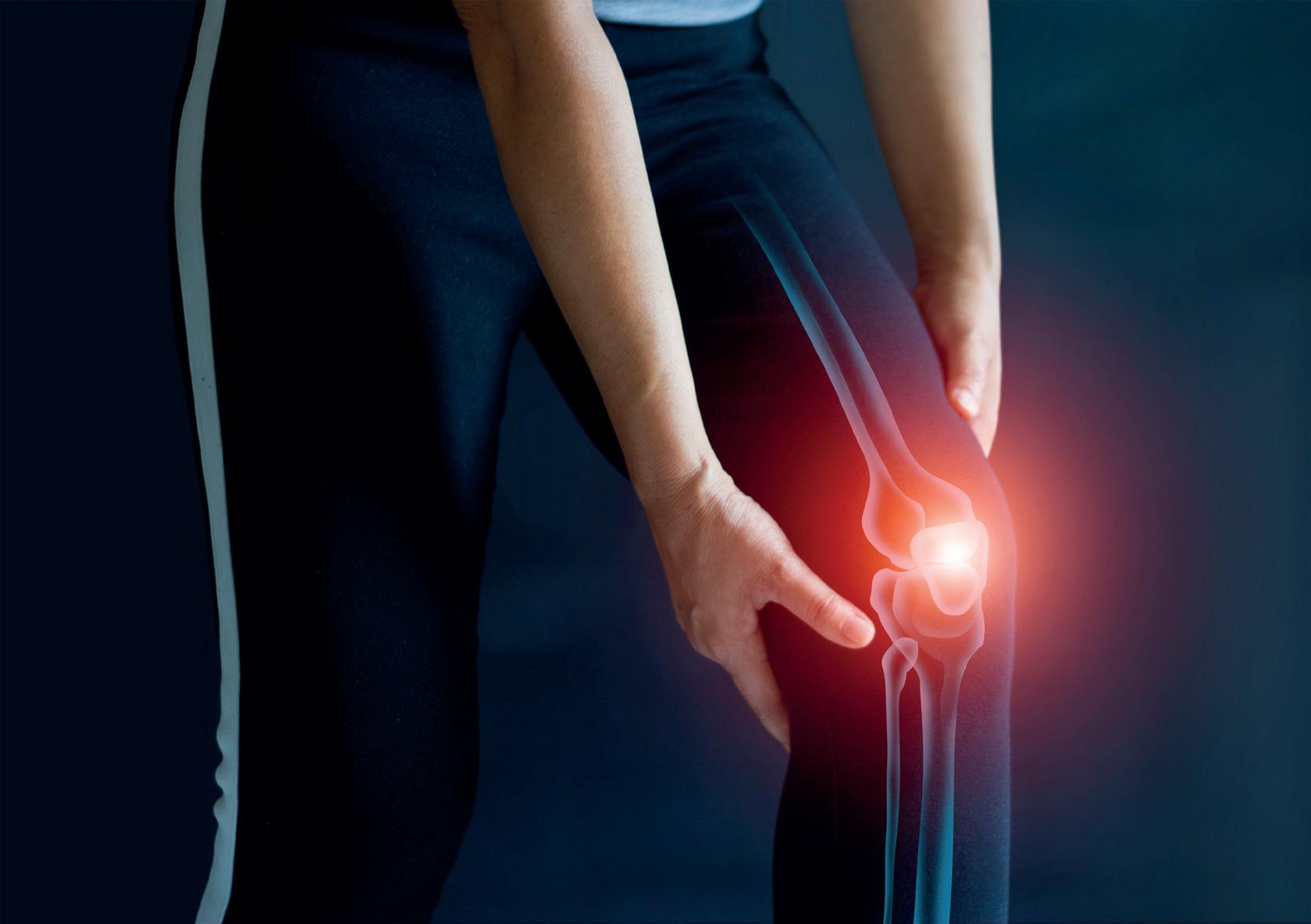
Osteoarthritis (OA), commonly known as ‘wear and tear’ is a normal, age related process that affects the joints. The joint can become painful, which can cause stiffness and affect movement and mobility.
What causes osteoarthritis?
There are many factors that contribute to osteoarthritis:
1 Age: OA usually starts in the late 40s.
2 Gender: OA is more commonly seen in females.
3 Body weight: is a known risk factor for OA.
4 Previous joint injury or surgery: can increase the risk of OA.
5 Genetic factors: having a family history of OA can increase the likelihood of developing the condition.
What are the symptoms?
Common symptoms include creaking (crepitus), tenderness, pain, stiffness, swelling, and a ‘feeling of the knee giving way and/or weakness’
It is common to experience periods of little pain and then have phases of elevated pain. These are commonly known as ‘flare ups’ and can occur as a result of increase in activities or pressure on the knees.
How is osteoarthritis diagnosed?
OA can be diagnosed by your healthcare professional after a detailed assessment. This will include things that make it worse, your medical history and your age. You do not always need an x-ray for this diagnosis.
An x-ray can be used if management beyond physiotherapy is required.
OA tends to develop over time and symptoms can be variable, and the evidence is very clear that what is seen on the x-ray picture does not always relate to the severity of your symptoms.

18786-PH-01
CONTINUED OVERLEAF providephysiotherapy.org.uk PAGE 1 [OF 4]
Knee Osteoarthritis
What is the outlook?
Early on you should be able to manage your condition with simple pain relief medication and and keeping fit, strong and active will help. Not everyones pain gets worse over time and for many people this will be enough. This will allow you to live a very normal life, enabling you to continue with most activities and hobbies.
Management
Weight management
Being overweight can result in up to five times more force being placed on your knees during walking, running and stairs for example. Being overweight and eating a unhealthly diet also increases inflammation in your body which is unhelpful for osteoarthritis. Further guidance on weight management strategies can be found at:
essexwellbeingservice.co.uk
Exercises
Exercise is important as it can help you to lose weight, ease stiffness, strengthen muscles, and enable you to complete activities of daily living. It can also improve mental and social wellbeing. There are two main types of exercises:
Strengthening exercises. It is common to experience the knee giving way or feeling weak. Therefore the aim of strengthening exercises is to improve joint stability and confidence. The exercises in the back of this leaflet are designed to strengthen your muscles.


Aerobic exercises. These come in many different forms, from gentle and fast-paced walking to gardening and swimming. The purpose of aerobic exercise is to improve your general health, lose weight and release hormones such as endorphins which can help with pain relief.
Walking aid
Firstly, ensure you wear supportive footwear with cushioned soles as this can help ease any impact. Walking with a frame or stick can also help ease pressure and further aid mobility. If walking and balance are a problem your health care practitioner may refer you to a healthy balance class.
CONTINUED OVERLEAF PAGE 2 [OF 4] providephysiotherapy.org.uk
Information,
Answers and Self-help Strategies
Knee Osteoarthritis
Pain medication and anti-inflammatory drugs
Speak to your local pharmacist or GP for advice on pain medication to help ease your symptoms. Ensure you take the recommended dosage to gain optimal benefits.
Further management
You may be offered a corticosteroid injection into your knee joint injection by trained doctor or physiotherapist. This aims to help alleviate pain and inflammation. Further information can be given during your appointment.
If the pain starts to significantly impact your day to day life or disturb your sleep then you may want to discuss with your GP or physiotherapist about your suitability for a replacement
Exercises for knee osteoarthritis
As a guide, start with two to three sets of 10 repetitions of each exercise and work through the stages as you progress. When exercising, if zero is no pain, your pain should be no more than a four out of 10. Ensure your pain is not worse the following day as there can sometimes be a delayed response.
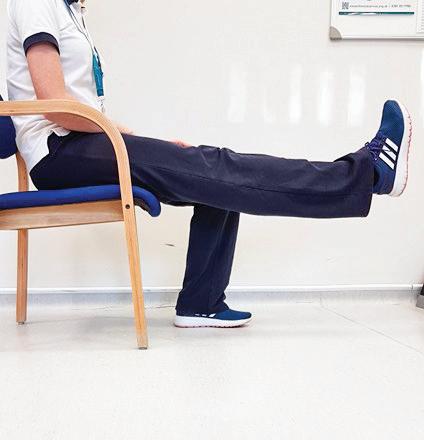
Knee extensions
1 Ensure you are seated comfortably on a chair with your back resting against the support.
2 Slowly straighten the affected leg, holding it for five to 10 seconds and then return to a bent position. Repeat this eight to 10 times.
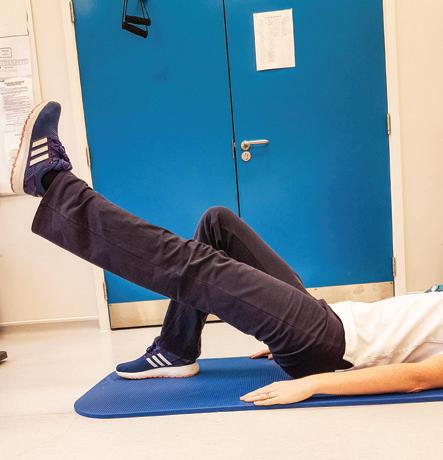
Straight leg raise
1 Lying on your back with the other knee bent and foot on the floor, tighten you thigh muscles in the affected leg and gently raise your leg.
2 Hold for five to 10 seconds and slowly bring your leg back down. Ensure you keep your leg straight throughout.
CONTINUED OVERLEAF
PAGE 3 [OF 4] providephysiotherapy.org.uk
Information, Answers and Self-help Strategies
Knee Osteoarthritis
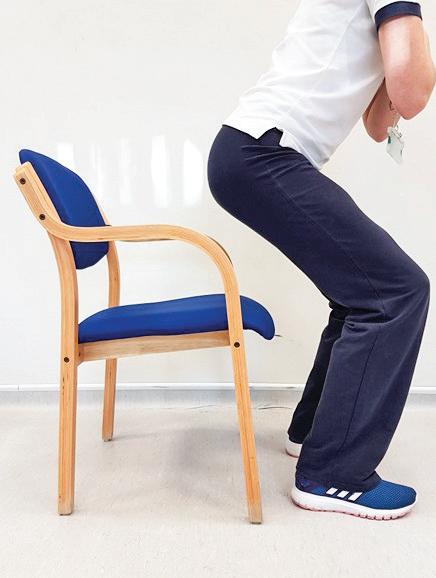
Sit to stands
1 Sit on a chair with your bottom slightly forward.
2 Come up to standing whilst keeping your feet flat on the floor. You may use your hands to push up to start with. Repeat this 10 times.
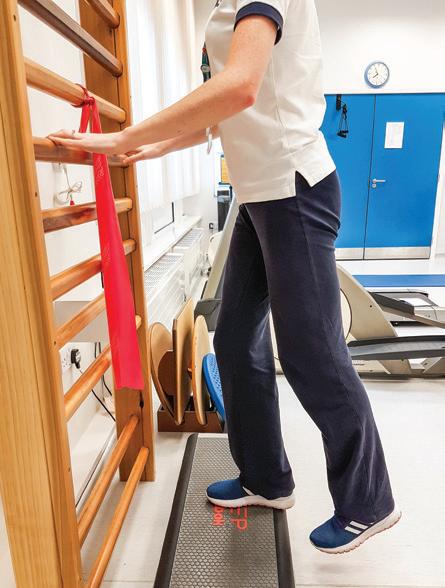
Step ups
1 Holding onto a bannister for support, step up with your affected leg.
2 Slowly bring your good leg down to the floor and repeat the movement. Aim for eight to 10 repetitions.
Further information
‘Managing My Musculoskeletal Health’ information leaflet is available or will be given to you by your physiotherapist if you are unable to access our digital self-management resources.
If you can access online resources, our physiotherapists recommend you use the self-help section of our website for information and support with specific MSK conditions and injuries
Our free NHS Mid and South Essex getUBetter app for an easy, safe and effective way to help you self-manage your MSK condition or injury.
If you feel you still need physiotherapy input, please complete a self-referral to the Physiotherapy team.
If you have any questions please contact the Care Co-ordination Centre on:
QR Links: Managing My Musculoskeletal Health Self-help section getUBetter app Self-referral Follow us on social media: /ProvidePhysiotherapy @ProvidePhysio @ProvidePhysiotherapy
0300 131 0111 provide.askus@nhs.net PAGE 4 [OF 4] providephysiotherapy.org.uk
Information, Answers and Self-help Strategies
