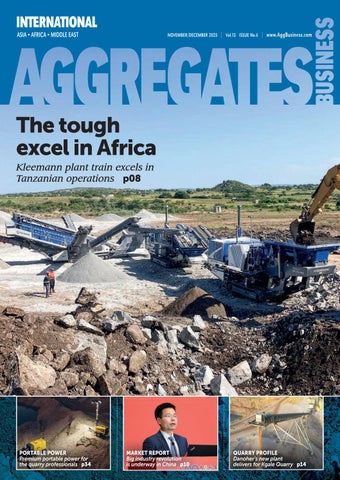
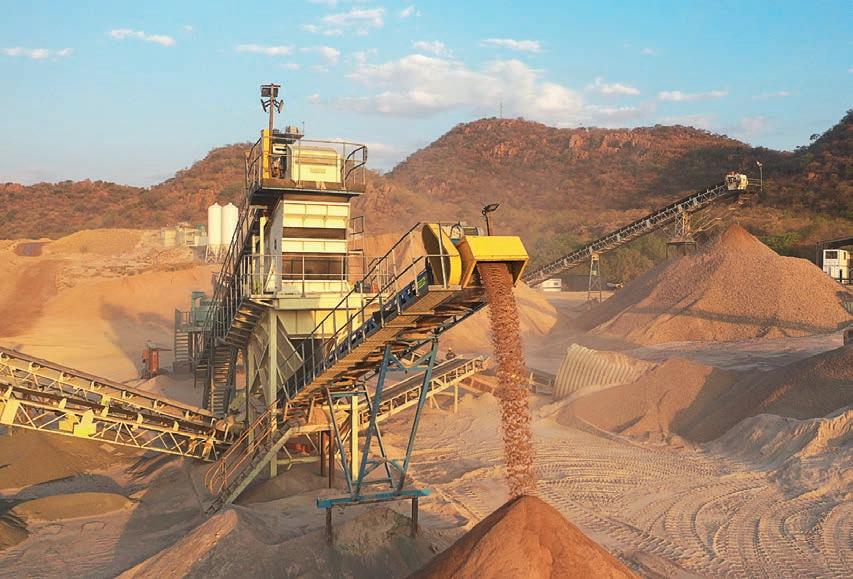
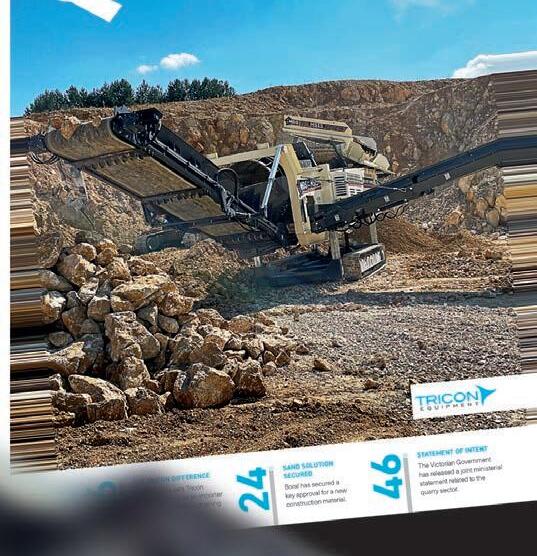
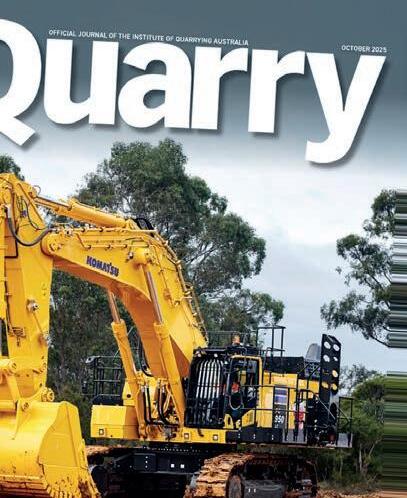
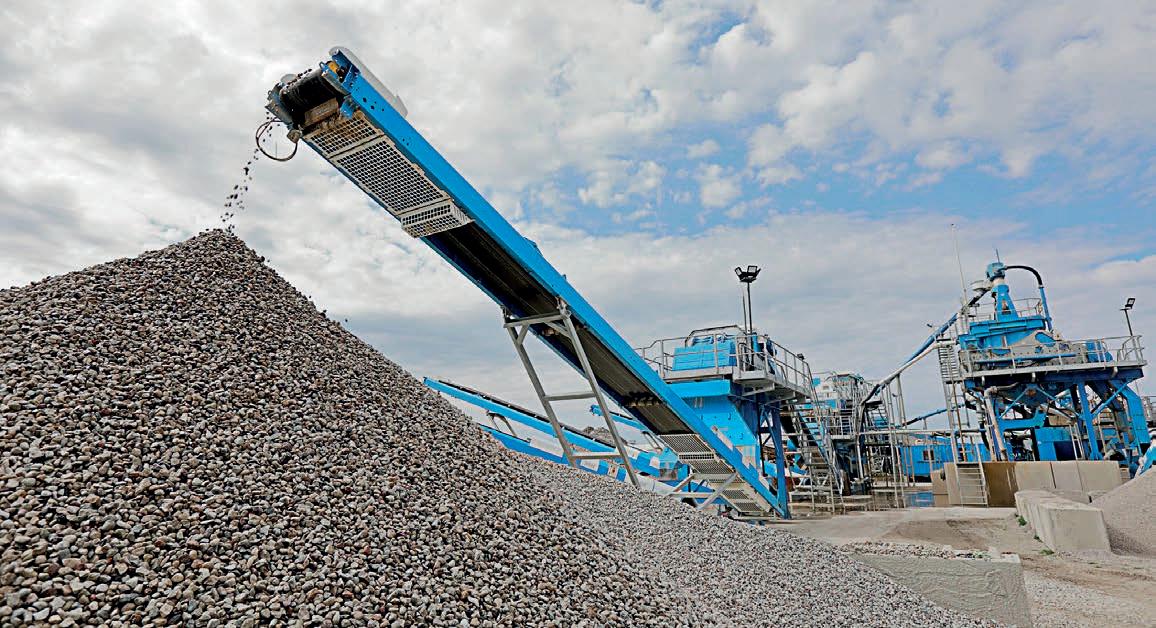
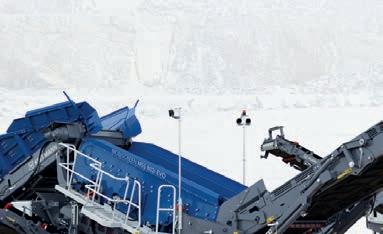
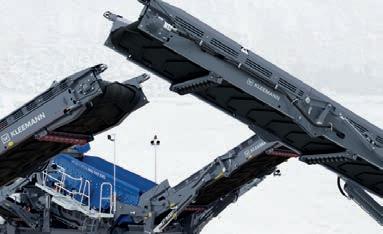
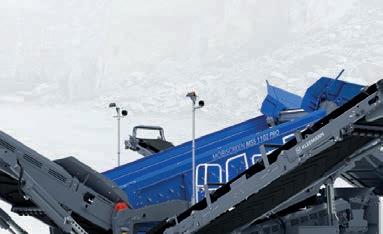
Kleemann plant train excels in Tanzanian operations p08
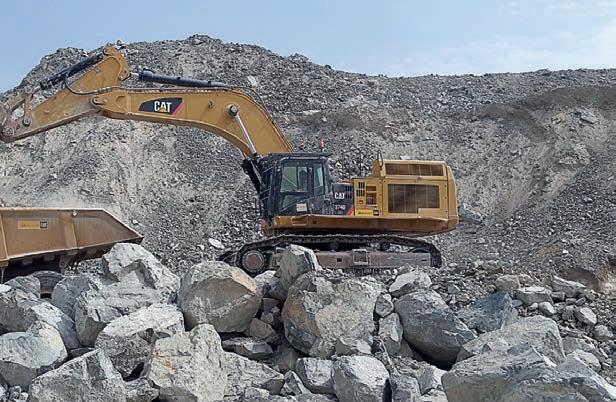
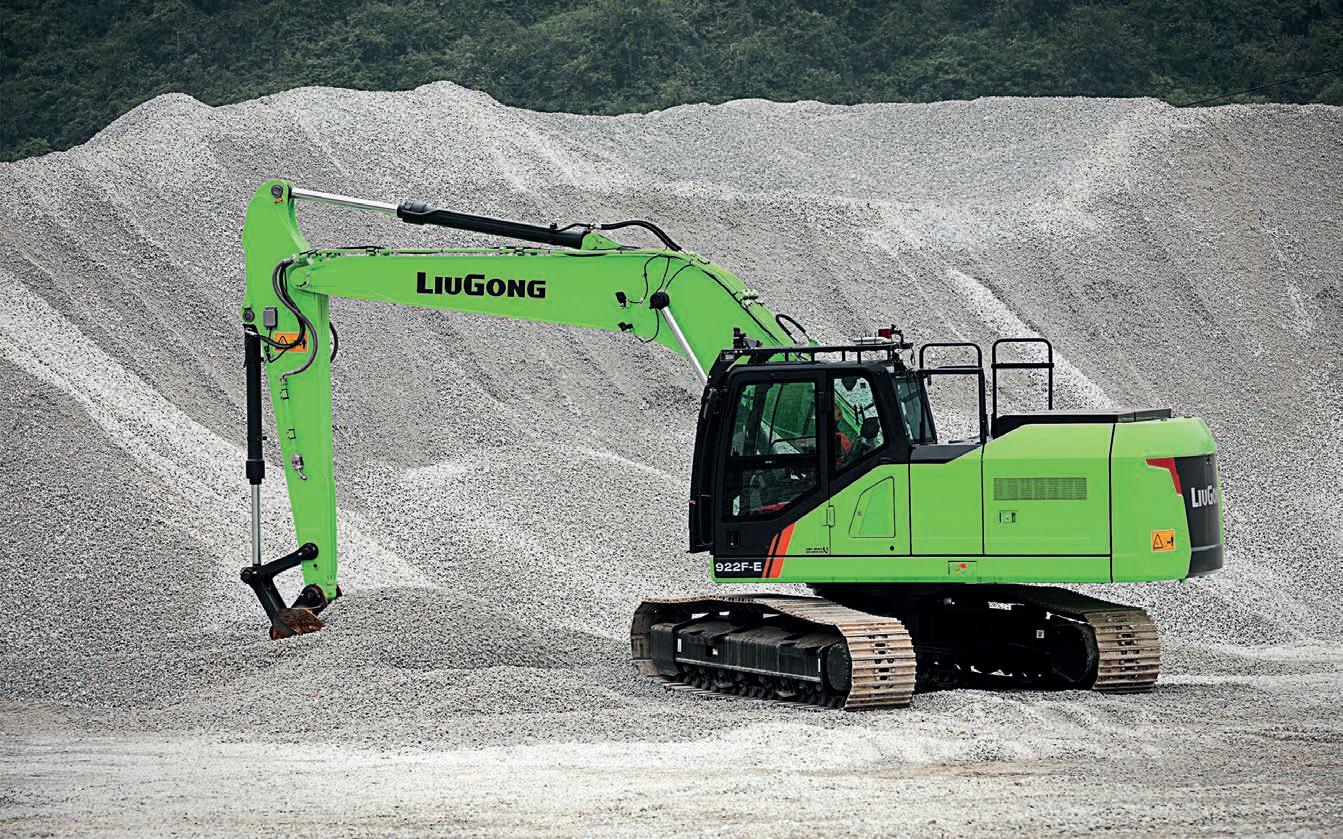
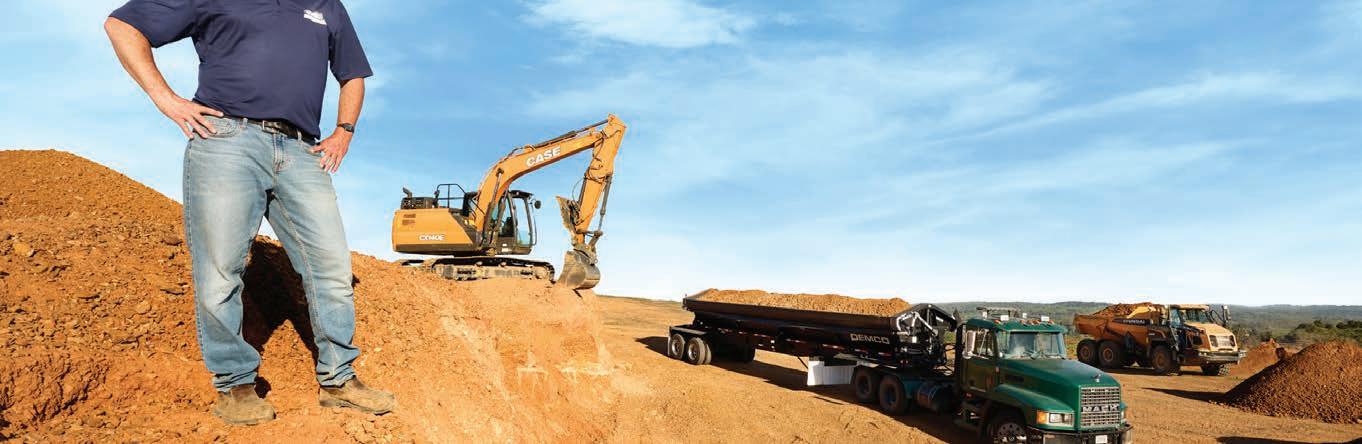
Discover a whole package of value with Cat® Excavators. When you buy a Cat Excavator you’re buying more than a machine. You’re buying a whole package of technology options and support solutions that can help make ownership easy and your business more profitable.
• Technology options to help increase productivity.
• Fuel efficiency solutions to help reduce operating costs.
• Preventive maintenance alerts to help reduce downtime.
• CVA Services Commitment – available exclusively with a Cat Customer Value Agreement. To find out more and explore the range, visit cat.com/wholepackage-amee
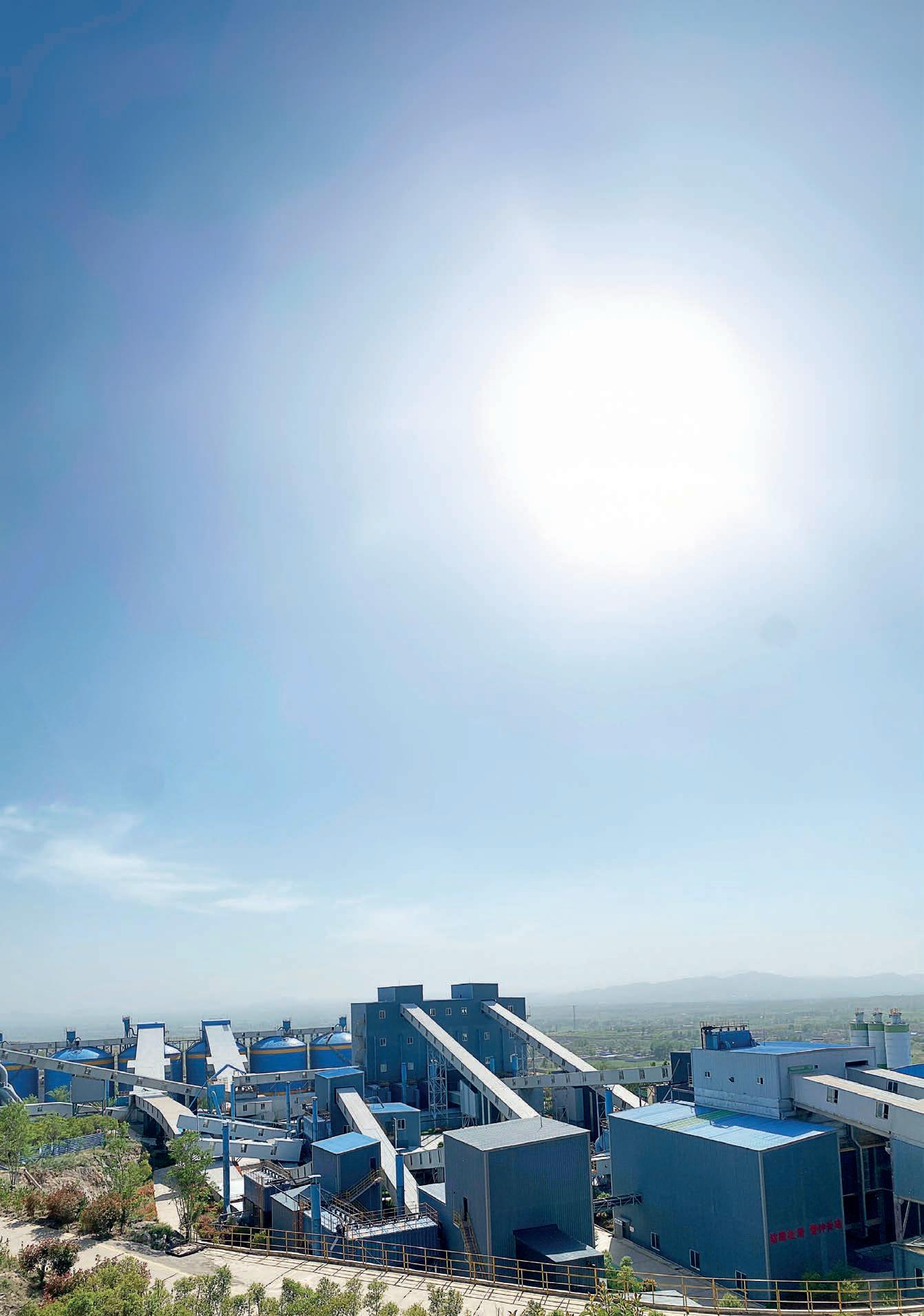
“China's aggregates industry will be fundamentally reshaped by policy drivers, technological innovation, and market forces, evolving towards markedly greener, smarter, and more consolidated operations.”
p10
Regulars
05 COMMENT
Understanding the big need for aggregates in the UAE.
06 INDUSTRY NEWS
All the news from the global quarrying and aggregates sector.
50 EVENTS
All the key events in the quarrying and aggregates world.
08 COVER STORY
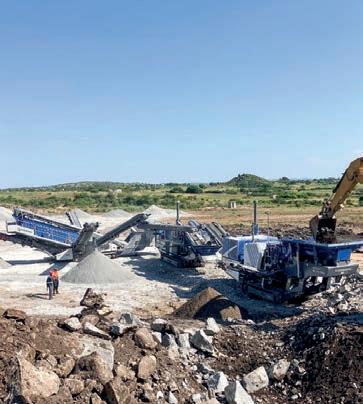
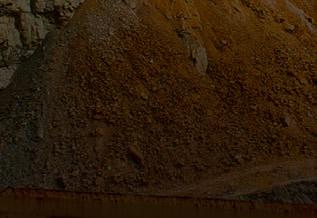
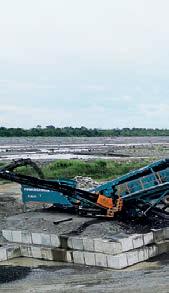
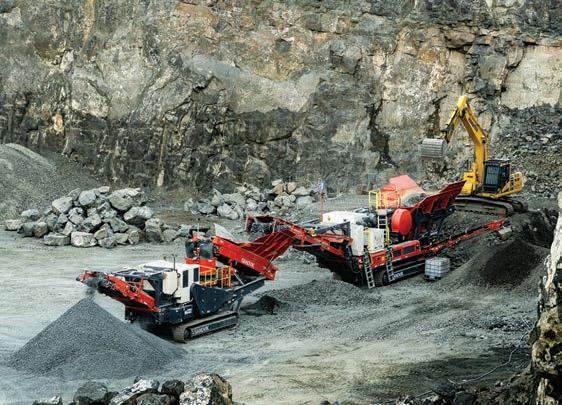
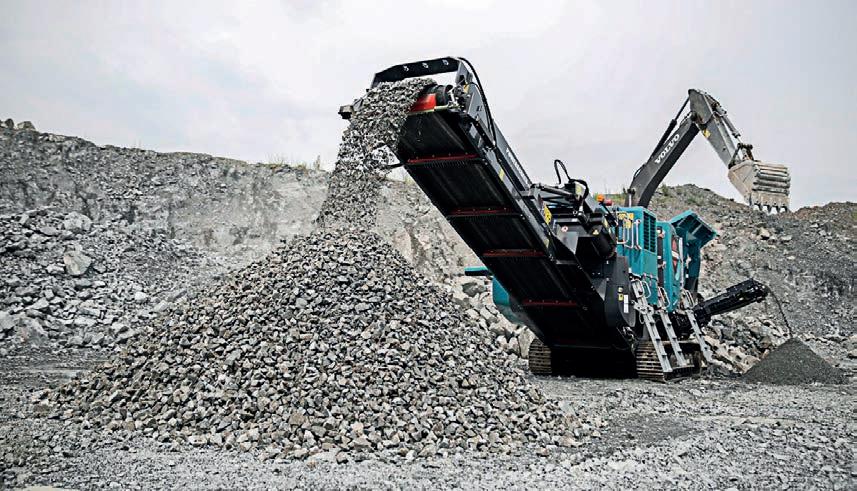
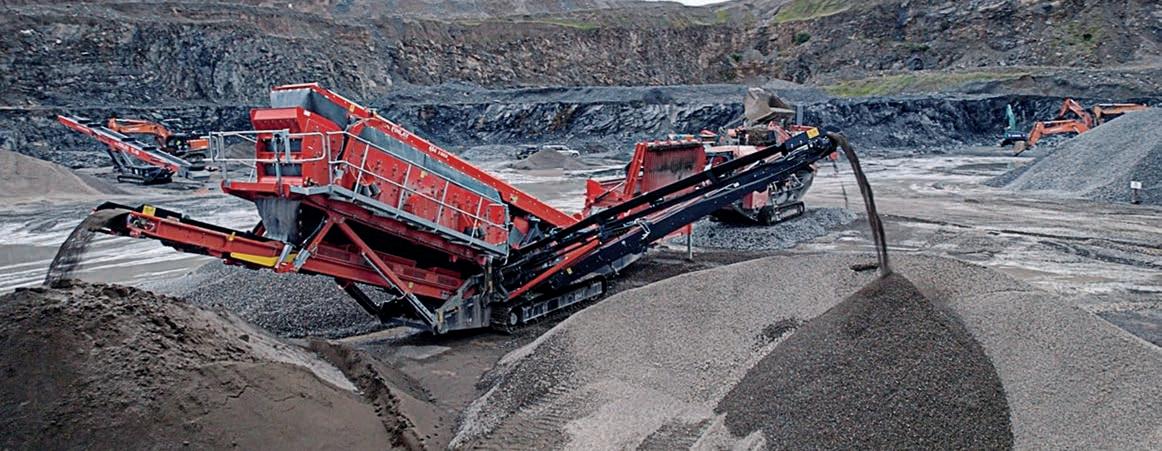
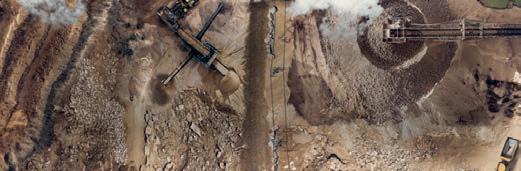
A Kleemann plant train is excelling after being put to work hard at work in a Tanzanian granite quarry.
10 MARKET REPORT
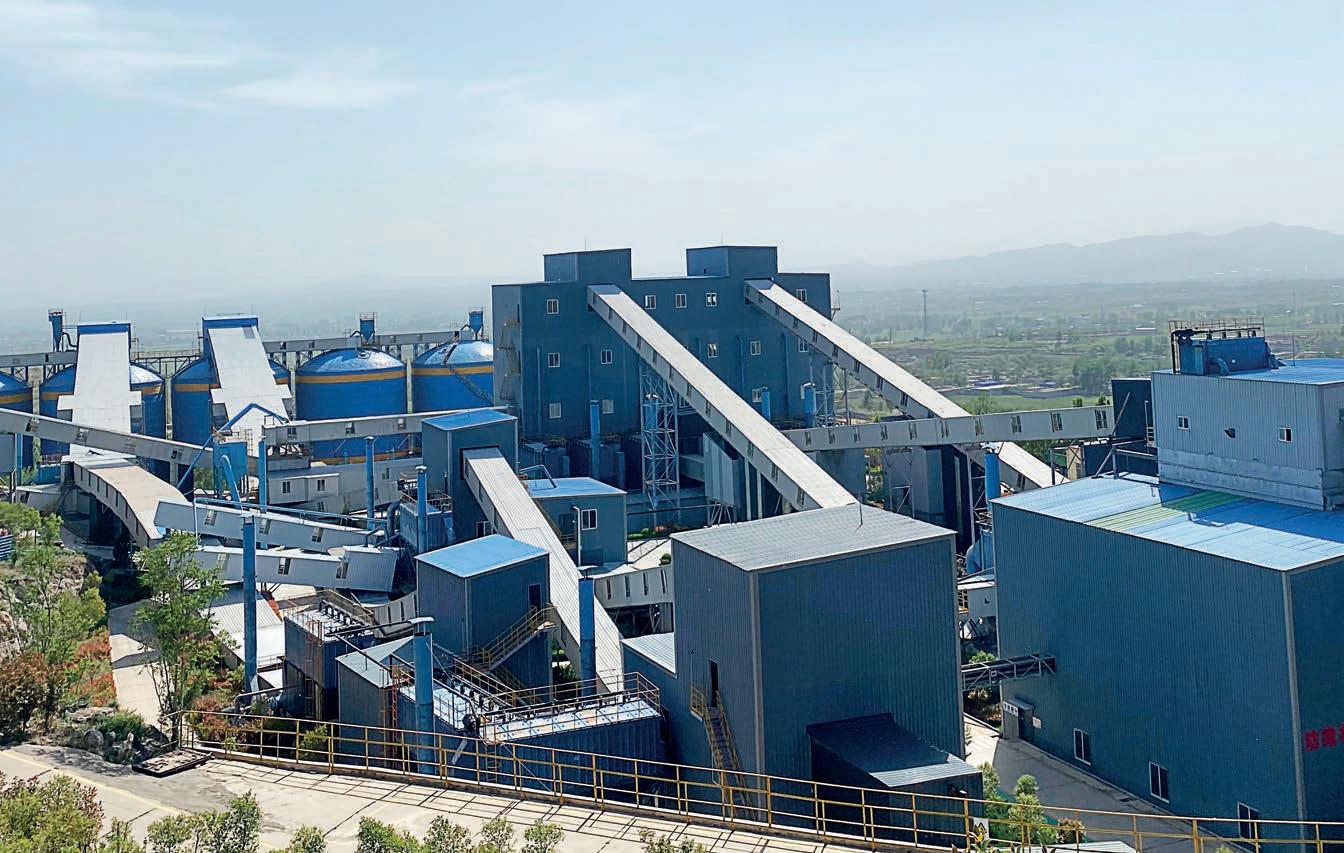
China’s aggregates industry has spent the last decade transitioning to a greener, more technologically minded approach to business.
14 QUARRY PROFILE
Danoher has committed a large capital investment into a new processing plant for its Gaborone-based Kgale Quarry.
16 CHINA AND INDIA REPORT
The demand for heavy construction equipment in East Africa's construction market has drawn the interest of Chinese and Indian original equipment manufacturers.
Features
20 INTERVIEW
José Antonio Cabrera shares his thoughts on his key leadership role and Cemex EMEA’s future trading and sustainability goals.
24 MCLANAHAN
The family-owned McLanahan Corporation seeks to increase its market share in the global quarrying and mining equipmentsector.
26 CRUSHING AND SCREENING
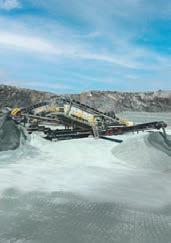
Crushing and screening innovations are advancing rapidly through the adoption of electric plants and new product releases.
28 CATERPILLAR
Caterpillar showcases how its 966 XE and 972 XE wheeled loaders can support high production rates for quarrying customers.
30 LOADING
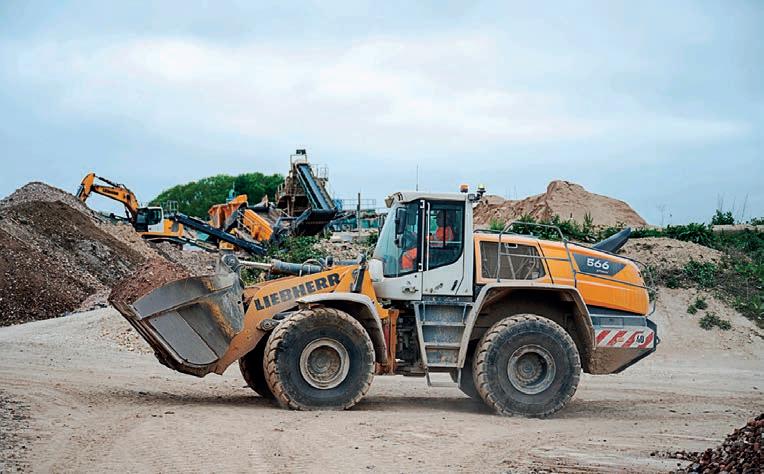
From the release of new wheeled loaders to successful customer applications, the market for quarry loading machines has been lively.
32 HAULING
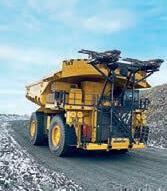
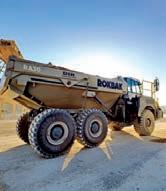
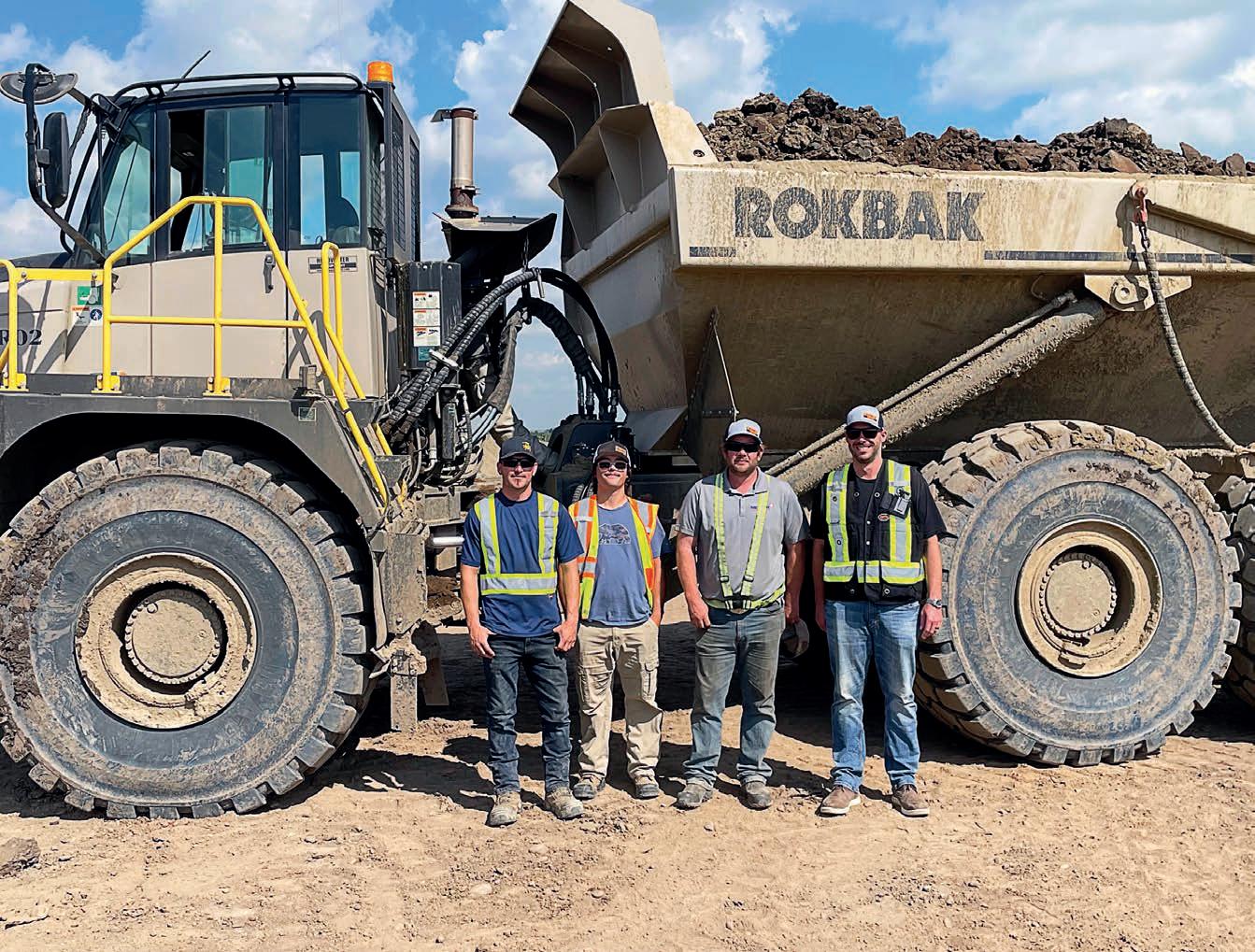
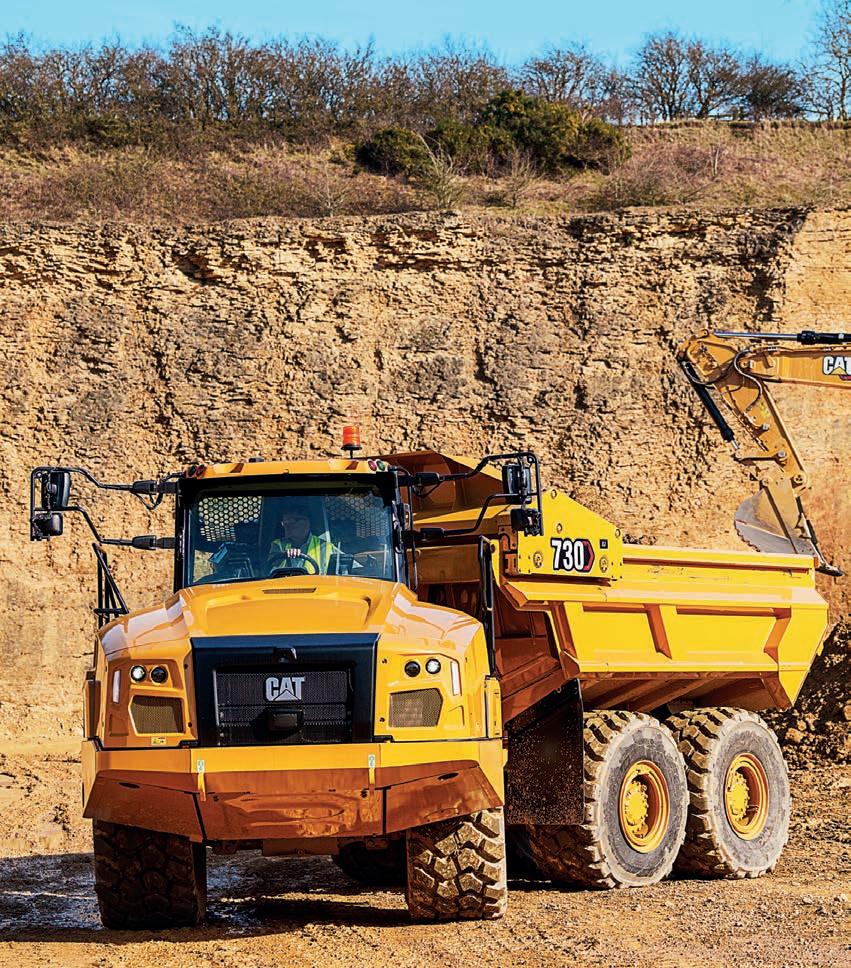
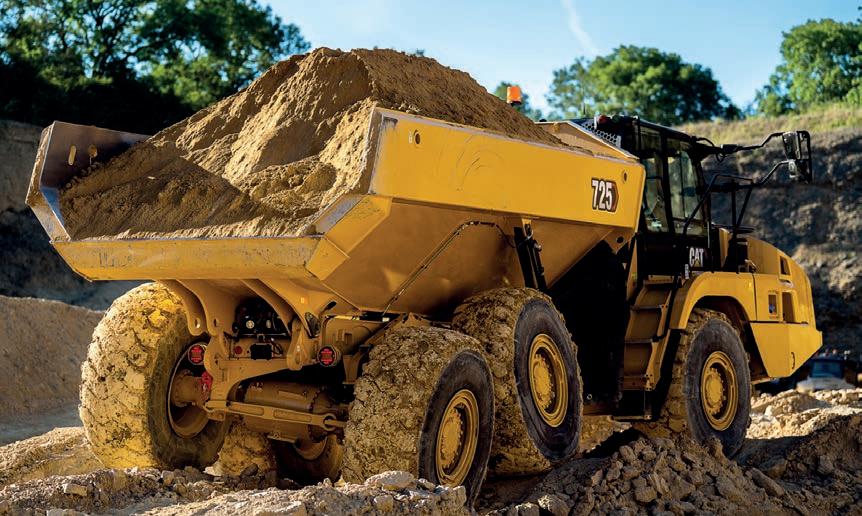
Articulated dump trucks are the workhorses of many quarrying and aggregates operations, and their importance is growing through innovations.
34 PORTABLE POWER
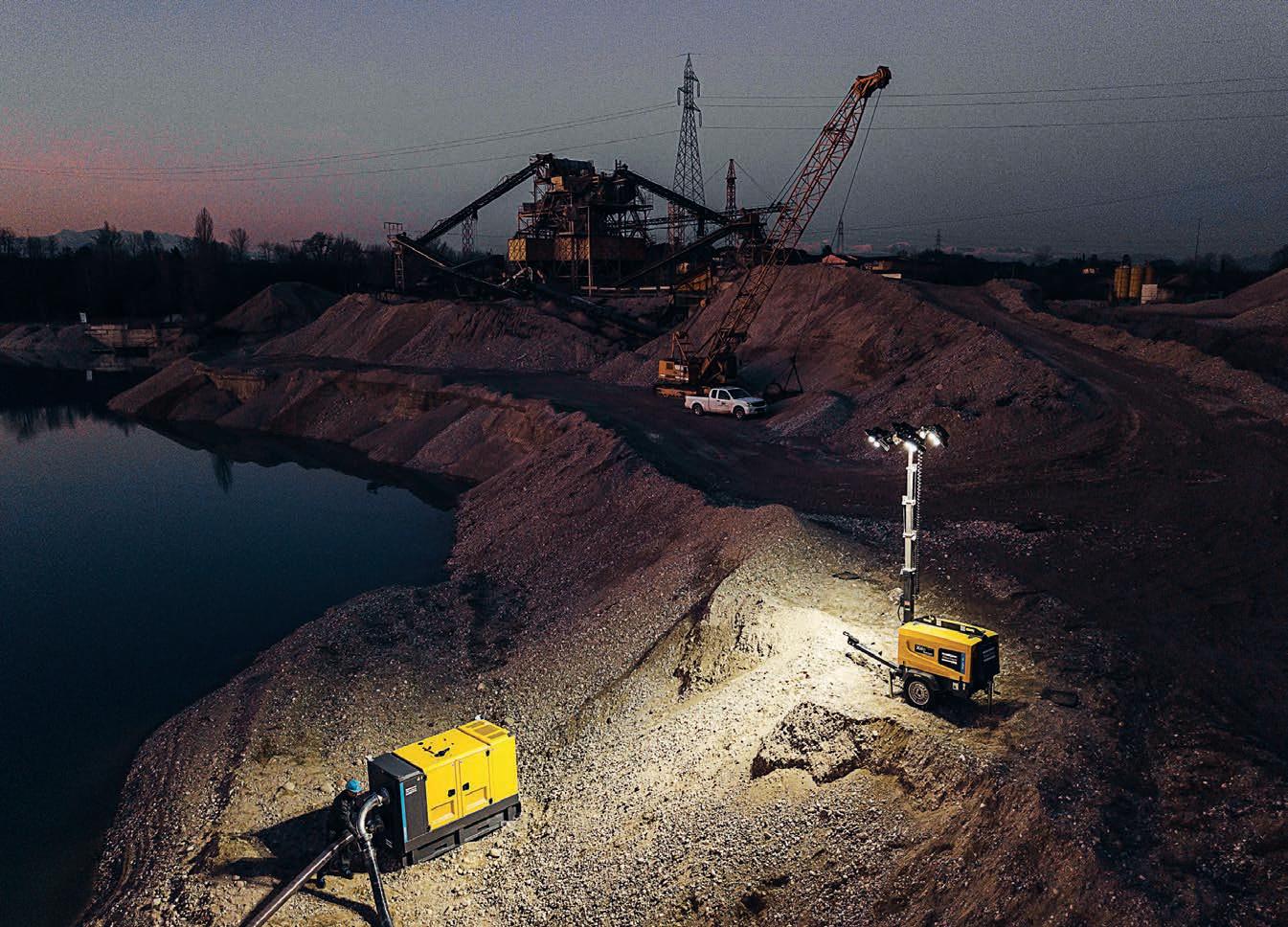
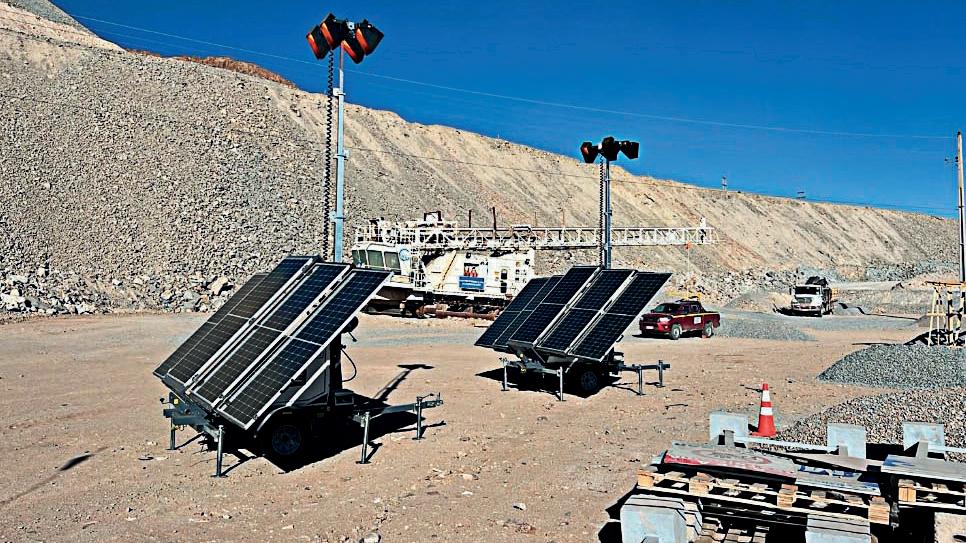
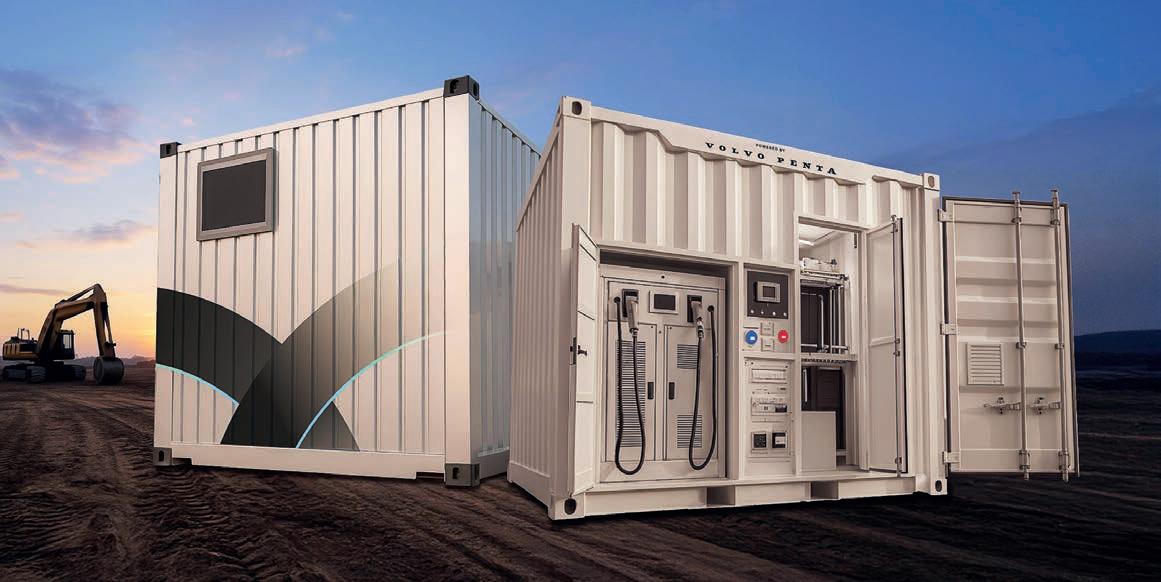
Atlas Copco is playing a key role in the development and construction of mining and infrastructure.
37 ENGINES
40 CFLO
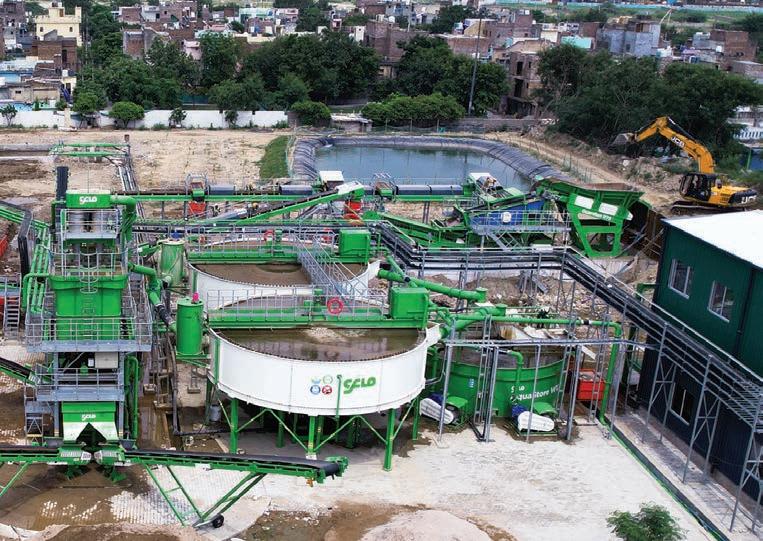
42 CDE
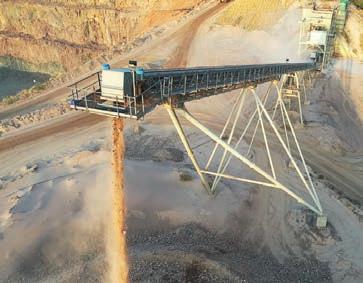
COVER STORY: A Kleemann plant train is excelling after being put hard at work in a Tanzanian granite quarry. Image: Kleemann
Across the global sector, engine manufacturers have announced a series of major improvements and innovations.
CFLO showcases a breakthrough patented innovation for the sand and mineral processing sector.
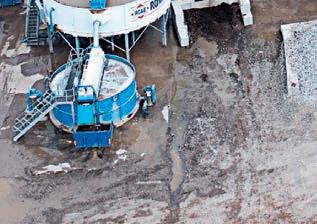
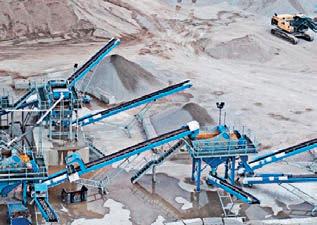
How CDE has supported Roma Grus’ sustainable construction practices in Gotland, Sweden.
44 SUSTAINABLE POWER
CHALLENGE
Steve Nendick continues his examination of the sustainable o -highway machinery power challenge
48 HOLCIM
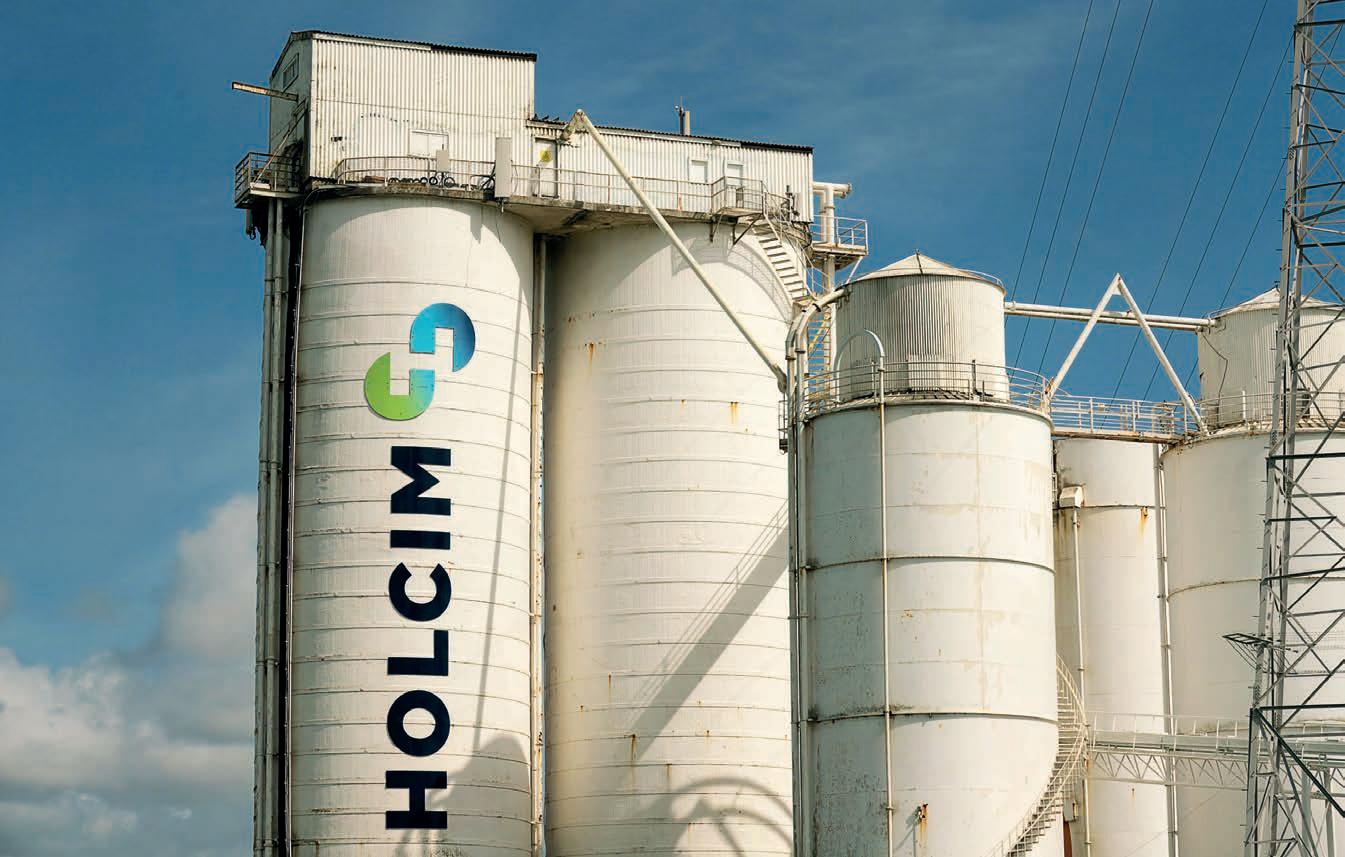
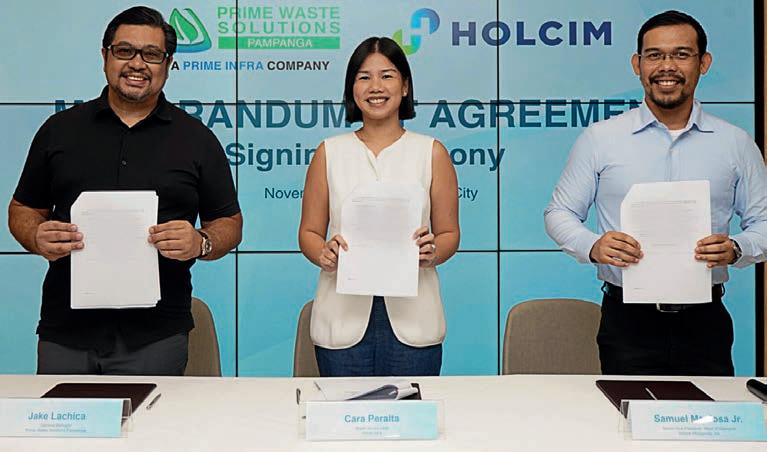
Holcim has announced a series of new enviromental targets across key European sites.
PNG
HEAD OFFICE
Prime Global Publishing
Capitol Square 4–6 Church Street Epsom, KT 17 4NR
EDITOR
Guy Woodford +44 (0) 7879 408 069 guy.woodford@primeglobalpublishing.com
ASSISTANT EDITOR
Adam Daunt adam.daunt@primeglobalpublishing.com
BUSINESS DEVELOPMENT MANAGER
Les Ilyefalvy +61 423 177 966 les.ilyefalvy@primeglobalpublishing.com
No part of this publication may be reproduced in any form whatsoever without the express written permission of the publisher. Contributors are encouraged to express their personal and professional opinions in this publication, and accordingly views expressed herein are not necessarily the views of Prime Global Publishing. From time to time statements and claims are made by the manufacturers and their representatives in respect of their products and services. Whilst reasonable steps are taken to check their accuracy at the time of going to press, the publisher cannot be held liable for their validity and accuracy.
PUBLISHED BY Prime Global Publishing
AGGREGATES BUSINESS USPS: is published six times a year.
PRINT: ISSN 2051-5766
ONLINE: ISSN 2057-3405
PRINTED BY: Warners (Midlands) PLC
TGUY WOODFORD
The big UAE need for aggregates
he phrase ‘strength in numbers’ came to mind as Jim O’Brien highlighted the United Arab Emirates’ (UAE) construction sector outlook at the Global Aggregates Information Network (GAIN) eighth annual meeting in Córdoba, Spain (19-21 October 2025).
Drawing on data and analysis contained in a recent report by Stevin Rock, a world-renowned quarrying company that has been operating since 1978 in the emirate of Ras Al Khaimah, O’Brien, GAIN’s founder and convenor, told meeting attendees that nearly US$875 billionworth of projects were planned or underway in the UAE, making it the second largest projects market in the Middle East North Africa region after Saudi Arabia.
Further enhancing the market’s appeal to global and regional aggregate producers is the fact that, having maintained robust economic growth in 2024 and thus avoiding the impact of the broader global economic slowdown, the UAE is implementing a range of structural reforms and making targeted investments to diversify its economy. Stevin Rock’s report cites the example of Abu Dhabi, an emirate that is allocating $10 billion towards infrastructure for tourism.
Along with tourism, Stevin Rock also cites real estate and transportation as key drivers of the UAE’s economic growth. The company notes that the UAE’s gross domestic product (GDP) rose four per cent in 2024, while the International Monetary Fund has forecast 5.1 per cent growth in 2025, with the UAE planning to increase its GDP to AED 3 trillion by 2031. Stevin Rock reports the construction industry is vital to achieving these eye-catching objectives. Given its critical role in the supply chain, the aggregates sector will be just as, if not even more, important.
The report also quoted Currie and Brown’s analysis, noting that the UAE was set to face two to ve per cent cost escalations in 2025, owing to the increased number of public infrastructure development schemes, such as the UAE high-speed rail, Dubai Metro Blue Line extension, the Sheikh Zayed Housing Programme, Expo City Dubai and the 2050
Energy Strategy. Another ongoing megaproject is the signi cant expansion of Dubai’s Al Maktoum International Airport.
O’Brien noted that Stevin Rock is introducing a new crushed sand to the UAE market that meets ASTM C33 speci cations for aggregates. The latest product, sourced from high-quality limestone quarried by Stevin Rock, is said to offer greater sustainability by reducing reliance on natural dune sand. It is also said to set a ‘new benchmark’ for engineered sand in the region, while providing export potential and the regional adoption of ASTMcompliant materials.
In collaboration with Ecocem and UAE contractors, Stevin Rock is also focused on sustainable concrete innovation through concrete mix trials, replacing 20-30 per cent of Ordinary Portland Cement with high-purity limestone nes. The trials were said to be a success, with the concrete mix achieving “all required compressive strength, workability, and durability benchmarks” . It was said to offer “comparable 28-day compressive strength to conventional mixes”, with the new sustainable concrete mix also offering 25 per cent lower CO2 emissions per m³ of concrete. In its GAIN annual meeting-disclosed report, Stevin Rock said the new greener concrete mix is ‘ready for deployment in UAE megaprojects and precast applications’.
A late-2023 trip with Caterpillar gave me a rst-hand appreciation of the UAE’s booming infrastructure development. Accompanied by Cat UAE dealer Al-Bahar, we visited Power International’s Al Tawyeen Quarry in Fujairah. This high-grade, low-silica limestone site is home to an extensive Cat machine eet. At the time, nearly 70 per cent of Al Tawyeen’s annual production was for export customers in India, Bangladesh, and neighbouring Gulf Cooperation Councilcountries, including Qatar and Kuwait. Two years on, Al Tawyeen is seven years into a 50-year quarrying licence, with a quarriable reserve of over 450 million tonnes. Based on Stevin Rock’s insightful UAE market report, I’m sure the impressive site is busier than ever. GW guy.woodford@primeglobalpublishing.com
bauma for Saudi
Messe München is continuing its global growth strategy after announcing the inaugural edition of bauma Saudi Arabia, scheduled for April 2027 in Riyadh. This international offshoot of the one of the world’s leading trade fairs for construction machinery and mining will be launched in the Kingdom of Saudi Arabia in cooperation with dmg events as exhibition organiser and local project partner. Both companies have signed a Memorandum of Understanding to this effect.
It is agreed between both parties that editions of the Big 5 Construct Saudi Arabia will focus on construction materials, building design, and t-out from 2027 onwards.
It has also been con rmed that bauma Saudi Arabia will focus on construction machinery and vehicles, building material machines, and mining machines.
With its ongoing reform program, Vision 2030, Saudi Arabia is positioning itself as one of the most major growth markets in the Middle East.
A key focus lies on strategic investments in infrastructure projects. The construction sector alone is expected to reach around €130 billion in volume by 2030.
As the country relies heavily on imported goods, this creates ideal conditions for bauma and its clientele. As one of the world’s leading exhibitions for machinery, technologies, and
with investors and decisionmakers from business, politics, and academia.
Sandvik Rock Processing expands African offering
Sandvik Rock Processing is accelerating its growth across Africa by combining an expanded product portfolio with a sharper focus on its customers by delivering integrated solutions from a single point of contact.
“By bringing together stationary and mobile crushing, vibrating screens, screen media and attachment tools like rock breakers, we can address diverse operational requirements while streamlining customer engagement,” Sandvik Rock Processing vice
president of sales area Africa Tarynn Yatras said.
A key growth area has been mobile crushing and screening equipment, with demand rising from both mining operations and infrastructure projects. The appointment of Sandvik Rock Processing's South African distributors in 2024 has strengthened service coverage.
“We have focused on bundling recommended spares with each unit and ensuring service capability is available from day one,” Yatras said.
The versatility of mobile units makes them ideal for giving exible crushing and screening options based on customer needs and enabling rapid on-site crushing solutions for contractors.
Innovation is further driving interest, with the rst electricpowered Sandvik mobile crusher scheduled for delivery in Africa by the end of this year.
“Electric and hybrid [electric and diesel] units are attractive to operations investing in cleaner electric-powered solutions”, Yatras said.
“They help reduce emissions, reduce the total cost of ownership and offer simpler, more ef cient maintenance than diesel engines.”
The company has also elevated its approach to attachment tools in mining, making rock breakers a strategic component of its solutions portfolio rather than an ad hoc add-on. These tools are now applied across a range of scenarios – from xed booms at crusher feeds to mobile in-pit use after blasting.
Supporting this broader offering is a strong technical
capability that is embedded across the entire lifecycle of the equipment. By positioning technical expertise closer to operations, dedicated resources are focused on training, competence development, process optimisation and customer audits. In one project, for example, Sandvik Rock Processing developed 25 different ow sheets, ultimately meeting the customer’s objectives with four fewer crushers than expected , which cut capital and operating costs.
“This enables deeper application analysis and more precise solution speci cation, reducing total cost of ownership,” Yatras said.
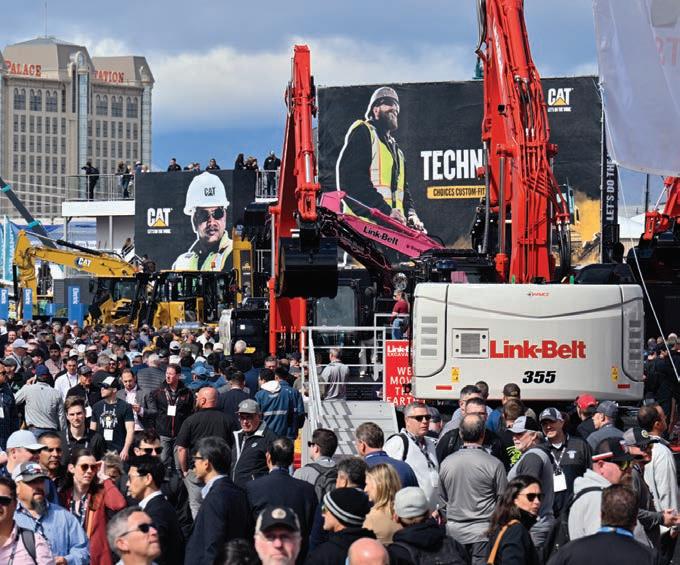
services in the construction and mining sectors, bauma connects international suppliers
bauma Munich 2025 attendees entering the show from Eingang Ost.
Image: Messe München
Sandvik mobile crushing plants in action.
Sandvik Rock Processing vice president for sales area Africa Tarynn Yatras.
Images: Sandvik Rock Processing
Volvo CE completes SDLG stake sale
Volvo Construction Equipment (Volvo CE) has nalised the sale of its stake in China-based Shandong Lingong Construction Machinery Co (SDLG).
Volvo CE has sold its ownership of SLDG to a fund that is predominantly owned by Lingong Group (LGG) for SEK 8 billion (approximately 6 billion RMB).
“The transaction is expected to have a positive effect of approximately SEK 1 billion on operating income as of closing, subject to currency uctuations,” Volvo CE said in a statement.
“Going forward, Volvo CE will be targeting focused customer segments in China and enhancing its utilisation of the Chinese supplier ecosystem.”
Volvo CE had announced its intention to divest its stake earlier this year. It followed the company's decision to adjust its market strategy.
The company will continue to pursue its customer segments in China through its premium products and services.
“SDLG has served us well since 2006. However, with increasing competition and the need to transform to new technologies as well as strengthen interaction with customers, we need to re-focus,”
Volvo CE chief executive of cer Melker Jernberg said.
“China remains an important market for us, and we aim to capitalise on our opportunities by focusing on sustainable solutions in targeted segments. We also plan to leverage the excellent industrial system in China.”
MCCLOSKEY OPTS FOR PRIME EQUIPMENT & SUPPLY IN INDIA
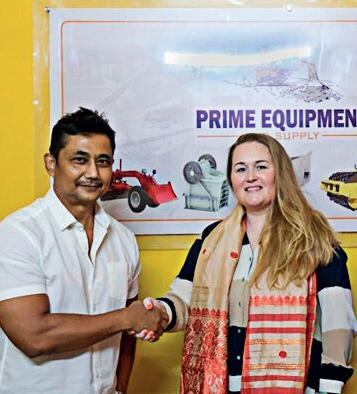
McCloskey International has appointed Prime Equipment & Supply as an authorised dealer partner in India. This strategic partnership marks a significant step in McCloskey’s commitment to expanding its footprint in the rapidly growing Indian market.
MAGNA appoints Kurimoto as Japanese dealer
MAGNA, the Terex brand established to meet the needs of large-scale operations, has appointed Kurimoto as its o cial distributor in Japan.
This appointment marks MAGNA’s first entry into the Asian market and reflects a shared commitment to delivering robust, high-performance machinery tailored to the demands of modern industry.
Founded in 1909 and headquartered in Osaka, Kurimoto brings over a century of manufacturing experience to its representation of MAGNA. According to the Terex brand, Kurimoto’s deep industry expertise makes them uniquely positioned to sell and support the MAGNA range of high-output solutions for mining, aggregates, recycling, and large-scale contracting across Japan.
The agreement adds MAGNA to Kurimoto’s growing portfolio of Terex brands, which already includes Finlay and MDS. This expansion reinforces Kurimoto’s role as a trusted provider of world-class machinery and positions MAGNA to serve Japanese customers with localised support, technical expertise, and a commitment to longterm performance.
“Kurimoto’s reputation for engineering excellence and [its] deep understanding of Japan’s industrial landscape
make them an ideal fit for MAGNA,” MAGNA business line director Neil McIlwaine said.
“Their ability to deliver tailored solutions across diverse sectors will mean that MAGNA equipment is deployed where it delivers the greatest impact, whether in highvolume recycling, precision aggregate processing, or demanding mining operations.”
Prime Equipment & Supply, with its strong industry experience and deep market knowledge, will provide sales, service, and support for McCloskey’s product range across key regions in India, including Arunachal Pradesh, Assam, Manipur, Meghalaya, Mizoram, Nagaland and Tripura.
“India represents a key growth area for McCloskey and partnering with Prime Equipment & Supply allows us to deliver enhanced value and support to our customers in the region,” McCloskey International sales lead Kush Pare said.
Prime Equipment & Supply will o er McCloskey’s lineup of crushers, screeners, and stackers. McCloskey International is also investing in dedicated service infrastructure and training programs to ensure seamless customer support in the region.
“India is a rapidly evolving market with tremendous potential, and we’re excited to strengthen our presence through this partnership,” McCloskey International sales director Jane Halfpenny said.
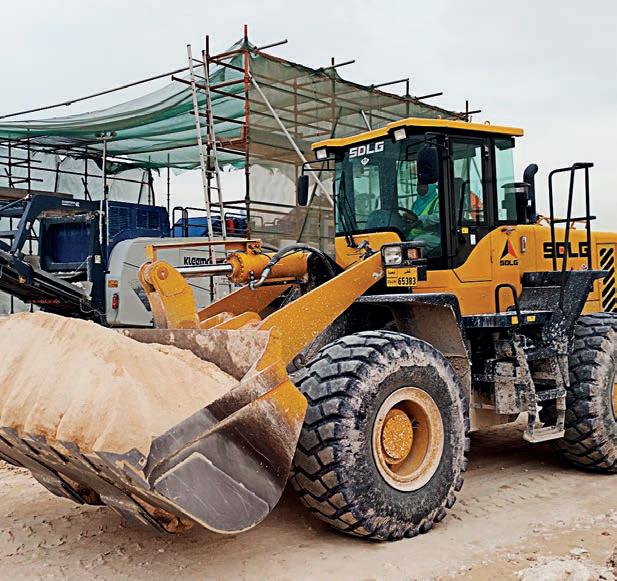
An SDLG LG958L wheeled loader at work for Qatar-based Al Maram International.
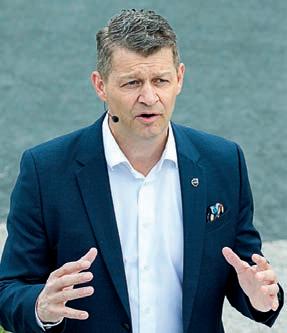
Volvo CE CEO Melker Jernberg. McCloskey sales director Jane Halfpenny (right) meeting the team at Prime Equipment & Supply.
Image: McCloskey
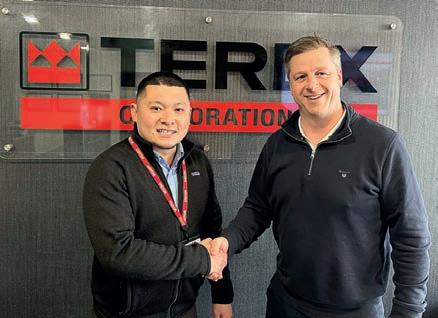
Kurimoto general manager Masashi Nakamura and MAGNA business line director Neil McIlwaine.
Trusted in Tanzania
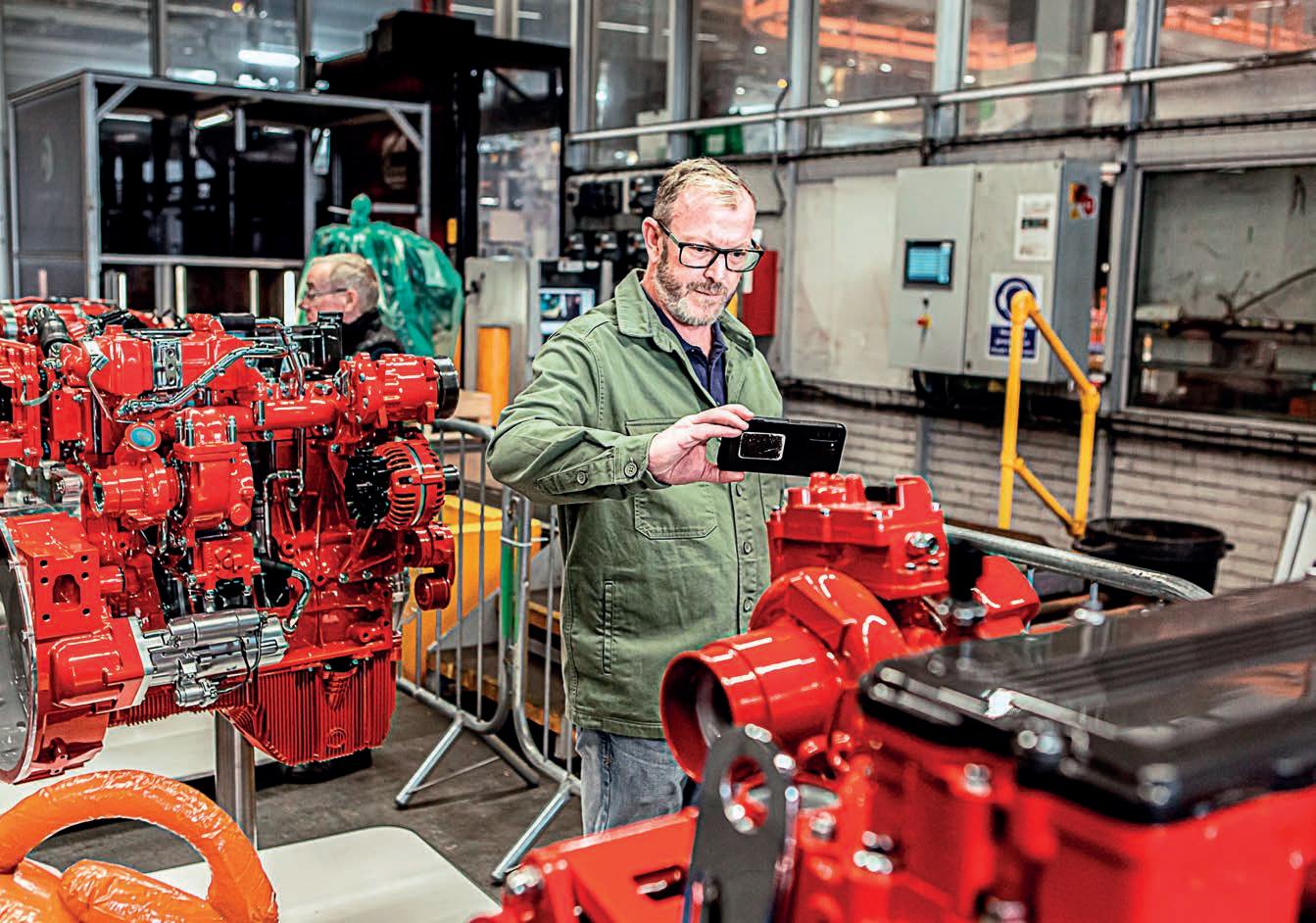
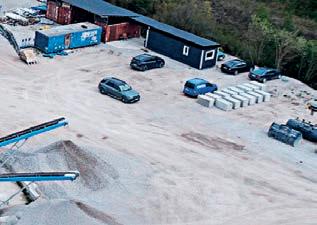
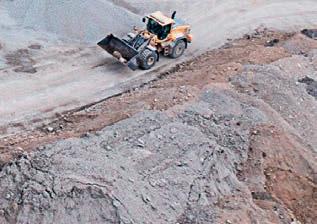
Three Kleemann plants are excelling in an African granite quarry deep into the Tanzanian hinterland following an arduous journey.
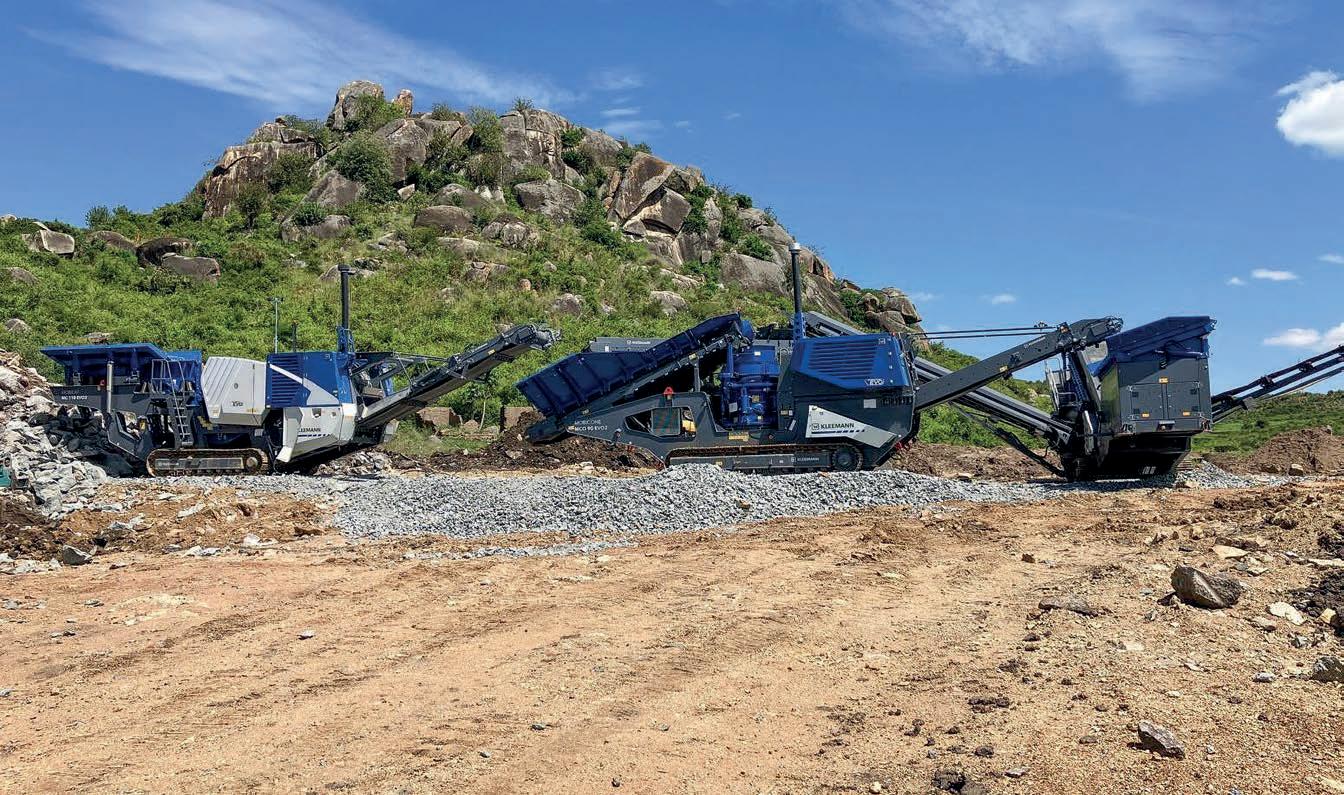
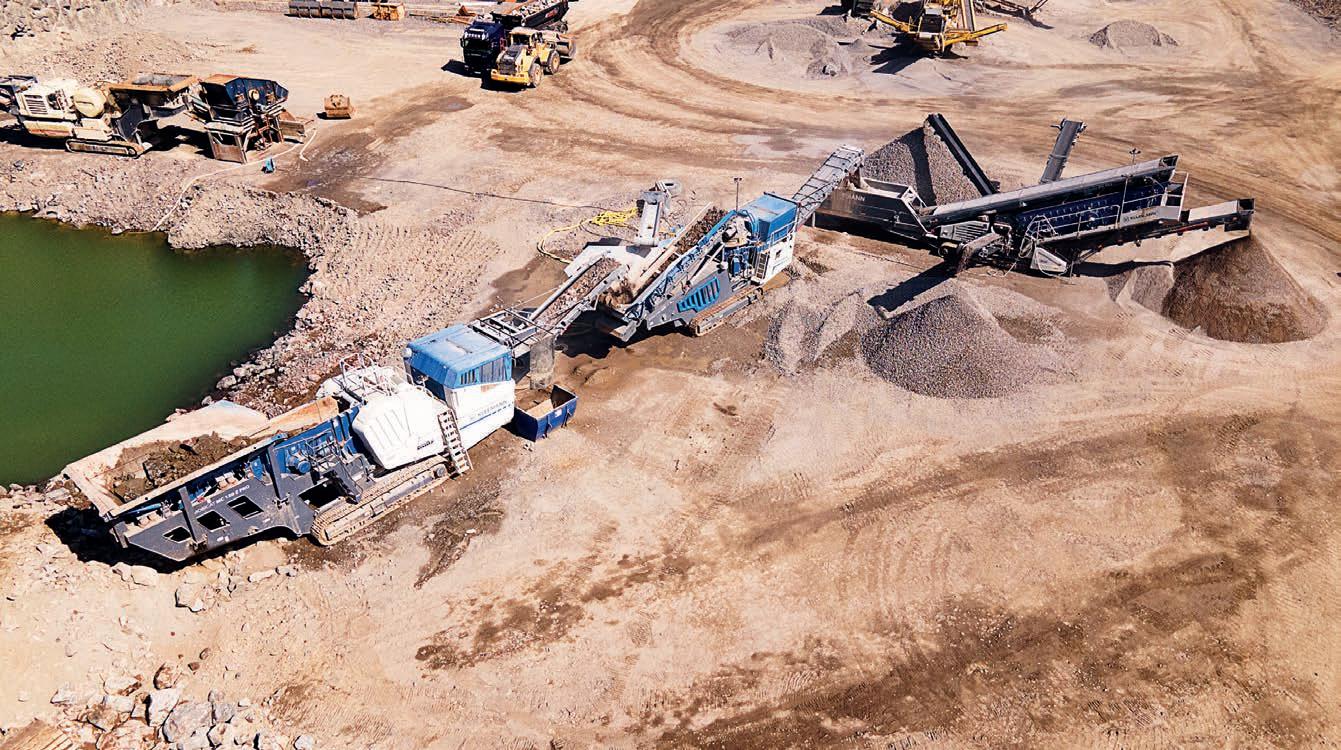
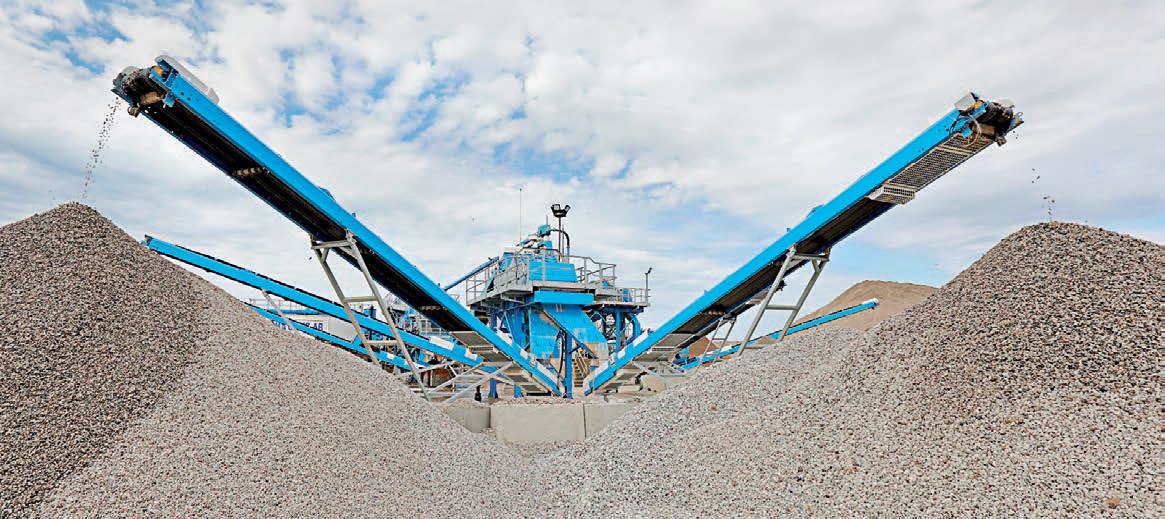
After an extraordinary journey, three Kleemann plants – a MOBICAT MC 110 EVO2 jaw crusher, a MOBICONE MCO 90 EVO2 cone crusher and a MOBISCREEN MSC 953 EVO classifying screen – are now hard at work as a line-coupled plant train in an African granite quarry.
The Kleemann machines started their long journey to Africa on board a ship from Europe to the port of Dar es Salaam in Tanzania. After clearing customs, the journey continued on low-loaders, by rail and, nally, deep into the Tanzanian hinterland on ten kilometres of unmetalled roads.
Their destination was a newly developed quarry located around 40 kilometres from Mwanza on the shore of Lake Victoria, where granite is processed to support key infrastructure projects.
“Transporting the plants was a truly unusual and arduous task that showed just how important compact mobile plants are,” Kleemann area sales manager for Africa Markus Hofmann said. “Thanks to their compact dimensions, all the machines were able to be loaded and transported relatively easily. That was a real advantage here.”
The jaw crusher MOBICAT MC 110 EVO2 handles the pre-crushing of the hard granite feed material with edge sizes of up to 500 milimetres (mm). In the next step, the Kleemann cone crusher produces ner grain sizes and shapes them. A downstream classifying screen then produces three graded nal products: 0–6mm, 6–10mm, and 10–18mm, with other variants also being made according to customer requirements.
The three-plant train processes up to 150 tonnes of material an hour and does it all with impressively low fuel consumption. On average, the MC 110 EVO2 requires only 12 litres of diesel per hour, and the MCO 90 EVO2 only 19 litres.
The classifying screen is also extremely fuel-ef cient with a consumption rate of 16 litres per hour.
Smart line coupling ensures that all machines in the plant train operate smoothly and seamlessly during the crushing and screening process. In the event of over lling or malfunctions, each machine signals this to its upstream and downstream neighbours. Crusher utilisation is optimised with the aid of the continuous feed system.
The use of this machine feeding concept reduces wear and maximises output, according to Kleemann. Smart line coupling also increases safety as all machines are stopped as soon as an emergency stop is initiated anywhere on the plant train.
Kleemann expert Jerry Muchiri, who accompanied the project in Tanzania, said the smart line coupling was critical to the plant’s success.
“Smart line coupling is one of the important features of the plant train,” he said.
“Thanks to the automated processes, our customers can count on considerably
higher production and signi cantly less maintenance.”
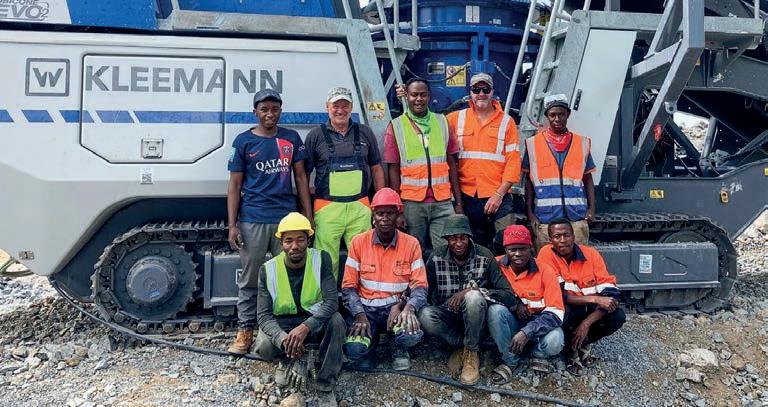
The intuitive SPECTIVE operating system from Kleemann makes operating the new plant train easy for all users. A Kleemann service technician spent ten days at the African quarry commissioning the plant train and providing intensive training for the operating crew. Sasco Trading owner Sabasi Shirima said Kleemann, and the Wirtgen Group, have been reliable partners for his business.
“Our employees found their bearings very easily. The training was intensive, but very easy to understand – and operating the plants afterwards was really straightforward,” he said.
“We know that we will not be left alone with questions in the future, which is a very good feeling.” AB
A Kleemann service technician spent ten days at the quarry commissioning the machines of the plant train and providing intensive training for the operating crew.
The Kleemann plant train in operation.
Images: Kleemann
Eyes on the East African prize
The demand for heavy construction equipment in East Africa's construction market has drawn the interest of Chinese and Indian original equipment manufacturers.
The East African heavy construction equipment market is experiencing growth, driven by increased infrastructure development, including railways, roads, ports, and new housing units to accommodate the region’s growing urban population.
This boom in the construction industry is projected to drive East Africa’s construction compound annual growth rate of four to six per cent over the next ve years, according to various market research reports. This is already piquing the interest of Chinese and Indian construction equipment manufacturers and suppliers, who are investing heavily in response to this growth.
In turn, the growing presence of Chinese and Indian heavy construction equipment manufacturers, and their innovative market approaches, are transforming East Africa's construction equipment sector.
Chinese and Indian equipment suppliers have been establishing regional hubs to increase their market share. The surging demand for construction equipment has led several Chinese and Indian companies to sign strategic partnerships with local suppliers to expand their regional footprint and consolidate market share.
Customer preferences are also shifting. In Kenya, as in other East African countries, the increasing adoption of technologically advanced construction equipment is driving market growth as customers seek eco-friendly and sustainable solutions.
The interest in the East African construction equipment market was strongly on display at the 26th edition of Buildexpo Kenya in Nairobi earlier this year.
The major regional event brought together construction equipment dealers from 43 countries.
The exhibition showcased the latest equipment, including crushers and earthmoving equipment, as well as material handling equipment such as cranes, telescopic boom lifts, tippers, and wheeled loaders.
Some of the most notable in the market include PL International, an Indian-based equipment supplier that has several equipment dealerships in the region.
PL International general manager Ronak Goswami told Aggregates Business International that the company has signed several dealership agreements with brands such as Ammann Apollo, Conmat, and Lonking.
Goswani said the dealerships enable the company to supply a wide variety of equipment, including specialty equipment like stationary concrete batching plants, mobile concrete batching plants, and concrete self-loading mixers.
“The partnerships with several brands enable us to effectively supply equipment across the entire value chain, such as road and asphalt equipment, which includes asphalt plants, soil compactors, pneumatic tyre rollers, asphalt pavers and other light compaction equipment like walk-behind roller, tamping rammers, and forward plate compactors,” he said.
“We have also secured a dealership with Conmat, an Indian company that manufactures concrete equipment like stationary concrete batching plants, mobile concrete batching plants, concrete self-loading mixers, transit mixers and concrete pumps.”
Goswami told Aggregates Business International that the company has signed dealership agreements recently with several other brands, including Ammann Apollo.
He said the dealership agreement with Ammann Apollo, a Swiss-based company, enables PL International to source new equipment and spare parts from Ammann Apollo’s manufacturing units in India, Germany and the Czech Republic.
Goshwani said that PL International has a signed a dealership agreement with Sinoboom.
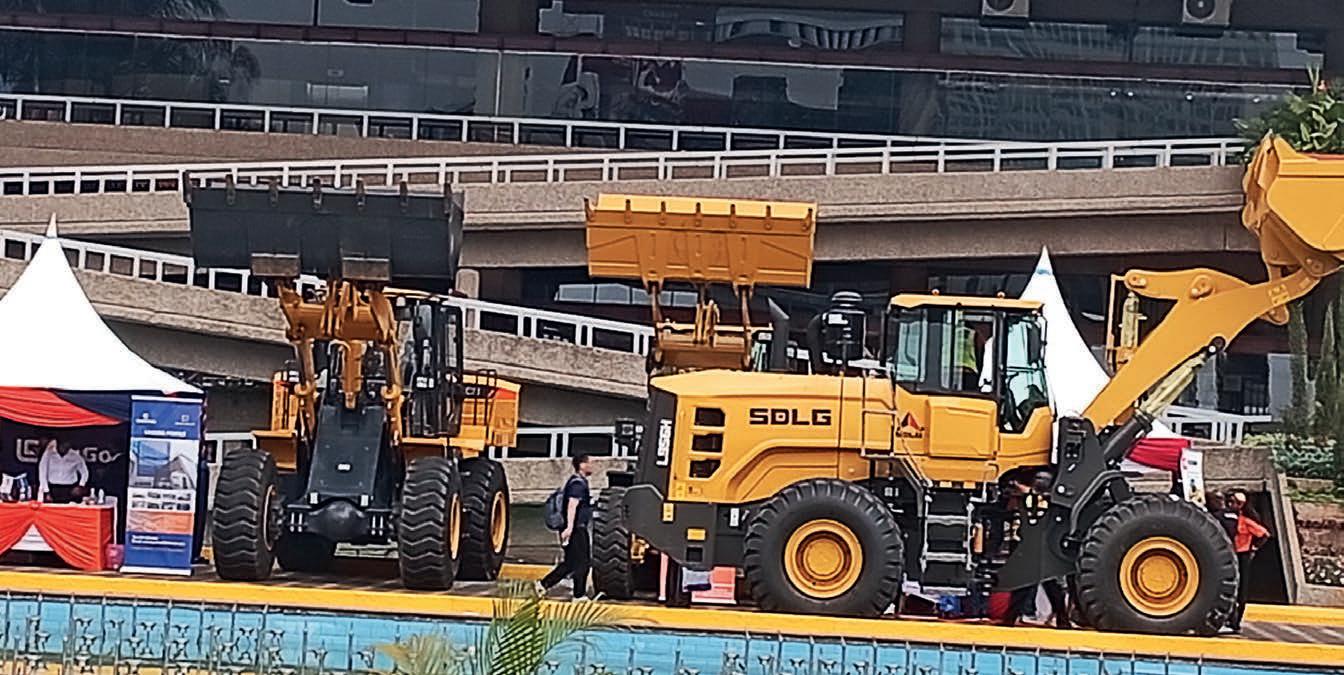
An SDLG wheeled loader (right) on show at a Kenyan o -highway equipment industry event.
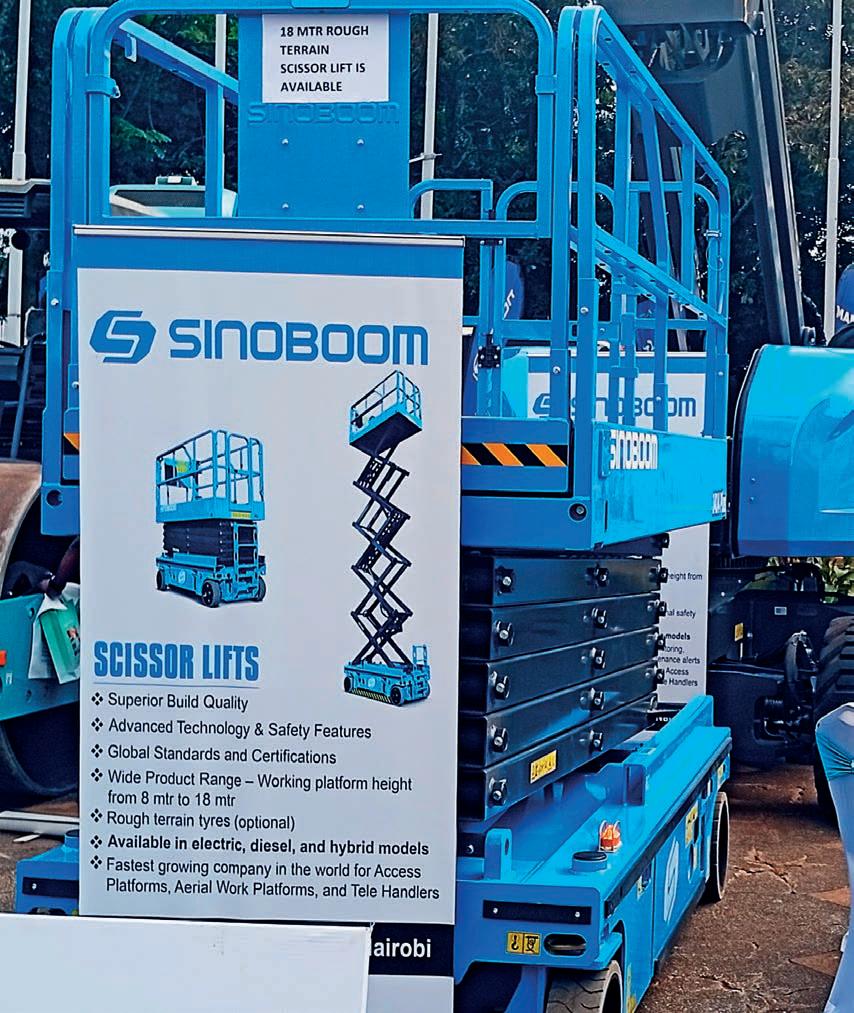
Sinoboom is a Chinese manufacturer specialising in access platforms, including telescopic boom lifts, articulated boom lifts, scissor lifts, and telehandlers.
Given the nature of East Africa’s construction equipment market, industry players believe that companies with strong strategic partnerships with local players and technological advancements will easily penetrate and dominate the market, as customers increasingly adopt eco-friendly and cost-effective technological innovations.
“To stay a oat in the dynamic equipment market, we focus on advanced technology, fuel ef ciency, durability and localised support to stay ahead,” Goswami said.
Industry players anticipate high construction activity, particularly in the quarry and aggregates sector, where crushers, wheeled loaders, excavators, and haulage machinery are expected to play a signi cant role.
Goswami said that to capitalise on anticipated increased activity in the quarry and aggregates segment, they have signed a dealership agreement with Lonking. Lonking is a major Chinese manufacturer of earthmoving equipment, including excavators, wheeled loaders, motor graders, backhoe loaders, and bulldozers
“This equipment, speci cally the wheeled loaders and excavators, is widely used in the quarries, which gives us an upper edge in the market to capitalise on the quarry segment,” he said.
A Sinoboom scissors lift displayed on the PL International stand at Build Expo in Kenya.
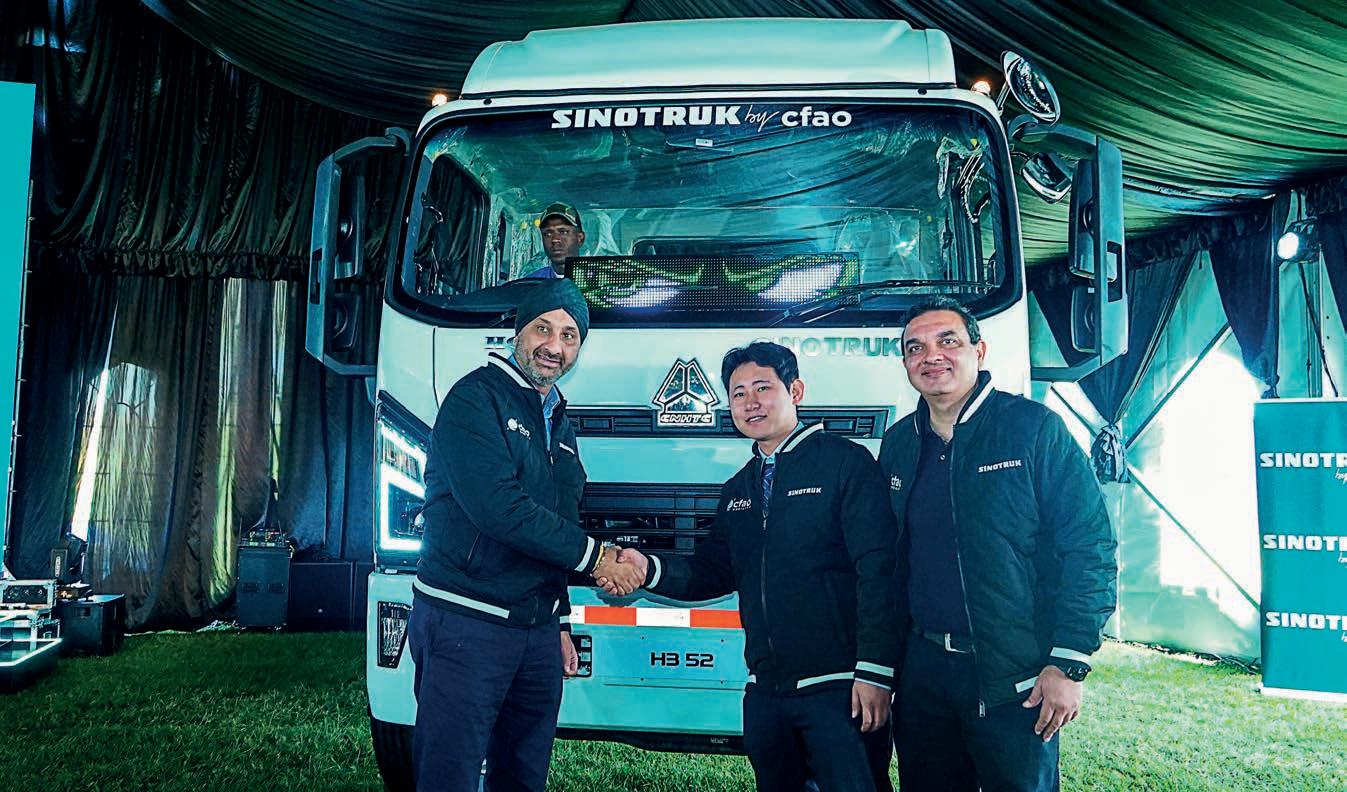
Sinotruk general manager Sarfraz Premji (left) with CFAO management during the launch of a strategic partnership.
While the sector is projected to grow substantially soon, the industry faces its fair share of challenges, including logistical headwinds that continue to impede the importation and distribution of equipment across the region.
Goshwani said that despite the region’s growth potential in construction equipment, several bottlenecks are hindering steady growth.
“The sector is facing logistics funding coupled with high import duties, inconsistent customs policies and spare parts access,” he said.
The market's growth is expected to be concentrated in areas undergoing
urbanisation and industrialisation which will facilitate the need for more infrastructure.
The continued adoption of advanced construction techniques and technologies is also expected to drive demand for specialised equipment over the long-term.
In the East African region, where industry players expect increased quarry and mining activities, demand for fuel-ef cient machines such as wheeled loaders, excavators, crushers, and dump trucks is expected to play a major role as companies seek to cut costs and optimise production. In recent years, the region has also witnessed erce rivalry between Chinese and Indian rms competing for market share in the transport segment.
Some of the Chinese and Indian companies who have a presence in the transport segment, including trucks, tippers, and dumpers, are Sinotruk, Tata Holdings, and LiuGong, which already have of ces in the East Africa.
Sinotruk, a Chinese equipment supplier known for its trucks in the tipper and prime mover segments, has signed a new partnership with local distributor CFAO Mobility Kenya.
The distributor is also the service provider for Toyota, Yamaha motorcycles, Volkswagen, Suzuki, Mercedes-Benz passenger vehicles, trucks, and buses, as well as Hino, Hyundai light trucks, and Sinotruk
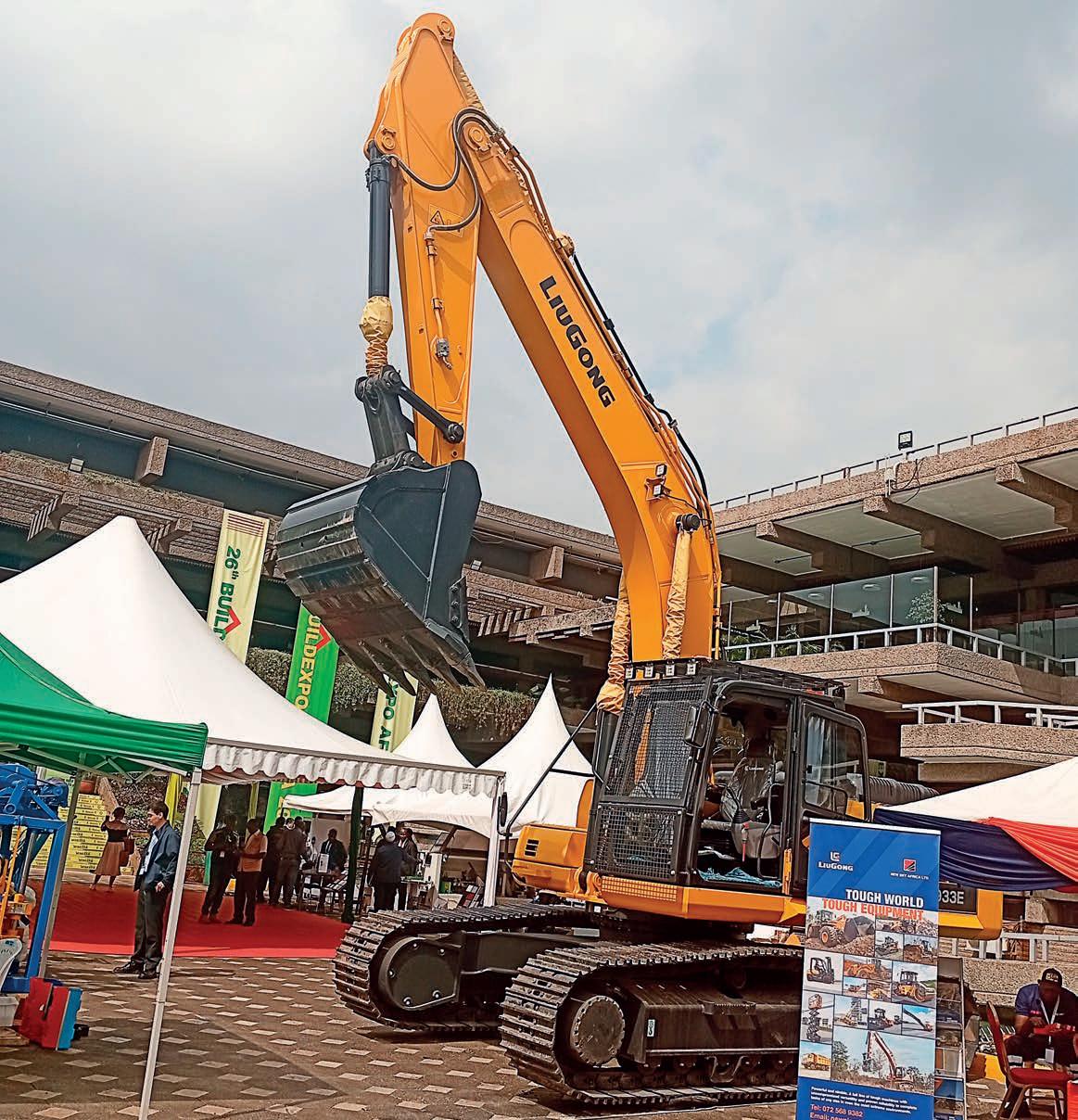
A LiuGong wheeled loader was showcased at a Kenyan construction equipment exhibition.
Images: LiuGong
(HOWO), offering spare parts.
Sinotruk general manager Sarfraz Premji said the partnership enabled the company to expand by introducing light- and mediumduty vehicles to its portfolio of products for the transport segment.
“These models offer higher payload capacities and larger fuel tanks, reducing the need for frequent refuelling and enabling longer hauls, which translates to overall fuel cost savings,” he said.
Premji said the launch of these models will cater to both last-mile and heavy-load delivery, as well as long-haulage. He also said the company had registered growth both globally and in the African market.
“From January to June this year, we have exported over 70,000 units globally, and over 30,000 units to the African market. We also sold over 1000 units to the Kenyan market during the same period,” Premji said.
Also reacting to the region's increasing demand for construction equipment, LiuGong, a Chinese-based heavy equipment manufacturer and distributor, has launched its East African regional of ces in Kenya.
The Kenyan of ces will serve as a platform for expanding the company’s regional dealership network.
“The unveiling of the Kenya assembly plant is part of our endeavour to widen our product offering while expanding market footprint to cover more African countries,” LiuGong Group's chief executive of cer Zeng
Zeng said while the uptake of construction equipment in the East African region is growing, the lack of a skilled labour force to handle some of the state-of-the-art equipment was a concern that needed to be addressed over the medium-to-long term.
He said there was a need for manufacturers and dealers to collaborate with
local universities to transfer knowledge and skills so that the sector could be bolstered by new workers in the coming years.
“We are not only establishing a hub in Kenya for business purposes,” Zeng said.
“We are keen to support a robust technology transfer so that Kenya also advances with a critical mass of young, well-trained engineers, who will drive the manufacturing sector in future.” AB
LiuGong East Africa director Deng Fao (left) with Machakos County deputy governor Francis Mwangangi during the launch of LiuGong’s Kenyan o ces.
Guang’an Zeng said while launching the new Kenyan of ces.
INVESTMENT DELIVERS RESULTS
Danoher has committed a large capital investment into a new processing plant for its Gaboronebased Kgale Quarry.
Four years ago, Danoher completed the deal to purchase three commercial quarry assets from the southern African cement company PPC in Botswana. The deal included three quarries: Kgale, Mokolodi, and Francistown. Following the conclusion of the agreement, all three operations required some attention, especially the static processing plants at Kgale and Francistown.
Danoher chief executive of cer Scott Danoher said the company put more attention on Kgale Quarry, which, by virtue of its location in the Botswana capital of Gaborone, constituted the bulk of Danoher’s commercial quarrying business in the country.
At the time of the acquisition, the Kgale plant had reached the end of its economic life, with limited scope for extension as the previous owners were preparing for a planned closure of the quarry.
“The plant was generally old and needed replacement. For example, the crushers were old-school technology, which affected ef ciencies and safety. The conveyors were also old and worn out. Consequently, a decision was taken to invest in a completely new plant,” Danoher said.
“This upgrade period required a careful balance between maintaining reliable, highquality production output and progressing steadily with the upgrade project. It took us about six months to decommission the existing plant.
“During that time, we were running a 100 per cent mobile crushing and screening operation, and at one point, we had three trains on site to meet the required production capacity.”
The installation of the new plant commenced soon after the decommissioning of the old static plant.
While Danoher managed to sell off some of the old components, most of the old plant was scrapped.
The new plant installation was executed in four stages. First was the tertiary section, which comprises a tunnel that goes into a Techroq 7’ x 20’ screen, which works in close circuit with a Metso HP400 cone crusher.
After completing the tertiary section, the secondary setup, which consisted of a Metso HP300 cone crusher with its own surge pile, was completed. The third leg of the project involved the installation of the primary section, comprising a Metso C125 jaw crusher and a 90-metre stacking conveyor that feeds a dedicated intermediary stockpile.
The last section, completed at the end of 2024, was the vertical shaft impact (VSI) crushing circuit. This section comprises a Twister VS350 VSI crusher from Pilot Crushtec International in close circuit with a 6’ x 16’ MVT screen. Given that the four stages were not implemented immediately after one another, and the fact that Danoher maintained a production of 60,000-70,000 tonnes per month (tpm) during the plant upgrading phase, the total completion of the whole project took approximately 24 months.
“While several components, such as the Twister VS350 VSI crusher, and the screens and conveyors were sourced new, some of the equipment, such as crushers, were second-hand units that we sourced from Africa and Europe and refurbished in-house at our workshop. The total capital investment in the new plant was about ZAR80- million,” Danoher said.
The investment in the new plant has ushered in a new era in productivity, ef ciency, exibility, and safety. In terms of productivity, the new plant can produce 80,000tpm working a single shift, up from approximately 30,000tpm on the previous plant.
The new capacity enables Danoher to meet its monthly demand, which is currently averaging around 75,000tpm, without needing to supplement with mobile trains.
Danoher chief executive
o cer Scott Danoher.
Images:
Danoher
While mobile units offer exibility for short-term projects, the static plant, powered by the electrical grid, is more ef cient and cost-effective than the diesel engines used in mobile units.
Danoher said removing the need for mobile units signi cantly reduces operating and maintenance costs.
“The exibility of this plant, especially given the variability in our material, is another major operational gain for us,” he said.
“In our pit, we mine both granite and dolerite, and these have to be processed separately to meet different customers’ needs. Generally, our brick and block customers, as well as their concrete products manufacturer counterparts, prefer granite because of its ‘pinkish’ colour. Conversely, the roads and asphalt clients prefer dolerite because of its strength.”
From the outset, the plant was designed to facilitate easy switching between materials. To achieve this, each section –primary, secondary and tertiary – comes with its own surge pile. The exibility allows Danoher to adapt to market changes by quickly switching between products, thereby minimising downtime, reducing waste, improving resource utilisation and increasing responsiveness to customer demands.
The installation of new-generation crushers ensures better safety on site. HP cone crushers from Metso, for example, assure safety through features such as
hydraulic unblocking systems for sudden stoppages and automatic feed rate control, which maintains optimal material levels.
Danoher said the quarry currently averages around 75,000tpm, with manufactured sand being the biggest seller to date.
“The sand market is largely driven by month-to-month customers – brick and block makers, paving brick makers and concrete product manufacturers in general – whose market is in turn driven by town council upgrades and the seemingly thriving residential property market in Gaborone.”
Danoher said the Botswana market is “relatively stable”, despite a constrained economy due to the global slowdown in the diamond market which is one of the country’s major sources of revenue. Consequently, some of the proposed construction projects have been postponed or cancelled due to
a lack of funding. Danoher said there have been some signi cant fuel and electricity price increases in Botswana, which have generally put a lot of pressure on businesses.
“We continue to place major emphasis on our ef ciencies to ensure that we can absorb some of these cost shocks. The new plant allows us to do exactly that without having to pass all the costs to our customers because it is not sustainable,” he said.
“Businesses are already suffering from in ationary pressures, and we are in a position to shield our customers from that by means of being better at what we do.” AB
ZERO Down Time From Flats.
The quarry currently averages around 75 000tpm, with manufactured sand being the biggest seller to date.
Industry evolution in China
China’s aggregates industry has spent the last decade transitioning to a greener, more technologically minded approach to business as the sector continues to evolve.
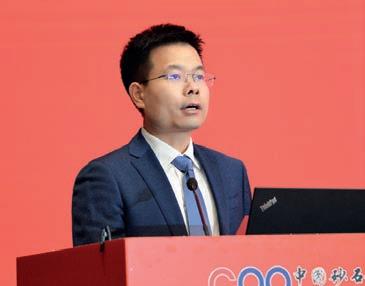
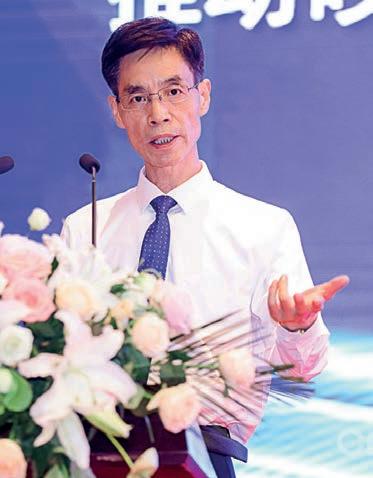
Quoting the latest data from the China Aggregates Industry Operation Report published by the China Aggregates Association (CAA), Hu Youyi said that China’s aggregates production was 15.2 billion tonnes in 2024 and 7.3 billion tonnes in the rst half of 2025. The numbers, Hu said, represent year-on-year declines of 9.4 per cent and four per cent, respectively, re ecting a phase of cyclical adjustment in market demand.
“Current aggregate production has dropped by approximately 24 per cent compared to ve years ago, primarily due to reduced investment in property development and slower growth in infrastructure investment,” Hu said.
“The Chinese government has recently introduced policies to accelerate a new real estate development model. These measures include promoting the construction of safe, comfortable, green, and ‘intelligent quality housing’, advancing urban renewal initiatives, and facilitating the renovation of urban villages and dilapidated buildings.
“This policy package is helping stabilise the real estate market while creating new demand for aggregate products in China.
“Going forward, traditional aggregates demand will gradually decline, while new construction markets, driven by urban renewal projects, quality, affordable housing
programs, and shantytown transformations, will generate increased demand.”
Hu said the CAA was working with its members to address the biggest challenges facing Chinese aggregate producers.
“While China's push for high-quality development is accelerating investment in quality and affordable housing, urbanisation, urban renewal, and infrastructure like water conservancy and hydropower, it places higher demands on both the quality of aggregates and the service provided by producers,” Hu said.
“Consequently, energy-ef cient aggregate equipment holds greater development potential.
“In this industry climate, the China Aggregates Association has proposed new concepts and development models aligned with national priorities for real estate and infrastructure. This aims to steer the industry towards green, low-carbon, and sustainable development.
“CAA is also actively conveying industry needs to relevant government departments to promote supportive policies, organising technology forums and international conferences to foster enterprise exchange, cooperation, and the sharing of best practices, and driving innovation in aggregates production and equipment manufacturing to enhance product quality and technical standards.
“The association is also accelerating the formulation and revision of relevant standards in response to new demands and carrying out targeted personnel training.
The CAA is [also] conducting in-depth enterprise research and providing technical consulting services.”
Hu said the impact of the global trade tariffs from the US could have
A modern Chinese aggregates production site.
Hu Youyi, honorary president of CAA.
an impact on the Chinese crushing and screening equipment.
“China's aggregate import and export volumes remain minimal. Consequently, recent US tariff adjustments will have a minimal effect on Chinese aggregate products,” Hu said. “However, exports of Chinese crushing and screening equipment to the US face a signi cant impact. These equipment exports have grown substantially in recent years, driven by their compelling value proposition and growing global appeal.
“However, this challenge presents opportunities. It will accelerate technological advancement and green transformation within China's aggregates sector. Furthermore, it acts as a catalyst, pushing equipment manufacturers to re ne their global footprint and enhance international operations.”
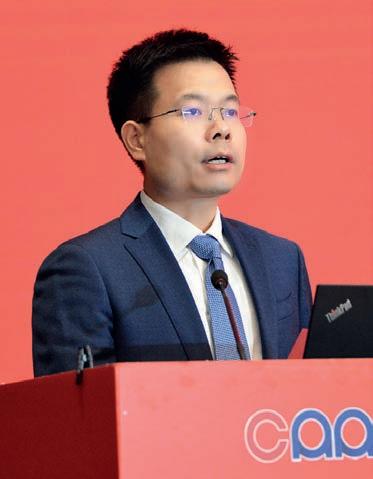
Fang Libo, who became CAA president in June 2025, said there had been a shift towards larger equipment across the sector.
“The trend toward large-scale crushing and screening equipment remains unchanged. However, as the market gradually sees fewer super large aggregate mines, production lines will shift from ultra-large-scale to medium-to-largescale,” Libo said.
“Meanwhile, loading and transportation machinery will continue its trend toward larger sizes while also advancing further in customisation, electri cation, and unmanned mine operations. While there has not been a signi cant increase in the deployment of tracked mobile crushers and screeners at aggregate production sites in China, mobility is the future trend.”
Libo said that during his time as CAA president he intends to uphold a responsibility toward progressing the future development of the sector.
“During this challenging [aggregates industry] transformation phase, we will leverage national and local industrial policies and advances in green and digital and intelligent technologies to drive sustained, high-quality industry growth,” he said.
Hu said this progression in the sector’s sustainability is gaining increasing international recognition.
“To advance sustainable development, CAA has undertaken extensive efforts. Rooted in the philosophy of maximising resource utilisation and ensuring mining bene ts local communities, I proposed the ‘China Model’ for sustainable aggregates development, integrating primary, secondary, and tertiary industries,” Hu said.
“Following implementation by numerous Chinese enterprises, this model has achieved optimal resource utilisation, enhanced carbon sequestration, ecological bene ts, and signi cant socioeconomic gains.
“In recent years, China's aggregates industry has made remarkable strides in sustainable development: aggregates production and equipment manufacturing have embraced green, intensive development; green mine construction is now a standard practice among enterprises; high-ef ciency, low-consumption equipment and production technologies continue to emerge and are widely deployed; and many enterprises utilise renewable energy sources like wind and solar power.”
Hu said China has developed globally competitive expertise in speci c elds of solid construction waste recycling. This includes making signi cant strides in its research and application of solid construction waste recycling, with some practices approaching
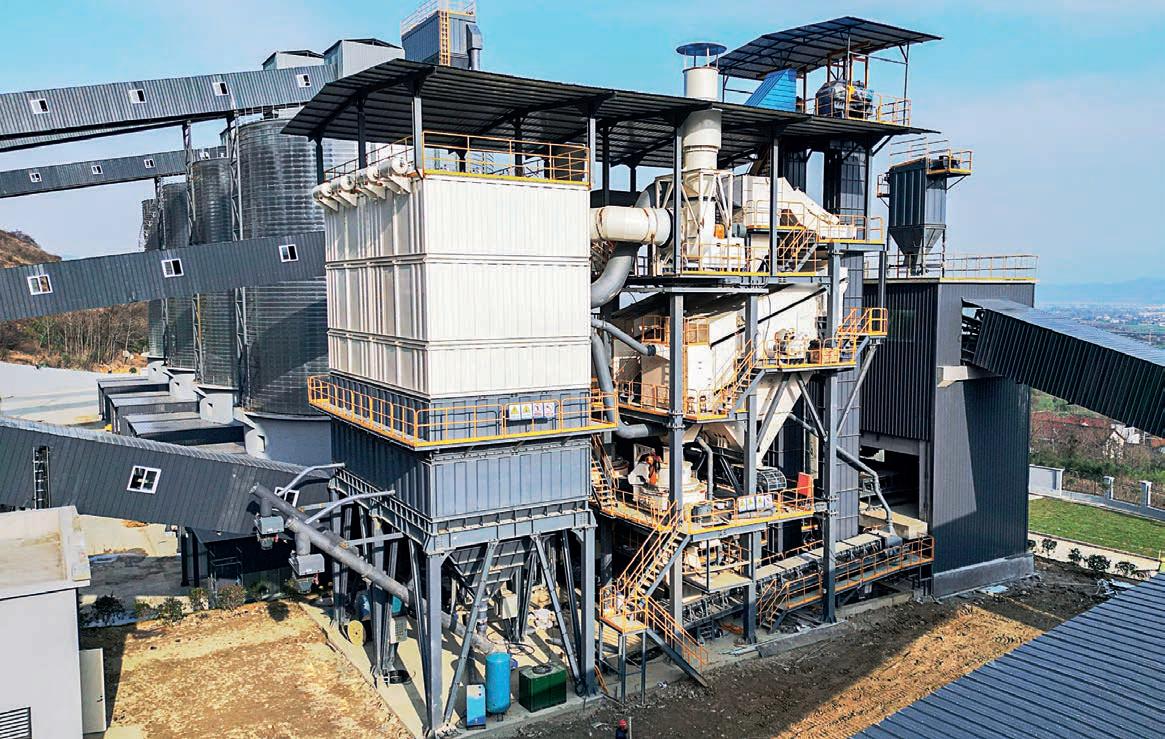
A sand-making plant in Shaanxi province.
The new president of the China Aggregates Association is Libo Fang.
international advanced standards. Hu said dozens of Chinese enterprises hold national green mine certi cation, over ten are designated as ‘national green factories’, and dozens more have earned industry green base and green factory honours.
Hu said has gone from being home to 60,000 quarrying enterprises in 2012 to the present 10,000 quarrying enterprises, plus 3000 quarrying machinery manufacturers. The market has also restructured, with the decline of natural sand processing leading to over 90 per cent of current industry output being crushed stone and manufactured sand.
“Backed by high-level government focus and strong support, coupled with industrywide collaboration, China's aggregates sector has transformed over the past decade through rapid development. The industry has now rmly established itself on a path of sustainable, automated, and scaled operations,” Hu said.
“The widespread integration of automation and digital technologies in quarrying and processing has delivered substantial gains: signi cantly boosting production ef ciency, enhancing product quality, and lowering costs.
“These technologies have also alleviated worker strain and improved working conditions. Most notably, intelligent monitoring systems are rede ning traditional operations, transforming once resourceintensive sites into eco-friendly plants operating amid clear skies.”
Hu said evolution of the Chinese aggregates industry had evolved signi cantly during his time as CAA president with more opportunity awaiting with the adoption of new technology in the medium-to-long term future.
“Today’s industry operates with green, automated, and large-scale ecosystems. Leading enterprises now develop integrated eco-industrial parks spanning the entire value chain – from quarrying and aggregate processing to grinding stations, ready-mix concrete production, precast
manufacturing, and ecological restoration. This marks China’s successful industry-wide modernisation,” Hu said.
“China's aggregates industry will be fundamentally reshaped by policy drivers, technological innovation, and market forces, evolving towards markedly greener, smarter, and more consolidated operations.
“Green and low-carbon practices will de ne core competitiveness, while intelligent technologies revolutionise the industrial landscape.
2.
a brand open day in
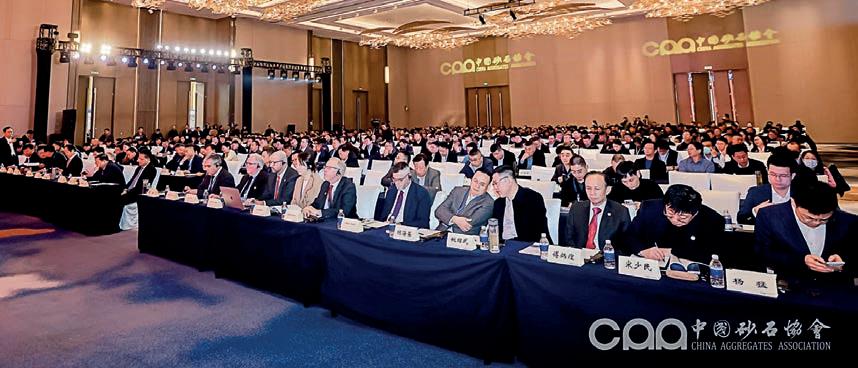
3. China Aggregates Association hosted the 2023 international conference
“Accelerated consolidation will be driven by both policy guidance and market competition, and the recycling of construction and demolition waste, tailings, and other waste streams will emerge as a major growth engine.”
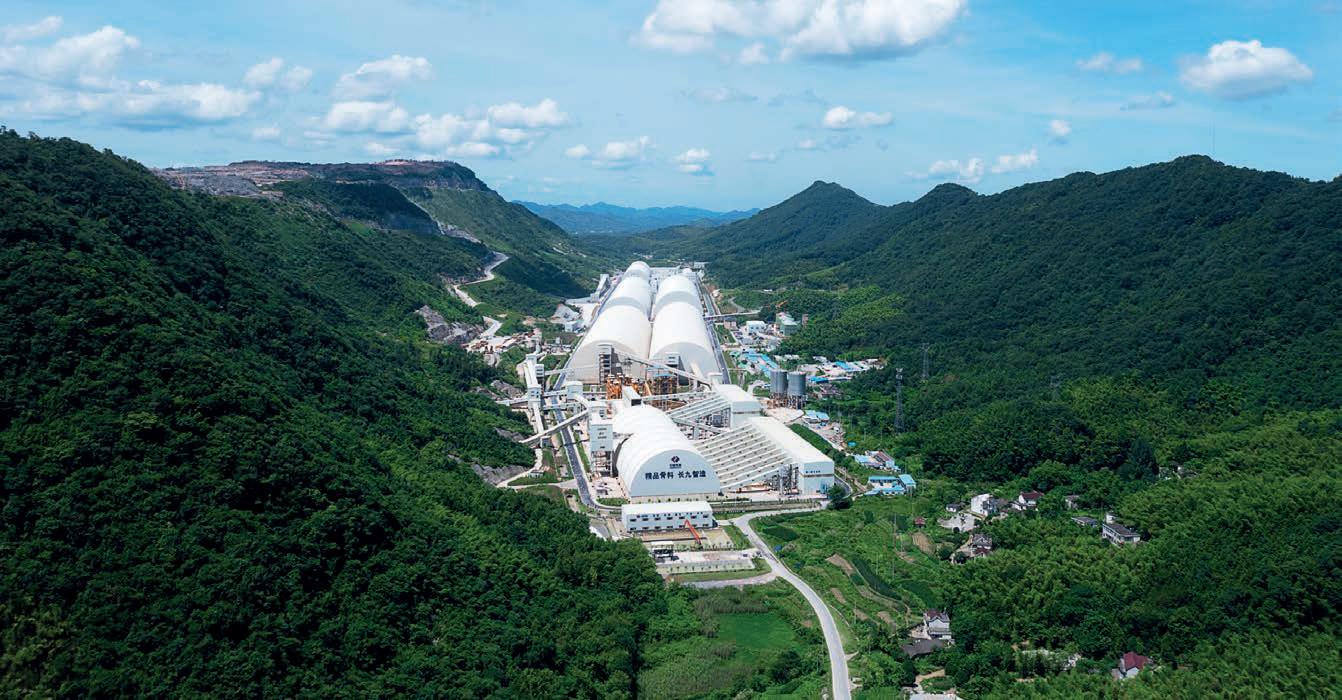
1. Anhui Changjiu quarry.
A Powerscreen Premiertrak 400X operating during
Zhejiang Province.
Aggregates
Contact:
JOSÉ ANTONIO CABRERA
Learning while leading
Cemex president for Europe, Middle East, Africa José Antonio Cabrera shares his insights on his leadership role, and the company’s future trading and sustainability goals.
Images: Cemex
José Antonio Cabrera became president of Cemex Europe, Middle East, Africa in April.
Never stop learning is a good axiom to live by, and it is also fundamental to José Antonio Cabrera’s approach to his rst year as Cemex Europe, Middle East, Africa (EMEA) president.
“I left Europe 10 years ago, initially for the Middle East, then to work in Latin America. So on returning I needed to meet a lot of people, internally and externally,” Cabrera told Aggregates Business. “I travelled a lot to learn about what was happening in our EMEA operations, speak with our customers across the region, and assess how different countries’ markets were doing.
“I also noted how much had changed around industry regulations, especially in Europe. There is so much linked to, for example, climate change, with onshore and offshore carbon capture, the CBAM [carbon border adjustment mechanism], and emerging principles such as CfDs [contracts for difference].”
A Spanish national in his early-50s, Cabrera hails from the Canary Islands and began his career at Cemex in 2000, working at a cement plant in his native Tenerife. He has since been appointed to various positions across Cemex in strategic planning, operations, and trade. Through these roles, he has supported Cemex’s operations and contributed to the company’s worldwide growth.
Before becoming the Madrid-based Cemex EMEA president, Cabrera spent six years as general director of Cemex Cluster Caribe (Dominican Republic and Puerto Rico).
In his new role as Cemex EMEA president, he is continuing the legacy of previous president Sergio Menéndez to achieve the company’s strategic priorities; fostering a safe and healthy work environment for all employees and contractors; placing customer service at the forefront to enhance satisfaction; and focusing on challenging
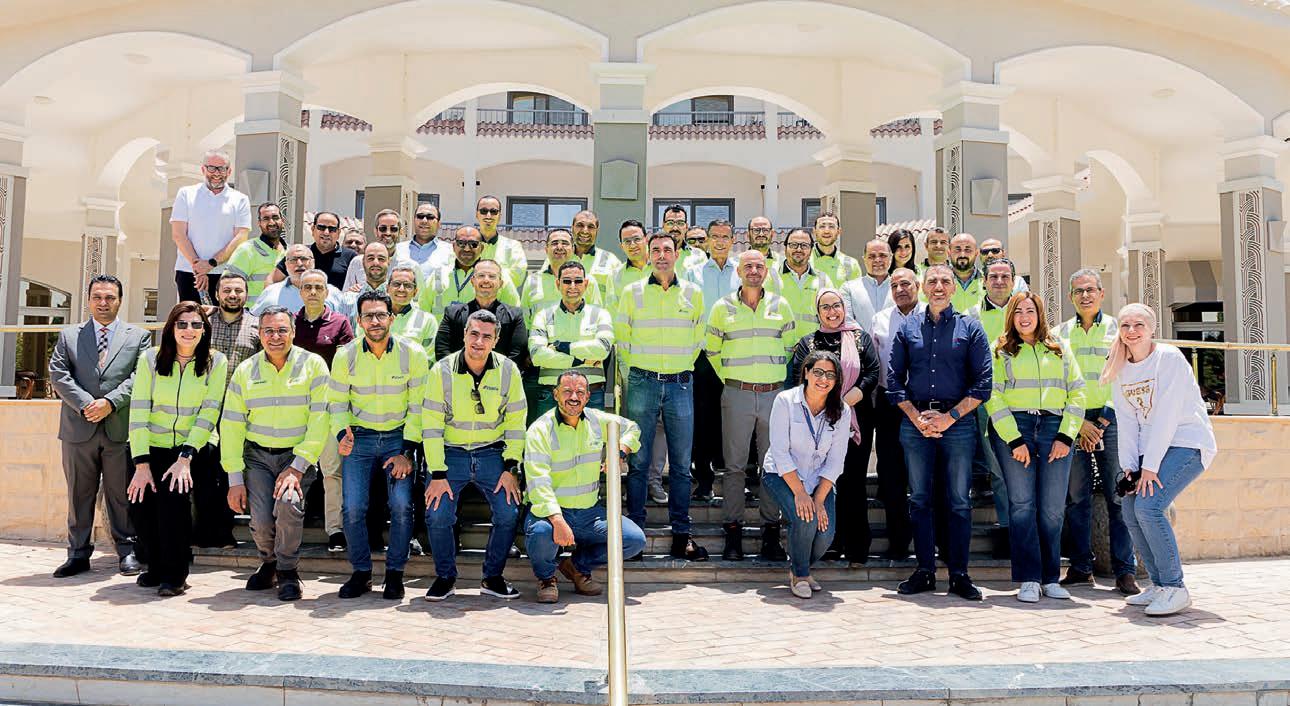
José Antonio Cabrera (centre) with the team at Cemex Egypt during a 2025 visit.
decarbonisation goals to reduce emissions across the value chain.
“Cemex EMEA is an important potential global growth driver for Cemex. We are a Mexican company that’s evolved into a global company, with a sizeable footprint in EMEA and the US. Those three markets are a key focus for Cemex,” Cabrera said.
“This year, we’ve seen the EMEA region as a good [trading] region, but it is one where there are a lot of uncertainties regarding regulations. We are beginning to grow organically and show the region’s potential. Whenever Germany, France and the UK, the engines of Europe, are growing, it’s good for the rest of the countries in EMEA.
“We expect growth in Europe over the next ve to seven years, and even bigger growth in sales of lower-carbon products.”
Cemex EMEA sales in the rst nine months of 2025 were up nine per cent yearon-year to $US3.79 billion (from $US3.34 billion in 2024), and rose 11 per cent to
$US1.37 billion in the third quarter of 2025 (from $US1.24 billion in 2024). Cemex’s EMEA and US regions achieved record thirdquarter margins.
Cabrera said demand conditions continue to notably improve in the Middle East and Africa, with volumes expanding at “double-digit” rates with housing, non-residential projects, and large infrastructure projects driving strong sales volumes.
“We believe there will soon be greater economic stability in the region, which is good for infrastructure development. Israel has demonstrated its commercial potential over the last decade, and the United Arab Emirates is booming,” he said.
“In Africa, Cemex operates in Egypt and is also serving customers in Western Africa, which is one of our largest trading areas.
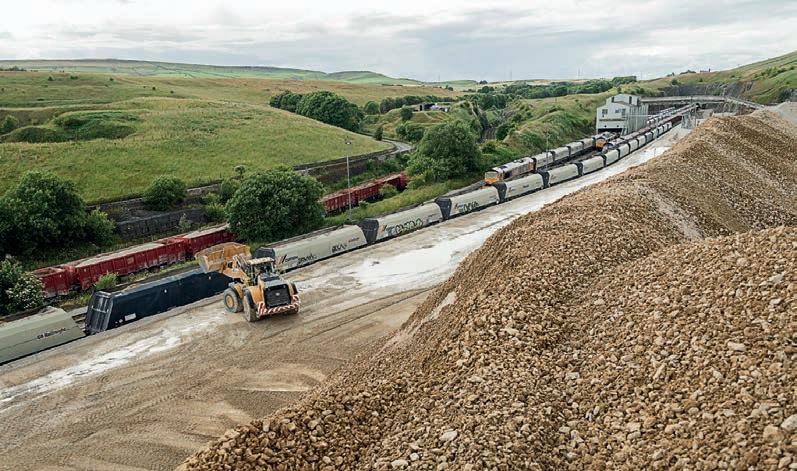
Stockpiled material at the railhead at Cemex’s Dove Holes quarry in Buxton, England.
materials] and enhance the attributes of our [cement and concrete] products.
“We are also very proud of our conservation efforts and the partnerships that we have, which are delivering extensive priority habitats [restored areas at Cemex quarry sites, which have been transformed through a long-term partnership with the Royal Society for the Protection of Birds to create thriving ecosystems] and getting the company to be nature-positive [reversing and halting biodiversity loss by 2030].”
Cabrera said the company’s use of new technologies, including advances in commercial arti cial intelligence (AI), have so far been successful.
“These advancements have led to a net increase in jobs, but some of the types of jobs and skills we need are changing,” he said.
There is constant growth in that market, which will continue for the next decade or so.”
Cabrera said that new innovations in technology will help to support the company in increasing its product offering to customers.
“Technology and regulations are helping us do more in this area,” he said.
“We recently added some new types of cement to our portfolio to ensure that in every product segment our customers have a lower-carbon alternative for every single use. We are also entering the precast segment with lower-carbon products. In our aggregates business, we have the technical expertise to produce more custom-made products for customers.
“I think over the last ve or six years, we have created the right culture within the company to promote both incremental and disruptive innovation.
The global cement industry is estimated to be responsible for as much as eight per cent of global CO2 emissions. The challenge for cement producers, such as Cemex, which has a presence in more than 50 countries around the world, is to reduce these emissions while meeting growing demand for cement to support infrastructure needs, particularly in developing economies.
Cemex’s Future in Action strategy is a climate action plan to achieve net-zero emissions by 2050 by focusing on key pillars of smart and pro table decarbonisation supported by innovation, advocacy programs and circular economy initiatives with strong business cases.
The strategy includes speci c 2030 goals such as reducing emissions by 47 per cent per tonne of cementitious material (relative to a 1990 baseline), lowering the carbon content of concrete and increasing clean energy consumption to 55 per cent.
Cemex is also one of the rst cement producers to have its 2030 and 2050 net-zero targets validated against the
“In Europe, Cemex is already operating its sites at the company’s 2030 net-zero target,” Cabrera said.
“We are using all available levers to reduce our CO2 emissions, including developing [in partnership with Linde] a large-scale carbon capture plant at our Rüdersdorf cement plant in Germany.”
”Cemex aims to achieve carbon neutrality at the plant by the early 2030s via the capture of 1.3 million tonnes of CO2 per year. The captured CO2 will be compressed, lique ed, and permanently stored in the North Sea.
”Unlike most of our peers, we also have our own admixtures business. We are developing patented admixtures to reduce the [carbon emissions] impact of our new SCMs [supplementary cementitious
“Our approach in this area is more global. For example, Cemex Go is used by our customers everywhere. We are running some small AI-based pilots, including ones focused on inventory management, at a few of our sites in Europe and the US. If they go well, we can scale them up.
“The pilots are partnerships with some tech companies that Cemex Ventures [the Corporate Venture Capital and open innovation unit of Cemex] has invested in.”
Cabrera said his experience as general director of Cemex Cluster Caribe and his many other previous roles within Cemex is helping guide new role. He “leverages a lot” of his knowledge, strengths and experience in building materials production and commercial operations to provide a rounded perspective when making key decisions as Cemex EMEA president.
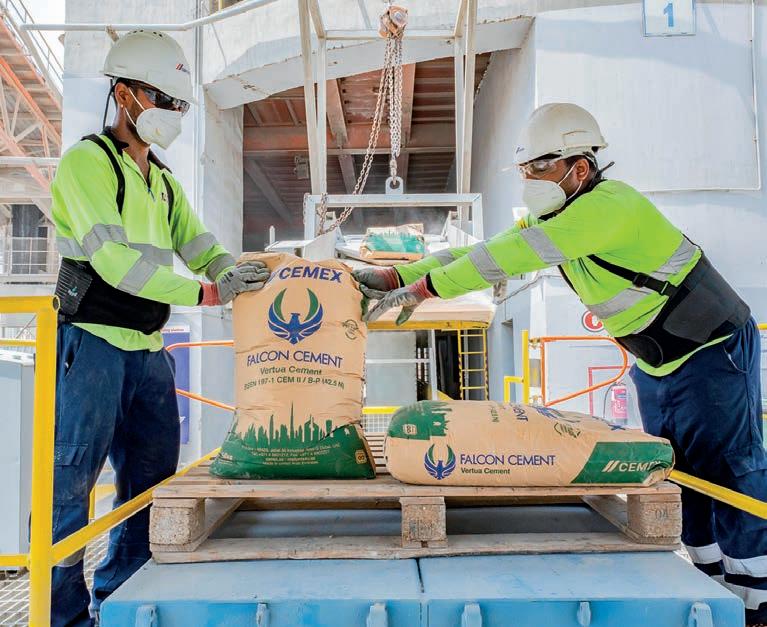
Moving bags of Cemex Falcon Vertua cement in the UAE.
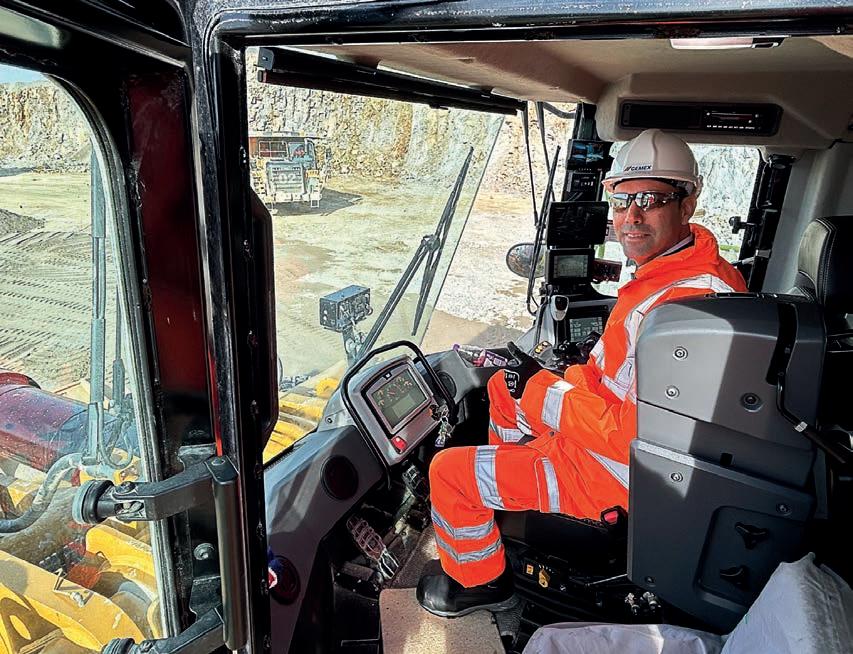
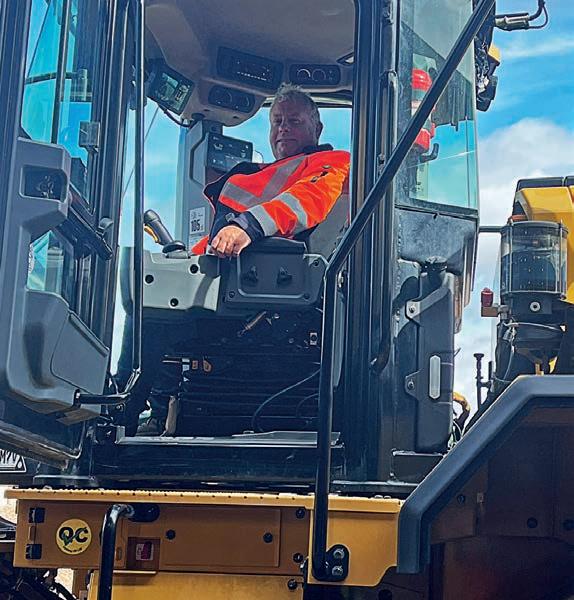
José Antonio Cabrera sitting in a shovel loader during a visit to Dove Holes Quarry.
“Living in the Caribbean, in the Dominican Republic, was very nice. I was responsible not only for the Dominican Republic and Puerto Rico, but also for Haiti,” he said
“There were many differences between those markets. There were many political factors to consider, such as Puerto Rico’s relationship with the United States. We positioned our Dominican Republic operation as one of Cemex’s top ve global earnings before interest, taxes, depreciation and amortisation generators. After the US, Mexico and the UK, it was fourth. That was amazing. We also worked hard to change the culture around health and safety positively.
“I started in cement operations and worked in operations for many years, including as a production manager and a project director. After I obtained an MBA, and during the global nancial crisis of 2008, I was running Cemex’s largest Spanish cement plant. It was not easy, given what had happened. It was a very intense period, including coping with stopping one line or another for a month at a time, given the changing market. I then went into the commercial side of the business, managing our aggregates and readymix business in different markets.
“I think my experiences give me a lot of empathy with my colleagues. I also work hard to ll any knowledge gaps, like when I, in effect, ‘got a Master’s’ in European building material regulations in two months
after becoming Cemex EMEA president. It’s in every single conversation and business case.”
With so much industry experience in key leadership roles across Cemex’s global operations, Cabrera has a very de ned leadership style.
“I tend to be more collaborative and like being close to our people. I am not bureaucratic at all. I do not like that part of my work,” he said.
“If I see something that I do not think is adding value, I say, ‘Let’s try to get rid of that.’ Sometimes, like in our European business, leadership has to be transformative.
“I can be pragmatic but also like to challenge paradigms. I think instinct is very
important, especially when dealing with emerging threats. It is not something that AI can replace in leadership. Overall, I hope to ensure that everyone is feeling motivated and is enjoying the journey.”
Madrid is an ideal base for Cabrera. His wife is from the city, and the couple and their three children enjoy everything one of Europe’s biggest and most culturally signi cant cities has to offer. During his time off from his key leadership role at Cemex EMEA, Cabrera enjoys playing basketball and following the fortunes of his beloved football team, Barcelona.
“I am in love with this sector. It is so much more than people outside it can see,” he said.
“To be a quarry manager and extend the life of a quarry, the processes of production, the chance to restore a site so beautifully to nature, and the huge positive impact that we can have on the lives of people in local communities. The materials we produce are everywhere: in housing, in industries, in mobility, in the new economies, including arti cial intelligence.
“Our sector is also part of the climate change solution with our work on research and development into decarbonisation.
“I feel very proud of what our team has done in my rst few months as president, and I want to position Cemex EMEA as one of the key drivers for growth for Cemex. We can be a major part of the ongoing Cemex story.” AB
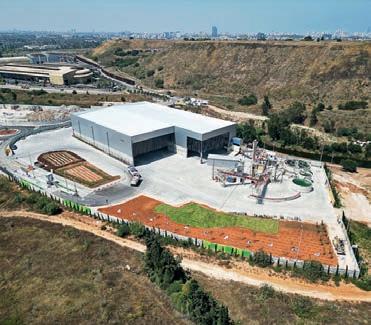
SHTANG recycling plant in Israel. Cemex owns a majority stake in SHTANG Recycle.
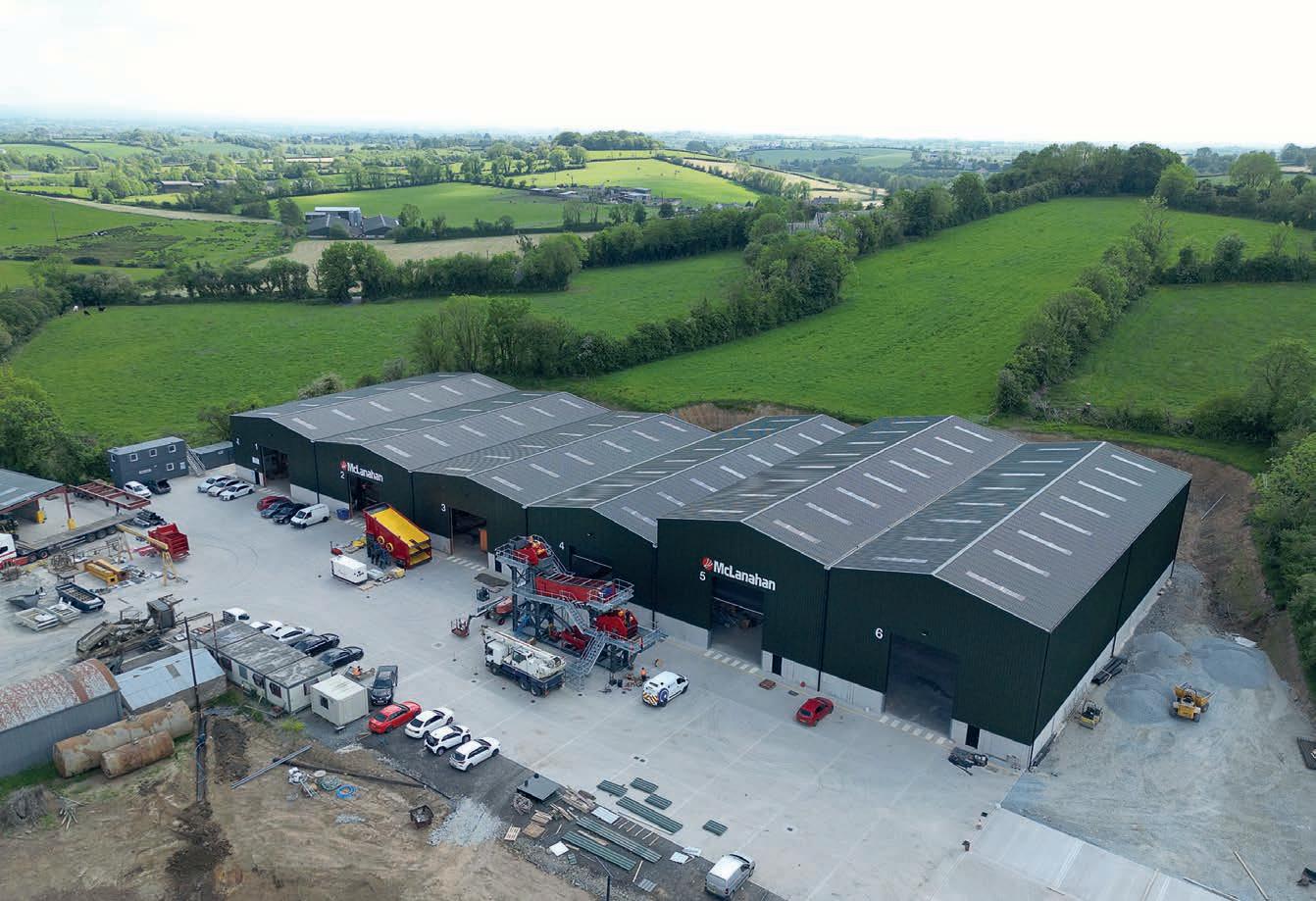
The McLanahan site near Dungannon is used to assemble the company’s crushing, screening, and wet processing equipment.
Growing globally
McLanahan is seeking to increase its market share in the global quarrying and mining equipment sector, with its Northern Ireland facilities driving growth.
AMcLanahan scalping screen, a McLanahan attrition cell, and a McLanahan hydrosizer ordered by an Argentinian frac sand customer, and a McLanahan UltraSAND plant destined for a Dominican Republic construction sand customer, are being assembled in front of a long stretch of large modern warehousing at McLanahan’s Aggregates Systems Equipment site in Northern Ireland when Aggregates Business visits in late September.
“The hydrosizer you can see is the rst that our team here have assembled. It’s quite an achievement for the guys, as there’s a lot of big parts to it,” McLanahan Aggregates UK sales lead Darren Morgan said.
“We are at the stage where we’re doing [pre-delivery inspections] on the [UltraSAND plant]. After that, it will be broken down and prepared for dispatch. If anything is agged as missed during pre-dispatch inspections, it will be added. Then we will do our packing lists, and everything will be sent to the customer.”
The McLanahan site covers more than 1951m² and is used to assemble the company’s crushing, screening and wet processing equipment. Units from the site are dispatched to customers worldwide.
“The site has come a long way. We started with a 30-foot cabin,” Morgan said. “When I started with the company, the plan
for here was only to assemble and dispatch pumps and screens. But when we got the space, we quickly realised we could do a lot more with it, and it became a full modular plant assembly and dispatch facility. In my three years here, we’ve fully assembled and dispatched around 20 UltraSAND plants, half of which went to customers in America.
“We‘ve also assembled and dispatched around 30 screens, with many going to UK customers. We also have one just about to go to a customer in Norway.”
McLanahan’s increased product assembly capacity in Northern Ireland has created new job opportunities to support this everexpanding area of the company’s business.
With increasing global customer demand for McLanahan’s equipment portfolio, the expansion of the company’s facilities has been crucial to enabling the company to offer quality enhancements, environmental bene ts, shorter lead times, and increased productivity, further enhancing customer satisfaction.
“Over the last few years, McLanahan has been deep in the development of its modular washing, crushing and screening equipment line with the launch of the Ultra range,” McLanahan business line director David Hunter said.
“We can now offer both standalone modular units or complete modular plants
that allow you to wash, scrub and classify your material. We can also offer a full range of tailings solutions, including water treatment and lter presses, as well as the ability to crush your oversize material to maximise production.”
Morgan said that the facility largely takes a ‘just-in-time’ approach to inventory management, receiving parts and products only as needed for assembly, minimising the amount of stock held.
“For some of our sub-assemblies, like on the pumps, we like to have a bit of extra stock on the shelves. We’re also working on some vibrating screens at the moment, so we’re looking to get a few of their parts in stock in case of any breakdowns,” he said.
“The interesting thing about [McLanahan warehouse] bays four, ve and six is that the landlord has extended the height of the bays so that we can assemble more of our plants under cover. It’s given us an extra 3m of height compared to the other three bays. I plan to get all six of our bays here operational, then it’s up to our salespeople to sell the plants and keep us busy.”
Morgan said McLanahan’s ongoing investment in the Northern Ireland site helps the company attract and retain employees in a highly competitive market for quarrying plant jobs.
“We have a good team here who are happy in their work and take pride in the facility, keeping it nice and clean,” he said.
“We get compliments on how neat and clean the place is whenever McLanahan people from the US or other parts of the world visit us.” AB
Image: McLanahan
A Swedish operation has been impressed by the performance of the Kleemann machines.
Electric convictions
Crushing and screening innovations are advancing rapidly through the adoption of electric plants and new product releases
In Stockholm, an electric feeling is taking hold within the operations of Kentas Last & Schakt AB. The Swedish operation has taken a key step towards a sustainable future with an all-electric plant from Kleemann.
The investment of the jaw crusher MOBICAT MC 120 PRO, the cone crusher MOBICONE MCO 110 PRO and the screening plant MOBISCREEN MSC 953 EVO gives Kentas Last & Schakt AB the unique distinction of being among the rst to turn to an all-electric set-up for its crushing and screening operations.
“Our decision to go fully electric was motivated by energy-saving considerations and the desire to reduce emissions,” Kentas Last & Schakt AB co-owner Freddie Erickson said.
“The operating costs for an electric power supply are about half those for diesel.”
With the crushing set-up running electrically, it has ticked several boxes for the company in terms of ef ciency and sustainability, aligning with Kentas Last & Schakt AB’s environmental goals.
Production has been boosted through the small wins that the electric Kleemann plant provides: no daily refuelling, no warm-up time, and reduced time spent on unscheduled maintenance. It has also received the approval of the working crew due to its faster start-ups, quieter operation, easier handling, and the absence of exhaust gases.
Erickson estimated that the operating costs are around 50 per cent lower than those of operating with a conventional diesel-run set-up. It has also, in some ways, future-proofed the operation.
“The employees greatly appreciate the clean and uncomplicated operation,” he said.
“Nowadays, some customers explicitly demand the use of electric machines.”
The Kleemann plant communicates through ll level sensors that automatically regulate the plant’s output. When in operation, this can see the upstream machine reduce the feed when the downstream machine reports a high ll level. An emergency stop feature enables all machines to stop simultaneously when the emergency feature is triggered anywhere on the train. This level of automation enhances on-site safety, but also allows for high levels of production to be easily maintained throughout the day.
The Kleemann SPECTIVE CONNECT platform is used across the operation. This means managers and operators can easily view machine data and settings and adjust them as required, all while maintaining a safe distance from the crushing operation.
It was no small investment from the Swedish operators. The company estimated that the overall investment is around a high six- gure sum in infrastructure costs, including a transformer station and underground cables.
However, the bene ts of the investment are outweighing the risks for Kentas Last & Schakt AB, and it has emboldened it to take further steps towards electrifying its operations.
“We are actively working to convert as many machines as possible to electric power,” Erickson said.
“This is clearly the way forward, and we are determined to implement this change across our entire eet.”
Crushing milestones
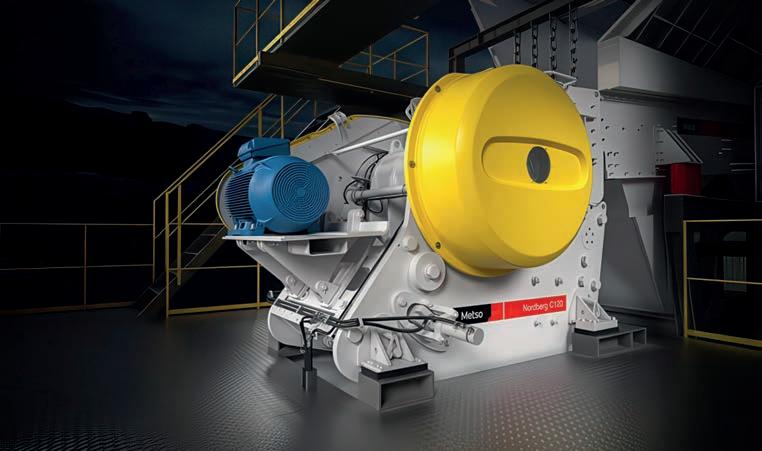
Metso has celebrated the 50th anniversary of its Nordberg C Series jaw crushers.
The series was introduced in 1975 and developed by a team of engineers in Tampere, Finland. In the intervening years, Metso has delivered more than 13,000 Nordberg C Series jaw crushers globally, mostly for primary crushing applications in the quarrying and mining sectors.
“The success of the Nordberg C Series is based on decades of listening to our customers, re ning the design, and staying ahead of industry demands,” Metso global product manager Tuomas Takalo said.
“It’s a product that has proven itself over generations. A trusted choice worldwide, our machines continue to deliver tonnes safely and reliably, day in and day out. We are proud of the development work we have carried out at Metso together with our customers.”
The rst Nordberg C Series jaw crushers featured a non-welded, bolted frame construction and an aggressive motion which ensured a high level of material ow. Metso has continually developed the series in line
Image: Kleemann
with industry demands. Key advancements have included automation and digital connectivity, which enabled more ef cient crusher control and condition monitoring.
“Just as in the original design, our product development today is guided by a deep understanding of customer needs, data-driven insights, and thorough testing at Metso’s research and testing facilities,” Takalo said.
Unleashing a bison EvoQuip, a Terex brand, has introduced the Bison 220 and 220R to the quarrying and aggregates market. EvoQuip has described the newest additions to its crushing range as “high-performance jaw crushing plants” which excel in quarrying, demolition and recycling applications.
“The Bison 220 and 220R combine compact design with high performance, giving operators the exibility they need without compromising on productivity or fuel ef ciency,” EvoQuip product manager Andrew Armstrong said.
The jaw crushers have been engineered with an 820x550mm jaw inlet and are capable of 240MPa in compressive strength. With an advanced hydrostatic drive system, the Bison 220 and 220R deliver
a high level of fuel ef ciency without compromising performance.
The Bison 220R features a unique addition if the optional recycling conveyor is installed. The ‘R’ section, as EvoQuip terms it, can enable the recirculation of oversized material into the crusher to meet the required speci cation or to be stockpiled if required.
The Bison 220R is designed so the entire afterscreen system, including the oversize conveyor, can be detached and ready for transport. The product conveyor can also be raised or lowered depending on the material handling requirements of the operation.
“With quick set-up times, simple and intuitive operation, easy maintenance, and transport-friendly design, the Bison 220 and 220R offer a user-friendly yet powerful solution for crushing applications worldwide,” Armstrong said.
The release of EvoQuip’s latest crushing machines comes on the heels of the brand celebrating its 10th anniversary. The company celebrated the anniversary in Dubai, re ecting on a rapid journey since 2016 that has involved expansion, product innovation, and the growth of a global distribution network.
Finlay has added two new inclined screens to its range.
“This milestone marks both a celebration of our achievements and a launchpad for the next decade,” EvoQuip business line director Barry O’Hare said.
“From our beginnings in 2016 to becoming a globally recognised brand, EvoQuip’s journey is a testament to vision, teamwork, dedication of our global distribution network and the trust our customers place in us.
“With celebrations continuing into 2026, we look forward to another decade of delivering compact solutions that drive success worldwide.”
Screening sensation
Finlay has launched the Finlay 693 and Finlay 694 as part of its screening portfolio for the quarrying and aggregates sector. The two new inclined screens are a return to Finlay’s original naming convention and replace the 693+ and 694+.
Both models feature high-energy screen boxes designed to process materials across various applications, including quarrying, mining, sand and gravel, and more.
“By revisiting the original 693 and 694 naming and re ning the design, Finlay delivers machines that are easier to transport, more cost-effective to purchase, and aligned with current, real-world operational needs,” Finlay business line director Matt Dickson said.
The 693 is equipped with a two-deck screen box featuring a 6.1x1.53m top deck and a 5.55x1.53m bottom deck for ef cient screening even at small aggregate sizes.
The 694 builds on this with a tripledeck con guration, offering two full-size 6.1x1.53m top and middle decks and a 5.55x1.53m bottom deck, expanding its screening area to 27m². In addition, the 694 offers an optional integrated high-volume rinser screen box, signi cantly increasing its versatility for wet applications.
“This launch is part of Finlay’s ongoing commitment to product improvement and responsiveness to feedback from our distributors and customers,” Dickson said. AB
Metso recently marked a major anniversary.
Image: Metso
Image:
The Cat ‘XE’ factor
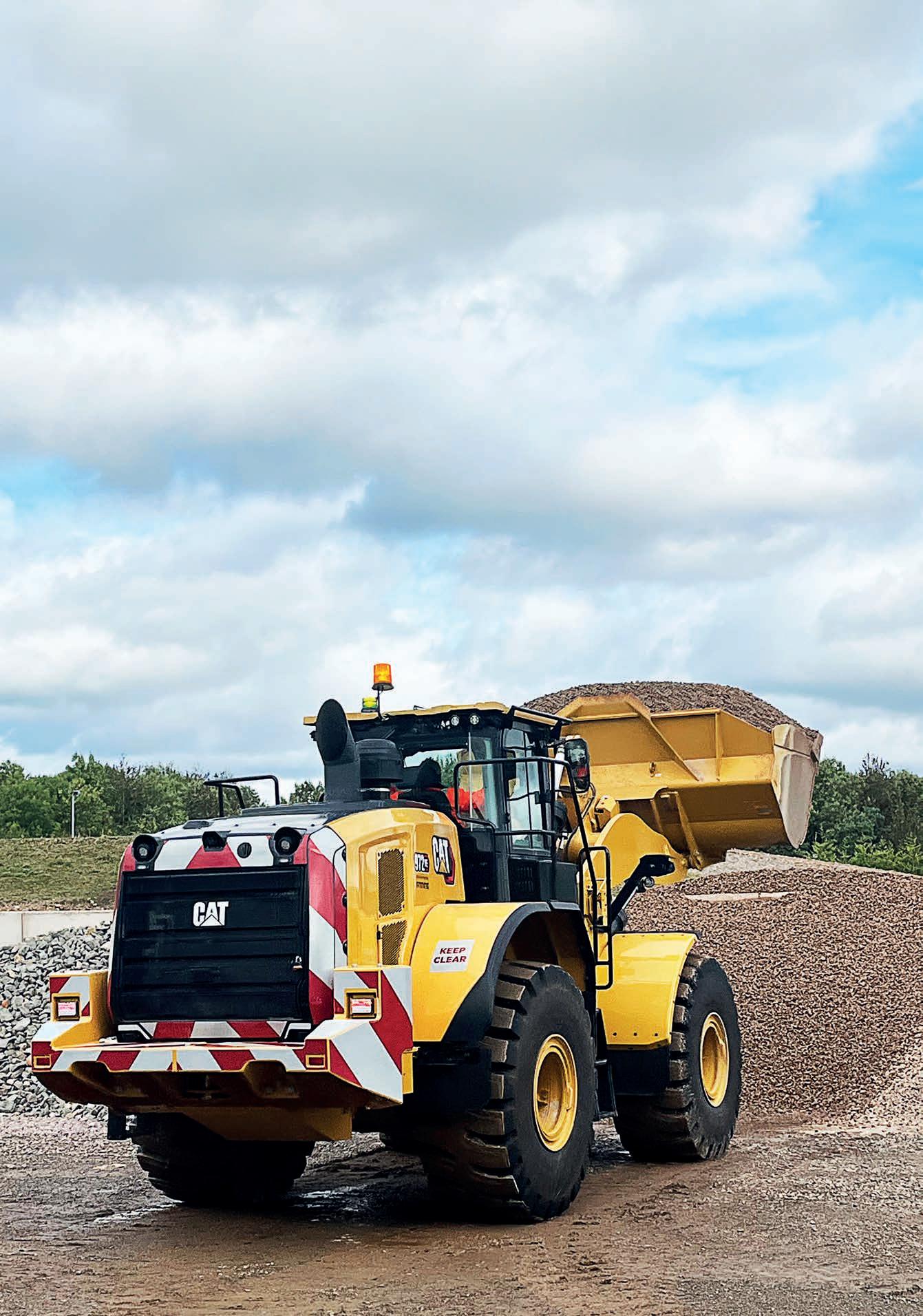
Finning delivered an exclusive showcase of the Caterpillar’s 966 XE and 972 XE wheeled loaders at the manufacturer’s Desford facility in Leicestershire, England.
Finning UK & Ireland product manager
Andrew Bradbury and Finning UK & Ireland senior machine demonstrator
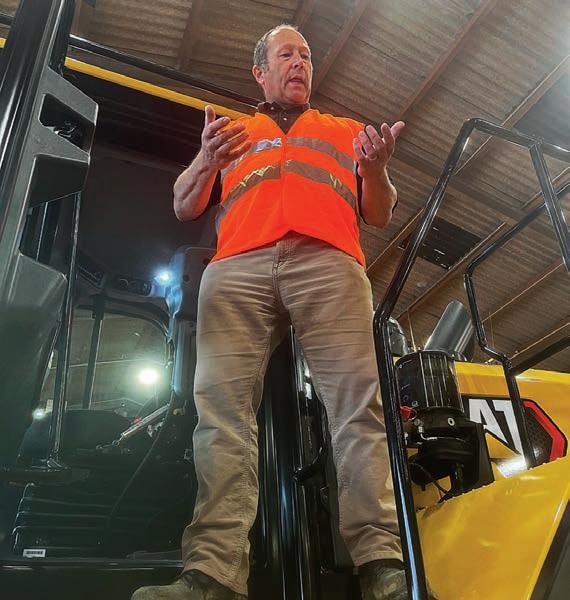
John Blackett have a lot to say and demonstrate about the Cat 966 XE and Cat 972 XE wheeled loaders.
“These machines are our agship machines in the Caterpillar medium wheeled loader world,” Bradbury said.
“Cat medium wheeled loaders start with the 950 and include the 962, 966, 972, 980 and 982. The Cat 966 XE and Cat 972 XE have been around for some time, but they’re only starting to come to the forefront of people’s minds in the UK now because of fuel going up in price, coupled with the need to lower the total cost of ownership and be greener.”
According to Bradbury, Cat 966 XE and Cat 972 XE wheeled loaders deliver excellent fuel ef ciency, premium performance, and user-friendly standard technologies that enhance operator ef ciency while maintaining low maintenance costs.
Both machines are equipped with Cat C9.3B 239 kilowatt (kW) engines, designed to meet emission standards and deliver strong performance.
Bradbury said the Caterpillar continuously variable transmission (CVT) on the Cat 966 XE and Cat 972 XE delivers advanced rimpull control and improved speed and range selection. Both units achieve lower fuel consumption compared to the 23-tonne Cat 966 and 24.9-tonne Cat 972, respectively.
Wheeled loaders typically have an operating life of 16,000 hours, with an average annual work rate of 2000 hours, resulting in an estimated lifespan of eight years.
Bradbury said the comprehensive integration of the transmission, engine, hydraulic and cooling systems results in signi cantly improved performance and fuel ef ciency.
“It’s not another manufacturer’s transmission designed for another manufacturer’s machine. It’s a Cat CVT
designed for Cat machines,” he said. “As a result, we are seeing up to 35 per cent more ef ciency with the XE versions of the Cat 966 and Cat 972, achieving up to 25 per cent in fuel savings and up to 35 per cent when considering the material moved.
“If a customer is using them for 2000 hours a year, and with the current [high] cost of fuel, you will start seeing a return on investment in just two to two-anda-half years.”
The Cat 966 XE and Cat 972 XE also come with auto-idle shutdown. Bradbury said the Cat 966 XE and Cat 972 XE save customers time and money with long service intervals, in-cab maintenance reminders, a tyre pressure monitoring system, and expanded remote services capability.
“We have tech days here in Desford and speak to some customers that have machines
The Cat 972 XE in action at Caterpillar’s Desford facility.
running at 45 per cent [idle rate], wasting three to four litres of fuel per hour,” he said.
“Some operators say they prefer to leave the engine running during a 15-minute break, so that the cab remains warm when they return. But with the residual heat in these machines, you don’t need to do that. It’s the same with the air conditioning.”
Blackett showed the invited attendees how its spacious cab layout features a oor-to-ceiling windshield, a left footrest for added stability, and a four-point seat belt kit with retractors, all of which help people work more safely.
Walking to the back of the wheeled loader, Bradbury explained how the model’s optional collision warning system with motion inhibit and people detection helps to improve worker safety on the ground. These features utilise radar and vision sensors to detect hazard potentials, alert operators and inhibit motion in the instant a machine transitions from an inactive to an active state. Audible and visual alerts can deliver the power to see, mitigate and manage hazards that may otherwise go undetected to operators.
Bradbury said the people detection feature uses a smart camera and radar to alert the operator when a person is detected behind the machine. When the machine is stationary for at least 15 seconds and the rear detection system detects an object in the alarm zone, motion inhibit will prevent the machine from engaging reverse gear, helping to keep those around the machine safe.
Furthermore, Caterpillar’s command remote control enables Cat 966 XE and Cat 972 XE operators to work safely outside the machine when working in hazardous environments. It offers the choice of handheld consoles (line-of-sight) or longdistance virtual stations (non-line-of-sight). Deep integration with machine systems
enables ef ciency and productivity by leveraging in-cab technology features (such as payload and assist). The Cat 966 XE and Cat 972 XE’s automatic front differential lock supports the operator by automatically engaging the differential lock to enhance overall traction.
Inside the cabin of the Cat 972 XE demonstration machine, Blackett showed attendees how the job aids feature helps operators improve and optimise their operating skills. He showcased how autodig allows the machine to take over the digging process, resulting in consistently full bucket loads, increased digging ef ciency, and faster cycle times. He also demonstrates how the kickout feature on Cat medium wheeled loaders, such as the Cat 966 XE and Cat 972 XE, is another programmable setting that allows operators to save and recall speci c implement positions for attachments, like buckets. This helps to reduce operator fatigue and improves ef ciency by automating repetitive movements.
“It brings the process of getting the material into the bucket and into the hopper to a soft stop. This reduces bucket and GET [ground engaging tools] wear,” Blackett said.
Blackett demonstrated how the operator’s left footrest allows for added operator comfort, safety and wheeled loader stability when working in uneven or bumpy terrain. He also showed how the advanced payload feature with e-ticket enables an operator to generate a weighing ticket and easily send it over the air to any email address.
With a few touches of one of the Cat 972 XE’s in-cab control screens, Blackett explains how application pro le settings allow each operator to set customised forward–reverse default speed ranges and rimpull limits that are easily visible on the front dash.
Blackett said the rimpull control comes as standard on Cat large as well as medium wheeled loaders, such as the Cat 972 XE and Cat 966 XE.
“You can alter the rimpull from 100 per cent down to 50 per cent. If you’ve got slippery conditions, I would reduce the rimpull to about 90 per cent to give you a bit more cushioning between gear changes,” he said.
“If you’ve got a loaded bucket and are travelling downhill, there’s a retarder function. The transmission will make a different noise when you press the pedal. Instead of your pedal press activating the braking system and heating the axles, it retards the transmission by reversing the oil ow. You can control the machine to move forward and backwards at a nice, steady pace.
“With a normal powershift machine, you would downshift to rst gear every time you load the bucket. With this machine [and the Cat 966 XE], you don’t have to. You can stay in third gear, or third speed, as it’s a virtual gear. You have the same rimpull as you would have in the rst gear.”
Bradbury said the Cat 972 XE and Cat 966 XE were growing in demand with customers due to their all-round package.
“We have so much of a backlog now in the UK of people wanting to try these machines. I’ve added another Cat 972 XE to the [Finning UK] eet,” he said.
“One quarrying customer in Scotland had it, and I received a phone call from our sales manager up there who wants to get one for three other quarrying customers to try. For next year, we’re doing our order forecast with Caterpillar, and we think we’re going to go from a 50:50 eet split between the Cat 966 and Cat 972 and their XE versions, to a 60:40 split in favour of the XEs.” AB
Andrew Bradbury highlights key features of the Cat 966 XE.
John Blackett in the operator cabin of the Cat 972 XE wheeled loader.
Loading machine vibrancy
The market for quarry loading machines has been lively in recent months. Aggregates Business reports on the launch of a new premium wheeled loader range for Asian customers and two on-site success stories.
Volvo Construction Equipment (Volvo CE) has launched its new generation wheeled loaders in Asia, which the manufacturer has said can deliver faster cycle times, exceptional operator comfort and intelligent solutions.
The range, comprising the L150, L180, L200 high lift, L220, and L260, has been available since earlier this year.
The launch of the wheeled loaders marks the next phase of Volvo CE’s new generation rollout in the Asian region, following the successful introductions of its new generation excavators earlier this year and the new generation articulated hauler range. Together, these launches represent Volvo CE’s most ambitious product and service renewal to date, offering customers a cohesive update of equipment engineered for tomorrow’s job sites.
To meet diverse regional needs, wheeled loaders will be introduced in T2 engine versions for Asian countries other than Japan, which will receive the T4f-compliant engine. For South Korea, a Stage V-compliant engine will be provided to meet local emission regulations.
According to Volvo CE, the machines are ideally suited to demanding applications such as material handling, quarrying, waste and recycling, and earthmoving. The new models feature load-sensing hydraulics that enable faster cycle times and greater responsiveness. Intelligent systems such as Auto Bucket Fill (optional), automatic bucket levelling, and Smart Control deliver consistent performance while reducing fuel consumption. The engines are also compatible with hydro-treated vegetable oils (HVO), supporting sustainability goals.
Performance is further enhanced with technologies such as optishift and “reverse by braking” (RBB), which are designed to cut cycle times and extend component life. Hydraulic upgrades include increased lift height and pump capacity (L150 and L180), while new driveline updates, such as automatic traction control (L220 and L260) and direct lock-up shifting (L150 and L180), improve traction, acceleration, and operator control.
Volvo CE has said the redesigned cab sets “new benchmarks for comfort and usability”, featuring a new integrated co-pilot and operator interface that enhances the operator experience. Other options, including premium heated and cooled seats, comfort drive control (CDC) and joystick steering, help to reduce fatigue during long shifts.
“Our new generation wheeled loaders represent a signi cant step forward in performance, ef ciency and operator wellbeing,” Volvo CE head of productivity and retail development for Asia Ramarajan Rangarajan said.
“We have designed these machines not only to meet the evolving needs of customers in Asia but also to support them in achieving greater pro tability, safety and sustainability in their operations.”
Magni cent Liebherr seven
A UK quarry and recycling company has taken its eet of Liebherr equipment to seven with a major investment in new excavators and wheeled loaders. The four-machine package for Welton Aggregates comprised R 945 and R 938 excavators and a pair of XPower wheeled loaders to work at its Welton le Marsh and Hibaldstow quarries in Lincolnshire, England. Both sites quarry virgin aggregates and produce a range of recycled products and soils.
The Volvo L150 New Generation wheeled loader.
The new Liebherr L 576 XPower wheeled loader at work for Welton Aggregates.
Image:
The wheeled loaders – L 566 and L 576 XPower models – and the 40-tonne R 938 are based at the Welton site, where the excavator spends its shifts either on chalk extraction or on duties in the recycling yard. Forty miles away at the Hibaldstow hard blue limestone quarry, the R 945 has become new frontline excavator and the company’s biggest digger at more than 45 tonnes.
The R 938 is one of 10 machines that comprise Liebherr’s Generation 8 tracked range, which begins with the recently introduced R 915 Compact and extends to the R 945 agship model. With an operating weight between 37–40 tonnes, the 938 is powered by a 299 horsepower (HP) 8L Liebherr diesel engine.
Operator George Riggall said the manufacturer got it spot-on with the combination of power and fuel economy.
“It has no issues with working in some of the heavier material we have on site. Whether it’s clay or rubble, it copes easily with anything we put it to,” he said. “I’m really happy with the way this Liebherr has been performing for us.”
Elsewhere on the site, the L 566 XPower loader is employed for duties such as maintaining the stockpile, feeding the wash plant, and removing piles of screened soil adjacent to the crushing operation. Carrying a 4.1m³ general-purpose bucket, the loader has the same D944 engine as the R 938 excavator but produces slightly lower 249HP. Mated to Liebherr’s hydrostatic transmission, it provides class-leading pushing power to ensure a full bucket on each pass.
Meanwhile, the larger L 576 XPower has taken up frontline duties for truck loading on the virgin aggregates section of the site. With a larger 5.2m³ bucket, it will load each of the company’s eight-wheelers in just two passes.
Over at Hibaldstow, the Liebherr R 945 utilises an identical eight-litre, 299HP powerplant to that in the R 938, but with
Welton Aggregates’ new Liebherr L 566 XPower loader is being used for duties such as maintaining the stockpile and feeding the wash plant.
slight increases in torque and breakout forces. Fitted with a standard 6.45m mono boom and a 2.9m stick, it excavates limestone layers.
Once the surface soils have been removed, shallow layers of material, with a yellow limestone layer at the uppermost, are revealed. While those are relatively easy to remove, the underlying material is a little more stubborn. It requires a hydraulic hammer to break out layers of hard blue limestone into suitably sized pieces, which are fed into the crusher. Once each area is broken up, a heavy-duty rock bucket is attached to load the 25-tonne capacity dump truck, which ferries the material to the stockpiling area.
Under control
Develon and Leica Geosystems, part of Hexagon, have announced that the Leica MC1 3D machine control solution is now available as an after-market kit for all Develon 9 Series crawler excavators.
Develon said the Leica
solution is available as an after-market kit for all Develon 9 Series crawler excavators.
This advanced system is speci cally designed to integrate with Develon’s existing 2D sensors and calibration systems, helping to ensure a smooth and ef cient upgrade to 3D technology for customers across the entire 9 Series line-up.
“This partnership seamlessly integrates the advanced capabilities of Develon’s 2D systems with Leica Geosystems’ 3D technology,” Leica Geosystems machine control division president Neil Williams said.
“With an ef cient installation and calibration process, this collaboration empowers customers to work smarter and achieve results faster.”
The Series 9 excavators feature an advanced, open control architecture that allows effortless real-time communication between the excavator’s built-in sensors and Leica Geosystems’ 3D machine control systems.
Through this control-level integration, operators can access Leica Geosystems’ precise 3D automation while continuing to bene t from Develon’s leading 2D technologies, including virtual wall for de ning safe operation boundaries, weighing system for real-time load measurement and advanced lift assist for enhanced lifting stability.
Customers can install the Leica MC1 3D after-market kit, and with the Series 9 controller managing communication between internal and external systems, 3D enhancements are faster, simpler and more cost-effective than ever.
“By expanding the availability of the Leica MC1 3D machine control solution to all 9 Series crawler excavators, Develon is reinforcing its commitment to innovation and customer satisfaction,” Develon product manager in Europe Stephane Dieu said. AB
MC1 3D machine control
Image:
Develon
Loaded and secure
Articulated dump trucks are the workhorses of many quarrying and aggregates operations, and their importance is growing through new innovations.
As third-generation aggregate businesses, Boden Sand & Gravel and its sister company Road to Rail Construction Group have come to rely on three factors in their operations: simplicity, reliability and trust.
These factors in uence everything from their daily operations to purchasing decisions for both companies.
It is also why their Edberg pit in Camrose County, Alberta, Canada, features three Rokbak RA40 articulated dump trucks (ADTs), which diligently move thousands of tonnes of material, including overburden, gravel, and sand, each week.
“In this business, uptime is everything. You need equipment that just works, plain and simple,” Boden S&G owner Brandon Boden said.
“The Rokbak haulers are no-nonsense trucks. They’re robust, they’re easy on fuel, and they don’t give us headaches. We run them hard and they just keep going. That reliability is exactly what we need to keep our promises to our customers.”
The site initially started with one RA40, which Road to Rail Construction Group
purchased in August 2023. The performance of the RA40 quickly led to another one being added to Road to Rail’s operations, as well as one for Boden S&G.
Boden S&G has played a pivotal role in the central Alberta aggregate sector since the 1950s, currently producing around 500,000 tonnes of material annually. Boden, who is a third-generation owner of the family business, has seen rsthand how much care Rokbak takes when designing and manufacturing its RA40s at its factory in Motherwell, Scotland.
“When you walk the factory oor in Scotland, you see the pride the team takes in building these trucks,” he said.
“It’s a clean, professional and peoplefocused environment. It reminded me a lot of our own company values. Seeing that commitment to quality, and meeting the people behind the machine, con rmed we made the right choice.”
Boden S&G and Road to Rail have a long-standing partnership with Headwater Equipment. The well-regarded dealer has ve full-service locations across Alberta, British Columbia and Saskatchewan, which supply
everything from new and used equipment to parts, service and rentals.
Headwater Equipment salesperson Scott Letkeman said the dealer’s partnership with Boden S&G and Road to Rail demonstrated its approach to business.
“We don’t sell a customer a machine and walk away; we sell them a solution and stick with them,” he said.
“Brandon and his team knew us and trusted us. When we recommended the Rokbak, they knew it was because we believed it was the right t for their operation. It’s a tough, reliable truck that we could stand behind.”
Each of the RA40s for Boden S&G and Road to Rail has accumulated more than 3000 operational hours since its purchase. The Canadian operation has been impressed by the haulers’ traction and rimpull as the operator works from a comfortable cabin.
“It’s a straightforward and comfortable truck to operate all day,” Boden S&G operator Ryan Skjonsberg said.
“Everything is where you expect it to be. The visibility is great, and it feels stable and secure, even with a full 42-tonne load. You can just get in, turn the key, and have con dence it’s going to get the job done.”
Boden Sand & Gravel and its sister company Road to Rail Construction Group are being supported by Rokbak.
Image: Rokbak
The operational performance of the RA40s is packed by comprehensive aftersales support from Headwater Equipment’s Edmonton branch.
“The beauty of the Rokbak design is its serviceability. Our technicians can access service points easily, which means routine maintenance is faster and troubleshooting is simpler,” Headwater Equipment service manager Henk Coetzer said.
“This keeps downtime to an absolute minimum. We work with the Boden crew to schedule service proactively, so these trucks stay where they belong – out in the pit, earning their keep.”
Cat goes automatic
Caterpillar has unveiled a suite of built-in automatic features will be included in its next-generation Cat articulated trucks.
The manufacturer has upgraded the interior features, placing more control at the operator’s ngertips with a sleek touchscreen and responsive keypad, which opens up new levels of performance, safety and ef ciency.
The new, smarter articulated truck design with built-in automatic features will be included in the next-generation Cat 725, 730, 730 EJ and 735 models. These features are headlined by the auto wait brake function, the dynamic rollover protection feature and the new push-to-start with operator ID.
“Caterpillar’s latest machine design makes operating our next-gen articulated trucks feel more comfortable, responsive, and userfriendly than ever,” Caterpillar global product application specialist Sherrie Williams said.
“With the introduction of the Cat C13B engine on the 725, the improved powerto-weight ratio means it is up to 14 per cent more ef cient on our Tier 4 Final [and equivalent] machines.”
The new push-to-start feature protects against unauthorised use, with the system able to store up to 50 operator IDs. The dynamic rollover protection monitors high lateral acceleration to help prevent high-
speed cornering and can visually and audibly warn operators about potential rollover risks, which increases safe operation. In addition, Caterpillar’s stability assist software reports information via VisionLink to increase awareness of when an event has occurred.
The auto wait brake provides the operator with more control during operation. It automatically applies service brakes when
The new features support on-site safety and operator performance.
The automatic features will be included in the nextgeneration Cat 725, 730, 730 EJ, and 735 models.
the shift lever is in any position other than park and ground speed reaches 0 kilometres per hour. Operators can apply the throttle to re-engage the transmission and release the service brakes. According to Caterpillar, the new feature saves fuel when shifting to neutral.
Beyond the new features, Caterpillar has redesigned the dump body on the Cat 725, 730 and 735 models in favour of a con guration that prioritises easy loading and increased payload. The new design features a rerouted exhaust heat system that helps minimise material carryback.
Operators can also bene t from the on-board payload technology, which shows the load weights in real-time on the integrated display with alerts given when the operator approaches the rated payload and when the payload is reached.
The 725, 730 and 735 models feature a new dump body height limit that allows the bed raise height to be set to meet on-site conditions. Operators will be able to set the raise height via a button on the integrated keypad or through the display service mode. The feature is designed to ensure the dump body does not come into contact with overhead objects, making the job site safer.
Caterpillar has con rmed production of the next generation Cat articulated trucks, starting with the 730 model, is scheduled for January 2026. AB
Images: Caterpillar
Powered up
Portable power solutions are helping quarry and construction operators maintain production levels on key projects around the globe.
Julio Tello knows the importance of quality lighting and portable power solutions for quarries and mines.
The equipment manager told Aggregates Business that he is delighted with the performance of six Atlas Copco HiLight V5+ lighting towers acquired by his company, Peru-based JRC. Tello said the units support operations at JRC’s Iscaycruz mine, where altitude conditions are extreme.
“It’s very tough to survive in this area, both for personnel and equipment. For a time, we worked with light towers from another manufacturer, but the experience wasn’t very successful. The three-cylinder engines would shut down after two hours of work, and the lamps would break easily,” he said.
“The acquisition of Atlas Copco HiLight V5+ lighting towers with two-cylinder engines has completely changed the situation. It’s a radical solution.”
Atlas Copco’s comprehensive range of portable power solutions for industries, including quarrying and mining, comprises QAS+, QAC Twinpower and QES range diesel generators; the modular hybrid EPH range hybrid generators; ZBC and ZBP energy storage systems; BI+4 hybrid light towers, B7+, H7+ LED light towers, MS4 solar light towers, and MI+6 light towers.
“One thing that makes Atlas Copco unique is that we have developed the concept of portable plug-and-play microgrids, which we call our power ecosystem,” Atlas Copco Portable Power vice president of sales and marketing Sergio Salvador said.
“Our energy storage systems can be scaled up, and our power management microgrids enable customers to run multiple power generators, either all supplied by Atlas Copco or a mix of manufacturers.
“This creates extremely resilient quarries and other sites, with power generated where it is consumed. By going hybrid in their energy usage, including solar, quarrying and other customers can lower their power costs. You can also signi cantly reduce your work site’s carbon emissions.
“We invest a large part of our R&D [research and development] spend in developing our portable power solutions, and we have a large team of expert
technicians who support customer sites. Our plug-and-play microgrids also include remote site monitoring and two-way communication. This allows us to know exactly what is going on on-site, advise customers, and remotely do upgrades to the microgrids, optimising system ef ciency.”
Salvador said Atlas Copco sees growth potential in the usage of portable power solutions in quarrying and mining applications.
“It’s a journey that is now at the beginning, and it’s one of our main future focuses,” he said. “Quarries are ‘live animals’, so to speak. Your working areas move over the years, and plug-and-play microgrids offer exibility. You can move your portable power set-up and resume work in just one hour, or in four hours with a solar-powered system. A contractor working at a quarry for two to three years, say, can also do this.
“Many quarries are also in remote areas, and it can take a long time for authorities to approve requests for additional power from public grids. That electric power supply may also not be reliable. The cost per kilowatt is also going up, partly due to high demand from data centres. Now, it’s important not to have to rely on anyone for your power supply.”
Salvador said it takes 12–24 months for quarrying and mining customers to recoup the cost of their investment in Atlas Copco portable power systems.
“A 24–7 operating, hybrid power system can last for 10 to 20 years. We are constantly working on our portable power systems and will continue to expand our energy storage
PAS 150 HF pump and HiLight V5+ light tower in Spain.
Images: Atlas Copco
and generator offerings, including hybrid standalone generators,” he said.
In 2024, Atlas Copco launched the ECO calculator, an upgraded power and light sizing calculator version of the earlier ‘light the power’ calculator. The innovative online tool is designed to assist professionals in the construction, mining, quarrying, rental and events sectors in accurately determining the optimal sizes of power and lighting equipment for their projects.
Atlas Copco’s ECO calculator features an energy storage system module that recommends the optimal combination of a generator, light tower and energy storage system. It provides a detailed cost comparison between conventional standalone generators and hybrid solutions, facilitating cost-effective decision-making.
With this new module, the ECO calculator enables performance simulation, allowing users to assess potential savings and optimise low load management for a more ef cient energy set-up. The tool also recommends the most appropriate generator size based on speci c load requirements, helping to ensure power tools and other equipment operate at peak performance.
“Many contractors, for example, like to see the fuel savings they can make by running a hybrid power-based microgrid,” Salvador said. “ECO calculator now also offers real-time calculations that compare our customers’ existing portable power systems with potential upgrades.
“Atlas Copco has been leading the [multiindustry] transformation to hybrid [portable power supply] for many years. By integrating multiple power sources into our hybrid plug-and-play microgrids, we can save our customers up to 90 per cent on their [single xed] power usage cost.”
Flicking the switch
Taiwan-based SEETEL New Energy has chosen Volvo Penta’s battery systems for energy storage to power its mobile fast-
charging solutions in the Asia-Paci c region, with applications across industrial and urban sectors. The selection marks Volvo Penta’s growing role as a trusted supplier in the region’s expanding energy market.
Powered by Volvo Penta’s liquid-cooled, high-performance battery systems for energy storage, SEETEL New Energy’s solutions can be designed to carry large amounts of installed energy in demanding mobile energy applications. This enables reliable charging for high-power industrial applications like construction, quarrying and mining, as well as emergency relief, remote medical support, and roadside electric vehicle (EV) assistance. The company will develop mobile battery energy storage systems (BESS) in 270 kilowatts per hour (kWh) and 540kWh con gurations, mounted on light trucks to serve as mobile fastcharging units or transportable containerised units for industrial use, in applications including quarrying.
“By combining Volvo Penta’s integrationready battery systems for energy storage with
our energy management and deployment capabilities, we can deliver high-ef ciency, mobile charging solutions that support the region’s growing demand for cleaner and exible energy. This also accelerates our business diversi cation while helping our customers transition to sustainable operations competitively,” SEETEL New Energy chairman and founder Lin Sheng-Tse said.
The relationship was facilitated through Volvo Penta’s long-standing Taiwanese dealer JOU International, which supplies Volvo Penta-powered back-up power gensets to SEETEL New Energy’s facilities.
“Our relationship with SEETEL New Energy demonstrates how Volvo Penta can play a trusted role in enabling customers to bring new energy solutions to the market,” Volvo Penta industrial sales director Oh Han Peng said.
“By supplying proven, integration-ready battery systems, we help our customers focus on what they do best, developing and deploying applications that meet emerging needs in energy storage and electri cation.” AB
HiLight MS5 light towers at El Abra mine in Antofagasta, Chile.
SEETEL New Energy will use Volvo Penta’s battery systems for energy storage to power its mobile fast-charging solutions
Image: Volvo Penta
Revved up and improved
Engines are among the unsung heroes of quarrying and aggregates operations. Manufacturers have announced a series of major improvements across the global sector.
For many years, Cummins has stood as a manufacturer that is synonymous with high-quality engines in off-highway sectors.
The renowned manufacturer has now celebrated the 60th anniversary of its manufacturing plant in Darlington, England, which rst opened in July 1965. Over the years, the technology and solutions developed there have powered equipment in critical industries around the world.
“It’s fantastic to celebrate the heritage of Cummins in Darlington. We take great pride in what has been achieved over the last 60 years and the global impact we continue to make from this site every day,” Cummins Darlington plant manager Steve Morley said.
“As with all large employers, we wouldn’t be celebrating any milestones without our people, so we say a big thank you to everyone who has contributed to the collective success of the business.”
Today, Cummins’ products can be seen in 50 countries, including quarrying and aggregates, construction, material handling, and more. It continues to be a major player in research and development, including the creation of hydrogen combustion engines in Darlington. Cummins has received funding from the Advanced Propulsion Centre to develop hydrogen technologies, furthering its work in this area. The company employs more than 1750 people
Cummins has celebrated a milestone for its Darlington facility.
L–R: Cummins plant manager Steve Morley, Dame Susan Snowdon DCVO and Cummins technical director Wayne Spooner.
Images: Cummins
and 250 apprenticeship positions at the site, underlining its importance not only to the company but also to the wider local community.
While Darlington stands as a testament to Cummins’ longevity as an engine manufacturer, the company continues to invest in the site to ensure it remains at the cutting edge.
Cummins last year unveiled its new powertrain test facility at Darlington, funded by a £13m investment. The new facility comprises a 738m2, two-storey building that includes fully robotic driving capabilities, manual or automatic transmission, road grade and load simulation, wheel-slip simulation, and engine duty cycle recreation.
Morley said the site is one of the most advanced of its kind in Europe.
“[While] it’s important to take stock of our past achievements, we’re very much focused on continuing to innovate and lead the future of manufacturing power solutions,” Morley said.
“No matter what the technology, we’re committed to providing the right power solutions that can continue to power industries we depend on as a society for many more years to come.”
Power and durability
Caterpillar has launched its new C32B engine, which builds on the foundations established by the C32 model.
Darlington is a key part of Cummins’ operational network.
Caterpillar has expanded its range of engines for the o -highway section.
Image: Cummins
its
The C32B diesel engine is designed for large off-highway machines and equipment, which can bene t from its high-power density and improved durability.
Caterpillar has made the C32B diesel engine available from Cat dealers worldwide. The 32.1L, 12-cylinder engine can deliver power up to 895 kilowatts (kW) or 1200 horsepower (hp) and 5861 newtonmetres (Nm) for US EPA Tier 4 Final and 839kW (1125hp) and 5499Nm for EU Stage V. A version for less regulated territories offers a peak rating of 1007kW (1350hp) and 6166Nm.
In a quarrying and aggregates application, the C32B diesel engine can be paired with large wheeled loaders and hauling equipment. Caterpillar also expects the engine to excel in applications involving cranes, dredgers, hydraulic power units, paving, surface hauling equipment, trenchers, pumps, and more.
“For nearly 20 years, the Cat C32 engine platform has set the standard for premium power and endurance in construction, mining and other industrial applications,” Caterpillar Industrial Power Systems senior vice president Steve Ferguson said.
“The new Cat C32B builds on this eldproven reputation with a series of upgrades and new technologies that will drive the superior performance of off-highway equipment for years to come.”
Caterpillar described the design process as a “bottom-up” approach, which prioritised power density and durability. The C32B is made from a strong cast-iron
with larger journal diameters and increased bearing area to handle higher loads. An improved lubrication system features a higher-capacity oil pump, an oil cooler with enhanced performance, and higher- ow piston cooling jets, ensuring optimal wear performance and improved durability.
The cylinder head has been upgraded to incorporate design features that include external fuel lines and an optimised water jacket geometry to enhance heat transfer.
In addition, the cylinder head components have updated valve geometry and oil metering stem seals to minimise wear and prolong the cylinder head’s lifespan. Its new dual sensor coolant protection feature is designed to detect potential cooling system leaks earlier to prevent costly downtime.
For sustainability-focused operations, the Cat 32B can work with renewable liquid fuels such as 100 per cent hydrotreated vegetable oil. Caterpillar has announced that industrial power units, equipped with engine-mounted after-treatment and cooling packs, will be available directly from the factory.
This aims to lower installation and validation costs for original equipment manufacturers.
Smarter solution
Volvo Penta debuted its co-pilot platform as part of its showcase at Agritechnica 2025. The Volvo Penta Co-Pilot is designed for off-highway industries that want to use realtime tools and information to make informed decisions across their daily operations.
This latest innovation from Volvo Penta is designed for use by eet managers and operators as part of an integrated machine. Its features, including a perception camera and enhanced operating features such as high-precision positioning, on-board weighing and vehicle stability control, can aid in operator coaching.
“In line with our collaborative partnership approach at Volvo Penta, we will work with customers to tailor the solution to meet their speci c needs,” Volvo Penta product planning specialist Emil Andersson said.
“This means they can customise the platform and add to it and adapt it as their requirements change, making it a futureproof solution.” AB
Images: Caterpillar
builds on the C32 engine.
The breakthrough moment
Manish Bhartia, Brendan McGurgan and Enda Ivano showcase how they developed the patented innovation known as Combo for the quarrying and aggregates sector.
When Apple launched the rst iPhone, it did more than introduce a new gadget. It completely changed how people interacted with technology by combining a camera, music player, and computer into one elegant, portable device. A similar revolution has taken place in the world of sand and mineral processing through Combo - a breakthrough patented innovation from CFlo.
Before Combo, traditional sand washing plants were enormous installations that stretched across large areas of land.
They consumed huge amounts of water and electricity and often left behind massive sludge ponds that created longterm environmental issues. These systems were able to produce washed sand, but they were inef cient, resource intensive, and unsustainable.
More than a decade ago, a small group of engineers at CFlo decided to change that reality. Their vision was clear - to integrate all stages of wet processing, including feeding, screening, washing, classi cation,
water recovery, and waste management, into a single, compact, and mobile system. It has reshaped how sand and aggregate processing is done around the world.
Developing the idea
When the concept was rst presented, many industry veterans were skeptical. The idea of combining multiple wet processing stages into a single unit sounded risky and overly complex. “There are too many components, too many moving parts. Keep them separate,” was the common feedback. To prove the concept, the CFlo team began by offering all the required process equipment - feeders, screens, cyclones, pumps, sumps, thickeners, conveyors, and control systems - as a pre-engineered kit that could be delivered and assembled at site. The approach worked. Clients appreciated the simplicity and reliability of the kits.
This raised another question: “Why not deliver the whole setup ready to usepreassembled, prewired, and easy to install?”.
That question sparked the creation of Combo.
The engineers at CFlo designed a single, integrated chassis that housed every essential process step. They developed new methods to reduce water and energy consumption and created a much smaller footprint that eliminated the need for large settling ponds. Every challenge presented an opportunity for innovation. After several design cycles and trials, the rst Combo was built and tested. The results were remarkable. The system performed better than expected, producing high-quality washed sand while dramatically lowering water and power usage.
Brendan McGurgan, Enda Ivano and Manish Bhartia.
CFlo is a
Images:
CFlo
Integrated version
When CFlo entered the wet processing market, it asked a simple but critical question: why should water recycling sit outside the plant as an optional extra? If water is essential, water recovery should be designed into the system itself. That single question shaped the development of the Combo series. According to CFlo, this is the one of the world’s rst patented chassis to integrate all seven functions of wet processing: feeding, screening, classi cation, dewatering, water recovery, sludge handling, and stockpiling on one containerised frame.
The water recycling system (WRS) is a standout function. Unlike conventional thickeners that require heavy concrete pads and large open areas, the WRS is mounted directly on the Combo chassis. It is factorybuilt, self-standing, and fully mobile.
In select projects, CFlo has even supplied Combo units with precast civil pad segments that are bolted together on site. The entire system can be relocated with the machine, making it highly practical for short-duration or multi-site operations.
This design makes closed-loop water recycling not only possible but practical. Thanks to its patented design, recycled water ows back into the process by gravity, eliminating the need for additional pumps. This reduces power use by up to 30 percent, making Combo one of the most energyef cient systems in its class.
Sludge management, traditionally a major pain point for washing plants, has also been re-engineered. Conventional sludge ponds demand huge land areas, long settlement times, and constant maintenance. They are often unsafe and environmentally unsustainable. CFlo’s easysettle sludge bay manager replaces this with a modular system that controls in ow, manages settling, and optimises dewatering. Ef uent water is clari ed and returned to the process, leaving no open discharge. Land use is signi cantly reduced, and the sludge is easier to compact,
CFlo has a wide range of solutions for the quarrying sector.
Ef cient and economic
handle, and reuse. Importantly, the easysettle system is also mounted on the Combo chassis, allowing it to move wherever the plant goes.
Together, the WRS and easysettle systems make Combo not just compact and mobile but also smarter, cleaner, and more sustainable. In other words. a complete solution for the future of wet processing.
The changing face of sand Combo represented more than just a new product. It marked a complete shift in how the industry approached wet processing. By integrating all major functions into one mobile and modular platform, CFlo delivered a solution that was ef cient, sustainable, and far easier to deploy than conventional plants. This design earned multiple patents across major markets, including the US, for innovations in water recovery, material handling, and modular construction. What once seemed like an experimental idea has now become a proven technology, trusted by hundreds of customers around the world. Today, more than 300 Combo units operate successfully in 17 countries, and many of the world’s leading mining and construction companies now use multiple systems for their large-scale projects.
Combo is not only an environmental innovation; it is also a powerful economic tool. Across hundreds of installations worldwide, Combo units have logged tens of thousands of operating hours. They have processed millions of tonnes of raw sand, overburden, and quarry nes into valuable, construction-ready materialsclean sand, graded stone, and recovered clay.
For operators, the numbers tell a clear story. The typical investment in a Combo system is recovered quickly through savings in water, power, and maintenance. The technology consistently delivers strong cash returns throughout its 15-year design life. With lower operating costs and higher product recovery, Combo has proven to be a pro t engine as well as a production machine.
Unlike traditional washing plants that depend on multiple civil structures, Combo’s modular design allows for easy relocation and rapid installation. A new site can be commissioned in weeks rather than months, reducing downtime and improving overall productivity.
Built for the long run
Each Combo system is engineered for durability and ef ciency. Designed to operate around 6000 hours per year, the system can comfortably handle a wide range of feed materials - from river sand and crushed rock nes to construction and demolition waste. Its automated controls and closed-loop water management system minimise operator intervention while maximising yield.
Over its lifetime, a single Combo unit can convert millions of tonnes of waste material into marketable products. This results in a major reduction in natural sand extraction, signi cant water savings, and measurable reductions in carbon emissions.
More than a machine
Combo has become more than a product line. It has become a symbol of what innovation can achieve when guided by purpose. By turning waste into resources, reducing environmental impact, and improving pro tability for operators, it bridges the gap between sustainability and performance. While some continue to imitate its original design concept, it is hard to replicate the technology, or customer experience that Combo has created over the years. Combo was a true “iPhone moment” for the industry and sustainable sand processing.
Combo has proven that genuine innovation does not just improve processesit rede nes what is possible. AB
CFlo’s compact solutions provide a versatile options for quarry operations.
Smart and sustainable
CDE showcases how its solutions are helping elevate Roma Grus’ sustainable construction practices.
On an island, where space is limited and resources are precious, the circular economy is not just a buzzword; it’s a lifeline.
That’s why CDE and Roma Grus are rewriting the rulebook on construction and demolition (C&D) waste, turning what was once discarded into the foundation of a more sustainable future.
“Recycling isn’t just good practice on islands; it’s essential,” CDE business development director Darren Eastwood said.
“Limited land, scarce resources and reliance on imports make circularity a strategic imperative.”
Roma Grus has taken a bold leap on Gotland, a biodiversity-rich island off Sweden’s south-eastern coast. In 2019, the company chose to phase out virgin sand and aggregate in favour of a CDE-engineered wash plant that transforms construction, demolition and environmental waste into high-quality construction materials.
“This is the circularity in practice. It’s a hugely positive indicator that the volume of recycled materials is increasing each year,” CDE head of business development for Europe Eunan Kelly said.“It shows that the market is responding, that attitudes are shifting and that industries are adapting.”
Today, Roma Grus is producing CE-marked recycled materials for concrete, supporting everything from housing to infrastructure.
“It wasn’t the easy path, but it was the right one,” Roma Grus owner Magnus Lindby said. “We’re not just protecting the island; we’re building its future.”
The 140-tonnes-per-hour (tph) CDE wash plant is now processing 125,000 tonnes of excavated material annually, up from 60,000 tonnes in its rst year. These recycled materials are already being used in major housing projects led by GotlandsHem, Gotland’s municipal housing company, addressing the island’s housing shortage while embedding sustainability into every brick.
“We are developing housing on Gotland where there is a signi cant housing shortage, especially in Visby,” GotlandsHem business development manager Isa Wästlund and project manager Jonas Hammarlund said.
“This project was initiated in response to that urgent need while placing a strong emphasis on sustainability, ecological responsibility and ef cient resource use.
“The partnership between Peab, one of Sweden’s biggest construction companies, and Roma Grus allows us to prioritise circular thinking and sustainability. We are proud and excited to be working with them, and we truly believe this represents the future of construction.”
Energicentrum Gotland director Patrick Dahl believes this is “exactly the kind of progress Gotland needs”.
“It’s not just about energy anymore; it’s about materials and full-circle resilience,” he said. “While awareness of the need to change is already quite high among both the public
A 140tph waste recycling plant from CDE supports Roma Grus’ transition towards the circular economy.
CDE Group and Roma Grus are turning discarded material into the foundation of a more sustainable future.
and businesses, we need to move forward and take action. Roma Grus is a shining example of a company that is doing just that: taking real steps and making things happen.”
Around the world, CDE is helping island communities like Gotland meet the demands of their local construction industries while protecting natural resources by reclaiming resources and reducing reliance on imports.
In Hawaii, two CDE plants on Oahu and Maui are reducing dependence on imported sand. On Long Island, a 250tph plant is remediating contaminated soils and recovering valuable construction
materials. The Isle of Man is home to the island’s largest and most advanced C&D waste processing facility, handling 80tph and diverting material from land ll while preserving natural sand and gravel deposits.
In Aruba, a 110tph plant enables ATCO to meet the growing demand for construction materials ef ciently and sustainably in this remote location.
“Every city in Sweden should have a recycling plant,” Lindby said.
“It’s become fundamental to our business and to Gotland’s sustainability.”
The island of Gotland is currently participating in the EU’s 30 by 2030 Clean energy for EU islands initiative to support more than 2200 inhabited European islands in their clean energy transition, an ambitious
target that aligns with Sweden’s goal of net-zero greenhouse gas emissions by 2045.
In line with this ambition, Roma Grus isn’t stopping at materials. The company will install 6000 solar panels to power its operations, aligning with the EU’s initiative and Sweden’s net-zero goals.
As CDE and its customers continue to demonstrate the power of circularity in action, the conversation around waste as a resource is gaining momentum.
“The market is changing,” Roma Grus production manager Emil Höglund said. “Demand for circular products is growing, and we’re ready.” AB
Stockpiled aggregates after processing by
Roma Grus’ CDE plant.
Electric evolution
Steve Nendick looks at how quarrying and construction fleet managers can be empowered to meet the sustainable o -highway machinery power challenge.
Adopting battery-electric-powered machines in quarries represents a major change for the quarrying and construction industry, helping improve sustainability and become more environmentally friendly. Reducing operating noise is also an important bene t.
Moving away from traditional diesel power to this greener solution is a positive step, but it is not without its challenges.
Costs
A key barrier to date in adopting batteryelectric power in quarries is the higher initial investment required.
The cost of battery-electric is higher than traditional diesel-powered machines. This includes not only the price of the machines themselves but also the infrastructure to support their operation, such as charging stations and energy storage systems. This is expected to reduce as adoption increases.
Due to the simpler layout with fewer moving parts, battery-electric will have lower running costs than diesel due to diesel’s more expensive fuel, plus the higher maintenance requirements.
Higher upfront costs can thus be offset by lower operating costs, making the investment more palatable.
Equipment design
The driveline of an electric machine consists of power electronics, an electric motor and the battery pack.
The electric motor is selected based on how much power the machine needs to ful l its job. So a 100-kilowatt (kW) motor would replace an equivalent 100kW diesel engine. The battery pack powers the motor and is sized to meet duty cycle requirements.
The improved ef ciency of electric power compared to equivalent diesel, which loses up to 55 per cent of its power to heat through cooling and exhaust, means more power reaches the wheels or tracks.
Volvo CE’s L120H Electric wheeled loader has undergone tests at ALAS Emirates Ready Mix in Abu Dhabi, UAE
There may be an opportunity to specify a lower-power electric motor due to the driveline’s higher ef ciency. A simpler electric machine system means power is available almost instantly, improving responsiveness and potentially reducing cycle times.
The machine’s battery pack requires a battery management system to monitor and protect it, maximising battery life and preventing damage. Like a traditional combustion engine, battery packs also require heating and cooling. The thermal management system is an important part of the driveline, regulating temperatures and maintaining optimum performance.
Battery range
The battery pack de nes how many hours per kilowatt-hour (kWh) a machine can operate. For a machine with a 100kW average duty
More manufacturers are investing in electric or alternative technologies.
cycle, for example, a battery capacity of 100kWh would enable it to operate for one hour before charging. An eight-hour shift would require an 800kWh battery pack unless recharging can happen during the workday.
The demanding, often remote nature of quarry operations requires continuous, heavy-duty work. The battery pack sizes and recharging or battery swapping strategy need to be carefully managed to ensure productivity is not impacted by charging downtime. Operators must consider new work ows to include the planned rechanging opportunities for the machines. They also need to manage the site’s energy resources and maintain new types of equipment. It will involve signi cant changes in eet management and employee training.
Battery chemistry
Heavy-duty quarrying machines require energy solutions that can meet their highpower demands while delivering reliability, safety, and productivity.
The battery chemistry – the combination of chemicals and materials used to store and
Fuel cell technology is a growing area of interest in the quarrying sector.
Image: General Motors
Image: Komatsu
Image: Volvo CE
release electrical energy – affects the battery’s energy density, output, lifespan, safety, and cost. Battery type is selected by the equipment designer based on the machine’s needs.
Lead-acid batteries are the traditional solution that has been used in the industry for many years for engine start-up and a machine’s electrical power needs. Compared to modern technologies such as lithium-ion batteries, they are low-cost; however, they have a short lifespan and low energy density. They are not suitable for the high-duty-cycle operations needed in quarries to truly enable a move to greater sustainability.
Lithium-ion batteries are used in many applications such as laptops, phones, and electric vehicles. They have a high energy density, long cycle life, and are light and compact. They can come in different types:
Lithium iron phosphate batteries use lithium phosphate as the cathode material. They have lower operating temperatures and strong thermal stability, helping withstand degradation for safety and longevity, and are capable of frequent charging;
Nickel manganese cobalt batteries use lithium, nickel, manganese and cobalt as the cathode material. They have high energy density for longer working hours, use less
1. Volvo CE’s A30 Electric hauler was unveiled at bauma 2025.
2. A TracStar 900i showcasing a new concept – an electrical Perkins engine ‘dropped in’ to replace its standard diesel engine – debuted at bauma 2025.
3. The LiuGong 922FE excavator features a fully electric hydraulic system, a large lithium-ion battery, one-key operation, and an operating weight of 24.1 tonnes.
Image: Volvo
material for a better energy-to-weight ratio, and are highly durable, for long consistent performance. This makes them suited to demanding applications.
Infrastructure
An effective charging infrastructure needs to be developed to maximise productivity with battery-electric machines.
Quarries are usually in more remote locations with limited grid access, making it dif cult to install charging infrastructure. The time required for recharging leads to downtime and reduces overall ef ciency. Solutions can include charging capability on the route or during break periods to keep productivity as high as possible. Charging requirements will need to be based on the eet’s battery size and chemistry.
Quarries could become a signi cant draw on the local grid as on-site electric power requirements grow. Energy management systems would be required to optimise energy use.
Implementing compatible renewable energy sources (solar and wind) into the system will help manage this challenge. The use of portable energy storage on remote sites may be an initial solution until the full infrastructure is developed.
Maintenance and safety
The maintenance requirements and costs for electric machines are lower in the long term than those for equivalent diesel power. The specialised nature of the components and systems demands specialised expertise to repair battery-electric machines. Technician training for all unique components and systems of electric machinery. In addition, sourcing spare parts and maintaining a supply chain for these components can be challenging, particularly in remote locations.
The move to battery-powered machinery improves employee safety and comfort by reducing emissions and noise levels.
This enables a healthier work environment, supporting the wellbeing and productivity.
While battery-electric machines offer environmental bene ts by reducing emissions, concerns remain about the disposal and recycling of batteries.
Proper handling of used batteries is essential to prevent environmental contamination and ensure regulatory compliance.
Safety is another critical aspect, as the risk of battery res or electrical hazards must be managed through rigorous safety protocols and training.
The future
The battery cost per kilowatt-hour has continued to reduce over time.
According to Goldman Sachs research, global average battery prices declined from $153/kWh in 2022 to $149 in 2023. They were projected to fall to $111 by the end of 2025 and could fall to around $80/ kWh by 2026.
These price reductions move battery power to a level much more competitive with traditional diesel power.
Development also continues in improving battery energy density and charging speed. Next-generation batteries, such as solid-state and lithium-sulfur technology, could improve energy density and operational hours.
Advances in ultra-fast charging systems will minimise downtime and increase productivity.
Workers can manage a full workday without operational interruptions.
The adoption of battery-electric machines in quarries presents a signi cant opportunity to enhance sustainability and reduce the environmental impact of operations.
By investing in infrastructure, advancing battery technology and fostering a supportive operational environment, the quarry industry can overcome obstacles and pave the way for a cleaner, more ef cient future.
OEM update
Volvo Construction Equipment (Volvo CE) presented its rst-ever all-electric line-up at bauma 2025:
•EC230 electric – an upgraded 23-tonne mid-size excavator
•L120 electric and L90 electric – newly launched wheeled loaders
•EWR150 electric – Volvo’s rst batterypowered wheeled excavator
•EW240 electric material handler – a gridconnected excavator
•Compact electric range – developments across compact electric machinery
•Charging solutions – introduction of the PU40 mobile power unit and an upgraded PU500
Wacker Neuson is expanding its zeroemission portfolio with new electric excavators with 2.6-tonne (EZ26e) and one-tonne (EZ10e) payloads. A new electric wheeled loader, the WL300e, is also joining the range.
Liebherr has showcased a range of electric machinery:
•A 918 E – a battery-electric wheeled excavator ideal for urban construction sites
•L 507 E – a battery-electric wheeled loader
•HS 8100.2 dual power – a cable excavator enabling electric and hybrid operations
•LTM 1150-5.4 E mobile crane – featuring a 111kW electric motor, with performance comparable to traditional engines
Hyundai has introduced the HX19E, its rst battery-electric mini excavator. With a weight of around 2300kg, it offers lithiumion battery options of 32kWh and 40kWh, which will provide more than six hours of operating time.
Mecalac has unveiled an electric telescopic loader (eS900tele) with a telescopic boom, offering high reach and precision up to 4.72m. The battery is a 75kW lithium-ion pack with an eight-hour runtime and a four-hour full charge time.
SANY has introduced the STR50E, the industry’s rst fully electric ve-tonne roller. This machine has a high-performance electric drive that optimises energy consumption with an operating range of over seven hours per charge. or charging, there are exible options, including a fast-charging function that enables enough power for four hours of work in 30 minutes. AB
Kreisel is a trusted manufacturer for battery solutions.
Image: Kreisel
Technical writer and power expert Steve Nendick.
Image: Steve Nendick
Striving towards sustainability
Holcim has announced a series of developments covering environmental targets, as it continues to push ahead on with sustainable operations.
Holcim has recently announced a series of developments spanning environmental governance, acquisitions and downstream investment.
At group level, the company has introduced science-based targets focused on freshwater use, while it has also signed deals for alternative fuels as demand for circular materials has increased. Recent announcements highlight how the large multinational producer is aligning sustainability frameworks with its business operations and regional supply strategies. Taken together, these developments point to how construction materials producers are responding to regulatory pressure, supply chain demands and changing customer requirements in quarrying, construction materials and road infrastructure markets.
Sustainable scope
Environmental performance has been a long-standing consideration in quarrying and aggregates, traditionally centred on emissions, land restoration and compliance with planning conditions.
In recent years, however, sustainability expectations have broadened to include biodiversity, water stewardship and nature impacts, driven by regulators, investors and public authorities.
For quarry operators, water use is inherently linked to extraction, processing and dust control. In some regions, access to water can be a limiting factor when seeking new permits or extensions. As a result, the adoption of structured, science-based water targets suggests a more formalised approach to risk management around natural resources.
Holcim’s recent announcement of sciencebased nature targets re ects this shift.
In November 2025, Holcim announced it had set three new freshwater-withdrawal reduction targets using the rigorous methodology of Science Based Targets Network (SBTN), marking it as one of the few companies globally to adopt such sciencebased nature targets. These targets will see Holcim reduce water withdrawals in key European basins by de ned percentages relative to its 2020–2024 baseline:
• In the Haine Basin (Belgium), a 38 per cent reduction by 2035.
• In the Cyclades Basin (Greece), a 23 per cent cut by 2030.
• In the Onyar Basin (Spain), a 16 per cent reduction by 2030.
The reduction timeframes, according to Holcim, aligning water use with what is considered environmentally sustainable for each basin. In setting these targets, Holcim collaborated with water authorities, non-government organisations and academia at both national and local levels.
Holcim chief people and sustainability of cer Carmen Diaz said the new targets would further support the company and its nature strategy which is focused on restoring and preserving biodiversity and freshwater ecosystems.
“At Holcim, we strongly believe that science-based targets for nature are the way forward for our sector and beyond,” she said.
“We’re building a nature-positive future with solutions to bring nature into cities while reducing freshwater withdrawals. This is central to our ‘NextGen Growth’ strategy as sustainability drives pro table growth.”
Holcim has a large worldwide operational network.
Holcim chief people and sustainability o cer Carmen Diaz.
Image: Holcim
The new targets follow on from Holcim’s adoption of science-based targets for nature where it was one of the rst handful of companies to do so globally in 2024.
SBTN chief executive of cer Erin Billman said Holcim’s announcement shows its commitment to supporting naturebased practices.
“SBTN welcomes Holcim’s newly validated science-based targets to reduce freshwater withdrawals across three priority European basins,” she said. “This demonstrates credible action for nature and a clear investment in long-term business resilience. We encourage other companies in their sector and beyond to follow their lead and step up for nature.”
The two organisations have a worked together for a number of years after SBTN selected Holcim as one of 17 companies globally in 2023 to submit nature-based targets for validation. SBTN created the science-based targets for nature for companies to assess and prioritise their environmental impact across freshwater and land. The initiative aligned the nature-based targets with other global goals on climate and nature including the Global Biodiversity Framework, the Paris Agreement, and the UN Sustainable Development Goals.
“By understanding and addressing their environmental impacts, companies such as Holcim can help mitigate supply chain disruptions, get ahead of regulatory compliance, and increase business value through access to capital and competitive advantage,” Billman said at the time.
“I’m glad to see them seize the opportunity now and start assessing their impact on Earth’s nite resources and prepare to set the rst science-based targets for nature.”
Sustainability in action
Holcim continues to make strides in sustainable practices across its operational network, underlined by recent agreements across its global network.
Prime Infra-led Prime Waste Solutions has con rmed a deal with Holcim Philippines over the supply of refuse-derived fuel (RDF) to the latter’s operational sites.
“What makes us excited to work with Prime Infra is we know that we’re working with a company that values the same things that we do, leading the waste management sector, and more importantly, a strong commitment to growing with quality and ef ciency,” Holcim senior vice president and head of Geocycle Samuel Manlosa Jr said.
Under the terms of the Memorandum of Agreement, Holcim Philippines’ Bulacan and La Union facilities will be given a consistent supply of RDF. Plastic waste will be processed into alternative fuels to be used in Holcim’s cement manufacturing process, reducing the use of traditional fuels in its operations.
“It is rare to nd like-minded organisations such as Holcim willing to partner with us and make investments in sustainable practices like RDF consumption,” Prime Infra market sector lead for waste Cara Peralta said.
“We are excited to start this partnership, especially at a time when effective waste management and environmentally sustainable business practices are urgently needed.”
Circularity in demand
Holcim’s recent moves send a strong signal: the future of building raw materials must integrate climate, nature and resourceresilience standards. For contractors, governments and investors, that can translate into more predictable supply chains, lower ecological risk and greater alignment with increasingly stringent environmental regulations.
In part, these factors are driving the growing demand for circular materials across the construction and infrastructure sector. Holcim’s UK-based subsidiary Holcim UK released its annual Circularity Survey which underlined the growing demand for circular materials when 500 professionals from the UK construction sector were surveyed.
According to the report, demand for construction products with recycled or reused content has increased signi cantly over the past year. For many buyers, from contractors to infrastructure professionals, access to circular materials is now a key factor shaping procurement decisions. According to the survey, nearly all of respondents believe embracing the circular economy is important while 57 per cent of respondents have speci c circularity targets in place across all areas of operation. Only two per cent of respondents said their businesses had no intention to introduce circularity targets.
“Our research makes clear that closedloop supply chains must be central [in the] future,” Holcim UK managing director for the aggregates and CDM divisions Kaziwe Kaulule said.
“Driven by our clear purpose of leading the way in circular construction, we are working hand-in-hand with partners across the value chain to remove barriers, accelerate progress, and make sustainable building practices the industry standard.”
Circular materials are also de ning how purchasing decisions are being made across
construction projects with 94 per cent of respondents indicating that the “availability of circular products” is a consideration when choosing a brand over a competitor, more than half of respondents believe that access to circular products is “very important” which was an increase on the previous survey’s results of 28 per cent.
The trend toward circular materials echoes a global shift in resource management within construction. According to a recent market-analysis report from Grand View Research, the global market for circular construction materials is to experience continued strong growth through to 2033 at a minimum, with recycled aggregates accounting for a signi cant share of demand.
For the quarrying and aggregates sector, which has historically specialised in extraction of virgin rock, sand and gravel, this latest reports show circular construction materials are rapidly moving into the mainstream in procurement.
Moreover, as environmental regulations tighten and sustainability credentials become more important in public- and private-sector procurement, suppliers able to demonstrate circular credentials may nd themselves preferred over those relying solely on virgin materials. Holcim UK managing director of the asphalt division Danny King said the company had already started adjusting its operations to match this growing demand.
This is underlined by its ECOCycle range of aggregates, cement and concrete which use a minimum of 10 per cent recycled construction demolition materials. Over the longer term, there is a target in place which would see 20 per cent of its products to be made from recycled materials by 2030.
“Circularity is fast becoming a fundamental expectation from our customers, and together we’re proving that high-performance products can also be low-carbon and circular,” King said.
“To ensure wider adoption within UK construction projects, solutions must be commercially viable, simple to access and underpinned by vital product data and technical support.” AB
Prime Waste Solutions (PWS) Pampanga has signed a RDF supply agreement with Holcim Phillipines.
TIME TO ENGAGE AND CONNECT
Some of the biggest quarrying and aggregates events are coming up and provide a perfect opportunity to engage with other industry professionals.
MARCH 2026
3–7
CONEXPO CON/AGG
Show producer: Association of Equipment
Manufacturers
Show owners: Association of Equipment
Manufacturers, National Stone, Sand and Gravel Association, National Ready Mixed Concrete Association
Tel: +1 (866) 236 0442
1–4
National Stone, Sand and Gravel Association Annual Convention 2026
Organiser: National Stone, Sand and Gravel Association (NSSGA)
Tel: (703) 525-8788
A LONG WAY TOGETHER
JUNE 2026
23–25
Hillhead 2026
Organiser: QMJ Group
Tel: +44 (0) 115 945 4367
JULY 2026
1–2
PNG Expo
Organiser: Prime Creative Media
Tel: +61 (3) 9690 8766
OCTOBER 2026
6–8
IQA National Conference
Organiser: Institute of Quarrying Australia
Tel: +61 (02) 9484 0577
WHEREVER YOU ARE, BKT IS WITH YOU
No matter how challenging your needs, BKT is with you offering a wide range of OTR tyres specifically designed for the toughest operating conditions: from mining to construction sites. Sturdy and impact resistant, reliable and safe, able to combine comfort and high performance. BKT is with you, even when work gets tough.
For info: europe@bkt-tires.com
Flexible. In performance and applications.
MOBISCREEN MSS 502 EVO | MSS 802 EVO | MSS 1102 PRO
Even more choice to meet your needs! Changing locations and new applications often prove challenging for screening plants. KLEEMANN’s mobile coarse screening plants make light work of even the toughest tasks. Thanks to a wide range of screening media and easy adjustment of screening parameters, they can easily adapt to new operating conditions. These coarse screening plants are all about flexibility, ease of operation and ergonomics. Compact, big or even bigger: the MOBISCREEN MSS 502 EVO | MSS 802 EVO | MSS 1102 PRO. The choice is yours.