After almost a year of waiting, Daniel Webster Elementary School parents presented data they’d collected indicating a growing need for high quality elementary and middle schools in the Southside neigbohoods, as well as a proposal for a kindergarten through eighth grade school on Potrero Hill, to City supervisors and school board members last month. But even after the long wait the middle school advocates almost didn’t get a chance to speak. “I was shocked,” said Stacey Bartlett, Potrero Kid’s administrative director. “I guess they wanted to silence us.”
needed and critical in the development of young student’s lives, and then when parents do weigh-in on an issue and it’s unpopular or something the school district is against, it’s unfair to shut them out or to make the process extremely difficult.” District 6 Supervisor Jane Kim, the committee’s chair, didn’t return an email from the View seeking comment.
Myong Leigh, San Francisco Unified School District (SFUSD) deputy superintendent for policy and operations, was one of two district employees who spoke on behalf of SFUSD and International Studies Academy (ISA), which was invited to the hearing. ISA’s high school would have to move or
“We love Daniel Webster because it is a central part of the amazing Potrero Hill community. Our daughter is getting a great education while building lasting relationships with her friends at school. We hope a K-8 school will be approved because we don’t feel comfortable sending our sixth grader to school with 12th graders.”
After the meeting, District 10 Supervisor Malia Cohen, who sponsored the item before the Joint City and School District Select Committee, said that it’s important that the school district be transparent in its decision-making process. “I think that’s the one thing I took away from the hearing,” Cohen said. “I think it’s fair to say parent involvement is
close if the district approves an expansion of Webster, now a kindergarten to fifth grade school, onto its campus. ISA’s middle school students would be incorporated in Webster. According to Leigh, the proposal is “very interesting, complicated and layered”
Leigh said that, in the fall of 2011
In late-January, from College Track’s offices on Third and Jerrold streets, Mayor Ed Lee announced in his annual State of the City speech big changes to the Housing Authority. All but one of the existing set of commissioners were out. “What we are doing now with our public housing system isn’t working,” the mayor told the crowd. “If we can’t mend that structure, we should end it. But not without a new vision.”
Lee’s announcement came in the midst of controversy surrounding the Housing Authority, an agency that serves more than 20,000 San Franciscans. Last fall, two of the Authority’s own attorneys filed lawsuits against both the Housing Authority and its executive director, Henry Alvarez. One of the attorneys, Tim Larsen, a Caucasian male, alleged that Alvarez, an African-American man, had repeatedly overlooked him for promotions and belittled him for the color of his skin. The lawsuit alleged that Alvarez told Larsen to “stop being so Anglo” and, “if you had more melatonin in your skin, I could make you my deputy.” The other attorney, Roger Crawford, an AfricanAmerican, alleged that Alvarez openly spoke about demoting him because he
took a permissible two-week paternity leave.
Accusations of workplace harassment and discrimination were just the beginning for Alvarez. In late-December, the U.S. Department of Housing and Development (HUD), the federal agency in charge of public housing, designated the Housing Authority “troubled” because of its failing score of 54 out of 100 on the Public Housing Assessment System, a tool HUD uses to measure the performance of housing authorities throughout the country. In late-January, the San Francisco Chronicle published an article that alleged Alvarez had illegally steered two contracts towards consultants with long histories in Bayview: Linda Richardson, Treasure Island Development Authority Board president, and Dwayne Jones, a former Housing Authority Commissioner. The Larsen lawsuit had alleged that Alvarez repeatedly circumvented the sealed bidding process the Housing Authority has in place to prevent favoritism by asking his preferred contractors to re-bid at just the right price.
In February, Alvarez went on medi-
Come 2018, transit riders should be able to get on the Muni T-line at Fourth and Brannan streets and take a train all the way to Chinatown, via the San Francisco Municipal Transportation’s Agency’s (SFMTA) Central Subway. The controversial subway extension is expected to cost more than $1.6 billion, a large portion of which will be spent on consultants.
And it seems that when municipal transportation expenditures get so large, private contractors try to work the system to their benefit. A recent audit by Sacramento-based firm Sjoberg Evashenk found that 10 of 14 consulting firms working on the Central Subway were overcharging the City, to the tune of $900,000. The most egregious companies tried to pass along expenses like a wedding cake, personal vacations, and tables at charity golf tournaments.
The Central Subway project has
been criticized for its high cost since its inception. A 2011 Civil Grand Jury report, Central Subway : Too Much Money for Too Little Benefit, compared the Central Subway to another famous 1.7 mile transportation construction feat in San Francisco: the Golden Gate Bridge. To replace the bridge would cost $1.2 billion, they asserted. How could the Central Subway cost so much more?
Howard Wong, a member of SaveMuni, which has long advocated against the project, said that the Central Subway’s budget doesn’t make sense. According to Wong, on typical large infrastructure projects the percentage of funds dedicated to “soft costs” e xpenses unrelated to construction, such as consultants tends to be between five and 12 percent. But for the Central Subway soft expenses are estimated at more than $350 mil-
Mike Lin recently recalled the best April Fool’s joke to which he and many other Potrero Hill residents ever fell. It was pulled off by Roger Hillyard, now owner emeritus at Farley’s. As people groggily strolled down 18th Street to get their morning coffee, and approached the café’s steps, they began to feel disoriented. Hillyard had covered the sign of his longrunning, neighborhood coffee shop with a Starbucks logo. The normally stenciled white paper cups had been replaced with Starbucks ware; the baristas had on Starbucks aprons. Roughly every 10 minutes muffled and un-muffled outrage was expressed, along with talk of revolution and anarchy. Hillyard told his customers that Starbucks had made him an offer he couldn’t refuse....then asked them if they knew what the date was.
In addition to the Ferry Building Farmer’s Market, Juice bar Sow is now chopping, squeezing, and, well, juicing at Yield, with your favorite drinkable fruits and vegetables available Monday through Wednesday, and Friday and Sat 8 a.m. to 2 p.m…Potrero Hill has Plow, Dogpatch has Sow ; how long until Showplace Square has Reap?...Anchor Brewers & Distillers plans to open a second brewery on Pier 48, across McCovery Cove from AT&T Park.
In response to last month’s article (“Commission Delays Vote on Slovenian Hall Permit”) a 20th Street resident contacted the View to point out that the Slovenian Hall has secured just a handful of permits over its almost 100 year history, none of which were related to entertainment. Similarly, the Hall doesn’t appear to have a basic business license. It’s an open question as to whether many, or any, of the repairs and renovations to the building executed over the years came with proper permits. Perhaps not unusual for antique Hill property for most of San Francisco’s history construction in the area was done informally by the large population of skilled tradespeople who lived in the formerly Blue Collar community but, in the wake of periodic devastating fires in clubs and music halls throughout the world, particularly noteworthy for a place of entertainment.
Could the Potrero Center look different anytime soon? Probably. EquityOne, a real estate investment trust bought the property in early-2012 for $111 million. With development bubbling up all around it, the Safeway-anchored shopping center is ripe for a massive redo. As currently zoned, EquityOne could build up to 85 feet and add 1,800 housing units to the property. While EquityOne doesn’t
currently own any apartment buildings only retail, including Serramonte Center in Daly City who is to say what will happen; nothing has been filed yet with the Planning Department. EquityOne’s response to the View’s question about future plans for the Center: “no comment”…One of those development bubbles: Trumark Urban wants to build a nine-story, 72 unit condomium/retail building between 16th and 17th streets, where a carwash is currently located. It’d be highest edifice in Potrero Hill… Another: developers are proposing to construct a four-story condominium building at 910 Carolina Street. The property, and an adjacent lot, is currently occupied by one story houses built immediately after the 1906 Earthquake. The proposed development, if approved, would mark the first four-story building in the Hill’s core… A 26 inch deep AT&T box is being installed at 978 Minnesota Street… Our buildings are getting taller, and so is our ultility boxes...
Last month, Antoine C. Grays, 32, was convicted of second degree murder for fatally shooting a Potrero AnnexTerrace housing project resident. “All residents of San Francisco deserve a safe and violence free neighborhood,” said District Attorney George Gascón, after the jury’s verdict was announced. “Thanks to witnesses who came forward, this violent individual is off the streets…” According to court documents, Grays was squatting illegally in Annex-Terrace, where the victim lived near the 900 block of Connecticut Street. On the evening of

January 30, 2011, Grays and the victim argued over Grays’ repeated attempts to borrow the victim’s cell phone. The argument escalated, and Grays shot his victim in the back. Grays faces 40 years to life in prison. He’ll be sentenced on May 16.
One thing isn’t being developed. Taylor Pike, the property manager of 300 De Haro Street, contacted the View to correct an error that appeared in Short Cuts in last month’s issue, in which it was erroneously claimed that “the blue structure at 300 De Haro Street, where Sally’s Restaurant is located, is being developed into a six-story building.” In fact, no development is planned for this site. The View deeply regrets this error.





Editor,
I’m writing regarding last month’s “Publishers View: Zombies.” In the article, Steven Moss wrote “We used to censor or ban provocative books. Recent attempts have been made to regulate rap music and video games, lest they incite youth to aggressive acts. Liberals, libertarians, and secular intellectuals have typically dismissed such efforts as liberty-stifling government over-reach. Up until now I’d have agreed with them. But my immersion into the zombie milieu has prompted me to reconsider.” That seemed to be a call to censor comics, music, and video games.
I was surprised to read those words coming not just from a journalist, but an editor. For decades, the comics industry mostly self-censored with the Comics Code Authority, which was arguably responsible for the genre’s reputation as being incapable of depth or serious art. In an effort to keep things safe, the Code kept the medium from taking on many issues of significant depth or maturity. Recently, the Comics Code Authority was done away with, and it is on the heels of that Moss’ column was published.
I’d question whether it might have been Moss’ method of devouring The Walking Dead that might have been responsible for the negative effects he experienced. It sounds like Moss went through both compendium editions, which include 96 issues that were originally published over the course of ten years, and The Rise of The Governor novel, in a matter of weeks. That’s saturation indeed, and that might be the problem. Saturating oneself with any kind of niche art is disorienting. When, in graduate school, I consumed only mid-19th century British novels for a period of weeks, I become disoriented, with skewed views on race, class and progress. I then introduced
more intellectual variety into my diet, and was okay. If a person read only romance novels and consumed no other cultural product, I imagine they might have similarly unhealthy views of society, sex and relationships.
There are even things that we’d consider sane and necessary to consume regularly that sometimes get to be too much. In 2006, when the wars in Iraq and Afghanistan were going so badly, I became depressed and had to cut down on my news intake. I’d still consume some news, if only to stay informed, but I couldn’t handle it all the time. The same thing happened in 2008, when all the terrible economic news was coming in.
Too much of anything too quickly is a bad thing. Moss seemed to acknowledge that when he wrote, “But saturating ourselves with any set of images seems likely to mold our minds along particular channels.” Given that, why would he then seem to ask for censorship? I teach at two colleges in San Diego. As an educator, I’m very wary of any calls for censorship, and more so in literature and the hybrid medium of comics that I teach and care deeply about.
Kevin Degnan, San Diego, California.Editor,
Thanks to LeeAndrea Morton for her profile of me as a new member of the citywide committee affectionately known as PROSAC (“Majorie Goodwin Appointed to Park Committee,” March). I look forward to working with my fellow committee member and Potrero Hill resident, Linda Shaffer, and have high hopes that together we can help District 10 residents improve parks, and even acquire land for new parks and open space.
Owing to the nature of the article, it wasn’t possible to include much about
LETTERS page 4

The proposal, and associated community reaction, to turn the Corovan site, on 16th between Mississippi and Seventh streets, into medical offices and residences has all the elements of an oft-produced land use opera. The greedy developer, aided by his turncoat community henchmen, tries to pave over paradise, while semi-powerless but salt-of-the-earth neighbors a n architect, innkeeper, and school teacher, perhaps band together to stop the bulldozers. Or maybe there’s a surprise twist to the old plot, where in fact the developer isn’t so much greedy as prescient, seeing the need for a new accessible clinic to care for the community’s aging population, and has to fight off an angry crowd of privileged NIMBYs to secure the needed services.
While falling into reliably comfortable patterns, neither of these storylines fully captures the truth. The Corovan developers, while certainly profit-driven, are generally nice people. They saw an opportunity in their chosen line of work which is to erect buildings, and find tenants to occupy them which they seized upon. In another industry this is honored as being “entrepreneurial.” They may even sleep better at night knowing that their partner in the project is a well-respected health care provider.
Kaiser Permanente, which, along with a slug of housing, would occupy the redeveloped Corovan site, has probably been searching for space in the Southside neighborhoods for some time. After all, the City’s population is tilting in this direction, following the wave of development. To the health care provider, though, Potrero Hill is no more than an attractive point on a map. Parts of the Mission, and Dogpatch, would probably serve their geographic purposes just as well, if suitable property and a solid development partner could be found. The medical giant appears to be disinclined towards Bayview, which strips them of any potential hero status, given that community is in far more need of accessible health care than the Hill.
The more than 1,000 Hill residents opposed to the development are generally salt-of-the-earthers. Many of them have lived in the community for decades, long enough to remember that when Mission Bay still hosted a driving range, promises were made that the fast emerging sprawl of medical facilities would stop north of 16th Street. They’re legitimately concerned that a development tsunami may soon swamp a neighborhood that not so long ago felt like an industrial age village, causing traffic snarls, soulless building facades, and overcrowded open spaces. In this respect, if Kaiser’s initially proposed monolithic, detached-fromlocal-history design and density is fixed, from the community’s perspective the development may be more akin to another inevitable brick in the wall than a uniquely terrible one.
What’s missing from this opera is government’s voice. To paraphrase the bible, where there is no vision backed-up with money every over-sized building plopped down next to cherished neighborhood looks like a massive, possibly stinky, pile. Absent an actionable plan, detailing how everything fits together in support of a thriving community, pretty much any large development appears through a well-loved neighborhood’s spectacles as just another high-density mischief-maker, contributing little but traffic and associated automobile pollution, parking problems, a badly altered landscape, and stress. Perhaps from City Hall this perspective smacks of NIMBYism, especially given the tasty general fund revenues that are generated by development. But if that’s the case, then in this opera it’s our politicians who are playing the bad guys.



In late February, roughly 30 people gathered at the University of California, San Francisco (UCSF) Cardiovascular Building for a presentation on the university’s long-range development plans for Mission Bay. Vice-Chancellor Barbara French opened the meeting by saying that she was “extremely excited about the potential for developing treatments and cures for patients around the world, as UCSF continues
and shuttle providers while being mindful of bicyclists a nd encouraging vitality along street corridors. Early modifications to the LRDP include incorporating more variety in the form and height of future buildings, accounting for shadow analyses for the Mission Bay Commons, pulling back the garage from Owens Street and putting an office building at the street, and adding retail pavilions within Koret Quad.
Esther Morales, executive di-
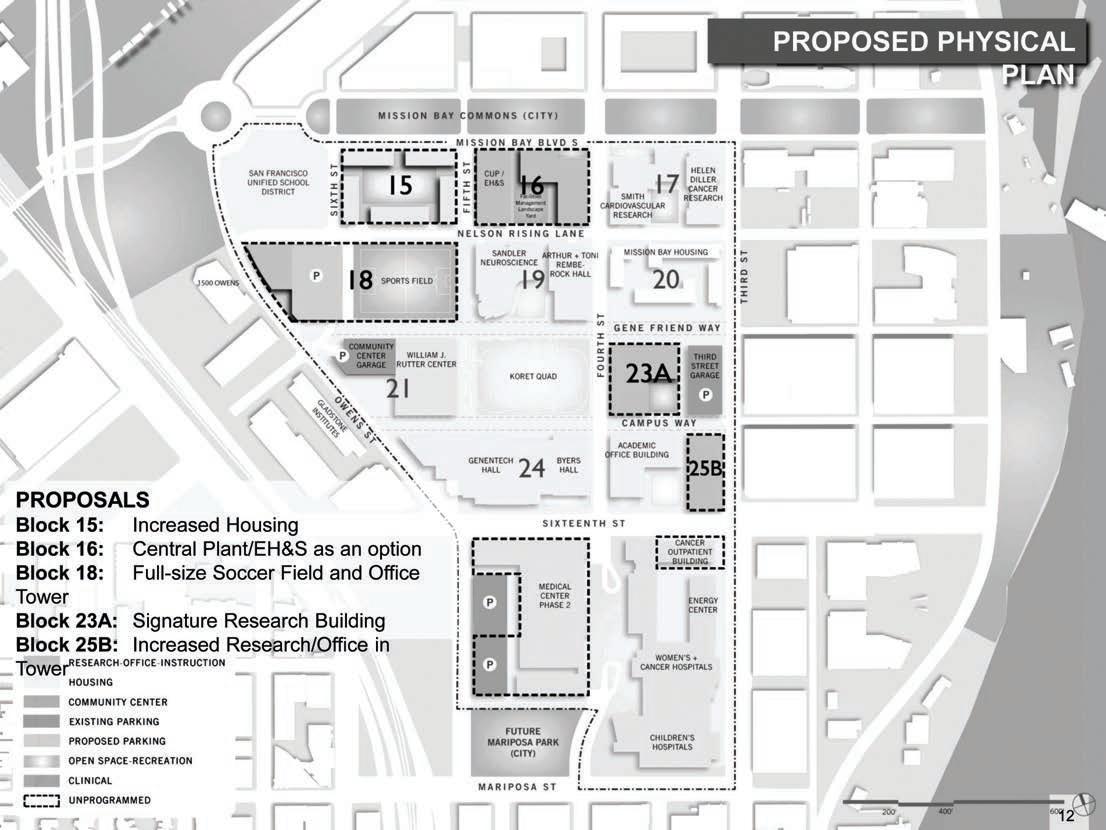
residential space, to accommodate 523 studio, one- or two-bedroom units. The plan reflects 724,000 square feet of research space and 28,000 square feet of instruction space through 2035. In addition, there’d be a full-size sports field and tennis courts, childcare facilities, additional retail space and the public infrastructure needed to accommodate increased demand for storm water, sanitary sewer, reclaimed water, telecommunications, electricity and natural gas. Green spaces would dot the campus, and a pedestrian walkway along Fourth Street would be created to connect people to retail shops.
in San Francisco. We recognize our future is directly tied to those of our neighbors and surrounding communities, and…we have made a significant commitment to be inclusive, flexible and receptive to the input of ideas from our fellow San Franciscans.”
UCSF’s Long Range Development Plan (LRDP) guides the university’s physical development at Mission Bay. The last LRDP was adopted in 1996, and included strategies through 2012. UCSF recently launched its next LRDP effort, which has an expected planning horizon of about 20 years. Community involvement is a key facet of the planning process.
At the February meeting UCSF staff addressed issues related to building design, open space, housing and traffic issues tied to campus growth, particularly focusing on ways to improve connections between transit
Bay, “as part of a strategy to reduce the university’s operating costs by consolidating campus work sites from multiple locations that UCSF leases and owns throughout San Francisco, as leases on these properties expire. A request for qualifications/proposals process will identify opportunities for 300,000 square feet of office space near the Mission Bay campus,” Morales said.
Karen Alschuler, principal, Perkins+Will, an architecture and design firm, showed drawings of the proposed plan, which contains “several key components. There are five sites north of 16th Street for long-range development.” There would be an increase in housing “going beyond the original master plan,” including up to 398,700 square feet of new

José Farrán, principal, Adavant Consulting, outlined the proposed transportation plan, saying that the goal is “to reduce traffic and noise. Despite the proposed increase of 991,800 square feet and an increased number of people on campus, the proposed physical plan will not increase the number of daily or p.m. peak hour vehicle trips beyond what was projected in the 1996 LRDP or 2002 LRDP amendment,” Farrán said. Increases in the number of UCSF shuttles and shuttle runs are supposed to soak up transportation demand prompted by greater growth. A new, 11-story parking structure would house 60 shuttles on the ground floor, with room for 1,544 vehicles. The original plan for the parking structure has been modified to provide office space on the ground level.
For detailed information on the LRDP: www.ucsf.edu/about/cgr/ current-projects/lrdp.
the district convened a working group to examine the middle school issue, among other things. In the spring of 2012 the district recommended that the Board of Education establish Everett Middle School, rather than ISA, as the middle school feeder for Daniel Webster and Bryant Elementary. But parents and board members had reservations, and the board asked the district to conduct more due diligence before making another recommendation.
Dr. Brent Stephens, assistant superintendent for a group of district schools that includes Daniel Webster, presented a partial list of options to the committee, which included a twocampus kindergarten to eighth grade
school on Potrero Hill. “It is an option to be taken seriously,” Stephens said. According to Bartlett, it was the first time the district has lent any credence to the approach she and other Webster parents favor.
Another option is enhancing ISA’s sixth to twelfth grade program. Stephens said that a legitimate concern among Daniel Webster parents is ISA’s lack of a dual immersion language program, which is offered at Daniel Webster. But Stephens said the school district has begun discussions with ISA’s multilingual department about establishing a dual language program at the school. A third option is phasing out ISA’s middle school grades and graduating students from Daniel Webster into another middle school, such as Everett.
Bartlett, Daphne Magnawa, and John Monson, who have children at Daniel Webster, shared a proposal for a two-campus kindergarten to eighth grade school on behalf of the Daniel Webster Middle School Task Force. According to the trio, the task force wants solutions that accommodate San Francisco’s growth, provide enough school capacity to meet increased demand from families who want to stay in the City, keep families in San Francisco, enhance Potrero Hill’s cultural community, and provide a high quality middle school feeder for Daniel Webster students.
Monson said the task force disagrees with the district about its ability to meet demand for student seats, though it’s interested in the conclusions of a district demographic analysis. SFUSD has hired a demographer to study the district’s needs for the next 10 to 20 years, the results of which will guide the school board’s decisions regarding a separate public middle school on Potrero Hill.
According to Monson, an influx of high-technology companies, a housing boom has prompted on the Hill, and with it, increased demand for school seats. Monson reported that San Francisco Planning Department data indicates that more than 7,500 housing units are now under construction or being permitted in the area. “We see high growth. We see school at near capacity. We are expecting we are going to have a capacity problem very soon,” he said. Based on an analysis by Hill resident and demographer
WEBSTER page 25

lion, roughly 23 percent of the total budget. “Both politicians and contractors think they can force taxpayers to fork over more and more money. Both private and public personnel tend to jump on the gravy train, especially if oversight is lax, as the audit indicates,” said Wong.
According to Paul Rose, SFMTA spokesperson, while there’s oversight of consultants t hey must submit weekly time sheets that a manager signs, and are subject to random checks t he audit was deployed to ensure that no charges were made to the City for items that municipal or federal guidelines don’t permit. The audit found that while most firms were mainly in compliance with regulations, some had made perhaps honest accounting errors, while others passed along expenses that, as the review put it, were “expressly disallowed.”
B&C Transit was one of the worst offenders. The audit found that it charged $280,000 for unsubstantiated or unallowable costs. B&C Transit charged $61,500 to B&C Properties, but couldn’t explain to the auditor what type of services B&C Properties provided. The firm charged the City $60,000 in other miscellaneous fees that the auditors found unallowable, including late fees, political campaign contributions, charitable donations, and a wedding cake. Other disallowed charges from B&C: golf tournaments, a personal trip to the United Kingdom, and mortgage payments.
While attempting to charge tax-
payers for a wedding cake seems like more than a simple mistake, Rose said allowable expenses with private entities can include such things. “We called for the audit to find expenses like these, and when we find them we remove them,” said Rose.
Other than disallowing charges, there were no other repercussions from the audit; offending consultants weren’t black-listed or penalized. The only sanction for charging for unallowable expenses is that one day an auditor might discover the error, and the City will refuse to pay the charge. According to Rose, none of the disallowed charges had been paid to the consultants prior to the audit.
The audit uncovered $450,000 of extra charges by Silverman and Light, an electrical engineering and lighting design firm. While more than half of these were due to an accounting error, the firm billed the SFMTA for a lease for a car that was used personally. Architectural firm, Kwan Henmi, spent more than $11,000 on sponsorships, purchasing tables at a fundraiser and spending money on a charity golf tournament. While Kwan Henmi sent a letter disputing audit results, SFMTA refused to pay for their charitable activities.
And if all this isn’t enough evidence of government bloat, there’s the audit itself. While a well done and thorough document, it cost the City $200,000. When the report was published in early-February, it was distributed to SFMTA policy officials, but it’s unclear whether any of them read the document. Leastwise, so far they haven’t addressed its results.


Most anyone perambulating along Minnesota near 23rd has probably discovered, with their nose, that something appealing is going on in the non-descript corner building that for many years housed a tile and countertop store. The aroma is that of fresh popcorn popping, mixed with the sweet smells of caramel, chocolate or other ingredients used to flavor it, by the Thatcher Gourmet Specialties Company, which moved to the neighborhood last year.
The timing seemed right, according to Gus Ghassan, owner of the company that’s produced flavored popcorn in San Francisco for 30 years. Thatcher’s lease on a series of connected buildings on Jerrold Street, in the San Francisco Produce Market, was expiring. Ghassan’s search for a more suitable manufacturing site led, last summer, to newly vacant 1201 Minnesota. He calculated that, despite the move, the company’s production system could be up and running in time to meet the holiday rush. But “unexpected things surfaced at the last minute,” said Ghassan, referring to complications associated with equipping the building with three-phase electrical service and natural gas.
“We were about three months behind,” said Ghassan. Without a
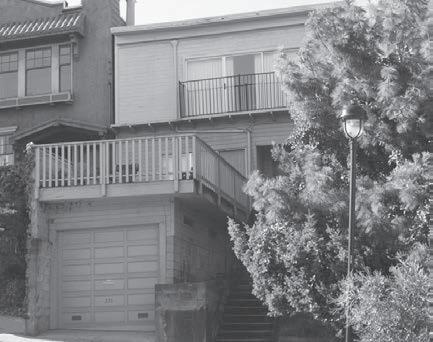



fully operational production line, the food processing plant was pressed into working three shifts, 24 hours a day, last fall to fill orders on time. The business employs 16 to 40 people, including office staff, depending on the season.
The process, Ghassan explained, starts with popping the corn kernels, which are then mixed in cookers

with the natural ingredients that give the finished product its flavor. The company’s popular carmel corn is one of several creations that incorporate the roughly 18 different flavors made from Thatcher recipes, including chocolate and other sweet
THATCHER’S page 17
With the new quarter’s statistics coming out it is becoming clear that it’s currently a great time to be a seller and a more challenging time to be a buyer.
Over the past year the average days on the market for single family homes, condos, and 2-4 unit buildings has been just over one month. Most properties are selling FAST!
Sellers want to prepare themselves for a quick sales cycle. And Buyers should have their purchasing power ready to pounce on the right property before it’s scooped up by someone else.
For all of your real estate questions and needs, contact me any time!
I recently found the solution to a geographical puzzle that had been gnawing at me since I moved to Dogpatch in 2010. To find the answer I had to tie together clues from several different digital sources, including Google Earth and a San Francisco Public Library collection of historical aerial photos. With a little online detective work, my story shows, it’s possible to discover surprising truths about the landscape you live in.
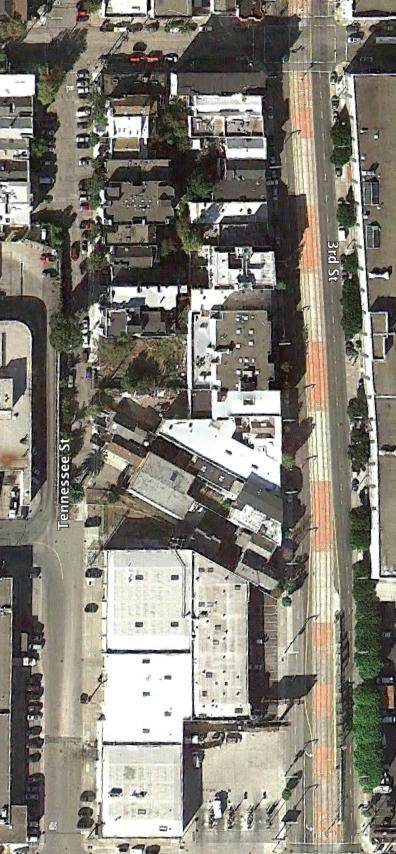
The puzzle was this. While walking my dog one day, I noticed that there’s a row of four buildings between 22nd and 23rd streets that are set at a roughly 40-degree angle to the curb. All of the other buildings on that Third Street block are perpendicular to the street. But these four buildings o ne of which is the famous Frisco Clubhouse of the Hells Angels Motorcycle Club c ut through the block like a slash mark.
I immediately wanted to know the story behind these odd buildings. I’ve spent enough time staring at maps to know that such anomalies are usually the remnants of older patterns established for specific, if long-lost, reasons. Especially in San Francisco, the urban landscape is often like a palimpsest or a leathery skin, crisscrossed with scars that have healed but never quite disappeared.
meter resolution; higher than most satellite surveys. Rumsey had just finished digitizing, cataloguing, and “geo-referencing” matching control points on the ground with objects of known latitudes and longitude t he prints, so that the digital versions of the photos could be assembled into an accurate mosaic and displayed inside geographical information software, such as Google Earth. Rumsey’s post informed readers that that they could access the 1938 images using Google Earth’s historical imagery feature.
I immediately thought of my Third Street buildings. I fired up Google Earth on my Mac, turned on the Rumsey Historical Maps layer, navigated to my neighborhood, and set the “time slider” back to 1938. The image I found astonished me. It appeared that some
a long, thin building cutting across Long Bridge t he raised boardwalk defining the route that’s now Third Street a nd continuing out into the Bay on a wharf.
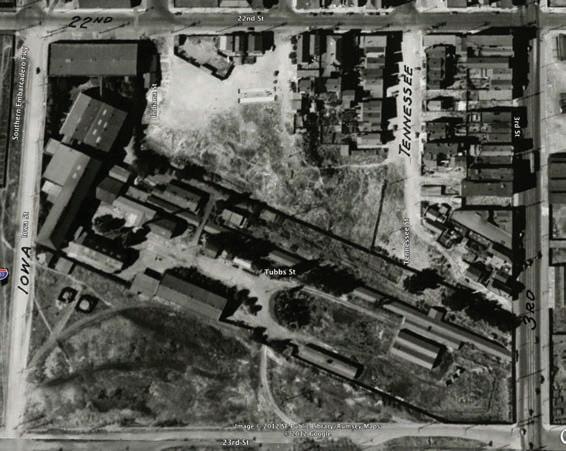
It turns out that one of the leading businesses in the old Dogpatch was the Tubbs Cordage Company, which made hemp and abaca fibers into rope for sailing ships. “The first structure on the site was a 35’ by 1,000’, one-story, wood-frame shed that extended in a southeasterly direction from the present-day intersection of Iowa and 22nd streets to a wharf in the bay,” wrote the group’s historian, Christopher VerPlanck. “The shed sheltered the rope walk, a 1000’ (later extended another 500’) platform used by skilled workmen to twist strands of yarn into ropes.”
There you have it: the Tubbs rope shed and the buildings that grew up around it owe their orientation to that
of the wharf, which must have stuck out into the bay in a southeasterly direction, just as the engraving suggested. The Bay’s original shoreline met the Long Bridge/Third Street roughly where the Hells Angels Clubhouse is located today, and the rope shed would have been perpendicular to it.
City directories show that the Tubbs Cordage Company was active from 1857 to 1962. The facility would still have been churning out rope when the 1938 aerial photo was taken. There’s a final clincher to the story. Most of the present-day site is occupied by the San Francisco Municipal Transportation Agency’s bus yard and repair shop. But cutting right through the middle there’s one block called “Tubbs Street.” That street name and the tilted buildings are the only remaining signs of San Francisco’s rope industry.
I asked a few neighborhood people about the buildings; no one knew the story. And that’s where my puzzle stood. Until one evening last summer while browsing Google’s Lat Long Blog I found a guest article by David Rumsey, one of the country’s leading collectors of historical maps. His blog post was about an amazing set of high-resolution aerial images of San Francisco, captured in 1938 by aerial photographer Harrison Ryker.
The 164 prints in the Ryker collection cover the entire City at one-
sort of industrial compound covered the area bounded by Iowa, Third, 22nd, and 23rd streets. The dominant feature was a long, thin building that sliced across what are now four City blocks, at the same angle as the current-day Hells Angels Clubhouse. In fact, the clubhouse is visible in the 1938 image, just to the north of the tilted lot, on the Third Street end.
This was a major step forward. But I still had no idea what the structure was. The final puzzle piece fell into place a few days later, when I was surfing the web for information on Pier 70. In 2008, the Citizens Advisory Group for Pier 70 produced a thorough history of Dogpatch as part of an effort to persuade voters to fund a bond measure to rehabilitate the pier. What caught my eye was an engraving at the top of the history document that showed


For all I know, there’s a San Francisco Public Library reference librarian who could have told me the whole story of Tubbs Cordage and the strangely situated Hells Angels clubhouse right off the bat. But it was a lot more fun to figure out the story my way, using some of the best new digital resources and mapping tools.
This is a revised version of an article that originally appeared on Xconomy on August 17, 2012. See http://www.xconomy.com/national/2012/08/17/the-case-of-the-tiltedclubhouse-a-geographical-detectivestory/
LETTERS from Front Page
PROSAC; what it is and what it does. That’s a shame, because more people should know about this important committee.
The Parks, Recreation and Open Space Advisory Committee consists of 23 San Francisco residents, two appointed by each of the 11 Board of Supervisors plus one member appointed by the Mayor’s Office. It makes recommendations to the Recreation and Park Commission the governing body for the San Francisco Recreation and Parks Department (RPD) about anything relating to RPD-managed parks and open spaces.
One important issue for which PROSAC is responsible is overseeing RPD’s Acquisition Roster; the list of properties that have been suggested for acquisition as new parkland and/ or open space. The committee also hears regular reports from RPD staff on the status of capital improvement projects in parks and open spaces, the department’s budget, and other issues. PROSAC was consulted regularly during the process of crafting the 2012 RPD bond initiative, passed by voters last November.
PROSAC meets on the first Tuesday of each month in City Hall, Room 278. Meetings start at 6:30 p.m. Agendas are published in advance, and anyone is welcome to attend. Opportunities for public comment are provided. PROSAC’s current chair is Linda D’Avirro, from District 11.
Marjorie
Gelin Goodwin Rhode Island StreetThe Urban Smith’s door is often open. Across the street from Chatz Coffee, Molly Cruit warmly welcomes visitors into her showroom-cum-work studio-cum-living space, assisted by Tatonka, her Miniature Australian Shepherd. Cruit sometimes sits on her front stoop in the sunshine breaking large stones with a pick to be used in her jewelry.
It started in 2010, when Erica Skone-Rees, Collage Gallery’s buyer and manager, admired the necklace Cruit was wearing. When she learned that Cruit had made it for herself, Rees asked her to make more to sell in the shop. In quick order a couple more retail outlets were added, and The Urban Smith was born. Rees has gone on to open the Rare Bird in Oakland, which, of course, carries Cruit’s craftwork.
Cruit began by making leather hoops with gold and silver studs. She initially called her brand “Revivify,” suggesting her love of traditional craft techniques using repurposed materials with her own fresh twist. When everyone, including herself, had trouble pronouncing and spelling the word, she realized Cruit needed another name. “I was in the shower one day,” she said, “when it hit me. I have a small smith and I’m in the City. The Urban Smith.” She immediately registered TheUrbanSmith.com. A brand was born.
“I really love learning, it’s one of my big passions,” Cruit enthused. She’s continually teaching herself new
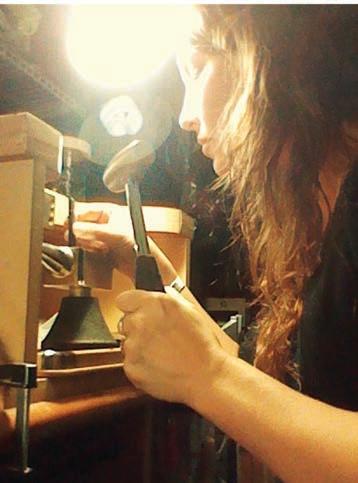
techniques, taking courses at City College, and traveling to England to learn leatherworking and blacksmithing. She’s studied shoemaking, adding an industrial cylinder arm sewing machine to her small studio. Cruit both embodies and goes beyond her straightforward motto: “just smithin’ it”.
Cruit’s day job is designing “little things” like totes, jewelry and hair accessories at San Francisco-based Gymboree. In her spare time she retreats to “the explosion room,” a well-organized walk-in closet, sewing room, craft room, smith studio, guest room and Cruit’s “little oasis”. Cruit’s husband, Conor, built the custom-designed desk and bench, and recently installed storage shelving, so that everything she needs to design, create or ship is within arm’s reach. The Urban Smith is a family affair, with Cruit’s brother and sister assisting with website design, public relations, and marketing.
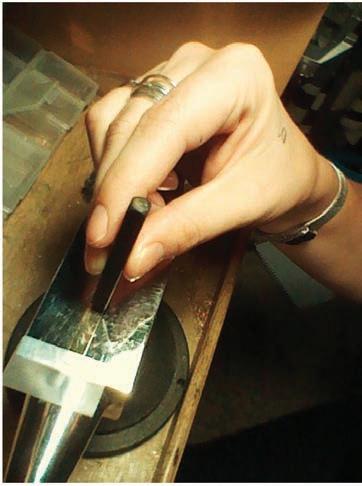
Valentine’s Day and Mother’s Day have been “huge” for The Urban Smith, which got a boost when in an episode of The Talk Aisha Tyler wore one of Cruit’s necklaces and little else on the town. Recently the gold bar bracelets were included in the presenter and performer gift bags at the Grammys. After she agreed to the request, Cruit learned she had five days to make 170 pieces. Cruit’s can-do attitude and seemingly inexhaustible energy came to the fore; she over-nighted the jewelry just in time. She loved the idea that stars like Adele, Rihanna, Alicia Keyes, and Bruno Mars would be receiving her work. Yes, Cruit said, men wear the bracelets and necklaces too.
Each bar is hand cut, forged, and individually stamped, and every element is designed and created by Cruit. The bars can be marked with pretty much anything: words like “darling,” “awesome,” and “bay area.” Cruit laughed



































mischievously as she admitted that some of what she stamped on the bars were “bad words.” “I f***ing love you,” is one of the most popular, even reportedly given to some lucky grandmothers. “You can say anything you want,” Cruit said about custom orders, then quickly amended, “Within a certain amount of letters.”
The Urban Smith’s bracelets, necklaces, rings, earrings, cards a nd recently purses can be found online at Fab.com, trade shows and the Renegade Craft Fair. One of Cruit’s successful vending venues has been Indie Mart, now in its fifth year, the Bay Area’s “Best Nomadic Hipster Flea Market & Party” takes place two or three times a year, often just outside of Thee [sic] Parkside, on 17th Street. Some pieces feature the original gold bars, some use stones, and the line is ever expanding. Look for the Urban Smith’s products at Wonderland SF, Cocoon Urban Day Spa, and yes, at the corner of Arkansas and 18th, if the door is open.




















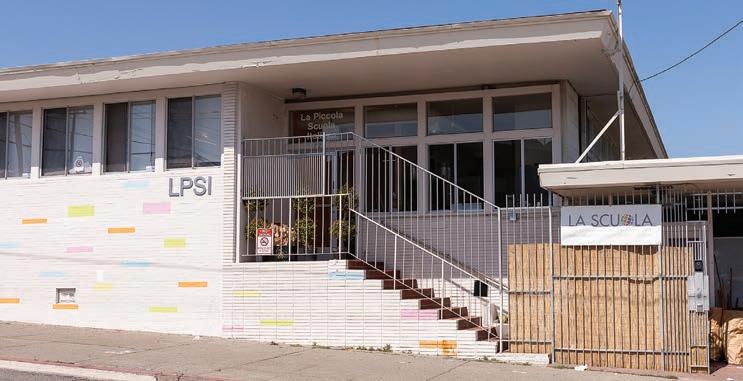
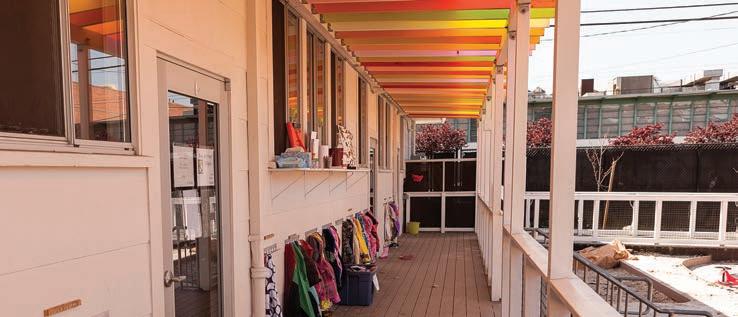
La Scuola Internazionale di San Francisco, a Dogpatch-based pre- and primary school, is proving that children are their own best teachers, through methods considered unorthodox by traditional American public schools. According to La Scuola’s educators, the school’s students are exploring concepts that are traditionally taught when they’re older, or not at all in primary education, such as gardening, dining, storytelling, and business principles.
La Scuola follows the Reggio Emelia approach, which focuses on fostering respect, responsibility, and community through self-directed investigations guided by the participating children’s interests.
La Scuola is San Francisco’s only International Baccalaureate (IB)Primary Years Program. IB is an internationally-recognized academic program designed to cultivate the intellectual, personal, emotional, and social skills necessary to thrive in a globalized world. French-American International School offers the City’s sole high school IB program.
La Scuola offers Italian language immersion. Preschool students speak only in Italian, while kindergarteners to second graders speak Italian for
Left located on 20th street near Third, the otherwise nondescript building calls attention to passers-by with its colorful rectangular “bricks.” Right inside the school there’s a feeling of playfulness from the color and brightness. phoTographs courTesy oF don nolTe
80 percent of the school day. By sixth grade, students will communicate mostly in English, with Italian spoken 30 percent of time.
“Many parents come here and feel that there is a lot of affection and love. There is lots of hugging and kissing. It’s like a home away from home. We actually have to warn parents about that,” explained Valentina Imbeni, La Scuola’s director since 2007. Imbeni’s two children attended La Piccola Scuola Italiana (LPSI), which a group of parents organized in 2002 so their children could learn Italian. Imbeni’s kids are now first and second graders at La Scuola.

Initially, LPSI met at the Saint Gregory of Nyssa Episcopal Church, on De Haro Street. In 2010, a campus was built for LPSI and La Scuola in just three months, with funds raised over the course of four years. “During the construction of the current school
LA SCUOLA page 23

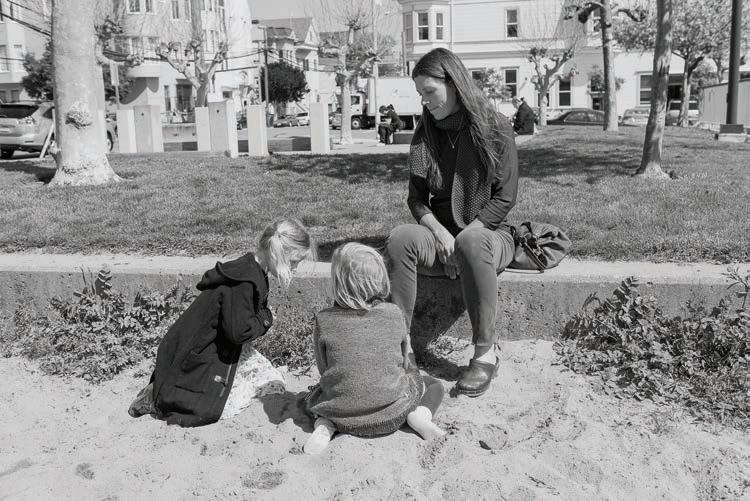
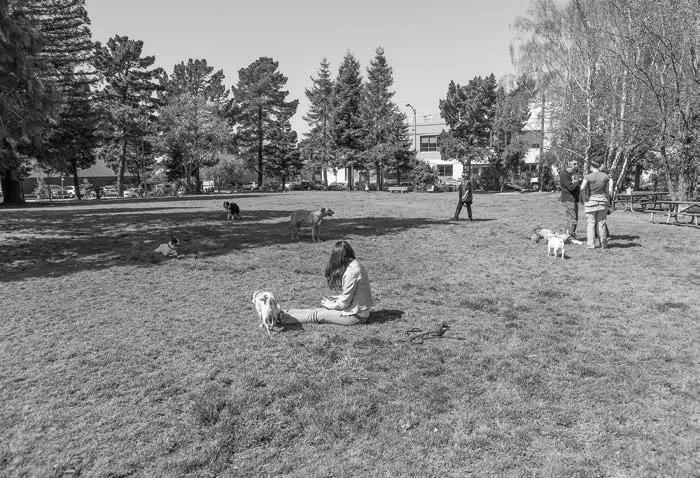
It was only after Lesley Grossblatt became a mother first of now four year old Sarah, followed by now two year old Zach t hat she made a startling discovery about her beloved Dogpatch: the neighborhood is a lousy place to be a toddler. “You’ve got a place for dog walkers,” shrugged Grossblatt, who lives on Third Street near Mariposa. But, “Dogpatch is probably the only neighborhood in the City without its own playground.” According to a playgrounds survey conducted last year by
the San Francisco Parks Alliance, the entire bayshore south of Mission Creek is conspicuous for its lack of kid-friendly infrastructure.
Grossblatt set out to change that last summer. Working at the time as director of product management at Nextdoor.com, a social networking site for neighborhoods, she was wellpositioned to reach-out to fellow Dogpatch families. After connecting with community members in cyberspace, she started meeting like-minded parents offline. Before long, those informal get-togethers had a name: the Dogpatch

Playground Working Group.
Grossblatt linked up with Dogpatch Neighborhood Association (DNA) president, Janet Carpinelli, and Bruce Huie, a DNA member who played an instrumental role in the creation of Progress Park, a new strip of community-managed green space located in the shadow of Interstate 280, along Indiana Street. The Working Group then canvassed the area for possible park locations.
One spot stood out. Identified in a 2011 22nd Street development plan published by GreenTrustSF as “underused and neglected” but a potential “plaza space for community gathering” Woods Yard Park, between Minnesota and Indiana streets, was little more than an unassuming, grass and concrete rectangle. Owned by the San Francisco Municipal Transportation Agency (SFMTA), its lack of amenities barring an empty sandpit earned the “Muni Mini Park” little love from the neighborhood. On Yelp, the location’s sole review describes it as “a place where Muni drivers hang out to smoke.”


But once upon a time, the City had more ambitious plans for Woods Yard, according to Grossblatt. “That sandpit was intended as a play area when the park was built,” she said. “Janet Carpinelli told us that, and that was our inspiration.”
With a location selected, late last year Grossblatt gathered 219 signatures on an online petition asking SFMTA director Ed Reiskin to allow the Working Group, along with DNA, GreenTrust SF, and the Parks Alliance, to build a playground on the site. In response, SFMTA has been “incredibly receptive” and “a good neighbor,” Grossblatt said. According to a SFMTA spokesperson, the agency is “working in collaboration with the Dogpatch Playground Working Group and other neighborhood groups to develop a playground at this site.”
“I think it’s a great use of underutilized property and it is especially needed,” District 10 Supervisor Malia Cohen said. “We are seeing more and more families with children moving into the neighborhood, so I’d like to see some of our City infrastructure reflect the changing dynamics.”
With all of the key parties sold on their playground idea, the Working Group now needs to back up their demands with an actual plan. That will mean budget writing, fund-raising, and a whole lot of meetings. Late last winter the Working Group floated a two-phase proposal a playground would be installed temporarily, until the space is reconceived as a neighborhood plaza at a community gathering at La Piccola Scuola Italiana, the Italian international school located on 20th Street.
David Fletcher, whose Dogpatchbased landscape architecture firm designed the first-phase play area pro bono, came away from that meeting feeling enthusiastic. “What’s interesting about working in the Dogpatch is that there are so many artists and craftspeople and technologists and engineers living here that we’ve got so much creative brainpower to draw from,” said Fletcher. “Even as the neighborhood changes, these are people who want the place to be cultural and funky and to have character. With these kinds of projects, I think we can really achieve that.”
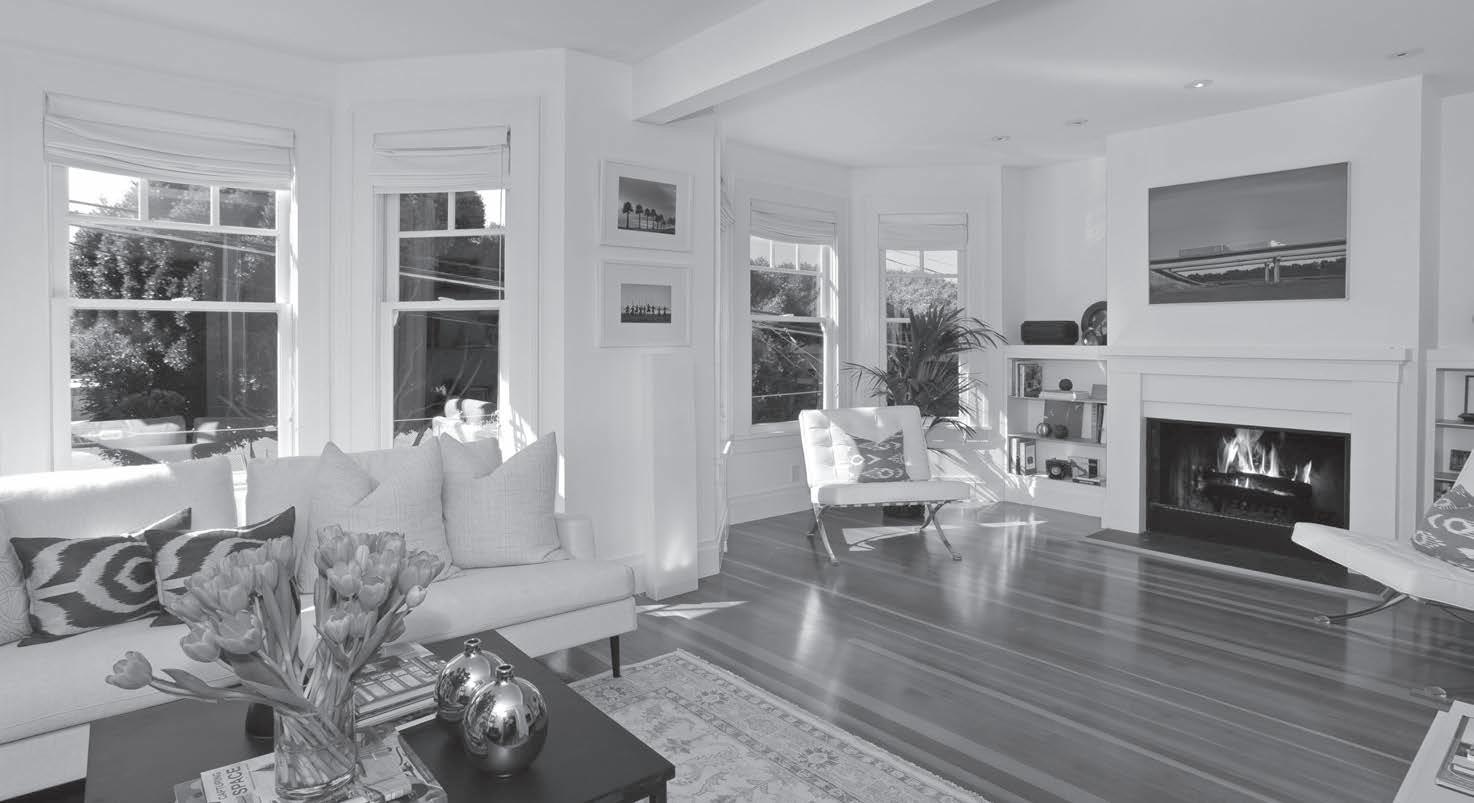
Getting your home ready for sale doesn’t have to be difficult or expensive. There are several simple ways you can add value to your home inexpensively:
MAKE IT SHINE There is nothing more important than ensuring your home is clean.
LIGHTEN AND BRIGHTEN If it is time to repaint, consider lighter colors that will make your home brighter and feel more spacious.
OUT WITH THE OLD It is easy to accumulate clutter even after just a few years. Donating or discarding unneeded items can make a home feel more spacious—and make your future move easier.
DON’T FORGET SMALL THINGS WITH BIG IMPACTS Simple steps like painting the garage floor or planting bright flowers near your home’s entrance are easy and inexpensive ways to make a home more welcoming and tidy.
If you are thinking about selling your home, call me at 415-710-9000 for a free copy of my 2013 Potrero Hill Real Estate Report.
415.710.9000
tim@timjohnsonSF.com
www.timjohnsonSF.com
DRE# 01476421
This booklet includes:
• Sales Prices for All Potrero Hill Homes Sold in 2012
• Why Prices are Rising on the Hill
• What Potrero Hill Buyers are Looking For
• How to Prepare Your Home for Sale




Jeffers said.

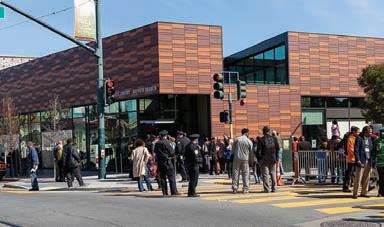
The late-winter opening of the San Francisco Public Library’s (SFPL) new Bayview Branch, at Third and Revere streets, delighted community members.
“I think it’s good,” said Bayview resident, James Cook. “It’s needed in the community. Because the library was small and dark and the materials were insufficient. It’s a new day for the community of the Bayview.”
On opening day, library staff wore brown t-shirts with “Bayview Branch Library” stenciled on the front. Before 5 p.m. almost 1,600 people had toured the new library.
The new library is 9,527 square feet, with roughly three times the usable space as the previous branch. Its collection of lending items has more
than doubled, with more than 51,704 books, DVDs, and audiotapes now on offer. At a February gathering to recognize library donors, city librarian Luis Herrera called the new branch a “community anchor,” and noted that it was almost 44 years to the day that the previous library had been constructed, though Bayview’s first library opened in 1921. The library is expected to serve 20,000 to 30,000 people annually, similar to other San Francisco branches.
The total cost of the library renovation, including site acquisition t he City acquired an adjacent storefront to expand the branch was $13.5 million, which was paid for through a voterapproved $105.9 million bond measure passed in 2000. In addition, donors contributed almost $360,000 in amounts that ranged from $3 to $100,000 to buy
hundreds of residents came out to celebrate the bayview branch library’s grand opening with Mayor ed lee among many speakers at the ribbon cutting. phoTograph by don nolTe
furniture, fixtures, and equipment.
According to Michelle Jeffers, SFPL spokesperson, the renovated library addresses what the community members said they needed. “They wanted outdoor space,” Jeffers said. The library now features an interior courtyard with wooden benches and a tiled walkway surrounding two trees. The walkway tiles or pavers a re engraved with Adinkra symbols, from the Asante people of West Africa. The pavers and engravings were gifts of the Bayview Koshland Fellows, who chose the symbols for the “life-affirming message they evoke,”
A discretionary review won’t be necessary for the Center for Youth Wellness to be developed at 3450 Third Street. Last winter, the Planning Commission voted seven to nothing to approve the project as proposed. Bayview resident Espinola Jackson, on behalf of the Black Human Rights Leadership Council of San Francisco, requested the review, alleging that the site where the planned Center will be built is toxic.
“We need the services” that the clinic will provide, Jackson said. But she and others are opposed to the location. Roughly fifty people attended the hearing, ten of whom spoke against using the proposed site for the Center. According to Jackson, toxins are present in the air from the large volume of traffic that passes the spot each day, as well as from the nearby Southeast Wastewater Treatment Plant. Jackson also claimed that flooding has been a problem at the site.
The San Francisco Child Abuse Prevention Center, which is sponsoring the project, provided a report from an engineering, consulting and testing firm, Professional Service Industries, Inc., which indicated that no contaminants are present at the site, as well as a San Francisco Department of Public
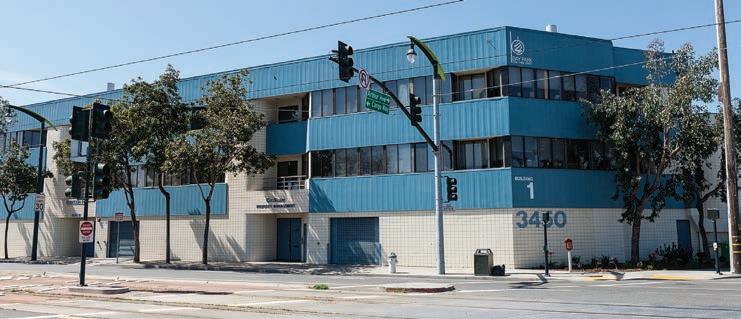
Health (DPH) study that stated that there were no reasons to shift the clinic to a different location. Jackson dismissed that study, saying she wouldn’t trust DPH.
According to the DPH report, community members are concerned about how air pollution, flooding, pedestrian safety, and noise will affect clinic patients. The proposed location is near Third Street and Cargo Way, where large numbers of trucks pass each day. However, the study found that locating a clinic at 3450 Third Street is acceptable because patients will only be exposed to air pollution for short periods of time. The report also noted that noise shouldn’t be an issue for patients inside the clinic, but suggested that “patient care areas not directly face
Third Street.”
The report recommended installing high-visibility crosswalks near the site, increasing the time for pedestrians to cross, installing signs to direct patients to the clinic, expanding the size and visibility of the pedestrian refuge island at Third and Arthur streets, removing a refuge/concrete slab that blocks travel in the southern crosswalk, and “installing on-demand, flashing beacons at the crossings in front of the proposed clinic.” A flashing beacon is a light mounted on a pole that warns drivers of crossing pedestrians.
The Center for Youth Wellness will combine pediatrics with mental health services, educational and family support, and research under one roof, according to the clinic’s website.
According to Mindy Linetzky, a spokesperson for the San Francisco Department of Public Works, which managed the project, and Freddie Carter, KCK Builders, Inc., the general contractor on the job, community members built the library. The City requires that 30 percent of the contractors engaged in a public works project be local; Carter hired more than 68 percent. “We were very adamant about beating the goal,” Carter said. He added that he wanted people in the neighborhood to have access to work; not just to look through the gate as the library was being constructed. “I live in the community. So, if I’m not part of the solution, I am part of the problem.”
But Mukulla Godwin thinks that black contractors were left out of the competition for the project, and for that reason didn’t participate in the library’s opening ceremony. Godwin, who is African-American, is a resident of the Outer Mission, but visits Bayview frequently as an activist and to see family and friends.
“I know the community is going to love it,” said Diane Gray, a 45-year Bayview resident and Friends of SFPL board member. Gray pointed to the ample space compared to the previous library, which was “cave-like.” She said the new branch reminded her of a college library, and speaks volumes about where the community is heading.
The library is open Monday, Tuesday, and Saturday from 10 a.m. to 6 p.m.; Wednesday 1 p.m. to 8 p.m. Thursday; 10 a.m. to 8 p.m.; and Sunday 1 p.m. to 5 p.m.
nolTe
Research will include reporting results from the Center’s work addressing adverse childhood experiences, such as abuse and post-traumatic stress, based on data collected about program outcomes. When needed, the Center will help families secure educational services for their children within and outside the San Francisco Unified School District. And the Center plans to provide combined therapy for children and caregivers, and help families obtain other needed community resources. Dr. Nadine Burke Harris, who has treated Bayview-Hunters Point residents since 2007 at the Bayview Child Health Center, a clinic operated by the California Pacific Medical Center, will serve as the Center’s chief executive officer.
The site will house the Bayview Child Health Center, focusing on physical health issues, the Center for Youth Wellness, focusing on mental health issues, and the Child Advocacy Center (CAC), a one-stop location to help children who have suffered child abuse. City and County offices that attend to child abuse will be co-located in the CAC, which is a project of the
cal leave. When asked why, Rose Dennis, in charge of Housing Authority media relations, said “He went on medical leave at his choosing and because of his own personal needs to do so.” In a letter to the commission, Alvarez stated that he wouldn’t seek a renewal of his contract. Last month, it surfaced that Alvarez and his wife are part owners in a restaurant set to open next month in Berkeley. This has left people wondering if Alvarez has been spending his paid medical leave attending to other business matters instead of to his own health.
The Mayor made good on his announcement that he’d replaced every member of the Housing Authority commission, with the exception of Patricia Thomas, the commission’s only public housing resident. The removed members included the president, Reverend Amos Brown, who serves as pastor of the Third Baptist Church and president of the local National Association for the Advancement of Colored People chapter, but whose name produces ire from some public housing advocates. Ace Washington, a long-time community activist, shakes his head when he hears Brown’s name. “He did not serve our black community.” And he’s happy with the Housing Authority’s new direction. “I really applaud the Mayor for having the [guts] to fire all the commissioners,” said Washington.
Marie Harrison, a community organizer with Greenaction who has spent years working with public housing ten-
ants, thinks that the commissioners had been in place for far too long. “I think it has been a long time coming. They did far too little for the population they were supposed to be representing,” she said.
Now with new commissioners, many tenants are wondering if things will change for the better. “They are glad that the old board is gone,” said Harrison. “They have high expectations, with little hope that things are going to change.”
Alvarez is only the latest Housing Authority director to step down in the midst of controversy. Harrison remembered scandals surrounding most all of the recent Authority directors. Indeed, in 2007 Mayor Gavin Newsom ousted director Gregg Fortner, who preceded Alvarez, amid criticism that he’d allowed certain complexes to become almost unlivable as a result of deferred maintenance. Ronnie Davis, before him, had been under continual scrutiny by federal auditors. With each change in leadership came a new promise that public housing would work. And here we are again.
Mayor Lee has brought city administrator Naomi Kelly, Office of the Mayor director of housing Olson Lee, and previous public housing resident and District 5 Supervisor London Breed, together with community organizers and tenants, to develop recommendations for improving public housing. In this mix is Hope SF, touted as a model program, under which affordable, below-rate and market-rate housing would intermix in single developments.
Harrison doesn’t have a problem
housINg page 25
When Tim Larsen alleged in his lawsuit against Housing Authority director Henry Alvarez that Alvarez steered contracts to his preferred providers by asking them to rebid, he didn’t name names. After two San Francisco Chronicle reporters went digging, however, they thought they may have found a couple of contracts that fit the bill.
The January 23rd Chronicle article alleged that Dwayne Jones and Linda Richardson were awarded consulting contracts with the Housing Authority after being asked to rebid. Both are locals with long histories in City government who were competing with consulting firms located outside the Bay Area. Jones’ consulting company, RDJ Enterprises, is located in Bayview. Richardson has worked in Southside neighborhoods for upwards of two decades, having served as chair of the Bayview Hunter’s Point Project Area Committee, and currently as a board member of Bayview Hunters Point Multipurpose Senior Services. Rose Dennis, Housing Authority spokeswoman, denied any impropriety in choosing the contractors.
For Western Addition public housing resident Ace Washington, the allegations didn’t necessarily mean that the right person hadn’t been
chosen for the job; he prefers that the City rely on local consultants. “If they come from out of town, it takes a year for them to learn who we are and when they finally learn, they are gone,” said Washington. “With Jones and Richardson, we know the consultants. We don’t have to worry about them misrepresenting us.”
Jones used to be head of San Francisco’s Community of Opportunity initiative under Mayor Gavin Newsom, a program still housed in the mayor’s office that works to create jobs and provide services for public housing residents. The contract that prompted the Chronicle’s scrutiny was for $50,000 to perform services at the Sunnydale housing complex. The work, which was completed last year, included things like gang prevention, coordination of resident services, and tenant engagement. “I think he is a skillful organizer, and did a lot of good for the tenants getting them jobs and setting them up with opportunities,” said Washington.
Marie Harrison, an organizer for Greenaction, had a different opinion. She’d just visited Sunnydale, and was shocked to hear how much money Jones had been paid. “Wait, if he has done all this, there would have been changes right? I didn’t see anything,” she said.
mess page 26
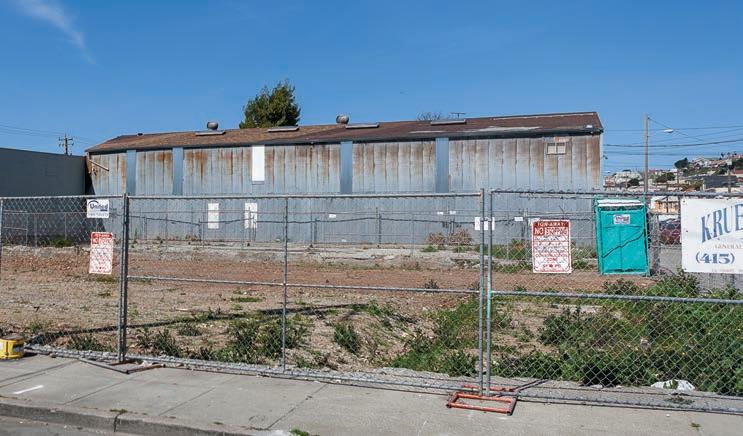
Earlier this year Bevan Dufty, director of the Mayor’s Office of Housing Opportunity, Partnerships and Engagement (HOPE), announced that a portion of a $1 million grant for the City’s shelter system could be used to turn an industrial space next to United Council on Human Services (UCHS) a lso known as “Mother Brown’s” i nto a homeless shelter. Plans for the shelter include erecting a two-story 100-bed facility next to Mother Brown’s dropin resource center, at 2111 Jennings. The shelter would have separate areas for men and women, with access to showers, lockers and two meals a day at Mother Brown’s.
Mother Brown’s currently provides roughly 50 overnight chairs, where people sleep on the seats. According to HOPE, there’s growing demand for Mother Brown’s services from elderly homeless people. UCHS also provides case management assistance for the homeless; mental health care is available through the San Francisco Department of Public Health.
With support from District 10 Supervisor Malia Cohen, in February and March HOPE held two community meetings to discuss plans for the new shelter, at the Southeast Community Facility Commission and Baview police station; Cohen attended the latter meeting.
A Bayview resident and business owner, who declined to give her name
for fear of retribution from shelter supporters, attended the Southeast Community Facility meeting, which drew roughly 50 attendees. She opposes the project, which she believes will ruin the community feel of the area. After she received a letter from Dufty announcing plans for a fully functioning shelter to replace the current drop-in resource center, she visited the neighborhood near Mother Brown’s too see what residents of the predominately industrial area thought of the proposal. She was shocked to discover few of the people she spoke with knew about the shelter expansion plans. She asserted that Dufty’s office had done minimal community outreach, and is instead focusing on the homelessness issue with a disregard for neighborhood impacts.
The resident was concerned that there’s already too high a concentra-

Being a good doctor is about more than practicing good medicine. It’s about preventing illness. Being proactive. Taking time to really listen. And giving our members the personalized care they deserve.

tion of shelters and homeless centers in Bayview, South of Market and Tenderloin. The City “… is saturating this neighborhood with shelters,” she said. She fears that introduction of a large-scale shelter will bring problems, such as vandalism and loitering.
Another resident, who also asked that his name not be printed, owns a home a few blocks from Jennings Street and Van Dyke Avenue the potential site of the expanded homeless shelter and is similarly concerned about the plans. He left the same meeting feeling that City staff was going to proceed with the project regardless of community input. The resident who is a member of BRITE, or Bayview Residents Improving Their Environment, which advocates for beautifying Bayview was concerned that the area is not well equipped to take on a large
homeless population, with few resources for mental and physical health nearby. “We want to create something different,” the homeowner said. He said the shelter would be a step backward, especially for property owners who have worked to create a neighborhood vibe, upgrading and repairing their homes. “We have plenty of compassion,” he said, “but this is the ‘Bayview District,’ not the ‘Homeless District.’”
In the letter distributed throughout Bayview to encourage residents to at-



Anyone who has driven a car in San Francisco knows how challenging parking can be. Vehicle owners often need to find creative solutions to store their cars. One trick, parking on the sidewalk, can trigger a $110 ticket. But that sanction isn’t always enforced.
In response to frustration expressed by Bayview residents, who want more cars ticketed for sidewalk parking, the San Francisco Municipal Transportation Agency (SFMTA) recently cracked down on the practice. On February 28, parking citation officers (PCO) issued more than 200 tickets to cars parked on Bayview sidewalks. The tickets were in response to citizen complaints, said Paul Rose, SFMTA spokesperson.
According to some Bayview residents, when they see PCOs a lso known as metermaids t hey’re often accompanied by police escorts. PCOs, said one resident, “get threatened. If someone’s going to threaten you, your family, or your life, with a gun, because that’s what happens around here, you ain’t writing the ticket.”
“We work in conjunction with the SFPD, because both the SFPD and SFMTA have been the recipients of numerous complaints, and it makes more sense to conduct joint operations,” said Rose. “However, our PCOs work in the area all the time without police assistance.”
Bayview isn’t the only neighborhood where SFMTA has historically been lax on sidewalk parking ticketing. The issue is widespread throughout the City, and has inspired everything from a 2009 Lighthouse for the Blind initiative to end sidewalk parking in the Sunset, to a mysterious blogger who posted photos of offending cars throughout San Francisco using only the name “The Commissioner of Concrete.” Sidewalk parking creates hazards for pedestrians who might be forced onto the street to pass the cars, a problem that can be particularly risky for children, the elderly, and people with disabilities.
In Bayview, BRITE, or Bayview Residents Improving Their Environ-
ment, is leading the anti-sidewalkparking battle. BRITE focuses on combating blight and attracting businesses to the neighborhood. The group is also concerned with the current state of Mendell Plaza, Bayview’s central square on Third and Palou. For one BRITE member, who wished to remain anonymous, stamping out sidewalk parking was related to the larger goals of improving the community.
According to the anonymous BRITE member, those who spend time in the plaza are the wrong kind of people. “For the few people that you see that are causing most of the trouble, there is a wide population here that aren’t causing trouble, that go to work every day, that want to raise their kids in a safe environment, that are terrified of their neighbors and terrified of the bad influences that hang out at Mendell Plaza,” she said. “We really believe in the broken window theory. So, little things like sidewalk parking will go a long way towards getting rid of some of these influences.”
The resident said that she didn’t find claims that a lack of parking in the area necessitates rolling onto the sidewalk compelling. “You can always go around the corner and find a place to park. I think that’s just laziness,” she said. “People just don’t want to walk the extra block or two once they found a parking spot.”
Other residents disagreed. “If I go parking around the corner, someone’s going to break into my car. The police aren’t going to reimburse me for anything taken. I shouldn’t have to keep going into my insurance due to the fact of the area that I live in,” said Bayview resident Anthony Reagan. Reagan noted that street parking on his block of Palou has been made scarcer because the street has yet to be repaired after a sewer construction project. “They tore our streets up. They went and did other projects and finished those projects, fixed the streets; this is the only street they didn’t come fix.”
Reagan said he didn’t support increased sidewalk parking enforcement. “I don’t know why you can’t park on the sidewalk. They say it blocks people. The way I see it, if people can
walk or a wheelchair can get by your car, it’s not obstructing,” Reagan said. Another resident who asked not to be named said he supported the ticketing, but had sympathy for parking offenders. “Some people have multiple cars, you’ve got people who don’t have a driveway or a garage. I’ve got a driveway, but other people don’t have that fortunate thing,” he said. “But this issue about parking is this,” he said. “Anywhere in San Francisco, especially here, there’s never going to be enough.”
CLINIC from Southside page 13
San Francisco Child Abuse Prevention Center. “We have an opportunity to do some real healing,” Burke Harris told the commission. But, “we need to get our doors open.” Burke Harris said she has a waiting list of people that want care at the clinic.
According to Bayview resident, Junior Tagata, Bayview-Hunters Point is full of toxins, but the clinic should be allowed to open its doors while toxins are dealt with. “Let’s build this,” Tagata said. Burke Harris also got support from District 10 Supervisor Malia Cohen, who wrote a letter to the Planning Commission in support of bypassing the discretionary review. According to Cohen, the Center has attempted to address community members’ concerns, including related environmental issues.
“I believe that this project will begin to address not only medical but social
injustice issues that we have had in the Southeastern neighborhoods for decades,” Cohen wrote. “Mental health disorders are the second leading cause of hospitalization in adolescents, and the co-location of these services are essential in ensuring that patients receive the comprehensive care that they need.”
The project also has the support of San Francisco District Attorney (DA) George Gascon. A representative from his office spoke at the hearing, expressing the DA’s endorsement of the clinic and its location. According to the representative, victims of child abuse will benefit from having all the services Burke Harris is providing in one location.
sheLteR from Southside page 15
tend the community meetings, Dufty included an introductory note sharing his hopes for the proposed shelter. “We look forward to doing a better job of helping individuals who are homeless, so that they are not living on the streets in the neighborhood and that we engage them to sign up for services, employment and housing to exit homelessness,” Dufty wrote.
According to HOPE, construction of the shelter requires approval by the Planning Department, which will offer another opportunity for residents and homeless advocates to participate in the planning process. If the project is approved which could occur by the end of the year HOPE officials said there’d be a competitive biding process to designate a shelter operator.
The Rebuild Potrero Healthy Living and Garden Programs have expanded for 2013! All activities are free and open to the public. Please join us at any of the following family friendly activities:
Family Garden Workdays:
Tuesdays from 10:00AM-12:00PM, Saturdays from 12:00-3:00PM. Family Resource Center Garden, behind 85 Turner Terrace.
The Family Garden Workdays are an opportunity to harvest and take home fresh, organic produce and share in a productive and healthy outdoor activity with your community.
Kids Garden Workshop:
First Saturdays of the Month, 10:00AM12:00PM. Family Resource Center Garden, behind 85 Turner Terrace. The Garden Managers organize a monthly fun filled class for kids ages 8-16 years old. Each class includes learning how to work in the garden and the preparation of a snack made from garden ingredients.
Healthy Living Workshop:
Third Fridays of the Month, 10:0011:30AM. 1095 Connecticut Street. Nutritionist Tali Sedgwick leads Potrero residents in a discussion about how to live a healthier lifestyle and cook healthier foods. The topics change each month and include hands on cooking demonstrations.
Gardening Classes:
Second and Fourth Saturdays of the Month, 11:00AM-12:00PM. Family Resource Center Garden, behind 85 Turner Terrace.
The Garden Managers conduct Gardening Classes for adults (over 16 years old),
focusing on a different subject area each class. Participants will learn all aspects of creating and maintaining a seasonal garden in San Francisco. The 10 class curriculum will be taught from February through June, 2013.
Walking Club:
Mondays at 2:00PM, Thursdays at 10:00AM and Friday at 1:00PM. Meet at the corner of 25th and Connecticut streets. Three times a week community members come together to participate in the Potrero Walking Club. The route varies from week to week and participants of all levels are engaged in a 30-45 minute walk, taking advantage of the Potrero hills to build cardiovascular strength.
Zumba Classes:
Mondays and Wednesdays from 6:007:00PM. The NABE, 953 DeHaro Street. Ready to move your body and get your heart pumping to high energy music? Dance to the upbeat music and work up a sweat in a fun filled Zumba class.
Meditation Classes:
Tuesdays at 5:00PM and Thursdays at 4:00PM. 5 Watchman Way. The meditation class was the brainstorm of a Potrero Annex resident to give families the opportunity to incorporate relaxation techniques into their daily lives. The class provides one hour of meditation and breathing exercises.
For more information, call 415-806-1429 or email potrero@bridgehousing.com See more at www.rebuildpotrero.com
items, as well as savory offerings, such as cheddar cheese and Jalapeno flavored popcorn. There’s also is a line of plain and salted-only popcorn, fat-free and sugar free products, and packaged pretzels.
“What is unique about our product is that we use all natural ingredients and the flavors are added in cookers, the old fashioned way. We make our product by hand in small batches. That’s very different from most companies.” According to Ghassan, the result is “a better flavor.” Many other carmel corn products are “too sweet. People tell me they don’t enjoy the taste after a few bites.” With Thatcher popcorn “it’s hard to stop eating.”
Most competitors, said Ghassan, use automated equipment to produce large quantities of products that are sprayed with artificial ingredients. “It’s the only way they can keep up the volume they need. And it’s cheaper to make.”
In addition to selling to distributors, food brokers, and retailers, the company conducts “etail” business from its website. “Customers can order from one package to several cases,” said Ghassan. “We are even shipping to Canada and Japan.”
The company was started in 1983 by two English women, who opened their Thatcher’s retail shop South of Market, producing flavored popcorn in the rear of the store. Ghassan said he’d heard that they originally called the company “Thatcher
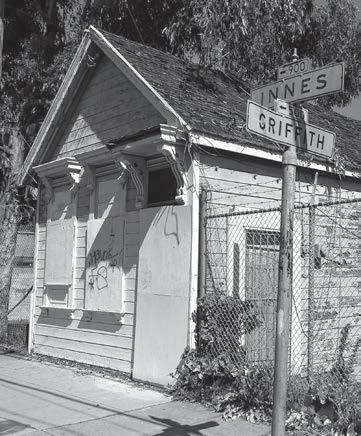
Built in 1875, the Historic Shipwrights Cottage, at 900 Innes Avenue, was the hub of union wooden boat building, known as “shipwrighting,” in India Basin. The single-family, 15 by 60 feet Italian- s tyle workers’ cottage was used as a dwelling place for scow schooner industry workers, including shipwrights, carpenters, laborers, and their family members. A scow is a flat-bottomed boat used to haul freight; scow schooners were deployed for trade in shal-
and Winston,” after their favorite British prime ministers. He’s the third owner, having purchased the company in 1991. He discontinued Thatcher’s bricks and mortar retail element, allowing the store’s lease to expire in 2000 to concentrate on expanding the product line and focus on manufacturing.
Today, Thatcher’s is offered in packages, bags gift boxes, tubs and tins. It’s found in food markets, gift basket companies, gift and specialty shops, theme parks and department stores. “People come in here to the factory and buy from us directly. They walk by and smell what we’re making and they become our customers.”
“We’ve found the people in the area to be very friendly and they’re happy with the product,” said Ghassan.
low waters, a crucial American industry in the late-19th Century. Boats built in India Basin include the Alma w hich can be found at the National Maritime Museum at Fisherman’s Wharf World War II Victory Launches, and Jack London’s adventure boat, Snark
In 2008, developer Joe Cassidy donated the land at 900 Innes Ave to the Tenderloin Housing Clinic (THC) to build 128 units for Bayview residents. In 2010, the San Francisco Board of Supervisors voted to designate the cottage local landmark number 250, with the qualification that the remainder of the shipyard lot, roughly three acres, remained available for development.
In 2011, in response to the discovery that a tree had punctured a hole in the cottage’s roof, the Planning Department sent a letter to Randy Shaw, THC’s executive director, informing him that the building was registered as vacant and abandoned. The Planning Department stated that it was the owner’s responsibility to keep the building in good condition, not only because of its historical landmark status but to avoid building code violations. Last fall, THC received a graffiti abatement notice from the San Francisco Department of Public Works.
The San Francisco Historic Preservation Commission held a public hearing last winter to determine future plans for the cottage.
Hearing attendees included THC staff, San Francisco Architectural Heritage staff, preservation commissioner Carl Hasz, and community members. These parties concluded an agreement to work with the Preservation Commission to find a way to restore the structure to good standing.
“At this point, the community has obtained a couple of estimates for the work and is working with the property owner to find funding,” said Tim Frye, Planning Department preservation coordinator. The Preservation Commission, which meets the first and third Wednesday of every month, has asked to receive updates regarding the status of repairs at each hearing. Until funding is secured, the little Shipwrights Cottage at 900 Innes Ave is left to defend itself against nature’s elements.

POTRERO BRANCH 1616 20th STREET 355.2822
Tuesday 10 am - 8 pm, Wednesday 12 noon - 8 pm
Thursday 10 am - 6 pm, Friday 1 pm - 6 pm
Saturday and Sunday 1 pm - 6 pm
Monday CLOSED
eBook and eAudiobook Help Sessions. Bring your Kindle, Nook, iPod, or other eReader device and learn how to download books and other materials from the library website for free. For adults, 18+. April 3, 10, 17, 24, at 6:30 p.m.
Movie: See The Hunger Games, a movie in which a future dystopian North America forces 24 participants to eliminate their competitors, literally. When 16-year-old Katniss’ young sister, Prim, is selected as her district’s female representative, Katniss volunteers to take her place. She and her male counterpart, Peeta, will be pitted against bigger, stronger representatives who have trained for the competition their whole lives. Rated PG-13; 142 min; 2012. April, 13, 3 to 5:30 p.m.
25 Great Apps for Students, Parents, and Teachers. An interactive program that explores 25 educational apps for iOS/Android devices. Learn how to find the best apps to stay organized, be productive, juggle multiple tasks, and quickly find information. At the end, attendees may share their favorite apps with others. April 28, 3 to 4:30 p.m.
Baby Rhyme and PlayTime. For infants up to 18 months old and their caregiver. April 2, 9, 16, 23, 30, 1:15 to 1:45 p.m.
Family Storytime. Storytime features stories, songs, and rhymes. For children up to five years old and their caregiver. April 4, 11, 18, 25, 10:30 to 11 a.m. and 11:15 to 11:45 a.m.
Fun Flicks. This film program is offered every second Wednesday and includes short films based on children’s books and stories. April’s films will be Where the Wild Things Are, Ponies of Mikaengi, and Amanda and the Mysterious Carpet. For children ages three to eight years. April 10, 6:30 to 7:15 p.m.
Homework Help. A library volunteer will be available to help students kindergarten through sixth grade with homework. April 2, 9, 16, 23, and 30, 4 to 6 p.m.
GreenArt Workshop: Making Kites! The tradition of kite making dates back at least to the 5th century B.C. in China. In both Eastern and Western culture, kites have served many purposes, from spiritual, military, and scientific to the purely recreational. This workshop uses the kite as a vehicle for exploring identity and memory. Participants will gain knowledge of the cultural history of kites, discover how to make them personally relevant, and consider how art may interact in the public sphere. For children of all ages. April 20, 4 to 5 p.m.
San Francisco Seed Library at the Potrero Branch. In partnership with the San Francisco Seed Library, the Potrero Branch has seeds available for “checkout.” Located on the first floor beneath the staircase.
California Clean Money Campaign. A nonprofit, nonpartisan organization whose mission is to pursue statewide support for public funding of election campaigns meets every third Saturday. April 20, 1 to 3 p.m.
The Potrero Hill Book Club meets at the library every third Wednesday. April’s selection is Death Comes to Pemberley by P. D. James. April 17, 7 to 8:30 p.m.
Creative Writing Workshop. Join writer, filmmaker, journalist Shevi Rosenfeld Loewinger for a free class to help you write stories, develop characters, and find your own unique voice, all in a supportive and creative environment. April 4, 11, 18, 25, 12:30 to 2:30 p.m. Information: sheviros@gmail.com or 602.7961.
Robert Runkle lived on Potrero Hill for eight years before his death on February 9, 2013, at the age of 56. Originally from San Diego, Runkle had been ill for most of his life. He started dialysis when he was 17, and continued to have medical issues for the next almost forty years. In 2012 he was put on a kidney transplant list, but was removed a month later after he was told he had lymphoma. According to his neighbor and friend from the 600 block of Rhode Island Street, Tracy Moon, “he was amazing trooper for how sick he was.”

Despite his poor health, Runkle enjoyed life through his canine companions. “He was very close to his dogs,” Moon said. Runkle and his dog, Lola, a purebred miniature Yorkshire terrier, made local headlines when she was stolen from Runkle’s car while it was parked outside Davies Medical Center last fall. Runkle was undergoing both dialysis and chemotherapy when Lola was snatched. After the dog theft, “he took to his bed for two weeks,” Moon said. “We thought there was no way we’re going to see this dog again.”
Despite the long odds, Moon’s campaign to find the dog garnered media attention, especially since Moon offered a $3,000 reward. “Honestly I’m not rich, but I thought money would get her back.”
Once the media got word that a dog had been stolen from a frail, sickly man, and money was on the table to recover her, the search for Lola spread quickly. In what Moon characterized as a lucky holiday miracle, Lola was found in East Oakland on December 1 and returned to Runkle, who was able to enjoy his furry companion for a few more months
Coming in Side of Hope Hou S e for Veteran S t r an Si tional Hou Sing gpd p rogram.
We have vacancies for homeless veterans. The program provides housing, meals at Mother Brown’s Kitchen; case management; and ongoing contact with local Veteran Administration to help move the veteran toward self sufficiency.
The process is fast and convenient.
For more information, please call (415) 671-1100 and ask for Ms Bickerstaff.
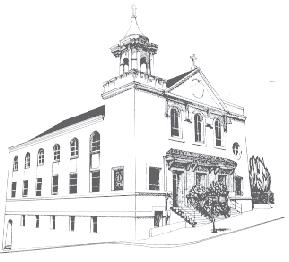
before he died from complications from lymphoma.
On the day
Lola was found, a woman called Moon to tell her that she’d found a dog running loose near Lake Merritt, and had brought the lost animal home and cared for it along with her own dogs. A friend had told the woman it looked like the dog they’d seen listed as missing on posters and in a Channel 7 newscast. Moon headed to East Oakland, her optimism tempered by concern that the call could be a hoax; she’d be told of other fake sightings and received calls from people eager to collect the reward money. When Moon saw Lola in the woman’s arms, she immediately recognized Runkle’s dog. “I was overcome,” she recalled. She drove the woman to an ATM, gave her the reward money and surprised Runkle with Lola after he returned that night from dialysis.
Although a solitary man who lived alone in a studio apartment with few relatives and close friends, Runkle was known throughout Potrero Hill for his canine companions, whom he treated to regular groomings at a Fairfield pet store, according to his neighbor and friend Kelly Keith. Before Lola, he’d had two other Yorkshire terriers; both found untimely ends in freak accidents. “He had the worst luck with dogs,” Moon lamented. “One got ran over, anther hit by a car…and here’s Lola, and she gets stolen right before Christmas right when he was diagnosed with lymphoma.”
Runkle’s social scene centered around McKinley Square, where he took his dogs to walk and play. If he was

Growing up in Marin County, Potrero Hill resident Wendy MacNaughton always drew “the teacher instead of taking notes.” She shifted from drawing to writing advertising copy while she was studying fine arts and advertising at Art Center College of Design in Pasadena, and altered her path again when she went on to earn a graduate degree in social work from Columbia University.
After graduate school she worked
for a nonprofit advertising agency, and started drawing again. “I was living in Oakland and commuting to San Francisco,” she said. “I started drawing people on BART every day. I wrote notes about them. Over the course of three years I fell in love with drawing again. It felt like coming home again.”
MacNaughton sees drawing as a way to better understand the world around her. “For example, if I walk down the street and I am looking at things in the way I look at them when I draw, I notice



more things t he direction between things, funny details than otherwise I would notice. So I really enjoy moving through the world in my life through the lens of an illustrator.”
“Usually I draw with a pen,” MacNaughton said, and then paints her drawing “with watercolor. It’s not like oil paint or pencil, where you can keep working on the same thing until it’s right. For pen, it either works or doesn’t work, but I prefer that.” If the drawing doesn’t work, she starts all over with a new piece of paper. If she redraws the same object, the results are never the same: “You cannot draw the same line twice.” If she keeps making “a bad line,” she said, “who cares? …Sometimes a bad line turns into something very unexpected and quite beautiful.”
MacNaughton loves drawing the “Meanwhile” column for the online literary magazine The Rumpus. She gets a buzz out of illustrating a documentary series of San Francisco communities for Chronicle Books. “They are most rewarding,” she said, “because I learn about people, places and communities.”
Having the privilege of being allowed into people’s lives to “observe and get to know them,” she’s delighted to share their stories with those who might “otherwise not hear.”
A number of books illustrated by MacNaughton will be published over the next year, including Lost Cat: A True Story of Love, Desperation & GPS Technology. Written by her partner, Caroline Paul, the book, which will be published this month, is for “animal lovers, pet owners, and anyone who has ever done anything desperate for love.” The Essential Scratch & Sniff Guide to Wine, will be published by Houghton Mifflin, in October, 2013. San Francisco in its Own Words, from Chronicle Books, and Pen & Ink, Tattoos And The Stories Behind Them,

The View asked Hill resident and career expert Mauri Schwartz to answer questions from job seekers.
Last month’s column prompted two readers to ask about counteroffers:
Q: i don’t feel i ’m appreciated at my current company. they don’t pay me as much as i believe i should get, and i ’m thinking of seeking an offer from another firm to force them to pay me more to keep me. What do you think?
A: I’m sorry you don’t feel that you’re getting what you deserve, and I don’t blame you for looking elsewhere for a better opportunity. However, keep an open mind, and conduct a sincere job search. No one likes to be used, which is how potential recruiters and hiring managers will feel if you apply to jobs solely to get leverage over your existing employer. Likewise, your current manager may feel pressured to meet your demands, and won’t be happy about it, which won’t help you in the future. I highly recommend keeping doors open and relationships positive.
Q: i ’ ve conducted a six month job search and finally received an offer for the position i want. i followed your advice regarding how to resign my current job, and was surprised when my manager asked me what it would take to keep me. She said she’d try to get me a salary increase if i stayed. now i ’m confused. i feel pulled in both directions. What should i do?
A: What you haven’t told me is why you were motivated to seek a new job. Was it because of compensation? Or was it the position itself? Other reasons could be management style or capability, the firm’s financial outlook, your future prospects for promotion, and so on.
Here are some issues you should consider:
Damaged reputation. Historically, accepting counteroffers often results in career suicide. If you’ve withheld information from a recruiter or hiring manager, she may feel that you haven’t cooperated in good faith throughout the interview process, giving you a reputation for dishonesty which will not be good for your future career. The potential future employer will have a tarnished view of you, and while initially satisfied to have kept you, after a while, your current employer will remember that you’d been unhappy.
Career barrier. Your current manager may fear that you’ll be looking again soon, and not be inclined to consider you for better assignments or career advancement, creating a self-fulfilling prophesy. Unhappy once again, you’ll resume your job search. Statistics indicate that most employees who accept a counter offer are gone anyway in six months or so, leaving a bitter taste of disloyalty for everyone involved. unresolved issues. Whatever your reasons for looking for a new job, they’ll still exist after accepting a counteroffer; unless your search was motivated solely by money.

1501


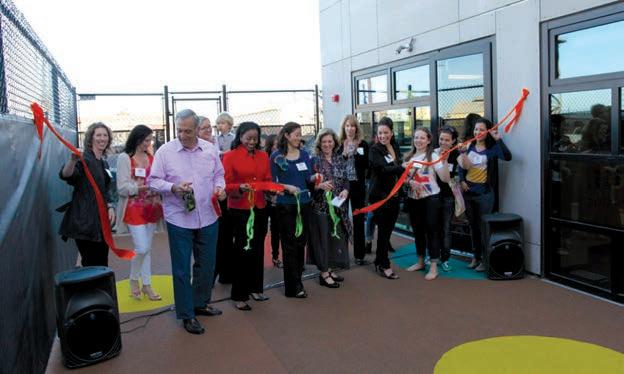




Through April
Harley Farms: Meet the Kids
In March more than one hundred baby goats were born at Harley’s Farm, and April is the perfect time to visit. Older babies can be seen gamboling around in the Farm Barn, while younger ones stay in the farm corral, and the tiniest ones stay inside the loafing barn. Farm staff invite visitors to hold the babies at special times, depending on the day’s events. Harley Farms is a restored 1910 dairy farm, with 200 alpine goats on nine acres of pasture in Pescadero, 35 miles south of San Francisco. The Farm is open year-round for tours. Visit any time or book a tour at harleyfarms.com. Harley’s Farms 205 North Street, Pescadero, 94060. Information: 650.879.0480
Thursdays in April and May

Art: China’s Terracotta Warriors at the Asian Art Museum China’s Terracotta Warriors: The First Emperor’s Legacy features more than 120 rare artifacts from the enormous tomb complex of China’s First Emperor (259 210 BCE) and early Qin dynasty burial chambers. Highlights include ten life-size terracotta figures the maximum number permitted outside China in a single exhibition plus several newly discovered artifacts, from bronze weapons, sculptures of waterfowl, and a ceremonial limestone suit of armor to tiny gold figurines. Normally $18 on weekdays, the museum has discounted admission rates of $10 on Thursday evenings. 5 to 9 p.m. Through May 27. Asian Art Museum, 200 Larkin Street. Information: asianart.org
Celebration:
Bayview Operahouse
Join Bayview residents, families, artists, and organizations for a social gathering to connect with one another and share current and upcoming Bayview events that need support. Food will be provided by Radio Africa, Auntie April’s, and Soul Food. Donation: $5. 6 to 8 p.m. Bayview Opera House Ruth Williams Memorial Theatre, 4705 Third Street. RSVP: bayviewconnect.eventbrite.com.
Art: Grand Opening of Museum of Craft and Design
Furthering the Museum’s ability to serve as an international center for arts and culture, the Museum of Craft and Design’s new facility expands the institution’s exhibition space, and features the museum’s first dedicated educational workshop and programming space. A non-collecting institution, the Museum of Craft and Design is one of North America’s few institutions dedicated to contemporary practices in craft and design. Exploring the active roles craft and design play in everyday life, the Museum will originate exhibitions, host traveling exhibitions, present pop-ups exhibitions and collaborate with museums from around the world to present outstanding works of craft and design. Admission $8. Saturday hours: 11 a.m. to 6 p.m. American Industrial Center, 2569 Third Street. Information: sfmcd.org or 773.0303
Music: Classical Revolution Free Concert
Head to the Vistacion Valley library to hear a concert performance by Classical Revolution, featuring Musical Art Quartet. Classical Revolution is an organization of musicians dedicated to performing high-quality chamber music in non-traditional settings. Founded in November 2006 at Revolution Cafe in the Mission District, it has two important objectives: to enrich the San Francisco Bay Area with accessible chamber music and to create a support network for local musicians. Free. 2 to 4 p.m. Vistastacion Library, 201 Leland. Information: 355.2848 or sfpl.org.
April 8 through 12
Children’s Books: Book Fair at Daniel Webster Elementary School
Visit the Scholastic and Let’s Read in Spanish Book Fair to celebrate reading and literacy, while supporting a universal mission: encouraging kids to read every day. The fair brings a wonderful selection of fun, engaging, and affordable books kids want to read, in English and Spanish. Special events include: Evening Book Reading, April 9, from 5 to 7:30 p.m., there will be beverages and light fare available, while teachers and an author will read favorite books. April 11, from 8 to 9 a.m. where a continental breakfast food and coffee will be available, with appearance by Clifford the dog. The fair is open daily from 8 to 9 a.m, 2 to 3 p.m., 5 to 6 p.m. Daniel Webster Elementary School Library, 465 Missouri Street.
Fundraiser Fun:
Give N’Go
Do some good, and have fun at this event for the whole family. Bring your e-waste, office supplies, used clothing, and other clean, organized reusable materials. Enjoy arts and crafts, a jumpy house, face painting, and all kinds of family fun. Bring an appetite as well; delicious eats will be available for purchase. The event is a joint venture of the Potrero Dogpatch Merchants Association, Jr. League of San Francisco, Goodwill, and Scrap. The celebration brings together community while providing jobs and job training. 11 a.m. to 3 p.m. Free. The Ramp, 55 Terry Francois St. Information: givengoeventsbycollettepdmagoodwilltheramp.eventbrite.com
April 14 through May 5th
Performance: How To Make Your Bitterness Work For You
Self-help guru Kent Underwood’s book, “How to Make Your Bitterness Work for You,” has been turned down by 86 publishers. He’s so desperate for success that he leaves his cell phone on during his seminar to get his agent’s text messages regarding a potential book deal. It’s through these texts and others that we start to get glimpses of Kent’s tortured past, like how his wife’s affair with his best friend precipitated the writing of his patent-pending, fivestep Bitterness to Betterness Program. And yes, there really are five steps, everything from “Don’t Ignore Your Bitterness, Explore Your Bitterness” to “Don’t Let Past Bitterness Become Bitterness Repast.” Tickets: $15. Sundays at 2 p.m. Stage Werx Theatre, 446 Valencia. Information: stagewerx.org.
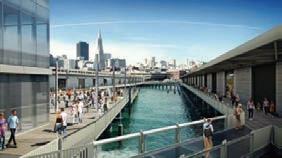
Explore the landmark museum’s new location at Pier 15 where there’ll be three times more space than its previous home, and 150 brand-new exhibits amongst more than 600 on view. For the first time, the Exploratorium expands its investigations into the bay, city, and outdoor landscape. $25 for adults, with lower rates available. Online ticket sales are scheduled to begin April 1, 2013. Pier 15. Information: exploratorium.edu.
Music: Havanna Meets
Paris at Yoshis
Raquel Bitton’s music blends the sensuality and passion of the music world’s two most romantic cities: Havana and Paris. Accompanied by an
18-piece orchestra, and led by the hottest Afro-Cuban band player. Bitton sings in French the Sambas, Bossa Novas , Chachas, and more. Tickets: $30. 8 p.m. Yoshi’s San Francisco, 1330 Fillmore Street. Information: 655.5600, yoshis.com.

Earth Day: Electronics Recycling
Celebrate Earth Day by recycling your old electronics while helping raise funds for Francisco Middle School. Bring your old electronics to the parking lot area at Francisco and Stockton streets, to be recycled. Types of electronics accepted are: monitors, computers, laptops, cell phones, printers, copiers, dvd players, and more. 10 a.m. to 2 p.m. Francisco Middle School, 2190 Powell Street. Information: tsdalsanto@yahoo.com or 308.9019.
Live Music: Soul Delights
The ever popular Soul Delights always draw a crowd at Farley’s. Come enjoy the tunes. Free. 7:30 p.m. Farley’s, 1315-178th Street.
Community: Garden Workday at Jackson Park
Join the seasonal Community Workday in Jackson Park where there are many projects underway. The day’s plans include light trenching work, laying down pathways and borders, beautifying the fence with succulent plantings, flipping compost, and painting signs. More hands makes light work, and all ages are welcome! Snacks will be provided. Bring a water bottle, hat and gloves. Meet under the large olive tree at the park’s southwest corner. 1 to 4 p.m. Potrero Hill Learning Garden, Jackson Park Playground. Mariposa at Carolina. Information: booka_alon@liveoaksf.org.
Fundraiser: Spring
Fling for Starr King
Elementary School
Starr King Elementary’s fourth annual Spring Fling auction promises to be its best yet. Celebrate spring while supporting the school at this year’s event, which features hors d’oeuvres and an open bar serving wine, beer, and cocktails, included with admission. The auction offers products and services for every interest and budget. This event is great for prospective parents to learn more about the school community. Tickets $40. 5:30 to 10:30 p.m. City Forest Lodge, 254 Laguna Honda Blvd. Information: starrkingspringfling.eventbrite.com.
Last month Farley’s Cafe and The Potrero Hill Branch Library, in partnership with a guest curator, hosted an exhibition dedicated to one of Potrero Hill’s few remaining examples of industrial architecture: the Cor-O-Van moving company’s structures on 16th Street, between 17th and Mississippi streets. Metal and brick structures occupied by Cor-O-Van once housed the largest steel-producing factory on the West Coast and are significant examples of turn-of-the-century and early 20th-century construction. This art exhibition shed light on important, underexamined aspects of Potrero Hill’s industrial past and envisions the possibilities of its future.

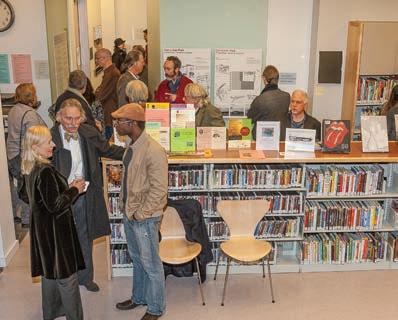
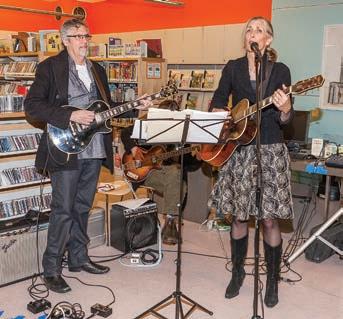
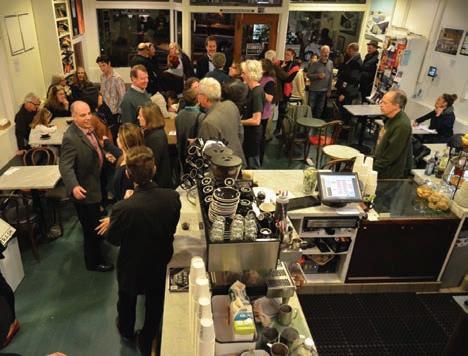
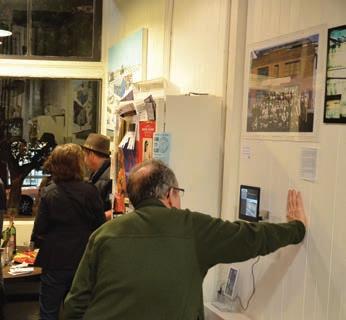
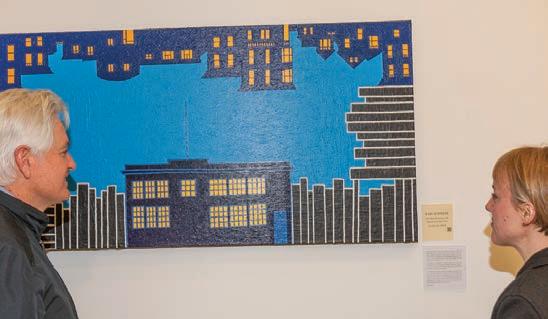

La Piccola Scuola Italiana school is an awardwinning Italian Immersion, Reggio Emilia inspired Early Childhood Education program now entering its 11th year.
The K-8 program is San Francisco’s first school to combine a Reggio Emilia inspired teaching philosophy with Italian language immersion and the International Baccalaureate-Primary Years Programme, a framework that is recognized all over the world for its focus on inquiry based learning, global citizenship and educating the whole person.
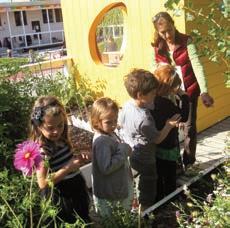
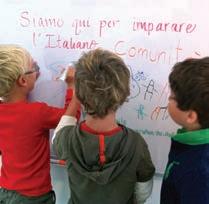
• IB-PYP Candidate School
• 1:10 teacher/child ratio in K-8
• extended care available
• on site organic hot lunch
• atelier, gardening and music programs
• tuition assistance available for those who qualify
To apply for K-8, please contact: admissions@lascuolasf.org (415) 558-9006 lascuolasf.org


site, there were as many as 25 parents volunteering on site at any one time,” said Dunja Solari, La Scuola’s admissions director.
The school’s architect, Michele Zini, of ZPZ Partners who is known for paying careful attention to every aspect of a structure, from the architecture to the interior design designed the space to match the way children learn. His clients have included Vodaphone, McDonalds, and the University of Modena and Reggio Emilia; he’s worked in Italy, China, South Korea, and Tokyo.
La Scuola’s instructors believe that the aesthetics of the learning atmosphere are crucial. According to Reggio Emilia’s philosophy, the environment is the child’s “third teacher.” “Children have a right to beauty,” said Imbeni, who later explained that the art room is a “laboratory. The focus here is on learning, not teaching. The teacher is the facilitator, here to offer
experiences. We are getting away from the idea that the child is an empty vessel to be filled.”
La Scuola’s philosophy is in line with international education advisor, Sir Ken Robinson, who has argued that, “Creativity now is as important in education as literacy, and we should treat it with the same status…I believe this passionately: that we don’t grow into creativity, we grow out of it. Or rather, we get educated out if it.”
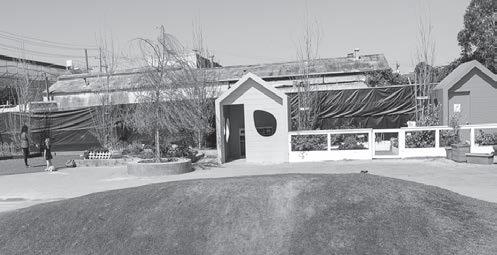
children from La Scuola’s garden.
The school’s teaching method is reflected in student-lead projects. The Grandissimi four and five year olds at La Scuola, decided that they’d like to get more supplies, and therefore needed money. Two of the children’s parents own restaurants; these students notified the others that if they could sell something for more than they’d paid for it, they’d earn income. At first, the students sold art, but later decided that they might generate more profit by selling baked goods.

The students baked the goods with the help of two parents. They assigned themselves roles: sales person, cashier, accountant. Teachers and parents bought the baked goods using real dollars. After a field trip to the Ferry Building, the children decided that their sales table needed to be more visually appealing; a new role was assigned. The students raised $70, and voted on what supplies they’d like to buy with the proceeds. In the end, they decided to buy test tubes for baking soda experiments and art and chocolate candy.
In addition to running a small business, the young intellectuals learn a life skill that other pre- and primary schools avoid: family-style eating. The children use glass dishes and silverware, serve each other, and clean up afterwards. They eat a three-course, Italian-style lunch, and are provided breakfast, lunch, and a snack daily. Lunch, prepared by authentic Italian chefs, Virna Messina and Nunzia Brescia, varies daily, and always includes a vegetarian option. The menu features pasta al pomodoro (tomato sauce), pasta con zucchini, zuppa di fagioli (bean soup), and pasta al ragu di taquino (turkey ragu). Every meal includes vegetables and fruit, some of which are grown and harvested by the
La Scuola plans to add one grade a year, ultimately offering a preschool to eighth grade experience. This fall, La Scuola will open its first third grade class. To accommodate new grades, La Scuola will lease the Bikeyard on Tennessee Street, just behind the school’s playground, for two academic years until other space is found.
“If she were to go there for preschool she could attend through elementary school,” Potrero Hill resident and parent, Jessica Owens said, about her daughter. “It’s nice that there will be continuity in the community, even though some kids will go to different schools.” Her husband, Garret Vygantas, a first-generation American with Lithuanian roots, has already spurred dual-language fluency in their 19-month daughter. “She’s already speaking Lithuanian, so why not add a third language?” Owens affirmed, “I bought into the language component and what that can do for their brains.”
Other parents are attracted by the opportunities offered at La Scuola. One hundred students applied for the 10 spots available last fall. While La Scuola is a nonprofit organization, tuition is no meager fee: up to $20,000 per academic year for full-time students. Ten percent of the families are eligible for financial aid, which is allocated through guidance provided by a financial assistance advising organization.
For the 150 currently enrolled families, the end results justify the sturdy expense. “I’m here because this is a gift for children,” Solari stated. “I think any child would thrive here and I want to provide this for them.”


Potrero Hill is a great place to call home. I know because over the past decade, I’ve helped dozens of clients find their perfect spot on the Hill. I found mine and have lived here for 19 years. When you’re considering your next move, let me earn your business.

Roughly 100 Potrero Hill residents gathered for the Fifth Annual Town Hall Public Safety Meeting, held last month at Downtown High School’s cafeteria. At the meeting, Bayview Police Captain Robert O’Sullivan and District 10 Board of Supervisor Malia Cohen addressed the jump in crime in the neighborhood over the past year. O’Sullivan started the meeting by distributing handouts that provided safety tips, including a security checklist, which outlined ways to protect individual homes and the community, how to be street smart, and information on phone location apps.
According to O’Sullivan, most crimes committed on Potrero Hill are related to property theft, with the kind of violent incidences that occur in Bayview-Hunters Point rare. Automobile break-ins are increasing on the Hill, and electronic theft is common. “Be aware of your personal surroundings while walking, and walk with a purpose,” Captain O’Sullivan advised. “Do not look vulnerable.” Attendees were advised to watch out for people who are wearing a single glove, which could be associated with a gun hand.
O’Sullivan said that police are deploying more decoys, such as putting laptops in parked cars. It took just 45 minutes for an early decoy to attract two gang members, who attempted to break into the vehicle, and were arrested. “If the car decoys have been working so well and quickly, then
why not use them more?” asked one audience member, to which Captain O’Sullivan responded that he would. Additional patrols have been added to the neighborhood, with more officers dressed in plain clothes rather than in uniform.
According to O’Sullivan, a small satellite police station is located in the Potrero Annex-Terrace housing complex. This arrangement enables officers to work with youth living in the complex, engaging them in community outreach programs. Officers and youth do activities together, such as going fishing and playing baseball, getting the youth involved in the officers’ work and providing them with positive role models.
Cohen reported that she’d led the passage of two legislative resolutions related to ammunition. One would “…make the possession of especially lethal forms of ammunition,” such as hollow point bullets or military style ammunition “illegal and… impose new reporting requirements on sales of 500 or more rounds of any type of ammunition to a San Francisco resident.” Cohen also expressed concern about the homeless encampments in the neighborhood, which include oversized vehicles parked in inappropriate areas. She encouraged residents to report any sightings of homeless encampments to Jennifer Friedenbach, executive director at Coalition on Homelessness, 346.3740, extension 306.




suffering from a particularly tough bout of illness he’d sit on a bench, often with a cigarette, and watch his animals frolic. Keith, who has lived on Rhode Island and 18th streets since 1993, and has three Australian shepherds Possums, Missy and Heidi only had positive experiences with Runkle and Lola. “I don’t think the man had a mean bone in his body,” Keith said.
Through many conversations focused on his dogs, Keith learned from Runkle that he’d bought Lola through an advertisement in the newspaper about four years ago. “Lola was just a little love,” Keith said. “Lola brightened up his life. [She is] such a cutie, so full of energy,” he gushed. Aside from being a loving pet, “She lit everyone up.” Keith said she was a true companion dog, who helped Runkle through his numerous treatments. “You could see the difference in Rob when she was around,” he remembered. Keith praised the community effort that brought Lola and her owner together again before he passed away.
Since Runkle’s death, Lola has found a new home with Roberta, a San Francisco woman who is friends with a Hill neighbor who helped distribute the missing dog posters that were plastered throughout the City, and proved fruitful in Lola’s return. Moon said the neighborhood’s efforts to help Runkle weren’t in vain. “He appreciated all of us,” she said. “It made us feel good to be able to help him.” She noted if he’d passed away before Lola’s return, “I would have felt awful.”
A daytime memorial ceremony was held by neighbors earlier this year for Runkle at McKinley Square. Participants remembered the man who brought the neighborhood together in their ultimately successful effort to find and return Lola to her loving owner. Lola also attended the ceremony.
with the new model of intermixing housing, but isn’t pleased so far with Hope SF, which she claimed leaves simple maintenance issues unaddressed for years while policy makers focus on new development,. She recalled one woman whose toilet had plumbing issues. The maintenance requests went unanswered until the overflow caused the kitchen floor to sink in.
Washington, however, sees this moment as an opportunity. “This is the perfect time at the Housing Authority for the tenants to demand to be at the table,” he said. Harrison also sees tenant organizing as part of the solution, but says that when the Housing Authority is at the helm, they only pick yes-men. “The tenants need to organize themselves. They need some training. Should it come from the Housing Authority? I don’t think so. They just do not have the trust factor. It is a shame.”
While the mayor has said that tenants’ input will be solicited moving forward, Washington is hesitant, “I’m afraid if these tenants do not come together, they are going to get lost.”
Samantha Luks, PhD, the Daniel Webster attendance area will have 444 kindergarten-age children by 2015, and “right now we have 160 available kindergarten seats,” Monson said.
Bartlett said that the quality of preschools and kindergartens influences parents’ decision about whether to live in San Francisco, with middle school characteristics particularly important. According to Bartlett, if families don’t have access to a good middle school, it increases the chance that they’ll leave the City. Bartlett said that in Daniel Webster’s attendance area, which is the largest in the school district, there are two elementary schools, Bessie Carmichael and Daniel Webster. There are 154 elementary school seats between the two schools, Bartlett said, but only 22 are deeded to serve only the Daniel Webster attendance area; all of the other seats are available to students from any City neighborhood.
Magnawa stressed the magic taking place at Daniel Webster, which has a cultural diversity “that can be seen almost nowhere else on the Hill and even in the City.” She told the committee that Daniel Webster is attracting the middle class families that are part of the high tech boom Monson discribed. Magnawa read a quote from a parent who had been an executive recruiter for Adobe, a technology company located walking distance from Daniel Webster. “I can tell you that having high quality housing and
schools near Adobe’s offices are key selling points to attract talent,” said Jennifer D. Kodner, now a human resources director. “Adobe is a very family-friendly company, and being located in a family-friendly community is important. The opportunity to drop off kids at a high-quality public school and get to work, without getting into a car, is huge.”
The trio told the committee that ISA which is the only sixth through 12th grade school in the district is the least requested school among its peers. And they said that ISA’s middle school is underfunded. The school’s budget gets disproportionately allocated to the upper grades because it has to meet a number of graduation requirements, according to Magnawa. On the advice of Cohen, three days before the hearing, Monson and Magnawa met with ISA’s principal Paul Koh, two school parents and five “fantastic” students. The pair was impressed with the three classes they toured.
The district plans to complete its demographic analysis this month. By June, school district staff will make a recommendation to the board related to the middle school issue, based on the demographic and other analyses. Stephens said he expects the board to make a decision over the summer. But Monson said Webster parents need an outcome before then, since Daniel Webster is already losing students because the district’s feeder pattern has the school’s students going to ISA. “We need a decision before that,” Monson said.


Bayview Police Station Captain’s Community Meeting is held on the first Tuesday of each month at the Bayview Station, 201 Williams Avenue. Next meeting: April 2nd, 6 p.m.
Dogpatch Neighborhood Association usually meets the second week of each odd-numbered month. Next meeting: Monday, May 6. Voting membership is open to anyone living in or owning property or a business in Dogpatch. For more information or to join/pay online: mydogpatch.org
McKinley Square Community Association is a communication and discussion group regarding events and activities, clean up days, improvement and beautification, and other concerns, such as crime in the neighborhood. MSCA board meets approximately quarterly on the second Wednesday of the month. Look to the online discussion group for postings of upcoming meetings. http://groups.yahoo.com/group/McKinleySquareCommunity. Locations vary between the Potrero Hill Neighborhood House and Downtown High School. For updates, including sustainable gardening and park workdays, and our grant progress, check out the MSCA blog at: mckinleysquareblog.blogspot.com.
Potrero Boosters Neighborhood Association meets the last Tuesday of each month at 7 p.m. (social time begins at 6:45 p.m.) in the wheelchairaccessible Potrero Hill Neighborhood House, 953 De Haro Street. For more information: www.potreroboosters.org or email president@ potreroboosters.org. Next meeting: April 30th, 7 p.m.
Potrero Dogpatch Merchant’s Association meets the second Tuesday of each month at 10 a.m. at Goat Hill Pizza, corner of Connecticut and 18th streets. Visit www.potrerohill.biz or call 341.8949. Next meeting: April 9th, 10 a.m.
Potrero Hill Democratic Club Potrero Hill Democratic Club meets the first Tuesday of each month at 7 p.m. at the Potrero Hill Neighborhood House, 953 De Haro Street. For more information: 309.1574, PHDemClub.org. Next meeting: April 2nd, 6:45 pm.
Potrero Hill Garden Club usually meets the last Sunday of the month at 11 a.m. for a potluck lunch in a local home or garden. Discussions are held on organic, edible, or ornamental gardening appropriate for Potrero Hill’s microclimate. Call 648.1926 for details.
Starr King Open Space The Starr King Open Space (SKOS) Board Meeting is on Tuesday, April 9th, 6 to 7:30 p.m. in the meeting room of the Public Potrero Branch Library. Stewardship Day is April 13th 9:30-12:30 am on the open space. April 14th Come to our Wildflower Walk 10:30am. For more information:www.starrkingopenspace.org; email the Board of Directors at starrkingboard@gmail.com; voice mail 415-633-6756.

MESS from Southside page 14
Harrisoan was similarly surprised at Linda Richardson’s one-year contract for $99,000, which is set to end next month. According to Dennis, Richardson was brought on to help with resident council elections at 48 housing sites and conduct leadership trainings. Richardson has a long history with municipal government. She served on the Planning and Human Rights commissions, and is currently president of the Treasure Island Development Authority Board. Dennis, who has worked with Richardson during the election process, has been impressed by her work ethic and dedication. “I knew of her before this, but have never worked with her. She is in her own right a community leader, second to none.”
“Why is a City that is broke giving
Home Services
CARPENTRY & PAINTING also: plumbing, seismic/structural work, stucco, roof repairs & gutter cleaning, tree trimming. www.FarWestConstr.com Jim Kennedy, 415-276-1990 Ca. Lic. 751689
TOM’S PLUMBING Tom’s been satisfying Potrero Hill customers for over 30 years. All plumbing needs handled promptly and efficiently at a very low cost. Keep it local and call Tom Keats! 415-824-3538
Housekeeping
CLEANING PROFESSIONAL 26 years
Experience. Apartments, homes or offices. Roger Miller 415-794-4411 References
DO YOU NEED HOUSECLEANING? WE WILL DO IT. JUST CALL SARA AND MARCO 415-3108838
Photography
FREE PORTRAITS BY PROFESSIONALLY TRAINED HOBBYIST I am a retired professional who now does portrait photography as my hobby/passion. I have a studio on Potrero Hill with top quality equipment where I do free portraits & prints for families or individuals. There is no catch, professional quality for free, and fun for all. Contact me at alcastino@mac.com and I will send a link to sample photos.
her $99,000? To monitor elections in public housing? This is no disrespect to Linda, but she needs to show me what she is doing to earn that, otherwise that is robbery without a gun,” Harrison said.
LOST CAT from page 19
from Bloomsbury, will be published in 2014. Her work has appeared in the Wall Street Journal and New York Times
MacNaughton lives with Paul, and has a work residence at Intersection for the Arts. “That’s what I enjoy [doing] every day,” said MacNaughton, referring to her job as a fulltime artist and illustrator.
For more information, wendymacnaughton.com/#about; lostcatbook. com/
Rentals
SPACIOUS AND BEAUTIFUL Furnished guest garden apartment. Private. 1/2 blk. to restaurants. Nonsmoking. 2 people. 415-861-3208.
VACATION RETREAT FOR POTRERO HILLIANS Sonoma Wine Country home; 8 miles to St. Helena; Comfortable, cozy, ; 3 bedrooms, 2 baths, sleeps 6 (max). Fireplace with wood. Sunny decks, all year stream. 30 acres of gardens, meadow, redwood, fir, madrone, oak. Dogs OK. See: spot02.googlepages.com 415647-3052. 2 nites = $600 then $200/ nite. 7th nite free.
FOR RENT: VERY NICE 2 BED PLUS OFFICE Very nice 2 bed plus 1 bath, small dog friendly, street parking, bonus room for third bedroom, office, library, sun room, great kitchen, hardwood floors & one year lease plus and move ready 1.23.13. $3995/mo. Email mark@sfdreamleasing.com
CHARMING GARDEN APARTMENT
One BR, 2-night minimum. Fireplace, patio, deck, French doors. 415.641.4488.
Technology Services
COMPUTER PROBLEMS DRIVING YOU BUGGY? Problems fixed! 25 years of industry experience. Personal IT consulting to small businesses or busy professionals. We can install and/or help shop for computer/network/printer or setup/troubleshoot wireless networks. If you’re not technical, don’t worry-we are. Rob 415.244.3305 rob@sfcomputech.com.

D. Corcoleotes (pronounced cork-lee otis) Market stood on the southeast corner of Kansas and 18th streets for many years. Demetrios Corcoleotes’ family came to the United States during a period of massive Greek immigration, from 1900 to 1914, which was accelerated by the promise of the construction jobs that became available following the 1906 earthquake and fire. Third Street, south of Market, was the center of San Francisco’s Greek community. In the photograph, D. Corcoleotes Market is shown in the early-1900s, before a second story and stucco were added. At that time illumination was “transitional” ; the building had both gas and electric fixtures. The market sold meat, vegetables, bread, beer, cigars and other staples. Almost every Potrero Hill block had its own store, owned by Russians, Slovenians, Italians and Greeks. Many markets took telephone orders and delivered. Recently the building where D. Corcoleotes Market used to vend its wares was home to a pilates studio,and before that, to an antiques store. Peter Linenthal, Potrero Hill Archives Project.