
In addition to hoverboards, unicycles, mopeds, and dog-pulled skateboards – as well as an occasional car or bike – San Franciscans will soon be sharing the roads with driverless robocars, zipping through traffic without the added weight of human passengers. Last October Cruise LLC received a permit to test up to five vehicles at a time within City limits without a human in the driver’s seat. Cruise is the fifth company allowed to conduct such field work in California. So far, it’s the only business pitting driverless technology against San Francisco’s notoriously challenging driving conditions.
San Franciscans have seen plenty of self-driving cars, but always with human passengers. Usually identifiable
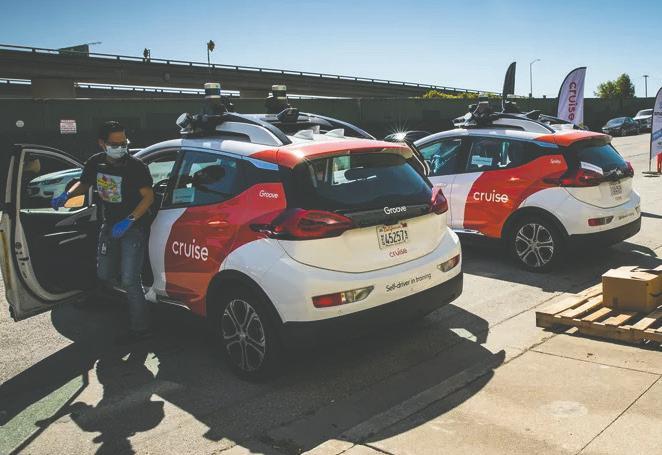
by prominent logos and strangely protruding sensors, autonomous vehicles (AV) have been approved for testing on California’s roadways since 2014. The Department of Motor Vehicles (DMV) has issued AV permits to 59 companies, many of which operate in the Bay Area. Previously, however, trail vehicles were required to carry a human backup “safety driver”.
The site of the future Mission Bay School on Mission Bay South Block 14 is a quarter of an acre larger than indicated in the Mission Bay South Redevelopment Plan, which identifies “approximately” 2.2 acres for use as a public school. That .25-acre discrepancy is delaying transference of the 2.45-acre parcel from the University of California, San Francisco (UCSF) to the San Francisco Unified School District (SFUSD), a process involving the City and County of San Francisco Real Estate Division. The three parties continue to negotiate, amid growing concern by community members that the longer it takes to reach a title transfer agreement, the more likely construction will be deferred, with cascading impacts on the school’s targeted fall 2025 opening date.
“How we ended up having to do this…if you go back to the original agreements, UCSF would donate 2.2 acres to the school district,” explained Bruce Lanyon, UCSF assistant vice chancellor of real estate services.
Lanyon represents UCSF in talks with SFUSD and the City. The additional .25-acre, referred to in negotiations as the “easement parcel,” lies
within the property’s western stretch, along Owens Street. Lanyon noted that the redevelopment agreement allocated 2.2 acres “before there were roads or anything else there.” He said it’s unclear how Block 14 wound up being 2.45 acres, but UCSF is bound by the Board of Regents to reassign use of the extra land through an easement, rather than donate it as part of the seed parcel.
Block 14 is an irregularly configured tract. Two crescent-shaped cutouts define the northern boundary, where the Mission Bay Drive traffic circle rounds a bend and meets Mission Bay Boulevard South; after a short straightway, that road curves inward to reach the eastern boundary along Sixth Street. The southeast corner, at Sixth Street and Nelson Rising Lane, forms the property’s only perpendicular angle. The southwest corner, at Nelson Rising Lane and Owens Street, turns at an obtuse angle toward Sixteenth Street. Owens veers west from there to the traffic circle. The land presently serves as a parking lot for Mission Bay Shuttle buses and UCSF employees.
When The View last reported on the Mission Bay School in June, a UCSF spokesperson stated that conveying
In 2018, the state issued the first permit allowing autonomous vehicles to operate without the physical presence of a human. Test vehicles are required to have human supervision, conducted remotely over cellular networks with the teleoperator able to take control of the AV at a moment’s notice, such as during a critical traffic event or engagement with a police officer.

Aside from Cruise, companies granted licenses for driverless testing in California are Waymo, Zoox, AutoX and Nuro. Waymo is owned by Google’s parent company, Alphabet, and is piloting a driverless taxi service in Phoenix, Arizona. Zoox is a recently acquired Amazon subsidiary.
According to Marc Hoag, cofounder of the independent consulting firm Hoag+Co and host of the podcast, Autonomous Cars with Marc Hoag, Cruise stands out from other driverless testing projects for its all-electric fleet and willingness to pit its artificial intelligence (AI) capabilities against San Francisco’s narrow, winding roads and chaotic traffic.
Perhaps the thinking goes if a robot can negotiate a city where cars share the roads with trains and cable cars, traffic cops ignore double- and even triple-parking, an intersection can be mobbed by a horde of pedestrian shoppers or fleet of boombox-carrying cyclists, right-hand turns are allowed some times and forbidden others and topography is more than just a fancy word from elementary geography les-
ROBOT CARS continues on page 11
Friends of Dogpatch Hub (FoDH), formed to establish a community center, wants to secure a long-term lease with the Port of San Francisco on the Kneass building, at 651 Illinois Street. Under its proposal the nonprofit would pay nominal rent but be responsible for repairing and restoring the edifice. FoDH would be able to sublease portions of the structure, retaining associated revenues.
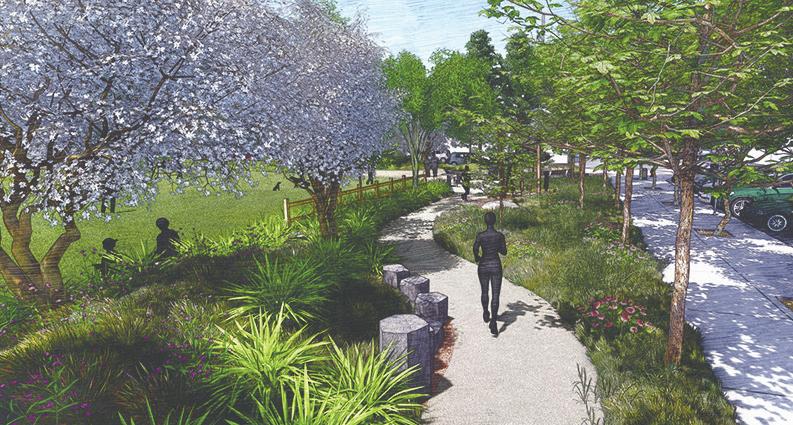
The former boat construction shed would serve as the Hub, a meeting place for Dogpatch residents, with space for after-school programs, senior activities, a café, and the Potrero Archives.
The Kneass building is a 13,500-square foot, two-story structure located on Illinois between 18th and 19th streets. It used to front the water on its eastern side. Sometime during the late-19th Century the adjacent bay was filled, landlocking the edifice.
(DNA) president. “We plan on holding activities seven days of the week at the center, which would benefit the park by keeping eyes on it.”
The building has significantly deteriorated. With the potential addition of such facilities as a kitchen and museum-quality archival space, repair and remodel costs could be quite significant. Rebecca Benassini, the Port’s assistant deputy director of waterfront development projects, indicated that expected overhaul costs for the Kneass building might be similar to those incurred in mending Building 49, a smaller nearby Port property.
“There is the opportunity to add a seismic retrofit to Building 49...if one did that, that would cost more money but would result in more occupancy in the building where you could densify uses inside of the building. To give you a little bit of perspective, that’s about $500 to $700 per building square foot, pretty expensive. And Kneass is more than Building 49 in terms of the per square-foot cost,” said Benassini.
Based on these quite rough esti-
SCHOOL continues on page 14 DOGPATCH HUB continues on page 4
“The Kneass building is right on the edge of Crane Cove Park,” said Katherine Doumani, a Friends of Dogpatch Hub board member and Dogpatch Neighborhood Association
My wife, Debbie, and I were invited to a small dinner party last fall, to be held on an outdoor deck in the North Bay. Our host had assured us that he was COVID-compliant, but it turned out he was COVID casual, greeting us without a mask at his front door before ushering us to the deck. As smoke from the LNU Lightening Complex and Woodward fires intensified he waved us inside, towards a dining table. We were soon joined by another couple.
Debbie and I looked at one another in discomfort, unsure of the right protocol for dinner guests threatened by an invisible virus indoors, toxic ash outside. We stayed in our seats.
The outdoor miasma darkened, like the sky was in a terribly bad mood. Inside, with all windows closed, a similar mist seemed to drift around the table. I felt like I was suspended in an aquarium that needed to be cleaned, droplets bobbing in the air, filled with ash-encrusted virus. Our host and one of the guests, middle-aged males, former masters-ofthe-universe, traded stories of their celebrity-aided efforts to forestall the end of the world, like overpaid environmental lawyers peacocking their knowledge of how, precisely, the apocalypse is revealing itself.
Alongside California, they boasted, the Amazon was burning. In case we didn’t know, tribes that’d hidden in the jungle were contracting deadly diseases distributed by gold miners and cattle ranchers searching for the next El Dorado. Worldwide water supplies
were laden with discarded microplastics and industrial chemicals, leached of all healthy minerals, as chlorinated as an outdoor pool. Leonardo di Caprio could save the day, but he was busy in his well-appointed bunker, waiting out the latest storm.
The space grew increasingly warm. Debbie stared off into the middle distance, wearing an expression on her face that I knew meant she was bored, irritated. Both of us attempted a few witticisms, which wilted against the men’s relentless mansplaining assault.
Soils have been scrapped of nutrients by the agricultural-industrialcomplex. Food was so contaminated with human hormones we may as well be cannibals, eating the flesh of pigs and cows that tasted, little did we know, like drug-enhanced athletes. Plump chicken breasts were manifestations of our preoccupation with implanted boobs, which inevitably led to cancer. Smartphone radiation was altering human cells; talking on a mobile was little different than playing Russian roulette. The infotainment pulsated on its waves has turned our children’s brains into gelatinous mush. Icebergs were rapidly melting. A wellproduced TED-talk could save the day, if only a sufficiently attractive studio and compelling background music could be secured.
Debbie and I leaned against one another, stupefied by the bloviating onslaught of dire warnings. It was if we were chip-less at a poker game in hell, bolted to our dinner party bubble as the two main contestants one-upped each other on impending doom.
Finally, our host signaled, with a barely suppressed yawn, that we could politely take our leave. We staggered outside into the gloom, the smell of burning dreams drifting like ghosts in the night air. Silent, we got into our fossil-fueled car. As I turned the ignition the radio, tuned to a news station, popped on. A sonorous voice sternly announced the latest threat to democracy. Debbie closed her eyes. We drove home in the darkness, the fog so thick that visibility extended no further than the length of two vehicles, searching, anxiously, for some light.




Last fall Bridge Housing released 2020 Rebuild Potrero Impact Report, which reviews progress redeveloping the Potrero Annex-Terrace housing complex on Potrero Hill’s southside. The “Rebuild Potrero” project was launched in 2008 by the Mayor’s Office of Housing and Community Development and Bridge Housing Corporation, a nonprofit headquartered in San Francisco.
Bridge Housing operates twentyone properties in the City. These include 1101 Connecticut, the first of fivephased Rebuild Potrero, consisting of 72 units of affordable housing located at Connecticut and 25th streets that

Editor,
began accepting residents last year.
Rebuild Potrero will ultimately create roughly 1,000 new mixedincome apartments, including one for one replacement of public units located at 619 Potrero Terrace. According to Lyn Hikida, Bridge Housing vice president of communications, substitute residences will be “similarly sized or larger” than present Annex-Terrace housing. Once completed Annex-Terrace ownership and management will be transferred from the San Francisco Housing Authority (SFHA) to Bridge, with the underlying land leased to Bridge by SFHA. Past public housing revitalizations in San Francisco have resulted in fewer total housing units and displacement
Please don’t make predictions.
I picked up my copy of The Potrero View on Friday, November 6th, whereupon I was greeted by a clearly false first paragraph of a cover story, “You’re Fired!” The Democratic Party did not sweep the election. At the time I read the article, the presidential election was still too close to call. But it was already clear the Senate also did not tilt blue.
I thought the View would’ve learned from the “Clinton Wins” embarrassment in November 2016. If you want to make predictions about November, make them in October. If you make them in November, then people who read the newspaper after the event happens may either be misled, if they’re not aware of current events, or simply disappointed with the reporting and wondering what else in the newspaper is a prediction that may be erroneously taken for fact.
I truly enjoyed the rest of that cover story, about cultural shifts. It didn’t need that first paragraph-and-half introduction.
Mark Pearson Kansas Streetof long-term tenants. Rebuild Potrero has been planned with resident input, provision of support services focused on retaining existing occupants and early intervention to assist those at displacement risk due to non-payment of rent.
1101 Connecticut replaced 53 public housing units with an equal number of upgraded homes, plus 18 apartments for households with 50 to 60 percent of average median income (AMI), between $64,050 and $76,850 for a family of four. Fifty-three families were successfully relocated. No eviction notices have been issued, nor have there been any lease violations.
According to Ms. Hikida, the project surpassed its job creation and resident work goals, with employment of 12 Annex-Terrace residents during construction of 1101 Connecticut, another 17 residents at other SFHA building projects, and 54 inhabitants finding employment in the healthcare sector, or at a nonprofit or government entity. Phase 1 construction created a total of 1,600 jobs.
Between 2016 and 2019 there’s been a seven percent rise in residents employed in higher paying jobs, in management, business, science and the arts, with a 25 percent decline in occupants with service jobs over the period. Employment levels amongst Annex-Terrace inhabitants rose from 30 percent to 58 percent between 2013 and 2019.
Rebuild Potrero is funded in part by Proposition A, a $600 million affordable housing bond passed in 2019. “Affordable housing operations are sustained through rents,” said Ms.


Hikida. “Future market-rate sites are planned as either rental apartments or for-sale units and while the majority of the market-rate sites are currently projected to be rental apartments, the market and economy are important factors that may change this dynamic and include more for-sale components.”
According to Ms. Hikida, none of the eventual 619 low income public housing replacement units will ever be converted into market rate housing.
Phase 2 is underway at the block bounded by 25th, 26th and Connecticut streets. “The demolition of the existing buildings located on Phase 2 was completed in June 2020,” said Ms. Hikida. “The infrastructure start date is January 18, 2021. Infrastructure improvements include new streetscape and new utilities for the streets directly surrounding the Phase 2 project as well as the creation of an extension of Arkansas Street. Arkansas Street will be extended south to dissect the Phase 2 Block into two separate housing parcels, Block A, market rate, and Block B, affordable. The vertical construction start has moved to August 2021. Vertical Construction on the Block B site includes 157 affordable units, 118 public housing replacement units and 39 new units for 30 to 60 percent AMI households, a childcare center, a resident courtyard and a public mini park located on the corner of Connecticut Street and 25th Street”.
All five phases of Rebuild Potrero are scheduled to be completed and available for occupancy by 2029.

DOGPATCH HUB from front page mates remodeling the Kneass building to serve as the Hub could cost upwards of $15 million.
According to Doumani, FoDH has conducted an historic resource evaluation “so we know what we’re in for.”
of
TEF Design has volunteered to create building restoration plans. Douglas Tom, TEF Design founding principal, particularly contributed to the effort. Andrew Wolfram, a TEF principal and former San Francisco Historic Preservation Commission president, assisted with the designs.
FoDH has raised a bit more than $9.6 million for the Dogpatch Hub, including roughly $60,000 in donations from Dogpatch residents, a $4.2 million ‘leadership gift’ from the University of California, San Francisco, $180,000 in accrued interest from UCSF’s gift,

$2.5 million from Associate Capital, the developer of the Potrero Power Station, and $2.1 million from Brookfield Properties, the developer of Pier 70, formerly known as “Forest City.”
DOGPATCH HUB continues on page 7

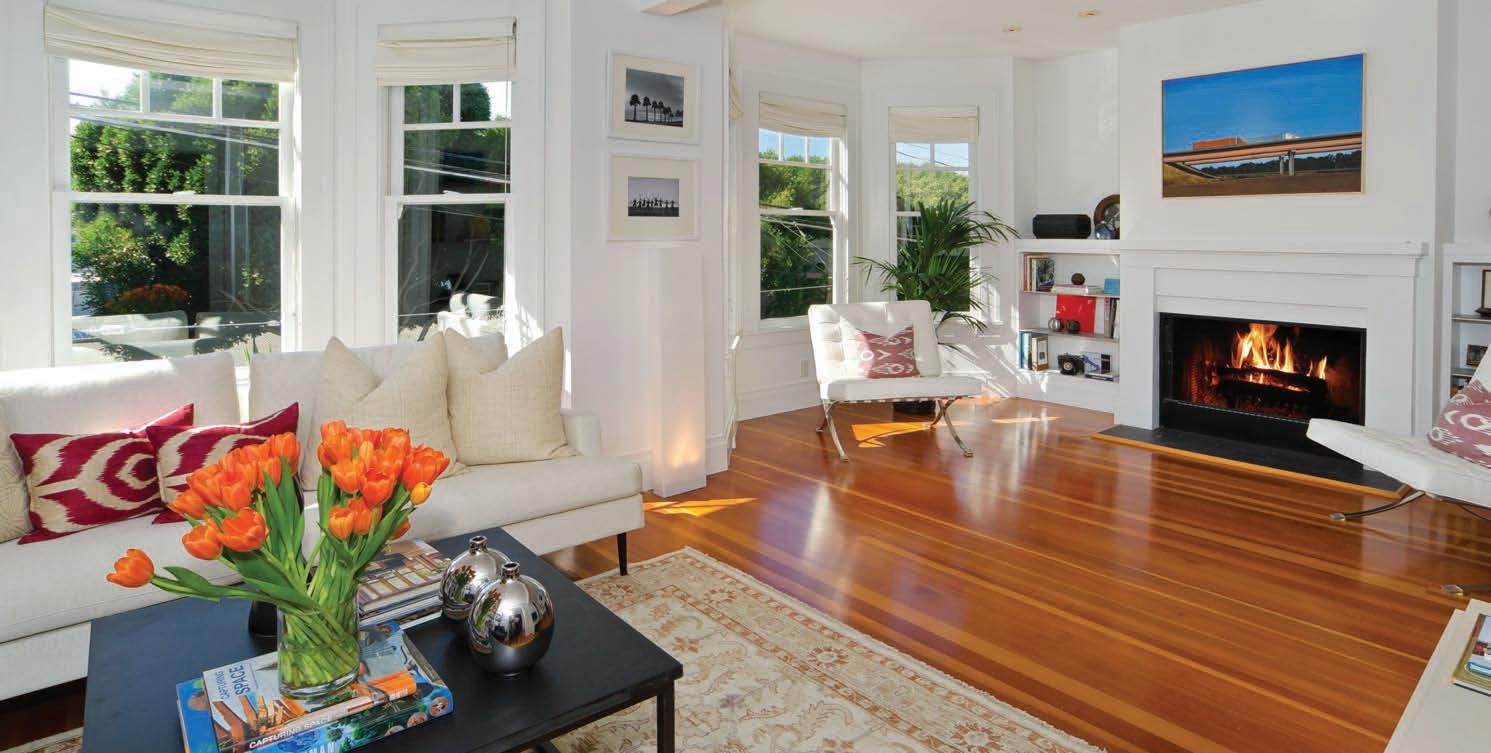
Life has changed dramatically this year and real estate is no exception. In response to the COVID-19 pandemic, homes can only be shown by appointment. Nonetheless, demand for single family homes has remained healthy as buyers seek larger spaces for working and schooling at home.
Last month’s election attracted the highest participation level in threequarters of a century, with 86 percent of those eligible voting, compared to 87 percent in 1944. While San Francisco was a sea of blue, Potrero Hill, Dogpatch, and Mission Bay residents voted for Democratic presidential candidate Joe Biden and approved City measures by especially wide margins.
Southside neighborhoods endorsed most local measures, including Proposition A, the Health and Homelessness, Parks, and Streets Bond, Proposition D, Sheriff Oversight, and Proposition E, Police Staffing at similar levels as the rest of the City. But Dogpatch, the Hill, and Mission Bay voters were more enthusiastic about Proposition B, the Department of Sanitation and Streets, Sanitation and Streets Commission, and Public Works Commission and Proposition C, Removing Citizenship Requirements for Members of City Bodies, among other measures.
Precincts that voted no on Proposition B were located largely in the Marina, Sunset, Forest Hill, Presidio, Sea Cliff and Pacific Heights. Proposition C was disfavored in the Sunset, Marina, Outer Richmond, Visitacion Valley, Portola, Pacific Heights, Telegraph Hill, Russian Hill, Forest Hill, and Chinatown.
District 10, which includes Bayview-Hunters Point, Dogpatch, and the Hill has San Francisco’s highest percent of residents under the age of 17. Still, the margin of approval for Proposition G was lower than for other measures, with 56 percent of Hill voters favoring it, compared with the 81 percent of Hill
Green Benefit District
voters who approved Proposition J, the Parcel Tax for San Francisco Unified School District, and 80-percent who endorsed Proposition K, the Affordable Housing Authorization. Precincts that voted no on Proposition G were located throughout the City.
Precincts that disfavored Proposition H, Neighborhood Commercial Districts and City Permitting, were located mainly in Bayview, the Excelsior, Sunset, and Ocean View. Precincts that declined Proposition I, Real Estate

The GBD encourages those interested in the Esprit Park Renovation to go to the Esprit Park website (bit.ly/espritparkproject) for an overview of the renovation designs and the project status. There is also information there about the December 3rd online community meeting. An online survey will run Dec 4 through 28.
The GBD Board will not meet in December. See you next year! GreenBenefit.org
Potrero Boosters Neighborhood Association
Be in the know. Meet your neighbors. Make the Potrero a better place. We’re meeting virtually on the last Tuesday of each month at 7pm. Go to www. potreroboosters.org for details.
Starr King Open Space
Please join our monthly volunteer days on the second Saturday of the month from 930am - 12:30. This month it is December 12th.
Also, feel free to join our monthly meetings which are open to the public, done via zoom for now, the third Monday of the month at 7pm. This month it is December 21st. Check the website for the zoom link.
If you can, please donate to help keep Starr King Open Space open, accessible and well maintained for our neighbors. www.starrkingopenspace.org
Transfer Tax, included those in the Sunset, Forest Hill, Visitacion Valley, Chinatown, Marina, Pacific Heights, Presidio, Sea Cliff, and Russian Hill. Voters in the Sunset, Pacific Heights, Presidio, Sea Cliff, Forest Hill, Russian Hill, and Western Addition also disliked Proposition L, the Business Tax Based on Comparison of Top Executive’s Pay to Employees’ Pay.
San Francisco voters strongly supported imposing more oversight of law enforcement agencies; 73 percent of Hill voters endorsed Proposition D; 81 percent favored Proposition E.
Approval of business taxes, Propositions F, I, and L, will serve to generate an addition $333 million in annual
ELECTION continues next page

First Saturdays in Dogpatch: A neighborhood-wide event held monthly Explore neighborhood shops, enjoy great food and drink, discover maker market at Center Hardware and 1234 Indiana Street, be inspired at gallery openings at Minnesota Street Project. All this and more when it is safe to gather again. Meantime, please visit LoveDogpatch.com
ELECTION from previous page
revenue. San Francisco currently faces a $116 million budget deficit.
The City is home to approximately 881,549 people, 124,940 of whom are located in District 10, 14.5 percent of the population. District 6, which includes Mission Bay, has 48,532 people, roughly 5.5 percent of the populace.
Data in the tables are subject to change. The San Francisco Department of Elections certifies results on December 3, 2020. Information for Dogpatch, the Hill, and Mission Bay were drawn from Election Map, an independent project by designer Chris Arvin, as of November 19, 2020, as well as the November 19 Preliminary Report 15, published by the San Francisco Department of Elections.
Dogpatch precincts include 7013 and 7014; Potrero Hill, 7002, 7003, 7004, 7005, 7006, 7007, 7008, 7009, 7011, and 7012; Mission Bay, 7643, 7644, 7645, and 7646.
“UCSF contributed partly because it demolished two other historic buildings on Minnesota Street, warehouses that were used for fruit canning. Brookfield Properties provided this gift in recognition that their development will profoundly impact the larger Dogpatch community beyond the boundaries of their project,” said Doumani.
According to Doumani, raising additional funds and further developing plans to redesign and repair the Kneass building’s interior are on hold because of the public health crisis. “We
anticipate there will be a vaccine or “annual COVID shot” by the time the building opens. We anticipate opening in 2023,” she said.
“Raising $9.6 million is no small feat,” said District 10 Supervisor Shamman Walton. “It is a testament to the excitement and necessity of the Hub for the neighborhood. It also demonstrates the commitment and the resilience of the Dogpatch community.
C��� �� ���� �� � ���������� ����� I�������� F���� C��������
ST. TERESA OF AVILA CATHOLIC CHURCH
SERVED BY THE CARMELITES ���� ���� S����� ��� C���������� S������

C�������� ��� H������� �� S�. T�������
���. �� C�������� E�� C��������� ���� ���� �� ���. �� C�������� ������ ���� � ������� ��� � S�������� �� ���� ���� � ������ �H��� ��� �� O����������
We are celebrating “in person Mass” BY RESERVATION ONLY with limited occupancy. We continue to livestream all Masses. Please visit our website for the most current information, including on-line reservation.
StTeresasf.org
415-285-5272


SERVING HOMEMADE STYLE
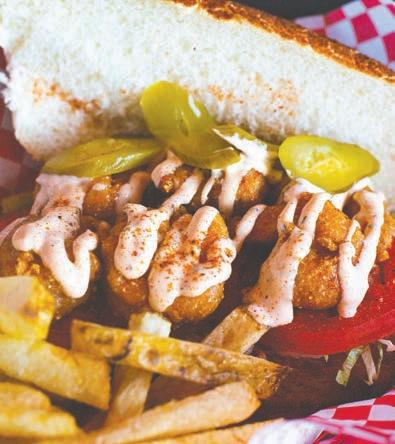
SOUTHERN FOOD WITH UNIQUE TOUCH. STOP BY FOR A DELICIOUS CRUNCHY SOUTHERN BITE !


I can’t wait for the Hub to open and complement the beautiful park.”
“I’m looking forward to one day attending programming put on by the Dogpatch Hub!” said Emily Gogol, who served as executive director of the former Dogpatch Center for Arts and Culture, or “D Center” from 2017 to 2019. The Center, located at 1275 Minnesota Street, offered space
for community-building activities, including art and music classes.
Peter Linenthal, Potrero Hill Archives Project director, is enthusiastic about siting the Archives at the Hub. That would fulfill “…our goal of making our collections available to the public through displays and
DOGPATCH HUB continues on page 14
Virtual — Always
Travel: Tour of the Great Barrier Reef with David Attenborough Attenborough, who first visited the Great Barrier Reef more than 60 years ago, gives an introduction and narrates different videos. Free. https:// bit.ly/36WGMUB
Virtual and In-person — All Month
Holidays: Backstage Art Aid
While the nation waits for live performances to return, the stagehands of the International Alliance of Theatrical Stage Employees Local 16 San Francisco are in a nerve-wracking holding pattern. Backstage Art Aid aims to help Local 16 members weather the ongoing devastation to the performing arts. Many stage technicians are fine artists and craft persons; Backstage Art Aid brings these hidden talents into the open, offering handcrafted items for sale. Gallery purchase proceeds go to the artist, with a portion directed to their health and welfare plan or donated to Behind the Scenes,
a nonprofit that helps backstage workers in times of illness or injury. Visit the online gallery: https://bit. ly/3kZAyIq or at the Backstage Art Aid Gallery, 1555 Burke Avenue, Unit M. By appointment only.
Virtual Wednesday 12/2
Career: LinkedIn Profile Tips
San Francisco Public Library’s “Work It” is a collection of online resources and programs to support job and career seekers, personal finance needs, and small business owners. This workshop will cover the basic elements of creating a LinkedIn profile, including photo, headline, and the “about” section. Free. 10 to 11:30 a.m. Meeting via Zoom Conference. For more information and to register: https://bit.ly/2UOg1vV
Virtual Thursday 12/3
Family: Storytime Español/English stories and songs for children and their families. Free. 11 to

11:15 a.m. Tune in on Facebook: https:// bit.ly/3kWoHLl; a Facebook account isn’t necessary. For more information: https://bit.ly/35WTraR
Virtual
Thursday 12/3
Community: Esprit Park Renovation
San Francisco Department of Recreation and Parks hosts a meeting to discuss Esprit Park renovation. The design team will present updated plans based on community feedback. Free. 6 to 7:30 p.m. Join via Zoom: https:// sfrpd.zoom.us/j/92234204361 or dialin by phone: 669.900.6833. Meeting ID: 92234204361# For more information, visit the project website: https://bit. ly/338FhBH or contact alexis.ward@ sfgov.org
In-person
Sunday 12/6
Holidays: Holidays on the [Bernal] Hill A neighbor-made gift and art fair. Discover local arts, crafts, and epicurean delights. 11 a.m. to 4 p.m. For more information, including a map of participating artists/vendors: https:// bit.ly/3pPeCU2
Virtual
Wednesday 12/9
Culture: City Arts & Lectures Presents
Jenna Wortham and Kimberly Drew
What does it mean to be Black right now? Kimberly Drew and Jenna Wortham have complied a collection of works, Black Futures, including images, photographs, essays, memes, dialogues, recipes, tweets, and poetry, to tell the story of the radical, imaginative, provocative, and gorgeous world that Black creators are bringing forth today. In conversation with Ashley C. Ford. $29. 6 p.m. For more information and to purchase tickets: https://bit.ly/3nM7Z2R
Virtual
Tuesday 12/15
Housing: LGBTQ Youth
Join San Francisco LGBT Center members along with former Host Homes participants to discuss a program that serves unhoused LGBTQ+ youth, ages 18 to 24. Host Homes seeks to find San Franciscans willing to provide a private space to young adults for three months to one year while they work with case managers on education- and employment-related goals that’ll lead to long-term, stable, housing. Free. 12:30 to 1:30 p.m. Meeting via Zoom. For more information: https://bit. ly/2UThNvz. Hosted by the Osher Lifelong Learning Institute (OLLI) at San Francisco State University; an OLLI account must be established in order to register for the session: https://bit.ly/2KpynBi
Virtual
Thursday 12/24 — Saturday 12/26
Comedy: Kung Pao Kosher Comedy Jewish Comedy on Christmas in a virtual Chinese restaurant. Kung Pao Kosher Comedy is one of San Francisco’s longest running comedy shows, answering the age-old question: “What are Jews supposed to do on Christmas?” Each year, partial proceeds are donated to two organizations. This year’s beneficiaries: Southern Poverty Law Center’s “Teaching Tolerance” and The Helen and Joe Farkas Center for the Study of the Holocaust. $25 to $50. 5 p.m. on December 24 and 25; 2 p.m. on December 26. Join via YouTube or Zoom. For more information, a recipe of Kung Pao Chicken, and to purchase tickets: https://bit.ly/393p9VL

Martin de Porres House of Hospitality
Martin’s serves breakfast and lunch during the week, brunch on Sundays, in the spirit of compassion, understanding, and love. Most meals are vegetarian and often vegan. For more information: https://martindeporres.org/
The Food Pantry
A volunteer nonprofit organization that feeds 400-plus families a week. The Food Pantry isn’t supported by any federal, state, or city entity. During the COVID-19 crisis, pre-bagged groceries are served every Saturday from noon to 2 p.m. St. Gregory Episcopal Church (please enter on Mariposa), 500 De Haro Street. For more information: http://thefoodpantry.org/ or call 415.255.8100.
Pop-Up Pantries
Every week, the SF/Marin Food Bank’s pantry network distributes fresh, seasonal produce, lean protein, grain, and shelf-stable items to anyone. During the COVID-19 crisis, pop-up pantries are open to the public. For latest information on locations and requirements: https://www.sfmfoodbank.org/find-food/
Great Plates Delivered Meals for Seniors
Great Plates Delivered SF is a temporary food program that delivers three restaurant-prepared meals a day to eligible older adults during COVID-19. By early November, the program had delivered more than one million meals. Great Plates is free and as of this writing, has been extended through 12/8/20. For more information and how to enroll: https://bit.ly/3lbQreN or call 415.355.6700
Get Food Resources
A list of help for anyone having trouble getting or affording food during the pandemic, including: information on CalFresh; Women, Infants, and Children food benefits; assistance for the disabled, families, students, immigrants; free meals served daily. For more information: https://sf.gov/get-food-resources or call 311.
to the View through SF Community Power; consider including your favorite newspaper in your trust.
Correspondence to: 296 Liberty Street, San Francisco 94114

Melinda Lee
Your Agent for Good. e-Pro, SRES
415.336.0754 | melinda@melindalee.realtor
Lic. #01344377 | melindalee.realtor
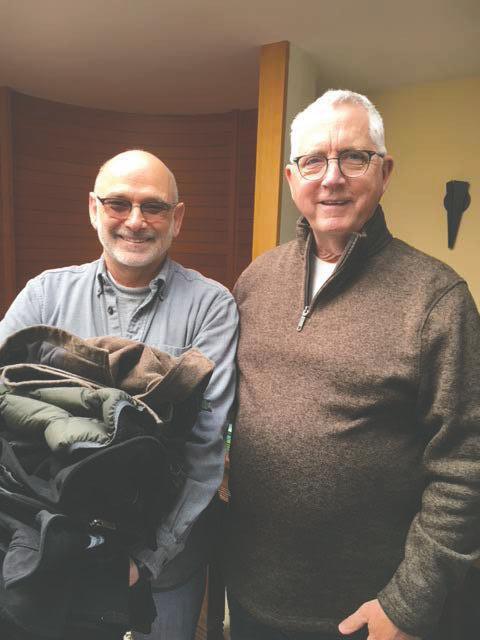
This year more than ever, we are mindful of the needs of others. Now in my 12th year of collecting warmth, I've joined with my SOMA Rotary Club (SOMArotary.com) to provide much needed winter wear.
As the weather turns cold, it’s time to grab those unused coats, sweaters, and jackets from w-a-y back in the closet, and give generously to others during this very challenging time.

Call or Text me at 415.336.0754 or Email me. I will pick up your donations at a time convenient for you. Tax receipt provided for your records.
Corcoran Global Living | 4040 24th Street | San Francisco, CA 94114 Each office
Kaiser Permanente continues its longstanding commitment to environmental sustainability and efforts to help slow climate change.
To reach this milestone we improved energy efficiency in our buildings, installed on-site solar power, purchased new renewable energy generation, and invested in carbon offsets with strong health benefits to counter unavoidable emissions. This move to carbon neutrality eliminates our annual carbon footprint and helps improve conditions for healthier communities. Learn more at: kp.org/green
 BY STEVEN J. MOSS
With roughly 13 million people, Rwanda has experienced just three COVID-19 deaths for every million persons, compared to 742 per million in the United States. The small East African country’s success in dampening novel coronavirus demise has principally been due to a compliant population’s willingness to submit to a comprehensive lockdown. Last April, at the height of shelter-inplace, Rwanda basically closed its borders and required all but those providing essential services to stay home. A 10 p.m. curfew remains in place today, with bars shuttered,
masks universally worn, and negative test results required for international visitors.
The pandemic policies came at a cost, of course. Most businesses were shuttered for at least six weeks, with many remaining closed. Demand for tourism and regional conventions, which had been emerging as the backbone of Rwanda’s economy, has shrunk to virtually nothing.
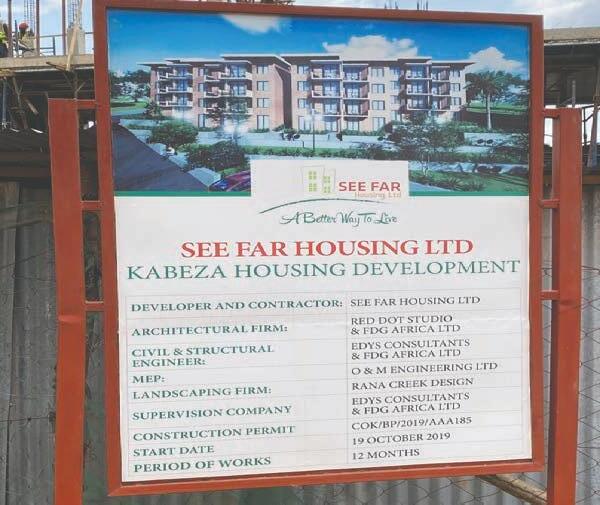
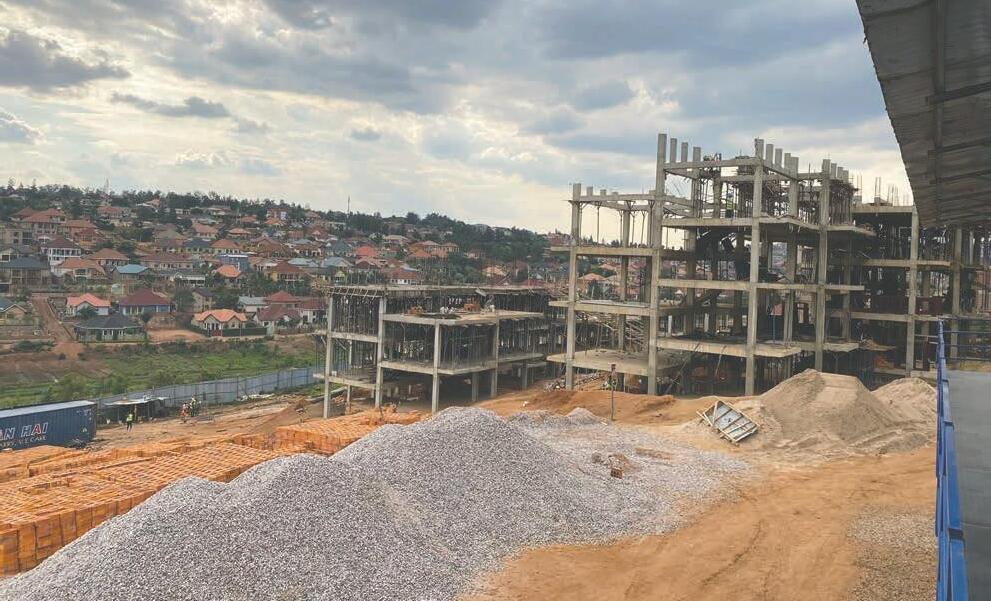
Amidst this calamity a project to develop working class homes in Rwanda’s capital, Kigali, has continued to emerge. Buffeted by supply chain disruptions – particularly for cement, which generally comes from neighboring Tanzania – and extended shelter-

in-place work stoppages construction has been delayed, but not destroyed.
See Far Housing’s initial 52 apartments are on track to be open for occupancy by early spring.
“I never thought I’d be able to afford an apartment,” said a municipal civil servant. “Until I heard about this development.”
The units are priced to be affordable to teachers, police officers, and merchants; working class families. They’ll represent the first densely built, entry-level homes available in Kigali, a missing rung in the housing ladder.
Project success has been bolstered by pro bono support from Dogpatch-based architects, Red Dot,
and socially conscious investors, including Potrero-Dogpatch Merchants Association president Keith Goldstein. As development moves to the next phase – another 500 homes, with associated parks, community gardens, and shops – additional investment and philanthropic assistance will be needed, to help pay for playgrounds and family houses.
Net profits from the development will be directed to Agahozo-Shalom Youth Village, which cares for more than 500 vulnerable teenagers.
Steven Moss serves as See Far Housing’s board chair; steven@moss.net






sons, then it can drive anywhere.
While Cruise is the only company to conduct fully driverless tests in San Francisco, others are keenly interested in the Bay Area as a market for autonomous technology. A Zoox representative described San Francisco and Las Vegas as proposed “anchor markets for us to rigorously test, validate, and refine our technology before eventually launching an autonomous ride-hailing service,” though presently “testing of purpose-built driverless vehicles is still confined to private roadways.” According to the DMV, Zoox has secured a permit to conduct driverless testing in Foster City.
“Driving in San Francisco sucks, for human drivers as well as computers,” said Hoag, a California-licensed attorney whose firm specializes in global autonomous vehicle and mobility strategies. “I’ve often said the only other American city more challenging is perhaps Boston. And that, I think, is what makes Cruise so special, so cool. With all due respect to Waymo, driving on the freeway-sized boulevards of suburban Arizona is a vastly less challenging task than driving through the streets of San Francisco.”
Cruise has been testing with incar safety operators in the City since 2015. According to a statement, Cruise sees itself as “a hometown company.” Though it was acquired by General Motors (GM) in 2016, it was founded in San Francisco in 2013 and is headquartered South-of-Market. The business deploys its vehicles—with in-car safety drivers — on behalf of the San FranciscoMarin Food Bank and SF New Deal, making more than 100,000 deliveries
to Bay Area families since the start of the public health crisis.
Prior to being acquired by GM, Cruise was developing its autonomous technology using the electric Nissan Leaf. The company’s present AV fleet consists of modified Chevy Bolts. Less than a year ago it introduced the Chevy Origin, which Hoag described as “literally just a pod-car”, designed to ferry up to six passengers in a crowded metropolitan area, with no need to accommodate a driver or fit into a conventional parking space. The Origin has no pedals nor steering wheel, making it a Level 5 autonomous vehicle, according to the Society of Automotive Engineers’ driving automation scale.
The lowest level, 0, is for vehicles with no driving automation at all, operated completely manually. Level 5 vehicles are fully automated, requiring no human intervention during any part of the driving process. Levels 1 through 4 cover a range of automation, from adaptive cruise control and lane centering technologies featured in many car models to most of the autonomous vehicles being tested on California’s roads, with controls that can be operated by human safety drivers.
Anecdotal research suggests that despite proximity to Silicon Valley and generally tech-friendly views, San Franciscans have considerable concerns about the risks driverless cars may pose to other vehicles and pedestrians. Hoag pointed out that if a company is ready to take the next step of replacing the backup safety driver with a remote teleoperator, then its vehicles have gone through extensive development and testing, with little difference in performance with a human sitting idly in the driver’s seat.
“There are only five companies in California that have gotten this permit,” said Hoag. “Essentially what it is saying is, the car is basically done. It’s capable of doing its thing. Then, good: let’s put it out there, but as one last layer of safety precaution-to be absolutely certain—we’re going to keep a remote eye on it.”
Advocates of driverless vehicles cite traffic fatalities as the biggest argument in favor of handing over the nation’s keys to an army of AI chauffeurs. Roughly 100 Americans die daily from car accidents and collisions with pedestrians and bicyclists. Robots don’t get tired or drunk, the argument goes, nor do they adjust their speed at yellow lights because they don’t want to be late for a meeting.
“While we have millions of miles under our belt,” said a Cruise representative over email, “as we have promised, we do not embark on new phases of testing until we are certain we are safe. For this first driverless pilot in the city, we will start small, with just five vehicles in designated areas of the City and grow incrementally from there.”
DMV guidelines restrict Cruise’s driverless vehicles to roads with a speed limit no greater than 30 miles per hour following a predetermined route. Testing can take place anytime, without duration limitations. Testing isn’t allowed during extreme weather conditions, such as heavy fog or rain.
Thirty miles per hour or slower means residential roads. Cruise has yet to disclose where in San Francisco testing will take place.
Hoag predicts that a “truly driverless car” – one without a human teleoperator – is ten to fifteen years away. Even then, he imagines there’ll still be
a role for remote human supervision. “Eventually, we may end up seeing an evolution of a sort of air traffic control system of sorts for autonomous vehicles.”
Hoag believes there’ll be an interim phase where driverless cars are supervised remotely by largely inactive teleoperators who will monitor the vehicle and its passengers and intervene periodically throughout the course of the ride. He predicted that, at least initially, higher level automation will be limited to ride hailing or delivery service vehicles, as opposed to privately owned cars.
He expected that within five years autonomous taxi services will operate on a restricted basis in San Francisco, while “limited deployment of L4 vehicles should start to really become a thing during the mid-20s, and L5 by the mid-30s. Frankly, if by the end of the 2030s we aren’t seeing hockey stick-growth curves of AV deployment and the beginnings of phasing out human drivers in certain areas then it’s the various government bodies and regulators that have failed us, and it is they who should be held accountable for the 3,000 people that die on American roads every month, and not the engineers.”
















CREATIVE YOUTHS! The View invites those under 18 to submit any creative work suitable for publication, including drawings, short stories (fewer than 150 words), photographs, comic strips, jokes, before the 20th of each month. Winning entries will receive a $20 prize. Please send submissions to editor@potreroview.net





































Bored in the House?
I’ll take your kids outside to play!
I’m a college sophomore, Division III Women’s Lacrosse player, soccer player, experienced camp counselor, and certified wilderness first responder who’s available for outdoor soccer coaching, fitness training or just playing in the park - $20 per hour per child (group rates available). Call or text me: Sara 415-872-2254
Legal Notices
The View now accepts legal notices. Please contact: production@ potreroview.net; 415.643.9578.
Subscription Salespeople Wanted
Minimum wage, intermittent work. Editor@potreroview.net
7
storage space at Crane Cove Park, already a popular gathering place. The historic Kneass Boat Works would be the perfect spot for the Hub. It dates to 1878, is integral to Potrero history, and is part of the growth of industry on Potrero Point which transformed the neighborhood.”
The Potrero Hill Archives Project, which collects historical documents and objects relating to the Hill, started in 1986. “Today our collections are overflowing a storage room in my basement,” said Linenthal.
For more than 100 years various vessels – for whaling, salmon, oyster and crab fishing, lifeboats, among other purposes – were constructed by Kneass Boat Works. The company also “…produced flagpoles, oars, and worked as house movers. Kneass built the 18-foot ‘Pacific,’ in which the first solo crossing of the Pacific Ocean was made in 1883. The Archives owns wooden forms used to cast parts for Kneass yachts,” Linenthal said.
According to Benassini, the Kneass building was removed from the public trust as part of a Pier 70 trust realignment and swap related to the Brookfield Properties project. The trust exchange created Pier 70 development lots to be leased or sold for flexible, non-trust, purposes. Typically, Port properties are reserved for uses associated with commerce, navigation, and fisheries.
Benassini said the Kneass building features large roll-up doors on its east face, which could be redesigned to engage with Crane Cove Park. “It’s eligible for historic status. Any entity that came on board to invest in it would have to do a bit of work to get it listed. We believe it could be listed, which would then potentially unlock tax credit for the building,” said Benassini.
FoDH previously considered a derelict police station at 2303 Third Street on the southwest corner of Third and 20th streets as a Hub home. The building would’ve been costly to rehabilitate. In addition, because the lot is more than 0.25 acres it’s considered surplus under municipal regulations and must be considered for use as affordable housing.
The San Francisco Public Library (SFPL) “…is interested in piloting an innovative service model with a
Muir Beach Studio and House
Walking distance to the beach, with the crashing waves visible and audible. No need to interact with anyone but your lovely selves. And we have plenty of toilet paper!
Studio: Cozy studio comfortable for two-people. Includes kitchenette and private patio with views of the crashing waves. $175/night plus cleaning fee, two-night minimum. Editor@potreroview.net or 415.643.9578.
House: Three bedrooms, two full baths, with deck with views of the crashing waves. $300/night plus cleaning fee, three-night minimum. Editor@potreroview.net or 415.643.9578.
Freelance Writers Wanted
Modest pay, interesting assignments. Contact: editor@potreroview.net
self-serve automated kiosk and holds locker for patrons to retrieve requested items from our collection” at the Hub, said Kate Patterson, SFPL director of communications. “We’ve set aside $0.5 million in funding for the kiosks in our Fiscal Year 22 budget, which was approved in the last budget cycle. Librarians from our nearby branches and SFPL’s Mobile Outreach Services unit would also be available to perform outreach and provide some programming. The Potrero Branch will continue to be a full-service branch library with dedicated staffing. Services to the Dogpatch site would most likely be coordinated as ongoing outreach to the community.”
SCHOOL from front page
the parcel requires two transactions: assigning title as detailed in Mission Bay development agreements; and providing an easement to the balance of the site requested by SFUSD.
In September, SFUSD staff informed the Board of Education’s Buildings, Grounds and Services (BGS) Committee that agreement on transfer terms still hadn’t been reached.
“We are at the point where if we cannot get something executed, at least a term sheet…it’s going to begin impacting the schedule and our ability to open on the timeline that we’ve given the community,” Dawn Kamalanathan, the District’s chief facilities officer, told the BGS committee. “We’ve been working with our UCSF partners on and off for over a year. It is not unusual for this to take a long time, especially with large bureaucracies, over the form of the agreement and its content. UCSF itself is also a large land-holding agency, with a complex bureaucracy they need to navigate. The pandemic has put as much pressure on them, particularly as a medical institution, as anyone else, but we need to make progress. We need the certainty of a term sheet. We are engaging in a real push to get this executed in the next month.”
SFUSD has agreed to use the land for educational purposes. The main discussion point now is indemnification.
“We understand that we’re taking it as is,” Kamalanathan told BGS. She said the District requested that UCSF document the types of activities
that’ve occurred on the property during its ownership. The redevelopment agreement under which UCSF obtained Block 14 dates to 1998.
“We’re working with the School District to see what they want us to remove from the site. We’re providing every scrap of paper on what we’ve done,” Lanyon told The View. He said this included “access to our records. We’re trying to be very open book about it.” UCSF will remove equipment related to the parking lot, which it installed.
Legal counsel for SFUSD and UCSF initiated title transfer negotiations in May 2018, according to a summary prepared by SFUSD. Based on that outline of events, it appears that discussion of terms didn’t begin in earnest until October 2019, when UCSF indicated that SFUSD isn’t entitled to the entire Block 14, only 2.2 of the 2.45 acres, and asked SFUSD to formally request the whole parcel. After SFUSD sent UCSF a letter asking for Block 14, UCSF stated that an official appeal needed to come from the City’s Real Estate Division.
Negotiations halted while parties dealt with the public health emergency in the spring and resumed after District 6 Supervisor Matt Haney’s office facilitated a new round of meetings in the fall. By then, SFUSD had communicated land transfer uncertainty to an informal neighborhood steering committee that’s worked with the District for years to coordinate community outreach on behalf of the project. Hearing of the stalled talks prompted Mission Bay resident Bruce Agid to write to Francesca Vega, UCSF vice chancellor of community and government relations in October, expressing disappointment with the lack of progress after more than two years. He implored Vega to “work with UCSF’s law department to resolve any current issues and agree with the San Francisco Real Estate Division to a term sheet...It’s our understanding that both parties have agreed to terms from a policy perspective, so we’re not sure of any current outstanding items requiring resolution.”
The email was co-signed by members of the school steering committee, South Beach/Rincon/Mission Bay Neighborhood Association’s board of directors, and executive teams of the Potrero Boosters and Dogpatch neighborhood associations.
UCSF responded with a telephone call to Agid and Potrero Boosters president J.R. Eppler. “I’ve been in touch with all parties on a regular basis and I believe they are getting close to an agreement. We should know more


by the end of the month,” Agid said in November, indicating that the UCSF Community Advisory Group, which he serves on, would include the topic on its December 2 virtual meeting agenda.
Asked how term sheet negotiations would impact construction start or the school’s opening date during a phone interview last month, Kristen Raymond, SFUSD’s senior project manager, said there’d been “no agreement, not even on the nonbinding letter of intent. The title transfer process is really a critical path to our schedule. I’m hoping we can come to a resolution on this. I am going to say that handling this as one property was the recommendation of the City and County of San Francisco Real Estate Division.”
Josh Keene, a real estate project manager representing the City couldn’t be reached for comment. “Active negotiations are ongoing amongst UCSF, SFUSD and the City regarding the transfer of Block 14,” the City’s Real Estate Division replied by email. “Consistent with City practice, we are not able to comment further at this time.”
Asked whether he could provide insight on whether the school’s opening date would be affected by term sheet discussions, Lanyon suggested that The View request a construction schedule from SFUSD, which the District declined to provide.
“SFUSD and UCSF, in conjunction with CCSF, continue to work collaboratively,” Laura Dudnik, SFUSD public relations manager wrote in a midNovember email. “There is high level policy perspective agreement, and we continue to discuss the legal language that matches those agreements. We plan to exchange a few more redline versions over the next week and meet again as a team this week. We cannot make statements at this time on the project schedule until the path forward has clarity.”
Lanyon, a Potrero Hill resident before moving to his current home a short walk from Block 14, said he’s aware of community members’ frustration with how long the title transfer is taking. If the school’s opening is postponed, “I’ll have neighbors in my building asking me, why am I blocking the school,” he said. “I’m one of the neighbors that want to have a school there! UCSF also wants to have a school there. Nothing has changed on our side. UCSF is committed to transferring the property to the School District.”
SFUSD staff presented site design schematics over YouTube last month showing a four-story main building rising approximately 80 feet, within
SCHOOL from previous page
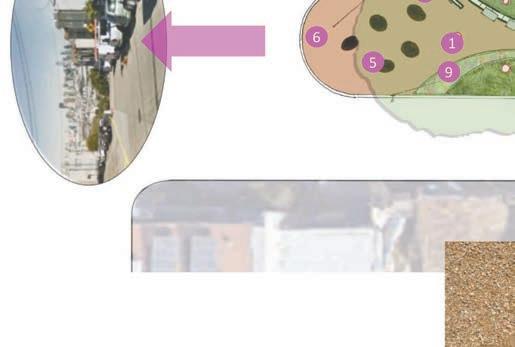
zoning height limits, which’d accommodate 500 students in a pre-kindergarten through fifth grade elementary school on the first three floors. The top floor will house a District-wide Linked Learning Hub for high school students, and professional learning spaces for District teachers. A two-story support services wing on the southside will feature a multipurpose room and rooftop play space. The school will face Owens Street, where north and south driveways will access pickup and dropoff points in front of the building. Additional vehicle access will be located at the site’s rear on Sixth Street at Nelson Rising Lane, where there’s currently a driveway for UCSF’s parking lot.
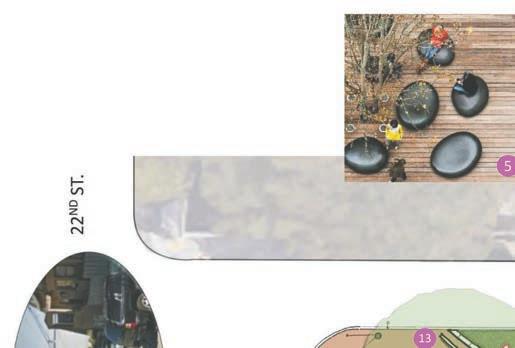
Close to a soccer field and SPARK Social SF food park activated by Parklab across Sixth Street to the east, and a large open space that’ll be developed for recreational activities across Owens Street to the west, “The schoolyard is nicely positioned to allow for easy pedestrian flow between those spaces,” Kamalanathan said. “The schoolyard would be sustainable and green, not just an asphalt jungle, but a place that’s inviting and complements the neighborhood’s existing open spaces and adds to that network.” The grounds will be landscaped, with a dry creek bed and bioretention area near the northeast cutout.
Outdoor learning will be conducted in designated spots. The school will be more energy efficient building than older District facilities, with an advanced ventilation system.
A philanthropic endowment from
Alexandria Real Estate Equities was announced last fall. “The model — a partnership with industry — is a model that City agencies have used before. This will be the first time the San Francisco Unified School District will use it,” said Karissa Yee Findley, SFUSD’s director of school portfolio planning.
In addition to providing funds, the partnership with Alexandria paves the way for internships with other Mission Bay companies through the Linked Learning Hub. “We thank Alexandria for helping us activate other steward ships between other building owners
and tenants in Mission Bay. We’re looking forward to building a stewardship council,” Kamalanathan said.
The donation amount is under discussion, but it’ll be “a substantial contribution,” said Terezia Nemeth, Alexandria’s executive vice president and regional market director. “This school will be focused on life sciences,” she said.
Funding for laboratory facilities will be included to support the educa
books, as well as a maintenance account to support the schoolyard.
Alexandria’s San Francisco offices are located at 1700 Owens, a block from the school site. The owner and developer of multiple Mission Bay life science campuses, Alexandria wants municipal approval to build a new campus at 1450 Owens, across the street from the school, on Mission Bay’s last remaining undeveloped commercial property. SFUSD doesn’t have a role in evaluating the proposed