 BY STEVEN J. MOSS
People are being swept out of San Francisco, washed away by pulsating torrents of tech cash. Children, always in short-supply in this Peter Pan playground, are being replaced by a rising population of designer dogs, who soon enough will have their own dedicated restaurant, probably
called “Doggy Diner.” African Americans, making their last stand at the City’s southeastern edge, have become mostly a metaphor, symbolically represented by a handful of high-level politicians whose clan has moved to the East Bay and beyond. Family-owned businesses are folding, chased out by start-up-fueled rents that never stop rising, and the comfort brought by cardboard box-cluttered living rooms serviced by just-in-time deliveries.
Fast going too, are the eccentrics, creatives, stubbornly iconoclastic characters that once defined Fog City. The fellow who lived in a shack alongside one of the few remaining daylighted urban creeks, who knew the name of every native plant and animal, disappeared. The sprawling extended family, blood-related or not, making babies, art, and dreamcatchers for sale at the Alemany Farmer’s Market, departed.
Left behind is the latest layer of 20-something strivers, more interested in making a buck then giving a…and at least one 80-something philosopher-
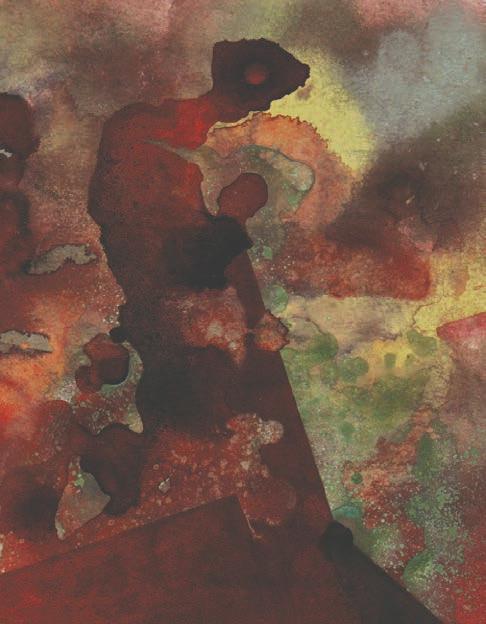
scientist-artist, who has spent a halfcentury painstakingly separating spiritual-intellectual wheat from fast food chaff in a refurbished former movie theater located in what once was San Francisco’s industrial buckle.
Harold Terry Lindahl trained and worked as an architect, designing Daly City’s Civic Center, and, during the 1980s, San Francisco International Airport’s boarding lounge, among other projects. But his life’s labor has been to understand and advance humanity’s place in the universe. During the great awakening that was the 1960s, and through the disco, greed, dot.com, and social media ages that followed, he dove deep into the teachings of philosopher George Ivanovic Gurdjieff, and engaged in intensive study of physics, biology, and other sciences. He collected a small tribe around him, dedicated to fostering self-awareness as a birth canal for higher consciousness, what he calls “pysvolving.”
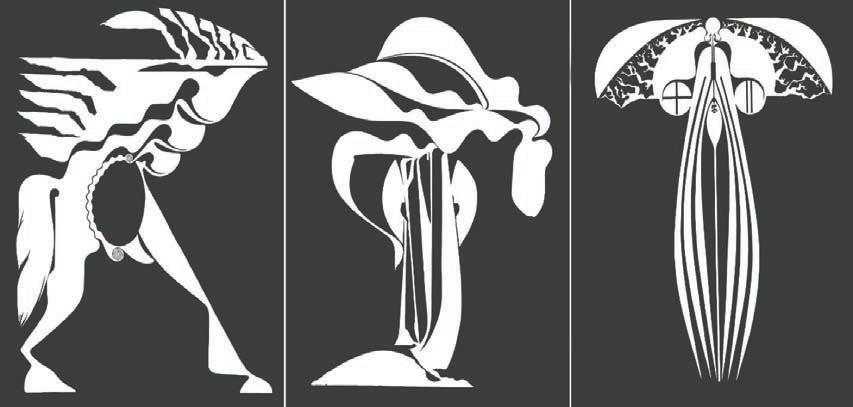
Along the way Lindahl had four wives, cared for seven children, hitchhiked around the world photographing architectural monuments, and drank countless glasses of coffee, mostly in the form of Gibraltars, at a neighborhood coffeehouse whose motto is “community in a cup.” He also created multiple art pieces that
Although Styrofoam trays and plastic straws have been banished from its cafeterias, the San Francisco Unified School District (SFUSD) still relies on individually packaged meals and disposable utensils for the bulk of the 6.8 million meals it serves annually.
According to SFUSD estimates, the school system generates some 6.3 million gallons of landfill-bound trash, 9.4 million gallons of compost, and 12.4 million gallons of recycling every year. A significant amount of that entire “service volume” – a measurement of the total size of trash, recycling, and compost collected by Recology – originates at mealtimes.
Based on SFUSD data, the District “diverts” – doesn’t landfill – approximately 66 percent of its solid waste stream, sending this material to be
recycled or composted. Waste diversion is calculated by adding together the volume of recycling and compost and dividing that by the amount of all trash, recycling, and compost.
By 2025, the District wants to avoid landfilling 85 percent of schoolproduced waste. According to Student Nutritional Services (SNS), the body tasked with overseeing food provision to the equivalent of a mid-size American city, starting this academic year the plastic-wrapped spork packet, long a fixture of school meals, is no longer being distributed, replaced by bulk recyclable, single-use plastic utensils and individual napkins, free of plastic sheathing. This change, according to SNS, will provide a better dining experience for students, and is expected to reduce the amount of plastic waste.
SFUSD is the City’s largest meal provider, serving more than 37,000
daily repasts to 57,000 students. Most of this food is provided through a contract with Oakland-based Revolution Foods. Photographs from Revolution Foods’ website, as well as a 2019 San Francisco Chronicle article, depict meals resembling what one might expect to be served on an airplane: a thin-walled cardboard tray containing a plastic-wrapped hot meal in a plastic container with a small side dish in a smaller cardboard tray and a piece of fruit. According to SFUSD, the plastic used by Revolution Foods is “recyclable when clean” and BPA-free.
This past Spring, concerns about food quality and taste led the school board to initially decline to renew Revolution’s contract, only to reup it on a subsequent vote. The San Francisco Chronicle cited price considerations
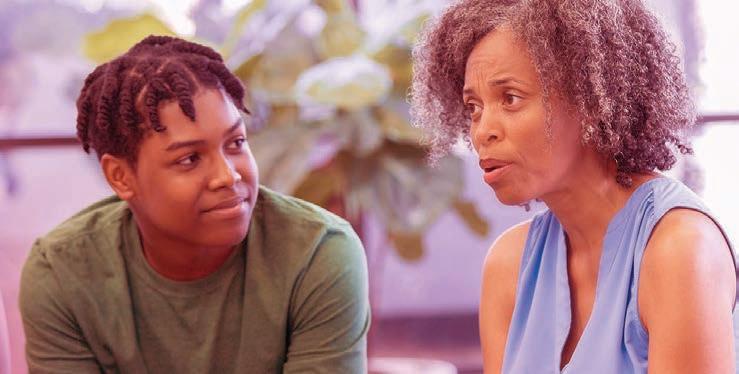
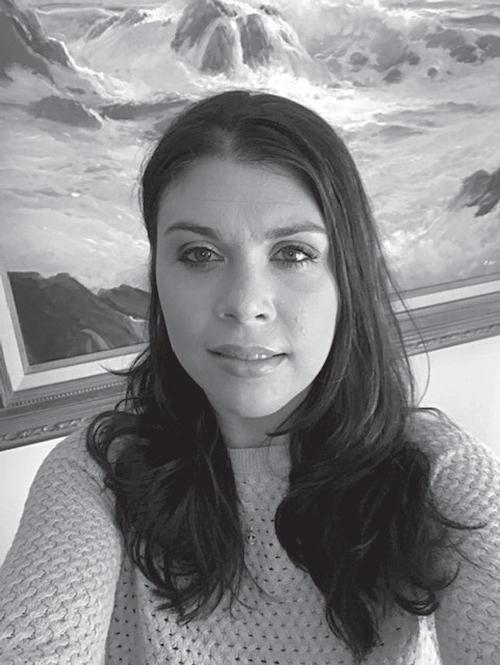
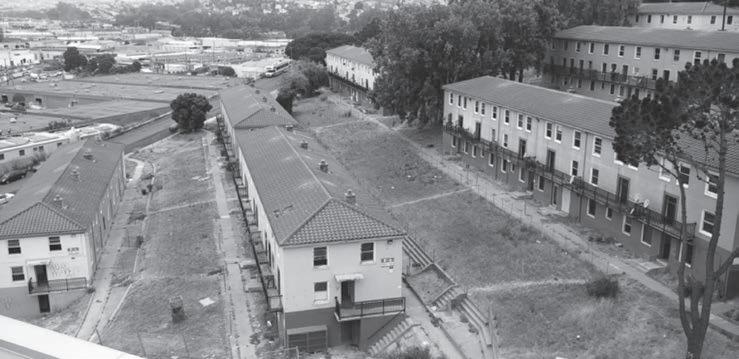
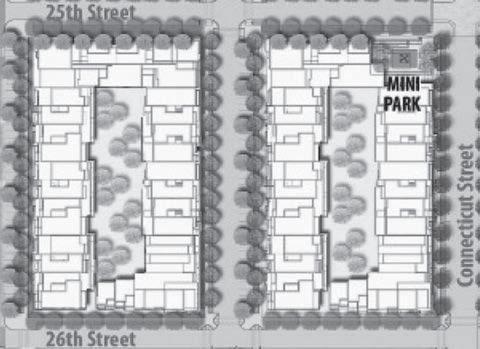
Denise Smith and her youngest son, Roland Byrd, Jr., 23, moved into 626 Mission Bay Boulevard in 2018. They’re the first family to occupy a twobedroom, one-bath townhome in the 100 percent below-market-rate (BMR) rental building, which opened last fall under Tenderloin Neighborhood Development Corporation (TNDC) management.
Smith was born in San Francisco in 1956. Her family was displaced from their home in what became the Hunters Point Redevelopment Project Area by the former San Francisco Redevelopment Agency (SFRA) when she was a pre-teen. They moved into the Ingleside neighborhood. In 1980, Smith settled in Bayview-Hunters Point, where she raised five sons.
As a single mother during the 1980s and 1990s, gun-related fatalities and street violence took a toll on the family’s sense of well-being. A 2001 San Francisco Chronicle article cited feuding between small local gangs as the major cause of the area’s unsolved homicides over the previous decade.
Smith started a career focusing on at-risk youth in 2002. She worked with Shawn Richard, executive director of Brothers Against Guns, and as a caseworker at the Mission Neighborhood Center, where she handled a caseload of 25 to 30 kids. But the “bad things” the family saw happening around them prompted her to seek a safer setting in the East Bay when Byrd turned 12, in 2008.
HOUSING continues on page 13
More than one-dozen households have responded so far to the View’s call for up to 2,000 readers to subscribe at $5 to $10 a month; less than the cost of two cups of coffee. These generous community members will both receive the paper in their post and ensure its availability to others. Please consider doing the same!

YES! I love the View, and would be delighted to help support it with a one-year subscription in the following amount:
A 27-year-old man suffered lifethreatening injuries last month when he and another male were shot while walking in the area of 17th and Mississippi streets at around 10:45 p.m. on a weekday. The younger fellow was taken to a hospital; the older bloke was treated for non-life-threatening injuries. No suspects have been identified…In another September incident, an altercation on a Saturday morning ended with one man dead and the other arrested, a San Francisco Police Department (SFPD) spokesperson confirmed. Police officers responded to a call reporting a fight near the intersection of 16th and Kansas streets at about 3:50 a.m. and found the suspect fleeing the scene. After a brief chase, the accused was captured and placed in custody. It’s unclear what types of injuries the victim sustained; he died at the scene.
demanded, perhaps it should be modified to create teachable moments. Place a sheet of transparent plastic over the painting and allow students, teachers, and visitors to write and draw on top of it, expressing their views on the piece, extending its narrative. Wash, comment, repeat. Seems appropriate, given its installation at Washington High School, to intensify use of the mural as an educational tool…By the by, Arnautoff was a Potrero Hill resident, whose work appeared in the early years of the Potrero Hill Artists’ Exhibition, at the Potrero Branch Library, reputedly San Francisco’s oldest annual art show.
Please
Enclosed is my check. Please send, along with this form, to: The Potrero View, 1459 18th Street, # 214, San Francisco, CA 94107 I am sending my payment via PayPal to office@potreroview.net.













Instead of destroying or covering Victor Arnautoff’s “The Life of Washington,” as some activists have loudly
San Francisco has parks; it also has lots of exercise studios. Perhaps these should be combined. The Department of Recreation and Parks could solicit various yoga, Pilates, boxing, crosstraining, and other studios in the area and setup free trainings in Jackson, Franklin, McKinley, and other open spaces, sponsored both by the workout leaders and one of our many local health care providers. Ready? Okay!
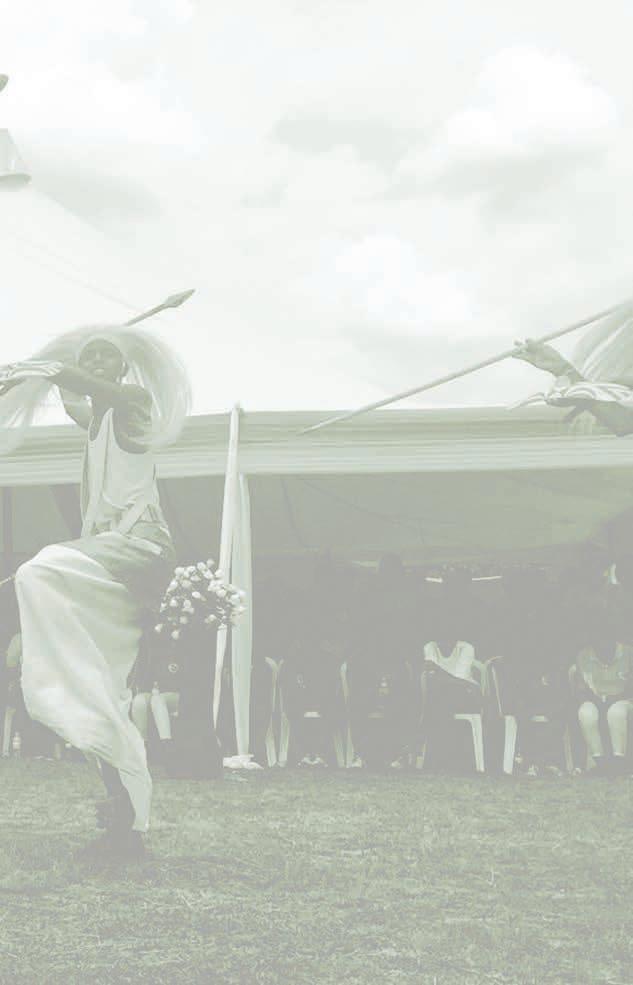
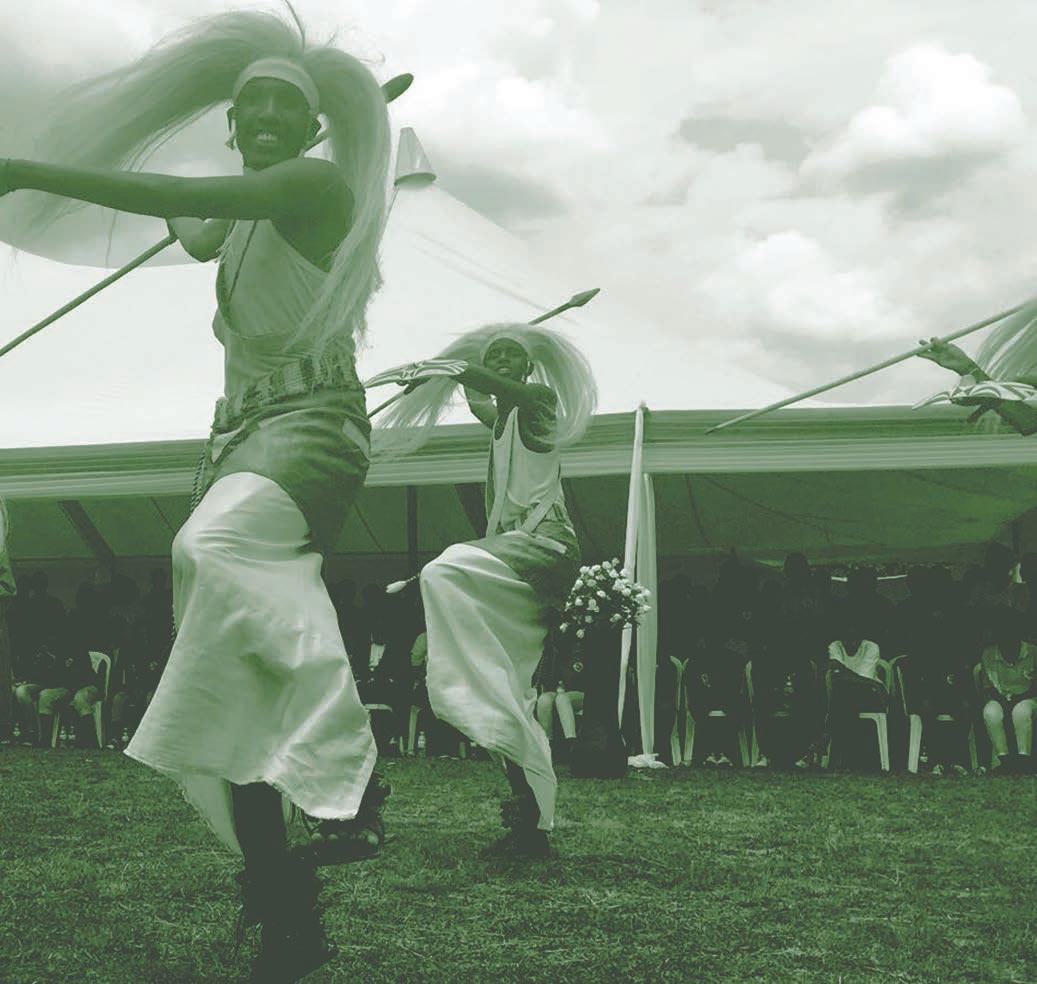
See Far Housing is developing an affordable residential complex in Rwanda, with plans for up to 600 two-, three-, and four-bedroom units. Support is needed for community amenities, including playgrounds, playing fields, gardens, and the like.





All profits from home sales will be directed to Agahozo-Shalom Youth Village, which cares for more than 500 vulnerable youth. Cash or in-kind donations, including pro bono landscape and environmental services, playground and maker’s lab equipment, would be greatly appreciated. Tax deductible checks made out to “SF Community Power” can be sent to 296 Liberty Street, San Francisco, California. For more information: 415.643.9578; steven@moss.net.
This year’s Point-In-Time (PIT) census identified 8,011 individuals without permanent shelter in San Francisco, a 17 percent jump from the 2017 PIT, the last time the survey was conducted. The 2019 PIT count found 1,889 people experiencing homelessness in District 10, the City’s second highest level of rootlessness, after District 6. Just 455 shelter beds are located in District 10.
The number of people who are unsheltered on the Southside fluctuates, as people enter Navigation Centers, receive housing, leave the area, or depart the City, said Sam Lew, policy director for the Coalition on Homelessness.
According to Abigail StewartKahn, director of strategy and external affairs for the Department of Homelessness and Supportive Housing (HSH), the Department plans to expand the number of temporary accommodations and intensify its focus on prevention and diversion, also known as “problemsolving. We can help people resolve the crisis of homelessness quickly,” said Stewart-Kahn. “California is experiencing a homelessness crisis. In San Francisco, for every person we help exit from homelessness, three take their place. We are not going to be able to solve this problem on our own. We need to advocate for the homeless on a national level. On a local level, we need to build more shelters and more exits from homelessness.”
Stewart-Kahn said the City is advancing efforts to serve the seven
percent of people the PIT count identified as living in vehicles. HSH formed a Vehicle Encampment Resolution Team as part of the Homeless Outreach Team (HOT), which works with highly vulnerable people living in their vehicles. HSH plans to house 33 vehicles in its pilot Vehicle Triage Center, located at 2340 San Jose Avenue. The facility will offer restrooms, showers, laundry facilities, a kitchen, and eating areas, along with security and office space for onsite services. Residents will be allowed to stay up to 90 days, with a possible extension at the site director’s discretion.
Last month, the San Francisco Board of Supervisors approved an ordinance to enable the program to proceed. HSH expects the facility to open in November. The area will ultimately be developed as Balboa Upper Yards, a 138-unit affordable housing complex, with construction slated to begin next October.
The Central Waterfront Navigation Center (CWNC), a 64-bed facility located at 600 25th Street, is a “really bright spot,” said Stewart-Kahn. “The community has embraced the Navigation Center. The Dogpatch Neighborhood Association asked us to extend our lease because it has been successful and has had a positive impact in the community.”
CWNC started offering services in 2017. It’s operated by Episcopal Community Services of San Francisco (ECS), a nonprofit organization with origins that date to the Mission of the Good Samaritan on Second Street.
Over the past two years, HSH’s Encampment Resolution Team (ERT) has grappled with tent and tarp encampments, while HOT has engaged with people living on the streets or in their vehicles. Between 2016 and 2019, HSH “resolved” 72 encampments by providing intensive outreach services and offering shelter spots.
Stewart-Kahn said that in the past two years approximately 60 percent of people living in encampments accepted temporary placements, including at Navigation Centers and shelters. “If residents have concerns, they can call 311. Coming inside to shelter or housing is voluntary. Our success is measured by the engagement and trust built by our Homeless Outreach Team. People have to want to come inside. There needs to be spaces for them to do so,” said Stewart-Kahn.
District 10 Supervisor Shamann Walton said one of his goals is for everyone in the District to have access to the social services and housing they need. “In Bayview, there are people living in their vehicles all along the
Editor,
side streets that cross Thomas Avenue, including Ingalls Street, Jennings Street, and down Evans Street. I think the population is combined of people who have been unsheltered in San Francisco and dislocated from other areas. As soon as Berkeley passed a ban on overnight street parking in recreational vehicles, we saw the number of RVs in this area increase,” said Walton.
Walton wants more funding for mental health and substance abuse recovery services and repair assistance for people living in vehicles. “Proposition C is held up by court cases, so we can use resources from the General Fund. We can’t wait when it comes to homelessness. I’d like to see an increase in the number of staff in the Homeless Outreach Team,” said Walton.
According to J.R. Eppler, Potrero Boosters president, residents are pleased that encampments located on San Bruno Avenue and Potrero Hill’s northwest corner have been removed. “Concerns…have decreased in the past HOMELESSNESS continues on page 7
It saddens me to think of your presses stopping. I really look forward to reading the View each month. The View helps keep me current and updated on what’s happening in our hood. I do hope you go on for another 50 years.
Chris




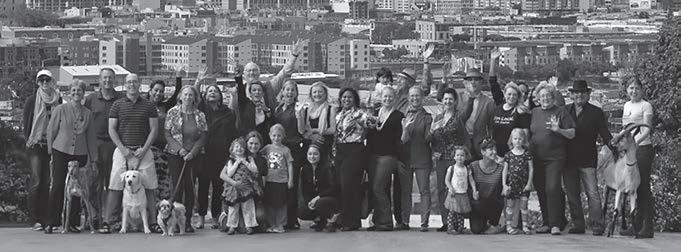
A long-time Goat Hill Pizza employee recently saved the restaurant’s iconic goat hoofprints from destruction.
In early August, a San Francisco Department of Public Works crew began jackhammering the sidewalk outside Goat Hill Pizza on 18th and Connecticut streets to prepare to put in a new path. Embedded in the walkway were goat hoofprints dating from around 1920. Manuel Dzib, an 18-year Goat Hill employee and current head chef, darted out of the restaurant to stop the crew from destroying the hoofprints.
“They didn’t tell us they were going to pull up the sidewalk,” Dzib told the View. “One morning I was at the restaurant as usual and the construction crew had already painted lines on the sidewalk.”
Dzib asked the DPW workers if they planned to tear up everything, including the hoofprints; they replied in the affirmative. He told them about the hoofprint’s history; the crew cut them out and set them aside while they continued replacing the sidewalk. After they finished, the workers reinserted the hoofprints, pouring new concrete.
“The hoofprints are important just like history is important,” Goat Hill Pizza co-owner Philip De Andrade said. “It takes you back to your roots.”
When De Andrade and his coowners founded the restaurant in 1975 they heard that Italian-Americans used to raise goats on the Hill, and decided to name their eatery Goat Hill Pizza.

In the 1990s, Hill resident Rosemarie Ostler noticed there were three sets of goat hoofprints by steps being rebuilt at the Victorian Mews on Carolina and 19th streets. Ostler thought the hoofprints were from the 1920s because another resident told her that the imprints were from her pet goat, which roamed the area during that period. The developer gave Ostler one of the sets, which she displayed on her front porch until 2011, when she gifted them to Goat Hill Pizza, in honor of the restaurant’s mascot.
In 1975, the pizzeria purchased a goat from a Sonoma farm. In 1979, that goat became the restaurant’s official mascot after a naming contest. A 10-year-old girl won with her submission of “Goat Hilda de Anchovy.” Later, Hilda gave birth to Loretta and Bucky. From 1975 to 1985, the small family grazed in the rocky pasture behind the eatery. In 1985, the pizzeria built a rear dining room on top of the empty lot. The goats were relocated to Sonoma State Hospital, where they became amateur mascot therapists.
“I don’t want to give false importance to the hoofprints, but it’s always been an interest of people to follow the history and trace back the origin,” De Andrade said. “It gives a special and unique character to Goat Hill Pizza by being able to tie to the history.”
“History is important; almost 20 years I’ve been in this area and it has changed a lot,” said Dzib. “I started when I was maybe 19 years old, and it all has changed.” But through all that, the neighborhood, and Goat Hill Pizza
in particular, has been like a family for Dzib, he said.
While walking her terrier, Gloria, Leah Grant also noticed the jackhammering and worried about the hoofprints. A restaurant employee assured her that they’d been saved.
“They have a bronze plaque at the restaurant about the hoofprints so they’re important,” she said. “I’m really happy the hoofprints are back where they belong.”
attempt to provide windows into the universe’s secrets.
Lindahl, perhaps the last 1960s-era philosopher-scientist-artist standing in our gilded city, may have the antidote to our current chaotic-myopic age, though conveying it takes more than 280 characters. We’re digitally watering boarding ourselves into stupefaction with images of cute cats, caustic politician-celebrities – “politibrities” – and whatever else is dished up on our feed. The religious highlights of the year consist of visits by rabbits bearing yummy chocolate eggs and an oddly clothed portly fellow whose reddish countenance seems to imply troubles with alcohol. Yet we have supernatural powers, able to change the weather, terraform the earth, wipe out entire species without much thought. Humanities’ current aspirations, as summed up by big screen Marvel superheroes, is to be ever ready to smash the world into smithereens to

save the world from being smashed into smithereens by someone else.
Still, we yearn for something better, to understand the meaning of life, or at least lead lives of meaning. The challenge, when it comes to Lindahl, is that he can be nearly impossible to understand. He makes up complicated words. His sentences are Germanic in their lengthy use of multi-syllabic science terms, each set of consonants and vowels layering more impenetrability onto his insights, reminiscent of the accretion of geological time. He writes, and can even be heard to utter out loud (take a deep, cleansing, breath),
Ubiquitously, momentum properties broke the coherence of the autocognium releasing the medium of field-consciousness to regulate the propagation of being-existence (particulate matter) through being-experience (vivifying energy) and to normalize the triadic ergodic structure of involutionary particle collision-intercourse forming galaxies, stars, planets, the evolutionary biospheric properties of the transmutation of care and thought from light, atmosphere and minerals and the psyvolutionary refinement and transpiration of being-experience to assist the normalization of outer-space/ solar dynamics. (emphasis his)
Uh huh. Yes, of course, involutionary evolution! That’s obvious; why even bother saying it. So, what’s on Hulu..? We’re a people of ever-shortening
LINDAHL continues on page 12
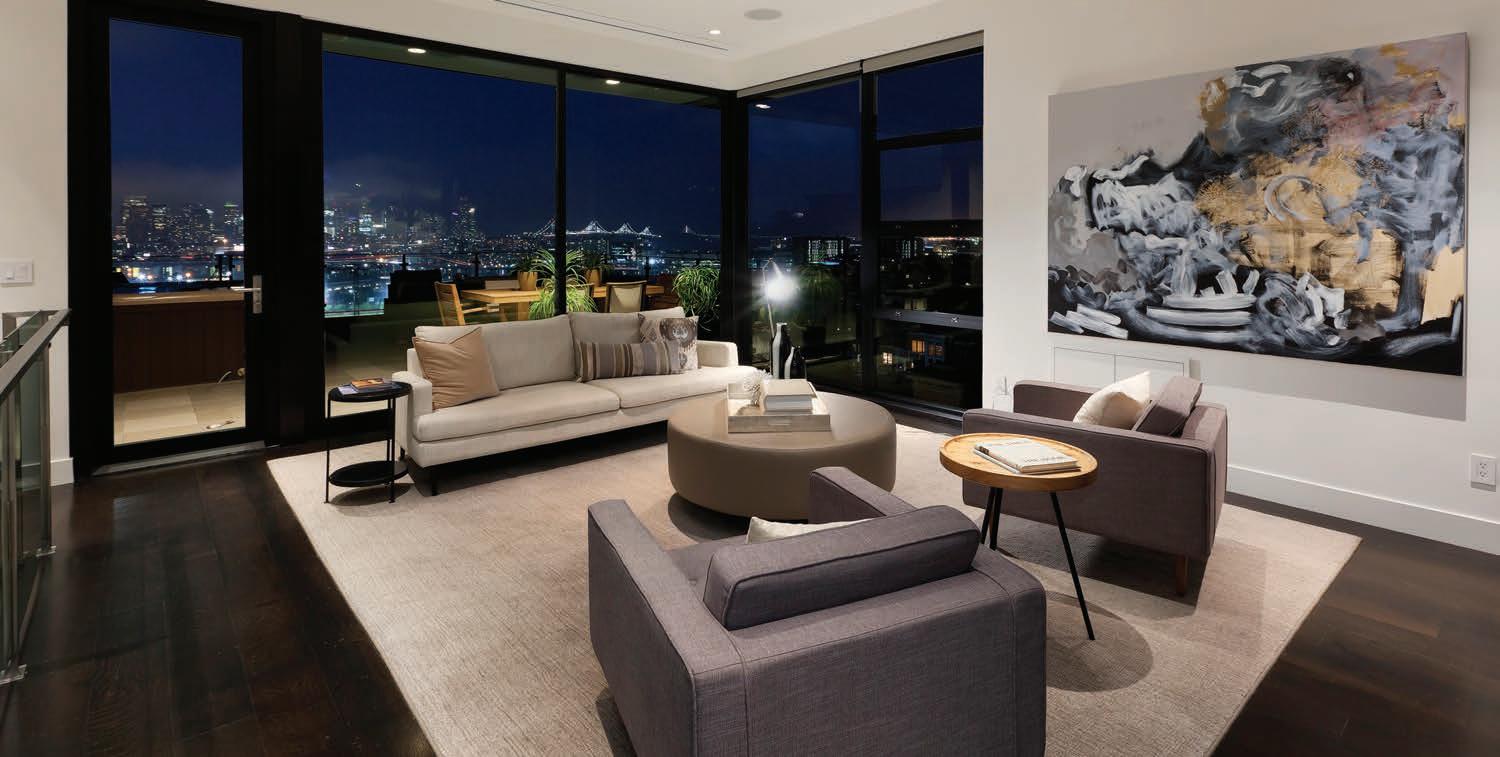
Low interest rates and powerful demand have continued to keep the Potrero Hill market strong. Many homes have attracted multiple offers after short periods on the market. If
have been thinking of selling your home, now may be an excellent time to take advantage of strong demand from buyers.
Bayview community members hooked a fish too big to throw back. “The Red Fish” was installed in Bayview Gateway Park, located at Third Street and Cargo Way, from 2007 to 2014. The sculpture was removed to make room for the Blue Greenway Project, a 13-mile landscape expansion sponsored by the Port of San Francisco, which stretches from South Park to Bayview-Hunters Point. Recently, art advocates succeeded in liberating the piece from storage and relocating it to India Basin.
William Wareham created the nearly four-ton artwork at the Hunters Point Shipyard in 2006. Wareham was an early member of the Hunters Point artist community, landing at the Shipyard in 1983 and remaining there until he was dislocated by development in 2016.
“Bayview-Hunters Point has a rich history of art and industrious creativity…residents initially commissioned the Fish sculpture for temporary placement at the prominent intersection at Third Street and Cargo Way, a critical geographical link between Potrero Hill/Dogpatch and the Bayview-Hunters Point neighborhoods.” said Revere Street resident Dan Dodt, who serves as president of the Bayview Historical Society (BHS), a public benefit organization formed in 2004 which led efforts to return the artwork to Bayview. “The sculpture remained at the Gateway for seven years and was subsequently removed to support the construction of the Bayview Gateway Park as a portion of the Blue Greenway and Bay Trail extension. Almost immediately after the Fish was put ‘on ice’ a number of Bayview residents organized to retain the sculpture in Bayview as a permanent feature. As William Wareham is an early and original member of the Hunters Point Shipyard Artist Colony at The Point, realizing this continuity for a local, Bayview-base artist and member of the pioneering efforts of the largest art colony in the country is fundamental to the effort.”
After it was removed from its location near the Illinois Street bridges the sculpture was stored at Pier 70, out of public view. “There was no plan for its landing,” said Dodt, who secured letters of support to reinstall the artwork from then District 10 Supervisor Malia Cohen, among others. A search for a new, permanent, location was launched.
“It took longer to work its way through the mechanization of City planning than expected,” said Dodt, who emphasized that BHS’ administrative work to support the restoration effort was done pro bono.
Wareham wasn’t involved in efforts to find a new home for the piece but did help move it. “I know people with cranes,” he said. He expressed gratitude that the Port of SF had found a place to store it after it was removed from its original location. “It might have been too tall to fit through the Treasure Island tunnel, so we would have had to go the long way around to move it out here. I’m glad it didn’t get cut up and recycled.”
The sculpture has been reinstalled at 780 Innes Avenue, along an original stretch of San Francisco Bay shoreline, on property owned by Build, Inc., fifteen acres of land planned to be developed as a mix of commercial, residential, and open space.
Half-a-dozen site locations had been considered as homes of the sculpture, each of which proved to be unworkable. The Bayview Opera House is being renovated; the sculpture would have interfered with ongoing construction. India Basin Park’s slopes were sufficiently steep that grading wouldn’t have allowed the artwork to have a solid foundation. At Mendell Plaza it’d have been an obstruction that interfered with the public right of way.
Wareham hasn’t seen the new site except in photographs, but noted that the images reveal that it has, “Far away horizons, indicating lots of space, which is what a lot of my work is about. A lot of my work deals with negative spaces, open spaces. The new, flatter location also allows the silver

color to reflect back at the sun, giving it prominence. The tilt at Third and Cargo pushed it forward, giving it a stage like feeling.”
Locating the piece in Bayview is fitting, recalling the area’s former incarnation as a fishing village, and serves as a way to honor early Ohlone, who searched for shellfish, along with other past residents of the area, including 19th century Chinese shrimpers, Scandinavian fisherman and Gulf Coast natives who relocated to the area in the mid-twentieth century and continued the neighborhood’s angling tradition. It’s also meant to call attention to the effects of climate change and how it’s impacted people who depend on seafood as a resource.
Now living on a former dairy farm in Shasta County which has “inspired views of Mount Shasta,” Wareham credited this vision of the sculpture’s significance to Dodt. “I like the idea of reaching into history and acknowledging it and then moving past it and continuing forward.”
An art reception celebrating The Big Fish will be held at Café Alma, 880 Innes Avenue, October 10 from 4 to 6 p.m.
and a lack of alternative suppliers given the volume of daily meals as the reasons behind the ultimate approval. The District’s “Good Food Purchasing Policy” which the SNS blog described as “a values-based procurement program rooted in five standards: Local Economies, Environmental Sustainability, Animal Welfare, Valued Workforce, and Nutrition,” also makes attracting other food vendors challenging.
In a 2019 blog post, SFUSD reported that it “more than doubled the amount of in-house freshly prepared meals served [in the 2018-2019 school] year.” In the same column the District stated, “Using General Obligation
bonds, we will update school kitchen facilities and cafeterias to accept and serve bulk meals. By 2028, our goal is to build a state-of-the-art central kitchen that can produce high quality studentvetted meals for the entire District and eliminate more than 80 percent of pre-packaged meals.”
“We currently serve meals on 100 percent reusable dishes at 13 of our Early Education Sites,” Laura Dudnick of SFUSD said. “This fall, SFUSD plans to launch our first regional kitchen at the McAteer Campus, which serves both The Academy and Ruth Asawa School of the Arts. This new kitchen will include a dishwasher and reusable dishes and [cloth] napkins.”
Reuse requires adequate storage space, plumbing, and dishwashing machines to handle large volumes of utensils and dishware, which most SFUSD schools don’t have. “All kitchens at schools with bond construction projects will include plumbing to allow for dishwashers in the future,” Dudnick said.
The District won’t be widely deploying reusable utensils and dishware anytime soon. “We are not moving towards all reusable dishes at this time.” said Lauren Heumann of SFUSD. “While it would be amazing to do, the infrastructure upgrades and the labor costs associated with them is quite high. We are instead using our resources to upgrade our serving lines to be able to serve meals family style. This means removing all of the plastic wrapping. Meals will be served on compostable plates.”
A tour of Potrero Hill streets on the evening before garbage was scheduled to be collected revealed several pickers wending their way through the rows of green, blue and black bins, quietly lifting lids and extracting salable cans and bottles. While the trash and recycling bins were locked behind a gate, none of the five green compost bins belonging to Daniel Webster Elementary School were filled to capacity. Several bins contained non-compostable items, including plastic wrappers and bever-
LUNCH continues on next page




LUNCH from previous page
age cups, though these may have been discarded by passersby rather than by the school.
In this respect the waste diversion percentage, when calculated by “service volume,” can paint a misleading and overly positive environmental picture, by disregarding a bin’s actual contents and fill-level, as well as by ignoring overall changes in solid waste stream levels.
HOMELESSNESS from page 3
two years. It has been a lot quieter,” said Eppler, who commented that he’d like to see construction of safe, secure housing units for people without shelter.
“Any available location in the City is a good one, particularly CalTrans land which is currently being used to store cars. We need to distribute such housing around the City. It may make sense to pursue a temporary housing alternative so the scope of the housing can be flexible and adjust to the needs of the homeless population,” said Eppler.
Keith Goldstein, Potrero-Dogpatch Merchants Association president, said local businesses believe that HSH has taken considerable steps to improve conditions on 16th Street, Folsom Street, South Van Ness Avenue, and Showplace Square. “The City has been very responsive to calls from merchants about homeless encampments. Many of us support a second Navigation Center,” said Goldstein.
Goldstein said businesses aren’t particularly worried about people liv-
ing in their vehicles taking up parking for customers and store employees.
“Businesses are more concerned about commuters taking up the parking. A number are interested in having parking controls,” said Goldstein.
The Bayshore Navigation Center, a 128-bed facility located at 125 Bayshore Boulevard, opened in 2018. It’s operated by Five Keys, a nonprofit organization that also manages charter schools and workforce development and re-entry programs for young adults. Both it and CWNC are run under contract with HSH.
Lew said there’s a concern that people are simply “rotating” in and out of Navigation Centers, without resolving their underlying housing challenges. “Most people are only able to stay in a Navigation Center for 30 to 60 days. The City addresses homelessness on a complaint-driven basis, using them to sweep encampments,” said Lew. “It’s not cost-effective and not a solution.”
According to John Warner, CWNC associate director, a typical stay at a Navigation Center is about two months. “A guest can stay 60 days at a Navigation Center with the possibility of getting extensions. They can stay longer based on personal needs. There are also ‘pathway beds,’ where a guest can stay until they receive housing. The guest has to comply with needs and goals they’ve set,” said Warner.
Warner said some individuals return to a Navigation Center multiple times. Those who leave a facility can reappear as long as they haven’t violated rules regarding violent behavior. He thought that Central Waterfront Navigation Center residents make progress partly because the facility is
half the size of a typical shelter.
“For someone who hasn’t lived inside in a long time, trusting others and sleeping indoors can be a challenge. If someone’s on the fence, we let them come by. We give them a tour and let them know their rights. That’s often enough to calm their nerves,” said Warner.
Navigation Centers offer free meals and an on-site health clinic. Lodgers can come and go without a curfew. “They are also allowed to keep pets, including dogs, cats, and rabbits. The animals have to be safe around people,” said Warner.
Residents are assigned case managers when they enter the Navigation Center. “Their case manager connects them with benefits and can take them to medical, housing, and legal appointments,” said Warner.
Amar Al Hosani, ECS volunteer and events coordinator, encouraged individuals who live and work in the neighborhood to connect with Navigation Center guests. “About 2,500 volunteers throughout the City volunteer with ECS. They come as individuals, in groups, as part of company-wide volunteer efforts. On the Southside, about five to 10 Invitae employees volunteer every month for Game Night, where volunteers set up and play games with Center guests,” said Al Hosani. Helpers also cook and serve meals, organize shelter libraries, and run movement classes, like yoga.
Jerry Metzker, ECS associate director of development, said volunteers bring “a dedication to serving others in the community and connecting with them. Their involvement shows that we’re all neighbors and part of the same community.”
Bart Ney, California Department of Transportation (CalTrans) spokesperson, said the agency has partnered with the City to offer up to 20 jobs for people that complete training.
Between 2011 and 2018, CalTrans removed 16,000 illegal encampments across the state, at a cost of $38 million.
“We are now working with the City to provide spaces in our right of way for local programs that help the unsheltered. We’re charging the City $1 for access to these areas. So far, we have a tent-like structure at 13th Street and Division Circle and a modular structure at Fifth Street and Bryant Street. We hope to establish another structure at Selby Street and Evan Street. In some cases, such as at Progress Park, where a garden was established, our maintenance teams have found ways to make adjacent areas more hospitable,” said Ney.
According to Stewart-Kahn people experiencing homelessness historically lived on the Southside because it was less populated. “As it has developed, there are fewer places for people without shelter to be “unseen.” Our approach is about meeting individuals where they are. We want to lead with compassion and services to help people come inside,” said Stewart-Kahn.
Annual subscription: $60
Receive the paper at your home or office. www.potreroview.net/subscribe/ production@potreroview.net





Now through 10/6 Sunday
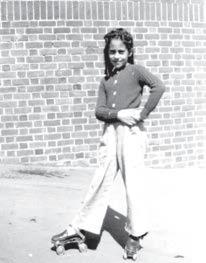
Art: Outdoor Public Art Roller Rink
An art installation that can be experienced, with performances and DJ sets. Free. $5 for rental skates. Fort Mason Center for Arts and Culture, 2 Marina Blvd. For more information and to reserve skates: https://bit. ly/2mXNYMT
Music: Stolie
Live music by Stolie, a songwriter, musical entertainer and entrepreneur with more than 25 years of stage and music industry experience. She’s published more than 100 songs, and is a multi-instrumentalist and arranger,
loop-pedal artist, and bilingual traveling performer. 7:30 to 8:30 p.m. Free. Farley’s, 1315 18th Street.
Comedy: Hosted by Sergio Novoa
Monthly comedy show featuring the Bay Area’s up and coming comedians. SRGO Productions and host Sergio Novoa have gathered a diverse laughout-loud lineup. 7 to 8:30 p.m. Free. Farley’s, 1315 18th Street.
10/3 Thursday — 10/31 Thursday*
Health: Thursday Meditation Lab
Small group and one on one sessions available to help participants find a meditation practice that works

for them. For new and experienced practitioners; all are welcome. Free. 1 to 2 p.m. Fraser Room, Potrero Hill Neighborhood House, 953 De Haro Street. For more information: Zach Sharrin, 510.925.2559 or zsharrin@ gmail.com. *No class on 10/10.
Domestic: MakeArt Family Day
Featuring tactile material introductions for toddlers, guided activities for kids, and in-gallery hands-on opportunities for the whole family. Celebrate spooky season with hauntingly fun projects! Explore exhibiting artist Kathy Sirico’s materials and process with large stuffed snakes and woven spider webs. Design a haunted interior out of a diorama pumpkin and craft apothecary bottles just like those found in Macon Reed’s installation. Decorate a Trick-or-Treat Bag, read your fortune, and enjoy a glow-inthe-dark monster mash dance party. All ages welcome. Activities are free with admission ($8 adults; $6 students/seniors; 12 years and under free). Tickets available at the door. 11 a.m. to 3 p.m. Museum of Craft and Design, 2569 Third Street. For more information: https://bit.ly/2moFzSq
10/7 Monday — 10/28 Monday*
Health: Monday Guided Meditation Guided meditations in a safe and welcoming space to help participants relax, heal, and center themselves. For new and experienced practitioners; all are welcome. Mondays, 6:30 to 7:30 p.m. Free. 824B Carolina Street. For more information: Zach Sharrin,
510.925.2559; zsharrin@gmail.com. *No class on 10/14.
Art: Sculpture Dedication
Join State Board of Equalization chair Malia Cohen, Assemblyman David Chiu, Mayor London Breed, District 10 Supervisor Shamann Walton, Bayview historian Oscar James, and artist William Wareham to dedicate Wareham’s BIG FISH sculpture in India Basin. Screening of “Landing the BIG FISH” by LUXBOXcinema before and after the dedication. 4 p.m. Free. Café Alma, 888 Innes Avenue. Ample street parking at the BIG FISH sculpture site, 798 Innes Avenue. RSVP requested: https://bit.ly/2kUH9Lm
10/11 Friday — 11/8 Friday
Art: Día de Los Muertos 2019 City of Souls merges traditional altars with contemporary installations, a multigenerational gathering of remembrance that asserts the role of art as a platform for collective action. Housed in a translucent, labyrinthine metropolis, this exhibition meditates on San Francisco’s rapidly changing landscape, asking artists and visitors who are the ancestors we need to call in to help fight for the City’s soul? What’re the people, places, and institutions lost to time that have shaped us? What kind of future can we collectively envision for San Francisco? Opening reception: Friday, October 11, 6 to 9 p.m. SOMArts, 934 Brannan Street. For more information: https://bit. ly/2mHxyIq.













10/11 Friday - 11/8 Friday
Art: bauhaus.photo
In partnership with AIA San Francisco and the Goethe Institut, developed by the Bauhaus-Archiv/Museum fur Gestaltung, Berlin, bauhaus.photo presents 100 key works from the world’s largest collection of Bauhaus photography. Portrait, architectural, and product photography depict life at the Bauhaus, one of the 20th Century’s most important art schools, providing visitors with an extensive overview of artistically diverse photography. The exhibition presents classic works by Lucia Moholy, Laszlo Moholy-Nagy, and T. Lux Feininger as well as superb pieces by unknown artists. Free. Museum of Craft and Design, 2569 Third Street. For more information: https://bit.ly/2lteVaD
12 sat
Food: La Cocina’s San Francisco
Food Festival
La Cocina is a ground-breaking incubator that cultivates lowincome food entrepreneurs as they formalize and grow their businesses, providing affordable, shared, commercial kitchen space; industry-specific technical assistance and services; and access to market opportunities and capital. Festival: 11:30 a.m. to 8 p.m. Power Station, 420 23rd Street. For more information and to purchase entry ticket; vendors will be selling food and drink: https://bit. ly/2mXCyIR
10/12 Saturday — 11/3 Sunday
Art: Open Studios
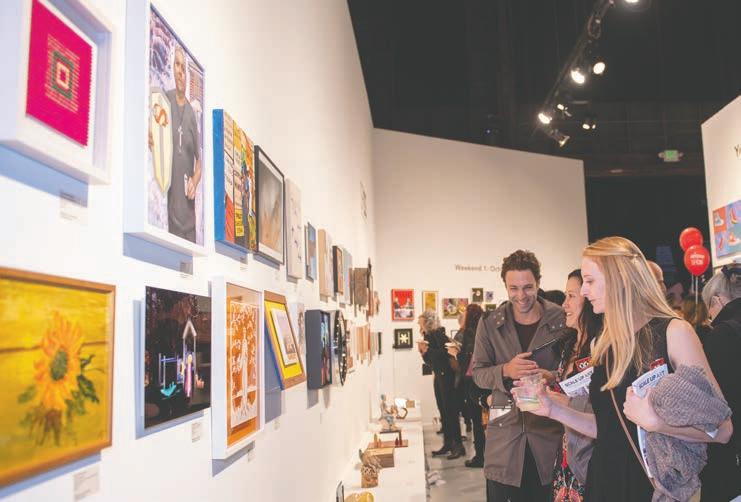
This year marks the 44th anniversary of SF Open Studios, the country’s oldest and largest open studios program, featuring a citywide event showcasing more than 800 emerging and established San Francisco artists over four weekends. Embark on self-guided studio tours and meet the artists. Free. For more information: https://bit.ly/1KyhIBC
13 sun
Music: Butchertown Jazz Festival
Performers include MC Greg Bridges, Tammy Hall Trio, and Denise Perrier. Enjoy food and crafts by local vendors. 12 to 6 p.m. Rain or shine. Free. Lane Street, between Underwood and Van Dyke. For more information: butchertownjazzfest.org
Environment: Gardening for a Sustainable SF
Part of a series of discussions and workshops led by San Francisco Botanical Garden staff focusing on simple, economical, and effective ways to make the most of your garden while improving the environment. Topics include native plants, vegetation for bees and other pollinators, and gardening tools. 11 a.m. to Noon. Free. Children’s Play Area, Salesforce Park, 425 Mission Street. For more information: https:// bit.ly/2NgdpkP
Art: “Make”
Explore Dead Nuts: a search for the ultimate machined object at this annual Halloween bash. Deck out your costume with a chain-strap goodie bag and heavy metal accessories made from machined components. Design a collection of haunted objects with mesh pumpkins, cobwebby nightmare-catchers and pavè pillar candles. Plus, do-it-yourself tarot readings, spooky snacks and more.
6 to 9:30 p.m. $8 general admission; $6 students/seniors; members free. Cash/Square bar for guests over 21. Complimentary drink tickets for MCD members; identification required. Museum of Craft and Design, 2569 Third Street. For more information: https://bit.ly/2n0D8pp
Music: Ben Barnes
Live music with Ben Barnes and friends. Acoustic rock, Olde Tyme Fiddle bands, classical pieces, jazz combinations; sometimes a saw! 7:30 to 8:30 p.m. Free. Farley’s, 1315 18th Street.
19 sat
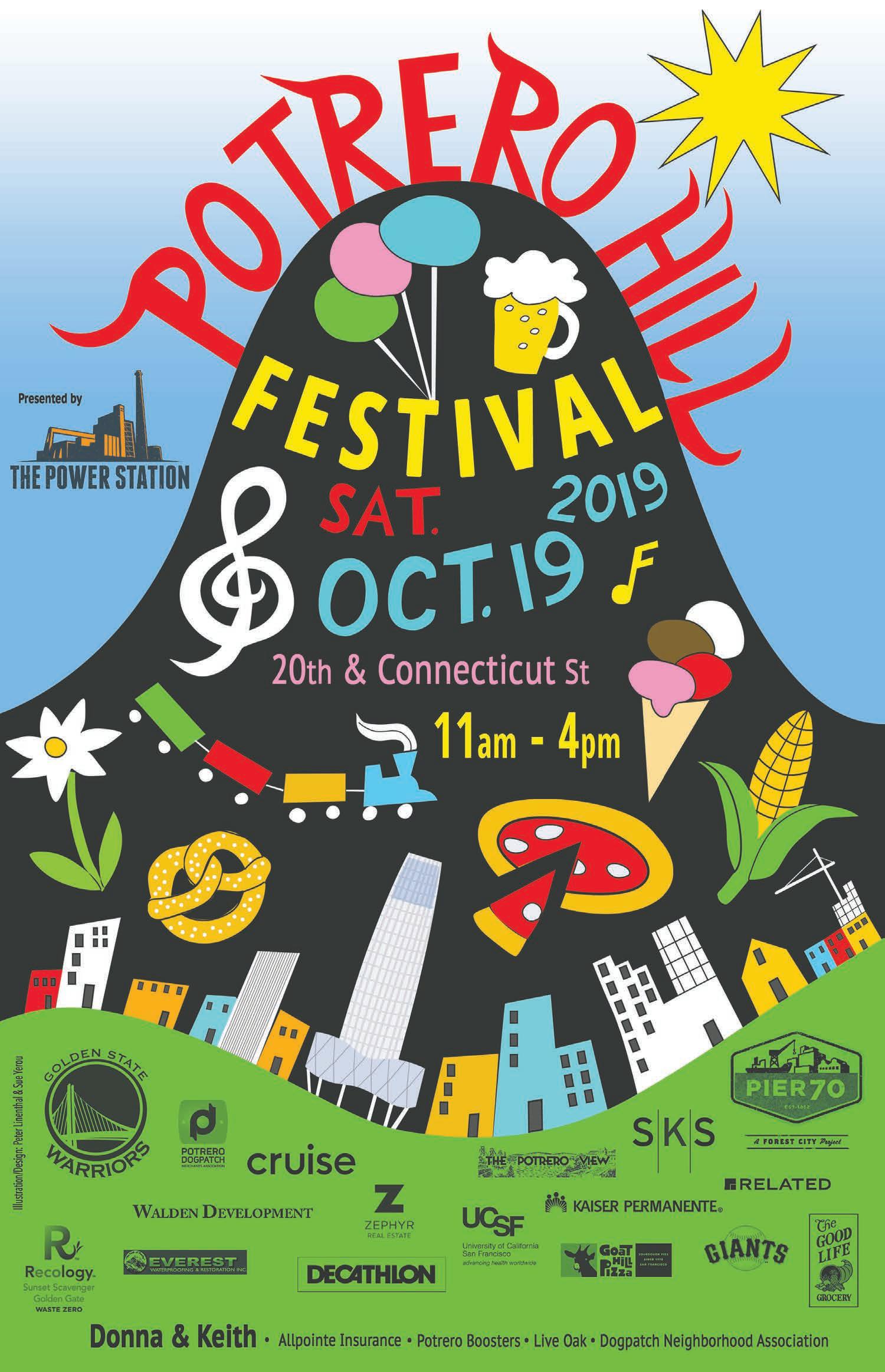
Community: Potrero Hill Festival
The Potrero Hill Festival returns to celebrate local artists, musicians, and historians. The event benefits the Potrero Hill Neighborhood House, a multi-purpose, multi-generation nonprofit that’s been in continuous operation for more than a century.
The main stage will feature “The Klipptones,” a lively jazz/blues/swing band and “Jinx Jones” performing

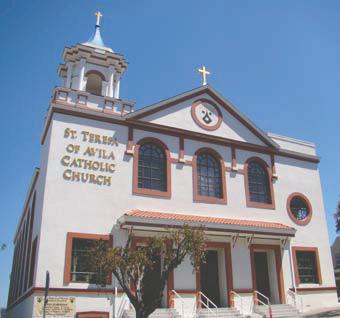
their Rock-a-Billy tunes. Returning to the festival are goats from City Grazing, and the kid’s zone, with rides, bounce houses, a street train, talent show, and more. 11 a.m. to 4 p.m. Free. 20th Street, between Wisconsin and Missouri streets. For more information: https://bit.ly/2lpTFmi
Music: James Everett
Live music by singer James Everett, a San Francisco native who has a sound and performance style that’s reminiscent of the Rat Pack fused with sprinkles of rhythm and blues, jazz, pop and neo-soul. 7:30 to 8:30 p.m. Free. Farley’s, 1315 18th Street.
10/25 Friday — 11/2 Saturday
Science: Bay Area Science Festival
In collaboration with the Bay Area’s scientific, cultural, and educational institutions, the Bay Area Science Festival is an annual celebration of science, technology, engineering, and mathematics, featuring Discovery Days – including one at Oracle Park – Explorer Tours, and events. Free admission to Discovery Days; other events charge entrance fees. For more information: https://bit.ly/2zcWCcN
Halloween: Farley’s Pet Parade
The parade starts at 1 p.m. at the
corner of 18th and Arkansas streets, marches up 18th Street. Costume judging at 18th and Texas streets.
Art : Elizabeth Medrano and Lutz Hornischer
Opening for artists Elizabeth Medrano and Lutz Hornischer. 4 to 6 p.m. Free. Farley’s, 1315 18th Street.
10/31 Thursday — 11/16 Saturday
Dance: Entre Tú y Yo
Entre Tú y Yo (You and I), conceived, choreographed, and directed by Noche Flamenca artistic director Martín Santangelo and lead dancer Soledad Barrio, explores through dance, music, and song the possibilities afforded and constraints imposed by relationships. Joined by some of Spain’s most celebrated flamenco artists, Barrio stars in this evening-length program of duets, solos, and ensemble works.
Preview: October 31 (all seats $25). Opening: Friday, November 1 (press opening), with performances 7:30 p.m. Tuesday through Saturdays, and 2 p.m. Sundays. Tickets (preview $25, regular $30 - $70). Z Space, 450 Florida Street. For more information and to purchase tickets: https://bit. ly/2kRsyjP or 415.626-0453.

attention spans. There are just 10 commandments; you, right now, can remember seven at best. The Bill of Rights, in the U.S. Constitution, consists of 10 amendments; name six. In retrospect, the television era of three channels and the one that never came in clearly was a golden age of welcome simplicity. Too much detail and we lose interest, or, worse, become irritated snarling animals hurling insults at one another over the infinite Internet. Perhaps the problem is that we’re being forced-fed indigestible artificial info-nuggets.
The imperative, according to Lindahl, is to learn how to digest information that’s good for us and discard the rest. Literally digest, through one of the branches of the autonomic nervous system, a biological control structure that unconsciously regulates bodily functions, such as digestion, heart and respiratory rates. It’s a tricky business, as pointed out by one Middle Age alchemist, who advised, “Separate the earth from the fire, the subtle for the gross, deftly, with great ingenuity.” More on that later. Unlike many New Age philosophers, whose insights might be based on “medicine” fueled vision quests, or painful efforts to crack open deeply held internalized emotions, Lindahl built his perspective one intellectual brick at a time, while also engaging in painstaking efforts to extract his own ancient, harmful, and distracting patterns. His thinking has been molded by Erwin Schrodinger, who published What is Life? in 1944, after receiving the Nobel Prize in
physics a decade earlier, and Harold J. Morowitz’s Energy Flow in Biology, which theorized that “the energy that flows through a system acts to organize that system,” an insight later quoted on The Last Whole Earth Catalogue, and that “life is a property of an ecological system rather than a single organism or species.” He’s seriously studied works by Charles Darwin and Albert Einstein, among other transformative scientists.
To fully unearth the roots of Lindahl’s insights one would need at least
and biology in ways that increase our awareness, advance our own evolution, and contribute to achieving our purpose.
Put differently, we can learn how to see God. Not the image burned into our subconscious at Sunday school and black and white movies, but the divine, pulsating, expanding web to which everything is connected.
Picture the universe as a constantly expanding container in which everything inside is in relationship with and
quakes and waves that wash away all existing lifeforms, making room for their replacements, us.
People live inside this busy, buzzy, sometimes jarringly silent container. As with everything else, we’re effected by and impact everything around us; our collective forces intermingle and extend throughout the massive vessel that’s our universe.
The notion that all things influence all other things follows the laws of physics; it’s a scientifically accurate way of characterizing existence. This principal is perhaps further confirmed by the fact that we – from the tiniest of bacteria, to the largest of suns – are composed of the same basic materials. All come and intermix from an identical place. Humans are made of stardust: people and the galaxy share roughly 97 percent of the same kind of atoms.
an undergraduate understanding of physical and natural sciences, as well as a decent grasp on humanities’ spiritual wanderings. That, and a clear and present mind undistracted by layers of unexamined personal, cultural and religious prejudices. Even without those emo-intellectual assets at least two penetrating perspectives are apparent, which can be characterized as: humans have a purpose that is nested in their connection to the universe; and we can positively alter our consciousness
influences one another. Planets gravitationally pull at all around them, like pushy shoppers at a pre-Amazon Black Friday sale. Billions of stars pulsate heat and light, which in the case of our own sun, spits out the energy needed to catalyze and sustain biological life. Sometimes abrupt interactions take place that alter pathways; an asteroid slams into Earth, incinerating the landscape, triggering mega-earth -
The cosmos’ push-pull fundamentals are deeply embedded in ancient spirituality. Jewish teaching speaks to the origin of the universe, science’s Big Bang, as a shattering of a gigantic pot; a Jew’s job is to help put the shards back together. Astrology, according to Lindahl, reflects a crude attempt to understand how the stars empirically tug on individual behavior.
Humanities’ impact on Earth and space can be seen tangibly, in the form of climate-altering pollutants and space debris from broken satellites. But the effects also occur in less
LINDAHL continues on next page
LINDAHL from previous page
visible ways. We, perhaps uniquely or with few peers, as inhabitants of the “Goldilocks” planet, yank at the strands of the universe. This is our purpose. Humans, like planets, stars, and all else, are a part of an infinite webbed system. We’re a critical link; the changes we make alter the cosmos.
This point is the missing link between religion, spirituality, and material science. Just like the anthropological missing link, there’s no one piece of ah ha! evidence to prove it. Physics points to it: all matter goes somewhere, it doesn’t just disappear, including human thought, an energetic pulse that’s as tangible as the wind. Religion and spirituality – at their best, wisdom – confirms it. Consciousness and spirit end up somewhere. Creating a tangible connection to the great out there is the purpose of prayer, which, when allowed to settle into its essential self, sounds the same no matter the religion. Amen is one gigantic om.
If President Donald Trump sent out a tweet to his 55 million followers saying “humans are a product of evolution” he’d no doubt get some angry blowback. But we are. Elements of our evolutionary passage remain deep inside us. Physical anomalies remind us of this fact. We all have a residual tail bone; I have relatives with webbed feet. Perhaps more alarmingly, left behind are also bits of the consciousness of our previous embodiments. We have lizard brains and mammalian fears, which, if we’re not careful, lead us down false paths. The devil doesn’t make us do it, our unexamined, unmanaged biological past does.
When you reflect on this idea, it
seems obvious. Most of us know people stuck in their lizard or mammalian attitudes. They’re human, to be sure, they just haven’t yet fully evolved. But they have the capacity to change; all of us do. According to Lindhal, by vastly expanding our ability to pay attention, to our bodies, minds, and everything around us, we can advance our ongoing evolution, rearranging ourselves at the biological and consciousness levels. Again, science supports this perspective. What happens in the head, so to speak, can reshape other organs, including the heart.
In this respect our quest for artificial intelligence is a distraction. It’s the cultivation of our own intelligence, emotional, spiritual and otherwise, that’s of greater importance. We can, with hard work and the right practice, perceive the information we’re already receiving from the stars. We can see God, as defined by understanding, in an ongoing way, the throbbing connections within and between ourselves, everything and everyone.
Evolving isn’t easy. It requires cultivating consideration, in an era of distractions and multi-tasking. Fortunately, our attention is subject to our will. We can perform any undertaking more thoughtfully, bringing attention to dressing – sensing the fabric of our clothes – dining – tasting each bite and sip – and every other action, or even thought, we take. As a simple exercise, Lindahl suggests that right handers use their left hand to perform all duties for a day – opening doors; shaking hands – a tactic intended to prompt more intention to attention.
Lindahl calls carefully crafted methods of self-development “The Work.” It’s the means by which we
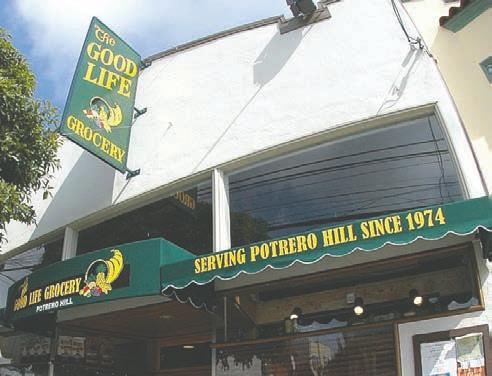
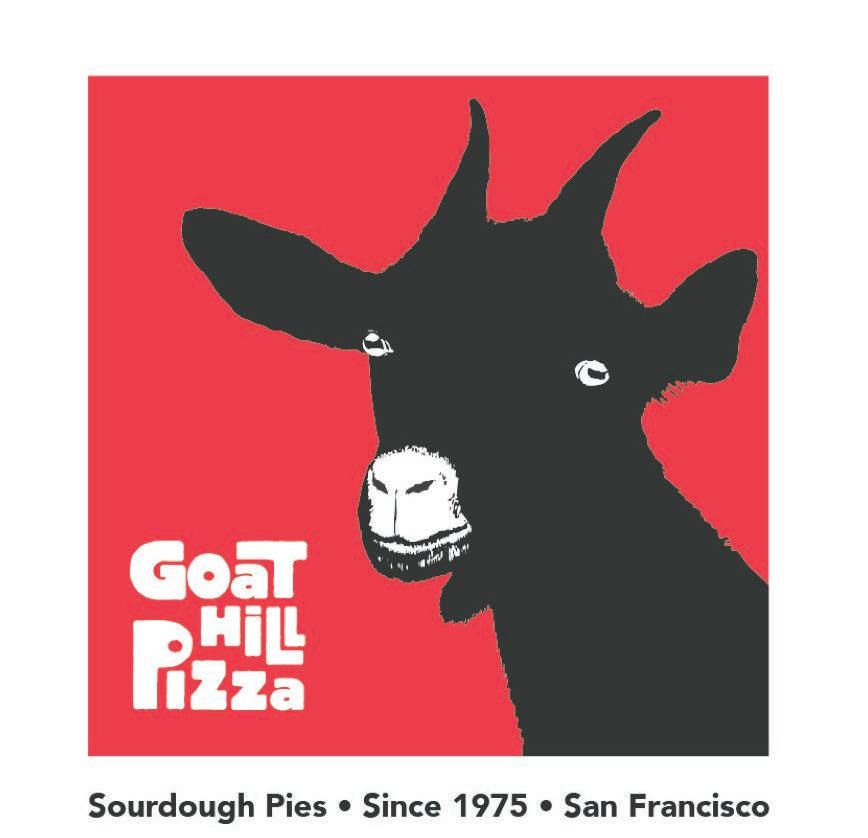
Do you remember the name of Goat Hill Pizza’s mascot?
Hill
The correct answer can be found on the front of Goat Hill Pizza and in this issue of The View.
become conscious and self-aware. Self-remembering, is what Gurdjieff named it, now more widely known as being present. That’s the job, humanities primary responsibility: to do the work necessary to evolve.
And if we take Lindahl’s advice he’ll no longer be the last philosopher in San Francisco, because everyone else will replace him.]
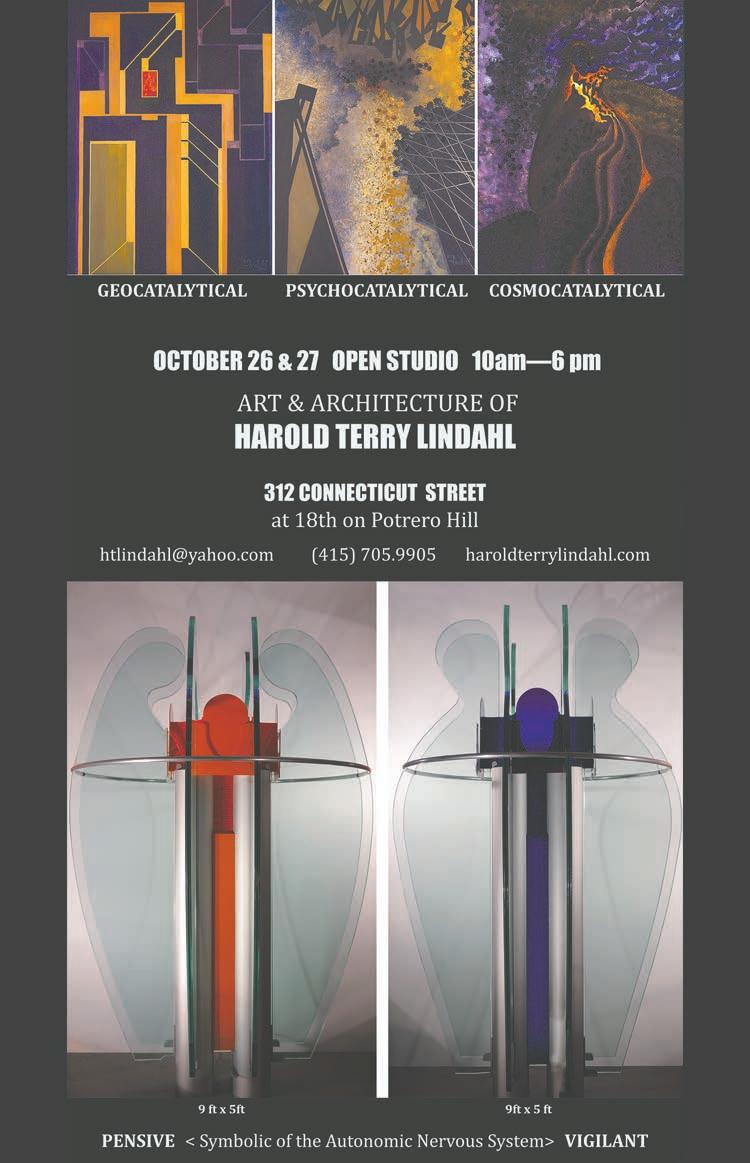
“The Art and Architecture of Harold Terry Lindhal,” is part of Open Studios, October 26 and 27, 10 a.m. to 6 p.m., 312 Connecticut Street.
HOUSING from front page
“I stayed the course and stayed strong as long as I could,” Smith said. “My youngest didn’t experience what my first four sons did.” She added with mixed pride and relief that they’ve all made good lives for themselves, with families and jobs outside the City.
After living briefly in East Oakland and Emeryville, Smith and Byrd found a home in Pittsburgh, where they stayed for eight years. The $930 monthly rent she’d been paying had just been raised to $1,680 when she received a postcard from the Mayor’s Office of Housing and Community Development (MOHCD) telling her that she’d placed fourth in a housing lottery for 626 Mission Bay Boulevard. The displacement that occurred early in her life had enabled Smith to obtain a Certificate of
Preference (COP) from SFRA in 2001, which secured her the highest priority in City-sponsored housing lotteries.
MOHCD administers the COP program through an agreement with the Office of Community Investment and Infrastructure (OCII), the successor agency to the SFRA, which was dissolved in 2012. Residency at an affected address that suffered displacement can be demonstrated with a birth certificate, public school records, assistance payments, utility bills, and/ or an identification card or driver’s license showing the residency period.
“There’s always a wait list” for applicants seeking a spot in one of the City’s affordable housing programs, Smith testified. When notified in 2018 that she’d been selected, she grabbed the chance to move into a townhome in San Francisco’s newest neighborhood.
“I like the environment in Mission Bay,” Smith said. “I love this area. I really do.”
Smith works two days a week at Woodlands Creature Outfitters, a novelty shop at 1310 Fourth Street. “My passion has always been working around, and with, kids,” she said. The store is operated by 826 Valencia, a nonprofit that offers an afterschool writing program to public school students. Working there has inspired her to start writing her life story; she used to write when she was younger. She’d been offered an opportunity to work a second part-time at the Chase Center when The View spoke with her.

Byrd works at the United States Postal Service facility on Evans Street as a mail handler, though he expects to transfer to a new position as a truck driver, transporting the post to branch offices. Between his earnings and her part-time job that accommodates a physical condition for which she receives Social Security Disability Insurance benefits, they cobble together their monthly rent of $1,555. The $18,660 annual fee they pay is more than a third of their household income.
“We make it work,” Smith said. “Sometimes I get help from my other kids. I don’t have to pay water and garbage; they’re included. That helps a lot.”
To be eligible for placement at most of 626 Mission Bay Boulevard’s 143 units, the applicant’s household income has to be 50 percent or less than the Area Median Income (AMI). Last
HOUSING continues on page 14
year that was $47,350 for a two-person household, according to the federal Department of Housing and Urban Development (HUD). The minimum income required for a two-bedroom home in the building is $3,110 a month; the maximum $4,887. The development has 27 units designated for formerly homeless families, at 30 percent or less than AMI, $28,400 for a two-person household in 2018. The building has 53 one-, 47 two-, and 43 three-bedroom units.
“626 is a lot of different people with different backgrounds and abilities to cope,” Smith said. She plans to stay in the townhome as long as she can. She sings in her church’s music ministry and is happy to be a grandmother. “That’s my life now, my children and my church,” Smith said. “God has been good to us.”
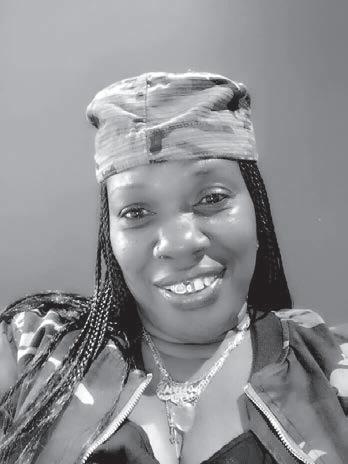
A mile and a quarter to the south, in Dogpatch, Leslee McCray, 39, is a first-time owner of a BMR condo in Knox, a mixed market rate and BMR building located at 645 Texas Street that opened in 2017. Of the 91 condos, 11 are BMR.
McCray was born in Oakland, grew up in Tracy, and moved to the City when he was 18 to study at San Francisco State University. She switched to beauty school, which led to her career as a direct sales consultant for a line of hair care products, working from home and meeting with clients in Marin County and San Francisco. Friends, playing soccer, cooking, and visiting family fill her life. She plans to finish college through online courses. She likes that Dogpatch’s industrial feel has been retained as it morphs into a neighborhood of denser residential buildings. “It’s still got its character,” McCray said.
There were four units in the old Victorian North of the Panhandle she’d lived in for 10 years when a fire broke out, jumped to a second building, and
displaced 25 people between the two structures. She’d been paying $1,025 a month for her rent-controlled apartment. As a result of the conflagration leaving her homeless, McCray received a Displaced Tenant Housing Preference (DTHP) certificate. A DTHP helps renters, moved by no-fault eviction or fire, find new housing. A DTHP gives applicants second-highest priority in many housing lotteries after a COP.
No BMR housing was available after the fire destroyed McCray’s apartment. During her 18-month transition from temporary lodging to ownership,
McCray shared a place in Oakland with a roommate for a few months, then sublet an apartment in San Francisco she knew wouldn’t be permanent, while hunting for an affordable place. She counts herself exceedingly fortunate to have won the second of two certificate spots available for the ownership lottery at Knox. It helped that she’d managed to save enough money to cover the down payment.
In 2017, McCray paid $267,000 for her 700 square foot, one-bedroom, one bath condominium. She met the eligibility requirement with income a little under 100 percent AMI, which was $75,400 for one person in 2016,

The GBD welcomes new Director George Slack to its Board. George is a (very) longtime district resident who has worked on the Pennsylvania garden at 23rd, Angel Alley and the Esprit Advisory Group. He is currently involved with the GBD’s biodiversity project.
Join George and the rest of the GBD board on the 3rd Wednesday of each month at 6:30 p.m. at 654 Minnesota St, 3rd Fl. Check the GBD website for agendas and more information.
First Saturdays in Dogpatch: A neighborhood-wide event held monthly, rain or shine
• Explore neighborhood shops 11 a.m. to 7 p.m.
• Enjoy great food and drink 11 a.m. to 11 p.m.
• Discover maker market at Center Hardware and 1234 Indiana Street, 11 a.m. to 4 p.m.
• Be inspired at gallery openings at Minnesota Street Project, 6 to 8 p.m.
• See all the details at LoveDogpatch.com
Bay Area makers, small businesses and food trucks: Pop-up in Dogpatch the first Saturday of every month. Find out more at https://bit.ly/2Lo5ekM
Potrero Boosters Neighborhood Association Be in the know. Meet your neighbors. Make the Potrero a better place. Monthly meeting: last Tuesday of the month, 7 p.m. at the Potrero Hill Neighborhood House. 953 De Haro @ Southern Heights.
according to HUD.
“Probably close to a third of my monthly income goes to housing,” McCray said. “I’m on commission and a small base pay, so it’s hard to say if it’s always a third of my income.”
McCray’s $2,000 monthly housing cost consists of mortgage payments, taxes, and a homeowner association (HOA) fee of $600, which covers her share of the building’s maintenance and operating expenses, in which all owners participate. McCray’s HOA payment provides her with access to a gym and media room. Although
the complex is only a couple of years old, HOA charges have already escalated by six percent, with another six percent hike planned for next year, with no limits on increases. As rates rise for services that’re collectively shared – common area energy, water, and garbage removal – and as buildings age and maintenance costs surge, HOAs, including all-BMR homeowner
associations, can similarly elevate their assessments.
Ownership means McCray has to pay for repairs when anything inside her unit needs to be fixed. Recently, she received a $900 plumber bill to fix her shower. Despite these expenses, McCray knows she landed well.
“I never realized how much more secure it makes you feel to own,” she said. “You don’t know what’s going to happen with a rental. You can’t save while renting. I can budget and enjoy my life.”
Her year and a half between longterm homes impressed upon her how exorbitant market rate rent has become in San Francisco. People accustomed to rent-controlled apartments who’re displaced for any reason feel insulted when they encounter double, triple, or quadruple rent levels, McCray said.
“How did it get this out of control?” she asked.
According to HUD, the 100 percent AMI level McCray qualified at three years ago has risen to $86,200 for a single person in 2019, a 14 percent increase.
Households earning up to 120 percent of AMI are eligible to apply for homes in MOHCD’s affordable housing portfolio; currently $103,450 for an individual, $147,800 for a family of four.
MOHCD offers a broad palette of BMR rental and ownership programs, such as the City’s Inclusionary Affordable Housing Program, and the former SFRA’s Limited Equity Program. Both rentals and condos are available in buildings that are 100 percent affordable, mixed market rate and BMR, at a range of AMI levels. A preference
HOUSING continues on next page

HOUSING from previous page
certificate isn’t necessary to apply, but applicants must meet program eligibility criteria.
McCray advised anyone who’s considering applying for a BMR unit, “Ask a lot of questions. Be aware what the program you’re getting into is all about, and the details. Stay on top of your lender. My lender almost timed out with MOHCD. Reach out to other BMR people. There’s kind of a network out there of people in BMR units who will give advice.”
She cautioned applicants to be prepared for the MOHCD vetting and approval process to be slow. For McCray, it took five months after she’d won a lottery to move into her new home. “They don’t tell you upfront how long it’s going to be,” she said.
BMR owners can expect the process of selling their units to take a while as well. The MOHCD Ownership Bulletin, mailed to BMR owners quarterly, states in its Summer 2019 bulletin, “Selling a BMR unit will require more steps and more time than selling a market rate home. Make sure you choose the right realtor who has BMR experience.”
Rob Belli, a realtor with Home Quest Realty, an agency that specializes in reselling BMR homes, has sold more than 400 such units in the past 10 years. Buyers are “a cross-reference of everyone. Doctors, teachers, people who have entry level jobs making $50,000, $60,000 a year. Old people, young people, tech workers,” Belli said. “Retirees are looking to buy because they want stable housing. Rentals can be very scary for retirees because rent can go up, or an eviction can happen.
This provides stability for retirees.”
Sellers generally are people experiencing a major life change. “Something happens,” Belli said. “They start to have a family and need more space, or someone has died, and I’ve helped family members sell the unit. Or they’re elderly and have to go into assisted care.”
BMR deed restrictions limit resale
value. Owners preserve their capital based on the equity they build while making monthly mortgage payments, but don’t reap a windfall profit selling on the open market. The current AMI level at which the unit was originally purchased is used in a formula to calculate the maximum resale price. According to the MOHCD Ownership Bulletin, “If that price is higher than
the price affordable to the next qualified buyer, you may have to lower the price in order to complete the sale.” BMR condos must be owner-occupied and cannot be rented or subleased, another restriction that prevents profit-taking.
For more information on affordable housing programs: www.sfmohcd.org.
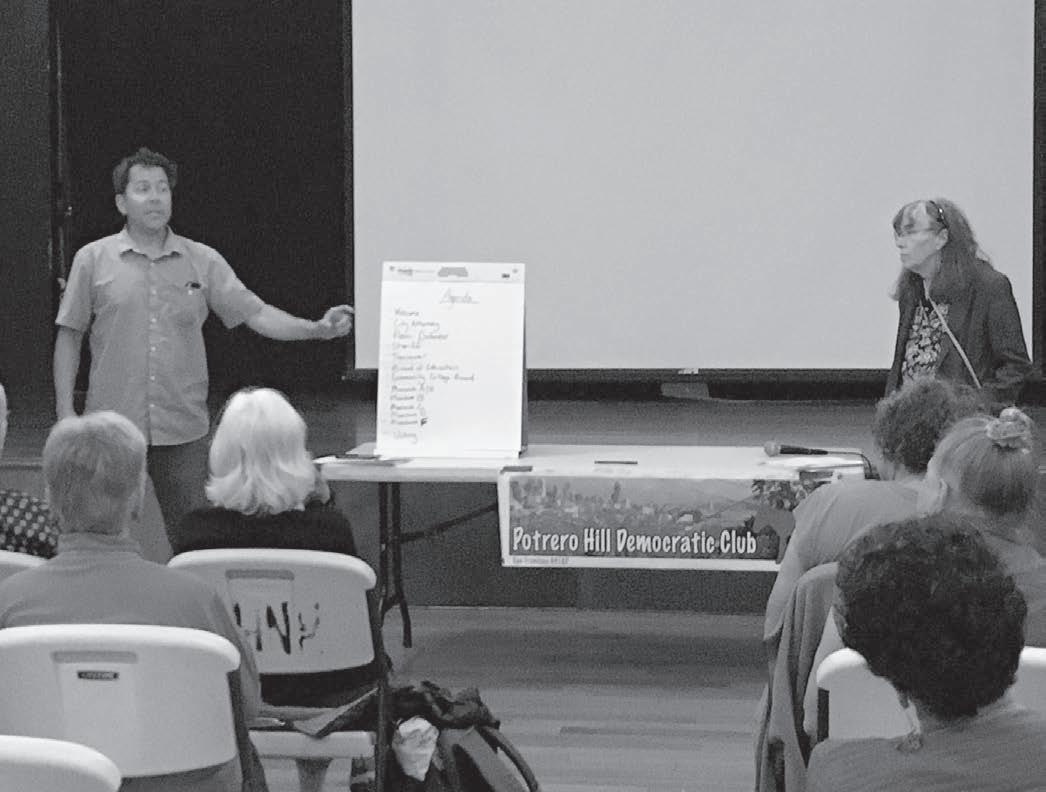
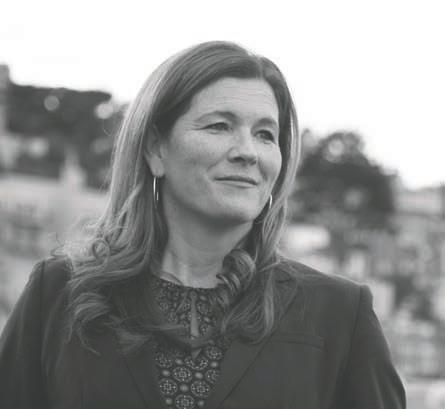
Endorsed by: Potrero Hill Democrats (#1)
Mayor London Breed U.S. Senator Kamala Harris






ffice, Warehouse, and Land Available for Lease all or email for vacancies
Jeffrey A. Bauer
Senior Leasing Manager
Port of San Francisco Pier
San Francisco, CA 94111
Website: www.sfport.com
Direct (415) 274 0514
Main (415) 274 0400
Efax (415) 544 1714
Email jeff.bauer@sfport.com


The View now accepts legal notices. Please contact: production@potreroview.net; 415.643.9578.
Housekeeping
Cleaning professional since 1986. Offices, apartments, homes, and buildings. Roger Miller 415.794.4411 References given with bid.
Writer's Companion
View editor available to work with writers at all levels. Groups also available. $50/hour. Editor@ potreroview.net; 415.643.9578.
Freelance Writers Wanted
Modest pay, interesting assignments. Contact: editor@potreroview.net
Muir Beach Vacation Home
Walking distance to the beach, with the crashing waves visible and audible from the place. Three bedrooms, two baths, with a lovely deck. Minimum two nights: $350, plus cleaning fee. Editor@potreroview.net; 415.643.9578.
Muir Beach Vacation Studio
Walking distance to the beach, with the crashing waves visible and audible from the place. Includes kitchenette and lovely patio. $175 plus cleaning fee, two-day minimum. Editor@ potreroview.net; 415.643.9578.
Got something you need to sell? Have a service you provide? Our Classified Ad section is just the place for you! Cost: Each classified ad is $25 for up to 200 characters, including spaces. A 20-percent discount will be provided for ads paid for six months in advance. Payment, and/ or corrections, must be received by the 18th of each month for the ad to appear in the following month’s issue. Please email all classified ads to office@potreroview.net
• SUPPORT LOCAL JOURNALISM
www.potreroview.net/advertise/ 415.643.9578; editor@potreroview.net; advertising@potreroview.net
NEW AD FORMAT FROM THE VIEW !
Let your neighbors know what you have to offer!
PREPAY: 2” x 2” 2” x 4”
6 months $345. $690.
12 months $555. $1,110.
Please contact: 415.643.9578
marketing @ potreroview.net production @ potreroview.net

The San Francisco Pathways to Citizenship Initiative provides free legal help from community immigration service providers at our free workshops. Resources for the citizenship application fee are available onsite. Learn more at sfcitizenship.org When: Sunday, November 24, 2019. Registration is open from 9:30 am 12:30 pm. No appointment needed!
Where: Chinatown YMCA, 855 Sacramento Street, San Francisco, CA 94108
Every 10 years, the U.S. Census Bureau is responsible for conducting the nationwide census. While the next census will be taken in 2020, the Census Bureau is recruiting now to fill important temporary positions with great pay and flexible hours. Be a Census Taker and make a difference in your community! Apply online at 2020census.gov/jobs.
Child support matters can be complicated, stressful, and confusing. The Department of Child Support Services helps parents understand the process so they know their rights and options for making and receiving support payments. Call us today at (866) 901-3212 or visit our office at 617 Mission Street to learn how we can help you. Information is also available online at www.sfgov.org/dcss
The mission of the Fire Department is to protect the lives and property of the people of San Francisco from fires, natural disasters, and hazardous materials incidents; to save lives by providing emergency medical services; to prevent fires through prevention and education programs; and to provide work environment that values health, wellness and cultural diversity and is free of harassment and discrimination.
Chief Jeanine Nicholson invites you to join a highly respected Fire Department and serve the community of one of the most beautiful cities in the country.
San Francisco’s first citywide American Indian Initiative celebrates the culture and contributions of local Indigenous Peo ples. Spanning three months, The Continuous Thread: Celebrating Our Interwoven Histories, Identities and Contributions will include over 20 public events including exhibitions, a temporary light-art project, community celebrations, concerts, a film festival, a fashion show and more. The ambitious Initiative coincides with the 50th Anniversary of the Occupation of Alcatraz, the one-year anniversary of the City’s first Indigenous Peoples Day and the anniversary of the removal of the Early Days sculpture in the Civic Center after decades of community objections to its racist and historically inaccurate content. Dates: October December 15. Visit sfartscommission.org for more information.
The City and County of San Francisco encourage public outreach. Articles are translated into several languages to provide better public access. The newspaper makes every effort to translate the articles of general interest correctly. No liability is assumed by the City and County of San Francisco or the newspapers for errors and omissions.









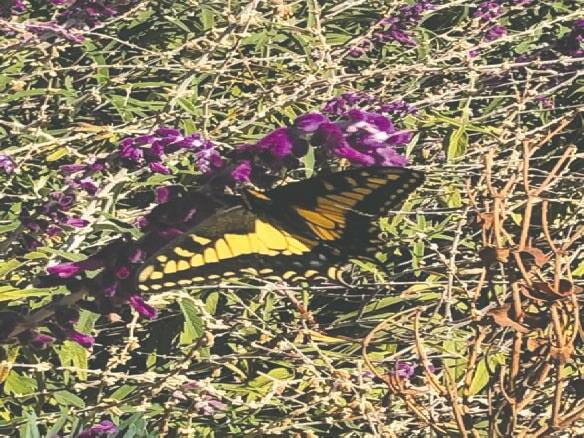



Avery Proctor, nine, took this image of a butterfly resting on a plant along the Pennsylvania Street Garden, also know as the Pennsylvania Railroad Garden pathway. Avery, a Connecticut Street resident, attends Alta Vista School.



















Wisconsin Street resident, Justine Alduy Berman, a five year-old first grader at Lycee Français, took this photograph on Rhode Island and 20th streets. She calls sunflowers, “bee flowers.”