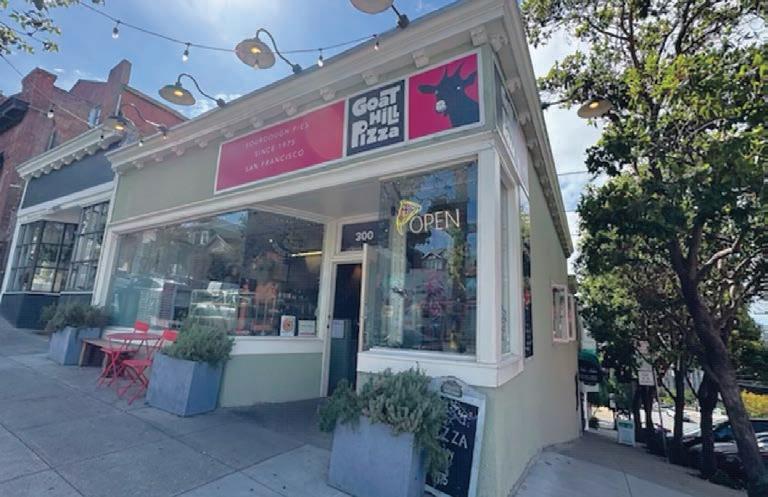
Goat Hill Pizza Turns 50, the Pizza Remains Fresh
BY TAMALA MOTTA
On November 16, 2025, Goat Hill Pizza turns a half-century old.
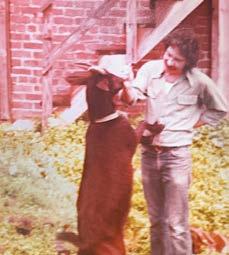
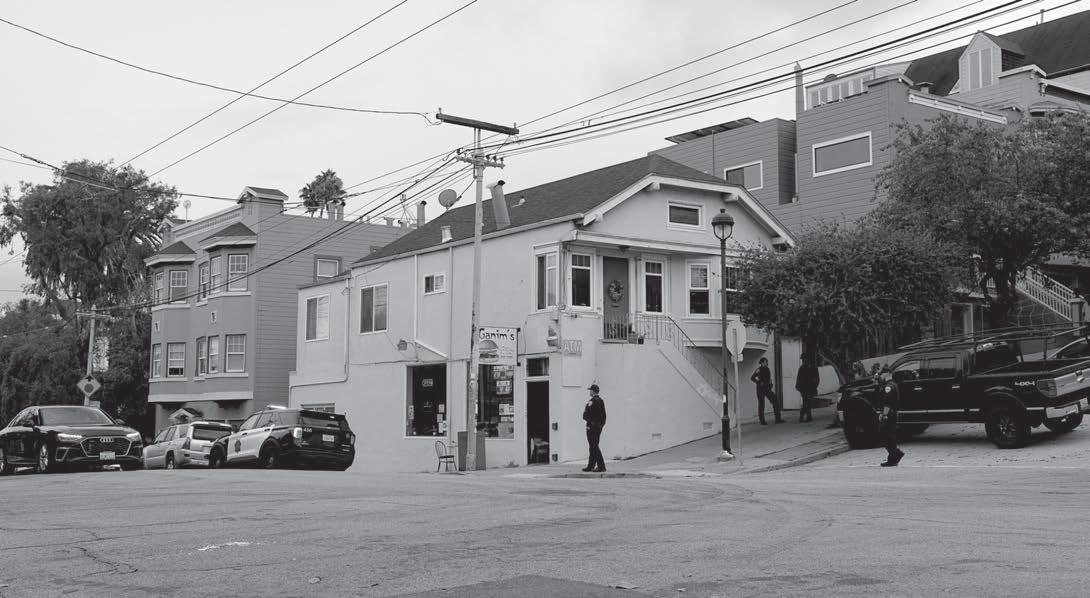
When five friends – Joel and Loris Lipski, Karen Clark (Monely), Ruthann Dickinson, and Philip (Phil) DeAndrade –first opened Goat Hill Pizza it was among a handful of restaurants catering to Potrero Hill. It gained citywide popularity after San Francisco Chronicle columnist Herb Caen wrote about its mascots, Hilda de Anchovy and her two kids, Loretta and Bucky, who roamed the once empty lot behind the restaurant from 1975 to 1985.
Missouri Street residents, Kurt and
Debbie Huysentruyt, became 10 percent shareholders roughly 25 years ago, when Goat Hill expanded. The other women owners - Lipski, (Clark) Monely, and Dickenson - have passed away.
Mike Monley, who was DeAndrade’s classmate at St. Patrick’s Seminary and University, inherited his wife’s stake. Kurt Huysentruyt also attended the seminary, in a different class.
“A person from each of the friend groups is still alive and they are all madly in love with each other and have dinner or brunch with each other every day,”
Y Combinator Draws Techies to Dogpatch
BY S ANNE STEINBERG
Dogpatch, Mission Bay, Mission Creek, and Potrero Hill have emerged as San Francisco’s latest technology node. Uber re-located to Mission Bay in 2021. OpenAI, situated in Mission Creek since 2015, moved its headquarters to Mission Bay in 2025. Y Combinator, a darling of the tech world that helped launch companies such as Stripe and Airbnb, repositioned to Dogpatch in 2023.
In computer science, a Y combinator is a unit of code that generates other units of similar nature. Analogously, Y Combinator, the company, nurtures businesses. Every quarter, roughly 125 startups – “a batch” – are chosen from tens of thousands of applicants. The selected founders receive a halfmillion-dollar investment and three months of intensive business counseling in return for at least a seven percent stake in their concern. The program culminates in a “Demo Day” at which the founders present their enterprises to potential investors.
Over the 90-day training batch members’ lives revolve around the Dogpatch campus, two 20th Street buildings immediately east of the RH store. The Y Combinator structures were once part of a giant shipbuilding facility owned by Bethlehem Steel, which, at its World War II peak, employed upwards of 18,000 people. Salesforce, San Francisco’s
largest private sector employer today, has a local head count of around 8,500.
Y Combinator moved to San Francisco from Mountain View to create a physical environment that encourages chance encounters among and between batch members and artificial intelligence innovators. In addition, Garry Tan, Y Combinator’s president and chief executive officer, and many of the company’s fifteen partners, live in the City and wanted to work closer to home. Dogpatch offers ample office and meeting space, a rash of new apartment buildings in which batch members can live, and a lower density of unhoused people than South-of-Market.
On a recent afternoon, the block that’s home to the Y Combinator campus bustled with movers unloading furniture for an upcoming conference. A few young men, dressed in the plain, functional style favored by tech workers, perambulated along the sidewalks, talking intently into their phones or to a companion. Several people got into Ubers or other cars. Little Sweet, a boba shop located across the street from Y Combinator’s buildings, sat empty.
Y Combinator’s main building, at 560 20th Street, was constructed as an office for Union Iron Works, the shipyard’s predecessor. It’s a formal, symmetric, red-brick affair with forest green accents
More than $20 Million Spent Annually to Maintain Street Trees, Fix Sidewalks
BY MARK STEENSLAND
Prior to 2016, property owners shouldered most of the responsibility for caring for San Francisco’s 125,000 street trees; plants growing in “basins” cut-out from the sidewalk. That changed with passage of Proposition E, an initiative approved by 79 percent of voters which allocates a minimum of $20 million a year from the City’s general fund to maintain the “urban forest” and fix tree-related sidewalk damage. Expenditures were budgeted at $23 million for fiscal year 2025-26.
StreetTreeSF is operated by the San Francisco Public Works Bureau of Urban Forestry. Since July 1, 2017, its arborists, landscape gardeners, and cement masons have cared for 80 percent of the City’s street trees.
According to Christopher Heredia, Bureau of Urban Forestry public information officer, San Francisco has one of the smallest tree canopies among large cities in the U.S., largely because trees
were scarce prior to European settlement. Most of what’s now San Francisco was historical covered by sand dunes and grasses. Tree cultivation began in the 1800s; by 1879, 155,000 trees had been planted.
“We are at 13.7 percent, lower than the national average of 21 percent, said Heredia.
Other municipalities in California want to foster their urban forests. The City Council in Sacramento – the “City of Trees,” with almost 24 percent tree canopy – recently introduced a measure to plant 25,000 trees annually over the next 20 years to mitigate increasing heat due to climate change and to help the jurisdiction become carbon neutral by 2045, with trees absorbing as much carbon dioxide as is being humanly produced.
In San Francisco, the Bureau of Urban Forestry delegates much of its planting to Friends of the Urban Forest. The agency and nonprofit collaborate on decisions about what species to cultivate
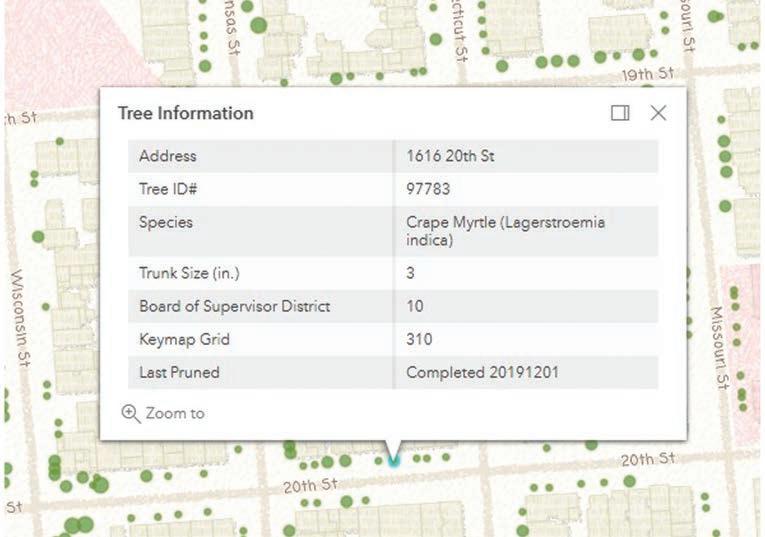
Image shows information for one of the trees in front of San Francisco Public Library's Potrero Hill branch.
Source: https://bsm.sfdpw.org/urbanforestry/
partly based on the microclimates of individual neighborhoods.
“For instance, Bayview-Hunters Point tends to be hotter,” Heredia explained. “So, we plant trees that do
better in that climate versus the Sunset or Outer Richmond where you’re going to have more fog and need trees that
Y COMBINATOR continues on page 11 TREES continues on
GOAT HILL PIZZA continues on page 11
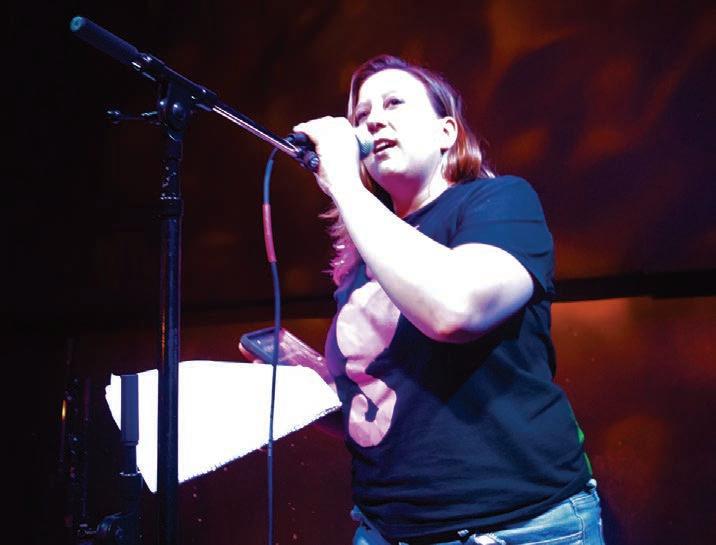
Goat Hill Pizza.
PHOTO: Tamala Motta
FREE Serving the Potrero Hill, Dogpatch, Mission Bay and SOMA Neighborhoods Since 1970
NOVEMBER 2025
PUBLISHER’S VIEW
Pakistan
BY STEVEN J. MOSS
I’ve been to some out-of-the-way places, including Haiti and Niger, neither of which receive much American tourist traffic. When I tell people about these travels, they generally express mild curiosity, along the lines of “Why would you go there?” Until this year, when I decided to go to Pakistan, to trek the Nangma Valley. When I mentioned that trip, the response was almost universal: “You should seriously reconsider going to such a dangerous place,” often followed by quips about beheadings and kidnappings.
This concern is shared by the U.S. State Department, which cautions that Pakistan suffers from terrorism and armed conflict. The Department flatly advises against traveling to far southern and northern provinces, as well as areas immediately adjacent the India-Pakistan border. As a result of risks, perceived or real – and even though Pakistan has more than 108 peaks exceeding 23,000 feet, including K2, the second-highest mountain globally – each year less than 10,000
Americans journey to Pakistan. With more than 250 million inhabitants, it’s the world’s fifth most populated country. Roughly 700,000 visit Brazil, which has the seventh largest population.
As a Peace Corps trainee in Senegal and Fulbright Scholar in India, I view State Department advisories as recommendations as opposed to the final word on in-country conditions. Afterall, if the Department was assessing the United States, it might caution against visiting schools or political rallies as places with elevated shooting risks.
Several years ago, my family hiked the Simien Mountains in Ethiopia even though the State Department encouraged Americans to avoid the region. Before getting on a plane, we talked to friends at the Department and at non-governmental organizations who frequently traveled to the country, all of whom said it was safe.
Parts of Pakistan aren’t benign, including the Khyber-Pakhtunkhwa
SHORT CUTS
More Teachers, More Books
Mission Bay Elementary will open in August 2026, according to the San Francisco Unified School District, the district’s first new school in 20 years. Construction of the 1415 Owens Street campus should be completed by January. The institute will principally serve families living in South-of-Market, Potrero Hill, Dogpatch and Mission Bay. In its first year it’ll host prekindergarten, transitional kindergarten and kindergarten classes, as well as a combined kindergarten-transitional kindergarten for students with disabilities, offering pre-K through fifth grade by 2032. Students will ultimately feed into Everett or Francisco middle schools. The school, which cost roughly $129 million to develop, was approved by voters through Proposition A, a 2016 $744 million bond measure. The 2.5-acre campus features a 79,000-square-foot building with a four-story classroom wing that leads to a single-story multipurpose room.
And More Sales Tax Revenue
Retail spending in most of San Francisco remains significantly below pre-pandemic levels, driven down by the loss of at least 30,000 residents and with roughly 20 percent of work done at home. In Mission Bay, however, sales tax revenue jumped by 31 percent during the first half of 2025, even adjusted for
those workers and visitors to Chase Center and the University of San Francisco, Mission Bay health care facilities, among other places.
Yard Becomes Feet
Facing a $307 million budget shortfall, the San Francisco Municipal Transportation Agency is abandoning a plan to build 465 housing units at its 2500 Mariposa Street Muni yard, narrowing its focus to constructing a modern bus storage and maintenance facility. Under the new scheme about 100 affordable apartments would be developed on a parcel on the property’s Bryant Street side. “Rebuilding this century-old yard is essential to improving Muni’s reliability and providing safe conditions for our staff,” said SFMTA’s Sean Kennedy, who was quoted in the San Francisco Chronicle “If we don’t take significant steps to make this project possible, we’ll lose this once-in-a-generation opportunity to modernize critical transit infra
SHORT CUTS continues on page 14

PUBLISHER Steven J. Moss
ACCOUNTING MANAGER Catie Magee
MARKETING MANAGER Richard Romero
PRODUCTION MANAGER Helena Chiu
THIS MONTH’S CONTRIBUTORS
Alina Ferguson, Sonya Herrera, Thomas Hunter II, Tamala Motta, Steven J. Moss, Danny Pham, Mark Steensland, S Anne Steinberg, Dena R. Verkuil, Jessica Zimmer

Housing at Pier 70 Yet to Materialize
BY JESSICA ZIMMER
New York City-based Brookfield Properties, which has a four-decade presence in the Bay Area, partnered with the Port of San Francisco to redevelop Pier 70 in 2017. In 2022 the company completed Building 12 rehabilitation, installing new utilities, streets, sidewalks, and sea level rise protections. The historic structure, a restored former shipbuilding facility, is presently the heart of the 28-acre mixed-use site, housing maker spaces, artist studios, restaurants, nonprofits and other enterprises.
Brookfield ultimately plans to build 1,200 and 2,150 residences, 30 percent designated to be affordable, as well as nine acres of parks and open spaces. But the developer has yet to issue a clear construction timeline.
“It concerns me that the pace of work is very slow. I haven’t heard anything about the construction of residential units at Pier 70. I also see Brookfield Properties building housing at many other spots in the City, but not here. That’s puzzling, especially with Power Station, an adjacent development, making progress on constructing housing and other features,” said Katherine Doumani, Dogpatch Neighborhood Association (DNA) member.
of communications. “In spite of these challenges, the Port and Brookfield are actively exploring ways to accelerate the project as the market continues to improve. Brookfield is also working to activate the site with interim uses, including an entertainment complex and padel and pickleball courts.”
In the past two years, Brookfield has attracted 14 tenants to Pier 70, including Monograph Capital, a venture capital firm; Marbled Mint, a florist; and Scuderia, a motorcycle dealer.
“As we work on future development plans, we’re populating the site with a variety of uses in and around Building 12 so that it is a community destination,” said Tim Bacon, Brookfield Properties vice president of development.
Alison Heath, Potrero Boosters
said J.R. Eppler, a District 10 Board of Supervisors candidate, pointing to high material, labor, and financing costs.
“So far, we’re incredibly pleased with the arrival at Building 12 of Standard Deviant Brewing, which opened in early June, and Breadbelly, a bakery that opened its second City location here in late June. Friday and Saturday afternoons, the area is packed,” said Michael Berkowitz, DNA president, who indicated that Brookfield has regularly presented its plans to DNA. “We’re also excited about the steady stream of people coming to play pickleball and other sports at Bay Padel, a sports club, in Building 12.”
Pier 70 is becoming a “really safe and wonderful place for young families,” said Bruce Huie, a Dogpatch
contingent on installation of a heating system.
“Previously the Potrero Hill Archives Project stored all materials in my house. This was an issue when I identified a pipe leak, which damaged some records. That was a wakeup call to find a safe home for our local history,” said Peter Linenthal, Potrero Hill Archives Project founder.
Programming will include trivia and movie nights, walking tours and talks by historians. One idea is a holographic projection of where buildings and landmarks used to be in the southeastern neighborhoods.
... the Port and Brookfield are actively exploring ways to accelerate the project as the market continues to improve.
ERIC YOUNG
DIRECTOR OF
COMMUNICATIONS, PORT OF SAN FRANCISCO
Development Committee chair, is disappointed by the lack of progress.
“I think Building 12 is a nice glimpse of what could be possible. I’m aware that construction is expensive nowadays. Still, the pace of development there is an interesting contrast to more ambitious work at the Power Station,” said Heath.
“The development of Pier 70 is currently delayed due to ongoing market feasibility challenges,” said Eric Young, Port of San Francisco director
“I think they’re trying to work through that as best they can. Brookfield has regularly presented about its milestones to The Potrero Boosters,”
FEELING GRATEFUL


Arts and Business Association (DABA) board member. “There’s more runners, more bicyclists, more strollers out there, especially on Fridays and Saturdays. The new businesses in Building 12 are really opening up an area along the San Francisco Bay in Dogpatch that hasn’t been open to the public before.”
“We have a 3,400-square-foot space,” said Clement Hsu, Breadbelly co-owner. “The majority of that is kitchen space. This summer, we brought our production facility here, from where it used to be at Clement Street and 15th Street in the Richmond District. We sell a lot of breakfast items, like our sausage smash with pork sausage and a soft scrambled omelet. Our weekend specials like strawberry Danishes are really popular. I think activation of the space is a good thing. Over time, there will be even more foot traffic than when we signed the lease. We see this as a really long project. We retained our Richmond District cafe and are now delivering goods baked here to that location.”
Other businesses located at Pier 70 include Gusto, a payroll, benefits, and human resources services platform; Astranis, a manufacturer of high orbit satellites; and Y Combinator, a startup accelerator that recently moved from Mountain View. Next year, a trio of geodesic domes and a pyramid will open at the site. Elevation Sky Park will be built adjacent to Building 12, featuring immersive art, music, and wellness events.
“I think the activations, meaning things that the developer has done to bring people to the area, are completely in keeping with the character of the neighborhood. The businesses at Building 12 are authentic, individual, and unique. Brookfield has also done an amazing job with the sidewalks, roads, streetlights, and planting fixtures,” said Susan Eslick, DABA treasurer.
Earlier this year, the Potrero Hill Archives Project and Bethlehem Shipyard Museum fashioned a joint venture, “The Pier 70 Time Machine,” to lease roughly 4,000-square-feet at Building 12 to create a museum featuring Pier 70 and local history. The area will be used for exhibits, archive and artifact storage, and events. The nonprofits expect to occupy the space next month,
“Polina Ilieva, associate university librarian for Archives and Special Collections for the University of California, San Francisco, donated some of the shelves, which was very helpful,” said William Perez, Bethlehem Shipyard Museum president.
The Museum’s collection includes tools used by laborers who built the Golden Gate Bridge, as well as badges, bolts and rivets, and numerous photographs.
“We plan to do cross-exhibits and cross-promotion with the USS Hornet Museum in Alameda. This will encourage individuals interested in maritime history to become aware of links between different centers of industrial activity in the Bay Area,” said Perez.
According to Stephanie Fine Sasse, The Plenary, Co’s founder and director, the nonprofit decided to establish a space at Pier 70 because the area honors the past and “imagines a neighborhood fit for the future. We fell in love with the vision for a community hub that’s deeply rooted in the neighborhood’s tradition of creativity and making, while also making room for great food, drinks, games, and the occasional aerial acrobatics, all under the same massive roof.”
The Plenary, Co., which holds immersive events and creates collaborative works, expects to open next spring.
“We regularly work with a roster of artists, designers, scientists, event producers, and community builders. At any given time there’s usually at least six of us cooking something up. Once we open our space, Building 12 will become our headquarters for experimenting with a new kind of civic culture,” said Fine Sasse.
Pedro Zorraquin, head of growth at Bay Padel, said the sports club is seeing more sign-ups and visits this year. Bay Padel offers two padel courts, one pickleball court, a gym with fitness classes, and snack bar. In addition to the Dogpatch facility, which opened in 2024, the club has two other locations, at Treasure Island and Sunnyvale.
“We wanted to be here because the neighborhood is growing. Breadbelly and Standard Deviant bring us a lot of traffic. People stop in and ask, ‘What is padel, this racket sport people are playing? How can I hold a corporate event here?’” said Zorraquin.
Bay Padel plans to open six new pickleball courts and four new padel courts next year.
“We chose Pier 70 because a lot of things are set to happen here. We look forward to growing the audience for this sport and sharing even more with the community,” said Zorraquin.

The Potrero Dogpatch Merchants Association | potrerodogpatch.com
We meet on the 2nd Tuesday every two months from 9:45 to 11 a.m. Next meeting: December 9 at the Goat Hill Pizza, 300 Connecticut Street. The neighborhood’s only business association recognized by the State and the City.
Dogpatch Art & Business Association DABA | dabasf.com
DABA hosts regular events and meetings, providing valuable resources and strong neighborhood connections
Business owners, artists, art institutions, and community members are invited to get involved! Here are a few ideas:
• Join DABA (dabasf.org) and become an annual supporting member
• Join our leadership team to help drive impact in the community
• Sign up for our newsletter to find out about member meetings, opportunities, and local news
• Follow us on Instagram @destinationdogpatch to learn more about Dogpatch businesses, events, and activities
• Explore Dogpatch through a curated wayfinding map of local businesses, available online at https://linktr.ee/exploredogpatch
Dogpatch Neighborhood Association (DNA) | dogpatchna.org
We nurture civic participation & community building while fostering the unique character of Dogpatch. Our meetings are open to all, but membership is the lifeblood of the organization. You do not have to live within the Dogpatch boundaries to be a member or come to meetings, you just need to care about what happens in Dogpatch. Monthly Meetings are held the second Tuesday of every month - 7 p.m. at The Dogpatch Hub.
Come to our November 11th monthly meeting - presenters include Tim Bacon from Brookfield Properties with a Pier 70 update; Greg Gordon with an update on Elevation Skypark at Pier 70. We’ll also present the 2026 Budget and hold elections for the DNA Executive Committee. And don’t forget about our Community Meet n’ Clean on November 9th at Progress Park from 12 to 1:30 p.m.
JOIN DNA TODAY!
Friends of Jackson Park (FoJP) | friendsofjacksonpark.org
Happy Thanksgiving from FoJP! We’re thankful for all the support this community has shown to the Jackson Park renovation project.
A special shoutout to everyone who attended the Board of Supervisors’ meeting on Oct. 21st where we requested help in funding our gap. We’ve raised over 75% of the needed funds and now it’s time to show community participation in our capital campaign.
Please donate today at www.friendsofjacksonpark.org/donate
Green Benefit District | GreenBenefit.org
Get involved with the Dogpatch and NW Potrero Hill Green Benefit District!
Our Monthly Board Meeting is on Wednesday, November 19, from 6:30 to 8:30 p.m. at the Dogpatch Hub (1278 Minnesota Street), where we discuss all the great things we are doing in the neighborhood.
Help make the Green Benefit District greener. Our next GBD volunteer event is at the Vermont Greenway & Eco-Patch on Saturday, November 15, at 10 a.m.
Sign up for a GBD volunteer event at greenbenefit.org/volunteer or report an issue at greenbenefit.org/report-a-problem.
The Potrero Boosters Neighborhood Association | potreroboosters.org
The Potrero Boosters Neighborhood Association informs, empowers and represents the residents of the Potrero District on issues impacting our community in order to develop and maintain complete, vibrant neighborhoods. Our monthly meetings are held on the last Tuesday of the month in person at either the Potrero Hill Neighborhood House or the Dogpatch Hub, and we continue to offer a Zoom option for those who cannot attend in person. All community members are welcome!
We’re skipping our November meeting in observance of Thanksgiving. Keep an eye out for details on our annual December holiday party, co-hosted by the Dogpatch Neighborhood Association. And go to www.potreroboosters. org to learn more and join us today.
Starr King Open Space | StarrKingOpenSpace.org
Join our monthly volunteer days on the second Saturday of the month. This month it is November 8th at 10 a.m. Donate to help keep Starr King Open Space open, accessible, and well-maintained for our neighborhood.
Cracking the Code of Life from the Top of Potrero Hill
BY DANNY PHAM
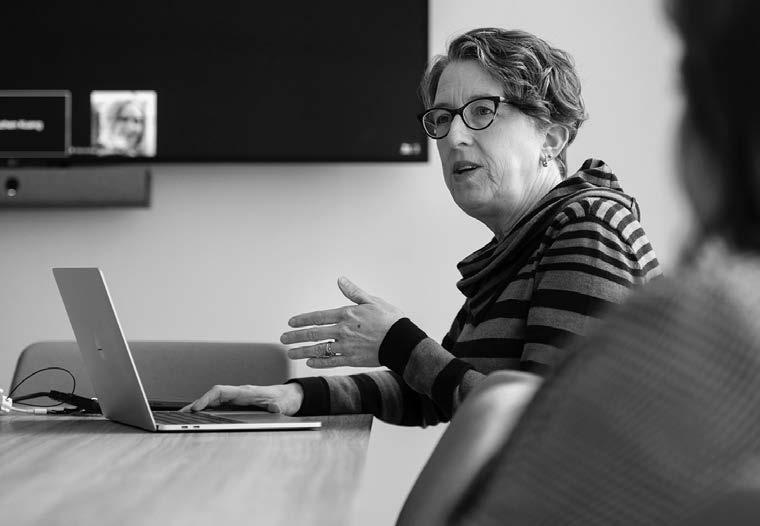
Most mornings, Katie Pollard walks from her Connecticut Street home to her Owens Street laboratory; a pleasant commute that bridges two worlds. At one end, neighbors chat over coffee, plan movie nights, and share garden tips. At the other Pollard and her team use artificial intelligence to decode the fundamental language of life itself.
“We’re trying to teach computers how to read DNA. The goal is to predict who’s at risk for disease and how to stop it before it ever happens,” said Pollard.
Pollard, one of the world’s leading scientists in computational genomics, directs the Gladstone Institute of Data Science & Biotechnology and is a University of California, San Francisco professor. Her journey into the genome began in 2001, while she was a graduate student in the Division of Biostatistics at the University of California, Berkeley. That year, the human genome was sequenced for the first time; an event that marked the beginning of what would become her life’s work. At Berkeley, she began developing computer programs to decode how DNA functions, evolves, and breaks down in disease.
Pollard was the first scientist to compare human and chimpanzee genomes end-to-end, a breakthrough that revealed a surprising outcome: our protein-coding DNA, the blueprints for our physical selves, are nearly identical to that of our primate cousins. She discovered that what makes us different isn’t what we’re made of, but how our bodies use those building blocks.
“Our uniqueness comes from how cells turn proteins on and off; when, where, and for how long,” she explained. “And that same principle applies to many diseases.”
HANDY NUMBERS
Rather than “broken” genes, most illnesses are caused by the misfiring of otherwise normal ones. A protein that turns on in the wrong organ or at the wrong time can wreak havoc. Understanding how this regulation happens is Pollard’s main challenge.
“Our lab doesn’t use off-the-shelf AI,” she said. “Those models are good at summarizing what we already know. But to make new discoveries, we need models that can actually predict how DNA behaves.”
Deploying machine learning techniques like those in self-driving cars or language translation, her lab trains custom AI systems to spot patterns across billions of DNA letters. These models aren’t just searching for previously known, easily detectable genetic errors; Pollard’s AI looks beyond these to uncover hidden, less obvious causes of disease which could open up new frontiers in prevention and treatment.
“If we can read the genome well enough, we could one day predict a person’s disease risks from a simple, inexpensive DNA test,” Pollard said. “And maybe even treat those conditions before they start.”
Though Pollard’s professional life involves working on the cutting edge of modern medicine, her everyday life is grounded in Potrero Hill, her home since 2008.
“I moved here when I opened my lab at Gladstone Institutes,” she said. “I immediately fell in love with the views, the community, and the fact that I could walk to work.”
She’s a trusted authority when a neighbor wants to talk through a health article or make sense of a confusing medical headline. Though she’s not a
continues on page 7
Katie Pollard
PHOTO: Michael Short/Gladstone Institutes POLLARD
Open Mic, at Hotel Utah
BY SONYA HERRERA
On the twenty-third night of gloomy June, beneath the light of waning moon, a band of weirdos shuffled through into Hotel Utah Saloon.
Within its dark and woody walls, and through a passage down the hall, they found their stage, where standing tall, Carly Beltramo made the call.
She drew their names and spoke aloud an order to arrange the crowd. The artists shifted in their seats. It was the first night they would greet
dear Carly as their humble host. She had inherited the ghost of folks who’d led the weekly toast decades ago ‘n th’ Barbary Coast.
The Utah’s storied open mic is known in cities far and wide. Since 1992, the venue’s lights have shone most Monday nights.
Singers, twangers, crooners, crankers. Olds with soul and kids with bangers. The light that shines at Utah lingers, and is no discriminator.
Utah’s gravity had pulled Beltramo to its dusky hold six years ago, when she was sold on San Francisco’s heart of gold.
She’d come from NYC, to which she gave eight of her years. Through this, she saw its “cutthroat”-ness, and wished for something that would bring her bliss. She found a job, in marketing,
for a comp’ny called Airbnb
She moved out to The City where she had few friends, no family.
She started up a jammin’ group. They met up in the conference room each month. And soon, her blossom bloomed. And like a butterfly, she flew
among the gardens, artists’ dens. She started picking up some friends. She found community in them. Eventually, her feet did land
atop the Utah’s golden stage, about two years ago today.
And then ‘bout two years later, a gentleman named Brendan G. prayed:
“I’m looking to pass on the torch,” he said (as memory alleged). He tapped her shoulder; it was then her hosting dynasty began.
For 14 years, Brendan G. had hosted the Utah like a dad would host a campground for his kin. So on the last night led by him,
more than 100 people put their names into the pitcher. Shook and emptied late into the night, few wondered whether Carly might herself stay 14 years at helm, of a place where anyone can tell, as Carly put it, “people can be their own weird, wild, crazy selves.”
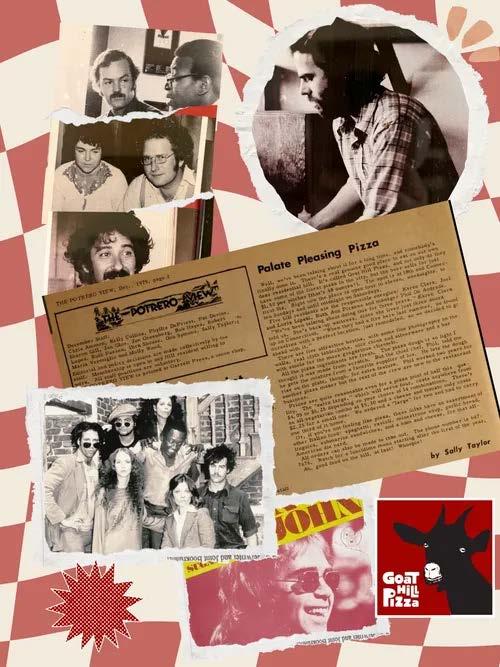
Goat Hill Pizza | 30 days til 50 October 16, 2025 | Facebook

Goat Hill Pizza October 16 at 11:00 AM
October 17, 1975. Just a month before Goat Hill opened. Saturday Night Live had its first episode, Elton John was climbing the charts, and One Flew Over the Cuckoo’s Nest was about to hit theaters. #oldgoat #sflegacybiz #overthehill #almost50


Carly Beltramo at the Hotel Utah.
PHOTO: Sonya Herrera
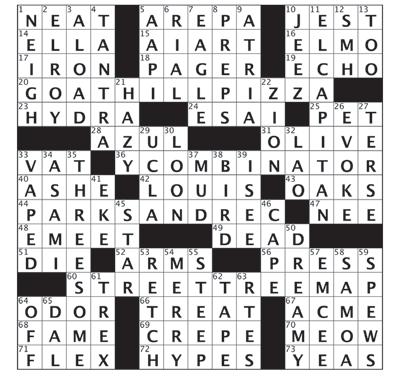
Crosswords
BY DENA WITKES
R. VERKUIL
Christopher’s Books A Neighborhood Bestseller
BY ALINA FERGUSON
Christopher’s Books occupies a first-floor space in a gracious Victorian building on 18th Street that one hundred years ago housed a pharmacy called Wilsons. Traces of this past are imprinted in the walls. Now hidden behind a cabinet stocked with cards, bookstore owner Tee Minot discovered, 10 years ago, remnants of aging wallpaper advertising the drugstore’s items and prices when she peeled back a layer of white paint.
Christopher’s Books was founded in 1991 by Christopher Ellison, an attorney and venture capitalist from New Zealand. He and his wife, Mary Ann, had immigrated to Potrero Hill with their two-year-old daughter, Claire. A car accident left Ellison wondering what he should do with his life. He decided to create a neighborhood business, opening a bookstore in a community which at the time had few retail shops.
Minot’s journey to owning the bookstore started with her rapport with Ellison.
“We had become friends, and I would just come in and talk to him,” she said. “He proposed a partnership… I became a partner in May of ‘92”.
Ellison relinquished his ownership share in 1994. He and his family, which ultimately grew to include four daughters, wanted to try their hands at dairy farming, prompting them to return to New Zealand, where they cultivate two farms on the North Island. They periodically returned to California, including to enable their daughters to attend Tamalpais High School.
After a brief collaboration with another person, Minot became the bookstore’s sole proprietor in 1996.
“He [Ellison] has worked for the store on and off throughout the years. He’s always been a part of the soul of the store and he’s an amazing guy and we love him” Minot explained.
Jackson Tejeda became a co-owner five years ago. He grew up on Connecticut Street, around the corner from the store, graduating from Rooftop School and Lick-Wilmerding High School. His connection to Christopher’s started before he was even born, through his mother, whom Minot has known “forever.”
“She used to come into the bookstore quite a bit when she was pregnant with Jackson.” said Minot.
Tejeda left Potrero Hill to attend college in Portland, Oregon, after which he lived in Brooklyn with his sister for a brief period. He always wanted to return to the Hill, drawn to being near family and longtime friends. After returning to the Bay Area, Tejeda pitched Minot on working at the bookstore.
I wanted to “learn everything I can about bookselling. I want to work with you. I want to be at Christopher’s.” Tejeda said he told Minot.
For a tiny shop, Christopher’s offers a wide range of books, with sections on fiction, memoir, nonfiction, children’s books, travel, art, and politics.
According to Minot, publishers are currently pushing “romantasy,” fiction combining romance and fantasy which they claim will be a best-selling genre. Publishers promote books they describe as being the “next best romantasy, destined to become the best romantasy ever,” Minot said.
Romantasy is a relatively new genre. According to Minot, before its emergence, adult coloring books and disaster non-fiction topped publishers’ best-seller lists.
However, Christopher’s doesn’t just follow trends, instead selecting books that “are representative of the taste of our customers. We try to hit the sweet spot of books we think will sell, and books we want to put into people’s hands,” Tejeda said.
Because of this approach, bestsellers at Christiopher’s don’t necessarily align with the genres publishers proclaim will be the next big hit. Staff track customer requests, orders, and reviews. They’re especially proud of their backlist, a selection of books that have staying power. These include H for Hawk, by Helen Macdonald, Upstream by Mary Oliver, and Captain Corelli’s Mandolin, by Louis de Bernières. Perennially popular authors include Louise Erdrich, Iris Murdoch, Marilynne Robsinson, Toni Morrison, and James Salter.
The most popular genre at Christopher’s – children’s books – is, according to Trejeda, a reflection of Potrero Hill, which has long been attractive to families.
“Our bestselling section is going to be kids’ books. There’s a lot of families here. Lots of people come in with their kids on the weekend, or after school. A lot of times, people are on their way to birthday parties, and they haven’t gotten a gift yet, so they’ll pop in and grab a kid’s book,” said Trejeda.
Character-driven literary fiction also does well.
Christopher’s offers staff recommendations, a book club, and an Instagram presence, along with pet treats. Local teenagers pop in after a meal with friends at one of the many nearby restaurants to browse the offerings. On any given day a steady stream of customers stop to chat with Minot and Tejada as if they’re old friends. Which they often are. A majority of the bookstore’s six staff members live in the neighborhood.
“A large percentage of them [the customers] we know by name, or we know their dogs’ names, or we know their children. Families are very supportive of the store. And the customers we get on the weekends…, they really enjoy their time at the store, and I think it brings them back to the neighborhood,” said Minot.
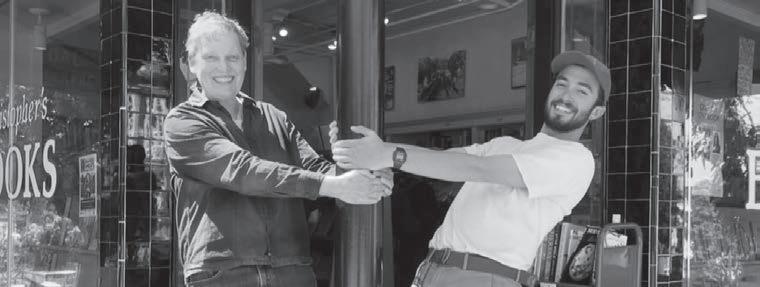
Tee Minot (left) and Jackson Tejeda outside Christopher’s Books.
PHOTO: Courtesy of Christopher’s Books
medical doctor, her deep knowledge of UCSF’s health system, both as a researcher and as a member of its insurance coverage, makes her a valuable resource.
“I enjoy helping people find the care they need or track down good information,” she said. “It’s one way science becomes more real, when it touches people’s lives directly.”
On her block, affectionately dubbed the “Connecticut Deadenders,” neighbors organize movie nights, holiday
caroling, and annual garage sales. They look out for each other – sharing tools, trading parenting tips, and building gates between yards to enable uphill neighbors to cut through.
“It’s the kind of community where you feel supported,” Pollard said. “That spirit really shapes how I think about science, and it reminds me that we’re doing this for people.”
According to Pollard, who travels throughout the country for her work, San Francisco is a center for invention.
“Right in Mission Bay, scientists have figured out how to turn a skin cell
into any cell type in the body. We can edit DNA in those cells. And my lab uses those breakthroughs to train computers that can predict the causes of disease and possible treatments,” she said.
UCSF, Gladstone Institutes, and nearby biotechnology firms comprise a global hub for biomedical innovation. With AI giants like OpenAI and Anthropic also in the area, opportunities for collaboration across disciplines are growing.
“It’s exciting to be at this intersection of AI and biomedicine,” she said. “There’s so much potential to do good
for both people and the planet.”
Pollard recommends that young people who want careers in science or technology follow their passions and keep an eye on what’s coming next.
“The job you’ll have in ten years may not even exist today,” she said. Her own journey proves the point. Her present field, computational genomics powered by AI, didn’t exist when she was in graduate school. It emerged from technological revolutions that happened mid-career.
“The most exciting and impactful paths aren’t straight lines, and that’s part of what makes science so rewarding,” she said.
Pollard’s twin boys attended Potrero Kids and Daniel Webster Elementary, where she and her husband volunteered regularly.
“I still walk by the school garden I helped plant,” she said. “It’s a small thing, but it’s part of what makes this neighborhood special…We’re working very hard because there are still so many devastating problems that medicine hasn’t solved yet. But we’re getting closer.”
MAKE YOUR TAX-DEDUCTIBLE DONATION to Potrero View through SF Community Power; consider including your favorite newspaper in your trust.
Correspondence to: 296 Liberty Street San Francisco 94114
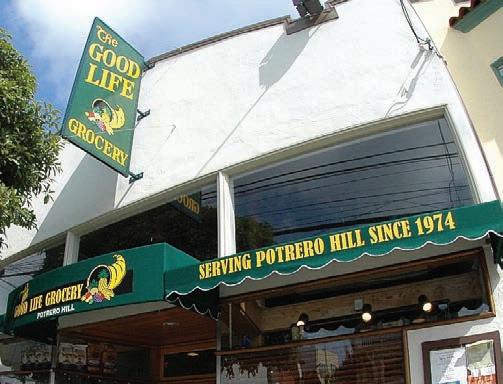
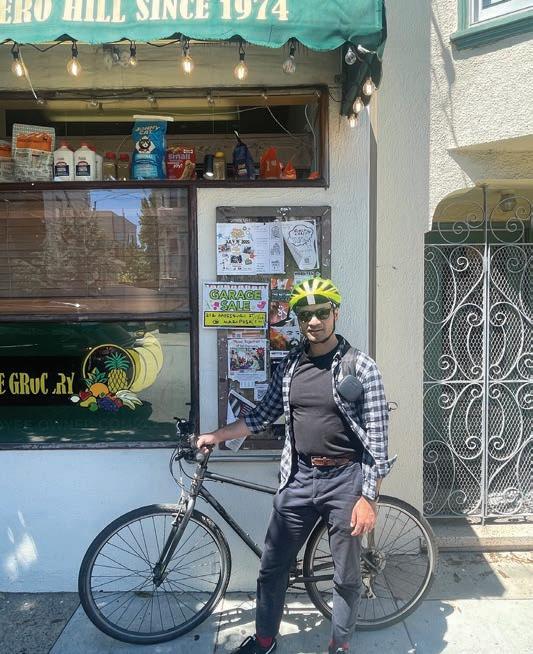
Pursarth Tuladhar (pictured, right) is mapping San Francisco’s community bulletin boards, including the one at The Good Life Grocery. Simbasite has more than 101 verified boards, organized by neighborhood, with addresses and map links. PHOTO: Pursarth Tuladhar
COMMUNITY |NOVEMBER
11/1 Saturday and 11/2 Sunday
Art: Renegade Craft Fair
Featuring creations by 250+ artisans, the fair is indoors with outdoor food trucks and features. Free admission. Saturday and Sunday 11 a.m. to 5 p.m. Fort Mason Center, 2 Marina Blvd. For more information: https://bit.ly/ renegade-fortmason
Holiday: Festival of Altars
The Marigold Project presents Día de Los Muertos, Festival of Altars, and Ritual Poetry Circle. Bring your altar or offerings: flowers, photographs, and favorite objects to honor loved ones; votive candles should be encased in glass. Sign up to reserve a location. Free. 8 a.m. to 9 p.m. Potrero Del Sol Park, 25th Street and San Bruno Avenue. For more information: https:// www.dayofthedeadsf.org/
Crafts: The Art of Korean Bojai
An immersive workshop exploring the ancient Korean art of Bojagi; wrapping and storing items with fabric. Delve into Bojagi’s rich history; master folding techniques; and create personalized wraps. 11 a.m. to 1 p.m. From $39.19, sliding scale. SCRAP, 2150 Newcomb Avenue. For more information: https:// bit.ly/47b04V8
its closest point to Earth during a full Moon phase, directly opposite the Sun, with its face fully illuminated, also known as the Frosty and Dark Moon. This is the second of three supermoons in 2025. The best time to view it is just after moonrise or just before moonset, even if it’s not at the exact minute of the super moon’s peak effect. For more information: https://bit.ly/3LbTLcA
11/6 Thursday and 11/8 Saturday Community: “Blockheads” 10-Year Anniversary Celebration
optional performance to feel like a true pop star. Seven Thursdays, 7 to 8:15 p.m. 18 and over. From $212.10. Smuin Center for Dance, 1830 17th Street. For more information: https://bit. ly/4ombtZ9
Comedy: “The Naked Stage” Improv Playhouse presents “The Naked Stage,” a fully improvised three-act play. The action takes place on a single set, in traditional stage-play style. Improvisers play one character each; there are no built-in transitions or scene breaks. All the actors have is the bare stage, simple suggestions from the audience, and one another, making each show unique. 8 p.m. $28.52. Potrero Stage, 1695 18th Street. For more information: https://bit.ly/3Je1yGf 11/7 Friday throught 12/7 Sunday
Art: Murphy & Cadogan Contemporary Art Awards Exhibition
Basin Park, 1 China Basin. For more information: https://bit.ly/4nPSFSd
Film: Leap
Bring the whole family for a screening of the animated feature film Leap, an adventure about courage, friendship, and dream following. Set in 19th-century Paris, the story shadows Félicie, a spirited orphan determined to become a ballerina, and her best friend Victor, an aspiring inventor. Together they escape their orphanage and chase their passions in the City of Lights, where Félicie must summon all her determination to pursue the role of a lifetime at the Paris Opera Ballet. Part of the San Francisco Dance Film Festival. 2 to 4 p.m. Suggested donation: $15 per adult; $10 per child. Brava Theater, 2781 24th Street. For more information: https://bit.ly/4hhiN6e
Astronomy: Supermoon
The Moon’s orbit isn’t a perfect circle. A “supermoon” occurs when it’s at
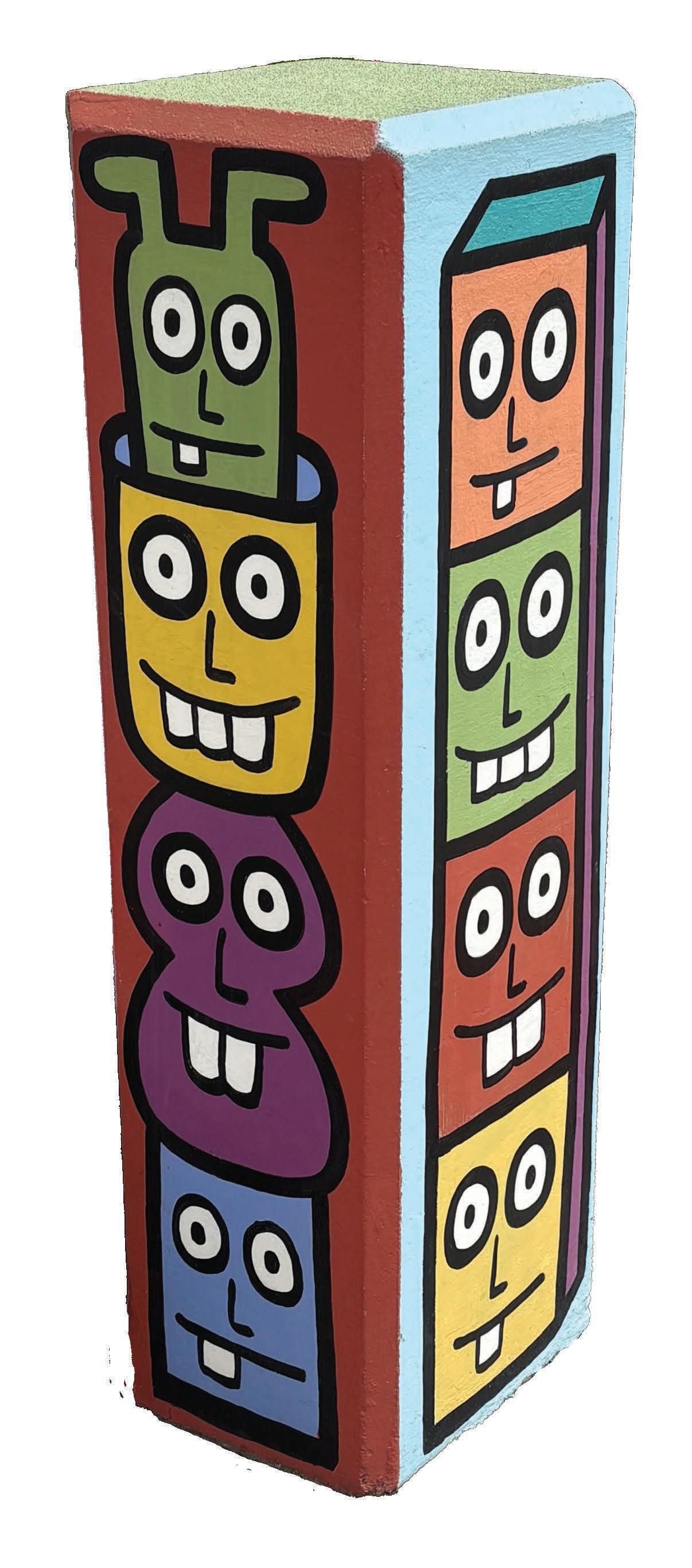
Join Rickshaw Bagworks to celebrate the concrete totems painted by artist Dave Wanke. 11/6 Thursday, 5 to 8 p,m,: artist reception — meet Dave and see his artwork, plus t-shirts, hats, and stickers. 11/8 Saturday, 11 a.m. to 4 p,m.: Draw With Dave — interactive fun. Rickshaw Bagworks, 904 22nd Street.
11/6 Thursday through 1/8/26
Thursday Dance: “The Dead Dance” Choreography Class Channel your inner monster for a seven-week choreography series learning Lady Gaga’s “The Dead Dance.” Every move will be decomposed, using a tempo-slowing app to make sure ALL LEVELS can learn the step. Show off your hard work in January at a nightclub for an

In its 14th year at SOMArts, the annual Murphy & Cadogan Contemporary Art Awards Exhibition showcases the future of Bay Area art, revealing the ideas, themes, and practices that are taking shape on the horizon. This exhibition has nurtured generations of emerging MFA artists by providing crucial financial support, professional development, and mentorship. Many awardees have gone on to shape the regional arts and culture landscape. Reception and awards ceremony: November 6, 7 to 9 p.m. On view: November 7 through December 7. For more information: https://tinyurl.com/ mwve6xa8
11/8 Saturday and 11/9 Sunday
Food: San Francisco Street Food Festival
After a five-year break, the San Francisco Street Food Festival returns at a new waterfront location. Hosted by the nonprofit incubator, La Cocina, the event celebrates two decades of supporting women, immigrants, and people of color to start and grow food businesses. Smaller and communityfocused, in line with the festival’s early years, the Bay Area’s most recognizable La Cocina enterprises will be featured. Saturday 11 a.m. to 8 p.m. Sunday 11 a.m. to 6 p.m. Admission: Early bird, $7.70. After October 12, general admission, $14.14. Food and drink are purchased separately from each vendor. China

12
Holidays: Holiday Market
Holiday treasures from 20+ vendors. 3 to 6:30 p.m. $11.49. One Market Plaza, 1 Market Street. For more information: https://bit.ly/4hhoPUq
Comedy: Alison Arngrim Alison Arngrim — aka Nellie Oleson, of the NBC television show “Little House on the Prairie” — a child star, outspoken activist, and Land Award winner brings an evening of storytelling, standup, and multimedia. Recalling her life and career as bitchy Nellie Oleson, Arngrim tells off-color jokes about child stars and 1970’s and 80’s TV icons. 7 to 9 p.m. From $39.39. 21 and over. Oasis, 298 11th Street. For more information: https://bit. ly/3IQl0Jc
Poetry: Poetry Jam Celebrating Janice Gould San Francisco Poet Laureate
CALENDAR continues on next page
CHURCH 1490 19th Street (at Connecticut Street)
In this house all are friends, all are loved
emerita Kim Shuck celebrates the Native American poet and scholar Janice Gould. San Francisco’s seventh Poet Laureate, Shuck’s poetry draws on her multi-ethnic background, which includes Polish and Cherokee heritage, and her experiences as a lifelong City resident. In her term as Poet Laureate, she hosted scores of free poetry and art workshops at neighborhood libraries and schools and worked closely with the San Francisco Public Library and San Francisco Arts Commission to launch major citywide initiatives to honor Native American Indigenous Peoples’ heritage. 1 to 2 p.m. Free. San Francisco Main Public Library, 100 Larkin Street. For more information: https://bit.ly/3KSGC8f
11/21 Friday through 1/4/2026 Sunday Holidays: “Lightscape”
A mile-long, immersive light and music experience transforms the Botanical Garden into a world of wonder, with more than one million twinkling lights. Stroll through the trail of dazzling lights, colors, otherworldly lighted sculptures, and water features. 5 p.m. to 8:15 p.m. Adults: $38. Youth: 5-17 $22. Under 5: free. San Francisco Botanical Garden, 1199 9th Avenue. For more information: https://bit. ly/3KSOVRs
Horticulture: Succulent Garden Workshop
Learn about these extraordinary plants and create a succulent garden. Your
ticket includes a pot – terracotta, black, white, or pink – five succulents selected from dozens of varieties; organic succulent soil mix; decorative elements – pebbles, glass, and sand – use of tools and supplies. 6:30 to 8 p.m. From 88.95. Diosa Blooms, 3148 22nd Street. For more information: https://bit. ly/4qkm495
Community: NW Potrero Hill Cleanup
Join the Mariposa Utah Neighborhoods Association for a friendly neighborhood cleanup. 10 to 11:30 a.m. Meet at the Benches Garden, 610 San Bruno Avenue. For more information: https://tinyurl.com/yvmr77uk
DECEMBER
Community: Nā Lei Hulus Holiday Market
Explore aloha-inspired handicrafts and products at Nā Lei Hulu’s Holiday Market featuring items created locally and in Hawai’i. 10 a.m. to 4 p.m. Free admission. Daniel Webster School auditorium, 465 Missouri Street (enter at 435 Texas Street). For more information: https:/NaLeiHulu.org
Holiday: Market
A festive outdoor market featuring Dogpatch merchants, handmade gifts, food, music, and community cheer. Shop small and celebrate local creativity. 11 a.m. to 5 p.m. In the heart of Dogpatch, 22nd Street between Illinois and Indiana streets.
San Francisco Firefighters Toy Program and Engine 29 are looking for donations of any skateboard gear, helmets, and safety gear for their skateboard drive through the month of November. Please drop off any donations at Station 29, 299 Vermont St. Thank you!
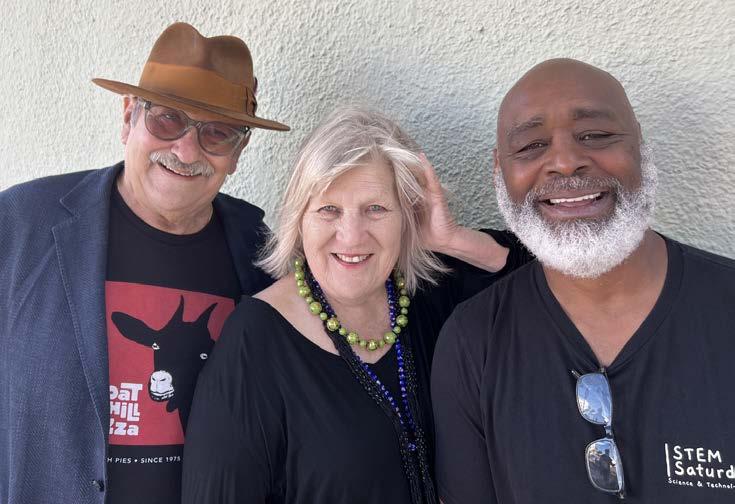
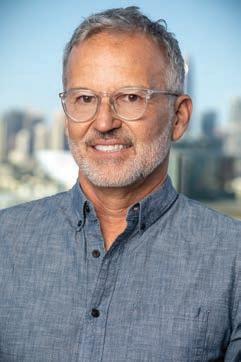





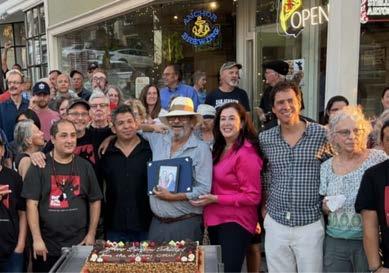
Philip De Andrade, Debra Beaver Bauer, and Edward Hatter.
Rickshaw Bagworks Presents
At Woods Yard Park, Dogpatch
10 Year Anniversary Celebration
Join us to celebrate our beloved collection of concrete totems painted by artist Dave Warnke ten years ago!
Thursday Nov. 6, 5-8pm Artist reception. Meet Dave and see his new artwork, plus t-shirts, hats and stickers.
Saturday Nov. 8, 11-4pm
Draw with Dave. Interactive fun. Bring the kids.
Location
Rickshaw Bagworks
Factory Store & Gallery 904 22nd St San Francisco
said Sarah Davis, Goat Hill’s general manager, who grew up on Mission Creek Harbor houseboats, where DeAndrade was her neighbor and friend.
“He [Phil] created a whole family in San Francisco - in the neighborhood - in San Francisco politics - in the restaurant,” said Davis. “When the original Goat Hill was designed, Joel hand built the original bar. There are all kinds of touches from all of them… We have a wonderful team here. Nobody moves anything by themselves.”
In 2022, the Historical Preservation Commission successfully nominated Goat Hill to the Legacy Business Registry, highlighting the restaurant as a civically engaged, independent business, that’s been a vital part of the Hill community for decades.
“It is shocking how many people come here when they are in town. If you were a part of this community and you moved away, it is important for you to come back here,” said Davis. “If you come to Monday night now, it is this menagerie of everything that’s good in San Francisco. You’ve got the old hippies who’ve been coming here for 50 years, you got the young kids who are bringing their kids, you got the old heads who went to school at Daniel Webster and still live in the community, you’ve got UCSF doctors and nurses, and it’s like, everybody having a good time.”
Goat Hill is a sponsor of Potrero Hill and Dogpatch History Night, held at Pier 70, which this year features DeAndrade. The pizzeria is a founding member of the Potrero Hill Dogpatch Merchants Association. It gives hiring preference to foster kids transitioning into adulthood, and John O’Connell High School graduates.
“My daughter works at Goat Hill, and I’ve watched what that first job can do for young people. It’s one of the things
that excites me most about being a small business owner for sure,” said Davis.
“The success of Goat Hill Pizza has been its participation in the community,” said DeAndrade. “That is what made Goat Hill Pizza. I mean pizza is pizza, and yes, we have sourdough, and yes, we use fresh ingredients, and yes, we make our own sauces and all that, but give me a break, it’s pizza! What makes it work is participation.”
“I think my goal is that we become more of what people need, and I think that’s what this community deserves,” said Davis. “I’ve hired two of the bartenders from Esta Noche. There’s this place for somebody who doesn’t necessarily fit into every job market right now… So, how can we become more of what the community needs is my goal.”
Davis’ father, Jack, who passed away in 2007, ran SOMArts, and was
on the board of the Pickle Family Circus and San Francisco Mime Troupe. Her mother, Judy Watson Davis, who died earlier this year, worked for Rainbow Grocery Cooperative for 40 years, and was married to music promoter Chet Helmes. Davis worked on multiple continents as an event producer before she retired from traveling so as not to miss her daughter’s teenage years. She produced the 75th anniversary of the Golden Gate Bridge and just celebrated the 25th anniversary of Hardly Strictly Bluegrass, where she’s served as creative director since its inception.
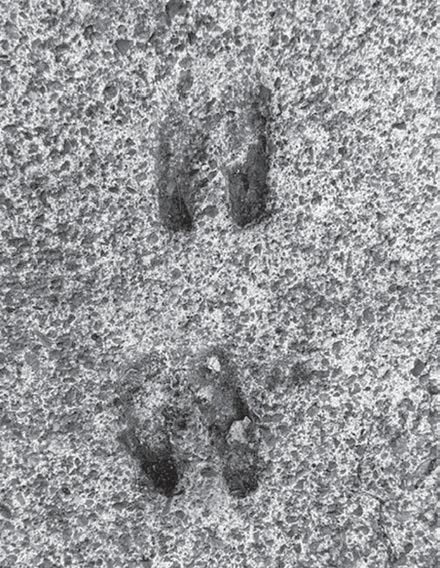
Around 1920, some of Potrero Hill’s last goats escaped their pasture while sidewalk cement was being poured on Carolina
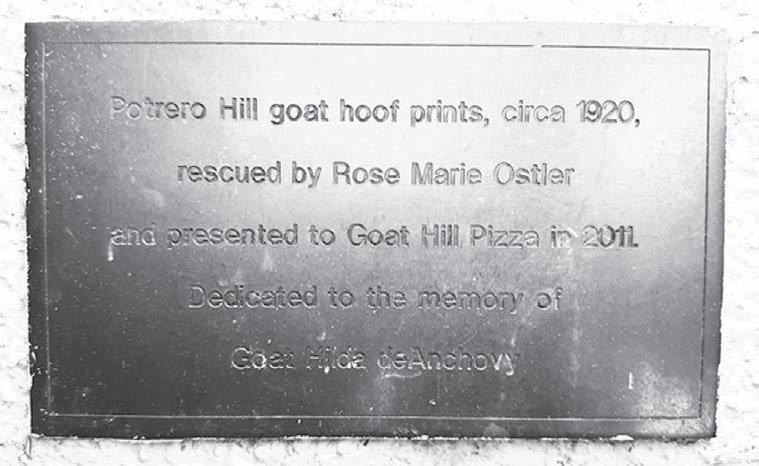
Street. While loose the animals walked through the wet cement, preserving their hoofprints for history. Years later, Connecticut Street resident Rose Marie Ostler, who has lived on the Hill since 1946, saw that the street was being repaired and asked the workmen to save the hoofprints. She kept them on her deck until giving them to Goat Hill Pizza in 2011, where they can be found embedded in the sidewalk in front of the restaurant. A plaque above the hoofprints offers a dedication to the memory of Hilda de Anchovy.
and a central arch that extends into the structure, creating a tunnel-like entryway. At 580 20th Street, the company’s second edifice is painted white and features large arches and a red-tiled roof. The building once housed large compressors that supplied pneumatic pressure to the shipyard; now it’s used primarily for conferences.
Across the street, two massive brick buildings, featuring an abundance of arches, are connected by an elegant, white entryway. These former shops were used to manufacture steel and iron parts that were fitted onto ships. Today, the structures host two Y Combinator graduates: Astranis, which builds and operates satellites, and Gusto, a payroll software company.
The Y Combinator press office didn’t respond to multiple emails from the View. A 2024 episode of the Light-
cone podcast by Tan and three company partners – Diana Hu, Harj Tagger and Jared Friedman – focused on how, after dispersing during the pandemic, the startup world recoalesced around San Francisco. But the City is different now, the partners warned, making careful neighborhood selection critical. Recommended areas for newcomer founders include Dogpatch, Mission Bay, Potrero Hill, Bernal Heights, Glen Park, Noe Valley and Mission Dolores.
On a recent midday, 20th Street was filled with attendees of a conference for users of Supabase, a suite of software development tools. As they passed the main Y Combinator building, several conference-goers paused to snap photos. One participant approached two men associated with Y Combinator and expressed his admiration; “they’re where I want to be,” he said.
Two Fall 2025 batch members showed little interest in exploring Dogpatch. An individual who’d been part of earlier batches said he enjoyed Sohn, Long Bridge Pizza Company and a nearby ice cream shop, and was promptly teased by his companion for being a foodie. A company security guard said he buys takeout from Third Street eateries daily.
Batch members, expected to work 80 to 90 hours a week, largely have limited interactions with the neighborhood. Still, once they graduate, if successful, program participants may stay in San Francisco and have time to become part of their community.
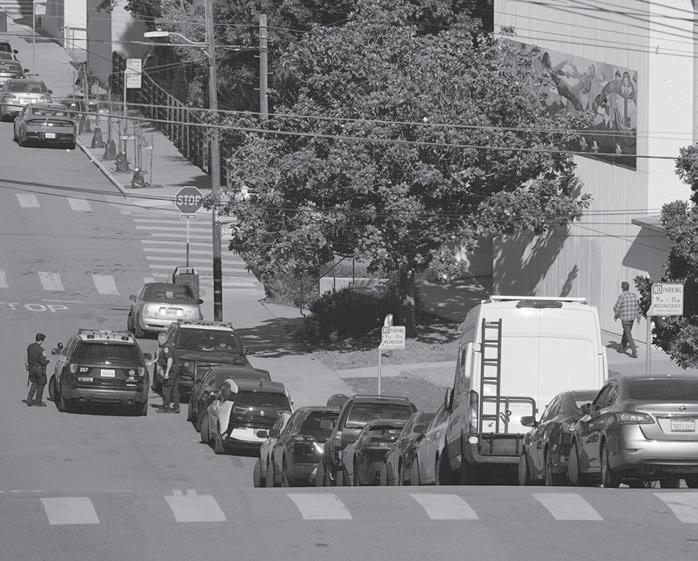
mid-October, five police officers arrived in two squad cars to investigate a report of shots fired at the corner of 18th and Mississippi streets.
PHOTO: Thomas Hunter II
A San Francisco International High School student was robbed at gunpoint at the corner of 23rd and Rhode Island streets after getting off the bus on a Tuesday morning in mid-October. Three San Francisco Police Department officers in two squad cars responded on De Haro Street. PHOTO: Thomas Hunter II
The plaque above goat hoofprints in front of Goat Hill Pizza.
PHOTO: Tamala Motta
Y COMBINATOR from front page
Goat hoofprints from the 1920’s in front of Goat Hill Pizza.
PHOTO: Tamala Motta

region, which borders Afghanistan, where Taliban insurgents are active. The Nangma Valley is in the Gilgit-Baltistan province, about an hour flight from Islamabad, the country’s capital, an area tightly controlled by the national government. The trek, and the outfitter I chose, had been recommended
by The New York Times
The chorus of cautions made me uneasy – and caused my wife, Debbie, lowlevel anxiety –but I ultimately decided to go, perhaps perversely drawn by the path less traveled. Also, I’m stubborn, a necessary trait to want to hike to high altitude in a remote location to celebrate my 65th birthday.
As soon as I disembarked in Islamabad, I felt comfortable. I was greeted by rose petals strewn on the airport’s exit corridors, remnants of welcome celebrations for Pakistanis returning home from Saudi Arabia. People were dressed in shalwar kameez – loose trousers and long tunics – the women wore simple head scarfs. It felt like a subdued version of India.
At museums, parks, and shops men often stopped and shook my hand, asked me where I was from; only occasionally narrowing their eyes in mild hostility when I said the United States. More fre-
quently they invited me to their home, for a meal. It’s friendlier than most places I’ve been, more amiable than Europe. In villages children stopped, stared, and giggled, half hiding behind their mother’s legs.
Touring Islamabad, I arrived at the mostly empty Faisal Mosque, the sixth largest in the world. I made my way to the minbar, a raised platform where services are delivered, to examine the qibla wall. Suddenly, a crowd of men appeared next to and behind me, standing in neat parallel rows, toeing lines woven into the carpet, hands folded in front of them. The man to my right, who was accompanied by an adolescent boy, smiled and shook my hand.
It was time for the after-sunset Maghrib prayer. Unable to leave without breaking through multiple lines, I looked to my left and copied the movements of my next-door neighbor, an
older man. What seemed like recorded prayers streamed over loudspeakers, followed by the ticking of a clock, signaling different positions: standing while raising hands, bowing, prostrating, sitting. It was a kind of spiritual calisthenics. I was delighted to be a part of it.
I went on to successfully complete my trek. There were some scary moments – rickety wooden bridge crossings over raging rivers; thin, slippery trails adjacent to deep chasms; barefoot traverses on sharp rocks across cascading waterways – but none of them were related to people. Perhaps even more than negotiating steep slopes over rocky boulders at high altitude, the greatest accomplishment of my trip was being an American Jew praying peacefully, shoulder to shoulder with Pakistani Muslims. After which we all went home to our families.


PUBLISHER’S VIEW from page 2
Faisal Mosque.
PHOTO: Steven Moss
Following global patterns, glaciers in Pakistan, along the Nangma Valley, are steadily shrinking.
PHOTO: Steven Moss




are resistant to the kind of fungus that is prominent in moist environments.”
Because the science and politics of tree selection is ever-changing, decisions are refined through an ongoing process involving a matrix of numerous concerns, such as shade, health benefits, and ability to capture particulates from pollution.
Street trees, particularly their expanding root systems, are a significant cause of sidewalk damage. Modular suspended pavement systems allow roots to grow freely without causing footpath uplift. However, this method isn’t commonly used in San Francisco. As a result, there’s an ongoing relationship between planting street trees and ultimately the need to repair the damage they cause.
For those who don’t want the City to maintain trees adjacent to their property, StreetTreeSF allows residents to apply for an exemption. Approval is only granted when a certified arborist is hired to prune. Cutting a tree without securing such an exemption can result in a $10,000 fine, even if the tree was damaged during a storm.
“In those situations,” Heredia said, “residents should call 311 or use the 311 app to report it.”
Pacific Gas and Electric Company also prunes trees to maintain an 18-inch clearance from high voltage power lines.
Heredia said highest priority is placed on repairing sidewalks near facilities which serve vulnerable populations like seniors and the disabled, and places such as hospitals and schools.
Because Proposition E transferred responsibility for the trees to the City, it’s accountable for any damage caused by those trees.
“The good news,” said Heredia, “is that you’re no longer liable for that fall-

ing limb or that crack in the sidewalk. If a tree falls on a car and totals it, that’s the responsibility of the City of San Francisco. The only exception is if the damage occurred prior to 2017, then that is still the responsibility of the adjacent property owner.”
Residents can find out when maintenance on street trees in their neighborhood was last performed, or when it’ll be performed, by using the map available at https://bsm.sfdpw.org/urbanforestry/.
SHORT CUTS from page 2
structure.” Muni is hoping to construct the revised project for roughly $560 million, paid for by capital sources and its operating budget.
Supes Up
Last month, Theo Ellington, a thirdgeneration San Franciscan, Bayview native and Ruth Williams Bayview Opera House’s executive director, announced that he’s running for the District 10 Board of Supervisors seat in the November 2026 election. Ellington’s campaign was endorsed by State Senator Scott Wiener, former Mayor London Breed, Supervisors Stephen Sherill, Danny Sauter, and Matt Dorsey. “Our neighborhoods must receive the same focus, urgency, and investment as the rest of San Francisco,” Theo Ellington stated in a press release. “We must be a place where families can afford to live, feel safe, and thrive for generations to come.” Ellington was raised by a single mom who worked as a Candlestick Park concessionaire at San Francisco Giants and 49ers games. He attended public schools and was the first in his family to graduate college. “The challenges we face today aren’t theoretical. I’ve lived
Board (AAB) The AAB resolves legal and value assessment issues between the Assessor’s office and property owners. Hearings are quasi-judicial, conducted in a manner similar to a court setting, with evidence and testimony presented by the parties. The Board then evaluates the evidence and testimony and renders its decision.
To be eligible for seat appointment, you must have a minimum of five years professional experience in California as either a: (1) public accountant; (2) real estate broker; (3) attorney; or (4) property appraiser accredited by a nationally recognized organization, or certified by either the Office of Real Estate Appraiser or the State Board of Equalization.
For a full list of current or upcoming Boards, Commissions and Task Forces, please visit https://sfbos.org/vacancyboards-commissions-task-forces.
Want to work for the City? Visit the website https://careers.sf.gov/ and find a job that’s right for you! Department Announcements
Child Support Services
Child support matters can be complicated, stressful, and confusing. The Department of Child Support Services helps parents understand the process so they know their rights and options for making and receiving support payments. We are available
to assist you in person or by phone. Virtual services are also available. Call us today at (866) 901-3212 for more information.
Enroll online or schedule an appointment at sf.gov/dcss to learn how we can help you.
Count on WIC for Healthy Families!
WIC is a federally funded nutrition program for women, infants, and children.
You may qualify if you:
•Are pregnant, breastfeeding, or just had a baby;
•Have children under age 5; and
•Have low to medium income; and/or
•Receive Medi-Cal, CalFresh (Food Stamps), or CalWORKS (TANF) benefits; and
•Live in California WIC Provides:
•Nutrition education and health information
•Breastfeeding support
•Food benefits for healthy foods (like fruits and vegetables)
•Referrals to medical providers and community services
You may qualify:
•If your family’s income is within the WIC Guidelines. Learn more at: MyFamily.wic.ca.gov or www.wicworks.ca.gov Enroll early! Call today to see if you qualify and to make an appointment.
Newly pregnant, migrant workers, and working families are encouraged to apply.
Emergency Management
sf.gov/ReadySF - The place to find everything you need to know before, during, and after an emergency. Stay ready, so you don’t have to get ready. Brought to you by the San Francisco Department of Emergency Management (DEM). Housing Authority The Housing Authority of the City and County of San Francisco (Authority) is actively seeking new property owners to participate in the Section 8 Housing Choice Voucher (HCV) program. The program provides housing assistance to eligible individuals and families by paying a
the Authority supports affordable housing and the community. We are interested in expanding housing opportunities in San Francisco zip codes 94129, 94123, 94105, 94127, 94114, 94131, 94116, 94118, 94158, 94122, 94107, 94117, 94112, 94121, and immediate suburban areas. For more information, please contact us at customercare@sfha.org or learn more at www.sfha.org.
Board
NOTICE FOR LANDLORDS San Francisco landlords need a license before imposing annual and banked rent increases on tenants
the process online at portal.sfrb.org. Once the system accepts the submission, a rent increase license will be automatically generated and readily available. Owners can also deliver a paper Housing Inventory form to 25 Van Ness Ave., Suite 700, San Francisco, CA 94102 or to rentboard.inventory@sfgov.org. Assistance is available by calling 311 or emailing rentboard.inventory@sfgov.org. Visit sf.gov/ rentboard for more information. San Francisco International Airport San Francisco International Airport (SFO) is offering exciting upcoming concession opportunities, including prime retail and food & beverage leases, as well as small business set-asides. While information conferences for the RCC Café Lease (Small Business) and the HMT1 & Terminal 3 Traveler’s Retreat Lease were held in July, these opportunities are still available. Additional upcoming opportunities include two Terminal 3 Boarding Area E Pop-Up Retail Concession Leases (Info Conference: 9/25/2025), Terminal 3 West Food and Beverage Phase 1 Concession Leases and Travel Convenience Stores (both with Info Conferences on 11/5/2025), and the Terminal 3 Boarding Area E Candy Kiosk Lease, a Small Business SetAside (Info Conference: 10/29/2025). To learn more, visit flysfo.com/business/small-business-development. Don’t miss your chance to do business at one of the world’s premier airports!

CLASSIFIED ADS
Short-Term Rental
Modern furnished 2 bdrm 2 bath condo in Potrero Hill for responsible people & short stays (weddings, graduations..). A block from Whole Foods, outdoor deck w/city views. Contact RoseSFCondo@gmail.com
Sales Admin Assistant Wanted
Sales Administrative Assistant Wanted. (Very) part-time, to track and cultivate leads; support marketing efforts, identify new distribution spots. Contact: editor@potreroview.net.
Seeking Tennis Partner
Sixty-something male intermediate tennis player looking for (semi) regular rally or game partner. Email editor@ potreroview.net
Freelance Writers Wanted
Modest pay, interesting assignments. Contact: editor@potreroview.net
Legal Notices
The View accepts legal notices. Please contact: production@potreroview.net; 415.643.9578.
Write Your Own Obituary
We're all going to die; why leave the writing of your obit to someone else? Whether you believe the end is imminent or just something you contemplate idly whilst taking a shower, you can control your own destiny, or at least how it's reported. Or, after examining your life story and finding it lacking, add to it! Up to six people in three two-hour sessions, $150. Interested parties should contact editor@potreroview.net
Got something to sell? Have a service to provide? Each classified ad is $25 for up to 200 characters. www.potreroview.net/advertise
them,” stated Ellington. He and his wife, Seray, a registered nurse, are raising their three boys less than two miles from where he grew up.
AI Likes Potrero Hill
The Green Benefit District has hired Donovan Lacy as its executive director. Lacy previously worked in telecommunications, and served as the Dogpatch Neighborhood Association’s vice president, Potrero Boosters secretary, and Dogpatch Hub board member…Abridge — an artificial intelligence startup that converts conversations between doctors and patients into clinical notes — is leasing 208 Utah
To
Street. Redco Development purchased the 80,000-square-foot building, previously occupied by Strava and Warner Bros., from the Shorenstein family several months ago for $15 million. Abridge presently inhabits roughly 14,000 square feet at 450 Alabama Street. The company was founded in 2018 and has a roughly $5.3 billion valuation.
Proposition War
CITY AND COUNTY OF SAN FRANCISCO Community Outreach Public Notice
Proposition 50 would circumvent California’s previous policy to eliminate gerrymandering, reinforce one party rule in the state, and dampen SHORT CUTS continues on next page

The Portfolio

CREATIVE YOUTHS!
The View invites those under 18 to submit any creative work suitable for publication, including drawings, short stories (fewer than 150 words), photographs, comic strips, jokes, before the 20th of each month. Winning entries will receive a $20 prize. Please send submissions to editor@potreroview.net

democracy in the redistricted Northern California rural counties. The View recommends a “yes” vote on it. The United States is anything but, with Missouri and Texas remapping their Congressional districts in an attempt to secure sufficient seats for the Republican Party to maintain control over the U.S. House of Representatives in the 2026 elections. The Trump Administration is dispatching National Guard troops to cities and states in which the Democratic Party is dominate, in a “law and order” campaign that seems equally a preparation for more sinister military action. Like a bad marriage, “Red” and “Blue” states have fundamental disagreements about reproductive and civil rights, how to properly calibrate health and welfare “safety nets,” and proper respect for the rule of law. Hopefully this too shall pass or at least calm down into a modicum of civility. In the meantime, don’t bring a spoon to a knife fight. Vote yes on Proposition 50.
www.potreroview.net/product/donate-to-the-potrero-view or complete the form below
To celebrate our 55th anniversary, The View is gifting one limited-edition t-shirt or cap for donations of $60 or more (while supplies last)!
I would like to support the View with my contribution of: $ YES!
Choose your gift:
Limited Edition T-shirt: Newsboy Activist Circle size (unisex): M L XL
Limited Edition Cap (one size): Newsboy Activist
Please send my gift to: FULL NAME
EMAIL ADDRESS
STREET ADDRESS CITY STATE ZIP CODE
Enclosed is my check.
Please send, along with this form, to: Potrero View, 1459 18th St., #214, S.F., CA 94107
I am sending my payment via Zelle to 415.595.0120
Tax-deductible donations can be sent to: SF Community Power, 296 Liberty Street, San Francisco, CA 94114




SHORT
The City. Our City.
Rickshaw Presents Blockheads by Dave Warnke 10 Year Anniversary
“Activist” Tee on Cream
“Newsboy” Hat on Stone
“Newsboy” Tee on Cream
“Activist” Hat on Stone
55th ANNIVERSARY TEES: Unisex cotton t-shirts available in two designs printed in brown on natural tone fabric. Super comfy 100% preshrunk cotton jersey.
55th ANNIVERSARY CAPS: