BY JESSICA ZIMMER
This month, the Dogpatch Parking Management Plan, a long discussed set of San Francisco Municipal Transportation Agency regulations intended to prevent extended use of street parking, will take effect. The scheme is supposed to increase access to the community’s 2,600 parking spaces for Dogpatch residents and customers of neighborhood businesses.
The plan was approved last spring by the SFMTA Board of Directors following two and a half years of consultation with residents, businesses, municipal agencies, and stakeholder groups, including the Dogpatch Neighborhood and Business associations.
Under the regulations, parking will be restricted on most blocks in the community, encompassing 96 percent of available spaces. Prior to plan implementation only 20 percent of Dogpatch parking was controlled. The scheme establishes a new residential parking permit (RPP) area, EE, which’ll replace Area X east of Iowa Street.
In June, SFMTA began encouraging community members to purchase Area EE permits by mail instead of applying for renewal of Area X permits, which expire August 31, 2018. Residents can purchase one Area EE permit per individual; two for a single address. Inhabitants can apply for a waiver to secure up to four permits at one household with payment of additional fees. Permits for health and childcare workers don’t count toward
PARKING continues on page 14
A new way of city living is emerging in San Francisco, especially in Dogpatch, where many apartment buildings are being constructed. The days when higher rents meant certain neighborhoods and impressive square footage are giving way to an era in which expensive residences instead translate to an abundance of common space and amenities.
It’s not exactly cruise ship living but it’s listing in that direction. Cabana-style roof decks with lounge seating, barbecues, firepits and even dog runs are common in new apartment buildings. Fitness centers and media rooms are pretty much a given, but the focus is on a wider array of common areas for socializing, including shared kitchens, coffee lounges, and clubhouses.
The new approach is part of a national trend. A study by the National Apartment Association (NAA), Adding
Value in the Age of Amenity Wars, found that half of the ten most common amenities being added to apartment buildings between 2014 and 2016 involved community-building facilities. It cites these amenities as ways property owners can increase their units’ appeal with little up-front investment.
“All of our spaces are being designed to be more social,” said Brian Klaben, leasing consultant for the 263-unit Abaca, which opened last year at 2660 Third Street. Klaben doubles as an event director for what Abaca describes as its “commercial kitchenmeets-bar-meets-resident lounge.” The lounge, which spills into a second-floor outdoor patio, is connected to a room resembling an open kitchen restaurant with table seating, two stoves, two sinks, a glass door refrigerator and ample counter space. The area is available for use by all residents when it’s not booked for a private party or one

With District 10 San Francisco Board of Supervisor, Malia Cohen, termed out of office in January, the race is on to fill her soon to be vacated seat. Now that London Breed has been elected mayor, media attention has shifted to the November poll, in which supervisorial Districts 2, 4, 6, 8 and 10 are in contention. Unlike the last time District 10 residents cast their votes, reelecting an incumbent won’t be an option. Six candidates – Uzuri PeaseGreene, Shamann Walton, AsaleHaquekyah Chandler, Tony Kelly, Theo Ellington and Gloria Berry – are on the ballot. Neo Veavea is running as a write-in candidate.
Despite announcing his candidacy for supervisor earlier this year, Potrero Boosters president, J.R. Eppler, recently dropped out of the race, citing increased workload related to his law practice. Eppler said he remains interested in serving the neighborhood and City in any way he can. He has yet to endorse another contender. “I’ll support the candidate who can best articulate a vision for the District, who can balance the needs of existing and new residents and ensure that we get a mix of necessary resources to support our growing population,” commented Eppler.
According to Eppler, the most important issues facing the District are housing unaffordability, displacement of existing residents, and inadequate provision of basic City services, such as transit, open space, public safety and libraries. He also pointed to lingering nuclear waste contamination at the Hunters Point Shipyard and hydrocarbon pollution as concerns.
In addition to working as a community organizer for Bridge Housing for the past eight years, Uzuri PeaseGreene, 53, said she tries to assist her Dakota Street neighbors by delivering food to those in need. Greene said she was encouraged by friends, neighbors and police officers in her community to run for supervisor. In 2017 she graduated from Emerge, a training program aimed at increasing the number of Democratic women in public office.
In response to widespread feelings in the District that Cohen has been difficult to reach throughout her two terms, Greene wants to make the supervisor’s office more accessible. She hopes to enlist volunteers from each neighborhood, including homeowners, merchants, youth, low-income individuals and police officers to help communicate community concerns. “I’m not using this as a platform to

Those of us with siblings or close cousins are familiar with a game in which one family member recalls a childhood memory, only to have its veracity challenged by another: it didn’t quite happen that way or didn’t actually occur at all. Our recollection of past events is clouded by time, emotional (self-)manipulation, stories re-told, and photographic images.
Even fresh experiences are sifted through hermeneutic screens. Individual interpretations of something that just happened often differ; each of us notice particular elements and assign them separate meanings. Memory, particularly collective, is a tricky thing, more akin to a lump of never completely hardened clay than data etched into a hard drive.
The process of stitching together what happened moments, or decades, ago is made extra difficult when one or more of the principals is no longer around, in body or mind. Such is the case with two recently-published graphic novels that tell tales about members of my own family. Last Things, by my sister, Marissa Moss, details the death of her beloved husband, the art historian Harvey Stahl. In All the Answers, my cousin, Michael Kupperman, attempts to journey to the mind of his father, my mother’s only sibling, Joel Kupperman, a famous child radio personality mid-century last, only to be rebuffed by Joel’s emotional distance and early-onset dementia.
I’m a player in both novels, appearing in my sister’s book; outside the frame in my cousin’s. Which is to say, I have my own memories, interpretations, and emotional reactions to what happened with my brother-in-law and uncle. These aren’t nearly as intimate as a wife’s or a son’s; akin to being a walk-on character or member of the chorus in the drama’s cast. Still, it’s notable to be an insider of deeply personal tales told widely to the world, with no actual voice in the telling. While reading each novel I felt as if I was hovering over scenes, having an out-of-body experience in which my actions and understandings, while
familiar, were controlled or interpreted by someone else.
Lest you think I’m critical of my relatives, the writers, for producing their books, I’m not. It’s Marissa’s and Michael’s calling to tell and draw stories; she’s an award-winning children’s book author/illustrator, he’s a noted cartoonist. Even without their professional chops I’ve done the same thing, with my quite lively daughter at the center of the story, in The Daddy Handbook, an illustrated set of anecdotes about being a father. In writing that book I wanted to adhere to the truth. My daughter, wife, and others can judge whether or not I fully succeeded. No doubt, by vaunt of being trapped in my own perspective, I didn’t.
Although Last Things and All the Answers attempt to record and convey history, both books read like a kind of extended prayer. Their texture is Biblical, stories of exodus from innocence, of painful journeys that, while not redemptive, reflect what it is to be human. They are mournful wails; pained, angry, cries shouted out across chasms of hurt, that echo against each reader’s own injuries. The volumes are about the meaningless, horrific, loss of a loved one; coming to terms with never, ever, experiencing what it’s like to be fully loved and accepted as a child; recognizing, in the deepest part of one’s self, that our nightmares triumphed over our dreams of what a mother, father, husband, or even the act of death and disappearance should be.
The books, along with another for which I’m an insider, my father-inlaw, Fred Findling’s, self-published Siegfried The Dragon Slayer, are also simple declarations of Hineni. Here I am. Find me, so I can find you. Fred’s book details his experience fleeing Nazi Germany as a child – his father shot into a mass pit; his mother murdered at Auschwitz – and emerging as a successful lawyer and deeply loved family man. Fred’s story is far closer to one of redemption than Marissa’s or Michael’s, but he recently told me that a final chapter is missing, one that conveys his intense rage at being violently stripped of his family, place, and sense of security. In that way his account, fully told, joins the others in shouting the message that terrible things happen to good people. Get used to it.
I would’ve told Marissa’s, Michael’s, and Fred’s stories differently, had it been my place to tell them. I can still do that, in conversation with them, others, myself. That’s what family memory games teach us. Our tales only come alive when we tell them to one another. Once animated they’re no long ours, if they ever were, touched and interpreted multiple times. When we’re lucky they become full-throated choruses, sang, in clusters of individuals across great distances, with different tones and pleasantly contrasting rhythms, in a tune that at its peak mixes into a prayer about one thing: each of us, alone and especially together, matter.
Recess announced that it’ll close at the end of this month; the building the play business occupied recently sold again, and the asking rent for the space is increasing another 35 percent. Not so long ago Potrero Hill was home to do-it-yourself teddy bear factories, mom and pop ice cream stores, and video rental shops that virtually the entire community frequented, especially families. No more. There’s plenty of caffeine and places to polish nails, but a certain soulfulness is fast fading, perhaps, we hope, replaced by something, if not better, at least authentic.
Recess Over Gold Again
Sam Brannan is best known for the street that runs through South-ofMarket, the northern edge of Potrero Hill and center of the City’s (bio)-tech
industry. During the 19th Century Gold Rush Brannan purportedly shouted, “There’s gold in them thar hills!” while gallivanting through the streets of San Francisco. After being excommunicated from the Mormon church for pocketing tithe money, he supposedly asserted that God could have the cash whenever he asked for it. “Streets of gold” is a common catchphrase for tantalizing opportunities that draw outsiders to America, inevitably disappointing many, because our streets aren’t paved in gold. They’re paved in asphalt, concrete, and brick. Except on Arkansas Street, where artist Erik Schmitt painstakingly applied gold leaf to a water cover on the 800 block, part of roughly $600 worth of gold he’s painted onto mundane public objects around the Bay Area in a guerilla art installation, including on the 600 block of Howard Street.


In July a Potrero Hill resident posted to social networking site, Nextdoor, that he regularly heard the blaring sirens of fire trucks on the neighborhood’s northern slope. He calculated there’d been six calls within six days to the 600 block of San Bruno Avenue and was concerned, given that the area had in the past few years been subjected to several fires, including one that resulted in a burnt house on the 700 block of San Bruno.
“While there has been recent activity in the Potrero neighborhood, it is imperative to evaluate this within context of activity over time,” commented Fire Department Lieutenant Jonathan Baxter. “Looking at the period of 2008 to 2017, the average number of fires per year is approximately 43. The high point was in 2012, with a total of 55, and the low was in 2015, with 33 total fires. At the current rate, we could anticipate a total of 48 by year’s end. Regarding working fires, the average number per year since 2008 is approximately eight. During this ten-year period, the high was in 2008, with 12 working fires, and the low was in 2017, with three working fires. Working fires are defined as fires requiring a full alarm assignment. At the current rate, we could anticipate a total of 10 by year’s end. These numbers are in the high-normal range for the ten-year period.”
Baxter explained that the known causes of the fires are consistent with what the Department has seen historically, and include discarded smoking
materials, electrical discharge and hot embers or ash from barbecues. He encouraged the public to review fire safety guidelines, such as having multiple smoke detectors in homes, especially just outside sleeping areas, and testing the devices monthly. Other tips are placing fire extinguishers in kitchens, garages and near furnaces, not smoking in bed, and having electrical systems, chimneys and appliances inspected. He suggested that Hill residents call the Fire Department, police or emergency medical personnel to report relevant incidents.
According to Fire Department data, between June 14 and July 14 there were 36 incidents in which firefighters were called to Potrero Hill to address a situation. Of those incidents, four were characterized as false alarms, four as grass or natural vegetation fires, four as outdoor rubbish fires, one was a cooking fire, three were associated with vehicular accidents, two involved assisting an incapacitated person, two were service calls, one involved a weakened or collapsed building, one was a water issue, five were due to either an unintended smoke alarm activation or device malfunction, one dealt with a biohazard, two were rescues, one involved someone being locked inside a structure, one was a “good intent call”, another call ended up being cancelled, and yet another was due to the odor of smoke with no fire present.
There were no incidents during that period for the 600 or 700 blocks of San Bruno Avenue. However, a grass fire occurred on June 30 on San Bruno
and 18th Street.
Calling the Fire Department to investigate a location doesn’t necessarily result in an incident being recorded. For a request to trigger an incident report there must be evidence of an occurrence, such as something burning, smoke, or hazardous material found. A call that doesn’t result in an incident report could be due to an individual cooking outdoors who subsequently left the area by the time personnel arrived, with no evidence abandoned behind.
According to Baxter, the Department’s social outreach and medical teams have increased their presence around San Bruno Avenue, assisting individuals as needed. In compliance with the Health Insurance Portability and Accountability Act of 1996, information about interactions that these teams have with people aren’t publicly available.
In July, District 9 Supervisor Hillary Ronen introduced legislation to bolster fire safety requirements in residential buildings. Under the proposal landlords who repeatedly violate Fire Department and Department of Building Inspection standards would have to update their structure’s fire suppression and alarm systems. Currently residences that were built before 2008 are exempt from sprinkler system upgrades.
“Recent fires in large apartment buildings in San Francisco have resulted in property damage, loss of housing, and in some instances, loss of life,” stated a policy analysis report from the Board of Supervisors budget and
legislative analyst. “These fires have highlighted the need to re-examine the City’s fire safety policies in residential buildings. There were 252 two-alarm or greater residential fires from 2004 to 2016. Most of these fires (63 percent) were accidental, while eight percent were intentionally or deliberately set. The cause of more than one-third of these fires was not determined; electrical, open flame, and smoking materials caused most of the fires for which a cause was determined. Wood framed buildings, the most common building type in San Francisco, made up 87 percent of the fires.”
The San Francisco Fire Department’s Community Outreach Team has a “Fire and Line Safety in the Home Workshop” that’s designed for neighborhoods to reduce the fire risks of and preserve life and property. Residents can contact firefighter, Tomie Kato, tomie.kato@sfgovorg, to schedule a workshop
• Over 35 years of experience selling real estate in San Francisco
• Over $350,000,000 in sales in San Francisco
• Top Producer at Zephyr since 1997
• Certified Residential Specialist and Certified Luxury Home Marketing Specialist
• Member, Million Dollar Guild
• Member, Mayfair International
From some of her many satisfied clients:
“Susan Olk is one of the nicest and hardest working San Francisco real estate agents in the city. It is no wonder that she was one of the top 20 Real estate agents in the country and Susan could not be nicer. She has my vote for the top producer or SF Real Estate agents in the market based on her knowledge and experience working with buyers and sellers!!!!”
“Susan has been my realtor for more than 20 years. I’ve used her for 6–7 transactions. I have always been very satisfied with her service and professionalism. She knows the market. She gives good advise based on her many years experience. I’ve referred her to others who are also happy with their experience with Susan. As long as I have real estate in San Francisco, Susan is my realtor.”


Le Tote, located at 3130 20th Street, is one of several subscription services that offer consumers a new way to outfit themselves. Instead of visiting brick and mortar dress shops, trying on garments in changing rooms and buying items that occupy dwindling closet spaces, Le Tote vends online subscriptions in which patrons rent clothes that’re shipped to their residences.
The idea for Le Tote germinated in 2012 when the founders’ – Rakesh Tondon and Brett Northart – wives successfully participated in clothing swaps with their friends, in part because Tondon’s, Le Tote’s chief executive officer, spouse was unsatisfied with her wardrobe while pregnant with their second child. The business model may be attractive for consumers who want a variety of outfits to wear but prefer not spending a lot of money only to have last season’s pieces sit idly, no longer worn. For expectant mothers especially, maternity wear quickly loses its usefulness.
“The moment the lightbulb went off was when I realized what my wife was doing to get a variety for maternity clothes when she was pregnant,” Tondon told the Nasdaq Entrepreneurial Center in an interview. “She was sharing with close friends and her siblings. This is also something I saw my sister and some of her close friends doing; borrowing and swapping with each other to get variation. I realized that these were different women,
in different phases of their lives, in different geographies, yet they all wanted the same thing: variety. And they were getting a degree of variety by sharing/swapping clothing and accessories.”
The Nasdaq Entrepreneurial Center article described Le Tote as one of the first clothing subscription services on the market. The company has received $62.5 million in investment funding.
Many clothing subscription services are now on offer, such as Stitch Fix, Rent the Runway, Trunk Club and Lootwear for Her. Services geared toward men also exist, including Bombfell and Trendy Butler. Amazon recently launched its “Prime Wardrobe” for men, women and families with Prime memberships.
Le Tote supplies clothing for women beyond just maternity wear. The most popular items rented are outfits for the workplace, core wardrobe basics – everyday garments that can be easily paired with other clothes to produce a greater variety of ensembles – such as jeans, t-shirts, crew neck sweaters, summer dresses and tops. The company has two base membership arrangements, starting at $69 a month for the Classic plan; $79 monthly for maternity. The base plans provide roughly 13 outfits for the month; more items are available for higher dollar membership schemes.
Once a plan is chosen members select styles they’re interested in –such as denim, wrap dresses, and


850
jackets – and provide information about preferred size for each garment variety and the types of settings in which they’ll wear the clothing. Le Tote also rents accessories, including purses and earrings. French Connection, Calvin Klein, Kate Spade, Loft and Banana Republic are on offer.
When ready, shoppers browse selections of textiles based on their interests, and choose what’ll go in their “totes” for the month. Boxes of the garments are shipped to the customer, who can wear them as often as they like until it’s time to send them back in a pre-paid envelope. Members can purchase a favorite item for 50 percent off the retail price. In between renters apparel is laundered and jewelry sterilized by Le Tote staff. Service users can pause or change their memberships at any time, and rent items as many times as they’d like.
“Renting for work is very popular amongst our members,” commented Emily Fox, director of marketing communications at Le Tote. “We also find women renting trend-forward pieces that they wouldn’t want to buy for keeps but are excited to rent without commitment. We also see a lot of wardrobe staples — like denim, blazers, blouses, knits and athleisure — are popular as well. Many of our members work, many are moms. The beauty of Le Tote is that each member can pick what ships, so she can tailor her box to her agenda. And we strive to offer a breadth of options that appeal to a wide demographic.”
Le Tote makes recommendations based on a member’s product ratings and their answers to a “style quiz”. Customers can also leave reviews for their “totes” and suggest what style options they want to see. According to Fox, it’s not just the ability to rent or buy at a discount, but the combination of the two that sets Le Tote apart from its competition.
Stitch Fix offers clothing for men, women and children under a system in which customers fill out a comparable “style quiz,” garments are shipped to them, they purchase the ones they like and send back the ones they don’t. Rent the Runway is a fully rental women’s clothing service that has a variety of plans to choose from. The company’s marketing includes environmental sustainability information about how rental wear reduces production of new garments that’re either discarded or are underutilized. Trunk Club, a purchase-only service, has clothing for both genders. Under Amazon’s Prime Wardrobe service, Prime members can order a box of garments to try on at home, purchase those they like and return the others.
In May, Bloomberg reported that Le Tote cut 50 jobs — about one-third of the company’s roster — to increase profitability amidst an increasingly competitive subscription service market. The layoffs affected San Francisco workers as well as remote staff. The move followed the company’s decision to expand service to China this past January.

Track record on the Hill so far this year?
Single Family Homes
SOLD: 20
Median Sales Price: $2,105,000
Avg over List Price: 16%
Avg Days on Market: 18
2-Unit Buildings
SOLD: 8
Median Sales Price: $1,975,000
Avg over List Price: 2%
Avg Days on Market: 30
Condominiums
SOLD: 30
Median Sales Price: $1,094,000
Avg over List Price: 9%
Avg Days on Market: 32
Multiple o ers and climbing prices remain the trend, and we're already gearing up for an early Fall market. This is planning time, so please call me NOW to talk about a way to capitalize on this incredibly hot market!
 BY REBEKAH MOAN
A new development complex in Dogpatch pays homage to an early technology pioneer who paved the way for Silicon Valley. The site – 815 Tennessee Street – used to be home to the Bowie Switch Company, which specialized in large-capacity electrical controls.
In engineering, a switch is a component that can “make” or “break” an electrical circuit, interrupting the current or diverting it from one conductor to another. The switch removes or restores the conducting path in a circuit when it’s operated. A large-
capacity switch does this on a broader scale. Before Augustus Jessie Bowie Jr. invented them, no such large-capacity switches existed.
Bowie, Bay Area born and bred, founded his eponymous company in 1913 at 18th and Folsom streets. In 1926, the business moved to a newly built factory at 815 Tennessee Street. Bowie filed numerous patents for large-capacity electrical switches, including the 1,000-pound, 287 kilovolt disconnecting switch, instrumental to the spread of electrification on the West Coast during the 1910s and 1920s.
Prior to Bowie’s disconnecting switch, 2,300-volt electrical distribu-
tion systems were the standard, capable of conveying electricity about four miles before voltage drop rendered the remaining current useless. To disseminate electricity further distances, higher-voltage systems were needed that wouldn’t cause injuries, explosions, or destroy equipment. Bowie’s high-capacity switches did just that. They could safely regulate electricity flow from generation sites through lines that had the capacity to carry power over 250 miles to urban, rural, and newly developing suburban areas. The Bowie Switch Company directly supplied and implemented the largecapacity switches for the San Francisco metropolitan area, as well as the Hoover and Grand Coulee dams, among many other sites. During World War II, the company expanded to produce switches for the American war effort.
John Loomis, an architect, architectural historian, and professor of design at San Jose State University asserts these efforts laid the foundation for Silicon Valley.
“I know this is kind of schematic, but before Steve Jobs, there was Douglas Englebart. Before Englebart there was William Schockley. Before Schockley there was Lee De Forest. Before De Forest there was Augustus J. Bowie Jr. I can see no technology entrepreneur before Bowie,” he said. “So, he was the first technology entrepreneur in the Bay Area, an early seed that led to Silicon Valley, where computers are in a sense simply networks of binary circuits controlled by switches constantly clicking on and off.”


Not everyone agrees with Loomis. The City’s Historic Preservation Commission unanimously voted in 2015 not to add 815 Tennessee Street to the Landmark Designation Work Program, finding that the property didn’t have the significance level required under Planning Code Article 10 to be designated a municipal landmark. “Documentation does not support the subject property’s unique role in electricity or electrification of the United States, its role as the first new technology enterprise in the Bay Area, and its role as an early precursor to Silicon Valley,” the Commission report stated.
The property also didn’t appear to meet the Historic Preservation Commission’s priorities for recognition, which includes sites associated with an underrepresented ethnic/cultural association, property type or neighborhood, and modern design. “Department staff finds that the building is typical of the small industrial businesses in the area at this time period and does not appear to be individually significant,” the report also stated.
DM Development, which owns the Bowie Switch Company property, believes that its past merits mentioning. “Dogpatch is rich in history, which makes it distinct from newer neighborhoods in San Francisco, and we wanted our residents to understand and appreciate our building’s heritage,” said DM Development co-founder Mark MacDonald. “It was important to the neighborhood that we preserve the
BOWIE continues on page 15

Last spring a bar opened in Dogpatch offering unconventional hours to San Franciscans. School Night, located at 601 19th Street, is named for its Sunday through Wednesday night schedule, a unique approach to carving out a niche in the City’s competitive restaurant and bar scene. The saloon occupies the same space as The Pearl, a rentable event venue available Thursday through Saturday nights that’s utilized for birthday parties, off-site corporate events, wedding rehearsal dinners, charity occasions, and after-parties. According to Adam Mendelson, managing partner for both establishments, the intention is to make School Night and The Pearl mutually supportive financially.
Mendelson opened The Pearl in 2016. After getting better acquainted with the neighborhood, he decided to create something that’d cater to the growing community. He started School Night in collaboration with chef and restauranteur, Traci Des Jardins, and bartender, Enrique Sanchez.
“We have an incredible bar team that enjoys what they do without taking it, or themselves, too seriously,” Mendelson commented. “We offer a premium experience in a casual atmosphere. We are the only bar in the City with a food program that plays second fiddle to a bar program; both of which are top notch and at price points that are otherwise unimaginable in San
Francisco’s current pricing landscape.”
School Night’s menu features an array of cocktails, an ample list of agave and other spirits, beer, wine and slim but potentially filling food offerings. The Principal’s Punch, a pisco cocktail handcrafted by Sanchez, priced at $12, is made with pisco italia, pineapple, falernum, lemon and genepy
“San Francisco and Peru had a lot of relations during the California Gold Rush,” explains Sanchez on the bill of fare. “Many people that were coming to San Francisco stopped in Peru on their journey. They were out of booze at that point and restocked with Pisco.
Pisco Italia was the first Pisco in San Francisco and the first Pisco cocktail was a Pisco Punch. The gentleman that created the Pisco Punch died without sharing the recipe and the only ingredients we know for sure are Pisco, some type of citrus, and some type of pineapple. There are rumors of many ingredients to be in the original, even including Cocaine! This is my take on the classic SF Pisco Punch.”
Also offered for $12 is Spring Break, made with mezcal, hibiscus, pineapple gum, lime and soda. The food menu features such staples as chips and salsa, salads and tacos. Less usual items include the Anticuchos, made with skewered Liberty Farms duck hearts and gizzards for $13; and the Wolfe Ranch Quail, which consists of achiote-marinated quail breast, fried leg and onion escabeche for $23, the priciest menu item.

One of School Night’s best sellers for guests desiring light fare is the Albondigas, which features crisped Impossible Meatballs served on a bed of tomatillo salsa and cilantro with a peppery, almost smoky flavor. The meatballs sell for $3 each and are meat-free, plant-based. Although Impossible Meatballs have been a hit with the School Night crowd it’s unclear whether its burger cousin, also made by Impossible Foods, will make it to the menu. According to a School Night bartender, the meatballs became a bill of fare item in part because Traci Des Jardins had a relationship with Impossible Foods. Des Jardins owns Jardinière, a Hayes Valley restaurant which was one of the first establishments to carry the Impossible Burger.
According to Mendelson, it hasn’tbeen hard to attract bar-goers to School Night. He said since opening in April, every evening has been better than the previous one, which he attributes to being a great “local” bar with incredible food and drinks. Mendelson sees many repeat Dogpatch residents, as well as people venturing
from farther neighborhoods to check out the scene. There are no themed or special nights; since the space is equipped with a projector and screen, Mondays could become “old movies night” in the future.
Prior to the bar’s opening, Mendelson and his business partners noticed that the traditional business model for San Francisco restaurants and saloons, with a space dedicated to an eatery or bar and heavy traffic during half the week, slow or closed the rest of the time, has become less viable in the face of high rents, fierce competition and the challenges of retaining a skilled staff, resulting in scant or no profit margins for many bistros and watering holes. Mendelson and his colleagues wanted to shake things up, and saw that 601 19th Street functions well as both a tavern and event space.
“My dream is for School Night to be a local, comfortable destination as the neighborhood evolves,” Mendelson said. “I want it to become something timeless that’s an integral part of the neighborhood.”
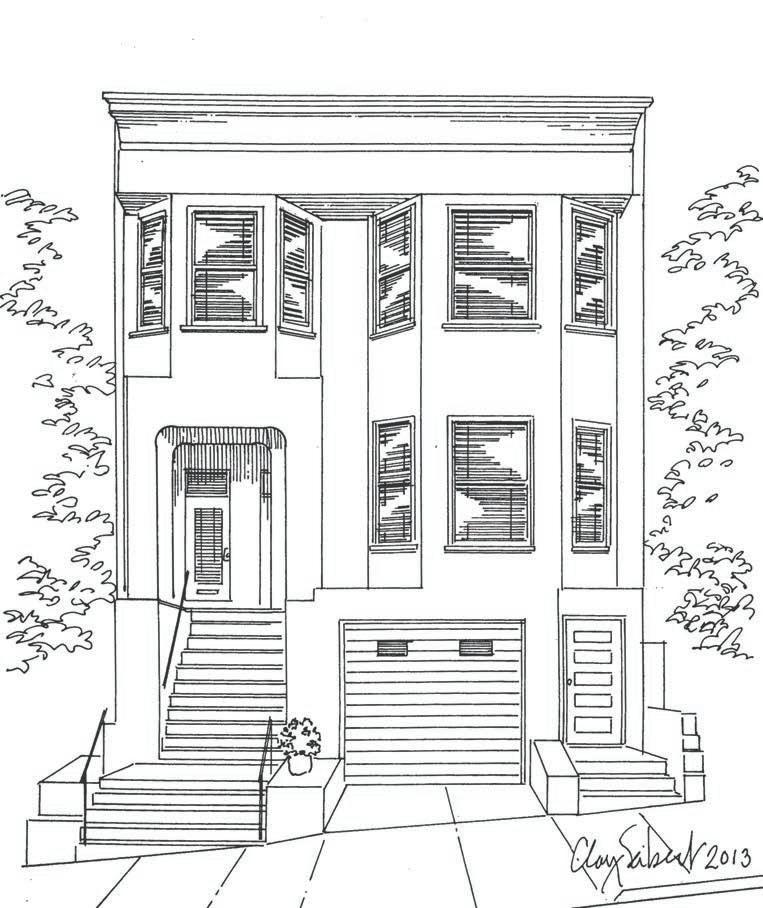
Awash in light from its expansive bay windows, this sunny full-floor, upper flat is on the coveted North Slope very near the neighborhood’s shops and cafes.
This beautiful home has been thoughtfully updated for modern living while retaining its wonderful period details and soaring ceilings. Ideally-configured for entertaining, the flat boasts an expansive living room, formal dining room and spacious kitchen which opens onto a sunny private deck. There are three bedrooms with beautiful hardwood floors, two attractively-appointed baths and a convenient in-unit laundry.
The spacious garage offers independent parking for one car and abundant storage. Very convenient to North Slope shops and cafes, Caltrain and I-280.
Offered at $1,595,000

Lic#
415.710.9000
tim@timjohnsonSF.com
www.timjohnsonSF.com

Now through 9/30/18
Art: “Truth and Beauty”
“Truth and Beauty: The PreRaphaelites and the Old Masters” is the first major exhibition to assemble works by England’s nineteenth-century Pre-Raphaelite Brotherhood alongside the medieval and Renaissance masterpieces that inspired them. Through loans of paintings, compositions on paper, and decorative arts from international collections, as well as more than 30 works drawn from the collections of the Fine Arts Museums of San Francisco, the exhibit demonstrates the PreRaphaelites’ fascination with Italian masters, including Fra Angelico, Sandro Botticelli, Raphael, and Paolo Veronese, as well as northern Renaissance painters, such as Jan van Eyck and Hans Memling. Tuesdays to Sundays, 9:30 a.m. to 5:15 p.m. Tickets: adults $28. Discounts available for students, youth, and seniors. Legion of Honor, 100 34th Avenue. For more information: https://bit.ly/2JNDdT3
2 thur
Community: Bayview Uncorked
Bayview Uncorked celebrates Bayview, featuring more than 30 local makers, wineries, breweries, light food bites, live music, and art. This year’s beneficiary of funds raised is the nonprofit organization, Imprint City. 6 to 9 p.m. Tickets: $30. Bayview Opera
House Ruth Williams Memorial Theatre, 4705 Third Street. To purchase tickets and for more information: https://bit.ly/2uNmHxM
2 thur
Music: James Everett
Rhythm and blues, jazz, and pop singer. 7:30 to 9 p.m. Farley’s, 1315 18th Street.
8/3 Friday through 8/5 Sunday
Art: American Craft Show
The American Craft Show showcases more than 250 of the country’s top contemporary craft artists, including emerging makers. Craft collectors and design enthusiasts can engage in three experiential showcases: Make Room: Modern Design Meets Craft; Style Slam; and Let’s Make. As the West Coast’s largest juried fine craft show, it’s a chance to shop one-ofa-kind, handmade pieces, eat and drink artisanal foods and beverages, and meet the country’s best artists.
Friday and Saturday: 10 a.m. to 6 p.m. Sunday: 11 a.m. to 5 p.m.
Tickets: $10.50 to $46. Fort Mason Center for Arts & Culture, Festival Pavilion, 2 Marina Boulevard. For more information and to purchase tickets: https://bit.ly/2uMWCR3
Music: Frances Ancheta Singer songwriter with pop, folk,

indie rock, new wave, and world/ tropical influences. 7:30 to 9 p.m. Farley’s, 1315 18th Street.
7 tue
Science: “Human Errors”
San Francisco Public Library will host biology professor and forensic scientist, Dr. Nathan Lents, for a talk titled “Human Errors: A Conversation about Evolution’s Mistakes.” For such “highly evolved creatures,” humans harbor a surprising number of glitches, quirks, and outright flaws: retinas that face backward, the stump of a tail, muscles that attach to nothing, and nerves that take bizarre paths. We must find vitamins and nutrients in our diets that other animals make for themselves. Millions of us can’t reproduce successfully without help from modern science. As Lents explains in his new book, Human Errors, our evolutionary history is a litany of mistakes, each more entertaining and enlightening than the last. Join us as idea innovator and host of the “Curious Minds” podcast, Gayle Allen, leads a discussion of our many shortcomings that serve as windows into the topsy-turvy history of our evolution past. 6 to 7:30 p.m. Free. San Francisco Main Public Library, 100 Larkin Street. For more information: 415.557.4400
8 wed
Music: GT2 Trio
The GT2 trio plays 20th Century music, including the Beatles, Eagles, Simon & Garfunkel, Clapton, Dylan, and Van Morrison, featuring the song stylings of Ms. Alyssa Cox. 7:30 to 9 p.m. Farley’s, 1315 18th Street.
9 thur
Music: Lomelda & Spellling
The McEvoy Foundation for the Arts (MFA) hosts Lomelda & Spellling, co-presented with Noise Pop. The band focuses on memory, intimacy, the tragedies of distance, and discovering friendship and connection. This concert is part of For the Sake of Summer, MFA’s film and music series that features an eclectic mix of musicians and filmmakers. 7 to 9 p.m. Free. MFA, 1150 25th Street, Building B. For more information: https://bit. ly/2ObTF2Z
Music: Kevin Patrick McGee
Music by singer-songwriter Kevin Patrick McGee, whose poetic, and occasionally amusing, original tunes spans alt-country, bluegrass, folk, and rock. 7:30 to 9 p.m. Farley’s, 1315 18th Street.
8/9 Thursday through 8/19 Sunday
Comedy: Desi Comedy Fest Bay Area
This year’s festival features more than 30 comedians from throughout America, with diverse ethnic –Indian, Pakistani, Bangladeshi, Iranian, Syrian-Mexican, Libyan, Japanese, and Filipino – and religious – Muslim, Jewish, Sikh, and Catholic – backgrounds. Desi –pronounced “THEY-see” – is a term for the cultures and products of the
Indian subcontinent or South Asia and their diaspora, derived from ancient Sanskrit – desa or deshi –meaning “Land” or “Country.” Desi countries include India, Bangladesh, Pakistan, Afghanistan, Nepal, Sri Lanka, Bhutan, and Maldives. The festival was created by Bay Areabased Indian-born comedians, Samson Koletkar and Abhay Nadkarni. Tickets: $30 to $50. For show times, ticket prices, more information: https://bit.ly/2uT9e7J
Community: Bernal Heights
Hillwide Garage Sale
A Bernal Heights tradition and arguably the largest single day garage sale is back. 9 a.m. to 2 p.m. For more information: https://bit. ly/2uBwELF
Community: Second Saturdays at the Schoolyard
Meet and socialize with other local parents while your kids have the run of Daniel Webster Elementary School’s shared schoolyard. Enjoy free Farley’s coffee, Noah’s bagels and Happycake face painting. New parents and babies, up to 24 months, are welcome to join the indoors meetup at 10 a.m. Second Saturdays at the Schoolyard is a series of fun, free events for Potrero Hill families, organized by PREFund. org. 10:30 a.m. to 1:30 p.m. For more information: https://bit.ly/2vWt98E
8/11 Saturday and 8/12 Sunday
Festival: Pistahan
Experience Filipino art, dance, music and food at the Pistahan Parade and Festival. Billed as the largest celebration of Filipino-Americans in the United States, the two-day event, organized by the Filipino American Arts Exposition, is expected to draw more than 80,000 people. Parade: Saturday 8/11, 11 a.m. from Civic Center along Market, towards Fourth Street. Festival: Saturday and Sunday 11 a.m. to 5 p.m. at Yerba Buena Gardens. Free. For more information: https://bit. ly/1yDyAAo
Film: Minding the Gap
Welcome to Rockford, Illinois, in the heart of Rust-Belt America, home to debut filmmaker, Bing Liu. With more than 12 years of footage, Bing discovers connections between two of his skateboarder friends’ volatile upbringings and the complexities of modern-day masculinity. As the film unfolds, Bing captures 23-year-old Zack’s tumultuous relationship with his girlfriend deteriorate after the birth of their son; and 17-yearold Keire struggling with his racial identity as he faces new responsibilities following his father’s death. While navigating a difficult connection between his camera and his friends, Bing weaves a story of generational forgiveness while exploring the precarious gap between childhood and adulthood. Tickets: $12; discounts for members and seniors. Roxie, 3117 16th Street. For more information: https://bit. ly/2uNDWiq
18 sat
Film: Dominion
An Australian documentary that exposes the dark underbelly of modern animal agriculture through drones, hidden, and handheld cameras, this feature-length film explores the morality and validity of human’s dominion over creatures. (2018, 125 minutes) 2 to 5 p.m. Free, but please register. San Francisco Main Library, Koret Auditorium, 100 Larkin Street. Information: https:// bit.ly/2LmKv5C
20 mon
Music: “Classical Revolution” Chamber Music Jam
A bi-monthly chamber music night, “Classical Revolution” features local and visiting musicians in a unique Chamber Jam format, where musicians perform in a casual environment and audiences hear chamber music in a relaxed setting. First and third Mondays, 8:30 p.m. Free, but donations of $5 to $20 appreciated. The Revolution Café, 3248 22nd Street. For more information: https://bit.ly/2A9kyRZ
22 wed
Music: Soul Delights
7:30 to 9 p.m. Farley’s, 1315 18th Street.
23 thur
Music: Christopher Willits & Danny Paul Grody
Grammy-nominated guitarist and producer, Christopher Willits, hovers above the intersection of electronic production’s nuts and bolts. He’s produced more than 25 albums in the last 15 years; solo and in collaboration with such artists as Ryuichi Sakamoto, Tycho, and Taylor Deupree. In Willits’ music, all elements are interconnected; voice and guitar lines fold into bleary, unrecognizable shapes and polyrhythmic textures, often overlapping with his cinematic film

Saturday
Sunday
Tuesday
Friday
and video work. Danny Paul Grody is a solo musician and founding member of San Francisco-based bands, Tarentel and The Drift. A selftaught guitarist, the melodies at the core of Grody’s songwriting bring to mind his love of West African kora, Takoma-style fingerpicking and all things minimal, repetitive, and hypnotic. 7 to 9 p.m. Free. McEvoy Foundation for the Arts, 1150 25th Street, Building B. Information: https://bit.ly/2zVL2q2
25 sat
Music: Marc Maynon and CD Onofrio
Performing folk music. 7:30 to 9 p.m. Farley’s, 1315 18th Street.
8/25 Saturday and 8/26 Sunday
Art: San Francisco Vintage Paper Fair
California’s finest selection of antique postcards, advertising, pinup art, local history, sports, entertainment, transportation memorabilia and more. Free appraisals on site. Saturday: 10 a.m. to 6 p.m. Sunday: 11 a.m. to 5 p.m. Free admission. County Fair Building, Hall of Flowers, 9th Avenue and Lincoln Way. Information: https://bit.ly/2BPNvOL
For more information: https://bit. ly/2mGFoyu
Music: Yerba Buena Gardens Festival Hailing from the Peruvian capital of Lima, La Patronal is a singular brass band rooted in the tradition of fiestas populares – town fairs – common in rural villages across Latin America. Descendants of rural musicians from Peru, La Patronal members combine first-hand knowledge of folk culture with formal music studies to celebrate their heritage. With percussion, brass and winds, and the vivid visual aspects of fiestas populares, La Patronal’s lively performances encourage, nay demand, audience participation and dancing. Starting at noon an interactive workshop explores different dances of Peru: cumbia, marinera, morenada and toril, inviting participants to learn basic movements and the
differences between the genres.
12:30 to 1:30 p.m. Free. Esplanade, Yerba Buena Gardens, Mission between Third and Fourth streets. For more information: https://bit. ly/2NFJum6

Books: Potrero Hill Book Club Potrero Hill Book Club. 7 to 9 p.m. Farley’s, 1315 18th Street.
29 wed 30 thur
Art: “The Black Woman is God”
A multidisciplinary exhibition celebrating the contributions of black women as artists, healers, and social change-makers throughout history. More than 50 intergenerational artists working in sculpture, painting, new media, and photography create new myths to challenge Eurocentric notions of God. Opening reception: 6 to 10 p.m. Exhibition through October 2. Free. SOMArts, 934 Brannan Street.


Curious about how to make a solarpowered flashlight, storyboard a film, draw Bugs Bunny or simply kill an afternoon learning to making slime? You’re in luck if you’re looking for a website to teach you all of those things. But only if you’re under the age of 18.
On 20th Street in Mishpot, roughly a dozen employees operate DIY.org and its paid counterpart, Jam.com; educational sites designed to teach kids a variety of skills and allow them to share that knowledge with their peers. Kids on DIY begin by watching instructional videos on subjects like art, science, citizenship, philosophy, engineering and even hacking. After viewing, the youngsters upload videos of their own experiments. In addition to learning, the goal is to earn patches, which are achieved after completing three challenges for a particular skill.
While DIY, created in 2011, is free, two-year old JAM goes deeper into topics at a cost of $99 per year for one course, $240 for all of them. There are nine courses, with plans for
expansion, the most popular being Secrets of Drawing, Mad Science, Drawing Bootcamp and Invent Your Own Machines. Each sequence includes a variety of instructional videos. For instance, subtopics under Drawing Bootcamp include shading, perspective and mixed media; machine inventing involves rockets and launchers, marble ramps and robotic arms.
While several company employees work remotely, the instructional videos are shot at the Mishpot site. It’s also where engineering, marketing and design teams reside, as well as the moderators who provide chat forum feedback alongside the videos the kids upload.
“They will go in and make the kids feel at home, let them know they are doing a good job and give them tips,” said Schaeffer Arnold, JAM marketing manager. “This is so they can understand the sharing and community aspect of it but also get some level of comfort in knowing other kids like them are going through this experience. So it is okay to try and fail too.”
The websites are the brainchild
of Zach Klein, who co-founded the video-sharing site, Vimeo, in 2004. As a kid, Klein felt authority figures in his life didn’t believe his time spent at the computer was productive, although it later turned out to be a positive for him. On the JAM blog, he writes how difficult it is to predict what skills will be useful in future careers, pointing out that a generation of kids used the game Minecraft to learn how to create three dimensional models on a computer.
“We want to allow kids to be more exploratory and learn things that could be productive and could lead to future jobs,” said Arnold. “But at the very least exposes them to passions or skill sets that they didn’t know they had.”
All the instructional videos are in English; users hail primarily from the United States, Canada, the United Kingdom and Australia. The site is designed for six to 16-year olds and, at minimum, participants need to be able to upload videos. Most use smartphones or tablets to film and upload; the site can be utilized on a desktop as well.
“A six-year old is going to have a

different experience on it than a 12year old,” said Arnold. “The six-year old might enjoy mostly consuming the video content or looking at what other kids have created while a 12-year old might actually be more focused on doing the creation and collaborating with other people.”
According to Arnold, homeschooled children are a popular demographic for the company. While there aren’t videos on school basics like literature or math, there’s no shortage of courses dealing with arts and science. Many are akin to school electives, like cooking or shop, and subjects one might not get into until more advanced schooling. For instance, the JAM course Animate Your Drawings addresses character development and how to pitch ideas to networks as well as hard skills, like sound foley and claymation.
As for a simpler task of spending an afternoon making slime, according to one young girl’s video, it takes just Elmer’s glue, a pinch of baking soda and contact lens solution, food coloring optional.


Kids 12 years and younger can submit a photo once a month, before the 20th, with the winning image receiving $35. Teenagers from 13 to 17 years old are eligible for a $50 prize. Please send submissions to editor@potreroview.net
Check out these past winning entries!





the maximum number of certificates. RPP permits cost $136 annually; $67 if the permit area expires in less than six months. Motorcycle RPPs are $102 a year; $51 if the permit terminates in six months or less.
Under the plan, four-hour time limits, RPP, and metered parking will be enacted on commercial areas, including Third and 22nd streets, with four-hour time-limited parking on Illinois Street, except for blocks between 18th and Mariposa streets and 23rd and 24th streets, which’ll have meters. The industrial blocks between 23rd and 25th streets will have four-hour time-limited parking. RPP restrictions will be imposed between Mariposa and 22nd streets north of 22nd Street. Iowa, Indiana, 23rd, and 25th streets near the 22nd Street CalTrain station and the Muni Woods Division will be subjected to unlimited parking meters. Parking on Minnesota and most of Tennessee streets south of 25th Street will remain unregulated.
According to the Department of Public Works, there’ll be no changes to Dogpatch’s mechanical sweeping schedule. “Street cleaning still will take place at night. Due to equipment and personnel constraints, we are not able to switch to daytime mechanical sweeping without adversely impacting other neighborhoods,” said Rachel Gordon, DPW director of policy and communications. As Dogpatch continues to evolve DPW is likely to revise its timetables and routes. “We expect to acquire a new mapmaking system that will help analyze operational options. We do not have a timeline yet to complete that process,” said Gordon.
Meters and signage will likely be installed this month. “We’re waiting on shipments of meters and signs right now. We have to get them, inspect them, and install them. Once installation is complete, there’s always some clean-up afterwards, like moving a sign to a better spot a few feet down the block,” said Hank Willson, SFMTA parking policy manager.
Currently, about 1,300 SFMTA employees work across five different facilities in or near Dogpatch. In June,
the Islais Creek Motor Coach Maintenance and Operations facility opened at Cesar Chavez and Indiana streets. The 8.3acre bus yard attracts 300 additional operators, mechanics, and related positions to the area; SFMTA is working to address its employees’ transportation needs.
“There will be a shuttle to transport MTA and DPW employees from the 24th Street BART station down Cesar Chavez Street. It will run every 15 minutes and will stop at the DPW facility on Cesar Chavez, Islais Creek Muni yard, the Marin Muni yard, the Muni Metro East facility, Muni’s Woods Division, and Muni’s 700 Pennsylvania facility. It will run very early in the morning, picking employees up from the first BART train, very late at night,” said Willson.
According to Willson, the parking scheme may change after the Chase Center opens. “The Warriors arena, which is just outside the neighborhood, will obviously be a major traffic generator. The plan approved in April is not specifically intended to address the traffic that will be generated by the arena. It’s intended to address the parking issues already affecting the neighborhood and also to make clear that Dogpatch won’t be a place where arena visitors should expect to be able to park their cars on neighborhood streets,” said Willson, who added that SFMTA is evaluating existing regulations near AT&T Park and will work with the neighborhood to develop a proposal for special-event parking rules.
Parking restrictions will likely disrupt individuals who sleep in their vehicles. ‘The parking plan will require them to move along because almost all of the parking will be regulated,” said Willson.
Kelley Cutler, human rights organizer for the San Francisco Coalition on Homelessness, said Dogpatch is the latest area targeted for increased parking limits. “The City is creating fewer and fewer places for folks to go. We get calls from people whose vehicles are ticketed and getting impounded. Sleeping in their cars helps them from having to “sleep hard” on the street,” said Cutler.

According to Cutler, the City has provided no alternatives for people living in their vehicles. “The shelter wait list has over 1,000 people on it. The City has no safe parking programs. It’s something we have talked about with MTA multiple times, but it hasn’t happened,” said Cutler.
Cutler said people who sleep in their cars tend to park in areas that’re more isolated and industrial. “They want to stay out of the way, under the radar. It’s just frustrating because there are some really simple solutions to this dilemma. Why would someone give up their vehicle for a temporary shelter bed that might disappear? The people who can’t park in Dogpatch any more are likely to go to Bayview and Hunters Point,” said Cutler.
Cutler said many people who live out of their vehicles work. “There are also families who live this way. It is their last refuge,” said Cutler.
The plan is also expected to reduce parking options for University of California, San Francisco employees and students. As with other nonresidents, UCSF staff who work in or close to Dogpatch won’t be able to stash their cars close by for free during workdays. According to Willson, UCSF pledged that the housing facilities it’s constructing in the neighborhood won’t be eligible for Area EE permits.
Michele Davis, UCSF associate director of community relations, said the university believes the parking scheme should benefit Dogpatch residents. “As this plan helps neighbors address their needs, we encourage our staff to adapt to the new plan by decreasing reliance on their vehicles,” said Davis. “Instead of driving, staff may utilize the many ways UCSF encourages them to get out of their cars, such as taking UCSF shuttles, GoBike/Scooters, public transit, or a combination of modes. Drivers (can) elect to pay for monthly parking in a UCSF garage, which is offered at competitive rates. Staff (can also) seek unrestricted parking farther away from campus and walk or take Muni,” said Davis.
To learn more about the plan, visit https://www.sfmta.com/projects/ dogpatch-parking-management
NEW CITY LIVING from front page of the two events Klaben assists putting on monthly. The gatherings have included dessert nights and combined beer and yoga, the beer sourced locally from Voodoo or Magnolia. According to Klaben, between 80 to 200 people generally attend the occasions.
Rents at Abaca begin at $3,005 for a studio and rise to $6,050 for the highest priced two-bedroom; as of June, 97 percent were occupied. The only available unit Klaben was able to show the View was a 787-square foot loft for $3,860 that features a kitchen and living area downstairs with a loft suitable for a bedroom upstairs. In what’s standard in most new buildings, a washer, dryer and dishwasher are included, as well as a Juliet balcony and electric blinds.
Abaca goes a step beyond offering bicycle storage, a staple now, and includes a room designated specifically for bike maintenance.
Further north, at 2121 Third Street, the 105-unit The Gantry is also 97 percent full. Opening in 2014, studio rents range from $2,895 to $3,350, one bedrooms run up to $3,995, two bed-
rooms to $4,995 and three bedrooms, $6,300. Prices vary within those spans depending on view, square footage and whether they’re considered upgraded, such as second floor apartments that have private patios.
Common areas at The Gantry include a first-floor lobby with a large television, shuffleboard game and lounge with bar-style seating, complimentary coffee and full kitchen. The second floor features an all-access courtyard with a fire pit that adjoins private patios. There’s a second fire pit on the seventh-floor roof as well as two gas barbecues, a half-dozen seating areas, a small vegetable and herb garden, dog walk and views of both bridges, weather permitting.
The Gantry is surrounded by construction; it’s across Illinois Street from what’ll become Crane Cove Park, which in a few years will include a sandy beach. An 833-square foot one bedroom with a den was available last month for $4,245. As is common in newer apartment buildings, the unit opens into a combined kitchen and living room space. In this residence, the den, bathroom, and bedroom are off that area to the left as you continue through the room. The den could serve as a second bedroom but according to municipal building codes cannot legally be called such as there’s no window. Valet trash pickup can be had for an additional $30 per month.
A unique feature at The Gentry is concrete ceilings in the units. “It is one of the few buildings in San Francisco built with mainly cement,” said Adrienne McLachlan, community manager for the complex. An ode to its Dogpatch location, bare cement walls also adorn the hallways, with reclaimed wood added in places for décor.
In the 72-car garage, which uses automated stacking to fit two cars to a space, The Gantry offers 24-hour access package lockers, an amenity that’s becoming more common. According to the NAA study, package receiving areas draw a high premium in San Francisco.
While allowing pets can be hit or miss with some landlords, new apartment buildings cater to them, few as extensively as Avalon at 800 Indiana Street. In addition to constructing a dog play area for public use across the street from Esprit Park, Avalon has a street level resident-only dog run. And, whereas other complexes may have dog washing stations, Avalon has an entire room devoted to dog grooming, including three shower stations.
Other amenities include free bikes that can be signed out, street level and rooftop barbecues, a common room that resembles a coffee shop with an adjoining conference space and an additional indoor/outdoor lounge area.
Rents at Avalon start at $3,005 for studios, $3,605 for one bedrooms, $4,665 for two bedrooms and $7,000 for three bedrooms. Those prices jump for signature units, which have sole access to one of two roof decks, gas heat rather than electric, guest parking and higher grade appliances.
The signature two-bedroom Avalon uses as a model enters into a hallway with bedrooms spaced away from each other on each side; one includes a bathroom, the other has one across the hall. The passage feeds into a kitchen/ living room with windows that frame views that sweep around the corner of


Green Benefit District
Check out the Green Benefit District’s renovation of Benches Park at San Bruno and 18th!
Want to get more involved in your neighborhood? Consider volunteering in one of our district parks. Want to add street trees and sidewalk gardens to your block? Contact the GBD at Info@GreenBenefit.org
Potrero Boosters Neighborhood Association
Be in the know. Meet your neighbors. Make the Potrero a better place. Monthly meeting: Last Tuesday of the month, 7:00 pm at the NABE. 953 De Haro @ Southern Heights.
For a $200 annual fee your organization can be listed in Getting Involved. Contact advertising@potreroview.net


building’s legacy, and it allowed us the opportunity to offer our residents something very unique and special.”
The firm placed a plaque at 815 Tennessee Street that describes the building’s history and contains a link to a Wikipedia page DM Development created for Augustus Bowie Jr. and his electrical switch company. Bowie’s patent illustrations are included on 815 Tennessee’s website; there’s a custom, illuminated art wall in the lobby with a large graphic in the shape of an alternative current wave. At the end of each corridor in the structure the firm placed metal panels with large reproductions of Bowie’s patent images.
“We also preserved a large portion of the original brick factory, at the corner of 19th and Tennessee, that now serves as a public amenity for the neighborhood,” MacDonald said.
Swedish architect, August J. Nordin,

designer of the historic landmark, Swedish American Hall, on upper Market Street, designed the brickfaced Bowie Switch Company in classic revival style according to the utilitarian tradition, part of which DM Development preserved.
“We should take satisfaction in the fact the real history has been preserved and disseminated, and not buried,” Loomis said. “We should be grateful for this. When you next walk by 815825 Tennessee Street, remember this is where, back in the day, the ‘largest switches in the world’ were created for Hoover Dam. And ponder that given the binary code underlying all digital technology is based on a series of switches, the Bowie Switch Company laid important foundations for innovation in Silicon Valley.”

Movie and a Meal: In partnership with the Potrero Hill Family Support Center (PHFSC), we'll present a family-friendly film, and PHFSC will provide a meal. Our selection for August is Wonder. Based on the book by R. J. Palacio, Wonder is the story of a 10-year-old boy with facial differences who attends school for the first time when he begins fifth grade. With the support of his parents, he learns how to make friends and adjust to his new environment. Rated PG. 113 minutes. Friday, August 17, 3 to 5 p.m.
Saturday Snacktivity: With food provided by the Good Life Grocery, we'll offer a wholesome snack and fun activity. All ages welcome. Saturdays, 11 a.m. to 12 p.m.
Marbled Paper with Shaving Cream: Learn to make artistically marbled paper. Space is limited; sign up in advance. Sunday, August 12, 2 to 3:30 p.m.
How to Create and Use an Email Account: If the idea of email is overwhelming or confusing to you, this class can help. Sunday, August 19, 2 to 3 p.m.
The Literate Goat Book Club: Focusing on literary fiction, our book club meets on the second Tuesday of the month at 6 p.m. All are welcome. Tuesday, August 14, 6 to 8 p.m.
Four Barrel Coffee Tasting: Curious about coffee? Want to know more about how coffee is made? Four Barrel Coffee Co-op will give you the answers and provide a free coffee tasting. Sunday, August 26, 2 to 3 p.m.
Northern California Bats: Learn about our night time neighbors with Corky Quirk and her rescued bats! Saturday, August 4, 4:30 to 5:15 p.m.
Make Your Own Lip Balm: Mix-and-match ingredients to custom make a lip balm to take home. All materials provided. All ages welcome; children under ten will need assistance from an adult. Call to sign up. Sunday, August 5, 2 to 3 p.m.
Baby Rhyme and Play Time: Songs and rhymes for infants up to 18 months old and their caregiver(s). Tuesdays, 1:15 p.m. and Thursdays, 11:15 a.m.
Toddler Tales: Books, rhymes, music, movement and more for toddlers 18 to 36 months and their caregivers. Thursdays, 10:15 to 11 a.m.
Puppy Dog Tales: Reading to a therapy dog is wonderful for children who are learning to read, or for whom extra attention in vocabulary or grammer is desired. Your child will adore reading to this calm canine companion in a non-judgmental setting! For ages four to eight, but older welcome. Saturdays, August 11 and 25, 12 to 1 p.m.
Exploding Stick Chains: Who will take on the calling e of putting together the longest exploding sticks chain? All materials provided. Saturday, August 11, 4 to 5 p.m.
Make Art – DIY Back to School Supplies: Join our community partners, the Museum of Craft & Design, as we make our own back to school supplies! All materials provided, young children may need help from an adult. Saturday, August 18, 4 to 5:30 p.m.


 By:Damon:)GuthrieofSameTeam.Us
Between the ever-moving waters of San Francisco Bay, Potrero Point is no stranger to change. The rocky mass, of mostly serpentine rock, has stories to tell. It is poised for yet another massive transformation.
Late 1800’s - Two decades of blasting and intense excavation laid flat over a thousand acres of land, giving heavy industry


Waves of change, over the years, have come to Potrero Point. Ocean-covered for millions, hunted upon for 10 thousand, its steep cliffs flattened in a mere 20, heavy-industry and military operations thriving upon it for 140, and today, medical and technological industries make their mark on this ever-changing piece of land: Point Potrero.
Relative Location in the San Francisco Bay



Over 76,000 cubic meters / 100,000 cubic yards of Potrero Point was dumped into the bay.
Today, the flat land is barely 2 meters / 6.5 feet above sea level...
Starting


Leases are not being renewed in order to make way for new development. Many long-term businesses must relocate. “While it is an exciting time to be in the Dogpatch, the Dogpatch is changing and we are no longer going to be a part of this neighborhood...we loved it here...and we would stay if we could” -John Bellanca of Affordable Self Storage
A state of the art Children’s Emergency Department, run by UCSF-Benioff, operates on flat land, once a 12 meter/40ft bluff.


Established and organized groups of artists are working with developers to relocate very near to the current historic building in which they operate today. “All of us are looking forward to the changes with optimism. There’s also the fear of the unknown, of what the transitions will be like.” - Daniel, of The Noonan Building Artists


Topographical maps from the mid-1800’s show 20ft intervals, revealing 12 and 24 meter/ 40 and 80 foot peaks along the point.
This map shows you how to get where you want to go. Download your own map at SFMTA.com/TwinPeaks
SUPERVISOR from front page
run for further office,” said Greene. “I’m running to echo the voices of my neighbors. People are frustrated by increasing car break-ins and homelessness. I want to help reduce the number of homeless individuals on the streets and simultaneously work with supervisors of other Districts on this issue.”
Pease-Greene is one of four supervisorial candidates appealing a decision to deny them matching funds because they didn't file paperwork stating their intent to participate in the public financing program on time.
Shamann Walton, 43, wants to make District 10 more affordable for low income people and provide homeless individuals with greater access to supportive and permanent housing. He believes that people should be able to live and work in their neighborhoods, which requires increasing supplies of reasonably-priced shelter and improving the transit system. Walton said he’ll use his experiences working as the director of Potrero Hill Family Resource Center, executive director of Young Community Developers and serving on the San Francisco Board of Education, including as board president, to enable families who live in the District to stay in the District.
Walton was a proponent of Proposition O, passed in 2016, which exempted office developments in Candlestick Point and Hunters Point from municipal caps on new commercial space. He believes similar initiatives can create stable jobs for residents, as well as more room for nonprofit organizations, small businesses, and affordable housing. Walton said he’d prioritize implementing effective community policing
strategies, so that officers spend more quality time in communities and get to know the people they serve. He wants to work with the San Francisco Municipal Transportation Agency to add more Muni express buses to the District’s major corridors, such as Third Street; build more Navigation Centers to fight homelessness; and increase the fees paid by developers to fund more public infrastructure. “I work well with people and am able to bring people together,” said Walton. “I’m the person who can bridge the gap between the neighborhoods of District 10. No neighborhood will be ignored under my watch.”
Asale-Haquekyah Chandler is a community activist who helped organize the first parade for Black History Month in Bayview last February. Chandler lost her 19-year-old son, Yalani Chinyamurindi, in 2015 when he was killed by gun violence while on a break during work in the Western Addition. Chandler didn’t respond to a request for comment for this article.
In his third attempt to become supervisor, Tony Kelly, 55, Potrero Hill Democratic Club president, feels confident he’s established a strong base of trust among District 10 residents. “I’m tired of my neighbors getting pushed out and tired of my neighbors having shorter lives,” said Kelly. “We’re in such a wealthy city. No one in San Francisco should be sleeping on the street or have polluted water and air in their home.”
Kelly said he was encouraged to run by environmental advocates in Bayview who view nuclear waste contamination at Hunters Point as a top issue. Kelly voiced concerns a decade ago that efforts to clean-up the development site were dishonest. In 2009, he co-wrote an opinion piece
in 48Hills.org with Alicia Garza (née Schwartz) that discussed the toxic dangers associated with Shipyard redevelopment plans. He, along with Walton, want the whole site retested for pollution. Cohen called for a hearing into problems plaguing the cleanup of radioactive material from the Hunters Point Shipyard after a federal report found contractors falsified soil sample data from the site to a much greater degree than previously known.
Kelly said the City isn’t doing enough to protect the health of residents, pointing to the 2016 San Francisco Community Health Assessment conducted by the Department of Public Health that indicated Bayview residents have a 14-year shorter life expectancy than those living in Nob Hill, which he attributes to environmental degradation.
If elected, Kelly wants to be accessible to constituents, and said he’d hold daily office hours. He said that prior to 2008 supervisors had a greater presence in the neighborhoods; since then elected officials, including Cohen, have acted more like politicians than community advocates and haven’t shown a high level of accountability to District residents.
Theo Ellington, 29, said he’s running because he wants to restore the idea that if you work hard and play by the rules you should be able to live the dream of having a good paying job and the opportunity to buy a home. He’s concerned that with the amount of growth coming to the District, inequities between those who can live the dream and those who are getting pushed out is worsening.
As supervisor, Ellington said he’d focus on tackling the homelessness problem, housing affordability and
public safety. He views the core difficulties facing District 10 as stemming from inadequate shelter supplies, a lack of public transit, and a scarcity of neighborhood amenities, like grocery stores and open space. To maintain and foster community vitality, Ellington wants to bolster and retain small businesses in major corridors, such as Third Street, by helping to establish more merchants’ associations, expanding transit access and linking local businesses with grant opportunities.
“I’m not running to be something, I’m running to do something,” Ellington stated. “I’m the only candidate in the race with both private sector and public sector experience.” Ellington worked as the director of public affairs for the Golden State Warriors and was a commissioner for the Redevelopment Successor Agency. He currently serves on the San Francisco Human Rights Commission, which works to uphold the City’s anti-discrimination policies and equity agenda.
Ellington, who lives in The Shipyard, is suing developers Lennar Corporation and Five Point Holdings for selling town homes the companies "knew" were located on land that was "badly contaminated."
Gloria Berry, 49, wants to accomplish three main goals as Supervisor: bolster funding for after-school and tutoring programs in District schools; increase the number of treatment facilities in the City and support for those living with addiction, an issue she views as closely tied to homelessness; and hold law enforcement officers accountable for the “unnecessary use of brutal force” against residents and
SUPERVISOR continues on page 19

Cleaning professional since 1986. Offices, apartments, homes, and buildings. Roger Miller 415-794-4411 References given with bid.
Walking distance to the beach, with the crashing waves visible and audible from the place. Includes kitchenette and lovely patio. $175 plus cleaning fee, two-day minimum. Editor@potreroview.net; 415.643.9578.
Walking distance to the beach, with the crashing waves visible and audible from the place. Three bedrooms, two baths, with a lovely deck. Minimum two nights: $350, plus cleaning fee. Editor@ potreroview.net; 415.643.9578.
Guitar Lessons, all levels. Expert Potrero Hill teacher, acoustic/ electric; rock, folk, blues, country. Lessons at my home; first meeting free; sliding scale. John Lewis, unclejohnzband@yahoo.com.
View editor available to work with writers at all levels. Groups also available. $50/hour. Editor@ potreroview.net; 415.643.9578.
Gorgeous, rustic, Muir Beach space and stunning Mission Dolores home available for day rentals. Perfect for six to 10 people engaged in retreats of all kinds: writing, yoga, teambuilding, strategy sessions. $175 an hour. Editor@potreroview.net; 415.643.9578.
Got something you need to sell? Have a service you provide? Our Classified Ad section is just the place for you! Cost: Each classified ad is $25 for up to 200 characters, including spaces. A 20-percent discount will be provided for ads paid for six months in advance. Payment, and/or corrections, must be received by the 18th of each month for the ad to appear in the following month’s issue. Please email all classified ads to office@potreroview.net
the building onto Indiana Street. Off the living room is a den with a slider that enables separation if desired. The signature two-bedrooms, which are just under 1,100 square feet, start at $5,800.
There were approximately two
dozen rentals listed in early July on Potrero Hill and in Dogpatch that weren’t located within large apartment buildings, most of which offered parking or access to a shared, or private, yard. Prices tended to be comparable for one bedrooms, ranging from $2,895 to $3,950 for similar square footage. However, two and
Get to know your community, and help sustain your neighborhood newspaper. Modest base pay, plus commission. Send note and résumé to: editor@potreroview.net
three-bedroom units were typically larger than those found in the bigger apartment complexes, suggesting amenities may matter for some, unit size for others. A 1,750-square foot three bedroom on Vermont Street with a yard and deck was listed for $6,000; an 1,800-square foot three bedroom on 22nd and De Haro streets was offered at $5,800.
A particularly spacious two-bedroom at the corner of Rhode Island and 20th streets, with a listed price of $7,000, rented last month. The antithesis of apartment complex living, the unit stretches 1,600 square feet and includes its own private roof deck. It enters into a kitchen/living room space that offered a panoramic view of Downtown impeded only by a fireplace. A spiral staircase leads to a loft that provides access to the deck, which is squared in by four-foot walls, allowing for privacy and wind protection. A hallway leading away from the kitchen/living room connects to two bedrooms, the larger of which is approximately 600 square feet and
includes two spacious walk-in closets, one with a skylight, or, as leasing agent Saul Armian quipped,“A San Francisco studio.” The apartment features three full bathrooms in all, including one in each bedroom.
Armian wouldn’t say if his tenants negotiated down the $7,000 monthly asking price but said high end units haven’t been difficult to rent. Sometimes there’s trade off with amenities, such as removing a parking space from the rental, particularly with developers of newer apartment buildings who have borrowed heavily and want to see the money recouped with high rents quickly, according to Armian. However, following broader income inequity in San Francisco, he noted there’s a sharp drop-off below the top earners and premium apartments.
“A desirable unit, owners are still looking to command high rents, which the economy is supporting,” he said. “For less desirable units, landlords should be sitting at the negotiation table.”
The Port of San Francisco, a department of the City and County of San Francisco announces the following contracts for bid:
Contract #2797R, PIER 29 UTILITY UPGRADE & BELTLINE BUILDING SEWER RE-ROUTING RE-BID consists of water, gas, sewer, electrical and lighting improvements at Pier 29, and gravity sewer re-routing to the City sewer in the Embarcadero Street at the Beltline Building.
Contract #2810R, HAZARDOUS MATERIALS ABATEMENT - BUILDING 49, CRANES 14 & 30, PIER 70, PORT OF SAN FRANCISCO consists of abatement of hazardous materials and disposal of abatement waste; application of specified sealant on interior and exterior of Building 49; application of specified sealant to surfaces of the tower, boom, and cab of Crane 14 and/or 30 and two artifacts from historic shipbuilding operations; and disposal of other specified equipment from historic shipbuilding operations. For additional details and bid dates please refer to www.sfport.com and www.sfgov.org/oca
Did you know that there is a daily pill to prevent HIV?
Find out about PrEP, a daily pill to prevent HIV, through an automated mobile texting conversation. You can learn about PrEP, have concerns addressed, and even find out where you can get PrEP! You can also refer friends to find out about PrEP through the texting service.
Text “CITYPREP” to 213-33 (messaging and data rates apply).
Email prephelp@sfdph.org or visit http://sfcityclinic.org/services/prep/asp for more information.
This program is sponsored by the Population Health Division of San Francisco Department of Public Health (SFDPH).
Board of Supervisors Regularly Scheduled Board Meetings September Meetings
• September 4 • September 11 • September 18
• September 25
Come and see your local government at work, the Board of Supervisors hold weekly meetings most Tuesdays at 2:00 p.m. in Rm. 250 of San Francisco City Hall.
Requests must be received 48 hours in advance required for interpretation. For more information see the Board of Supervisor’s website www.sfbos.org, or call 415-554-5184.
The City and County of San Francisco encourage public outreach. Articles are translated into several languages to provide better public access. The newspaper makes every effort to translate the articles of general interest correctly. No liability is assumed by the City and County of San Francisco or the newspapers for errors and omissions.
SUPERVISOR from page 17
pressure District Attorney George Gascon to charge officers who’ve committed murder. Berry described a situation in 2009 where an officer pulled a gun on her teenaged daughter despite seeking a male suspect.
“I’ve been a community advocate for most of my life and served for 13 years in the military,” said Berry. “I’ve been out in the neighborhoods introducing myself. I want to reach out and encourage everyone to register to vote and to vote on all issues and in every election. This is a very important election coming up.”
Neo Veavea, 61, has been a San Francisco resident for many decades and lived in several of the District’s neighborhoods for the past 35 years. He’s volunteered for the San Francisco Unified School District, was appointed to the District 10 Citizens Advisory Committee in 2008 by former Mayor Gavin Newsom, and to the LGBTQ Advisory Committee of the Human Rights Commission in 2012.
Veavea’s priority issues are safety, housing and employment. He wants to help residents feel secure in their neighborhoods, redefine the meaning of affordable housing based on the reality of local demographics, and equip San Franciscans to be part of the workforce through specialized job training. Veavea said his top priority would be to curb displacement of existing residents by initiating discussions about “responsible” versus “affordable” housing, as he said much of the affordable units being built aren’t within the financial reach of many long-time District 10 residents.


The View invites its readers (including kids!) to nominate their nanny, child care provider, or babysitter to appear in a monthly feature honoring these essential caretakers. Submit your entry (up to 300 words with a photograph). One winner will be published a month, and receive a $100 gift card.
Send to editor@ potreroview.net by the 20th of each month.


Details at http://www.potreroview.net/advertise/ 415.643.9578 • editor@potreroview.net • advertising@potreroview.net
For 48 years, The Potrero View has offered news about important neighborhood goings-on, including what’s happening in our schools, with local merchants, families, parks, and cherished personalities. We’ve even occasionally broken larger stories, about the closure of the Hunters Point and Potrero power plants, new parking regulations, and land use changes. We’re still here, even while the San Francisco Bay Guardian and other publications aren’t, and the San Francisco Examiner is no longer a daily.
YES! I love the View, and would be delighted to help
QUESTIONS? 415.643.9578 or editor@potreroview.net


The View will only survive into the future with your help. Which is why we’re asking you to donate generously to the paper. Please take this opportunity to show your appreciation for community news by doing one or more of the following:
SUBSCRIBE! For $48 you’ll receive the paper every month in your mail box. How exciting!
DONATE $68, and receive a copy of The Daddy Handbook, by View publisher Steven J. Moss, a perfect gift for fathers and would-be dads!
DONATE $88, and receive a “life and death bundle,” The Daddy Handbook, a celebration of fatherhood, and Last Things: A Graphic Memoir of ALS, a gripping and deeply personal account of how Marissa Moss grappled with the death of her beloved husband.
DONATE $100, and receive all of the above plus our deep gratitude!