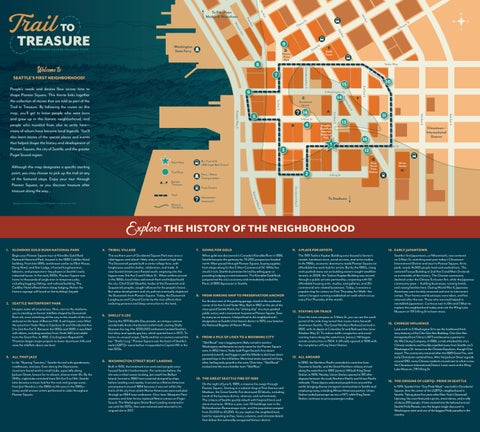
Explore THE HISTORY OF THE NEIGHBORHOOD
4. TRIBAL VILLAGE
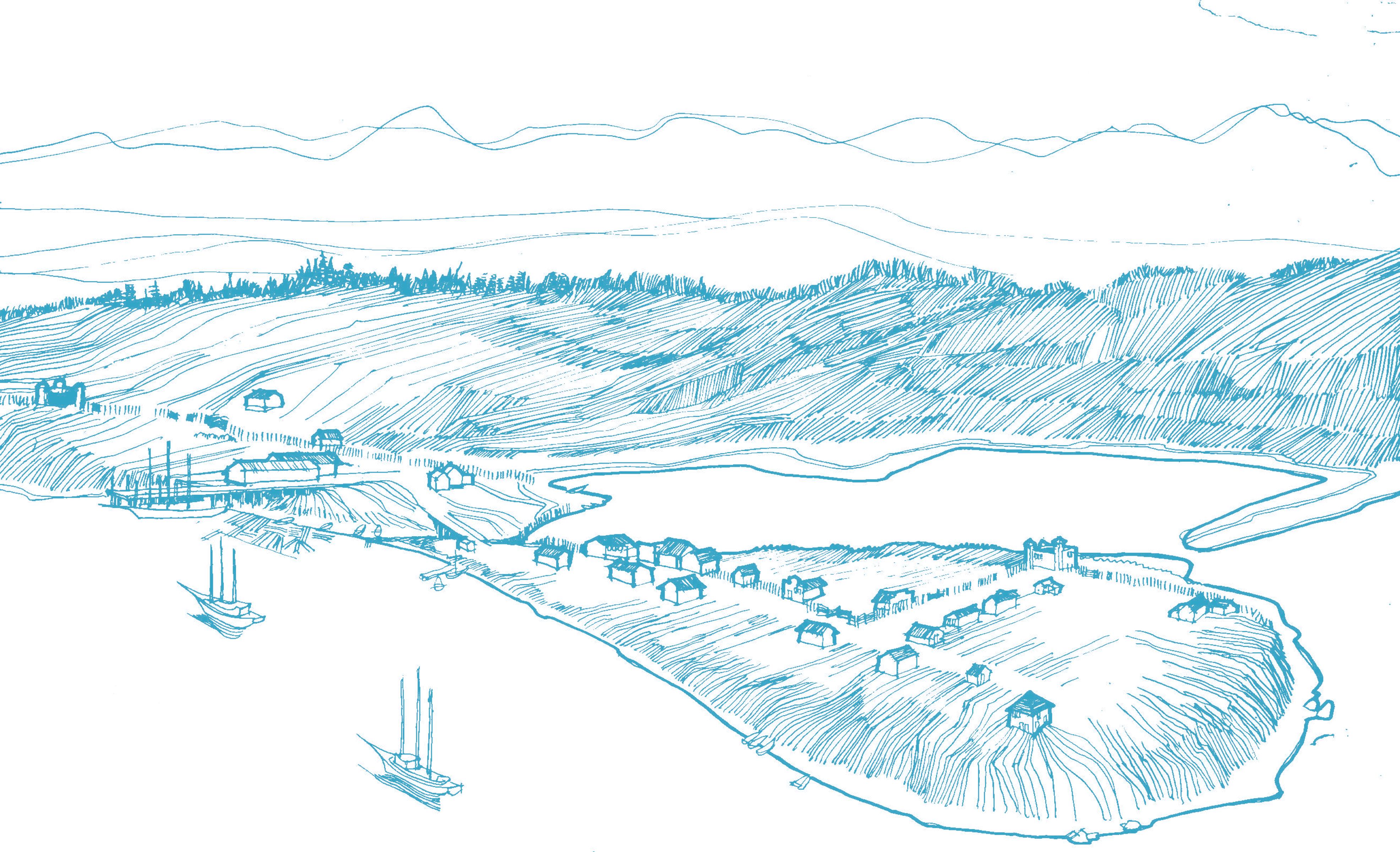
The southern part of Occidental Square Park was once a tidal lagoon and island—likely only an island at high tide.
The Duwamish people built a winter village here, with longhouses used for shelter, celebration, and trade. A now-buried stream once flowed south, emptying into the lagoon near 3rd Ave S and S Main St. When settlers arrived in the 1850s, local tribes welcomed them and helped build the city. Chief Si’ahl (Seattle), leader of the Duwamish and Suquamish peoples, sought alliances for his people’s future. But urban development and city policies eventually displaced the Duwamish from Pioneer Square. Today, the Duwamish Longhouse and Cultural Center by the river affirms their enduring presence and deep connection to this land.
shaped by Duwamish River silt, once stretching all the way to the mouth of the river, and east to the base of Beacon Hill. A salt lagoon once filled the area from Yesler Way to S Jackson St and Occidental Ave S to 2nd Ave Ext S. Between the 1850s and 1889, it was filled with debris, including sawdust from Yesler Mill and rubble from the Great Fire. In 1892, City Engineer Reginald H. Thomson began major projects to lower downtown hills and raise the tideflats above sea level.
3. ALL THAT JAZZ
In the “Roaring Twenties,” Seattle thrived with speakeasies, roadhouses, and jazz. Even during the Depression, musicians found work in small clubs, especially along Jackson Street, known for its vibrant, diverse street life. By the 1940s, nightclubs stretched from 5th Ave S to 14th. Seattle later became a music hub for the rock and grunge scene, from Jimi Hendrix in the 1960s to Nirvana in the 1990s— many world renown artists performed in clubs throughout Pioneer Square.
5. SHELLY’S LEG
During the 1970 Bastille Day parade, an antique cannon accidentally fired a hardened confetti ball, costing Shelly Bauman her leg. Her $330,000 settlement funded Seattle’s first disco and openly gay bar, which opened here in 1973. To honor its unusual origin, Shelly and her co-owners named the bar “Shelly’s Leg.” Pioneer Square was the heart of Seattle’s early LGBTQ+ scene before it expanded to Capitol Hill in the late 1970s.
6. WASHINGTON STREET BOAT LANDING
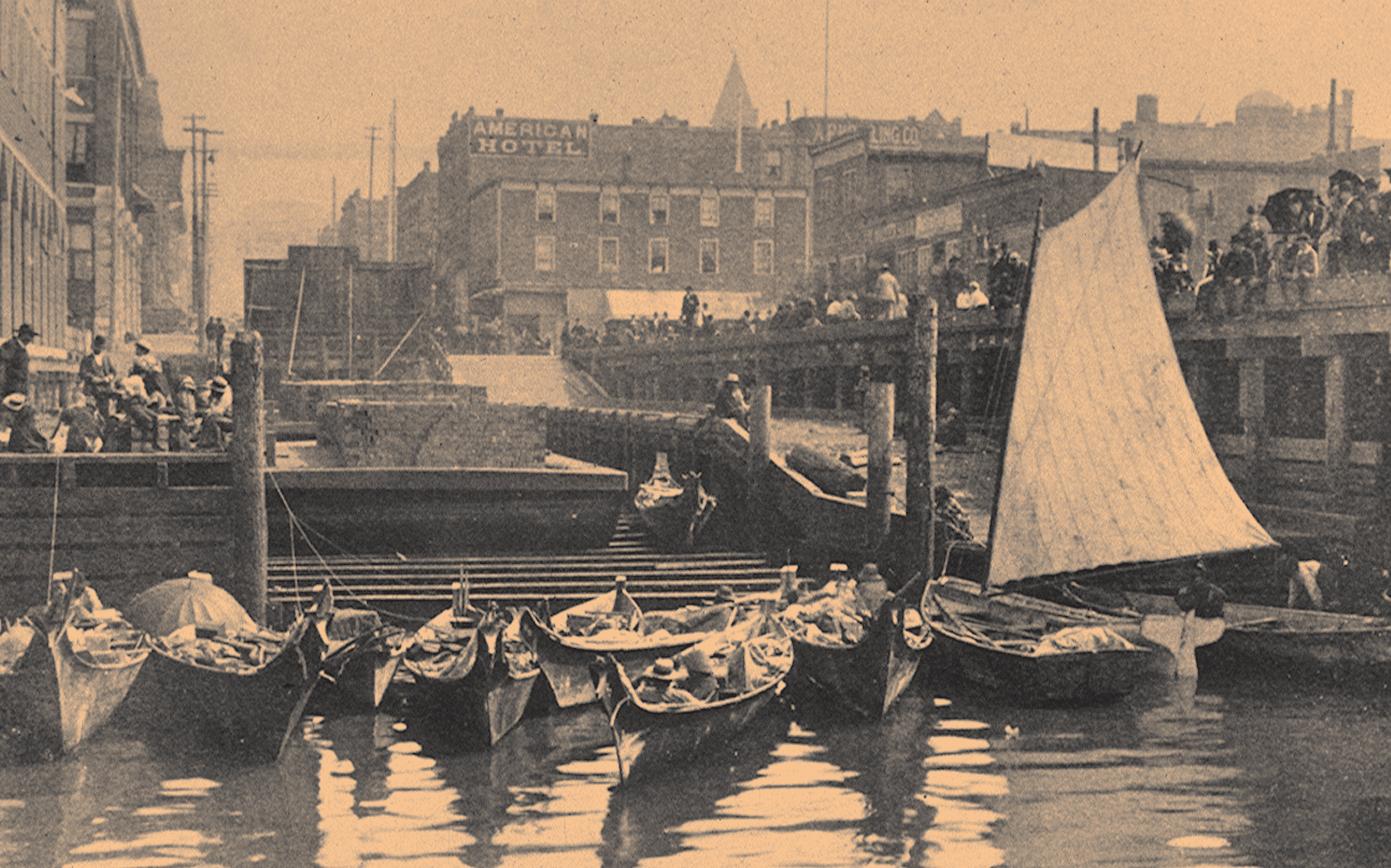
Built in 1920, the landmark iron-and-steel pergola once housed Seattle’s harbormaster. For centuries before, the site was a tribal canoe landing. Just south lies Ballast Island, formed in 1880 from material dumped by ships before loading coal nearby. It served as a Native American encampment around 1884 because it was not within the limits of the city from which Native Americans were excluded through an 1864 town ordinance. Over time, Mosquito Fleet steamers and later ferries replaced Native canoes on Puget Sound. The Washington Street Boat Landing remained in use until the 1970s, then was restored and returned to its original site in 2017.
7. GOING FOR GOLD
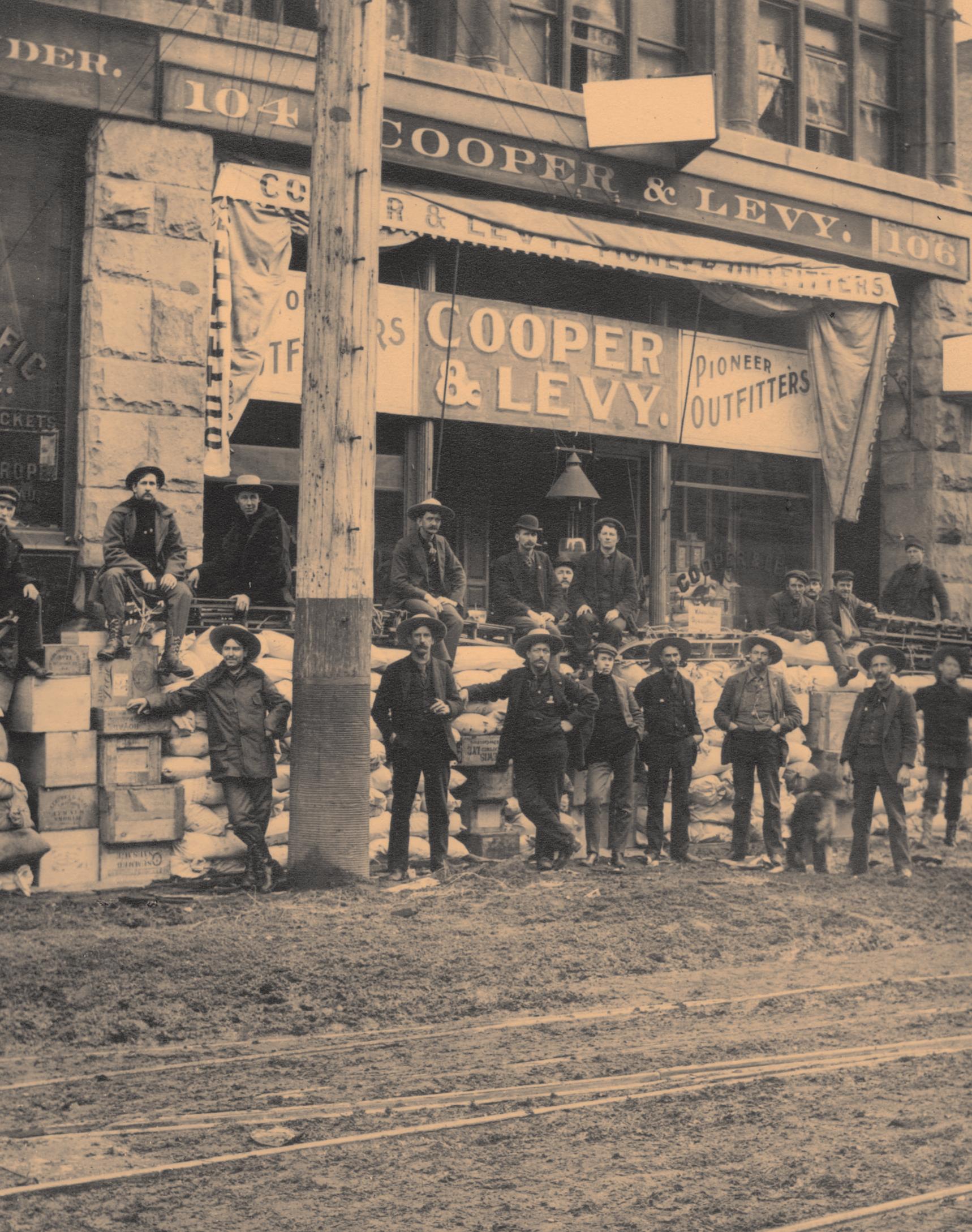
When gold was discovered in Canada’s Klondike River in 1896, Seattle became the gateway for 70,000 prospectors headed north. Most passed through Pioneer Square, buying supplies from shops along 1st Ave S (then Commercial St). While few struck it rich, Seattle businesses thrived by selling gear or providing lodging or entertainment. The Klondike Gold Rush jumpstarted the city’s economy and immediately ended the Panic of 1893 depression in Seattle.
8. FROM SINKING SHIP TO PRESERVATION ANCHOR
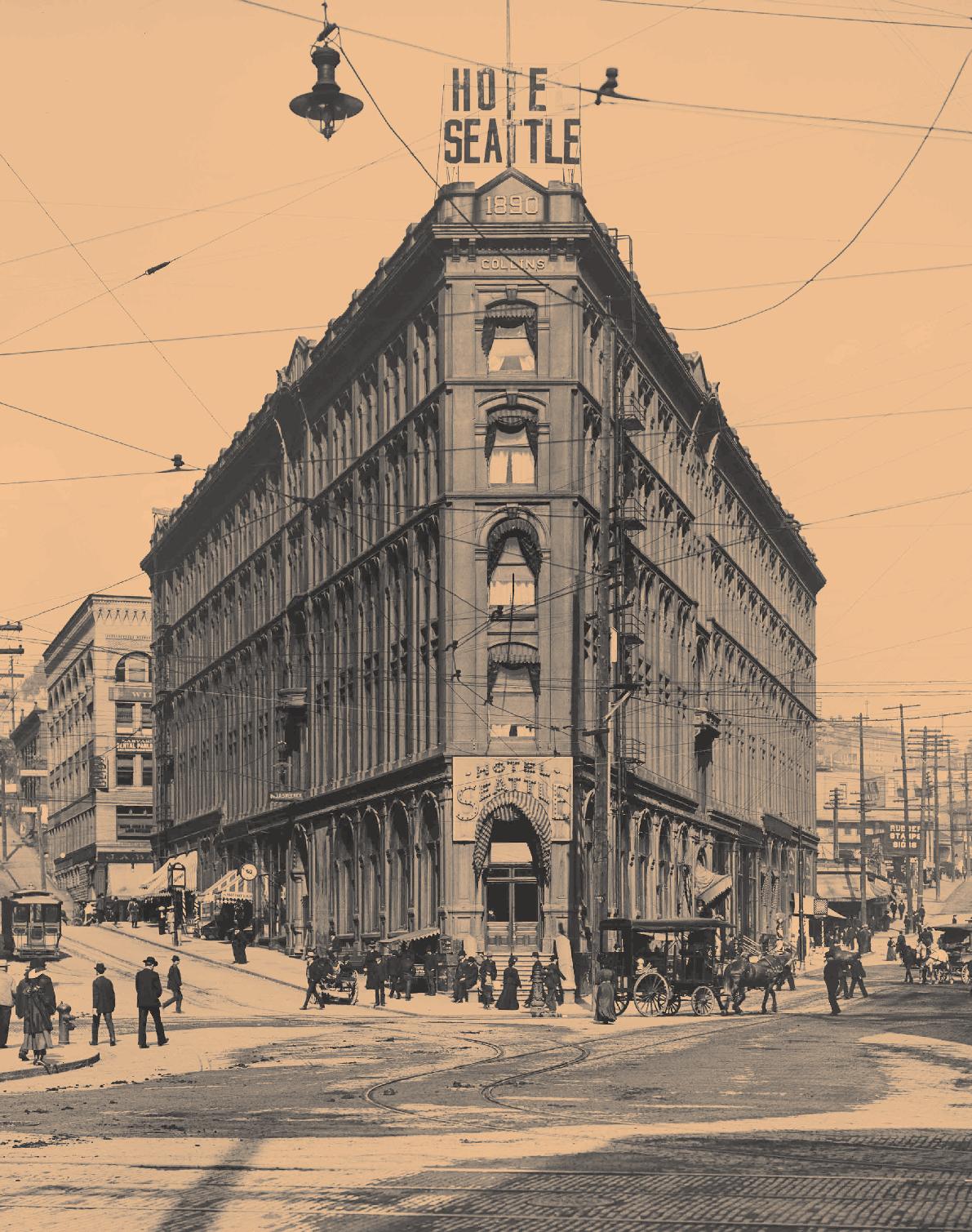
For the best view of this parking garage, stand at the southwest corner of 1st Ave S and Yesler Way. Built in 1962 on the site of the once-grand Seattle Hotel, the “sinking ship” structure sparked public outcry and a movement to preserve Pioneer Square. Seen by many as an eyesore, it helped lead to the neighborhood’s designation as Seattle’s first historic district in 1970, now listed on the National Register of Historic Places.
9. FROM A PILE OF LOGS TO A BOOMING CITY
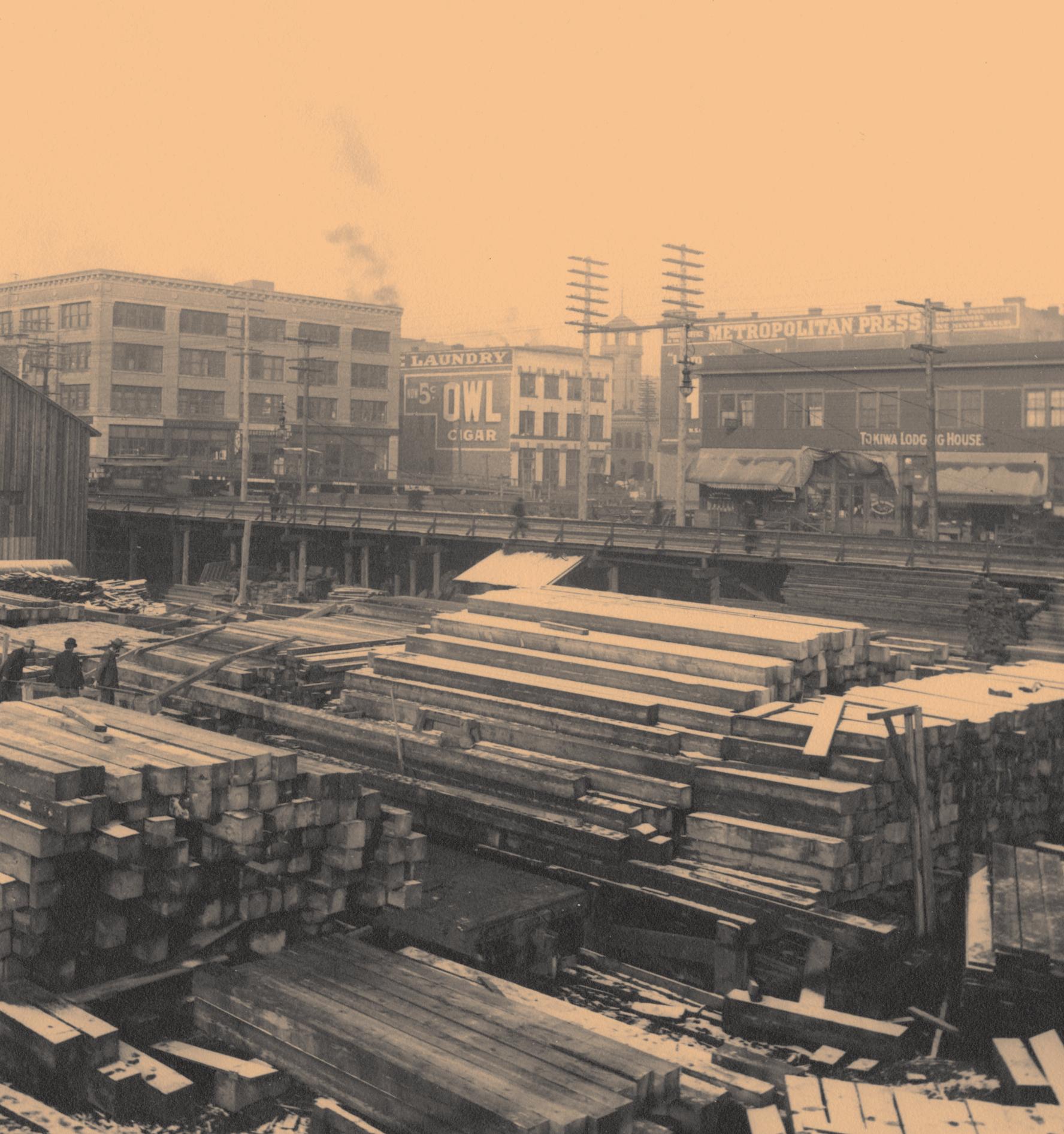
“Skid Road” was a logging term likely coined in western Washington and became an early name for the Pioneer Square area. In 1852, Henry Yesler built Puget Sound’s first steampowered sawmill, and loggers used the hillside to skid trees down greased logs to the mill below. More businesses opened not long after, fueling early growth in the area. Over time, “Skid Road” evolved into the more familiar term “Skid Row.”
10. THE GREAT SEATTLE FIRE OF 1889
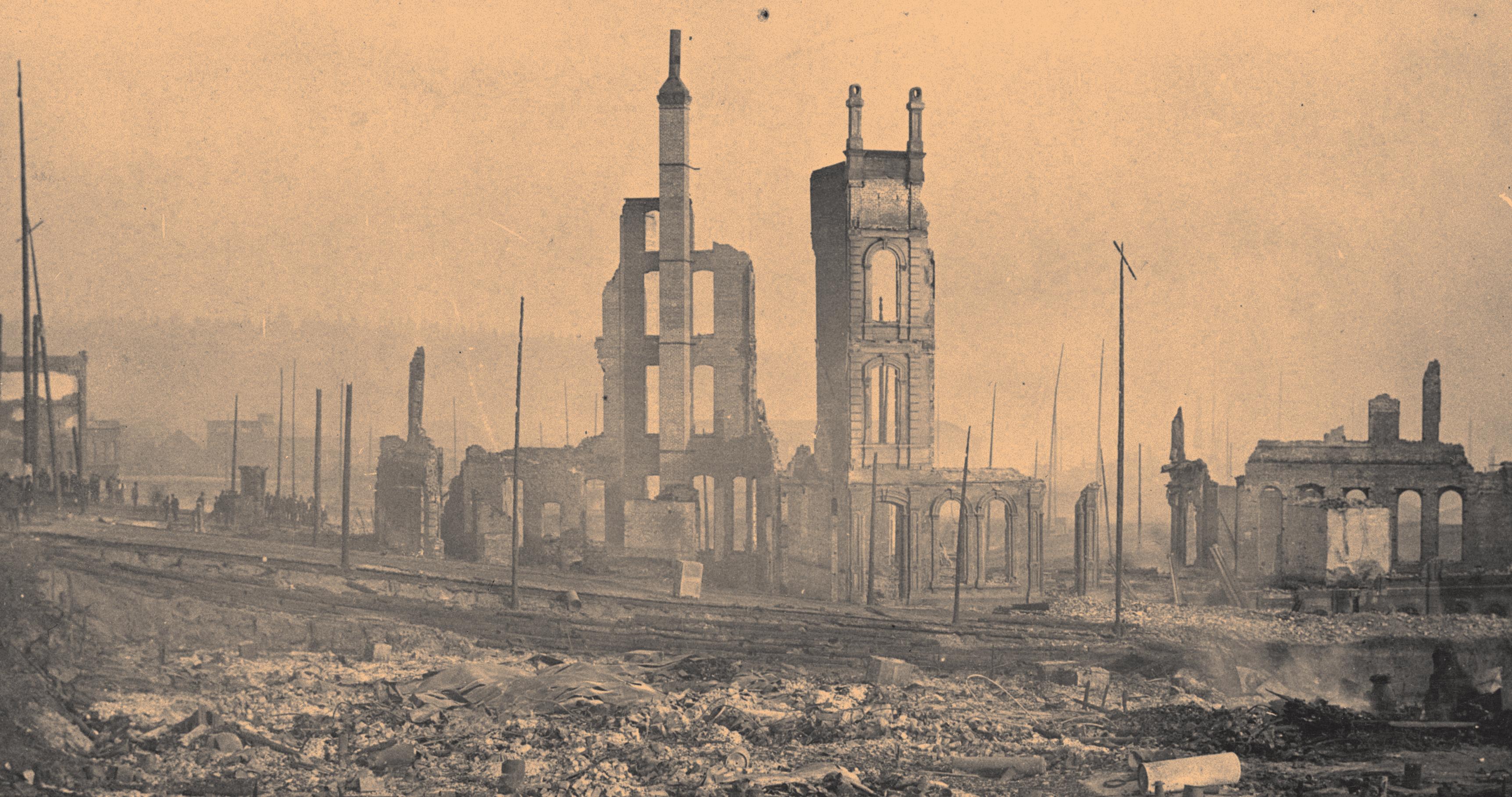
On the night of June 6, 1889, a massive fire swept through Pioneer Square. Starting in a cabinet shop at First Avenue and Madison, the Great Seattle Fire destroyed 30 blocks, including much of the business district, wharves, and rail terminals. The citizens of Seattle quickly rebuilt with fireproof brick and stone structures. Within a year, over 50 buildings rose in the Richardsonian Romanesque style, and the population jumped from 25,000 to 43,000. As you explore the neighborhood, look for repeating arches, heavy columns, and intricate details that define this nationally recognized historic district.
11. A PLACE FOR ARTISTS
The 1919 Tashiro Kaplan Building once housed a farmer’s market, hardware store, social services, and artist studios. In the 1980s, economic downturns made Pioneer Square an affordable live-work hub for artists. But by the 1990s, rising rents pushed many out as building owners sought wealthier tenants. In 2004, the Tashiro Kaplan Building was revived through a public-private partnership, reopening with 50 affordable housing units, studios, and galleries, and 20+ commercial arts-related businesses. Today, it remains a popular stop for visitors on First Thursday Art Walk—the nation’s longest-running established art walk which occurs every First Thursday of the month.
12. STAYING ON TRACK
From the train overpass on S Main St, you can see the south portal of the mile-long tunnel that routes trains beneath downtown Seattle. The Great Northern Railroad arrived in 1893, with its depot at Columbia St and Railroad Ave (now Alaskan Way S). To reduce traffic congestion and avoid running trains along the waterfront, James J. Hill
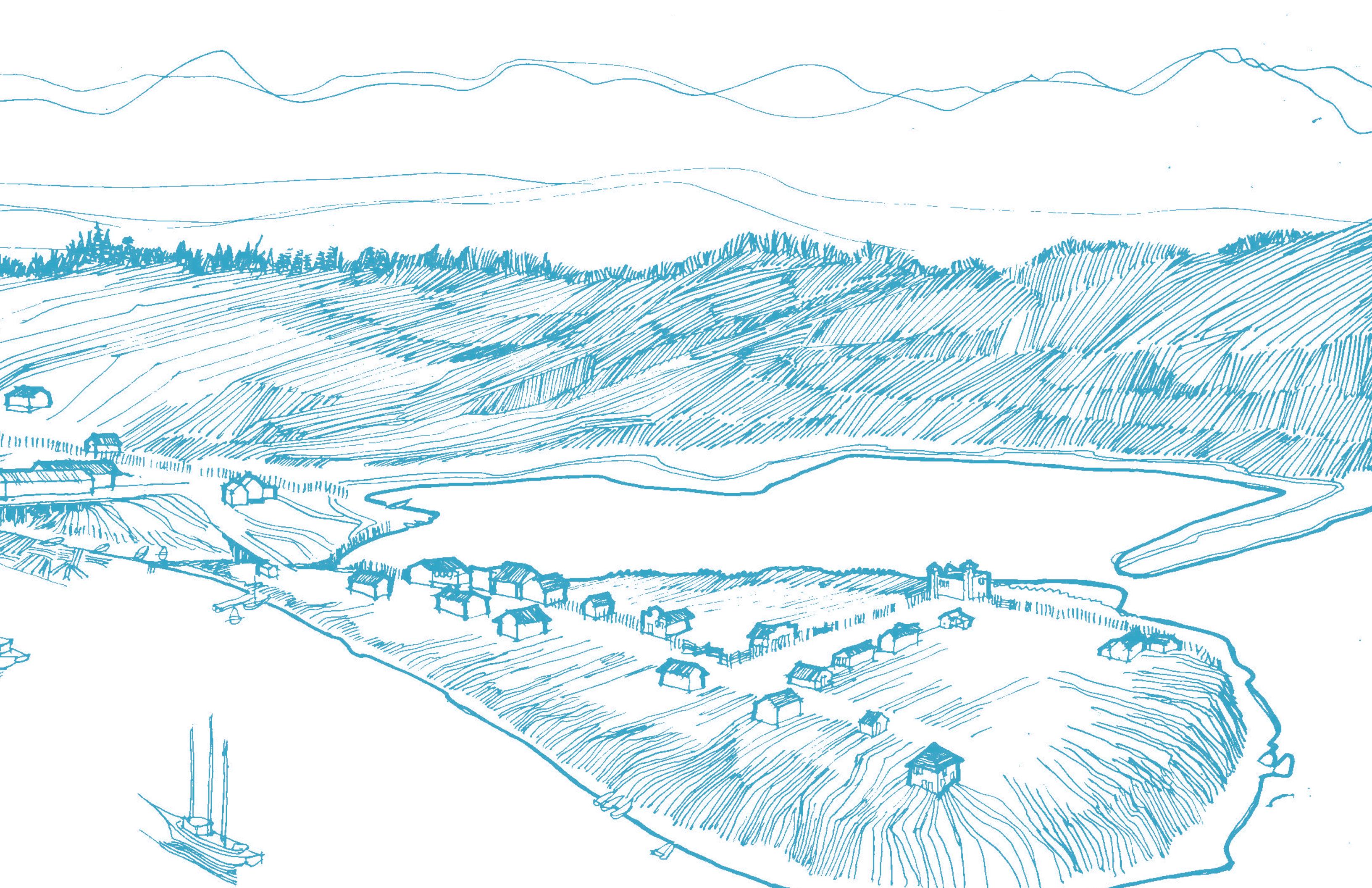
Background sketch courtesy of Bill Speidel’s Underground Tour
Buried TREASURE
WATERFALL GARDEN PARK
This secluded park marks the site of the original 1907 office of American Messenger Company, the forerunner of United Parcel Service (UPS). The founding of UPS was the result of local messenger boy James E. Casey’s entrepreneurialism. He and his friend Claude Ryan operated out of a saloon basement here at 2nd Ave S and S Main St. They delivered packages and messages by foot, bicycle and motorcyle until 1919 when UPS expanded to San Francisco. Waterfall Garden Park preserves the spirit of pioneering Seattle businesses that helped shape the city’s growth – from the Gold Rush era, to dot-com and beyond.
ALLEY NETWORK EXPLORATION
In 2008, the International Sustainability Institute began an initiative to create a network of alleys in Pioneer Square. The vision to revitalize these underutilized urban areas into vibrant public spaces began in Nord Alley, located between Occidental Ave S and 1st Ave S, south of Occidental Square Park. Over the years, the alleys have hosted regular public events, art installations, and gatherings.
Alley programming has led to improvements of numerous alleys throughout Pioneer Square. Explore the neighborhood’s alleys to discover art, businesses, and hidden treasures.
FREE SPEECH CORNER
In the early 20th century, soapbox orators attracted street-side audiences. In 1919, a General Strike shut down the city, giving Seattle a national reputation as a haven for left-wing politics.
After the stock market crash of 1929 and the start of the Great Depression, this corner became a place where radicals shouted ideas on current events, and crowds by the hundreds joined to listen.
PIONEER
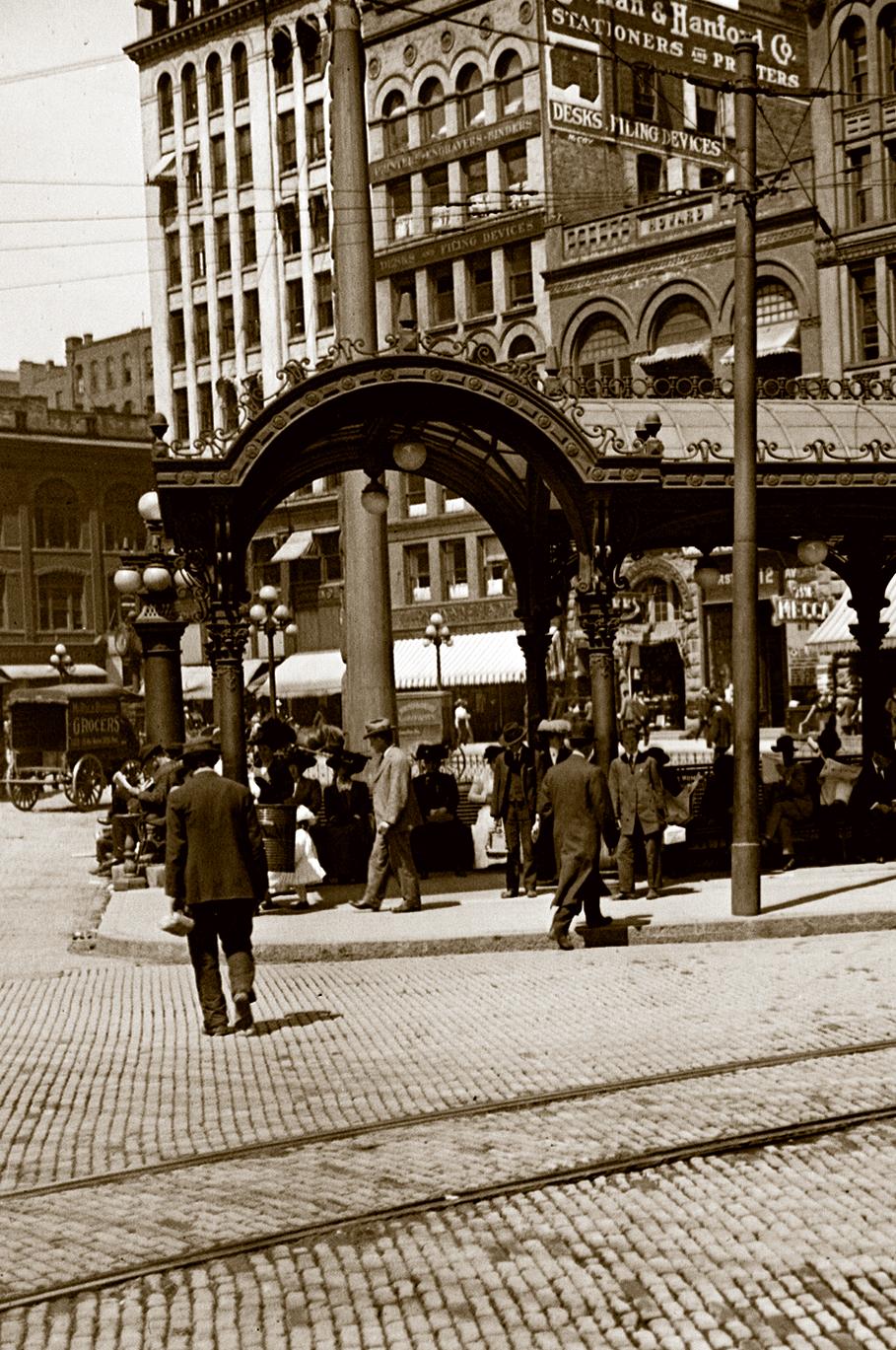
Pioneer Park marks the northern entry into Pioneer Square. The adjacent Pioneer Building was the first of three legacy buildings established by Henry Yesler after the Great Seattle Fire of 1889. Ten years later, a 60-foot totem pole was installed after a group of local businessmen stole it from a Tlingit Native American village. The tribe sued for $20,000 in damages, later settling for $500 after the men were found guilty of theft. After a vandal burned the totem pole down in 1938, the City paid Tlingit craftsmen to carve the replica you see here today. The Iron Pergola, built in 1909, served as a cable car stop and entry to underground restrooms that are no longer in service. This nationally designated landmark was restored after a truck crashed into it in 2001.
SMITH TOWER
Opening on July 4, 1914, Smith Tower was Seattle’s first skyscraper. At 42 stories, it was the fourth tallest building in the world and remained the tallest building west of Chicago for nearly 50 years. Ride in a historic Otis elevator up to the 35th floor Observatory, furnished by the last Empress of China as a gift to the building’s owner, Lyman C. Smith. The room features many historic elements,
The
including the famed “Wishing Chair” and surrounded by an openair observatory with commanding views of the city. As of its 105th anniversary, Smith Tower has been surpassed by 22 taller Seattle skyscrapers, but remains a unique component of the city skyline.
LOU GRAHAM’S PARLOR HOUSE
Madame Lou Graham, born Dorothea Georgine Emile Ohben, immigrated from Germany to Seattle in 1888. Soon after settling here, she established a brothel at the corner of 3rd Ave S and S Washington St. Seattle’s elite business leaders and visitors frequented Lou Graham’s Parlor House. As a result, Madame Lou Graham made a fortune and owned a large amount of land in the city. When she died of syphilis in her early 40s, she left
Klondike Gold Rush National Historical Park, National Park Service Rivers, Trails & Conservation Assistance Program, 4Culture, The City of Seattle Department of Neighborhoods, Bill Spiedel’s Underground Tour, The Waterlines Project, MOHAI, The Portico Group, Collins Woerman, members of the Trail to Treasure Advisory Board, and stakeholders of Pioneer Square.