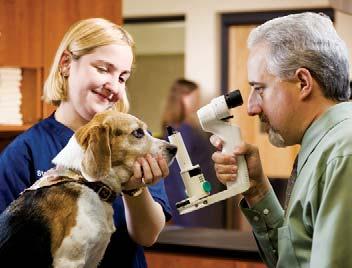
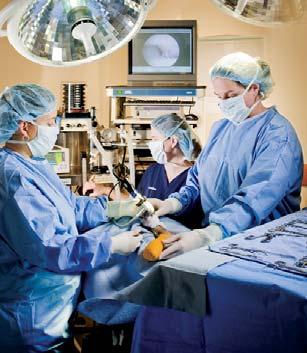
Pittsburgh Veterinary Specialty & Emergency Center Pages 6-7
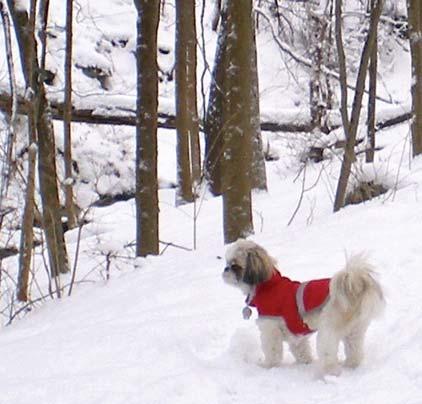
Winter Safety Tips for Pets Outdoors Page 8
Meridian Tapping for Pets and People Pages 14-15
What’s that Bump? Equine Sarcoid Page 18
Cover Contest Winner! Read all about Shayne on page 21!
HAPPY NEW YEAR!
We all made it to 2013 despite predictions the world would end! Animals can be an inspiration and we learn a lot from them. They do not constantly worry about hypothetical situations. They live each day as it comes and accept the bad with the good. They are non-judging and unconditional in their love for us. They do not hold grudges and often give each other and their people assistance when we needed.
The Human-Animal Bond is certainly about love. Animals teach us about trust and love. It is truly inspiring to watch our animals carefree at play! It tells me that there is new hope with a new day. I love when the dogs and horses frolic in the snow - picking up sticks and throwing them about!
We hope PPC Magazine inspires you also. Reach out and pay it forward any way you can in this New Year, through volunteering with people and pets, donations and shopping local. Our local economy is built from grass root efforts and communities which support local business and charitable organizations. Times are tough and spending your money wisely has never been more prudent. Through our magazine, PPC wants to help businesses, people and their animals thrive.
PPC Magazine supports local animal shelters and rescue organizations through donated and discounted ads. We are working with sponsors from all types of businesses who want to help support the mission and events of local organizations. We support local small businesses to promote their products and services; our goal is to share educational information, as well as resources on wellness for pets and people. Please see our center map spread for our Advertiser Locator.
Check out our PPC Magazine Revista website at www.pghpetconnections.com, if you haven’t yet. The digital editions are free, if you missed an article or issue! Our pet and wellness related business directories are building and we welcome submissions for free listings for your business. Find out how your business –no matter how small –can become a Media Partner on our website Advertise page. We offer a target audience for businesses like no other local publication. Our Media Partnership packages are an exceptional value.
My background of over 25 years as a veterinary technician, veterinary hospital administrator and non-profit founder, has led me to create Pittsburgh PetConnections Magazine. My goal is to lead, share and heal through the Human-Animal Bond (HAB). I would like to personally thank all of our contributing writers, readers and our sponsors for making this magazine possible.
Thank you for picking up PPC Magazine and also subscribing!
Take care of yourself, as well as your animals and be well in this New Year!
Warmly,
Carla Mader, Managing Editor
Please check us out on the web & subscribe at: www.pghpetconnections.com Also, “Like” us on Facebook! http://www.facebook.com/PghPetconnectionsMagazine
Pittsburgh PetConnections, LLC. was formed in 2012. Our mission is to publish a high quality, informative and Human-Animal Bond focused publication.
We support local businesses and also assist local non-profit businesses for pets and people, to give back to our great Pittsburgh communities.
MAGAZINE PUBLICATION STAFF
Sales Manager
Distribution
Graphic Artist
Photographer
.Carla Mader
.Martin Mader
.Patricia Sutkowski
.Kara Jones Photography
Contributing Writers: Our contributing writers have many years of combined experience and expertise in the fields of veterinary medicine and the Human-Animal Bond.
Managing Editor
.Carla Mader
ADVERTISING:
info@pghpetconnections.com 724-503-8695
THE HUMAN-ANIMAL BOND Together we CAN… Tracy
Delp rides across the country for cancer awareness
It was Christmas day, 1:30 in the afternoon, when most of us were preparing dinner in our warm homes and spending time enjoying our loved ones, that Tracy found the time to take my call. She was mounted upon her trusty steed, Sierra, and battling the elements in 20 degree weather conditions, yet she spoke as long as she could so that I may share her story with all of you…
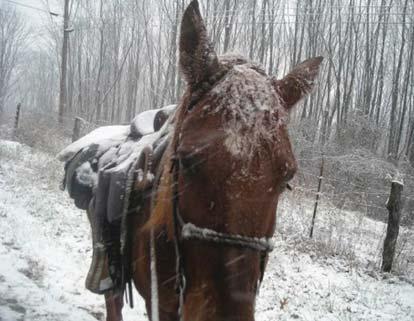
“It’s not the ice and snow that make it hard” she said in her strong, confident voice through the whipping winds, “but the cars that make riding the roads dangerous.” Tracy was heading to Chambersburg, Pa. on route 30 that day, and the blizzard conditions were hitting her hard. Where to next? I asked excitedly and she replied “On to the Appalachian trail from here! I try to
same courage and determination that she showed; to take on this ride-to emphasize what we CAN do.” Tracy left from Port Orchard WA on mother’s day 2011 to make the 3500 mile sojourn that is to end near Delaware’s Cape Henlopen State Park where she will “put her toes in the ocean”…she has just under 175 miles yet to go as of Jan. 4, 2013. Her promise? To “put the CAN back in cancer” and provide funding for treatments to those who otherwise could not afford it, both human and animal.
Who is Tracy Delp? My hero…
ride each day as far as I can, and I find that having a ‘topic’ for each day helps me press on” How does she do it? I pondered and asked what her biggest challenges are when she rides. She told me about the battles with the snow, and the ice pellets stinging her face, and how it was very hard to keep her phone charged because the cold temperatures drained the battery so quickly. More pressing was her concerns for the vehicles that could potentially slide due to those icy conditions and endanger her, and more importantly (as she expressed) her 13 year old mare Sierra. I was in awe of her concern for the animals over her own safety, and admired her fortitude to press on despite the obstacles that had befallen her. Who is Tracy Delp? My hero…
Tracy is a 48 year old woman with a heart of gold; an internationally recognized meta-physician who lost her mother and several canine companions to cancer. “Watching her (mother’s) courage and composure made me very aware that a person CAN do anything; that there is always a choice even when you think there are none…Watching her has given me the strength to choose with the
Tracy’s progress has been a difficult one, and she has depended upon the kindness of strangers to help her complete her goal. She started out with 5 horses, a mule and her dogs. Sadly, in August, her dog Duke also passed from bone cancer; her black retriever Ursa still rides with her. Duke had begun the journey by her side, riding only in the truck, since he was 14 years of age, and travelled with her as far as Iowa…his ashes still ride with her. It was at this time that Tracy began to “lose time” and her focus became nothing more than getting from point A to point B. Shortly thereafter she was shown the way when a bout of noxious poisoning made her horse ill. She also lost her driver, but instead of giving up, Tracy took advantage of those three weeks Sierra needed to recover, and donated her time in New York helping the animals who were displaced from hurricane Sandy. Strength renewed, and only 60 miles from the PA boarder, with purpose even stronger in her heart, Tracy decided to travel alone and complete her journey. Tracy has been riding alone since Idaho, but despite the lonely nights, and hassle of sometimes walking back or finding rides to retrieve her truck, so the horse could rest, she pressed on. “This trip has changed me” she said and recounts how she now sees things differently, and takes each moment in for the gift that it is. “Every day is like Christmas!” Tracy says with her hardy smile, and finds comfort in the kindness of strangers; a kind word of gratitude often expressing more to her than any monetary donation ever could. Tracy never once complained about the nights she spent sleeping in her tent in the cold, and rides on for the cause she believes will unite people who have experienced these sufferings in their lives. If we only take one message from her efforts, let it be that we should never give up…
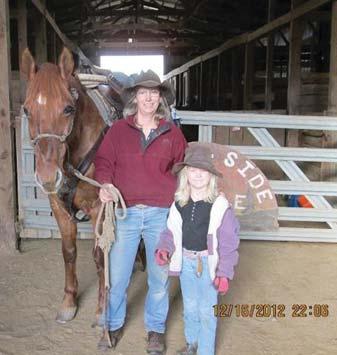
In early December Tracy made her way up Route 30 to Donegal where she was welcomed by our friend Pam Kalish to spend the weekend and rest at Hillside Stables; her mare enjoyed the company of Pam’s horses and a warm stall for the cold nights. She also found a new fan, Maddy, who is pictured here, and was so inspired by Tracy that she too wore her “cowgirl hat!” Maddy’s grandmother Laura boards an old horse at Pam’s, and Maddy has already learned to love and care for the animals, so Tracy was an instant role model hanging out there in her old worn chaps and boots. Tracy makes time for all of her fans, big and small, human or animal, and enjoys sharing everything she can with all of them. She has been the trail head for many rides out west, has donated time and effort at the Wolf haven, and even takes children on up to three day excursions on horseback to experience the feeling of riding the trails. Although she has no children of her own, she is like a mother to them all.
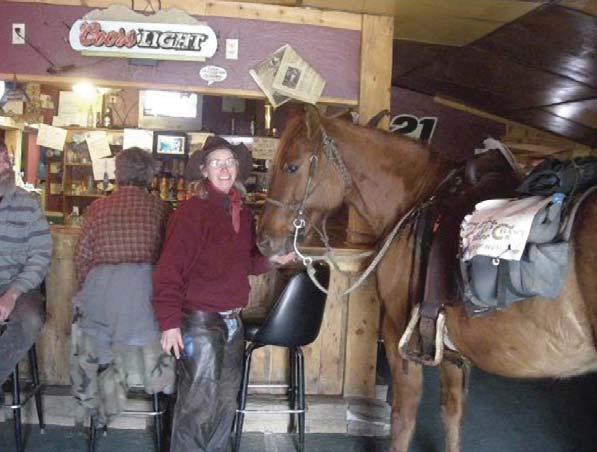
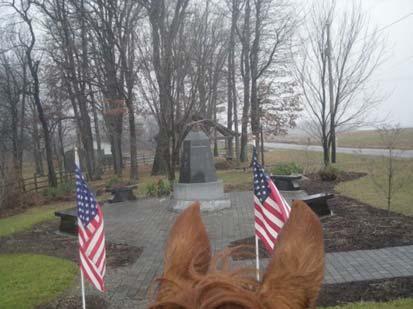
There was a brief mention of Tracy passing through our area on the evening news, but like many stories, it was soon forgotten. On December 18th Tracy rode past the memorial of Flight 93, and here she paused to pay tribute to those who have fallen to protect our freedoms. Tracy posted a picture of the memorial site visit and has given us permission to share it, as well as her other photos, so that we may spread the word-least we not forget. Her cause will provide funding so that others can get the help they so desperately need to treat their loved ones. Tracy’s ride may not be about freedom, but in some ways it is…for we all have the freedom to choose, and it’s up to each of us to make the choices that are right for us. Her courage stands as a symbol of what we CAN do if we all work together, and every effort counts. If you would like to make a donation to help this cause, you can do so by going to her website at http://coast2coastforcancer.webs.com/. You can also follow her story on Facebook under her page Coast 2 Coast for Cancer (T. Delps, personal communication, 2012).
I give permission for anyone to reprint all or part of this article to promote awareness, providing it is properly cited back to me, and approved by Tracy Delp in advance. Authored by Nancy Frishkorn, Jan. 04, 2013 for Pittsburgh PetConnections Magazine Jan. 2013 Vol. 1 Issue 5.
PET-EDITORIAL
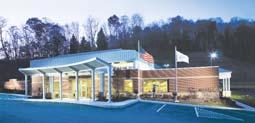
PITTSBURGH VETERINARY SPECIALTY & EMERGENCY CENTER
By Carla Mader
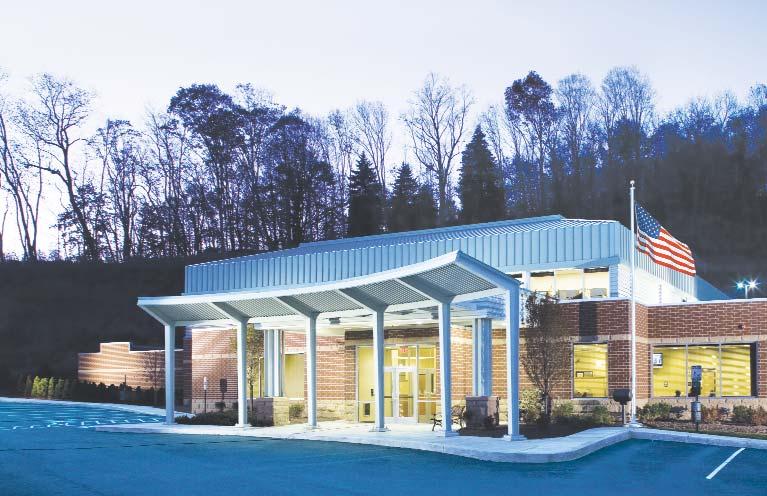
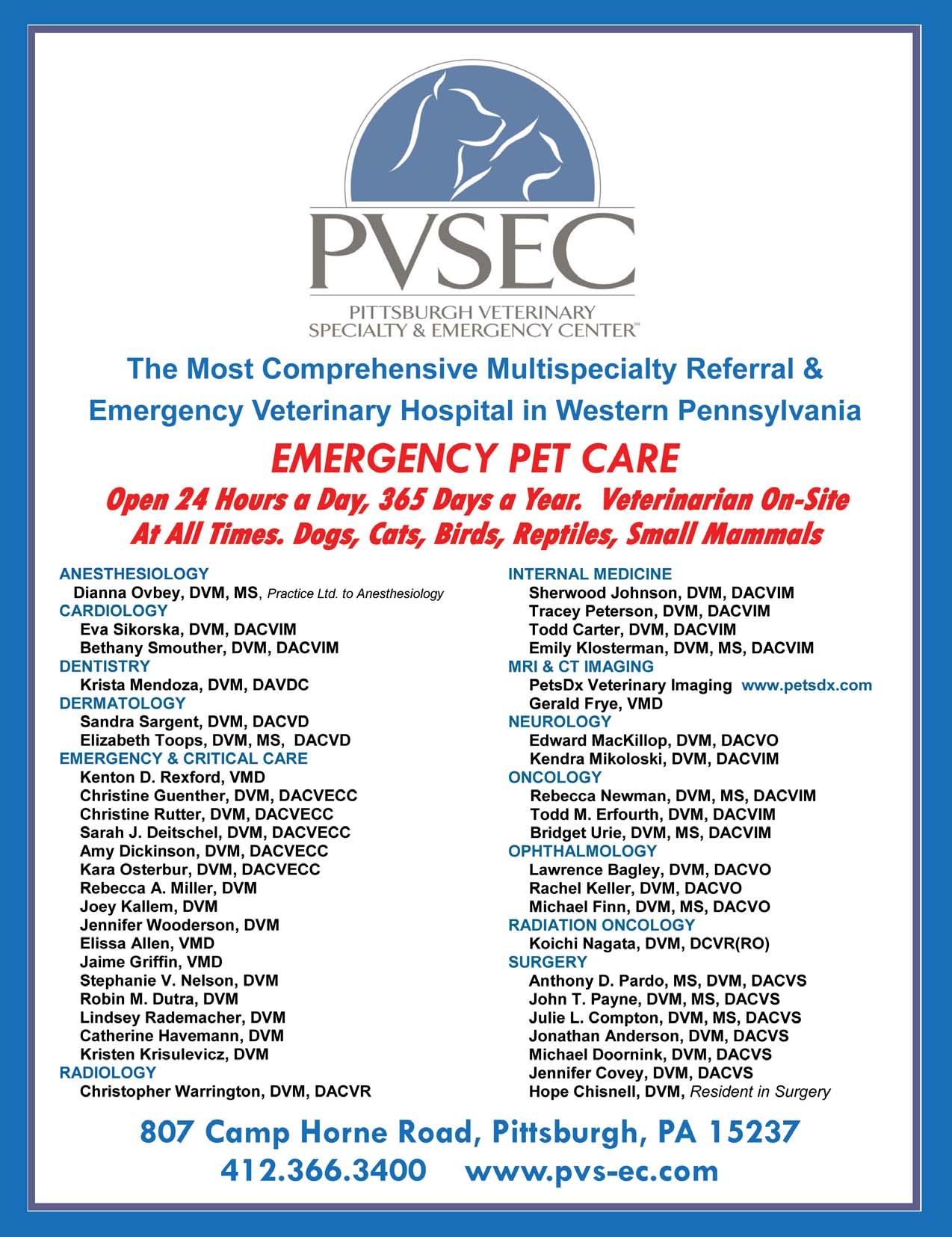
Pittsburgh Veterinary Specialty & Emergency Center (PVSEC) is western Pennsylvania’s most comprehensive multi-specialty referral and emergency veterinary center. They provide small animal veterinary services in 13 disciplines and 24/7 emergency services. PVSEC is conveniently located and easily accessible in North Hills off I-279.
Pittsburgh is very fortunate to have a premier veterinary center like PVSEC in our region. The specialty and emergency services at PVSEC support and compliment the care local veterinarians offer, with their specialty and emergency services.
PVSEC’s 30,000 sq. ft. state-ofthe-art facility offers advanced diagnostics and procedures all under one roof. They are also open 24 hours a day 365 days a year, with emergency veterinarians and critical care specialists on site and able to consult with the other specialist at all times, unlike other emergency clinics.
What is a veterinary specialist?
Veterinary medicine has become sophisticated, as in human medicine. Since the mid-seventies, specialty disciplines in veterinary medicine have been formally established and continue to grow. The American College of Veterinary Internal Medicine (ACVIM) certifies veterinarians in the specialties of Cardiology, Oncology, Neurology, Large Animal Internal Medicine, and Small Animal Internal Medicine. Additional colleges include The American College of Veterinary Surgery (ACVS), The American College of Veterinary Ophthalmologists (ACVO), The American College of Veterinary Dermatology (ACVD), The American Veterinary Dental College (AVDC), and The American College of Veterinary Emergency and Critical Care and The American College of Veterinary Radiology (ACVR).
To become a diplomate of a veterinary specialty college, it is much the same as in human medicine. Veterinarians must complete additional training usually comprised of a one-year internship, followed by two to four years in a residency program for their specialty, followed by extensive board examinations.
Your veterinarian may refer you to a PVSEC specialist for advanced care when medically indicated. Veterinarians also know many cases are complicated and require more than one specialist to consult. PVSEC offers the most diverse team of specialists in Pittsburgh, allowing consultations between disciplines for the most comprehensive care possible. Advanced diagnostics such as MRI, CT, ultrasound, digital radiography, endoscopy and much more assist them in rapidly diagnosing problems and devising an appropriate treatment plan for your pet. The value of this cannot be overstated when your pet’s health is at stake. Early referral by your veterinarian also can prevent problems from progressing, saving time, money and even your pet’s life.
The Diverse Team at PVSEC
PVSEC has an incredible team of veterinarians, veterinary technicians and client services team. The highly compassionate and qualified support staff is fostered with a work environment that encourages teamwork, supports professional advancement and rewards superior performance. This has resulted in a highly skilled, happy and retentive staff and shows in the care they give clients and patients alike.
Veterinary Technicians also can receive specialty certification in surgery, internal medicine, critical care, nutrition, dentistry and more.
Why do veterinarians refer to PVSEC?
PVSEC’s philosophy of providing outstanding care and being a leader in veterinary medicine is recognized by our area vets. A very large referral base of veterinarians in Pittsburgh, Ohio and West Virginia consult and refer cats and dogs to PVSEC daily, for the advanced services and exceptional client and patient care offered. PVSEC also builds strong relationships with referring veterinarians through open communication and continuing education.
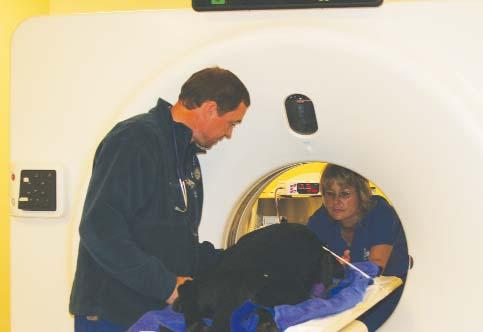
PetDx Veterinary Imaging at PVSEC is overseen by medical director Dr. Gerald Frye, VMD. PetDx offers a high-field closed magnetic resonance imaging (MRI) unit and computed tomography (CT) scanner for pet-safe imaging. These advanced imaging tools assist in obtaining a diagnosis and creating effective treatment plans. MRI is used to see soft tissues more clearly and CT scan uses x-rays to provide a better image of bony structures. PVSEC has a licensed MRI/CT technologist, Chris Wilson, R.T., CT, MR, who worked in human medicine for 18 years before joining PetsDx.
Dr. Christopher Warrington, DVM, DACVR is PVSEC’s radiologist. He works with the other specialists to assist them in obtaining a better diagnosis via his expertise in reading radiographs, CT and MRI studies and also performing ultrasound exams.
PVSEC internal medicine specialty team is headed by owner, Dr. Sherwood Johnson, DVM, DACVIM and includes Dr. Tracey Peterson, DVM, DACVIM , Dr. Todd Carter, DVM, DACVIM and Dr. Emily Klosterman, DVM, MS, DACVIM. They commonly see cases referred for kidney, liver, intestinal and urinary diseases, and endocrine
Pittsburgh Veterinary Specialty & Emergency Center
Computed Tomography (CT) Scanner
diseases, such as diabetes, thyroid and Cushing’s, and immune mediated disorders also are commonly treated by the PVSEC internal medicine department.
The Cancer Center at PVSEC is staffed with oncologists Dr. Rebecca Newman, Dr. Todd Erfourth and Dr. Bridget Urie, who are all diplomats of the ACVIM. Dogs and cats are most commonly referred for cancers of the soft tissues and bone such as lymphoma, sarcomas, carcinomas, and more. They offer diagnostics and treatment plans for chemotherapy, as well as radiation therapy.
Pittsburgh Veterinary Dermatology was founded in 2003. Dr. Sandra Sargent, DVM, DACVD and Dr. Elizabeth Troops, DVM, MS, DACVD are the only dermatologists in western Pennsylvania. They specialize in conditions affecting the skin and ears including skin allergies, immune mediated skin disorders, hormonal abnormalities and bacterial, fungal or parasitic infections. They have video otoscopy available to treat and diagnose chronic ear infections and do in house intradermal allergy testing and vaccine formulation.
PVSEC’s Veterinary Radiation Oncology department was founded in 2010 and joined the oncologists and surgeons to create Pittsburgh’s only comprehensive cancer treatment facility. Dr. Koichi Nagata, DVM DCVR (RO) provides radiation therapy using their state-of-the-art linear accelerator. “We utilize additional diagnostics, such as CT scan, and also positioning for precision during radiation therapy planning sessions”, he explains. Dr. Nagata routinely works with the oncologists, internists and surgeons on cases, coordinating care between all three services in order to obtain the best possible outcome.
The Neurology/Neurosurgery department at PVSEC is comprised of Dr. Edward MacKillop, DVM, DACVIM and Dr. Kendra Mikoloski, DVM, DACVIM, who are Western Pennsylvania's only board-certified neurologists. The Neurology department employs numerous diagnostic technologies, including MRI, CT and electro-diagnostic tools, such as auditory, muscle function and nerve conduction testing, to diagnose and treat both acute and chronic neurological disorders. They also perform surgery on the brain and spine for problems varying from tumors to ruptured vertebral discs.
The Cardiology department offers cardiac work-ups including echocardiography, ECG, blood pressure measurement, and thoracic radiography. They also offer OFA/ARCH Exams which are cardiac screenings for purebred dogs to identify hereditary cardiac diseases through the presence of a heart murmur (i.e. subaortic stenosis, pulmonic stenosis, valvular dysplasia, patent ductus arteriosus, etc). OFA/ARCH Exams do not require a referral, and are appropriate for show or field trial dogs, or for screening prior to breeding. Dr. Eva Sikorska, DVM, DACVIM and Dr. Bethany Smouther, DVM DACVIM are PVSEC’s cardiologists.
Dr. Lawrence Bagley, DVM DACVO founded the Animal Eye Clinic of Pittsburgh in 1997. He merged with PVSEC in 2008 to form the Ophthalmology department. Along with Dr. Rachael Keller, DVM, DACVO and Dr. Michael Finn, DVM, MS, DACVO, Dr. Bagley sees patients referred for ocular conditions such as uveitis and glaucoma. They perform testing and procedures in their own dedicated surgical suite specialized for ocular procedures. OFA Eye Certification Registry Examinations (formerly CERF Exams) are offered without a referral. OFA exams are ophthalmic screening tests for purebred dogs that identify hereditary ocular diseases (i.e. corneal dystrophy, cataracts, PRA). OFA Eye Certification Registry Exams are appropriate for show or field trial dogs, or in preparation for breeding.
Advanced dentistry is also offered at PVSEC by the only board certified veterinary dentist in western Pennsylvania, Dr. Krista Mendoza, DVM, DAVDC. The dentistry department offers state-of-the-art diagnostics and equipment, such as digital dental radiographs, and performs tooth-saving procedures such as caps and root canals.
Pittsburgh Veterinary Surgery was started in 1993, by Dr. Anthony Pardo MS, DVM, DACVS. It was initially a mobile veterinary surgical service. The practice initially settled in Shaler Township, PA and became one of the founding practices of Pittsburgh Veterinary Specialty & Emergency Center. Dr. John T. Payne DVM, MS, DACVS partnered with Dr. Pardo in 2004. Dr. Pardo and Dr. Payne are joined by 4 additional AVCS board-certified surgeons, Dr. Julie L. Compton, Dr. Jonathan Anderson, Dr. Michael Doornick and Dr. Jennifer Covey. Soft-tissue and orthopedic surgical diseases as well as traumatic injuries are treated in the state-of-the-art operating rooms. Advanced surgeries include total hip replacement, cruciate ligament repair, thoracic surgery, and minimally invasive procedures such as laparoscopy.
PVSEC is also proud to have the expertise of the first veterinarian with residency training in anesthesiology in western PA. Dr. Dianna Ovbey, DVM, is available for assistance with all PVSEC patients requiring anesthesia or pain management. She has worked in concert with specialists in fields such as surgery, ophthalmology and radiation oncology, since her arrival at PVSEC in October, 2011, and will take the anesthesiology board exams in 2013.
The PVSEC Emergency department offers emergency medical care 24-hours a day, 7-days a week, including all holidays, providing pets with quality emergency care around the clock. The team is headed by Dr. Kenton D. Rexford, VMD, Dr. Christine Guenther, DVM, DACVECC, and Dr. Christine Rutter, DVM, DACVECC and boasts 5 critical care specialists and 10 experienced emergency veterinarians. Along with their highly skilled technicians, the emergency department is staffed and equipped to provide your pet with the highest quality emergency medical care, including hospitalization if necessary. Because of the urgent nature of emergency care, the PVSEC Emergency department welcomes walk-ins.
(continued on page 28)
The Cancer Center at PVSEC
Animal Eye Clinic
Pittsburgh Veterinary Surgery
& ANIMAL HEALTH WELLNESS
First, get a windowsill. When my cat, Mimi, lived mostly outdoors I would see her trotting quickly down icy sidewalks or trying to plow her way through a snowdrift. I winced to think of her tiny paws on ice and rock salt and seeing her petite little self nearly be lost in the snow and many was the time I wanted to just go and get her and bring her inside. She was skittish and would run, but I was always glad to see that she had survived another day, another winter with all her extremities intact. Unfortunately, also, her uterus, but that's another story entirely, and likely one of the driving forces that kept her roaming, even in winter.
only let her wander for shorter times than she preferred, much to her consternation and protest. If pets go outside at all, they shouldn't be outside without protection for very long.
Winter Safety Tips for Pets Outdoors
Now she takes advantage of every sunny windowsill and warm soft spot, and while she joins me on the deck when it's warmer, now that it's cold with ice and snow she stays inside and simply watchesme go out to feed the birds, probably getting an extra measure of appreciation for where she is remembering the feeling of ice under her paws.
Don't take for granted that animals can survive outdoors. Simply because other animals live in the outdoors without human intervention doesn't mean that our pets can –and it doesn't always mean that those animals whose habitats are outdoors live well or even survive the winter. Wild animals also need and find adequate shelter and food and water if they don't hibernate, and if they don't find these things they don't survive.
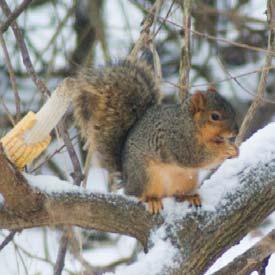
Cats may tolerate cold for a while, but their small bodies lose heat quickly and extremities like tails and ears can easily be lost to frostbite. Small breed dogs like a Chihuahua with short, thin fur or a delicate Italian Greyhound with no body fat obviously don't have the resources of a squirrel who's doubled his fur and fattened up on nuts and fruits (and my bird seed and suet). Puppies and kittens are likewise less tolerant of cold than adults, likewise older pets. Cookie went outside with me every single day no matter the temperature and bravely walked on whatever had fallen from the sky, but as she grew older I would
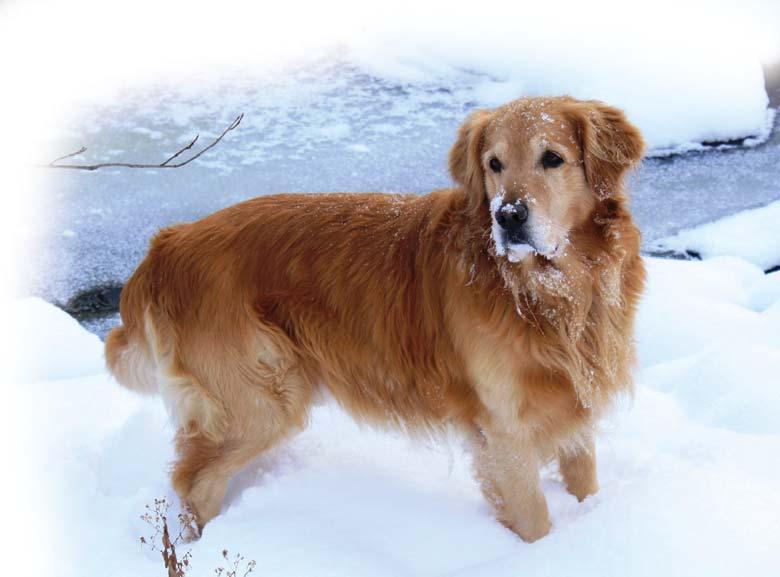
Cover Contest runner-up Big Jake Mackenzie, aka Mackie, was a beloved Golden Retriever of our family. Grandfather of two Search and Rescue dogs he loved water, rocks, rides (boat and car), and long walks. He tolerated 3 litters of puppies with the tolerance of a true grandfather. Sadly Mack passed away at the age of 10 following a complication from surgery, but he lives on through his offspring. Photo: Denise Malovich
by Bernadette E. Kazmarski
Aside from cold is also the risk of poisoning, either from leaking anti-freeze, always a risk but moreso when animals take refuge beneath a warm car on a cold day, and from products used to melt ice and snow. Fluids and oils from vehicles also tend to persist in snow and on wet pavement, so you should always wipe down your pet when they come inside, and wash off any sticky or oily substances on their fur. Remember that you also track these things indoors on your shoes, so be careful to place wet boots and shoes where your pets can't get to them, wipe them down as soon as possible (this is good for your boots and shoes anyway), and clean up the floor before someone licks up a puddle.
As for cute little coats they may be more than just cute and actually provide needed insulation for cats and dogs, but you can be the judge if your pet will wear one! Below are links to articles that will give you more detail on preparing your indoor-outdoor pets for the cold.
Cold Weather Tips from the ASPCA: http://www.aspca.org/pet-care/pet-care-tips/cold-weather-tips.aspx
Pet Winter Safety: Prepping Your Pet for Winter Weather from WebMD/Pets: http://pets.webmd.com/features/pet-winter-safety-preppingyour-pet-for-winter-weather
14 Winter Safety Tips For Pets from Pawnation: http://www.pawnation.com/2012/12/12/14-winter-safety-tipsfor-pets/
Probiotics for Pets…Really?
Probiotic has been the latest buzzword in the human supplement world and they are even being added to foods. As you would guess, this new healthy trend has now trickled over into the pet industry. It seems that a host of brands are adding probiotics to their food and new probiotic supplements for pets are showing up all the time. But what are they and does that necessarily mean our pets can & will benefit from them? The answer is absolutely! Probiotics are and always will be an essential supplement for improving the overall health of our pets. So what are Probiotics? They are live microorganisms AKA “good bacteria” that live in the digestive tract where 75% of our immune system support develops and lives. There are more than 500 different bacterial species that keep intestinal linings healthy and assist in breaking down food. Beneficial organisms are also believed to help regulate healthy immune response.
The balance of this friendly bacteria can be disturbed by such things as simple aging, poor diet, stress or antibiotic use. For these reasons and many others
The Right Probiotics Will:
1. Help maintain a HEALTHY DIGESTION
2. Help TREAT DIARRHEAand PREVENT DIARRHEAand constipation in dogs
3. Help ELIMINATE SMELLY STOOLSand BAD-SMELLING GAS
4. Help reduce BAD BREATH
5. Help counteract the destructive side effects of antibiotic therapy
it's important to complement your immunity system with a probiotic supplement. Although some pet foods have now started adding probiotics, I’m still recommending that we give and or take them in supplement form. Reason being, probiotics are live microorganisms that begin dying immediately after they are manufactured.This process also exposes them to a high degree of heat, which also takes away from their effectiveness. So, if they are added to the food before the cooking process, most if not all will. Some companies will spray the probiotics on after the cooking process. This procedure is better as long as the company allows the food to cool before hand. Depending on the ethics of the company it’s essentially a marketing ploy. Not to mention that the probiotics would have to pass through hostile stomach acid and bile to get to the intestine. The intestine is where the probiotics need to plant in order to seed the dog’s intestinal tract with healthy flora.
One more thing to consider when shopping for a good probiotic is to see if prebiotics are added. “Pre”biotics are the nutrients that act as the energy source or food for the “good” bacteria that live in
6. Help PREVENT SHEDDINGand SCRATCHINGcaused by stress from digestive imbalances
7. IMPROVE DOG SMELLoverall
8. REDUCE LITTER BOX ODOR
9. Help CONTROL YEASTand yeast related rashes and SKIN PROBLEMS
10. Helps REDUCE HAIRBALLSin cats.
Toni and Meg
the intestinal tract. They help the beneficial bacteria thrive. Prebiotics are a specialized form of fiber that occurs naturally in foods such as chicory, asparagus, artichokes, garlic, honey, wheat and oats. One of the most common prebiotics is FOS or fructooligosaccharides. These, unlike “pro”biotics, are not vulnerable to heat and have a stable shelf life.
We discuss all of the above ailments on a daily basis here at Healthy Pet Products. So, chances are your pet has at least one one of the above ailments. Hopefully this has encouraged you to start your pet on a good probiotic and on a better road to health and wellness.
Probiotics are and always will be an essential supplement for improving the overall health of our pets.
HOLISTIC CARE Addressing the 100-Pound Lab in the Room
Doug Knueven, DVM, CVA, CVC, CVCH
Whatif I told you that I have a pill that you could give to your dog once a day, and it would help him to live almost two years longer? Would you be committed to getting it into him every day? How much would you be willing to pay for such a pill?
Well, there is no such pill. But don’t worry; I have an even better proposition for you. What if I told you that simply keeping your pet at his ideal weight will accomplish the same thing? It is true – feed your dog less and he will live longer.
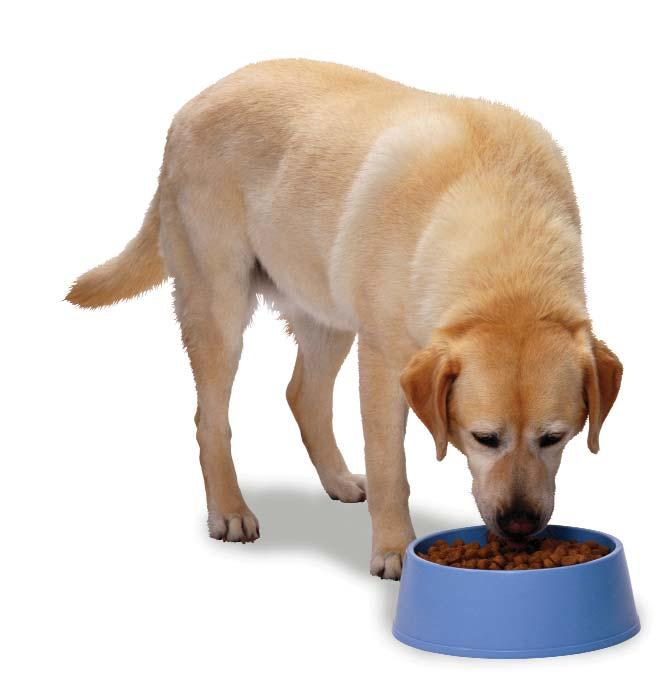
A few years ago there was a study published regarding pet food intake and longevity. Two groups of Labrador retrievers were followed from birth to death. One group was fed as much food as they wanted; the other was fed 25% less food than the amount the first group ate. The findings were stunning.
The researchers found that the individual that ate less food were thinner. (Actually that finding did not surprise anyone). But, they also found that the thinner dogs lived on average 1.8 years longer than their pudgy counterparts. Furthermore, for the slim Labs there was a 2.8 year delay in the onset of the symptoms of arthritis and other chronic diseases. So we’re talking not only quantity of life, but also quality of life.
You might think from the significance of the longevity difference in the above groups that the overweight dogs must have been extremely fat. In truth, the average body condition score (a rating of the amount of fat vs. muscle with 1 being emaciated, 9 being extremely obese and 5 being ideal) for the short-lived dogs was 6.5 out of 9. So, it does not take much extra weight to put your pet in danger.
Unfortunately, pet owners in general have a bloated idea of what a fit pet should look like. Studies have shown that people consistently underrate their pet’s body condition score. For your pet’s sake, you need to be able to objectively evaluate your pet’s weight.
There are several ways to check your pet’s body condition score. First, look straight down on your pet. There should be a narrowing of his body contour just behind the ribcage. (It’s called a waist for a reason). Looking at your pet from the side, the abdomen should tuck up behind the ribs. Finally, feel the sides your pet’s ribcage, right behind the shoulders. You should be able to easily feel the ribs (but not see them). If instead you can pinch an inch, your pet is overweight.
Overweight is defined as a pet being 10% above his ideal weight. Obese is defined as a pet being 20% over his ideal weight. Taken together, these two conditions are the second most common diagnosis for middle-aged dogs and cats (those between the ages of 5 and 11). According to a recent study, 34.9% of dogs are overweight and 6.7% are obese. The reality for cats is worse; 34.3% are overweight and 9.7% are obese. Two extra pounds on a ten pound cat is the difference between fit and obese!
The formula for weight loss is simple; put fewer calories in and burn more calories off. Of course just because something is simple does not mean it is easy. Just like in people, a weight loss program for your pet takes discipline and must become part of a healthy lifestyle. First, have your veterinarian help you establish a target weight.
Be sure to feed your pet the appropriate amount of food. Realize that for millions of years, dogs and cats evolved in an environment where food was scarce. Their DNA tells them that each meal may be their last. Also be aware that pet food companies do quite a bit of research on product palatability. The companies know that when pets seem to enjoy their food,
the pet owner will keep buying it. They use irresistible, artificial or “natural” flavorings to entice pets. I fear that for some pets it may be impossible to feed enough food to satisfy them. For this reason, free feeding (just keeping the bowl full) is out!
Feed your pet a measured quantity of food each day. The amount to feed should loosely follow the feeding guidelines on the food label. There are two things to keep in mind when using the feeding guidelines. One is that they are based on the animal’s ideal weight, which may be less than his current weight. The other is that pet food companies often seem to overestimate the amount of food a pet needs, so be prepared to taper meal portions down quickly.
There are two reasons I prefer canned or raw foods over dry food for weight loss. One is that dry food is inherently high in carbohydrates (usually around 60%). The carbs are necessary to bind the ingredients into a kibble. Even grain-free, dry foods have some source of carbohydrates. Much research indicates that high carbohydrate diets lead to weight gain. While the Atkins diet may or may not be best for people, there is no doubt that it is ideal for dogs and cats. After all, they invented the low-carb diet and evolved eating it over millions of years.
The second reason I prefer raw or canned pet foods is that by definition, dry pet food has very little moisture, making it more calorie-dense. Canned and raw pet foods, by contrast, contain about 75% water. All that calorie-free water fills up the pet’s stomach without piling on the pounds.
I have found that feeding pets twice daily, instead of only once, is helpful for weight loss. If a pet eats one meal a day, his stomach gets stretched which makes him feel even hungrier by his next meal time. Feeding an animal twice daily keeps his satiety level on an even keel.
Minimize treats! This pet “junk food” is often just as unhealthy as is the human counterpart. Instead, give him a fiber-filled veggie (like a carrot or green bean) to chew on. Giving him a treat when he begs or gives you “the look” only re-enforces that behavior – and nobody likes a moocher.
Another problem to address is our modern, sedentary lifestyles. It is important to realize that our pets’ wild counterparts do not get a free ride; they have to hunt for their food. To maintain an appropriate weight, pets need lots of activity. Make time to play fetch with your dog and go for walks as often as possible. Cat owners can use a laser pointer and other toys to help with kitty calisthenics. Be aware that obese pets may need to build up their exercise tolerance slowly.
Finally, I would suggest weighing your pet every two weeks. Keep track over time and adjust the animal’s food quantity and activity level as needed to reach the goal.
As with people, weight issues in dogs and cats seriously affect their health. Fat is a metabolically active tissue and promotes inflammation. Excess fat may predispose your pet to arthritis, diabetes, heart problems and other diseases. If you find that your pooch has packed on a few pounds, you can help get him back on track in a healthy way so you both can live a long, happy life together.
HOLISTIC CARE
On a Wing and a Paw… Chaos and Order
An elderly terrier comfortably rests upon a favorite footstool. A giggling toddler, rattle in hand, wobbles toward the footstool. The toddler startles the sleeping terrier who reacts with snarls and snips. Instantly, the mother flies toward the scene, flinging the terrier off of the footstool. The grandmother rushes to the aid of her terrier who is hurdling through the air. Chaos abounds, adrenaline surges, feelings are hurt. I receive a call from the grandmother.
The grandmother asks: “Is my terrier okay physically and emotionally?” “How does he feel toward my daughter and grandson now?” “Can the toddler and terrier remain in the same room together?”
The terrier tells me he felt temporarily threatened, yet still feels loving and friendly toward the toddler and the toddler’s mother. He senses rejection from the toddler’s mother and feels confused about that. His left, hind leg and low back feel sore. I explain why he was flung from the footstool. He seems to understand and is not traumatized.
One week after our initial talk, we communicate again. The toddler’s mother and grandmother make some agreements. The toddler and terrier can play together while under supervision. If supervision is not possible, the terrier will go in a room secured behind a gate. The family and terrier choose love, common sense and harmony. All of our pets give us opportunities to experience both chaos and order.
Years ago, another terrier became a teacher for me. He was aggressive towards dogs, strangers and some family members. During our visit at his location, his people restrained him with a muzzle, collar and leash. The terrier told me his story, and I attempted to convince him that he was safe. I encouraged him to feel comfortable around friendly people, especially me at the time.
At the end of the session, I reached for my pen on the coffee table. The terrier lunged, the muzzle slid and the leash released. Instant chaos. I felt a quick sensation hit my face. The woman’s eyes got large and she said, “You might want to go to the bathroom and take care of that.” Reflected in the mirror was a thin line of blood flowing down my right cheek. What happened to the Disney version of magically transforming the beauty from the beast with this terrier? I was barely nicked, yet, it served as a wake up call for me. Since this experience, I’ve learned to manage my expectations, especially with aggressive dogs, and to flow with the unexpected.
Chaos, disguised as terriers who lunge, cause our bubbles of perception to burst. Something inside us cracks open; maybe a lack of awareness, a fearful reaction, or a Disney-like fantasy. Chaos provides an opportunity for greater awakening and expanding our capacity for love and harmony. May we all learn from our teaching pets. May we choose to let the light and love in through the unexpected, bubble-bursting yet necessary, cracking open.
Listening lightly,
Renee
CHARTIERS CUSTOM PET CREMATION
Larry & Lynne Walther 412-445-8743 LandLFurryFriends@msn.com
Please support our Advertisers who make this publication possible.
ADVERTISERS
All Natural Hoof Care (see ad pg 5)
Angel Ridge Animal Rescue (see ad on inside front cover)
Answers Pet Food (see ad pg 20)
Because We Care Petsitting (see ad pg 12)
Coventry Equestrian Center (see ad pg 19)
DogWatch (see ad pg 12)
Holistic Care for Animals (see ad pg 19)
Judith Levy (see ad pg 16)
J & D Home Improvements (see ad on inside front cover)
KS Jones Photography (see ad pg 5)
Little Piggies Pet Sitting (see ad pg 2)
L&L’s Furry Friends Pet Service (see ad this page)
Pet Stop Pet Fence Systems (see ad this page)
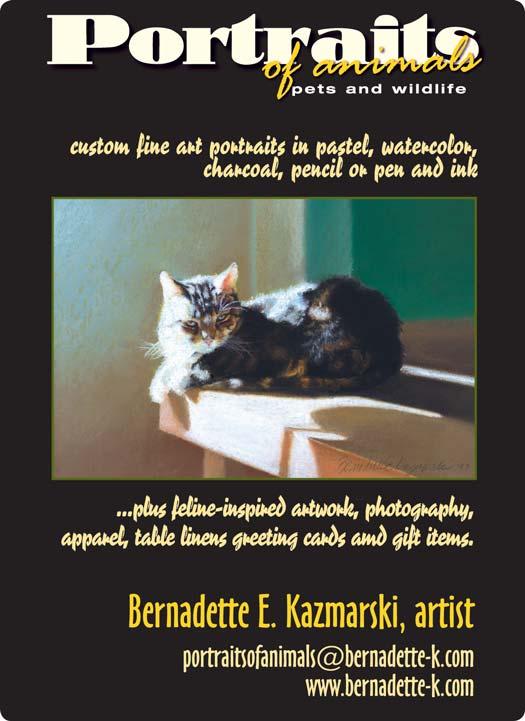
Portraits of Animals (see ad pg 3)
Renée Takacs, M.A., Intuitive Healer (see ad pg 11)
The Rogan Rexford Blood Bank (see ad pg 24)
Success just Clicks (see ad this page)
HOLISTIC CARE
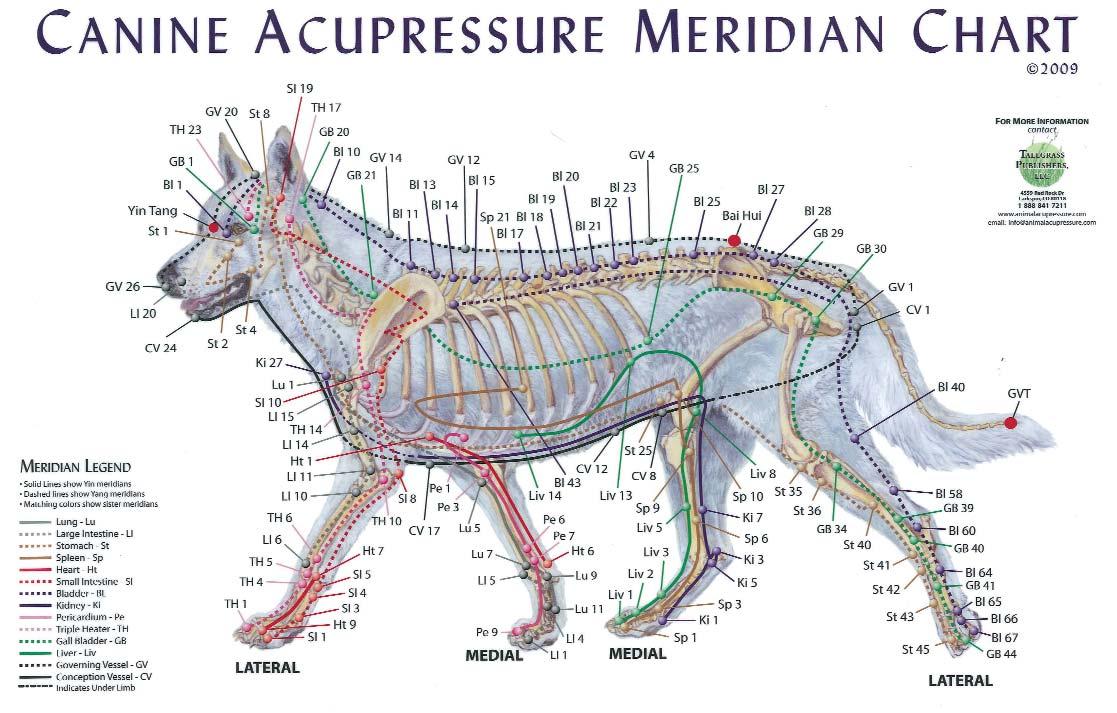
Meridian Tapping is a healing technique using specific points on your cat or dog’s body known as acupoints and utilizes the same systems as acupuncture. The theory is MTT assists in removing disturbances in the body that may impede good health and a sense of well-being. It is believed MTT addresses energetic disturbances caused by negative experience such as a history of neglect or abuse, as well as negative states such as fear and frustration, possessiveness or extreme excitement. It also addresses energetic disturbances created by unhealthy physically conditions and mental confusion etc. Judith believes many of our cats and dogs who are rescued have these disturbances
electromagnetic and more subtle energies are important for physical, mental and emotional health and for fostering well-being. MTT is a comfortable and non-invasive.
Meridian tapping techniques for your pet may be helpful in:
• Aiding in correcting any behavior problem, including separation anxiety
• Eliminating or reducing fear
• Reducing general anxiety
• Decreasing effects of trauma from abuse or severe neglect that cannot be corrected with standard training methods
• Changing ritualistic behaviors such as spinning and licking paws
• Restoring optimism in an animal that has lost interest in life
• Reducing physical discomfort caused by illness or old age
Meridian Tapping for Pets
Tapping techniques work alone or in combination with behavioral modification programs. MTT may help accelerate physical and emotional and behavioral healing. Tapping may also be very effective in eliminating blocks to success for a cat or dog who seems stuck in problematic behavior patterns.
MTT is the name for a variety of “meridian tapping techniques” that use the ancient Chinese meridian system (energy pathways) to balance an individual’s energy with a gentle tapping procedure which stimulates designated meridian end points on the face and body. The prevailing premise of MTT is that the flow and balance of the body’s
• Improving overall health and increasing a feeling of well-being
• Although Meridian Tapping Techniques are considered experimental they appear to have promising mental, emotional and physical benefits. There is promising research being conducted that indicates the safety and efficacy of MTT
• Tapping techniques, in combination with other energy practices implemented by Judith, may help to accelerate your pet’s healing process and behavior change. Judith often combines Reiki and the Bach Flower Essences® in the same session with MTT. These methods also complement and can be integrated with traditional Veterinary care.
• Pet guardians have reported seeing a positive change in their dog, cat or horses condition or behavior from just one MTT session. In other cases more sessions may be advised.
• Judith regularly helps pet guardians with behavioral issues that were not able to be corrected with traditional dog or cat training.
•It is believed once you remove the energetic disturbances that have caused the problem behavior or physical illness it’s possible to see improvement. In more extreme cases, maintenance sessions are advisable but with occasional sessions, good balanced can be maintained.
The number of sessions of course, depends of the severity and the complexity of the animal’s problem. Although it is impossible to guarantee a particular outcome, often, a single session may be sufficient and at times more sessions may be advised. When implementing a modality that is believed to help the body heal itself, it is necessary to put the body back in balance several times before it will hold. For example, multiple sessions may be advisable as a complementary method to use in conjunction with traditional veterinary services in the following situations:
• Dealing with an animals that have experienced abuse or neglect in the past
• Post surgical healing
• Creating comfort in old age
In Judith’s experience three to five sessions are generally enough to see good improvement.
Meridian Tapping for People
MTT is the name for a variety of techniques that use the ancient Chinese meridian system to balance an individuals energy with a gentle tapping procedure which stimulates designated meridian end points on the face and body. The prevailing premise of MTT is that the flow and balance of the body’s electromagnetic and more subtle energies are important for physical, spiritual, and emotional health, and for fostering well-being.
Typically, in MTT the practitioner guides you to tap gently on your body’s meridian points while saying specific phrases that help you to focus on the issue you are trying to heal or resolve. Judith regularly works with clients to assess their unique situations and prescribe tapping algorithms, often in conjunction with additional energy health practices, to help achieve positive outcomes. It is believed that meridian tapping techniques may be helpful in:
• Relieving or eliminating chronic conditions
• Reducing Stress
• Overcoming a problem habit, such as smoking or overeating
• Increasing healing from illness or injury
• Increase healing from stressful life events
• Removing obstacles to achieving a goal
• Improving overall health and sense of well-being
MTT can work with tapping alone, but it is believed that adding simple phrases to your tapping will help you focus and release disturbances more quickly and completely. Judith will help you discover the phrases best suited to your personal situation as part of her MTT work with you.
• Although Meridian Tapping Techniques are considered experimental they appear to have promising mental, spiritual , and physical benefits. There is promising research being conducted that indicates the safety and efficacy of MTT.
• MTT can be used alone or in combination with other methods. Using tapping techniques with other energy practices may help to accelerate your healing and/or success.
• Although it is impossible to guarantee, people often report complete relief from just one MTT session. In other cases more sessions are advised. A client may come for a session and then return at a later time with a different issue to be addressed.
• Sometimes the issue the person focuses on in the first round turns out not to be the core problem. For example, a headache may turn out to be derived from your stress over a troubled relationship. If this were the case, once this has been identified, you may want to focus on the relationship with tapping. Judith can give you an idea of what to expect in your specific case.
It is believed once you remove energy disturbances that are causing illness or blocking the achievement of a goal, you make it more likely that you can achieve that goal!
Judith Levy is a Certified Energy Health Practitioner as well as a Reiki Master practitioner trained under multiple Reiki masters, including renowned William Rand at the International Center for Reiki training. Because Judith has achieved training in multiple energy modalities and can offer behavioral solutions for your pet, you can receive the benefits of all these modalities for self and your furry family member!
Subscribe, Submit, Upload!
Submit your rescue organization’s info for a FREE listing on our directory. Submit your business info also for FREE listing on our directory.
No website for your small home-based pet or wellness business?
Add a Featured Listing on the PPC online Directory for a small yearly fee and upload photos and detailed info about your business!
Become a Media Partner with PPC Magazine!
A Media Partnership with PPC includes:
• Ad in print or online (free design)
• A Free Featured directory page on our website with your business info, photos and link to your website ($50.00/year value)
• Your logo in our monthly newsletter
• PPC promotes your business at our events with your literature and product samples
• A subscription to PPC Magazine and copies for your business
• Community Calendar link to your website or MeetUp site
• We accept content contributions (print or web articles promoting your business)
One Hour Wellness Clinics™ Programs for Pet Guardians &HEALTH WELLNESS forGUARDIANS
UPCOMING CLINICS
PEOPLE AND PET CONNECTION: IT’S DEEP, ITS LOVING AND IT FEELS GREAT!:
Do you sometimes feel guilty for not spending more time with your pet? Do you think your pet needs more stimulation but you don’t have much time to provide that? Or do you have the desire to deepen your connection with your pet? In this clinic Judith will teach you how to better meet the needs of your pet when you have a very busy life style. You will experience a deeper heart connection than your previously thought possible. This clinic is also great for people who are home bond and want to give their pet more. This experiential/ informative workshop is fun, rewarding and will benefit both you and your pet!
South Hills Location: Friday, January 18th, 6pm-8pm East End Location: Monday, January 21st, 6pm-8pm
BE THE LEADER: BE IN CONTROL WITH POSITIVE METHODS INSTEAD OF FORCE AND FRUSTRATION:
Do you experience your dog as running the show? Is your Canine listening only when it is convenient for him to listen or only when you have a treat in your hand? Do you find yourself giving in because you get frustrated when you dog does not listen? This One Hour Clinic will change your relationship with your dog, leaving you feeling more in control and closer to your pet. AND, your dog will happier and more calm as well!
South Hills Location: Friday, February 22nd, 6pm-8pm East End Location: Monday, February 25th, 6pm-8pm
LIVING WITH THE LOSS OF A PET:
Grief can be painful and positive at the same time. This One Hour Wellness Clinic will give you a space to have your experience of loss without judgement. We will help you to feel that it is ok to have questions and to have the rest of your process in whatever way feels right to you! We will address the benefits of the use of a ritual and will help you create other ways to have peace around the loss of your beloved pet.
South Hills Location: Friday, March 15th, 6pm-8pm East End Location: Tuesday, March 19th, 6pm-8pm
HAVING A BABY? WHAT ABOUT THE DOG?:
Nothing is more exciting than bringing a new baby home! Would you like to learn how to create an atmosphere of acceptance and avoiding unmanageable chaos? Attend this clinic to help your dog adjust to being a positive member of your newly expanded family. With the material and techniques you discover in this one-hour clinic, you’ll start preparing your dog for the baby two months before the birth. You’ll learn about wise practices to help create a safe environment for your baby as well as how to manage time and space after your help goes back to work!
South Hills Location: Friday, April 19th, 6pm-8pm East End Location: Monday, April 22nd, 6pm-8pm
To Receive Registration Form: info@judithlevywellness.com More Information: www.judithlevywellness.com
SPONSORED BY: www.pghpetconnections.com
WELLNESS FOR PEOPLE AND PETS
Holistic approach to behavior
Specializing in treating fear and trauma in cats and dogs
Judith Levy M,Ed., CEHP, RMT Educator
parakeets, cockatiels, conures, macaws, and cockatoos
To better prepare families to care for pet birds, the National Aviary is offering a program entitled Positive Parroting, which consists of three sessions to be held on January 19, February 16 and March 23rd from 1:00 pm – 3:00 pm. at the Aviary.
“Many people don’t realize that pet birds not only require regular attention,” says Cathy Schlott, manager of Animal Training at the National Aviary, “but they also need specialized housing, nutrition, and even toys to maintain proper mental and physical health. Even a small bird, like a parakeet, has these needs.”
The course will explore some common behavioral issues that parrot owners face, as well as information on healthy diets, appropriate housing, veterinary care and positive reinforcement training.
commitment for a pet owner. Pet parrots are also hard-wired to make contact calls and loud sounds throughout the day. For example, if an owner leaves the room, a parrot may start to contact call, their way of yelling, ‘Where are you?’” And parrots, which are among the most intelligent of birds, need plenty of mental stimulation. A bored parrot can develop bad habits.
Notes Schlott, “Some of the traits that make parrots so appealing –their long lifespans, their abilities to mimic sounds, and their intelligence – also make them challenging to live with.” Medium-sized parrots, such as Amazons and cockatoos, can easily l ive 40 years or more, which is a very long
The key to living successfully with pet parrots is to encourage appropriate natural behaviors. Pet parrot owners can accomplish this by learning some basic training techniques, which Schlott will introduce and demonstrate during the course of the workshop.
“These training techniques are easy to learn and practice at home,” says Schlott. “Not only do they help with challenging parrot behaviors, these techniques also help create better relationships between parrot owners and their birds. And these training methods can work with any pet – not just parrots.”
The National Aviary’s workshop will include training demonstrations with the Aviary’s parrots, nutrition and health information, tips on housing, and a session on making inexpensive parrot toys at home. Participants will make a one-of-a-kind toy to take home during the workshop.
EQUINE AFFAIRS
Have you ever noticed any lumps or bumps in the skin of your horse? If so, you should have these evaluated by your veterinarian. These can range from innocuous bug bites to bacterial/fungal diseases, or skin tumors.
What’s that bump? Equine Sarcoid
By Brian S. Burks, D.V.M., Certified Equine Specialist
The sarcoid is the most common skin tumor in the horse. Their behavior is completely unpredictable. They can be ‘silent’ for many years and then suddenly begin to grow quite rapidly. Sarcoids tend to be locally aggressive, but seldom spread from one site to another; even though they do not spread, they can become quite deep, involving the underlying soft tissue and bone. They do not spread to internal organs.
The etiology of the equine sarcoid is unknown. It has been said that a bovine (cattle) papilloma virus is the cause, and their DNA has been found in the sarcoid, but no active virus has ever been found. Other types of viruses have also been proposed.
Sarcoid types include the occult, verrucous, nodular, fibroblastic forms, and mixed sarcoid, containing features of several of the tumor types. The occult form occurs mainly in thin haired areas and is fairly flat. They occasionally open and drain. They may only show small areas of hair loss initially, before becoming an overt tumor. Verrucous sarcoids are a bit larger and form more crusts. They have local skin thickening around the main area, indicative of further tissue invasion. Nodular sarcoids are large, firm masses in the skin and subcutaneous tissues. The last type, the fibroblastic sarcoid is much larger and appears similar to exuberant granulation tissue, or proud flesh. These tumors are quite vascular, and bleed easily. They may be pedunculated or have a larger base. It usually develops at the site of a wound, especially on the limb. Many times these various tumor types are mixed, with occult and verrucous and nodular forms all occurring together.
Differential diagnoses include papillomatosis (warts), chronic blistering, hyperkeratosis (thickened skin from something like sweet itch), equine sarcoidosis (granuloma) exuberant granulations tissue, and squamous cell carcinoma. Sarcoids most closely resemble exuberant granulation tissue.
All skin tumors should be sampled and sent for histopathology to determine the type of tumor and distinguish sarcoids from granulation tissue or other infections. Histopathology also allows assessment of the margins, to determine if the entire tumor was removed. Simple removal tends to make sarcoid tumors much more aggressive, so that they will enlarge rapidly. This is because the entire tumor has not been removed due to its invasion of surrounding skin.
Treatment modalities are many, and only very rarely do these tumors resolve on their own. Cryotherapy (freezing with liquid nitrogen) immunologic treatment with BCG or Eqstim, and repeated intralesional injection with cisplatin, bleomycin, and 5- fluorouracil (5-FU) have all been used. Cisplatin and 5-FU are the most successful. Currently, sarcoids may be implanted with cisplatin beads, to allow a
longer exposure time of the tumor to the cisplatin. Another way to administer cisplatin is via electro-chemotherapeutic poration. This equipment opens the cell membranes to cisplatin, allowing more of this chemotherapeutic agent to get inside the cell to effect cell death. Unfortunately, the expense of the equipment severely restricts its use. Bleomycin is another such agent, but it has not shown much success.
Other topical anti-tumor medications have also been used, with varying success, including Aldara and XXTERA. The latter, in some cases, may transform the tumor, making it much more aggressive. Also transplanting some of the tumor to a distant site in the horse has been used, with the thought of immunizing the patient to the tumor; this has enjoyed only limited success.
I personally have the best result using a surgical laser combined with cisplatin and sometimes 5-fluorouracil. This removes most of the tumor, destroys cells several millimeters beyond what the eye can see, and leaves medication locally to kill any tumor cells that may remain. If the tumor is able to be completely removed via excision (usually only small lesions) this is best, and is considered curative.
Refractory cases can be treated with local radiation therapy with Iridium 192, known as interstitial brachytherapy, by implanting radioactive beads in the tissue. The beads are left in until a pre-determined dose is reached. Patients must be quarantined while the radioactive implants are in place, restricting this modality to a few referral centers. The success rate approaches 100%. These tumors are less ably treated by Teletherapy or Tomotherapy (this combines a CT with Teletherapy) an external radiation beam, which requires specialized equipment and repeated general anesthesia and enjoys a success rate of less than 30%.
Thus, the equine sarcoid is the most common skin tumor in the horse. Fortunately, although it can be locally aggressive, it normally does not spread to distant sites (metastasize). There are several different types of sarcoid that vary in appearance, and may be confused with other types of lesions, including other tumor types. Simple surgical removal or biopsy is not recommended because this tends to make sarcoid tumors extremely aggressive, growing very quickly, and spreading through the local tissue. Removal with an Nd:YAG laser, combined with local anti-tumor medication gives the best success rates, although very occasionally some tumors may persist. Brachytherapy is the most successful treatment modality for refractory tumors, but requires specialized centers. You and your horse should seek treatment for any mass that is actively growing.
Dr. Brian Burks is the owner/veterinarian at Fox Run Equine Center, a 24-hour medical-surgical center near Pittsburgh, Pennsylvania. He is board certified by the American Board of Veterinary Practitioners (Equine Practice). This certifies him as an expert in all categories of equine practice. www.foxrun.net, brianburksdvm@comcast.net
•
• Improve the interaction and communication with your horse Call 724-206-9902, or visit www.CoventryEquestrianCenter.com
The English Ltd. Horn
People
Did you know
that your business (including non-pet related) can sponsor an ad for a non-profit Rescue group?
Call us to find out how you can support your favorite local ANIMAL charity!
On deathbed, was carried into office for first few visits...
Dear Dr Savko,
Thank you so much for everything you have done for Piper. It is just amazing to see him walk into the office on his own power! He is much more active and “nosey” again. It is so heartwarming to see that big black gumdrop nose right there curious as to what you have in your hand or what you are doing.
Each day seems to give him some sort of improvement no matter how tiny-still improvement-he hunts for a chewey or sees us going in the car and thinks he should be going too!
I have to admit when you said we would space the sessions out for 3 weeks I felt a panic inside but during the second week I realized we were going to be okay. We were going to make it to the third week! We were still moving forward and not loosing ground. I know that I could have called you if I needed to but we didn’t have to! Isn't that wonderful?!
Piper gave me the best birthday present I have ever had when it was the first time he walked into your office on his own!!! He has been a blessing to us and you have been a blessing to him. Thank you!
PRESS RELEASE For Immediate Release
WHAT’S THE HYPE? Veterinarian Blogs about Her Dogs’ Transition from Kibble to Raw Food
FLEETWOOD, Pa. –For one full year, Dr. Amy Nesselrodt, a licensed veterinarian and a 1988 graduate of the University of Illinois College of Veterinary Medicine, fed her dogs a raw food diet using Answers Pet Food (www.answerspetfood.com).
When Nesselrodt started using Answers Pet Food, it was labeled for supplemental or intermittent feeding only, and she wondered why it wasn’t fed to pets as their sole means of nutrition. To answer her question, Nesselrodt proposed a raw feeding trial, using her dogs as the subjects, to Jacqueline Hill, Vice President of Answers Pet Food.
“A trial was not without risk to Answers,” Nesselrodt said. “A lot could go wrong with dogs in a year –especially dogs not in a laboratory setting. Not only did Answers support this idea, they supported my commitment to maintaining an honest, open blog.”
Nesselrodt’s blog, “Dr. Amy’s Raw Dog Food Research (http://dramyrawdogfoodresearch.com/RawDogFoodResearch/ Welcome_1.html), outlined her project from the beginning with her initial questions about the value of a raw food regimen for her dogs to her observations of her dogs after six and 12 months of eating Answers Pet Food. Nesselrodt completed her personal study in May 2012. Nesselrodt’s goals for the trial and the blog were to raise awareness of feeding dogs a raw food diet; to increase people’s interest in feeding raw to their dogs; and to bring up topics and issues which she believes need to be addressed in the pet food industry.
At the end of her study, Nesselrodt was pleased with her dogs’ overall health. She noted that she’ll continue to feed Answers Pet Food to her dogs because she believes that Answers provides superior, high-quality pet food compared to traditional kibble.
“I’m comfortable feeding Answers to my dogs because I know the formula provides appropriate whole, food nutrition to them,” Nesselrodt said.
And Dr. Nesselrodt’s findings could debunk the AWMA’s stance against feeding raw to dogs. Of course, more formal, independent studies need to be done to convince them to change their minds, but Nesselrodt’s informal study could open up the debate about the benefits of a raw pet food diet.
Answers Pet Food offers unique pet food products in new raw forms and innovative green packaging that comes in two varieties: Straight and Detailed. The Straight formula provides the right combination of meat, organ meat, and ground bone, and it’s available in chicken, beef, and pork.
The Detailed formula is a full, ingredient product made with meat, organ meat, ground bone, eggs, vegetables, fish oil, montmorillonite, Kombucha, and natural trace minerals.
And Answers Additional goat’s milk enhances your pet’s diet. It’s made with grass-fed goat’s milk, cinnamon, honey, and cultures and is great for fussy eaters.
Answers Pet Food Company consists of individuals with over 50 combined years of experience in the raw pet food industry.
COMMUNITY EVENTS
COVER CONTEST WINNER!
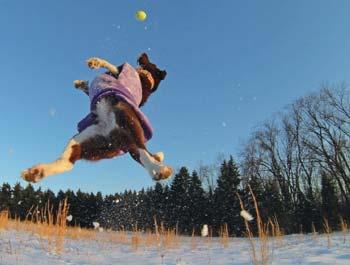
Shayne is a 7 year old border collie mix rescued from Western PA Humane Society. She lives for any type of sport or game –K9 Disc, Agility, Rally-O, fetch, nosegames and more. Many of the things she loves to do have her doing insane stunts, flips, or high-flying vaults –she is absolutely fearless. I love seeing this side of her because it is a far cry from who she was when I adopted her. She was more than just fearful when I adopted her and ended up having quite a few behavior challenges that we had to work through. Seeing her become the dog she is today and watching her do the things she’s able to do has been the most amazing experience, every time I think about it I cannot help but smile. There are many moments that I think about her transformation so she brings many smiles to my life.
Tena Parker
Visit our website to see picture of the runners-up and other contest entries, and thanks to all who entered!
HELLO BULLY’S 5thANNUAL LOVERS NOT FIGHTERS GALA FEBRUARY 16, 2013
To benefit Pit Bull Rescue, Education and Spay/Neuter.
Join us for our 5th Annual “Lovers not Fighters” Gala on Saturday, February 16th at 7:00pm at Soldiers and Sailors Memorial Hall in Oakland. Featuring a red carpet, hors d’oeuvre and dessert buffet, cash bar, raffle, silent and live auction, special guests and a presentation by Hello Bully.
Tickets will be available for purchase at www.hellobully.org
General Admission: $50 per person
VIP Ticket: $120 per person (Price includes admission to the Champagne Rescue Reception from 6:00-7:00pm, premium seating in the VIP balcony area and premium gift bag).
For an interview or additional information, please contact Nicole Meloy at (724)454-9718.
ANIMAL BEHAVIOR
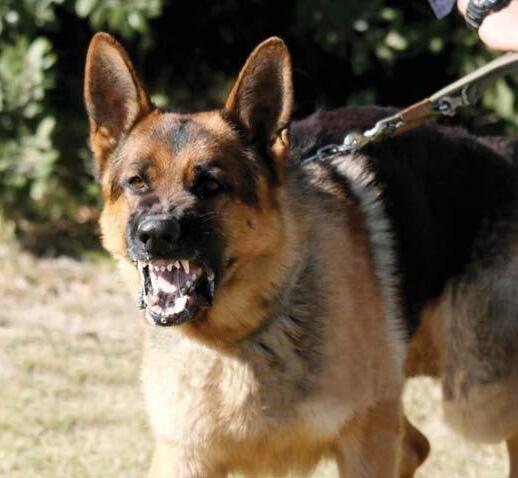
Dog aggression can be responsible for the injury of other pets, family members or strangers. Letting your dog behave aggressively can lead to veterinary or physician expenses, lawsuits or even death.
Chartiers Custom Pet Cremation (see our ad page 12) is partnering with Penny Layne to offer a FREE two hour course to help you not only understand aggressive behavior in dogs but to help you handle it either in your own pet or if you encounter it from a strange dog.
Class will cover the types and signs of aggression and predicting aggression through body language, as well as how to prepare for a walk with your dog and what to do if you or your dog are attacked.
Class will be held:
Bridgeville Public Library: Saturday, January 19, 1-3 pm
Mt Lebanon Public Library: Tuesday, January 29, 7-9 pm
Monroeville Public Library: Tuesday, February 12, 7-9 pm
Bethel Park Public Library: Wednesday, March 27, 7-9 pm
Although the class is free, preregistration is required to assure sufficient materials are available on the day of the class.
Please call Deb Chebatoris of Chartiers Custom Pet Cremation at 412-220-7800 to register.
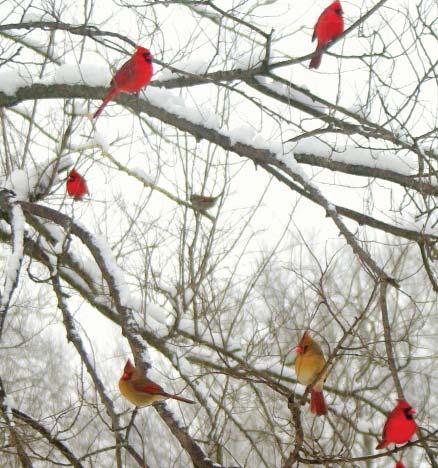
As I was looking out our picture window this morning at yet another snowstorm, I gave thanks for the birds inhabiting our back yard. We have several varieties, but cardinals are my favorite. The males stand out like bright red rubies in the snow-covered bushes.
Cardinals are remarkable birds because they don’t migrate for the winter. We can have tough ones here in Central Ohio –snow, ice and bitter wind chills. Despite the bitter conditions, they continue their vibrant songs. Did you know that the pitch at which birds chirp is the ideal frequency for plant growth? And we thought they were just talking to each other.
Even more wondrous are the Robins. They have always flown south for the winter, and their return cheerfully marked the beginning of spring. Our Robins have stayed around the last few winters, which is puzzling. I’ve heard different theories as to why this is happening. One possibility is that they’re re-adjusting to the change in the earth’s magnetic field. I’ve also read that our winter Robins may actually have migrated from further north. Seems to me they’d prefer Florida’s weather to Ohio, but when I think about what my brother is experiencing in Minnesota, I guess Ohio looks pretty darn good.
That who study energy medicines know that red is the color of our root chakra, the major energy center concerned with survival. A healthy root chakra helps us stay grounded and know we are safe, no matter what comes our way. As I look at these extraordinary birds known for their red coloring, I think of the intense root chakra strength needed to survive the winter. We could learn something from these beings. This country has been going through some tough winters – literally and metaphorically. We are all bracing against the winds of change. Illuminating the darkness can be frightening, but healing can’t begin until the wound is identified. If Robins have chosen to stay in the midst of blizzard conditions, I think we can too. If they can survive, so can humanity.
Confession By Way of Ruse SHORT STORIES
by Wayne Vanderaar
I’ve got to get this out before either of us is gone. You see, Gwen and I are both getting on and I don’t know how much time we have left together.
It was not love at first sight, for sure, she was much younger than I, a child really when we first met. Nevertheless, we shared an easy early friendship, spending our early months together around the neighborhood. We sort of eased into getting used to each other in innocent conversation and casual walks in the park; nothing more although we saw each other daily.
As time passed, Gwen began to fill out and I must confess, myself always having an eye for a pretty face and easy grace, began to long for a more serious relationship. In her demure, patient way, she sensed my growing affection for her and, gradually to my good fortune, she reciprocated.
We became quite a pair, developing an uncanny knack at anticipating each other, even without talking. We reveled in running across the hills together and especially enjoyed the companionship of other pairs along the quiet paths in the woods. Of course, we often spent private hours doing the usual petting and caressing when alone. She seemed to invite my touch and I certainly enjoyed her nuzzling. Somewhat bashful and old-fashioned, I always looked around in public before giving her a quick kiss. I still do. She has a funny way of tossing her head at me and she has this favorite spot on the right side of her neck, just below her ear… It’s a good thing she’s always been able to keep a secret!
Oh, I’ve got to tell you, we’ve been through some tough times for sure! She’s always had expensive tastes but I’ve always thought that she was worth it. I’ve seldom been able to say “no” to her and this has caused a few “bumps” in our relationship. I suppose the surgery she required at one point after a sports injury stressed us both the most and her rehabilitation almost drove us apart. We stuck it out though. If anything, the patience I learned in dealing with her therapy brought us closer. Patience is a virtue that grows in living with her kind and is not without progress and reward.
We can all help one another through the process, whether it is through a kind word, a smile or speaking the truth even when others don’t want to hear it. Let’s not forget the wildlife going through this time with us. Robins are adjusting to their new winter home, just as we are working through our changes. They need fresh water and food – especially fruit. Taking care of them opens your heart chakra and strengthens your own roots.
Dr. Susan Wagner is a board certified veterinary neurologist whose pioneering work acknowledges the bioenergetic interaction between people and animals. She is an advocate for change in the area of interpersonal violence and animal cruelty, and works toward a greater understanding surrounding the health implications of the human-animal bond. Dr. Wagner is an Adjunct Assistant Professor at The Ohio State University Veterinary College, a Level IV Healing Touch for Animals practitioner and co-author of Through A Dog’s Ear.
Perhaps you know the lines of Browning’s poem “…Grow old with me, the best is yet to be –the last of life for which the first was made.” This really hit home. The vet tells me that Gwen can no longer jump and shouldn’t gallop hills, but I’ve learned to live with that, for there are lots of things I can’t do any more either. Gwen, while still beautiful, is beginning to look matronly –kinda catching up with me. No matter, we love each other and will share our older years together.
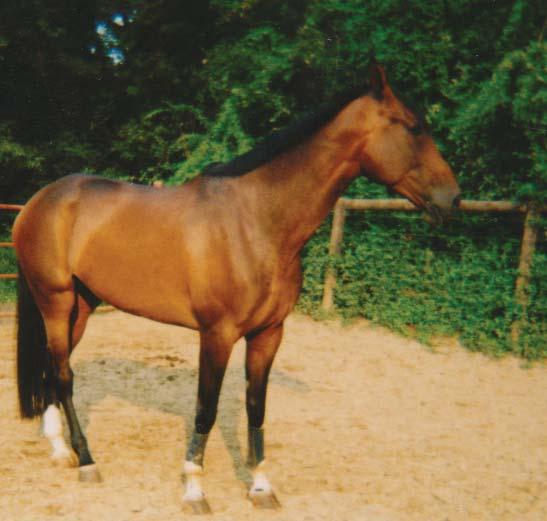
(Gwen is a thirteen year 17h mare living in semi-retirement at Mingo Creek Farm. Her beau is from North Strabane Township).
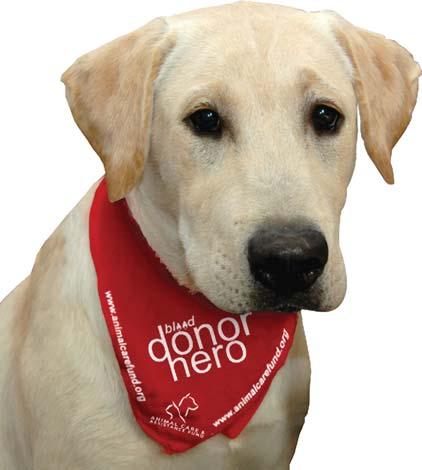
The Rogan Rexford Animal Blood Bank
“Pets Giving Pets the Gift of Life”
• Between 1 and 7 years of age
• Weight: 50 lbs. or more
• Healthy with a gentle temperament
• Current with vaccinations
• Never had a blood transfusion
• Tested negative for blood-borne diseases (free testing by blood bank)
• Must be on heartworm, flea and tick preventative
•Not pregnant or currently nursing
PVSEC (continued from page 7)
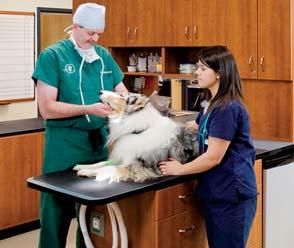
PVSEC offers hospitalized patients very comfortable and impressive wards, in which to rest and recover. The intensive care unit is equipped with supportive equipment, such as oxygen cages and monitoring devices, which can be observed from the main treatment room and the critical care and emergency doctor stations nearby. As with all of the veterinary technicians, the nursing staff is highly trained and gives every patient careful attention and compassionate care. Enough cannot be said about the support staff at PVSEC. Karen Seger, Referral Liaison, states “Most of our support staff members have been here for over 5 years”. The outstanding client care team is there to warmly support clients from the first phone call, to greeting you for a returning appointment. The team is always there to answer questions and assist you through the referral process and follow-up appointments.
HAAWC is a 501(c)(3) organization that honors the Human Animal Bond as a source of wellness for individuals, families and communities.
Guided by the belief that animals are a gateway to human healing, HAAWC intends to develop both urban programs and rural sanctuaries designed to impact community health, safety and wellness.
PVSEC is located at 807 Camp Horne Rd. Pittsburgh, PA 15237. Please call PVSEC at 412-366-3400 or visit www.pvc-ec.com for additional information.
HAAWC is raising funds for upcoming animal-related programming. www.haawc.com