

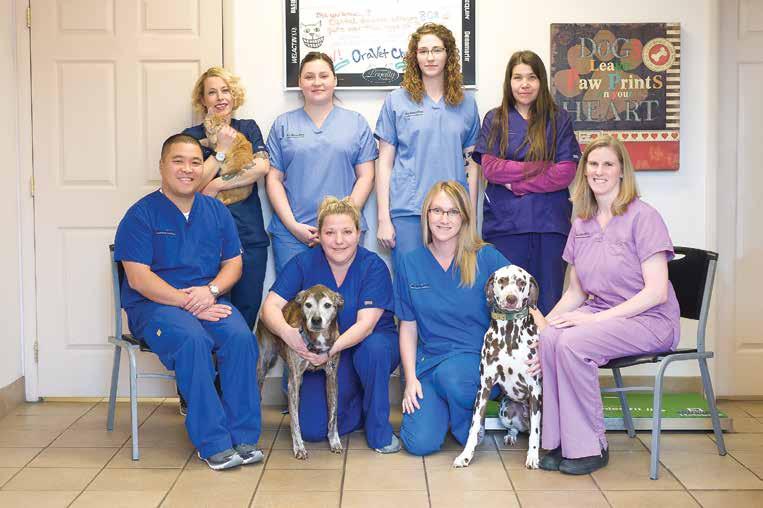
We hope that with each visit you and your pet feel like part of our hospital family.
Free exam includes:
• Status check on weight, nutrition and general health
• Dental check
• Vaccination overview
• Complete wellness services: vaccines, annual exams, etc.
• Emergency and critical care services
• Dentistry & surgery
• Therapeutic laser therapy
• Endoscopy and ultrasonography
• Over 70 years of trusted, compassionate care
&
HOURS MON-SAT: 8:00 AM - 8:00 PM SUN: 8:00AM - 4:00 PM



CORRESPONDENCE
info@pghpetconnections.com
724 -292-7387
All Rights Reserved | © 2018
PITTSBURGH PETCONNECTIONS QUARTERLY
Published by: Pittsburgh PetConnections, LLC. Pittsburgh PetConnections LLC. was formed in 2012. Our mission is to publish a high quality, informative publication focused on the Human-Animal Bond. We support local businesses and also assist local non-profit businesses for pets and people, to give back to our great Pittsburgh communities.
MAGAZINE PUBLICATION STAFF
Carla Mader, Managing Editor
Kara Jones Photography, Photography Kelli Koladish, Graphic Designer
Edward R. Moats, Content Editor
Carla Mader, Sales & Distribution Manager
Edward R. Moats, Media Account Manager
ADVERTISING SALES
Robin Reinfeld, Director of Sales, Pittsburgh 412-780-2254 | rrcd@aol.com
CONTRIBUTING WRITERS
Doug Knueven, DVM, CVA, CVC, CVCH Pittsburgh Veterinary Specialty & Emergency Center
Kristin Hermann April Minech
Bernadette Kazmarski
Edward R. Moats
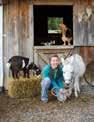
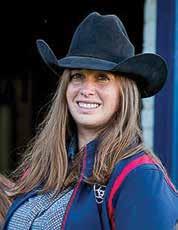
Cover Photo: Dr. Karen Phillips and Hope Haven Farm Sanctuary.
Photo By: Kim Lenz, Behind the Lenz photography


Welcome to our Pittsburgh PetConnections Magazine’s! Fall 2018, Volume 6 Issue 6
PetConnections magazine is focused on the Human-Animal Bond. However, it is, ultimately, about people! We can all learn from the recent heartbreaking tragedy in our own Squirrel Hill neighborhood. We, also, would like to remember the 11 citizens who lost their lives and those who were injured. We, too, would like to honor the local first responders and law enforcement officers from other areas, who were injured and bravely risked their lives to save others. The way our community, the country and the world responded in coming together and denouncing any form of hatred for others, was truly amazing. Our Mayor, Bill Peduto said it well, “We are all One”. Social media engagement was viral with the slogan “We are Stronger than Hate”.
We will persevere and God willing become better for it. I believe there is definitely more good than bad in the world. As animal lovers, I believe our pets make us more humane and teach us empathy for our fellow man. May we never forget, and prayers for all!
CARMAA’s Dogtoberfest event was terrific and growing every year! Please see their ad on page 9 with more upcoming events. See more events listed on page 6, for Animal Friends, Petagogy Pet Stores, PEARL Parrot Rescue. Finally, order your “Most Wanted” Calendar starring Foxy Roxy and Greyson, the Italian Greyhounds, as it benefits The Humane Society of NWPA!
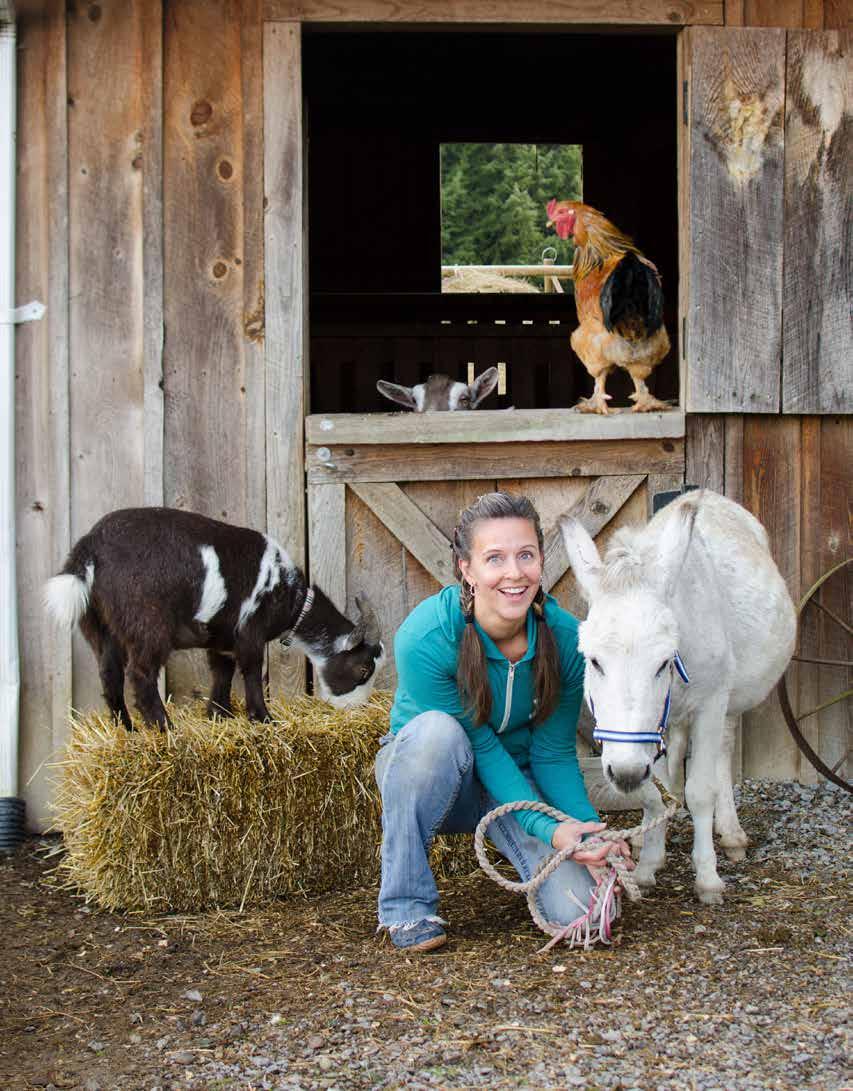
Our cover features DR. Karen Phillips and Hope Haven Farm Sanctuary! See the Featured Rescued article inside, written by April Minech!
We have many informative articles in this issue including Dr. Doug addressing the link between cardiomyopathy and grain-free diets for dogs, in our Holistic Pet section. Also, Dr. Theo Nelson from Animal Friends on What’s the Best Age to Spay and Neuter your Pet. Dr. Rebecca Florig from PVSEC/BluePearl write about emergencies in, “The Nature of the Beast”. Our Kitty Korner features Holiday Dangers for Pets in “Fire & Icicles”, by Bernadette Kazmarski.
As a reminder, PetConnections is published quarterly as follows: Early February, May, August, and November. Our print copy distribution sites will be replenished every 6 weeks. Our online presence has always been much greater than in print with now over 350,000 impressions this year. To subscribe to your own personal copy of PetConnections, please contact us below.
Did you know? PetConnections has evolved into a full-service specialized pet media company, providing services for advertising in print and digital marketing platforms to help our sponsors grow their businesses. Contact us below for information on advertising or sponsoring!
Thank you for picking up this copy of PetConnections. Wishing you all love and peace this holiday season!

Warmly,
Carla Mader Publisher Pittsburgh & Central
Ohio PetConnections Magazine

Please submit any correspondence to: info@pghpetconnections.com Please check us out on the web & subscribe at: www.petconnections.pet. Follow PghPetMag on Twitter and “Like” us on Facebook! http://www.facebook.com/PghPetconnectionsMagazine
Disclaimer: The views expressed in our content does not necessarily reἀect that of PetConnections Magazine. PetConnections shall be indemni ed against damages from content including ads and articles, false advertising libel, trademark infringement, etc.

By Courtney Moffatt
Many people would ask what the need is for an animal reading and what to expect.
What are the benefits of animal communication? An animal communication reading can provide insights into reasons for:
• Depression, anxiety, fear, shyness
• Bad behavior or stubbornness
• Learning about their past
• Relationship issues
• Diet and health issues
• Pet medium for passed over animals
• Lost pet tracking
There are matters to consider as sometimes readings are not black and white. Here are some things to keep in mind.
Not all animals communicate well. Like people, some animals are very chatty while others are quieter. The quiet ones can be hard to get answers from. They either keep everything brief with giving one word answers or sometimes they don’t want to give any information up. Ultimately, it is up to the animal if they want to talk and they control how in depth the conversation will go.
However they are in person with strangers is how they will be during the reading. If a cat is very shy and hides the whole time company is visiting their home, that cat will act the same way during a reading. It can take a lot of coaxing and being extra friendly to get it to warm up and talk. It’s the same thing if an animal is aggressive, nervous, friendly or curious.
Animals have free will. Communicators cannot force an animal to change their behavior. Advice can be given, but there are no guarantees it will be followed. Words of encouragement can be relayed with the hopes that the animal will listen.
Animals can withhold the truth. Many find it hard to believe, but animals can actually lie. They will do this to protect an animal friend or their person. There even have been
animals who lied about their health. They may not want to say that they are sick or hurting in order to not upset their owners. Instead, they put on a strong front and act like everything is okay. This can be very frustrating when trying to figure out their problems.
Animals will not reveal anything embarrassing or your secrets. So many people worry about what their pet will tell a communicator but animals know what we want to keep as personal and not share with others. Your secrets and embarrassing moments are safe with them. They love you and want to lift you up, not make you regret you let them speak.
As long as the animal is awake, they can be communicated with remotely, no matter how far the distance. A cat in India can have just as clear of a reading as the dog next door. Communicators use telepathy to open up their awareness in all their senses. It takes a much practice and concentration, but everyone has this ability. Wildlife and marine life can also be contacted just as easily.
Communicators only know what the animal is telling them. This goes back to how in depth the animal will take the conversation and what they are willing to share. For example, if an animal had health issues in the past but has since recovered from them, there’s a chance they will not bring it up if asked about their current health. Since it happened in the past, they may have put that behind them. If the communicator does not specify about their past issues, they may never know what the animal has previously endured.
Deciphering the messages correctly. Some readings are not as clear as others. The animal may be sending images, thoughts or feelings of fragmented stories. Other times they may speak in metaphors. Like a detective, the communicator and owner both must piece things together and try to envision the big picture. A horse, for example, was asked what his favorite thing
to do was. He showed the color blue, and it almost looked like a blue tarp. The next image was the woods. After asking some clarifying questions and putting the puzzle together, it was revealed the horse loved to trail ride to his favorite spot – the creek. Instead of seeing the actual creek, it was represented as a blue tarp.
Communicators must be balanced. If a communicator is having a bad day or is stressed out, they may not be able to give the best reading. It takes a great deal of mental concentration to communicate to animals. Additionally, the physical, mental, emotional and spiritual state must be in order for the best results.
If you are planning to have a reading done with your animal, please let them know ahead of time. It’s a courtesy so they know what to expect. As we have discussed in the spring edition of PetCon Magazine, you always want them to know what is going on, why it is happening and the behavior you expect from them. If you have a shy animal and are concerned they may not want to speak, let them know that the communicator is very friendly, safe and that you desire that person to speak with them. Many times if they know that their owner approves of this contact, they will be more willing to speak. Most animals, however, have no trouble with connecting with a communicator and are very happy and thankful for getting their voice heard. Having a reading done on your animal can be very fun, exciting and enlightening. Some animals have a great sense of humor while others have a life’s mission to be helpers and healers. They all strive to make us happy and want us to enjoy life. If everyone would think and act a little more like their pets, the world would be a much better place. Animals certainly have many lessons to teach us, we just need to listen!
I would love to hear from you! E-mail me at courtneymoffatt81@gmail.com or you may visit my website to find out more information about animal communication.


Holidays with Heart
Saturday December 1st, 2018 | 10am -4pm
Animal Friends
www.ThinkingOutsideTheCage.org
Pet Photos with Santa Petagogy
Greensburg - November 17th
Shadyside - December 1st
11am - 5pm
https://www.facebook.com/petagogypgh
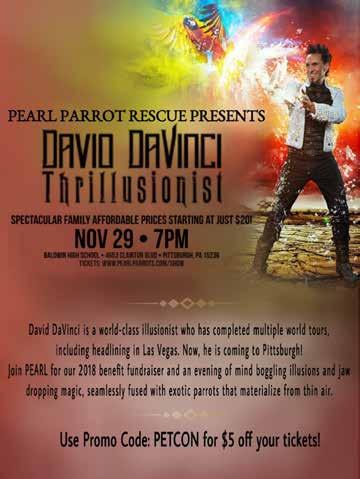
Pearl
PEARL presents Davis DaVinci Illusionist
November 29th - 7pm
https://www.pearlparrots.com/
CARMAA events – see page 9
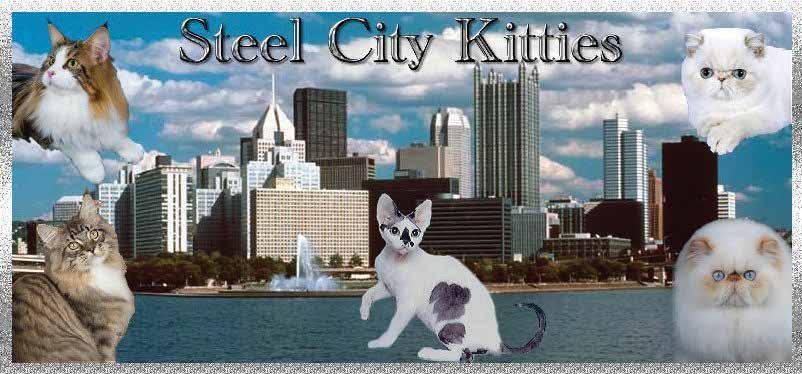
Steel City Kitties
February 9th – see ad next page



By April Minech | Photo credits: Kim Lenz, Behind the Lenz Photography
While she usually doesn’t take on equine rescues, the little white donkey in the kill pen starred out at her with sad eyes, touching her heart. Karen Phillips, founder of Hope Haven, felt like she had to give him a chance and a new start on her sanctuary farm. “There are many good equine rescues out there, but I just couldn’t look away; there was something special about him,” she says. The donkey had a wonky front foot that her farrier has worked on and some other initial medical issues that she is addressing, but he’s fitting in just fine.
For anyone who knows Dr. Karen Phillips, hearing the personal story of how an animal touched her heart and was rescued to live out their days in personal care and comfort is no surprise. She has about 120 of them; each with a story and a name and quirks that she can tell you about.
How did this fairy godmother of farm animals and her magical sanctuary come to be? The good doctor had an idea ten years ago to build a place for unwanted or medically distressed farm animals that had no place in the urban world. “I started out as a vet in private practice but realized that wasn’t my calling. Working in the city shelters in Pittsburgh, I saw a lot of farm animals coming in from Humane agents and police confiscations that were brought in and it was really upsetting for me to see them in a dog/cat-based shelter that wasn’t set up for housing or placing those types of animals.” That got her thinking that Pittsburgh really needed a shelter for farm animals. It took her several years and a lot of hard work, but she bought the property that would officially become Hope Haven Farm Sanctuary in 2011.
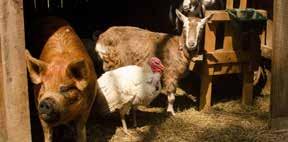
There are several areas of the farm designed to cater to the needs of each type of animal, starting with the duck pond. The farm gets a lot of birds that are cast off after the holidays that were purchased as pets but are no longer wanted. And
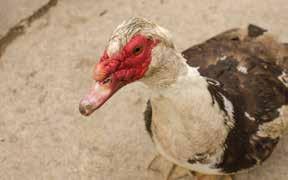
Karen explains that there are probably as many types and looks of chickens and ducks as there are dog breeds. “For chickens, there are two main types: meat type birds which are those raised for their meat, and egg laying. Within those two main divisions, there are different colors, feather types and combs to indicate different breeds. Also, there are Bantam chickens which are small and don’t grow very large, and other ornamental type birds used for show.” Along with the vast knowledge of a chicken encyclopedia, Dr. Phillips can describe in detail all the other fowl that free roam and gather at the giant pond area. Her favorite is the large iridescent Muscovy duck (which wags its tail instead of quacking) known for its distinctive ornamental facial growths called caruncles.
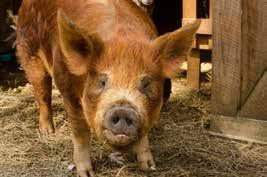
And there are wiggly pigs. She has a total of six farm hogs and eight pot-bellied pigs that frolic in the aptly named three=acre pig pasture. The farm hogs are large and can weigh 400lbs and up when grown and are the typical pigs that are usually raised for their meat. Most of the farm hogs came to the sanctuary as adults and enjoy a herd mentality. However, two of her farm hogs -Gesundheit and Achoo- were rescued from a farm auction. They have a permanent airway and nasal condition that causes them to sneeze and bleed sometimes, but since they received so much personal care while Karen was nurturing them back to health, they are extremely docile and as friendly as the farm dogs that wonder around and inspect guests for treats.
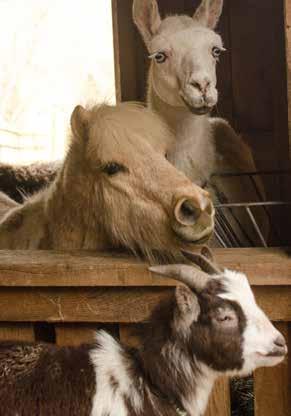
There are also two other pastures for hoof stocked animals, and a third mini pasture for large animals with medical needs. The first pasture is at the entrance to the farm, and if you’re driving by on a sunny day you might see Butters the mini-horse, Carl the Llama, Jack the Alpaca, a small herd of six sheep or one of several goats out and about. Gary, one of the mini goats can be spotted playing on a bale of hay, or visiting with Sandy the pygmy goat, who sometimes travels (via the back of a SUV) with Dr. Phillips to off-site events.
One of the most interesting animals are the emus, known as the gatekeepers of the farm. Two of the prehistoric looking giant birds, Rigby and Ruckus, free roam the farm while two others who are not as rambunctious prefer to stay in the reserve area pond and act like birds. The boys check out everyone who comes and goes at the gate, curious and nosy, and like to be the center of attention. “Emus are raised for their meat and oil that comes from a layer of
fat under their feathers; the oil is supposed to be very healthy for humans, but obviously not for the birds,” Karen explains.
The magic of Hope Haven is that all this happens without the benefit of paid staff. As the founder, Dr. Karen provides all the veterinary care pro bono, and runs the day to day feeding and operations all while working full time as a spay/neuter vet. The farm relies on support from people believing in the mission to help animals and provides opportunities for volunteers to help with hands on farm work days, tours, merchandise or tabling at events to raise the funds for daily care.
If ever there was a true cause to believe in and support, this is it. To learn more or just be inspired by the work of Dr. Karen Phillips and her farm sanctuary, please visit www.HopeHavenFarm. org to donate, check out their wish list of animal needs, or find out how you can help.
By Dr. Theo Nelson, DVM Animal Friends’ Senior Veterinarian of Clinic Services
This is a very common question from pet owners who are trying to make the safest and healthiest decision for their beloved animal companions.
And, depending on who you ask, you can get many different answers.
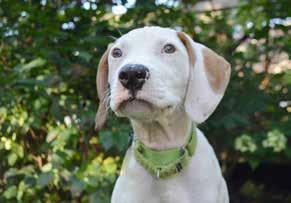
Most private practice veterinarians won’t schedule a spay/neuter surgery until the animal is at least 6 months old. Meanwhile, common shelter practices involve spaying or neutering as early as 2-3 months of age.
While there may be a difference in opinion among veterinarians about the ideal age to alter an animal, the truth is that pediatric spay/neuter (or surgery performed on a pet younger than 5 months) has been safely performed for years.
Pediatric spay/neuter is a common practice among animal welfare leaders like Animal Friends for a number of reasons.
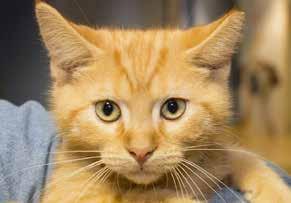
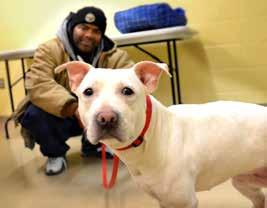
First, it allows shelters to find adopters for their younger residents during a highly adoptable period of their lives. Before pediatric spay/ neuter, shelters would adopt out unaltered young animals with the hope that their families would seek out spay/neuter options when their pet was a little older. But, as pet overpopulation continued to be a growing problem, organizations realized that the best option was to alter their animals before adoption.
Another benefit of pediatric spay/ neuter is a faster recovery time following surgery. Often times, younger patients can actually be awake and playing within hours of their operation.
And, pets who are altered are at a lower risk of developing certain cancers.
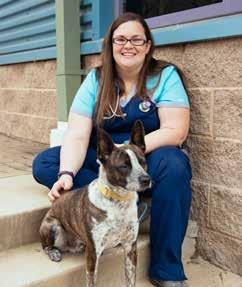
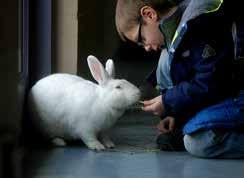
While everyone can agree that kittens, puppies and baby bunnies are adorable, there is certainly no shortage of them in our region. Whether purebred, mixed breed or lovable mutt, offspring who are born – intentionally or unintentionally – contribute to the growing pet overpopulation facing our community.
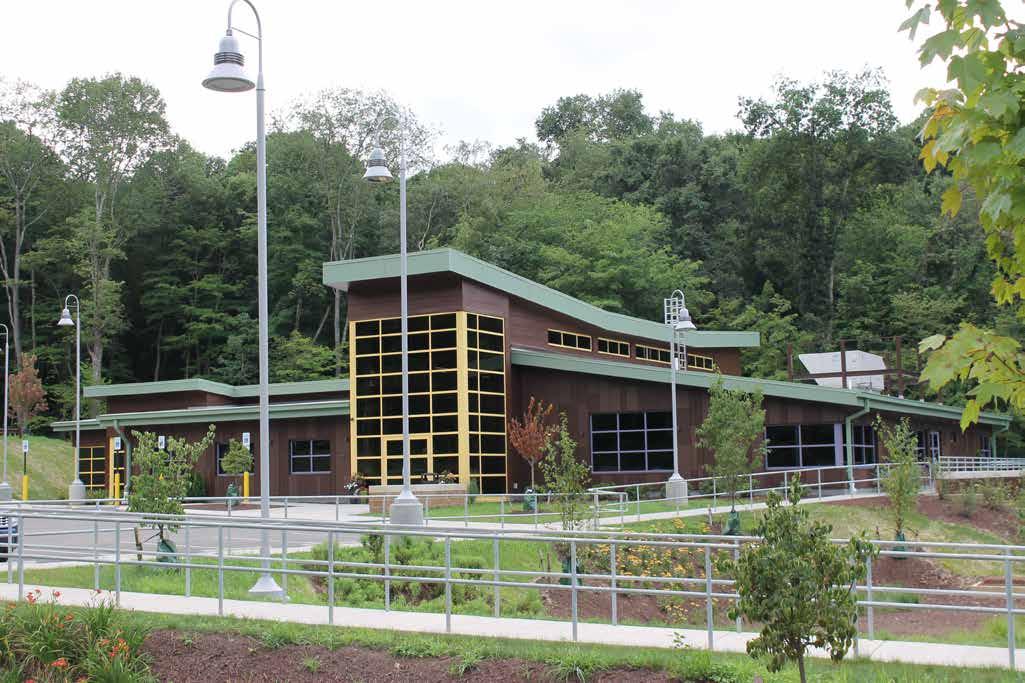
Each year, millions of companion animals are euthanized in the United States. For decades, Animal Friends has strongly believed that euthanasia can never be the solution to pet overpopulation. Spay/neuter is safe, humane and – thanks to the low-cost services at our Howard Ash Animal Wellness Center – affordable.
If you have an unaltered pet at home (young or old!) visit ThinkingOutsideTheCage.org/ SpayNeuter or contact our Clinic Services team at 412.847.7004 to discuss spay/neuter options for your four-legged family member.




By Rebecca Florig, PVSEC/BluePearl Advanced Patient Care Associate and Emergency and Critical Care Supervisor
“That’s the nature of the beast!”
“Anything is possible!” “That could never happen to me!” These are some common sayings we hear all the time . . . . never thinking we would actually be talking about our household pets.
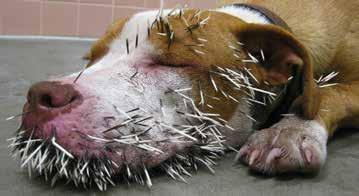
Working in the veterinary emergency department, “anything is possible” is a regular occurrence. There are animals we never think our happy-go-lucky at-home critters will ever meet up with. One of these animals is the prickly porcupine. They live in wooded areas, tend to keep to themselves and on average have approximately 30,000 quills running down their back that actually regrow when lost. When met with a porcupine, your dog will obviously want to do what he does best and use his nose to investigate this strange creature. Unluckily for him, those tiny quills will turn out to be something he will remember forever when they get lodged in his muzzle, neck or shoulders. The porcupine quills have tiny barbs on the ends which make it almost impossible to remove unless taken to the ER. Quills tend to migrate further into the skin and not out, so depending on how many there are or where they’re located depends a lot on what medications he gets, specifically pain medications and antibiotics. They often need treatments ranging from an injection or sedation or a smaller surgery. A lot of the time, the hardest thing for us, and for you
to do, is to keep the pet from licking excessively because the quills hurt and your dog just wants them out. If you have an e-collar or something you can put around their head to keep them from licking and rubbing on anything, please use it! Just remember that if you take a little hike through the woods, best to keep the curious pup on a leash!
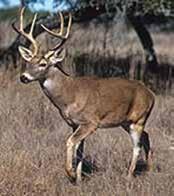
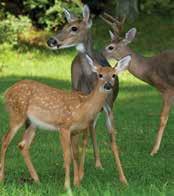
Another crazy but surprisingly common occurrence in nature is when our pets meet an innocent-looking deer. They could be in the backyard while we are enjoying our coffee on the porch or in the woods while taking a beautiful nature hike. Deer have attacked dogs because they are simply curious and got too close but also attacked cats who play with their fawns and that is when mama deer steps in. A deer’s first line of defense is usually kicking with their long legs and their hard sharp hooves. Also, who could forget their sharp pointy antlers! They can absolutely use their antlers to fend off possible enemies, resulting in puncture wounds. The results of this defensive action can be something as simple as a scrape or a bruise, or it can be something much more critical such as internal bleeding and large penetrating wounds. These critical injuries most likely require hospital stays and surgeries that can sometimes be fatal. I have seen pets who have met a deer face to face in the ER looking more battered and bruised than those that have gotten hit by a car. It would

be a good thing to remember that deer are not always as sweet and innocent as they look.
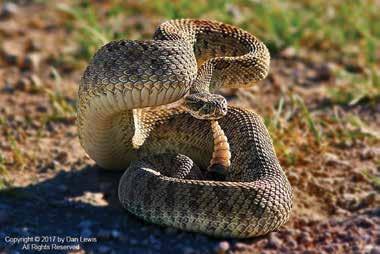
Not too many people in the world like snakes or wouldn’t be scared if one crossed their path in the wild. We have three venomous snakes in Pennsylvania. Timber Rattlesnakes, Eastern Massasauga Rattlesnakes, as well as Copperheads can be found if you look hard enough, and sometimes our pets do. Believe it or not, approximately 150,000 emergency visits to the veterinarian are recorded per year due to snake bites. Sometimes it can be difficult to tell if your pet has been bitten by a snake. The common signs and symptoms to look for are painful to the touch, swelling and redness, weakness and lethargy, and shortness of breath. Something I have seen with a Copperhead bite is blackening of the skin because the tissue is dying. Regrettably for your pet, an encounter with one of these snakes will without doubt land them in the ER for us to treat them and the sooner you get them here the better. So just be on the lookout, especially between the months of April through October because this is when 90% of snake bites occur, if your dog loves to dig in the garden or investigate in the wooded areas, he could meet a not-so-friendly Rattlesnake.
It’s pretty hard to be outside and not notice when a skunk is nearby. Once again, curiosity
gets the best of our pets. If your dog is routinely off-leash or you have an indoor / outdoor cat, they will be an easy target. Most of the time with ‘skunk attacks,’ your pets don’t actually need to come to the ER. If skunks spray, they generally spray and run away. Other than you having a stinky pet, the most common injury
affects the eyes. Don’t get me wrong, they do have extremely sharp and effective claws, but the potency of their spray causes increased tear production as well as extreme redness of the eyes. The last time a dog came through the ER because of a skunk, he could barely open his eyes, had an enormous amount of irritation and was so painful we could barely hold his face for treatment. If you’re lucky enough to stay at home, you can bathe them in a mixture of hydrogen peroxide, dish soap and baking soda to help get them smelling better!
Everywhere we look, there’s probably a cat or
dog just waiting to get into some trouble! As their owner, remember that nature may look beautiful but be mindful of what could really happen should you encounter a ‘beast’ in the wild!
ASPCA. (2017, August 27). ‘A Prickly Situation: Your Pets Vs. Porcupines.” Retrieved from “https://www.aspca.org/news/prickly-situationyour-pets-vs-porcupines.”
Utah Veterinary Center. (2018). “Dog injured in deer attack recuperating after surgery.” Retrieved from “https://bluepearlvet.com/media-releases/ dog-injured-in-deer-attack-recuperating-aftersurgery/.”
Watson, C.D. (2012, April 23). “What To Do If Your Dog Is Bitten By A Snake.” Retrieved from “https://www.petful.com/pet-health/what-todo-if-your-dog-is-bitten-by-a-snake/.”
Dr. Stewart. (2017, January 29). “Skunks! P.U. –Stinky!” Retrieved from “https://www.greenbrier-emergency.com/ skunks-p-u-stinky/.”

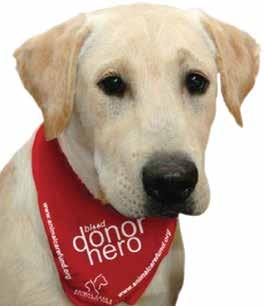


‘Pets giving pets the gift of life’
Please volunteer your dog to be a ‘blood donor hero’
Dog donor eligibility
• Between 1 and 7 years of age
• Weight: 50 lbs or more
• Healthy with a gentle temperament
• Current with vaccinations
• Never had a blood transfusion
Read more about The Rogan Rexford Blood Bank at: animalcarefund org For questions, or to make an appointment call: 412.348.2588 or email: animalbloodbank@pvs-ec com
• Tested negative for blood-borne diseases (free testing by blood bank)
• Must be on heartworm, flea and tick preventative
• Not pregnant or currently nursing
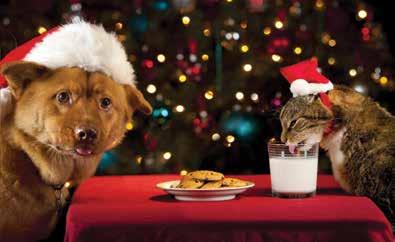
More pets are seen in veterinary hospitals the day after Thanksgiving than any other time of the year!


By Edward R. Moats
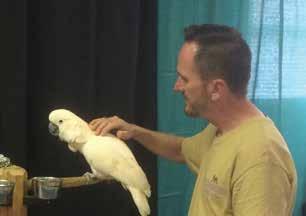
We have all seen hilarious bird videos over the Internet. And many of us remember playing pirates with our friends as a child. There is an inquisitive draw to parrots. “How fun it would be to have a parrot of my own!” But , a word of consideration before you bring a parrot into your home.
The majority of birds available as companions have only been available a few generations from their wild ancestry. And there are still birds available that were legally imported before “The Wild Bird Conservation Act.” Birds require an understanding of their behavior. A family that does not fully understand the proper way to interact with a parrot can essentially create their own monster.
Birds are prey animals. Therefore, birds are on guard 24 hours a day seven days a week in the wild. This instinctive behavior is passed down through generations. Essentially,an inherited trait. This is why it is so important that the bird family understand how to interact with birds. A pet parent that does not understand the proper way to approach and socialize with a bird can be perceived as a predator. And in this case, the bird will react by defending itself.
So many new pet parents say that they are looking for a bird that will not bite, does not
make a mess, doesn’t scream, and can talk. Every bird has the capacity to bite. Even if they were hand tamed and socialized . And make no mistake, if a bird feels threatened; they can exert a nasty bite. When I am consulting with potential bird families, I always mention that it is not if you will get bit, it is when you will get bit .Bites can occur out of fear, being startled, or over stimulated. It is a form of communication that conveys to “Stay away.” Birds are built to make a mess. They have one important role in the wild, spreading seed throughout the jungle and forests floors to repopulate vegetation. This is an instinctive behavior that one must accept when inviting a bird into your family. Birds are noisy. This also is an instinctive behavior. Birds are social and live in flocks. When they live in our homes, we become their flock. Therefore, parrots will call out to us when we are not present in order to know the location of their flock. All too often, families will place parrots in a room by themselves. This will only increase vocalizations. If a parrot is not going to be an present part of the family, then you should reconsider bringing a bird into your home. Your parrot’s cage should be in an active part of the home, such as a family room. Birds will also scream out of boredom. Therefore, toys to keep them busy and active are essential. A busy bird, is a quiet bird. Not every bird will mimic or talk. Each bird is an individual. And not every bird has the ability to display these traits. Although there are some species of birds that are prone to mimicry or talking, that does not mean that every individual in that species will display these traits.
It has also been my experience that new bird families expect their bird to be the perfect pet from day one. If the family feels this way, they are only setting themselves up for failure. A bird will need time to transition into their new environment. Each bird is an individual. Some birds will adjust faster than others. It is important to allow the bird time
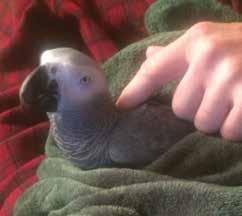
to acclimate. Putting high expectations on bird from day one adds a great deal of stress to your feathered friend. There is a distinct difference in bonding and submission. Bonding is when a human and animal take time to learn about each other and build trust. Submission is when a bird bows to the will of the human out of fear. As I mention with submission, it places the bird under a great deal of stress. This high level of stress has been proven to lessen the lifespan of a bird. And also makes them susceptible to various ailments .
Transitioning takes time. And not every bird will be the perfect pet. Not every bird has the ability to talk. Not every bird has the ability to do tricks. And many birds do not have the desire to talk or do tricks. Allow your bird to be an individual. Attempting to force them into doing things against their will is a submission tactic and will cause a great deal of stress.
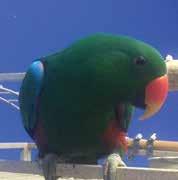
One word can summarize this article. And that word is “TIME.” Trust is earned, not given. And this is no exception when it comes to birds. By slowly nurturing trust with your pets, you will build a bond that will last for many years to come.
Page 17 - A All About Pets Veterinary Hospitals
Page 11 - M Animal Friends
Page 11 - C Animal Rescue League
Page 21 - D Beaver Animal Clinic
Page 19 - Best Breed Pet Food Inside Front Cover S VCA Castle Shannon
Page 28 - F Chartiers Custom Pet Cremation
Page 18 - Q Cheyenne Veterinary Wellness & Surgical Center
Page 26- Costa Real Estate
Page 29 - G Coventry Stables
Page 15 - Dog Stop
Page 19 - H Fuzzy Paws Pet Villa
Page 19 - Gentle Journey Veterinary Hospice
Page 1 - I Healthy Pet Products
Page 29 - J Jefferson Memorial
Page 15 - P Larry’s Laundromutt
Page 15 - Paws Here Awhile
Page 19 - Pampered Paw Resort
Page 3 - Petagogy
Page 13 - Rogan Rexford Animal Blood Bank
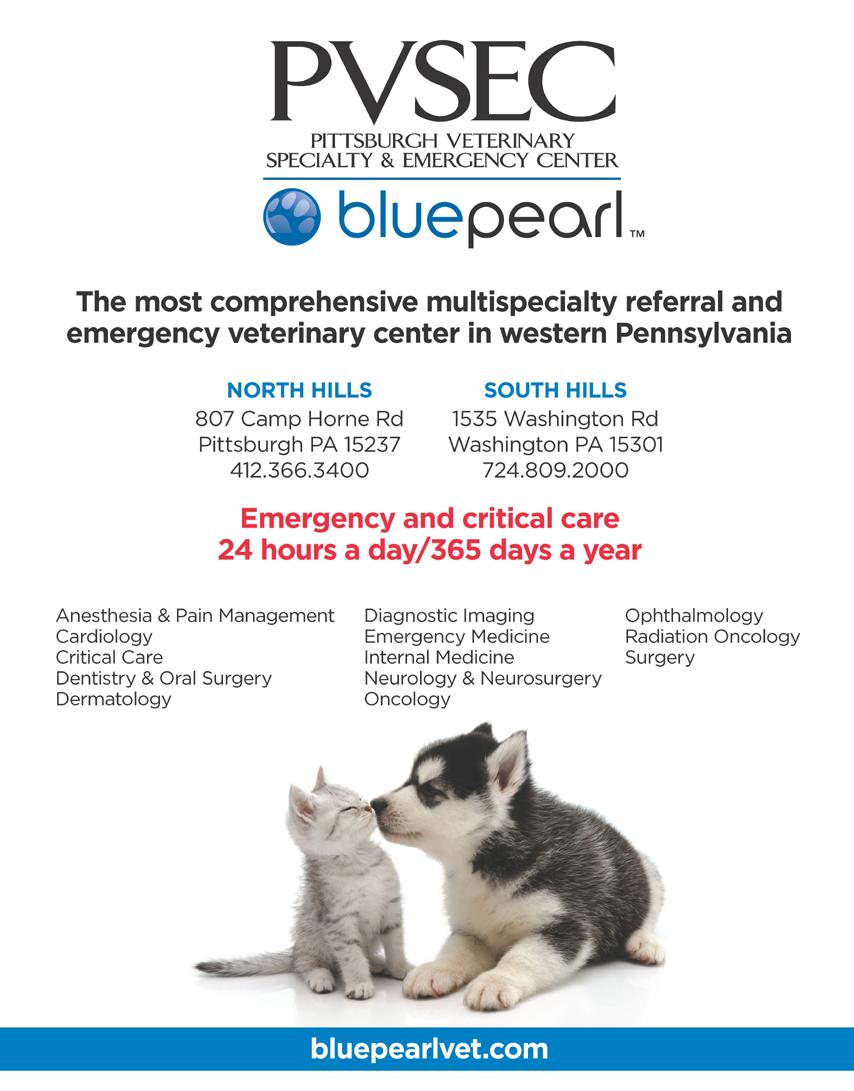
Back Cover - N Pittsburgh Veterinary Specialty and Emergency Center
Page 29 - O Rockin Horse Stables
Page 21 - Dr. Michael Savko
Page 19 - V Woody’s Dog Wash & Boutique
Page 4
Page 9
- Camp Bow Wow
- CARMAA
Page 4
Page 5
Page 18
- The Getaway at Glen Highland Farm
- PEARL Parrot Rescue
- Pittsburgh Pet Concierge
- Steel City Kitties
Page 19 -
Page 7 Trixie’s Dog Fashions
Page 3 - Portraits of Animals













By Dr. Doug - The Holistic Vet \ Doug Knueven, DVM, CVC, CVCH
In July of 2018, the FDA released a warning to veterinarians and pet owners regarding a possible link between grain-free dog food and the development of Dilated Cardiomyopathy (DCM). The warning was based on reports from veterinary cardiologists who were seeing a spike in cases of DCM in breeds that are not prone to the disease. The cardiologists further noticed that many of these dogs were being fed grain-free diets – specifically those containing high levels of peas, lentils, legumes or potatoes.
Soon the rumor-mill and media took off with the story. The bottom line that many pet caregivers came away with was that diets without grain are unhealthy for dogs. The conclusion reached was that grain is a good ingredient in dog food. On the contrary, nothing could be further from the truth.
Before we get into the grain-free issue, let’s back up and look at the disease we’re talking about. DCM is an ailment of the heart muscle brought on by a weakening in the muscle tissue. It is the most common cause of heart disease in certain large-breed dogs such as the Great Dane, Boxer, and Doberman Pinscher. This disease is also linked to a deficiency of the amino acid taurine in a dog’s blood.
The concern with grain-free diets is that they are deficient in taurine. In fact, many of the cases reported to the FDA had deficient levels of taurine in their systems. However, since the initial report, experts have been finding cases of DCM and compiling a list of the foods involved. It turns out that some dogs with low taurine levels are eating dog food containing grain.
To add to the confusion, I spoke with one veterinarian whose own dog developed DCM and his blood taurine levels were normal. Yet, when she supplemented her dog’s diet with taurine, he recovered. This issue is obviously not as straightforward as originally thought. It is very possible that the initial association of taurine deficiency being linked to grainfree dog food was simply a reflection of the popularity of these diets. The more dogs are
eating them, the more likely that particular food with be linked to the problem.
For me, this whole grain-free debate is moot. While it is true that dogs did not evolve eating grain and therefore it is not a natural ingredient of dog food, they are also not suited to eat peas, lentils, legumes, or potatoes. One of the major problems with kibble is the high levels of starch (carbohydrate), whether it comes from grains or other starchy ingredients.
The importance of a diet’s macronutrient balance (percentages of protein, fat, and carbohydrate) cannot be over stated. Studies show that the macronutrient balance in an animal’s diet affects their grow rate and size, level of obesity, longevity, and disease resistance. If we want healthy pets, we need to feed then their ideal levels of these nutrients. But how can we figure out what’s best?
One way is to look at the diet dogs evolved eating over hundreds of thousands of years. In his book Unlocking the Canine Ancestral Diet, Steve Brown estimates the macronutrient content of the diets of our dogs’ ancestors. From his work I calculated that in the ancestral diet of dogs, approximately 50% of the calories come from protein, 44% comes from fat, and 6% from carbohydrate. This is the kind of diet dogs have adapted to eat.
Multiple research studies show that predators select food based on the macronutrient balance that enhances their survival. From this work it was determined that another way to determine the right balance of macronutrients for dogs is to let them decide.
Recent research looked at the macronutrient profile selection of present-day, adult dogs. They studied 5 diverse breeds including the papillon, miniature schnauzer, cocker spaniel, Labrador retriever and St. Bernard. They found that all these very different dogs consistently chose a diet consisting of 30% protein, 63% fat, and 7% carbohydrate (based on percentage of calories). Now we can quibble over the percentage of fat and protein, but look how close these levels of carbohydrates are to
those of Steve Brown’s estimates. According to two, independent studies, the ideal level of carbohydrates for dogs is between 6% and 7%.
Furthermore, the study about dog nutrient profile selection concluded that “…the recent rapid divergence among dog breeds is not substantially reflected in their macronutrient priorities compared with other phenotypic features such as size, color, and temperament.” In other words, our genetic manipulation through breed formation of dogs has not changed their macronutrient selection from that of their ancestors.
So, now we have a good idea of the ideal level of starch in dog food (6-7%). What about processed, dry dog food. The American Association of Feed Control Officials (AAFCO) is responsible for creating the standards for pet foods. According to their recommendations, dog food is acceptable if, as a percentage of calories, there is 19% protein, 12% fat, and 69% carbohydrates. You read that correctly, processed dog food may contain as much as 69% carbs! AAFCO, and the pet food industrial complex, are way out of range. How they can, with a straight face, insist that grains and other sources of carbohydrates are good for pets is beyond me.
Actually, the reason for the excess carbs is clear. It has nothing to do with the healthiness of the food. It is all about keeping the pet food cheap and convenient (you can’t make kibble without starch to glue it together). Cost and convenience are important, but not more important than the health of our pets.
Another problem with processed dog food is that, although the label says it’s “100% complete and balanced,” the experts do not even know the proper levels of all the micronutrients (vitamins and minerals) for dogs and cats. Also, the high heat used to process pet foods create carcinogens. The best diet for most dogs and cats is a balanced raw diet. The brand I like best is called Answers. So, skip the grain-free debate and go raw!
Integrative: combining the best of conventional and alternative medicine
Holistic: providing more options for therapy
• Acupuncture
• Herbal Medicine
• Spinal Manipulation
• Supplements
• Natural Nutrition
• Vaccine Counseling
• Massage Therapy
• Healing Touch
Dr. Doug has been practicing integrative veterinary medicine since 1993. He is certified in acupuncture, Chinese herbal medicine, and chiropractic. With over 30 years of veterinary experience, Dr. Doug has treated thousands of challenging cases.
For complete care for your animal companion, see Dr. Doug. Call Beaver Animal Clinic today to set up a holistic exam for your pet.
Doug | The Holistic Vet
357 State Avenue | Beaver, PA 15009 | 724.774.8047 beaveranimalclinic.com
Severe spinal trauma and disc injury for poor Pugsly, no function or movement in his lower body.
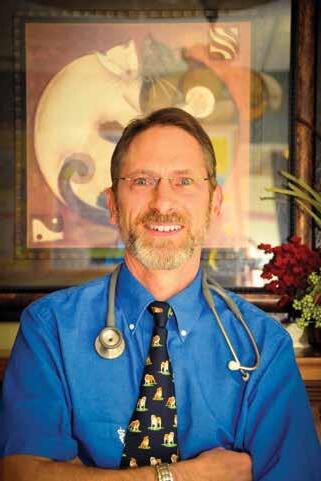
Euthanasia or spinal surgery were the ONLY options mom was given for Pugsly. Looking for better advice mom found Animal Healing NOW and after a second opinion with a vet smart enought to know it is SAFE and WISE to work with Dr. Savko, we had Pusgly at 100% in three non invasive, cost effective, and natural visits.
“Dr. Savko is a life saver! I have a 5 month old male Holland Lop bunny named Pugsly. One morning this past December, I found him sitting with his back legs splayed open and he had defecated all over himself with no function or movement in his lower body. Without hesitation I rushed him to an emergency animal hospital!
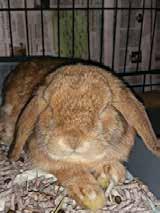
With a physical exam, but no X-Rays, the Dr. at the ER explained his symptoms were because he had unfortunely somehow suffered spinal trauma. She said my options would be to euthanize him or surgery followed with physical therapy.
Thank God I knew someone who instantly recommended me to Dr. Savko! I went to see a veterinarian who refered me to Dr. Savko and not only did he save me thousands in vet bills, but after only a few sessions Pugsly made a full recovery without any surgery! Extremely grateful for his work and I would highly recommend him!”




LOCATIONS: Holiday Park Animal Hospital, Plum Greenfield Veterinary Hospital, Pittsburgh Donovan Veterinary Hospital, Ligonier Fox Run Equine Center, Apollo
“miracle worker”
“a very supporting and caring doctor” “wish I would have known about you sooner” “best time/money we ever spent” “you have given us hope”
Animal Educational Exhibits
Nor th: The Pittsburgh Zoo & PPG Aquarium pittsburghzoo.org
The National Aviary nationalaviary.org
Animal Communication
Greater Pittsburgh Area: Renee Takacs, M.A. intuitguide.com
Animal-Related Art, Photography & Retail April Minech Custom Portraits | Pet Inspired Ar t www.ladybugdelightz.etsy.com
ct or y Pet Portraits 412-407-2590 www.PittsburghPainting.com/portraits
Kim Lenz, Behind the Lenz Photography 412-983-0981 https://www.facebook.com/ Behind-the-Lenz-127787624032093/
Nor th:
Vibrant Images
724-774-1731 | www.vibrantimages.photography
South:
Kara Jones Photography kjones.smugmug.com Paws ‘n Claws Eyewear PawsnClawsEyewear.com
Animal Rescue Organizations
Nor th: Animal Friends 412-847-7000 | thinkingoutsidethecage.org Beaver County Humane Society 724-775-5801 | www.beavercountyhumanesociety.org Pennsylvania Great Dane Rescue 724-869-9185
Hope Haven Farm Sanctuar y 412-366-1187 | hopehavenfarm.org Western Pa Humane Society 412-321-4625 | wpahumane.org
South:
Animal Care & Welfare 412-24 4-1372 | animalcareandwelfare.org
Droopy’s Basset Rescue 888-9 GET DROOL | www.droopysbassetrescue.com Washington Area Humane Society 724-222-7387 | washingtonpashelter.org
Animals Against the Odds Rescue/Rehab www.aato.rescueme.org
East: Humane Animal Rescue
412-345-7300 | animalrescue.org HAR Wildlife Center 412-345-7300 | animalrescue.org
SW PA Pugs with Special Needs 724-763-2790 | swpapug.org
West:
CARMA A
412-780-4983 | carmaa-petadoption.com
Humane Society of Greene County 724-627-9988 | greenepet.org
PEARL Parrot Rescue www.pearlparrots.com
Bird & Supplies
Natural Inspirations Parrot Cages www.naturalinspirationsparrotcages.com
Dog Training
Nor th:
AKIN Family Dog Training (Lilian Akin)
412-732-8091 | akinfdt.net
Greater Pittsburgh Area:
Happy Pets Training /Christine Flint 412-373-9583 | www.happypetstraining.com
Success Just Clicks successjustclicks.com
Nor th Shore:
Western PA Humane Society
412-321-4265 | wpahumane.org
South:
Paula’s Professional Dog Services 412-818-2482
Dog Training Clubs
South:
Dogworks Training Center at The Canine Club Phone: (412) 220-8100 | www thecanineclub.com
Golden Triangle Obedience Training Club 412-653-6880 | gtotc.com
Keystone Canine Training 412-833-2211 | keystonecanine.com
Xcel Canine Training Center
412-833-2504 | xcelcaninetraining.com
Equine Boarding, Lessons & Training Facilities
Nor th:
Rockin’ Horse Stables
724-601-4706 | rockinhorsestables.com
South:
Coventr y Equestrian Center
724-206-9902
Manon’s Farm
724-705-7912 | 724-621-0260
SydMor Equestrian Center
724-969-0510 | www.sydmorstables.com
Equine Holistic Care
Greater Pittsburgh Area:
Dr. Michael Savko, DC, CCSP, CVCP 724-261-7915 | drchirovet.com Equine Tack Stores
Nor th:
Shady Acres Saddlery 412-963-9454 | www.shadyacressaddlery.biz
South:
Lowr y’s Western Store
724-228-1225 | lowr yswesternshop.com
Equine Veterinarians
Dr. Brian Burks, DVM - Fox Run Equine Center
724-727-3481 | foxrunequine.com
Holistic Pet Practitioners
Holistic Practitioners for Guardians
East End: Judith Levy Wellness
Coaching /Energ y Modalities 412-726-2659 | www.judithlevywellness.com
South:
Manning Chiropractic & Wellness Center 412-341-2505 | drastridmanning.com
Holistic Veterinarians
Dr. Doug Knueven, DVM
Beaver Animal Clinic
724-774-8047 | beaveranimalclinic.com
Dr. Qiang Li VCA Castle Shannon 412-885-2500
Pet Burial, Memorial & Cremation Services
South:
Woody’s Dog Wash & Pet Boutique 412-714-464 4 | woodysdogbath.com Visit our online di re ct or y at pghpe tc onnections.c om/Dog-Cat -Di re
Greater Pittsburgh Area: SPAAR www.seniorpetandanimalrescue.org
Guardian Angels Pug Rescue
724-537-3466
www.facebook.com/guardianangelspugrescue
Pet Chiropractor
Nor th:
Dr. Doug Knueven, DVM Beaver Animal Clinic
724-774-8047 | beaveranimalclinic.com
Greater Pittsburgh:
Dr. Michael Savko, DC, CCSP, CVCP
724-261-7915 | drchirovet.com
Char tiers Custom Pet Cremation 412-220-7800 | ccpc.ws
Jefferson Memorial Funeral Home 412-655-4500 | jeffersonmemorial.biz
East End:
Precious Pets Memorial Center & Crematorium
412-351-PETS (7387) | preciouspetspgh.com
Greater Pittsburgh: Car ved Stone by Serena 724-941-2664 | www.carvedstonebyserena.com
Thousand Hills Pet Crematory 724-355-8296 | www.thousandhillspetcrematory.com
Pet Fencing
Greater Pittsburgh Area: Dog Guard Pittsburgh Dog Fence 412-287-5820 | Pghdogfence.com
Pet Grooming
Nor th:
All About Dogs 724-925-1577 | allaboutdogsgrooming.info
Larr y’s Laundromutt 412-534-4052 | larryslaundromutt.com
Happy Tailz Pet Spa 412-759-7620 Happytailzpetspa.com
Healthy Pet Grooming 724-759-7567
Larr y’s Laundromutt 412-534-4052 | Larr yslaundromutt.com
South: Candelore’s Barking Beauties 412-872-5550
Creative Canine Cuts 724-223-9020
Grand Slam Grooming 412-221-5081 | grandslamgrooming.com
Petsburgh Dog & Cat Grooming 412-885-4027
Pets at Home Dog Grooming 412-655-7297 (PAWS) The Pet Salon 412-279-5331 | petsalonusa.com
East: Animal Elegance 412-361-1177 | www.animal-elegance.com
Candelore’s Barking Beauties Pet Grooming 412-872-5550 | candeloresbarkingbeauties.com
Cat Around Town Cat Grooming 412-461-3700 | cataroundtown.com
West: Paws Here Awhile Pet Resort 724-573-4665 | pawshereawhile.com
Greater Pittsburgh Area: Zoom N Groom (Sonya Patterson) 724-225-4827
Pet Friendly Businesses & Organizations
Bactronix
412-375-7886 | www.bactronix.com
Good Nature Organic Lawn Care 888-LAWNSAFER | whygoodnature.com
Simple Sugars Scrub Simplesugarsscrub.com
Village Shoppes Scenery Hill Elves Lair Christmas & Gifts, Jan’s Tea Shoppe - 2nd Street Coffee Roasters, Velvet Envelope, Westerwald Pottery, Two Old Crows www.sceneryhillpa.com
Greater Pittsburgh Area: Fragasso Financial Advisors 412-227-3200 | www.fragassoadvisors.com
Fundvelopes 412-595-8641 | fundvelopes.com
Matt Arch Foundation www.connectarian.com
One Hour Heating & Air Conditioning 724-225-164 4 | www.onehourair.com
OxyMagic 412-781-4110 | www.oxypgh.com
Susan G. Komen Pittsburgh 412-342-0500 | www.komenpittsburgh.org
East Pittsburgh East Nissan 412-824-9020 | www.pittsburgheastnissan.com
Unique Home Solutions www.uniquehomesolutions.com
South: Southpointe Chamber www.southpointe.net Pet-Friendly Living
Greater Pittsburgh Area: Pinch Property Services 412-445-8550 PinchPropertyServices.com
East: The Getaway at Glen Highland Farm www.glenhighlandgetaway.com
South:
American Destiny Real Estate Services 412-983-2220 | www.adr-usa.com
Amore 877-716-6840 | amoreapar tments.com
Pet Grooming Schools
Nor th: Pa Academy of Pet Grooming 412-759-7620
Pet Ministries
South: Christ United Methodist Church 412-277-1096 | christumc.net Westminster Presbyterian Church 412-835-6630 | westminster-church.org
Pet Resor ts - Boarding, Daycare, Grooming & Training
Camp Bow Wow South 971 Killarney Dr Pittsburgh, PA 15234
Camp Bow Wow Southwest 412-276-WAGS(9247)
Camp Bow Wow North 412-931-WAGS(9247)
Camp Bow Wow Highland Park 412-362-PLAY
Camp Bow Wow Pgh East 724-733 CAMP(2267)
Nor th:
Dog stop - Nor th
724-935-DOGS ( 3647) | www.thedogstop.net
The Dog Stop - Sewickley 412-766-DOGS( 3647) | www.thedogstop.net
Lucky Paws Pet Resort
724-728-1484 | www.luckypawsresor t.com
South:
Grandma’s Dog Daycare 412-586-7094 | grandmasdogdaycare.com
Fuzzy Paws Pet Villa 724-746-3899 | fuzzy-paws.com
The Dog Stop - Banksville Rd 412-343-1171 | www.thedogstop.net
Pampered Paw Resort
724-413-3135 | pamperedpawresort.com
East: Pittsburgh Pet Concierge 412-856-8505 | petconcierge.org
The Dog Stop - Monroeville 412-373-3355 | www.thedogstop.net
The Dog Stop - East End 412-361-0911 | www.thedogstop.net
East:
The Dog Stop - East: Strip District 412-315-7050 | www.thedogstop.net
Countr y Lane Pet Hotel
412-824-7991 | www.countr ylanepethotel.com
West:
Paws Here Awhile Pet Resort 724-573-4665 | pawshereawhile.com Pet Retail/Supply
Nor th:
Healthy Pet Products
412-366-0700 | healthypetproducts.net
South:
Healthy Pet Products 412-831-3700 | healthypetproducts.net
Oddball Pets & Aquariums 412-884-2333 | oddballpets.com
Woody’s Dog Wash & Pet Boutique 412-714-464 4 | woodysdogbath.com
East:
Petagog y petagog y.com | 412-362-7387
Petland East Side Village 412-363-PETS | www.petlandvillageofeastside.com
Greater Pittsburgh Area:
Baskets of Nature 724-831-9437 | www.basketsofnature.com
Dig It Collars dig-it-store.com
Trixie’s Dog Fashions www.trixiesdogfashions.com
List your business today! info@pghpetconnections.com
Pet Sitters
Nor th
Furr y Family Pet Sitting 412-999-9524 | www furr yfamilypetsitting.com
Western PA No Boarders Pet and Animal Care
Home & Farm Sitting 724-219-7801 Noboarders-petcare.com
South:
Your Critter Sitters (Raylene Hoover) 724-4 48-7330 | yourcrittersitters.com
East:
Pittsburgh Pet Concierge 412-856-8505 | petconcierge.org
Veterinar y Hospice & Mobile Services
Greater Pittsburgh Area:
412-801-1071 | gentlejourneyvet.com
Veterinar y Pharmacies
Greater Pittsburgh Area: Murray Avenue Apothecary 412-421-4996 | MAApgh.com
Veterinar y Hospitals
Nor th:
Beaver Animal Clinic 724-774-8047 | beaveranimalclinic.com
Cheyenne Veterinar y Wellness & Surgical Center 412-884-3162 | www.cheyennevet1.com
VCA Northview Animal Hospital 412-364-5353 | vcanorthview.com
South:
All About Pets Veterinar y Hospital 724-745-5503 | aapvet.com
All About Pets Veterinar y Hospital – Washington location 724-503-4887 | www.aapvet.com
VCA Castle Shannon 412-885-2500
East: The Big Easy Animal Hospital 412-908-9301 | tbeah.com Monroeville Pet Hospital 412-372-1100 | www.monroevillepethospital.com
Pittsburgh Premier Pet Care & Rehab 412-795-1215 | premierpetcareandrehab.com
West:
VCA MetVet West Animal Hospital 412-788-6400 vcahospitals.com/met-vet-west
Veterinar y Specialty & Emergency Ser vices
Greater Pittsburgh Area: Pittsburgh Veterinar y Specialty and Emergency Center, Inc. 412-366-3400 | pvs-ec.com
VCA Northview Animal Hospital Specialty Referral Center 412-364-5353 | vcanorthview.com
East:
AVETS - Allegheny Veterinar y Emergency Trauma & Specialty 412-373-4200 | avets.com
Veterinar y Technolog y Schools
Greater Pittsburgh Area: Pittsburgh Career Institute 412-281-2600 | pci.edu
By Bernadette Kazmarski
The December holidays—Christmas, Hanukkah, Kwanzaa, Yule, Solstice—all have decorations and traditions that we want to preserve. Knowledge of the dangers our traditions may pose and our cats’ inclination to enjoy our festivities on their own terms can help to keep them safe and healthy. We bring evergreens into our homes and light candles and fireplaces to chase away the darkness of midwinter and celebrate the return of the light, and we decorate with things that bring light and color into our homes. Natural decorations from the outdoors perk cats’ instincts to investigate all the scents they bring, and then their natural curiosity urges them to investigate further with touch and taste, the way cats always investigate their environment.
Real Christmas trees and decorations of fresh evergreens
Keep cats away from the tree—the greatest form of environmental enrichment you could offer? Well, yes, starting with the tree itself, extending to garlands, swags, wreaths and other items made from pine and other evergreens.
Pine oil Pine oil is toxic to cats because they have a diminished ability to metabolize the oil, but the tree has oil oozing out of the cut bottom and any broken branches when it comes into the warm house, or a tantalizing pine garland swagged over the mantel.
Needles and branches Eating enough needles and branches can provide a toxic dose of pine oil, and the plant parts are not only indigestible but can be very sharp and scratch or puncture delicate mucous membranes.
Juniper and yew Juniper berries are used in traditional medicine as diuretic and cardiac medicine and they’re on the VetInfo list of 10 Most Toxic Plants for Cats. Yew plant and berry are listed as highly toxic to all species by the Pet Poison Helpline for the presence of taxines which can cause effects from drooling and vomiting to serious cardiac and neurological issues.
Preservatives and sprays Trees and evergreen decorations may have been sprayed with a preservative to keep fresh while shipping. Sometimes a nutrient spray keeps needles bright green when trees are for sale. In the home a preservative is often added to the water to keep it looking fresh and keep the needles from drying out and dropping. This is another reason not to let cats even taste the branches, nor should they drink the water in the tree stand because whatever is in the tree is in the water along with a preservative to keep it fresh.
Other natural decorations
Probably swatting around a dried pine cone is okay, but typical holiday plants like European
mistletoe (not American) and holly are toxic even to humans, and ivy is toxic to cats.
If you really want to go natural with your decorations, install them where your cat can’t get to them if that’s possible. Cats are persistent, especially with eating plants, and even if they aren’t toxic in small quantities you don’t really want your cat to dine on your decorations all through the holiday season, vomiting each day, because that in itself can end up causing some serious problems.
Candles and fireplaces
We want the menorah where we can all watch the candles burn each night, or the advent wreath counting off the weeks, or pine-scented candles or a glowing fireplace. Open flames are huge dangers for not only curious paws and noses but also floofy tails and long whiskers which can quickly catch the flame that spreads through fur. That dancing little flame is just as enticing as the red dot for kitties who try to swat and bite it. Put a cover around burning candles so paws and tails can’t sweep through them and place them as far out of reach as you can, never leave them burning unattended. Put a cover in front of the fireplace so you can all enjoy the warmth and glow together. Pot pourri and scent diffusers
Whether it’s the dried stuff in a dish or the oil in a diffuser they pose dangers to cats. The fumes themselves can be irritating, especially from oil diffusers, which can build up in small areas. Wax warmers and plug-in diffusers of various sorts can easily spill if they aren’t in a protected area and not only burn pets with both the heated substance and chemicals but also give an unexpected dose of oils. Most essential oils are toxic to cats, unable to metabolize many of the compounds. And the dry stuff in a dish, potentially full of toxic plant parts and essential oils, might be seen as a snack. Keep them all out of reach of your pets and be sure to use with adequate ventilation.
Decorations and packaging
Under the pressure of stress anything can become a toy. Or food. String-like objects like tinsel and garlands, ribbon scraps or yarn can be deadly if they wrap around kitty’s tongue or bunch up in her stomach or intestines, often requiring surgery. The polyester batting arranged under the tree to mimic snow—it’s obvious what a big ball of this indigestible substance in the stomach would do. The abundance of extension cords can be a temptation too.
Imported snow globes contain ethylene glycol, which is antifreeze, known to be deadly. They may seem unbreakable but if you have a cat who likes to knock things on the floor, or if it springs a leak, a teaspoon of the contents can be deadly to a cat within hours.
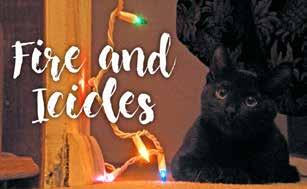
While you are taking care of a million other things it’s difficult to keep track of everything, but keep an eye on your pet’s interactions with:
• ribbon
• tinsel, “icicles”, garland
• spray snow
• cotton or polyester batting
• packing peanuts
• styrofoam
• string, twine, yarn
• tape
• wire
• plastic bags
• glass ornaments
• ornament hooks
• lights
• extension cords
Observe their behavior as you decorate the tree and elsewhere in the house. If they are irresistibly drawn to something don’t assume you can dissuade their interest, especially when you’re away. If they persist, just take the thing away.
As always, think like your pets, not like a human, to keep them safe
Resources in this article
• “Thanksgiving Goodies, and baddies”: bit.ly/ CatsThanksgiving
• “Leave the Lilies Outside: Toxic Plants”, bit.ly/ CatsLliesToxic
Pet Poison Helpline Topics (petpoisonhelpline.com)
• “Winter Holiday Pet Poison Tips”
• “Holiday Pet Poisoning Myths Debunked!”
• “Deck the Halls with Holiday Plants – But Are They Toxic?”
• “Yew”
• “Keeping Pets Safe This Holiday Season”
VetInfo Topics
• 10 Most Toxic Plants for Cats
For more information on plants toxic to cats and potentially toxic foods:
Humane Society of the United States for Keep Your Pets Safe and Happy During the Holiday Season http://www.humanesociety.org/news/press_ releases/2009/12/holiday_pet_safety_tips_121009.html
ASPCA’s Holiday Safety Tips http://www.aspca.org/ pet-care/pet-care-tips/holiday-safety-tips.html
Keep the link to the ASPCA’s Animal Poison Control Center for reference at the holidays and beyond: http://www.aspca.org/pet-care/poison-control/
This is an ever-changing list of resources for pet owners in Pittsburgh and beyond including low-cost spay and neuter programs for pets as well as TNR for community cats, after-hours emergency care, help with veterinary bills, pet-friendly rentals in Pittsburgh and across the US and links to shelters for adoption and other services. This information is provided for reference only and subject to change without notice. Please contact the organization or agency before using their services.
TNR and Low-cost Spay and Neuter Organizations and Programs
Homeless Cat Management Team
http://www.homelesscat.org
City of Pittsburgh Free Spay and Neuter for City Residents
City of Pittsburgh offers five free spays/neuters to all city residents www.pittsburghpa.gov/animalcontrol/spay_neuter.htm
Low-Cost Spay/Neuter Programs at Shelters in Allegheny and surrounding counties Shelter Programs
PENNSYLVANIA
Animal Friends
www.thingkingoutsidethecage.org
Humane Animal Rescue
Please call each branch while the two shelters continue their merger.
East Liberty Shelter (formerly Animal Rescue League) http://www.animalrescue.org/ North Shore Shelter (formerly Western Pennsylvania Humane Society) www.wpahumane.org
Clarion Paws
Serves Clarion, Forest and Jefferson County
Low Cost Spay / Neuter Clinic: spayneuterclinic@clarionpaws.org
Trap-Neuter-Return: tnr@clarionpaws.org http://www.clarionpaws.org/
PET & OUTDOOR OR FERAL CATS
Beaver County Humane Society
http://www.beavercountyhumanesociety.org
Butler County Humane Society
http://www.butlercountyhs.org/FelineSpayNeuter.asp
Washington Area Humane Society http://washingtonpashelter.org/services/
EASTERN OHIO
Angels for Animals
http://www.angelsforanimals.org/snWhy.asp
Low-cost Spay/Neuter Organizations in Allegheny and surrounding counties
These are organizations which are not day-to-day clinics but organize, host, sponsor or otherwise provide access to spay and neuter services.
Catnip Acres (Greene County) http://www.catnip-acres.org/clinics.html
Fluffy Jean Fund (Washington County)
http://fluffyjeanfund.weebly.com/ Fund for Feral Cats of Pittsburgh
Reimburses partial funds to help spay/neuter feral cats (funds not always available)
412-521-5352
Lawrence County Animal Relief Fund (LCARF)
http://www.lcarf.com/
Operation Spay/Neuter Butler, PA (for Butler County residents only) http://operationspayneuter.com/ Pet Search
http://www.petsearchpa.org/
SNIPP: Spay and Neuter Indiana PA Pets Westmoreland/Indiana Counties, Alle-Kiski Valley (Leechburg)
http://www.snippindianapa.org/
Low-cost Spay/Neuter and Veterinary Clinics
These are independent clinics that offer services on site during regular business hours.
Fix ‘Ur Pet
http://fixurpet.org/
Frankie’s Friends http://www.FrankiesFriendsCatRescue.org/ Penn Hills Spay/Neuter Clinic http://www.spayaz.com/Pittsburgh.html
Wexford Spay/Neuter Clinic http://www.spayaz.com/wexford-pa/
Find Local Low-cost Spay, Neuter and Veterinary Care on the Internet
Low-cost Neuter and Spay (search by zip)
http://neuterspay.org/
Love That Cat (online search)
http://www.lovethatcat.com/spayneuter.html
Spay USA
http://www.spayusa.org/search.php
Spay and Neuter Early, a Humane Alliance Campaign
http://www.whentospay.org/get-your-pet-fixed
Get Your Fix.org
http://getyourfix.org/
ASPCA searchable map of low-cost clinics in US & Canada
https://www.aspca.org/pet-care/general-pet-care/ low-cost-spayneuter-programs
Emergency and After-hours Care
Pittsburgh Veterinary Specialty and Emergency Center (PVSEC)
http://www.pvs-ec.com/
VCA Castle Shannon Animal Hospital
http://www.vcahospitals.com/castle-shannon
VCA Northview Animal Hospital Specialty Referral Center
http://www.vcahospitals.com/northview A-VETS http://www.avets.us/
Pet-friendly Rentals
In the Pittsburgh area, visit this list on the FosterCat website: http://www.fostercat.org/friendly.html
Nationwide (United States only) http://www.rent.com/pet-friendly-apartments
Shelters and Shelter Services
Adoption, surrender, low-cost clinics, pet food pantries, referrals, etc.
Humane Animal Rescue, North Shore (Western PA Humane Society) www.wpahumane.org
Humane Animal Rescue, East Liberty (Animal Rescue League) www.animalrescue.org
Animal Friends (AFI) www.thinkingoutsidethecage.org
Animal Advocates animaladvocates.net
Washington Area Humane Society www.washingtonpashelter.org
Butler County Humane Society www.butlercountyhs.org
Beaver County Humane Society www.beavercountyhumanesociety.org
Animal Cruelty Laws by State (United States)
Animal Legal & Historical Center www.animallaw.info/articles/armpstatecruelty.htm

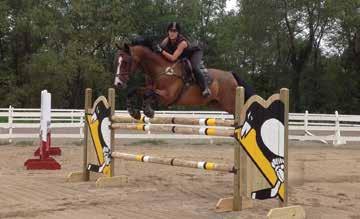
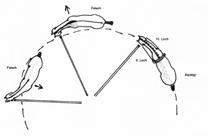
The jump is a canter stride over a fence and counting down 3,2,1 jump to the fence works well if the horse has a nice canter. But too many horses are rushing over fences out of balance instead of maintaining relaxation and rhythm. Of course, setting up caveletti in front of jumps helps to slow the horse but what about some good old fashion flat work to improve the horse over fences? As we know, it’s what happens in between the jumps that make or breaks the jumping course.
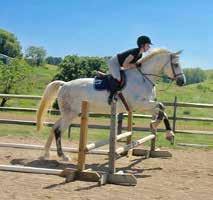
Three simple ways a rider can improve the canter over fences on the flat are riding straight lines away from the wall and lunging in side reins to balance and straighten the horse and the rider not leaning. However, I am sure there are 101 ways to improve the canter over fences, but this article is only going to deal with three.
The trot is called the foundation gait, meaning it is the gait a rider should use most of the time to train the horse. If the horse has a balanced, none rushing trot, then this will assist in maintaining a steady canter. A calm and relaxed trot over caveletti will undoubtedly improve a horse cantering over fences. If you can’t trot over trot poles quietly or even just trot the horse with balance how will you ever canter over jumps calmly?
Keeping the trot relaxed, and ground covering seems to be relatively easy. However, it is the horse’s crookedness at the trot and canter that puts the horse off balance. Allowing a horse to trot crookedly with a rider that leans in at the canter also throws the horse off balance. So, learning these three ways to train the horse will improve the horse over fences: a straight and balanced trot, lunging in side reins to assist in straightening the horse and the rider learning to not lean in at the trot or canter.
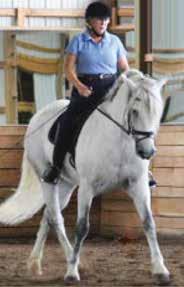
A straight horse? How does a rider put a sixteen feet long horse straight? And how does a rider know how to put a horse straight? Well, there is a famous equestrian quote that says, “You ride your horse forward, and you put it straight.” * Horses do not go straight the rider has to have the knowledge and skills to put the horse straight. So, what is straight? Straight for the horse is the same as it would be for the rider. The horse’s head is in front of the shoulders not over bent in one direction, and the shoulders are in line with the hips. The horse should have longitudinal balance/straightness (back to front) and the rider vertical balance ankle to ear. (Refer to Sally Swift’s book Centered Riding and look up the building blocks.)
If the rider allows the horse to over bend in one direction, then the horse falls out over the outside shoulder. Most horses are banana-shaped to the right. Meaning they like to bend right. Thus, the horse is hollow right and stiff left. When tracking right, the rider has to put the horse straight with the outside rein and either leg depending on what aid is needed. Learning to put a horse straight on a straight line is way easier than on a circle.
Riding the horse off the railing on the quarter line or the second track instead of along the railing of the arena and putting it straight should be continuously. The only reason a horse falls in right or likes to bend right is because the rider enables it. Training is putting the horse straight whether on a circle or on a straight line. Learning how to ride a horse straight is way easier at the trot than at the canter. But practicing straight lines off the rail will assist the rider in understanding how to better balance a horse at the canter.
By Kristin Hermann
Riding the horse forward and putting it straight, teaches the rider how to support the horse with the outside rein and the result will be a straighter horse and the rider developing equestrian tact.
In all dressage tests, the rider has to come down centerline twice to show that they can keep the horse straight. And as we know keeping the horse straight improves the horse’s balance by training the horse to carry equal weight on both hind legs thus eventually improving a horse’s balance at the canter.
The second way to help train a horse to have a better canter over fences is to lunge the horse correctly in side reins. Side reins are wonderful for training a horse if they are used correctly. The outside side rein when lunging right provides support so the horse cannot over bend right. The side reins not only assist the horse to be straight, but they also train the horse to be round over the top line. Of course, when the rider is mounted, they are supposed to provide assistance to the horse using the aids to straighten and round the horse. When lunging to the left the handler could tighten the inside side rein two holes to encourage the horse to bend left, but in the meantime, the outside side reins keep the horse in balance. (If you want to learn how to lunge a horse ask me, lunging seems to be a forgotten art, but it is so valuable when training horses.)
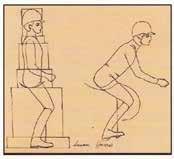
Then the third tip to improving the horse’s canter over fences is for the rider to not lean in at the canter. So many riders lean to the inside when cantering, and this causes the horse to bend even more and lose balance and fall on the forehand instead of cantering in an uphill balance. For the horse to have balance, it needs to step under from behind and carry not be falling forward to catch its weight and that of the riders too. If you have mirrors in your arena look to see if you are leaning in whether at a trot or a canter. If you don’t have mirrors have someone videotape you, make sure your spine and nose are aligned with the horse. (Read the book, When Two Spine’s Align.) And please don’t look down at the dirt when you are riding. When riding, the rider’s eyes should be evaluating if the horse’s ears are level, and its head is in the middle of the shoulders et al.… looking at the dirt won’t help to train your horse to be in balance or straight.
These are just three ways to think about balance and straightness for you and your horse to apply over fences. If you are leaning, the horse cannot be straight and riding off the railing on straight lines over and over will do wonders for not only straightening the horse but enhancing the rider’s feel of timing with the aids, or equestrian tact. I am sure there are 101 additional ways to train a horse to have a more balanced canter over fences but start here with these three tips: riding straight lines off the arena wall, lunging in side reins and training yourself not to lean. in time your horse will shift its weight to the hindquarters and stop dragging you on its forehand over fences.
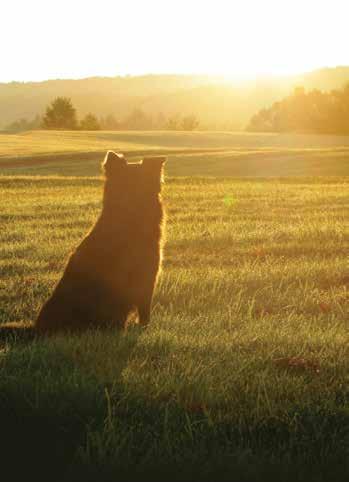
By Kim Lenz
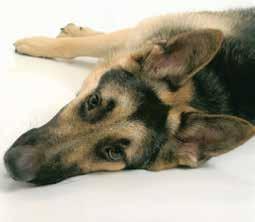
When we met, you bounded up to our feet and pawed us gently, and we knew you were the dog for us immediately.
You taught us both so much about German Shepherds and unconditional love. We made so many plans. At 10 weeks old we saw how smart you were; at 12 weeks we started classes. You excelled, I excelled. But at 11 months you were different. Everything was scary, and your confidence disappeared, as did mine. Our training started over and this time it was about how to grow and work together. And I cannot thank you enough for being patient with me while I learned how to teach you. Your personality pushed me to learn more about behavior and because of you, I am a much better person and dog owner.
You loved one person almost as much as us, and it was Sara. Even as a baby you watched over her, laid with her and let her do whatever she wanted. I saw how much you meant to her when she visited you for the last time, hugging you on the floor as she crying into your neck.
The simple things you loved also brought us joy: chasing the ball, playing in the water and snow, squeaking your toys and just laying with your head in my lap.
As your blindness progressed, you slowed down but still loved life. I never saw a dog dance around the kitchen like you did barking and crying for dinner.
It was just 2 years ago this past Oct that we lost you, and my heart aches like it was yesterday. I will love you forever Maximus.