Hi! And thanks for picking up this issue of Project Bridge SciComm’s Charm City Science, your seasonal guide to local science news and events.
Normally, this is where we’d include a letter with an update on Project Bridge and what we’ve been up to. Unfortunately, these are not normal times for science, and we wanted to share our thoughts about that - so you can find our Letter from the Editors on page 5.
If you would like to reach out to us via email or social media accounts, our contact info is on the back cover of this zine, along with QR code that you can scan for more on our projects - including the online version of this zine, with links to information about the articles and events. You can read it at linktr.ee/pbscicomm
Jackson Mace PhD., Post-doc Research Fellow,
JHU-SOM Cellular and Molecular Medicine
Malka Svei, PhD Candidate, JHU-SOM Neuroscience
Co-Chairs, Project Bridge Science Communication Committee Union members of TRU-UE
*special thanks to Efe Dogruoz and Rafal Fejfer for examples of Drosophila research
In big news for the Sci-Comm Committee, Co-Chair Jackson Mace recently defended his thesis. We thought you might be interested in what he’s been working on, so you can read about it below.
If you could shrink an entire cell phone network to fit inside a human body, you’d have something a lot like our nervous system. Nerves, brain, and spinal cord are made of specialized cells called neurons, which transmit information across distances via electrical signals. Many neurons are wrapped with myelin, a fatty substance that acts as an electrical insulator. Like the insulation on a phone line or power cord, myelin protects the fibers, allows for more efficient transmission, and prevent signals from crossing where they shouldn’t. When that insulation is disrupted, all kinds of things can begin to go awry.
Multiple sclerosis (MS), one of the most common causes of disability in young adults, is a progressive disease of central nervous system myelin. In MS patients, the immune system mistakenly attacks the myelin in the brain and spinal cord, leading to inflammation, nerve damage, and gradual loss of brain and spinal cord tissue. Today’s MS drugs mainly work by suppressing the immune system. They help prevent new inflammatory attacks early in the disease, but do little to stop the slow, progressive worsening over time - with a steady loss of neurons and myelin-producing cells (oligodendrocytes).
Our research focused on a unique protein called macrophage migration inhibitory factor (MIF), which has been reported to be dysregulated in people with MS. MIF has several different roles: it can trigger inflammation outside cells and act as an enzyme inside cells, where it may damage DNA and cause premature cell death. Using genetic and pharmacologic tools, we blocked MIF activity in mice and looked at how this affected disease progression. By blocking different aspects of MIF activity, we could prevent several mechanisms of central nervous system degeneration observed in MS. Stopping MIF from acting as a nuclease (enzyme that breaks down DNA) prevented neuronal and oligodendrocyte cell loss, while blocking its immune related activity decreased inflammation and subsequent neurodegeneration.
Our findings demonstrate that MIF is a key driver of both inflammation and degeneration in the central nervous system - providing new insight into the processes behind neurological disease. We also suggest that targeting MIF’s harmful enzymatic functions may be a promising approach for treatment, complementing current MS therapies to slow or even prevent the disabling impact of this disease. This work will be published in Nature Neuroscience in early December 2025, so keep a lookout to read the full study!
Science in the City: A Quarterly Calendar of Events
All events are located in Baltimore City. Events are free of charge unless otherwise noted. * we now have a google calendar! subscribe here*
↺ = recurring event, check location website for the most up to date schedule
✎= Registration required. ⛰ = hike/ outdoor activity - dress accordingly
Kids & Families:
MD STEM Festival: Art Machines (Ages 6-11)
Thursday, Nov 13 • 4:00 PM
Enoch Pratt Library Waverly Branch, 400 E. 33rd Street
Learn about & build a simple machine in celebration of the MD STEM Festival
Nature for Kids: Outstanding Owls✎
Saturday, Nov 15 • 10:00 AM-11:00 AM
Masonville Cove , 1000 Frankfurst Ave
NEC Drop in Activity↺: Learn about Corn (Ages 5+)
Saturday, Nov 15 • 11:00 AM-12:00 PM
Cylburn Arboretum 4915 Greenspring Ave
Watts up, kids! (Ages 4-11)
Saturday, Nov 15 • 3:30 PM-4:30 PM
Enoch Pratt Library Waverly Branch, 400 E. 33rd Street
Explore electricity with paper circuits & static electricity. Science Heroes Presents: Adventure of the Missing Color (Ages 6-11)
Monday, Nov 17 • 4:00 PM
Enoch Pratt Free Library - Southeast Anchor Branch, 3601 Eastern Ave
Discover how fun and colorful science can be through hands-on experiments Monday Wondernoons↺
Mondays, Nov 17 - Dec 29 • 4:00 PM
Enoch Pratt Free Library - Southeast Anchor Branch, 3601 Eastern Ave
Celebrate the MD STEM Festival: Whirligigs (Ages 3-11)
Tuesday, Nov 18, 3:30 PM
Enoch Pratt Free Library - Canton Branch, 1030 S. Ellwood Avenue
Build a whirligig & learn about how it works, in celebration of the MD STEM Festival Fossil Dig with the Science Guys of Baltimore (Ages 3-5)
Wednesday, Nov 19, • 11:00 AM
Enoch Pratt Free Library - Orleans St. Branch, 1303 Orleans Street Baltimore
Learn about how fossils are created & study a collection of numerous fossils, rocks, and minerals- Each participant will get to excavate and keep their own fossils!
Mad Science After-School at Harlem Park
Wednesday, Nov 19, • 3:30 PM-4:30 PM
Harlem Park Recreation Center 700 N Calhoun
FAMILY BIRDING: TURKEY TALK & craft with the Baltimore Bird Club
Saturday, Nov 22 • 11:00 AM-12:00 PM
Cylburn Arboretum, 4915 Greenspring Ave
Family Nature Hike: Welcome Winter Walk✎⛰ ↺
Saturday, Dec 06 • 10:00 AM
Carrie Murray Nature Center*, 1901 Ridgetop Road
Letter from the Editors
At Project Bridge, we believe that science belongs to the public, because public money makes research possible. Jackson’s recently completed project (read about it on pg. 3!) was supported in part by the National Institutes of Health (NIH). Malka’s ongoing research is funded by the National Science Foundation. In fact, government and intergovernmental bodies enable the majority of scientific discovery worldwide.
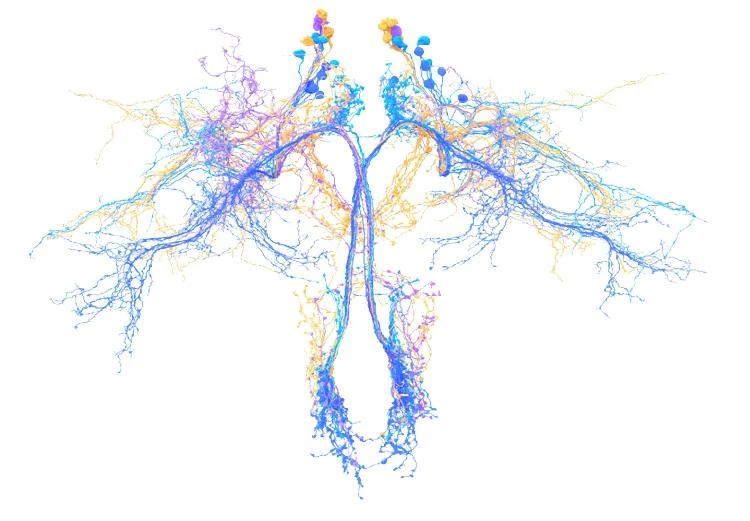
The FlyWire project, for example, completed its major goal late last year: a publicly available map of the adult fruit fly brain. This may not sound like a big deal - the tiny fruit fly, Drosophila melanogaster, has a brain as small as a grain of sand. But that tiny structure holds a complex system of nearly 140,000 neurons, millions of connections carrying messages between them. While you swat at a buzzing pest, its eyes are working at record speed: sending about four images to its brain for each one recorded by a human eye. Neurons in the brain compare these images with memories of the past, make predictions about the future, and choose the best course of action. The fly’s signature zigzag escape involves instructions from its brain and spinal cord to many different muscle groups - all in fractions of a second.
Mapping out each of those connections was like tracing through the entire city of Baltimore 3 feet at a time. It took years of work by hundreds of researchers in more than ten countries, and the support of at least four different government agencies (in addition to private funding). Why all this time and money? Studying fruit flies can tell us a surprising amount about other animals, including ourselves. It has led to discoveries from genes that help our bodies keep track of day and night to proteins neurons could not communicate without. FlyWire was a tremendous effort in basic research, research not aimed at an immediate practical result. This kind of research leads to new discoveries for years to come, and often reveals exciting and unexpected things - its most important results may end up answering questions we haven’t even thought of yet. It also requires long term investment. The US has long led the way in research investment, with the NIH supporting more scientific projects than any other source worldwide. Decisions made by the US government affect research around the globe. Our government has traditionally been supportive of science, like the majority of Americans. Unfortunately, the current administration has taken a different approach - cutting research funding, firing scientists and staff, and pulling support from universities. These changes have disrupted scientific progress and impacted jobs and economic security. As scientists, we don’t know what the next few years will bring. But we know that we will need your support. Vote for science funding, and hold your public officials accountable. Learn about the scientific process (perhaps by attending one of the events on our calendar), and don’t be afraid to ask questions. Consider doing citizen science hands on with an org like BUGSS or the Masonville Cove Partnership If you’re a researcher yourself, we can use your help! Project Bridge is always seeking volunteers, and with Jackson having finished his PhD, he’ll be retiring from this committee. If you’d like to get involved, let us know. Finally, if you’re a kid who is curious about the world: we need scientists like you! You can get in touch with us at Project Bridge to be connected to resources or learn more. Our contact info is on the back cover. As always, thank you for reading - until next time! - Jackson & Malka
Calendar of Events : Continued
Poinsettia Fairies: learning and craft with Naturalist Daisy Sudano.
Saturday, Dec 13 • 11:00 AM-11:00 AM
Cylburn Arboretum, 4915 Greenspring Ave
Winter Solstice Models
Monday, Dec 15 • 3:30 PM-4:30 PM
Enoch Pratt Free Library - Cherry Hill Branch, 606 Cherry Hill Road
Make models of the earth & sun and learn more about what creates our seasons.
Nature for Kids: Delightful Deer✎⛰
Saturday, Dec 20 • 10:00 AM-11:00 PM
Masonville Cove, 1000 Frankfurst Ave
LEGO® Car Build and Race (Ages 3-11)
Friday, Jan 09 • 3:00 PM-4:00 PM
Enoch Pratt Free Library - Johnston Square Branch, 1132 Greenmount Ave Growin’ in the Garden: Create Your Rocket Boots (Ages 12-18)
Thursday, Jan 22 • 4:00 PM-5:00 PM
Enoch Pratt Free Library - Edmonson Avenue Branch, 4330 Edmondson Ave
Enter the world of Growin’ in the Garden, an educational comic series that explores the importance of S.T.E.M. in comics.
Nature/Volunteering:
Guided Hike: Wetlands Prep for Winter✎⛰ ↺
Saturday, Nov 15 • 1:00 PM-3:00 PM
Carrie Murray Nature Center*, 1901 Ridgetop Road
Guided Hike: Turkey Trek✎⛰ ↺
Saturday, Nov 22 • 1:00 PM
Carrie Murray Nature Center*, 1901 Ridgetop Road
Audobon Society Birding Tour of Druid Hill Park✎⛰ ↺
Saturday, Nov 15 // Saturday, Dec 06 • 8:00 AM-9:30 PM
Druid Hill Park 3001 East Drive
(Registration + 72 hours notice required if you would like to borrow binoculars)
Audobon Society Birding Tour of Patterson Park✎⛰ ↺
Saturday, Nov 22 // Saturday, Dec 13 • 8:00 AM-9:30 PM
Patterson Park (meet near Eastern Ave and South Rose Street)
(Registration + 72 hours notice required if you would like to borrow binoculars)
Friday Night Hike: Full Moon Hike✎⛰ ↺
Friday, Dec 05 • 7:00 PM
Carrie Murray Nature Center*, 1901 Ridgetop Road
Kids ages 6+ are welcome with accompanying adults.
Guided Nature Walk✎⛰
Saturday, Dec 06, • 10:00 AM-11:30 AM
Masonville Cove, 1000 Frankfurst Ave
Workshops/Activities:
Nature Journaling with MAEOE✎
Saturday, Nov 15 • 1:00 PM-3:00 PM
Masonville Cove, 1000 Frankfurst Ave
Water Quality/Climate Change Science: A Citizen Science Opportunity✎⛰ ↺
Saturday, Nov 22 • 1:30 PM-3:00 PM
Masonville Cove, 1000 Frankfurst Ave
Learn what it takes to be a water scientist and help with climate change data collection! 3D Printing After Dark✎
Monday, Dec 08 • 6:00 PM
Enoch Pratt Free Library - Govans Branch, 5714 Bellona Avenue Call (410) 396-6098 or email gvn@prattlibrary.org to register.
Tree Keepers Introduction to Pruning and Pruning Field Session✎⛰ ↺
Saturday, Dec 13 // Saturday, Jan 10 • 10:00 AM-1:30 PM
Baltimore Unity Hall 505 Eutaw Place // Village Learning Place 2521 St Paul St TreeKeepers is open to all residents ages 14+ interested in helping Baltimore’s trees. To be certified, you will need to attend a series of 3-4 training sessions & 2 volunteer eventsdetails at treebaltimore.org, or contact treebaltimore@baltimorecity.gov l (410)396-6109
Winter Nature Drop In: Cozy Crafts & Curiosities
Saturday, Dec 27 • 10:00 AM-3:00 PM
Carrie Murray Nature Center*, 1901 Ridgetop Road
Warm drinks and light snacks available while supplies last! Pop-up display: What Lives Underground
Saturday, Jan 10 // Sunday, Jan 11 • 10:00 AM-1:30 PM
Cylburn Arboretum, 4915 Greenspring Ave
Talks/Lectures:
BUGSS Science Slam at Peabody Heights!
Thursday, Nov 13 • 7:00 PM-9:00 PM
Peabody Heights Brewery 401 East 30th Street
scientists will present their work in 5 minutes - with prizes for the best talks
Gabi Martínez presents "The Last House Before the Sea: One Year on the Ebro Delta"
Tuesday, Nov 18 • 7:00 PM
Red Emma's Bookstore Coffeehouse, 3128 Greenmount Ave
Gabi Martinez will speak (w/ Isabel Castro-Vázquez) about his book, on life on a rural island in northern Spain & how it is impacted as climate change reshapes the landscape Environmental Justice wi/ Baltimore Just Transition Network
Thursday, Nov 20 • 5:00 PM
Red Emma's Bookstore Coffeehouse, 3128 Greenmount Ave
Dinner & dialogue - explore upcoming state policies to help fight environmental injustices in Baltimore!
Terence Keel presents "The Coroner's Silence: Death Records and the Hidden Victims of Police Violence" w/Ahmed Ragab and Tawanda Jones
Thursday, Nov 20 • 7:00 PM
Red Emma's Bookstore Coffeehouse, 3128 Greenmount Ave
Through rigorous research, Terence Keel's new book unmasks the systemic failures within forensic medicine. Come learn about how incomplete autopsy reports, mishandled medical documents, and strategically lost evidence effectively shield law enforcement from accountability.
above: example neurons from the FlyWire fly brain connectome (wiring map). The different colors represent different neuron types.
Credit: Amy Sterling, Murthy and Seung Labs, Princeton University. 2024
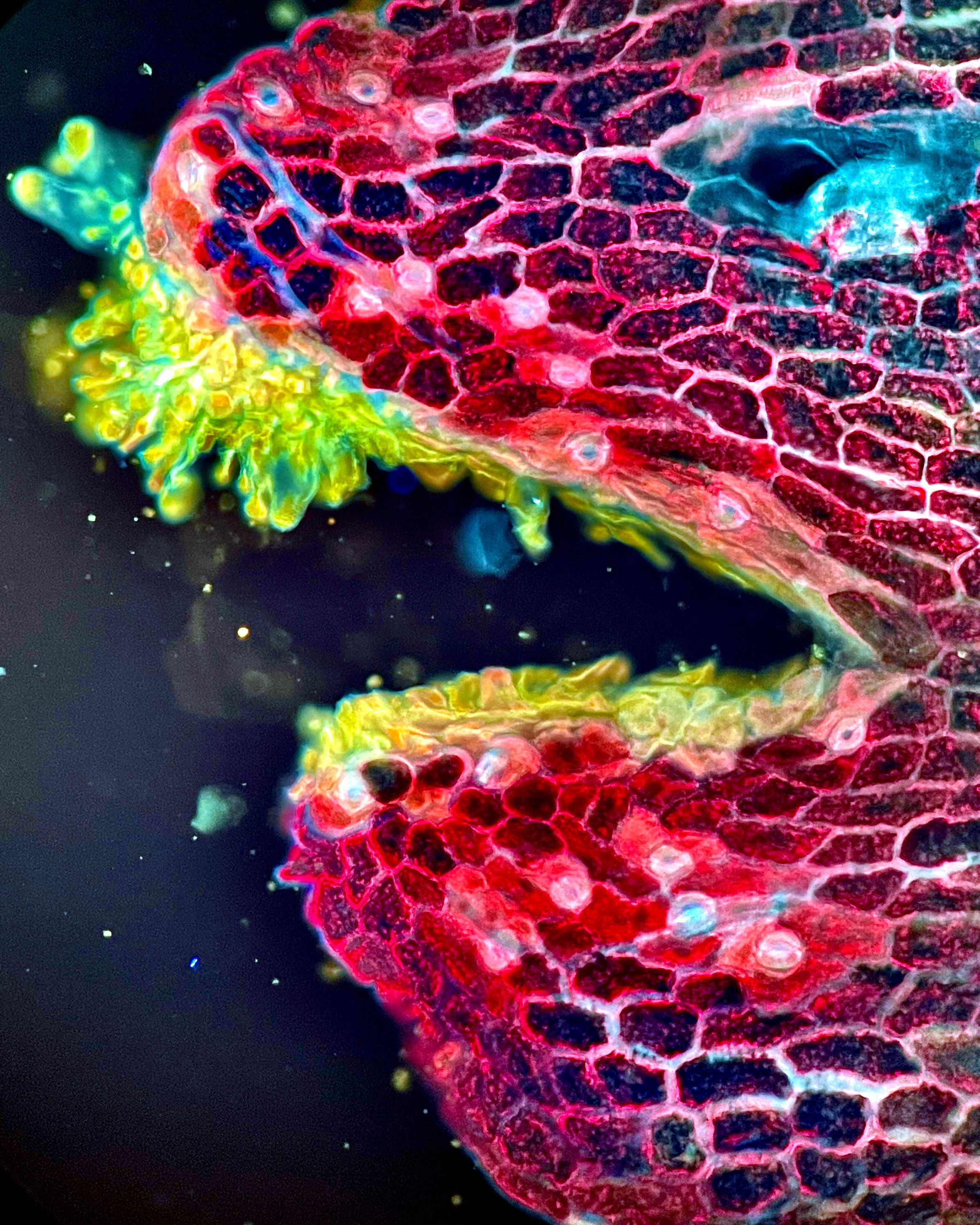
Kaiju
250x | Fluorescence | Dandelion Flower
Under UV light, the dandelion flower ceases to be innocent. It becomes a microscopic monster opening its scaled jaws and revealing its chemical arsenal: cell walls glowing blue, chlorophyll bleeding red, and sparking yellow. The colors are always there, but the same sunlight that activates them also washes them out.
if you like this zine, feel free to pass it on! download a PDF
printable on any double sided printer
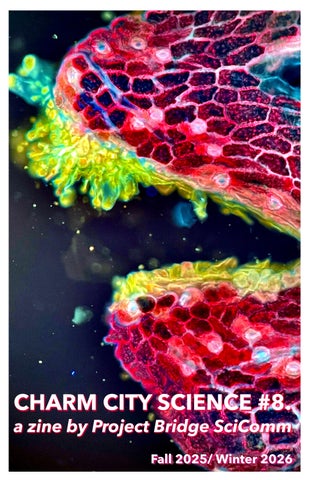
Front Cover Spotlight: Martín Yepes Trujillo (@bmoremicro)