Hi! And thanks for picking up this issue of Project Bridge SciComm’s Charm City Science, your quarterly guide to local science news and events.
At Project Bridge, our mission is to connect scientists with the broader community, and help make science accessible to everyone. If you have questions, like what we do, or want to get involved, let us know! You can reach out to us via email, or check out our social media accounts. Our contact info is on the back cover of this zine, along with QR code that you can scan for links to some of our projects - including the online version of this zine, with links to more information for all of the events. You can read it at linktr.ee/ pbscicomm
These are hard times for science - from chaos at the NIH, to threats to foreign students and non-citizen scholars, to massive funding cuts handicapping essential research - the Trump administration has thrown the scientific enterprise in disarray. Here in Baltimore, the damage is already being felt. We’re also facing a lot of uncertainty, as competing policy announcements follow each other at rapid speed - and we have reason to believe things are likely to get worse before they get better. But we don’t have to take this lying down: On page 3, Andrew Eneim to reports on the Stand up for Science rally responding to these threats, and shares some thoughts on how we move forward.
In the meantime, here at Project Bridge we’re going to keep doing what we’re doingbringing you beautiful science images, interesting research news, and as always, a list of events to look out for this season. Stay safe, and stand up for each other,
Jackson Mace, PhD Candidate, JHU-SOM Cellular and Molecular Medicine
Malka Svei, PhD Candidate, JHU-SOM Neuroscience Co-Chairs, Project Bridge Science Communication Committee
Science in the City: A Quarterly Calendar of Events
All events are located in Baltimore City. Events are free of charge unless otherwise noted. * we now have a google calendar! subscribe here*
↺ = recurring event, check location website for the most up to date schedule
✎= Registration required. ⛰ = hike/ outdoor activity - dress accordingly
Kids & Families:
The Science of Tempering Chocolate ✎
Saturday, May 10, 10:00 AM-11:30 AM
Baltimore Underground Science Space 101 N Haven St Please be sure to alert us to any chocolate allergies! students ages 10-14. $17.85
Microscopic Mondays
Monday, May 12, 2:00 PM-3:00 PM
Pratt Library, Southeast Anchor Branch. 3601 Eastern Avenue
Color Our World with the Science Guys!
Wednesday, May 14, 3:30 PM-5:00 PM
Pratt Library, Roland Park Branch. 5108 Roland Avenue
Drop-in Activity: Forest Layer
Saturday, May 17, 11:00 AM-12:00 PM
Cylburn Arboretum, 4915 greenspring ave
All ages 5+ welcome. While supplies last.
Journey into Quantum Science and Technology (teen program)
Thursday, May 22, 3:30 PM-4:30 PM
Pratt Library, Walbrook Branch. 3203 W. North Avenue, Baltimore, MD 21216
Light Street Lab
Tuesday, May 20, 3:30 PM-5:00 PM
Pratt Library, Light Street Branch. 1251 Light Street
The Slime Show with Eric Energy
Wednesday, May 28, 11:00 AM-12:00 AM
Pratt Library, Walbrook Branch. 3203 W. North Avenue
Science Heroes Presents: Adventure of the Missing Color
Saturday, Jun 07, 12:00 PM-1:00 PM
Pratt Library, Central Library. 400 Cathedral Street
We're Hatching Something Beautiful: Butterflies
Monday, Jun 16, 3:30 PM-5:00 PM
Pratt Library, Southeast Anchor Branch. 3601 Eastern Avenue
STE(A)M day camp ✎
Monday, Jun 23- Friday June 27
10:00 AM-3:00 PM
801 N. Mount Street
For children in grades 3 through 8. REGISTRATION CLOSES JUNE 15, 2025Transportation not provided. Contact churchofChristsandtown@gmail.com
Pollinator Plant Project
Wednesday, Jun 25, 3:30 PM-4:30 PM
Pratt Library, Cherry Hill Branch. 606 Cherry Hill Road
Registration is encouraged - call 410-396-1168 to register.
Waste Not Want Not:
Engineering Powerful Technologies from Kitchen Scraps
Quantum dots -microscopically small semiconductor particles- are revolutionizing the field of nanotechnology. Typically only a few nanometers (that’s millionths off a centimeter) in size, they offer exciting possibilities in everything from multicolored displays to medical imaging and solar cells. At such small scales, matter works in unexpected ways. Changes in electron behavior give nanomaterials unusual properties, including in the ways they interact with light. By altering their size, shape, or other features, quantum dots can be designed for all kinds of optical effects - making them very useful in applications like solar cells and photosensitive devices, bioimaging, and next-generation displays.
With all the promising possibilities quantum dots hold, there are some major concerns about sustainability. High-performance quantum dots are often made from toxic heavy metals, posing environmental and health risks. Enter carbon quantum dots (CQDs): a class of quantum dots that are made from carbon-rich materials, offering a non-toxic and environmentally friendly alternative. With CQDs, the same class of nanoparticles found in your expensive QLED TVs can be made from biological waste, including the kinds of scraps commonly found in a kitchen garbage.
In one striking example, Raji Atchudan and colleagues in India and Korea recently extracted these CQDs, from an unlikely source — kiwi fruit peels. Kiwi, well known for its rich vitamin C content and antioxidant properties, also contains high amounts of carbonbased compounds. Scientists have used this to create CQDs using a straightforward, lowcost process known as hydrothermal synthesis. In this method, kiwi fruit peels were crushed with water in a standard commercial mixer grinder. This was then mixed with a little ammonia and heated for 24h at a high temperature of 200 °C. Once this mixture cooled, the CQDs floated up in the solution to be filtered and collected.
These kiwi-derived CQDs have many potential uses - including in the field of photovoltaics, or light power. Solar cells rely on materials that efficiently absorb sunlight and convert it into electricity. Using quantum dots enables greater control over light absorption, potentially improving the efficiency of solar cells. By incorporating kiwi CQDs into photovoltaic devices, researchers aim to develop low-cost, high-performance solar panels that are both flexible and eco-friendly.
Kiwi-derived CQDs have promising applications in bioimaging as well. Due to their fluorescent properties, they can be used as bio-labels for tracking cellular interactions, offering a safer alternative to traditional fluorescent dyes. From harvesting solar energy to advancing cancer research, CQDs have the potential to make a remarkable impact across multiple industries. Clearly, big things indeed come in nano-sized packets.
As research into carbon quantum dots continues, the development of sustainable, waste-derived nanomaterials is gaining momentum. Fruit peels, often discarded as waste, are proving to be a valuable resource in the quest for cleaner, greener technologies. By harnessing the power of nanotechnology and sustainability, scientists are paving the way for a future where waste is not just reduced but repurposed into high-performance materials that can be used across various industries. The journey of quantum dots — from theoretical curiosities to real-world game changers — is unfolding, one fruit peel at a time.
Dhanvini Gudi is a PhD. Candidate in the NanoEnergy Lab, at the Johns Hopkins University department of Electrical and Computer Engineering
Calendar of Events : Continued
Kitchen Science: National Ice Cream Month
Monday, Jul 21, 3:00 PM-4:00 PM
Pratt Library, Light Street Branch. 1251 Light Street
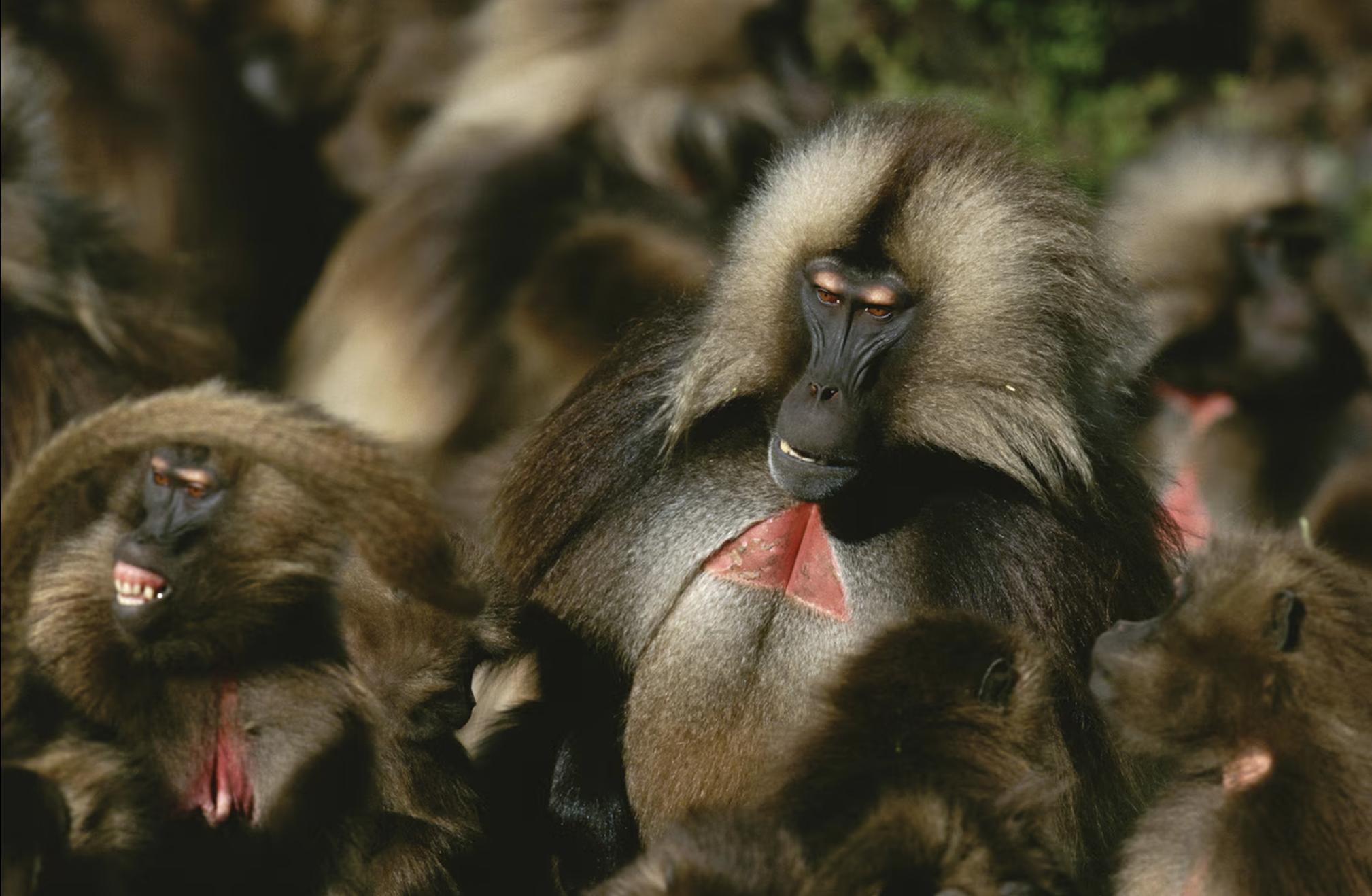
It’s not just a memorable appearance that makes Geladas (pictured above) unique - read our back page to find out why!
Nature/Volunteering: Bird Banding ⛰ ↺
Fridays and Saturdays, May 9June 7th
Thursday May 15
Thursday May 22
8:00 AM - 10:30 AM
Masonville Cove, 1000 Frankfurst Ave
Community Composting Systems for Urban Gardens Workshop
Friday, May 16, 6:00 -7:30 PM Reservoir Hill Community Garden. 942 Whitelock Street
reach out to morgan.wittelsberger@baltimorecity.gov with any questions. Community Shoreline Clean-Up ⛰
Saturday, May 17, 1:30 PM-2:30 PM
Masonville Cove, 1000 Frankfurst Ave Tree ID Hike ⛰
Saturday, May 17, 10:00 AM-2:00 PM
Carrie Murray Nature Center; 1901 Ridgetop Road*
Wednesday Walk: Oak Study ⛰ ↺
Wednesday, May 21, 12:00 PM-1:00 PM
Cylburn Arboretum, 4915 greenspring ave Bird Walk ⛰
Saturday, May 24, 10:00 AM-12:00 PM
Carrie Murray Nature Center; 1901 Ridgetop Road*
Water Quality/Climate Change Science: A Citizen Science Opportunity ⛰ ✎
Saturday, May 24, 1:30 PM-3:00 PM
Masonville Cove, 1000 Frankfurst Ave Herp Walk
Saturday, May 31, 10:00 AM-12:00 PM
Carrie Murray Nature Center; 1901 Ridgetop Road* Hike on the Gwynns Falls/Leakin Park & discover the reptile and amphibian world
Guided Walk with Nature WoRx ↺
Saturday, Jun 07, 10:00 AM-11:30 AM (Every first Saturday)
Masonville Cove, 1000 Frankfurst Ave
Photograph by Michael Nichols Nat Geo Image Collection
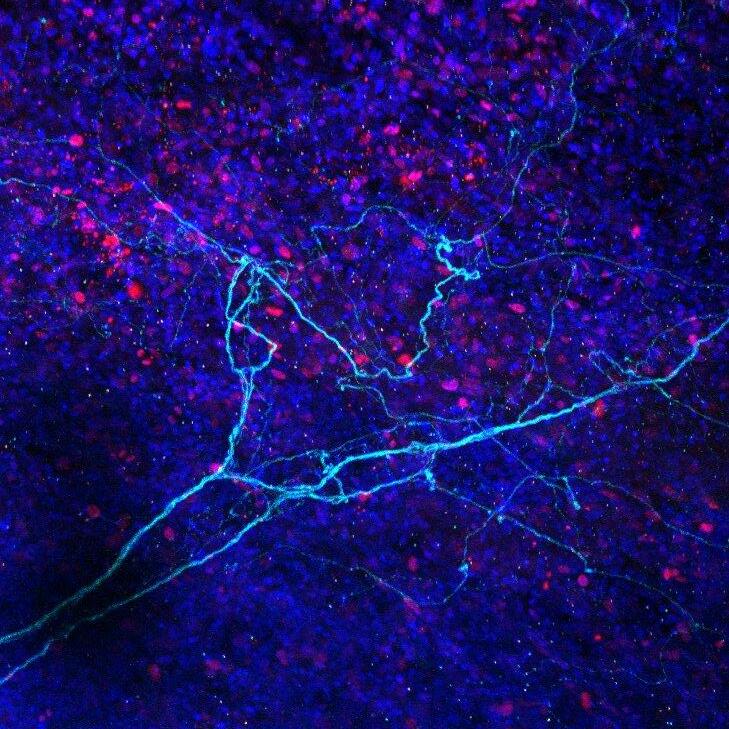
Front Cover spotlight:
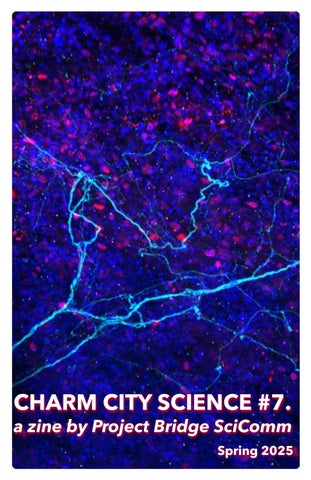
Breast cancer is a major public health problem in the United States, accounting for 30% of cancer diagnoses in women each year. Celia Hallinan, a Johns Hopkins graduate student working in the lab of Dr. Mikala Egeblad, is investigating how neurons innervate tumors and the effect of their activity on the progression and spread of breast cancer using a mouse model. She shared this image, “A Nervous Tumor,” (as seen under a confocal microscope) with us. Those bright blue strands are the branching ends of neurons infiltrating the core of a primary tumor . Proliferating cells are labeled in pink.
Science you can See:
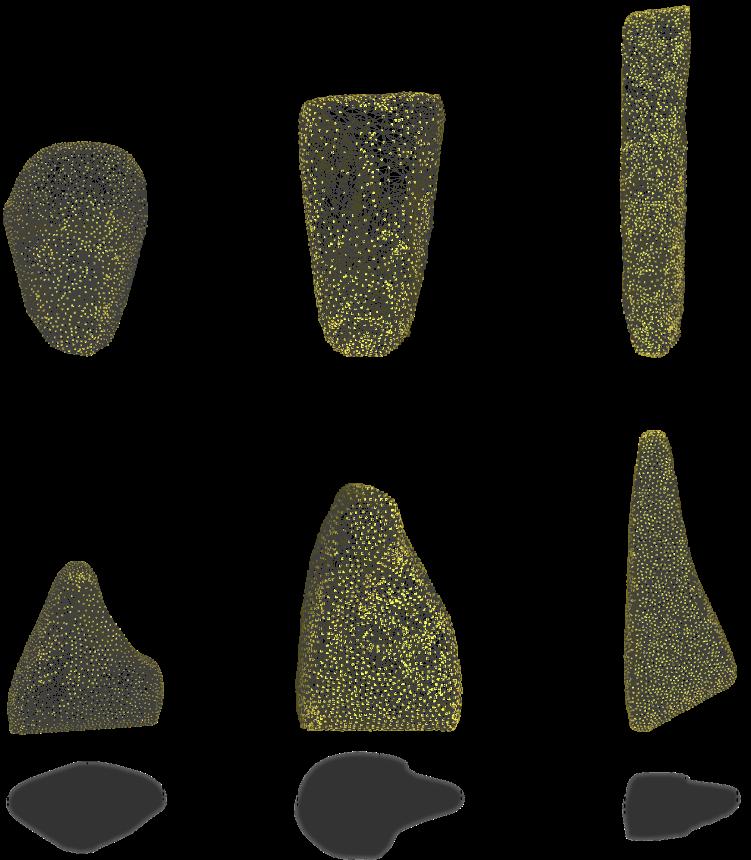
Savannah Cobb, a PhD. candidate in the lab of Dr. Siobhan Cooke (Center for Functional Anatomy and Evolution at the Hopkins School of Medicine) shared this unique image (above), included in a paper she and her colleagues published late last year in the American Journal of Biological Anthropology, diet in anthropoid primates with implications for Antillothrix” of three primate teeth, depicting their shapes in 3D. To create the images, the researchers created epoxy casts of primate jaws borrowed from museum collections. They then took 3D scans of each cast & used graphics software to represent the final result. From left to right are the teeth of:
us, “the howler monkey's incisor is typical of folivores (leaf eaters”, while the gelada tooth is typical of grazing animals, & the bearded saki’s reflects its hard-object diet of fruit, nuts & insects.