SCHOOL OF MUSIC
The University of Queensland Vice-Chancellor’s Concert Series
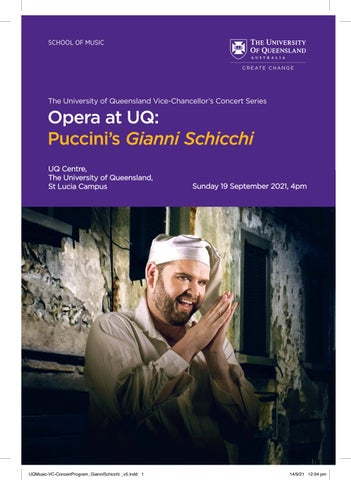
The University of Queensland Vice-Chancellor’s Concert Series
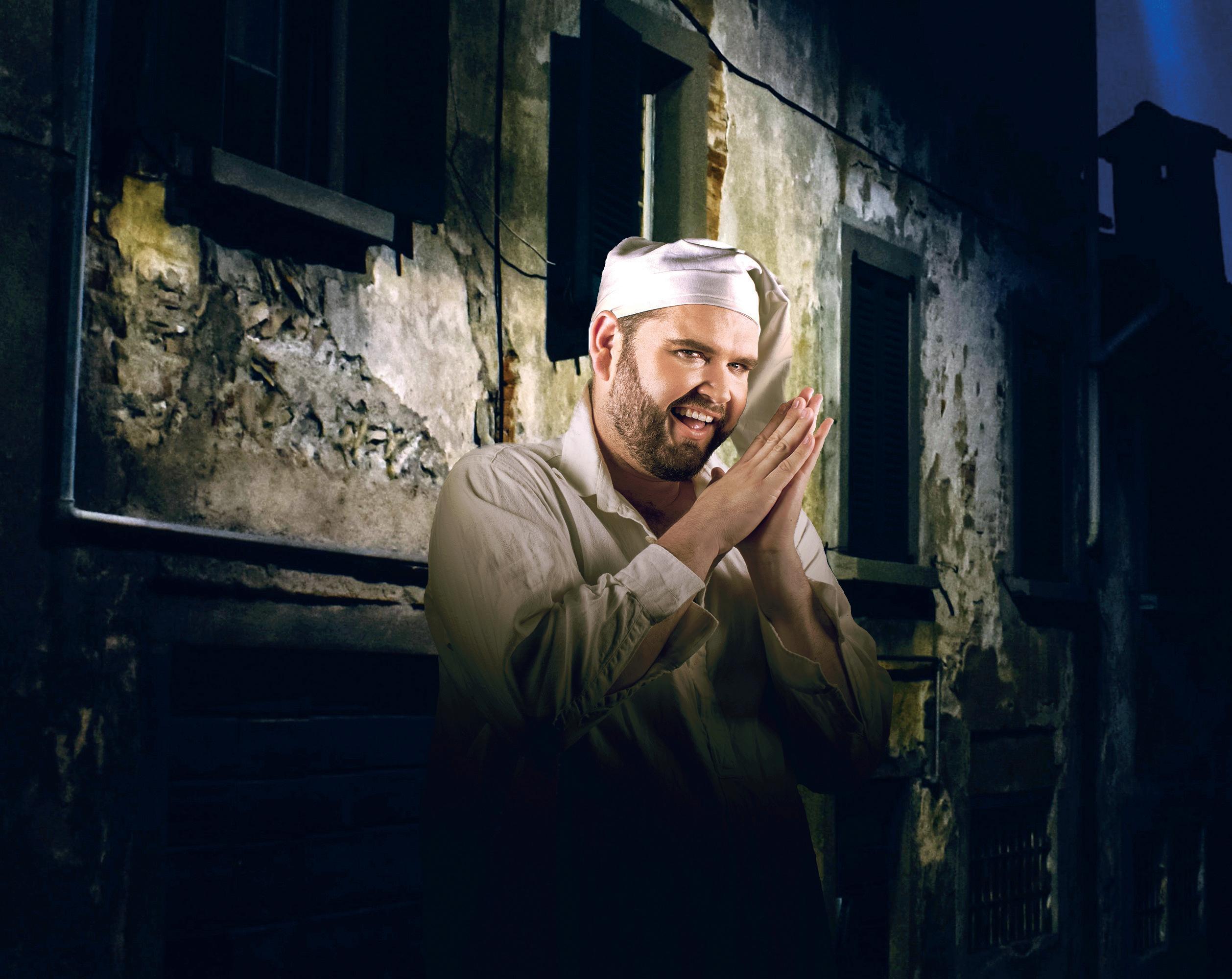
UQ Centre,
The University of Queensland, St Lucia Campus Sunday 19 September 2021, 4pm
Head of School, School of Music, The University of Queensland
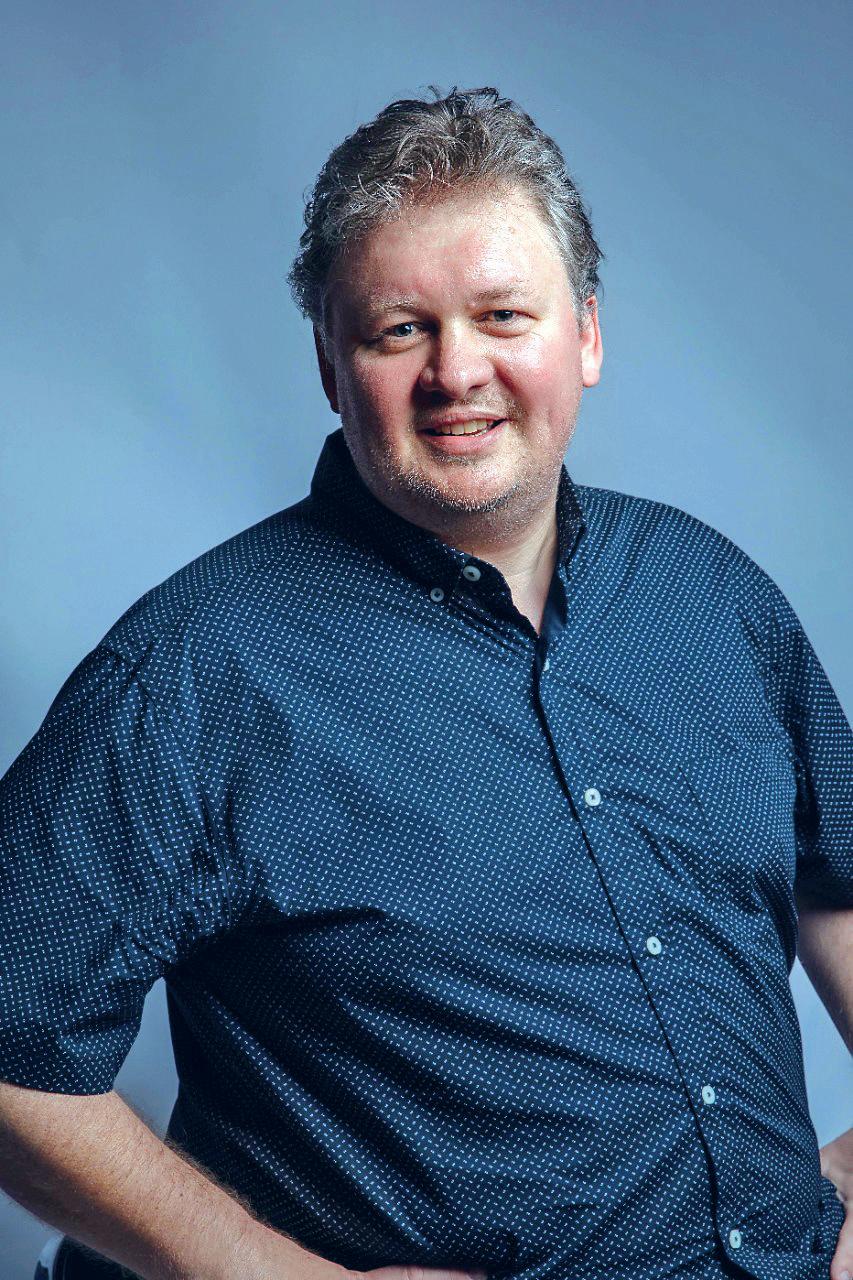
It is with great pleasure that I welcome you to a special event in the history of the annual Vice-Chancellor’s Concert Series at The University of Queensland School of Music: the School’s first large-scale operatic production. Today’s performance will feature our talented vocal students, led and directed by Dr Shaun Brown, conducted by Dane Lam in collaboration with the UQ Symphony Orchestra (UQSO). In bringing opera to UQ, we are also temporarily re-locating from our home-away-from-home at the QPAC Concert Hall, to the beautiful St Lucia campus.
This is a busy period for the UQ School of Music, with a separate production in partnership with Opera Queensland (OQ) to follow later this month. UQ and OQ are teaming up to present Claudio Monteverdi’s Eighth Book of Madrigals (Songs of War and Love), directed by Patrick Nolan (OQ CEO and Artistic Director) at UAP (Urban Art Projects). This production is part of a broader partnership with OQ that saw our students spend a week working in their South Bank studios earlier this year, with further collaborations planned for later this year and next.
you to Paul Young and to the wonderful students in the stage management team, who have all gone above and beyond in setting the scene today. Finally, a special thanks to Roz Bannan, UQ Centre Events Coordinator, for helping us realise this ambitious vision.
It is exciting to see the School of Music’s capacity to bring great musical experiences to life on campus grow in this way. I know that Gianni Schicchi has provided our students with a fantastic professional experience, and I have no doubt it will provide you with a delightfully entertaining Sunday afternoon.
Professor Liam Viney
One act comic opera (1917–18)
Composed by Giacomo Puccini
Libretto by Giovacchino Forzano
CAST
Gianni Schicchi
Lauretta, his daughter
Zita, cousin of Buoso Donati
Rinuccio, Zita’s nephew
Gherardo, Buoso’s nephew
Nella, Gherardo’s wife
Gherardino, their son
Betto di Signa, Buoso’s brother-in-law
Simone, cousin of Buoso
Marco, Simone’s son
La Ciesca, Marco’s wife
Maestro Spinelloccio, a doctor
Ser Amantio di Nicolao, a notary
Pinellino, a cobbler
Guccio, a dyer
CREATIVE TEAM
Conductor
Director
Repetiteur and musical preparation
Italian language coach
PRODUCTION TEAM
Assistant Director
Stage Manager
Assistant Stage Manager
Surtitles
Sound
Lighting
Make-up
• Troy Castle
• Jacalyn Adcock (Alternate Cast: Tess O’Donohue)
• Morgan Rosati (Alternate Cast: Maria Woolford)
• Connor Willmore
• Jarrod Grabham
• Tess O’Donohue (Alternate Cast: Kaija Scott)
• Amber-Jane McMahon
• Thomas Yarrow
• Jia-Peng Yeung
• Yu Guo (Alternate Cast: Reuben Abbott)
• Jada Love (Alternate Cast: Luisa Tarnawski)
• Leandro Mariano Mera Otero
• Leandro Mariano Mera Otero (Alternate Cast: Yu Guo)
• Jacob Bulow
• Reuben Abbott
• Dane Lam
• Dr Shaun Brown
• Šárka Budínská
• Rosario La Spina
• Jessie Madsen
• Zoe Seeley
• Cassandra Barnett
• Beth Allen
• Paul Young
• Green Light Productions
• Breanne Nelson
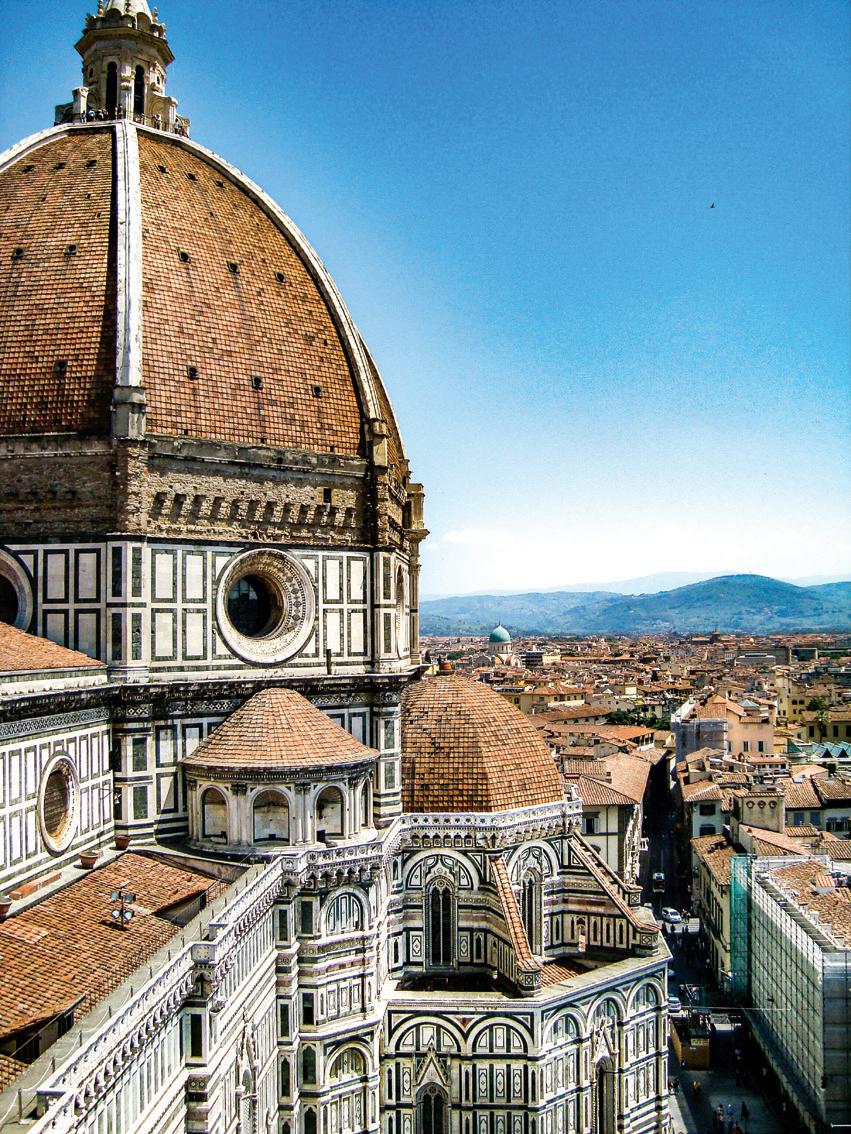
The action takes place in Florence, 1299, in the bed chamber of Buoso Donati.
Members of the extended Donati family are gathered around the bed where the wealthy Buoso lies dead. Ostensibly united in grief, they are in truth more interested in (and divided by) the contents of his will. Amongst the mourners are Buoso’s cousins, Zita and Simone, his
impoverished brother-in-law, Betto, and the youthful Rinuccio, Zita’s nephew. Betto has heard a rumour that Buoso’s will leaves all his earthly goods to the local monastery, news which sparks a frantic search for the document. Rinuccio finds it but does not yet read it; confident of its generosity towards him, he first asks Zita for permission to marry Lauretta, who is Gianni Schicchi’s daughter. Zita does not care for Schicchi, a newcomer to Florence and, worse, of peasant origins but, in the event of a generous bequest, grants Rinuccio freedom to marry whom he likes. All are most anxious to read the will, and Rinuccio sends the seven-yearold Gherardino (Buoso’s great nephew) off to fetch Schicchi and his daughter.
The will turns out to be nothing but bad news –all is, indeed, set to go to the monastery. There is now genuine cause for mournfulness. They turn to Simone but he is at a loss as to what to do. Rinuccio says they should ask the quickwitted Gianni Schicchi for help, but Zita and the others will have nothing to do with him and say any thought of marriage is impossible now that there is no inheritance. Rinuccio retorts that they are mistaken about Schicchi, who now arrives with Laura in tow and quickly realises what is going on. Rinuccio begs for his help, but Zita denounces Schicchi and tells him to get out. Schicchi acts with feigned pride and says dealing with such people is beneath him. Lauretta, however, implores him – in the aria “O mio babbino caro” – and he relents and looks at the will. After reading it carefully, he sends his daughter outside so that she will know nothing of what is about to happen.
Schicchi begins by establishing that no-one else yet knows that Buoso is dead and then has the body removed. Maestro Spinelloccio, the doctor, arrives to call on his patient. Schicchi, concealed behind the bed, mimics Buoso’s voice and informs the doctor that he is feeling much better. Spinelloccio leaves (bragging that he is yet to lose a patient). Now that the doctor thinks Buoso is still amongst the living, Schicchi can enact the next part of the plan: he will dress in Buoso’s clothes and, from the bed, dictate a new will. This scheme wins general approval and all the company now assail Schicchi with various requests, especially for the most treasured possessions – “the mule, the house, and the mills at Signa.” Suddenly a funeral bell begins to toll and all think, for a moment, that the death has been reported. It is a false alarm, however; the tolling is only for the neighbour’s servant. It does bring them all, nonetheless, somewhat to their senses, and they agree to Simone’s suggestion that Schicchi shall decide on the distribution of the treasured items, at the same time each offering Schicchi various “inducements.” The women sing a trio (“Spogliati, bambolino”) as they dress Schicchi in Buoso’s bed clothes, and Schicchi takes
care to remind them all of the punishment for falsification of a will – amputation of the right hand and exile from Florence.
The notary, Ser Amantio di Nicolao, arrives and Schicchi commences his dictation of the will, first declaring any previous such document invalid. The various minor items find their happy owners but a surprise awaits the company as “Buoso” identifies the beneficiary of the mule, indicating that it be left to “my devoted friend, Gianni Schicchi.” Consternation turns to anger and despair as the house and the mills are similarly bequeathed. Yet, in the presence of the lawyer, conscious of the punishment that would await them if the plot were to be uncovered, the family is helpless. When the lawyer departs, they attempt to grab what they can as Schicchi, now the owner of the house, chases them out. Lauretta and Rinuccio remain, singing a love duet (“Lauretta mia”)—now that her father owns a mule, a large house and the mills, there will be ample dowry. With Lauretta and Rinuccio now happy, the final word is Schicchi’s, as he asks the audience (who know his fate according to Dante) how he should truly be judged for so using Buoso’s wealth.
...That mad sprite is Gianni Schicchi, And raving goes thus harrying other people... He...undertook, That he might gain the lady of the herd, To counterfeit in himself Buoso Donati, Making a will and giving it due form...
These scant lines from the Thirtieth Canto of Dante’s Inferno are pretty much all we know today about the historical life and crimes of the thirteenth-century Florentine knight, Gianni Schicchi de’ Cavalcanti. Contested exegetical commentary on the Inferno suggests that Schicchi, who was well known for his impersonations, helped his friend Simone Donati by hiding in the bed of Simone’s freshly deceased uncle, the childless Buoso Donati il Vecchio, and dictating a new will so as to improve Simone’s inheritance. The reward (in Dante, at least) for Schicchi’s service appears to have been the “gift” of one of Buoso’s mares (“the lady of the herd”). For the crime, he was condemned to “Malebolge,” the Eighth Circle of Hell, reserved for the “the fraudulent and malicious,” where he runs about, unhinged, like a wild boar.
Although minimal in its details, the story of Gianni Schicchi, such as it is, has more than enough in essence for a fine comic realisation – a crafty schemer, a fresh corpse, and a “grieving” family whose pecuniary interests are, at best, thinly veiled. The opera that would become Gianni Schicchi, however, took some time to germinate. Puccini had been toying on and off with the idea for a one-act opera, or a series of them, since at least 1899, after the completion of Tosca. Oneact operas had become increasingly popular in the 1890s, especially after the enormous success of Pietro Mascagni’s Cavalleria rusticana at the start of that decade. The concentrated nature of such works appealed to a public whose literary thirst was slaked by the terse and often lurid story telling of the verismo movement, many of
whose efforts were duly adapted for the stage. Puccini had already shown himself well suited to the realist milieu in operatic form in works such as La bohème (1896) and formed the notion that a set of three one-act dramas, ranging in style from the tragic to the comic, would make for a suitable evening’s entertainment. Pursuing the idea, he sought inspiration from a range of possible literary sources, from the French playwright Alphonse Daudet to the Russian novelist Maxim Gorky. Nothing, however, immediately came to fruition.
Only in 1916, had Puccini finally completed the first of the set of three one-act operas that would come to be known as Il trittico (The triptych). This was Il tabaro (The cloak), after the play Le houppelande by Didier Gold. It forms the “tragic” part of the triptych, being very much in the verismo style—a tale trading in extremes of sexual jealousy, violence and murder amongst the working poor (in this, stevedores on the Seine). The next to be completed was Suor Angelica (Sister Angelica), an opera about suffering and sin, death and miraculous redemption, sung by an entirely female cast. For this work Puccini did not adapt an existing source, but set an original libretto by Giovacchino Forzano, a dramatist and librettist (and also, at one time, a baritone singer) whom Puccini had first approached to translate Gold’s La houppelande. Although unable to furnish this task, Forzano took interest in Puccini’s triptych project and eventually provided both the second libretto and the one for Gianni Schicchi. In fact, producing a comic text from this snippet in
Dante seems to have been Forzano’s idea. It was one to which Puccini was initially lukewarm, claiming that “ancient Florence doesn’t suit me,” and fearing the subject would lack contemporary appeal. But his mind was changed as Forzano developed the text and, even before the completion of Suor Angelica, Puccini was at work on this new opera—his first, and only, work in a purely comic idiom from beginning to end.
The premiere of Il trittico took place in New York on 14 December 1918, at which Puccini was unable to be present. The event proved remarkably prescient as concerns the enduring success of the three pieces. Il tabaro was dismissed by the critics as outdated verismo, a kind of poor relation to Cavaleria rusticana, and Suor Angelica judged a “false Maeterlinck” (J. B. Huneker in the New York Times). But Gianni Schicchi was found to be a work of such genuine and inspired comic genius—“so uproariously funny, so full of life, humor and ingenious devices” (Henry Krehbiel in The New York Herald Tribune)—that it alone was destined for a permanent place on the stage. (Similar, although less harshly worded judgements, were afforded the Italian premiere of Il trittico, which took place in Rome, at the Teatro Costanzi, on 11 January 1919, and the London season of 1920.) And so, it proved to be—Gianni Schicchi is the one piece of the three that has maintained a consistent presence in repertory. Dismembering Il trittico, however, ran very much against Puccini’s wishes; he maintained that it was and should always be presented as a unitary work. Indeed, there is a certain logic in maintaining Il trittico as a whole, although this may owe more to Forzano’s creative response to the pre-existing Il tabaro than to Puccini’s simple idea for a full evening’s entertainment. As Julian Budden points out, Forzano, finding in Il tabaro the subject of death treated brutally, then went on to treat it “sentimentally” and finally, with “cheerful cynicism.” Near the end of his life, Puccini accepted the inevitable and, ever since,
Gianni Schicchi has usually been performed alone or with other shorter works to which it bears no relation—such as its incongruous use as a curtain raiser for several years at the Metropolitan Opera for Richard Strauss’s Salome. More recently, there have been revivals of the original trilogy, in keeping with the composer’s wishes.
The musical language of Gianni Schicchi is clear, diatonic and direct. Moments of a Romantic, or sentimental cast—such as the opera’s one “set piece” aria, the famous “O mio babbino caro”—are there for purposes of irony. While a departure in style for Puccini, the music is still highly sophisticated, relying on an intricate set of motivic references to characters, punctuating the action, and running a continuous commentary on the stage events. It is effortless, fast-paced and ever throwing a nod and a wink to the audience.
Dante, a Florentine nobleman of impeccable lineage (and one with marital connections to the Donati family), had no time for class imposters and upstart peasants such as Gianni Schicchi. But Puccini and Forzano ask their modern audience to look upon their hero’s actions more kindly. Budden considers Gianni Schicchi to be “the last Italian lyrical comedy of universal appeal,” to be, in a sense, the final chapter in the history of opera buffa, to use the eighteenth-century term—a genre that can be said to have started its independent artistic life with Pergolesi’s La serva padrona of 1733. While separated by nearly 200 years of musical stylistic evolution, these two works are of the same spirit, taking the side of the common folk, showing the power of sharp wits and ingenuity in the face of the dead hand of class immobility, taking us, the audience, along for the ride and gently reminding us, through the lens humour, of our own humanity.
Dr Simon Perry
Reference: Julian Budden, Puccini: His Life and Works (Oxford: Oxford University Press, 2005).
Australian conductor Dane Lam is Director and Conductor of The University of Queensland Symphony Orchestra, and lecturer in conducting at the School of Music. He was appointed Associate Music Director and Resident Conductor at Opera Queensland in December 2020, a position created for him specifically and the first of its kind in the company’s history. He is also Principal Conductor and Artistic Director of China’s Xi’an Symphony Orchestra. Dane has been leading the orchestral revival in Australia following the COVID-19 lockdown and has conducted the first performances in front of live audiences for Opera Queensland, Queensland Symphony Orchestra, Adelaide Symphony Orchestra and Melbourne Symphony Orchestra. As well as Opera Queensland’s new production of Mozart’s Le nozze di Figaro, his 2021 highlights include the inaugural production by the National Opera in Canberra of Mozart’s La clemenza di Tito, concerts with the Sydney and Queensland Symphony Orchestras, and a Martha Argerich and Friends festival with the Xi’an Symphony Orchestra.
Elsewhere, Dane has appeared with Opera Australia, Scottish Opera, Opera Holland Park, the Canberra, Western Australia, Dunedin, Beijing, Suzhou, Kunming and Shandong Symphony Orchestras, Munich Radio Orchestra, Het Residentie Orkest, City of London Sinfonia, Manchester Camerata, South Bank Sinfonia, RTÉ Concert Orchestra, Beethoven Orchester Bonn and the Verbier Festival Orchestra.
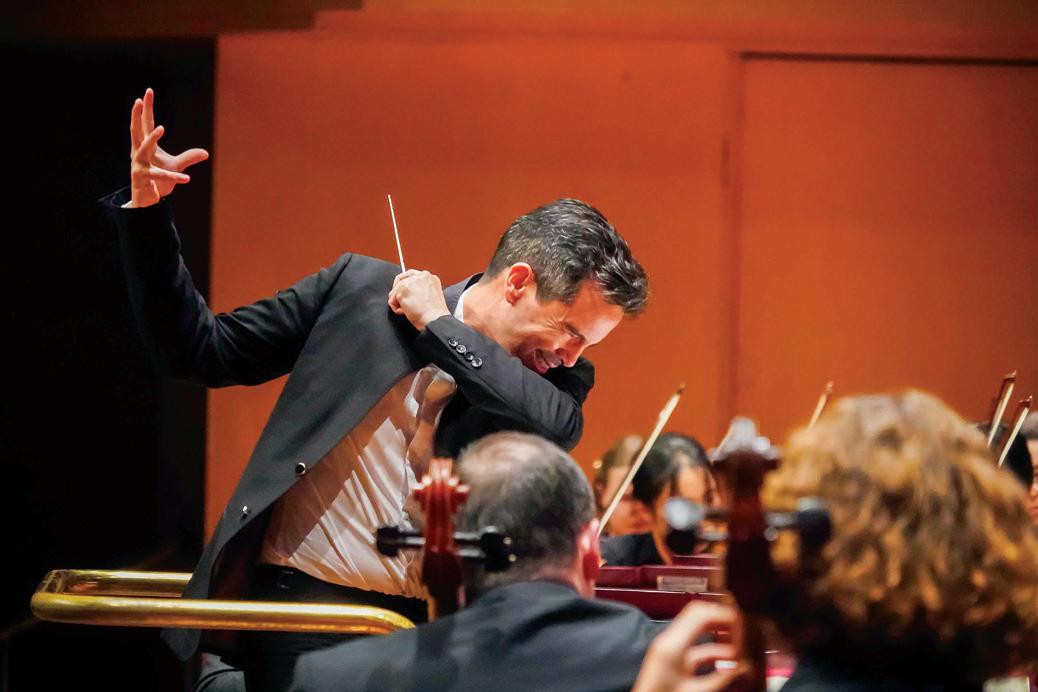
Following his 2019 company debut conducting Pucchini’s La bohème for Opera Australia, he was immediately invited to conduct Mozart’s Don Giovanni the following year. Other recent highlights include Carl Davis’ A Christmas Carol with Het Residentie Orkest in The Hague, Gluck’s Orpheus & Eurydice with Opera Queensland and Cilea’s L’arlesiana at Opera Holland Park, with whom Dane has a close relationship.
Born in Brisbane, Australia to an Australian mother and a Singaporean-Chinese father, Dane played piano, clarinet, and saxophone as a child, and studied conducting under Gwyn Roberts at The University of Queensland. Following an assistantship and three years of study with Gianluigi Gelmetti, then Chief Conductor of the Sydney Symphony and Teatro dell’opera di Roma, Dane attained his Masters from The Juilliard School on a full scholarship under James DePreist before undertaking a Junior Fellowship in Conducting at the Royal Northern College of Music under Sir Mark Elder, Clark Rundell and Mark Heron. A protégé of the late Kurt Masur, Dane held the post as Assistant Conductor at the Orchestre national de France. As well as a former Principal Conductor of the Liverpool Philharmonic Youth Orchestra and Associate Conductor with Opera Holland Park, Dane is an International Ambassador of the Royal Northern College of Music and currently divides his time between London, Xi’an, and Brisbane.
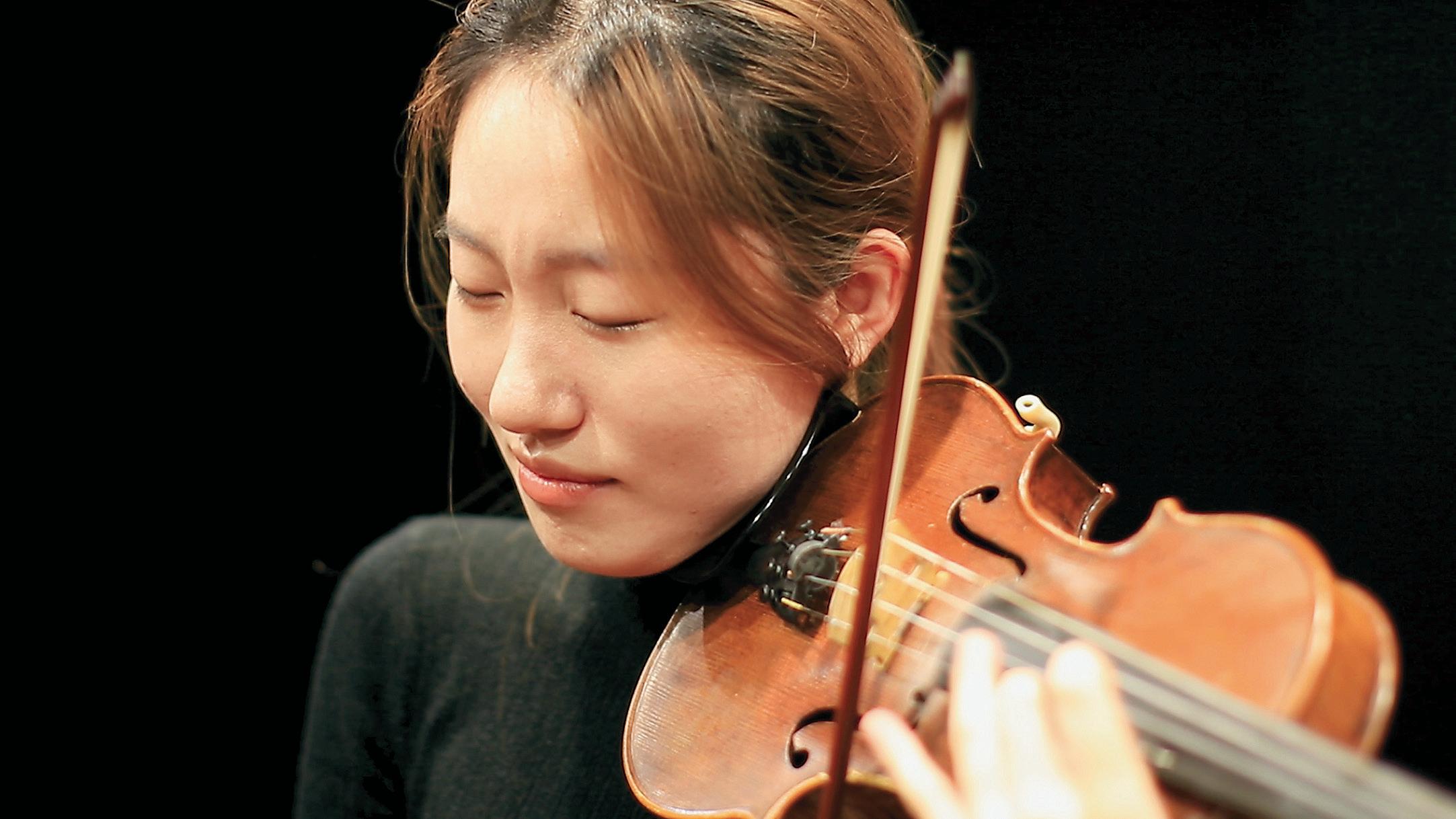
The Music Psychology minor examines how people think, feel, and behave in relation to music. Learn how music and related psychological processes operate in larger sociocultural contexts, connecting with the world around you, and how to apply your knowledge and skills in music practice, educational, therapeutic, and organisational contexts.
The Master of Music incorporates contemporary theory and practice across an 18-month postgraduate program that provides you with a variety of pathways to professional leadership opportunities. With a flexible study program that can be customised to individual career goals, you can diversify and extend your professional practice. Select courses according to your interests as you deepen and broaden your learning in areas such as performance, conducting and music theory, education, technology, and composition.
The School of Music also provides opportunities for individual postgraduate students to undertake Doctor of Philosophy and Master of Philosophy research projects, producing new knowledge and gaining expertise in various fields, including music performance, composition, musicology, popular music and technology, music psychology, and music education.
Make a gift to support students through this QR code
Thank you for attending Opera at UQ: Puccini’s Gianni Schicchi. The University of Queensland’s School of Music looks forward to seeing you again at its next event at QPAC in May 2022.
The University of Queensland Symphony Orchestra
Conductor Dane Lam
For more information on the School of Music:
Email music@uq.edu.au
Phone (07) 3365 4949
Web music.uq.edu.au
Facebook facebook.com/UQSchoolofMusic
SoundCloud soundcloud.com/uq-music
YouTube bit.ly/UQMusicYouTube
Virtual Concerts bit.ly/UQVirtualConcertSeries
Presented by:
CRICOS Provider 00025B
Supported by: