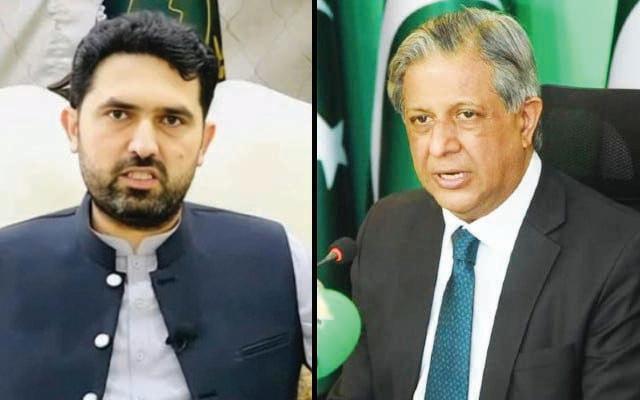
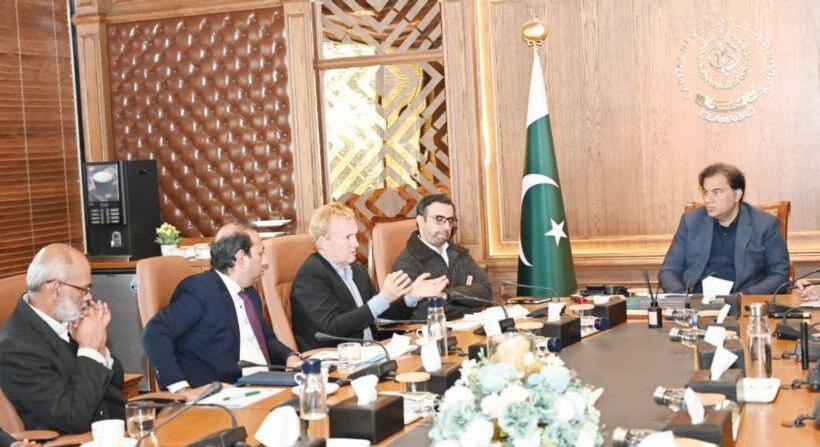
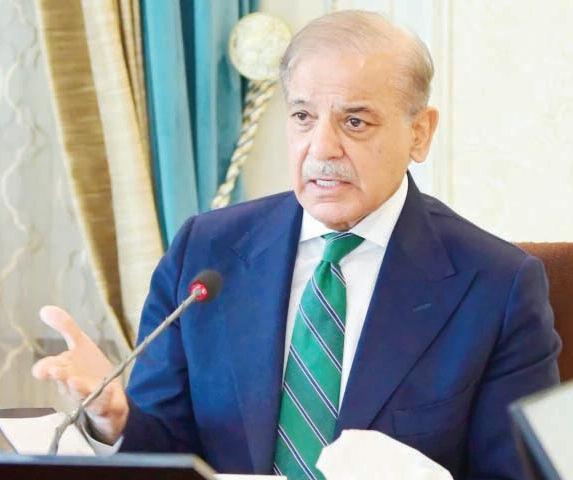
Tbe given time ” Gohar said He insisted KP cannot bear governor s rule and that speculation should end Gohar also criticised the continued denial of meetings with PTI founder Imran Khan, claiming he had been isolated for nearly a month “He is the people s leader and a parliamentary representative This is wrong he said
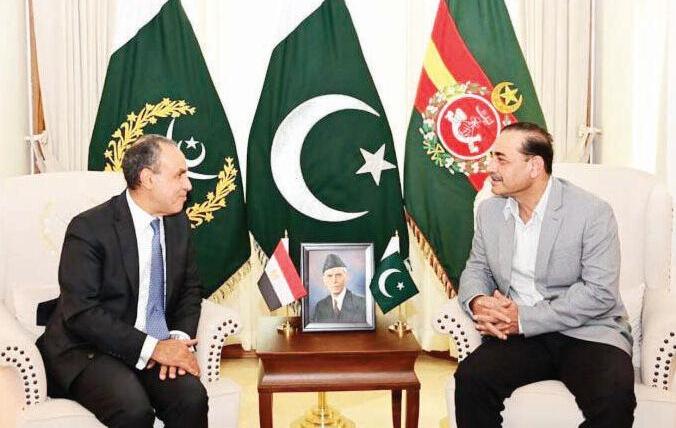
Dr Badr Ahmed Mohamed Abdelatty
Foreign Minister of the Arab Republic of Egypt called on Field Marshal
Syed Asim Munir, Chief of Army Staff (COAS) here on Monday
During the meeting, both dignitaries reviewed bilateral relations between the two brotherly countries with a particular focus on defence and security cooperation military-to-military contacts, training collaborations, and regional peace and stability
The discussions reaffirmed the commitment of both sides to strengthen coordination and deepen the long-standing ties in defence and broader strategic domains
The visiting Foreign Minister
from the leadership of Egypt and expressed Egypt’s continued interest in expanding cooperation with Pakistan across all spheres
Both sides underscored the importance of sustained high-level exchanges to address emerging challenges especially in light of evolving regional security dynamics
ISLAMABAD s ta f f C o r r e s p o n d e n t
Interior Minister Mohsin Naqvi on Monday announced that the Ministry of Information in collaboration with the National Cyber Crime Investigation Agency (NCCIA), would soon launch a major crackdown against the spread of fake news on social media
Speaking at a press conference in Lahore Naqvi said he believed that 90 per cent of the content on social media in recent days is fake”, though he emphasised that he supported freedom of expression and the right to criticise
He explained that unlike mainstream media where false reporting can be taken up with the Pakistan Electronic Media Regulatory Authority (Pemra) and journalists are accountable to newsroom hierarchies social media remained largely unregulated Anyone can post any picture or create any news and share it We will not allow this,” he said Naqvi stressed that credible reporting must be based on evidence You cannot just make any allegation declare someone dead or alive on your own This cannot be allowed, he said, adding that the information ministry and
NCCIA would begin action on a massive scale He argued that only those affiliated with established media organisations and functioning within editorial systems were considered journalists Those who spread fake news are not journalists for us, he remarked The minister insisted that the upcoming action was not against journalists but against those who deliberately spread misinformation Responding to a question about whether a new regulatory body was being set up, he said one was already in the process of being formed
Pakistan clears LNG diversion plan for 2026, allowing Qatar and ENI to reroute 35 cargoes
The Federal Board of Revenue (FBR) has sealed the manufacturing units of M/s Indus Tobacco Company and M/s Souvenir Tobacco Company in District Mardan on allegations of producing non-duty-paid and moving non–trackand-trace–stamp (TTS) cigarettes under Rule 28A(6) of the Federal Excise Rules, 2005
According to details, the FBR has developed a comprehensive multi-layered enforcement plan aimed at eliminating non-duty-paid cigarette production strengthening monitoring mechanisms, and disrupting illegal supply chains
The Directorate of Intelligence and Investigation–IR Peshawar after securing a warrant from the area magistrate conducted a raid on an undeclared godown in the jurisdiction of Jabbar Police Station, District Mardan, on November 3, 2025 During the search, 200 cartons of non-duty-paid and non-TTS cigarettes of brands Business Class, Red and Crown were recovered These
brands are registered products of M/s Indus Tobacco Company (Pvt) Ltd
The Directorate of I&I-IR Peshawar subsequently forwarded a contravention report on November 21 2025, to the Regional Tax Office (RTO) Peshawar Following completion of codal formalities and necessary approvals the manufacturing machinery of M/s Indus Tobacco Company was sealed on November 29 2025 under Rule 28A(6) of the Federal Excise Rules, 2005, by officers of RTO Peshawar The operation was carried out by DC (IR) Arsalan Ali under the supervision of the Chief Commissioner RTO Peshawar Further proceedings under Sections 21 22 19(3) 19(10) and 27 of the Federal Excise Act, 2005, are in progress
During and after the search operation, officers and officials of I&I-IR Peshawar faced resistance from armed personnel including the director/owner of the company One of the directors who resisted the lawful proceedings with firearms, is related to a prominent political family from District Mardan
Despite armed pressure, both I&IIR and the RTO Peshawar enforcement team successfully completed the action without yielding to any influence underscoring FBR s resolve to uphold the law and protect national revenue
A similar action was taken against another prominent manufacturer, M/s Souvenir Tobacco Company on November 29 2025 which was found involved in manufacturing and removal of non-duty paid/non-TTS cigarettes
Machinery of the said company was also sealed
As part of the coordinated strategy, approximately 120 Pakistan Rangers personnel have been deployed at Green Leaf Threshing (GLT) units nationwide to assist in monitoring and securing premises against illicit manufacturing activities
Simultaneously, the FBR has posted more than 200 dedicated monitors under Section 40B of the Sales Tax Act 1990 and Section 45 of the Federal Excise Act 2005 to oversee production, ensure lawful removal of goods, and verify tax compliance at manufacturing facilities
g MUHAMMAD AURANGZEB REAFFIRMS COMMITMENT TO SUSTAINABLE FINANCE AND CLIMATE-ALIGNED DISCLOSURE FRAMEWORKS IN MEETING WITH IFAC AND SAFA DELEGATION
around 0 5% He said that climate change was an urgent economic reality for Pakistan reaffirming the government s commitment to advancing sustainable finance, green taxonomy implementation, and climate-aligned disclosure frameworks Muhammad Aurangzeb made these observations while talking to a delegation led by President of the International Federation of Accountants (IFAC) Jean Bouquot, who called on him accompanied by President of the South Asian Federation of Accountants (SAFA) Ashfaq
Yousaf Tola VP SAFA Humayun Kabeer President ICAP Saifullah and President ICMAP Ghulam Mustafa Qazi The meeting was also attended by Auditor General of Pakistan Maqbool Ahmad Gondal, Chairman of the Securities and Exchange Commission of Pakistan (SECP) Akif Saeed, and senior officials of the Ministry of Finance Senator Aurangzeb welcomed the visiting delegation and appreciated the global role played by IFAC in strengthening the accounting profession, promoting international standards, and advancing transparency and trust in financial reporting He noted that Pakistan s sustainability agenda, climate finance commitments, and green economic initiatives align with the issues raised by the IFAC President He reaffirmed Pakistan’s commitment to advancing green finance initiatives the implementation of the national green taxonomy and the roll-out of sustainability frameworks through the State Bank of Pakistan He also underscored the importance of enabling SMEs to formalize their financial systems and improve disclosure capacity particularly in industrial and export-oriented clusters where awareness and capability challenges persist Stressing the need to support Small and Medium-sized Enterprises (SMEs) in formalizing their financial reporting practices the finance minister highlighted Pakistan s proactive regulatory
IMF questions governance lapses at PRAL, cites missing conflic t- of-interest safeguards amid restruc turing
According to the IMF PRAL has not developed a code of conduct or conflict-of-interest rules despite legal obligations The lender said this omission is particularly troubling at a time when PRAL is recruiting staff on market-based salaries and relying on third parties to carry out some of its core technology functions Government sources said a meeting held at the Prime Minister s Office on Friday discussed
how to respond to the IMF’s remarks in parliament and the media One proposal under consideration is for Minister of State for Finance Bilal Azhar Kayani to present the government s position The IMF assessment underscores longstanding management challenges at PRAL, which continues to operate on an ad hoc basis while FBR board members intervene directly in operational matters The government has yet to appoint a permanent chief executive officer for the organisation The report further noted that PRAL lacks a structured approach to risk management It does not maintain a risk register, nor does it systematically review transaction logs to identify potential vulnerabilities Logs are only examined after issues are reported which the IMF says leaves data systems exposed The Fund stressed that effective oversight of PRAL is essential given its central role in FBR s data management Although mechanisms such as weekly project meetings and service-level agreements exist, the IMF said FBR must ensure PRAL is consistently operating within its mandate and meeting all regulatory requirements






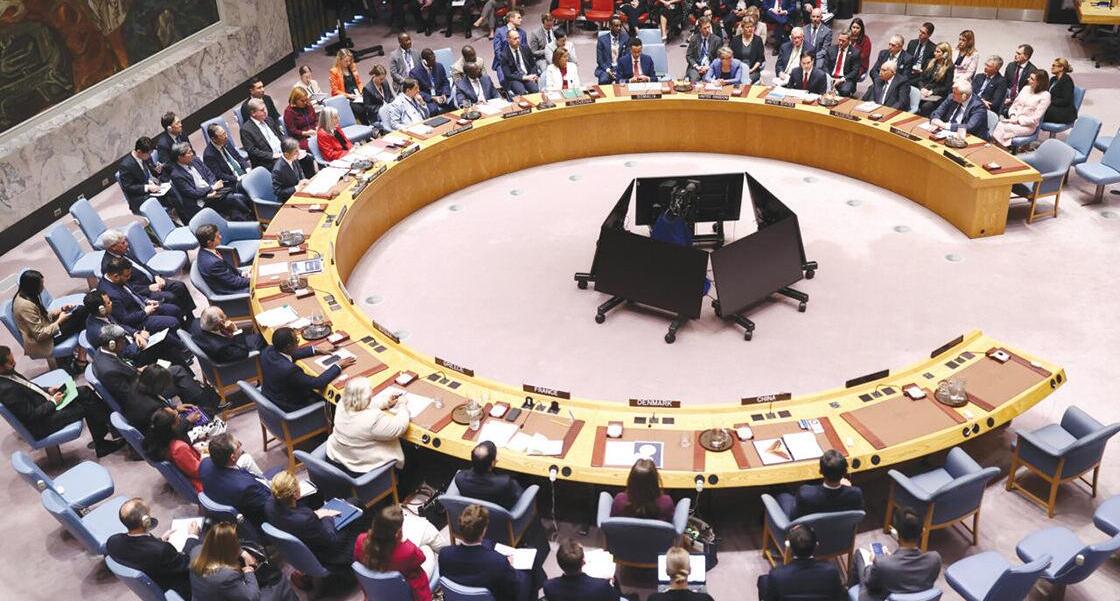
TTH E UN Security Council has just approved a US-sponsored resolution to deploy an International Stabilisation Force (ISF) and establish a transitional “Board of Peace” in Gaza On paper this appears to be a breakthrough In reality it is a blueprint for uncertainty fragile legitimacy and rushed optics Stability is being proclaimed yet its foundation remains precarious What the world is celebrating may, in effect, be a premature attempt to engineer order over a ceasefire still swinging in mid-air
The resolution entrusts foreign troops with responsibilities that are ambiguously defined It lacks a classical UN peacekeeping mandate clear command structures or operational autonomy The ISF is to act in consultation with regional powers but Palestinian institutions are largely sidelined Borders, humanitarian corridors, and arms control regimes remain unresolved A presence without authority is not peacekeeping; it is theatre Troop contributors uncertain of their legal remit or chain of command may find themselves trapped in a politically contested mission before it even begins
Accountability mechanisms are conspicuously absent Without a robust fact-finding and evidencepreservation structure, the ISF risks complicity in impunity Stabilisation without justice is not stabilisation; it is a veneer for inaction Protection of civilians cannot be decoupled from mechanisms that enforce accountability document violations and safeguard the dignity and rights of those most affected by conflict Failure to embed these responsibilities could convert the mission into yet another instrument of political expediency
Crucially Palestinians must not be relegated to spectators in the management of their own future
The transition framework must embed the Palestinian Authority local governance structures and civil society as enforceable decision-makers, not symbolic advisers Stabilisation without sovereignty is not peace; it is supervision masquerading as progress
The legitimacy and effectiveness of the ISF will hinge entirely on the extent to which it empowers Palestinians to exercise agency over reconstruction governance and protection Without this even the most well-resourced mission risks being perceived as an occupying presence rather than a protective force Regional reactions underscore these risks Troopcontributing states demand clarity, neutrality, and operational transparency Other states while supporting the ceasefire warn against arrangements resembling external control dressed as assistance These concerns reflect a fundamental truth: legitimacy cannot be conjured through majority votes, procedural abstentions,
M o n e y o v e r m e r i t :
or diplomatic theatrics It is earned only when those whose lives are most affected retain meaningful authority over the processes shaping their future A credible stabilisation plan must therefore be narrow, precise, and phased Civilian protection and unhindered humanitarian access should be the immediate priorities Command structures must be transparent rules of engagement clearly published and authority over border crossings firmly established to guarantee delivery of aid and prevent politicisation Accountability mechanisms including independent monitoring and reporting, are indispensable from day one And any governance transition must be anchored in demonstrable Palestinian consent Attempting to expand the mission beyond these core priorities before the foundation is secure risks converting the ISF into a symbolic or
Drugs beyond control
plaints
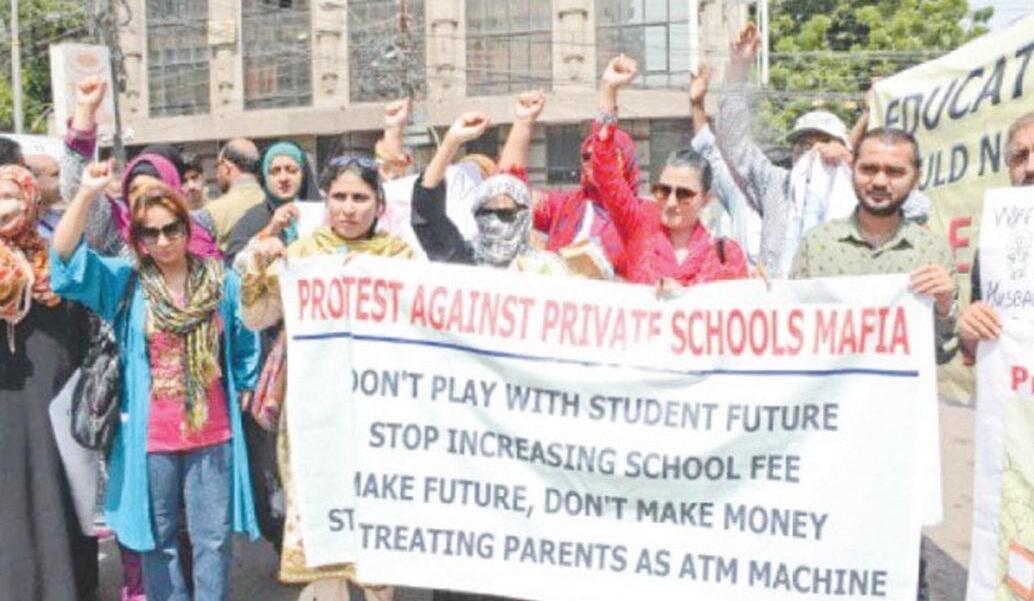
almost complete autonomy setting their own rules without meaningful accountability This regulatory vacuum has far-reaching consequences When quality education becomes unaffordable, inequality deepens Children from well-off families gain advantages, while others fall behind Excessive fee demands also create psychological pressure for families; parents remain stressed and students worry about withdrawal if payments are missed These pressures affect mental health and academic performance
The biggest complaint from parents is not just high fees, but unjustified and unchecked fee hikes Every year, schools introduce new charges: computer and lab fees, activity fees, exam charges, building maintenance fees, and even „development fund‰ contributions.
To address this crisis, several reforms are urgently needed First, regulation must be strengthened so that fee hikes require justification and transparency Second, teacher salaries and training must be prioritized; no education system can succeed without professional motivated educators Third schools must reduce unnecessary expenses and stop forcing parents to buy branded items Fourth, academic audits and monitoring systems should be implemented to assess teaching quality Finally, schools must shift their focus from appearances to real learning through skillsbased conceptual and project-based education Pakistan s private school sector stands at a crossroads If it continues on its current path education will become increasingly unequal and unaffordable, while learning outcomes remain stagnant The quality–fee paradox is not simply a financial issue; it is a national concern that affects the future of millions of children Education should never be treated as a business enterprise Parents deserve honesty transparency and value for their sacrifices Students deserve trained and respected
Merit drives progress
MuhaMMad ali baNgwar
Majid Nabi burfat


jority stakes in his country’s oil industry a humiliating concession Washington promptly dismissed But the simpler answer is power The Trump administration may have adapted to the idea of a multipolar world but it will not tolerate multipolarity in the Western Hemisphere The Monroe Doctrine, a relic by any diplomatic standard, has found new life in Washington’s strategic imagination And Venezuela broke isolated and politically radioactive has become the test case What happens to a government in America s backyard when it strays too close to Moscow and Beijing? Trump seems eager to provide the example If the diplomatic backchannels were ever real they collapsed by mid-October The head of U S Southern Command stepped down two years early a sign that Washington wanted a more aggressive hand on the controls Soon after came the muscle: more than 10,000 marines and sailors deployed across the Caribbean, accompanied by an arsenal of naval and air platforms that would embarrass any previous “anti-cartel” operation Anti-cartel missions do not require F-35s B-52s or the Gerald R Ford carrier group Nor do they require covert operations, although those arrived too Caracas claims it caught CIA-linked operatives planning a false-flag attack on a U S warship to manufacture a casus belli In another episode the FBI allegedly tried to bribe Maduro s personal pilot to divert his plane mid-air

If the diplomatic backchannels were ever real, they collapsed by mid-October The head of U.S. Southern Command stepped down two years early a sign that Washington wanted a more aggressive hand on the controls Soon after came the muscle: more than 10,000 marines and sailors deployed across the Caribbean, accompanied by an arsenal of naval and air platforms that would embarrass any previous „anti-car tel‰ operation. Anti-car tel missions do not require F-35s, B-52s, or the Gerald R Ford carrier group
on in Caracas It even includes Nicolás Maduro s recent desperation, offering U S firms ma-


forcing New Delhi to follow a delicate balancing act in its relations with Russia and the West Between February 2022 and July 2024 it seemed that New Delhi’s approach boiled down to keeping low-key official interactions while retaining a mutually beneficial economic partnership with Moscow particularly in energy While India avoided any political fanfare in the relationship and focused on pointed discussions of bilateral and global issues, bilateral trade figures kept rising Trade turnover skyrocketed from a mere $13 1 billion in FY2021–22 to $68 7 billion in FY2024–25, raising hopes among officials of hitting a new target of $100 billion in the near future The growth was largely due to Russia s emergence as India s largest oil supplier accounting for 35 percent of India s total oil imports by value What followed Indian prime minister Narendra Modi s visits to Moscow and Kazan in July and October 2024, respectively, was a fullscale unlocking of bilateral ties Apart from Russian crude oil continuing to flow uninterrupted to Indian refineries despite external hurdles, India and Russia also managed to restart substantive defense cooperation discussions In the logic of Indian careful balancing this area was previously regarded as off-limits owing to Washington s red lines exemplified by the threat of Countering America s Adversaries Through Sanctions Act (CAATSA) What went largely unnoticed amid US president Donald Trump s tariff onslaught and restrictions on Russia s oil revenues was New Delhi’s quiet reengagement with the Russian defense sector, which has led to several tentative agreements
Deals reportedly in the pipeline or already signed include the joint development of Pantsir air defense system and India s potential procurement of the Voronezh early warning radar system with a range of over 6000 kilometres Additionally throughout Operation Sindoor Russian air defense systems proved their effectiveness Indian Air Chief Marshal AP
the
system “a
an
and has been
even
” New Delhi has
of S-400
under the
S-400
in
However
contract has
until 2026 This means that
for
can hardly expect their expedited induction into its air defense network Trade cooperation will dominate the agenda of the India-Russia summit The period of rapid growth of trade turnover has arguably reached its peak Although the latest US sanctions against the two largest Russian oil companies (Rosneft and Lukoil) are unlikely to halt India’s
war in Ukraine have not led to any tangible progress, the United States has turned to putting pressure on Moscow through its closest economic partners This resulted in India’s inclusion within the Russia-related sanctions programme with a cumulative 50 percent tariff imposed on a range of its goods The imposed measures have impacted several Indian industries including agriculture automobile manufacturing aluminium and steel production copper processing and textiles
Resolving this issue has become a two-step problem for New Delhi First, negotiating a trade deal that accommodates the US demands to narrow the trade imbalance and provide more market access to American exports while defending its own producers; and second, cutting down oil imports from Russia in a manner not detrimental to national interests Reports indicate that the Indo-US trade talks are progressing well with the first phase nearing closure Over the past several weeks India s imports of US oil have been rising The Indian stateowned oil companies have signed a one-year contract to import around 2 2 million tons per annum of liquefied petroleum gas (LPG) from the United States, nearly 10 percent of India’s annual LPG imports Concurrently India’s imports of Russian oil are declining due to the fears of secondary sanctions particularly among private Indian refineries The contours of a trade deal are hardly the end of the story though with other Russia-related roadblocks in the way of recalibrating the India-US ties With the US-Russia dialogue on the brink of falling apart, India is set to stay in the firing line of US anti-Russia measures As Trump seeks more ways to compel Russia to end the war in Ukraine, it is likely that the US Congress will pass the legislation entailing “very severe sanctions” on the countries doing business with Russia
The Sanctioning Russia Act of 2025 proposes a mechanism to impose 500 percent duties on countries that knowingly purchase or transfer Russian-origin oil uranium natural gas petroleum or petrochemical products As the US president will have the final decisionmaking authority over these measures, the bill could become a Damocles’ sword over India, further straining its energy imports from Russia Moreover while India explores major new defense deals with Russia the threat of secondary sanctions under CAATSA remains persistent and the Trump administration might invoke them to derail the resurgent India-Russia defense partnership While the Indian government has been circumspect about resolving issues with the United States, Trump s public diplomacy with New Delhi has created several fault lines between the two countries The manner in which the American president and some of his senior advisers have disparaged India with their comments has become a domestic liability for Modi constraining his options for furthering the India-US agenda as he
FO U R years of investigations
Five years of an ongoing trial Three hundred and thirty-three prosecution witnesses Two hundred thousand dollars’ worth of cigars and champagne were allegedly received Finally on Sunday the bombshell dropped that Prime Minister Benjamin Netanyahu had submitted a formal request for a presidential pardon to President Isaac Herzog, in what the President’s Office described as an extraordinary move with significant implications Netanyahu s attorney Amit Hadad delivered the 111-page request to the Legal Department of the President s Office Under standard procedure, it has now been transferred to the Justice Ministry’s Pardons Department which will gather professional opinions from all relevant authorities Those assessments will then be forwarded to the President s Legal Advisor and her team, who will prepare an additional recommendation for Herzog before he makes a final decision Sources yesterday told The Jerusalem Post that the estimate is that it will take weeks even up to two months to fully examine the request along with its supplementary materials
And therein lies the rub Weeks and months In the world of Israeli bureaucracy, time stretches on in a never-ending cycle of committees appeals special requests and meetings The trial has been no different Many Israelis are frankly fed up with the trial and its length whatever their personal stance on Netanyahu and his politics Equally, there are many who wish to see the trial continue until its conclusion It was the second request for a pardon after US President Donald Trump took the highly unusual step of sending an official letter from the White House to Herzog urging him to grant Netanyahu a full pardon from the corruption charges For months, Netanyahu said publicly that he would not ask for a pardon if it required admitting guilt He insisted that the trial was “absurd” and a “witch hunt ” and that he would ultimately be acquitted NETANYAHU THANKS TRUMP FOR SUPPORT, REQUESTING PARDON: In interviews and speeches after Trump’s letter, Netanyahu thanked Trump for his “incredible support” but repeated that he would not plead guilty or accept any arrangement that implied wrongdoing However no such admission of guilt came with Netanyahu s request So where does that leave the country and its prime minister? The best conclusion

Pakistan, the OIC and the limitations of diplomacy
SAADAAN AHMAD MIRZA
MUHAMMAD
When Pakistan addresses the Organization of Islamic Cooperation (OIC) on the crises in Gaza and Kashmir, it has historically done so with a blend of moral conviction and geopolitical calculation However the question still stands: to what extent can rhetorical leadership result in tangible assistance for oppressed communities in the Muslim world? In the complex field of multilateral diplomacy, Pakistan's involvement with the OIC functions as both a stage for moral leadership and a platform for showcasing the political contradictions of the Muslim world With Pakistan being a major non-NATO ally and at the same time being a state that claims to champion the protection of Muslim rights around the world this article hopes to address the intricacies of Pakistan s foreign policy For many years, Pakistan has established itself as a leading voice in support of Muslim causes, particularly those pertaining to Palestine and Kashmir It has continuously pushed for collective statements denouncing widespread civilian suffering and transgressions of international law secured ceasefires and organised humanitarian aid through the OIC In response to the growing number of civilian deaths and the destruction of Gaza s infrastructure, Islamabad has stepped up its calls within the OIC's "Committee of Six on Palestine" in recent months calling for a coordinated Muslim world response The repeated statement by the Pakistani foreign minister that the time for words has passed the time for action is now has struck an emotional chord and put significant pressure on the OIC to produce measurable outcomes in recent days Similar to this, Pakistan has used OIC forums to support its stance on Kashmir by presenting the matter in terms of human rights and selfdetermination Islamabad has attempted to legitimise its narrative and rally member states behind it through OIC contact groups and UN statements However, the extent of these declarations' obligations or enforcement procedures has frequently remained unclear
The OIC has long struggled to turn words into meaningful and coordinated action despite its lofty declarations Collective resolve is frequently constrained by internal fault lines ranging from the Saudi-Iranian rivalry to conflicting national interests Pakistan has occasionally faced obstacles, such as when powerful member states blocked its attempt to use strong anti-Indian rhetoric regarding Kashmir during a recent OIC Parliamentary Union meeting These incidents highlight how few Muslim-majority countries are willing to put ideological solidarity ahead of bilateral ties or domestic agendas Furthermore, the OIC's appeals to uphold the rights of Kashmiris or to aid the Palestinian cause frequently fall short of going beyond ambitious rhetoric Consequently its role remains primarily diplomatic and moral rather than operational For Pakistan the OIC serves as a diplomatic amplifier but that amplification loses credibility if support is limited to rhetoric Protected corridors, food and medicine delivery, reconstruction aid, and defence against random attacks are all desperately needed by Palestinians Kashmiris also require relief from increasing restrictions humanitarian access and communication restoration These results require more than just declarations; they require actual resources

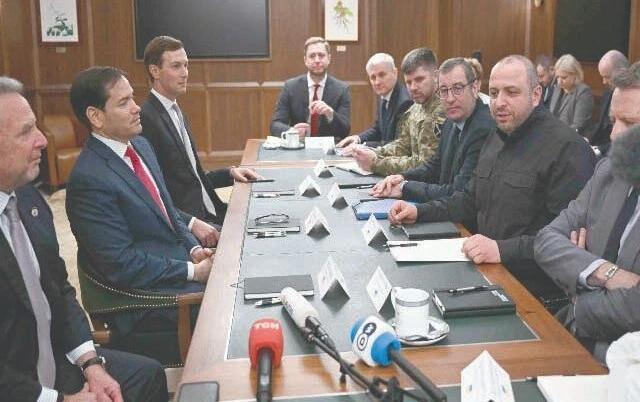
security guarantees The delegation will report to the president of Ukraine following the conclusion of today’s meetings ” Flurry of diplomacy Washington has put forward a plan to end the nearly four-year conflict and is seeking
finalize it with Moscow and Kyiv s approval An initial 28-point proposal drafted without input from Ukraine’s European allies would have seen Kyiv withdraw from its eastern Donetsk region and the United States de facto recognize the Donetsk, Crimea and Lugansk regions as Russian been constructive
China urges Japan to face histor y, honor commitments on Taiwan question
BEIJING s ta f f c o r
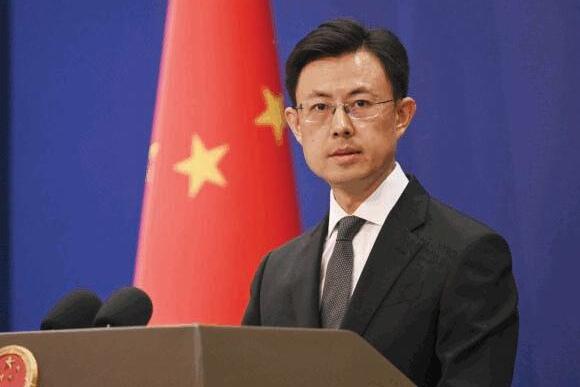
Chinese Foreign Ministry spokesperson Lin Jian on Monday criticized Japan for repeatedly evading its historical and political obligations regarding the Taiwan question
At a regular press briefing Lin responded to comments by Japanese Prime Minister Sanae Takaichi and Foreign Minister Toshimitsu Motegi Takaichi had previously said that “having renounced all rights and claims under the ‘Treaty of San Francisco ’ we are not in a position to recognize Taiwan s legal status
When asked on November 28 whether this meant Japan does not recognize China’s sovereignty over Taiwan, Motegi reiterated what’s stated in the “Treaty of San Francisco and said Japan s basic position is as stated in the 1972 Sino-Japanese Joint Statement and nothing more and nothing less Lin said the Japanese side “keeps hiding and fudging its position ” “Whenever asked the Japanese side simply would not mention the Cairo Declaration the Potsdam Proclamation and the Japanese Instrument of Surrender all of which made clear that Taiwan be restored to China, nor the four political documents that serve as the political foundation of China-Japan relations nor the political commitment made by the Japanese government to the one-China principle
All the Japanese side has done is dodge the issue by claiming that its position ‘remains unchanged ’ Not once has the Japanese side fully articulated what exactly that position is he stressed
Noting that December 1 marks the 82nd anniversary of the Cairo
Declaration Lin stressed that the Cairo Declaration and other international legal instruments affirm China s sovereignty over Taiwan and constitute vital outcomes of the World Anti-Fascist War
The spokesperson added that Japan has an obligation under international law to follow those documents which is a prerequisite for Japan s readmission to the international community after the war Lin criticized Japan for ignoring these binding international documents while selectively citing a treaty that excluded China and other Asian countries most affected by Japanese aggression He said this reflects oblivion to the tragic memory of Japan’s militarist aggression, disregard for the history of the World Anti-Fascist War and a blatant challenge to the authority of the United Nations and the postwar international order
He also warned that Japan s recent policy moves, including increasing its defense budget, revising its non-nuclear principles and attempts by some forces to override the Pacifist Constitution
These forces never truly learned lessons from history never truly did any soul-searching about Japan s war atrocities, never looked at them squarely, and never genuinely sought to prevent the revival of militarism in Japan Lin pointed out They hope that by whitewashing and not mentioning the true history they could somehow make the world forget and release Japan from its obligations, but the world will not be deceived ” said the spokesperson Lin emphasized that the course of history must not be reversed and the bottom line of peace must not be crossed
Stressing that Japan s evasive rhetoric and unilateral actions are unacceptable, Lin said that on issues of principle an evasive attitude will not get the Japanese side anywhere
He urged the Japanese side to learn from history, reflect honestly, seriously consider what it has heard from China, simply retract the erroneous remarks as it should and take practical steps to honor its political commitments to China