Africa Outlook, APAC Outlook, EME Outlook, North America Outlook, Mining Outlook, Healthcare Outlook, Manufacturing Outlook, Supply Chain Outlook, Food & Beverage Outlook, and Construction Outlook are digital publications aimed at boardroom and hands-on decision-makers, reaching an audience of more than 800,000 people around the world.
With original and exclusive content compiled by our experienced editorial team, we look to promote the latest in engaging news, industry trends, and success stories from across the globe.
Your company can join the leading industry heavyweights enjoying the free exposure we provide across our platforms with a free marketing brochure, extensive social media saturation, enhanced B2B networking opportunities, and a readymade forum to attract new investment and help you grow your business.
Visit www.outpb.com/work-with-us for details on how your company can feature for free in one of our upcoming editions.
EDITORIAL
Head of Editorial: Jack Salter jack.salter@outpb.com
Deputy Head of Editorial: Lucy Pilgrim lucy.pilgrim@outpb.com
Welcome to our 78th edition of APAC Outlook magazine.
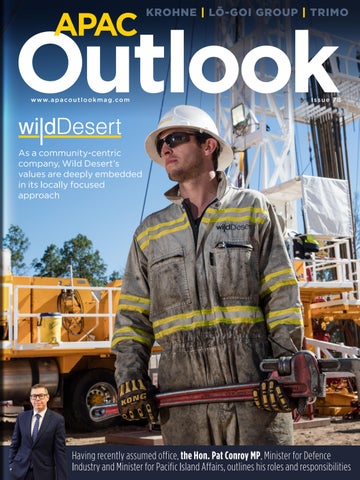
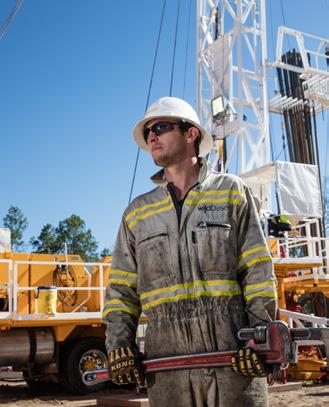
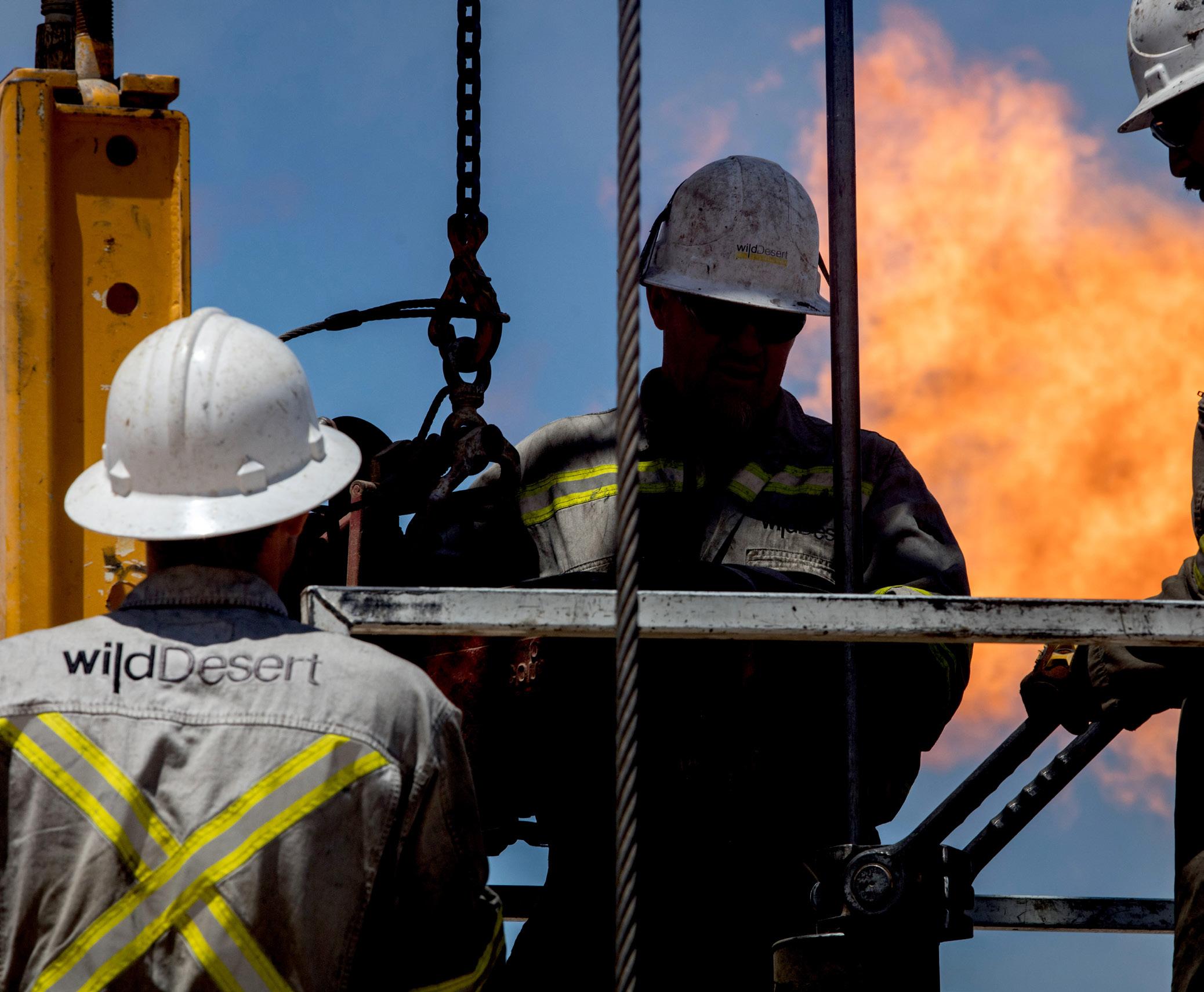
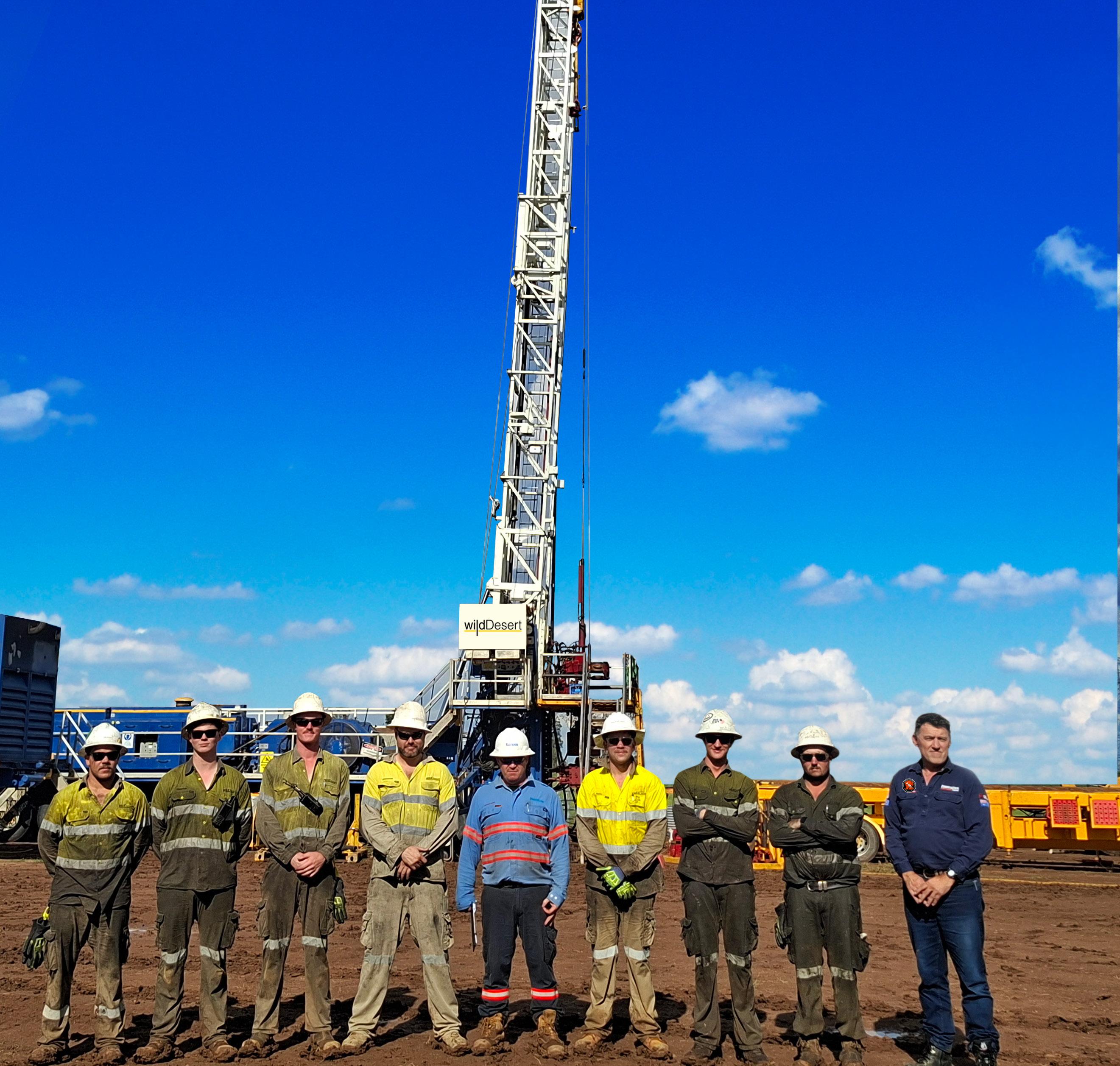
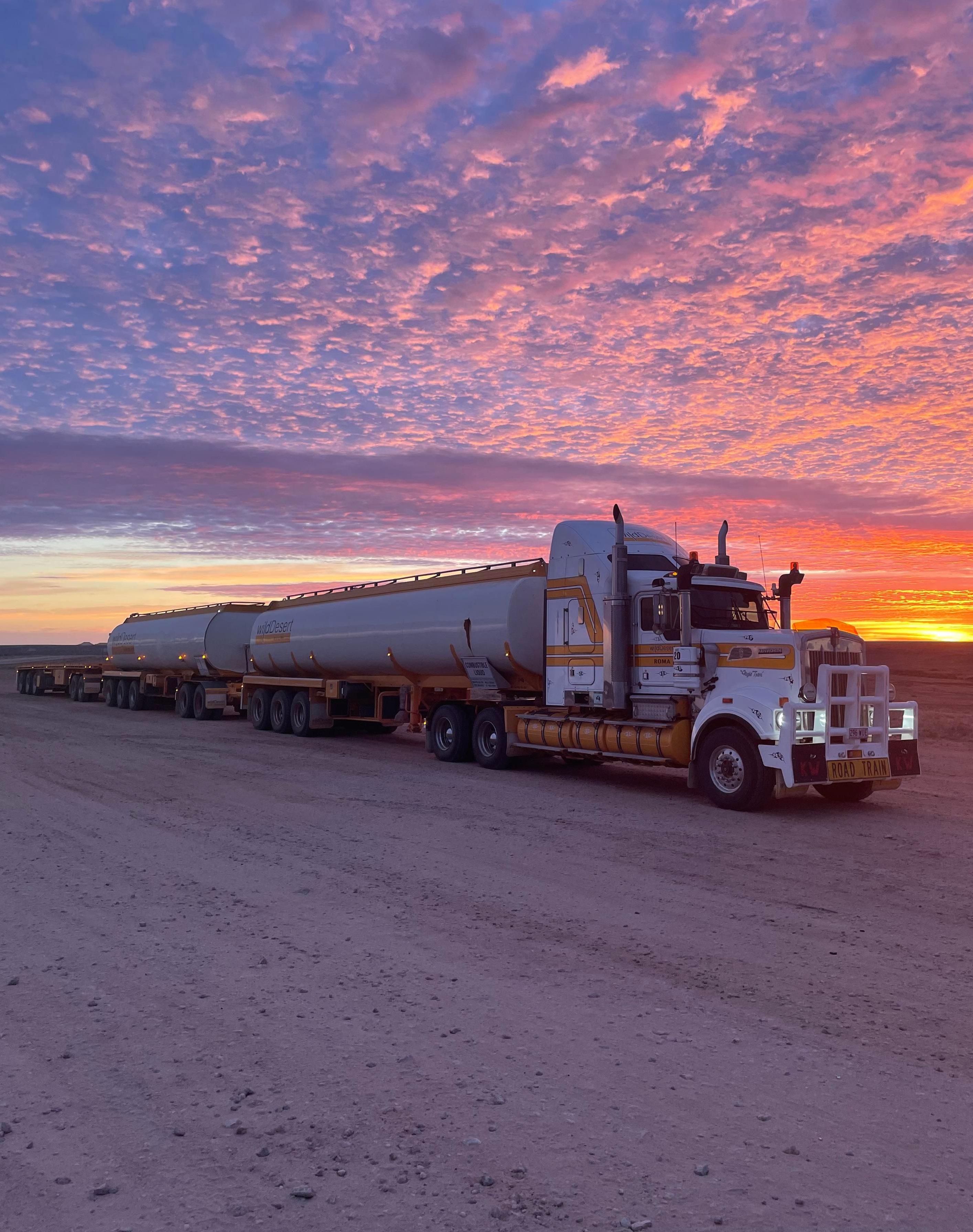
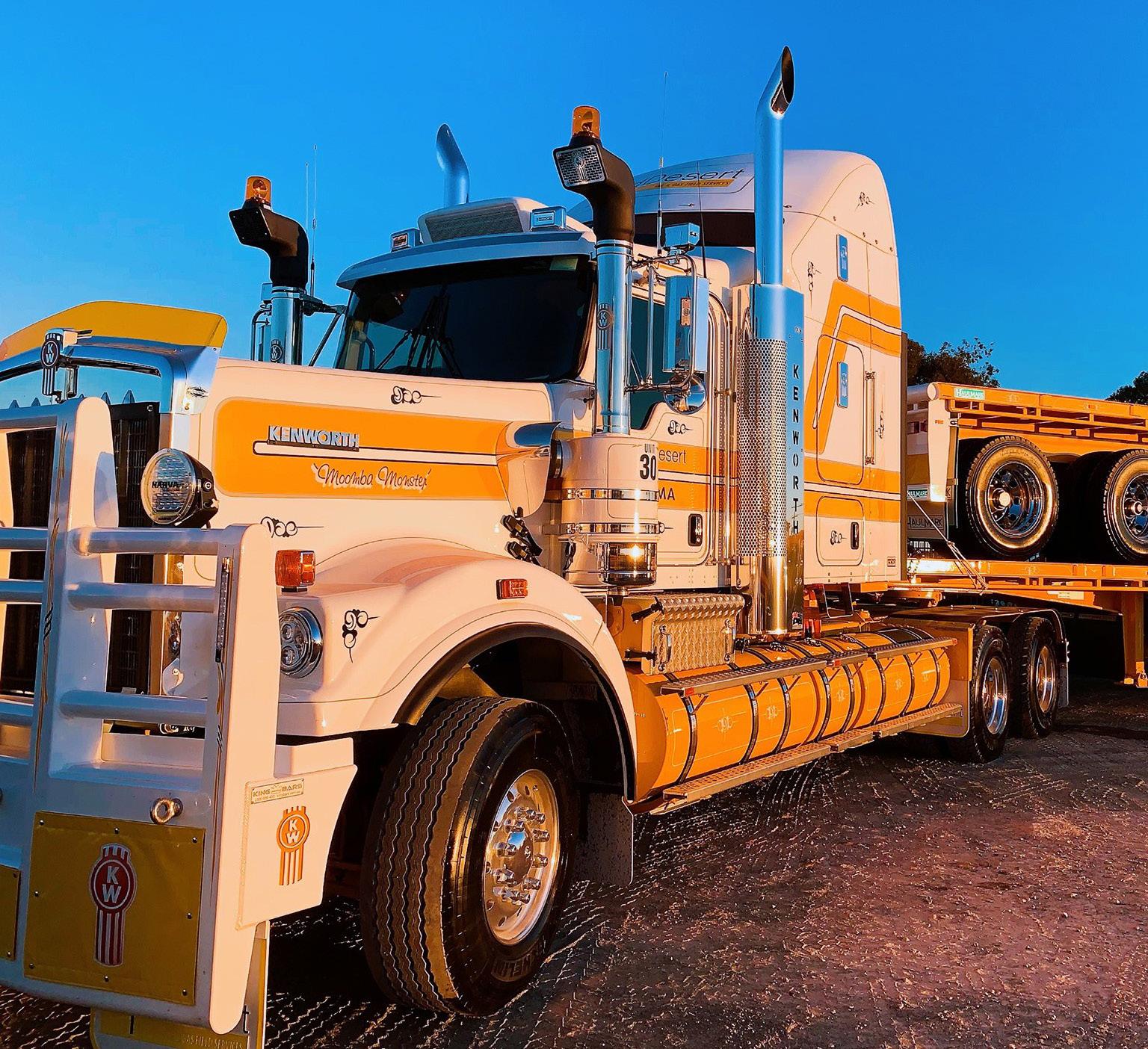
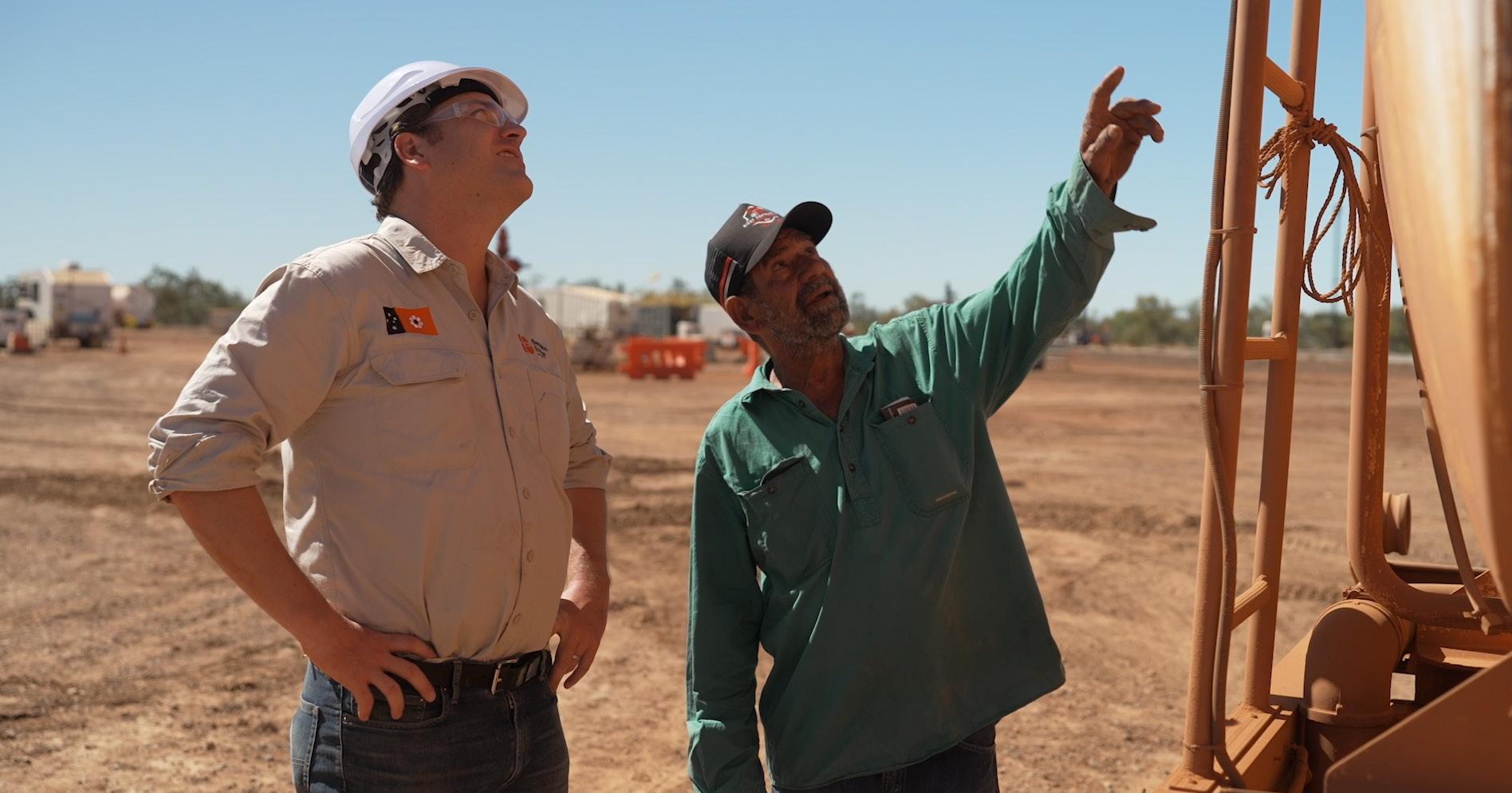
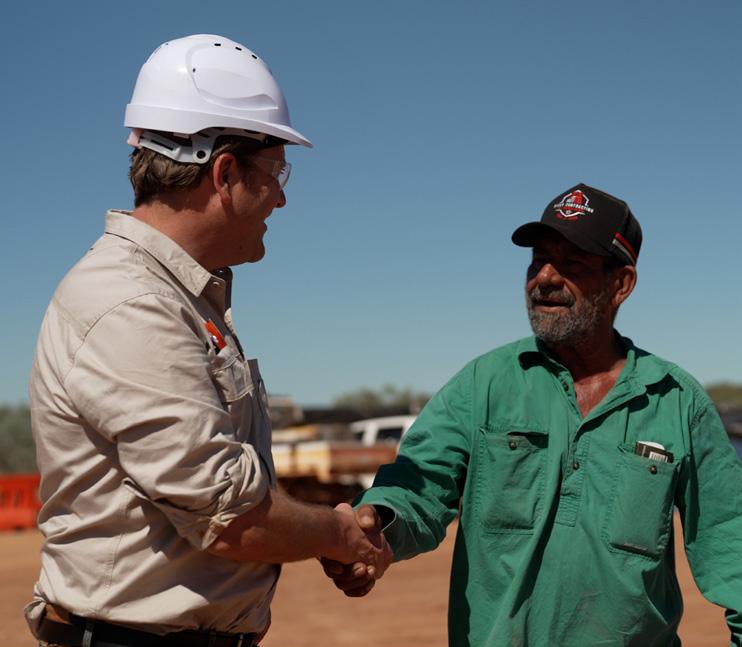
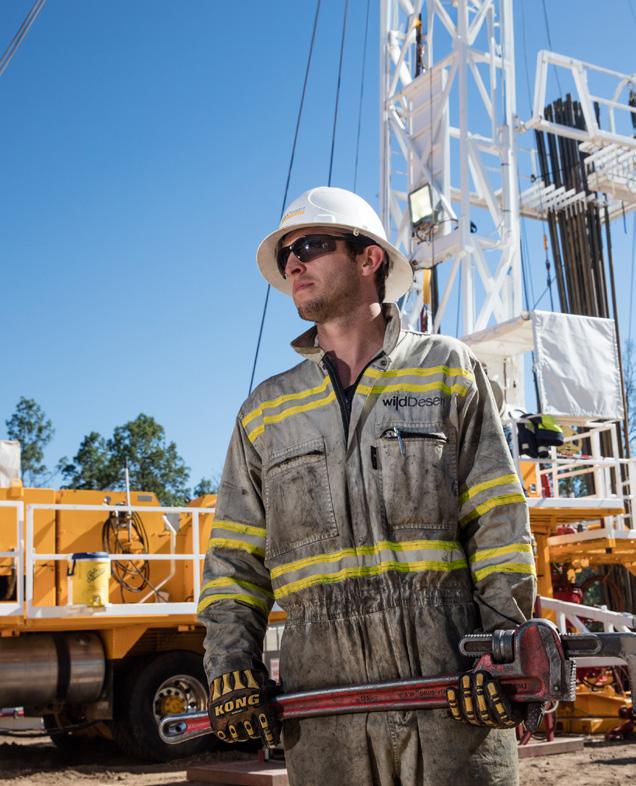
Our community-centric cover star is driven by a clear vision – to deliver exceptional oil and gas field services built on safety, efficiency, and a can-do attitude.
Since its inception in the charming town of Roma, Queensland, Wild Desert has focused on supporting regional communities and local suppliers whilst maintaining strong partnerships with major energy operators.
The family-owned Australian enterprise is a trusted name in the oil and gas industry whose reputation has been shaped by this commitment to quality and reliability.
“As a family-owned company, we’ve built a reputation for reliability by offering integrated solutions – well servicing, logistics, mobile camps, maintenance, and in-house design and fabrication – under one roof,” outlines COO, Mark Tonin.
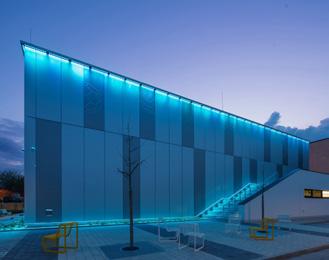
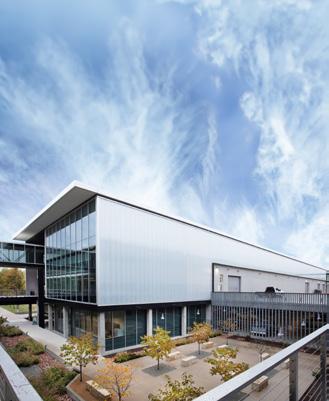
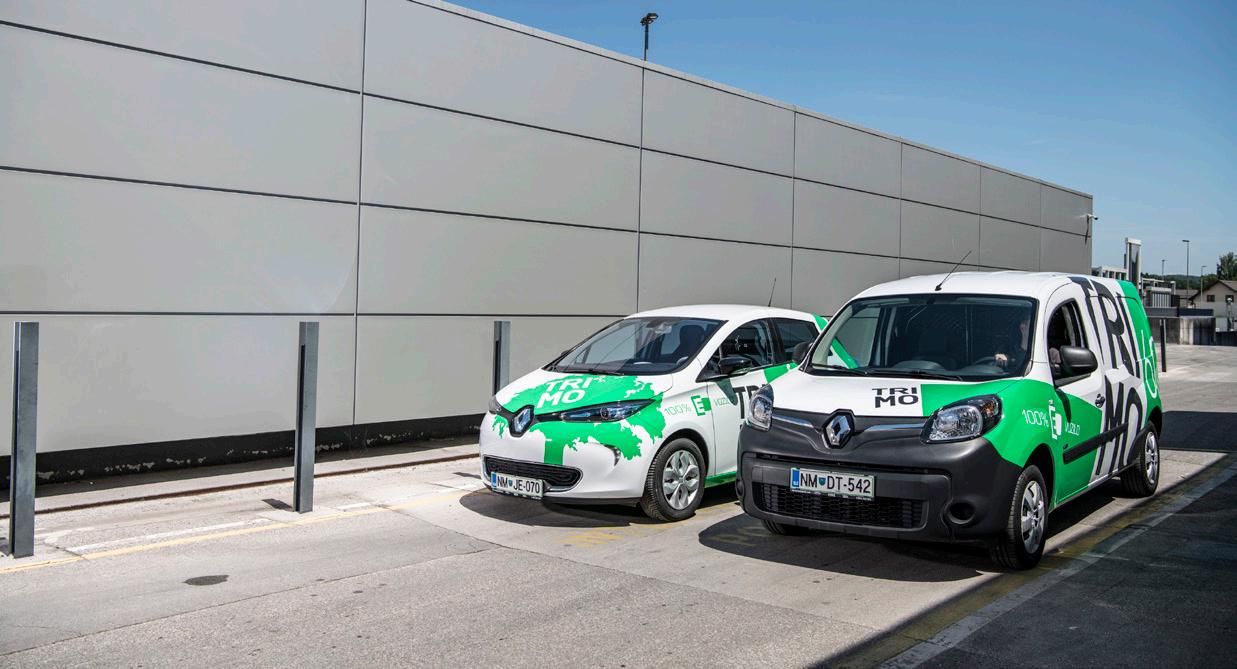
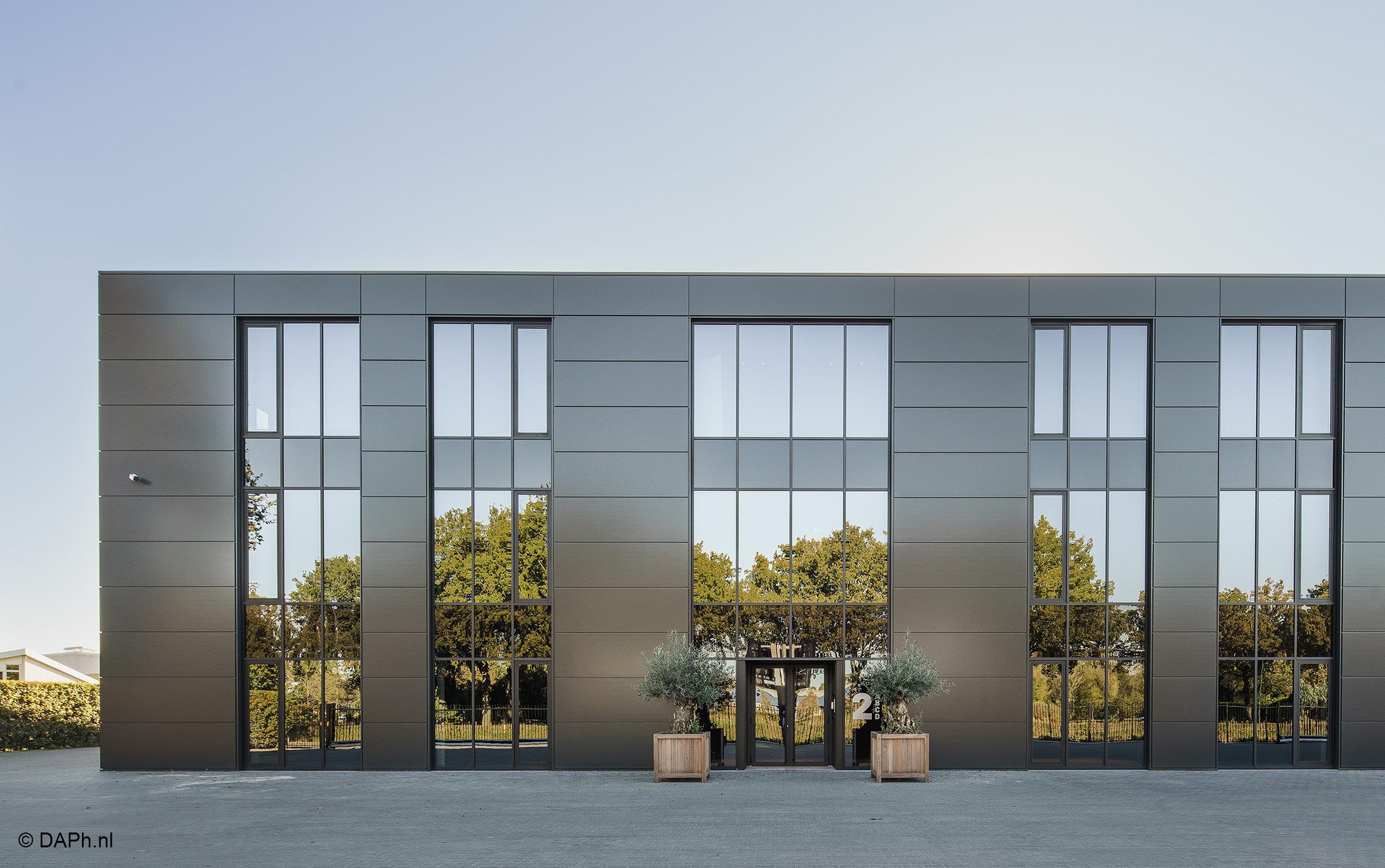
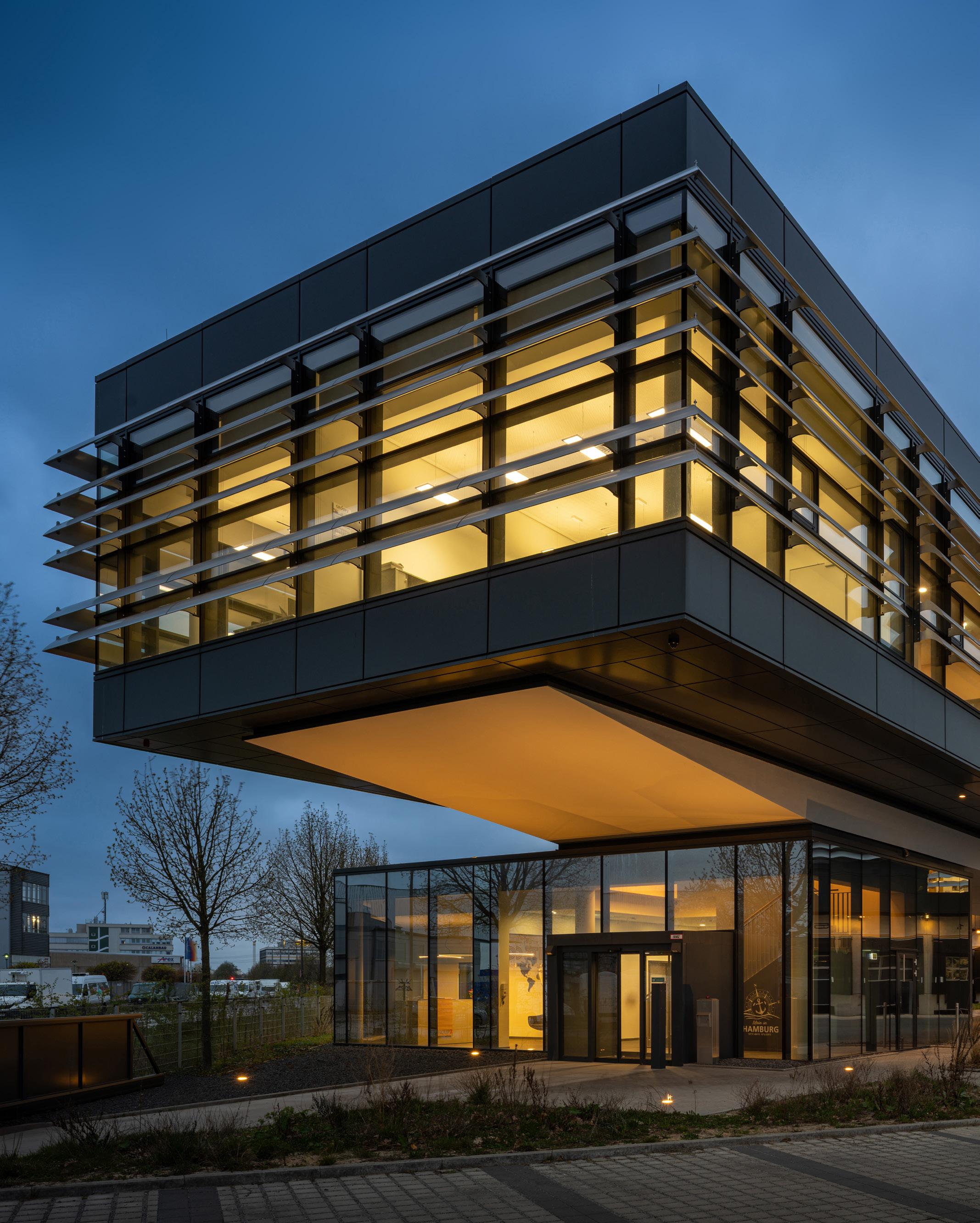
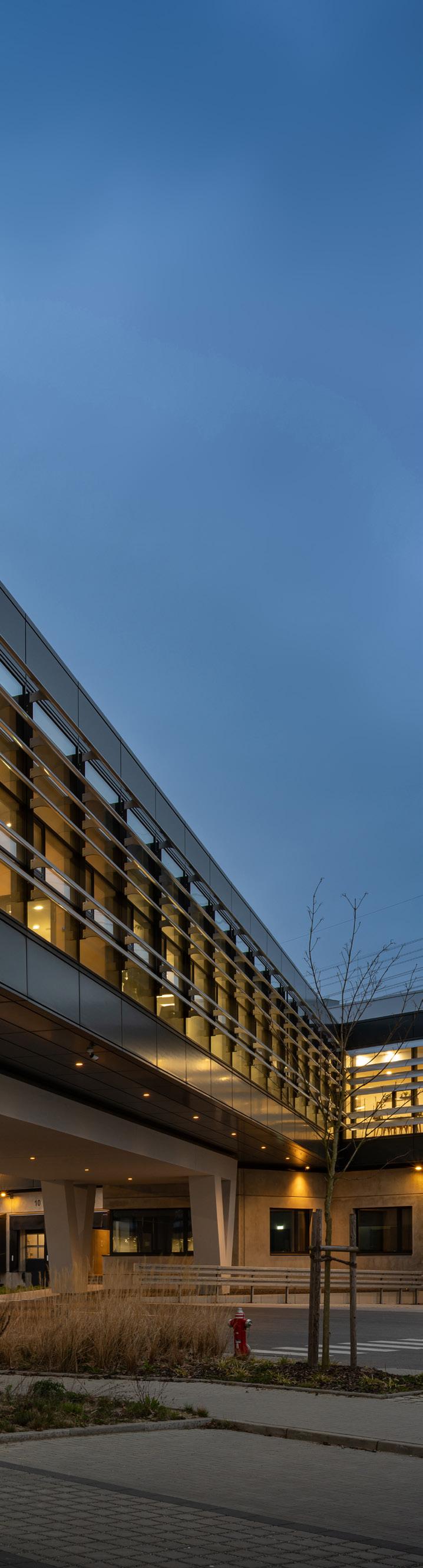
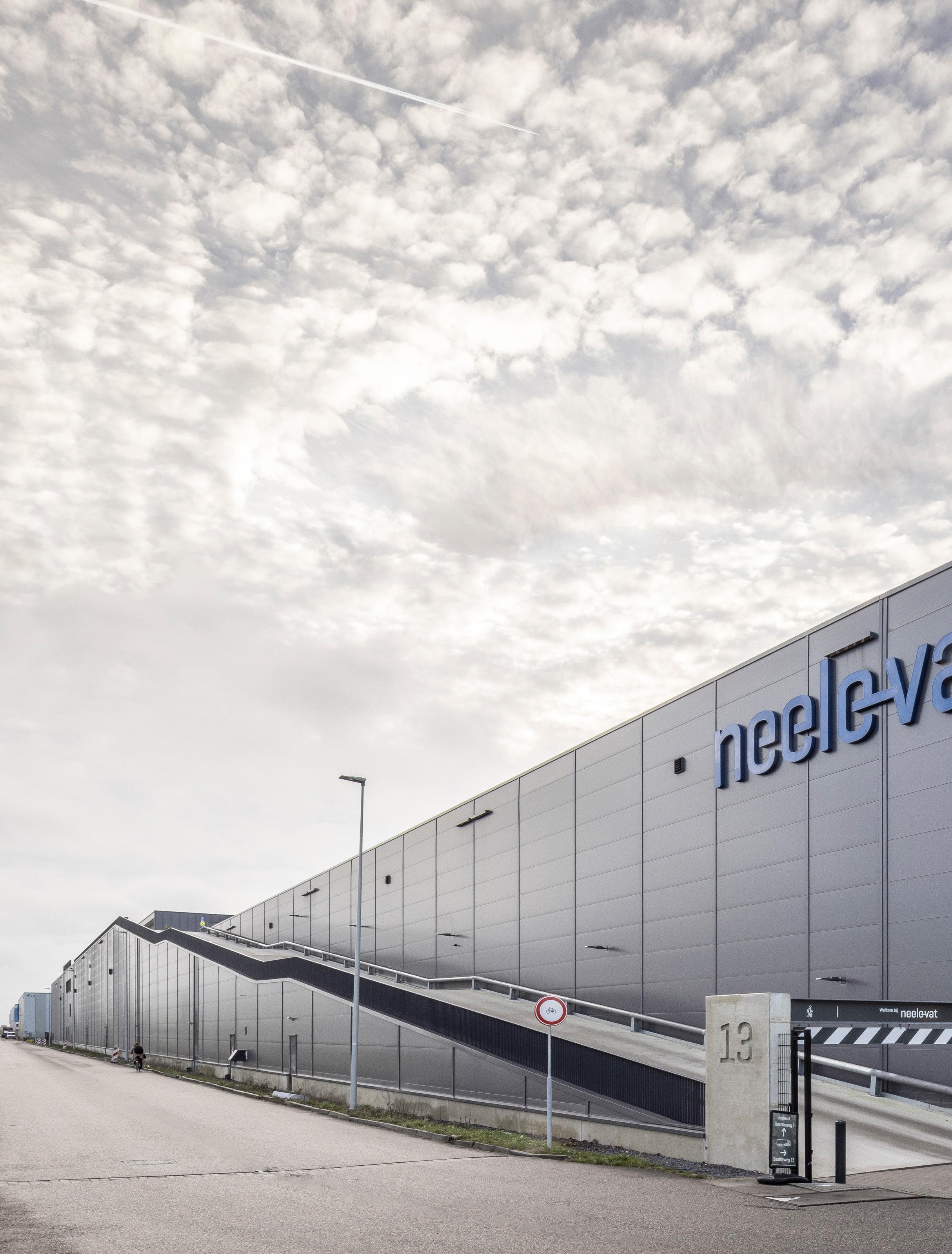
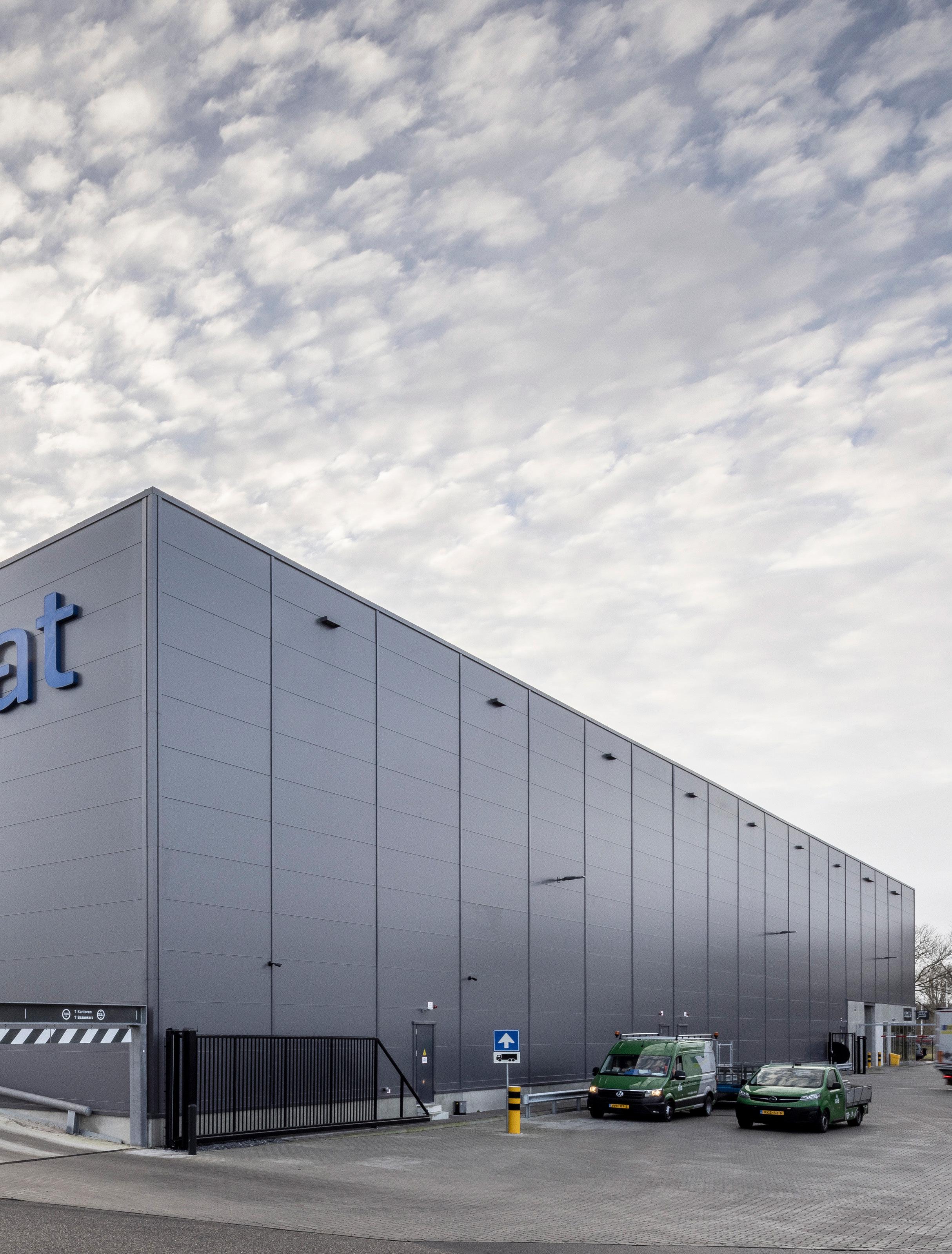
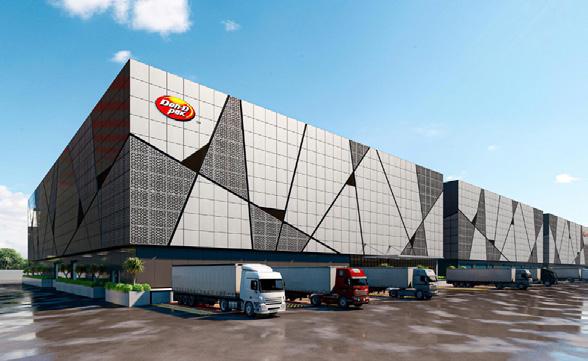
From Wild Desert’s integrated solutions to Trimo’s building envelope solutions, which the company takes to a new level.
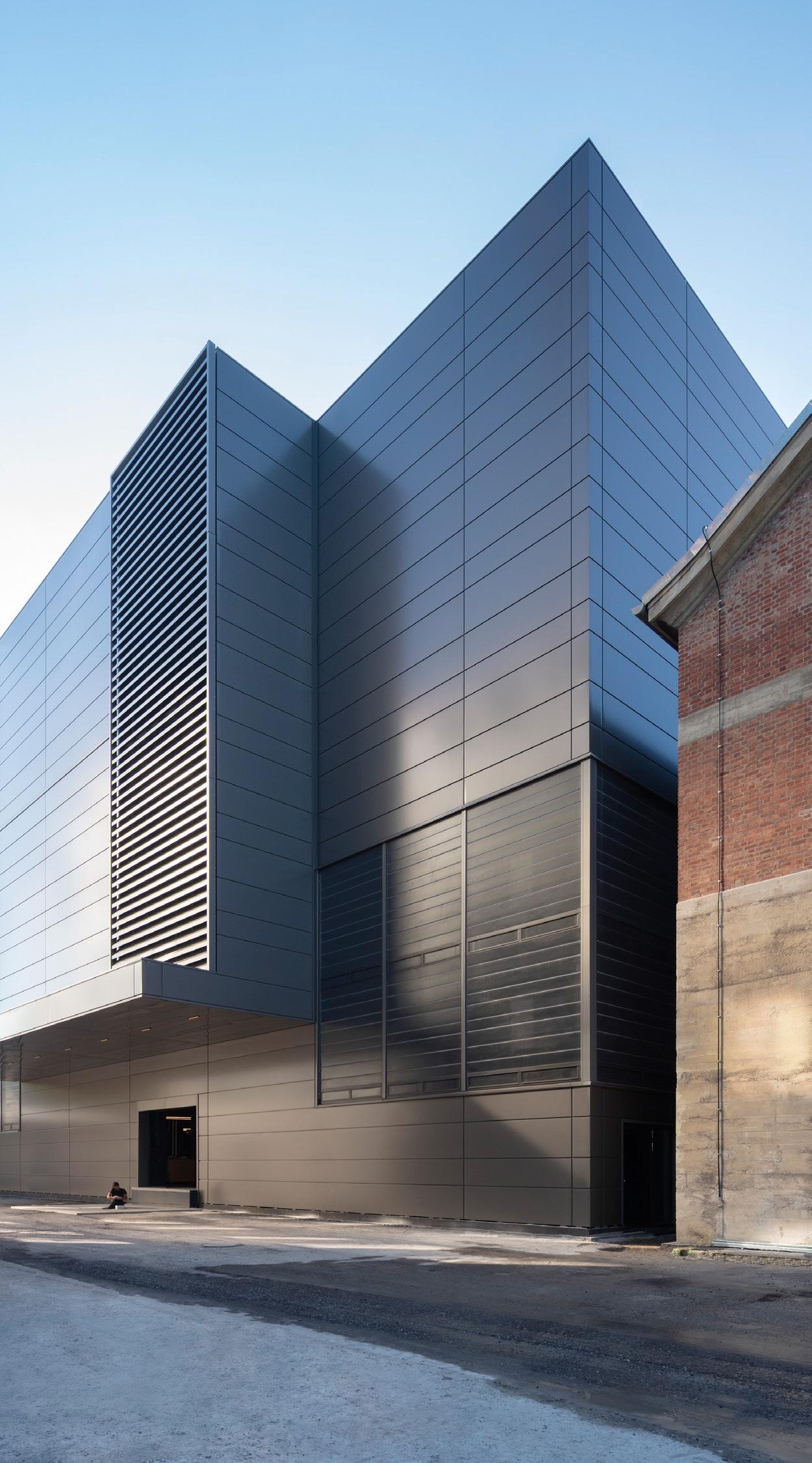
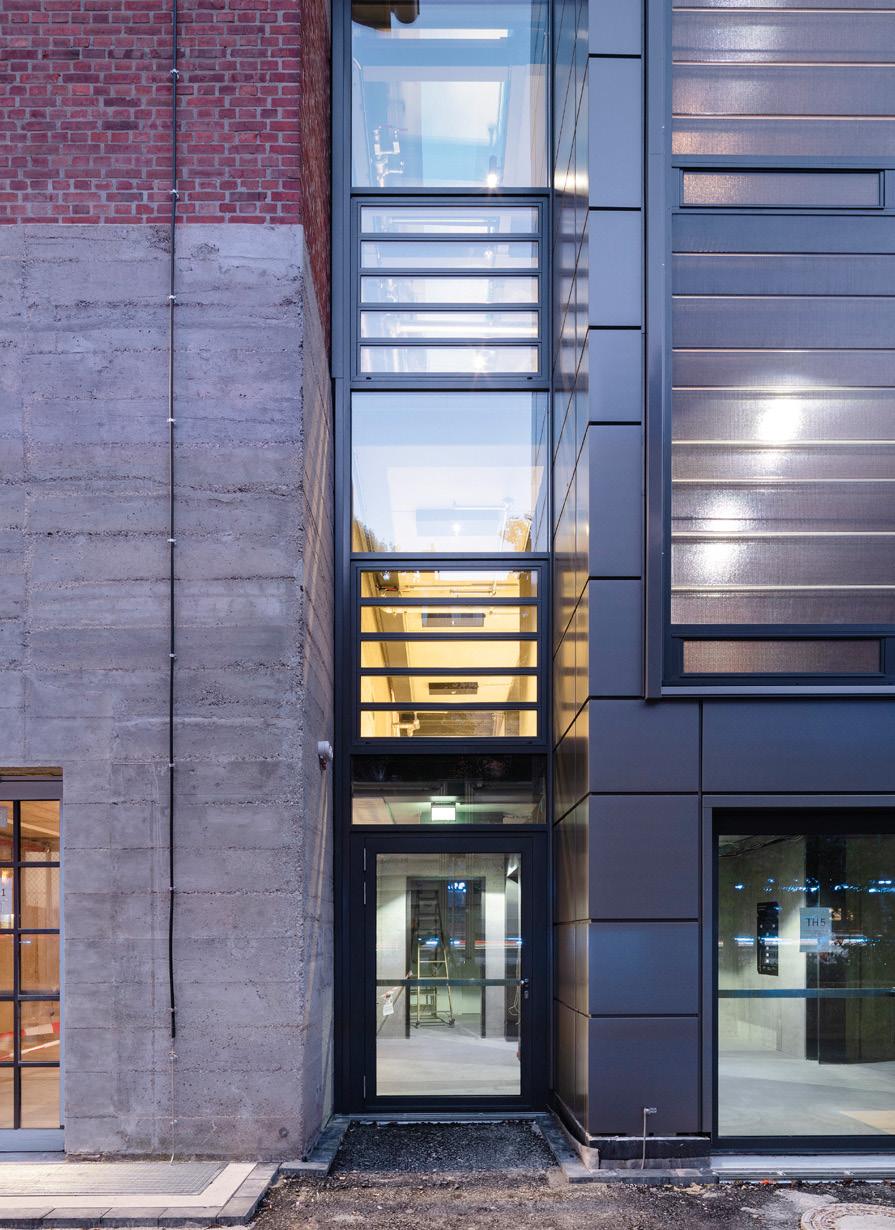
Trimo is equipped with unmatched knowledge of building façades garnered from over 60 years in business and stays engaged from the early planning stages all the way to installation, offering technical guidance and responsive cooperation.
“I often say we ‘produce unicorns’; we don’t just make panels – we deliver complete building envelopes with design and engineering support throughout the project,” says CEO, Nay Tawile.
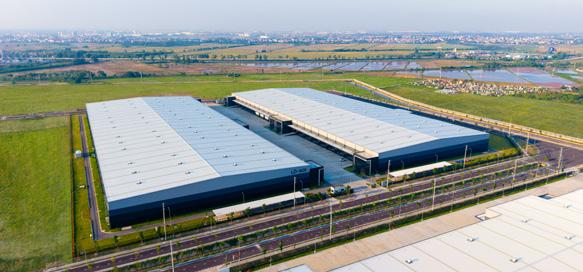
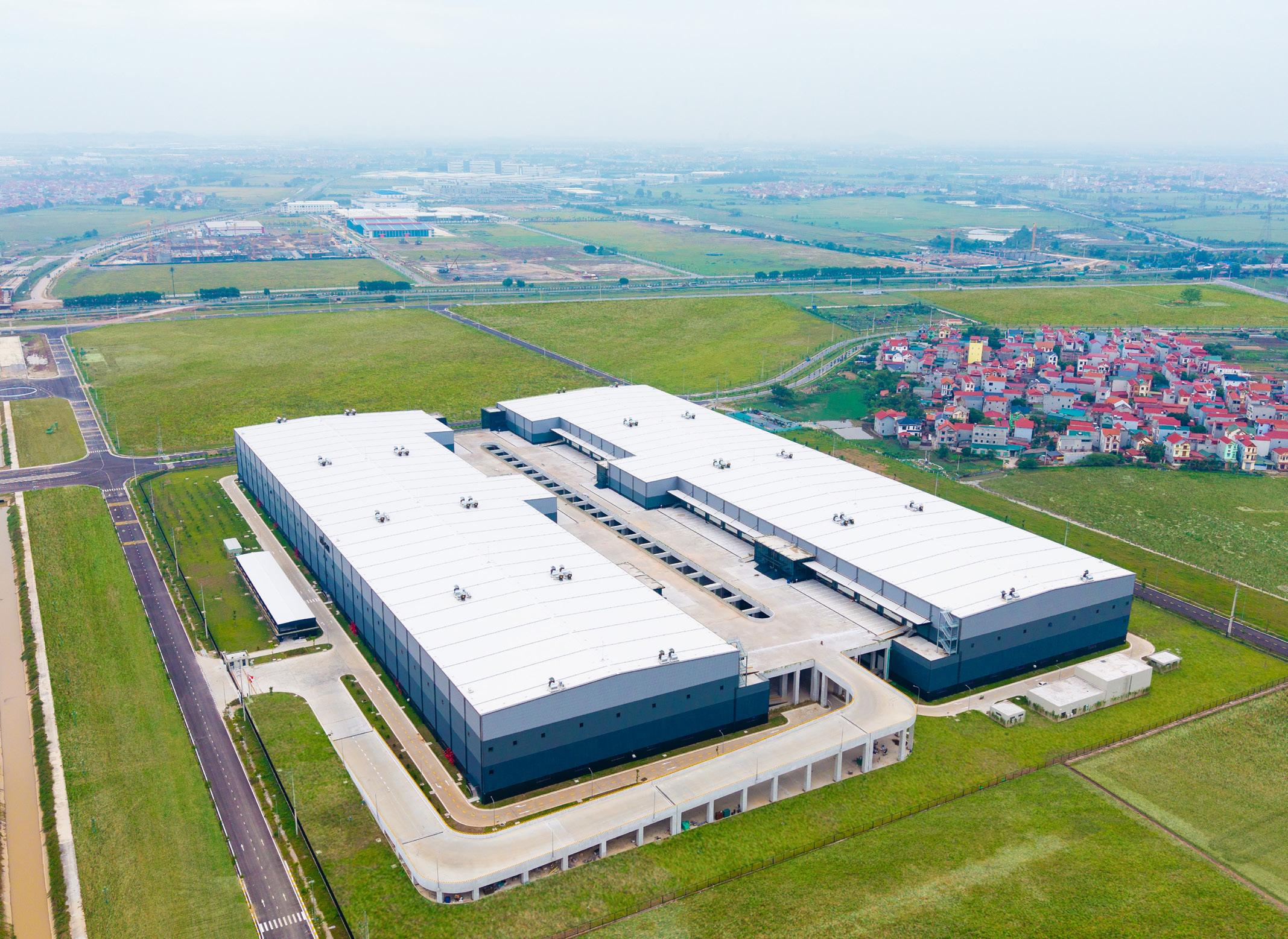
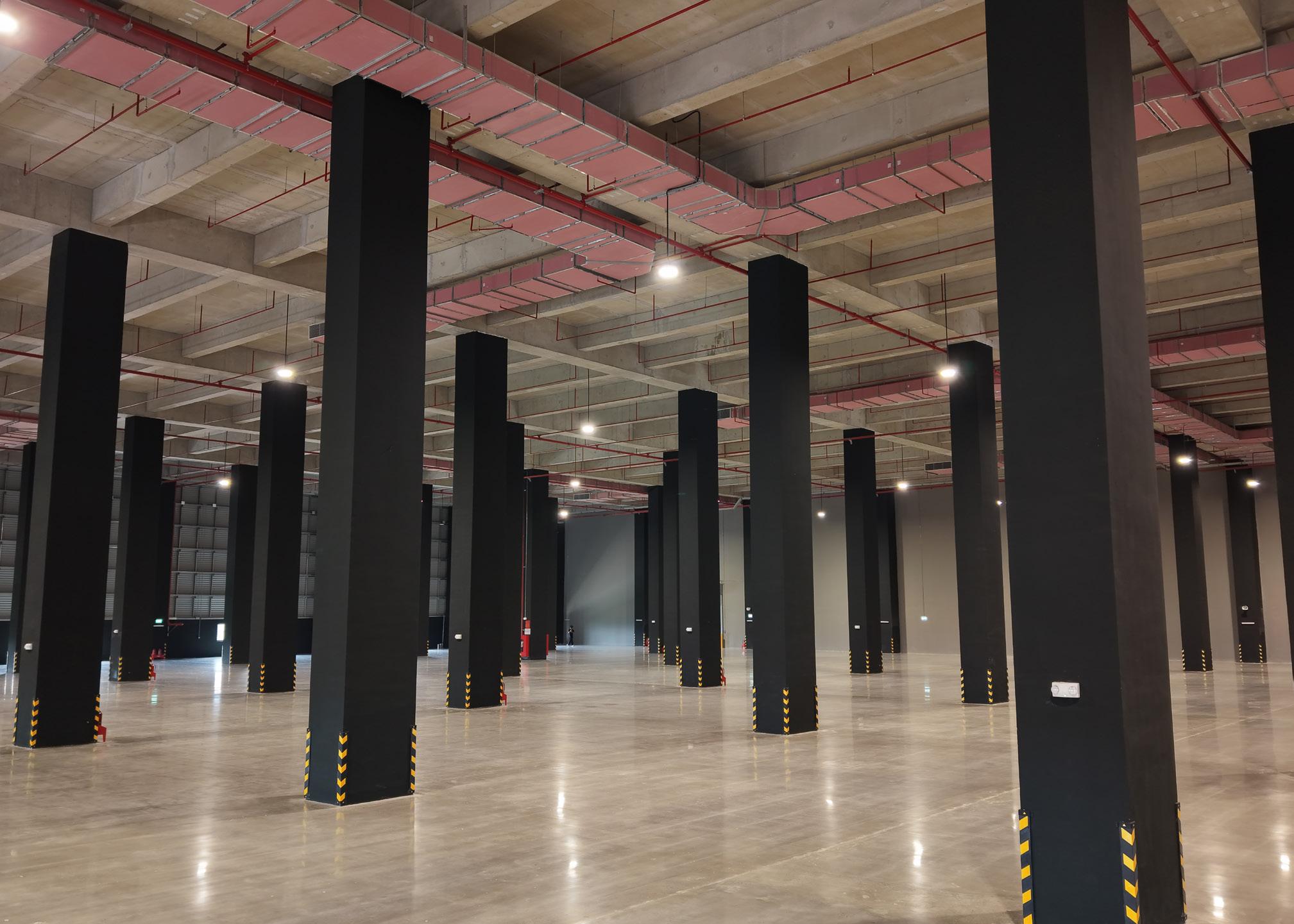
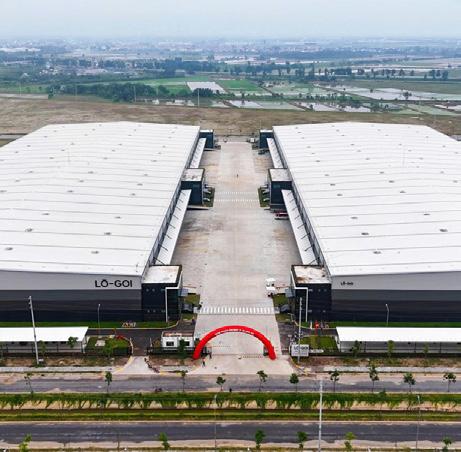
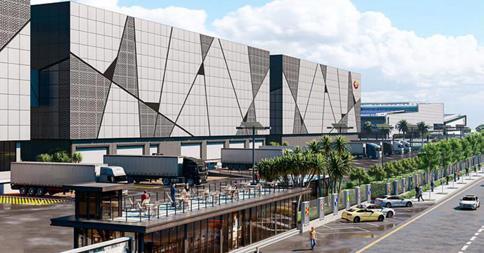
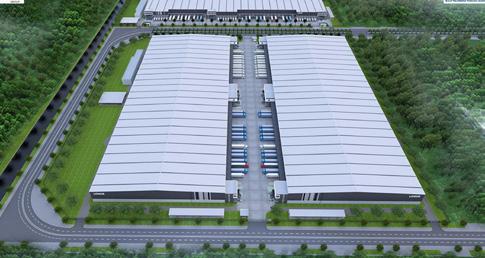
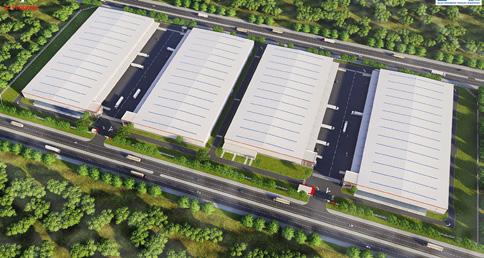
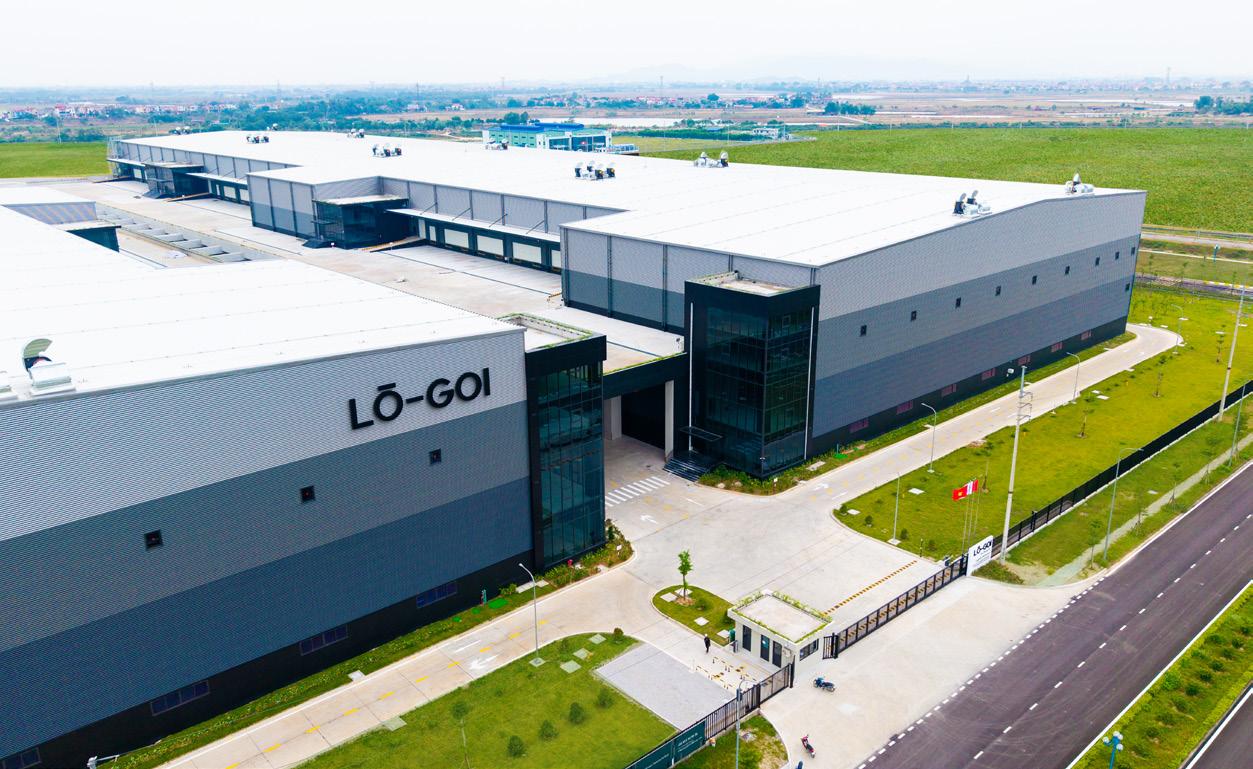
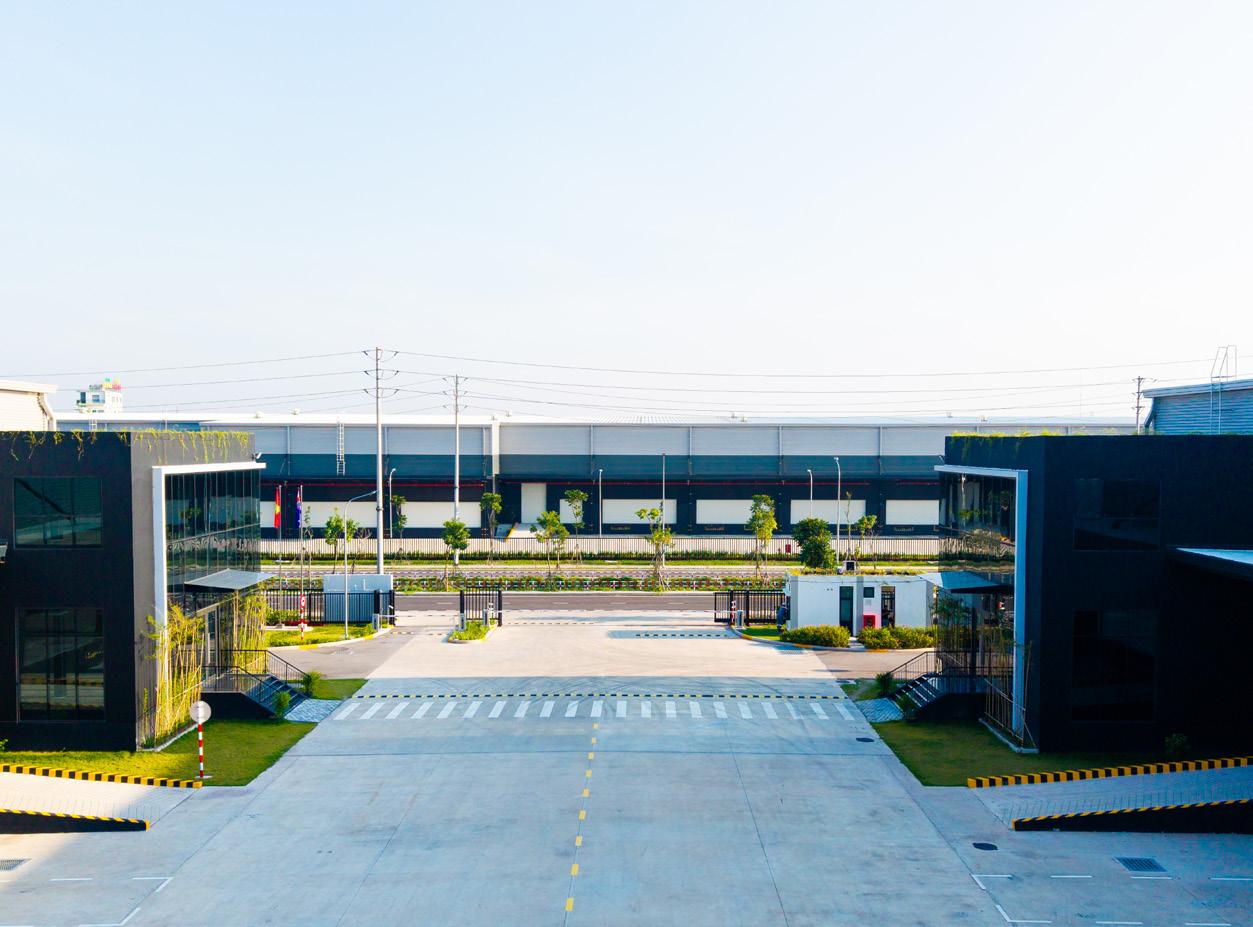
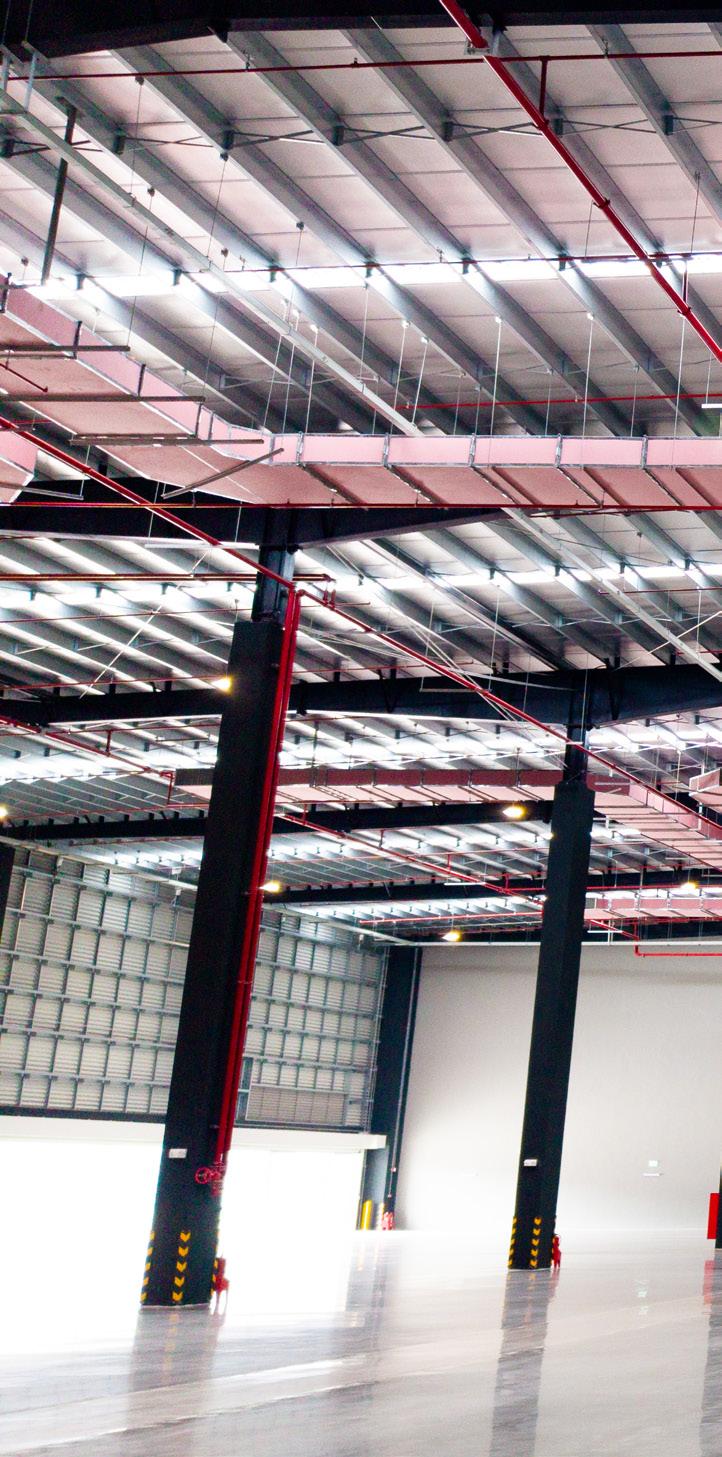
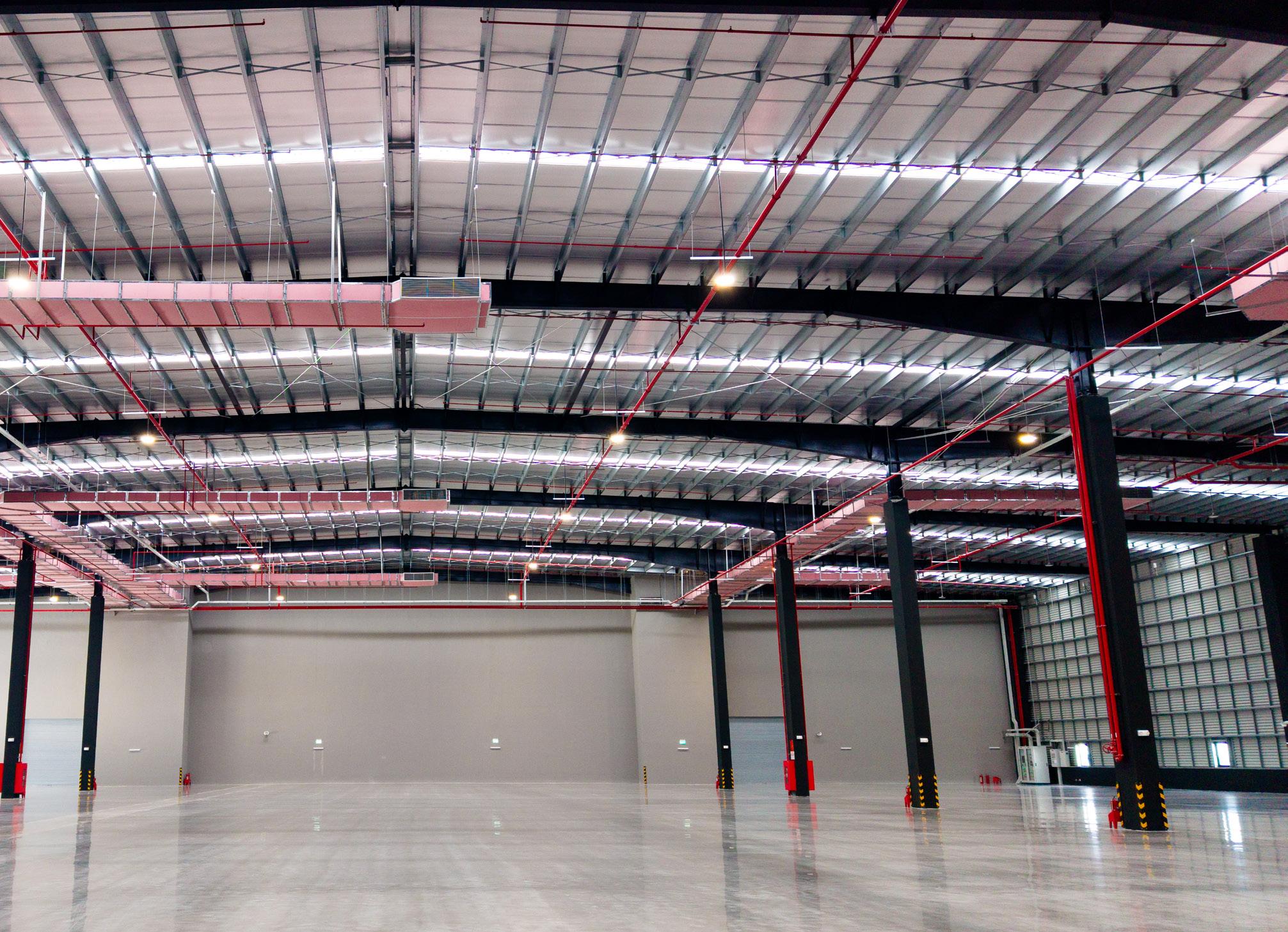
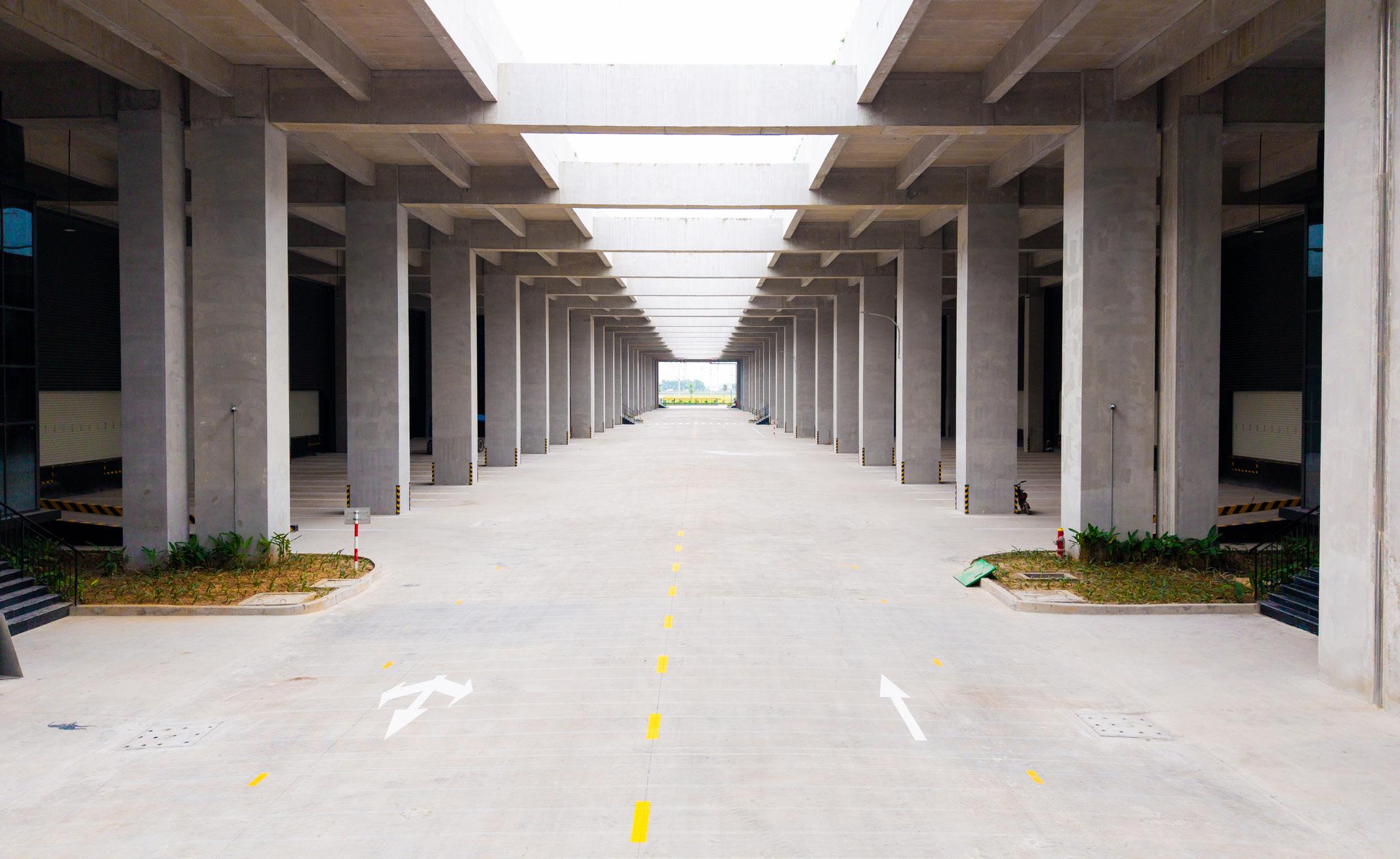
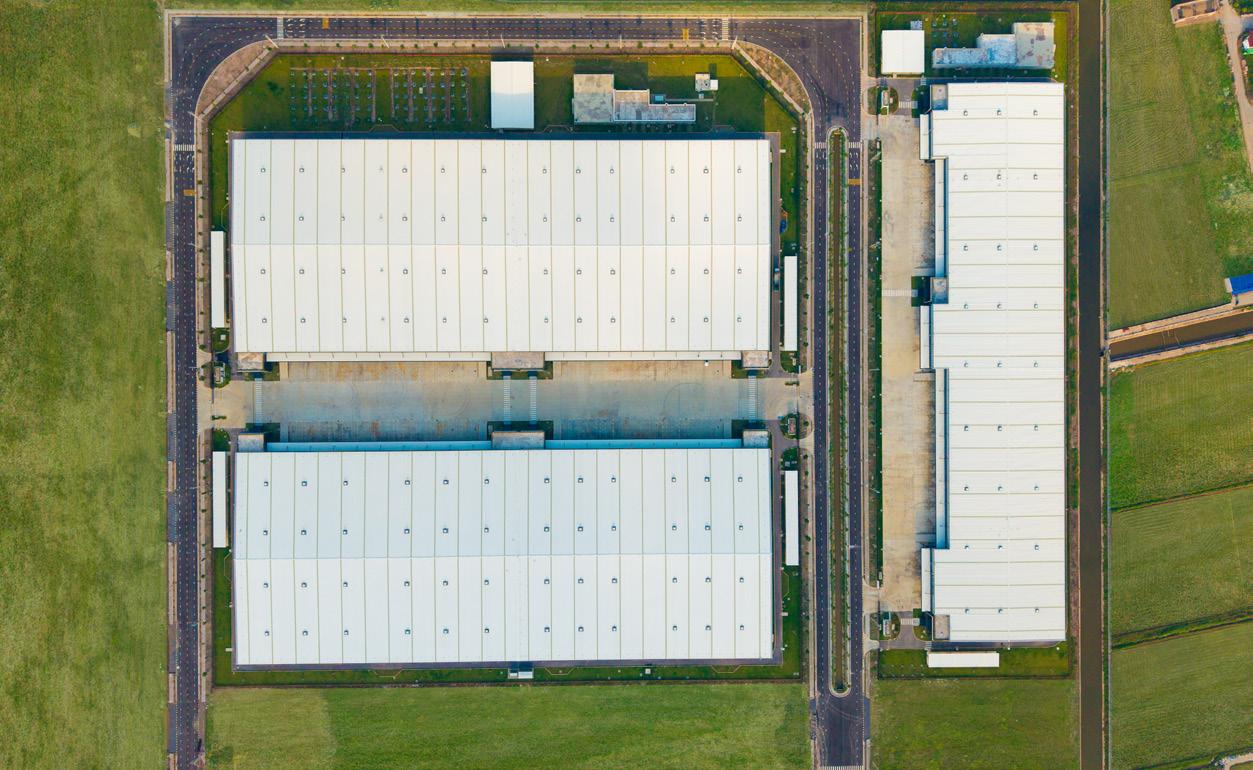
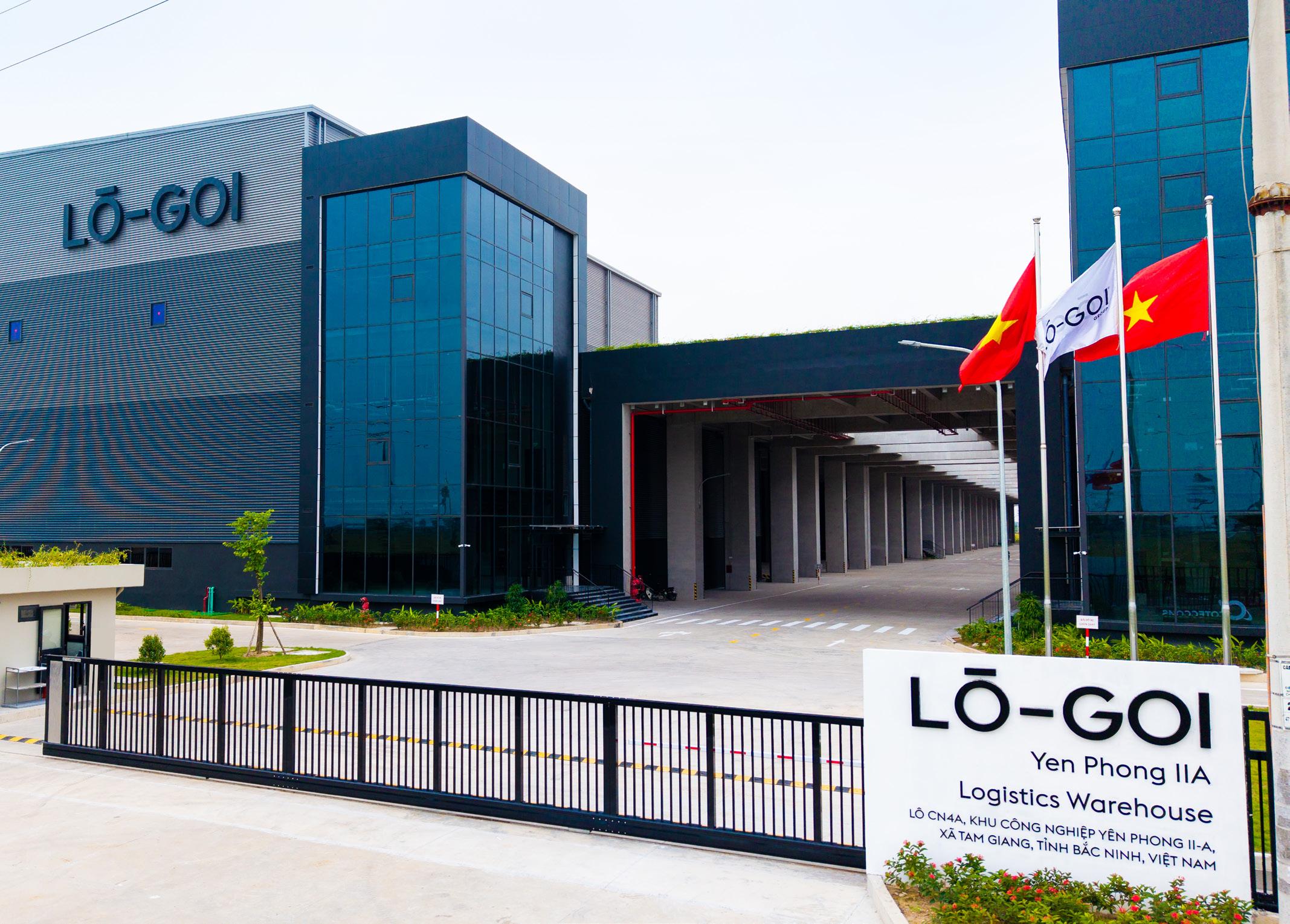
Rising demand for sustainable and energy-efficient buildings, meanwhile, has seen Vietnam emerge as one of the fastest adopters of green industrial parks and high-performance buildings in Southeast Asia.
Higher technical and regulatory standards have also come into play, supported by Vietnam’s continued industrialisation and steady foreign investment.
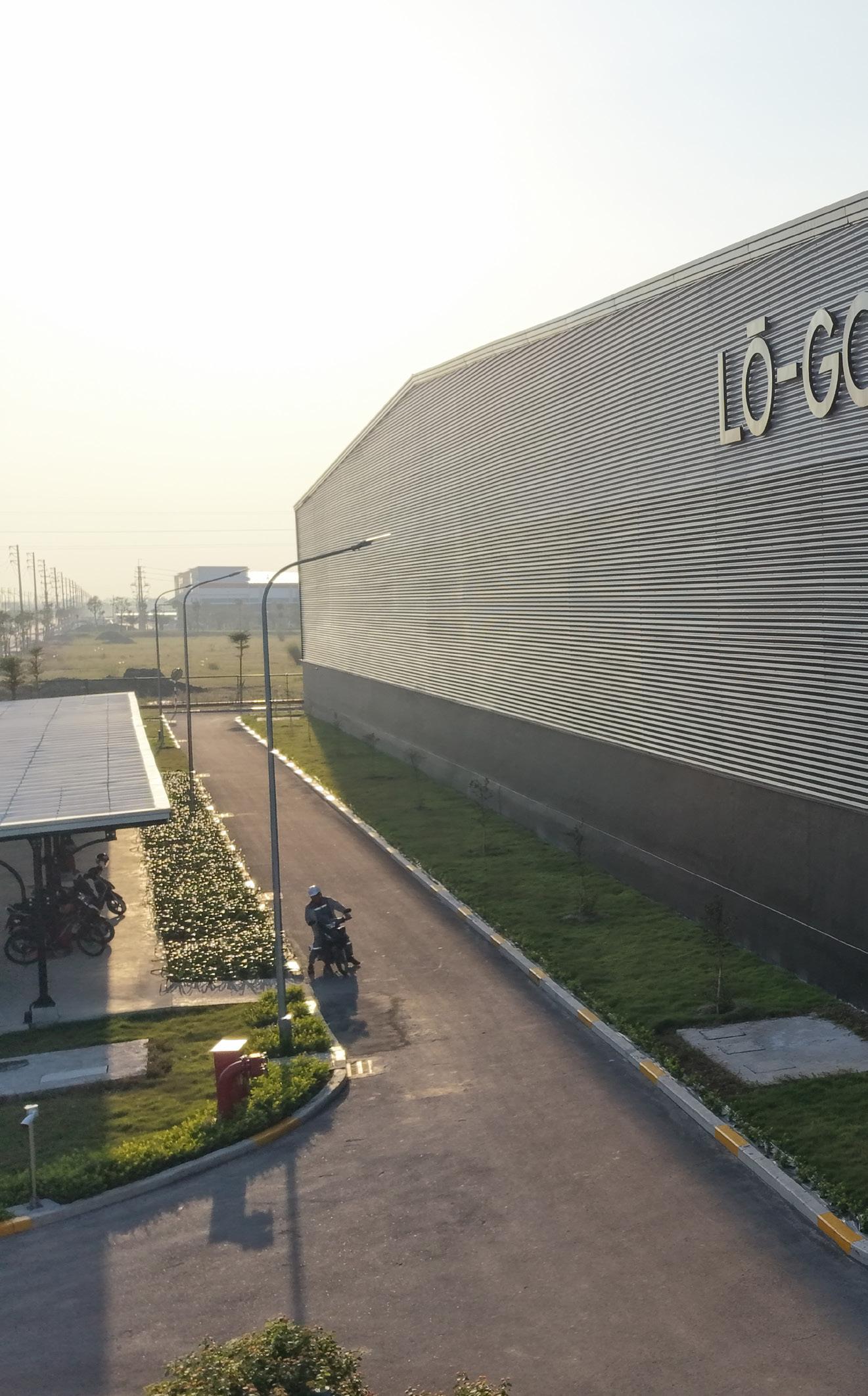
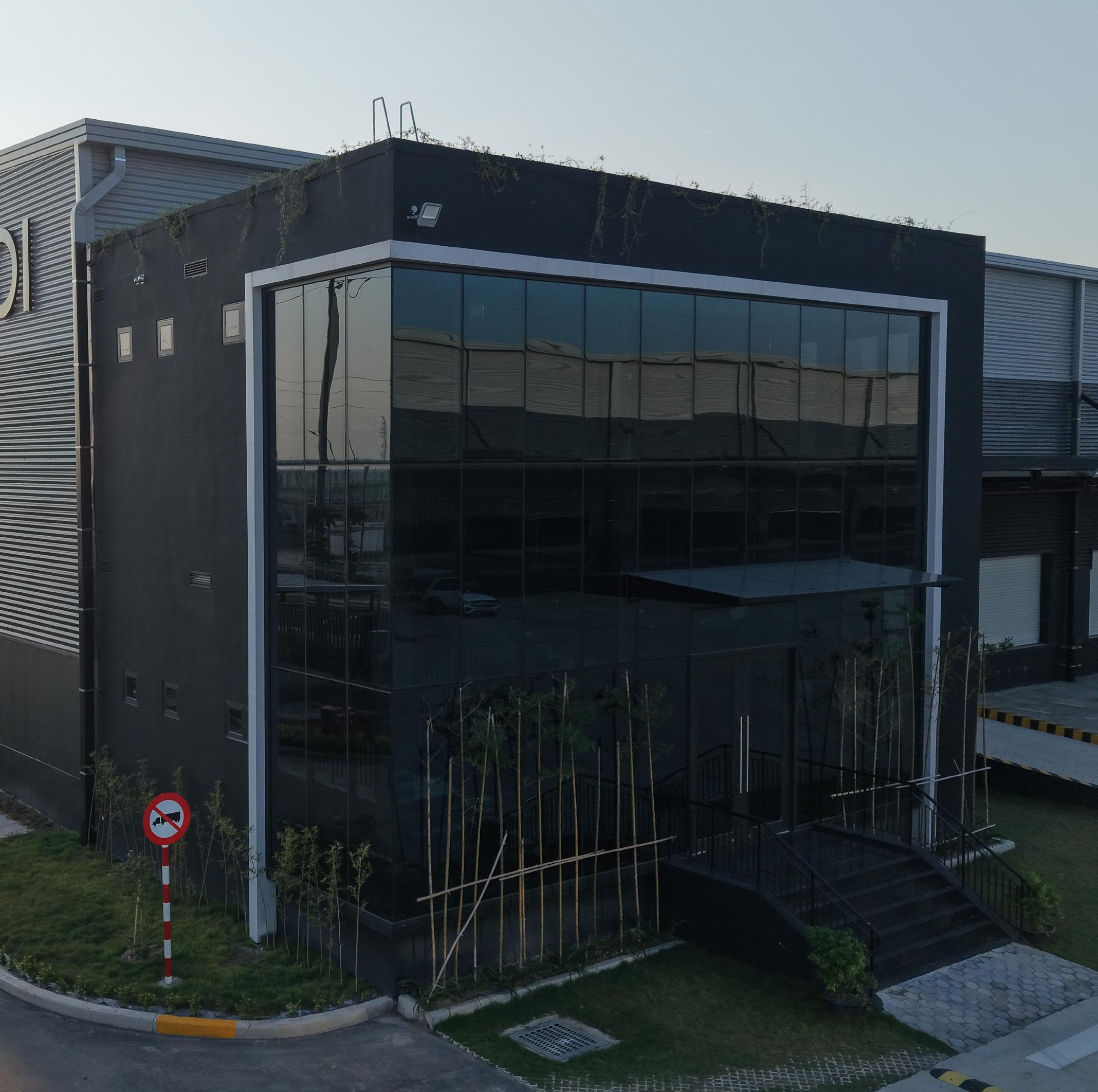
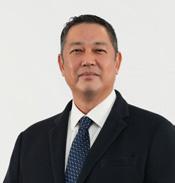
“This shift to quality, which has been driven by increasingly sophisticated occupier requirements, is bringing local standards closer to global expectations and reshaping how projects are planned and executed,” notes Matthew Jackson, General Manager – North Vietnam of the LŌ-GOI Group.
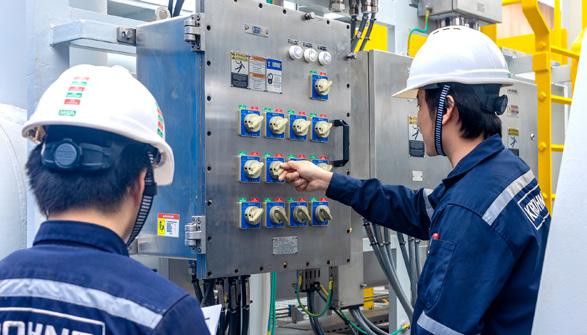
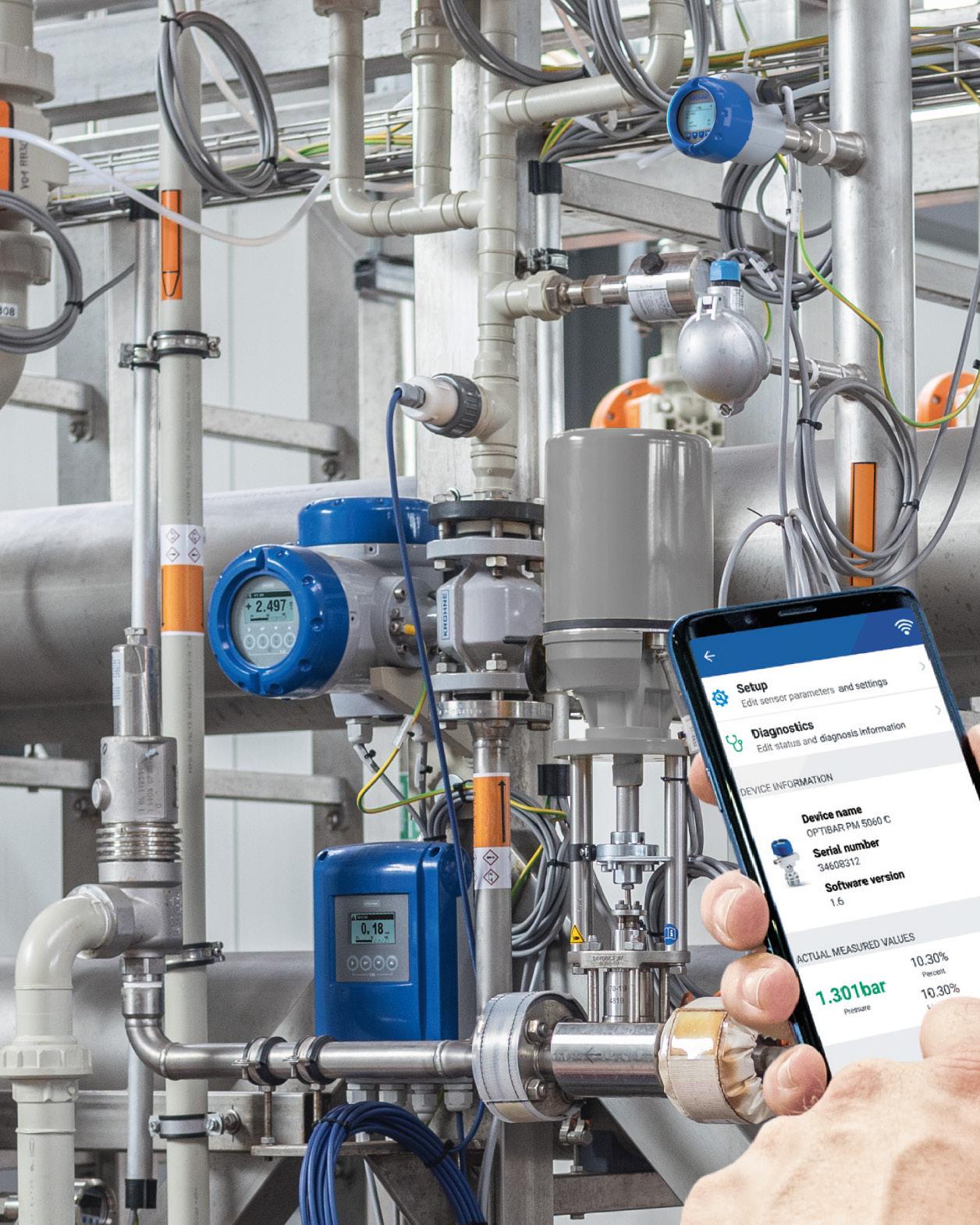
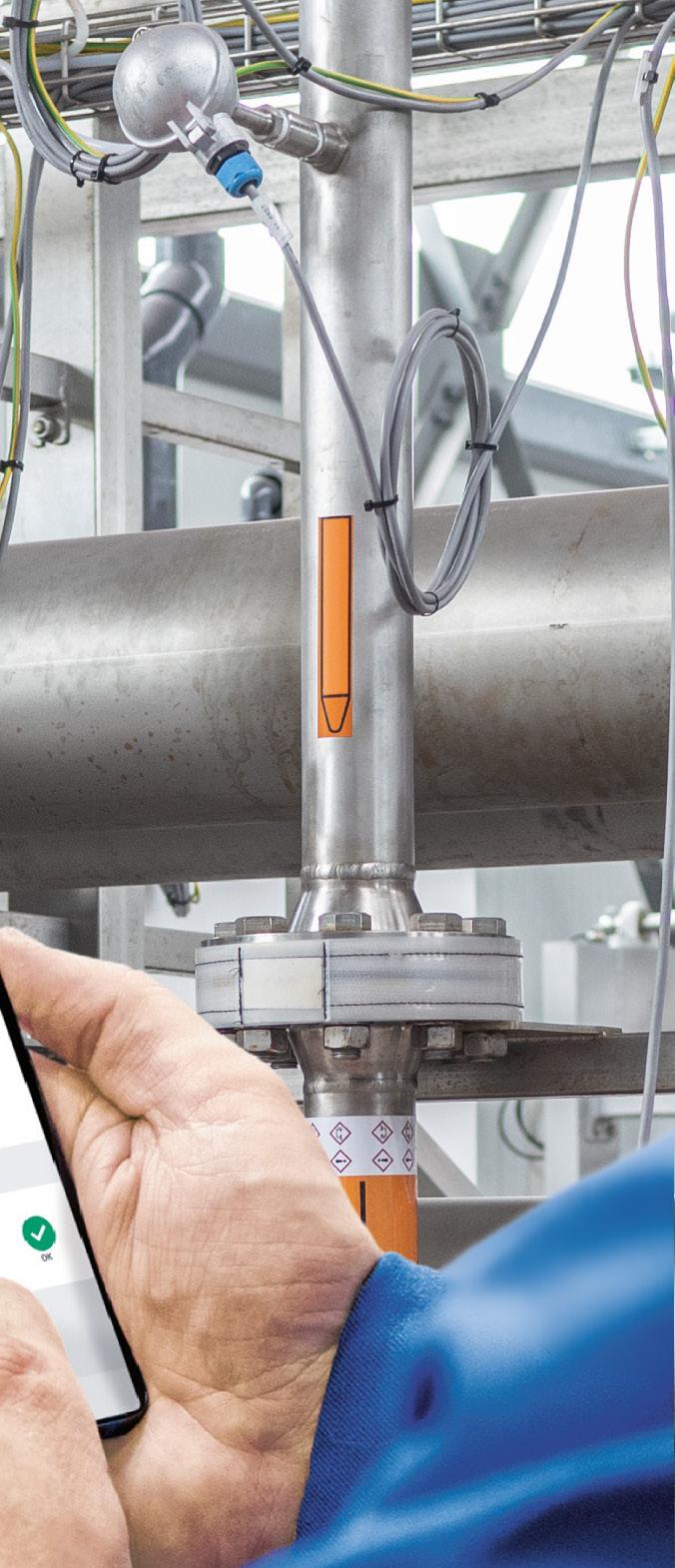
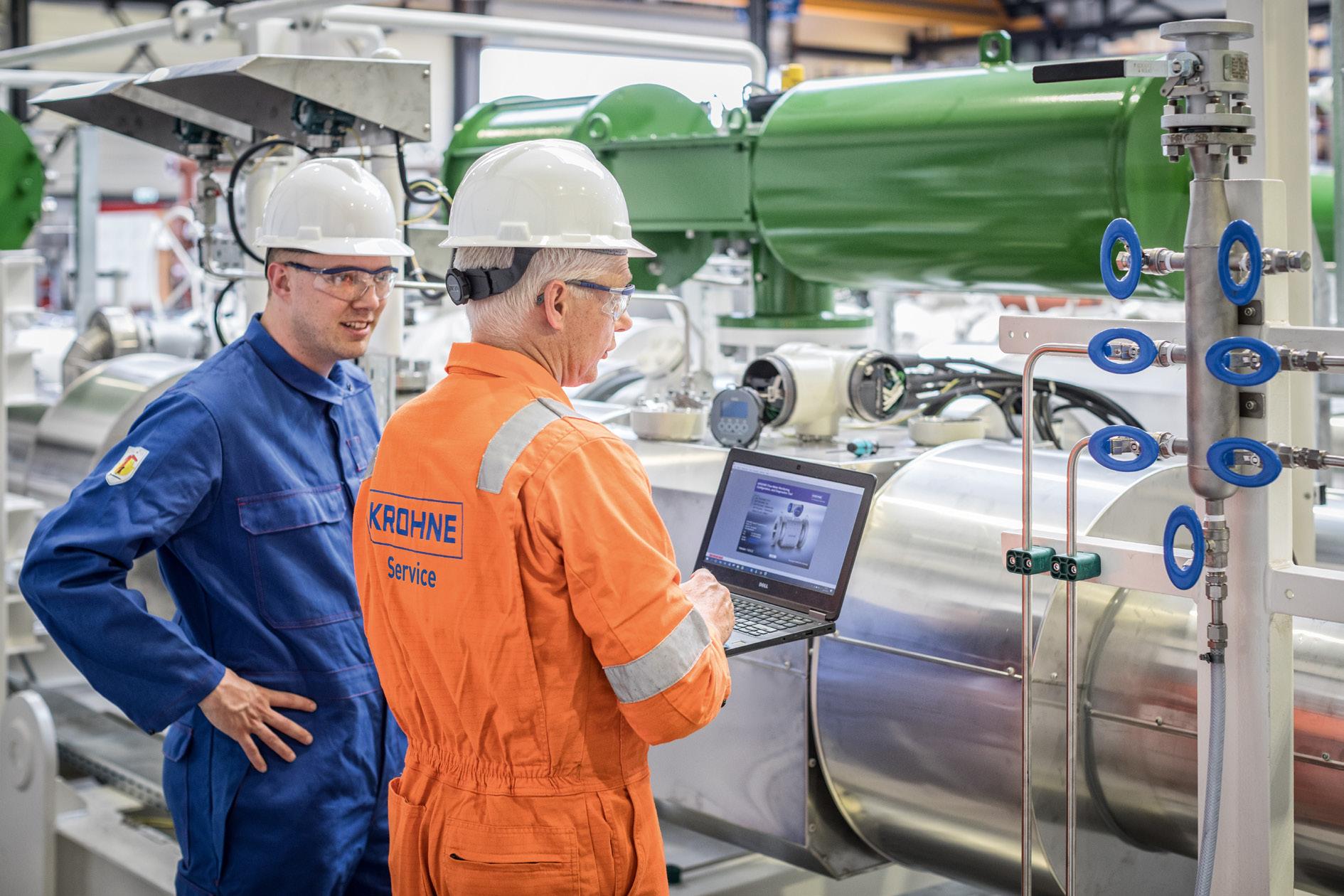
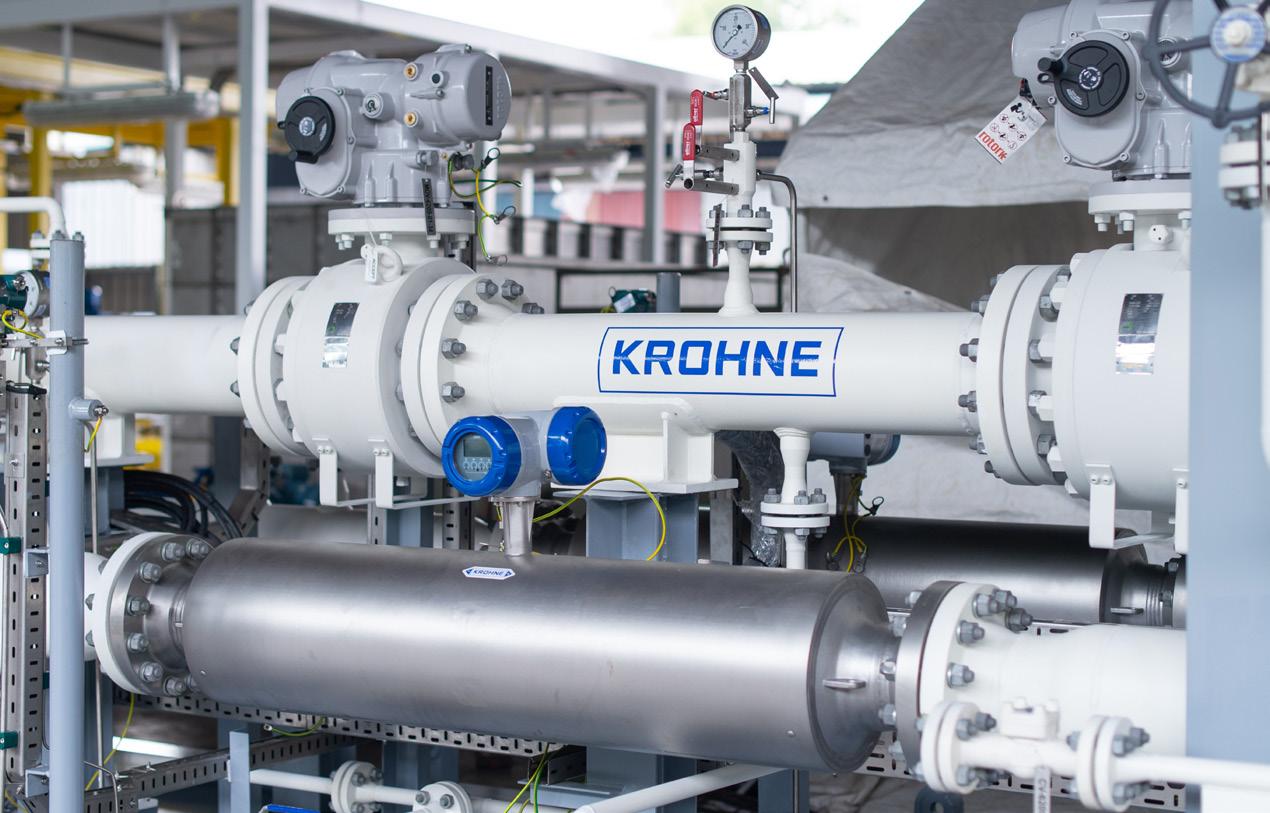
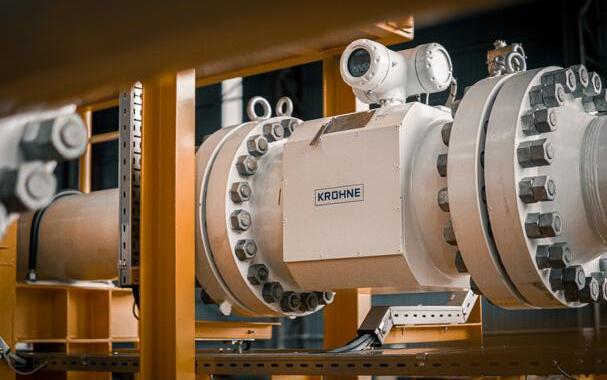
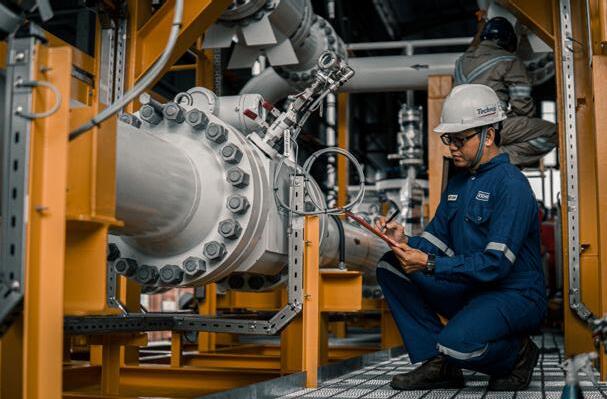
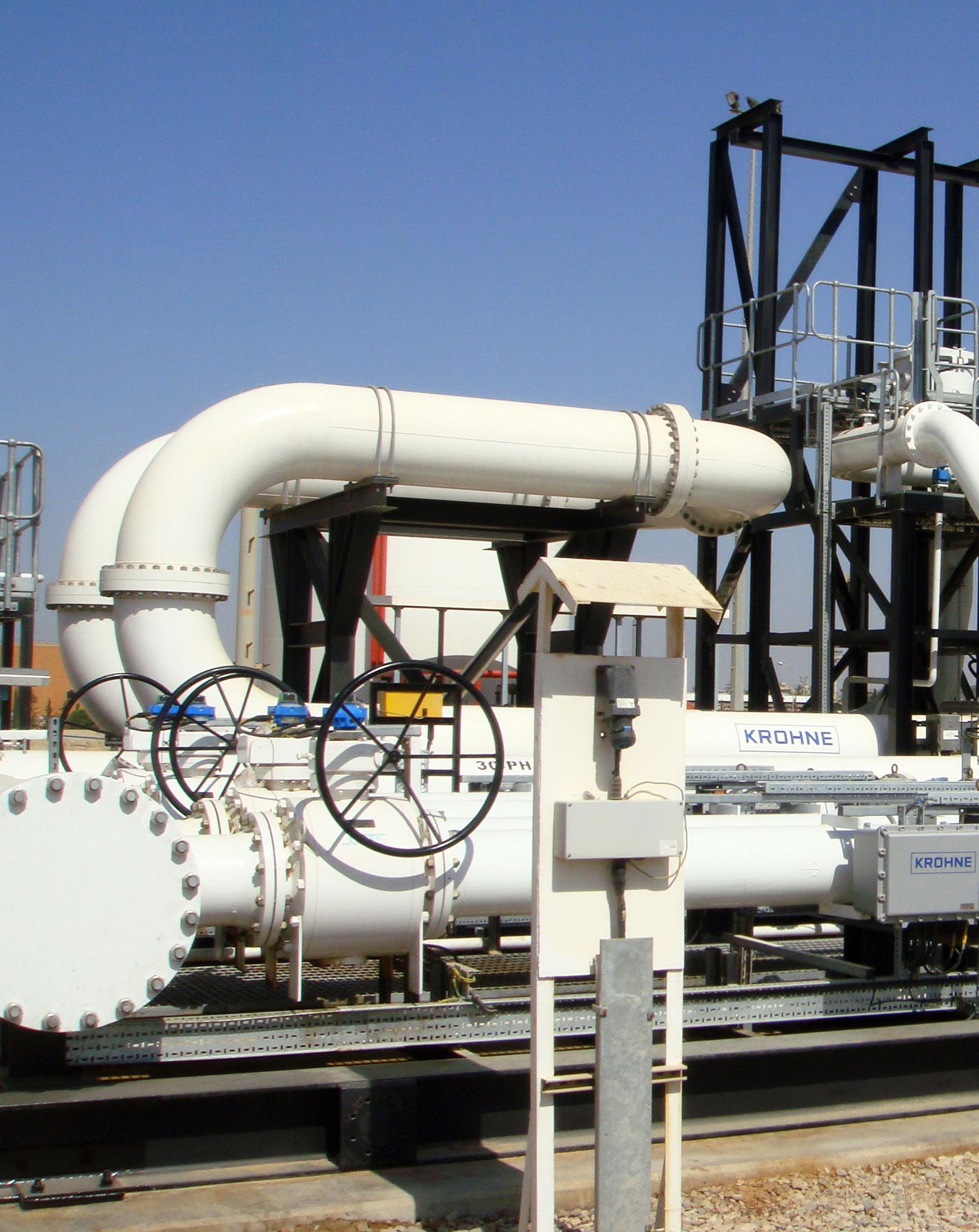
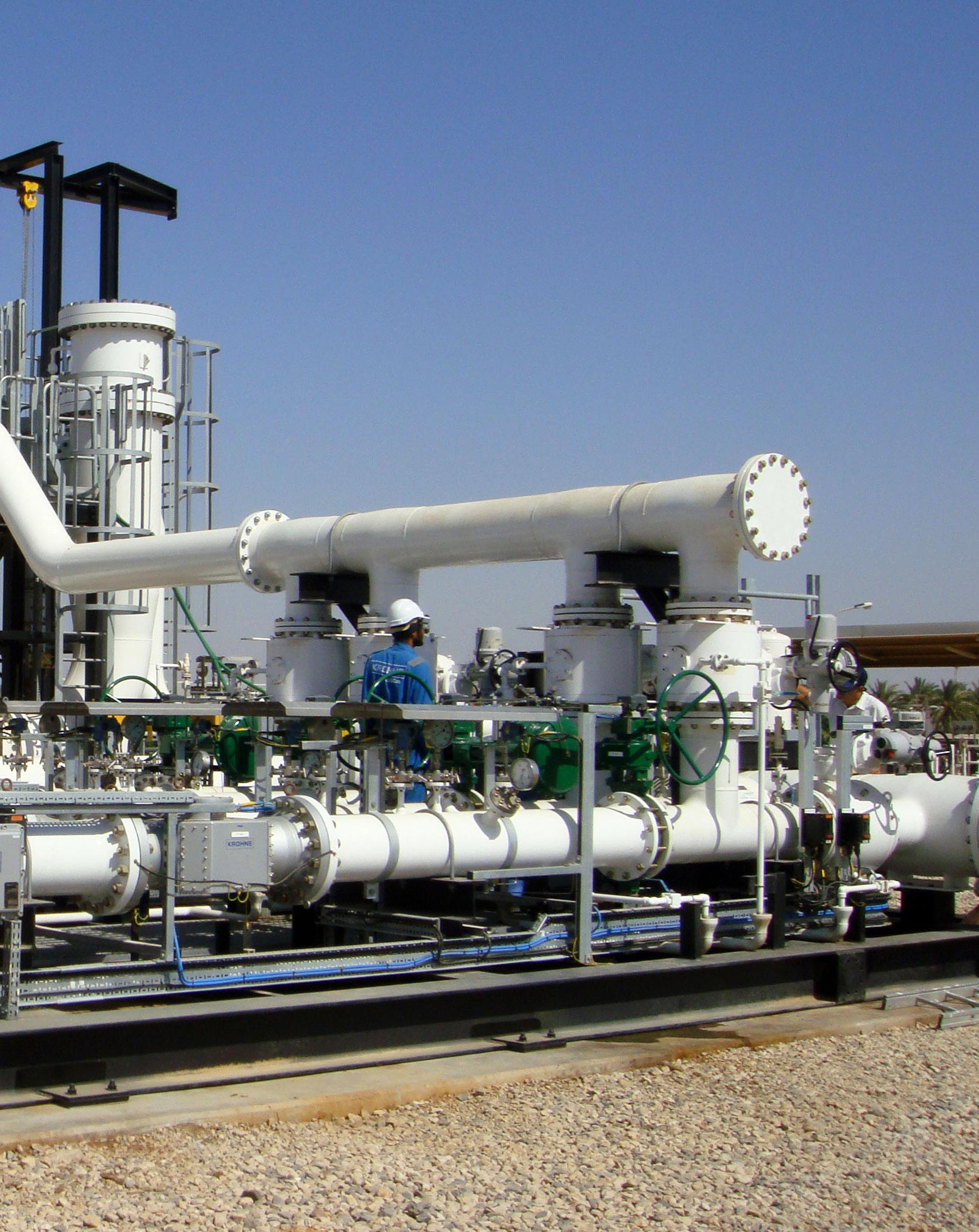
Elsewhere, go wild for corporate stories from KROHNE and Beetaloo Energy Australia.
We hope that you enjoy your read.
Jack Salter Head of Editorial, Outlook Publishing
Leveraging
Innovating
A
Around Asia Pacific in seven stories…
YEAR OF THE APP
ALIBABA HAS ANNOUNCED plans to invest USD$431 million to promote its Qwen artificial intelligence (AI) app during the Lunar New Year holiday. This amount is three times the spending commitments of its competitors, Tencent and Baidu, for similar promotions.
The campaign will offer incentives for dining, entertainment, and leisure activities, with large digital red envelopes distributed continuously that include additional redeemable benefits.
This year’s celebrations will also include an additional nine-day public holiday in China, the longest in the country’s history, providing a prime opportunity for tech companies to attract new users.
Tencent’s campaign will focus on its Yuanbao chatbot app, allowing users to claim digital red envelopes by upgrading the app. Other Chinese AI firms are also preparing for the holiday by releasing upgrades, with DeepSeek set to launch its new AI model.
JAPAN’S MOVEABLE FEAST
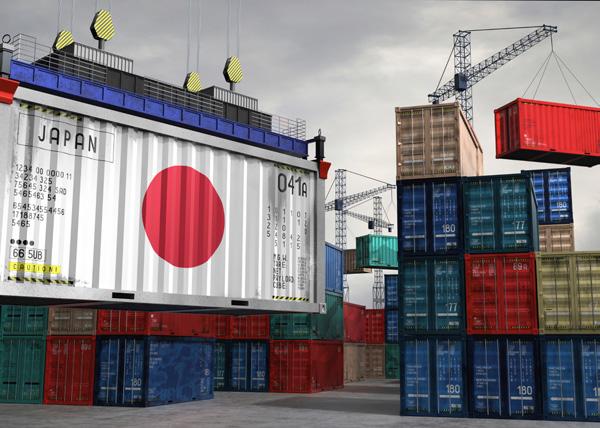
EXPORTS OF JAPAN’S agricultural, forestry, and fishery products reached an all-time high last year, rising by more than 12 percent to USD$10.9 billion – the 13th consecutive annual increase. This reflects the rising global demand for Japanese food products despite trade challenges.
According to the Ministry of Agriculture, Forestry and Fisheries (MAFF), exposure to Japanese
ECONOMY
K-INFLATION HITS SWEET SPOT
SOUTH KOREAN CONSUMER
inflation has eased to a five-month low, whilst the consumer price index (CPI) rose by only two percent year-on-year, aligning with the Bank of Korea’s official target.
This indicates that price pressures in the country are gradually stabilising, aided by steady petroleum product prices that remained unchanged following a decline in international crude oil prices.
Prices for agricultural, livestock, and fishery products increased by 2.6 percent, whilst eggs surged by 6.8 percent due to reduced output from avian influenza. Industrial goods, processed food, and instant noodle prices also rose, contributing to core inflation, which excludes food and energy.
Although the Lunar New Year holiday may drive up prices for agricultural products, some stabilisation is expected.
cuisine through tourism and growing health consciousness have all contributed to record export levels, with the US being the largest export market.
Despite a strong performance, total exports fell short of the government’s year-end target. Japan plans to significantly boost food exports by 2030 to diversify sales channels and ensure stable production of highdemand items like wagyu beef, miso, and matcha.
RARE EARTH ELEMENTS INDEPENDENCE DAY
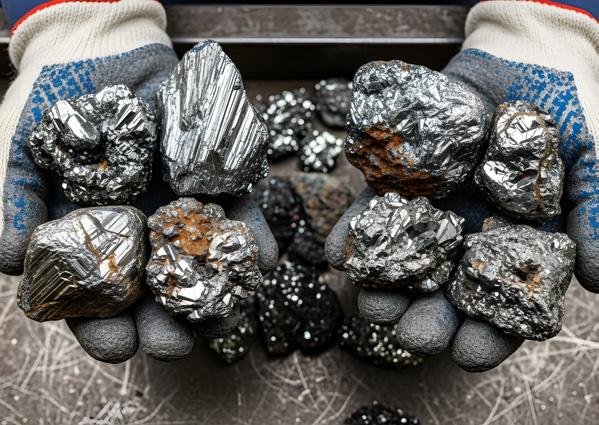
ENERGY FUELS IS acquiring Australian Strategic Materials (ASM) in a significant step to enhance the US’s position in the critical minerals sector, particularly in the production of rare earth elements (REEs).
Valued at around USD$300 million, the deal will establish Energy Fuels as a fully integrated REE producer, overseeing the entire process from mine to metal outside of China.
Furthermore, it will bolster the company’s pipeline of REE
FAT PHARM FOR CATS
CHINESE PHARMACEUTICAL COMPANY, Huadong Medicine, recently received market approval from the Ministry of Agriculture and Rural Affairs (MARA) for a weightloss drug specifically designed for obese cats.
The drug requires weekly subcutaneous injections and has shown promising results in Phase III clinical trials, in which tested cats lost an average of nine percent of their
development projects, including the Dubbo REE Project in New South Wales, Australia, as well as other initiatives in Madagascar and Brazil. This move aligns with the US government’s efforts to decrease dependence on China for critical mineral production and enhance domestic production capabilities.
AEROSPACE SINGAPORE TECHNOLOGIES
body weight over six weeks.
The study revealed that approximately 72 percent of the cats experienced significant weight loss, with no adverse reactions reported. This medication is specifically developed for pets, differentiating it from human medications to ensure both safety and effectiveness.
In China, the obesity rate amongst cats has reached more than 28 percent, leading to various health risks such as diabetes and heart disease.
ENGINEERING showcased two new platforms at the Singapore Airshow 2026, emphasising its growth in next-generation aviation technologies.
The company introduced the DrN-600, co-developed with Air Inc., an all-electric vertical take-off and landing (eVTOL) cargo drone with a range of over 70 kilometres and a payload capacity of 100 kilogrammes.
This drone is designed for medium-lift operations, delivering critical last-mile supplies to remote areas or locations lacking transport infrastructure, such as islands or mountainous regions, and is expected to be certified for commercial operations by 2028.
ECONOMY
INNOVATIONS FOR NEXT-GEN AVIATION ASIA’S RISING STAR
MALAYSIAN ASSETS ARE attracting global investors amid a weakened US dollar and rising geopolitical tensions, offering a stable alternative to struggling regional competitors.
In 2025, Malaysia, the fourth-largest economy in Southeast Asia, attracted USD$6.5 billion in foreign investment in local currency debt, marking the highest inflow in four years.
Analysts are optimistic about the country’s stable economic growth, government initiatives, and strengthening ringgit, which has risen by approximately 17 percent since early 2024.
Additionally, Malaysia has outperformed neighbouring countries such as Thailand and Indonesia, with its benchmark stock index rising 12 percent over the past year, largely driven by investments from US tech giants in data centres.
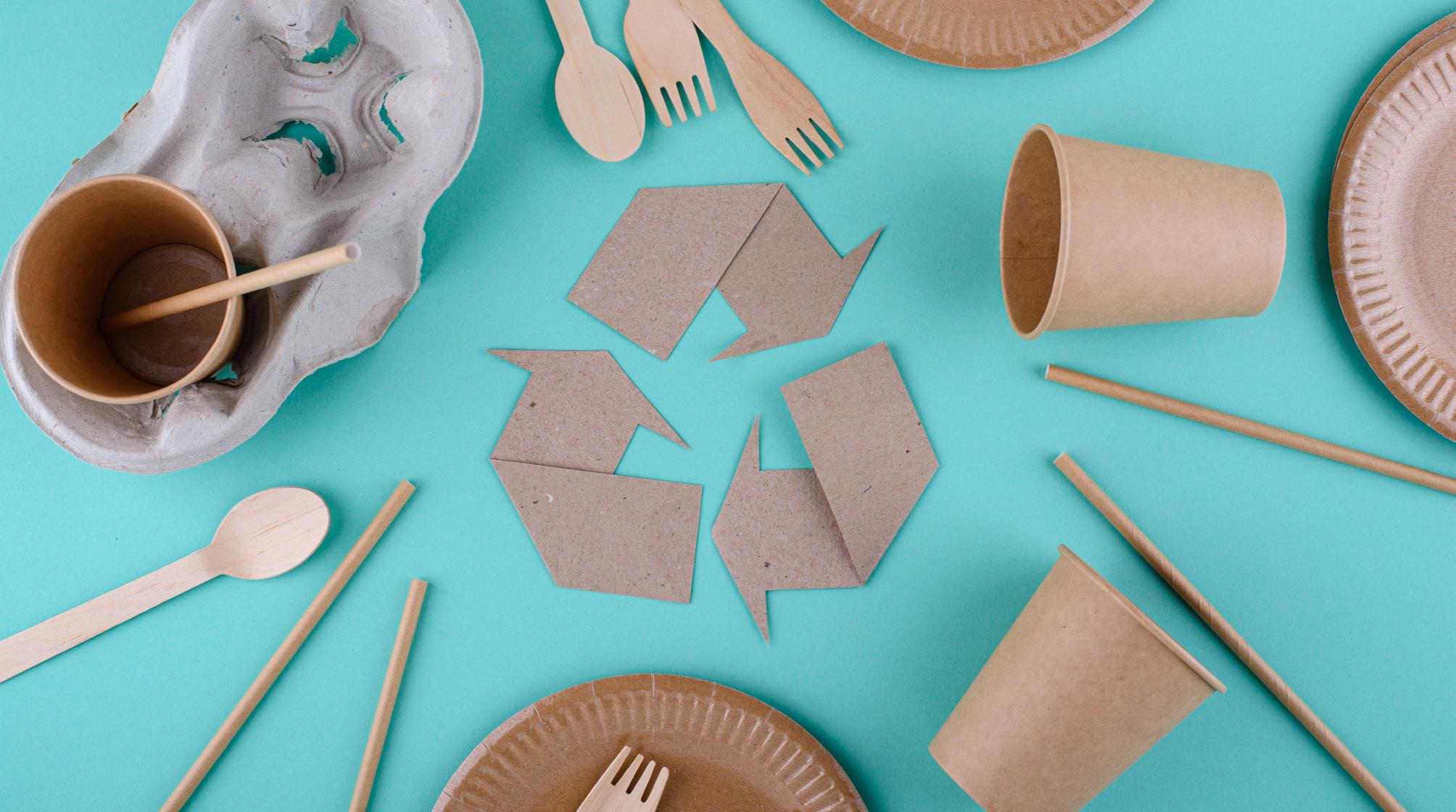
How Sustainability is Reshaping APAC’s Packaging and Manufacturing Landscape
Asia Pacific’s diversity creates unique challenges when it comes to sustainable packaging, but as environmental pressures mount, the region is reaching a tipping point. Spencer Ball, Creative Director at Marks, examines this complex landscape and explains why brands must act now or risk being left behind
Writer: Spencer Ball, Creative Director, Marks
When it comes to sustainability, Asia Pacific (APAC) defies simple solutions. This isn’t a uniform region with a standardised approach – it’s a patchwork of markets at vastly different stages of development.
Some countries are powering ahead with green initiatives, backed by impressive recycling systems; others lack even basic waste management infrastructure. And critically, there are no common regulatory guard rails spanning these markets. This disparity makes achieving any scalable sustainability impact difficult, both for
global brands and regional businesses with multiple export markets. These problems have real commercial consequences. For instance, Marks recently worked with a water brand that wanted to introduce a biodegradable bottle. The problem? It required commercial composting facilities, which Malaysia had none of at that time. Even if the infrastructure had existed, the brand couldn’t expand the initiative across other markets like Thailand or Vietnam because the regulations and specifications differed so dramatically.
For a brand, this lack of scalability means it can’t amortise its initial investment, creating a financial disincentive.
Then there’s the consumer expectation gap. In APAC, as with many other regions, there’s still a disconnect between what people say and what they do. Whilst sustainability is an increasingly hot topic, some consumers still expect pristine packaging, especially when they have paid a premium.
This is particularly true in developing markets where, if you’ve saved up a significant portion of your income to buy a branded product, you expect world-class packaging to match. It’s just part of the value perception.
REACHING A TIPPING POINT
Sustainability challenges are starting to have visible economic impacts, which are forcing action.
Public pressure is growing and becoming impossible to ignore because it’s affecting major revenue streams like tourism as well as putting pressure on communities. In countries like Indonesia and the Philippines, for example, we’re seeing an increase in pressure groups protesting plastic pollution, which is rife.
There’s also a concerted pushback against ‘sachet culture’ where products are sold in tiny, single-use sachets, a strategy introduced by brands to sell more products to low-income consumers, replacing an existing tradition (tingi) which saw shoppers use glass bottles and jars as reusable containers.
This growing discontentment with unsustainable packaging and plastic pollution has catalysed some fascinating innovation, particularly at the grassroots level, whilst brands and retailers of all sizes are also seeking new ways to reduce environmental harm.
Nevertheless, Marks is seeing initiatives to reduce single-use plastics: refill stations at mom-andpop stores in rural locations and movements encouraging people to bring their own containers.
Meanwhile, many countries are reconnecting with their roots to find solutions, as evidenced by the growing popularity of traditional tiffin containers for carrying food. There’s also been an increase in sustainabilityled start-ups and entrepreneurs across APAC investing in packaging and product innovation.
The industry has also witnessed an increase in R&D spending when it comes to alternative packaging materials. In Indonesia, for example, Seaweedtama Biopac creates seaweed-based ‘plastics’ that dissolve in water.
Innovation is also abundant in product development, removing the need for unsustainable packaging. Shampoo bars are a great example of this, with companies using existing or
novel designs for these products to add to the value proposition.
BRIDGING AMBITION AND REALITY
At Marks, we help brands operating in APAC to achieve their circularity and sustainability goals in a number of ways. Because we’re involved in both the creative upstream and technical production stages, we design with the end in mind.
Even when conceptualising new packaging, we’re able to help brands make choices about materials and production – and we know what’s actually possible because we work closely with printers.
We also have the ability to advise on budget allocation and identify packaging or process changes that generate cost savings, freeing up budget for sustainability outcomes such as reducing bottle cap weight.
We’re also investing in technology, including a lifecycle assessment tool and an artificial intelligence (AI)based tool that aggregates packaging data and analyses it to predict outcomes, such as the likelihood of consumer acceptance, recycling potential by region, and future value.
The other crucial element we can assist with is communication, as we often find brands doing something genuinely sustainable without realising the market value. We’re able to help businesses communicate the fantastic things they are doing through on-pack call-outs and improved brand narrative.
PREPARING FOR RAPID CHANGE
Most Asian countries now recognise that packaging and waste management need urgent attention. Environmental degradation is headline news, and climate change effects are bearing down hard.
As these consequences intensify, public pressure is only going to grow, especially as tourists see what major
brands are doing in Europe, return home, and wonder why those same brands aren’t doing similar things locally.
Given the current political climate, it’s also likely that Southeast Asian nations will collaborate more closely over the coming years, which could accelerate standardisation. This is good news for brands but regulatory change in this region can be sudden (Thailand’s plastic bag ban gave retailers a month’s notice, causing chaos).
To stay ahead, brands need to start thinking about solutions today. After all, they could be on your doorstep tomorrow!
ABOUT THE EXPERT
Spencer Ball, Creative Director, spent over 30 years in design and branding, with more than 15 years at Marks.
He is a visionary creative leader specialising in consumer brands, packaging, and retail. Ball’s expertise blends strategic thinking with deep human insights, shaping compelling brand experiences worldwide.
From Coca-Cola and P&G to AkzoNobel and Orion Breweries, Ball has crafted impactful work across markets from Vietnam to the US. Passionate about sustainability, he holds a certification from the Cambridge Institute for Sustainability Leadership in marketing, media, and creative leadership – driving brands towards a more responsible future.
A creative force with a global perspective, Ball turns ideas into experiences that captivate and inspire.
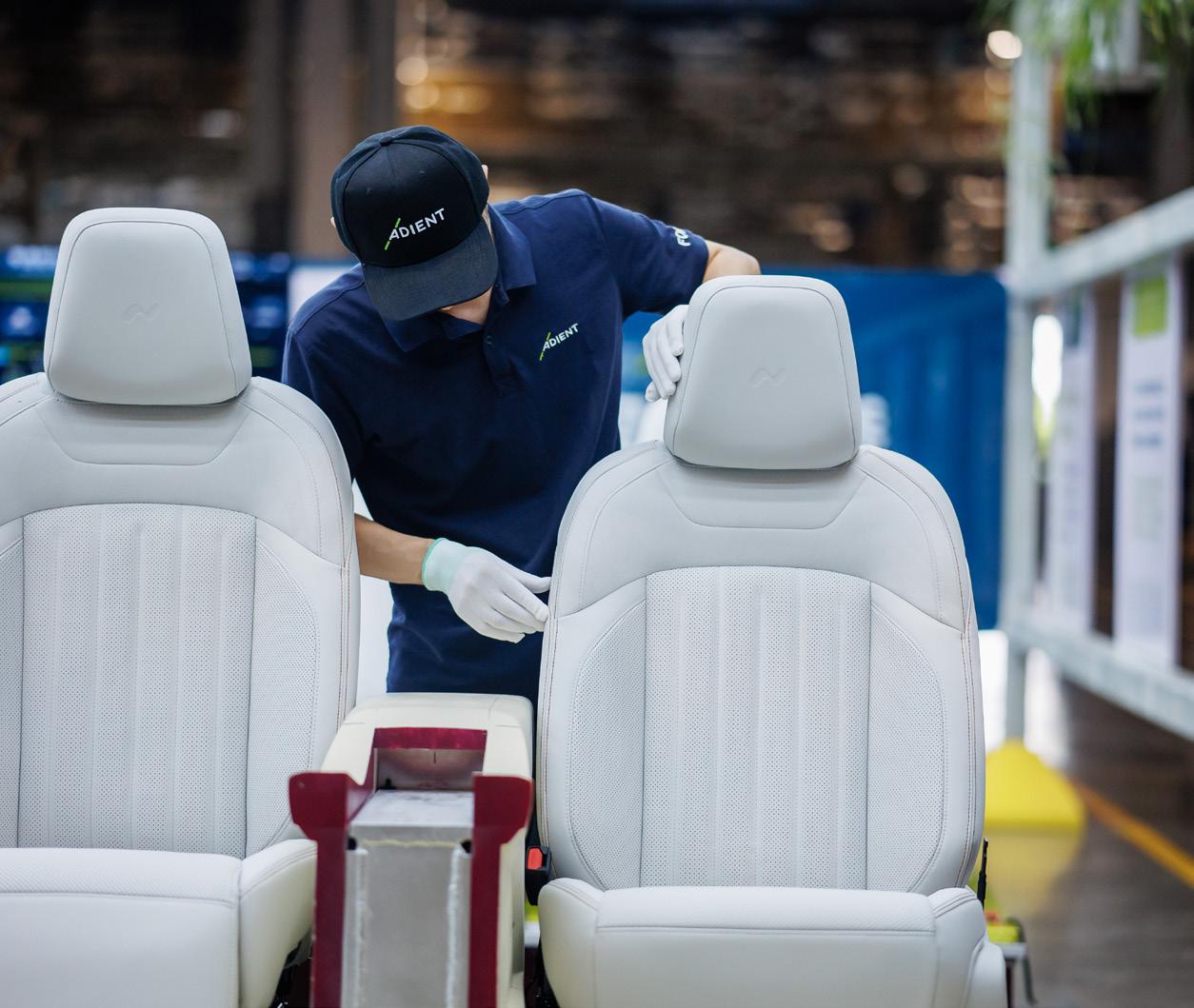
DRIVING APAC’S AUTOMOTIVE SEATING FORWARD
Adient expertly balances a sustainable manufacturing approach with innovations that meet the needs of its customers and the broader automotive seating industry. We sit down with Stewart Johnstone, Vice President Asia
Writer: Lucy Pilgrim
The automotive industry in the Asia Pacific (APAC) region has undergone a significant transformation in recent years, witnessing a convergence of the automotive, energy, and digital sectors, which is shaping the competitive landscape.
This has opened the door to a diverse range of industry players; new energy vehicle (NEV) makers have gained a meaningful market share, whilst more Asian original equipment manufacturers (OEMs) are expanding aggressively into new regions.
For Tier 1 suppliers, responding to
these shifts requires adaption on both the product and service front.
“From a product perspective, it’s essential to align with the electrification and smartification trends” opens Stewart Johnstone, Vice President Asia for Adient, a global leader in automotive seating.
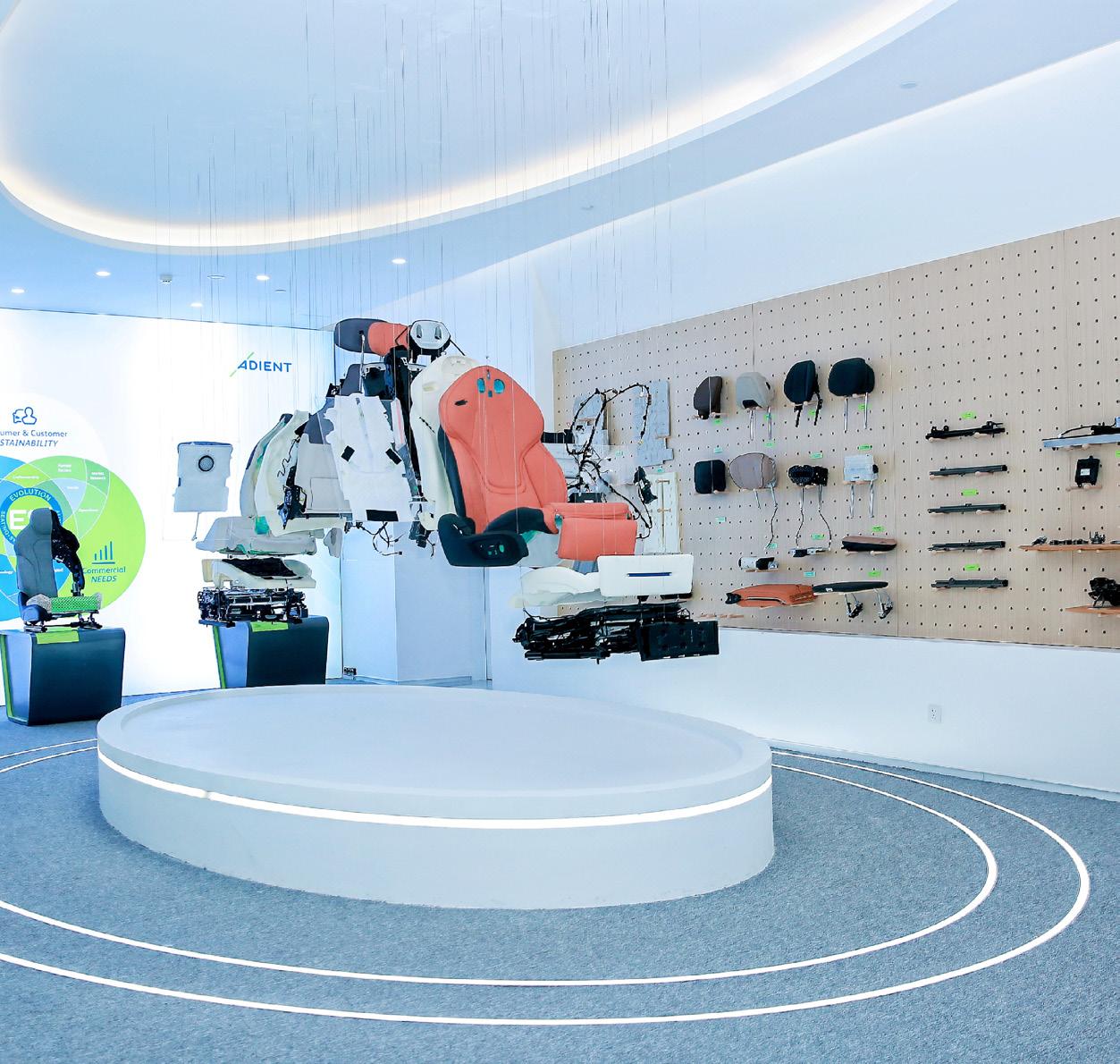
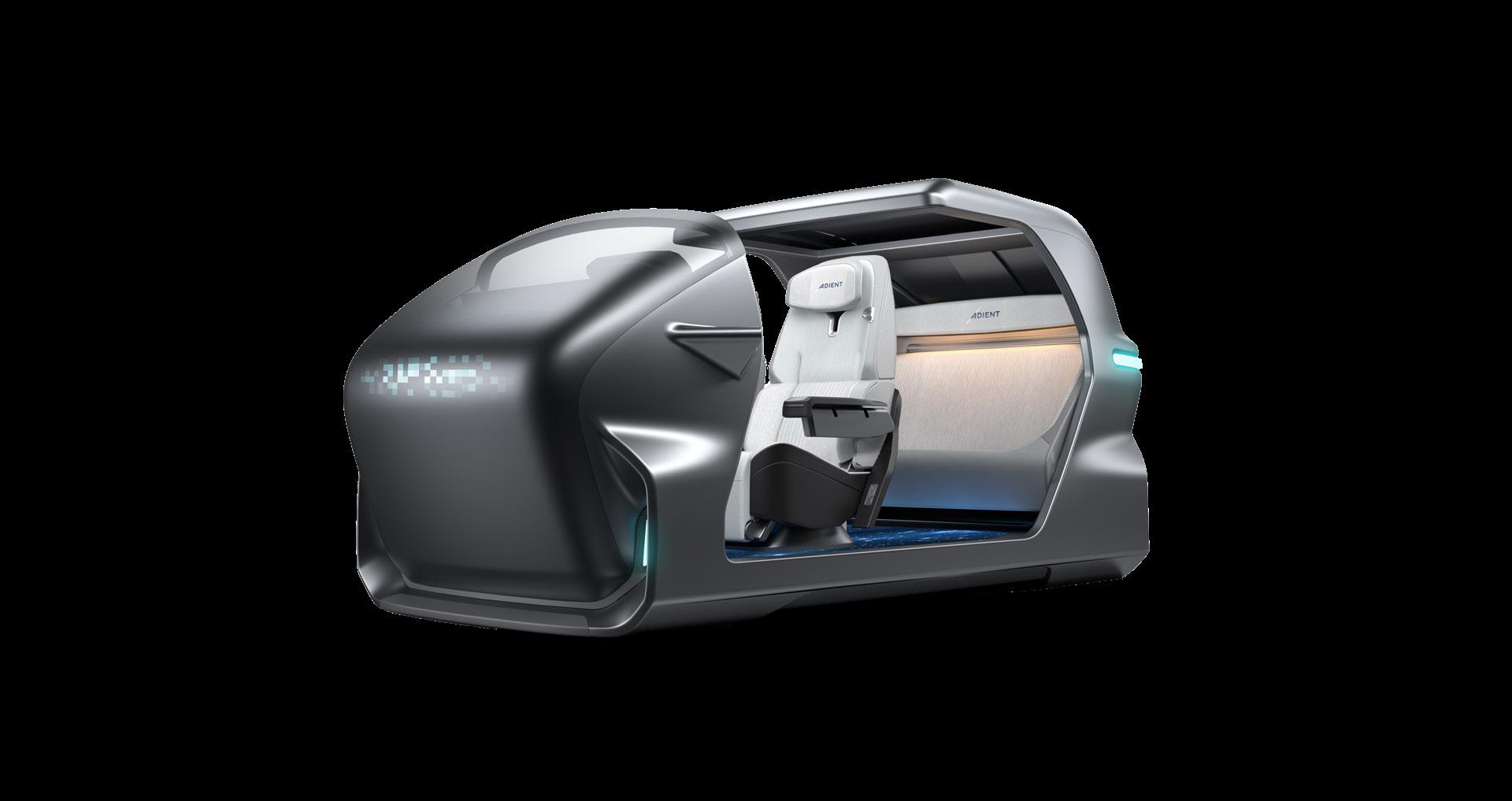
“We’re continually rethinking seat systems for electrified platforms, focusing on comfort, smart features, sustainability, and modularity to accommodate battery layouts and evolving cabin experiences.”
As a long-term, truly global player in the automotive seating sector,
A STRATEGIC COLLABORATOR
Adient is distinguished by its varied customer base across different OEM types and geographies. This diversity grants the company first-hand insights into industry trends.
“Adient acts as a trusted partner for customers in APAC and our knowledge source strengthens our relationships and positions us as more than just a supplier – we’re a strategic collaborator.”
The company further stands out thanks to its commitment to product innovation, which it has consistently delivered to meet evolving market needs.
Since FY24, Adient commercialised more than 20 innovative products in APAC, such as ProForce Massage, and foot massage functionality.
“These innovations are not developed in isolation; they’re co-created with electric vehicle (EV) makers in mind to address the diverse needs of end users,” he urges.
To sustain its leading position, Adient continues to invest heavily in its engineering capabilities. A recent example is the expansion of its China Technical Centre in Chongqing, completed in 2025.
The upgraded facility is now a bestin-class engineering centre with the latest generation of sled test lab and multi-axis simulation table (MAST) systems, significantly enhancing the company’s design, testing, validation, and product development expertise in China.
Furthermore, Adient’s broad operational footprint gives it a unique advantage, allowing the company to support customers wherever they are.
In fact, many of Adient’s plants are strategically located next to OEMs who operate on a just-in-time (JIT) delivery system. This ensures smooth delivery, reduced logistics costs, and better day-to-day communication.
“This presence isn’t just about geography; it’s about connectivity. We make communication seamless by transferring knowledge internally from one region to another, especially
for similar or shared vehicle platforms,” Johnstone tell us.
“Our ability to bridge markets and share expertise ensures consistency, speed, and confidence for our customers, no matter where they operate.”
INVESTING IN INNOVATION
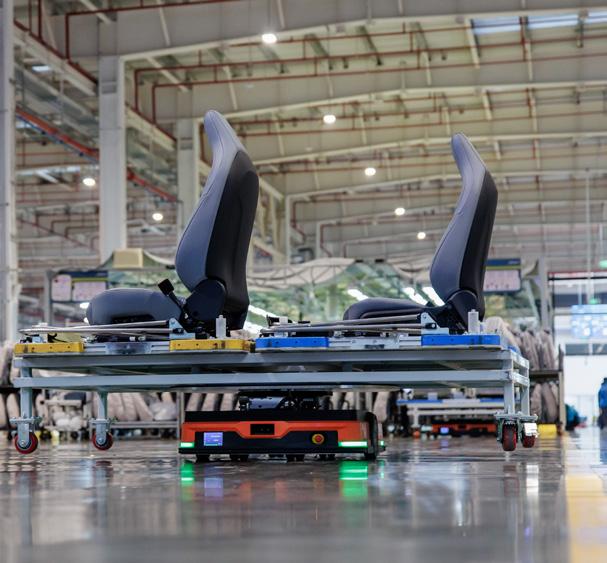
Growth in Asia is high on Adient’s list of priorities, whilst localisation has been one of the strategic levers of the company’s development over the last few years, having successfully established highly automated
CAN YOU TELL US MORE ABOUT ADIENT’S VERTICAL INTEGRATION AND HOW THIS HELPS DIFFERENTIATE THE COMPANY?
Stewart Johnstone, Vice President Asia: “Vertical integration at Adient goes far beyond simply having more products in-house – it’s about creating resilience for our customers by mitigating supply chain risks and managing uncertainties.
“With end-to-end control, from trim and foam to frames and complete seat systems, we can manage every detail of the process and ensure that each step meets our customers’ stringent requirements for quality and delivery.
“This deep integration also gives us a unique ability to influence and inspire our customers. For example, our seat frame platform strategy in China has helped some clients significantly reduce costs by increasing the use of standardised parts across multiple programmes.
“Building on this success, we are now expanding similar practices across Asia outside of China.”
assembly and stamping lines for this critical market.
The company has historically secured new programmes through innovations and continues to do so, having recently partnered with Autoliv to co-develop an advanced safety solution that significantly enhances occupant protection in deeply reclined ‘zero gravity’ seating positions – a feature increasingly popular in premium EVs.
Greater investment into artificial intelligence (AI) and automation is
“By scaling renewables and deepening partnerships, we advance APAC’s transition to a low-carbon future whilst contributing to global emissions reductions”
– STEWART JOHNSTONE, VICE PRESIDENT ASIA, ADIENT
equally core to the company’s growth strategy.
“This will help to drive operational excellence – improving quality, reducing costs, enhancing process transparency, and providing real-time data insights.”
As a JIT business, the company is also working on operational footprint optimisation, which is critical to supporting its OEM partnerships.
“This year, we are executing relocation in two high-growth markets, continuing our journey to optimise and deliver the best footprint solutions for customers.”
LOCALISED APPROACH, GLOBAL STANDARDS
With strong partnerships being central to the company, Adient’s supply chain operations across APAC are designed to deliver agility, resilience, and customer-centricity across a highly diverse and dynamic region.
operational excellence, overseeing production schedules and ensuring that customer commitments are met without compromise.
markets and share expertise ensures consistency, speed, and confidence for our customers, no matter where they operate”
– STEWART JOHNSTONE, VICE PRESIDENT ASIA, ADIENT
“Together, these roles form the backbone of our manufacturing ecosystem, enabling seamless integration from procurement to delivery.”
emphasises risk mitigation,
across APAC,” Johnstone assures.
“Additionally, we are investing in green logistics initiatives, such as optimising packaging and reducing emissions in transportation to align with OEM sustainability goals.”
ACCELERATING THE GREEN TRANSITION
Adient’s corporate social responsibility (CSR) practices centre around environmental stewardship and value-chain collaboration, supporting its global mission to mitigate climate impact.
A core priority is reducing greenhouse gas (GHG) emissions, which is tracked quarterly under the GHG Protocol guidelines.
The APAC region aligns with global sustainability goals: a 75 percent cut in Scope 1 and 2 emissions by 2030, 35 percent in Scope 3, and utilising 100 percent renewable electricity by 2035.
Progress is measured through a financial control framework across
all APAC sites, with third-party verification.
Four pillars drive sustainability across APAC: sustainable manufacturing, a sustainable supply chain, sustainable product design, and employee engagement.
In FY24, 22 percent of regional electricity came from renewables, supported by local partnerships and over 400 continuous improvement projects, delivering a seven percent
reduction in electricity-related emissions. Rooftop solar projects further enhance self-sufficiency.
In Scope 3, Adient continues to refine its calculation methodology to provide accurate and transparent data. The company is committed to providing its customers with lowcarbon product solutions to drive down the emissions of the entire value chain.
“Collaboration, local action, and accountability define our approach,” notes Johnstone.
“By scaling renewables and deepening partnerships, we advance APAC’s transition to a low-carbon future whilst contributing to global emissions reductions.”
Looking ahead, Adient’s priorities focus on four key areas – people, business sustainability, operational excellence, and customer loyalty.
“These priorities position us to navigate industry challenges whilst creating long-term value for our customers and stakeholders,” Johnstone concludes.
Tel: + 1 734 254 5000 www.adient.com
FORGED IN ROMA
Roma Wire and Steel is a leading independent supplier of a wide range of steel products to rural and regional Queensland. Owner, Natalie Dingle, highlights the family-owned company’s exemplary local knowledge and customer service
Writer: Jack Salter
Nestled in the heart of the Maranoa region of South West Queensland (QLD), Roma is where ‘Country meets the Outback’.
The thriving town, surrounded by sweeping plains and boundless skies, offers a taste of the Outback – along with the charm and character of country life.
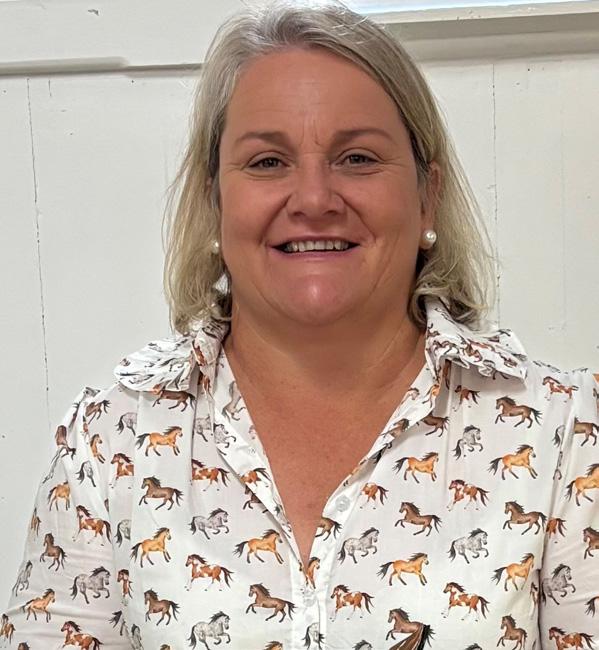
“We love Roma – the town has been very good to us,” highlights Natalie Dingle, Owner of Roma Wire and Steel (RWS).
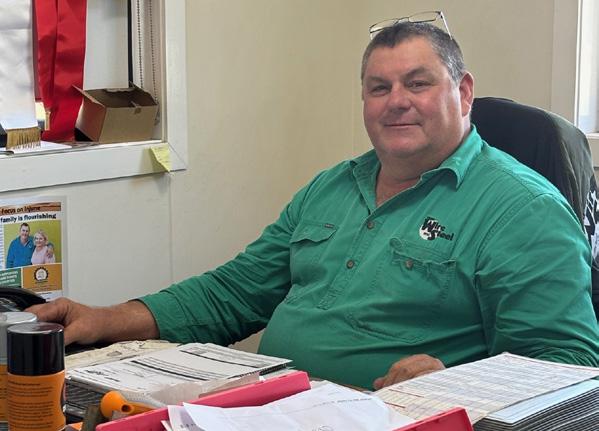
RWS is a proud local business, family-owned by Natalie, together with her husband, Jamie Dingle. The couple have lived in Roma for 34 years and Jamie has been in the steel game for more than three decades.
Jamie knows a lot of people in the region and further afield, and has vast knowledge of the steel industry and its products.
“We also own and operate a cattle business, so we know what rural people want – Jamie is happy to offer advice on shed building, cattle yards, and fencing,” Natalie tells us.
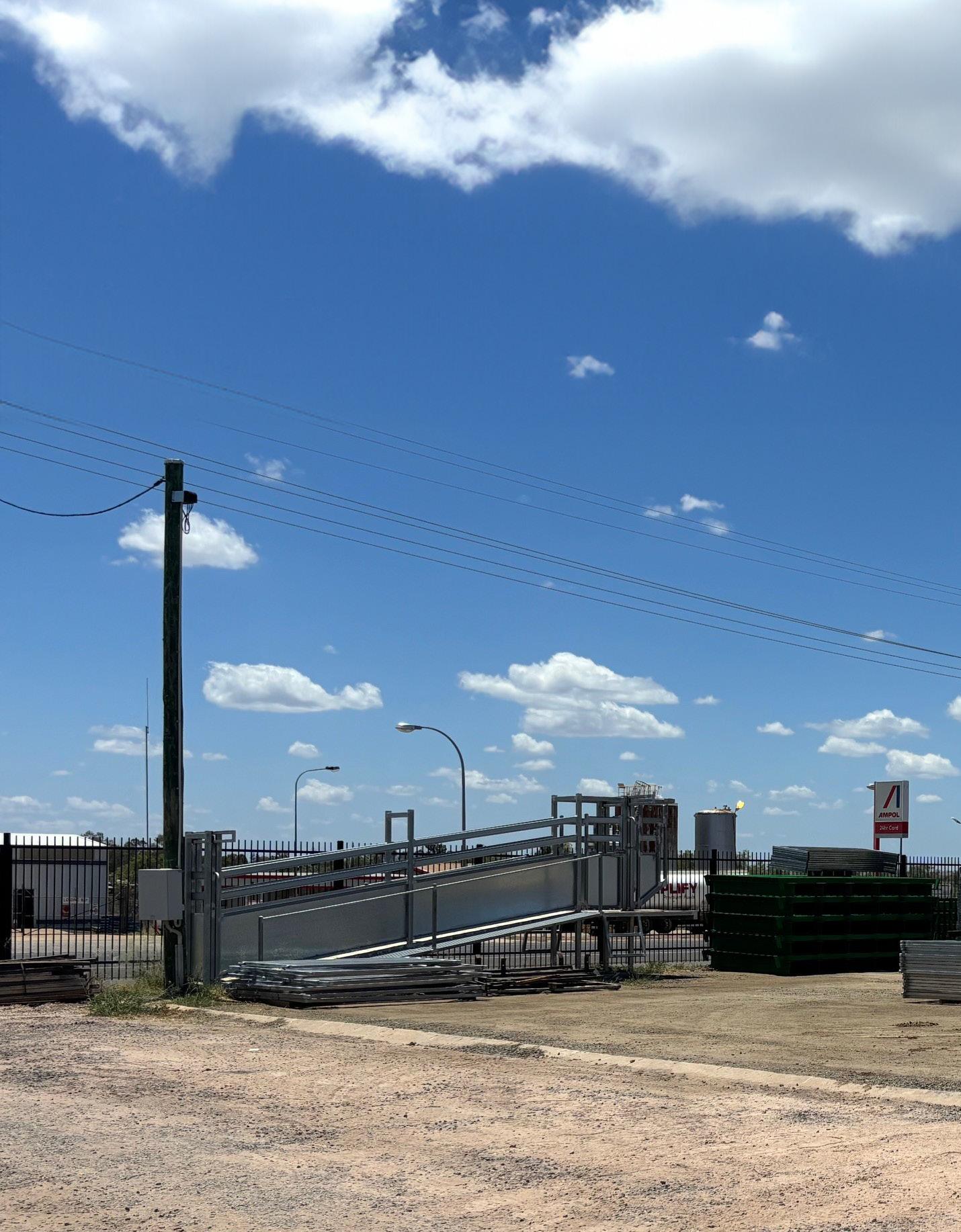
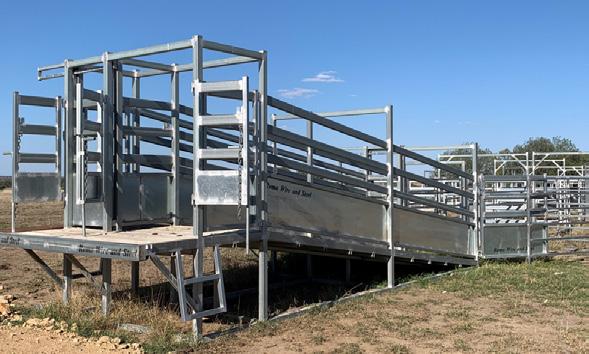
“A large percentage of our customers are rural – alongside selling steel, we manufacture cattle handling equipment such as cattle ramps, slide gates, and gates in frames, all built to suit customers’ requirements.”
The company’s main customer base is the Maranoa region, but also extends into Western and South West Queensland, New South Wales, and the Northern Territory.
RWS maintains satisfied customers in these areas by continually meeting their expectations of excellence in the supply of steel products, focusing on their needs, and aiming to please.
“We pride ourselves on our customer service – if we have to load trucks on weekends, early mornings, or at night, we do. We have even had to load on Boxing Day,” shares Natalie.
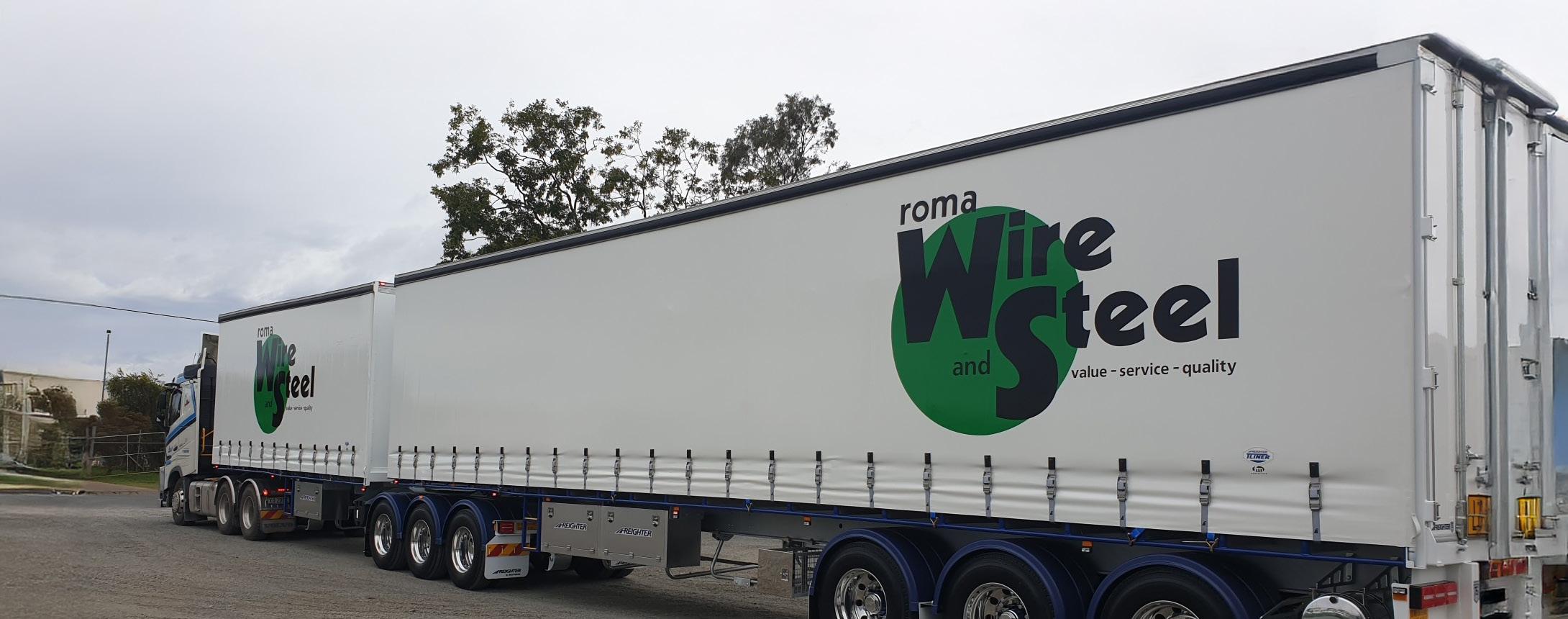
“We offer an all day and weekend delivery service across the area. If we are heading in your direction in our ute or truck, we will deliver steel
to you at any time – we go out of our way to make sure you receive our products.
“The people out here are more than just customers – many are our friends too,” she smiles.
STEEL FOR ALL
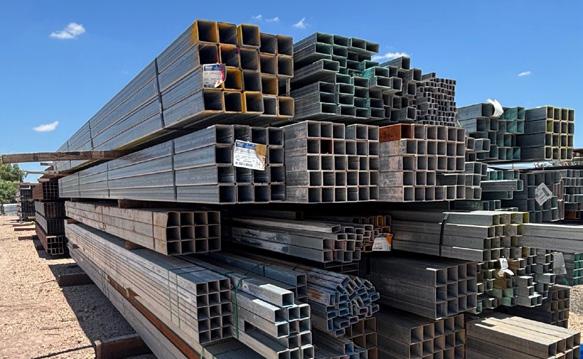
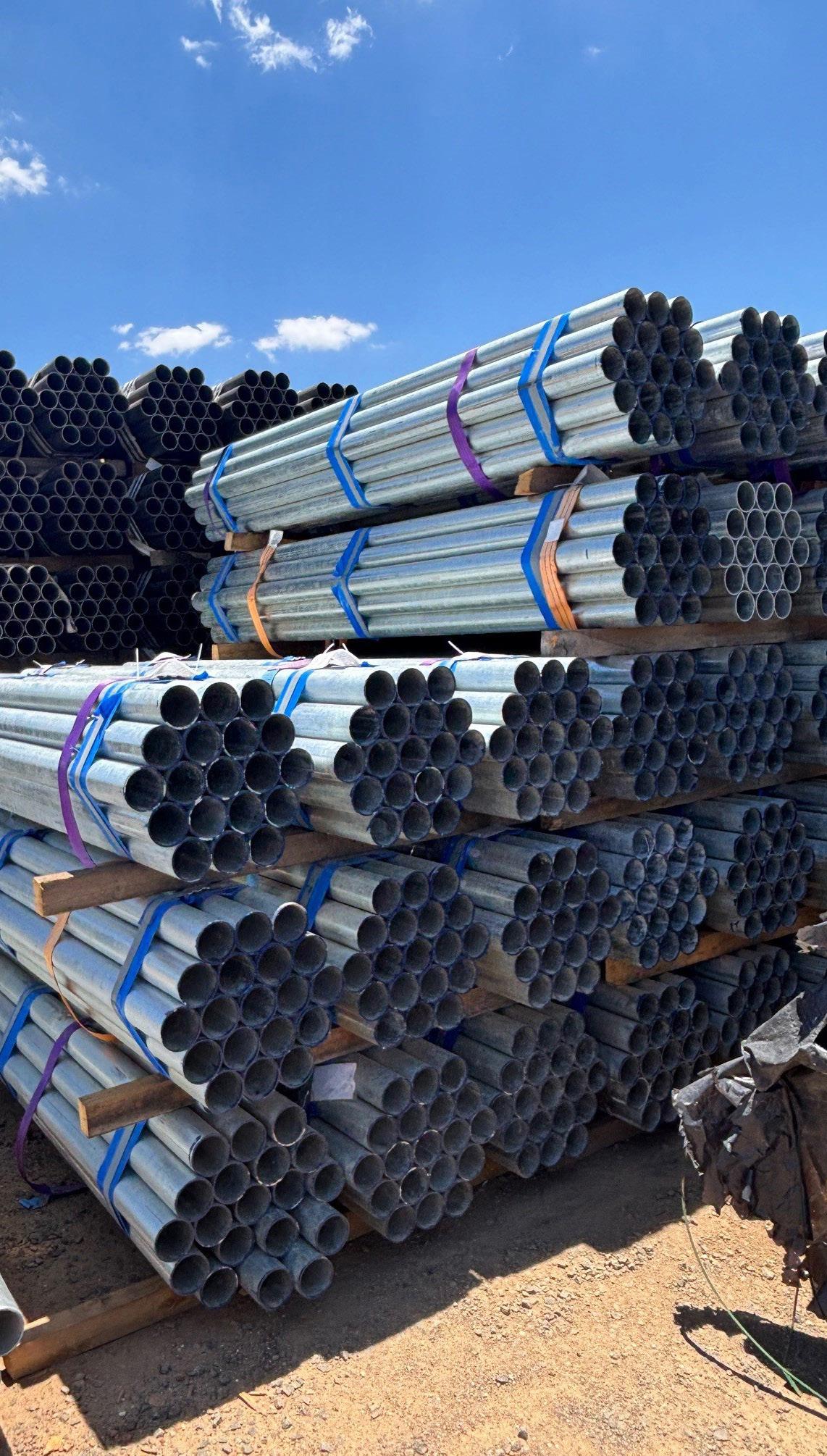
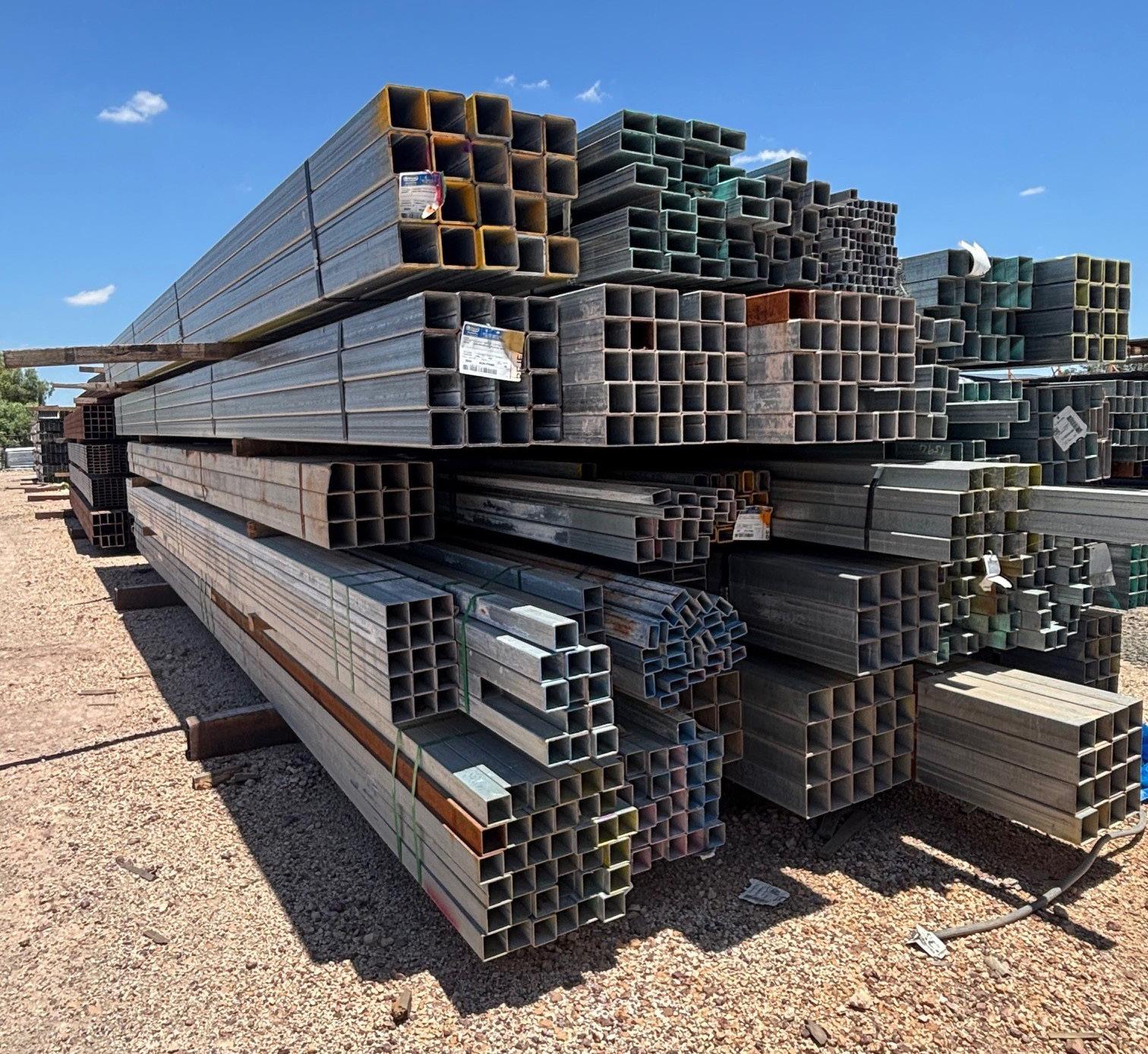
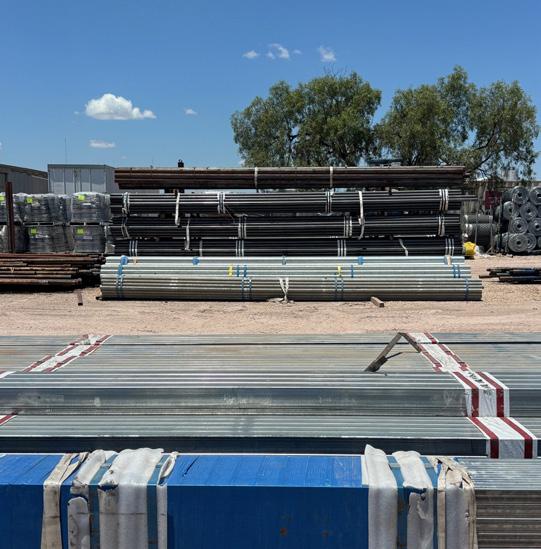
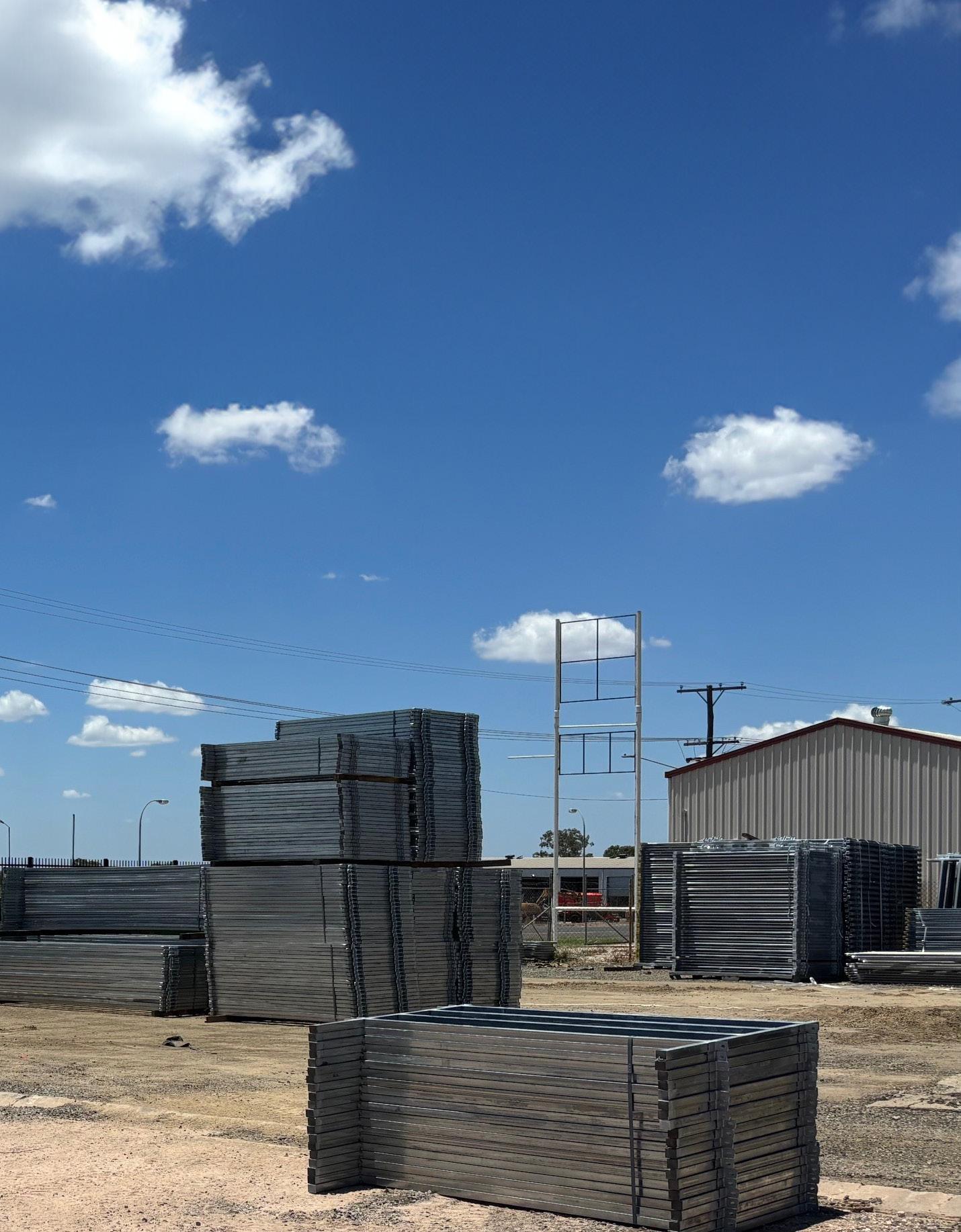
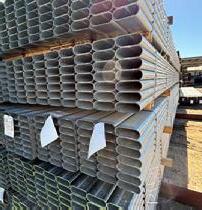
RWS’s main steel products are new and downgrade rectangular hollow sections, pipes, flats, fencing materials, reinforcing, structural and building materials, and roofing.
“From fencing and reinforcing mesh to beams and roofing, we offer an efficient and personalised service every time,” Natalie outlines.
“Our steel products satisfy all areas of industry, including gas, rural, building, manufacturing, and home handymen.
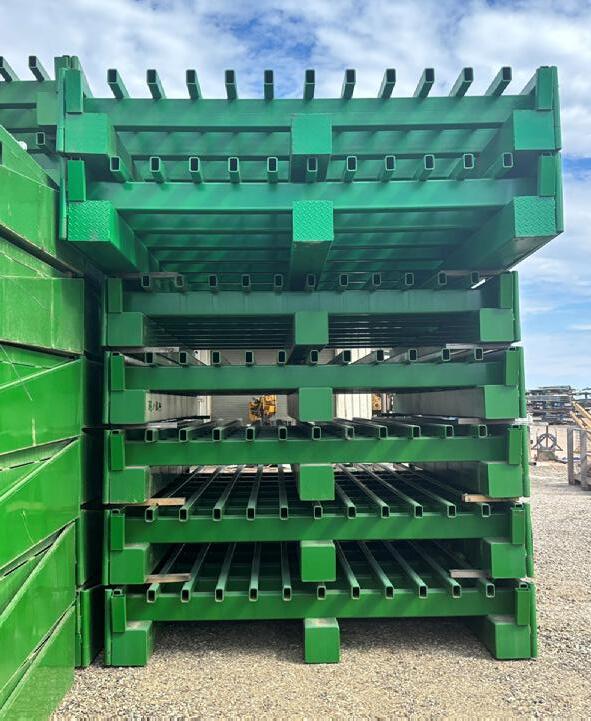
“We supply a lot of grids to all industries – both main roads and paddock grids. Our grids are certified and made with wider, thicker material,” she adds.
“We have our own cattle operation in the Injune/Bymount area, so we understand the importance of having good quality, strong, well-designed rural equipment that is safe and efficient for all our customers.”
The company has a major focus on the rural and gas industries, in particular; the former has been RWS’s longest supporter, whilst the latter has brought diversification to the business.
“The gas industry has helped make our business the success it is today. We have been here since the beginning of the coal seam gas industry in Roma and have continued to supply it,” Natalie acknowledges.
To service the gas industry, RWS has ramped up its stock, manufacturing, deliveries, and staff over the years.
“We go out of our way to provide the best service to the industry – as we do with all our customers,” she affirms.
“The gas industry has been both
supportive of, and beneficial to, our business. It has also been a huge positive for Roma and the surrounding towns. It has helped a lot of the smaller towns survive.”
One of RWS’s biggest customers is Wild Desert, one of Australia’s leading providers of well servicing rigs, transport operations, and mobile camps to the oil and gas industry. RWS strives to have a large range of steel products on hand – it also understands that time matters and can therefore quickly source whatever materials are required.
It is also not committed to one supplier, instead sourcing steel at the right price, thus allowing better prices for the end user.
“We offer both Australian-made and imported products and focus on always having stock available for people’s needs,” assures Natalie.
TWO DECADES OF RWS
RWS celebrates its milestone 20th anniversary on 7th April this year, having started from humble beginnings – a run-down and neglected yard, owned by a company in Brisbane, with very little steel. Slowly but surely, Natalie and Jamie
built up the business, which has since gone on to enjoy extensive growth.
“We gravelled the yard, made steel racks, purchased steel, began fabricating, and started a delivery service – we practically lived here day and night for the first five years,” Natalie reveals.
“We always jokingly say our three boys were raised kicking footballs over the steel racks!”
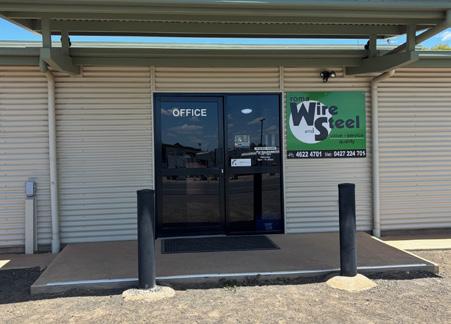
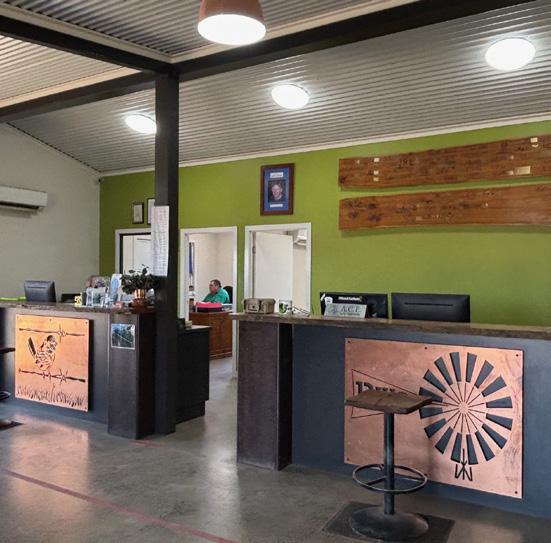
The company built a new office in 2017, purchased next door in 2024, and has extended the yards to bigger and better things.
It has been proudly involved in some substantial projects throughout the course of its 20-year history, including cattle yards, feedlots, sheds, large exclusion fencing projects and, more recently, new footpaths in Roma.
Additionally, RWS is heavily involved with the Department of Primary Industries’ wild dog barrier fence, which is about 2,500 kilometres long and protects 26.5 million hectares of sheep and cattle grazing country.
“We love Roma – the town has been very good to us”
– NATALIE DINGLE, OWNER, ROMA WIRE AND STEEL
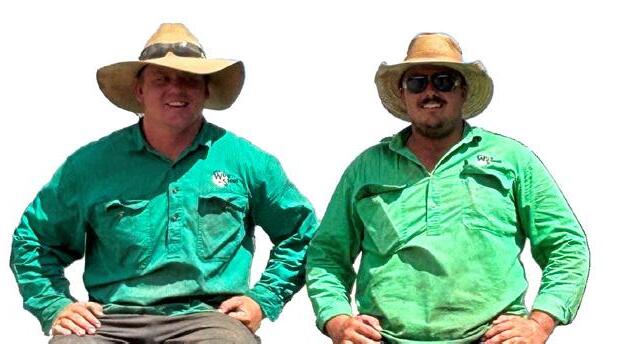
Jamie Dingle
Natalie Dingle, Owner
Greg Harris
“The gas industry has been both supportive of, and beneficial to, our business. It has also been a huge positive for Roma and the surrounding towns”
– NATALIE DINGLE, OWNER, ROMA WIRE AND STEEL
RWS has also been involved in steel supply for the upgrade of Roma Saleyards, the largest cattle-selling facility in Australia.
Alongside RWS, Natalie and Jamie also own a business in Emerald, QLD, called Emerald Steel, which has been established for 19 years.
LONG-TERM STAFF
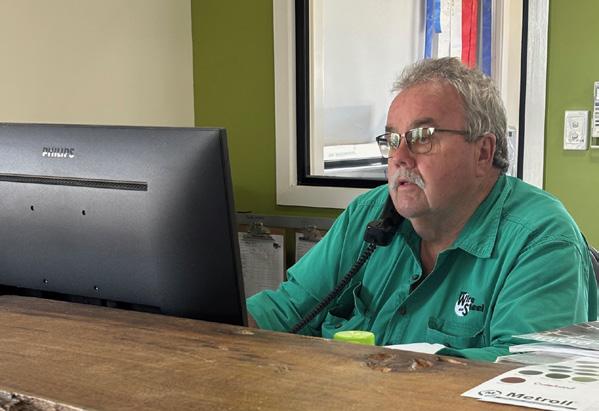
Many of RWS’s nine staff members have witnessed its growth journey, including Greg Harris, the main salesman, who has been with the company for 13 years.
Maryann Graham, who works in admin, has spent 15 years at RWS,
whilst two of Natalie and Jamie’s three sons have worked for them for the last three years.
“We have some very experienced long-term staff with strong local knowledge,” acclaims Natalie.
“RWS has gone ahead in leaps and bounds –we have knowledge of the industry and the region.”
One of the company’s main priorities is to look after its hardworking staff, along with continuing to provide top-class service to clients and maintaining its reputation across the region.
It is also committed to providing the right products to customers at the right price, continuing as an independent, family-owned company, and involving their three sons more in the business.
RWS will also continue to be major supporters and sponsors of local events and the communities that support it.
“I’m involved with several local committees, including Roma’s famous Sculptures Out Back,” Natalie closes.
DEFENDING AUSTRALIA AND ITS NATIONAL INTERESTS
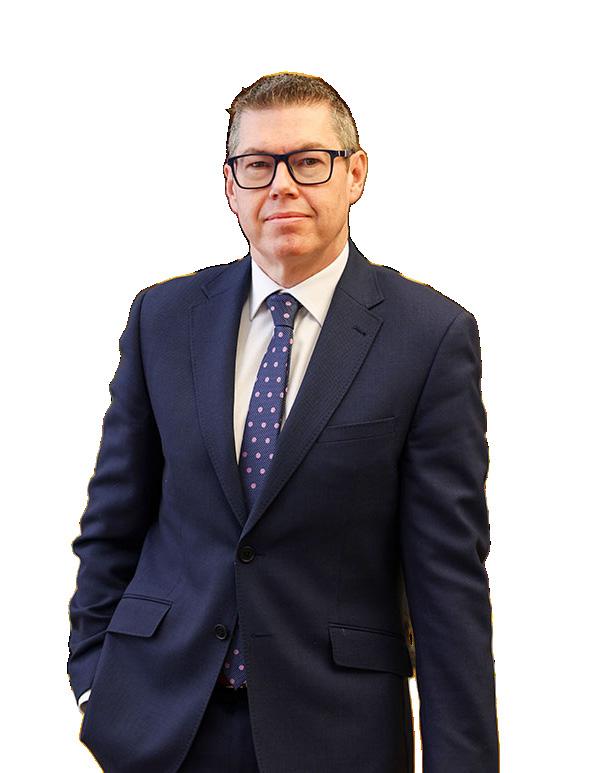
The Department of Defence is at the heart of Australia’s national security and prosperity. Having recently assumed office in May 2025, the Hon. Pat Conroy MP, Minister for Defence Industry and Minister for Pacific Island Affairs, outlines his roles and responsibilities, the Australian government’s investment to modernise the country’s defence capability, and the establishment of Project Land 156
Writer: Jack Salter
APAC Outlook (AO): Firstly, could you introduce us to the Department of Defence and its primary role?
The Hon. Pat Conroy MP, Minister for Defence Industry and Minister for Pacific Island Affairs (PC): The Department of Defence (Defence) is at the heart of Australia’s national security and prosperity.
Every day our public servants, sailors, soldiers, and aviators help shape Australia’s strategic environment in our national interest. Their work and service strengthen our national posture, increase our selfreliance, and enhance the lethality and readiness of our defence capabilities. Defence ensures Australia is ready and equipped to respond as we face the most challenging strategic outlook since World War II.
Late last year, along with Deputy Prime Minister, Richard Marles, I announced a significant step towards ensuring Defence delivers the capabilities, skills, and workforce it needs to meet Australia’s strategic circumstances, with reforms that include the establishment of a dedicated agency designed to strengthen and streamline acquisition and sustainment activities.
Since May 2022, the government has provided the biggest increase in defence spending in Australia’s peacetime history, with what is now an additional AUD$70 billion over the next decade. This includes
record spending on acquisition and sustainment.
With this record funding comes the need to ensure that Defence continues to demonstrate value for money. Once fully established, the new Defence Delivery Agency (DDA) will integrate three existing Defence capability delivery groups – Capability Acquisition and Sustainment Group; Guided Weapons and Explosive Ordnance Group; and Naval Shipbuilding and Sustainment Group.
DDA will report directly to ministers and have control over its budget, enabling coordinated and holistic delivery of defence capability and growing our sovereign defence industrial base.
The government will appoint a National Armaments Director to lead the new agency, who will be responsible for providing advice to the government on acquisition strategies and the delivery of acquisition and sustainment projects following government approval.
The increasing complexity of Defence capabilities, systems, and platforms requires a systematic rethink of the capability development and delivery system.
This is about setting Defence up for success so we can modernise the Australian Defence Force (ADF) in line with the National Defence Strategy whilst ensuring we spend taxpayers’ money wisely.
“Defence ensures Australia is ready and equipped to respond as we face the most challenging strategic outlook since World War II”
– THE HON. PAT CONROY MP, MINISTER FOR DEFENCE INDUSTRY AND MINISTER FOR PACIFIC ISLAND AFFAIRS, DEPARTMENT OF DEFENCE
AO: What are your responsibilities as Minister for Defence Industry and Minister for Pacific Island Affairs?
PC: As the longest-serving Minister for Defence Industry since the 1970s, I am responsible for delivering the capabilities our ADF needs to keep Australians safe.
From an historic increase in Australia’s missile manufacturing capabilities to more than doubling the Royal Australian Navy’s (RAN) major warship fleet, every day I work to accelerate capability delivery to meet Australia’s strategic challenges.
A key part of my work includes a shared responsibility for the Defence
budget, which we update biannually through the Integrated Investment Program.
Further, central to my mission is uplifting Australia’s sovereign industrial base, driving innovation, and creating highly skilled, well-paid manufacturing jobs for Australian workers that aren’t just for the next few years, but the next generation.
As Australia’s longest serving Minister for Pacific Island Affairs, and the only to serve in Cabinet, my focus is on listening to the priorities of the Pacific family – and delivering on them.
That has been my mission across over 30 visits to 12 Pacific countries
– because here in Australia, our future is tied to that of the Pacific family. A more stable, secure and prosperous Pacific is central to Australia’s national interest.
Listening and acting on Pacific priorities means acting on climate change through initiatives like the Pacific Resilience Facility and Pacific Climate Infrastructure Financing Partnership and refocussing Australia’s international development programme on our region.
It also means delivering groundbreaking new agreements that uniquely respond to the priorities of our neighbours – from
the National Rugby League (NRL) deal with Papua New Guinea (PNG) to the Falepili Union with Tuvalu and our treaty with Nauru.
AO: You recently assumed office in May 2025. How have you found your new roles so far and what have been the most exciting and challenging aspects?
PC: The most exciting opportunity that lies at the heart of both portfolios is the opportunity of continuity.
I have the chance to drive delivery and lock in reforms that advance Australia’s national security and prosperity.
From our recently announced defence reforms that establish a dedicated agency to strengthen and streamline acquisition and sustainment, to driving the implementation of the PNG NRL deal – the opportunity to drive change from inception to implementation is rare in politics. I have the chance across both portfolios to make it happen.
You will hear me say this a lot, but here in Australia we face the most challenging strategic outlook since World War II.
To meet that challenge, the capability decisions we make and relationships we build are critical. In the defence industry, the projects we oversee are the most complex of any department – and their delivery is often measured in decades, not months.
Making the right capability decisions today that will meet the threats of tomorrow is critical – and a central challenge to the work we do.
AO: What is your take on the defence industry in Australia at the moment?
PC: Australia’s defence industry continues to grow year-on-year in line with the Albanese government’s record increase in defence funding.
Direct employment in the industry grew by 14.5 percent over our first term in office when compared to the final year of the former government.
In 2021-22, the value of defence contracts to Australian industry was AUD$24.9 billion, and in 2023-24 it was up over AUD$32 billion. This data tells part of the story, but the growing international interest in Australian defence science and innovation tells more of it.
We know countries around the world are looking more and more at the cutting-edge capabilities being built here at home. That is why we have established the Australian Defence Strategic Sales Office to boost our exports of defence equipment.
This is a joint endeavour between Defence, industry, and other government agencies, and it’s all about maximising our competitive advantage with a focus on five sovereign capability and production lines.
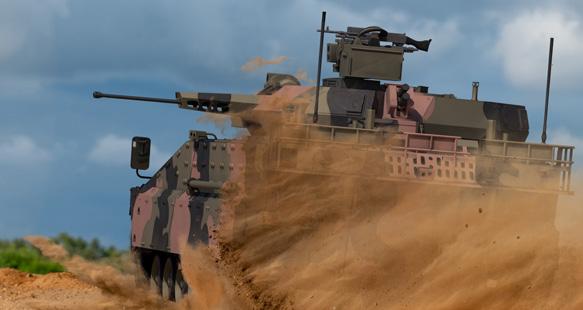
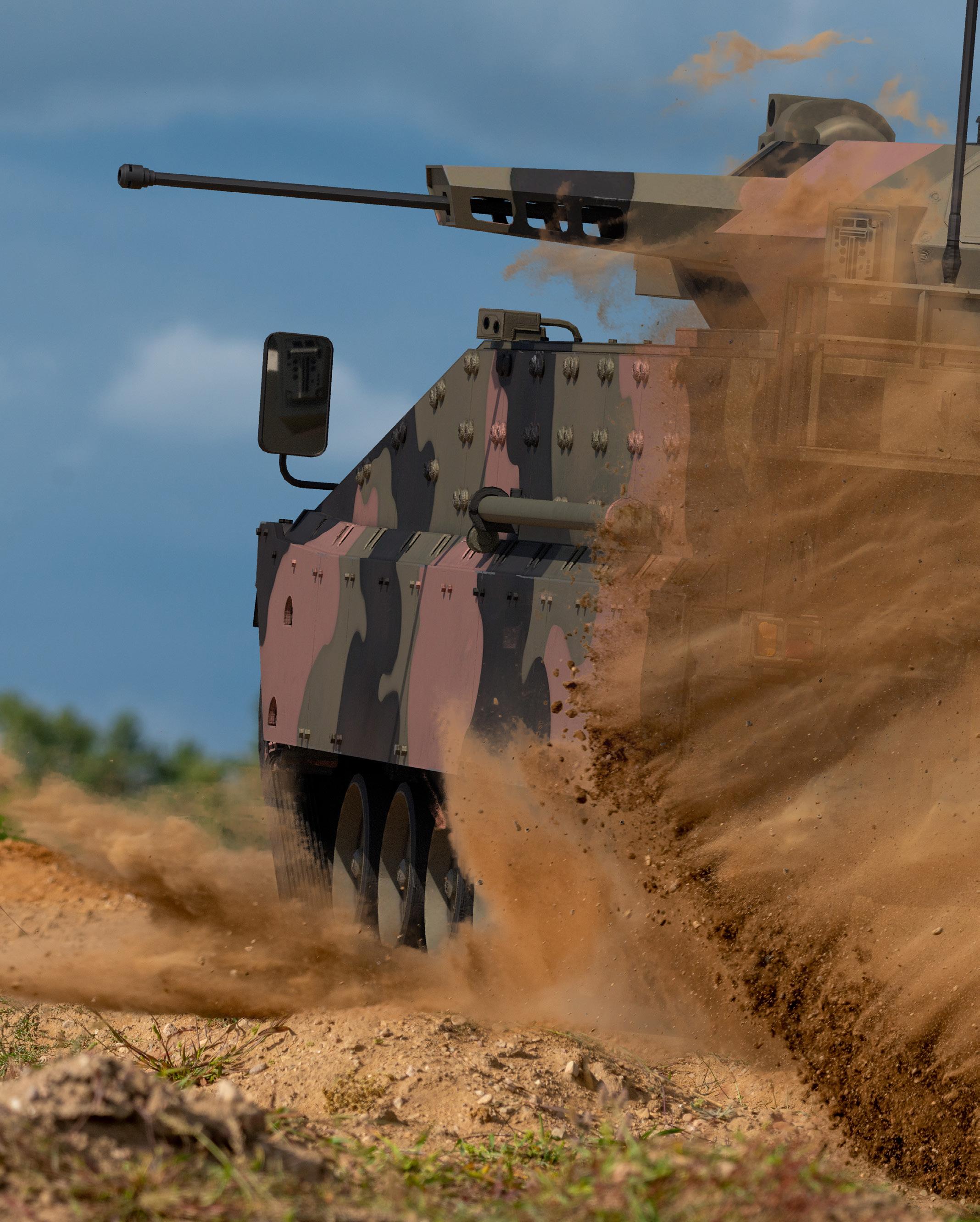
These are the Bushmaster Protected Mobility Vehicle (PMV), Hawkei PMV, Boxer Heavy Weapons Carrier, AS9 Huntsman, Redback Infantry Fighting Vehicle, MQ-28 Ghost Bat, and Jindalee Operational Radar Network.
With more Australians working in our defence industry, more contracts going to Australian industry, and more international interest in Australian capabilities, our defence industry is going from strength to strength.
AO: Can you tell us more about the Australian government’s significant investment to modernise the country’s defence capability?
PC: We are delivering the largest peacetime increase to our defence budget in Australian history, with an extra AUD$70 billion over the decade compared with what we inherited when we came to government.
This record investment is driving modernisation right across the ADF to make sure we have the capabilities needed to keep Australians safe.
This means investing in our new General Purpose Frigate fleet and the Australian-made Ghost Sharks and MQ-28 Ghost Bats – the best of their kind in the world.
It also means investing in AUKUS – a trilateral security partnership between Australia, the UK, and the US – and continual naval shipbuilding with the redevelopment of the Henderson Shipyard in Western Australia and establishing a sovereign missile manufacturing capability under the Guided Weapons and Explosive Ordnance Enterprise.
These investments, and so many others like them, will mean our navy, army, and air force have the capabilities they need – now and into the future.
AO: What about the establishment of Project Land 156? How will this continuously deliver counter-drone capability for the ADF and ensure Australia stays ahead of the evolution cycle in relation to counter-drone technology, giving the ADF the capabilities it needs?
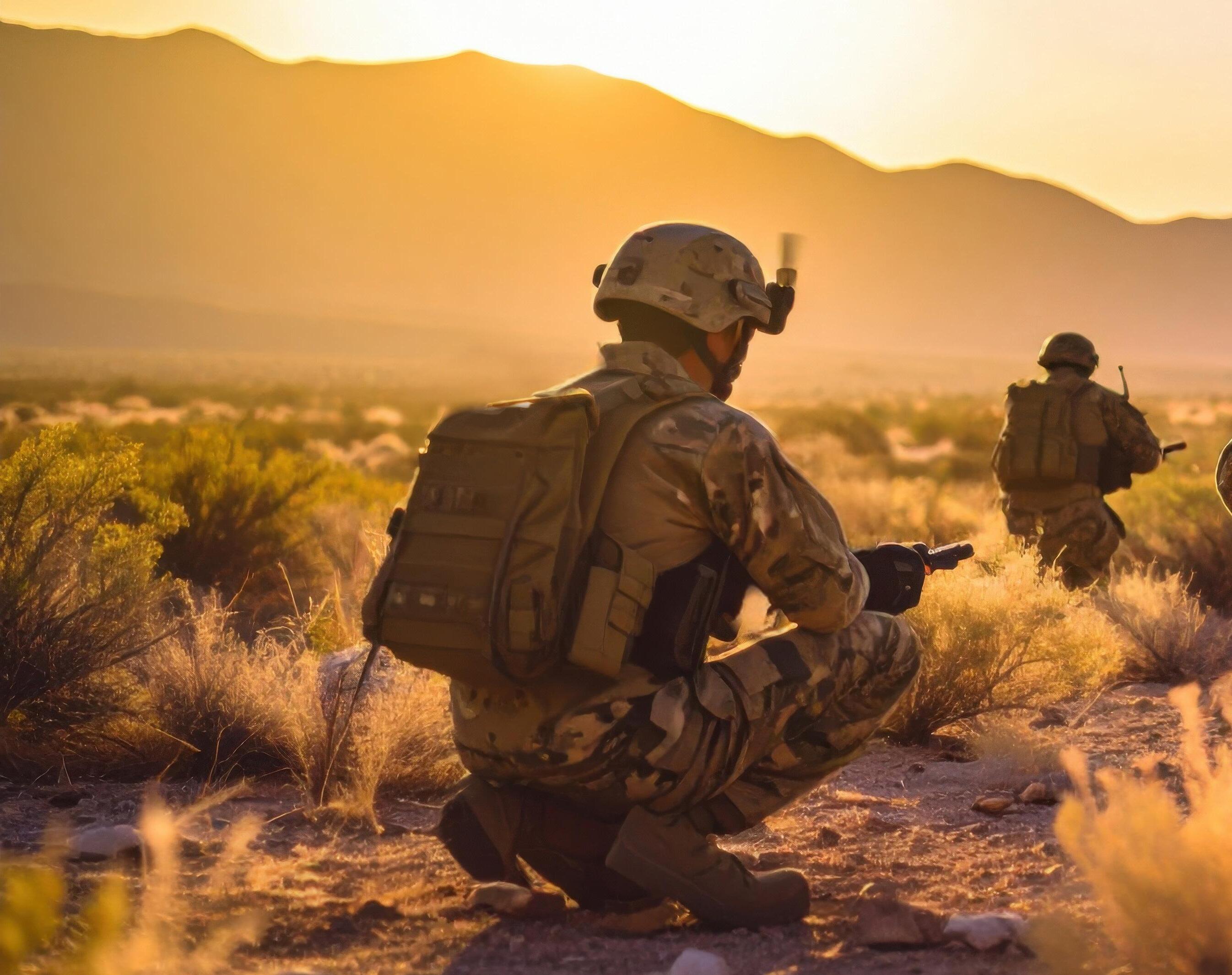
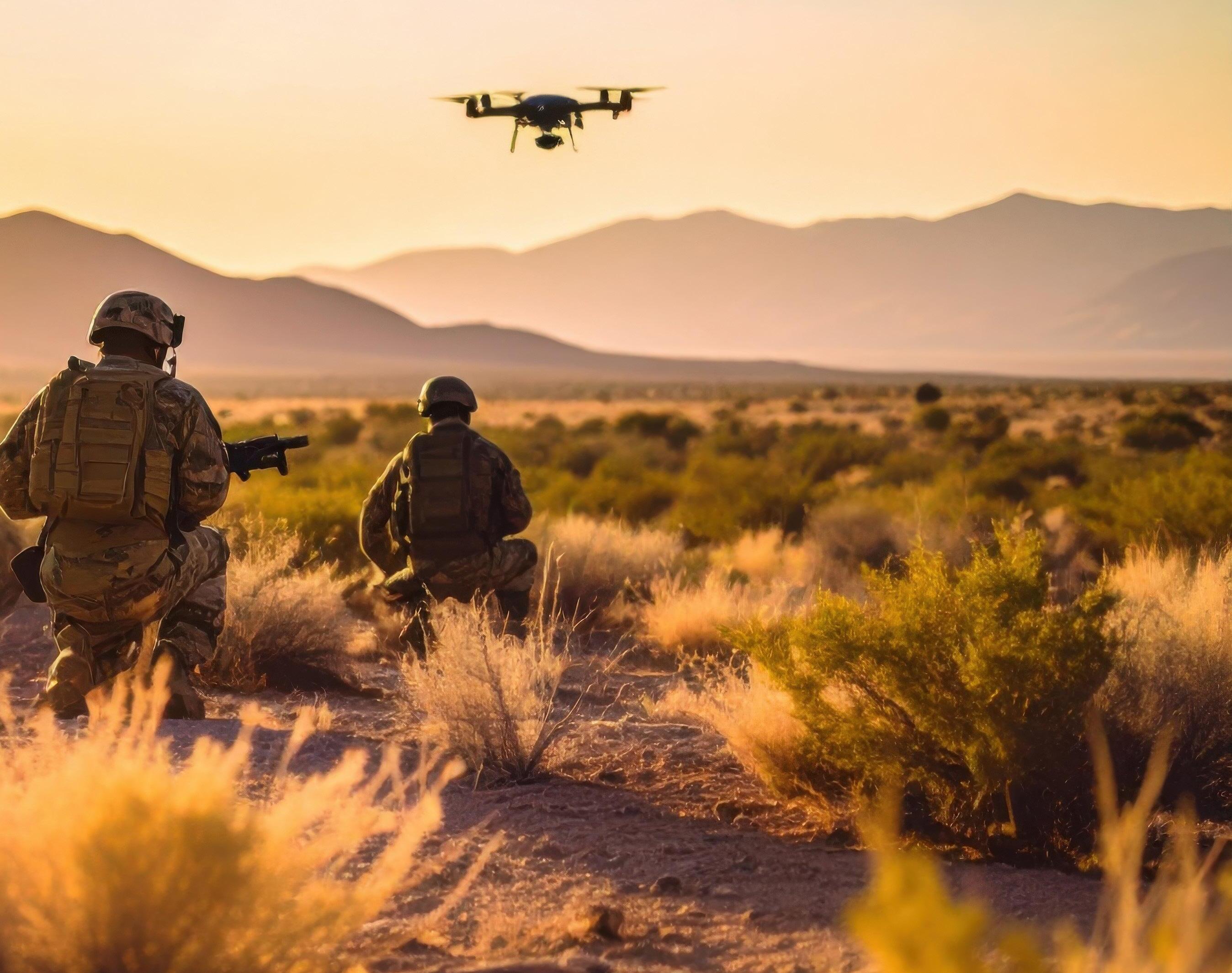
PC: Project Land 156 is all about delivering the counter-drone capability our ADF needs to protect our sailors, soldiers and aviators – as well as the assets they use and the bases they live on.
To make it happen, the Albanese government is investing AUD$1.3 billion over the next 10 years to continually acquire the cutting-edge technology we need – with this project acting as both a benchmark and blueprint for how we will deliver speed to capability.
At the heart of Project Land 156 is a continuous modernisation model with rolling investments that will make sure Australia stays ahead of the technology development cycle.
The technology development cycle for drones is not measured in years, but months, and using a traditional procurement model would
“I have the chance to drive delivery and lock in reforms that advance Australia’s national security and prosperity”
–
THE HON. PAT CONROY MP, MINISTER FOR DEFENCE INDUSTRY AND MINISTER FOR PACIFIC ISLAND AFFAIRS, DEPARTMENT OF DEFENCE
have risked these counter-drone technologies being obsolete before they entered service.
That is why Defence adopted an innovative new contracting model for this project, one that will allow us to be agile and move at the speed of the threat to rapidly acquire and integrate the latest sensors and effectors as new threats emerge.
Industry has been asking for this kind of approach, and Defence has listened. This model of delivery has meant after we established Project
Land 156 in February 2025, we issued first contracts in July 2025, announced the project’s Systems Integration Partner in August 2025, and conducted a successful live fire demonstration of counter-drone systems in December 2025.
This highlights the rapid pace we are moving at, and with the continual release of funding, we will see small to medium-sized enterprises (SMEs) continue to deliver the cutting-edge technology our ADF needs – now and into the future.
AO: Why is counter-drone technology so critical to keeping ADF members safe?
PC: Whether it’s soldiers on base or sailors at sea, equipping the ADF with cutting-edge counter-drone technology means protecting military personnel, assets, and infrastructure. By continually investing in this technology, we’re equipping the navy, army, and air force with the tools they need to sense, disrupt, and destroy drones.
Project Land 156 demonstrates the pace we are moving at in acquiring the counter-drone technology we need, building on current ADF capability and setting it up for the future.
AO: Procurement is also a core defence function. What vital contribution does it make to departmental and ADF capability?
PC: The challenges we face in defence procurement are not unique to Australia.
Defence projects are some of the most complex undertakings by governments around the world, and given the amount of money involved, and the strategic circumstances we face, Australians must have confidence that every dollar goes towards improving defence capabilities.
The Defence Strategic Review found that Defence’s capability acquisition system was not fit for purpose. Thus, in our first term, we implemented a series of reforms to procurement and project oversight within Defence – but more needed to be done.
That is why we are implementing further urgent, critical, and foundational reforms to Defence that will strengthen acquisition
and sustainment and deliver the integrated, focussed forced outlined in the National Defence Strategy.
With a new DDA to be led by a National Armaments Director, we will see a more coordinated and holistic delivery of defence capabilities and continued growth in our sovereign defence industrial base.
In parallel, Defence will also centralise capability development functions to support clearer prioritisation, streamlined decisionmaking, and accountability for new capability proposals.
Collectively, these reforms will set Defence up for success as we modernise our navy, army, and air force, and get it done with the confidence of taxpayers.
AO: How are initiatives such as Project Land 156 and wider procurement reforms shaping the next phase of Australian defence manufacturing?
PC: From the continuous modernisation blueprint of Project Land 156 to our capability development and delivery reforms across Defence, we are building a more resilient and innovative industrial base that aligns with our strategic priorities and creates more opportunities for Australian businesses and workers to contribute to national security.
This is at the heart of what a defence future made in Australia is all about – and we will continue to listen and work with our industry partners to
deliver the cutting-edge capabilities we need to keep Australians safe.
AO: Finally, are you optimistic about the future of the defence industry in Australia?
PC: The short answer is yes; the long answer I can give you by looking at two particular projects.
On a smaller scale, we have the MQ-28 Ghost Bat, an Australian design that is being engineered and manufactured right here at home and represents the most advanced, cutting-edge collaborative combat aircraft in the world.
It transforms a single fighter jet into a formidable team – capable of not only surveillance but also engaging adversaries. It is the future
of air combat, and the Albanese government is investing AUD$1.4 billion to deliver it.
The MQ-28 Ghost Bat programme showcases the best of Australian ingenuity and proves our defence industry can lead the world.
On a larger scale, through AUKUS, we are rebuilding Australia’s naval shipbuilding capabilities. This represents a generational uplift of our industrial base, with over 10,000 direct jobs supported over the next two decades and continuous opportunities for SMEs across the country.
With these businesses not only contributing to AUKUS here in Australia but providing parts to US and UK submarines through pathways we have created like the Defence Industry Vendor Qualification
Program, these are opportunities and jobs not just for the next few years –but for generations to come.
Through AUKUS, we will continue to see defence industries across Australia, the UK, and the US work, learn, and innovate together – making us stronger than the sum of our parts.
With over 100,000 Australians working in the defence industry today, and tens of thousands more to come, from the MQ-28 Ghost Bat to AUKUS, we are building a defence future made in Australia.
AN OASIS OF EXCELLENCE
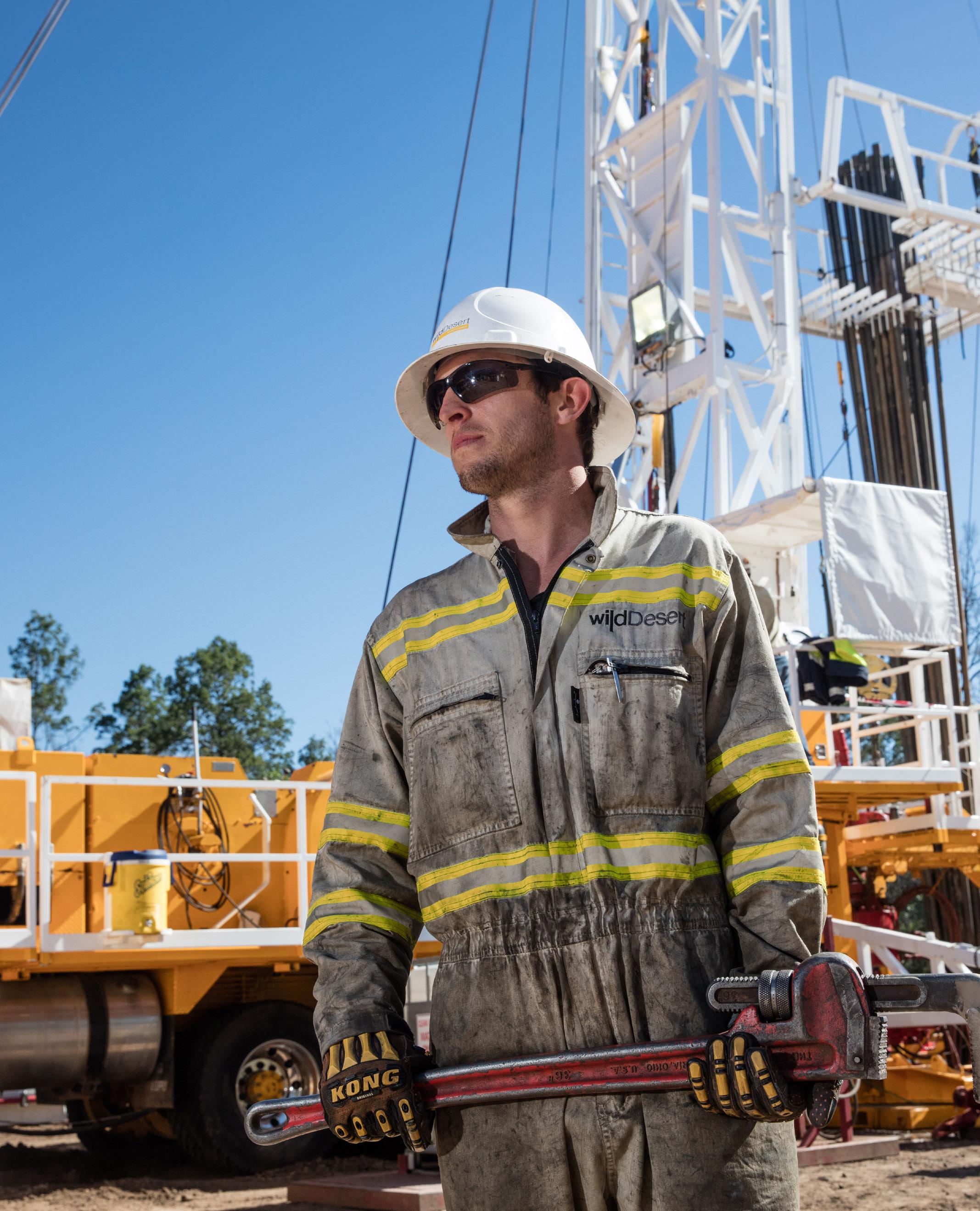
As a community-centric company, Wild Desert’s values are deeply embedded in its locally focused approach. COO, Mark Tonin, discusses how commitment to safety and innovative solutions has positioned it as a leader in the oil and gas industry
Writer: Rachel Carr | Project Manager: Eddie Clinton
“AS WE CONTINUE TO GROW, OUR FOUNDING PRINCIPLES – FAMILY VALUES, COMMUNITY SUPPORT, AND A RELENTLESS FOCUS ON SAFETY – GUIDE OUR OPERATIONS AND LONG-TERM PARTNERSHIPS”
– MARK TONIN, COO, WILD DESERT
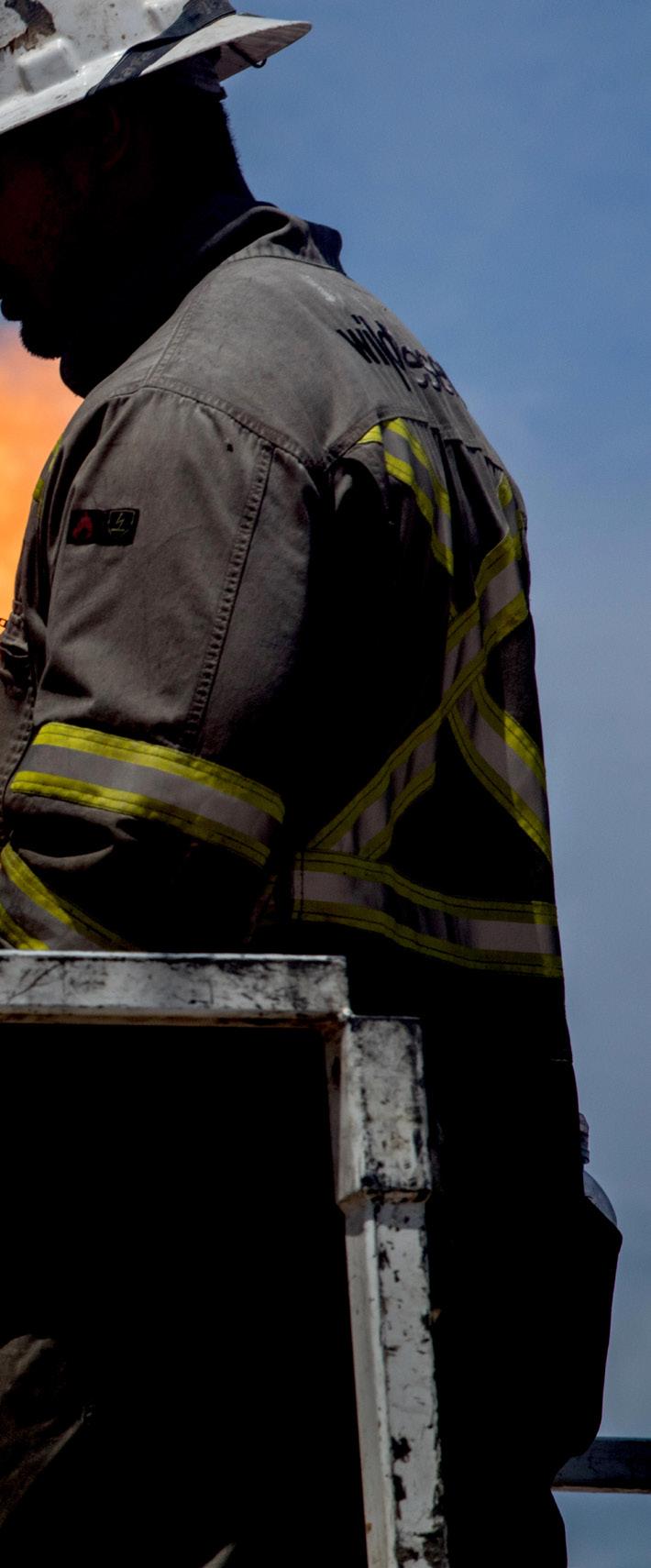
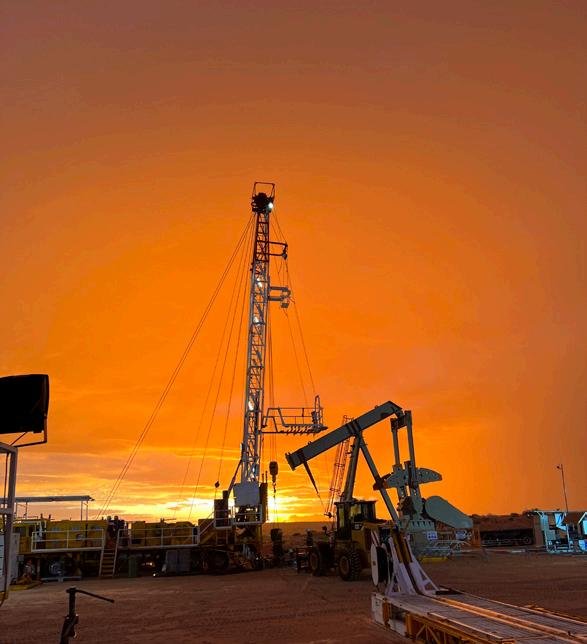
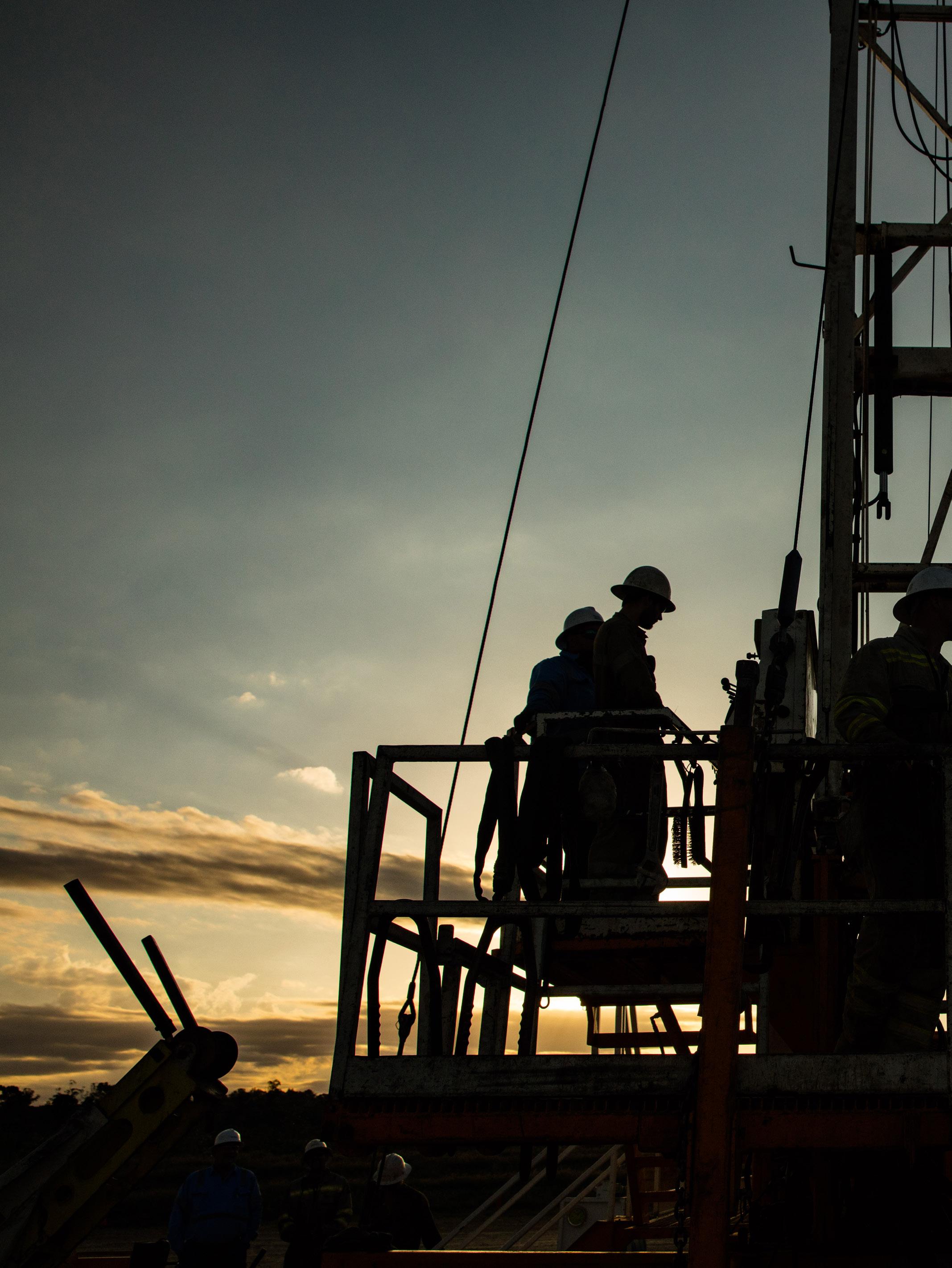
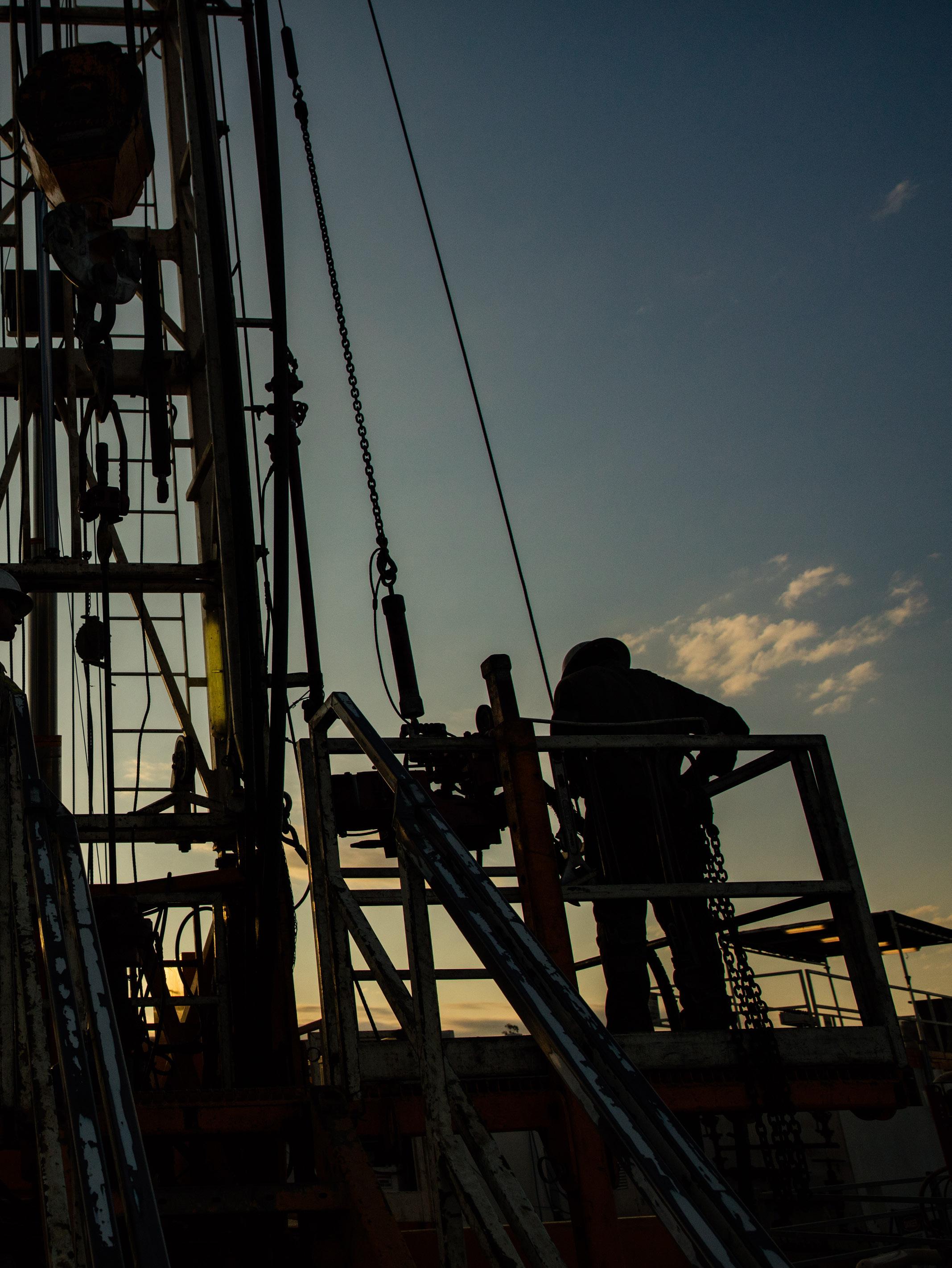
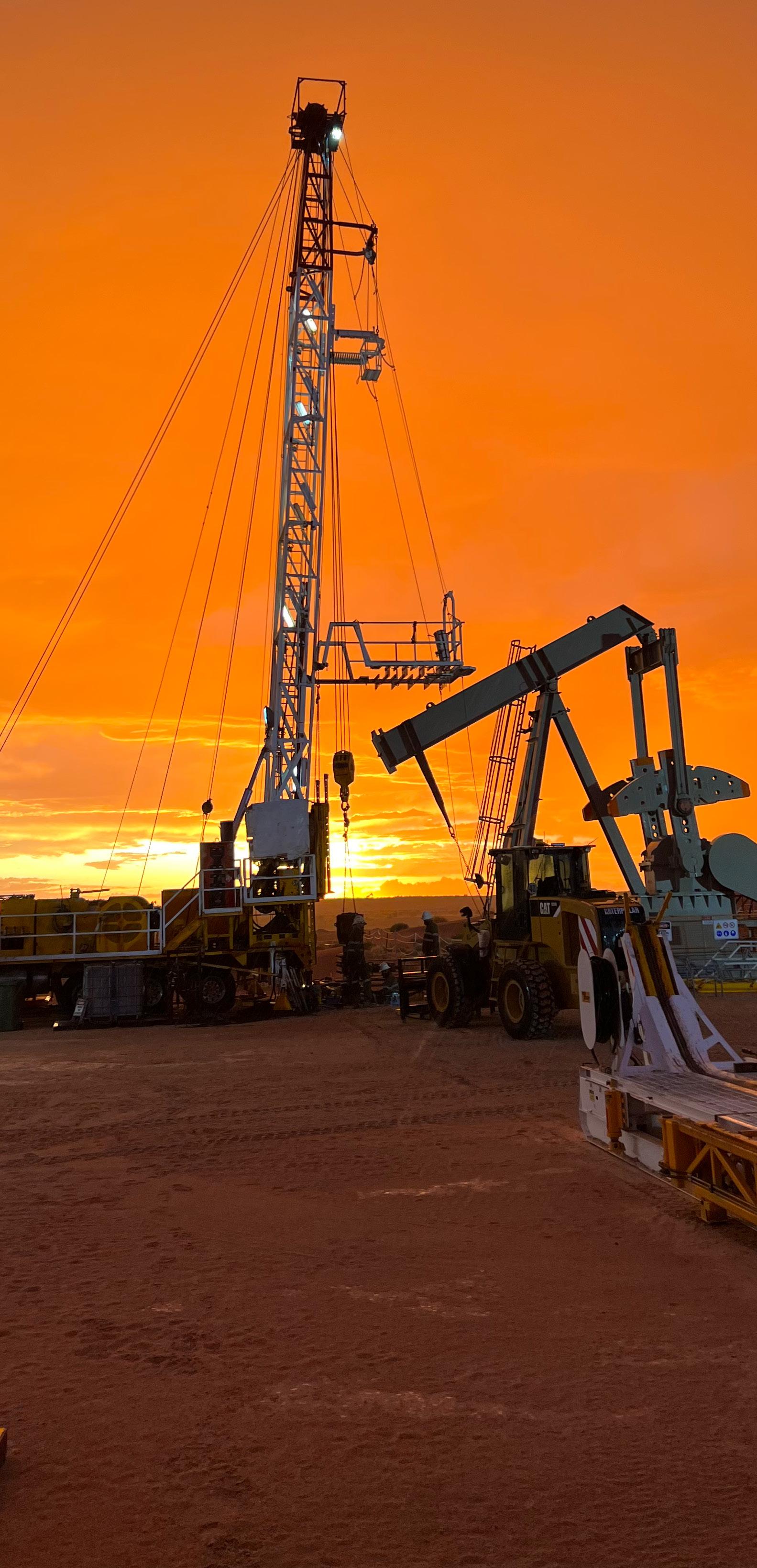
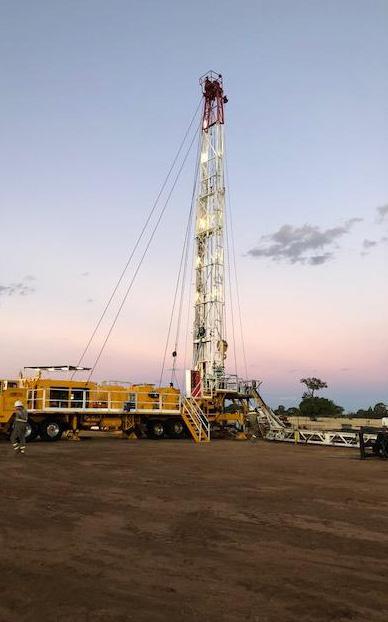
Established in 2005 in the charming town of Roma, Queensland (QLD), Wild Desert is a dedicated, family-owned Australian enterprise driven by a clear vision – to deliver exceptional oil and gas field services built on safety, efficiency, and a can-do attitude.
Since its inception, the company has focused on supporting regional communities and local suppliers whilst maintaining strong partnerships with major energy operators.
This commitment to quality and reliability has shaped Wild Desert’s reputation as a trusted name in the industry.
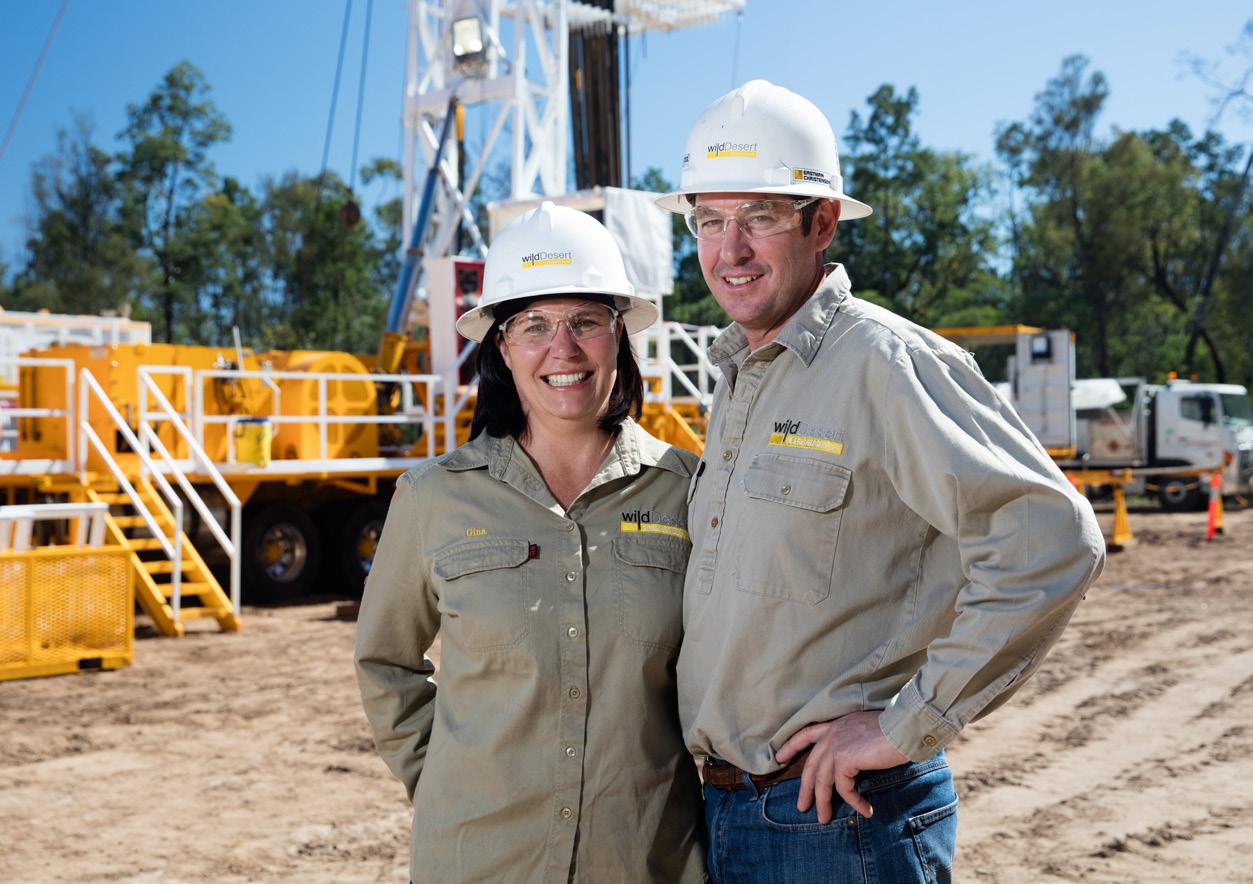
“Today, we employ more than 450 people and remain deeply connected to our roots. In fact, Founders, David Whiley and Gina Tedford, still live in Roma and are active members of the local community,” introduces Mark Tonin, COO.
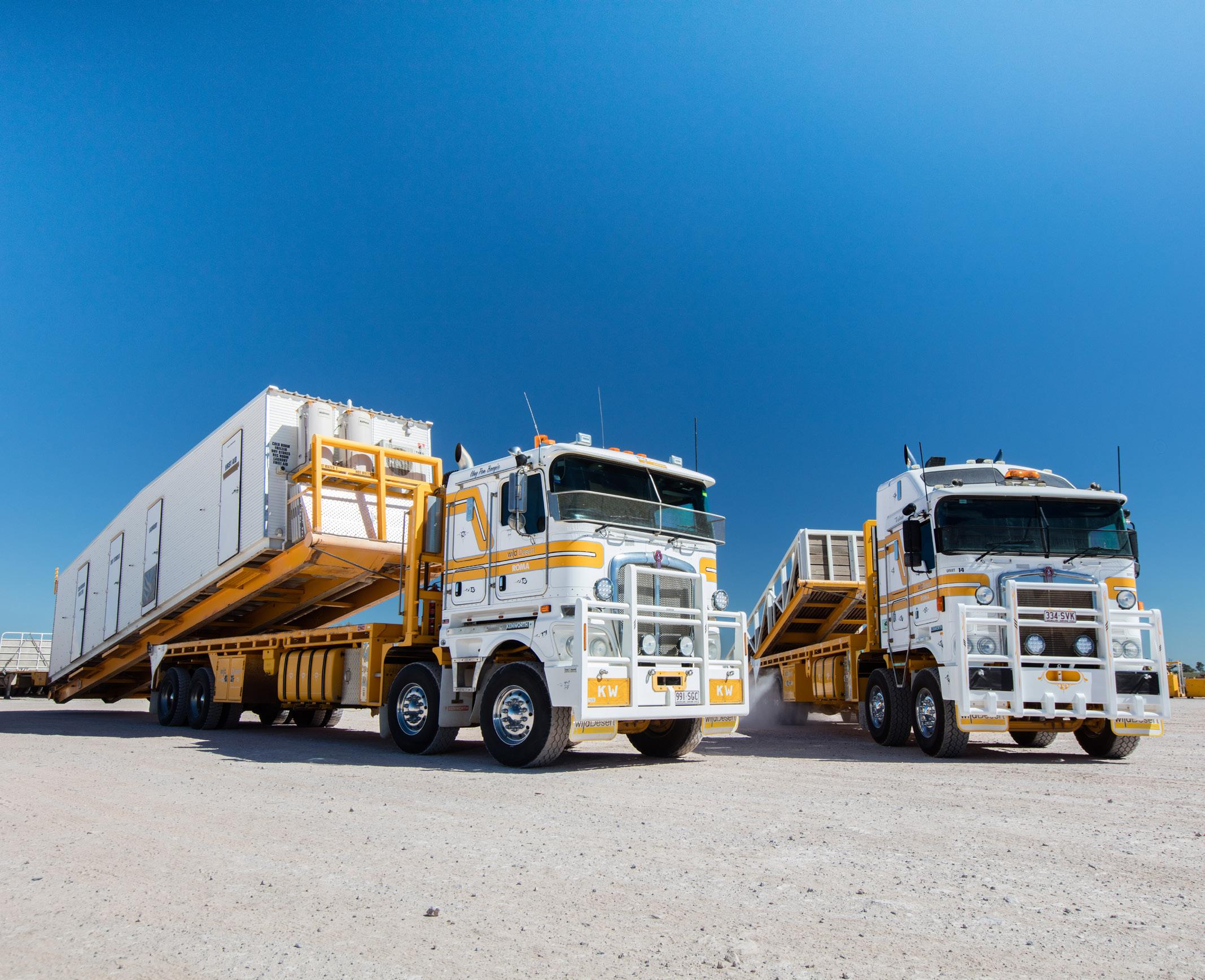
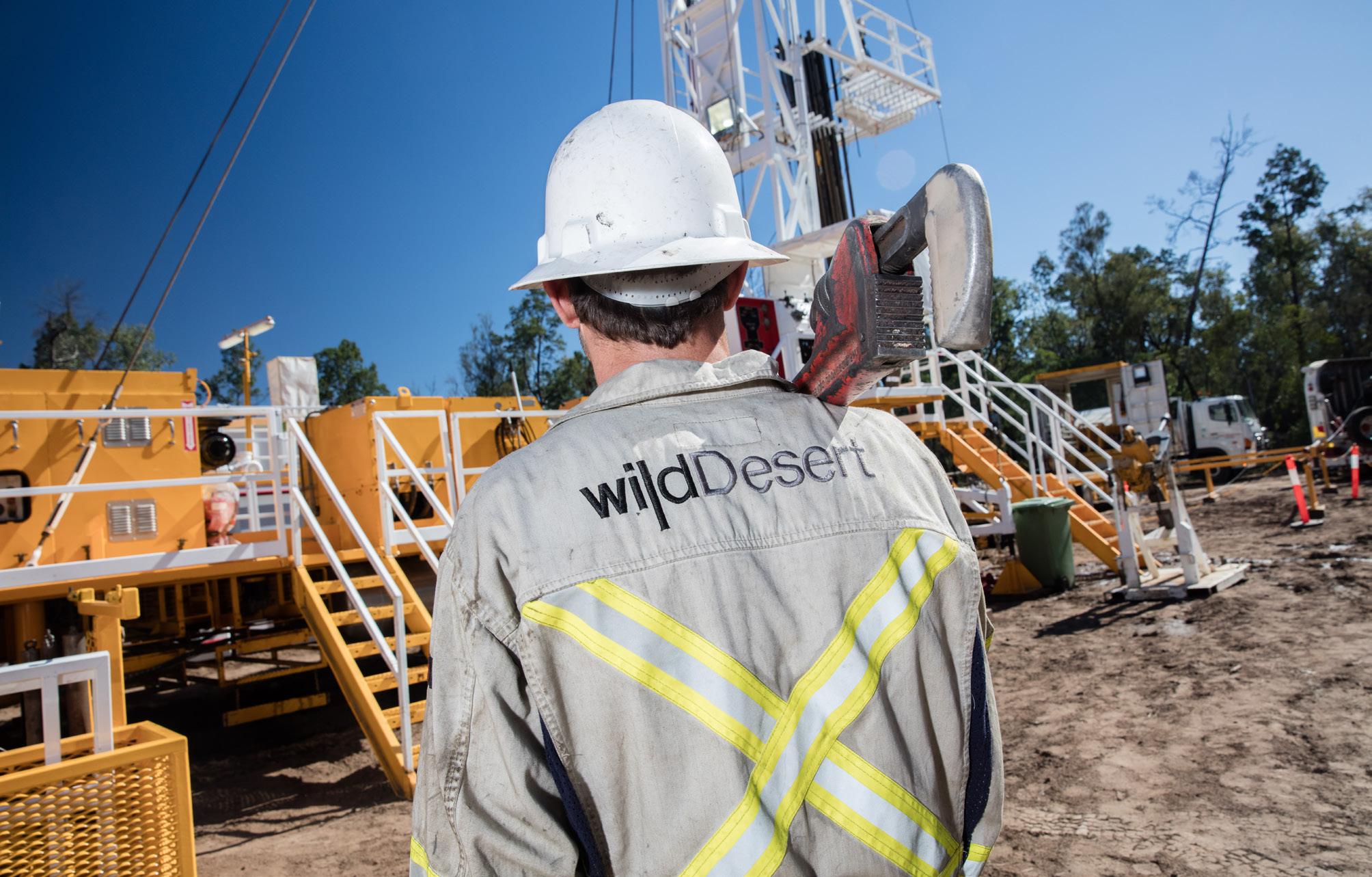
“Our core expertise lies in well servicing and integrated field support. We operate a fleet of well servicing rigs and provide comprehensive solutions, including well interventions, transport and logistics, mobile camps, equipment hire, maintenance, and fabrication.”
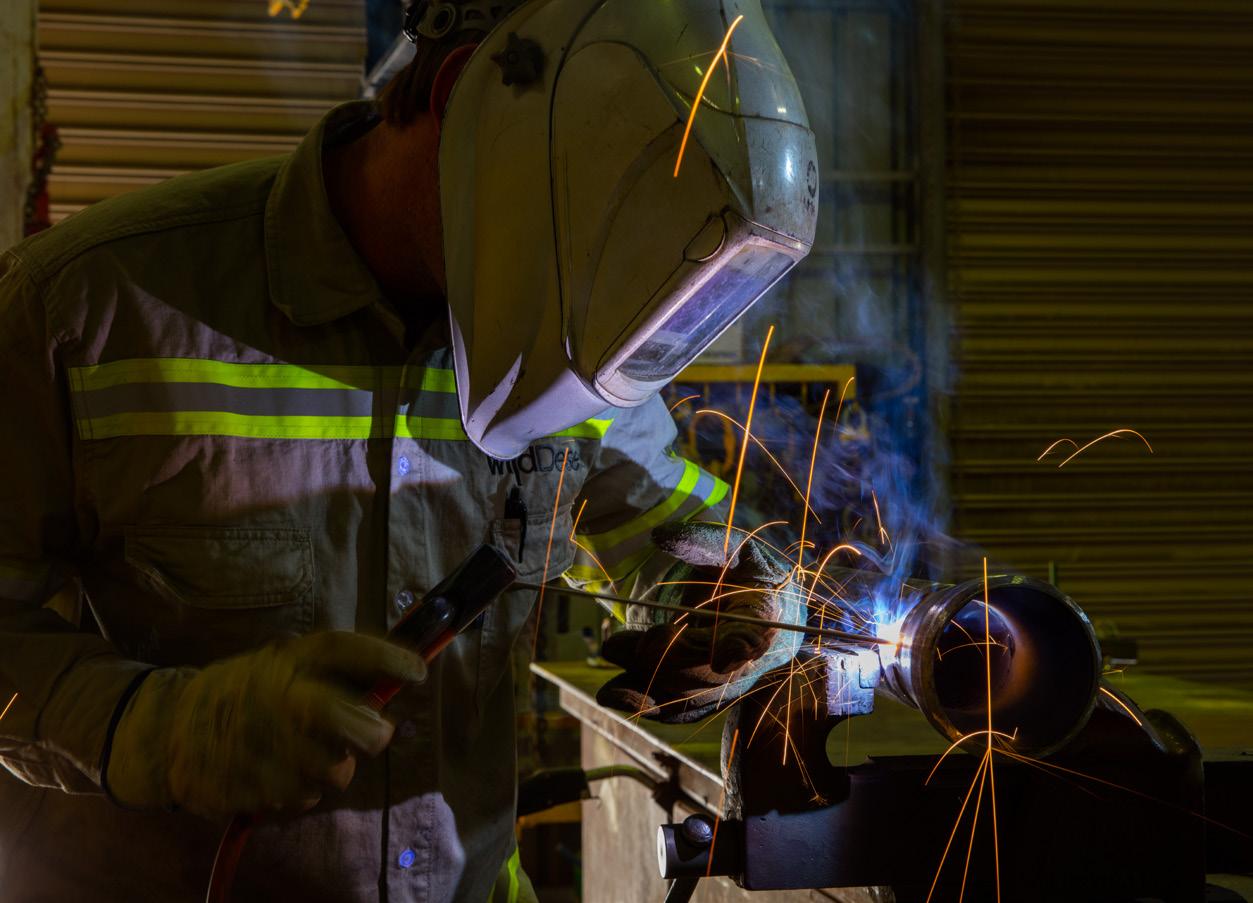
Wild Desert invests in innovation through its in-house design and engineering capabilities, ensuring customised solutions for complex field challenges.
“Safety and operational excellence remain at the heart of everything we do, supported by rigorous standards and continuous workforce development,” he notes.
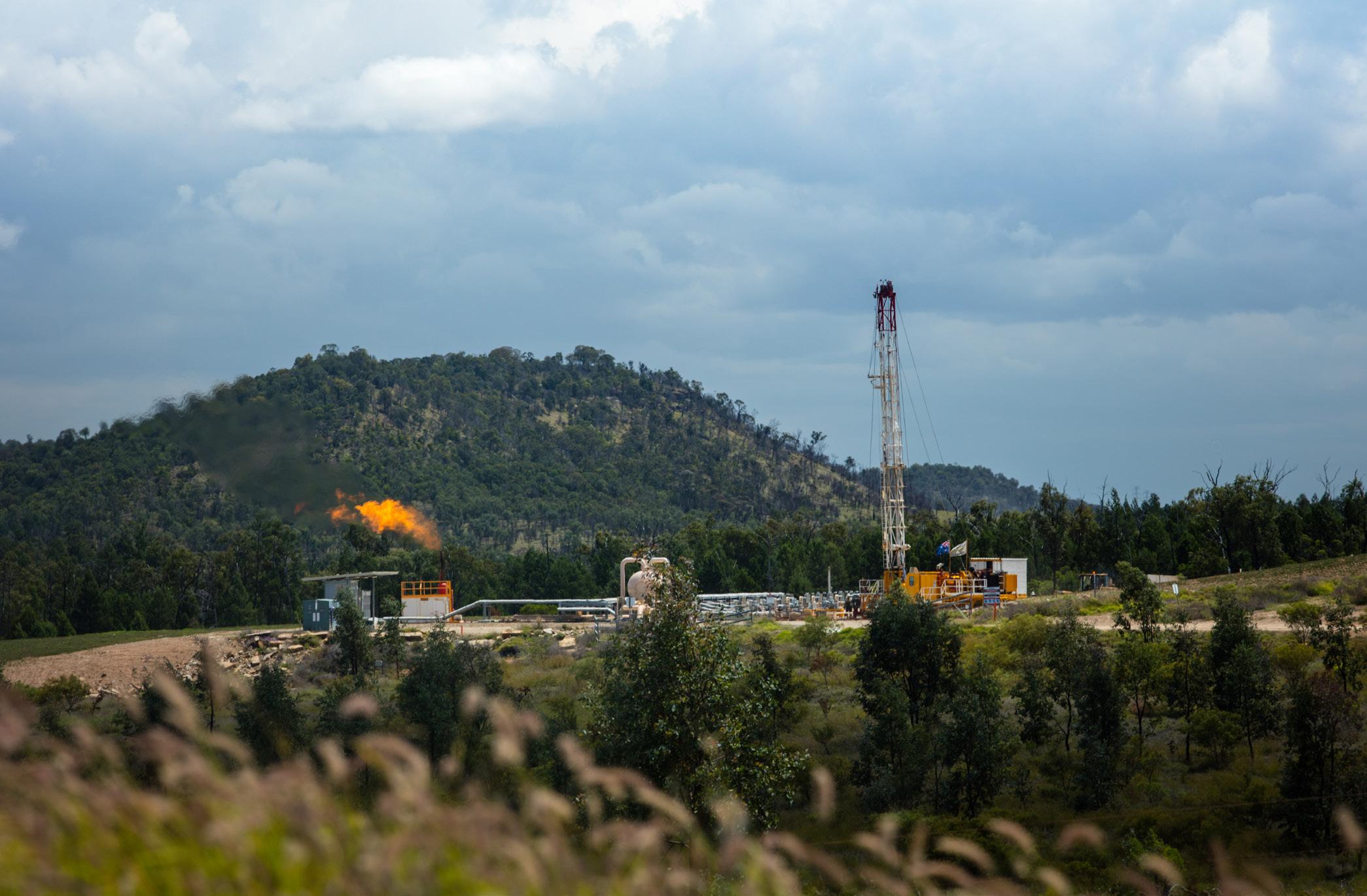
Furthermore, with its headquarters in Roma and a corporate office in Brisbane, QLD, Wild Desert maintains a strong presence across the Surat and Cooper Basins, significant geological formations known for their large resources and economic importance.
“Our clients include leading oil and gas operators who value our responsiveness, flexibility, and proactive problem-solving.
“As we continue to grow, our founding principles – family values, community support, and a relentless focus on safety – guide our operations and long-term partnerships,” Tonin impassions.
RESILIENT AND THRIVING
Over the past 20 years, Wild Desert has navigated multiple industry challenges, including sharp downturns in oil and gas activity and the liquified natural gas (LNG) investment cycle, as well as the unprecedented disruption caused by global events.
Each downturn brought reduced rig utilisation, project deferrals, and significant workforce pressures and reductions, whilst the COVID-19 pandemic added supply chain delays, border restrictions, and heightened health and safety requirements.
These cycles tested the resilience of service providers across Australia, particularly those operating in remote regions.
However, what sets Wild Desert apart is its ability to adapt and maintain stability through these volatile periods.
“As a family-owned company, we’ve built a reputation for reliability by offering integrated solutions – well servicing, logistics, mobile camps, maintenance, and in-house design and fabrication – under one roof.
“Our ‘local-first’ approach strengthens supply chains and supports regional communities,
whilst our unwavering focus on safety and operational excellence ensures continuity even in challenging conditions,” Tonin prides.
Meanwhile, Whiley and Tedford remain active in Roma, reinforcing a culture of trust, accountability, and long-term partnership that competitors often struggle to match.
Well control training, and workforce EVERY
AWCC prepares new entrants for safe industry access through Preferred Provider delivery of the Industry Safety Induction. Turbo Certificate II gives a fast, nationally recognised pathway into the field, supported by weekly face-to-face and online well control training options.
AWCC builds practical competence through weekly short courses and ongoing compliance refreshers in Brisbane and Toowoomba, including Common Industry Competency training. AWCCs exclusive Turbo Certificate III accelerates progression through a fasttracked pathway designed for real-world advancement.
training, career pathways, workforce solutions.
Capability under pressure demands deeper technical skill. AWCCs Certificate IV, seamless RPL via online portals and interview access, IWCF Level 3 and Level 4, and online well control training, develop rig-side decision making, pressure awareness, and operational integrity, available face-to-face or remotely for operational flexibility.
Leadership underpins safe operations and performance. AWCC advances future supervisors and OCRs through Diploma pathways, seamless RPL via online portals and interview access, and IWCF Level 4. AWCC Access provides skilled labour supply to support operational needs, completing the workforce cycle.
AWCC congratulates Wild Desert on their 20thAnniversary
Australian Well Control Centre congratulates our partner, Wild Desert on its 20-year milestone, a testament to capability, resilience, and leadership within Australia’s oil and gas sector. Since AWCCs inception, our organisations have worked side-byside, delivering IWCF well control training, short courses, ISI induction, and compliance refreshers that support Wild Desert’s operational success. AWCCs exclusive Turbo Certificate pathways, can benefit Wild Desert from fast-tracked, industryready personnel who arrive trained, vetted, and prepared for safe deployment, reducing disruption and lowering workforce mobilisation costs. We are proud to support Wild Desert in developing a skilled workforce and look forward to strengthening our partnership into the future, extending capability across Australia and the wider APAC region.
“AS A FAMILY-OWNED COMPANY, WE’VE BUILT A REPUTATION FOR RELIABILITY BY OFFERING INTEGRATED SOLUTIONS – WELL SERVICING, LOGISTICS, MOBILE CAMPS, MAINTENANCE, AND IN-HOUSE DESIGN AND FABRICATION – UNDER ONE ROOF”
– MARK TONIN, COO, WILD DESERT
“A key differentiator for us is our Australian-only focus and local ownership. Unlike global service providers, which often face delays due to overseas decision-making or competing international priorities, Wild Desert operates without influence from foreign markets or global headquarters,” he explains.
“This independence allows us to respond quickly to clients’ needs, adapt to local conditions, and maintain operational certainty –critical advantages in an industry
where timing and reliability are everything.”
This combination of scale, flexibility, innovation, and community commitment has allowed Wild Desert to not only survive industry downturns but also emerge stronger, with a proven track record of delivering safe, efficient, and responsive services when clients need them most.
REVAMPING OPERATIONS
Wild Desert’s local manufacturing,
maintenance, and fabrication facility contributes to its overall efficiency and service capabilities.
“Our local manufacturing facility is a major contributor to our efficiency and service capability. Having in-house engineering, maintenance, and fabrication means we can handle repairs, modifications, and equipment builds without relying on external vendors,” imparts Tonin.
This approach reduces downtime, quickens turnarounds, and keeps operations running smoothly by ensuring equipment is fit for purpose and withstands the harsh conditions the Australian landscape demands.
“Our rigs operate in isolated locations, with the Cooper Basin specifically being an extremely demanding and challenging environment. The remoteness of well sites requires robust equipment that is durable and can support 24/7 operations, as clients demand and expect,” he outlines.
“The ability to fabricate and assemble ancillary equipment, from trailered mud tanks and mud pump and generator trailers to office shacks, bespoke skids, and support equipment, gives us the flexibility to meet specific customer needs quickly and cost-effectively.”
Ultimately, this self-sufficiency enables Wild Desert to maintain high standards, respond more quickly to challenges, and deliver reliable field services.
A new hybrid-electric rig, meanwhile, is expected to bring several improvements to the company’s operations, such as lower noise levels that will enhance safety and comfort for crews and reduce disturbances for landholders.
The rig’s lower fuel consumption will also mean fewer emissions, less fuel transport, and improved safety through reduced travel to fuel resupply points.
WILD DESERT’S IMPACTFUL PARTNERSHIPS
Local sourcing is key to Wild Desert’s supply chain strategy and directly impacts its operational efficiency.
“As a locally owned Roma company, we understand that the strength of our operations lies in our community,” Tonin smiles.
“By prioritising local, regional, and Indigenous participation, we ensure our supply chain remains responsive and resilient in the demanding oil and gas industry, reducing the impact of international market pressures where possible.”
The company actively recruits personnel from Roma and the surrounding areas for field, office, and workshop roles, and aims to source at least 50 percent of its procurement from the Maranoa region, including engaging local suppliers for freight, accommodation, catering, maintenance, and consumables.
“Our partnerships with Indigenous businesses such as Waddi Springs further reinforce our commitment to inclusive economic growth.”
This approach delivers measurable outcomes – 42 percent of Wild Desert’s total spend is local, and 82 percent is within QLD.
“Beyond numbers, local sourcing reduces lead times, improves reliability, and strengthens relationships, enabling us to adapt quickly to changing operational needs. It also supports community development through employment, apprenticeships, and sponsorship of regional initiatives.
“For Wild Desert, procuring locally is not just a policy – it’s a strategic imperative. It enables us to remain agile and flexible, ensuring we meet the challenges of the oil and gas industry whilst creating lasting benefits for the communities we call home,” assures Tonin.
Gina Telford and David Whiley, Founders
POWERING REMOTE AUSTRALIA
In regional Australia, where infrastructure is scarce and working conditions are tough, energy reliability is critical. Energy Power Systems Australia (EPSA) is proud to support Wild Desert – one of the nation’s leading providers of well servicing rigs – with a fully integrated hybrid energy solution designed to meet the unique demands of remote oil and gas operations.
Established in Roma, Queensland in 2005, Wild Desert has grown into a trusted partner to the oil and gas sector, delivering well servicing, transport, and mobile camp operations across regional Australia. These environments demand energy systems that are mobile, durable and increasingly low-emission.
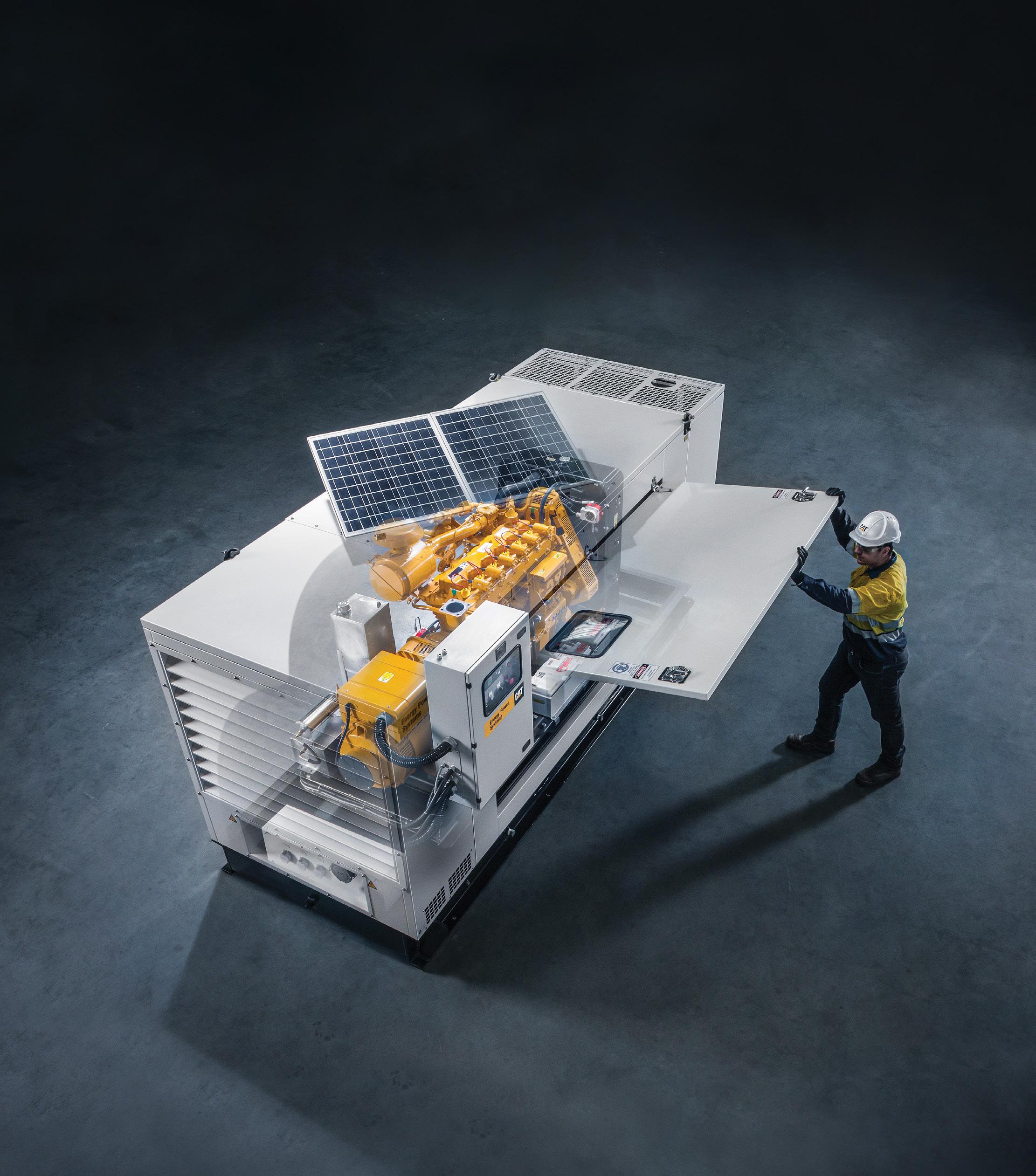
EPSA’s recent delivery includes a combination of diesel and battery systems, a complete hybrid package engineered and integrated to deliver high performance, lower fuel consumption and reduced environmental impact.
ENGINEERED HYBRID ENERGY FOR REMOTE PERFORMANCE
EPSA specialises in engineered energy systems across industries, with a particular focus on tailored solutions for oil and gas. From hazardous zone compliance to mobile generator configurations, the company’s ability to design for specific customer needs is a core strength.
For Wild Desert, the hybrid system was designed with remote reliability and efficiency in mind. The project scope included:
• 2 x Cat® C18 770kVA prime-rated generator sets, with custom control systems, air shut-off valves, sparkarrested exhaust systems, and additional local upfit to suit site requirements
• 1 x Cat® PGS1260 BESS with custom controls, featuring the Cat® BDP1000 bidirectional inverter. This unit provides 1000kW of continuous power with a 1260kW overload capacity
• Full integration and testing of the BESS and generator systems to ensure seamless operation and optimised load management
“We’ve worked with many oil and gas operators to develop customised builds to suit their environment,” said Scott Bennett, General Manager Engine Solutions.
“With Wild Desert, we delivered a complete hybrid system that supports energy security, reduces fuel use, and helps them meet carbon goals.”
BUILDING SUSTAINABLE SOLUTIONS, NOT JUST SUPPLYING EQUIPMENT
EPSA’s approach goes beyond simply delivering equipment. With technical depth and hands-on project experience, the team plays an active role in helping customers transition to new energy models.
“Many of our customers are actively looking for ways to lower their carbon footprint, without compromising operational performance,” said Bennett.
“Hybrid systems like this give them that flexibility. They’re clean, scalable, and designed to run reliably even in Australia’s harshest conditions.”
EPSA’s integrated solutions are already being adopted across remote and regional operations, and the Wild Desert project is a benchmark example of innovation tailored for real-world performance.
NATIONAL COVERAGE WITH LOCAL FOCUS
As the authorised Cat® power systems dealer for Australia, Papua New Guinea and the Solomon Islands, EPSA brings together global product innovation and national delivery capability. It operates a vast dealer network, ensuring service and support coverage for even the most isolated customer sites.
“No other provider has the national footprint we do,” said Bennett. “That means better uptime, faster support, and ultimately less risk for the customer.”
EPSA’s energy portfolio is one of the broadest in the region, including diesel and gas generators, industrial engines, marine engines, hybrid systems, and BESS, all backed by technical specialists and project managers who understand industry challenges across sectors like mining, oil and gas, construction and agriculture.
MAKING DECARBONISATION PRACTICAL
Customers are facing growing pressure from investors, regulators, and communities to reduce emissions. For many, hybrid systems are a practical step forward, blending traditional power with clean energy storage to reduce fuel consumption and lower environmental impact.
“This isn’t about ticking a box, it’s about practical sustainability,” said Bennett. “Our solutions help customers meet their operational needs whilst making meaningful progress towards lower emissions.”
EPSA is continuing to invest in battery and hybrid energy systems that help customers stay ahead of compliance requirements and operational risk.
TRUST IS WHAT DRIVES EPSA FORWARD
EPSA’s customer research shows that whilst product performance and technology are important, customers place the greatest value on ease of doing business, responsive support, and relationships built on trust.
“We know that our customers value having someone who understands their environment and can help solve complex problems,” said Bennett.
“That’s where we add the most value, not just by delivering the hardware, but by being a reliable partner in their long-term success.”
LOOKING AHEAD
EPSA’s hybrid project with Wild Desert demonstrates what’s possible when technology, customer understanding, and reliable delivery come together. As more businesses in remote and industrial sectors look to clean and flexible power options, EPSA is well positioned to lead that transition.
From Roma to the Pilbara, EPSA is powering progress, one integrated energy system at a time.
THE POWER YOU NEED
Energy Power Systems Australia (EPSA) sell, rent, design, engineer and commission Cat® engines, generators and custom-built power solutions – from individual units to multi-megawatt power stations – to customers in every industr y.
Whatever your energy and power requires, EPSA’s has the power you need.
Hybrid Engines Compressed Air Generators Mine Cooling
“Moving away from hydraulic systems reduces the risk of oil leaks, which is a huge environmental win.
Additionally, improved remote diagnostics and real-time monitoring via variable-frequency drives (VFDs) will help minimise downtime and increase overall efficiency.
“Since this is the first rig of its kind in the workover space, we expect
even more benefits to emerge once it is fully operational and has completed several work scopes,” Tonin affirms.
REVOLUTIONISING THE FUTURE
Reflecting Wild Desert’s commitment to innovation and efficiency in the drilling and completions industry, the company recently completed
an advantageous project that showcases its adoption of autonomous technology.
“One of our most significant initiatives in 2024 has been the complete refurbishment and upgrade of two conventional workover rigs, transforming them into highly automated, integrated systems.
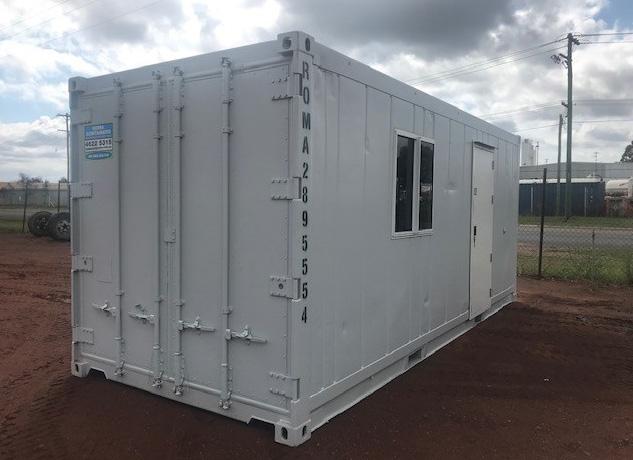
Roma Containers: 28 Years of Innovation in Container Solutions
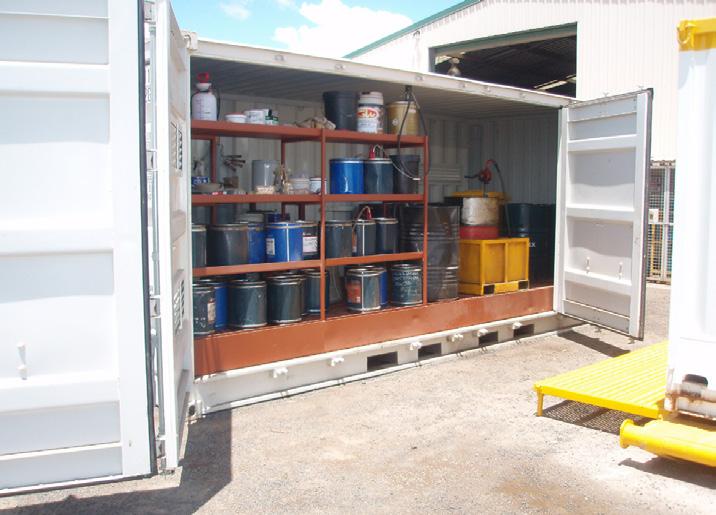
Established in 1997, Roma Containers has grown into a trusted name in the sale and hire of shipping containers throughout regional Queensland. With a team of experienced sales professionals and skilled boilermakers, the company delivers tailored solutions that combine quality craftsmanship with practical design.
Our Core Values
Our Story
• Safety First • Customer Satisfaction • Professionalism • Strong Work Ethic
• Dependability and Responsibility • Continuous Learning • Pride in Workmanship
What We Offer
Standard and Custom Containers:
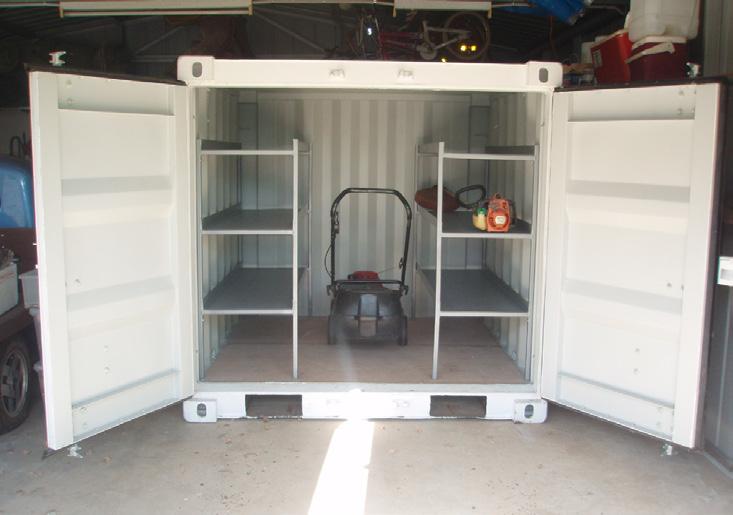
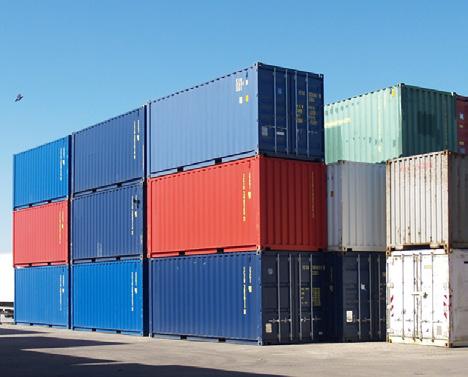
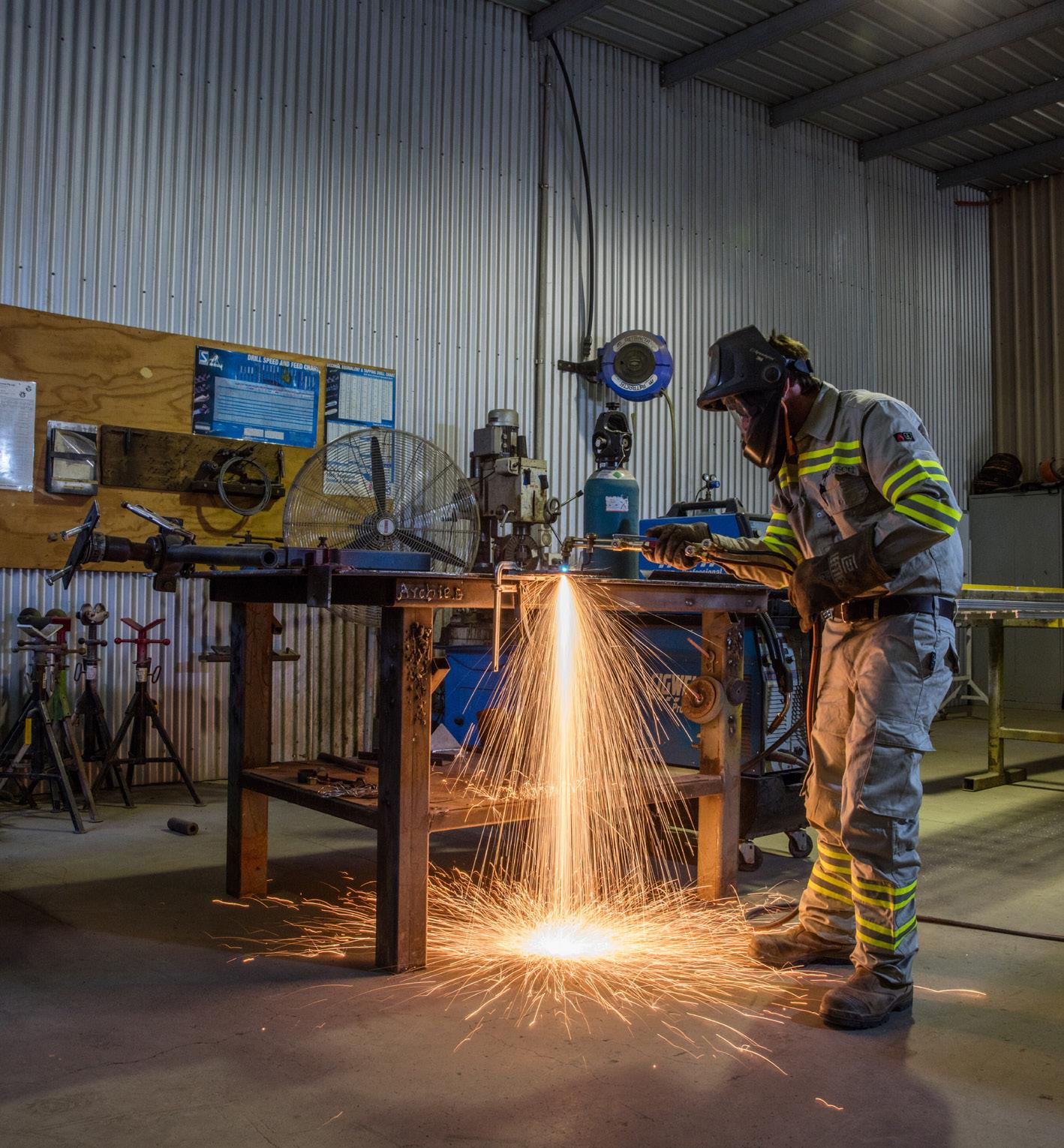
From 6ft to 40ft, we supply and modify containers for hire or purchase.
Tier 1 Modifications:
• Dangerous goods storage
• Office blocks
• Refrigerated units
• Workshops and shelters
• Flat racks
• Certified sea-worthy containers
Tier 2 Modifications:
• Air conditioning
• Lighting and power
• Doors and windows
• Shelving and workbenches
• Vents and whirlybirds
For over 25 years, Roma Containers has provided cost-effective, reliable container solutions for businesses big and small. From standard units to custom-built designs, we pride ourselves on delivering products that meet the unique needs of every client. Phone: 0746225315 / 0409696703
Strategic Locations
Our main yard in Roma sits at the heart of Australia’s CSG operations, complemented by a Brisbane yard for efficient distribution. With IVMS tracking, site induction compliance, and environmental standards like ‘weed-free’ certification, we guarantee safe and timely delivery.
Why Choose Roma Containers?
• Over 25 years of proven reliability
• Competitive pricing and on-time delivery
• Exclusive distributor in Western Downs and Maranoa
• Capacity to stock 300 containers
• Direct sourcing from overseas suppliers
• Strong partnerships along the eastern seaboard
Roma Containers is your one-stop solution for container sales, hire, and modifications. We combine innovation, reliability, and exceptional service to help businesses thrive.
Email: info@romacontainers.com.au
Website: www.romacontainers.com.au
Facebook: Roma Container Sales and Hire
Instagram: romacontainers_sheahanbuilt
“This project was executed entirely in-house at our Roma maintenance facility and workshops, where we stripped the rigs back to their chassis and rebuilt them to deliver a modernised design that combines the robustness of conventional rigs with advanced automation and electronic controls,” details Tonin.
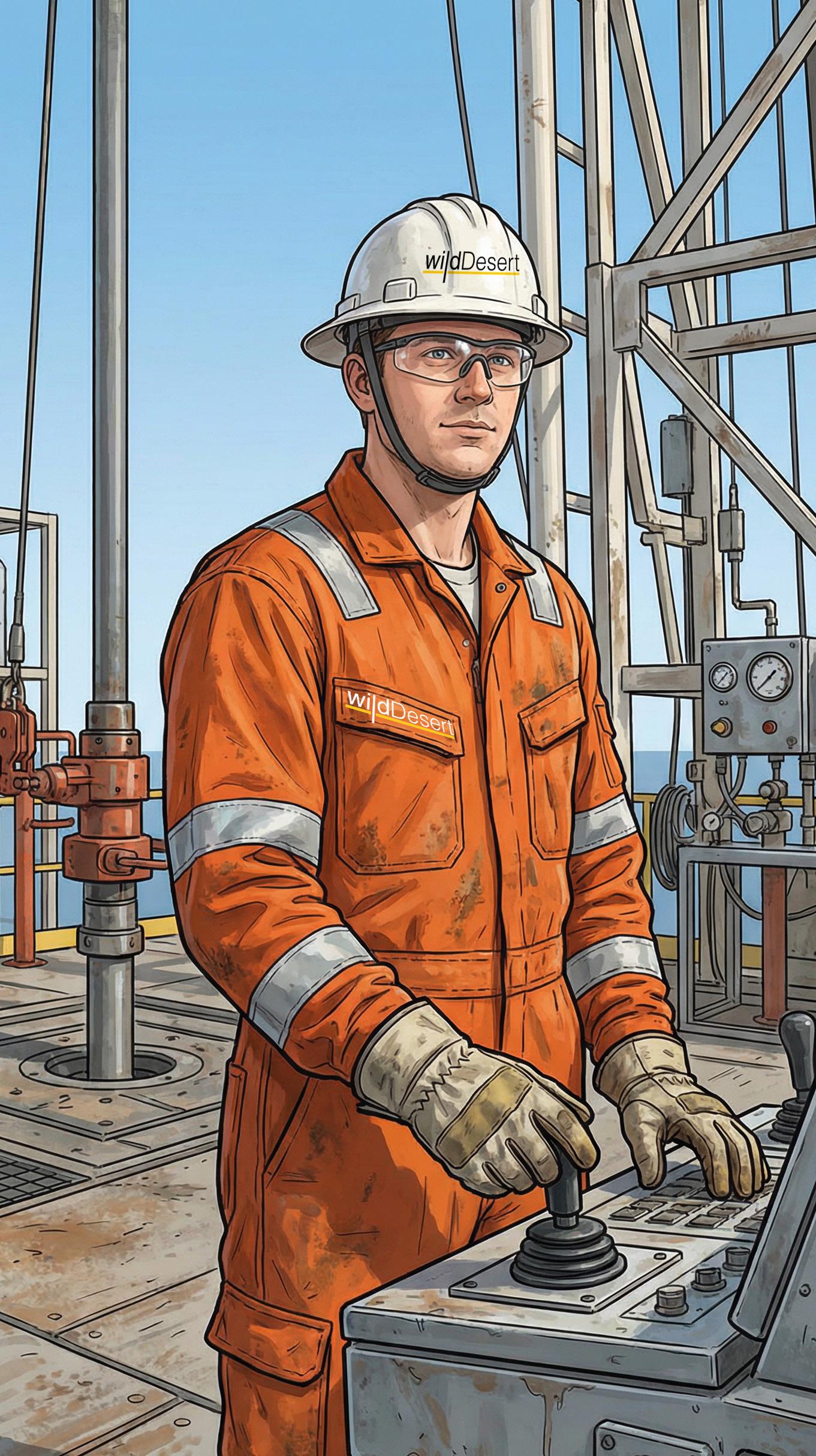
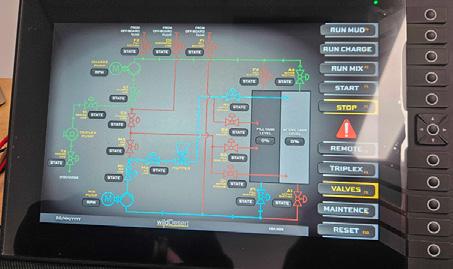
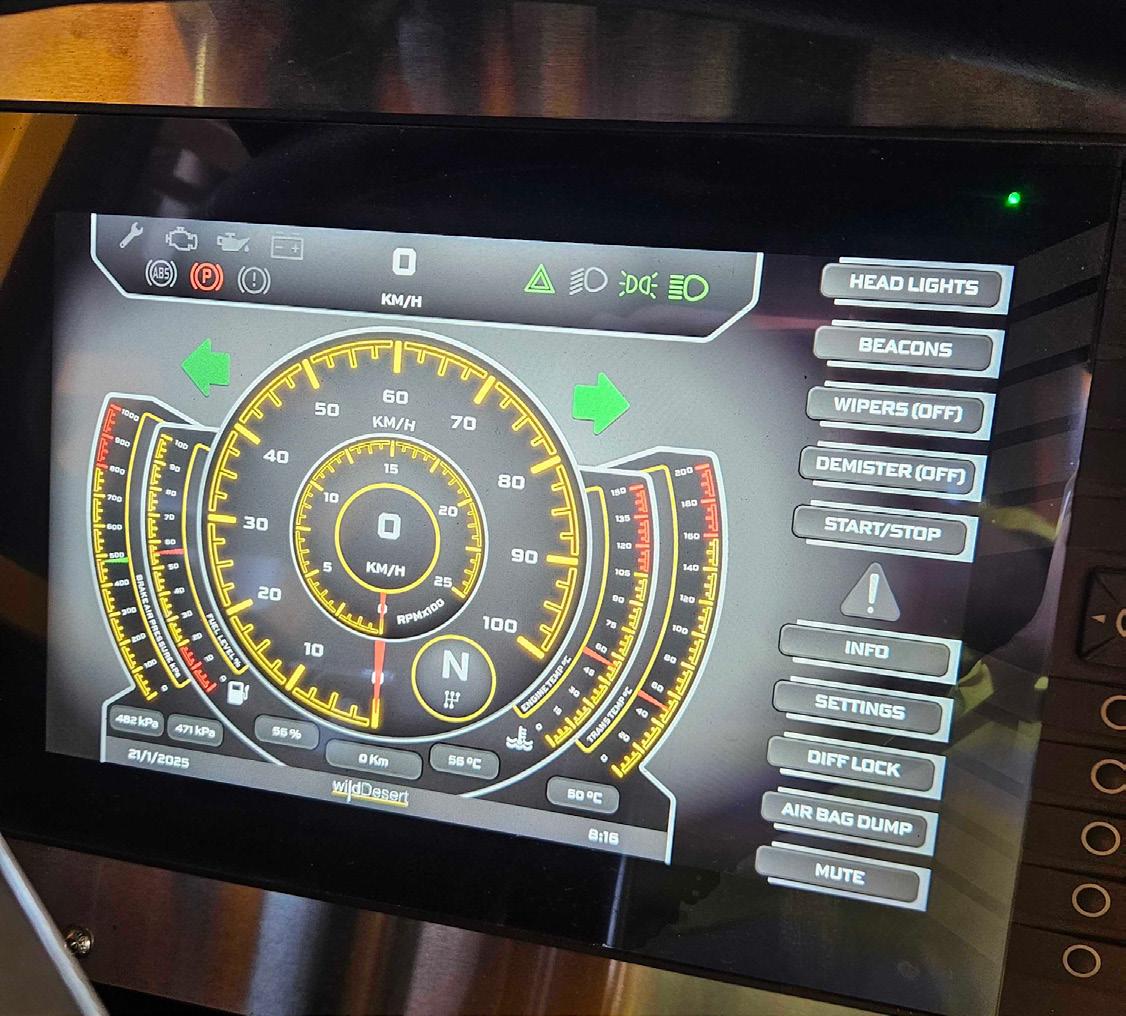
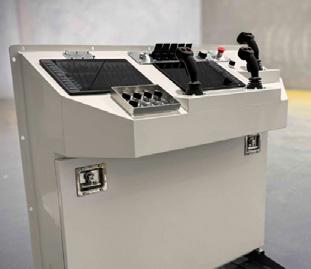
Key enhancements include an enclosed, air-conditioned driller’s cabin for improved safety and comfort and a fully integrated driller’s console featuring touchscreen readouts and joystick controls, enabling remote operation of mud pumps, air compressors, and booster packages.
These benefits are complemented by other advantages, including remote monitoring of all critical parameters, automated workover functions, including a weight-on-bit calculator and digital indicators, and safety integrations, such as floor- and crown-saver functions.
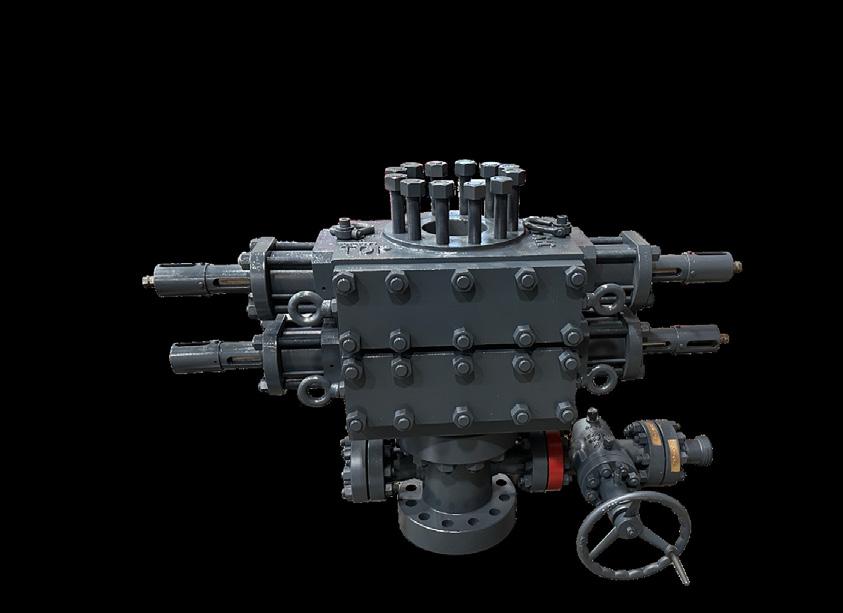
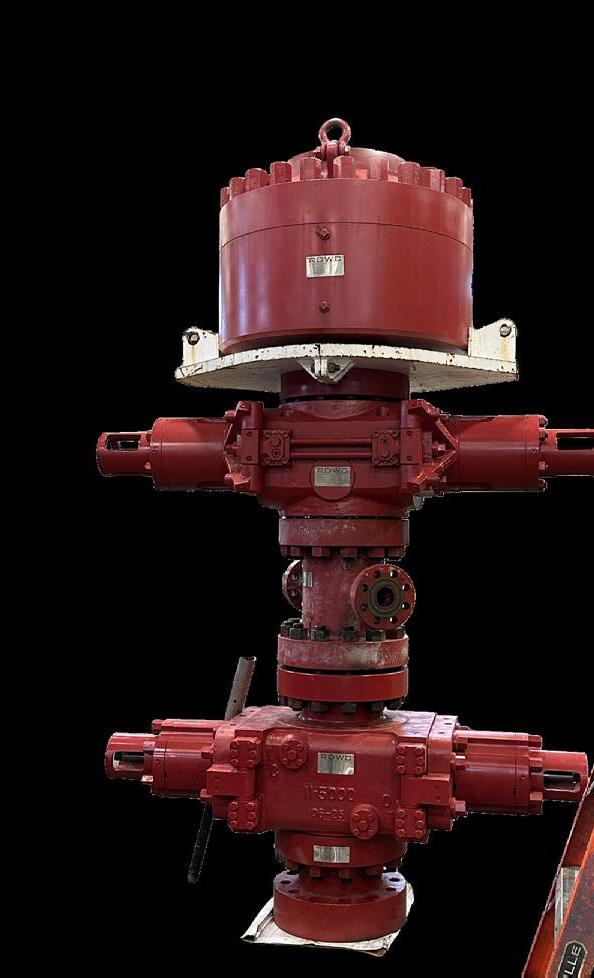
Your Well-Control PartnerBuilt on Experience, Driven by Quality
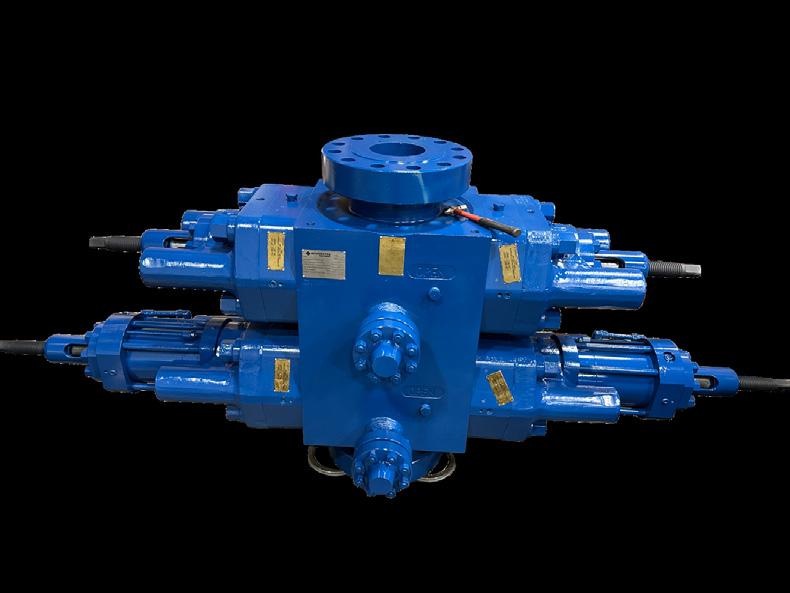
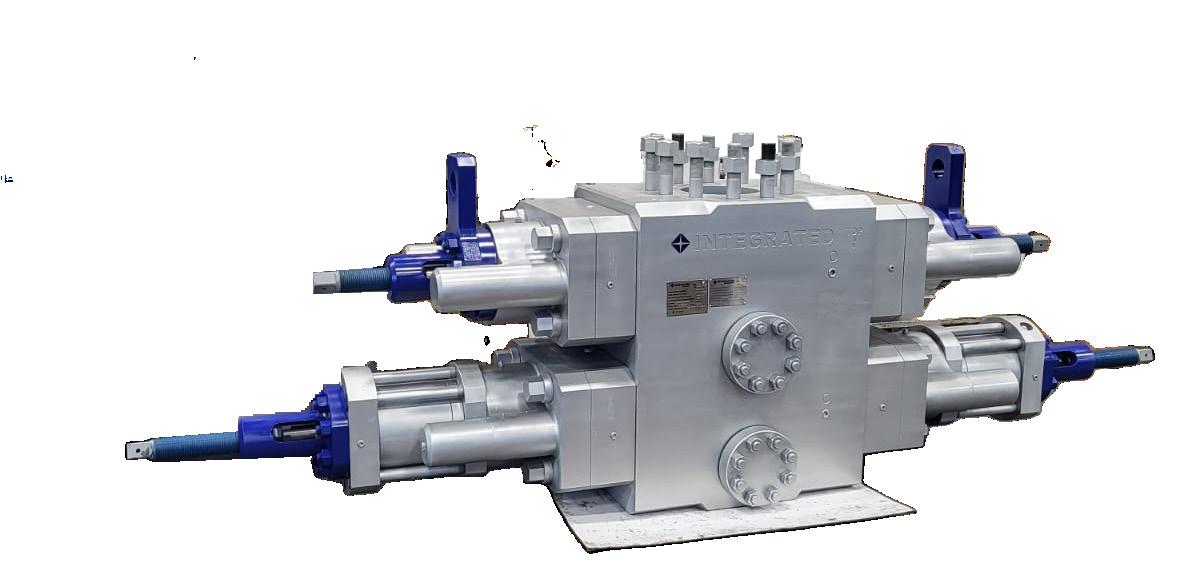
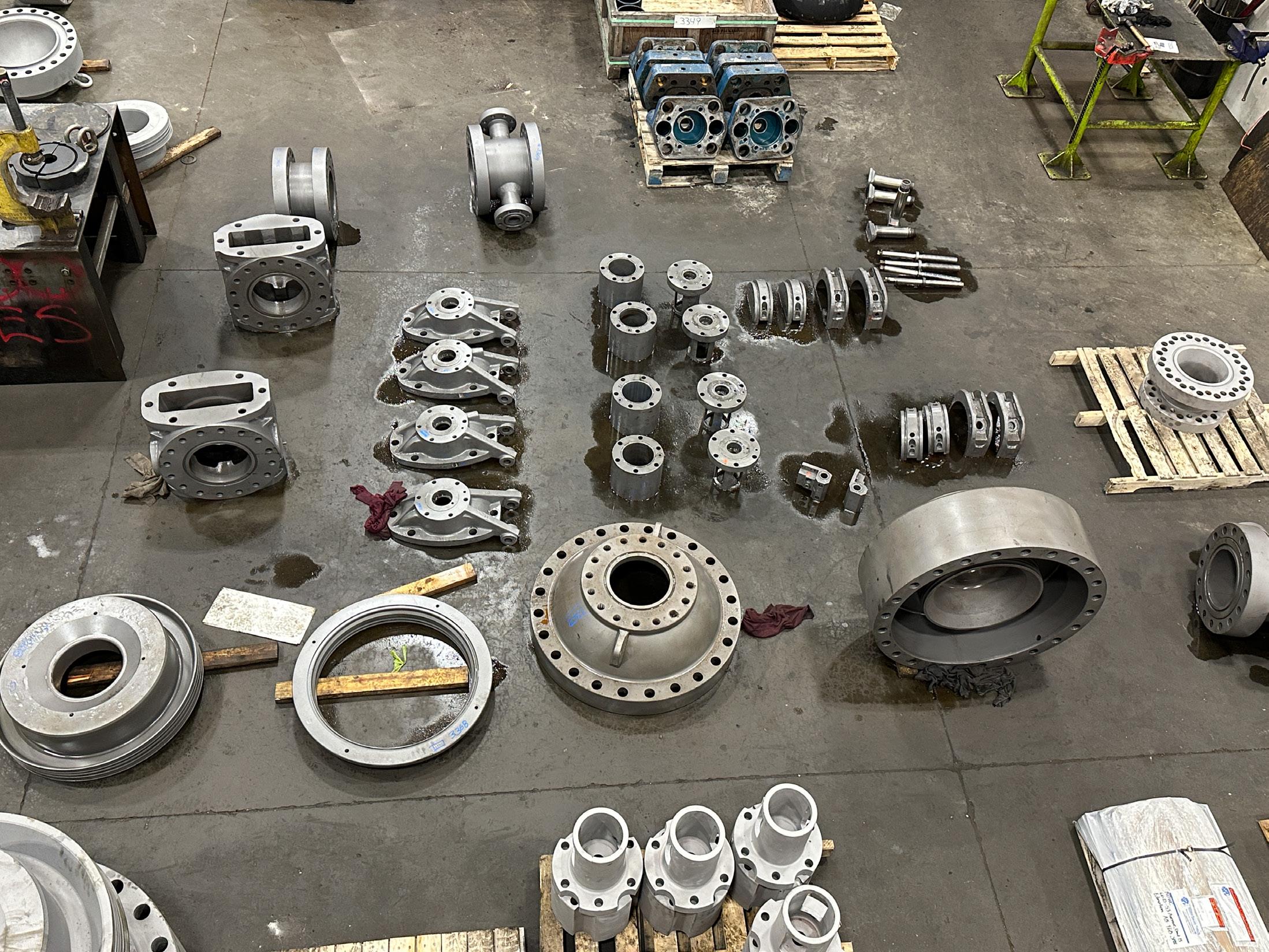
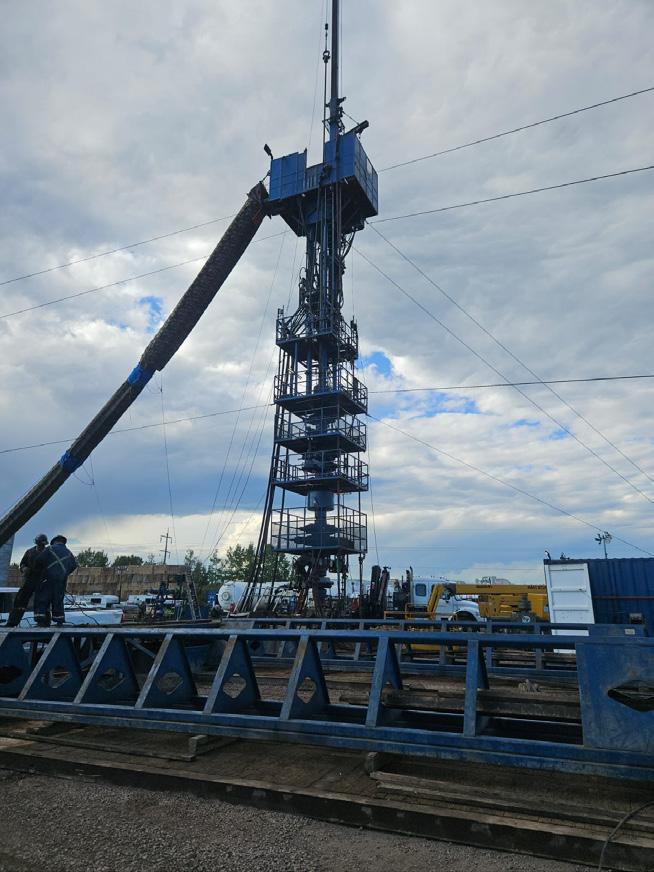
For over a decade, has supported the oilfield with dependable BOP and valve recertification services, competitive pricing, and unmatched product knowledge. Whether your operation involves drilling, snubbing, or well servicing, we have the equipment, expertise, and turnaround times to keep you moving.
From certification and testing to new and re-manufactured equipment sales, RDWC is your single-source solution for well-control reliability.
What We Offer:
• 3-Year and 5-Year Certifications with Reseal and Testing
• Authorised Repair Facility for Integrated Equipment (Canada)
• New and Re-Manufactured Well Control Equipment
• Elastomers: Ram Rubbers, Packing Elements, Seal Kits and Dampeners
• Complete Ram Assemblies (Type 70, VBR, Type 81, HS, 88, U and Shearing)
• Pressure Testing, Torquing and On-Site Field Service
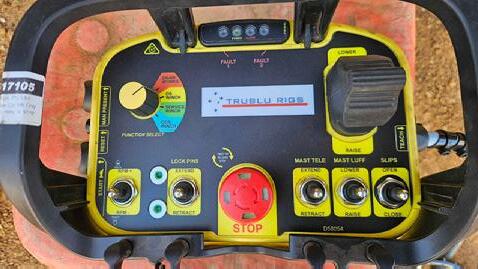
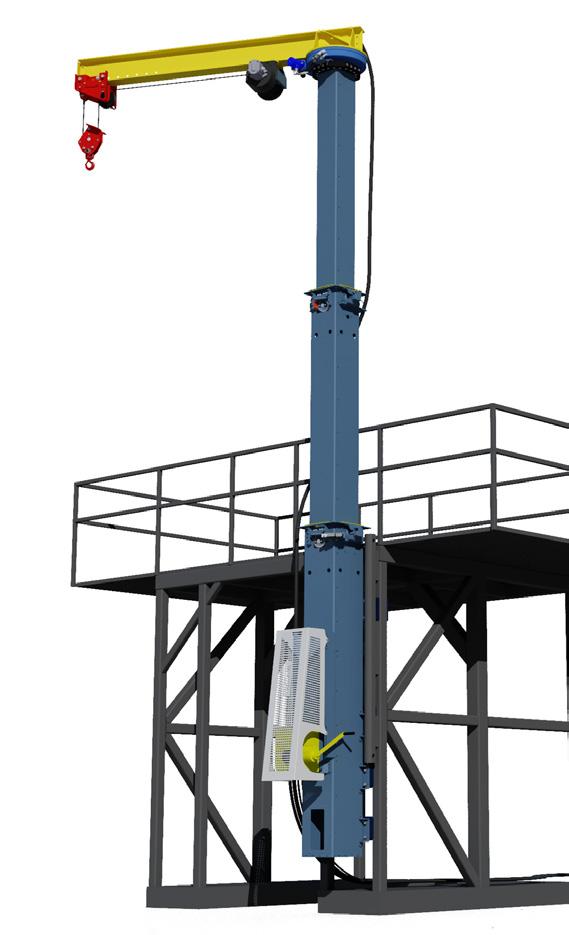
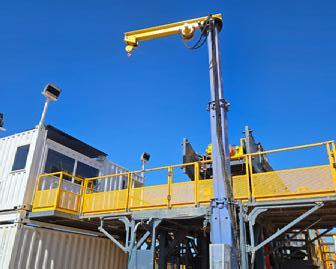
It also has hands-free rig-up and rigdown capabilities via remote control and hydraulic guy lines, with pressure monitoring, for enhanced stability.
This is a crucial development because integrated design delivers a fast, agile, and purpose-built QLD coal seam gas package, ensuring operational efficiency through automation and remote functionality. Moreover, safety is enhanced with advanced monitoring and handsfree processes, alongside long-term
durability and reduced downtime, thanks to modern joystick controls, digital readouts, and real-time data monitoring.
“To complement the rig refurbishment programme, we designed, fabricated, and assembled new mud pump and tank trailers entirely in-house. These were engineered with a strong focus on human factors and operational efficiency, incorporating advanced features such as next-generation
WILD DESERT’S APPRENTICESHIP PROGRAMME
Skill shortages have long been a challenge for the oil and gas sector, particularly in Australia, where Wild Desert competes with mining, construction, and other heavy industries for talent.
Recognising this, the company launched its in-house mature-age
and school-based apprenticeship programme several years ago to develop local capability and secure the skills the industry needs.
This initiative reflects the passion of Whiley and Tedford, who are committed to creating opportunities for young people whilst addressing current and future workforce gaps.
By investing in apprenticeships, the company is building a strong pipeline of skilled professionals who will
acoustic panelling for superior sound attenuation and remote monitoring functions.
“This investment significantly enhances rig performance and delivers faster, more efficient rig-up and rig-down operations. By integrating these purpose-built trailers, we have strengthened the overall capability of our workover packages, ensuring greater reliability and productivity in the field,” he elaborates.
sustain the industry for years to come.
Furthermore, Wild Desert is proud to support the next generation and will continue expanding the programme, with plans to recruit additional school-based apprentices throughout 2026.
This initiative is crucial given the current large infrastructure projects underway in QLD, namely Cross River Rail and the upcoming 2032 Summer Olympic and Paralympic Games.
trublu rigs
AUSTRALIAN-ENGINEERED EQUIPMENT BUILT FOR PERFORMANCE, RELIABILITY AND LOCAL SUPPORT
TruBlu Rigs is redefining what Australian operators can expect from rigs and their support equipment. Established in 2023 and driven by the principles of integrity and ingenuity, we design, manufacture and support advanced equipment solutions purpose-built for the demands of the Australian market.
Our mission is simple: deliver high-quality, fit-for-purpose rigs and equipment — on time, on budget and engineered for long-term field performance.
Designed and Built in Australia, for Australia
Operating from our Acacia Ridge facility in Queensland, TruBlu Rigs provides a fully integrated design and manufacturing capability, from electrical control cabins and rig control systems to complete rig solutions. Our team continues to expand the facility’s capacity, investing in systems and tooling that refine production efficiency and elevate product quality. Backed by a robust ERP platform and a trusted supplier network across South East Queensland, we ensure efficient procurement, traceability and quality control — essential for mission-critical equipment.
Unmatched Engineering Expertise
Our engineers bring deep industry experience, having designed multiple new rigs, upgraded existing rigs, and delivered key components such as pipe handlers, automated storage systems, drill heads, mud pump systems and API 4F-compliant masts.
With in-house mechanical, structural, hydraulic, electrical and PLC design capability, TruBlu Rigs offers a fully integrated engineering solution, eliminating the need for third-party component integration and reducing project complexity.
Total Lifecycle Support — 24/7
TruBlu Rigs has earned its reputation through committed aftersales service. We provide round-the-clock field support, including remote diagnostics, rapid troubleshooting and onsite technical assistance. For every new rig deployed, a senior technician remains onsite for the first two weeks to ensure smooth commissioning, operator training and optimal early-life performance — protecting both your investment and operational uptime.
+61 7 3640 5080 Sales Service Manager joshua@trublurigs.com
A Demonstrated Track Record
Our recent project portfolio includes:
• PLC Safety System upgrade for an existing workover rig.
• Offshore-rated hydraulic power pack design (800 hp, 2000 L/min).
• Airpack trailers, control systems and remote monitoring solutions.
• 235-kip hydraulic snubbing rig design for the Middle East.
• Generator, pipe bin and fuel distribution trailers.
• Jib winches and remote rig-up control systems.
— plus continuous site support, part sales and certification services.
Your Trusted Partner for Equipment Excellence
Whether you are upgrading an existing fleet or seeking a fully engineered new rig package, TruBlu Rigs delivers reliable Australian capability backed by deep technical expertise and genuine service commitment.
TruBlu Rigs — Australian ingenuity. Proven engineering. Reliable support.
EMPOWERING SUSTAINABILITY
With the global shift towards net zero emissions, Wild Desert is pursuing innovations in battery-operated rigs and ancillary products.
“Our company is actively investing in innovations that reduce environmental impact whilst maintaining operational efficiency. A key focus has been on electrification and hybrid technologies; for example, we have deployed solar-powered remote office shacks on-site, reducing fuel use for auxiliary power.
“Future projects include solarpowered remote camps and we are currently looking into the feasibility of larger-scale hybrid support equipment, including remote camps. We are finalising the precommissioning of our hybrid-electric workover rig, supported by a battery trailer with generator back-up. This system allows us to perform an entire well workover on battery power alone,” Tonin specifies.
The benefits are substantial –reduced emissions, fuel consumption,
and spill risk, for instance, align with sustainability targets and enhance environmental outcomes, whilst lower noise levels improve crew working conditions and enable operations in noise-sensitive receptors.
A reduction in fuel burn requirements and fuel deliveries is also critical because driving remains one of the riskiest activities in Australia’s onshore oil and gas industry. Distances will be similar for trips, but overall kilometres driven will be lower because fewer trips are required.
Roma Wire and Steel are proud to be part of their local community and believe in giving back to those who support them.
They are sponsors of many local events from rodeos and campdrafts to children’s sport.
Roma Wire and Steel: 20 years strong - One of South West Queensland’s largest independent suppliers of steel products.
Locals Jamie and Natalie Dingle have been at the helm of the Roma-based steel business for the last 20 years during which time they have experienced substantial growth.
Ask them what the strength is behind their successful business and the answer will always be “customer service and experienced staff”.
Jamie is well-known throughout western Queensland, having spent 32 years in the steel and fabrication industry.
He comes from a rural background and has a vast knowledge of the local area which ensures he understands the needs of all facets of industry from gas to graziers, builders and fabricators.
From building sheds to designing cattle yards, Jamie will give you the right advice.
Roma Wire and Steel provides a wide range of steel supplies and are happy to source less popular items – “if you want it, we can get it” is their catchcry.
The business specialises in cattle handling equipment and will make “anything to your specifications”.
They offer an all day delivery service both in town and surrounding areas.
Brothers, Lawson Dingle and Cooper Dingle, play a fundamental role in the business.
“These innovations not only help us achieve sustainability goals but also support our clients in meeting their own net zero commitments whilst delivering tangible safety and operational benefits,” emphasises Tonin.
“At Wild Desert, we pride ourselves on our innovation, agility, and flexibility – adapting quickly to client priorities and operational challenges. By integrating solutions like hybridelectric rigs, battery-powered systems, and solar infrastructure, we deliver practical, environmentally responsible outcomes without compromising performance.”
QUALITY AND COMMUNITY
In the coming year, Wild Desert aspires to accomplish a multitude of ambitious goals.
“Our primary objective for the next 12 months is to sustain the highest standards of service quality whilst continuing to support our key strategic clients in delivering reliable and affordable energy.
“At the same time, we remain committed to strengthening
relationships with local suppliers and communities that have been integral to our success since the company began,” Tonin sets out.
As Wild Desert moves towards achieving its goals, the company is also focused on innovation and operational efficiency.
Robust processes position it well as the annual outlook appears promising and is characterised by consistency.
“In 2026, we anticipate operating 14 rigs, fully supported by our internal business units and divisions to ensure seamless execution. Based on current forecasts and global energy demand, the outlook for 2026-27 appears steady and stable.”
To complete these objectives, Wild Desert will implement strategic initiatives that promote collaboration and innovation across all teams, ensuring every member is aligned with its vision for sustainable growth.
“Future growth will largely depend on industry activity levels and market dynamics over the next few years. A major focus will be on developing and retaining top talent, enhancing crew expertise, and investing in training
programmes to maintain unparalleled excellence in service delivery.
“Safety and operational efficiency will remain at the core of everything we do as these are fundamental to our reputation and long-term success,” Tonin emphatically concludes.
Through an unwavering commitment to these principles, Wild Desert strives to uphold its high industry standards and build a brighter future for all involved.
Tel: (07) 4622 6004
www.wilddesert.com.au
PETRO Industrial delivers world-class fuel farm & lubrication storage with dispensing solutions, engineered for the rigorous demands of major mining operations. From in-house engineering and design, through to manufacture, installation, commissioning, and ongoing service, we provide true turnkey systems backed by advanced fuel management technology and secure cloud-based data storage. Talk to the team about your next bulk fluid project.
HEAVY DUTY
INSTRUMENTAL TO PROCESS INSTRUMENTATION
Offering the right solutions for customers’ process measurement applications, KROHNE is a global supplier for process instrumentation and automation. Jason Yew, Managing Director – Malaysia, takes us on a deep dive
Writer: Lauren Kania | Project Manager: Eddie Clinton
The modern oil and gas industry is incredibly dynamic.
With the world having changed significantly following the COVID-19 pandemic, what was once referred to as simply the oil and gas sector is now more accurately described as the energy industry, encompassing conventional hydrocarbons alongside renewable and low-carbon energy sources.
This transition is happening against the backdrop of global economic shifts and ongoing geopolitical uncertainty, which are further reshaping supply chains, investment priorities, and risk management.
KROHNE has proudly established itself as an industry stalwart, leading the way in these new and everevolving challenges.
“We are a global manufacturer and solution provider for process
instrumentation, measurement solutions, and services across multiple industries,” introduces Jason Yew, Managing Director – Malaysia.
Founded in 1921 and headquartered in Duisburg, Germany, KROHNE operates in over 100 countries, supporting projects of all sizes with local expertise. The group is a fully independent, family-owned organisation, headed by the third generation of the RademacherDubbick family, who began the journey as a small enterprise over a century ago.
Since then, KROHNE has evolved into a global supplier and leading innovator for measuring devices, poised to face whatever challenges lie ahead in a perpetually changing sector.
“The world is evolving – and that evolution is already well underway.
To succeed, companies must remain agile, innovative, and capable of adapting quickly,” details Yew.
“New challenges inevitably create new opportunities, and by leveraging digitalisation, the Internet of Things (IoT), and artificial intelligence (AI), KROHNE is actively developing the next generation of technologies and solutions to support this new energy landscape.”
RELIABLE PRODUCTS, MODERN SOLUTIONS
Yew began his career as a custody transfer flow engineer with KROHNE after graduating with a bachelor’s degree in industrial technology. He found the role suited him immediately, as oil and gas is a highly technologydriven industry with a strong emphasis on process safety, accuracy, and engineered solutions.
“I found that combination both challenging and rewarding, and from that point on, I never looked back,” Yew enthuses.
After several years in engineering, he embraced a new challenge –moving into sales and business development, where he was responsible for building KROHNE’s oil and gas business, eventually positioning the Malaysia office as the group’s Asia Pacific hub.
The key to Yew’s career success has been bridging technology with people, translating complex measurement technology into practical value for customers, fostering long-term partnerships, and consistently delivering solutions that add measurable value.
KROHNE’s family-owned culture aligns very well with Asia and has played an important role in this journey.
“Even after more than 20 years in the industry, the complexity of oil and gas and diversity of cultures continue to motivate me – there are always new challenges and constant opportunities to learn,” expands Yew.
The group works to differentiate itself in this competitive market through three primary areas. The first is innovative and proven technology, wherein KROHNE consistently brings reliable, field-proven technologies to industry, supported by a strong local presence. Second is KROHNE’s highly competent people, with continuous investment in training and human capital, ensuring
customers receive world-class technical support locally.
The final area is long-term partnerships; as a family-owned group, KROHNE prioritises sustainable, long-term relationships, which have consistently proven successful.
Additionally, a key milestone in the group’s journey has been technology transfer from Europe to Asia.
“KROHNE Malaysia started as a small sales office, with turnkey solutions such as flow metering systems engineered in Europe. For the solutions business, this model proved unsustainable – solutions must be close to customers,” explains Yew.
By building a strong business case supported by customer testimonials, the group secured management approval to establish a full engineering and operational solutions hub in Malaysia, including a complete transfer of know-how and expertise.
“The early years were challenging – technically, operationally, and culturally. The biggest lesson learnt was that success ultimately depends on people. Trust, respect, and recognising individual strength are what enable teams from different cultures to work effectively together,” furthers Yew.
BRIDGING TECHNOLOGY AND PEOPLE
KROHNE’s business is structured around three integrated portfolios – products, solutions, and services –which, in turn, form a true one-stop shop for customers.
“EVEN AFTER MORE THAN 20 YEARS IN THE INDUSTRY, THE COMPLEXITY OF OIL AND GAS AND DIVERSITY OF CULTURES CONTINUE TO MOTIVATE ME – THERE ARE ALWAYS NEW CHALLENGES AND CONSTANT OPPORTUNITIES TO LEARN”
– JASON YEW, MANAGING DIRECTOR – MALAYSIA, KROHNE
COULD YOU EXPAND UPON KROHNE’S SUPPLY CHAIN OPERATIONS AND HOW THESE RELATIONSHIPS PROVE VITAL TO YOUR CONTINUED SUCCESS?
Jason Yew, Managing Director – Malaysia: “Supply chain excellence is critical, particularly for the solutions business. Success depends on strong commitment from partners and suppliers to ensure timely delivery without compromising quality.
“KROHNE works closely with partners who align with our quality systems and standards, supported by a robust vendor performance tracking system to ensure reliability and continuous improvement.”
The former is a complete portfolio of process instrumentation, including flow, level, temperature, pressure, and process analytics; meters, sensors, systems, and accessories; and a wide range of proven measurement technologies.
Within the solutions portfolio, KROHNE delivers engineered, turnkey solutions for process control and automation, from single measurement points to complex metering skids and packaged systems. The group takes responsibility across the entire project lifecycle – from early consultancy
KROHNE – 2024 IN NUMBERS
Total sales, including joint ventures (JVs) – €795.7 MILLION
4,253 employees
418 R&D employees
16 production and engineering sites in 11 countries
44 subsidiaries and JVs
47 percent equity-to-assets ratio
“THE WORLD IS EVOLVING – AND THAT EVOLUTION IS ALREADY WELL UNDERWAY. TO SUCCEED, COMPANIES MUST REMAIN AGILE, INNOVATIVE, AND CAPABLE OF ADAPTING QUICKLY”
– JASON YEW, MANAGING DIRECTOR – MALAYSIA, KROHNE
through engineering, fabrication, and commissioning.
Lastly, its comprehensive services portfolio covers the full asset lifecycle. Through structured service level agreements, KROHNE provides flexible service offerings, from standard support to premium services, ensuring maximum system availability and plant uptime.
“These three portfolios work together to deliver reliable products, modern digital solutions, and worldclass service, which today’s industries demand,” asserts Yew.
Equally, through its time-tested expertise and innovation-driven mindset, KROHNE addresses cross-industry challenges through a structured division approach. Each key sector has distinct requirements and drivers, whilst dedicated industry managers continuously feed
customer needs to R&D.
“At a global level, these industry divisions collaborate to harmonise requirements into common technology platforms, with tailored features for specific applications. Beyond technology, effective communication and teamwork across disciplines are critical to delivering successful solutions,” explains Yew.
EXPANDING GLOBAL COVERAGE
Currently, KROHNE is expanding its manufacturing facilities in Asia in order to enable global coverage.
With the energy, data centre, and food and beverage industries all remaining strong growth sectors and demanding shorter lead times and cost-effective solutions, KROHNE’s expanding manufacturing capabilities in Asia allow it to be closer to the value
PROFESSIONAL FLOW SOLUTION PROFESSIONAL FLOW SOLUTION
4.5
Flowlab & Service is a leading provider of calibration services and provide world class calibration for diverse industries such as Oil & Gas, petrochemicals, consumer goods, Food & Pharmaceuticals, Offshore & Onshore operations and power plant etc. By ISO/IEC17025 and ISO9001:2015 Accreditation laboratory.
Flowlab & Service is a leading provider of calibration services and provide world class calibration for diverse industries such as Oil & Gas, petrochemicals, consumer goods, Food & Pharmaceuticals, Offshore & Onshore operations and power plant etc. By ISO/IEC17025 and ISO9001:2015 Accreditation laboratory.
Laboratory Calibration Service Laboratory Calibration Service
Flow meter calibration laboratory
Flow meter calibration laboratory
Onsite Calibration Service Onsite Calibration Service
Flow laboratory
Flow laboratory
Weighing & Master meter method
Weighing & Master meter method
Gas low flow laboratory
Gas low flow laboratory
Flow range : 10 – 50,000 ml/min
Flow range : 10 – 50,000 ml/min
Hydrocarbon laboratory
Hydrocarbon laboratory
Media for calibration are Kerosene and Mineral Oil
Media for calibration are Kerosene and Mineral Oil
** Small volume prover flow range : 0.229 – 300 m³/h
** Small volume flow range : 0 229 – 300 m³/h
** Master meter method flow range : 24 - 240 m³/h
** Master meter method flow range : 24 - 240 m³/h
chain and improve responsiveness whilst maintaining quality standards.
“Using our decades of experience in both Europe and Asia, KROHNE leverages the strengths of both regions to support global customers more effectively,” affirms Yew.
Additionally, the group utilises its expertise to provide solutions that help customers enhance operational efficiency, reduce environmental
impact, and meet the challenges of the energy transition.
KROHNE is often involved early in projects, starting at the conception and technology selection stages, where good engineering decisions have the greatest impact. The group’s subject-matter experts combine field experience with application knowledge, translating lessons learned into optimised design criteria.
Over time, this continuous learning approach drives higher efficiency, reduced emissions, and improved lifecycle performance.
“Today’s market demands solutions that are not only reliable but also cost-effective and sustainable, which requires constant innovation and customised engineering – a core strength of KROHNE,” details Yew.
As the group continues to look ahead to another century of success and innovation, the team is seeking to strengthen its foundation to ensure it will be strongly positioned to meet the market challenges of the future.
“KROHNE will remain strongly focused on oil and gas, particularly the liquefied natural gas (LNG), gas, and floating production, storage, and offloading (FPSO) markets, whilst continuing to expand into renewables and new energy sectors. At the same time, further growth in the Southeast Asia region remains a key priority,” Yew proudly concludes.
www.krohne.com
BREAKTHROUGH IN THE BEETALOO BASIN
The Beetaloo Basin is one of the world’s largest shale gas accumulations, with estimated recoverable resources exceeding 100 trillion cubic feet.
As a leading pure-play Northern Territory (NT) hydrocarbon company, Beetaloo Energy Australia (BTL) provides direct exposure to the basin’s development and its potential contribution to Australia’s future energy security.
Alex Underwood, Managing Director of Beetaloo Energy
Australia, provides exciting updates on the Beetaloo Basin, where the company is proceeding to pilot production and gas sales from its Carpentaria project
Writer: Jack Salter | Project Manager: Eddie Clinton
“We’re focused on developing shale gas resources in the Beetaloo Basin, which we’ve held positions in since 2011,” says Alex Underwood, Managing Director of BTL.
“To realise value from those resources, you have to prove it’s commercially viable, so that’s been our focus.”
Shale gas development is a relatively recent global phenomenon. It was only around two decades ago that advances in horizontal drilling
and hydraulic fracture stimulation unlocked production from lowpermeability formations in the US.
The result was transformational – reshaping the US energy market, delivering energy independence, and establishing the country as a major exporter of oil and gas.
Australia now has the opportunity to follow a similar path through development of the Beetaloo Basin, which is gaining global recognition as a significant and emerging shale
gas province.
It has the potential to strengthen gas supply to the NT and Australia’s East Coast at a time of increasing market pressure.
“If you step back from the project itself, the importance of more gas supply into the Australian market is really coming to a head right now,” Underwood observes.
“Despite Australia being very rich in many mineral resources, we’re facing shortages of gas on the East Coast.
COULD YOU PROVIDE SOME INSIGHT INTO YOUR CAREER AND HOW YOU ENDED UP AT BTL?
Alex Underwood, Managing Director: “I come from several generations in the mining and resources industry. My grandfather and great-grandfather were both mining engineers, so I was always very keen to get into the industry.
“I started my career on a graduate programme at BHP Billiton, then moved into the banking sector focused on oil and gas. I was at Macquarie Bank in their commodities business for 10 years, where I learnt a great deal about financing and investing in oil and gas projects, particularly in the early days of the US shale gas boom which started about 20 years ago.
“BTL was actually one of my clients when I was at Macquarie Bank, and I joined the company in 2018 to focus our company’s efforts on the Beetaloo Basin.”
That is driving prices higher and causing a serious strain on household budgets and the manufacturing sector.”
BTL believes the Beetaloo Basin can play a meaningful role in addressing these challenges by supplying additional low-carbon dioxide (CO2) gas into the domestic market – supporting price stability, energy reliability, and broader economic growth.
“As a company, we’re very proud of the role that we’re playing,” he highlights.
CRITICAL APPROVALS
In December 2025, BTL achieved a major regulatory milestone with NT government approval to sell appraisal gas from its Carpentaria project in the Beetaloo Basin.
“We have drilled five wells in our Carpentaria project – two vertical and three horizontal – and we have carried out fracture stimulation and flow testing on all three of the horizontals
“CRITICALLY, WE REQUIRED THE CONSENT OF THE TRADITIONAL OWNERS OF THE AREA IN WHICH WE OPERATE TO MOVE INTO THAT PILOT PRODUCTION PHASE, AND WE WERE VERY PLEASED TO GET THAT APPROVAL LAST YEAR”
– ALEX UNDERWOOD, MANAGING DIRECTOR, BEETALOO ENERGY AUSTRALIA
and one of the verticals. We are now moving into pilot production from that project,” Underwood explains.
“There was a wide range of approvals we needed to get from the NT government – first of all, approval to drill wells and fracture stimulate and flow test them, which we’ve done, but also approval to sell gas in the pilot phase.”
Under an existing 10-year gas sales agreement with the NT government, gas that would previously have been flared will now be supplied directly into the Territory’s energy system. Notably, this approval represents
the first time a Beneficial Use of Gas (BUG) application has been granted on Aboriginal land in the NT.
For an industry often challenged by social licence considerations, the strong support of Traditional Owners provides BTL with a solid foundation to advance its development plans across the Beetaloo Basin.
“Critically, we required the consent of the Traditional Owners of the area in which we operate to move into that pilot production phase, and we were very pleased to get that approval last year,” confirms Underwood.
NEW NAME, SAME VISION
After careful consideration, and with a clear vision for the future, the company changed its name from Empire Energy Group in June 2025.
The name change reflects BTL’s growth, strategic focus on the Beetaloo Basin, and commitment to playing a central role in Australia’s energy future.
As the company has evolved, so too has its identity, with the new name better aligning with its mission, values and long-term commitment to the region.
“IF YOU STEP BACK FROM THE PROJECT ITSELF, THE IMPORTANCE OF MORE GAS SUPPLY INTO THE AUSTRALIAN MARKET IS REALLY COMING TO A HEAD RIGHT NOW”
– ALEX UNDERWOOD, MANAGING DIRECTOR, BEETALOO ENERGY AUSTRALIA
CGP CONSTRUCTION
With Traditional Owner consent in place, BTL has commenced on-the-ground activites, including construction of the Carpentaria Gas Plant (CGP), a compact processing facility acquired from AGL in 2023.
“We were very fortunate to acquire the gas plant, which had previously been processing gas for a coal seam methane field on the outskirts of Sydney where I live,” Underwood shares.
“We bought that for a very good price and relocated it to Queensland, where it has been undergoing some refurbishment.”
Regulatory approval has also unlocked an AUD$30 million credit facility from Macquarie Bank to support project construction.
Total installed costs for the CGP are expected to be well below those of a comparable new-build facility.
“We have completed the civil construction activities for the site
in the NT, where it will be located, and we will be moving it up to the site in a couple of months,” informs Underwood.
Once operational, with initial production targeted for mid-2026, the CGP will process gas from BTL’s Carpentaria project and deliver it into the McArthur River Pipeline – supplying gas directly into the NT market.
EQUIPPED FOR THE JOB
One of the key technical challenges in the Beetaloo Basin has been drilling and fracture stimulating large horizontal wells.
Until recently, much of the required equipment was not available in Australia; however, this has changed significantly over the past few years.
“We’ve seen major US and international service providers bring drilling rigs into the basin, such as Helmerich & Payne and Ensign Energy, who drilled our last well,” outlines Underwood.
• CIVIL CONSTRUCTION
• MOBILE CONCRETE BATCHING AND SUPPLY
• MACHINERY HIRE
• CONSTRUCTION
Fracture stimulation operations in the Beetaloo Basin are also larger in scale than those in many other Australian fields.
“Halliburton and Liberty Energy have brought in big pieces of equipment to allow us to start opening up the basin, and their support is very much appreciated,” he acknowledges.
BTL plans to undertake further flow testing on Carpentaria-5H, the
Allen Cairns –allen@cairnsindustries.com.au Mobile: 0405 139 363 www.facebook.com/cairnsindustries/ www.cairnsindustries.com.au/
longest horizontal well drilled in the Beetaloo Basin, in late Q1 or early Q2 2026.
Operationally, the company’s primary focus over the coming year will be commissioning the CGP and commencing pilot-phase gas sales from the Carpentaria-2H, 3H, and 5H wells in the pilot phase.
“We expect those first sales to commence later this year,” Underwood concludes optimistically.
Cairns Industries is a Borroloola based civil and construction company supporting mining operations across the Northern Territory. Delivering practical, reliable solutions in some of the region’s most remote and demanding environments.
Tel: +612 9251 1846 info@beetalooenergy.com
BUILDING
EXCELLENCE IN BUILDING ENVELOPES
Equipped with unmatched knowledge of building façades garnered from over 60 years in business, Trimo takes building envelope solutions to a new level. We speak to Nay Tawile, CEO, and Janez Kunič, CCO, about the company’s next-generation product line, undeniable commitment to customers, and drive for sustainable architecture
Writer: Lucy Pilgrim | Project Manager: Cameron Lawrence
The European façade sector is one of the most demanding in modern-day construction.
Industry players are contending with inflation and rising interest rates that are putting pressure on investment decisions.
Nevertheless, increasing emphasis on energy and sustainability regulations, together with higher requirements for safety, are creating a highly dynamic sector.
“Customers now expect more reliable, energy-efficient solutions, delivered with speed, transparency, and predictable quality over the full lifecycle of a project,” opens Nay Tawile, CEO of Trimo, leaders in high-performance building envelope solutions.
This raises the bar for performance and opens up many opportunities for companies that are willing to adapt, differentiate, and respond quickly to customer needs.
“Every project, market, and customer brings new challenges, but there is also a chance to create meaningful, future-focused solutions. It’s a space where innovation and customer-centric thinking can truly make a difference,” adds Janez Kunič, CCO.
These conditions provide the perfect environment for companies to differentiate, build long-term
partnerships, and shape how buildings will perform over the next 30 to 40 years.
“For Trimo, this context reinforces our focus on high-performance façade and building envelope solutions, reliable execution across many countries with different norms and regulations, and the capability to serve fast-growing segments, such as data centres and global industrial players, which operate across multiple markets,” Tawile expands.
IN PRIME POSITION
Having experienced an upward trajectory since its inception in 1961, Trimo today is recognised as a global leader in premium stone wool core sandwich panels for façades and roofs, having delivered more than 60 million square metres of façades to over 25,000 clients globally.
With more than 450 employees, production facilities in Slovenia
TRIMO – IN NUMBERS
• 450+ employees
• Sells to over 120 countries
• Operates a commercial network across 30 markets
• Two production sites
and Serbia, and a strong sales network across nearly 30 countries, the company works closely with architects, investors, and contractors worldwide.
Moreover, Trimo’s project portfolio includes collaborations with highly reputable organisations such as Airbus, Heathrow Airport, Nestlé, Philips, DHL, Porsche, IKEA, Prologis, Mercedes-Benz, and Coca-Cola.
This demonstrates the trust placed in Trimo’s products and the value it brings to complex architectural and industrial projects.
“Our solutions are mainly used in high-tech industries, data centres, and logistics, where customers need reliable fire performance, strong energy efficiency, and architectural quality in often complex, multicountry operations,” insights Tawile.
Together with REX Panels & Profiles (REX), Trimo is proud to represent the Insulated Panels division within Recticel Group (Recticel) – a Belgian organisation focused on advanced thermal and acoustic insulation solutions and supporting the energy transition.
Indeed, being part of Recticel greatly expands Trimo’s network, granting access to new customers and partnerships and strengthening its credibility in key markets.
“We combine our façade expertise
“WE STAY ENGAGED FROM THE EARLY PLANNING STAGES ALL THE WAY TO INSTALLATION, OFFERING TECHNICAL GUIDANCE AND RESPONSIVE COOPERATION. THIS COMBINATION OF ADVANCED TECHNOLOGY, RELIABILITY, AND CLOSE PARTNERSHIP IS WHY TRIMO REMAINS A PREFERRED CHOICE ACROSS EUROPE”
– JANEZ KUNIČ, CCO, TRIMO
with Recticel’s strong background in materials and innovation, creating solutions that are more competitive and aligned with future market needs. This connection helps us offer greater value to our customers and strengthens Trimo’s position across all our regions,” Kunič expands.
Being part of the group also greatly advances the company’s investment capabilities.
“Within the Insulated Panels division, Trimo, together with REX, benefits from the financial strength and insulation know-how to fund new capacity, technologies, and product development.
“A clear example is the new
insulated panels factory being built in the US under the Recticel umbrella. It’s a major investment that will anchor the group’s presence in the country and support our growth ambitions in the wider North American market,” Tawile reveals.
UPHOLDING A COMPETITIVE EDGE
Trimo strives to go above and beyond with its vast range of products, most acutely emphasised by its flagship fire-resistant panel range, Trimoterm –known for its top-notch performance.
Qbiss One, meanwhile, offers architects a clean, precise, and highly flexible façade solution.
“In recent years, we’ve taken this even further by developing Qbiss Notch in collaboration with Pininfarina, bringing a new level of architectural refinement and design sophistication to the market,” Kunič informs.
The company’s customers value the fact its systems are fully engineered, meaning they address several critical requirements simultaneously, including fire safety, thermal efficiency, airtightness, and design.
“I often say we ‘produce unicorns’; we don’t just make panels – we deliver complete building envelopes with design and engineering support throughout the project.
Building with Stone Wool Insulated Sandwich Panels
“Building with stone wool insulated sandwich panels”, authored by Professor Marco Imperadori, is the first comprehensive guide dedicated to stone wool insulated sandwich panels. It combines concise industry insights with practical, real-world applications.
One standout example is the Isarphilharmonie at the Gasteig HP cultural quarter in Munich. Here, stone wool insulated sandwich panels help deliver concert-hall acoustics, robust fire safety and a highly sustainable envelope in a temporary yet architecturally striking structure. The project shows how sandwich panels can meet demanding performance requirements while enabling fast, flexible construction. Access your own version here
The BIM Studio by ROCKWOOL Core Solutions is here!
Discover a faster, more intuitive way to access high-quality data for your projects. From BIM models to building data!
Try it now and experience the difference
“Our partnership with Trimo is built on mutual trust and a long-standing relationship. I’m proud to see them recognised in the market for the high quality of their solutions, which fully leverage the benefits of stone wool.”
Bernard Plancade Managing Director ROCKWOOL Core Solutions
Sustainable Buildings with Stone Wool Insulation
Our Spanrock® stone wool has passed the Cradle to Cradle Material Health assessment. As core material in sandwich panels, it combines strong mechanical properties with high-quality thermal performance. As a non-combustible material, Spanrock® helps contain fire, limits its spread and does not contribute fuel. It also prevents mould growth, making it a safe and durable choice.
Learn more here
“Our collaboration with Trimo shows how integrating sustainability into architectural practice can create both environmental and commercial value. By supplying Cradle to Cradle Certified® Material Health stone wool, we help project teams deliver safer, more sustainable buildings and strengthen their position in the marketplace.”
André Coelho Nunes Business Unit Director Sandwich Panels
Stone wool in action!
At the Gweithdy workshop building at St Fagans National Museum of History in Cardiff, stone wool insulated sandwich panels help deliver a BREEAM-certified, high-performance space that combines energy efficiency, durability and comfort. Partner with ROCKWOOL Core Solutions to bring certified, sustainable envelopes to your next project. Scan the QR code for more
“Customers rely on us to solve details, interfaces, and compliance questions, not just supply materials,” Tawile tells us.
Indeed, Trimo is renowned for the support it provides to customers throughout their project lifecycles.
“We stay engaged from the early planning stages all the way to installation, offering technical guidance and responsive cooperation. This combination of advanced technology, reliability, and close partnership is why Trimo remains a preferred choice across Europe,” Kunič attests.
The company’s expanding presence across four regions is an additional strategic advantage as it allows Trimo to remain in close proximity to customers and truly understand what drives each market, whether it’s premium design, energy efficiency,
delivery speed, or overall project value.
“Each market operates at a different pace and with different expectations – from highly sustainability-driven Northern Europe to fast-moving, design-focused Western and Southern Europe markets and more cost-sensitive but rapidly growing regions in Central and Eastern Europe,” Tawile explains.
This diversity keeps Trimo highly adaptive and challenges the company to innovate with intention, ensuring its solutions meet a wide spectrum of technical, regulatory, and aesthetic needs.
“Our presence provides a clear competitive advantage as we can identify trends early, address regional requirements, and transfer best practices across our markets,” Kunič adds.
A DIVERSE PORTFOLIO
At the pinnacle of its leading building envelope solutions, data centres remain one of the strongest representations of Trimo’s technical expertise and delivery performance.
“Our work with global clients such as Google and Microsoft, as well as hyperscale projects like the Stargate UAE programme, confirms we can meet demanding specifications, coordinate large teams, and ensure reliable execution,” Kunič shares.
Trimo has several other recent projects that demonstrate the diversity of its portfolio. For instance, the company’s involvement with LEGO in the US and the Natural History Museum in the UK highlights its ability to support cultural and complex projects whilst also being compliant with the latest environmental guidelines.
“IN SHORT, SUSTAINABILITY IS NOT A SEPARATE PROGRAMMEIT IS PART OF OUR DAY-TO-DAY OPERATIONAL DECISIONS”
– NAY TAWILE, CEO, TRIMO
TRIMO’S HISTORY
The company’s story began in 1961 as a small metalworking business in what was then Yugoslavia and is now Slovenia.
Over time, Trimo evolved to become a specialist in prefabricated steel construction elements, and in the 1970s and 1980s started developing its own façade and roof solutions. This work laid the foundations for what later became the Trimoterm fire-resistant panel range – a landmark product for the business.
The 1990s marked a period of strong international expansion with the establishment of new subsidiaries across Europe and the company’s first major projects outside the continent. A further step-change came in 2009 with the launch of the Qbiss One façade system, which strengthened Trimo’s position amongst design-oriented building envelope manufacturers.
In 2010, the high-tech ArtMe façade surface treatment received the Red Dot Design Award. The company subsequently refreshed its corporate identity six years later to reflect its global profile and focus on high-performance façades and roofs.
Another significant milestone in April 2022 saw Trimo become part of Recticel, strengthening its position within the broader European industrial network.
Today, more than six decades after its founding, the company continues to build on this heritage with a clear focus on innovation, architectural quality, and high-performance building envelope solutions, whilst actively reducing its environmental impact and supporting more sustainable construction.
Meanwhile, the company’s work with industrial clients worldwide showcases the durability, efficiency, and precision of its façade systems in demanding production environments.
“These projects highlight the breadth of our portfolio and trust customers place in Trimo,” details Kunič.
Alongside its industrial investments, the company is also working hard on improving operational excellence at its existing sites, with a number of product and process innovations in the pipeline.
DEEPLY SUSTAINABLE
Trimo lives and breathes its focus on sustainable architecture and design, with a strong commitment to reach net zero greenhouse gas (GHG) emissions by 2050.
This is supported by ambitious interim targets for 2030 which centre
around significant reductions in its direct (Scope 1 and 2) and indirect (Scope 3) emissions.
Such targets guide the company’s product development strategy and its decision-making around materials and design.
Qbiss One NEXT and Trimoterm NEXT – Trimo’s latest innovations in sustainable construction –are concrete evidence of its environmental approach.
Both achieve up to 69 percent lower carbon footprints compared to the standard Qbiss One and Trimoterm panels whilst maintaining the same performance expected of its façades and roofs.
More broadly, Trimo’s use of stone wool cores is an important part of its sustainability approach as it offers robust fire safety, strong thermal performance, and long service life, which help reduce customers’
environmental impact over the full lifecycle of their building envelopes.
This also means architects and developers don’t have to choose between design quality and green performance as Trimo’s façade systems support distinctive architecture and help move projects closer to their climate and sustainability objectives.
The company applies this same logic to its own internal processes.
“Sustainability starts with responsibility in our own operations. We want to be a company that leads by example not only through our products, but also in the way we work every day.
“That means continuously improving how we manage resources, reducing our environmental footprint, and making choices that reflect our long-term commitment to a greener future,” Kunič impassions.
For example, Trimo’s internal logistics fleet, comprising forklifts and on-site transport, is already fully electric, whilst more than half of the company’s cars and delivery vehicles run on electric or hybrid power, with the aim to eventually have a 100-percent electric fleet.
Trimo additionally generates its own electricity through an on-site solar power plant at its main
production site, directly reducing its operational emissions.
“Resource efficiency is another concrete focus – our production generates less than one percent residual waste. Therefore, topics like energy use, emissions, and waste are tracked with the same discipline as safety and quality in our regular management reviews.
“In short, sustainability is not a separate programme – it is part of our day-to-day operational decisions,” Tawile affirms.
TREATING PEOPLE RESPONSIBLY
Trimo’s success in the building façade space is built upon the professionalism and unwavering dedication of its people.
“Over the years, I’ve seen how their professionalism and commitment directly shape the trust our clients place in us. I empower them by removing obstacles, aligning teams around shared priorities, and ensuring they have the information and support they need to act confidently,” Kunič reflects.
Tawile echoes this belief in enabling staff to perform at their best by giving them clarity on priorities, cutting unnecessary bureaucracy, and pushing decisions as close as possible to the teams.
“I want people to feel they have the trust and space to act, not just follow procedures,” he elaborates.
Recognition is a cornerstone of this as each employee’s contributions are made visible across the company, whether it’s strong teamwork on a complex project, a smart improvement on the shop floor, or someone taking ownership in a difficult situation.
“The goal is a culture where colleagues feel empowered, accountable, and proud of the impact they have on our results and reputation,” Tawile prides.
Trimo likewise supports staff development through training and internal mobility, as well as providing direct feedback, clear expectations, and listening to people’s ideas.
Beyond upskilling and development, the company also pays close attention to the day-to-day wellbeing of its employees.
Case in point, Trimo regularly improves working conditions by installing extra air coolers and cooling stations for staff in the summer and providing healthy, well-balanced hot meals to all employees every day.
A YEAR OF CONSOLIDATION AND EXPANSION
In 2026, Trimo’s utmost priority is to reinforce its leadership in core European markets, with a particular focus on the fast-growing data centre segment alongside high-tech industry and logistics projects.
“The dynamic expansion of data centres offers substantial potential for Trimo, and our solutions and services are already widely recognised and trusted by professionals in this field,” Tawile sets out.
So much so, the company is considered a reference point for premium stone wool core sandwich panels.
However, Trimo’s ambition is to further strengthen this position, stay ahead of competitors, and capture additional growth in overseas markets such as the Middle East and Southeast Asia.
The company’s other area of focus is growth in North America, achieved by building the right partnerships, aligning with local requirements, and advantageously positioning itself to support global customers consistently on both sides of the Atlantic Ocean.
“The third priority is operational excellence – improving productivity, reliability, lead times, and service across our sites whilst simplifying the way we work. This will empower our teams so that more decisions are taken closer to the customer and production line,” Tawile concludes.
INNOVATING ASIA’S INDUSTRIAL AND LOGISTICS INFRASTRUCTURE
With a strong focus on creating sustainable, essential real estate assets that drive growth across Vietnam and India, in addition to recent expansion into Europe, the LŌ-GOI Group is exceeding local expectations. Matthew Jackson, General Manager – North Vietnam, outlines the group’s remarkable progress since its entry into the Vietnam market in 2020 and recent rebranding during 2024
Writer: Lily Sawyer | Project Manager: Andrew Marjoram
Once an industry primarily focused on meeting the basic capacity needs of its occupiers, Vietnam’s construction sector is now progressing towards higher-quality, more sustainable, and internationally aligned development outcomes.
Expectations from occupiers around efficiency, governance, and long-term asset performance have
risen sharply, with several shifts illustrating this evolution.
Namely, a noticeable move towards higher technical and regulatory standards have come into play, supported by Vietnam’s continued industrialisation and steady foreign investment.
“This shift to quality, which has been driven by increasingly sophisticated occupier requirements, is bringing
local standards closer to global expectations and reshaping how projects are planned and executed,” introduces Matthew Jackson, General Manager – North Vietnam at the LŌ-GOI Group (LŌ-GOI) – a fully integrated real assets development group with a strong focus on highquality construction and essential industrial and logistics infrastructure. Rising demand for sustainable
and energy efficient buildings, meanwhile, has seen Vietnam emerge as one of the fastest adopters of green industrial parks and highperformance buildings in Southeast Asia.
Meaningful improvement to national infrastructure supporting the industrial and logistics sector is also taking place, with investment in expressways, intermodal connectivity,
seaport capacity, and airport upgrade projects underway – several of which LŌ-GOI is actively involved in.
Whilst some challenges persist, they also create opportunities for disciplined and responsible developers operating within a sector that is becoming more regulated, transparent, and closely aligned with international norms.
One such organisation is LŌ-GOI,
whose thoughtful approach to design, consistent execution, and wellcoordinated stakeholder management set it apart.
“I would consider the overall direction of Vietnam’s construction market to be more sophisticated, resilient, and internationally connected which, compared to over a decade ago, is markedly more advanced and futureready,” Jackson insights.
Indeed, the country’s ambition for higher-quality development is becoming increasingly evident in policy, investor behaviour, and dayto-day construction practices, with a clearer shift towards investing in solutions that meet occupiers’ needs.
COMPREHENSIVE CAPABILITIES
corridors, particularly the northern growth belt spanning Bắc Ninh, Hải Dương, and the gateway to Hải Phòng Port, as well as strategic locations in the south with a strong focus on the greater Ho Chi Minh area.
Regionally, the group extends its presence in India and across multiple emerging and established hubs throughout Asia Pacific (APAC), supporting cross-border expansion.
LŌ-GOI is also increasing its presence in Europe and the Gulf Cooperation Council (GCC) region, allowing the group to support its broad customer base closer to their
Within Vietnam, LŌ-GOI’s core capabilities include design and construction coordination for Grade A industrial and logistics facilities, such as hybrid solutions, occupierready (ready-built and built-to-suit) warehouses and factories, solar projects, and data centres, delivering tailored solutions for its occupier customers.
The group is also involved in the comprehensive delivery of industrial and logistics estates, including full infrastructure, utilities, and compliance frameworks that meet international standards.
“We also offer comprehensive operations support, including optimal asset and client
management to ensure long-term performance, safety, and operational resilience,” Jackson explains.
Beyond construction, LŌ-GOI supports strategic planning and large-scale industrial and logistics ecosystem development, ensuring projects align with regional growth, logistics connectivity, and long-term sustainability pathways.
Its clients include multinational manufacturers, third-party logistics operators, and e-commerce fulfilment providers who require reliable, highspecification, and fully compliant facilities.
A LEAN, GREEN PROJECT
Strategically positioned in Bắc Ninh, one of Vietnam’s most established industrial provinces and part of the northern manufacturing corridor, Yên Phong is currently the group’s most representative development project, reflecting the new standards it aims to set in Vietnam’s modern industrial and logistics landscape.
The site benefits from efficient connectivity to Nội Bài International Airport, major expressways, and key logistics routes, making it wellsituated for time-sensitive, air freightdriven operations.
“This is particularly important for high-tech and high-value supply chains such as semiconductors and precision electronics,” Jackson tells us.
Developed in line with international engineering and safety benchmarks with an emphasis on modern building
“OUR UNIQUE APPROACH IS ROOTED IN A DEEP UNDERSTANDING OF LOCAL MARKETS, CULTIVATED THROUGH YEARS OF ORGANIC PLATFORM-BUILDING FROM THE GROUND UP”
– MATTHEW JACKSON, GENERAL MANAGER – NORTH VIETNAM, LŌ-GOI GROUP
systems, durability, and operational efficiency, the two-storey warehouse aligns with the increasing need for land use optimisation in Northern Vietnam’s maturing industrial zones.
Currently standing out as the greenest asset in LŌ-GOI’s growing portfolio, the introduction of fruit orchards and soft landscape zones have helped to create a cooler microenvironment, reducing heat gain from hard surfaces and contributing to on-site biodiversity.
“Fruit orchards, covered and secure motorbike parking, optimised natural lighting and ventilation, and improved washroom facilities support workplace satisfaction amongst our occupier customer team members,” he prides.
Whilst green coverage ratios vary across industrial projects, LŌ-GOI Yên Phong’s green proportion is above the common industry averages typically seen in northern industrial developments.
LŌ-GOI – A BRIEF HISTORY
Established in 2024, LŌ-GOI was born out of one of APAC’s largest vertically integrated essential real asset infrastructure specialists, LOGOS Property Group (LOGOS).
Under the leadership of co-Founder, Trent Iliffe, LOGOS quickly established itself as a leader in logistics property and data centre real estate, delivering innovative solutions across diverse industries such as solar, intermodal, and infrastructure projects.
Prior to LŌ-GOI’s establishment, LOGOS managed circa 13 million square metres of property – both owned and under development – with total assets under management (AUM) exceeding USD$32.8 billion across 40 ventures.
This foundational legacy of growth and success continue to serve as a hallmark of the group’s strong foundations.
Today, LŌ-GOI is at the forefront of essential real asset infrastructure across India and Vietnam, with a team of over 60 experienced professionals managing a portfolio of 11 prime logistics and real estate assets, serving a combined population of 1.5 billion.
This strategic blend of mature investments and developments represents approximately USD$1 billion in AUM for the group
These features support the project’s trajectory towards environmental, social, and governance (ESG)aligned and Leadership in Energy and Environmental Design (LEED)oriented development, with projects achieving LEED Gold certification on both design and construction.
STRATEGICALLY POSITIONED PORTFOLIO
Northern Vietnam’s logistics ecosystem is anchored by major public infrastructure nodes, including a deep-water seaport corridor between Hải Phòng and Quảng Ninh that can accommodate the region’s largest vessels and handles a significant share of northern cargo throughput.
Public masterplanning continues to position this coastal gateway as a long-term driver of Northern Vietnam’s manufacturing and export growth.
“To support its long-term trajectory,
“OVERALL, OUR AIM IS TO BUILD INDUSTRIAL ASSETS THAT ARE NOT ONLY TECHNICALLY ADVANCED BUT ALSO GROUNDED IN VIETNAM’S ENVIRONMENTAL REALITIES AND CULTURAL IDENTITY”
– MATTHEW JACKSON, GENERAL MANAGER – NORTH VIETNAM, LŌ-GOI GROUP
the system needs compliant, efficient, and ready-to-operate industrial space; this is where LŌ-GOI’s expertise comes in,” Jackson surmises.
LŌ-GOI’s Hưng Yên project is positioned as an inland consolidation centre, around 35 minutes to Hà Nội’s central business district (CBD), supporting inventory staging and domestic distribution with direct expressway access towards the coastal port system.
LŌ-GOI’s Yên Phong project, located in the Bac Ninh province, anchors the portfolio within Northern
Vietnam’s manufacturing core – 15 minutes to Nội Bài International Airport (HAN) and 35 minutes to Hà Nội’s CBD – with road connectivity eastward towards key coastal gateways and Quảng Ninh, supporting export-oriented logistics and supply chain flexibility.
Within this broader context, logistics and industrial developments across the Red River Delta are increasingly functioning as inland extensions of port capacity.
Efficient road connectivity enables freight to be consolidated
Smart and Reliable MEPF Solutions
Established in 2019 in HCM, Vietnam, we are a 100% Japanese FDI company, funded by Ryoki Kogyo, and specialise in designbuild MEPF systems for factories, warehouses, buildings, hotels, resorts, and cleanrooms.
Featured projects:
• East Pacific Foods Plant
• Nestlé PHIN Factory
• Logos Industrial Compound
• BW Tan Phu Trung
• Ocean Valley Hotel
• Vung Tau Pearl Condotel
• Tropical Phu Quoc Villas
• Fiore Resort
inland, reducing pressure on coastal areas whilst improving inventory management, distribution efficiency, and overall supply chain resilience.
With an experienced team and strict Japanese quality standards, Ryoki Vietnam delivers safe, efficient, and optimised MEPF solutions.
With 50 years of experience in the construction industry, COFICO continues to evolve and innovate to meet the growing demands of the market. Building on its strong foundation in high-rise construction, COFICO has strategically shifted its focus toward industrial factories, warehouses/workshops, and logistics infrastructure, delivering optimal, efficient, and sustainable construction solutions for both domestic and international investors.
Backed by a team of experienced engineers, a professional management system, and comprehensive construction capabilities, COFICO is committed to partnering with clients from the early planning stages through
In parallel, intermodal transportation hubs are increasingly expected to reduce logistics costs and emissions by shifting a meaningful share of freight to rail, improving inventory efficiency through storage and distribution solutions, and reducing reliance on long-haul trucking by strengthening integration between port operations and inland supply chain networks.
This combination of assets supports a coordinated portfolio ecosystem, pairing inland consolidation with manufacturing-adjacent logistics and providing multiple routing options towards coastal gateways and emerging portal hubs in Quảng Ninh.
As the second phase of capacity build-out is planned, this portfolio positioning is expected to remain relevant to the region’s evolving occupier
requirements and long-term throughput growth across Northern Vietnam.
SOCIALLY RESPONSIBLE AND SUSTAINABLE
Intentionally shaped to integrate with Vietnam’s local environment and cultural context, LŌ-GOI’s
developments are adapted to reflect how communities live, work, and grow.
To respect local land use and environmental patterns, the group prioritises site layouts that retain natural drainage lines, enhance landscape buffers, and support biodiversity.
KEY PROJECTS
Within Vietnam, Yên Phong and Hưng Yên are LŌ-GOI’s most representative development projects, reflecting the new standards the group aims to set within the country’s modern industrial and logistics landscape.
Across both projects, these standards include:
SITE SPECIFICATIONS
• LEED Gold-certified
• Two-storey ready-built warehouses or factories
• Ramp-up solutions
• Floor-to-ceiling heights of at least 10.5 metres (m)
• Clear heights of at least 11 m
• National Fire Protection Association firefighting standards
STRUCTURES AND FACILITIES
• Multi-storey covered parking with cargo lifts
• Dedicated office facilities
HARDWARE COMPONENTS
• BlueScope steel
• Floor flatness that meets exacting EU standards
• Roofs designed with a high solar reflectance index of 82 percent to reduce heat
ENERGY AND SUSTAINABILITY
• Solar power system installed
• Low-emissivity glass for better insulation
• 100 percent LED lighting for energy savings
• Building management system in place to monitor and manage electricity and water consumption
PROPERTY MANAGEMENT
• Automatic access control in parking areas
• Camera surveillance system
“This ensures projects sit comfortably within Vietnam’s climate and ecological rhythms rather than disrupting them,” Jackson reflects.
LŌ-GOI’s deep respect for local customs – from traffic circulation to community interfaces – means it is able to create industrial and logistics environments that feel familiar, intuitive, and accessible to the surrounding community.
Focused on infrastructure that uplifts the wider ecosystem, it is improving connectivity, enabling supply-chain growth, and supporting local employment.
“This ensures our developments contribute to long-term socioeconomic progress in the regions where
we operate,” he assures.
“Overall, our aim is to build industrial assets that are not only technically advanced but also grounded in Vietnam’s environmental realities and cultural identity.”
Equally committed to global sustainability goals, LŌ-GOI has partnered with i-Renewable Energy Vietnam (iREV), a subsidiary of ITOCHU Corporation, to deploy renewable energy generation facilities integrated with advanced energy storage systems across its owned and managed real estate portfolio in Vietnam.
This initiative, led by LŌ-GOI’s Renewable Infrastructure division, will support the reduction and, ultimately,
elimination of LŌ-GOI’s Scope 2 emissions in line with its net zero roadmap.
“Our Renewable Infrastructure division provides renewable power generation and storage, carbon offset, and e-mobility investment solutions to ensure the transition to a genuine carbon-neutral future for our portfolio and operations,” Jackson says.
AHEAD OF THE CURVE
With ESG at the heart of LŌ-GOI’s business strategy, it is proud to be contributing to eight of the 17 UN Sustainable Development Goals (SDGs).
This year, the group spent a considerable amount of time
improving its publicly available ESG policy and setting its net zero roadmap.
Whilst its overall goal is to become carbon neutral by 2035, it believes that it can achieve this goal as early as 2033.
This is supported by brand-new developments leveraging industry and carbon efficiency best practices, alongside LŌ-GOI’s in-house Renewable Infrastructure division.
In 2026, the group will begin its green business activities which will have a positive social and environmental impact and improve the lives of thousands, with some public announcements anticipated in the coming months.
LŌ-GOI also plans to complete its corporate alignment with international sustainability reporting practices, adhering to the Global Reporting Initiative (GRI).
Elsewhere, the group will strengthen its green development standards as it continues to integrate higher environmental benchmarks across design, construction, and infrastructure.
“From energy efficiency and renewable integration to water, waste, and landscape management,
the aim is to make every new project measurable greener than the last,” Jackson reveals.
Through partnerships with the likes of iREV and its own renewable platform, LŌ-GOI is scaling renewable infrastructure across its portfolio.
“We plan to expand clean energy adoption across industrial assets, supporting tenants in meeting rising ESG expectations whilst contributing to Vietnam’s wider energy transition goals,” he adds.
GLOBAL PRESENCE
Looking ahead, LŌ-GOI plans to broaden its APAC footprint beyond Vietnam and India into key strategic markets to support its customers, as well as along key trade corridors in the Middle East and Europe.
In order to support its expansion efforts, it has recently entered into a 50:50 joint venture agreement to grow into the European market alongside France’s GROUPE IDEC –a key European developer, designer, builder, investor, and creator of energy solutions for industrial and logistics real estate projects.
The initial fund will invest up to €400 million in equity –representing up to €1.2 billion of total investment – and will be dedicated to the development of logistics and industrial projects across France.
“This will enable the creation of a large-scale French real estate portfolio jointly controlled by both partners, with a view to expand into other key European markets,” Jackson excites.
The fund will be structured around four core pillars – supporting industrial and logistics sovereignty, advancing the energy transition, promoting sustainable growth, and creating employment opportunities.
Alongside this, the two groups intend to launch a second fund focused solely on data centres, further supporting the expansion of critical digital infrastructure across France.
TRANSFORMATIVE SOLUTIONS
Having forged a reputation for excellence across Asia and beyond, the future is bright for LŌ-GOI.
“Our unique approach is rooted in a deep understanding of local markets, cultivated through years of organic platform-building from the ground up,” Jackson sets out.
By combining local expertise with regional insight, LŌ-GOI ensures seamless execution and delivers exceptional results for partners and stakeholders.
With sustainability and innovation at the core of the group’s mission, it integrates renewable energy solutions, carbon reduction strategies, and green building standards into projects.
In addition, by leveraging advancements in digital infrastructure, automation, and artificial intelligence (AI), LŌ-GOI remains ahead of the curve in a fastevolving industry landscape.
India and Vietnam remain central to the group’s strategic focus, benefitting from robust demographic and economic trends, modernisation
efforts, and increasing demand for global-standard infrastructure.
LŌ-GOI’s efforts to expand into Europe, the Middle East, and beyond, meanwhile, set the tone for the group’s global presence in the future.
“By aligning these opportunities with our expertise, we create transformative solutions that meet the needs of dynamic markets and deliver long-term value for our partners,” Jackson passionately concludes.
Tel: +84 911 949 956
vnleasing@logoigroup.com www.lo-goigroup.com
THE FINAL WORD
To round off each issue, we ask our contributing business leaders for their views on the same question
WHAT ADVICE WOULD YOU GIVE TO YOUR YOUNGER SELF?
Jason Yew Managing Director
– Malaysia,
KROHNE
“Don’t confuse speed with progress; you don’t need to rush everything. Some of the most valuable growth happens slowly –skills, trust, reputation, and clarity. Be patient with the process.
“Invest in long-term skills. Communication, writing, negotiation, systems thinking, and financial literacy – these pay dividends forever.
“Success is the satisfaction of customers, stakeholders, and employees. Customer satisfaction drives continuous improvement, stakeholder confidence confirms you are on the right path, and employee satisfaction is the foundation for long-term success.
“Whilst artificial intelligence (AI) and digitalisation will shape the future, business success still depends on people. A strong core team remains the greatest asset of any organisation.
“Finally, success is never achieved
alone. The support and trust of family are invaluable – especially during challenging times.”
Matthew Jackson General Manager – North Vietnam, LŌ-GOI Group
“Patience and consistency are fundamental. Real progress rarely happens overnight, and sustained commitment through periods of uncertainty is what ultimately compounds into long-term success.
“Equally important is finding strong mentors early, as learning from those who have already navigated similar paths can help avoid mistakes and accelerate development.
“Maintaining an open mindset to learning is critical. Don’t say no simply because you don’t yet know how to do something, whilst also exercising discipline to avoid being distracted by every opportunity that arises.
“Meaningful growth often comes from stepping into unfamiliar territory, asking thoughtful questions, and learning by doing.”
Nay Tawile CEO, Trimo
“If I could speak to my younger self, I would tell her that hard work and competence are necessary, but not enough.
“Growing up in Beirut during the Lebanese Civil War and then building a career abroad, I felt I had to fight and work twice as hard to prove myself. As a woman, I relied almost entirely on results to move forward.
“I would advise her to invest much earlier in building strong internal and external networks, ask for support and visibility, and see relationships and sponsorships as part of the job, not something you are “allowed” to think about only once you have proven yourself or when you have time.”
Janez Kunič CCO, Trimo
“Not every question will have a clear or complete answer, and that’s okay. Learn to admit uncertainty and explore possibilities rather than forcing certainty.
“You’ll grow through interactions, mistakes, and revisions – curiosity will always take you further than perfection. Take your time; slowing down to understand context, nuance, and emotion will lead to far better choices and far fewer misunderstandings.”
Alex Underwood Managing Director, Beetaloo Energy Australia
“Work hard, be responsible, and be good to your mother.”
Are you a CEO/Director with a company story to tell? Contact APAC Outlook now!
A fertile landscape for innovative solutions...
Now, why not tell yours? Our bi-monthly magazine APAC Outlook is essential reading for business executives wanting to keep up with the latest in global news and trends affecting Asia Pacific businesses across all industries.
Reaching an audience of over 220,000 readers, your company can take advantage of exposure in APAC Outlook with a FREE article and FREE digital brochure, as well as access to further digital-based marketing tools that could transform your business.
To share in this unrivalled opportunity, contact one of our project managers today!