A GUITAR, A FOREST AND A CLIMATE LIFEBOAT
GALLERY: WHERE HOPE ENDURES REMEMBERING PAT WILLIAMS KEEP THE WEST WILD
THE ART OF BEING
A GUITAR, A FOREST AND A CLIMATE LIFEBOAT
GALLERY: WHERE HOPE ENDURES REMEMBERING PAT WILLIAMS KEEP THE WEST WILD
THE ART OF BEING
Black
43”
23 Karat Gold Gilding
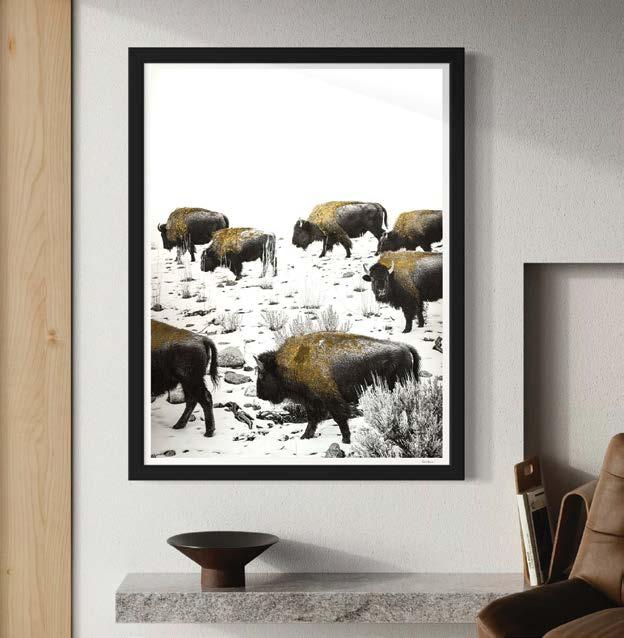
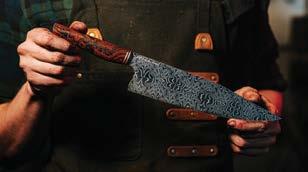
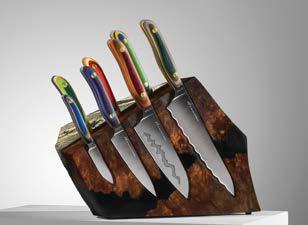
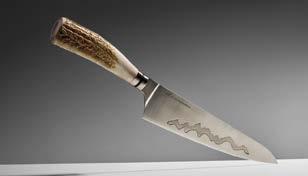
Kevin Noble incorporates gold accents as a reimagining of Japanese Kintsugi’s golden mending technique, celebrating the bison’s dramatic resurgence from the edge of extinction.



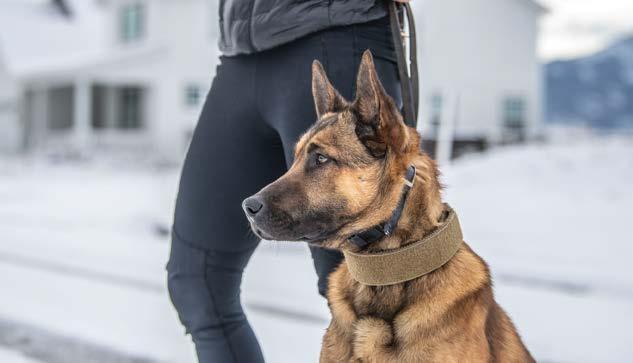


For two decades, Svalinn has set the standard in elite protection dogs— combining instinct, intelligence and training to create unmatched guardians. Bred for loyalty, raised with purpose and trained for sociability, our dogs are more than companions. They are Family. Deterrents. Peace of Mind.
Join us in celebrating 20 years of excellence.







In December 1969, five young Montana climbers set out to make a winter ascent of Mount Cleveland, Glacier National Park’s highest peak. None returned home. Decades later, friends and searchers still wrestle with the loss — and with whether the climbers reached the summit before the mountain claimed them.
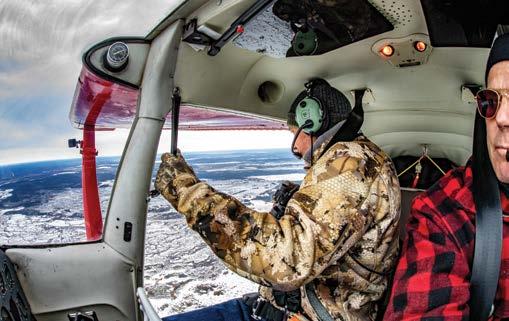
Across the Northern Rockies and beyond, LightHawk pilots take to the sky to reveal what can’t be seen from the ground. Their flights connect people to place as they help track wildlife, document change and show how vast, fragile and intertwined our landscapes are. From above, conservation becomes both more apparent and more urgent.
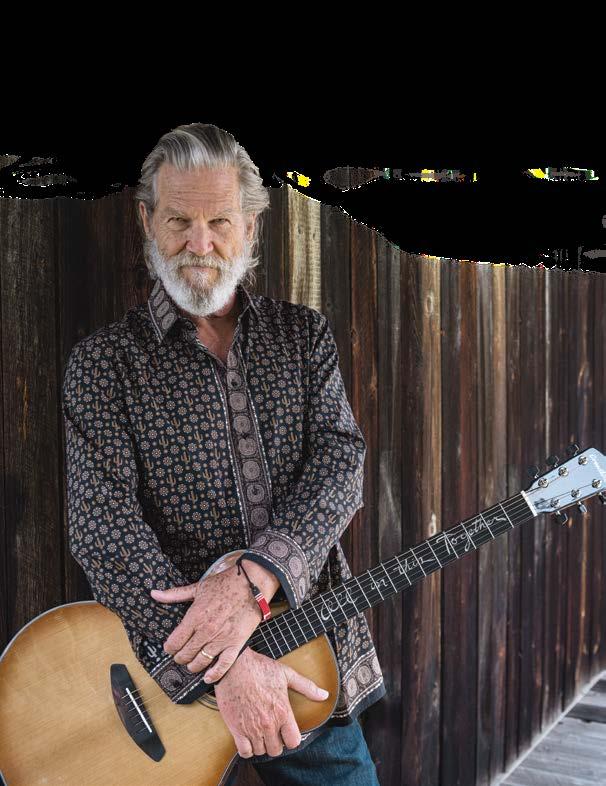
At his Paradise Valley ranch, Jeff Bridges reflects on a life spent between Hollywood and his home in Montana. The Oscarwinning actor and musician opens up about how the West shaped his sense of refuge, creativity and renewal, and how he’s still learning to live with grace, gratitude and a little bit of slow magic.
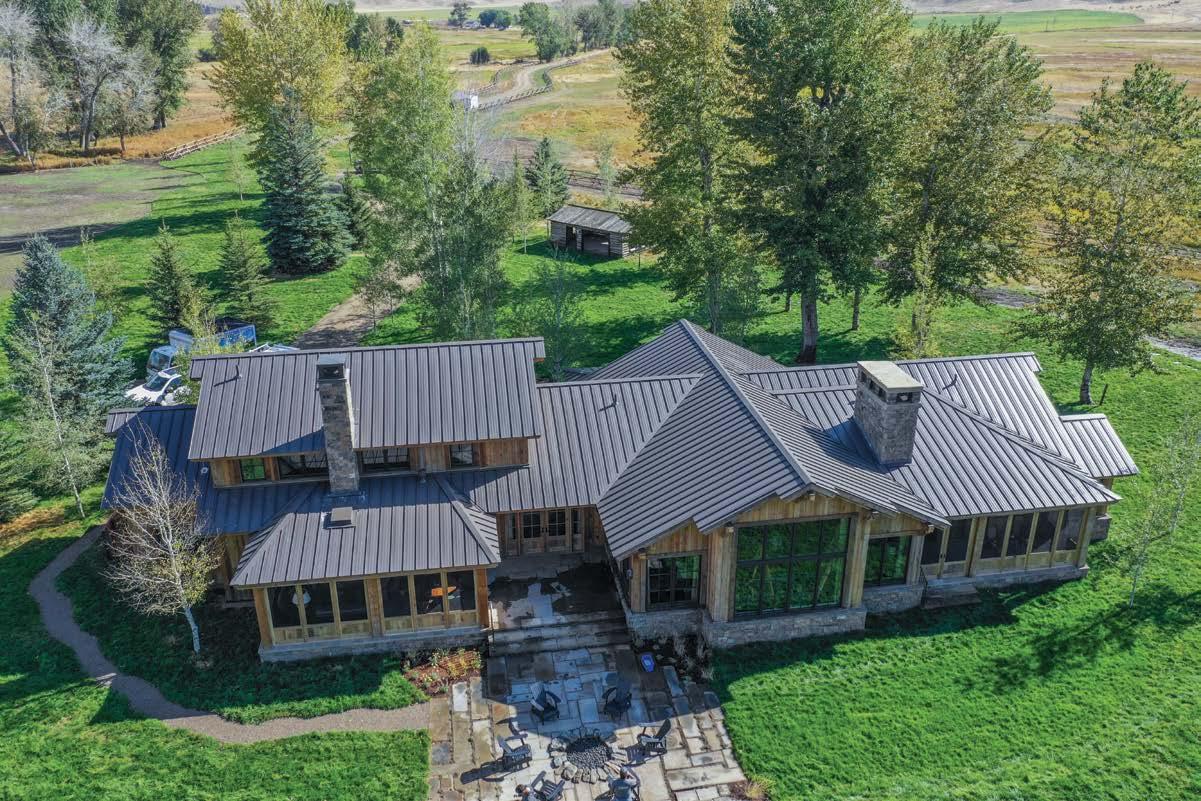
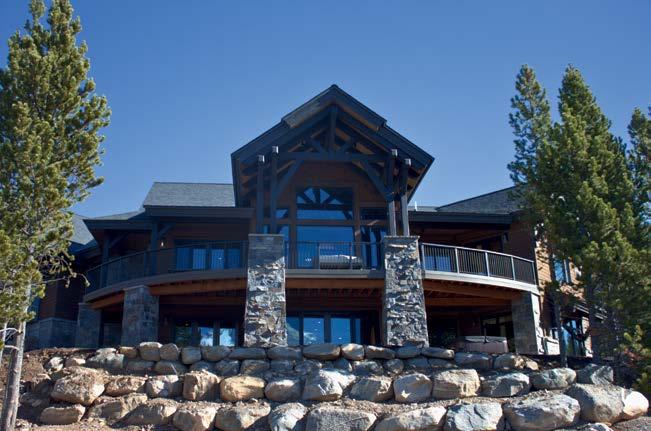

“BT Construction turned our dream into a reality as our recently completed Big Sky home is beyond stunning. We cannot stress enough the positive experience that Jacob and the entire BT Team provided throughout the build process.
From the quality of workmanship to the constant communication and level of professionalism, every part of the process exceeded our expectations. We would 100% recommend BT Construction to any future clients.”
~Big Sky Client
INSIDE OUTLAW
19 Letter Stories of refuge
FIRST TRACKS
22 Trailhead Our editor’s picks, from books to bites
27 Shorts GYE news in brief
30 Reviews In-depth takes on local media
34 Recipe Shan and North Bridger Bison pair up
OUTBOUND GALLERY
38 Where Hope Endures Images of an Arctic refuge
ADVENTURE
56 Adventure Guide Winter yurt camp in Yellowstone’s Hayden Valley
62 Swallowed by the Mountain Remembering the Mount Cleveland Five
70 The Mountain Within Reach Q&A with Everest climber Emma Schwerin
76 The Fragile Edge Navigating loss in the mountains
80 Seeing the Unseeable Ethical mountain lion photography
90 Poem A month alone in the Centennial Valley
94 Wings Above the Wild LightHawk takes on conservation from above
102 Heart of the Cedars Refuge in transition
CULTURE
108 Fully Rad Wisdom Getting to know Brendan Leonard
116 Songs From a Climate Refuge How a guitar is saving the Yaak
124 Montana’s Champion Remembering Rep. Pat Williams
128 On Love and Space Weather The mystery of the aurora borealis
PUBLISHER’S LENS
134 Keep the West Wild Honoring pioneers of conservation
FEATURED OUTLAW
152 Jeff Bridges’ Slow Magic Abiding in Montana’s Paradise Valley
LAST LIGHT
168 Refuge in rhythm
Owned and published in Big Sky, Montana
PUBLISHER
Eric Ladd
VP MEDIA
Mira Brody
MANAGING EDITOR
Sophie Tsairis
ART DIRECTOR
Robyn Egloff
COPYEDITOR
Carter Walker
ART PRODUCTION
Megan Sierra Griffin House
Radley Robertson
SALES & ADVERTISING
Ellie Boeschenstein
Ersin Ozer
Patrick Mahoney
ACCOUNTING
Sara Sipe
CHIEF OPERATING OFFICER
Josh Timon
CHIEF MARKETING OFFICER
Megan Paulson
VP DESIGN & PRODUCTION
Hiller Higman
DISTRIBUTION
Ennion Williams
Visit outlaw.partners to meet the entire Outlaw team.
CONTRIBUTING WRITERS
Rick Bass, Chandra Brown, Lauren Burgess, Bella Butler, Jen Clancey, Madison Dapcevich, Maggie Neal Doherty, Sula Castilleja Griggs, Carli Johnson, Butch Larcombe, Savannah Rose, Matt Skoglund, Kathleen Smith, Emily Sullivan, Toby Thompson, Leath Tonino, Jarrett Wrisley
CONTRIBUTING PHOTOGRAPHERS/ARTISTS
Ralph Alswang, Lincoln Athas, RA Beattie, Chris Boyer, Taylor Burk, Sula Castilleja Griggs, Lindsay Coe, David Driscoll, Jacob W. Frank, Audrey Hall, Dave Hall, Henry Higman, Bobby Jahrig, Tyson Krinke, Butch Larcombe, Kevin League, Riley McClaughry, Holly Pippel, Kylie Paul, Jim Peaco, Erik Petersen, Bonni Willows Quist, Michael Reubusch, Savannah Rose, Tendi Sherpa, Kathleen Smith, Meg Smith, Anthony South, Emily Sullivan, Madeline Thunder, Laura Wells, Don Wolfe
Subscribe now at mtoutlaw.com/subscriptions.
Mountain Outlaw magazine is distributed to subscribers in all 50 states, including contracted placement in resorts and hotels across the West. Core distribution in the Northern Rockies includes Big Sky, Bozeman and Missoula, Montana, as well as Jackson, Wyoming, and the four corners of Yellowstone National Park.
To advertise, contact Ersin Ozer at ersin@outlaw.partners or Patrick Mahoney at patrick@outlaw.partners.
OUTLAW PARTNERS & Mountain Outlaw
P.O. Box 160250, Big Sky, MT 59716 (406) 995-2055 • media@outlaw.partners
© 2026 Mountain Outlaw
Unauthorized reproduction prohibited

Subscribe to and read Mountain Outlaw online.
Check out these other Outlaw publications:

ON THE COVER
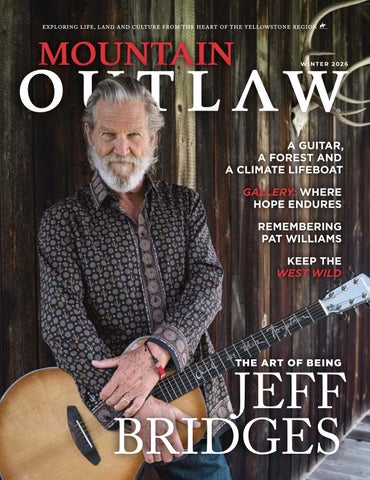
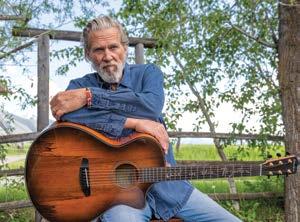
Academy Award-winning actor, musician and environmentalist Jeff Bridges poses with a signature-edition Breedlove guitar he designed with Breedlove owner Tom Bedell as part of a close partnership with the Bend, Oregon-based guitar maker. Read more about Bridges, this issue’s Featured Outlaw, on p. 152. Photo by Audrey Hall
Butch Larcombe
Swallowed By the Mountain | p. 62
Butch Larcombe is a lifelong Montana resident who grew up in Malta, on Montana’s Hi-Line. He currently lives near Woods Bay, south of Bigfork. Larcombe has worked as a newspaper reporter and editor for the Missoulian, Great Falls Tribune and Helena Independent Record. He also served as editor and general manager of Montana Magazine for six years and worked in corporate communications for NorthWestern Energy from 2012 to 2019. Historic Tales of Flathead Lake was published in June 2024 by The History Press. Another nonfiction book, Montana Disasters: True Stories of Treasure State Tragedies and Triumphs, was published in December 2021 by Farcountry Press.
Emily Sullivan
Outbound Gallery: Where Hope Endures | p. 38
Emily Sullivan (she/they) is an award-winning photographer, filmmaker and writer focused on outdoor recreation, environmental wellness and community empowerment in the north. She was the recipient of the 2023 Climate Futures storytelling grant from High Country News and was a 2024 Artist-in-Residence at Singla Creative Retreat in northern Norway. She lives, works and recreates on Dena’ina Ełnena, the lands surrounding Anchorage, Alaska where she is a community organizer for climate justice, Arctic sustainability, and land issues. When not engaged in creative pursuits, she can often be found walking long distances on skis or picking berries on the tundra.
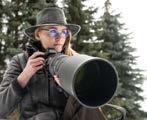
Seeing the Unseeable | p. 80
Savannah Rose is a full-time wildlife photographer and author who strives to capture evocative portraits of the most misunderstood and elusive creatures in the Greater Yellowstone Ecosystem. Her journey began in Jackson, Wyoming, 10 years ago where she quickly fell in love with mountain lions and the pursuit of sharing their stories with the world. Savannah believes effective portraiture of wildlife brings a human connection with animals that often live their lives unseen and inspires people to want to conserve their habitat. Her work has been featured by the Natural History Museum’s Wildlife Photographer of the Year, Audubon, Nikon and The National Wildlife Foundation.

Rick Bass
Songs From a Climate Refuge | p. 116
Rick Bass has lived in Montana’s Yaak Valley for nearly 40 years. A former oil and gas geologist, he is the author of more than 30 books of award-winning fiction and nonfiction, and has won a Governor’s Award for the Arts. He co-founded the Yaak Valley Forest Council, where he serves as executive director, as well as The Montana Project, whose mission is to empower Montana artists in conservation measures. An avid hunter, he has served as contributing editor for magazines as various as Tricycle: The Buddhist Review and Contemporary Wingshooter. He teaches writing workshops nationally as well as at the Stonecoast MFA in Maine.
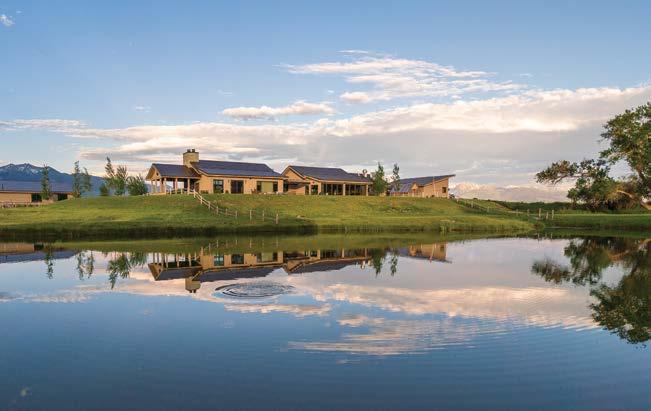
Fly Fishing in Montana can be a rugged, sometimes-tiring adventure—that’s why Madison Double R will be a welcome respite at the end of each day
Located on the world -renowned Madison River south of Ennis, Madison Double R offers first- qualit y accommodations, outstanding cuisine, exper t guides, and a fly fishing lodge experience second to none Contact us today to book your stay at the West’s premier year-round destination lodges


This July, students from the University of Southern Maine will make their way from Portland, Maine, to the most northern region of Montana, the Yaak River Valley, mapping old growth forests and absorbing the music of the ancients along the way (p. 116). Their goal is to raise awareness of climate refuges across the northern United States.
We often think of protecting wild places for the sake of those who cannot advocate for themselves, but we must also safeguard them for our own well-being and for generations yet to come. Refuge is not only about the land itself, but also about the act of caring for it, and for one another. And while these ecosystems are a vital lifeline on an ecological level, for biodiversity, for our climate’s stability and for thriving life, in this magazine we’ve discovered they’re also tied close to our human spirituality.
In this issue, our incredible writers, photographers and artists explore how refuge can take many forms. In the old-growth forests straddling the Idaho-Montana border, Sula Griggs finds her identity (p. 102). In Montana’s Red Rock Lakes National Wildlife Refuge Poet Leath Tonino finds solitude and inspiration during a month alone in the Centennial Valley (p.90), and in Featured Outlaw Jeff Bridges’ Montana sanctuary, he still abides, far from the noise of show business (p. 152). Even the Arctic National Wildlife Refuge, recently reopened to drilling, remains, as the images in our Outbound Gallery remind us, a landscape and community where hope endures (p. 38). Refuge can be a mountain or a marsh, but also a neighborhood potluck, a friend’s kitchen table, a community that chooses empathy over fear. It is built in the small, intentional acts that make places — both wild and domestic — safe for all who seek shelter.
As you read through these pages, you’ll find stories of those working to protect what offers us both physical and emotional shelter, including the wild spaces, living systems and human connections that sustain us. Perhaps you will even recognize a version of your own
refuge here or be moved to help protect someone else’s. However, wherever we find it, refuge is not passive. It’s something we must create, nourish and safeguard together.
Thank you for being here, and for receiving and offering refuge when and where you can.
Let it snow,
Managing Editor

Mira Brody VP Media
E a r n M o r e a n d W o r r y L e s s .
im pe r ati v e . To thri v e, y ou n eed a c o m p a n y with a r e v en u e m a n a geme n t t eam c a p a bl e o f adjusting r a t es 2 4 /7 based on r e a l - time fl u ctuati o ns in m a r k et demand
W h y i s p ric i ng so impor t a n t? I
l o w , y o ur h o m e wil l b o ok but y o u ’ l l be l e a v i ng mo n e y on the t a ble. S et r a t es t oo h igh and y o u ’l l l o se book i ngs a l t o gethe r
N at u r a l R et r e a ts has m a de a m a ss i v e i nv est m e n t i n o ur R e v e n ue M anageme n t t ea m o v er the y e a r s. T he r esult? G r ea t er r e v en u e f or o u r h o me o w n e r s

Browse all Trailhead features online
Every great adventure starts at the trailhead. Our editors have curated some favorite discoveries across the Greater Yellowstone Ecosystem, spotlighting page-turning reads, delicious eats and more.
–The Editors
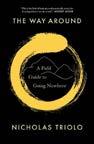
By Nick Triolo
In The Way Around, Missoulabased author Nicholas Triolo explores the transformative power of walking in circles, both physically and spiritually, as an antidote to Western goal-driven culture. After global travels and ultrarunning failed to ease his inner unrest, Triolo is inspired by the ritual of kora, or circumambulation. What follows are three deeply personal pilgrimages: around Tibet’s Mount Kailash, California’s Mount Tamalpais and perhaps most surprisingly, Montana’s Berkeley Pit. Triolo’s prose is both grounded and transcendent. It’s a meditation on how slowing down and walking with intention can reconnect us to place, to healing and to a more cyclical way of being.
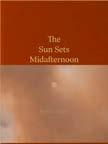
By Jessica Hays
Bozeman photographer Jessica Hays has spent five years documenting wildfires across the U.S., capturing both the visual and emotional aftermath of climate-driven megafires. Her upcoming photobook, The Sun Sets Midafternoon, captures this devastation and its psychological toll, what she calls “solastalgia,” the grief tied to environmental loss. Through her work, she creates space for conversations around collective grief and how deeply people relate to and mourn damaged landscapes.

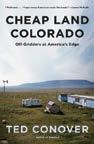
By Ted Conover
In Cheap Land Colorado, Pulitzer Prize finalist Ted Conover explores life on the fringes of American society in Colorado’s remote San Luis Valley. Living among off-grid settlers, he finds a diverse, selfreliant community shaped by independence, hardship and mistrust of the mainstream. Over four years, Conover witnesses their struggles, resilience and contradictions — people resisting authority yet reliant on aid and seeking solitude, yet tangled in their neighbors’ lives. Their stories reflect a fractured America where its edges increasingly define the center.
“Everything here is from scratch,” said Sally Schwartz, owner of Dilly Dally Donut Bar in Bozeman. That includes the hot chocolate, vanilla bean milk, cream and yes, the doughnuts themselves. Massive and in great variety, pastries range from classic glazed and sprinkle, to apple fritters made from Schwartz’s great-aunt Thelma’s recipe, beignets, kolaches and doughnut holes. Since opening in May, Dilly Dally has drawn sweet treat lovers to the far east side of Bozeman off Frontage Road to indulge in baked goods hot out of the oven. Go early, before the “sold out” sign lights up her shop window.

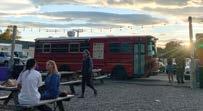
Still new to the growing Bozeman food scene, Shawarma Bus has carved out a space for itself in the modest but popular food truck court along Bozeman’s North 7th Avenue. The name says it all: “Shawarma” comes from the Turkish word for “rotates,” referring to the cooking method that forms the heart of every dish — thin-sliced lamb, chicken or beef carved fresh from the spit and piled into wraps or served as platters. While Shawarma is popular across the Mediterranean region, the bright red bus focuses on traditional Lebanese chicken and beef recipes the owners grew up enjoying.
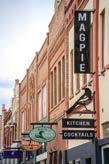
Along Broadway Avenue in Red Lodge, Montana, sits One Legged Magpie, a bistro inspired by quality bites with local ingredients and craft cocktails, as well as the resilient, blue-and-white corvid for which it is named. Founders Mike and Kat Porco drew inspiration from a disheveled, one-legged magpie they encountered during a reflective moment in Pride Park in the midst of the COVID-19 pandemic, and it became a symbol of their vision to create a restaurant defined by grit and character. The bistro’s popularity is well-earned: One Legged Magpie’s executive chef, Chase Cardoza, will represent the state of Montana on the upcoming season 24 of Hell’s Kitchen: Battle of the States.
Armed with a name that has a natural ring to it, Teton Thai has long held a special place in the hearts of Teton Valley locals — and for good reason. The family-owned spot in downtown Driggs, Idaho, delivers vibrant, balanced flavors inspired by family recipes from Bangkok. After a day of deep powder turns at Grand Targhee Resort, relax and refuel in the historic building’s cozy dining room. We recommend their pad thai for noodle-lovers — a classic done exceptionally well — or their massaman curry, a rich, creamy, mildly spiced coconutmilk-based dish with potatoes, carrots, onions and peanuts. On the other side of Teton Pass? Never fear — Teton Thai has a second location in Teton Village, Wyoming — a personal favorite dining spot of famed snowboarder Travis Rice.

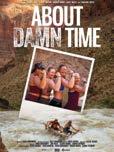
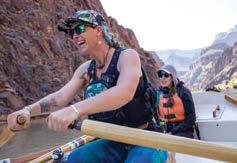
About Damn Time is a powerful documentary celebrating the pioneering women who navigate the Grand Canyon’s treacherous rapids in handcrafted dories. Produced by OARS, the film follows veteran guide Cindell “Dellie” Dale and the fierce women following in her wake. The film captures stunning canyon scenery but carries deeper currents. It documents the stories of women carving out space in a male-dominated river-running world. With resilience, humor and hardearned wisdom, they fight for their place on the river, and for the river itself as it is increasingly strangled by drought, politics and overuse. It’s both an exhilarating adventure and a poignant call to protect a river, and legacy, whose future remains uncertain.
Browse all Trailhead features online
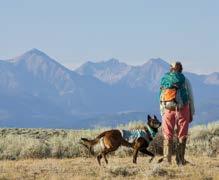
Working Dogs for Conservation is a Bozemanbased nonprofit that utilizes rescue dogs to locate everything from invasive species to diseases in wildlife, offering a non-invasive, efficient and accurate alternative to traditional detection methods. Using an olfactometer, the dogs, most rescued from shelters, are trained to recognize specific scents and have achieved impressive results — like identifying 1,298 kit fox scat samples with 100 percent accuracy and covering more ground than human surveyors or cameras on many of their projects.
Alice Whitelaw, one of four initial co-founders, helped establish the organization 25 years ago to meet a growing need for non-invasive DNA collection through scat detection. Now operating in 45 U.S. states and 36 countries, their dogs have worked on global projects including rhino conservation in Indonesia and poaching prevention in Africa. Most recently, Whitelaw is training dogs to detect Mycoplasma bovis, a disease affecting bison in the Greater Yellowstone Ecosystem. As the field grows, Whitelaw remains inspired by the dogs’ incredible abilities and their global conservation impact — far exceeding what she initially imagined.
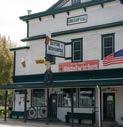
The other Dayton, while lesser known than its Midwest cousin, is well loved by those who enjoy some quiet exploration into the Bighorn Mountains via U.S. Highway 14. Incorporated in 1906, Dayton, Wyoming’s history follows the veins of agriculture, timber and the Dayton Flour Mill. The town elected the state’s first female mayor, Susan Wissler, in 1911 and during World War II it was protected by an all-female volunteer fire department. Today, Dayton is the gateway to the beautiful Tongue River Canyon, home to many fishing holes and recreation trails that weave deep into the northern Bighorns. Stay along the river at Foothills Campground and grab an ice cream cone or bag of kettle corn at the historic Dayton Mercantile.
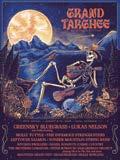
The beloved finger-picking fest in the Teton Valley, Grand Targhee Bluegrass Festival, is back in full swing. After a three-year pandemic hiatus, the festival re-emerged in 2023 with all the magic that made it a regional favorite. This past summer’s three-day lateAugust festival welcomed bluegrass names from near and far including the Kitchen Dwellers, Greensky Bluegrass, Yonder Mountain String Band, Brothers Comatose and Molly Tuttle. With available camping on-site, the event is a good time for the whole family, and it feels like it has found its way back to its roots: incredible live music paired with good company, fresh air and stargazing. This year’s festival is Aug. 7-9 with a lineup that includes Sierra Ferrel, The Brother Comatose, Mountain Grass Unit and AJ Lee & Blue Summit.


The Last Revel’s latest album, Gone for Good, marks a return for the Minneapolis-based Americana/indie-folk band after a brief, two-year hiatus. Produced by Dave Simonett of Trampled by Turtles, the 10-track album creates a marriage between “fast-grass” and strong storytelling familiar to their following, and touches on life on the road, love, loss and resilience. Standout tracks like “Solid Gone,” inspired by a near-tragic accident, and the fiery “Go On” showcase the strong four-piece harmonies The Last Revel has become known for. You can hear Gone for Good live in November as a part of their U.S. album tour in Missoula and Bozeman.
In 10 episodes, Wilder revisits the beloved Little House on the Prairie series with a refreshingly nostalgic yet critical lens. Hosted by Glynnis MacNicol and Elizabeth Stevens, the show explores Laura Ingalls Wilder’s beloved book series that made its way into almost every childhood home, examining both its enduring cultural impact as well as some of the damning historical truths glossed over, such as themes of manifest destiny and the government-issued land grants that the Ingalls family participated in on active Native land. Blending history, humor and sharp commentary, Wilder unpacks how these cherished stories helped shape American identity while diving into themes of race, gender and myth-making on the frontier.
// Words by Sophie Tsairis | Illustrations by Madeline Thunder
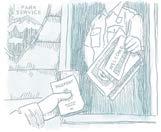
In an executive order issued July 3, the Trump administration directed the Interior Department to increase entrance and recreation pass fees for international tourists visiting national parks, with the revenue earmarked for park infrastructure and visitor services.
The fee hikes, which are not yet specified, will apply only to parks that currently charge admission, like Yellowstone and Grand Teton national parks.
The move aligns with a proposal from the Property and Environment Research Center, a Montana-based think tank, which recommended a surcharge for foreign visitors in a 2023 report.
Shawn Regan, PERC’s vice president of research, said a recent analysis focusing on Yellowstone found that a $20 surcharge could generate an additional $12 million for the park, an 84 percent increase in fee revenue overall, and with almost no impact on total park visitation. “We need to find creative ways to help sustain our parks for the future. Increasing fees from international tourists is a common sense way to do this,” he said.
National parks saw record attendance in 2024, with 331 million visits, including 14.6 million by foreign tourists. The revenue could provide much-needed support amid budget constraints.
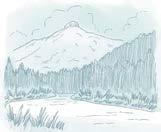
A new bipartisan bill from Rep. Ryan Zinke seeks to permanently protect nearly 100 miles of Montana’s Madison and Gallatin rivers by adding them to the National Wild and Scenic Rivers System.
The Greater Yellowstone Recreation Enhancement and Tourism Act would mark Montana’s most significant river conservation move in decades. Calling it a “Montana solution,” Zinke said the bill strikes a balance between conservation and multiple use. “These rivers support everything from family farms to fly shops, ranchers to rafters, and literally power our community.”
If passed, the bill would designate stretches of five rivers and creeks — including 42 miles of the Madison and 39.5 miles of the Gallatin.
Supporters like American Rivers and the Gallatin River Task Force say the move would safeguard water quality, block new dams, and preserve outdoor recreation. Sen. Jon Tester introduced similar legislation in 2024 — the Montana Headwaters Legacy Act, which would have protected sections of the Madison, Gallatin, Smith, Yellowstone and others under the Wild and Scenic Rivers System. That bill never made it out of the Senate, but conservation groups are optimistic that the GYREAT Act stands a better chance.
Sophie Tsairis is the managing editor of Mountain Outlaw
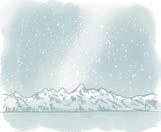
On April 11, 2025, Teton County, Wyoming, became the world’s first county to be certified as an International Dark Sky Community, a major milestone in efforts to combat light pollution and preserve natural night skies.
“It goes well beyond the aesthetics of a beautiful night sky to admire,” said Samuel Singer, founder of Wyoming Stargazing. “Reducing light pollution increases public safety, makes the nighttime environment healthy for all forms of life including humans, saves money, and reduces energy consumption.”
According to DarkSky International, a Dark Sky community is a town, city, municipality, or other legally organized community that has shown exceptional dedication to the preservation of the night sky through the implementation and enforcement of a quality outdoor lighting ordinance, dark sky education, and citizen support.
The county committed to retrofitting all public lighting to meet Dark Sky standards by 2030, and of 51 proposed lighting regulation changes, 49 were adopted by local officials.
Jackson Hole Airport also became the first airport in the world to receive Dark Sky status, while Sinks Canyon State Park earned designation as Wyoming’s first Dark Sky Park in 2023.
Madeline Thunder is a freelance artist based in Bozeman, Montana. When she is not creating, she can usually be found playing outside.


By Carli Johnson
Even as a renowned and successful scholar at the University of Chicago, Norman Maclean always found himself returning to the revered land of Montana. Raised in the rugged West and teaching in the bustling city of Chicago, he lived a dual life between academia and wilderness, between the classroom and the riverbank. Norman Maclean: A Life of Letters and Rivers by Rebecca McCarthy, is a catalogue of that life.
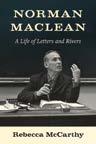
McCarthy, who first met Maclean as a teenager at her family’s cabin in Seeley Lake, brings both personal knowledge and thorough research to his life’s story. The result is an intimate portrait of Maclean as a scholar, teacher, writer, fisherman and family man. McCarthy traces the course of his life in ways that illuminate the roots of his writing and the legacy he left behind.
A man of tactfully curated words and slow-burning ambition, Maclean’s most notable works came late in life. A preacher’s son, a bereaved sibling and an eventual widower, he drew deeply from these relationships to craft stories that captivate an audience. His most celebrated work, A River Runs Through It and Other Stories, takes direct inspiration from his Montana upbringing and his brother Paul’s untimely death. Published when Maclean was 73, the book stands as a testament to the persistence and patience with which he pursued art.
“A storyteller,” Maclean wrote, “unlike a historian, must follow compassion wherever it leads him. He must be able to accompany his characters, even into smoke and fire, and bear witness to what they thought and felt even when they themselves no longer knew.” McCarthy follows this same principle, tracing the compassion that guided Maclean through smoke, fire and grief. She chronologically documents his life with both care and admiration, revealing the deep humanity behind his disciplined mind.
A Life of Letters and Rivers opens early: the Montana childhood, the young Maclean working for the U.S. Forest Service, the son of a strict Presbyterian minister whose lessons in language and discipline shaped Maclean’s writing. From his father he learned the rhythm of sermons, the power of narrative and the moral weight of words. Yet
his father’s approval remained out of reach. In a letter to a close friend while writing A River Runs Through It, Maclean confessed, “Writing is largely a matter of courage, or not knowing any better.” The admission reveals both his humility and self-doubt. Despite the breadth of his knowledge and education in literature, Maclean was famously hard on himself and his writing, a characteristic illustrated by McCarthy throughout the biography, perhaps best when she applies that discipline on the young author herself.
Readers accompany Maclean to Dartmouth, where he felt out of place among the Eastern elite. He would later find a sense of belonging at the University of Chicago, where, as he liked to say, “He and the university grew up together.” McCarthy paints him as both a formidable and generous teacher. “Norman was known as a fair, and supportive, attendant who wanted students to succeed, but he still managed to scare the bejesus out of some of them,” McCarthy writes.
Still, Maclean never fully left Montana behind. Teaching through the academic year and retreating to his cabin on Seeley Lake in summer, he found a balance that sustained him. That rhythm, McCarthy details, was his ideal life — one where he could be the Western outdoorsman and the attentive academic, the fly fisherman and the literature professor.
When A River Runs Through It was published in 1976, it made history as the first work of fiction ever released by the University of Chicago Press. That institutional milestone mirrored Maclean’s personal triumph: a man who had spent a lifetime teaching literature finally entering it himself. McCarthy explores the mix of humility and disbelief that accompanied Maclean’s success as he was suddenly hailed as a new voice in American literature.
In his final years, Maclean turned again to tragedy with Young Men and Fire, his account of the 1949 Mann Gulch disaster near Helena, Montana. Here, McCarthy’s themes of place and perseverance converge. The same Montana landscape that nurtured his youth and inspired his fiction now became the setting for his final work. Committed to the art, he continued to write even as his health declined.
By the end of McCarthy’s biography, the reader senses the completeness of Maclean’s circle: the boy from Missoula, the scholar from Chicago, the wise man returning home. Norman Maclean: A Life of Letters and Rivers is a record of how land, loss and a lifelong dedication to craft shaped his voice. McCarthy’s prose flows with the same patience and restraint that marked her subject’s own.
Carli Johnson is the social media coordinator for Outlaw Partners.
By Jen Clancey
After an Oct. 18 showing of the documentary Bring Them Home, co-producer Daniel Glick recalled the experience of filming buffalo. For directors Glick and the brother-sister duo Ivy and Ivan MacDonald, Blackfeet filmmakers, capturing still, breathtaking shots of the 1,000-2,000-pound mammals was surprisingly simple. “They look right at you,” Glick said.
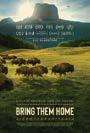
Perhaps that’s why, sitting in the balcony of the theater, I felt I was seeing a new side of the iconic animals on the screen. Bring Them Home, or Aiskótáhkapiyaaya in the Blackfeet language, tells the story of the Blackfeet Nation’s ongoing fight to restore bison to their homelands and renew the relationship between its people and the iinnii (buffalo).
Narrated by Lily Gladstone, a member of the Blackfeet Nation and Golden Globe winner for Killers of Flower Moon, the film offers a profound understanding of the millenia-long connection between the Blackfeet and the buffalo.
Early in the film, viewers learn about the near-eradication of bison populations across North America as white settlers expanded westward. In 1870, an estimated 8 million bison roamed across what is now the United States. By 1890, fewer than 500 remained. Leaders were explicit about the violence, heartbreak, and harm this slaughter would inflict on Indigenous Nations. In 1867, a U.S. general reportedly encouraged the cull, saying, “Kill every buffalo you can. Every buffalo dead is an Indian gone.” These words open the section of the film recounting this history, followed by archival photographs of white men posed in front of mountains of buffalo skulls and bones.
“Without buffalo, our world collapsed,” Gladstone narrates. But for decades, a small group of Blackfeet community members have been leading efforts to bring the buffalo home, to heal from the trauma and genocide inflicted on both the Blackfeet people and the iinnii and revitalize the centuries-old relationship between them.
In one of my favorite moments from the film, Paulette Fox (Kainai Nation), co-creator of the Iinnii Initiative to restore buffalo to Native land, explains a vision she had at five years old when a herd of bison appeared to her. She notes what it felt like to be alive beside the iinnii, as the sun shone through
grassland. Like a foretelling, the image and feeling of being beside the relative stayed with her throughout her life and guided her work to reunite Blackfeet people and buffalo. But from the start, the effort faced challenges. In one scene, a 1993 attempt at buffalo restoration on the Blood Reserve in Canada, part of the three-piece Blackfeet Confederacy, faced resistance from Indigenous community members who didn’t have a say in the relocation decision. The truck carrying the newly purchased bison was turned away. Fox comments on seeing her people oppose the return of bison. Rather than dwelling on the frustration, she expresses her understanding that if buffalo do return, it must be a decision the Indigenous community supports wholeheartedly. She describes the moment as the community needing more time to prepare for the iinnii reunion.
On the timing of the restoration effort and the film process itself, Gladstone offered her perspective in a 2024 KUOW Puget Sound Public Radio interview: “I feel like when something is this big and this meaningful and it’s tied to something that is communal, which is our planet, it has its own timeline and it has its own animism and it comes about when it wants to, when it demands that it be there,” she said.
Community participation was and is central to the Iinnii Initiative, and through it, the return of a second herd gained traction. This time, the Tribe acquired bison that originally roamed Blackfeet land and lived in Canada’s Elk Island State Park following a series of forced sales. In 2016, Elk Island State Park calves were released onto Blackfeet land, a moment the film captures. On screen, Fox reflects that the relocation project was finally successful because it was done in “a loving way.”
As the years passed with original Blackfeet bison on tribal land, a final goal steadily took shape in the minds of Blackfeet organizers: a free and wild herd. Gladstone narrates that much like bison facing and moving toward a blizzard, the Blackfeet people sustained their momentum through events such as Iinnii Days and buffalo drives. Gradually, they negotiated and advocated to open northern Blackfeet lands bordering Glacier National Park to allow bison to roam freely at last.
Bring Them Home traces the ongoing renewal of the iinnii -Blackfeet relationship, and the collaboration and community-building required to return them on Blackfeet terms. Where nature documentaries separate the human from the mammal and the land, Bring Them Home reminds us of a different relationship with the beings around us, one that is familial, and crucial to survival.
“We know how to be patient. We know how to survive, endure,” Gladstone narrates, attributing these lessons to the iinnii
Jen Clancey is a staff writer at Outlaw Partners.

Introduction by Matt Skoglund
Recipe by Jarrett Wrisley
Photos by Henry Higman
I obsess over this work. “Good enough” isn’t acceptable here. In the name of “progress,” our food system has become industrialized and mechanized, often at the expense of animals, people, biodiversity, rural communities, and our health.
At North Bridger Bison in Wilsall, Montana, we believe there’s a better way. A way to raise food that honors land and life, increases biodiversity, treats animals and humans with dignity and respect, and improves both ecological and human health.
A few years ago, shortly after he and his family moved to Bozeman, I met Jarrett Wrisley. We had mutual friends, shared interests, and a similar outlook on the world. My wife, Sarah, and I went to one of his pop-up dinners, and we were blown away. His was a different kind of cooking, a different kind of experience.
As he prepared to open his restaurant, Shan, Jarrett was deeply intentional about sourcing ingredients from Montana farmers and ranchers that shared his values. He wanted to know who was raising food with integrity. We met multiple times, and I recommended to him some of the producers I admire most in the valley.
Jarrett opened Shan, and people went wild over it — so much so that Shan was named a finalist for the James Beard Award for best new restaurant in America.

Jarrett obsesses over the small details of his cooking. “Good enough” is not acceptable.
He took his entire team at Shan from Bozeman to Asia to experience the food and culture firsthand. He sources the best ingredients he can find, treats his team with dignity and respect, and leads with his heart.
In 2024, we had the honor of hosting Jarrett as the guest chef for our Outstanding in the Field dinner on our ranch, a dream come true for Sarah and me. Even with Shan in full swing, Jarrett poured himself into that dinner. We met to discuss the menu, and his brain was buzzing with ideas. He even came to the ranch to witness the field-harvest of the bison he would be cooking, wanting to honor the story behind the food.
The result was an extraordinary, one-of-a-kind meal for more than 200 people that blew everyone away. And he did it all with grace, humility, and a sense of humor.
It’s an honor to call Jarrett a friend, and it’s an honor each time he cooks our bison meat. It feels like a celebration of everything we believe in.
This larb recipe is out of this world; cook it and savor every bite.
Matt Skoglund is the founder and owner of North Bridger Bison, a bison ranch rooted in regenerative agriculture principles in Montana's Shields Valley. North Bridger Bison sells 100 percent grassfed, fieldharvested bison meat direct-toconsumer across Montana and all over the country.
Isaan-Style Bison Larb
Serves 4
Larb — or laab, as it’s pronounced — is an onomatopoeia for the sound a large knife makes as it cleaves through chunks of meat on the stump of a tamarind tree, the traditional cutting board of Thailand. Larb is something eaten across the Mekong River Basin in northeastern Thailand and Laos, usually seasoned with fish sauce and lime juice, herbs, chilies and toasted sticky rice powder. In Thailand’s north, there are raw and cooked versions that are reliant on dark, toasted spices, fried garlic and shallots, and lots of chili. (This is the northeastern version.) This dish is best eaten with sticky rice or steamed jasmine rice, along with a soup, a curry or maybe some stirfried vegetables. Or, just cut some cucumbers and serve it with crisp lettuce — we use Little Gem at the restaurant — and lots of fresh herbs like dill, cilantro, Thai basil and mint. I love using the Skoglund’s bison for Thai recipes — its leanness and grassy, natural flavor is not unlike that of water buffalo, often eaten in the Thai countryside.
Ingredients
2 tablespoons neutral cooking oil
20 ounces bison, either ground or, preferably, chopped very finely to a consistency like ground meat
2 tablespoons chicken or beef stock (or water)
5 tablespoons fish sauce
4 tablespoons freshly squeezed lime juice
3 teaspoons chili flakes (or more to taste!)
3 tablespoons rice powder (to make, toast raw jasmine or sticky rice in a pan slowly, until it is very brown on the outside, flipping it so as not to burn. Then grind in a spice grinder or crush in a mortar and pestle to a texture that is grainier than flour — sort of like finely ground coffee).
4 tablespoons minced shallots
2 to 3 tablespoons fresh mint, cilantro and green onions, all roughly chopped
Method
1. In a small saucepan, heat the oil and add the bison and cook through, over medium heat. You are not browning the meat but merely cooking it. Add the stock halfway through and continue to cook until the meat is no longer pink, then reduce whatever liquid is in the pot — roughly 5 minutes of cooking over medium-high heat.
2. Add the shallots and stir.
3. Next add the fish sauce, lime juice, chili flakes and rice powder and stir aggressively. Taste. You should have a nice balance of sour, salty and spicy. If you think it needs any more chili, lime or salt (in this case, in the form of fish sauce) add it now.
4. Finish by stirring in your herbs. Decant into a bowl and top with more rice powder and chili flakes, and a dusting of cilantro and mint. Serve.

Jarrett Wrisley is a chef, author and owner of Shan, in Bozeman, and two restaurants in Bangkok, Appia and Peppina. He spent two decades researching, cooking and writing about the foods of China, Thailand and Italy before returning to the United States in 2021.

Scanhere to viewoffers!


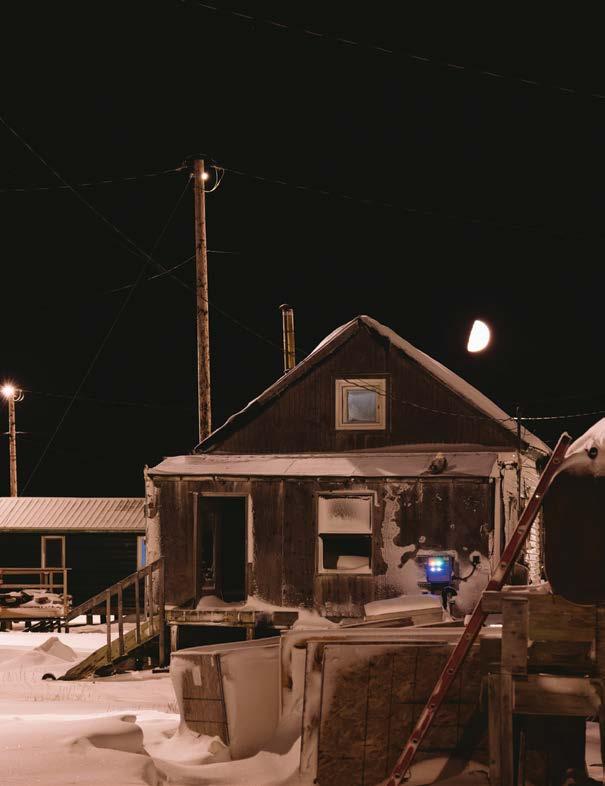
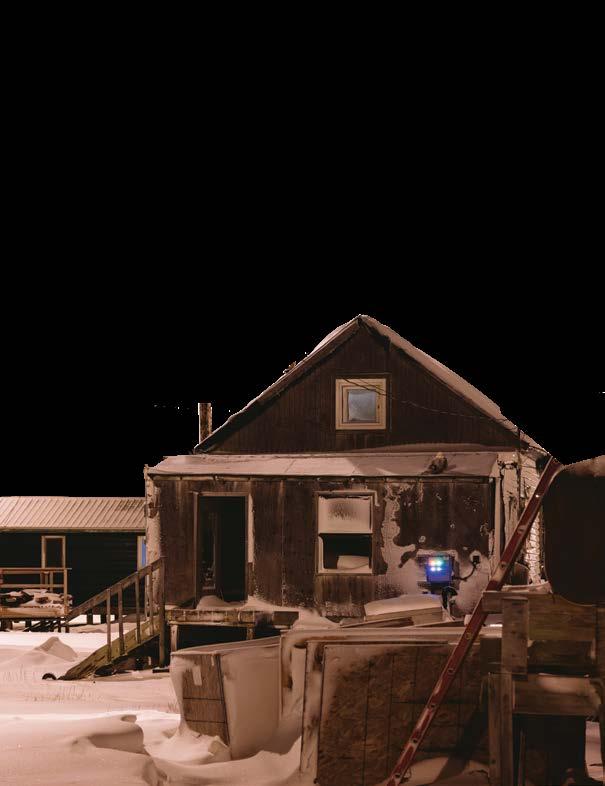
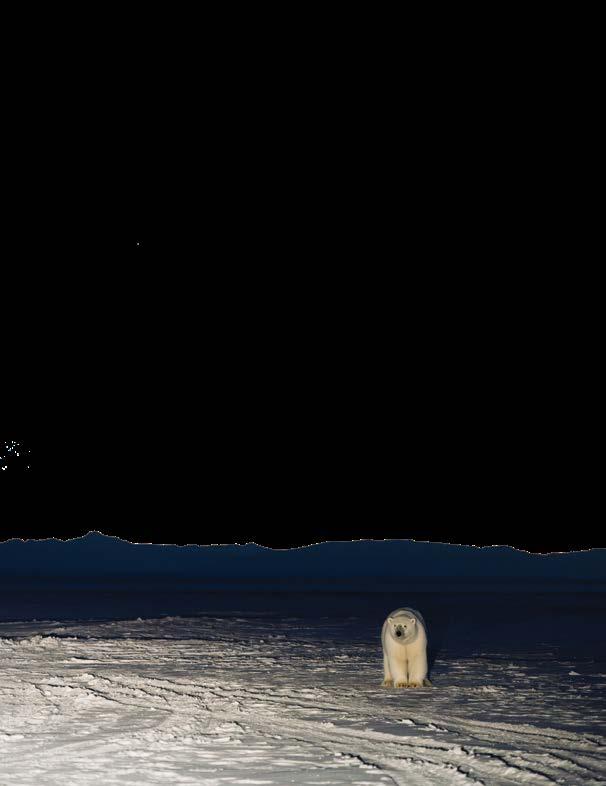
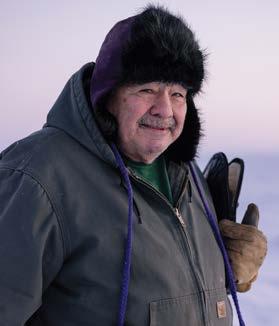
It’s the last day the sun will peek above the horizon in Kaktovik, Alaska, for the year — polar night begins tomorrow. Not far from town, I stand at the edge of the sea ice with Robert Thompson, taking in the view. The Brooks Range looms purple at the edge of the coastal plain, 50 miles south. Most of the next few days are spent bundled up, enjoying the long, lavender, midday twilight, and listening to Thompson’s stories. Over a lifetime of hunting, exploring, and guiding, the Iñupiaq Elder has had more adventures (and misadventures) than most can dream of.
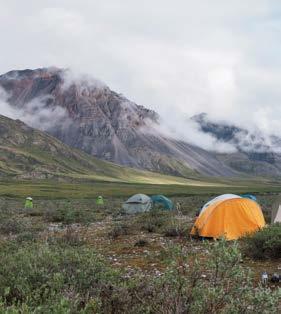
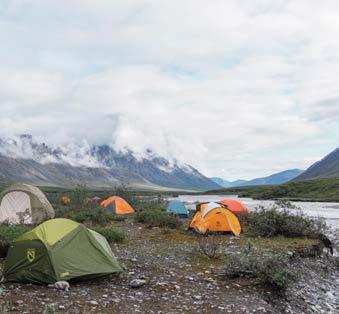
When I first met Thompson in 2021, we were camped along the banks of the Hulahula River in the Arctic National Wildlife Refuge. I had heard his name many times — the former polar bear guide is well-known in environmental circles for his efforts to protect the Arctic Refuge from oil and gas exploration. Thompson lives in Kaktovik, the only community located on the refuge’s coastal plain. He has witnessed firsthand the impacts of climate change on polar bears, caribou, Dall sheep, and the ecosystems these mega-fauna rely on. Years ago, he dedicated himself to preventing further damage to the Arctic environment, and he has held steadfast in his commitment — traveling to Washington D.C. to lobby, granting interviews, and educating the public.
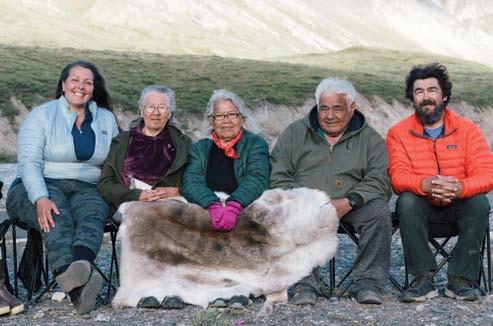
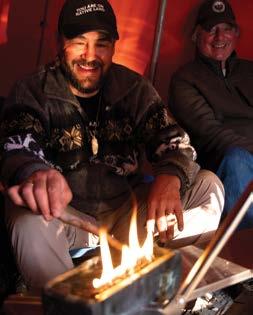
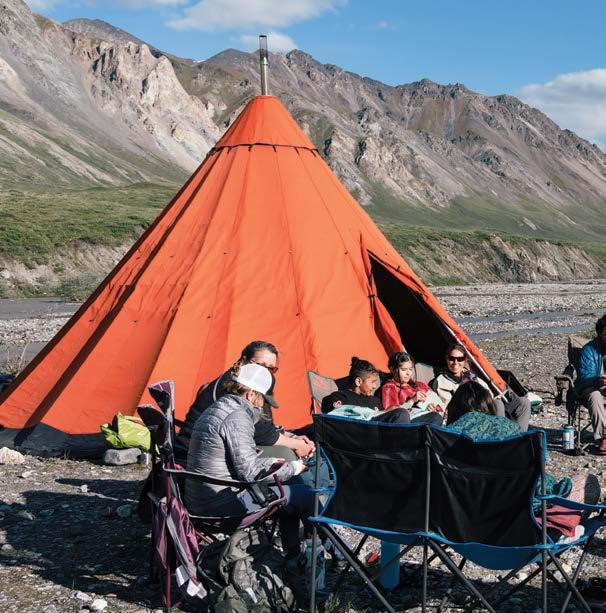
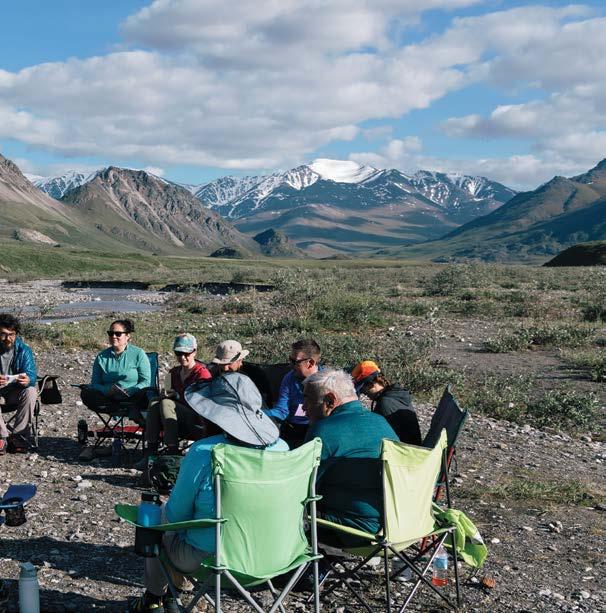
That same year, Thompson and I traveled to the Hulahula to take part in the Imago Initiative, a place-based dialogue between conservation advocates and Indigenous peoples aimed at progressing conservation through an Indigenous worldview. The program was created in 2020 by Karlin Nageak Itchoak, an Iñupiaq land protector from Nome and Utqiagvik. Camped in the river valley and surrounded by the Brooks Range, Imago groups learn about the land’s cultural importance while brainstorming equitable and just solutions for its protection.
The refuge’s northern coastal plain has been the topic of intense debate in Congress for four decades. Held sacred by the Gwich’in Nation, it’s the birthing grounds for the Porcupine Caribou herd. Despite repeated attempts by industry and pro-development lawmakers to open it to drilling, grassroots organizing and legal challenges have stymied
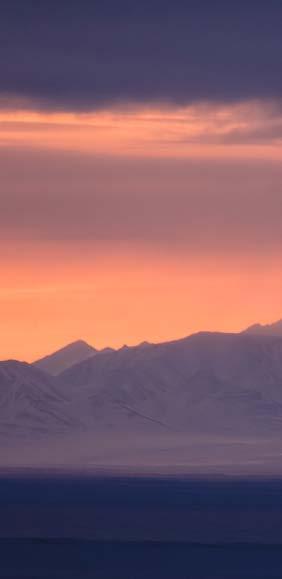
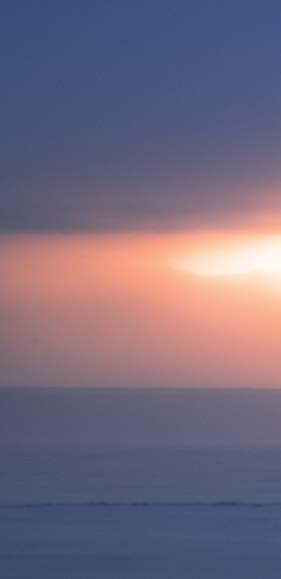
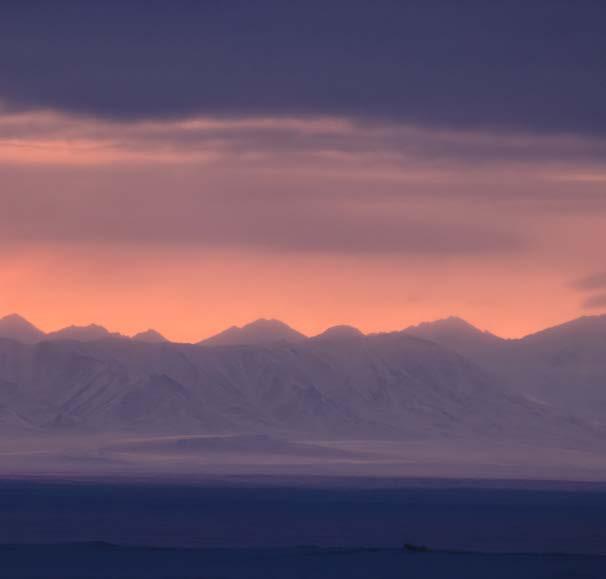

Previous page left to right: Polar night settles in over the village of Kaktovik from mid-November to late January. During this time, the sun never rises fully above the horizon. A polar bear stands nearby the village of Kaktovik, with the Brooks Range in the background. This page: The final sunrise of 2023, lightly obscured by frost in the air, lingers for a few hours as the sun barely peeks above the mountains of the Brooks Range.
these efforts, making it one of the most enduring environmental struggles in the United States.
There is no better place to brainstorm land protections than on the land itself. Each summer during the gathering, Imago participants hear from elders like Thompson, both Gwich’in and Iñupiat, about the changes they’ve seen in the land and wildlife. We learn about the challenges facing Indigenous communities today, which can be exacerbated by such approaches to conservation as dispossession of land, infringement on hunting rights, and more. We learn to hold the land, plants, and animals as equals and as relatives. We brainstorm strategies to ensure a healthy future for the coastal plain and the Porcupine Caribou herd. These yearly trips renew my hope for the future of the Arctic.
My friendship with Thompson is what brings me north to Kaktovik for a visit in November of 2023. Winter arrives early at 70 degrees north. As we sightsee near town, my mukluks crunch over unpacked snow. By now, the sea ice should be thick and solid, but it remains patchy. Open water is a stone’s throw away. Thompson explains that the changing ice forces polar bears to spend more time on land, limiting their hunting access to sea mammals. We watch as a sow and cub feed on a whale carcass close to town, and observe a massive, lone boar napping farther out on the ice. Thompson fears for their future — not only because of climate change, but also because of the threat of seismic testing for oil wells.
It’s a difficult time to remain hopeful for the Arctic. Threats to the refuge loom larger than ever. But when hopelessness creeps in, I remember Thompson’s steadfast commitment to the lands he loves and the animals his people rely on. I think of that last, golden sunset before polar night began, and remember that only a few months later, the sun would rise again on the Arctic Ocean. As industry continues to push for drilling, the future of the Arctic Refuge will be decided not just in the halls of Congress, but in whether we choose to stand with the Indigenous communities who have always fought to protect it.
Emily Sullivan (she/they) is a photographer and writer focused on outdoor recreation, environmental wellness, and community empowerment. Sullivan was the recipient of the 2023 Climate Futures storytelling grant from High Country News and was a 2024 Artist-inResidence at Singla Creative Retreat in arctic Norway. She lives, works, and recreates on Dena’ina Ełnena, the lands surrounding Anchorage, Alaska.
solutions for its protection.
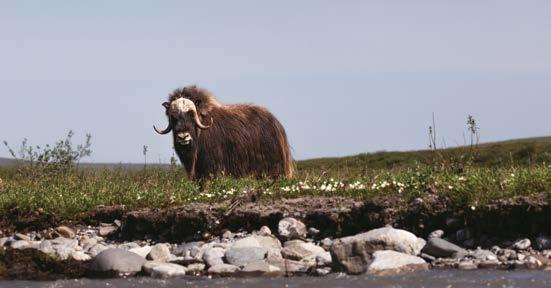
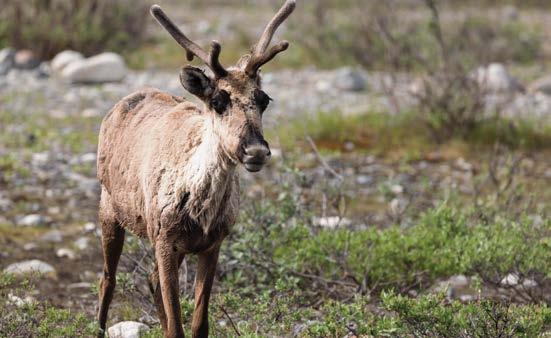
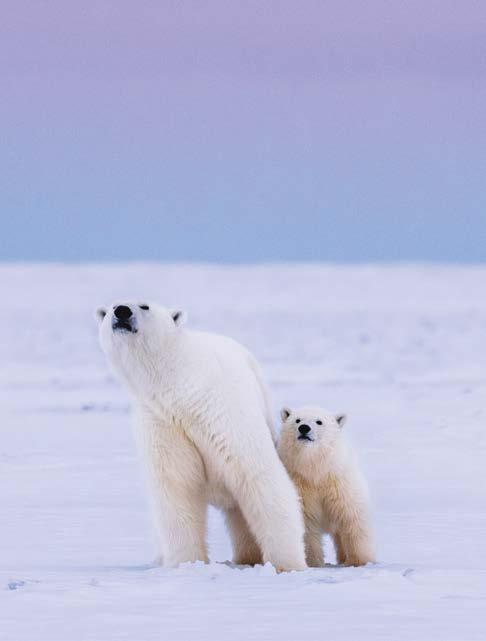
Above left: A muskox stands on the banks of the Hulahula River. These ancient herbivores graze on grasses and willows, playing a vital role in the fragile Arctic ecosystem. Left: A young, curious caribou rests near camp on the Hulahula. The Porcupine Caribou herd makes the longest land migration of any mammal on Earth, traveling to the Arctic Refuge coastal plain each spring for calving. Above: A sow and cub polar bear approach the village of Kaktovik in search of food. As Arctic sea ice seasons shrink with warming temperatures due to climate change, polar bears face growing food scarcity and increased conflicts with humans.
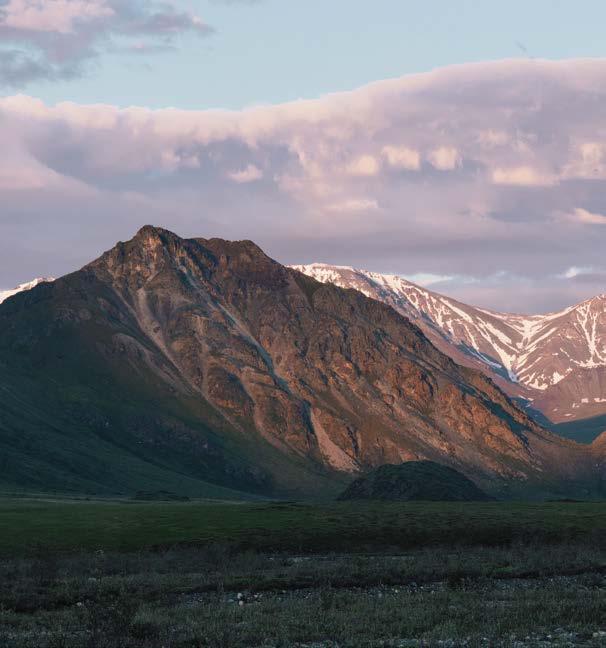
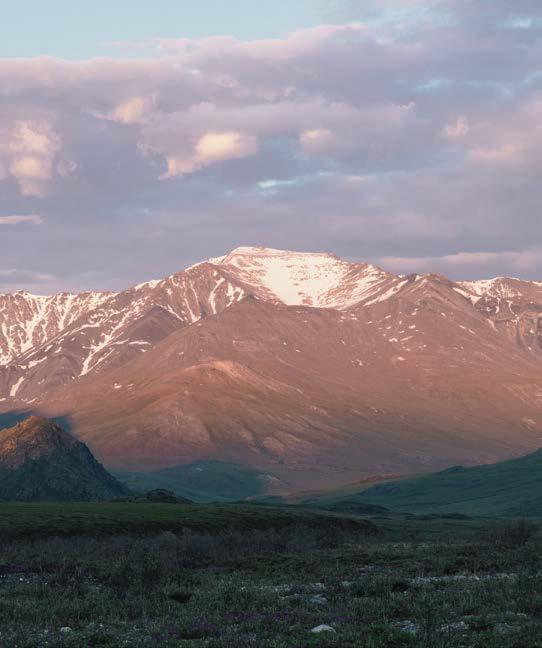
The high peaks of the Brooks Range hold snow year-round. Here, the headwaters of the
River are illuminated by the midnight sun around 2 a.m.






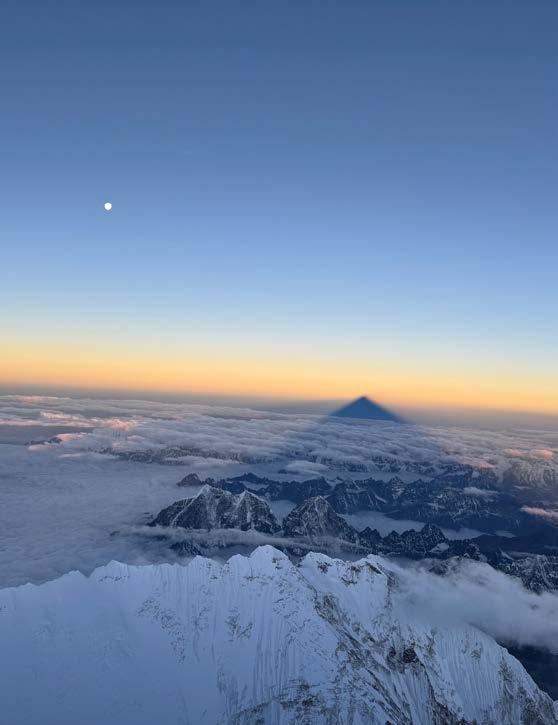
56 Adventure Guide: Winter Yurt Camp in Yellowstone’s Hayden Valley
62
Feature: Swallowed by the Mountain
70
Q&A: Emma Schwerin
76
Essay: The Fragile Edge
By Kathleen Smith
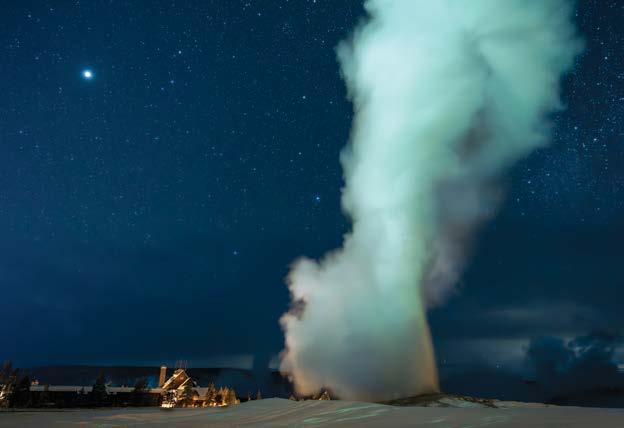
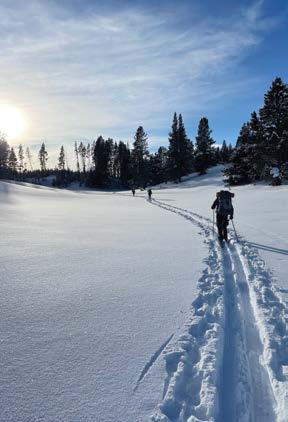
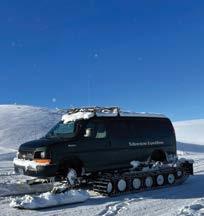
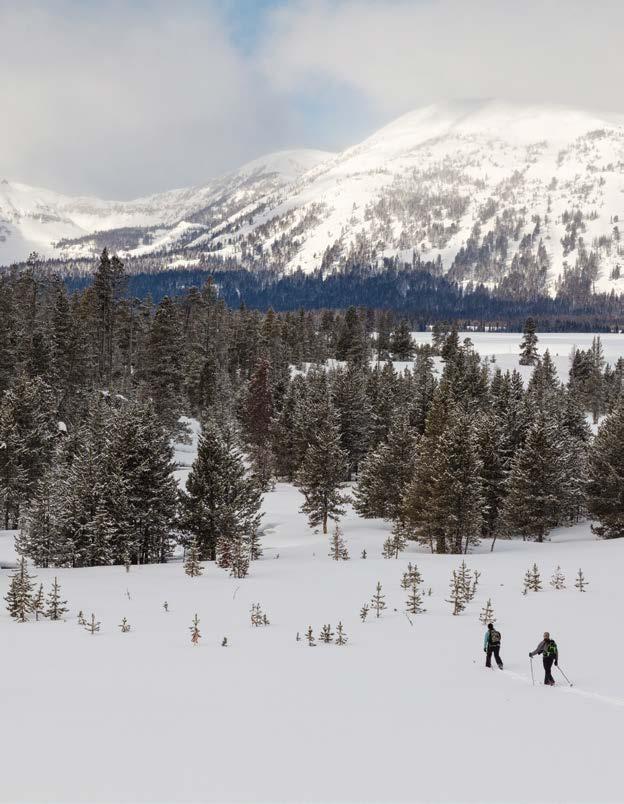
When winter settles over Yellowstone National Park, the vast landscape takes a deep breath, the roads close, and some of the most amazing scenery and wildlife are left to be enjoyed by the few who are willing and able to access it. I should know: Working as a ski guide for Yellowstone Expeditions, a small yurt camp tucked away in Yellowstone’s Hayden Valley, I’ve experienced the magic of this winter wonderland in a way few ever do. From early mornings chipping ice off snow buster vans — passenger vans outfitted with track conversion kits for snow travel — to evening skis watching coyotes fight otters for a fish dinner along the Yellowstone River, to bison warming themselves in the steam of bubbling thermal features, yurt camp is a once-in-a-lifetime experience (or for us guides, once a year)! Blankets of snow insulate the park, providing solitude and a reprieve from the busy summer tourism season. With many of the roads closed in winter, wildlife roam more freely across the quiet landscape — yet the season still brings its own relentless challenges for survival. For those who venture in, winter in Yellowstone offers a rare, raw experience: a glimpse into the park’s wild heart when nature is both most vulnerable and most alive. Guests explore thermal basins, ski through vast meadows, canyons, and along steaming creeks, and listen to the howl of wolves echoing through the stillness.
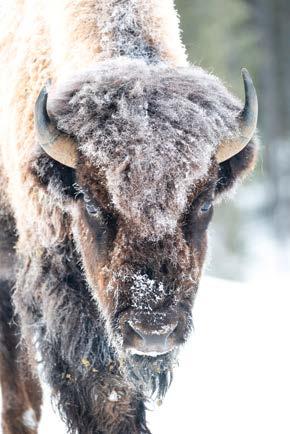
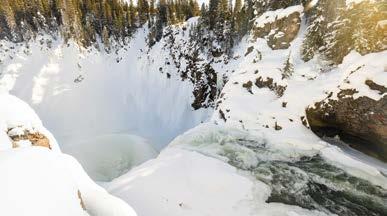
Near the Grand Canyon of the Yellowstone River, Yellowstone Expeditions’ yurt camp is a haven where adventurous outdoor enthusiasts explore the park by skis, snowshoes, snowcoaches, or through photography. Guests work with guides to personalize their experience and plan routes and skis that are aligned with their goals and abilities. Upon arrival at yurt camp, hosts and guides greet the guests, welcome them to camp, and provide the appropriate gear for each person. Guests then embark on their first cross country ski, following a trail that provides access to the Grand Canyon of the Yellowstone River. Guides lead adventurers to a viewpoint where the Lower Mesa Falls towers over 300-feet tall. In the cold winter months, the spray from the waterfall freezes and forms an ice tower at the base. Those lucky enough may see river otters playing and sliding around on the ice, showcasing the whimsical life that exists in Yellowstone’s winters.
Back at camp, guides are bustling, preparing appetizers and drinks in the main yurt. Guests, in groups no larger than 16 at full capacity, begin to get to know each other and chat with guides about goals for their stay in the park. Some hope to cover miles, test their endurance, and conquer long days on skis, while others are looking for casual ski outings exploring the thermal basins. Others aspire to track and photograph the Wapiti wolf pack and other wildlife, which are active and often easier to observe in winter.
The first step is to book a stay with Yellowstone Expeditions. This can be easily done online, but don’t wait; the experiences tend to book out a few months in advance! There’s a four-day and a five-day option for staying at camp. Guests meet in West Yellowstone at the park’s West Entrance, where the snowcoach picks them up to shuttle them to basecamp. For visitors coming from far away, West Yellowstone is about a two-hour drive from the Bozeman Yellowstone International Airport and offers a variety of lodging.
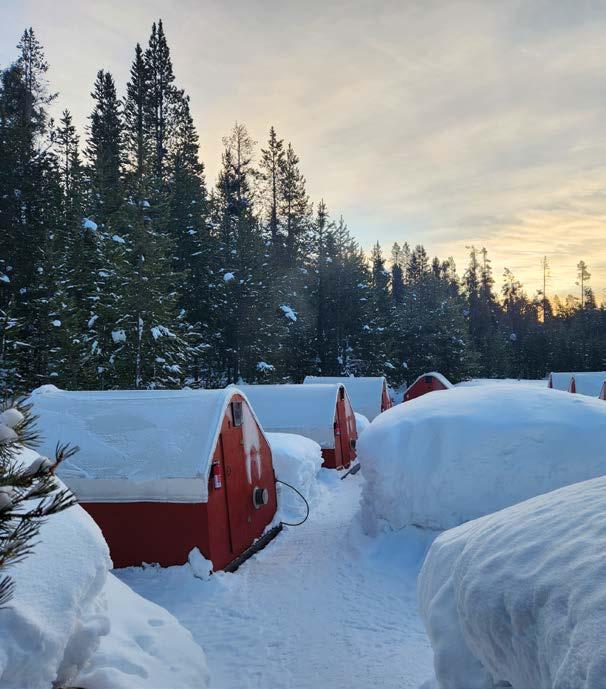
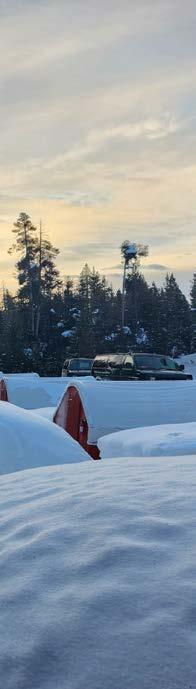
The accommodations at yurt camp are nothing short of magical — like the North Pole, stepping into Santa’s village. Two large traditional style yurts are connected to form a dining and kitchen yurt where guests enjoy hearty home-cooked meals and share stories from the day. The rest of the camp is dotted with small “yurtlets” designed after Scandinavian ice fishing huts, heated by individual propane stoves and providing a cozy private space for each guest. Throughout the winter, snow piles up between the yurts, muffling the sounds of any movement or chatter from neighboring yurts and accentuating the silence.
Winter in Yellowstone is one of the harshest climates I have ever experienced. Temperatures are rarely above 0°F, and sometimes plummet to −60°F. On days where temperatures are colder than −30°F, we wait for the sun to come out before we ski. Yellowstone Expeditions provides a great packing list before arriving at camp, but I have included a few recommendations for items I couldn’t live without during winters in the park.
+ Layers: Top and bottom base layers, fleeces, and insulated outerwear will keep you comfortable on the trail.
+ Extra gloves and socks: Cold feet/hands are the worst. Come prepared with extras of everything — but especially a second pair of warm gloves or mittens and more socks than you would think!
+ Thermos: A hot sip of tea, hot chocolate or coffee on the trail is a luxury in the harsh Yellowstone winter.
+ Cozy yurtwear: Slippers and warm, comfortable clothes to wear as you sit around the fire and enjoy the evenings at camp.
+ Something to document your trip: While we spend a lot of time basking in the moment, having a camera and/or a journal to keep a record of this special experience will help you enjoy it later. I know I love to flip through old photos from my time out here.
Kathleen Smith is an adventurous girl based out of Bozeman, Montana. She spends her summers as a whitewater raft guide, her shoulder seasons chasing rivers and her winters as a ski patroller. She loves all things water, frozen or melted!





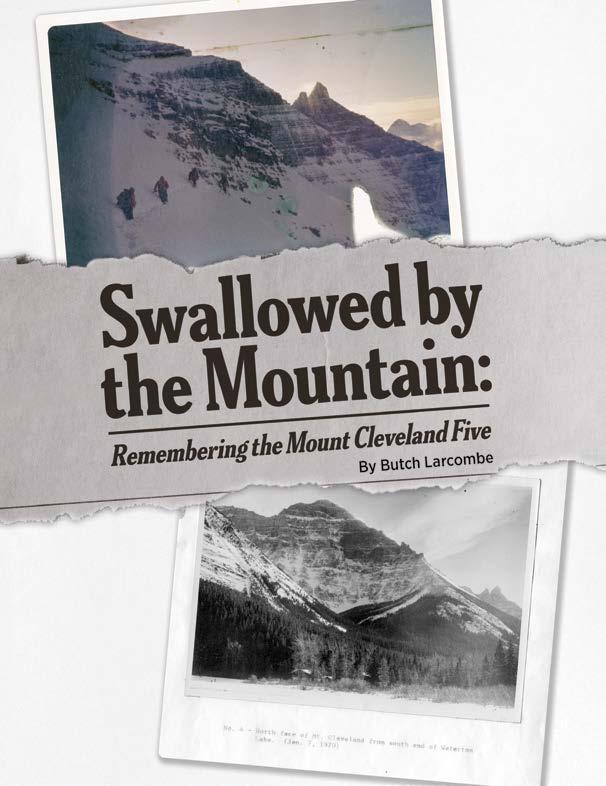
■ Above: A photo by Jim Anderson, recovered from the area seven months after the 1969 tragedy, shows the climbers traversing onto the west face of Mount Cleveland in Glacier National Park. Right: At 10,466 feet, Mt. Cleveland is the highest mountain in Glacier National Park. In December 1969, five young men died in an avalanche while climbing, or possibly descending the peak.
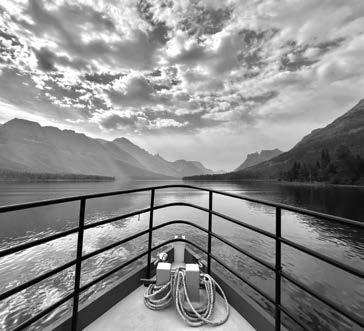
Mount Cleveland, 1969
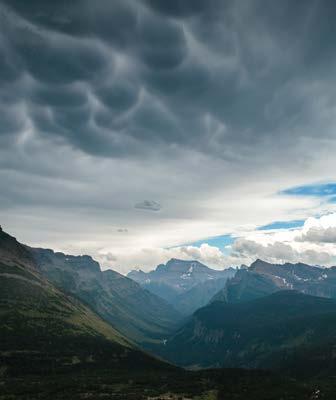
At the southern end of Upper Waterton Lake — a body of water bound by imposing mountains that span the Montana-Alberta border — looms the tallest peak in Glacier National Park. At 10,448 feet, Mount Cleveland rises above the lake, an ominous sentinel of limestone presiding over a remote and dramatic landscape.
The massive mountain’s 4,000-foot, almost-sheer north face is described in the Climber’s Guide to Montana as “the greatest sudden piece of vertical topography in the lower 48 states.” The mountain, with its summit often blanketed in clouds, can be brooding and foreboding, especially in the winter months. From the final days of December 1969 to July 1970, Cleveland concealed its secrets deep in snow and ice.
That winter, on the day after Christmas, a band of intrepid college students and mountain climbers from Butte, Helena, Bozeman, and Bigfork left their families and the holidays behind and drove north to Glacier with a lofty goal — to scale Mount Cleveland via its imposing north face. If conditions precluded that route, Plan B was to climb the mountain’s more accessible west slope. Either line would be a first: There were no records of anyone reaching Cleveland’s summit by way of the north face, and the steep, avalanche-prone mountain had likely never been ascended by any route in the depth of winter.
It was a bold plan, and one that members of the climbing team had been working toward for several years. Jerry Kanzler, 18, grew up in Columbia Falls and had climbed extensively in Glacier and elsewhere with his father and older brother before enrolling at Montana State University in Bozeman. Jim Anderson, also 18, was from Bigfork, a fellow MSU student

with a love of climbing who had twice summited Cleveland in warmer months.
Mark Levitan, 20, from Helena also attended MSU and had reached the top of Wyoming’s Grand Teton. The remaining two, Clare Pogreba and Ray Martin, both 22 and students at Montana Tech in Butte were regarded — along with Kanzler — as the most experienced and skilled climbers in the group.
Pogreba, Martin and Kanzler, along with a few others, were among the members of an informal clan of climbers known as the Wool Sox Club. Pat Callis, a fledgling chemistry professor at MSU at the time, was also part of the club, and had climbed with the three a number of times. “It was an amazing group,” he recalled in the summer of 2025. “These kids were special.” Callis, now 87, said Pogreba had asked him to join the Cleveland attempt. Having recently returned from another climbing trip, he’d declined.
As they made their way to Waterton, the five students stopped to share their plan with Bob Frauson, Glacier’s St. Mary’s district ranger, a no-nonsense World War II veteran and experienced climber who had served in the Army’s famed 10th Mountain Division. The ranger checked the men’s gear and issued warnings about Glacier’s unpredictable weather, the slim odds of rescue if they got in trouble, Cleveland’s reputation for avalanches, and a recent storm that had left the mountain coated with ice. “I talked to them a long time about the danger,” Frauson said years later.
The five climbers arrived at Waterton Townsite in Alberta on December 27, and hired a man with a boat to ferry them and their gear up the lake to the Goat Haunt ranger station, near the base of Cleveland. The boat driver, Alf Baker, dropped the five men off; he was the last to see them alive.
The first hint that the climbers might have found trouble came just two days later when Bud Anderson, an older brother of the Bigfork climber, flew a private plane around Cleveland to check
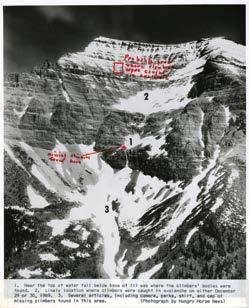
■ Top: An aerial photograph from the Hungry Horse News, a weekly newspaper in Columbia Falls, outlines a possible sequence of events on the mountain's west slope. Photo courtesy Glacier Park archives, photographer unknown
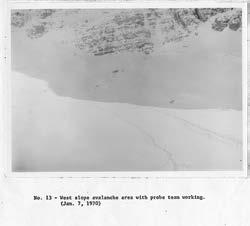
Above: Searchers combed the west slope of Mount Cleveland for almost a week in January 1970 in search of the missing climbers. Photo courtesy Glacier Park archives, photographer unknown

the team’s progress. He didn’t spot the young men. He did see tracks, maybe human, maybe mountain goat, on the mountain’s west slope. He also saw signs of a fresh avalanche near the tracks.
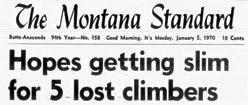
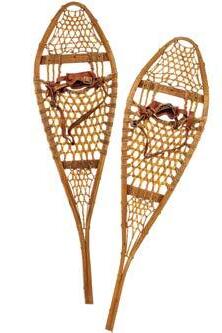
Two days later, Anderson, joined by a Waterton park warden, took a boat up the lake to search the area near the base of the mountain. They found only skis and snowshoes apparently cached by the climbers. The next day, searchers found an assortment of climbing and camping gear, possibly a base camp, below the mountain’s north face. Tracks believed to belong to the climbers led to the west.
Over the ensuing six days, would-be rescuers from Glacier and Waterton and expert alpine rescuers from nearby Canadian national parks and Grand Teton traveled to the slopes of the remote Montana peak. They were joined by volunteers including Callis and Peter Lev, an experienced alpine guide who was teaching a mountaineering course at MSU. At the time, Kanzler, Anderson and Levitan were among Lev’s students. Another Bozeman searcher was Jim Kanzler, Jerry’s older brother, an experienced and skilled climber and ski patrolman at Bozeman’s Bridger Bowl. Like Callis, he had spurned an offer to join the Cleveland climb, citing work and family.
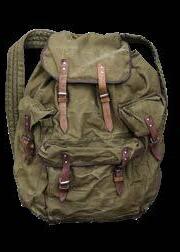
belonged to Jim Anderson, resting in a gully. Shortly thereafter, they found other items, including Anderson’s camera. Hastily developed film showed the missing five trudging through snow toward Cleveland’s west slope.
For the next few days, the searchers combed the avalanche area using long probes and a magnetometer, a device that could detect metal buried deep in snow. They found no further traces of the climbers. On January 9, with a have thought they were rinky-dinking around, but these boys were dead serious. They studied Mount Cleveland from every angle.” In her eyes, there was no mystery about what motivated the young climbers. “They wanted to be first; this was the uppermost thought in their lives.”

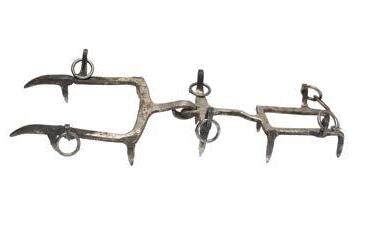
While the early days of the search focused on a campsite near Cleveland’s north face, Callis, Lev and Jim Kanzler were dispatched to the mountain’s west slope where they found clear signs of potential tragedy. “It was obvious that the whole face had seen a number of avalanches — there were lots of broken slabs,” Callis recalled. “It’s just like the whole west face went.”
After several days searching, the three made a key discovery: a pack that
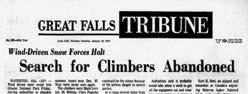
The loss of her son was the second family tragedy for Jean Kanzler in as many years. Her hard-charging
husband, Hal, who had introduced his sons to climbing and outdoor adventure in Glacier when they were young, had committed suicide just two years earlier. She had moved to Bozeman not long before the Cleveland climb to be near her sons. The search suspension brought a small measure of closure. “There are regrets, deep ones of course, but no real ones,” she said. “I couldn’t live Jerry’s life.” The mother also predicted that her son’s body would be the last to be found on the unforgiving mountain.
The hunt for the missing climbers resumed in May 1970, amid dicey conditions created by melting water, tumbling rock and snowslides. On May 29, searchers decided to climb to Cleveland’s summit following the route
likely taken by the missing men. Well below the summit, in a bowl area just above a waterfall, they spotted a body with a red climbing rope still attached. It was Ray Martin. That same day, the searchers reached the body of Jim Anderson attached to a gold rope. Using photos recovered earlier from Anderson’s camera, the searchers suspected they would find Mark Levitan along the path of the gold rope, followed by Clare Pogreba. They believed Jerry Kanzler was linked by the red rope to Martin.
With shovels, Pulaskis, and ice chippers, and later using a system that tapped water from a nearby natural pool, the recovery team used a highpressure stream to speed the removal of debris and snow more than 25 feet deep in places. On July 3, the searchers reached the remaining bodies and extracted them, along with the remains of Jerry Kanzler, who was, as his mother predicted, the last of the five to be ferried off the mountain.
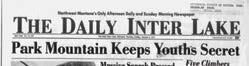
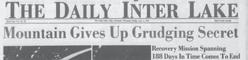
The same day, in the Inter Lake, Glacier superintendent William Briggle, who flew in the helicopter that brought Kanzler’s body off the mountain, noted the sadness of the deaths but defended
the right of the young men to climb. “If they insist, there is nothing we can do about it. They have the right to make that attempt,” he said. As for future adventurers, “We will try to guide them in making their decisions. And we’ll tell them the story of five young men and 188 days . . . perhaps Mount Cleveland can speak louder than we can.”
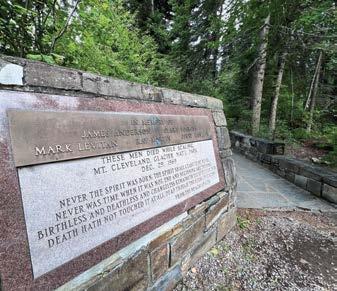
In the coming days and weeks, Jerry Kanzler was buried next to his father in Glacier Memorial Gardens in Kalispell. Mark Levitan was buried in Home of Peace Jewish Cemetery in Helena. Clare Pogreba and Ray Martin found their final rest in side-by-side graves in Butte’s Mountain View Cemetery. The ashes of Jim Anderson were spread over Mount Cleveland, fulfilling an “if anything happens” request he’d made to his family. The Anderson family, with the support of families and friends of the other climbers, built a monument memorializing the five men in Yellow Bay State Park, next to a small creek that trickles into Flathead Lake.
In 1976, Jim Kanzler, Terry Kennedy, and Steve Jackson became the first climbers to complete a full ascent of Mount Cleveland’s north face, propelled in large part by the 1969 tragedy. Callis said he would have liked to have joined the climb but was out of town. He had returned to Cleveland in 1970, not long after the bodies were recovered. He has not been back since. Recalling the invitation to join the ill-fated climb, he said, “I’ve often wrestled with the question of whether I would have died along with them,” adding that there are elements of the long-ago tragedy “that you can’t let go.”
The ill-fated Mount Cleveland climb is the subject of The White Death: Tragedy and Heroism in the Avalanche Zones, published in 2000. Author McKay Jenkins, a college professor who lives in Maryland, first learned of the Cleveland story in 1997 after attending a presentation by Frauson during a trip to Glacier. Working over two years, Jenkins dug into the lives of the climbers and their families to capture what he describes decades later as “a really indelible story.”

In 2017, Kennedy, a longtime Bozeman physical therapist who grew up in Columbia Falls near the Kanzler


family, authored, In Search of the Mount Cleveland Five, chronicling the tragedy as well as a series of climbs with Jim Kanzler and others, including the 1976 successful Cleveland north-face ascent. Since then, Kennedy has climbed Cleveland four more times, conducting a personal investigation into the possible sequence of events that led to the climbers’ deaths. The official 1970 park report into the accident concluded that the young climbers were buried by an avalanche as they traversed the mountain’s west face well below the summit. The summit register retrieved by helicopter during the initial search didn’t include the names of the climbers.
Kennedy, relying on his recent climbs, the study of the entire series of Jim Anderson’s 30-some photos from decades ago and current images of the mountain, reached a different conclusion: “I think these guys reached the summit and were killed in the dark on the way down.” As for the summit register, he speculated the climbers had reached the top late in the day, were being pounded by wind and cold, and as darkness approached, chose to leave the peak quickly, forgoing the register.
The possibility that the climbers reached the summit admittedly offers little consolation to family or friends. Claiming the first winter ascent of Cleveland holds meaning in the mountaineering world, Kennedy said. Reaching the top would validate the effort and dreams of the young climbers.
While he still finds the deaths on Cleveland haunting, Kennedy says his investigation, more than five decades after the climb, has a practical motivation. “I decided somebody has got to do it, or otherwise the whole thing fades into nothing. It’s going to be lost to history.”
Butch Larcombe worked for 30 years as a newspaper reporter and editor and as the editor of Montana Magazine. His book, Montana Disasters: True Stories of Treasure State Tragedies and Triumphs, was published in 2021. His most recent book, Historic Tales of Flathead Lake, was published in 2024. He lives near Bigfork.




By Sophie Tsairis
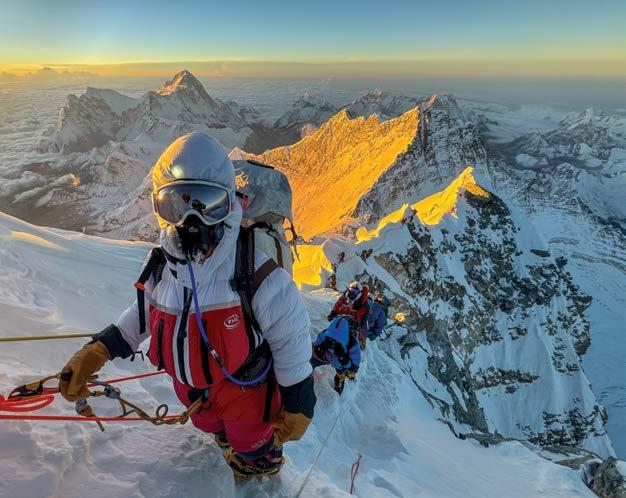
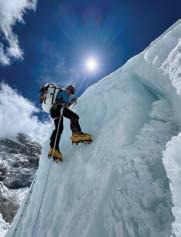
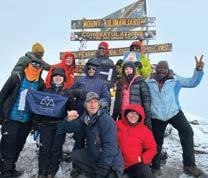
On May 15, 2025, Bozeman resident Emma Schwerin stood at the top of the world. At just 17 years old, she reached the summit of Mount Everest at 29,032 feet above sea level, becoming the youngest woman ever to complete the Seven Summits — the highest mountain on every continent — and the youngest American woman to summit Everest.
Her size never defined her; her determination did. She went big. From 4-hour Stairmaster sessions to a mountaineer course in Bolivia, to carrying more than her bodyweight up Denali, her determination and focus never wavered. Encouraged by her family and accompanied by her father and their guide Tendi Sherpa — an 18-time Everest summiteer — Schwerin carved her name into mountaineering history.
Mountain Outlaw sat down with Schwerin before she headed back to her senior year of high school to find out what it takes, emotionally and physically, to accomplish such a big dream at such a young age. She reflected on what the mountain gave her — and what she hopes to give back.
Mountain Outlaw: What inspired you to take on a challenge as massive as the Seven Summits?
Emma Schwerin: I went to Headwaters Academy in Bozeman for middle school, and in English class, one of the units was on Mount Everest — super random, but it changed my life. We read Into Thin Air and The Climb, which are about a famous disaster on Everest. We also watched a documentary, and there was a scene in it that showed someone crossing a ladder on icefall, and I remember watching it and thinking, ‘That looks amazing.’ I was driving up to Big Sky to ski for my birthday, and I was with my dad — just the two of us — and he was
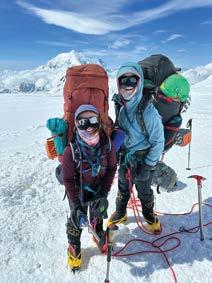
asking, ‘How’s your day’ and I was telling him about the unit we were doing in school and how cool it was and how it would be so awesome to do something like that one day. He was like, ‘Yeah that would be super cool — we should do that.’ So, we decided the next day. We booked a trip to go to Everest Base Camp, which is a two-week trek to get there and back.
MO: Which summit was the most challenging and which was your favorite?
ES: Mentally, Aconcagua [the highest peak in South America] was the hardest because of the wind. We almost didn’t get to summit — you don’t know if it’s going to happen until the last minute.
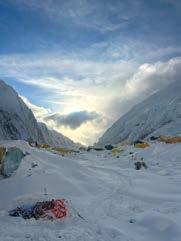
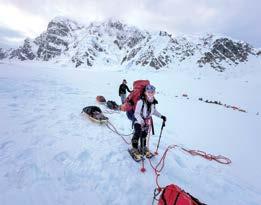
Everest was definitely the longest. It was 50 days, and it just kind of eats away at you emotionally — being so far from home for that long, waiting on weather. That part was really hard. Everest just kind of changes everything. It’s not like any of the other Seven Summits. The only thing you can really compare Everest to is other 8,000-meter peaks, just because there’s no other mountains that you have to spend two months preparing for and acclimating for. So Everest, it’s just like … it’s a crazy experience. And I mean, it was one of my favorite mountains. But Denali was the hardest mountain physically, for sure. You’re carrying a 60-pound pack and dragging a sled behind you, and your body just gets broken down. I think Denali was my favorite, even though it was brutal. It was just so beautiful and remote. It felt wild.
MO: Did you encounter people who didn’t think you could do it? What did your family think?
ES: Yes. That was something that I really struggled with. Denali was kind of the turning point for me. After I climbed Denali, whenever I showed up, I was able to say, ‘Well, I climbed Denali.’ Before that, it was especially difficult because people thought I was just this little girl who was saying, ‘I’m gonna climb the Seven Summits, and I’m gonna be the youngest woman to do it,’ and people would be like, ‘Okay, sure … yeah, oh, okay.’
After Denali I was also able to say I carried all my own gear — 120 pounds — so at least I could tell people that, and it would stop them from doubting me, I guess. But I mean, I had to believe in myself a lot, because pretty much no one else would. I mean, some people did, but a lot of people would doubt me. I would show up for a climb, and if I was in a group, people would look at me and see this girl who’s 4-foot-11, and assume that I was going to be the weak link, and that I was going to be the person holding everyone back. And so, it was really frustrating for me to know that when I showed up, people
already had an impression of me that wasn’t right, and it wasn’t true, and I had to change that.
I’m very grateful for [my parents]. I definitely couldn’t do it without them. I’m very grateful for my dad, because there were a lot of times when it was really difficult, and I was glad that I had someone who always believed in me from the start. And there were people, like all my friends on Everest, they believed in me a ton, but it was nice to have someone who believed in me before I proved in an actual concrete way that I could do it.
MO: What did your training consist of — the physical and the mental?
ES: I trained for two years, six days a week, anywhere from one to maybe five hours a day. So, it was a lot. The Seven Summits … those mountains were a small portion of the hard work. The training was really difficult. I go to boarding school, so my gym is in my high school, full of my high school peers. That was something that was very difficult for me, because I would go with my giant Denali backpack, which is taller than I am, walk in, and I would take the weights and put them in my backpack.
I was like, ‘People probably think that I’m stealing these weights right now.’ And then I would go on the Stairmaster for four hours with the pack. The nice thing was that the Stairmaster faced a window, and I couldn’t see anything behind me. So, I was like, ‘People are giving me weird looks, and that’s okay. I can’t see them.’
The mental training was a big thing too. I had to learn a lot, because I would get really nervous. And I was always way more nervous the weeks before I even left than when I was on the mountain. Every time I got to the mountain, I was like, ‘OK, this is fine. I can do this, because now I can’t train anymore. I can’t change anything. And I’m here, and this is it.’
I always thought to myself that it was going to be some level of hard — and it’s either gonna be hard right now, in my training, or it’s gonna be hard later. And I get to decide.
MO: Were there any specific moments of doubt? How did you get through them?
ES: A very different thing about Everest, is you have to go through the icefall. It’s between Base Camp and Camp 1, so it’s pretty early on. And we went through the icefall six times. So, you go up three times, down three times. I think that there were probably … there were only a few days on Everest that I was scared, and I mean, most of them had to do with the icefall.
I think of the night, the first time I went through the icefall. I think about the night that I had the most growth and that’s the same night as the night I was most scared. And I mean, summit night was great, I summited, and it was wonderful and there were challenges there, but I remember waking up the night before and pretty much knowing that I was going to summit, and so that was kind of different. But the night we went through the icefall for the first time, I was just very nervous.
A friend [on Everest] told me this quote: “If it wasn’t scary, it wouldn’t be big enough.” And, oh my gosh, it just, really changed my life, and I remember every time I heard an avalanche going through the icefall that night, I would just repeat it in my head. And I remember when he told
me that I was like, ‘Wow that really resonates with me,’ and I think that’s something I’ve learned from this whole thing is that if I’m not challenging myself to where I’m scared, I really could be challenging myself more. Because the other Seven Summits were also challenging, but the night that I changed the most and learned the most was the night I was most scared. And I don’t think that’s a coincidence. I think that because I was so scared, I was able to push myself and work through that.
MO: How did it feel to complete this huge goal?
ES: So, I mean, I guess if I told myself before I started the whole thing, that person would be very proud. But I worked every day for two years trying to accomplish [this goal]. And so, for me, it wasn’t really like, ‘Oh my God, I did it.’ It was relief because I accomplished it, and nothing got in my way. I was proud, but at the same time, I was confident by the end because I knew how hard I worked. I have three world records and that’s great, but it’s not crazy for me because I guess I lived it, and I couldn’t really work any harder. Yes, I’m very happy with it, but it’s also just like, the records — I never really did it for the records — they were nice, but … it was really just an extra challenge for me, and to me it just says how hard I worked which is more important to me than the actual numbers themselves.
Reaching the summit of Everest though, that whole thing felt like a dream — less in the moments where it was hard and more like, when we saw the sunrise, I thought, ‘This can’t be real, it’s so beautiful,’ … I was like ‘This is, this is a dream.’ And then I remember thinking, ‘I have to get down,’ because I sort of promised my mom that I wouldn’t celebrate until I got down.
MO: What has it been like returning to “normal life” after all of that?
ES: I think it is going to be hard for me to not be training towards something and working towards something, because I loved that I got to spend an hour or two each day, which isn’t that much in the grand scheme of things, training for something and then I was able to accomplish this insane thing. A lot of times people tell me, ‘Oh my God it’s so crazy that you climbed Mount Everest,’ but it’s similar to what other people do. I just decided to do this instead of something else. I know friends who spend an hour or two playing the violin each day, and they’re incredible at that. And so, I think that’s going to be hard for me to not be doing something small each day to work toward something big.
It’s my senior year, which is helpful because I’m trying to soak in all the fun memories of my last year of high school. I have plans [for the next adventure] already, just because that’s kind of who I am. I have to be working toward something. I’m trying to take a break for now, and just enjoy my senior year.
With the Seven Summits, it’s honestly, it’s super cool, but I also feel like I barely scratched the surface. People who don’t know a lot about it always ask me, ‘How are you going to do anything more? Haven’t you done all of them?’ But no. The tallest mountain outside of the Himalayas is Aconcagua, but that’s because all of the tallest mountains are in the Himalayas.
MO: What would you tell other young people — especially girls — who dream big?
ES: It’s really important to me to kind of be a role model for other girls and show them that even if you don’t have someone else to believe in you, you can believe in yourself. And that’s really all that matters. You can do crazy things — and you can be the girl who says she’s going to do something crazy and does it. I’m in this calendar actually… for this guiding company called AWE Expeditions … they sell calendars to help raise money for women, young girls’ scholarships to start mountaineering. And so that’s so fun for me; I get to help other girls do stuff like this.
Sophie Tsairis is endlessly curious, constantly humbled and inspired by what drives people to chase bold dreams. She is the managing editor at Mountain Outlaw.

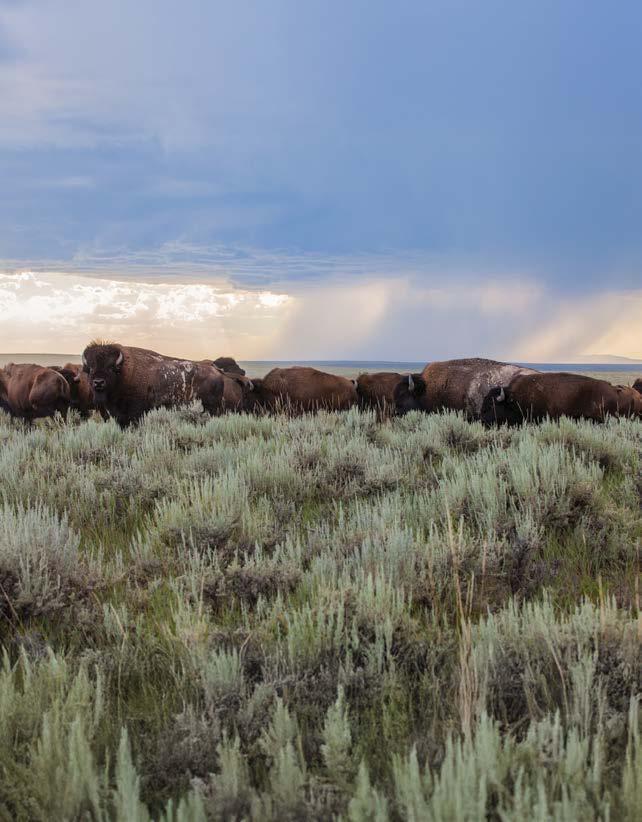
This fall marks a remarkable milestone—twenty years of bison on American Prairie. Our herd, now over 900 in number, has already started to return and repair important ecological processes on the prairie. We look forward to the next twenty years.
To learn what you can do to support bison VisitAmericanPrairie.org.
Words by Lauren Burgess
For all they give us – vitality, identity, the taste of freedom – the mountains also take. Loss comes in layers: some wounds temporary, some weathering us down, some rupturing us forever. How do we live when not just what the mountains mean to us, but our inner landscape itself, has been forever changed?
We love the mountains for what they make of us. Grit applied to a dream – rubbed in with sweat, frostbitten breath, and stubbornness – becomes tangible. We love the rough-cut meeting of flesh and stone and snow. We love who we are “up there.”
Unburdened by deadlines, small talk, and cultural baggage, a backpack feels almost weightless. We call it being our best selves. Our true selves. Our purpose simple: What can I feel? What can I learn? What joy awaits?
In winter, the question cuts clear. The air turns crystalline. The light shows no mercy, yet touches everything with grace. Mountains rise like sleeping giants robed in white, luminous silence, their jeweled crowns – or are they teeth? – biting at the pale horizon.
We claw toward heaven – our forward progress equal parts labor and liberation. We rise to where the pull feels lighter, gazes lift beyond the fishbowl of daily life into wide, bright blue, and the snow waits for us to take the leap.
And the rush of descent – it’s almost cosmic, like orbit, riding this wave of gravity around the planet’s core. It vibrates like a chord from the future, less an echo of some part of our primal nature than a glimpse of what we could become. Maybe our bodies weren’t originally built for flight, yet here we are. Maybe this wild freedom isn’t our inheritance, but evolution. Its meaning shifts with everyone and every story. To some, the rush is triumph, celebration. To others, medicine – oxygen breathed into muted days, sensation cracking the heaviness of stress or depression. The mountains return us to ourselves in different ways, but we all must eventually reckon with the
question: Are we chasing presence, or escape from what waits back home in the valley below?
Something in us knows: The freedom we feel comes from riding the edge.
The memento mori of the mountains isn’t an abstract philosophy. It’s physical, incarnate. The tightening throat at a cornice lip. The galloping heart as skis chatter across ice. Sweat slicking our palms before the next secure hold. Fear arrives embodied, salt in the blood, metallic and sharp.
We dance with it. Wrestle it. Curse it. Toss it over our shoulder like salt to the devil. Still, it stalks us – a shadow partner, uninvited but inevitable.
Yet fear can sharpen as much as it unsettles. In that intensity, it isn’t the mind that re-anchors us but the body. The mind wavers, catastrophizes, floods with static, but the body steadies. Breath meets movement. Rhythm returns: kick, carve, swing. Presence distilled to its bones. Terror and exhilaration, Janusfaced twins at the altar of the edge. To exist there is to feel fragile and indestructible at once – mortality undeniable, aliveness louder still.
And then, sometimes, the edge gives way.
A tendon snaps. A ski snags on hidden rock. A body tumbles. Sometimes we’re sidelined for a season, the ache of loss measured in doses. It stings, frustrates, and tests us, but with time and care the body and mind can find their way back.
Age works differently. It doesn’t strike all at once but rises around us like high altitude – asking us to pace ourselves, to breathe thinner air with thicker gratitude and a softer kind of strength.
But nothing compares to the losses that split life in two. To lose a partner or a friend in the mountains is to have the earth itself torn open.
Then, the chaos rises not only outside but within. Vertigo sways the ground. What was once familiar dissolves into strangeness. Meaning collapses. Our internal compass spins feral; fractures split the bedrock of self. In this inner wilderness, dangers surface as treacherous as any crevasse.
It isn’t the body that breaks, but the heart.
Our favorite places now roar with absence. Ridgeline silhouettes hold outlines of the missing. Slopes become unwanted altars; every landmark haunted. We ache for the before, but it eludes us.
Grief is disorientation, an unmooring, the storming of the nervous system, the spirit stripped raw. It rakes us like a glacier carving valleys, deep and irrevocable. We search for sense, replay decisions, but the wound lies in terrain logic cannot map.
We’d navigated the mountains with GPS, best practices, and familiar gear. In grief, we have no reference points, no path to follow. We must find our own way through.
And although we imagine the self to be singular, we’re more like ecosystems: a wilderness of parts and biodiverse inner perspectives in constant flux. They move through us like seasons, each regenerating the soil of the soul.
The mountains mirror this.
Avalanches carve, then seed the valleys. Floods scatter nutrients into rivers and plains. Wildfire leaves scars that flower into green. They show us how to survive our own collapses. Maybe it’s why we go to them – to learn to walk the terrain within.
From this recognition, the step into community becomes possible. If we’re all ecosystems, then maybe grief is a river that, when allowed to flow, can reenter the watershed and find confluence with others.
Still, grief tests communities as much as self. It both binds and separates us; no two rivers know the same course; no two losses the same depth. Sharing this heartache demands exposure, baring our wounds, to witness and be witnessed in what we can’t repair. My storm isn’t your storm – but when the waters meet, we may find a current that carries us both a little farther on, a place where the pain doesn’t disappear, but shapeshifts, at least, moving like light through water, prismatic, alive.
Let me feel reverence in the spaciousness of a pausebetween breaths before an embrace Even for the things I’ll never be part of and only witness from afar
Let this sacred set-apart perspective be its own invitation to encounter things simply as they are Silhouetted true
Like how I love the moon more not because I’ve walked upon her surface but for the fullness I can only see from this distant vantageHer whole self made visible by the space between us
Gratitude shapes a threshold in me beyond which time stands still Pools, expands Spills into infinity
This spaciousness fills meA wonder made of distance An abundance born beyond Even empty hands are enough when they offer attention
So let me gift mine To the moon To the mountains To you To each moment of my own life
The act of witnessing is an act of belonging.
The heart, in this courageous act of connection, reveals its resilience: Life is braided from both beginnings and endings. We live in a culture fluent in beginnings and the glorification of achievement – first steps, summit photos, victories. But we’re uneasy with endings. Catastrophic ones split us open, and even ordinary ones –strength slowly fading, familiar doors quietly closing – deserve
reverence we rarely give.
Endings are everywhere, certain as gravity, woven into the fabric of life.
Sometimes we end up not on the peaks but the porch, watching the parade of summits from a distance. It can feel like exile. But even here, the journey continues in another form. Attention becomes our trailhead, reverence our ascent. The mountains’ gift was never the physical summit, but the way it opened us – and that opening endures if we choose to tend it.
In crossing any threshold, the path can never return us unchanged; it always sends us forward, into the unknown. Forever altered, carrying the echo of what was. When our hearts break, the ache itself is holy, proof that we once offered them to something ephemeral and wild.
The mountains, indifferent in their majesty, don’t need me – not my dreams, not my awe. And yet my soul trembles for them, weeps in their presence, sings in their silence. What a gift, to feel love like this, to belong so deeply to something that owes me nothing – even a force that takes. But I would choose it again and again – loss, ache, opening – because this is how the heart, the inner landscape, becomes vast enough to grow mountains inside itself.
Deepest thanks to Mike Harrelson — writer, soul-shredder of snow and surf — and to Blair Hansen of Open Routes Counseling — climber, teacher, and guide — for generously sharing their time, wisdom, and perspective for this piece.
Lauren Burgess is a writer, poet, and chocolate maker, co-owner of Caldera Cacao Roasters in Bozeman. Her creative work explores thresholds into the wild animacy of living landscapes – the fragile edge between the truths we find in nature and the nature of truth itself.
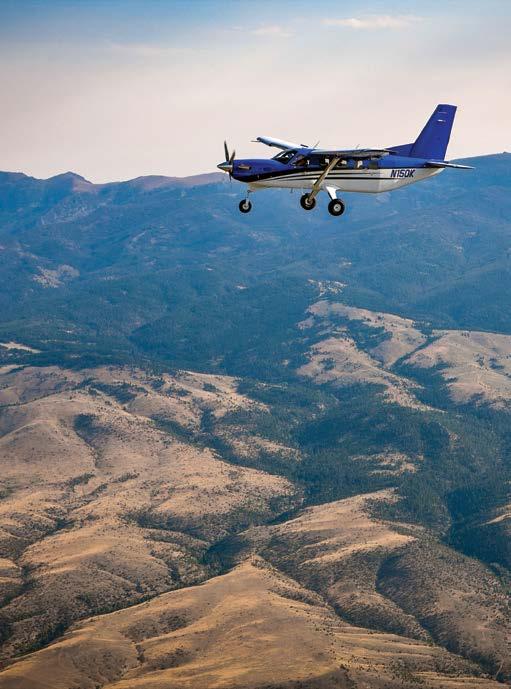
Essay: Seeing the Unseeable
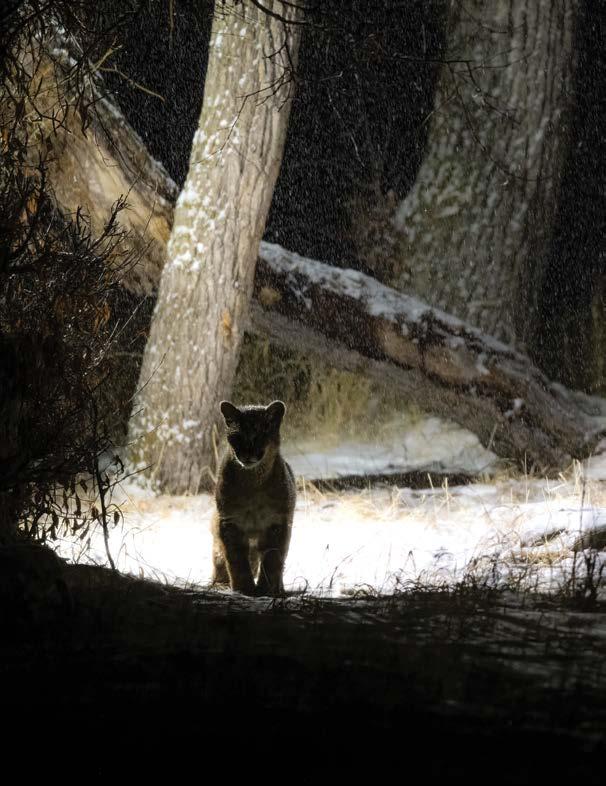
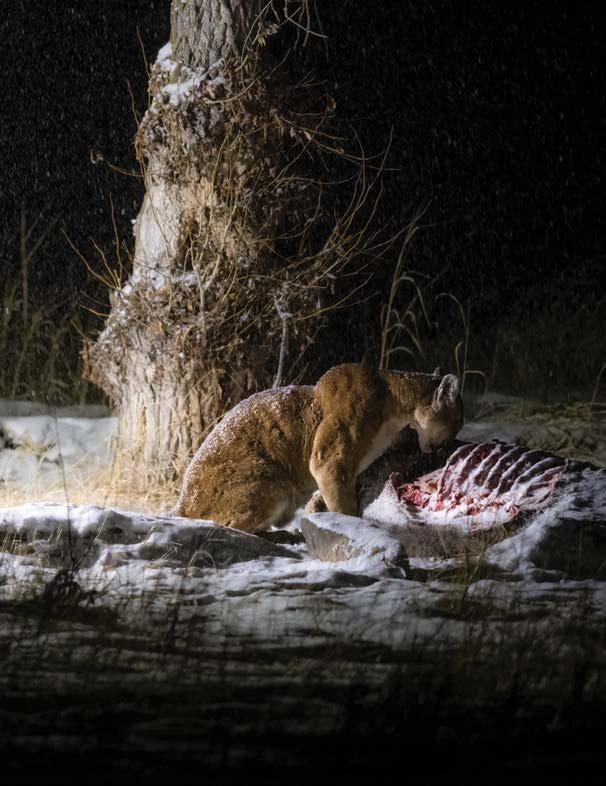
A Jackson Hole wildlife photographer is challenging the ethics of photographing mountain lions—and offering a better way forward
Last light had come and gone by the time we tucked into the wooden blind, sheltered from the cold and wind. The dark outside was periodically interrupted by the full moon as it cut through heavy snow clouds. My eyes were fixed out into the blackness, waiting for the night to light up in front of us. My heart thumped as I stared into the void where, unbeknownst to me, a mountain lion and her cub were fast approaching wildlife filmmaker Jeff Hogan and me.
The mother passed in front of a motion sensor and light flooded the snowy night like the start of a movie illuminating a dark theater. She paused, drinking in the scene in her svelte lioness way, her prey revealed by strategically placed hidden halogen lights. She stepped further into the scene, tail quirked up in a lazy twitching loop, bending her head to feed on the remains of a winter-killed elk. Snowflakes hung in the air, backlit by the lights; an eerie silence gripped the night save for the occasional crunch of an elk bone against carnassial teeth. I watched in reverence while the lion dipped her head in silent prayer over her feast, snow slowly blanketing her back. This was the moment we had been waiting for: the rare opportunity to watch a mountain lion family’s natural behavior at night.
We met a herd of deer on our hike out from the blind, and our headlamps revealed them keeping a watchful eye on the mother lion. She was on the other side of the herd, slinking from shadow to shadow. I was struck by how — even in the dead of night — the mountain lion was still moving only by shadow, never stepping into the moon glow. They are creatures of the utmost secrecy; this of course being part of their allure as well as the conundrum of photographing them. And as in many cases in the wild, such mystery has left room for myth to take the place of that which we cannot witness.
It will likely come as a surprise that the majority of cougar images you see in media are not actually taken in the wild, and often are not procured ethically. Generally speaking, there are three standard practices for photographing mountain lions:
1. The game farm is a largely unknown dark secret in the industry and the skeleton in the closet of many wildlife photographers’ exotic portfolios. Operating under a “roadside menagerie” license and with the same ethical standards as a fur farm, game farms keep animals living in frequently abysmal conditions, often without proper veterinary care, and can sell them for parts when they’re no longer useful. From here, photographers can pay a steep price to take the animals from captivity and pose them in dynamic, often fatuously stereotypical scenes of resplendent canyonlands or snowy mountainscapes. These images are frequently promoted to the public as reality.
2. For those who can afford the opportunity, mountain lions can be photographed ethically in the wild in the southernmost reaches of their natural habitat in Torres del Paine, Argentina Though this is an option to photograph true wild cougar behavior, it’s often too costly in both time and money for most.
3. The third oft-used method for photographing mountain lions is by hunting them down with hounds. Photographers opting for this practice accompany a houndsman (a lion hunter) into the wilderness, where they’ll turn their dogs onto a cougar and chase them to exhaustion. At that point, the cat is forced to retreat to a tree, cornered and threatened. In most cases, this is how mountain lions are hunted for sport. This practice causes undue stress simply for the privilege of photographing a mountain lion in the wild. In addition, these images of bayed-up cats frequently show them hissing fiercely (the behavior of a terrified animal, sold to the public as offensive aggression). This adds significantly to the fear-mongering effect surrounding mountain lions, contributing to human intolerance of these cats that ultimately leads to more of them being killed, and a greater chasm between human society and the wild. These images do matter, and they do have an impact. Human perception of the mountain lion desperately needs an overhaul — and this begins with how they are portrayed in media.
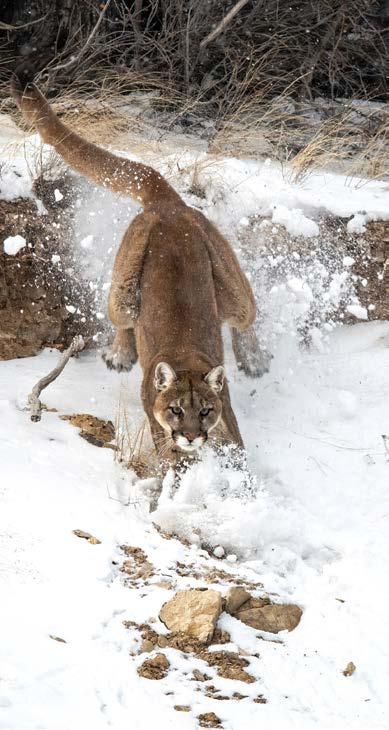
Previous page: A mother cougar feeds on the carcass of a winterkilled elk while her cub watches a herd of deer pass by. The scene is illuminated by lights rigged to motion sensors placed the day before.
Left: A mountain lion leaps from a snowy cliff to chase magpies off a mule deer kill she had stashed below. This photo was taken right on the outskirts of Jackson Hole. These big cats are often found in surprisingly close proximity to human residences but are rarely seen.
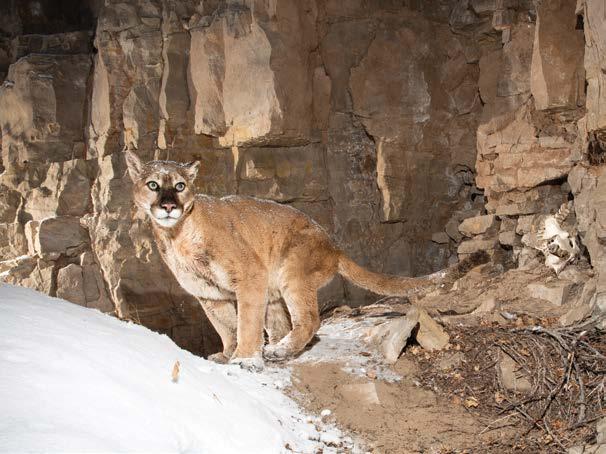
I’ve been a wildlife photographer in Jackson, Wyoming, for close to a decade, a career I stumbled into by the grounding effect of being in close proximity with the wild. I take images of all the Greater Yellowstone inhabitants, but mountain lions have become my favorite subject. Ten years ago, I found an image behind the broken glass of a frame — a mountain lion crouched over a dead bighorn sheep in the mountains of Hoback, Wyoming, taken back in the 1980s by my partner’s father. I knew immediately I wanted to witness something like that someday, but at the time, it seemed unattainable.
Then in 2018, I watched the film Big Cats in High Places which was shot where I live in Jackson. This film portrays the true, often peaceful, and sometimes brutal lives of mountain lions in a way that both warmed my heart and shocked me with its stark realism. It was made by my now-friend Jeff
Hogan. I reached out to him immediately to volunteer. As one of the only wildlife media makers committed to ethical practices for capturing images of mountain lions, Hogan mentored me in tracking them by following prints, scat and other signs, and taught me how to photograph them with minimal to no disturbance.
Through fate (and quite a bit of fieldwork), this is how I ended up stuffed in that blind in the dark watching the lions and the snow and the deer on that magnificent night. After that I was addicted to being in the presence of these cats and emboldened by a desire to show people that photographing the North American cougar can be accomplished without abusing the animals. And so began my quest into mountain lion photography.
The winter routine I’ve adopted has become a form of meditation: Hike until I find tracks; follow the tracks until I find the lion’s kill; stage the kill for a camera trap, or if I’m lucky, a blind. This has yielded great photographic results, but human desire is a difficult beast to tame: Despite my successes with remote or distant photography, I wanted more. Specifically, I wanted to be on the ground, up close, in the daylight with a cat — a true wild lion — with no snarling dogs to hide me.
In November of 2022, this vision materialized with a sudden opportunity, as chance often does. I had spent a few days tracking a mountain lion and her cubs, and on day three, I jumped ahead to a new location further down the corridor. Along a frosty creek, I cut tracks so cold they were filled with hoarfrost and nearly unrecognizable as cat tracks if not for the shape and stride length. I stopped when I saw the legs of a cow elk half cached into the bank, jutting out into the stream. The strangeness of the scene paralyzed me for a second. Generally, lion kills are cached meticulously under snow, dirt or grass,
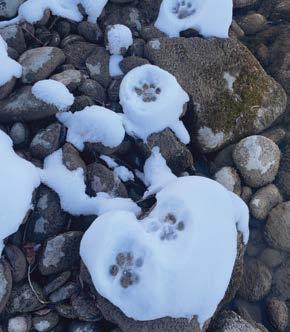
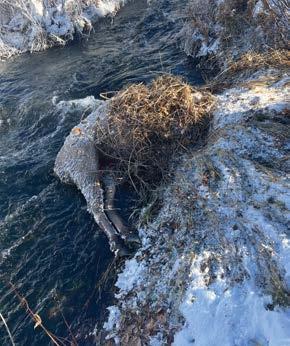
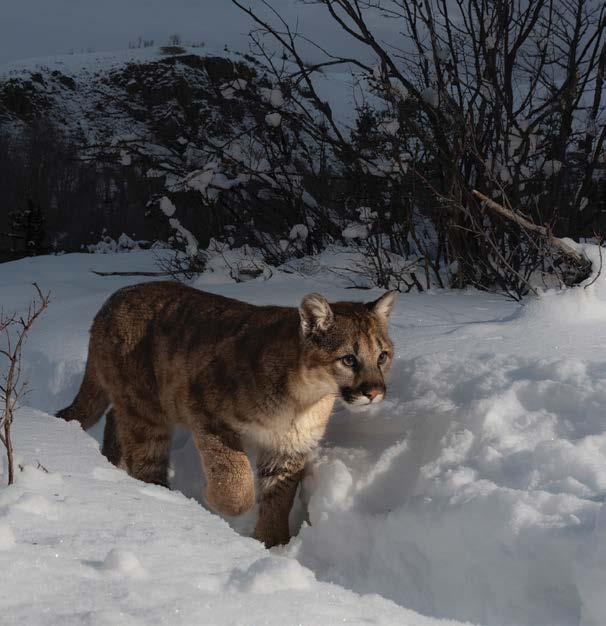
tucked neatly out of view. But this kill was a mess, lacking in all classic cougar fastidiousness; the cat had ostensibly killed the elk in the water and, unable to pull it out of the stream fully, it had lazily tossed grass and snow over half the elk before giving up.
The next morning, I returned before dawn, waiting in the dark a few hundred yards from the kill before the sun’s upward crawl against the sky illuminated enough of the frozen world in front of me. I crept along the eroded cliff edge above the stream, moving closer to the prize. I was expecting a female cat, possibly with a cub, but the hulking shape that materialized out of the steam in front of me stopped me in my tracks. A huge male cougar stood hunched over the elk, dwarfing any cat I’d ever seen. He was scarred and muscular, a true specimen of a life lived in the brutal wild. I pushed even closer, the noise of my movements somewhat hidden by the sound of babbling water. My heart in my throat, I made eye contact with the cat, and for a moment everything stopped — heart, breath, thought. But he went back to what he was doing, attempting to cache the now-half-eaten elk. The tom was so preoccupied that I was able to observe him for 40 minutes. Besides the initial glance, he only looked at me one more time as he dismounted the carcass, giving me the privilege of capturing my dream portrait of a wild, unbaited North American cougar. I consider it the greatest personal accomplishment of my life.
After more than a decade spent learning how to keep myself and the wild animals I photograph safe, I now have the experience to confidently assert that the North American mountain lion can be photographed ethically in the field like any other wild animal. We can witness these incredible creatures — and share our images with others — without supporting game farms or barbarically treeing the animals. While the fact remains that like any big predators they can be dangerous, my experiences with cougars — and my photos of them — have shown a side of them most people don’t see. We must reconsider the mountain lion as a gentler animal than we have been taught to believe. They deserve our tolerance and understanding, and ultimately, our coexistence.
Savannah Rose is a full-time wildlife photographer with a passion for North America's incredible biodiversity. She strives to capture evocative portraits of the most elusive and misunderstood creatures, and hopes to share with you the beautiful stories of these animal's lives.

Watch the accompanying film, and others
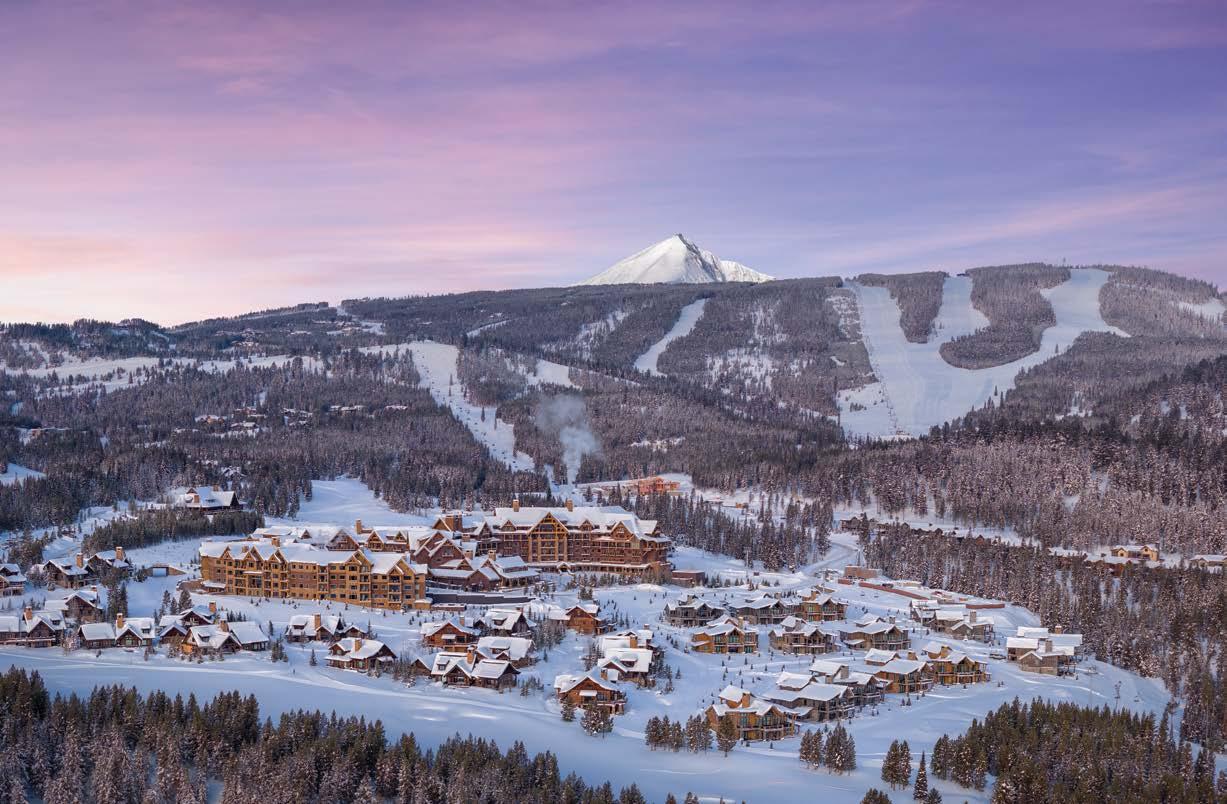
I N TH E MID S T O F BIG SKY W O ND E R , we invite you to discover nature’s grandeur.
Words by Leath Tonino
Editor’s Note: The Red Rock Lakes National Wildlife Refuge in southwest Montana protects 53,000 acres and is the largest wetland complex in the Greater Yellowstone Ecosystem. Each year, a small group of artists is invited to reflect and create here through the Taft-Nicholson Center Artist-in-Residence Program.
During his 2015 residency, poet Leath Tonino walked the wetlands before dawn with a notebook and coffee, sitting among pelicans and swans, returning midday to read and write on the cabin’s porch.
He spent the weeks largely in solitude, save for a few brief visitors, including painter Dave Hall. Though strangers, Leath remembers the exchange fondly: “I was glad to see him, glad for the company, glad to talk a bit.”
A Month Alone was shaped by his quiet contemplation. Hall’s luminous paintings, too, emerged from the valley’s pulse.
Leath Tonino is the author of two essay collections about the outdoors, most recently The West Will Swallow You.
Ghost Town no ghosts so far far as i can tell unless the cabins are themselves ghosts haunted by cabins that once stood here built on foundations of the deceased yes perhaps no wonder in wind they shiver so
Calendar lost track of the days on the second day or was it the third could have been the first that afternoon seeming to reach through all the others even this one now nothing to do nothing to break hours into minutes weeks into pieces just sunrise and sunset and the weather but even those changes change little that afternoon seeming to reach through all changes swans keep on sounding
Trumpeter Swans your necks do something when they do their many things and i feel that something inside my chest call it joy call it trumpeting but smoother than a trumpet longer than a note could ever hold
Piano out of tune is my kind of tune this room is my kind of room playing to an empty house of cards yesterday’s saloon today’s sad song play it long play it with memories morning owls light from clouds moose and bear bear and moose hold the lyrics make it a double make it longer make it stronger toeing the brass barefoot down there in secret to sustain
Computer Breakdown round we go spinning rainbow wheel sign of sickness sign of slowing down which means what exactly back to pencil and paper back to stacking books back to a conversation with myself some ancient chitchat back before birth
Animate Silence
the silence is stalking hunting at dusk knife on a cutting board i am the prey
Smoke Haze
sad she is this day so sad this smoke from fires elsewhere here now hazing here me she the day us hazing insides fires from afar
Pipe Tobacco all afternoon waiting for this the walk the pocket the seat the thought this place this fencepost this gray board old headgate ditch with a view this this so into the pocket the hand the sunset the wind the dying light the moment at last tamp flick shelter and flick every evening inhale exhale take it all in give it all back
Collection Of Things feathers at first no wait let me back up to that basket empty on the shelf wanting seemed to me to be filled feathers or leaves grasses whatever a slim bone anything small enough any lost thing found here i tell you the finding is easy valley giving everything away just have to stoop touch consider consider carry home
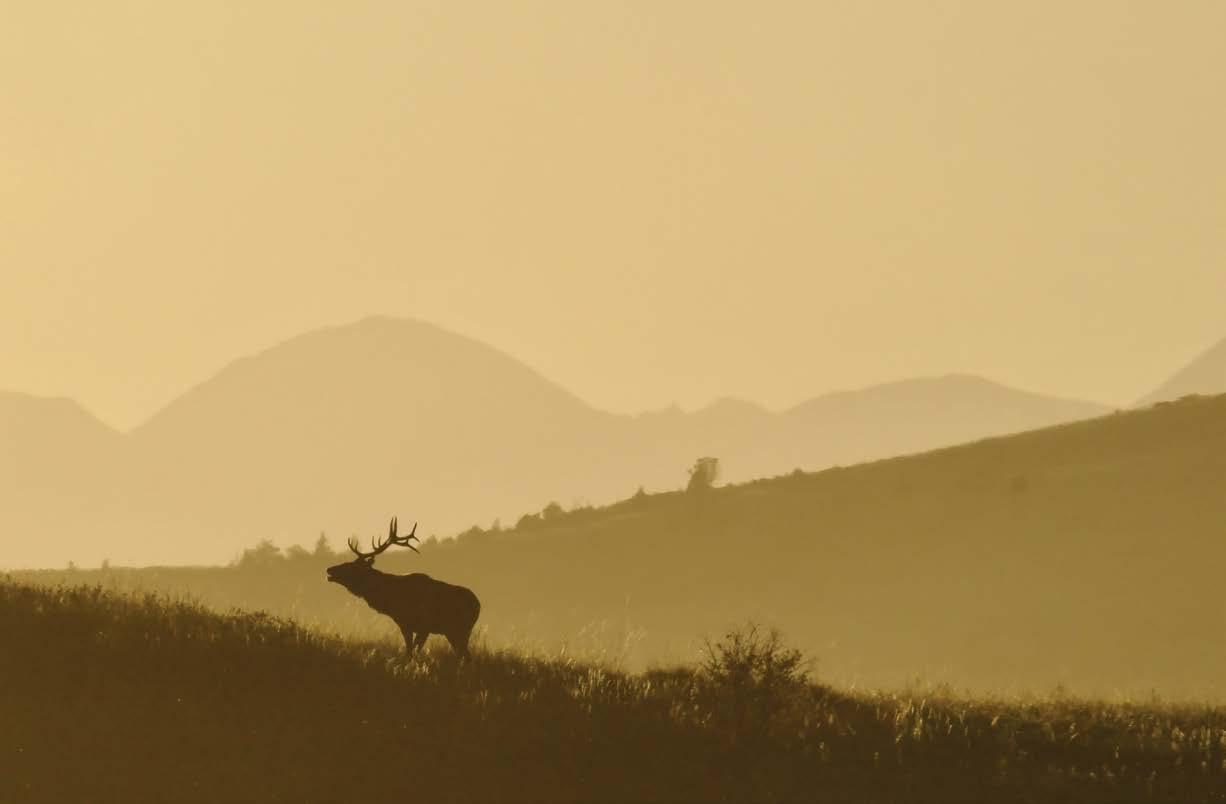
“If you don’t do it this year, you will be one year older when you do.”
- Warren Miller

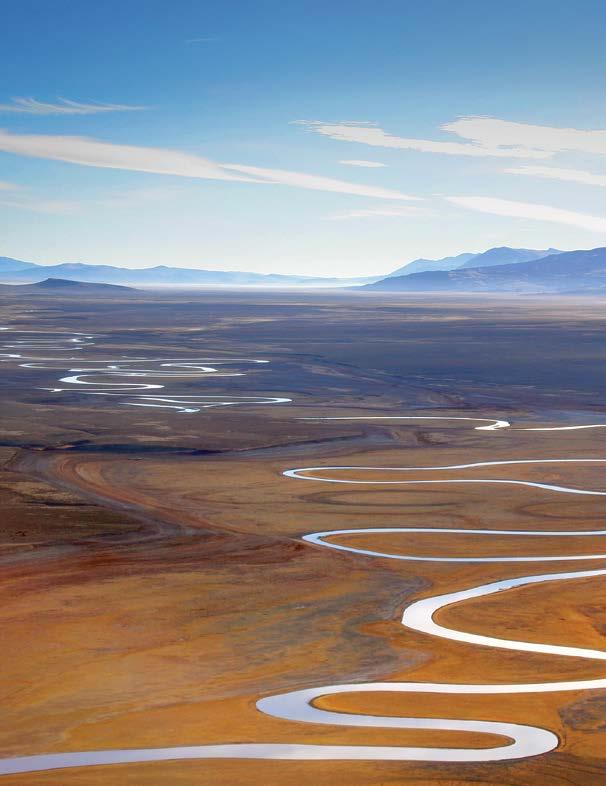
By Madison Dapcevich
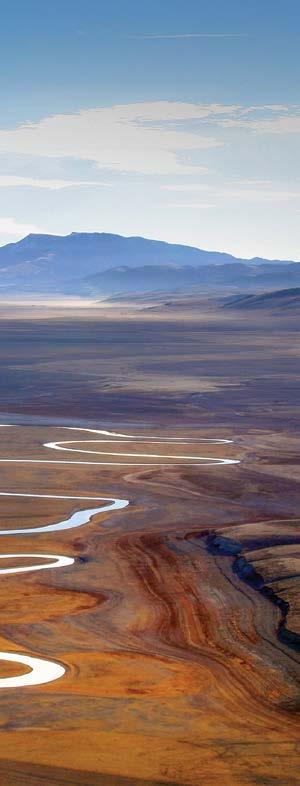
istoric and devastating, the 2011 floods tore through the Musselshell River in central Montana, forever transforming the landscape. A stable river for decades, the Musselshell’s high flows crested at 16 feet. Whirlpools and flushing water barreled through towns and farms, destroyed irrigation systems, and bypassed river bends, ultimately shortening the river’s length. Acres of once productive agricultural land were covered in a thick layer of silt. Entire communities were underwater.
And once the river receded, volunteer pilots took to the air.
Two LightHawk pilots, one in a Quest Kodiak and another in a Cessna 172, carried 11 passengers over the altered river. The group included farmers, community leaders, and irrigators — all of whom were stakeholders and decisionmakers responsible for collaborating on solutions to rebuild infrastructure while representing both production and conservation sectors.
“There are some things you can see from 1,000 feet above ground level that you can’t see from the ground,” said Chris Boyer, Northern Rockies program manager of the aviation nonprofit. “It’s important to see not just the condition of a piece of the landscape, but to appreciate the scale and the context — to see that it is huge and interconnected, that it is intact or fragmented.”
Communities pulled together, ultimately rebuilding and reconnecting, in part thanks to the role the pilots played in bringing people from different groups together. To Boyer, who is based in Bozeman, the Musselshell project embodied what LightHawk stands for by showing people the importance
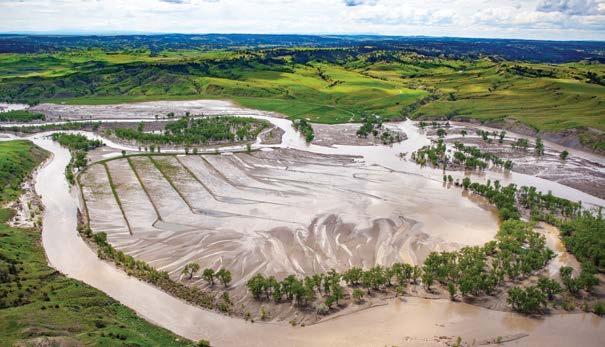
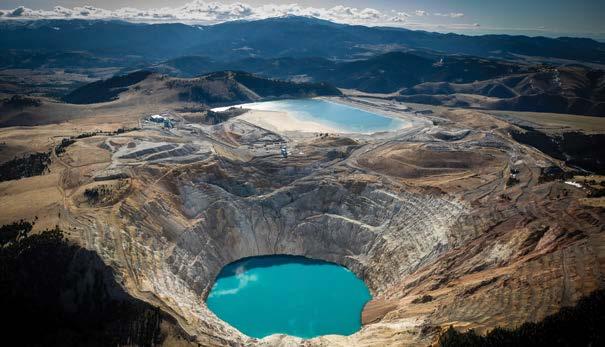
of working landscapes alongside sustainable natural resource use and conservation.
With 300 volunteer pilots across the United States, LightHawk aims to accelerate conservation success through what it calls the “powerful perspective of flight.” Working with local and regional partners — including Gallatin Valley Land Trust, Greater Yellowstone Coalition, Yellowstone to Yukon, and Wyoming Outdoor Council — that are actively engaged in specific environmental efforts, the organization operates a network of pilots who donate their time and aircrafts across Canada, Mexico and the U.S., using aerial perspectives to support conservation. They transport endangered animals, support research biologists and collect imagery and data.
Over the last 45 years, LightHawk has carried out nearly 10,000 conservation flights. In 2024 alone, volunteer pilots in the group flew 187 flights totaling 30 days of flight time. Together, their work informs policy and land management decisions, bringing various stakeholders together for common causes.
SEEING A PLACE FROM AN ENTIRELY NEW PERSPECTIVE
LIKE THOUSANDS OF FEET IN THE AIR EITHER THROUGH PHOTOGRAPHY OR IN PERSON CAN EVOKE EMOTION AND COMPASSION IN WAYS THAT WORDS ALONE MAY NOT.
Boyer didn’t intend to become either a pilot or a photographer. But while studying fluvial geomorphology — river dynamics — he found himself by happenstance in a flight program. At the time, it was just $30 an hour to rent a plane, fuel it and bring an instructor along.
“The aerial view of landscape dynamics illustrated the complex math of the classroom, and was instrumental in my understanding of river form and function,” said Boyer, adding that the aerial perspective was a vital tool for his work in habitat restoration.
Once he logged 1,000 hours — the minimum required to become a LightHawk pilot — he joined the organization.
“It’s the highest requirement of any organization using volunteer pilots because the flight profiles are more complex — often low level, surveying, circling for photography, remote and rugged landscapes, [operating from] unimproved airports and airstrips,” said Boyer.
For the last two decades, Boyer has flown nearly 500 hours for LightHawk in his “sassy little red plane.” It’s a 1957 Cessna 172 that’s been converted to a tailwheel and upgraded to a more powerful engine.
And if you’ve never sat next to a cheetah, wolf, or condor
midflight, then, well, you probably haven’t flown with the LightHawk crew. Passengers, aside from humans that is, have included eagles, ferrets, cranes, abalone, quail, condors, wolves, cheetahs, and rescue dogs, to name a few.
Founded in 1979, LightHawk has partnered with scientists, researchers, journalists, and state and local agencies across North America to advance the conservation of natural resources. To fly with a purpose means sometimes transporting endangered species.
In January 2025, the nonprofit transported 15 endangered gray wolves from British Columbia to Colorado for reintroduction into the wild. Another species on the brink of extinction, white abalone, has also been supported by LightHawk. In 2020, nearly 5,000 captive-bred white abalone were flown from their breeding facility in Santa Rosa, California, to be released in Los Angeles to support threatened kelp forests.
It’s all part of what inspired Dave Showalter, a fellow with the International League of Conservation Photographers, to join the organization. Showalter took his first flight with Boyer over the Wyoming Range in 2010. Scenic and untapped, the Noble Basin mountain range has been the subject of proposals for many energy projects, and at the time, this region near the Bridger-Teton National Forest was slated for massive energy development. Aerial images captured by the duo showed a dramatic roadless landscape that forms the headwaters of the National Wild and Scenic Hoback River. Ultimately, aerial photos captured here helped sway the public, and the fight over Noble Basin’s future was put on hold, at least for the time being.
Seeing a place from an entirely new perspective — like thousands of feet in the air — either through photography or in person, can evoke emotion and compassion in ways that words alone may not. It can act as a universal language, fostering a deeper connection to a place, and helping people feel more connected to each other.
“There is absolutely a greater sense of connectedness, which I often think of as how all of the pieces fit together. Some of my Colorado River images, for example, show a tiny river in a grand, tortured landscape, lending a perspective of vulnerability,” explains Showalter.
In disconnected, often inaccessible refuges like the Northern Rockies, creating a feeling of connectedness is all the more critical. Stretching 3,000 miles from the northernmost part of Western Canada to New Mexico, the Northern Rockies landscape is characterized by largely inaccessible, uninhabited rugged terrain. Other parts of the region are home to species like wolves, bears, and bald eagles, yet more and more people
are flocking to these areas. Montana’s population has grown by 45,000 since 2020, according to government records, while Colorado has added roughly 18,000 more residents. As this trend in population growth continues, the Northern Rockies, in general, and the Greater Yellowstone Ecosystem in particular, are challenged by rapid, unprecedented growth.
“Everyone talks about this growth in terms of density and sprawl, often without really understanding the relationship between the two. However, from the air, in a single comprehensive view, you can see the difference between the tightly packed neighborhoods adjacent to the city and the large-lot subdivisions on former agricultural lands in the Gallatin Valley,” said Boyer.
“From the air, you can see the riparian and undeveloped corridors connecting the mountain and forest lands with winter range throughout the valley, and consider the pathways and barriers for animals as they navigate their historic routes across the landscape.”
THAT IS, HAVE INCLUDED EAGLES, FERRETS, CRANES, ABALONE, QUAIL, CONDORS, WOLVES, CHEETAHS, AND RESCUE
DOGS, TO NAME A FEW.
More people in the landscape means greater impacts on wildlife. While Montana may have some of the most abundant wildlife populations in the world, the Montana Wildlife Federation writes that many species are now under threat from development.
In the last five years, a growing number of Montanans have expressed concerns about growth. A University of Montana survey in 2022 found that a majority of the state’s residents were concerned about the pace of growth across the region — more than half said it was too fast, while eight out of 10 respondents expressed concern about the loss of open spaces to new development. Similarly, a bipartisan survey commissioned by the Crown of the Continent and Greater Yellowstone Initiative last year showed that 62 percent of Montanans reported a decline in their quality of life over the past five years, driving continued strong support for conservation efforts that protect public lands and access. Nearly every Montanan (95 percent) said they had visited public land last year, highlighting what pollster Dave Metz called the “deep connection Montanans feel towards public lands.”
Roughly one-third of Montana’s land is considered public, while more than 3 million acres of national forests in Montana are congressionally designated wilderness areas. The state provides a place of refuge for more than those who reside here year-round. And these wild, rugged areas surpass political borders.
“From above, you can clearly see the folly of administrative boundaries, the dramatic consequences of timeless geological processes, shortsighted management decisions, and the
inescapable process of population growth in the GYE,” said Boyer. “You can clearly see the importance of wild lands and intact ecosystems, as well as the threats lurking at the edges.”
LightHawk volunteer pilots say their passengers often mutter, “I had no idea…” across their headsets when realizing just how intricately woven the landscape is.
Looking to the future, LightHawk pilots like Boyer are committed to conservation by supporting established organizations dedicated to protecting natural landscapes, oceans, and freshwater systems, and to promoting climate resilience. In the Greater Yellowstone Ecosystem, this includes understanding shifting dynamics between wildlife and urban sprawl through aerial perspectives.
Providing this zoomed-out perspective helps demonstrate how intimately intertwined seemingly disconnected opinions are.
Boyer said the perspective from a small plane permits you to see both the scale and the context of an issue — how surprisingly vast, or how surprisingly small a certain area is. “You can see the land cover and land management adjacent to the issue you might be flying over, and you can see — or not see — the impacts of administrative boundaries on the landscape.”
Flying above the wild and managed landscapes of the Greater Yellowstone Ecosystem shows how the entire landscape may be impacted by development, as well as some of the issues Montanans are facing, including affordability, safety and security, transportation and emergency planning.
“From the air, you can see how unregulated sprawl impacts wildlife habitat and corridors, increases the risks from wildland fires and floods, drains our diminishing groundwater resources, increases traffic, challenges emergency services, and increases the tax burden of maintaining the dispersed infrastructure more than it would under development patterns with a smaller footprint,” explained Boyer.
He hopes LightHawk will continue to build its Corps of Conservation while considering the future of people living along America’s wild spaces.
“[Our] pilots are as varied as the planes they fly,” he said. “What ties them together is a commitment to conservation and thoughtful land management policies, a desire to share their privileged access to the sky with others, and an interest in ‘giving back’ by donating their skills and aircraft to an important cause.”
Madison Dapcevich is an associate editor at Outside and a science journalist whose work spans from Alaskan archaeology to deep-sea discovery. She lives in western Montana, where she kayaks, skis, and mountain bikes with her two Australian shepherds.
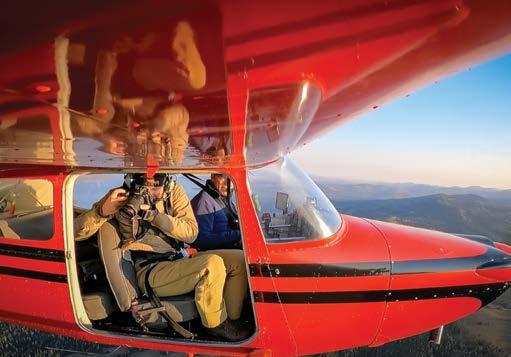
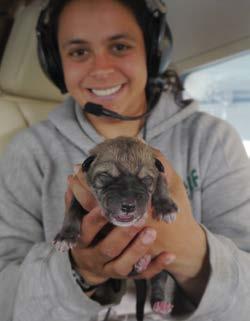
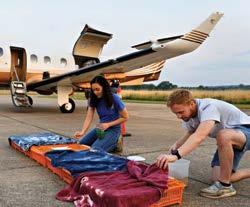
Clockwise from top: Photographer Ronan Donovan captures images for a National Geographic story on beavers during a LightHawk flight. Photo courtesy of Chris Boyer | Rebecca Bose holds a Mexican gray wolf pup during a LightHawk transport flight.
Photo by Lincoln Athas | Volunteers prepare crates of endangered masked bobwhite quail for a transport flight from Oklahoma to Buenos Aires National Wildlife Refuge in southern Arizona, where they will be released as part of a species recovery program. Photo by Don Wolfe
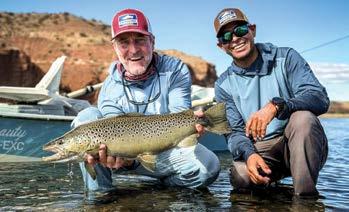
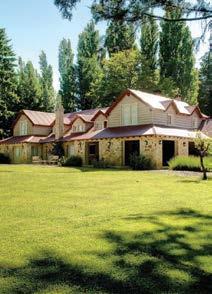
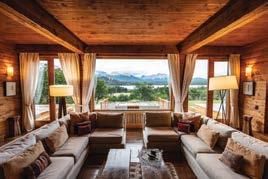
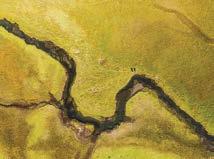
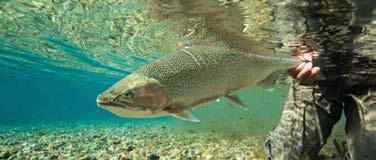
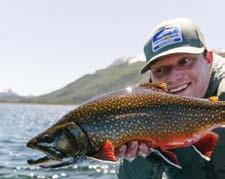

Words and Photo by Sula Castilleja Griggs
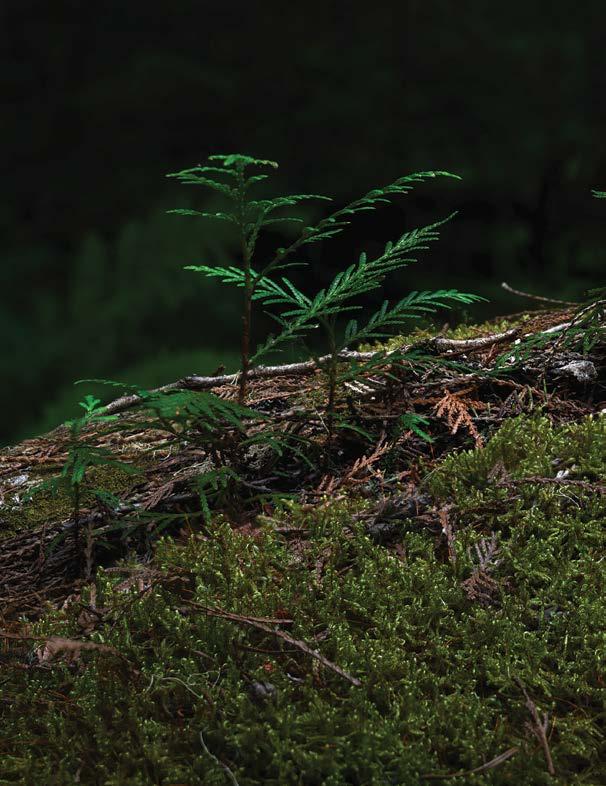
My first encounter with the grove was by chance — a quick stop to stretch my legs after driving across Lolo Pass, the mountain corridor connecting Montana and Idaho. I wandered the trails briefly, then returned to my car, unaware of the impact this place would come to have on me. On subsequent drives through the area, I always stopped to visit the tall trees. Slowly, those visits grew longer. I began to seek out the grove not just for its peace, its sense of scale, or its escape from modern life, but for something deeper. Over time, I realized the forest offered more than a moment of quiet. It held, in its stillness and enduring presence, a kind of roadmap to the person I was becoming.
I am a trans woman whose entire professional life has been spent in the federal service, dedicated to educating people about and protecting our most precious wild spaces. I began drafting this essay on January 20, 2025 — the
day Donald Trump took the oath of office for the second time, ushering in an administration that promised to be more aggressive and vindictive than his first. Professionally, I’m scared by the attacks I am already witnessing against public lands and public service. Personally, I’m terrified for the rights of myself and my community.
In times of great stress, I have always turned to the natural world. Now, more than ever, I find sanctuary in the land of the tall trees and absence of cell service. I find myself seeking places to disconnect and recontextualize my struggle. More than anywhere else, the DeVoto Memorial Cedar Grove has been that oasis.
Named for historian and conservationist Robert DeVoto, the grove lies just across the Montana-Idaho border. Along the rocky banks of the Lochsa River stand 2,000-year-old western red cedars that have somehow escaped the sawman’s blade and fire’s flame. Their scratchy gray trunks reach skyward, and their canopies — arching
150 feet above — envelop the forest in a sort of twilight, much to the delight of ferns carpeting the floor. Walking among them feels like stepping into a place untouched by time.
Within this forest of giants it is inevitable to, on occasion, come across one that has fallen. Every tree in this grove has stood a test of time, some just a bit less successfully than others. From small diameter 100-year-old trees to the rarer behemoths, each fallen cedar has its own story to tell. Of particular interest to me are the large diameter ancients who met their end in modern times, recognizable by their hollow bases.
Western red cedars, in keeping with their lengthy lifespans, do not die a quick death. In their final centuries, many fall victim to slow-moving fungal rot that eats away at their heartwood, leaving only a fragile ring of living sapwood to bear the weight of the years. Still, the trees might stand — hollowed yet upright — for several years, holding firm against the forces pulling them toward the forest floor. In their hollowed cores, I saw myself.
For those who have never questioned their gender identity, this may seem an
abstract comparison. But to those of us who have, I’m sure you can see where this is headed. In those vestigial markers of cedars long since fallen, I saw nature’s manifestation of my gender dysphoria.
In their sterile, medical way, the psychiatric diagnostic manuals define gender dysphoria as an incongruence between one’s perceived sense of gender and one’s birth sex.
Popular media often reduces this incongruence to simplistic tropes — little boys wanting to play with dolls and growing up always knowing they wanted to be girls. The reality is rarely so neat, and ignores what many experience: an amorphous agony, building over years and decades of long-suffering silence until the day comes when the torment reveals enough to be granted a name.
I lived with this incongruence for 26 years before I figured out what was going on inside, and even after I came out to myself, to my friends, my family, and the world, I struggled to truly understand just what it was. One afternoon among these cedars I finally understood.
As I sat meditating in the bowl of a hollowed-out trunk, I envisioned myself as that cedar. For years upon years a fungus was eating away at my heart while my outer shell showed little of the turmoil inside. Every year, a new piece of my psyche gave way to the unstoppable fungus until just the husk of a man
remained. Just as a cedar will eventually hit its breaking point and collapse, so did I.
Unlike those trees that anonymously fell sometime in the past, I can pinpoint my fall: December 2023, during one of the darkest months of my life. Again, I found parallels in the downed trees. The moment a cedar falls is not the moment it dies; it’s the beginning of a new phase.
I imagine that most people who visit the DeVoto Grove pay little attention to these fallen giants, or if they do, it’s only to navigate past them on the trail. But the more time I spend in the grove, the more I become fascinated with them. It is easy to be enchanted by the leviathans towering above, but it is harder to love the ones closer to the ground. As an informational wayside marker along the trail suggests, examination of the roots of one fallen cedar can reveal a network of roots of a new generation of smaller trees beginning their life as they cling to the scaffolding of their ancestor.
Even the trees that do not play host to such dramatic rejuvenation live on in some way. Through decades, the nutrients and molecules of that detritus will be returned to the Earth and continue the cycle of life, death, and rebirth that has spurred countless generations. Whether those molecules come back in the form of another cedar or in a different thing entirely is not immediately clear. Rather, patience is the chief virtue of forest succession.
I do not know what the future looks like for me now that I have toppled to
the ground, but what I do know is that the cycle will not stop. Something new is coming. Will the conditions be right to prosper into something better than what I left behind? Those are things that I cannot know now. Throughout the last year, I’ve begun forging my own trail into this dark, foggy forest. From the hormones I take daily to reshape my body, the surgeries I’ve begun saving for, and the daily challenge and joy of recontextualizing the ways I move through the world around me, the path before me is becoming increasingly clear.
I hope that I can find a place in this world I’m finding both increasingly hostile and beautiful. I hope that one day, I will stand again in this grove of cedars I’ve come to know so well, and that they will know me as one of their own: someone who has weathered the tests of time, fallen, and been reborn as something new, shaped by what was, but more closely aligned with who I’m meant to be.
On my most recent visit to the grove, I made it a point to keep my eyes cast down. I did not want to focus on the growth of the past — I wanted to see what was coming next. In my downcast gaze I followed the ribbons of bark of a fallen tree until I found, among the debris, a few saplings no more than 6 inches high poking out through the leaf litter. When I return, they will have grown — and so will I. Years from now, perhaps they’ll stand a foot high, maybe two. I hope they’ll recognize my footsteps on this land, even if the form in which I return has changed.
Sula Castilleja Griggs (she/her) is a Missoula-based photographer, writer, and former park ranger.






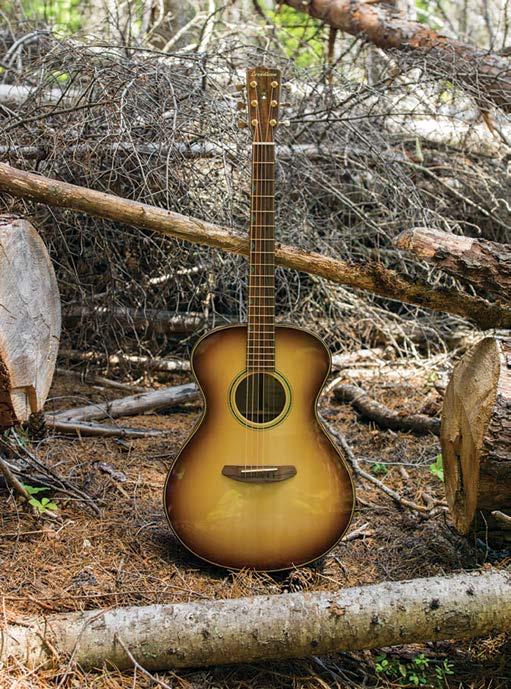
Brendan Leonard works in his home office in Missoula, where he writes a newsletter, shares poetry on Strava and creates illustrations — mostly pie charts and diagrams — designed to make people laugh and take life a little less seriously.
“Let’s just do the fun part”
Rad Wisdom From Brendan Leonard
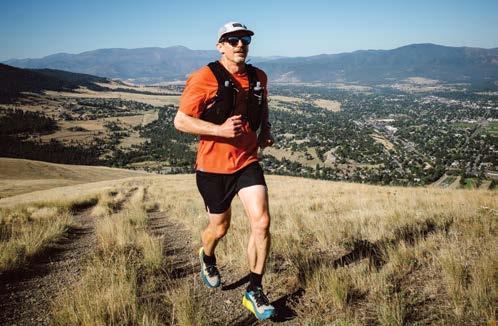
Brendan Leonard is running to our interview. No, he’s not running late but rather, we’re meeting at the Missoula Public Library, and it’s on his route after descending Mt. Sentinel, the trail he runs twice a week. In only a handful of miles, the path ascends 2,000 vertical feet from the University of Montana’s iconic “M” to the summit.
But it’s not nostalgia for his college years that draws him back, run after run. Leonard, an Iowa native, first came to Missoula in 2004 to attend graduate school for journalism. These days, the pull of Mt. Sentinel is less academic and more personal.
After shedding his running vest, Leonard said he just loves the climb, especially the small forest near the top. He estimates he’s done it 170 times, though Strava, the fitness tracking app, could likely provide a more accurate tally. He’s not boasting; the number is simply a testament to his connection with this landscape. Leonard returned to Missoula with his wife in 2020, and they now have a 3-year-old son. Trail runs around the valley have become part of
his rhythm and routine.
Besides, bragging in any form — whether about athletic feats or his accomplishments as an author, illustrator, and award-winning filmmaker — isn’t his style. It doesn’t fit with the ethos of Semi-Rad, the website he launched in 2011 that celebrates everyday adventures and creativity. The site is for people like him: people who enjoy running or skiing or camping but aren’t professional athletes or the type who take their Strava accounts too seriously.
The first spark of Semi-Rad was born from his frustrations working as a freelance journalist after graduate school. He found a lot of the assignments in adventure and outdoor magazines lacking and the work inconsistent. Much of the glossy adventure magazine world tends to hinge upon a familiar trifecta: triumph, tragedy, or buy this new (expensive) gear. But Leonard wanted something different. He was drawn to the intersection of adventure, maximum enthusiasm (his phrase), and meaningful self-inquiry, the latter of which was the basis of his first two books, The New
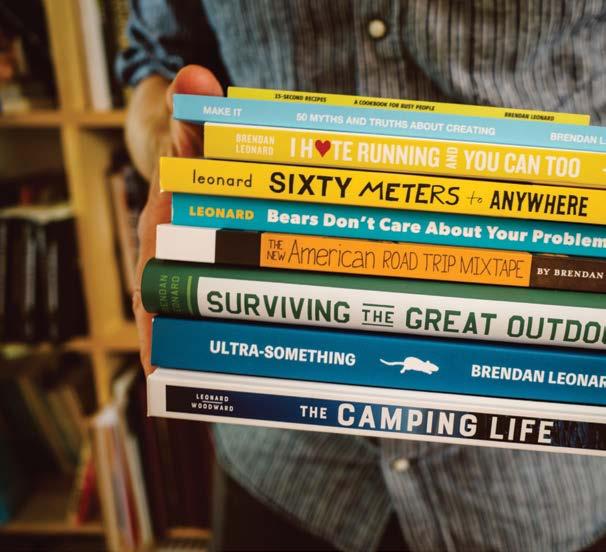
American Road Trip Mixtape and Sixty Meters to Anywhere
In fact, he probably has a pie graph somewhere depicting this exploration.
He was also inspired by his friend Fitz Cahall, who launched the Dirt Bag Diaries in 2007 — a mountain culture storytelling podcast — and eventually turned it into a full-time job. If someone like Cahall who recorded stories in his closet could transform his passion project into a career, then Leonard figured he could make stuff all on his own, too.
“I just wanted to do funny stuff and people [magazine editors] didn’t want funny stuff so I was going to do it on my own website,” he said.
“I’m just somebody trying a bunch of stuff and trying to avoid having to get a real job.”
Semi-Rad started as a place to share his blog posts and illustrations that had become popular such as “Do You Have Obsessive Campfire Adjustment Syndrome?” and “Hopefully This Beer Is Thanks Enough: A Gratitude Scale for Outdoors Folk,” and his work expanded into social media, including Instagram and YouTube. His weekly newsletter has 15,000 subscribers, and he’s been published in some of the magazines he always aspired to write for, including Alpinist, National Geographic Adventure, Adventure Journal, and Outside, where he was a columnist for six years.
Steve Casimiro, the founder of Adventure Journal, calls Leonard this generation’s leading voice of outdoor writers. In the foreword to Leonard’s Bears Don’t Care About Your Problems, he writes, “Today in this post-millennial, rapidly changing, pre-who-knows-what era, there is Brendan Leonard — selfdeprecating, open-hearted, considerate, and respectful, the voice of humility and optimism and stoke.”
Leonard has written a dozen books, including quirky and inspiring guidebooks on adventure, outdoor survival, creativity, and running. Some are collections of essays from his website. Others are slim tomes including 15-Second Recipes: A Cookbook for Busy People which includes delicacies like “Deconstructed Cereal” and “10-Second Cheese Sandwich.” His most recent book, UltraSomething, published in 2024, is an exploration into the quirks of human nature and its expressions of endurance: from distance runners like himself to football teams and factory workers. Like most of his books, it includes his illustrations, a clever take on charts and graphs. The range of his creative work and output is staggering, particularly for a person who routinely runs ultramarathons, climbs mountains, and has a family. He also teaches courses on essay writing through his website and with Missoula’s Freeflow Institute.
“My working definition of adventure, at this point, is any selfdirected undertaking with an unknown outcome, which includes bike rides around the neighborhood with my 3-year-old.”
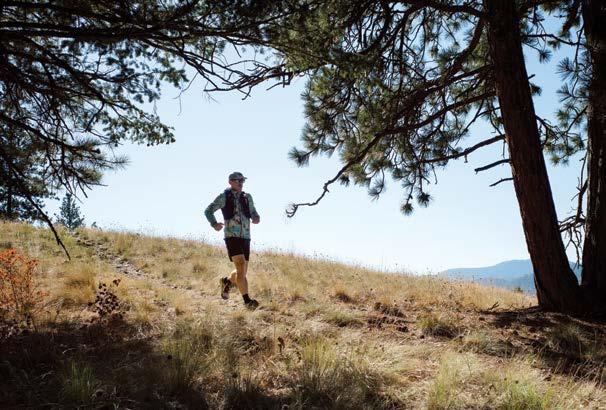

Leonard’s work often features minimalist illustrations, icons and graphs, which he creates digitally for social media and his newsletter audience.
Yet, Leonard doesn’t view his multichannel storytelling work as prescient for an industry that now requires writers to have a diverse platform and legions of followers, though he’s long garnered both. “I’m just somebody trying a bunch of stuff and trying to avoid having to get a real job,” he said. Now 47, he has given himself permission to create what he wants and has a lot of fun doing it. Although outdoor adventures have taken him all over the world, including competing in the Motatapu 52K Ultra in New Zealand last March, he also likes standing on peaks closer to home.
Two years ago, he created his own choose-your-own-adventure project, a riff on the Seven Summits endeavor to climb the highest mountains on all seven continents. That type of expedition, created by mountaineer Dick Bass in 1986, requires a lot of time away from home and comes with a price tag of hundreds of thousands of dollars. As a middle-aged dad, Leonard didn’t have the cash or the time, and recalled his fondness for the chooseyour-own-adventure books he read as a child. Instead of traveling across the world, he formulated his own version of the Seven Summits: The Seven Summits of My Neighborhood, which he documented in a short film in 2023. He selected the seven mountains within a 20-mile radius of Missoula and climbed them, sometimes with his mom, Kathy, sometimes solo, or with a friend. It was an entirely human powered mission, biking to trailheads if the approach took longer than his regular neighborhood dog walk.

His work encourages people to create their own version of The Seven Summits of My Neighborhood or pursue another creative endeavor. Embedded in Leonard’s storytelling and his own endeavors is a simple perspective: “Most of us are just f*****g around in the woods and that’s great.” As a father, his approach to adventure has shifted. “My working definition of adventure, at this point, is any self-directed undertaking with an unknown outcome, which includes bike rides around the neighborhood with my 3-year-old.”
The project is also Leonard’s way of reminding people that adventure doesn’t need to be intense, expensive or global. “You should be able to do things closer to home and still have fun with it,” he explained. “Otherwise, you’re just setting yourself up and giving yourself excuses. There are literally thousands of mountains in the world. Just go pick one. I guarantee you’re going to have a good time.”
Through his writing, illustrations, and films, Leonard offers an expansive and approachable concept of adventure — one that’s relatable, refreshing and grounded in humility and humor.
Whether he’s creating a cartoon video on how an average runner can survive an ultramarathon or having his mom introduce his new books on his YouTube channel, Leonard continues to deliver an inviting, accessible, and motivating message about adventure and the outdoors, applicable to regular folks and elite athletes alike.
He shared a final tenet of Semi-Radism, before running home, “Let’s just do the fun part.”
Maggie Neal Doherty is a freelance journalist, opinion columnist, and book critic, and lives with her family in Kalispell, Montana. She teaches writing at Flathead Valley Community College. Her work has appeared in The Guardian, Washington Post, LA Times, SKI, and more.
by Rick Bass
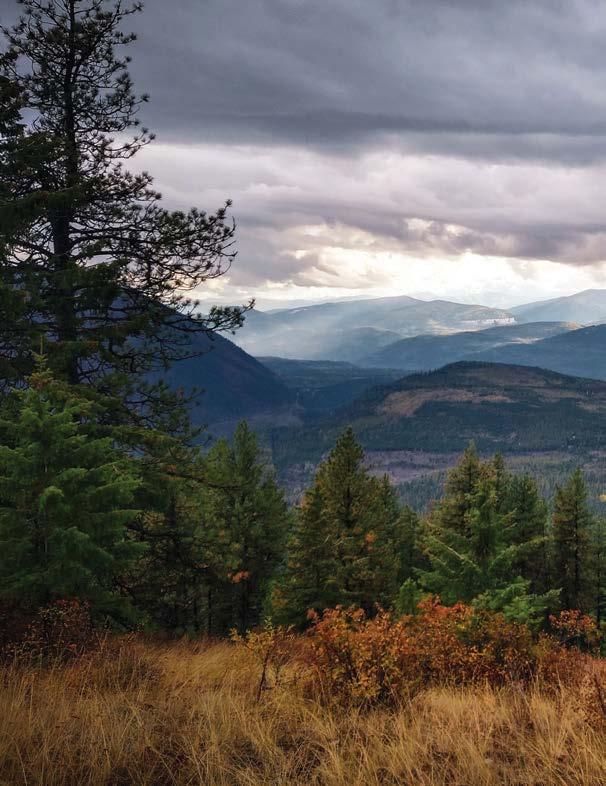
Physicists tell us that sound waves, once initiated, are never completely stilled, but remain in motion forever, trembling with ever-decreasing but neverending oscillation at the sub-atomic level. That musical instruments, famously, hold within them eternally the vibrations — the sounds — of every song they’ve ever played.
Next summer, an intrepid band of students from Maine will drive around the country with a Black Ram guitar in the front seat. During the 250th anniversary of the United States, they will pioneer a path they call the “Green Curtain” — a loosely-linked series of carbon-storing old-growth forests along the northern tier of the United States. They’ll leave the coast at dawn on the 4th of July and travel from one old forest to another — across Vermont, Michigan, Minnesota, and Montana — mapping a permeable curtain of green: a fringed, frilled, living, breathing organism, absorbing the world’s heated exhalations and preserving biodiversity. Along the way, they’ll teach the guitar — 315 years a tree, but now barely three years a guitar — the songs that matter most to us as a society. And when they come to Montana, our artists will receive them,
and show and share with them the best we have: the open spaces that inspire our art and our lives. As they work with the map library department from their university, they will witness and chart a new American geography: Little Bighorn, Big Sandy, Big Sky, Bigfork, Big Arm, the Big Belt Mountains, and the American Prairie country along the Musselshell. Finally, they’ll reach the most northwestern corner of Montana, an ancient garden in the Yaak Valley that has launched their journey, and the place from which the music is coming. They’ll trailblaze a protected Curtain of Green, a map for navigating the next 250 years, and climate justice.
Whether predetermined pathways exist, written in stone, non-negotiable beneath our feet, or whether we have the freedom to choose and shape our destinies, is a matter for philosophers and theologians.
Sometimes there’s a man, and sometimes there’s an idea. And sometimes there’s a man and an idea. And, well …
It was a long and winding road that led that one certain piece of wood, which would become the Black Ram guitar, to Jeff Bridges, just as it was a long and winding road that led Jeff from California to Montana, more than a half century ago. He had a part in a movie filmed near Chico Hot Springs. It’s where he met his wife, Susan. Montana can just get into a person’s blood, and it’s an especially wonderful thing to see it do so
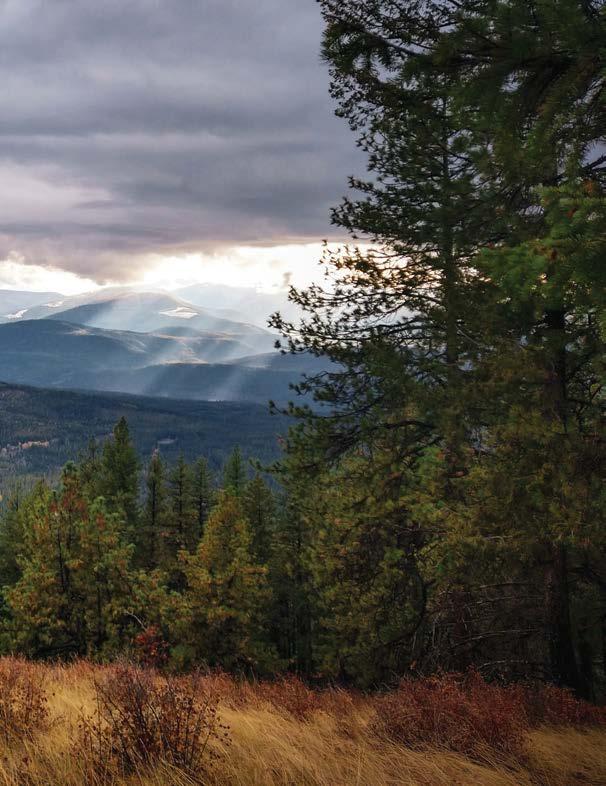
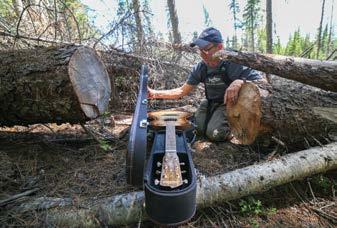
in a young person, with so many years still ahead and such verve and vim. Jeff and Susan augured in, buying a place in Paradise Valley long before it became what it is; they knew beauty when they saw it. They disassembled an old cabin that was used on the set of another movie they’d worked on, Heaven’s Gate, up in the Flathead. They trucked it to Paradise, reassembled it on their land, moved in, raised a family and, by the side of a rushing, burbling creek and a grove of quaking aspen, lived happily ever after, taking refuge there when they could. When they can.
In Montana, Jeff and Susan have become powerful advocates for William Shore’s Share Our Strength program, working for more than five decades to
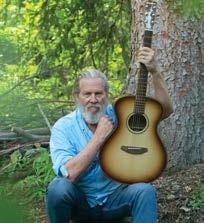
strengthen food security for children. Susan was a founding board member of Vital Ground, an organization that has protected upwards of a million acres of private land in Montana, with a focus on critical habitat for grizzly bears. Jeff has also provided voiceover for documentaries by a nonprofit group, Save the Yellowstone Grizzly and, more recently, participated in efforts to protect an old-growth inland rainforest in northwest Montana’s Yaak Valley — in the region known as “Black Ram”— as the nation’s first Climate Refuge. Identified recently by Dr. Dominick DellaSala and his team as a premier climate refugia, the public land lying north of the Yaak River and south of Canada — approximately 275,000 acres — is a prime candidate to become a Climate Refuge: a place dedicated to storing maximum above-ground carbon in the long-term safekeeping of ancient forests, and to provide a focal point for increased scientific as well as artistic inquiry. Jeff is tireless, really, except he’s not. After surviving Covid and cancer, he needs — craves — some downtime, even as his brain keeps whirring.
It was luck, not choice, that led him to hear the first Black Ram guitar. A craft guitar made by Master Luthier Kevin Kopp of Bozeman, the instrument used a piece of 315-year-old Engelmann
spruce for its rich and resonant top, salvaged from an illegal logging sale on the Kootenai National Forest. An arts and conservation group I work with — The Montana Project — had the guitar made so that she, the guitar, could advocate for the old forest from which she came, which the U.S. Forest Service has threatened with hundreds of acres of clear-cutting in the wettest, most northwesterly region of the valley. Poet laureate Ada Limón and Montana’s Chris Dombrowski, along with Beth Ann Fennelly and Jane Hirshfield, have visited and written poems about the old forest. Painters Monte Dolack and Clyde Aspevig have captured it on canvas. Rob Quist has written a song for the guitar, salvaged and crafted from one of its trees.
Another group I work with, the Yaak Valley Forest Council, is bringing independent scientists to the Black Ram Forest to study its mysteries.
We hope that by being managed as a Climate Refuge, the Black Ram region will become part of a loosely linked series of other old and mature forests along the northern tier, forming a biodiversitypreserving, carbon-storing, and moisture-holding Green Curtain. Old big trees store more carbon than smaller trees, and they absorb it at a much faster rate, sucking it up, as if telling the heated world to slow down, to chill, to abide in the cool shade of the old forest.
Now scientists creep through the refuge on their hands and knees in slow motion, measuring the health of the forest’s thin soil, which is made up more of rotting carcasses of the giants who came before them, rather than true soil. As if the fallen and the moldering are still not yet fully done living. The scientists are studying the matrix of decaying organic material from which the guitar’s old forest emerged, and still emerges daily. They’re measuring its mycorrhizal activity and comparing it to that of nearby clearcuts.
Dr. Dominick DellaSala recently completed an Ecosystem Conservation Assessment for the entire Northern Rockies, including a detailed analysis of the Yaak River watershed. His team’s findings revealed two key metrics: that the Yaak will retain a greater percentage of its precipitation than other valleys,

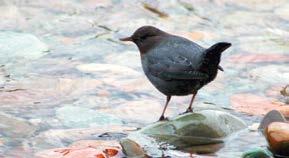
Clockwise from top: A Columbia tiger lily, a native species of concern, blooms beneath the canopy of an old-growth forest in the Yaak Valley. | A bull moose saunters through a meadow in the Yaak Valley. | Golden western larch ignite the Yaak Valley in fall color. | Old-growth stands tower in the proposed Unit 72 of the U.S. Forest Service’s Black Ram Project area in northwest Yaak, Montana. | An American dipper bobs along a cold Yaak River tributary. Photos by Anthony South
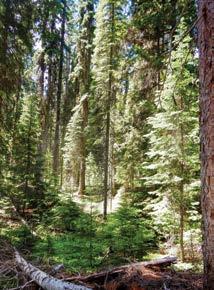
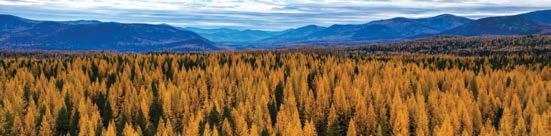
and that over the coming decades, it will remain the most fire-resistant, with an ever-increasing percentage of canopy cover — cool, moisture-retaining shade. A place in which to take refuge. A climate lifeboat.
Jeff asked me. “What does the word refuge mean to you?” To me, it’s not far from the Spanish word querencia — a place to retreat to, and a place from which one draws one’s strength — but I also think refuge can be more basic than that: a place to take shelter, particularly in a storm.
No designation exists yet for a Climate
Refuge, but we think that’s a good thing: We get to create it as we go, easing inexorably into a burning future. One way to think of it is this: a haven where old and mature forests safeguard vast stores of carbon and biodiversity, and where scientists and artists can study how climate change shapes the lives of sensitive species, including our own.
When the painter Clyde Aspevig first came into the old forest, traveling over from his longtime home on the east side of the Divide, the first thing he did was stop and look up at the myriad layers of canopy and exclaim,
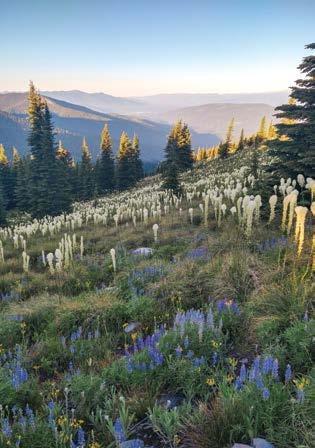
“This is where the prairie comes from.”
The prairie grasses, begging for water, adapt and yield from that paucity, that hardship, their own incredible ecosystem. The two are connected as if at the hip. We are all in this together.
What does an ancient inland rainforest look like, and why does it matter? It looks like a beguiling mix of shade and sun, as if the columns and rays of light are musical notes made visible. Enormous cedar trees with broad fernlike fronds keep the forest floor cool, as do the equally large hemlock trees. It looks like towering sun-loving thicktrunked fire-resistant larch standing
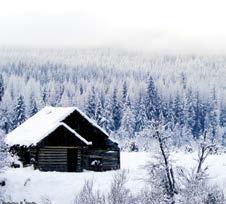
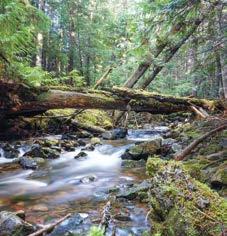
shoulder to shoulder with the cedar and hemlock: different forest types that should not be able to tolerate one another, but which are not only co-existing, but prospering.
The immense centuries-old larch stands in a vertical fissure of light, growing out of the hearts of the giants that have fallen, and keep falling, throughout time: Each of the trees getting what they need, while beneath the surface, there are conversations we cannot hear, about how to keep old forests old and healthy.
The old forest appears chaotic at first, but after only a few minutes, you realize it all makes sense; everything is in order, as it should be, in a steady, dynamic motion.
As Clyde Aspevig notes, the Yaak’s rainforest makes Montana’s prairie. The old forest at Black Ram strains moisture and makes big trees, which absorb immense volumes of carbon and store it for centuries. This helps slow the rate of the great burning of the Anthropocene. On the east side of the state, the old forest at Black Ram gives our farmers and ranchers a chance. Gives our ski hills a chance, and our lovely rushing rivers, and our cold trout, a chance. Gives Montana a fighting chance. The old forest at Black Ram keeps cool things cool.
Right on, the Dude says, as I tell him of the refuge, and what the word means. Right on, he says. Don’t take no for an answer.
Late in life — having survived much — Jeff’s wandering path led him back to the Flathead, where it — this second part of his life, the Montana part — began. The state where the seed was planted. A literary journal, Whitefish Review, featured Susan’s photography from the set of Heaven’s Gate and hosted a launch party. The Black Ram guitar was there, played by Badge Busse and others. The Dude showed up, heard the story of how she came to be and what our hopes were. After the party, he played a few songs on her. He said he
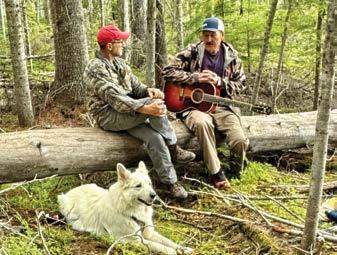
“dug the concept,” and within the same month, had commissioned six more Black Ram guitars with his signature on them from Tom Bedell. They were crafted using only domestic wood, as part of Jeff’s sustainability campaign, entitled “All in This Together” — a phrase Dave Matthews shared during his Wildlands concert in Big Sky. The campaign encourages people to consider not only where the wood in their guitars comes from — that it be domestic, and sustainably harvested — but to consider all the other wood in their lives — floors, frames, cabinets, etc. — and beyond that, their other choices as well.
In Montana, as in the old forest, there are connections between us that we cannot see. Some of us live amid bounty, even excess, while for others of us, there are times when there is winter in our blood. Just because you cannot see a thing does not mean it’s not there. Translucent underground billion-milelong networks of mycelia, glowing like fiber optics just beneath our feet, with pretty much all the secrets of the world within, and a buzz, a whisper, we cannot hear, but sometimes — in the old forest — can begin to sense. And are stilled, calmed, in that presence.
Next summer, the students from Maine will arrive. Montana’s arts community will welcome these climate ambassadors by sharing our wild landscapes and then taking them into the old forest to make art, and to hear
the silent thrumming symphony of all the trees around them — the old and the young, the fully healthy and the gloriously senescent, the straight and the crooked, the light-loving and the shadeloving: into the swarming diversity, toads and wolves, salamanders and grizzlies.
We will celebrate and nourish the students’ youth, curiosity, and hunger. We will teach them what we want them to learn. And then we will send them on their way, with a bit of Montana in their hearts, and a bit of Montana in their blood. The memories trembling, forever. And then they will go home, share their stories and art, like ripples widening in a pond, like growth rings for the next 250 years.
It may take a long time for the students’ stories to become embedded in our country’s consciousness and inform our nation’s next genesis, transforming future generations. But that’s another lesson that the old forest, and her guitar, have shown us: that the strongest fiber comes from that which grows the most slowly and has experienced — and survived — the most challenges.
The sound — the music — such a struggle makes is exquisite.
Rick Bass is the author of more than 30 books of fiction and nonfiction. He's executive director of the Yaak Valley Forest Council, and teaches creative writing workshops around the country (rickbass.net) including in the Stonecoast MFA program.

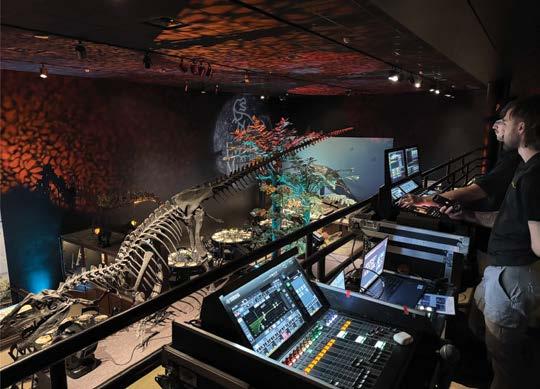
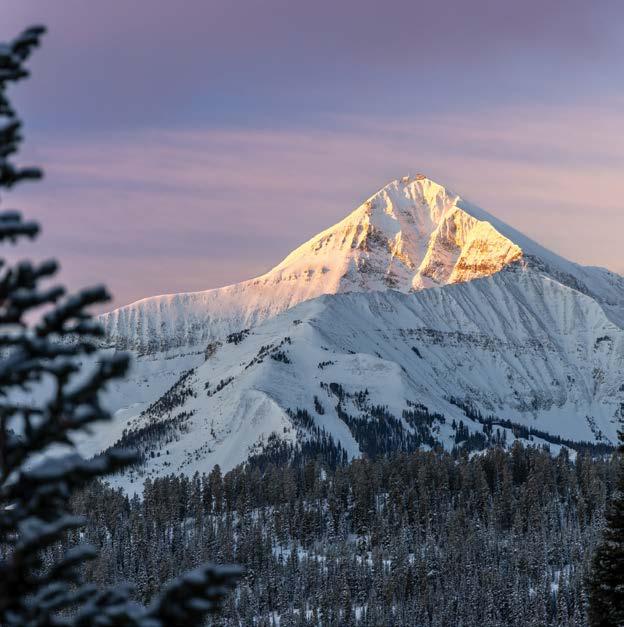

By Bella Butler
When the wind passes through the Rattlesnake Wilderness, it rustles the triplet clusters of ponderosa pines and ripples the snow-fed lakes with the collective breath of its past, present and future inhabitants and visitors. Relatively untouched, it’s a sanctuary that transcends generational borders, intended to be experienced for years to come as it is now, and as it’s been before. In this age where human development doesn’t just inch beyond the wildland-urban interface, it sprints, this sanctuary is no accident. Nor is the Lee Metcalf Wilderness in southwest Montana, or the Bob Marshall Wilderness’ oil-and-gasextraction-free expanse. These protected wild lands, among other hard-won conservation victories, are part of the enduring legacy left by one of Montana’s most significant advocates: Pat Williams. The state’s longest-serving congressman, a family man, and a Montanan through and through, Williams died at the age of 87 on June 25, 2025.
It speaks volumes about the Democratic congressman that among the speakers at his memorial were former Montana governors Steve Bullock and Brian Schweitzer and former Bureau of Land Management Director Tracy Stone-Manning. Still, perhaps the guests Pat would’ve been particularly honored by were his own children and grandchildren, for they were always at the core of his service.
“Someday, my grandchildren will stand on a ridge in Montana and hear nothing but wind, and that silence will be my greatest gift to them,” Stone-Manning recalled Pat saying when he left Congress after 20 years. Stone-Manning, now president of The Wilderness Society, added: “It was a gift to all of us.”
Before there were children and grandchildren, Pat was a young boy growing up in the bustle of Butte in the 1930s, ’40s and ’50s, bearing witness to the cycling of miners in and out of the Richest Hill on Earth through the industry’s boom and eventual bust. He was the product of an Irish immigrant family surviving the Great Depression and World War II through their bond and duty to protect one another. That duty became the post that propped him up as a teacher, a father, and eventually, a servant to the people of Montana.
“Growing up in Butte, my dad was protected by family and friends, and my dad, in turn, protected our family,” said Pat’s eldest daughter, Erin, at his memorial. “He also wanted to protect teachers, nurses, Native Americans, veterans, farmers and ranchers, children, women and families, our educational system, the right to healthcare, our natural environment, and always, always, always, the underdog.”
Indeed, he did. In addition to passing legislation that established the Rattlesnake and Lee Metcalf wildernesses as well as to protect the Bob Marshall Wilderness from oil exploration, Pat’s achievements included the Family and
Medical Leave Act, increases to minimum wage, creating America’s Conservation Corps, banning geothermal drilling near Yellowstone National Park, changing the name of the Custer Battlefield to the Little Big Horn Battlefield, serving on the President’s Commission for Tribal Colleges, and critically saving the National Endowment for the Arts, among many, many, other things.
At Pat’s memorial, former Governor Schweitzer said, “The genius of Pat was that he would listen to people all over Montana.”
“When Pat would come back from Washington, he didn’t stand at a podium and he didn’t read a speech,” Schweitzer said. “He sat in a chair. And he said to folks ‘I want to hear from you. I want to hear what’s on your mind.’”
A campaign ad run during Pat’s first bid for Congress stated: “It’s hard to say what the best qualifications are for a congressman, but it can’t have hurt to have walked the streets of the cities and towns and to have knocked on the doors and visited folks in their living rooms.” It certainly helped Pat.
Among all the successes and stories, the best reflection of Pat, the clearest perpetuation of his legacy, can be seen in his family. His wife, Carol, who survives him, was Montana’s first woman to serve as majority leader when she headed the Democratic Caucus in the Montana Legislature. She served in the legislature for more than a decade. Under Mark O’Keefe, she made a bid for lieutenant governor in 2000, and very notably she passed legislation giving all Montanans access to full-day kindergarten. As Pat and Carol’s son, Griff, said at his father’s memorial: “Without her, there really wouldn’t be the Pat Williams we all celebrate today… Pat and [Carol], they have become icons in the state of Montana, and they started out as kids meeting at a young Democrats meeting in Butte.”
Pat and Carol had three children – Griff, Erin and Whitney – and three grandchildren, Keelan, Aidan and Fiona. In their own ways, they all mirror Pat and Carol’s commitment to community and duty to make the world around them a better place for everyone. Pat’s influence on them is best shown by this line in a letter he wrote to Whitney on the day of her birth, shared by her at the memorial. Pat wrote: “Take long, curious looks, deep breaths, mouthfuls of laughter, and hearts filled with love. And don’t forget to give, for there is the joy.”
Pat famously said, “If you want to know who someone really is, give them power and see what they do with it.” Power, or at least the authority that comes with representing a state at the federal level, revealed Pat as Montana’s champion.
Bella Butler is a Montana writer and editor who grew up shaped by the landscapes protected by advocates like Pat Williams. She is currently an MFA student in Columbia's Nonfiction Writing Program.
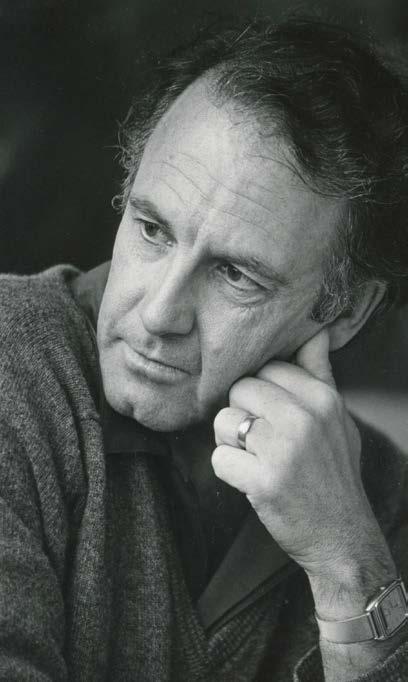
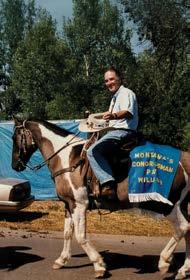

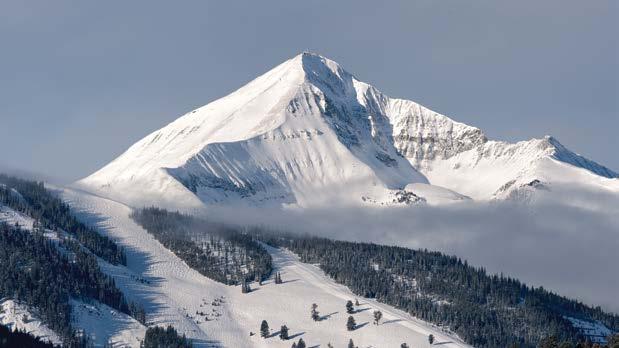




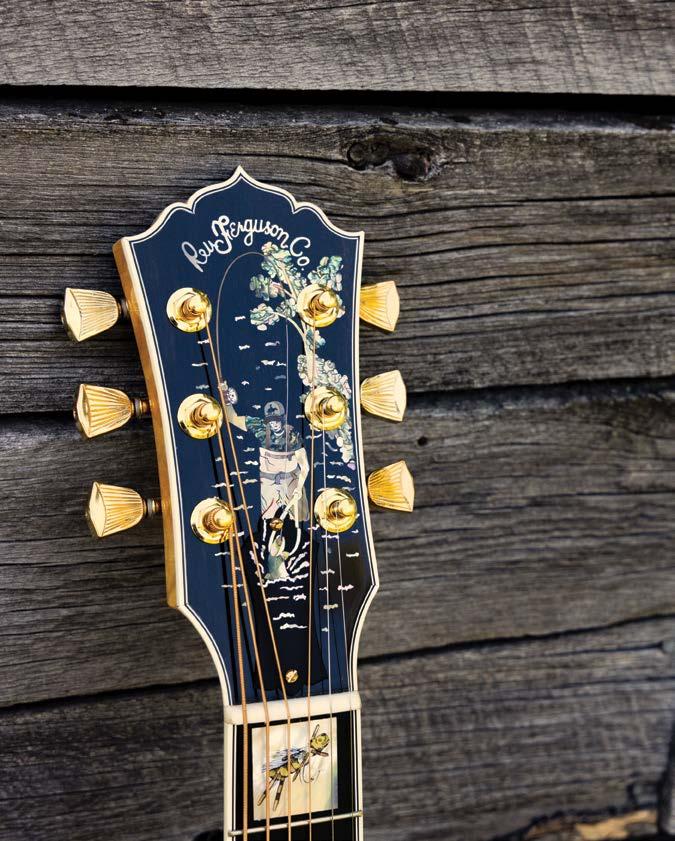

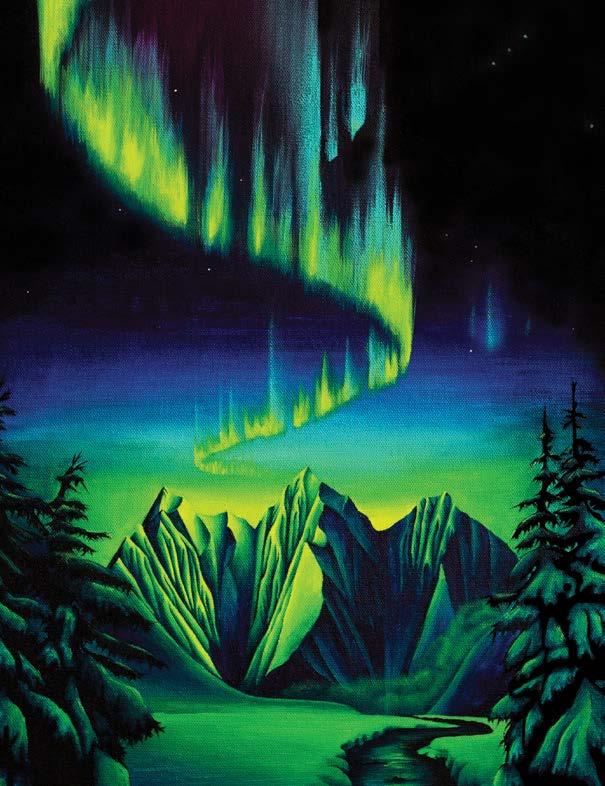
Words by Chandra Brown
In my mind, the aurora borealis is connected to love, to quiet places, to the way thick snow dampens acoustics at lofty latitudes.
When we were young, deep in our Alaskan winters, my parents would shake my brother and me gently from sleep and lure us into a dimly-lit living room with promises of late-night popcorn. Kneeling on the couch, my little brother would sidecar his small, flannel-clad body against mine, our bellies pressed against the cushions. And there, through the westfacing window, we would watch the northern lights, struggling against sleep to keep our eyes from blinking shut.
My early memories of the aurora are like this. Dreamlike, hypnagogic.
To see auroras, you have to be willing to be with the darkness — to let go of sleep, to go out into the night and be cold. Streetlamps, headlamps, headlights, and screens diminish or eliminate the chances of seeing them. If you don’t live in the North, it’s best to at least be facing north, and to seek them around midnight, near equinoxes or during solar eclipses.
The name itself, aurora, is a mouthful, requiring the speaker’s lips to take shapes uncommon to English phonetics. It comes from Latin, meaning “dawn” or, more romantically, “goddess of the dawn.” Borealis, also Latin, means “north,” and invokes the Greek god of the north wind, Boreas. The southern lights — the Southern Hemisphere’s analog to the Arctic northern lights — are called aurora australis, from auster, Latin for the “south wind.”
The root cause of aurora is magnetism. Attraction and repulsion: Opposite poles attract, while matching poles repel one another. Our Earth is a magnet. Molten iron and nickel churn through its outer core, stimulating electric currents that generate our magnetic field and maintain the Earth’s magnetosphere — the protective bubble that expands into space far beyond our upper atmosphere, shielding us from the sun’s fits and furies.
To begin to comprehend the northern lights, we start at the center of the sun, the center of our solar system, our gravitational anchor. Here, at the sun’s core, constant nuclear fusion expels energy as unfathomably intense light and heat. Stare a little longer at the sun — ill-advised as it is — and you’ll discover sunspots, contradictory places where anomalous cool
temperatures create dark splotches on the sun’s surface, zones where energy is confused, charged, and chaotic.
The prevalence and intensity of sunspots is, like most things in our physical world, subject to cycles. A solar cycle restarts roughly every 11 years, when the sun’s magnetic field flip-flops, or swaps poles. Astronomers first recorded this pattern in the 18th century, stamping the period between 1755 and 1766 as Solar Cycle 1. We are currently in Solar Cycle 25, which began during solar minimum in 2019. We are now careening toward solar maximum. At solar maximum, the sun goes wild.
At solar minimum, the magnetic field around the sun is orderly and stout and has two distinct poles. As the solar cycle wears on toward solar maximum the field grows confused, tangly, with a mess of disorganized magnetized zones, and the lines of force at the sun’s surface get twisted up into knots. As a consequence of this chaos, the field gets weaker.
The knotted lines of force eventually snap, like fiery rubber bands, producing solar flares — massive explosions of light traveling so fast they can reach Earth, 93 million miles away, in approximately 8 minutes. Sunspots also trigger coronal mass ejections, flinging into space enormous clouds of plasma at upwards of 1,800 miles per second. These phenomena are collectively known as solar storms.
Coronal mass ejections make their own magnetic fields. When they strike the earth’s magnetosphere, the two fields engage, and floods of charged particles cascade along the Earth’s geomagnetic field lines toward the poles. At the poles, the field is weakest. This is where space art is made: Solar particles crash into the atoms and molecules in our upper atmosphere, and electrons are stripped away in the collision like shrapnel after an explosion. And when they recombine, reconnect, with other particles in the ionosphere, they make ethereal, exquisite splashes of light. It’s the reconnection that catalyzes the brilliance of the aurora.
I met my husband during an autumn defined by forest fire, smoke, and a full solar eclipse. We met on the Main Salmon River, in Idaho, and our love was unlikely, logistically problematic, and, also, magnetic — powered, as love is, by elements beyond our control.
Seven years after that eclipse summer, on May 10, 2024, we got married. We chose that date for its numbers: our shared
height in feet and inches, the number of years he is younger than me, the number of days in April our birthdays are apart, the repeating multiples of two.
We chose to bring our people together in North Fork, Idaho, at a confluence where two stems of the Salmon come together. The wedding was to be an expression of collaborative art, we thought, a multi-day party to properly honor our people and our partnership.
For months over the winter, however, the spreadsheets, logistics, and outgoing checks layered awkwardly atop the rest of our lives. The tasks of wedding planning distracted me from my actual work and at times I resented it, thinking, “I am not this person.” I felt like I was planning for someone else, someone who didn’t mind participating in the wedding-industrial complex and for whom tablecloth-flower-bridesmaid color coordination was an actual priority. We tried our best to steer toward our own shared vision. We tried to corral the details and not let the minutiae turn into monsters. We worried about asking too much of our people, and spending too much money, and causing a sonic or cultural disturbance in the tiny community of North Fork.
I felt disconnected. I failed to write my vows until the pressure the morning of May 10 forced me to, and I wondered, critically, what this signified about my choice to marry Nate. But, despite these anxieties, we did it. And it was blurry and beautiful, and I’ve never felt so much love in one place, at one time.
After our ceremony, a friend joked that we’d planned the wedding around a geomagnetic storm. On an aurora app, our location lit up, and for a few magical hours, Alaska appeared in our Idaho sky: Constellations were replaced by shivering curtains of color, swaths of emerald with moments of electric violet.
Nate and I stood with locked arms, watching the sky. The friends who had made it to 2 a.m. were scattered about, sprawled out on raft trailers, in the cobble, on stumps, their faces turned upward. I settled into my body for the first time in months. I landed on that piece of earth between rivers. My discomfort had been in the liminality, the building of the wave, the gathering
"On an aurora app, our location lit up, and for a few magical hours, Alaska appeared in our Idaho sky: Constellations were replaced by shivering curtains of color, ethereal swaths of emerald with moments of electric violet."
of energies. On May 10, 2024, tides converged, polarity shifted. Powers beyond our control collided.
Colors of aurora are associated with altitude — distance from the earth’s surface — and the molecules that occupy various strata of our atmosphere. Red is associated with high-altitude atomic oxygen, the reconnection, or excitation, of molecules occurring more than 150 miles away. Green is excited atomic oxygen at mid-altitudes, between 60 and 150 miles above Earth. Blue or purple auroras are excited ionized molecular nitrogen, somewhere closer, below an altitude of 60 miles. In the strongest of auroral events, we can
perceive even more colors like yellows, pinks, and white.
During especially forceful solar storms, particles can flow like waterfalls away from the poles, in the direction of the equator, across regions typically deprived of northern lights.
In May 2024, a sunspot named Active Region 3664 launched a record solar flare, the strongest so far in the current solar cycle, releasing six coronal mass ejections that reached Earth’s magnetosphere on the afternoon of May 10. That night, aurora emanated from both poles. The impact was so powerful that people in Mexico saw an aurora for perhaps the first time in their lives.
Despite the violence that creates them, we perceive aurora to be mostly silent, too far away for our animal ears to register. It originates in the anacoustic ionosphere, between 50 and 300 miles above the surface of the Earth, where sound behaves much differently than it does down here. People across generations, however, have reported hearing the aurora whistle, or hiss, or crackle. But most of the world’s population lives distant from the poles; most people will never hear, let alone see, the aurora borealis or australis. For most people, aurora will remain a legend.
Space weather is a fusion of mystifying interconnected phenomena, powerful beyond our comprehension. The aurora is a physical manifestation of geomagnetic activity, an expression of the electric currents in the ionosphere that perturbate, or significantly disturb, the Earth’s magnetic field. In other words, the northern lights are gorgeous evidence of a massive disruption in the forces that govern and guide our lives here on Earth. And there are impacts. Myriad scientific papers published in journals such as Space Weather and Advances in Space Research describe instances across history when geomagnetic storms have crippled civic infrastructure. These events coincided with magnificent auroral displays. In 1859, worldwide telegraph services were stunted; in 2003 the FAA was unable to supply planes with GPS navigational guidance for 30 hours; in 2022, during a rather mild space weather event, 38 of
49 freshly-launched Starlink satellites succumbed to orbital decay, burning up or crashing, disappointingly, back down to Earth.
As our technologies assume more prevalent and critical roles within our lives, our vulnerability to the impacts of space weather increases. Our power grids, radio communications, oil and gas pipelines, and GPS navigation are inarguably affected by solar activity — to say nothing of its effects upon spacecraft. Global blackouts could impair markets, communications, emergency services, trade, food distribution, water pumps, fuel pumps, climate control, and any other system that is powered by electricity. A 2017 study in the journal Space Weather asserted that, in the most extreme blackout scenario, 66 percent of the United States’ population would be impacted, and that the country would suffer an economic loss of $41.5 billion a day.
Animals who migrate — who build their lives around movement between homes, or between feeding and breeding grounds, or between the hunt and the hive, or between natal streams and the wide, wide ocean — are, as science is proving, impacted, too.
Starting in the late 1990s, a handful of physicists and evolutionary biologists began to investigate the link between geomagnetic storms and migratory anomalies — including honey bees, bats, and birds sent off-course, and mass strandings of whales. There’s a sadness in associating something so wondrous as the northern lights with entire communities of wayward animals, creatures sent adrift by disruption to their internal compasses, beings who create navigational maps with their bodies and the memories stored within them. Research published in 2020 by Duke biophysicist Jesse Granger and astronomer Lucianne Walkowicz showed that mass strandings of otherwise healthy whales were twice as likely to occur during days when the sunspot count was high, and that gray whales are four times more likely to strand on days when radio waves from the sun are strongest. In 2005, German researcher Klaus Heinrich Vanselow reported that his analysis of 291 years of
data determined that of 97 sperm whale strandings in the North Sea, 90 percent happened during longer-than-average solar cycles, when there were higher, longer frequencies of solar storms.
"Resisting love is like resisting space weather. Both forces are too supremely powerful to fear. We have no influence, no recourse, so it’s best to go outside, bravely, and witness the lights."
Scientists theorize that solar storms may have two or more impacts on magnetic navigation. They might change the geomagnetic field itself, resulting in the relay of incorrect information and false orientation, or, they might affect the animals’ magnetic receptors (literally, the anatomical parts of animals that allow them to navigate), temporarily disabling their capacity to orient.
believe that auroras are sparks and snow kicked skyward by a firefox’s tail as she scampers across the Arctic. Or they are water sprayed from the blowholes of enchanted whales. Or they are the souls of deceased children. Or they are the dead in the heavens playing ball with a walrus skull. Or that they are fires ignited by the Creator as a reminder that he is thinking of the people on Earth. Or, maybe, they are ancestors come to visit, the colors forming a shimmering bridge between generations, a luminous source of connectivity across space and time.
How you experience auroras is also a matter of perspective. Where you are, physically, spatially, matters. The visual structure of aurora is, generally, parallel rays moving upward through the atmosphere. But perspective effects can produce illusions of spirals, dunes, curtains, or, as they appeared on our wedding night, a converging crown of striations pulsing toward a conical center—a volcanic crater ring, a halo, an apex, an opening.
There are openings in the science of auroras that leave room for magic and interpretation. Into these openings, I choose to place my grandmothers, beloved old dogs, and friends gone downstream.
Our wedding was, we believe now, never about our love in isolation. It was about the humans and landscapes and water and winds that brought and kept us together: the mycelial connectivity of a well-tended, beautifully flawed, complex community. The revelation that without the charged and tangly threads of relationship, without our dynamic constellations of people, we’d get nowhere. And if we tried to control love, to shrink from its chaos, the colors would be diluted.
Resisting love is like resisting space weather. Both forces are too supremely powerful to fear. We have no influence, no recourse, so it’s best to go outside, bravely, and witness the lights.
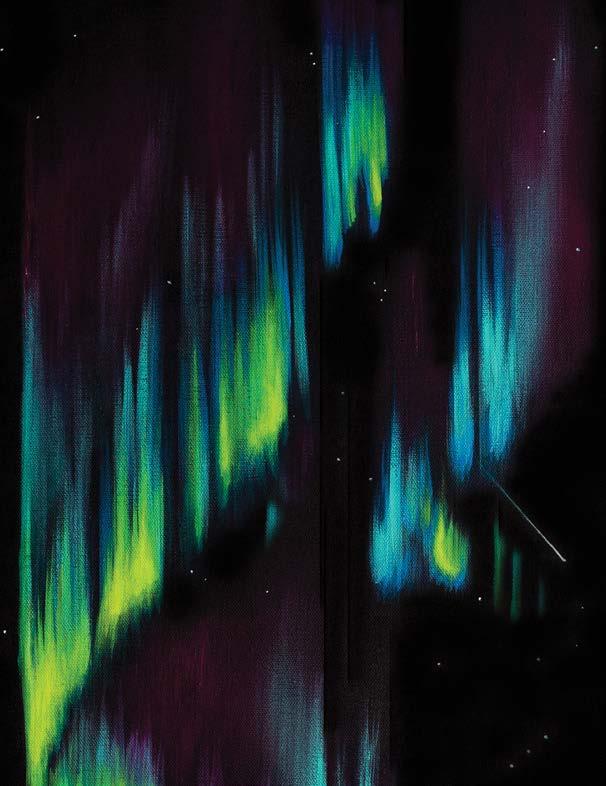
As with other big natural phenomena, the stories of the people around us will influence how we see auroras. Depending on the geography or culture you’re born into, your people might
Chandra Brown is a Missoula-based writer, educator, and river guide. She is the founder and director of Freeflow Institute, which builds arts-based outdoor learning opportunities.
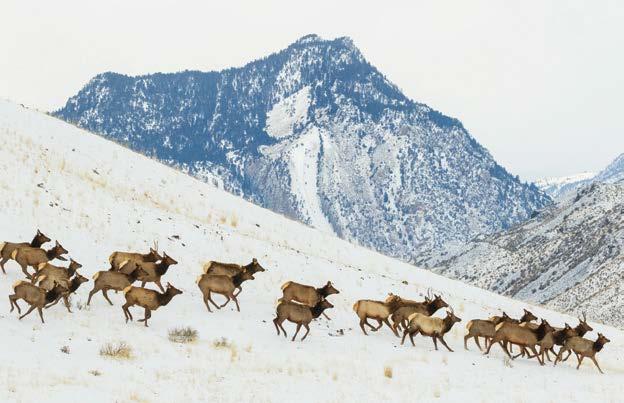

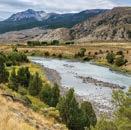

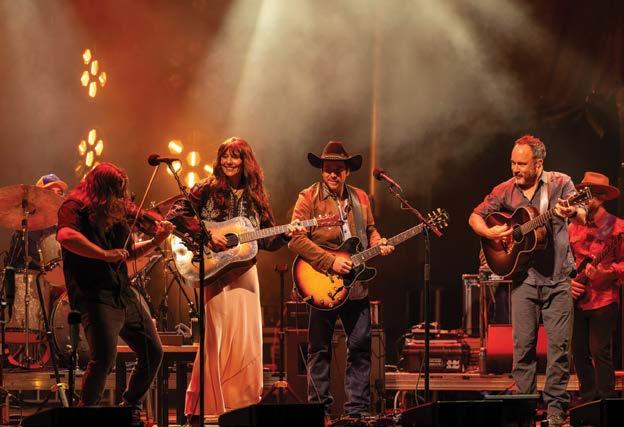
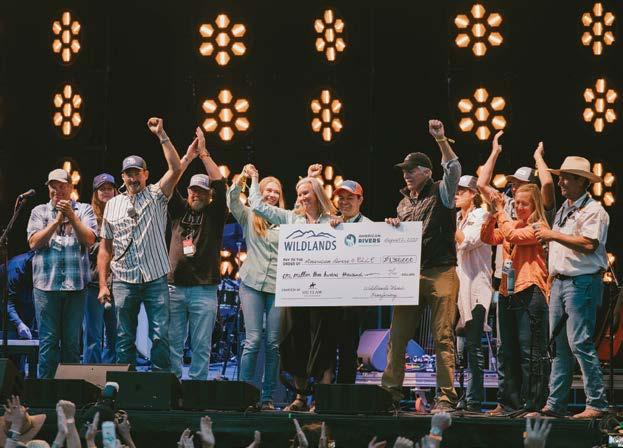
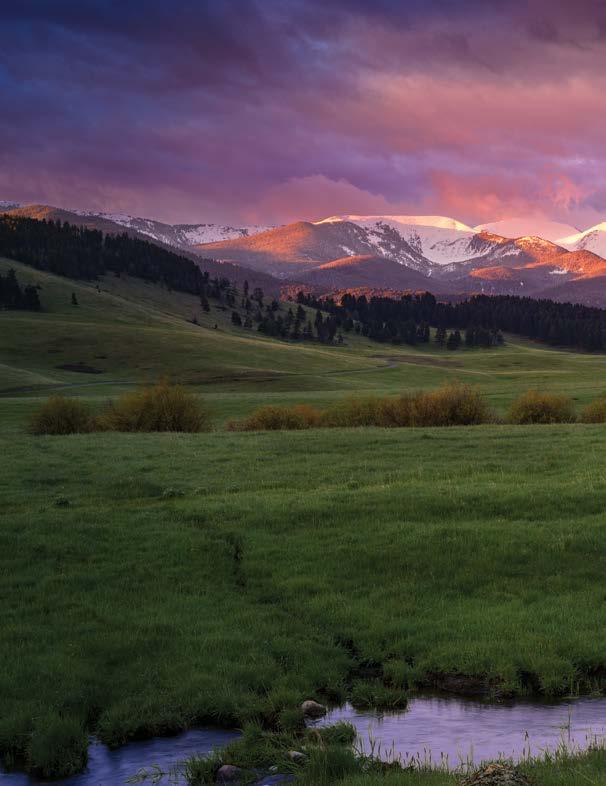
Only the mountain has lived long enough to listen objectively to the howl of the wolf.”
— Aldo Leopold
By Eric Ladd
Just before dusk, silence settles across golden hills north of Yellowstone — broken only by the long, distant call of wolves. Raw and unfiltered, it’s a sound that carries the spirit of the West and reminds us what is at stake.
As I watched my son under the glow of an August sunset at the Flying D Ranch, I wondered: Will he get to experience the same wild I’ve known in my lifetime?
Three generations of my family sat alongside wildlife photographer Holly Pippel and biologist Michael Phillips as we watched wolves play across an open meadow, while 6,000 bison grazed the 130,000-acre expanse Ted Turner built as one
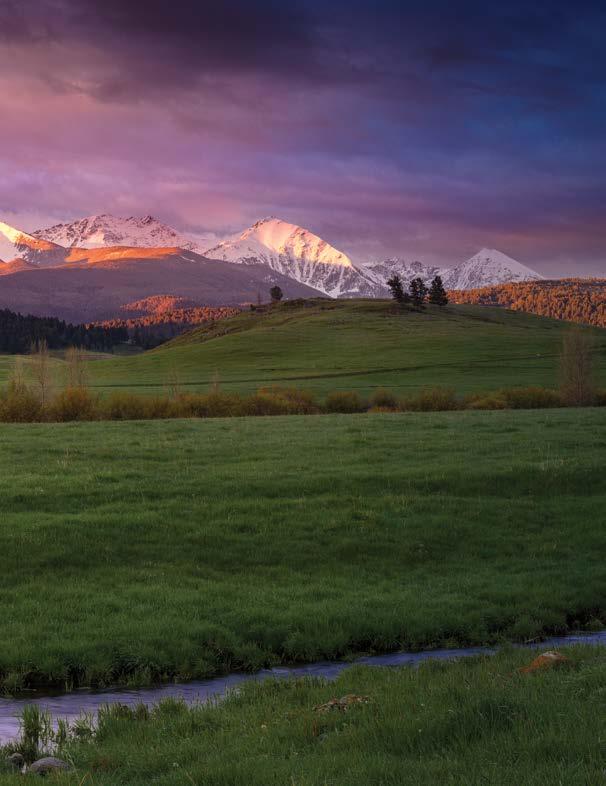
of the largest private conservation landscapes in North America.
The Flying D, stretching from Gallatin Canyon to the Madison Range, is a living laboratory for how working lands, wildlife and people can coexist. It shows what happens when land is left wild: a thriving ecosystem pulsing with life. Beyond the ranch’s ridgelines, the distant lights of Bozeman in Gallatin Valley flicker, revealing one of America’s fastest-growing counties.
If we hope to find balance between growth and wilderness, we must celebrate those working tirelessly to keep the West wild. In the following pages, we share some of their voices.
“ WHAT’S AT STAKE IS SIMPLE: IF IT’S LOST, IT’S LOST FOREVER.” — CASEY ANDERSON
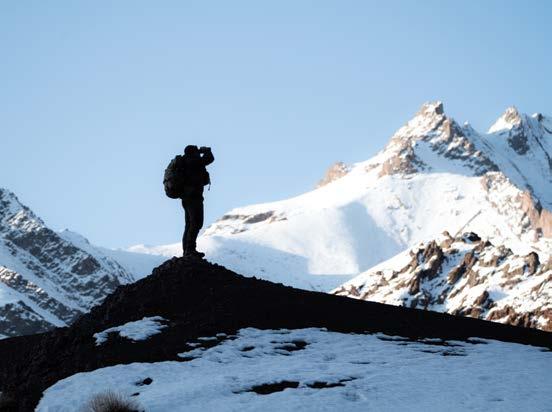
For filmmaker and explorer Casey Anderson, keeping the West wild isn’t about nostalgia, it’s about survival of the human spirit.“The wild West still gives us that connection,” he said. “When people try to tame it, they’re stealing something essential.”
Anderson bridges science and storytelling, using film to remind audiences that awe and respect must come before protection. “If you lay out the truth and the stories,” he said. “Most people will make the right decisions.”
Through his company, VisionHawk
Films and recent project Endless Venture, he explores the emotional and ecological fabric of wildness — from the dens of mountain lions to the hidden migrations of wolves. His latest projects harness AI and bioacoustics to bring audiences closer to “the ancient languages of the forest,” capturing the subtle conversations between species that most never hear.
“I haven’t seen the wildness of the West under such attack as it is today,” Anderson warned.“What’s at stake is simple: If it’s lost, it’s lost forever.”
Chief Executive and Science Officer, Gallatin River Task Force
In the heart of Big Sky, the Gallatin River Task Force, led by Kristin Gardner, stands as a guardian of one of Montana’s most beloved waterways.
“The Gallatin gives life to this valley,” she said. “It’s our drinking water, our economy, our community, our soul.”
That lifeline is fragile. Hotter summers, heavier recreation and rapid development are pushing the river toward its limits, threatening trout species and the health of the river itself.
“Trout do not thrive in warm water,” she said. “How we develop land — how we treat stormwater, roads, and runoff—determines whether the Gallatin stays alive.”
GRTF’s work is to monitor, restore, conserve and advocate for this waterway, their latest effort being the GYREAT Act, introduced by Congressman Ryan Zinke, which aims to permanently protect 39 miles of the Upper Gallatin as a Wild and Scenic River.
“Growth is inevitable,” Gardner said. “But stewardship must grow with it. We have the chance to prove that progress and protection can coexist.”
“ WE HAVE THE CHANCE TO PROVE THAT PROGRESS AND PROTECTION CAN COEXIST.”
— KRISTIN GARDNER
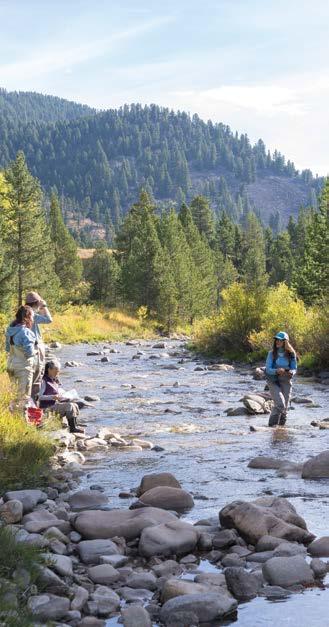
For Deb Kmon Davidson, chief strategy officer of the Center for Large Landscape Conservation, wildness is measured not in acres but in connectivity. While CLLC operates on a global scale, they are based in Bozeman, Montana, and are working on two high-impact connectivity sites in the region.
“These animals rely on corridors between Yellowstone and Glacier,” Kmon Davidson said. “Our challenge is making sure those pathways remain open.”
From the outside, migration looks romantic — herds under open skies. In reality, Kmon Davidson explains, it’s becoming a daily struggle.
“We’re seeing elk, deer, and even rare carnivores cut off from their seasonal ranges,” she says. “You can’t put the genie back in the bottle.”
CLLC’s work on the U.S. Highway 191 Wildlife Crossings Initiative is reshaping how Montana plans
infrastructure, combining engineering with ecology to make roadways safer for humans and animals alike. This year, Montana established the nation’s first permanent wildlife-crossing fund, financed by specialty plates and cannabis taxes.
“Once it’s gone, it’s gone,” Davidson said. “But we’ve proven we can plan smarter. The future of the West depends on whether we connect what we’ve begun to divide.”
“ THE FUTURE OF THE WEST DEPENDS ON WHETHER WE CONNECT WHAT WE’VE BEGUN TO DIVIDE.”
— DEB KMON DAVIDSON
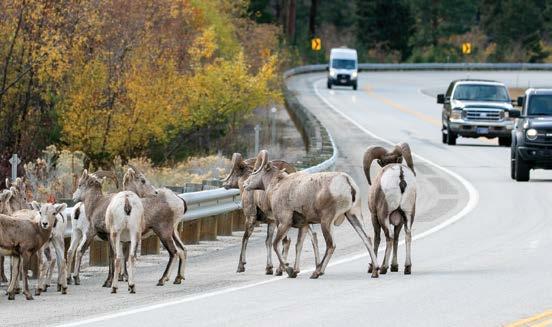
“ THE WINDOW TO ACT IS OPEN NOW, BUT IT WON’T BE FOREVER.”
—ALISON FOX
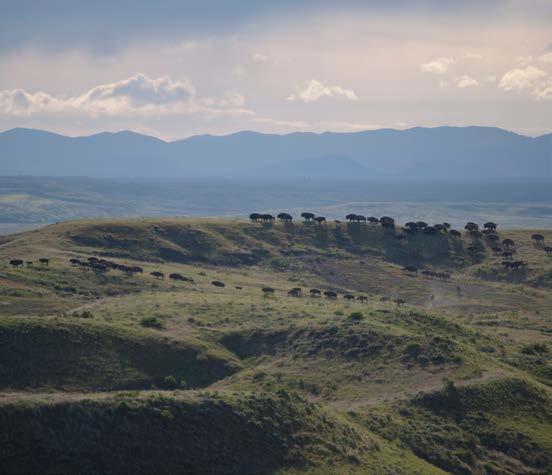
Across central Montana, Alison Fox, CEO of American Prairie, envisions a landscape reborn.
“We’re wild about the prairie,” she said. “We want future generations to feel that same awe when they step into this place.”
American Prairie is stitching together millions of acres of public and private land to restore a functioning grassland ecosystem.
“Inaction and division are our biggest threats,” she said. “The window to act is open now, but it won’t be forever.”
Recent milestones highlighting the group’s success include the Anchor Ranch acquisition, which expanded critical habitat in north-central Montana’s Missouri River Breaks and ensured public access for future generations.
American Prairie’s bison herds — “the heartbeat of the plains,” Fox emphasized — are reviving native grasslands and carbon-rich soils.
“What’s at stake isn’t just land,” she addsed. “It’s our ability to coexist with nature in a changing world.”
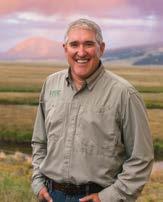
Brian Yablonski
CEO, Property and Environment Research Center
For Brian Yablonski, CEO of the Property and Environment Research Center in Bozeman, keeping the West wild means living with awareness, and sometimes a little healthy fear. “So long as I still have to carry bear spray when I walk our dogs around our Paradise Valley cabin, that’s a good indicator of keeping it wild,” he said.
To Yablonski, the challenge isn’t simply protecting land; it’s aligning economics with ecology.
“People aren’t moving here to mine or cut timber,” he explained. “They’re coming for clean rivers and big skies. That demand for nature can actually fuel its protection — if we build a market around conservation.”
At PERC, that philosophy is more than theory. Their Elk Rent program compensates ranchers when migrating herds use their land. Their Brucellosis
Compensation Fund offsets livestockdisease costs, and their Virtual Fence Fund replaces miles of barbed wire with wildlife-friendly technology.
“Incentives matter,” he said. “When wildlife becomes an asset instead of a liability, everyone wins.”
He believes this work carries patriotic weight.
“If we fail,” he said, “we lose a big piece of what it means to be American. Conservation is our country’s birthright. Failure isn’t an option.”
“ CONSERVATION IS OUR COUNTRY’S BIRTHRIGHT. FAILURE ISN’T AN OPTION.”
—BRIAN YABLONSKI
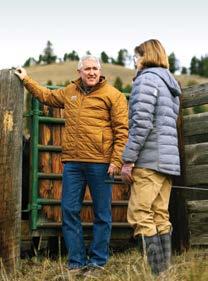
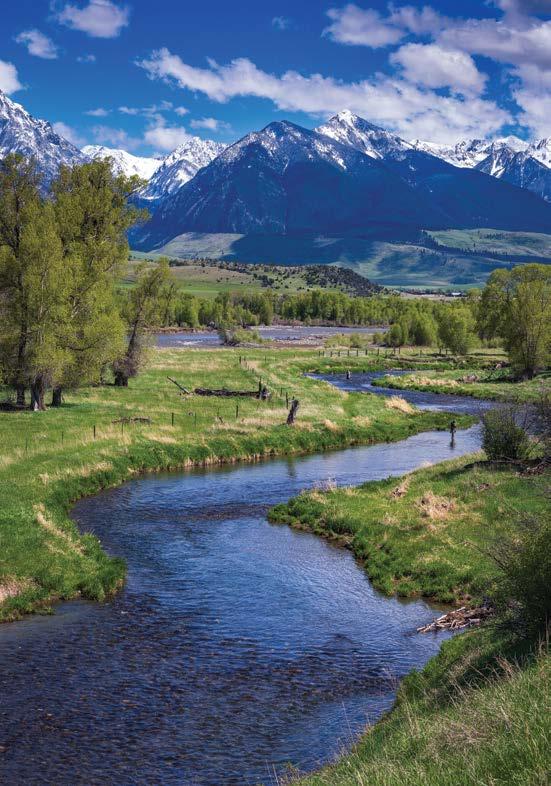
Every summer in Big Sky, music becomes a movement. Wildlands, produced by Outlaw Partners, publisher of Mountain Outlaw, unites artists, conservationists and community in one shared rhythm: the will to protect what inspires us.
In 2025, Dave Matthews, Lukas Nelson, and Molly Tuttle filled the mountain air with sound and purpose. The weekend raised $650,000, matched by the Dave Matthews Family & Foundation to reach $1.3 million for conservation across the Greater Yellowstone region. “This is a magic part of the world,” Matthews said from the stage. “We’re so attached to it.”
Nelson echoed him: “The beauty of this place only deepens my desire to protect it.”
For partners like American Rivers, the impact was personal. “What a weekend,” said CEO Tom Kiernan. “Wildlands brought the music, the Montana magic and big love for rivers.”
Now entering its sixth year, Wildlands returns to Big Sky July 31 and Aug. 1, 2026, aiming to become the Farm Aid of conservation, a celebration proving that creativity, culture and community can move mountains — or save them.
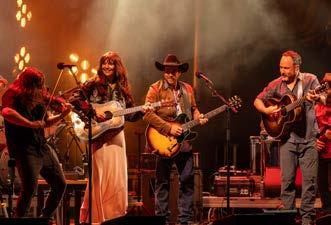
“The beauty of this place only deepens my desire to protect it.”
– Lukas Nelson
“WE’VE PROTECTED SOME OF THE MOST IMPORTANT PLACES, BUT THAT DOESN’T MEAN THE WORK IS DONE. WE’VE GOT A LOT OF WORK AHEAD OF US.”
—KEVIN LEAGUE
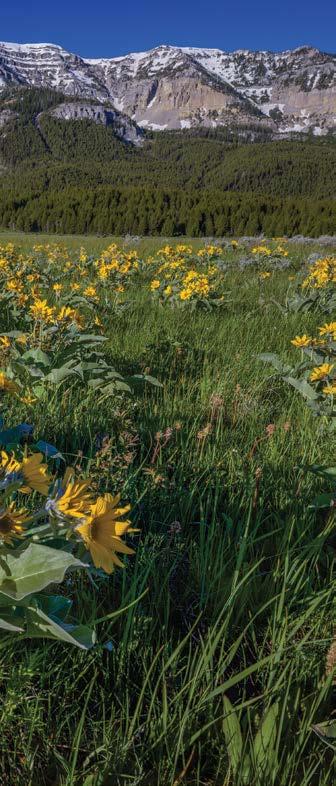
Three conservationists chronicle a lifetime of resilience
If Montana’s open lands could tell their story, they might sound like John Wright, Robert Kiesling, Bruce Bugbee, and Kevin League, the authors and photographer of Saving the Big Sky: A Chronicle of Land Conservation in Montana. Together they’ve chronicled 50 years of victories and resilience, proof that cooperation, not conflict, defines the Montana way.
“Without the private lands held in ranches and farms, the high country becomes a pale version of itself,” Wright said.
Their book celebrates the unsung heroes — ranch families, land trusts and conservation brokers — who’ve protected more than 6 million acres, equal to three Yellowstone parks. League, a photographer with Prickly Pear Land Trust, calls it “a story built handshake by handshake.”
Published by the Foundation for Montana History and Oregon State University Press, Saving the Big Sky shows what’s possible when pragmatism meets passion. “You look at this place and it’s so beautiful, it almost aches,” Wright said. “Beauty isn’t a guarantee — it’s a responsibility. Every generation inherits this landscape and decides what to do with it.”
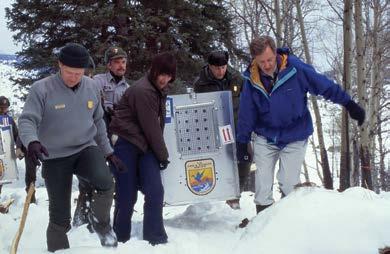
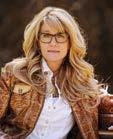
“ RISING ECOLOGICAL ILLITERACY IS A PROBLEM THAT GROWS MORE CONSEQUENTIAL WITH TIME.”
— MICHAEL PHILLIPS
Michael Phillips, Executive Director of the Turner Endangered Species Fund Holly Pippel, wildlife photographer
Few embody the harmony of science and soul like Michael Phillips and Holly Pippel.
Phillips, Executive Director of the Turner Endangered Species Fund, believes keeping the West wild means retaining large, self-willed landscapes where natural processes — predation, fire, renewal — are celebrated rather than controlled.
“There is a disregard for, if not outright ignorance of, ecological processes, especially predation by large carnivores,” he said. “Rising ecological illiteracy is a problem that grows more consequential with time.”
Phillips was instrumental in Colorado’s 2020 wolf reintroduction, the first citizenled species restoration in United States history.
“If we fail, we lose the ecological diversity, resiliency, and majesty of one of the world’s great remaining wild areas,” he said.
Pippel gives that message form through her photography.
“We live in one of the last intact ecosystems in the Northwest,” she said. “Public lands, clean water, and wildlife corridors — they’re all in jeopardy.”
Her images capture reverence, the sacred pause between predator and prey, storm and silence.
“I hope my images become part of a success story,” she said. “That they inspire people to reconnect with nature. Small efforts can make a big difference.”
“The camera teaches you to slow down, to pay attention,” she said. “When you really see an animal — its struggle, its calm, its resilience — you understand that protecting it isn’t charity. It’s gratitude.”
Together, Phillips and Pippel represent two sides of the same calling — science and art, data and devotion — both striving toward one truth: Keeping the West wild is as much a moral act as an ecological one.
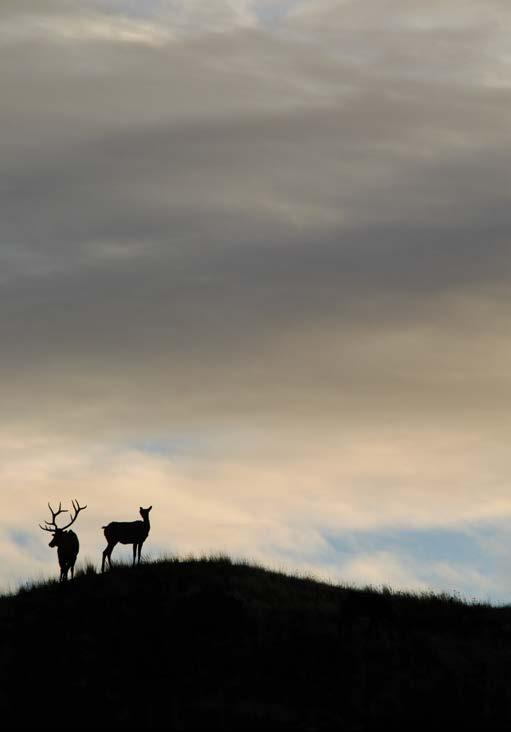
“ SMALL EFFORTS ON OUR PART CAN MEAN A BIG DIFFERENCE FOR WILDLIFE.”
— HOLLY PIPPEL
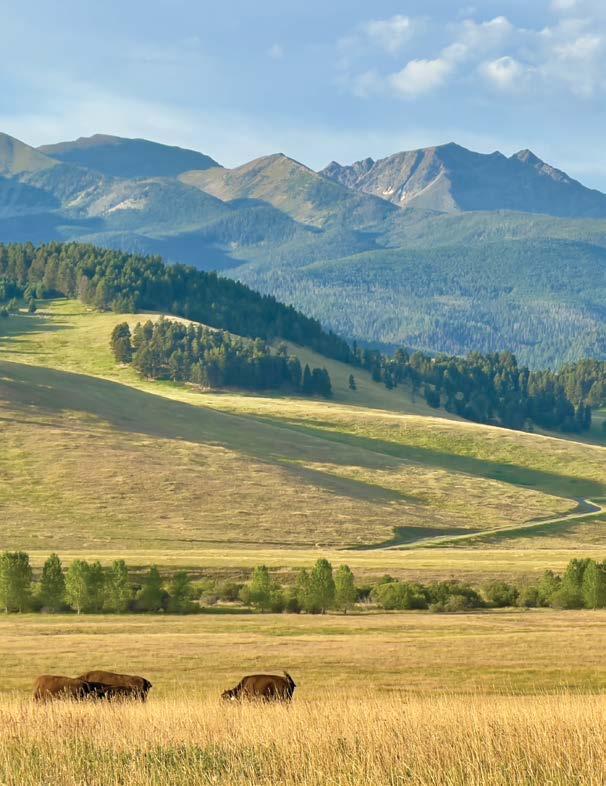
We can’t fault people for wanting to move West. The open spaces, the rivers, the sense of possibility — they’re part of what makes this region magnetic. But every new light on the horizon, every fresh subdivision or road, reminds us of what’s being tested.
In 1909, as documented in Saving the Big Sky, the Montana Department of Publicity predicted such growth. “As older states have filled up, the pressure from those seeking homes has become great … Many large ranches have become too valuable to be used as pasture and have been divided into small tracts and sold. Some things never change.”
Yet this story is not one of loss — it’s one of responsibility. The work of keeping the West wild is not an optional effort; it is critical. From the rancher maintaining open range to the artist documenting fragile beauty, from the nonprofit scientist mapping corridors to the musician using a stage for a cause, every choice either preserves or erodes what remains.
If this story has moved you, let it also move you to act. Support the organizations and individuals featured here — the Gallatin River Task Force, Center for Large Landscape Conservation, American Prairie, PERC, and the countless local land trusts and advocates protecting this place. Attend a conservation-focused event like Wildlands. Volunteer. Donate. Educate your children
about the power of wilderness.
The truth is simple: You can read about the wild, photograph it, legislate for it — but unless you stand up for it, it won’t stand for long. The time to act is now.
Not later. Not someday.
Do something. Keep the West wild.
Eric Ladd is the publisher of Mountain Outlaw, and a husband and father. He advocates for clean rivers and open landscapes whenever possible, including serving on the boards of American Rivers and the Gallatin River Task Force.
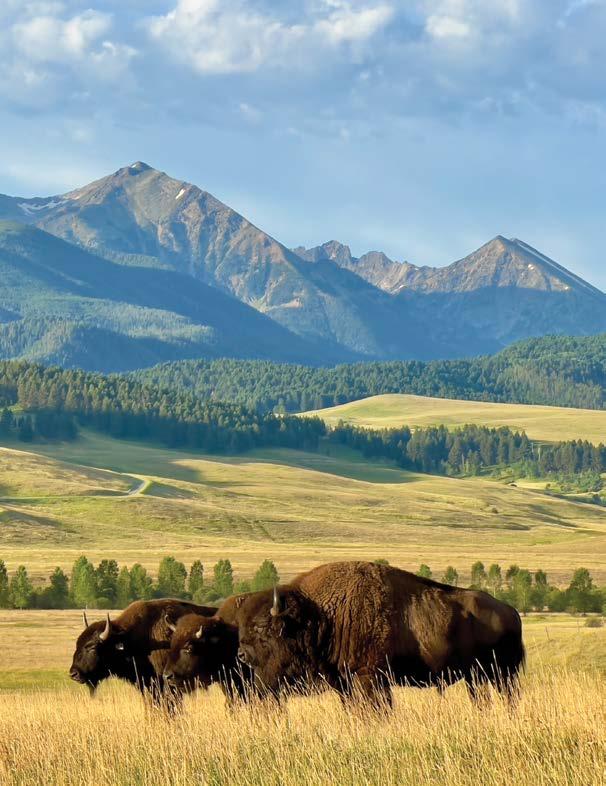
“What you do makes a difference, and you have to decide what kind of difference you want to make.
— Jane Goodall
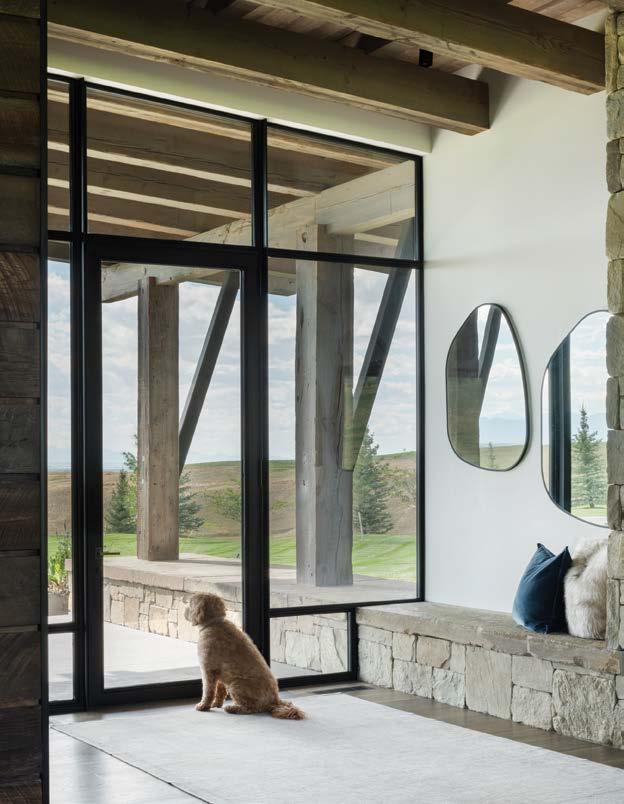


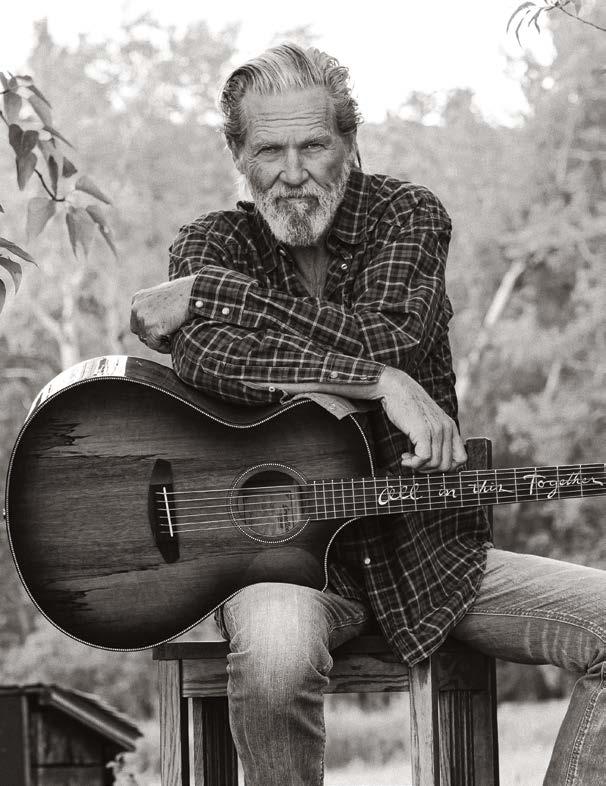
Words by Toby Thompson

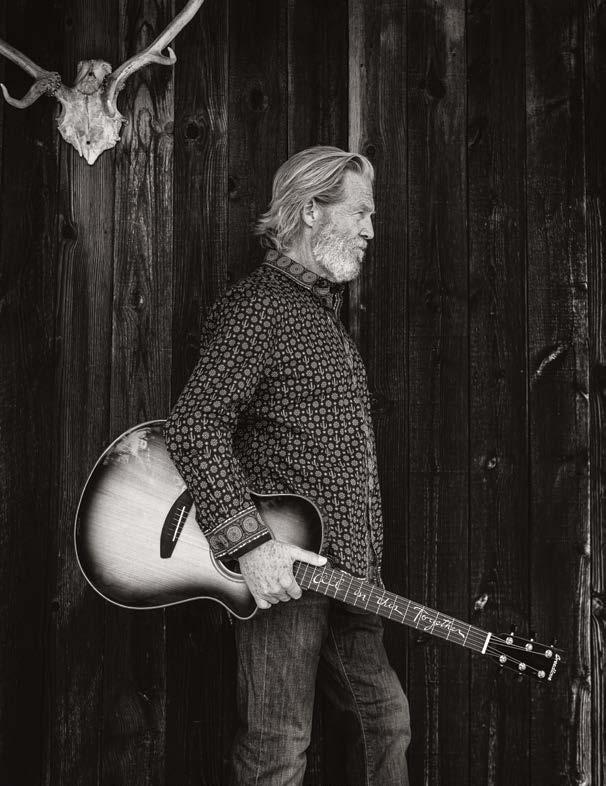

The face is iconic, at age 75, beloved in its familiarity yet reflective of the diverse roles Jeff Bridges has played.
Framed by a tousle of gray-blond hair, we see Dan Chase in the 2022 FX series, The Old Man, but also Rooster Cogburn in 2010’s True Grit, for which Bridges earned an Oscar nod, and deeper, Bad Blake in 2009’s Crazy Heart, for which he won the Academy Award. In his boyish grin, there are suggestions of the Dude in 1998’s The Big Lebowski, and even the Texas high-schooler Duane in 1971’s The Last Picture Show, for which he received his first Oscar nomination. In 1973, The New Yorker’s Pauline Kael wrote that Bridges “may be the most natural and least self-conscious screen actor who ever lived.” As his grin spreads, the youths he played in 1975’s Hearts of the West and 1974’s Thunderbolt and Lightfoot, filmed in Montana, are incandescently visible.
“Thunderbolt was my first trip here,” Bridges says, of the Clint Eastwood/Michael Cimino project, for which the actor, at 25, bagged his second Academy Award nomination. “I was knocked out, man. I was excited when I got that gig, because I thought, ‘Oh my God, I’ve seen pictures of Montana. So I thought, oh, I’m gonna buy a motorcycle. What a place to have a motorcycle!’ And I had a great time, where I’d ride all around. I fell in love with Montana that summer and wanted to live here.”
Bridges, in a navy short-sleeve and jeans, looks joyful yet slighter than he’s appeared in his more physical roles. The Dude has aged, yet he’s wonderfully gracious. He, I, and Rick Bass — the novelist, essayist, and environmental activist — are lunching at a picnic table in a yard overlooking the sizable ranch in Paradise Valley that Jeff and his wife, Susan, bought in 1979. That was prior to the filming of director Cimino’s third movie, Heaven’s Gate, shot near Glacier National Park. In that work, Bridges played a roller-skating-rink entrepreneur who is gunned down at the story’s finish alongside Isabelle Huppert, the madam of a log-cabin brothel. “Michael gave us that cabin,” Susan says. “We numbered the logs and trucked them down here.”
Jeff nods toward the house behind us. “You can still see holes in the logs from where we were shot.”
The Bridges and their three daughters have summered here for 45 years. “I tell friends that my children were raised in a whorehouse,” Susan says. In 2021, both she and Bridges contracted Covid, Jeff after having been treated for non-Hodgkin’s lymphoma (“I had a 9-by-12-inch tumor in my stomach”) while his immune system was compromised. He spent five weeks in a hospital’s intensive care unit. Both he and Susan wear oximeter rings, their ranch’s altitude measuring 5,200 feet. “I’m rockin’ 94 today, which is pretty good,” Jeff says. “Each time I come up, I’m better. I can sleep without oxygen things up my nose or walking around with a Darth Vader mask.”
Despite this, he looks discomfited. A pad with a list of discussion topics rests before him. “I was kind of anxious about this interview,” he says. “We were at the doctor’s and I thought, ‘I got to get prepared.’ I found I have a lot to talk about here, man, you know?”
Two of Bridges’ favorite causes are food security and preservation of the environment (he is co-founder of the End Hunger Network and is the national spokesperson for Share Our Strength’s “No Kid Hungry” campaign), and I’ve interrupted Bass’ questioning of him on those subjects to ask about Montana. His spread here is carefully managed “through regenerative ranching,” he says. “That means you’re environmentally sound with what you’re doing. One of my favorite quotes is from the Vital Ground guy, Doug Chadwick: ‘Do unto ecosystems as you would have them do unto you.’”
Bridges discovered Paradise Valley in 1974 while shooting the Frank Perry film, Rancho Deluxe, here and in Livingston. “Coming through Wineglass Gap, looking at that valley, I thought, my God. I want to live here.”
A compact bevy of artists — Thomas McGuane, who had written the screenplay for Rancho; the novelists Richard Brautigan and William Hjortsberg; the poet and novelist, Jim Harrison; the painter, Russell Chatham; the singer-songwriter, Jimmy Buffett; and others who lived in or visited the Valley regularly — were in residence. “It was like a dream come true. It was just community.”
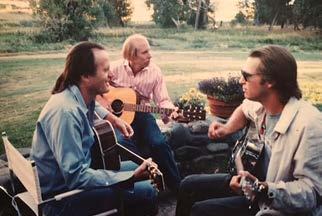
Bridges’ family business is show business — his brother Beau also acts, their mother, Dorothy, was an actress, and their father, Lloyd, appeared in more than 100 movies before starring in the hit television series Sea Hunt. Jeff, since boyhood, has created art in photography, painting, ceramics, and music, and in the ’70s had hung with a band of ne’er-do-well L.A. artists called The Gents. Last spring, he released an album of his and his friends’ largely improvisational music, Slow Magic, 1977-1978. “That group was different,” he explains, referring to the fellow artists who helped create the album. “Livingston is a small, tight little place.”
Its artists — older than Bridges, more established than The Gents, but no less wild — would eventually
include the actors Peter Fonda, Michael Keaton, Dennis Quaid, and Warren Oates, the director Sam Peckinpah, and the actress, Margot Kidder, of Superman fame — who’d had one date with Bridges in California about 1970: “He brought his guitar and it was like he’d just stepped off a surfboard.”
In 1974, Livingston was also home to a young woman from North Dakota named Susan Geston, who was working at Paradise Valley’s Chico Hot Springs Lodge. Bridges — longhaired and hipsterish at the time — met this slight but lovely blonde on the set of Rancho. “We’re doing a scene with Harry Dean Stanton, Sam Waterston, and Richard Bright in the pool up at Chico. We’re sitting there, and I’m looking at this girl. I can’t take my eyes off her, so pretty, and she’s got a broken nose and two black eyes from a car accident. I get up the courage to ask her out, and she says, ‘No.’”
Bridges laughs. “Later, I asked, ‘Why did you say that?’ She said, ‘Well, you Hollywood guys come in here and think you’ll get all the local stuff. Forget about it.’ But then we met at the movie’s wrap party. We danced and it was like, you know, kind of a different thing.”
They had a date “looking at a property up here,” Bridges says. “I’m at some mosquito-infested place on the Yellowstone, and I get this wild feeling: I’m looking at this with my future wife. And this is our first date! I said, ‘Let’s get out of here.’ It frightened me. It was such a strong feeling, but here we are 50 years later.”
Rancho Deluxe would be one of at least 10 Westerns in which Bridges would star, a list that arguably includes his most famous role as the Dude, in Joel and Ethan Coen’s 1998 film, The Big Lebowski. Many forget that this L.A. saga is introduced by Sam Elliott, in his deep Western drawl, who — accompanied by “Tumbling,
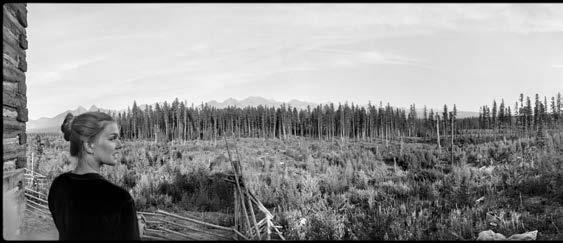

Tumbleweeds,” intones, “A way out West there was a fella, fella I want to tell you about, fella by the name of Jeff Lebowski … this Lebowski, he called himself the Dude.”
Lebowski felt unique in its outrageousness, but it might have been derivative: “I saw Rancho fairly recently,”
Bridges says, “and I thought, this is a precursor to The Big Lebowski, man. You know, all these weird characters?”
Rancho, released in 1975, concerns two young friends, played by Sam Waterston and Bridges, who are rustling cattle in Paradise Valley. Waterston’s character is of mixed-Native heritage, but (jokingly) with aristocratic roots. “We’re supposed to have some royalty in there,” his father tells Sam, “the Prince of Angola or something.” Bridges’ character is an upper-class youth from California, who, when visiting his parents, is chauffeured from the airport in a Rolls-Royce. These characters are contemporary hipsters who wish to be outlaws. What McGuane accomplished in the comedy, Rancho, was to predict his generation’s contribution to gentrification in the Mountain West.
“Compared to when we were filming that,” Bridges says, “everything’s changed. Now with f*****g Yellowstone, that TV show … they say it’s about Paradise Valley. It’s not Paradise.”
Nowadays, the Bridges live for most of the year in California. Jeff is asked about the concept of Montana as refuge. Does he experience it that way?
His expression softens. “It’s so different, man. It feels so different. We live in a beautiful place, Santa Barbara. Gorgeous. But when I walk in the creek bottom here, there’s something about it.”
Does he enter a different headspace?
“Yeah. There’s a certain bit of … I guess melancholy is a word that comes to mind, a disoriented feeling, because it is so different, you know? But the beauty is just stunning.”
From the age of 8, Bridges performed in his father’s and others’ contemporary TV shows. But he was enraptured by the classic Western. “My dad had been in High Noon,” he says. “He was kind of a bad guy. Gary Cooper had that fight with Dad under the horses. My brother Beau blew that scene because he was on the set that day. When Cooper threw a bucket of water on my dad’s face, Beau laughed and ruined the shot. (Beau, eight years older than Jeff, later would quip, “I taught my brother everything he knows.”) But yeah, I love Westerns. What an amazing time in our country, you know? I got to play Wild Bill Hickock in a movie, Wild Bill.”
That 1995 film bombed financially — unusual for a Bridges project — but three years later, the post-modern Western, Lebowski, would lend Bridges superstar status — the Dude being seen as a cultural mood ring in the wild west of bohemian night life (a majority of its scenes were shot after dark), the film spawning numerous books — including Bridges’ own — and Lebowski Fests, to which thousands would attend.
“I’m at some mosquitoinfested place on the Yellowstone, and I get this wild feeling: I’mlookingat thiswithmyfuturewife."
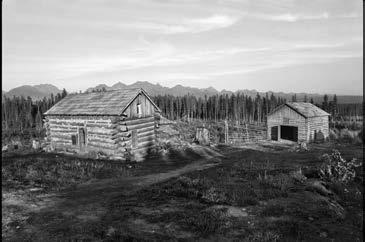

Susan Bridges looks toward the original cabin and barn from the set of Heaven’s Gate. Director
Michael Cimino gifted the structures to Jeff and Susan, who later moved them to their ranch.
Photo courtesy of the Bridges Photography Archive
“Wild, those festivals,” Bridges says. “Just wild.”
Riding the success of Crazy Heart, in which Bridges played an alcoholic country singer, he released an album of Americana-style songs, toured with his band, The Abiders, and performed at the 2014 Lebowski Fest in L.A. The response was astounding.
“That was my Beatles moment,” Bridges says. “In the audience, you’ve got all these guys dressed up like bowling pins, and like Walter or the Dude. The guy who won the costume prize was dressed up as Jackie Treehorn’s doodle — that image with the boner, you know? It was very surreal. And the movie keeps having offshoots, like our book, The Dude and the Zen Master.” He points toward the yard. “Which was created right here.”
The phenomenon of the Dude abides: There is a Church of the Latter-Day Dude, and at least a dozen books have been published on Dude spiritual topics. They have titles such as The Dude De Ching, The Tao of the Dude, The Abide Guide, and The Incomplete Dudeist Priest’s Handbook. Bridges’ effort — The Dude and
Until publicity hassles begin, he will hole up in his ranch studio or the whorehouse, writing songs, composing music for the Emergent Behavior series on his website, painting canvases, hiking in the national forest behind his property, or practicing yoga.
the Zen Master, in cahoots with Zen roshi, Bernie Glassman — appeared in 2013. Glassman visited Jeff at this Paradise Valley ranch and the two recorded hours of conversation about the Zen-like wisdom in The Big Lebowski, and about life in general.
The premise of the book is that Dude expressions are koans, Zen puzzles about the meaning and oft-times absurdity of existence. “It’s filled with ’em,” Glassman says. He spills out lines from the movie: “The Dude Abides,” “The Dude is not in,” “Donny you’re out of your element,” and the most famous, “That rug really tied the room together,” commenting that they’re classic Zen. Bridges in the book is aghast, but soon gets with the program, sketching his vulnerabilities in surprising detail.
He confesses to Glassman that he stuttered as a kid, still does, and often becomes anxious and has trouble expressing himself. Anxiety dogs him in movies, too. “How am I going to do this?” he says.
Such vulnerability is unexpected for a reader accustomed to the coolness of the Dude and other
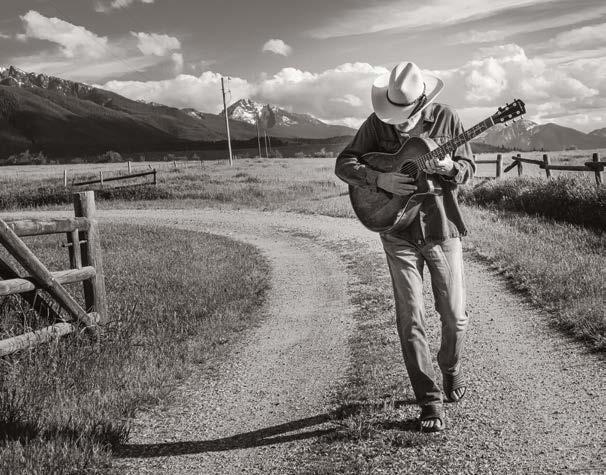

Bridges characters. As youths or in middle age, they are typically innocent, hip, but a trifle fey … tousled folks from the Golden State who nevertheless might erupt in anger or violence. In a recent New Yorker interview with Amanda Petrusich, Bridges said that his mother told him he had “something called abulia … It means not being able to make up your mind. It’s a mental illness called abulia.”
Bridges shrugs this off in The Dude and the Zen Master, but admits to Glassman that he fears committing to anything new, and wonders how he’ll accomplish it. Sue, however, reminds him that this is a pattern, and a conflict he usually resolves.
This pattern might account for his skittishness today. And part of his difficulty with commitment might have to do with his reluctance to persist with acting as a youth: “I was kind of thrown into my career at six months old,” he told Glassman. A friend of his father needed a baby for a film he was directing, so Lloyd said, “Here, take Jeff.” He would develop no desire to act; a career in his father’s shadow felt like nepotism.
He wanted his own success: “Not because of who my father was. I wanted to do my own thing, and I didn’t know what that was because I was interested in so many different things.”
Such as music. As a teenager, Bridges played guitar and piano, had written 60 songs by the mid-1970s, and had a weekly jam session with his ne’er-do’well buddies. As critic Sam Sweet wrote in the liner notes to 2025’s extraordinarily wacko, but beautiful album, Slow Magic, for Jeff’s generation, “Music, not movies, was where it was at.” Also, for Bridges, was a need for the deep exploration of his own psyche. In 1977, during the genesis of Slow Magic and when shooting the movie, King Kong, he told Tim Cahill of Rolling Stone, “What’s frightening isn’t this big giant monkey. It’s everything I’ve ever feared in my life. It’s my mind.”
Explore his psyche he did. At University High, near UCLA, a guidance counselor named Caldwell Williams had created a program called DAWN: Developing Adolescents Without Narcotics. “Dopers, rebels, suicidals, and potential dropouts” enrolled. So did Bridges. “That’s where I met Jeff,” his best friend, the producer, David Greenwalt (of Buffy the Vampire Slayer renown), told me. “Williams was an unsung genius who saved a lot of high school kids’ lives. He saved mine.”
Greenwalt, who sang and played on Slow Magic, is finishing a documentary about Williams and his work. Part of his subject’s thesis was that secondary education had it wrong. Rather than encouraging competition in the classroom, Williams felt collaboration should be emphasized. “In academic classes, traditionally, one is on one’s own,” he said. “In the most successful school experience, one is collaborating with others.” This was a ’60s version of group therapy. Bridges found it bracing. It was so much like making a movie.
“The drug of choice in my high school was shooting speed, you know, methedrine,” Jeff tells me. “I was a pothead, though. Caldwell would have these marathons in the desert at this Benedictine monastery, going for three days with no sleep, man. (Greenwalt says that “Jeff grilled a monk about masturbation and sex.”) We would drink coffee and stay up. And, of course, you know, all of your defenses drop and you really get down to some interesting work pretty quickly without sleep.”
Sweet notes in his brilliant essay that, at Bridges’ first retreat, he “was overwhelmed with a profound wave of sadness. One of the other kids said, ‘That’s bullshit, you’re always so happy.’ The words sent Jeff into a convulsion he’d never experienced before.” He told Rolling Stone, “I was spewing laughter and sobs and shaking and I really didn’t know what it was.”
Bridges tells me that, “It didn’t keep me off pot, I got to say. So I don’t know how successful I was. But Caldwell did get me into talking about things that


mattered, you know. It was good that way.” Sweet concurs that DAWN “didn’t completely curb [the group’s] drug use, but it did leave them with a taste for radical therapeutic release.” In Bridges’ case, this led to experimentation with LSD, sensory-deprivation tank therapy, cold plunges, EST retreats, and eventually Buddhism.
He also learned to acknowledge the trepidation that DAWN had uncovered.
“I think it had to do with fear,” he told Rolling Stone. “ When you just don’t have the strength, then you have an opportunity to let off some of that stuff. And then you realize you can do that any time you want. That fear thing: You can cause it. That’s what acting is all about. If you realize you have fears, and define them, you win. I’ll always be deathly afraid. I use fear for my art, as fuel for my art.”
“Obstacles are the way. They’re gifts, you know. You learn stuff that you can’t or wouldn’t learn otherwise.”
His middle daughter, Jessie Bridges, a singersongwriter who has been his assistant on three movies and who opened for him musically during the Abider tours, says of Jeff’s anxieties, “My interpretation is that he knows suffering is not something you can escape. And so the sooner you can get with the program and accept that it’s part of the deal, the less torturous it is.”
Facing fear is expressed for Bridges, most poignantly, in the 1993 film, Fearless — considered by critics to be one of his more sensitive roles. He plays Max Klein, who, while traumatized by a vividly dramatized plane crash, transcends his fear of flying by, post-crash, fearing nothing. It’s a form of dissociation, but it has allowed him to save a child from the wreckage and be called a hero. After a nearly suicidal panic attack, by film’s end, he’s worked through his dissociation and can both experience and confront fear realistically.
Jessie adds that Jeff’s “is the same fear that I experience, about going on stage. It truly feels like dying.” The trick to combat it is “ feeling the fear before you go on stage. And then going on stage, you’re facing
the fear of death. It’s right there, and you’re saying, ‘I don’t want to do this. My body’s reacting to it, my mind’s going crazy. This is really uncomfortable. But I’m gonna do it, and I’m going to see what happens.’
Then you get to the other side and you’re like, ‘Oh, that was the full experience. I didn’t die, you know?’”
Except, with Covid, Jeff nearly did.
Today in his ranchyard, beneath a sheltering tree and at the family picnic table, Bridges remembers that, in 2020, “before we were coming up to Montana, I’m on my back doing some exercises. I think, gee, it feels like a bone is in my stomach. Bones aren’t supposed to be there. I say, ‘Sue, come look,’ and she says, ‘Yeah, you ought to get that checked out.’ I say, ‘No, it doesn’t hurt.’ So, we go up to Montana, I’m having a great time, I’m feeling wonderful. My shins itch, and I’m having night sweats, but it’s summer. It turns out that all those things were symptoms of lymphoma.”
He was diagnosed, underwent chemo and with his immune system compromised, by January of 2021, contracted Covid. “He almost died 18 times,” Jessie told me. ‘They had the respirator there. They were going back and forth about whether or not they should intubate him, because they said at his age with his condition, if we do, the likelihood of him coming off the ventilator is very low. He lost something like 60 or 70 pounds in the hospital, came back completely atrophied and had to start building his muscle again. And then there was the breathing, so his lungs were really bad for a while.”
Jeff’s Buddhist training and practices that he’d learned from teachers like Glassman, proved essential. He told Tom Chiarella of AARP magazine, “The doctors said, ‘You need to fight.’ I couldn’t understand how you’d fight it. So I fought by surrendering, which is not the same as giving up … What I really felt at the time was love … not only from the people around me, but also the love in my own heart for them. So what I did was more like giving in to love, you know?”
Rusan appears with her dog, Monte (for Montana), a Cavapoo, which she introduces to Ada, a coonhound/Staffy mix belonging to Rick’s daughter. Sue’s left arm is in a sling, from a recent fall — one that dislocated her shoulder. Nevertheless, she says, “Let me show you the house.” We follow her inside. Jessie has told me that as a child, she saw her mother as the center of this and the California house’s hearths, and that during Jeff’s absences filming, “She played both parental roles. Mom was the one who was there creating structure for us. Then, with our dad, he would come home and it would be thrilling and exciting, but fleeting because there wasn’t that consistency.”
David Greenwalt, who, at 18, after his father’s death, became part of the Bridges clan, says, “Family is religion to the Bridges.”
What I see in Susan, here, is the girl whom, in 1976, friends and I accompanied to the Big Timber Rodeo, watching her climb atop a chute to photograph cowboys on broncs or bulls, and with whom I kibitzed at numerous parties during the 1980s, visiting this “whorehouse” or Peter Fonda’s ranch with Jeff, to play guitars or to schmooze. “Yes, we go back,” she says, smiling.
The whorehouse has been expanded since Heaven’s Gate, (for which she took stunning black-and-white photographs, exhibited at gallery shows), but its logs and original layout are intact, its rooms decorated with Jeff’s paintings — striking in their use of primary colors — Western sculptures and artifacts, the Montana gang’s books (“Brautigan’s Hawkline Monster, man!”) and Jeff’s guitars. I’m reminded of nights during the ’80s when we jammed at the Fondas’ on Indian Hill Road (Jeff singing Ringo’s version of “Act Naturally,” strummed National Resonators after a friend’s dinner party by the Yellowstone), or listened at a shindig at McGuane’s when rocker Warren Zevon pounded a piano, and group-sang at Jeff’s friend Donna Greenberg’s, on the South Fork of Deep Creek.
“In Malibu,” Jeff says, “Donna was instrumental in my life during that ’70s time of Slow Magic. Her house was like a center for the kids to come and hang out. She inspired all of us to be creative.”
The Slow Magic Bridges references is not just the title of the 1977-’78 album he released in April, but a lyrical incantation to oneness and of Buddhist peace of mind. The titular song goes, “Slow Magic comes and goes / You never think you’ll have it and / then it shows. It’s slow magic when you see how / the trick was done / Slow magic has begun.”
It’s a metaphor for the state Bridges finds key to creative inspiration, and indeed, happiness. He seems to have found both here.
“We’re all just doing the best we can,” he says, resignedly. Then pointing, “You’re the perfect Rick. You’re the perfect Toby. You couldn’t make a mistake, because you’re that guy.”
In the fall, he will appear as Kevin Flynn in “Tron Ares,” for “a small role” in film three of the Tron series he inaugurated in 1982. Until publicity hassles begin, he will hole up in his ranch studio or the whorehouse, writing songs, composing music for the Emergent Behavior series on his website, painting canvases, hiking in the national forest behind his property, or practicing yoga.

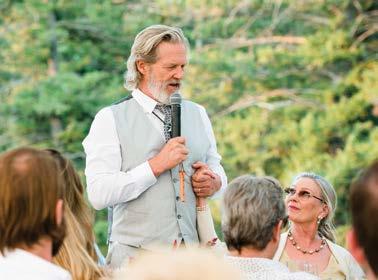
Professionally, he has little left to prove. Julianne Moore, his co-star in Lebowski, has said, “Jeff is just the most relaxed actor I’ve ever worked with.” Matt Damon says of Bridges’ acting in True Grit, that “Working with Jeff was like getting a masterclass.” And Maggie Gyllenhaal says about Bridges’ acting with her in Crazy Heart, “He’s the kind of actor who makes you better just by being in the scene with you.” Directors from John Huston to Peter Bogdanovich have praised him. David MacKenzie, who directed 2016’s Hell or High Water, says, “He’s like a sculptor — chipping away until what’s left is pure truth.” Robert Benton, who directed 2004’s The Door in the Floor, says, “He’s not afraid of dark places. He doesn’t shy away from emotional exposure.” Joel Coen, who directed The Big Lebowski, says, “Jeff is the Dude … He brought a humanity and casual brilliance to the role that made it iconic.”
Bridges’ health struggles seem largely past, but in December he will turn 76. Time may prove an impediment. Standing here, he says, “Obstacles are the way. They’re gifts, you know. You learn stuff that you can’t or wouldn’t learn otherwise.”
He gestures toward the magnificent expanse of green. “We’re part of it,” he says, “of this nature that just wants to live.”
Toby Thompson is the author of six books of nonfiction, including Positively Main Street, his biography of Bob Dylan, and Riding the Rough String: Reflections on the American West. He has written for publications as varied as Esquire, Vanity Fair, The New York Times, Outside, and Men’s Journal. His first job, in 1959, was as a ranch hand outside of West Yellowstone, Montana. He is a part-time resident of Livingston, and is an emeritus professor of English at Penn State University.
Thinking about living in Big Sky, Montana? Perhaps now’s the time.
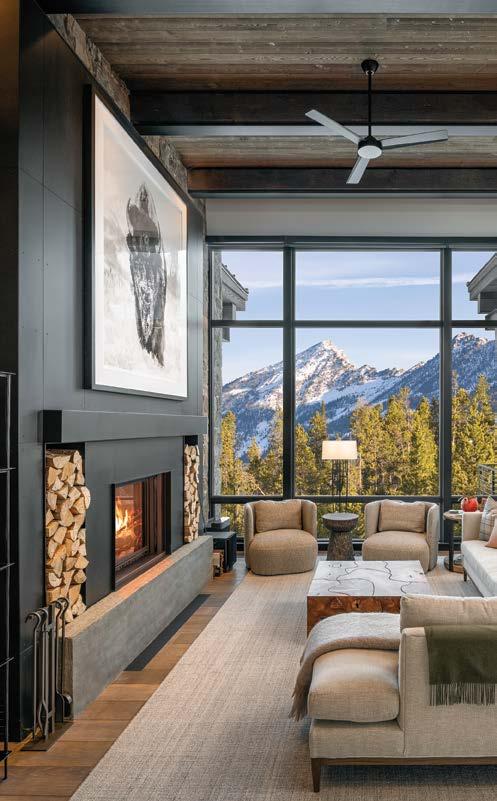
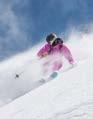
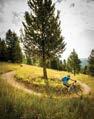
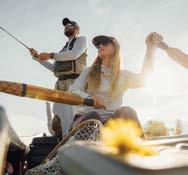
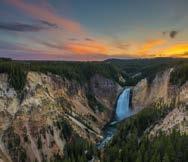




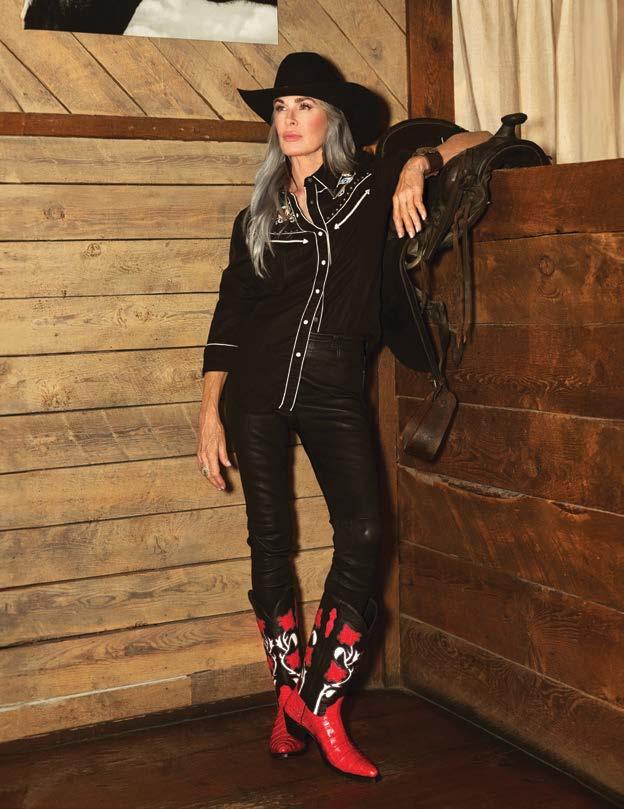
iled a new primary paleontology exhibition in 2025. Cretaceous Crossroads explores the time of transition, with a focus on three geologic formations in Montana (Two Medicine, Judith River, and Bearpaw) that span the period from 72 to 82 million years ago. The exhibit is comprised of real fossil material, 3D prints, casting, reproductions, murals, new paleo-art, AV interactives, an augmented reality piece, microscope stations, discovery drawers, and more.
Visit the website or scan the QR code for hours, rates, and visitation FAQs.