Emerald THE DAILY
MONDAY, DEC. 8, 2025



MONDAY, DEC. 8, 2025
Get to know who represents the Board of Trustees ahead of their quarterly meeting.
Why not Oregon? Ducks show championship swagger with


By Reilly Norgren News Editor
The University of Oregon Board of Trustees governs the university and must adhere to laws enacted by the federal government or self-enacted by UO. Trustees are appointed by the governor of Oregon and are then confirmed by the Oregon State Senate.
At-large positions have four year terms and campus-based positions, including students, faculty and staff, have two year terms. Some positions are eligible for reappointment.
Trustees hold fiduciary responsibility for the university, which includes financial and overall management, oversight and sustainability.
UO’s Board of Trustees is currently made up of 17 members. Its next meetings will be Dec. 8 and 9.
Association Volunteers for Youth.
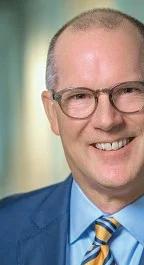
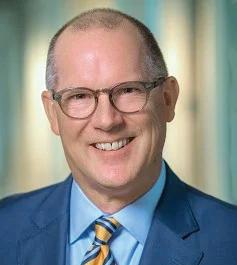
Steve Holwerda Board Chair
Holwerda has been on the board since 2021, and became board chair in 2023. In addition to the Board of Trustees,
Holwerda is also a principal owner and managing director for Ferguson Wellman Capital Management. Holwerda also previously served on the board for the UO Foundation, the organization that manages funds received by donors.
Holwerda serves on the Executive, Audit and Governance Committee of the board.
Prior to his job at Ferguson Wellman, Holwerda served as the regional director for the UO athletic department and a national director of the National Collegiate Athletic
Holwerda received a bachelor’s degree in economics from South Dakota State University, and a master’s degree in business administration and management from UO. Holwerda’s current term as a trustee ends in June 2027.


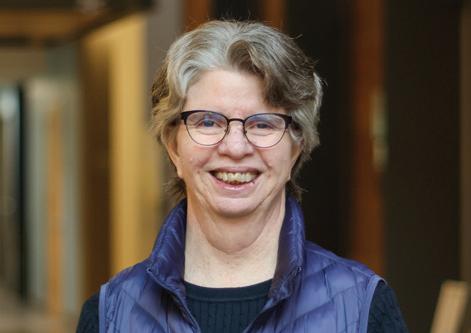
Marcia Aaron Vice Chair
Aaron is a graduate of the UO School of Journalism and Communication and joined the board in 2018.
Aaron also currently serves as an investment partner at the Charter School Growth Fund, a national nonprofit that makes investments in “talented education












EDITOR IN CHIEF
Tarek Anthony
PRINT MANAGING EDITOR
Ryan Ehrhart
DIGITAL MANAGING EDITOR
Ysabella Sosa
NEWS EDITOR
Reilly Norgren
INVESTIGATIONS EDITOR
Ana Narayan
A&C EDITOR
Claire Coit
SPORTS EDITOR
Jack Lazarus
OPINION EDITOR
Gracie Cox
PHOTO EDITOR
Saj Sundaram
COPY CHIEF
Olivia Ellerbruch
VIDEO EDITOR
Jake Nolan
PODCAST EDITOR
Stephanie Hensley
SOCIALS EDITOR
Ysabella Sosa
VISUALS EDITOR
Noa Schwartz
DESIGN EDITOR
Adaleah Carman
DESIGNERS
Abigail Raike
Asha Mohan
Ellery Burton-Tillson
Eva Andrews
Nina Rose
PUBLISHER AND PRESIDENT
Eric Henry (X317) ehenry@dailyemerald.com
VP OPERATIONS
Kathy Carbone (X302) kcarbone@dailyemerald.com
DIRECTOR OF SALES & DIGITAL MARKETING
Shelly Rondestvedt (X303) srondestvedt@dailyemerald. com
CREATIVE & TECHNICAL
DIRECTOR
Anna Smith (X327) creative@dailyemerald.com
ACCOUNT EXECUTIVES
Torin Chevalier
Camcole Pereira
Ava Stephanian
Elliot Byrne
THE DAILY EMERALD
The Daily Emerald is published by Emerald Media Group, Inc., the independent nonprofit media company at the University of Oregon. Formerly the Oregon Daily Emerald, the news organization was founded in 1900. Emerald Media Group 1395 University St.,#302 Eugene, Or 97403 (541)-346-5511

Leaders from the documentary film production minor reflect on the first term.
By Corey Hoffman Senior News Reporter
The School of Journalism and Communication’s newest minor, Documentary Film Production, launched at the start of the academic year and has surprised department heads with the level of interest and positive responses from students.
The minor, which is an interdisciplinary course, combines hands-on and conceptual aspects of documentary filmmaking, according to its website, and is designed for students both in the SOJC and beyond.
Documentary film is not an unfamiliar field to the SOJC, said Gabriela Martínez, professor and Jon Anderson Chair in Journalism and Communication, but only in the form of select classes.
“The SOJC has been teaching documentary courses for the past 25 to 30 years, but it was never in in a way that would offer a track for documentary for those students who were more serious about really making of that a career path, or really gathering a lineup of courses that will give them the skills, the history, the background of the documentary field,” Martínez said.
Prior to the launch of the minor, students could take a documentary study and production track through media studies but, according to Associate Professor of Media Studies and Area Director of Media Studies Gretchen Soderlund, the demand for courses both from students in the SOJC and beyond was too big to ignore.
“We saw this repeatedly with students outside the SOJC wanting to take our courses, or wanting to take independent studies with our documentary faculty so that they could learn documentary skills and we just quickly realized that we needed something
that was available to all students and that had a degree attached to it,” Soderlund said.
The minor, according to Martínez, is being advertised in SOJC classes and pitched to department heads across campus. The current number of students enrolled in the minor exceeded initial expectations and is expected to continue growing.
“Even before we started fall term, by Sept. 20, we already had like five people in the minor. Then as of (November 28), I believe it’s over 30 students and I wouldn’t be surprised if by the end of the academic year, (it) reaches up to 50 or more,” Martínez said.
There was so much interest that the introductory course required for the minor, that JCOM 220 Introduction to Documentary Film Production, was expanded from only being offered in the fall and winter to also being offered in the sprint.
The documentary film production minor offers students a well-rounded understanding of documentary film, from budgeting to production to history and post-production editing.
“Having a documentary (minor) in Media Studies means that we can really understand documentary in its entirety, as a journalistic form, but also as an artistic form and as an informational form, but also as an experimental form,” Soderlund said. “That’s how we understand documentaries. There’s a place for more experimental, sort of avant garde documentarians in our minor and more hard boiled journalistic documentarians.”
According to Martínez, the minor is housed in Media Studies due to a natural “symbiosis” between the concepts taught in the minor and the Media Studies discipline.
“One thing that it’s important to think about is how the documentary (field) fits within Media Studies. Because a lot of stu-
dents think, ‘oh, Media Studies is just theory, (it) is just thinking about media or researching about media,' but there is also this component of production that goes hand in hand,” Martinez said.
The best documentarians, Soderlund said, are also people who understand the media itself.
The minor, according to Soderlund, takes documentary film to a new level and is “filling a void” in the Pacific Northwest.
“This is also a moment when documentary has really taken off as a form. It’s expanded with streaming video and even with the rise of short form content. So we think that this is a degree that will help students from any degree build skills that will get them careers in the future,” Soderlund said.

UO responds to $16.3 million lawsuit related to on-campus tree collapse that paralyzed student.
By Corey Hoffman Senior News Reporter
The University of Oregon has responded to the lawsuit filed on Oct. 28 by former UO student Olivia Edwards, claiming no fault in a falling-tree incident that left her paralyzed.
In February 2024, the Eugene Fire Department responded to a “rescue operation” at 1202 Old Campus Lane, between Fenton Hall and Friendly Hall, where Edwards had been struck by a falling tree during a windstorm.
Edwards sued UO in October for $16.3 million after she sustained dozens of injuries in the incident and was left paralyzed from the waist down. She claimed the combined medical costs totaled $1.3 million, with an additional $5 million expected in future expenses.
The university denied that the tree Edwards cited in her lawsuit fell on her, stating, “It is the university’s understanding that the tree referenced in paragraph 14 of the plaintiff’s complaint fell and hit a nearby maple tree and that a branch from that maple tree fell on plaintiff.”
The university admitted that Edwards sustained injuries in the incident but said it
“presently lacks knowledge or information sufficient to form a belief as to the truth of the allegations… regarding the nature, extent and potential permanency of those injuries.”
Edwards’ lawsuit alleged that the university removed and destroyed the remains of the tree and the stump, denying the opportunity for a forensic examination after the university had been notified of its requirement to preserve evidence.
UO denies allegations that “imply or suggest that the university took inappropriate action with regard to the disposal of the tree.”
The university admitted that it removed the tree and debris and that it was destroyed in a woodchipper but claimed that the removal occurred before Edwards’ attorney contacted the university.
UO denies that it removed the tree stump, saying it “was able to be inspected by the plaintiff’s arborist.”
The university also said it notified Edwards of the disposal of the tree on Feb. 26 and “invited the plaintiff’s attorney to send their arborist to inspect the remaining stump.”
Legal counsel for the plaintiff could not be reached at the time of publication. This story may be updated.




leaders” in public charter schools, accord Aaron serves on the Executive, Audit and Governance Committee of the board.
Aaron’s current term as a trustee ends in 2029.
Abbott is a graduate student trustee. He is currently a Ph.D. Student in geography and works as a graduate employee. He previously earned a master’s degree from the UO in 2022.
Previously, Abbott was elected and served as Vice President for Grievances for the Graduate Teaching Fellow Federation, the graduate student labor union at UO. During that time, he served as the lead negotiator for the most recent bargaining cycle between GTFF and the university.
Abbott serves on the finance and facilities committee.
Abbott’s term as a trustee ends in 2026.
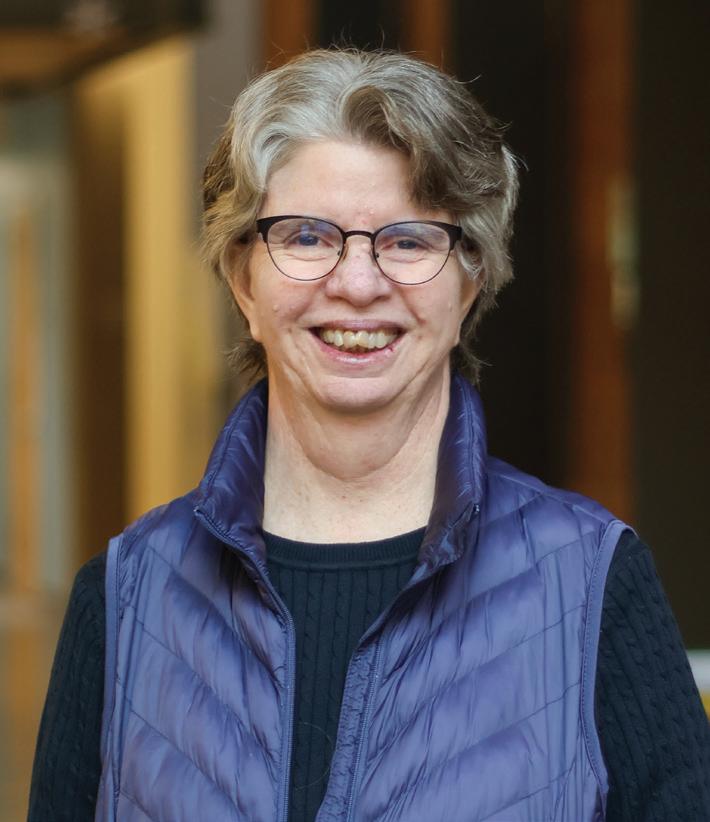
Hornecker is a member of the nonprofit ninety-nine girlfriends, serving as a liaison between the organization and its grantee partners, and also writes for “STROLL Portland Heights.”
After graduating from UO, Hornecker worked as president investment manager for The Bank of California’s Trust Department in Portland.
Hornecker’s term as a trustee ends in 2027.
James joined the board in 2025. She previously served as the president of Intel, and founded Ampere Computing, a semiconductor design company.
She has received both a bachelor’s and master’s degree in business administration from the UO Lundquist College of Business. James serves on the academic and student affairs committee.
James’ term as a trustee ends in 2029.
Moses oversees planning, design and construction of improvement projects developed within University Housing. Her role includes long-range planning to overcome deferred maintenance challenges.
As a student, Moses served on the Erb Memorial Union Board of Directors in a budget committee chair position.
Moses’ term as a trustee ends in 2026.
Sandoval holds a faculty position on the board of trustees and was appointed in 2025.
Sandoval is a professor in the Planning, Public Policy and Management Department within the College of Design, and has been teaching since 2010.
Tykeson is the managing trustee of the Tykeson Family Foundation. The Tykeson family earned their fortune in the telecommunications industry. Amy herself served as president and CEO of BendBroadband, a cable company operating in central Oregon. Tykeson Hall, created as a connection between academics and career advising, is named after her parents, who made a lead gift of $10 million for the building.
Amy is a UO alumna, earning a bachelor’s in business administration and a master’s degree from the Oregon Executive MBA program.
Amy serves on the academic and student affairs committee of the board.
Her current term as a trustee ends in 2027.
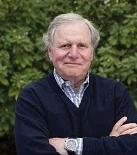
Boyle is the president and chief executive officer of the Columbia sportswear company and is from Portland, Ore. Boyle originally joined the board in 2021.
Boyle graduated from UO in 1971 with a bachelor’s degree in journalism. Boyle serves on the finance and facilities committee.
Boyle’s current term as a trustee ends in 2029.
Evans Jackson, in addition to serving on the board, is the director of grants management at the District of Columbia Department of Behavioral Health, responsible for strategic direction and execution of the grants management office. She originally joined the board in 2021.
Evans Jackson was the first African American woman to serve as UO Alumni Association Board of Directors and the first alumni association board member to be appointed to the UO Board of Trustees. She serves on the executive, audit and governance committee.
She graduated from UO in 1997 with a bachelor’s degree in sociology, and graduated with a master’s degree in social work from Howard University in 1999.
Evans Jackson’s term as a trustee ends in 2029.

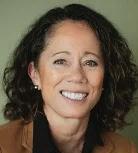
Elisa
deCastro Hornecker
Hornecker is an alumna of UO, graduating with a degree in international relations and political science. Hornecker originally joined the board in 2019, and previously served on the board of the UO Foundation. Hornecker serves as the chair of the Academic and Student Affairs Committee, which considers the matters of teaching and research at the university.

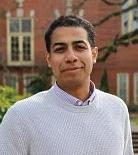
Lopez-DuBoff is a student trustee who joined the board in 2025.
Lopez-DuBoff is a third-year student who studies planning, public policy and management and previously served as the senate president of the Associated Students of the University of Oregon.
Additionally, Lopez-DuBoff served two terms on the university senate and currently serves on the Campus Planning Committee. As part of the board, Lopez-DuBoff serves on the academic and student affairs committee.
Lopez-DuBoff’s term as a trustee ends in 2027.
David Mitrovčan Morgan
Mitrovčan Morgan is an undergraduate student majoring in data science and economics and minoring in legal studies, philosophy, mathematics and computer information technology. Currently, Mitrovčan Morgan works at UO Housing’s Capital Construction and cofounded Oregon Software Consulting.
As part of the board, Mitrovčan Morgan serves on the finance and facilities committee.
Mitrovčan Morgan’s current term as a trustee ends in 2026.
Editors note: Mitrovčan Morgan is an opinion columnist at The Daily Emerald.
He serves on editorial boards of academic research journals including the American Planning Association, the Journal of Planning Education and Research, and the Journal of Planning Literature. Additionally, he previously served on the Housing Stability Council and the Land Conservation and Development Commission of the state of Oregon.
Sandoval serves on the academic and student affairs committee.
Sandoval’s current term as a trustee ends in 2027.
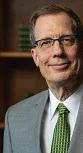
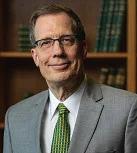
UO President Scholz is an ex-officio member of the board, meaning he is part of the board automatically as part of his position as president.
Before becoming president at UO, Scholz was the provost at University of Wisconsin-Madison.
Seeley graduated from UO with a degree in political science and has since had over 20 years experience in organization governance, administration, governmental relations, public affairs and crisis communications.
Currently, Seeley is the chief administrative officer, executive vice president and chief of staff at the Oregon Health and Science University. Prior to OHSU, she served as a legislative director in the Oregon State Legislature.
Seeley serves on both the executive, audit and governance committee and the finance and facilities committee of the board.
Her current term as a trustee ends in 2027.


Lillian Moses
Moses is the director of UO Housing Capital Construction, and has spent over 10 years in commercial construction general construction. Moses previously studied at UO, earning a bachelor’s degree in architecture in 2009.
She serves on the finance and facilities committee of the board.

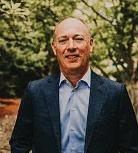
Storment is the founding director and vice chair of Summit Bank as well as the managing director of McKenzie Capital of Eugene. He is a UO alum, earning a bachelor’s degree in accounting and finance in 1984.
Storment is the chair of the finance and facilities committee of the board.
His current term as a trustee ends in 2027.

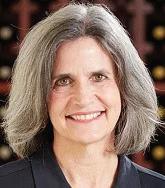
Jenny Ulum
Ulum has had a 40-year career in journalism, public relations and public affairs, spending 16 years in various leadership roles for PeaceHealth. Since 2015, Ulum has been the lead communications officer for King Estate Winery.
A UO SOJC alumna, she earned a master’s degree in journalism in 1983.
Ulum serves on both the academic and student affairs committee and the finance and facilities committee on the board.
Her current term as a trustee ends in 2026.
Dennis Worden
Worden is a member of the Coeur d’Alene tribe and graduated from UO in 2006 with a bachelor’s degree in 2006. Upon graduation, Worden worked as a staffer for congressman David Wu, and created a resolution commemorating the Celilo Falls flooding and its impact on Tribes.
He also previously served as legislative director of the Native American Contractors Association. Currently, Worden is the Director of Global Ethics and Compliance for Walmart and the Chair of Tribal Voices, a Native American employee resource within Walmart.
Worden serves on both the academic and student affairs committee and the finance and facilities committee on the board.
His current term as a trustee ends in 2029.
(Photos courtesy of University of Oregon)






“Wicked: For Good,” the second act of the record-breaking adaptation, released on Nov. 21 to an expectant audience, who may have left theaters with more of an incentive to spend than to change the world.
By Amelia Fiore Arts and Cultures Writer
It’s been a year since “Wicked,” and anticipation has been through the roof. How can a multimillion-dollar franchise follow a film that made such a significant cultural and emotional impact? Unfortunately, some things are too good to replicate.
“Wicked: For Good” came to theaters nationwide on Nov. 21. Having earned $226 million worldwide in its opening weekend, this sequel has made a huge splash already, and Oscar and Grammy nominations seem to be just down the yellow brick road.
The ending of the first film left us with Elphaba (Cynthia Erivo), who had just discovered the Wizard’s (Jeff Goldblum) fraud, causing a ruckus as she denounced Oz in her leaving. This caused a rift in her and Glinda’s (Ariana Grande) friendship, and the future of the Emerald City looked bleak.
In the second film, we are reintroduced to the characters in their new roles: Glinda as a blissful public figure, Elphaba as public enemy number one, Fiyero (Johnathan Bailey) as captain of the Wizard’s Guard, Nessarose (Marissa Bode) as a cold governor and Boq (Ethan Slater) as her discontented subordinate. The time jump is only one year, yet there is a huge shift from the character personalities and motivations with which we were familiar.
“Wicked: For Good” shined in terms of visuals; popping hues of pink, green and gold wove throughout the fantastical Oz thanks to production designer Nathan Crowley. His use of practical sets, including Elphaba’s lair and the
tulip field (made up of 9 million flowers), had mesmerizing intentional detail.
Visual appreciation aside, the story of “Wicked: For Good” dampened in comparison to the narrative soul embedded in its prequel. After a lulling first half, the pacing took a sharp turn, cramming in a random love triangle and rushing through momentous, life-altering events.
In musical theater, first acts serve to introduce a world and its characters, construct a conflict and leave enough of a cliffhanger to incentivize theater-goers to return post-intermission. Second acts are notorious for cramming in cheap thrills to tie everything together, leaving less room for character building and narrative build-up. The two films don’t stray from this structure.
This film’s two original songs, “No Place Like Home” and “The Girl in the Bubble,” were both written by Stephen Schwartz and Grande and Erivo, respectively. Although Schwartz is a musical powerhouse, these songs fell flat.
On the other hand, “No Good Deed” is a ballad that only Erivo would be able to deliver with such strength. It was the shining star of the entire film, and the songs that followed (aside from “For Good,” which was appropriately moving) paled in comparison.
The symbolism of greed and a fascist political structure in Oz, revealed in the rejection of Elphaba and prejudice against its animals and munchkins, is about as blandly obvious as it could get. While its blatantness should have been enough to stir an empowering emotional impact, Elphaba didn’t motivate me to stand up to corporate greed and unjust
dictatorship. This might be due, in part, to the franchise’s 400+ brand partnerships.
At the end of the day, the film’s $90 million global marketing budget doesn’t change the inherent musical theater logic that second acts just can’t stand alone as well as a first. Although a sugary and visually pleasing film, this sequel didn’t come close to defying much of anything except expectations.



Why can’t this gritty, tested Oregon team win a national championship?
By Joe Krasnowski Sports Writer
SEATTLE — Malik Benson has continued to elevate his play wherever the Ducks called on him this season. The former fourstar recruit’s own rise has been even more dramatic.
Perhaps no player better represents Oregon’s season than Benson — who had to receive a crash-course on the Ducks’ longstanding rivalry with Washington before the game — before he produced five catches for 102 yards and the game’s most critical on a 64-yard touchdown in the fourth quarter that helped secure the win.
“Malik… you know he’s going to be a playmaker with the ball in his hands,” quarterback Dante Moore said. “I just had to find a way to give it to him.”
Much like Oregon, the journey hasn’t been perfect for Benson, who made stops at The University of Alabama and Florida State University before coming to Eugene. But much like the Ducks, you can’t argue with the results.
They both win, and they both pack the hardest punch when it matters most.
In No. 6 Oregon’s (11-1, 8-1 Big Ten) 26-
14 win over Washington (8-4, 5-4 Big Ten), the Ducks were more forceful in the trenches. They were quicker on the outside. They were more aggressive on fourth down. And even though they were cold at times, they were more willing to take shots.
They were, really, everything the Huskies weren’t — down to the head coach who never left and preached nothing but loyalty and the lack of unique in-game presentation.
Really, guys? No purple rain?
Then, after Dante Moore kneeled out the win and large waves of fans filed out of the stadium, head coach Dan Lanning, kicker Atticus Sappington and company took the Montlake-sized monkey off their backs and threw it to the side.
Chants of “Let’s go Ducks!” took over the stadium, while coaches and players took turns circling the Oregon sideline in celebration.
Sappington went 4-4 on field goals, including a 51-yard bomb in the first half, and Lanning, who even cracked a smile when asked about his history in games at Washington — albeit just one contest in 2023 — called a seamless game.
“I don’t concern myself with the past,” Sappington said when asked about past kicking troubles at Husky Stadium. “I’m my own person.”
Oregon is its own team, really unlike any other in the country. They’ve tasted their own blood, won in one of college football’s greatest environments and won in every terrain imaginable.
What’s more, they’ve done so while managing injuries, coordinator-driven head coaching hoopla, all while shifting their team’s identity as a whole from years past.
“We’ve had great offense at times, we’ve had great defense and we’ve had great special teams,” Lanning said. “But not always in sync at the same time. And I think this season we’ve seen it show up together.”
Oregon’s starting offensive line was finally back together against UW. In three weeks, so too might be a wide receiver group missing Gary Bryant Jr., Evan Stewart and Dakorien Moore.
Oregon won’t again be the belle of the ball in the College Football Playoff, but it might not matter. Who’s to say a team that has won in every way imaginable and could have three dangerous weapons can’t win a National Championship?
“It’s gonna be scary once we get all of our guys back,” Benson said.
For everyone.
1 Spelling or “Ya like jazz” insect
Wine punch that’s Spanish for “blood” 8 Apt. cooler units
“I’m coming!”, in a text
Band for John, Paul, George, and Ringo
Taps in a phone #
“Help ASAP!” DOWN
1 Japanese mini trees
2 Airport for many Ducks
3 Enlists (in), as a class
4 Competed at Hayward field, maybe
5 Coins worth a tenth of a dollar
6 Org. that hosts EMU Trivia Wednesdays
7 Sounds of disappointment
11 Chinese “way”




Opinion: As many essential services are being cut, funding for crime victims is vital in ensuring the safety and support of the community.
By Emma Kahl Opinion Columnist
This summer, around 150 organizations in Oregon that support crime victims lost most of their federal funding. This funding provides essential community resources, including 24-hour hotlines, housing and advocacy.
I know firsthand how vital these resources are because I myself am a victim of sexual assault. This isn’t something I’ve said out loud many times, but it’s something that impacts me daily. Without access to hotline resources, I may have never reached out for the help I needed.
This decrease in funding directly relates to issues of immigration, as the Trump administration initially withheld crime victim assistance from sanctuary states. In these states, local or state police are legally prohibited from aiding federal authorities with immigration enforcement, which Oregon has done since 1987.
Oregon Attorney General Dan Rayfield joined 19 other attorneys general in a lawsuit that ended with the Department of Justice backing down from attempting to “impose illegal conditions on nearly $1.4 billion in Victims of Crimes Act grants.”
Since then, detrimental gaps in funding have remained for many organizations. The politicization of aiding victims puts already vulnerable community members in further disadvantaged and potentially dangerous positions.
Kim Lax is the executive director at Hope & Safety Alliance, a Lane County-based support and advocacy service that has aided survivors of domestic violence for over 45 years. According to their website, in 2024 the organization helped 12,827 women and children with advocacy and basic needs, crisis and support calls, housing support and shelter space.
With just one organization serving this many members of the community, it’s clear that our friends, neighbors and classmates rely on these services.
Lax explained that the organization experienced roughly a 60% decrease in federal victim assistance as well as an additional 30% reduction in funding from the county.
“Those already facing barriers related to poverty, disability, language access, rural isolation or marginalized identities have long struggled to find consistent safety and support. Funding cuts only deepen those inequities. When resources shrink, the people who need them most often feel the impact first and longest. Reduced funding can mean fewer options, longer waits and more difficulty escaping violent or dangerous situations,” Lax said.
Another Lane County nonprofit impacted by these cuts is Sexual Assault Support Services.
SASS Deputy Director Kaelyn Kirkpatrick has worked for the organization for almost five years. They noted SASS has been lucky enough not to lose any funding streams entirely.
The nonprofit had to reduce its staff numbers due to financial uncertainty, as well as reduce its workshop and community outreach programs, shifting its focus solely to advocacy. Their Survivor Housing Funds and funding for Oregon Domestic and Sexual Violence Services have been “cut nearly in half,” stretching their staff thin as they already have to fill in gaps where service is most needed.

“These funds are critical not just for transitional housing assistance, but for sustaining the operational infrastructure required to provide survivor-centered support across our programs. Stable housing is one of the most critical safety needs for survivors,” Kirkpatrick said.
Both Lax and Kirkpatrick said their services have positive existing relationships with both the city and Lane County and understand they are also facing significant budget challenges.
“While those relationships are valuable, they do not fill the gap created by reductions at the state and federal levels. Ultimately, we want local decision makers to know that survivors should not depend on annual stopgap fixes. We need sustained investment and alignment of local policy with survivor-centered services,” Kirkpatrick said.
With unreliable funding, Oregon’s victim services need support from our community members and leaders in order to advocate and protect survivors’ safety.
“No survivor should be forced to compete for care,” Kirkpatrick said.
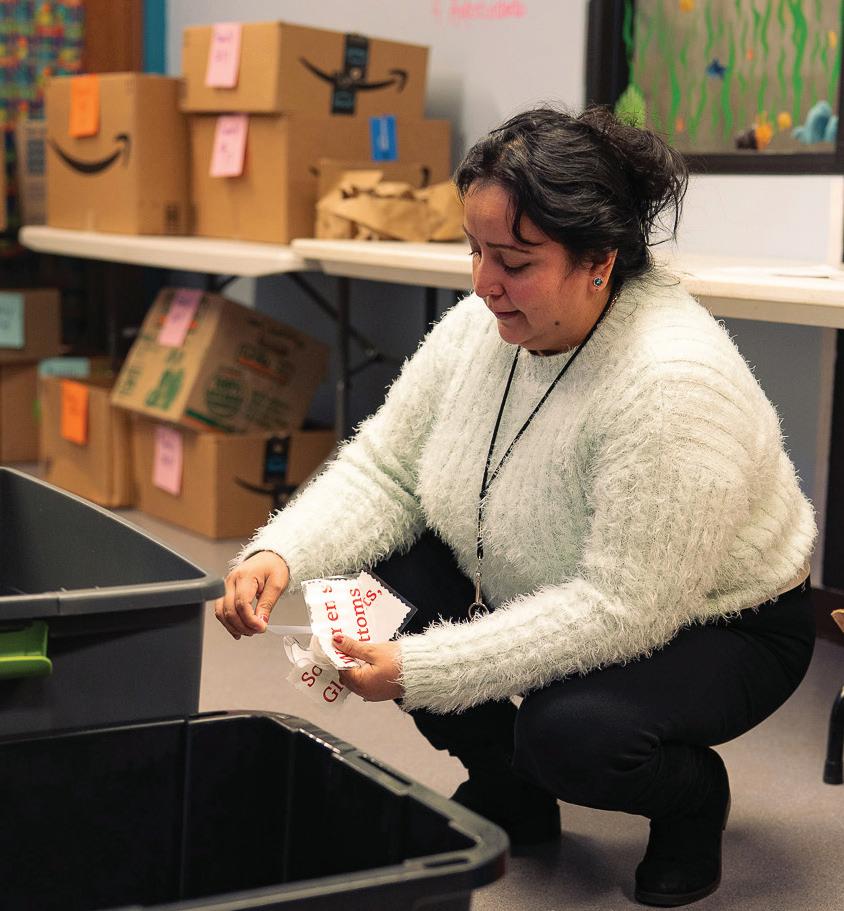
( LEFT ) An extra storage area in the back of the office and meeting space stores extra toys and diapers in preparation for the holidays.
(RIGHT ) Office Coordinator Ileana Alvarado Gonzalez puts labels on bins for clothing in a storage room. The Hope and Safety Alliance, a domestic abuse treatment center in Eugene, Ore., has offered services such as housing support, legal advocacy, a 24-hour confidential crisis line and emergency shelter options for domestic violence victims, to the Lane County community for over 45 years.
(Saj Sundaram/ Emerald)
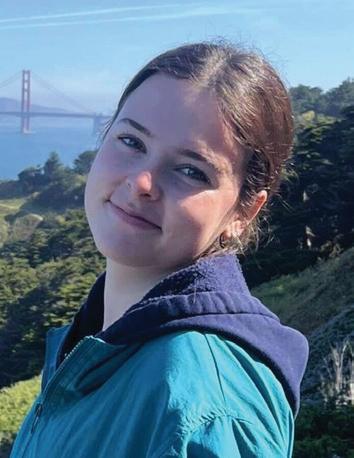
Emma Kahl is an opinion columnist for the Daily Emerald. She is currently a senior, majoring in written journalism and minoring in global studies. Her writing focuses on social commentary, culture and politics.