DESIGN & EDITORIAL LAYOUT pdplante.com inc. | pdominiqueplante@gmail.com
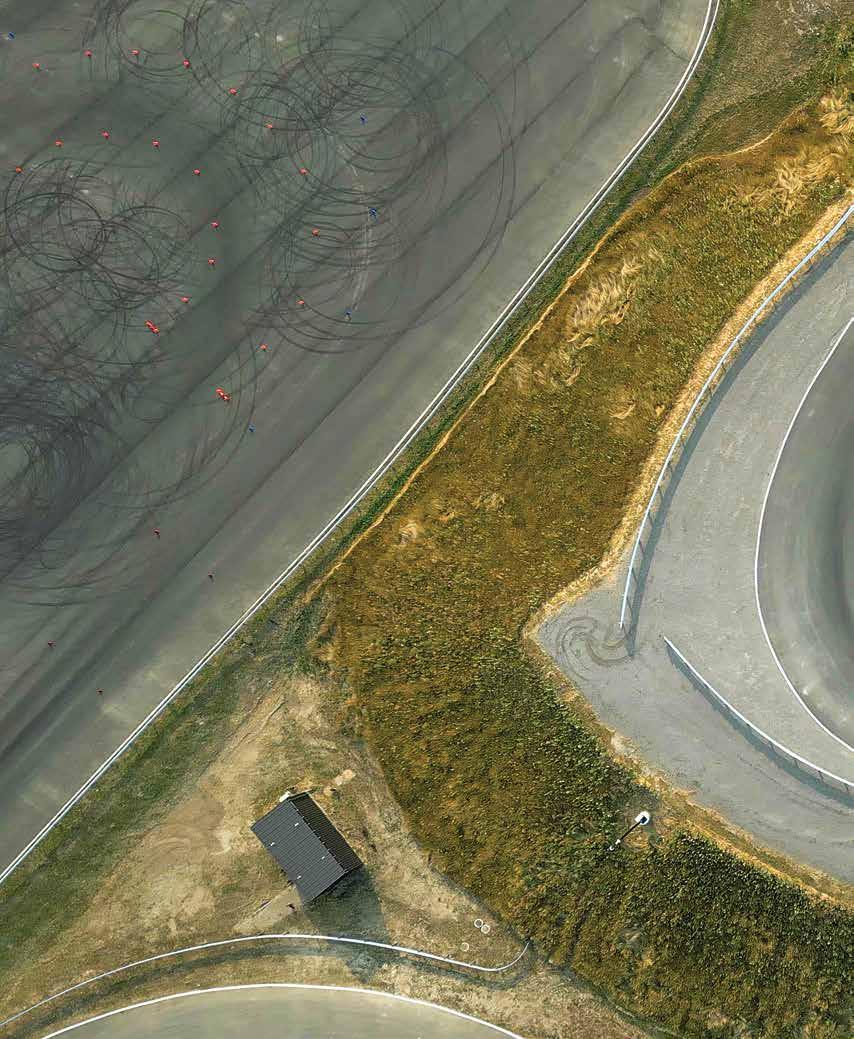
COVER PHOTO
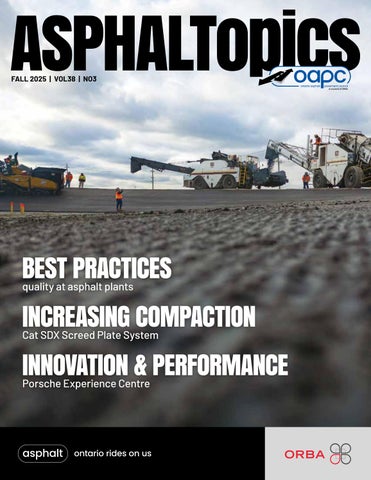
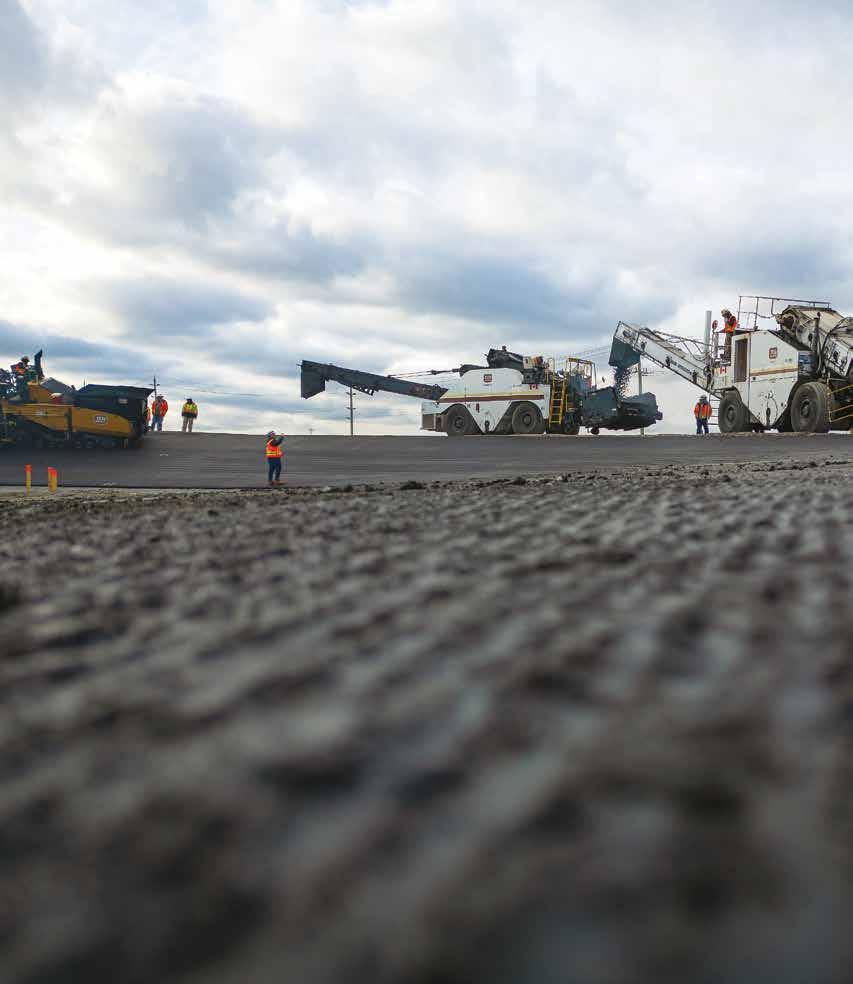
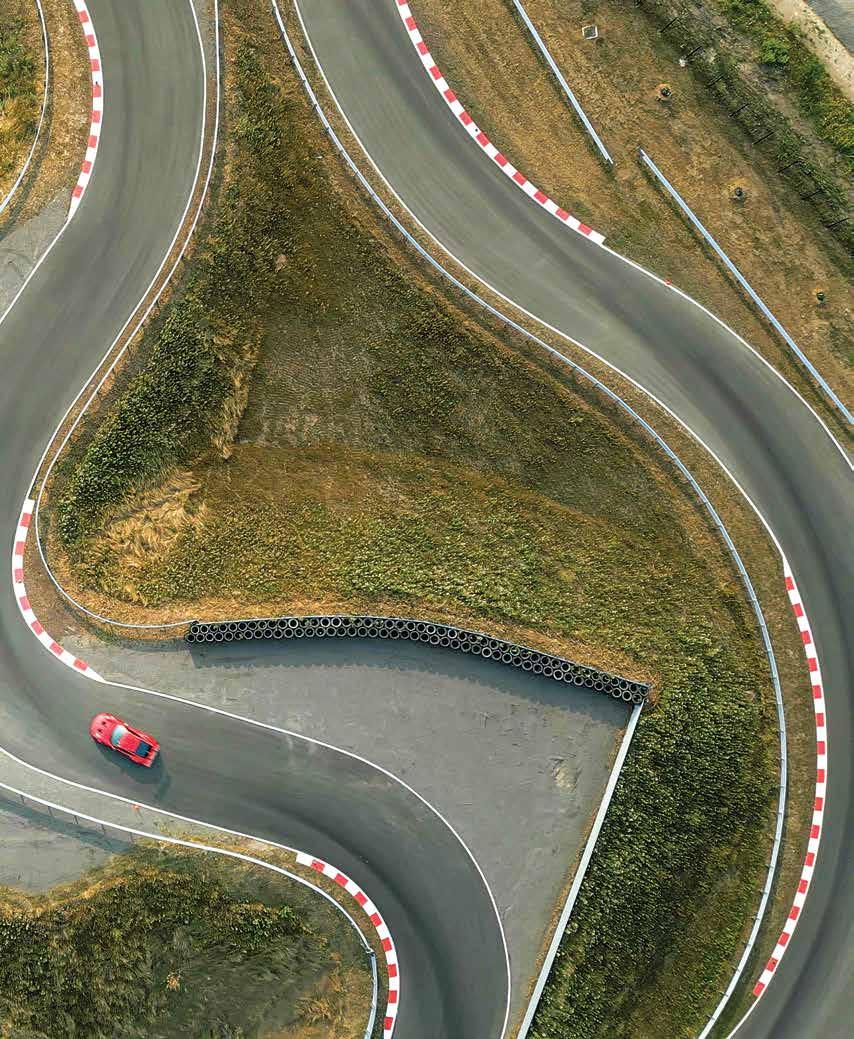
Porsche Experience Centre, Pickering (Brennan)
CHAIR’s CORNER
Chris Campbell Chair
What does success look like?
I’m going to start this article off with a question: What does success look like?
Depending on whom you ask, you’ll probably get very different answers. It could be something short and simple like “ waking up in the morning,” or something more meaningful such as “making it to retirement in good health.”
If you ask someone in the road construction industry, you might hear, “making sure everyone gets home safe,” or “ being the low bid on a project,” or even “ finishing a job within budget.” Ultimately, there is no wrong answer. When asked this question on the spot, most of us focus on whatever we’re currently engaged in or whatever is currently at the top of our minds.
Sometimes we equate success with achievement. You either succeed or you fail. One of my favourite movie quotes comes from Talladega Nights: The Ballad of Ricky Bobby when he says, “If you’re not first, you’re last.” He later gets corrected on that, of course, but it speaks to a common mindset: to succeed, you have to win. You have to beat everyone or overcome every challenge.
For me, it’s not that black and white. Success is about putting in the effort, seeing things through, making a difference, and inching closer toward the goalpost.
As I sit here reflecting on the last eight months as chair of this fantastic council, I find myself asking: Have we been successful in what we set out to do? There might be a few different opinions on that, but since I’m the one writing this article, I get to be a little biased.
Over the past year, we’ve made real progress on several big fronts:
• Asphalt Plant Certification Program: We’ve gained solid traction on this, establishing the framework that we believe will create meaningful differentiation for plants that choose to follow it. We know implementation will take a lot of effort from our members, but we’re confident that through further consultation, we can optimize the process and have something ready to share with the broader membership later this year.
• Environmental Product Declaration (EPD) tool: Work continues on the EPD tool which will help ensure Ontario companies are ready for future sustainability requirements. We hope it will set the standard for the rest of Canada, getting us ahead of any upcoming regulations.
• Harmonized specifications: With the help of consultants and advisors, we’ve begun aligning municipal design and procurement practices to establish the road harmonization code. The goal is to enshrine the Ontario Provincial Standard Specifications (OPSS) as the single specification system used across Ontario, simplifying processes for our members and enabling cost efficiencies for our agency partners.
Have we crossed every finish line? No, not quite. But we’ve seen tremendous effort and progress in moving forward, and to me, that’s success
To wrap things up, our next major OAPC event will be the Fall Asphalt Seminar on December 4, preceded by the Chair’s Dinner on December 3. The seminar is a great place to catch up on what’s happening in our industry, engage in meaningful discussions, and connect with people from all corners of the province. We intend to have a full agenda, and I hope to see you all there!
OPERATIONS CORNER
Donn Bernal Technical Advisor, Asphalt Industry
What a year!
As we look back on 2025, it’s remarkable to reflect on everything ORBA, OAPC, and our committees accomplished throughout the year. These ambitious initiatives will change how the industry will look for the better!
I wanted to start with the biggest news: Ontario introduced legislation in late October to harmonize municipal road standards. The Government of Ontario introduced the Fighting Delays, Building Faster Act, 2025. This is a huge win for the industry and our association as it will standardize all the various municipal asphalt specifications into one. There will still be a lot of work to be completed starting with consultations by The Ministry of Transportation (MTO) with numerous municipalities, regions, and road associations. But this legislation sets the stage for the industry to produce asphalt more efficiently and its goal in building quality asphalt pavements.
Next is the continued development of the framework for asphalt plant certification. In late November, the Ad-hoc Sub-committee that is comprised of producers, consultants, and owner (municipal/regional) representatives met for the first time together since our brainstorming session to review the current version of the framework. It was met with positive feedback by the owners and will allow the association to continue its development as well as include a few more items that the owners are looking for. This plant certification needs to be robust for the owners to recognize and add it into their municipal contracts. The association and its members want to raise bar of quality and improve the best practices of the producers. Another meeting is already lined up to bring the Ad-hoc Sub-committee together again in January to keep the momentum going. The goal is to transition the Trillium Award Program to a plant certification in 2027 with full implementation by 2030.
The York Region high-RAP demonstration project is paved and completed. Although we could not complete livestreams of the project due to scheduling and weather conflicts, we did host an introductory webinar which was well attended. This project will also be a feature presentation at the Fall Asphalt Seminar in December and representatives from the Region of York and the National Research Council will summarize the project, its challenges, and the ongoing monitoring that will be completed on it.
We are finally getting traction on the last major initiative of the year: gathering data to develop average Environment Product Declarations (EPDs) for Ontario asphalt mixes. It was challenging to gather data from our member volunteer plants with the year in full swing, but as the season wound down, data started to come in and we look achieve our target number of plants and geography by the end of the year.
Lastly, I had the opportunity to present at the Canadian Technical Asphalt Association conference held in midNovember in Toronto this year. The presentation was on “Decarbonizing Efforts for Asphalt in Ontario” and focused on the initiatives the association is currently completing including harmonization, asphalt EPDs, plant certification, and increased utilization of RAP. A nice way to bring everything all together at the end of the year.
MARCOM MATTERS
Donn Bernal Technical Advisor, Asphalt Industry
Lots to learn and new ideas to try
The Fall Asphalt Seminar (FAS) lineup is set up and ready to go with the theme being Built Strong, Last Long! The theme is meant to represent the durability of asphalt pavements and is built into each one of the presentations at the FAS. They include our keynote focusing on best practices needed to produce quality asphalt to the need to focus on asphalt compaction to improve pavement longevity and a new segment in the afternoon on asphalt innovations that improve pavement performance.
For the 2026 ORBA Convention in February, I am very excited that we will have an asphalt-themed plenary session as we continue to integrate asphalt-related topics into the convention lineup. We will have Carsten Karcher, SecretaryGeneral of the European Asphalt Pavement Association (EAPA) speaking to us about Asphalt 4.0. It is an EAPAdeveloped program that focuses on using innovation, digitization, and automation to increase productivity in the asphalt sector. This also ties in nicely to the convention theme: Connecting Ontario: Infrastructure Growth and the Power of Partnership. We hope to see you at this wellattended event that also includes two keynotes from Dan Gardner, an award-winning journalist and bestselling author, and the one and only Dr. Hayley Wickenheiser.
Last year at this time, Marcom spoke about the 2025 Road Building Academy. It has been rebranded in 2026 as the Ontario Infrastructure Academy with its new suite of courses being offered and runs from February 23 to 27, 2026. Registration for the course are already available.
We are looking to develop more asphalt workshops in 2026 and build on the success of the recent Introduction to Balanced Mix Design workshop that is featured later in this issue in Technically Speaking. There are a couple of new workshops we are already working on that we are keeping under wraps for now. But they will be announced early in the new year so keep an eye out for them.
There have been many events and activities this year and it may be hard to keep up. The Information Highway e-Newsletter is our way to keep you informed and is released every two weeks. If you are not already subscribed to it, please send us a note and we will get you on our distribution list. We also welcome contributions to Information Highway from our members, academia, and industry experts.
Thank you for everyone’s continued support in our webinars, workshop, and events this year. We couldn’t keep doing them without your ongoing participation.
by James Careless
“There is good, better and best, and there is always a best way to do things that tends to make things work better,”
says DENNIS HUNT,
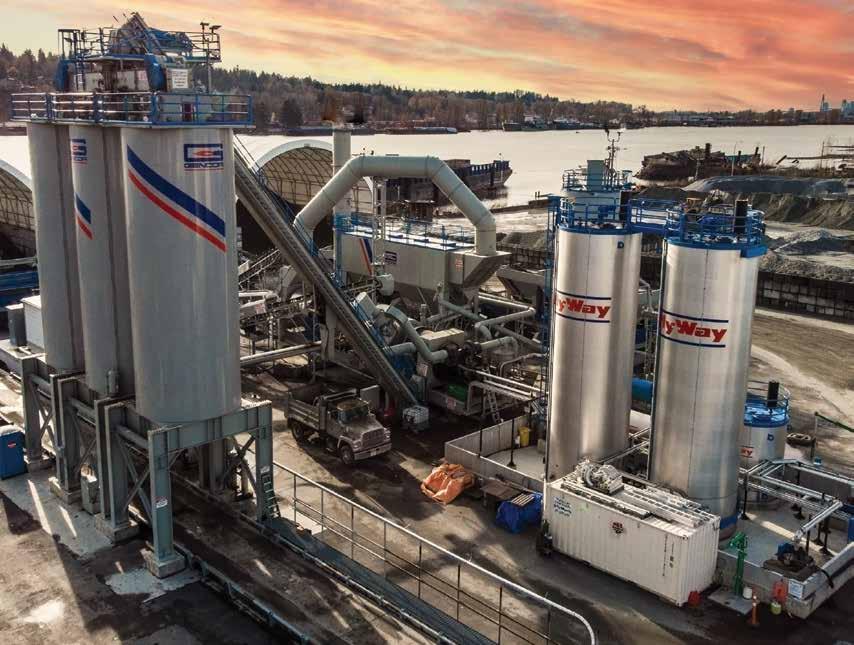
Senior Vice-President at Gencor. During his keynote address at OAPC’s Fall Asphalt Seminar on December 4, 2025, Hunt outlined his best practices for managing asphalt plants.
ASPHALT PLANT BEST PRACTICES
HIGHLIGHTS OF BEST PRACTICES
DAILY PLANT INSPECTIONS
Every morning, supervisors should walk around and look at their asphalt plant closely to ensure each component is operating properly. “A lot of people don’t do that,” says Hunt. “But they should, because that’s how you catch problems early.”
EARLY DAILY LUBRICATION
Every day, asphalt plants need to have their equipment lubricated in line with their regular maintenance schedules. This should be done without fail, and the activity should be documented for future reference.
USE CHECKLISTS
Creating and using checklists for asphalt plant inspections and related tasks is essential. “People are human and they make mistakes,” Hunt explains. “If you’ve got a checklist w ith you, it
helps to make sure that you didn’t miss anything. As well, you end up with a record of what you’ve done over time.”
DAILY/WEEKLY/MONTHLY CHECKS
In line with their maintenance schedules, be sure to execute the daily, weekly, and monthly equipment checks that are required to keep an asphalt plant running reliably and safely. “On a daily basis, you’re going to look on the outside of things, making sure belts are straight, bearings are greased, and listening for sounds of the plant that may change,” says Hunt. “When the plant is down for maintenance, use that time to do more indepth checks.”
USE THE DRIEST AGGREGATE AND RAP POSSIBLE
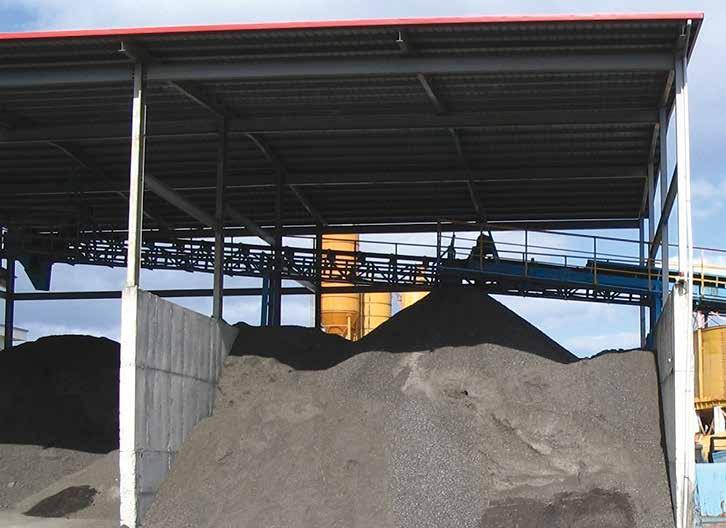
“All good asphalt comes from the hot and dry aggregate and RAP, so you’ve got to keep them dry,” Hunt explains. “This means that you need to stockpile aggregate and RAP so that they drain properly, and cover them if possible. After all, heating aggregate and RAP to dry it is expensive. Minimizing moisture in your stockpiles means less expense and better plant performance.” ››
USE GOOD QUALITY INGREDIENTS AND MIX THEM CONSISTENTLY
Making the best asphalt requires good quality ingredients in top condition, mixed at a consistent heat. Ensuring that this is always the case requires vigilance on the part of plant management. “You need to always know what is going into the mix and how it is being handled by staff,” says Hunt. “You need to know that the temperature is correct and that the mixing process is being followed consistently from day to day. After all, you’re making a product that’s going to go down on a road or a parking lot that the public is going to travel over. It’s a reflection on all of us, what that material is like and how long it lasts.”
MONITOR AND DOCUMENT THE PRODUCTION PROCESS
It is vital for an asphalt plant manager to monitor and document everything associated with the production process every single day, no exceptions. Such vigilance tends to reduce the chances of things going wrong, while providing useful reference materials when trouble does occur and remedies are required.
TRAINING IS PARAMOUNT
An asphalt plant’s production quality and safety are entirely dependent on the quality of the people who run it. This is why onsite training of employees by plant veterans is paramount. “There is not a trade school that you can attend where you can learn how to run an asphalt plant,” Hunt says. “Yes, there are some manufacturers’ training courses that are available, but most of the training you need occurs on the job. This is why asphalt plant managers have to be conscientious about having new hires mentored and supervised by experienced employees — who must know how to do the right things themselves. Yes, reading the manual is probably one of the most important things you can do as a new employee. But nothing beats on-the-job training by a knowledgeable veteran employee.”
Aggregate and RAP should be stockpiled so that they stay dry by providing good drainage and coverage.
ADHERE TO MAINTENANCE SCHEDULES
“You must make time for maintenance downtime because if the plant breaks while producing a perishable product, it is a crisis,” Hunt says. “You simply cannot afford equipment breakdowns when asphalt is being mixed, because of the impact on your delivery schedules and the commitments of your customers to their customers. So doing scheduled maintenance diligently is an important best practice, and one that should not be ignored.”
HAVE CRITICAL SPARES ON HAND
Even in the best managed and maintained asphalt plants, breakdowns do happen. This is why it is a best practice to always have critical spare parts in stock at all times. It is also a best practice to have the documentation associated with these parts on hand and to have staff trained and ready to install them as necessary.
MONITOR GOVERNMENT REGULATIONS
The asphalt industry is controlled by a range of government rules which tend to change over time. If your company is not monitoring these rules on an ongoing basis, you could unintentionally fall out of compliance and be liable to fines.
“In Ontario, the ministry is changing regulations from time-to-time and not grandfathering in certain things,” says Hunt. “You’ve got to be aware of these changes as a best practice. This is why people belong to trade associations like ORBA so they can be notified of that information.”
STAY CALM DURING A CRISIS
Dennis Hunt’s last best practice — at least in this article — is to always stay calm, cool, and collected during a crisis. “No matter what is happening, you need to have situational awareness of what is
going on,” he says. “The good news: If you’ve organized yourself and prepared your operations in line with best practices beforehand, you’ll be well-positioned to cope when things do go wrong.”
James Careless is an Ottawa-based freelance writer with credits in the National Post, Toronto Star, and AI’s Asphalt magazine.
CAT ® SDX SCREED PLATES
by James Careless
Density is one of the fundamental requirements for improved pavement performance. Initial density directly behind the screed is an important first step as it reduces the necessity for further roller passes, and thus time, to reach the required density for the mat. ››
(Caterpillar)
The reduction in time is beneficial to getting the required density before the mat cools. This is particularly important in the shoulder season or at night when the mat is prone to more rapid cooling.
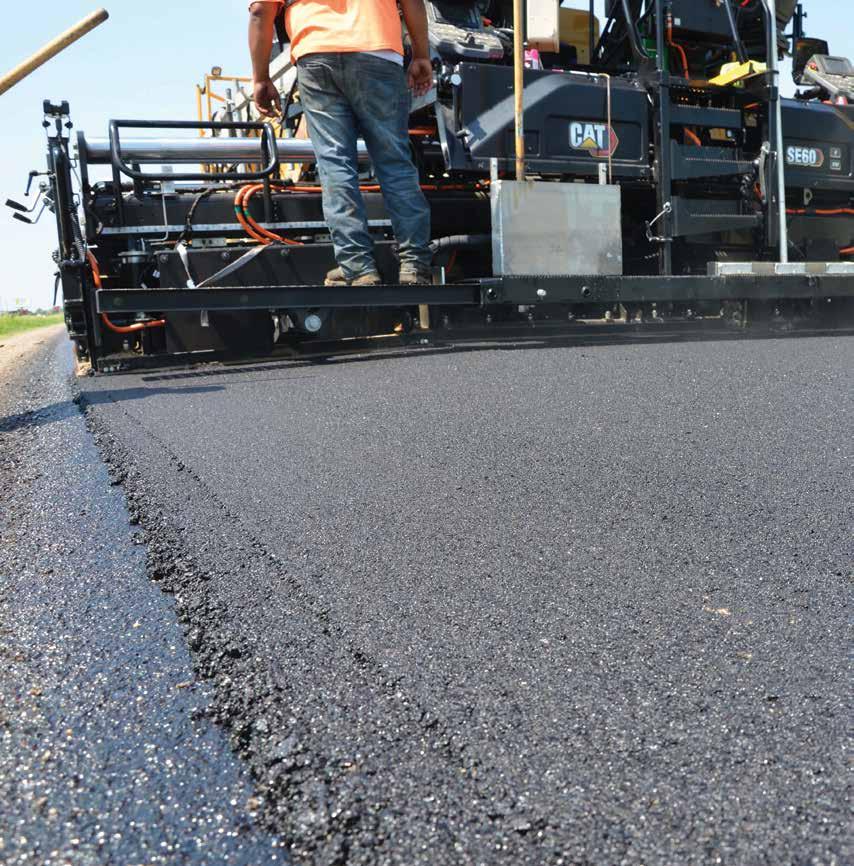
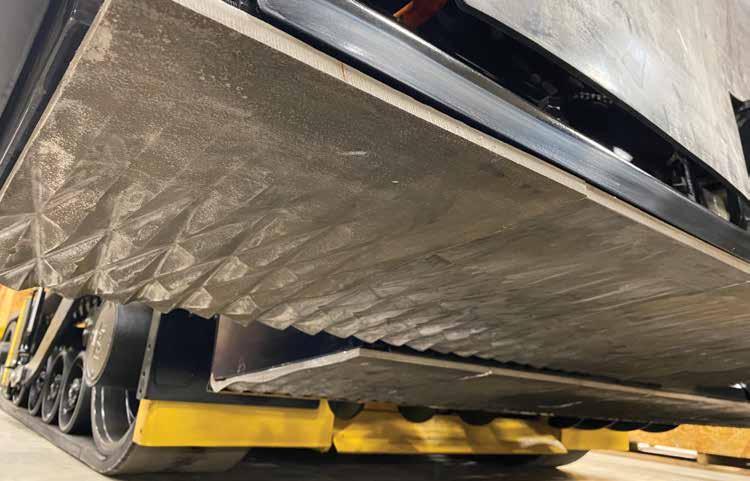
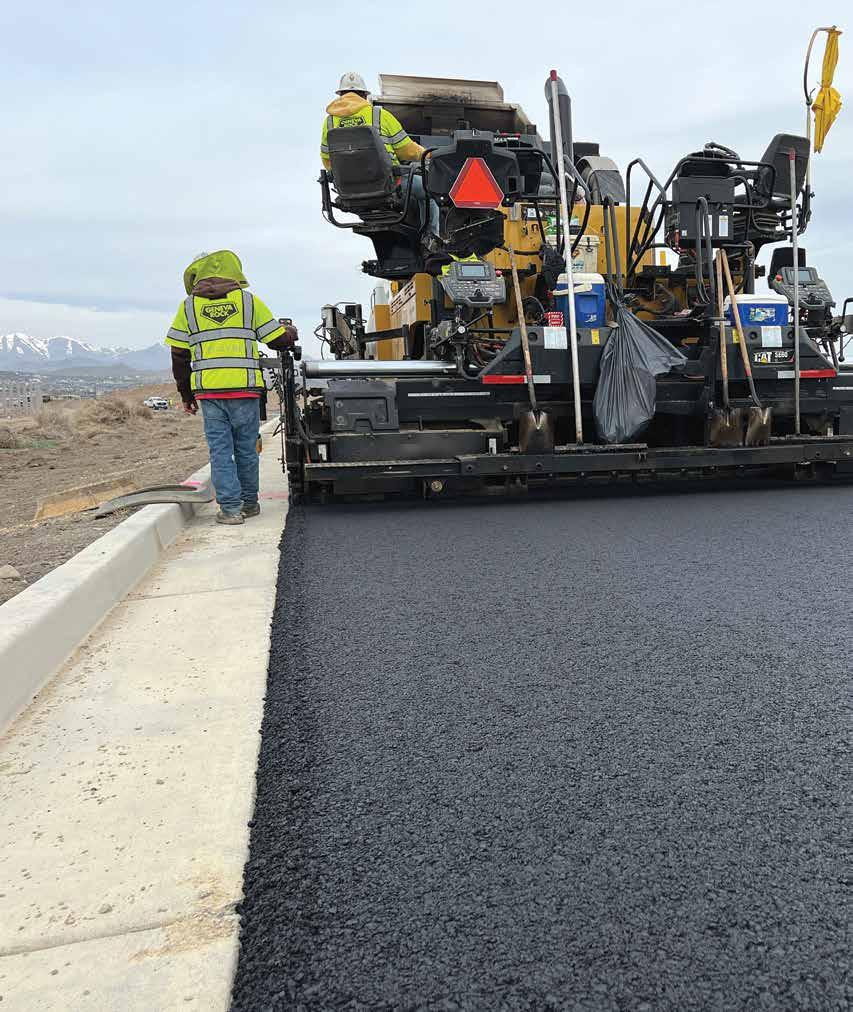
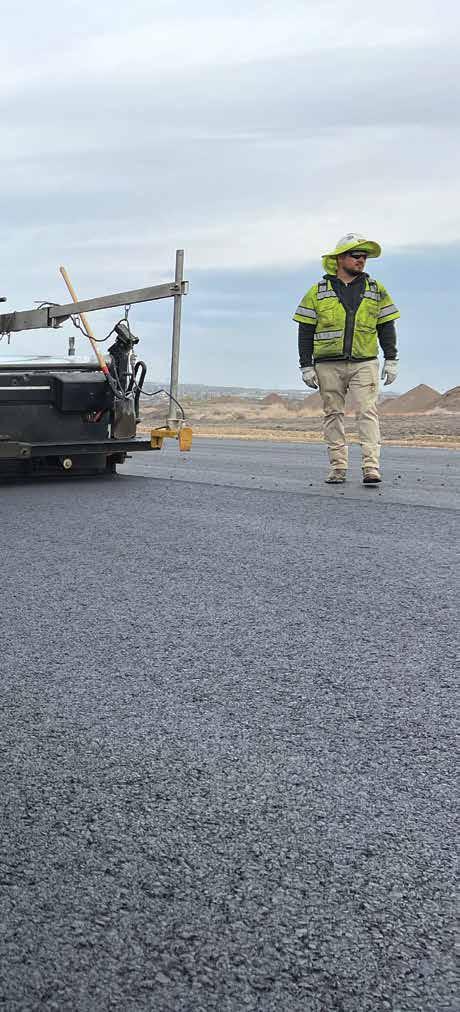
In response to this need Caterpillar has released a new screed plate design to the market, known as the Cat SDX Screed Plate System. The textured SDX Screed Plates are designed to manipulate the mix as it passes through the diamondshaped grooves. In doing so, a reduction in air voids occurs and contractors have experienced increased densities and improved smoothness.
Based on a field test conducted on a two-mile section of North Dakota’s Highway 85, the Cat SDX Screed Plates delivered a 91.5 per cent Behind Screed Density compared to a traditional Cat screed plate rating of 89.5 per cent. The Cat SDX Screed Plates were also superior in final density (94.8 per cent compared to 93.6 per cent), density standard deviation (0.11 compared to 0.25), low density core samples (0 compared to 2), and smoothness reduction (IRI) from base to final course (25.77 in/mile compared to 23.26 in/mile).
To ensure that the comparison was accurate and fair in this trial, the Highway 85 test used the same mix and model pavers, and matched rollers. The comparison results from this trial were based on intelligent compaction, dielectric scanning, core samples, and thermal profiling. Thus, as measured
in identical circumstances, the textured Cat SDX Screed Plates provided overall superior results across all tested metrics when compared to traditional Cat screed plates — including a 10 per cent gain in smoothness. This superior screed performance made it easier for the paver to achieve a smoother, more compact surface — and one that will wear longer and better over time.
DIFFERENT BY DESIGN
The Cat textured SDX Screed Plates deliver superior initial compaction results compared to the traditional flat Cat screed plate due to its angular design.
“The Cat SDX Screed Plate System is a screed plate design and attachment system,” says Todd Mansell, Product Application Specialist with Caterpillar. “What makes it different from conventional screed plates are several things -- most notably, the angular plate surface compared to a smooth (flat) surface on conventional screed plates. The textured SDX plates have diamond-like patterns that channel and manipulate the asphalt mix as it passes from the front of the screed plate, then underneath and out the back trailing edge. This textured design manipulates the aggregate in the asphalt mix, resulting in higher and more uniform densities and more uniform surface temperatures across the width of the mat being placed. As well, the mounting system allows for relatively quick screed
The angular plate design of the SDX screed kneads the surface of the mat. (Caterpillar)
plate changes compared to the time required to change out conventional screed plates.”
The SDX plate’s angular surface first provides a kneading action to the surface of the mat as the mix passes past the diamond-shaped grooves. The tapering flat surface at the back of the plate then provides a smooth finished surface. This confined mixing action reduces air voids in the mix, thus increasing its density while creating a uniform surface texture during initial compaction.
The diamond pattern reorients the aggregate particles in the hot mix. Specifically, its peak-to-trough dimensions and the offset of the diamond pattern move the aggregate particles around in the hot mix. This allows them to be better oriented for compaction.
ADDITIONAL BENEFITS TO PAVERS
Beyond the points noted above, the Cat SDX Screed Plate System is designed to deliver additional benefits to paving contractors and their clients. The mixing action delivered by the angular plates promotes uniform temperatures to the surface of the mat that result in improved compaction characteristics and better smoothness. The Cat SDX Screed Plate system also generates firmer edge profiles that improve longitudinal joint densities between paved sections thus reducing roller ‘shoving’.
“Increased in-place density can enable compaction to occur on a hotter surface thereby shortening the compaction train,” Mansell says. “Higher stiffness values can lead to better longitudinal edge profiles and higher joint densities due to less lateral movement of the mix when being compacted. When the Cat SDX Screed Plate system is being used, we’re typically seeing anywhere from two to four per cent higher density behind the screed before the rollers. Getting that higher initial compaction while the ››
The SDX plate’s angular surface first provides a kneading action to the surface of the mat as the mix passes past the diamond-shaped grooves. The tapering flat surface at the back of the plate then provides a smooth finished surface.
mix still has heat in it makes a big difference, especially in the cooler times of the year.
“As well, in addition to improved density behind the SDX screed plates, the unsupported edge of the first laid mat tends to be stiffer and stand up better when the rollers compact the unsupported edge, which eventually becomes the longitudinal joint,” continues Mansell. “Higher longitudinal joint densities have been observed using SDX, and then with that higher initial compaction, we are seeing better longitudinal joint densities because the unsupported edge on the first pass is not pushing out as much when the rollers hit it.”
Having taken part in the Highway 85 tests in North Dakota, Mansell has personal knowledge of Cat SDX Screed Plates’ real-world performance against traditional Cat screed plates. “The single biggest thing that jumped out on that comparison was actually the consistency of the density across the width of the mat,” he says. “The average density behind the Cat SDX was 1.7 per cent higher than behind the traditional screed plates, and there were no low density cores behind the SDX. There were two behind the conventional screed and that really related more to the consistency they were working with.”
There are two more Cat SDX Screed benefits to take into consideration. First, Cat SDX Screed plates are available in both
textured and smooth plate designs and provide increased wear resistance when compared to traditional Cat screed plates.
“There are many factors that affect screed plates’ wear life; however, under the same conditions, Cat SDX Screed plates are designed to last longer than conventional Cat screed plates,” says Mansell. “This is because Cat SDX Screed plates are solid pieces. They are cast using a chromium-alloy steel throughout the entire screed plate. The conventional hardened screed plates offered by Caterpillar are clad with a harder steel but not cast with it all the way through.”
In testing typically performed by Caterpillar utilizing ASTM G65 Dry Sand Rubber Wheel test procedures, the chromiumalloy material utilized in Cat SDX extended-life screed plates provided 4.2 times more abrasion resistance when compared to the material utilized in standard-wear Cat screed plates. Furthermore, the chromium-alloy material provided 1.2 times more abrasion resistance when compared to the cladded material utilized on traditional Cat extended-life screed plates.
Second, Cat SDX Screed plates are modular in design. This allows for opposite side interchangeability of these plates that can help maximize wear. “The modular plate design simplifies handling, and the hardware-free fastening system enables the screed plates to be changed in as little as four hours after an initial aluminum adaptor plate install,” says Mansell.
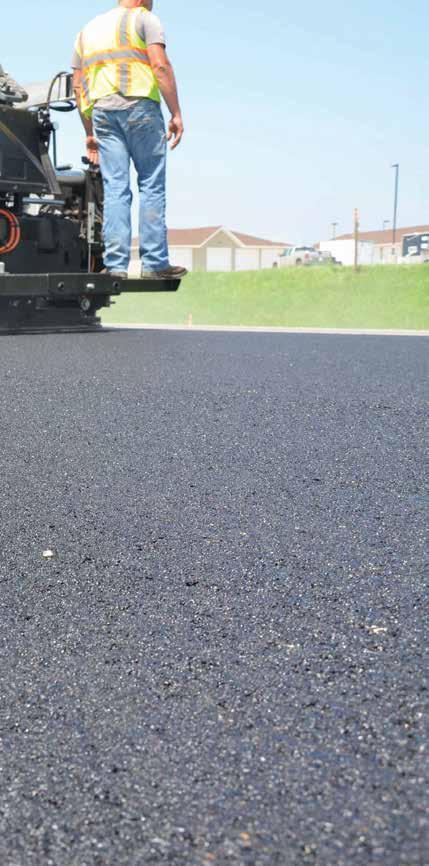
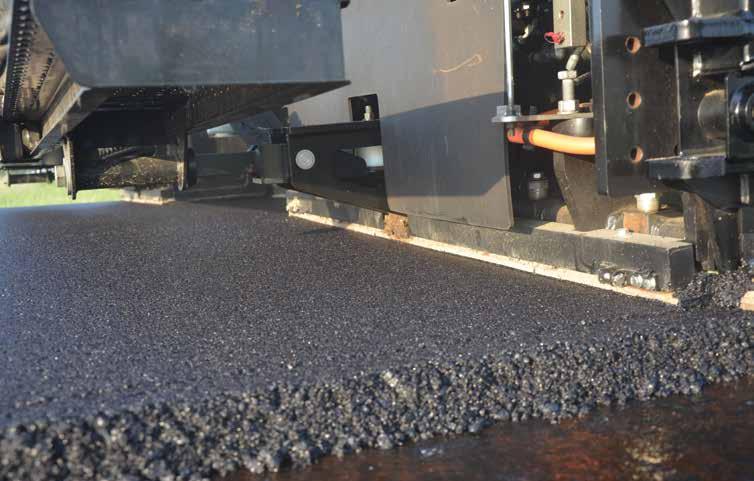
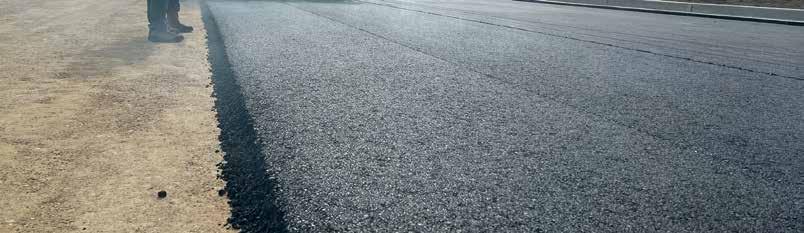
Close view of the surface of the mat after paving with the SDX screed. (Caterpillar)
AVAILABLE AS LIMITED RETROFITS
The Cat SDX Screed Plate System can be fitted to the Cat SE50 V, SE60 V, and SE60 V XW rear-extender screeds. They can be purchased with new machine orders or as retrofit kits for existing in-service Cat Screeds. For retrofit kits, “the process is to order the parts through your local Cat dealer and have the local Cat dealer install SDX,” adds Mansell.
The specifications are:
• Paving Range with SE50 V: 2.55 m - 6.50 m (8’ 4” – 21’ 4”)
• Paving Range with SE60 V: 3 m to 7.45 m (9’ 10” - 24’ 5”)
• Paving Range with SE60 V XW: 3 m to 7.95 m (9’ 10” - 29’ 4”)
IMPACT ON ONTARIO PAVING
Cat SDX Screeds have been used in Ontario in 2025 but no comparison tests have been conducted to date. “We’ve done a few projects, but none of them have been what I would call official tests,” says Mansell. “We did one paving project on Highway 8 in the Kitchener-Waterloo area. We conducted another project in the area near Woodbridge in the GTA of a
large parking lot spanning 6,000 to 7,000 tonnes. We did a couple of streets north of the 400 as well.”
Even without official test results from Ontario, Caterpillar expects their Cat SDX Screed Plates to deliver similar results here as those measured in North Dakota. “We expect to see more consistent density using Cat SDX Screed plates,” Mansell says. “More consistent density fits well with achieving maximum quality in a Percent-Within-Limits (PWL) specification such as the one that the Ministry of Transportation for Ontario (MTO) uses. We also expect to see improved longitudinal joint densities, fewer roller passes to achieve the same density, and extended wear life, especially in parts of Ontario where very hard rock is used in the asphalt mixes.”
Overall, Mansell expects the Cat SDX Screed system to perform well in Ontario and to justify the cost of retrofitting it onto existing equipment or buying it on new models. “It’ll be good for getting those higher initial densities in colder temperatures,” he says. “You can’t argue with the Cat SDX Screed’s consistency of density across the width of the mat. It is a system that better meets our customers’ needs.”
INNOVATION AND PERFORMANCE EXCELLENCE
by Bora Hassan
Groundbreaking work at the Porsche Experience Centre Toronto
»
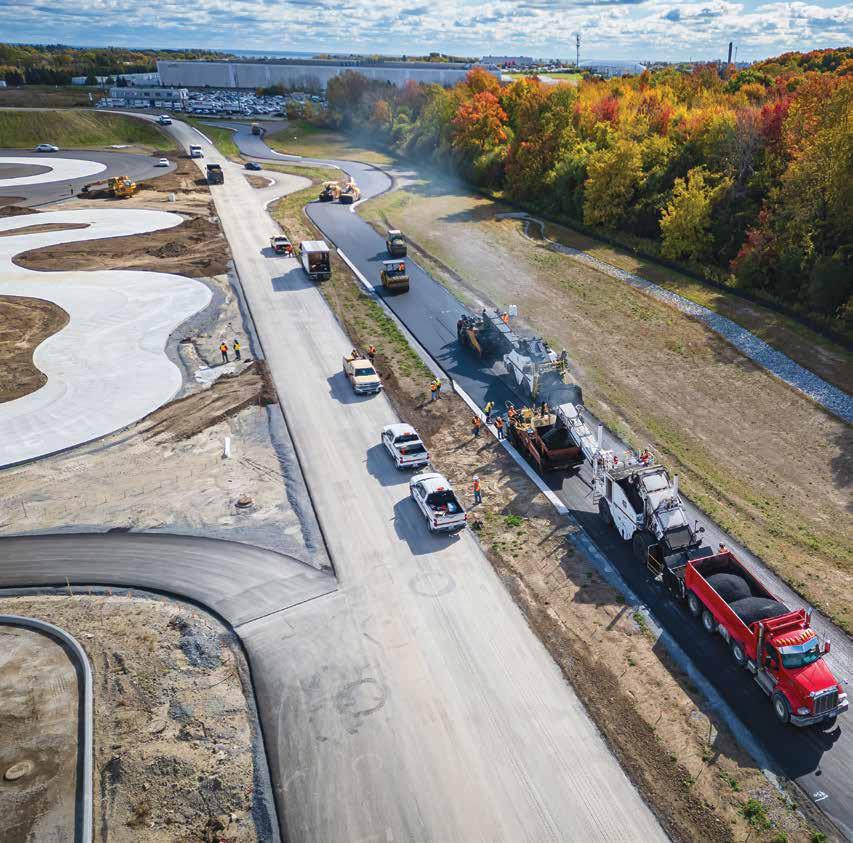
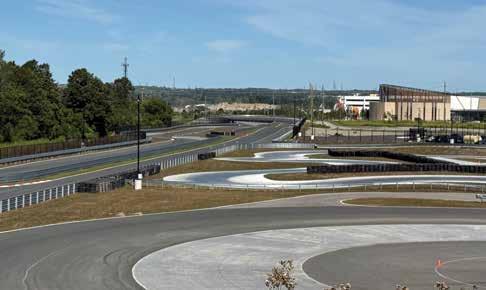
In the world of luxury automotive experiences, few projects rival the ambition and complexity of the Porsche Experience Centre (PEC) in Pickering, Ontario spearheaded by Brennan Paving & Construction, The Miller Group’s construction division.
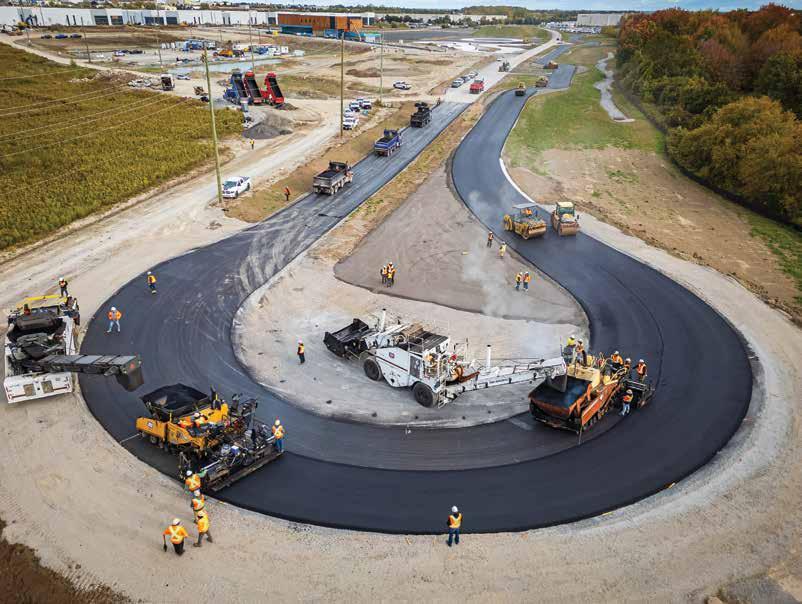
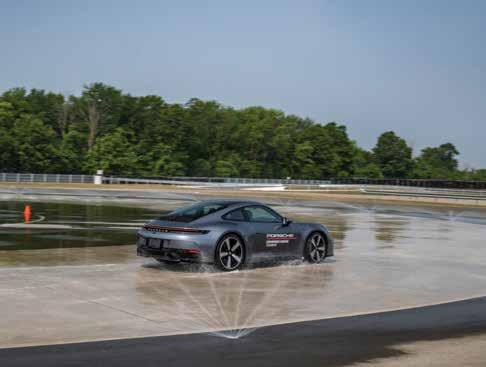
The PEC project involved the construction of a two-kilometre-high performance handling circuit featuring a 25 per cent carousel (hairpin turn), 45 per cent uphill and downhill slopes, high-speed chicanes, dynamic zones, a wet drift circle, parking areas, and inner roads. With an asphalt quantity of 10,000 tonnes, the project was a significant undertaking for Brennan Paving & Construction’s team. The project was awarded in August 2022 and initiated in September 2024, requiring visionary thinking, rigorous testing, and seamless execution.
(Miller)
CHALLENGES AND INNOVATIVE SOLUTIONS
• Access for Asphalt Delivery
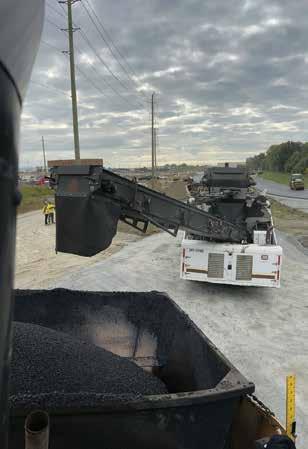
Restricted access during construction posed logistical challenges for asphalt delivery, especially on steep slopes. Subsequently, design changes created a dedicated access road, and a solid granular platform on the carousel, enabling efficient asphalt delivery and continuous paving operations.
• Paving Equipment on Extreme Cross Slopes
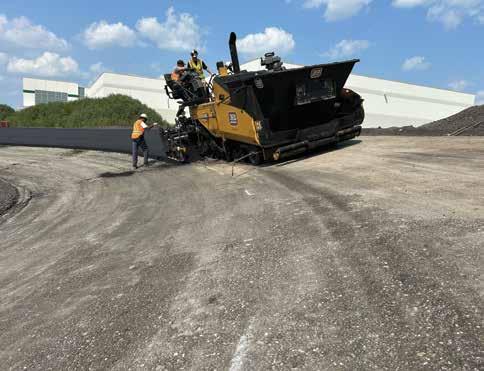
Standard paving equipment is typically rated at a maximum cross slope of 10 per cent, but the PEC design required operations on a 25 per cent slope. Based on their research, Brennan decided to construct a full-scale trial at the asphalt plant to emulate the design conditions. This way they could have a full-scale demonstration for the Porsche Team, test their equipment capabilities, and train the crews to work safely beyond their standard boundaries. This trial also demonstrated design concerns which were then rectified on the actual site by the PEC design team. Key trial findings included concerns about paver stability, mat displacement, and operator anxiety. The trial validated equipment choices and operational strategies, laying the foundation for successful real-world applications. ››
(Miller)
(Miller)
• Elimination of Cold Longitudinal Joint Compaction
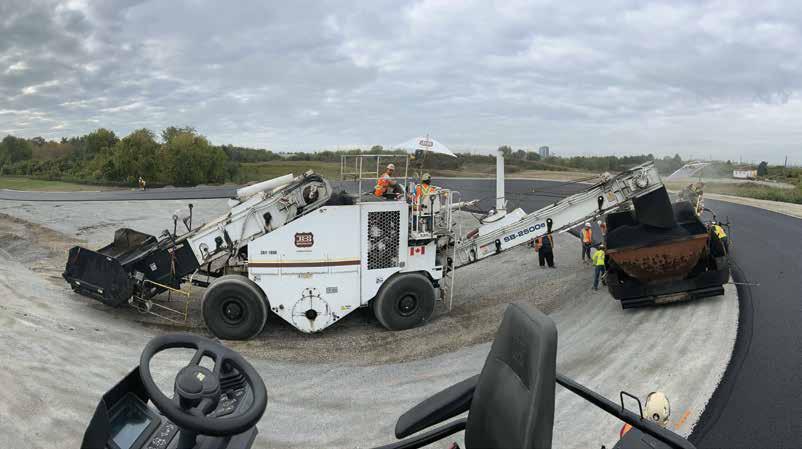
Originally the PEC design required the utilization of a single asphalt spreader, but upon completion of our test site it was determined that two spreaders in tandem would produce a far superior surface. Consequently, the specifications were modified to an echelon paving operation thus removing all cold longitudinal joints and achieved a minimum of 94 per cent compaction on the entire asphalt surface.
• Drift Circ le Paving
The inner circle was surrounded by polished concrete and thirty-seven fixed flush-mounted sprinkler heads which posed access challenges for Brennan’s heavy equipment. Therefore, they decided to utilize steel plates and plywood on the finished concrete and labour-intensive hand paving around the sprinkler systems to avoid damaging the sprinklers and the concrete surface.
CUSTOMER BENEFITS
The PEC project serves as a blueprint for future luxury automotive experience centres. These centres enhance customer engagement, promote brand loyalty, and drive sales through immersive experiences.
Lessons learned during the trial phase translated into real-time excellence, ensuring high standards in compaction, smoothness, and safety. From steep slopes to fragile infrastructure, every obstacle was met with a tailored solution.
Bora Hassan is Innovation and Performance Group Manager at The Miller Group. Written with the express permission of the Porsche Experience Centre Toronto.
(Miller)
(Miller)
(Miller)
(Ingevity)
WARM MIX
ASPHALT AND REJUVENATOR DEMONSTRATIONS
by Jenna Bowers
wo separate projects highlight innovative asphalt technologies used to build sustainable pavements. The first project looked into the use of WMA additives to assess the performance differences of WMA and two mixes placed at higher temperatures. The second project looked at the effect of using a rejuvenator compared to using a softer binder on a high RAP mix.
WMA Demonstration
The first project demonstrates the use of warm mix asphalt (WMA) additives in lowering production temperatures to reduce oxidative aging and extending pavement life. It involved a comparative evaluation of three asphalt mixtures used for new construction in Draper, Utah: hot mix asphalt (HMA) produced at 160°C, HMA incorporating one percent hydrated lime at 165°C, and WMA produced at 127°C using a chemical additive. The demonstration aimed to assess performance differences when lowering production temperatures and incorporating additives to improve sustainability.
PROCESS
A chemical WMA additive was selected to lower production temperatures and thereby reduce emissions and fuel consumption, improve compaction, and minimize binder oxidation—all contributing to longer-lasting pavements. The mixtures included 15 per cent RAP, 5.1 per cent total asphalt content (AC), PG 64-28 binder, and either one per cent hydrated lime or 0.5 per cent Evotherm additive. The plant mix was sampled at the different HMA and WMA production temperatures and shipped to the lab for additional testing. This performance testing included rutting resistance (Hamburg Wheel Tracker), cracking resistance (IDEAL-CT), dynamic modulus, and fatigue life.
All three mixtures met design criteria and had very similar gradations, asphalt content, and air voids (3.5 per cent). They also had minimal rutting with only 2 to 4 mm after 20,000 passes of the HWT test. The HMA + lime had the lowest cracking resistance due to the stiffening from the lime as evidenced in the IDEAL-CT and Cyclic Fatigue test. The WMA appeared to improve the cracking resistance due to the reduced binder aging at lower production temperatures.
The second project demonstrates the use of a rejuvenator to increase the reclaimed asphalt pavement (RAP) content to 35 per cent RAP. It involved a comparative evaluation of two asphalt mixtures on the National Center for Asphalt Technology (NCAT) test track: 35 per cent RAP with a rejuvenator and 35 per cent RAP with a softer binder. The test sections aimed to assess the differences when using a rejuvenator to improve performance characteristics.
PROCESS
In the second project, a rejuvenator was used in a high RAP mixture to meet a balanced mix design (BMD) with improved cracking and rut resistance in comparison to using just a softer binder grade. The mixtures included 35 per cent RAP, 6 per cent total AC, PG 58-28 or PG 67-22 with 2.5 per cent Evoflex rejuvenator. The plant mix was sampled and tested by NCAT. The performance testing included cracking resistance (IDEAL-CT) and rutting resistance (HT-IDT).
RESULTS
During the BMD testing, the mixture using just PG 67-22 did not have adequate cracking resistance. Changing the binder to a softer grade of PG 58-28 did improve the cracking but fell below the threshold for rutting resistance. The mixture using PG 67-22 + 2.5 per cent rejuvenator passed both the IDEAL CT and HT-IDT thresholds, essentially balancing both cracking and rutting resistance for a true balanced mix design. This same trend was observed in the plant-produced mixtures when immediately compacted in the lab. However, when the mixtures were reheated, they showed some aging with reduced IDEAL-CT values. Despite those results, the field performance is very good after one year of traffic and will continue to be monitored for another year.
Key Takeaways from the Demonstration Projects
Innovative asphalt technologies can be used to make more sustainable pavements. This means using higher RAP contents with the aid of rejuvenators or extending pavement life with reduced production temperatures using WMA additives.
Jenna Bowers, P.E., is Recycling and Stabilization Innovation Manager at Ingevity, Pavement Technologies.
Innovative asphalt technologies can be used to make more sustainable pavements.
MIXBUSTERS
by Dr. Buzz Powell and Dave Johnson
Welcome to the second installment of Mix Busters – truths about asphalt myths. We are emulating the theme of the Discovery Channel program, “Myth Busters.” Between Buzz and Dave, they have over 70 years of experience designing, constructing, maintaining and experimenting with asphalt pavements.
For 15 years, Myth Busters would address various myths or urban legends to try to determine if they were true or not. Similarly, within the asphalt world there are many long and often strongly held beliefs that may need to be examined objectively to establish if they are true or not.
Moreover, we have a willingness to question and challenge various “truths” we “know” about the design, construction and maintenance of asphalt pavements. Drawing heavily on the eight completed cycles of the Pavement Test Track operated by the National Center for Asphalt Technology (NCAT) at Auburn University and untold numbers of field projects, we will explore topics we recognize as needing to be examined for their validity.
We have been busy scanning the asphalt world for new topics to examine, seeking the truth. After considering numerous options, we offer a fresh and objective look at the following subjects.
For this installment, we focus on three myths related to pavement thickness design and perpetual pavements:
1. Layer coefficients should not change when using highpolymer-modified (HP) binders.
2. To achieve a perpetual pavement, it must be very thick.
3. It’s OK to pave lean, stiff binder mixes (intermediate layers) as long as we cover them up with healthy surface mixes. ››
THREE ASPHALT MYTHS TO CONSIDER
Balanced mix design (BMD) testing is a great way to ensure that higher RAP content mixes will have a sufficient quantity and quality of effective total binder content to exhibit good resistance to cracking.
quality subgrade). Research to precisely quantify the layer coefficient increase at the NCAT Pavement Test Track is ongoing.
The enhanced layer coefficients of HP pavements are well documented, offering cost-effective solutions for achieving superior performance. Their enhanced performance characteristics present an opportunity to achieve significantly greater performance with minimally greater initial unit costs. The ability to build a perpetual pavement at thicknesses once thought to be impossible could initiate a dramatic cost/benefit improvement to an already very competitive material. To achieve a higher level of performance, resisting the urge to thin sections is encouraged. Dr. Jhony Habbouche summarized the quandary well in his article found in the October 2024 issue of Asphalt magazine.
“One key consideration for HP (high polymer) mixtures is whether we should adopt thinner layers to achieve similar performance levels as conventional mixtures or focus on extending the pavement’s performance life by enhancing the mixture properties with additional polymer modification without reducing the layer thickness. The latter approach could unlock the potential for achieving perpetual pavements, where the pavement structure is designed to last indefinitely with minimal maintenance,” wrote Habbouche.
1 2
“ LAYER COEFFICIENTS SHOULD NOT CHANGE WHEN USING HIGH-POLYMER-MODIFIED (HP) BINDERS”
High-polymer-modified (HP) binders are often utilized to improve structural performance in cases where increasing pavement thickness is impractical. For states that use layer coefficients for structural pavement design, this works because HP mixes have higher layer coefficients. For example, research sponsored by the Florida Department of Transportation found that HP mixes result in layer coefficients that are 23 percent higher than conventional mixes.
In other research (NCAT Report 12-10), NCAT found that HP mixes result in layer coefficients that are at least 43 percent higher than conventional mixes. This outcome assumed the NCAT Pavement Test Track would suddenly fail with the very next truck pass. This assumption is conservative because the HP test section was exhibiting no distress at the time it was taken out of service after 20 million equivalent single axle loadings (ESALs). In fact, it’s likely the HP section was a perpetual pavement (at an asphalt thickness of less than six inches on six inches of dense crushed granite base and a high-
“ TO ACHIEVE A PERPETUAL PAVEMENT, IT MUST BE VERY THICK.”
A common belief is that achieving perpetual pavement performance requires considerable thickness. A perpetual asphalt pavement is defined as a flexible pavement system designed such that the tensile strain at the bottom of the asphalt layers remains below the material’s endurance limit. The endurance limit is the threshold level of strain below which asphalt materials can theoretically withstand an infinite number of loading cycles without experiencing fatigue cracking. While the minimum thickness to achieve such performance varies, common values are greater than 12 inches for a pavement to have the opportunity to be perpetual. Is this really true? Does an asphalt pavement indeed need to be that thick to be perpetual or can it be thinner – perhaps significantly thinner? To address this topic, let’s look at the evidence.
Our first piece of evidence comes from the Asphalt Pavement Alliance’s Perpetual Pavement Award winners. There have been over 150 awards since 2001 when the first winners were announced. Analysis of these award-winning pavements reveals structural designs with total asphalt thicknesses typically ranging from 10 to 14 inches depending on traffic volume, climate, and subgrade conditions. These designs used pre-Superpave mix methodologies (Marshall or Hveem), without modified binders, which likely contributed to the misconception of necessary thickness.
The second piece of evidence comes from NCAT. Namely, as was discussed before, when using modern, advanced asphalt binders that have been engineered with performance-enhancing modifications,
the pavements using such binders have shown consistently that they perform better. In fact, the HiMod NCAT section that was exhibiting perpetual performance referenced above was only 5.75 inches thick!
Does that mean that surprisingly thin sections can achieve perpetual performance anywhere? Unfortunately, no. NCAT researchers found that 14 inches were needed for perpetual performance on sections that were built to represent typical conditions found in Oklahoma. Therefore, pavement designers need to engineer perpetual pavements for their conditions. Factors that influence thickness design include:
• Traffic load: High-volume truck routes typically require greater thickness.
• Climate considerations: Hot or freeze-thaw conditions may influence material selection and thickness.
Regardless of where a pavement is being designed and constructed, a perpetual pavement can be engineered for that site’s unique conditions. Moreover, especially when advanced materials are incorporated into the design, thicknesses that were once deemed impossible, can be perpetual, sometimes with less than six inches of asphalt!
For more information on the NCAT work please see https:// eng.auburn. edu/research/centers/ncat/files/ reports/2012/ rep12-10.pdf.
For further details on the documented benefits of polymermodified asphalt binders, refer to Asphalt Institute publications ER-215 and IS-215.
both rutting and cracking, bottom layers should be resistant to cracking, and intermediate layers should reduce deflections through a combination of thickness and stiffness.
A simple way to increase stiffness is to increase the percentage of reclaimed asphalt pavement (RAP) in the mix. While intermediate layers can be a great place to use higher RAP content mix designs, it should not be done indiscriminately. Balanced mix design (BMD) testing is a great way to ensure that higher RAP content mixes will have a sufficient quantity and quality of effective total binder content to exhibit good resistance to cracking. This is especially important when milling/inlaying two layers of pavement within a milled depth that does not completely eliminate existing cracking. The existing cracking will eventually reflect up into the inlaid asphalt, and the rate of progression should be expected to increase if the inlaid mix is lean and/or contains a lot of aged binder. This concern is compounded by the modern prevalence of multigenerational RAP (i.e., RAP that has been recycled multiple times since it was originally placed as a virgin mix decades ago).
“ IT’S
OK TO PAVE LEAN, STIFF BINDER MIXES (INTERMEDIATE LAYERS) AS LONG AS WE COVER THEM UP WITH HEALTHY SURFACE MIXES.”
It’s often said that the long-term performance of a pavement structure is a function of using the right mix and materials in each layer, providing enough asphalt thickness to prevent deep distresses, and preserving/maintaining the surface. These are all elements of perpetual pavements that also apply to good practice with pavements that are not perpetual. While it’s tempting to focus solely on the surface mix because it’s the most visible part of the pavement structure, the reality is that every layer in the pavement should satisfy specific performance requirements. In addition to basic quality requirements for all mixes (e.g., resistance to stripping), surface layers should be durable and resistant to
Additionally, adjacent layers with significant stiffness differences can exhibit high interlayer tensile stresses under traffic loading. Good tack products at appropriate rates are even more important to prevent premature failures when leaner/stiffer mixes are placed either over or under more flexible layers (e.g. when placed under a crack-resistant surface mix). The importance of placing mixes in every layer of the pavement structure that satisfy all relevant quality requirements for new construction as well as rehabilitation cannot be overstated. Agencies should consider relaxing design air void requirements in BMD-proven mixes as an acknowledgment that volumetrics inform practitioners on the quantity of effective binder content but say little or nothing about quality. Striving to use as much RAP as possible can enhance environmental and economic stewardship, but only in ways that ensure good long-term performance.
WHERE TO NEXT?
Buzz and Dave encourage readers to share ideas for future investigations. Email your suggestions to asphaltmixbuster@gmail.com. If your idea is used, full credit will be given!
Dr. Buzz Powell, P.E., is Technical Director at the Asphalt Pavement Alliance and Dave Johnson, P.E., is Senior Regional Engineer at the Asphalt Institute. This article appeared in the spring 2025 issue of Asphalt magazine and is reprinted here with permission from the author and publication.
Van Vliet’s commitment stands out at Oxford UNSUNG HEROES
ill Van Vliet was introduced to Oxford Sand & Gravel Ltd. in high school when they sponsored a wind engineering competition he took part in. Through high school he worked part time for the company before joining full time as a grounds and maintenance labourer after graduation. From there he moved into doing QC work before starting in plant operations alongside the plant operator. In a m atter of a year or so, he was running the plant and has worked as the asphalt plant operator for the last 14 years.
“Will’s consistent effort over time is a big part of keeping the plant online and running well. He brings the energy and commitment needed day in and day out throughout all seasons. If the plant needs to fire up early, he’s here early. He’s here late if necessary, and if something is down, he’s here until it’s fixed. It’s rare to have the commitment that he shows,” says Ian Heikoop, General Manager at Oxford Sand & Gravel in Woodstock.
Van Vliet credits Gary Brown, President of Oxford Sand & Gravel, for putting so much trust in him early on in his career. “Giving that kind of responsibility on someone young and without a lot of experience meant a lot to me then and still does. Gary has always led by example by investing in employees and promoting a culture of self-improvement.”
Van Vliet also credits the mentorship he received early on in helping him get to where he is today. One of those mentors was Don Piper.
“Don Piper is the best mentor I had early on in my career. He had a wealth of information on plant operation and took the time to share his thoughts and experiences with me. He was good to talk to and bounce ideas off of. I’m so thankful to have had his support and guidance,” says Van Vliet.
“Don said that it takes seven years to make a true operator. I stand by that 100 per cent. Some days I think it’s a bit longer.
by Lara Henry
With a well managed plant, the operator won’t see all the things that can happen in that time. I’ve been here since 2011 and had something happen for first time this year. Being a plant operator is so much more than just sitting in a control room and running the plant. An operator should have a picture in their head of the entire process and understand how it works. They need to think about all aspects of materials and what is required. It’s not just pressing buttons,” he continues.
Van Vliet is known as a multi-tasker and jack-of-all-trades, on the phone with his headset dealing with suppliers or customers while running the plant at the same time.
“Will is very much a working foreman, leading the charge at the asphalt plant in the yard but still operating it as well. He’s also an innovator, coming up with ideas over the years about improving the plant, making it more efficient and safer,” says Heikoop.
The ability to continuously learn and grow is important to Van Vliet and he credits Gary Brown and Oxford with helping him do that, completing his millwright licence and red seal among other training.
“Every day is a learning opportunity. I want to explore opportunities, make changes and improvements. Now I’m trying to also share that learning and expertise with others in the same way that others shared their knowledge with me,” says Van Vliet.
“For young people, getting into the operating field can be intimidating,” says Van Vliet. “My advice would be not to be intimated but to be humble. Be less vocal and listen more to people in industry who have been around for long time. Ask questions and do your research. If you do that, you will do really well. There will be hard days but you will get there.”
Lara Henry is a communication specialist and editor of ASPHALTopics.
TECHNICALLY SPEAKING
by Dr. Sina Varamini, Fernando Magisano and Donn Bernal
United for performance and durability of asphalt roads: OAETG’s Balanced Mix Design workshop
The Ontario Asphalt Expert Task Group (OAETG) has achieved another major milestone in its mission to advance innovation, quality, and performance-based design in Ontario’s asphalt industry.
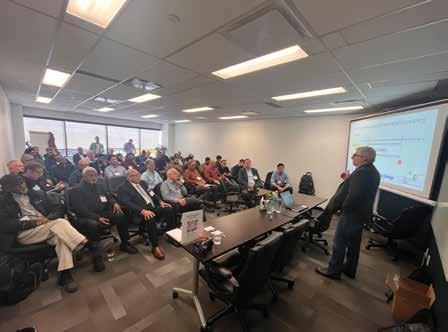
On October 23, 2025, OAETG, in collaboration with the Ontario Road Builders’ Association (ORBA), the Ontario Asphalt Pavement Council (OAPC), and the Ontario Infrastructure Academy (OIA), hosted the province’s first practical Balanced Mix Design (BMD) workshop.
The event represented the culmination of five years of co-ordinated research and collaboration, building directly on lessons learned from the Ontario Mix Asphalt Program (O-MAP) Rounds 1 to 3 and transforming those findings into practical, hands-on learning for Ontario’s asphalt community.
FIVE YEARS OF INDUSTRY-LED PREPARATION
Established in 2020, OAETG was formed in response to the rapid evolution of performance-testing and binder-specification requirements proposed by the Ministry of Transportation, Ontario (MTO). Recognizing potential risks to contractors, suppliers, and agencies, the Task Group proactively launched O-MAP -- a first-of-its-kind initiative designed to evaluate the practicality, variability, and contractual implications of new performance tests before their formal implementation.
Over five years, OAETG completed major literature reviews on the feasibility of integrating performance testing within day-to-day contracts, followed by three rounds of full-scale laboratory testing. These rounds evaluated rutting, cracking, and thermal performance using the Hamburg Wheel Tracking (HWT), Semi-Circular Bend (SCB), and Disk Compact Tension (DCT) tests.
These studies provided critical insight into inter-laboratory variability, samplepreparation consistency, and the need for purposeful, realistic performance thresholds. The data and conclusions from O-MAP became the foundation of the 2025 BMD workshop, translating years of research into practical training for engineers, technicians, and quality managers across Ontario. ››
A COLLABORATIVE WORKSHOP LINKING RESEARCH AND PRACTICE
Hosted at Denzel Meeting Solutions and PNJ Engineering’s Performance Testing Facility in Toronto, the BMD workshop brought together leading experts from the U.S. National Center for Asphalt Technology (NCAT), the Canadian Council of Independent Laboratories (CCIL), and Ontario’s asphalt community to deliver a comprehensive one-day program.
Workshop highlights included:
• Fundamentals of Asphalt Mix Design in Ontario – Dr. Steve Goodman
• The Need for Performance Testing – Dr. Sina Varamini (OAETG) & Dr. Fan Yin (NCAT)
• PGAC Grades and Additives in Ontario Mixes –Tony Kucharek (McAsphalt)
• Implementing BMD Using AASHTO PP105 –Dr. Fan Yin (NCAT)
• Planning for CCIL Certification and Type G Accreditation – Nabil Kamel (CCIL)
• Contractor Panel Discussion – with representatives from Green Infrastructure Partners, Dufferin Construction, and Viola Management
In the afternoon, participants rotated through four interactive testing stations at PNJ Engineering covering:
3. Fracture and Modulus Evaluation (DCT / Modulus)
4. Data Review and Analysis of Results
This hands-on format provided direct experience with performance-testing procedures, data interpretation, and the connection between laboratory performance results and field behaviour, bridging the gap between research and implementation.
FROM RESEARCH TO IMPLEMENTATION
The BMD workshop was built directly on O-MAP findings that have already influenced Ontario’s approach to performance testing. The efforts of the OAETG work led to changes in rut-depth thresholds in the Hamburg Wheel Tracking Test. Additionally, they clarified how performance
tests should be integrated for mix-design validation and research calibration rather than routine QA requirements.
Through this data-driven, collaborative approach, OAETG and its partners have safeguarded the industry from premature or unverified specification changes while developing a clear roadmap for Balanced Mix Design adoption across Ontario.
STRENGTHENING ONTARIO’S TECHNICAL CAPACITY
Building on the workshop’s success, OAETG is now collaborating with CCIL and MTO through the MTO-OAPC Hot Mix Asphalt Subcommittee to strengthen Ontario’s testing and certification infrastructure. Current focus areas include:
• Developing technician certification programs specific to performance testing; and
• Ensuring the industry is proactively establishing local calibration and verification services for advanced test equipment.
By supporting these programs through local and Canadian independent service providers, OAETG aims to create a sustainable ecosystem that improves quality, consistency, and readiness for province-wide BMD implementation.
CELEBRATING TECHNICAL LEADERSHIP AND KNOWLEDGE SHARING
OAETG’s technical leadership continues to extend beyond Ontario. In November 2025, two OAETG-authored papers will be presented at the Canadian Technical Asphalt Association (CTAA) Conference in Toronto:
1. O-MAP Round 3 Findings – Variability and Performance Balancing in Ontario Asphalt Mixes
2. Practical Steps Toward Adoption of Performance Testing in Ontario: A Guide for Agencies
Donn Bernal, Ronald Abdul, Narayan Hanasoge, Steve Goodman, Fan Yin, Fernando Magisano, Sina Varamini, Param Dhillon.
These publications bring OAETG’s total to five peer-reviewed technical papers since 2020 – an outstanding collective achievement that highlights the group’s volunteer-driven contributions to Canada’s asphalt research and specification-development community.
ACKNOWLEDGING OAETG’S EXECUTIVE AND MEMBERS
This milestone would not have been possible without the dedication and teamwork of the OAETG Executive, including Prabhdeep Lubana (Vice Chair OAETG), Vimy Henderson (Secretary, OAETG), together with the ongoing engagement of OAETG’s broader membership representing agencies, contractors, suppliers, consultants, and academia.
Together, this diverse and collaborative group exemplifies the spirit of partnership that continues to drive innovation and advancement across Ontario’s road-building industry.
LOOKING AHEAD: A DATA-DRIVEN FUTURE
The success of the Balanced Mix Design workshop demonstrates how research, policy, and practice can work together to create measurable change. OAETG plans to build on this success in 2026 by introducing advanced modules that focus on test variability, performance-threshold calibration, and life-cycle analytics. This initiative will support the next phase of Ontario’s transition to practical performance-based design. With continued collaboration among ORBA, MTO, CCIL, OAPC, and the wider asphalt community, Ontario is well-positioned to remain a national leader in performance-based, sustainable pavement engineering. This effort will result in longer-lasting, resilient, and low-carbon infrastructure for generations to come.
Dr. Sina Varamini is General Manager, CRM of Canada and Chair of the OAETG; Fernando Magisano is Senior Technical Advisor, Canadian Asphalt Industries Inc. and Co-Chair of the ORBA-MTO Technical Committee; and Donn Bernal is ORBA Technical Advisor.
The Balanced Mix Design workshop provided practical, hands-on learning for Ontario’s asphalt community.
ENVIRONMENTAL ESSENTIALS
Graziela Girardi
One voice for a greener tomorrow: ORBA’s unified Environment Committee
In a bold step toward unified advocacy and environmental leadership, ORBA has restructured its environmental governance by consolidating the OAPC and ORBA environment committees into a single, streamlined entity: the ORBA Environment Committee. This strategic consolidation marks a pivotal evolution in how Ontario’s infrastructure sector addresses environmental challenges -- ushering in a new era of collaboration, efficiency, and impact.
A UNIFIED STRUCTURE FOR STRATEGIC LEADERSHIP
The newly unified ORBA Environment Committee represents more than an integration -- it’s a reimagining of how environmental priorities are addressed across the road building, transit, and infrastructure sectors. Chaired by a member of ORBA’s Board of Directors and supported by a vice chair from the asphalt industry, the committee ensures balanced representation from both general contractors and asphalt producers.
This integration was driven by a shared vision: to unify the industry’s voice and strengthen its influence on environmental policy and regulation. Through this consolidation, ORBA has amplified its advocacy efforts, fostered cross-sector collaboration, enhanced
responsiveness to regulatory developments, broadened its focus to emerging environmental issues, and deepened engagement with government and technical stakeholders. The result is a more agile and impactful approach to sustainable infrastructure development.
PRIORITIZING WHAT MATTERS MOST
As the committee looks ahead to 2026, it is focusing on several key environmental themes that are shaping the future of the industry:
• Materials and emissions
From asphalt and aggregates to concrete and innovative alternatives, the committee is exploring strategies to reduce environmental impacts associated with material sourcing and usage. Life-cycle assessments, emissions data, and circular economy principles are central to this work, guiding more sustainable choices throughout a project’s lifespan.
• Modernized environmental practices
ORBA is leading the update of its Environmental Management Practices Guidance Manual , originally published in 2014. The revised edition will reflect current regulations,
climate realities, and technological advancements, providing members with clear, actionable guidance for integrating environmental responsibility into every phase of their operations.
• Regulatory readiness
With environmental regulations evolving rapidly, particularly in areas such as excess soils, species protection, and air and water quality, the committee serves as a proactive resource for members. It identifies emerging risks, clarifies compliance requirements, and advocates for fair, effective policy development.
• Excess soils strategy
A top priority for 2025 is establishing a clear ORBA position on excess soil management. As new rules impact project planning, logistics, and compliance, the committee aims to simplify compliance and promote solutions that reflect real-world project needs.
BUILDING A SUSTAINABLE FUTURE
As Ontario continues to invest in sustainable infrastructure, ORBA’s Environment Committee is positioned to lead with purpose. Its work ensures that environmental stewardship is not merely a regulatory obligation, but a core industry value. By anticipating challenges, shaping policy, and supporting its members, ORBA is helping to build a future where infrastructure and sustainability are seamlessly aligned.
The message is clear: When the industry speaks with one voice, it can drive meaningful change. Through its newly unified Environment Committee, ORBA is doing exactly that.
Graziela Girardi is Vice President, Construction at R.W.
Limited and Chair of the Environment Committee.
Tomlinson
OAPC FALL ASPHALT SEMINAR –DECEMBER 4, 2025
The asphalt industry is evolving and so are the opportunities to connect, learn and lead! We’re excited to invite you to OAPC’s Fall Asphalt Seminar, Built Strong – Lasts Long, an event designed to inspire innovation and strengthen our community. Build connections with professionals, decision-makers, and innovators; learn about the latest technologies, sustainable practices, and industry trends; and recognize the milestones and achievements of our asphalt community. Join us on December 4 by emailing Jasvinder Singh at Jasvinder.singh@orba.ca.
2025 ANNUAL MEMBERS’ GOLF TOURNAMENT
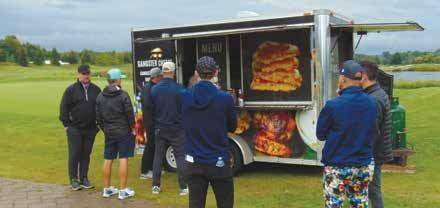
The sold-out annual members’ golf tournament on August 28 featured over 400 golfers on three courses. Thank you to our participants and especially our sponsors for making this such a successful day.
CALL FOR NOMINATIONS: UNSUNG HEROES OF ASPHALT PAVING
Do you have an “unsung hero” in your company? Someone who works diligently behind-the-scenes to help build great roads, day in and day out? If you’ve got an employee or co-worker you think deserves recognition as an Unsung Hero of the asphalt industry, please let us know. For more information and to download the nomination form, go to the ASPHALTopics page under the Publications tab. Or email OAPC at info@onasphalt.org.
ORBA/OAPC AT AMO
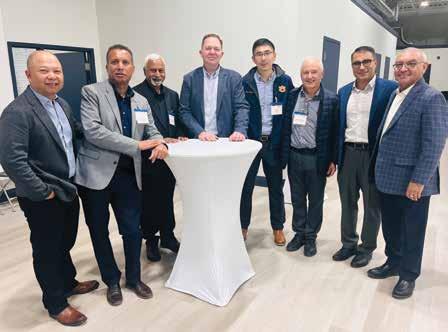
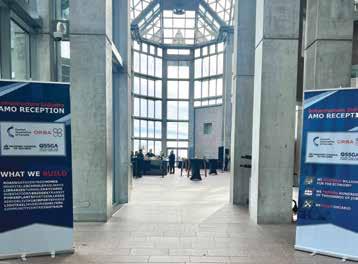
ORBA and OAPC hosted their third annual social event at the Association of Municipalities of Ontario (AMO) conference on August 18 in Ottawa. Board and OAPC directors joined ORBA president Malcolm Croskery and CEO Walid AbouHamde in welcoming Ontario ministers, mayors, provincial and municipal officials, industry partners and friends for an evening of conversation and ideas.
NINTH ANNUAL MUNICIPAL PAVING AWARD
DEADLINE DECEMBER 19, 2025
The Municipal Pavement Awards recognize successful municipal-private sector collaborations in hot mix asphalt road construction in Ontario. All hot mix paving projects completed between January 1, 2025 and November 30, 2025 are eligible. To nominate a project, complete the application form and provide supporting documentation no later than December 19, 2025. 2025-Municipal-Paving-Awards.pdf (goodroads.ca)
Scan to see all of our events!
OAPC CHAIR’S DINNER
DECEMBER 3
OAPC FALL ASPHALT SEMINAR
DECEMBER 4
ORBA CONVENTION
FEBRUARY 1 to 3, 2026
ONTARIO INFRASTRUCTURE ACADEMY
FEBRUARY 23 to 27, 2026
ORBA/OAPC GOOD ROADS CONFERENCE
MARCH 29 to APRIL 1, 2026
OAPC SPRING OPERATIONS SEMINAR
APRIL 10, 2026
THE FINAL WORD
Sandy Brown
All I want for Christmas
As I get older, I find my mind wanders. I was making porridge one morning for my wife which I make from scratch by combining steel cut oats and Scotch oats. Usually, I use a brand from the U.S. that I buy in small expensive packets at the local grocery store, but the other day I saw some Canadian steel cut oats at Costco that looked like a good deal except that they were in a giant bag. I was explaining to my wife that I would likely have to put the oats into jars and buy one of those vacuum sealing devices to keep it fresh to which she replied, “you just want another gadget.” Boy, does she have my number.
While trying to marshal arguments about how oxygen in the voids in the steel cut oats would lead to degradation in flavour, my mind wandered to asphalt (after 40 years, it frequently does) and I remembered a presentation by a chemist at the Petersen Conference about 18 to 20 years ago in Laramie, WY. I can’t remember his name but he said that there was sufficient oxygen in the voids of a compacted mix (7 to 8 per cent in those days) to age the film thickness on all the aggregates. That raised a few eyebrows.
That thought led me to remember the study in Washington State that showed that pavement life decreased markedly when in situ air voids rose above 7 per cent. That in turn made me think of the Superpave 5 movement that wanted to raise the design void content to 5 per cent air voids to lead to a denser mix. Seems counterintuitive, but the 5 per cent limit was intended to make mix more compactable. The added ease in compactability was paired with in situ void content of 5 per cent to produce a denser and more durable mix. It didn’t really catch on but it is an interesting idea.
Thinking of compactability made my mind wander to the concept of lift thickness being 3 to 4 times the nominal aggregate size and these days that seems to always mean 3 times. Few people remember that lifts 5 times the thickness were originally recommended for lower voids in situ (it’s easier to rearrange particles if there is
room to move the aggregate around particularly with today’s crushed and hard aggregates).
All these thoughts were brought on by the excellent Asphalt Institute Foundation’s recent webinar (October 2025) moderated by Amma Wakefield on How Binder Aging Shapes Durability. It was a fascinating review of research on European roads related to binder aging. What caught my attention were two charts that showed the binder aging with depth on cores recovered from pavement about 8 years after paving. In the dense graded mixes (2.8 and 7 per cent voids in situ), the curve was C-shaped with maximum aging at the top of the lift reducing with depth and then increasing again towards the base of the lift. This was contrasted with an open-graded mixes (8.4 to 9.1 per cent voids in situ) that showed the same degree of aging regardless of depth. It interesting to note that the when the voids in the dense graded mixes were measured in slices with depth, the density showed the same C-shaped curve with the maximum density at the approximate middle of the lift (4.5 per cent for the 7 per cent mix). I won’t draw conclusions because I’m not paid to do that anymore; nonetheless, it is interesting.
As I typically do, I shared my random musing with my wife as we finished breakfast and tidied up. She listened politely and patiently and then commented that I was just trying to distract her about buying my new gadget. As I said, she has my number! Nonetheless, I will enjoy playing with my new vacuum sealing gadget if I’m lucky enough to get one for Christmas.
A.W. (Sandy) Brown, P.Eng., is a geotechnical and materials engineer and consultant.