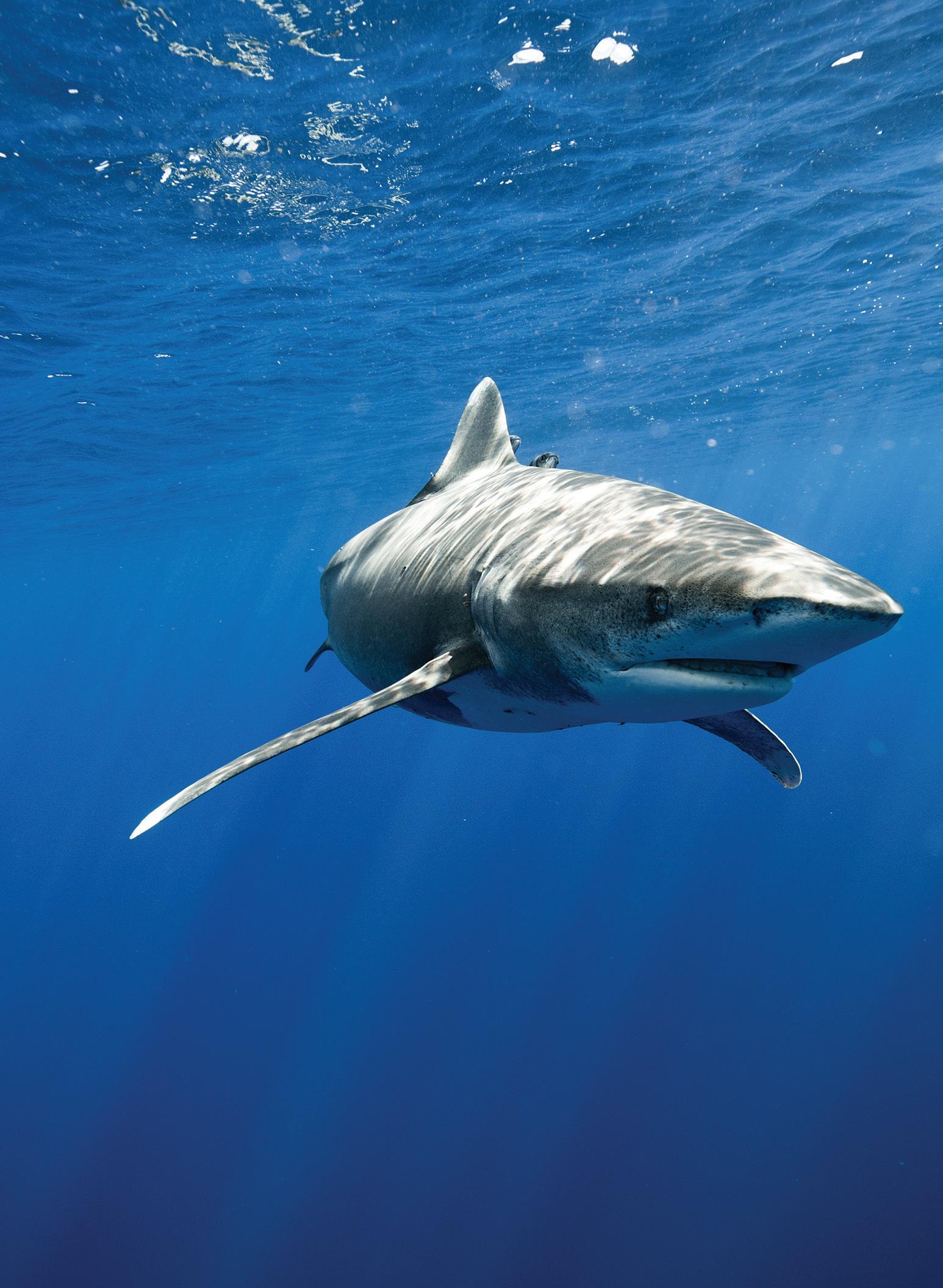
How climate change is transforming fishing Shifting Seas
The Depths of Disinformation
Campaigning in the face of online attack
Q&A with Von Hernandez
Meet Oceana’s new leader in the Philippines
Board of Directors
Diana Thomson, Chair
María Eugenia Girón, Vice Chair
Sara Lowell, Treasurer
James Sandler, Secretary
Keith Addis, President
Gaz Alazraki
Herbert M. Bedolfe, III
Ted Danson
Nicholas Davis
Patrice Etlin
Maya Gabeira
César Gaviria
Loic Gouzer
Christina Chemtai Hicks, Ph.D.
Jena King
Ben Koerner
Daniel Pauly, Ph.D.
David Rockefeller, Jr.
Susan Rockefeller
Lex Sant
Simon Sidamon-Eristoff
Rashid Sumaila, Ph.D.
Elizabeth Wahler
Sam Waterston
Jean Weiss
Antha Williams
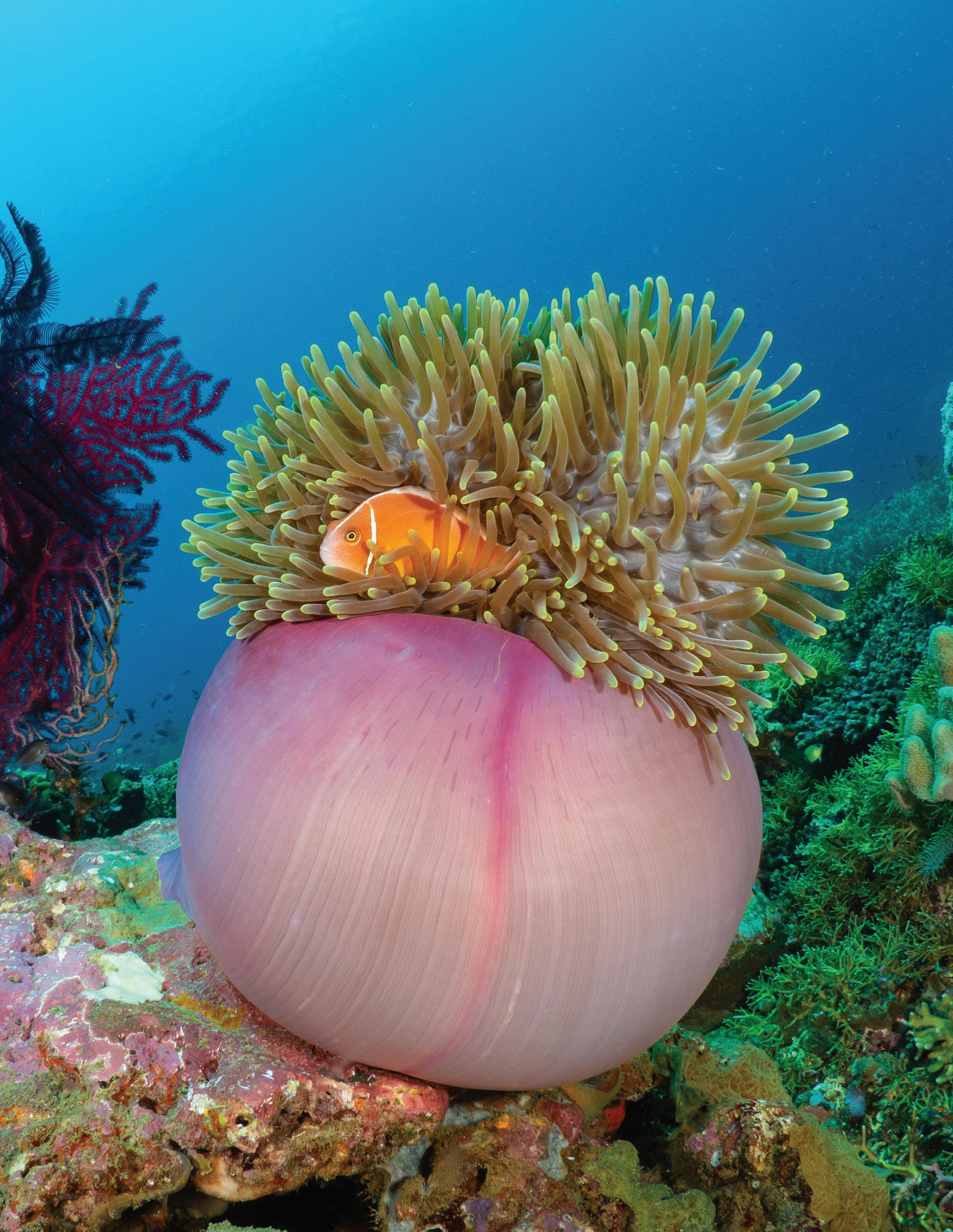
A fish takes cover in a sea anemone in the waters of Panaon Island, Philippines.
Ocean Council
Susan Rockefeller, Founder
Kelly Hallman, Vice Chair
Dede McMahon, Vice Chair
Anonymous
Samantha Bass
Violaine and John Bernbach
Rick Burnes
Vin Cipolla
Barbara Cohn
Ann Colley
Edward Dolman
Kay and Frank Fernandez
Carolyn and Chris Groobey
J. Stephen and Angela Kilcullen
Ann Luskey
Peter Neumeier
Carl and Janet Nolet
Ellie Phipps Price
David Rockefeller, Jr.
Andrew Sabin
Elias Sacal
Regina K. and John Scully
Maria Jose Peréz Simón
Sutton Stracke
Mia M. Thompson
David Treadway, Ph.D.
Edgar and Sue Wachenheim, III
Valaree Wahler
David Max Williamson
Raoul Witteveen
Leslie Zemeckis
Editorial Staff
Editor
Sarah Holcomb
Designer
Alan Po
Deputy Director of Communications
Gillian Spolarich
Creative Director
Patrick Mustain
Oceana Magazine is published by Oceana Inc. For questions or comments about this publication, please call our membership department at +1.202.833.3900 or write to Oceana’s Member Services at 1025 Connecticut Ave. NW, Suite 200, Washington, DC 20036 USA.
Oceana’s Privacy Policy: Your right to privacy is important to Oceana, and we are committed to maintaining your trust. Personal information (such as name, address, phone number, email) includes data that you may have provided to us when making a donation or taking action as a Wavemaker on behalf of the oceans. This personal information is stored in a secure location. For our full privacy policy, please visit Oceana.org/privacy-policy.
Oceana Staff
James F. Simon Chief Executive Officer
Kathryn Matthews, Ph.D. Chief Scientist and Senior Vice President
Liesbeth van der Meer, DVM Senior Vice President
Daniel Olivares Senior Vice President
Joshua Laughren Senior Vice President
Matthew Littlejohn Senior Vice President, Strategic Initiatives
Christopher Sharkey Chief Financial Officer
Janelle Chanona Vice President, Belize
Dustin Cranor Vice President, Global Marketing and Communications
Nancy Golden (Retired 2025) Vice President, Global Development
Von Hernandez Vice President, Philippines
Beth Lowell Vice President, United States
Hugo Tagholm Executive Director and Vice President, United Kingdom
Renata Terrazas Vice President, Mexico
Ademilson Zamboni, Ph.D. Vice President, Brazil
Vera Coelho Executive Director and Vice President, Europe
Susan Murray (Retired 2025) Deputy Vice President, U.S. Pacific
I’m proud to report that, since the last issue of our magazine, Oceana has won eight new policy victories. You can read about some of them in the following pages, including protections for incredible coral reefs in the Philippines and Spain; rules to prevent whales and turtles from becoming entangled off the coast of California; and recovery plans for fish populations in Chile, Canada, and the United States. By the time you read this, I’m confident we’ll have even more to celebrate.
Two feature stories in this issue highlight challenges that we are facing in our campaigns. One is global warming. The oceans have absorbed about 90% of the planet’s excess heat humans created by adding greenhouse gases to the atmosphere. Warming waters are, according to scientist Dr. Malin Pinsky, “reshuffling ecosystems like a snow globe.” The stresses on ocean ecosystems mean that our campaigns to achieve scientific fishery management are increasingly important to enhance the ocean’s food abundance.
Another man-made global trend is a rise in online disinformation and targeted attacks.
On page 10 we tell the story of how Oceana’s campaign to stop industrial
fishing in Peru’s protected areas was met with a coordinated online disinformation effort. False claims and incendiary rhetoric were employed to try to discredit Oceana and our mission. Our team in Peru responded heroically — staying focused on our goal to protect the oceans while refusing to let smears steer the narrative. This experience offers a lesson for us all: hold fast to what truly matters, and respond with clarity, caution, and care.
Peru, like several other countries where Oceana works, is becoming a more difficult place for NGOs. A recent change in Peruvian law now limits organizations like ours from challenging political decisions in court, even if we do so on behalf of artisanal fishers. As always, we will adapt and shift our tactics — but not our mission — to meet the moment with the strength of our skilled teams and allies.
We confront these challenges with our proven science-based approach. In Brazil, for example, Oceana released a new fisheries audit showing that most of the country’s fish populations lack proper management plans. Brazil is a global warming hotspot, which means that these management plans are especially important as climate change drives fish populations away from tropical waters. Good data is essential to understanding what’s happening and how to respond.
In fact, Oceana is launching a new campaign in Brazil to collect nationwide fisheries data, with the goal to improve fisheries management. To understand how shifting fish populations affect small-scale fishers in Brazil and elsewhere, turn to page 16 for our feature story.
Another successful part of our strategy is to work with coastal communities. On the next page, you’ll read about our victory in the Philippines, where we helped protect the vibrant waters around Panaon Island — a success made possible by working closely with coastal communities. Unlike many coral ecosystems, Panaon’s reefs remain relatively healthy, and their beauty reminds us that even as things heat up, all is not lost.
As always, we bring you our latest updates. To lead our campaigns in the Philippines, we are thrilled to welcome Goldman Prize-winning campaigner Von Hernandez, who formerly led the Break Free from Plastic Coalition, a global movement with over 3,500 organizations. Von shares his story on the frontlines of environmental advocacy in this issue’s Q&A, along with a compelling vision for the future of Philippine oceans.
And I am truly grateful to report that, thanks to the generosity of our supporters, Oceana is launching a new team in Ghana next year. Our campaigns will focus on protecting and improving access to fish in one of Africa’s most fish-reliant countries: a critical moment in our mission to save the oceans and feed the world.
As always, thank you for your commitment to the oceans.
With deep appreciation,
CEO Oceana
For the Win
Oceana and its allies achieved eight new victories to help protect and restore the world’s oceans
Philippines protects coral-rich waters of Panaon Island
President Marcos of the Philippines approved the creation of the Panaon Island Protected Seascape, safeguarding 610 square kilometers (236 square miles) of uniquely coral-rich waters that are home to endangered species such as whale sharks, hawksbill turtles, and Philippine ducks. In 2020, Oceana’s scientific expedition to Panaon Island in Southern Leyte found abundant fish, thriving mangroves and seagrass, and colorful corals. Oceana, the government, and local communities were key to securing these protections, which will ensure that life in these waters, and the livelihoods of those who depend on them, can thrive for generations to come.
Oregon adopts new plan to recover critically endangered orcas
Oregon adopted a new management plan to save the critically endangered Southern Resident Orca, of which only 73 remain. The plan aims to address threats from vessels, as well as recover their key prey species, Chinook salmon.
New rules in California will help prevent animal entanglements
New rules in California reduce the risk of entanglement for endangered whales and sea turtles in the recreational Dungeness crab fishery. The rules require the fishery to close in response to entanglements, as well as have unique line markings to easily identify the source in the event of an entanglement.
Canada begins rebuilding depleted fish populations with science-based plans
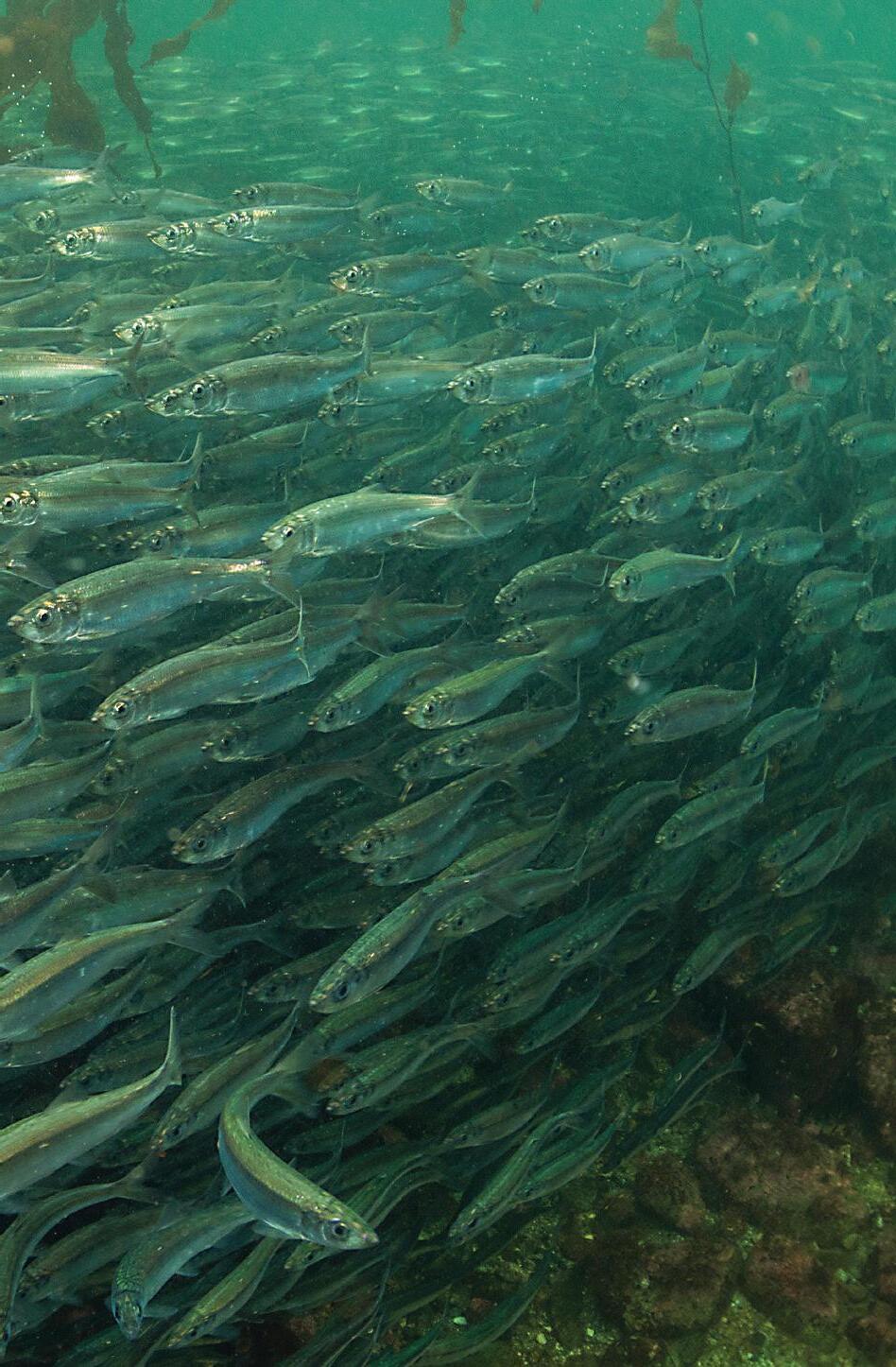
The Canadian government published 12 rebuilding plans for some of the country’s most depleted fish populations — including Atlantic cod, Atlantic mackerel, and Pacific herring. The first of their kind in Canada, the plans set clear, science-based objectives, timelines, and actions to restore wild fish populations.
New rebuilding plan finalized for overfished Pacific sardines
Following a successful legal challenge by Oceana, the United States’ Fisheries Service finalized a new science-based rebuilding plan for the overfished Pacific sardine population. Sardines are an essential food for many Pacific Ocean species, and their recovery will help marine ecosystems and coastal communities thrive.
Chile approves management plan for NazcaDesventuradas Marine Park
Chile approved a management plan for the NazcaDesventuradas Marine Park in the South Pacific, one of the most pristine ecosystems on the planet. The plan establishes rules for protecting the area which will help important depleted fish populations recover.
Spain bans bottom trawling in Cabliers Bank
Spain banned all bottom fishing, including destructive bottom trawling, in biologicallyrich Cabliers Bank, which is home to an ancient coral reef first documented by Oceana in 2011.
Scotland protects ocean habitat from destructive fishing
The Scottish Government announced new measures to protect its offshore marine sanctuaries. Five marine protected areas are now fully safeguarded from destructive bottom trawling, covering tens of thousands of square miles of Scottish waters.
Canada’s rebuilding plans will help the country’s most depleted fish populations recover, including Pacific herring.
News & Notes
Oceana plans expansion to Ghana
In September, Oceana announced it is expanding to Ghana, West Africa’s thirdlargest fishing nation, as the organization broadens its focus to countries who rely heavily on fish for food and livelihoods. Fish make up the majority of Ghana’s animal-based protein, and more than 60% of Ghana’s population depends on the oceans for nutrition, income, or both. The country’s fisheries, which employ 2.7 million people, face threats including overfishing, illegal fishing, and poor or absent management. Oceana is currently hiring a local leader to guide its new Ghana team in winning strategic campaigns to support small-scale fishers and coastal communities, amplifying their voices in policymaking.
Countries ratify High Seas Treaty
On Sept. 19, the High Seas Treaty received its 60th ratification, officially kickstarting the 120-day countdown until it enters into force. Covering almost half of the Earth’s surface, the high seas are shared waters outside national jurisdiction — historically a “Wild West lacking comprehensive oversight,” says Oceana’s Chief Scientist Dr. Kathryn Matthews. The High Seas Treaty will establish a legal process to create marine protected areas on the high seas and a governing body to oversee them. The treaty will also set environmental standards for high seas activities and ensure that discoveries made in the high seas benefit everyone, not just a few nations or corporations. “What matters now is turning paper into protection,” says Matthews. “Nations must move quickly from ratification to realworld implementation.”
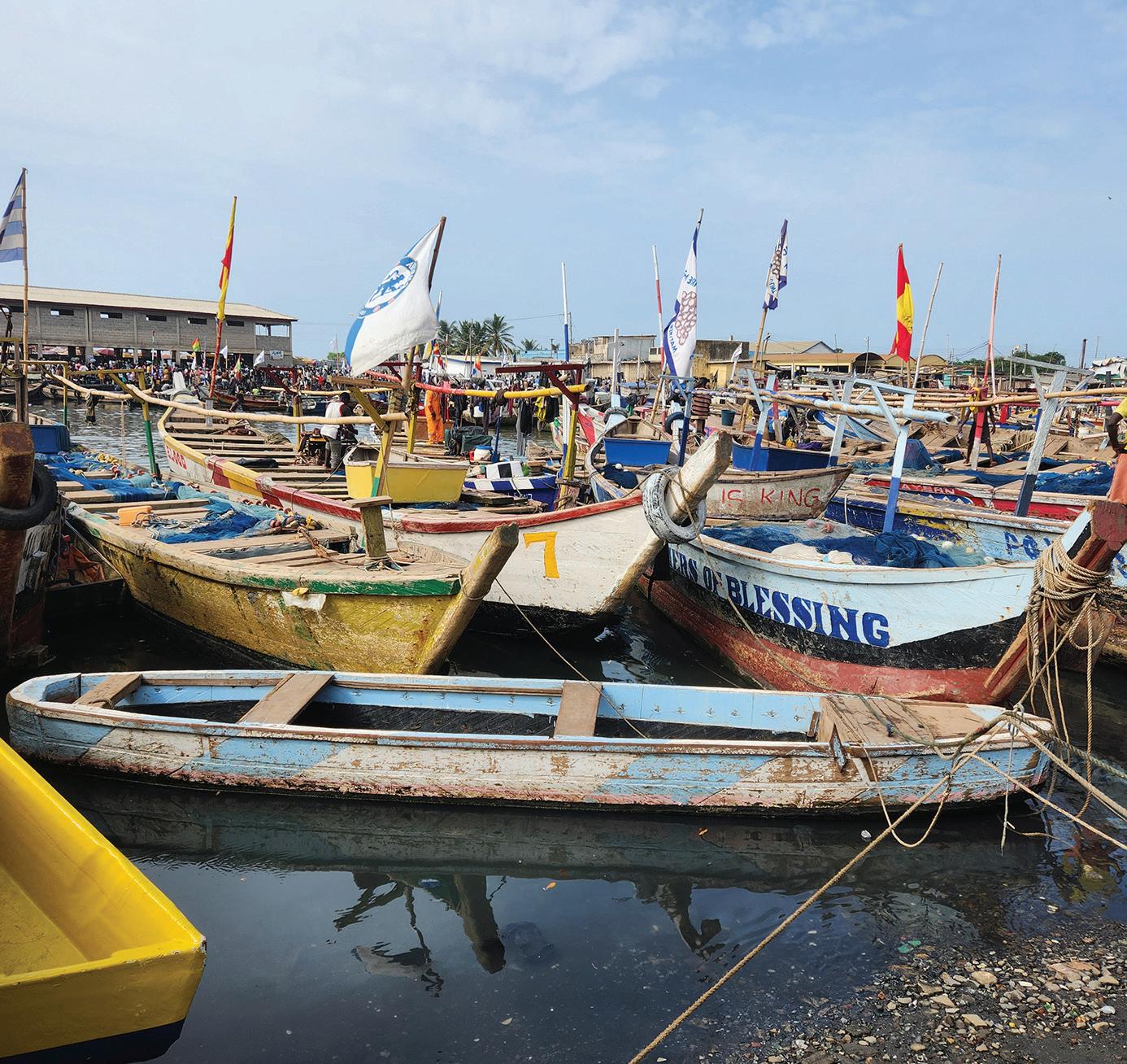
More than 60% of Ghana’s population relies on the oceans for nutrition, income, or both.
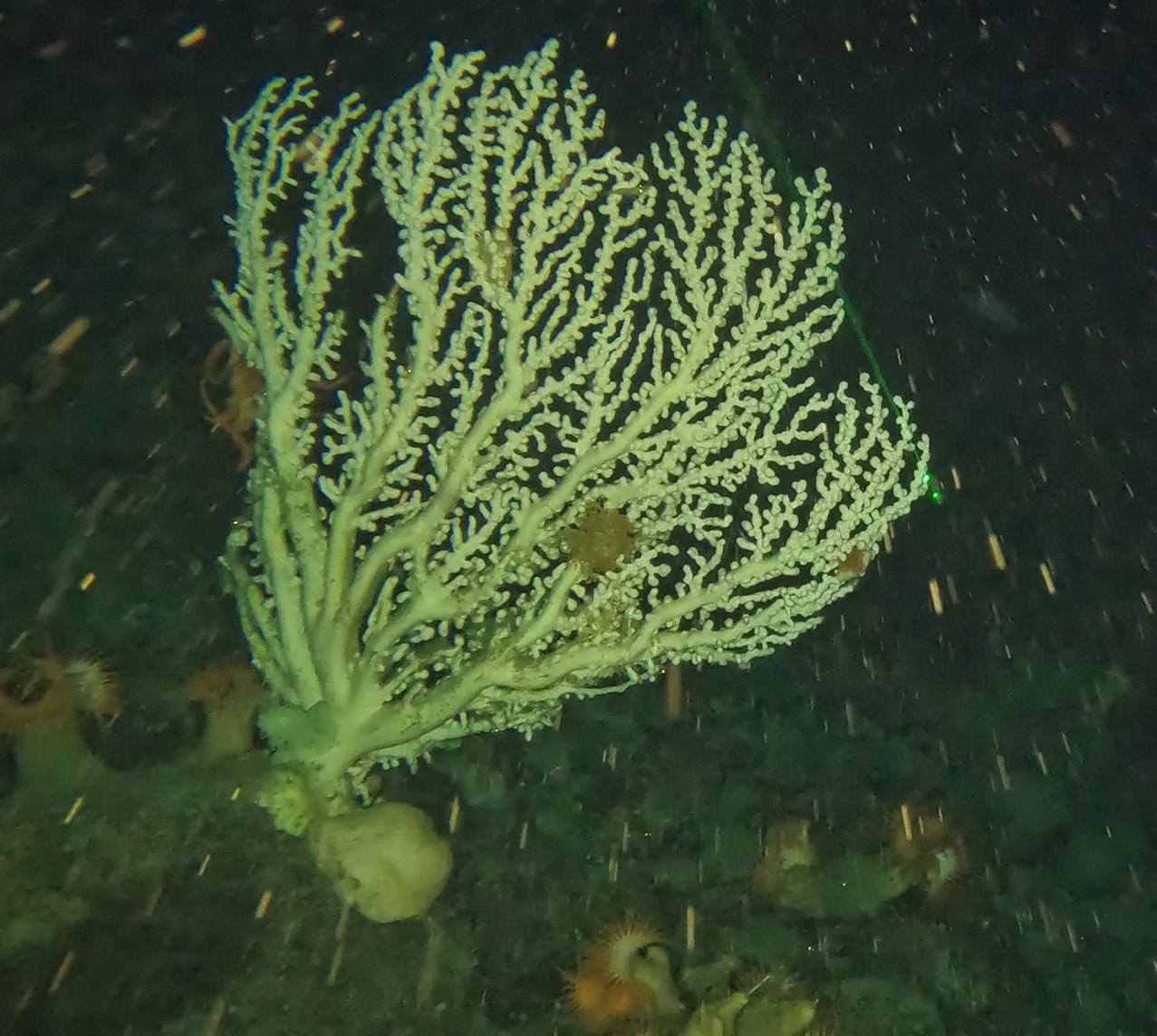
The deep waters of Canada’s Southern Newfoundland Slope are home to massive underwater canyons, ancient corals, whales, and endangered species — but much of the region below 200 meters (656 feet) remains unexplored. To help change that, Oceana and its research partner, Fisheries and Oceans Canada, sailed aboard the research vessel Connor Murphy, journeying over 800 kilometers (nearly 500 miles) from St. John’s, Newfoundland and Labrador. During the 10-day expedition in July, the team collected over 40 hours of underwater video, identifying coral hotspots and expansive fields of sea pens, and observing at-risk or rare species. The scientific data from the expedition will help decision-makers and communities make more informed decisions about ocean management and conservation.
Innovative whale-safe fishing gear reaches new level of success
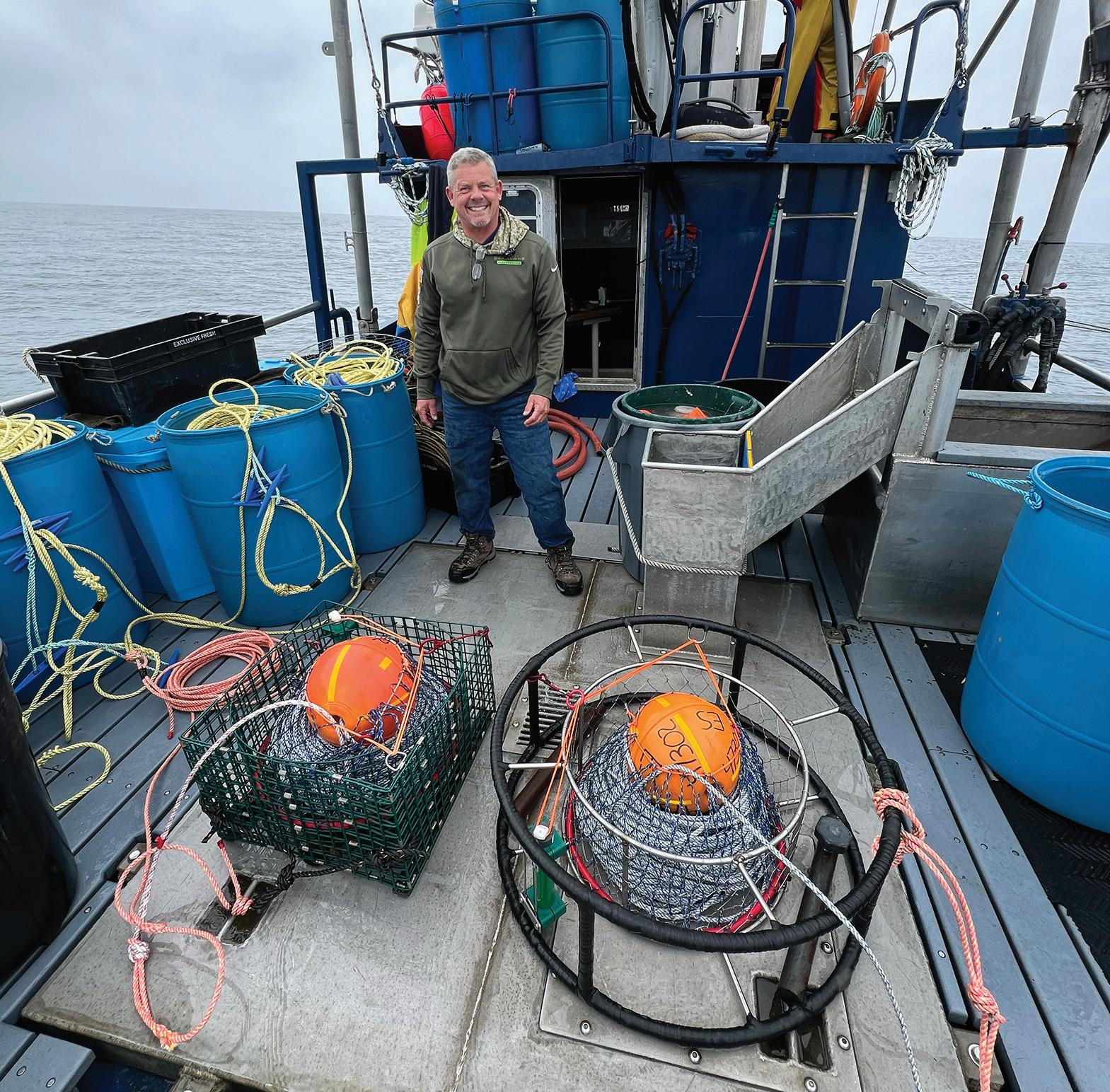
Off the coast of California, most fishers catch Dungeness crab using a long fishing line connecting a pot on the seafloor to a floating buoy at the surface. This year Oceana supported the most successful trial of alternative gear — known as pop-up gear — that removes vertical lines from the water making it safer for migrating whales and sea turtles by avoiding entanglements. “Being able to co-exist with the whales while harvesting fresh Dungeness crab for the public is a win-win for everyone!” said Captain Stephen Melz. Using the new gear, 12 California commercial Dungeness crab fishers brought in $1.4 million worth of crab in spring 2025. The California Department of Fish and Wildlife is on track to approve the popup gear for commercial use starting in spring 2026, which will return fishing opportunities to all Dungeness crab fishers in the state while protecting animals from entanglement.
Von Hernandez is a globally recognized, Goldman Prize-winning Filipino environmental leader with over three decades of transformative work in environmental campaigning and advocacy. Prior to joining Oceana as its leader in the Philippines, he was the Global Coordinator of Break Free from Plastic (BFFP), where he led a movement of 3,500+ organizations worldwide, driving systemic solutions to end plastic pollution and reduce reliance on single-use plastics.
Meet Von Hernandez, Oceana’s new leader in the Philippines
How did your upbringing shape your passion for the environment and the oceans?
VH: I grew up near Manila Bay, and my fondest memories are of my father taking me to the beach when I was feeling sick, believing the sea breeze could heal me. Walking along the shore, feeling the sand between my toes, and collecting seashells as the tides receded now feels like a distant dream.
Over the years, I watched the beaches of my youth vanish beneath government land reclamation projects. The patches of shore that remained became graveyards for plastic waste, and the metropolis discharged its untreated sewage directly into the water. By the time I was in high school, the bay and the river that feeds it had become cesspools of toxic waste from commerce and overcrowded neighborhoods.
I was struck by the visible injustice: the wealthy lived in gated, manicured subdivisions while the majority struggled in a polluted city. I saw with my own eyes how the health of our environment is inextricably linked to human wellbeing. A degraded environment degrades human life. For an archipelagic nation like the Philippines, protecting our oceans — the ultimate source of life — is central to dignity and our collective survival.
You’ve spent decades at the forefront of a movement to stop plastic pollution and waste incineration. What achievement are you most proud of?
VH: While I am deeply proud of our policy victories — like putting a stop to proposed waste incinerators and pushing for the passage of the Philippine Clean Air Act, which continues to protect millions from toxic pollution — what truly fuels me are the shifts we’ve created in public consciousness.
For instance, we helped expose the dangers of waste burning, a practice that was once routine and commonplace in our country. We have also exposed the real drivers of plastic pollution in our societies, shifting the blame away from consumers, who are often shamed for their so-called lack of discipline, and onto the corporations that benefit from our addiction to single-use disposables — an addiction they helped create.
Above all, I’m proud of how we proved that people power can slay Goliaths. Communities are not powerless against corporate interests or unjust government policies. This belief in our own strength, especially when bolstered by science and strategy, is at the heart of our fight for our oceans and our planet.
Most recently, you served as the Global Coordinator of the Break Free from Plastic movement. What lessons from past campaigns are you bringing into your work with Oceana?
VH: My decade with Break Free from Plastic (BFFP) taught me that real change is born from unity and solidarity. We built a global movement by aligning hundreds of diverse groups — from grassroots collectives to international NGOs — around a single goal to end plastic pollution, all while respecting our different tactics, approaches, and even our occasional disagreements.
I carry this “big tent” philosophy with me to Oceana. We will win not by acting alone, but by building a coalition of fisherfolk, scientists, local governments, businesses, and youth leaders.
My time at BFFP also reinforced that we must fight crises at their source. For example, it’s not enough to clean up plastic waste, we must challenge the business models that perpetuate our addiction to single-use plastic. This is about deep, systemic change — not superficial gestures.
What inspired you to join Oceana as its leader in the Philippines?
VH: I joined Oceana because I believe it is one of the most strategic and effective vessels for the crucial voyage ahead. I’m drawn to its focus on winnable policy campaigns.
We don’t just advocate for a vaguely healthier ocean. We campaign to protect specific marine habitats, secure mangrove protections along our coastlines, and defend the rights of artisanal fishers to their municipal waters.
I am thrilled to lead Oceana in the Philippines.
How do you plan to engage local communities in the Philippines — especially fishers and coastal communities — as partners in ocean conservation?
VH: Artisanal fishers are the very heart of what we are fighting for. Fishers and coastal communities are the first to witness the ocean’s decline and the first to feel its loss. They hold deep, generational knowledge. Our role isn’t to arrive with a pre-made plan, but to amplify the solutions they already live by.
We will support community-led marine protected areas, champion their rights to sustainable livelihoods, and ensure their voices are the ones that shape policy across the country.
How do you plan to navigate the shifting and complex political landscape in the Philippines?
VH: While political winds change direction, the fundamental needs of our people — food security, climate resilience, and sustainable livelihoods — are unchanging.
Our strategy is to anchor our advocacy in these transcendent national interests. We will work with officials who are serious about the future of our oceans, fisheries, and coastal communities. And we will provide them with the evidence, legal and policy frameworks, and public support needed to make courageous decisions.
Our credibility lies in consistency. We celebrate ocean champions and hold accountable those who falter, regardless of political affiliation.
We are building a legacy that can outlast any single administration.
How have you seen Philippine waters change over the course of your career? What is your hope for the future of the oceans?
VH: I have seen the vibrancy of our oceans dim: coral gardens bleached, fishing nets grow emptier, and waters choked by plastic.
But I have also witnessed rising awareness and a ferocious will to fight back. I have seen mangroves regenerate when given space, and fish stocks rebound when protected.
My hope is for a Philippines where the ocean is no longer seen as a resource to be extracted and abused, but as the vital foundation for our cultural and economic prosperity. It is a future where the communities that depend on the oceans are the ones leading their protection. This future is not a distant dream, but a choice. Together, we will make it happen.
My hope is for a Philippines where the ocean is no longer seen as a resource to be extracted and abused, but as the vital foundation for our cultural and economic prosperity.
The Depths of Disinformation
Oceana campaigns in the face of online attack
by Sarah Holcomb
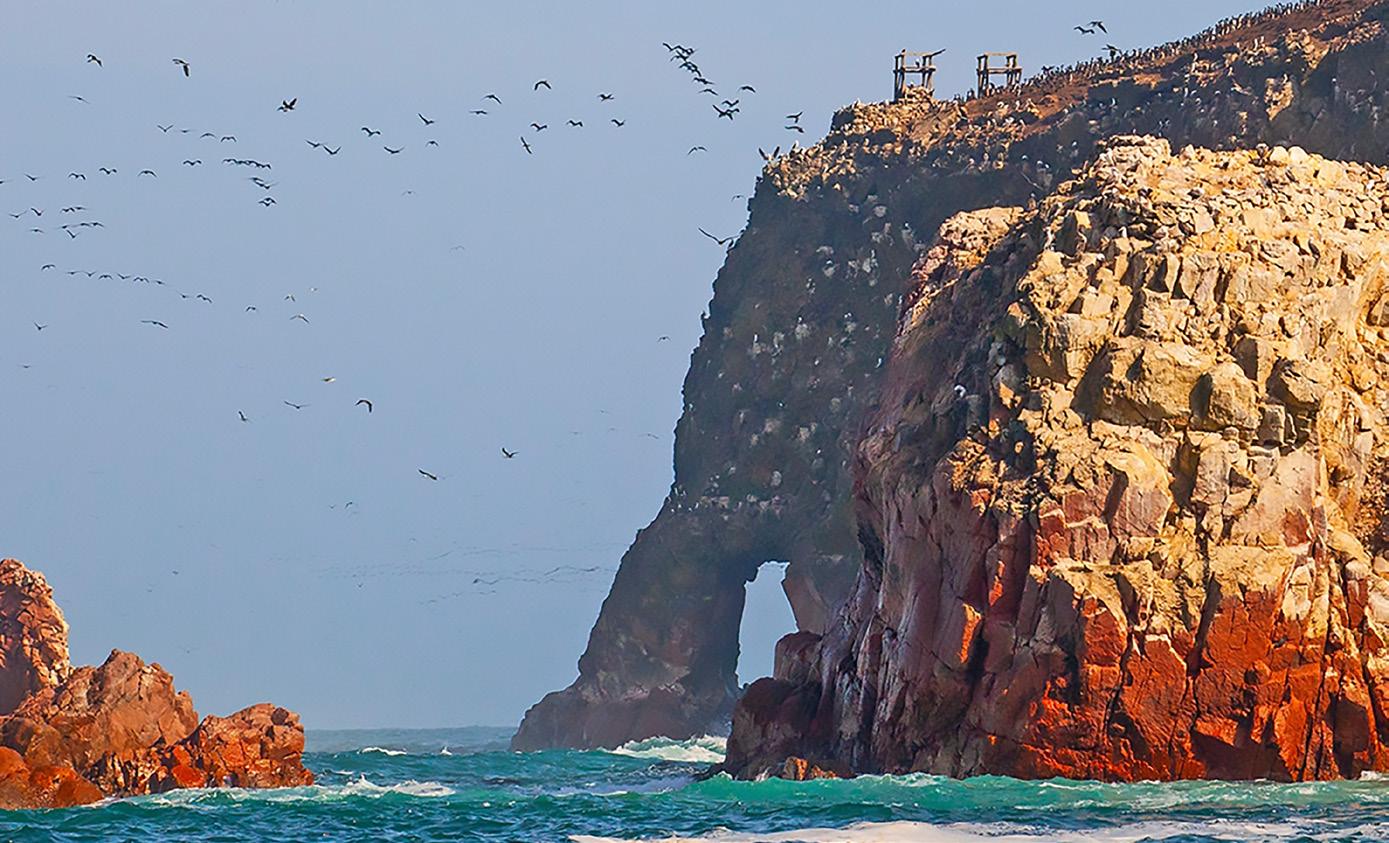
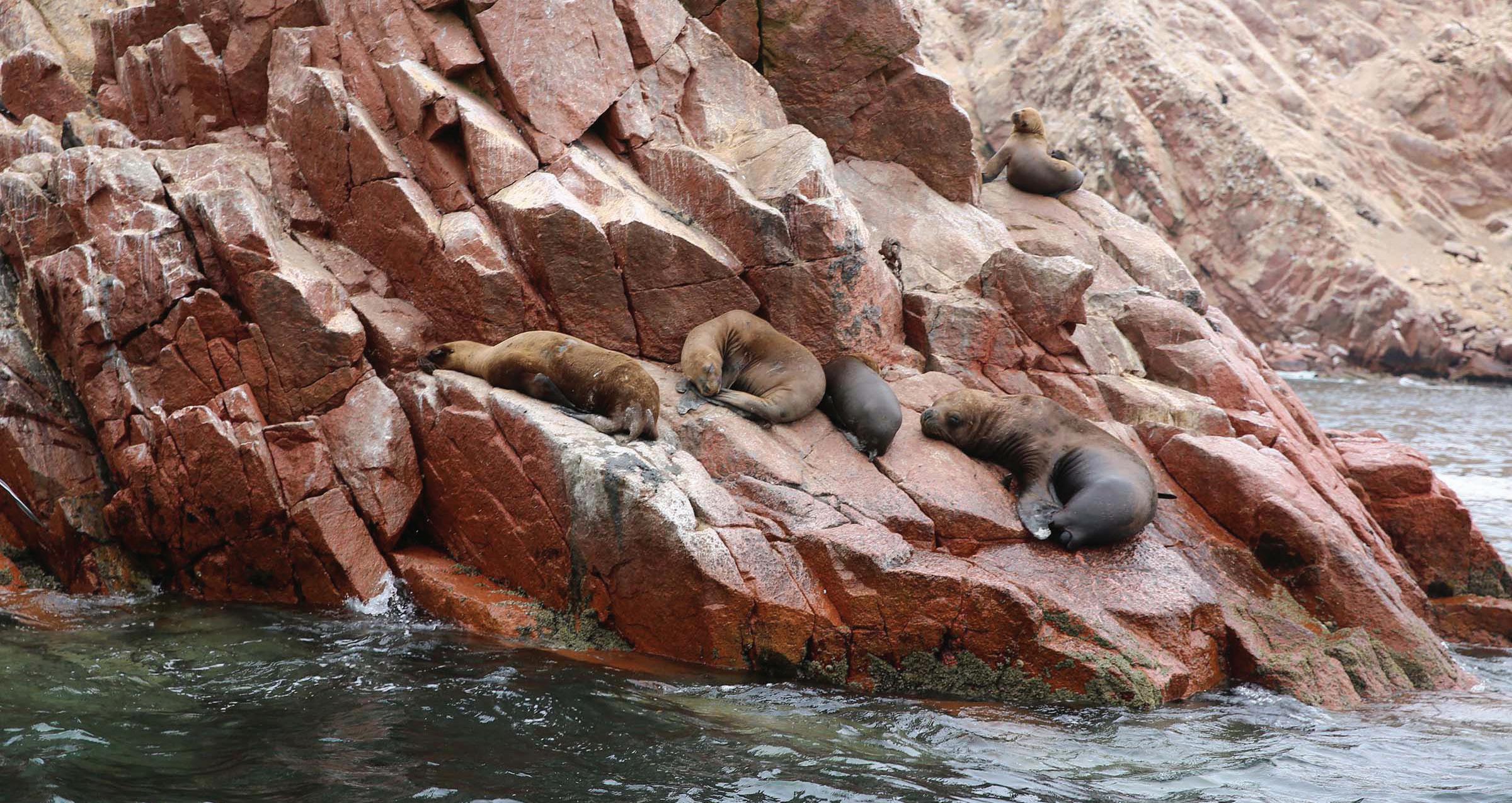
Along Peru’s southern coast, where wind-sculpted desert meets the Pacific Ocean, lies one of the country’s most iconic natural treasures: Paracas National Reserve. Here, sightseers watch sea lions sprawl across sunlit rocks, penguins dart through cold waters, and dolphins leap out of the ocean current.
But threats cast a shadow on the idyllic scene. A legal appeal filed by Peru’s National Fisheries Society could allow destructive industrial
fishing vessels inside Paracas — and all marine protected areas in Peru. Industrial fishing is already allowed inside the Nazca Ridge National Reserve — the largest reserve in the country.
Paracas and Nazca Ridge represent the growing tensions between the promise of marine protection and the threats facing it. And with their fate hanging in the balance, a campaign of deception began to take shape.
In early April 2025, just a few weeks after a court in Lima heard a case brought by Oceana that would determine if industrial vessels can keep fishing in Nazca Ridge, a series of industry-friendly articles hit the press.
The Peruvian business daily Gestión published an article on April 8 with the headline, “Coexistence Between Industrial Fishing and Protected Natural Areas: Experts Support It.” The piece cited a statement signed by 430 “fisheries stakeholders” who insisted that industrial activity posed no real threat to marine protected areas like Paracas and Nazca Ridge.
What Gestión didn’t report in the story was that at least 300 of the signatures were crew members working aboard ships owned by Peru’s seven largest anchovy companies, all part of the National Fisheries Society. Other names on the list included individuals employed by or with close ties to the industrial fishing sector. Later in the week, the same statement reappeared in Perú 21, this time as a two-page spread, reportedly worth over $30,000 USD in ad value.
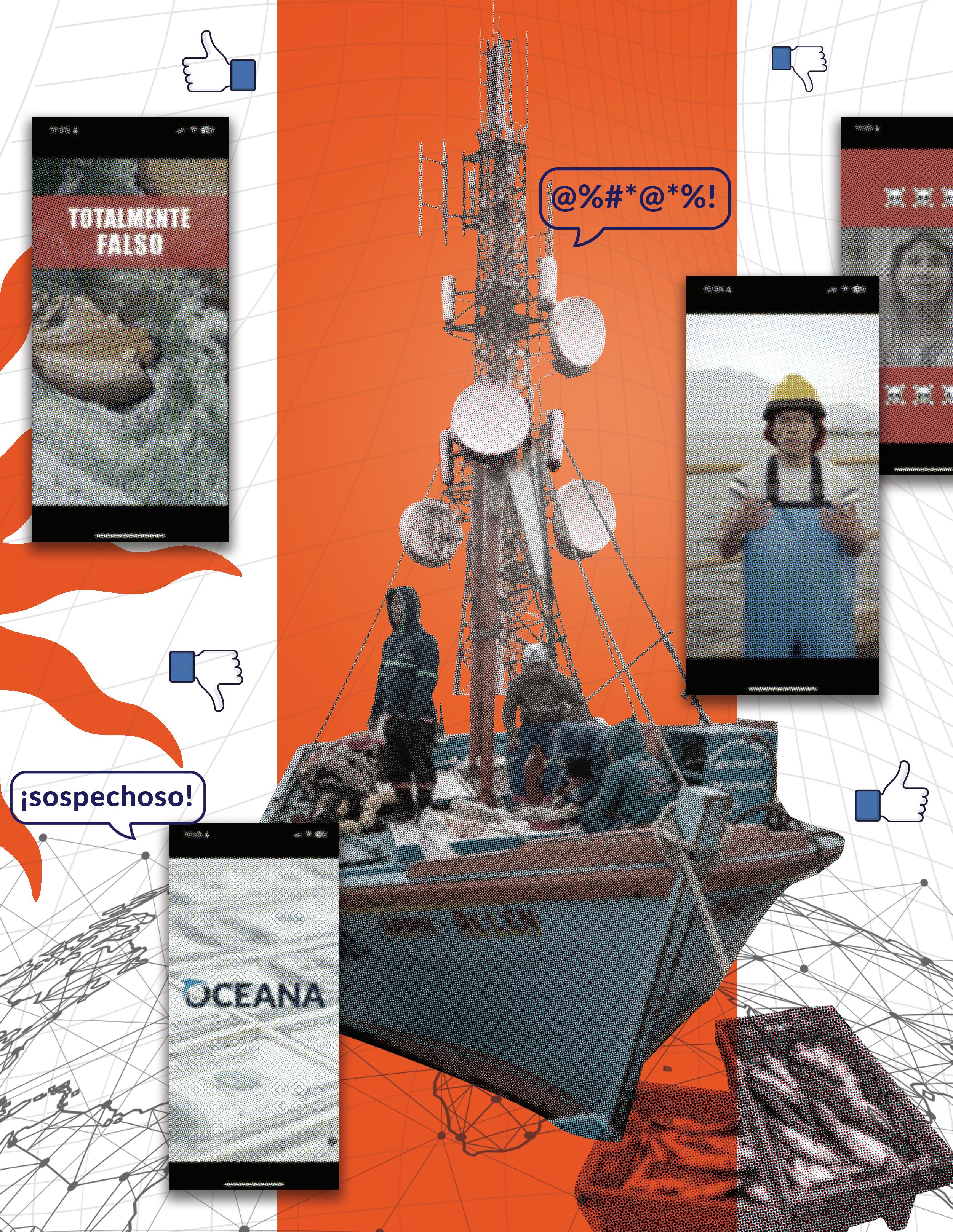
A well-funded and highlycoordinated disinformation campaign had begun. But it soon took a turn, moving from promoting unscientific claims about marine protected areas to targeting the industry’s adversaries. Namely, Oceana.
Exactly one week after the article in Gestión, on April 15, new accounts with the same name, “Anchoveteros del Perú” (Anchovy Fishers of Peru), appeared on Muddying the waters
Oceana sued the Peruvian Government to ban industrial fishing in Nazca Ridge.
TikTok, Instagram, Facebook, X (formerly Twitter), and YouTube. They posted slick videos featuring fishers who accused Oceana and its leadership of being against the Peruvian people.
One video claimed: “We, the anchovy fishermen, respond to the lies of the NGO Oceana… What they want is to destroy us and favor others.” The video’s comment section exploded with fake accounts and bots attacking Oceana and its employees.
As the campaign escalated, farright figures amplified the message. On X, the extremist group La Resistencia reposted one of Anchoveteros’ attacks with the caption: “You have our support. Your fight is ours. Discard the campaign of lies from the caviar NGOs and the disgusting people who join them.”
From April through July, Oceana’s team in Peru was inundated with hostile messages. “Every day, we received new notifications. Thousands of tweets, posts, and comments attacking Oceana,” one Oceana team member recalls.
“Every Sunday night, they’d post a new video on TikTok and pay to promote it. And every time, the message was the same: Oceana is a threat to Peru.”
According to Oceana’s team, the digital smear campaign was far more aggressive and personal than past negative media coverage. Posts targeted the reputation of Vice President for Peru, Daniel Olivares, who is now based in Washington, D.C. and whose political background as a former congressman in Peru made him an “easy target.”
“They shifted from misinformation to attacking Daniel’s character,” a team member said. “They accused him of corrupt interests and began pushing this idea that Oceana was a foreign NGO threatening Peru’s national sovereignty. It was a hate campaign.”
“They wanted me to lash out,” says Olivares. “They were baiting me, trying to provoke a public fight. But the real issue was always about marine protected areas. We weren’t going to let them change the narrative with fear tactics and lies.”
The real issue was always about marine protected areas. We weren’t going to let them change the narrative with fear tactics and lies. — Daniel Olivares, Oceana’s Senior Vice President
Debunking disinformation which threatens industrial fishing in Nazca Ridge. Another theory points to opportunism: following Peru’s recent passage of anti-NGO legislation, some actors may have seized the political moment to sway public opinion against the organization.
The exact trigger for the attacks is unclear. Perhaps, whoever is behind the smear campaign — a group with strong ties to the industrial fishing industry — decided to take a more aggressive approach after they struggled to counter broad public support for marine protected areas. (Ninety-eight percent of Peruvians believe the country needs more protected natural areas, according to an Oceana-commissioned study).
Or, the attacks could have been timed to influence the outcome of Oceana’s pending lawsuit,
Carmen Heck, Oceana’s Deputy Vice President in Peru, believes it could have been a combination of all three. But regardless of the primary motivation, she says, the strategy was clear: shift the conversation from science and policy to disinformation about Oceana.
Despite the pressure, Oceana’s team stayed focused on their campaign, urging allies to amplify the truth and refocus public debate on protecting Paracas and Nazca. In response, more than 70 scientists signed a public statement highlighting the dangers of industrial fishing in marine protected areas, while 30 artisanal fishing organizations in Peru released their own statement rejecting industrial fishing in these reserves.
In July, escalating digital rhetoric reached new levels of concern as trolls and bots intensified their efforts. Oceana’s team started receiving death threats. “We knew these were coming from fake accounts, but it was scary. We had to take extra security precautions in our daily lives,” says the Oceana team member.
The next day, Olivares boarded a flight to Peru.
Sea lions resting on a rock in Paracas National Reserve.
Despite the ferocity of the online blitz, the disinformation campaign played out largely within a small, isolated online bubble — mostly unnoticed by the wider public.
When Olivares arrived in Peru and reached out to journalists at established publications, he found that most hadn’t heard about the online attacks. He gave interviews on the condition that stories focus on the real issue: industrial fishing in protected areas. Oceana’s team secured coverage for the issue in many of Peru’s top news outlets.
Meanwhile, those behind the disinformation campaign presumably hoped their videos and reposts by popular rightwing influencers would catch the attention of mainstream media, Heck says. But even conservative
outlets — typically sympathetic to the industrial fishing industry — showed little interest.
“People didn’t believe them. That’s why the smear campaign failed,” says Heck. “There seemed to be an agency behind the videos of fishermen claiming Oceana was destroying their livelihoods. It looked like a highbudget production, and it was obvious the ‘Anchoveteros of Peru’ account wasn’t run by real fishers.”
The campaign fits into a broader trend: Since 2019, social media manipulation has surged dramatically. An Oxford report revealed that nearly $60 million has been spent on firms deploying bots and other amplification tactics to manufacture the appearance of trending political messages.
Today, campaigners face not only powerful industries and entrenched institutions but also thousands of “cyber troops” — armies of bot accounts engineered to distort and control public conversation.
By early July, the social media posts grew less frequent, and the vitriol in the comments faded. “They’re no longer attacking us with lies or money, or making personal accusations,” Heck says, though she warns these efforts could be revived in the future.
“The hardest part right now is not knowing when the court will make a decision, or when this will be over,” says another Oceana team member. “What we do know is their efforts didn’t succeed. Our supporters remain steadfast, and the disinformation never reached the scale our opponents hoped for.”
A key lesson from this disinformation campaign is that our strategies should always be focused on the underlying issues we seek to resolve, never on Oceana as an organization.
— Carmen Heck, Oceana’s Deputy Vice President in Peru
A new environment
In 2025, Peru’s Congress passed a law that severely limits the ability of international nongovernmental organizations to act, prohibiting them from taking legal action against the Peruvian state or assisting others in doing so.
“Our lawsuit against the Peruvian government to stop industrial fishing in the Nazca Ridge was filed in 2023 — but today, such a case would be impossible to pursue,” says Heck. Any future efforts to provide financial or legal support to artisanal fishers defending their rights will be prohibited under this new legislation.
The increased scrutiny towards international NGOs is a global trend, as organizations face growing legal, political, and financial pressures, especially in countries with authoritarian or populist tendencies. Globally, more than 50 countries have legislation restricting foreign NGOs or foreign funding.
Campaigning in a climate of online manipulation and new legal restrictions, Oceana’s team in Peru is moving carefully and strategically. “A key lesson from this disinformation campaign is that our strategies should always be focused on the underlying issues we seek to resolve, never on Oceana as an organization,” Heck explains. “Build your campaign around the real problem and the science behind it so that attacks against your organization don’t distract from what truly matters.”
“This is a difficult time to campaign, but also a crucial one,” says Olivares. “We are like sea creatures learning to adapt to the dark.”
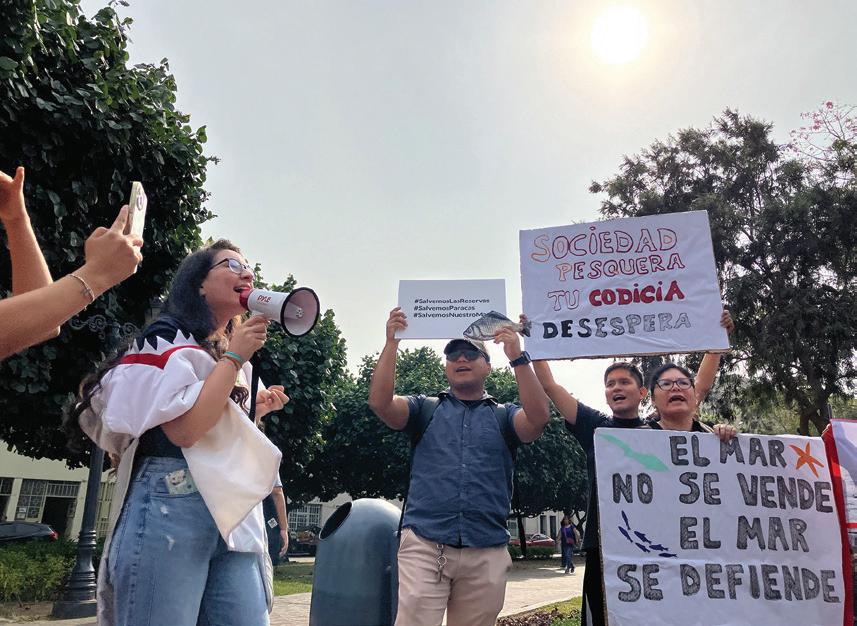
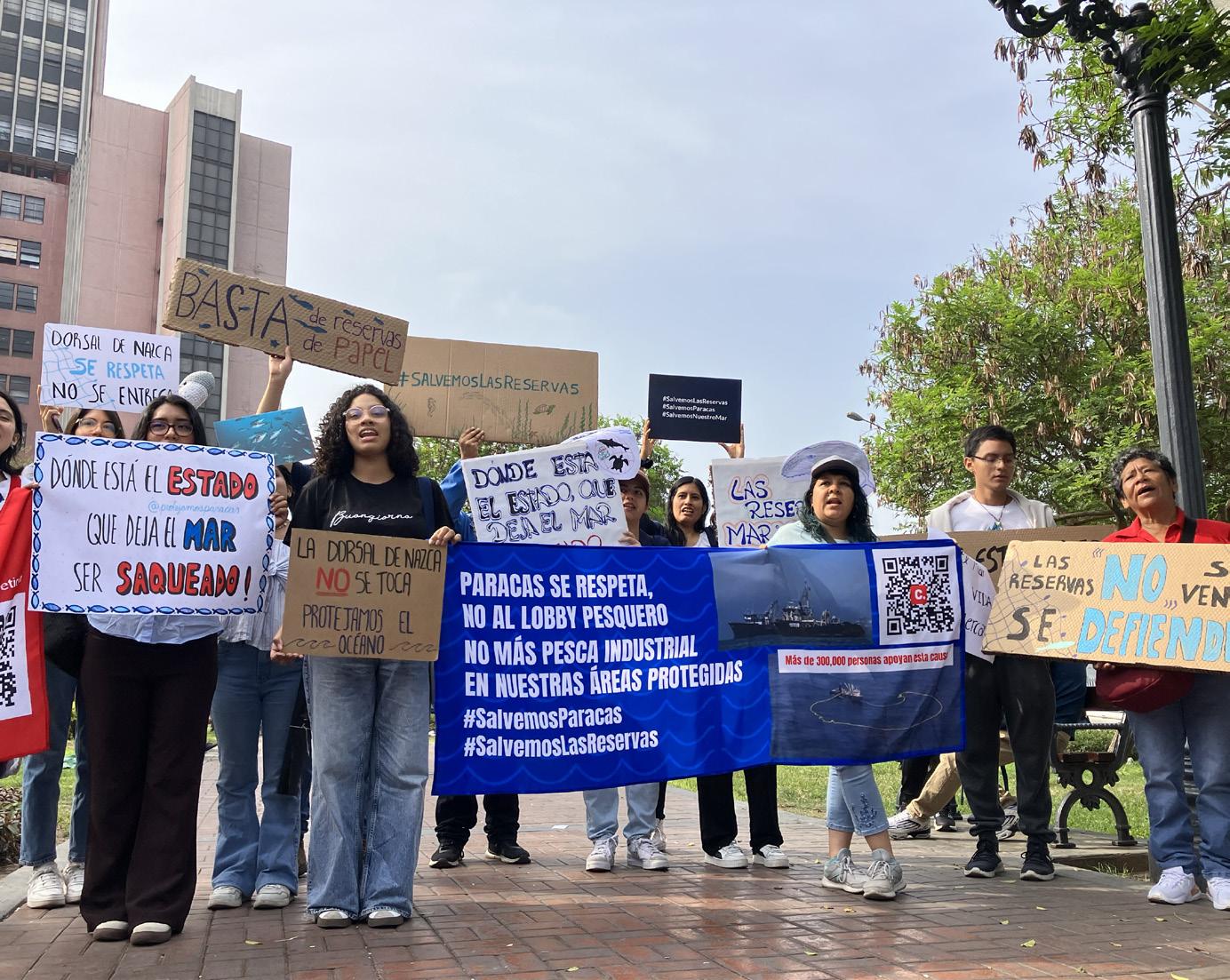
Oceana helped organize a protest to protect Paracas National Reserve from destructive industrial fishing.
Fishing in Paracas National Reserve is reserved for artisanal fishers.
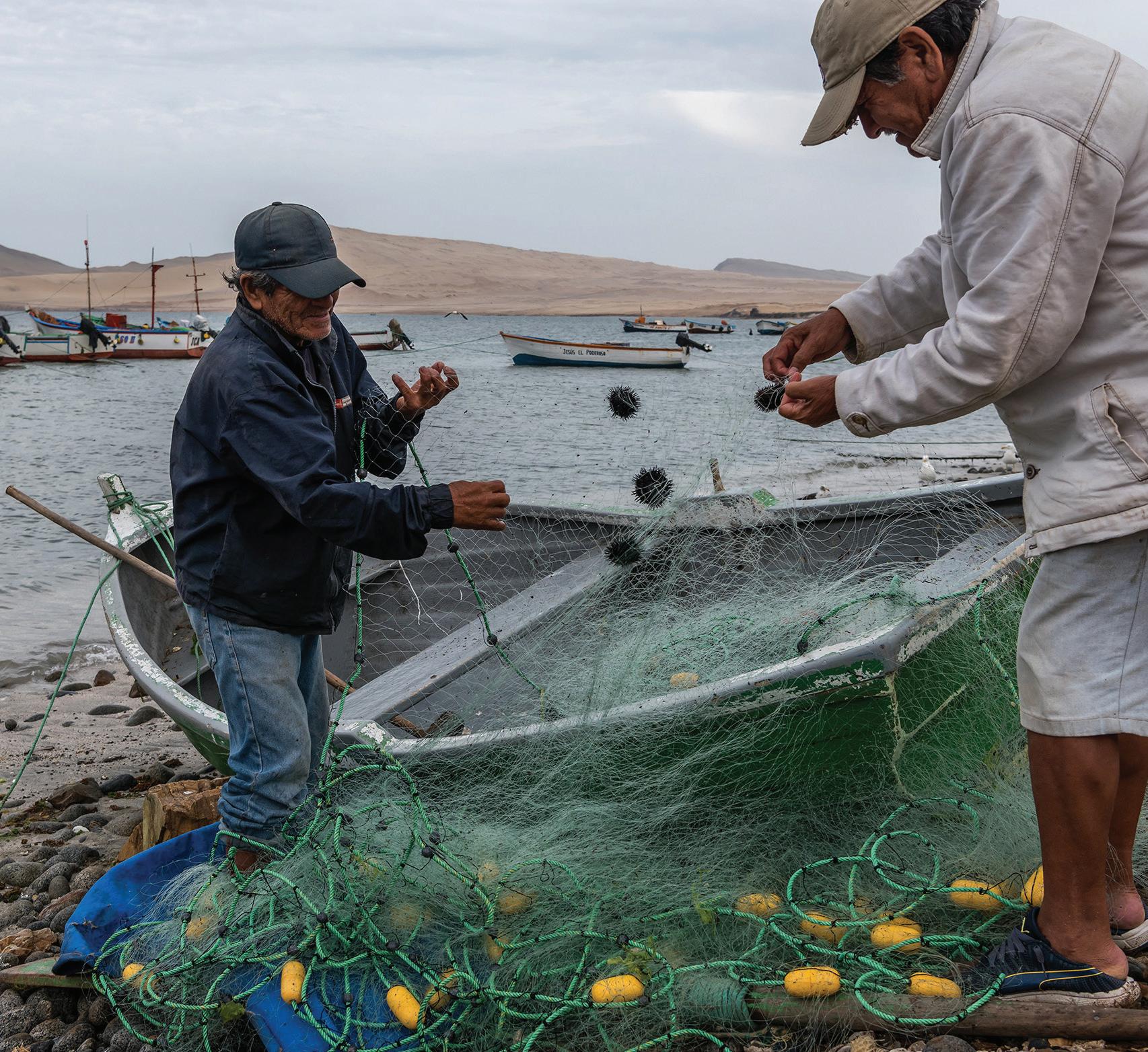
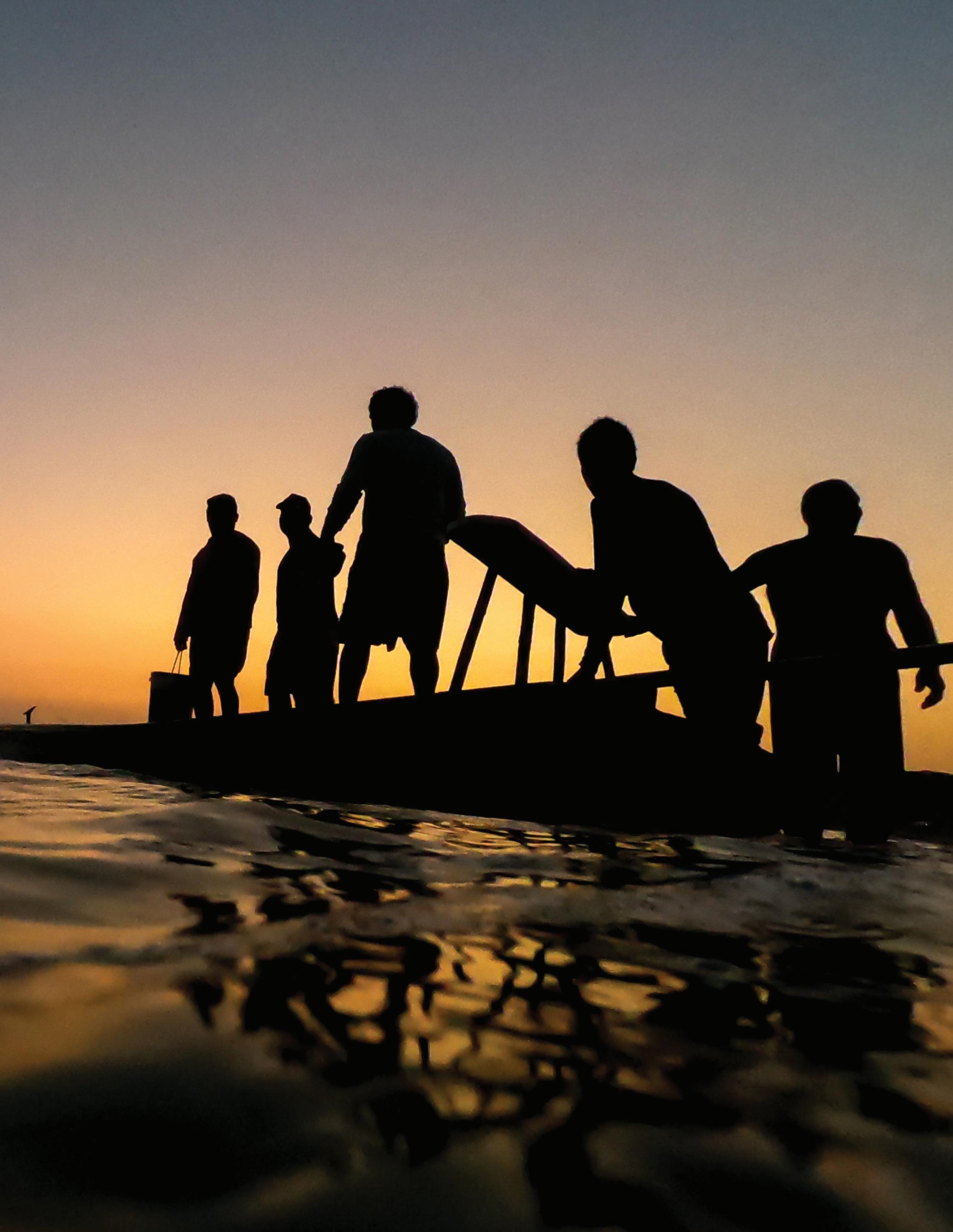
Josana Pinto da Costa guides her small fishing boat through the murky, moonlit Amazon River in northern Brazil, where she makes her living fishing. She fishes in the nighttime, not by choice, but because of new levels of daily, intense heat brought by climate change.
“Climate change has had a major impact on our fishing, which is becoming increasingly difficult,” Costa says.
Global warming is not just changing the air temperature; it’s reorganizing coastal ecosystems.
“Fish that used to be caught along the coast now require going many more miles offshore, deeper into the ocean,” says Costa.
Costa is not alone. Around the world, fishers — whether from Amazonian coastlines, New
England harbors, or Arctic outposts — are witnessing the ocean change beneath them.
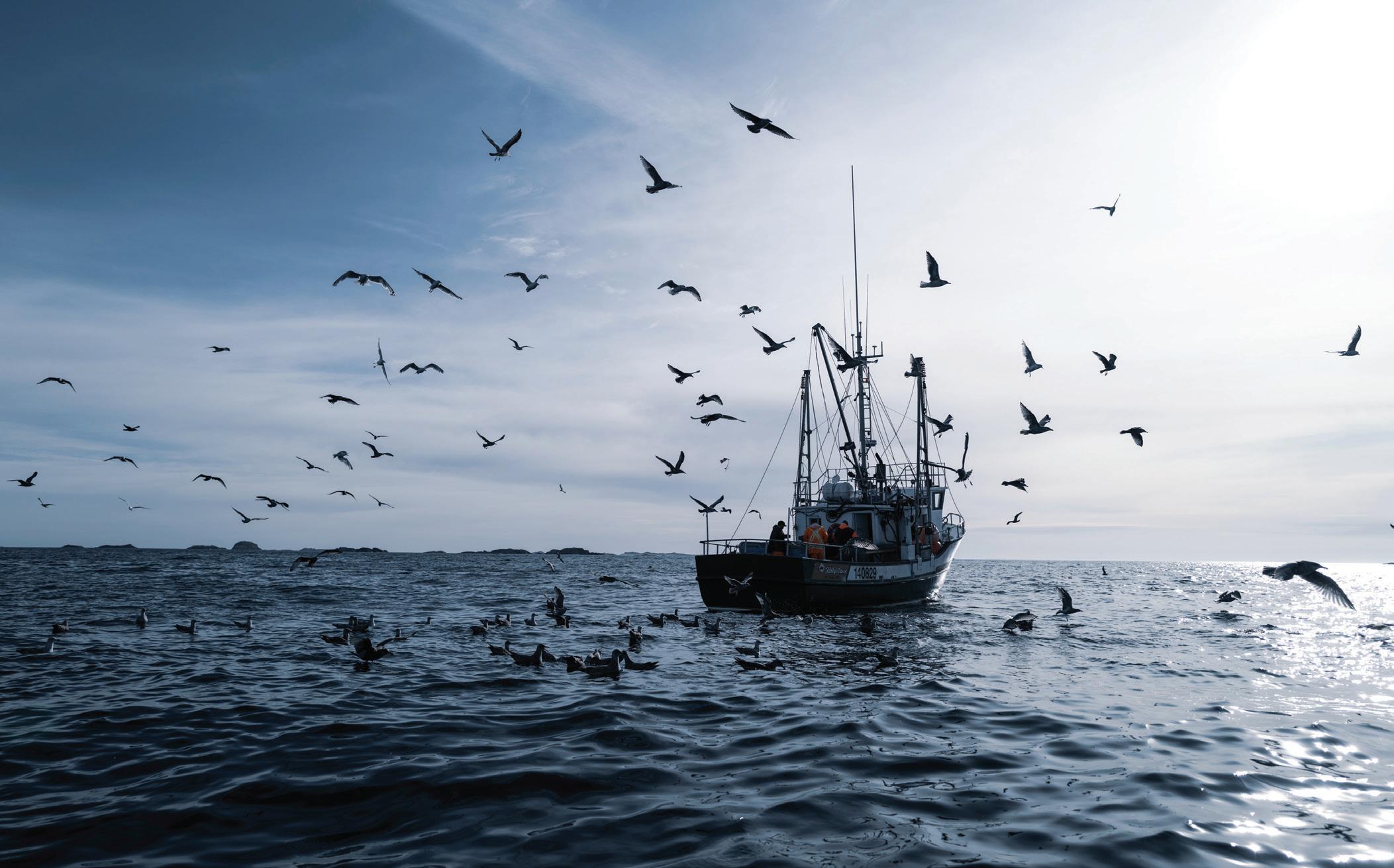
Roughly 90% of the excess heat from human-caused carbon emissions has been absorbed by the ocean. As sea temperatures rise, fish populations are shifting. In some regions, fishers are experiencing a boom in fish — though they are different kinds of fish than they are used to catching and customers are used to eating. In other regions, fish are disappearing.
“This is the largest movement of animal life in recorded history,” says marine ecologist Dr. Malin Pinsky. The global scrambling of marine ecosystems touches every link in the seafood chain — fishers, regulators, business owners, and consumers. All must adapt.
Accustomed to year-round warm temperatures, tropical fish can handle the heat. But they cannot always handle more heat than they are used to.
“Fish in the tropics have a smaller range of heat tolerance,” explains Dr. Juliano Palacios Abrantes, a fisheries scientist based in Vancouver, Canada who has extensively studied the impact of climate change on fisheries and management in Latin America. “There, our temperatures usually stay within a 10 °C [20 °F] range. In more temperate locations further north or south it might be a 40 °C [70 °F] range. Because they’re used to seasonal swings, those fish are able to withstand more warming.”
According to Palacios-Abrantes, all existing scientific models suggest that, overall, tropical fish populations that cannot tolerate the heat will shift towards the North and South poles, or to deeper water. Palacios-Abrantes recently led a study that estimates that by 2030, 23% of straddling fish populations — fish who live between various countries’ waters and the high seas — will have undergone distributional changes.
The Southwest Atlantic — bordering Brazil, Argentina, and Uruguay — is a global warming hotspot, heating faster than the global average.
In Brazil, coastal fishers rely on delicate ecosystems — mangroves, estuaries, and tidal creeks — that are being hammered by storms, sea-level rise, and shifting salinity. And unlike industrial fleets, they are bound by smaller boats and community ties, unable to sail hundreds of kilometers in search of fish.
In 2025, Oceana released an audit of Brazil’s fisheries, which examined overfished populations, fishing fleets, transparency, and the public budget. The report revealed that 92% of Brazil’s fish stocks lack management plans, and half go unmonitored altogether.
“Data on these fisheries is more important than ever,” says Oceana’s Science Director in Brazil, Martin Dias. “Without it, there’s no way for the government to prepare for climate impacts, or to provide financial assistance to help fishers adapt as climate change affects their livelihoods.”
Oceana’s team is launching a new campaign to collect nationwide fisheries data, to help better secure small-scale fishers’ livelihoods in the warming years to come.
The mounting challenges to artisanal fishers in the tropics highlight the inequity at the heart of climate change. A recent study found that ocean heatwaves are linked to carbon emissions from 180 companies, most based in the Global North.
“Most countries in the Global South have contributed insignificantly to climate change, but their smallscale fishers are experiencing the worst impacts,” points out PalaciosAbrantes.
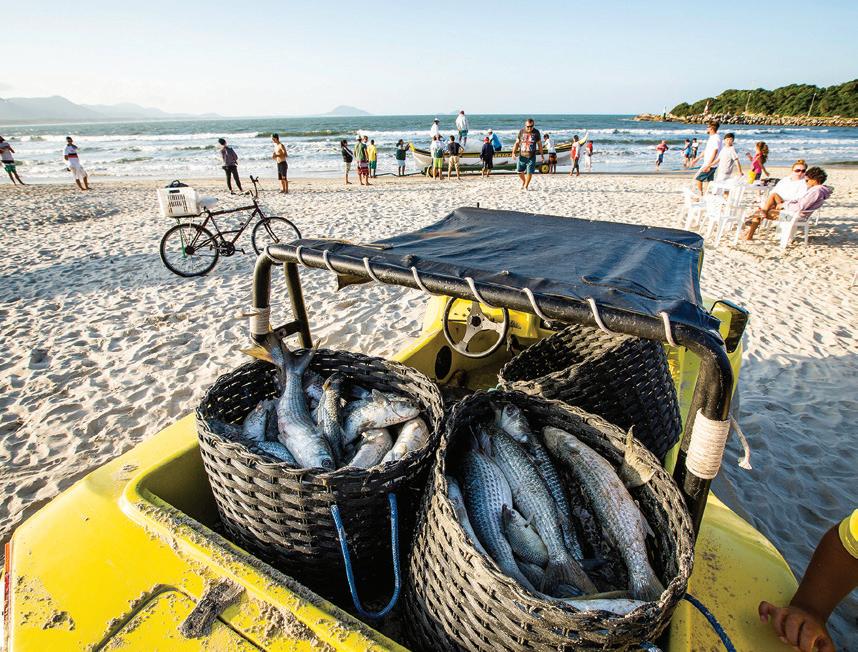
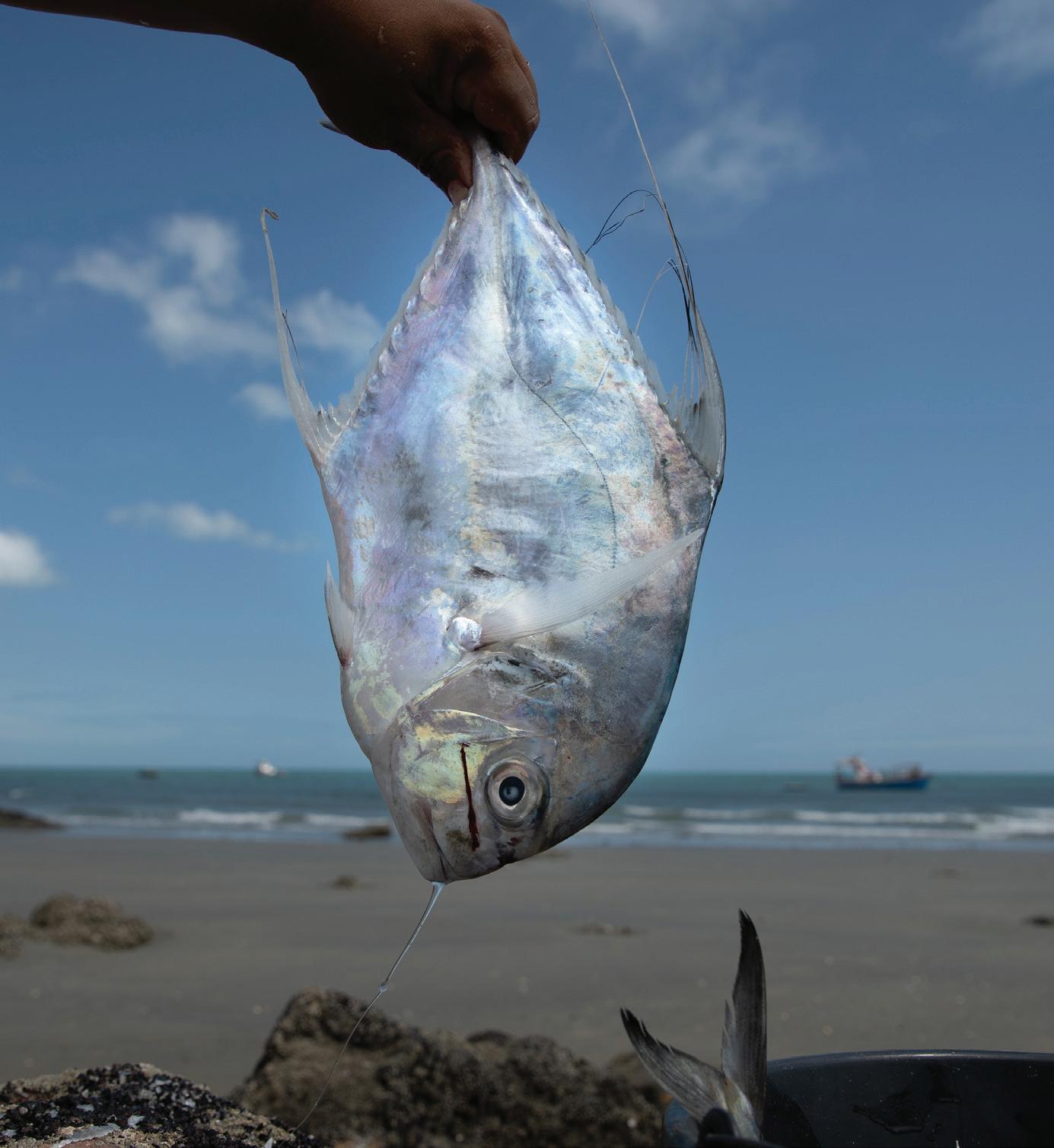
A fisher holds up his catch in Areia Branca, Rio Grande do Norte, Brazil.
Nearly three-quarters of the Canadian fish harvesters surveyed said that changes in fisheries had raised their stress levels.
Northward
bound
On the other side of the hemisphere, U.S. and Canadian fishers are feeling changes too.
Cod and lobster — once abundant off the coast of New England — have moved deeper or shifted northward. Meanwhile, southern species like black sea bass are now showing up in northern waters. Since the 1970s, American lobster, red hake, and black sea bass have moved northward by an average of 233 kilometers (145 miles). One clam processor even relocated operations from Virginia to Massachusetts.
In Canada, a 2020 survey of more than 100 commercial fish harvesters on the Pacific Coast found that the salmon fishery has been especially hard hit by climate change, while other fish, like albacore tuna, seem to be increasing in population.
“I think there will be winners and losers on a species-by-species level. Fishermen will need to be diversified,” one fish harvester noted. Another reported needing to change their fishing location almost weekly: “You have to be extremely adaptable.” Fishers also reported fishing at greater depths than before.
Adapting will not be easy, the majority said. Nearly threequarters of the fish harvesters surveyed said that changes in fisheries had raised their stress levels, due to the uncertainty affecting their livelihoods.
Changing fish populations also bring cultural and nutritional trade-offs. For First Nations in British Columbia, for example, salmon is not just food — it is central to ceremony, identity, and community wellbeing. “It’s not just about eating tomorrow,” says Palacios-Abrantes. “These fish are part of cultural identity, and not every species can replace that.”
In Canada, fishers reported having to change their fishing locations more frequently and fish at greater depths than before.
Scrambling the sea
Fish will not disappear overnight, and it’s important to keep the shift in perspective, scientists remind us.
“We think of a group of fish packing all their things and leaving, which isn’t how it works,” PalaciosAbrantes says. “The problem is that the abundance and type of fish in the water is going to change.”
When considering which species will be impacted more quickly, Dias points to shorter-lived species. For sardines and shrimp, for example, a heat wave during their spawning period could crash the fishery. Longer-lived species face chronic challenges due to climate change, but less immediate risk.
Over time, the shift in species will have ripple effects. When tuna, an apex predator, enters new ecosystems, for example, it may upend food chains. In the Arctic, warming and ice melt are inviting new species into formerly inaccessible areas, while species already living at the poles, with nowhere left to migrate, are especially at risk. Cold water species are projected to lose 50% of their thermal habitat by 2050.
The problem isn’t just environmental — it’s geopolitical. As fish cross international boundaries, disputes over quotas, territory, and sovereignty are expected to rise. Pinsky warns that ecosystems are being reshuffled “like a snow globe disrupting fisheries” and “driving conflict over who gets to catch what.”
Adapting to this new normal will require major shifts in monitoring and management.
Along with better monitoring, scientists are advocating for more flexible policies that can respond to the ways fish distribution around the world is changing.
“Often marine protections are very rigid and defined, in order for them to be permanent and enforceable,” says Palacios-Abrantes. “But in an age of climate change, some fish populations are moving outside the boundaries of, for example, protected areas or national jurisdictions. We need to be able to revise protections and work across national governments to respond to real-time environmental shifts.”
In visits with fishers in the Eastern Tropical Pacific, fishers told PalaciosAbrantes how they are already adapting. For example, when fishing for tuna, they change their location depending on the climate, and are seeking to change fishing gears to catch tuna at greater depths due to warming waters.
“Climate change adaptations need to come from communities that are being most affected, if they are to truly be effective,” Palacios-Abrantes says.
“As the oceans change, so must we,” says Dias. “The impacts are going to be unevenly spread across the globe. We must be quick to adapt and support fishers on the frontlines.”
We must be quick to adapt and support fishers on the frontlines.
— Martin Dias Oceana’s Science Director in Brazil
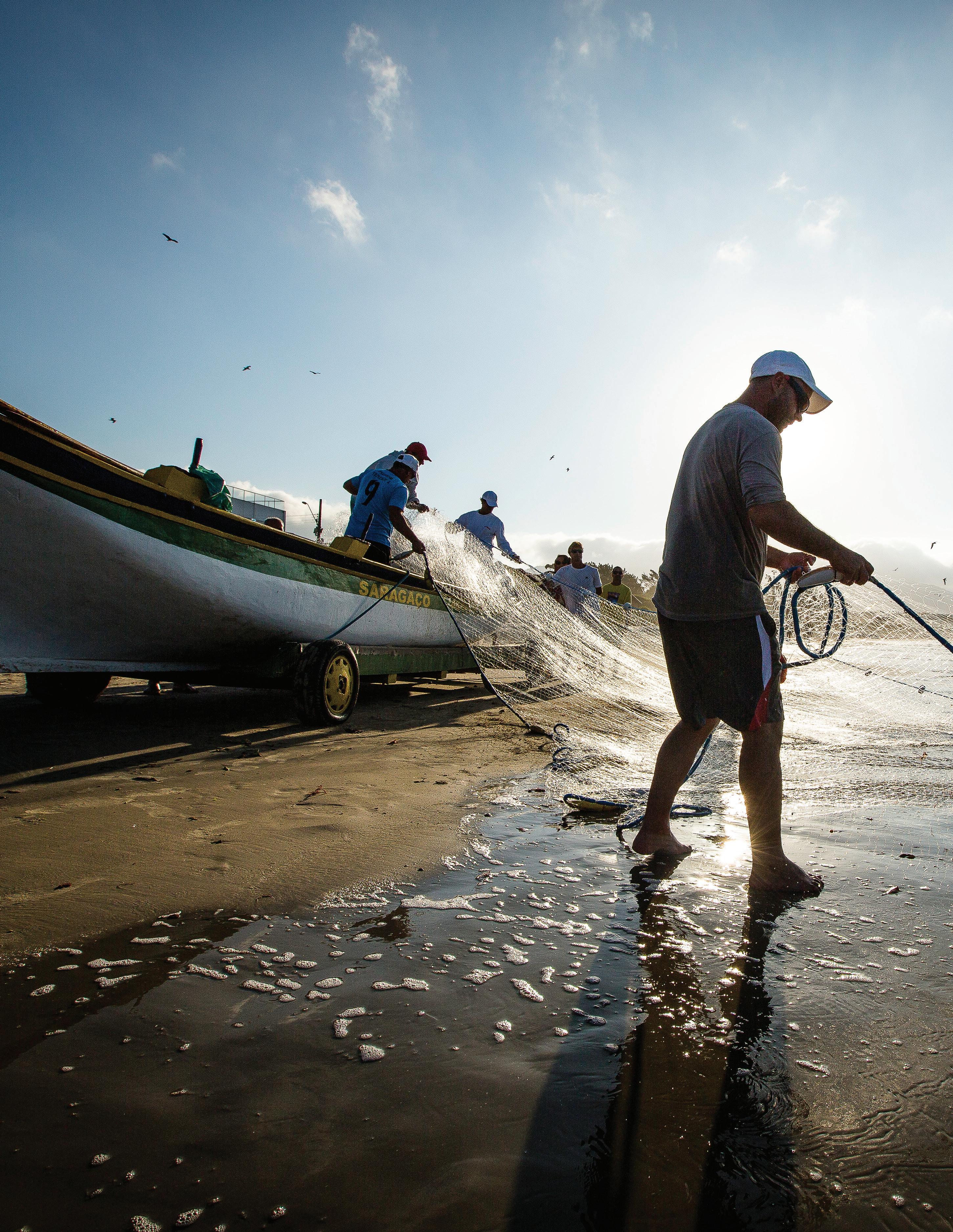
Small-scale fishers at the Praia da Redonda beach in Icapuí, Ceará, Brazil.
Ask a Scientist
Caitlynn Birch Marine Scientist
Caitlynn Birch holds a Master of Science in Environmental and Ocean Sciences from the University of San Diego, and leads science and policy advocacy and campaign strategy for Oceana’s U.S. team on the West Coast. Birch led Oceana’s environmental DNA work during the organization’s recent expeditions to California’s Channel Islands.
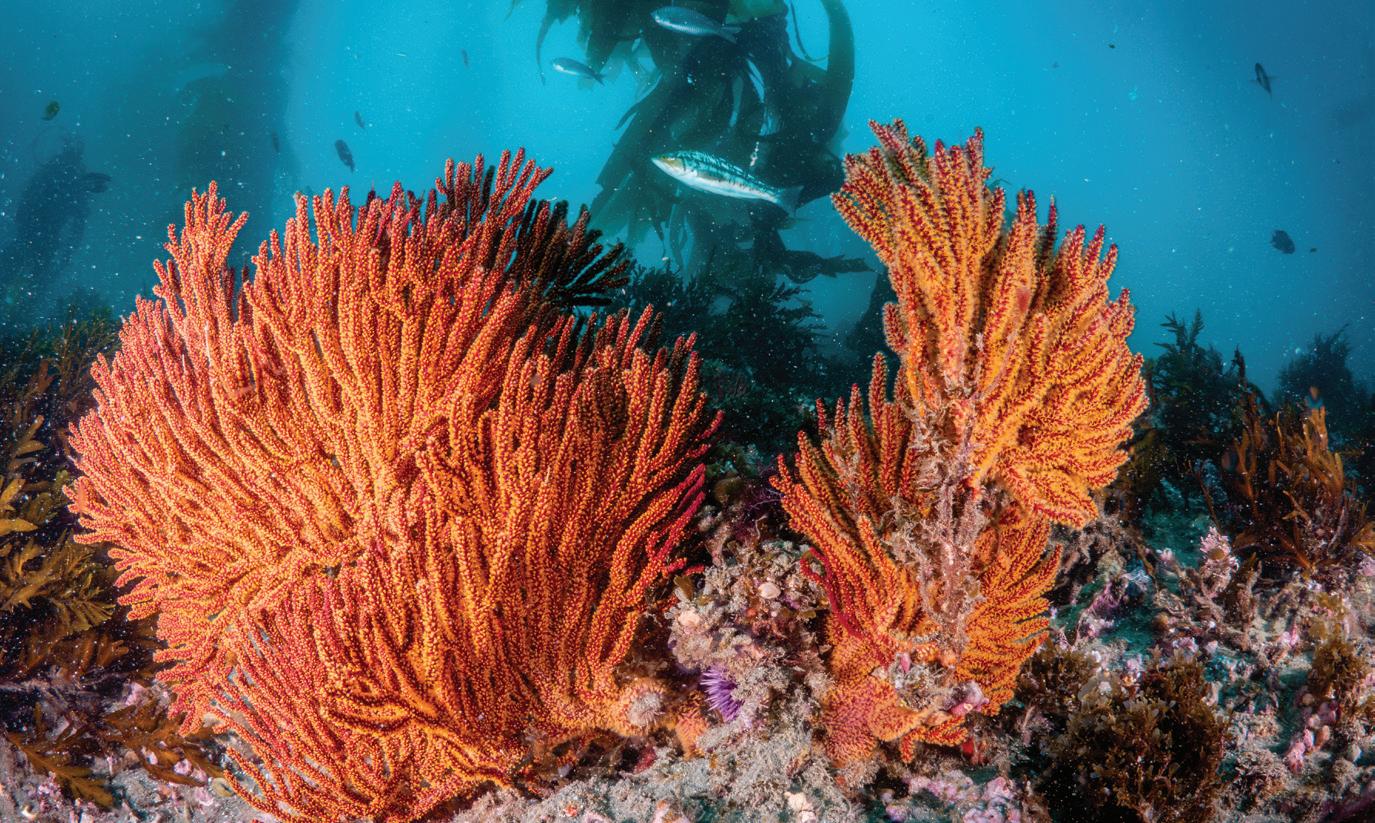
Kelp sand bass swim among golden gorgonian coral in California’s Channel Islands.
When people imagine studying marine life, they often picture scuba divers swimming alongside schools of fish, or scientists carefully tagging sea lions and sharks. Those methods are important, but today we also have a new, powerful tool to understand ocean ecosystems: analyzing invisible fragments of DNA floating in the water.
This is called environmental DNA, or “eDNA.” Every living thing sheds DNA into its environment — through skin cells, mucus, waste, or reproductive material. In the ocean, these tiny genetic breadcrumbs drift in the water column. By collecting and analyzing just a liter of seawater, we can capture traces of dozens, sometimes hundreds, of species that recently passed through that area.
The Southern California Bight — stretching from Point Conception above Santa Barbara to the Mexican border — represents one of the most unique marine ecoregions in the world. In the Channel Islands, where Oceana and expedition partner Blancpain have been conducting research expeditions to characterize the marine biodiversity of the region, eDNA has become a game-changer. These islands and the waters that surround them are one of California’s biodiversity hotspots, home to kelp forests, rocky reefs, cold water corals, seabird nesting sites, migratory highways for whales and dolphins, and shark nursery grounds.
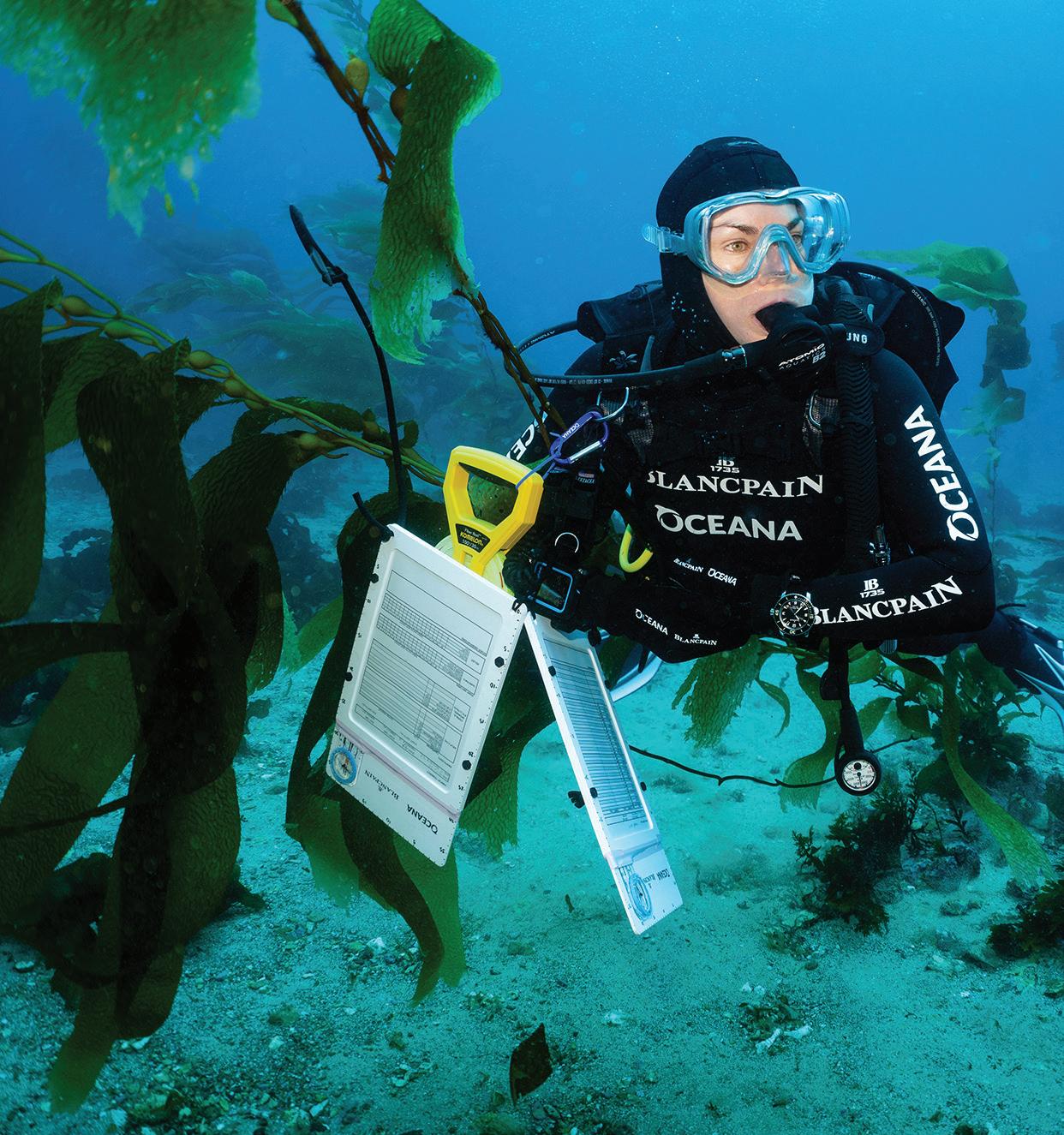
Traditionally, documenting this abundance of life has meant diving with clipboards or deploying
cameras on the seafloor. Those methods are still essential — and we’ve been employing them alongside our eDNA sampling — but they can miss the quieter, cryptic, super small, or rare species that don’t always show up when divers happen to be watching. Environmental DNA gives us a new set of eyes.
Here’s how it works: On a dive or from the deck of a boat, we collect samples of seawater from different sites around the islands. We filter the samples and take them back to the lab, where we extract the DNA and sequence it. Sophisticated computer tools then match those
sequences to species in genetic reference databases. Within weeks, we can generate a biodiversity snapshot that tells us which fishes, invertebrates, marine mammals, and even microorganisms were present in these waters.
One of the most exciting things about eDNA is its sensitivity. We’ve detected rare and elusive species that we might never encounter during a scuba survey. We’ve discovered DNA from certain sharks and rays, like the horn shark and pacific angel shark, that only pass by occasionally or remain well camouflaged along the sandy bottom or rocky reef. We’ve found
DNA from microscopic organisms, and picked up signals from highly mobile animals, like cetaceans or pinnipeds, that a diver could easily miss.
These discoveries matter for conservation. By combining eDNA data with traditional scuba surveys, we can better understand how marine areas around the Channel Islands are functioning.
We can learn where species are thriving and where they may be declining, gather data on how marine communities vary by season and depth, and better understand how human influences like fishing or climate change might be shifting distributions over time. This helps both fishery managers and conservation advocates make more informed decisions about protecting habitats, wildlife, and our rich marine resources.
Beyond California, scientists are now using eDNA across the globe — from monitoring endangered sawfish in Florida, to tracking invasive species in European rivers, to mapping coral reef biodiversity in the Pacific. As the technology advances, eDNA will allow us to detect not only which species are present, but could also reveal early warning signs of disease outbreak and improve fisheries stock assessments.
To me, eDNA powerfully demonstrates the profound interconnectedness of ocean ecosystems, revealing signals from species that interact in ways we are only starting to understand. Even when we can’t see an animal, its genetic traces are there, carried through the currents. Each drop of seawater holds a story about life beneath the surface — stories we’re only just beginning to read.
A scientific diver records information about marine life. The divers also collect environmental DNA.
SeaChange
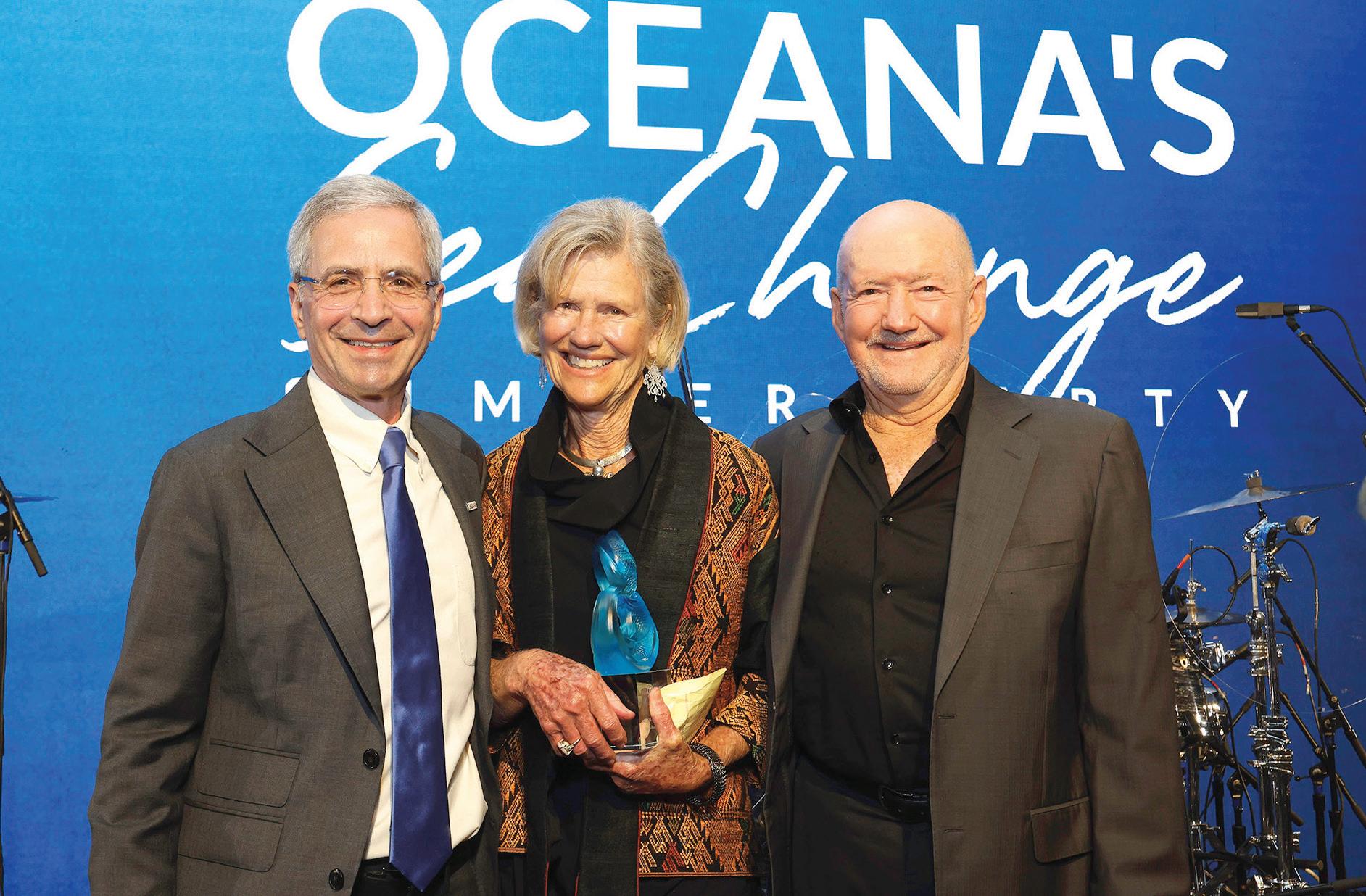
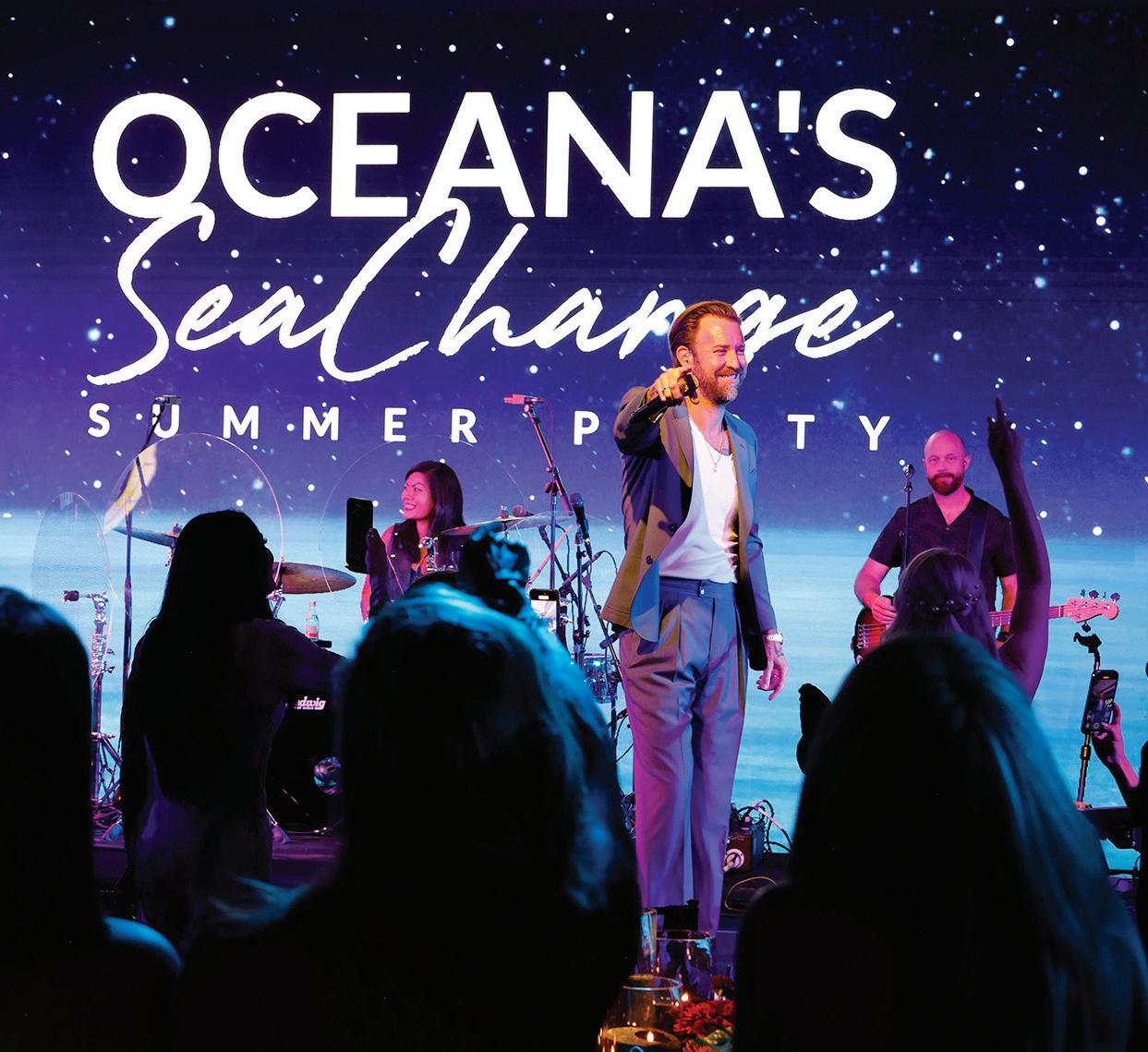
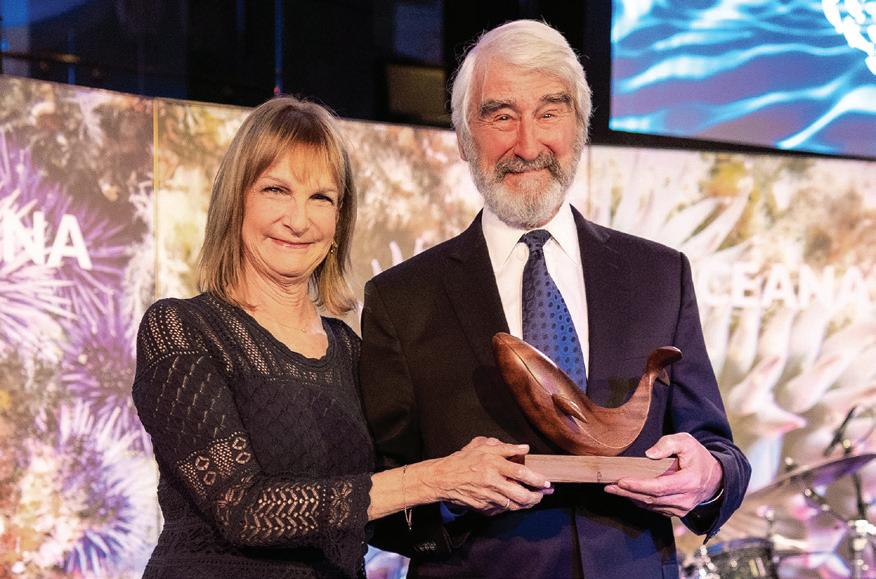
On July 26, Oceana supporters gathered for the 18th annual SeaChange Summer Party at Montage Laguna Beach, overlooking the Pacific Ocean. Hosted by award-winning actor and Oceana Board Member Sam Waterston and co-chaired by Oceana Board Member Elizabeth Wahler and Jeff Blasingame, the evening honored acclaimed scientific documentarians and longtime SeaChange supporters, Barbara and Greg MacGillivray. The event raised more than $1.7 million to support Oceana’s campaigns to protect and restore the oceans off California and around the world.
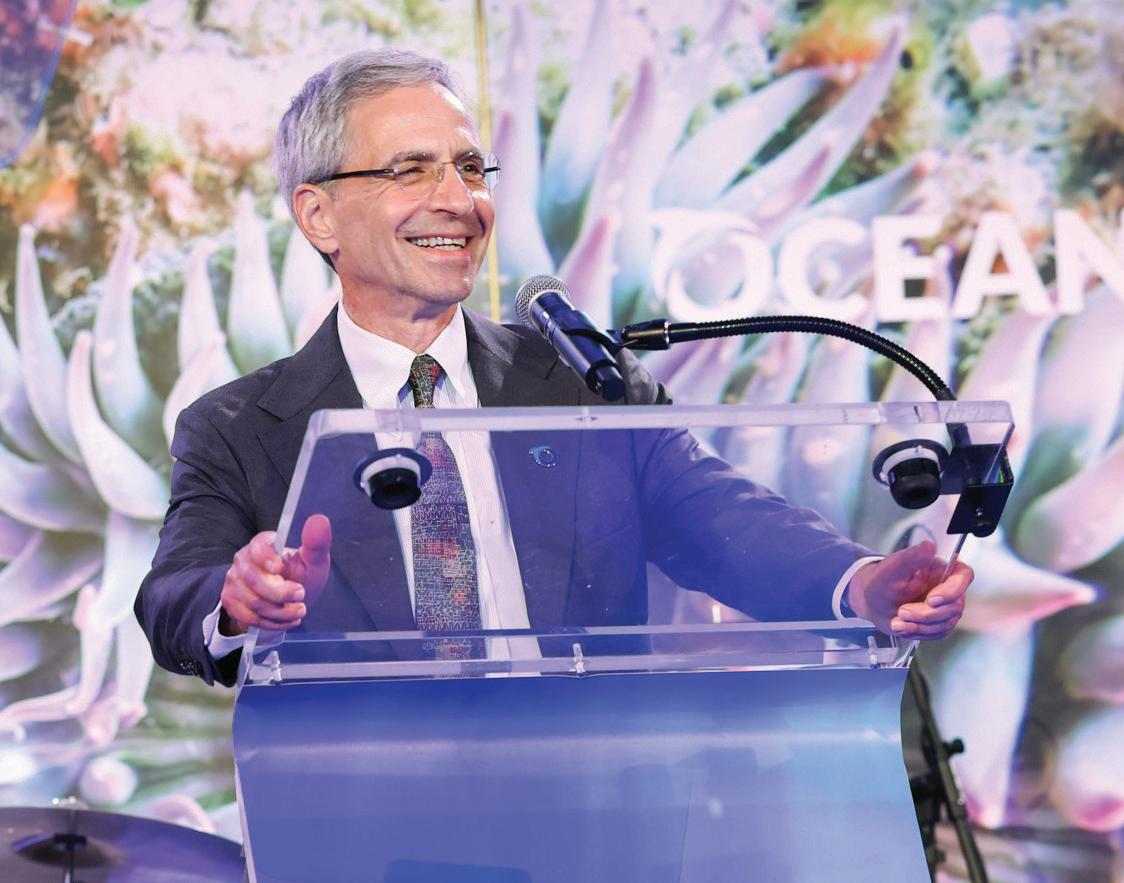
Oceana’s CEO James Simon highlighted victories won alongside allies in California, including securing protections from destructive bottom trawling and policies to rebuild key fish species. He also introduced honorees Barbara and Greg MacGillivray, emphasizing their dedication to ocean conservation as founders of MacGillivray Freeman Films and the MacGillivray Freeman Films Educational Foundation.
“We believe it will take all of us — filmmakers, scientists, Oceana, and other advocates — to keep pushing for meaningful protections of our seas,” Greg MacGillivray told the crowd of more than 330 guests.
“The oceans remain our common ground — and they are in urgent need of champions,” said Wahler. “Oceana is the blueprint. It’s strategic, effective, and fearless.” Blasingame added, “This SeaChange community has been driving change for more than 20 years. But now more than ever, we all need to come together to protect what we love.”
Oceana CEO James Simon and event honorees Barbara and Greg MacGillivray
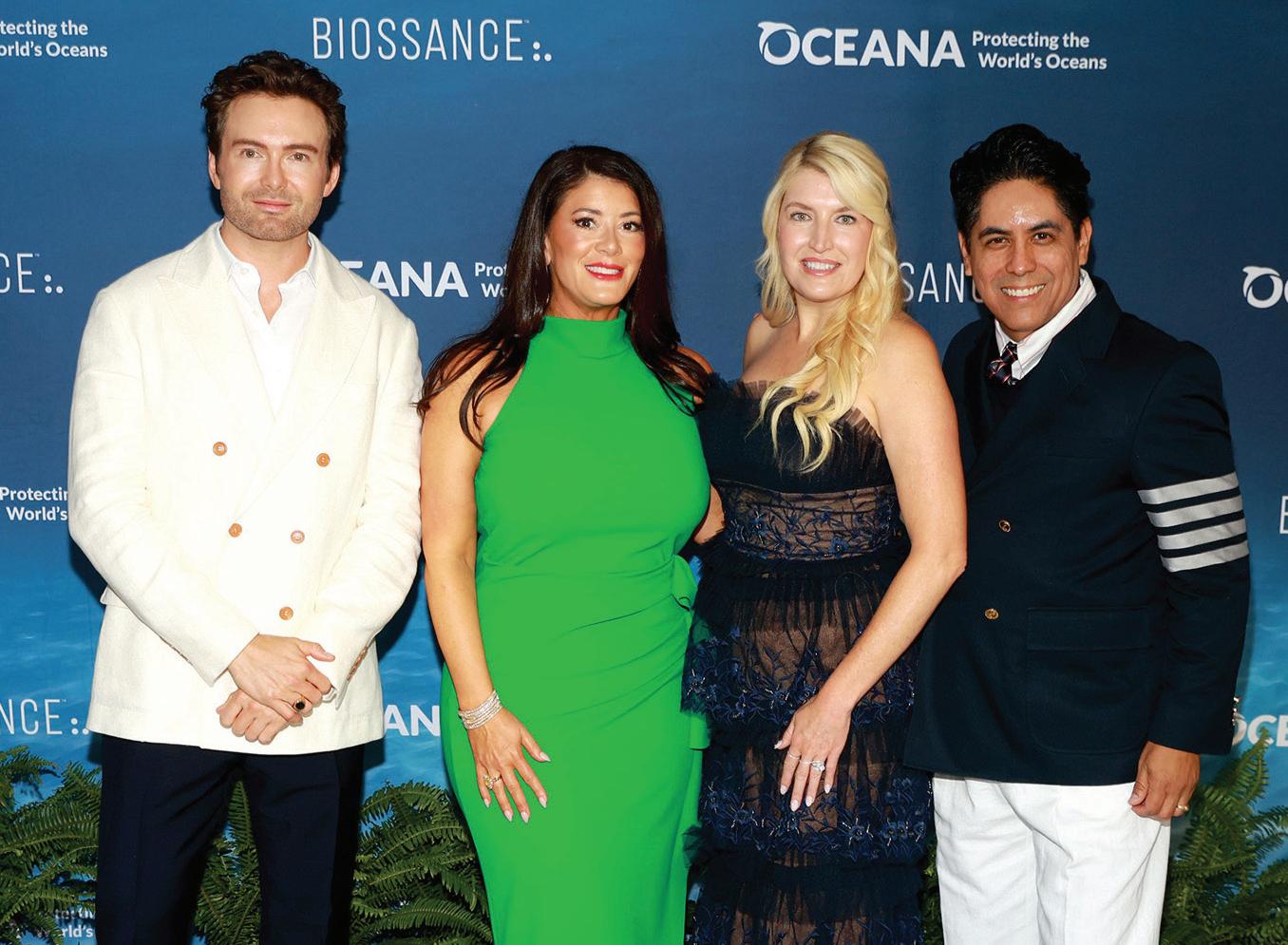
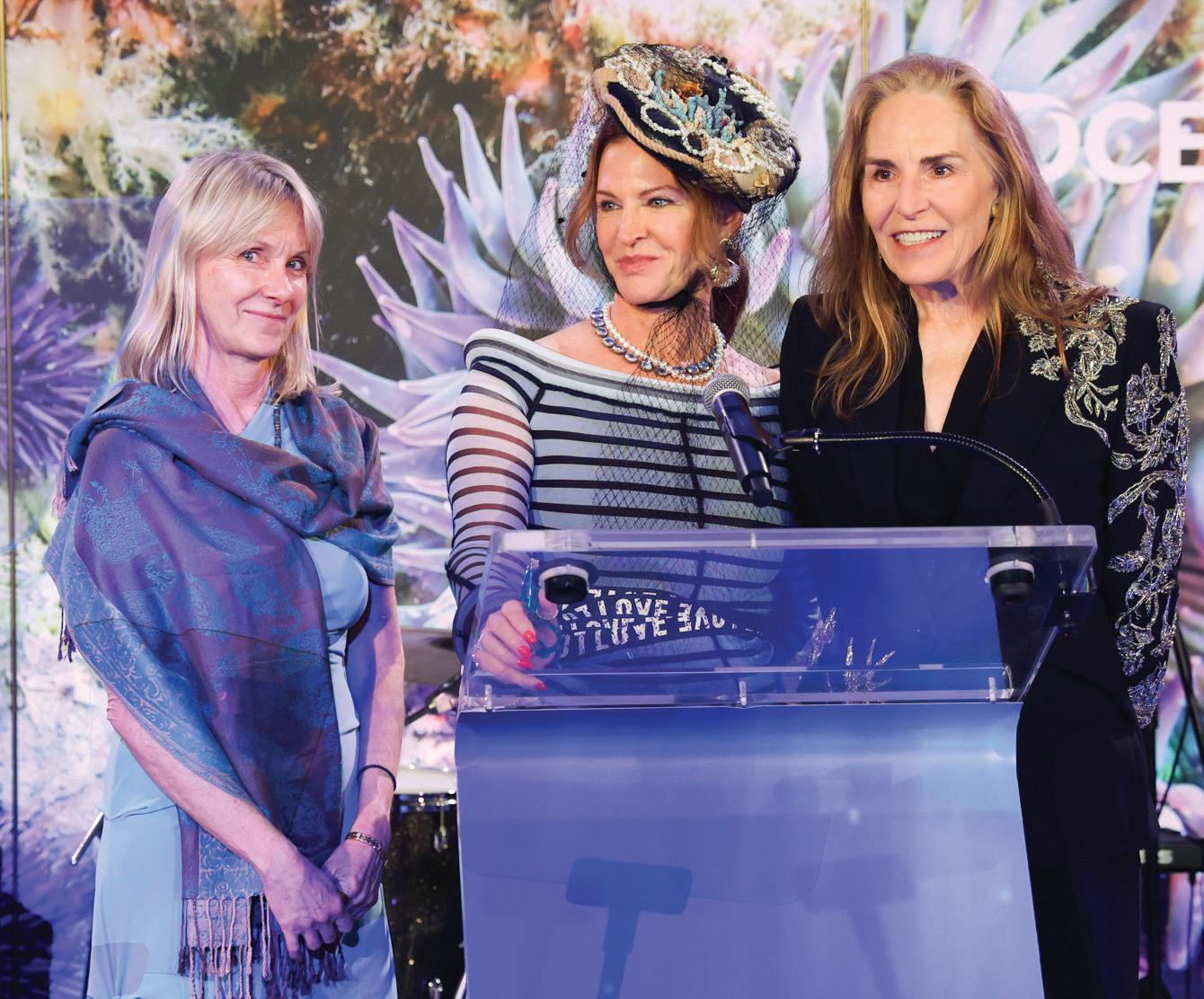
SeaChange Co-Chair Jeff Blasingame, Oceana Board Member and SeaChange Co-Chair Elizabeth Wahler, SeaChange Vice Chairs Kelly Brochu and Gabe Serrato-Buelna
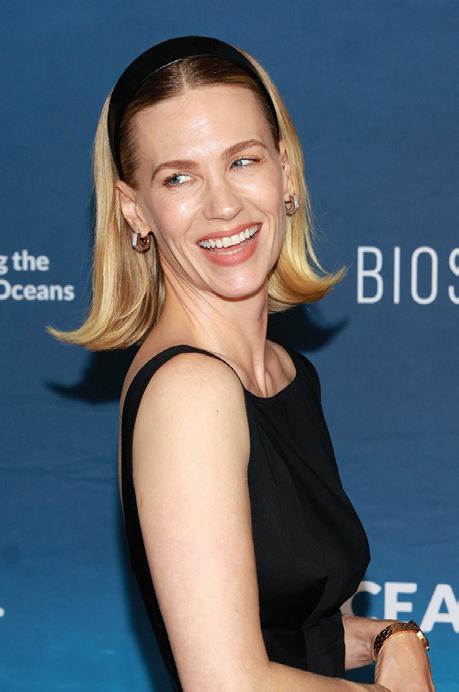
January Jones
Biossance Global Brand President Catherine Gore and Vice President of E-commerce Kai Matsunami
Oceana Board Member and event master of ceremonies Sam Waterston
GRAMMY Award-winning artist and Lady A founding member Charles Kelley treated guests to a performance that included his Top 10 AC radio hit “Can’t Lose You” and renowned hits “Need You Now” and “Run To You.”
This year’s event was vice-chaired by Kelly Brochu and Gabe Serrato-Buelna, and generous support came from numerous distinguished businesses and philanthropists, including Presenting Partner Biossance and Pacific Coast Partners the SoCal BMW Centers, Northern Trust, and Robert WAN.
Additional partners, sponsors, and underwriters included Anker Innovations, Robert Barth, Beatbot, Carol and Dennis Berryman, Brite Ideas, Brutten Family Foundation, Karen and Bruce Cahill, Callan - Karpenko Family, Leslie and Dino Cancellieri, CHANEL, Donnie Crevier of The Crevier Family Foundation, DMK Foundation (David E. and Michelle Kelley), Laurie and Steve Duncan, Lori Evensen, Gallo, Gérard Bertrand, Giorgio Armani Corporation, Trish Mangold and Guy Johnson, Modern Luxury Riviera, Moroccanoil, Kelly Petrovich and Brent Cahill, Michael Lee, Laura and Louis Rohl, The Click Family Foundation, Wendy and Fred Salter, Kira and Gabriel Sousa, South Coast Plaza, Stiefel Behner Charitable Fund, Strut Cares, Gabriella Vizcarra and Matthew Sawyer, Vuori, Valarie Van Cleave and Uwe Waizenegger, Elizabeth Wahler, Valaree Wahler and Jeff Sherwood, Jean and Tim Weiss, and George and Susie Wood.
Featured live auction items were donated by Air Tahiti Nui, Hilton Hotel Tahiti, Robert WAN, and Nani Travels; Aqua Expeditions; Lindblad Expeditions; IYC; Shinta Mani Wild, Shinta Mani Angkor, and Hidden Doorways Travel; the SoCal BMW Centers; and Your Private Africa.
On Sept. 9, Oceana supporters gathered at Rockefeller Center’s Rainbow Room for Oceana’s 11th New York Gala. The event raised more than $2.6 million in support of Oceana’s global campaigns and featured esteemed speakers and guests, including master of ceremonies and Oceana Board Member Sam Waterston; gala co-chair and Oceana Board Member Susan Rockefeller; event honorees, Academy Award-winning actor Laura Dern and Bloomberg Philanthropies CEO Patricia E. Harris; and Oceana Board Members Ted Danson and Dr. Daniel Pauly, among other special guests.
“From combating the climate crisis to feeding a billion people a healthy meal every day, the answers come from our oceans,” Waterston told the audience. “Oceana leads, fights, and wins hundreds of victories and counting. Right now, Oceana is working with local stakeholders, country by country, to pass policies that ensure abundant oceans, critical nutrition, and thriving communities.”
The gala honored lifelong environmentalist Laura Dern. Dern has been a dedicated partner to Oceana for years, helping shine a light on the urgent threats facing our oceans and inspiring others to act.
The event also honored Patti Harris, CEO of Bloomberg Philanthropies. Under Harris’ leadership, Bloomberg Philanthropies has become one of Oceana’s largest and most steadfast supporters. Since 2014, they have supported Oceana’s campaigns, helping the organization protect coral reefs and marine habitat, rebuild fisheries, and bring greater transparency to fishing vessels.
Bloomberg Philanthropies Senior Associate Melissa Wright and Oceana Board Member Jean Weiss
Oceana CEO James Simon
Event honoree Laura Dern, Oceana Board Member Ted Danson, Mary Steenburgen, and Oceana Board Member and event master of ceremonies Sam Waterston
Sutton Stracke and Oceana Board Member and Gala CoChair Susan Rockefeller
Event honoree and Bloomberg Philanthropies CEO Patti Harris and Oceana Board Member Sam Waterston
Oceana’s New York Gala, which has raised over $20 million in total to date, is co-chaired by Oceana Board Members Susan and David Rockefeller. Sue and Edgar Wachenheim, III were honorary co-chairs. The evening concluded with a dance party led by musical guest The Rakiem Walker Project and featured artist GLR¥A.
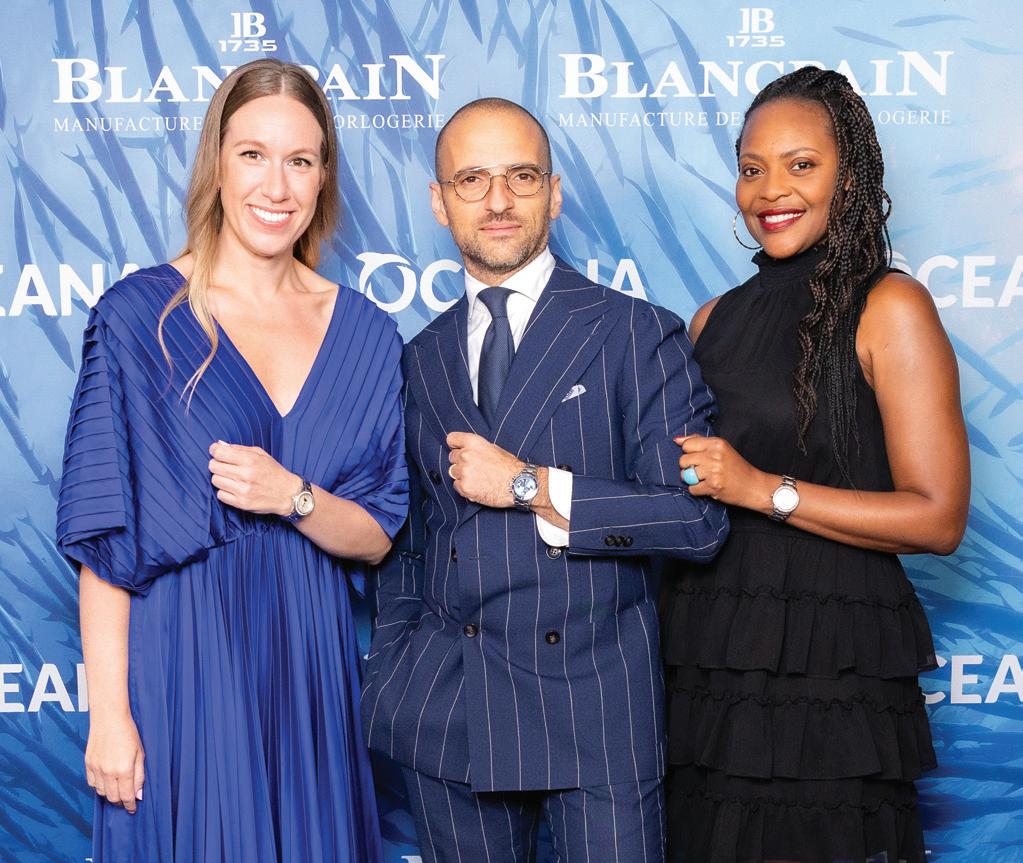
Blancpain returned as this year’s Presenting Partner, contributing two exquisite timepieces to the event’s live auction. Additional auction and in-kind donors included Air Tahiti Nui, Aqua Expeditions, Blue Hill at Stone Barns, Cobblers Cove, Gérard Bertrand, Gray Whale Gin, Hidden Doorways Travel, Hilton Hotel Tahiti, Lindblad Expeditions, Little Palm Island Resort & Spa, Nani Travels, PONANT, Robert WAN, Shinta Mani Angkor, and Shinta Mani Wild.
Supporters of the event included Andrew Sabin Family Foundation, Trevor Bacon, Monique Bär, Tamar and Herbert Bedolfe, Bloomberg Philanthropies, Laura Louise Breyer, Deborah Buck and Miguel Oliveira, Barbara Cohn, Anita Cosgrove, Deidre Featherstone, Frank Family Foundation, María Eugenia Girón, Daniella and Loic Gouzer, Agnes Gund, Kelly and Jim Hallman, Marion Hunt, Melony and Adam Lewis, Sara and Jack Lowell, Dede McMahon, Katie and Peter O’Neill, Chrissie and Lex Sant, Regina and John Scully, Keri Selig and Keith Addis, Maja Serdarevic and Edmond Offermann, Nancy and Simon SidamonEristoff, Epp Sonin, Diana and Peter Thomson, Gabriella Vizcarra and Matthew Sawyer, Sutton Stracke, Lynn and Sam Waterston, Jean and Tim Weiss, Linda and Larry Weiss, Bettina and Raoul Witteveen, Wendy and Mike Wiley, Leslie and Robert Zemeckis, and Mercedes Zobel.
To deliver the promise of silky-smooth skin, many beauty products use a hydrating ingredient called squalane. The problem: For decades, most squalane came from deep-sea shark liver oil, contributing to the death of millions of sharks each year. In an effort to achieve both healthy skin and healthy oceans, a sustainability-forward skincare brand, Biossance, was born in 2016.
Biossance’s signature ingredient is a bioengineered, sugarcane-derived version of squalane. The company not only eliminated animal-derived squalane from its own products but also made the innovation available to competitors, helping reduce ocean impacts across the
industry. “We believe a rising tide lifts all ships,” says the company’s Global Brand President, Catherine Gore.
Based in the San Francisco Bay area, Gore says she is privileged to enjoy the California coastline’s treasured biodiversity and beauty. “Growing up, my mom used to say she could smell the redwoods and the ocean at the same time,” Gore remembers. “It’s easy to fall in love with the ocean here, and then want to protect these treasures worldwide for future generations to enjoy, connect, and learn from them.”
“Ocean conservation has been the brand’s priority since inception,” she says. In addition to shark-safe squalane, Gore is proud that the company uses reef-safe sun protection, prioritizes minimal carbon emissions from on-site processing, produces its products at energy- and water-efficient factories, and utilizes sugarcane watered only by natural rainfall.
Because of the company’s focus on the oceans, “it feels only natural to partner closely with Oceana, who is an esteemed leader in ocean conservation,” Gore explains. Biossance has hosted Oceana’s marine scientists at influencer events and across its channels to promote shark conservation. The company has also matched donations during Oceana’s online fundraisers, sold products benefiting the organization, and supported Oceana’s SeaChange Summer Party.
As the company looks ahead, Gore says it aims to continue innovating responsibly, reducing environmental impact, and contributing to a cleaner, healthier planet. “We’re constantly identifying ways to improve our sustainability,” Gore says. “And we hope others in the industry will be inspired to do the same.”
It’s easy to fall in love with the ocean here, and then want to protect these treasures worldwide for future generations to enjoy, connect, and learn from them.
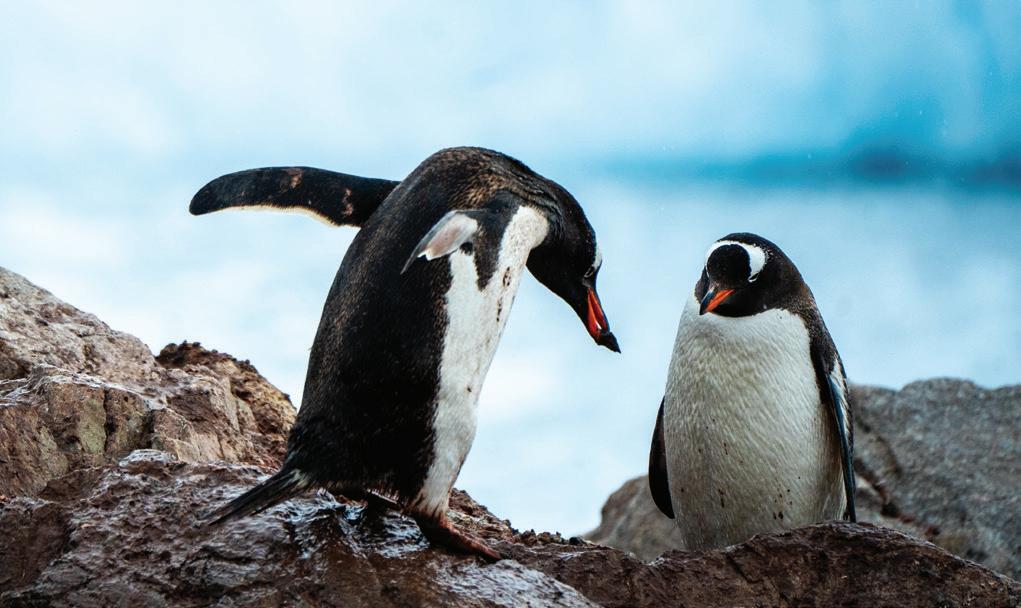
Gentoo penguins bond over pebbles — and it all starts with real estate. A male penguin will scout out the best possible nest site, then stand tall and call out to passing females to take a look. If a female likes what she sees, the two will court each other with mutual displays of trumpeting and bowing. Together, they’ll build a pebble nest on the chosen site, strengthening their bond one stone at a time. The pair may stay together for life, returning year after year to raise their chicks side by side.
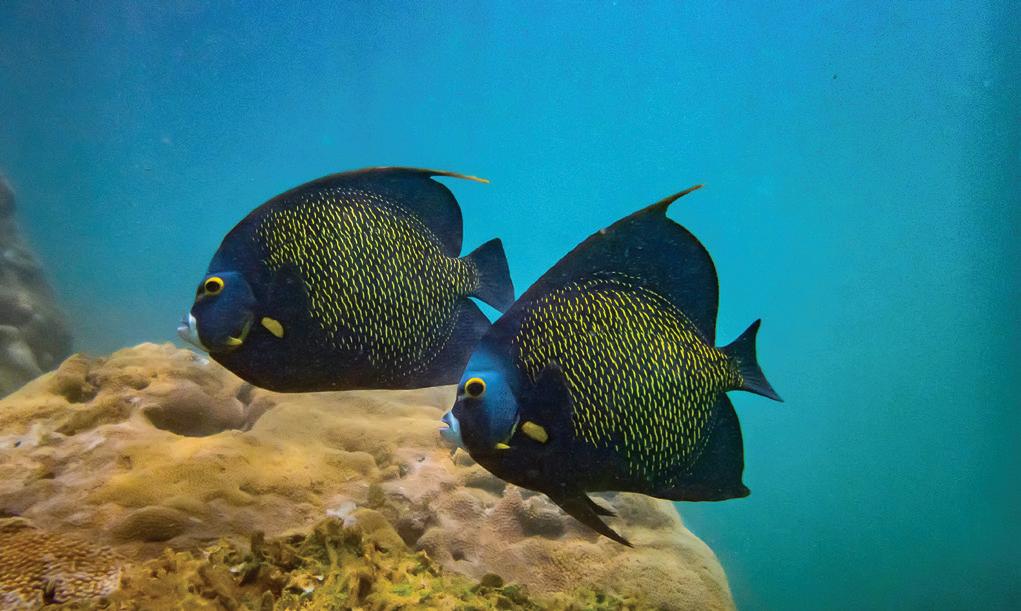
Once paired, French angelfish are usually seen together. These devoted couples spend their days defending their territory side by side and retreat to shelter together at night. Monogamy is uncommon among fish, making the French angelfish’s lasting partnership all the more remarkable.
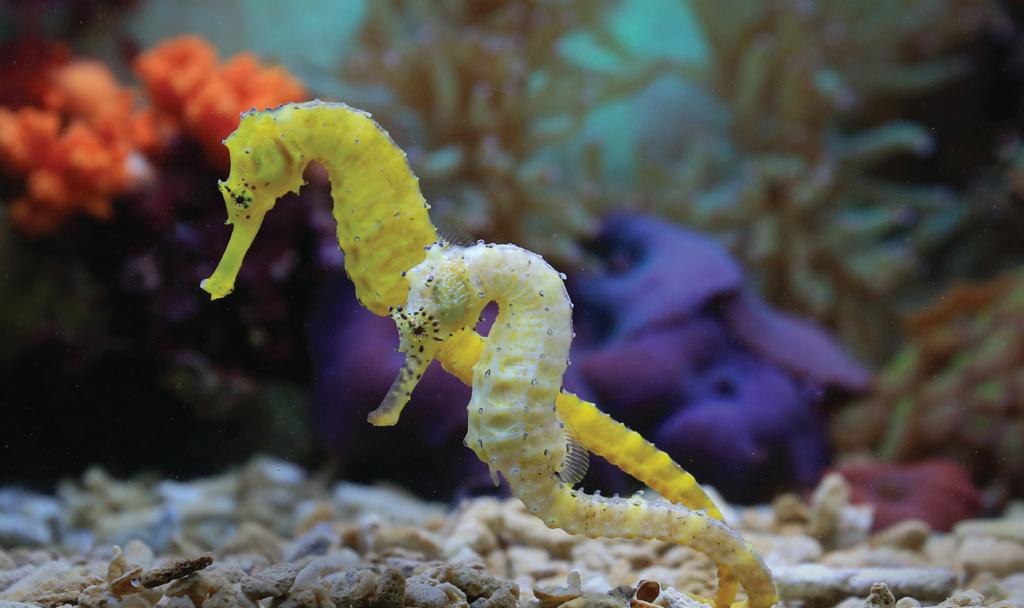
Seahorses take courtship to a new level with their graceful underwater rituals. It begins with the male showing off — shifting his colors and swimming around the female, accompanied by clicking sounds. Eventually, the pair will entwine their tails and “dance” together along the ocean floor. Once bonded, the female transfers her eggs into the male’s brooding pouch, where he’ll carry them until they hatch. They continue to dance day after day!
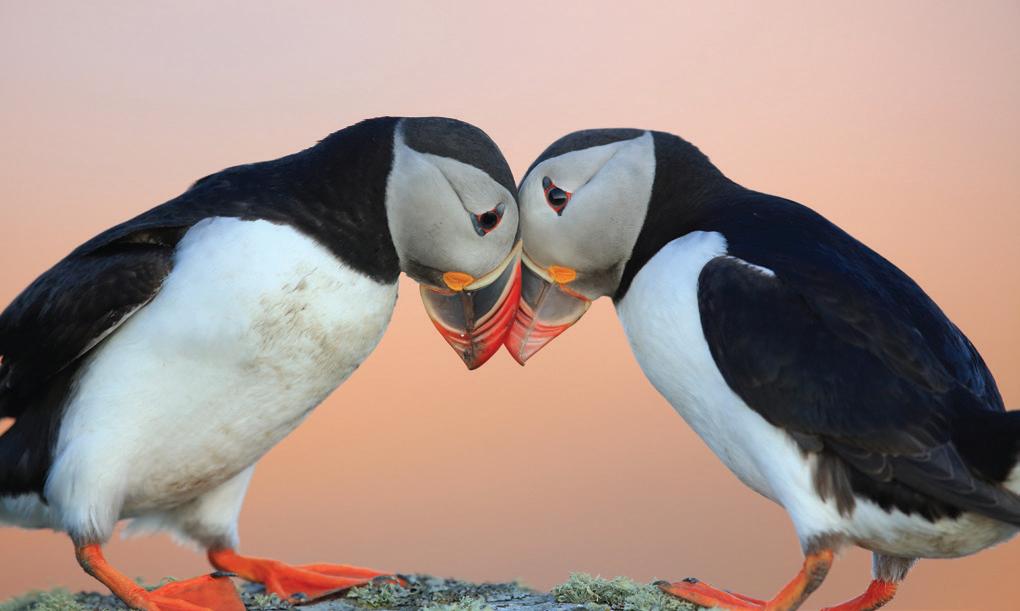
A lovebird’s kiss
Atlantic puffins show affection by touching their beaks together in a display that looks a lot like kissing. This bonding behavior is only seen between mated pairs, who typically stay together for life. Once paired, the couple works together to dig a burrow, where they’ll raise their single chick — known as a puffling.
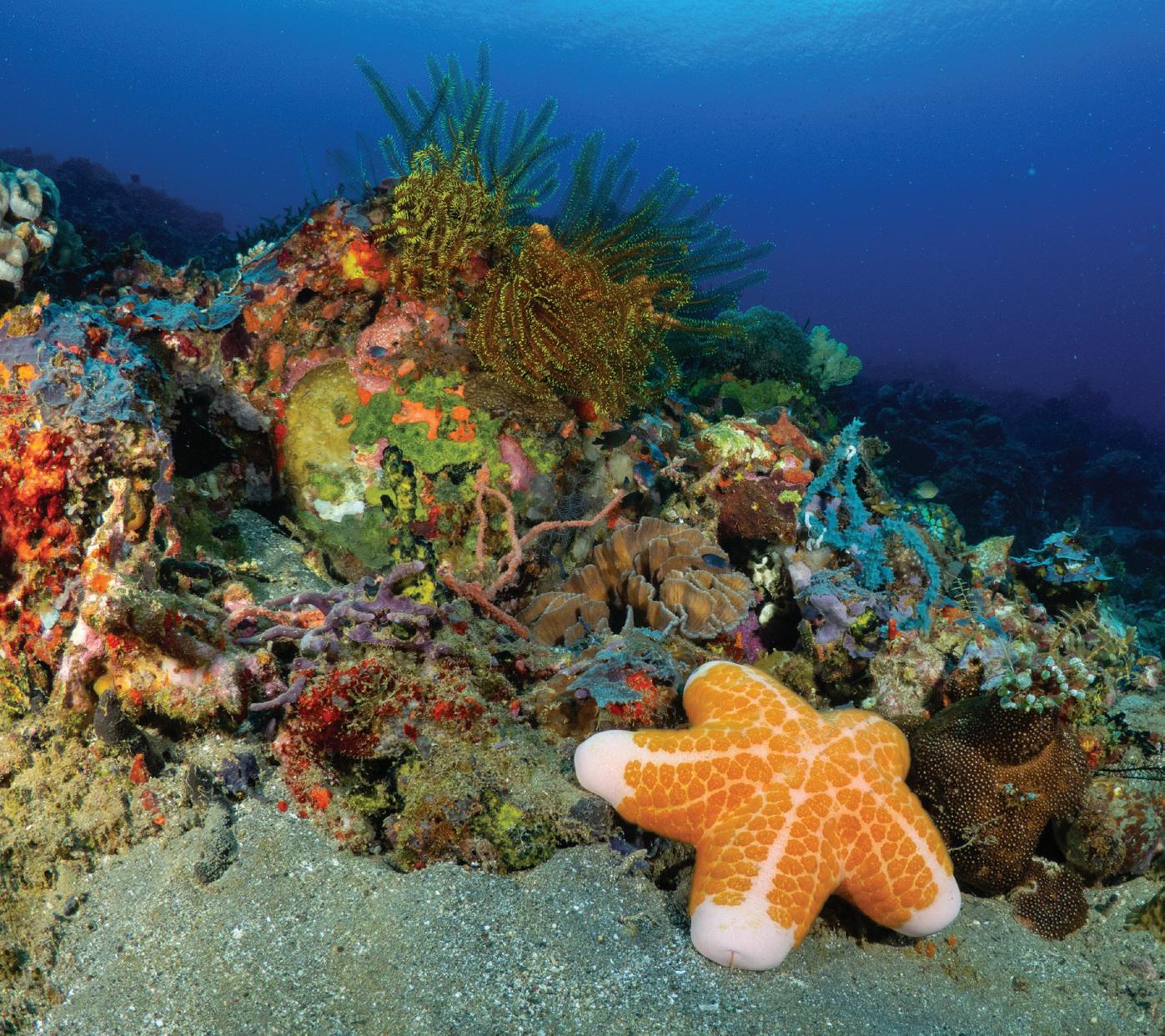
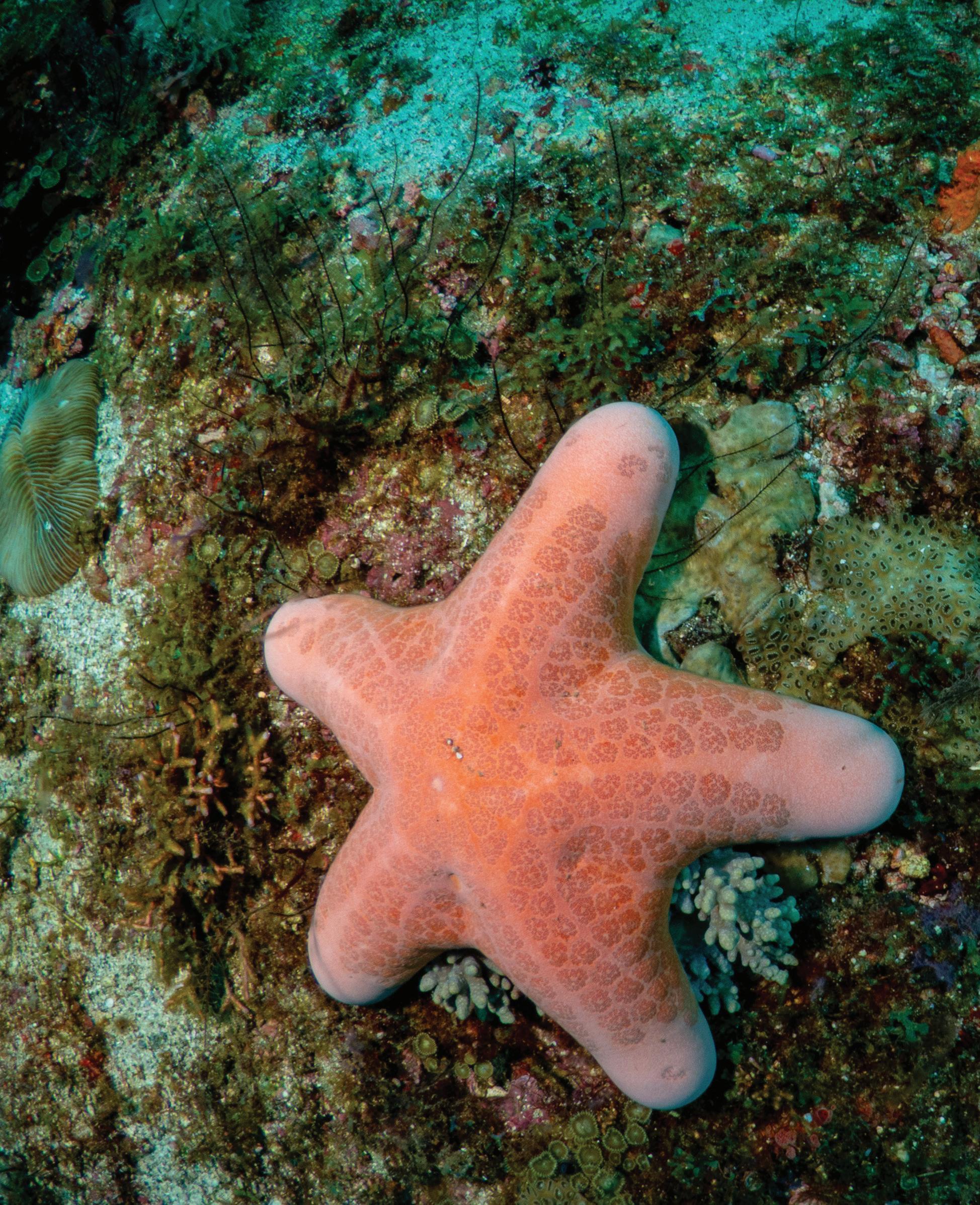
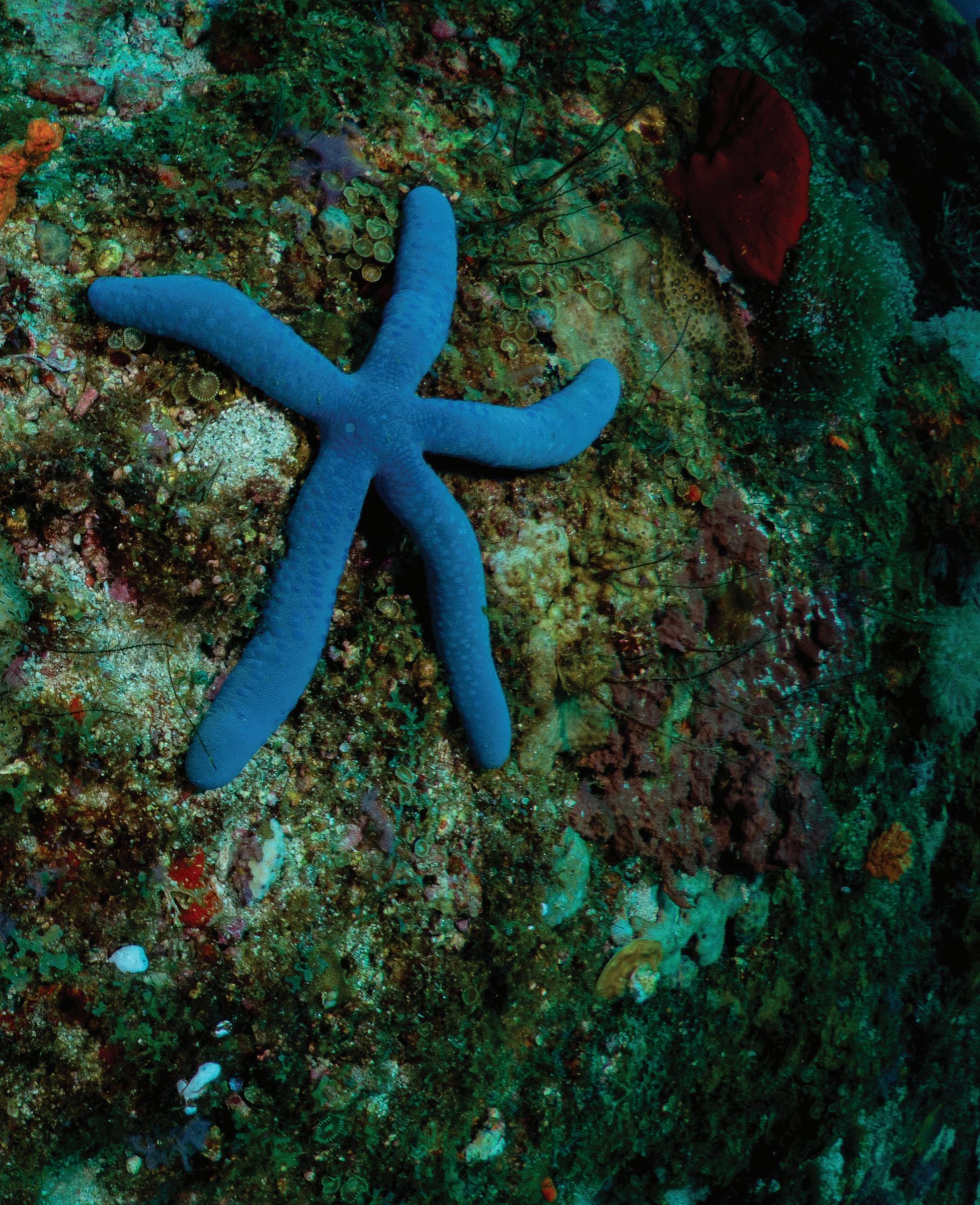
Two sea stars seen during an Oceana expedition to the waters around Panaon Island, Philippines, a newly protected seascape thanks to campaigning by Oceana and local communities.
Oceana/Danny Ocampo
Oceana’s accomplishments
its
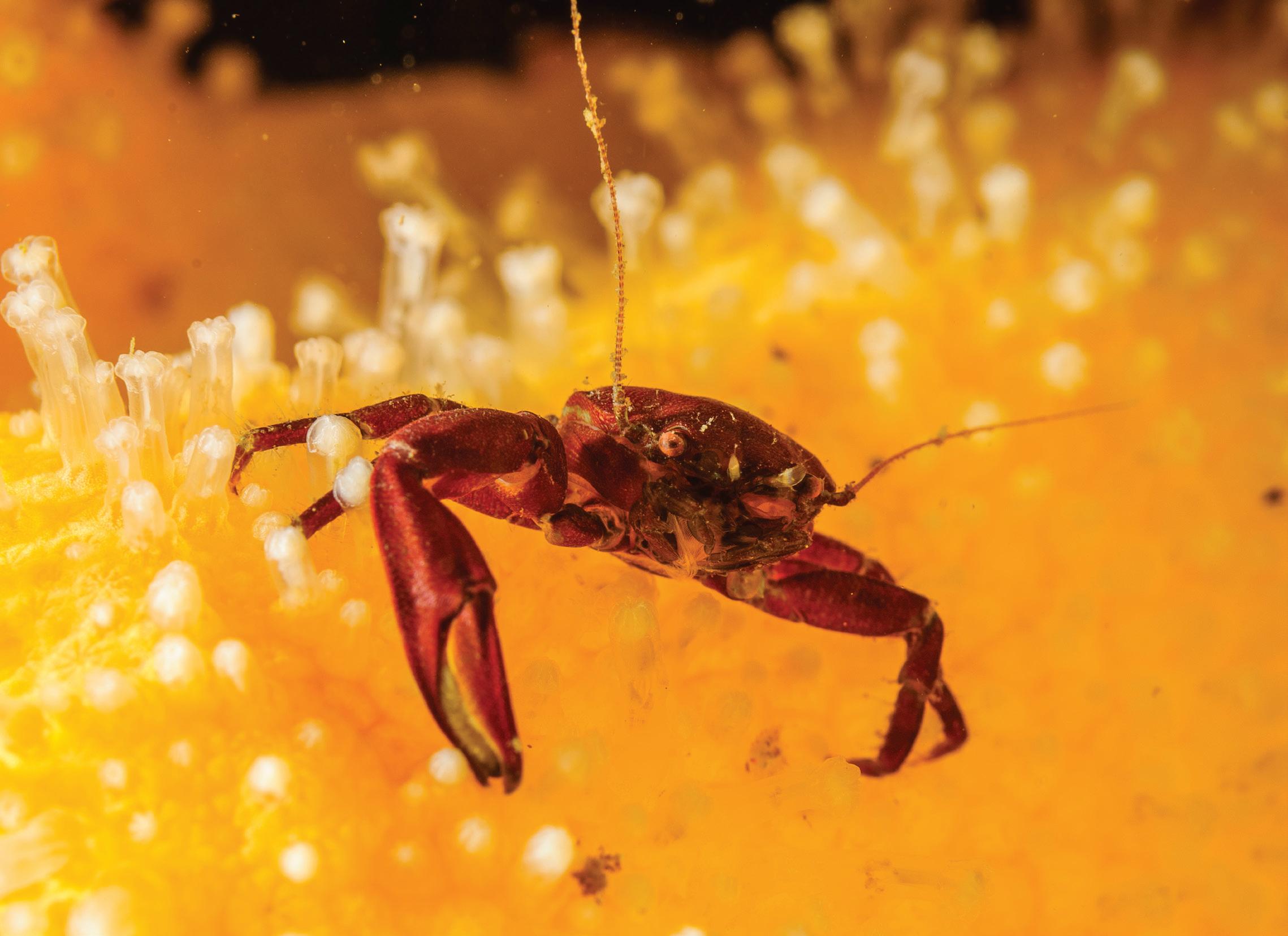
A long-clawed porcelain crab photographed in Scotland, United Kingdom.