Please contact advertising@otaus.com.au for advertising enquiries
Design Digital Outlaw
Disclaimer
This magazine is published as an information service and without assuming a duty of care. It contains general information only and, as such, it is recommended that detailed advice be sought before acting in any particular matter. The materials included in this newsletter by third parties are not attributable to Occupational Therapy Australia, and are not an expression of Occupational Therapy Australia’s views. Occupational Therapy Australia is not responsible for any printed expressions or views in any third parties’ inclusions. Any enquiries regarding inserts, advertisements or articles placed by these third parties should be directed to them.
Occupational Therapy Australia respectfully acknowledges the Traditional Custodians of the country on which we live, learn and work.
President’s report
Priscilla Ennals | OTA President
Welcome to the Summer edition of Connections, as we wrap up of another very busy year for OTA.
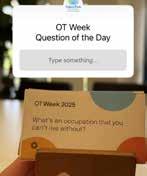
Occupational therapists celebrated OT Week and World Occupational Therapy Day during October. The theme of ‘Occupational Therapy in Action’ was an invitation to promote the diversity of our profession.
It was fantastic to see so many members bring this campaign to life through social media and in-person celebrations, showing the community what OT in action looks like. I loved reading the reflections from individual occupational therapists sharing their passions, inspirations, impacts, and the realities of their roles. Unsurprisingly, connecting with people, making a difference in their lives, and creatively solving problems were aspects of the profession people wanted to talk about. Celebrating with food and conversation were also right up there. Younger therapists showed us all the way with their engaging videos and visual summaries, and the media picked up many stories across the country. I am anticipating a bump in demand for student places in response to the brilliant promotion of the rewarding, fun, creative and satisfying profession that occupational therapy is.
Early in October we made another step in our continuing journey towards advancing reconciliation with Aboriginal and Torres Strait Islander Peoples with the launch of our Innovate Reconciliation Action Plan. It was an honour for me to meet and talk with Dr Terri Janke about the protection of cultural knowledge and the ethical use of AI.
The Annual General Meeting in November was a chance to review and celebrate the work of the Association in the 2025 financial year, all captured in OTA’s Annual Report. The report is available on our website, and I hope you take the time to review the summary of OTA’s work and achievements in advocacy, professional practice, learning and development, conferences and events, and in recognising and celebrating the profession. The National Conference in Adelaide was a highlight for me because it reminded me of the energy and hope that happens when occupational therapists gather to learn and connect en masse. It makes me proud to see what has been achieved by OTA staff and members over the year.
The AGM saw some transition in OTA board directors. Jack Smith resigned his director role earlier in the year and at the AGM we said farewell to Alice Fung and Michelle Bissett. I thank all these directors for their thoughtful and skilled contributions to the work of OTA governance. We welcome Chris Pearce who joins the board and Kim Walder who takes on the role of WFOT First Alternate Delegate.
Thank you to everyone who has contributed to the work of OTA this year, in paid and voluntary capacities. Special thanks to outgoing Editor in Chief of the Australian Occupational Therapy Journal, Professor Louise Gustafsson who has served a sterling term in this role, and congratulations and welcome to Professor Angus Buchanan who is taking on this important role. We continued to build connection, collaboration, influence and learning over the year, while holding a strong united voice in our policy and advocacy.
To our members - I hope you have opportunities over the summer to spend time with people you love and to engage in the occupations that give you joy, purpose and wellbeing. I look forward to connecting again in 2026.
We will continue our work on bringing the words of reconciliation into meaningful action through 2026 and beyond.
CEO’s report
Samantha Hunter | OTA CEO
In a landscape defined by change, OTs showed up with optimism, curiosity and unity: a reminder that connection is one of our profession’s greatest strengths.
Another year in the rear-view mirror, and as we shift into a much-needed season of rest and reflection, I am taking a moment to look back on what has been one of the most significant and energising years for our association. Before we race into the priorities of 2026, it feels timely to pause and take stock of the progress we have made together.
We began the year with the renewal of our OTA values –pride, progress, connection and empowerment – brought to life through our refreshed brand identity. This work was much more than a new visual style; it was a re-commitment to who we are, what we stand for, and how we show up for the profession. Soon after came the launch of CPD Empower, our new learning and development suite. Watching this event series take shape across the country has been a genuine highlight. Member feedback has been exceptional, with clinicians describing the workshops as practical, energising and rewarding. Empower is not only about learning; it nurtures professional identity, connects peers and reinforces pride in the work you do.
This year’s National Conference was another landmark moment. We saw record-breaking attendance and an online wave of OTs celebrating and proudly championing their association. That collective energy – the joy, the pride, the sense of “this is who we are” – was felt by everyone in the room. What made it even more powerful was that it unfolded during a year of intense reform across multiple sectors. In a landscape defined by change, OTs showed up with optimism, curiosity and unity: a reminder that connection is one of our profession’s greatest strengths.
It has also been one of the busiest years in OTA’s policy and advocacy work. In response to the scale of reform, we expanded our team, strengthened collaborations and deepened engagement with the returned Labor government. We are positioning occupational therapy within national health reform as a vital, future-facing workforce, with a strong focus on reducing uncertainty for members and ensuring decision-makers understand the essential role of OT across the lifespan. My appointment as Chair of the Allied Health Professions Association this year has added an additional platform for elevating your voice.
Our members continue to be at the heart of this work. Through case examples, policy input, campaigns and conversations with local MPs, your contributions are strengthening our impact.
Advocacy rarely delivers instant wins, but sustained, evidence-informed engagement shifts systems – and we are seeing momentum build. For those wanting some summer reading, I encourage you to explore the submissions and Advice to Government papers published this year, which reflect the depth and dedication of our community.
Our professional development work also continued to grow, with the release of additional Capability Frameworks and the expansion of Practice Essentials, supporting OTs, particularly new graduates, as they step into practice. I’m also delighted to welcome the 2026 cohort of the OTA Leadership Program. After two successful cohorts, we’ve seen extraordinary growth in participants’ confidence and readiness to step into leadership. This year’s program, codesigned with Donna Markham OAM, Victoria’s former Chief Allied Health Officer, offers a tailored exploration of authentic leadership and reflective practice.
We move into 2026 with a full and exciting calendar. OT Exchange in Brisbane is shaping up to be another standout event, and our two-day Mental Health Forum will again offer a meaningful opportunity for connection, learning and influence.
As always, the strength of our association lies in its members. Thank you for the professionalism, curiosity and care you bring to your work every day. Wishing you a safe and restorative season – I look forward to seeing many of you in the year ahead.
CPD Empower: learning, connecting, growing
OTA’s new CPD Empower series continued to energise and inspire OTs across Australia. Over the past few months, Empower events in Perth, Sydney and Brisbane brought together hundreds of practitioners for immersive workshops, dynamic discussions and vibrant networking. Participants described the sessions as some of the best CPD they’ve ever attended – practical, motivating and rich in peer learning.
Melbourne follows in March 2026 – stay tuned for new dates and learning streams as OTA expands Empower into a key feature of our national professional development calendar.
A stronger year, together
OTA’s 2024–25 Annual Report reflects a year of growth, delivery and collaboration anchored in our commitment to being Stronger Together. Membership rose to almost 13,000, supported by the launch of OTA Connect and new digital systems that make it easier for members to learn, connect and engage.
Highlights included the record-breaking OTAUS 2025 Conference in Adelaide, the introduction of six Capability Frameworks, and the launch of our Practice Essentials programs. It’s been a year of meaningful progress – strengthening the profession through education, connection and advocacy.
Celebrating excellence: nominations now open
Each year, OTA’s Association Awards celebrate the passion, innovation and leadership that drive our profession forward. Nominations are now open for the 2026 awards – an opportunity to recognise peers making outstanding contributions in education, research and practice.
Categories include the prestigious OTA Oration, OTARF Research Grants, OT School of Victoria Clinical Award, and the Judith Marsham Farrell Research Grant.
Apply now
If you or a colleague are making a difference, we invite you to share your story. Celebrate the impact of occupational therapy, and the people who make it possible.
Scan the QR Code
Scan the QR Code to read the report
New mental health resources for members
OTA has launched new member-only resources to support occupational therapists applying for Mental Health Endorsement. These videos and fact sheets provide background to endorsement, clarify the application process, and outline the distinction between mental health OT and psychosocial paediatric practice.
Together with the application guide and FAQs, they form a comprehensive support package for applicants.
Access resources now
Access the new resources via OTA Connect and strengthen your journey toward endorsement.
Scan the QR Code
OT Week 2025: celebrating OTs in Action
From creative workplace displays to community celebrations, OT Week 2025 was a nationwide showcase of passion, pride and connection. Across the country, occupational therapists came together to celebrate their impact through morning teas, professional events, reflective stories and social media updates that shone a light on what it means to be an OT.
Thank you to everyone who joined in the celebrations and helped show Australia what “OTs in Action” truly looks like – enabling people to live life to the fullest, every day.
A national snapshot of participation –and the role of OT
When participation is disrupted, so much more than productivity is lost. Released for OT Week, The Participation Gap report reveals how widespread these disruptions are – and why occupational therapy is essential to helping Australians stay connected to the roles that matter most.
In October, Occupational Therapy Australia released The Participation Gap, a national report highlighting the scale and impact of disruptions to Australians’ everyday roles due to illness, injury or disability. The findings come from a nationally representative survey of 1,501 adults conducted online by YouGov in early September 2025, designed in collaboration with OTA. The sample reflects the Australian population by age, gender, income, education and region, ensuring a robust snapshot of how participation is being interrupted across the community. For OTs, the report provides data to support what we see daily in practice: that participation is fundamental to wellbeing, identity and connection, and that losing access to meaningful roles has consequences far beyond the individual.
As OTA’s Chief Executive Samantha Hunter reflects in the report’s Foreword, participation is not just an economic concern; it speaks to dignity, belonging, capability and social connection. The report shares with the wider community what our profession sees every day – that participation matters deeply, and that occupational therapy plays a vital role in supporting people to stay connected to the activities and relationships that shape their lives.
Scale of the issue
The report found that two in five Australians (42%) have had to significantly reduce or stop work, study, caring or community roles due to a health challenge. That is over 7.5 million people, with nearly one in five sidelined for longer than three months.
More than half of respondents (52%) know someone who has been affected –confirming that these disruptions are not isolated events, but widely experienced across families, workplaces and communities.
Human and economic impact
Respondents identified financial strain as the most common consequence of being sidelined, followed by:
• Reduced mental wellbeing
• Loss of confidence and independence
• Social isolation and disconnection
Together, these outcomes highlight that participation loss is both an economic and emotional experience – one that affects identity, relationships and daily structure.
Who is most affected
The report shows that the participation gap is unevenly distributed:
• Women are more likely to experience long-term disruption
• Those in low-income households face greater impacts and fewer pathways back
• People with lower formal education are less aware of or connected to professional supports, including OT services
These findings reinforce the importance of accessible, community-based OT services and workforce planning that considers equity, locality and cost barriers.
Where OT makes a difference
Respondents identified the primary obstacles to returning to work, caring or community roles as:
• Pain and fatigue
• Fear of re-injury
• Mental health impacts
• Lack of workplace flexibility
• Inaccessible home or community environments
• Lack of professional support to help adapt (reported by one in five)
Each of these areas aligns directly with core occupational therapy practice –graded re-engagement, fatigue and pain management, task and environmental adaptation, confidence building, mental health-informed occupational approaches and advocacy for reasonable adjustments.
This alignment underscores that occupational therapy is critical to closing the participation gap.
Public awareness and opportunity
The report shows high general awareness of the OT profession, with 79% of Australians familiar with occupational therapy, and 39% having personal or close experience with OT. Awareness is lowest among communities most affected by long-term participation disruption, suggesting room for targeted outreach and clearer referral pathways.
A strengthening national conversation
The release of the report generated significant national media discussion, including coverage by ABC News, the Courier Mail, Daily Mail Australia and numerous regional outlets, as well as extensive radio interviews and news bulletins across the country. This has helped elevate occupational therapy within public conversations about productivity, community wellbeing and care supports.
Our collective role
The Participation Gap reinforces something OTs already know: participation matters, and occupational therapy is uniquely placed to support people to maintain it, resume it or rebuild it. The report provides shared language and evidence that members may find useful in discussions with colleagues, referrers, managers and policymakers.
As Samantha Hunter writes: “Occupational therapy has always been about solutions, not just problems.”
Our ongoing role is to continue advocating – locally and nationally – for people to access the support that enables participation, and for the conditions that allow OTs to provide it sustainably.
Key stats
• 42% of Australians have had to significantly reduce or stop work, study, caring or community activities due to health challenges.
• 7.5 million adults have been sidelined at some point.
• 71% identified financial strain as a major impact.
• One in five listed lack of professional support as a key barrier to returning.
Read The Participation Gap report
Scan the QR Code to download the PDF
Why Staying Connected is the Best Medicine
The Harvard Study of Adult Development has followed hundreds of lives over eight decades and landed on a downto-earth truth that communities outside of the city have always known: strong, caring relationships are the key factor for good health and quality of life. Good mates, good neighbours and the comfort of a friendly cuppa lower stress, sharpen the mind and even lengthen our years. When we have people to lean on, to laugh with, and to look out for, life feels steadier. The science is clear: we flourish together.
That spirit of togetherness sits at the heart of Country Care Group. We’re guided by a simple belief: there’s care, and then there’s Country Care. It’s the kind of care that goes beyond service. It’s about knowing our customers by name, understanding what matters most to them, and finding the right way to help them stay part of the community they love. Every day, we put that belief into action, helping people stay connected to family, friends and familiar places through the right equipment, the right advice, and the right kind of support.
Whether it’s a wheelchair built for local footpaths, a walking aid that steadies a stroll around town, or a zippy mobility scooter for the Saturday markets, our range is chosen with real lives in mind. A lift recliner that lets someone stay for just one more cuppa with friends, a height-adjustable bed that makes life at home more comfortable, or bathroom and daily living aids that bring safety and independence back into reach. Every product we provide is designed to keep people part of the rhythm of everyday life.
For occupational therapists, we understand how important it is to find the right solution for every client. Our friendly, experienced teams are here to support you with advice, product information and hands-on demonstrations to ensure each person you work with is cared for and supported with confidence. We also provide spaces in store for an OT’s to work between appointments, and access free wi-fi and snacks to get you through a busy day.
We proudly service all major national and state-based contracts, including DVA, MASS, TAC, NDIS, SWEP, Feros Care and WorkSafe, making it easy for you to access the right supports and streamline the referral process for your clients. To learn more about our full range of services and support options, visit countrycaregroup.com.au.
Because at Country Care Group, it’s never just about equipment. It’s about partnership, trust and care — helping you support your clients to stay connected to the people and places that make life in our communities so
Celebrating the launch of OTA’s Innovate RAP
On Friday 3 October, Occupational Therapy Australia proudly launched our Innovate Reconciliation Action Plan (RAP) – a milestone in our continuing journey towards advancing reconciliation with Aboriginal and Torres Strait Islander Peoples. Members and Stakeholders joined the online celebration, which featured an inspiring keynote from Dr Terri Janke, a Wuthathi, Yadhaigana and Meriam woman and internationally recognised authority on Indigenous Cultural and Intellectual Property.
Building on our journey
The Innovate RAP builds on the foundations of OTA’s earlier Reflect RAP, deepening our commitment to meaningful action, relationships, and cultural learning.
Guided by Reconciliation Australia, this two-year plan provides a framework for strengthening partnerships, embedding cultural safety, and ensuring First Nations voices are heard across our governance, programs, and advocacy.
As President Dr Priscilla Ennals reflected at the launch, “Our vision is a future where reconciliation is not simply an aspiration but a lived reality – woven into everyday practice and grounded in mutual respect and trust.”
Keynote highlight: Dr Terri Janke
Dr Janke’s keynote, “Ethical AI and Cultural Safety: A First Nations Perspective,” invited deep reflection on the intersection between technology, ethics, and culture. She challenged attendees to consider how emerging tools such as artificial intelligence can uphold – or undermine –cultural safety and Indigenous rights.
Member reflections
The launch resonated strongly with members:
That was a fantastic webinar with Dr Terri Janke. A well-chosen topic and speaker. Great to see the launch of the Innovate RAP... We are living in the glad tomorrow, now! - OTA Member
I want to acknowledge Occupational Therapy Australia for the way you’re advancing reconciliation – not only through your RAPs, but through the way you embed those values in your practice. That’s real action, and it shows what genuine commitment looks like.
- Dr Terri Janke
Her message reinforced that reconciliation must be supported by ethical practice and respect for First Nations knowledge systems, particularly in rapidly evolving fields like AI, health, and education. She reflected: “AI is useful, but it needs ethical use and cultural safety. First Nations people call for the right to recognise their Indigenous Cultural and Intellectual Property. So, think about how you use it in your work, and how AI might amplify that through ethical practice.”
Thank you for the update on the RAP and for broadly enhancing our professional knowledge related to the health and wellbeing of First Nations people.
- OTA Member
Looking ahead
The Innovate RAP reaffirms OTA’s commitment to reconciliation as a shared responsibility – one that shapes our profession, our relationships, and our future.
Together, we continue to learn, reflect, and act – walking alongside Aboriginal and Torres Strait Islander Peoples in pursuit of a more just, equitable, and culturally safe future.
Read OTA’s Innovate RAP here
Scan the QR Code to download
Me and my OT:
Real life stories of OTs and their clients
Joseph McMahon is a bright five year old student who started school in Adelaide, South Australia in July. He has ASD and a rare genetic overgrowth syndrome, SPIN4 deletion, which affects his proprioception and ligaments. He has been working with paediatric OT Taylor Horsnell from Flourish Therapy Services weekly for the last five months. We hear from his mum Kate about Joseph’s experience.
What are some activities that are important to Joseph?
Joseph absolutely loves his nine year old brother, and keeping up with him is super important – whether it’s playing a board game, trying to beatbox, writing a card, playing soccer or even hip hop dancing. Joseph adores animals in all forms – he has quite the menagerie of stuffed toys too!
What is a goal Joseph is working on now?
Joseph is working on his handwriting and letter formation with his OT. This was a real source of frustration for him, as he found it really difficult to hold pens and scissors and often avoided being creative as a result.
How has it made a difference in Joseph’s life?
It has made an incredible difference! Joseph has gone from a reluctant mark maker to choosing to sit down, create and draw, with pictures now all over the fridge. He was able for the first time to make his brother a birthday card, drawing it in his brother’s favourite colours and including a picture of a blue whale – his brother’s favourite animal! We were all so proud, especially Joseph.
What were your expectations when working with an occupational therapist?
We have worked with Taylor before, and we were expecting to gradually see improvements over time. Joseph has really thrived though with her support, and has made great progress in just a few months of weekly sessions.
What do you appreciate most in an OT?
That we have another person in our corner who deeply cares about our child and their potential. I always love reading Taylor’s notes too as she always includes funny things which Joseph says or little stories from their sessions together and that helps me see how much she values him as a person.
Describe your occupational therapist in three words.
Knowledgeable, observant and fun!
How would you describe the role of an occupational therapist?
An exper t who can help bridge the gaps between what my kids are capable of, and what I and others can teach them. I certainly don’t have all the answers which is why I am so glad we have Taylor’s advice and help to bring out Joseph’s best.
Joseph and Taylor
Supporting Capability and Confidence in Assistive Technology Practice: OTA’s new Assistive Technology Framework in action
Occupational Therapy Australia’s new Capability Framework for Occupational Therapists Supporting People with Assistive Technology, launched in June 2025, outlines the essential knowledge, skills, and attitudes occupational therapists need when working with assistive technology (AT) across various career stages and service settings. By engaging with the framework, OTs can reflect on their practice, identify capability strengths and areas for growth, and plan targeted continuing professional development (CPD). The framework supports advocacy by articulating the role, function and scope of practice of occupational therapy to key stakeholders, including government, funding bodies, employers and managers.
Ultimately, the framework promotes safe, effective, and ethical AT practice – recognising professional expertise while supporting ongoing career development for OTs working in this important area.
The framework in practice: Assistive technology for transport
Many people with disabilities or medical conditions face challenges impacting their ability to participate fully in their communities. Assistive technology for transport, including special purpose car seats, specialty vehicle restraints and accessory devices, can help to overcome these barriers.
OTA’s capability framework for occupational therapists supporting people with assistive technology introduced a capability covering this area of practice – Capability 4.12: Special purpose car seats, specialty vehicle restraints and accessory devices, outlining requirements for best practice motor vehicle transport assessment, recommendation and implementation.
It recognises motor vehicle transport as a complex and high-risk area of practice, emphasising the need for specialist training along with knowledge of the regulatory and legal requirements.
OT drafts new safe transport policy at Bendigo Special Developmental School
When Bendigo Special Developmental School (BSDS) OT Marilise Terblanche began in her role last year, she didn’t anticipate that assessing and prescribing for transport would need to become part of her scope of practice.
When accepting the role, I didn’t think much about bus safety,” she said. “My background is adults with disability, so assessments for wheelchairs – that was transport for my clients.
But once I’d been in the new role for a while, I realised someone has to be responsible for it – and I think it’s the OT!”
Marilise Terblanche from Bendigo Special Developmental School
Emma Clarkson | Director, MACA
Alex Robb | Marketing Specialist, MACA
Marilise said she feels her experience of stumbling upon AT for motor vehicle transport is not uncommon.
It’s probably only when you have a client with transport needs that you suddenly consider you need to upskill in this space, she said.
Marilise identified a need to ensure that BSDS’s 80 students who bus to and from the school are transported safely, consistently and in the least restrictive way possible.
The issue we were facing was that we couldn’t really find any clear guidelines anywhere for issues like use of seat belt buckle covers,” Marilise explained.
The use of restrictive devices needed to be clarified, given that some students were displaying unsafe behaviours, such as unbuckling their harness or leaving their seats during transit. While the work of drafting the comprehensive new policy – which aims to get parents, bus companies and the school on the same page about the transport needs of the students – was outside of Marilise’s comfort zone, she was relieved that MACA’s training and resources were available.
MACA’s specialist training
Mobility and Accessibility for Children and Adults (MACA) provides the comprehensive Transporting Children with Disabilities and Medical Conditions course, developed with funding from the Australian Government Department of Social Services.
The online course covers topics including road safety principles, road rules, the role of allied health professionals, transport challenges, vehicle restraint products, documentation, restrictive practice, and scope of practice.
Upon completion of the training, OTs can register to join MACAhub Pro to gain access to best practice prescribing tools and ongoing professional development. They can also elect to be listed on MACA’s public lookup list of MACA Certified Professionals.
The course is one component of MACA’s broader work advancing the rights of people with disabilities and medical conditions to safe transport.
Trained professionals across Australia
Over 800 allied health professionals have completed MACA’s course – actively supporting safer transport and participation for families across Australia.
MACA encourages professionals to enrol in training to support people with disability to access safe motor vehicle transport.
Scan the QR code to learn more about MACA’s specialist training
When I found MACA (the not-for-profit Mobility and Accessibility for Children and Adults) and asked if I could do the training, my principal said ‘of course’, Marilise said.
I’m not a policy maker, usually, so I had to dig deep to make it happen. I leaned heavily on MACA’s research and evidence to shape my thinking and critical reasoning. I saw they had all the steps and assessments, so I took what was there and moulded it to fit our school’s specific needs – that’s how MACA’s process became the backbone of the new guidelines.
Marilise was supportive of the OT-specific capability measures detailed in Capability 4.12.
[I believe] you do need to do the training, as otherwise your assessments may not be best practice.
Capability 4.12: Special purpose car seats, specialty vehicle restraints and accessory devices
OTA’s Capability Framework for Occupational Therapists Supporting People with Assistive Technology outlines what OTs need to know and do when supporting clients who require special purpose car seats, modified car seats, or specialty vehicle restraints. It emphasises the importance of specialist training, understanding legal and regulatory requirements, and carefully assessing each person’s postural, medical, behavioural and safety needs in the context of their vehicle environment. OTs are guided to identify contraindications, recognise when a device may constitute restrictive practice, and follow required processes and reporting. The Framework also highlights the OT’s role in documenting transport plans, providing clear instructions for care partners, and offering education, training and collaboration – including with behaviour support professionals where needed.
Access the full Capability Framework at otaus.com.au/capability-frameworks
Meetings
Advocacy update: August to October
What we’ve advocated on
• Recognition of the vital role of OT in the design and implementation of Thriving Kids
• Introduction of a dedicated Home Visit item for OT under WorkCover WA
• Greater support for emerging Mental Health OT workforce in Tasmania
• Fairer pay and conditions for public sector Mental Health OTs in Victoria
• Suppor ting the future OT workforce – advocating for inclusion of OT in Paid Prac Placement Program
• Improved access to OT under Medicare
• Greater recognition of Mental Health OTs under Private Health funding arrangements
Strength in numbers – how we’ve collaborated
OTA has united with both members and other peaks to advocate on behalf of the profession. Some of our activities include:
• Collaboration with Australian Hand Therapy Association’s proposal to expand HICAPS item numbers for OT qualified hand therapists
• Attending Roundtable with Senator Jenny McAllister and fellow AHPA peaks to discuss impacts of NDIS pricing on Allied Health
Our submissions
• Engaging with ATSA to collaborate on better access to assistive technology under Aged Care and the NDIS
• Participating with other AHPA members in a meeting with Department of Health, Disability and Ageing on access to allied health supports under the new Support at Home program
OTA made 5 submissions across 4 key sectors, in the areas of Aged Care, workforce, and primary care, including:
• Na tionally consistent worker screening check
• S tanding Committee on Health, Disability and Ageing’s Inquiry into Thriving Kids
• Medical Benefits Schedule Review Advisory Committee’s evaluation of the Chronic Disease Management program
• Consultation on the Aged Care Quality and safety Commission’s Draft Regulatory Strategy 2025-26
• S enate Standing Committee - Inquiry into Aged Care Service Delivery
OTA had 26 meetings with key stakeholders, including the offices of Western Australian Minister for Mental Health, Meredith Hammat, and Minister for Early Childhood Education, Sabine Winton, to discuss the provision of psychosocial and early childhood supports in WA. We also met with Senator Jordon Steele-John, Senator Jenny McAllister, Dr Helen Haines, as well as the office of Dr Sophie Scamps and Senator Jess Walsh.
What we’ve welcomed
• Upda te to Support at Home pricing guidelines, allowing for OTs to bill for direct and indirect clinical activities
• Inquiry into Aged Care Service Delivery led by Senators Penny Allman-Payne and David Pocock, following calls for the release of additional Home Care Packages in the lead up to the introduction of the new Aged Care Act on 1 November.
• Introduction of a dedicated comprehensive report item for OTs under WorkCover WA.
• Establishment of new Victorian Centre for Advancement of Allied Health
Incorporating members’ voices
• Delay of NDIS Pricing Framework to 2026 – allowing time for genuine consultation with the OT profession
• Inspector General progress report on implementation of Royal Commission into Aged Care Quality and Safety. We welcome their statement to monitor SaH program to enable older people to remain in their own homes
• Appointment of Geoff Argus as Deputy National Rural Health Commissioner for Allied Health. OTA will be meeting with the new Commissioner and we look forward to collaborating to develop OT workforce in regional, rural and remote areas.
Members have continued to share their on-the-ground experiences and inform our advocacy and strategic direction through multiple channels including:
• > 40 individuals participating in our Thriving Kids consultations
• 150 responses on our Indicative pricing Survey
Next steps
• NDIS provider survey and petition – presenting findings to MPs in parliament
• Member engagement in our survey on reduced OT travel item in WorkCover WA.
• S trong attendance at our NDIS member forum
OTA will continue to advocate to ensure OTs are embedded into reforms which ease pressures on hospitals and improve workforce participation.
• Meetings with MPs and Senators to discuss opportunities for collaboration in reforms to aged care and the new Thriving Kids initiative
• Campaigning for recognition of OT ahead of the upcoming South Australian election
• Commencement of new Aged Care ActOTA will monitor implementation to ensure older people continue to access vital OT services
• Advocating for an NDIS assessment tool which is trauma-informed, culturally safe and which embeds OTs as central to the assessment system
• Establishing our new Paediatric National Reference Group To inform OTA’s advocacy on matters relating to paediatric supports and services from bir th to 18 years.
Things you might not know about PI (but should): Important features of Professional Indemnity Insurance
If you already have Professional Indemnity Insurance (PI), you might simply renew your policy each year without much thought. However, there are important aspects of PI cover that are easy to overlook – details that may make a significant difference in your protection.
Typically PI insurance is a claims made basis policy, and this is important to understand as there are requirements under PI Insurance, relating to notifying of claims and also circumstance that may result in a claim.
So what does this mean?
With most insurance, you contact your Broker when you’re ready to make a claim.
PI insurance, however, requires you to notify your broker as soon as you become aware of a potential issue – even if no formal claim has been made yet.
For example, if a client expresses dissatisfaction, threatens legal action, or advised you they are going to make a complaint, you should contact your broker as soon as possible, however you must ensure that you submit the notification before your PI policy renews or ceases. Failing to report a potential issue or an actual claim (that you knew about) before your PI policy expiry date could impact if your Insurance company will indemnify you when you do submit a claim, meaning your policy may not respond and your claim could be denied.
The reason for the notification of claims or potential claims is because of the claims-made basis of PI insurance. PI policies can respond to claims that are made against you and notified to the insurer while the policy is in force (during your current policy period), regardless of when the incident that gave rise to the claim took place. However, this is subject to the retroactive date on your policy.
The retroactive date can have a big impact on the policy coverage under your PI and may be considered as a key feature of PI insurance, as it defines if your policy will insure you for services / advice / treatment you provided prior to your current policy period.
Ideally, your policy should have an unlimited retroactive date, however as a minimum it should be the date you commenced in the industry.
Retroactive cover may not be the case for all PI policies, for instance some policies set the retroactive date as the same day your policy commences, which could leave you with gaps in cover if a claim does arise from services you provided in a previous policy period.
Although a PI policy with a unlimited retroactive date is intended to insure you for services provided prior to your current policy period, Claims made PI policies have an exclusion for claims and incidents that you were aware of before you arranged your policy, to explain further, it’s a bit like trying to arrange a motor policy after you had already had a car accident. To avoid any issue in relation to this, ensure you notify of any claims or incidents that may result in a claim before your current policy expires or renews.
Unlike other types of insurance, such as car insurance that you cancel when you sell your vehicle, PI insurance works differently. If you retire or stop practising, it’s crucial to consider maintaining your PI cover. This ongoing protection is known as ‘run-off’ cover. Run off cover matters because the services you provide can have long-term effects, and claims may arise years after your work is completed.
Typically, the run-off policy will have a specified period that it’s valid for and the period of cover for the run-off policy can vary based on what the insurance company agree to offer and of course what the insured is seeking. In some cases run-off cover is complimentary, however this is not always the case, meaning you would need to check with your Broker if there is a cost associated with run-off cover for your business. Remember to contact your broker with at least 3 weeks’ notice so your Broker has time to seek the run-off cover and put everything in place.
Professional Indemnity Insurance can be more complex than it might first appear. Taking time to understand your policy’s features – and ensuring you have appropriate policy for your business can make all the difference. Consulting with a Broker who understands the specific risks in your industry can help you make sure your PI insurance truly meets your needs.
The information contained in this communication is general in nature and should not be relied on as advice (personal or otherwise) because your personal needs, objectives and financial situation have not been considered. Before deciding whether a particular product is right for you, please consider your personal circumstances, as well as the relevant Product Disclosure Statement (if applicable), Target Market Determination and full policy terms and conditions available from Aon on request. All representations in this communication in relation to the insurance products Aon arranges are subject to full terms and conditions of the relevant policy. Please contact Aon if you have any queries.
CPD calendar
Our live online sessions and in-person events will prepare you for every situation and empower you with the skills and knowledge to excel in your practice.
JANUARY WORKSHOPS
Online Workshop
Introduction to Motivational Interviewing
Fri 30 Jan, Fri 6 Feb and Fri 27 Feb 10am – 4pm AEDT
FEBRUARY WORKSHOPS
Online Workshop
Care of People with Dementia in their Environments (COPE) Workshop
Mon 2 Feb to Tues 3 Feb 9am – 5pm AEDT
Online Workshop
Therapeutic goal setting: How to explore hope and aspirations while creating SMART goals
Wed 4 Feb
12noon – 1:30pm AEDT
Online Workshop
Foundations in OT practice for adult ADHD
Fri 13 Feb and Fri 20 Feb 9:30am – 4:30pm AEDT
Online Workshop
Elevate your practice with generative AI: Intermediate workshop
Mon 16 Feb 4pm – 6pm AEDT
Online Workshop
Getting started with generative AI: A beginner’s guide for OTs
Fri 30 Jan 1pm – 2:30pm AEDT
MARCH WORKSHOPS
F2F Workshop
Sydney
Acquired brain injury: The OT role in an individualised, client directed approach to rehabilitation
Thurs 12 March to Fri 13 March 9am – 5pm
F2F Workshop
Sydney
Environmental Home
Modifications – The Basics
Fri 20 Feb to Sat 21 Feb 9am – 5pm
Online Workshop
Introduction to Matrescence: OT perspective on transition to motherhood
Getting started with generative AI: A beginner’s guide for OTs
Mon 16 March 4pm – 5:30pm AEDT Online Workshop
F2F Workshop
Adelaide
The OT’s guide to navigating the NDIS
Mon 16 March to Tues 17 March 9am – 5pm
F2F Workshops
Melbourne
Thurs 26 March to Fri 27 March (part of CPD Empower) 9am – 5pm
Connect Play Learn : Using the PAIR model to integrate relational approaches in early childhood intervention
Feeding assessment and intervention with children
Understanding child development and assessment fundamentals for 0–5 year olds
Supporting adolescents, teenagers and their families through puberty and beyond
CPD Learning Hub
Your go-to space for flexible, self-paced learning, featuring courses, programs, and on-demand videos.
Courses and Programs
Our self-paced, module-based courses and programs o er flexible learning options designed to fit your goals. Some of our courses o er stackable learningchoose a single module or complete an entire program. Each includes a range of activities and reflections to help you apply knowledge learned confidently in real-world situations.
Highlights
Practice Essentials
OTA’s Practice Essentials online learning modules are available individually or as complete programs. Aligned to OTA's Capability Frameworks, they provide the pathway to confident, capable practice across key areas including Mental Health, Working with Older People, Working with Children, and Working with People with Pain.
OTA members who purchase a full program unlock an exclusive interactive session to help embed learning into everyday practice.
On-Demand Video Library
Access expert learning anytime, anywhere with our on-demand video library. Perfect for busy professionals, these sessions allow you to stay up to date and gain practical, evidence-informed insights from our expert presenters - whenever it suits you.
Highlights
All
about sleep and OT practice – webinar series
Good sleep is the foundation of health, wellbeing and participation, and OTs are uniquely placed to support individuals who may be struggling with their sleep. In this five-part webinar series, occupational therapists Sue McCabe and Annie O’Connell, who have dedicated their careers to specialising in sleep, share their knowledge and expertise.
The webinar series explores the science of sleep and how to apply it in occupational therapy across all ages, conditions, and settings. From understanding sleep and circadian rhythms to addressing thermoregulation, sensory processing, and posture for sleep, each session offers evidence-informed, practical strategies to integrate sleep into your OT practice.
Webinars can be purchased individually, or purchase as a bundle and save.
Scan the QR code to learn more
Supervision Program
Build your confidence and capability as an OT supervisor with OTA’s Supervision Program.
Across six self-paced modules, you’ll gain practical tools and strategies to e ectively support and develop others in their practice.
Each module takes around 3 hours to complete, plus approximately 2 hours for workplace-based learning and assessment.
Scan the QR code to learn more
Scan the QR code to learn more
Sensory modulation with Tina Champagne –webinar series
Now available as a full suite of seven e-learning modules, OTA’s CPD program with Tina Champagne covers sensory modulation, trauma-informed care, and practical strategies for practice.
These evidence-based webinars provide tools you can apply immediately, helping you strengthen skills, boost confidence, and deliver neuroa rming, person-centred care across diverse settings.
Scan the QR code to learn more
Lessons from a Recovering People-Pleasing Personality OT
It’s a funny thing, plunging into a demanding career as an ambitious yet naïve 22-year-old new graduate occupational therapist. In hindsight, I almost feel as though it was impossible for me not to become a people pleaser at the start of this journey. Whilst this is my own story, it appears to be a trend many young occupational therapists experience in their careers. We use people pleasing, external validation, the dopamine rush of being a “hard worker” and the subsequential crash (or burnout) to finally rest and switch off.
I believe that there are certain factors which make one more susceptible to this narrative. High achieving tendencies, a passion to “help others”, and difficulty setting boundaries or saying “no”. I also believe that the “personality therapist”, a term coined by myself however inspired by the “personality hire”, thrives in their ability to connect and build rapport. This was another key trait I possessed as a new graduate. Sounds like a positive? It has many advantageous elements, and I do not want to take away from the power of emotional connection and rapport in a therapeutic relationship. However writing this in my late twenties, I wonder if I used rapport because it was easier to be “liked” than to confidently assert boundaries, charge cancellation fees, invoice appropriately, and the real kicker… professionally disagree with a parent as a 22-year-old with no parenting experience. It sparks the confronting question of whether I was truly confident in my clinical skills…
• Was it easier for me to feel validated by positive feedback from a parent than it was to have the hard conversations which really showcased my clinical knowledge, even if it entailed assertiveness or an uncomfortable moment?
• Did I take being “parent-centered” or valuing “rapport” too far?
• Were these tendencies exacerbated by my neurodivergence, seeking the dopamine hit of external validation from my workplace or clients whilst leaning into perfectionist and people-pleasing traits?
• Is it because I am a woman a ttempting to balance the needs of many other people which at times, makes me feel as though I am in personal conflict?
My vulnerable answer to all of these is yes. I do things differently now and would urge any professional reading this to attempt to do the same. Here is how I know that I required further balance in my professional work when I started a business. I realised that people would not always like me, and at first it felt horrendous.
I can wholeheartedly tell you that the first few times I made a decision where someone, particularly those who I had long standing relationships with, was upset with me, I genuinely felt incredible pain inside. Every part of me wanted to fix the situation and tell them what they wanted to hear. At times I still felt the desire to avoid conversations where I had to disagree with a parent on a sensitive topic and likely damage rapport, ultimately to support the child, but nonetheless difficult.
The driving influence of building a sustainable and reputable business was so high that it overrode my peoplepleasing tendencies. I had powerful role models. Women who possessed a direct communication style which was refreshing yet unfamiliar and daunting in comparison to my own fluffy and emotive nature. Words cannot describe how thankful I am for these women.
I developed a deep empathy for the decisions and roles of my superiors (when I was a new graduate) who had also provided me with advice which I did not truly understand at the time. So, I vowed to use my learnings to create better habits for new graduates, as I was now preparing to be an employer. The circle was about to start again, and I wanted to reconcile my former naivety by ensuring it was different for my own team.
For me personally, I reflect on my early career people-pleasing stage the way I see developmental milestones such as the “terrible twos” as a paediatric occupational therapist. It can be perceived as an unpleasant stage, which ideally some may wish to skip all together. However, to move on to other Milestones, I had to go through it*. After all, we know that as difficult as the “terrible twos” are, it is a part of the journey in which cognition and communication thrive.
For me, my people-pleasing stage was one in which I had to go through to understand how to cultivate kindness without letting it consume me. Nonetheless, if you can read this and implement the below steps proactively, it will save you time and energy which you can spend furthering your career, helping others and preventing burnout. These steps are also invaluable for anyone who is wishing to “recover” from habits developed in their career.
1. A scertain your own professional boundaries.
2. Create scripts to communicate your most challenging “non-negotiables”.
3. Reflect on what actions are intrinsically motivating to you, as opposed to extrinsically motivating.
4. Discuss your progress with your professional supervisor and consider engaging a mentor.
About the author
My name is Joey. I am a 27 year old paediatric occupational therapist. I am also the Co-Director of Milestones Kids Therapy Hub (a Speech and OT clinic in Wetherill Park, Sydney, NSW) and Owner of OT with Joey (which I run through the Instagram page @otwithjoey).
Joey notes: *This ‘Milestones’ reference is indeed a pun to also reference the clinic I opened in 2024 with my incredible business partner, Emily Del Principe. She is a remarkable Speech Pathologist and one of my key role models in leadership and communication.
I believe that many occupational therapists can relate to the innate desire to connect, give and ultimately help. I also believe that empathy can be utilised as a strength whilst practicing assertiveness or implementing boundaries. I believe that the new graduate therapist can respectfully present their professional opinion despite their “age” or the fact that they are “not a parent”.
It is important to remind oneself that at times, the toughest conversations are the most impactful. It is about getting comfortable with the uncomfortable. With real, authentic and (sometimes) tough conversations, we may very well be planting the seeds for change which will come to fruition in weeks, months or years to come.
That is the change we all seek to see as professionals, and it starts within us.
OTA’s Student Career Launchpad (accessed through OT Connect) contains a range of resources to guide early career OTs through some of these challenges.
This includes the Essential Supports Guide for Early Career OTs and the Early Career Community of Practice, as well as new resources coming soon on professional identity and gaining confidence as an early career practitioner.
Scan the QR code to check out OTA’s Professional Supervision Framework and Mentoring Workbook.
Care beyond the clinic: when alarms become lifelines
Recommending a personal alarm shouldn’t feel like adding another task to your list.
MePACS makes it easy to integrate personal alarms into your clients’ care plans with seamless onboarding, quick quotes and dedicated account manager support. Whether you are referring one client or coordinating across a full caseload, MePACS is here to help you get it done efficiently and professionally.
More than a button
A MePACS personal alarm is about more than safety – it’s also about freedom. It is the reassurance that someone is always there if help is needed. For clients living alone, recovering from injury or managing chronic conditions, our support can be the difference between thriving and withdrawing.
The knowledge that someone is there if they need help, builds your clients’ confidence. This confidence leads to them being more active, enabling them to maintain social connections and manage tasks of daily living with selfassurance. It is a small intervention with a big payoff for both their physical and mental health.
Funding options
Wondering about cost? With zero upfront cost, the MePACS Home Alarm is the most affordable personal alarm solution.
Several funding options are available:
• Support at Home & Home Care Packages: all MePACS alarms and monitoring fees can be covered through Support at Home and HCP funding.
• The NDIS: for eligible participants, personal alarms can be covered under assistive technology or care-related services.
• State-based programs: Victoria and SA offer funding through their respective Personal Alert Victoria and Personal Alert AssistanceSA programs.
• Self-funded: clients are able to fund the alarm themselves and if government funding becomes available to them, transferring the account to their provider is simple.
Why choose MePACS
When recommending a personal alarm, you are balancing clinical insight with practical realities. At MePACS, emergency response is what we do, and as we are part of Peninsula Health, we do it with the highest duty of care to our clients. This is what sets us apart from the rest.
• Guaranteed response: Consistency matters. Delays or uncertainty can influence outcomes. Our dedicated Melbourne-based team is here 24/7.
• Trained support:
The MePACS emergency response team is trained to handle a range of situations in line with Triple Zero protocols. We know what to ask, how to ask it, and when to escalate to emergency services.
• Ease of use:
All MePACS devices are simple to use—especially for clients with cognitive or physical limitations. One-button activation makes all the difference.
• Ongoing service:
MePACS provides dedicated support from day one: from set-up and technical support, to ongoing client care. It is not just a device in the mail from a company you will never hear from again.
Knowing that MePACS genuinely cares and is ready to help, means clients actually use their alarm, which enables us to become a meaningful part of their support network.
Making it easier for OTs
For more information, contact Elle Baker, our Business Development Manager.
E: elle.baker@mepacs.com.au P: 0466 956 640 Or reach out to our amazing Sales Team on 1800 685 329 or visit www.mepacs.com.au to send us an enquiry.
Solo Connect by MePACS
Simple and stylish personal alarm with reliable support 24/7 from our trained emergency response team.
MePACS enables people to continue to live confidently and independently with peace of mind.
Get a quote online or call
Fall detection & GPS
Two-way voice communication
Guaranteed fast response 24/7
NDIS & My Aged Care registered supplier
National support Australia-wide
Trusted by healthcare professionals
The OT rotation
Get to know Christina Wyatt - OTA’s Professional Practice Advisor specialising in Aged Care. Christina shares her favourite books, podcasts, activities and more!
What’s on your reading list?
My last book was Demon Copperhead by Barbara Kingsolver. It was an amazing story set in the Appalachian Mountains of North America chronicling the life of a young boy through to adulthood living in poverty and in the early years of the opioid epidemic. Quite a heavy story line but a fascinating read and definitely worthy of the Pulitzer Prize!
Hobby or activity you’re into right now?
I’ve started volunteering at a local women’s shelter and I have also joined the rest of the world (I’m slow to things) and started refining my Italian on Duo Lingo.
Best thing you’ve watched recently?
I loved and binged Dept Q on Netflix. British crime drama is the best!
DISCOVER CURVEX ®
Safer corners for frail skin.
Find out more here.
Music on repeat or podcast you’re hooked on?
I am so addicted to the Imperfects Podcast. I have listened to it diligently every week for the last few years. I love the way they allow people to share their own personal journeys and experiences of mental health in such a supportive and inclusive way.
Last – but definitely not least – what inspired you to become an OT, and what do you enjoy most about the profession?
Initially, I didn’t fully understand the work when I applied to study occupational therapy. I found myself appreciating the importance and diversity of the role in my second year, working as an assistant to a rehabilitation team. Witnessing the transformative effects firsthand instantly hooked me. I love how small actions and interventions can yield significant change and improve a person’s quality of life and wellbeing.
Supporting the safety and independence of people living with a disability
tunstallhealthcare.com.au/ndis
Member spotlight
Anna Hession Occupational Therapist, Allied Health Interdisciplinary Practitioner (AHIP)
Anna Hession, of Williams Hession Occupational Therapy has been a dedicated OT for 35 years. She is passionate about rural health and access to timely and high quality care. Anna works as an Allied Health Interdisciplinary Practitioner (AHIP) in an emergency department in rural Victoria.
What or who inspired you to become an OT, and how has it shaped who you are today?
A good friend of my mum’s was an OT and I really liked what she did and the variety of clients she saw. For some crazy reason, I thought I would also like to be a paediatric dentist! But things happen for a reason and I got into OT at Lincoln Institute of Health Sciences in Carlton. Travelling for my placements gave me a love of working as OT in different states and countries, especially in rural health, which is where I have been for the last 25 years, and started my family.
What’s something surprising that’s happened in your OT career – a change in direction, or something unexpected it has taught you?
After telling myself that I never wanted to work in a hospital, I have ended up in an Emergency Department! Whilst the lack of windows is a challenge, I love the team work and the fast paced environment.
I worked in Montana, USA for 2 years in 1993 and found that doing home visits in my F150 truck in the snow whilst dodging deer, at the base of the Rocky Mountains was truly a privilege.
The only app that provides AI-generated clinical notes & action plans for mobile calls, meetings and therapy sessions.
Benefits for Occupational Therapists:
Reduce time spent on admin
Increase accuracy and consistency of clinical notes
Increase compliance
Benefits for Healthcare Providers and Practices:
Improve staff wellbeing
Maximise billing capacity
Enhance documentation standards
But working in the USA healthcare system taught me the value of our universal healthcare system in Australia and the importance of protecting it.
How do you stay inspired and continue to grow in your career as an OT?
I have loved every day of my work as an OT. I have had a wonderful career and met amazing people. I have been part of people’s lives and been there to experience the incredible resilience people can have.
OT will continue to shape our disability, age care and public health systems and our importance as an integral part of these systems will continue to be recognized and valued.
What’s one piece of advice you’d give to a new graduate OT?
I’ve always told my students to pick a model of human occupation, love it, nurture it and believe in it. Let it direct your interventions and provide you with direction. I also still have my “little black book” where I collect contact details of all of the people smarter than me so that what I don’t know, I at least know someone who will know!!
Built by OTs for OTs
Perci understands your jargon, meets strict healthcare privacy standards, and offers SOAP or standard formats
WFOT update
Associate Professor Emma George | OTA WFOT Delegate
World Federation of Occupational Therapy news
The focus of the World Federation of Occupational Therapists (WFOT) is firmly set on the upcoming General Assembly and Congress in February 2026. Delegates from all member states will meet to review practice, research and global priorities for occupational therapy.
WFOT is inviting occupational therapists, assistants and students from around the world to share their vision for the future of our profession.
Short messages that reflect our hopes, ideas and inspiration are being collected and will be share at the Congress.
To contribute, please record a short video and scan the Qr code to upload here:
We will welcome two new elected Directors. Prof Lynette Mackenzie concludes her service as the Director –Research having made a significant contribution to the WFOT since 2013. Some of her impact includes leadership of the WFOT research priorities project, the scoping review of occupational therapy research diversity project, and the research engagement project supported by an international advisory group. She leaves the board with big shoes to fill but we will welcome a new Director – Research, along with a Director – Practice, in the new year.
Closer to home, OTA members have elected a new delegate to WFOT. It is my pleasure to introduce you to Dr Kim Walder. Kim will serve as the First Alternate Delegate to support myself (as Delegate) and Dr Adam Lo (Second Alternate Delegate). Kim has worked as an occupational therapist for 40 years across clinical, academic, corporate, and community settings. Along the way, she has had the chance to collaborate with colleagues and universities in Malaysia, Nepal, Africa and Japan as they embed occupational therapy and occupational science in their own contexts.
Through WFOT and these partnerships, we’ve promoted the profession, advocated for expanding scope of practice, refined curricula, and supported the growth of the profession in ways that reflect local needs. These experiences have shaped her passion for professional identity and resilience.
Kim is not new to leadership in OTA. She has been the Queensland Divisional Chair and previous Board Director and Vice President (Finance). She brings experience and deep understanding of the professional landscape here in Australia, which will offer great insight for navigating global issues. Kim is looking forward to working with colleagues around the world to strengthen our collective voice and ensure occupational therapy continues to evolve as a dynamic, globally relevant profession.
Dr Kim Walder, OTA WFOT First Alternate Delegate
Leading with authenticity
Adjunct Associate Professor Donna Markham, OAM Facilitator of OTA’s Leadership Program
Occupational therapy has always been a profession grounded in connection – to people, purpose, and possibility. For Adjunct Associate Professor Donna Markham OAM, true leadership begins from that same place.
As facilitator of OTA’s Leadership Program 2026, Donna invites occupational therapists to explore who they, as leaders, can step forward with courage, clarity, and authenticity.
Leadership is a journey of personal discovery, she says. “It’s about knowing yourself deeply – your values, strengths, and what grounds you – and bringing that authenticity into how you lead. It’s also about connection and courage: engaging with others openly, collaborating with purpose, and putting the supports around you that allow you to thrive.
With more than 20 years of leadership experience across healthcare, disability, and community sectors, Donna has guided countless allied health professionals to find their voice. Her facilitation style – described as “safe but stretching” – balances psychological safety with challenge.
“I aim to create and hold space where there’s enough trust for people to be real, and enough disequilibrium to grow. We can sit with discomfort, remain curious, and know that growth will come.”
Donna’s approach is deeply reflective and practical, blending coaching conversations, storytelling, and peer connection. Through this, participants of the Leadership Program will uncover their own leadership potential and develop the confidence to apply it in their workplaces and communities.
She believes strong OT leadership is vital for the profession’s future.
“OTs bring a unique perspective – we understand systems, people, and environments. When we step into leadership, we help shape services and policies that genuinely work for people. Strong OT leadership ensures our profession remains visible, credible, and future-focused.”
The Leadership Program 2026 combines immersive retreats, online workshops, and peer coaching circles designed to foster insight and sustained growth.
“The retreats allow participants to step out of the dayto-day and into deep reflection,” Donna explains. “Peer coaching groups are the golden thread – trusted spaces where participants can test ideas, share challenges, and support each other’s growth.”
Her message to those considering the program is simple but powerful:
You don’t need a title to be a leader – just the curiosity and courage to grow. If you’re ready to explore who you are as a leader and how you can make a difference in your world, then come and discover with me.
Applications for OTA’s 2026 Leadership Program are now open. Scan the QR code to learn more.
Workplace Disputes: HR tips to protect your occupational therapy practice
A workplace dispute is a disagreement or conflict between employers and employees, or between two employees, regarding work-related matters. A workplace claim is a formal request or complaint by an employee or employer seeking a resolution for a specific issue.
Workplace disputes are a business operational risk that can burden the resources, productivity and mental health of practice owners and employees. Following best practice HR protocols can help mitigate the risk of workplace disputes and potential claims.
This article provides an overview of common workplace disputes within the occupational therapy profession, and best practice tips to mitigate these risks. Remember, it’s always advisable to seek tailored advice from an experienced HR/ER professional regarding your specific workplace issues.
The most common forms of disputes faced by occupational therapy practice owners are:
General protections claim – This is a workplace action taken by an employee alleging a violation of their workplace rights, such as discrimination, harassment, or adverse action. Adverse action refers to any action taken by an employer that may negatively impact an employee’s employment or working conditions. This may include a dismissal, demotion, reduction in pay, or any other detrimental treatment that may be seen as retaliation or discrimination against an employee for exercising their workplace rights.
Unfair dismissal claim – This is a workplace action initiated by an employee who believes they were terminated from their job in a manner that was unjust or without valid reason.
Wages theft claim – This is a workplace action initiated by an employee who believes they were not paid the correct amount for their work.
Breach of award or agreement – When a practice owner fails to honour the terms of an industrial obligation such as an employment contract, award, agreement or legislative provision, or an express or implied duty, this is known as a breach. For example, paying an employee at an incorrect classification level is considered a technical breach of award.
Tips For Practice Owners:
✓ Develop and implement clear workplace policies, procedures and formal employment agreements in consultation with an experienced HR professional.
✓ Always seek professional advice before changing employment agreements.
✓ Keep up to date on your employer obligations and comply with workplace laws including but not limited to the National Employment Standards, anti-discrimination laws and work, health and safety (WHS) laws.
✓ Pay your staff at least their minimum lawful entitlements.
✓ Practice clear communication with your staff and maintain good employee relations with ongoing check-ins and opportunities to give and receive feedback.
✓ Follow procedural fairness and keep notes when handling workplace issues.
✓ Always seek professional advice before terminating someone’s employment.
The most common form of claim faced by occupational therapists who are employees is: Breach of contract claim – This occurs when one employee fails to fulfil their obligations as outlined in an employment contract. For example, a practice owner may initiate legal action against a former employee for breaching the restraint of trade clause in their employment contract.
Tips For Occupational Therapists (Employees):
✓ Always read your employment contract and make sure you understand it before you sign.
✓ Read and comply with workplace policies and processes and make sure you understand them.
✓ Attend check-ins with your employer and engage in giving and receiving feedback.
✓ Speak with your employer about any concerns and keep notes.
✓ Follow Occupational Therapy Australia’s Code of Ethics and Code of Conduct, as well as national guidelines from the Occupational Therapy Board of Australia and the Occupational Therapy Council of Australia.
These tips are not an exhaustive list. Rather, they highlight common scenarios in occupational therapy practices and are intended to spark thoughtful consideration of your workplace practices and risk mitigation strategies. Resources available to both employers and employees include the Fair Work Ombudsman, Australian Human Rights Commission, WHS regulator in your jurisdiction and an HR consultancy that works closely with the allied health sector such as WorkPlacePLUS.
OTA members receive special member benefits through WorkPlacePLUS for support with HR and IR issues.
For more information, contact Anna on (03) 9492 0958 or visit www.WorkPlacePLUS.com.au
NDIS reforms in action: The risks of redefining what matters
Sarah Collison | Occupational Therapist and Director of Verve OT Learning
The National Disability Insurance Scheme (NDIS) is in a period of intense reform. With the Getting the NDIS Back on Track Act 2024 and the introduction of new rules such as Section 10 – Supports for Participants and Section 33 – Funding Periods, Occupational Therapists are adjusting to major structural change that is reshaping how we deliver services.
While the goal is to strengthen sustainability, the reforms are already creating challenges that impact both practice and participants.
Section 10 – Innovation under pressure
Section 10 narrows what qualifies as an NDIS support, excluding many everyday items once considered reasonable and necessary. For OTs, this restriction is limiting creativity and problem-solving. Simple, low-cost solutions such as kitchen aids, smartwatches, or electric can openers are increasingly rejected as “mainstream” items, even when they directly address a participant’s functional limitation. The irony is that excluding a $250 aid that promotes independence may result in far higher long-term costs, such as the ongoing use of paid support workers. What appears a short-term saving often undermines both independence and value for money. For many therapists, this shift feels disheartening. It undermines professional judgment and clinical reasoning, reducing our ability to tailor supports that make a real difference in people’s lives.
OTA made a submission on Section 10 NDIS Support lists in July 2025. OTA consulted with members through a survey and worked with allied health and assistive technology stakeholders to develop our submission which calls for:
• a more flexible NDIS Supports List that replaces prescriptive lists with a single exclusions list
• improving training for NDIA staff on interpreting the list and allied health roles like occupational therapy
• greater transparency on proposed participant classes and how they will interact with the lists
• an explicit inclusion that everyday items should be funded when clinically justified
• clearer public guidance and an online searchable version of the lists
• that the lists better address needs of people with invisible disabilities and align with existing NDIA pricing guides.
• addition of a range of additional items and services to better support people’s disability support needs
Visit otaus.com.au/resources to read OTA’s submission to the Department of Social Services consultation on NDIS Supports rule.
OTA’s submission provides feedback on the overall approach outlined in the NDIS Supports Lists, and specific inclusions and omissions in specific lists.
Section 33 – The challenge of funding periods
Section 33 introduces time-based plan funding, commonly divided into quarterly segments. While intended to improve oversight, this model disrupts service delivery and creates administrative pressure.
Front-loaded work like SIL/SDA assessments, AT trials, or home modification reports often exceeds the first funding segment, leading to delayed claims or non-payment even when funds exist in later quarters. Therapists are forced to restructure interventions around funding windows rather than functional needs, eroding flexibility and responsiveness.
Participants are also feeling the effect. Confused when services pause mid-plan or cannot proceed due to funding locks.
OTA is seeking feedback from OTs where new Section 33 Funding periods have created barriers to accessing clinically indicated OT services.
Please email deidentified examples to policy@otaus.com.au to assist OTA in advocating for more flexible access to OT services.
Balancing sustainability with purpose
NDIS reform is certainly necessary, but sustainability should not come at the expense of purpose. The NDIS was built to support independence, not limit it through narrow rule interpretation.
As Occupational Therapists, we must continue to advocate for policies that recognise the long-term value of enabling supports and preserve our ability to deliver creative, person-centred solutions.
Mark your calendars
The OT’s Guide to Navigating the NDIS
Join OTA for this two-day professional development workshop with facilitator Sarah Collison, to equip occupational therapists with the foundation knowledge and clinical confidence required to deliver effective, scheme aligned services within the NDIS.
After our recent sold-out workshop at CPD Empower Sydney, Sarah will be presenting this workshop live in Adelaide in March 2026.
Feedback from previous participants:
Transferable to the real world – I’m going to use it in my practice next week!
This was one of the best events I have ever attended in 25 years of practice. I got so much out of the 2 days of training.
Scan the QR code to register.
To read more about OTA’s NDIS policy and advocacy work visit otaus.com.au/advocacy
About the author
Sarah Collison is an Occupational Therapist and Director of Verve OT Learning. She works nationally with OTs navigating the NDIS and is passionate about advocating for quality, sustainable, and person-centred disability services.
Bathing Made Safer
Independence and safety should never be compromised. The Juvo Stainless Steel Bath Transfer Bench is purpose-built for secure bathing and showering in both clinical and home-care environments.
With its sturdy rust-proof frame, adjustable height, stable splayed legs and padded seat options, it delivers lasting comfort and confidence. Save time, money and stress, with no bathroom modifications required.
Safe, stable and durable solution for bathing and showering
Cost-effective alternative to full bathroom modifications
Designed for both clinical and home care
• 200 kg Safe Working Load (tested to Australian Standards)
• Rust-proof stainless steel frame for long-term use
• Textured moulded plastic seat with drainage holes
• Adjustable height to suit users and bath setups
• Splayed legs for stability on wet surfaces
Juvo Heavy Duty Stainless Steel Bath Transfer Bench
23–24 June 2026
Brisbane Convention and Exhibition Centre, Queensland
Got an emerging technology or innovation? Pitch It at OT Exchange!
Join Australia’s largest clinical conference for OTsconnect, be inspired, and shape the future of occupational therapy together!
Early access registrations now open –exclusive to OTA members.
Scan the QR code or visit otausevents.com.au/ otexchange2026.
Got a game-changing idea? A clever prototype?
Submissions due 30 January 2026. Scan the QR code or visit otausevents.com.au/otexchange2026/ pitch-it-submission Pitch It!
A bold solution to an OT challenge? Pitch It is your chance to share it. We’re looking for emerging innovations, earlystage products, service ideas, or tech that could shape the future of occupational therapy. Tell us what problem you’re solving, how your idea works, and why it matters. If it’s original, impactful, and OT relevant, we want to see it.