







The political landscape is evolving with unprecedented speed, increasingly shaped by technology’s rapid integration into every facet of society. From the proliferation of artificial intelligence to the ethical dilemmas of digital privacy and governance, technological shifts are no longer merely tools of power; they are reshaping the very foundations of power itself. This redefinition of authority and influence intersects with complex issues of identity, economics, climate, justice, and beyond, creating a global discourse that demands new frameworks of understanding.
At the Northeastern University Political Review (NUPR), we’re embracing this moment of transformation, recognizing that technology doesn’t exist in a vacuum. Instead, it operates as a force deeply embedded within broader societal struggles and ambitions. As a student-run publication, our mission is to critically engage with how technology both challenges and enhances our understanding of governance, activism, and cultural movements. Our contributors pour months of research and effort into crafting thoughtful, nuanced pieces that question established paradigms and push the boundaries of political thought.
NUPR continues to publish work spanning a wide array of topics, acknowledging that technology’s impact reaches across all dimensions of political life. Whether exploring the implications of new digital infrastructures or tackling broader debates on justice and policy, we strive to produce provocative content that invites readers to rethink their assumptions and engage with the complexities of our time. Join us as we navigate the intricate intersections of technology, society, and politics— where the future remains uncertain but open to exploration.
Thank you for your creativity this semester—we’re excited to present your Fall 2025 magazine!

Irena Zervas Editor-in-Chief
Laura Weppner President
Laura Weppner, President
Irena Zervas, Editor-in-Chief
Veer Dave, Design Director
Zoe Jagelski, Internal Communications Director
Aishi Kapoor, Digital Director
Kennedy Little, Managing Editor
Claire Satkiewicz, Treasurer
Aidan Stovin, External Communications Director
Founded in 2010, the Northeastern University Political Review seeks to be a non-affiliated platform for students to publish articles and podcasts of the highest possible caliber on contemporary domestic and international politics, as well as critical reviews of political books, film, and events. We aspire to foster a culture of intelligent political discourse, promote awareness of political issues, and provide a forum for students to discuss their views and refine their options. We hope to reflect the diversity of thought and spirit at Northeastern, including the dual ethic of academic and experiential education our school embodies.
Kennedy Little, Managing Editor
Claire Satkiewicz, Junior Managing Editor
Mary Raines Alexander, Magazine Editor
Alex Booker, Magazine Editor
Yoojin Choi, Magazine Editor
Abby Greenblatt, Magazine Editor
Zachary Kwon, Magazine Editor
Hannah Libelo, Magazine Editor
Melanie Vela, Magazine Editor
Alisha Werry, Magazine Editor
Jennifer Yu, Magazine Editor
Veer Dave, Design Director
Matthew Chavez Cruz, Layout Editor
Amy Eng, Layout Editor
Annika Frey, Layout Editor
Jaya Gupta, Layout Editor
Zoe Jagelski, Layout Editor
Aishi Kapoor, Layout Editor
Lucy Kennel, Layout Editor
Claire Satkiewicz, Layout Editor
Check out our website at nupoliticalreview.org Want to write for NUPR? Email nupreic@gmail.com. Questions? Email nupoliticalreview@gmail.com.
Magazines printed by Puritan Capital


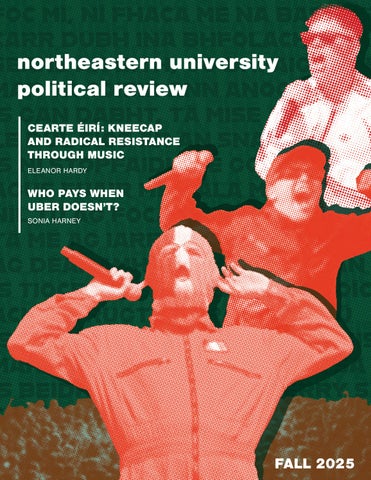
CEARTE Éirí: Kneecap and Radical Resistance Through Music
Eleanor Hardy (6)
Who Pays When Uber Doesn’t?
Sonia Harney (10)

Weaponizing
Humanitarianism: The Geopolitics of U.S. Foreign Aid Distribution
Jennifer Yu (20)







From News to Noise
Aishi Kapoor (8)
Reentry Isn't Freedom: The Black American Struggle After Incarceration
Gabriella Shafman (12)
Mobilizing the National Guard Is Stupid, but Constitutional
Zachary Kwon (14)
The Future of Federal Injunction Power and Birthright Citizenship in Trump's America
Isabella Bregante Kennedy (16)
An American Spin on Oliver Twist: Dismantling of Aid for Homeless Students
Kaitlyn Alessi (22)
Imperialism: The Driving Force Behind Police
Militarization in the U.S.
Abigail Greenblatt (24)
When Oversight Ends: What the Decline of Federal Consent Decrees Means for Police Reform
Kennedy Little (26)

Kneecap has emerged as a pioneer in Irish-language rap, producing caustic political satire with playful, punchy bilingual lyricism. Their tracks inject new life into Gaelige, one of Europe’s oldest languages, challenging sanitized depictions of Irish culture with gritty lived realities of post-Troubles youth. Once marginalized through centuries of colonial suppression, the Irish language is often confined to classrooms, folklore, or the conservative countryside. Kneecap reclaims it for urban, working-class modern life through innovative slang and curses.
The bilingual rap group was recently exonerated from terrorism charges, courting continuous controversy. The Band was barred from performing their Canadian tour leg following allegations that the group supported Hezbollah at a festival last November. Previously, the group was forced to cancel their US tour after their visas were revoked on the grounds of antisemitism following outspoken criticism of Israel's bombardment of Gaza. Their performances — both a cultural statement and political provocation— were censored in their April Coachella














livestream and swiftly condemned, garnering especially pointed critiques from American pro-Israel activists and the British media. Kneecap denies allegations, framing the backlash as a broader effort to silence dissent against imperialism and state violence. But despite criticism, their growing popularity embodies a movement to resist colonialism through the Irish youth's embrace of the indigenous language.
Formed in Belfast, Kneecap draws on their Catholic Northern Irish backgrounds and a unique cultural tradition of politicized song and language. Dating back to 12th-century Anglo-Norman invasions, Irish political chant and rebel songs evolved over centuries into a dynamic, participatory form of defiance. Irish rebel songs like "Óró Sé do Bheatha 'Bhaile" or even punk band U2’s “Sunday Bloody Sunday” function as oral archives of struggle. They activate collective memories and stories, and













provide an artistic outlet to process trauma and political persecution.
Historical English imperialism in the region imposed a hegemony over Irish speakers and the Catholic, working-class majority. It repressed political art and media — as well as access to the Irish language — to homogenize culture under English control and silence mechanisms for criticism. For years, linguistic extinction became a crucial political means to subjugate Ireland.
Hundreds of years of religious and geopolitical struggle culminated in Northern Ireland in the 1960s, when antipathies sharpened into violence. The Irish language is politically linked with Republicanism and Irish Catholics, especially during the period of the Troubles, which spanned two tumultuous periods in Irish history and ended in a controversial partitioning with the 1998 Good Friday Agreement.


During the Troubles, music became a key tool for solidarity, turning pubs and protests into participatory spaces of remembrance and community. British and Unionist counter-insurgency efforts deliberately targeted collective coordination through culture, from burning rebel pubs to weaponizing sound in prisons against political dissidents. In 1971, a bar bombing was spun by the pro-British media to implicate the Irish Republican Army (IRA) and Republican paramilitaries instead of the loyalists responsible for the crime.



After the 1970s, the IRA became known for its paramilitary tactics, including arson, bombings, and

murders. Although the end of the Troubles formally concluded the IRA’s militarism, this history of violence persists within the island’s culture and present-day reality. Despite their repression, the Irish language and Irish music endured, evolving to meet the needs of their communities despite marginalization.
Kneecap both acknowledges and subverts these legacies. Their lyrics simultaneously reference the Provisional IRA and recreational drug use, layering these themes into semi-satirical critiques of post-Good Friday Agreement politics.
While Irish Republican groups like the IRA commonly maintain a staunch anti-drug stance to assert social control — even threatening or committing violence against alleged dealers — Kneecap embraces drug-related imagery and lyricism informed by experiences as Belfast youths. Kneecap’s name itself derives from a brutal punishment dealt by the IRA against dealers. By doing so, they navigate a careful irony that challenges rigid political identities.
Their debut single “C.E.A.R.T.A” — Irish for “rights” — was inspired by rapper Móglaí Bap’s near arrest for spray-painting the word on a Belfast city wall. While Bap fled police custody, his friend was apprehended and refused to speak English, resulting in his detention. Street art and murals across Belfast have been a medium for political expression in the city since the early 20th century. Kneecap uses graffiti to express messages through careful, disruptivematerial aestheticism, such as their 2022 mural of a burning police car.
Despite ongoing controversy, Kneecap has become popular with a youth audience by using Irish in a way that reflects contemporary life — bilingual and complicated. Their appeal extends beyond Belfast and Ireland, resonating with youth and postcolonial listeners worldwide who seek to reclaim Indigenous languages and access cultural pride. From Maori listeners in Aotearoa to the Irish diaspora across the Atlantic in North America, Kneecap’s linguistic embrace reflects wider sentiments to use language as resistance against imperial hegemony.





Kneecap’s public advocacy reveals the dual struggle to reclaim Irish identity while challenging global systems of oppression. Their censorship, especially by the British and American governments — whether through funding cuts, performance restrictions, or media blackouts — fits a broader pattern of repression targeting political artists who critique imperialism and state violence.
legacy of cultural resistance. Rapping in the Ulster dialect of Belfast, their music functions as a contemporary archive of survival — a bridge between listeners through shared experiences of dispossession.
Every 40 days, a language dies. As vessels of culture and heritage, linguistic preservation is a deep form of existential perseverance. Kneecap’s Irish-language innovation is more than revitalization; it is a modern integration of tradition and experiential preservation, which invites younger listeners to embrace culture — not as a static or reliquary commodity, but a way towards transformative self-discovery.



experience with historical memory, using the setting

context of their lived experiences and positionality as Irish-speakers and “ceasefire babies,” the
Drawing sharp criticism across political and religious lines, the group narrowly uses humor to confront intergenerational trauma and urban alienation in a region still heavily polarized and politically volatile. Their work merges personal experience with historical memory, using the setting — Belfast’s Gaeltacht Quarter— to ground their identity navigation in the deeper context of their lived experiences and positionality as Irish-speakers and “ceasefire babies,” the generation born after the 1998 Good Friday Agreement.




In postcolonial contexts like Ireland, artistic suppression often operates through both linguistic erasure and ideological narrative control. By rejecting depoliticized narratives and actively reclaiming the Irish language, Kneecap’s art and political candor continue a
Kneecap’s art and political candor continue a




nection and living ties to endangered sources






Kneecap situates language at the heart of a struggle for autonomous belonging. Beyond


Through language, their art fosters connection and living ties to endangered sources of knowledge and shared histories. Like other Indigenous music movements globally, Kneecap situates language at the heart of a struggle for autonomous belonging. Beyond the Irish isle, global linguistic preservation is a way for marginalized youths to preserve and proudly embrace
preserve and proudly embrace their heritage.








AISHI KAPOOR










Media manipulation, deliberately shaping information to influence public perception, has profoundly transformed the digital age. No longer confined to traditional news broadcasts, it now permeates every corner of the online world. With social media, those who strategically maneuver their online activity now hold the power to shape public perception. While the democratization of information can uplift a more diverse platform of voices, it has also opened the floodgates to misinformation and manipulation. Platforms like X, TikTok, and Reddit have transformed the spread of news, using algorithms and other datadriven metrics to amplify biases, conspiracy theories, and half-truths on an unprecedented scale.
People naturally engage with content that aligns with their beliefs, often ignoring or dismissing opposing viewpoints. This selective engagement, driven by confirmation bias, reinforces existing perspectives and fuels


the spread of distorted narratives. As social media amplifies emotionally charged and polarizing content, misinformation gains momentum, and perception gradually overtakes reality. The media doesn't just manipulate, it capitalizes on people's natural inclination to associate with those who share similar views.

Platforms like TikTok and Reddit curate content based on user behavior, primarily exposing users to content that aligns with their preexisting beliefs. This creates an echo chamber: an environment where individuals are exposed only to information that reinforces their beliefs, increasing polarization and distorting reality. The mechanisms designed to maximize user engagement also contribute to the rapid spread of misinformation, as platforms prioritize content eliciting strong emotional reactions and sustained interaction.





















One of the most effective ways platforms achieve this is by capitalizing on existing biases, particularly gendered narratives. The Depp v Heard case serves as a prime example. While both individuals presented complex legal and personal histories, social media overwhelmingly vilified Heard, casting her as a manipulative abuser while positioning Depp as a sympathetic figure. This pattern reflects a broader media tendency to frame women involved in controversy as deceitful or emotionally unstable, while affording men

greater nuance and sympathy. Platforms do not just allow these narratives to flourish, they amplify them to drive engagement. Outrage fuels clicks, shares, and content creation, making it a lucrative business model for tech companies.










“ Manipulation fuels a self-sustaining cycle that platforms capitalize on to keep users engaged, making it not a side effect of social media, but a core feature of its business model.



Social media platforms' emphasis on controversy strategically uses negative cultural biases that keep users emotionally invested. The





speed at which misinformation spreads makes it nearly impossible to correct narratives once they take hold, and platforms benefit from this chaos. Sensationalized content keeps users hooked, increasing time spent on the platform and maximizing profits from a divided audience. The more users engage in debates fueled by bias and misinformation, the more data platforms collect, allowing these companies to refine their algorithms to push even more provocative content.










more users engage in











Manipulation fuels a self-sustaining cycle that platforms capitalize on to keep users engaged, making it not a side effect of social media, but a core feature of its business model. For example, during the height of the COVID-19 pandemic, YouTube’s algorithm was found to promote videos containing conspiracy theories about the virus and vaccines because
such content garnered high engagement, even when it violated the platform’s















public pledges to curb misinformation, the system continued recommending similar videos, demonstrating how engagementdriven models tolerate and incentivize outrage and controversy.















While the democratization of information can uplift a more diverse platform of voices, it has also opened the floodgates to misinformation and manipulation. “ “ to

of false narratives. Such developments

The unchecked spread of manipulated narratives has far-reaching implications. Politically, misinformation deepens ideological divisions, making constructive discourse rare and inaccessible. On a of digital defamation cases continue to evolve, raising questions about free speech, accountability, and the ethical responsibilities of social media platforms.

personal level, individuals targeted by viral falsehoods face reputational harm, harassment, and emotional distress. The legal ramifications media platforms.



of harmful or misleading content.

model called "Community Notes" has sparked debate. While this approach aims to democratize content moderation, critics argue that it may be less effective in curbing misinformation and could lead to the proliferation of false narratives. Such developments underscore the need for social media platforms to balance free expression with the responsibility of preventing the dissemination of harmful or misleading content.

narratives, and fact-checking information before sharing. Social media can inform and connect people, but it requires responsible use from both platforms and users to create a more truthful digital landscape.



public figures, and organizations often narratives







Investigations revealed TikTok collects user data







spread of misinformation


stricter accountability fact-checking systems, content



Social media companies are increasingly under pressure to address the spread of misinformation on their platforms, leading to calls for stricter accountability measures and ethical guidelines. This includes implementing robust fact-checking systems, enhancing transparency in content moderation policies, and developing algorithms that prioritize accurate information.



developing algorithms that prioritize accurate

For instance, Meta's recent decision to replace its third-party fact-checking program in the U.S. with a user-driven
recent decision to
data

Beyond personal and political consequences, the spread of misinformation has economic repercussions. Companies, public figures, and organizations often experience financial loss due to false claims, as the rapid virality of deceptive narratives can damage careers, disrupt businesses, and erode trust in established institutions. In 2020, a viral claim about the social media platform TikTok stealing personal data from users spread, leading to concerns about privacy and security. Investigations revealed TikTok collects user data like other social media platforms, but little concrete evidence supports claims it funnels data to the Chinese government. Nonetheless, the narrative gained traction and contributed to discussions about banning the app in the U.S.


In a digital age where narratives are formed and spread instantaneously through social media, we are responsible for questioning, verifying, and critically engaging with the information we consume and share. Media platforms thrive on our willingness to embrace certain narratives based on opinion rather than fact, and until we recognize our role in the cycle, little will change. Only by teaching media literacy and holding digital platforms accountable can we navigate the complexities of the modern information age with integrity.

the narrative gained traction and contributed is engaging with misinformation policies. Despite curb misinformation, driven models tolerate and





As digital platforms evolve, so do their manipulation tactics. The challenge is recognizing misinformation and combating it through accountability, education, and collective action. Holding platforms accountable may require regulating social media algorithms to reduce the spread of misleading content. Users must learn the importance of engaging with diverse perspectives, questioning emotionally charged





















































qualify for UI benefits. But gig platforms have long maintained that drivers are independent contractors. This designation means the platforms avoid payroll taxes, including contributions to UI, Social Security, and Medicare. It also removes obligations to provide benefits like overtime pay or workers’ compensation.
“
Courts, not companies, make classification decisions. The Department of Labor is clear: even if a company calls someone an
“ If platforms want to keep flexibility, they need to share responsibility. Right now, they’re getting both, and everyone else is footing the bill.






















Enforcement proved limited. Uber did not voluntarily change its classification practices after the ruling. The state did not issue clear guidance or require back payment of taxes. Workers remained in the dark. The legal victory showed potential, but the system lacked follow-through.

independent contractor and the worker agrees, that agreement does not hold legal weight. Only courts or government agencies can determine whether a worker is legally an employee.
In November 2023, the state reached a new milestone. New York and Uber announced a first-of-its-kind settlement requiring Uber to make retroactive and future payments into the state’s Unemployment Insurance Trust Fund. The agreement covers contributions dating back to 2013 and mandates quarterly payments moving forward. Although the total dollar amount was not disclosed, the Department of Labor emphasized through this settlement that the state believes appbased drivers are eligible for UI and entitled to financial protections. It marks the first time Uber has agreed to contribute to UI in this way, even as it continues to maintain that its drivers are independent contractors.
Despite this, platforms continue to argue that drivers control their schedules and locations and, therefore, are not employees. However, drivers experience limitations similar to those found in traditional employment. App companies set fares, deactivate workers, and impose rating systems. Uber believes that you are selfemployed when it suits them.




In 2019, the New Jersey Department of Labor audited Uber and concluded it owed $650 million in unpaid UI taxes and penalties. The company pushed back.
After years of legal battles, New Jersey settled with Uber in 2022 for $100 million, less than onesixth of the original figure.


In December 2020, New York’s Appellate Division ruled in Lowry v. Uber Technologies Inc. that Uber drivers were employees for UI purposes. This ruling should have expanded access to benefits.




In practice, most drivers still struggled to get approved. Many were funneled into Pandemic Unemployment Assistance (PUA), a temporary federal program that paid less and offered fewer protections than traditional UI.



















According to the NJDOL, Uber initially refused to provide complete payroll records during the audit. For three years, the company challenged the findings. Once in court, Uber produced select records to argue for a lower assessment, undermining the original audit. The company has not started paying into New Jersey’s UI system, and the settlement did not require Uber to reclassify its drivers as employees. While the payment covered misclassification between 2014 and 2018, it did not change Uber’s classification practices or require future contributions.
The audit showed that states can identify large-scale misclassification and calculate its financial impact. But the final settlement demonstrates how even aggressive action can fall short. Powerful companies can delay legal processes until political pressure fades. A large initial figure becomes a smaller final payment.
California has also been a battleground for gig worker classification. Assembly Bill 5, passed in 2019, applied the ABC test to determine employment status. The law presumed workers were employees unless companies could prove they were free from control and had their own independent trade.

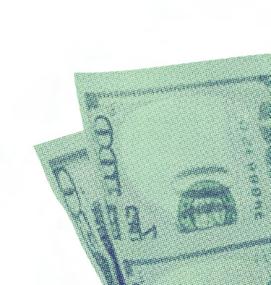
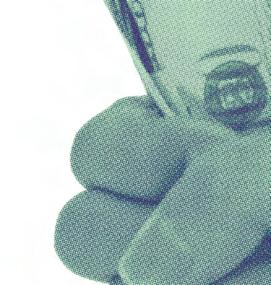
When companies do not pay into UI systems, the cost does not disappear. It shifts. During the pandemic, many app-based workers received PUA benefits funded entirely by the federal government. Others received nothing.
State UI trust funds are built on employer contributions. If major employers do not participate, these funds become weaker. In the long term, states may need to borrow from the federal government or reduce benefits. This reduces coverage for all workers, not just those in gig jobs.


enforcement, however, its real-world impact remains limited.





Some cities are experimenting with portable benefits programs that allow workers to build up rights regardless of employment status. Appbased companies like Uber, Lyft, and DoorDash have promoted their own “fake” versions, describing small stipends or savings accounts as “portable benefits.” These programs do not provide access to unemployment insurance, workers’ compensation, health insurance, or paid leave. In 2024, DoorDash launched a pilot in Pennsylvania and expanded to Georgia, where it contributed just 4 percent of pre-tip earnings. Many of these initiatives are funded by workers or customers, not companies.



With enforcement that depends on state agencies proving unreliable, a hybrid model offering UI from both the federal government and companies could offer a solution. Companies would still pay into state systems, but federal UI could serve as a fallback. That way, all eligible workers receive support, regardless of classification. This avoids rewarding companies for noncompliance while making the safety net more accessible. Without federal UI reform, classification and compliance will remain fragmented. States can audit and sue, but those efforts depend on resources and political will.
Uber and Lyft responded by bankrolling Proposition 22, a 2020 ballot initiative that exempted app-based drivers from AB5. The companies spent over $200 million campaigning for the measure. Voters passed it, and drivers remained contractors without benefits.




In 2021, a California judge ruled Prop 22 unconstitutional. Then, the Court of Appeal overturned that decision in 2023. A year later, the California Supreme Court agreed to hear the case and upheld its constitutionality, continuing to fail to hold the companies accountable. Legal uncertainty continues. Meanwhile, Uber and Lyft have not paid traditional UI taxes in California. A 2021 report from the UC Berkeley Labor Center estimated that the companies avoided $413 million in UI contributions under the Prop 22 framework. Years later, this number continues to grow, as Uber continues to exempt itself from paying.


The term “portable benefits” once meant something broader. A 2016 Aspen Institute report proposed a model where companies pay into benefit accounts based on hours worked or income earned, regardless of employment
Uber and Lyft built their model on flexibility. But that flexibility comes with a cost. When drivers lose work, they have few options. When companies refuse to pay into UI systems, public programs fill the gap. And when courts rule in workers’ favor but enforcement falls short, nothing changes.
“ “ The system isn’t broken. It’s working as designed.
classification. These benefits would be universal, pro-rated, and not tied to a specific job. In theory, that approach could offer more consistent protections for independent workers while preserving flexibility. The problem is that current pilots fall short, and platforms have spun the idea into a strategy to avoid worker classification entirely and evade paying their fair share in taxes.
Federal solutions are still missing. In 2024, the Department of Labor issued a new rule that tightened the definition of independent contractors, aiming to better reflect the nature of gig work and close loopholes used to justify misclassification. But in May 2025, DOL enforcement of this rule was paused amid legal challenges. Still, courts have upheld the rule in private lawsuits. Without agency
The system isn’t broken. It’s working as designed. Gig companies were built to operate outside traditional employment structures, and the UI system wasn’t designed to cover the growing number of workers excluded by those definitions. That mismatch leaves courts, states, and workers scrambling to plug gaps that companies exploit by design.
If states want to ensure UI covers all workers, classification rules need to change. If platforms want to keep their current structure, they should contribute to the public systems that support their labor force.
The bill always comes due. The question is who pays it.









































Ain the 1700s, enforced curfews, hunted for enslaved people who ran
life. Black Codes criminalized everyday behav-
merican policing was never a neutral institution; it was born from systems designed to control African Americans. Slave patrols, first organized in the 1700s, enforced curfews, hunted for enslaved people who ran away from their masters, and terrorized enslaved populations, embedding racial control into the very foundations of law enforcement. Even after slavery ended, these practices carried into Reconstruction-era policing, linking surveillance and punishment to Black life. Black Codes criminalized everyday behavior, convict leasing transformed false charges into forced labor, and Jim Crow laws restricted rights and movement, all ensuring that freedom for Black Americans remained conditional and tightly controlled. This history helps explain why “reentry” today is anything but a return. Though the word implies that someone is being welcomed back—back into society, back into the community, back into freedom—for millions of African Americans released from prison or jail each year, reentry is anything but a return. It marks the start of a new system of control. Retry is a new set of systemic traps, barriers, and stigmas that continue to punish them long
include losing access to stable housing, employment, and voting rights. Due to the fact
them, keeping cycles of poverty, exclusion, and surveillance in place. The United States incarcermost men born today can expect to be incarcerated in lifetime.
after they have served their sentence. These include losing access to stable housing, employment, and voting rights. Due to the fact that Black Americans are disproportionately incarcerated, these restrictions fall hardest on them, keeping cycles of poverty, exclusion, and surveillance in place. The United States incarcerates Black Americans at nearly five times the rate of White Americans, despite roughly equal rates of offending for most crimes. One in five Black men born today can expect to be incarcerated in their lifetime. Policymakers such as Presidents

Congress who sponsored the Second Chance Act, often frame reentry as a “new beginning” or “second chance.” They use this language to emphasize rehabilitation and promote opportunities for successful reintegration into society. But for the formerly





tional, partial, and deeply restricted.
incarcerated, the reality is that freedom is conditional, partial, and deeply restricted.
Even after release, systemic barriers in ues, Black








demonstrates a consistent pattern of Bush, Obama, and Biden, along with members of
Formerly incarcerated people face an unemployment rate of over 27%, nearly five times history, including during the Great Depression. For Black individuals, the rate is even higher.
less likely to receive callbacks than white applicants with a criminal

Even after release, systemic barriers in employment ensure that punishment continues, falling hardest on Black communities. Formerly incarcerated people face an unemployment rate of over 27%, nearly five times higher than the general population and higher than any recorded unemployment rate in U.S history, including during the Great Depression. For Black individuals, the rate is even higher. According to a 2003 study by Devah Pager, Black applicants without a criminal record were less likely to receive callbacks than white applicants with a criminal record. Repeated research on this topic demonstrates a consistent pattern of




disproportionately denied employment compared to their other racial counterparts. This lack of stable employment is the direct result of legal and social systems that allow, even encourage, discrimination against people with criminal records. Families experience greater financial strain, children face instability that disrupts education, and entire communities are destabilized as concentrated unemployment fuels poverty.
Without stable table income, many struggle to secure housing, support their families, or avoid returning to the underground community. The “underground community” refers to the informal or illicit economy (selling drugs, goods, services, weapons) that many formerly incarcerated people are pushed back into when barriers in employment and housing shut them out. Avoiding it is critical, as returning to this cycle often leads to instability and reincarceration.
Stablehousing is also essential for reentry, but public housing is notoriously inaccessible to individuals with criminal histories. There are currently 1,3000 documented local and state barriers, plus 26 federal barriers, that restrict individuals with conviction histories from obtaining housing, and those incarcerated more than once face homelessness at rates 13 times higher than the general population. This disproportionately affects Black families, who are more likely to rely on public housing due to systemic economic exclusion. Even when only one family member has a record, the entire household can be penalized. Families may be denied public housing or even evicted under One Strike Policies, and benefits like SNAP or TANF can be reduced if one person is disqualified. As the NAACP Legal Defense Fund notes, this practice destabilizes communities and increases homelessness, especially among Black youth and formerly incarcerated Black women. The lack of stable housing and benefits also feeds back into the prison system itself, as Black people experiencing homelessness are more likely to be criminalized through ordinances against loitering, panhandling, or sleeping in public, making them vulnerable to arrest simply for trying to survive.
Access to education is similarly inequitable. 72% of colleges ask about criminal history on applications, and studies show that people with criminal histories are less likely to be admitted. Even when Black students are admitted, they may face additional scrutiny, from stereotypes about their qualifications to disproportionate disciplinary actions, while also having fewer financial aid options due to systemic wealth gaps and inequitable scholarship distribution. These stereotypes are particularly harmful because they reinforce the false idea that Black people are arrested more often because they commit more crimes, when in reality, Black communities are disproportionately impacted by racial profiling and overpolicing
in their neighborhoods. These barriers not only make higher education less accessible but also deepen long-term economic inequality. This is despite the clear evidence that education, especially post-secondary programs, significantly reduces recidivism by about 43% and improves quality of life. Equal access would not only expand economic opportunities for Black individuals but also strengthen family stability, reduce cycles of incarceration, and create lasting generational benefits.
Lack of access to public transportation is another often-overlooked barrier to reentry. Many predominantly Black communities are “transit deserts,” where reliable, affordable transportation is nearly nonexistent. While rural communities across the U.S. also face limited transit access, the issue takes on a distinct racial dimension in urban areas where Black residents are concentrated. Lack of reliable public transportation doesn’t just affect these communities; it affects poor people more broadly, who are disproportionately Black and Brown. For wealthier suburban residents, limited train or bus service is often manageable because car ownership is assumed. But for low-income families without cars, the absence of accessible transit makes it nearly impossible to hold a steady job, attend school consistently, or even reach grocery stores. In this way, inadequate transit systems reinforce cycles of poverty and exclusion, deepening both racial and economic inequalities. Decades of redlining, highway construction through Black neighborhoods, and underinvestment in public transit have left Black communities cut off. This prevents individuals from attending job interviews, meeting with parole officers, or accessing healthcare. This in turn deepens poverty, increases the risk of reincarceration, and destabilizes families and communities.
Additionally, decades of urban planning decisions have isolated low-income Black neighborhoods from employment centers. These geographic inequalities intersect with criminal justice policies, contributing to parole violations and cyclical reincarceration. Policies that require frequent in-person meetings with parole officers, mandatory court appearances, and enrollment in treatment or job programs set people up to fail and often send them back to prison for technical violations rather than new crimes.
strips Black Americans of full rights while maintaining constant oversight. In this case, constant oversight refers to parole, probation, and heavy policing that keep Black Americans under strict supervision and threat of reincarceration, making their freedom conditional. Parole keeps people under strict check-ins, where even minor violations (missing an appointment, breaking curfew, or traveling without permission) can result in their return to prison. Probation imposes curfews and employment mandates. Ankle monitors extend prison into the home through constant electronic surveillance. Mandatory drug testing assumes guilt and penalizes individuals who miss or fail tests.
For Black Americans, reentry is not a guarantee of freedom; it is a continuation of a system that never let them go in the first place. From the beginning, Black Americans were trapped by slavery, Black Codes, and Jim Crow laws that criminalized their very existence and restricted their movement, labor, and rights. Today, that system persists through mass incarceration and reentry barriers that strip away their access to jobs, housing, voting, and public benefits, ensuring that punishment extends far beyond a prison sentence. In this way, reentry is not liberation but the new dominant mode of racialized social control in America. Without genuine reintegration, freedom is only an illusion. When returning citizens are denied fundamental rights and opportunities, they are set up to fail, and entire communities are forced to carry the weight of cycles of poverty, instability, and exclusion. Changes must start with dismantling these policies. Voting rights, housing access, and employment opportunities must be fully restored the moment someone is released from prison. Investments in reentry programs that provide









As if that is not enough, the surveillance continues. Parole, probation, ankle monitors, and mandatory drug testing all contribute to what many call “carceral citizenship,” a status that


education, job training, and mental health support are essential to breaking generational cycles of incarceration. Ultimately, reentry must be redefined, not as a continuation of oppression, but as a genuine chance to rebuild lives and communities.


ZACHARY KWON / POLITICAL SCIENCE AND ECONOMICS 2027


It has been attributed to the late associate justice Antonin Scalia that it is possible for an act of government to be extremely stupid, but still constitutional. It is tragic, but remediable when the government does something both stupid and unconstitutional; it is just tragic when it is stupid.
Regrettably, the actions of the second Trump administration illustrate this dogma skillfully. Many of President Donald Trump’s acts are both unconstitutional and stupid, in the sense that they obviously violate the Constitution and create an aggregate deficit to the Union as a whole. Consider Trump’s executive order attempting to subjugate the birthright citizenship clause of the Fourteenth Amendment. Such an executive order cannot be justified by either the strictest textualist interpretations of the Constitution or the broadest liberal ones.






government, no matter how pompous, illogical, or menacing, will be permitted under its constitution. The constitutionality of such acts is not upheld to condone such laws or affirm their morality, but rather, to protect whatever important principle reared them. Unfortunately, Trump's decision to mobilize the National Guard
Some acts of government, no matter how pompous, illogical, or menacing, will be permitted under its constitution. “ “ “
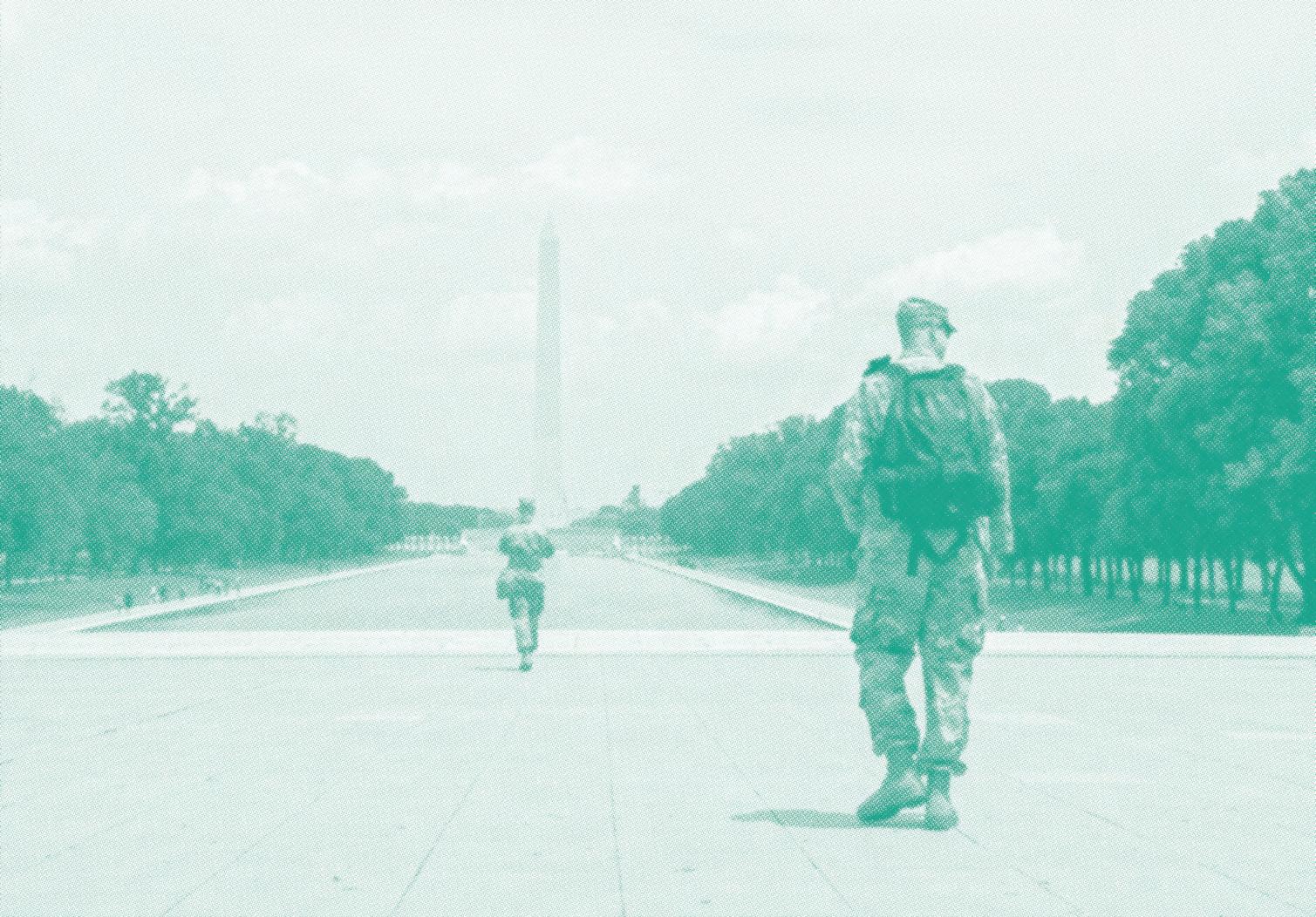
However, a few of the Trump administration’s actions are constitutional despite the ill intent that compels them. Regrettably, Trump’s mobilization of the National Guard and the U.S. Immigration and Customs Enforcement (ICE) are among such actions.
It is a fundamental caveat of living in a constitutional republic that some acts of
is necessarily constitutional, under the principle that the president—as commander-in-chief—is qualified to mobilize soldiers as he deems fit. Such an act is purely one of executive power, which is provided to the president under Article II, Section I, Clause I of the Constitution: “the executive power shall be vested in a president of the United States of America.”
This is not to say that the other two branches are not granted discretion in the exercise of the military. For example, the judicial branch has ruled military tribunals unconstitutional during the War on Terror, and most prudently, the Framers granted Congress the power to declare war. But the ability to quickly mobilize soldiers is fundamentally different from either of these acts. Both the legislative branch and the judicial branch are necessarily more deliberative compared to the executive: when a crisis ostensibly demanded it, the Framers believed the president would need the ability to act quickly and with little obstruction. This is why Congress has the ability to declare war, but the president has the ability to move troops—the former is an enormous responsibility that requires careful deliberation and debate, while the latter must be conducted spontaneously.
The responsibility of mobilizing troops in the manner Trump has can be granted to no other branch but the executive. The legislative and judicial are simply not nimble enough. It is not, generally, the judiciary’s place to swat down acts by the president that are made primarily in his capacity as commander-in-chief,
or as Trump might see them, to “protect” the people. Suppose the extremely unlikely scenario of the judiciary rejecting the president’s direction to quell a domestic uprising. Such a scenario is highly improbable, but illustrates that the judicial branch should rarely interfere with the executive’s role as commander-in-chief. Allowing the judiciary to rule moving troops as unconstitutional would menace the president’s military discretion.
It is deeply regrettable that the mobilization of the National Guard and ICE is a constitutional act used to corroborate unconstitutional ones. “ “
Of course, it is unlikely that the Framers would deem modern illegal immigration as a crisis so enormous it warrants “protecting” the people. It is tragic to think that an important power the Framers crafted 238 years ago—the ability to mobilize soldiers with little Congressional or judicial oversight— would be used to menace American citizens, ignite fear in Spanish-speakers, or intimidate local politicians into bending to the federal government. It is deeply regrettable that the mobilization of the National Guard and ICE is a constitutional act used to corroborate unconstitutional ones.
laid to the American people. In fact, such a duty was laid to the American people, on three separate occasions: in 2016, 2020, and 2024. Each time, the people have made their voices heard through the Electoral College, and the acts of the second Trump administration are the results. It can easily be argued that Trump is not qualified, intellectually or militarily, to mobilize the National Guard or ICE in the manner he has. Unfortunately, voters last November thought otherwise. The Trump administration’s mobilization of the
National Guard and ICE are a humble reminder of the Constitution’s supremacy, and for better or for worse, the fact that the Constitution can be an undemocratic document. The provisions of the Constitution exempt a handful of principles—such as those protecting free speech—from the normal democratic process. And in the same vein, the people and their legislatures may seek a law that aggregately benefits the Union which might be later struck down for violating the Constitution. It is regrettable that the manner in which Trump has mobilized soldiers is one such principle.




































































Over the past decade, federal courts have consistently challenged executive branch actions. Most recently, the narrative has changed and the constitutional authority of the federal courts to stifle the executive orders has been questioned. While the Constitution does not directly articulate the presidential right to issue an executive order, the United States has a long history of using them as a means to make proclamations often relating to emergent situations requiring the president’s immediate attention. While executive orders of centuries past naturally look different from the executive orders we see today, they laid the groundwork and have helped to establish a crucial precedent for modern presidents. The Trump Administration’s recent executive orders, however, have not aligned with this precedent, and bipartisan discussions are viewing these orders as arbitrary attacks used to usurp constitutional checks and balances.

Because states have little power in curbing federal executive actions, they often reach for universal, or nationwide, injunctions, which are orders from a federal judge attempting to act against an executive action and impair its ability to be invoked for the entire country. These injunctions prevent the federal government from enacting and implementing a contested "law, regulation, or other policy."
A recent Supreme Court ruling directly challenged Executive Order 14160, which seeks to abolish birthright citizenship for individuals born in the United States whose parents’ are not American citizens. A federal injunction, issued by a district court in Massachusetts on February 13, 2025, was filed against the order, placing a 30-day pause on its enforcement. However, on June 27, 2025, the Supreme Court ruled 6-3 to stifle the power of the lower courts to issue nationwide injunctions.



This decision will significantly impact executive actions moving forward, not just during the current Trump administration, but also during future presidential administrations, as it opens the floodgates for potential arbitrary and unchecked executive power. Judges across the United States will be unable to block executive orders and other federal policies––the effects of which will be felt on a global scale. It not only erodes and dismisses judicial power while swelling presidential authority, but completely contradicts the equilibrium of the three distinctly powerful branches of government the Founding Fathers intended. It dirties the water between authority within the branches and makes it unclear who yields the power, when they can use it, and when it can be stopped.
policies that have been paused by lower court injunctions. The Supreme Court held that universal injunctions "likely exceed the equitable authority that Congress has given to federal courts," and that federal courts are no longer authorized to issue universal injunctions under the Judiciary Act of 1789.
lower courts and permit the administration to operate with less concern for state pushback. Universal injunctions have served as the main line of defense against President Trump and his administration in halting the execution policy agenda components, such as Project 2025 and federal grant funding––namely because executive orders of this nature are in violation of many provisions within the Constitution––particularly those regarding congressional checks on executive power.
This decision will significantly impact executive actions moving forward, not just during the current Trump administration, but also during future presidential administrations. “ “






















In Trump v. CASA, the Supreme Court ruled that federal district judges may no longer grant nationwide injunctions against policies, lifting numerous nationwide blocks on executive orders. The lens of the case particularly focused on birthright citizenship and immigration policy, marking a win for the Trump administration. This decision is likely to shift how the administration exercises its power going forward, as the ruling curtails the bipartisan ability to curb legislation coming from the executive branch. Amid escalated political turmoil surrounding immigration policy, this ruling stirs concerns, not only relating to immigration, but also relating to the implementation of other executive











but is not limited to hindrances on White House



federal funding. As universal




executive branch administrative actions, particularly
With this ruling, the Court acquiesced to the administration's request for partial stays of the lower courts' injunction. Justice Amy Coney Barrett, writing for the majority, asserted that the duty of the Executive is to follow the rule of law. However, she declared, the Judiciary does not have "unbridled authority" to enforce such duties, and at times, the law "prohibits the Judiciary from doing so." In essence, the ruling establishes that no matter the constitutionality or legality of an executive policy, a federal district judge can no longer temporarily stop its enforcement on behalf of the entire country. The ruling comes in the wake of intense political turmoil and federal government operations, such as mass deportations and taxation cuts for the wealthy, that have been highly contested by not only policymakers and judges, but also by United States citizens. The decision leads the federal courts into
This decision signifies a significant loss for federal judges, as 25 national injunctions were filed in the first 100 days of President Trump's second term in an effort to block Trump’s wave of executive orders. This includes, but is not limited to hindrances on White House policy regarding voting rules, information disclosure, federal employment, and federal funding. As universal injunctions are a key tool for federal courts to contradict executive branch administrative actions, particularly executive orders, the Court's ruling will likely hurt many






district judge can no longer temporarily stop behalf only and judges, but also by United States citizens. The decision leads the federal courts into policy, marking a win for the Trump shift its surrounding implementation


























uncharted territory, as their jurisdiction and checks on executive power have been severely limited.


At its core, the case is more procedural than substantive because it clarifies the power of the judiciary without providing specific limitations on particular policy issues, therefore not directly ruling on the issue of birthright citizenship. However, the judgement will now allow President Trump to expedite executive orders without congressional approval and face little to no opposition from the federal courts. It poses many questions about the future of partisanship in our federal government, as it indicates that if a president feels a bill will not pass through the bipartisan Congress, they can forgo traditional routes with minimal checks on their power.
in Trump v. CASA is monumental, as it will allow for unabridged anti-immigration legislation to be produced from the executive
All persons born or naturalized in the United States, and subject to jurisdiction thereof, are citizens of the United States. “ “
branch, putting large populations at risk.




Birthright citizenship is a legal principle within the United States that automatically grants citizenship to individuals when they are born. This can manifest in one of two ways: 1) ancestry-based citizenship, or jus sanguinis, or 2) birthplace-based citizenship, or jus soli. Ancestry-based citizenship, though less pertinent to the CASA case, extends citizenship to children born outside of the United States if their parents are United States citizens. Birthplace-based citizenship is conditional on the place of birth and refers to an individual's "right of the soil." The 14th Amendment of the United States Constitution states that "all persons born or naturalized in the United States, and subject to jurisdiction thereof, are citizens of the United States."


Additionally, the CASA case will manifest plentiful complications for plaintiffs moving forward who are attempting to gain relief from particular executive policies, stretching far beyond the scope of immigration. In her dissent, Justice Sonya Sotomayor made the bottom line of this ruling abundantly clear: "No right is safe in the new legal regime the Court creates." Today, she explains, the threat is to birthright citizenship, but tomorrow, the threat could be to other divisive political issues, such as firearms or religion. The fight will not end with birthright citizenship and the inability of the courts’ to issue a universal injunction. Other cases, such as Loving v. Virginia, which established the right to interracial marriage, or Griswold v. Connecticut, which declared the right to contraceptives, could be on the chopping block.







Birthright citizenship is uniquely American in that it is not a common policy globally, and it has served as an integral part of expanding immigration rights within the states. As such, birthright citizenship and immigration policy have been a front-running divisive factor within politics for decades, with President Trump going so far as to make immigration the centerpiece of his second term in office. During his third campaign, President Trump declared that on “day one,” he would “launch the largest deportation program in American history,” therefore making the American promise of immigration and citizenship rights even more uncertain. This is why the ruling














With the power of the courts being so limited, it is unclear whether or not President Trump could issue an executive order overruling these decisions.
By restricting the ability to issue a universal injunction, the Supreme Court has made it far more labor-intensive to obtain broad and sweeping relief against unlawful government policies. Rather than federal judges filing all-encompassing injunctions, the impetus will now be on the individual to file a lawsuit or a class action suit. This case will drastically limit access to justice for individuals with fewer resources or the ability to seek legal counsel against executive initiatives. The American Immigration Council posits that until a change is made, "the amount of damage that could be done... especially around a fundamental constitutional right like citizenship, is extreme." Alongside Justice Sotomayor in her dissent, Justice Ketanji Brown Jackson asserted that the ruling will "disproportionately impact the poor, the uneducated, and the unpopular,” namely those who do not have the means or resources to obtain a lawyer and who "often find themselves beholden to the Executive's whims.”


face of insurmountable adversity. While combative options have been substantially limited, there are still legal pathways for those who have been directly affected by unlawful executive orders to seek justice. Civil suits and class action suits are of course an option, but there are legal barriers surrounding these cases, therefore making the process far more laborious and time-consuming for the indi-
executive procedures. Plaintiffs filing cases against actions that appear unconstitutional may add APA § 706(2) to their complaint, which would request that the challenged policy be classified as "not in accordance with the law."Adding APA relief sets in motion a different area of legal actions against unconstitutional executive policies and is a substantiated alternative that an individual can use as a replacement for a universal injunction.
“ “
No right is safe in the new legal regime the Court creates.
viduals involved than a judge filing a national injunction. However, non-partisan and independent organizations like Just Security offer a different route.


As a result of the CASA decision, many Americans are finding themselves at a loss for solutions and optimism in the

Just Security believes that plaintiffs should now seek APA Review under the new executive orders. APA, or the Administrative Procedure Act, is a federal law that governs how federal agencies develop and issue specific regulations. It outlines guidelines for rulemaking, procedures, adjudications, and how courts may review the agency's behavior. Individuals seeking justice may use APA Review in birthright citizenship cases and other cases disputing unlawful














While there is no foolproof means to bypass the ruling of Trump v. CASA, many government organizations and non-governmental entities are working tirelessly to seek justice for individuals affected by the recent ruling. This will mark the beginning of a new era of litigation and opposition to executive policy. The power to curtail executive power was stripped from the courts, meaning that individuals directly impacted by executive orders will become far more reliant on legal agencies as well as the bureaucracy. This shift will set a new precedent for legal action taken against the federal government––the success of which is difficult to hypothesize. As we enter President Trump's tenth month in office, the impact of this case poses questions for what executive orders and policies he may begin to roll out with virtually no means for state or federal opposition. At a time when the very fabric of our democratic political structure is at stake, an attack of this nature on our judiciary and right to representation within government is a threat that impacts all of us.
















n 1917, President Woodrow Wilson declared that the United States’ duty as a leader on the global stage was to “make the world safe for democracy.” His bold vision set a powerful precedent for US intervention globally while defining an era in which the United States could position itself as a moral force in international affairs.
More than a century later, President Donald Trump introduced his America First doctrine, marking a sharp departure from Wilson’s legacy. While President Trump justifies his moves under the guise of improved government efficiency, his administration’s retreat from multilateral collaboration undermines US commitments to global humanitarian action.
As the Trump Administration continues to divest from international humanitarian aid programs, its disengagement coincides with an expanded willingness to fund other strategic partnerships abroad.

Rather than distributing aid based on humanitarian need, the U.S. increasingly prioritizes nations that serve its geopolitical interests while turning a blind eye to crises that demand attention.
During a time when global crises demand urgent attention, the US must revisit its international aid portfolio based on need, not strategic advantage. Above all, the US must begin to place human welfare above geopolitical gain to bring forth President Wilson’s vision of the US as a kinder global leader.
The establishment of the U.S. Agency for International Development (USAID) in 1961 seemed to demonstrate the United States’ commitment to the global good. Its earliest projects have supported public health initiatives in rural Africa, funded

water access projects in Indonesia, and spearheaded support initiatives to war-torn Syria. Decades later, the United States has regrettably fallen short on its promises to equitably support struggling nations across the world. Now, while certain countries receive extensive support from the United States, others remain ignored. The paradox of US international aid lies in its bias towards countries of strategic interest. While certain nations receive aid under the notion of strategic interest, those most at risk receive comparatively little attention. To this, the story of Yemen becomes a paramount example.




Since 2014, civil war has thrown Yemen into continuous conflict. Violence caused by the war between the Yemeni government and Houthi insurgents along the


Red Sea have driven the country into a humanitarian crisis. Over 55% of Yemen’s groundwater reservoirs are deemed unsafe for drinking. Simultaneously, supply chain disruptions caused by the war have made it more difficult for water to be brought in.


Despite an urgent need for international support, the United States has decided to discontinue aid shipments to Yemen as part of the Department of Government Efficiency's (DOGE) efforts to downsize national spending. Meanwhile, violence caused by the war continues to threaten the safety of Yemen’s rural communities, risking irreversible humanitarian collapse. Today, these withdrawals highlight a broader pattern of negligence.



“Similarly, Taiwan has also received preferential treatment due to its semiconductor production facilities. In an era of rapid technological advancement, Taiwan has achieved near supremacy
Despite President Trump’s most recent UN address undermining international cooperation, the United States’ continued involvement in multilateral humanitarian commitments are key to maintaining humanitarian equality beyond our borders. Following the United Nation’s recent reveal of the UN80 initiative—outlining new plans to restructure UN efficiency—partnerships between the United States and the UN will continue to be the most efficient way for American aid to be funneled into the regions that need it most.
The United States has made it abundantly clear that it is more concerned with its own self-interest than humanitarian crises. “









Syria also conto cuts. Following Ahmad al-Shara government after regime, the Trump Administration’s orders to


Regrettably, while the US continues to
Beyond Yemen, countries like Syria also continue to struggle against recent USAID funding cuts. Following the recent establishment of the Ahmad al-Shara government after the collapse of an authoritative Assad regime, the Trump Administration’s orders to discontinue Syrian aid jeopardizes Syria’s fragile recovery. Regrettably, while the US continues to champion democracy and stability abroad, it withdraws support from nations in pursuit of those ideals the moment they fall outside its strategic interests.
As DOGE pushes divestments from countries like Yemen and Syria, the Department of War (DOW) concurrently increases its pledges to provide military aid to others. Notably, the United States continues to channel more than $174 billion in aid to Israel to support its ongoing war efforts. Aid to Israel includes both direct economic support funds as well as loan guarantees on what is essentially a blank check to the country’s military leaders.

in terms of global chip production. In 2024 alone, Taiwan produced over 90% of the world’s semiconductors. In order to defend American access to Taiwanese chips, the US has been willing to deploy defense missions to strengthen Chinese deterrence in the Taiwan Strait.
By directing aid only to nations that serve its geopolitical interests, the United States has made it abundantly clear that it is more concerned with its own self-interest than humanitarian crises. Under this framework, countries with little strategic value, like Yemen and Syria, will see support withdrawn amidst a time of catastrophic need, while allies critical to U.S. security and economic interests, such as Israel and Taiwan, receive robust support.

The world is watching. If the United States hopes to maintain its place at the top of the world order, leading as a country that champions the values of democracy, justice, and equality, it must redefine its priorities and place human dignity above geopolitical gain.

To maintain credibility as a global leader, the United States must pair its military and economic commitments with greater efforts to support humanitarian projects. These renewed efforts will shift the narrative away from the weaponization of humanitarian aid and towards a new era of American integrity and genuine global responsibility.



As leaders on the global stage, the United States has a moral responsibility to invest in global humanitarian aid programs. This starts by intentionally collaborating with multilateral organizations such as the United Nations (UN).







KAITLYN ALESSI / CRIMINAL JUSTICE AND PSYCHOLOGY 2028
Our federal government’s perspective has long been for homeless Americans to “pull themselves up by their bootstraps” and secure their places as productive members of society. This demand for rugged individualism ignores systemic injustices at play that keep individuals trapped in cyclical states of chronic homelessness, and does nothing to alleviate the plight of the more than 770,000 adults who were deemed homeless as of 2024. Beyond this adult population, rugged individualism does not even begin to account for what we should do with the more than 1.4 million K-12 students deemed “unhoused” as of the 2022-’23 school year.


incredibly vulnerable population of young Americans, it is essential that we as a nation understand the threats that these budget cuts have on the lives and futures of children left unhoused for reasons far out of their control.


signed the newly christened McKinney-Vento Homeless Assistance Act into place. The defining characteristic of this new act was the installation of rights and services for K-12 students who lack a consistently adequate residence.
We know, Heaven help us, that the best and fairest of our kind too often fade in blooming.” - Charles Dickens, Oliver Twist “ “ “
We have understood since the late 1980s that America’s unhoused students need much more than a tired slogan to begin healing. Since 1987, the primary policy protecting the rights of this unhoused population has been the McKinney-Vento Homeless Assistance Act. The act outlines an unhoused student’s right to remain within their home school district regardless of address permanency, access to identifying documents, and obstacles of transportation.
In 2025, with the Trump-Vance administration’s mass efforts to defund and disband the United States Department of Education (DOE), however, parents and educators around the country lie in fear over what the future holds for their unhoused students. To protect this
The History of
Due to the Reagan administration’s mishandling of public health crises and cutting of social security programs, it should come as no surprise that the 1980s have been coined the “birth of contemporary homelessness”. In 1986, following thousands of Americans’ advocacy, The Homeless Persons’ Survival Act was introduced in both houses of Congress with the goal of providing emergency relief, prevention measures, and systemic reform towards ending America’s homelessness crisis. After undergoing a year of changes to both name and policy, in 1987, Ronald Reagan officially
The importance of upholding a student’s right to remain in their home district on their long-term personal, professional, and academic successes cannot be understated. A 2024 University of Pennsylvania study on the effects of long-term student-teacher relationships found that the impacts of positive student-teacher mentoring were shown to significantly increase academic achievement, socioemotional skills, and executive functioning for up to three academic years post contact between a student-teacher duo.
This increased rate of success that longterm student teacher relationships provide unhoused children is what the Trump-Vance administration wants to take away by disbanding the DOE. In understanding the full implications that Trump’s DOE disbandment will have on McKinney-Vento students, it is important to paint a picture on who these children are, and what exactly is at stake for them to lose.
The Faces of the McKinneyVento Act
Let us use our hypothetical fourth-grader, Chris, as an example of a student utilizing
National associated McKinney-Vento resources. At ten years old, Chris is a straight-A student and star baseball player. Facing difficulties at home, Chris has always relied heavily on the support and motivation of his coach and teachers in believing that he is smart enough to do well in school. Chris, his mother, and his younger sister lost their housing halfway through the summer after fleeing domestic violence at the hands of Chris’s father. Out of fear of retaliation, Chris’s mother chose to forgo the shelter closest to her children’s elementary school in favor of residing in a shelter in a neighboring town.
This shelter does not allow patrons to use its address as a long-term residence on official governmental documents due to the transient nature of its guests. With no long-term legal residency, Chris and his sister would be forced out of their elementary school. On top of losing their home, belongings, and father, these kids would lose their last semblance of support in the form of friends and teachers. However, under McKinney-Vento provisions, DOE funding can be used to avoid this heartache by providing Chris and his sister with access to legal aid in petitioning for crucial identifying documents and transportation to their homeschool. However, Trump’s proposed disbandment of the DOE will mark the dissolution between the 1.4 million kids just like Chris, and the services that they have come to depend upon.
If you were to ask Trump for the rationale behind DOE cuts, he would say this dismantling is designed to empower individual school municipalities to make decisions without strict federal guidelines in the way. If you were to ask many American educators, they would say that this proposed dismantling is designed to line the pockets of those with stakes in an already over-inflated defense budget, and to discredit any public school curriculum which goes against the moral codes of the Trump-Vance administration.
program to maintain admission status and access to their home school districts would be gone.
If Trump’s proposed disbandment of the DOE were to become a reality, over 1 million of America’s children, especially those who are people of color, will lose funding that determines the shape of their lives. In addressing the racial disparity of harm that the proposed DOE disbandment would have on McKinney-Vento impacted youths, it is important to understand that a 2022 report on student homelessness in America found that Indigenous American, Hispanic, and Black students were overrepresented in rates of homelessness compared to overall percentage of the population, while white students were significantly underrepresented. This disruption of the McKinney-Vento program does more than just disrupt the lives of the youths that stand before us. It continues the systemic oppression of poor people of color’s educational rights for generations to come.
Already forced into leading structureless lives, education marks these children’s greatest chance of going on to be healthy, happy, and successful. Without the resources that the American school system
experiencing homelessness to lose the last safety net that they have clung to: an education. In subtracting the McKinney-Vento program from the math classes of our youths, we are adding on another rung to the exorbitantly high ladder one must climb to escape poverty.








Trump is ignorant of the impact to the McKinney-Vento program when he is making loud decries for the disbandment of the DOE. America’s unhoused children are simply unfortunate casualties in the fallout of Trump’s ideological war against educators.
Regarding what will become of the McKinney-Vento program if Trump’s dismantling of the DOE comes to fruition, the director of the SchoolHouse Connection states that the proposed cuts would result in McKinneyVento funding being consolidated into a larger block grant with seventeen other programs. This consolidation would effectively repeal the program in its entirety, the director claims. The ability of all those who benefit from the




provides, these children would be denied the potential to grow into leaders who change this system and create betterment for generations to come. With the potential for Trump’s provisional executive orders to be declared law increasing dayby-day, so is the potential for youth










trial revolution demanded a mechanism to manage the widespread social disorder and riots associated with the working class. Police militarization evolves from domestic policing—facilitated by the adoption of military tactics and acquisition of military equipment and technology—to act and appear like a para-


n 2020, police departments across the US deployed widespread militarized response in light of the nation-wide Black Lives Matter protests. Policing in the US has become increasingly militarized, with the War on Drugs serving as a major catalyst. The War on Drugs, a government-led initiative to fight illegal drug distribution and use, led to policy changes that in turn facilitated the transfer of military equipment to police departments at the click of a button. As police deploy military tactics and equipment, the traditional separation between civilian law enforcement and military disappears, fundamentally changing the relationship between police and communities. Further, racial bias in policing is fundamental. Racialized social control has been a central function of law enforcement, making the issue of police militarization even more pressing. Behind these domestic developments is a foundation rooted in international conflicts, with military veterans using their experience serving in imperial territories to shape domestic law enforcement reforms.



The development of policing has a complex and lengthy historical background that is based on a foundation of British policing. In 1829, Sir Robert Peel created the first police force in London, inspired by his work managing the British colonial occupation of Ireland, where he sought new forms of social control due to riots, insurrections, and political uprisings. These issues were previously managed by the military, however, the Metropolitan Police Act of 1829 established an independent civilian force to protect property, quell riots, put down strikes, and exercise other forms of social control. This model of policing was implemented in the US as the indus-
with large minority populations labelled tactics used munities. Further, racial bias in policMove-



Racialized social control has been a central function of law enforcement, making the issue of police militarization even more pressing.
organized the US army to fight the Philippine-American War. These military reforms amounted to a new imperial-military regime oriented towards counterinsurgency and colonial conquest. The army’s success emboldened the “Police Professionalization Move-ment,” which was pioneered by military veterans who served in the regime— notably August Vollmer, the father of modern American policing. Vollmer served in the Philippines during the Spanish-American War, later returning to the US to use his knowledge to change the face of American policing. His reforms shifted the mindset of law enforcement officers to view metropolitan areas with large minority popula-

tions as analogous to colonial territories. Imperial spaces are racially hierarchical, with colonizers monopolizing power by perpetuating racial ideologies that depict the colonized as uncivilized, incapable of self-government, or prone to criminality and disorder. Bringing this counterinsurgency mindset home means urban areas light as colonies, with communities labelled “inferior” threats to the social order. The same tactics used against insurgents—systematic surveillance, rapid deployment of mobile forces, and swift suppression of potential unrest—were transported to domestic settings through innovations like radio patrol cars, mounted mobile units, the Bertillon system of identification, and fingerprinting. These methods completely transformed early civilian-local policing, creating a framework where civil rights protests and other demonstrations were viewed as equivalent to coups and guerrilla warfare.

The counterinsurgency framework established by veterans like Vollmer would prove enduring, resurfacing with renewed intensity during later national crises. Declaring a national war on drugs was an attempt to win back the hearts of the American people by redirecting national focus toward a domestic enemy, as public support for the Vietnam War declined and Cold War fears of communism waned. The backbone of the War on Drugs was the implementation of harsh enforcement tactics, consisting of massive incarcerations and seizures, which led to the widespread abuse of force. Building on the militaristic founda-

tion laid by veterans like Vollmer, the War on Drugs intensified police militarization through aggressive tactics such as no-knock warrants, rigorous raids and seizures, and riot-suppression techniques. These methods marked a dramatic departure from traditional policing, which had emphasized visible patrol, crime response after the fact, and maintaining order through community presence rather than preemptive force.
Special Weapons and Tactics teams are largely associated with the War on Drugs. The idea for SWAT teams was popularized by Vietnam War veteran John Nelson in the 1960s, who took inspiration from his force recon unit in the marines. The men selected were trained by military personnel to teach the team in counterinsurgency and guerilla warfare tactics, exemplifying the cultural acceptance and adoption of increasingly militarized policing. From the 1980s through today, SWAT teams have been the frontline fighters in the drug war, utilizing armored vehicles and assault rifles to execute highly controversial no-knock raids that have staggering human costs. According to the Police Brutality Center, “studies have shown that no-knock warrants substantially heighten the risk of police violence and are prone to brutality, misconduct, and discrimination,” a truth that is difficult to swallow considering there are around 20,000 noknock raids conducted every year.
was compromising the efficacy and impacting the war effort in Vietnam shifted the issue of drugs from a domestic problem to a national emergency requiring a militarized response. Ultimately, the militarization of policing in the United States has transformed the relationship between law enforcement and the communities they serve as police departments increasingly resemble a paramilitary force shaped by imperialism. The integration of military training, tactics, and equipment—fueled by the War on Drugs and Program 1033—intersects with cultural shifts as police officers adopt the counterinsurgency mentality, which can mean life or death for those on the other end of the gun.





“

To supply SWAT teams and police departments in fighting the War on Drugs, Congress authorized Program 1033, which allows for the transfer of excess military equipment to state and local law enforcement. This was a major escalation in militarized policing because police departments now had easy access to armored vehicles, surveillance equipment, grenade launchers, aircrafts, assault rifles—essentially any piece of military equipment. The main rationale for this program was centered around the War on Drugs, particularly heroin use by the US army during the Vietnam War. The idea that heroin abuse
“ The same tactics designed to suppress colonial rebellion are deployed against American citizens exercising their constitutional rights.



The threat of police militarization is omnipresent with a second Trump administration. Trump has been a long supporter of “tough on crime” policies which largely encourage brutal policing practices, pursuing extreme sentences, and expanding the use of the death penalty. On April 28th, Trump issued an executive order titled “Strengthening and Unleashing America’s Law Enforcement to Pursue Criminals and Protect Innocent Citizens” that works to protect police officers from accountability when they abuse their power or break the law. Per the ACLU, these policies call for further protections for abusive police, including “condoning the use of force against protesters, which he once described as a ‘beautiful thing to watch.’”

This sentiment is ex-


tremely troubling given the recent protests in Los Angeles against immigration enforcement operations. Federal agents deployed military-grade weaponry typically reserved for combat zones, lobbing flash-bang grenades and dispersing pepper spray and tear gas at protesters in downtown Los Angeles as tensions over immigration raids heightened. The heavy handed response transformed downtown Los Angeles into what resembled a war zone, violating the foundational democratic principle enshrined in the Posse Comitatus Act, prohibiting military policing of civilians. Trump’s federalization of the National Guard compounds this violation by directly mobilizing military forces against American citizens exercising their constitutional rights. Understanding the imperial origins of police militarization reveals a disturbing truth: what we are witnessing today is not an anomaly but the culmination of more than a century of institutional development. The same counterinsurgency mindset that Vollmer imported from the Philippines now governs how federal agents respond to immigration protests in Los Angeles. The same tactics designed to suppress colonial rebellion are deployed against American citizens exercising their constitutional rights. When police departments treat American protesters like enemy combatants, democracy itself becomes the casualty—revealing that the militarization of policing has evolved civilian law enforcement into an occupying army waging war on its own people. The badge and the uniform may suggest civilian authority, but the armored vehicles, combat weapons, and counterinsurgency mindset reveal the truth: American communities are not being protected and served, they are being pacified and controlled.


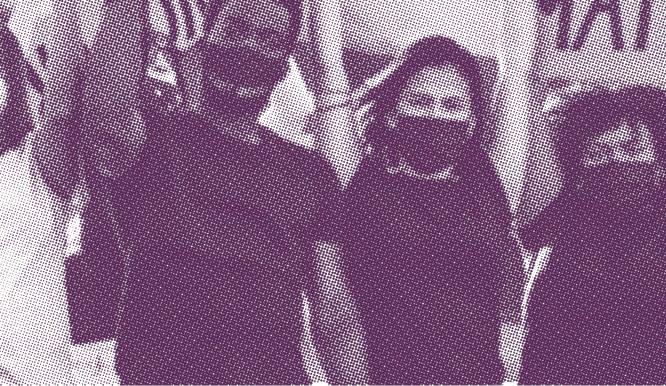

KENNEDY LITTLE / POLITICAL SCIENCE 2026
In March of 2015, following the death of Michael Brown and the subsequent uproar surrounding his death, the United States Department of Justice (DOJ) conducted an extensive investigation into the Ferguson, Missouri Police Department. At the conclusion of their investigation, the DOJ released a 102-page report, citing several instances of racial bias among police and court staff, as well as several instances of civil rights violations. The DOJ concluded this report with a series of policy recommendations for the city, claiming that the problems cited “reflect deeply entrenched practices and priorities that are incompatible with lawful and effective policing and that damage community trust.” Following this investigation, the Ferguson Police Department was placed under a federal consent decree, which is still in place today.
Consent decrees are legal agreements made between individual police departments and the DOJ. These agreements mandate departments to implement specific reforms aimed at correcting patterns of unconstitutional policing, if found. The consent decree program was created as a provision of the sweeping 1994 Crime Bill, a complex and controversial Clinton-era bill that aimed to reduce violent crime in the United States. Under this program, the federal government authorized the DOJ to “conduct ‘pattern-or-practice’ investigations into pervasive misconduct.” Since being given this authority, the DOJ has investigated several major American police departments following accusations of misconduct, with one of the most notable cases of course being in Ferguson, Missouri.
Without sustained oversight, strong local leadership, and genuine institutional commitment, reforms often fail to stick. “ “
In May 2025, the Trump administration moved to drop several of these investigations, including in cities such as Phoenix, Memphis, and Oklahoma City. It also dismissed federal oversight agreements in Louisville and Minneapolis, cities that arguably are in need of monitoring the most. When questioned about these investigations, Assistant Attorney General Harmeet Dhillon argued that consent
decrees “divest local control of policing from communities where it belongs,” instead giving power to bureaucrats who often hold an “anti-police agenda.”
This decision move comes at a time where research has shown that federal consent decrees already require significant restructuring. While different cases have shown us that federal consent decrees can reduce police misconduct in the short term, their long-term success heavily relies on continued federal oversight, community investment in reform, and individual departments’ commitment to change. The dismissal of DOJ investigations and oversight agreements has therefore made an already dire situation much worse.
The Ferguson, Missouri Police Department is not the only American police department that has faced DOJ investigation following questions of police wrongdoing. Several other police departments in the United States have faced federal investigation for systemic civil rights violations, such as those in Baltimore, Louisville, and Minneapolis. Communities across the United States, particularly those made up of Black and Latino residents, have been forced to endure these violations. For example, according to the DOJ’s 2015 report, Black residents make up approximately 67% of Ferguson’s population, but they accounted for over 85% of traffic stops, 90% of citations, and 93% of arrests between 2012 and 2014. It is important to note that the Department of Justice found that this and other disparities could not be explained by “any difference in the rate at which people of different races violate the law.” Moreover, in New Orleans, Louisiana, the DOJ heard reports of Latino immigrants requesting police assistance after being victims of crimes, only to be questioned about their immigration status once officers arrived on scene.
vulnerable people throughout the city.”
The DOJ reports additionally reprehensible behavior by Louisville officers: “Some officers have videotaped themselves throwing drinks at pedestrians from their cars; insulted
“ For a country that prides itself in its commitment to freedom, due process, and equal protection under the law, the persistence of systemic civil rights violations by American police officers exposes a troubling contradiction between the United States’ liberal democratic ideals and its institutional practices.
people with disabilities; and called Black people ‘monkeys,’ ‘animal,’ and ‘boy.’” These disparities can and have led to increased public mistrust, community trauma, and a long-standing sense of alienation from the justice system. Notably, according to a 2023 Gallup poll of 10,026 American adults, almost 75% of Black Americans reported wanting “major” changes to policing policy. Many of our country’s most marginalized no longer feel that police departments exist to keep their communities safe. They may instead see those involved in our justice system as potential threats.

In addition to data from Ferguson and New Orleans, Department of Justice investigations have uncovered racial disparities in several other departments. In Chicago, Illinois, the DOJ found that “CPD has tolerated racially discriminatory conduct that not only undermines police legitimacy, but also contributes to the pattern of unreasonable force.” In Louisville, Kentucky, the DOJ found evidence of repeated Fourth Amendment violations, as well as evidence of racial bias: “For years, LMPD has practiced an aggressive style of policing that it deploys selectively, especially against Black people, but also against
The aforementioned research has consistently demonstrated that these issues are not isolated incidents but instead symptoms of broad institutional failure that is enabled by weak internal accountability mechanisms and a problematic culture within police departments. In many cases, officers who engage in or witness misconduct do not report it, and when civilians file complaints, they are often dismiswwsed or inadequately addressed. This is reflected in a Baltimore case in which a woman alleged that a Baltimore Police Department supervisor refused to accept a complaint of excessive force, justifying this by telling the woman that she “could not go against her officers.”
In the DOJ’s 2016 investigation into the Baltimore Police Department, officials found several systemic failures in the department’s accountability systems, including evidence
of poor internal investigative techniques, minimal review and supervision, and “a persistent failure to discipline officers for misconduct, even in cases of repeated or egregious violations.” This type of culture, one that prioritizes loyalty to the badge over accountability to the public, makes it especially difficult to address systemic misconduct. For a country that prides itself in its commitment to freedom, due process, and equal protection under the law, the persistence of systemic civil rights violations by American police officers exposes a troubling contradiction between the United States’ liberal democratic ideals and its institutional practices.




When investigating instances of police misconduct, the Department of Justice takes a holistic approach, engaging in “pattern or practice” investigation. This means that while a single instance of officer misconduct does not on its own establish a pattern, it can still indicate that the department may be engaging in broader unconstitutional practices. During these types of investigations, the DOJ hears from police officers, local officials, and other community members. DOJ officials also “observe officers during shifts, review documents and body-worn camera footage, and evaluate specific incidents relevant to the investigation.” Should there be substantial evidence of a pattern of misconduct within a department, Congress has provided the DOJ with the power to intervene. This is part of the aforementioned 1994 Crime Bill, which, among other reasons, was created to increase federal involvement in crime prevention and accountability measures. This provision seems effective because it allows the federal government to step in when local oversight mechanisms fail. One of the primary tools the DOJ uses to respond to findings of wrongdoing is the federal consent decree. These decrees mandate reforms to address departmental and officer misconduct. For example, one of the terms of the city of Ferguson's consent decree was that the department agree to commit to a use-of-force model that would “[provide] officers with the skills and training necessary to make optimal
force decisions and resolve situations without the use of force whenever possible.” While some institutional reforms are effective in enacting change, this success is often shortlived. Once federal oversight ends, many police departments regress or fail to sustain the changes they have made. With no one watching, officers and staff may not feel the need to change their behavior, and as a consequence, they may again place their communities in danger.
After analyzing DOJ interventions from 2000 to 2016, author Li Sian Goh of the University of Pennsylvania found that federal investigations into officer misconduct led to a 27% reduction in police killings, ostensibly suggesting that federal intervention is effective in reducing instances of police misconduct. However, Goh also found no significant change in police killings after the implementation of a consent decree unless a court-appointed monitor was also assigned.
After comprehensively reviewing multiple consent decree cases across the nation, researcher Allan Y. Jiao found that federal consent decrees can be effective in improving policing practices. However, this success largely depends on police leadership's willingness to implement reforms, the strength of institutional oversight, and departments’ commitment to sustaining mandated changes. Without these conditions in place, even well-designed consent decrees can fail to produce sustained change.

Similar research has assessed the effect of consent decree programs on rates of civil rights violation claims against police. Examining

Section 1983 litigation––civil lawsuits filed against law enforcement for alleged constitutional violations––researchers measured patterns of police misconduct. After creating a panel dataset of 23 jurisdictions that entered into DOJ consent decrees, the researchers found that these federal interventions were only associated with a modest reduction in civil rights filings over time. In addition to the reduction only being modest, the effect of these interventions was not immediate. It instead developed gradually, and in some cases, the reduction in lawsuits did not continue after DOJ oversight ended. Therefore, while consent decrees can reduce legal claims of civil rights violations by police, the sustainability of this reduction relies on continued federal oversight, institutional commitment, and changes in oversight strategy. Ultimately, when police departments know that they are no longer being supervised by executive agencies, their commitment to institutional change may weaken. Now that several DOJ investigations have been dismissed, it is even more likely that commitments to change will weaken or disappear entirely.

Federal consent decrees have a proven, if imperfect, capacity to address systemic civil rights violations within American police departments. The research shows their limitations clearly: without sustained oversight, strong local leadership, and genuine institutional commitment, reforms often fail to stick.






But even with these flaws, consent decrees represent the strongest federal accountability mechanism available to address police injustice.
represent the strongest federal accountabilpolice rights
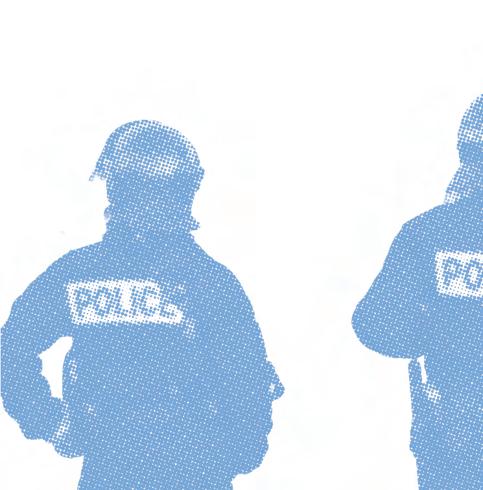
The Trump administration's decision to drop DOJ investigations in several American cities and to dismiss oversight agreements in Louisville and Minneapolis does not eliminate the consent decree program entirely, but it does fundamentally weaken it. At a time where cities including Minneapolis have made it abundantly clear that their police officers do not respect the rights of citizens, the processes of investigation and correction must not be limited but instead strengthened. There must be procedures in place to ensure that individual departments and officers are held accountable to the terms of their consent decree, even when public attention has shifted elsewhere. Police departments must not feel comfortable regressing in the reform process when they know that officials are no longer monitoring them. We already know that strong, enforceable policies surrounding police reform, especially those with independent oversight, can shift police
behavior. The challenge is ensuring that federal intervention not only corrects unconstitutional and abusive practices but also encourages long-term accountability and change.
reform process when they know that officials especially with independent oversight, can shift police