25,283 copies DELIVERED FREE to every farm and rural delivery address from Albany to Cape Reinga.
Farming communities’ wellbeing supported
by Grant McCallum, MP for Northland
I welcome the government’s renewed investment in Farmstrong, a programme that supports rural wellbeing.
Associate Minister for ACC Nicola Grigg has announced a $2.7 million investment as the first phase of a five-year agreement between ACC and Farmstrong, totalling $6.8 million.
Agriculture remains one of New Zealand’s highest-risk sectors for injuries. In 2024 alone, ACC accepted over 17,000 new claims for work-related agriculture injuries, costing around $120 million.
This funding will help reduce injuries by focussing on the link between wellbeing and safety — a vital connection for farmers and growers.
Farmstrong was launched in 2016 through a partnership between ACC,
FMG and the Mental Health Foundation to provide practical tools and support for farmers.
Since then, it has delivered an impressive return of $7.85 for every dollar spent, saving over 9,800 injury claims and $52 million in costs.
For Northland, where farming is the backbone of our economy and communities, this investment is a big win. Healthy farmers mean stronger families, businesses and regions. As I often say, for agriculture to thrive, our people must thrive, too.
Farmers can access resources and guidance at farmstrong.co.nz. Let’s keep backing the people who feed the nation.
Call for rescue service rural support
by Paul Campbell
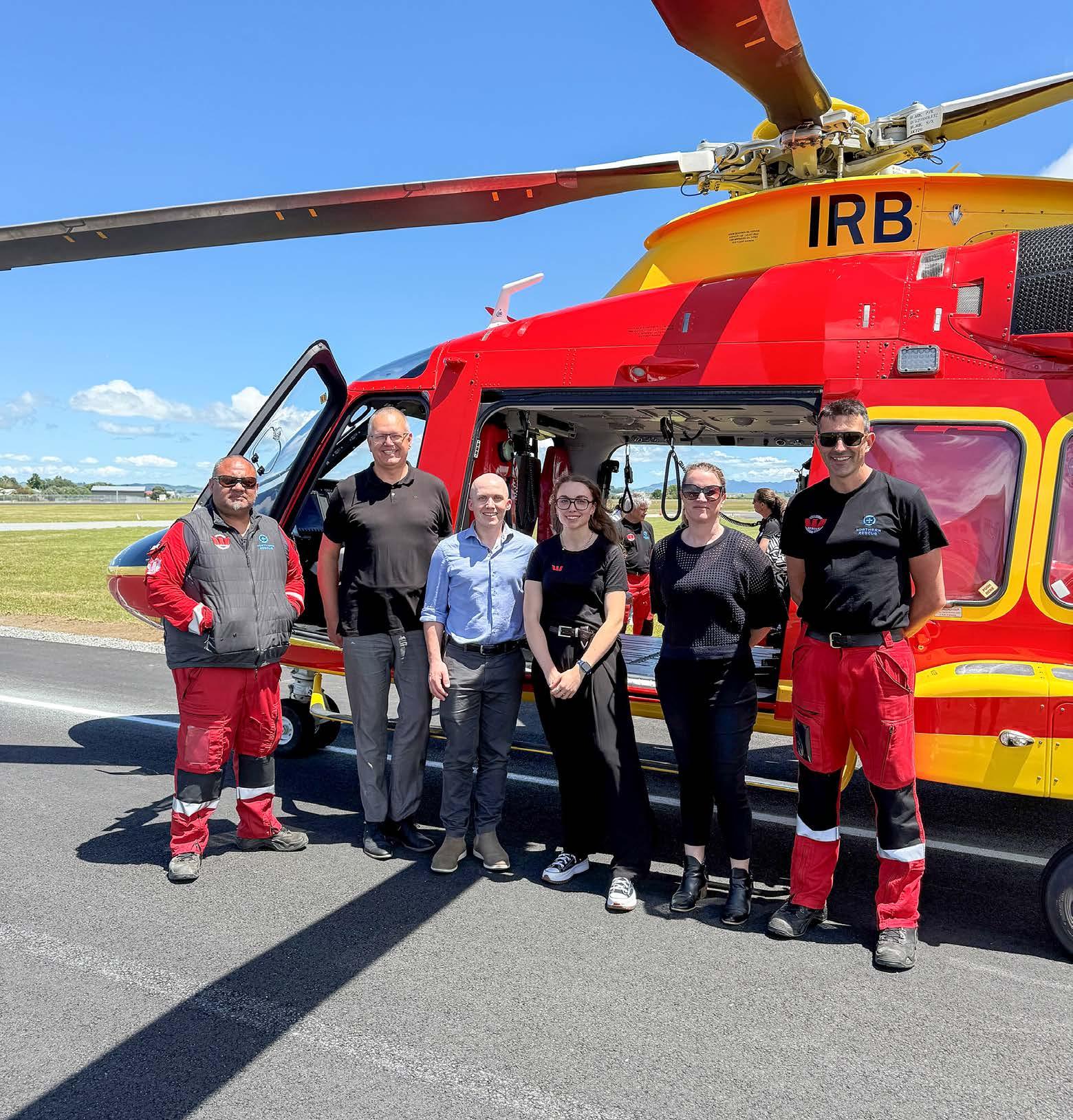
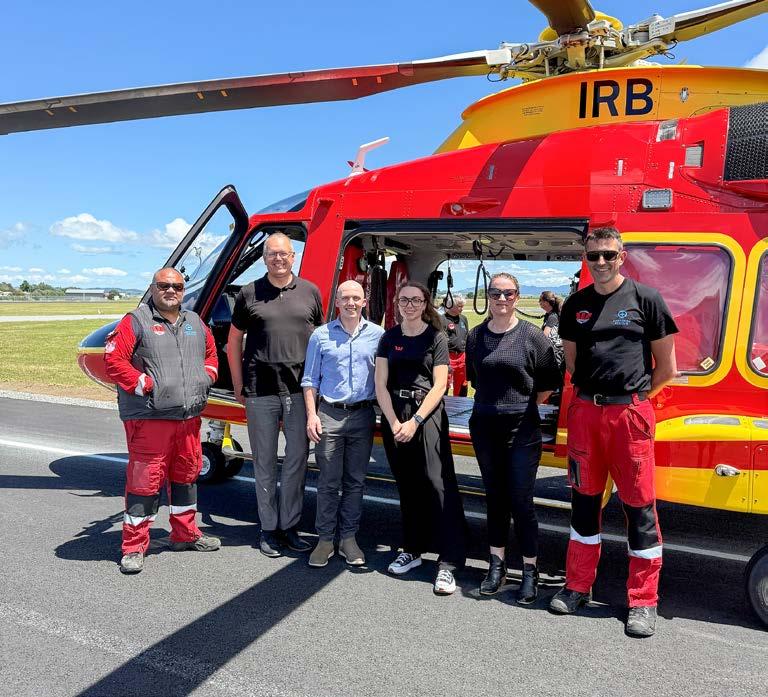
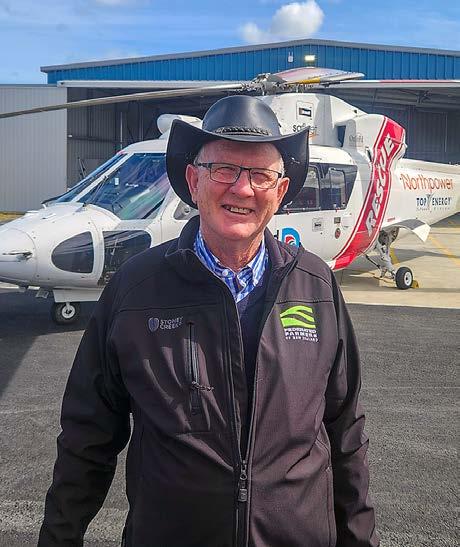
Northern Rescue Helicopters is celebrating 37 years in operation, 950
Westpac Bank coming on board, while Federated Farmers Northland president Colin Hannah is
get behind fundraising.
“The Northern Rescue Helicopters need ongoing financial support from businesses in the agricultural sector and businesses in general and I encourage them to step up now and get behind the 2025 annual appeal. Farmers spend a lot of money with businesses throughout the north every day, and I would like to think those businesses can use some of those profits to pay it forward and help others,” said Hannah.
“In the 2024/2025 financial year alone, crews flew over 1,000 flights — 60 to Kaipara, 53 to the Mid North, 124 to Bay of Islands and 388 to the Far North among them. Given there are so many remote pockets around Northland, getting people to hospital quickly is critical to the wellbeing and safety of locals and visitors to our region.
“We can’t do that without everyone in the chain playing their part in providing care in a person’s time of need. That only happens thanks to the passion of all first responders, community volunteers and support networks who work together as a team with the crews on board.”
Hannah says rural Northlanders are heavily reliant on the service to keep the Northland community safe.
“That’s why it is critical we all support Northland’s community-owned air ambulance service that was established by locals, for locals in 1988. You just never know when you or a loved one might need one. Donating now is like a form of insurance and paying it forward to help yourself or others.”
He says one easy way farmers can donate is by gifting the proceeds of an animal every couple of years that they sell to the works or sale yards.
“I would like to hear from those farmers directly, so their generosity can be acknowledged by the fundraising team.
“If we all did that, we would end up collectively providing a substantial amount of critical funds and farmers are very common users of our Northern Rescue Helicopters. I know dozens of farmers, and rural folk in general, in Northland and around New Zealand, who have had their lives saved after cardiac arrest, illness, farming, road or sporting accidents.”
Hannah says the cost associated with running the service is immense when you consider a winch is worth $205,000, a single rotor blade $405,000 and a pair of night vision goggles well over $20,000.
“As farmers, it is essential that we dig into our pockets and donate what we can.”
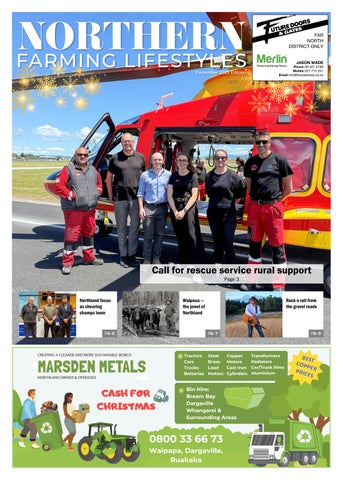
Westpac staff met rescue chopper crew to mark the bank’s new sponsorship
Northland focus as shearing champs loom
by Paul Campbell
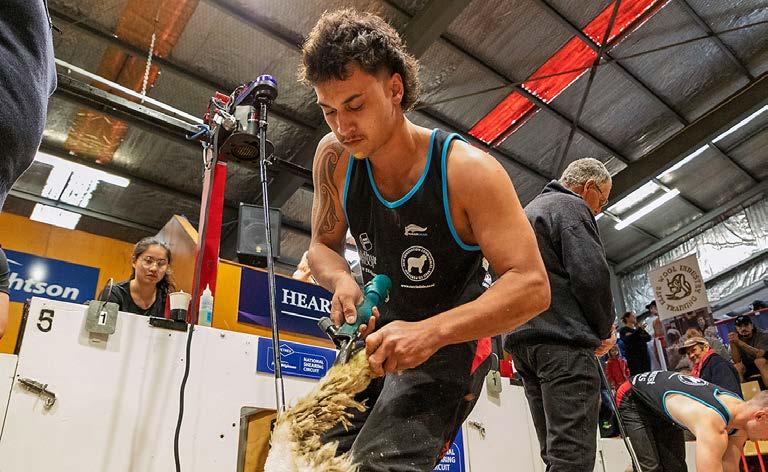
Northland will almost certainly have a potential world champion in the making at the Golden Shears World Shearing and Woolhandling Championships in Masterton on March 4–7, as Kaiwaka shearer Toa Henderson has proven almost unbeatable in a tough, eight-round Shearing Sports New Zealand selection series, winning four of the five rounds to date.
He started with wins in the first three last season, at the Southern Shears in Gore, the Golden Shears in Masterton and the New Zealand championships in Te Kūiti.
He was then runner-up at the New Zealand Spring Shears in Waimate on October 11, and won the next round at the Great Raihania Shears in Hawke’s Bay on October 24. Henderson faces three more rounds at the Northern Southland Community Shears near Lumsden on January 16, the Southland Shears and New Zealand crossbred lambs
championships at Winton, the next day, and the Taihape Shears on January 24.
The top points-scorer, based on placings throughout the series, will claim the first of two machine shearing places in the team, and the next six will contest a final at the Rangitīkei Shearing Sports, in Marton, on February 7 to decide the teammate.
The team will also comprise bladeshearers Tony Dobbs and Allan Oldfield, the 2019 World champions who claimed their places in this season’s team when a series in the South Island
ended at Christchurch on November 15, and two woolhandlers, to be decided in a series, which also ends at the Rangitikei Shearing Sports.
In Northland, and in the rest of the country, it is work rather than play as it’s shearing season. However, sport will feature, too, including Kaikohe AP&H Show (shearing only), at Kaikohe on Saturday, January 17, North Kaipara A&P Show (shearing only), at Paparoa on February 7 , Northern Wairoa A&P Show (shearing only), at Arapohue on February 14, followed by the North Hokianga A&P
Show on February 21. All eyes, however, are on March 4–7 for the 2026 World Championships and Golden Shears International Championships, including shearing, woolhandling, blade shearing and wool pressing at Masterton, billed as “a celebration of heritage, precision, and passion and an epic family experience with atmosphere, action and edge-of-yourseat excitement.”
With the introduction last century of electricity in the woolshed, the old cutting shears might have disappeared, but that is not the case.
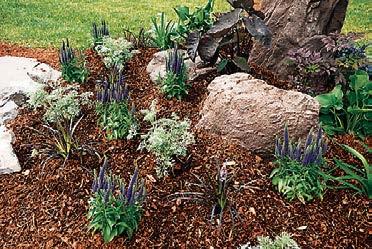
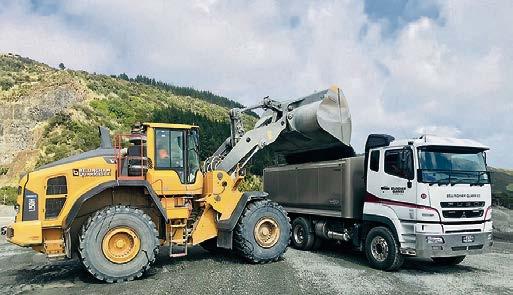
Why Choose Our Brown Rock?
Our Commitment to Sustainability
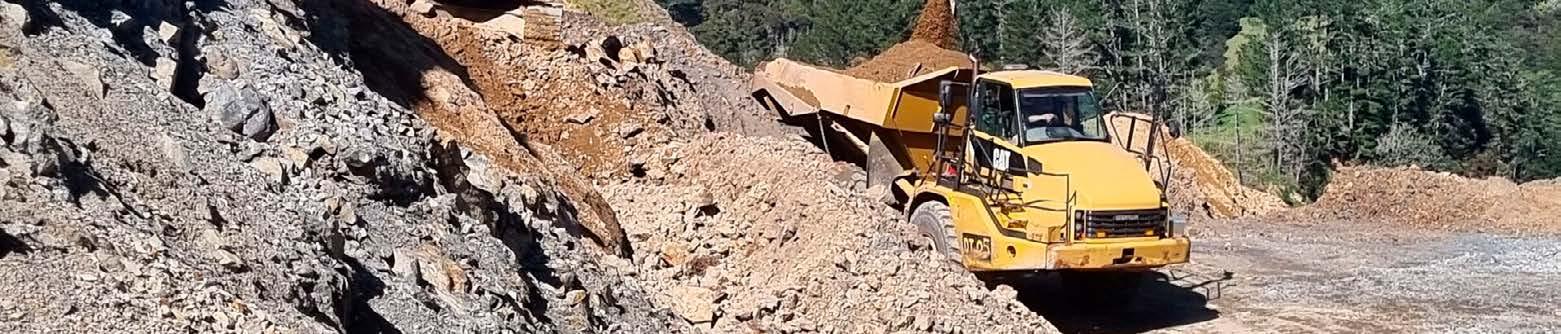
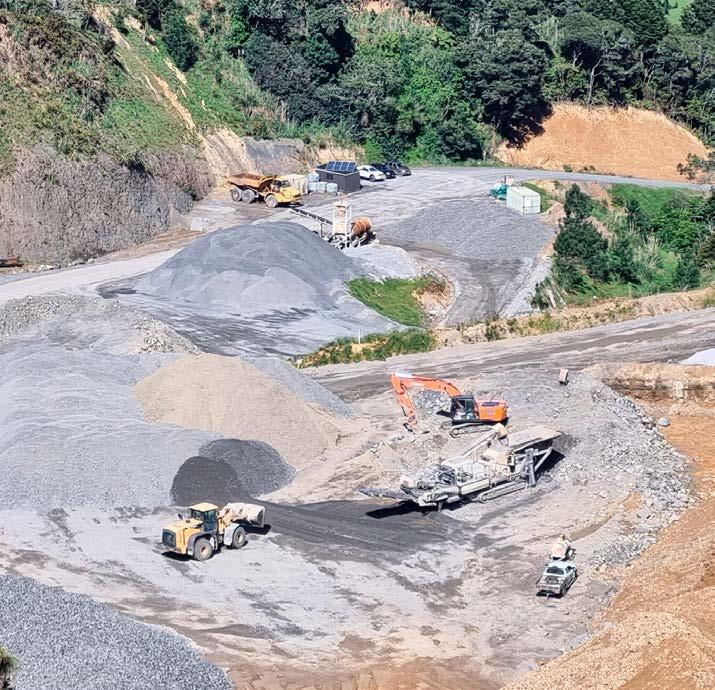
We prioritize environmentally responsible mining methods to ensure minimal impact on the surrounding ecosystem.
Monday to Friday: 7:00 AM - 4:30 PM
Saturday: By arrangement, 7:00 AM - 12:00 PM Contact Us
Website: www.karaquarry.co.nz
Phone: 027 363 0934
Email: admin@unitedinfrastructure.co.nz
Address: 95 Wood Road, Maungatapere Visit Us Today!
Explore our premium brown rock and fill material for your next project. Let us help you build sustainably and beautifully. Merry Christmas and Safe Holidays from the Kara Quarry Team - We will be shut down from 22/12/2025 - 4/1/2026
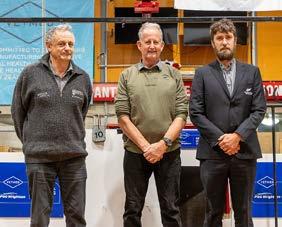
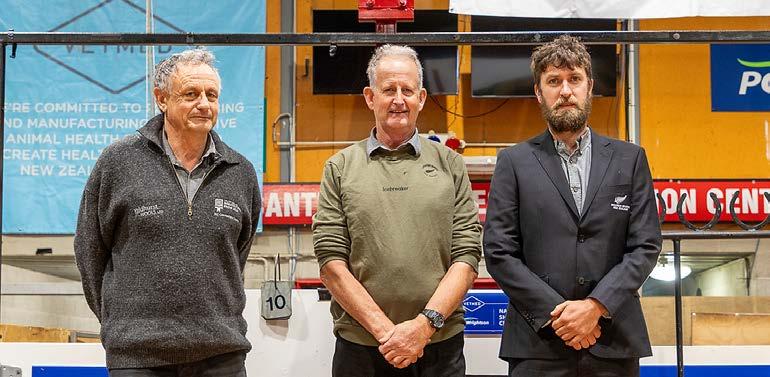
From left: Shearing Sports New Zealand South Island chairman Paul Harris (left) with Tony Dobbs and Allan Oldfield, after confirming their places in the world championships
Photo: Thomas Lambert
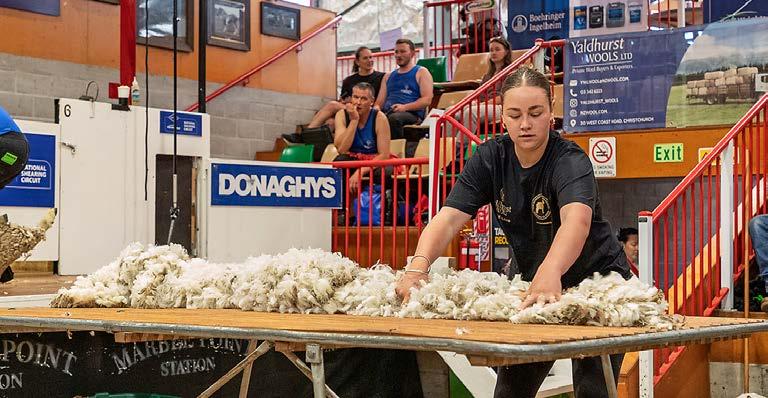
Zoe Meikle, of Oamaru, on her way to winning the junior woolhandling title at the Canterbury Shears.
Photo: Thomas Lambert
“We’ll be seeing the latest demonstration of old-time skill, after Oldfield and Dobbs confirmed their bid to regain the title,” said SSNZ spokesman Doug Laing. “The pair won their title in France in 2019, when Oldfield also won the individual title.
“However, they had to settle for second place behind South African shearers Bonile Rabela and Zwelamakhosi Mbuweni in Scotland in 2023, when New Zealand, for the first time, failed to win a single shearing or woolhandling title in the history of the championships.”
Oldfield said that now that the team selection had been decided, with machine shearing and woolhandling representatives to be decided in January/February, he will get in as much competition as possible, despite the competitions being in the South Island, and him being based in the North Island.
At the same event, the machine shearing open title was won, also for a third time, by defending champion and Te Kūiti gun Jack Fagan, son of Sir David
Fagan, who won the title 13 times from 1984 to 2009.
Most recently, Jack Fagan successfully defended one of the world’s biggest speed shear titles and spearheaded a New Zealand clean-up of major prizes on November 24 across the ditch in Wagga Wagga, NSW, while fresh from the AC/DC concert, in Sydney, the previous night.
He told the crowd at the speed shear: “I actually can’t quite explain how much I love speed shearing. It’s the one thing on earth that makes me feel like an absolute rock star.”
Fagan stripped his final lamb in 17.32sec to claim the A$10,000 first prize and a trip to Wales next July.
Southland shearer Brett Roberts was second, shearing 18.3sec, in the open final at the Wagga Wagga Speed Shear, which carried over A$65,000 worth of prizes across six events.
The women’s title was won by Sacha Bond, originally from Palmerston North, and who also won a trip to Wales, where she and Fagan will compete in the Royal Welsh Show.
Christmas presents sorted…
Tamati Dennison, of Kurow, makes the leap up a grade by winning the intermediate shearing final Photo: Thomas Lambert
Waipoua — the jewel of Northland
by Liz Clark
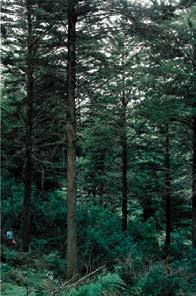
Waipoua Forest on the west coast of Northland once reached up to the shores of the Hokianga Harbour and east to Tutamoe — its remnants now make up two reserves; Waipoua and Trounson Park.
While Trounson Park was initially opened in 1919 and expanded in 1921, its sister remnant, Waipoua Forest, remained as a reserve set aside for future logging. The Waipoua Block, then consisting of 35,300 acres, was purchased by the government from Te Roroa in 1876. It wasn’t long before surveyors were sent in and the block surveyed for future settlement. Before long, the kauri and other trees were being felled.
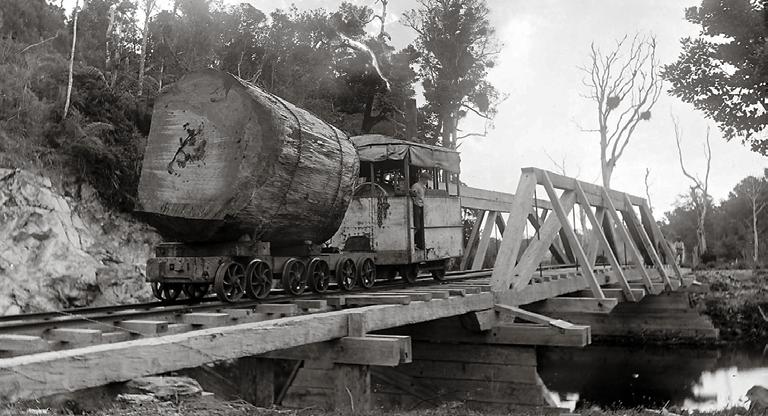
The Kauri Timber Company, in the early 1900s, had an elaborately constructed bush railway set up for logging operations near Waimamaku, where a Zealandia locomotive was used to haul the cut up logs out of the bush for milling at its facilities on the Hokianga Harbour. In the same era, James Trounson set up his own railway to exploit the stands of kauri he either owned or leased to take south to his mill just north of Kaihū. Assailed from all sides by logging companies and
gumdiggers, the future of Waipoua was always held in question. The attitudes of the day in the early 20th century were still that of exploiting the forest’s resources as quickly and efficiently as possible. One part of the block, however, was yet to be milled.
In 1906, botanist Dr Leonard Cockayne was commissioned by the government to do a survey of the block it had retained and report back to parliament on his findings. Cockayne concluded the forest
had scientific and scenic value and advocated for its preservation as a living natural museum.
He said: “Before very long, at the rate at which the kauri is being converted, there will be no forests of that kind, and very few examples of the trees either — in 20 years’ time, or even less. Thus will pass away forever from the face of the earth, one of the noblest of forests and one of the unique attractions of New Zealand. If it is felled, it will give employment for a few
As
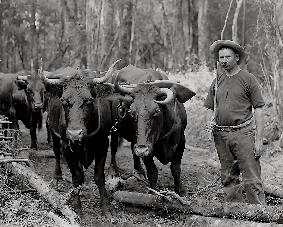
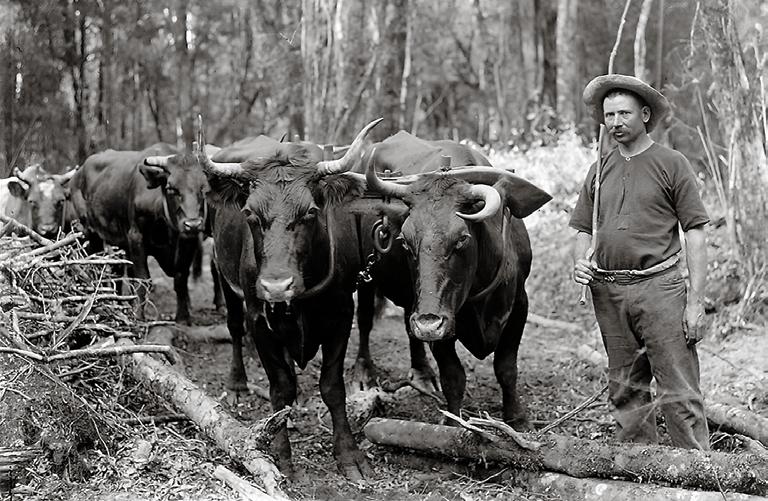
Bullock teams used to haul kauri logs out of the bush were a common sight in Waipoua
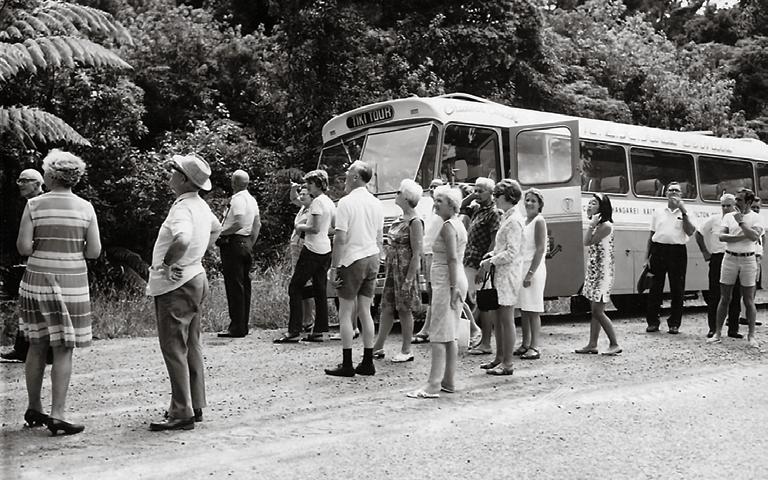
Passengers on a tour bus gather to go and visit Tāne Mahuta in 1970 Image credit: Archives New Zealand
years to a certain number of men, who in any case at the end of that time will have to look for other employment, and in its place will be much wasteland and a few farms, isolated from other settlements. If it is preserved, there will be a magnificent heritage for future generations, and an attraction, constantly increasing in its interest, for the visitors to our shores.”
However, in 1913, the Forestry Commission recommended that the remaining forest should be logged and a mere 200 acres retained as a scenic reserve. Gordon Coates, representing Kaipara at the time, pushed for the removal of some 24,000 acres of remaining kauri, so the land could be opened up for settlement.
In the same year, the New Zealand Herald reported: ‘Every week the price of kauri is increasing, but every week the timber is becoming more scarce, and at
the present rate the experts consider that five years will see the complete depletion of the trees, as far as their value for an industry is concerned.’
James Trounson, too, had his own opinions about the pending extinction kauri faced, despite also being involved in the timber milling industry. In a deposition to the Forest Commission in 1914, he also warned all was not well for the future of the kauri.
He said: “The question is not whether anyone would see the kauri bush now, but whether those who lived 50 years hence would have any kauri bush left to see. If not, they would probably blame the present generation for not conserving the trees. It might be protested that sentiment should not enter into these matters, but sentiment entered into most large problems.” Consecutive governments, despite pressure from many lobby groups,
continued to retain the Waipoua Forest intact. In 1928, Gordon Coates officially opened the new road through the forest, constructed despite the warnings that the forest would be doomed if it went ahead. Four years earlier, Tāne Mahuta had been discovered a short distance from the survey line where the road was to be cut through.
Throughout the 1920s and 30s, the tourism department promoted the Waipoua Forest as a place to visit and stay. Camping facilities were set up for the motoring tourists to stay during the summer. However, in the 1940s, logging commenced out of sight of the tourists, and kauri rolled down the rails from Donnellys Crossing for use in the second world war effort. It took a large petition, containing more than 40,000 signatures, to put a stop to it. In 1952, Waipoua was declared a forest sanctuary.
Northland Field Days Agricultural Grant, helping to fund higher education for tomorrow’s farming leaders. The grants are back for 2026, offering a $10,000 pool of funds to be drawn from, with each individual grant accessible up to $2,000. That means five or more students could have their studies supported, at any accredited tertiary institution teaching farming-related disciplines.
Apply Now: Northland Field Days Grants Programme Seeking Applicants.
The grants are available to any student from Northland registered in a recognised tertiary course that has a focus on farming, forestry or the sciences that support them. Applications are open now. Visit northlandfielddays.co.nz/ supporting-our-community and register your interest.
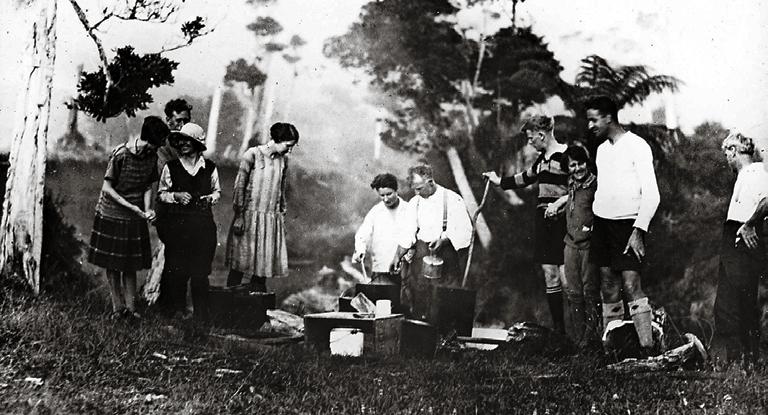
Auckland Tramping Club members camping out at Waipoua in 1928 Image Credit: Auckland Libraries Heritage Collections
The Kauri Timber Company’s Zealandia bush locomotive hauling kauri out of Waipoua Forest near Waimamaku
by Amy Fifita
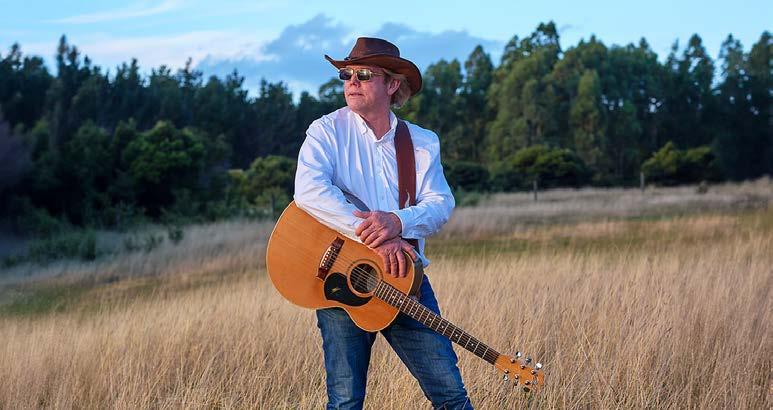
Named after one of his dad’s favourite sayings, Hard Road, an album by singer and songwriter Merv Pinny is a retrospective journey of his life and experiences.
“H
ard Road came in the last few years, and that name is taken from something my father used to say to me, ‘you’ve got a hard road to hoe’. That’s why I named the album Hard Road — it is a good
reflection of me,” said Merv. “I had never understood it at the time, but when I look back, I understand what he meant, because I didn’t listen. I wasn’t one to listen, and if I thought it should be done, I was going to do it anyway.”
Born in the King Country and exploring his love for music in rural Waikato, dairy farming and music have been the two main passions of his life. It was on the family farm that Merv learned how to overcome the challenges life handed to him, a lesson that helped him in his
career. “We were always on the farm, and we were pretty wild. My brother cut his toe off with a saw, and my other brother cut his tongue off from jumping out of the hay shed on to the truck.
“It was a bit chaotic, so our parents spent a lot of time in the accident and emergency department because we did almost anything. Being allowed to drive tractors and trucks from an early age, my brother ran me over with a truck.
“That was when things changed a little bit, because people were questioning why
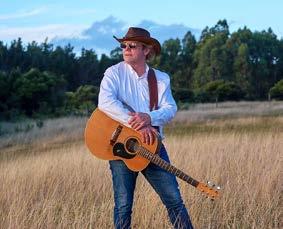
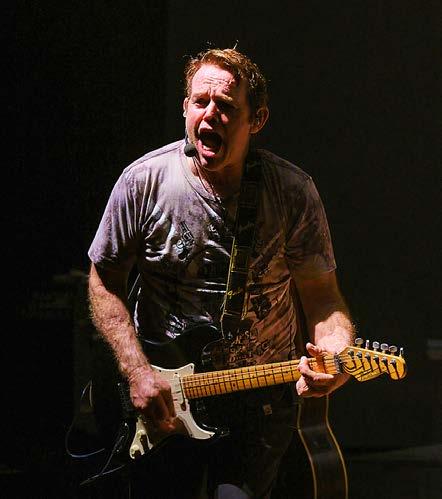
Musician Merv Pinny released his new album Hard Road on November 28, a reflection on who he is and what he’s experienced
was the trumpet, something he says made him unpopular at home very fast, and he switched to guitar when his older brother sold him his old guitar for $10
the boy was in the truck. I spent a long time in Waikato Hospital. They didn’t think I’d be able to walk again. It was horrific for my parents, but I can only remember getting run over by the truck and the day I began walking again, probably because I was sedated.
“It is a great lifestyle for children, and the lessons that we learnt helped me with my music career, because there were some tasks that seemed impossible. My siblings and I had to dig a three-metredeep trench, and our father made us dig it with shovels because there was no frontend loader.
“It took us two months to complete. That is one of the lessons my father taught me: nothing is impossible, you just have to keep working on it, and you’ll eventually achieve what you need to do.”
With a rural backdrop, Merv and his brothers discovered their love for music, often playing together, and eventually becoming a three-piece band.
“We had no neighbours around us, so practising and playing as loud as we wanted in mum’s lounge was an accepted thing. Our lounge was set up like a band room.
“The first instrument I picked up was the trumpet, and I became the most unpopular child in the family very quickly. I didn’t get any lessons, so I was just making noise. Trumpets are very loud.
“Switching to guitar when my brother got a Les Paul guitar. He sold his old guitar to me for $10, and that’s how I got started. I was more popular on the guitar than the trumpet. My main instrument was the bass guitar, because my brother’s band, Judge Hoffman, needed a bass
guitarist and I happened to be there. They’d won the Battle of the Bands and their bass guitarist was sick, so I stood in. I was 14 years old at the time and able to hold my own with that band.
“Later on, I moved into rhythm and lead guitar. As brothers, we had a three-piece band, The Pinny Brothers. Many of the bands I played with after that were three-piece bands — fewer spaces, more money for band members and fewer people to argue with.”
Decades on, and various farms and experiences later, Merv is now based in Kerikeri on a lifestyle block and is releasing Hard Road.
“For the last few years, I’ve been working at the Turner’s Centre in Kerikeri, doing a lot of theatre shows and working with so many people country-wide.
“It has been a great learning experience for me, not just musically but entertainment-wise. I’ve learned about some of the touring acts and how they do things, and I try to build some of that into my stuff as well.
“There are so many songwriters out there trying to get heard, and there are many different ways of achieving that. There is a powerful and supportive community in the music world, even in other countries like Australia and the USA. They all have that in common.”
Waikato-born, Merv moved north on a farming venture, and eventually found himself in Kerikeri working at the Turner’s Centre helping with theatre shows and touring acts
A month of changes
by Colin Hannah, Northland Federated Farmers President
I would like to congratulate all elected councillors throughout Northland post the
My team is looking forward to working proactively with all councils across all matters impacting rural Northlanders over the next three years and beyond.
Every month I pen a monthly rural report for the Northland Adverse Events Team, and through our monthly Federated Farmers. I think it is important to share some of the latest information with the readers of Northern Farming Lifestyles this month.
November has been a month of extremes across New Zealand, including incessant rain in the north. The continuing rain has delayed ground being prepared for planting and, as a result, most maize crops are up to a month behind. This delay could impact the crop yield at the other end of the growing season.
These events are impacting our rural communities across the country in differing ways. On analysis, it is impacting incomes and whilst some events will be covered by insurance, a lot will be an unbudgeted expense.
At times, we all must contend with the impacts of untimely electricity outages, but I want Northlanders to know that our locally owned electricity lines companies,
Top Energy and Northpower, do a fantastic job keeping the power on. They are so community-minded and want the best for the people of Northland.
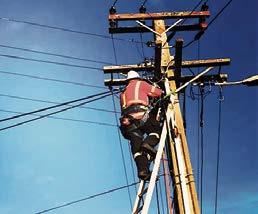
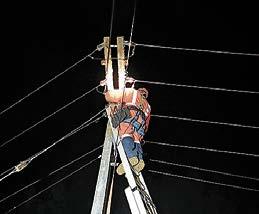
Sometimes faults and acts of nature happen outside of their control but their frontline crews work exceptionally hard to stay safe to keep us safe and get the power back on. Hats off to them as there is no point playing the blame game.
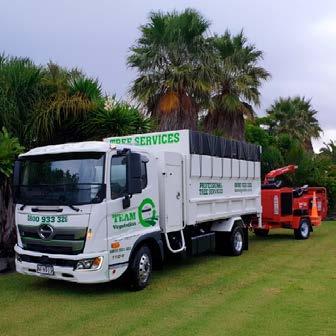
Local Tree Services
I recently attended the annual Bay of Islands P&I Show, which is one of the highlights of the Northland region. It was a great opportunity to engage with our farmers for their perspective on issues under their control and those totally outside.
With the sale of the Fonterra ingredient business the farmers in Northland, on average, can expect a bonus of between $150,000 to $200,000 in the distribution of their ownership share of this business. Many told me they were cautious about what they were going to do. Some said they would pay down some debt, others said — just sit on it for the time being as things are so unsettled.
Almost all farmers were happy from the excitement of the show, but also with the current payout situation, be it milk solids or beef.
In general, costs have remained stubbornly high across New Zealand. Margins on-farm, despite the good prices farmers are receiving are still tight, whilst off-farm there have been unprecedented business closures that are contributing to the uncertainty. On another matter oral
health is a major issue across Northland, and that is something I am keen to work with others on to help reduce that burden on our communities.
by Paul Campbell
Unlocking a gene puzzle
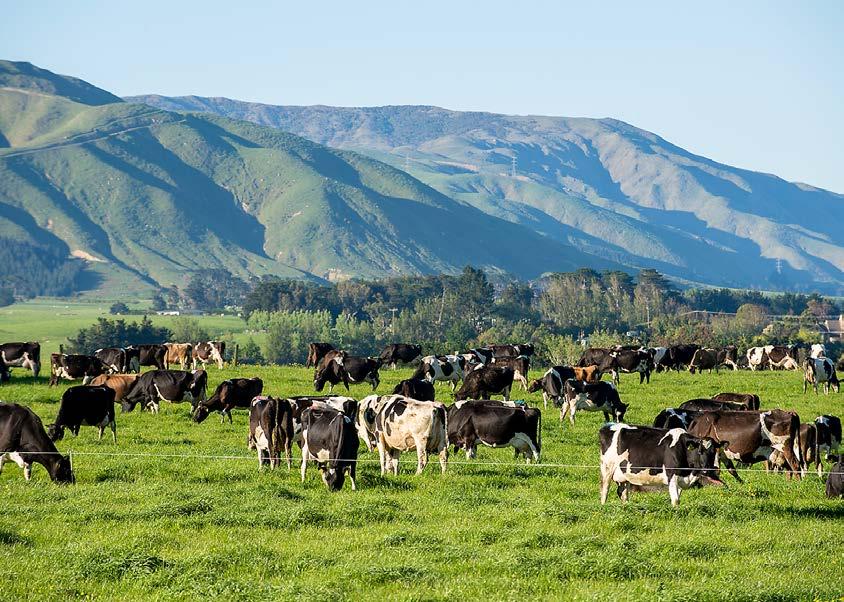
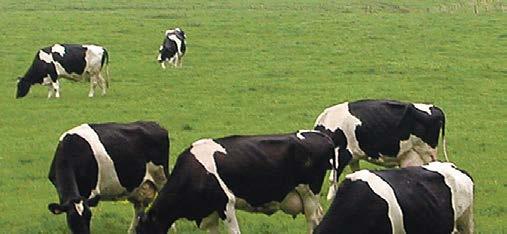
The black-and-white coat of Holstein-Friesian cows is globally recognised as a symbol of dairy farming and a defining trait of domestic cattle, and now, Massey University has worked out just how genes are responsible for the Holstein’s spots.
Coat patterns are some of the oldest traits selected by humans, likely since the dawn of domestication, showing how farmers have long shaped cattle populations. The DNA variants behind unique patterns, such as the white face of Herefords or the belts of Galloways, are already known.
Now, a study involving Massey University’s Professor Matt Littlejohn
has solved the mystery of the Holstein’s unique coat.
“These genes are well-known for controlling pigmentation in humans, mice, dogs, horses,birds and other species,” Professor Littlejohn said.
The KIT gene variant found in Holsteins is unusual because it doesn’t sit within the gene itself. Instead, it regulates the gene from a different position on the chromosome.
“Think of it like a light switch turning on a light in another room.”
The MITF variant is also unusual for its ability to create unique coat patterns when different breeds are crossbred.
“This variant can create black speckles in dairy crosses, ‘black socks’ in Belgian Blue cattle, or reversal of the white face expected from a Hereford cross. While these patterns are interesting to look at, they aren’t simply aesthetic.“
are harder to recognise as beef crosses and are often less valuable.
Many dairy farmers cross Holsteins with Herefords to produce calves that will perform well in beef systems. The white face is important, since this marks the calf as a Hereford cross.
When splotchy-faced calves are born as a result of the MITF variant, these calves
“Genetic testing could help produce calves with more predictable coat patterns in the future.”
Other practical applications of the research include possible animal welfare benefits. Skin pigmentation affects heat absorption and UV protection. Black coats
absorb more heat but also provide better UV protection. Knowing how genes control pigmentation could help farmers select coat patterns that improve cattle comfort and performance.
This genetic work was supported by the Ministry of Business, Innovation and Employment Endeavor Fund and the Livestock Improvement Corporation.
Science solves the colour of Holstein-Friesian cows
Growing the next generation
by Andy Bryenton
The Northland Field Days offers grants to help students
committee is seeking applicants now.
Experience shows that young inventors, researchers and entrepreneurs can change farming for the better. It’s these minds that will find solutions to today’s challenges, say Northland Field Days’ organisers Luciana Schwarz and John Phillips.
“As a charitable trust, one of our prime purposes is to invest in Northland’s agricultural future,” says Northland Field Days president John.
“That future lies with young people, and with a meritocracy built on study and achievement,” said Luciana. “To help break down barriers for young people, we’re proud to offer the Northland Field Days Agricultural Grant, helping to fund higher education for tomorrow’s farming leaders.”
It’s an appropriate contribution from an organisation that has debuted all kinds of new technology for farmers through four decades of history. It’s also a look toward a future when New Zealand’s already 360,000 strong food, fibre and farming workforce needs to get even bigger. Right now, getting farming specialist workers
their
from other nations is a measure many employers are compelled to explore. However, filling the gaps in the rural economy with locally-trained Kiwi youth is an ideal many believe will be crucial to the near future of our biggest export earners.
The grants are back for 2026, offering a $10,000 pool of funds to be drawn from, with each individual grant accessible up to $2,000. That means five or more students could have their studies supported, at any accredited tertiary institution teaching farming-related disciplines.
“Students can spend these funds on anything from materials to course fees, and the committee hopes that this boost will prove an incentive to help the recipients make the most of the opportunities in agriculture in Northland,” Luciana said.
The grants are available to any student from Northland registered in a recognised tertiary course that has a focus on farming, forestry or the sciences that support them. Applications are open now.
Visit northlandfielddays.co.nz/supportingour-community and register your interest.
Northland Field Days president John Phillips invites students to apply for a grant
Who said you can’t grow lotus?
A few years ago, lotus grower Pauline Rose was given a book written by a Chinese author, which stated categorically that lotus plants wouldn’t grow in New Zealand.
Always up for a challenge, Pauline had already proved they could, having germinated some seeds gifted by husband Hugh and had them flower in the same season — ‘a lucky fluke’ she calls it, but one that inspired over 10 years of research and growing lotus plants.
Lotus are water plants, but a different plant family from waterlilies, which can handle much deeper water. They thrive in mud with just a few centimetres of water on top — the saying ‘no mud no lotus’ is completely true, Pauline says.
Once the plants are established, the leaves grow above the water, unlike waterlilies. Water runs off the leaves, repelled by tiny hairs on the surface of the leaf and looks like sparkling pearls. All parts of the plant are edible: seeds, rhizomes, flowers and leaves, and lotus silk, one of the priciest fabrics in the world, is made from lotus stems.
“Northland’s warm climate is ideal for growing lotus but people grow them all over New Zealand,” says Pauline. “They need a warm spot and six hours of sunshine a day to flower, a sunny spot on a deck and a
large container (preferably black) will do just fine.”
Pauline says that while aquatic potting mix is a great and largely mess-free medium for growing lotus, rich garden soil works just fine and fertiliser helps. What about the idyllic photos online showing lotus flowering indoors in a glass bowl of just water? “Sadly, those are AI-generated — lotus, like all plants, needs soil to fuel their growth.”
In New Zealand, lotuses start flowering at the end of November and continue through until early March.
Northland identity farewelled
by Paul Campbell
The Far North community has farewelled Kaitāia businessman Monty Knight, the well-known winegrower and former councillor who was found with critical injuries and could not be saved by emergency services; a 57-year-old woman has since been charged with his murder.
The family invited the community to a public memorial at Kaitāia’s Te Ahu Centre on November 26. Northland Regional Council chair Pita Tipene has paid tribute saying councillor Knight was much respected throughout Northland for his business acumen over many years as both a retailer in several fields, including jewellery, and as a winemaker.
“He was inducted into the Northland Business Hall of Fame in 2010, just one year after another Northland retailing legend, jeweller Sir Michael Hill.”
Chair Tipene says councillor Knight also represented his community via stints on both NRC and the Far North District Council. “He joined Northland Regional Council representing Te Hiku, the council’s then northern-most constituency in February 2015, in a by-
election following the passing of former councillor Dennis Bowman.
“During his time on council Cr Knight served as one of council’s two appointees to the then-new Te Oneroa-a-Tōhe beach board.”
Tipene said Cr Knight will be remembered as a public-minded and down-to-earth person, who cared deeply about his local community. “Monty was a genuinely nice human being who served his people with passion and commitment.”
He was also not afraid to back himself, as evidenced by his successful move into winemaking at Okahu Estate in the 1980s, something sceptics had thought would prove impossible.
“On behalf of Northland Regional Council and its ratepayers, I’d like to acknowledge Monty for his exemplary service to the people.”
21
Trimming
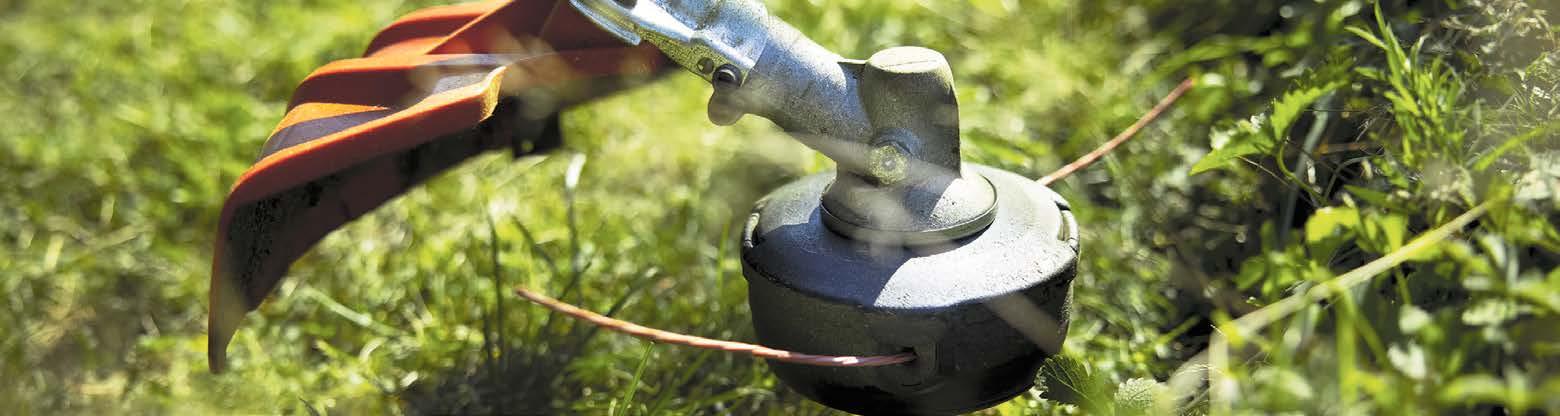
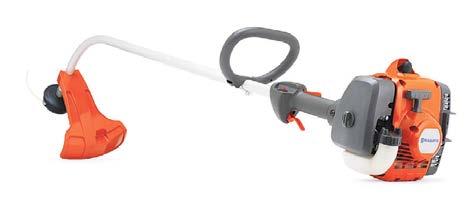
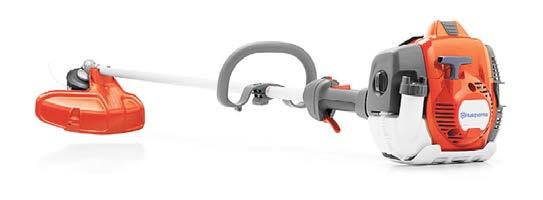
27 6cc - 0 85kW - 43cm Cutting Width - 4 7kg
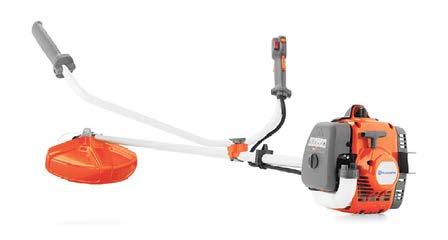
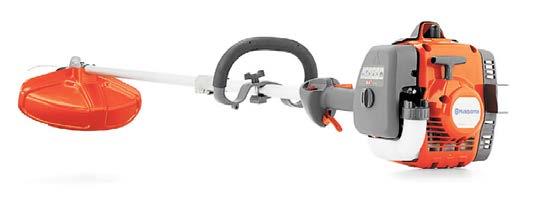
Multi-purpose combi trimmer for homeowners with a powerful easy to start engine and intuitive controls Supplied standard with the trimmer attachment, this unit can be easily equipped with a number of optional attachments Optional Attachments from $309* (*Trimmer Attachment)
Highly
trimmer
and
and
blade Optional attachments
SPEND & SUPPORT LOCAL IN NORTHLAND
by Amy Fifita
Joy in vulnerable places
Yes, Christmas is a time of gift-giving to our loved ones, but what about our local charities, which work hard to bring joy to people in need during this holiday season?
In 2023, 39.8% of Northland people fell into the lowest decile quintile according to Infometrics, affecting 77,169 individuals. The average decile rating, with one being the most privileged throughout Northland, was 7.1.
So, next time you visit the neighbourhood store and see an appeal or find a local Christmas Shoebox or an alternative seeking support, think about the people you could impact.
Christmas in a Shoebox, The Kindness Collective, Kmart Wishing Tree Appeal, the list goes on. For some, Christmas is easy. For others, it’s lonely, and for families on a tight budget, it can be a challenge. Fortunately, many organisations want to give back, and to do that, they require donations or funds to make Christmas a joyous occasion for sick or vulnerable people. Sometimes, it’s ensuring children at Starship Hospital are reunited with their families at home; other times, it’s about ensuring children aren’t left off of Santa’s list because of their socioeconomic status.
Other local causes to keep in mind are places like the Women’s Refuge. Often leaving in a rush, sometimes with just
the clothes on their back, women, mothers and children spending Christmas away from what they used to call home. Toys, clothes, food and basics would go a long way for families starting anew.
Maybe, you’d prefer to be more personal? There is nothing stopping people from purchasing items at local stores and bringing presents to a senior person or child down the road or in the church. Sometimes, you don’t need a charity organisation to make a difference.
Some people can find Christmas a hard time, for whatever reason. It could be that they miss a loved one, or have a bad memory from a previous Christmas. Supporting local this Christmas, could be taking them out to spend time at a local restaurant.
So be merry, spread joy to all, as is the normal Christmas spirit and remember that joy, peace and love is a gift for everyone.
A simple act of giving can bring joy to families less fortunate this Christmas
SPEND & SUPPORT LOCAL IN NORTHLAND
by Andy Bryenton
The ‘beast’ versus the beach
Northlanders can beat the world with the spirit of local innovation, determination and tenacity for which the region is known; just ask those who witnessed Norman Smith and Don Harkness take a home-made car to the sands of ninety mile beach for a world record attempt in 1932.
At the time, Sir Henry Seagrave owned the record, with his Gold Arrow racer posting a blistering 371km/h. Australian racers Norman ‘Wizard’ Smith and Don Harkness had this target in sight when they teamed up to break the record, and they had just the engine and location in mind to get the job done.
In 1930, the pair raced their Cadillacbased supercar, the Anzac, at Ninety Mile Beach, acclaiming its qualities as a stable surface.
“At low tide, the water recedes perhaps a quarter of a mile and leaves a perfectly straight course of hard-packed fine brown sand,” said Smith. “Even above the high water mark, the sand is hard enough to drive on; below, it’s like concrete.”
The Anzac didn’t have what it took to defeat Seagrave’s record, being described as ‘about as aerodynamic as Anne Hathaway’s cottage’. However, connections forged with Northland assistants and mechanics and respect
for the western sands had seeded the idea of an even faster car.
Enterprise was the name of the machine ‘Wizard’ Smith and Don Harkness envisioned to take down the record. Its radical shape included massive 37-inch rims and specially made Dunlop tyres on a dart-shaped body so low that if the car were to flip, it could roll upside down.
Under the hood, the speed record seekers needed massive horsepower. To match Seagrave’s Golden Arrow, they tried to get hold of an experimental Rolls Royce aero engine, rumoured to be the precursor to the legendary Merlin, but were rejected by the UK government. Undaunted, Smith got the Australian prime minister on the phone and had him call his British counterpart. A 1,300-horsepower Napier Lion aero engine was shipped the next day, and when it arrived, it was supercharged.
Enterprise, the ‘beast of Ninety Mile Beach’, was a 1,300-horsepower monster car that tried to crack 400km/h in 1932 — similarities to Tim Burton’s Batmobile may not be coincidental
Fred Stewart masterminded the build, and though news came through before launch day that Sir Malcolm Campbell had pushed the record out to 395km/h, Smith and Harkness were buoyant.
Dismal weather, a fight between Harkness and Smith about the cooling system, and an unexpected risk took their
toll to keep the Enterprise from record speeds. Torrential rain and big waves had brought the toheroa to the surface, and their sharp shells lacerated the car’s tyres, making it impossible to go faster than 366km/h. ‘Wizard’ Smith broke the 10-mile record comfortably, but the big one remained out of reach.
Who
by Paul Campbell
The costs of farming seem to increase year by year, but help is at hand
a start.
Officialdom has its advantages and with farming a complex and ever-changing business, support is available at the Ministry of Primary Industries.
It provides On Farm Support to work with farming and horticulture that builds on other public and private advisory services sectors increasing support, particularly around climate, water and the environment. On Farm Support is focussed on supporting farmers and growers to take an integrated approach to farm planning, tackling environmental challenges, adapting to change, and connecting farmers and growers to existing services.
This can include access to integrated farm planning, support and advice, help with improving on farm biosecurity resilience and with riparian and tree planting.
Where the latter is concerned, there’s also the opportunity to approach the Kaipara Moana Remediation group charged with restoring the health of the Kaipara Harbour by controlling silt run-off from a wide Northland catchment area.
Fencing and planting have added new protection to the inner Kaipara Harbour at Tapora as part of the $300 million KMR project.
Tim Short and Kirsty Laws own Kuwara Farm and have undertaken four projects to protect significant wetlands, remnant native bush and waterway margins involving 3.7km of new fencing, and planting 2,156 natives within .37-hectares.
“We would encourage people not already working with KMR to just get on with it, and get your coastline, streams and wetlands all fenced and planted because the results are wonderful,” they say.
Since buying the property nine years ago they have fenced a total of 10km — about half of that with KMR and planted over 80,000 trees.
“Over half the trees have been grown by Kirsty from local seed in our small nursery. The waterways are the meandering estuaries and mangroves of the inner Kaipara Harbour. The water clarity has improved hugely, and there
are many more crabs and shellfish. We are also starting to see more fish and
The farm has extensive frontage on to mangroves. “The coastal margins are mostly highly productive, class three to four, easy country but had almost no
fences to keep stock out of the mangroves when we took on the farm.
“Including earlier work, supported by Auckland Council, we have fenced 10km of the riparian margins and a wetland that sits between a DOC scenic reserve and the estuary.”
Tapora harbour protectors, Tim Short and Kirsty Laws
birdlife.”
by Amy Fifita
It wasn’t that long ago that Northland was hit with a La Niña
pays to be prepared.
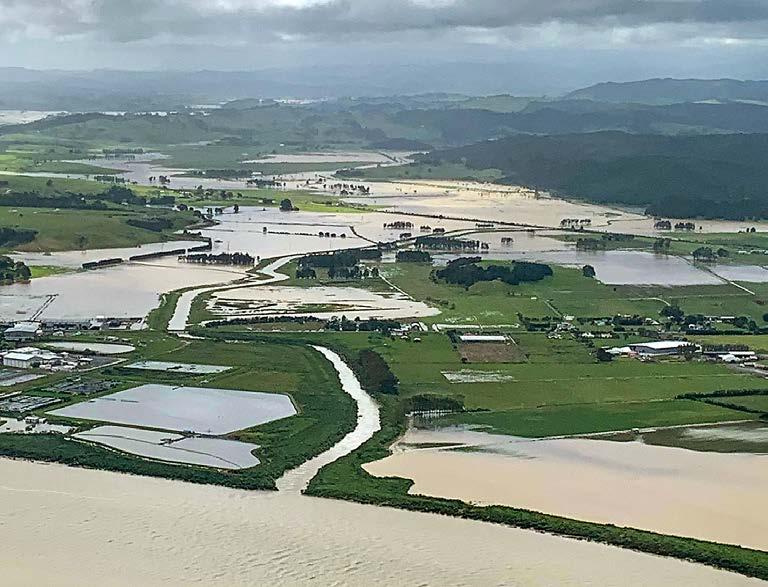
While Cyclone Gabrielle is far behind us, it was a weather event that won’t be forgotten too quickly. Paddocks flooded, roads blocked from water or fallen trees, power cut for days and families needing shelter, food and general care — a La Niña summer.
Northland Regional Council data suggests that for the 2025–26 season, it is 65–70% likely for La Niña to develop, and one to two cyclones are expected for the North Island. So, what numbers should you keep in your phone in case of an emergency?
Aside from the numbers we know off by heart, having contacts like Northland Civil Defence already in your phone or written down can help. Should the worst happen and reception becomes limited, or the power is off, you’ll have a number on hand
The Rural Support Trust can offer support, too. The strong connection the trust has to the Northland Civil Defence and Rural Advisory Groups empowers the team to provide practical and financial
support in an adverse event and for its effects.
Once linked with RST, a facilitator can come out and assess what support is needed. The organisation also offers many other services to support the rural community, including for health and wellbeing, biosecurity, employee and employer matters and animal welfare — Rural Support Trust — 0800 787 254
Earth Sciences New Zealand, formerly NIWA, is another useful number to have in your phone contacts. Keep track of expected weather and climate phenomena, and other environmental challenges affecting our atmosphere, coasts, freshwater and more — Earth Sciences NZ — 0800 RING NIWA
Another contact that often passes people by is the local marae. Marae often stand as evacuation centres for people needing basic shelter, food and assistance. Knowing where to go when you need to vacate your home will ensure your family are safe and cared for if trouble does strike. Do a quick Google search and save the contact.
and
Parts of Kaipara were heavily flooded as a result of Cyclone Gabrielle, and farmers are still recovering from the financial impact
Photo: Samuel Davidson
Having a spare landline handy may be beneficial if any mobile phone towers are affected.
With your phone ready with the right people to call, you will be prepared for anything.
by Andy Bryenton
Hilux debuts evolution number nine
and tradies
The Toyota Hilux has developed more than a reputation across eight big iterations of the brand; it’s developed a personality. It may not always have been the best-selling ute in New Zealand, with contenders vying for the crown in a competitive market, but there are still plenty of examples on the road, which prove the popularity and durability of Toyota’s legendary workhorse.
A new Hilux has been in the works for four years, and anticipation runs high as the ninth evolution of the flagship Toyota ute gets ready to roll out. Whispers began in October and culminated in a big reveal in November, which surprised the world with the announcement of a battery-electric Hilux — the first of its kind. This will sit beside a whopping 12 diesel and hybrid diesel options, all centred around the 1GD-FTV 2.8-litre turbo-diesel engine, delivering more usable torque at lower rpm. A hydrogen fuel cell variant is also said to be on its way.
cab size options, and a wellside deck or the option to go flat or custom.
Drivers will of course have the choice of two-wheel and four-wheel drive, three
“For generations, Kiwis have trusted Hilux to deliver strength, reliability and near-unbreakable performance through
A new Hilux is a big deal for ute lovers; akin to a new album by one of the biggest bands in rock the toughest conditions this country can throw at it,” said Toyota New Zealand chief executive officer, Tatsuya Ishikawa on launch day. “The new-generation proudly carries that legacy forward as we
approach a milestone — 50 years of Hilux in New Zealand in 2026. This evolution is more than a celebration of heritage. It’s a statement of Toyota’s vision for the future, with a multi-pathway approach that includes a BEV and a hydrogen fuel cell Hilux variant scheduled for 2028.”
With plenty of the ‘indestructible’ Hilux utes of the 1980s, and plenty more of the ubiquitous Kiwi beachside Hilux Surf still out on the roads, there’s a benchmark for styling Toyota did not want to stray too far away from. Their radical designs for cars like the Supra and the CH-R have been dropped for the wildly-named, but factually quite reserved, ‘cyber sumo’ (their words) aesthetics of Hilux number nine.
That means a big, solid stance, boldly flared guards, slimline headlights and a hex-mesh grille that’s a shout-back to 1980s design cues, brought into the modern era. All in all it’s handsome yet a bit classically conservative; just how a lot of Kiwi blokes would like to think of themselves.
by Liz Clark
Avoiding the new build blues
The architectural plans are done, a builder is engaged, and then
as progress payments, or your builder goes under.
It’s something to always be prepared for when obtaining a mortgage for a new build from the ground up. Your bank must be reassured that its investment in a new home is secure. While it sounds tedious and frustrating, the process can be easier if you are clear about your plans with your mortgage adviser from the start.
It’s also important to note that in recent times, the news media have been full of the disastrous collapse of building companies nationwide and clients being left high and dry with either incomplete builds or none at all. Many have been stuck with large mortgages and still have to pay them regardless. That’s something everyone wants to avoid when proceeding with new construction.
Choosing a builder can be made easier by asking for local recommendations, especially if you are new in the community you’ve chosen to live in. All builders are required to be licensed building practitioners under rules introduced several years ago. They cannot proceed with construction unless they have that licence.
Never take your potential contractor’s word for it. Always check on the Licensed Building Practitioners website at lbp.govt. nz/for-homeowners/find-an-lbp. The same applies to any subcontractors your builder may engage for work such as plumbing and electrical, which requires certification by a registered electrician. Your builder and their subcontractors should all have public liability insurance — your bank will require verification of this and a copy of the building contract, especially if it is a fixed-price one.
At each stage of the building process, your bank will only release funds once each part of the project has been certified as completed by a registered valuer. Your budget should include this to cover all the inspections the valuer will make at each completed stage of the project. They will then furnish your mortgage lender with a report confirming completion. If your builder asks for more funds for your build, then you should ask why. Fixedprice contracts are legally binding on the builder and client — any extra costs should be questioned.
Once the house is complete and the council inspector has done the final certification, if there are concerns, engage an independent building inspector to ensure your new home meets the required
specifications. There is usually a grace period of two weeks for due diligence on your new home after moving in before the final settlement is made with your construction professional.
by Andy Bryenton
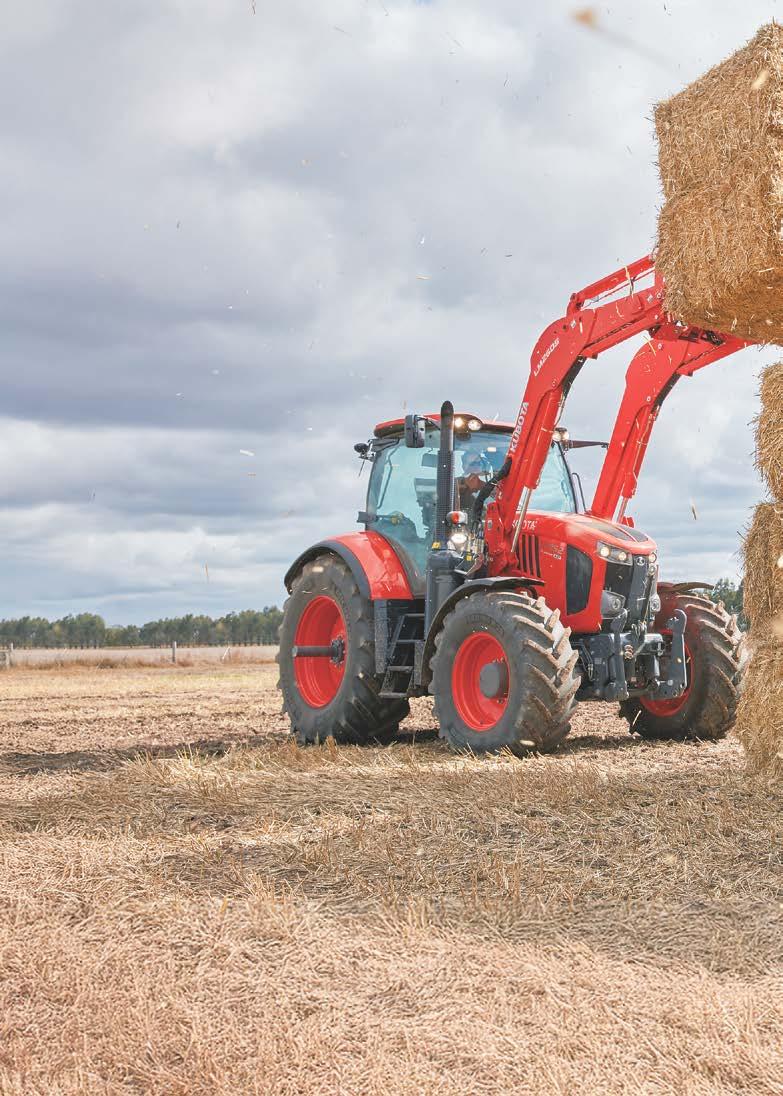
VEHICLES, MACHINERY & EQUIPMENT Top tractors singled out
The prestigious Tractor of the Year awards have been handed down, following a big Agritechnica event in Italy last week, and the winner’s circle is filled with the big names in agriculture.
Agritechnica is the largest agricultural festival and showcase of technology on Earth. It’s made all the more interesting as it’s also the forum for the international Tractor of the Year awards, judged by a panel of Europe’s top engineering and machinery critics. Called by some the ‘Top Gear of Tractors’, a victory at TOTY is a big achievement for any company, no matter how large and well-established.
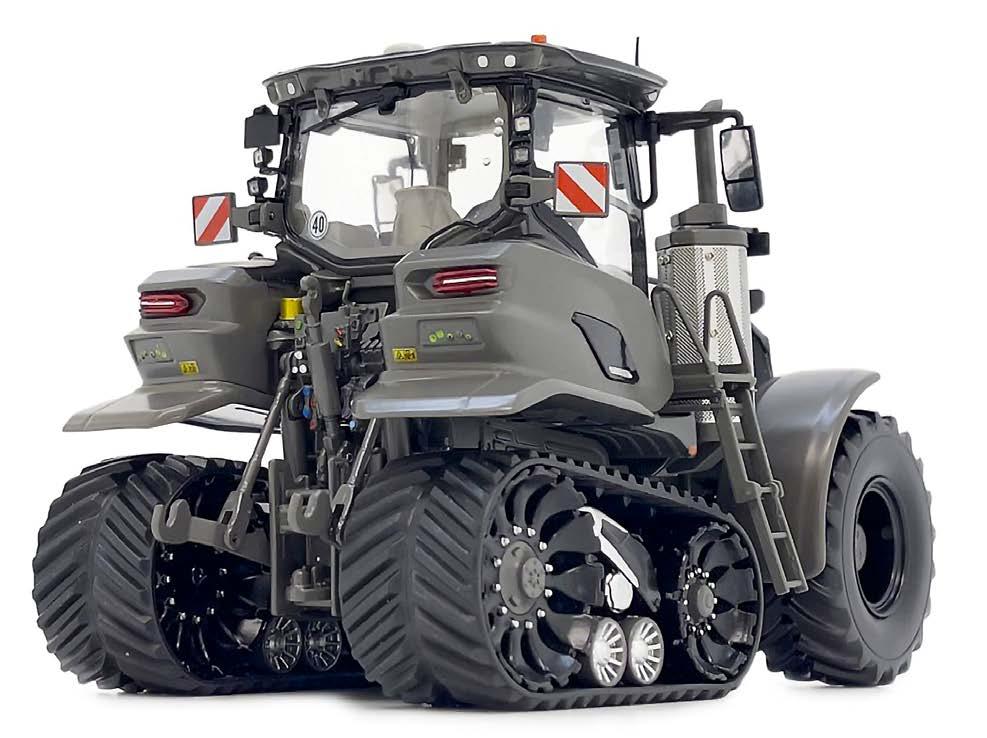
This year, the high-output category was won by the Claas Axion 9.540 Terra Trac, a half-tracked machine delivering smooth and silent operation with exceptional flotation over soil. At the same time, it delivers a shedload of usable torque. The Axion’s six-cylinder, 8.7-litre engine delivers ample power, and it’s mated to a stepless ZF TMG HD transmission, which can handle the biggest of modern implements in the field, but still cruise at 40km/h on the roads between jobs at only 1,350rpm.
The high-power category, like heavyweight boxing, is seen as the highlight of extreme tractor engineering, and Claas added 370-litres a minute hydraulic flow, advanced braking technology, 11 tonnes of rear lift capacity and a comfortable, four-point suspended
cab to the mix to really push the envelope.
In the mid-power category, the workhorse range for most contractors and farmers,
highlighted the versatility and efficiency of the Vario overall, but were very impressed with cab comfort and the intuitive nature of the control layout, making the 516 Vario Gen4 a great all-rounder. It’s exactly what’s needed in a mid-power tractor, which may need to complete all kinds of tasks in a single day.
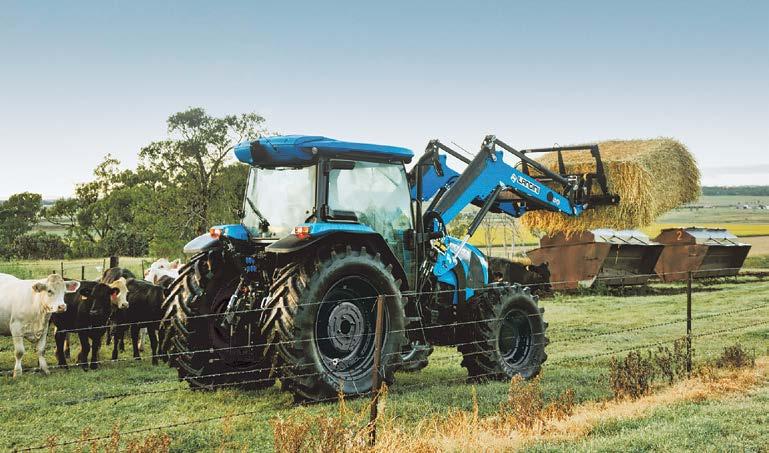
Valtra was hailed as gold medalists in the utility tractor competition, with the G125 CVT Active redefining the capabilities of CVT transmission. Tuned for front-loader and mixed-field operations, the CVT box in the new Valtra is engineered for smoothness and precision control, allowing operators to put the machine just where they need it. Also helping out when it comes to absolute finesse with a front loader is the excellent visibility from the wrap-around cab, optimised for ergonomic comfort.
jury
which came out on top. Delivering 164hp and a handy 792Nm of
All three of these tractors represent the pinnacle of the craft and will be rolled out for 2026 to make their mark on farms worldwide. If you’re keen to upgrade, consider the best, as judged by the TOTY panel. Their seal of approval means it’s worth your while to book a test drive.
The Claas Axion Terra Trac is the high-output Tractor of the Year, as judged at Italy’s huge Agritechnical convention it was the Fendt 516 Vario Gen 4,
torque, the
by Andy Bryenton
VEHICLES, MACHINERY & EQUIPMENT
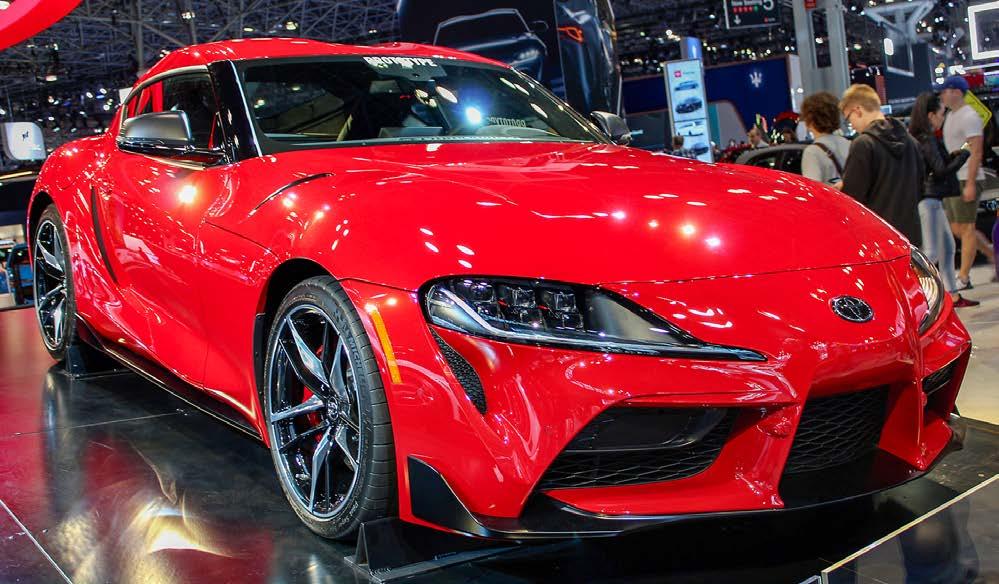
Supra bows out: Camry continues
Toyota’s halo car, the GR Supra, is set to leave Kiwi roads after six years of performance and power, but there’s another stalwart holding the line against an SUV clean sweep.
The Supra was superlative in many ways, and revitalised a legendary nameplate for a new generation, many of whom grew up on the Fast and The Furious franchise and JDM tuning dreams. Child of an alliance with BMW, some critics dismissed the new Supra as ‘too German’, which, to many petrolheads, is like criticising chocolate for being ‘too Belgian’ or a cold beer for being ‘too Kiwi’.
What’s coming next has the Internet all-a-twitter, with muttered hopes and whispered dreams hinting at a new MR-2. Full confession; I’ve owned one of every model of Toyota’s tiny twoseater micro-supercar, and a new edition would be fantastic.
In the meantime, it’s SUVs all the way down, with the popularity of the RAV4 leading Toyota to explore three designs for the little best-seller, which appear to have come from three alternate timelines in the Marvel multiverse. Then again, Toyota has
another alternative for you, if you want to stand out. Picture this. Imagine an SUV that’s more aerodynamic, with four doors and a boot for all your gear, but with a design built for performance. There’s room enough for a family of five, but the stance and handling of a sports car. A
2.5-litre hybrid engine provides ample power, because this machine is lighter than nearly every SUV on the road, thanks to clever engineering and design. Impossible? Expensive? How about neither. This miracle of motoring is called a sedan, and it’s the kind of car your dad
drove. Before the age of the SUV, when driving was meant to be adventurous and drivers enjoyed the journey, this layout offered all the space you needed, without the weight. Sedans raced, and roared, and the ones you found in dad’s driveway were wrapped in bright sponsors’ colours, trading paint on tracks like Bathurst and Silverstone. Toyota knows that some people have not followed the trend to the allure of high seating positions and ‘the feeling of safety’. Some don’t want to tow a boat and take three Irish Wolfhounds with them on every trip along with the neighbours’ kids. They want a sedan, a design refined for 100 years, and for them, the Camry ZR continues to get better each generation.
Hence, the surprising end of this week’s rant. If you want something different, if you want to stand out, take a look at one of the best-selling cars of all time, the Camry. It’s cool again.
Will a new MR2 replace the Supra? Toyota’s halo car is leaving, but when it comes to reviving classic motoring experiences, don’t look past the Camry
by Andy Bryenton
VEHICLES, MACHINERY & EQUIPMENT
E-Vitara switches it
Suzuki has carved out a niche in the car market very different from that filled by its motorcycles; while the
and Hayabusa are all about performance and speed, the Jimny and Swift are about compact,
Originally conceived as a step above the 1980s-era Jimny, the Vitara began life as a variant of the Escudo, a little off-road wagon, which gained big appeal in New Zealand for its ability to go just about anywhere. Light, agile and capable, it became the basis for a whole lot of hunting and trail-blazing builds. Through the years, and four successive generations, the Vitara earned a ‘grand’ prefix, got bigger and more powerful, and earned a reputation as an affordable, feature-packed mid-sized SUV.
It’s a good-looking design, this new iteration of the VItara. While there are those who probably wish that it carried over the tiny, baby G-Wagen appeal of the Jimny in a slightly bigger, electric incarnation, Suzuki has opted for a clean, smoothed-angular look, with bold black five-spoke wheels and off-road-readylooking black flared guards and side bump strips.
The e-Vitara has already been released in 100 nations, and Suzuki plans for global dominance. They’ll be helped by the fact that their new offering is already in the running for 2026 World Car of the Year. We don’t know quite yet how much it might cost to get behind the wheel in New Zealand, but price-point surprises matched to capable technology has been a winning formula for Suzuki in the past.
Now the times are changing, and the latest Vitara comes with a nod to that long history through styling cues, but also with a whole new power source. The e-Vitara tells it like it is on the tin; it’s the Vitara people have come to respect and expect, with all-electric drive.
With Suzuki showing the world just how much car you can get for your money across models like the Swift and Ignis, an all-electric car bearing the big silver S is highly anticipated. After all, the biggest barrier to most Kiwis considering an EV
is price. Suzuki traditionally offers a nice price alongside the peace of mind that comes from buying from one of Japan’s long-established names.
The e-Vitara will come in two variants, both packing 61kWh of electric power. A two-wheel-drive option exists for those who want to cruise carparks and commuter runs, with a range of 430 kilometres on a full charge. True to form and its pedigree, there will also be an ALLGRIP all-wheeldrive option, with only a little less range at 396 kilometres. Suzuki drove two of its new EVs out on to an ice hockey rink to debut them; a sign that their ALLGRIP system can do the business.
The Suzuki e-Vitara represents a new direction for a model that has been a fan favourite since 1988
Northern Rural Marketplace
MATS from $89 — Come
&
at Rouse Motorcycles, King Street, Hikurangi. Ph 0800 963 636. www.atvtyres.co.nz.
from $119 accessories from $15. The law has changed! Have you got yours? Come & see us at Rouse Motorcycles, King Street, Hikurangi. Ph 0800 963 636. www.atvtyres.co.nz. Subject to availability.
Only at Rouse Motorcycles, King Street, Hikurangi — phone 0800 963 636 & Yamaha MC Whangarei. Ph 09 438 0804.
FARMING & LIFESTYLE
GARDEN SERVICES SEED POTATOES / GARLIC, New Seasons, FERTILISER – Organic Blood & Bone, Citrus, General plus more from Northland Seed, Okara Drive, Whangarei. Phone 09 438 0884.
LIVESTOCK
LUCERNE CHAFF plus more HORSE FEED, CALF REARERS get your Milk Powder and Meal from Northland Seed, Okara Drive, Whangarei. Phone 09 438 0884.
LAWN SEED/PASTURE SEED/FENCING Reels and Standards from Northland Seed, Okara Drive, Whangarei. Phone 09 438 0884. FENCING FENCING, ALL types of fencing, pool, stockyards, post &