He contributed until he could no longer: that’s the sort of man Jim Bolger was.
It has been said that, in terms of passion and commitment, the country came next only to family in Jim’s eyes.
Jim Bolger died, at age 90, on Sunday, October 15. He was, of course, the Member of Parliament for King Country from 1972 and still was in 1996 when our electorate became Taranaki-King Country. In his time as leader of the opposition and then, from 1990, prime minister, he presided over, and often generated, some momentous episodes in the nation’s history.
What are the other consequences that we can expect? There was also the socalled Mother of all Budgets during his tenure. Still, his most momentous and farreaching decision as prime minister was to hold a referendum on electoral reform.
I was not in parliament at the time. In fact, I was still in primary school when he was first elected to parliament. We would talk often as fellow farmers
and parliamentarians once I entered parliament in 2014, and after he retired. I valued those chats. They were always informative and frequently laced with his quiet humour. Jim and his wife, Joan, with whom he had nine children, were a formidable couple. Joan was, and is, just as deeply involved and passionate about the community as he was.
Jim served his country in various capacities almost up until the day he died. At the time of his passing, he was collaborating with former Labour prime minister Geoffrey Palmer on a longterm project aimed at shaping New Zealand’s future.
Jim Bolger leaves behind a legacy of service, leadership and quiet dedication. His legacy will still motivate generations of New Zealanders, and those who knew him will forever cherish his wisdom, warmth and dedication to the country he loved so deeply. He will be greatly missed.
3800 • 07 870 1005 Kuriger.Teawamutu@parliament.govt.nz King Country Virtual Office 021 815 017 • Kuriger.Kingcountr y@parliament.govt.nz
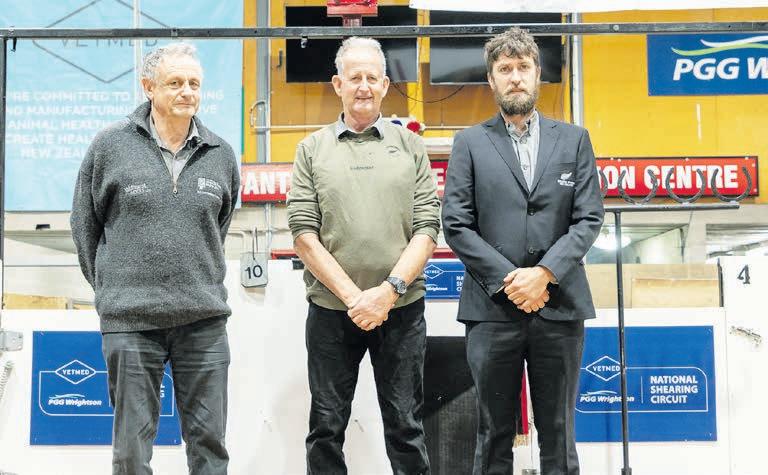
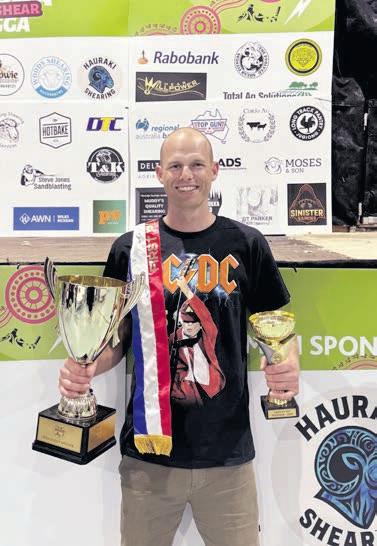
I have met with Jim many times over the years, but this is one of my favourite photos: it was taken in 2017 at the NZ Shearing Championships along with Jim and myself was Bill English the then prime minister, the late Sir Colin Meads and Sir David Fagen
by Barbara Kuriger, MP for Taranaki-King Country
Government limits forestry conversion
Agriculture and Forestry Minister Todd McClay says legislation to protect productive farmland by limiting farm-to-forest conversions is now in place.
The Climate Change Response (Emissions Trading Scheme — Forestry Conversion) Amendment Act came into effect on October 31. McLay said forest owners will notice these changes in the Emissions Trading Scheme (ETS) system from this month.
“Through this act, the government delivered on protecting food production, supporting rural communities, and ensuring foresters can continue to invest with confidence,” Mr McClay said.
The legislation restricts exotic forests from entering the ETS on Land Use Capability (LUC) class 1–6 land — New Zealand’s most productive soils — with certain exceptions, including for Māoriowned land and erosion-prone areas.
Farmers will retain flexibility to plant some land should they choose.
Transitional exemptions from the restrictions are available for those who can demonstrate both a clear interest in the land and a qualifying forestry investment made between January 1 2021 and December 4 2024.
“Farming and forestry are both important to our regional economies
Todd McClay, Agriculture and Forestry Minister and communities and this Government is supporting both sectors to create jobs and grow exports,” McClay said.
The Ministry for Primary Industries (MPI) has worked to keep the sector informed, including running webinars to explain the new restrictions. Its website has been updated to include the changes and guidance documents.
Dedicated MPI staff will continue to provide specific support.
More information can be found on the MPI website — keyword search ‘forestry’.
Waikato black gold
wheeled
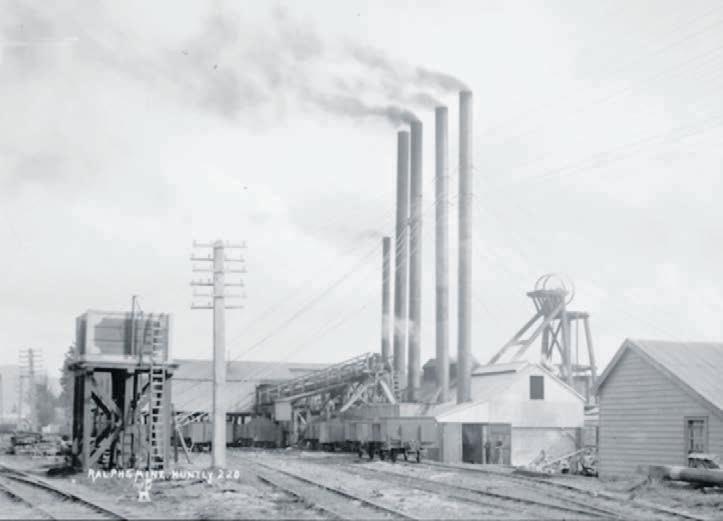
Coal has been a significant industry in Waikato since the 1870s. This image shows a working mine at Huntly in 1910 with all the infrastructure required to get the coal out of the ground, into the wagons and sent on to the next destination. Coal was once the mainstay of motive power throughout the 19th and early 20th centuries.
“IATTRACTION THROUGH RESTORATION
Once a gully full of weeds and rubbish, Kukutaaruhe Gully is being transformed into a haven for wildlife by the Kukutaaruhe Education Trust.
n 2014, Fairfield College was proposing the sale of half their land, having significantly more land than a school of that size would typically have,” said trustee Kieran Barry.
“The land included a large area of gully with a stream feeding out into the Waikato River. At a public meeting to discuss their plan, several community members attended, and an alternative plan was proposed to retain the land and use the gully’s unique ecological features for educational purposes.
“The gully has a stream running through it with some significant native
life, including longfin eels, kōkopu and assorted invertebrates.”
The school board of trustees saw merit in the idea, and gave the community group time to come back with a feasibility study outlining how the project might work and illustrating the benefits to the school, the students and the community.
Following a period of exchanges, the school board of trustees gave the project the green light, and work got underway.
“We started our restoration work in 2017. The gully was choked with noxious weeds and had been used by many as a dump over the years, so our first few
BY AMY FIFITA
working bees involved filling skips with roofing iron, washing machine parts,
“After
barbed wire and other items.
clearing a small area of weeds, we began planting. All of the plants we’ve planted are eco-sourced natives.
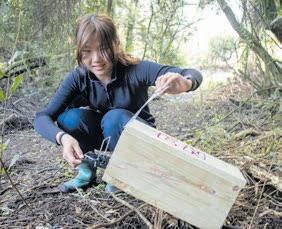
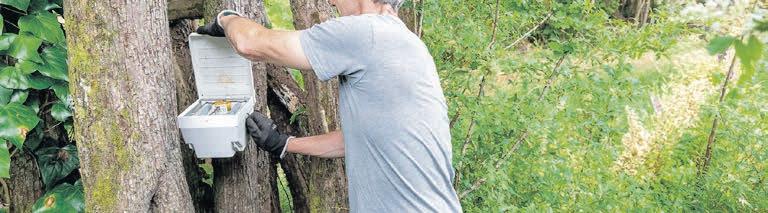
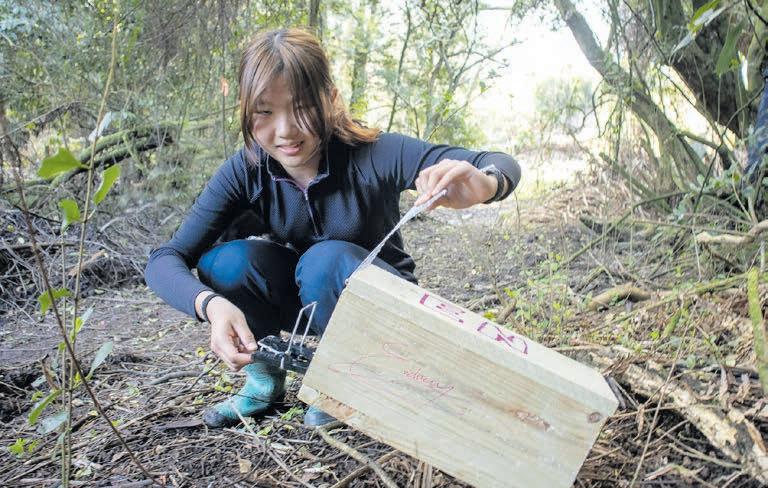
Trustee Kieran Barry is one of the volunteers who ensure the traps are set, allowing birdlife to exist there
After planting 35,000 trees and laying traps, the trust reports seeing native birds, like tūī, pīwakawaka, kōtare and ruru, return to the site
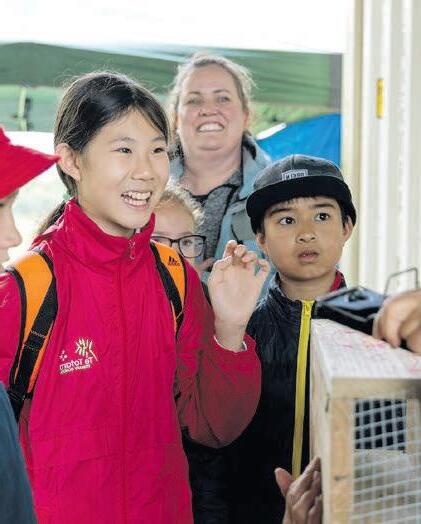
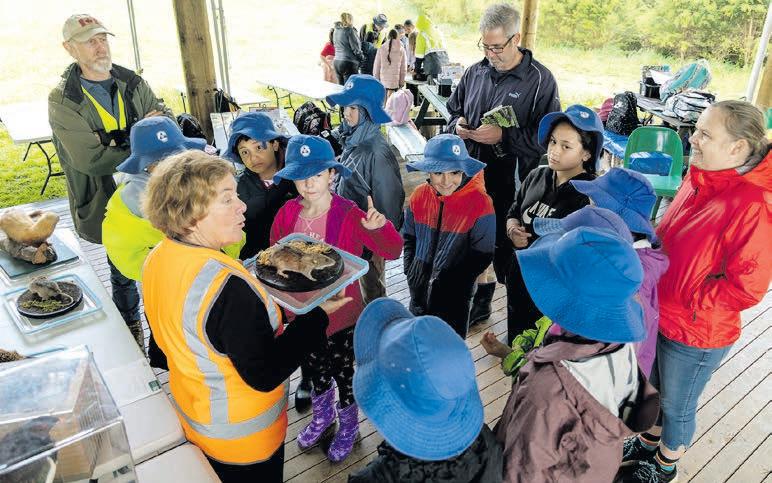
“We exist to provide education for local schools and the wider community. Students get to work with our educators and volunteers. They get involved with planting and learn about the unique ecology of this space, and enjoy a proper bush-like experience right here in the city.
“Three years ago, we realised our next job was to establish some pest control measures. It was all well and good clearing the weeds and planting the trees, but one of our long-term objectives, based on a local story of the Ngaati Wairere hapuu, was to see the return of the kereruu (native wood pigeon).
“They don’t exist here currently, but historically, this was a rich hunting ground for Ngaati Wairere. It is a big dream, but that is
what we want to achieve, and ultimately, our planting will reflect that with miro and tawa.
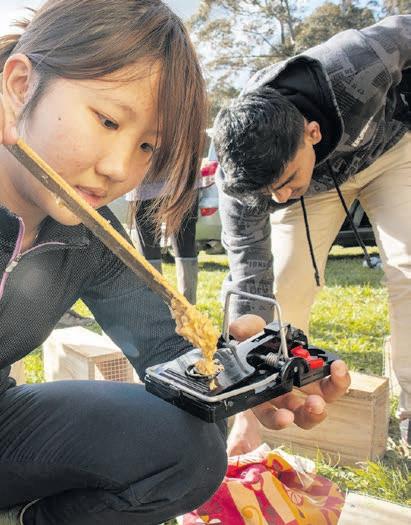
“To bring back native birds, we have to control pests. We have a limited number of rat and possum traps and a small number of volunteers checking the traps, but in just three years, we have trapped over 650 rats and some possums.
“It’s not always pleasant work, but it’s very satisfying, and we have definitely seen the birdlife return in the last couple of years.”
Now with over 35,000 native plants in the gully, tūī, pīwakawaka, kōtare and ruru are a regular sight. Kieran says it is a lot of hard mahi (work), but they are seeing the fruits of their labour.
With a small team of volunteers and assistance from students, businesses
Students have the opportunity to attend the annual BioBlitz, an educational day where students spend time in the
getting an understanding of what’s there, and learn about
and community organisations, the trust has transformed the weed-ridden dump site into a paradise for native birdlife and a valuable learning context.
“I’m at the stage in my career where I’m excited to be part of something that gives me purpose as I approach retirement. It is not without its challenges. We exist on the strength of generous funders and some local businesses.
“We have one company that comes in quarterly to work in the gully. Rather than simply contributing financially, they wanted to be part of it, so they came to do some planting and weeding. It is awesome to see. It helps them with team building, and just as we enjoy being part of something worthy, so too, do they.”
With one business already contributing its time towards the gully restoration, there is an opportunity to explore that model for others in the area.
“We are victims of our own success. With 35,000 trees, there is a lot of weeding and maintenance required, particularly in those early years, as the plants are getting established. Although we’re passionate about the project, we are just a small group of volunteers. To make this sustainable, we now need to attract more organisations to come on board.
“When the plants are about four years old, a canopy begins to establish, and those weeds begin to die down, and it becomes self-sustaining. That’s where we want to get to with the whole gully.”
gully
pest control
ROCK N ROLL FROM THE GRAVEL ROADS
BY AMY FIFITA
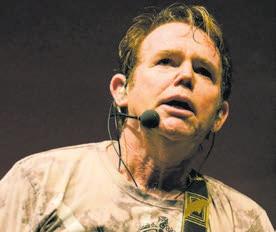
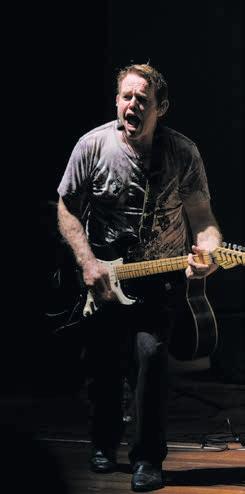
“Hard Road came in the last few years, and that name is taken from something my father used to say to me, ‘you’ve got a hard road to hoe’. That’s why I named the album Hard Road — it is a good reflection of me,” said Merv.
“I had never understood it at the time, but when I look back, I understand what he meant, because I didn’t listen. I wasn’t one to listen, and if I thought it should be done, I was going to do it anyway.”
Born in the King Country and exploring his love for music in rural Waikato, dairy farming and music have been the two main passions of his life. It was on the family farm that Merv learned how to overcome the challenges life handed to him, a lesson that helped him in his career.
Named after one of his dad’s favourite sayings, Hard Road, an album by singer and songwriter Merv Pinny is a retrospective journey of his life and experiences.
“We were always on the farm, and we were pretty wild. My brother cut his toe off with a saw, and my other brother cut his tongue off from jumping out of the hay shed on to the truck.
“It was a bit chaotic, so our parents spent a lot of time in the accident and emergency department because we did almost anything. Being allowed to drive tractors and trucks from an early age, my brother ran me over with a truck.
“That was when things changed a little bit, because people were questioning why the boy was in the truck. I spent a long time in Waikato Hospital. They didn’t think I’d be able to walk again. It was horrific for my parents, but I can only remember getting run over by the truck and the day I began walking again, probably because I was sedated.
Launching his career from his mother’s lounge with his brothers, Merv has been in various bands, and has a lifetime dedicated to farming and music
“It is a great lifestyle for children, and the lessons that we learnt helped me with my music career, because there were some tasks that seemed impossible. My
I
siblings and
had to dig a three-metredeep trench, and our father made us dig it with shovels because there was no frontend loader.
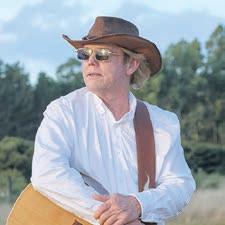
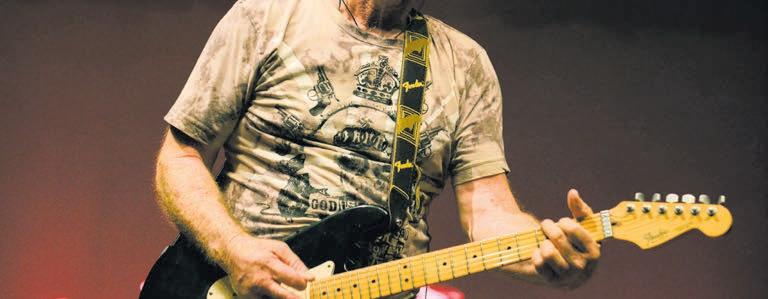
Musician Merv Pinny released his new album Hard Road on November 28, a reflection on who he is and what he’s experienced
“It took us two months to complete. That is one of the lessons my father taught me: nothing is impossible, you just have to keep working on it, and you’ll eventually achieve what you need to do.”
With a rural backdrop, Merv and his brothers discovered their love for music, often playing together, and eventually becoming a three-piece band.
“We had no neighbours around us, so practising and playing as loud as we wanted in mum’s lounge was an accepted thing. Our lounge was set up like a band room.
“The first instrument I picked up was the trumpet, and I became the most unpopular child in the family very quickly. I didn’t get any lessons, so I was just making noise. Trumpets are very loud.
“Switching to guitar when my brother got a Les Paul guitar. He sold his old guitar to me for $10, and that’s how I got started. I was more popular on the guitar than the trumpet.
“My main instrument was the bass guitar, because my brother’s band, Judge Hoffman, needed a bass guitarist and I happened to be there. They’d won the Battle of the Bands and their bass guitarist was sick, so I stood in. I was 14 years old at the time and able to hold my own with that band.
“Later on, I moved into rhythm and lead guitar. As brothers, we had a three-piece band, The Pinny Brothers. Many of the bands I played with after that were threepiece bands — fewer spaces, more money for band members and fewer people to argue with.”
Decades on, and various farms and experiences later, Merv is now based in Kerikeri on a lifestyle block and is releasing Hard Road.
“For the last few years, I’ve been working at the Turner’s Centre in Kerikeri, doing a lot of theatre shows and working with so many people country-wide.
“It has been a great learning experience for me, not just musically but entertainmentwise. I’ve learned about some of the touring acts and how they do things, and I try to build some of that into my stuff as well.
“There are so many songwriters out there trying to get heard, and there are many different ways of achieving that. There is a powerful and supportive community in the music world, even in other countries like Australia and the USA. They all have that in common.”
IBY PAUL CAMPBELL
FLASHING THE BLADES TO WIN
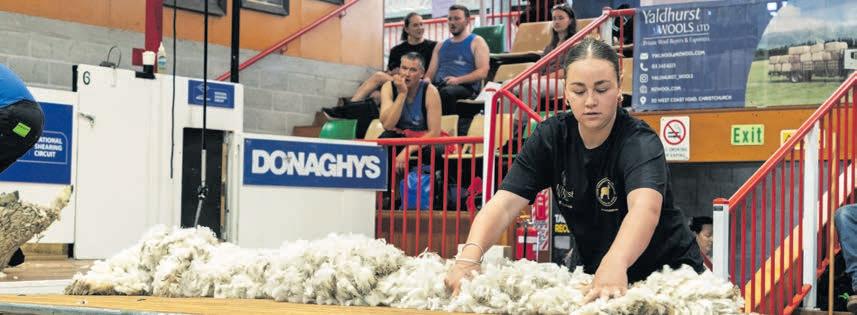
t the latest demonstration of oldtime skill, former world champion blades shearers Allan Oldfield and Tony Dobbs have confirmed their bid to regain the title in at next year’s world champs in Masterton in March, after dominating a New Zealand team selection series, which ended at the New Zealand Corriedale Shearing and Woolhandling Championships in Christchurch.
“The pair won their title in France in 2019, when Oldfield also won the individual title,” said SSNZ spokesman, Doug Laing.
“However, they had to settle for second place behind South African shearers Bonile Rabela and Zwelamakhosi Mbuweni in Scotland in 2023, when New Zealand, for the first time, failed to win a single shearing or woolhandling title in the history of the championships.”
With the introduction last century of electricity in the woolshed, the old cutting shears might have disappeared, but that is not in the case of the burgeoning competition promoted nationally by Shearing Sports New Zealand over a busy summer ahead.
Oldfield, from Geraldine, based in Hutt Valley, and winner previously in 2020 and 2021, won by just 0.26 points from 2025 New Zealand Trans-Tasman Series team member Scott McKay, of Clarence. Fairlie farmer Dobbs, going for three in a row with 20 wins in the Golden Blades dating back 40 years, had to settle for fifth place.
“McKay controlled the pace and shore the five sheep in 15min 18.53sec, beating Oldfield by almost 11 seconds, and the remaining four finalists by more than two minutes,” said Laing..
Oldfield said that now that the team selection had been decided, with machine shearing and woolhandling representatives to be decided in January/February, he will get in as much competition as possible, despite the competitions being in the South Island, and him being based in the North Island.
OUR BUSINESS IS GROWING CLOVER
In the machine shearing the open title was won, also for a third time, by defending champion and Te Kūiti gun Jack Fagan, son of Sir David Fagan, who won the title 13 times from 1984 to 2009.
Fagan, who flew into Christchurch only a few hours earlier, won by just 0.24 points from 2020 winner, Scotland international and Southern Hawke’s Bay farmer Gavin Mutch, who had finished almost a minute clear in shearing the 10 sheep in 10min 44.71sec.
Third in the six-man final was Oamaru’s Justin Meikle, who on a Friday won the Donaghys Canterbury All-Breeds Circuit final, and had seen daughter Zoe win the junior woolhandling final, in what was a corrected result after initially being named runner-up.
It was Fagan’s second win of the season, having won at the Poverty Bay A&P Show, while Meikle’s win was his third, after
triumphs at the Ellesmere Show on October 18 and the Pleasant Point Gymkhana Shears.
Dre Roberts, of Mataura, claimed his third senior title of the season, and the intermediate final was a triumph for young Kurow shearer Tamati Dennison, in his first competition in the grade. Dennison won the junior final at Pleasant Point seven days earlier.
Shows travel-mate Tye Meikle, the number one-ranked junior nationwide last season and unbeaten in five Intermediate finals this season, managed only fourth on the Christchurch stage.
The junior final provided a first win for Ben Rowson-Jones, from Ashover, near Matlock, in North Derbyshire, England. He works for Phil Cleland, in Oamaru, and like many from the UK, will need to head home for lambing beats in February, thus missing the Golden Shears.
Fertiliser products for healthier stronger pastures
Fertco
From left: Shearing Sports New Zealand South Island chairman Paul Harris and South Canterbury blades shearers Tony and Allan Oldfield, at the Canterbury Shears after confirming their places in the New Zealand
The women’s title was successfullydefended by first-season open-class shearer Laura Bradley of Papatawa, near Woodville, while the intermediate blades competition was won by Evalyn McGregor, of Otautau.
In woolhandling, in which entries across the three grades doubled compared with last year, the open final provided a rare male one-two. Joel Henare claimed the title for an eighth time, showing his experience of competitions with twoshearers to work, compared to just one in many other competitions.
While Henare dominated the final, he hadn’t had the show all his own way. Runner-up Logan Kamura of Bulls, came off with successive wins in the previous fortnight and top-qualifying, being the second of three who headed Henare among the 19 competitors in the heats. Third place went to Taiwha Nelson, who won the title in 2012.
The senior final provided a second national title win for Tia Manson, of Piopio, who opened the season with a red ribbon at the New Zealand Merino Shears in Alexandra.
The remaining competitions in the South Island before Christmas were both shearing-only competitions at the Nelson A&P Show and the West Otago A&P Show at Tapanui.
In the North Island, the shearing-only Taranaki Shears are at the Stratford A&P Show on November 29. On December 6, the shearing-only Northland shows circuit kicks off with the Whangārei Shears, while the Agrodome shearing and woolhandling championships will be held at the Rotorua A&P Show.
Most recently, Jack Fagan successfully defended one of the world’s biggest speed shear titles and spearheaded a New Zealand clean-up of
major prizes on November 24 across the ditch in Wagga Wagga, NSW, while fresh from the AC/DC concert, in Sydney, the previous night.
He told the crowd at the speed shear: “I actually can’t quite explain how much I love speed shearing. It’s the one thing on earth that makes me feel like an absolute rock star.”
Fagan stripped his final lamb in 17.32sec to claim the A$10,000 first prize and a trip to Wales next July. Southland shearer Brett Roberts was second, shearing 18.3sec, in the open final at the Wagga Wagga Speed Shear, which carried over A$65,000 worth of prizes across six events.
The women’s title was won by Sacha Bond, originally from Palmerston North and who also won a trip to Wales, where she and Fagan will compete in the Royal Welsh Show.
team for the World Shearing and Woolhandling Championships in Masterton in March
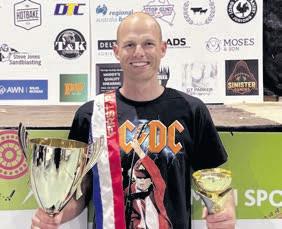
Jack Fagan on the prizewinners’ stand
Tamati Dennison, of Kurow, makes the leap up a grade by winning the Intermediate shearing final, his first competition in the grade
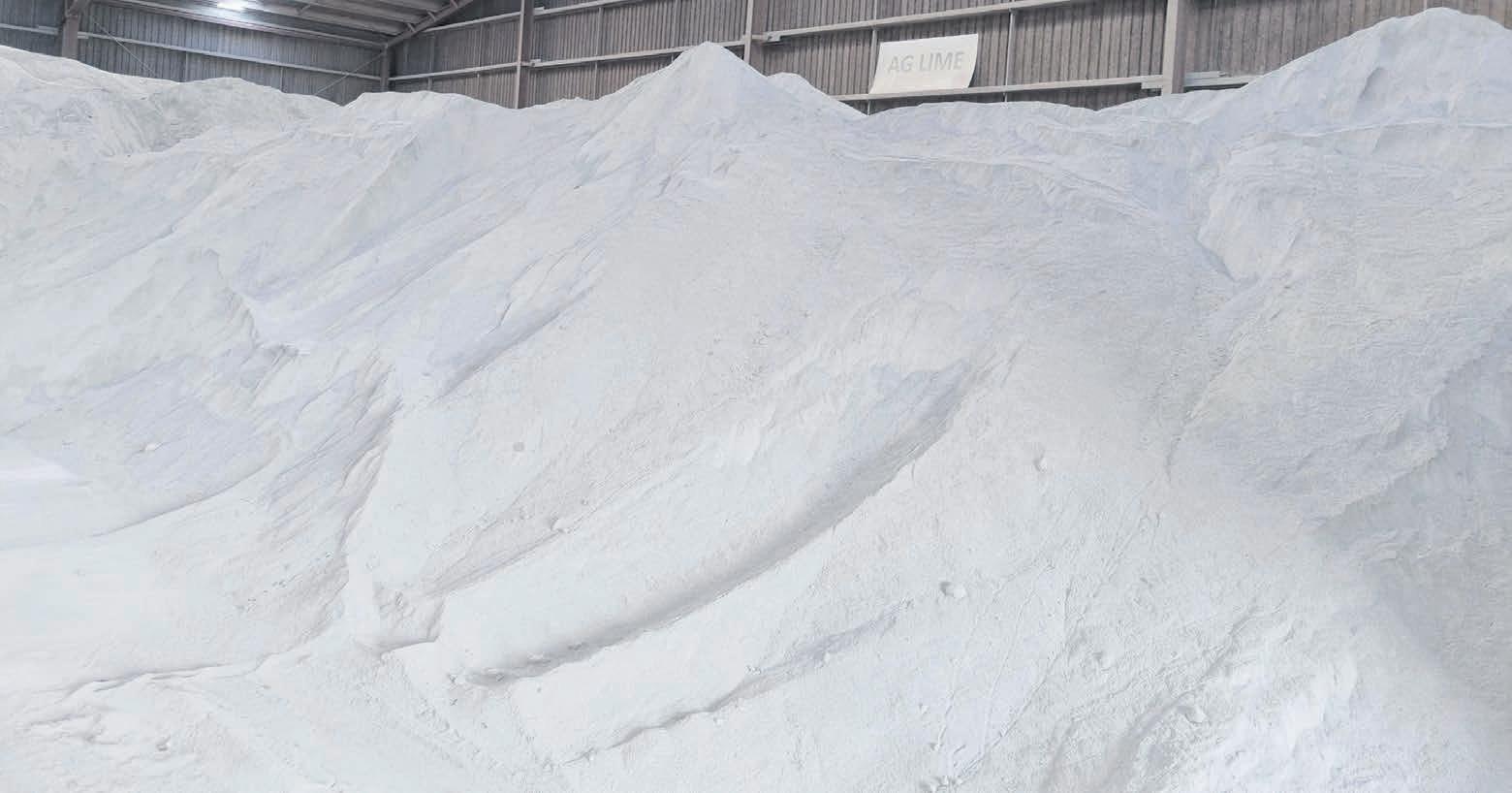
Avoca’s Agricultural Lime (AgLime) and Limestone are manufactured at our three lime quarries at Rarewa (Whangarei), Pokapu (Bay of Islands), and Port Albert (Wellsford). Both are also available at bulk stores in Dargaville and Te Kauwhata (Waikato). From all of these locations, we’re well placed to deliver Agricultural Lime products Northland and Waikato wide. Avoca also provide soil fertility testing and consulting as well as lime and fertiliser products and custom mixes.
NORTHLAND LIME
10
reasons to apply lime to your soils:
1
2
3
4
Increases nutrient availability; raising soil pH with lime to ~6.3-6.5 releases and balances soil nutrients for plant uptake, maximising return on your fertiliser spend.
Improves pasture yield. Trials have shown pasture production increases up to 68% and corresponding live weight gains.
Reduces need for N-fertiliser; lime stimulates N-fixation by legumes, and N-release from organic matter into plant available forms.
Improves P availability through a ‘phosphate sparing effect’ - trials in Northland showed 50-60kg more P available consistent over 3 years after applying 5t/ha of lime to a pH 5.8 soil. Optimal P availability occurs when soils are limed to pH 6.3-6.5.
Improves pasture palatability allowing for more even grazing of pasture and better pasture utilisation. 5
6
7
8
9
Increases soil biological activity and diversity; key to nutrient availability, good soil structure & porosity, and ultimately pasture/crop yield.
Increases resilience to droughts, floods, and runoff/erosion, reduced greenhouse gas emissions, and greater root penetration for pasture/crop growth by flocculating (loosening) your soil to improve soil structure and porosity.
Increases water holding capacity in the dry and water drainage in the wet. Lime drives down magnesium in ‘tight, high Mg’ soils such as estuarine soils found in the Hauraki Plains.
Reduces elemental toxicities evident at low pH levels, e.g. Al, preventing subsoil acidification and improving root growth, root development, and reduces P-fixation.
Provides calcium which is essential for both plant and animal growth and health. 10
Lime releases nutrients
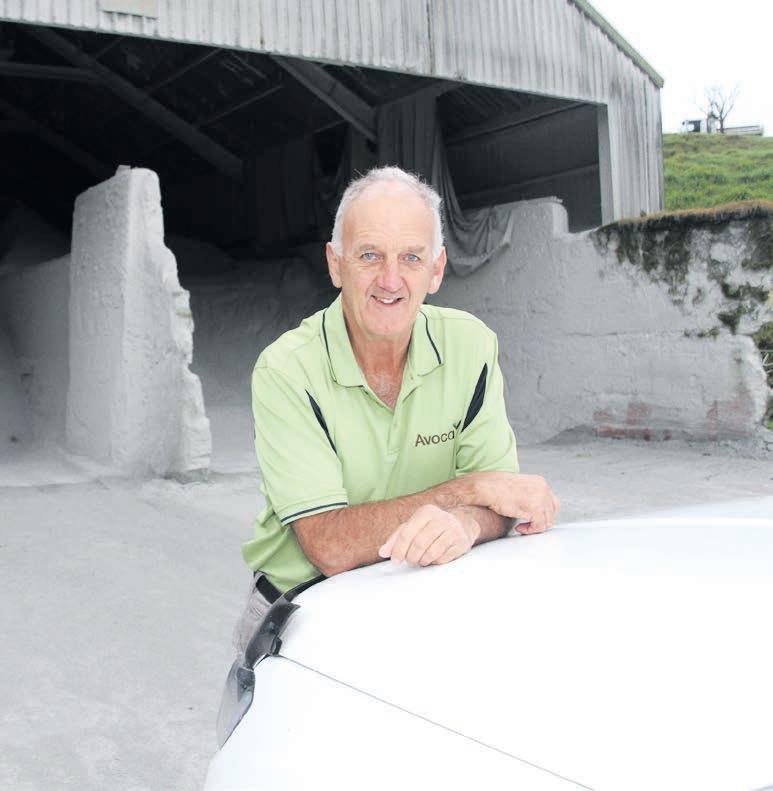
Avoca managing director Bryce Manderson believes it is time for farmers and lifestyle block owners to rethink how they manage soil health and fertility by applying lime to release nutrients.
The sooner they understand the benefits of putting on lime, the sooner they can work towards improving productivity.
“There needs to be a realisation around the importance of soil acidity and without getting pH levels to 6.2–6.3 by applying lime, full nutrient release is unachievable — that’s why lime is becoming increasingly critical to farming,” says Manderson.
The Northland-founded company has expanded to become a leading provider of lime and fertiliser mixes in Northland, South Auckland, Waikato and Bay of Plenty, and Manderson says many landowners underestimate the benefits of lime.
Lime itself — calcium carbonate — provides calcium to soil and plants. Calcium ensures efficient plant uptake of water and nutrients, carbohydrate storage in plant leaves, nodulation and nitrogen fixation in legumes, and encourages earthworm activity.
With fertiliser prices at an all-time high, Manderson says it makes sense for farmers to ‘sweeten’ their soil by boosting pH levels through applying lime.
“Lime maximises returns from money spent on fertiliser, reduces soil acidity and significantly increases availability of important plant nutrients, a key benefit of liming.
“It increases availability of important plant nutrients: phosphorus, nitrogen, potassium, calcium, magnesium and trace elements like boron and molybdenum,” says Manderson.
“I liken lime to being like a multi-powered superhero; because it fosters optimum availability of all other nutrients, so it provides great bang for your buck. You only have to talk to farmers who have a regular liming programme to understand the benefits.”
Manderson says if soils are too acidic or too alkaline, nutrients sitting in soil that already existed there or have been added via fertilisers and other soil amendments over the years will not be available to plants.
“So, it’s important to maintain a pH of 6.2–6.3 to optimise the availability of all these nutrients.”
The major nutrients (Ca, Mg, N, P, S, K, and Na) as well as the trace elements, Mo and B, are most available in near neutral soils, whilst other trace elements (Fe, Mn, Cu, Zn) are more available in acidic soils.
“Of course, rainfall and plant-soil chemical interactions naturally increase soil acidity. On top of that, landowners are responsible for acidification through abundant use of fertilisers on our agricultural land.
“All of these factors steer our soil pH levels below the optimum required for maximum nutrient availability. Applying lime will increase the pH of your soils, creating conditions for greater nutrient availability, and therefore increased productivity.”
Manderson says it is worth remembering that sulphur is required by plants in similar amounts to phosphorus. Liming not only
WOOLSHED MANURE REMOVAL
•
• We also do count out pens
increases soil pH to that which is optimal for sulphur availability, but in doing so, increases microbial activity allowing for
the mineralisation of OM-S (the major proportion of sulphur in most soils), making it plant available.
by Andy Bryenton
Investment in innovation
We have all heard of nitrous oxide as a race car fuel booster, but only those with hands-on farming knowledge will have heard about this substance as a byproduct of cattle urine.
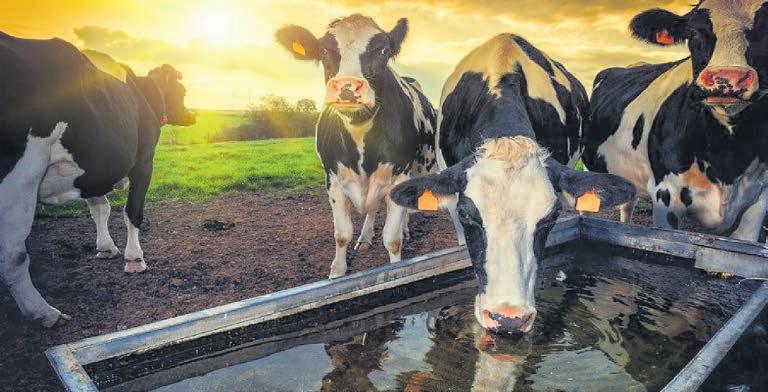
It’s both a good thing and a bad thing that the liquid output of the nation’s herds creates so-called nitrate patches across pasturelands. It’s a natural process, but those concerned with New Zealand’s carbon footprint point to the fact that nitrous oxide is a greenhouse gas, and that it makes up seven per cent of total global emissions. At the same time, cattle each generate more nitrogen than the total amount of
0800 BASEPRO
synthetic nitrogen fertiliser farmers pay to put on pasture. A nitrate patch made by a cow’s ablutions contains the equivalent of up to 1,000kg of nitrogen a hectare.
The problem? It’s concentrated in a small spot. A solution could slash farming costs and benefit the planet.
That’s where a small Canterbury company called Āmua comes in. The government’s AgriZeroNZ initiative has recently granted $1.2 million to this innovative firm, which has developed a lightweight wearable device for cattle that allows nitrogen to be spread evenly across pasture from the source as it were. It’s one of 16 projects, which have received part of $191 million in grants to accelerate research and development for future farming that knocks back emissions.
“This is Kiwi innovation at its best. Smart technology designed on the farm, for the farm, turning waste into a valuable fertiliser and maintaining New Zealand’s leadership in low-emissions pasturebased farming,” says Finance Minister Nicola Willis.
“A total of $191 million has been committed over its first four years to accelerate development of emissions reduction tools for farmers that support the government’s goal of doubling export value in 10 years.
“Other AgriZeroNZ investments include methane vaccines, inhibitors, probiotics
and pastures. The first commercial tools are expected to become available next year, and up to 11 from wider government investment by 2030.”
The full list of innovations includes a methane inhibitor sourced from daffodil plants, molecular science and a possible vaccine aimed at methane reduction, UV-light-based low-emissions ryegrass,
probiotic feeds, cattle reproductive technologies and more.
“Research and development drive productivity and high-value jobs. Our goal is a system that empowers worldclass scientists, universities and research organisations to turn ideas into marketready solutions,” Science, Innovation and Technology Minister Dr Shane Reti said.
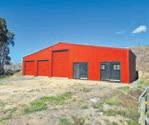
tspacedo Just spotted this – the SHEDS4U Sefton Shed deal is insane: save over 10% and you can deck it out however you want.
Dr. Shane Reti is enthusiastic about several emissions-busting technologies, which have received government grants
New commercial director appointed
RAGT New Zealand, a growing force in high-performance forage and crop genetics, has announced a pivotal leadership transition, appointing James White as its new commercial director.
White, who has been instrumental in the company’s evolution, will now spearhead the New Zealand business, focussing on using genetic innovation to meet the evolving demands of Kiwi farming.
His elevation to commercial director is a strategic move, signalling RAGT’s increased commitment to delivering profitable, sustainable solutions for New Zealand farmers. With 19 years of experience in the business, White’s clear future vision is directly aligned with RAGT Group’s global strategy, which prioritises research and development to address complex agronomic challenges.
This amplified focus is crucial as the sector navigates increasing pressure from environmental regulation and the persistent need for feed security and higher on-farm productivity.
“I am delighted to have accepted the role of commercial director and am truly excited about the opportunities ahead for RAGT. The formidable strength of this business comes from our dedicated team and our exceptional genetics, which are powerfully supported by the wider RAGT Group,” said White.
“Together, we will build on this foundation for real success, continuing to deliver cutting-edge cultivars that ensure farm resilience and profitability. I look forward to further establishing RAGT as one of the leading genetics providers for New Zealand.”
RAGT New Zealand’s focus on innovative genetics and seed technologies, such as market leading perennial grasses and revolutionary novel endophyte, is set to be a key pillar of White’s leadership. His
mandate is to translate this cutting-edge global research into immediate, practical and highly-effective commercial solutions for local conditions, ensuring RAGT is known as a go-to partner for New Zealand’s progressive and productive farmers.
Commenting on the announcement, Simon Howell, Western Europe and Australasia business director for RAGT Group, stated, “James is the right person to lead RAGT New Zealand into its next phase of growth.”
This appointment follows the successful tenure of Bruce Garrett, who successfully led the business through its significant transition from Seed Force to a fully-fledged RAGT subsidiary. RAGT Group acknowledges Bruce for building a strong foundation and positioning the company as a key player in the New Zealand seed industry.
Understanding severe osteoarthritis (Part
one)
by John Arts
I regularly am contacted by people with severe osteoarthritis, usually in knees, hips and hands.
The question is whether anything other than pain relief or surgery can help. In most cases nutritional therapy can help. I have a client with severe knee osteoarthritis. He gets noticeable relief enabling him to continue his physical lifestyle that was becoming increasingly difficult.
Severe osteoarthritis is characterised by significant deterioration of cartilage, the tissue that cushions the ends of bones. This usually results in bones rubbing directly against each other. This leads to pain, swelling, stiffness and a reduction in joint mobility. People can often feel a grating sensation as the joint moves.
Severe osteoarthritis requires a wider range of supplements at higher doses. Changing to an anti-inflammatory diet will increase chances of results. Before we commence, we need to ensure compatibility of higher dose supplements with prescription medicines, especially blood thinners.
The key supplements we need are, in order of importance, chondroitin, curcumin (from turmeric), omega-3 fish oil and glucosamine. If medications, age and
circumstances allow, we start with a very intensive period, usually for 12 weeks. This involves daily doses of chondroitin 1,600mg, 100% water soluble (pepperfree) curcumin 1,200mg, EPA from fish oils 1,000mg, and glucosamine 1,600mg. This involves three different supplements.
Chondroitin sulphate can make a significant difference to joint function. The main benefits come from supporting healthy cartilage secreting cells (chondrocytes) and reducing joint inflammation. I have seen excellent results from this approach. The benefits can be anything from, like my client, noticeable improvements in comfort and mobility through to people cancelling planned surgery. There is only a relatively small group who have no benefits. The key is to work to a personalised plan with regular reviews.
John Arts (Adv.Dip.Nut.Med) is a nutritional medicine practitioner and founder of Abundant Health Ltd. For questions or advice contact John on 0800 423 559 or email john@abundant.co.nz. Join his newsletter at abundant.co.nz.
What is Bettaflex?
• Bettaflex is a joint support formula to promote healthy joint cartilage function
• Bettaflex has 400mg (per capsule) of high-grade avian chondroitin, 400mg of glucosamine and 100mg of BioSolve® bioavailable Curcumin (from turmeric).
• Try Bettaflex for 3 months and see for yourself.
How can Bettaflex help?
• Chondroitin and glucosamine are building blocks of cartilage.
• Supplementation with correct levels can support healthy cartilage function and cartilage repair processes.
• New BioSolve® bioavailable curcumin helps joint function while gentle on the stomach.
• Research indicates that chondroitin is highly effective at 800mg daily.
John Arts comments:
James White and Simon Howell
by Amy Fifita
A knock, knock — merry Christmas
Christmas time is delightful and stressful, a time for giving and expensive, and all of the in between, so having a failsafe plan is a must, especially if the relatives turn up without warning.
Christmas as a child is fun, presents, desserts, leftovers and family, but this writer certainly remembers the mischief she could get into in my grandfather’s home. It was back in the days when the wooden spoon was legal, or still acceptable, being sent to the room for having a mildly undesirable attitude. So, how should unsuspecting hosts of the family Christmas plan for a surprise visit? The expectant children, the inappropriate relative, a new partner, and the sleepy old dears might knock on your door this holiday season, so don’t get caught unawares.
Spare chocolates for presents (or snacks), frozen chooks, gravy packets and other simple, but Christmas-acceptable items, are easy enough to stock up on. With the food order done, on to the more pertinent matters, like imprisoning the energetic children who think breakable ornaments are action figures to throw at their siblings.
Ensuring Christmas is still magical for the little ones and still keeping your sanity is the goal. Time to dust off the old toy basket, have a box handy to hide irreplaceable valuables, and perhaps wonder if Halter would work on children.
Joking aside, some clear boundaries, a stern look and a no-go area run-down might help once they grace your doorstep with a surprise visit. If those lovely, but full-of-beans, children are farm-friendly, a good run around the paddock would help burn off some excess energy, too.
A sure way to avoid awkward guests is a beach Christmas, especially if you like your house clean, tidy and in order. Pack up the car with food, presents, sun block and togs, and it doesn’t matter if extras show up.
The venue is free, nothing will be broken, the parents can manage their own children by the water, and you can relax, eat and swim while enjoying the family gathering. Whatever your method, fun is to be had, memories will be made, and madness will be averted.
BY PROFESSIONALS IN YOUR COMMUNITY NOT “EXPERTS” ONLINE
If done right, sometimes all it takes to manage the children at Christmas is a stern look
by Andy Bryenton
The gift of two-wheeled fun
There are few presents found under the Christmas tree which bring out more joy than a new bike; the only way to top this classic is with a new motorbike.
Getting your youngsters into motocross and off-road riding early means that they have a whole lifetime of trail riding and sporting fun to look forward to. It’s a way to let the kids enjoy the outdoors in a way that has nothing to do with screens and virtual reality, and for many parents, it’s an introduction to a favourite pastime the family can enjoy together.
Getting a grounding in the basics of how to ride safely and with skill is a good way to develop lifelong habits on two wheels, and launch a riding career that might lead anywhere. It could pave the way for podium finishes on the track, but it could equally become a core skill for a future job working on the land. It could become the catalyst for confidence that launches a road bike riding passion, with the mobility, fuel economy, commuting ease and adventurous touring it brings. Everyone starts somewhere, and future champions start with bikes like the classic PW50, still the little learner’s best friend after all these years.
Safety is, of course, paramount, and the PW50 delivers some smart features for mums and dads keen to see their
children thrive and develop their riding abilities. With a super-low seat height, light weight that’s easy to balance, and an automatic two-stroke 50cc engine, this is the bike that started thousands of riding journeys. There’s no chain to tangle with, because the PW50 has a shaft drive setup, and parents can set a maximum speed for learners using an adjustable throttle.
When it’s time to move up to a bigger bike, such as the Yamaha TT-R50 or its 110cc cousin, then there’s good news about the PW50 and its legendary reliability. Your kids might outgrow little boots and gloves, but there will always be someone else keen to buy a pre-loved peewee-sized learner bike for their upand-coming track star in training.
If you’re looking at putting a little motorcycle under the tree for Christmas, remember that safety is about the complete package. You might want to get those gloves, boots, clothes and a goodquality helmet sorted, so Santa knows which ones to deliver. After all, it’s pretty certain that any youngster unwrapping their first motorbike is going to want to take it for a spin as soon as possible.
Looking for a way to get your whole family on two wheels? Little learner bikes like the PW50 are still the place to begin
by Amy Fifita
Christmas Preparation
A dive into iconic rural memories
Delving into icons, memories and history, Te Radar and Ruth narrate a fun and informative look at what it is like to live rurally in their book, Kiwi Country: Rural New Zealand in 100 objects.
Meatsafes, herringbone milk sheds, and maybe former prime minister
Robert Muldoon’s taxidermied lamb, all items that come to mind when thinking about iconic New Zealand farming. With
memories and icons of rural New Zealand, Te Radar and Ruth Spencer have collated 100 items prominent in country living from homesteads to the gravel road.
Andrew Lumsden, also known as Te Radar, himself an icon, comes from a rural background. From pig shed treasure hunting to television personality, and being a fun-loving MC at FMG’s Young Farmer of the Year contest, Te Radar has always had a farming background.
Despite leaving the milking shed when he was 20 years old, Te Radar went on to study law at the University of Otago before pursuing theatre studies, where he earned the moniker Radar. Now in his 50s, he is married to co-author Ruth Spencer.
Growing up in Christchurch, Ruth is a freelance writer, and has a background in performing arts and music. Although raised in an urban hub, she spent time at a sheep station in Marlborough. It is there, where she drew a lot of memories and inspiration for the new book.
Exploring origins and farm life, Kiwi Country: Rural New Zealand in 100 objects, brings items to life with their stories, from the classic Red Band
gumboot to no-longer-used trinkets perhaps found in the pig shed.
‘Whenever my father was partway through a project, he’d often stop, stand up, look at the piece of machinery he was repairing
or building, and simply say, “Pig shed.” We’d fossick about among horseshoes, harnesses, old ploughs, various cylinders, coils of wire, pumps, lengths of pipe, taps, boxes of bolts, axles and shovels.’
Stuff Pet Beds
Husband and wife team Te Radar and Ruth Spencer collaborated to write Kiwi Country: Rural New Zealand in 100 objects
With illustrations penned by Joseph Carrington, such as a longdrop outside toilet or an old farmhouse, readers can appreciate the nostalgia from a farmyard childhood. The book could have its readership reminiscing about their own childhood, curious about what items they’ve held dear to their hearts.
While modern adults often reach for their phones, the book highlights technology, once part of the furniture, in almost every cowshed. Rural New Zealand hasn’t forgotten the transistor radio. Back in 1946, Kaitāia dairy farmer Mr Brent took out an extension cord, and connected it to his radio, an action that became embedded in rural history and still is today. ‘It wouldn’t be the cowshed without something playing in the background …
The advent of transistor technology made radios portable and accessible but farmers were installing heavy, cabinet-sized valve radios into their cowsheds as soon as they were available.’
There are even stories from modern times. When nature becomes wild and affects the land, farmers soldier on, as with the 2019 floods in the South Island — how were farmers meant to get their bull semen straws during breeding season?
‘What you need is a Cessna full of chilly bins — and that’s exactly what farmers in the South Island got in 2019, after severe flooding put the breeding season at risk … You might not be able to get a pizza delivered in the country but you can always rely on the Semen Express.’
The background of objects’ stories, snippets of history and retelling of childhood memories shows even though the book is about things, it’s about what is behind them that counts. It is about remembering the good times, Kiwi ingenuity and valuing the past.
Kiwi Country: Rural New Zealand in 100 objects can give readers a laugh, a history lesson, fond memories and much more. A book that celebrates our farmers in fun, amusing and informative ways, there are
Both with some form of rural background, the authors drew on memories to collate a book about the things of rural New Zealand
Illustrations: Joseph Carrington Kiwi Country: Rural New Zealand in 100 objects is in stores now waiting for keen readers wanting to learn and laugh
by The Rural Laureate
Christmas Preparation
Ode from a water tank
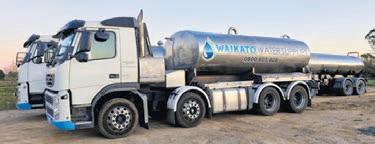
Summer’s coming along with the holidays, so we thought we’d share this classic, and a reminder to take care of your trusty old tanks before the weather turns blazing hot.
I
Sworn at when I’m
but forgotten when I’m brimming
Without my help there’d be no homebrew, bubble baths or swimming.
If I’m kept from cracking up, or rust, I’m good and watertight
I’ll hold more litres than the local pub on Friday night
And while you humans quench your thirst with milkshakes from a straw
I’m prone to gulp down 50,000 litres from the bore.
BLACK DOG FURNITURE
They say I have a belly; well — I’m usually quite round
The farmer slaps my side to hear my level from the sound
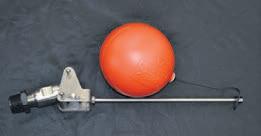
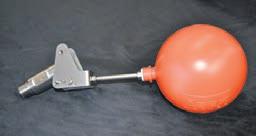
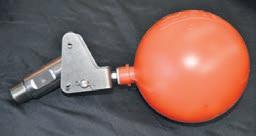
Or looks up, where a floating orange ball provides the proof
That, through the winter’s storms I’ve drunk the rain right off the roof.
Now, on that little note, I have some grumbles and some mutters
About the leaves and bird poop, which come swirling down the gutters
Not to mention mice, and things less nice, you wouldn’t want to drink
It’s up to ME to keep that kind of stink out of your sink!
To help me out, I’ve usually got a filter keeping guard,
So go on, switch it out, you’ll find it’s really not too hard.
And please, guys, keep my lid on - it’s really quite a panic
When a possum gets inside and goes the way of the Titanic.
Sometimes there’ll come a season when I give all that I’ve got
It’s usually a summer — one that’s extra-blazing hot
The level gets quite low, and that’s the perfect time for cleaning
A healthy scrub inside and out; you fellers get my meaning.
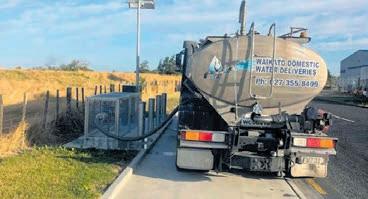
Then it’s time to call my trusty friend, the local water tanker
The driver never hears me, but I gurgle as I thank her
And I keep that water cool despite the sunshine on my top
When you could fry an egg up there, or get your corn to pop.
When visitors and rellies call, there’s limits to my powers
I wasn’t made to give the whole clan never-ending showers
And if your auntie needs to soak for hours to feel pretty
Inform her gently she can do that — back home in the city.
See, aside from all of this, a water tank has got it made
My life is cool and comfortable, cats lounging in my shade
I can gossip with the garage, ask the shed ‘bout each machine.
And I know to never, EVER ask the longdrop what it’s seen!
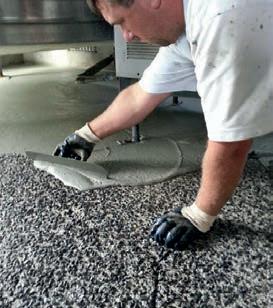
Now there is an extremely cost effective and easy to use product that will bring back your damaged concrete floors to an approved standard.
COLOURCRETE DAIRY FLOOR RESURFACER has been specially formulated for the repair of worn or damaged concrete in the dairy industry. Dairy Floor Resurfacer is a two pack system combining a Portland cement, fine aggregate based micro concrete and sophisticated binders that provide superior, compressive, tensile and flexural strength as well as a very high level of abrasion resistance and adhesion. This product is suitable for repairing worn or pitted areas or to provide a non-slip surface where necessary.
A two pot clear epoxy sealer can be supplied to reduce the wearing effects of milk and acid.
COLOURCRETE DAIRY FLOOR RESURFACER can be supplied as a ‘do it yourself kit’ and delivered anywhere in New Zealand or applied, in most areas, by contractors.
COLOURCRETE DAIRY FLOOR RESURFACER
Part A is supplied in 20kg bags and covers approximately 3m square. Part B modifier is supplied in both 10litre and 20litre containers and approximately 4litres per 20kg bag would be required. After trowelling, the surface can be broomed or sponge finished.
by Liz Clark
Christmas Preparation
Lincoln the lamb
Just over 20 years ago, a friend of mine had a dad, who was a very hard man.
Rex was your archetypal hard-nosed farmer, who liked his seasonal duck shooting, and a beer after a long day out on the farm. He farmed sheep, mainly for the fat lamb market. Each year, the ewes would give birth to appealing little lambs, and each year, once they were old enough, the lambs would go off to the works. No lambs were ever kept, even if they were handraised. Once they were old enough, pet lamb or not, it was off to the works — no exceptions made.
One winter, when Rex was out checking the ewes during lambing, he found a wet, bedraggled newborn lamb lying in the mud. It was so small, he considered right there and then, putting it out of its misery. Instead, he stuck the tiny lamb inside of his Swandri, climbed back on his quad and carried on doing the rounds.
A couple of hours on, Rex got back to the shed with the quad, and headed inside to have breakfast. He had forgotten all about the lamb now sleeping inside his Swandri jacket. He had sat down to eat, when his wife asked him what the bulge was under
his clothing. Rex shrugged, and told her it was just some lamb he had picked up. He had decided this lamb was worth trying to save. Why? There never was any explanation — just a gruff “we’ll sort this one”. Thus, Lincoln the lamb was christened. Lincoln never ended up being sent to the works. Instead, he remained on the farm as
a wether, grazing on the back lawn. He lived for 16 years, before finally one morning, Rex found him dead. Old age had finally caught up with Lincoln. Even the hardest of farmers, can at times have a very soft heart. There never was another pet lamb on Rex’s farm. For him, there was never one that could ever replace Lincoln — his special mate.
of
are concerned about “fake
Christmas Preparation
’Tis the Month Before Christmas
(with sincere apologies to Clement-Clarke Moore)
’Tis the month before Christmas in rural New Zealand
And merriment’s mixed with the panic we’re feeling
Just four little weeks — and there’s so much to do Before jolly Saint Nicholas slides down the flue!
Santa might have a list filled with billions of names
And work orders for toys, bikes and video games
But his whole operation’s a trivial trifle
Compared to what WE plan for Christmas survival!
Let’s start with the presents, all wrapped up and hid
For aunties and brothers and cousins and kids
You can’t just give a voucher, or junk bought online
Or the latest dumb fad that’s a chore to define.
So it’s off to the shops, not a cityside mall
But to main streets, and markets, and charity stalls
To the ute! To the shops! Hear the holiday call!
And dash away, dash away, dash away all!
Meanwhile, there’s a menu of treats to prepare
In the knowledge the rellies are soon to be there
If you live somewhere green, you have to remember
They’ll ALL come to visit sometime in December!
You’ll arise in that month, on some crisp rural dawn
To find RVs and dirt bikes and tents on your lawn
And some far-distant cousins, thirteen times removed
Who’ve remembered you’re close to the beach, and approved.
Plus a couple of uncles, and ten of your mates
Which is fine, if they know about shutting the gates
And come bearing, like wise men, brown bottles in crates
Or big chilly bins packed full of fare for your plates.
Is the barbecue ready? The water tank brimming?
Can I still fit my tummy in togs made for swimming?
Have we ordered the turkey, the ham or the roast?
Or all three, as we’ve got a small army to host?
It’s a whole lot of panic and running around
And trips back and forth for provisions in town
As holiday carols repeat in our heads
From radios tuned in utes, tractors and sheds.
But it’s also long twilights, and drinks in the shade
And markets and music and Santa parades
It’s getting together, and sharing some kai
In the knowledge that winter’s far-off in July.
So we frazzle and fluster, and blither a bit
When it’s four weeks ’til Christmas — but nobody quits
We know it’s well worth all the holiday fuss
Because we are ALL Santa.
And he’s all of us.
•
•
•
•
•
•
by Paul Campbell
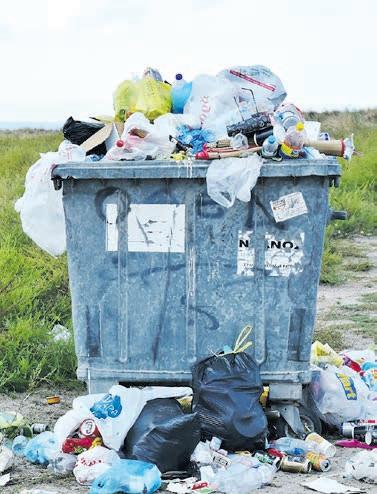
The problem is just rubbish
The world generates some two billion tonnes of municipal solid waste each year, and this is conservatively expected to grow to 3.4 billion tonnes by 2050.
By comparison, New Zealand deals with 17.5 million tonnes annually, with about 12.6 million tonnes sent to landfill, and 1.3 to 1.7 million tonnes recycled or exported for processing.
• Plumbing
• Gas Fitting
• Drainage
• Roofing
• Spouting
• Heating
• Water Tanks
• Plumbing Supplies
In fact, waste is front of mind, at present, with Auckland’s massive population fast-filling its Redvale tip, and contracted company Waste Management Ltd currently seeking to create a mega landfill in the Dome Valley north from the city, but in what’s regarded as fragile country. The plan has aroused strong opposition, and is the subject of an Environmental Court hearing that has lasted three years, with no end in sight.
Solid waste management operations are primarily local government responsibilities in most countries, but the people’s voice must be paramount and smart solutions are increasingly looked for.
We are experiencing smart environments in urban living, seeing self-driving car development, and we all carry smartphones in our pockets. So waste collection systems urgently require an upgrade from traditional, inefficient management processes.
Smart waste management today, needs to adapt to the modern needs of smart cities and developing urban as well as suburban and rural landscapes.
In leading overseas innovation, the waste management sector is heavily
reliant on artificial intelligence, and an increasing number of waste processing facilities are turning to this technology to improve operational efficiency. Items can be recognised based on their composition and class, for example, by scanning mixedup recyclables with AI computer vision.
The entire sorting and picking procedure at a waste processing plant can be automated using AI in combination with robotic sorting equipment. Robotic sorting equipment will swiftly and effectively separate the recyclables into single material streams once the AI system uses computer vision to detect materials.
Today, materials recovery facilities (MRFs) can precisely identify a variety of materials because of a ground-breaking technology that can sort rubbish and recyclables into 28 categories.
While it may be some time before recycling can make a dent in rubbish disposal, there is a move by opposition to the proposed northern mega-landfill to ban any recyclables from being dumped, at least making a big dent in what is buried forever.
For instance, using AI, recyclable plastic can be divided depending on type,
as well as the colour and shape, then compressed and compacted into a cube to enable easy storage and transportation.
In the US, San Francisco has passed an ordinance requiring all residents and businesses to sort waste into recyclables, compostables and landfill trash. The city diverts up to 80 per cent of its waste from landfills every year.
Get your waste away
A rumble in the pipeline
by Liz Clark
For most
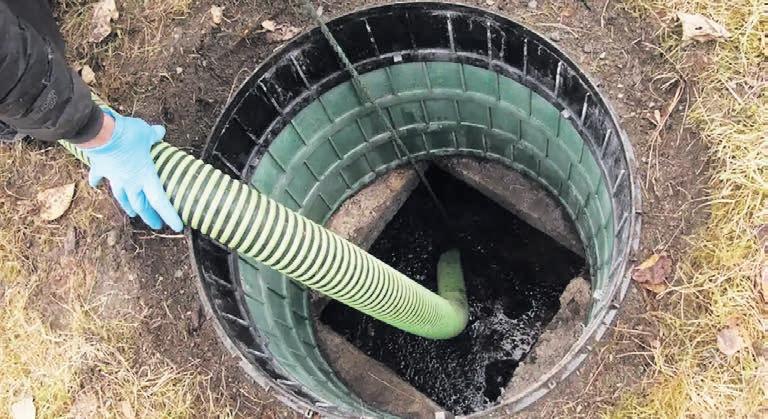
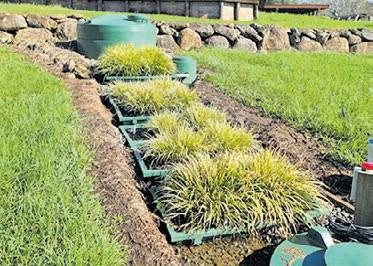
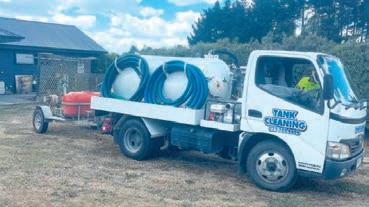
However, what if you’re new to it all and you get left with a rather full problem? It happens. The property is bought, and the moving in gets sorted out. Then, a few days later, there’s a rather messy problem because the previous owners didn’t have the septic tank emptied for many years, before they headed for the wild blue yonder.
If you’re thinking about giving rural living a try, then this is for you. The first rule is: always ensure you obtain information from the vendor of the property about when the septic tank was last emptied and inspected, and how often.
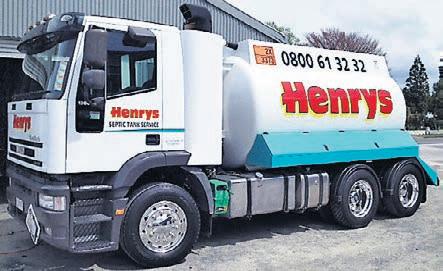
Most councils have bylaws that require the tank to be inspected at the time of emptying by a certified septic tank drainage company. This includes checking for any leakages or cracks in the tank. The more people in the household, the more often the tank should be emptied; around every three to five years is the best approach.
Signs your septic tank needs emptying
Gurgling sounds in the pipes and slow drainage
Gurgling occurs when something inside the pipes traps air and prevent liquids from flowing down the drain. It causes air pockets to form, which leads to the gurgling sounds. It could also be a blockage. Avoid putting anything down the drains, such as sanitary products, wet wipes and other items that can cause a blocked pipe.
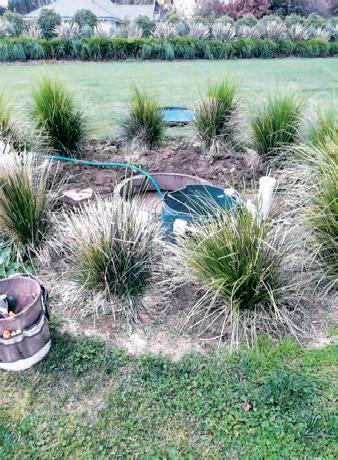
Excessively lush growth
If you see the grass suddenly greener and longer around the effluent field,
compared to the rest of the property. It’s usually a prime sign the tank needs emptying.
Water pooling around the septic tank
If you find water pooling around the area where the tank is and it has an odour, it’s a sign that the tank is overflowing.
Rainwater has no odour.
Sewage backup in the drains
If you notice raw sewage coming back up in your bath and shower drains, you
should immediately call a plumbing service or professional septic service. When the sewage is backing up to this point, it can cause damage to your home and become a health hazard.
by Liz Clark
MATTERS
Riparian planting — it’s worth it
Using natives locally sourced from your region is a far better option than attempting to plant with exotics, which may block up the waterway as they mature.
Planted streams, lakes, dams and wetlands have the potential to provide spawning habitats for native fish, such as īnanga, and vegetative cover for native birds and beneficial pollinators, such as bees, butterflies and other insects. Natives also filter sediment and nitrogen from exposed pastures and stabilise erosion-prone areas. At the same time, riparian zone plantings also improve and maintain water quality.
Once established, riparian plants shade the water and lower its temperature, providing stability for native fish, eels and koura that may be inhabiting the ecosystem. The shade also helps prevent the rapid growth of unwanted aquatic weeds and algae, which can clog the flow and deplete the water of oxygen. Free-flowing water increases oxygen diffusion. During dry periods, water will be conserved for far longer periods if shaded.
In mature plantings, if time is taken to look carefully, there will be a noticeable increase in species biodiversity where each species has a role in the food web connected to the aquatic ecosystem. In turn, each species benefits the other and the plants on the water’s edges. They also take advantage of the shelter provided by the plant roots to avoid other predators or for use during the day if they are nocturnal.
As with forest habitat, riparian areas have what is known as zones. The upper zone only floods sometimes. Drought-tolerant plants such as broadleaf, tōtara, pōhutakawa and kōwhai are an excellent choice for this area. For the middle zone, plant swamp flax (Phormium tenax), cabbage trees, toetoe, kānuka and mānuka. Then, in the low zone, where it will get flooded, native sedges and rushes, including raupō, are the best species to plant in this area.
by Andy Bryenton
VEHICLES, MACHINERY & EQUIPMENT
Supra bows out: Camry continues
Toyota’s halo car, the GR Supra, is set to leave Kiwi roads after six years of performance and power, but there’s another stalwart holding the line against an SUV clean sweep.
The Supra was superlative in many ways, and revitalised a legendary nameplate for a new generation, many of whom grew up on the Fast and The Furious franchise and JDM tuning dreams. Child of an alliance with BMW, some critics dismissed the new Supra as ‘too German’, which, to many petrolheads, is like criticising chocolate for being ‘too Belgian’ or a cold beer for being ‘too Kiwi’.
What’s coming next has the Internet all-a-twitter, with muttered hopes and whispered dreams hinting at a new MR2. Full confession; I’ve owned one of every model of Toyota’s tiny two-seater micro-supercar, and a new edition would be fantastic.
In the meantime, it’s SUVs all the way down, with the popularity of the RAV4 leading Toyota to explore three designs for the little best-seller, which appear to have come from three alternate timelines in the Marvel multiverse.
Then again, Toyota has another alternative for you, if you want to stand out. Picture this. Imagine an SUV that’s more aerodynamic, with four doors and a boot for all your gear, but with a design built for performance. There’s room enough for a family of five, but the stance and handling of a sports
car. A 2.5-litre hybrid engine provides ample power, because this machine is lighter than nearly every SUV on the road, thanks to clever engineering and design.
Impossible? Expensive? How about neither. This miracle of motoring is called a sedan, and it’s the kind of car your dad drove. Before the age of the SUV, when driving was meant to be adventurous and drivers enjoyed the journey, this layout offered all the
neighbours’ kids. They want a sedan, a design refined for 100 years, and for them, the Camry ZR continues to get better each generation.
Hence, the surprising end of this week’s rant. If you want something different, if you want to stand out, take a look at one of the best-selling cars of all time, the Camry. It’s cool again.
space you needed, without the weight. Sedans raced, and roared, and the ones you found in dad’s driveway were wrapped in bright sponsors’ colours, trading paint on tracks like Bathurst and Silverstone.
Toyota knows that some people have not followed the trend to the allure of high seating positions and ‘the feeling of safety’. Some don’t want to tow a boat and take three Irish Wolfhounds with them on every trip along with the
Will a new MR2 replace the Supra? Toyota’s halo car is leaving, but when it comes to reviving classic motoring experiences, don’t look past the Camry
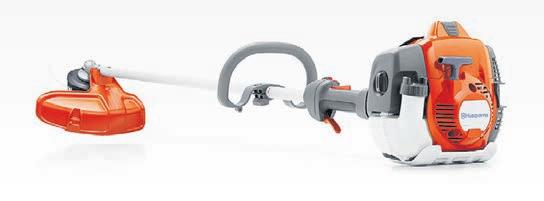
21 7cc - 0 6kW - 43 cm Cutting Width - 4 5 kg
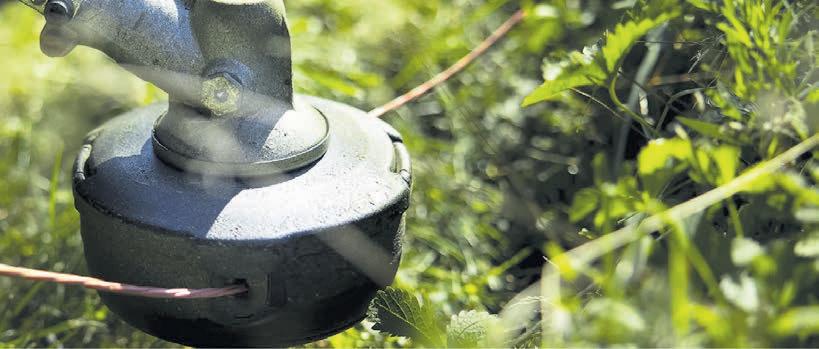
Trimming lawn edges around the home is simple with this easy starting grass trimmer featuring low weight and low noise
Versatile, powerful brushcutter complete with trimmer head, grass blade and double-harness H
25 4cc - 1kW - 46 cm Cutting Width - 4 7 kg
Powerful trimmer with a high torque gear box, robust construction with durable components
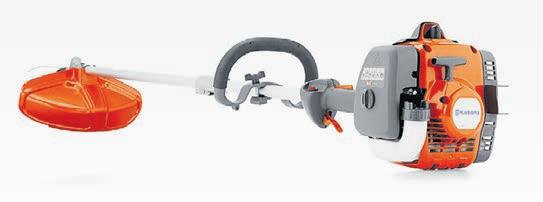
129LK Combi Trimmer
27 6cc - 0 85kW - 43cm Cutting Width - 4 7kg
Multi-purpose combi trimmer for homeowners with a powerful easy to start engine and intuitive controls Supplied standard with the trimmer attachment, this unit can be easily equipped with a number of optional attachments Optional Attachments from $309* (*Trimmer Attachment)
25 4cc - 0 95kW - 46 cm Cutting Width - 4
Highly efficient robustly
and
6cc - 0 85kW - 43 cm Cutting Width - 5 4 kg
weight, high power and easy to use Ideal for a quick clean up around the house
trimmer Comes with a combi guard trimmer head and
blade Optional attachments
The powerful engine combined with the optimal choice of
delivers impressive cutting capacity with fast
by Andy Bryenton
VEHICLES,
MACHINERY & EQUIPMENT
Top tractors singled out
The prestigious Tractor of the Year awards have been handed down, following a big Agritechnica event in Italy last week, and the winner’s circle is filled with the big names in agriculture.
Agritechnica is the largest agricultural festival and showcase of technology on Earth. It’s made all the more interesting as it’s also the forum for the international Tractor of the Year awards, judged by a panel of Europe’s top engineering and machinery critics. Called by some the ‘Top Gear of Tractors’, a victory at TOTY is a big achievement for any company, no matter how large and well-established. This year, the high-output category was won by the Claas Axion 9.540 Terra Trac, a half-tracked machine delivering smooth and silent operation with exceptional flotation over soil. At the same time, it delivers a shedload of usable torque. The Axion’s six-cylinder, 8.7-litre engine delivers ample power, and it’s mated to a stepless ZF TMG HD transmission, which can handle the biggest of modern implements in the field, but still cruise at 40km/h on the roads between jobs at only 1,350rpm.
The high-power category, like heavyweight boxing, is seen as the highlight of extreme tractor engineering, and Claas added 370-litres a minute hydraulic flow, advanced braking technology, 11 tonnes of rear lift capacity and a comfortable, four-point suspended cab to the mix to really push the envelope.
In the mid-power category, the workhorse range for most contractors and farmers, it was the Fendt 516 Vario Gen 4, which came out on top. Delivering 164hp and a handy 792Nm of torque, the jury highlighted the versatility and efficiency of the Vario overall, but were very impressed with cab comfort and the intuitive nature of the control layout, making the 516 Vario Gen4 a great allrounder. It’s exactly what’s needed in a mid-power tractor, which may need to complete all kinds of tasks in a single day.
Valtra was hailed as gold medalists in the utility tractor competition, with the G125 CVT Active redefining the capabilities of CVT transmission. Tuned for front-loader and mixed-field operations, the CVT box in the new Valtra is engineered for smoothness and precision control, allowing operators to put the machine just where they need it. Also helping out when it comes to absolute finesse with a front loader is the excellent visibility from the wrap-around cab, optimised for ergonomic comfort.
All three of these tractors represent the pinnacle of the craft and will be rolled out for 2026 to make their mark on farms
worldwide. If you’re keen to upgrade, consider the best, as judged by the TOTY panel. Their seal of approval means it’s worth your while to book a test drive. Manufacture / Repair of Hydraulic Rams Cylinder Honing
The Claas Axion Terra Trac is the high-output Tractor of the Year, as judged at Italy’s huge Agritechnical convention
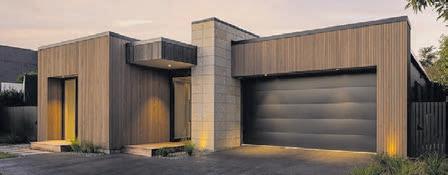
W e m i g h t b e U r b a n b y
n a m e , b u t w e ’ r e c o u n t r y
b y n a t u r e .
T h i n k i n g o f b u i l d i n g , b u t
d o n ’ t k n o w w h e r e t o s t a r t ?
C o n t a c t U r b a n H o m e s , y o u r d e s i g n
a n d b u i l d s p e c i a l i s t – a n d b o o k y o u r
F R E E S i t e A p p r a i s a l a n d D e s i g n