Unauthorised photography or recording of any kind is strictly prohibited.
Subtitles in Chinese and English, dubbing in Cantonese and English, audio description in Cantonese and English, and house programme in audio format available 12:20 pm 3 pm 16/3 sat 六 ,
大館洗衣場石階
Laundry Steps, Tai Kwun
語言 Language 佛拉蒙語及英語 Flemish and English
放映集數:第一集
Only the first episode will be screened
23/3 sat 六
「無限亮」網站播放
Screening available on "No Limits" website
共放映七集 All 7 Episodes will be screened
18/5 sat 六
設中英文字幕�通達字幕、�語�英語 配音、�語�英語口述影像、語音場刊 Subtitles and accessible captions in Chinese and English, dubbing in Cantonese and English, audio description in Cantonese and English, house programme in audio format available
�勿使用任何相機、智�手機� 任何錄音儀器對節目內容 進行拍攝、錄音�熒幕截圖。 Any type of screen recording or filming with a camera, smartphone or other recording device is strictly prohibited.
The Path May Be Tortuous I Must Take Charge of My Life
Who doesn’t want to be independent? Jasper, who has Down Syndrome, also wants to be self-reliant, and applied for a job as a packer in a chocolate factory. Since this enterprise employs many people with similar disabilities, Jasper finds camaraderie soon after he arrives. Workers there make fun of each other, but they also offer mutual support. Yet behind his happy façade, Jasper hides a broken heart—he has been hurt once and dares not love again. But when he meets the gentle and ardent Tina, he can’t help but fall for her despite his sense of trepidation and fear.
Faced with visa problems, Tina and her mother are repatriated to Kosovo, thus the couple are separated. Without telling his parents, Jasper and his friends set off on a road trip, embarking on a long journey from Belgium across Europe to reunite with his love. Taking buses and trains, riding motorcycles and even becoming penniless and hungry, they are nearly forced to sleep on the street at one point. . . As his friends leave one after another, Jasper’s spirit rises and falls with every dramatic turn. He becomes despondent because his dreams of reuniting with Tina seem so distant. Yet he won’t give up. As Jasper’s boss—who has a love-hate relationship with his factory workers—once said, “Don’t underestimate them. If they are determined, they’ll devote themselves to the cause.” In fact, we are all alike: hoping to earn respect, wishing for a normal life, pursuing our hearts’ desires, earning one’s keep and dreaming of setting up a family with people we love.
This is a journey that makes you laugh and cry. The characters’ quests in the story mirror the genuine dreams and aspirations of the actors in real life—“To take charge of one’s life.”
Team Chocolate is the co-creation of documentary filmmaker Filip Lenaerts and Marc Bryssinck, creative director of Theatre Stap, a Flanders-based theatre company for people with learning disabilities. They wanted to write a story bringing the acting troupe to the screen, with all of the lead roles played by members of Theatre Stap. They decided to use a chocolate factory as the setting not only because chocolate is such an iconic Belgian product but also because chocolate can be bittersweet, a fitting analogy to life.
Although the story is fictitious, plot points and characters’ emotions truly reflect the actors’ realities—important issues such as gaining independence, finding true love, making their own decisions. Here, fiction is immensely close to reality, and the actors can truly understand the script and interpret it with their hearts. Of course, casting actors with learning disabilities brought along its own problems: Sometimes cast members had difficulties memorising a lot of text, or needed help in understanding a particular scene. But Lenaerts is emphatic that his cast was extremely talented in unveiling a wide range of emotions inherent in the script. During pre-production, the team spent much time in rehearsal, polishing the script several times to incorporate actors’ own improvisations to make the story ring even more true.
The production team hopes that this work will encourage other creators to employ actors who are different, not to treat them in a patronising way but to give them a chance to exercise their voice as real actors. When actors are given such opportunities, their performances can be truly amazing. Director Lenaerts adds, “When you start watching this show, you need a few minutes to see these actors but very quickly you forget they’re different and you just see characters, characters you really believe in. That’s something to be proud of.”
Marc Bryssinck (Schoten, 1963) was encouraged by his parents to learn music and play the saxophone. In his teens, the search for the right bands started and the right stages, initially the smaller ones, but after 10 years, the big summer festivals and the Sportpaleis. During his time at the Jazz studio in Antwerp, he was approached by theatre Stap as a musician for Tussenbeide, their second theater production. There Marc fell in love with the actors and decided to stay on, first as a musician and composer, later on as screenwriter and director. Leaving from the imagination of the actors at Stap, he creates theatre productions. Marc has been the artistic leader at the theater company for the past 15 years. In 2016, he co-wrote and directed the series Team Chocolate.
菲利普.萊納爾茨 Filip Lenaerts
導演及編劇 Director and Writer
1977 年生�比利�蒂倫豪�,�就�布�塞爾皇家戲劇、
�影�音效學院,自�對�影和敍事方法產生興趣。他的��作 品 De Laatste Saga 是在冰島拍攝的�路�,��比利��視 頻道 Canvas 播放。比利�製作�司 Woestijnvis 邀他加入團 隊,為�視節目 Man Bijt Hond( Eén )製作紀錄短�。三年� 轉為自由身工作者,專注�探索敍事方法。�年�,他毅�轉向 �寫和執導劇��。 2016 年,他擔任�視劇《朱古力敢�隊》 的聯合�劇和導演。
Filip Lenaerts (Turnhout, 1977) started his academic career at the RITS in Brussels, where he became obsessed with film and storytelling. His graduation film De Laatste Saga, a road movie set in Iceland, was broadcast by Canvas and picked up by Belgian production company Woestijnvis. He became a vital part of the team that produced short documentaries for Man Bijt Hond (Eén). Three years later he decided to give up the security at Woestijnvis and pursue a freelance career centered on storytelling. A few years ago, he made the leap to writing and directing fiction. In 2016 he co-wrote and directed the series Team Chocolate.
導演��劇 Directors and Writers
菲利普·萊納爾�
Filip Lenaerts
馬克·布里辛克
(舞�劇團�術�監)
Marc Bryssinck (Creative Director of Theater Stap)
監製 Producers
提娜·德·默倫納拉
Tine De Meulenaera
瑪�克·沃�爾斯
Marijke Wouters
演出 Cast
�勒·帕爾馬� 飾演 費雅斯帕
Jelle Palmaerts as Jasper Vloemans
珍·高力斯 飾演 大釘
Jan Goris as Spiker
�拉·布里辛克 飾演 笛天娜 Mira Bryssinck as Tina Dibrani
�森·范·拉爾 飾演 �斯
Jason Van Laere as Max
製作 Production deMENSEN VRT Proximus
國�發行 International Distribution
狂野群眾�影�司 Wild Bunch TV
原一男《再見
CP 》 1:15 pm 4:15 pm 16/3 sat 六
Goodbye CP
by Kazuo Hara
免費現場放映 Free in-venue Screening
設中英文字幕、�語�英語配音、�語�英語 口述影像、語音場刊
大館洗衣場石階
Laundry Steps, Tai Kwun ,
語言 Language 日語 Japanese
Subtitles in Chinese and English, dubbing in Cantonese and English, audio description in Cantonese and English, and house programme in audio format available
�勿擅自攝影、錄音或錄影。
Unauthorised photography or recording of any kind is strictly prohibited.
免費網上節目 Free Online Programme
23/3 sat 六
「無限亮」網站播放
18/5 sat
Screening available on “No Limits” website
設中英文字幕�通達字幕、�語�英語配音、�語�英語口述影像、 語音場刊
Subtitles and accessible captions in Chinese and English, dubbing in Cantonese and English, audio description in Cantonese and English, house programme in audio format available
�勿使用任何相機、智�手機�任何錄音儀器對節目內容 進行拍攝、錄音�熒幕截圖。
Any type of screen recording or filming with a camera, smartphone or other recording device is strictly prohibited.
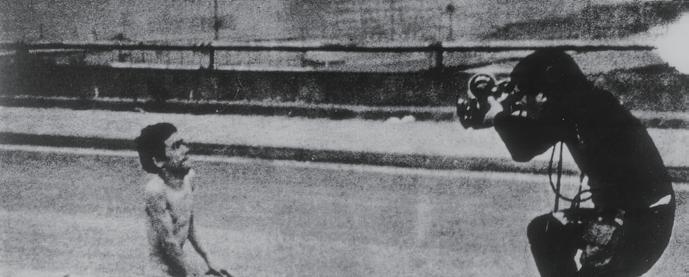
During the late 1960s and early 1970s, the Japanese public engaged with pertinent social issues. Among them were advocates with disabilities—the Green Lawn Movement which was founded to protect the rights of people with Cerebral Palsy (CP), the very subjects of filmmaker Kazuo Hara’s first film Goodbye CP.
Hara’s interest in people with disabilities began with a project from his student years. While on a photography assignment, he paid multiple visits to a home for children with disabilities. He then became curious as to where they’d go when they came of age. After multiple referrals, Hara arrived at a small village in Ibaraki Prefecture where an idealistic monk built a community for people with CP, taking them from their intolerant families and providing them with an environment to become independent, encouraging them to enjoy such basic human rights as love, marriage and procreation. There Hara met Hiroshi Yokota and K ōichi Yokozuka, core members of the Green Lawn Movement, and their friendship sowed the seeds for this documentary film.
The hereditary caste system in ancient Japan was rigidly divided into four categories: scholar gentry, peasant farmers, artisans and craftsmen, merchants and traders. Sick or disabled people were classified as outcasts, “non-humans” rejected by society. While acknowledging that persons with disabilities were marginalised in the village, Hara was convinced that such discrimination stemmed from misguided beliefs and attitudes about the human body. To eradicate discrimination, one must put an end to prejudices against people with disabilities. After much lobbying on Hara’s part, members of the Green Lawn Movement eventually agreed to be filmed while they were organising activities in Kanagawa Prefecture, granting the world a window into their sense of self-worth.
Goodbye CP portrays the words, personal experiences and heartfelt thoughts of people with CP, casting an non-judgemental eye on their lives, lending an ear to them as they fight for equal rights. Under the unmitigated gaze of Hara’s camera, members of the Green Lawn Movement were no longer passive patients but fighters filled with vitality, courage and a desire for respect in life.
Goodbye: Bidding Farewell to Prejudices against People with Disabilities
Kazuo Hara
Q Goodbye CP is a deeply meaningful film that took a long time to make. How do you define people with disabilities?
A The question boils down to the definition of the value of the human body. Do physical disabilities negate all sense of value? I don’t think so. Therefore, I suggested Hiroshi Yokota not to use the wheelchair that aided him, but to walk by using his body as he faces the world and lives fully in his own image. After some discussion, Yokota was open to try it. This is the main theme of this film, which also carries the meaning behind the word “Goodbye”, as in bidding farewell to all of the prejudices against people with disabilities.
Q Your documentary films advocate such approaches as intervention and action, a style that has since become iconic. How did you collaborate with your subjects?
A Among members of the Green Lawn Movement, Yokota was most vocal in expressing himself. As the director and photographer of this film, I engaged in extensive discussions delving into Yokota’s ideas. I carefully observed his every move. I was in charge of such details as devising different scenes, effectively portraying the value of the physical body and highlighting social injustice. For example, in the scene where they were soliciting donations on the street, I juxtaposed audio interviews as voiceovers with images of crowds moving outside the train station. In that way, the crowd represents the majority of the population, and the interviews reveal individuals with disabilities are commonly perceived as objects of pity or sympathy in society.
Q Your film will be screened again this time. What significance does it have to the audience today?
A Japan has become more conscientious about accessibility—pedestrian walkways are now barrier-free, and passengers in wheelchairs can easily board and exit buses. It does appear that prejudices against people with disabilities have greatly improved. But new forms of prejudice are coming into being, often catching us unaware. For example, many pregnant Japanese women would arrange for prenatal screening. If the test results show the foetus has Down Syndrome, up to 78.2 per cent of the women would choose to terminate their pregnancies. This is proof that our society is still unable to accept people with disabilities and that prejudices have never been eradicated. I believe we still need to screen Goodbye CP to engage people and incite debate.
Japanese filmmaker Kazuo Hara was born in 1945. After dropping out of Tokyo College of Photography, he worked as a care worker at a school for disabled children, and began to shoot a series of photos that would become his first solo exhibition Baka ni Sunna (Don’t Make Fun of Me). In 1971, Hara founded the independent film company Shisso Productions with his wife, producer and primary collaborator Sachiko Kobayashi, and, the following year, made his directorial debut with the documentary Goodbye CP. His films, Extreme Private Eros: Love Song 1974 (1974), The Emperor’s Naked Army Marches On (1987) and A Dedicated Life (1994), would confirm his pioneering action-documentary style and garner international acclaim. Hara’s other works include A Dedicated Life (1994), Many Faces of Chika (2005), Sennan Asbestos Disaster (2017) and Minamata Mandala (2020), a three-part, six-hour epic shot over 15 years, about the individuals fighting for legal recognition and compensation for a community poisoned by industrial wastewater.
There are no two of us alike. Everyone is born different, so why be troubled by uniqueness? The animation is about a penguin born with a long and a short wing, who feels isolated from the rest of her colony as she is unable to swim. Tough and inventive, she invents a rocket that allows her to soar high and fly freely in the sky. For this, the penguin has become hugely popular, an envy of her peers even. They all scramble to fly high and see the world from a different perspective.
Penguins are social animals. On land, they waddle clumsily. Once diving into the sea, though, they make fast swimmers that fetch food in no time. Being disabled and having to walk with a prosthetic leg, British animator and motion graphics designer Tom Rourke sympathises deeply with the share of problems, even discrimination or bullying, that an individual with disabilities may face in society. He makes penguin the main character of his animation, as humans, like penguins, are social animals that need the company of friends, families, partners, and neighbours. Having trust in the ability of people with disabilities is to believe that everyone has a unique gift. You may not know how to swim, but you may be able to soar high. Tom Rourke shows through his actions that albeit physically challenged, he is immensely creative. As he says, “As a disabled person, I’d like to come up with a story about a disabled character.” Never fixated on his own lack, in a similar vein, this story is told in a light-hearted and amusing manner. Colours are another fun bit of the tale that upends people’s imaginations: the sky is yellow, the sea is red, ice and snow are blue. Only through parochial viewpoints can we hope to see a different world.
湯姆 ・ 洛克
Tom Rourke
編劇、導演及動畫製作
Writer, Director and Animator
�獲殊�的導演、動畫師和動�圖像設計師, 現居�倫敦。洛克�負責不同項目,如為英國�播� 司( BBC )製作喜劇動畫,為�隊 The Wombats 執導 音�影�,並為 BBC 2 共三十�的遊戲節目 Beat The Brain 設計所�圖像和動畫。近期,他為比爾·蓋� 和影音平台 Netflix 執導和製作�影動畫,也參與製 作品牌 Nespresso 和佳�的�告。他�在�聞網站 IFLScience 擔任高�動畫師�年,迄今,這�影� 獲��六千三百萬�觀看。目�,他在�視 ITV 擔任 設計師和動畫師。
Tom Rourke is an award-winning director, animator and motion graphics designer based in London. Along with many other projects, Rourke has made comedy animations for the BBC, directed a music video for The Wombats, and designed the graphics and animations for all 30 episodes of BBC 2’s game show Beat The Brain. Recently he has directed and animated films for Bill Gates and Netflix and worked on ads for Nespresso and Canon. He was the in-house senior animator at IFLScience for 5 years and those videos have, to date, received over 63 millions views. He currently works at ITV as a designer and animator.
湯姆 ・ 華萊士
Tom Wallace
編劇及監製
Writer and Producer
�劇、導演�動畫製作
Writer, Director and Animator
湯姆·洛克
Tom Rourke
�劇�監製
Writer and Producer
湯姆·華萊士
Tom Wallace
動畫執行
Animation Executive
海倫·布倫斯頓
Helen Brunsdon
與湯姆·洛克合作多年,包括為短� The Flood �寫劇本。目�,他正為多部短��漫畫��寫劇本。 �外,他的�祖父是《金剛》原著作者。
Tom Wallace has collaborated with Tom Rourke for many years, including writing the short film The Flood. He is currently writing scripts for a number of short films and comic books. Also his great grandad wrote King Kong.
執行製作(英國�影協�) Executive for the BFI
吉蓮·斯科瑟恩
Gillian Scothern
監製(展翅製作) Executive Producer for Wingspan Productions
德波拉·李
Deborah Lee
監製(英國廣播有限公司)
Executive Producer for BBC
�瑪·卡休薩扎克
Emma Cahusac
All for Claire by Simon
McKeown
免費現場放映 Free in-venue Screening 16/3
大館洗衣場石階
Laundry Steps, Tai Kwun
�語�英語口述影像、語音場刊
Audio description in Cantonese and English, and house programme in audio format available
�勿擅自攝影、錄音或錄影。 Unauthorised photography or recording of any kind is strictly prohibited.
免費網上節目 Free Online Programme
23/3 sat 六
18/5 sat 六
「無限亮」網站播放
Screening available on “No Limits” website
設中英文通達字幕、�語�英語口述影像、語音場刊
Accessible captions in Chinese and English, audio description in Cantonese and English, house programme in audio format available
�勿使用任何相機、智�手機�任何錄音儀器對節目內容 進行拍攝、錄音�熒幕截圖。
Any type of screen recording or filming with a camera, smartphone or other recording device is strictly prohibited.
有如童話?可以�誠所�,金石為開,�的��人終成眷屬?劇中的�美舞�由英國�受 讚譽的國�知名舞蹈家克萊兒.�寧漢�人演出,�術家西蒙.�考恩透過動�捕捉技術 採�動作�據,再配合 3D 圖像處理,百�百呈現身障者�實的肢�動作。
Perhaps Love is Hard
Under a gloomy tree, Claire dances alone contentedly. Although she is a person with disabilities and relies on crutches to move, her figure is beautiful, her movement is graceful. Wouldn’t it be wonderful if we could discard the stereotype that physical disabilities limit a dancer’s movement? The handsome Lee falls for Claire as soon as he sets eyes on her, offering her a rose with his admiration. But Claire gives him the cold shoulder, rejecting his advances. Lee falls into magical worlds, full of traps and obstacles. What a life filled with setbacks.
In order to win her heart, Lee willingly accepts every challenge to the point where he almost draws his last breath. . . Later, the despondent Lee longingly sits on a rock, eventually letting go of the rose. . . Is love a fairytale? Can human overcome all hardships? Can true love find a way to a happy marriage? This film’s gorgeous choreography references actual performances by Claire Cunningham, an internationally renowned dancer. Artist Simon McKeown captured her dance through motion-capture technology, adding 3D animation to fully portray her alluring movements.
All for Claire is not a romantic fairytale. Deafened in his right ear and having Osteogenesis Imperfecta (Brittle Bones), Simon McKeown—who often uses crutches— creates this film to examine the empowerment and sexual dynamic of people with disabilities. “Disabled people are often perceived as without power or agency and not capable of being in a relationship. I wanted to challenge these stereotypes by placing Claire in charge of a magical world.” Thus, this love story contains a fascinating shift of power. “Claire is an elite professional dancer. She is in charge of her destiny in the film with the freedom to choose.” On the contrary, the story’s male protagonist constantly runs into trouble, thwarted at every turn despite being an ordinary person. “Alternative forms of movement by bodies of people who are different are incredibly valid, interesting and beautiful.”
Artistic creativity continues to wield great influence on McKeown. He is grateful that he can draw and paint, thanks to fine art teachers who guided him along the way. “I have never understood why any society should see disabled people as being unequal, and thus to be treated as lesser human beings.” Physical disabilities should be seen and taught as a virtue to be valued. “We live in a diverse and complex world, I hope this ‘diversity’ can be fully represented in our cultures to make this unique world a happy and successful place to be.”
史密森�國�畫廊;捷克布拉格的 DOX 當代�術中心;�洲、挪威、 美洲、�美洲和英國�地畫廊,以�德國德累斯頓的德國衛生博 物館展出。2010 年,他的作品同�在 17 個國家展出,並獲�為� 術節 DaDaFest 的國�年度�術家。2018 年,英國政府主辦的展 覽 Great Exhibition of the North 展出他的作品 This Way
North。
�考恩是位�受追捧的�碼和戶外�術專家。2015 年,他在 �爾蘭機構 Arts and Disability Ireland 支�下完成大型戶外投 影活動 Cork Ignite。作品��爾蘭科克首演,為�爾蘭文�之�
的�軸節目,並與當地殘疾�術家合作。�考恩現為英國提賽德 大學�術和創意產�學院教授。
Simon McKeown is an award-winning internationally exhibiting disabled artist renowned for his work on disability as well as our digital futures. He exhibits internationally and his works, including Motion Disabled, which was the first non-medical study of impaired motion, have been exhibited as far afield as the Smithsonian International Gallery in the USA, The DOX Centre for Contemporary Art in Prague, Czech Republic, along with galleries in Australia, Norway, America, South America, the UK, along with the Deutsches Hygiene Museum in Dresden, Germany. In 2010, he was named DaDaFest International Artist of the Year following the simultaneous showing of his work in 17 countries. In 2018 he exhibited at the UK Government led Great Exhibition of the North in an exhibition entitled This Way North.
He is much sought after as a digital and outdoor arts specialist. In 2015, he completed the massive outdoor projection event Cork Ignite supported by Arts and Disability Ireland. Working with local disabled artists the work premiered in Cork, Ireland as the culminating event for Culture Night Ireland (2015). McKeown is a Professor of Art at the School of Arts and Creative Industries at Teesside University in the UK.
克萊兒・康寧漢
Claire Cunningham
演出 Performer
克萊兒·�寧漢跨領域表演者和�舞家,常駐�蘇格蘭格拉
斯哥。她具�獨�的表演風格,以創意多樣的方式活用拐杖,配上 她的美�聲線(她�接受古典聲�訓練)、空中動作和表演技巧, 使她成為英國乃至世界各地�受追捧的表演者。她的獨腳戲作品 Evolution 和 Mobile 挑戰美學與舞蹈,幽默睿智,�受好評。
Claire Cunningham is a multi-disciplinary performer and choreographer based in Glasgow. Her unique performance style in integrating the dynamic and imaginative use of her crutches, alongside her beautiful voice (she trained as a classical singer), aerial and acting skills, have made her a much sought after performer both in the UK and internationally. Her solo works, Evolution and Mobile, have been critically acclaimed for their humourous and intelligent challenges to issues of aesthetics and dance.