




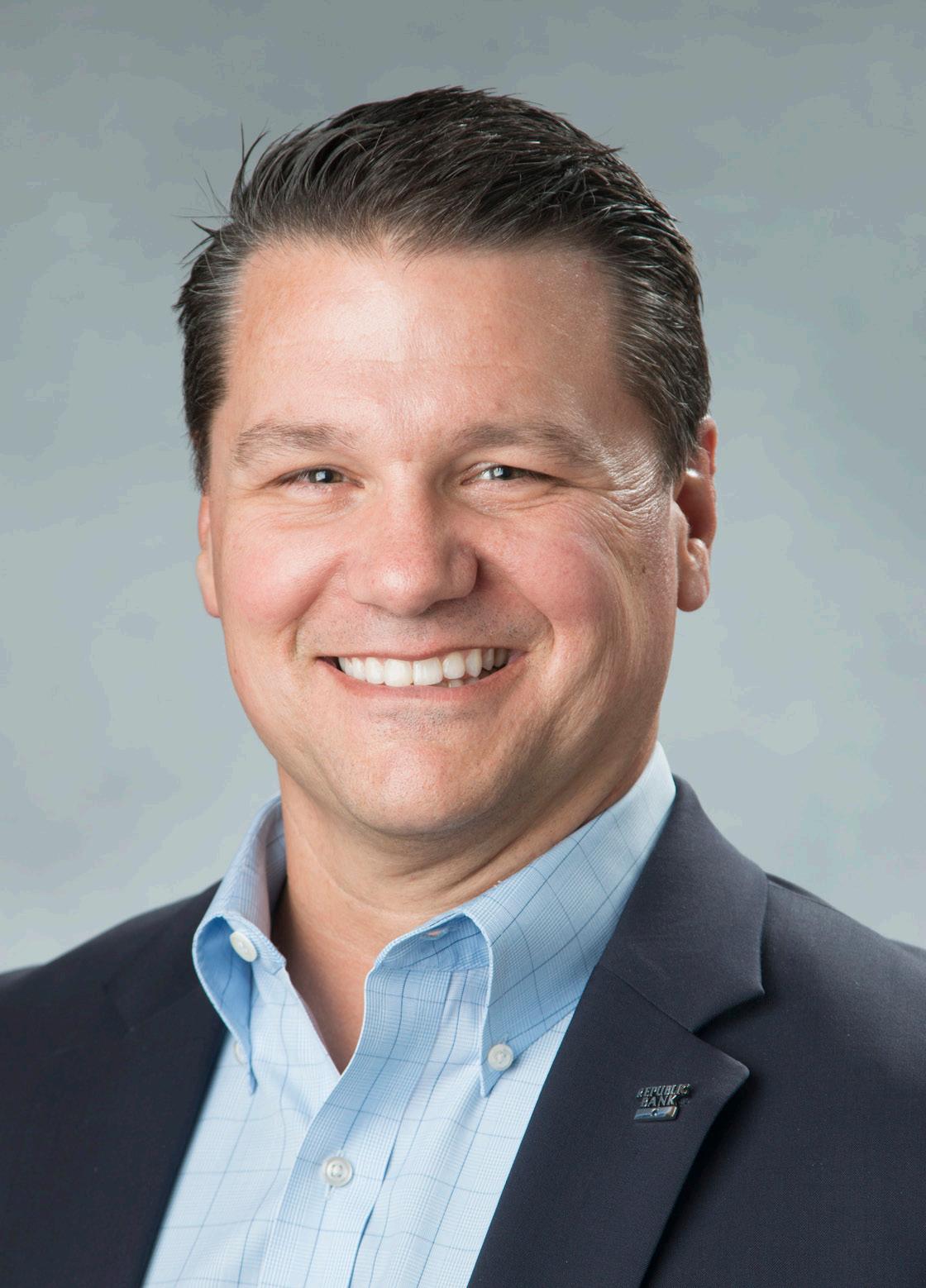
JASON PAYNE Chair, NKY Chamber NKY/Cincinnati SVP, Managing Director, Republic Bank
Listening to you, our members, is a priority. If there’s a topic or suggestion you’d like us to explore, or simply a question, please contact Lynn Abeln, Vice President of Membership, at (859) 578-6390 or Labeln@nkychamber.com.
WHEN YOU THINK ABOUT ADDING VALUE TO THE NKY BUSINESS community, you think of innovation. When I personally think of great innovators throughout history, I think of Thomas Edison. While Edison is widely credited as the father of the lightbulb, his science was, in fact, built upon the work of several other inventors who made contributions to its development. The innovation of each man’s work enabled Edison to eventually perfect the incandescent lamp, an invention which now impacts numerous facets of our daily lives. Be it the illumination systems powering our homes, public spaces and stadiums, the bulbs that power our 4K TVs, laptops and other smart devices to the specialized equipment used for certain surgical procedures, lightbulbs are a key example of innovation at work.
Why am I so focused on innovation and lightbulbs? Because in much the same manner the lightbulb has evolved from its humble origins to an essential element of our daily lives, Northern Kentucky is taking strides to creating the future we all seek to enjoy – and our innovative spirit is key to achieving our goals.
This issue of the Northern Kentucky Business Journal highlights how innovation continues to, as NKY Chamber President and CEO Brent Cooper says, make our region “a great place to live, work, play, learn and give back.” This is evident in our cover story about Prysmian Group and its work to literally help connect our region and the world around us. Likewise, our feature on the new Duke Energy Innovation Lab at Northern Kentucky University (NKU) reflects our region’s growing investment in not just tech, but workplace safety solutions and most importantly, attracting and retaining talent at home and abroad. Both stories show how aspects of our daily lives – connections and power – are necessities that reveal the innovations at work to provide jobs, recreation, living spaces and so much more.
Speaking of living spaces, our Small Business Spotlight on Builder Backed is a great read on how a local entrepreneur used innovation to resolve common problems almost every new homeowner will experience. In doing so, their partnership with one of our region’s largest homebuilders is revolutionizing a necessary if not mundane responsibility in home maintenance to the satisfaction of scores of customers. The same could be said for our feature on Beltways, the Hebron-based company set to debut their innovative technology later this year at the Cincinnati/ Northern Kentucky International Airport (CVG). The great outdoors isn’t exempt from innovation – and Eons Adventure Park, the ambitious new project currently in development in the City of Erlanger, looks to set a new standard in recreation for our region with its unique amenities. All three stories will serve to educate and inspire while showcasing the creativity, talent and opportunity found throughout our home.
People in our region innovate. They do it at home, at work, in their institutions of higher learning and even outdoors. With this edition of the NKY Business Journal, I sincerely hope you are inspired to bring your innovation to light for the betterment of all Northern Kentucky.
At the Northern Kentucky Chamber, we are focused on businesses and focused on adding value and resources to those business as priority number one. NKY

By Tabari McCoy, Scooter Media

BENTONVILLE, ARKANSAS, IS BEST-KNOWN AS THE world headquarters of Walmart. But it is also home to a burgeoning mountain bike scene – and the inspiration for what the City of Erlanger hopes will be a revolutionary recreational project for Northern Kentucky.
That project is Eons, an innovative concept city officials hope will stand the test of time as “Northern Kentucky’s Forever Adventure Park.”
Improving quality of life, workforce development, talent recruitment and retention, health outcomes and property values. These five goals and benefits might not be what comes to mind for a park, but according to Mark Collier, Director of Economic Development/Assistant City Administrator for the City of Erlanger, Eons is not intended to be a standard greenspace.
“The goal isn't just recreation; it is reconnection to nature, play, history and really the future, too. Eons is a living, breathing experience across time itself, which is what inspired its name – Eons is a callback
to generations and generations,” says Collier about the woodland adventure park. “We're in the middle of Northern Kentucky right at the precipice of the Cincinnati/Northern Kentucky International Airport (CVG) where there's all this economic development and commerce – then you step into Eons and you're just kind of taken away by ‘What is this place?’ Eons is more than fun—it’s a tool to improve health, quality of life, and economic opportunity."
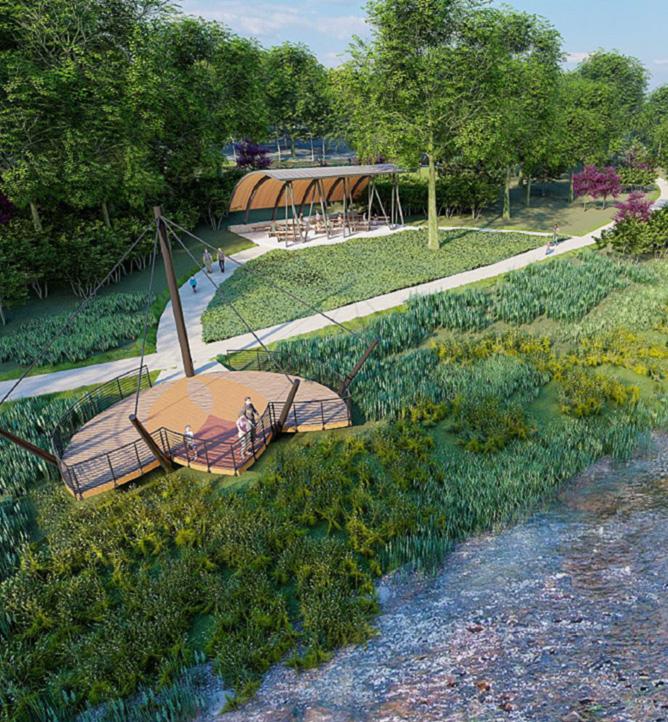
Officially kicking off with a dog park at 645 Houston Road, Eons Adventure Park has the potential to sprawl to a 1,000-acre park project with multiple channels of outdoor adventure. This includes picnic shelters, playgrounds, public art displays and hiking trails featuring educational and historic markers and viewpoints.
The park’s signature feature, however, may be the miles of mountain biking trails that will offer residents a recreational outlet and possibly serve to attract future generations to the area. This is in addition to converting a portion of the long-closed Old Erlanger Road to create “the spine,” the park’s central nervous system connecting it to canopy trails, scenic spots and Crown Pavilion, a gathering spot. With Circleport, the nearby 650-acre mixed-use
development looking to bring jobs to Northern Kentucky, Collier says Eons will complement it, creating an undeniable attraction for future talent and to keep current talent here.
Our networking, mentorship and strategic partnerships experts at a glance
Mayor Jessica Fette agrees.
“Eons Adventure Park is more than a project- it’s a generational investment in the health, identity, and future of our region," she says. "Through bold collaboration, we’re building something that will serve our community for decades to come.”
Curious how Bentonville, Arkansas, fits into the Eons Adventure Park story? The explanation is a case of “if it works for them, it can work for us.”
Collier says a summer 2024 exploratory visit to Bentonville to see the positive impact of shared-use mountain bike trails on the city firsthand was eye-opening for him and his colleagues. Meeting with the city’s head of tourism, they were surprised to learn of Bentonville’s status, as its website says, as “the Mountain Biking Capital of the World.” The city features more than 150+ miles of shared-use mountain bike trails which have widely been attributed as one of the reasons for Bentonville’s recent population growth; the Arkansas Democrat Gazette noting in May 2024 that Bentonville is the fastest growing of the state’s northwest cities.
In looking for Eons to replicate the success that expanded recreation has played in transforming Bentonville, Collier says the park is “a big play” not just for Erlanger, but Northern Kentucky as a whole.
"We’re working with partners to creatively tackle big challenges like talent retention and economic growth. We feel like recreation is maybe the fastest solution to help solve for all these complicated issues, which is perhaps our ‘why’ behind this project,” Collier says. “Yes, we want amenities, but to solve some of these issues, we're going to have to get creative. Our partners are all really excited about Eons because it helps resolve some of the things on which they're focused: economic development, bringing new people into the region and giving the region a name, identity and brand.”
The Cincinnati Off-Road Alliance (CORA), members of which accompanied Erlanger on its visit to Bentonville, continues to serve on the project in an advisory/facilitating capacity. CORA President Brian Bozeman says he hopes to see the city break ground on the first 10 miles of the mountain biking trails this fall as well.
Julie Kirkpatrick, President and CEO of Northern Kentucky’s tourism


organization meetNKY, believes all the work is a step in the right direction to achieving the region’s larger goals.
“Eons Adventure Park in Erlanger represents a bold step forward for Northern Kentucky tourism and economic growth,” says Kirkpatrick. “It will not only attract visitors from across the nation but also strengthen our ability to retain and recruit talent by offering world-class recreation and family-friendly experiences in the heart of our region.”
Bozeman, a resident of Fort Thomas, says that "As a humble region, trails and recreation are something we have not boasted about much.” With Eons Adventure Park on the horizon, he now looks forward to the day he gets to put his bike pedal to the proverbial metal.
“Often times, we look toward the same old tried and true methodology to recruit people to a region and make ourselves attractive. Erlanger is being extremely innovative with a park like this as there’s going to be nothing in this region like this,” he says. “Cities across the country are reinventing themselves as destinations. We all want to raise our hand and compete for people to move to our city. How do we that? Through lifestyle and livability. As we look to increase tourism and talent attraction for our region, we need amenities like Eons park in Erlanger to come online and help bolster that voice and narrative for the region – it will be a destination.” NKY

INTO THE WILD Eons Adventure Park AT A GLANCE
eonsadventurepark.com
POTENTIAL SIZE: 1,OOO-acre sprawl
AMENITIES:
Phase One of the Eons Adventure Park project calls for a dog park, multi-road path and parking. Other discussed potential attractions include a tower, hiking trails, an underpass canvas, art experiences and a pavilion area.
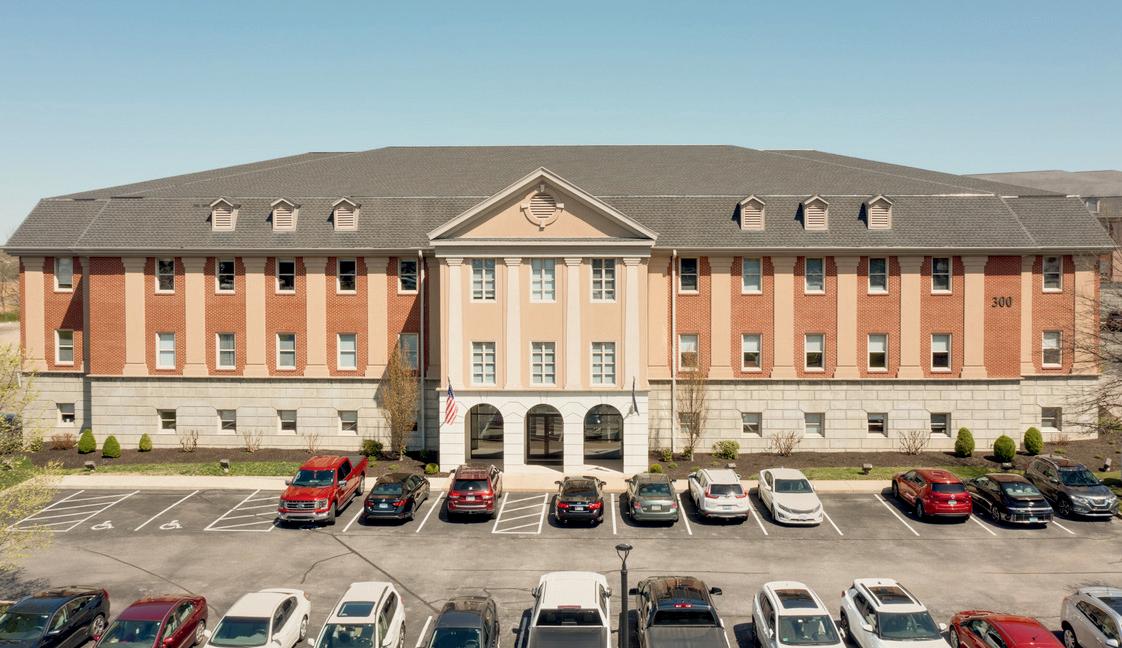
Chamber Center CoWorks to Offer Flexible Office Rentals for Entrepreneurs, Remote Workers and Small Teams
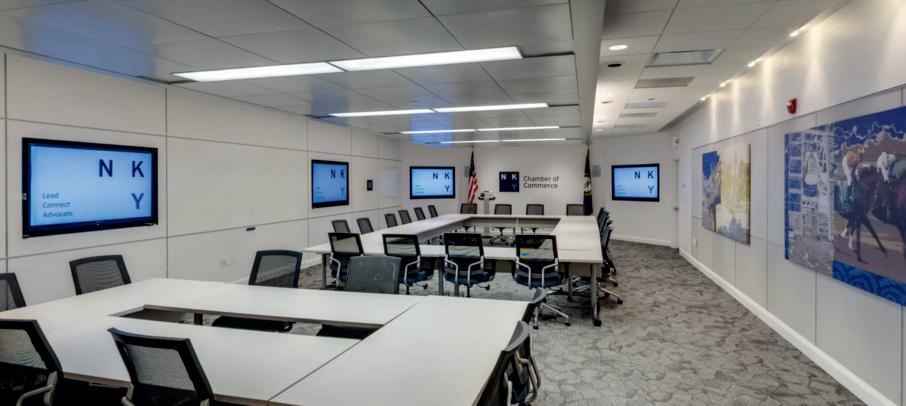
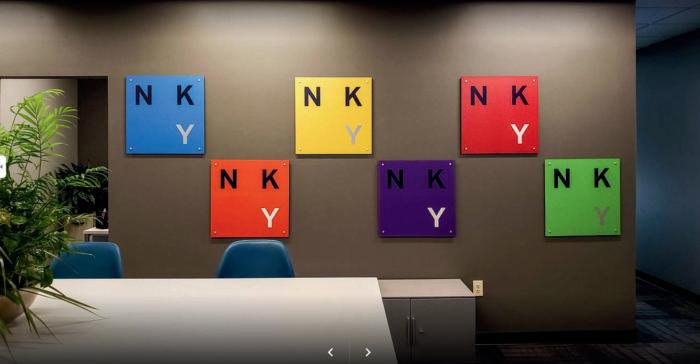
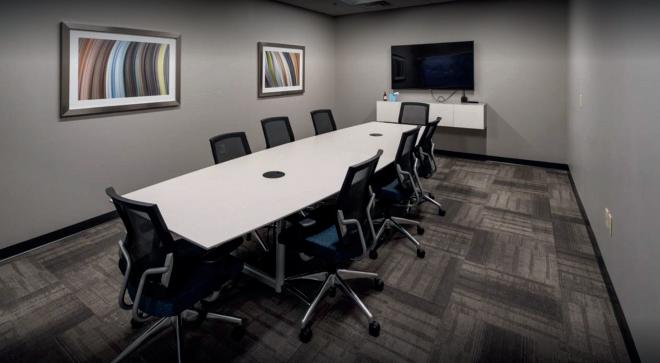
The NKY Chamber has officially launched Chamber Center CoWorks, a flexible and professional coworking space located within its Buttermilk Pike offices in Fort Mitchell, KY. Designed to meet the evolving needs of entrepreneurs, remote workers, and small businesses, Chamber Center CoWorks offers a variety of rental options, including fully furnished private offices and individual cubicles.
Shared on-site amenities include a kitchenette and lounge with complimentary coffee, high speed Wi-Fi and network access, a print/ scan/copy center, mail and package receiving, and access to conference rooms and a podcast studio. Tenants also benefit from free parking and 24/7 secure access – ensuring both convenience and peace of mind.
Chamber Center CoWorks tenants also benefit from membership in one of the region’s premier business organizations, with opportunities to connect through events, programming, and member resources.
To learn more or schedule a tour, contact NKY Chamber Senior Vice President & COO Gene Kirchner at gkirchner@nkychamber.com or visit www.nkychamber.com/coworks.





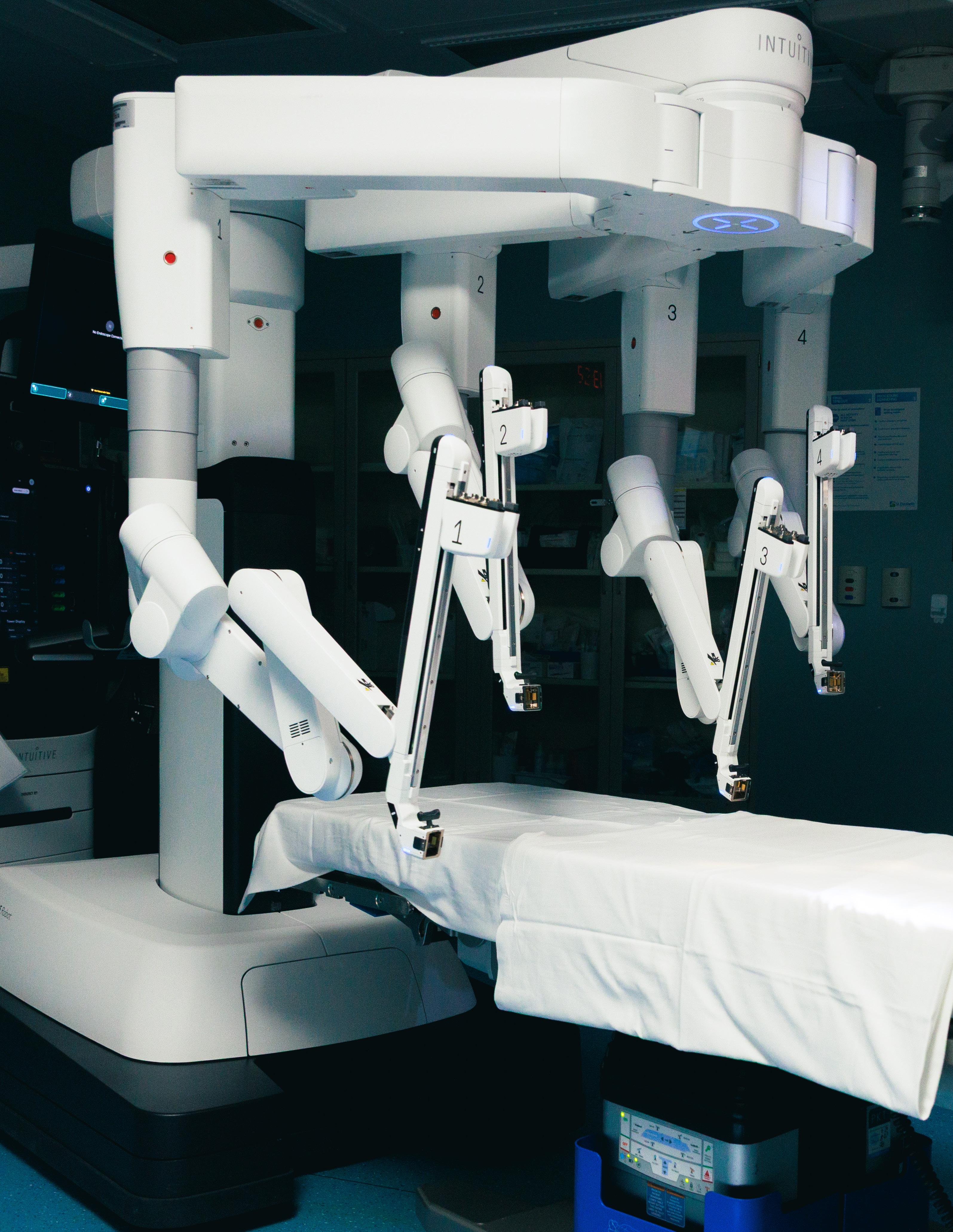

Q: WHAT IS THE DA VINCI 5 SYSTEM? HOW DOES IT DIFFER FROM PREVIOUS ROBOTIC SURGERY SYSTEMS?
A: The da Vinci 5 Surgical System is the most advanced da Vinci surgical robot on the market today. It’s much like other da Vinci models. It allows us to perform minimally invasive surgeries through tiny incisions with extreme precision. However, da Vinci 5 has a number of design enhancements that may help improve surgical outcomes. For example, it offers surgeons clearer 3D images with better resolution, color and depth perception. And it improves surgical movements. Surgeons may also benefit from the system’s Force Feedback technology and updated computing power. The computer allows for the integration of data analytics. These enhancements may help us improve surgical techniques and lead to better patient care.
Q: WHAT IS FORCE FEEDBACK TECHNOLOGY?
A: Force Feedback technology allows surgeons to sense the force exerted by the robotic instruments during surgery. When we push or pull tissues inside the body with the robot, we can essentially feel resistance or tension in our hands via the controls on the console. Normally, you’d only get that sensation performing traditional surgery. When you can better sense the force that you’re applying with the instruments, you use less force. This makes the surgery gentler and even less invasive.
Q:HOW HAS THE DA VINCI 5 SURGICAL SYSTEM CHANGED YOUR APPROACH TO PERFORMING MINIMALLY INVASIVE SURGERIES?
A: We’re very enthusiastic about using the da Vinci 5 system. It will be especially helpful for more complex surgical cases. The system offers superior control and improved precision, which makes the most challenging and delicate procedures easier. That’s important in its own right. But in many cases, it may also help us reduce procedure time. Better ergonomics make using da Vinci 5 more comfortable for the surgeon, too. That may enhance performance.
Q: WHAT TYPES OF SURGERIES IS THE DA VINCI 5 MOST COMMONLY USED FOR? WHY IS IT PARTICULARLY BENEFICIAL FOR THESE PROCEDURES?
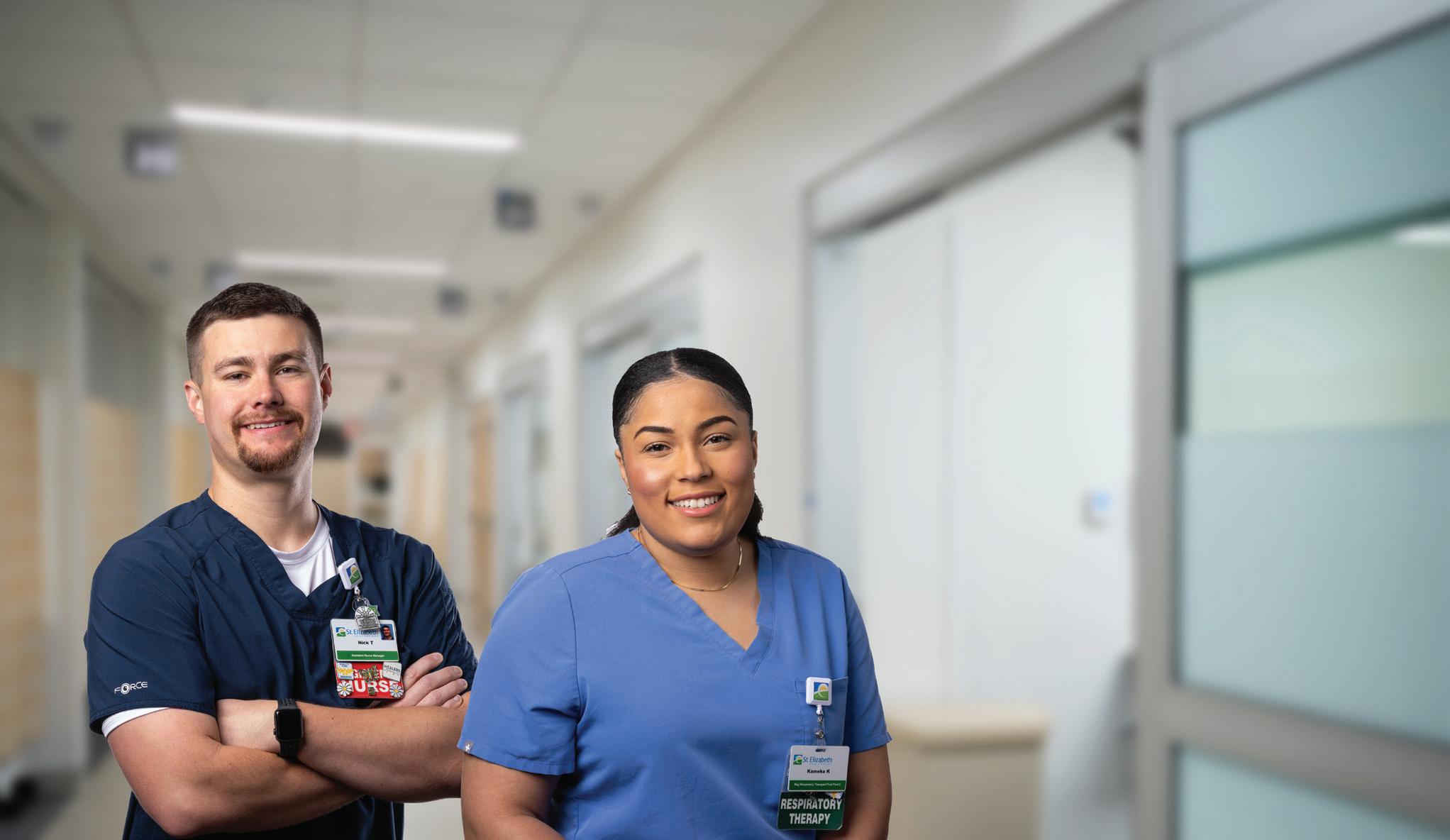
A: At St. Elizabeth, the da Vinci 5 has become integral in performing bariatric (weight loss) surgery. That’s a major surgery that requires very precise maneuvers. There’s a risk of serious complications. We can reduce that risk with a minimally invasive approach. Da Vinci 5 also enhances outcomes in general surgery cases. It offers precision and efficiency that traditional surgical methods can’t match. When we can perform procedures such as gallbladder removals and hernia repairs through small incisions, there’s less trauma to surrounding tissues. This means there’s less blood loss, scarring and discomfort than open surgery. There is also a lower risk of complications, such as infections.
Q: CAN YOU DESCRIBE SOME SPECIFIC FEATURES OF THE DA VINCI 5 THAT ENHANCE SURGICAL PROCEDURES AND BENEFIT PATIENTS?
A: One good example has to do with how quickly and easily we can do certain tasks. For instance, we can efficiently set the surgical robot up at the patient’s side. We can also quickly exchange surgical instruments on the robotic arms during surgery. The tools that cauterize or seal blood vessels on the da Vinci 5 are much faster than those we’ve used with previous systems. When we can complete surgery in less time, patients get less anesthesia. This lowers the risk of complications and shortens recovery times. Patients really appreciate that.
Q: WHAT KIND OF TRAINING IS REQUIRED TO OPERATE DA VINCI 5?
A: We have 24 surgeons who have been trained and are currently doing cases on the da Vinci 5. The da Vinci Xi trained surgeons do the da Vinci 5 online videos from the robot company followed by a 45-minute hands-on training session. They take an online assessment test at the end to receive their certificate of training. They are supported by the robot company rep for multiple cases following training. In addition, we have 147 staff members across the system including PA's and NP's that work for surgeon's groups. This also includes our weekend and after-hours teams. All of the da Vinci Xi trained staff are required to watch the da Vinci 5 online videos followed by a one-hour hands-on training session with the robot company rep. Once the hands-on training is completed, the staff take an online assessment test to receive their certificate of training.
Q: ROBOTIC SURGERY IS OFTEN USED IN UROLOGY, GYNECOLOGY AND GENERAL SURGERY. WHAT ARE SOME OTHER POSSIBLE APPLICATIONS WITH DA VINCI 5?
A: One area I see great potential for using the da Vinci 5 is component separation hernia repair. This procedure involves separating layers of abdominal muscles. We reconnect them in a way that resolves the hernia. Typically, we perform these complex repairs with open surgery. But the robotic system could eliminate the need for an open approach. That would minimize pain after surgery and speed up recovery.
Q: WHO ARE THE BEST CANDIDATES FOR SURGERY WITH THE DA VINCI 5 SYSTEM?
A: Anyone who could have laparoscopic surgery would generally be a good candidate for robotic surgery. We consider factors such as your body size and overall health to decide if robotic surgery is right for you. We also look at your surgical history. If you’ve had previous surgery in the same area of the body, a robotic procedure may not be a good option. Your safety always comes first. NKY
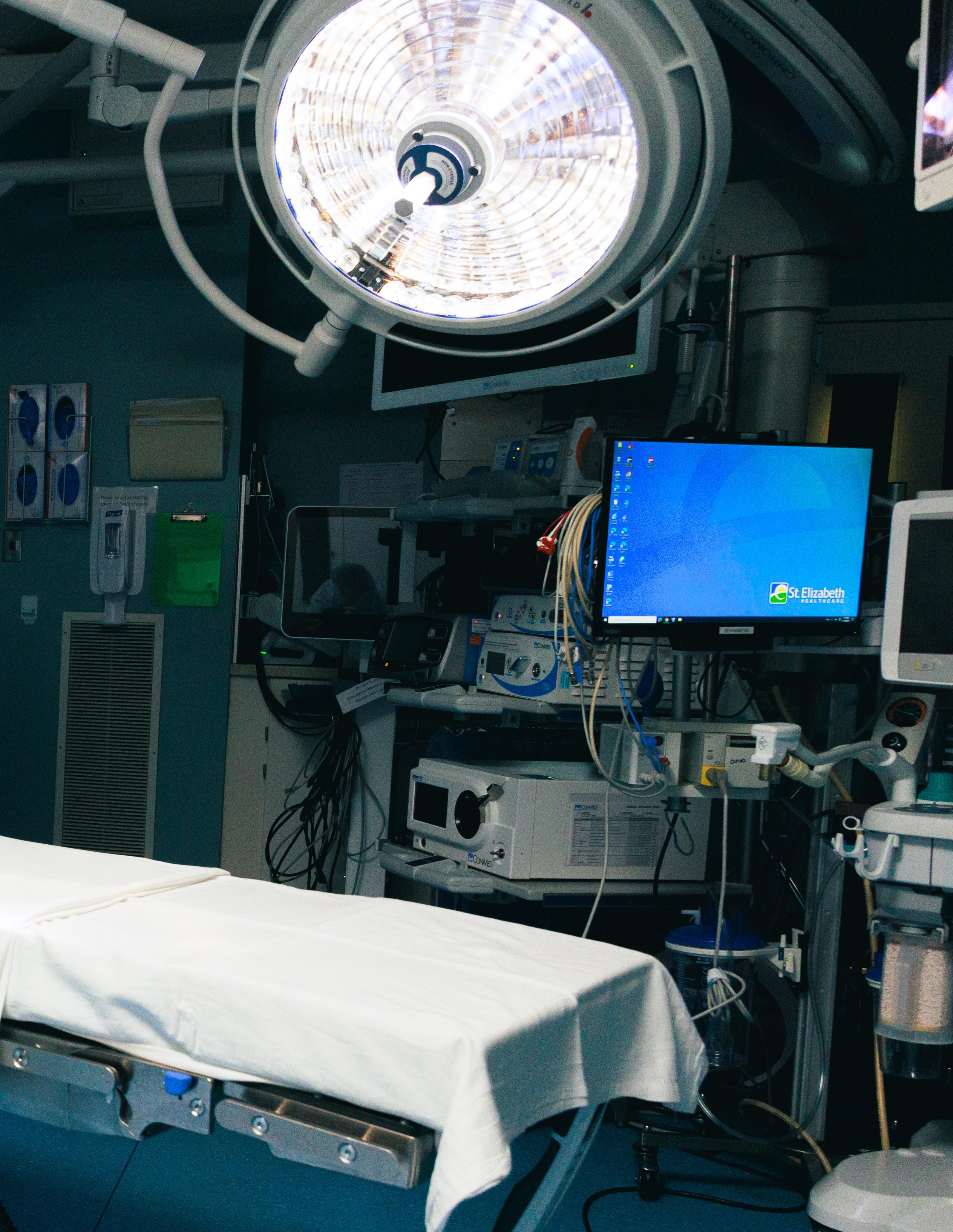

To learn more about our surgery offerings or to schedule a consultation, please visit
The Business Impact Awards, presented by Huntington Bank, is the NKY Chamber’s annual celebration showcasing the innovation, creativity, strong business practices and leadership of the Northern Kentucky business community.
Fifty finalists were celebrated with winners recognized in 10 categories during an event at Drees Pavilion on May 1.
Please join us in congratulating this year’s award winners and all the finalists. Their collective efforts keep Northern Kentucky economically healthy and competitive, making it the best place to live, work, play, learn and give back!


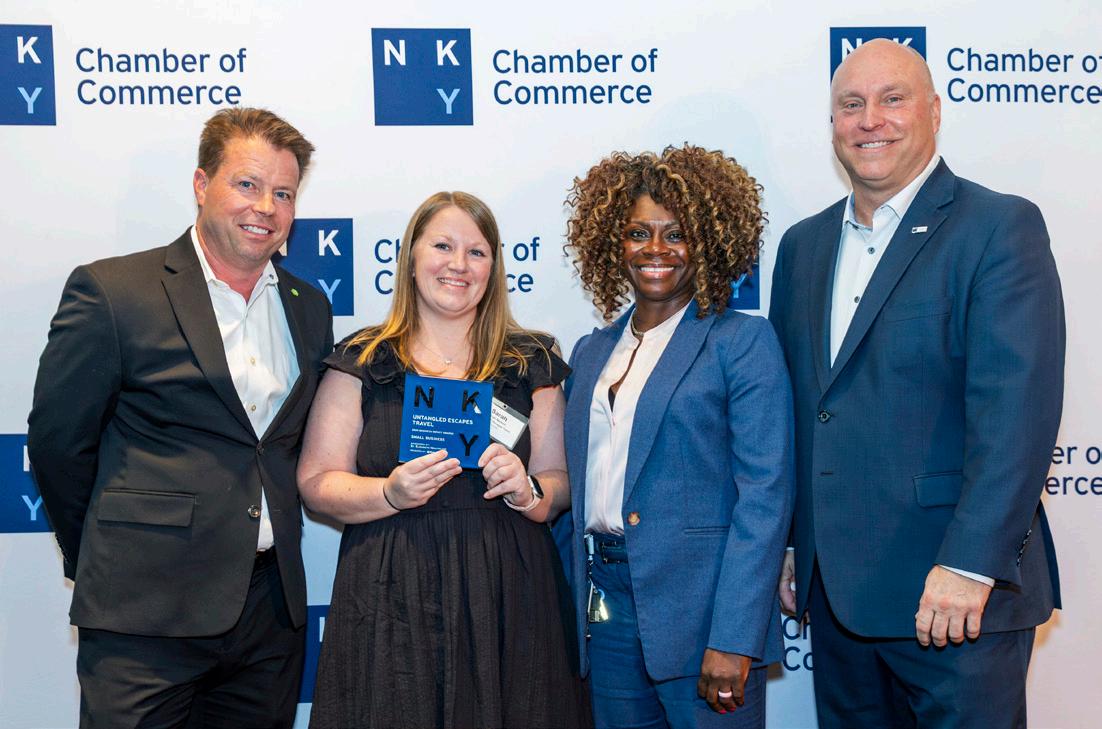
Untangled Escapes Travel

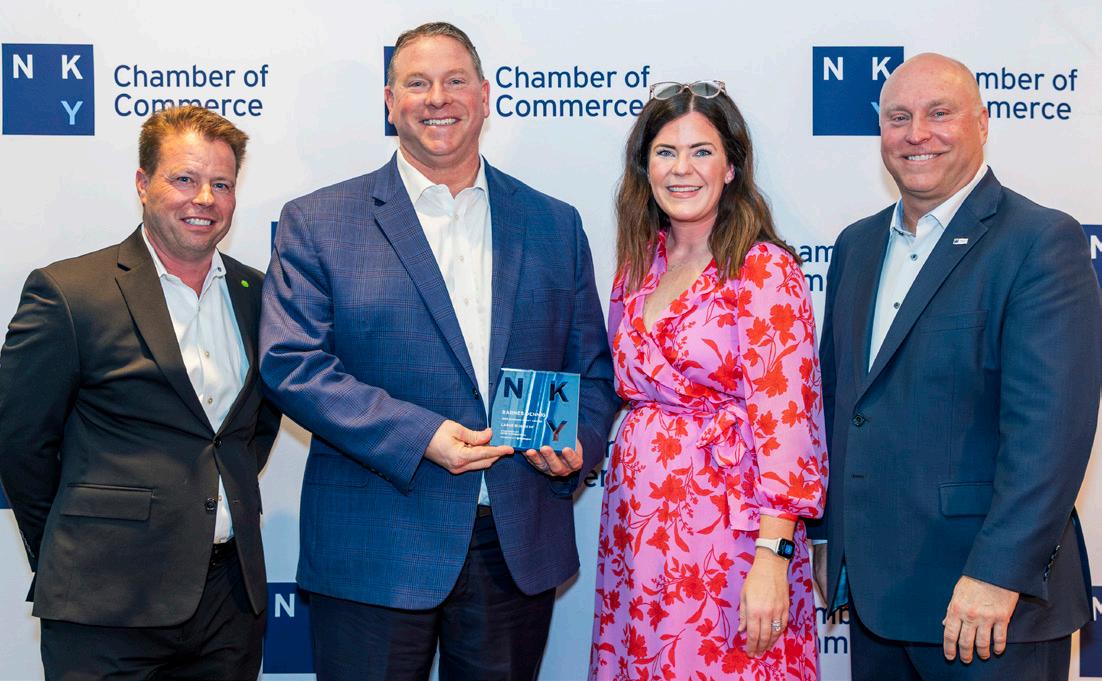
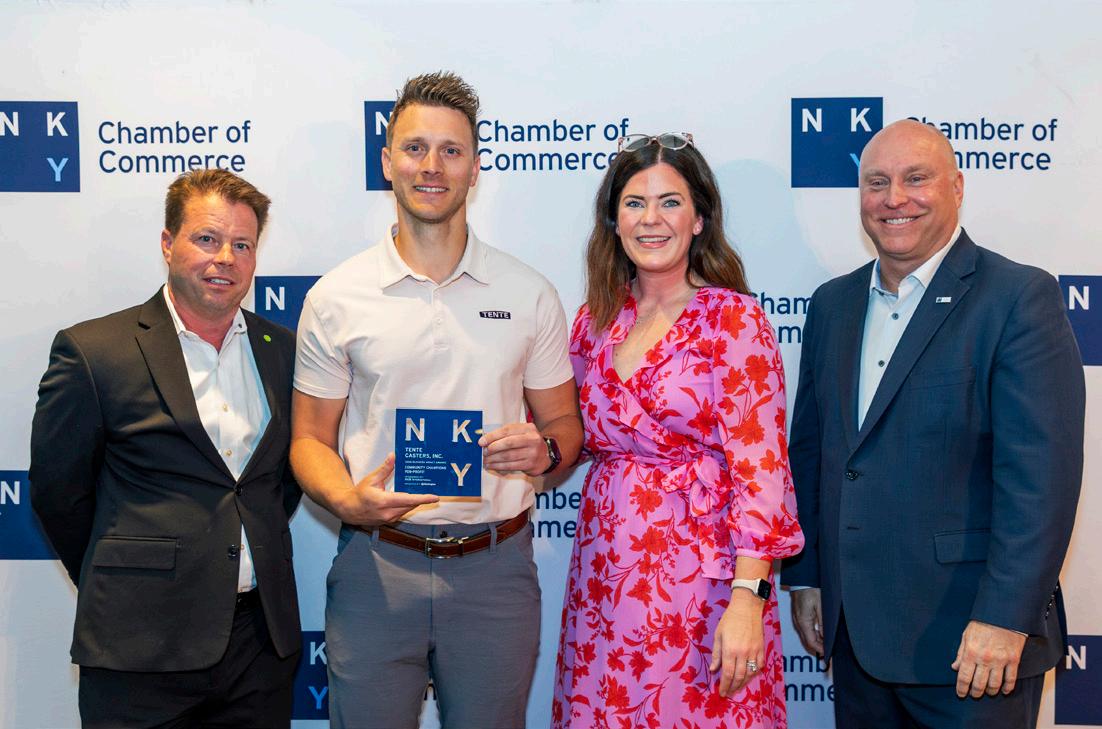
COMMUNITY CHAMPIONS AWARD – FOR-PROFIT TENTE Casters, Inc.

COOL PLACE TO WORK AWARD Gravity Diagnostics
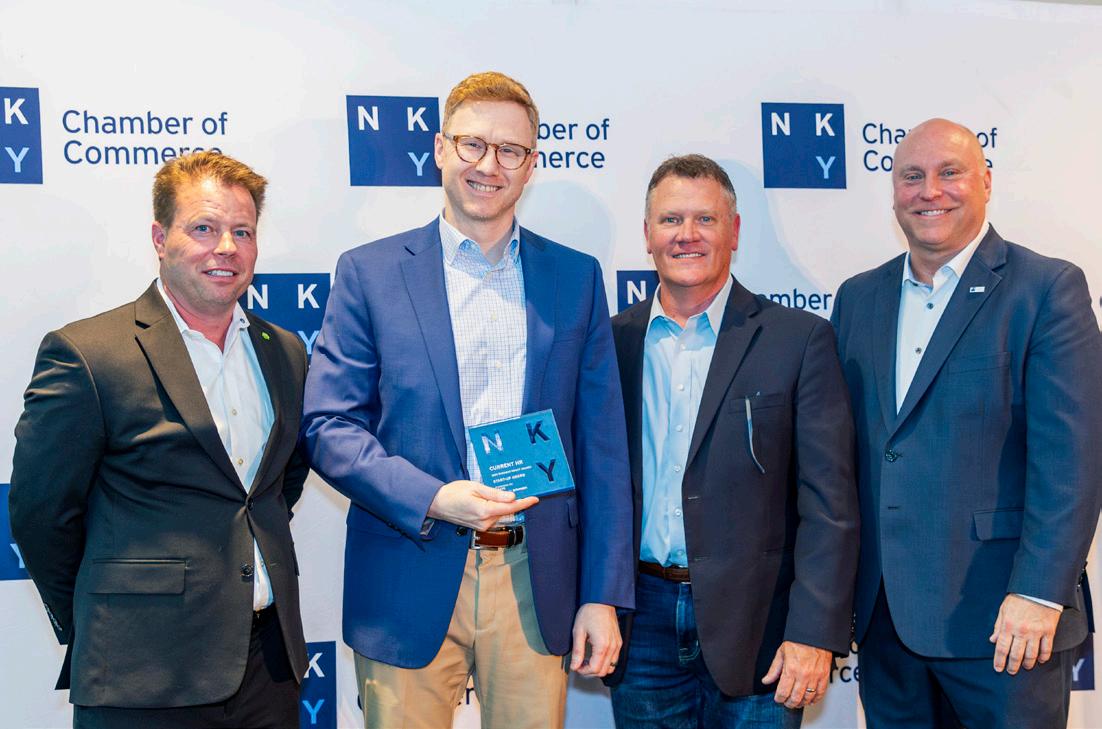
START-UP AWARD Current HR

ENVIRONMENTAL STEWARDSHIP AWARD
Sanitation District No. 1
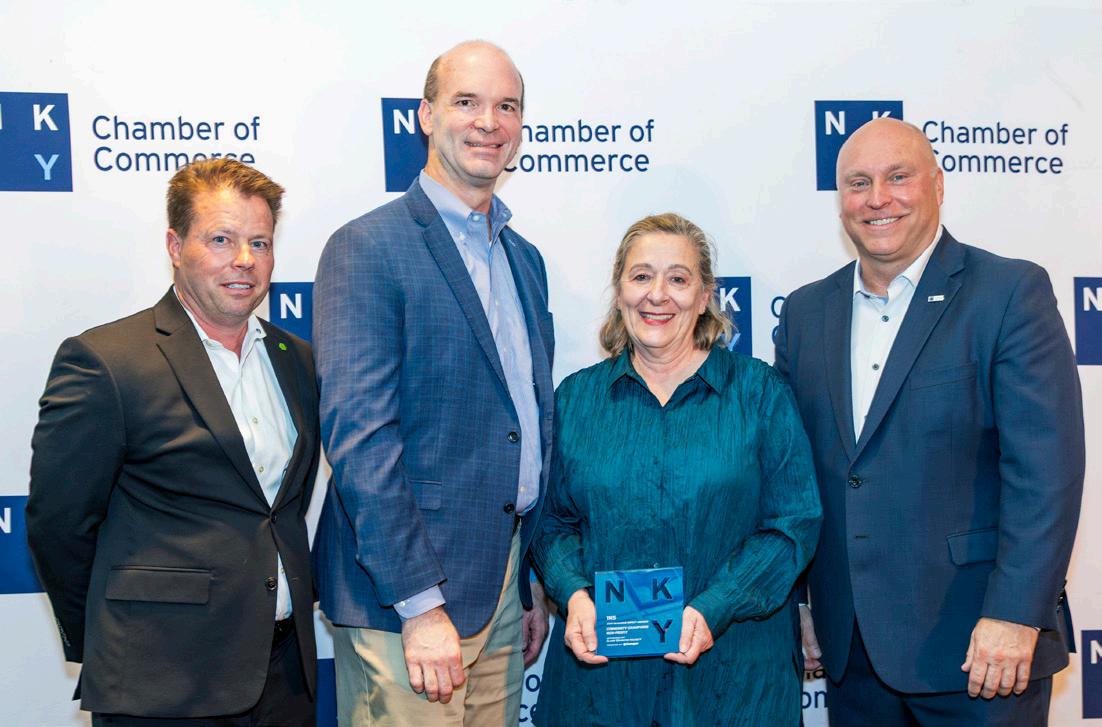
COMMUNITY CHAMPIONS AWARD – NONPROFIT 1N5
SMALL BUSINESS AWARD Untangled Escapes Travel
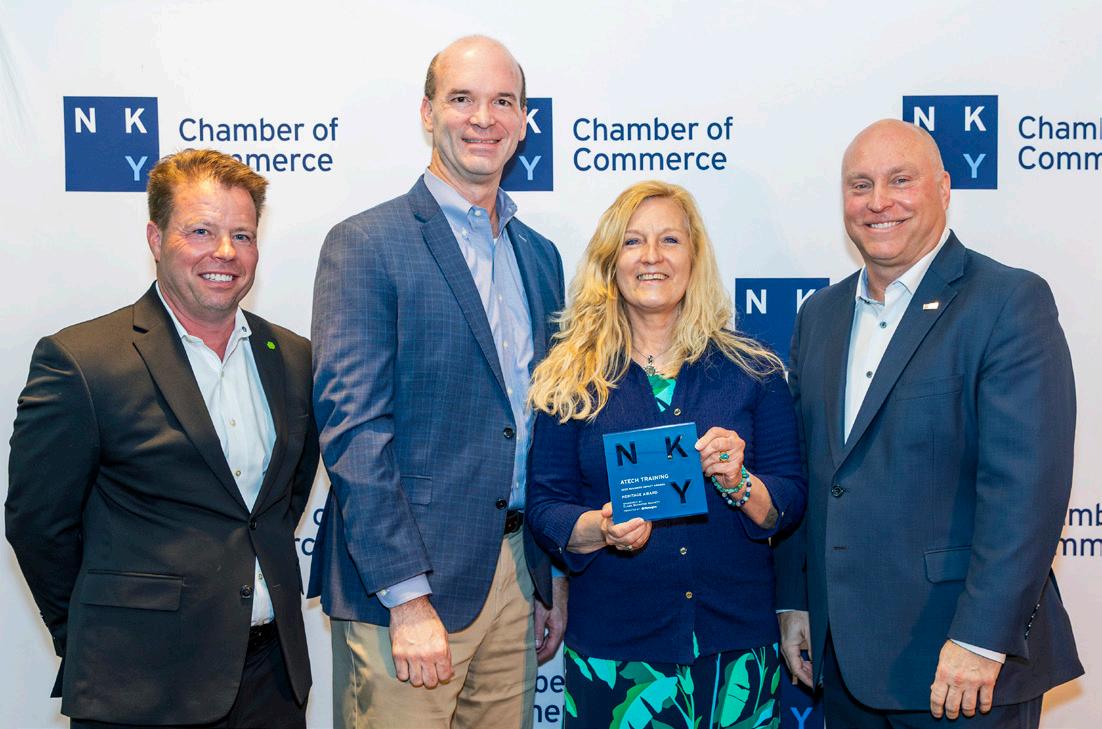
HERITAGE AWARD ATech Training
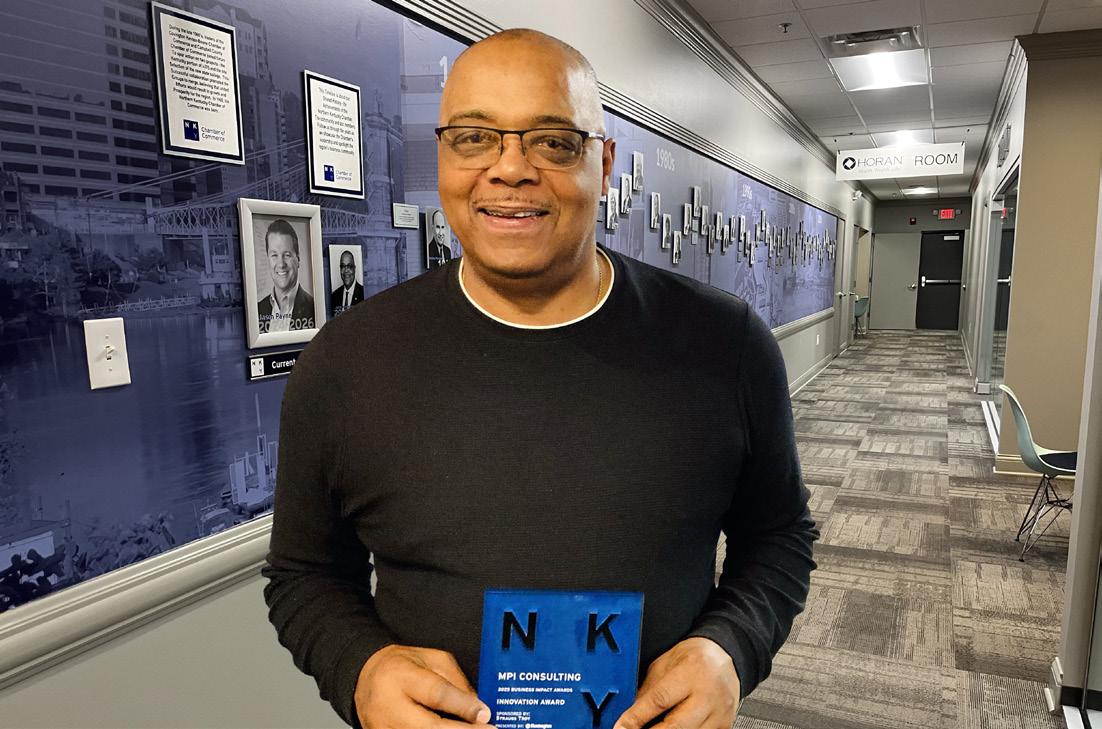
INNOVATION AWARD MPI Consulting

By NKY Chamber Staff
The NKY Chamber has launched a new online resource aimed at helping businesses in all phases and stages of growth. The Business & Talent Resources Hub, available at www.nkychamber.com/businessresources, is a centralized, easy-to-navigate collection of curated links to essential tools, programs, and best practices that address a wide range of business needs. From startups to established businesses, the hub was designed to help NKY Chamber members quickly connect to what they need, when they need it.


“Whether you’re launching a startup, running a small business or leading a large corporate team, it can be overwhelming to know what resources are available, or where to start,” said Nancy Spivey, vice president of talent strategies at the NKY Chamber. “Our members often tell us they spend too much time trying to track down information or that they are not sure where to look. We wanted to help solve that by putting everything in one place to help you find relevant tools to help you grow, hire and thrive.”
The hub includes a wide range of practical resources to help with business certification, exporting, occupational licensing, tax preparation, legal compliance, and patents and trademarks. Talent resources include resources for hiring co-ops and interns, as well as wage & benefit analysis tools, workforce transportation, job fairs, and overall talent development – information to help businesses remain productive, healthy, and forward-looking.
Through its Talent Strategies efforts, the NKY Chamber supports members by addressing workforce challenges. This includes helping employers develop effective workplace policies, stay compliant with evolving regulations, and create environments that attract and retain top talent. The Business & Talent Resources Hub expands on that commitment by offering a one-stop destination for accessing tools and resources that businesses need to succeed.
To explore the new Business & Talent Resources Hub, visit www.nkychamber.com/businessresources.
The NKY Chamber welcomes feedback and ideas to ensure the hub continues to meet the evolving needs of the business community. If you have suggestions for additional resources to include, please reach out to Nancy Spivey, Vice President of Talent Strategies, at nspivey@nkychamber.com. NKY








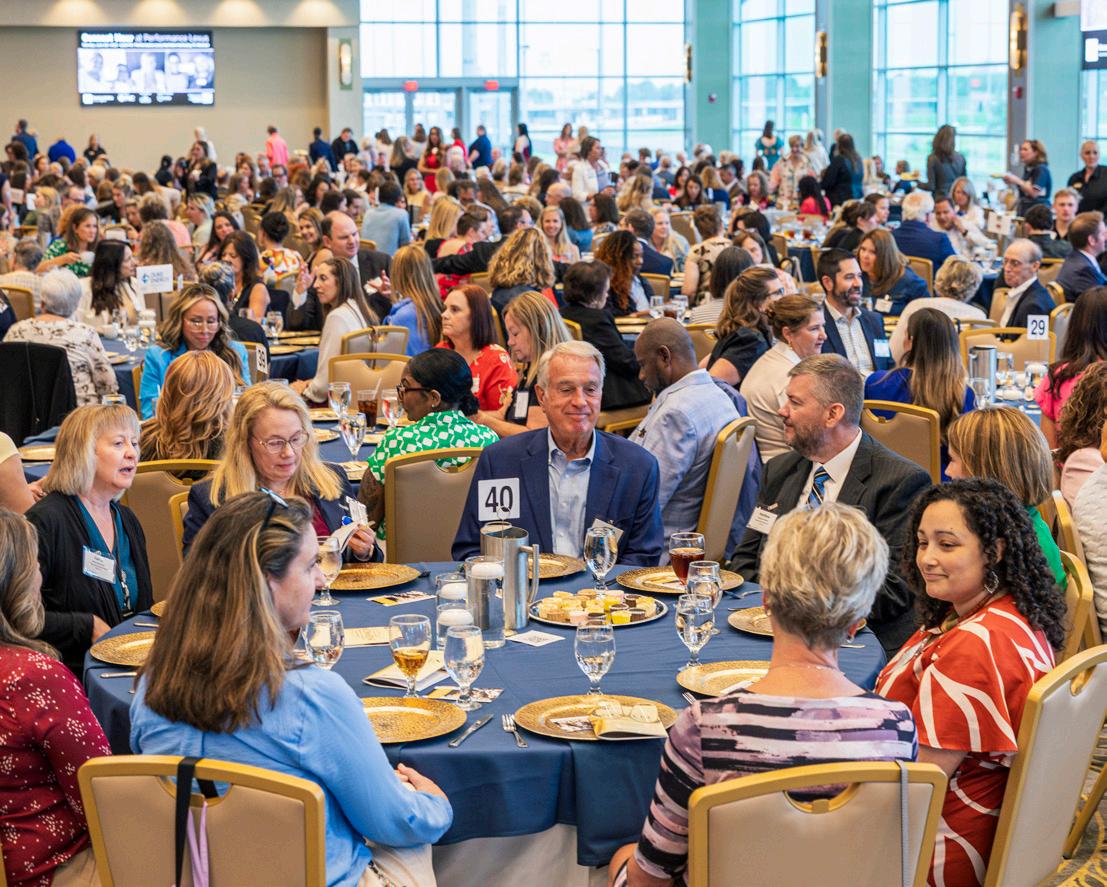
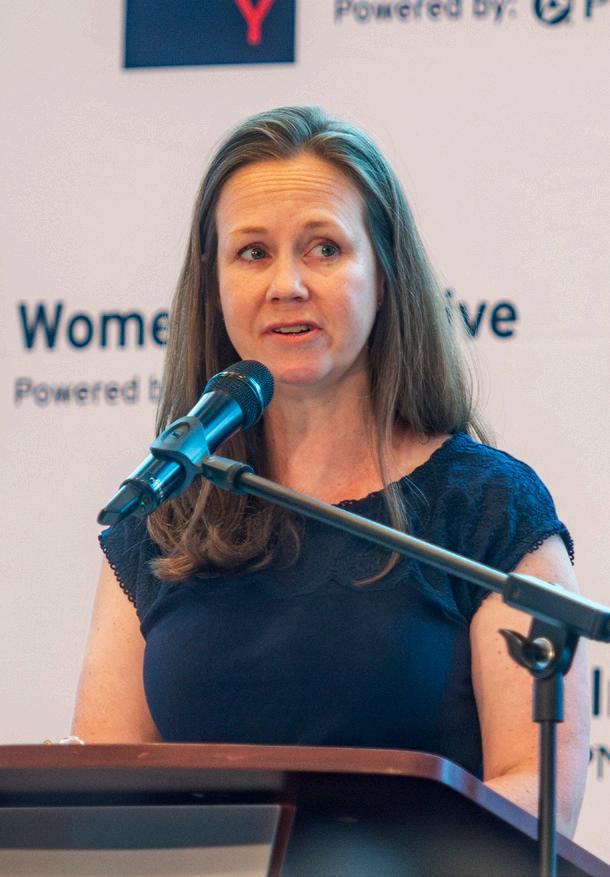
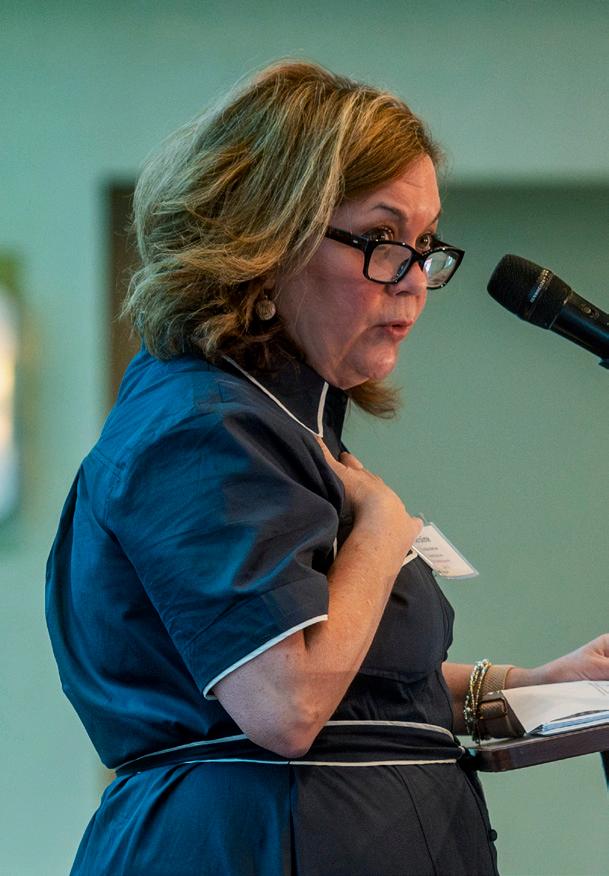
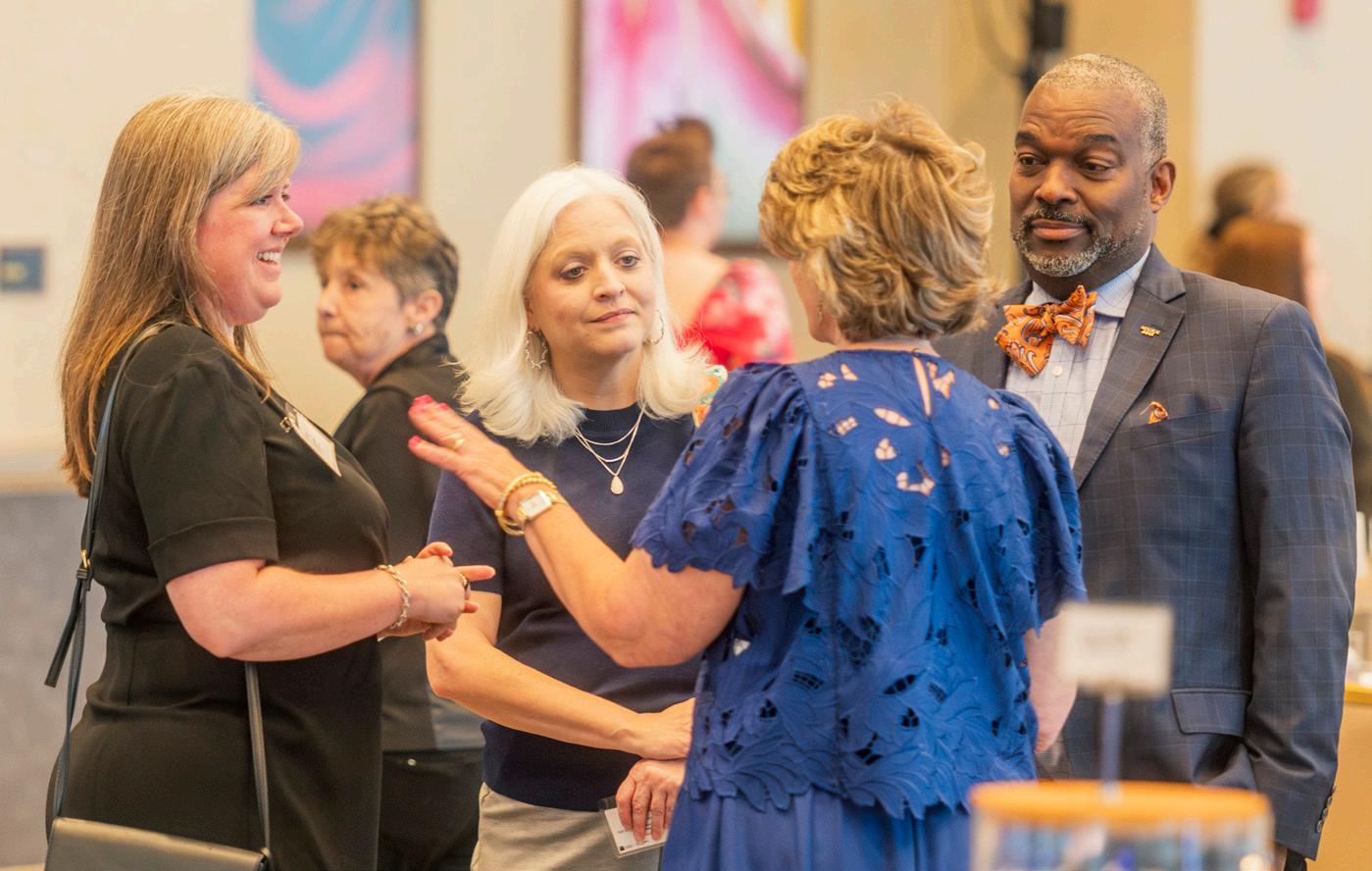
The Women’s Initiative Outstanding Women of Northern Kentucky Awards were held on June 5 at Turfway Park Racing & Gaming. Each year, these awards celebrate women being recognized for blazing trails, opening doors, and demonstrating leadership in their homes, professions, communities, and the region.
The event was brought to life more than 40 years ago by NKU’s former first lady, Nancy Janes Boothe. What started as a smaller gathering has blossomed into a large-scale annual luncheon during which hundreds of women and men gather to celebrate the honorees. More than 250 women have been recognized since the inception of this event, and in 2025, the Women’s Initiative honored 10 more.
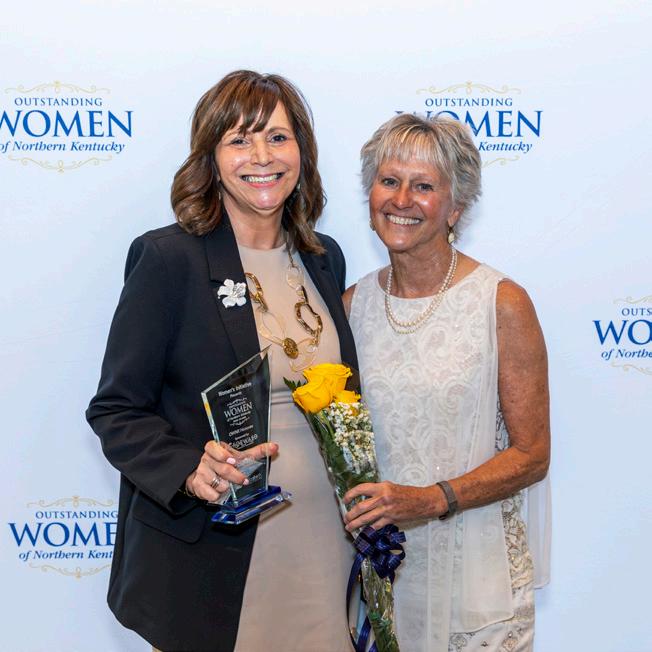
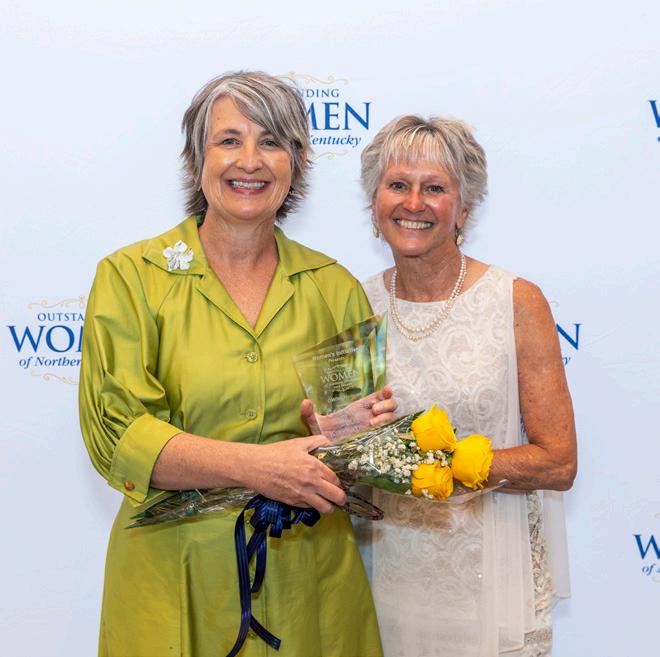
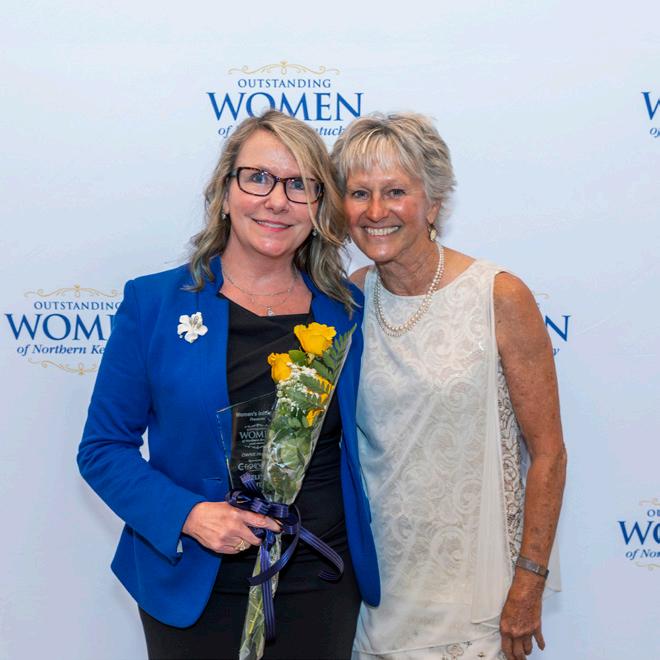
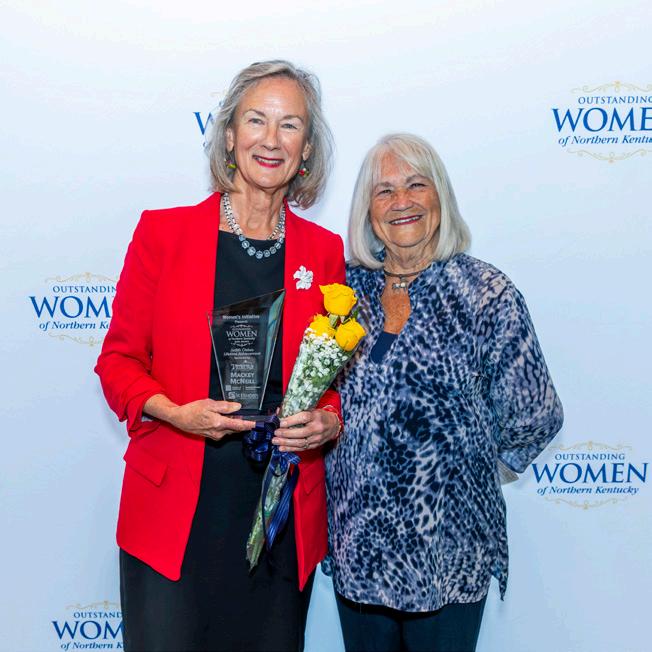
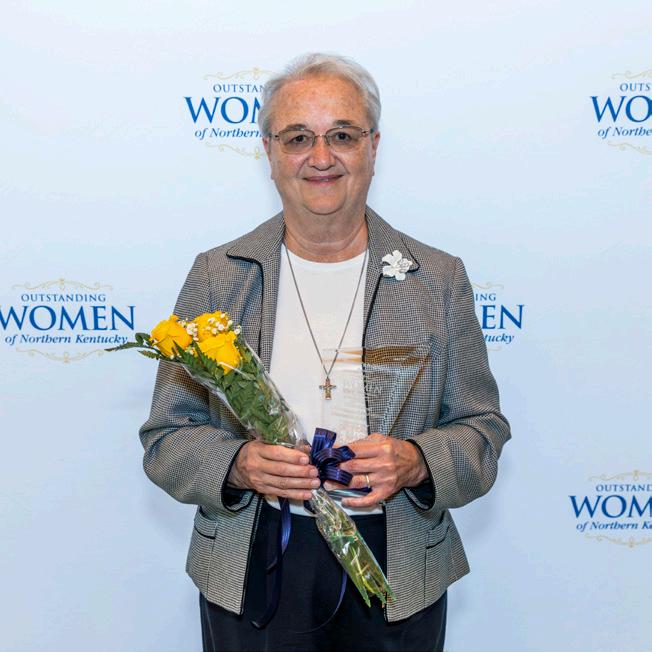
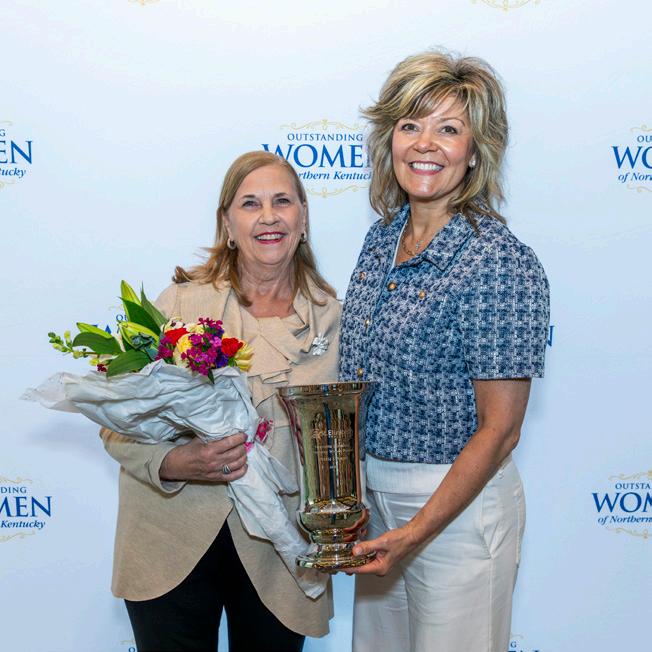

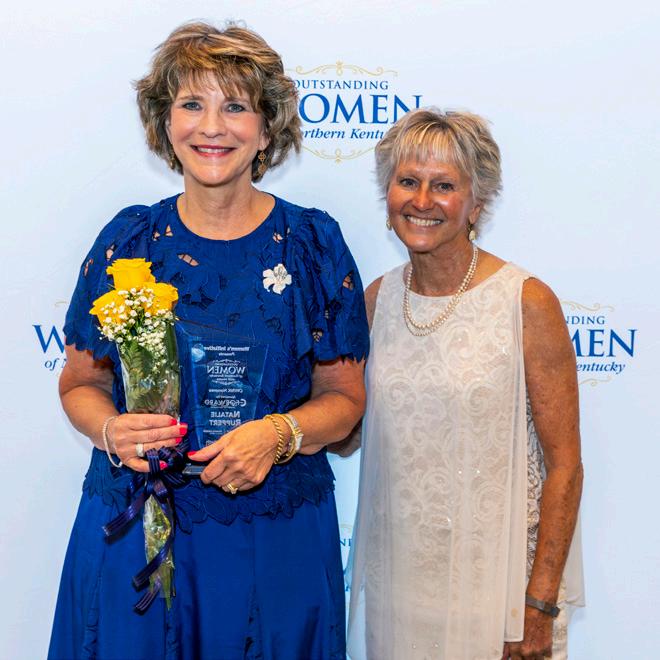
OUTSTANDING WOMEN OF NKY HONOREES
· Jane Herms, President and CEO, Family Nurturing Center
· Julie Kirkpatrick, President and CEO, meetNKY
· Melissa Lutz, FSMPS, CPSM, Principal, Champlin Architecture | EOP
· Natalie Ruppert, Career Services Division Manager, Kenton County Public Library
JUDITH CLABES LIFETIME ACHIEVEMENT HONOREE
· Mackey McNeill, Founder/CEO, MACKEY and The Prosperity People
HELEN CARROLL CHAMPION OF EDUCATION HONOREE
· Sister Marla Monahan, Vicar for Religious, Diocese of Covington
ST. ELIZABETH HEALTHCARE HENRIETTA CLEVELAND INSPIRING WOMEN HONOREE
· Debbie Simpson, retired, President, Multi-Craft
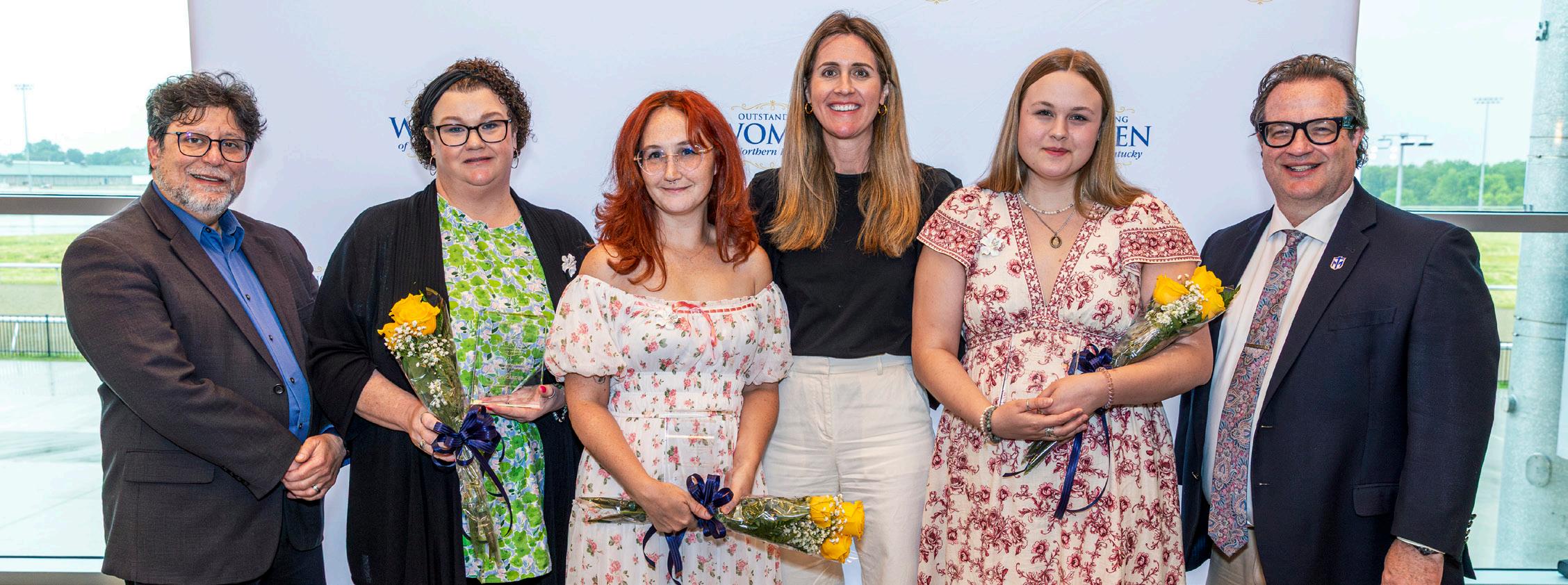
NANCY JANES BOOTHE SCHOLARSHIP RECIPIENTS
· Amy Carder, Student, Gateway Community & Technical College
· Carolann Ashcraft, Student, Northern Kentucky University
· Claire Veirs, Student, Thomas More University


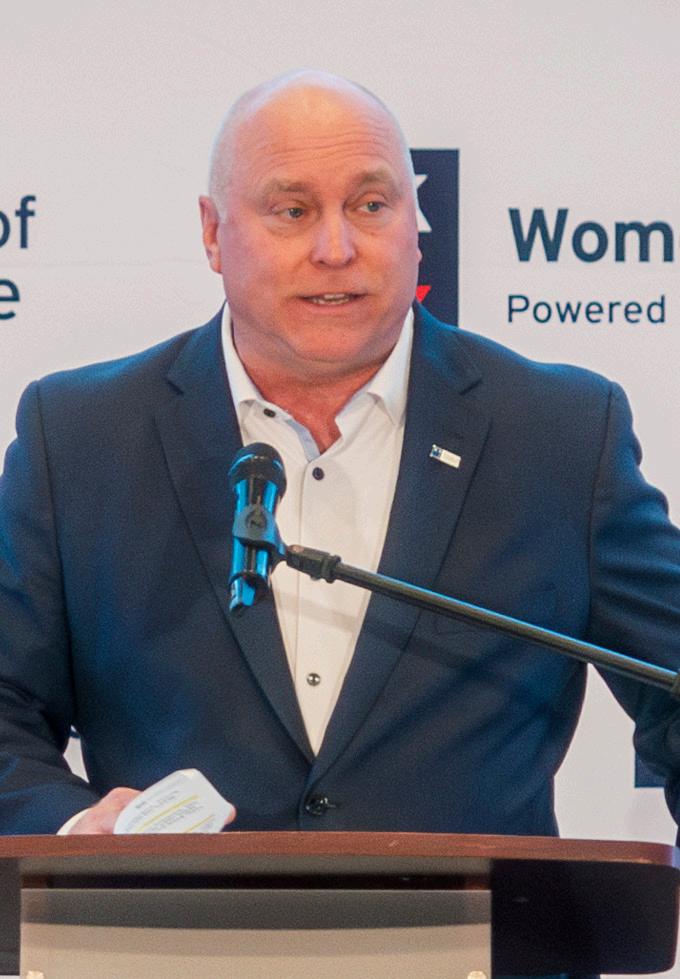


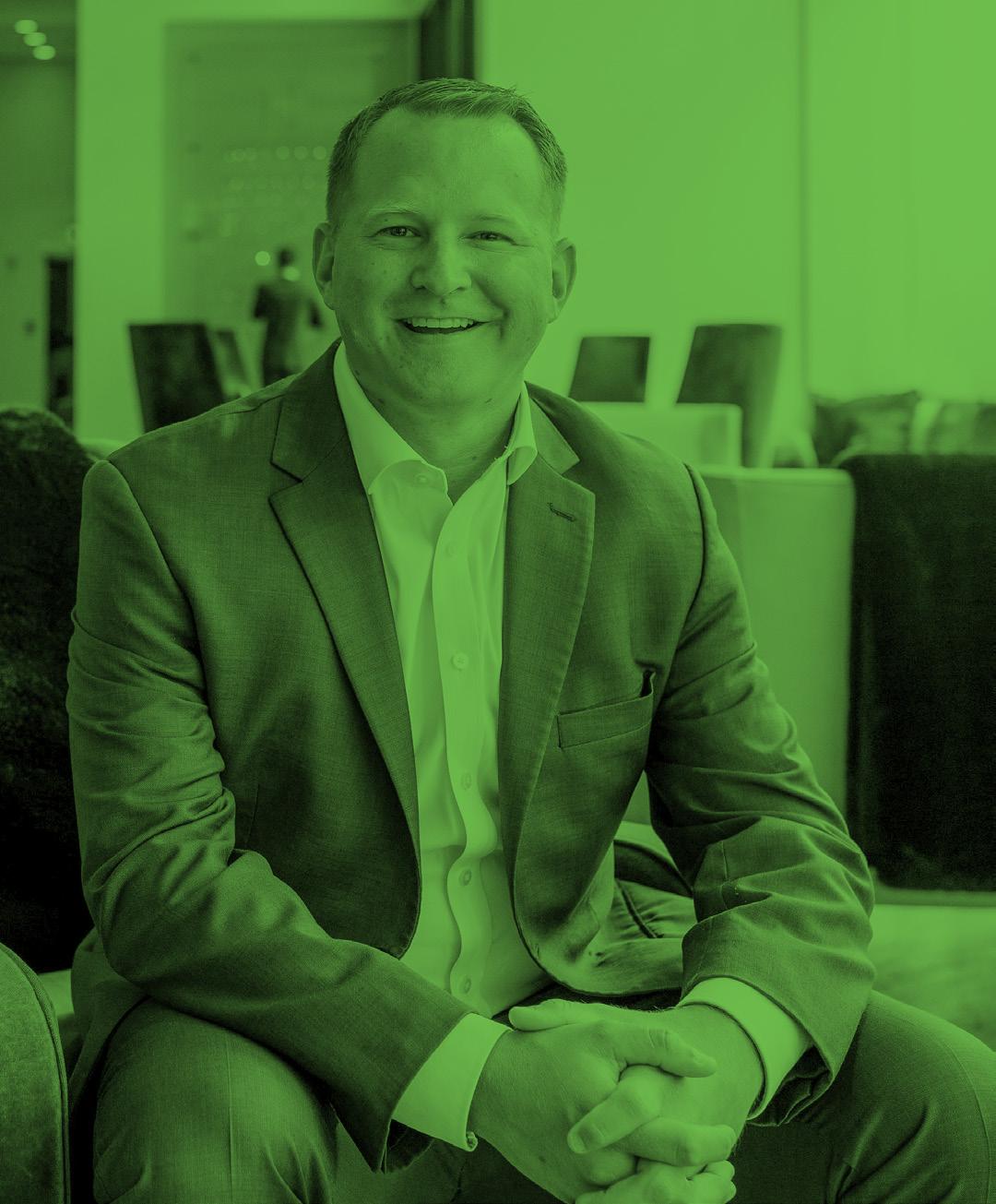
The NKY Chamber, particularly the NKYP program, has been a huge part of my career growth. My involvement has given me access to new relationships, business partners, leadership opportunities, and lasting friendships. I’ve learned when you surround yourself with other young professionals who are dedicated to furthering the Northern Kentucky region, you are able to move mountains.
I’m also a huge fan of the NKYP Event Pass which has allowed me to make one annual investment to expand my network and take full advantage of everything the NKY Chamber offers.
-
Hank Heidrich, Investment Executive - Vice President, Fifth Third Securities
NKYP Event Sponsors NKYP Presenting Sponsor
Cincinnati/Northern Kentucky International Airport St. Elizabeth Healthcare Edgewood




By Tabari McCoy, Scooter Media
Home concierge company changing the way homeowners look for, plan and receive maintenance and repair services

A HOME ... IT’S A LONGSTANDING CORNERSTONE of the American Dream. But if you’re like Paul Koop, home maintenance – and often a lack of knowledge about everything that goes into it – can make owning one a nightmare. Instead of letting all the questions get the best of him, Koop decided to get proactively inquisitive.
In doing so, he’s not only solved his own problems but also launched a business that now specializes in resolving the very same situations for others. Add in a partnership with the region’s largest home builder, Fischer Homes, and his company, Builder Backed, is a concierge service innovating new advancements in home ownership.
“I wish I knew how many times I'd be calling my father-in-law and asking him for help,” says Koop reminiscing about when he bought his first home. “He's a lifetime tradesman and that's what Builder Backed aims to be: America's father-in-law that everyone wants who is helpful, doesn't linger around and doesn't make you feel uncomfortable, but cares for your house and family.”
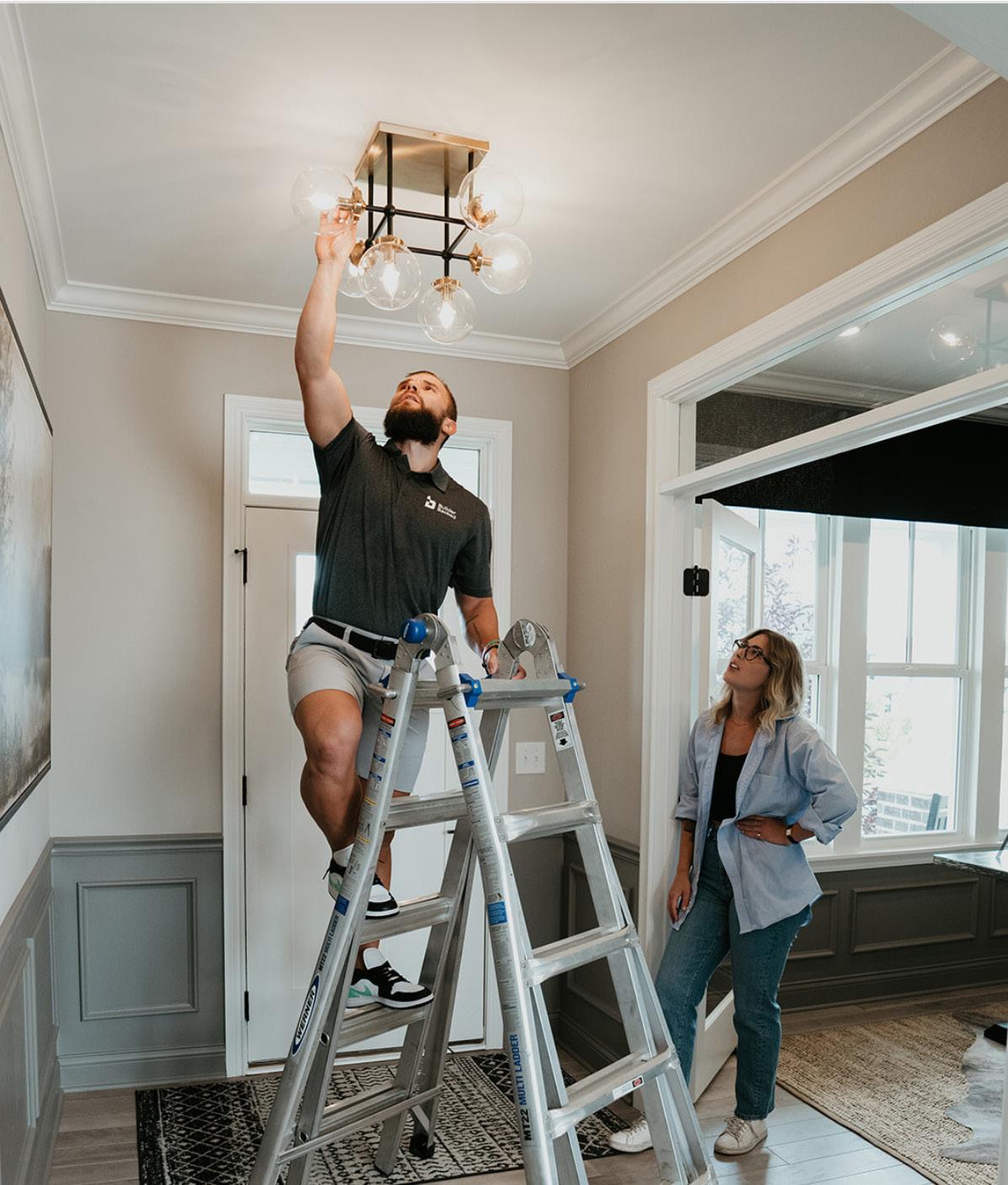
A Covington-based startup company co-founded by Koop in 2023, Builder Backed seeks to alleviate and eliminate the pains often associated with home ownership. In addition to outlining things like local homeowner’s association (HOA) guidelines and sending reminders for routine maintenance like changing furnace filters, Builder Backed’s property guide provides users a curated network of providers that can handle tasks ranging from lawn maintenance to major repairs. The platform also provides users a list of all the home’s facts, figures and maintenance records, all of which can be transferred upon the property’s sale to a new owner.
Builder Backed takes care of all the aspects of house maintenance Koop, a native of Dayton, Ohio, wished he had when he moved from Cincinnati to Boise, Idaho, for work. Koop says he had a full network of support to tackle home ownership issues. But heading out west, he discovered that “my reference sheet that was strong in Cincinnati was no longer good, so I had to go through that painful experience – that really started me to formulate my idea.”
Koop, who’s background is in data work, began the process of innovating “a Carfax for homes.”
“I moved four times over five years and started to realize what I was moving into had very little information available on it. At best, you had a $400 or $500 inspection that was done over a couple hours for what could be a half-million-dollar investment ... I started to take these elements together and said, ‘People need a go-to trusted source of care,’” Koop says. “My mindset was, ‘Who's the leader in this space?’ ... That led me to think, ‘The home builder knows everything about the house. They literally are working from foundation to the final coats of paint.’ I thought, ‘That's how you care for a house, by knowing every single component of it. Let’s partner with a builder to bring that experience to life.’”
That birthed Builder Backed, a tool designed to “educate and empower” homeowners by providing everything they could want – and need – to know at their literal fingertips.
“We want to help homeowners confidently take on the projects they care about and do them well. When there is something they would rather not tackle themselves, we guide them through the process of hiring help,” says Koop. “That includes making sure they understand what to expect, what is involved, and who is best for the job. They are not doing this alone – they have support at every step of the way.”
Continuing, Koops says, “As people are going through these different experiences and journeys, they’re educated as to what it’s going to take to get there. They (now) have someone with them along every step of that journey to ensure they’re hiring the right folks.”
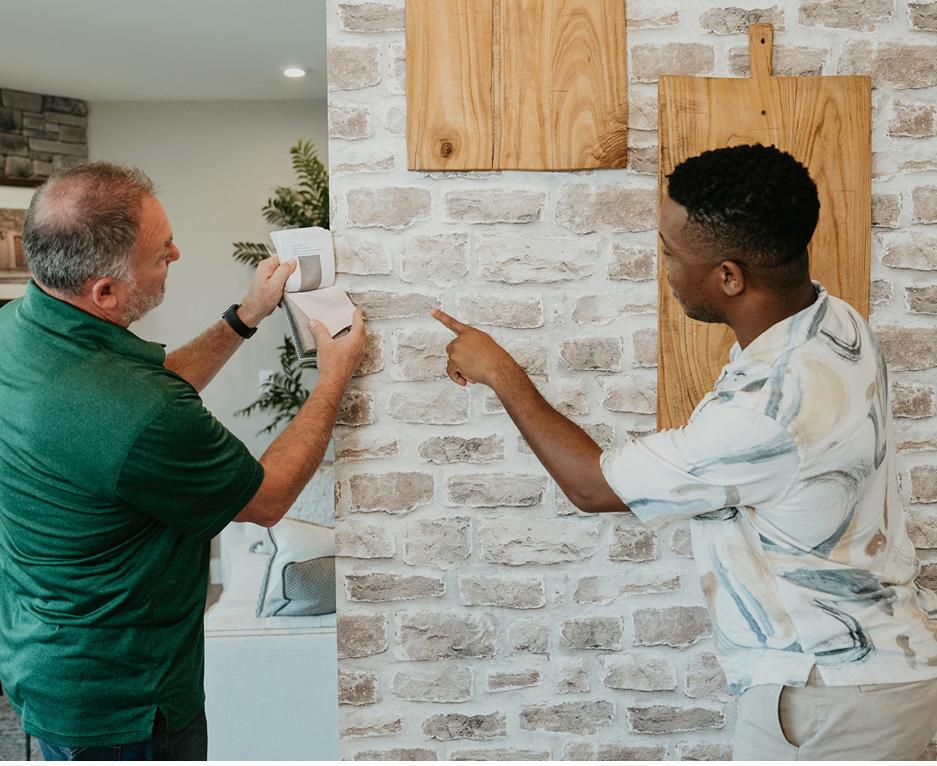


Builder Backed has made great strides despite its relatively short time in existence thanks to its partnership with Fischer Homes, in which the company’s new builds feature Koop’s Home Service Network. The partnership began with integrating Builder Backed into new construction in the Northern Kentucky/Greater Cincinnati area. It has since expanded to include residences in Dayton and Columbus, Ohio; Louisville; Atlanta; St. Louis and Indianapolis. Koop says plans are underway to integrate Builder Backed into previously built Fischer Homes construction, extending the concierge service even further.
Discussing Builder Backed’s expansion in his company’s Atlanta, St. Louis and Indianapolis homes, Fischer Homes CEO Tim McMahon said, “Our mission is to create world-class experiences for our homeowners. Builder Backed has proven to be an incredible partner in delivering on that promise.”
Koop agrees, calling Fischer Homes “an exceptional partner.”
“They genuinely care about their customers, which is critical for us because we are that handoff point once they move into the house. A builder that is lax in any area makes it a difficult handoff,” he says. “The Fischer team is always looking for ways to push what’s possible and deliver meaningfully better homeowner experiences.”
Asked what he thinks the future has in store, Koop says he wants to continue the “paradigm shift from a builder perspective.”
“Everyone is used to just taking care of the homeowner until they get in the house and getting through the warranty period – this is a change in the concept of care,” he says. “That’s what makes it key to find that next builder who likely shares some territory overlap with Fischer Homes who's going to say, ‘I like the idea of caring for homeowners for a lifetime. I like the idea of keeping that connection to the homes we build.’” NKY





To lead is to innovate – and Andrea Pirondini knows that for his company to be the industry leader it is, innovation is essential to everything it does.
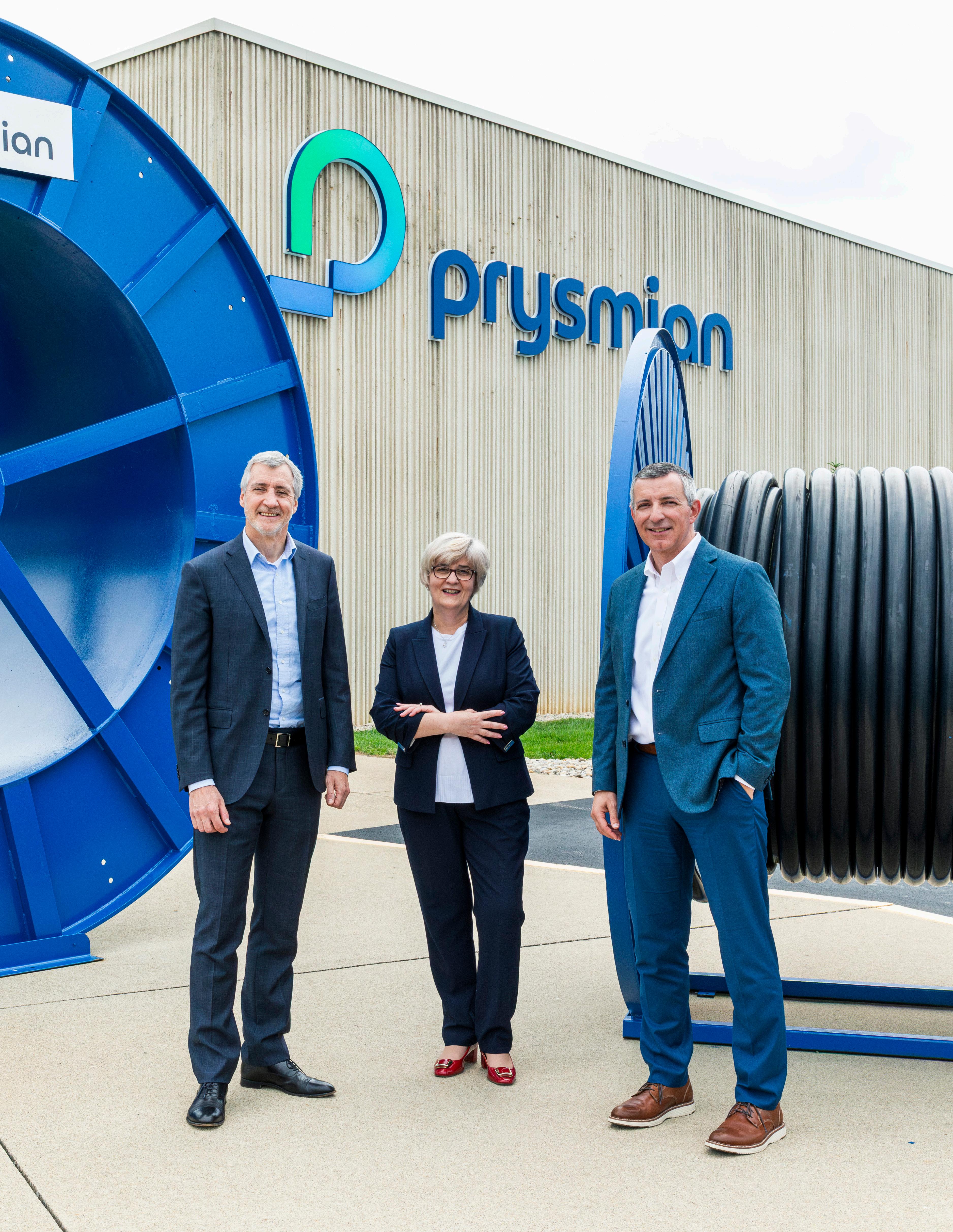
“WE ARE THE GLOBAL LEADER WHEN YOU TALK about cable – it’s power cables, it’s telecommunication cables, and the wonderful solutions that come with these products. We operate all over the planet and a lot of what we do is in North America in particular. In the U.S., we have more than two dozen plants out of 100+ worldwide. For a leader like us, innovation is what allowed us to become who we are and to link the present with where we want to be in the future,” says Pirondini, CEO of Prysmian North America, the energy and digital transformation company whose headquarters calls Highland Heights, Kentucky home. “We have such a broad range of products and we’re trying to understand how to help our customers, how to make their jobs easier and therefore we move toward solutions.”
Now, in the wake of an $8.1 billion sales year in 2024, the company looks to continue its successful, innovative ways worldwide.
To those outside of the cable solutions industry, Highland Heights is best known to many as the home of Northern Kentucky University (NKU). But following the company’s acquisition of General Cable for $3 billion in 2018, it also became home to Prysmian’s North American headquarters. It is from here that the company oversees transactions resulting in the manufacturing of thousands of miles of cables and systems for power transmission and distribution. Additionally, Prysmian produces low, medium, and high voltage cables for the construction and infrastructure sectors (including power grids and specialty applications), optical fibers and cables, copper cables and solutions for telecommunications.
Anna Wright, Prysmian North America’s Vice President of Marketing and Communications, says there are several projects currently on the company’s radar to help strengthen the U.S. power grid, which she says is in “desperate” need for modernization. According to Wright, the aging grid is increasingly facing more extreme weather events, stressing assets operating past their design life.
“On top of this, electrification of the economy is expected to require around 40% more electricity than we currently use,” she says. “Preparing for this future is a huge undertaking, one that will require a massive amount of infrastructure investment to keep the lights on.”
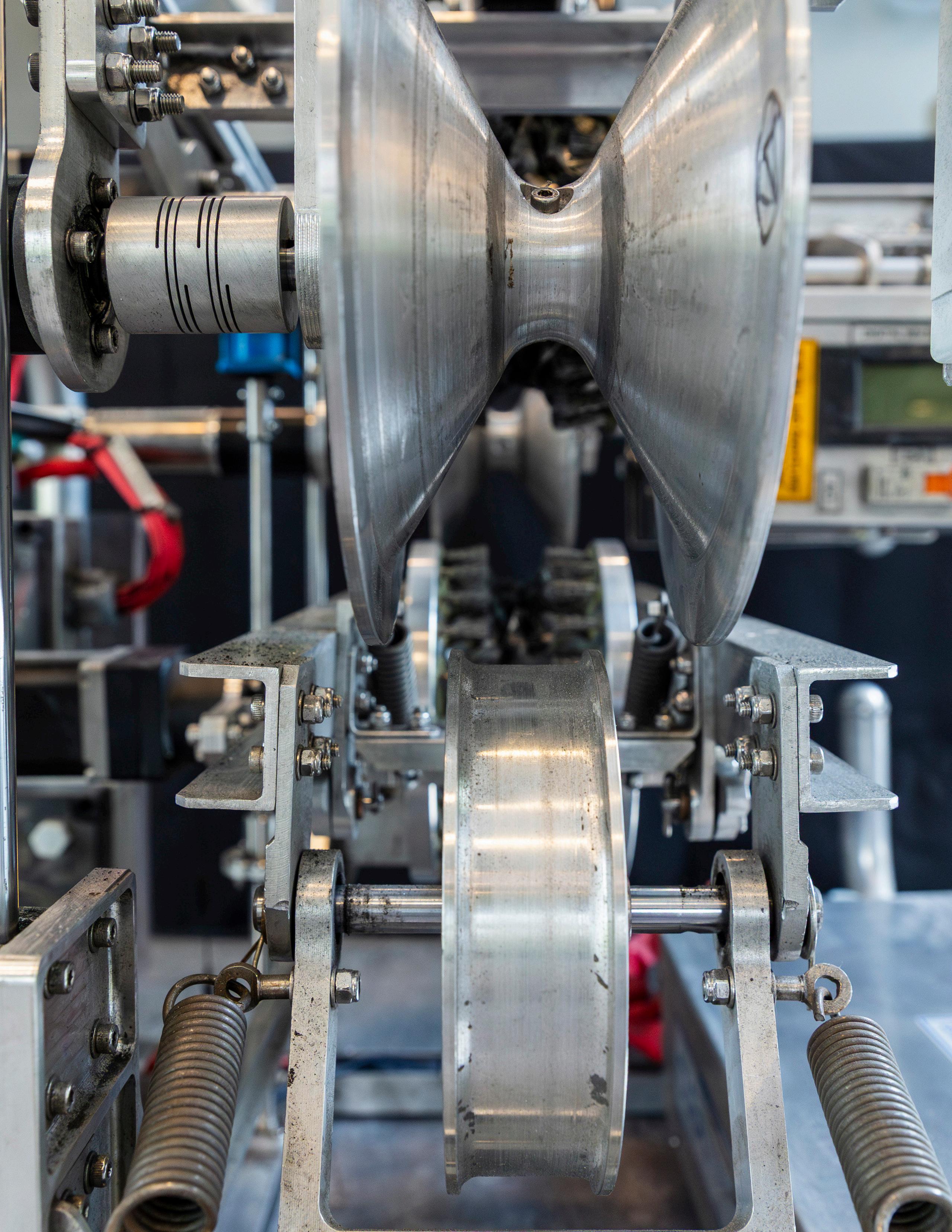
Entrusted with $4.5 million in federal funding to modernize and strengthen the U.S. power grid, Prysmian is actively working to develop a hands-free power cable splice machine. The machine will operate in manholes
By Tabari McCoy, Scooter Media
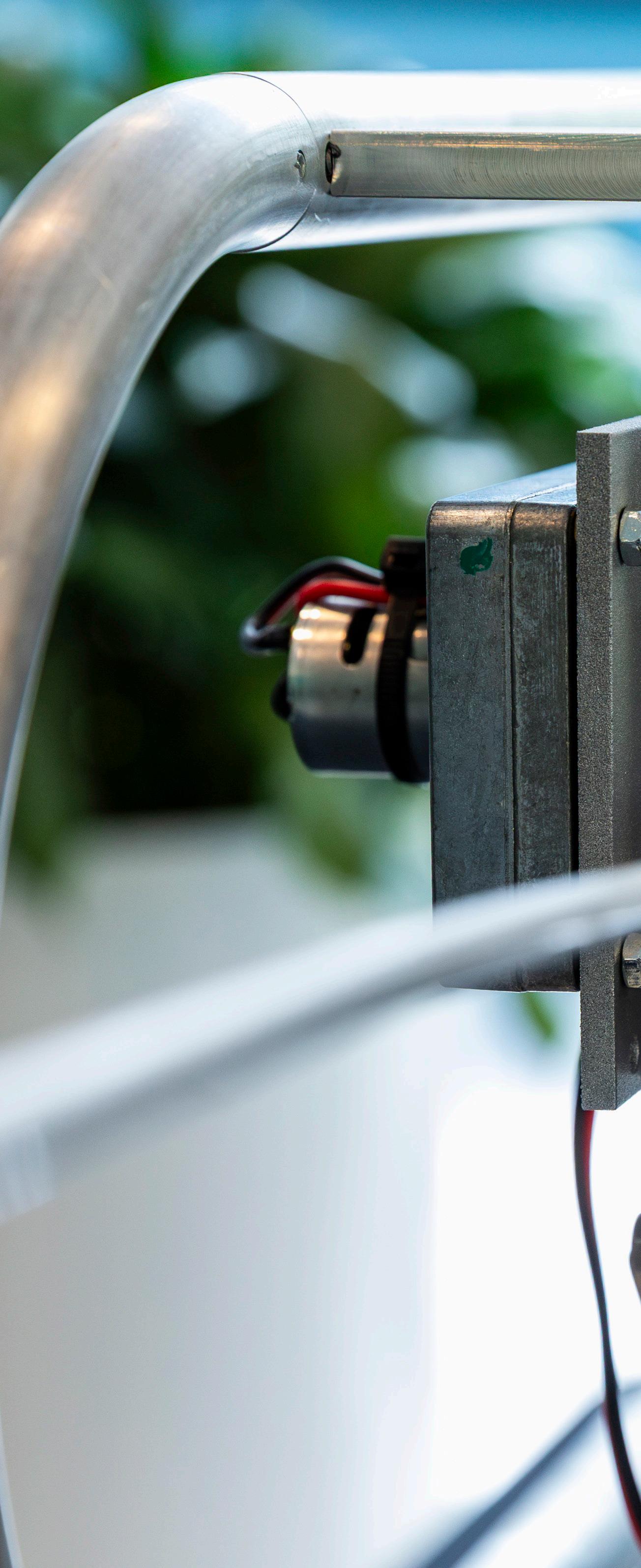

with the goal to reduce network failures caused by manual and labor intense splices process. This innovation will improve workforce safety by reducing crew time underground and will increase reliability of the network and energy losses due to electrical splices failures.
Another innovative solution developed by Prysmian to improve U.S. power grid resilience and efficiency is it’s E3X® Robot System. This innovation enables the transmission capacity for utilities to be increased on in-service power lines. E3X® was originally developed by Prysmian as an in-factory coating application process for overhead conductors and new line field installations. E3X® robot is a field solution to deploy the coating technology to the existing grid enhancing efficiency and reducing losses, making them more sustainable and capable of handling increased loads.
The E3X® coating allows for an up to 25% capacity increase, upgrading infrastructure for 600,000+ miles of existing transmission lines without having to physically replace them. Prysmian North America VP Research and Development Valeria Garcia says this helps reduce costs and material use, all while accelerating deployment to upgrade the existing lines. That explains why E3X® was the winner of Best New Product at the 2022 Edison Awards, a global competition honoring excellence in product and service development, marketing, human-centered design and innovation. Additionally, this April also saw E3X® named a Top Project of the Year at the E+E Leader Product & Project Awards, which honor excellence in products and services providing companies with energy and environmental benefits.
Up next for Prysmian? Pirondini says the company is actively involved in supporting the growth of hyperscale data center market, a.k.a. the massive facilities designed for largescale workloads and applications preferred by the likes of Google and Amazon among others. Garcia says the company also offers advanced technology in Digital Solutions and data centers by offering cable solutions like Sirocco and Flexribbon, both designed to maximize fiber density and optimize duct space installation. Sirocco technology enables ultra-compact cables up to 864 fibers, the size of a dime, fitting in smaller ducts and reducing installation space and cost while Flexribbon is available up to 6,912 fibers.
All are examples, Garcia says, of how innovation continues to push Prysmian forward.
“Prysmian North America is leading all these developments, and we are trying to deploy some of these technologies to other countries as well,” she says. “This is a win-win for us because of our partnerships with our customers and the way projects are conceived by starting with understanding their demands and their needs."
Formerly part of Pirelli – the company famous for its tires – and with history dating back to Samuel Morse and his historic communication between Washington, D.C. and Baltimore, Prysmian’s worldwide reach cannot be understated.
Prysmian is the largest cable solutions provider in the world. This is reflected in the 33,000+ employees the company
claims across 100+ production plants and nearly 30 research and development (R&D) centers in more than 50 countries worldwide. North America is responsible for a large portion the company’s footprint with 8,000 associates spread across some 29 plant locations. Those statistics might prompt some to wonder why the company’s North American headquarters is in Northern Kentucky, a region growing but not as well known internationally for its tech stature.
The answer, Pirondini says, lies in the value we give to the experience of the people responsible for bringing it to the world’s stage.
“When Prysmian acquired General Cable in 2018, they relocated the company’s North American headquarters here because we had a very large number of qualified resources, not only in research and development, to support the whole region,” he says. “We have, sitting here in Highland Heights, about 50% of the time, the global head of R&D. We always have a very strong integration of R&D with the rest of our labs worldwide as we are very integrated with one another, we share our know-how, develop it here and use it for solutions across the country.”
Wright agrees.
“There are global innovations happening right here in Highland Heights and it’s going to improve the quality of life for Greater Cincinnati/Northern Kentucky, for the U.S. and the world,” she says.
Now in his 36th year with Prysmian, Pirondini is fully aware that his industry may not be the sexiest to those on the outside looking in. However, he is excited by the challenges his industry faces that motivate and inspire innovative solutions by the company.
This is evident as he discusses the blackout that occurred on Monday, April 28, across the Iberian Peninsula, causing electricity to be down for up to 10 hours in mainland Portugal and much of Spain. He talks of the impact on flights, hospitals and more in a situation caused by “an imbalance between supply and demand of energy.” He points to the situation as one forcing Europe to think about “the right investments” for the future, all while needing globally to minimize greenhouse emissions through environmentally sustainable means.
The fact that Pirondini can be a part of Prysmian leading those innovations is all he needs to keep him going.
“Despite my age, I still have fun. If I think about my last few years and project that into the future, there have been ever-increasing challenges regarding transmission of data and electricity,” he says, noting his industry has grown out of its “blocked and conservative” shell with the growth of energy transmission and data centers “What is exciting for me and this company is we are in the middle of all that – we have a very important role in challenging ourselves and finding solutions that innovate, make things not only more environmentally more sustainable but also financially. There’s a lot to invent and create to make sure we support the way the world is evolving. It’s very exciting.” NKY


A HISTORY OF HISTORY:
1844 – Prysmian supplies insulated wire to Samuel Morse for his historic communication between Washington, D.C. and Baltimore.
1886 – Prysmian supplies wire to illuminate the Statue of Liberty.
1935 – Prysmian supplies the conductor – 1,626 conductor miles – for power transmission lines from the Hoover Dam to Los Angeles.
1986 – Prysmian supplies wire to the Statue of Liberty for a second time for the Centennial celebration.
2000 – Prysmian supplies telecommunication products for Paycor Stadium.
2001 – Prysmian wires Great American Ball Park for voice and data communications
2005 – Prysmian becomes an independent company, breaking away from now-former parent company Pirelli.
2011 – Prysmian acquires Draka.
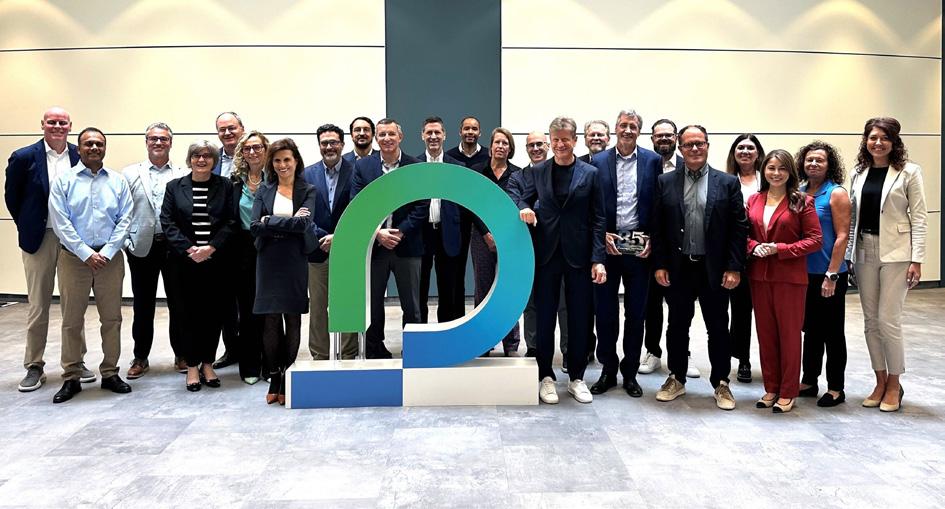
2018 – Prysmian acquires General Cable, whose former headquarters in Highland Heights becomes Prysmian’s North American headquarters.
2024 – Prysmian acquires Encore Wire.
BY THE NUMBERS:
8 – Number of Prysmian offices/distribution centers in North America
29 – Number of Prysmian energy/telecom/ automotive/compound/elevator plants in North America
27 – Number of development plants which Prysmian has in more than 50 countries worldwide
108 – Number of plants worldwide
8,000+ – Number of North American employees
30,000 – Approximate number of employees worldwide
$8.1 billion – Prysmian’s 2024 North America sales total, solidifying its status as the largest wire and cable company in the U.S.
NKY Chamber membership benefits that can help you achieve your business goals

As an NKY Chamber member, you gain exclusive access to a robust network of resources designed to help grow and support your workforce, strengthen your company, and drive your success.
SAVINGS, SUPPLIES AND MORE
HEALTH INSURANCE – The NKY Chamber has teamed up with Anthem to offer ChamberAdvantage, a health coverage solution that gives small businesses an easy, affordable way to offer health benefits to employees. Save 20% to 25% on your monthly medical spend with ChamberAdvantage.
ANCILLARY BENEFITS – Through a partnership with Delta Dental of Kentucky, members gain access to comprehensive and affordable dental, vision, and life insurance plans. These offerings are designed to enhance employee well-being while providing cost-effective coverage solutions for businesses.
OFFICE SUPPLIES – The NKY Chamber offers several perks in the form of discounted office supplies. ODP Business Solutions offers members up to 55% off their most purchased office supplies both in-store and online with no contract. VIE Ability, which was launched by the Cincinnati Association for the Blind & Visually Impaired, has 60,000+ office products and supports people who are blind or have severe vision loss.
MARKETING AND COMMUNICATIONS – NKY Chamber members can receive discounts on advertising courtesy of Adsposure and Everything Cincy, both of whom can help you save on social media, ad packages and more.
HR SERVICES – In need of human resource help? NKY Chamber members can save on a variety of HR services through partnerships with ClearPath Mutual and MPI Management Consulting.
MEMBER DIRECTORY – Leverage the Chamber’s online Member Directory to connect with fellow NKY Chamber members, build valuable business relationships, and keep your dollars within the community.

BUSINESS & TALENT RESOURCES HUB (NEW) - A one-stop hub for Northern Kentucky’s business and talent development needs. Whether you're launching a startup, growing a small business, or focused on attracting and retaining top talent, the NKY Chamber’s Business & Talent Resources Hub offers curated links to essential tools, programs, and best practices to help.
BUSINESS REFERRAL NETWORKS – The NKY Chamber’s Business Referral Networks (BRN) can connect you to teams of 15 to 30 people to help you learn how other members can help you grow your business.
ORGANIZATIONAL PERFORMANCE – Rali Solutions helps companies foster successful outcomes by uniting technology, behavioral science and change management best practices via its Change Experience Platform to help drive behavior change.
THE VOICE OF BUSINESS IN NKY – The NKY Chamber advocates on behalf of members on key legislative and regulatory issues in Northern Kentucky, Frankfort and Washington D.C.
HR 100 – HR professionals and small business owners can utilize timely programs centered on talent recruitment and retention issues while also often earning SHRM-credits in the process.
HR TRIFECTA – Hosted in partnership with NKY SHRM, the HR Trifecta brings HR leaders together to discuss three unique aspects of the workforce pertinent to industry professionals.
WORKFORCE BEST PRACTICES SYMPOSIUM – Brings regional experts together for discussions and breakout sessions highlighting strategies employers can use to attract/ retain talent and promote workforce development.
INCLUSIVE IMPACT BREAKFAST – Features discussions around the critical role inclusion plays in attracting talent, driving investment, and ensuring our region remains competitive in the global economy.
TALENT STRATEGIES SPOTLIGHT – This regular feature of the NKY Chamber Spotlight podcast features employers and workforce practitioners discussing tactics, resources and more centered on talent attraction, retention and inclusive business strategies.
NKY CHAMBER BUSINESS COUNCILS – Located in Fort Thomas, Florence, and Newport, NKY Chamber Business Councils foster collaboration, support business growth, and strengthen the local business community. They provide a platform for networking, knowledge sharing, and advocacy on issues that impact area businesses.
WOMEN’S INITIATIVE REGIONAL SUMMIT – Powered by PNC, this all-day conference is designed to uplift women at every stage of their careers – from rising professionals to seasoned leaders and entrepreneurs.
LEADERSHIP NORTHERN KENTUCKY – Powered by Citi, this popular program uses the community as a classroom to develop leaders that will serve the region.
NORTHERN KENTUCKY YOUNG PROFESSIONALS (NKYP) - Presented by meetNKY, NKYP creates opportunities for young professionals in the region to connect with peers, enhance their professional development, and impact the community.
NKYP EVENT PASS – The NKYP Event Pass provides admission to nearly every event hosted by the NKY Chamber and helps young professionals engage with the community, network with others, and take advantage of professional development opportunities.
WOMEN’S INITIATIVE MENTOR/MENTEE PROGRAM –
Designed to help female leaders in your organization, this program pairs like-minded individuals for a one-on-one growth period over one years’ time.
These are just some of the resources and benefits that come with being an NKY Chamber member. To learn more, contact Lynn Abeln, Vice President of Membership, at labeln@nkychamber.com or call (859) 578-6390. You can also find information on all the programs and benefits included in this article at www.nkychamber.com. NKY

By Tabari McCoy, Scooter Media
LIKELY KNOW ISAAC NEWTON’S NAME ... BUT IN CASE it’s been a while since your last middle school science class, his first law of motion says: An object at rest stays at rest, and an object in motion stays in motion unless acted upon by an unbalanced force.
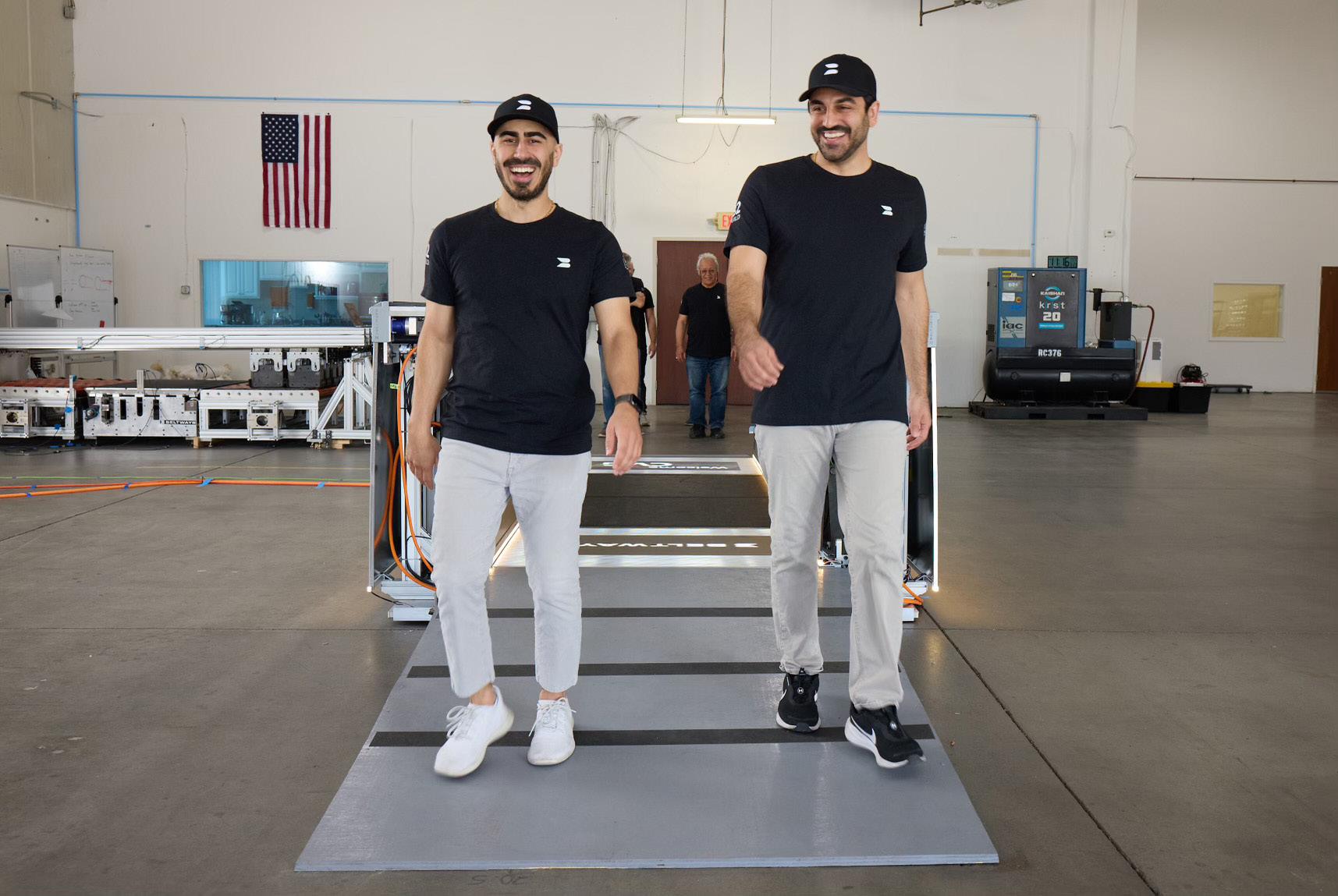
John Yuksel and his brother Matine have spent the last five years challenging that principle—not in defiance of Newton, but to transform how we move through places and fulfill their father’s longstanding vision of the future.
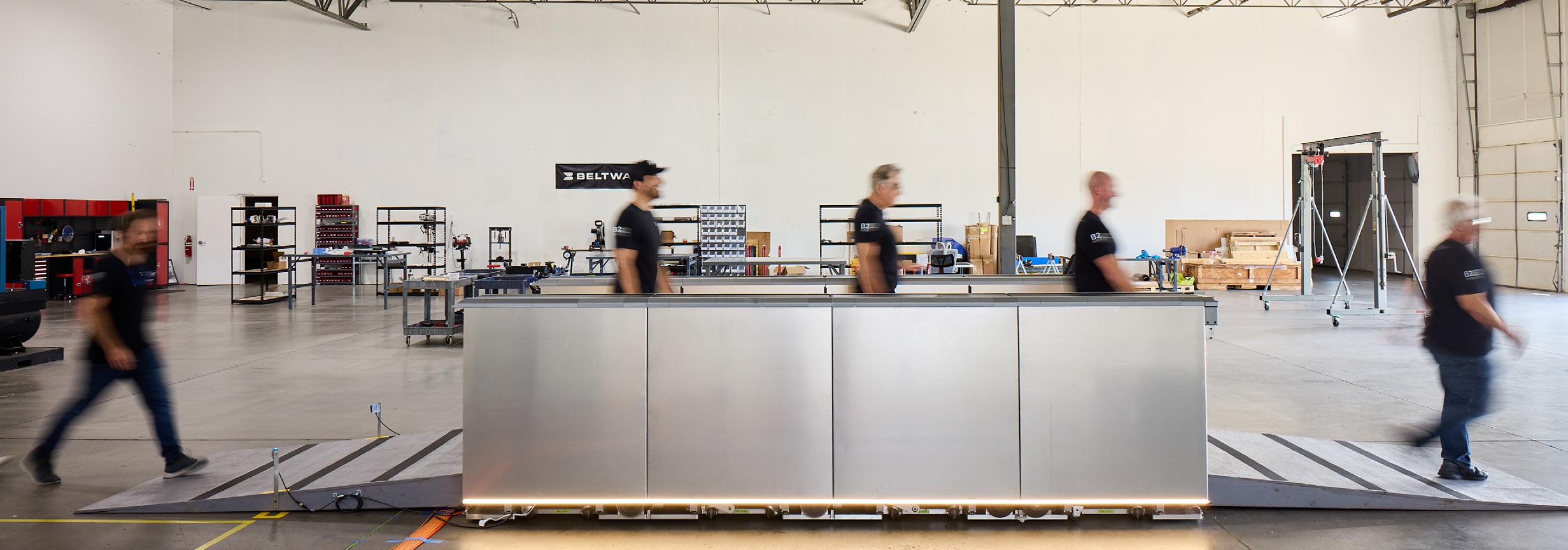
Now, the brothers are ready to showcase transit innovation through their company, Beltways, which they call accelerators, “the smartest, safest, and fastest walkways in the world.”
Based in Hebron, just 10 minutes from Cincinnati/Northern Kentucky International Airport (CVG), Beltways was founded in 2020 with a clear mission: to create fast pedestrian transit networks in the world’s busiest locations. Capable of speeds up to 10 mph – more than double the average adult walking pace – these accelerators can reduce traffic congestion, support sustainability efforts, simplify the transit landscape, and unlock the true meaning of walkability.
“The U.S. Department of Transportation reports that 400 million times a day, Americans travel less than one mile by vehicle—that’s a staggering number,” Yuksel says. “A quarter of all trips are under a mile, yet we lack a dedicated mode of transit for short, high-volume routes. Public transportation doesn’t cover those needs well. A fast, high-capacity pedestrian network layered into cities could transform mobility.”
With the Federal Aviation Administration reporting that 2.9 million people are flying daily, Yuksel believes Beltways fills a gap in short-range transit perfect for busy airports—their initial target market.
Unlike traditional trams and moving sidewalks, which take years to install and maintain, Beltways’ accelerators are elevated, modular systems that can be deployed in days with minimal construction. Similar to Tesla vehicles, future Beltways systems will receive over-the-air software updates to improve efficiency, enable new features, and reduce maintenance costs over time.
Safety is a priority as well. Beltways incorporates Internet of Things (IoT) technology that operates the system with multiple layers of safety sensing redundancies. Plans also include the use of computer vision to display targeted safety signage in real time,
as well as backend AI-driven system monitoring and predictive maintenance to provide greater reliability and safety.
While the company’s journey has gained momentum with investors and grants, the roots go back to 1976, when their father Edip conceived the idea of a pit-less accelerating walkway during his freshman year at Middle East Technical University in Turkey. Circumstances prevented him from pursuing the idea, but he later immigrated to the U.S., started a family, and supported his sons' eventual decision to revisit his invention.
By 2020, John and Matine had left successful careers in law and tech to pursue their father’s dream. Wondering why the brothers left their successful careers behind?
According to Yuksel, it was because of a simple revelation: “Life is short.”
“I’ve always felt a deep drive to push humanity forward,” Yuksel says. “Pursuing that with family makes the journey even more meaningful. My brother and I have very different strengths— he’s precise and detail-oriented, and I’m more of the systems thinker and risk-taker. That balance has been essential.”
With no prior experience in engineering or heavy equipment, the brothers moved from San Francisco to Iowa to build their first prototype with the help of a seasoned industry veteran. “We connected with a retired industry expert who had spent years on the regulatory committee that oversees moving walkways,” Yuksel says. “He had a shop out in the cornfields, and we learned by working side by side—helping him build his home while building our first prototype. It was truly hands-on, and it’s how we bootstrapped the company from the ground up.”
Eventually, airports emerged as the ideal entry point, and a potential opportunity with CVG brought the brothers to Hebron. Edip, now a co-founder, serves on Northern Kentucky University’s Advisory Board for Engineering Technology Programs. Beltways also hopes to bring more NKU students onboard as they expand.
When asked about the biggest hurdle, Yuksel says there hasn’t been just one.
“Early on, we were focused on proving the technology—just showing that it could work,” Yuksel says. “Later, we faced the uphill battle of fundraising as a hardware startup in transit. Now, the next challenge is scale—getting millions of people to ride it. Once that happens, we’ll be ready to grow with our early partners.”
“When we arrived in Kentucky, the openness of the startup community really surprised us,” Yuksel says. “People were willing to meet, make introductions, and genuinely support us. It’s still an emerging ecosystem compared to San Francisco, but the support we’ve received from the state—especially through the Kentucky Science and Technology Corporation—has been instrumental. We’re proud to be building America’s first accelerator here.”
Yuksel estimates the company will be ready to publicly deploy a commercial system this fall—a milestone that could attract global interest. The company is already in talks with several domestic and international airports and cities for rollouts next year.
Future profits are a goal for any company, but their mission is already within reach.
“Watching my father take the first step on something he imagined nearly 50 years ago—and then seeing my daughter experience it too— will be a profound moment,” Yuksel says. “Bringing this to the public for millions to use is what makes all the challenges worth it. I just hope our community recognizes how rare it is for a startup to take on mass transit—and how powerful it could be when we get it right.” NKY
AT A GLANCE
Beltways Inc.
2100 Conner Road, Suite 200 Hebron, KY 41048
www.beltways.com (917) 582-9648 hello@beltways.com
2020:
Inspired by the dream of their father, Edip, brothers John and Matine Yuksel leave their careers in law and tech to found Beltways in Silicon Valley.
2021:
Beltways builds its first accelerator prototype in Iowa, achieving a world record for the fastest walkway system.
2022:
The Yuksel brothers relocate to the Greater Cincinnati/Northern Kentucky region to expand operations to prepare for their first pilot.
2023:
Beltways tests its 4th generation system, grows to 10+ employees and moves into a 20,000 square foot headquarters near CVG Airport.
2024:
Beltways’ accelerator reaches Technology Readiness Level (TRL) 6, signaling nearcommercial readiness.
2025:
The Beltways team begins building its first commercial accelerating walkway for public deployment.


To learn more about each of the Business Councils, visit www.nkychamber.com/business-councils. NKY Chamber Business Councils honor three outstanding local businesses
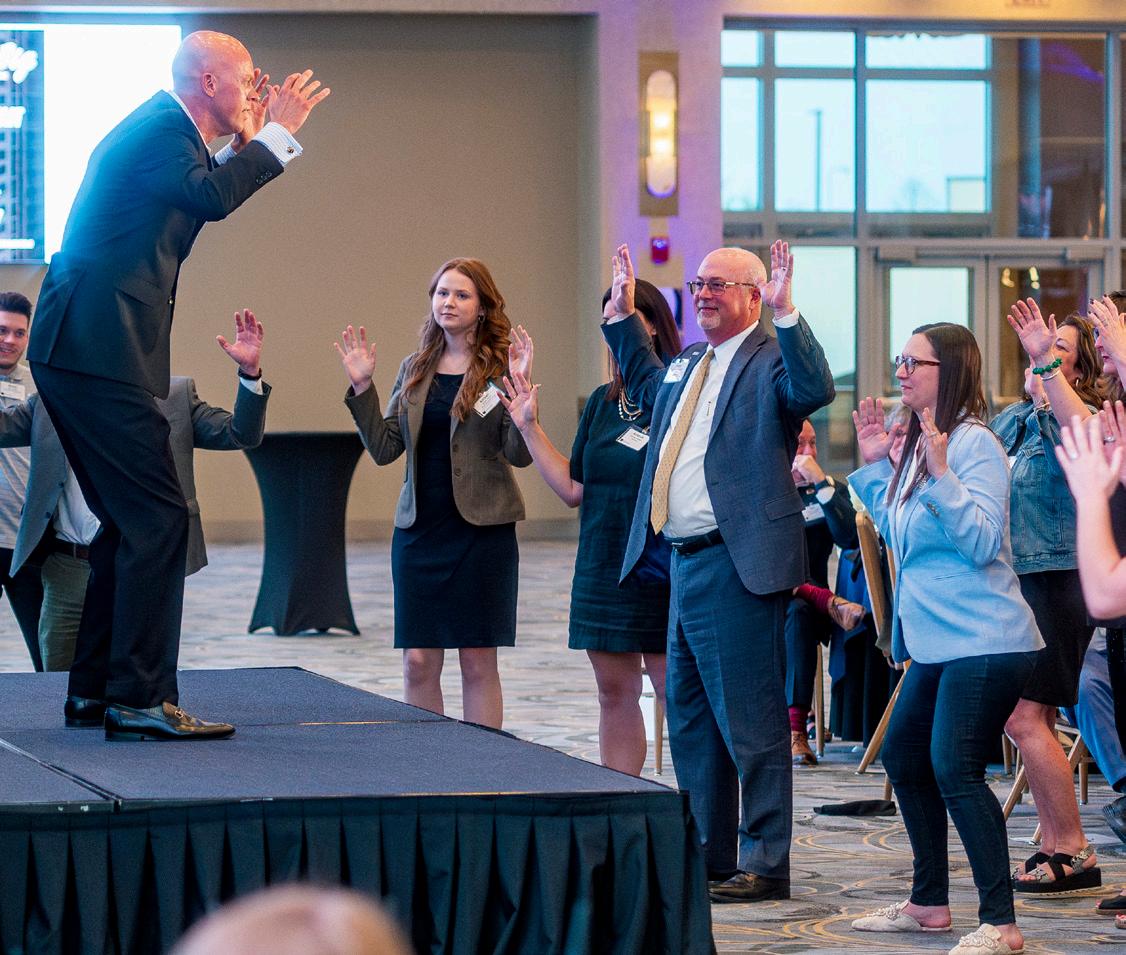
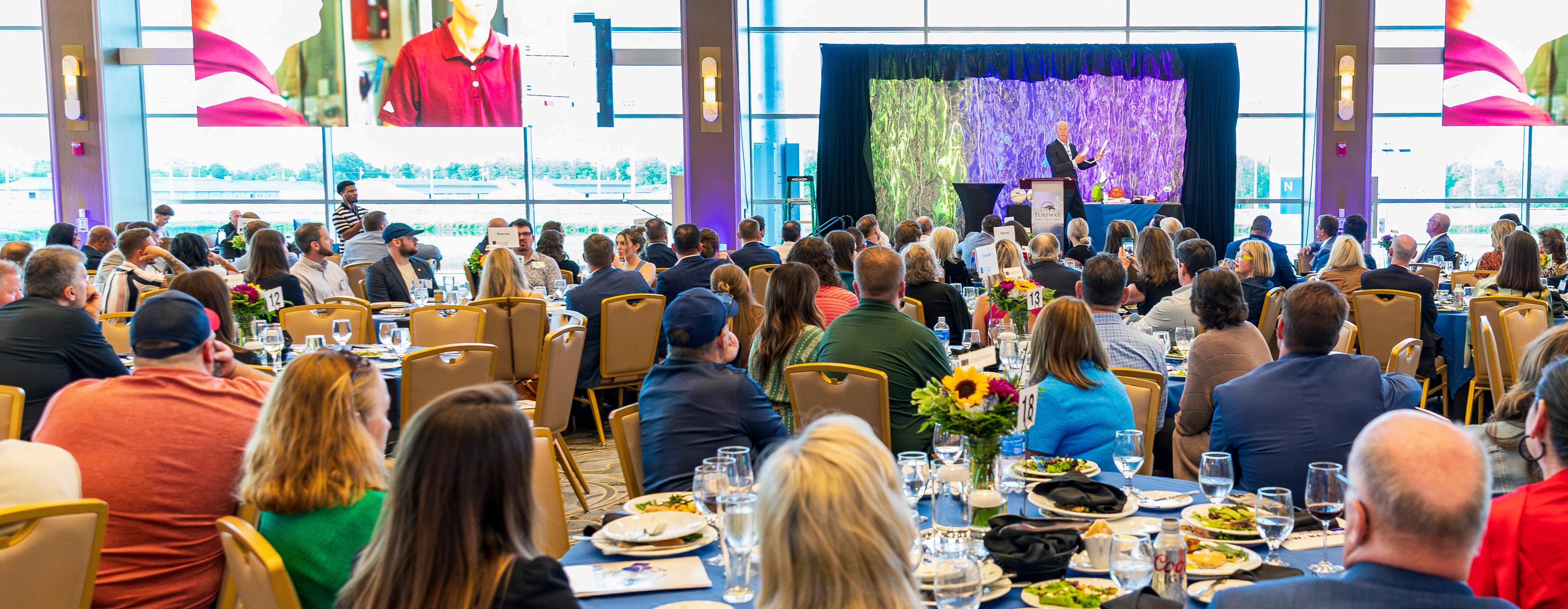
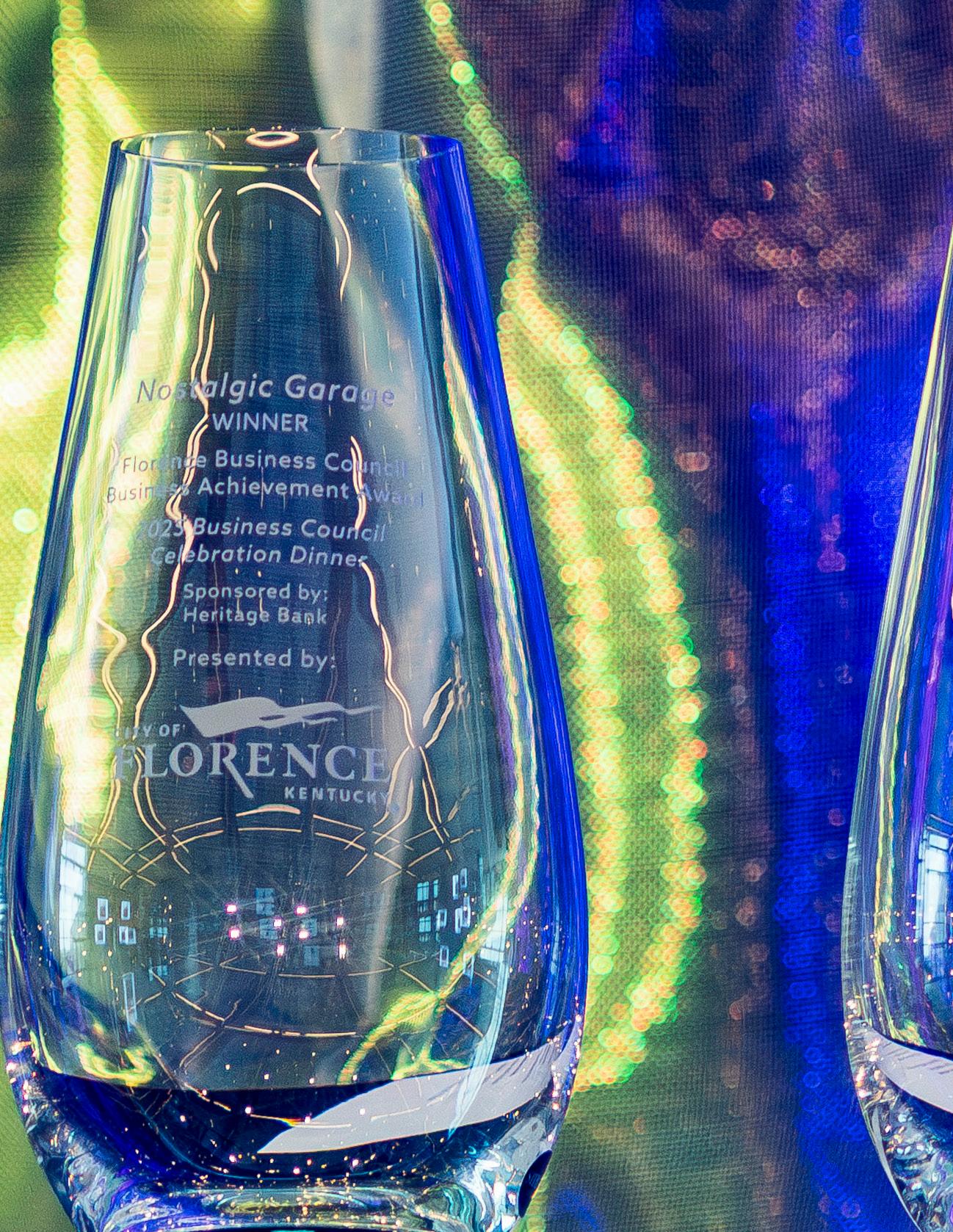
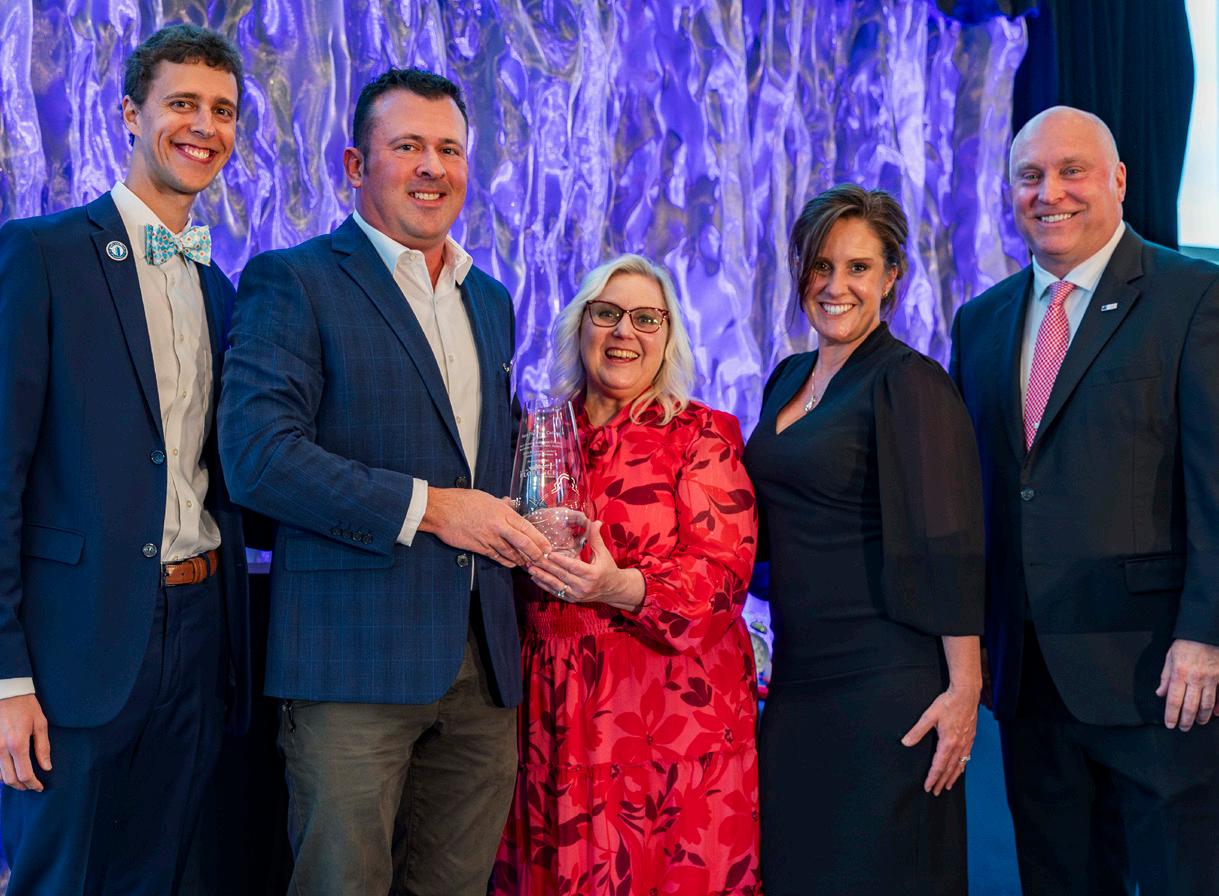
In May, the NKY Chamber celebrated local excellence during its inaugural Business Council Annual Celebration at Turfway Park Racing & Gaming Event Center. Presented by the City of Florence, the event honored three exceptional businesses for their leadership, innovation, and impactful contributions to their communities. Achievement Award honorees included Nostalgic Garage (Florence), Fort Thomas Coffee (Fort Thomas), and Incubator Kitchen Collective (Newport). Attendees also enjoyed an inspiring keynote from Eastern Kentucky University head basketball coach A.W. Hamilton, who spoke about the power of resilience, teamwork, and goalsetting. The evening brought together business leaders from across Northern Kentucky in a vibrant celebration of community and entrepreneurship.






By Tabari McCoy, Scooter Media




KEVIN KIRBY KNOWS MANY PEOPLE OFTEN DON’T fully understand what “informatics” means, but as the head of the College of Informatics Northern Kentucky University (NKU), he knows that expanding the knowledge of the future workforce in “the art, science, business and technology of information” is of the utmost importance.
Now, thanks to NKU’s ongoing partnership with one of the region’s largest employers, he and many others are excited about the possibilities of the Duke Energy Innovation Lab to train and prepare future generations of talent.
Located inside the College of Informatics’ home in Griffin Hall, the Duke Energy Innovation Lab officially opened at NKU this May with a simple mission: To serve as a “dynamic space” and “center for experimentation and innovation” for all that enter.
Featuring the latest in Internet of Things (IoT) technology – a network of physical devices/appliances/machines embedded with sensors allowing for the collecting and sharing of data –the lab is a multi-use workshop designed to address a multitude of functions. This includes (1) student projects that can help build their resumes with benefits to the lab’s namesake, Duke Energy; (2) providing real-world, hands-on experiences where visitors can learn about smart devices, their benefits related to energy as well green energy and (3) continuing the work of NKU’s IoT Club, led by Duke Energy Emerging Technology Apps Director Steve Hinkel.
“He’s the mad scientist behind it all,” says Kirby of Hinkel, who also serves as an adjunct professor at the College of Informatics. “Everything really came together when Steve recognized how impressive these students’ work is - so much so that Duke Energy would want to tap into their creativity.”
Composed of three workstations focused on robotics, soldering and device testing, the lab won’t just be limited to NKU learners. It will also offer science, technology, engineering, arts and mathematics (STEAM) programs to K-12 students. The lab is the latest collaboration between NKU and Duke Energy, Kirby noting the latter has long supported NKU’s Center for Integrative Natural Science and Mathematics (CINSAM) along with science, technology, engineering and mathematics (STEM) programming.
Given the lab’s potential to be mutually beneficial to NKU’s student body and Duke Energy, Kirby believes the project might be the best outgrowth of the two parties’ relationship to date.
“Northern Kentucky University is, of course, by definition a resource for talent in the region. We say that 83% of our graduates stay in town to serve the local workforce, so we want to be aligned with their needs,” he says. “Duke Energy has a big presence in the Cincinnati area and employers want students with practical experience, whether it be internships, co-ops or R&D projects like this. This is how we add value to our graduates, which is what people have come to expect from NKU. This Duke Energy lab adds even more power to that, so to speak.”
Zachary Kuznar, Duke Energy’s Managing Director of Grid Solutions Development, agrees. Kuznar says partnering with institutions like NKU is essential to Duke Energy’s future, noting staying on top of emerging technology to meet the demands
of consumers and environment necessitates fresh, innovative thinking. He cites artificial intelligence (AI) as a prime example, noting how the rapid advancement of technology is often outpacing the knowledge of it among those already working in his industry. Says Kuznar, “Cybersecurity, artificial intelligence and data science, these are all very much emerging areas where there isn't a lot of experience out there, so we're bringing people in that are learning this at the academic level to see how we apply it to the real world.”
Among the projects he is excited to see NKU students tackle is battery storage. Kuznar says students are working to develop sensors that can be attached to the Boston Dynamics robotic dogs found in the lab to help conduct testing for thermal events, carbon monoxide, etc. That is why he says the work Hinkel and the IoT club especially are doing is so valuable as their projects could lead to safer inspections at Duke Energy power plants and beyond – without putting people in danger.
Kuznar, who believes, “We're just scratching the surface on the relationship there,” hopes the partnership continues for years to come.
“That is where partnering with universities throughout our footprint comes into play, educating students about the exciting work that the energy industry is doing right now to not only decarbonize, but also to integrate all these new technologies comes into play,” Kuznar says. “That's where we see real value in bringing in talented students who are eager to tackle some of these hard problems the industry is facing as we're going through this energy transition. We see it as a great way to challenge students while they're still in school. We want to tap into their insights, but also have it serve as a pipeline for future talent for the industry.”
Kirby, who says NKU has a long tradition of involving students in research projects, says the Innovation Lab has the potential to “amplify students’ ability to be creative” and more. He is thankful to have a partner like Duke Energy to engage its full potential.
“We can be innovative internally on campus, but the best kind of innovation happens through off-campus partnerships with innovative companies,” he says. “The best thing we can do is to find innovative partners, work with them and expose them to our students, and our president understands that as well. To accelerate innovation really requires partners. It's never the university by itself and that's really what makes NKU good: Standing on the shoulders of extraordinary partners like Duke Energy.”NKY


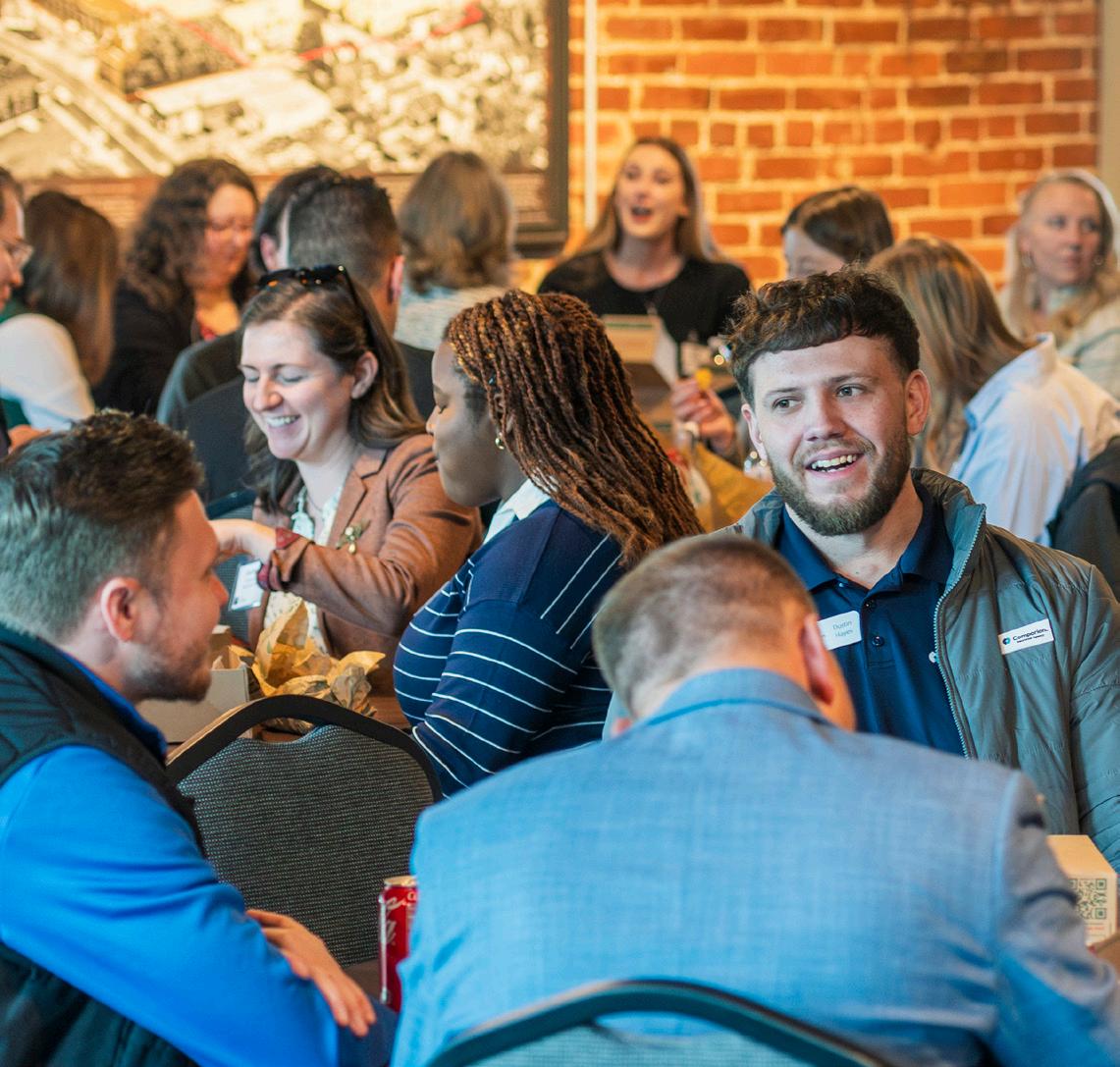
NORTHERN KENTUCKY YOUNG PROFESSIONALS: LUNCHTIME LEADER
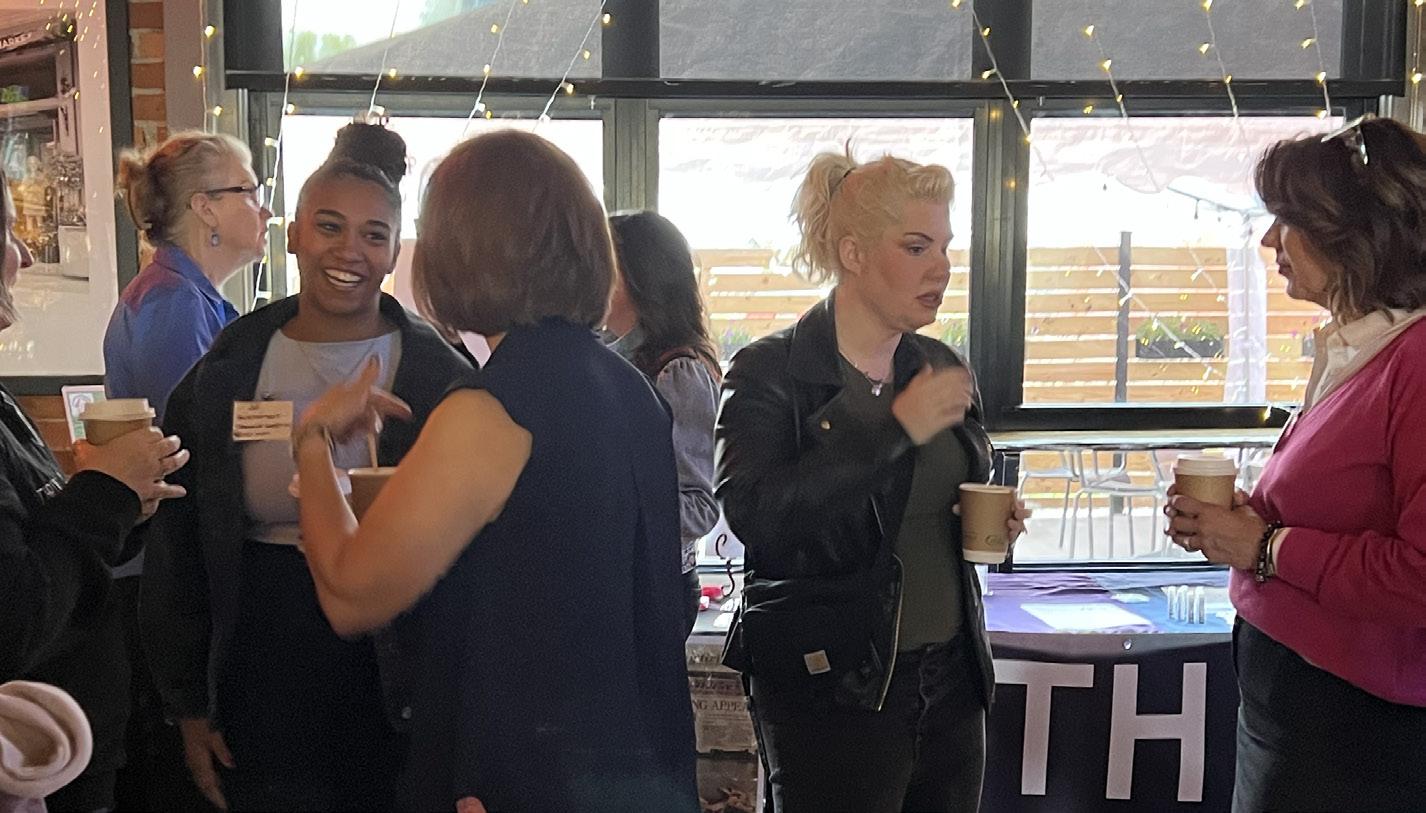
CHAT: CIVIC CONNECTIONS | KENTON COUNTY GOVERNMENT CENTER, COVINGTON


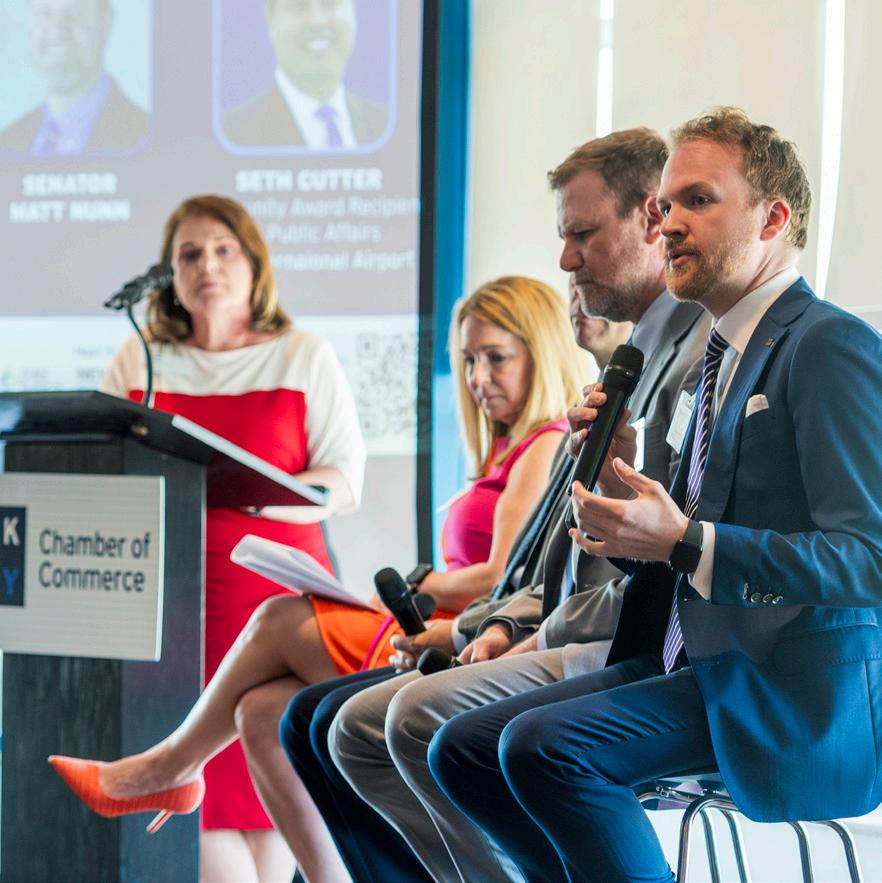
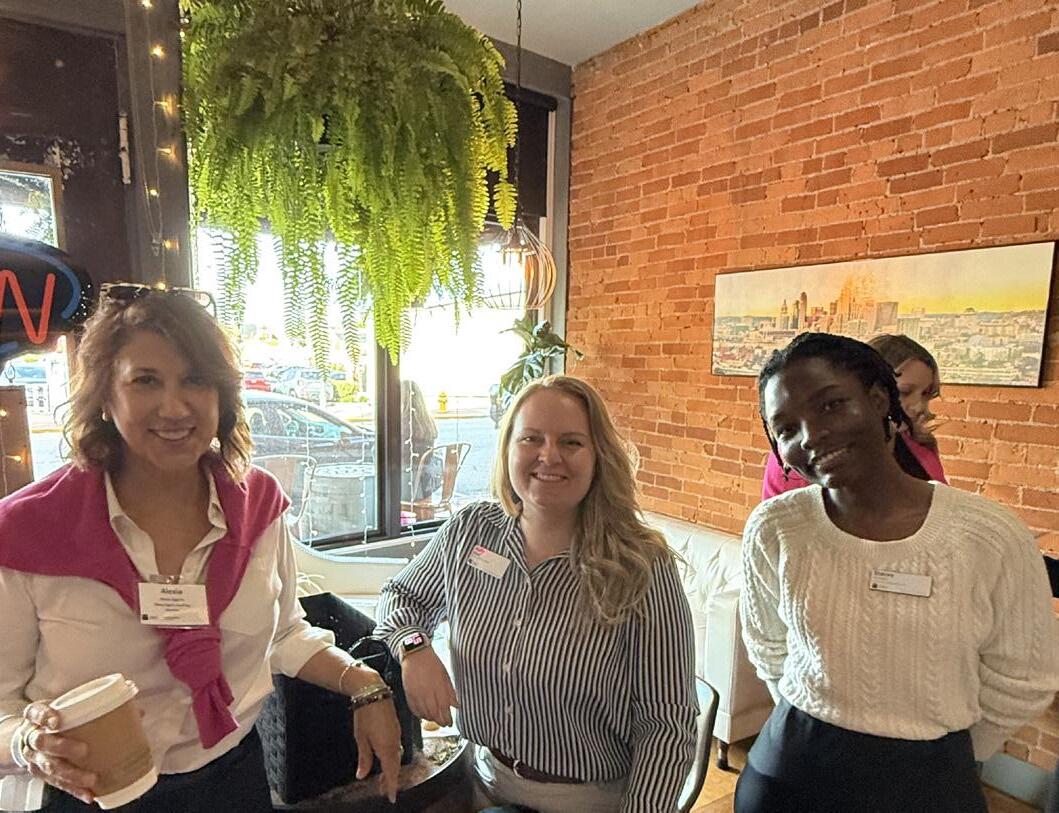
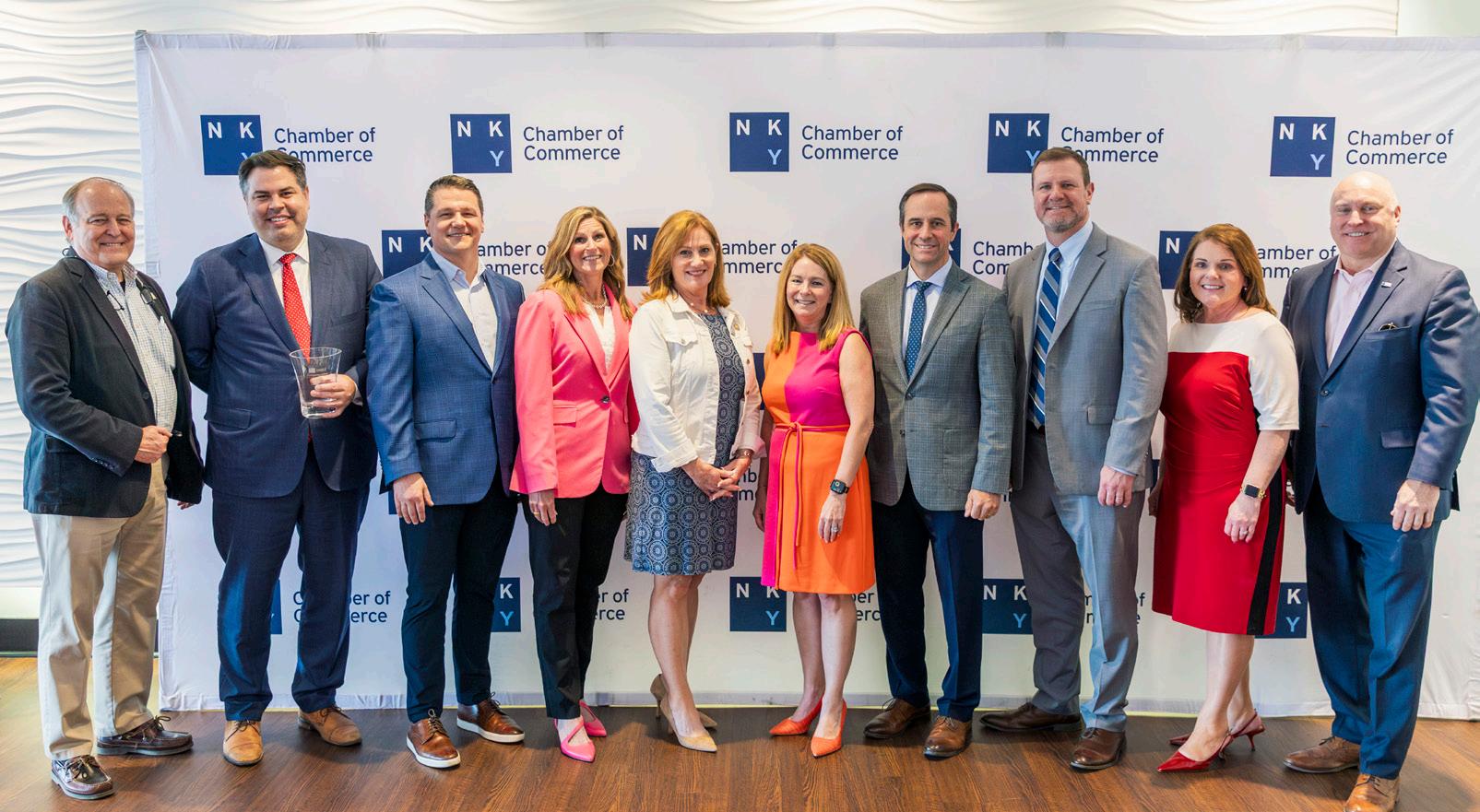
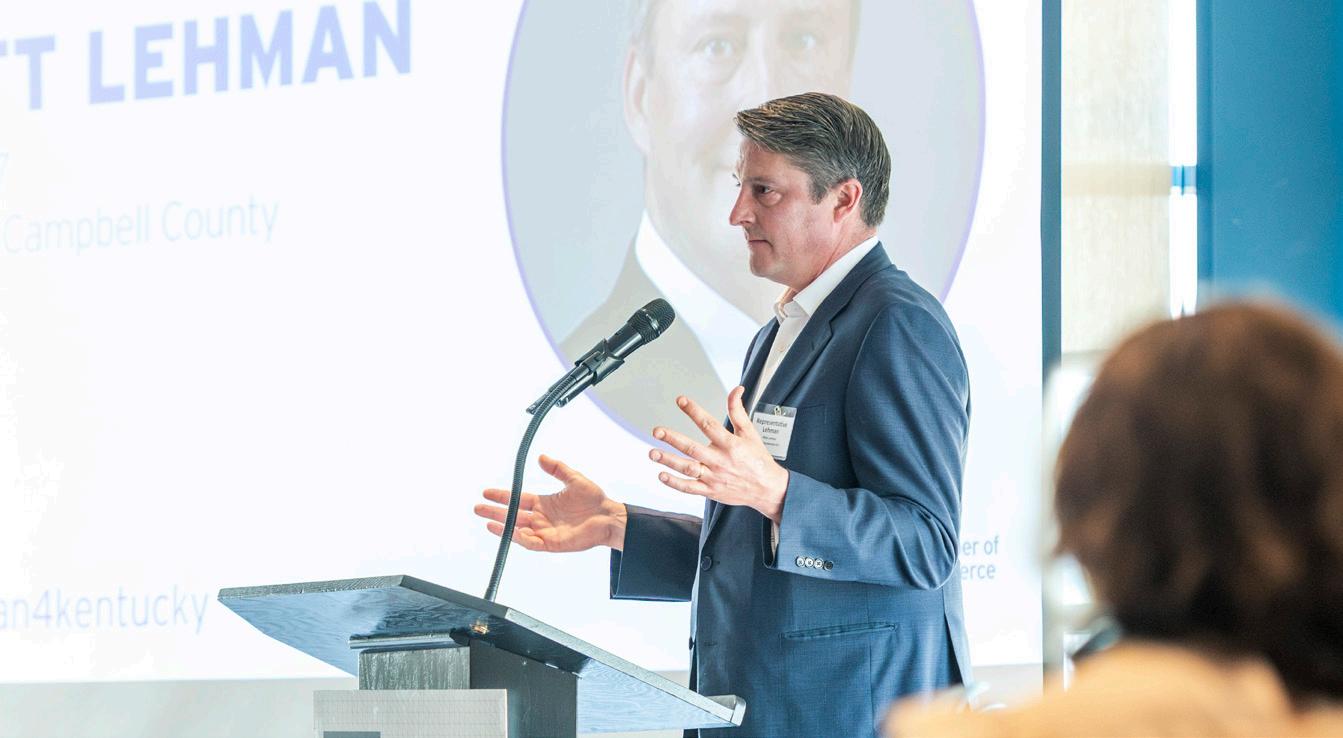

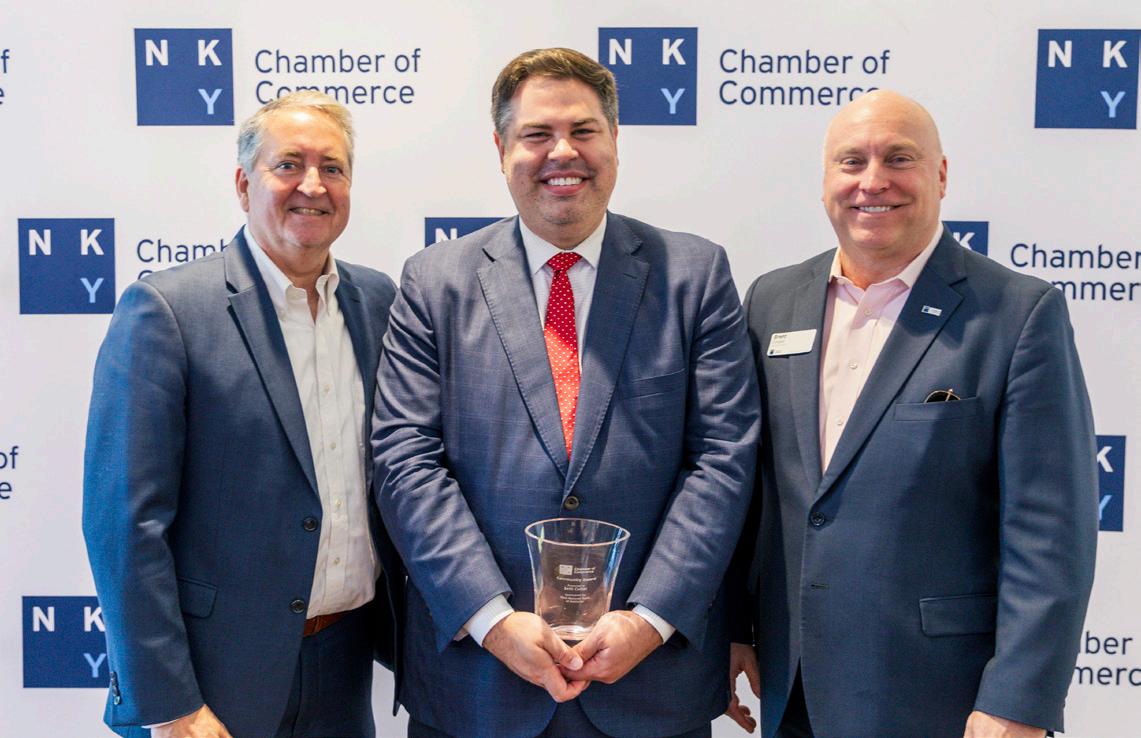


NKY CHAMBER BOARD RETREAT | STEP, COVINGTON
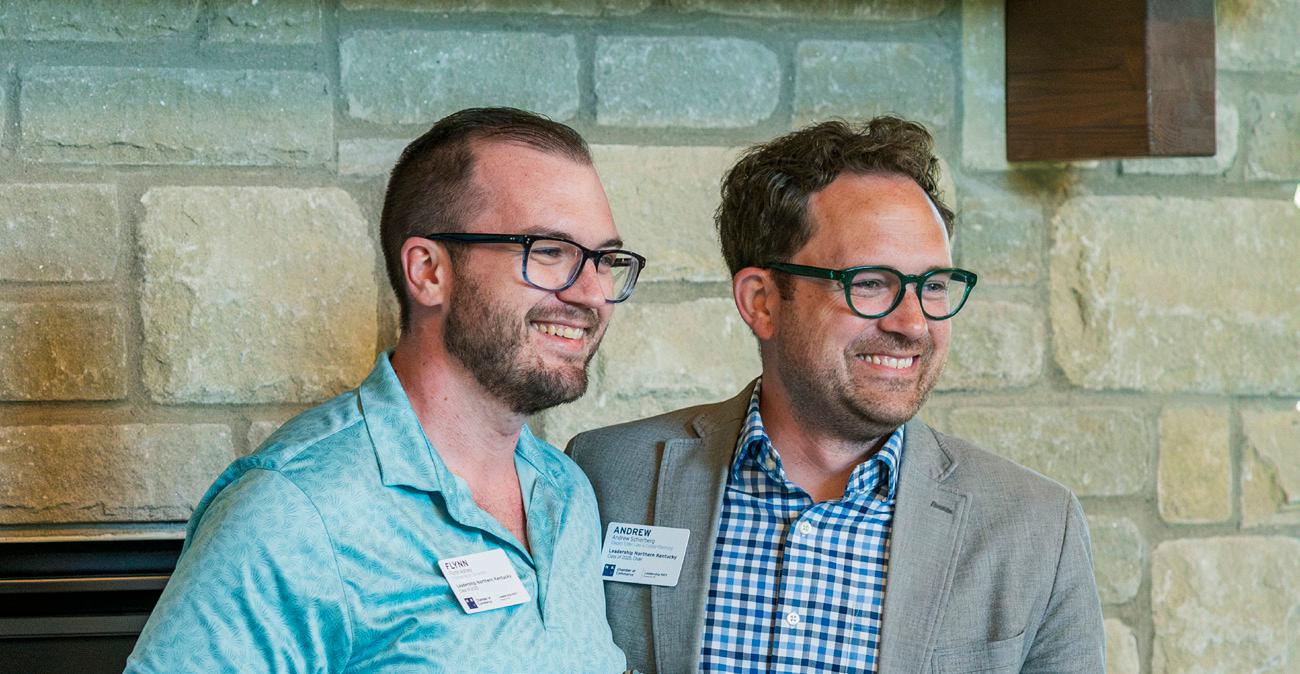
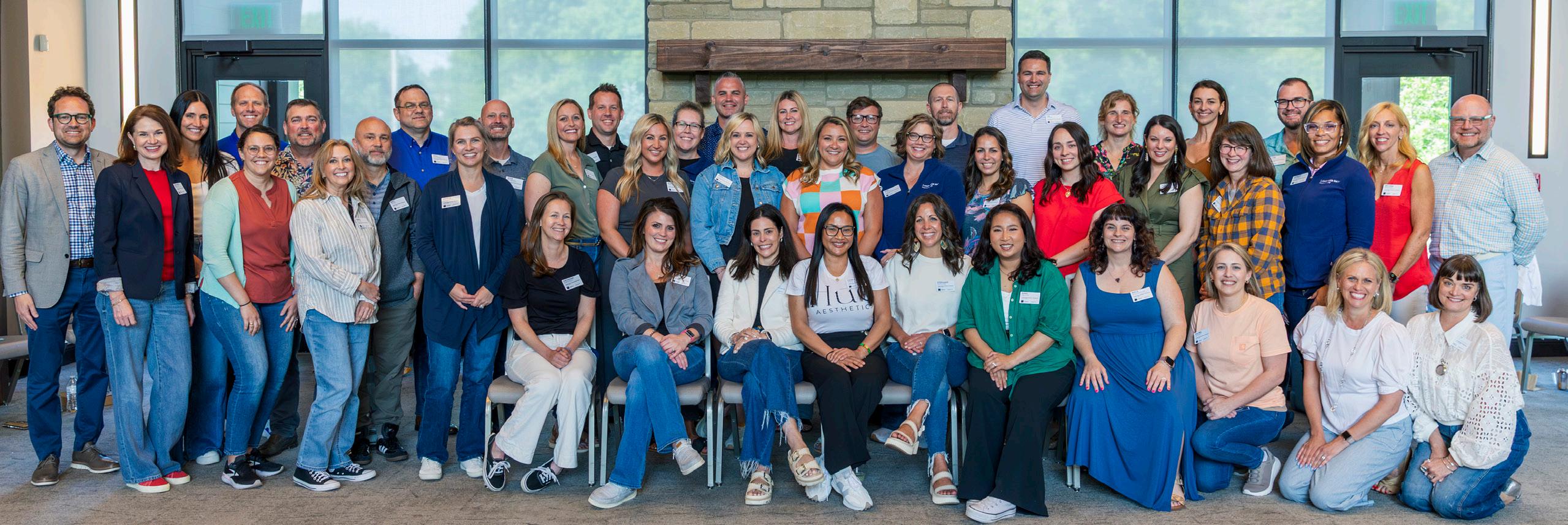
LEADERSHIP NKY CLOSING RETREAT | FLORENCE NATURE PARK
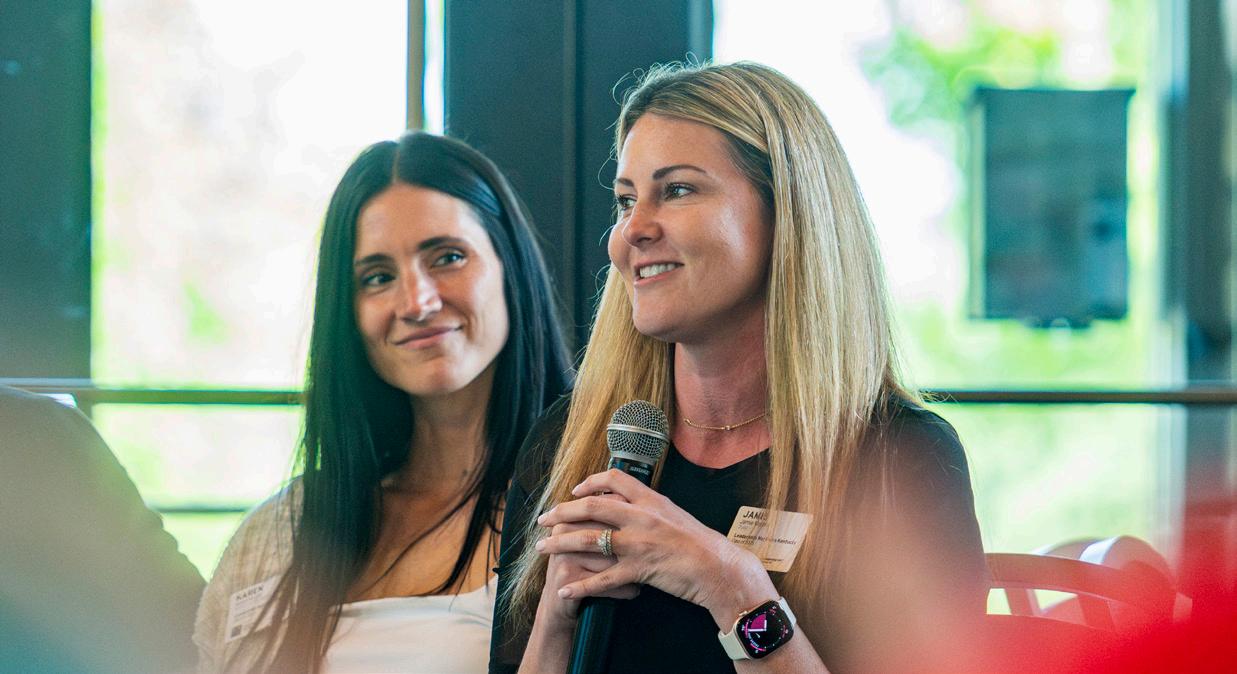

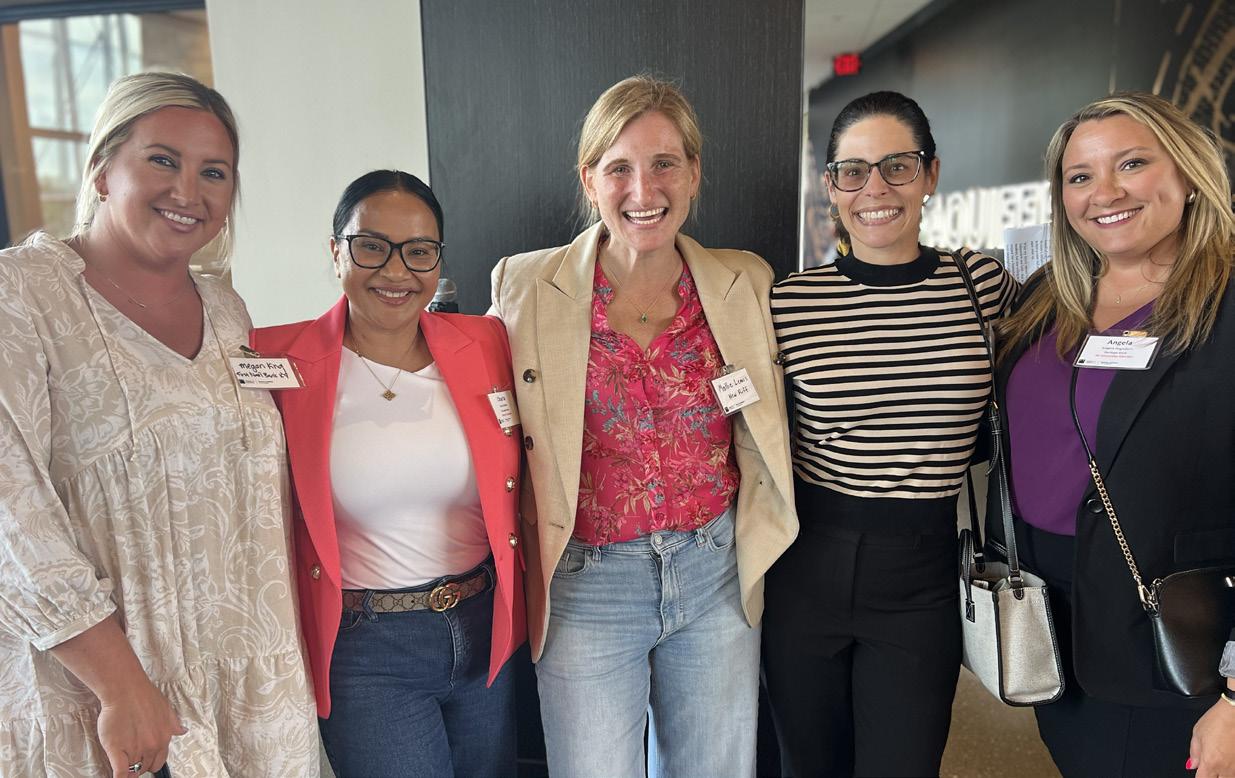
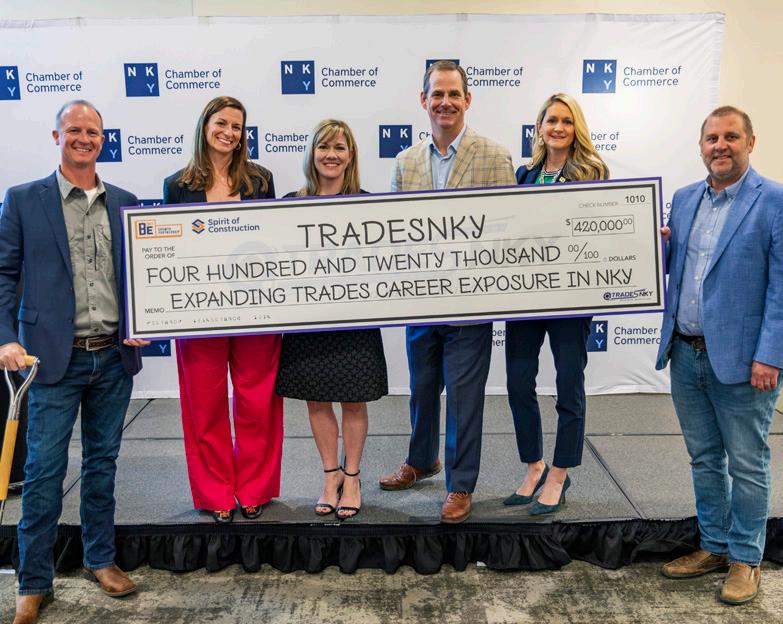
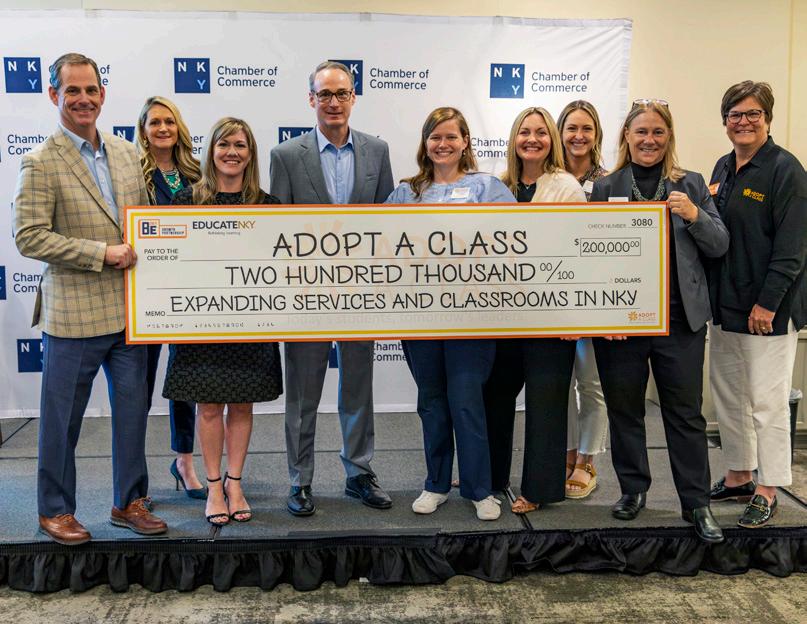
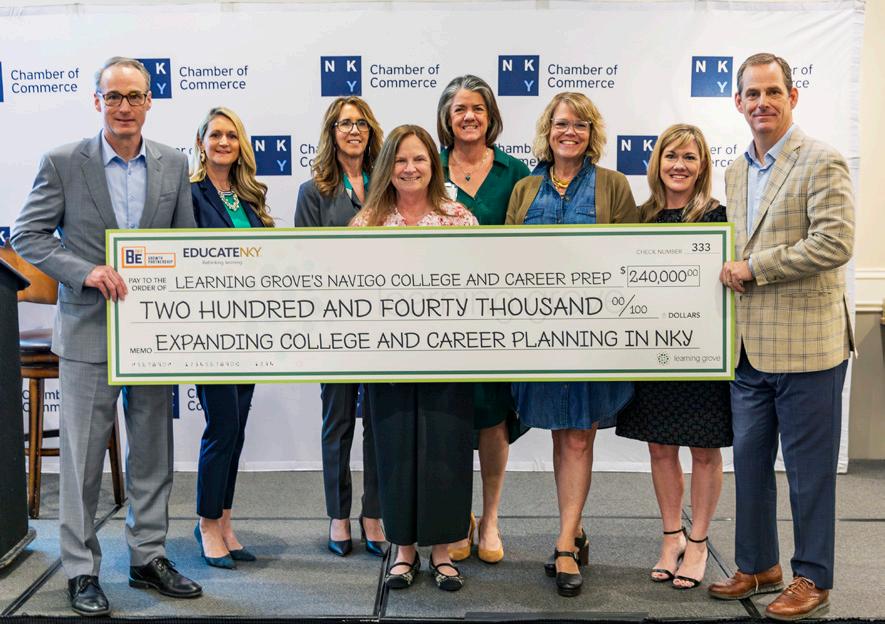
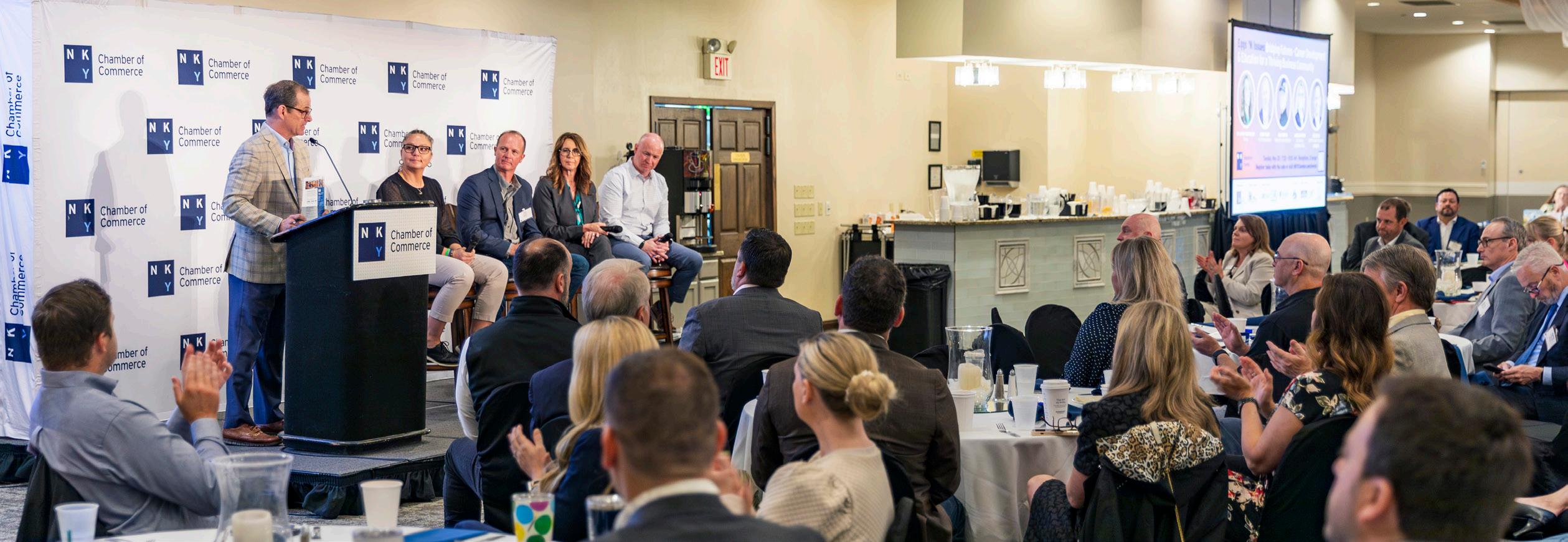
EGGS 'N ISSUES: BRIDGING FUTURES | RECEPTIONS, ERLANGER
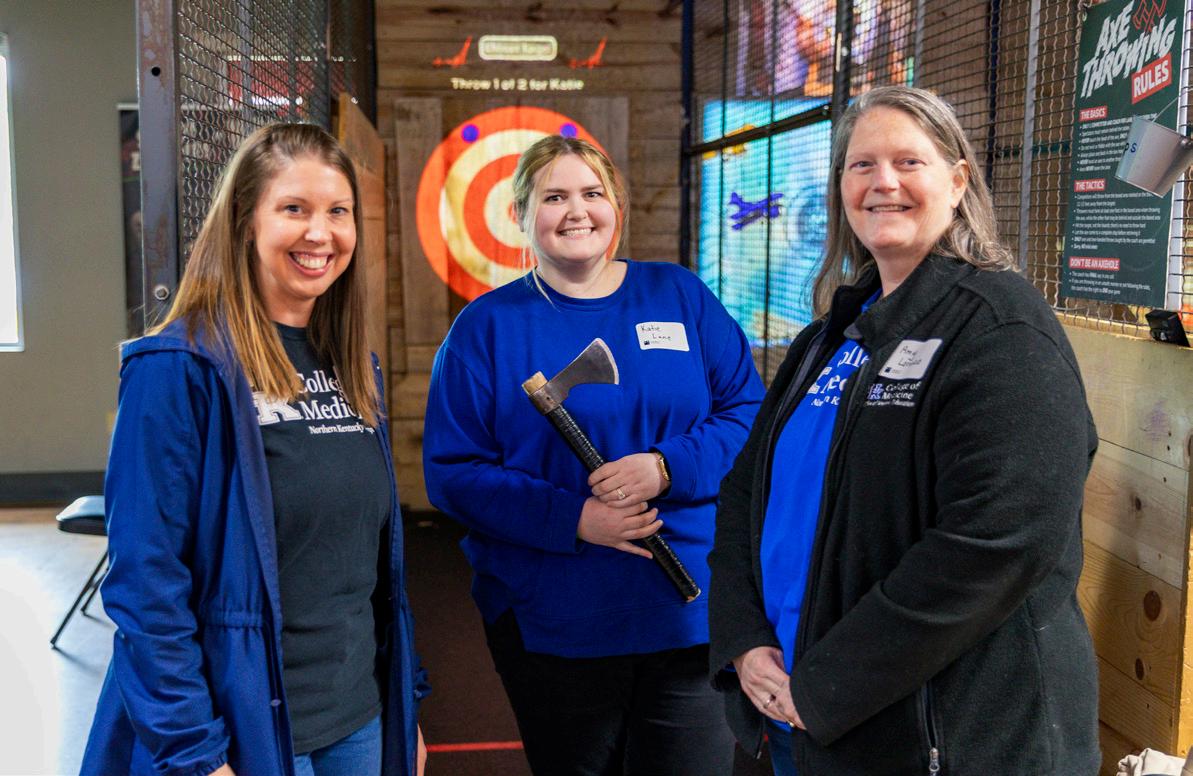
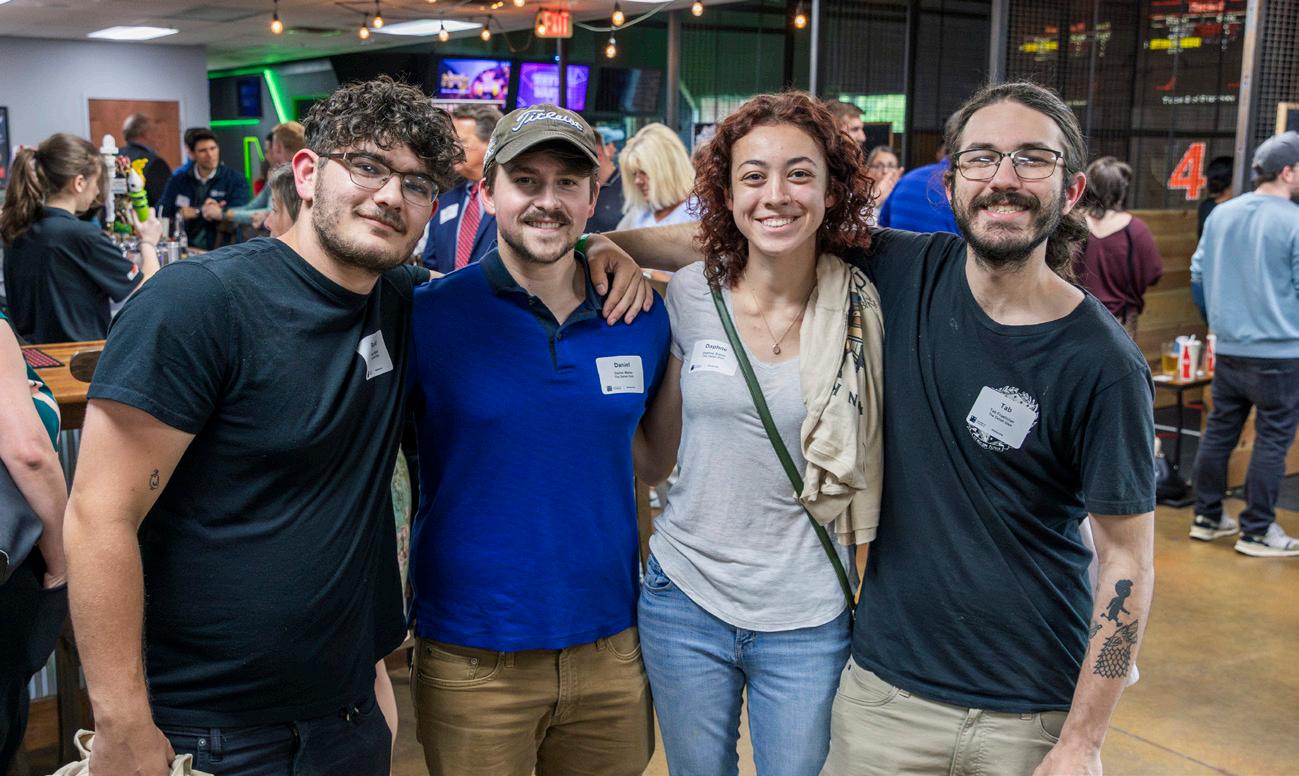
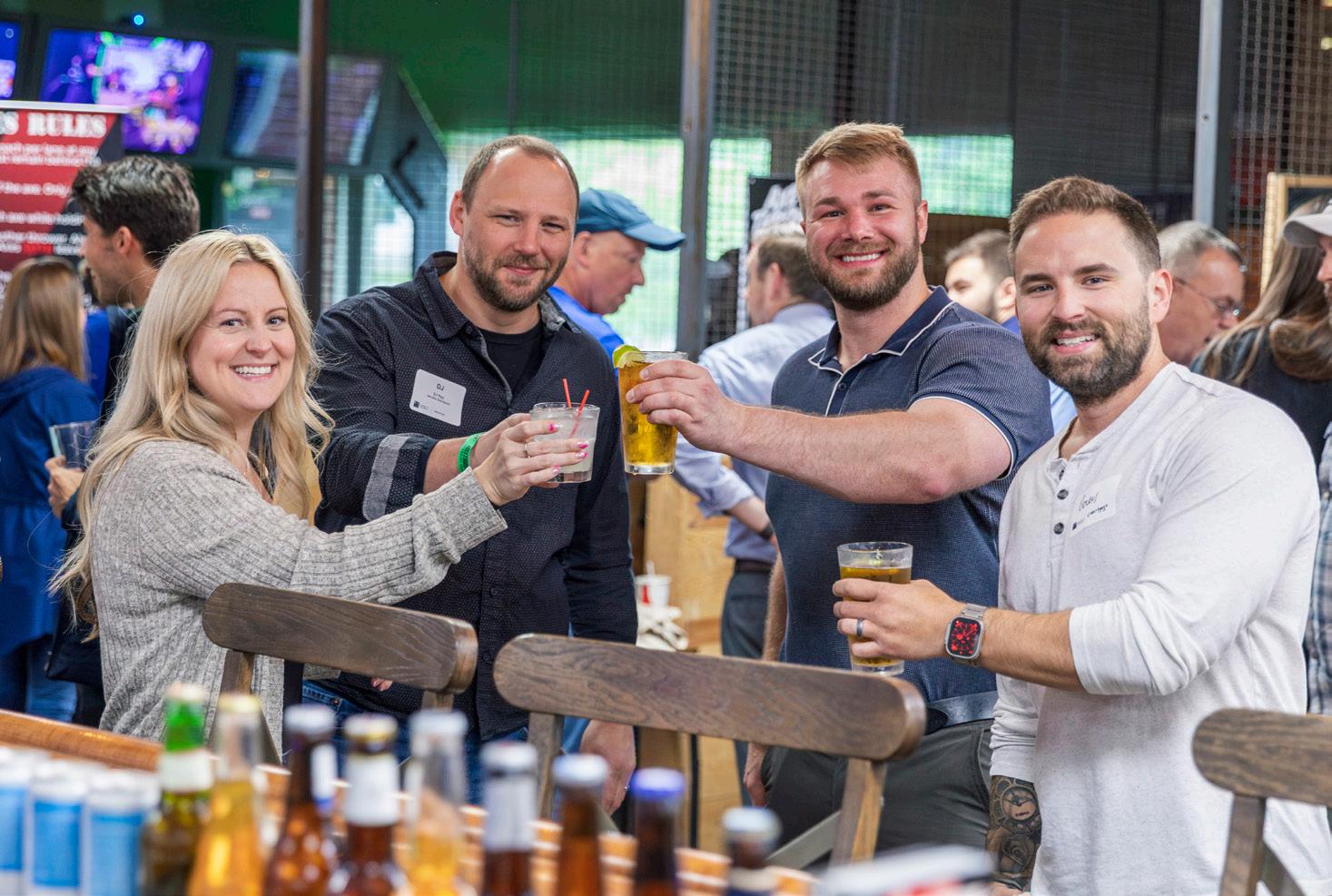
BUSINESS AFTER HOURS | FULL THROTTLE ADRENALINE PARK, FLORENCE


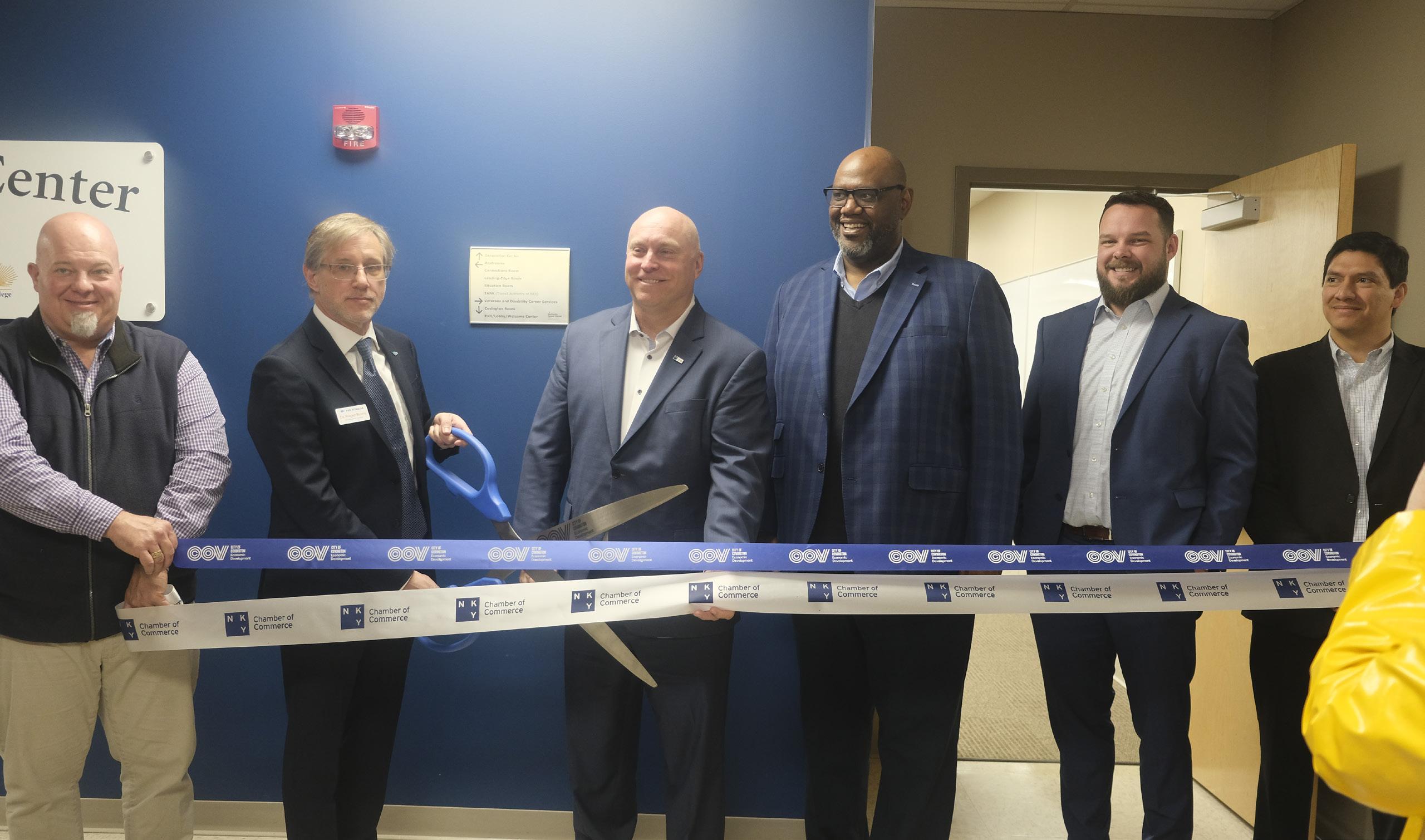
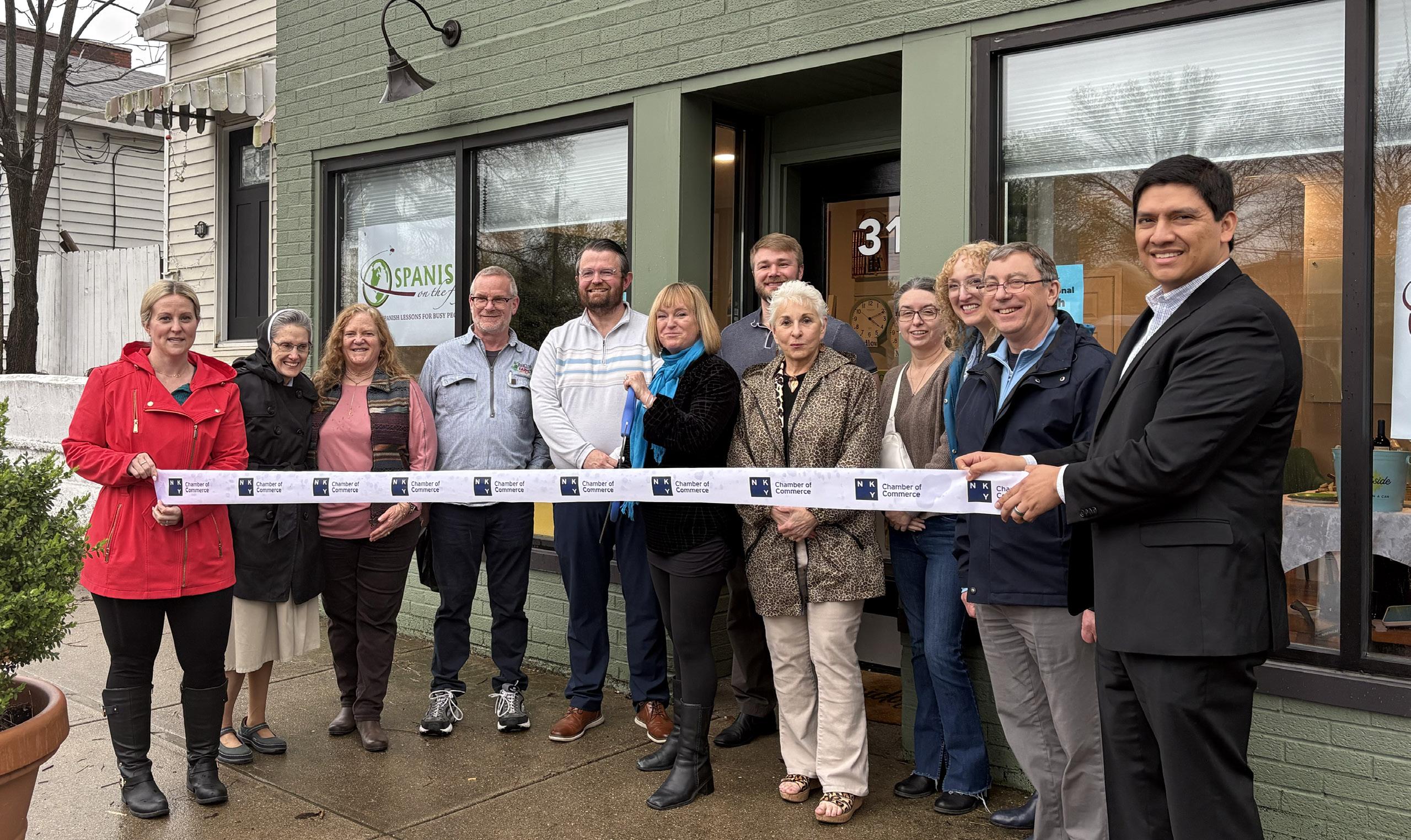
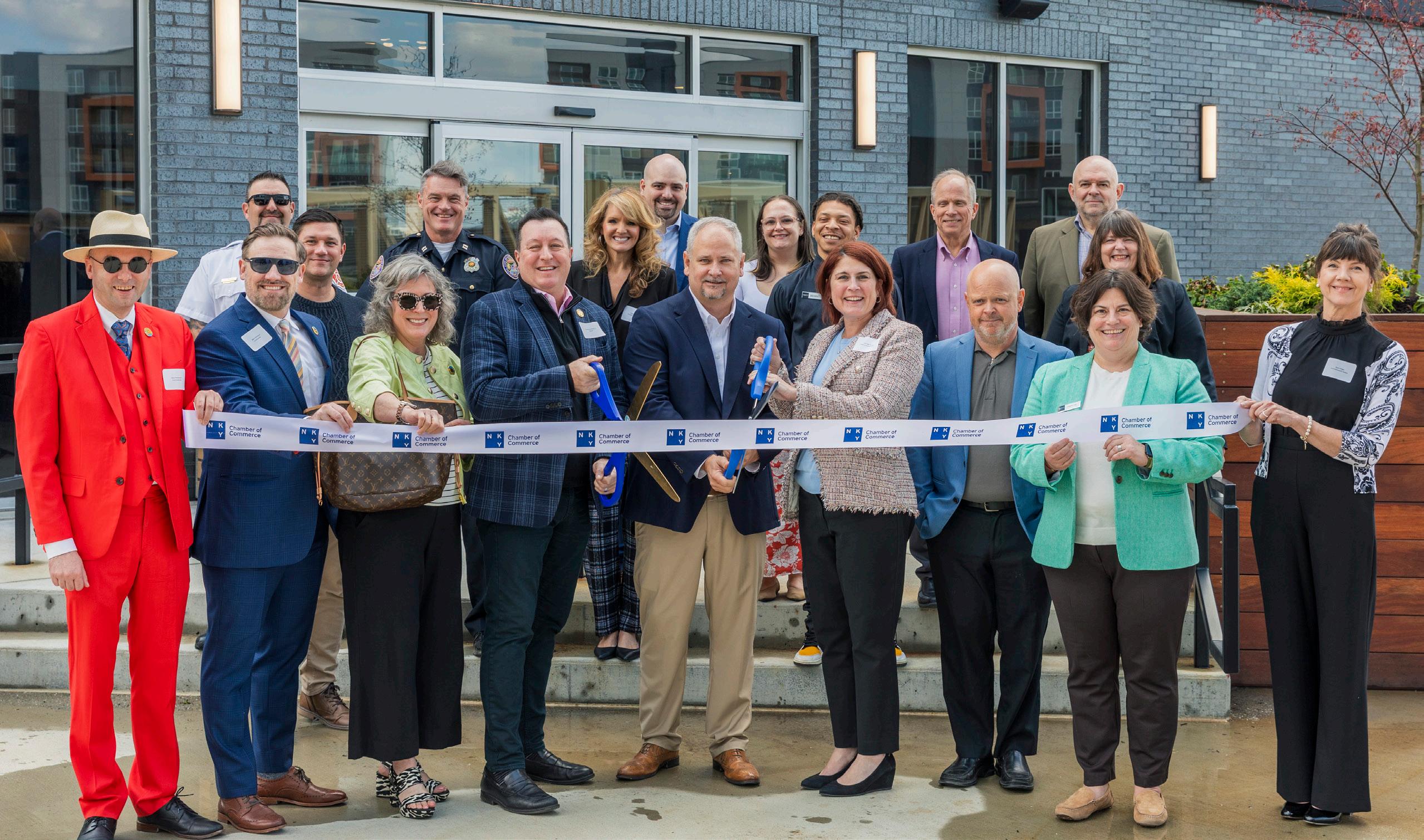

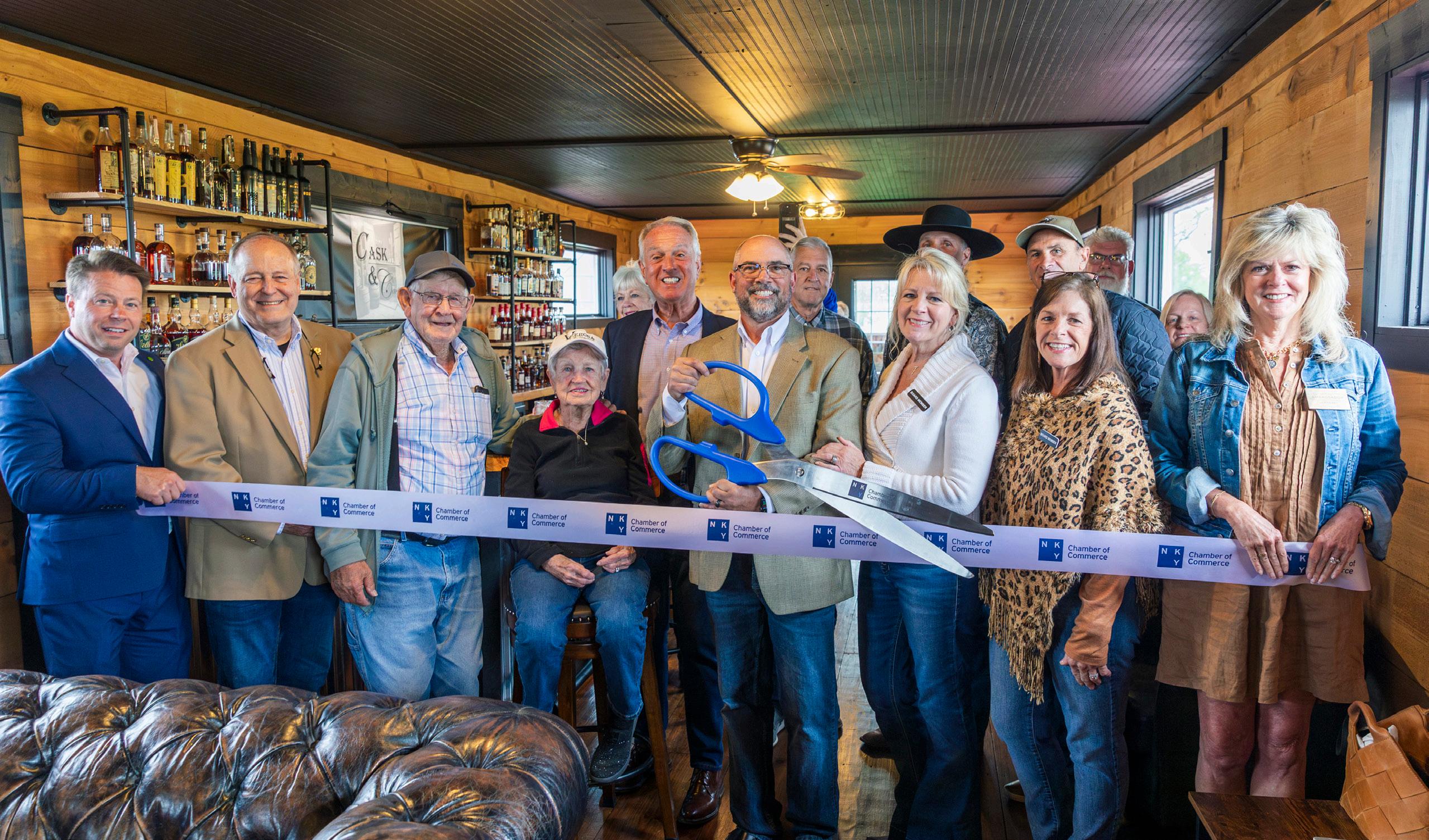


NorthKey Community Care has announced the appointment of Danielle (Daney) Amrine, MSW, MBA, as the organization’s new Chief Executive Officer.
Amrine brings more than 17 years of experience in nonprofit management, mental health services, and community engagement. Prior to joining NorthKey, she served as CEO of Covington-based homeless services provider Welcome House, Inc. Under her leadership, Welcome House nearly tripled its operating budget, expanded services to 40 counties across Kentucky, and secured significant funding to combat homelessness. This included $2.5 million from the prestigious Bezos Day 1 Families Fund and $7.5 million in special HUD funding to address rural homelessness in Kentucky. The organization also successfully applied for $37 million in New Markets and Low-Income Housing Tax Credits.
In recognition of her innovative leadership, Amrine received the 2024 Lynn Luallen Innovation Award from the Kentucky Housing Corporation. She has also been honored as an Outstanding Woman of Northern Kentucky by the Northern Kentucky Chamber of Commerce.
Amrine holds a master’s degree in social work (MSW) with a concentration in mental health from the University of Kentucky and an MBA from Thomas More University. She also earned a CORE Business Certification in financial accounting, business analytics, and economics for managers from Harvard Business School.
“I am honored to join NorthKey and look forward to working with this talented team,” said Amrine. “Together, we will continue to deliver exceptional value to our clients and work to reach people who need our help.”
“Daney’s career has been marked by strategic vision, innovative thinking, employee collaboration, and building strong relationships with funders, donors, and community leaders,” said NorthKey Board Chair Blair Whitaker. “We are thrilled to have her join our team.”

Hemmer Construction Company, a leading commercial construction firm headquartered in Fort Mitchell, Kentucky, is proud to announce the promotion of Matt Curtin to Director of Business Development.
In his new role, Curtin will oversee the strategic goals and initiatives of the company’s construction business development team across Hemmer’s core markets, customer segments, and project pursuits. His leadership will play a critical role in achieving the company’s long-term goals of producing sustainable, repeatable, and profitable results across multiple segments and regions.
“Matt’s promotion reflects both his individual performance and our company’s commitment to transitioning to the next generation of leaders,” said Paul Hemmer, CEO of Paul Hemmer Company. “His strategic insight, industry involvement, and ability to build strong client relationships make him the right person to guide our business development efforts into the future.”
Curtin joined Hemmer Construction Company in 2020 and has served as both Business Development Manager and Senior Business Development Manager. Curtin has played a hands-on role in identifying, pursuing, and securing major projects that have contributed directly to the company’s growth while also expanding Hemmer’s presence in new and existing markets.
Prior to joining Paul Hemmer Company, Curtin held roles in land acquisitions, sales, and leasing, including positions at Drees Homes and Corporex. He is a Leadership Northern Kentucky graduate (Class of 2022) and has held multiple leadership positions within the Building Industry Association, currently serving as Immediate Past President. He has also served on the Covington Partners Board of Directors and Executive Committee and spearheads the company’s annual Construction for a Cause initiative.
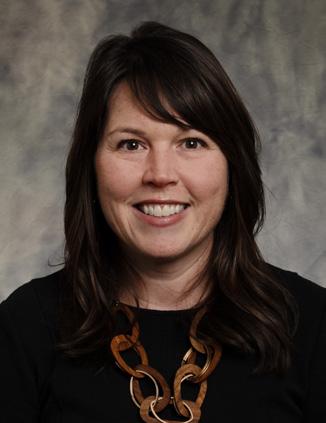
Northern Kentucky University is proud to announce Dr. Bethany Bowling as dean of the College of Arts and Sciences. Dr. Bowling has served as interim dean of the college since January 2024 and took over the position permanently on July 1.
Dr. Bowling arrived at NKU’s Department of Biological Sciences as a faculty member in 2007. She was promoted to associate professor in 2013 and professor in 2019, and served as associate dean from 2017 to 2022 and senior associate dean from 2022 to 2023. Dr. Bowling is a native Northern Kentuckian and earned her Ph.D. in interdisciplinary studies – biology education and her M.S. in biology from the University of Cincinnati. She earned her B.A. in biology from Thomas More University.
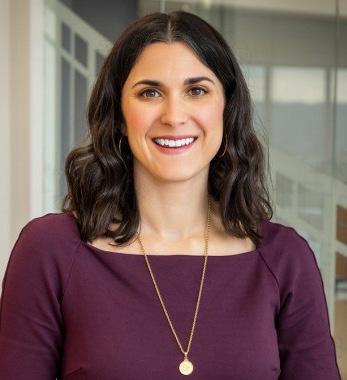
Michelle Reid has joined the Catalytic Fund as Chief Administrative Officer and General Counsel. Reid brings specialized expertise in economic development and real estate from her previous positions at Strauss Troy and Bricker Graydon law firms. Reid will oversee the administrative functions of the company and provide strategic legal counsel to enhance the Catalytic Fund's ability to execute high-impact real estate development projects in Northern Kentucky.
Meanwhile, Terri Burke was promoted to Director of Loan Servicing and Compliance to strengthen the company’s operational efficiency.
The addition of Reid and promotion of Burke is part of an overall strategy to add organizational depth and create a strong succession plan, said Jeanne Schroer, President and CEO of the Catalytic Fund. Schroer is the founding CEO of the Catalytic Fund and a 40+ year veteran of the real estate industry.
“With Reid in place, we now have an outstanding team of real estate specialists that also includes Chief Operating Officer, Joe
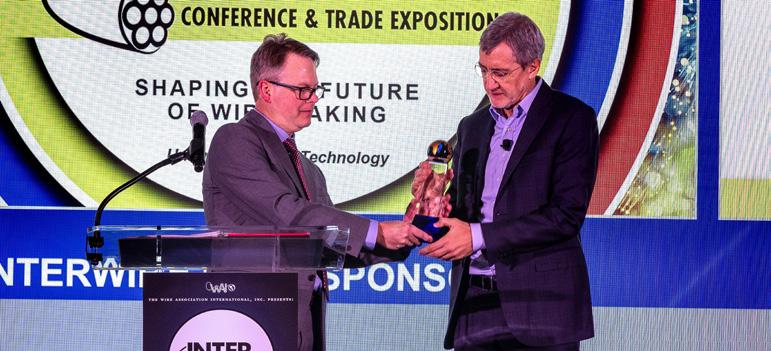
Prysmian, a world leader in energy transition and digital transformation, announces that Andrea Pirondini, its North America CEO, has received the 2025 Wire Association International (WAI) Champion Award.
The Champion Award is given in recognition of Pirondini’s outstanding commitment to WAI’s mission to serve the technical, manufacturing and business development needs of the global wire and cable industry. The honor was presented to Pirondini during WAI’s Interwire 2025 Conference & Trade Exposition in Atlanta.
The WAI Champion Award is presented annually to individuals who exemplify
NKU’s College of Arts and Sciences currently enrolls more than 3,400 students across 50 academic programs. Home to the School of the Arts (SOTA), the college also hosts the Center for Integrative Natural Sciences and Mathematics, the Kentucky Center for Mathematics and the Burkardt Consulting Center along with specialized facilities including the Haile Planetarium, Schneider Observatory, NKU Anthropology Museum and NKU Research and Education Field Station. More than 270 full-time faculty and staff within the college facilitate and support student learning, research, service and community engagement.
Several of the college’s learning, research and performance spaces are undergoing transformations with renovations to the Fine Arts Center and Landrum Academic Center, and an $86 million expansion of the Herrmann Science Center which is projected to be complete in 2027.
Klare and Travis Gysegem, Director of Research and Underwriting along with very strong operational infrastructure provided by Burke and Phil Maxted,” said Schroer. “This will allow the Catalytic Fund to expand its impact by providing creative real estate financing products and development services throughout Northern Kentucky.”
The Catalytic Fund is a not-for-profit Community Development Financial Institution that provides non-traditional financing products and related property development advisory services. The company serves private sector and not for profit developers, property owners, and municipal and public entities with interest in pursuing quality residential and commercial real estate projects in Northern Kentucky. The company’s purpose is to attract and execute quality place-based investments that result in regional economic development (job and talent attraction) and local community development (improving quality of life and place).
Staff expertise in real estate finance, urban planning, historic preservation, and economic development allows the company to convert vacant, blighted, and underutilized properties into lasting and tangible assets benefiting local Northern Kentucky communities.
“exceptional dedication to the goals and growth of WAI, making a lasting impact on the global wire and cable community.” Pirondini also presented the keynote address at Interwire, focusing on the transformative change shaping the industry and need for innovation to build resilient solutions for the future.
“I am deeply honored to receive this award,” said Pirondini. “At Prysmian, we believe in giving back to the industry that fuels our innovation and success. Supporting The Wire Association International has allowed us to help shape the future of wire and cable manufacturing while learning
from and collaborating with the best in the business.”
Since assuming his position as North America CEO in 2021, Prysmian’s active membership within the association has grown from just 30 to more than 120 members, an expansion underscoring the company’s dedication to industry development and education.







7/9 HR 100: Happy HR Networking Social | Dave & Buster’s, Florence | 4:00-6:00 PM
7/10 Business After Hours | TBD | 4:30-6:30 PM
7/15 Eggs 'N Issues: Driving Growth Through NKY Food & Beverage Scene | Receptions, Erlanger | 7:30-9:00 AM
7/17 NKYP Cocktails & Conversations | Off Par Golf & Social, Crestview Hills | 4:30-6:00 PM
7/22 Women’s Initiative Coffee Connect | Elite MedSpa, Union | 8:00-10:00 AM
7/22 Newport Business Council: Business Social Block Blast | TBD | 4:30-6:30 PM
7/22 Government Forum: Local Leaders, Regional Change | Radisson Hotel Cincinnati Riverfront, Covington | 11:30 AM1:30 PM
7/24 Fort Thomas Business Council | Mess Hall, Fort Thomas | 11:15 AM-1:00 PM
8/6 Getting the Most of Your Membership | NKY Chamber, Ft. Mitchell | 9:00-10:00 AM
8/7 Annual NKY Chamber Golf Outing & Clinic | The Golf Courses of Kenton County, Independence | 7:30 AM-7:00 PM
8/14 NKYP Leader Chat: The Power of Communication | Metropolitan Club, Covington | 4:30-6:30 PM
8/19 Eggs ‘N Issues: The Making of OneNKY Center | Receptions, Erlanger | 7:30-9:00 AM
8/20 Women’s Initiative Professional Series | Prysmian, Highland Heights | 8:00-10:00 AM
8/21 Florence Business Council | Turfway Park, Florence | 11:15 AM-1:00 PM
8/22 Leadership Alumni Awards Luncheon | Receptions, Erlanger | 11:30 AM-1:30 PM
8/22 LNK Class of 2026 Orientation | Receptions, Erlanger | 8:30 AM-1:30 PM
8/26 Women’s Initiative Connect Hour | Ape Made It Boutique, Bellevue | 4:00-6:00 PM
8/26 Newport Business Council: Newport’s Economic Impact | TBD | 11:15 AM-1:00 PM
8/28 Fort Thomas Business Council: Business Social | TBD | 4:30-6:30 PM
9/4 NKYP Kick Off Meeting | Beeline, Newport | 4:00-6:00 PM
9/7 RYL Retreat | Camp Ernst, Burlington | 8:30 AM-3:00 PM (Class Only)
9/18 Florence Business Council | Turfway Park, Florence | 11:15 AM-1:00 PM
9/18 Business After Hours | TBD | 4:30-6:30 PM
9/23 Newport Business Council: Business Social | Bourbon House Pizza, Newport | 4:30-6:30 PM
9/23 RYL Local Government | CVG Centre, Erlanger | 7:45 AM-3:00 PM (Class only)
9/25 Fort Thomas Business Council: District Roundtables | City Building, Fort Thomas | 8:15-9:30 AM
9/25 Annual Dinner | Northern Kentucky Convention Center, Covington | 5:00-8:30 PM
9/25-26 LNK 2026 Overnight Retreat | Camp Joy, Clarksville, OH | 8:00 AM-2:00 PM (Class only)
9/29 Women’s Initiative Connect Hour | AC Hotel, Cincinnati | 4:00-6:00 PM
Northern Kentucky Business Journal is published bi-monthly by:
Northern Kentucky Chamber of Commerce, Inc.
300 Buttermilk Pike
Suite 330 P.O. Box 17416
Ft. Mitchell, KY 41017
859-578-8800 NKYChamber.com
The Business Journal is a benefit of membership and included in membership fees. Annual subscription rate for nonmembers is $30.
Periodicals Postage Paid USPS-548630 at Covington, KY.
Postmaster: Please send address changes to the Northern Kentucky Chamber of Commerce, 300 Buttermilk Pike, Suite 330, P.O. Box 17416 , Ft. Mitchell, KY 41017-0416.
Subscribers: Please send address changes by e-mail to info@nkychamber.com.
© 2024, The Northern Kentucky Chamber of Commerce, Inc. and by the individual authors. All rights reserved.
CEO/Publisher
Brent Cooper | bcooper@nkychamber.com
Marketing & Communications
Shannan Boyer | shannan@scootermediaco.com
Design & Photography
Ben Gastright | bgastright@nkychamber.com
Lindsey Vanderkolk | lindsey@scootermediaco.com
Vice President, Membership–Sponsorship Sales
Lynn Abeln | labeln@nkychamber.com
Director, Sponsor Investments
Diana McGlade | dmcglade@nkychamber.com
Staff Writer
Tabari McCoy | tabari@scootermediaco.com
Printing
Black Tie Productions REGISTER FOR