

The Origins of Valentine’s Day
Long before Valentine’s Day became a celebration of roses, chocolates, and carefully worded cards, its origins were tangled in legend, defiance, and a surprising amount of ancient chaos.
The story most often begins in third-century Rome, a place of marble temples, strict laws, and an empire always preparing for war. According to tradition, Emperor Claudius II believed that unmarried men made better soldiers— less distracted, more loyal to Rome. So he banned marriages for young men. Love, however, has never been particularly fond of rules.
Enter Saint Valentine, a Christian priest who quietly refused to accept the emperor’s decree. Under cover of night, Valentine is said to have performed secret weddings for young couples in love. Each ceremony was a small act of rebellion, a reminder that devotion to one another could outweigh devotion to empire. Eventually, Valentine was discovered, imprisoned, and sentenced to death.
While in prison, legend adds another layer to the story. Valentine reportedly befriended—or even healed—the blind daughter of his jailer. On the eve of his execution, he wrote her a note signed, “From your Valentine.” Whether fact or embellishment, the phrase endured, echoing through centuries as a symbol of affection that persists even

in the face of loss. But Christianity wasn’t the only influence shaping the holiday. Long before Valentine, ancient Romans celebrated a mid-February festival called Lupercalia. It was loud, earthy, and anything but sentimental. The festival honored fertility and the coming of spring, featuring rituals meant to ensure health and abundance. In one tradition, young men would draw the names of women from a lottery, pairing them together for the duration of the festival—or longer. It was messy, unpredictable, and wildly popular. As Christianity spread through the empire, church leaders sought to replace pagan celebrations with ones that reflected Christian values. By the late fifth century, Lupercalia was officially replaced with a feast day honoring Saint Valentine. The timing stuck,
and slowly the meaning shifted—from fertility rites and lotteries to love defined by commitment, sacrifice, and choice.
For centuries, Valentine’s Day remained largely religious, marked quietly by prayer rather than poetry. It wasn’t until the Middle Ages that romance truly took center stage. Medieval Europeans believed February 14 marked the beginning of birds’ mating season. Poets like Geoffrey Chaucer seized on the idea, linking Valentine’s Day to courtly love, chivalry, and longing hearts. Love letters followed, then handwritten notes, then tokens exchanged between sweethearts.
By the 18th and 19th centuries, Valentine’s Day had crossed into popular culture. Printed cards replaced handwritten ones, making expressions of affection accessible to

more people. Cupid—the mischievous Roman god of love—was pulled from mythology and pressed into service as the holiday’s cheerful mascot. Love had become lighter, sweeter, and easier to share.
Today, Valentine’s Day carries all these layers at once: the courage of a priest who defied authority, the remnants of ancient festivals welcoming spring, the poetry of medieval romance, and the modern desire to pause—just briefly—and tell someone they matter.
So when you sign a card or send a message “from your Valentine,” you’re tapping into a story nearly two thousand years old. Not bad for a holiday that started with rebellion, survived empire, and somehow found its way into candy hearts and red envelopes. Love, it turns out, has excellent staying power.



• Dentures
• Teeth Whitening
• Crowns and Bridges
• Smile Makeovers
• Sedation Dentistry
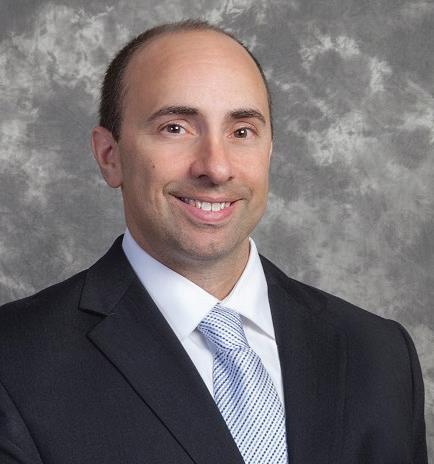
Dr. Goldberg is a leading expert on dental implants. He is a Diplomate of the American Board of Oral Implantology/Implant Dentistry, which is a degree held by only 1% of dentists worldwide. Whether you require a single implant or complex full-mouth rehabilitation, a free consultation with Dr. Goldberg should be considered.
Dental Bridges,
people need to replace missing teeth or teeth that will be extracted shortly. Bridges, dentures, and implants are the most common ways to accomplish this, but what are the differences?
The most common area of confusion lies between dentures and bridges. Dentures are removable: you take them in-and-out
General & Cosmetic Dentistry
Dentures, & Implants: What’s The Difference?
of your mouth. Bridges are permanent: you do NOT take them in-and-out.
Dentures can be made from a number of different materials: acrylic (plastic), metal, a combination of acrylic and metal, or “thermoplastic.” The advantages of the acrylic include cost and simplicity. They are the least expensive, and the easiest to fabricate and repair. The disadvantages include thickness and low stability.
New Patient Special
$149 Cleaning, Exam, Full Set of Films
Regularly $362.00
Cannot be combined with other discounts
Refer to New Patient Specials on our website for details Coupon must be presented, & mentioned at time of scheduling Expires 2/28/22
3/5/6

Metal dentures are thin, rigid, and fit tightly. The downsides include increased difficulty to repair (although not terribly difficult) and cost (they are the most expensive).
Thermoplastic materials have the advantage of being flexible, which many patients find to be more

comfortable. However, repairs can be difficult to impossible, based upon the type of material utilized. Unlike dentures that are removable, bridges are permanent. This is one reason why bridges are more popular than dentures. Other advantages include increased biting / chewing power, increased esthetics, and less fuss with them since they don’t have to be taken in and out. Downsides include the “shaving down” of teeth on either side of spaces to keep them in place (called “abutment” teeth), and potential cavity development or need for root canals on these abutments over time.
Dental implants provide a host of options. Most people think of an implant
Morris County
as a post that is placed into the jawbone to hold a single tooth (crown). This is one use of an implant, but there are other functions. The implant is actually the post: you can use it to secure a denture or a bridge, also! With respect to dentures, the implant can help to eliminate or decrease the number of clasps, providing a more esthetic outcome and more stable set of teeth. Bridges benefit from implants because now you cannot develop cavities around the abutments and there is no need for root canals. Implant bridges also eliminate the need for drilling on other teeth.
Dr. Goldberg treats entire families, from toddlers to seniors. Services include cleanings, check-ups, fillings, Invisalign, dentures, cosmetics, and more! He and his staff enjoy the long-term relationships they build with their patients.
New Patient Special FREE Implant, Cosmetic, or General Dentistry Consultation
Regularly $125.00
Cannot be combined with other discounts Limited to 50 minutes Expires 2/28/22
Dr. Goldberg is a general dentist with credentials in multiple organizations. Please visit his website for a complete listing. Dental implants are not a recognized dental specialty.
A very common substitute or replacement for large partial dentures and full dentures is “All-OnFour®.” This revolutionary
technology provides the patient with permanent, non-removable teeth in just a few appointments. Gone is the stigma and disappointment of removable teeth and poor chewing ability. Patients instantly benefit from a strong bite, excellent smile, and freedom of re-gaining the roof of their mouths if they had a denture that covered it previously.
Many patients who have dentures or require removal of most teeth present to Dr. Goldberg for this procedure specifically: he is a leading authority on this type of procedure within the community.
More information regarding this, and other topics, is available on our website.
Dr. Goldberg is a general
dentist & implant expert with 30 years of experience. He is located in the Roxbury Mall in Succasunna, NJ. He provides general dentistry for the entire family, including: cleanings, checkups, whitening, veneers, crowns, root canals, dentures, periodontal (gum) services, dental implants, and much more. He is a Diplomate of the American Board of Implantology/Implant Dentistry, holds multiple degrees and is recognized as an expert in dental implants. You can find additional information on his website:www. morriscountydentist.com . The office can be reached at: (973) 328-1225 or via email: frontdesk.mcda@ gmail.com
3/5/6
Dental
Dr.
General
Dr.


Ira Goldberg, DDS, FAGD, DICOI
Ira Goldberg, DDS, FAGD, DICOI

Roses…

T2026 State of the Municipality
hank you. I hope everyone had a very Happy Holiday Season and I wish you all a happy, healthy and prosperous New Year.
Thank you to our Town Crier, Doug Gabel, for opening our Reorganization Meeting; to Father Jim for providing the invocation; and to Denville’s own Mackenzie Hagerty for her beautiful rendition of the National Anthem. We wish Mackenzie all the very best as she represents Bergen County in the 2026 Miss New Jersey contest.
I would also like to thank Steven Ward, Matt Bansch, Kara DeLoreto, Danielle Lamont, and Cassi Perez for ensuring that every detail was just right for tonight’s ceremony.
Finally, I extend my sincere thanks to Assemblyman Brian Bergen for his very generous donation of the beautiful Christmas tree in the lobby, along with the matching garland on the dais and the wreaths adorning the back wall of the Council Chamber.
I would like to offer my congratulation to our newly elected Ward two Councilwoman Adriene Zimmermann and our returning Ward Council representatives Chrissy Kovacs, Glenn Buie and Gary Borowiec, as well as our new Council President Glenn Buie. Over the last 14 years, we have developed















a constructive culture where we all work on Team Denville, we speak our minds respectfully, all realizing we will never agree on every issue and that we are just trying to craft the best resolution for the betterment of our community. I am confident that you will all serve the people of Denville well.
And a very sincere thank you to our recently retired Councilman Chris Golinski for his 14 years of outstanding, energetic and dedicated services to our community on the Town Council. Chris, will you please step forward and join me.
On behalf of the Administration, Town Council, the staff and the community of Denville, I would like to present to you this token of appreciation for your service to our community. It reads:
The cardinal points of this administration have always been proactive flood mitigation, continued downtown economic revitalization, upgrading our infrastructure, outstanding public health and safety, providing great senior, recreational and social programs and improving our efficiencies all while running the Township in the most costeffective manner possible. The following is a recap of some of our past accomplishments and future goals.
FOR COMPLETE ARTICLE GO TO: https:// www.mypaperonline.com/mayor2026.html



Denville’s Annual Reorganization Meeting
Township officials gathered for Denville’s annual Reorganization Meeting on January 6th, where municipal leaders welcomed the new year, recognized community contributors, and swore in council members.
The meeting opened by Town Crier Doug Gabel, Scout Troop 17, presented the Colors, an invocation was given by Father Jim Petroccione, and the National Anthem was performed by Denville resident Mackenzie Hagerty, Newly elected Councilwoman from Ward 2 was sworn in as was Council members Chrissy Kovacs, Glenn Buie and Gary Borowiec.
Councilman Glenn Buie was selected to serve as Council President.
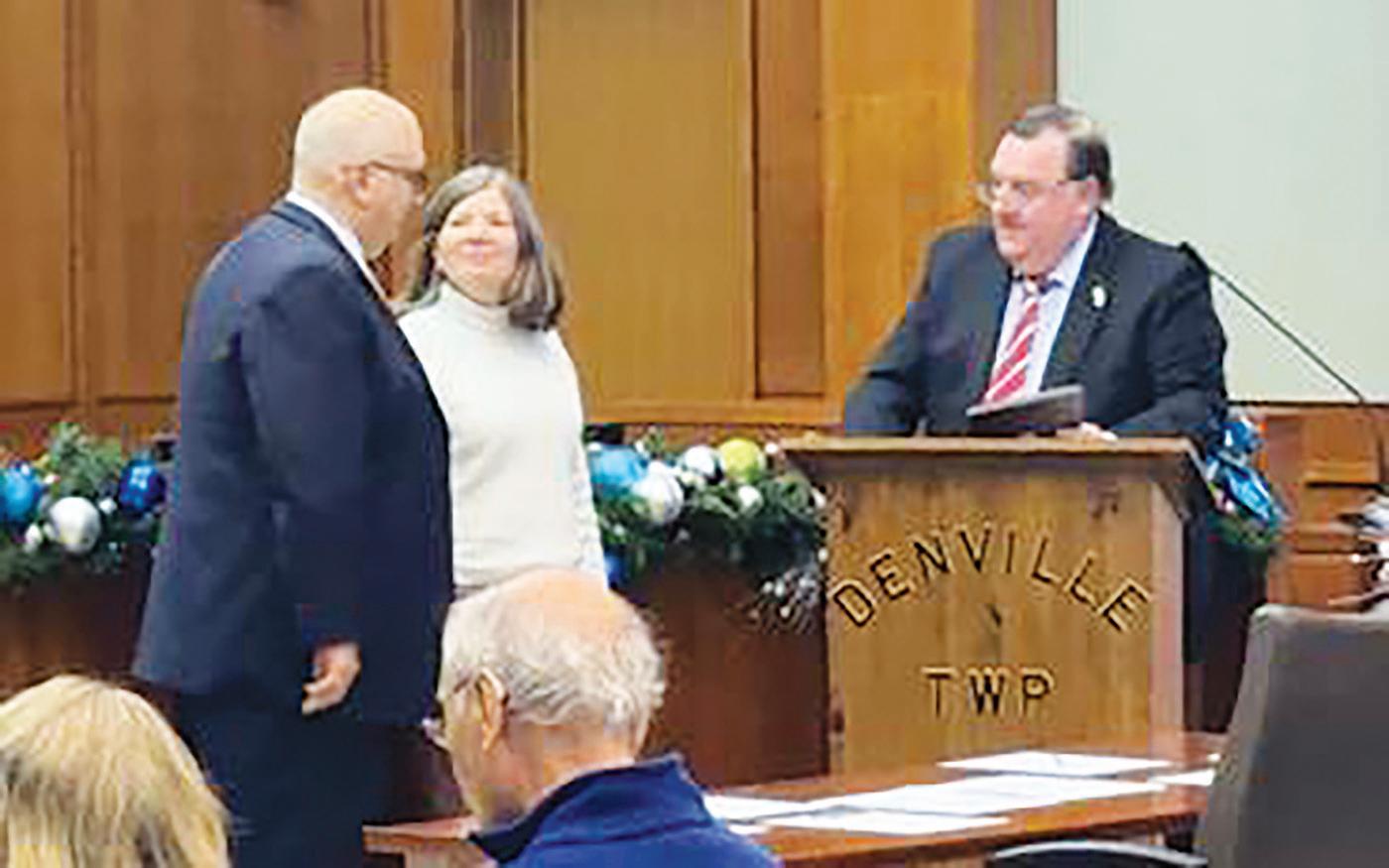
The evening also included recognition of retiring Councilman Chris Golinski, who was honored for 14 years of service on the Town Council and his dedication to the township.
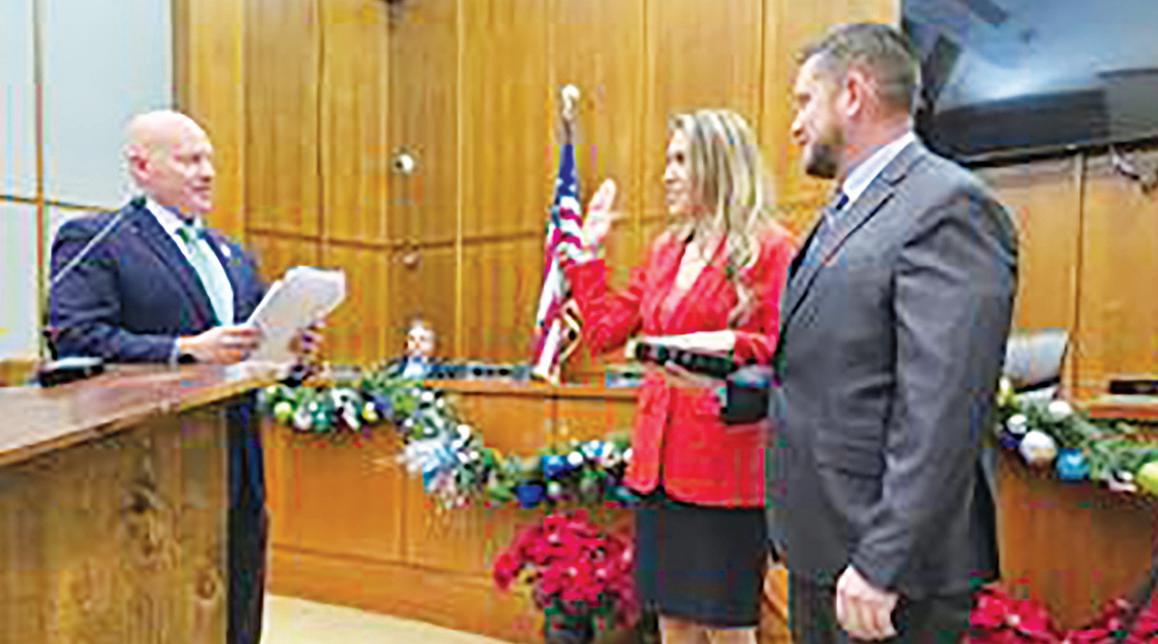
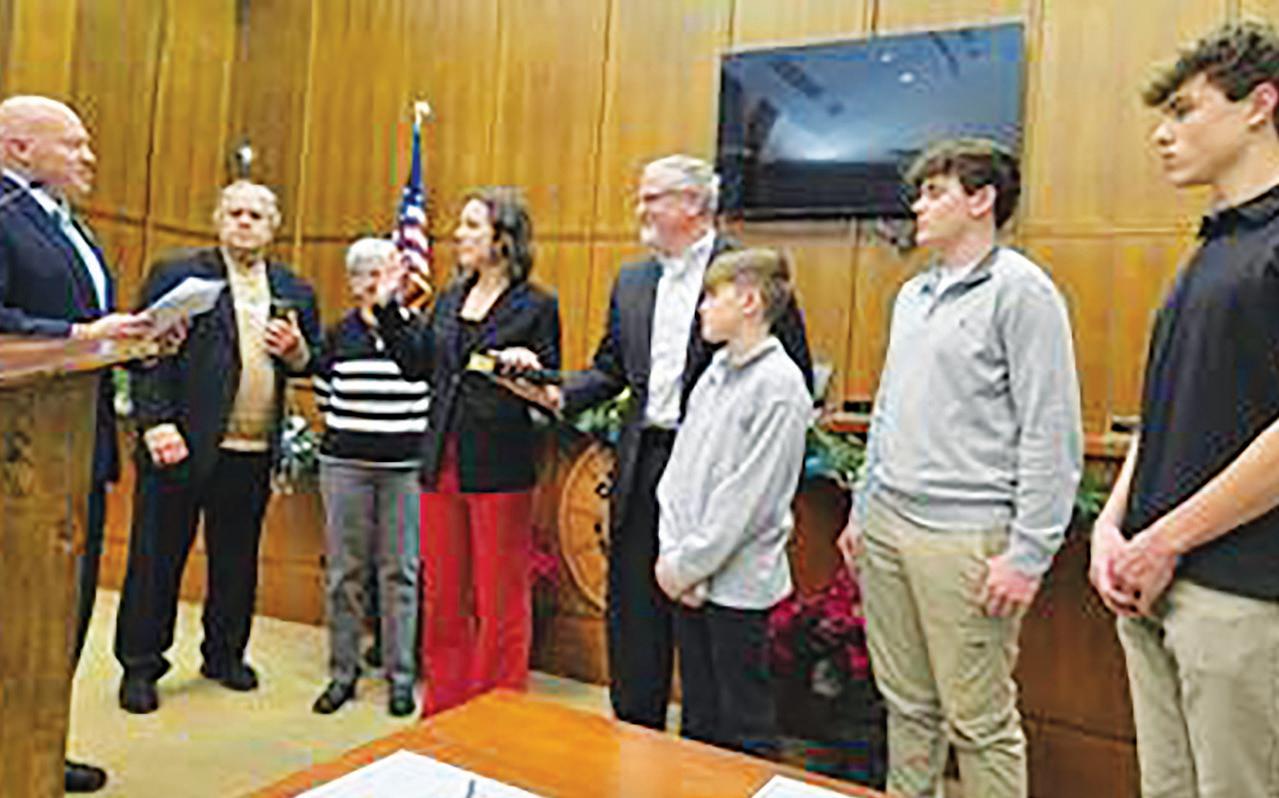
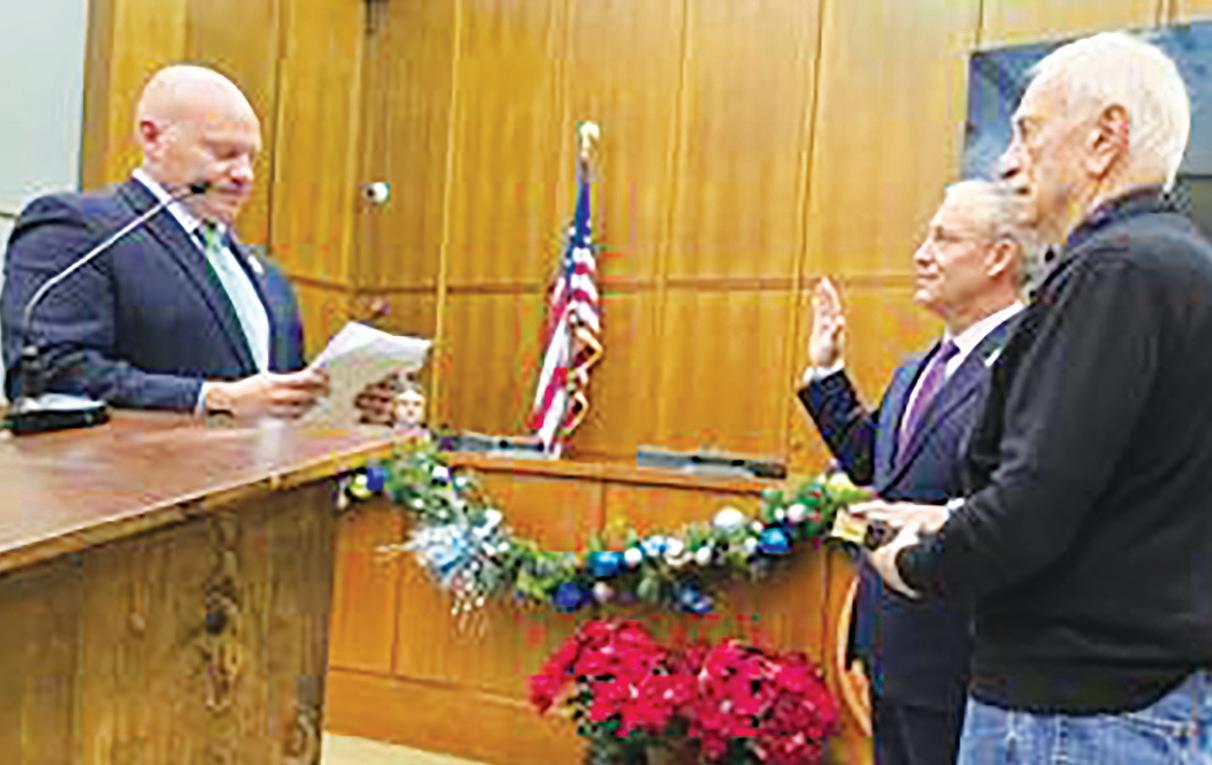
































Denville Town Clerk administered the oath of Office to 1st Ward Councilwoman Chrissy Kovacs starting her second term on the Council.
Denville Mayor Tom Andes Presented a Plaque to retiring Councilman Chris Golinski
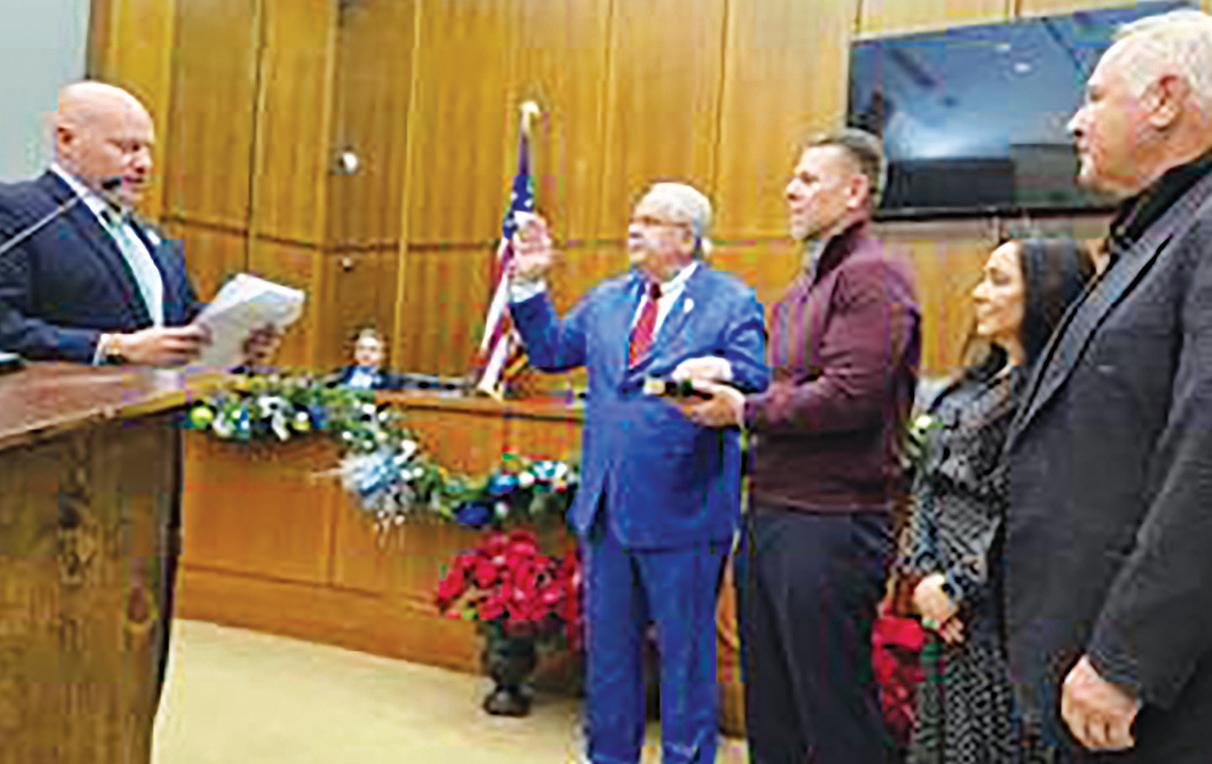
With her family around her, Adrienne Zimmerman is sworn in as the newest Councilwoman for 2nd Ward
Glenn Buie was sworn in as the 3rd Ward Councilman and after being selected by the Council as Council President.
Gary Borowiec was sworn in into office as the 4th Ward Councilman by Denville Town Clerk Matt Bansch while Former Councilman Bob Grant holds the Bible



Take a Spectacular Journey through the Night Sky this Winter at CCM’s Longo Planetarium
This winter, the awe-inspiring Longo Planetarium at County College of Morris (CCM) offers the perfect opportunity to stay warm indoors and take a spectacular journey through the night sky in an immersive theater experience. Starting Friday, January 23, three 45-minute shows, blending cutting-edge technology with immersive storytelling, will be presented beneath the 33-foot-diameter dome to reveal the beauty, science and wonder of the cosmos.
“Cosmic Colors,” best suited for children ages 8 and up and adults, provides a wondrous journey across the entire electromagnetic spectrum. Discover why the sky is blue and Mars is red, tour the interior of a leaf, voyage through the human eye and step into a monstrous black hole. This colorful adventure under a rainbow of cosmic light will be shown on select Fridays at 7:30 p.m. and Saturdays at 2 p.m.
“Messengers of Time and Space” reveals how powerful telescopes around the world work together. From exploding stars and glowing comets to passing asteroids, audiences are shown how astronomers capture fleeting moments across the universe — using not just light, but extraordinary signals that ripple through space. This show, recommended for adults and children ages 10 and up, will be shown on select Fridays at 9 p.m. and Saturdays at 3:30 p.m.
For a live, guided journey through the night sky by CCM Planetarium Astronomer Kevin Conod to see stars, constellations, nebulas and star clusters, “Starlit Nights” will be offered on select Saturdays at 5 p.m.



2026 Schedule at the Longo Planetarium at CCM ; “Cosmic Colors” and “Starlit Nights”, two of the feature presentations at the Longo Planetarium at CCM, January – March 2026
For more information, including show trailers and ticketing information, visit the Longo Planetarium page on CCM’s website at www.ccm.edu/meet-ccm/longoplanetarium/. Tickets for all shows, which run through March 28, are $10 per person. Online reservations are strongly recommended, as a limited number of tickets will be available for cash purchase at the door. For inclement winter weather closings, call (973) 328-5580. Questions may be emailed to planetariuminfo@ccm.edu.
The Longo Planetarium is located on CCM’s campus, 214 Center Grove Road, Randolph in Cohen Hall, Room 207, with parking available in lot #7. Follow the planetarium signs to Cohen Hall, which is located at the center of campus.No late entries will be permitted to ensure the best show experience for all.



Winter
I Remember Dad: My Father’s Last Talk on Scouting
By Richard Mabey Jr.
On the sixth of September of 1997, my beloved father turned 70. The day before, I turned 44. Early September of 1997, brought a very endearing and heart moving moment to my life. For I began to see just how much the words of the Scout Law and the Scout Oath really meant to my dad. Dad had served as Scoutmaster of Boy Scout Troop 170 nearly 30 years, from 1965 till 1994. It was in 1997, that my cousin, Raymond Kemmerer served as an Assistant Scoutmaster of a Boy Scout Troop in a small town in Pennsylvania’s Lehigh Valley. During trhe Summer of 1997, my Uncle Pete and Aunt Alice hosted a big family reunion at the Knothe Farm in Randolph, New Jersey. There, Dad and Cousin Raymond became reacquainted and talked and talked about scouting. Before we all went home that day, Cousin Raymond invited Dad to give a talk at his scout troop.
So, after a couple of follow up telephone calls, between Dad and Cousin Raymond, it was decided that Dad would be a guest speaker and the scout troop’s big Court of Honor in September. I was honored when my father asked me if I wanted to go with him.
Dad didn’t want to encroach upon our cousin, so he decided to get a motel room, for the night of the big Court of Honor at Cousin Raymond’s scout troop. We arrived at the motel at about 3:00, on a Friday afternoon. I had taken a day off from my job at the phone company. There was a certain joy in the air. The temperature was beginning to drop, and soon the leaves of the maple, elm and oak would

shame an artist’s canvas, with their brilliant colors.
As soon as we got settled into our motel room, Dad began reviewing his notes for his speech. I don’t know why I remember this, but I was in the midst of rereading Thomas Wolfe’s novel, “Look Homeward, Angel” for the fourth or fifth time. As I sat in the chair next to the window, Dad sat at this little table in the hotel room, rewriting his speech.
We took a break at about 5:30 or so and walked to a little restaurant in the center of town. There, in that little eatery, Dad confided in me that he was nervous about his upcoming talk. The Court of Honor was to begin at 8:00. So, Dad and I had just enough time to eat our supper, walk the block and a half back to our motel room and then change into our old scout uniforms.
To say that my Dad knocked the ball out of the park, in giving his talk on scouting, is an understatement. Dad touched and moved the hearts of everyone in that meeting hall, when he gave his talk on what scouting meant to him. I nearly cried.
It occurred to me then, just how much my beloved father loved scouting. How his motto of “it’s better to teach a boy the straight and narrow, then to rehabilitate a wayward man” rang so true that night. My father believed in every single word of the Scout Law and the Scout Oath. He lived it in every aspect of his life.
It’s hard to believe that was over 18 years ago, when Dad gave his last talk on what scouting meant to him. I loved my father with all of my heart. I dearly miss him. If there are any words I can share with you, good reader, it’s this. Love the ones dear to your heart. Tell them. Forgive


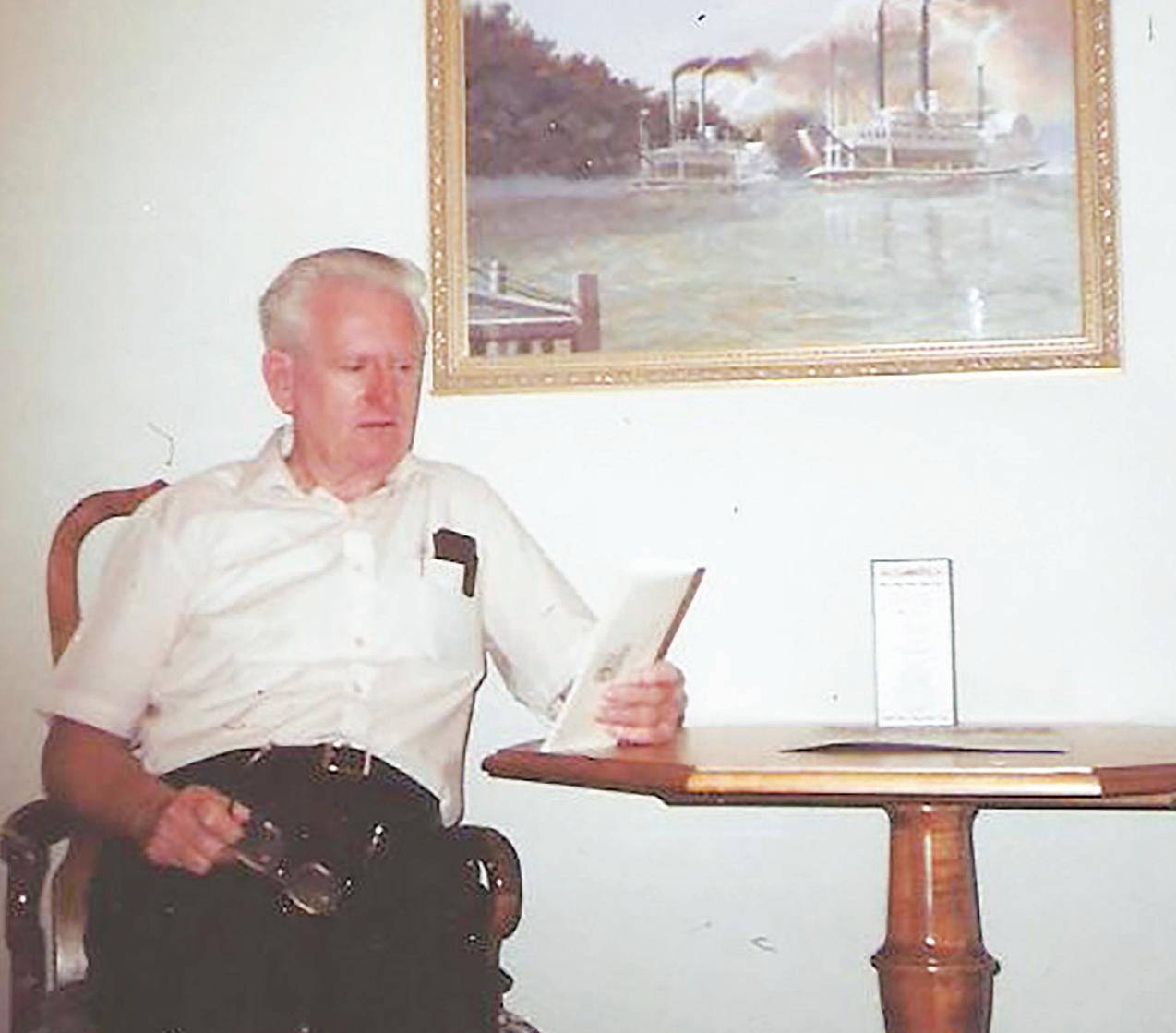
cherished photograph of my
on the very day that Dad gave
people when they do you wrong. Forgive, forgive, forgive and forgive again. None of us are going to live forever on this earth. None of us have a guarantee for tomorrow. Hold dearly this truth, that love is the most powerful force in the universe.
Richard Mabey Jr. is a freelance writer. He has recently had two books published. He currently hosts a YouTube Channel entitled, “Richard Mabey Presents.” Richard may be contacted at richardmabeyjr@gmail.com.

A
dear father that I took in our motel room,
his last talk on scouting.










The Super Bowl didn’t begin as a cultural juggernaut with halftime spectacles, billion-dollar commercials, and a holiday-like grip on America. In fact, its origin story is surprisingly modest—born out of rivalry, ego, and a simple question: Who really had the best football team?
To understand how it started, you have to go back to the late 1950s and early 1960s, when professional football in the United States was split between two competing leagues. The older, established National Football League dominated the sport, but a brash newcomer—the American Football League—burst onto the scene in 1960. The AFL brought bold ideas: flashier offenses, colorful team uniforms, player names on jerseys, and aggressive television deals. Most importantly, it competed fiercely with the NFL for talent.
That competition sparked chaos. Players were offered massive contracts. Owners were poaching stars from one another. Salaries skyrocketed. While fans enjoyed the drama, league executives saw trouble ahead. The bidding wars were unsustainable, and both leagues realized that survival meant cooperation, not combat.
In 1966, the two leagues agreed to merge.
How the Super Bowl Began
But pride—especially football pride— demanded a final proving ground. Until the merger officially took effect, each league would crown its own champion. Then, the champions would meet in a single game to decide who was truly best.
That game didn’t yet have the iconic name we know today. Officially, it was called the “AFL–NFL World Championship Game.”
Not exactly a marketing masterpiece. Legend has it that Lamar Hunt, owner of the Kansas City Chiefs, jokingly referred to the game as the “Super Bowl,” inspired by his children’s Super Ball toy. The nickname stuck, even if league officials initially resisted it.
On January 15, 1967, the first championship game was played at the Los Angeles Memorial Coliseum. The matchup featured the Green Bay Packers, champions of the NFL, against the Kansas City Chiefs, champions of the AFL. Despite the historic nature of the event, the stadium wasn’t sold out—tens of thousands of seats sat empty. Tickets cost between $6 and $12. Even television coverage was split between two rival networks.
The Packers, led by legendary coach Vince Lombardi, ultimately won the game 35–10. While the Chiefs showed flashes of

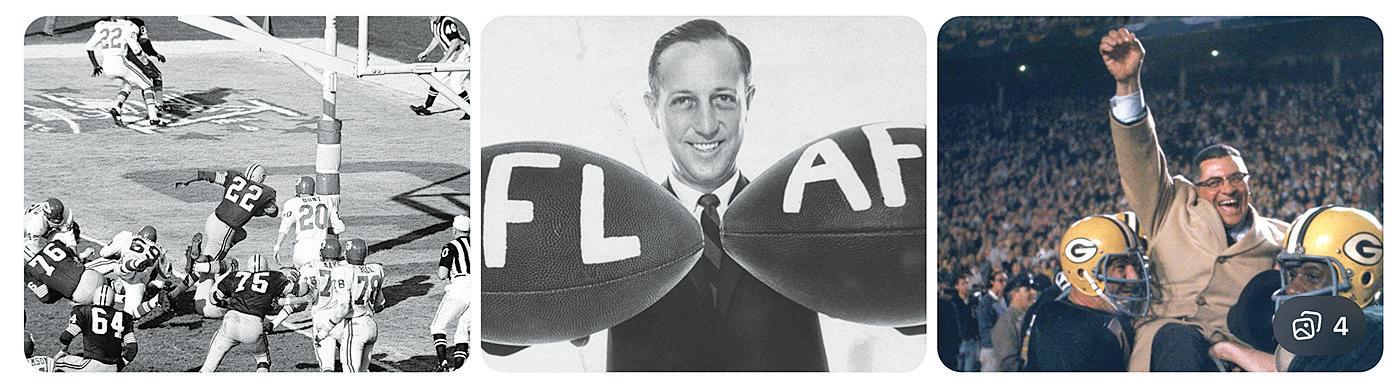
strength, the NFL team’s size, discipline, and experience proved decisive. Lombardi’s Packers repeated the feat the following year, winning the second championship as well. Those early victories helped cement the belief—at least temporarily—that the NFL was the superior league.
But the AFL wasn’t done making its case.
When the leagues fully merged in 1970, the championship game officially became known as the Super Bowl, and the AFL teams were absorbed into the newly formed American Football Conference. What followed was a shift in perception. AFL-born teams like the New York Jets and Miami Dolphins began winning championships, proving that the upstart league had been every bit as competitive as its older rival.
Slowly, the Super Bowl evolved. Television ratings grew. Corporate sponsors
lined up. Halftime entertainment expanded beyond marching bands. What started as a tiebreaker between two leagues became a national spectacle—part sport, part show, part shared American ritual.
Today, it’s hard to imagine a time when the Super Bowl wasn’t the centerpiece of the sports calendar. Yet its origins were rooted not in grandeur, but in necessity—a compromise between rivals, a handshake agreement to settle a debate on the field. From an unfinished stadium to a global audience of hundreds of millions, the Super Bowl’s journey mirrors the rise of professional football itself: competitive, bold, occasionally messy, and endlessly compelling. Not bad for a game that started as a one-off experiment to answer a simple question—and ended up becoming an American institution.





Historical Association Expands Educational Offerings Operating On Its Own
By Jeff Garrett
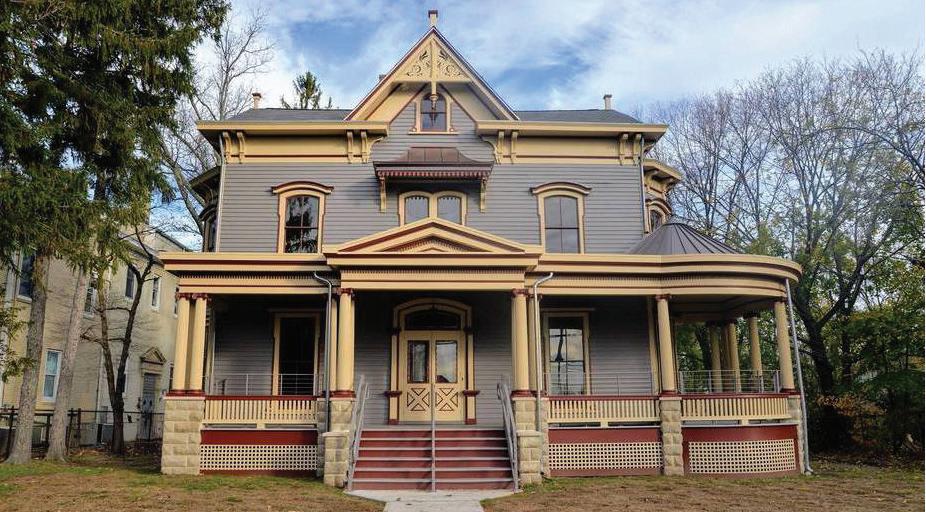
Over 40 years ago, the house at 86 Green Street in Woodbridge Township caught the eye of township commissioners and history buffs, both factions seeking a classic spot to house a historical society for New Jersey’s oldest township.
They sought a building easily accessible to township residents and visitors which could contain permanent galleries and house rotating displays for months at a time. The Victorian home which has been home to historical treasures and artifacts for 42 years does exactly this.
A 40-year lease agreement between the Historical Association of Woodbridge Township and the Historical Association came to an end in late October 2023 when the township turned over full control of a house being renovated, to Association members.
An official ribbon-cutting and grand opening took place on September 14, 2024 for “Woodbridge History Museum” which featured a debut exhibit showcasing the lives of four occupants of 86 Green Street in the 17th through 19th centuries. Many may
not know that Woodbridge Township as the oldest township in the state, was settled in early Autumn 1664 and granted a charter on June 1, 1669, by King Charles of England.
Located in northern Middlesex County, Woodbridge’s history is rich and illustrious and tells quite a story.
Inside 86 Green Street is an Artifacts section showcasing clothing from prior centuries and a table display revealing the distinct red clay found between Raritan Bay and Trenton.
Working with this semi-rare clay in the 1800’s served as an economic catalyst in the creation of several products for Woodbridge. It was used in the construction of the 86 Green Street itself.
A showcase of garments on site includes a couple of uniforms from World War II, a fireman’s jacket and a beer jacket from the early 20th Century. Certain rules for preservation allow that centuries old clothing sit out for certain periods of time.
The Historical Museum does not only have permanent displays and rotating ones. It comes alive with monthly presentations for its members, followers and the general public.
HTV Media Transfer Service



On March 23, lecturer, historian and Tea specialist, Judith Krall-Russo will present a lecture titled, “The New Jersey Greenwich Tea Party,” dispelling the myth that the Boston Tea Party was the only uprising of its kind.
On April 27, Carol Simon Levin presents “Remembering The Ladies, From Patriots to Presidential Candidates,” a discussion on the plight of equal rights for women across
America in the 18th and 19th centuries which drew women of various colors and creeds.
More lectures, gatherings and community events will take place throughout the year. For more information on Woodbridge History Museum, with free admission and open on Sunday afternoons from 1-4pm, logon to www.woodbridgetownshiphistory. org or phone 732-634-1669.









By
Richard Mabey Jr.
In early June of 2005, I had moved to the quaint and charming town of Saint Thomas, Pennsylvania. Saint Thomas is just a stone’s throw west of Chambersburg. The Lincoln Highway, aka Route 30, runs through Saint Thomas. The village abounds with apple orchards, most of them are farmed by wonderful Amish and Mennonite families. Saint Thomas’s claim to fame is that it is located at the point where the Appalachian meet the Allegheny Mountains. It is a most beautiful and splendid little dot on the state highway map.
It was in late June of 2005, that Mrs. MacGruder, this endearing, elderly widow at our church, told my sister and I that she had
Remembering the Blessing of Figaro
an overabundance of cute little kittens that needed homes. Well, long story short, my sister Patti and I visited this dear, sweet lady one Sunday afternoon after church. It was Figaro who kept jumping on my lap, while we visited with the elderly widow from our church, who was affectionately known as “the cat lady.”
Not only did Figaro keep jumping on my lap, she also would bat my hands with her front paws, as if crying out to me, “pet me.”
I remember this, oh so well.
Mrs. MacGruder calmly said to me, “well, Richard it looks like Figaro has chosen you to be his Daddy.”
It was about a half-hour later that Patti and I were saying our goodbyes to Mrs. MacGruder, and I was
carrying Figaro to our car. From that moment in time, Figgy and I became best pals.
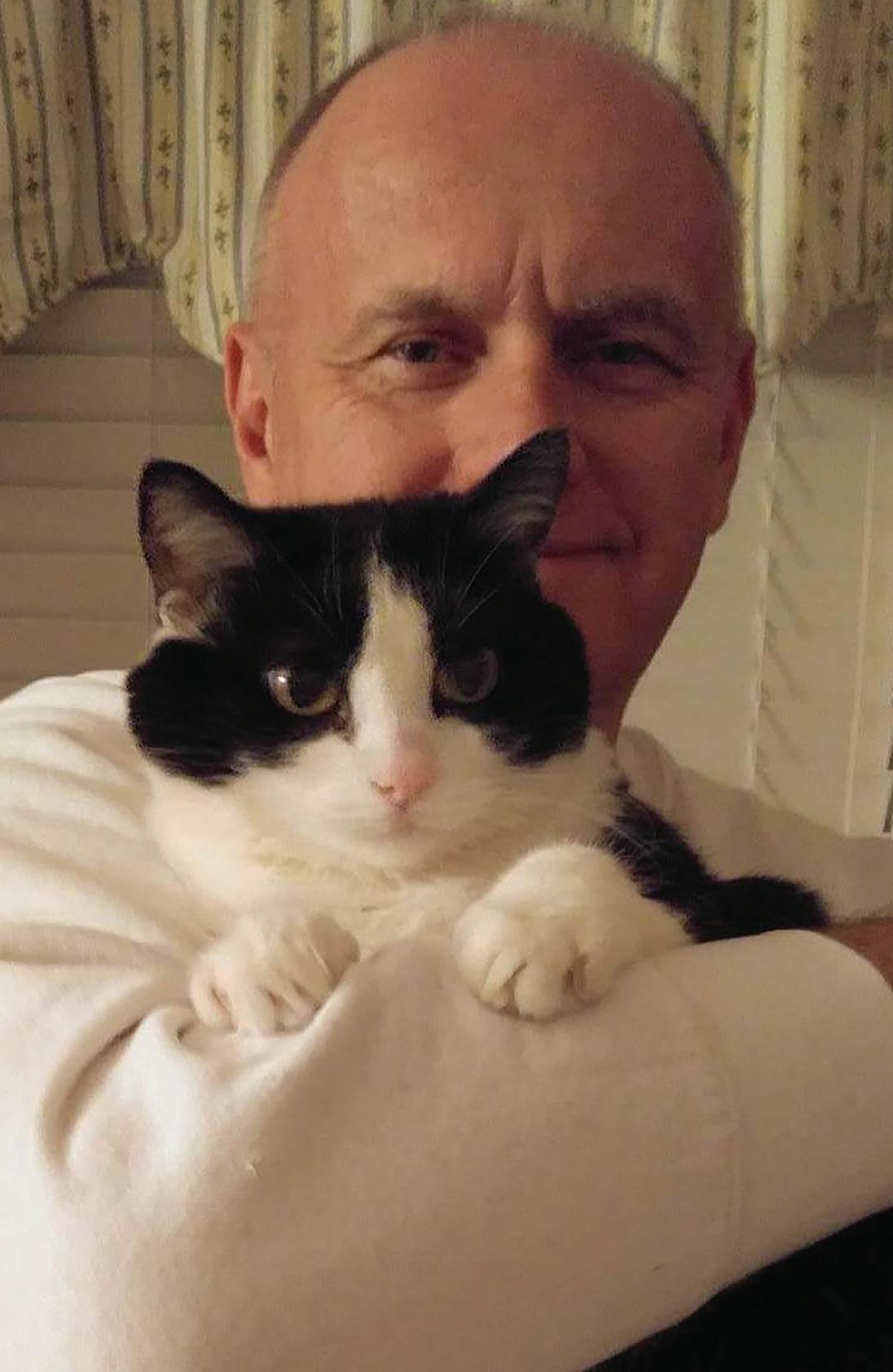
I was told by many people that Figaro was a “tuxedo cat.” She was mostly a black cat, with a white belly, white paws, and a streak of white paint that stretched from her nose, ran through the space between her eyes and ended atop her forehead. Figaro was an incredibly sensitive cat. She had an inner sense of knowing people and things unseen. When Dad came home from the hospital, in early March of 2006, he was battling the end stages of Pancreatic Cancer. I am always reluctant to tell people this, because it is a bit hard to believe. But from the time that Dad lied
down on his hospital bed, Little Figgy would curl up by Dad, next to his arms. Figaro would paw at Dad’s forearms till my father would pet the little guy. Figgy would purr and purr and purr. At times, Figgy would lick Dad’s hand, as if to say, “I love you.”
I am convinced, without a shadow of a doubt, that Little Figgy knew Dad’s time on this earth was limited. Many, many, many times, while Dad was sleeping, Figaro would jump onto Dad’s bed and just lie next to my dear father.
In the early morning of sixth of May of 2006, the angels called my beloved father Home to be with the Lord. I know for certain that Little Figgy deeply mourned the passing of her adopted Grandpa.


AL’S CONSTRUCTION
A Division of Al’s Professional Painting


Little Figgy went Home to Rainbow Bridge in April of 2016. It was an incredibly sad day, to say the least. Nearly a decade has passed since that fateful day. I don’t think a day has gone by that I don’t hink about dear, sweet Little Figgy. In many ways, she was the most sensitive little cat that I have ever known and loved.
Is there a spiritual
connection between animals and human beings that we know very little about? Could it be that there is a secret language that exists between animals and humans? I do believe we have just barely touched the tip of the iceberg, in terms of the secret, spiritual and allencompassing relationship
between animals and humans.
Richard Mabey Jr. is a freelance writer. He has had two books published. He hosts a YouTube Channel titled, “Richard Mabey Presents.” He can be reached at richardmabeyjr@gmail. com.


From another time, another place, Little Figgy with yours truly.

By Evan Wechman
TNJStarz
NJ Starz: Stella Johnson
Hometown: Denville
he coaches and fans in the tightly knit Rider University community in nearby Lawrenceville, New Jersey, still reminisce about the great four-year period from 2016 to 2020. It was during this time that Denville native and future WNBA (Women’s National Basketball Association) professional basketball player Stella Johnson showcased her athletic abilities as a guard for the Rider Broncs.
She became Rider’s all-time leading scorer in women’s basketball history, and helped propel the team to its firstever postseason appearance in the 2017 National Invitational Tournament. Also, Johnson became the first player from Rider drafted to the WNBA when she was selected 29th by the Phoenix Mercury in the 2020 WNBA Draft.
During her college playing days, she had a reputation of being not only talented, but disciplined as well. Though she would get up early in the morning to practice her drills before most students got up for class, her humble nature drew the affection of her teammates.
It is this same work ethic that has led to her competing professionally both in the WNBA and abroad. At the young
age of 27, she has been impressive at every level of basketball she has competed at.
However, Johnson did not always know that professional basketball was in her future. When she was a child, she was taught how to play basketball, soccer, and other sports by her parents, who were both exemplary student-athletes as well. In fact, her father wrestled and played football for Rutgers University, right here in New Jersey.
According to the Denville native, basketball wasn’t even her favorite sport as a child. Rather, it was soccer.
“I played soccer first and enjoyed it,” Johnson said.”But basketball was my second sport. I joined recreation(league) basketball in the 4th grade so I could play with friends. I don’t recall knowing much about basketball, but from there I learned more skills and how to play the game.”
Johnson continued to play a multitude of sports from childhood until high school, where she attended Morris Catholic in Denville. It was here where her athleticism and drive were on full display as she was a two-sport athlete, having success on both the soccer field and the hard court.

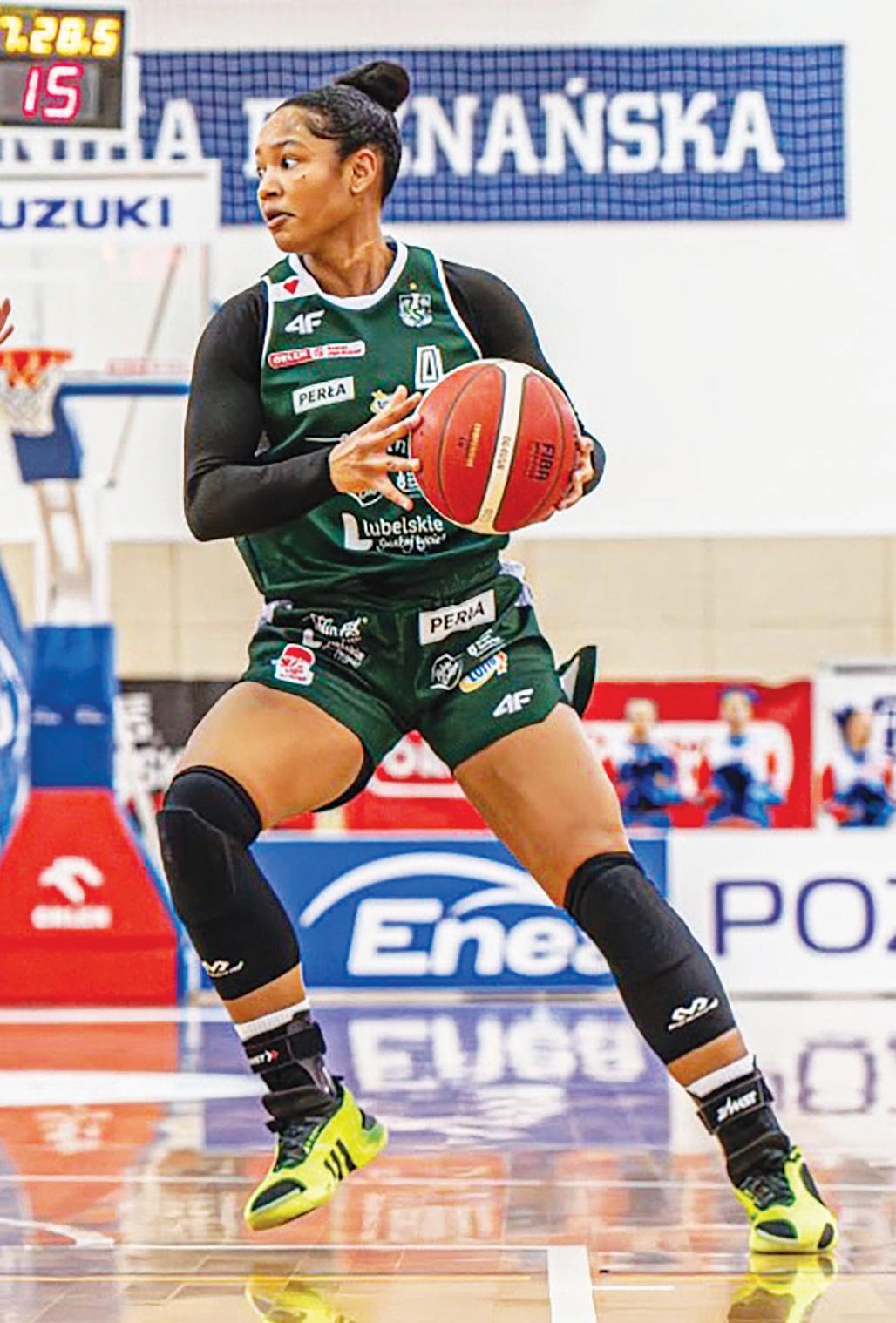
continued on page 13


Courtesy of Stella Johnson. Both pics are her playing with her current team in France.
continued from page 12
Since she was excelling in both sports, it wasn’t clear which one she would be concentrating on after her time at Morris Catholic.
“I wasn’t sure what sport I was going to play after high school but when I got the offer from Rider the summer going into my senior year in high school, I knew basketball would be my future, “Johnson said.”But I did not know making that decision when I was 17 years old, basketball would take me to so many places, and I’m so grateful.”
Ironically, Johnson wasn’t even greatly aware of Rider University when she was looking at colleges in the area. Also, she was not receiving many phone calls from coaches throughout the state and beyond with scholarship offers to play basketball at the collegiate level.
Johnson would eventually prove that the coaches at major universities grossly miscalculated her ability and desire to succeed. However, at the time, Rider University was the only choice available.
“I went on a visit to Rider not even realizing it was in New Jersey,” Johnson said. “Rider was my only Division I offer. That was one of the reasons why I chose Rider. I wanted to be able to play and study on a scholarship at a Division I school.”
Though she only received that one offer, it seems the stars were aligned as she shattered both school and NCAA Division I records during her time at Rider University. However, for Johnson, it was always about winning as a team rather than concentrating solely on her individual records.
She said that her biggest achievement at Rider was helping her team capture the MAAC(Metro Atlantic Athletic

Conference) championship, where they were heavy underdogs before Johnson arrived in Lawrenceville.
Though she has always been modest regarding her personal accomplishments, she remains proud of having her uniform number 4 retired by Rider University in November of 2022, before a women’s basketball home game. It was the first ever time a women’s basketball player had her number retired by the university, and just the seventh time for any Rider athlete.It was a beautiful ceremony and one that has stuck with the all-time great.
“To be able to walk in the gym and see my name in the rafters and to have my parents and the rest of my family and friends see that accomplishment really means a lot, “ Johnson said.
Her time at Rider certainly was a launching pad for her success at the professional level. In 2020, the result of all her hard work paid off one night during the COVID pandemic. That evening was when the WNBA Draft occurred. Though there was talk before the draft that Johnson had a strong chance of being selected by one of the teams, Johnson didn’t want to be overly confident. Instead, she remained humble, letting the chips fall where they may.
“Since it(the draft) was during COVID, I couldn’t be with my teammates or coaches,” Johnson said. “But thankfully I was with my parents. We saw it on the TV screen while sitting in the living room. I was in shock because I didn’t really expect that I would be drafted. There was speculation that coaches and general managers of the team(Phoenix Mercury) were interested in me.But when I saw my name pop up on the screen, it was a great honor.I got the chills

1939!

and everything. I was thinking of all the great legends that were drafted before me and till this day it’s surreal that I was able to see my name. Afterwards, I was on the moon. I was so excited to speak to the head coach, to meet my teammates and start this new chapter in my career.”
Though she never actually played for the team that drafted her, the Phoenix Mercury, Johnson played over two seasons with the Chicago Sky and the Washington Mystics. Although the competition was fierce, the 5’10 tall guard was able to carry herself well, and dropped 25 points for Washington in a victory over Atlanta on August 19th, 2020.
Johnson worked hard and fared well in the WNBA,but she transferred her skills abroad and has played the last few seasons in Europe, most notably in Poland and France. This current season, she is playing in France for La Roche Vendee BC, where she has been remarkable.
She is the starting point guard for the team, averaging about 17points per game and dishing out close to three assists per game as well.
Johnson might not have set out from the day she first dribbled a basketball to play professionally both here and abroad, her competitive drive has led her to play with the best players in the world.
According to Johnson, the recipe for her current success is similar to when she started playing college basketball.
“Well just like Rider with Coach Lynn Milligan, my coach here trusts in me to do what I can to help the team win,” Johnson said.”I’m a very competitive player, so whether that is scoring, rebounding, playmaking or anything defensively I’m going to do anything to try and get the team a win.”













ACP
Donate Your Car to Veterans Today! Help and Support our Veterans. Fast - FREE pick up. 100% tax deductible. Call 800-245-0398
TOP DOLLAR PAID for old vintage guitars! Gibson, Fender, Martin, Grecsch, Rickenbacker, Epiphone, Etc. 1930’s to 1980’s. Call 866-4338277
Reach millions of homes nationwide with one easy, affordable buy in the ADS Network! For more information www.communitypublishers.com/category/all-products
Peace of mind & early detectionNow more than ever, it’s important to get screened for Stroke & Cardiovascular Disease risk. Life Line Screening is simple & painless. 833970-4172
We buy houses for cash as is! No repairs or fuss. Any condition. Easy 3-step process: Call, get cash offer, get paid. Get your fair cash offer today. Liz Buys Houses: 844-877-5833
Portable oxygen concentrator may be covered by Medicare! Reclaim independence & mobility w/the compact design & long-lasting battery. Inogen One free info kit! 877-305-1535
Consumer Cellular - same reliable, nationwide coverage as large carriers. No long-term contract or hidden fees, free activation. All plans unlimited talk & text starting at just $20/mo. 877-751-0866
Become a published author. We want to read your book! Dorrance Publishing trusted since 1920. Consultation, production, promotion & distribution. Free author`s guide 877-729-4998 or dorranceinfo.com/ads
No more cleaning gutters. Guaranteed! LeafFilter backed by no-clog guarantee & lifetime warranty. Call 1-833-610-1936 to schedule FREE inspection/estimate. Get 15% off your entire order. Military & Seniors get additional 10% off. Limited time. Restrictions apply, see rep for details.
Replace your roof w/the best looking & longest lasting material steel from Erie Metal Roofs! 3 styles/multiple colors available. Guaranteed to last a lifetime! Limited time offer up to 50% off install + additional 10% off install military, health & 1st responders. 833-370-1234
Inflation at 40-year highs. Interest rates are up. Credit cards, medical bills, car loans. Have $10k+ in debt? Call National Debt Relief to find out how to pay off your debt for much less than you owe! Free quote: 844955-4930
Don’t let the stairs limit your mobility! Discover the solution for anyone who struggles on the stairs, concerned about a fall or wants to regain access to their entire home. AmeriGlide 833-399-3595
Home break-ins take less than 60 seconds. Don’t wait! Protect your family, home, assets now for as little as 70¢/day! 833-890-1262
Jacuzzi Bath Remodel can install a new, custom bath or shower in as little as 1-day. Limited time, waving all installation costs! Additional terms apply. Subject to change & vary by dealer. Ends soon. 844-501-3208
Pest control: Protect your home from pests safely. Roaches, Bed Bugs, Rodent, Termite, Spiders & more. Locally owned & affordable. For service or inspection today! 833-860-0657 Have zip code ready! MobileHelp America’s premier mobile medical alert system. Home or away. For safety & peace of mind. No long term contracts, free brochure! 888-489-3936
Aging roof? New homeowner? Storm damage? You need a local expert provider that proudly stands behind their work. Fast, free estimate. Financing available. 833-640-4753 Have zip code ready when calling! Water damage cleanup & restoration: A small amount of water can lead to major damage in your home. Our trusted professionals do repairs to protect your family & home value! 833-887-0117. Have zip code ready! Professional lawn service: Fertilization, weed control, seeding, aeration & mosquito control. Free quote. Ask about first application special! 833860-0811
DIRECTV Stream - Carries the most local MLB games! Choice Pkg $89.99/mo for 12 mos Stream on 20 devic-es. HBO Max included for 3 mos w/Choice Package or higher. No contract or hidden fees! Restrictions apply. IVS 866-859-0405
Wesley Financial Group, LLC timeshare cancellation experts over $50 million timeshare debt/fees cancelled in 2019. Free info package. Free consultations. Over 450 positive reviews. 833-308-1971
Bath & shower updates in as little as 1-day! Affordable prices - No payments for 18 months! Lifetime warranty & professional installs. Senior & military discounts available. 1-877543-9189
Prepare for power outages todayGenerac Home Standby Generator. Receive free 5-Year warranty w/ qualifying purchase. 855-948-6176 to schedule free quote. It’s not just a generator. It’s a power move. Dental insurance from Physicians Mutual Insurance Company. 400+ procedures. Real dental insurance - not a discount plan. Free info kit! 855-526-1060 www.dental50plus. com/ads #6258 MACnet Classified
Want more customers? Get your ad in front of 1.2 million local readers for just $100 a week in publications like this. One ad. Six states + D.C.. Countless new customers. Contact info@macpa.net or call Alyse at 484269-6367
Donate your car, truck, boat, RV and more to support our veterans! Schedule a FAST, FREE vehicle pickup and receive a top tax deduction! Call Veteran Car Donations at 1-877-327-0686 today! Become a Published Author. We want to Read Your Book! Dorrance Publishing-Trusted by Authors Since 1920 Book manuscript submissions currently being reviewed. Comprehensive Services: Consultation, Production, Promotion and Distribution Call for Your Free Author`s Guide 1-866-482-1576 or visit dorranceinfo. com/macnet
Get a break on your taxes! Donate your car, truck, or SUV to assist the blind and visually impaired. Arrange a swift, no-cost vehicle pickup and secure a generous tax credit for 2025. Call Heritage for the Blind Today at 1-844-320-2804 today!
Inflation is at 40 year highs. Interest rates are way up. Credit Cards. Medical Bills. Car Loans. Do you have $10k or more in debt? Call NATIONAL DEBT RELIEF and find out how to pay off your debt for significantly less than what you owe! FREE quote: Call 1-866-272-0492


Metal Roofing & Siding, 36” Coverage Ag Panel, Winter Special Burgundy color, $2.00 L.F $.67 SQ. FT. Made Ephrata Pa Email; sales@7174455222.com 717 4455222
DENTAL INSURANCE from Physicians Mutual Insurance Company. Coverage for 400 plus procedures. Real dental insurance - NOT just a discount plan. Do not wait! Call now! Get your FREE Dental Information Kit with all the details! 1-877-5531891 www.dental50plus.com/macnet #6258
Don’t let the stairs limit your mobility! Discover the ideal solution for anyone who struggles on the stairs, is concerned about a fall or wants to regain access to their entire home. Call AmeriGlide today! 1-844-317-5246
Safe Step. North America’s #1 WalkIn Tub. Comprehensive lifetime warranty. Top-of-the-line installation and service. Now featuring our FREE shower package and $1600 Off for a limited time! Call today! Financing available. Call Safe Step 1-833-3561954
Prepare for power outages today with a Generac Home Standby Generator. Act now to receive a FREE 5-Year warranty with qualifying purchase. Call 1-855-465-7624 today to schedule a free quote. It’s not just a generator. It’s a power move. No more cleaning out gutters. Guaranteed! LeafFilter is backed by a no-clog guarantee and lifetime transferrable warranty. Call today 1-855791-1626 to schedule a FREE inspection and no obligation estimate. Get 15% off your entire order. Plus, Military & Seniors get an additional 10% off. Limited time only. Restrictions apply, see representative for warranty and offer details.
Replace your roof with the best looking and longest lasting material – steel from Erie Metal Roofs! Three styles and multiple colors available. Guaranteed to last a lifetime! Limited Time Offer – up to 50% off installation + Additional 10% off install (for military, health workers & 1st responders.) Call Erie Metal Roofs: 1-855338-4807
Jacuzzi Bath Remodel can install a new, custom bath or shower in as little as one day. For a limited time, waiving ALL installation costs! (Additional terms apply. Subject to change and vary by dealer. (Offer ends 12/27/26.) Call 1-844-826-2535
DIRECTV OVER INTERNET - Get your favorite live TV, sports and local channels. 99% signal reliability! CHOICE Package, $84.99/mo for 12 months. HBO Max and Premium Channels included for 3 mos (w/ CHOICE Package or higher.) No annual contract, no hidden fees! Some restrictions apply. Call IVS 1-866629-6086
Do you know what’s in your water? Leaf Home Water Solutions offers FREE water testing and whole home water treatment systems that can be installed in as little one day. 15% off your entire purchase. Plus 10% senior & military discounts. Restrictions apply. Schedule your FREE test today. Call 1-866-996-1526
WANTED! MOTORCYCLES & MINI BIKES! ANTIQUE AND CLASSIC. Honda, Kawasaki, Suzuki, Yamaha, Triumph, BSA, and other foreign models. $$PAYING CA$H$$ 717577-8206 KRMiller1965@yahoo. com
DENVILLE SEAFOOD