In the early 2010s, ‘Big Data’ was on the rise –with it the promise of unlocking value and transforming economies. Data from people, devices and systems started to trickle onto stateof-the-art servers, and in tech we were scrambling to understand the difference between a data warehouse and a data lake.
Today, businesses and sectors across the globe use data to deliver new products and services we may never have thought possible just 15 years ago, using business models that didn’t exist. Across our economy, value from data has been optimised – mostly for those businesses collecting and analysing it.
The Data (Use and Access) Act 2025 now promises the potential to unlock and deliver the next wave of value from data, now with the data subject in the core.
Through the 11 fantastic innovator teams, the Smart Data Challenge Prize has shone a spotlight on areas where this value could be created - and the transformative impact this could have for the UK.
The teams’ prototypes have demonstrated the potential Smart Data has to support progress towards Net Zero, save consumers and businesses money and identify ways to better support customers facing vulnerability.
In this short report, we highlight the perspectives of these innovators, focusing on key opportunities for Smart Data schemes.
Later this year, the Department for Business and Trade (DBT) will publish a detailed report, diving into each of the 11 innovator use cases and identifying key insights for each one.
About the challenge
The Smart Data Challenge Prize launched in early 2025 with the aim of identifying Smart Data use cases that deploy multiple datasets from sectors across the economy and supporting innovators to build prototypes, demonstrate market feasibility and show the potential to deliver real-world benefits for consumers and businesses.
Following on from the Smart Data Discovery Challenge, judges selected 11 innovative teams to receive access to the Smart Data sandbox and a range of support, with 10 finalists each receiving £50,000 in seed funding in May 2025.
Challenge Timeline
About the sandbox
Teams had exclusive access to a custom-built world-first Smart Data sandbox. With synthetic data created by BigSpark housed in a sandbox environment developed by NayaOne, teams had an insight into what future data schemes could one day look like.
The sandbox proved an invaluable, safe, and structured environment for trialing multi-party permissions using synthetic datasets. This enabled innovator teams to prototype, experiment and explore without concerns about privacy. Furthermore, the sandbox supported inclusive design, focusing specifically on thin-file customers, carers, and individuals with fluctuating capacity, and brought essential clarity to liability and governance patterns across the participating sectors.
Through a rapid development period, teams built out working prototypes and then in October 2025 submitted these to judges for them to select a winner and two runners-up with the most compelling prototypes that held the most potential benefits for users in the UK.
Moverly and the Open Property Data Association were selected as the winner receiving a prize of £50,000 and Open Transport and Nigel by Beyond Encryption were selected as the runners up, each receiving £25,000 to further develop innovation in Smart Data. Read more about each of the teams in the sector-by-sector insights.
bigspark is the trusted advisor for businesses looking to unlock the potential of data and AI. Its team of engineers, developers, and consultants adapt to each client’s challenges, helping harness AI and data to drive growth and uncover opportunities. bigspark delivers bespoke strategies not off-the-shelf solutions for measurable impact.
NayaOne is the globally leading provider of Digital Sandbox platforms to governments, central banks and regulators around the world.
Meet the winner and runners up
Moverly and the Open Property Data Association Winner
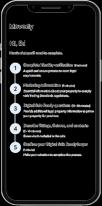
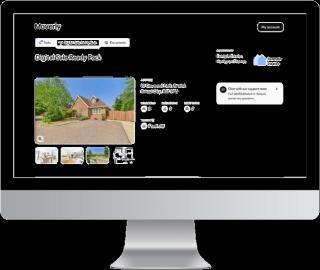
Moverly makes property data portability practical by gathering consumer information at listing into secure, shareable digital ledgers built on industry open standards. AI identifies issues early, verified data flows to conveyancers and lenders instantly. In a market where one-in-three sales collapse, Moverly has proven the potential to halve fall-through rates, protecting consumers from wasted costs, unlocking significant housing market efficiency.
Nigel by Beyond Encryption
Nigel is a Smart Data agent that gives households one secure place to manage their life admin. It securely organises both digital information and paper letters into structured data. Nigel uses smart skills like remind, compare and share to turn this data into real life opportunities for people to save money and access support they are entitled to.
Open Transport
Runner Up
The Open Transport dashboard brings together all your travel activity in one place. By securely linking your transport, banking, and carbon data, it provides a single, personalised view of journeys, costs, and CO2 impact, enabling smarter and greener decisions for everyone.
Meet the innovators
A dedicated energy expert, turning complex consumption data into actionable insights for smarter, greener and cheaper energy decisions.
Building a "Credit Score for Vulnerability," aiming to use smart data to protect the UK's most vulnerable households.
A fairer financial score based on banking data, rewarding consumers for good money habits, not just their borrowing history.
An AI grocery agent creating personalised meal plans and shopping baskets to help consumers shop and eat better.
A smart data platform that allows businesses to find low-carbon suppliers, accelerating decarbonisation through data sharing and transparency.
A solution to help gig workers take control of their work and their finances.
A digital wallet fusing permissions and reusable credentials together to create portable data passports for any smart data scheme
A service which turns routine tariff switching into a datadriven investment decision that saves money, cuts emissions, and strengthens the national grid.
Debit Score® by Cheddar
Mealia Pulse+ by Smarter Contracts
VoltView
Innovator perspectives
Innovator teams identified four key opportunities to unlock the full potential of Smart Data in the UK. These opportunities, if not addressed, may one day act as roadblocks for innovators wishing to take advantage of the massive potential for Smart Data in the UK.
Opportunity 1 – Cross-Sectoral Magic
A key perspective that has surfaced throughout the Smart Data Challenge prizes is the huge potential for Smart Data in bringing together data from across the economy.
Looking back to the entrants to the challenge, when looking at 2 or more sectors to pull data from, energy and property data were most prevalent – with highest rates of entrants reporting these data sets were “Essential” to their use case.
Yes, data can be valuable in just one sector, but it is in the synergy of connecting things that today can’t be easily or cost-effectively joined that the most exciting innovation with the biggest potential incremental impact lies.
To truly unlock the power of future Smart Data schemes in transforming the UK economy, consideration for how they can be as interoperable as possible should be kept front of mind in development.
Opportunity 2 – Data Standards
Without Smart Data schemes, innovator teams are currently operating in a space they describe as “chaotic” when it comes to data sharing in
some sectors. Teams need to rely on fragmented third-party and supplier-specific APIs, making industry-wide innovation technically unfeasible without private intermediaries.
Teams would strongly welcome work to reach the gold standard set by Open Banking, with secure APIs, robust authentication and strict data governance.
Opportunity 3 – Product Data Surfacing
Many use cases create the opportunity to save consumers and businesses money through switching suppliers and products.
A key consideration to unlock the most value and reduce administrative burden here would be to allow for product data to be surfaced through data protocols. For example, APR or interest rates for financial products, tariffs for utilities and renewal dates for time-bound contracts.
Innovators highlighted the huge potential value increased transparency could create, especially as open finance moves towards insurance, savings and investments and the energy sector schemes are developed.
Opportunity 4 – Consent Management
Innovators in the challenge saw an opportunity to learn from the existing practice for establishing consent in Open Banking when thinking about how best to manage consents. Teams found that the 90-day consent window in Open Banking causes friction and high drop-off rates.
The 90-day window was carefully designed given the sensitivity of current account data but teams would welcome careful consideration for proportionate consent windows and mechanisms to deliver optimal value and utility to users and ensure that people feel in control of their data.
Challenge prize benefits
Smart Data prototypes don’t just appear – during the Smart Data Challenge Prize teams estimate they spent a total of 11,000 hours to create these new solutions.
But what supported these innovator teams to thrive? For the finalists, unsurprisingly, the initial £50,000 grant contributed to their decision to innovate. But other support, including the data sandbox, mentoring and training also was key to unlocking progress; 7 of 10 finalist teams reported that this “Very significantly” or “significantly” contributed to the development of their solution. Teams also shared that participating in the challenge supported them to make changes to their business model & go-to-market strategy and inspired new ideas beyond their original concept.
9/10
Finalist teams anticipate having a product on the market within 12 months.
“Both the data and the money have been pivotal in enabling us to build a solution which is just about market ready, [it has] supercharged our time to market”
The teams participating in the Smart Data Challenge Prize are in good company - challenge prizes have been driving Smart Data innovation for over a decade – starting with open banking, the first leap forwards in transforming financial services.
In the two years following the Open Up Challenges in Banking which supported over 40 fintechs, teams went on to secure almost £1 billion in investment.
Challenge prizes unearth the best ideas fast
The Smart Data Challenges have sparked over 80 new sectoral Smart Data
Finalist Moneybox now serves over 1.5 million customers and winner Plum has now grown to hold over £1 billion in customer assets.
Finalist Team
Exploring the potential of smart data-led innovation in banking
Supporting product development with real banking data
UK consumers need to be engaged and ready to adopt new products
Exploring smart data opportunities across the economy
The Department for Business & Trade (DBT) is the department for economic growth. DBT supports businesses to invest, grow, and export, creating jobs and opportunities across the country. DBT is a ministerial department, supported by 19 agencies and public bodies. The Smart Data Challenge is supported by funding from DBT.
At Challenge Works, we design and run challenge prizes to spark innovation in science, technology and society We are part of Nesta, the research and innovation foundation Our challenge prizes offer a series of incentives in return for solving a defined challenge, creating breakthrough innovations, helping innovators thrive and unlocking systemic change. We are innovation experts, embedded in science, technology and entrepreneurship. We are problem-centred, drawing on insights from lived experience and sector experts to create positive change. We are thought leaders in using innovation to drive impact. We have run over 100 challenge prizes awarding over £260m, on behalf of public, private and philanthropic funders around the world.
The Open Data Institute (ODI) is a dynamic non-profit company founded in 2012 by Sir Tim Berners-Lee and Sir Nigel Shadbolt Our vision is to create a world where data works for everyone We build an open, trustworthy data ecosystem, collaborating with businesses, governments and civil society to generate social and economic value We equip leaders with data skills, shape public policy, and influence global data-enabled initiatives through training, expert consultancy, and applied research