
A GUIDE TO CHALLENGE PRIZES
How to use challenge prizes to accelerate innovation, create impact and change the world

Introduction
Challenge prizes create innovations that change the world
Innovation is the driving force behind civilisation.
Almost everything we rely on – from plentiful food, to clean water, to the rule of law – was once somebody’s invention. Many inventions are surprisingly recent.
Until the 19th century, we sent children up chimneys to sweep them. Until the 20th century, we crossed the Atlantic by ocean liner. Until the early years of the 21st, nobody had travelled in a driverless car.
What pushes people to create innovations that change the world?
Public spirit, sometimes. Brilliant ideas, often pursued with single-minded grit. And money: it costs money to do research… and money motivates people, too.
Challenge prizes are open competitions that offer a reward to whoever can first or most effectively solve a problem. They channel this public spirit, support brilliant ideas – and provide powerful financial incentives to innovators.
Challenge prizes create breakthrough innovations, they help innovators thrive and they unlock systemic change. They change the world.
We stopped children sweeping chimneys thanks to the invention of extendable brushes – the winner of an 1802 challenge prize from the Royal Society of Arts.
We fly the Atlantic, thanks to the winners of the 1919 Daily Mail Aviation Prize.
And driverless cars were developed by innovators in DARPA’s 2003-2007 Autonomous Vehicle Grand Challenges.

You’re reading this guide because you’re interested in challenge prizes. Perhaps you’re considering running one and creating a breakthrough of your own. But getting challenge prizes right isn’t straightforward.
You’ll need to craft the goal, rules and incentives with care, to ensure you successfully motivate the right innovators. And then you’ll need to build their profile and support them through the rigours of the competition to ensure they succeed
This guide summarises what Challenge Works has learned from running over 100 challenge prizes, spanning science, technology and innovation. I hope you find it useful.
Tris Dyson Founder and Managing Director Challenge Works
WHAT ARE CHALLENGE PRIZES?
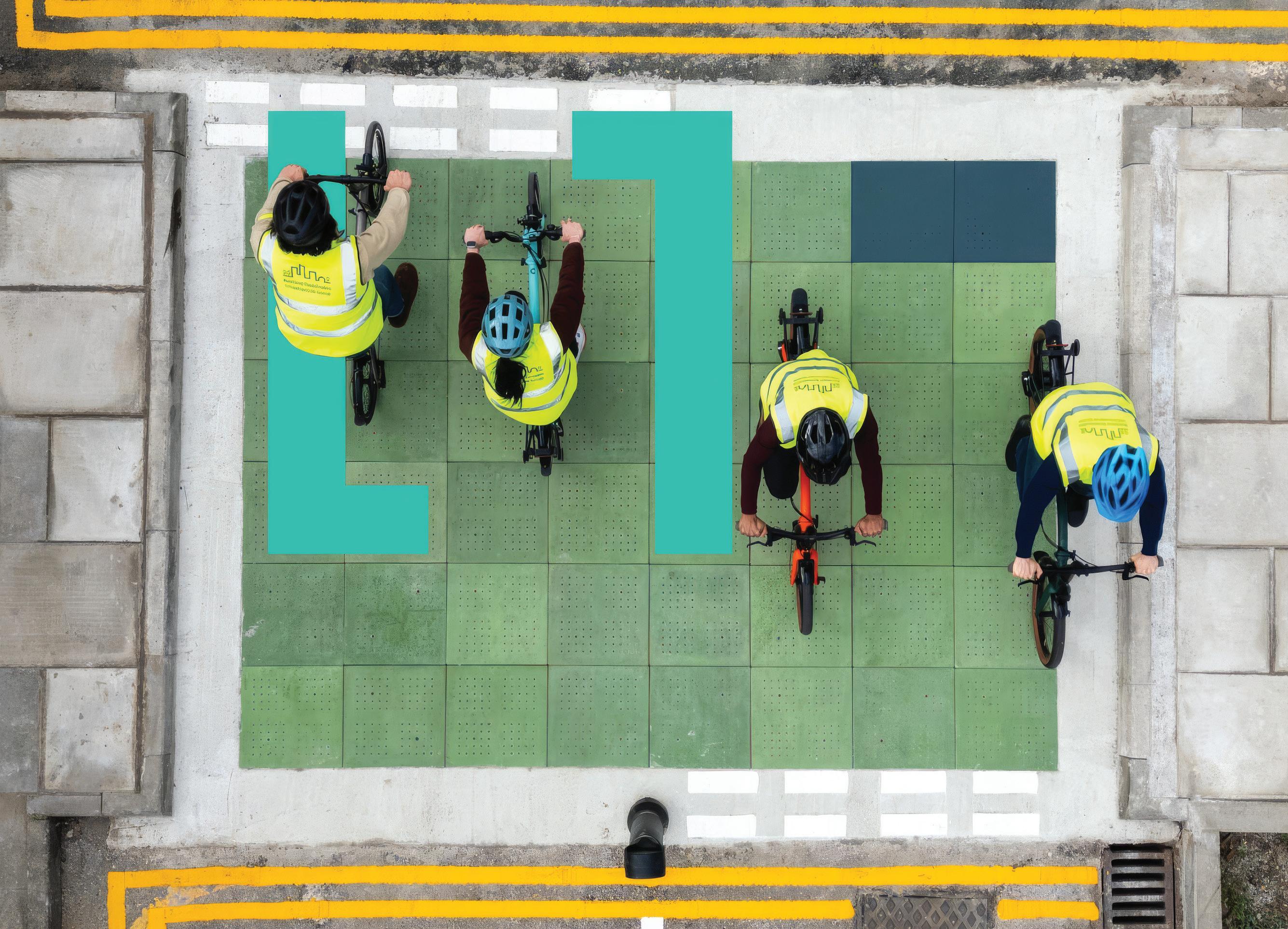
Pictured: Permeable “Kiacrete” concrete to reduce flooding, developed by Imperial College London in the Water Discovery Challenge, now installed in Liverpool city centre
Challenge prizes offer a series of incentives, with a grand prize given to whoever can first or most effectively meet a defined goal
The concept is straightforward: set a goal, offer a reward, attract the best innovators, and support those that make the most progress
WHAT KIND OF CHALLENGES WORK WELL AS A CHALLENGE PRIZE?
Challenges where the goal can be clearly articulated, but the best solutions or sources of innovation are uncertain.
Winners can either be the first to hit the target – as in the $10m Ansari X Prize, awarded for the first successful private crewed space launch. Or, more commonly, they can be those who score best against the criteria at the final deadline – as in the C$33m Homegrown Innovation Challenge, awarded to the best technology for growing food out of season.
Challenge prizes need to be applied to the right kind of problem. They work well when you are clear about what needs to be solved, but not sure where the best solutions could come from, or what they will look like.
They are also cost effective, creating a pipeline of new and improved solutions instead of betting on just one. They incentivise action and reward success, rather than paying for untested solutions.
The value of a challenge prize goes beyond the cash awards. Through the competitive process, innovators develop skills and build capacity. This helps to break down barriers to participation and supports innovators’ longer-term success. The attention generated by a challenge prize can also have a much wider systemic impact by raising awareness of a neglected problem and creating learning opportunities that shape policy and regulation.
Challenges that would benefit from fresh thinking, especially in fields that are stagnant, have few players or could draw from more dynamic adjacent fields.
Challenges where offering a cash prize could attract and incentivise new innovators with novel perspectives.
Challenges where offering a prize would accelerate progress, support scaling or create a pipeline of new and improved approaches rather than relying on a single bet.
Challenges that are neglected or overlooked, where a prize can help by raising awareness and incentivising action.

WHY RUN A CHALLENGE PRIZE?
Pictured: Dr Lauren McMillan, Dr Jawad Fayaz and Prof Liz Varga, leaders of gAIn Water, a finalist team in the Manchester Prize on AI for energy, environment and infrastructure
Challenge prizes create breakthrough innovations, help innovators thrive and unlock systemic change
The impact of challenge prizes is multi-faceted, from the immediate creation of new technologies or social innovations, to creating thriving innovator ecosystems and shifting markets
Help
innovators thrive
Behind each invention is an innovator. Challenge prizes support and nurture a whole cohort of innovator teams working towards a shared goal. As well as the cash incentive, challenge prizes offer profile raising, access to networks and often come paired with a package of innovator support to help them develop.
Create breakthrough innovations
Challenge prizes set a clear target, but they give innovators freedom in how to pursue it. That means diverse approaches and diverse solutions. And because prizes only pay out once the goal has been achieved, they give a chance to long shots, radical ideas and unusual suspects.
Unlock systemic change
The high profile of a challenge prize can raise public awareness and shape the future development of markets and technologies. Challenge prizes can help identify best practice, shift regulation and drive policy change.
CHALLENGE PRIZE INNOVATIONS
Challenge prizes create breakthrough innovations
Using the power of the crowd, they solve problems quicker and more successfully
Every day we’re surrounded by transformative innovations developed thanks to challenge prizes. Challenge prizes provide the opportunity to break out of well-worn approaches that result in the same solutions from the same people.
Challenge prizes are suitable for problems that are complex and require more than one approach to solve them. Instead of having just one solution, different and often complementary approaches to the problem are developed.
By awarding money for achieving outcomes instead of for following triedand-tested approaches, innovators aren’t restricted to delivering a predefined method. They’re free to address the
challenge in any way they wish – and often use radical, unusual or creative approaches as a result. Final ideas for Conservation X Labs’ Find the Killer Frog Fungus Challenge ranged from lamps, swabs and lasers to help to save thousands of amphibians worldwide.
Focusing on the outcomes also ensures that solutions are genuinely useful. Prizes aiming to deliver social good seek solutions that address genuine needs. The winners of the Global Learning X Prize designed their solutions around the needs of the 250 million children who can’t read and write, and made their products open source to help stimulate further innovation.
1863
Navigating at sea Longitude Prize 1714
1869
Margarine Napoleon III Butter Substitute Prize
Child labour
The Society of Arts chimney sweeping prize 1802
Ivory-free billiard balls
The Billiard Ball Prize
Driverless
CHALLENGE PRIZE CASE STUDY
Longitude Prize on AMR
The first ever challenge prize, the Longitude Prize, was launched in 1714, to seek technologies that would help sailors avoid shipwrecks by better determining their position at sea. The winner was a clock that could keep accurate time at sea, enabling navigation by the sun or stars. In 2014, leading scientists were supported by the prime minister to launch a new Longitude Prize, to mark the original’s 300th anniversary.
Through consultation with experts, culminating in a public vote on the BBC’s Horizon programme, we picked antimicrobial resistance (AMR) as the prize topic: a problem as critical to life today as navigation was three centuries ago.
The grand prize was offered to the first team that could create a diagnostic device capable of determining, in less than an hour, whether a patient has a bacterial or viral infection – letting doctors prescribe the right drugs and reduce the overuse of antibiotics. Previously this required lab testing, often with a wait of several days.
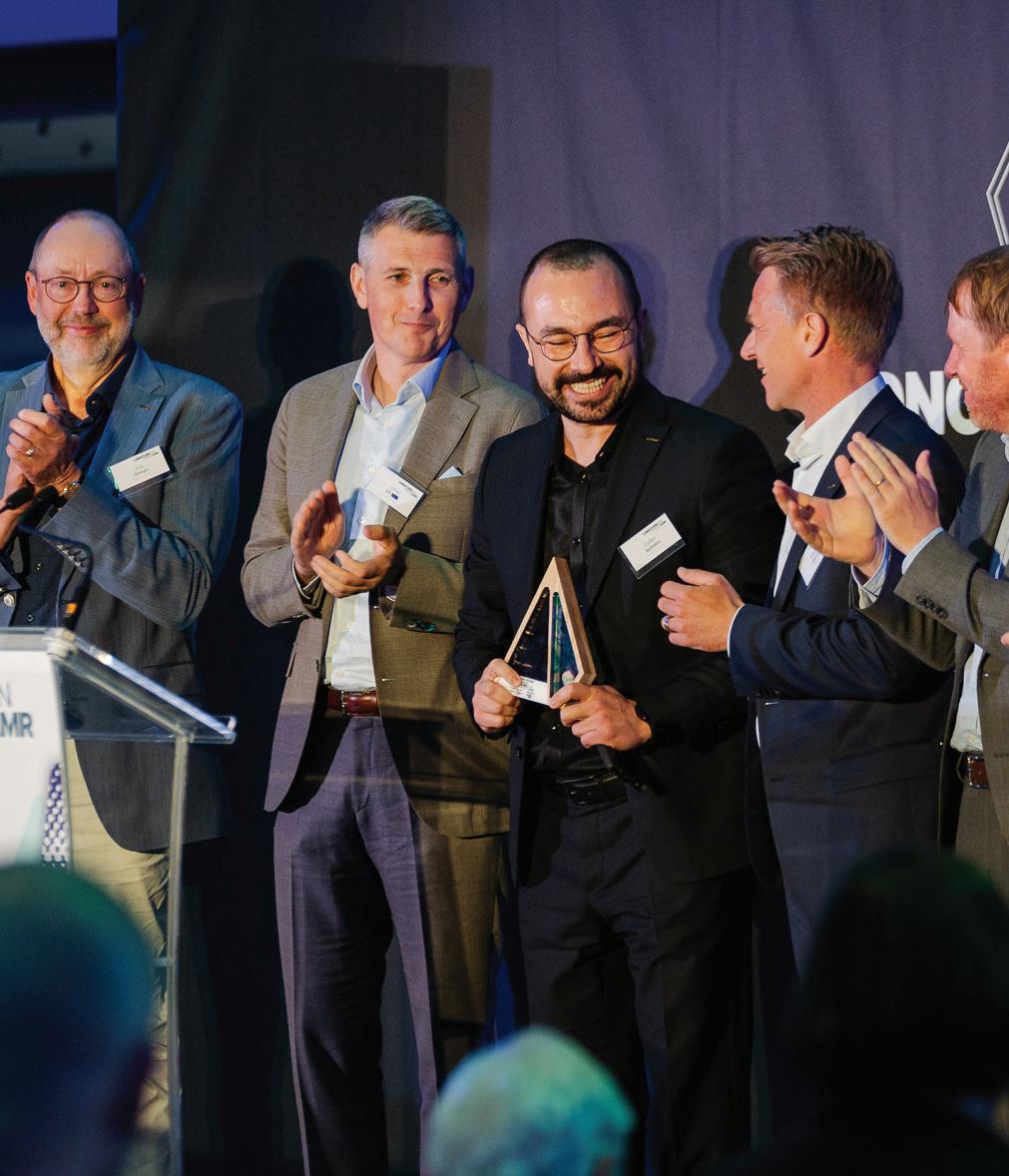
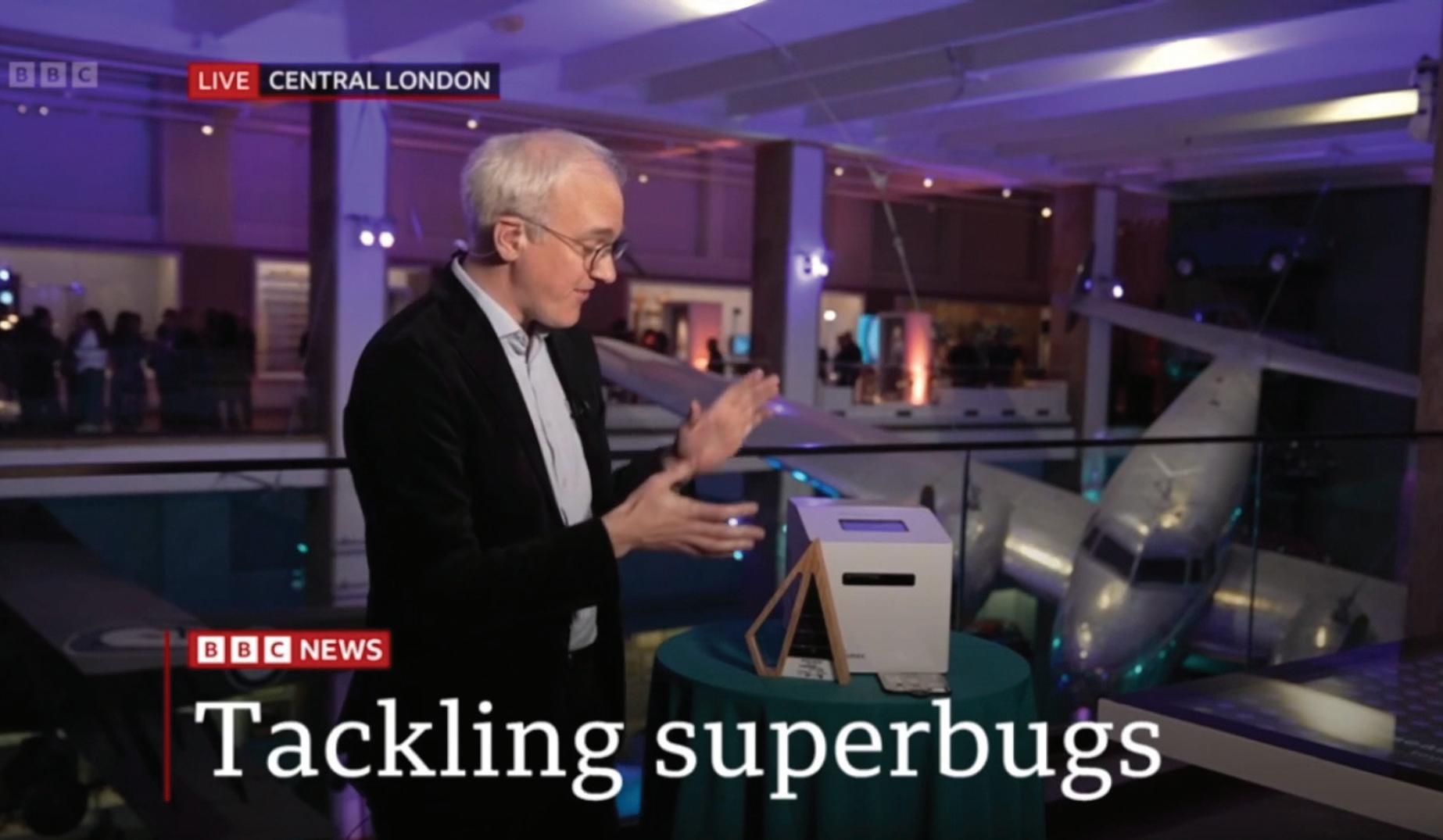
In 2024, a decade after the challenge prize opened, and after extensive validation of the technology in NHS doctors’ surgeries, we awarded the grand prize in a ceremony, covered on BBC News at Ten. The winning team, Sysmex Astrego, has begun to roll out their technology around the world.
AMBITIOUS GOALS
Challenge prizes can be set up to solve ambitious, long-term objectives.
The Longitude Prize on AMR was both unusually long and unusually large. With an £8m grand prize and three rounds of seed funding for promising teams, the prize purse was ten times more lucrative than a Nobel Prize, enough to capture the imagination of teams around the world and stimulate them to race to the finish line.
While some challenge prizes focus on incremental goals – typically judging which team has created the best solution, or made the most impressive progress, at a fixed deadline a few months or years away – the Longitude Prize on AMR did not.
The goal was very difficult: we were genuinely unsure whether there would ever be a winner, or how long it might take.
And so the competition stayed open for almost a decade, triggering the payout only once a team had finally met the ambitious threshold.
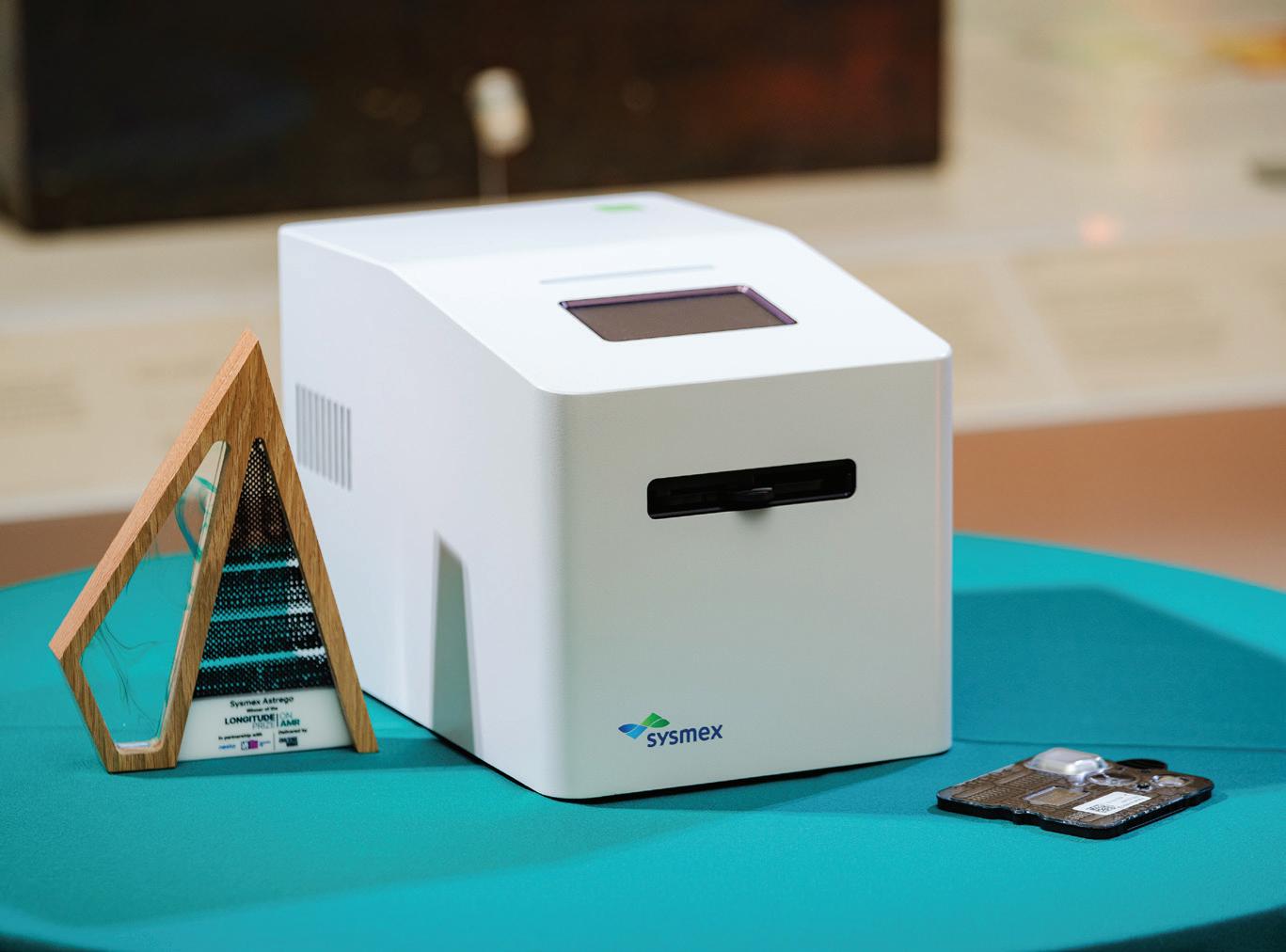
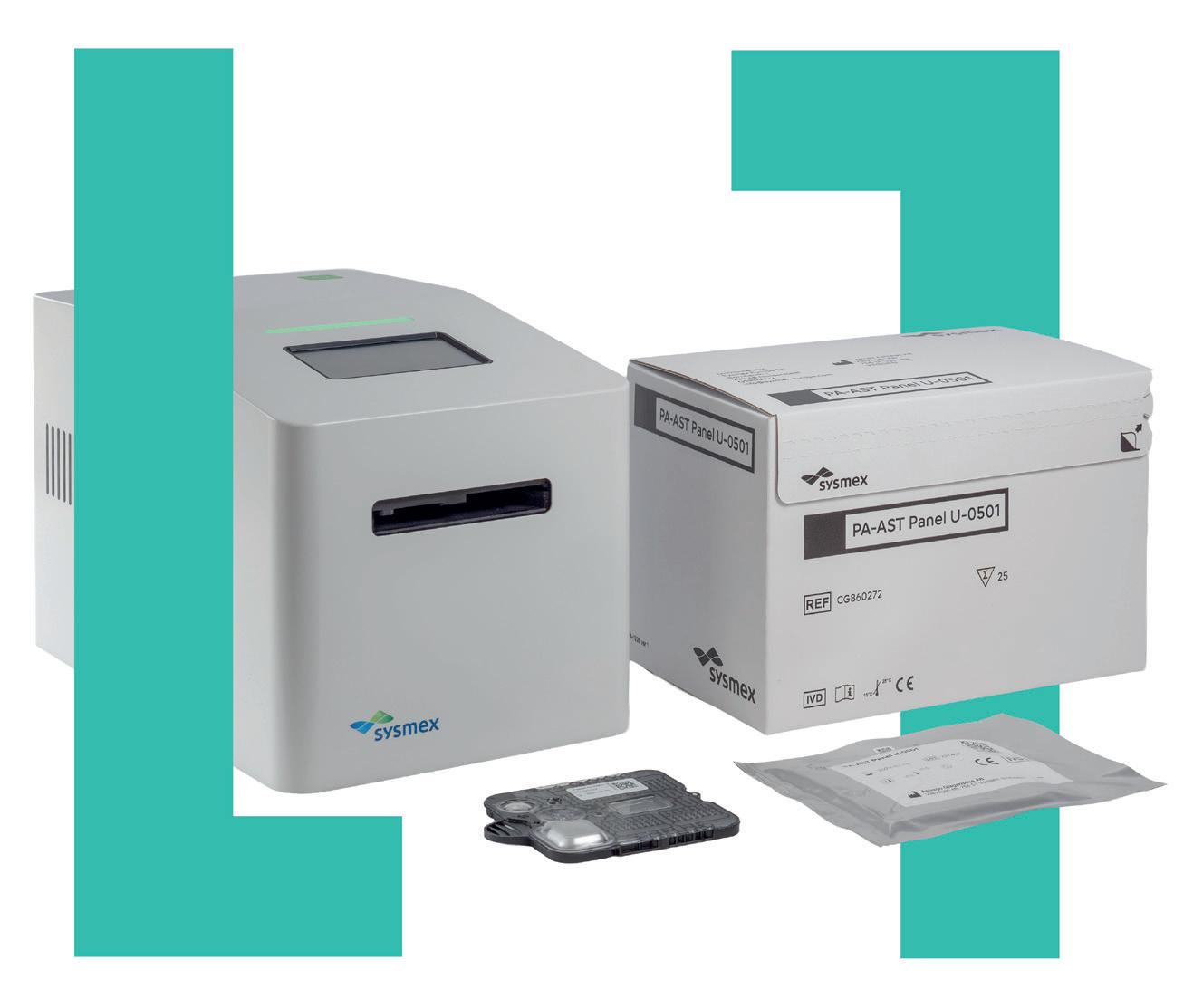
Left: Sysmex Astrego’s winning innovation, now on permanent display at the Science Museum
Right: Sysmex Astrego founder Özden Baltekin receives the £8m prize in a televised ceremony in 2024
Challenge prizes help innovators thrive
They change the risk-to-reward ratio, making it possible to support radical innovations – wherever they come from – without betting everything on an unproven outsider
Challenge prizes make it possible to open up a problem to any innovator with a good idea and the drive to make it happen. Supporting new innovators might seem risky, but the reward from backing this untapped potential can be huge. Challenge prizes purposefully break down barriers to participation by lowering the bar to entry to ensure that the field is not slanted towards established players.
They provide innovators with the resources and support that they need to compete. This support can take the form of help in developing entries, grants for finalists, upskilling in service design, testing and validation, or access to funders and networks. Tailored support develops their
capacity, while the visibility, publicity, and validation they gain from competing helps them access investors and other sources of funding.
Challenge prizes must tap into the creativity, agility, and competitiveness of innovators, whoever they might be. But bold ideas can be impractical and there is a real chance they won’t succeed.
Most challenge prizes support a cohort of finalist teams: some won’t thrive, but others will excel. That means challenge prizes can de-risk the process of finding innovative solutions by only rewarding those teams who make tangible progress, while generating a wide portfolio of potential solutions.

Pictured: Zainab Mahmoud, from Twende Green Ecocycle, winner of the Mombasa Plastics Prize, discusses her team’s recycled plastic school desks with King Charles
CHALLENGE PRIZE CASE STUDY

Open Up Challenge
The UK banking sector lacks competition – particularly for small business banking. The service is uniformly mediocre: customers aren’t happy, but there’s little incentive for them to move. The Competition and Markets Authority (CMA) stepped in to shake up the sector by forcing banks to adopt open banking.
Open banking is a set of technologies and standards that makes different financial services interoperable, and can enable more competition – like your accounting software being able to see what’s going on in your bank account, or price comparison sites for loans being able to see your financial information.
To launch open banking with a bang, the CMA partnered with us to establish the Open Up Challenge, a series of three challenge prizes in 2017, 2018 and 2020 to imagine and create new services that used this new technology.
£6.5m was awarded to teams across three iterations of the Open Up Challenge.
Over 80% of the teams who participated reported that they were able to bring their innovations to market faster, and that they understood the open banking standards better, thanks to the challenge prize and data sandbox.
EXPLORING INNOVATION
Prizes are often focused on creating solutions to a specific problem, but they can also be used to explore and ideate new technologies and services that respond to an exciting but unproven opportunity
What could the new open banking standards be used for? What would the most exciting application be? The CMA wanted to kickstart the innovation in open banking, exploring the new technology’s opportunities before the infrastructure even went live.
And so, to help teams train their algorithms and test their prototypes, together with our data partners, we created a unique data sandbox accessible only to the finalist teams. This featured a range of banking data including huge volumes of anonymised transaction data.
Access to the data sandbox was a huge incentive to teams, alongside the financial incentives offered as part of the challenge.
Challenge prizes unlock systemic change
They can drive broader advancement by generating evidence, raising awareness and informing policy change
While challenge prizes typically focus on a specific problem or barrier, they often seek broader systemic change. This is particularly true of larger challenge prizes that reflect big leaps forward or especially difficult challenges to solve. This scale and ambition can lead to a noticeable shift in the whole system.
The high public profile of these challenge prizes also offers an opportunity to raise awareness and for funders to signal their intent to key stakeholders and the wider public. With their focus on impact, prizes are a concrete way to demonstrate commitment to delivering a longerterm mission.
Awareness or public support is one kind of systemic impact. A prize can also attract new investors to a field, generate evidence of best practice, or shape new technologies and approaches as they emerge.
Prizes are a chance to reorientate and shape markets, as they create opportunities to develop insights into the problem area and learn from innovators who otherwise might not participate. They are increasingly used as a tool to shape policy and regulation, often in concert with other initiatives that also aim to achieve systemic change.


Autonomous vehicle technology –from robot taxis, to the advanced driver aids that you might have on your own car – was kickstarted by the Grand Challenges. These were a series of challenge prizes run in 2004, 2005 and 2007 by the US defence innovation agency DARPA.
Many of the teams were led by universities, but they quickly attracted the interest of industry. By the time of the 2007 competition, Volkswagen, Honeywell and Raytheon and General Motors had all sponsored teams.
The challenge prizes launched careers. Chris Urmson, technology lead for the 2007 winning team, and Sebastian Thrun, winner of the 2005 grand prize, later led Google’s driverless car project.
Suppliers to the teams benefited, too: Velodyne Lidar built laser sensors for five of the six top ranked teams in 2007. From this springboard, they won contracts with Google, Caterpillar, Ford and Hyundai.
Google’s Waymo taxis now operate in cities across the United States.
Pictured: Google’s Waymo driverless taxi traces its technology back to DARPA Grand Challenge teams including the 2005 winner, Stanford Racing Team’s “Stanley” (inset)
HOW CHALLENGE PRIZES CREATED A NEW INDUSTRY
Challenge prizes in context
Funders and policymakers have a wide toolkit of open innovation methods at their fingertips: challenge prizes are a distinctive option
Challenge prizes
R&D grants
Investing
Accelerators
Procurement
Picking the right tool isn’t always straightforward. Different methods have different strengths and weaknesses.
For many funders, it makes sense to have a portfolio of methods playing off each other’s strengths. That can mean combining innovation projects into bigger, overarching innovation funds that include challenge prizes alongside other methods.
Other popular tools for supporting innovation include:
R&D grants: providing grant funding to one or more organisations to develop innovative solutions.
Procurement: running a process to acquire or license an innovative solution on commercial terms.
Investing: taking an ownership stake and providing capital to an innovative firm.
Accelerators: running a structured programme to support early-stage firms.
Challenge prizes are distinctive on a number of dimensions:
They have high PR potential compared to any other method, tapping into public awareness and raising the profile of finalists and winners. Other methods tend to fly under the radar, though not always – the UK government’s procurement of vaccines during the covid pandemic made headlines.
In common with accelerators, challenge prizes allow a great deal of flexibility to teams, allowing them to pivot and change their approach, providing they are still addressing the challenge. This compares to procurement and R&D grants where teams have to stick to contractual deliverables once agreed.
Challenge prizes are very open to different approaches and to teams with different backgrounds – often brand new teams set up just to participate. Other methods tend to place much greater importance either on the team’s track record, or on micro-managing their approach.
They have a relatively specific goal: while not as narrow as procurement, which sets out a detailed spec to respond to, challenge prizes have clear objectives. Other methods may have a broader exploratory or thematic focus.
They tie funding to outcomes: they pay out based on success, where other methods tend to focus on refunding costs incurred, or pay out commercially negotiated rates.
HOW TO RUN A CHALLENGE PRIZE
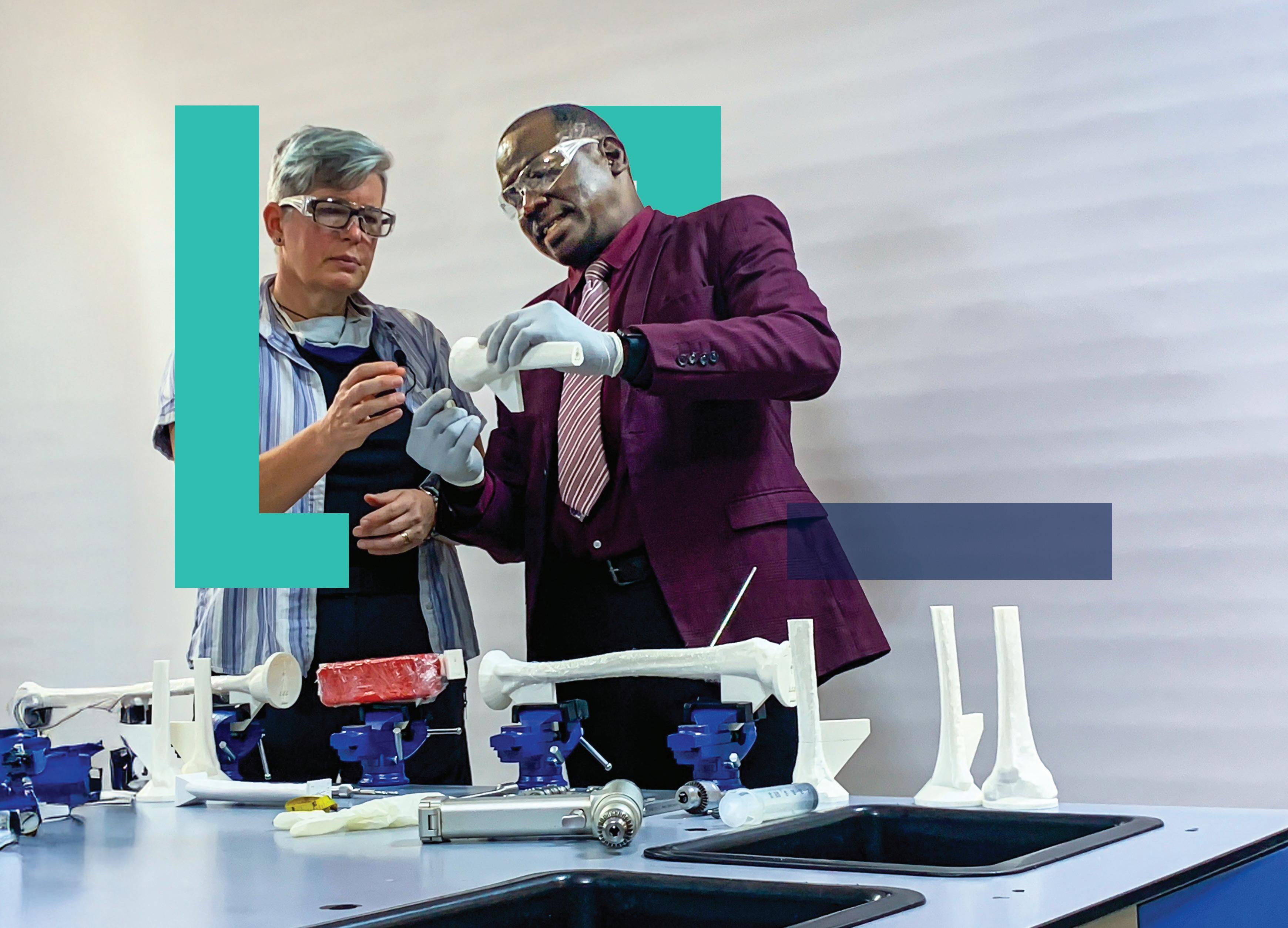
Pictured: Dr Habila Umaru, co-lead of Team Tibial Fracture Fixation, runner up in the Global Surgical Training Challenge, discusses the team’s innovation with Dr Catherine Mohr, president of Intuitive Foundation
Running a successful challenge prize is more than just offering a reward
Spend time designing
it
right, running a compelling competition – and follow through as solutions grow and change the world
A challenge prize is a big investment in time and resources. It’s not just the money that’s handed out as financial incentives.
Behind every breakthrough is the team that runs the challenge prize, audiences that are engaged – and most importantly of all, the innovators who compete to meet your goal.
It pays to get this right.
Running a good challenge prize requires good planning and strong execution.
It takes money: enough funding to cover your prize purse, but also to run the competition well.
It takes time: enough to design the challenge prize with care, and enough for your innovators to create their breakthrough.
It takes expertise: in designing and managing challenge prizes, in working with innovators – and also technical and economic expertise in the sector you’re targeting.
“Our work with Challenge Works on the Toyota Mobility Unlimited Challenge (see p19) was critical for us on many fronts. Since we launched the challenge, it has served as a proof point to our commitment to mobility and a launching pad for others to connect with us in an expanded space.
The work allowed us to connect with end-users, entrepreneurs, advocates, practitioners, thought leaders, and SMEs across multiple disciplines.
This diverse perspective brought new ways of thinking about old problems in the assistive technology space as well as our own perspective on mobility in a broader sense.
Not only did the challenge highlight innovations in the space, but helped raise awareness on the broader challenges that exist for many when it comes to living barrier free. Challenge Works was really the driver to make this happen in a thoughtful and organised manner.”
It takes networks: you can’t do this alone. You need judges, advisers, spokespeople and more.
Ryan Klem Toyota Mobility Foundation
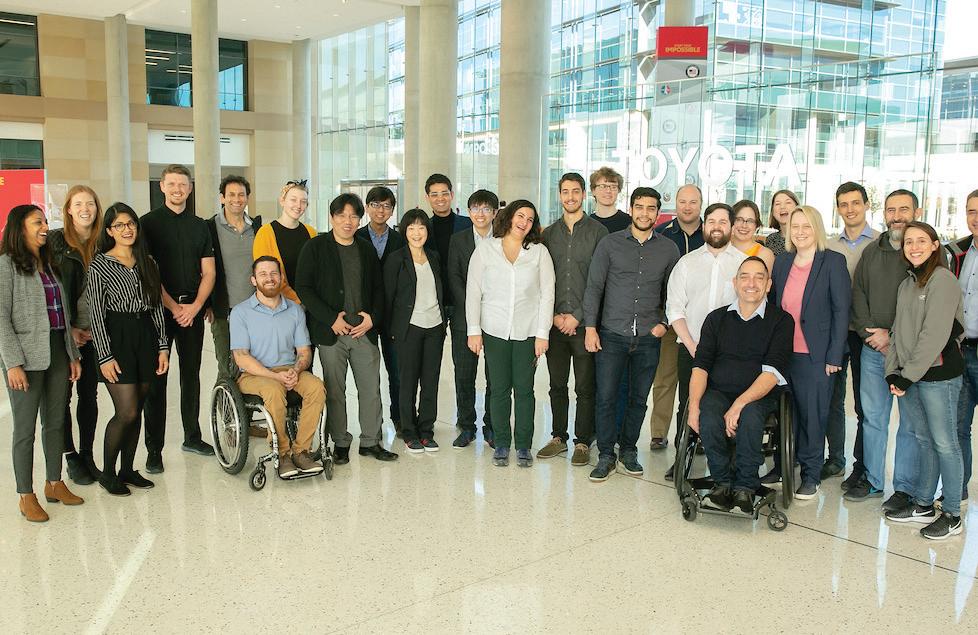
Pictured: Mobility Unlimited Challenge finalists met for four days of workshops at Toyota North America HQ in Texas
Challenge prizes, from start to finish
DESIGN
What happens before launch
Typically3-9months
KEY STAGES & MILESTONES
Analyse the innovation landscape and get clarity on problems and opportunities
COMPETITION
What happens between launch and award
Spread the word and attract amazing teams
Refine your challenge prize design and make sure it can turn it into reality
ACTIVITIES INCLUDE
Research the problem and innovation landscape
Create and iterate different options for your design
Communicate the exciting opportunity
Engage with experts and stakeholders
Plan for the challenge prize's launch
Raise profile of innovator teams
First, you must design the prize well Understand the topic, consult with experts and end-users and come up with options for how the challenge prize should be structured and focused.
Then focus and prepare for launch, confirming key elements of design including criteria, timelines and rules – as well as getting your team ready for the challenge prize to open.
GROWTH
What happens after award
Typically9monthsto3yearsTypicallyseveralyears
Offer milestone prizes and innovator support to help the shortlisted teams thrive
Narrow the field by shortlisting the most promising innovators
Award milestone prizes
Test and validate shortlisted solutions
Ensure robust governance and oversight
Select the best teams using expert judges
Then it’s time for the competition itself. You can’t just sit back.
Open the challenge prize for entries, spread the word and mobilise innovator teams, support the most promising to compete, and run a fair selection process to pick the grand prize winner Strong programme management is key, but this is also a time to be creative, seizing opportunities and making connections
Test, verify and pick the grand prize winner
Publicise the winners, advocate for scaling and evaluate impact
Build capacity of teams through innovator support
Manage the stakeholders and partners
Award the grand prize
The challenge prize is now over but the winning innovation is changing the world
Promote the winners and their innovation
Facilitate investment and scaling for the winners
Evaluate your impact and share lessons
A good challenge prize doesn’t stop there: it’s time to grow the challenge prize’s impact and legacy
Evaluate, share learning and amplify the winning solution.
This is when all the hard work pays off, and you can watch your innovators and their inventions change the world.
This is what a good challenge prize looks like
As you work through your challenge prize design, use these prompts to shape your thinking
The innovations will be adopted or taken to market
These are our green light criteria: if your challenge prize design ticks all these off, it’s likely to be a good one. If your idea doesn’t yet hit them all, don’t give up: try revisiting some of your assumptions and decisions before deciding a challenge prize isn’t the right approach.
Challenge prizes provide an incentive for innovators to invent. But the grand prize won’t cover the cost of implementing it forever: the innovation needs to thrive on its own merits. If you think there’s a clear path to solutions being adopted – or even better, investors and customers lined up – you meet this criterion.
The problem is well defined and there’s a clear goal for innovators to work towards
Whether narrow or broad, challenge prizes have to be structured around a welldefined problem and challenge statement. If you can define a clear goal, you meet this criterion: innovators will know what it takes to win, and judges will have objective criteria to guide their decision.
The incentives will accelerate progress
Challenge prizes aren’t about funding existing work, or supporting teams to deliver a service, regardless of how deserving and impactful they are. They are about incentivising innovation: new ideas, services or technologies that leave a legacy. If you have defined a problem that requires ingenuity, invention or creativity to solve – not just hard work – then you meet this criterion.
The best solutions will come from opening up the problem to a wide pool of innovators
Challenge prizes are open competitions: they are based on the principle that new innovators bring fresh thinking and a better range of solutions. If you think your topic is one that would benefit from new approaches and unusual suspects, you meet this criterion.
The incentives will motivate innovators
Innovators are key to your success. They need to be inspired and supported to achieve success, otherwise you won’t have any winners. Consider your budget, resources and profile: is the opportunity you’re offering attractive enough that innovators will enter your challenge prize? If so, you meet this criterion.
DESIGN
Understand your challenge
Map the innovation landscape and identify where a challenge prize could unlock change
Good and bad challenge prizes look very similar: they set a goal, they offer an incentive, they have rules and criteria and invite teams to innovate.
A good challenge prize focuses on a real-world problem or a promising opportunity. It stimulates new ideas and inventions, leading to positive change.
A bad one just wastes everyone’s time.
And so, before you launch your prize, you need to answer some tough questions.
What, precisely, is the problem you’re addressing, or the opportunity you want to pursue? What kind of innovation would help? Could a challenge prize unlock it?
And, will all of this actually lead to the impact that you want?
Research academic journals, reports, gather statistics, read media coverage, and more. Seek insight from experts and people with lived experience of your problem area. Try to pin down a good understanding of what barriers and opportunities there are, why solutions are lacking and what the art of the possible is.
Consult widely as you make decisions: what are the wishes and aspirations of the key stakeholders in your ecosystem?
The people and organisations you speak to during research can bring you opinions and visions, as well as facts and evidence.
Reflect on what your organisation wants. Quick fixes or a slow burn?
A specific solution, or a portfolio? What resources do you have – and what level of ambition? How much risk are you prepared to take? Clarify your objectives, as well as your red lines.

By gaining a good understanding of the topic, you should be able to articulate opportunities that you could focus your challenge prize on.
Write them up: a short draft of each option you have for the challenge prize’s design – the problem or opportunity, the goal, the ambition, the duration, the incentives – is a valuable prompt for getting feedback, and to help you pick the most promising design for your competition.
Pictured: A challenge prize ideation workshop exploring barriers and opportunities for innovation
CHALLENGE PRIZE CASE STUDY

Sustainable Cities Challenge
Around the world, more and more of us live in cities. Cities bring unique benefits to their residents, including dynamic economies, culture and opportunities. But as cities grow and develop, they depend ever more on efficient, accessible and sustainable mobility.
Toyota Mobility Foundation partnered with us to run the Sustainable Cities Challenge. A key objective was to engage with city governments and innovators around the world in identifying – and finding solutions to – the challenge of urban mobility.
The challenge prize is run in partnership with the cities of Detroit, Venice and
Varanasi, and so innovators know that the problems they are working on are serious issues with political buy-in, a real opportunity to achieve impact and commercial return. Innovators share a prize purse of $9m to develop solutions to problems faced in each of the three cities.
By focusing on place-based challenges, but being open to innovators from around the world, the challenge’s finalist teams are able to bring global expertise to bear on local problems, engaging and learning from local stakeholders and partnering with the city governments.
IDENTIFYING PROBLEMS
Challenge prizes are a great way to create solutions to problems. And many funders have also found that they’re a great way to identify problems, too: as eye-catching initiatives that everyone wants to contribute to and be involved in.
A whole year before opening to entries, during its design phase, Challenge Works and the Toyota Mobility Foundation launched a global call to cities to submit their ideas for innovation challenge prizes that would solve mobility problems they faced. A panel shortlisted ten cities on four continents to further explore these topics, before picking the three host cities.
Each city hosts a challenge prize tailored to their chosen topic.
In Detroit, it focuses on cutting fossil fuel use and costs for freight operations; in Venice it seeks solutions that increase the use of low- and zero-carbon transport modes; while in Varanasi it rewards teams working on data-driven solutions that make crowded pedestrian areas safer.
Pictured: The Varanasi City Challenge, co-created with the city government, focuses on reimagining pedestrian movement in the city’s historic core, which can become dangerously crowded during religious festivals
Prepare for launch
Test, iterate and refine your challenge prize’s design, then put a strategy in place to turn it into reality
If all has gone well, by now you have a good idea of the design of your challenge prize, or a few strong frontrunners. You know from your research what’s likely to be possible. You know from your engagement that people are excited about it. And you know it aligns with your strategy and resources.
It’s now time to focus and prepare for launch. Finalising a challenge prize design involves making many decisions and pinning down a lot of detail.
This includes:
Finalising your problem or opportunity definition: the public declaration of what impact your challenge prize aims to have.
Turning your goal into a compelling challenge statement: a short call to action that tells potential entrants exactly what they need to do to win the grand prize.
How to run a challenge prize
Crafting judging criteria: a set of tightly-defined and unambiguous rules for your judges to apply when picking the finalists and winner.
Defining structure and incentives: how long will innovators be given? How many will receive milestone prizes? And how much of your prize purse goes on the grand prize?
Planning innovator support: beyond the financial incentives, what else would help motivate and support the innovators to create the best solution?
In this work, it helps not to work alone: getting feedback and input from potential entrants and stakeholders isn’t a conflict of interest, it’s essential in crafting a prize that appeals to them. And, you’ll plan a better selection process if you consult your future judges.
Once the design is signed off, you need to put in place everything that’s needed for launch.
This includes:
Preparing all the innovator-facing materials, from web pages to handbooks, that you will need when you open for entries.
Working with public relations professionals to plan the communications campaign during and following your launch.
Bringing on board everyone you need – not just your own team, but contractors, technical assessors, judges and more.
Having all of the legal infrastructure in place – including terms and conditions, privacy policies and innovator contracts.
THE HOMEGROWN INNOVATION CHALLENGE’S CHALLENGE STATEMENT
The Homegrown Innovation Challenge is a C$33m challenge prize offered by Weston Family Foundation. WFF’s problem definition focuses on the need to boost food security in Canada by growing crops that currently have to be imported when out of season.
To keep the challenge prize focused, the challenge statement is much more specific. It sets innovators the task of creating systems suitable for berries. Research during the design phase showed that this goal would stretch technology beyond existing systems suitable for quickergrowing crops, but potential entrants thought it was achievable by the January 2028 final deadline.
To win the grand prize, innovators have to:
Create and deliver a marketready system to reliably, sustainably and competitively produce berries out of season and at scale in Canada.
CHALLENGE PRIZE CASE STUDY
Aqualunar Challenge
There is water ice buried in the Moon’s dusty craters, but it contains many contaminants. For astronauts or robotic missions to use this water, they will need technology that can purify it.
Creating this technology – and finding applications for it on Earth – was the goal of the Aqualunar Challenge, an initiative we launched in partnership with the UK Space Agency.
The prize stimulated new entrants into the space sector, including the £150,000 grand-prize-winning team, Naicker Scientific Ltd. Founder Lolan Naicker, an engineering consultant, had been looking for space prizes to enter for years and jumped at the opportunity to compete in this challenge prize.
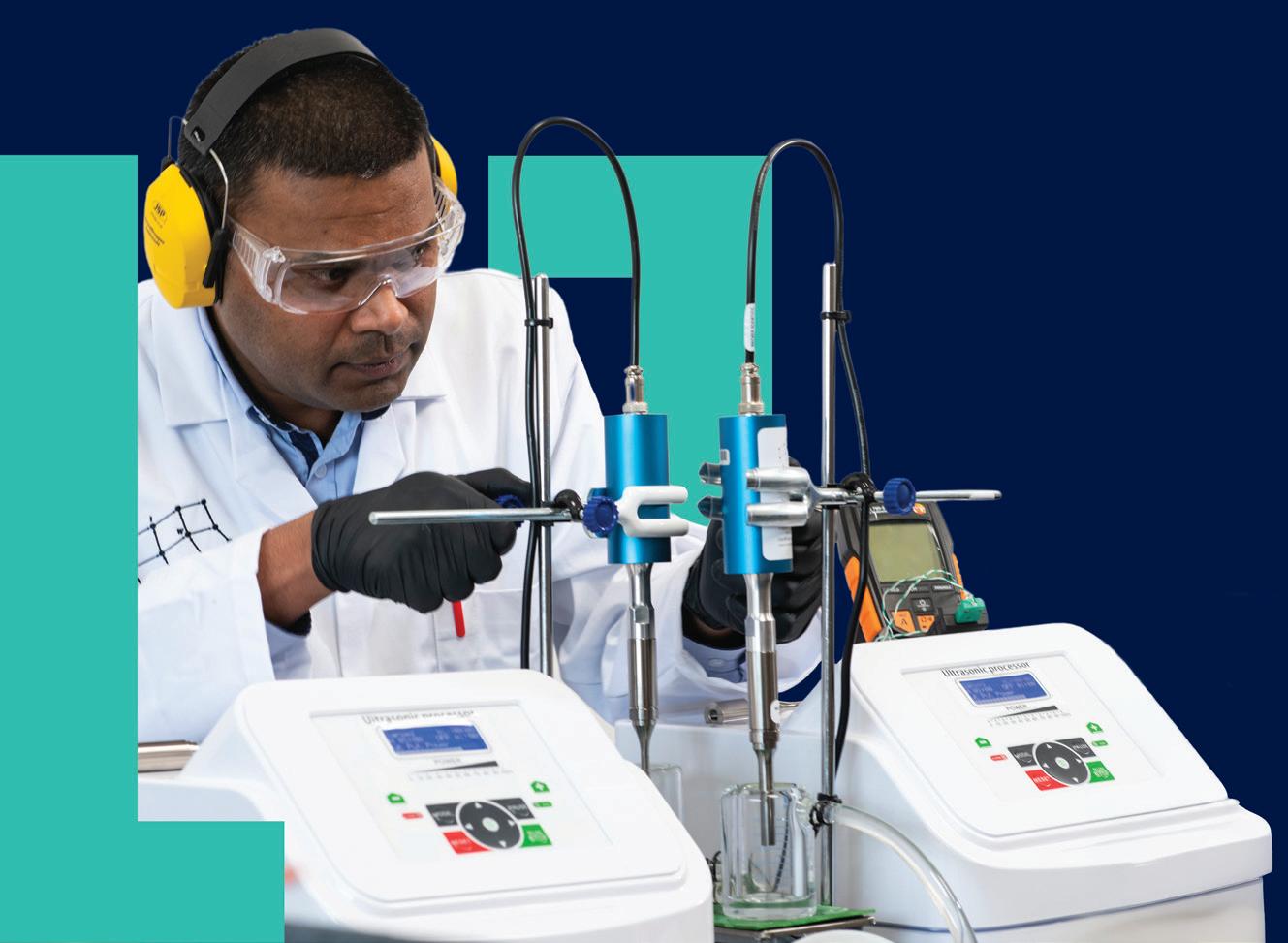
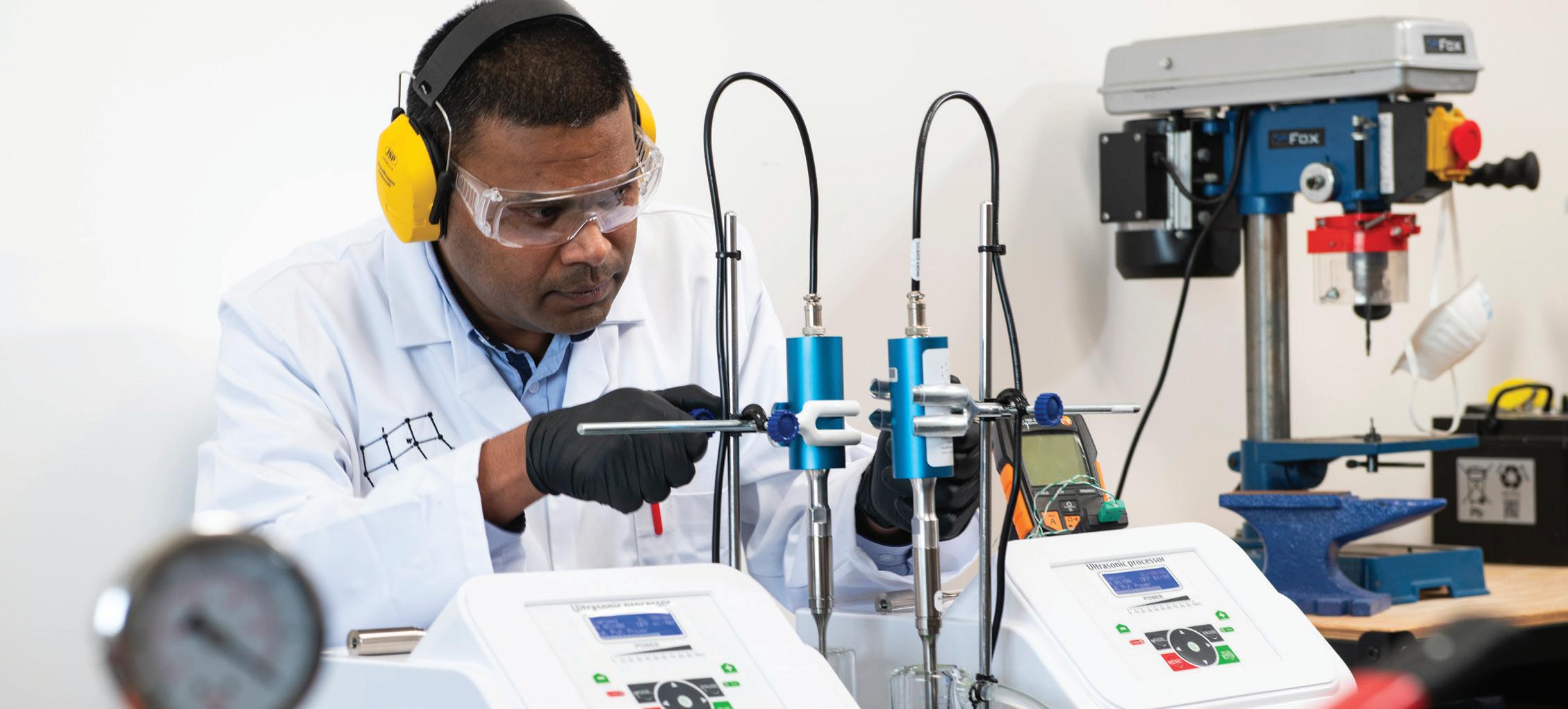
His technology uses ultrasounds to create tiny bubbles in water. When they collapse, they break down contaminants and release free radicals that further purify the water. Following his win, Naicker secured new contracts, applied for patents and hired new staff, growing his business, with part of his technology scheduled to go into space on a test flight in 2026.
Other finalists leveraged their R&D for the Moon into terrestrial applications, including a team of scientists from Queen Mary University of London who secured interest from water companies to use their technology to remove ‘forever chemicals’ from sewage.
SOLVING PROBLEMS
Challenge prizes are often deployed to source diverse solutions to very specific problems.
A distinctive feature of the Aqualunar Challenge was that the goal it set innovator teams was tied to an extremely specific use case: teams had to develop a technology capable of deployment in a detailed lunar mission scenario, and the prize criteria included specific contaminants that the technology had to remove.
That ensured a perfectly level playing field between teams: everyone was developing technology that solved exactly the same problem.
But teams still had huge leeway to pick their favoured design and engineering approach, with finalists using methods as varied as microfiltration, distillation, supercritical water oxidation and ultrasonic cavitation.
Pictured: Lolan Naicker, winner of the Aqualunar Challenge, demonstrates how his technology can extract water from lunar soil
FROM LAUNCH TO AWARD
Challenge prizes vary in their timelines and number of stages, but they usually share an overarching structure in which you first mobilise teams, select finalists and winners to narrow the field, and provide support along the way.
Mobilise your innovators
Challenge prize delivery begins with a campaign of outreach, to persuade innovator teams to enter and to activate the broader ecosystem
COMMUNICATIONS: CRITICAL FOR A SUCCESSFUL CHALLENGE PRIZE
Challenge prizes are a publicity stunt – in a good way. A high profile boosts your impact.
Without innovators, the challenge prize won’t be won and won’t have any impact.
This phase of work is heavy on communications, but also on networking and stakeholder engagement. Bringing in the best range of entries from a diverse and well-qualified set of entrants isn’t a passive exercise: you’ll need to identify your strategic audiences, pick up the phone, turn up to events, and work with industry and sector partners to spread the word.
The entry period typically lasts at least two months, but often longer, if the challenge is complex or multidisciplinary, or where entries are likely to need to come from consortia, rather than small teams.
At launch, strong communications help mobilise innovator teams. Communications doesn’t just ensure that more people have heard of the opportunity. Widespread coverage and a high profile raises the prestige of the challenge prize, making it more credible, and therefore more convincing for teams to enter.
As the challenge prize progresses, publicising the competition and the innovations being created acts as a powerful non-financial incentive that sits alongside the prize purse. It’s not unusual for finalist teams to gain new customers and investors thanks to media coverage.
Then it’s time to award the grand prize. Celebrating the winner is part and parcel of a competition. The profile that comes from winning is an incentive to teams, but it’s also a moment to raise awareness of the topic, ensuring the challenge prize leaves a legacy of impact.
Pictured: The Longitude Prize on AMR winner was announced live on BBC News at Ten
CHALLENGE PRIZE CASE STUDY

Afri-Plastics Challenge: Accelerating Growth
The Government of Canada wanted to contribute to its international development goals, address government objectives on gender equality and to meet commitments to tackling marine plastic pollution made by prime minister Trudeau at the G7. And so they partnered with us to run a challenge prize with three tracks tackling different aspects of the plastics pollution problem in sub-Saharan Africa.
Accelerating Growth offered a prize purse of £3.75m, including a £1m final prize, for innovations that unlocked scale in plastics collection or processing.
Alongside Accelerating Growth, we also ran two other tracks focused on tackling plastic pollution in sub-Saharan Africa: Creating Solutions (focused on plastic-free products) and Promoting Change (focusing on marketing and behaviour change), plus a spin-off prize on youth entrepreneurship, the Mombasa Plastics Prize.
CREATING SCALE
Challenge prizes don’t have to focus on technological R&D: they can also focus on rewarding innovations in business models, marketing and management that unlock impact at scale
Accelerating Growth was only open to companies and organisations who were already operating at a small scale in the plastics value chain, but had ideas for how to supercharge their growth. During the finalist phase, teams had to demonstrate sustainable scaling in their business model. Among the criteria they had to meet to be considered for the final prize, teams had to demonstrate that they had grown their business to collect or process at least 250 tonnes of plastic per month.
While some teams’ entries were underpinned by technology – such as converting plastic waste into cooking gas – this was not required. The winning team, GIP-Togo, created an innovative public-private partnership for collecting, sorting and recycling waste in Togo’s major cities.
Pictured: The moment judges announced the winners of Accelerating Growth: grand prize winner GIP-Togo’s Martine Sawadogo embraces fellow finalist Kate Opoku. The joy and excitement of winning is part and parcel of a challenge prize
Select your finalists and winners
In a challenge prize, you’re setting a clear goal. So it’s important to have robust selection processes to pick your finalist teams, and your grand prize winner

It’s not just a question of fairness. Clear victory conditions mean teams can make a rational decision whether or not to compete.
Set the judging criteria during the design stage and stick to them. In most prizes, the same criteria apply at the point of entry, and to award the grand prize. Be clear on exactly what teams need to do to win – and provide guidance for entrants and judges on what good looks like.
The selection process must be tailored to your challenge prize’s focus and objectives. For instance, in the
Manchester Prize, which sought a portfolio of market-ready AI solutions, a cross-disciplinary judging panel weighed up criteria including innovation, impact, commercial viability, safety, and technical feasibility. The Ansari X Prize was much narrower. It focused on a single pass-or-fail criterion: being the first team to launch a human into space.
Judges aren’t just a source of expertise, they also guarantee an independent, credible decision. Having a diverse range of experience on the panel is critical if your criteria require them to weigh up evidence from different domains.
SUPPORT YOUR INNOVATORS
You could sit back and let the teams battle it out against each other – and see who comes out on top. But we prefer a nurturing approach.
Most challenge prizes have a finalist phase. That gives you privileged access to a cohort of teams working on the challenge you care about. If you give them some support, you can help them create better solutions and create innovative capacity that outlives the challenge prize.
Think about where you can add most value, and whether you can offer something to the teams that they couldn’t access without your help.
Support we’ve offered in the past includes skills development and mentoring to early-stage innovators, facilitating access to patient data to drug discovery researchers, providing bespoke data environments that let teams prototype their solutions and one-on-one support from regulators
Pictured: MemoryAid, by Western Sydney University, is a finalist solution in the Longitude Prize on Dementia
CHALLENGE PRIZE CASE STUDY


Mobility Unlimited Challenge
The wheelchair has changed remarkably little in many decades. And yet, other similar sectors, like automotive, have progressed rapidly, thanks to advances in smart technology and precision engineering. Toyota Mobility Foundation commissioned us to develop a challenge prize that brought cutting edge technology to support the mobility of people with paralysis: the Mobility Unlimited Challenge.
We challenged innovators to come up with radical new mobility tools for people with paralysis. Finalists’ solutions included a robotic exoskeleton that grips and moves the user’s legs and technology for stimulating
muscles that no longer receive nerve signals. But the $1m grand prize was awarded in 2020 to Scottish inventor Andrew Slorance for his Phoenix-i smart wheelchair.
Slorance is himself a wheelchair user, having broken his back in an accident as a child. He used the insight he had from his lived experience to design an ultralightweight wheelchair that can read the surface of the road, gently shifting the centre of balance and applying brakes, making it far easier to navigate uneven, hilly or bumpy surfaces. Thanks to the challenge prize, the Phoenix-i is now available to buy.
ENGAGING END USERS
Many challenge prizes feature advanced technology at their core, but aren’t about engineering and product design alone: they are also about putting users, their needs and desires in the driving seat.
The Mobility Unlimited Challenge was designed around its users, people with lower limb paralysis. Prior to the challenge prize’s launch, our researchers engaged widely with users of assistive technology, through interviews, visits and surveys, using the insights they shared to shape the challenge statement and judging criteria.
And once the challenge prize had launched, we set clear expectations for finalist teams that they had to demonstrate real and deep involvement of people with paralysis in the design and testing of their solutions in order to be eligible for the grand prize. Because there is no point creating a product that nobody can use, or wants to use.
Pictured: Andrew Slorance’s Phoenix-i smart wheelchair, winner of the Mobility Unlimited Challenge
GROWTH
Celebrate the winners and amplify the legacy of your challenge prize
The end of a
challenge
prize isn’t just an event, it’s an ongoing process: the magic happens in the months and years after you award the grand prize
Challenge prizes culminate in a burst of adrenaline and emotion when the grand prize winner gets announced to the world. Celebrate this moment!
But you shouldn’t stop your efforts there. And nor should your winners.
In the months that follow the award, it’s good practice to evaluate your programme: how well it was delivered, and whether it achieved the impact goals you set at the start. Even better if you can repeat this a few years later, to find out whether your innovator teams went on to change the world.
We’ve also found that post-award innovator support can be valuable: helping winning teams make the most
of their victory in the prize to take their businesses to the next level. For instance in the Aqualunar Challenge, we offered the top three teams a further three months of mentoring, advice and support with further funding applications, to help cement their success.
Keep an eye on broader changes, too – has the challenge prize changed the way your organisation works? Influenced policy? Raised awareness?
Your team will gradually dial back its involvement. But the challenge prize’s legacy should live on: in the breakthrough innovations created, in the innovators you helped to thrive and in the systemic change you unlocked.
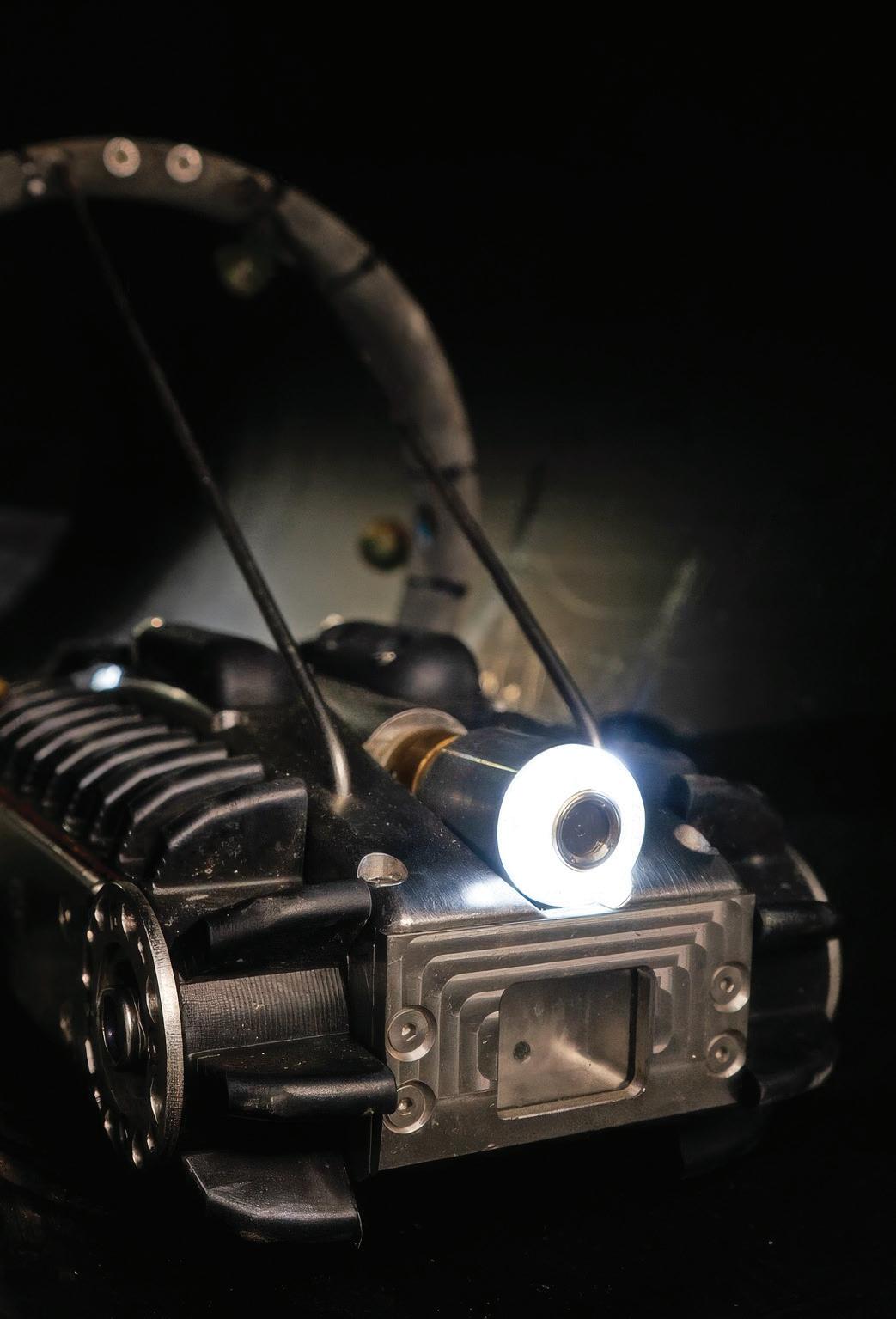
Pictured: A “pipebot” robot for inspecting underground infrastructure, part of a project in the Water Breakthrough Challenge 2: Catalyst Stream
CHALLENGE PRIZE CASE STUDY

Dynamic Demand Challenge
With growing proportions of wind and solar power in the electricity grid, power supplies are becoming increasingly unpredictable. When it’s windy or sunny, energy can be incredibly cheap; when it’s dark and still, the price can shoot up. The UK government commissioned us to run the Dynamic Demand Challenge in 2013-4 to find solutions to this problem.
We designed a prize that was awarded for the most promising technology that would shift electricity demand from peak to off-peak times, or from times when the grid was highly carbon-intensive to times when it was unusually green.
In the decade that followed the award of the grand prize, two of the five finalist teams gained significant commercial traction from their participation in the challenge prize. Household battery firm Powervault gained new customers and investors – including trialling their solution with Octopus Energy. (You can also see their winning design in the energy gallery in London’s Science Museum.)
UPSide Energy, which manages distributed backup power systems to even out fluctuations in the grid, went one step further: they were acquired by Octopus and now trade as Krakenflex. Their technology is deployed at scale in the UK power grid and successfully exported around the world.
SPOTLIGHTING OPPORTUNITIES
Challenge prizes are a valuable tool for spotlighting an emerging business opportunity and incentivising innovators to work towards it
The Dynamic Demand Challenge’s prize pot was relatively small. Finalist teams received £10,000 each, plus support from scientists at Imperial College London and the National Physical Laboratory in measuring their carbon impacts. The grand prize winner was awarded £50,000.
But the challenge prize shone a spotlight on real opportunity. Or, as Graham Oakes, founder of UPSide, put it: “lots of tech innovators have nice ideas, but they don’t really connect to a problem people have actually got. The challenge prize pointed us at a real problem and I feel very lucky to have been presented with that problem.”

FINAL THOUGHTS
Pictured: Pilot John Alcock climbs aboard his modified Vickers Vimy aircraft. Alongside navigator Arthur Brown, he would fly this aircraft to victory in the £10,000 Daily Mail Aviation Prize, awarded in 1919 for the first flight across the Atlantic
Challenge prizes make history
In the medicine gallery of London’s Science Museum, you’ll find an unassuming plastic device, about the size of a desktop computer
It’s Sysmex Astrego’s £8m grand prizewinning entry into the Longitude Prize on AMR. Their technology is now rolling out in doctors’ surgeries.
Go up a flight of stairs to the energy gallery, and you’ll find Powervault, a finalist in our Dynamic Demand Challenge. It’s installed in homes around the UK.
Up one more floor to the flight gallery, hanging from the ceiling, the Vickers Vimy aircraft that won the 1919 Daily Mail Aviation Prize by making the first ever crossing of the Atlantic.
Across town at the Royal Observatory in Greenwich, you’ll find the H4 Chronometer, winner of the 1714 prize for measuring longitude at sea.
Follow in Alcock and Brown’s footsteps, crossing the Atlantic to visit the Smithsonian Air & Space Museum in Washington DC and you’ll see SpaceShipOne, winner of the Ansari X Prize for private spaceflight. In the nearby National Museum of American History, Stanley, the driverless car that won the 2005 DARPA Grand Challenge.
For centuries, challenge prizes have been a tool for driving innovation and creating impact.
And today, more than ever, they are an essential element of missiondriven innovation, guiding research and development towards worldchanging goals.
So, what’s your challenge prize?
What innovators do you want to mobilise? What breakthrough innovations do you hope they will create? How will you help them thrive? And could your challenge prize shift a whole system?
It’s up to you what the future will bring.
With more than a decade of experience and over a hundred challenge prizes under our belt, we know how to make challenge prizes work. So get in touch – we would love to help.
Pictured: The Sysmex Astrego PA-100AST
Common misconceptions
There are many common misconceptions when it comes to what challenge prizes are, when to use them, and what they can deliver
If you’ve got this far, you’ll have seen the wide range of topics, designs and impacts that challenge prizes have been used for. We’ll finish with a few misconceptions that we hope we’ve shattered.
“Challenge prizes are all the same”
You can’t just take a cookie-cutter approach: every challenge prize needs to be tailored to the innovators you’re trying to attract, and to the goal you’re setting for them. Our guidance on design highlights some of the dimensions you need to consider.
“Challenge prizes are only for new technology”
Challenge prizes often have an element of technology in them, but not always. The Afri-Plastics Challenge, tackling plastic waste in Sub Saharan Africa, focused on social innovations such as creating new business models and driving behaviour change. Even engineering challenges like the Aqualunar Challenge often combine technical criteria with ones focused on business model or service quality.
“It’s all about the grand prize winner”
Everyone who takes part in a prize should get something from it. The grand prize winner gets the glory, but other finalists often do amazing things. Participating in the challenge prize gives teams a springboard – like two teams from the Dynamic Demand Challenge who landed major investment after participating.
“Prizes are simple: just announce the reward, sit back and relax”
Challenge prizes are complex. You need to take care with the design to ensure you’re set up for success. Getting the most from the competition means investing in public relations, selection and innovator support. And the work shouldn’t stop with the winner’s announcement: there’s more communications and evaluation to be done, and a winning solution to support. Our guidance on how to run a challenge prize can help map out the work.
CHALLENGE PRIZES: MORE THAN MEETS THE EYE
Explore prize design options
with independent experts
Identify suitable problems Stress test with innovators
Engage a range of stakeholders
Validate with end users
We are Challenge Works
At Challenge Works, we design and run challenge prizes, spanning science, technology and social innovation. We are part of Nesta, the research and innovation foundation.
At Challenge Works:
We are innovation experts, experienced in identifying opportunities for new ideas, and deeply embedded in science, technology and entrepreneurship.
We are problem-centred, working with sector experts, drawing on research and engaging with people with lived experience to drive realworld impact.
We are thought leaders in challenge and mission-driven innovation for impact.
We work with government, commercial and philanthropic funders around the world to run challenge prizes that create real change. Since our foundation in 2012, we have run over 100 challenge prizes and awarded over £250m.
Our team of over 40 professionals combines expertise in design, innovation, programme and financial management, research, evaluation, and communications.
We work across sectors, but have a particular focus on our core priority areas: frontier technology, climate response, cities and societies, health, and international development.
IMAGE CREDITS
Cover - Challenge Works
p2, 6, 9, 14, 15, 18, 19, 23, 29 - Challenge Works
p3, 21 - Max Alexander for Challenge Works
p4 - Dr Craig Buchanan (rsig.co.uk)*
p10 - British High Commission Nairobi*
p11 - Ivan Samkov (Pexels)*
p13 (Waymo) - DLLU (Wikimedia Commons)
p13 (Stanley), p28 - public domain
p22 - BBC News
p24 - Western Sydney University
p25 - Phoenix Instinct Ltd
p26 - Pipebots for Rising Mains (Phase 1) project, Thames Water/Ofwat Innovation Fund, photo by University of Sheffield*
p27 - Nicholas Doherty (Unsplash)*
p28 - public domain
This work, with the exception of photography marked with a (*) above, is licensed under a Creative Commons Attribution-Noncommercial-ShareAlike 4.0 International License.
Challenge Works
58 Victoria Embankment London EC4Y 0DS info@challengeworks.org challengeworks.org challengeworks.bsky.social challengeworksuk Challenge_Works
Nesta is a registered charity in England and Wales 1144091 and Scotland SC042833.