Small businesses are the backbone of our communities. That’s why we’re proud to give back to those establishments across Long Island and in The Rockaways through our energy efficiency and economic development programs. You too can help support them by shopping for gifts in your community. It’s how we keep our local economy strong and how we stick together on our island.
Learn more about how we’re supporting local businesses at psegliny.com/businessfirst.
TAs we come close to year’s end, it’s the perfect moment to look back on all that 2025 has brought us and look forward to what lies ahead. Your continued support means the world to us - we truly couldn’t do this without you. Within these pages, you’ll find a mix of seasonal pieces and local community news. And don’t forget to enter our featured contest! May this season bring you peace, joy and renewed hope for the coming year. Looking to advertise? Contact us today for more information!
Tips To Stay The Course With A New Diet
Thedawn of a new year marks a great time to turn over a new leaf. Many people begin a new year by making resolutions, and aspiring to eat healthier is annually among the most popular pledges health-conscious individuals make. A recent Statista survey of hundreds of people across the globe found that eating healthier was the second most popular New Year’s resolution of 2024. 50 percent of respondents indicated they set goals to eat healthier in the year ahead. Though each year is different, it’s fair to assume a similarly large percentage of resolution-minded individuals will aspire to eat healthier over the next 12 months. As people begin their journeys to a healthier lifestyle, they can consider these strategies to stay the course with a new diet.
• Do not eat too close to bedtime. A recent study published in the Journal of Human Nutrition and Dietetics found that eating more of a day’s total energy intake in the evening is associated with a higher risk of being overweight or obese. The researchers behind the study concluded that eating more of the day’s energy intake at midday can lower the risk of being overweight or obese. Individuals are more likely to stay the course when they see positive results, so try to eat dinner several hours before bedtime and resist the urge to snack after dinnertime.
• Treat yourself, but only periodically. It’s unreasonable and potentially counterproductive to avoid foods seen as treats completely. Cutting out indulgent foods may seem appropriate, but such an approach could make you miserable, and a diet that sparks feelings of misery will prove harder to commit to than one that allows for the occasional indulgence. Moderation is the name of the game, and that should be a rule of thumb for both healthy foods and indulgences. Don’t make indulgences part of your daily routine, even if you eat them in moderation. Rather, save treats for special occasions, and even then only eat them in moderation.
• Consider eating less, but more frequently. Data is conflicting regarding eating smaller but more frequent meals. A study published in the Journal of the Academy of Nutrition and Dietetics found that individuals with six or more eating occasions in 24 hours had a lower mean body mass index than those with four or fewer eating occasions in 24 hours. The researchers behind the study concluded that eating a larger number of small meals throughout the day may be associated with improved diet quality and lower BMI. This approach is commonly referred to as “grazing,” and some research has indicated it has no metabolic advantage over other approaches to eating. So what to make of the mixed results? Dieters can decide for themselves and eat more frequent but smaller, healthier meals to combat hunger pangs that can arise when switching to a new diet. If hunger no longer poses a threat that can derail your diet, then this approach might increase the chances you stay committed to eating right.
New Year’s Eve Celebration Ideas For Families
TheNew Year’s Eve countdown is on, with people eagerly awaiting the opportunity to say goodbye to this year and welcome the possibilities of the year ahead. The month of January’s name was derived from the Roman god Janus, who was the god of beginnings, endings, doorways, and transitions. Symbolized by his two faces looking in opposite directions, Janus presided over many transitions.
Billions enjoy celebrating the arrival of a new year. While New Year’s Eve may be known for its raucous nature, complete with overflowing cocktails and packed dance floors, parents looking to celebrate with their young children have plenty of
Comeoptions to turn NYE into a more family-friendly affair. Explore these ideas for family-friendly NYE fun.
• Noon Year’s Eve: Staying up until midnight might be a stretch for young children, who tend to get wired and cranky the later into the evening they go beyond typical bedtime. Instead of waiting until 12 a.m. for the countdown, move it back (or ahead) 12 hours to 12 noon. Young children won’t mind if it’s the sun out instead of the moon, as long as they get to make noise and throw confetti.
• Homemade noisemakers: Making noise is part of the fun of welcoming the new year. Kids can get in on the act of crafting
Did You Know?
New Year's Eve, it's customary to count down the last 10 seconds until the clock strikes midnight and the new year officially begins. It seems like the 10-second countdown is as old as time itself, but the tradition actually is much more modern. According to Alexis McCrossen, a history professor at Southern Methodist University, prior to the twentieth century, New Year's Day was celebrated rather than New Year's Eve. And even up until the mid-twentieth century, countdowns were not associated with New Year's Eve or even festive occasions. However, the tides turned on countdowns with the Apollo moon launch in 1961. After that, countdowns for radio hits and other fun activities began. Although some TV announcers in the 1960s began counting down to the new year, it wasn't until 1979 that the crowd at Times Square in New York City began joining in. This was despite the first New Year's Eve ball drop being held more than 70 years earlier in 1907. Publisher Adolph Ochs organized the first New Year's Eve party in Times Square in 1904, while the first-ever ball drop took place three years later when the city banned fireworks for the celebration. Yet it was not until the final year of the 1970s for it to be fashionable for a crowd to gather and participate in shouting out the 10-second countdown, a practice that is now tradition.
their own noisemakers from items that already may be around the house. Collect empty toilet paper or paper towel cardboard tubes for this purpose. Cover one end of the tube with masking tape or a round piece of plastic. Fill the tube with beads, small seashells, rice, or dried beans, leaving enough room for the materials to move around inside the tube. Seal the other end and allow the kids to decorate their noisemakers. Then it’s only a matter of shaking them when it’s time to welcome 2026.
• Dress-up photo booth: Many people love to dress up for a special occasion. At a family-friendly New Year’s Eve celebration, set aside a corner of a room with dress up props like funny glasses, feather boas, top hats, and NYEspecific items. Explore digital disposable camera apps like POV, Lense or Pixel Party. Guests simply scan a QR code for the event that the party host
has established for a low price, and can snap moments at this “photo booth” that are shared effortlessly to one digital place.
• Kids beverage bar: Ensure that younger guests can be age-appropriate mixologists with sodas, fruit juices, citrus slices, and maraschino cherries. Or set up a hot cocoa bar with miniature marshmallows, whipped cream, chocolate shavings, and peanut butter chips.
• Family-friendly dance club: Put together a playlist of popular songs and choose the “clean” versions so children will not hear questionable lyrics. Clear an area of the party to serve as the dance floor, and utilize strobe lights or a disco ball to enhance the atmosphere.
Families can celebrate New Year’s Eve with kids in entertaining ways that are appropriate for everyone in the home.
How To Stay Healthy While Traveling For The Holidays
The holiday season is always a busy time of year for the travel industry, and 2025 figures to be no exception. A November report from CNN indicated that the aviation analytics firm Cirium reported that passenger bookings on major airlines for Thanksgiving were up by 2.22 percent from a year earlier, when holiday travel reached a record high.
Traveling is indeed a key component of the holiday season for millions of people, and long lines at airports, crowded train stations and trains, and even heavily trafficked roadways are among the challenges such individuals must navigate as they aim to spend time with loved ones between late November and the first week of January. Finding ways to stay healthy while traveling is another challenge that such individuals face. While that can be difficult, travelers can look to various strategies to stay healthy when taking to the rails, roads, or friendly skies this holiday season.
• Take some creature comforts to ensure a good night’s rest. The Clayton Sleep Institute reports that as much as 80 percent of travelers report sleeping worse while traveling than they do at home. Jet lag, general weariness, and unique sleeping environments can compromise travelers’ ability to get sufficient and quality rest while away from home. When possible, taking some creature comforts along, such as the pillow you sleep on at home, can facilitate better rest on the road. That can promote a healthier
holiday season, as the Mayo Clinic notes, people who don’t get enough sleep are more likely to get sick after exposure to a virus, including the common cold.
• Do some homework on nutrition. Healthy food and the holiday season are not exactly synonymous, and it’s easy to overindulge in unhealthy fare like baked goods when visiting loved ones between Thanksgiving and New Year’s Day. It’s also more difficult to eat healthy when traveling, regardless of the time of year. Some pre-travel homework can help travelers find restaurants that offer healthy fare on the road to their destination and locate restaurants with nutritious foods once they
arrive. Travelers can also pack healthy snacks to enjoy during their travels.
• Stay somewhere you can exercise. Many hotels now feature on-site fitness facilities and/or swimming pools so guests can exercise during their stay. Travelers can book stays in these facilities rather than staying in hotels with no such offerings or in loved ones’ apartments. Some hotels may include access to a local fitness facility with each booking instead of an on-site exercise room. Travelers who want to stay healthy while on the road can take advantage of these offerings during their stay.
• Take something along to calm the stress. Even the
most seasoned travelers can succumb to travelrelated stress, especially during the busy holiday travel season. Take along an engaging book, a tablet pre-loaded with films and television shows, a smartphone with a full array of podcasts to listen to, or additional items that might help you remain calm should a stressful situation arise during your travels. Stress can compromise the immune system, so having a distraction during travel delays can help people get through their holiday travels in a healthy way.
Staying healthy when traveling during the holiday season can come down to some simple planning.
Sayville School District And Special Olympics New York Host Unified Youth Summit
Over 350 Long Island high school students with and without intellectual disabilities, as well as their educators, attended a Unified Youth Summit at the Sayville Old Junior High School on Friday, November 7. At this event, students learned how to develop a plan to grow social inclusion and Unified programming in their schools.
The Special Olympics New York Unified Youth Summit is a free event for Long Island high school students offered as part of the Unified Champion Schools Program. The goal of this event is to bring students with and without disabilities together in a conference setting to educate and inspire them to make a positive impact in their schools and communities.
Long Island students with and without intellectual disabilities, and school staff, from Amityville, Center Moriches, Commack, Connetquot, Deer Park, Harborfields HS, Huntington, Islip, Kings Park, Northport, Patchogue-Medford, Rocky Point, Sayville, Sachem North HS, and Walt Whitman HS.
Simple Stuffed Shells To Please A Hungry Holiday Crowd
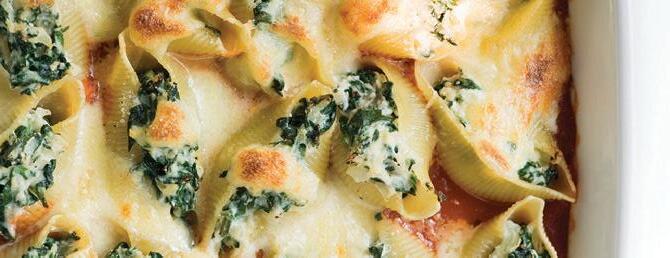
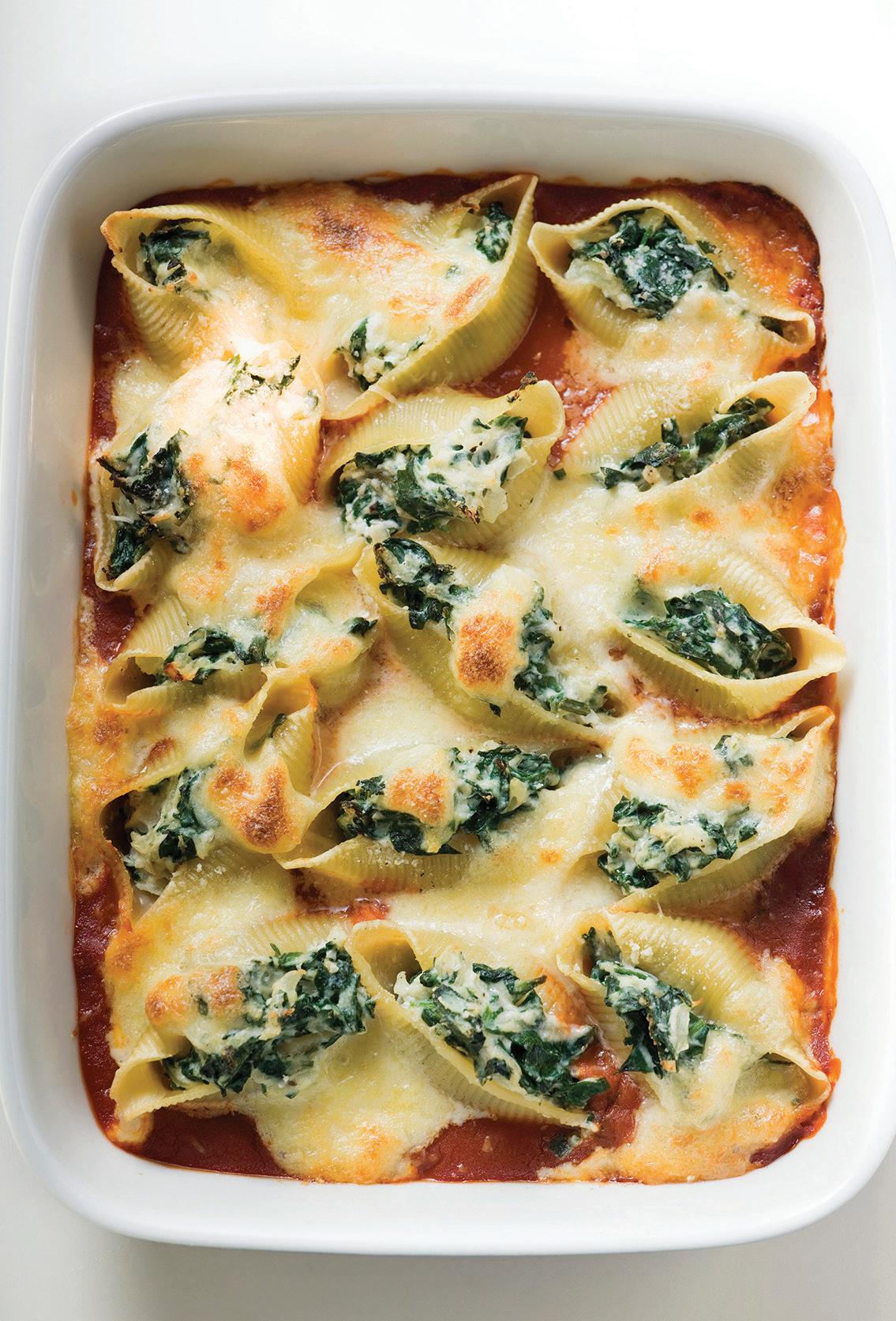
Holiday hosting is a fun way to welcome loved ones. Opportunities to host abound between Thanksgiving and New Year’s Day, and savvy hosts know how useful an expansive culinary repertoire can be during a time of year when it’s common to enjoy home cooked meals with loved ones. Simple but flavorful meals are a holiday host’s best friend. Such meals, which include the following recipe for “Stuffed Shells With Spinach and Ricotta” from Lines+Angles, give hosts more time to mingle but still ensure a delicious dish makes its way to the table come dinnertime.
Stuffed Shells With Spinach And Ricotta
Makes 6 to 8 servings
Salt, to taste
32 jumbo pasta shells
10 cups frozen chopped spinach, thawed
2 cups ricotta, softened
1 cup Parmesan cheese, grated (divided), plus extra to serve
3 cloves of garlic, peeled and minced
2 eggs, lightly beaten
Freshly ground black pepper, to taste
3 3⁄4 cups marinara or spaghetti sauce
Directions:
1. Bring a large pot of salted water to a boil. Add the pasta and cook per package directions until al dente. Rinse pasta in cold water to stop cooking process and drain well.
2. Squeeze spinach dry. Transfer spinach to large bowl. Add ricotta, 1⁄2 cup Parmesan, garlic, and beaten eggs to bowl. Season mixture with salt and pepper, and mix to blend.
3. Preheat oven to 350 F.
4. Spoon 1⁄2 cup marinara sauce evenly over bottom of 9- x 13- x 2-inch baking dish. Fill each pasta shell with spinach mixture. Place shells, filling side up, in prepared baking dish. Sprinkle with remaining 1⁄2 cup Parmesan. Cover loosely with foil and bake until heated through and bubbly, about 30 minutes. Spoon remaining sauce over shells.
Garnish with Parmesan cheese, if desired, and serve.
Staying The Course With A New Year’s Resolution
The holiday season is steeped in tradition. Many of those traditions are rooted in celebrants’ faith, but one of the last customs people embrace each year is largely secular.
The tradition of making New Year’s resolutions is older than many people may realize. According to History.com, the ancient Babylonians are believed to be the first people to make New Year’s resolutions, beginning roughly 4,000 years ago during a 12day festival known as Akitu. That festival was religious in nature, but many people now make resolutions aimed at selfimprovement unrelated to their faith. As people ponder their resolutions for the year ahead, the following strategies might help them stay the course over the next 12 months.
• Give serious thought to a prospective resolution. Statistics regarding New Year’s resolutions vary, but a 2024 survey from the Pew Research Center found that 13 percent of adults polled indicated they kept none of their resolutions. Numerous variables can affect whether or not a person keeps a resolution, but giving a potential resolution little thought ahead of time can make achieving a goal unlikely. Give any potential change ample thought before committing to a resolution. If you aspire to lose weight, identify the ways you’re going to go about that. Find a local gym to join, identify ways to eat a more nutritious diet, and perhaps most importantly, study how you can make time to stay the course. A
little legwork in advance of declaring a resolution can pay off in the long run.
• Set periodic goals. Small goals along the way to the larger goal can serve as motivation to keep going. If you aspire to watch less television and read more, resolve to read 100 pages per week and then gradually increase that total if you so desire. Small goals can provide a great means to measure incremental progress that will ultimately make achieving a larger goal more likely.
• Be realistic. Realistic goals are more likely to be achieved than ones
that seem good on the surface but are too difficult to keep. For example, if you aspire to exercise for an hour each day but obligations to work and family leave little time for physical activity, then you may need to reduce those expectations in favor of a more realistic, achievable goal. Taking on too much will only discourage you when hurdles inevitably appear, and that is likely to compel you to abandon the resolution entirely. If your initial goal is realistic, then any challenges that arise are less likely to derail your efforts.
• Don’t go it alone. Many
people employ the buddy system as a means to stay motivated with fitnessrelated resolutions, and that approach can be applied to any goal you set at the beginning of the year. Having someone there to hold you accountable, and doing the same for a partner, increases the chances you’ll stay the course.
New Year’s resolutions are an ancient tradition, even if the majority tend to be abandoned rather quickly. But anyone can buck that trend and stay the course by employing a few simple yet effective strategies.
Seven Ways To Organize And Store Holiday Decorations
Holidaydecor comes in many different sizes — from the smallest tree ornaments to illuminated statues for the yard or inflatable items. Figuring out a storage plan can take a little effort. These seven tips can help.
1. Purchase clear, similarly sized storage bins and shelving racks, hanging them where you plan to keep the decorations. Most people prefer an out-of-the-way spot, such as in the garage, attic or basement. Label each bin by holiday and put the bins in chronological order to make finding items more convenient. Uniform bin sizes make it easier to stack and store.
2. Store smaller items inside larger decor items. Decorative baskets or wrapped boxes brought out for Christmas or Chanukah are ideal places to keep smaller tchotchkes like ceramics, dreidels, candlestick holders, or mantel hooks. Delicate items can be tucked into Christmas stockings or wrapped and stored in a fluffy tree skirt. Egg cartons can be used to keep small items safe as well.
3. Label everything, so you will not need to dig through boxes or bins to know what is inside. This might be a good year to ask for a label maker for the holidays!
4. Use overhead or wall storage for holiday decor. Overhead spaces in the garage or basement walls can be good spaces to keep holiday decorations. Always keep bins and boxes off the floor, so they are not vulnerable to damage related to leaks or floods.
5. Garment bags can protect larger decorations, such as wreaths, artificial trees, or signs. If you have a large number of mechanical, illuminated, or inflatable lawn ornaments, consider investing in a small shed where these items can be safely kept. Wrap the extension cords and any bracing stakes or strings used with the decorations so it’s easy to find.
6. Utilize pieces of cardboard as well as toilet paper or paper towel tubes to keep lights and wires tidy. Tuck cords into the toilet paper tubes, and wrap lights around the cardboard to avoid tangles.
7. Each year, take inventory of your decoration collection and toss out anything that is damaged or has seen better days.
Storing holiday decorations will take some time, but once you establish a system, things will be simple year after year.
The Origins Of Christmas Stockings
Did You Know?
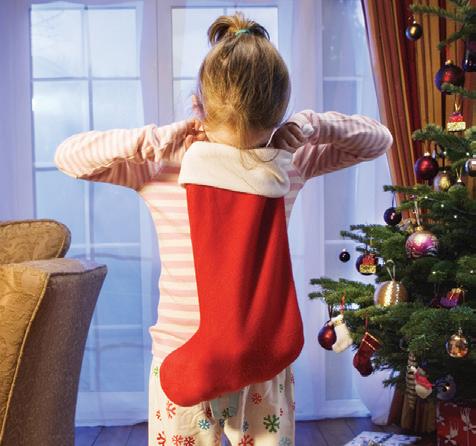
holiday season is rife with tradition. Some holiday traditions, such as holiday lighting displays, are easy to notice, while others are more subtle and possibly even unknown to many celebrants. One tradition that falls into the latter category involves the placing of oranges into Christmas stockings. The origins of Christmas stockings are rooted in legend and one of the more popular tales involves a widowed father of three beautiful girls. According to Smithsonian.com, this father struggled to make ends meet and was concerned that his financial struggles would affect his daughters' ability to find a spouse. As the legend goes, St. Nicholas was wandering through the man's town and heard of his concerns. Recognizing that the man was unlikely to accept charity, St. Nicholas slid down the chimney of his house and placed three gold balls in the girls' recently laundered stockings, which were hanging by the fire to dry. The value of the gold balls, which were discovered the following morning, was enough to ensure the girls could eventually wed. So what does that have to do with oranges? Those who wanted to replicate the tale could not so easily come upon gold balls to place in stockings, so they chose something similar in appearance: oranges.
Christmas trees are a key component of many people's holiday season. It's a family tradition to choose the tree each year and then adorn it with ornaments, tinsel, family mementos, and a beautiful tree topper. Most people fasten the top bough with an angel or a star. The first tree toppers were the infant Jesus, but toppers are now available in other options symbolic of the Nativity of Jesus. The star refers to the Star of Bethlehem. The angel represents the messengers of God as well as the Angel Gabriel, who visited Mary to share the news that she would be giving birth to the Son of God. People can choose whichever topper they prefer, but many refer to the religious significance of Christmas.