NICHOLAS POWELL DESIGN PORTFOLIO
ABOUT ME ARTIFACT FALL 2020 SIDOH FALL 2020 BROWN RESIDENCE FALL 2019 i RESUME 1 2 3 5 7 9 NINE-SQUARE FALL 2022
CAPITOL HILL CO-OP SPRING 2022 ii POWER WALK FALL 2022 INFLUENTIAL WORKS 2018-2022 ALLIED ARTS 2018-2022 11 15 21 24 FLEXICELL SPRING 2022 17 CONFLUENCE AQUAGRID FALL 2022 19
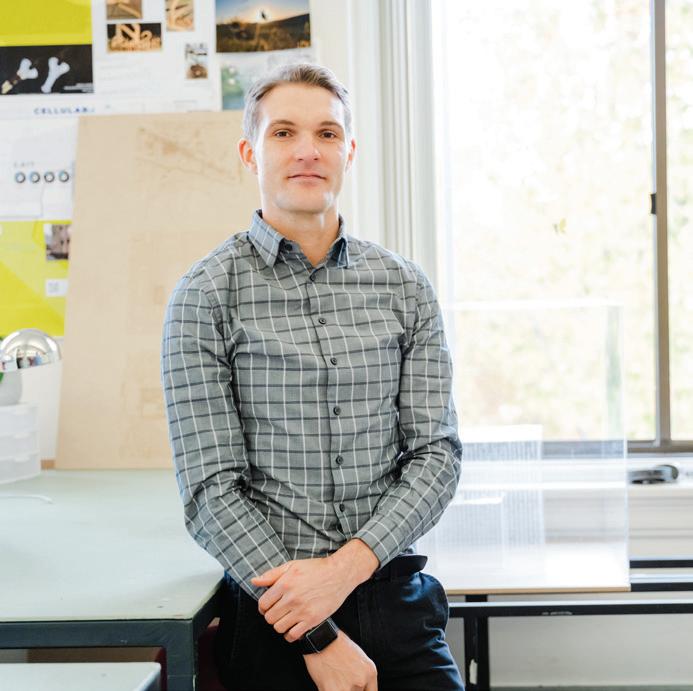
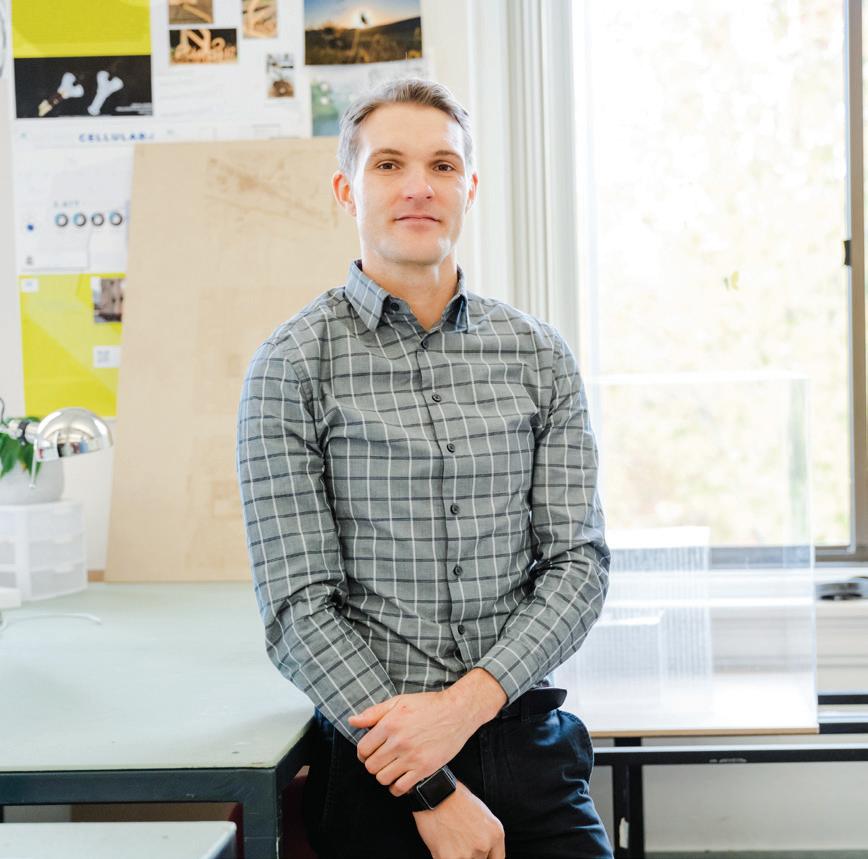
I am a creative multidisciplinary designer with an interest in architecture, interior design, urban planning, and multimedia design. I was born and raised in Olympia, Washington. My experience growing up in the Pacific Northwest has given me an appreciation for social justice, the environment, and a desire to create spaces that work in concert with the natural world. I believe that by reimagining a built environment that is inclusive, resource-efficient, and supports individuals of all abilities, we can solve many issues facing us today. My approach to design is informed by a deep understanding of a place and the people who call it home; underpinned by research of history, culture, social and economic needs, and ecology. I am inspired by ancient building techniques, emerging technologies, and the potential applications of both to create innovative design solutions.
ABOUT ME 1
“
Nicholas Powell, AIAS
“
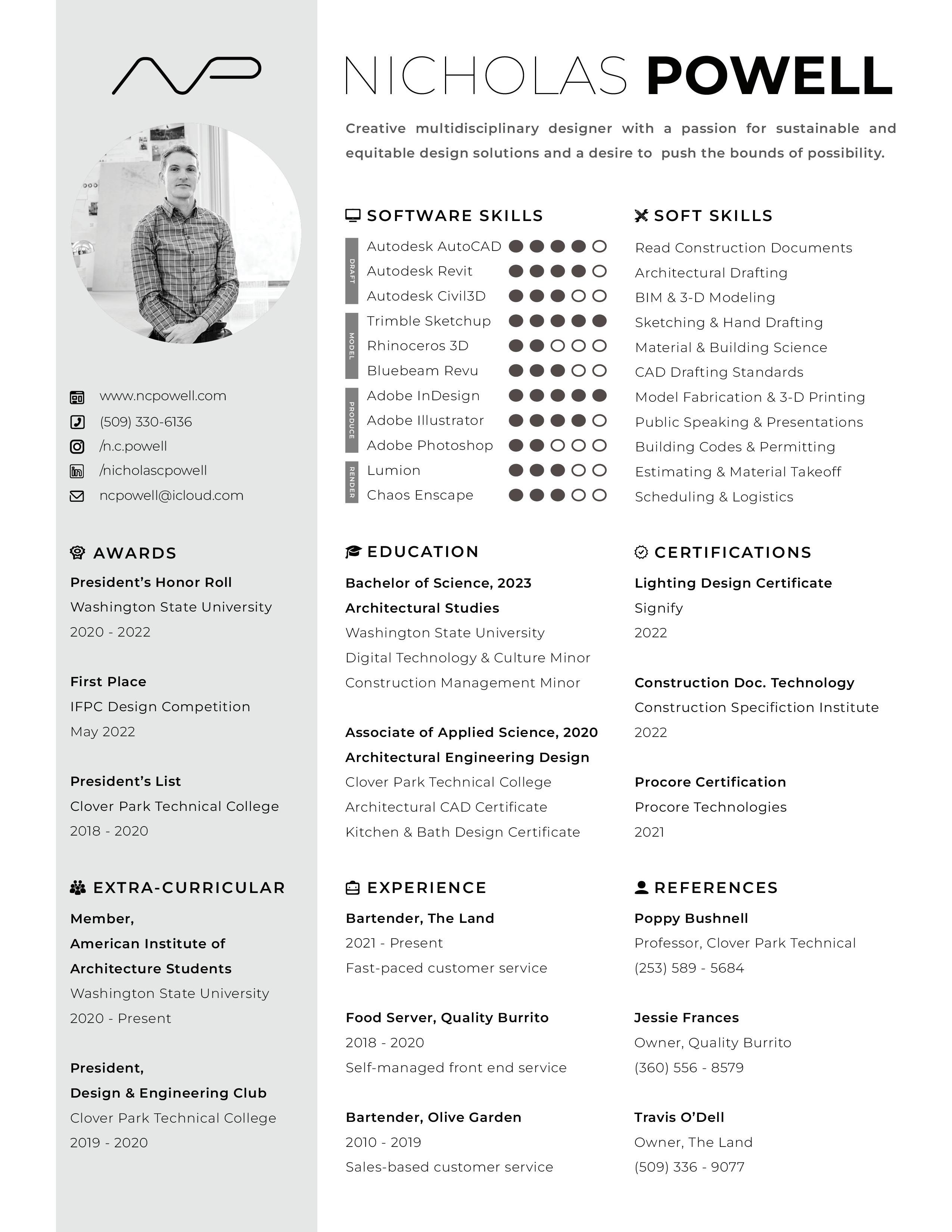
2 RESUME /NicholasCPowell /n.c.powell ncpowell.com ncpowell@icloud.com
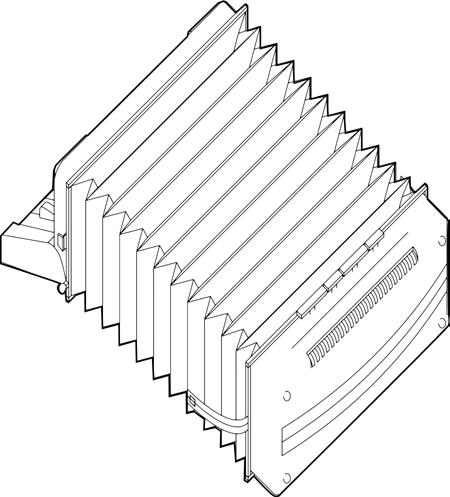
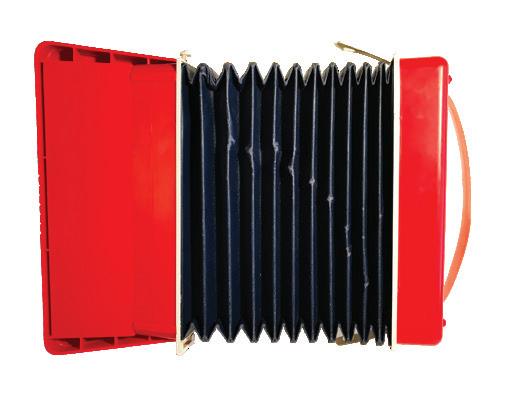
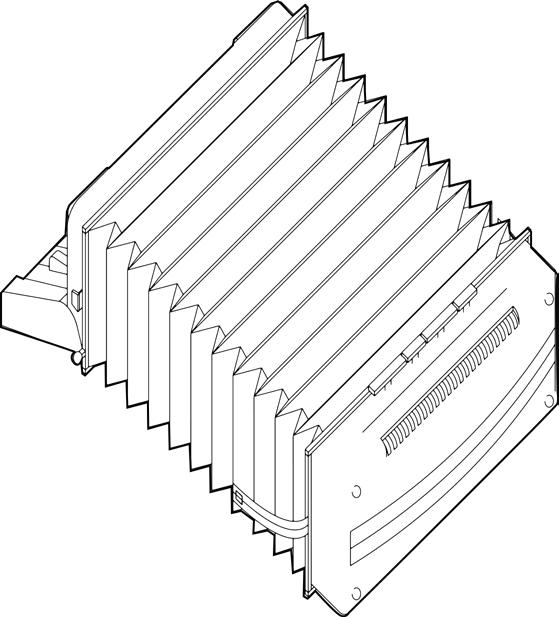
The purpose of this project was to select a household item to document, deconstruct, map, and reassemble as a completely new object. The project would serve as a catalyst for our design project later in the semester. I selected a toy accordion from the 1950’s because it’s unique shape, function, form, materials, and texture.
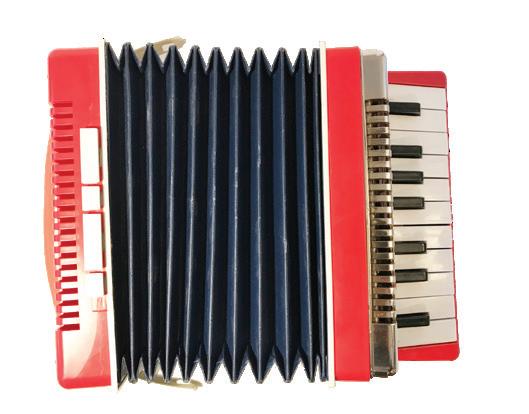
I documented each side of the original object in a series of photographs and created a threedimensional model in Rhino.
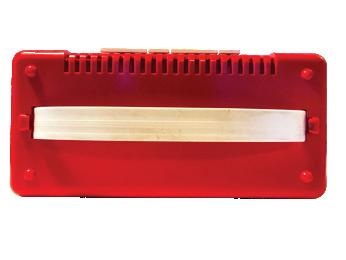
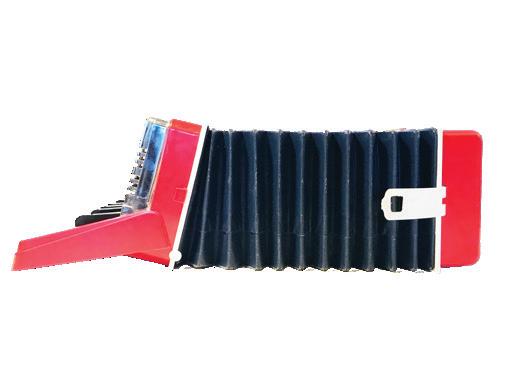
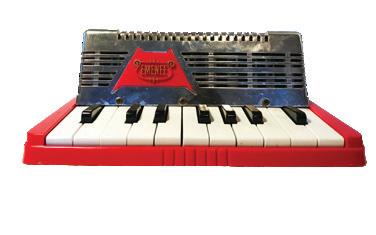
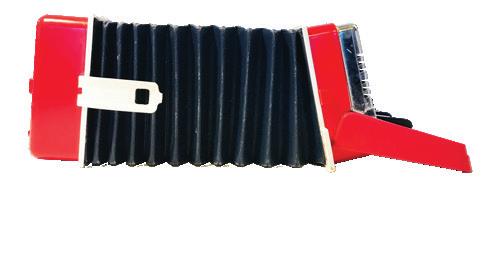
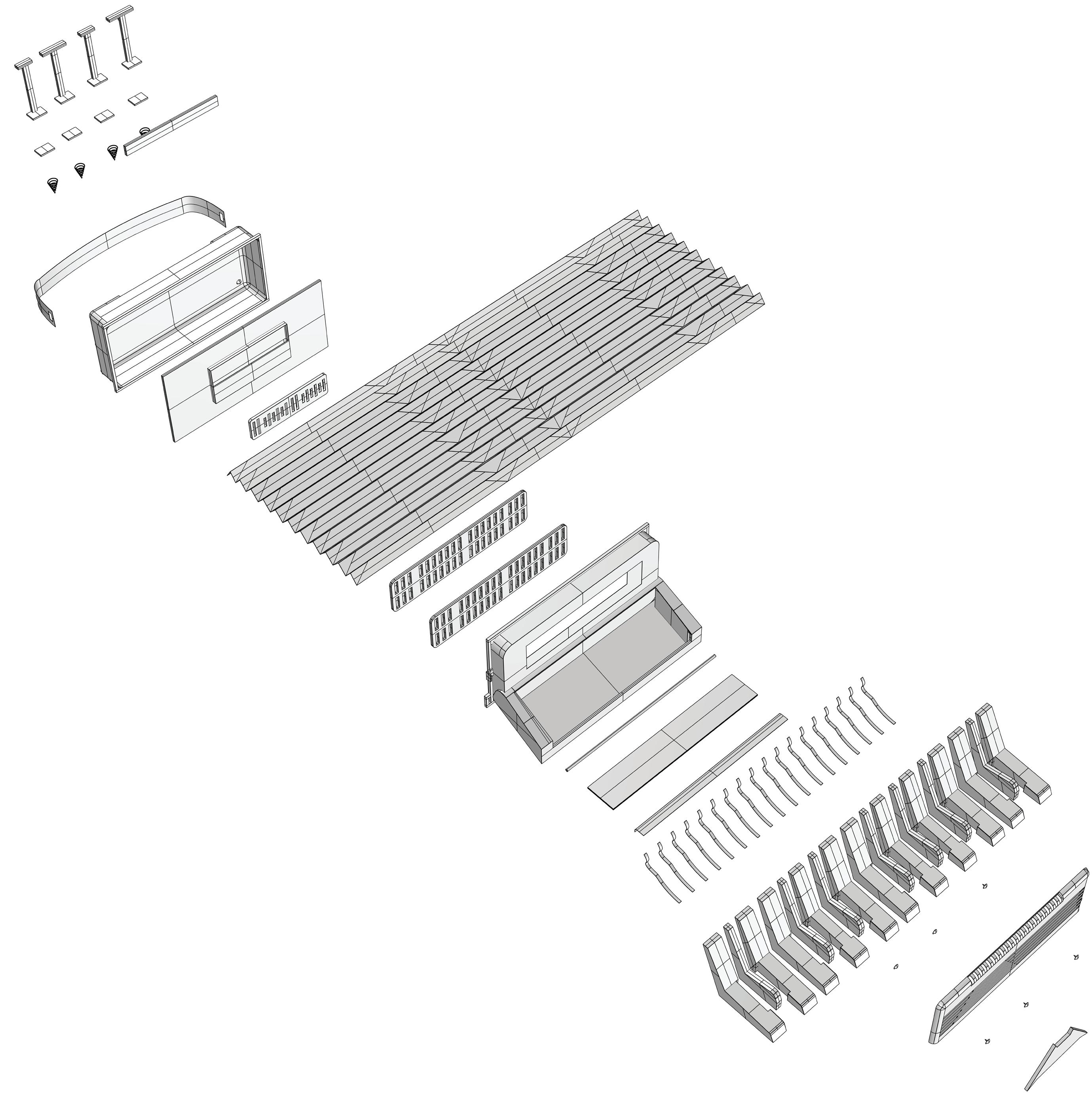
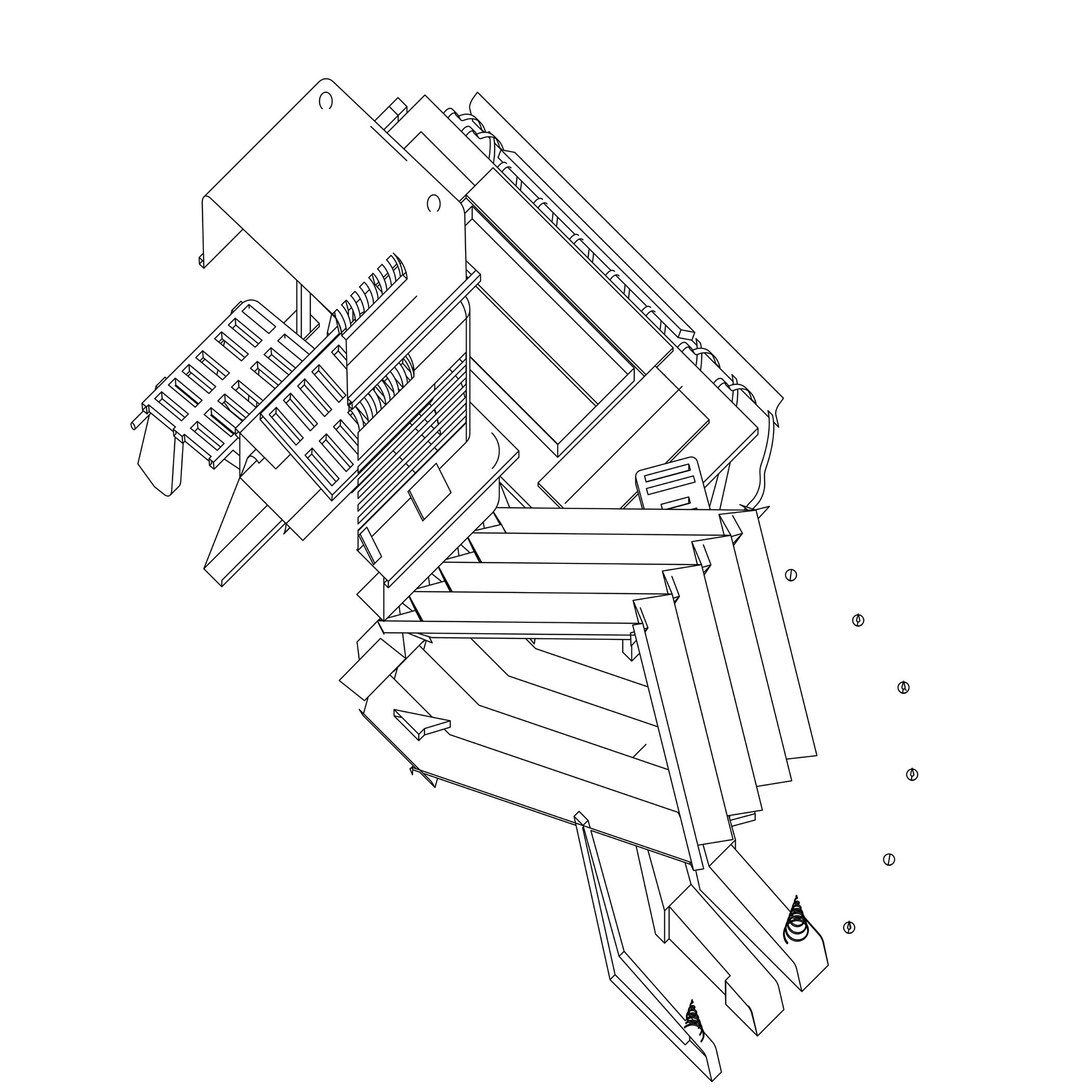
The dissembled parts were mapped and modeled Rhino showing the order in which they were assembled.
3
ARTIFACT
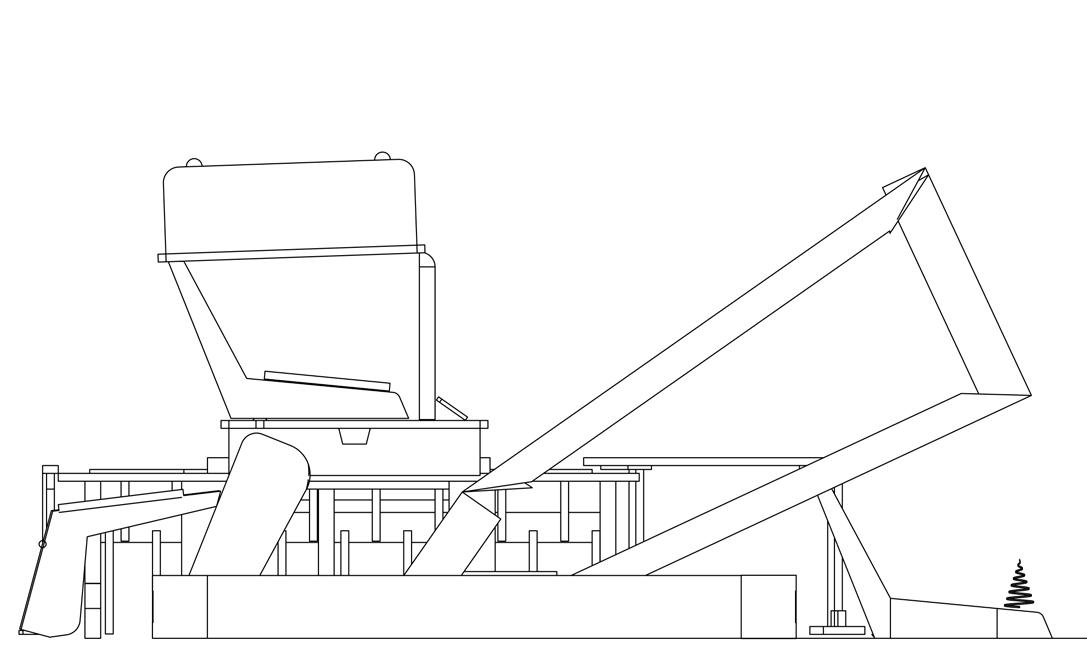
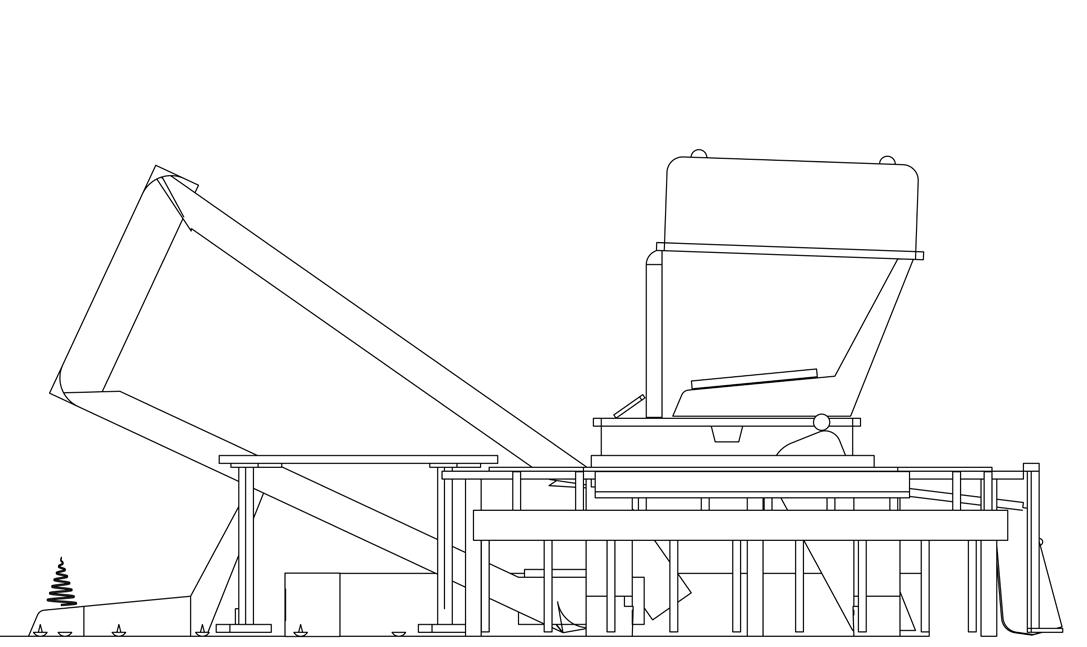
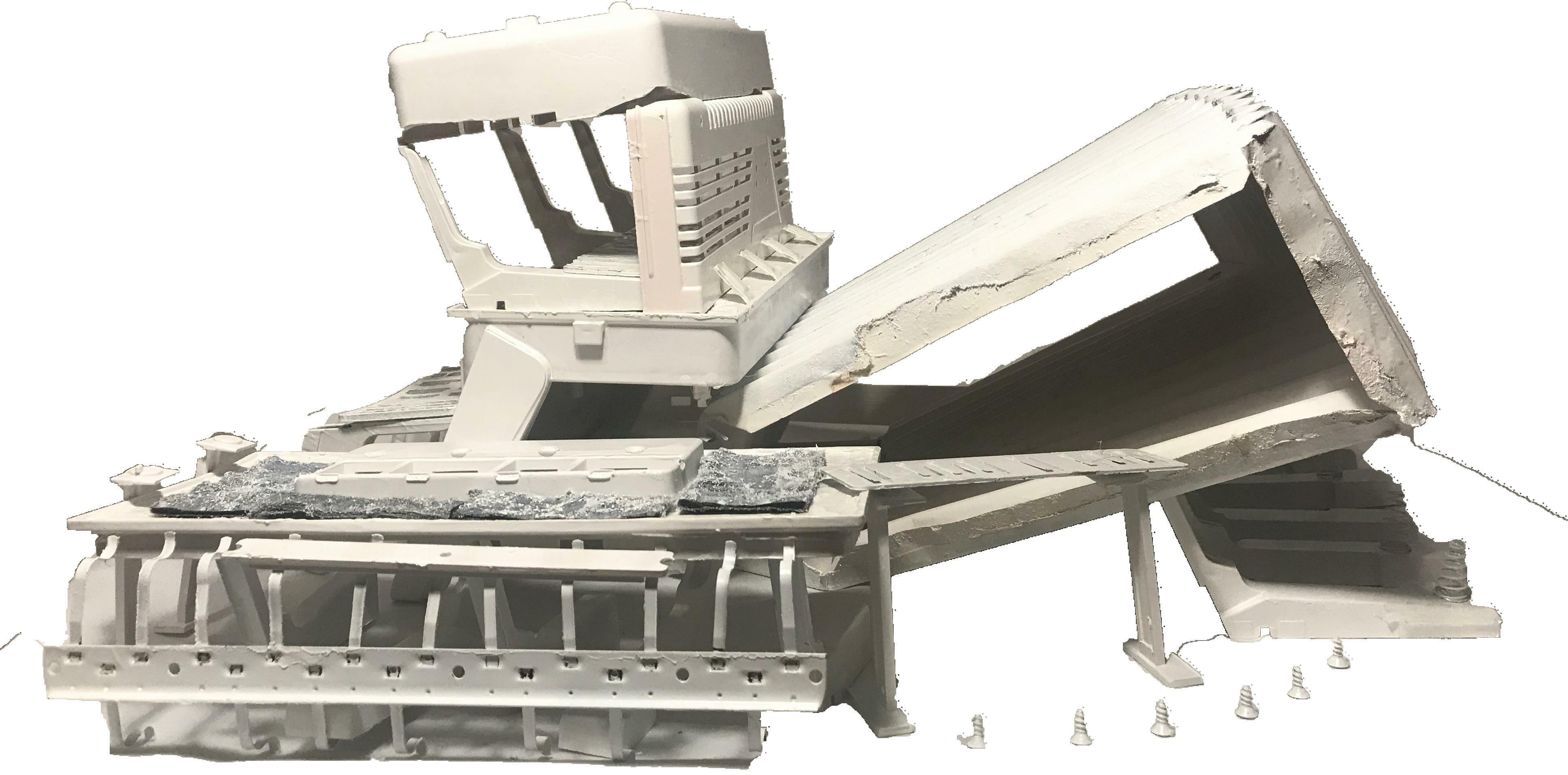
The reassembled object was documented in a photo series showing the
The reassembled object and the elevations of each side were documented.
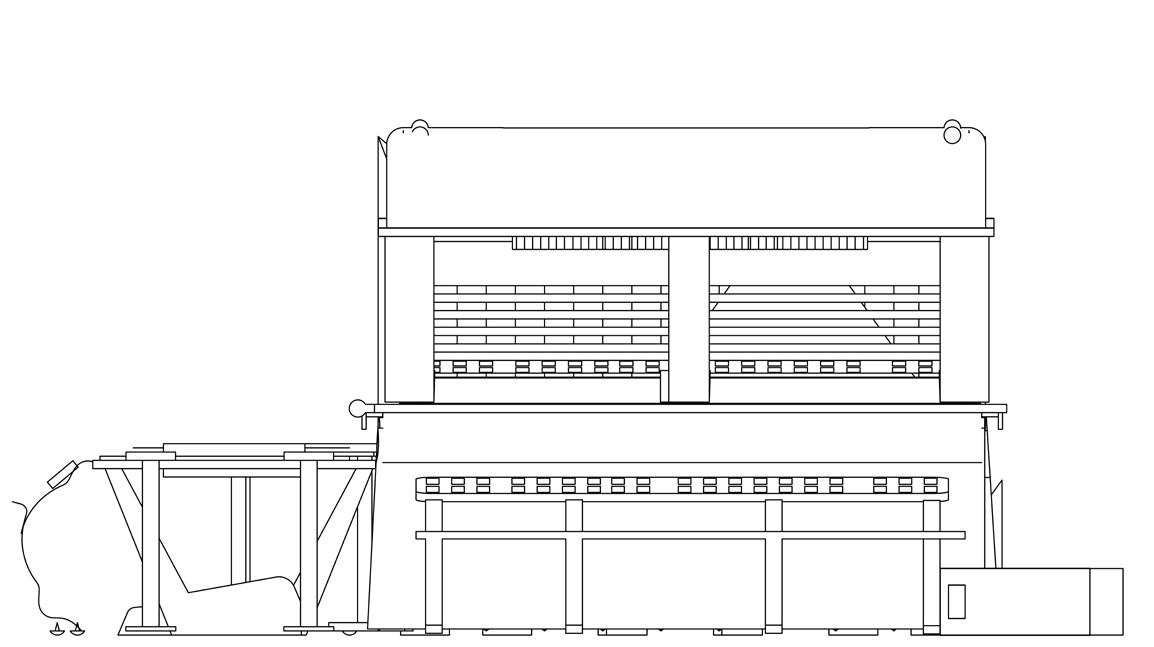
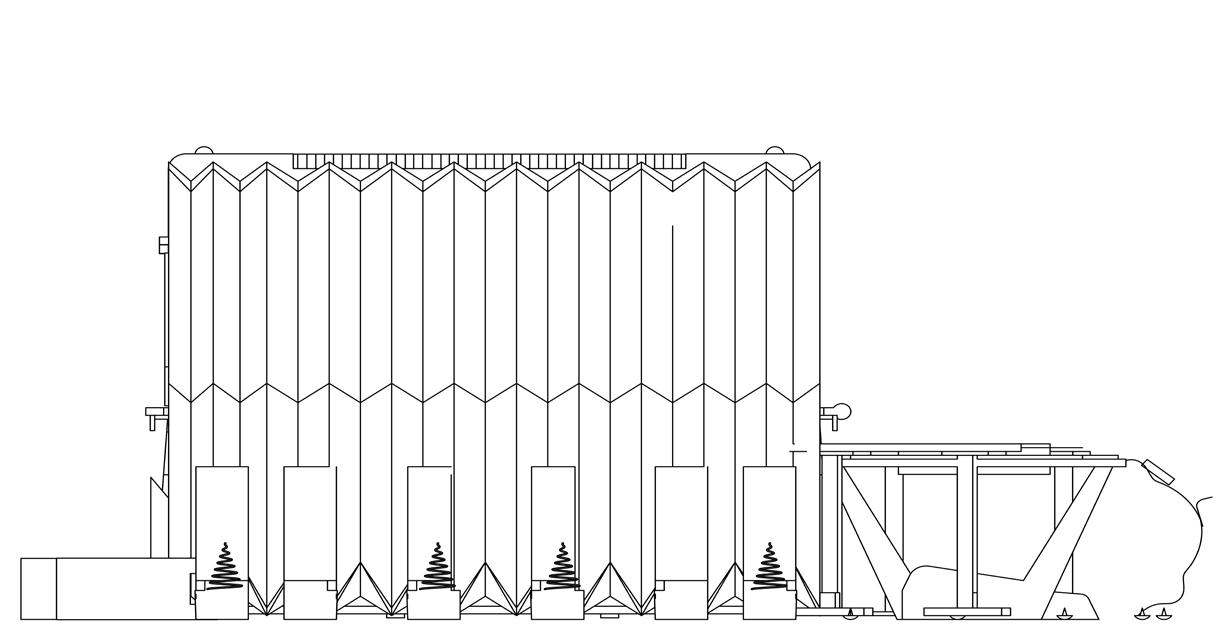
WEST NORTH SOUTH EAST
4 ARTIFACT
AXONOMETRIC
REASSAMBLED ARTIFACT
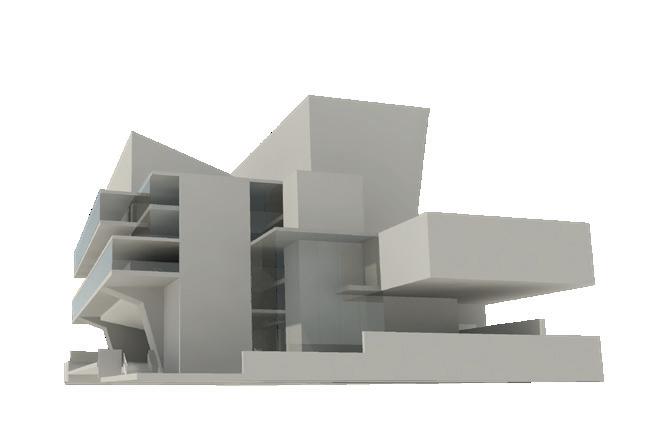
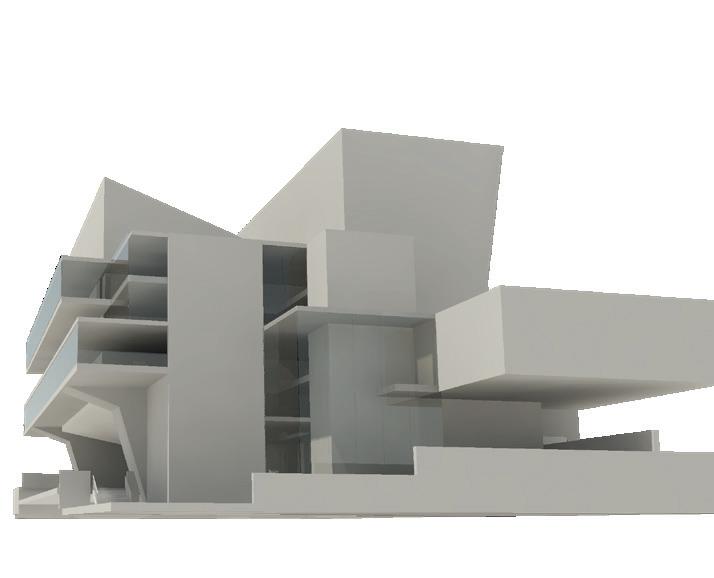
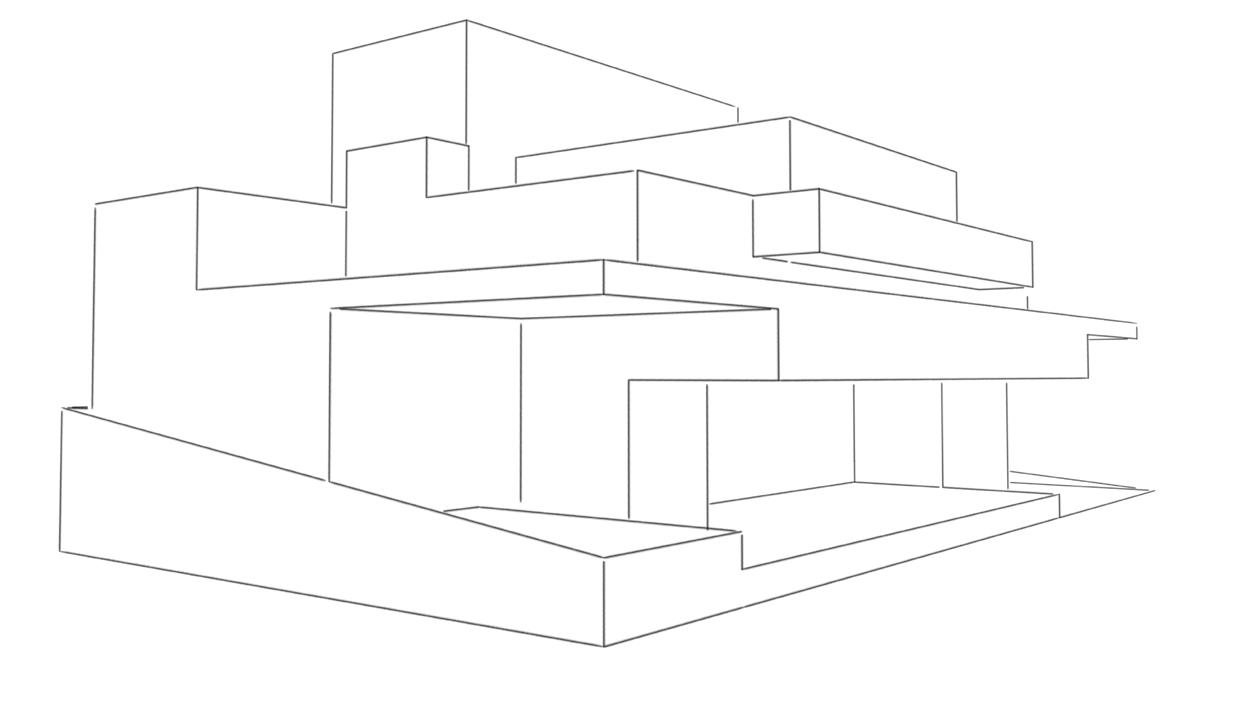
The Seattle International District Opera House was inspired by the work of ARTIFACT. This was an individual project to design an Opera House that was at least ,000 square feet.
INITIAL SKETCHES
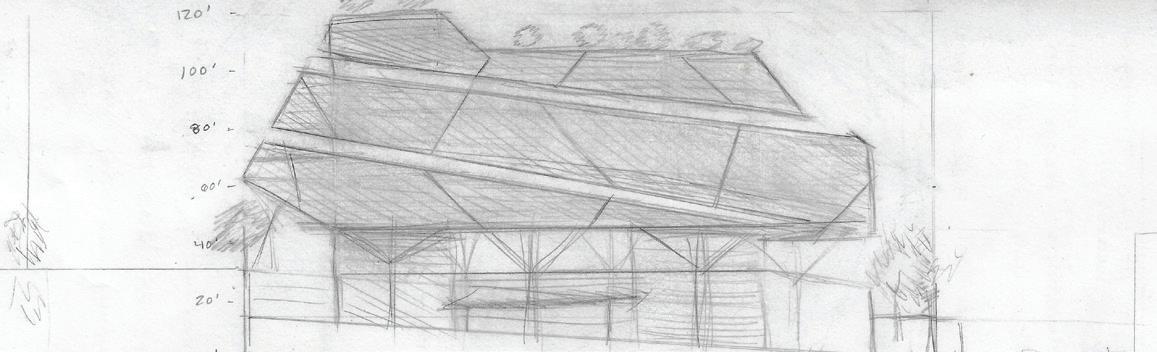
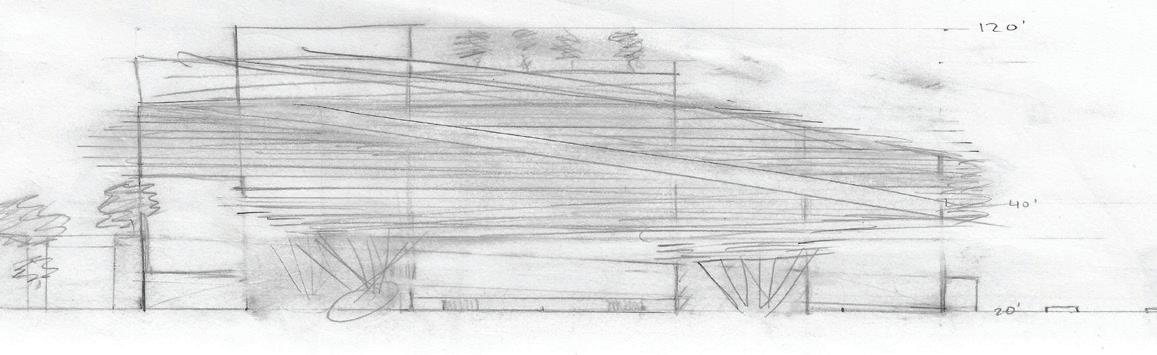
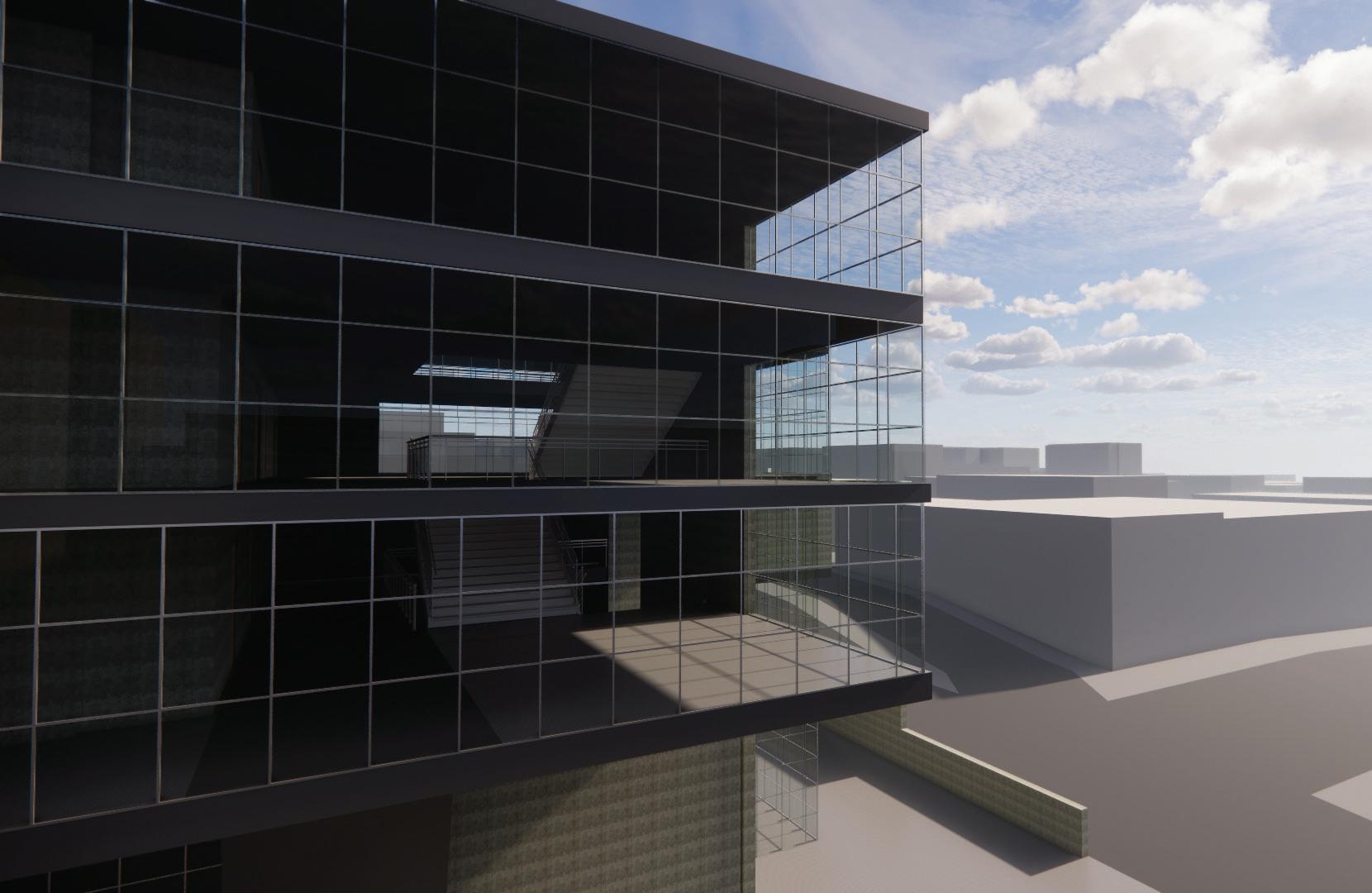
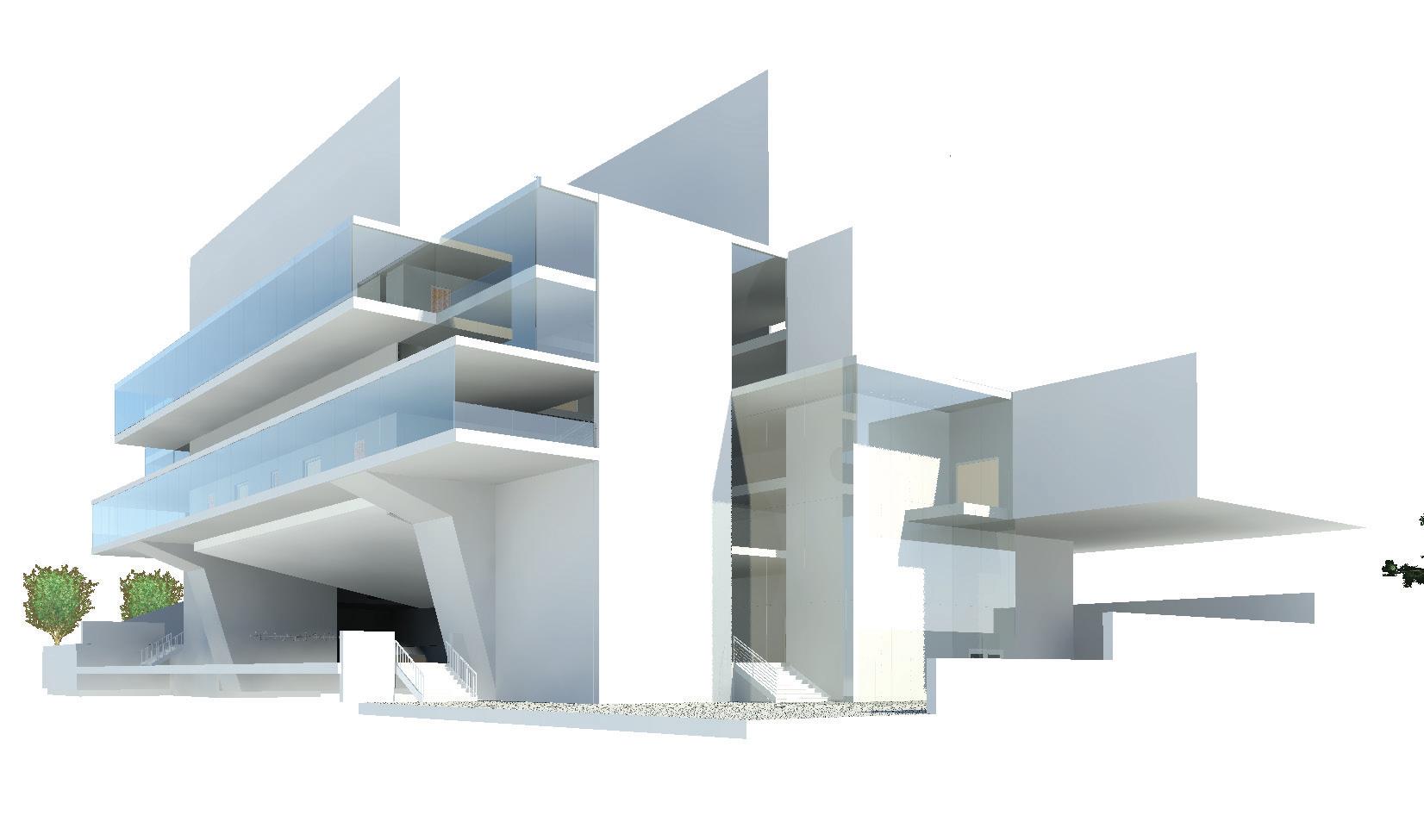
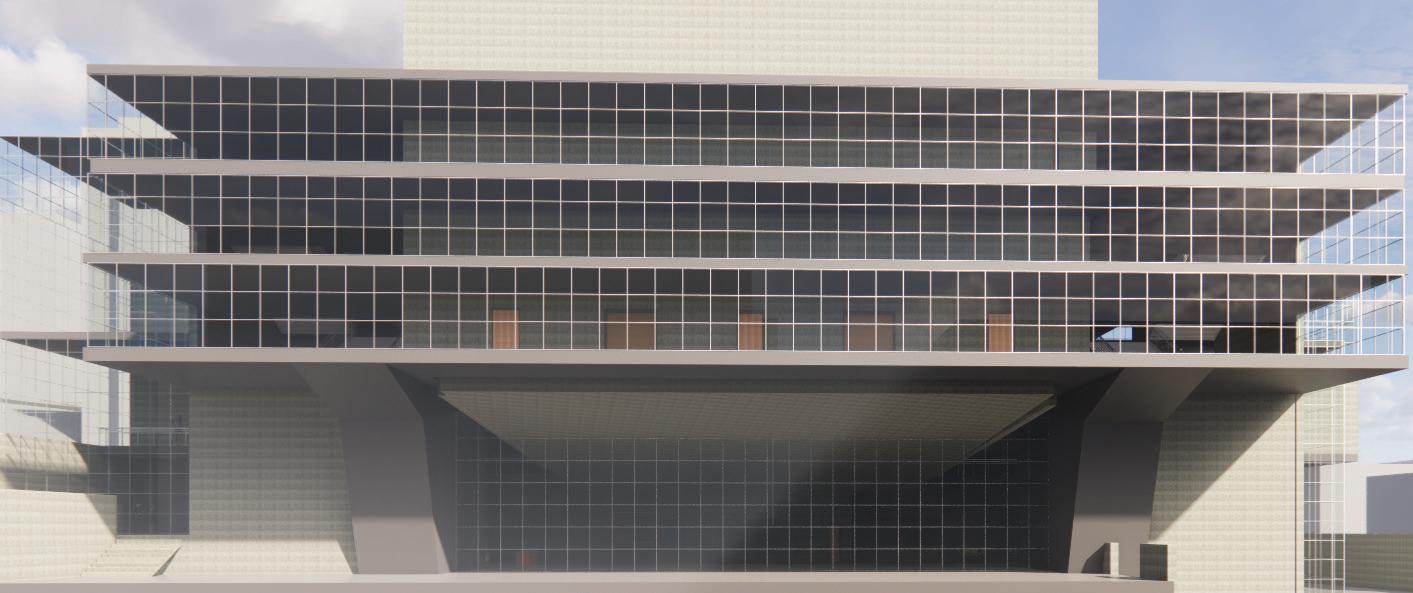
It became clear early in the process that the best way to accommodate the program on this site was to situate the majority of the stage facilities on the upper floor and to leave the ground floor as open as possible.
3D MODEL
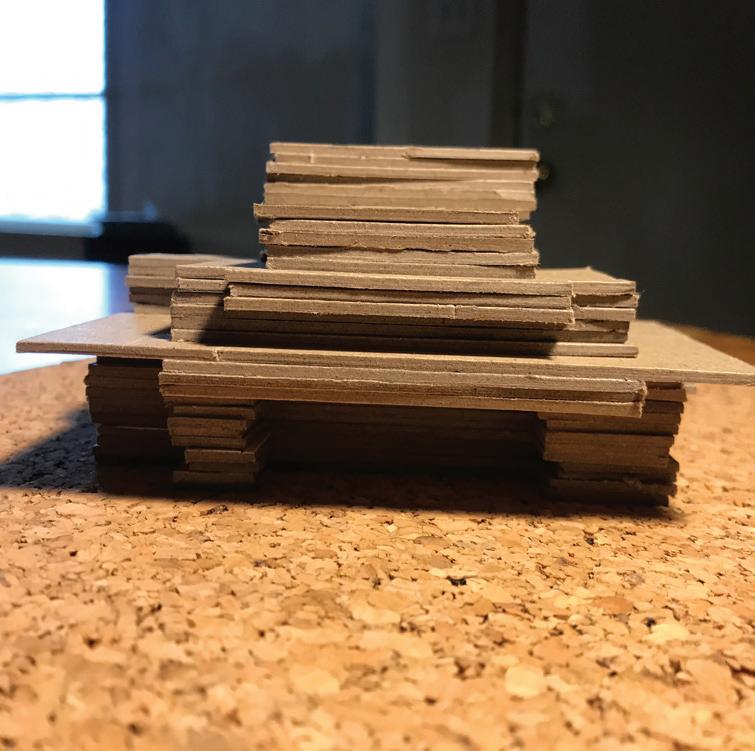
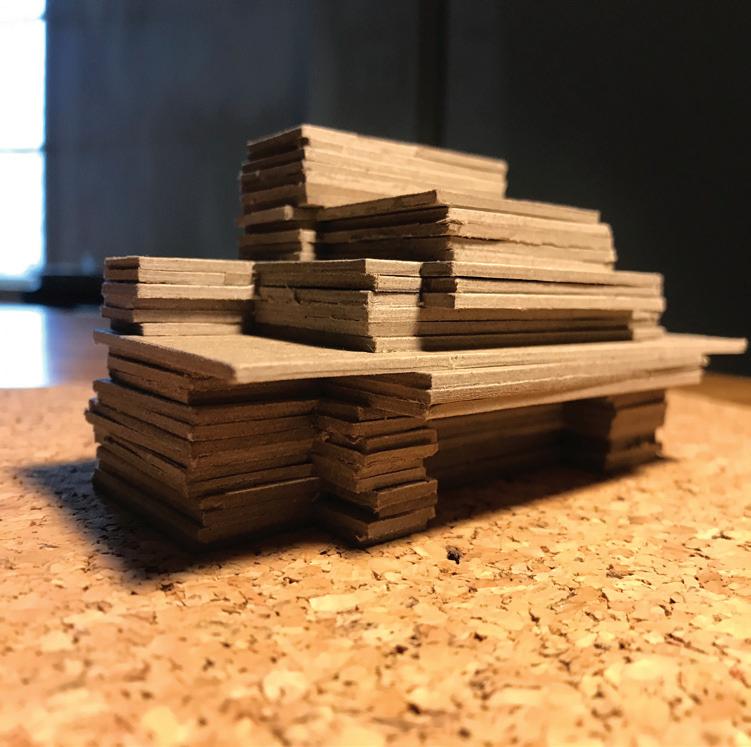
Hallways on the North, West, and South side of the building provide vistas of downtown Seattle and Puget Sound.
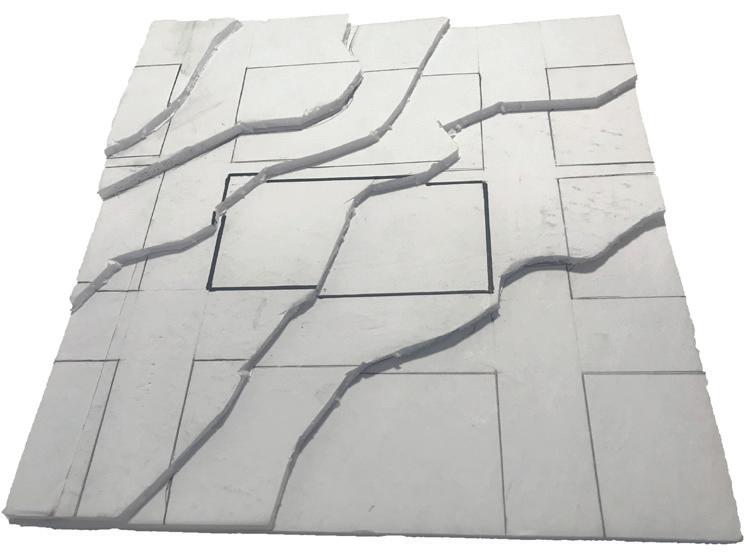
The site is occupies half a block in Seattle’s International District. The site is sloped which presents an opportunity for access and egress on multiple levels. SITE MODEL
5
SIDOH
EXTERIOR RENDER
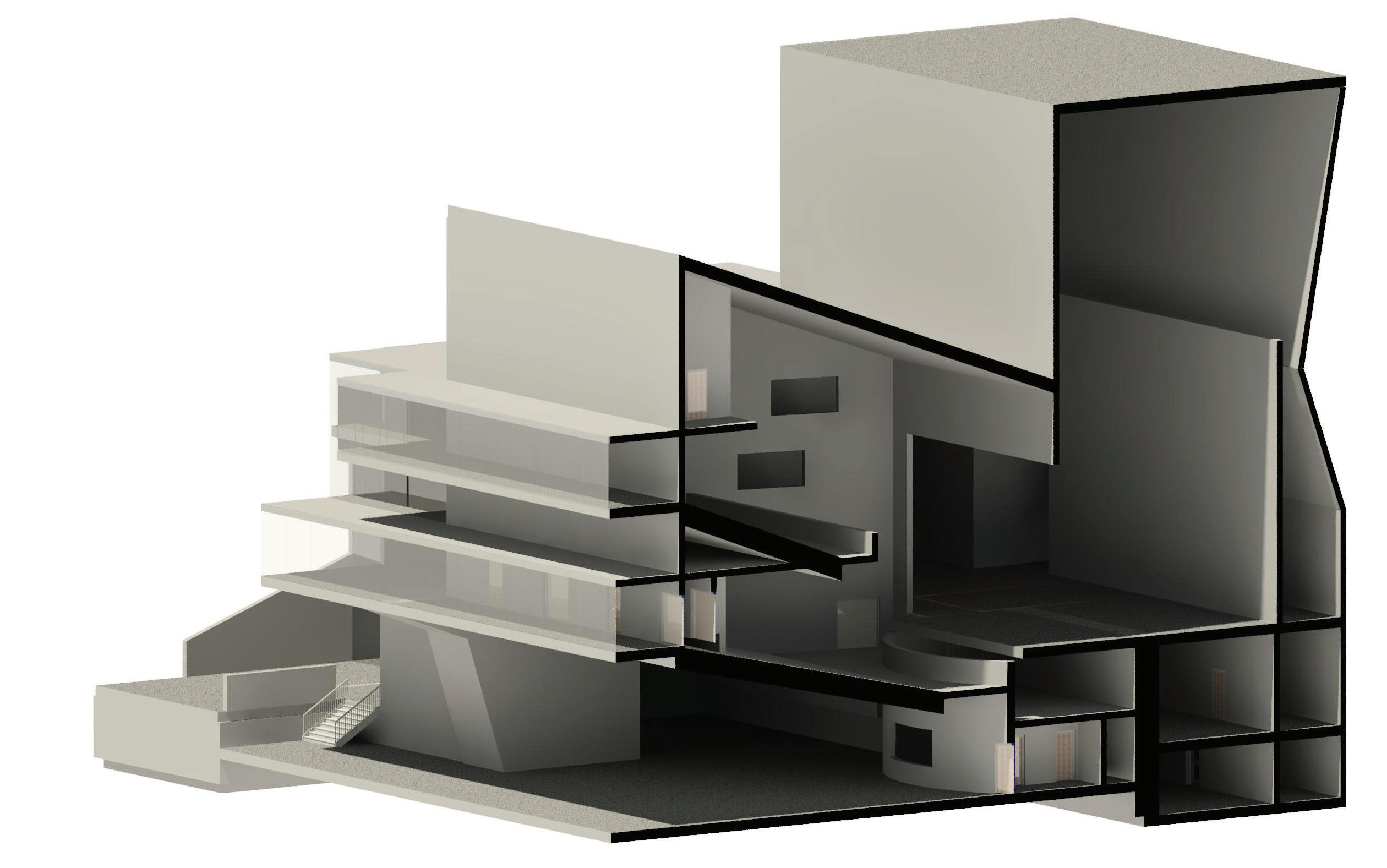
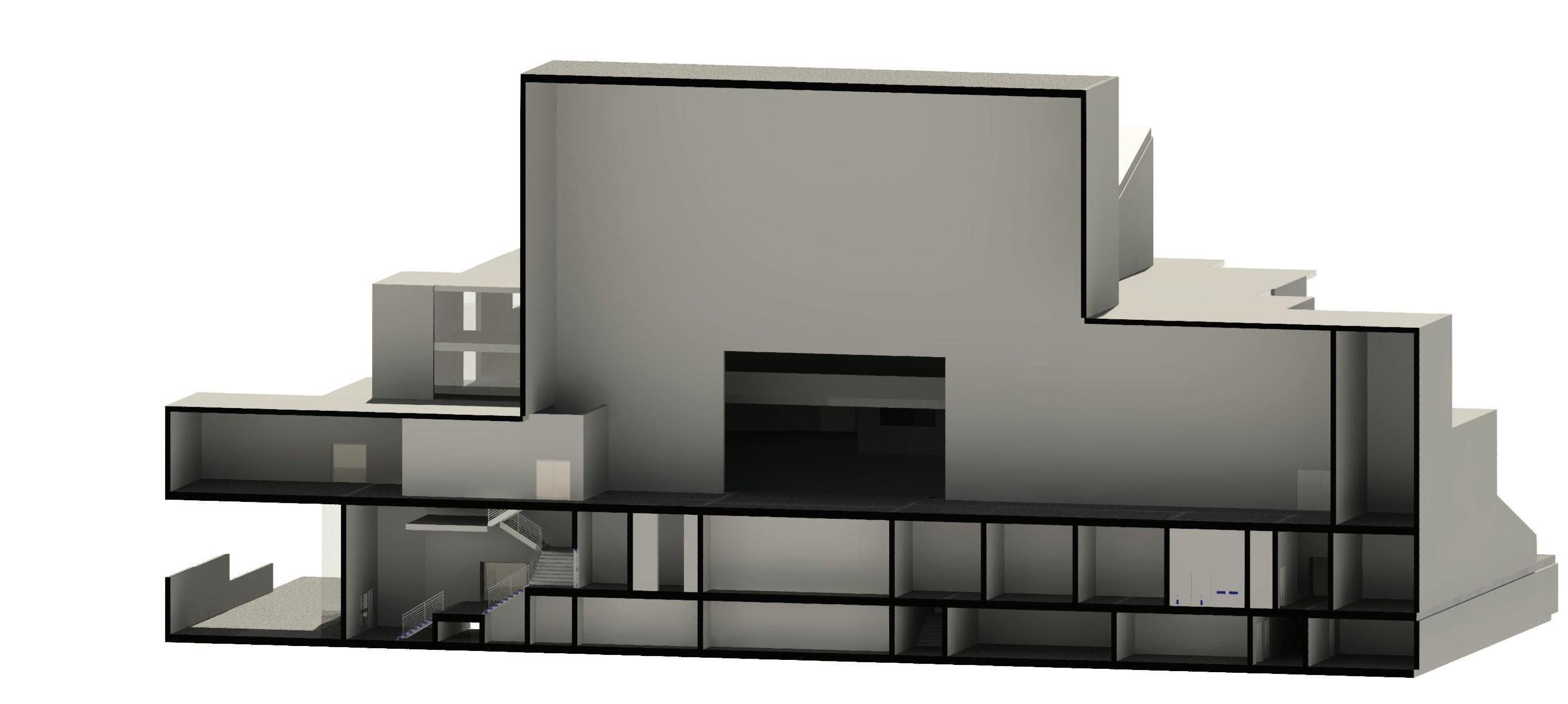
It became clear early in the process that the best way to accommodate the program on this site was to situate the majority of the stage facilities on the upper floor and to leave the ground floor as open as possible.
6 SIDOH
STAGE
LOBBY
ORCHESTRA PIT
STAGE
PERFORMER SUPPORT
NINE-SQUARE
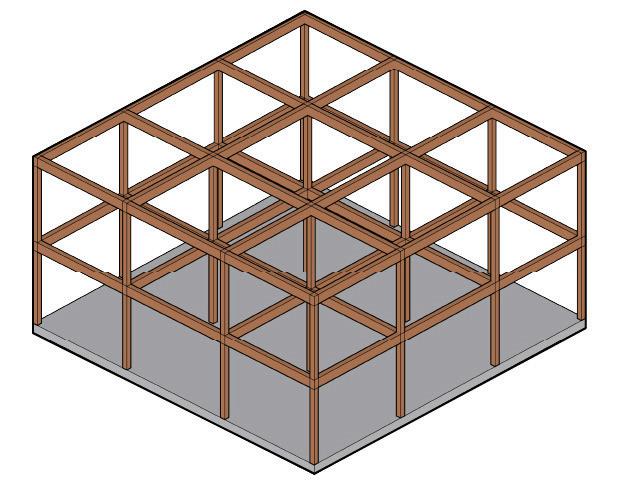
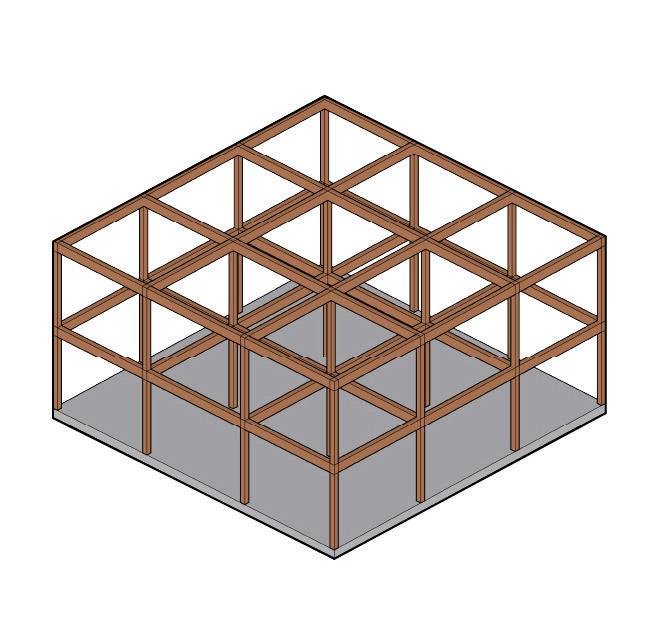
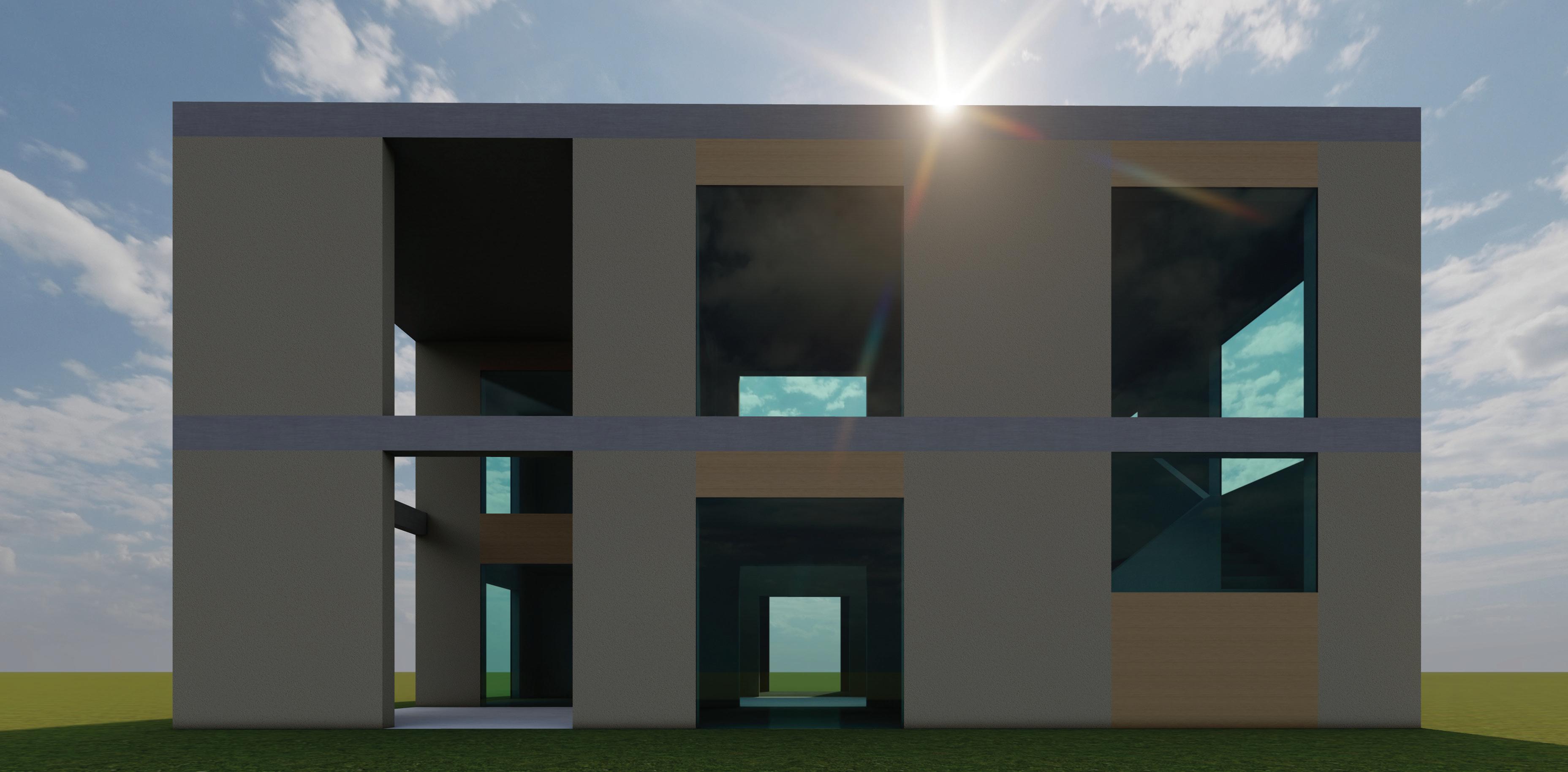
Nine-Square is a personal project that is a study of how a traditional nine-square layout can be applied to modular housing units. I studied and applied passive house principles.
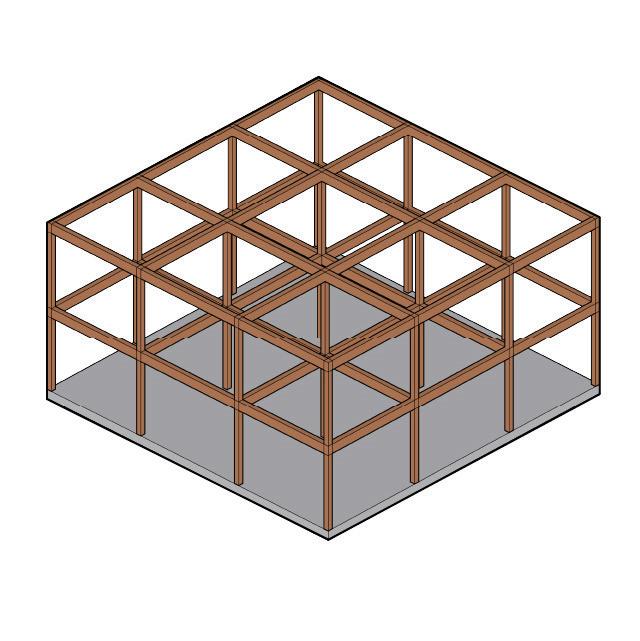
The structure is made of mass-timber construction which allows for maximum flexibility and accommodates future renovations.
7 SIDOH
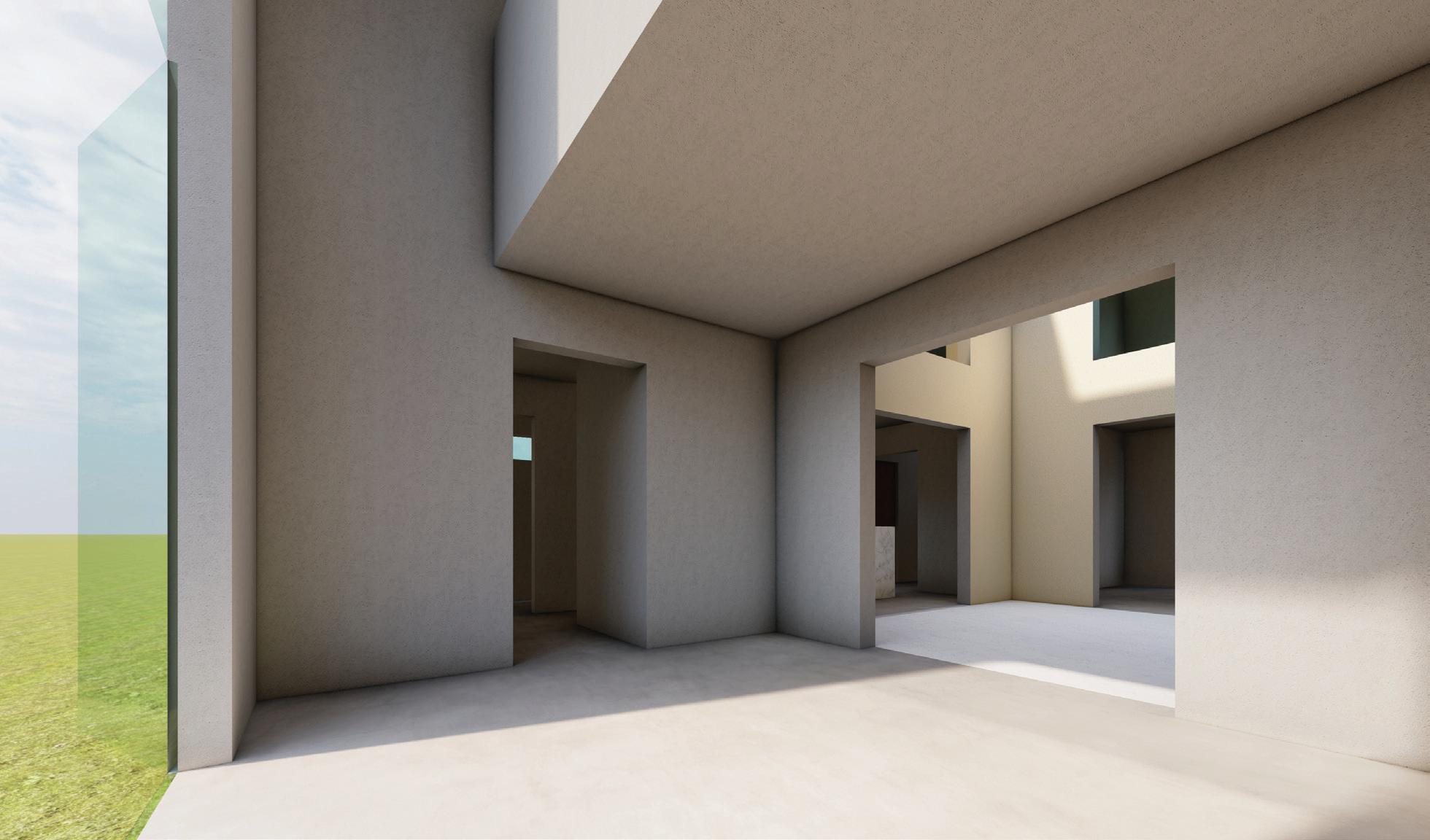
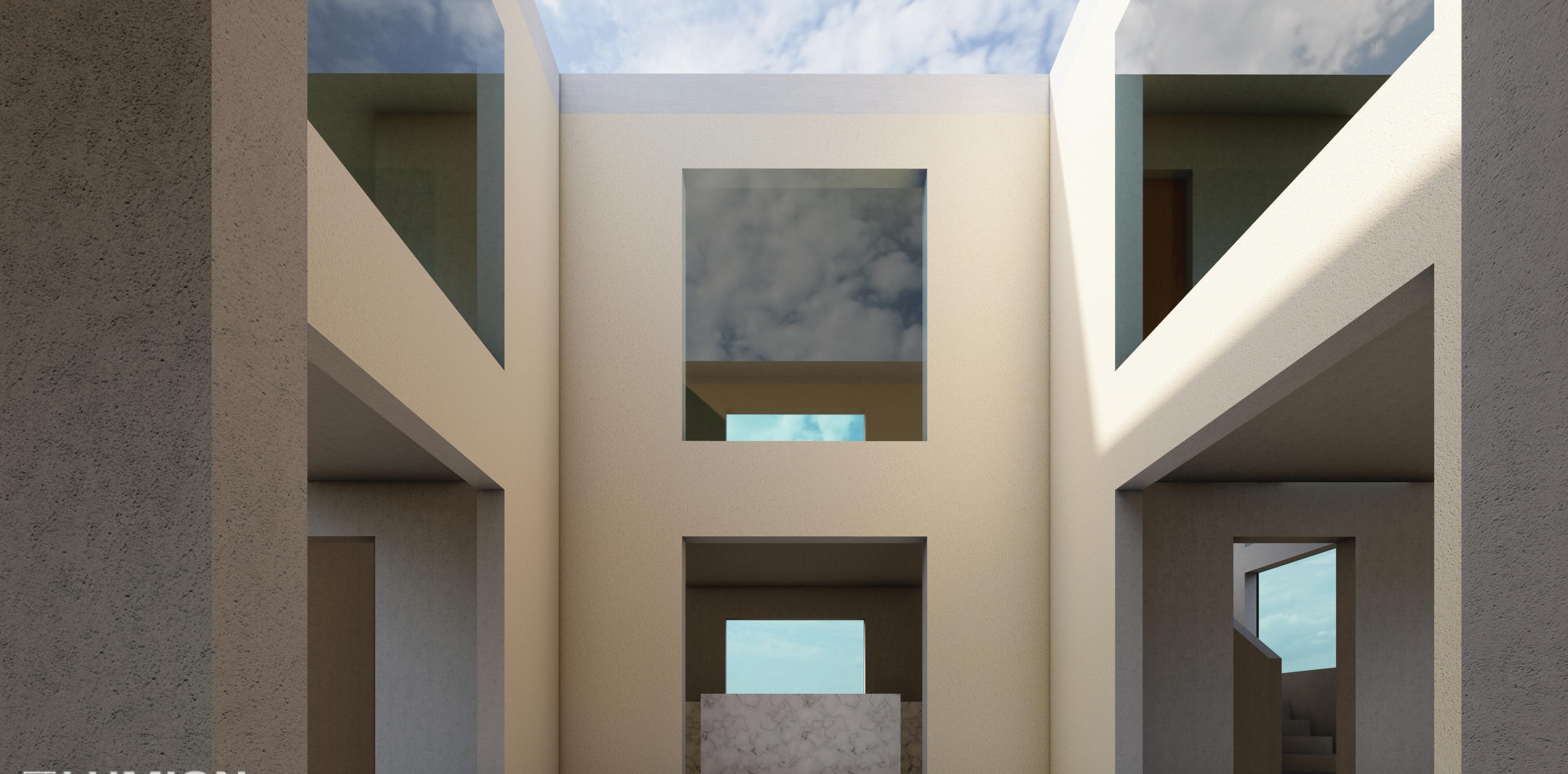
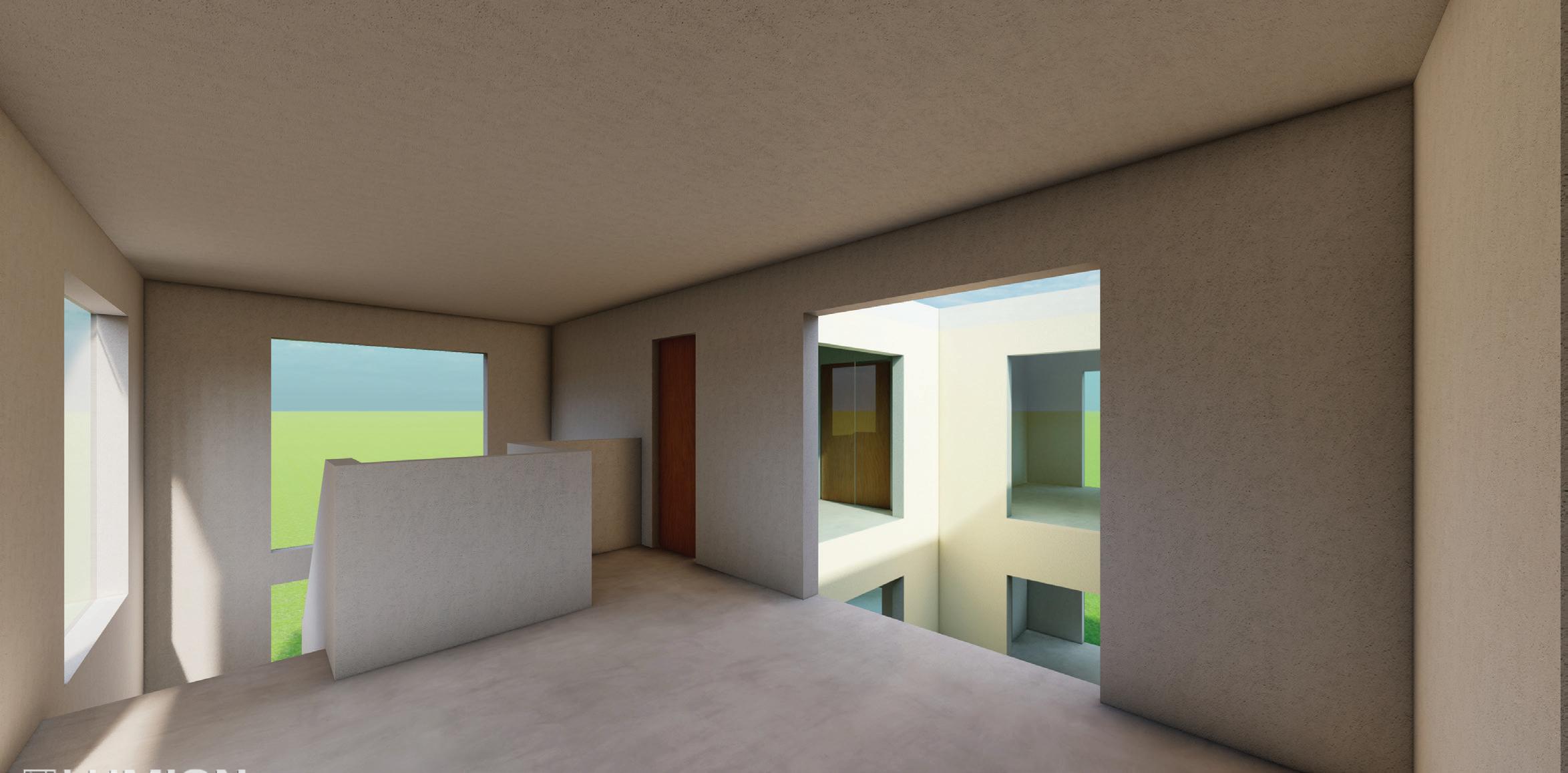
The home is centered around a courtyard and each room has access to fresh air and daylight.
The floor plans place the service areas in the corners which allows the communal spaces which allows for connection between spaces and the outdoors, expanding the rooms beyond limitations of their walls.
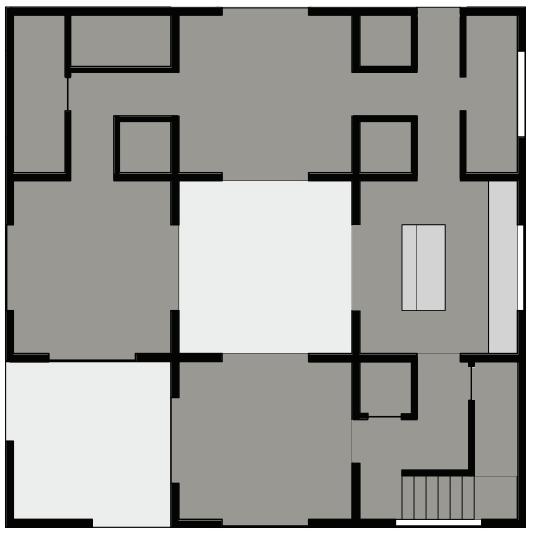
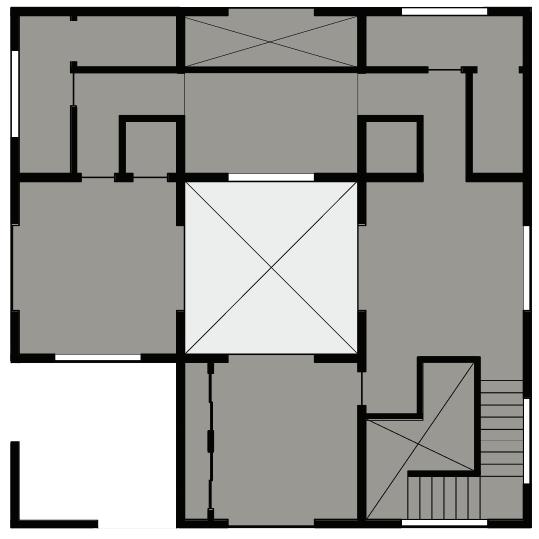
Large windows into the courtyard connect the spaces visually, allowing occupants to be always feel connected even when in different areas of the home.
8 SIDOH
LOFT
BED
BED
LANDING
DINING
LIVING
FOYER
KITCHEN PORCH
COURTYARD
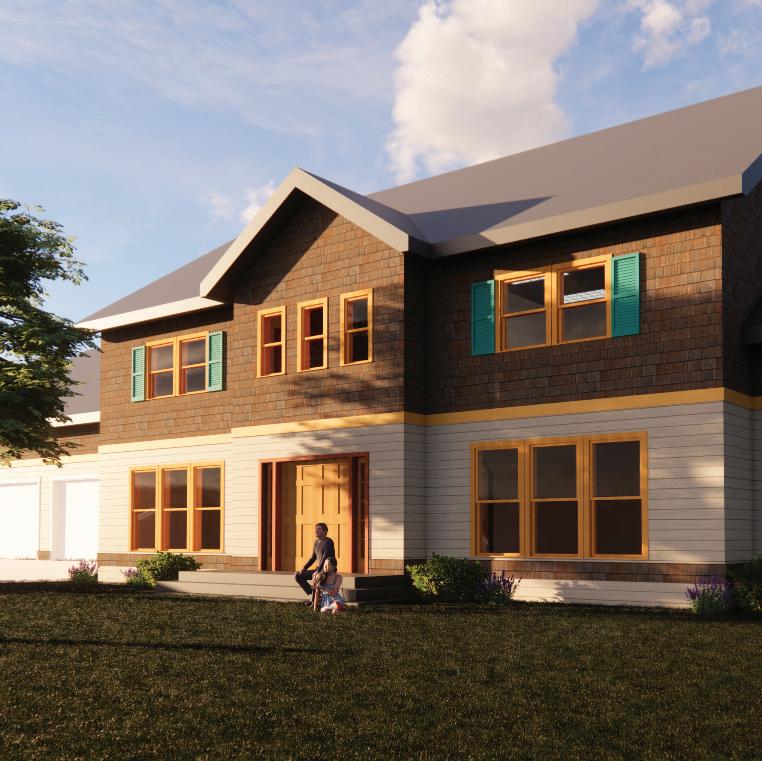
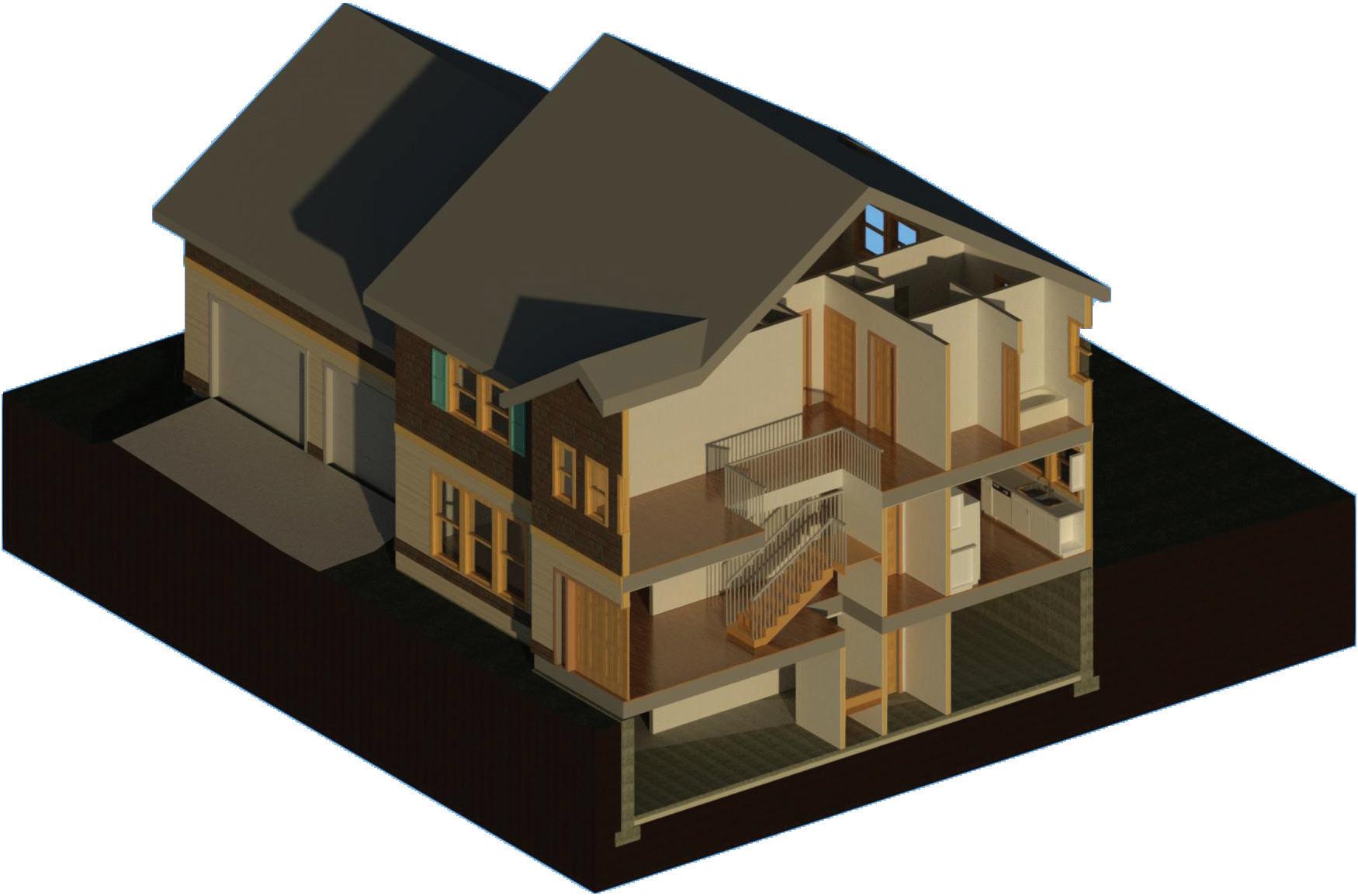
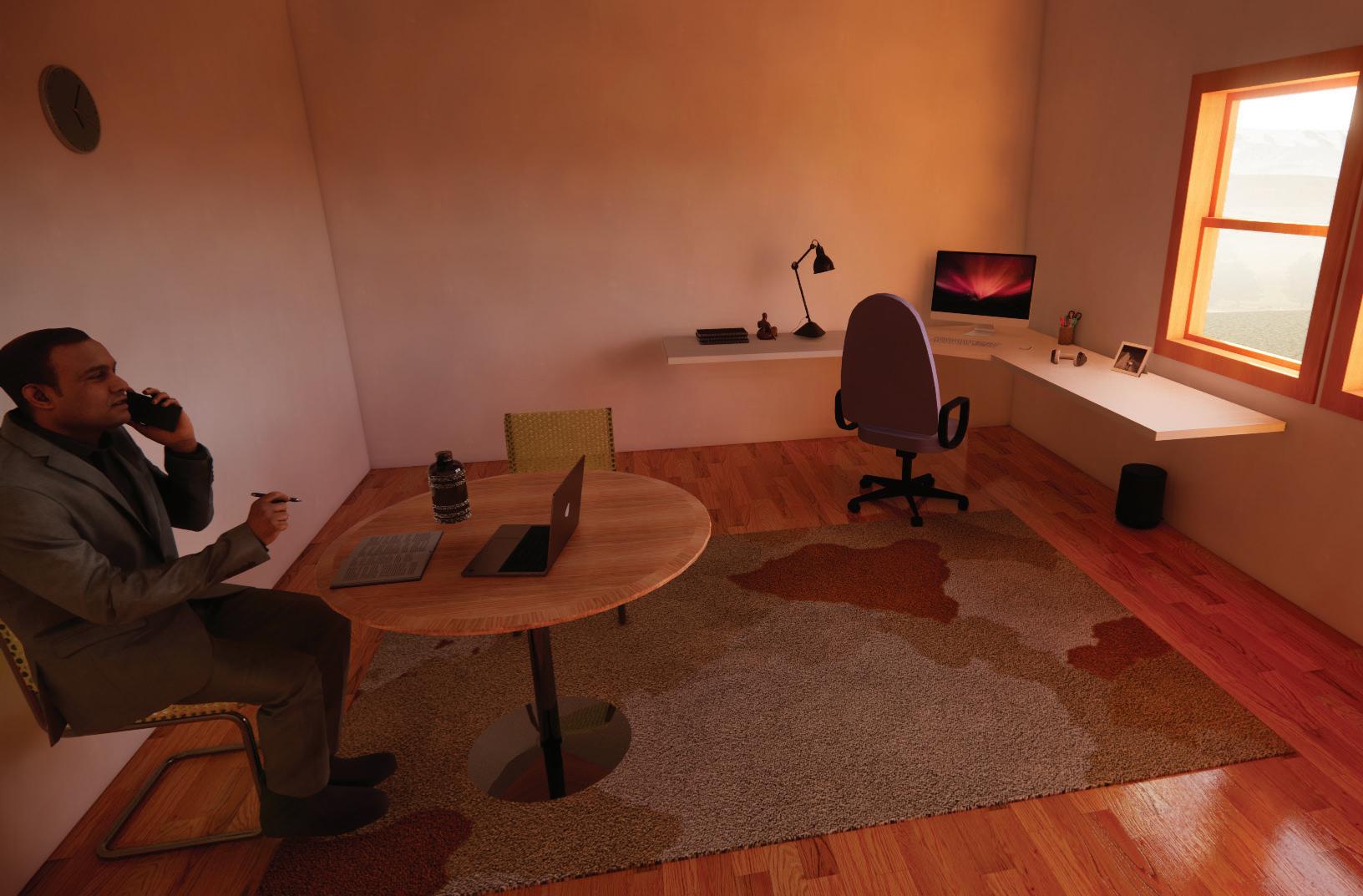
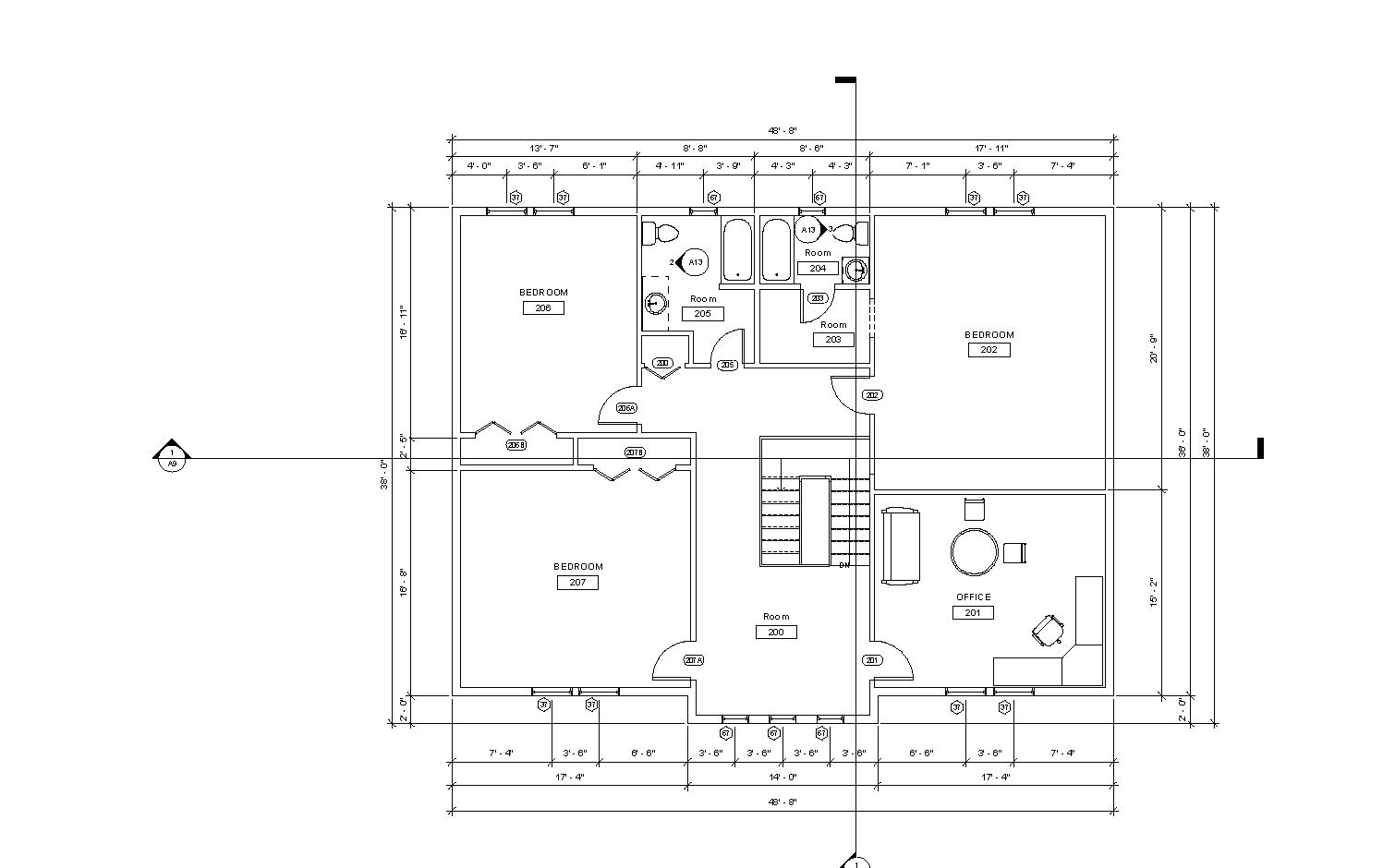
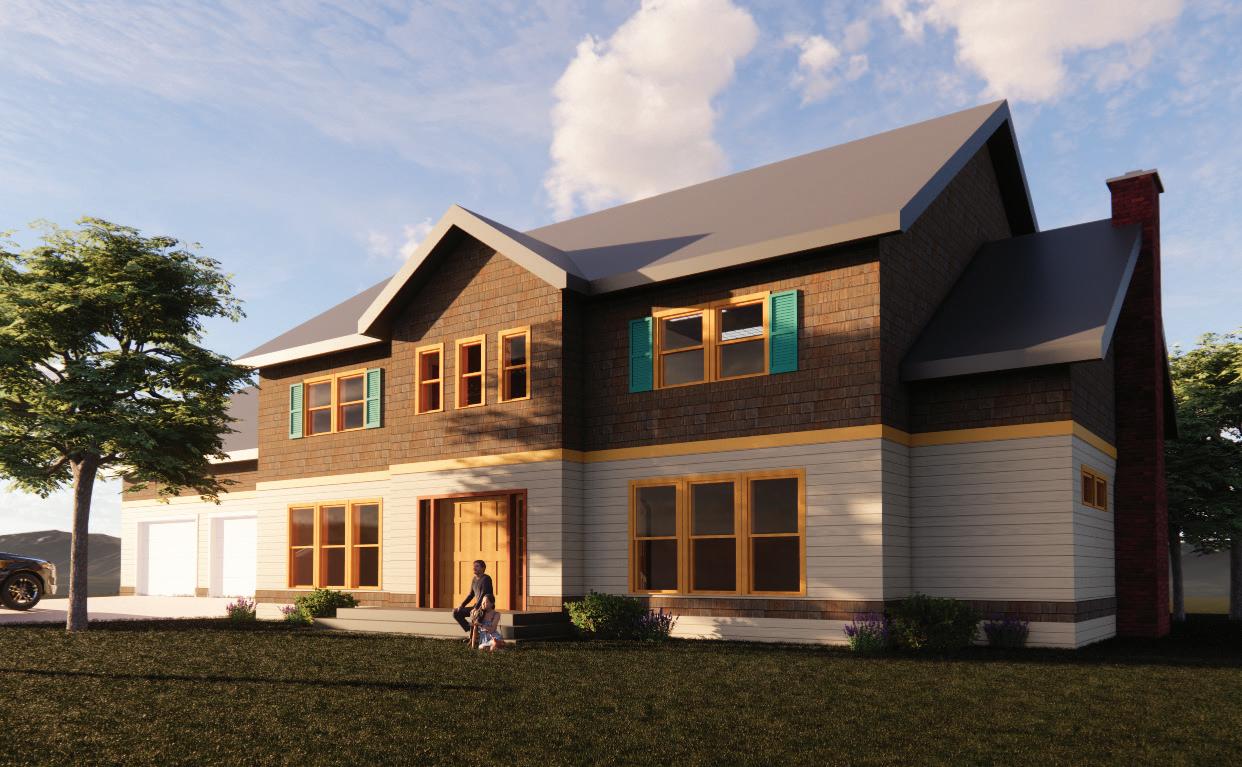
The Brown Residence is a project that was designed for a family of four utilizing traditional construction techniques. It was meant as an exploration of Revit and an exercise in construction document creation. This project was an individual project.

FRONT ELEVATION
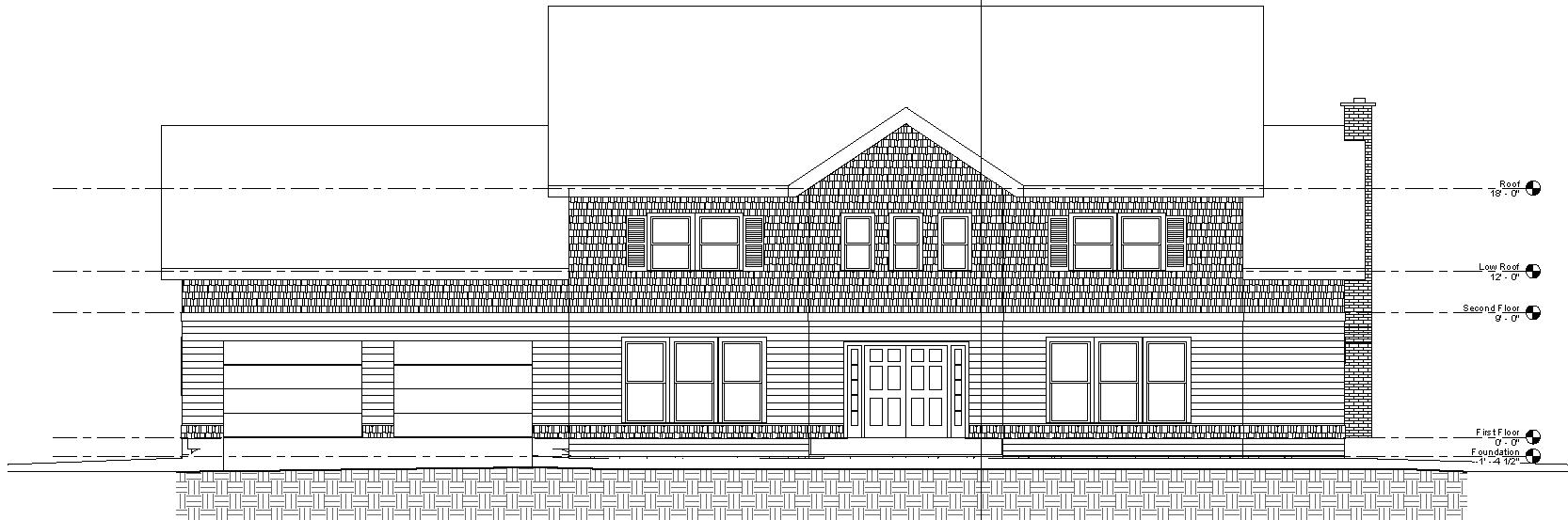
The house is designed to be a contemporary house that would fit on a typical lot in a development.
3D SECTION
The house is designed to be a contemporary house that would fit on a typical lot in a development.
9 BROWN RESIDENCE
FIRST FLOOR
SECTION
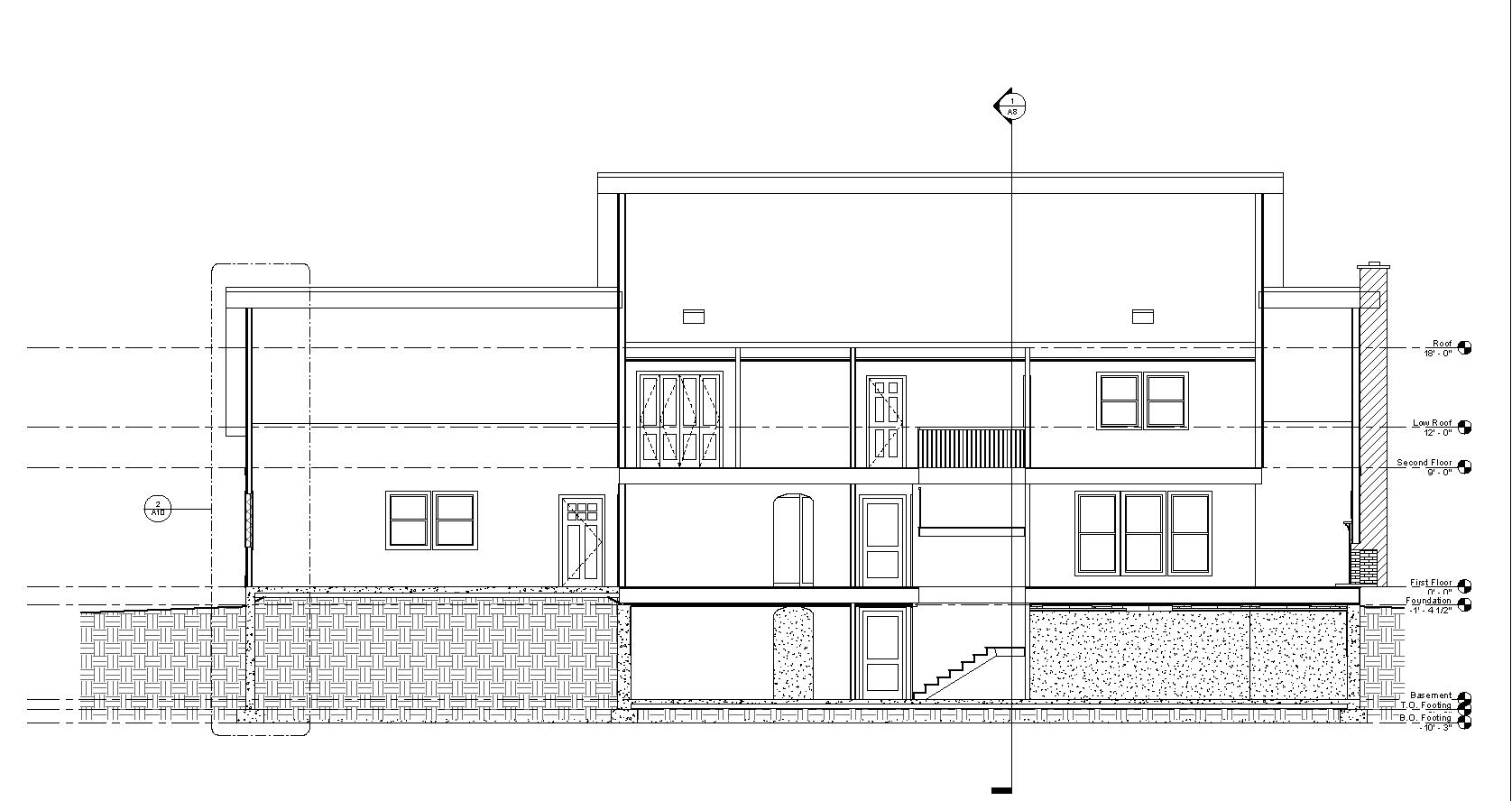
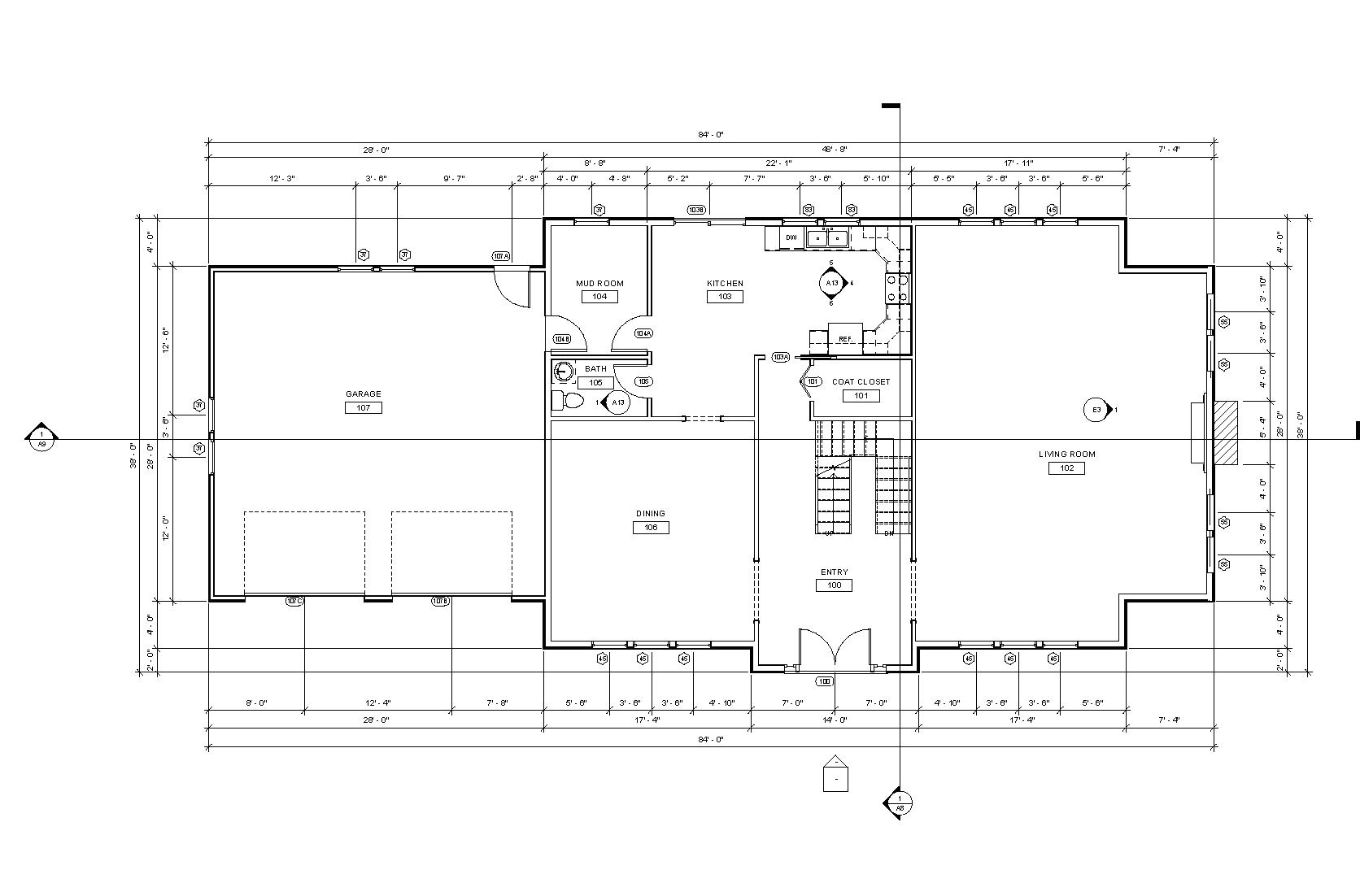
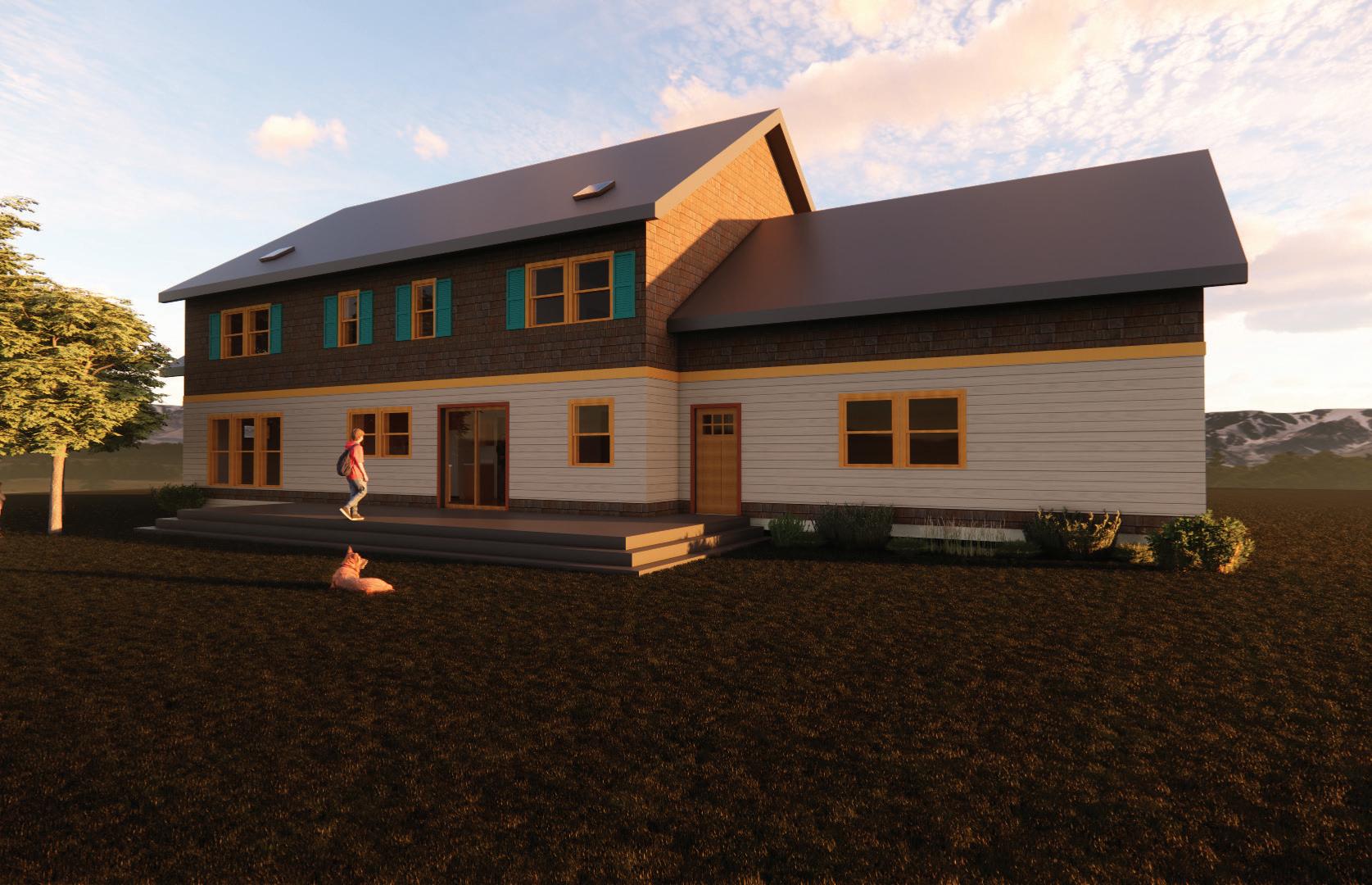
10 BROWN RESIDENCE
SECOND FLOOR
CAPITOL HILL CO-OP
INITIAL STUDY MAQUETTES
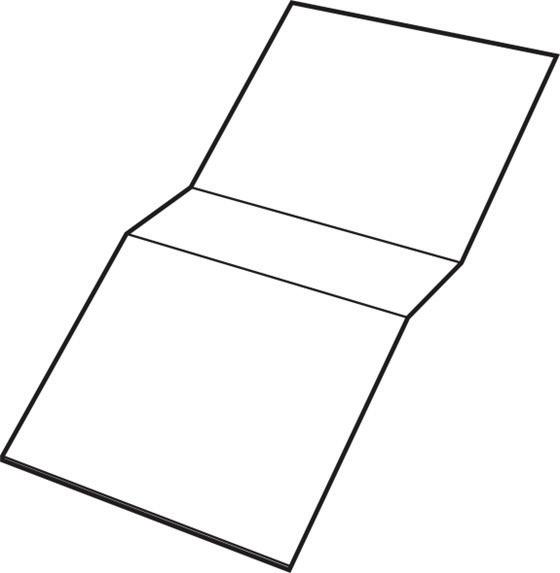
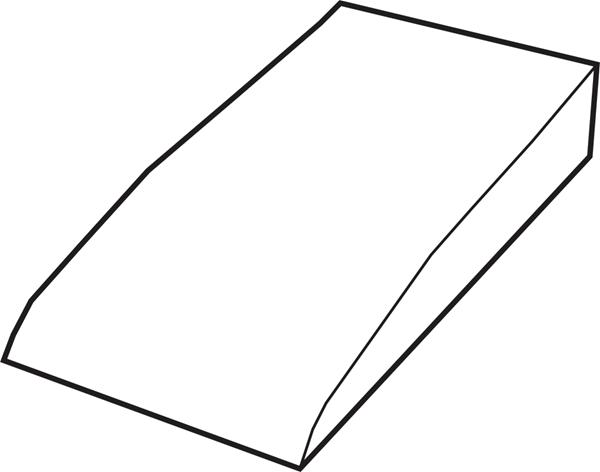
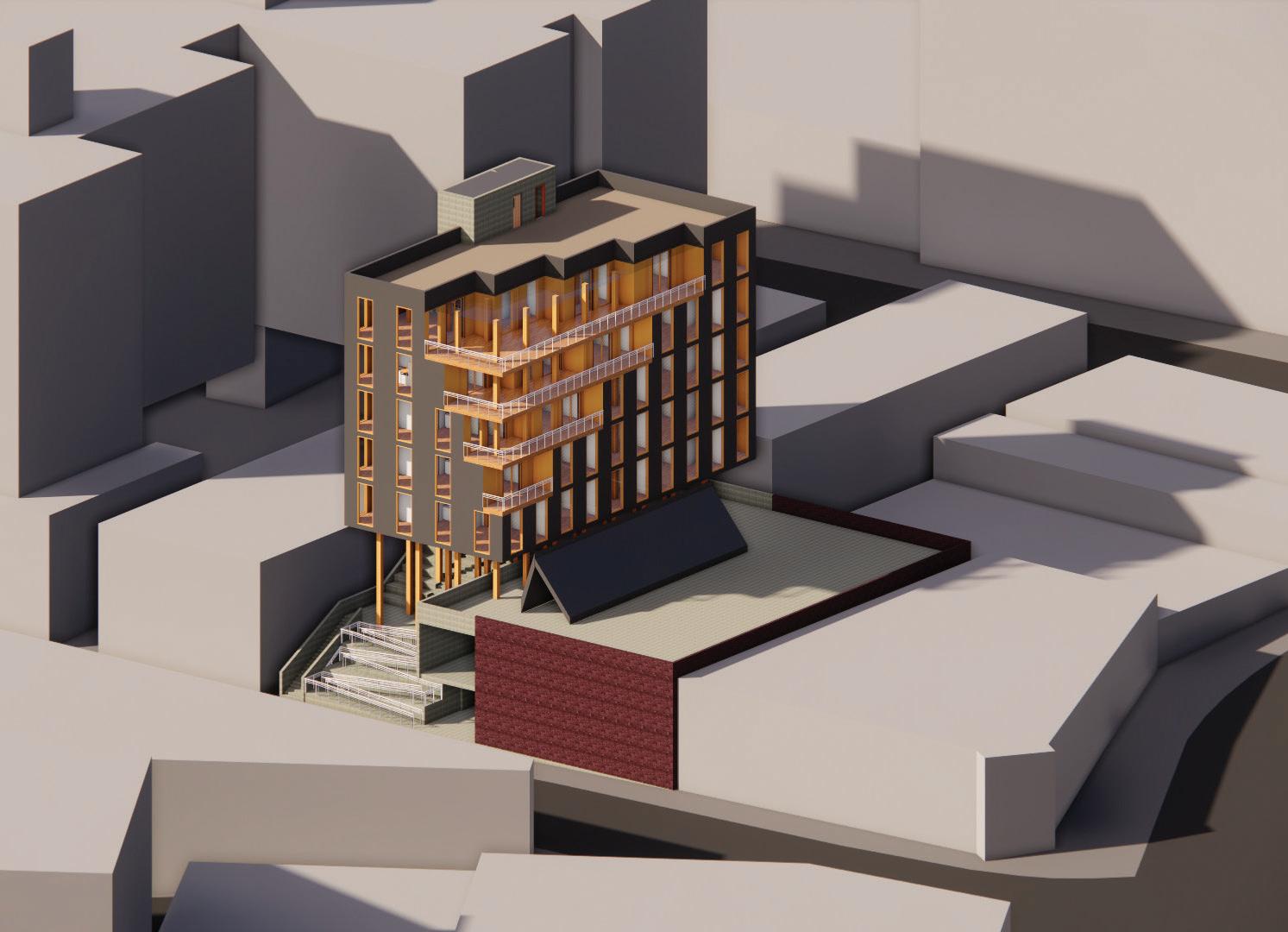
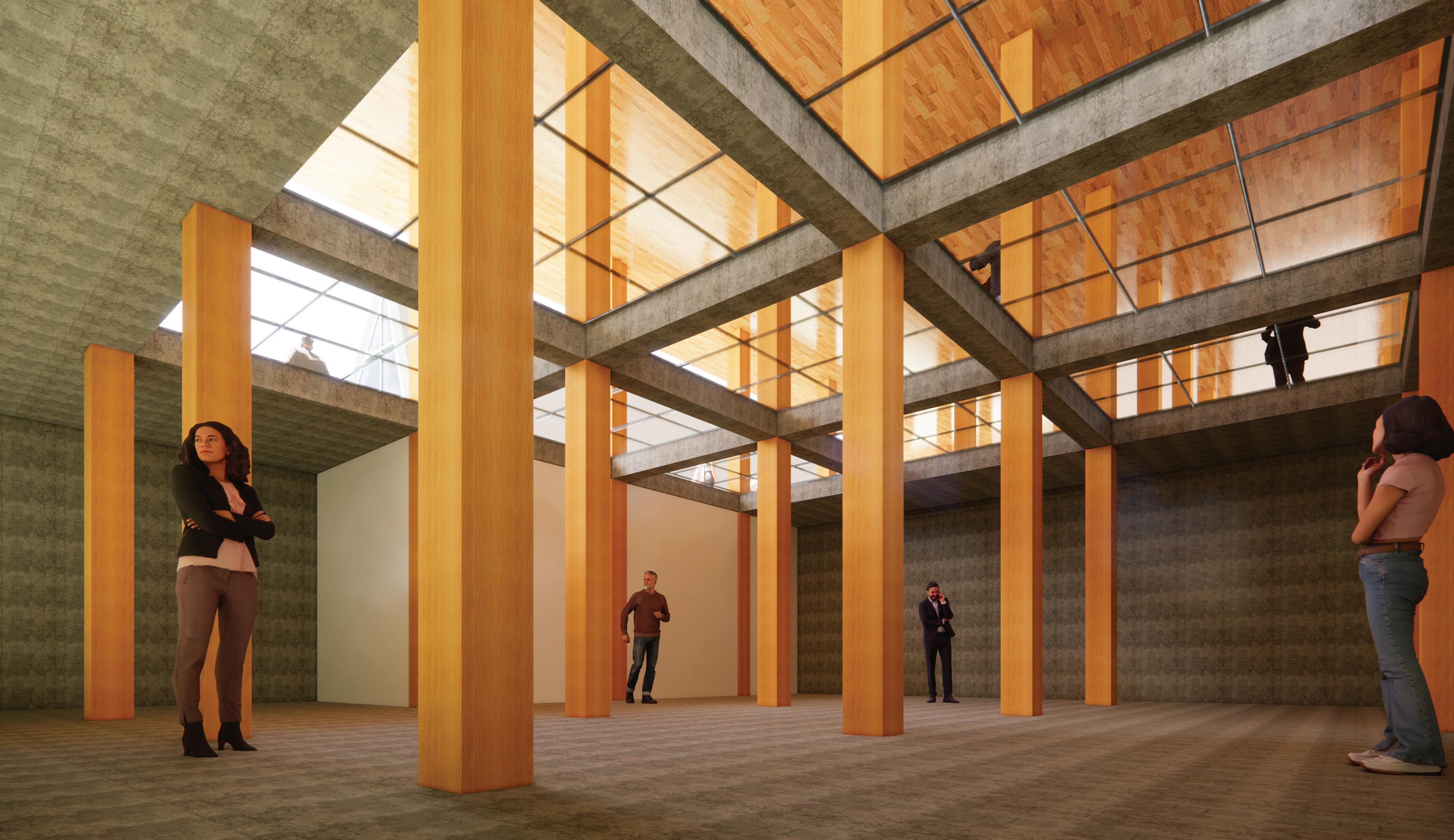
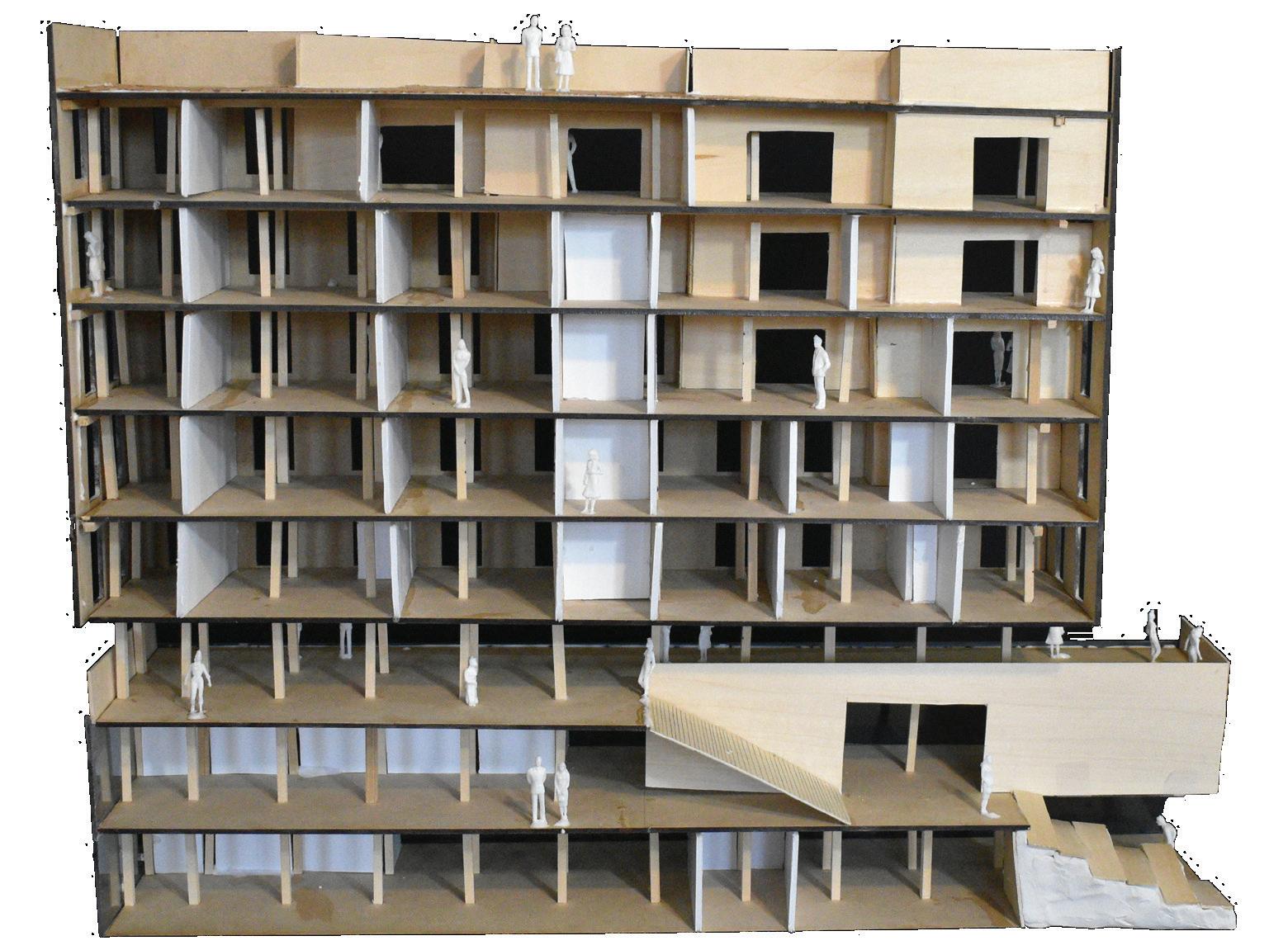
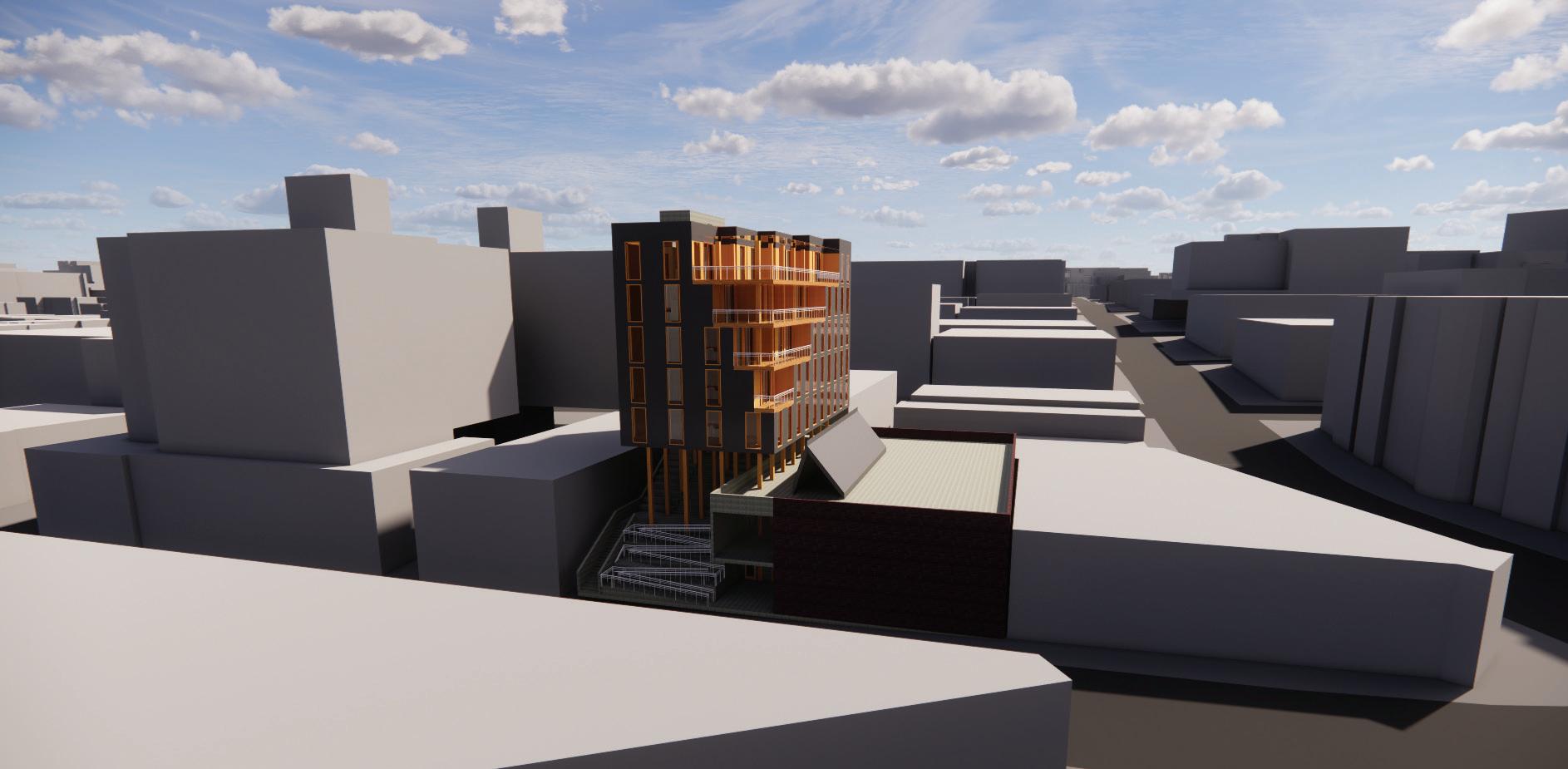
Our study maquettes reveal a desire our desire to raise the bulk of the structure above the site and street level and to free up the lower levels for outdoor space.
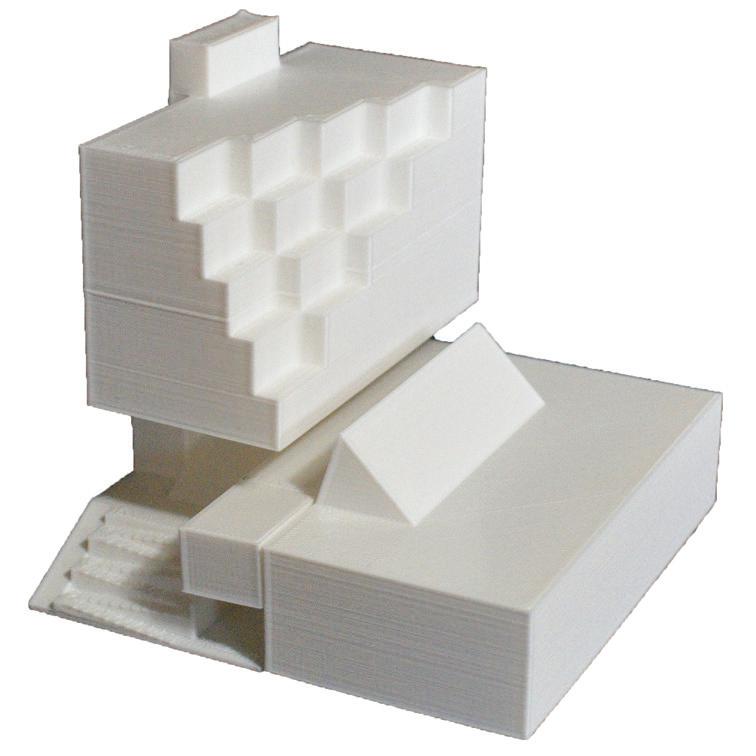
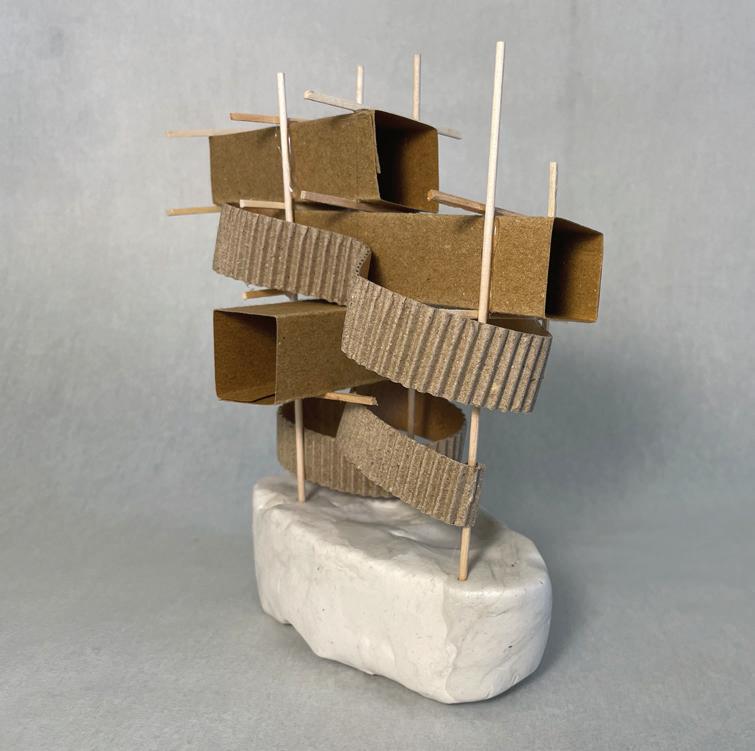
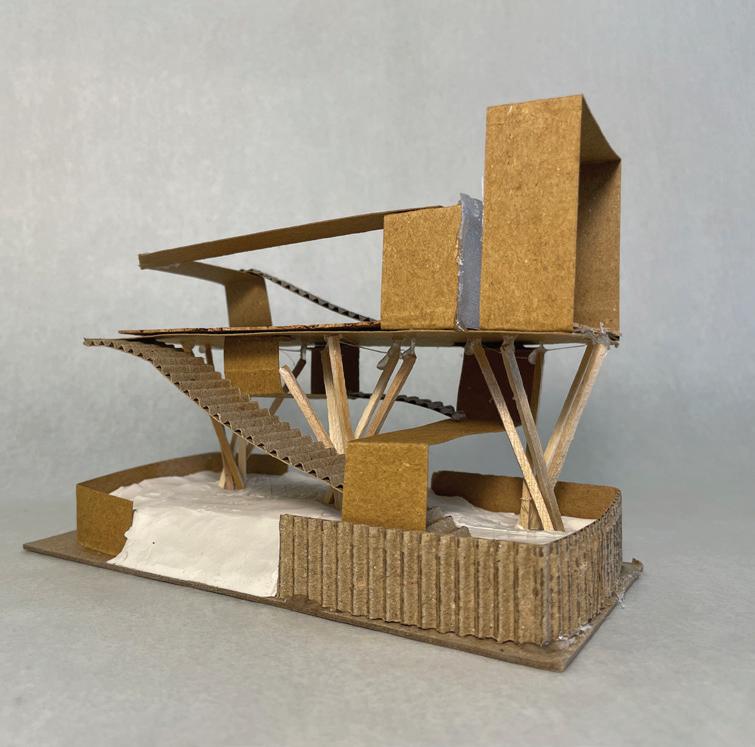
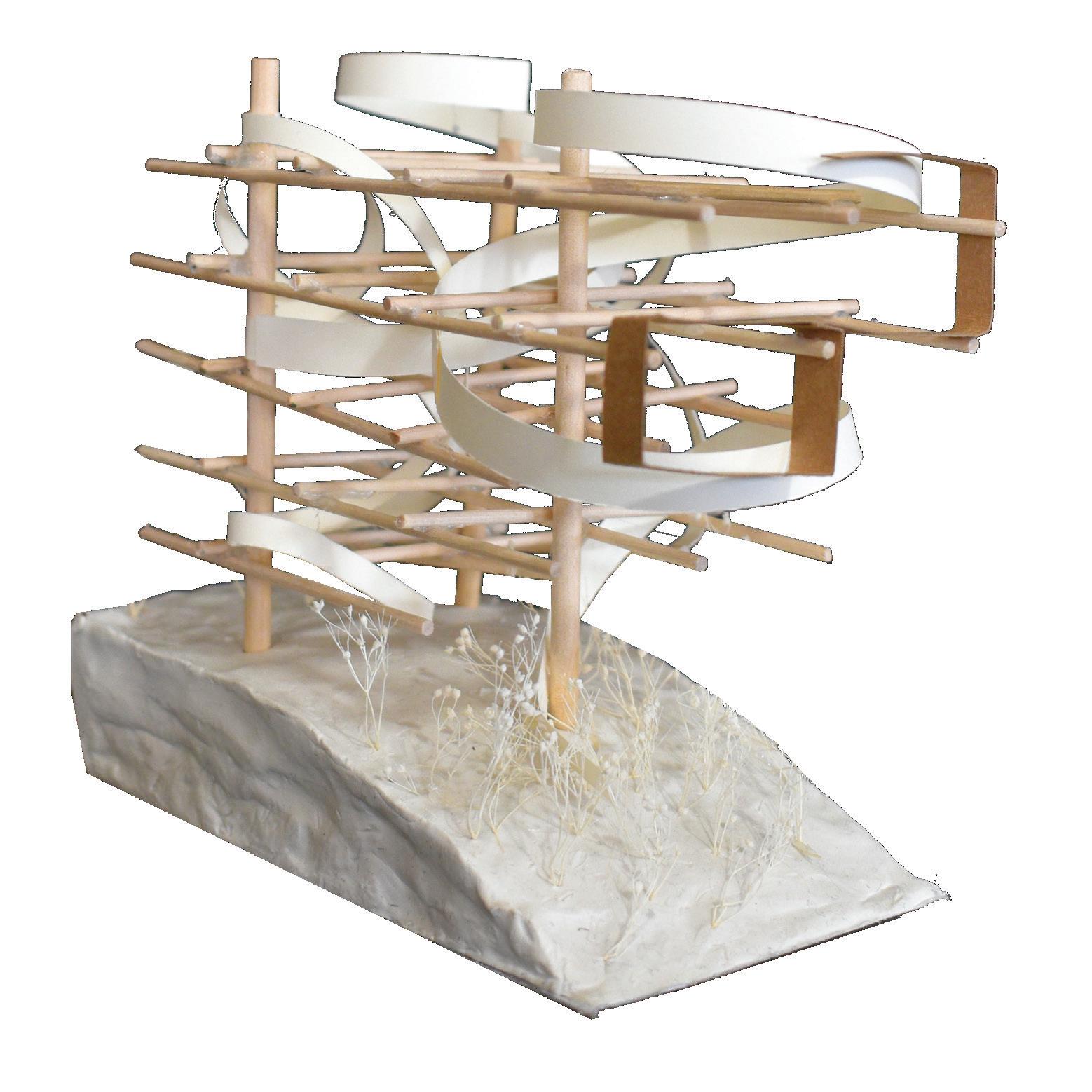
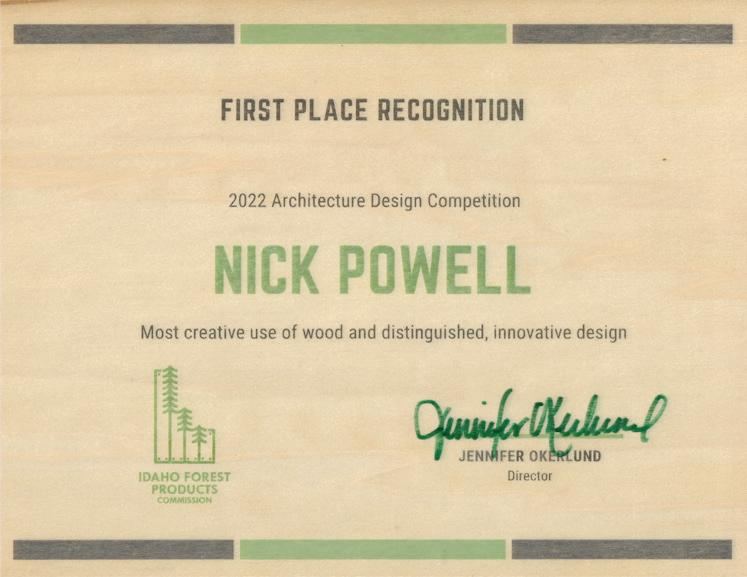
Capitol Hill Co-Op is a team project submission for a competition showcasing the use of engineered timber product. My role on the team consisted of design development creation of three dimensional models using Sketchup and Revit. My team mates were Sydney Troy, Ethan Baum, and Dylan Moyano.
Our project was selected for first place by the jury.
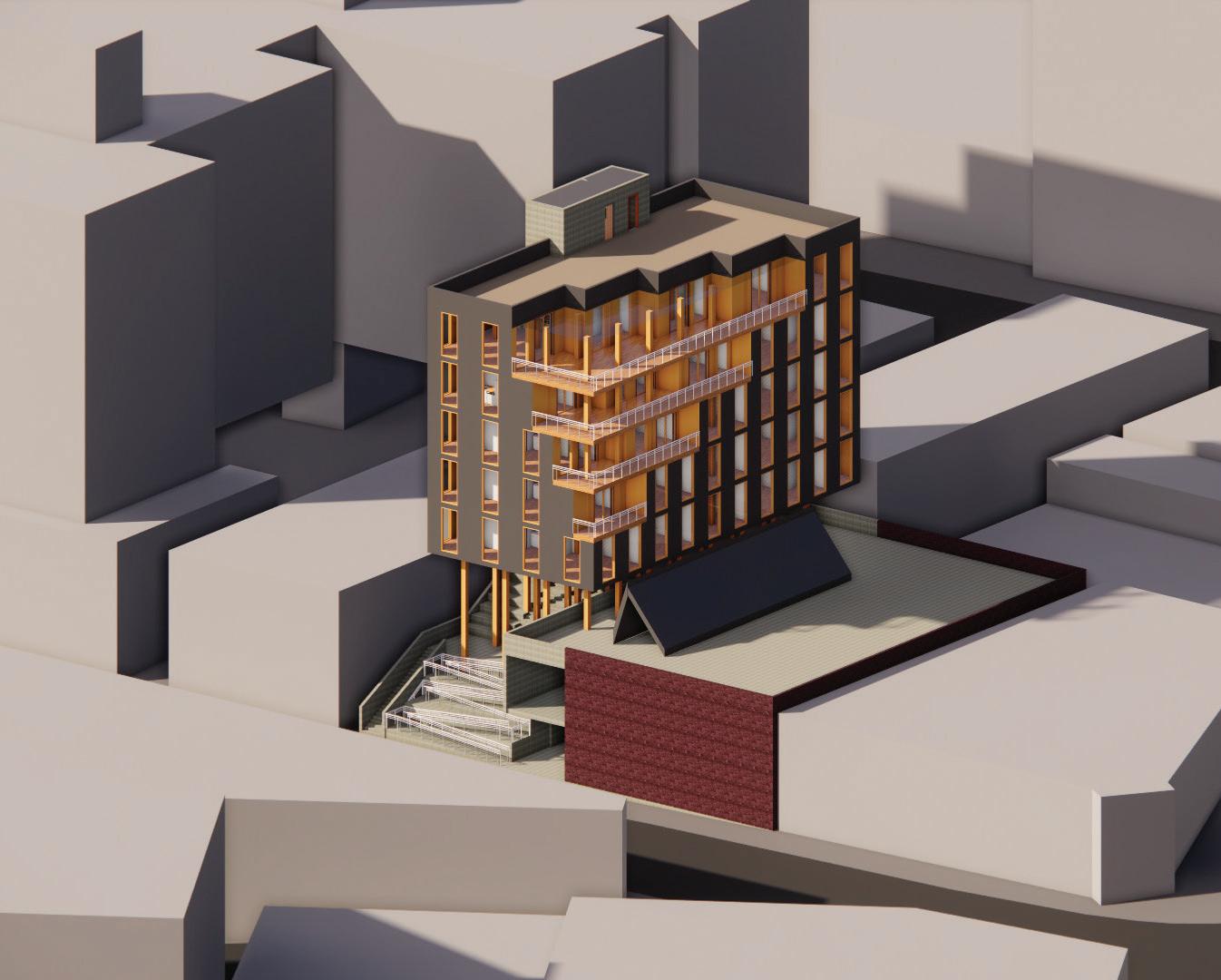
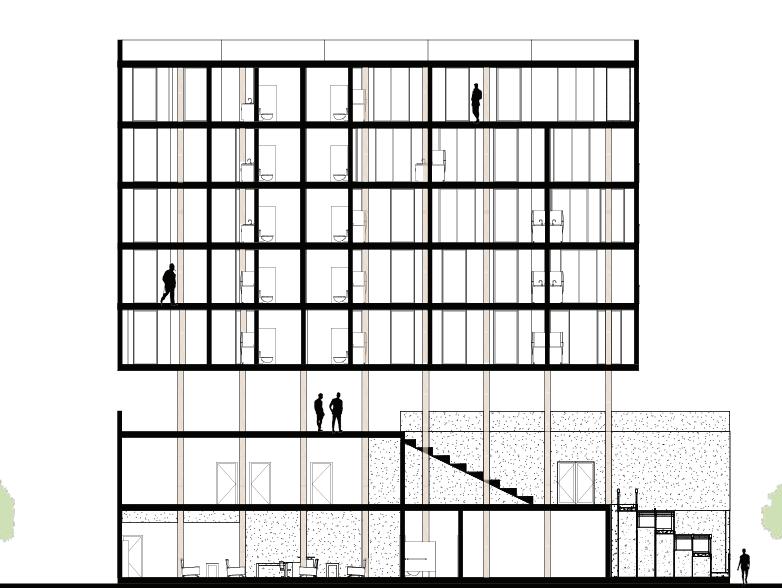
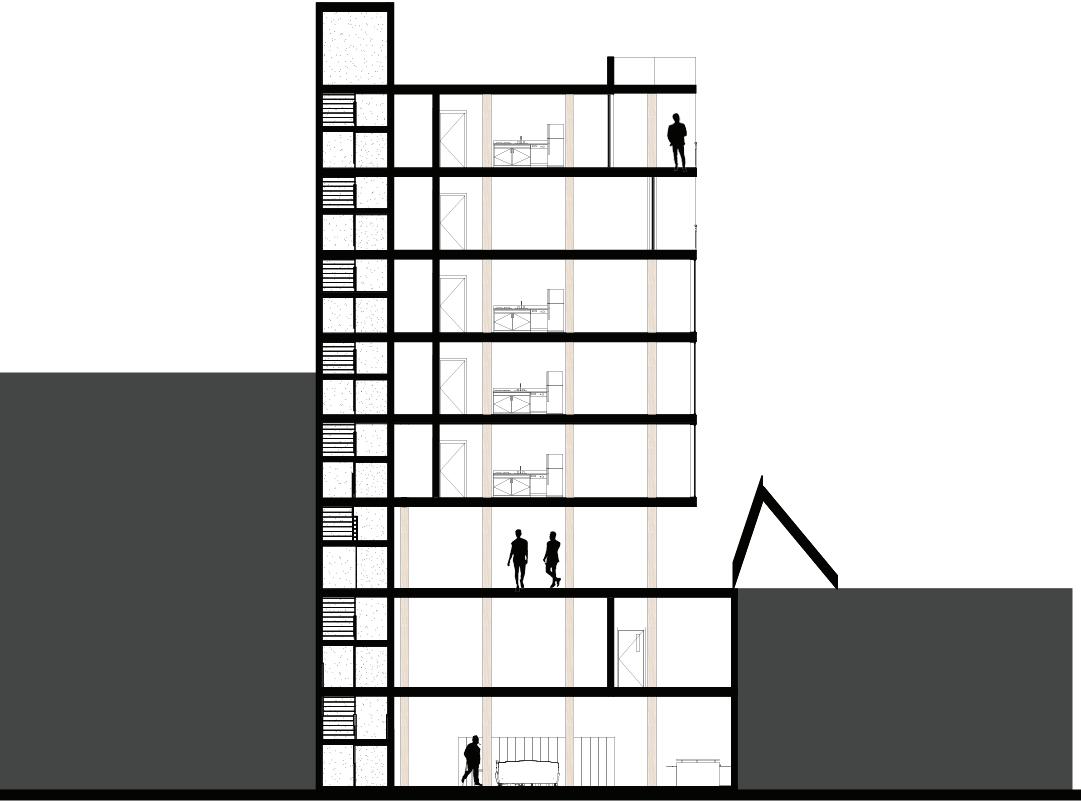
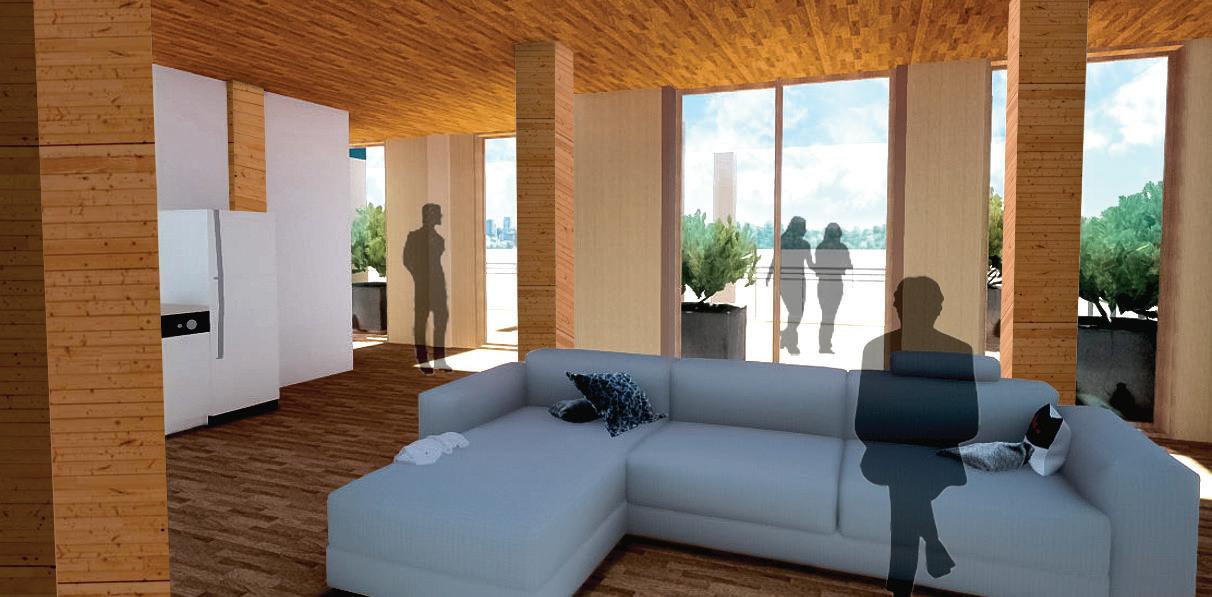
The final model shows we elevated the residential portion of the building over the street level commercial and outdoor public terrace. Additionally, we subtract from the form to articulate the facade and allow for daylight to penetrate and allow for outdoor space for each unit.
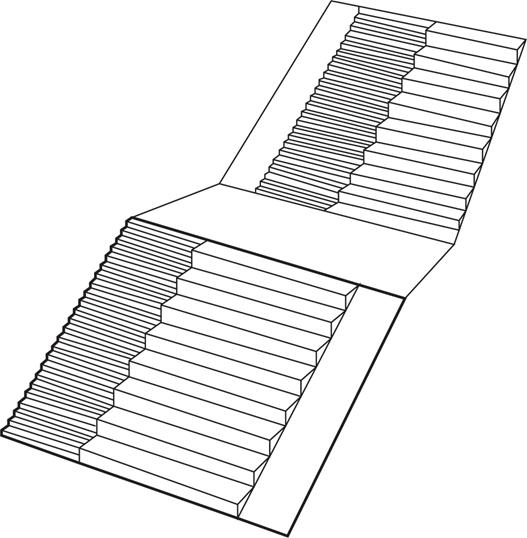
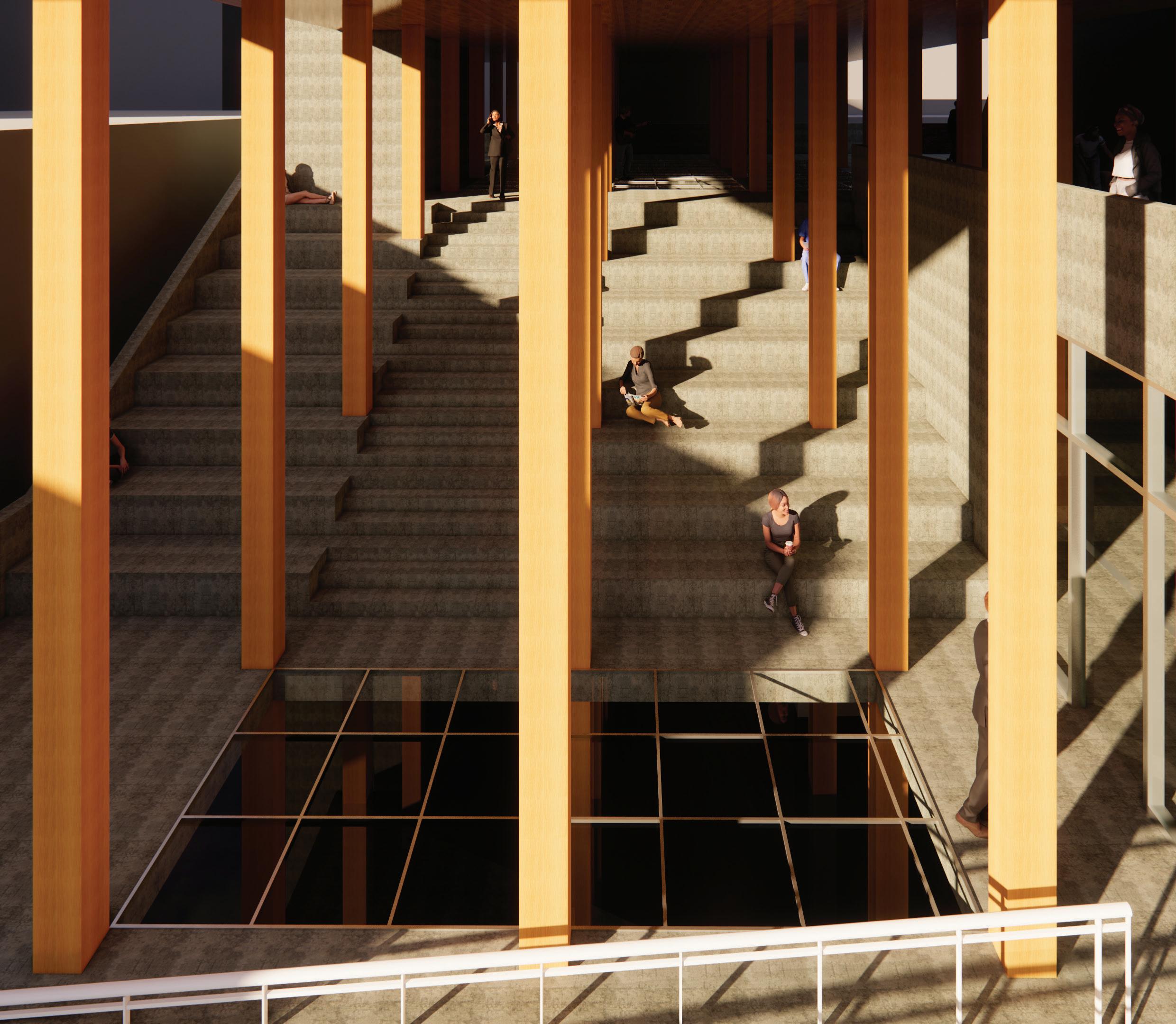
It was our intention from the start to honor the slope of the site because it’s history as a “spite mound” is important part of Seattle history. We created stairs with stadium seating and later added a ramp.
EXISTING SLOPE TERRACED OUTDOOR SPACE
11
CAPITOL HILL CO-OP
12
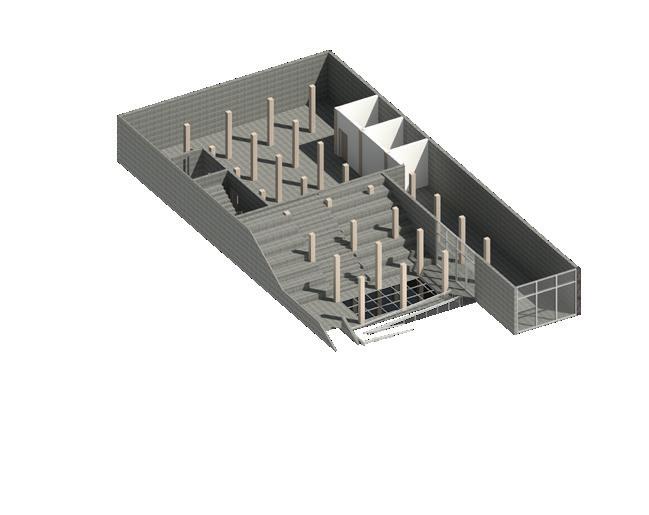
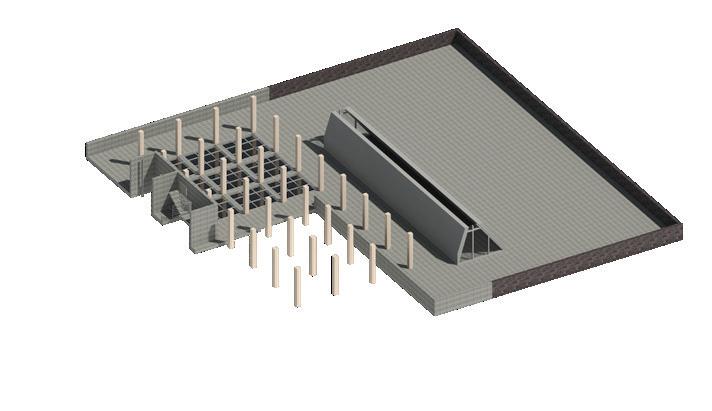
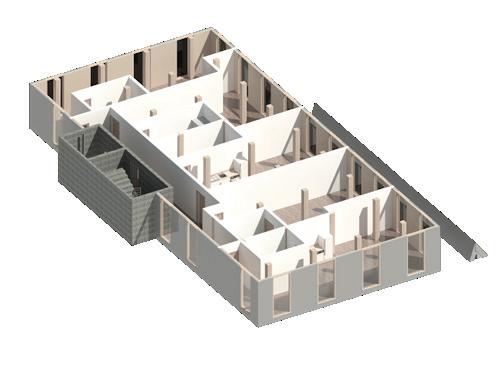
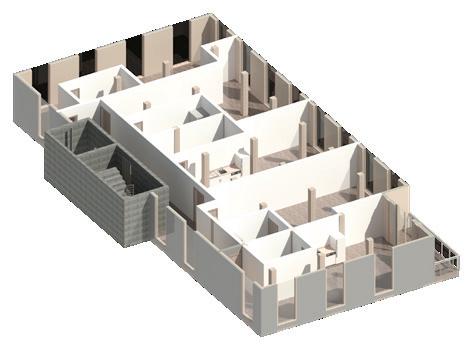
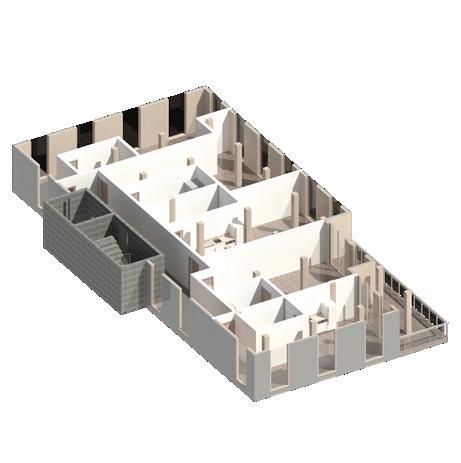
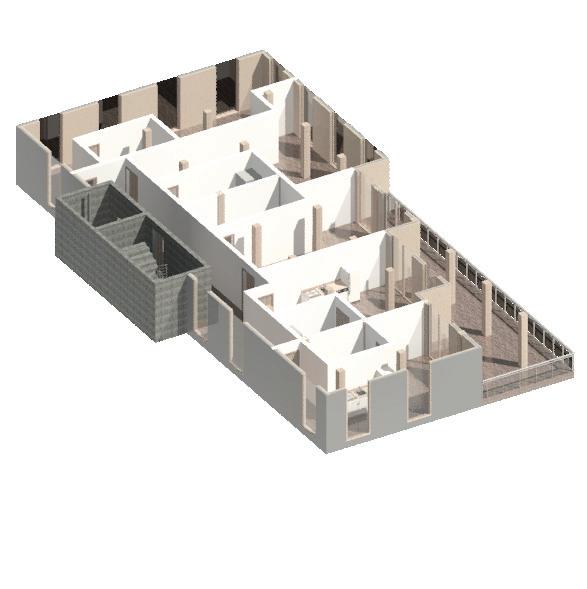
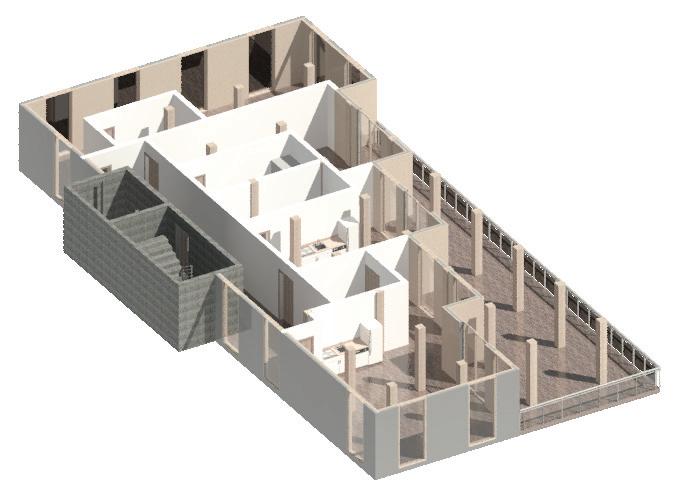
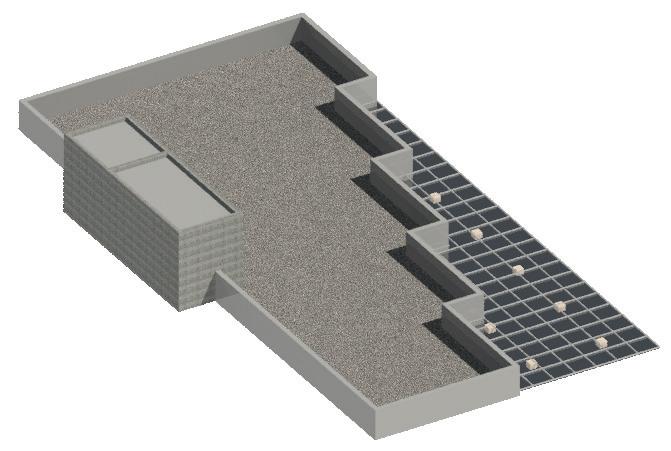
13 CAPITOL HILL CO-OP ROOFTOP & GARDEN TERRACE & GARDEN LOBBY & COMMERCIAL COMMUNAL & COMMERCIAL RESIDENTIAL 1 2 3 4-8 9
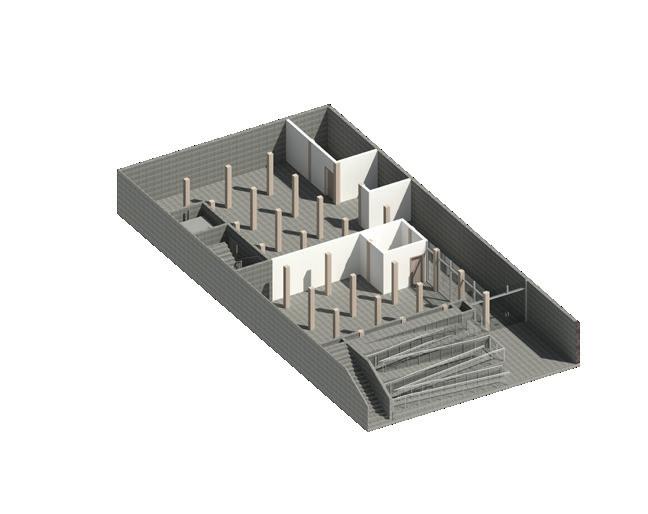
Our model reveals how the interior walls can be rearranged, allowing for units to be combined as occupants family situations change over time.
CAPITOL HILL CO-OP
We utilize the rooftop of the neighboring building because they have the same ownership. We incorporate their rooftop into our open public terrace and effectively double the amount of outdoor space to nearly one acre in a neighborhood that lacks public park space.
14
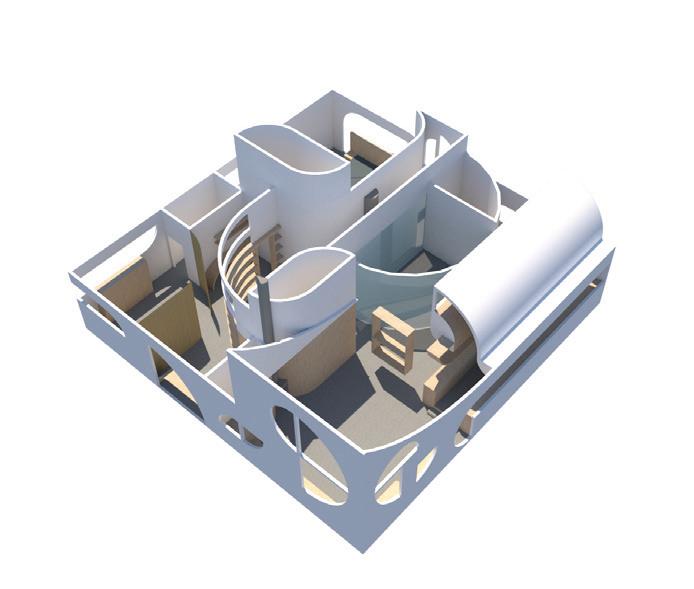
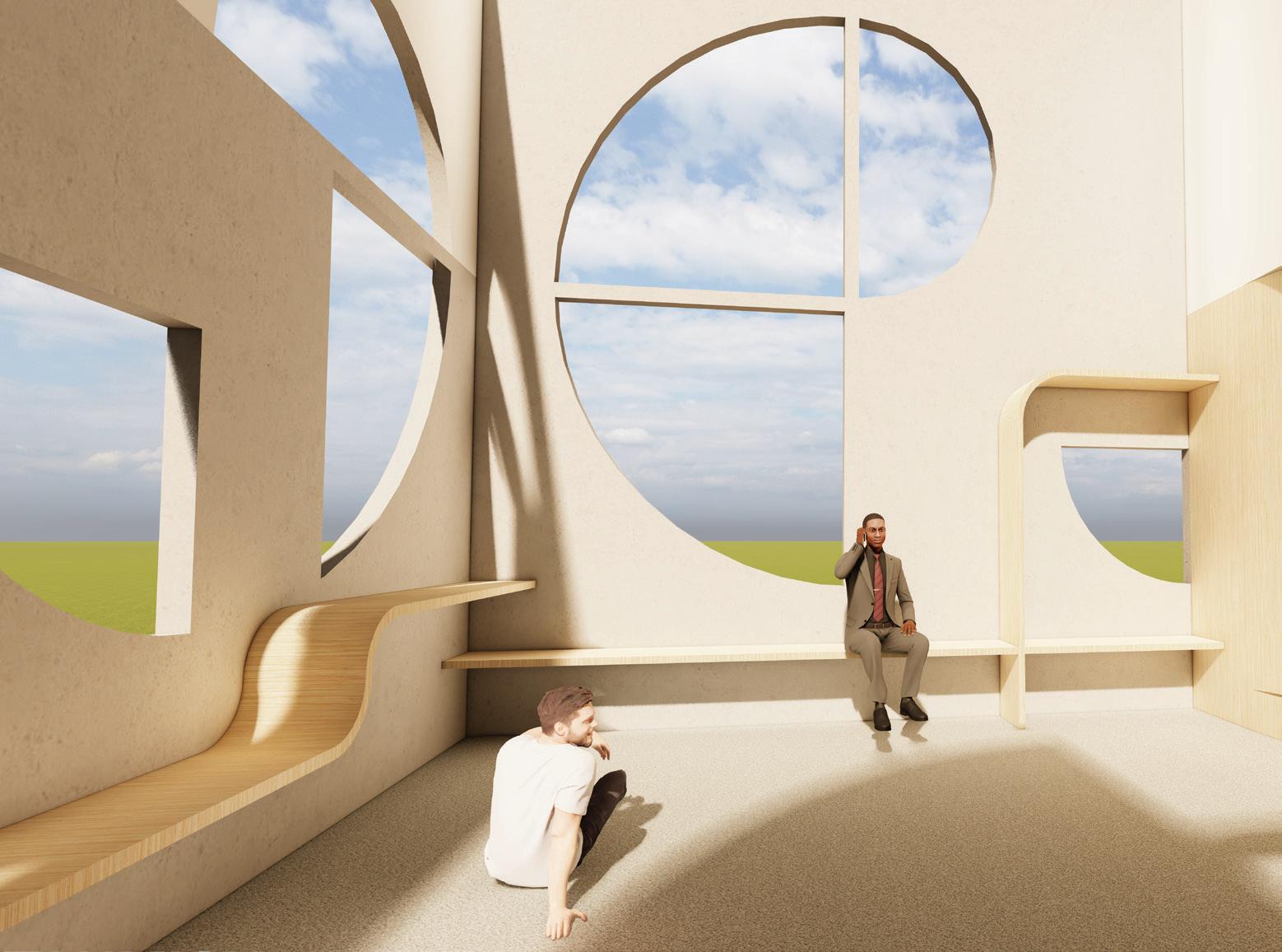
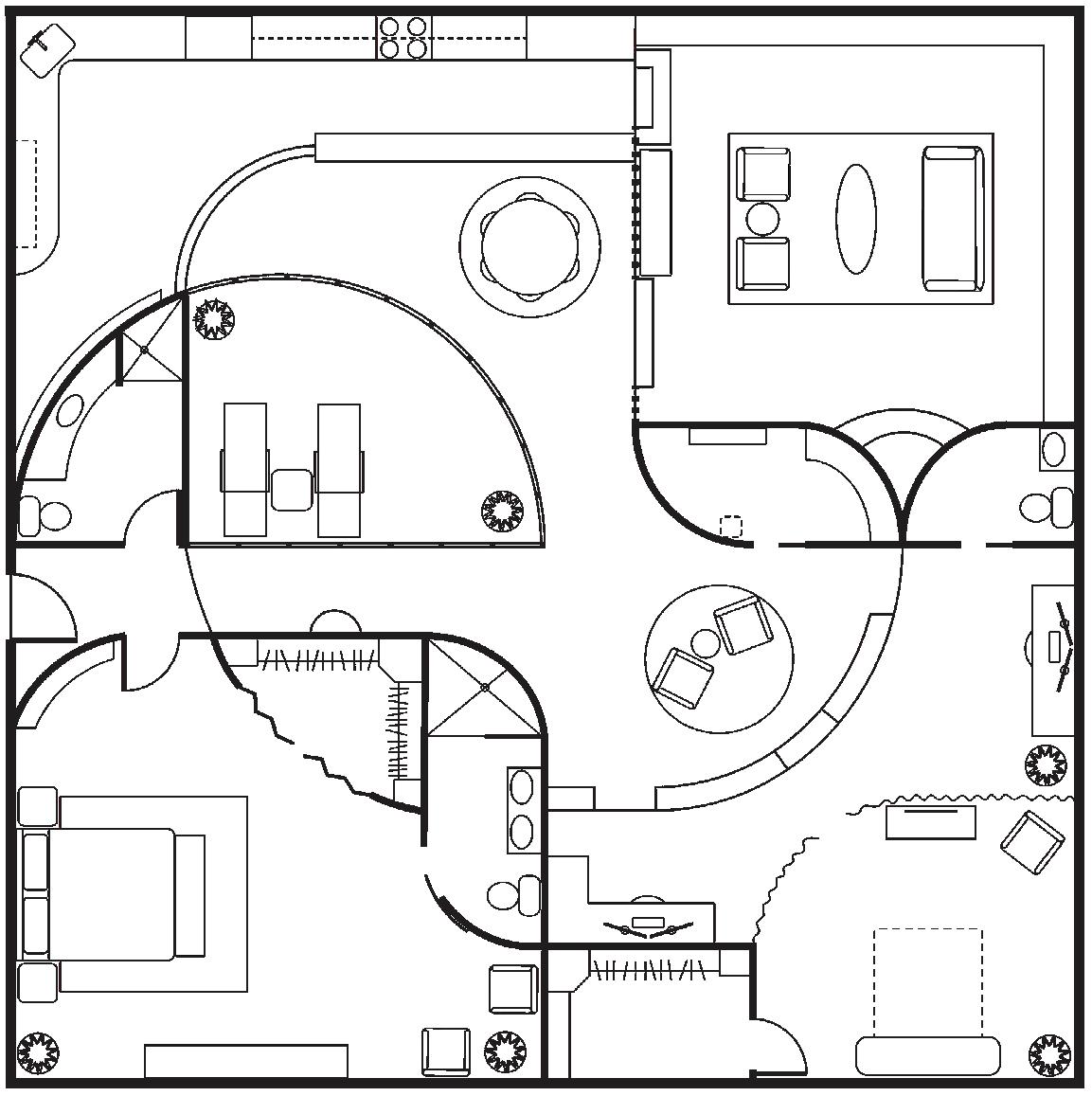
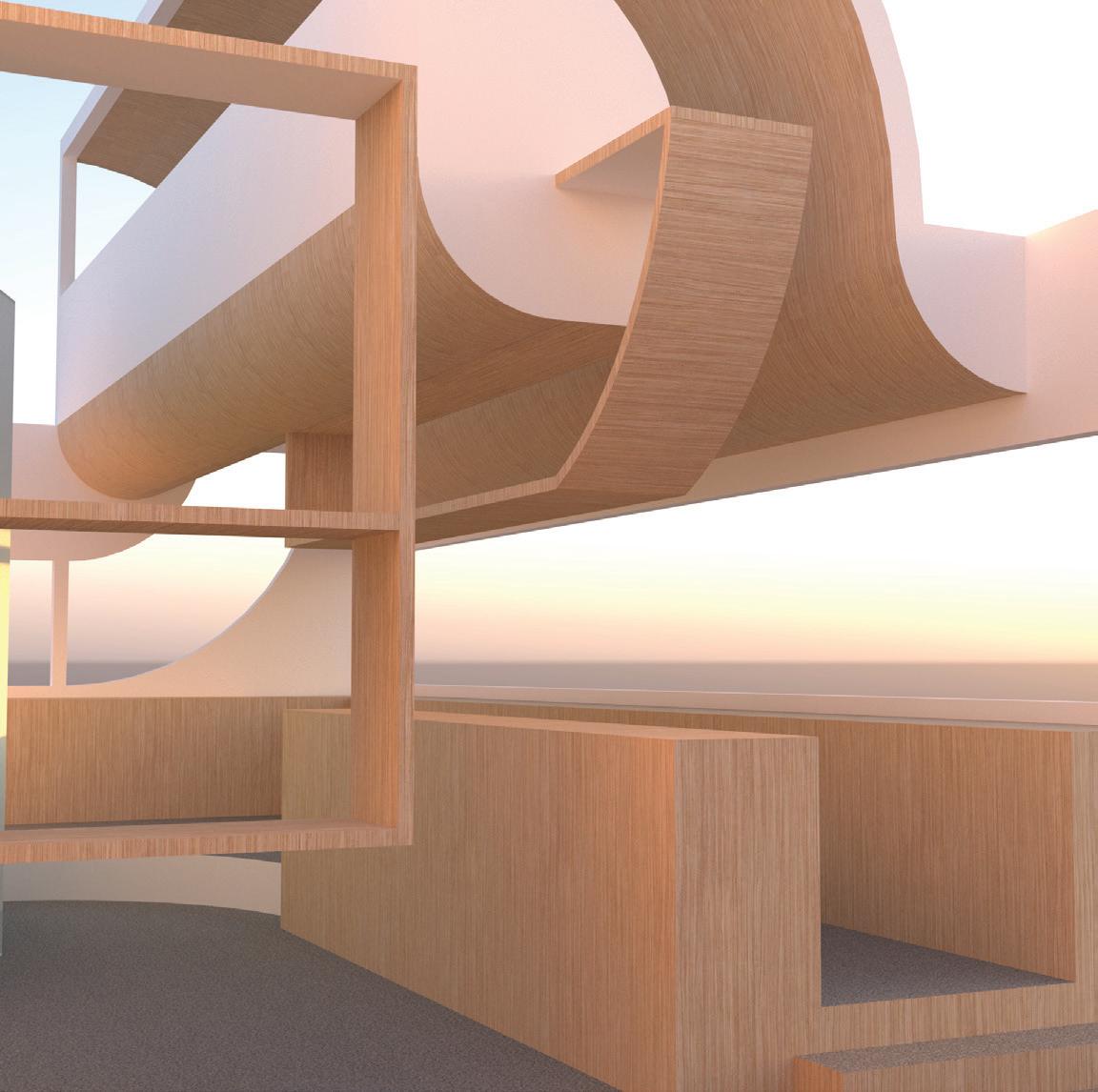
FLEXICELL was an individual project to evaluate our skills. The projects were 50’ by 50’ and were meant to be arranged together in cells. We were to use as few traditional walls as possible and instead utilize various methods for visually and physically dividing spaces such as shelves, curtains, and levels.
We were given a short ani mation and were directed to pause it and use the colors as the basis for the layout of our building.
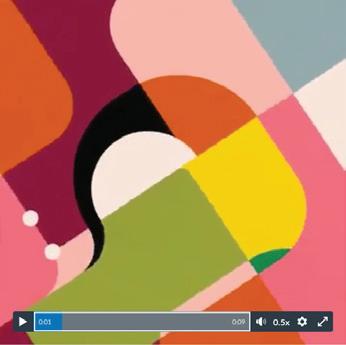

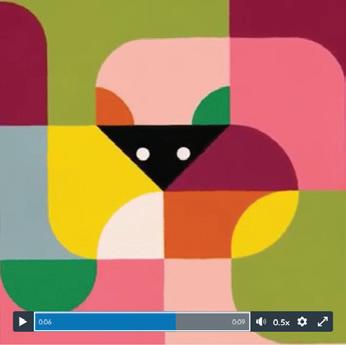
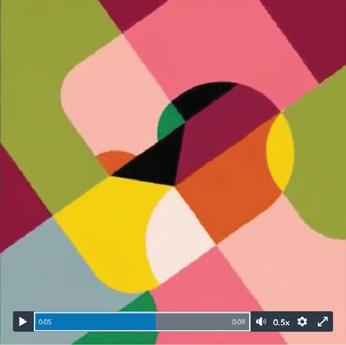
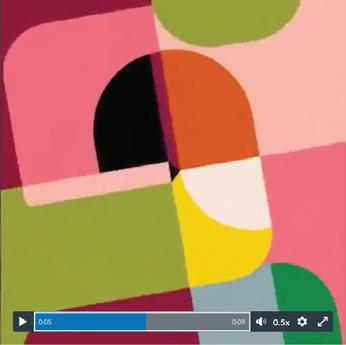
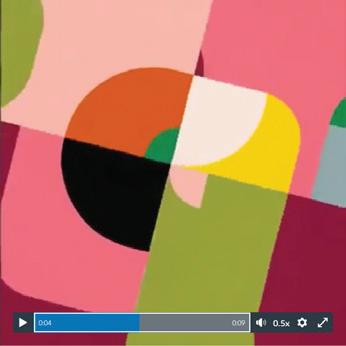
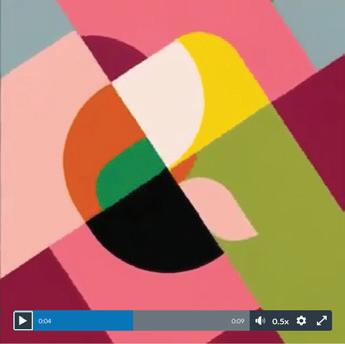
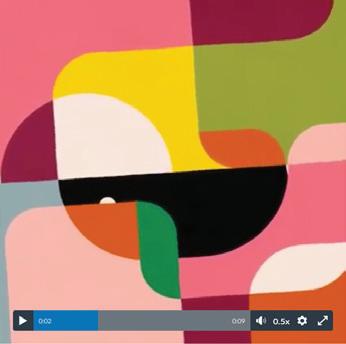
The final model for the floor plan articulates the forms of the floor plan into the vertical elements and openings of the structure.
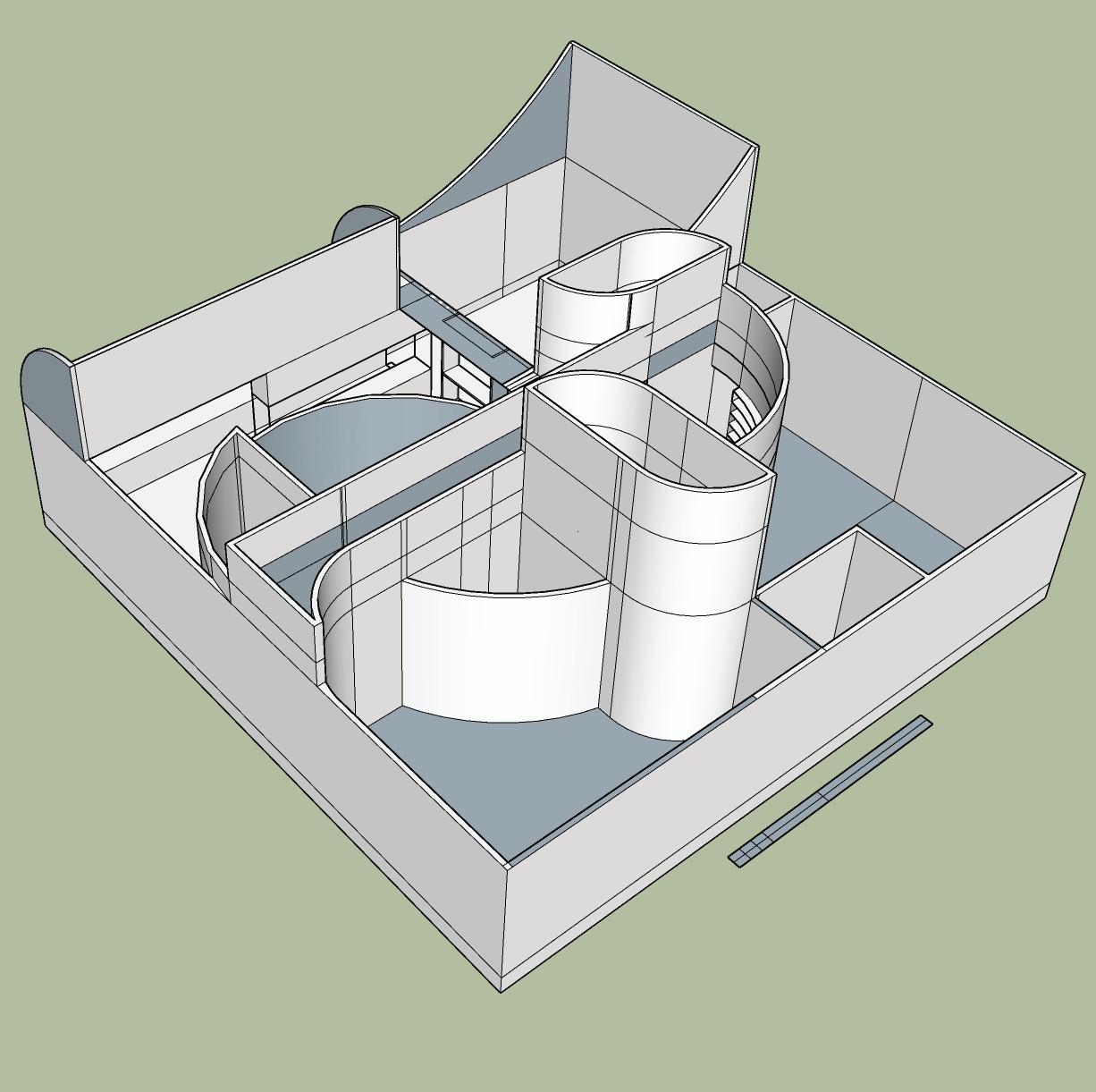
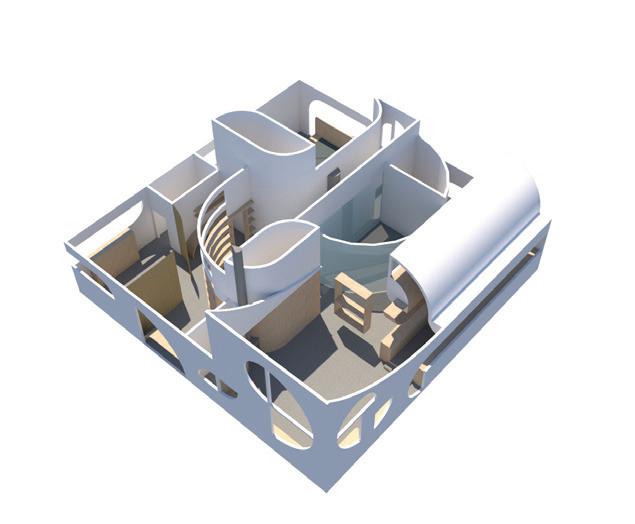
3D MODEL
FLOOR PLAN
15 FLEXICELL
INTERIOR VIEW
3D FLOOR PLAN
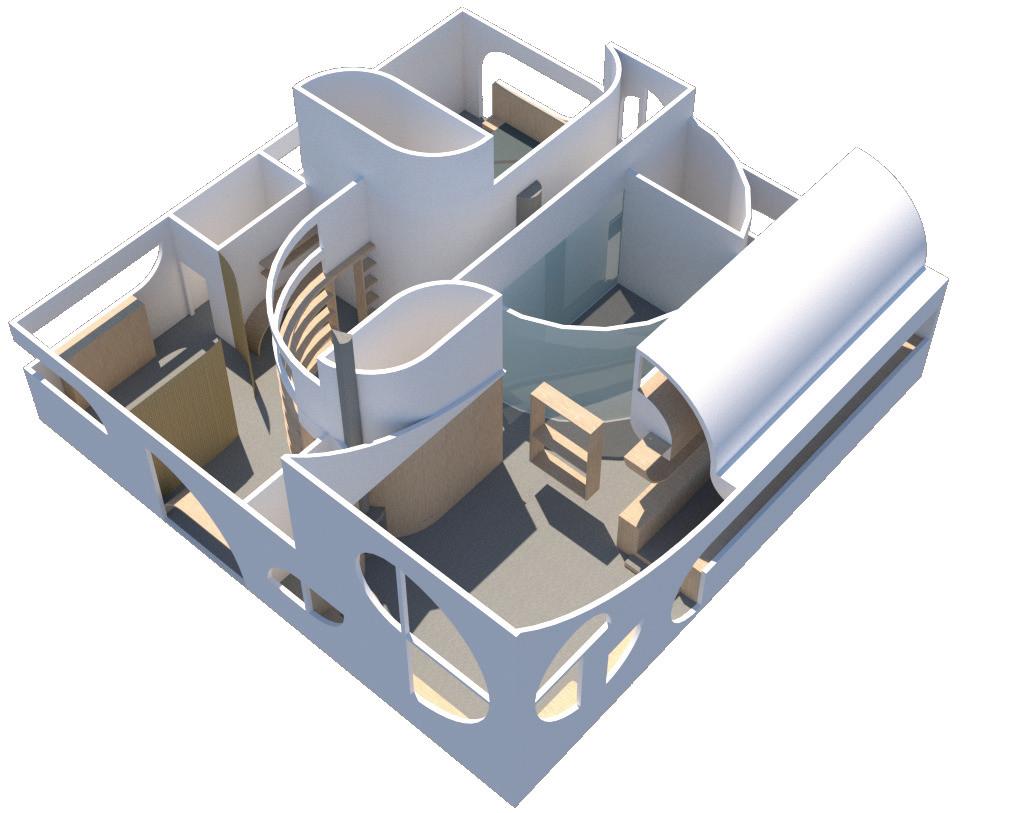
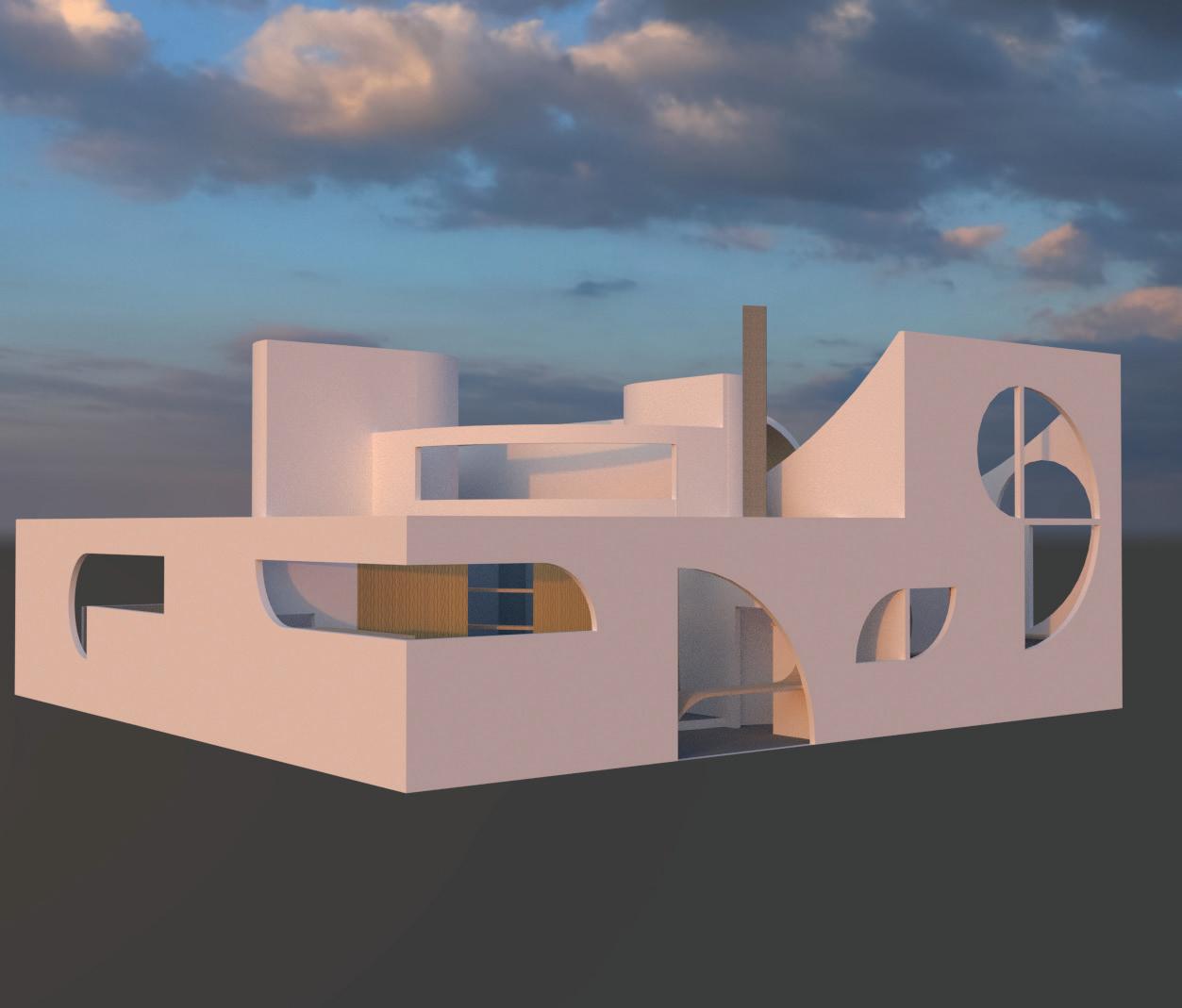
The floor plan features different floor plate heights, curtains, shelves, and casework to divide the space.
16 FLEXICELL
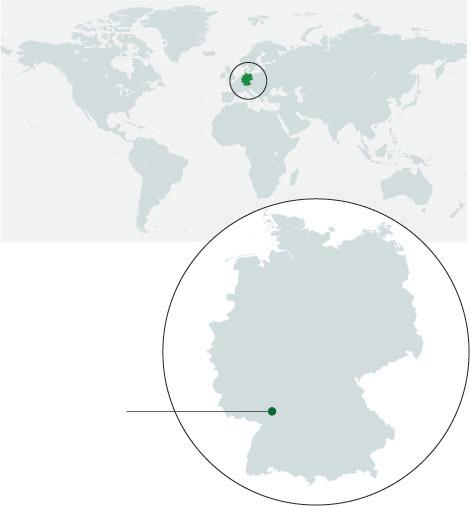
This project was a submission to the 2022 Land Art Generator Initiative (L.A.G.I.) Competition. The directive was to design a renewable energy infrastructure is also beautiful. It was selected for publication in the 2023. My teammates were Alyssa Hall and Abigail Barnes. My role was to create the diagrams, write the narrative, and arrange the final presentation boards.
LOCATION
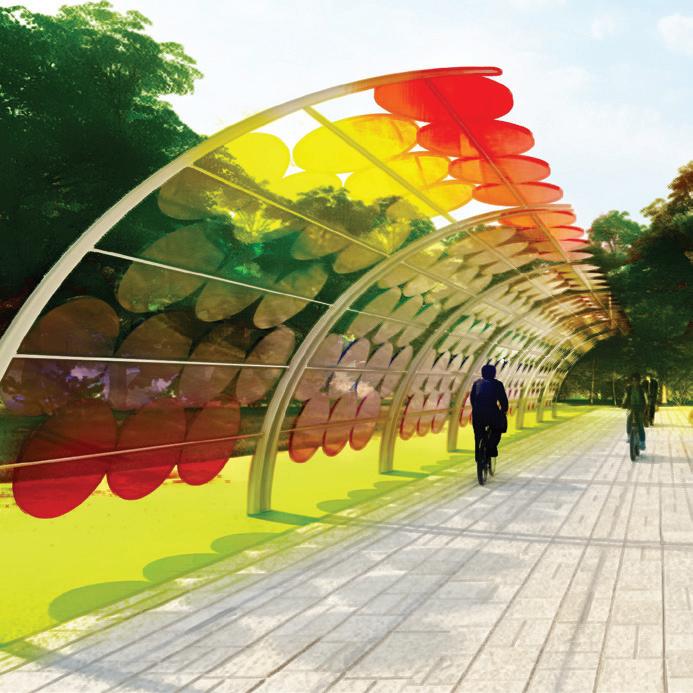
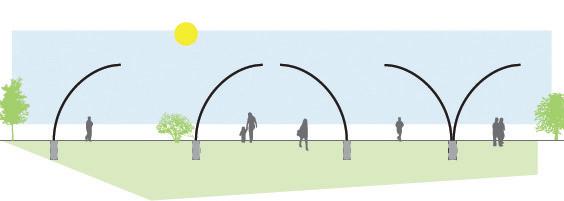
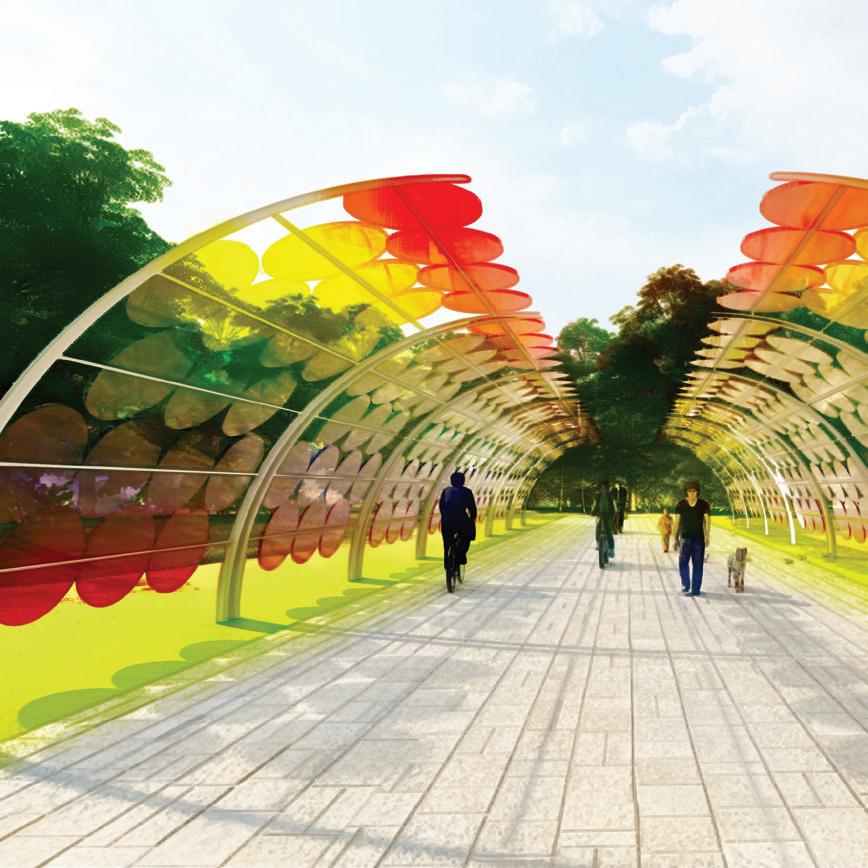
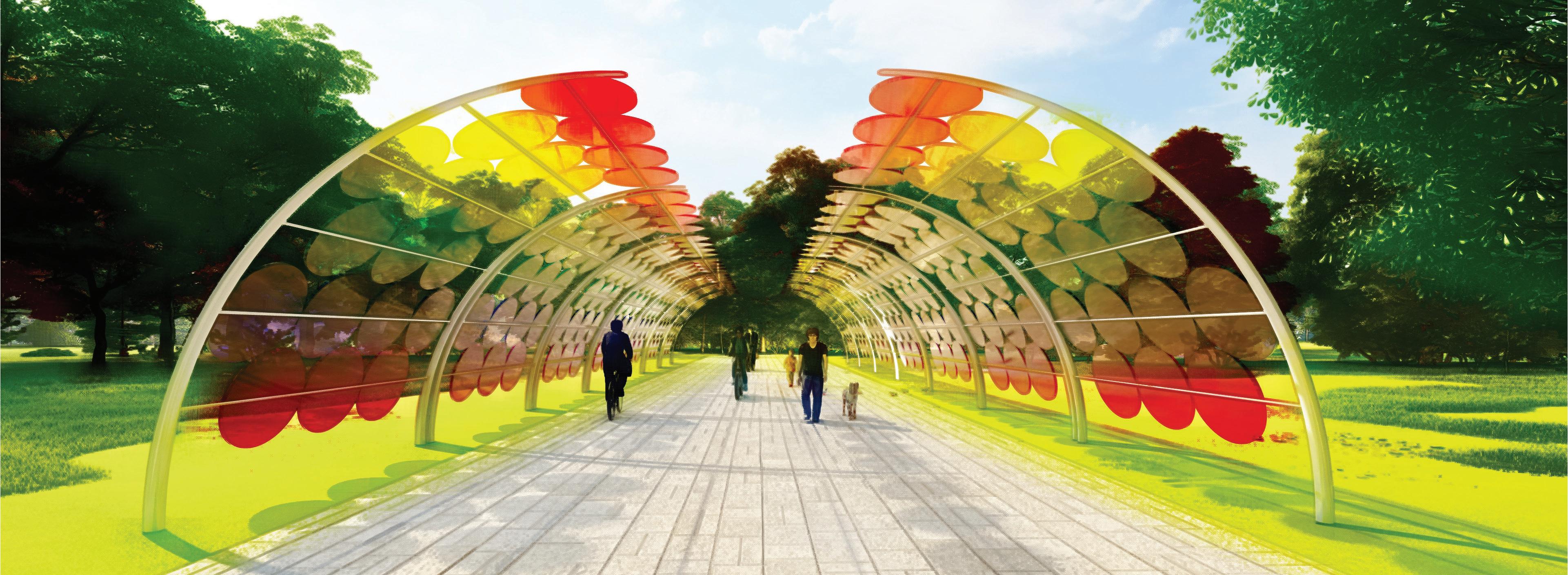
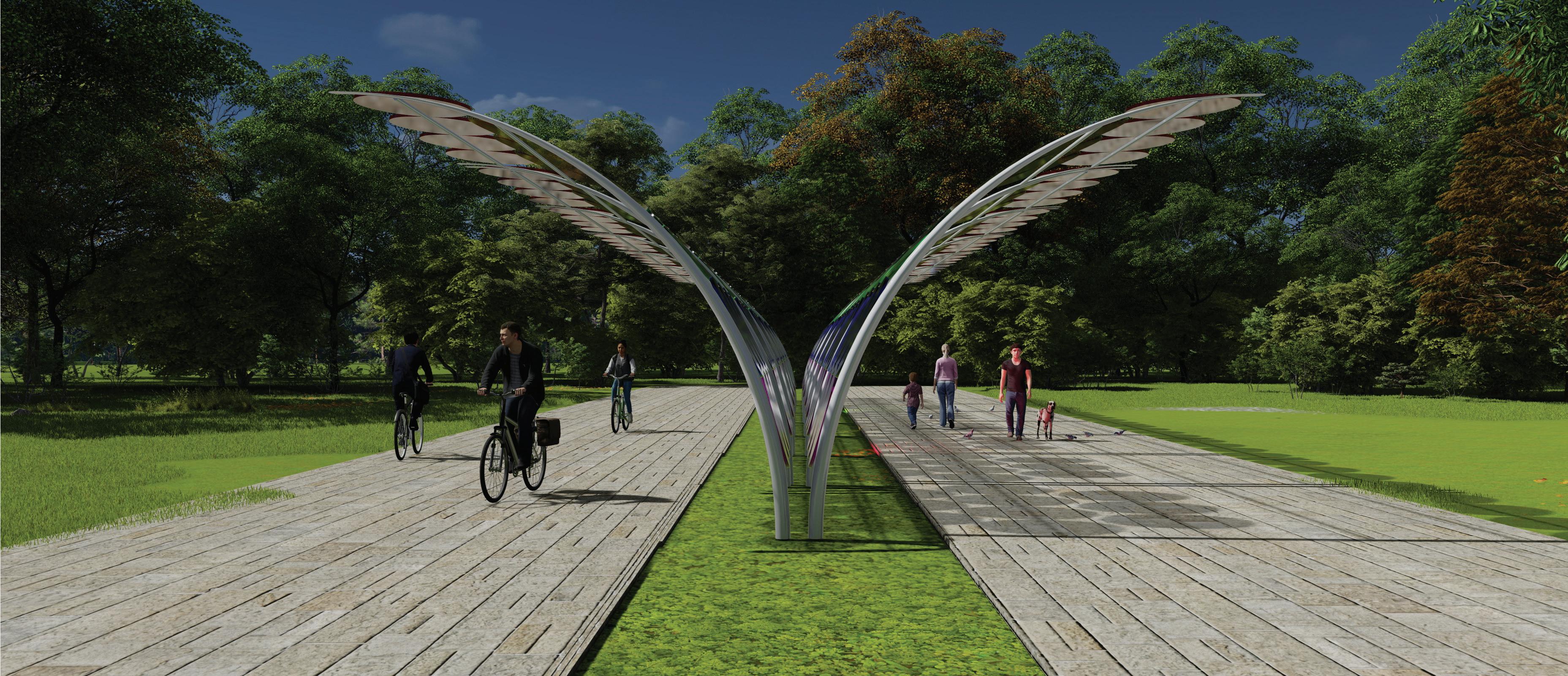
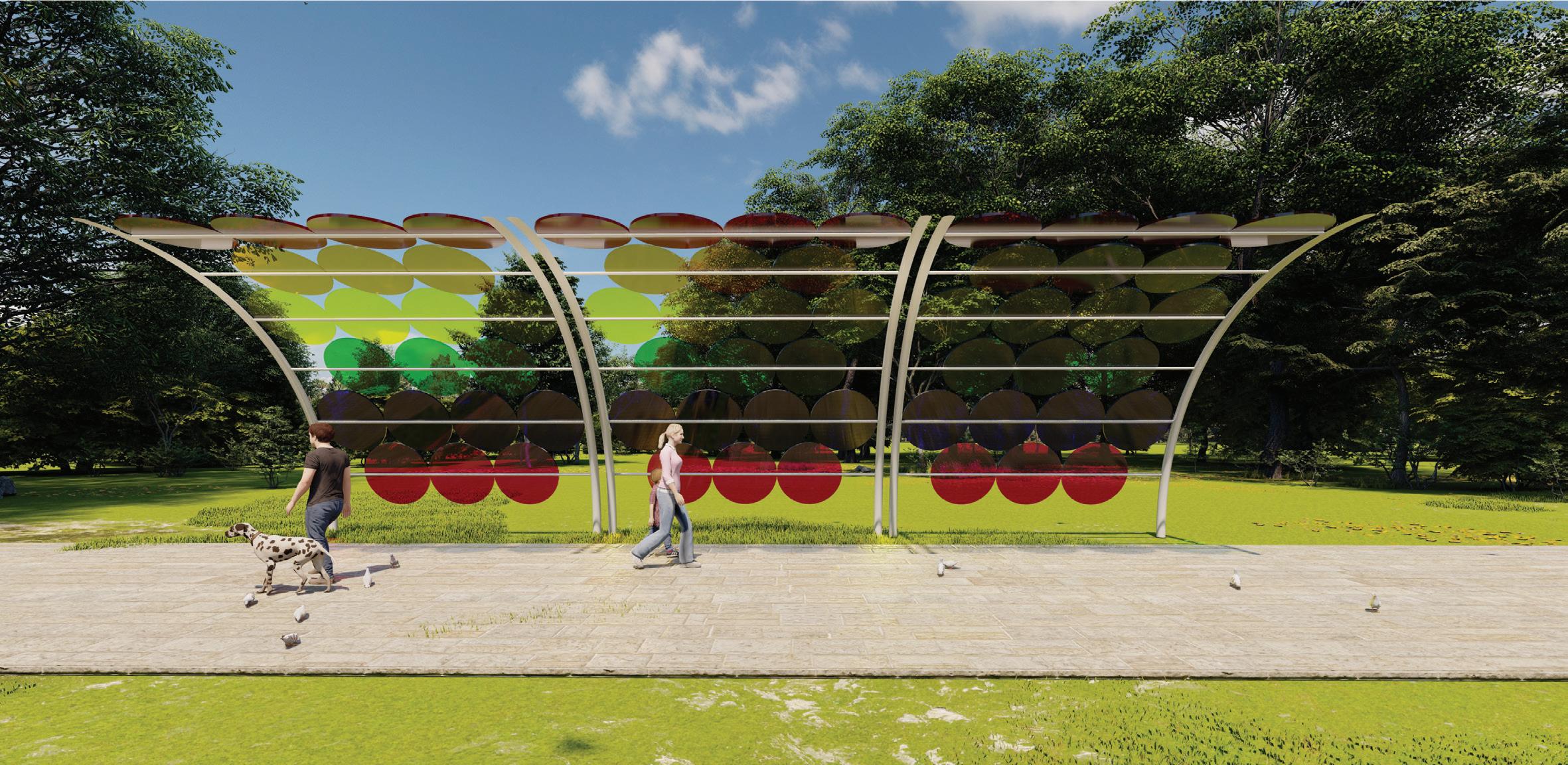
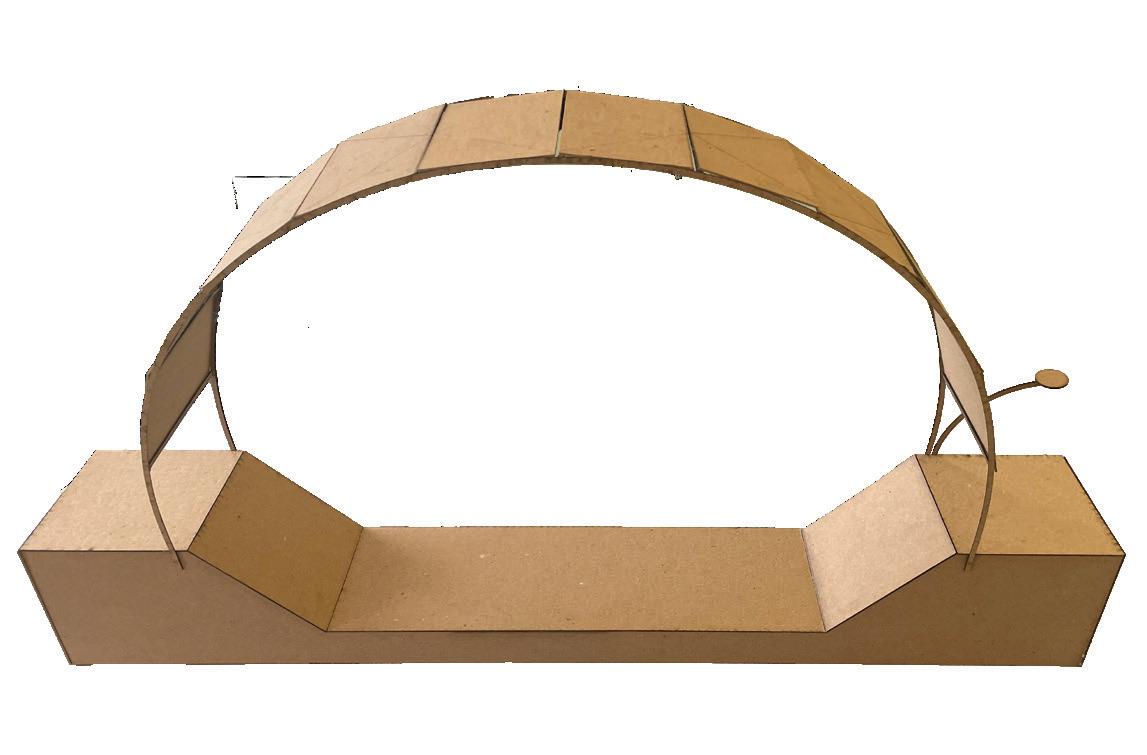
We designed a modular canopies featuring solar glass panels that can be config ured in a number of ways and meant to be scalable.
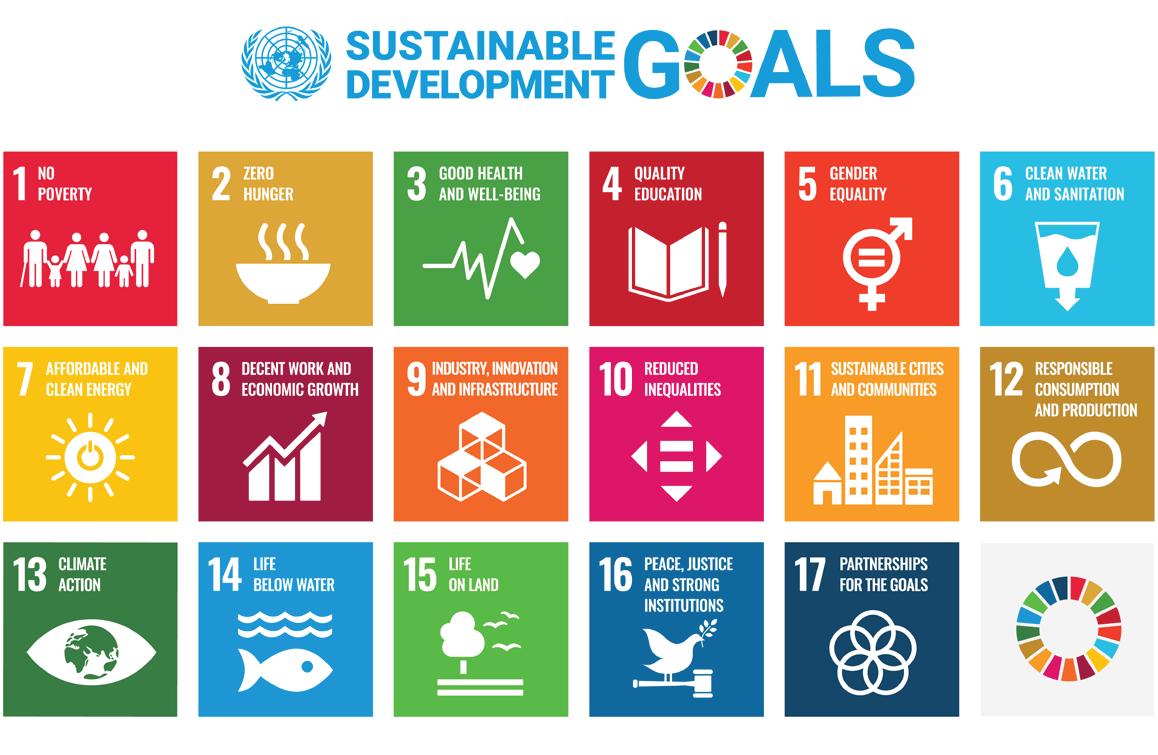
The competition project was developed to meet all seventeen United Nations Sustainability goals.
CONFIGURATIONS
HALF ARCH ARCH BUTTERFLY
17
POWERWALK
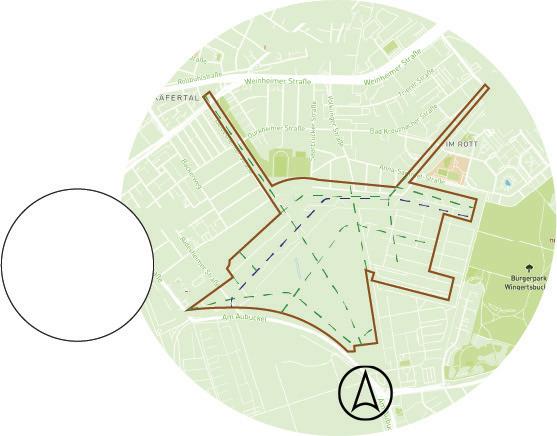
Mannheim, Germany
The site is a former military installation that is being transformed into a park. The prototype design is meant to be deployed on the pathways within the park and to preserve the maximum amount of open space.
18
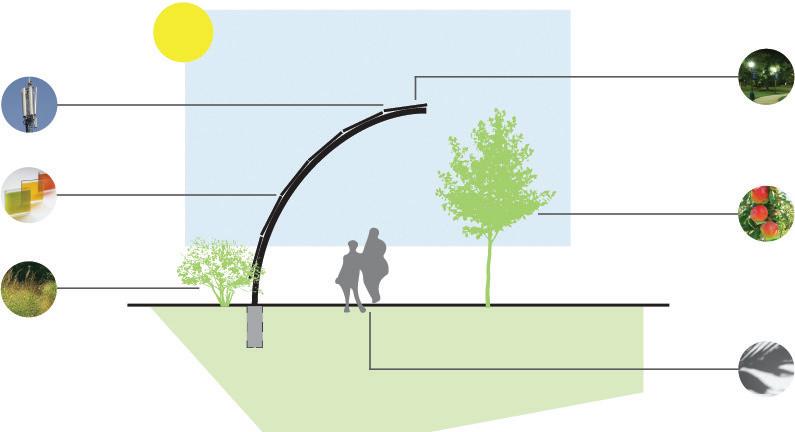
WIRELESS INTERNET ROUTERS GLASS SOLAR PANELS NATIVE PLANTS NIGHT LIGHTING EDIBLE LANDSCAPING SHADE FOR USERS POWERWALK FEATURES SITE
MAP BUTTERFLY ARCH SITE
CONFLUENCE AQUAGRID

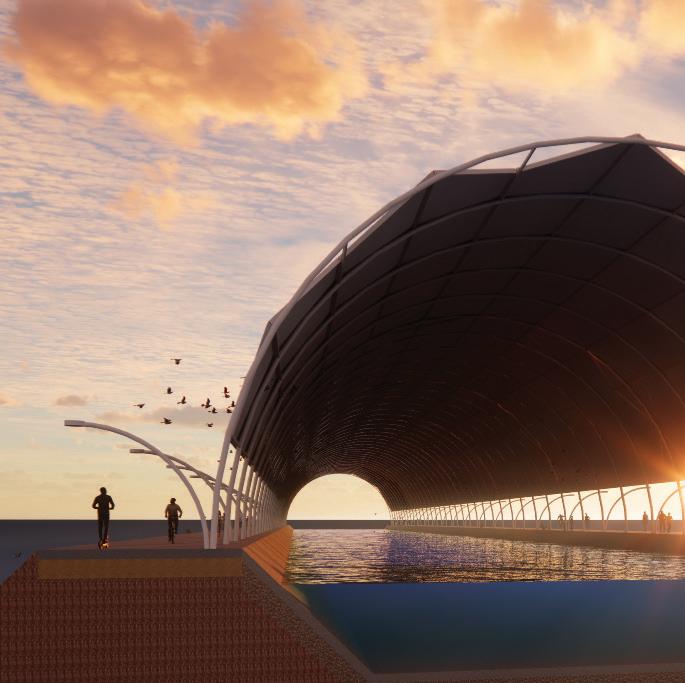
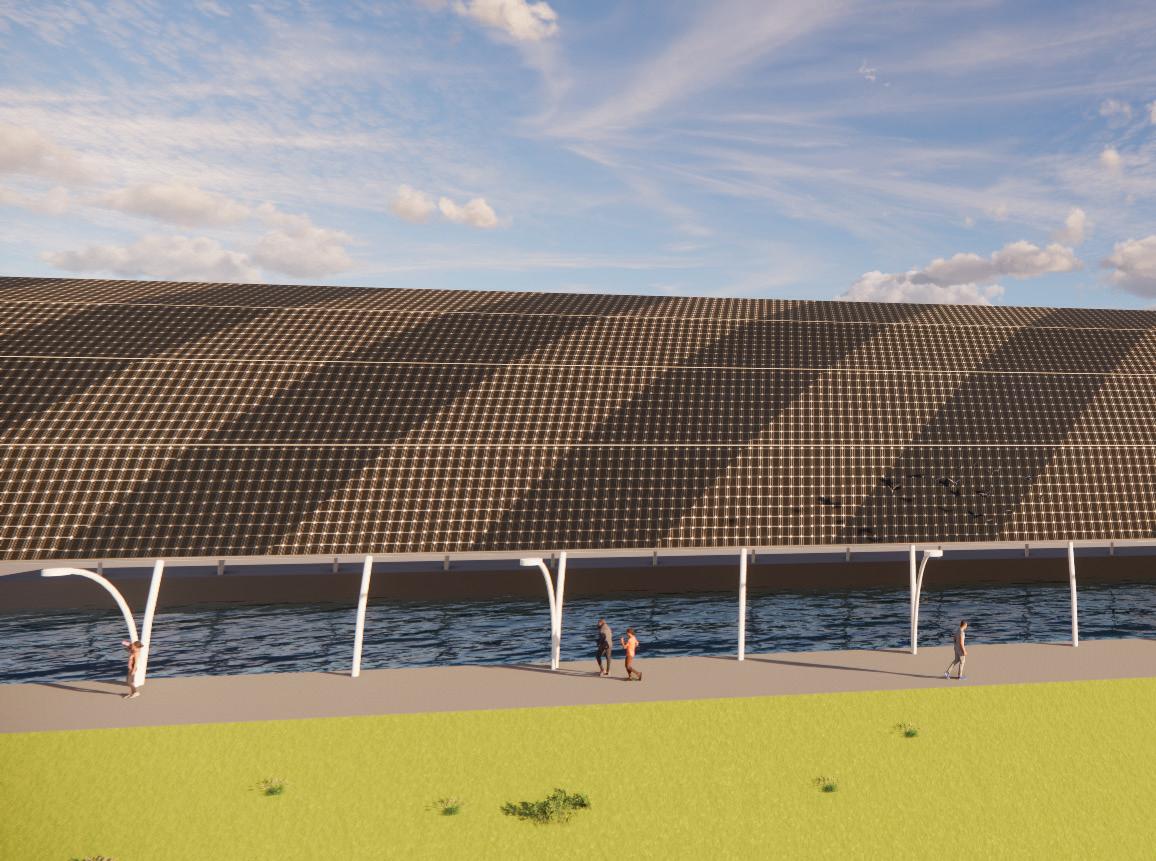
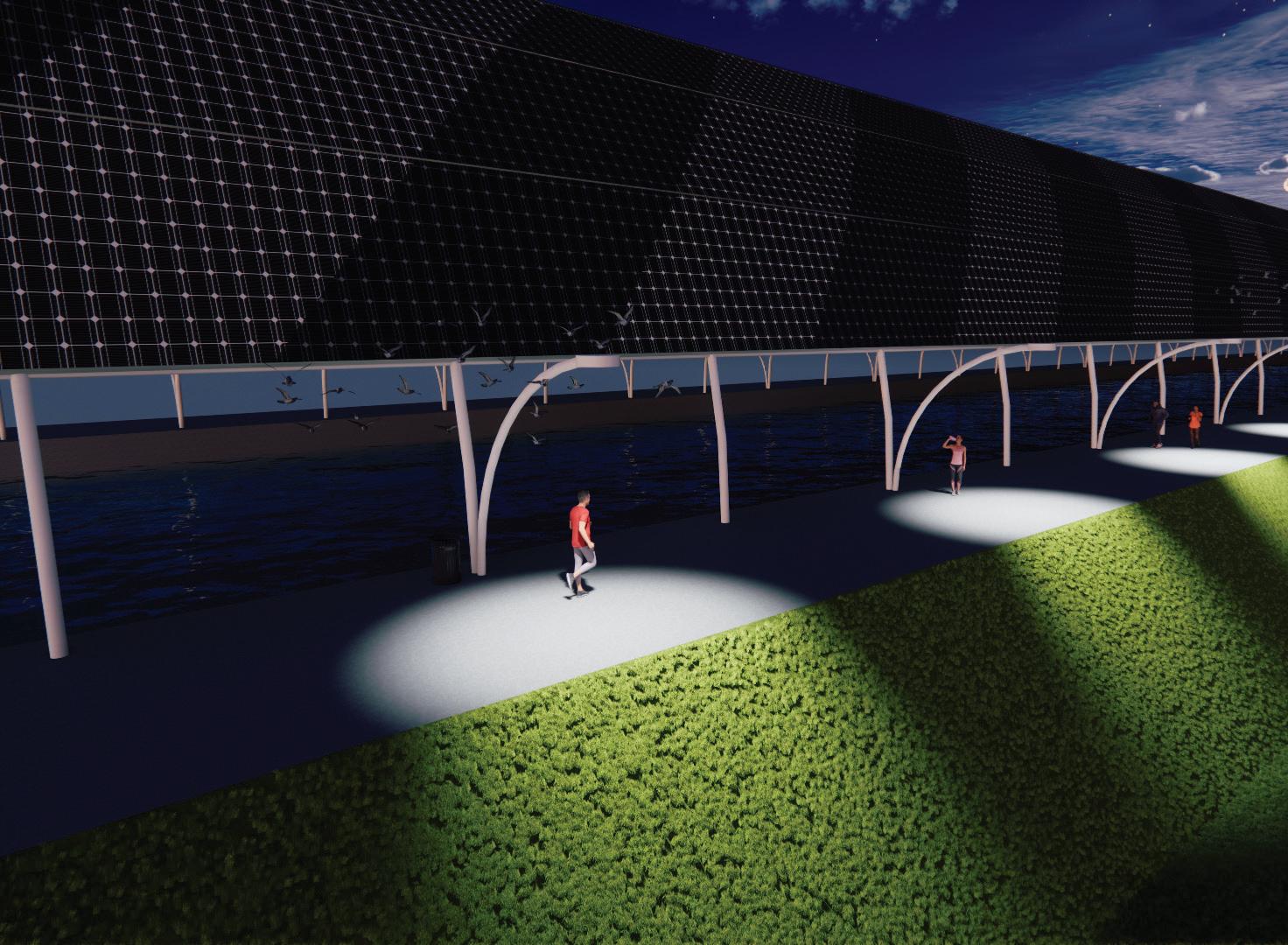
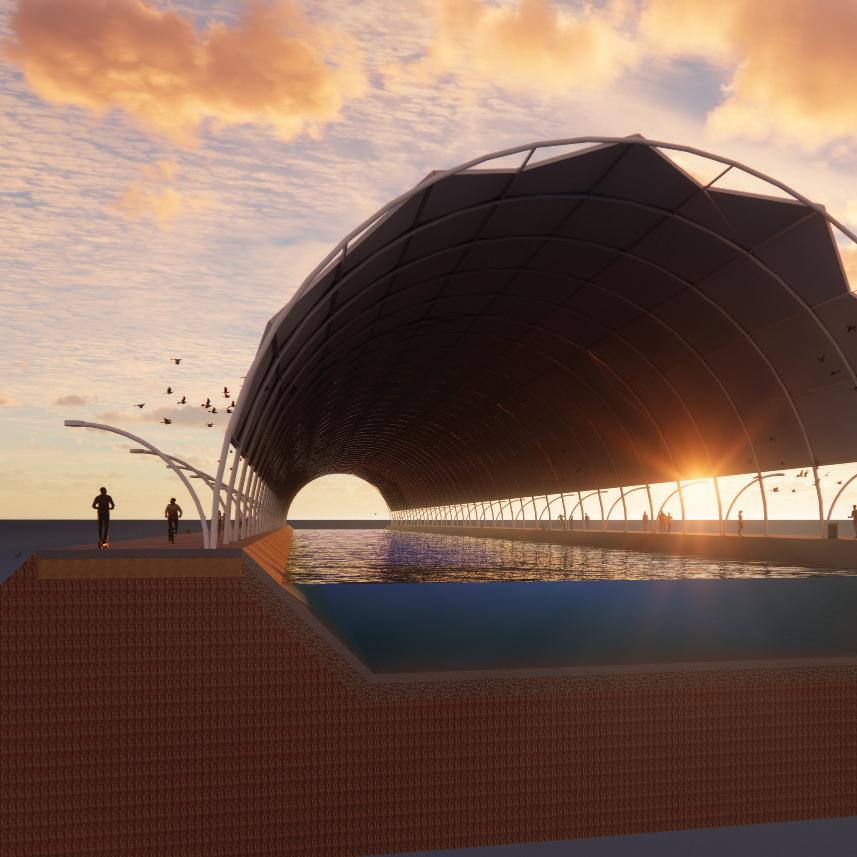
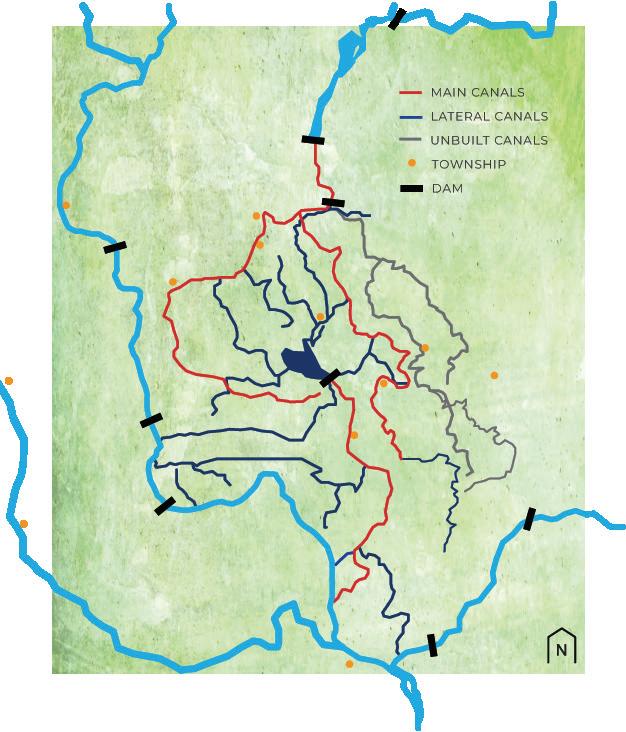
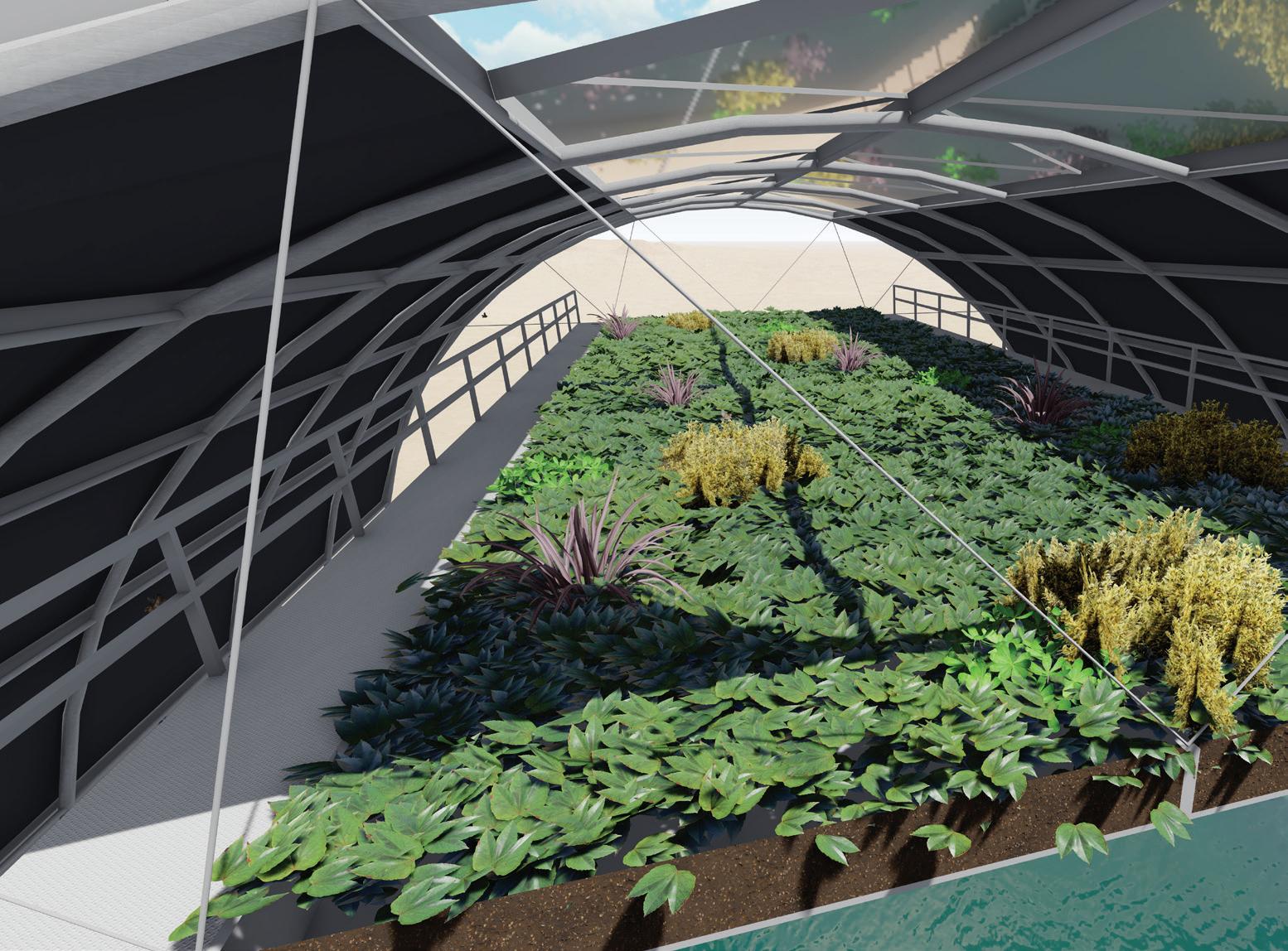
This is an individual project to develop renewable energy infrastructure based off our previous Powerwalk project. This prototypical design deployed solar panels over the irrigation canals of the Columbia Basin in order to generate clean power and conserve water resources.
LOCATION
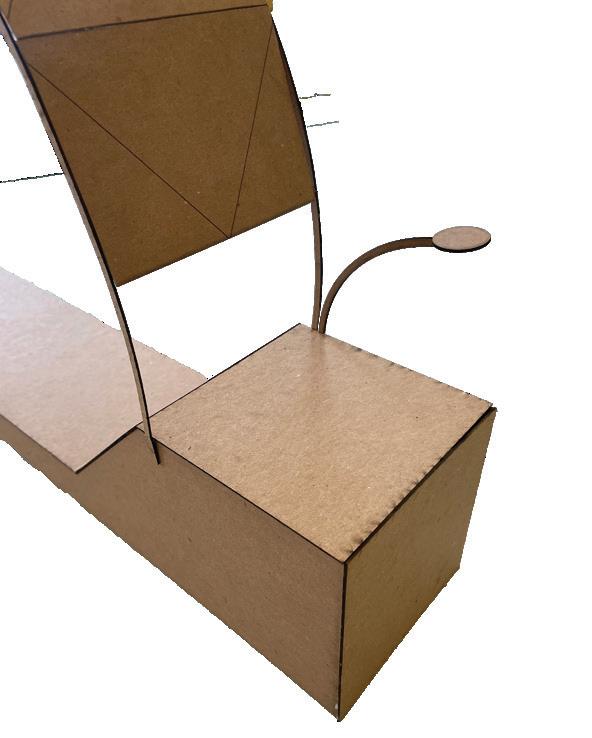



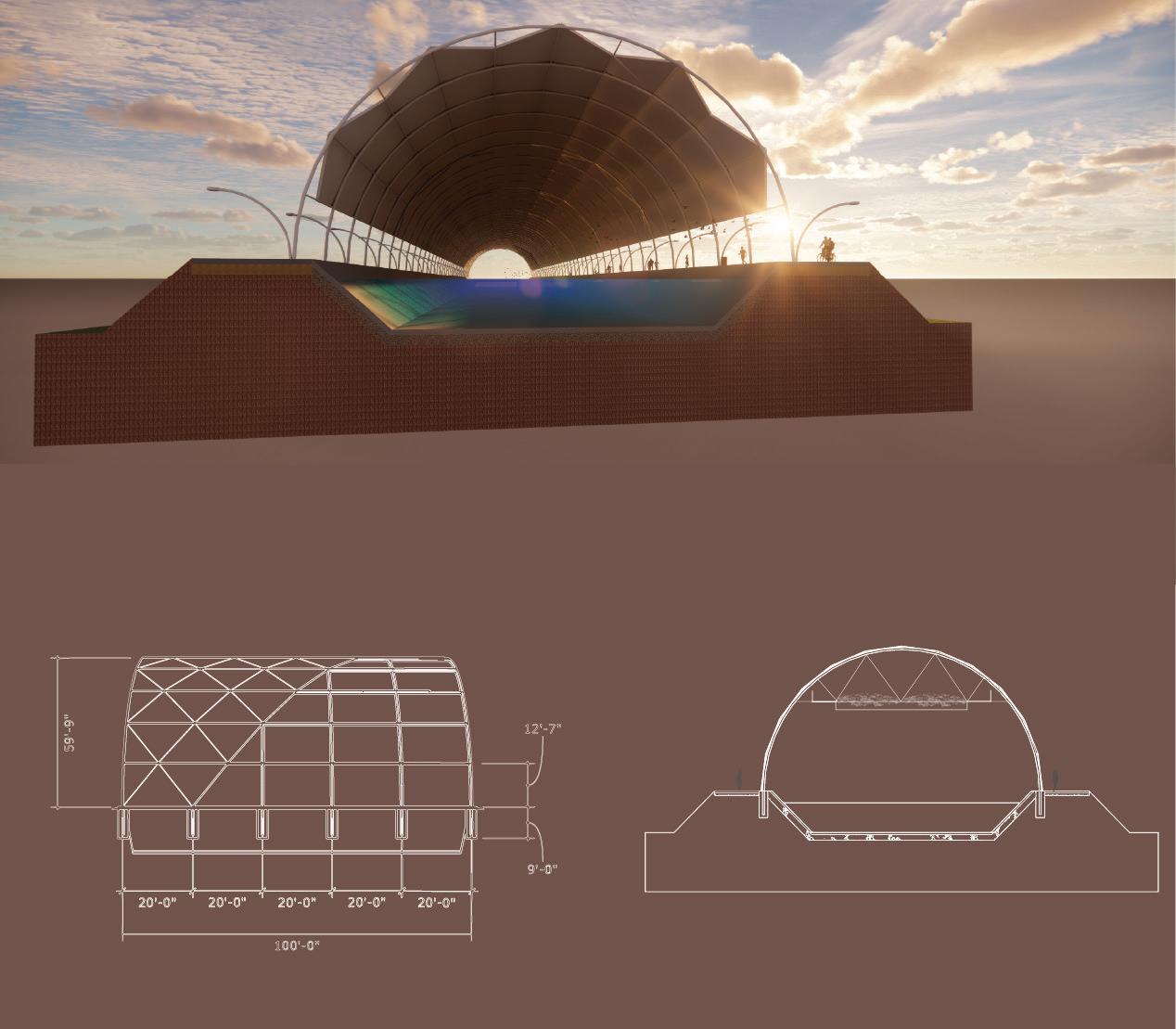
The design consists of 20-foot modules with paved pathways on either side that provide opportunity for recreation.
19
The modular units would be deployed over the 2200 miles of irrigation canals.
The volume of the structure could be used for a hanging gar den that would provide year-round agricultural opportunities and help clean the air in this wildfire-prone region.
20
SITE
CONFLUENCE
MAP
ALLIED ARTS
I am always learning about new things and I have many interests outside of architecture. I have used my education as an opportunity to learn about other creative disciplines and to broaden my design skills. These are a few examples of my explorations into new
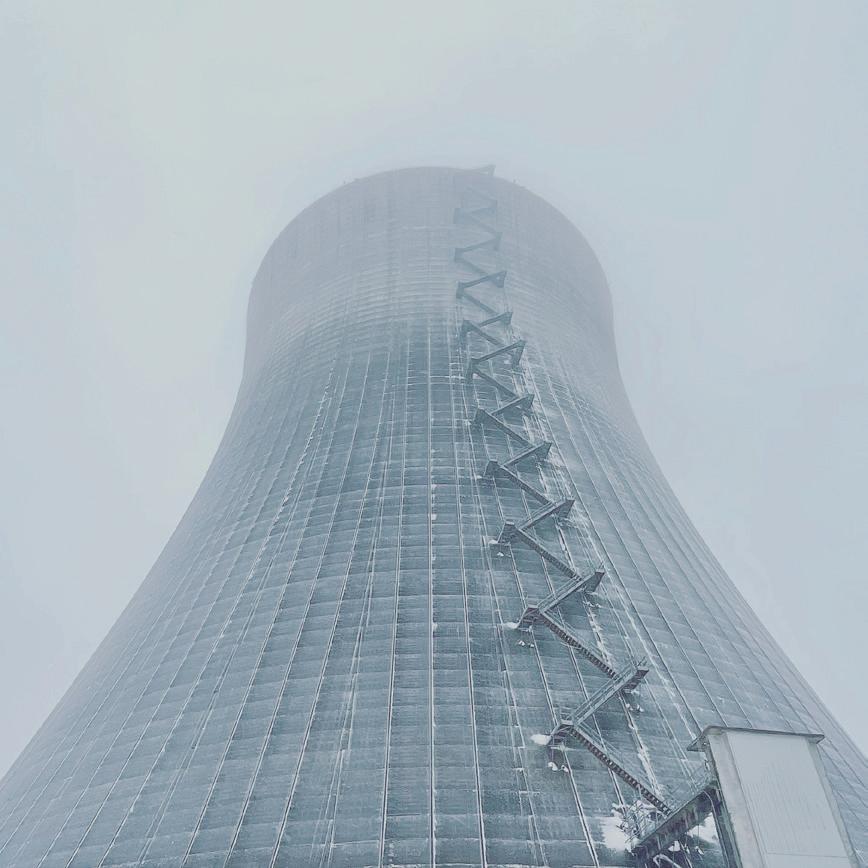
EDITING
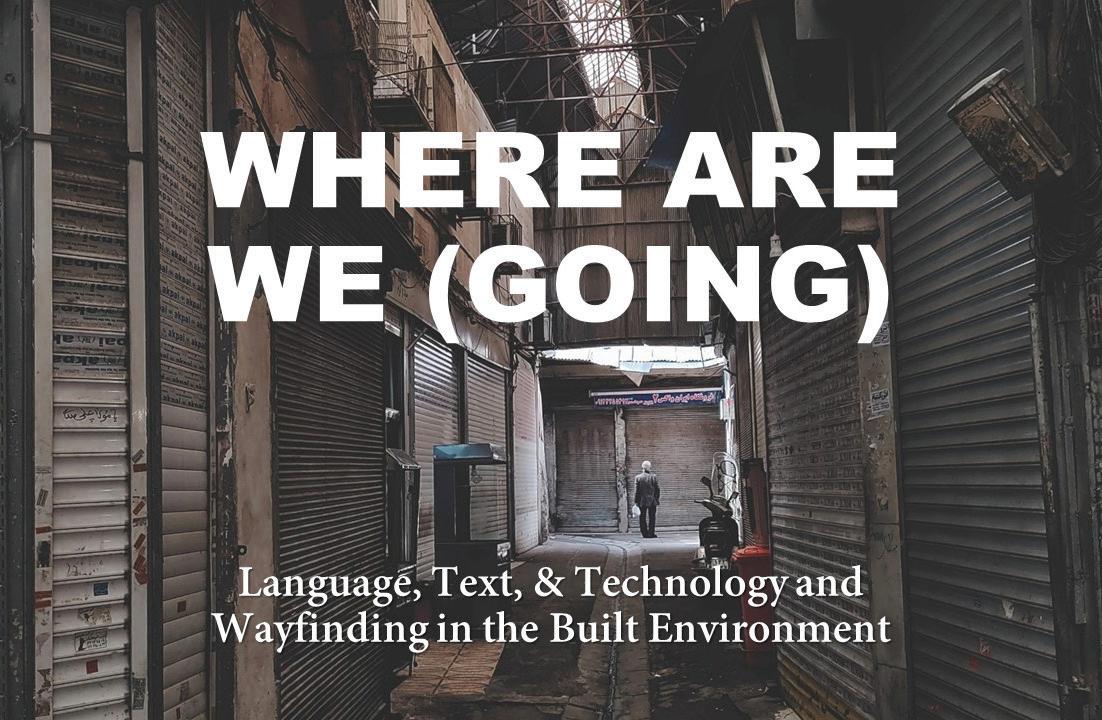
is a short video that examines the built environment as text and the history of human wayfinding techniques and devices.
GRAPHIC DESIGN
Some examples of school work and personal work.

21
This
VIDEO
SUPPORTED BY
Whitney Museum of American Art
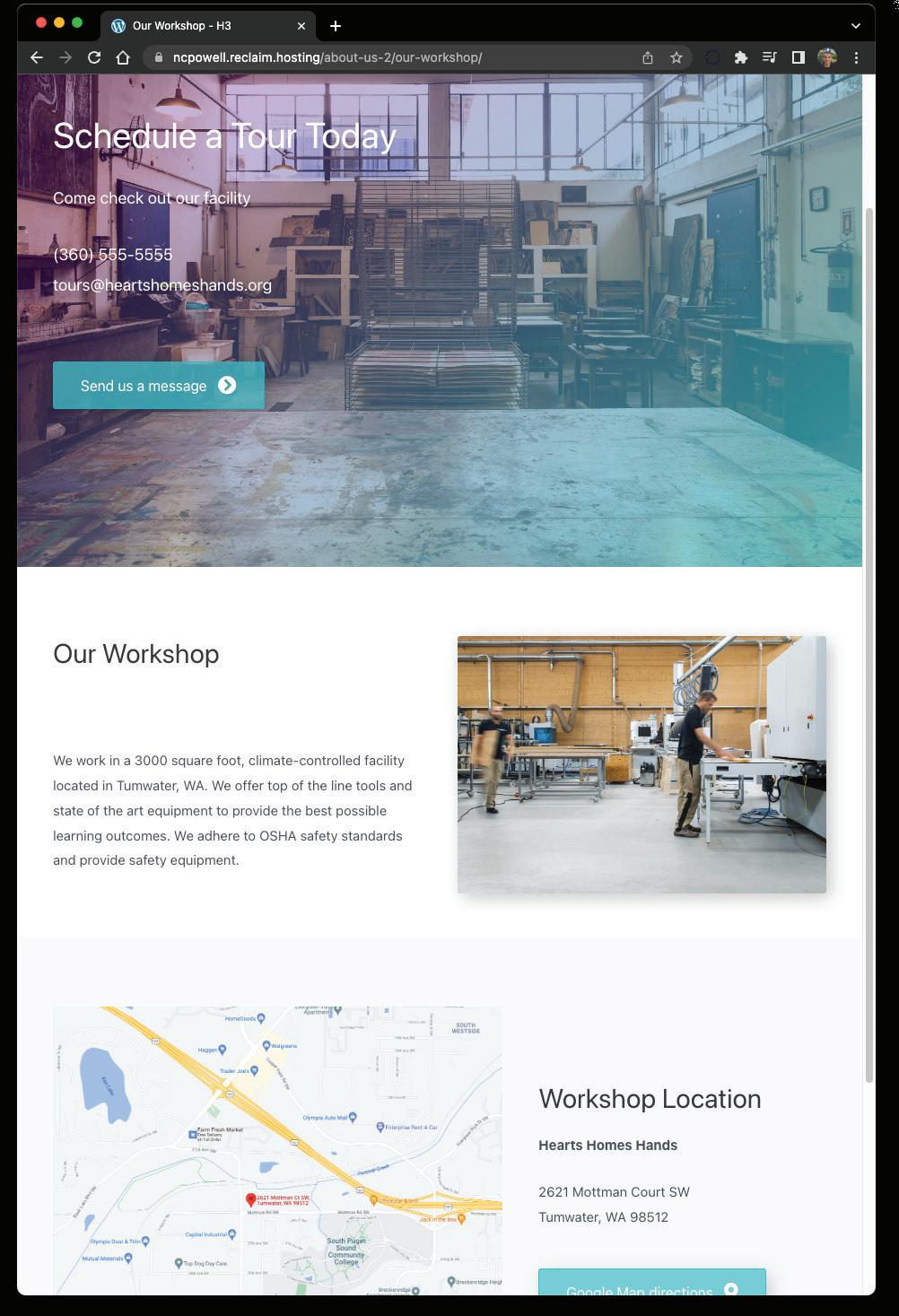
WEBSITE DEVELOPMENT
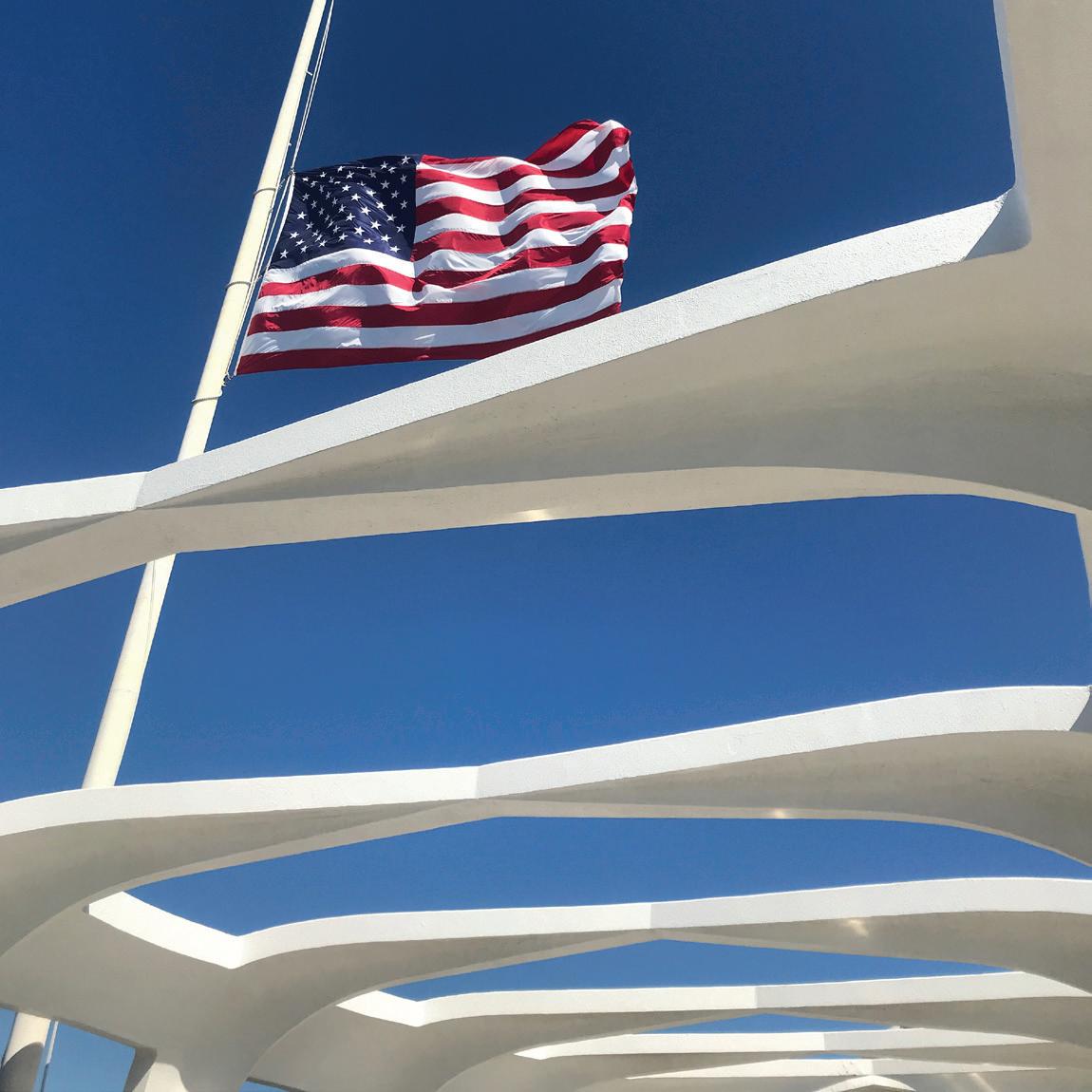
This is an example of web page from a site I designed for a fictional non-profit using Word Press.
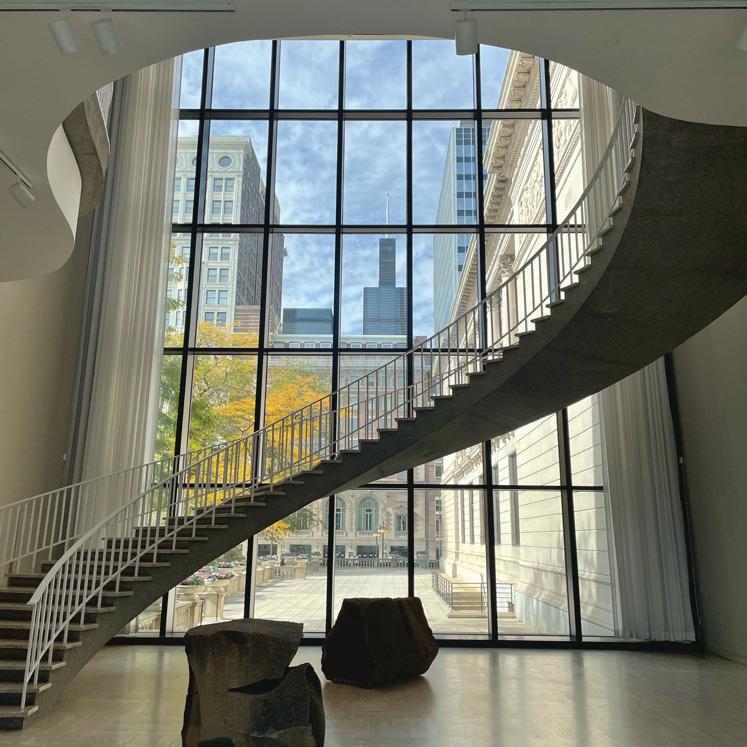
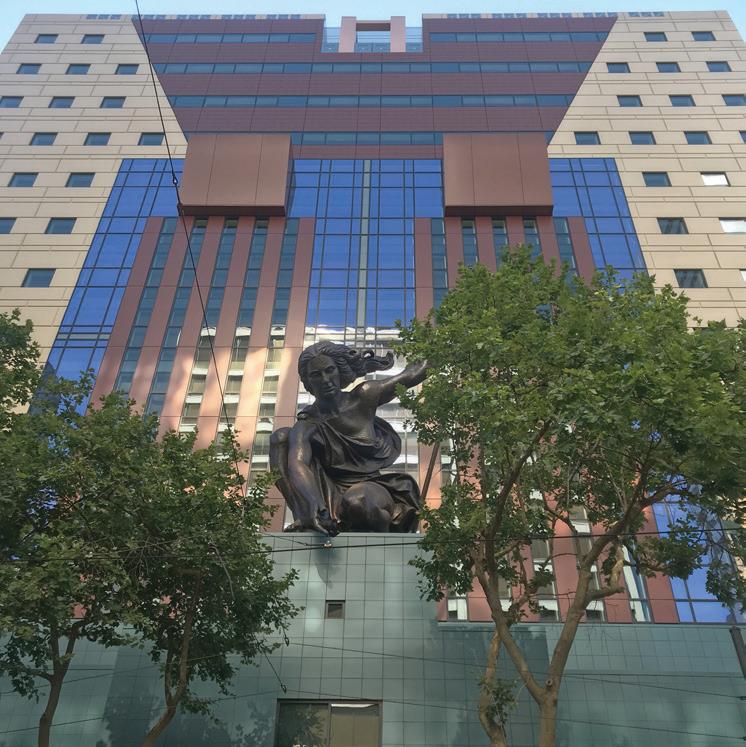
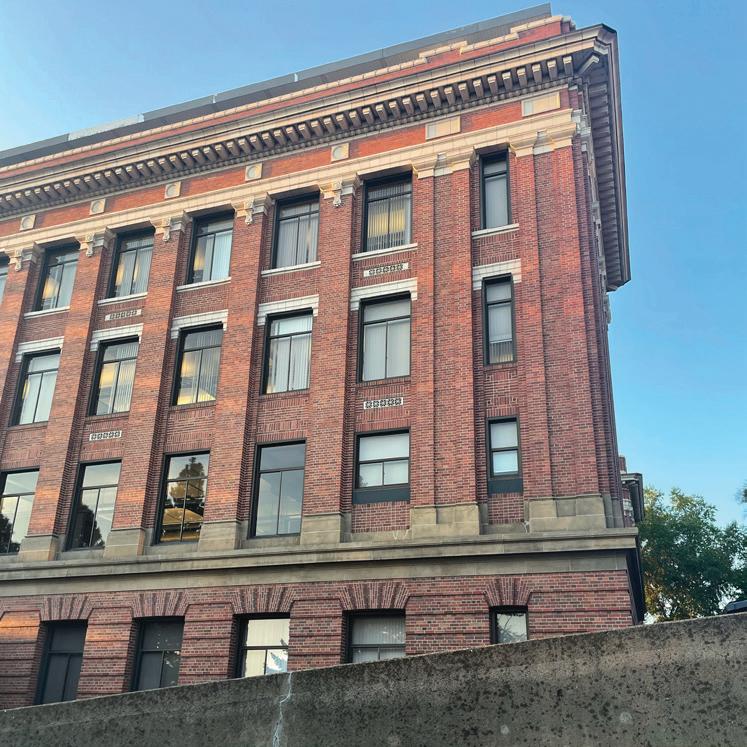
PHOTOGRAPHY
ARTS
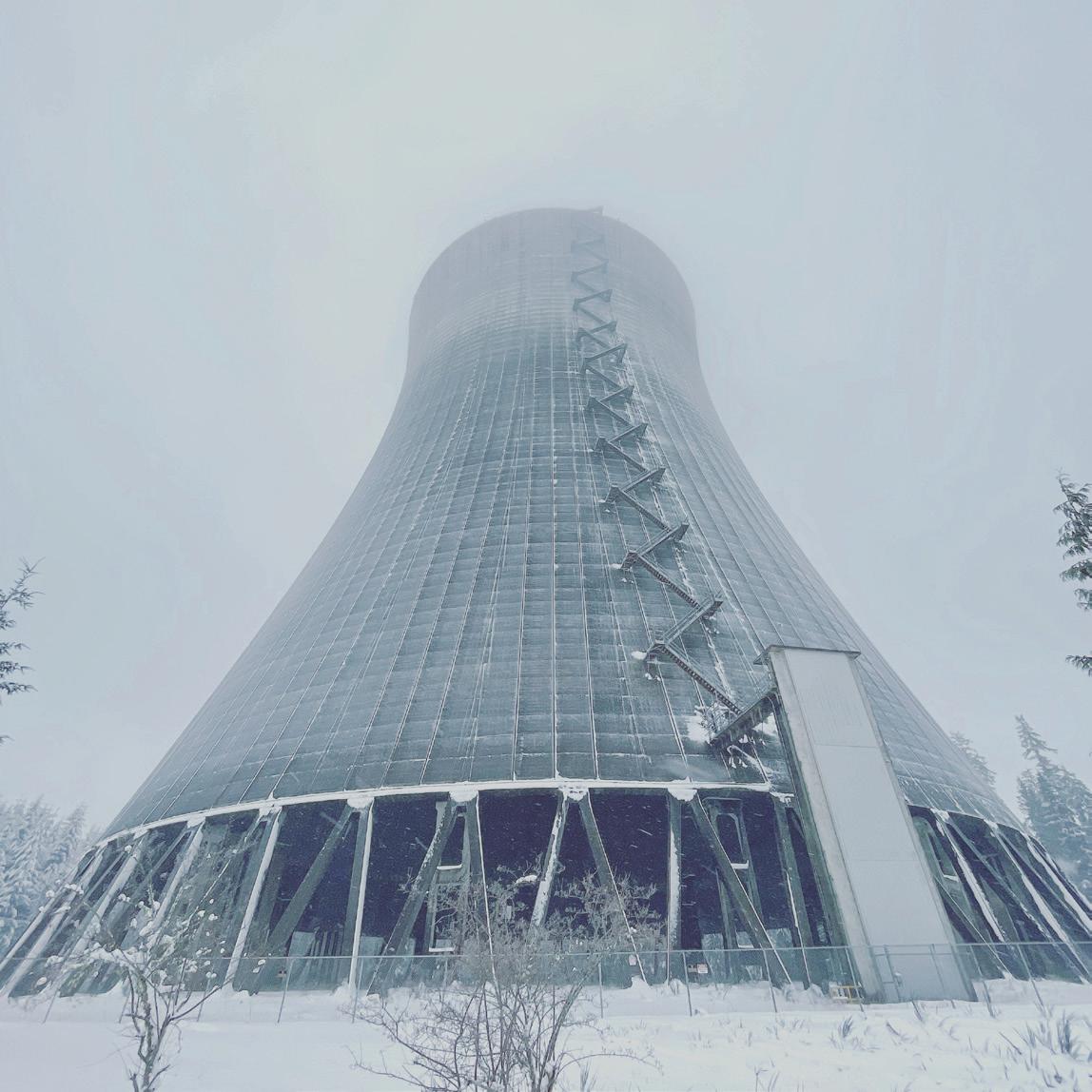
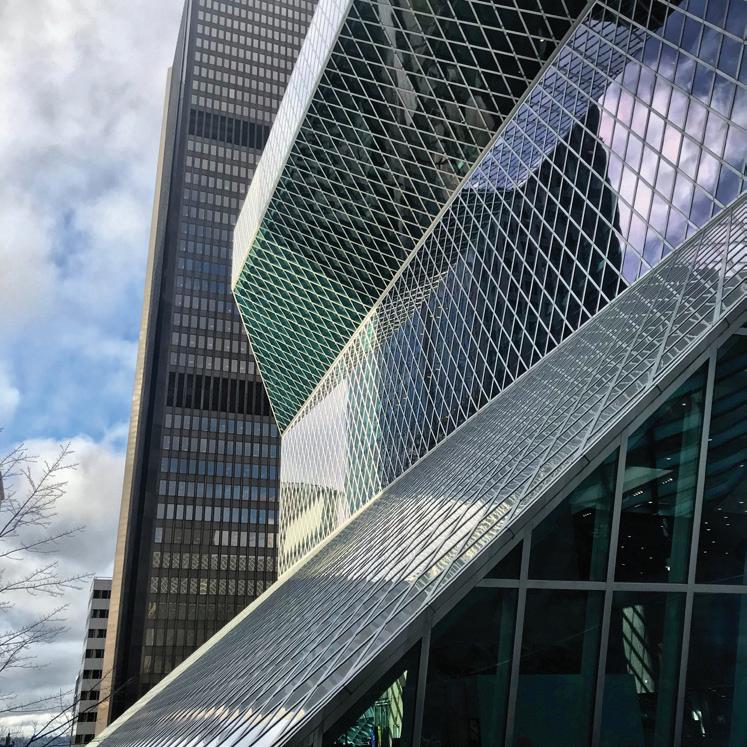
22 ALLIED
DASHBOARDS
MOBILE LEARNERS
INTERNET PENETRATION
GLOBAL SKILLS RANKING
23 © 2022 Mapbox © OpenStreetMap
N. America Latin America Europe AsiaPacific Middle East & N. Africa SubSaharan Africa 0% 10% 20% 30% 40% 50% FEMALE LEARNERS 0 5 10 15 20 25 30 35 Asia- Pacific Middle East & N. Africa Latin America Europe Sub-Saharan Africa N. America 34 33 32 31 30 28 MEDIAN LEARNER AGE 0% 20% 40% 60% N. America Europe Latin America Asia- Pacific Middle East & N. Africa Sub-Saharan Africa
Our dashboard takes data found from Coursera’s global data for online learning, and with this data we attempt to display the global rankings for each individual country regarding their global skills. As well as ranking each country individually, we attempt to analyze the demographic and style of learning from specific geographic regions. By showing the demographics of specific geographic regions compared to individual country rankings we can see a fairly accurate insight on who and how they learned in that country. For example, we can look at China who ranked 39 in the global skills rankings, but we can also see that the geographical region of Asia-Pacific had just under 60 percent of its learners learn on mobile. So, we can safely assume that most of China’s learning was done on mobile, and then we can further look at the median age and number of female learners in that region. Now that we know that we can find the who and how certain regions learn and the individual countries in that regions rank, we can compare it to the whose and how’s of other countries from other regions. Now with all this data we can begin to find trends in how global rankings are affected by who is learning and what medium they are using to learn, and this is what this dashboard attempts to highlight. N. America Europe Middle East & N. Africa Latin America AsiaPacific SubSaharan Africa 10% 20% 30% 40% 50% 60% 70% 80% 90%
Global Region Asia-Pacific Europe Latin America & The Carribean Middle East & North Africa North America Sub-Saharan Africa ALLIED ARTS
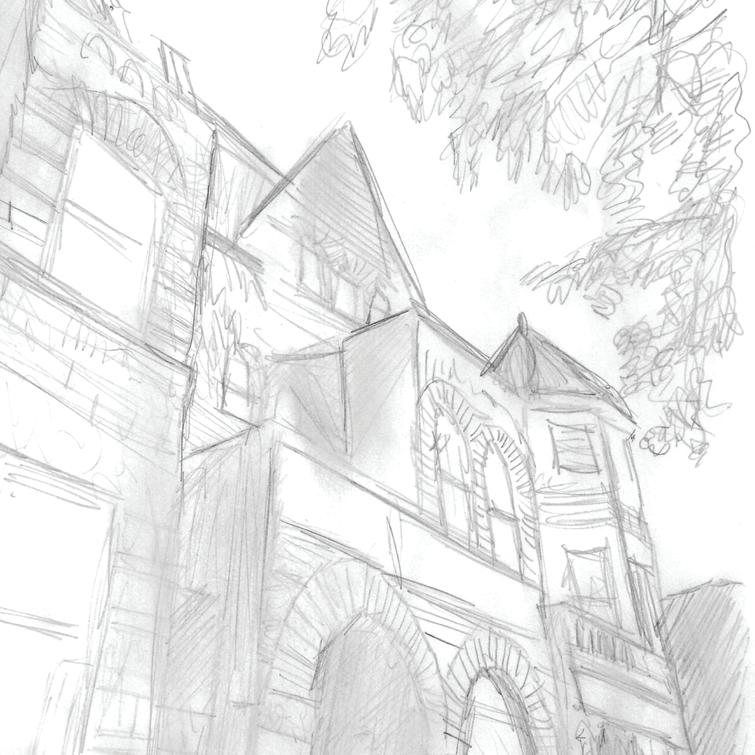
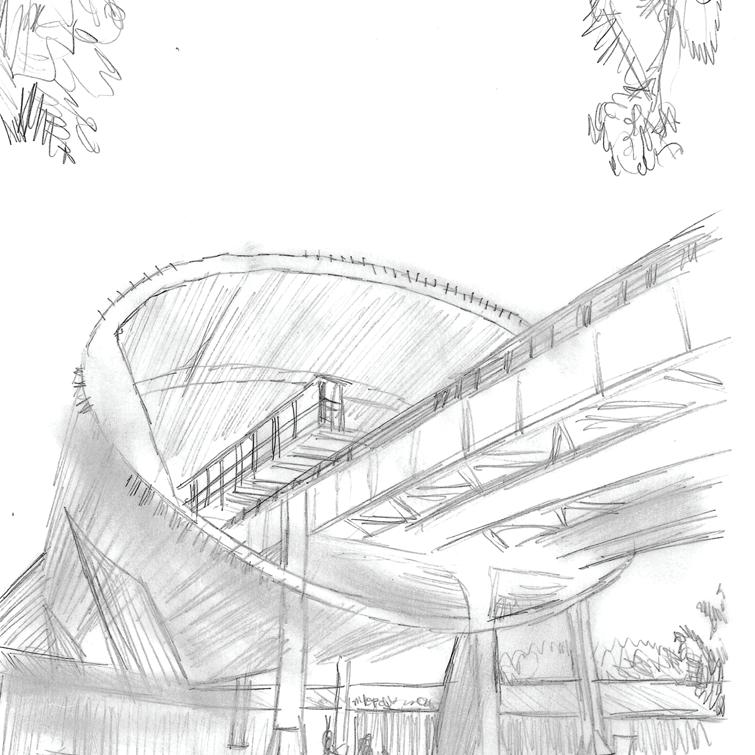
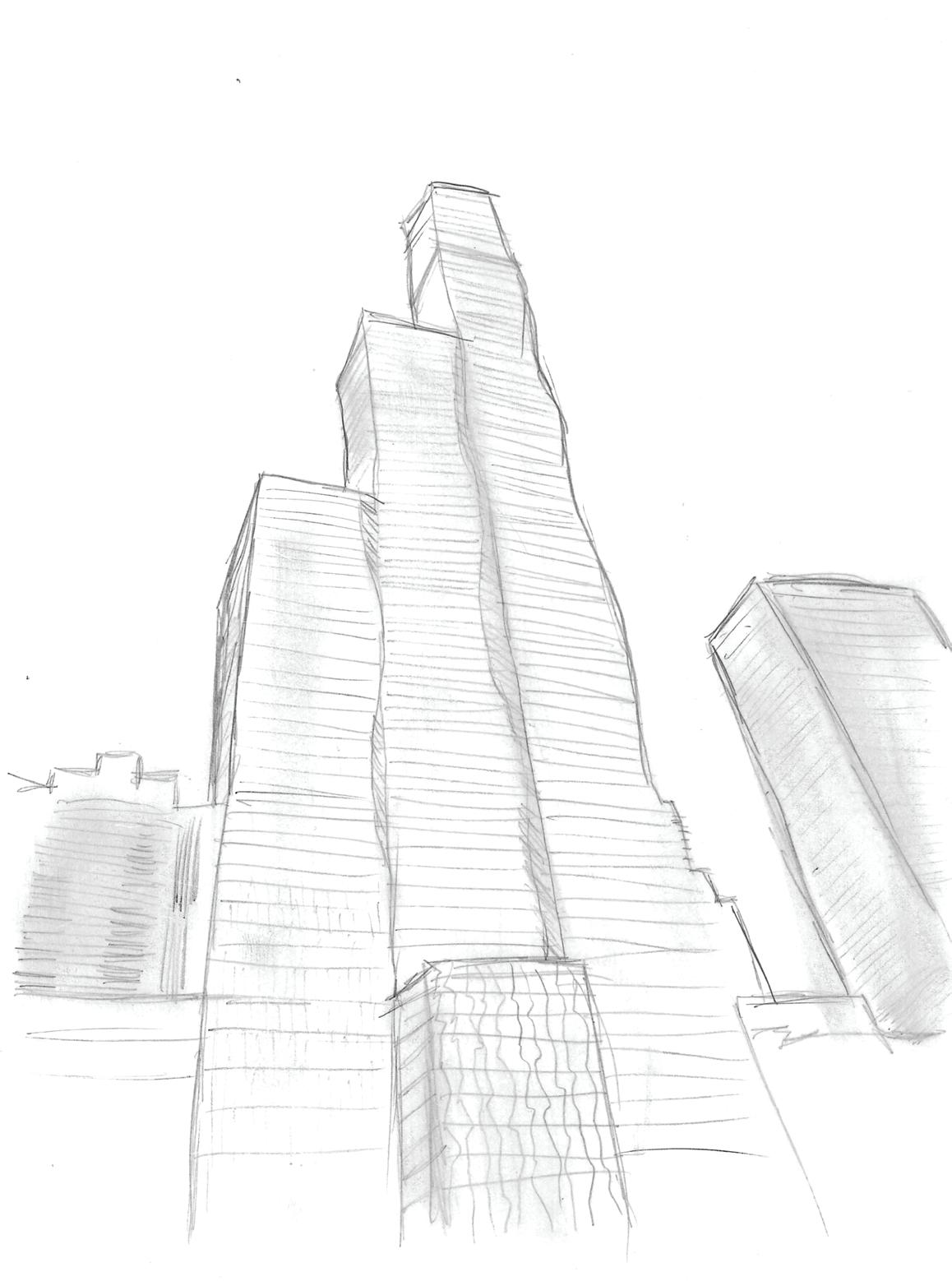
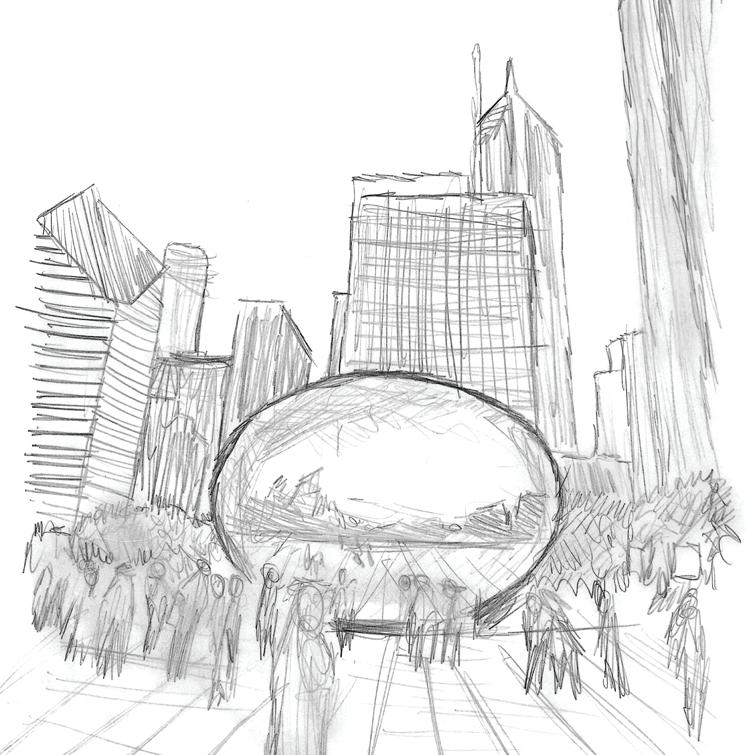
SKETCHING
INTERACTIVE INFOGRAPHIC
This interactive infographic was made using Tableau. It analyzes global trends from the online learning service Coursera.
Architecture for Humanity, editor. Design like You Give A Damn: Architectural Responses to Humanitarian Crises. Metropolis Books, 2007.
Botton, Alain De. The Architecture of Happiness. Vintage International, 2008.
Huxtable, Ada Louise. On Architecture: Collected Reflections on a Century of Change. Walker & Company, 2008.
Jacobs, Jane. The Death and Life of Great American Cities: Orig. Published 1961. Vintage Books, 1992.
Kennon, Katherine E., et al. The Codes Guidebook for Interiors. John Wiley & Sons, Inc., 2018.
Knott, Mary Fisher. Kitchen and Bath Design: A Guide to Planning Basics. John Wiley & Sons, Inc., 2011.
Lai, Jimenez. Citizens of No Place: An Architectural Graphic Novel. Princeton Architectural Press, 2012.
MacCarthy, Fiona. Walter Gropius: Visionary Founder of the Bauhaus. Faber & Faber, 2020.
Mars, Roman, and Kurt Kohlstedt. The 99% Invisible City: A Field Guide to the Hidden World of Everyday Design. Houghton Mifflin Harcourt, 2020.
McCamant, Kathryn, and Charles Durrett. Creating Cohousing: Building Sustainable Communities. New Society Publishers, 2011.
Miyasaka, Taiji. Seeing and Making in Architecture: Design Exercises. Routledge, 2014.
Mori, Alejandro Aravena, and Iacobelli Andrés. Elemental: Incremental Housing and Participatory Design Manual. Hatje Cantz Verlag, 2016.
Norman, Donald A. The Design of Everyday Things. Basic Books, 2021.
Postman, Neil. Technopoly: The Surrender of Culture to Technology. Vintage Books, 1993.
Reinholdt, Eric W. Architect + Entrepreneur: A Field Guide to Building, Branding, and Marketing Your Startup Design Business. Eric W. Reinholdt, (Thirtybyforty.com), 2015.
Rocca, Alessandro. Natural Architecture. Princeton Architectural Press, 2011.
Simitch, Andrea, and Val K. Warke. The Language of Architecture: 26 Principles Every Architect Should Know. Rockport Publishers, 2014.
Tanizaki Jun’ichirō, et al. In Praise of Shadows Leete’s Island Books, 2008.
Venturi, Robert, et al. Learning from Las Vegas. The MIT Press, 2017.
INFLUENTIAL WORKS
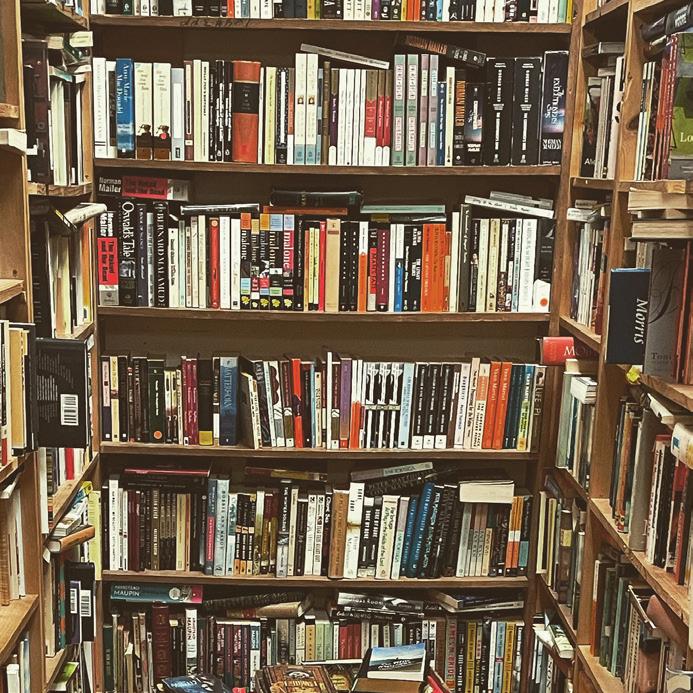
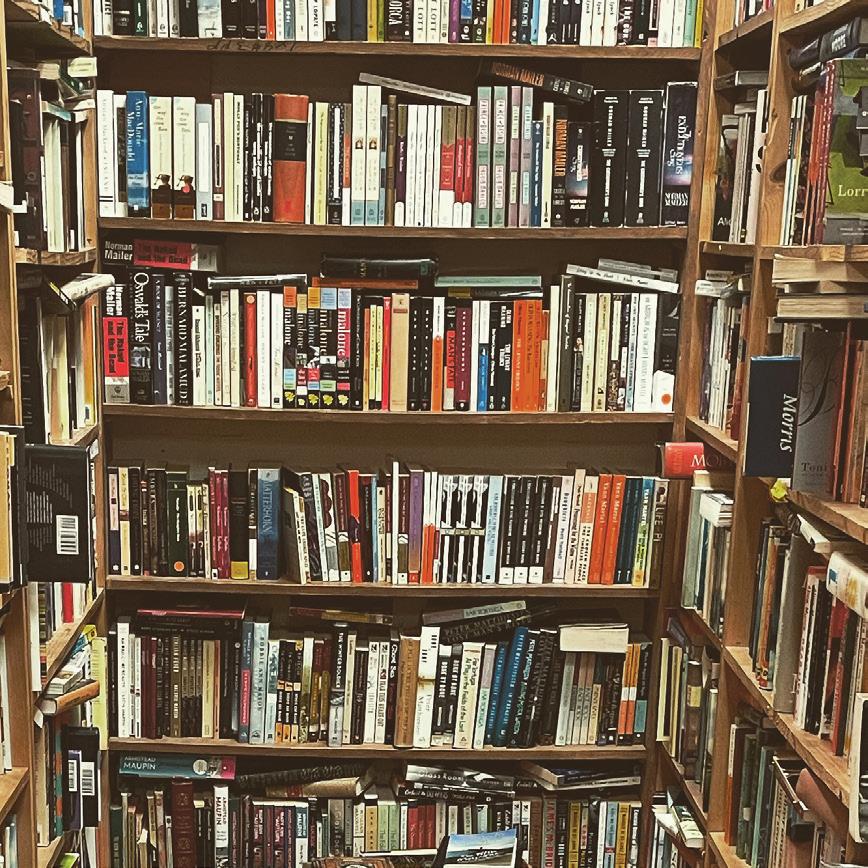
A selection of works that have influenced my views about design and architecture.
24
THANK YOU
/NicholasCPowell /n.c.powell ncpowell.com ncpowell@icloud.com