FALL 2023
The year of the girl
In 2023, every night is girls’ night. | pg. 26
Scripts of change
Northwestern students and faculty aim to decolonize classical theater, opera and ballet works. | pg. 40
The year of the girl
In 2023, every night is girls’ night. | pg. 26
Scripts of change
Northwestern students and faculty aim to decolonize classical theater, opera and ballet works. | pg. 40
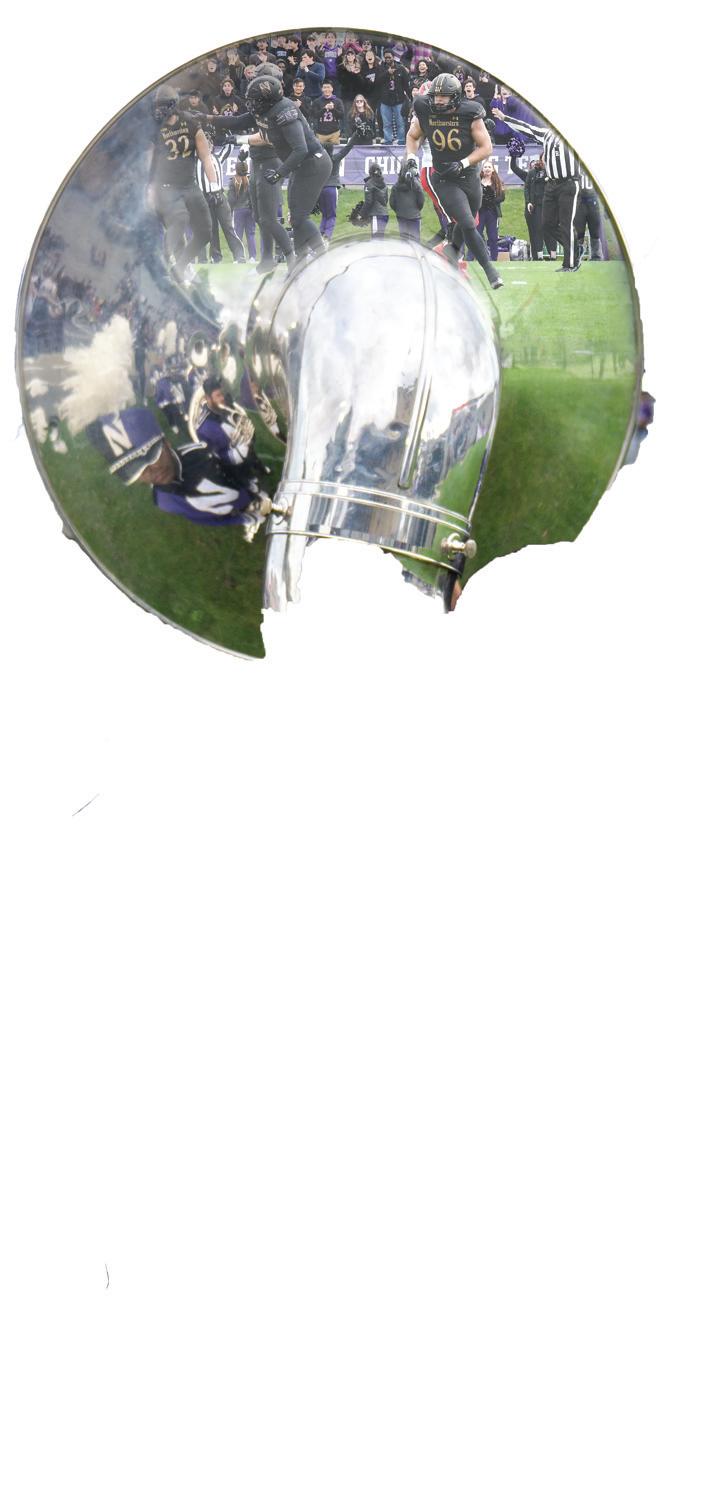
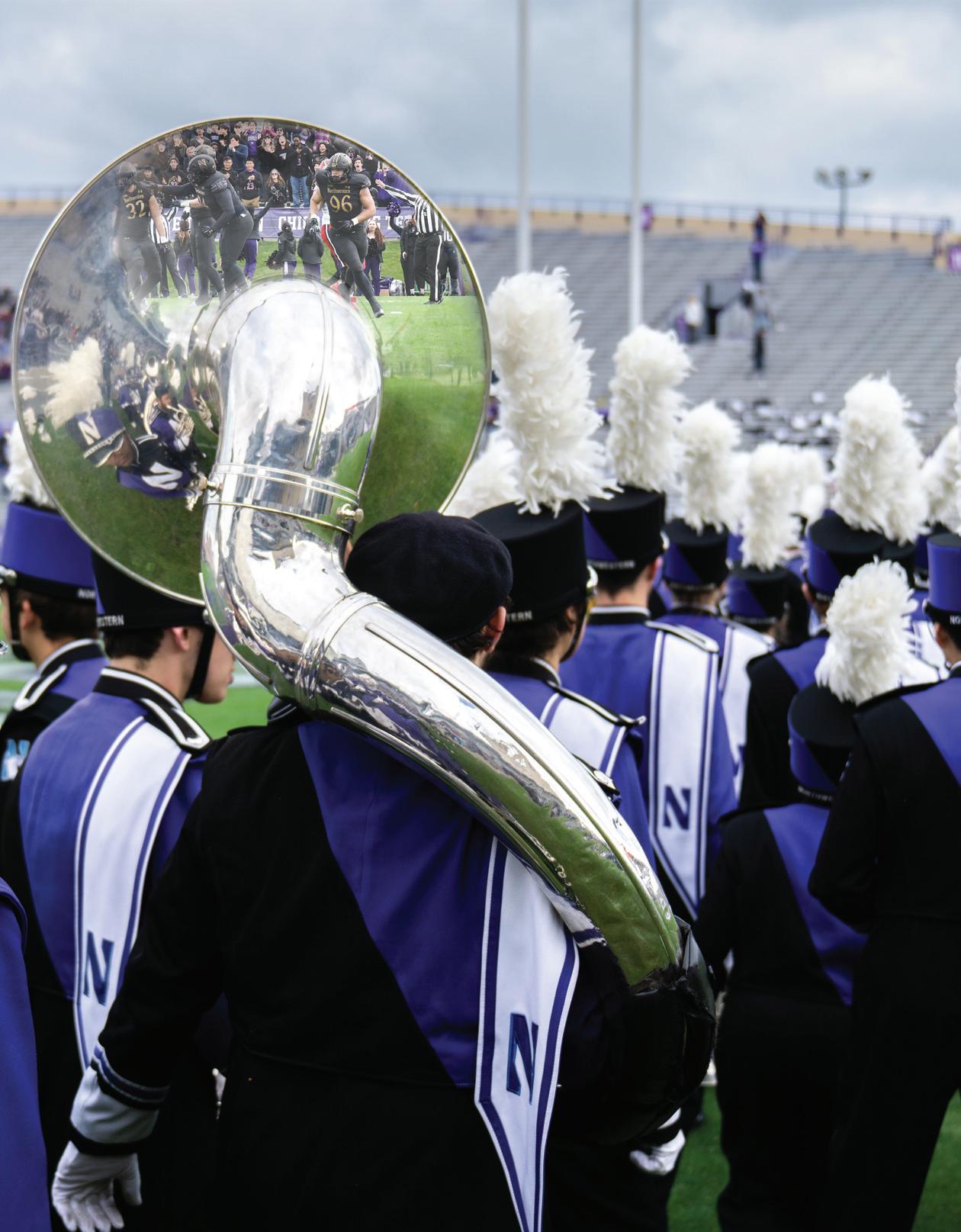
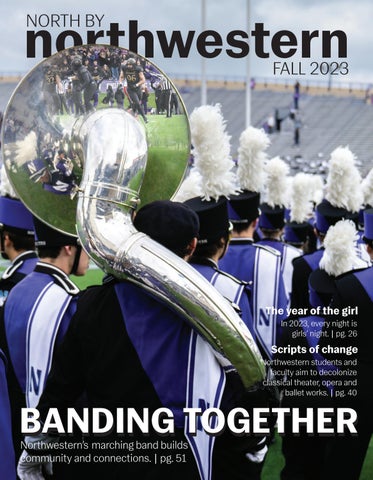
Northwestern’s marching band builds community and connections. | pg. 51
What is your presidential campaign slogan?
PRINT MANAGING EDITOR Jenna Anderson
ASSISTANT MANAGING EDITOR Julianna Zitron
EDITORS-AT-LARGE Jimmy He, Mia Walvoord
SENIOR FEATURES EDITORS Emma Chiu, Noah Coyle, Christine Mao, Caroline Neal
ASSISTANT FEATURES EDITORS
Courtney Kim, Shae Lake
SENIOR DANCE FLOOR EDITORS Audrey Hettleman, Katie Keil, Maya Krainc, Ava Mandoli
ASSISTANT DANCE FLOOR EDITORS
Sarah Lonser, Mitra Nourbakhsh
SENIOR PREGAME EDITORS Hannah Cole, Sarah Lin, Anavi Prakash
ASSISTANT PREGAME EDITOR Indra Dalaisaikhan
SENIOR HANGOVER EDITORS
Julia Lucas, Natalia Zadeh
CREATIVE DIRECTOR Iliana Garner
ASSISTANT CREATIVE DIRECTOR Grace Chang
DESIGNERS & ILLUSTRATORS Michelle Sheen, Jackson Spenner, Allison Kim, Allen Zhang, Sammi Li, Laura Horne, Michelle Hwang, Valerie Chu, Elisa Taylor, Abigail Lev, Olivia Abeyta, Jessica Chen
PHOTOGRAPHERS Taylor Hancock, Lavanya Subramanian, Ashley Xue, Valerie Chu, Elisa Taylor, Alessandra Esquivel
Sophia Vlahakis, Lindsey Byman, Olivia Abeyta, Cammi Tirico, Ashley Wong, Jerry Wu
COVER DESIGN BY ILIANA GARNER
COVER PHOTO BY VALERIE CHU AND ASHLEY XUE
EDITOR-IN-CHIEF Kim Jao
EXECUTIVE EDITOR Christine Mao
MANAGING EDITORS Astry Rodriguez, Conner Dejecacion
ASSISTANT MANAGING EDITORS
Olivia Abeyta, Arden Anderson, Jaharia Knowles
DIVERSITY, EQUITY AND INCLUSION EDITORS
Sammi Li, Astry Rodriguez
NEWS EDITOR Joanna Hou
POLITICS EDITOR Gideon Pardo
ENTERTAINMENT EDITOR Kelly Rappaport
LIFE & STYLE EDITOR Chloe Que
SPORTS EDITOR AJ Anderson
ASSISTANT EDITOR Maggie Rose Baron
INTERACTIVES EDITOR Manu Deva
FEATURES EDITORS Sara Xu, Ava Hoeschler
OPINION EDITOR Mya Copeland
ASSISTANT EDITOR Hannah Zhou
CREATIVE WRITING EDITOR Amaya Mikolic-Berrios
AUDIO & VIDEO EDITOR Sammi Li
PHOTO EDITOR Lianna Amoruso
GRAPHICS EDITOR Iliana Garner
INSTAGRAM EDITORS Sara Xu, Kim Jao
TIKTOK EDITOR Lianna Amoruso
TWITTER EDITOR Jade Thomas
PUBLISHERS Julianne Sun and Stephanie Kontopanos
AD SALES TEAM Grace Chang and Janice Seong
MARKETING TEAM Sam Stevens
WEBMASTER Ziye Wang
When the football scandal broke this summer, I was shocked, saddened and embarrassed. A er reading The Daily’s admirable reporting, I knew NBN had to nd a way to cover the issue in our fall edition and capture the melancholic feelings of the student body. Our answer is the uno cial theme of this magazine: Varsity Blues.
You’ll notice cool tones dominate this issue. The pops of warm colors at the beginning of the magazine gradually fade out until all color disappears in the black-and-white cover of our photo story, “Banding together,” a feature on the Northwestern University Marching Band. We highlight this o en overlooked group and ask how it feels to be cheering for a team that experienced such a dark episode. The band’s thoughts on who they truly root for may surprise you.
We also take a look at the football team’s history in a Dance Floor story, “Purple reign.” Using Northwestern archives, the piece shows just how many times the team has bounced back in their 141 seasons. You’ll read about the many moments when the student body rallied around the team, especially at their low points.
And we found plenty of other things to celebrate this fall. In our Pregame section, we upli Mariachi Northwestern, still on a high from their performance at this summer’s Lollapalooza. Our Dance Floor section documents an increase in campus- and city-wide access to Narcan, the lifesaving medication for opioid overdoses. And have fun lling out the games page in the Hangover section!
Warm colors nally return to the magazine in that nal section, a re ection of Northwestern’s continued e orts to heal from the negativity surrounding the football scandal. For me, this sta of editors, designers and writers was a source of solace and community this fall. I couldn’t be more grateful for their talent and dedication to NBN. My hope, dear readers, is you’ll nish reading this magazine with the feeling that, even in our darkest moments, we can turn to one another and nd something to cheer for.
Sincerely,
Jenna Anderson

Pho-nomenal!
Resonating roots
After (office) hours with Professor Tan
Grow ‘Cats!
Backstage bosses
5, 6, 7, 8!
Writing (and rewriting) history
The road to education equity
Gray area
The year of the girl
Purple reign
Over the counter and onto campus
The fitness journey
Scripts of change
Blending cultures, forging identities
Banding together
Spill the broth
Op-ed: What am I to do without my campus celebrities?
Serving (the Evanston people) 101
Hometown how-tos
Kids menu
7 8 10 11 12
Phonominal!
Resonating roots
After (office) hours with Professor Tan
Grow ‘Cats!
Backstage bosses
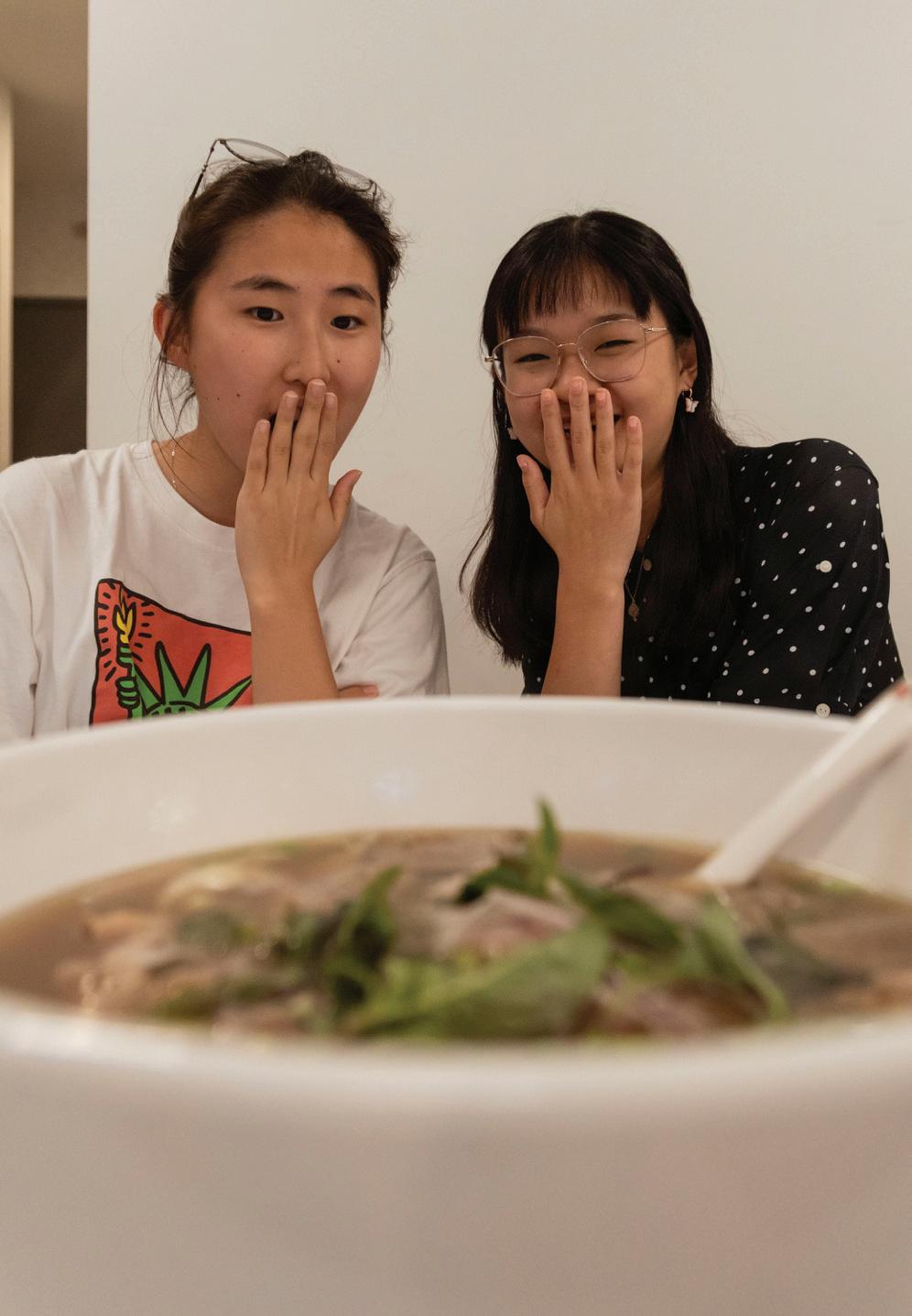
We tried the Big Bowl Special Beef Pho at Joy Yee. It’s pho-king delicious.
WRITTEN BY SARAH LIN // DESIGNED BY ALLISON KIM // PHOTOS BY ASHLEY XUE
Sometimes, all you want is a comforting bowl of soup. Rich, tangy, savory, meaty and fragrant, Joy Yee’s Big Bowl Special Beef Pho is sure to satisfy your cravings. But be warned: It lives up to its name
This fall, four NBN sta members traveled to Joy Yee with big hopes and even bigger appetites. Our goal? To nd the bottom of the bowl.
Priced at $29.95, the pho is a symphony of ingredients, including beef broth, rice
extends to America, where food outlets like the Michelin Guide have released rankings of the best pho in the U.S.
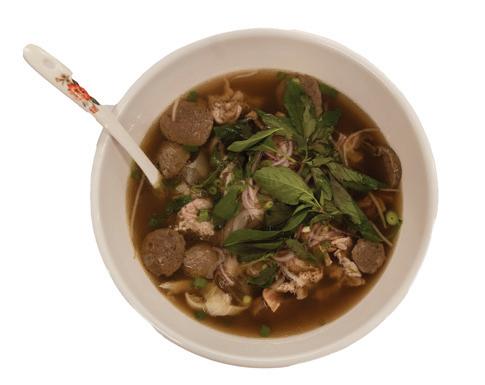
Joy Yee’s large serving is also re ective of Vietnam’s culture of sharing food. Meals are o en served family style as opposed to individual portions. According to the Hanoi Times, even the country’s choice utensil of chopsticks signi es “community solidarity” as they are used to “pick food up and give to others.”
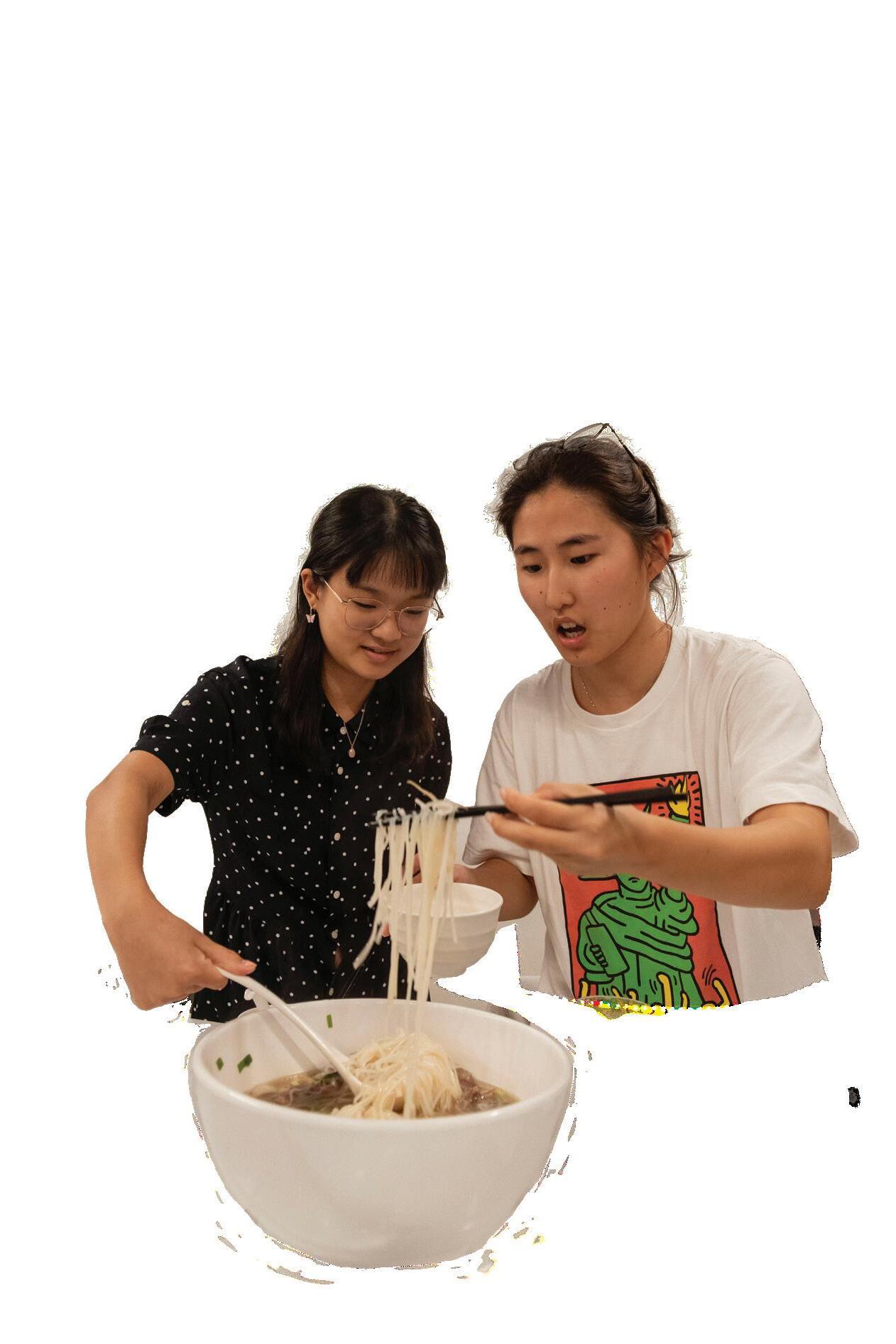
As we chowed down, we observed a couple of things: Hannah found the soup especially “comforting,” Indra noted the “slight sweetness” of the beef broth and Ashley welcomed the bean sprouts’ crunchy contrast to the so noodles and meat. We all agreed the pho tasted
nish all the noodles, meat and vegetables but were unable to consume all of the broth. This may have been because the broth was incredibly rich, so we struggled to polish it without the other ingredients avor.
We measured our progress through the smaller bowls we scooped the Big Bowl Pho into. Ashley devoured two and a half, Hannah demolished three, I slurped up three and a half and Indra wolfed down four whole bowls (our MVP!) for a total of 12 small bowls.
As the days grow colder, Joy Yee’s Big Bowl Pho is not only a great way to warm up but also a chance to share food and conversation with friends. Reminiscent of a Vietnamese-style family meal, the “challenge” of nishing the pho, soup and all, is guaranteed fun.




was more comfortable to place a cultural element on. I wanted to nd some form of cultural singing on campus, and because [Mariachi Northwestern] met all the criteria, I joined it,” Schuch says. “It is also a way to reclaim your heritage. It feels most real when I put on the traje.”
Schuch grew up watching folklórico dances to mariachi music with her paternal grandma. Her maternal grandma had always wanted to be a mariachi performer, so when her family came to see her perform at the spring rehearsal, she was overcome with emotion.
“I almost cried on stage when I saw my grandparents and my mom because I know they never had the opportunity to [perform mariachi],” she says. “They were just so happy I did it for them, and it was the rst time they got to see me.”
The band meets every week for a onehour rehearsal session. They also have optional jam sessions throughout the week. The band spends these get-togethers going through their repertoire, learning new music and revisiting old music.
The group’s e orts culminated in August with a performance at Lollapalooza, an annual four-day music festival in Chicago. Latin pop singer Lesly Reynaga invited the
“Mariachi music is about fighting to be heard.”
band to perform during her set.
“When they invite us to things like big academic conferences or when we get invited to Lollapalooza, it puts mariachi music in the limelight and [highlights] the beauty of Mexican culture,” Reyna says.
Before performances, the ensemble will sometimes guide the audience through song lyrics or release an erupting wave of laughter or yell, known as the grito, to gauge the crowd’s attention. The band always looks forward to the reactions they get from the audience.
“We want the audience to dance along. We want the audience to be involved in the music,” says Weinberg secondyear Sebastian Gomez, the band’s trumpet player.
Even now, Lizet Alba, a Class of 2016 alumna who resides in the Chicago suburbs, is reminded of her heritage and ties to the Northwestern community whenever she hears the band perform. She has seen nearly a dozen performances.
“When I hear Mariachi Northwestern play, it is a great connection to where my parents are from, the country I consider home,” she says. “Mariachi is representative of Mexican culture but different narratives come to fruition with each song.”
As Mariachi Northwestern continues to build its musical repertoire and increase its number of performances, it aims to reach new audiences and bring Latine culture to life.
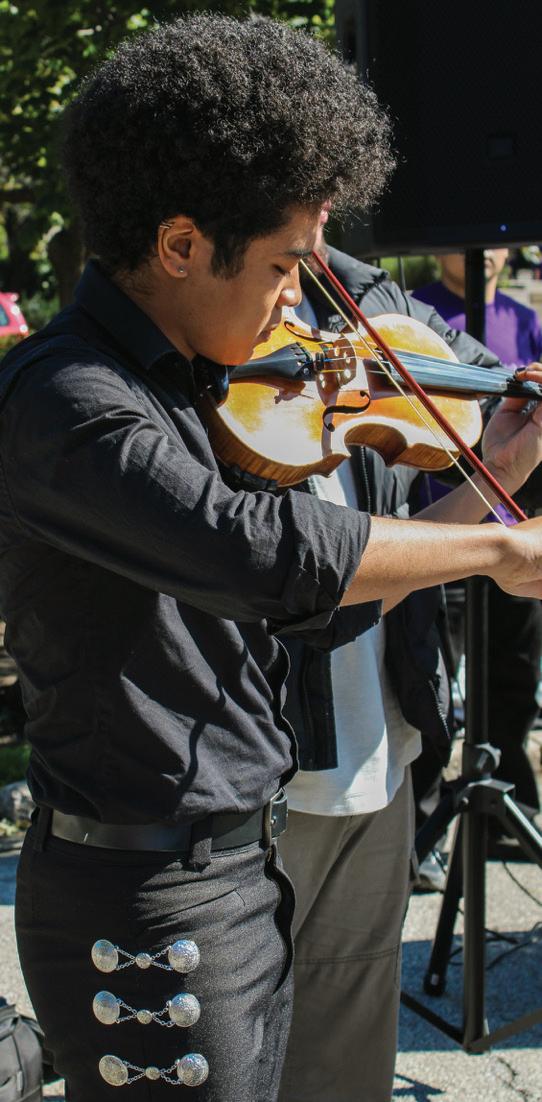
“I’m Mexican, and I grew up with mariachi music. It’s important to me to hear that music be put into places of prestige,” Reyna said. “It’s also exciting for me to see the things that I grew up with being appreciated by Mexicans and also non-Mexicans.”
In essence, the lasting impact Mariachi Northwestern has had on campus comes down to its members. From putting on week-in and week-out gigs to spending hours in rehearsal, the band fully embodies the values and narratives commemorated by timeless mariachi.
“It’s music that comes from the heart. The most ful lling thing I enjoy while I am playing [mariachi music] is that I can see the audience smiling,” Gomez says.
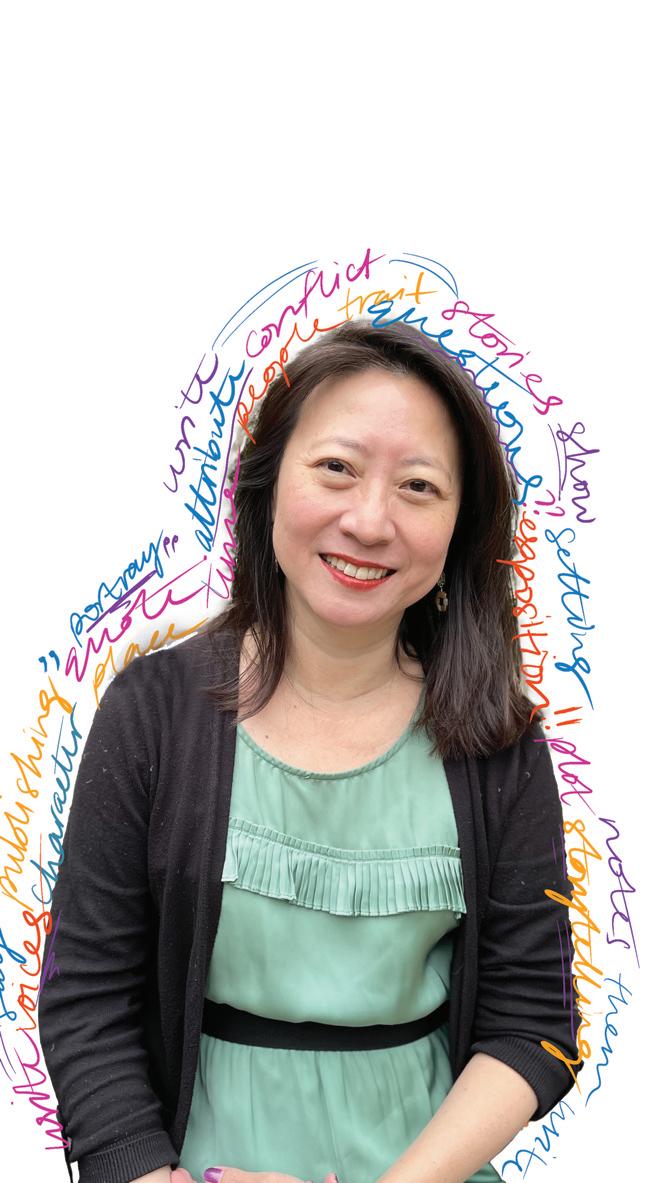
A conversation with the inaugural George R.R. Martin Chair in Storytelling, one of Medill’s newest professors.
WRITTEN BY ASHLEY WONG // DESIGNED BY SAMMI LI
PHOTO BY TAYLOR HANCOCK
n April 2023, Northwestern University awarded journalism professor Cheryl Lu-Lien Tan (Medill ’97) the inaugural George R.R. Martin Chair in Storytelling at Medill.
This Q&A has been edited for length and clarity.
NBN: Congratulations on your new professorship! Can you tell us about what your role as George R.R. Martin Chair entails?
Tan: I will be mainly creating the George R.R. Martin Summer Intensive Writing Workshop that will help mid-career journalists transition into writing ction, lm, TV or plays.
The idea is that journalists out there are already such good storytellers in the world of journalism. A lot of them probably have good ideas that can be amazing books, TV shows and screenplays. We want to help them transition into ction writing.
NBN: There seems to be quite an intersection between journalism and creative writing. How does your background in both ction writing and journalism in uence your storytelling?
Tan: I keep the two very separate when it comes to journalism because journalism has to be real; it can’t be ction. But when it comes to ction, I feel like my most compelling work actually comes out of non ction or journalism.
NBN: How has your transition been, from being a professional writer to now becoming a professor?
Tan: I’m still learning! While I wrote professionally, I always wondered how I was going to teach something I learned very instinctively. I’ve never really learned the cra of ction — I took one creative writing class in my life, at Northwestern — but my whole career I’ve pretty much been: Let’s just gure out how to do it, and then I’ll do it.
A lot of it has still been guring it out and really learning from the students as much as I hope they’re learning from me. Medill is the place where I felt like I grew up both as a writer and as a person. The idea of having a role in helping nurture the great minds of the future is very exciting to me.
NBN: Just like myself, you were an international student from Singapore trying to carve out your career in America. What kind of advice would you give to fellow international students trying to make it in the media profession in a new place?
Tan: Pitch as many stories as you can. Write as much as you can. An editor told me once, the more you write, the more you will write. Good clips and good ideas will get you everywhere in the world. Put yourself out there.
South Area’s “Garden of Eatin’” provides fresh produce for Northwestern students facing food insecurity.
WRITTEN
DESIGNED
BY
BY
CAMMI TIRICO AND SARAH LIN
ILIANA GARNER AND JULIE PARK
Nestled within the heart of South Campus, four planter boxes feed Northwestern University’s foodinsecure students. The 6 by 4 foot woodenframed garden beds over ow with tomatoes on 3-foot vines, purple owers and an abundance of other fresh produce.
Every Thursday, a group of students, community members and volunteers harvest the beds and bring the produce to Purple Pantry, a free food pantry located in 1835 Hinman. The weekly harvest depends on the season and conditions, but in the rst week of October, the garden yielded 15 bags of fresh tomatoes, kale, swiss chard, cucumbers, herbs, sweet peppers and hot peppers.
“International students don’t qualify for [federal] nancial aid, which means they can’t qualify for SNAP and EBT or food stamps,” SESP fourth-year Lily Ng says. “So that means they rely heavily on the food pantry. Having hot peppers, something they use within their cuisines, has been really nice for them.”
According to the National Center on Safe Supportive Learning Environments, one in three college students in the U.S. face some form of food insecurity. The idea for the garden grew from a desire to connect the Evanston and Northwestern communities and to make fresh fruits and vegetables more accessible on Northwestern’s campus, Ng explains.
A group of students, including Ng, spent the 2022-23 school year planning the South Area community garden for their Civic Engagement Certi cate capstone project. The greatest challenge they faced was nding a location to host the garden, Ng says.
A er receiving multiple rejections from Northwestern administration, Ng says she
contacted Reverend Julie Windsor Mitchell from the University Christian Ministry (UCM) and Professor Ava Thompson Greenwell, the faculty-in-residence for the South Area. In collaboration with Evanston Grows, an organization dedicated to reducing food insecurity in Evanston through locally-grown produce, UCM provided a plot of land for the garden. In late May 2023, Evanston Grows, Ng and over 30 volunteers o garden and planted their
The South Area community garden is not the rst project UCM has worked on to help eradicate food insecurity. In 2015, UCM worked alongside other campus ministries to found and run Purple Pantry until 2022, when Northwestern Dining assumed control of the food pantry.
“We really are trying very hard to put what I call ‘feet to faith’ — actually live our faith and live out our commitment to ecojustice,” Mitchell says.
The group will plant garlic this winter, and the rest of the garden will be “put to bed” until spring. In the season-closing event, South Area students revealed the garden’s o cial name: the Garden of Eatin’. When the garden reopens in the spring, those involved say they are looking forward to seeing what the new season will bring.
“I discovered how being close to the soil and out in the sun are all important things,” Greenwell says. “To actually be able to get out and see something that starts as almost nothing, a seed, and see it become something. The wonders of life are still simple, yet complex.”

Come behind the scenes with three Northwestern stage managers.
WRITTEN BY ANAVI PRAKASH
DESIGNED BY ABIGAIL LEV
PHOTOS BY ALESSANDRA ESQUIVEL
With one hand holding her blue Stanley cup and the other ready to give directions, Communication third-year Anushka Agarwala makes her rounds through Shanley Pavilion while simultaneously directing mic check. Occasionally, the theatre major is heard yelling about water bottles being le on the stage.
Then, when everyone is in their places, it’s showtime.
All her preparatory work comes to the forefront now. It’s time for Agarwala to stage manage a production of Once On This Island, a musical loosely based on a
Caribbean-set retelling of The Little Mermaid called My Love, My Love or The Peasant Girl by Rosa Guy. In her role as stage manager, Agarwala has spent hours coordinating the cues she will give her team during the show, ensuring it runs smoothly.
Stage managers connect the creative and technical sides of a production, making sure everyone is on the same page and the cast and technical crew know their cues for the show. Agarwala calls her role “omnipresent.”
“You really are always there,” she says. “The stage manager is always there in every room, always watching, giving notes and just taking information.”
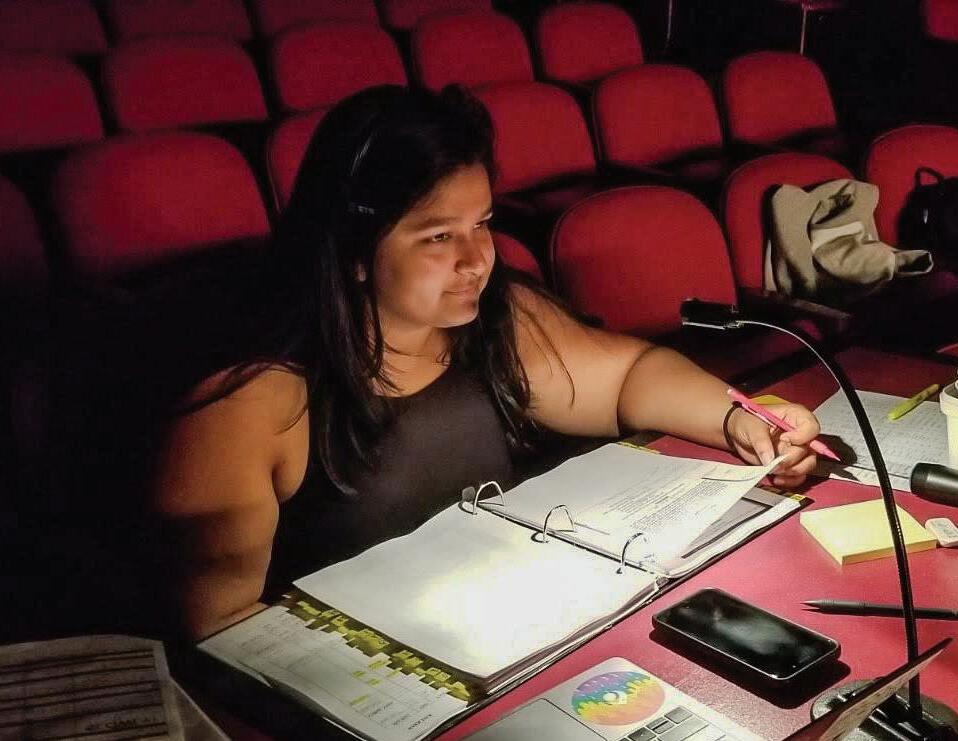
Agarwala
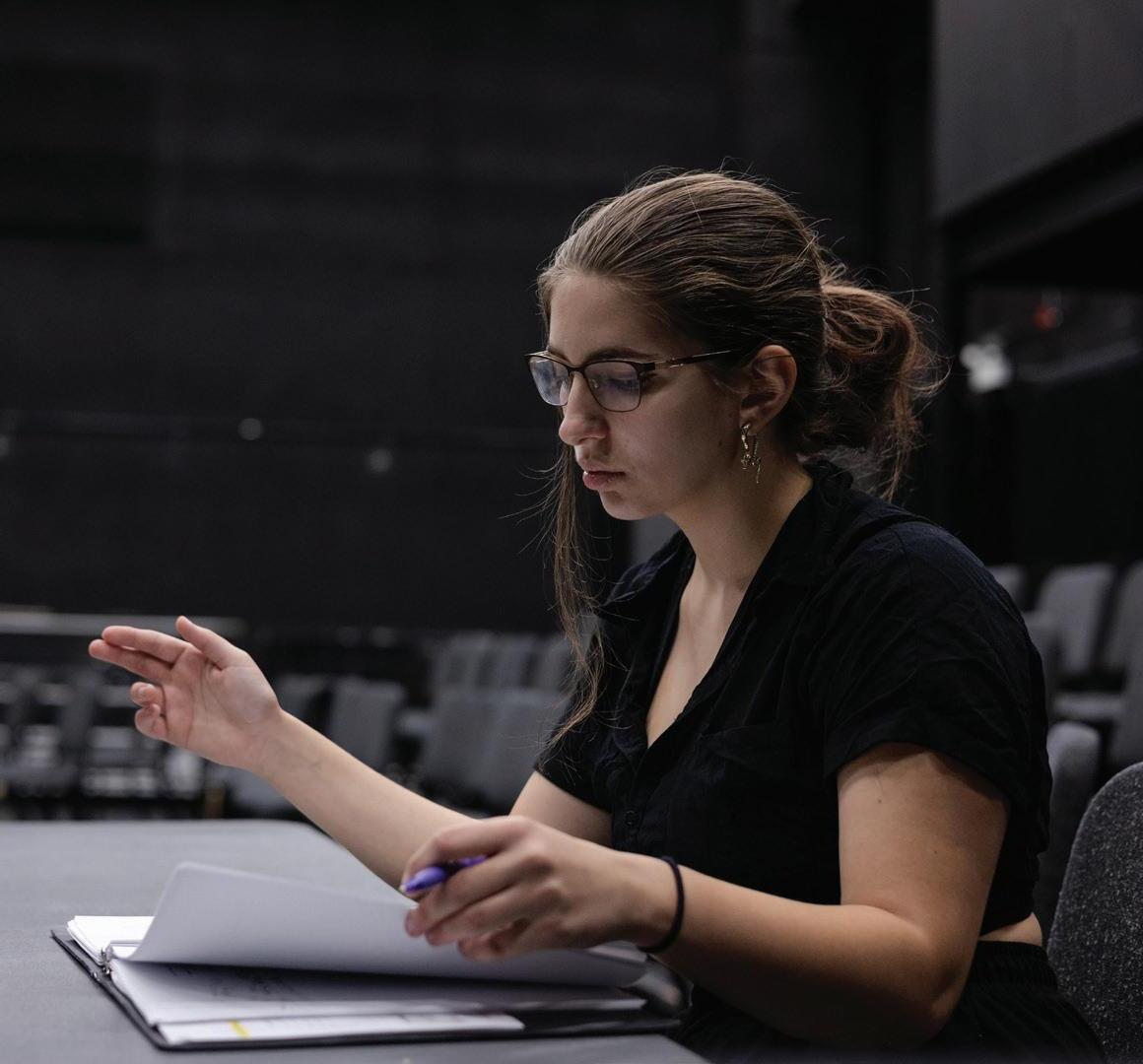
Communication second-year Wylde Laden and Weinberg second-year Sophia Mitton-Fry, co-stage managers of last spring’s production of The Thing About The Dream, echo this sentiment and believe stage managing is all about communication.
“Being the bridge between people is the most important part,” Laden says.
Cues for the show come together in the stage managers’ scripts, which also include information on where the actors are at all times and notes from the designers and the director. In short, it has everything they need to make the show happen.
Beyond her script, one of Agarwala’s main aspirations as stage manager is to create a collaborative and inclusive environment for the cast and crew. Over time, she has found that open communication and team building activities are key to achieving her goal.
“If the cast ever had any issues or anything, [I made] sure they knew they could communicate that with me and we would try to solve the issues immediately,” Agarwala says.
She describes her relationship with the Once On This Island cast as “close.”
“Some of the actors, they do things before I ask them to because they’ve been asked to do them so many times,” Agarwala says. “It’s more of a gelled relationship.”
With the crew, it’s a bit di erent. Most of the crew members are Agarwala’s friends outside of the theater.
“It’s a little bit tricky because you’re in a power position of authority over your friends and classmates,” she says. “But this group is really good because they all
have a level of respect for me, and they know I’m trying to move the show along.”
For most shows, the rst time the entire crew comes together is during tech week, a week full of dress rehearsals. In the midst of putting all the pieces of the show together, Laden’s utmost goal is to create a positive environment.
“I try to make the room as fun as possible during tech week because I know it’s a lot of stress a lot of the time,” she says.
She adds that tech week is her favorite part of the show process.
“Once we get to tech week, it becomes my room,” Laden says.
For Mitton-Fry, the majority of her time before tech week is spent thinking about tech week. She counts down the days until full run-throughs begin to determine what needs to get done beforehand.
Prior to tech week, a lot of what stage managers do involves keeping everyone accountable and on the same page. Laden writes “frantic” notes and creates templates she can ll out to communicate logistical and show-speci c information to her cast and crew in the most e cient way. Mitton-Fry creates a Google Drive folder to store the vast amount of information given to her.
Though this process is “crazy,” MittonFry says she loves stage managing because she gets to meet people who are equally passionate about the work they are doing.
“I like the energy of it,” she says.
Laden loves the new things she learns.
The Thing About The Dream was a unique experience for her because she had to cue off of Bollywood songs even though she didn’t know how to speak Hindi.
For Agarwala, Once On This Island is a special show for two reasons.
“The music is joyful, it’s colorful,” she says. “There are some heavy topics obviously, but overall, it’s a celebration of love and life, so I’m excited for everyone to witness that and see the love and passion all of us have put into the show.”
When the lights dim at the top of the show, Agarwala sits at an elevated table, next to the show’s lighting designer.
As soon as the opening number, “We Dance,” starts, Agarwala is dancing, mouthing the words as the cast sings them. She follows along, performing on the sidelines for the entire show.
Another reason the show is important
“The stage manager is always there in every room, always watching, giving notes and just taking”
Anushka Agarwala Communication third-year
for Agarwala is because it was one of the first Northwestern shows with a cast made up entirely of people of color.
That diversity was part of the reason why Agarwala prioritized creating an inclusive, safe environment.
“[I wanted an] atmosphere where we can express ourselves and our di erent identities and cultures in a way that is safe and collaborative,” she says.
Agarwala says this show is important because theater, including at Northwestern, has been a historically white industry.
“It’s very possible in the future, or even now, to do shows that are full POC team and cast and everything,” she says. “These stories don’t have to just be in the professional world because they have the resources and the people to do it. It’s very much within our realm on campus.”
Her faith in theater’s future at Northwestern stems from her passion for theater and stage management.
“I found my niche,” Agarwala says.
Three
The world is a muse for choreographers. Inspiration for a routine begins as an impossible party idea, music from a video game or a song’s gripping plot. In the process of cra ing and reworking sequences, teaching dancers and making edits, a moment’s vision becomes a performance. For student choreographers Alexandra Romo, Amanda De la Fuente and Mary Kate Tanselle, hours of work culminate in just a few minutes as their dancers leave it all on the stage.
WRITTEN BY LINDSEY BYMAN
DESIGNED BY LAURA
HORNE
PHOTOS BY ALESSANDRA ESQUIVEL
expensive. So Romo mixed the music and choreographed the dance herself, complete with a custom-made holographic jumpsuit and prop umbrellas.
“I was like, ‘If I have the vision already, what if I just do it?’” Romo says.
Later in high school, she would choreograph and mix music for other people’s quinceñera dances. She also choreographed and performed Latin dances at high school talent shows.
Multiple DJs and choreographers told Communication fourth-year Alexandra Romo they didn’t know how to produce the 10-minute, “Back in Time”themed performance she planned for her quinceñera — or if they did, it was too
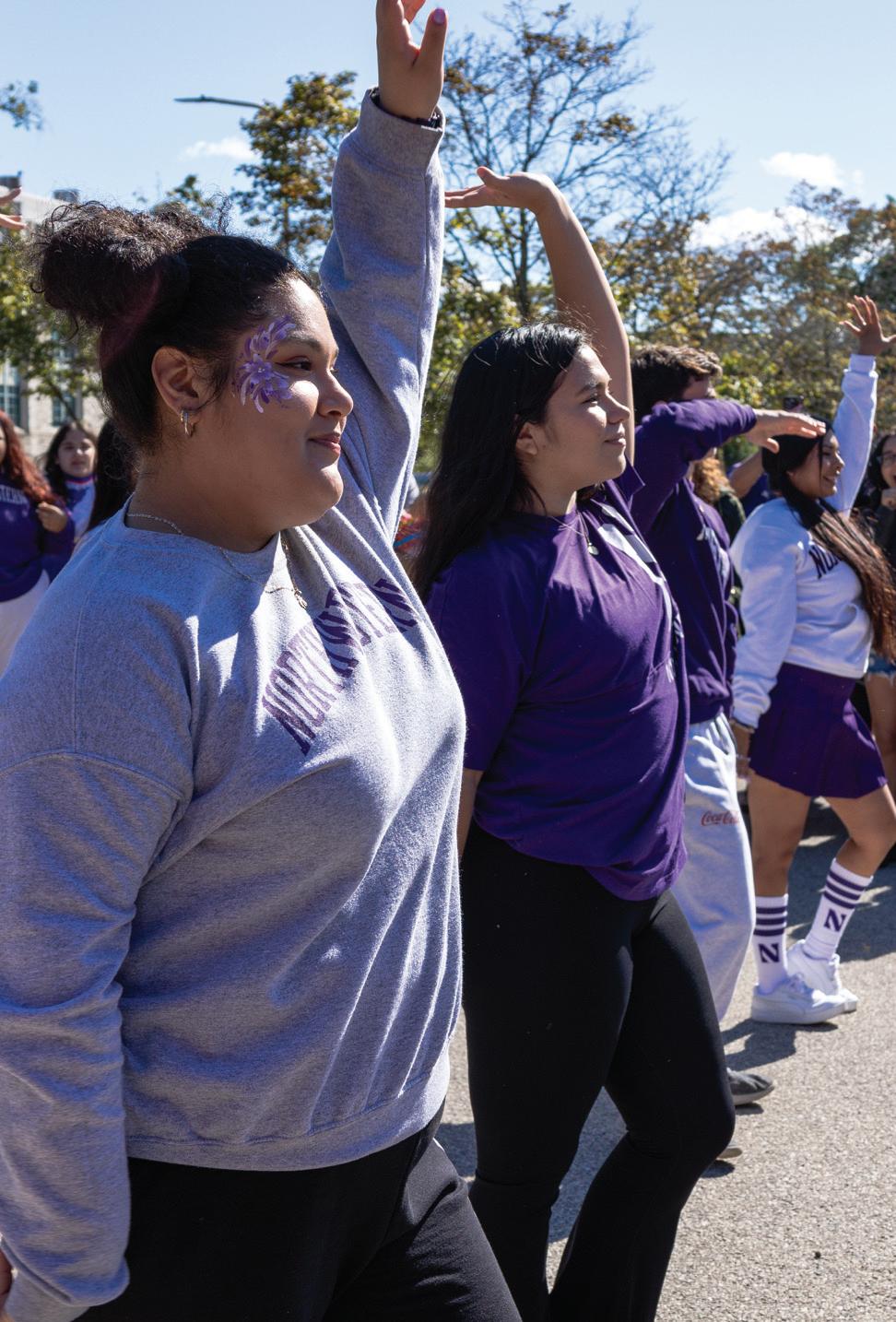
Now, as co-head choreographer for Northwestern Latin dance group Dale Duro, Romo’s routines play on song lyrics. When Bad Bunny sang, “Let’s take a sel e,” during the group’s performance of his song “Tití Me Preguntó,” Romo and her dancers did just that. She also researches formations to choreograph “the type of dance that will get you tired.”
Romo began dancing hip-hop when she was 8 years old and later got into Latin dance. She says she tried Mexican folklórico dance when she was 13 and liked it so much she continued practicing it until she le for college.
Romo missed registration for Dale Duro her rst year at Northwestern but jumped in the following year as a choreographer, excited to nd a space that combined her Latin identity and passion for dancing.
“I’m a senior already, but at least I’m grateful,” she says. “I was part of something bigger.”
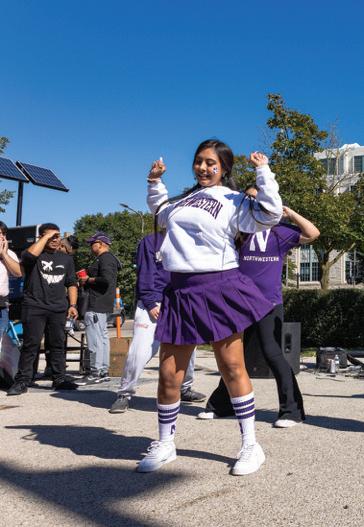
At the Latino Alumni Homecoming Tailgate, she performed an upbeat hiphop-style Latin dance with Dale Duro. Smiling at the crowd in pigtails and a purple skirt, she commanded center stage for much of the routine.
This spring, for one of her nal performances with the group, Romo is incorporating more Mexican dance styles. Her ideas have been coming together since last year a er the crowd screamed
in excitement for her dance at Dale Duro’s annual spring showcase. The dance included zapateado, a Mexican dance style named a er dancers tapping their shoes against the ground.
“Everybody loved it. And then they were like, ‘Oh my god, what is that?’” Romo says.
When Communication third-year Amanda
De la Fuente rst heard the theme from “The Last of Us,” she saw its black and gray melody woven with deep green in her head. She has synesthesia, a condition where sensory information goes through multiple brain pathways, allowing individuals to experience multiple senses at once. In De la Fuente’s case, this means she sees colors when listening to music.
‘“I’ll listen to music and I’ll be like, ‘That’s yellow,’” she says.
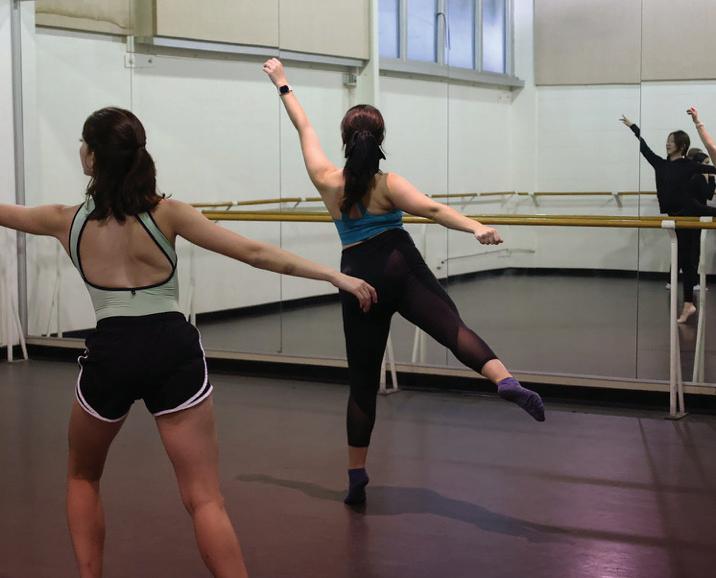
This year’s Fall Dance Concert, hosted by the New Movement Project, nally gave De la Fuente a chance to translate the song’s colors to movement. Her dance and musical theater choreography, which draws on contemporary, modern, jazz and ballet dance styles, is unique in its storytelling. She says her theater experience fuels this interest.
In her routine, ve dancers wearing large black dresses perform staccato motions until they individually break into uid sequences, removing their layers to reveal saturated cool tones with one person in purple, two in green and two in blue.
“Trust yourself. I trust you. And if we crash and burn, we crash and burn, and that’s OK. ”
Amanda De la Fuente Communication third-year
“Don’t let society dictate what you want to be,” De la Fuente says of the message she tried to convey through the dance.
Scrolling through her camera roll, De la Fuente says she records herself while cra ing a routine to remember the moves. She also likes to bounce ideas o others, like her friend Angel Jordan, a Medill third-year with whom she founded Eight Counts Ballet Company in 2021.
When teaching, De la Fuente encourages trial and error. This relieves anxiety when she forgets what comes next, which she says can happen because of her ADHD.
“Wanna crash and burn, try it out?” she asks her dancers at rehearsal.
Demonstrating the routine, she instructs them to keep energy in their arms “as if there’s magic coming out of [their] ngers.”
De la Fuente’s choreography career began her junior year of high school when she went on a run and ended up improvising a dance to “A Friend Like Me” from Aladdin in a parking lot. About a year later, she nished choreographing the song and played a video of herself doing it at a senior showcase.
“It was my little pride and joy,” she says.
Her favorite aspect of choreographing is the final run-through in rehearsal, when she tells the dancers to give it their all.
A er the nishing sequence, De la Fuente claps and jumps, kicking her feet behind her with a smile.
“I love telling people, ‘Trust yourself. I trust you. And if we crash and burn, we crash and burn, and that’s OK,’” she says.
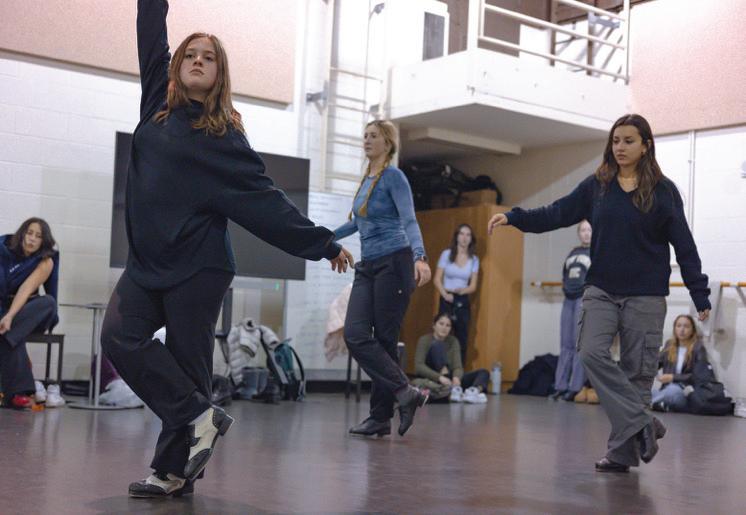
For Weinberg second-year Mary Kate Tanselle, a typical Sunday begins at her organic chemistry study group and ends with rehearsal for Tonik Tap, Northwestern’s only tap dance group, where she is a member and company manager.
“It always feels like I get to use every part of my brain,” Tanselle says.
She began tap dancing at 3 years old. In high school, she o en stepped in to choreograph musical theater productions, but a Tonik Tap performance to Mac Miller’s “The Spins” last spring was her rst college experience choreographing tap.
along with a musical shi . She says she loves the lightbulb moments when she has an idea for a routine.
Tanselle typically choreographs multiple versions of a dance and takes feedback from dancers throughout the process.
“You’re never really done,” she says. “But that’s just like anything artistic, right?”
“You let each person have their own interpretation of whatever the emotion or movement you’re doing is.”
Another feature of Tanselle’s style is breaking the fourth wall, the invisible divide between performers and the audience. Last spring, she did this by having her dancers mouth along to Mac Miller’s ad-libs in “The Spins.”
“Everybody could do something di erent with the same song and the same set of dancers.”
Mary Kate Tanselle Weinberg second-year
In the routine, the dancers dressed in Rugrats-esque costumes that t tropes such as nerds and jocks. She says she initially worried if the dancers would like it, but Tonik’s supportive members were receptive to her idea.
Since she’s new to choreography, Tanselle says she takes her time. One performance lasting around three minutes could take her up to seven hours to choreograph, not including the time she spends teaching it to the dancers.
Playing the music on repeat on her way to class, she visualizes one dancer becoming an ensemble tapping in unison
She adds that she still thinks of changes she’d make to “The Spins” performance.
Tanselle is currently co-choreographing a dance to Macklemore’s “Thri Shop.” Dancers will wear di erent funny coats and sunglasses as they tap. But she has cra ed moodier numbers as well, including one to Michael Jackson’s “Smooth Criminal” for Northwestern’s Steam Heat Dance Company last year.
She says she enjoys choreographing arm movements and facial expressions to add interest to her piece.
“You get a lot of magic out of people if you give general guidelines,” she says.
She says this keeps the audience thinking about her piece when it’s over, but no two choreographers have the same approach.
“Everybody could do something di erent with the same song and the same set of dancers,” she says. “It’s what makes dance an art form.”

Cody Keenan wrote speeches for President Obama. Now, the professor is training the next generation of speechwriters.
WRITTEN BY JULIANNA ZITRON // DESIGNED BY VALERIE CHU // PHOTO BY ALESSANDRA ESQUIVEL
On the 50th anniversary of the civil rights marches from Selma to Montgomery, then-President Barack Obama addressed the nation: “We honor those who walked so we could run. We must run so our children soar. And we will not grow weary.” Peers and renowned publications alike would hail the speech as one of Obama’s best.
Two nights before the landmark anniversary, a severe snowstorm shut down the federal government. While most government employees took the day o , then-Chief of Speechwriting Cody Keenan took the opportunity to collaborate one-on-one with the former president. The pair passed ve dra s of the speech back and forth over two days, each dra better than the one before.
“We had never ever been able to do that before because the job is just so busy. We never were able to do it again,” Keenan says.
Keenan served as a speechwriter for the Obama campaign and administration beginning in 2007. Today, he is a Distinguished Visiting Professor in the Political Science department where he teaches the art of speechwriting through his course, “Professional Linkage Seminar: Speechwriting.”
Before he wrote speeches for the nation, Keenan was a Wildcat.
He graduated in 2002 with a degree in Political Science and a minor in Hispanic Studies, now Latina and Latino Studies.
A er graduation, he realized a life in politics is not as glamorous as The West Wing. He spent months searching for jobs before landing an internship with Senator Ted Kennedy’s team. Keenan cites this as the best educational experience he’s ever had. A er his internship ended, Keenan was hired as a sta assistant and promoted three times within the team.
In 2004, Keenan attended the Democratic National Convention where he heard then-Illinois Senator Barack Obama deliver a speech for the
rst time. He was “trans xed” by Obama’s words. Keenan wrote his rst speech for Kennedy soon a er.
His rst project was a Senate oor speech. Even though such addresses are commonly given to a nearly-empty chamber, Keenan says watching Kennedy read his words was electrifying.

“It’s like if you’re Eddie Van Halen and somebody handed you your first guitar,” Keenan says. “You’re like, ‘I want more of this.’”
When Obama announced his presidential candidacy in 2007, Keenan knew he wanted to be a part of the campaign. He connected with Obama’s speechwriter, Jon Favreau, who hired him as an intern.
Two years later, Obama was in o ce and Keenan was still writing with Favreau. In December 2009, the President was supposed to go to Pennsylvania to deliver a speech on the economy that Keenan had written. That morning, Keenan ew on Marine One for the rst time, but he couldn’t enjoy his ight.
The night before, Keenan learned the President didn’t like the speech. He spent the entire plane ride frantically rewriting. Keenan recalled the terror he felt in that moment, wondering if he would lose his job.
“There’s no time for apologizing. There’s no time for training,” he says. “They can nd another speechwriter for the White House very quickly if you can’t cut it.”
Despite having to rewrite the entire speech on the y, Keenan cites this moment of panic as one of his greatest learning experiences.
Even a er two years with the President, writing a speech for someone else to deliver proved to be a challenge. He explains writing for another person requires considerable face-to-face interaction to develop a “mind meld” with the speaker, but Keenan didn’t get much face time with Obama until he was promoted to deputy director in 2011. Before that, Keenan relied on Obama’s past speeches, books and the types of edits made to his speeches.
“You’re not just writing what you think they want to say, you need to gure out why they want to say it,” Keenan says.
This lesson proved true for Keenan years later. One of President Obama’s more renowned speeches is a eulogy he gave for Reverend Clementa Pinckney. In this 2015 speech, the President sang “Amazing Grace” to the audience.
Though he had been working with the President for eight years, Keenan’s version of the speech was not read aloud that day. The President rewrote the back half of the speech. Keenan cites this as the only time he apologized for a speech not meeting the President’s standards. But he admits Obama’s edits made the speech “better” and “beautiful” as the President included reflections on grace and racial bias in America.
“He put his hand on my shoulder and said, ‘Brother, we’re collaborators. You gave me the scaffolding I needed to build something here. You’ll recognize your work in what I wrote. And trust me, when you’ve been thinking about this stuff for 40 years, you’ll know what you want to say, too,’” Keenan says.
Two presidential terms later, in 2023, Keenan still writes speeches as a partner at the speechwriting Favreau. He also makes a weekly plane commute to Northwestern to teach his course on the art of speechwriting.
“Let me put it this way: I live a 15-minute walk from NYU. I commute to Chicago every Monday to teach at Northwestern. I love it here,” he says.
Keenan’s dedication does not go unnoticed by his students.
Darby Hopper (Medill ’19), who was his student in 2018, re ected fondly on working with Professor Keenan.
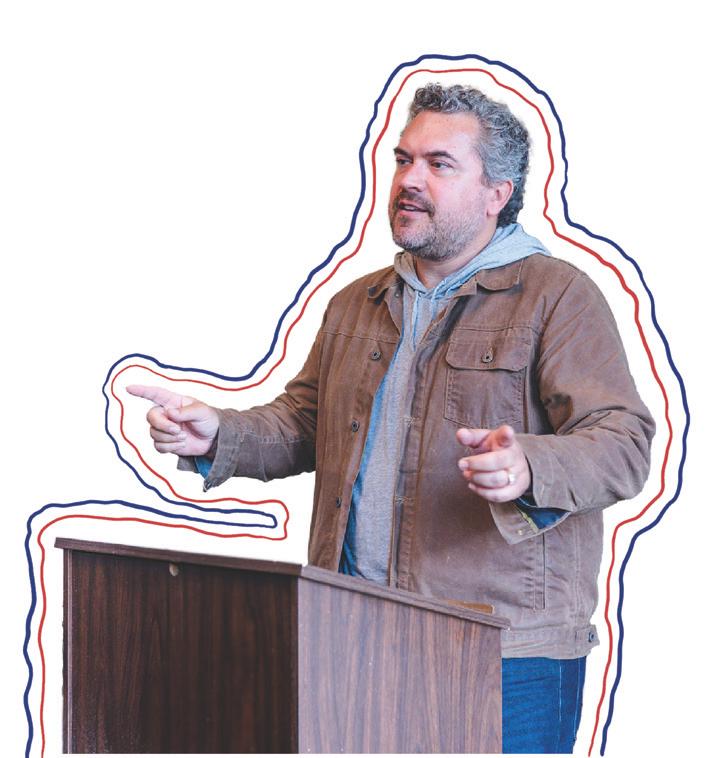
“He continues to y to campus every week for this class just because he thinks this is so important,” she says. “That shows how he teaches the class and how he continues to be a resource for former students.”
“You’re not just writing what you think they want to say, you need to figure out why they want to say it.”
Cody Keenan Political Science Professor
A er graduating,
The class is unlike others in the Political Science department because it focuses less on political theory or rhetoric and instead is geared toward practical experience. Students leave the class with a portfolio of 10 di erent speeches, ranging from a eulogy to a State of the Union Address.

“I wouldn’t say my time in politics has passed, but I did have my time,” Keenan says. “Now I get to train a new group of speechwriters every year and send them out into the world until ultimately, ideally, all of politics is sta ed with my kids.”
Whether writing speeches for a president, a governor or a class project, a speechwriter’s work is not nished until the presenter is at the podium reading it aloud. As stressful as it may be, Keenan enjoys the challenge of writing speeches. He acknowledges no one is a perfect writer — it’s collaboration and revision that ultimately make a speech great.
“By the end, you get this piece of sheet music and you get to conduct the audience with those words,” Keenan says. “You can make people nod, you can make people cheer, you can make people cry. It’s a really extraordinary gi to be able to write for a live audience.”
Plans for a K-8 school in Evanston’s Fifth Ward aim to address more than 50 years of education inequity.
WRITTEN BY AUDREY HETTLEMAN // DESIGNED BY ELISA TAYLOR AND AUDREY HETTLEMAN
In 1966, lifetime Evanston resident Janet Alexander Davis enrolled her son in kindergarten at Foster School, which was walking distance from their home in the Fi h Ward. Her son would be one of the last local students enrolled at Foster School before it became a magnet school and eventually closed. The next year, when racial integration went into e ect in Evanston Public Schools, Davis’s son was bused to Lincolnwood Elementary School in northern Evanston.
“It put a real damper on how much earlier we had to get up and get out of the house,” Davis says.
With the loss of the school and the dispersal of local children to schools throughout the city, the Fi h Ward’s sense of unity was shattered. But in a few years, that 50-plus-year inequity will be recti ed.
As plans currently stand, beginning in 2025, Fi h Ward students will have the chance to attend school in their own neighborhood for the rst time in over half a century. In 2022, Evanston/Skokie School District 65 (D65) approved plans to nally construct a community school on what is currently Foster Field. Proponents hope the project will decrease racial and educational inequities caused by the lack of a local school in a historically Black community.
The Fifth Ward school Davis once enrolled her son in, Foster School, opened on the corner of Dewey Ave. and Foster St. in 1905. It quickly became a pillar of the Fifth Ward community. Black students comprised 99% of its K-8 student body as a result of redlining and de facto segregation. With a school in their own neighborhood, parents could bond over their shared surroundings and kids could run home after school to play with neighbors. A community coalesced around Foster School.
“This is where relationships were formed,” Davis says.
But a re at Foster School in 1958 decimated the building, causing $500,000 in damage and forcing D65 to nd alternative temporary education sites for Foster students. At the time, many of Evanston’s schools were still segregated. Foster School students were not fully integrated into white classrooms around the city — their classes were instead taught in gymnasiums, cafeterias and community centers.
“There are aspects of the city’s race situation of which Evanstonians can’t be proud,” a 1958 Evanston Review article said.
Still, the article said, the integration of Foster School students was an example of “great and commendable progress.”
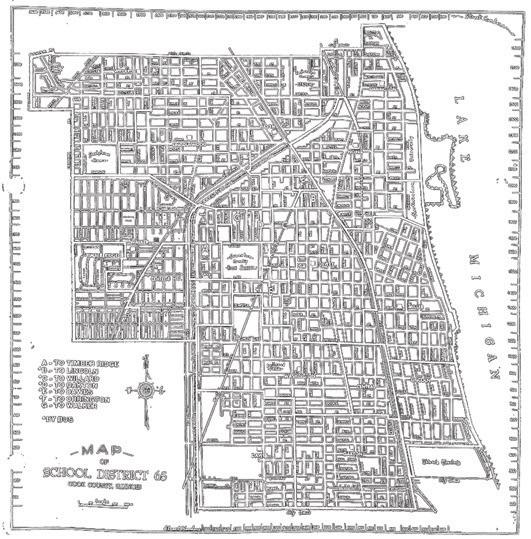
Foster School reopened within the year and students returned to their regular classrooms, but Shorefront Legacy Center Executive Director Laurice Bell says this disruption had lasting consequences.
“You have people who’ve been traumatized by the experience of a re at their school and having to leave something — and these are young kids,” Bell says. “Their teachers are being forced to leave, and they’re just having to deal with makeshi spaces that were not preparing people to be educated. And they got to see the di erence in terms of how they were treated.”
The community faced a signi cant loss when Foster School closed to local students in 1967 as part of D65’s integration initiative. In its place, D65 approved plans for a “city-wide laboratory school for testing new ideas in education,” according to a 1967 article from the Chicago Sun-Times, and renamed it the Martin Luther King Jr. Experimental Laboratory School (King
Lab School). The district aimed to attract white students to the primarily Black area as D65 integrated. The majority of Foster School students were therefore relocated to other D65 schools.
In 1979, the district moved King Lab School to Skiles Middle School in the Second Ward, e ectively closing the last form of schooling in the Fi h Ward. The closure caused controversy, as it meant busing Black children at disproportionate rates compared to their white peers. Roughly 450 Black Fi h Ward students from Foster School were bused to one of seven other Evanston schools. The rest of the local students were reassigned to schools within walking distance but outside of their immediate communities.
“When they closed Foster School, there were people that really believed integration would be a good thing for the Black community. They felt like if you have an integrated school, it’s good for your educational experience,” says Henry Wilkins, Evanston resident and STEM education advocate. “However, I don’t think it was understood what a burden was placed on the Black community to achieve integration.”
One year a er the district converted Foster School into a laboratory school, Bell began elementary school at Dewey Elementary in the Fourth Ward. While she remembers befriending Fi h Ward students who were bused to her elementary and middle schools (Dewey and Nichols, respectively), she also notes the impact coming into a community as an outsider could have had.
“Typically, what desegregation has done is put the weight of anything onto those who are being a ected the most,” Bell says. “When I think of being a child and making playdates with people who lived in another area … the accessibility to community experiences were di erent.”
That lack of community access is still present. Today, according to Wilkins, children living on the same block in Evanston’s Fi h Ward may attend as many as four di erent elementary or middle schools scattered throughout Evanston.
At the end of the day, Wilkins says one of the main reasons rebuilding a Fifth Ward school wasn’t a top priority for D65 was racism.
“There’s a lack of empathy for what the Black community had to go through,” Wilkins says.
There have been several previous initiatives for a Fi h Ward school since Foster School’s closing. In 2012, D65 proposed a referendum that would have provided funding for a new K-5 school in the Fi h Ward, along with improvements to existing schools. The referendum failed, with almost 55% of Evanston voters deciding against it. Wilkins says this was due to various residents’ concerns over taxes and the resulting lack of diversity in their own schools. In the Fi h Ward, though, 76% of voters were for the referendum, and rates were similarly high in other wards primarily composed of people of color.
On March 14, 2022, the D65 school board approved a new Student Assignment Plan, which included plans for returning a neighborhood school to the Fi h Ward. This plan speci ed the school would be a three-story, K-8 school with a 900-student capacity and a Leadership in Energy and Environmental Design
District 65 approves plans for a school in the Fi h Ward. Two plans emerge as frontrunners: a K-8 school with room for magnet programs, or a K-5 neighborhood school.
The rst site concepts for the Fi h Ward school are presented to the community for feedback. A Dec. 6 community meeting brought over 150 community members to FleetwoodJourdain Community Center, eager to share feedback.
Planning logistics, including zoning and design submittals, begin. The City of Evanston and D65 continue to seek community input on the school’s development.
A D65 nancial assessment reveals the project is projected to be $25 million over budget. D65 board members convene a special board meeting during which they consider alternate plans for the school.
Construction is expected to begin on the new school site. Given the October budget revelations, this is subject to change as plans uctuate.
(LEED) Gold certi cation, a building sustainability measure. There was also a proposal to include space for the Dr. Bessie Rhodes School of Global Studies, a K-8 bilingual magnet program.
Community input has played a large role in determining what the school should look like. One example is the “Amplifying Black Voices on Education Equity in Evanston” initiative from education nonpro t STEM School Evanston. Completed in 2022, the project surveyed over 400 Black Evanstonians to gather their input on Evanston education and Fi h Ward school plans.
Wilkins, who founded the nonpro t, says the survey revealed that Black Evanstonians considered STEM the “number one subject area to focus on,” with African Centered Curriculum being the next most popular subject area. He says he sees the school as a form of repair but thinks it should go further than that.
“Give the community STEM at school. That’s the interest,” Wilkins says. “You replaced the physical building, but the community has asked for something more.”
Evanston’s history greatly informs current discussions around a Fi h Ward school. The Shorefront Legacy Center, an organization that records, studies and preserves the history of Black residents on the North Shore, has helped provide that context.
in this project and says D65 has, at times, failed to solicit it. She points to the school’s proposed location, Foster Field, as one example of the district’s lack of consideration. In an area already densely packed with businesses, residences and churches, Davis says, developing a three-story building could negatively impact the surrounding community.
“It’s not a perfect plan at all,” Davis says. “Nothing may be, but it has brought up some really uncomfortable situations for some of the people that live there and businesses that have been there.”
In addition to location concerns, a recent budget issue has upset those invested in the project. At an Oct. 16 special meeting, D65 interim Superintendent Angel Turner announced the proposed Fi h Ward school plan was 60% over its original $40 million budget.
There’s a lack of empathy for what the Black community had to go through. “ ”
- Henry Wilkins STEM education advocate
Bell, the center’s executive director, sees the current developments as a good step forward. However, she says, it doesn’t erase the impact of closing Foster School all those years ago.
“We robbed people of a certain type of education by closing that school. The community, in many ways, changed a great deal, and it’s not coming back,” Bell says. “Having a school will be an important step for the community. I just know that it’s a different community than what was previously considered.”
Now in her 80s, Davis co-chairs Environmental Justice Evanston (EJE). She and other members of EJE have attended D65 meetings, published op-eds and lent their environmental equity expertise to the district as they discussed building plans.
Davis emphasizes the importance of community input
Board members say this drastic increase in price was due to a combination of issues: namely, design changes, sustainability e orts, in ation and an overestimation of savings from not busing Fi h Ward students to other schools.
“I am just outraged,” Davis says. “Especially when there were people meeting with [D65] and suggesting certain things and talking about funding at the same time.”
In an e ort to bring down costs, the board modi ed plans at that meeting. Now, the new Fi h Ward school may be a twooor, K-5 school with a 600-student capacity and a LEED Silver certi cation — although that is subject to change.
“There’s some people that don’t feel like it was ever going to work,” Davis says. “So now that all this has hit the fan, I’m hearing a lot of negative feelings in the community.”
While the exact specifications of the new Fifth Ward School remain uncertain, Bell says she still believes in the importance of community schools. She stresses the significance of listening to community voices every step of the way to ensure the school accurately reflects the wishes of those in its immediate vicinity.
“Schools don’t just provide teaching of arithmetic or reading or history,” Bell says. “It’s a community space. It’s a safe space.”
Not quite international and not quite domestic, students from U.S. territories navigate uncertain classification on campus.
WRITTEN BY OLIVIA ABEYTA // DESIGNED BY JESSICA CHEN
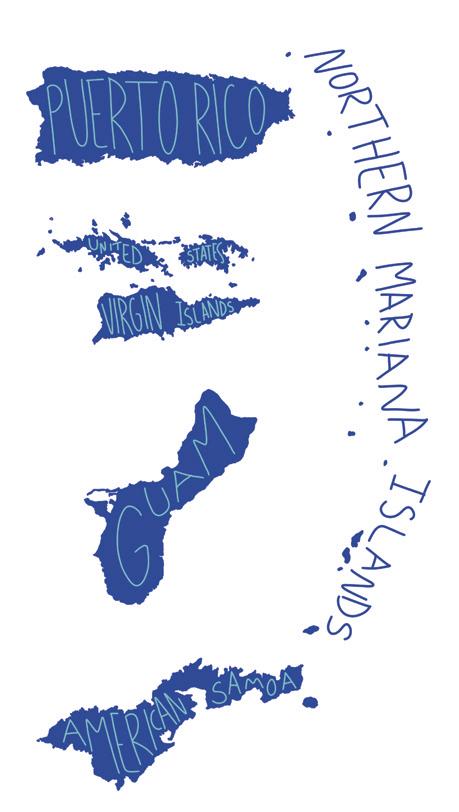
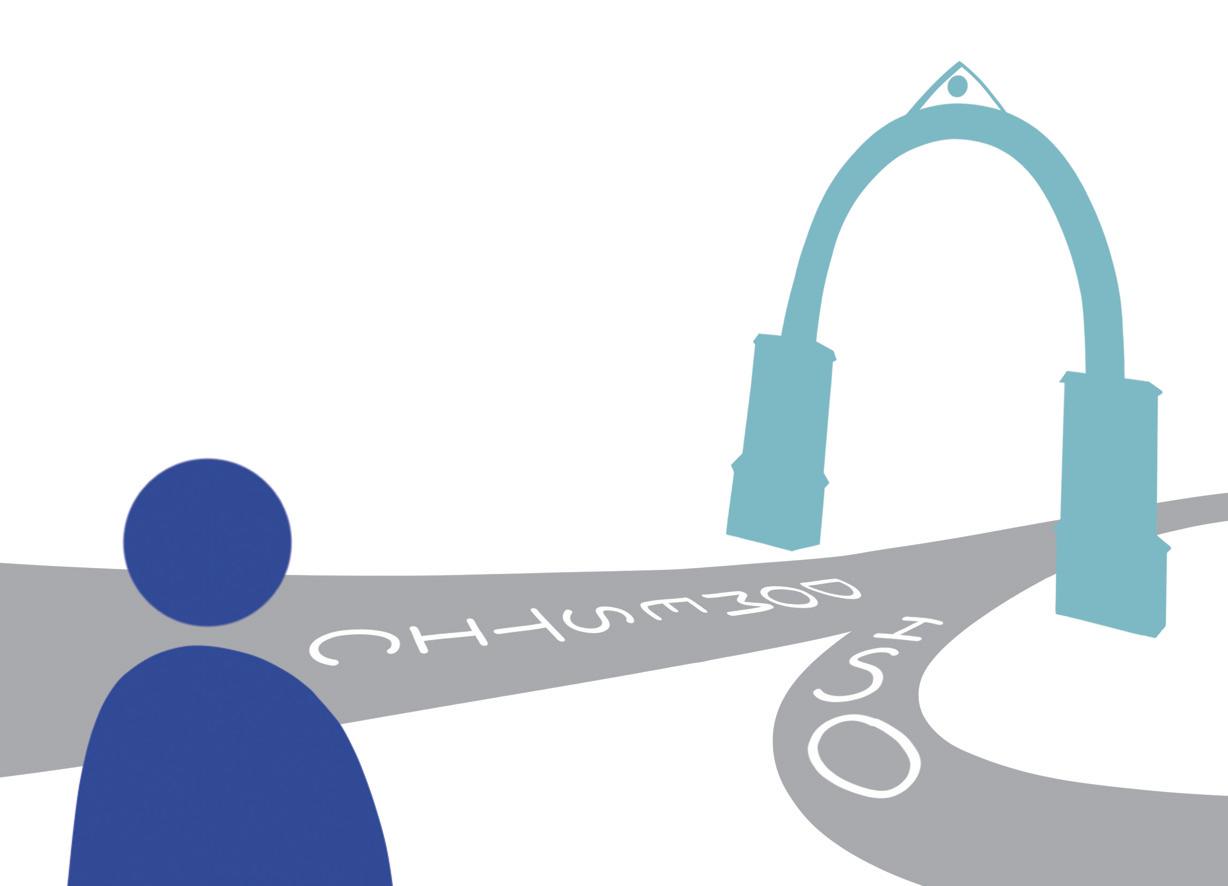
As new Wildcats, Medill rst-year Ariel Paul and Communication third-year Gabriella Burgos were welcomed in two di erent ways. Both are students from a U.S. territory, but one was labeled as a domestic student and the other was placed in International Student Orientation (ISO).
U.S. territories hold a gray area quality — both legally and socially — when it comes to their perception within the U.S. and how their residents see themselves. Some students say they feel stuck in limbo, being not quite international or domestic. Their experiences re ect the larger issue of how the United States categorizes its island territories as part of itself and vice versa.
Today, there are ve inhabited islands that are U.S. territories: Puerto Rico, Guam, the U.S. Virgin Islands, American Samoa and the Northern Mariana Islands. The combined population of these islands is more than 3.6 million people. Residents of these territories are not allowed to vote for president, and their delegates in the House of Representatives do not have voting rights.
language overall, metropolitan residents commonly speak Spanglish, a mix of Spanish and English.
When Burgos arrived in Evanston, she recalled feeling anxious to order food or talk to a doctor in English, as she didn’t speak it o en outside of her conversations with school friends in San Juan. Suddenly having every conversation in English was an adjustment, she says.
“I know the words but it sounds a little awkward when I say it,” Burgos says. “Am I being too formal? How do people say this? Those little things ran through my head a lot when I got here.”
On Burgos’ rst day of ISO, she started talking to another student and wasn’t aware that she had initiated the conversation in Spanish. Burgos’ “initial reaction” to start speaking in Spanish was another thing she had to change. Paying attention to how other people spoke helped her pick up some subtleties in language, Burgos says.
“I did nd it useful meeting other students from other Caribbean and Latin American countries,” Burgos says. “They would ask me, ‘Oh, you’re an international student?’ And I would be like, ‘No … not really. Maybe culturally?’ I still don’t know how to answer that question.”
Burgos, who is from Puerto Rico’s capital San Juan, says the part of the city she’s from is “very Americanized.” While Spanish is the dominant
Burgos says she relates to the experiences of students from Latin American and Caribbean countries more than U.S.-born students with Latine/Hispanic heritage, citing the di erences between growing up Latine in the U.S. and living most of your life in another country.
Overall, Burgos says ISO was a good experience where she made friendships she still has to this day. She says those
connections, especially with students from Latin America, were the most valuable thing ISO gave her in adjusting to life at Northwestern.
However, not all students from U.S. territories have the same orientation experience. Paul was born and raised on the island of St. Thomas of the U.S. Virgin Islands, but went through domestic students’ orientation instead of ISO. On their o cial documents, Paul identi ed as a domestic student.
Hilary Hurd Anyaso, Northwestern’s director of media relations, stated in an email that “anyone who wants to join social events for international orientation is able to.” However, anyone who does not have an F-1 or J-1 visa is not contacted by the O ce of International Student and Scholar Services. It is not required for students from U.S. territories to undergo ISO.
“There is a lot of confusion on what counts as international, and you don’t really know what your options are because of that,” Paul says.
For Paul, leaving St. Thomas’s closeknit community was a big change of pace.
“We have a lot of customs where we say good morning wherever we go to whoever [and have] a lot of respect in the community,” Paul says. “Everybody knows everybody.”
Culture shock varies from student to student, depending on which territory they are from. Something Paul had to gure out was what their communication style was going to be. Paul o en codeswitches their dialect to assimilate to how people talk here in Evanston.
“In the Caribbean, most islands have a distinct accent and a dialect which is kind
of di erent from how people talk here. I basically put on an American accent to make it easier for people to understand me and so I can navigate better,” Paul says.
Because of the gray area they occupy, students from U.S. territories can also get lost in the shu e of administrative logistics like receiving their Wildcard. Domestic students receive their Wildcard in the mail while international students pick them up at their area desk.
Paul did not get their Wildcard in the mail, so they went to their area desk in Allison Hall to ask about it. Paul says a er the desk learned they were from a U.S. territory, they assumed they wouldn’t have it. They redirected Paul to the Wildcard O ce at Norris, but the Wildcard O ce sent them back to the area desk.
For the second time, the area desk asked Paul if they were an international student. “Not technically,” Paul said, “But can you still check?” It turned out their card was there all along.
“With some aspects, like with the Wildcard, I get treated like an international student,” Paul says. “It’s a really weird liminal space of being international, but also not.”
Northwestern’s domestic students’ orientation assumes students are familiar with aspects of U.S. life such as navigating a city or setting up a bank account. But Paul suggests the University could do more to help students from U.S. territories acclimate, such as explaining how to use public transportation.
“I de nitely would have bene ted from some of the things international students get,” Paul says. “Like they got to go [on a eld trip] to Chicago and be here a little earlier.
“It’s a really weird liminal space of being international, but also not. ”
Despite bureaucratic confusion and culture shocks, Paul says their friends have played an important role in helping them acclimate to life in Evanston, such as shopping for a rain jacket and taking the CTA buses to Skokie for the rst time.
The liminal space Paul speaks of is emblematic of the e ects of the “logo map,” a term used by Northwestern history professor Daniel Immerwahr in his book How to Hide an Empire: A History of the Greater United States.
Immerwahr explains that the logo map is what people typically think of when they envision the United States: a country bordered by Canada and Mexico and enclosed by the Atlantic and Paci c Oceans — “From sea to shining sea,” as the song “America the Beautiful” goes.
However, that iconic shape only represented the true borders of the U.S. for three years: 1854-1857. The incorporation of inhabited and uninhabited territories expanded American borders far beyond the continental U.S.
“I can see why it helps to a rm something real, which is, if you’re coming from Guam you are not immigrating because Guam is a part of the United States,” Immerwahr says. “I can also see why it might be helpful to acknowledge the other thing that’s real, which is that Guam is a di erent kind of part of the United States than Wyoming is.”
How the University views and manages its students from U.S. territories re ects the perpetual question of how the U.S. views these ambiguously de ned areas. This relationship is especially complicated due to the colonial and imperial history behind how these places came to be territories.
“I don’t think this is Northwestern making imperial policy,” Immerwahr says. “I think it’s re ecting the imperial policy of the country.”
The ISO blueprint
Current ISO programming o ers a reference point for what the University could do to help ease the transition for students from U.S. territories and international students alike.
Weinberg second-year and Vice President of the International Student Association Sarah Norman tries to help students adjust to campus through her work as an international peer advisor (IPA). The IPAs work closely with the
O ce of International Student and Scholar Services to plan all of the programming for International Student Orientation, which takes place before Wildcat Welcome. But Norman says the responsibility for leading ISO activities fell primarily on IPAs.
“The IPAs took the kids to Chicago, we did all the social events, we took them downtown to AT&T when they were setting up their phone and we guided them on how to set up a bank account,” Norman says.
ISO receives less funding than Wildcat Welcome, Norman says. While there have been conversations regarding future collaborations between ISO and Wildcat Welcome, she says they have yet to become a reality.
Northwestern has regional programming with various admissions officers. Domestically, the U.S. is broken up into regions like the Midwest, Northeast and so forth. U.S. territories are included in these domestic regions, with Puerto Rico and the U.S. Virgin Islands being in the South and Southwest region.
Norman is from the Philippines but says students from U.S. territories might bene t from having something like ISO’s regional networking program, which helps students nd “that sense of community away from your actual community.” International students are also organized into regions of the world — such as Oceania and Southeast Asia — for bonding activities, which are run by the IPAs and take place during orientation.
“In comparison to the other international student events, this was an event that gave students opportunities to mingle with people that have a more
similar culture. They’re from di erent countries, but they’re still from the same region,” Norman says.
She adds, even though international students may be from di erent countries, it doesn’t mean they are the only ones who have to adjust to a new life at Northwestern.
“Even if you’re from a di erent state in the U.S., it doesn’t necessarily mean you have the same experiences or you’re not going to be shocked,” Norman says.



WRITTEN BY SARAH LONSER // DESIGNED BY ALLISON KIM // PHOTOS BY LAVANYA SUBRAMANIAN
This past summer, the Barbie movie, Taylor Swi ’s Eras Tour and Beyoncé’s Renaissance Tour seemingly took over the world as extravagant, glittery ensembles dominated movie theaters and football stadiums.
“Having the freedom to not feel like we had to hide femininity and outrageous expressions of femininity is a really freeing thing,” Communication third-year Lena Moore says.
“Girlhood” may be having its moment in current media, but the signi cance extends far beyond the pop-culture sphere.
A special interest in girls, especially as consumers, has wide-ranging social and economic e ects. According to TIME magazine, there have been more than 1 billion Barbie dolls sold globally over the six decades since the doll was rst released. Forbes says the Eras tour “has the potential to generate a staggering $4.6 billion in consumer spending in the United States alone.”
debated for years, both in pop
At Northwestern specifically, School of Communication Professor Janice Radway taught a class called “Girlhood in Public Culture” from 2009 to 2022. The course investigated how girls are portrayed in media and culture — be that feminist literature or “girlzines” — and responses to that representation.
Over time, Radway has seen how social media and celebrity culture have intensi ed conversations about these topics at Northwestern and beyond.
“There was a moment where I realized these students, suddenly, are di erent,” Radway says of her students today. “They have a very di erent, much more exible and uid idea

“Northwestern students are very conscientious and canny readers who are really attentive to the dynamics of race and class and gender and sexuality,” she says.

Girlhood in the spotlight
“I could be myself and be a girl at the same time.”


about gender than my students had 10
For a more historical, but still relevant, approach to girlhood, English Professor Ilana Larkin teaches a class called “American Girlhood” which revolves around ideas of girlhood from the 19th century to the present. Larkin says conversations about girlhood in her Northwestern classes are unique because of the students. Their willingness to dive deep into complex issues, she says, makes for a thoughtprovoking and accepting space to discuss topics like girlhood.
Girlhood is having “a real cultural moment,” according to Larkin. She says this movement is partly driven by a collective desire to reclaim the past. Larkin attributes this desire to factors such as the current political climate and increasing cynicism, which have likely made people yearn for simpler, more innocent times.
Moore says she believes the surge of young women writing about their experiences in girlhood is a large part of why this moment is happening now.
“We, 21st-century girls, are being written by our contemporaries for the rst time,” Moore says.
Moore is one of those contemporaries. She cites songwriters like Swi , Lorde and Olivia Rodrigo as inspiration for a play with original music she is working on.
“Something that I thought about a lot was, ‘How can I represent my peers?’ and that’s something Olivia Rodrigo is doing,” Moore says. “She’s writing for people her age about her own experiences.”
Moore highlighted Rodrigo’s album GUTS, whose songs like “teenage dream” and “making the bed” exemplify an angsty adolescence to which many girls relate.
GUTS is one piece of media that brings girlhood to the spotlight, but girls are also sharing their experiences

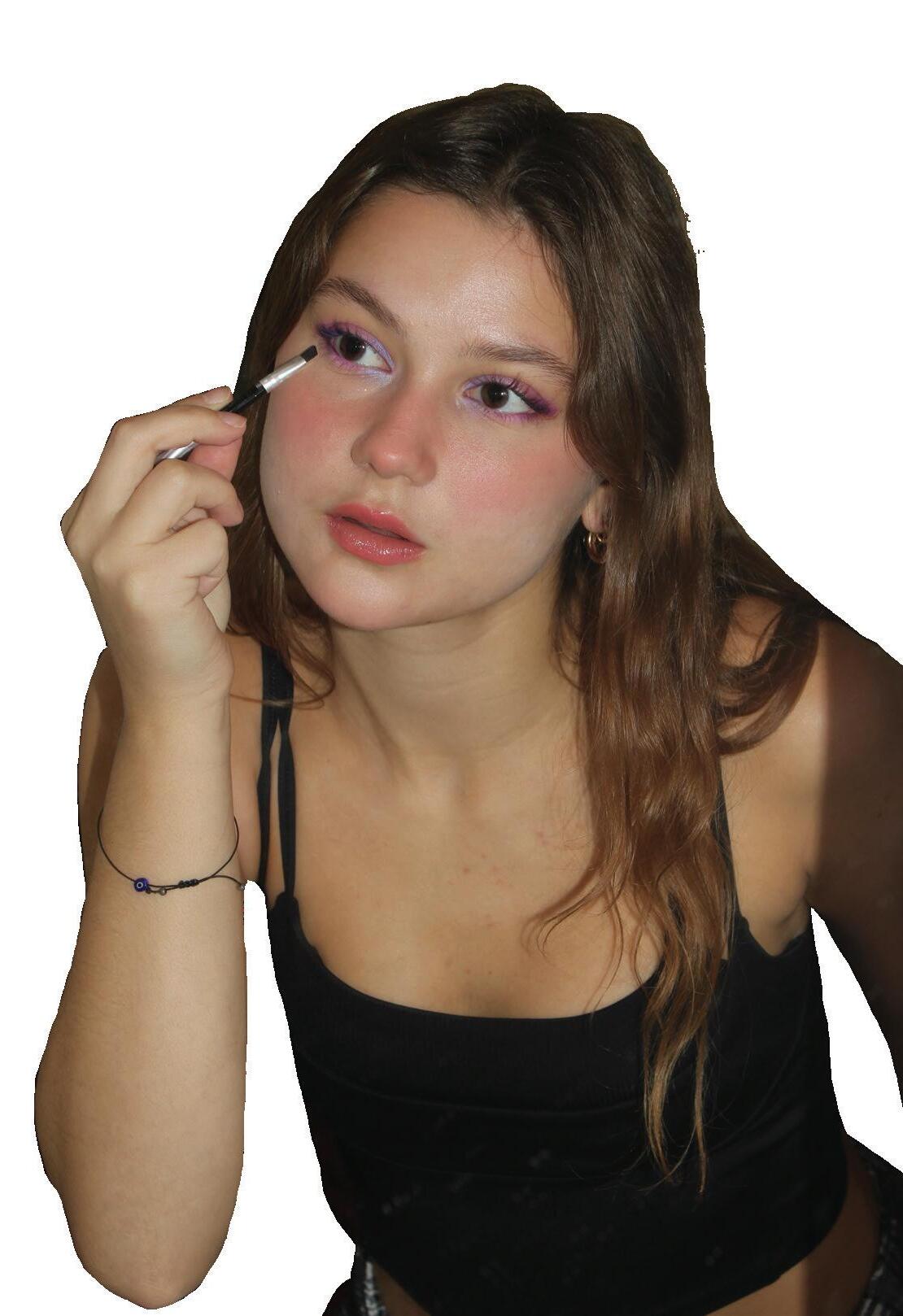
through “get ready with me” vlogs, storytime videos and edits of their favorite girlhood moments set to songs from the Barbie soundtrack.

Memories of girlhood remain powerful across decades, especially for the eraslong reign of Taylor Swi . As a longtime Swi ie, Moore describes the magic of the Eras Tour, a space for embracing and celebrating feminine joy.
“A lot of people tell you you should not take pride in [being a Swift fan], or that you should maybe keep to yourself or not be as sparkly or dancy or flamboyant,” Moore says.
Now, in an era of reclaiming and rede ning girlhood, it’s time to embrace as much or as little sparkle and amboyance as you wish.
But there is more to girlhood than glitz and glam. Both Larkin and Moore note a rise in the acknowledgment and acceptance of the darker parts: the mistakes, the anger and the angst.
Some pop culture examples, The New York Times says, are rageful scenes in WandaVision, Big Little Lies and Beef The Times describes these as “striking scenes within a culture that still mostly prefers women either to carry their anger calmly and silently or to express it within a misogynistic framing.”
Women in the media are also letting themselves express the emotions they were once shamed and belittled for. Swift and Rodrigo attempt to address the scathing nature of female rage in songs “mad woman” and “all–American bitch,” respectively.
“We, as people who identify as girls or women, are feeling less and less like we need permission to tell our stories,” Moore says.

There is no “one” girlhood, but there are parts of girlhood being pushed to the forefront of culture by businesses and larger institutions, says Weinberg secondyear Inaya Hussain. She notes the capitalist uences on girlhood and how commercial brands and the media manufacture certain ideas of girlhood to young girls.
“Girlhood is o entimes, especially now, sold to us,” Hussain says. “Everything I can think about what I consider girlhood in my childhood is the big media brands. I would watch the Barbie movies, I would play with Bratz dolls, I would do all these things that t into this girlhood ‘brand.’”
This commercialization pushes forth a view on what girlhood “should” look like, which can make some young people feel le out. Medill third-year Max Sullivan says social pressure in their childhood years pushed them in the “not like other girls” direction.
“I was a contrarian, still am to a degree, and so I really embraced this, ‘No, I am smart and I don’t care about vapid, silly things,’” Sullivan says, “I found that persona made sense for me at the time. Of course, I don’t think that now.”
Prior to coming to Northwestern, Sullivan attended an all-girls school from h grade through 12th grade. During the later part of their high school years, though, they became more accepting of girlhood as a concept.
“‘Girl’ felt like a category I was inevitably falling into. It was not a choice I was making,” Sullivan says. But a er they learned to broaden their de nition of girlhood, “I could be myself and be a girl at the same time.”
Once at Northwestern, Sullivan began to regularly meet nonbinary and gender non-conforming people, which allowed for more nuanced discussions of girlhood. Even so, there are times when Sullivan feels the need to “tread lightly” in some of these discussions due to the chance for judgment, bigotry or misunderstanding from others.
The current discourse around girlhood follows a transformation of pop culture perspectives. For what feels like the rst time in mainstream media, girls are being written about candidly and openly by their peers. To fully understand girlhood at this moment, Sullivan says, we must listen to those who are currently experiencing it.
“We, as adults who have a lot of knowledge and experience to share, have to also recognize that girls do too. They

WRITTEN BY MITRA NOURBAKHSH DESIGNED BY JACKSON SPENNER PHOTOS FROM UNIVERSITY ARCHIVES
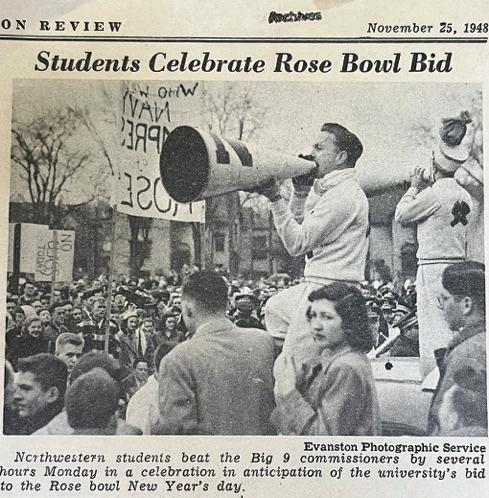
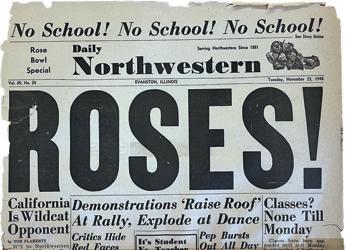
It was November of 1948, and The Daily Northwestern’s front page had the words “No School!” plastered across the top, with a huge headline reading, “ROSES!”
On Nov. 23, Northwestern students ooded the streets of Evanston in celebration of a sport that, these days, is more o en a source of frustration than delight.
For the rst time in history, the school’s football team had quali ed for the Rose Bowl and would be setting o for California that weekend. Little did they know, the team would not make it to another bowl for 47 years.
While Northwestern excels in some sports, football has not always been one of them. As the Wildcats conclude their 141st season, North by Northwestern takes an archival journey down memory lane to chronicle the highs and lows of Northwestern football.
Football rst found its place on campus as a game casually played between friends. As its popularity grew throughout the 1870s, students formed
1870-1900
Northwestern’s football team and the Big Ten are born.
a team and played a few annual games against other schools.
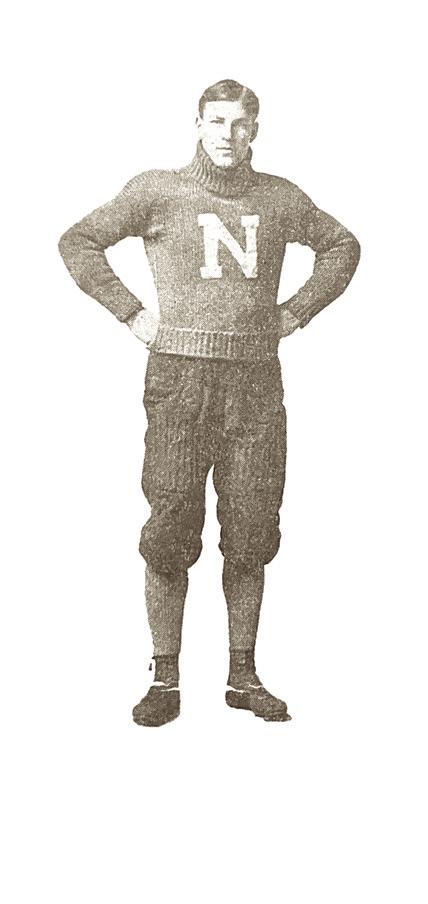
By 1889, Northwestern students were enamored with the gridiron pastime.
“A nal football game is now the society event of the season in New York and Chicago,” said an edition of Northwestern, a campus publication at the time. “And we think we see signs showing that our faculty are beginning to recover from
1905-1907
Football is suspended at Northwestern due to safety concerns.
1921
one of glory and fame for the glorious and famous N.W.U.”
Glory came just three years later in a nail-biter of a game against the University of Michigan that set the school’s attendance record with a turnout of over one thousand fans. With lots of enthusiasm but no Midwestern league to
Northwestern hires its first full-time coach and begins recruiting players.
The Wildcats finish second in the Big Ten, Dyche Stadium is constructed. 1925-1926
play in, Northwestern became one of the founding members of the Intercollegiate Conference of Faculty Representatives, which later became the Big Ten.
For all the excitement on campus, in those days, football was more violent than it is today. A Northwestern article reported that, in a game between Yale and Princeton, “nearly every man was painfully hurt, and two of the participants were crippled for life …. Blood owed as freely as at a prize-ring entertainment, and in several instances sts were used with serious consequences.”
Along with a number of other schools, Northwestern suspended its team over safety concerns. By 1907 though, the second year of suspension, more than 90% of the student body had signed a petition to reinstate the team. With new NCAA rules in place that made the game safer, football came back to the University.
Although students were excited to have a team once again, there weren’t many wins to celebrate. Northwestern football just couldn’t stop losing, and by 1921, the University had had enough. They hired a full-time head coach and, for the rst time, began recruiting more intentionally.
With these changes in place, the next 30 years were marked with success. The Wildcats nished second in the Big Ten in the 1925 season, followed by the inauguration of state-of-the-art Dyche Stadium (now Ryan Field). A decade later, the Wildcats beat No. 1 ranked University of Minnesota, and 1941 brought Northwestern three recordbreaking years with All-American Otto Graham as quarterback.
What is still remembered as one of the most remarkable moments in Northwestern football history came soon a er, on New Year’s Day in 1949.
1948-1949
Northwestern qualifies for and wins the Rose Bowl for the first time.
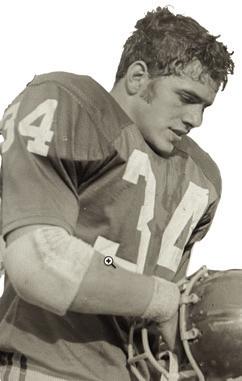
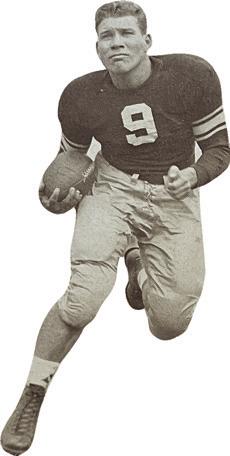
Celebrations began the day the team’s Rose Bowl bid was announced in 1948. According to The Daily, “the demonstrations were proof that the much-mentioned Purple Spirit was back a er its long wartime vacation.”
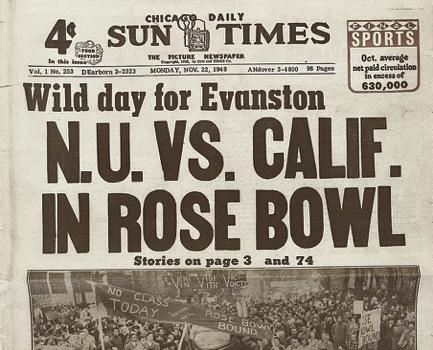
Chicago Sun-Times reported on a “Wild day for Evanston,” saying that “Evanston’s dignity was tossed for a heavy loss today as 8,000 Northwestern students swarmed into Fountain Square, tied tra c in knots, and took over …. They sang, cheered and cavorted. It was all spontaneous, which increased the fun.”
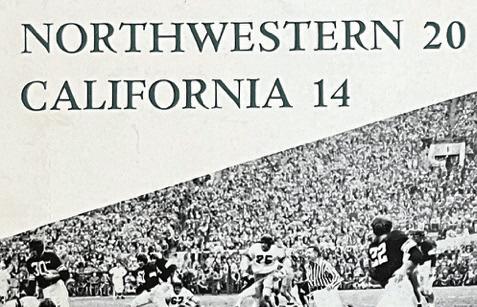
School was canceled for the remainder of the week, and the Wildcats traveled to the West Coast and triumphed over the University of California, Berkeley, in front of 92,000 fans.
The Wildcats record several hard-fought winning seasons. 1950-1970
The football team continued to play a number of hard-fought winning seasons in the following years, but the good times didn’t last forever.
Fumbling the ball
1973 marked the beginning of Northwestern’s slide down the rankings. In the next ve years, the team won 12 games and lost 43. In the two years a er that, the team won only a single game.
During those losing years, Northwestern football also reconciled with racism within the team.
Black athletes reported that coaches pressured Black players to return from
Northwestern’s slide down the rankings begins. 1973
The University hires Dennis Green, the first Black coach in the Big Ten. 1981
injuries before they were ready and kicked Black athletes o the team for minor o enses. The head coach at the time, Rick Venturi, also allegedly said he “wished he could get rid of the entire senior class of African American athletes,” according to a report by The Daily.
Thirty-one Black Northwestern athletes banded together to create Black Athletes United For the Light (BAUL) and came to then-Vice President of Student Affairs Jim Carleton with allegations of unequal treatment.
BAUL’s e orts were instrumental in Northwestern’s decision to re Venturi. In his place, they hired Dennis Green, the rst Black coach in the Big Ten.
“We hired what I consider to be one of the nest coaches in the country who has had many o ers from other institutions,” then-Athletic Director Doug Single said in a 1981 Daily article. “I think he’s going to be very successful.”
Green had high hopes for his rst season coaching the team, but nine months later, the headline of The Daily’s sports page read, “Not Again! Same old Wildcats Lose 42-0.”
In the article, Green was quoted saying, “For the last nine months I’ve been here, I’ve been saying pretty positive things. But how could you sit and watch that game without throwing up?”
The statistics backed up Green’s sentiment. That year, Northwestern became the Division I team with the longest losing streak in history: 29 losses in a row.
A er the team’s record-breaking loss to Michigan State, students rushed the eld, chanting “We’re the worst” in an ironic celebration. They tore the goalposts out of the ground, tossed them over the edge of the stadium, marched them down Central Street and threw them into Lake Michigan.
“Dyche Stadium south goalpost covered more ground yardage Saturday than the Wildcats,” a Daily sta reporter remarked.
The event attracted journalists from national outlets like CBS, NBC and The New York Times. Many fans and journalists attributed Northwestern’s athletic failures to the strict academic standards student athletes had to meet, but not everyone agreed.
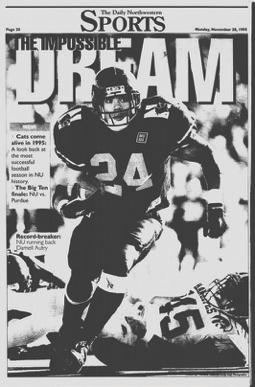
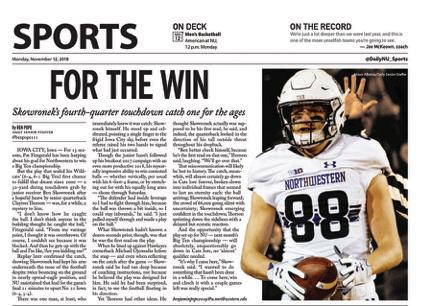
“You don’t need to lower the standards to win,” one student pointed out. “How can we have good tennis and volleyball teams but not football teams?”
Still, the football team did not improve much, and by the mid-1980s, most students only went to the game for the “wild, booze-drenched tailgates” and to throw marshmallows at the marching band.
Although it seemed inevitable that successful years would be followed by embarrassing ones, it also became clear that no matter how much the football team lost, they would eventually make a comeback.
The team didn’t have many recordbreaking seasons over the next ve years, but by the early 2000s, Northwestern football became consistent. As a team that was notorious for its ups and downs, consistency was something to be proud of.
Pat Fitzgerald led the team to a number of victories during his almost 17-year tenure coaching the Wildcats, including back-to-back bowl wins and Big Ten West division championships in 2018 and 2020. But his legacy was marred by a hazing scandal that overtook the football team this past summer.
“IT WAS ALL WHICH INCREASED THE FUN.” CHICAGO SUN-TIMES
In this case, it took 15 years and a new head coach. Gary Barnett replaced Dennis Green, and he came to Northwestern with a mission to “take the purple to Pasadena.”
The Wildcats had not been to the Rose Bowl since 1949 and hadn’t won a Big Ten title since 1936. Under Barnett, the team did both. They shocked the football world with an upset win against Notre Dame. Then, in front of a sold out crowd at Dyche Stadium, they beat Penn State. The next game, at Purdue, clinched Northwestern’s Big Ten title.
Former football players alleged “egregious and vile and inhumane behavior,” including players being “restrained by a group of 8-10 upperclassmen dressed in various ‘Purgelike’ masks, who would then begin ‘dryhumping’ the victim in a dark locker room,” according to a Daily article.
The scandal led to Fitzgerald’s dismissal as head coach, and the University named new defensive coordinator David Braun the interim head coach.
With a program shaken by this summer’s revelations and coming o an almost winless 2022, many students had low hopes for this Wildcats football season. But the team has more wins than last year, and many are hopeful about Braun’s leadership going forward.
In any case, history has proven that no matter how bad things get, Northwestern football will bounce back.
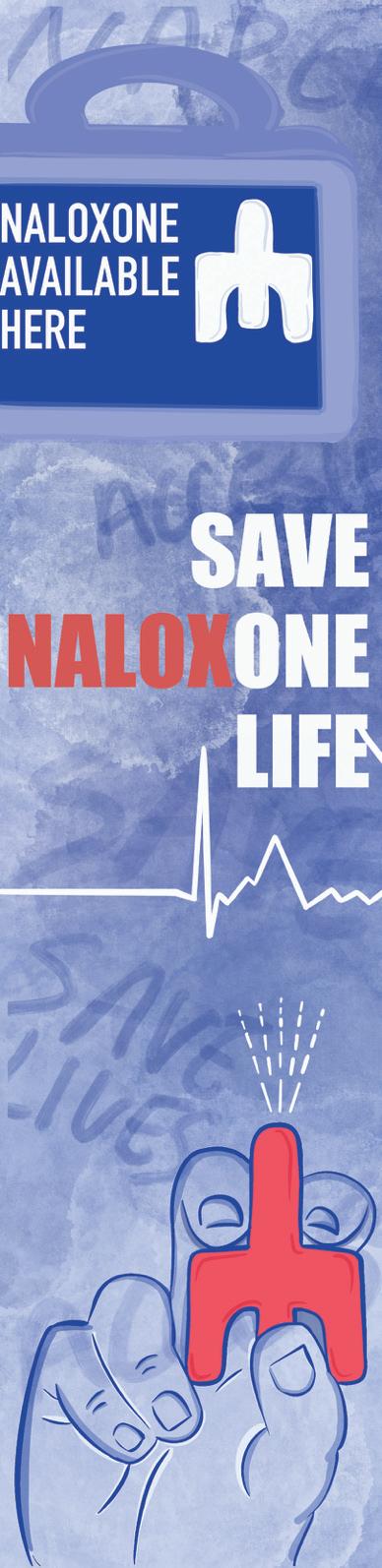
How Evanston and Northwestern are making lifesaving drug overdose treatments more accessible.
WRITTEN BY HANNAH COLE // DESIGNED BY MICHELLE HWANG
Students scatter throughout Evanston Public Library, readers browse the hundreds of titles and parents usher their children in for storytime. However, not every visitor enters the brick building for literary reasons. On the rst oor, near the circulation desk, is an emergency overdose box equipped with two doses of Naloxone nasal spray and instructions for use.
From January 2022 to July 2023, the City of Evanston reported 174 opioidrelated emergency room visits. In response, o cials installed ve overdose emergency boxes in locations across the city, including Evanston Public Library, Robert Crown Community Center, Evanston Ecology Center, Levy Senior Center and Fleetwood-Jourdain Community Center.
Northwestern University also introduced its own initiatives regarding opioid overdose prevention and Naloxone training on campus. The University o ers students the opportunity to learn how to administer Naloxone and provides two free doses upon completion. These measures are meant to protect residents and students from potentially fatal overdoses.
Naloxone, or “Narcan,” is a lifesaving medication that stops the
e ects of opioid overdoses. Lesli Vipond, the assistant director of substance misuse prevention at Northwestern, says the treatment only works for opioids.
This includes fentanyl, a potent synthetic opioid increasingly found laced in other drugs.
“[Narcan] binds to the same receptors in the brain that the opioid binds to and essentially just kicks out the drug from the brain,” Vipond says.
She adds that it’s still important to seek medical attention a er using Narcan because opioids can rebind to the receptors a er Narcan has worn o
The decision to increase Narcan access at Northwestern stemmed from the University’s collaboration with Mayfest Productions to provide free fentanyl testing strips and train members on administering Narcan for Dillo Day in 2023, Vipond says.
“Last year was the rst time we had any sort of drug safety initiatives,” says Lahari Ramini, Mayfest Operations Force Committee cohead and Weinberg fourth-year. “The rst part was o ering fentanyl test strips during wristband distribution ... the other side of that was Narcan training, and we had a portion of Mayfest members participate in Narcan training.”
“The most important thing is we reduce the likelihood that someone experiences an overdose.”
Lesli Vipond Assistant Director of Substance Misuse Prevention
Following Dillo Day, some students expressed interest in learning more about overdose prevention and recognizing the signs of opioid-related issues. If someone took a fentanyl-laced drug, Vipond says a trained student could better identify the symptoms of opioid use.
She says the hour-long training sessions explain how to recognize an opioid overdose and administer Narcan, speci cally the nasal spray version.
The school hosted three sessions during Fall Quarter — one in October and two in November — and they plan to o er more training during Winter Quarter depending on student interest.
The University implemented these measures following the Food and Drug Administration’s approval of over-thecounter Narcan in March 2023. Beginning in September, people could access the medication from their local pharmacy without a prescription. However, according to The New York Times, a twodose box of Narcan typically costs $44.99, a price not everyone can a ord.
Though Evanston is not facing an opioid epidemic, the City of Evanston Director of Health and Human Services Ike Ogbo says the opioid-related emergency room visits reported in 2022 and 2023, along with potential barriers to Narcan access, inspired the city’s emergency box program.
According to the Centers for Disease Control and Prevention, while the rates of opioid overdose increased for all populations, the epidemic is hitting American Indian, Alaska Native and Black communities the hardest.
“The focus for me is distribution,” Ogbo says. “Making sure that it’s available and accessible and also ensuring there are no
hindrances or barriers to them accessing Narcan.”
For some community members and college students, the price of Narcan at pharmacies is too steep. For others, the stigma surrounding drug use might prevent people from seeking help.
While students may worry pharmacists or providers at Northwestern will judge them for needing Narcan, Ramini says the goal is to keep students safe if they use substances rather than shame them for their choices.
“When we go into this approach of no drug use, it really does make things di cult, especially when you’re trying to provide a safer environment for a huge music festival,” Ramini says. “We want to educate the students instead of saying no and not providing any resources. So, we said providing resources is the best way to do that and prevent that stigma.”
Evanston accounts for residents or students concerned about accessing the boxes due to stigma by limiting communication between workers and community members at the various box spots, ensuring anonymity.
“We’ve heard from a number of community members on how accessible the boxes are,” Ogbo says. “No questions asked. You’re not going to someone’s desk to ask for it. We understand there might be a stigma
attached to people who are experiencing these life circumstances.”
In a similar e ort to reduce stigma and encourage students to seek resources, Northwestern focuses on harm reduction, Vipond says.
A harm reduction framework recognizes that practices like drug use are pervasive, and rather than stigmatizing or mistreating people who use drugs, it attempts to reduce the physical and social impacts associated with the activity.
“If you choose to use [a substance], it’s super important that we reduce risks,” Vipond says. “The most important thing is we reduce the likelihood that someone experiences an overdose or has some sort of extreme negative reaction to using any of these substances.”
A er receiving 500 fentanyl test strips ahead of Dillo Day 2023 from a community organization called Chicago Recovery Alliance, the University ran out in two days. Moving forward, Vipond says Northwestern is focusing on maintaining stocks of Narcan and fentanyl test strips. Test strips are now available on the 3rd oor of the Searle Health Services building as well as at the Norris desk.
Both Northwestern and Evanston representatives express a desire for future collaboration to mitigate overdose risks. The potential of joint e orts to provide free Narcan, testing strips and training works toward a common goal: creating a safer campus, city and community.
“That’s what we were trying to do at the heart of it,” Ramini says. “We want to prevent anything dangerous from happening.”
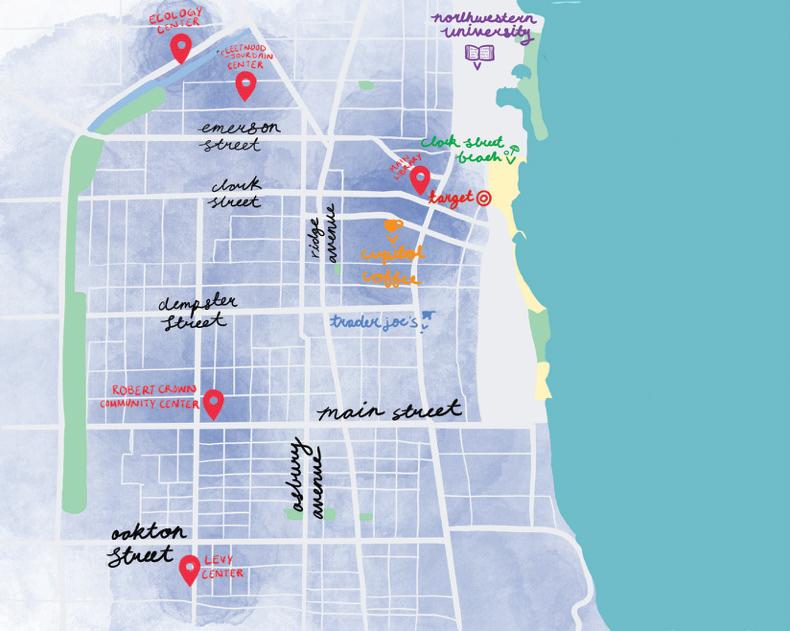

What does fitness
WRITTEN BY JIMMY HE // DESIGNED BY ALLEN ZHANG
The rst- oor weight room in SPAC is quieter than usual. Dull thudding weights and clinking barbells ring above the background pop music. The air is heavy with the scent of sweat and sanitary wipes.
It’s 9:30 a.m. on a rainy fall morning and the rst time I’ve been back to the gym in over two weeks — the longest break I’d taken since I began li ing in 2021. The ill-timed combination of COVID and appendicitis le me itching to go back as soon as I le the hospital. For me, the bustling atmosphere of SPAC has been a collegiate constant.
Even with so many college students working out, one 2019 study from the State University of Maringá found that 67.1% of undergraduate students are unhappy with their body image. This dissatisfaction is a complex
phenomenon people of all body types experience, regardless of their gym goals or what they believe to be the ideal physique.
I spent my middle and high school years on the swim team. I swam competitively enough to tone my body but never committed time to weightli ing and gaining strength. I came into college happy with how I looked, but a er a bad breakup, it felt like my former athleticism wasn’t good enough.
At Northwestern, I embarked on a tness journey that thrust me into a search for selfcon dence far more nuanced than I had ever imagined. I experienced both victories and struggles that motivated me to continue pushing myself, helped me realize the limits of my body and forced me to question why I work out.
On my rst day back in the gym, while nishing an incline bench press set, Weinberg third-year Lauren Lee dropped by to say hello. Donning a swimsuit under her sweats, she planned on doing a quick 600-yard workout of sprints and dives before her Tuesday classes.
Lee began competitively swimming when she was 8 years old and continued all throughout high school. Sometimes she’d swim as much as four hours a day — 90 minutes in the morning and two-and-a-half hours in the a ernoon.
A er arriving at college, a heavy course load drowned out Lee’s swimming habits. She calculated that she was only working out about 3% of the amount she did in high school. With time, she noticed some of her clothes no longer t as well, and her strength had decreased.
It wasn’t until the summer before her junior year that Lee found time to revitalize her workout routine. That summer, Lee spent her free time playing tennis, learning pickleball and swimming twice a week. In the fall, she added morning li s to her routine and started going to the gym with her former roommate, an experienced li er, who showed her what exercises to do and what muscles they targeted.
“I thought people just go in and pick what they want to do and just do it and leave,” Lee says. “But there’s a whole routine of certain things you want to target. It’s very organized, and I had no idea.”
Lee’s lighter course load this year has allowed her to focus on her physical wellbeing. She says she’s been working toward building endurance and achieving the same swimming times she did in high school. A er a two-year hiatus, it’s comeback season.
“The pent-up energy from there, I’m using it now as motivation to do what I wanted to do last year,” she says. “It’s exciting to see the progress.”
While some people like Lee have only added weight training to
their routine recently, others like McCormick fourthyear Kevin Considine have been li ing for nearly a decade.
With three tness-focused older brothers, Considine began working out at 13 with the goal of becoming stronger than his siblings. During middle and high school, he would li about two days a week. At Northwestern, that regimen grew to hour- or hour-and-a-half-long sessions ve to seven days a week.
Unlike Lee, who prefers to li in the morning, Considine o en goes at night, right before club water polo practice. He likes to organize his days around the gym, which means planning ahead and occasionally bringing homework to do between sets.
“I need to be able to li at 7 p.m. What do I need to do in the next three to four hours to make that happen?” Considine asks.
Through years of working out, Considine has learned about the strengths and weaknesses of his body. By tracking his growth, he’s realized he has disproportionately strong shoulders and lats but a weaker chest and hamstrings.
Sometimes, those limitations can be frustrating, but Considine prefers not to compare himself to others at the gym. By focusing on his personal journey, he says working out has contributed to a measurable con dence boost. And while his older brothers have all since traded li ing for running, Considine doesn’t have any plans to cut back.
“It makes me happier when I li ,” he says.
Working out has always provided stability to my hectic Northwestern schedule. I’ve been tracking my li s on the note-taking app Notion for nearly two years now, and no matter how many di erent classes I take or clubs I participate in, I can always count on at least three gym entries each week.
A er my appendix surgery, I was not only afraid of losing my hard-earned progress, but my routine had been thrown into chaos. I had lost a core component of my weekly rituals and grappled with making up for lost time. For gymgoers across Northwestern, injuries can force reckoning and re-evaluation.
When Communication fourth-year Caitlin Carr-Smith was in high school, she would train ve to six days a week to keep up with her high school’s competitive eld hockey program. She would do weighted sprints outdoors and li weights with her dad using the equipment in her basement.
However, during her junior year, Carr-Smith got a concussion that limited her exercise to walking.
A er months of hard work and training, the setback took her o the eld for six weeks and jeopardized her penultimate eld hockey season.
“The rst day I came back, I remember having to sprint to something and I felt really slow,”
Carr-Smith says. “I did cry about it because I was so upset.”
With time and recovery, CarrSmith slowly regained her original strength. By the end of the season, she was nearly back where she had started. Carr-Smith says she still sometimes feels the struggle of exercise withdrawal but has since become more comfortable with taking breaks.
“When it’s taken
away from you, and there is absolutely no option, you start to focus on other things,” she says. “By the end of it, you’ve realized, ‘OK, I kind of look the same as I did before.’”
Northwestern Associate Professor of Counseling and Sports Psychology Michele Kerulis says it’s common for people to feel guilt or sadness when they’re forced out of the gym because of injury or illness.
Working out can give exercisers feelings of euphoria and a post-workout endorphin rush. When people aren’t able to go to the gym and achieve those feelings, Kerulis recommends nding other ways to manage one’s mental health.
“If you cannot go to the gym, what’s something else that can help maintain your mental health?” she says. “That might be socializing in a di erent way. That might be another activity that is not physical.”
During Lee’s sophomore year of high school, she got sick right before her sectional swim meet. This was the only meet during which swimmers could qualify for state championships, and Lee did not get the times she wanted. A year later, a week before the same meet, Lee broke her foot.
“I was frustrated, a little bit nervous and [felt] just a lot of negative emotions,” she says. “What if I can’t make it to states senior year? What if this broken foot sets me on the wrong path?”
Despite her initial discouragement, Lee says she used her recovery to refocus on her goal of qualifying for states. Once she got back in the water, she channeled her worries and pessimism into motivation to work hard.
By spring, Lee was swimming the same times she had before her injury. One year later, she emerged from her sectional swim meet victorious — she had quali ed.
“You’ll always bounce back,” Lee says. “It might take long sometimes, or it might take a lot of work and it might be painful and you might not want to do it. But the end goal, just keep that in mind, and you’ll eventually reach it.”
Growing up in the Miami suburbs, Medill fourth-year Joanne Haner’s early school days were o en preceded by her mom’s 5 a.m. workouts. In the early morning, her mom would train with light dumbbells and do total resistance (TRX) exercises.
Then, when Haner was in fourth grade, her mom got into a car accident. A dump truck rearended her vehicle, and the impact herniated all the discs in her back, nearly killing her.
“The doctors say the only reason her back didn’t just snap in half is because she had a really strong core and a really strong back,” Haner says. “A large reason why she’s alive and not paralyzed is because her core and her body were so strong.”
When COVID forced her to isolate with her family, Haner began doing TRX workouts under her mom’s guidance. Her mom taught her exercises she had done since Haner’s childhood.
The summer a er Haner’s freshman year, her neighbor was starting a career as a personal trainer and o ered to train Haner for free. At the gym, her neighbor showed her how to use machines, target di erent muscle groups and exercise with the correct form.
These experiences allowed Haner to be con dent when she began working out at Northwestern. But even with two female tness coaches, Haner says it took time to realize her body was di erent from her male friends’. Sometimes, a challenging weight for her would be a good starting point for male friends who had never worked out before.
“I had to get over that hump,” Haner says. “I am a woman working out, and my body is built di erently than a man’s. If I was a man working out as much as I was now, my body composition would be so di erent.”
Kerulis says men and women have some things in common when it comes to working out, such as aesthetic and performance pressures. Fitness has spurred an industry of gear, clothes and makeup designed to make people look good in the gym. Men and women alike o en worry about how much weight they’re li ing or how they’re performing in group tness classes.
However, for women, she adds that there are additional factors that may a ect performance. Menstrual cycles, for example, can both decrease motivation and a ect selfperception in the gym.
“There’s so many di erent degrees of what that feels like for a woman,” Kerulis says. “For some individuals who are super lucky, they have minimal symptoms, cramping or pain. But for other people, they might have really severe symptoms and pain and cramping and just feel uncomfortable and really icky during that time of their cycle.”
For Carr-Smith, menstrual cycle symptoms include her hips being weaker, back cramps and generally having less energy. Some days it means that she has to decrease weight during exercises. Other times, her back cramps so badly she can’t run.
In addition to physical di erences, women may o en feel overwhelmed working out in predominantly male spaces. Carr-Smith says she’s had female friends who’ve wanted to work out but felt too intimidated to do so. She recommends nding a female friend to go to the gym with or working out on the quieter, less male-dominated second oor of SPAC.
For anyone hesitant about working out, CarrSmith urges them to “just do it.”
“To be honest, most people in the gym are so focused on themselves,” she says. “They’re so focused on how they look, how much they’re squatting and whatever buddies they have with them. Just focus on yourself because that’s what you’re there for. You’re not there for anyone else.”
When I rst began li ing, Google searches for workout tips and exercise suggestions transformed my social media algorithm. My Instagram Explore page became saturated with photos of in uencers exing their workout regimens. TikTok became a breeding ground for how-to videos on achieving the perfect abs, arms, chest and legs.
These portrayals of tness created a Sisyphean task of achieving the perfect physique blind to posing, lighting and genetics. As someone with a fast metabolism, it seemed like I could never put on enough weight no matter how much I ate. The progress I saw in the mirror seemed far slower than that of online in uencers.
This diet of tness content is spurring some teenage boys to develop bigorexia, a form of body dysmorphia The New York Times describes as “a preoccupation with not feeling muscular enough and a strict adherence to eating foods that lower weight and build muscle.” The condition, which can impact people of any age, can lead to dangerous habits like restricting food intake and developing unrealistic body expectations.
For Weinberg fourth-year Sean Pascoe, working out is about balancing his life. He says his time in high school was solely centered around academics. At Northwestern, he realized exercise — even as little as a quick yoga session or taking the longer route home on his bike — could improve his happiness.
Cooking at his apartment and eating at dining halls, Pascoe says he feels like he has a lot of control over what he puts in his body. For him, working out and eating healthy
stem from the same goal: maintaining his health, both physical and mental. That goal also requires setting realistic expectations.
“I would love to look like Instagram models, but I also know I would never control my eating that way,” Pascoe says. “I have a healthy enough view of body standards that I don’t feel the need to.”
Meeting new people at Northwestern also set realistic expectations for Pascoe in regard to his own body image and allowed him to reckon with what is typically deemed attractive on social media.
“One of the biggest things in terms of body image is me realizing I don’t really care about other people,” he says. “A lot of that comes from, ‘OK, I need to have a six-pack so people think I’m hot,’ but I realized that’s not something that is a deciding factor.”
Genetics can also a ect what is achievable for exercisers. Certain muscle groups may simply be stronger for certain people no matter how hard they work out. Ethnicity may also play a factor in how peoples’ bodies are built.
Haner says as a Latina, her body type has curves that aren’t necessarily present in other people. Working out can accentuate di erent parts of her body than it may for others, and sometimes clothes don’t t her body type as well as they do for others.
Haner describes YouTuber Chloe Ting as the epitome of the tness in uencer. Despite only doing a couple of Ting’s workouts during COVID, she recalls the varied e ects those workouts had on people with di erent body types. Today, Haner still gets tness in uencers on her Instagram and TikTok feeds but doesn’t view that as a realistic measure of comparison.
“Your life is tness in uencing,” Haner says. “As a college student, it’s not feasible for me to go to the gym six days a week. If I go to the gym three days a week, I’m happy.”
When I rst started li ing, I couldn’t help but compare myself to the people working out around me. Each set I did was accompanied by fears of whether I was using an embarrassingly low amount of weight and if I was actually doing the exercise correctly. Even now, with a couple years of experience under my belt, I still struggle sometimes to separate my self-image from those around me.
“There’s always people stronger than you, and I guess it would be nice to catch them, but it isn’t necessary in any way,” Considine says. “The only person you should compare against is yourself in the past.”
Even as I’ve become more comfortable in the gym, I still struggle sometimes to balance tness and well-being. I’ve become selfconscious about eating certain foods I once enjoyed without batting an eye at nutrition labels. I’ve pressed forward with working out despite oncoming sickness to make sure I’ve checked o my weekly workout boxes. While I try to maintain good habits of staying in shape, there are also bad habits I’m trying to break.
“You’re pushing yourself to be better but not to the extent that you can’t enjoy food anymore, you’re feeling pain or to some extreme,” CarrSmith says. “You should be able to push yourself so you can be better, not so you fall apart.”
I sometimes look back at myself when I rst started working out and wonder if I could’ve anticipated how complicated a journey I was about to embark on. But through working out, I’ve also realized that however complicated the relationship is, tness will always be a de ning aspect of who I am.
“It can be a large part of your life and be a small part of your life,” Haner says. “But at the end of day, it’s not your life. I think that’s how it should be.”
As for her past self, she looks back fondly.
“She’s doing great,” Haner says. “And she had to start somewhere.”
The musical motivation that fuels Northwestern’s fitness fans.
“Honestly, it varies, but anything that will make me passionate.”



Lauren Lee
“Upbeat, fast, highenergy. I wouldn’t say angry, but borderline intense.”
“I have one playlist called ‘bad bitch energy’ that’s all female rappers and singers.”


Joanne Haner
“I listen to basically exclusively Latin music in the gym.”
“In the gym, it’s a little more metal, hard rock oriented.”


Northwestern students and faculty aim to decolonize classical theater, opera and ballet works.
WRITTEN BY CHRISTINE MAO AND CAROLINE NEAL // DESIGNED BY GRACE CHANG
Communication third-year Yuni Mora stepped into Shanley Pavilion her freshman year ready to see one of her rst plays at Northwestern: the student theatre group Lovers & Madmen’s take on Much Ado About Nothing. But this was far from a traditional rendition of the Shakespearean classic.
Taking in the vibrant colors adorning the stage and the cast of predominantly people of color, Mora says she had never seen a Shakespeare production like this.
“It opened my eyes to what theater is and what theater could do,” Mora says.
In the Lovers & Madmen production, the cast and crew transported audience members to modern-day Miami, in a reimagined world where the cast was as diverse as the city’s population. With dancing, interjections of Spanish ad-libs and a palpable sense of Latine culture, this performance shi ed away from the classic rendition usually set in Elizabethan England.
Traditional Western playwrights and composers are ever-present in the performing arts scene. In fact, for music and theatre students, a core element of their curriculum is classical works,
many of which include themes that are now considered problematic. As performing arts companies update these works through their interpretations, Northwestern’s music and theatre communities consider the role these shows play in both performance and academic settings.
This academic year, Northwestern is hosting “On Decolonizing Theatre,” a series of public seminars that examine theater, opera and ballet works from the late 17th to early 19th centuries. Funded by the Mellon Foundation, the year-long project aims to address colonialism, imperialism, racism, patriarchy and misogyny present in early works, as well as inspire conversations on how theater, opera and ballet can become more inclusive and culturally sensitive.
Barber Professor of Performing Arts and Professor of English and
Theatre Tracy Davis is the co-principal investigator of the seminar. She conceived the idea during the COVID-19 pandemic, which shut down live theater, concerts and operas worldwide.
Davis says this artistic silence, along with the Black Lives Matter movement, allowed the performing arts community to re ect on its role in addressing issues of social justice, diversity and inclusion. Calls for works by individuals from marginalized backgrounds increased, and Davis says such discussions set the stage for critical re-evaluations of classical works containing problematic elements.
The Mellon Foundation and Northwestern accepted her seminar proposal, and now Davis leads the project with co-principal investigators Jesse Rosenberg and Ivy Wilson — both professors at the University — and postdoctoral fellows Caroline GleasonMercier and Keary Watts.
“Together, we’ve spent a lot of time talking about how we can … create
decolonization,” Davis says.
The conversations examine how theater and music communities can increase the inclusivity of works such as Mozart’s The Magic Flute and Rossini’s The Barber of Seville, which are established in performance canon and may have been progressive for their time, yet remain undergirded by colonial dynamics and racist themes.
The seminars feature a panel of speakers, ranging from performers to producers of modern adaptations of these classical productions. A er the panelists take questions from the seminar leaders, attendees can direct their own questions to the panelists or voice their opinions.
Gleason-Mercier says ultimately, the project’s goal is to foster dialogue examining how modern productions of canonical works may be “recoded” to resist or decenter old ideologies.
Davis says she hopes these discussions will help in uence the ways people teach these canonic works and ful ll everybody’s obligation to “work on antiracist, anti-discriminatory diversity and
We can ... create a situation at Northwestern where people can come from many disciplinary perspectives and talk about, experience and contribute to how the performing arts can be involved in the work of decolonization.
- Tracy Davis Barber Professor of Performing Arts and Professor of English and Theatre
Controversial works are o en embedded into music and theatre students’ curricula. Such works are considered part of classical canon: the body of art that is considered notable, has stood the test of time and is well-known by most people.
Bienen students are required to take “The Classical Canon,” a course that aims to further examine pieces of music and their characterization as “classical.”
Jesse Rosenberg, a Northwestern professor who teaches “Opera and Race,” says he believes e orts to address these problematic issues in introductory courses, including “The Classical Canon,”
is indicative of progress, though he adds, “We have a long way to go.”
“The habits of concert-going [and] these entrenched attitudes about what kind of music is worth paying attention to — it’s very much part of a culture that is inculcated into many people,” Rosenberg says.
Students also believe there are more steps needed to fully diversify the curriculum.
Bienen and Communication thirdyear Rushil Byatnal says he believes these works should still be taught in the curriculum, though he adds that there should be more e orts to incorporate diverse works currently designated to elective classes.
“I feel there should be a push to bring these out of specialized little pockets and bring them into our general canon,” Byatnal says. “Because no one puts Shakespeare into a little thing. Shakespeare is the big meal, you know?”
The theatre department’s acting sequence includes a year of learning acting techniques and a second year interacting with texts, with students studying Greek works in the fall, Shakespeare in the winter and contemporary works in the spring.
Mora, a Theatre and Latina and Latino Studies double major, is currently taking a class on Greek theatrical texts. According to Mora, professors in the department are free to teach these works in the way they think is best, meaning there are no guidelines on teaching the historical backgrounds of these works.
also re-analyzing what you’re teaching them, because if you’re not teaching your students texts and techniques they connect to, then it’s all for nothing,” Mora says.
Byatnal says through conversations with his peers, he feels other students share similar beliefs on how curricula should address these works.
“I think no one necessarily wants to take these works from the canon because that’s just less education and less awareness of our history in society and in this world,” Byatnal says. “There
and Bach are considered “classical music” around the world, despite each country having its own traditional “classical” music.
“That is a direct effect of colonialism, where these composers that were the greatest were passed down into these cultures and the other traditional, classical genres specific to those regions were kind of swept under the rug,” he says.


Even though Mora says her professor has incorporated folklore and ritual texts from other cultures, she says some professors might not put in this e instead teaching only about Greek texts.
“There’s sort of an imbalance in the education di erent students are getting,” Mora says.
Mora also acknowledges that at this time in the theatre industry, it’s necessary to be educated on these Western, foundational works. However, like Byatnal, she believes more diverse works should be incorporated into the curriculum, especially if the department wants to make the program more diverse and inclusive.
“So much of that is not just admitting more POC or minority students. It’s
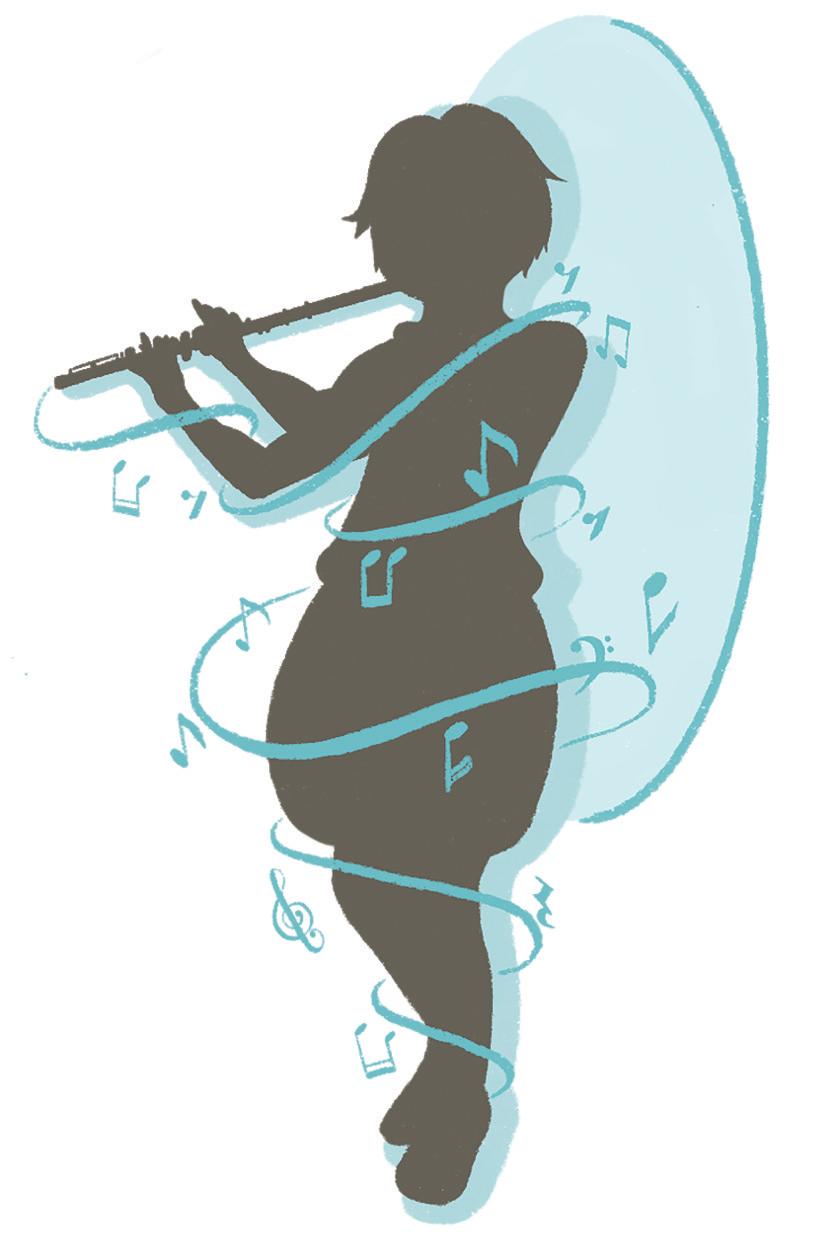

What does decolonization look like?
During Byatnal’s time at Northwestern, he has noticed student groups o en address the historical backgrounds of these works in a more “responsible” way than Northwestern productions, which he speculates could be a result of student productions being “less institutionalized.”
“Northwestern student productions do it the best because there’s just a lot more initiative taken, and I think students feel a lot more responsible to make other students feel welcome,” he says.
Mora, who is on the executive board of Vibrant Colors Collective — Northwestern’s multicultural theatre board — says she has also noticed this, preferring to participate in student-led productions rather than Northwestern’s.
This fall, Vibrant Colors put on The 25th Annual Putnam County Spelling Bee, a musical about a ctional spelling bee. Though this musical does not have a racespeci c cast, Mora says Vibrant Colors has an all-POC cast and production team.
For her, watching one of the rehearsals was “eye-opening,” as it represented a dream of hers and her friends: a space to just exist in their bodies.
“We didn’t have to be tokenized, and we didn’t have to be the ‘other’ in the room, because everyone in that room looks like you or shares your same experiences,” she says. “You get to share that, and you get to create something beautiful out of it.”
To Byatnal and Mora, this concept re ects a broader sentiment that resonates with Watts’ emphasis on the need to examine power structures and decision-making processes of institutions in order to take meaningful steps toward decolonization.
For the performing arts community, Watts says decolonization goes beyond mere representation and inclusion and involves granting complete artistic control to Indigenous artists and people of color. It means empowering marginalized communities through signi cant roles in the arts that allow them to rede ne narratives and practices.
“What I hope is that our approach to performance and performance training can become broadened to include
Students feel a lot more responsible to make other students feel welcome.
”
- Rushil Byatnal Communication and Bienen third-year
alternative modes of professionalization,” Watts says. “How can we incorporate Indigenous and Africanist and nonWestern ways of training into our curricula that are genuine and upli ing rather than fetishizing and othering?”
Gleason-Mercier underlines that decolonization initiates a set of questions that scrutinize established norms and practices in the theatrical and operatic world. In the context of the musical world, Gleason-Mercier acknowledges that people have a “deep connection” with music and “feel very emotionally invested in it.”
This emotional investment in classical works can make it challenging for some to consider any form of alteration or reinterpretation. However, Gleason-Mercier says this resistance to change should not deter the performing arts community from engaging in these conversations.
“If we’re going to challenge systemic injustices, and we’re going to challenge structures that have created injustices, we have to be conscious in that,” GleasonMercier says. “It can’t just be a byproduct.”
For instance, last February, Northwestern staged its production of Mozart’s The Magic Flute — an opera that contains racist elements such as the character Monostatos, who was
historically played by a white actor in blackface. In Bienen’s production, the program included a section written by cast members dedicated to explaining the racism in the show and emphasizing the importance of engaging in conversations.
Melanie Stapleton, a second-year graduate student, says she believes program notes, such as the one in Northwestern’s The Magic Flute, are a good way to address these issues without abandoning the work altogether, especially when the performers are actively involved in the process.
Mora also spoke on the importance of listening to cast members who are people of color when producing these shows.
“Being a person of color in a play that you know wasn’t written for you and you were never intended to be in is extremely draining, more draining than it would be for any white person to be in a show like that,” she says.
Despite this, Mora emphasized the importance of considering whether it’s necessary to produce these shows, urging productions to ask if there’s a di erent, more inclusive show that shares the same message.
Davis makes clear that the “On Decolonizing Theatre” group isn’t saying there is an easy solution to decolonizing theater. Rather, “it is very much in process.”
“We’re not there yet, but we have the opportunity of the excitement, of stumbling along and trying to gure it out, of having the imperative to gure it out,” Davis says.
the time to learn the history of a work and understanding how these performances could a ect marginalized groups.
“Sometimes we’re very quick to cast judgment, and sometimes people just didn’t know better,” she says. “And I don’t think that’s a crime.”

Gleason-Mercier also noted that people do not have to have a full understanding of decolonization to attend the seminar. In fact, she encourages discussions with people questioning the meaning

Emphasizing a push for groups to work together instead of against each other, Mora says there is a sense of determination among theatre students “to restructure what producing theater looks like.”
“It’s great to see that we all have this common goal of making student theatre at Northwestern a better place, not just for ourselves, but for the people who come a er us,” she says.
But decolonization does not come without its challenges. Some are hesitant to criticize these iconic works. Watts, though, says he believes this project is about “updating” and “engaging with culture.”
Despite resistance, the project leaders are hopeful that these seminars will spark discussions in the performing arts community, especially within education. Davis says the vast repertoire the seminar examines will help move these conversations outside of the performing arts sphere.
The ideas that come up in these performances are ideas that we should be talking about in our classrooms and at lunch tables and when you go home at Thanksgiving,” Davis says.
“All these things are our topics that shouldn’t just exist on the arts pages of the newspaper. They are central to our lives.”

Mixed race students at Northwestern give an oral history of their experiences.
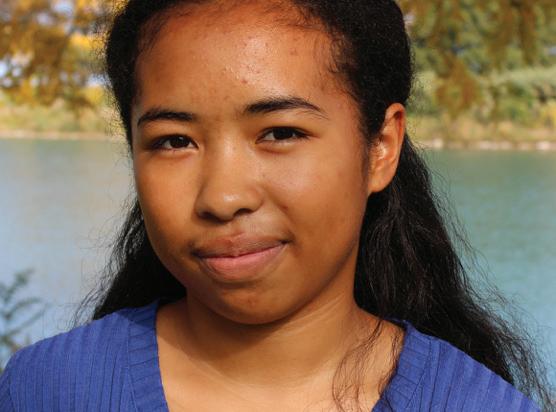
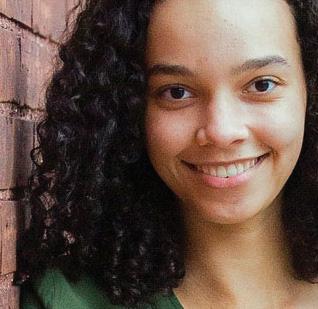
It is impossible to simply de ne the “mixed race experience.” This is a lesson I’ve learned over and over throughout my life. Whether I was in preschool, struggling to come up with an answer when my classmates asked “What are you?” or in high school, attempting to ignore my complex identity while it hovered over me like a dark cloud, articulating my experience has always been a struggle.
Feeling out of place in most spaces is, and always was, normal to me. However, when I transferred to Northwestern University this past September, I felt especially nervous about moving away from my home state of California. I was a Taiwanese and Jewish American person leaving the West Coast Wasian mecca. I
WRITTEN BY SHAE LAKE DESIGNED BY MICHELLE SHEEN
PHOTOS BY ELISA
TAYLOR
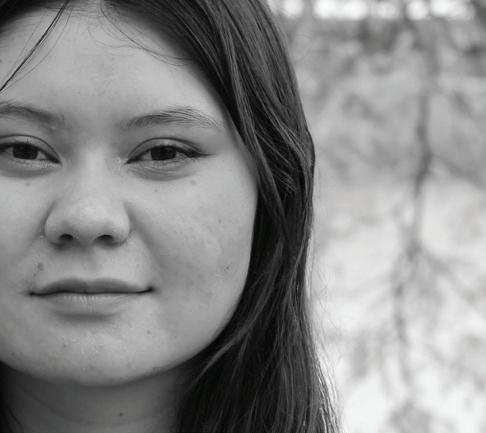
was anxious about leaving my old life behind for a top-rated university in the Midwest, and for good reason.
According to the U.S. News and World Report, 7% of Northwestern students identify as two or more races, making mixed-race students one of the smallest minority groups on campus. Although they only made up 10.2% of the U.S. population as of 2020, mixed-race individuals are one of the fastest-growing minorities according to the United States Census Bureau. This is why I nd myself frustrated when our experiences are pushed aside.
The following stories seek to bring the experiences of mixed-race Northwestern students into the spotlight. Some of these narratives take place on campus, while
others focus on life before Northwestern.
These are not the only mixed-race stories at Northwestern. There are identities and experiences that are not represented in this piece, and it is my responsibility as a writer and mixed-race individual to acknowledge that. Nevertheless, I hope these three students’ stories will inspire other mixed-race students to embrace their own narratives and start conversations with the wider community about their lived experiences.
The world is becoming more mixed each year. It is our responsibility as an academic community to embrace and celebrate that reality.
The following interviews have been edited for length and clarity.
I’m from Woodstock, Maryland, which is in Howard County. My dad is Korean. His family immigrated from Korea when he was 3 years old. My mom grew up in a very small, very Republican white town called Hagerstown in Maryland — she is white.
My paternal grandmother lived with my family until she passed away when I was in seventh grade. There was an extension of our house with the one door that would lead to her living room. She had a little kitchen, a bedroom, a closet and a bathroom — her own little area to live in. Growing up with my grandmother shaped the Korean aspects of my identity. It was very hard when she passed away because she was like another mother. She basically raised us when we were young, when my parents were at work. She took care of us.
Although my dad never spoke to me in Korean, my grandmother tried to teach me when I was younger, but I was too impatient and immature to want to learn. That’s been one of my biggest regrets. Right now, one of my biggest goals in college is to learn Korean. It’s a part of myself I really want to explore.
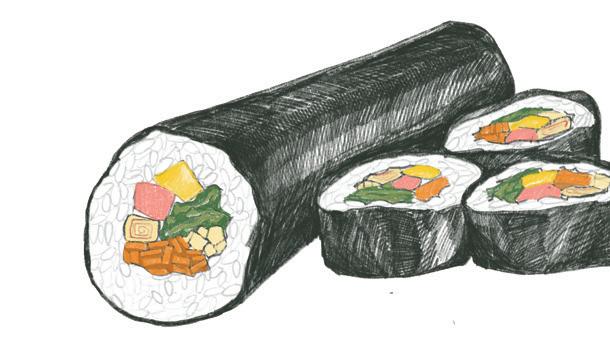
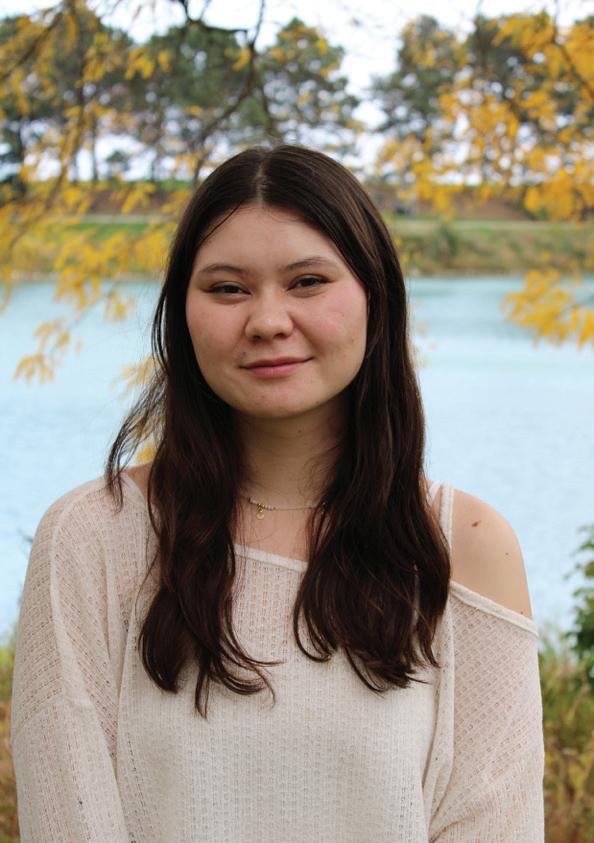


I tried to carry on
SARAH KIM MEDILL SECOND-YEAR
When I was younger, I would come home from school, and my grandmother would have food for my siblings and me. A er she picked us up, she would have whatever type of dish she made waiting for us in her side of the house. We’d all walk over and help set up the table. She’d then bring the food out and sit there with us as we ate. I didn’t appreciate it when I was young, but looking back, all I wish I could do now is go back and experience that again because that’s a big part of Korean culture. Food is a big love language.
I remember watching my grandmother make gimbap. She would add the rice, then all the ingredients and then roll it up. I found it very interesting, but I wasn’t always paying close attention. I think I’m always a little annoyed at myself for not being as present or conscious of my identity or of how amazing people like my grandmother were in my life. I feel like I’ve become a lot more conscious of that in college and also of living in the moment. I get really mad at myself sometimes for the things I can’t remember or that I didn’t acknowledge how lucky I was.
But again, as a child, I think it’s hard for people to be like that. Not everyone can be that mature at a young age, and I don’t think I was.
Growing up, I went to McDonogh School, a predominantly-white private school. There were not many Asian people. There was a certain type of beauty standard, which was very white and Eurocentric, and there were lots of microaggressions. Since coming to Northwestern, I feel like I’ve grown a whole lot. I feel a lot more con dent in myself without being restricted by those standards.
I’ve had lots of conversations with my brother about what it was like as a mixed person at our
school. A er my older brother graduated high school and went to Columbia University, he told me he never viewed himself as attractive in high school, and he didn’t realize he could be considered beautiful until he got to college.
This past summer, I studied abroad in Korea to connect with my heritage. I was very proud of myself for doing it. I tried to carry on what I learned from Northwestern, that there’s power in looking di erent. I found a lot of power in that and chose to go to Korea to explore that side of my identity.
Unfortunately, many Korean people don’t like foreigners. There were multiple times when people were rude or mean. Any of that is hurtful, but I feel like there’s another level of hurt when it happens to people who are there to explore their Korean identity. Not everyone in Korea was like that, a lot of people were very, very kind, but a couple of times when it happened, it really ruined my day.
Being in Korea made me a lot more grateful for living in the U.S. and for growing up in a society where everyone looks di erent. At Northwestern, there are a lot of di erent types of people. In Korea, there were all the same types of people with all the same clothing styles. It felt more monotonous than I initially imagined. There are a lot of fun things there, but now that I went, I’m very content with where I live now.
In terms of my identity, I realized I should just be happy with who I am. I don’t need to go to Korea and try to be more Korean. I have to accept that I’m not full Korean. I realized it’s so beautiful that I’m mixed. I don’t have to be just Korean or be just white: I can just be who I am.
I’m half Chinese and half Southern Black. The rst time I met another Blasian person who wasn’t family was when I was 15 or 16 on a college tour. I don’t remember it super speci cally, but I remember thinking, “Oh, other Blasian people do exist.” It was nice to see that, outside of my little bubble, the world is a diverse place.
I grew up in the Philly area, in the Delaware County suburbs, which was predominantly white. It wasn’t super diverse, but we were close to a big city, so I was able to see di erent cultures. In my senior year of high school, I lived in Massachusetts, in the Boston suburbs, which was even less diverse than Philly had been.
When I was young, I understood that I was di erent. And it wasn’t
something I necessarily liked about myself. I didn’t o en focus on nding community with Asian people or with Black people growing up. Most of my childhood friends were white, and we connected over other aspects besides our identities.
When I was younger, I saw being mixed as a bad thing. I felt like, “Oh, I can’t belong, because I’m not like everyone else.” But as I grew up, I got to experience both Asian and Black culture, and I’ve been able to meet so many di erent people. I’ve learned that I’m not excluded from being in Black spaces or being in Asian spaces. I can be in both. I really started to see the value in it. It’s just really fun to connect with people who are di erent and learn so much.
With my parents, race was always a conversation, especially because my mom’s full Asian and I’m not. Hair is a very important part of Black culture, and I have curly hair, while she does not. That was always something that was discussed growing up. But I also have cousins who are mixed, which made my family more diverse than the average family.

public. He was driving the bus. We’re sitting next to each other, doing our thing, and this stranger came up to us and was asking us all these strange questions. He made a comment about the fact that I looked Asian in comparison to my cousin. And I think at that moment, I realized, “Oh, we’re not the same.”
Christianity played a big role in my childhood as well. In fact, my parents met at a Bible study in New York. There was always this idea that God loves you no matter what. So I think that played into how I view myself, especially in middle school, thinking, “Oh, I am enough.” I am OK with the fact I am mixed. Now I don’t really think about it with that connection as much, but I think it kind of helped me get there.
My cousins are half Black, half white. When we were really little — I want to say 7 — my grandfather was a bus driver. We were out in
Food is an important part of both of my cultures. Eating Asian food and feeling like, “Oh, this is my food,” and then also being able to go down South and have collard greens with my grandma, I’m like, “Oh, this is my culture, too.” It’s just a good feeling. I’m super grateful for the experiences I’ve been able to have. Not many people can go to dim sum for lunch and then eat Southern food for dinner. I get to experience life from a di erent perspective that other people don’t get to have, which is super cool.
So far, my experience at Northwestern has been very positive. I’m in the marching band, and that’s
“ Not many people can go to dim sum for lunch and then eat Southern food for dinner.
RACHEL SPEARS MEDILL FIRST-YEAR “
been really fun. It has nothing to do with my race or anything, but it’s just a community of people who like having fun and love Northwestern. So I found a lot of belonging there, and I’ve also joined Blackboard, the Black magazine on campus, and I’m really excited. I’ve also really enjoyed going to the Northwestern Mixed Race Student Coalition.
However, Northwestern is still a predominantly white institution. A few weeks ago at Northwestern, someone asked, “What are you, ethnically, I mean?” I was annoyed because they didn’t ask me my name.
A lot of the time, people ask me, “What are you?” For me, it’s not unusual, but it is so weird. If you’re not mixed, don’t ask people what they are. You’d never walk up to a white person and ask what they are. I’ve also had people ask me, “Are you Mexican?” or “Are you Filipino?” and when I tell them no, they ask, “Are you sure?” You know better than I do what my ethnicity is? That’s crazy.


I grew up in Hampton Roads, Virginia — that area is predominantly military, so it’s a lot of people from around the country kind of all in one place. My dad’s African American and my mom’s white, but all the social groups we were a part of, including the homeschool co-op that I was a part of and the church that I went to, were very much predominantly white. Growing up, I didn’t really see anybody who looked like my skin color besides my siblings. There were a lot of things I didn’t know how to do. I didn’t know how to do my hair. Nobody knew how to do my hair. I couldn’t fully embrace both sides of myself until I got a lot older.
All of my siblings are younger than me. I have a 16-year-old brother, an 8-year-old sister and a 7-year-old sister. All of them are mixed-race. My sisters are young, so they always talk about Barbies and how they want
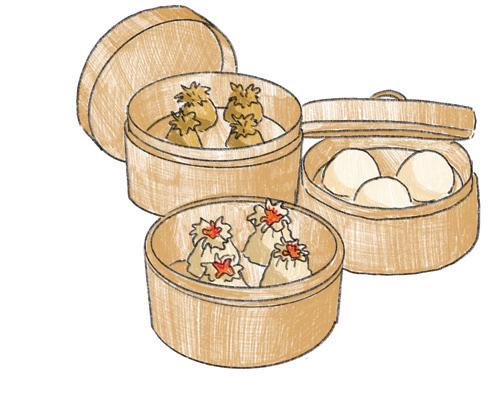
their hair to look. When they say, “Oh, I wish I had straight hair like my friends,” I’m like, “No, your hair is beautiful. It’s unique. Don’t wish that,” because I had that mindset a lot when I was growing up.
One of the ways my parents raised me was to love everybody regardless of how they look. Obviously, it’s a great message, but I wasn’t really aware that wasn’t the norm for everybody. I was a little naive. I thought, “Of course, why wouldn’t you love this person just because they look a little di erent than you?”
I’ve talked to my dad about race, but for him, it is very di erent because he’s male. Black men have a di erent perception in society compared to lighter-skinned females, but we could kind of relate to some things. Also, the Black side of the family lives 500 miles away, so I don’t talk to them super o en. My mom de nitely tried to talk about race. She was very intentional about that, but there were also some things that she couldn’t fully understand, never having gone through it. So some of that I gured out by myself or from friends who had similar experiences.
I’ve also had friends who would tell me when I was younger, “Oh, I love your skin. I wish I could have it.” I’m like, “Do you really? Because, sure, it looks like I have a tan but it comes with stu . It comes with baggage.”
I would say I de nitely have privilege because I’m a lighterskinned Black person, and I don’t face the same kind of discrimination because I have really light skin, but it does come with being a person of color, and that’s going to a ect just your day-to-day interactions and

how you go through life. It especially a ects my brother. He’s very tall for his age and a little darker than I am. My parents have sometimes gotten worried just because he seems so intimidating, but he’s a kid.
are white, I de nitely feel like a person of color. When I’m hanging out with people who are really dark-skinned, I feel almost white, so it’s kind of odd.
I’ve learned not to prioritize one over the other, just fully embrace that they’re equally a part of who I am. That’s why it’s so annoying when trying to ll out a survey and pick your racial identity. I’m torn. In that case, I usually pick Black just because if I’m walking down the street and somebody sees me, I wouldn’t be white.
Before transferring to Northwestern, I went to the College of Wooster for my freshman year. It was a much more diverse school, and there were a lot more African and African American students there. We had an African Students Union club, and we all had the same cultural identity, which is not something I had ever experienced before, so it was cool to see how people can live out their cultures and their identities and not be at all ashamed or embarrassed. And that’s how I learned to do so for myself.
Nobody knew how to do my hair. I couldn’t fully embrace both sides of myself until I got a lot older.
“ “
EDEN CRUMBLY WEINBERG SECOND-YEAR
Growing up, I felt sheltered from everything. I didn’t even know what direct or implicit racism was until I was older, around my mid-teens. It was a good thing that it didn’t hurt me directly, but also a bad thing that I wasn’t even aware. When COVID happened, there were so many racially motivated attacks and police brutality happening in the news, and I started seeing it everywhere. That was my rude awakening.
It was around then when I really started looking into who I really am. That was the question: Am I white or am I Black? Because up until that point, I’d always felt Black. But now I feel like in di erent social settings, it feels di erent. When I’m hanging out with a lot of people who
One of my favorite parts of my old school was how many di erent friends I had from all over the world. In my closest friend group, I was the only American, which was amazing, and it was the opposite of my high school experience. Even just by talking with them and living with them, I became aware of a lot of prejudices I didn’t know about. I remember a few of my friends were walking back one time from an Ubuntu ceremony, and they had an African ag. My school was in conservative Ohio, so somebody drove by and yelled at them to go back to where they came from. I was pretty surprised.
I want people to know not to look at somebody and assign them a certain perspective based on the color of their skin. People are sometimes surprised when I talk about my history with both sides of my racial identity. They expect something else and view it as wrong when I don’t give them what they expect. And it’s a little weird because it’s my identity.

WRITTEN BY MAYA
DESIGNED BY ILIANA
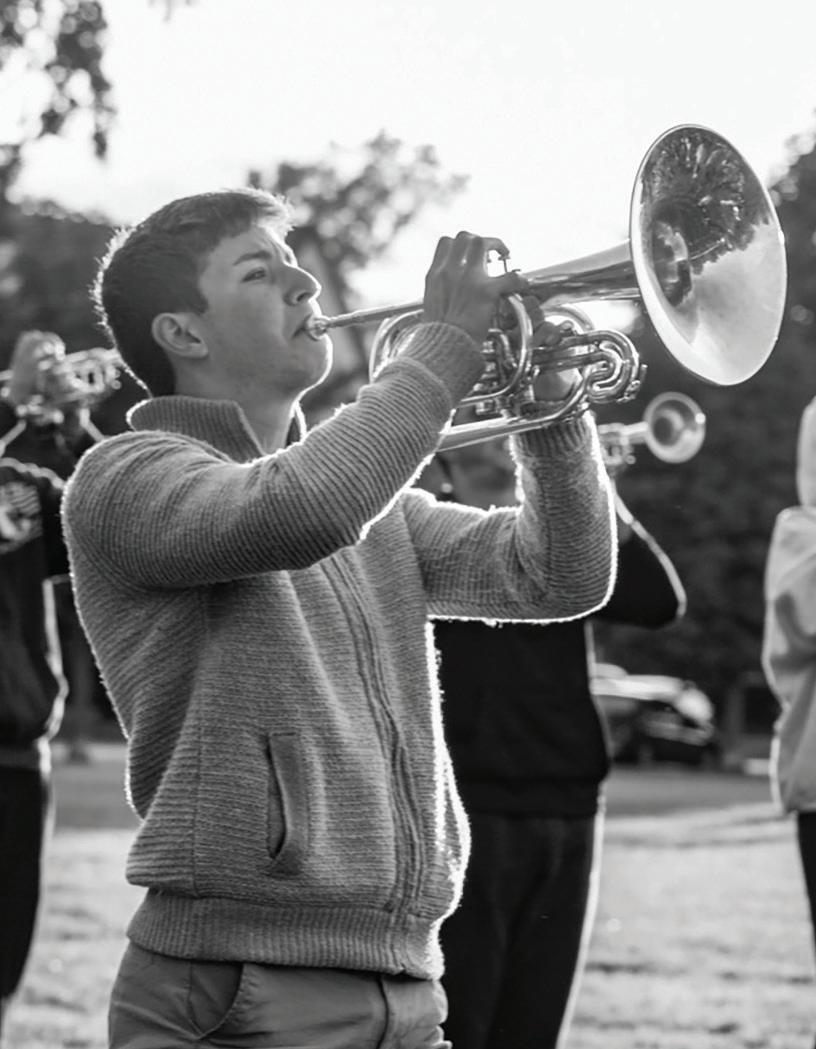
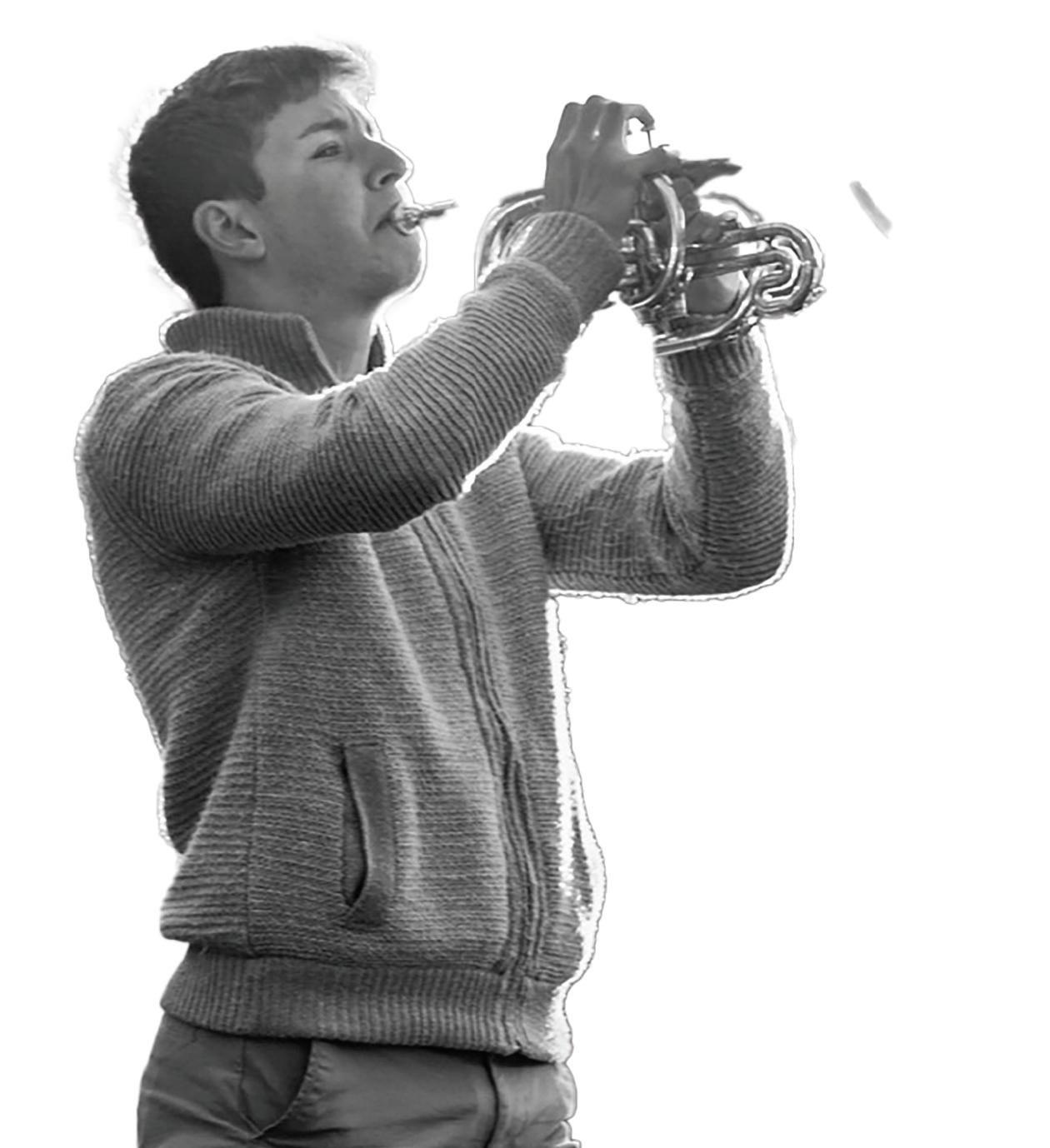
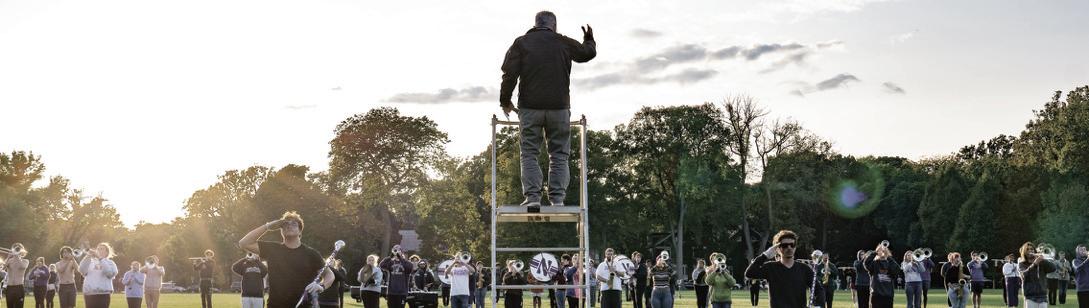
“It’s something that challenges you because you’re not just playing. It’s also very physical.”
Christian Rodriguez Weinberg fourth-year
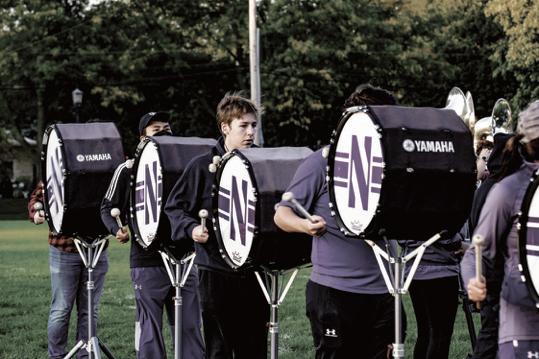
As band director Daniel Farris climbs the conductor’s podium, the 130 members of the Northwestern University Marching Band (NUMB) gather in a semi-circle formation across Long Field. It takes just seconds for conversations and laughter to die down as the students pick up their instruments and wait for the call.
“Horns up!”
The music swells.
This is one of the last rehearsals before Northwestern’s Homecoming football game against Howard University. The set is more involved than usual, as the band will perform alongside NUMB alumni and follow a performance by Howard’s renowned marching band.
Weeks of rehearsal go into the routines the band performs on Ryan Field. According to Weinberg fourth-year and alto saxophone section leader Christian Rodriguez, the work starts before the football season does. Every year, the marching band arrives on campus three weeks before classes resume to get a head start on music for the football season, splitting the time between learning fundamental skills and practicing music and routines. They rehearse daily from 9 a.m. to 9:30 p.m., breaking only for meals.
The rehearsal moves quickly: From “The Final Countdown” to the alma mater to
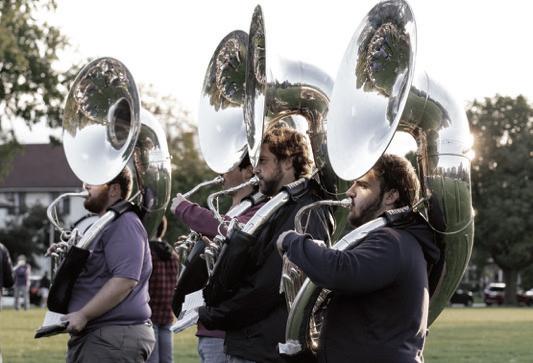
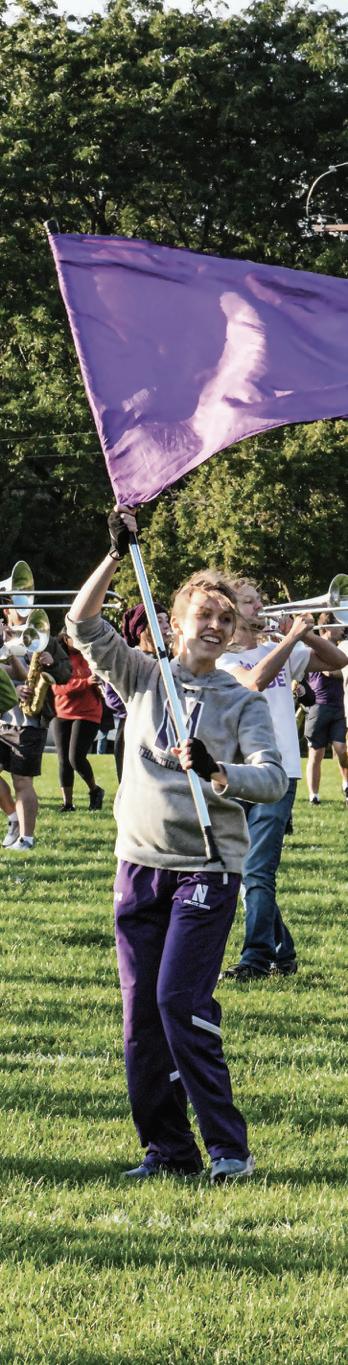
After practice, the band prepares to perform at Ryan Field. Band members brandish their instruments with pride as they prepare to cheer on the team during the game before their halftime performance.
PHOTO BY VALERIE CHU
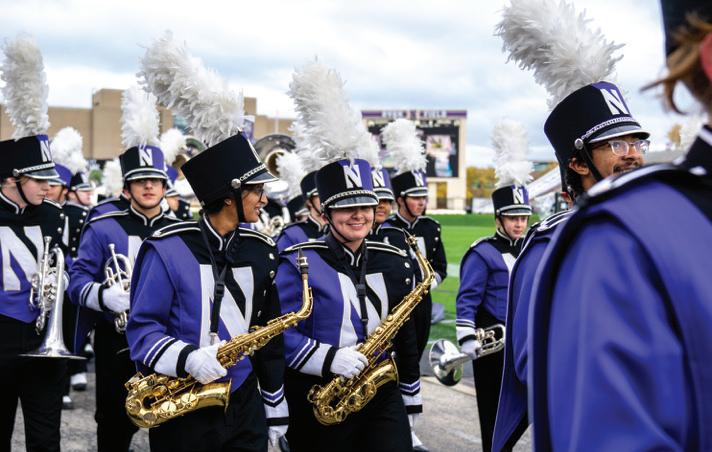
“The Star-Spangled Banner,” the band members flip from page to page, song to song, as Farris directs and gives notes.
A hand wave and a few words from Farris are enough to abruptly cut off the music.
“Again, it sounded like you were running out of breath,” Farris says. The music starts again, continuing for a couple bars before being cut off.
“Again.” They restart, this time continuing without pause.
“Good, thank you.”
A er rehearsing the music, the band runs through the Homecoming marching sequence. Instruments in hand, the band members make sharp movements from side to side and perform quick dance moves as they travel across the eld. They take synchronized steps, forming lines and shapes that weave between one another in a dizzying array as Farris counts the beats.
The complexity of these performances is one of the main draws for Rodriguez. He first played in a marching band in high school, finding it an exciting
change from concert and jazz bands.
“It’s something that challenges you because you’re not just playing. It’s also very physical; you’re always on the move,” Rodriguez says.
But NUMB is not limited to students with marching band experience or music majors, Farris says. All skill levels are represented on the team, and many people join simply because it looks fun.
McCormick rst-year Steven Liu is one such member. He played saxophone in a concert band in high school and wanted to continue performing with an ensemble in college. Marching bands were new to him, though. As an international student from Canada, he never went to or watched football games. A er looking at videos of NUMB performances online, he saw an opportunity to continue playing and try something new.
The students’ varied degrees of experience contribute to the joy of directing the band, Farris says, as the common denominator among all members is their enthusiasm for being there.
“Horns up!”
Daniel Farris
Marching Band Director
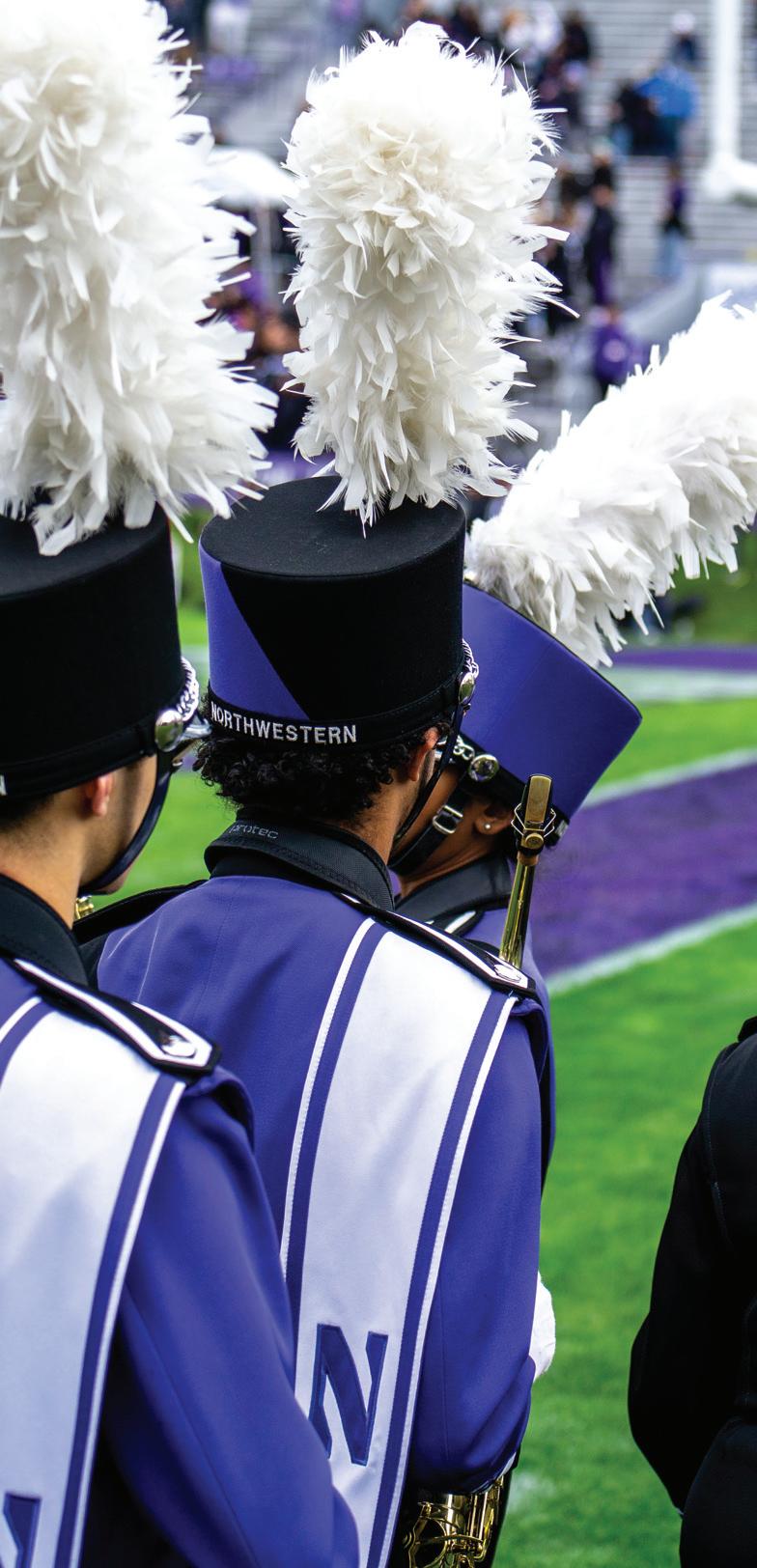
He adds that getting everyone on the same page is made possible by the students themselves, who lead, teach and help one another. The band is divided into various sections by instrument and marching groups, which are led by one or two students each.
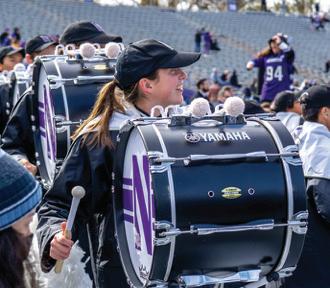
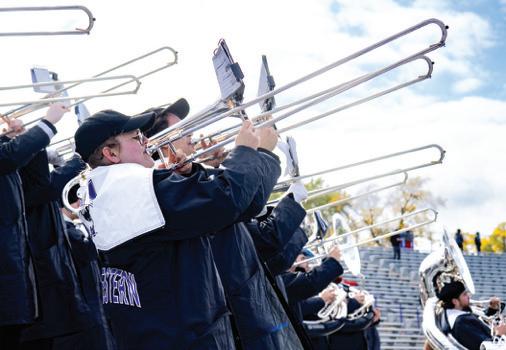
“I could not do this without them,” Farris says, gesturing to the students on Long Field. Everyone is moving before the start of practice, re ning a few measures of music, setting up equipment and spray painting lines onto the grass to demarcate positions.
The mutual support among NUMB members was an important factor for Liu when he decided to join. Performing in a band has always been a significant way for Liu to build friendships.
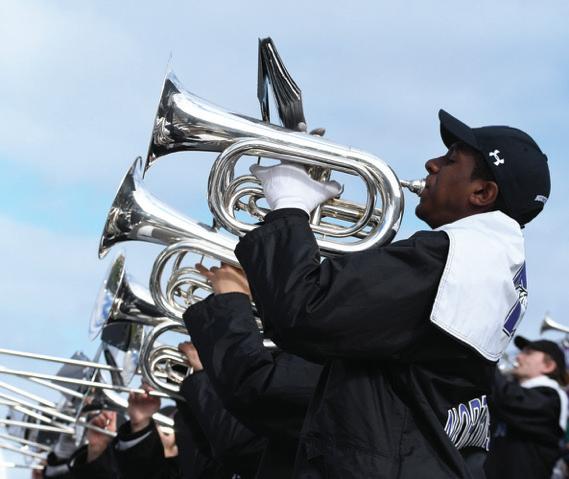
The added performative elements of marching band — coordinating the moving parts with bandmates, playing in the stadium and practicing for long hours together — only made those bonds stronger.
“You have this sense you’re part of something bigger than yourself,” Liu says of typical band performances. “With marching band, it’s every single moment when you’re in the band that you can have that feeling.”
For Rodriguez, the game day atmosphere is one of the most fulfilling parts of being in the band. He feels a sense of pride in being center stage on Ryan Field, performing the routines they’ve rehearsed for weeks.
“It’s hard to find a feeling like it,” Rodriguez says.
The band also carries this pride off the field in their many shared traditions.
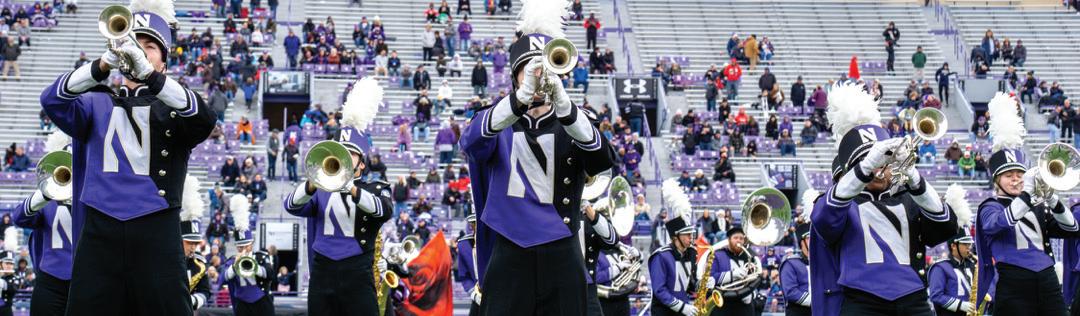
One of Rodriguez’s favorites is “SPAC Nine,” where the band meets at SPAC at 9 p.m. and plays music around campus, showing their spirit and having fun.
Another is “Spirit Sessions,” a tradition that started in the ‘80s a er the football team had a long losing streak. The band started getting together outside of practice to raise morale. Today, they still gather weekly to talk about how the football season is going, exchange jokes, create chants and keep spirits high.
The football team and the marching band are intrinsically linked — NUMB was formally organized in 1926 to cheer on the team, and the band showcases all of their work at the games. When news of the hazing scandal broke this summer, members of the band had to consider its implications for their own team.
As an incoming freshman over the summer, Liu says he was concerned when the news came out, given the band’s connection to the team.
“We play for the football team. That’s our entire job,” Liu says.
However, he adds the marching band represents far more than that — it’s an independent organization that cheers for not just the players but the student body as a whole, an idea Farris emphasizes and Liu takes to heart.
“I’ve always thought of it as we exist because of the football team, but we don’t exist for the football team,” Liu says.
As a senior and leader of the alto saxophone section, Rodriguez says the news from the summer made him see his role through a different lens. The band and its student leadership looked inward, reflecting on their own team environment.
“You have this sense you’re part of something than yourself.”
Steven Liu McCormick first-year
“We’ve done a lot of self-re ecting within our own organization, looking at all of the stu that we do and making sure we provide a safe and comfortable community for everyone,” Rodriguez says. He adds that as a very diverse student organization, the situation has only made that evaluation all the more important.
Liu says he felt that positive intention when he joined, with returning students ensuring new members were always comfortable.
That sense of community among band members is one reason being on the team plays a large and lasting role in the lives of its members, Farris says. His own experience in a marching band has stuck with him through adulthood, as he still maintains relationships with friends and mentors from that time in his life.
This trend is present in Northwestern’s band as well. After watching the current students carry on the band’s spirit during practice and from the sidelines of the games, alumni returning for Homecoming weekend joined the band and performed again. Farris says seeing how the experience of marching band sticks with alumni is one of the most rewarding parts of his job.
“It’s not just all about marching and playing,” Farris says. “It’s about building lifelong friendships and relationships and really connecting to the University.”

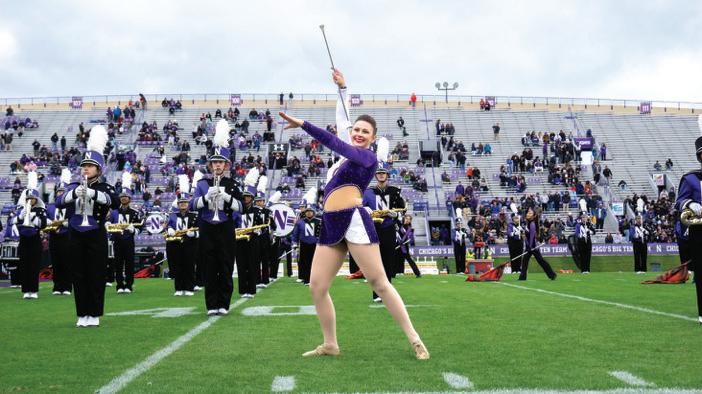
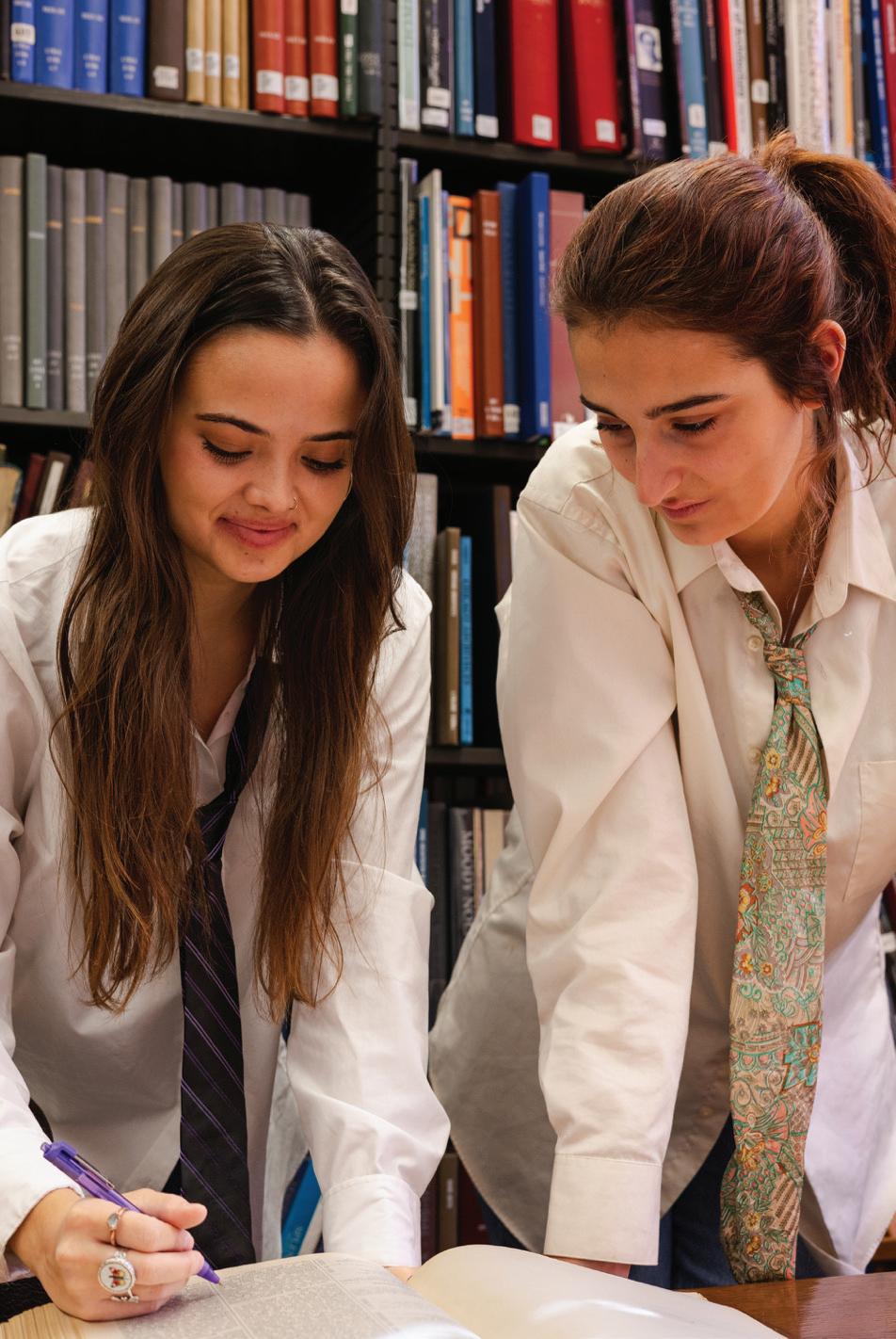
Life’s a bitch. Hangover is here to help you drown your sorrows in soup.
WRITTEN BY JULIANNA ZITRON // DESIGNED BY OLIVIA
Life as a college student is full of unknowns. Like, why is life so tough right now? Idk, don’t ask us ridiculous questions.
Even though we can’t answer all of your philosophical queries, we sure do give good advice. Here at Hangover, we asked you, our beloved readers, to send in your most pressing problems for us to solve. Want a one-way ticket o the struggle bus? Grab a bowl and a spoon and strap in.
Dear Hangover,
Last week, my boyfriend asked if we could have an open relationship. I said yes because I wanted to be one of those “chill” girlfriends, but now I feel like I never see him anymore. What should I do?
Warmly,
The “not-so-chill” girlfriend
Bonjour!
Might we recommend a bowl of French onion soup? The onions and stinky French cheese will surely remind you of your boyfriend’s musk. Plus, the comforting broth will keep you warm at night when you lie in your bed without him.
Bonne chance! Hangover
To whom it may concern, Last week, I was rejected from all the business fraternities. None of them seemed to care that I’ve read The Wealth of Nations four times. How will I secure a six- gure post-grad job now?
Thad McChad (ur/mom)
First-year Economics major Northwestern University
Thad,
Yikes! The chances of you getting that Deloitte internship now are slim to none. While all the newly admitted members are enjoying their Panera Bread-sponsored lunches, you can start preparing for your future unemployment by eating a can of cold SpaghettiOs.
Best of luck with your future ventures, Hangover
can dream of their destination wedding in Sicily while enjoying a mini meatball. Hope this helps!
Love, Hangover Hangover, I need your help! My roommate and I used to get along ne, but ever since he joined ShireiNU, he keeps me up all night practicing his solo. I don’t think I can hear “Try” by P!nk ever again. Please help for the sake of my sleep schedule and general sanity.
Hey Hangover,

My favorite campus couple broke up last week, and I am distraught. I’m so used to living vicariously through them. However will I go on without them?
Love, Little Miss Delusional
Hey girlie,
So sorry for your loss. One tip we have for you is to indulge in a massive bowl of Italian wedding soup. Feed your delusion (and stomach) while you fantasize about them getting back together. You
- A sleep-deprived freshman Sent from my iPad
Hi sleepy,
This problem has an easy solution. Any self-respecting Jew, like myself, is unable to resist the appeal of a piping hot matzo ball. Get yourself a homemade bowl of matzo ball soup and toss the balls out into your dorm hallway. Your roommate is sure to run a er them, giving you ample time to deadbolt the door behind him. Hope you enjoy your peace and quiet.
Shalom, Hangover
P.S. Any names, characters, businesses, places, events or incidents are ctitious. Any resemblance to actual persons, living or dead, or actual events is purely coincidental.

WRITTEN BY NATALIA ZADEH
DESIGNED BY SAMMI LI
Rejoice? I’ve come back to campus, excited for my first year without distros or my disintegrating fake ID, only to realize that I’ve been abandoned by half of my class. How dare they? Don’t they know I’m terrified of change? I’m dodging mopeds on Sheridan while my friends are halfway around the world meeting Margaret Thatcher on their way to Oktoberfest.
To make matters worse, my campus celebrities are nowhere to be found. Northwestern is not the same without them. It’s not my fault that my degree program has me trapped in Evanston until June 2025.
Since this is a safe space, I feel comfortable sharing that I’m at quite a loss without the various Northwestern juniors I’ve developed parasocial relationships with. Like the girl who walked me back to my dorm a er an unfortunate (albeit enlightening) night at Bob’s Pizza. Or the guy who almost nose-dived into Sheridan Road on his electric scooter last spring. How are they? Where are they? Who are they?
Walking around campus already makes me feel like a 20-year-old octogenarian. The entire Class of 2025 being abroad (in western Europe) only exacerbates this. All of the



freshmen are so spry and nimble that one can only assume The Dorm Mold (which Northwestern has yet to patent but should seriously consider) hasn’t gotten to them yet. As I nd myself swarmed by unfamiliar people born in 2005 (WHAT!?), I can’t help but wonder what my favorite campus gures are up to. Day drinking? Boating in Ibiza? Su ering without central air? The horror! Maybe they should come home. These days, I do nd myself missing the dark ages of online study abroad.
I suppose in some ways, this is a positive change. I’m just preparing for graduation, when my campus celebrities will disappear forever and I’ll inevitably need to nd new ones. Job celebrities? Apartment celebrities? I’ll work on that.
In the meantime, I’ve been trying to nd some new campus idols. I’ve scoured Norris. I’ve walked the Lake ll. It has not been going well. I just can’t shake the feeling that these e orts are all in vain. I’m too attached to my old ames. My abandonment issues are going crazy right now. Why would you ever want to leave Evanston? We have a 24-hour 7-Eleven and eight boba shops all within a two-block radius.
For now, though, I’ll keep up with my daily a rmations. I don’t chase, I attract. My campus celebrities will come back.
WRITTEN BY NATALIA ZADEH AND JULIA LUCAS // DESIGNED BY JESSICA CHEN
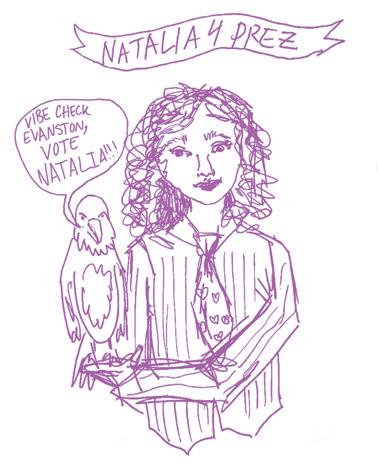
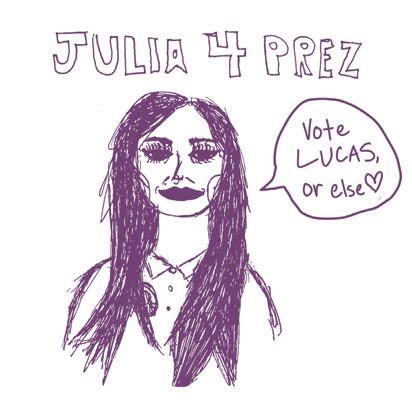
Yep, that’s us. The future of local democracy. You might be wondering, “Why did Hangover’s nest editors decide to run for President of Evanston?” Good question. Maybe it was a stroke of civic inspiration, maybe it was our insatiable thirst for power, maybe it’s Maybelline.
If we were going to single-handedly run Evanston, we needed to get eyes on the opposition. And as someone once said, “The road to power is paved with Public
Works and Administration meetings.”
The stars and stripes aligned, and we found ourselves in the James C. Lytle City Council Chambers on a Tuesday evening.
First on our campaign agenda: in ltrate the current government proceedings. Donning our cowboy earrings, a clear homage to our forefathers, we were ready to make democracy our bitch. At this point, we knew nothing of the strife that lay ahead, but as they so o en say, ask not what you can do for your suburb — ask
what your suburb can do for you. If this meeting was Watergate, we would be Woodward and Deep Throat.
A er entering through the back door, it was clear we were in for a challenge — an interior design challenge, that is. This place was straight out of our ‘60s cubicle o ce nightmares. A er traversing a maze of linoleum-lined hallways to the meeting room, we took a seat in the back — where the cool citizens sit.
It soon became clear we were sorely unprepared for the Administration and Public Twerps meeting we’d in ltrated. What exactly were we here to do? What is public works? More importantly, why were they all speaking like they were at a Model UN conference? Motions? Yay? Nay? Or is it neigh? Horse girl representation does seem to be mounting these days.
Add to political agenda: dress code. Fashion-wise, the meeting was grim. The government is arguably the mecca for adult male manipulators, and isn’t the male manipulator trademark a sweater vest and a faux pearl necklace? And yet, there wasn’t a Vivienne Westwood knocko in sight. Blasphemous! Maybe if our local representatives updated their looks, our local political scene would see some fresh takes too. Fortunately, one council member brought the vibes. In the face of her button-down-wearing peers,


she donned a classic GAP zip-up. Her platform was clear: Make the City Council chill again.
Pens in hand, we sat and watched as our political adversaries struggled to project their Zoom call. They’d be easy work in our climb to the top, but the other chamber members would pose a
greater threat. Namely, the midwestern DILF we spotted irting with the scribe before the meeting. His name was Dick.
Soon a er the meeting commenced, a quarrel about contract logistics broke out. In the heat of the moment, Natalia nearly dropped the pen she’d been drawing Councilwoman Kelly with. It was sexy, we promise, you just had to be there. Perhaps now, in this time of political instability, was our golden opportunity to take the reins. The elderly man in front of us seemed unbothered by these proceedings, however, wearing his vintage headphones and the same jacket as Julia. We wondered if he listens to boygenius too. At least we knew we had an ally.

Overall, the chamber proceedings were deathly boring. We wanted objections, detainments, people rushing the stage, the banging of the gavel, “Order in the court!” like they do on Judge Judy, but we were let down. Instead, the council members started listing letters and numbers that we assume correspond to proposed legislation but felt more like we were losing a one-sided, mindnumbing game of battleship. On top of that, all of the blinds were drawn so we couldn’t look out the window and construct imaginary scenarios in our heads. All there was le to do was focus on the meeting.
The “diplomacy-core” TikToks we binge-watched before this meeting didn’t prepare us for this. Were the council members friends outside of this chamber? Did they go out for Chili’s margs a er their long days in their windowless hall? We certainly hoped so.
By the middle of the meeting we were hungry for e ective democracy — and more urgently — food. Thank God Natalia brought rations. Fueled by packs of fruit snacks we crinkled loudly in the back row, we listened to some guy, clad in a cardigan that made him look like Dr. Dolittle, ask for $11 million for the Water Bureau. Note: Rob the Water Bureau. You might be thinking, “What actually happened in this meeting? There is barely a mention of the proceedings!” That’s because we have no idea, and we don’t think anyone else does either. We learned that all you really have to do is spit out letter/number combinations and recommend that another committee
should review it. That’s so real! We should all take on a strong “that’s not my problem” mentality.
You might also be wondering, “In what way did the two of you run for President of Evanston? Is that even a real position?” No, it is not.
That being said, for future meetings, we recommend a few changes: an adjacent screen playing Subway Surfers footage or a slime video, themed meetings (imagine if everyone pulled up in togas!), more skits, a giant hourglass timer to measure how long the meeting has gone on (we could’ve been in there for 20 minutes or 20 years, it was impossible to tell) and walk-up music for each council member.
We are Hangover Presidents Natalia Zadeh and Julia Lucas, and we approve this message.
Polling Evanstonians: Are you voting for Julia or Natalia?
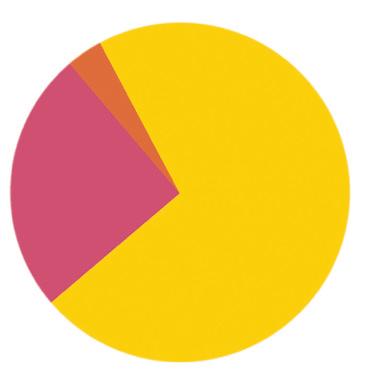
Who the hell are you? Natalia What?
Coming home for the holidays is an annual waking nightmare of interacting with friends and family who all want to know what we’re majoring in, whether we like our classes and if we’re seeing anyone new. This year, come prepared! Here’s a rundown of a few foolproof talking points for your next hometown hoedown.
written by julia lucas
For YOUR high school boyfriend
dO:
Tell him you’re busy.
doN’T:
Tell him all of your college friends call him “Balloony” because they think he looks like Dr. Doofenshmirtz’s anthropomorphic balloon companion.
For YOUR childhood best friend
dO:
Reminisce about how time flies. Just yesterday you were running lemonade stands in your front yard, and now you’re pounding Mike’s Hard in backyards that are borderline public health hazards.
doN’T:
Tell them you started watching Glee . Obsessively. Over and over again. They won’t understand. No one does.
For your high school friend group
dO:
Tell them about the time your college friend group went to a karaoke bar! The dulcet tones of “Sweet Caroline” never hit so hard.
Tell them you hooked up with your mutual high school classmate who used to practice clarinet in the bathroom “for the acoustics.” Even if they got hot, keep that one to yourself. doN’T:
For the high school TEACHER you run into
IN THE WINE AISLE
dO:
Tell them their English class really helped you find your voice!
doN’T:
Tell them “your voice” is a subtly erotic ASMR TikTok account.
Willie the Wildcat
designed by jackson spenner
For YOUR conservative grandparents
dO:
Tell them about your experience in the entrepreneurship club. The venture capitalist guest speakers are so enlightening!
Tell them you run a small business selling $85 fake IDs to freshmen who still get offered kids menus at Chili’s. Their IDs keep getting confiscated, so business is booming! doN’T:
For your dad
dO:
Tell him about how much fun you had at the football games. Go ‘Cats!
doN’T:
Tell him you never actually entered the gates of Ryan Field — but did enter Ryan from Sig Chi’s house to hit his record-holding four-foot bong. That thing could take down Northwestern Football’s finest men.
#6
#2
For your local barista
dO:
Ask her about the new holiday flavors! For extra points, mention how the student center Starbucks just doesn’t have the same hometown charm.
doN’T:
Tell her you almost got a septum piercing too, but you don’t want your parents to know you’ve been questioning your sexuality. You’re an art major — they already know.
For your younger sibling #8
dO:
Catch up on the latest family drama. Did Uncle Dan ever militarize his fleet of parakeets?
doN’T:
Tell them you overcharged them for their fake ID. No family discounts.

WRITTEN BY NASHVILLE ZIPPER (NATALIA ZADEH)
WRITTEN AND DESIGNED BY AMISH ZIPPER (ALLEN ZHANG)

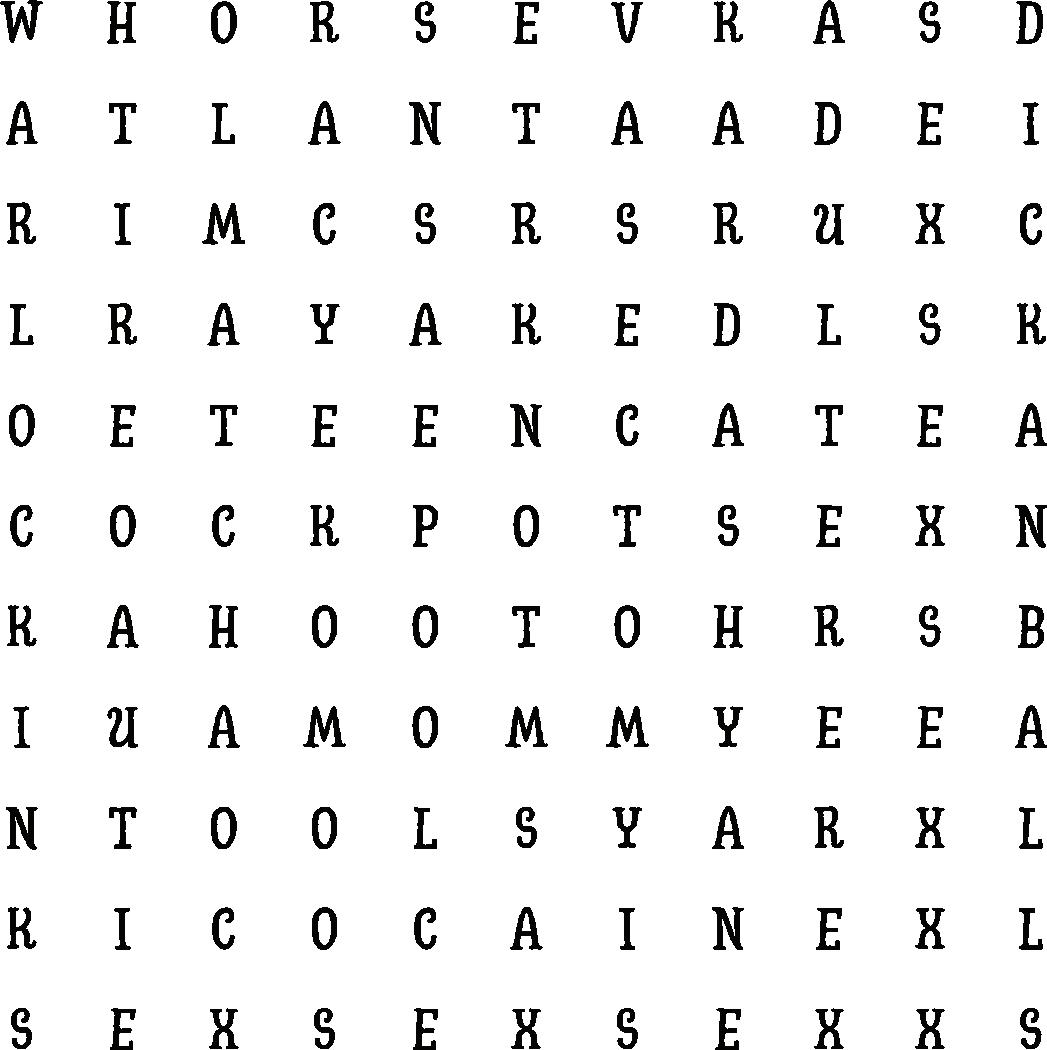



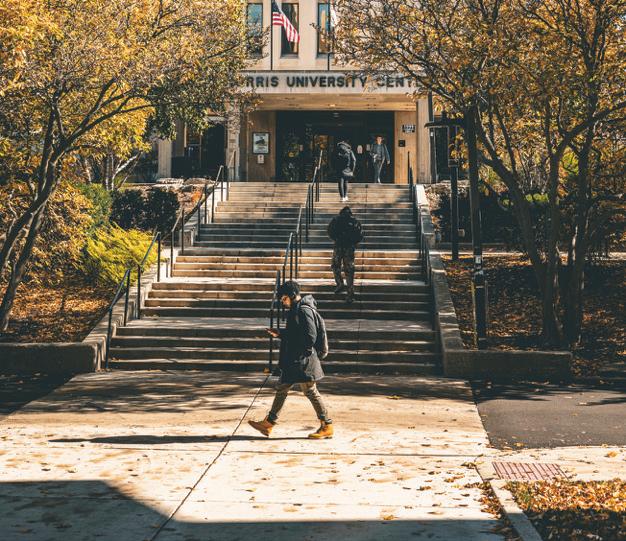
Hilarious joke: Why is Willie the Wildcat afraid of nuns? Find the answer at the bottom of this page!