Let them cook!
First-year chefs bring dorm kitchens to life. | pg. 10
Filling a gap in the “fund”ation
How student organizations resort to pay-at-the-door parties for extra dollars. | pg. 23

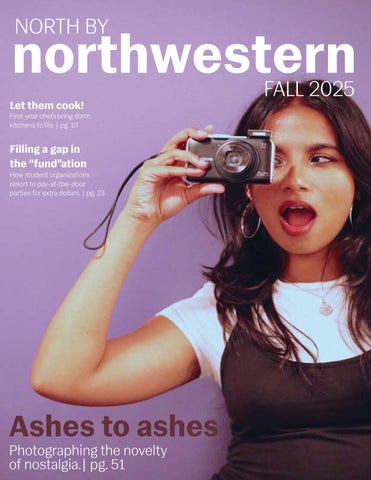
Let them cook!
First-year chefs bring dorm kitchens to life. | pg. 10
Filling a gap in the “fund”ation
How student organizations resort to pay-at-the-door parties for extra dollars. | pg. 23
Photographing the novelty of nostalgia.| pg. 51
PRINT MANAGING EDITOR Mitra Nourbakhsh
ASSISTANT MANAGING EDITOR Olivia Teeter
SENIOR PREGAME EDITOR Emi Levine
ASSISTANT PREGAME EDITORS Greta Cunningham, Brad Sontay-Tzun, Alan Tai
SENIOR DANCE FLOOR EDITORS Hazel Hayes, Seychelle Marks-Bienen, Helen Ryan
ASSISTANT DANCE FLOOR EDITOR Daniel Kent
SENIOR SPOTLIGHT EDITORS Jenna Amusin, Gavin Fisk, Sofia Hargis-Acevedo
ASSISTANT SPOTLIGHT EDITOR Rawya Hazin
SENIOR HANGOVER EDITOR Jessica Chen
ASSISTANT HANGOVER EDITOR Ila Dohrmann
CREATIVE DIRECTOR Lena Rock
ASSISTANT CREATIVE DIRECTOR Maanya Kejriwal
DESIGNERS & ILLUSTRATORS Leila Dhawan, Jessica Chen, Caroline Gould, Rainee Li, Neha Parameswaran, Sabeen Sharif, Grace Sharma, Julia Volman, Grace Wang, Evelyn Won, PHOTOGRAPHERS Avery Levinson, Carter Nishi, Cheryl Zeng
Josie Belfer, Ina Choe, Alden Farrow, Ivy Frater, Clara Freeth, Leah Honig, Kerri Huang, Emerson Leger, Rainee Li, Lucy Van Meir, Charlie Meyers, Neha Parameswaran, Grace Sharma, Sophia Sherman, Zoe Sternoff, Julia Volman, Anya Weerapana
EDITOR-IN-CHIEF Mya Copeland
EXECUTIVE EDITOR Jezel Martinez
EDITOR EMERITA Arden Anderson
ASSISTANT MANAGING EDITORS Mariana Bermudez, Dallas Thurman
DIVERSITY, EQUITY, & INCLUSION EDITOR Jezel
Martinez
NEWS & POLITICS EDITOR Aryn Honaker
ENTERTAINMENT EDITORS Ethan Bandaccari, Brad Sontay-Tzun
LIFE & STYLE EDITOR Clara Martinez
SPORTS EDITOR Mariana Bermudez
INTERACTIVES EDITOR Valerie Chu
OPINION EDITOR Stephanie Beresford
CREATIVE WRITING EDITOR Haley Kleinman
MULTIMEDIA EDITOR Olivia Teeter
GRAPHICS EDITORS Lena Rock, Yitao Wang
Cydney Waterman, Sara Xu, Sophia Zhang
PUBLISHER Jane Yu
AD SALES Sophia Zhang
OUTREACH CHAIRS Cydney Waterman, Sophia Zhang
EVENTS CHAIR Cydney Waterman
Just a few weeks before the academic year began, we received an email informing us of former President Schill’s resignation. With that announcement, the University felt a little unmoored. Our current president is an interim; $790 million of federal funding is in limbo; as citizens, we found ourselves in the midst of a government shutdown; our new freshmen are trying to find their place on campus; seniors are asking what is next.
In the midst these unsettled times, I want this issue of NBN to keep us grounded by telling stories about how life goes on. We hope to chronicle how the Northwestern community responds to uncertainty with stories that encapsulate the range of student life and emotions: the excitement, worry, confusion and conversations to try to make sense of it all.
In Pregame, we side-step the news: taste-testing Trader Joe’s fall snacks, finding fame on social media and deciding which of the libraries we would kiss, marry and kill.
In Dance Floor, we tarry with the troubles: one story digs into how student groups hold fundraiser parties to supplement SOFO funding. In another, we hear about a generalized anxiety causing Winter Quarter freshmen to scramble for junior year housing arrangements.
In Spotlight, we ask hard questions: What does the university president’s role actually entail? Who might be next? Our photo story takes the form of a personal essay as one writer grapples with uncertainty by turning to nostalgia. We observe wired headphones and cigarettes, digital cameras flashing at house parties and ask what it all means.
Finally, in Hangover, we heal with humor: mourning the loss of Reza’s and hearing a perhaps more honest version of that original email from former President Schill.
It would be negligent not to mention my incredible team of editorial and creative staff, along with the freelancers who took on the writing process during their first quarters on campus. The thoughtful (re)edits, intricate illustrations and good-spirited collaboration made this issue come to life as we navigated the complicated process of building a magazine. I hope the stories within these pages make you feel part of our community as well. As a senior, I know I am nostalgic already: proud of this campus and grateful to be a part of it for one last year.
Sincerely,
6
8
Reduce, re-use, re-cycle
9
10 Kiss, marry, kill: NU editionlibrary Pumpkin spice and everything nice
Let them cook!
12
iNflUencers

The flavors of fall return to Trader Joe’s.
WRITTEN BY PREGAME EDITORS DESIGNED BY GRACE WANG
Every year, the aisles of Trader Joe’s fill with festive food items to celebrate the incoming season. The shelves are stocked with items ranging from the classic Butternut Squash Mac & Cheese to Maple Leaf Ice Cream Sandwiches. In honor of fall, Pregame tried out some of the iconic grocery store chain’s seasonal items. Here’s everything you need to know about Trader Joe’s fall-themed treats: the good, the bad and (especially) the pumpkin.






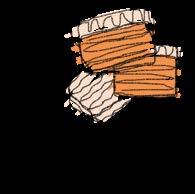
This festive twist on a Trader Joe’s clas sic — the mini sheet cake — is flavorful, soft and very sweet. The highlight of the treat was the cake itself, which was moist and slightly spongy with a subtle pump kin and cinnamon flavor. It was rich without being overpowering or artificial — a hard balance to strike. However, we had some reservations about the cream cheese frosting, which was too sweet for our liking. After a couple bites, its flavor profile became overwhelming. That being said, this treat would pair nicely with a cup of black tea or coffee — something with enough bitterness and acidity to cut through its sweetness. If you have a huge sweet tooth, this sheet cake is right up your alley. For the average Trader Joe’s goer, though, maybe sit this one out.

Pregame Consensus:
“Good but not great.”
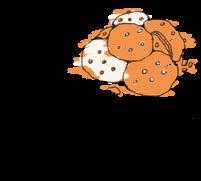
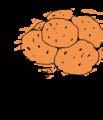
the cookie leans more into “spice” than pumpkin. Trader Joe’s says the pumpkin can be found in the crème filling, but it was really just sweet, and we would have easily believed it was simply vanilla. These Joe-Joe’s are great for a sweet pickme-up — as long as you aren’t expecting pumpkin pie.
Pregame Consensus: “Where’s the pumpkin?”





For a tiny package, these cookies sure pack a punch. A perfectly bite-sized treat topped with vibrant icing and sprinkles, they look like something straight out of a Girl Scout cookie box. Each bite is delightfully snappy, with the shortbread dough offering a delicate, crumbly mouthfeel. The texture is surprisingly reminiscent of a Biscoff — just in a thinner, smaller form that hopefully won’t remind you of Delta flight trays. As for the taste, one thing is clear: You will know that fall is in season. Pumpkin, cinnamon and nutmeg immediately grip your tastebuds, making these cookies a perfect companion to a chai latte or vanilla ice cream. The only downside for us was the sweetness; the icing, while good, tastes like typical royal icing swelling with added sweeteners. While Trader Joe’s claims it’s made from a yogurt base, any hint of tanginess is overshadowed by sugar — a running theme in these fallfest snacks.
Pregame Consensus:
“Lesser of four evils.”


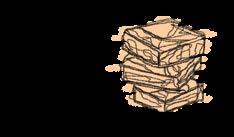
If you purchase this item looking for a treat that is a cross between a blondie and a pumpkin, it’s safe to say that you will be very disappointed. Not only could you barely taste the “pumpkin” part of “pumpkin blondie brownies,” but they didn’t taste like much of anything at all. The blondie had an indistinct sweet taste that was only broken up by a few nuts and white chocolate chips. Still, these additives did not offer anything special besides a much-needed crunch. The texture of the blondie was also disappointing; it was too spongy and airy to be a brownie, and tasted more like a cake than anything else. For being marketed as a pumpkin blondie, it did not satisfy either of those requirements. The treat sits comfortably in mediocre territory, and we can confidently urge you to skip it the next time you’re hungrily browsing at Trader Joe’s.
Pregame Consensus: “Mid.”
The one thing we have learned through this experience is that just because you can make something pumpkin-flavored, doesn’t mean you should . We’ve also learned that attempting to make something taste like a pumpkin has a low success rate, at least when it comes to Trader Joe’s snacks. While these treats are a festive way to get yourself into the autumn mood, they may not be suited for everyday use. We also don’t recommend eating them all in one sitting. If you’re looking to switch up your usual Trader Joe’s haul, give these snacks a try, but if you’re not one to branch out, we won’t hold that against you. Plus, there are always Trader Joe’s winter treats to look forward to!

On a mission to make bikes more affordable.
WRITTEN BY LUCY VAN MEIR // DESIGNED BY GRACE SHARMA
Anew student organization is taking one overlooked problem by the handlebars: the many abandoned bikes scattered across campus. The Bike Project, while still in its early stages, is trying to make a difference in bike accessibility and affordability at Northwestern.
The club works to build a better community for bikers on campus and hopes to collaborate with the University to reclaim abandoned bikes and distribute them to students. For now, they are facilitating spaces for students to sell bikes to each other at a reasonable price.
Medill fourth-year Luis Castaneda cofounded the club in February 2025. As a first-year, his bike was stolen just days after he bought it. At first, Castaneda’s solution was to cut the locks off of abandoned bikes on campus, but he
of this approach and wondered why there wasn’t a formalized bike recycling program for Northwestern students.
Castaneda says administrators initially shut down his idea of distributing abandoned bikes to students who needed them because the school has an existing partnership donating them to Working Bikes, a nonprofit in Chicago. But Castaneda wasn’t satisfied with that system.
“Why are we moving these bikes offcampus to these partners when there are students that are on campus that want them?” Castaneda says.
Bike theft isn’t just a campus problem — it affects the greater Evanston community as well. The City of Evanston reported 166 bike thefts in 2024 alone. While the

Walker with around seven bikes each time, bought from a distributor.
Other bike sales on campus, such as the ones at Norris hosted in collaboration with The Recyclery Collective, have prices ranging from $150 to $300.
“For the average student, that’s not something they’re willing to spend,” says McCormick third-year Gunn Kim, president of The Bike Club. “Anyone who wants a bike on campus should be able to have a bike.”
The club plans to continue hosting bike sales, facilitating spaces where students can operate directly with each other rather than buying from a third party.
“I think it’s been a long time coming,” Castaneda says. “But I think with anything

My dream date… cute.
WRITTEN BY ANYA WEERAPANA // DESIGNED BY
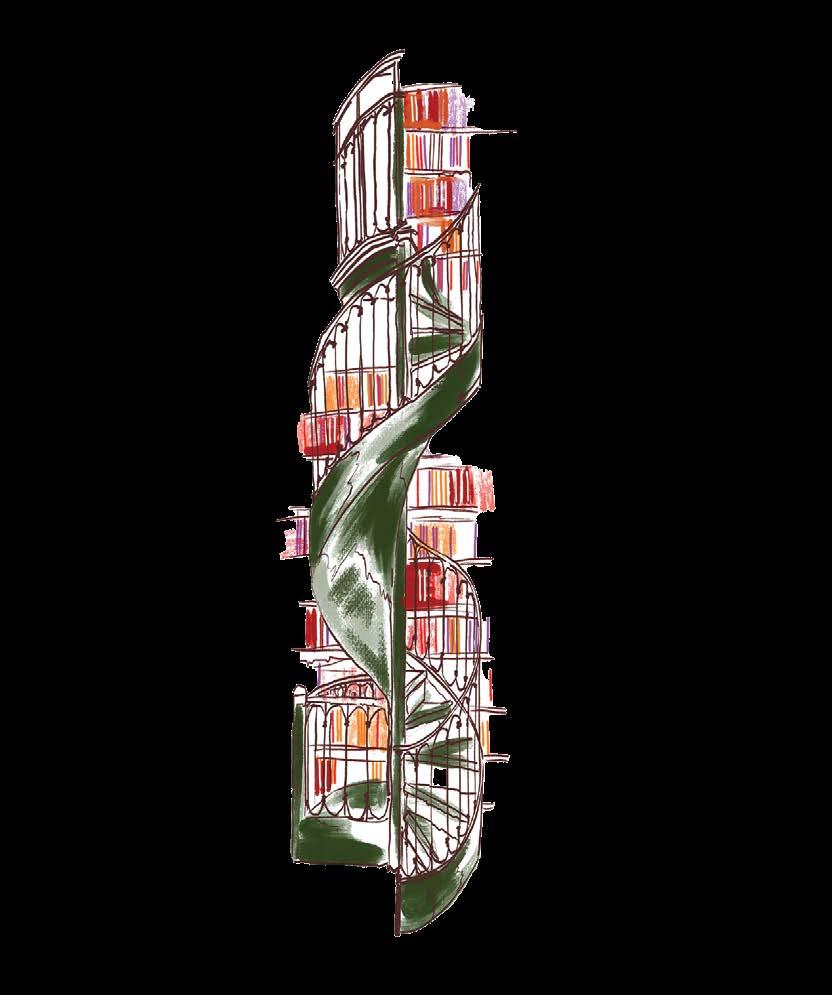
Dark, brooding, handsome. Nerdy, studious, social. Reliable, softspoken, resourceful. No, these aren’t the descriptions of my last three situationships. They’re the three buildings Northwestern students spend more time in than on dates themselves: Deering Library, Mudd Library and Main Library.
But which one reigns supreme? It’s a point of contention among students, so we took to the masses to see which libraries Wildcats would kiss, marry and kill. The results may shock you.
After taking some time to work on itself last year, Deering is back and better than ever. With ivy streaming down its exterior and vaulted ceilings in the interior, Deering is the subject of infinite Instagram stories, and with good reason: It is objectively beautiful. 38% of polled students said they’d marry Deering, while half said they’d kiss it. (Only 12% opted for the kill, the lowest figure of any library.)
Though you can’t speak or move your chair in Deering’s main study hall without getting a dirty look from the person next to you, the stained glass windows are conducive to a good evening lock-in.
The appeal of Mudd, other than its modern architecture, lies in its 24/7 hours of operation. Even in the wee hours of the morning, you can walk in and spy on chemistry majors stressing over labs or McCormick students agonizing over their Design Thinking & Communication (DTC) groups. It’s chatty (sometimes), but these conversations might just be trauma bonding sessions.

LEAH HONIG // DESIGNED BY EVELYN WON GRACE WANG
Allison Dining Hall has a reputation for being one of the better food options on campus, at least according to past polls from The Daily Northwestern . However, two 1835 Hinman residents cut ties with the South Campus staple after a string of lackluster culinary experiences.
One morning, just a few weeks into the school year, Weinberg first-year Adam Wang and Bienen-McCormick first-year Nathan McGough bit into what they thought would be simple dining hall pancakes. Much to their dismay, the pancakes included Froot Loops, which Wang describes as “spicy.”
The disappointing start to their morning helped push Wang and McGough out of the dining halls and into their residence hall’s communal kitchen. Since then, the two friends have become known across campus as the chefs of 1835 Hinman. They have spent hours cooking for themselves and their peers, creating a new South Campus tradition along the way.
“There’s a lot of people coming, even from Ayers Hall to Hinman, which is a 20 minute walk,” McGough says. “There’s people coming from everywhere to check out what’s going on.”
Although ovens and stoves were already available, Wang and McGough had to buy pots, pans and the necessary ingredients for cooking meals like fried rice, kimchi stew, apple pie and orange chicken.
Though Wang and McGough say cooking in the communal kitchens is worthwhile, preparing food in a cramped area with limited resources poses its share

While other students tend to treat communal kitchens as a place to strengthen their Cup Noodle cooking game, Wang and McGough have pushed the limits on what is possible. Jones Hall resident and Weinberg firstyear Ava Tuitele recalls her vastly different experience with the Jones Hall communal kitchen.
“People are only in the communal kitchen to use the sink, microwave or occasionally the stove,” she says.

It’s a different scene in 1835 Hinman. McGough’s favorite cooking memory was when he and Wang made Korean short ribs and watched them come out of the oven cooked to perfection.
“Someone would bite into it and the entire piece would fall off the bone … or the meat would just fall off the bone before it’s even served,” McGough says. “It just made me so happy because I know I nailed the texture.”
Over time, the two students’ cooking has shifted from being a way to feed themselves to a creative outlet they can share with friends.
Weinberg first-year and fellow Hinman resident Nina Tay says she had low hopes for the South Campus social scene, where 1835 Hinman is located.
“I expected for the floor to be a little dead, and people would just be so locked in on school that they wouldn’t really be
However, her expectations of a disengaged community were soon dismantled.

“I think [Wang and McGough] just brought every one closer.”
Nina Tay

Weinberg first-year
“I think [Wang and McGough] just brought everyone closer,” Tay says. “I’ve gotten to meet and learn a lot about new people on my floor that I didn’t know previously.”
While cooking has connected Wang and McGough with their peers, they also use food to stay in touch with those back home. Wang first learned to cook from his mother and started cooking in the communal kitchen partially because he felt homesick.
The solution turned out to be one phone call away.
“I asked my mom for her fried rice recipe and ended up making that,” Wang says. “We kind of just went on from there.”


WRITTEN BY IVY FRATER // DESIGNED BY JULIA VOLMAN // PHOTOS BY CARTER NISHI
Weinberg first- year
Zevi Davis has gotten used to being approached. At Wildcat Welcome, in the elevator on move-in day and even outside an Evanston gas station, people have come up to Davis, recognizing him from social media. The Weinberg first-year was once even asked for his autograph. He used a Sharpie to sign his name on the side of a Monster Energy drink.
Davis’ claim to fame? Videos of himself playing GeoGuessr — an online game where players have to guess a location based on Google Maps imagery — which he posts to Instagram and TikTok, where he has amassed over 3,200 TikTok followers.
Davis is part of a growing cohort of college students who double as influencers, aspiring to go viral. At Northwestern, there are dozens of such content creators, who have anywhere from hundreds to millions of followers. These influencers say they use their platforms in a variety of ways: as a “digital diary,” to promote their businesses or to explore their passions.
Medill second-year Mfaz Mohamed Ali has 3.2 million followers on TikTok and makes skits and comedy content, mostly about classes, professors and relatable college experiences. She started posting in 2020 and reached a million followers in one year.
Ali has a specific strategy to ensure virality.
“It has to be something that’s fresh, something that’s trendy, something that matches my niche, matches my page and matches the theme I have going on,” Ali says.
Some of her videos include “That one TA who’s just as lost,” “POV: you’re reading that one dramatic syllabus” and “Trying to do homework in April/May.” Along with attempting to follow trends, Ali posts at peak hours and uses relevant hashtags to promote virality.
McCormick second-year Hana Gutierrez posts videos discussing her observations and childhood memories and has grown an audience of nearly 400,000 followers on Instagram. The platform is a place for Gutierrez to explore her love of filmmaking. She also used it to get an internship this past summer in Los Angeles.
“I always say embarrassment is a mindset.”
Still, when Gutierrez had her first viral moment, she recalls being filled with fear.
“I was getting hundreds of DMs from random people I didn’t know, hundreds of comments, and all of a sudden … it became really real,” Gutierrez says. “Hundreds of thousands of people were seeing my face.”
Some college students also try to build their businesses using social media. McCormick first-year Hub Varith started a company called Infinite X, which makes hearing aids. He posted his first video on Aug. 31, introducing his startup and plans for social media. Since then, he has amassed over 30,000 followers on Instagram.
Despite his initial shock at the quick growth, Varith has big plans for his platform. As an international student from Thailand, he felt there wasn’t any information about Northwestern from the perspective of Thai creators.
“Harvard, Stanford, Dartmouth, they have videos, but not Northwestern,” Varith says. “So, I think with my platform, I can further promote and allow other groups of people to learn more about Northwestern.”
McCormick third-year Crystal Cooper had a similar motivation to start posting: She felt there was not a lot of information online about the University’s social life. She posts dancing videos and lifestyle content to over 12,300 followers on TikTok.
“You can definitely find information about stats, academically, but not really the type of people that are there,” Cooper says. “As someone who was an incoming freshman, I genuinely couldn’t find anything, and it caused me a lot of stress.”
Some of Cooper’s content includes chronicling Northwestern’s pros and cons, advice for incoming first-years and “get ready with me” videos for events like sorority rush and formals. Cooper says she has been recognized on campus for these videos, and, despite a little embarrassment, it always makes her happy to know her videos are helping people.
“I think posting on TikTok is not deep at all, and more people should,” Cooper says.
Filling a gap in the “fund”ation


WRITTEN BY RAINEE LI // DESIGNED BY RAINEE LI AND LEILA DHAWAN
In the dimly lit McCormick Foundation Center Forum, 20 students wearing tie-dye gather onstage, sweating anxiously as Academic Advisor Daniel MacKenzie grips the microphone. Pairs of Peer Advisors (PAs) are called up one by one for their first trivia question of the Medill PA showdown.
The showdown is an event everyone takes too seriously, some PAs say. Still, it is a pillar of the Wildcat Welcome experience for incoming Medill students, and it wouldn’t exist without the effort, commitment and comedy of their PAs.
Every year, a select group of Northwestern students welcome thousands of incoming freshmen to campus. These PAs include sophomores, juniors and seniors, each assigned a pack of fledgling Wildcats entering their respective colleges. But, evidently, a PA is far more than the rigid definition provided by the Northwestern website: yes, they share resources, assist with course registration and support transitional programming. But they are also built in friends, mentors and, sometimes, shoulders to cry on.
For PAs, the job starts months before Wildcat Welcome.
Applications open in January, and candidates face a selective process. The PA program requires short response essays, a group interview and, for first-time applicants, an individual interview.
“That was my first time being nervous for an interview in a long time,” Medill fourth-year Natalie Wendt says. “I really, really wanted it.”
Hundreds of students apply annually despite the major time commitment
and lack of pay. After several weeks of anticipation, successful applicants receive their acceptance notifications, marking the end of one long wait and the start of another one.
The job begins with a one-day “lunch retreat” at the beginning of Spring Quarter, where PAs are introduced to their Peer Advisor Leadership Training Course board group (PALTC) and the head PAs assigned to each group. Weekly two-hour-long training sessions take place throughout the spring and leaders return for PA “summer camp” four days before new student move-in.
“That was my first time being nervous for an interview in a long time.”
During this intensive process, PAs learn the ins and outs of being a good mentor, a True Northwestern Dialogues (TNDs) director and a student expert on their respective undergraduate school. They are restricted from talking about their extracurriculars to ensure incoming students choose their own paths. Discussing Northwestern’s drawbacks is also off-limits, as PAs are told to make sure their top priority curating a positive and hopeful environment.
But Wildcat Welcome isn’t just about fun. One of the more serious aspects of the program are TNDs. These workshops demand thorough preparation as the PAs discuss safe practices, sexual abuse resources, mental wellness and a myriad of other challenges new college students face. PAs are given binders full of instructions and guiding questions intended to help them structure TND discussions on administrative presentations. Hampton described her freshmen as “taken aback” by the sexual safety theater production. She says the ensuing group TND was particularly tense.
Still, being a PA isn’t all work. Community and socialization is heavily emphasized during the training process. PA summer camp holds tournaments between board groups and a variety of games in between training sessions. Weinberg fourth-year and two-time PA Shine Seon enjoyed the four consecutive days of bonding and rehearsal of the annual PA dance.
Welcome one and all
Final preparations mean event briefings, an early move-in date and free backpacks before the freshman arrive on campus and the PAs are thrown into a sea of purple.
“I really wanted [my students] to like me and also feel comfortable around me as someone who was going to lead them,” Medill fourth-year and three-time PA Raghav Khosla says, reflecting on his first PA experience.
Even as years pass, the thrill of being a first-time PA remains.
“I was so excited — I literally kept saying to them, ‘I hope I’m not scaring you guys,’” Hampton says. “I wanted them


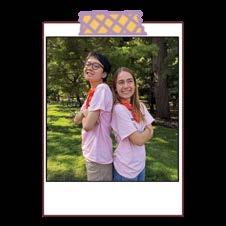
a college student now, don’t think about the past, just be present in this moment.’”
Some first-year students say their PAs made their Wildcat Welcome enjoyable.
Bienen first-year Yiming Jia described the extra friendliness the PA groups brought to the Bienen scavenger hunt where students toured the Patrick G. and Shirley W. Ryan Center for Musical Arts building, taking pictures of rooms they were sent to find. Becoming acclimated with classmates and laughing over poor quality photos became a favorite memory of his from the eventful welcome week.
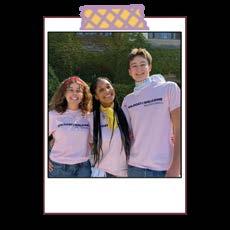
to be as excited as I was. [The PAs] are here for a week before they come, so we’re really anticipating their arrival. It kind of feels like Christmas day.”
For many PAs, it was exhilarating to be standing on the opposite end of Wildcat Welcome. Hampton describes feeling a huge responsibility since she was these students’ first connection. Now that she understands how much work PAs put into the welcome process, Hampton says she was “jumping up and down” as she waited for her new ‘Cats.
Then, the strictly regimented preparations become more personalized, matching the unique personalities of each PA. Medill second-year Carter Chau and Wendt planned an Insomnia Cookies picnic; Khosla once took his group to the movies and on a walking tour of his favorite restaurants and stores.
“The programming through Wildcat Welcome can be really long and overwhelming,” says Hampton. “But a lot of [my students] admitted the programming helped [distract them] from feeling homesick. That’s the purpose … to put you in a headspace of ‘OK, you’re
“I learned a lot about myself and my capabilities.”
The efforts of the PAs seemed to have a high payoff, as students explained feeling more relaxed about their welcome experience knowing that they had someone to rely on.
“Having a PA made [Wildcat Welcome] a lot easier to navigate,” Jia says. “They put a lot of effort into helping us.”
After all the excitement, students and PAs alike say they emerge with new wisdom, adopted from the intensive yet rewarding process.
“I think I learned a lot about myself and my capabilities,” Chau says. “It taught me a lot about leadership [and] being responsible for other people.”
Wildcat Welcome is a once-in-alifetime experience — for most incoming students, anyway. Being a PA allows older students to experience it once again. But what is so special about this program that makes people willingly give up a week of their summer and many hours during Spring Quarter?
For many PAs, it is the idea that they are
reciprocating the passion and guidance that they once received.
For example, Hampton cites her own PA as being influential in her decision to apply. She recalled how reassured she felt, walking up to a calm, organized PA who made the experience as easy as possible. She hoped to bring that same guidance to incoming students.
For Khosla, the relationships formed with other PAs kept him coming back.
“I was able to branch out a lot more because of that community,” Khosla says. “I was able to interact with people across different majors, different schools, different years.”
Even after Wildcat Welcome, connections among PAs and students continue to grow. Hampton says she became close friends with her PA as the year went on, collaborating on The Dolphin Show together.
“It’s just really fun to become friends with someone you used to look up to,” she says. “I genuinely really loved my PA.”
Outside of the relationships PAs form with each other and with their students, they also have the potential to help cultivate students’ first friend groups, which can last long after Wildcat Welcome concludes.
“It was all very rewarding, especially seeing my students toward the end of the week when I could tell that they were becoming closer friends and more comfortable with each other,” Wendt says. “Being a PA helps you fall in love with Northwestern all over again.”
WRITTEN BY HELEN RYAN // DESIGNED BY JULIA VOLMAN // PHOTOS BY CHERYL ZENG
Weinberg second-year Wes Spivak had just started his second quarter of freshman year when he realized he was behind in a process he didn’t even realize had started: the search for off–campus housing. Upperclassmen friends had told him to start thinking about signing leases, but reality hit when his friends started making housing groups and touring properties more than 18 months in advance.
Spivak jumped into action, but the process of finding a junior-year house proved overwhelming. He signed a lease in February, but is still dealing with leftover challenges.
“Locking in living with people who you have only known for five months was a little bit tough,” he says.
Spivak is not alone. Many Northwestern freshmen are already worried about where they’re going to live as upperclassmen. They never expected to be touring houses, negotiating with realtors or signing a lease during their first year at Northwestern, and many say the process can become stressful and intimidating.
Northwestern requires students to live on-campus for their freshman and sophomore years. The two year live-in requirement began in 2017 in an effort to increase the number of students lodging on campus.
While upperclassmen technically have the option to live in on-campus residences, many of them choose to rent a house or apartment so they can save money, live with friends and explore life outside the University. Spivak says he never considered staying in the dorms for his junior or senior years because “everyone else” took the off-campus route.
According to Northwestern data, 55% of undergraduates lived on-campus during the 2022-23 school year, leaving just under half of the school living in
the greater Evanston area. Paul Harb, a longtime real estate agent in Evanston, says Northwestern students who want to lease a home make up 50% to 60% of his clients.
One reason many undergraduates choose to find their own housing is the cost-savings. Northwestern’s undergraduate financial aid page says standard on-campus room and board, including a meal plan, costs around $21,126 a year — though this can change based on the dorms and in some cases, variations in meal plans. Harb says offcampus housing prices vary greatly, from $800 to $1,700 a month for a room in a shared house or around $3,000 for a studio apartment in a higher-end building.

While the price of off-campus housing may vary across homes and apartments, the process is often fast-paced. Although the exact timeline of the off-campus housing search shifts each year, recently, students who want to live in houses try to sign their leases before the end of their first year.
Jackie Mack, an Evanston-based real estate agent who has been with Jameson Sotheby’s International Realty for the past 25 years, says students should start the process prepared: ready to sign a lease, have parents on board and even be able to put a deposit down.
“[Students] really have to be thinking ahead when they look for rentals because things go quickly,” Mack says. “The landlords like to rent them up early, before the next September school year.”
Medill fourth-year Emma Siskind says she didn’t start looking for an offcampus house until Spring Quarter of her freshman year. She was over a year out from actually living off-campus, but her process still started later than Spivak’s.
Siskind says she faced difficulties in the off-campus housing process, from



finding the right rent price to making sure she liked the location and having enough room for her whole group. However, she says the process seems to be more stressful now than it was when she was a freshman.
“I would consider myself, generally, a calm person, but with everyone worried about it, it definitely made me a lot more stressed out,” Weinberg secondyear Maya Helmrich, who recently went through this process, says. “It seemed like a competition because everyone was competing for the same houses in the same area.”
The pressure to start the process so early seems to have trickled down from year to year, picking up pace as older students pass down their experiences to younger ones. Helmrich and Spivak say they were both prompted by older students to start looking into off-campus housing early.
“I think there’s a little bit of a group effect, so people hear from their friends they booked housing, and then that kind of spreads around,” says David Giljohann, (Weinberg ‘23), who now owns Londominium Properties. “It creates a little bit of a frenzy around everybody feeling like they’re behind if they don’t reserve housing right away while they’re freshmen.”
reviewing the lease because she had never gone through a process like this before, and she wanted to know what she was getting into.
Giljohann pursued student real estate because of situations like the ones Helmrich worried about. He says he saw many students stressed out and seeking help in finding an off-campus house when he was an advisor for one of the fraternities on campus, Delta Tau Delta.
“I was handling a lot of issues the Delts were having with off-campus landlords who were taking advantage of students, not maintaining the properties correctly or creating unsafe environments for students,” Giljohaan says. “I thought I could do it a lot better, so I started buying off-campus properties, renovating them and making them nice for students.”
Giljohaan says landlords could often include unnecessary or “deceptive” fees in the leases, but students wouldn’t know any better. For example, move-in or moveout fees could cost an entire month of rent, or landlords would add hidden costs for parking or subletting.
According to Giljohaan, many of Evanston’s rental properties are in poor condition, but landlords in the area are not dedicated to fixing these issues for students.
“Landlords would make promises about doing certain renovations or improvements or maintenance on the property, and those promises were routinely being broken,” he says.
Students, not knowing much about offcampus life and trying to deal with a tight timeline on top of legal problems, may find themselves in unfortunate situations, Giljohaan says. He has seen students willing to sign leases with unfavorable terms because there is added pressure to lock in a house before someone else does.
Students who worry they’ll lose out on their ideal home say they feel pressure to sign leases quickly, though it might be their first time negotiating contracts. Helmrich spent time with her father
It’s a pressure Spivak himself says he felt.
“You gotta act fast,” Spivak says. “If we didn’t sign the lease the day we saw that house, someone else would have signed it, and we would still be looking.”
Not all students partake in the rat race of finding an off-campus
house. Instead, some opt to live in an apartment. This means living with less roommates and having more time to look for accommodations.
Medill third-year student Audrey Hwang lives with one other person, and says she and her roommate liked the idea of sharing a smaller place together. After touring a few complexes, Hwang says they felt most comfortable in an apartment.
“I love how I can go upstairs, go downstairs [to other units], and there’s always people I can hang out with,” she says. “I feel like it’s like having the college experience to socialize.”
Jason McKean, assistant dean of students and director of strategy and operations, says many freshmen contact him about off-campus housing and are concerned about the process.
Northwestern aims to provide students with adequate support in their transition to off-campus living, especially with the shorter timeline. McKean’s department helps students throughout the process, correcting misconceptions, answering questions about contracts or finding the right place, and encouraging students not to rush into anything.
Even with this help from the school, Northwestern’s student body moves quickly to figure out off-campus plans, and McKean says students feel this pressure even during the department’s programming at the start of the school year.
This differs from other schools, like Dickinson College, Vanderbilt University
or Middlebury College, where students are required to live on campus for all four years and often don’t have to worry about who they’re living with or where they will end up until the semester before they move in.
University of Richmond first-year, Virginia Nelson, says she doesn’t expect to think about off-campus housing at all during her freshman year, based on what she has heard from upperclassmen.
“At Richmond it’s really just like if you can find housing off campus, and you want to do that, you should,” Nelson said. “From what I’ve heard, it’s pretty relaxed.”
While there may be a craze surrounding off-campus housing at Northwestern, McKean says students shouldn’t be worried.
“They can slow down a little bit and can think about what some of their other needs are,” he says. “Finding an apartment off campus is often about not just having the box into which you move, but having that box be filled with the things you feel like are most important to you.”
McKean emphasizes the resources that Northwestern provides students. He has answered questions and helped students through difficult situations when finding somewhere to live off-campus and encourages people to reach out and go through the process thoughtfully.
“Let’s find a way to give you some more knowledge,” McKean says. “So you can slow down and actually cultivate all of the things you’re going to need to feel good about moving off campus.”

WRITTEN BY EMERSON LEGER // DESIGNED BY MAANYA KEJRIWAL
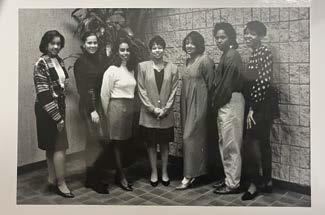
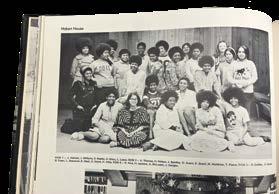
Fifty-six years ago, Debra Hill (SESP ‘71, M.A. ‘72) attended a sorority recruitment event as a sophomore at Northwestern but felt something was missing. The appeal of a sorority for Hill was the opportunity to have a close group of women she could spend time with, but she also wanted a space that represented Black women on campus.
“I went to some of the white sorority rushes,” says Hill. “But I still didn’t feel like I was getting what I was looking for, in terms of those close knit relations.”
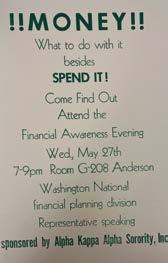
While on campus, Hill met two women who were part of the undergraduate city chapter of Alpha Kappa Alpha (AKA), a Black Greek-letter organization (BGLO) in Chicago. Members of the chapter understood Hill — and others’ — grievances and invited her to a party in Chicago sponsored by AKA.
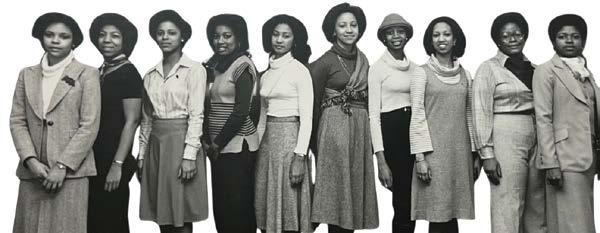
Inspired, Hill decided to help charter a chapter on campus and pioneered one of the first BGLO sororities at Northwestern.
“I was just blown away by the sisterhood, by their desire to be supportive of the community, by the development of their leadership skills,” Hill says.
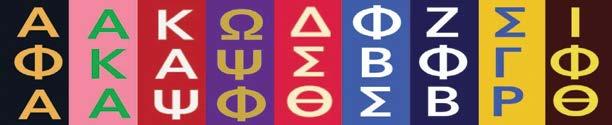
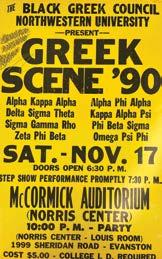
Originally created for Black students to feel they had a place in predominately white institutions during a time of systemic oppression, Black Greek life organizations have been a part of Northwestern since 1917, with the founding of the Kappa Alpha Psi fraternity. Today, they’re represented by the National PanHellenic Council (NPHC), which is composed of five fraternities and four sororities known as the “Divine Nine.”
After its suspension, AKA is back on campus this year, meaning eight out of nine of the NPHC
organizations now have established chapters at Northwestern.
Northwestern’s NPHC chapters have seen a comeback in recent years as members dedicate themselves to serving the greater community and fostering a strong sense of brotherhood or sisterhood. Each chapter has their own unique set of principles and values, but Hill also places an emphasis on the cohesiveness of the Divine Nine organizations.
“We’re all in this together,” she
says. “It’s about looking at people who you like and respect and have the same values — but with a little different twist — and recognizing that their validity is as strong as yours.”
Establishing a Divine Nine sorority on campus was not an easy task. Hill, along with 11 other women, had to get approval from student organizations, the University itself and the AKA sorority international office. They also needed the support of the graduate chapter, who would oversee the undergraduate chapter, and all members needed to maintain certain grade point averages. After meeting all these requirements, on March
1, 1969, Hill became one of the 11 new members and two city undergraduate members initiated into the AKA chapter at Northwestern.
In recent years, many of the NPHC chapters are seeing growth and reactivation. The Omega Psi Phi fraternity was reactivated on campus two years ago but had previously been inactive for 10 years.
Bryce Nivet, Weinberg fourth-year and vice president of NPHC, became a member of Omega Psi Phi last year, one of four members to join in 2024.
“Since then, the NPHC as a whole has grown tremendously,” he says. “To be able to be at the forefront of that growth has been awesome.”
Another person who helped reactivate a Divine Nine organization is Communication fourth-year Chloe Coenraets, who joined her sorority last spring. Coenraets attended last year’s Black Greek 101 to learn about each of the organizations, eventually choosing Sigma Ghamma Rho because it emphasizes women’s health and the education of children. It previously had no members, but Coenraets reactivated it by “crossing,” or becoming initiated.
“What makes the Divine Nine special is the emphasis on helping the Black community to be wonderful.”
“I think what makes the Divine Nine special is the emphasis on helping the Black community to be wonderful,” says Coenraets. “There are a lot of wonderful organizations in the Divine Nine; everyone has to pick whichever is right for them based on what they care about ... [Sigma Gamma Rho] is the one that is right for me, which is why I picked it.”
A key part of the Divine Nine’s commitment to brotherhood and sisterhood is participating in community service. On Oct. 18, Delta Sigma Theta participated in a non-competitive 3-5 mile walk called “Making Strides Against Breast Cancer” to raise money for breast cancer awareness. Throughout the year, the chapter also helps teach members of the Chicago community financial literacy and volunteers at Hilda’s Place, a homeless shelter.
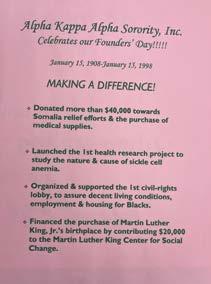
During Hill’s time on campus, AKA participated in similar events: clothing, school supply drives and polishing nails for senior citizens on Mother’s Day.
“The idea that we were giving back to the community in such a simple way, in just sitting and talking to these senior ladies, I mean, what kind of cost value can you put on that? You can’t,” Hill says.
and challenges Evanston may be facing,” Batista said in an email. “This event allowed for an educational component on food inequality in the area while also giving us the chance to take direct action.”
According to Nivet, Omega Psi Phi has 12 mandated service programs, from mentoring to scholarship distribution and voter mobilization. Last year, the fraternity was on a panel at Evanston Township High School and continues to incorporate its service around Evanston as much as possible.
As the only member of the Northwestern Sigma Gamma Rho chapter — and the head of public relations for the NPHC — she bears a lot of responsibility but has found her experience to be overwhelmingly positive.
President of the Northwestern NPHC executive board and Weinberg fourthyear Blaire Batista is a part of Delta Sigma Theta. Last year, Batista’s sorority packed over 1,000 lunches with Evanston Community Fridges to help residents who need food assistance. With over 30 students working together from the Multicultural Greek Council and other Divine Nine organizations, the event helped to foster community and connection, Batista says.
“I feel that, as students, we can easily disregard the problems
Nivet says another unique aspect of Omega Psi Phi is their long-term commitment to service. Nivet’s father has been a part of the fraternity for 35 years and has maintained a strong connection with the organization throughout that time.
“A lot of the service is broader than Northwestern,” Nivet says. “It is truly lifelong.”
With AKA’s return, Hill is hoping present-day students will be able to experience the same fulfillment she found within the organization.
However, she says they are going into the year knowing some things have to change.
“The seriousness of hazing, which has always been promoted as a part of the sorority since we were founded in 1908, [shows that] that hazing is unacceptable,” Hill says. Hill was president of the graduate chapter when Jordan Hankins, who was part of AKA and a member of Northwestern’s women’s basketball team, took her own life in 2017. Hankins’ mother filed a federal civil complaint against AKA for hazing, which resulted in an eightyear suspension decided by both AKA Inc. and the University. The suspension from the University was lifted in 2019, beginning the reinstatement process.
In 2023, Hill gathered a committee within the graduate chapter to establish a plan to get AKA back on Northwestern’s campus. The first part of the plan included a rush event, which was completed this September. Hill also presented to students at a Black Greek 101 information session last spring and this fall. Hill says this plan has been important for students to learn more about the sorority and gauge their interest.
Prospective members have to fill out paperwork, sign an anti-hazing
COURTESY OF NORTHWESTERN UNIVERSITY LIBRARIES
commitment and agree to the values of lifelong service and active participation. Graduate members of AKA supervise the sorority’s return, reviewing all the documents and forwarding them to their regional director.
Even with their suspension five years ago, Hill is grateful to Northwestern for giving AKA another chance.
“I have to praise my alma mater for their continued support and encouragement,” Hill says.
After submitting the plan in 2024, Hill heard from the corporate headquarters that AKA could start accepting new members. A two-week training process for all new members will begin, and by the end of the Fall Quarter, AKA will officially be a part of the Divine Nine again on campus.
In the meantime, Hill is excited to welcome new members into the AKA community and watch them form lifelong bonds.
“Now you have this expanded family, sisters who are going to look out for you."
Debra Hill SESP '71 M.A. '72
“I’ve never not been in touch with the sorority since I was initiated on March 1st 1969,” she says. “Now you have this expanded family, sisters who are going to look out for you … You’re never alone.”


How student organizations resort to pay-at-the-door parties for extra dollars.
WRITTEN BY DANIEL KENT // DESIGNED BY LENA ROCK // PHOTOS BY AVERY LEVINSON
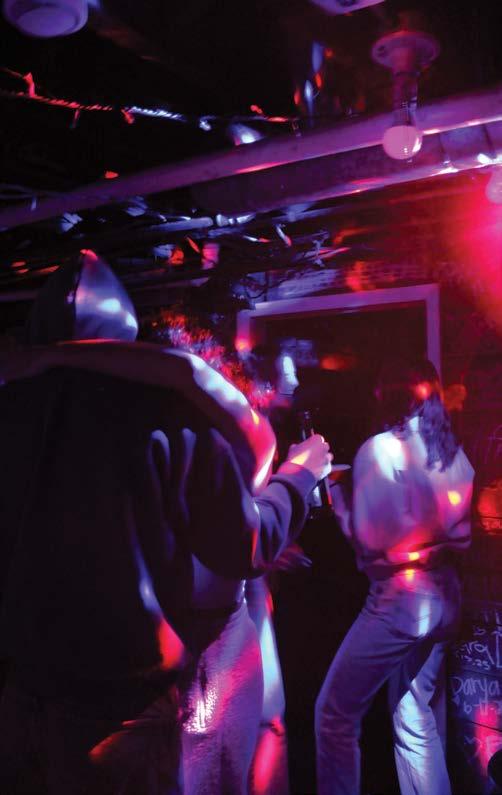
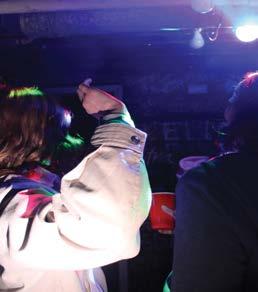
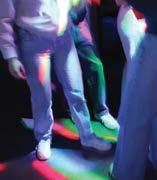
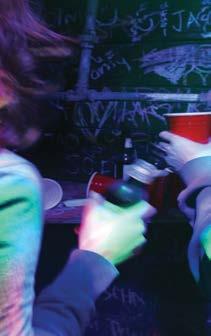
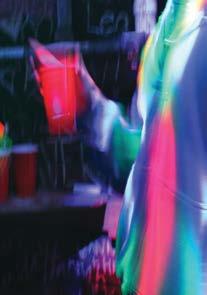
Red solo cups. Booze. Loud music. Flashing lights. Fundies are just like any other college house party, except for one fun (d)ifference: revelers must pay a fee — usually $5 — at the door. Fundies, a portmanteau for “fundraiser” and “parties,” largely define the Northwestern party scene outside of Greek life. These events may seem like your average college house party, but performing arts groups rely on them for more than just a night of fun. Fundies function as grassroots, pay-at-the-door fundraisers that bankroll student organization expenses and promote productions.
Usually hosted a couple weeks before a show, fundies often feature costume themes and can attract hundreds of partiers. These events are largely publicized on social media and through word-of-mouth. For Communication second-year Megan Trubey, who has spent approximately $45 on fundies
within the last year, advertising makes all the difference.
“Their branding — their marketing — was really strong, and that continued into that fundy. It was fun for everyone to sort of match their vibe,” she says, recalling a fundy last February.
In 2025, one student theater group used the production’s plot — a feud between two characters — to build hype for the party and show, says Communication second-year Arjun Shah. He says the party stopped, the music went silent and a staged fight between two actors ensued. He credits the show’s marketing director for creating an “interesting” and “specific vibe” for the fundy.
Beyond online promotion and drink menus fit for soirées, organizers also drive turnout by partnering with student bands to feature live music. Some bands are compensated for their performances

while others have personal connections to the host and donate their time.
If bands aren’t available, fundies may hire student DJs or resort to the most cost-effective option: a couple speakers and a phone streaming music via Bluetooth. Regardless, a strong tracklist is essential. Through moshing and dancing, partygoers can let go and vibe in a Woodstock-esque fashion.
But pushing promotional content is a balancing act — too much could contribute to lower turnout, says Nathan Greene*, who recently organized a fundy for his student production.
“While marketing [the fundy], I was taking into consideration if I overmarket this, I might seem a little bit desperate … and that might drive people away,” he says.
Greene explains his group’s goal in hosting a fundy is primarily centered on




building awareness for the production rather than raising money.
“It’s a really good opportunity to bring new eyes to your show,” Greene says. “I think that’s why a lot of people do it. And obviously, more money doesn’t hurt.”
Greene’s production received ample funding from the University, but fundygenerated dollars account for about one quarter of the production’s overall budget. They provide his group a cushion for unforeseen circumstances close to the show date, since relying on fundies to meet every financial demand is not strategic.
“It’s a really good new eyes to your show. I think that’s opportunity to bring why a lot of people do it. And obviously more money doesn’t hurt.”
Greene’s fundy, hosted in October, was successful in bringing both viewers and cash to the show. He estimates that over 100 people attended the party — totaling about $1,000 in admission and drink sales, with a final profit around $500 — a “significant amount of money,” says Greene. His organizing team strategically priced drinks below $5 to ensure happy customers while still making a profit.
Such structure of a fundy isn’t limited to performing arts groups. Some cultural student organizations also host payto-enter parties to provide a space for socializing and bring in extra dollars.
Carson Harris*, a student group social chair, says his organization hosts mixer events about once a month. Attendees can purchase $5 tickets beforehand through an online platform or pay at the door.
He estimates about 100 people bought tickets at the most recent event.
While he is unsure of the exact amount raised, Harris believes the organization makes around “mid to low three figures” throughout a quarter. This cash is primarily used to subsidize expenses Associated Student Government (ASG) funds don’t cover, he explains. For example, independentlyraised dollars contribute to formal and retreat costs. He also says the funds could be used for buying thank-you gifts, including food and beverages, for club volunteers.
Ticketed mixers provide a source of cash with far fewer restrictions than other modes of fundraising — allowing the club to complete basic functions that would otherwise be more costly or outright impossible to materialize.
“I assume for [a] grant, you would probably need to go through higher barriers … versus if you were to raise it yourself, then you could basically use that money for whatever you want,” Harris says.
Student groups receive the bulk of their funding from ASG’s Student Activities Finance Committee (SAFC), which appropriates close to 3 million dollars each academic year. The Student Organization Finance Office (SOFO) has oversight of this group funding from ASG.

Groups are allowed to raise additional money through approved measures outlined by the Student Organization & Activities (SOA) office, including other grants, approved corporate sponsorships and Catalyzer, a Northwestern-based crowdfunding site.
In recent years, student organizations have faced more financial pressures — partly due to the fact that student allocation demands outpace available funding. In 2023, SAFC granted 73.87%





of lower bound allocation requests, but in 2024, that number dipped to 66.63%. In 2025, however, there was a slight increase, reaching 71.72% according to a June report by TheDaily.
“We’re well aware of this trend,” says Medill third-year and SAFC Co-chair John Sisco. “It’s something we are trying to find longer-term solutions for, because if this continues in perpetuity, we’re going to have some issues.”
SAFC’s budget comes from a quarterly activity fee paid by students. The fee grew from $83 for the 2023-24 academic year to $95 for the 2025-26 year. While the fee increased $5 from 2024-25 to 2025-26, Sisco says raising this charge is like a “tax” that SAFC tries to avoid.
“It’s so questionable, like, at least it’s going toward my but I always feel friends [who] are able to put on shows.”
Arjun Shah Communication second-year


Because of the downward trend in allocation fulfillment, a lower percent of student requests have been met by SAFC compared to past years. This financial pressure has led some student organizations to seek other methods of funding, like Catalyzer and grants, in addition to fundies.

Last academic year, Catalyzer hosted crowdfunding campaigns for 25 student groups which raised over $105,000 in total, says KellyAnn McGowan, who oversees the program. This year, she says in its fall cycle alone, 18 groups participated — raising over $160,000 — a “big spike” in the platform’s 10-year history.
Registered SOA organizations are only allowed to use Catalyzer, not other crowdfunding platforms such as GoFundMe or Kickstarter. And Catalyzer funds cannot be used for some core costs, which include costumes, uniforms (unless rented or owned by a Northwestern department), competition fees and food and beverage costs.
If Catalyzer is not an option, SOA promotes additional funding opportunities to more than 450 organizations — offering advice and guidance to follow rules and regulations.
“I haven’t heard anything drastically different compared to other years in terms of the funding that student groups are seeking and the funding that’s attainable,” says SOA Associate Director Joe Lattal.

money that could be attained, instead, through hosting a party.
Lattal says he is not familiar with the concept of fundies, and he emphasizes his confidence about available funding for student organizations.
He explains student groups have access to many opportunities for additional funds, as outlined on SOA’s website, and says SOA is “constantly steering student groups toward the opportunities that are already vetted.”
On the other hand, Sisco cites an ASG funding appeal session last Spring Quarter attended by “many groups” as evidence of organizations not receiving as much money as they need.
Along with lower allocation fulfillment, groups’ pocketbooks are under pressure from inflation and potential cuts by University departments, says Tim Holbrook, student affairs executive director of finance and administration.
Many approved, alternative funding pathways can be difficult to pursue — like writing grant applications and connecting with corporate sponsors — requiring additional steps for extra
“It’s actually surprisingly tricky and difficult to bring in revenue in a lot of different ways because almost everything comes with some sort of rules or parameters,” Holbrook says. “If [student organizations] want to work through SOFO, you’ve got to accept the parameters we have.”
Failure to do so could result in payments not being made, he says.
The party goes on
Still, year after year, student groups see fundies as valuable opportunities to publicize events, build social connections and raise money.
Shah, who reluctantly admits to spending about $70 on fundies within the last year, says, “It’s so questionable, but I always feel like, at least it’s going toward my friends [who] are able to put on shows.”
*Source asked to remain anonymous duetothesensitivenatureofthetopic.
The
WRITTEN BY HAZEL HAYES // DESIGNED BY LENA ROCK // PHOTOS BY LENA ROCK
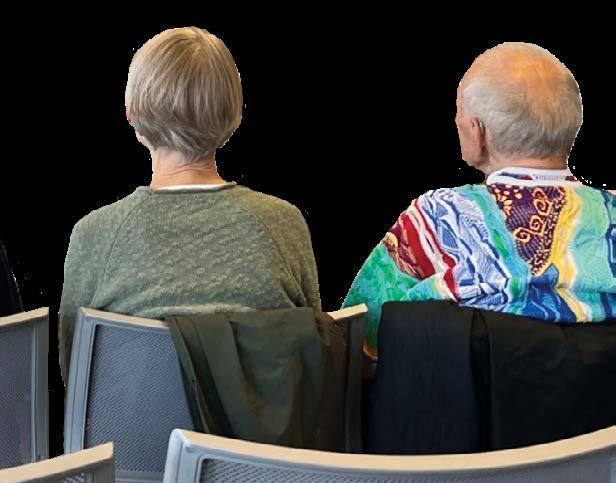
On Tuesday and Thursday mornings, students begin arriving at Norris at 8 a.m. sharp, right when the doors open. They get their coffee at the empty Starbucks, chat with partners and friends or read the paper. Gray hair, glasses and hearing aids are sprinkled throughout this group of students, who head to the elevators to get to their 9:30 a.m. class in the second-floor Northwestern Room.
As the lecture commences, there are no open computers with The New York Times Games; no phones, AirPods or distractions. Every student has their head up, listening attentively to the professor for the full 90 minutes.
And then of course, a piercing phone ringtone plays. It takes a few tries to turn it off.
These classes are part of Northwestern’s Continuing Education Program, which is run by The Alumnae of Northwestern University, a board of women committed to “Engaging Minds, Enriching Lives.” The program began in 1968 and offers noncredit courses open to the public. They cater to retired individuals — not just Northwestern alumni, but anyone interested in resuming their education.
Never stop learning
This quarter, the program offers four courses taught by current Northwestern professors with subjects ranging from Political Science and Philosophy to Radio, TV and Film (RTVF). It also offers The Alumnae Lyceum , which features nine different professors who each teach one class over the course of the quarter.
“They are feeling anxiety and want to understand better what they’re reading in the paper.”
Kristen Mercker Speech, ‘86
“[The Lyceum] allows some of our subject matter experts who cannot teach a full course to pop in and do what they do best,” says Kristen Mercker (Speech ‘86), co-chair of the Continuing Education committee. “It’s eclectic, and it’s just wonderful.”
Mercker works with professors to design each class’s curriculum. As an undergraduate at Northwestern, she was involved in radio shows and music video production.
“My skills as a writer, producer, director, are a really good fit for this because, basically, I’m putting on a show,” Mercker says. ”As a committee, we want to make sure that we are representing all departments and schools and are offering engaging lectures. So we want to see over the 12 courses … Is there something for everybody in the community to enjoy or engage with?”
Although the courses are not about current events, Mercker thinks relevance might have something to do with why certain courses are particularly popular.
“Some of our students are coming to the history and the political science sort of courses to give context for today’s headlines,” she says. “They’re feeling anxiety and want to understand better what they’re reading every day in the paper.”
To lighten things up, Mercker is working with Stone to create a thematic class focusing on sources of hope and inspiration in the coming quarters.
Although a math class was offered in the past, Continuing Education classes, are typically humanities-based.
“We get some former McCormick students who … come to our classes and they go, ‘I’m getting my second Northwestern education!’” Mercker says. “Their curriculum was so focused and so packed they didn’t have time to take humanities classes.”
Sandra Lewis (College of Arts and Sciences ‘76), is a student in the Thursday afternoon United States Foreign Policy course taught by political science professor Daniel Krcmaric. She says she decides to enroll in classes based on pre-formed interests.
“In the fall of last year there was one course that was tangentially

related to the field I worked in my whole career,” Lewis says. “So then I obviously wanted to take that class.”
Although she was already knowledgeable on foreign policy, she is grateful that the courses are designed for people who may not have experience with the subject.
“They have to put together a program that is at a high enough level for the people who spent their careers working in that field,” Lewis says. “Yet they also have to be general enough that someone coming to this topic with little background would be able to understand and follow the whole course.”
Operations Co-chair Deborah Hudson (SESP, M.E. ‘75) has been a member of the Continuing Education committee since 2012. She deals with the nuts and bolts
in charge of designing and creating the brochure, which is where students get in-depth information about the program each quarter.
Lewis retired at the beginning of the pandemic, which was a time of adjustment for the Continuing Education program. Hudson says the organization had to pivot to survive. All classes became available on Zoom, and that didn’t end with the pandemic.
“We came back saying ‘Oh let’s try this live streaming,” Hudson says. “So that added a whole new level of technicality.”
Lewis started attending classes through these Zoom sessions, and she still rarely comes in-person. With a 40-minute
“The other thing I like about Zoom,” Lewis says, “is if the class conflicts with something that you have scheduled in your life that you can’t change, you can just watch the recording.”
While adapting to COVID restrictions was a challenge, new opportunities arose. The organization realized it could even expand beyond Evanston.
“It was fun, because when we first started Zooming, there was a woman who was visiting her cousin here, but she lives in Paris,” Hudson says. “But she actually had really good Wi-Fi that allowed her to Zoom into our classes from Paris. That was one of our first experiments from out of this country.”
Hudson says there is also a Beijing-based student enrolled in a class this quarter.


RTVF professor Brett Neveu is currently teaching the Thursday morning Behind the Scenes: Conversations with Filmmakers, Play Creators, and Entertainment Industry Insiders class, focusing on the development of theater and film pieces. The inspiration for the
class stemmed from his graduate class where students split the time between workshopping ideas and then having conversations with guest speakers in the performance industry.
For the Continuing Education version, he shifted the course to focus entirely on guest speakers.
Neveu says there is variety in the roles of the speakers and where they are based. He says he enjoys the dialogues in class, leaning on the guests while they keep the crowd attentive.
“I try to find the most interesting people from all corners of the industry,” Neveu says.
His drive to instruct this generation stemmed from his work at Northlight Theatre in Skokie, Ill. where he taught a writing class for older students wanting to continue creative learning. Once he found this opportunity at the University, Neveu immediately began to collaborate with the association.
“I’m always trying to find ways to sort of stretch my teaching knowledge and things that I’m interested in and share that with a larger group,” Neveu says.
While the material of the class is similar to those of his undergraduate courses, there are distinctions in the structure.
“They’re kind of different because it isn’t like ‘Hey, here’s a grade’ or ‘Here’s your homework,’” Neveu says. “It’s mostly going in and presenting information, asking questions … more of a dialogue with the students than practical application toward a project or writing a paper.”
The size of the classes can range from 12-person workshops in Norris classrooms to Zoom calls filled with students. Neveu’s class on Thursdays is hybrid, with about 70 in-person attendees and another 50 logging onto the Zoom stream.
Alumni and residents alike can register for these classes through the Norris Box Office website. All details are located on the Continuing Education website, along with an extensive FAQ section (created by Mercker) to answer many of the technological questions, which is especially needed for this student demographic.
Near the ending page of the brochure, you find the cost for each of the quarterlong courses — $235 for all or $30 for a singular class.
“One of the things I absolutely love about Northwestern students is that it’s always ‘OK, I want to know about this, but this is
That never stops.” also interesting.’
Brett Neveu RTVF Professor of Radio/ Television/Film
Hudson says that as a marketing tactic they have started to use guest passes for friends to come in for a class, or for a student to pop into another course happening this quarter. The goal is to increase enrollment by showing the legitimacy of this program.
“I’ve started giving them to people,” Hudson says, “because it’s like a way of getting people to try us out.”
The price for the classes are partially delegated to the costs of the program (teacher salary, technical software, etc.) but are mainly put towards the various Alumnae of Northwestern University scholarships, located on page three of the brochure, as well as grants, fellowships, teaching awards and other uses.
The scholarships are awarded to programs, professors and students alike.
Mercker explains how the monetary reward
differs, based on the situation of the awardee. For example, the undergraduate STEM scholarship targets students who would otherwise need to participate in work-study.
“They found that it was challenging for those students to take Orgo and have a job,” Mercker says. “They couldn’t join clubs or do all the extracurriculars that you could do to position yourself for a job, med school or whatever it would be. So the STEM scholarship is literally meant to replace the financial aid requirement of work study, so that frees up hours for them however they want to use it.”
Highlighting another scholarship, she says the organization’s Summer Internship Grant Program (SIGP) is awarded to students with unpaid summer internships. The money goes towards housing or replaces income from a side job that would take up time and energy.
Mercker reads through the applications for the Academic Enrichment Endowment — another grant they offer — that allows for programs to bring artists and scholars to campus to enrich the students’ lives.

She says she enjoys learning about what the student body here is actually engaging in.
“What’s interesting from this perspective is to see what exactly goes on in this university ... down in the bowels,” Mercker says, “because the projects are very interesting. That’s kind of a benefit for us in terms of bridging our own lives in a volunteer capacity to be in tune with all the purple, fabulous stuff here.”
But with the amount of applications and limited money, it can be hard to find a fair amount to divide between projects.
“One of the struggles we always have is whether to partially or fully fund something,” Mercker says. “You kind of make a judgment. If I could fully fund something, they would be like, ‘Yay! We get to do this!’ as opposed to ‘OK, you gave us the minimum that we asked for, and now it’s seed money.’”
However consistently collaborating with programs and organizations over the years is rewarding for committee members.
“It becomes this kind of symbiotic thing,” Hudson says. “We’re very grateful that they acknowledge us supporting their program, but that’s what we want to do.”
Neveu has received multiple grants; the most recent has gone toward creating a documentary about his father, a long-time video game player. The idea intrigued him for a while, and now, with the help of The Alumnae of Northwestern University, he is advancing this project.
When professors occasionally attempt stand-up during class, undergrads often stay silent. But in these classes, every joke elicits a few seconds of laughter.
Neveu doesn’t change his teaching style for the alumni audience, but he notices variation when it comes to his students’ focus on the future.
”[Undergrads] are looking toward getting a job, being a part of the industry, or just their futures.” Neveu says. “Then [these] folks are still looking toward their futures but are settled in.”
Because of this, passion is present in all classes. Lewis reflects on this, and says that these classes foster real learning environments.
“[Education] is almost wasted on the young – I was the ‘young’ at the time,” Lewis says. “Because we had so many competing pressures on our time, in a way, it’s better to learn when you have the time and the resources to really engage in learning, just for learning’s sake.”
Each class ends with time for questions, and hands fly up – an uncommon sight in many undergraduate classes as students are worried about getting to their next class, who they are meeting up with or where they are going to eat.
Although the environments differ, Neveu believes the individuals that come to learn at this institution stay curious their whole lives.
“One of the things I absolutely love about Northwestern students is that it’s always ‘OK, I want to know about this, but this is also interesting, and this is also interesting,’” Neveu says. “That never stops.”


It’s full of startups...

WRITTEN BY GRACE SHARMA & INA CHOE // DESIGNED BY MAANYA KEJRIWAL
Northwestern students are known to juggle rigorous academics, a bustling social life and, somehow, be on the executive board of at least four student organizations. But some Wildcats have also decided to take on the role of founder and CEO, building businesses based on new ideas and innovations.
Students pursue entrepreneurship in diverse ways, making use of the various resources the University offers. To scope out Northwestern’s entrepreneurial spirit, NBN interviewed six startup founders and managers for an inside look at their stories, struggles and successes.
Every startup originates from a single spark — an insight, observation or discovery of a solution for an unmet need. Weinberg fourth-year Stephen Levitt says Evanston’s vibrant food scene was his spark.
“I realized how many places in Evanston I hadn’t tried,” Levitt says. “There was this tendency to stick to places we already knew and not try some of these new places, despite there being so many options.”
Levitt noticed his peers were also frequenting familiar eateries, so he started developing a platform that would promote local businesses in Evanston while helping students save money and diversify their local outings. He called it Willie’s Wallet.
Levitt began with student surveys, asking if his peers would pay for a platform that gave them access to exclusive deals at Evanston businesses. After receiving positive feedback, he started going doorto-door, looking for businesses that would partner with Willie’s Wallet.
“A lot of these businesses were really eager to find ways to collaborate,” he says. “And also to connect with some of these students at Northwestern.”
Bienen second-year Marcus Yeung conceptualized his nonprofit, Keys for The Mind Project, while teaching a person with Alzheimer’s how to play piano. The nonprofit aims to improve cognitive health in nursing home residents with Alzheimer’s by giving them piano lessons.
Having played piano at nursing homes all his life, Yeung says residents appeared happier after listening, but he saw an opportunity to increase engagement and long-term cognitive impact.
Yeung says he has always recognized the psychological and social impact of music. But it wasn’t until he taught his first lesson that he realized the power of teaching people to express themselves through music.
“There’s one resident who said the music lessons gave her a purpose,” Yeung says. “It can be really isolating at times, so having an outlet to express yourself in that way was really valuable to her.”
Growing up in Germany, the resident had always been surrounded by classical music but never learned how to play the piano. Yeung tailored her lessons, simplifying the notes of a Mozart piece to make it more achievable.
Sensify uses cameras to guide users on where to dispose different pieces of trash, alleviating the labor-intensive procedure of waste auditing for custodial staff.


Levitt,
For Mechanical Engineering Ph.D. student Shane Deng, the spark for his startup Sensify came from observing a problem on his undergraduate college campus at the University of WisconsinMadison: overflowing trash.
“Trash was everywhere,” Deng says. “And people didn’t know what to put in trash cans because the labels were not clear, or they just [didn’t] know what to do with some of the items.”
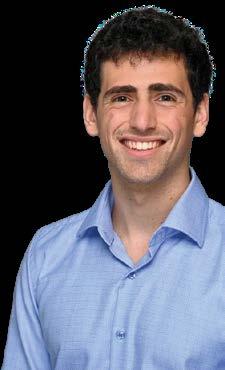
Noah Edelman (Weinberg ‘25) witnessed the rise of AI over the past few years and recognized a new business opportunity with the advent of such a sweeping technology. From there, The Neuron was born: a daily newsletter to provide accurate and up-to-date information on AI.
“We wanted to create that trusted voice,” Edelman says. “Where if people are confused or feeling uncertainty, they can go to The Neuron and have a better grasp of what’s actually going on in the AI space and what’s coming soon.”
While the concept for a startup comes from the founders themselves, many of them credit Northwestern organizations like The Garage for helping their ideas become a reality.
The Garage, Northwestern’s innovation and entrepreneurship hub, offers a variety of different fellowships, programming and residency opportunities that connect student entrepreneurs with one another and with experts in the field. Edelman, who majored in Psychology at Northwestern, says he learned about business and entrepreneurship through The Garage. In addition to providing resources to learn basic skills, like completing tax forms and registering as an LLC, The Garage connected him to a community of entrepreneurs.

Edelman was selected for the Little Joe Fellowship at The Garage, a program that matched him with a performance coach and sent him on trips with his cohort to connect with and learn from different entrepreneurs.
“Having a good network and ecosystem of people who are also trying to build things and dedicating a lot of their time in college to building companies was really helpful and motivating,” Edelman says.
Deng had already been working on Sensify as a graduate student at Carnegie Mellon University before he came to Northwestern. When applying to Northwestern’s Ph.D. program in Mechanical Engineering, Deng dedicated a paragraph of his personal statement to entrepreneurship, where he expressed interest in The Garage.
“Northwestern actually has a great entrepreneurship-like spirit,” he says. “They provide you with a lot of resources that I don’t think even Carnegie Mellon provides, like The Garage.”
Deng believes his experience at The Garage helped him take Sensify to the next level.
“I learned quite a lot just from listening to other people’s stories, and they have workshops that support student entrepreneurs, which is quite amazing,” Deng says. “Every time I go, there’s this light bulb in my head that [goes off].”

Kevin Tao, co-founder of hygiene company NeuEve and nonprofit Litter Caterpillars, was one guest speaker who inspired him. Deng met Tao through one of The Garage’s weekly “family dinners,” and they have remained in contact thanks to a startup support group.
“It’s a very tight-knit community and I think that’s tremendously helpful, especially [as] entrepreneurship can be a relatively unusual and lonely journey,” Deng says.
Yeung also connected with successful founders through The Garage, getting advice from Aspen Buckingham (Bienen ‘23), who co-founded Overture Games, an interactive game that teaches students to write music.
Buckingham began ideating what would later become Overture Games during his sophomore year at Northwestern. As a freshman, he had joined The Garage through the Tinker Program to explore its resources.
He says he enjoys giving back to students the same way The Garage assisted him.
“There is something to be said about when you’re meeting with kids who are following that same path,” Buckingham says. “It’s a tough path. Anything I can do to help them on that journey gives me a lot of joy, and I learn a lot from doing it, too.”
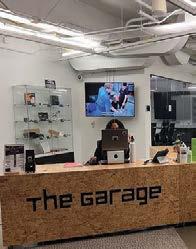
Yeung connected with Buckingham and Jiang through The Garage and says the feedback he received from their conversation was vital in shaping the direction of Keys for the Mind Project. They told him to reach out to Evanston nursing homes and test out a variety of ideas.
In addition to providing resources and connections, Edelman says The Garage played a pivotal role in supporting his ideas — big or small.
“When you go in with an idea, you’re really validated,” he says. “[The advisors] don’t say, ‘I don’t know if you should be doing this. You have school to focus on. This is not a good idea.’ They’ll actually try to help you push that idea forward.”
Without The Garage’s involvement, Edelman believes his experience would have been more isolating and less sustainable.
With Willie’s Wallet, Levitt took a different approach. He launched the startup within Student Holdings, a student-run nonprofit business incubator. Student Holdings currently manages five businesses serving the Northwestern and Evanston community, including InkTank, NU|Tutors, RezEssentials, RezLaundry and, most recently, Willie’s Wallet.
Member-businesses receive funding and opportunities for hands-on work experiences. Levitt first joined as a designer for InkTank and now serves as CEO of Student Holdings. His previous involvement inspired him to pursue his own startup within the organization, where he received feedback from a team of advisers.
Levitt’s unconventional approach opened up a different set of resources. According to Levitt, one thing that differentiates Student Holdings from The Garage is that companies stay within the Northwestern community, passing down leadership to current students.
“Once I leave Northwestern, I know that I’m leaving my mark within this organization,” he says, “and this is something that people are going to continue to take over and develop, even once I’m gone.”
Whereas most Garage-based founders hope to expand their company beyond the University post-graduation, Levitt wants Willie’s Wallet to become increasingly integrated with Northwestern as future students take over its leadership.
“I know [Willie’s Wallet is] not necessarily something I own here at Northwestern, and it’s something that in future years, other people are going to have the privilege of being able to run and develop ideas that I’m starting here,” Levitt says.
After graduating from Northwestern, Levitt anticipates Medill second-year Junseo Lee will take leadership of Willie’s Wallet. Lee worked closely with Levitt in developing the startup.
Lee took on the role of general manager during his freshman year, which gave him firsthand experience in entrepreneurship. He says he wouldn’t necessarily have gotten that in an organization like The Garage.
“If you’re founding something, especially something as technical and unprecedented as this, there’s no real guide for what to do,” Lee says. “But just learning, getting the experience of actually talking to local business owners was a very valuable experience that you usually don’t get your freshman year or at all during college.”
Lee also says Student Holdings gives students more freedom in how they build startups. He was able to craft his own schedule, on his own terms — though he does think The Garage’s mentorship programs and connections to experts would have been helpful.
Leading a startup as a freshman influenced Lee’s future plans, as he discovered a passion for business and entrepreneurship.
“Student Holdings has definitely taught me that I want to be part of something new, and I definitely want to take on positions of leadership compared to following a normal structure,” Lee says.
Yeung says he always had the idea of starting a music nonprofit, and while he would have created Keys for the Mind Project regardless of the school he attended, Northwestern’s entrepreneurial culture made it easier for him to form connections. He found students to be “connections-driven,” and receptive to talking about their ideas.
Even beyond those pursuing entrepreneurship, Yeung says Northwestern students tend to focus on pre-professional activities.
“It can make things more competitive and career-driven,” Yeung says. “In other ways, though, the pre-professional vibe with Northwestern is really good for finding people to work together and creating lasting connections.”
“It’s a very tightknit community and I think that’s tremendously helpful”
Shane Deng Founder of Sensify
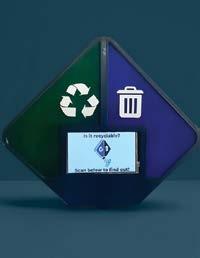

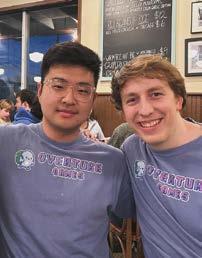
Before founding Overture Games, Buckingham took Principles of Entrepreneurship with McCormick professor Trish Thomas on a whim during his sophomore year. Rather than learn about accounting or finances, students were assigned to go into the city and make outlandish requests to strangers: asking Sweetgreen for a whole apple or a random stranger to take off their shoe and throw it across the street.
Fewer people than Buckingham expected actually denied them. And when people did refuse, Buckingham realized it could be useful to push back.
“You’d be surprised how many people give you a reason that you could then find a yes to,” he says. “For example, ‘I can’t take off my shoe because I hurt my foot.’ And then you ask, ‘Can I take off your other shoe?’ and they’re like, ‘Sure.’”
Buckingham says that assignment taught him grit and the ability to power through when people tell him “no.” The skill continued to serve him well when he was expanding Overture Games.
“No fear, no shame, just ask people for things,” Buckingham says. “If you want something, you have to ask for it.”
When applying to Techstars, a global startup accelerator program with a 1-3% acceptance rate, Buckingham reached out to around 100 past mentors to request
they review his and Jiang’s application as they worked on it.
Of those he reached out to, he received around seven responses. The final committee that chose Overture Games included a few of the mentors who had originally responded to them.
“People want to help, and just the act of asking for things can get you so much farther than you think,” he says. “That’s part of the joy of entrepreneurship. It’s just asking why and sticking with it.”
Buckingham always knew he wanted to pursue music while also effecting change, but it wasn’t until taking Thomas’ class that he realized entrepreneurship could connect those two passions.
“I made the exact job that I wanted to do,” Buckingham says. “I want to do music, I want to do tech, I want to do video games. I want to change the world.”
“AND is in our DNA” was once a motto to describe Northwestern’s academic culture. This philosophy still reflects the student culture, and it applies even more so to startup founders who often juggle their coursework and business responsibilities.
“It’s hard,” Deng says. “I’m not gonna say it’s easy. There are definitely times [when] I’m juggling too many things, and I don’t have time.”
Deng says prioritization is key in maintaining his tasks while not burning out.
Similarly, when Edelman was creating The Neuron, he was clear about his priorities and was willing to make sacrifices. While he spent less time studying for his classes, Edelman doesn’t regret his decision.
“When I started The Neuron, it was doing really well,” he says, “and I said, ‘This is going to be the priority from here on out, so I need to treat this with a lot of concentration and focus.’”
Levitt had to make sacrifices for Willie’s Wallet as well, but his previous involvement in Student Holdings taught him how to manage his time.
Deng’s prioritization of Sensify and other entrepreneurial aspirations shaped his undergraduate experiences.
“From my perspective, almost everything I remember from my undergrad was unrelated to classes,” he says.
His most memorable moments and learning opportunities instead came from extracurricular activities and student clubs.
“You’re a Northwestern student, you have already proven yourself,” Deng says. “Now it’s more important to develop other parts, other aspects of your life, instead of focusing too much on classes.”
“No fear, no shame, just ask people for things.”
Aspen Buckingham Founder of Overture Games
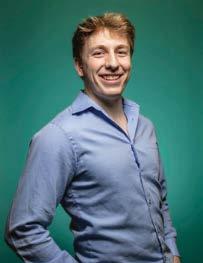
Although these founders have different backgrounds, they agree on one piece of advice for aspiring entrepreneurs: create your own path instead of taking the traditional route.
“If you want to do something, don’t follow other people’s footsteps,” Deng says. “You should carve out your own path, and that path may look drastically different than everybody else, and that’s okay.”
Deng believes startup founders should focus less on the long-term success of startups and more on how to maximize their current impact.
“Whatever you do doesn’t matter if it will succeed in the future,” he says. “At the very minimum, it is making an impact right now.”
When Buckingham was first starting out, he received assistance from older and more experienced entrepreneurs. Now, he urges current students to seek mentorship from recent graduates.
“There really will never be a perfect moment.”
Stephen Levitt Founder of Willie’s Wallet
“At the end of the day, the best advice you’re gonna get is from other founders who just went through what you’re going through,” Buckingham says. “They’re more willing to stay up until 12 a.m. working on something with you. You’re probably not going to get the guy from Deloitte who went to Northwestern or some founder who’s in Chicago in the room with you, staying up until 1 a.m. working through a problem.”
These founders’ main takeaway? Just do it.
“There really will never be a perfect moment,” Levitt says. “You have to try it and see if it works, and if it doesn’t, you go back to the drawing board.”
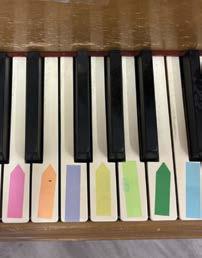
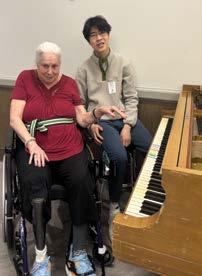

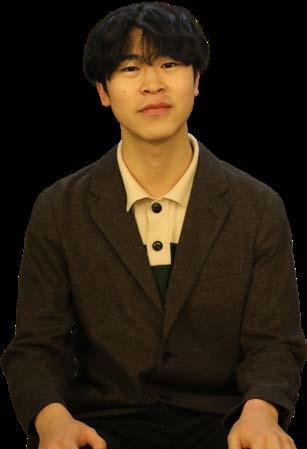
WRITTEN BY MYA COPELAND // DESIGNED BY NEHA PARAMESWARAN
Northwestern’s South Beach is dotted with kayaks nestled next to the sailing center. On a clear gameday this September, small boats clustered on the water to watch the football team play in the temporary lakeside stadium. And on the south end of campus, a cruise ship towers over Lake Michigan.
Except, it’s not a cruise ship. It’s the Patrick G. and Shirley W. Ryan Center for the Musical Arts, which houses the Bienen School of Music and offices for the School of Communication. Its ship-like structure led to the building’s nickname: the S.S. Bienen.
The Center was constructed in 2015, six years after Henry S. Bienen left the helm as Northwestern president. Now, following the resignation of formerPresident Michael Schill, Bienen has returned to steer the ship.
Schill announced his resignation on Sept. 4, less than two weeks before the 2025-26 academic year began. The New York Times reported the move was in response to Republican scrutiny and federal cuts of $790 million. He held the position for only three years, nearly half the average term of a university president, according to a 2023 report from the American Council on Education (ACE).
Historically, interim presidents were appointed to “hold the rudder steady” until the board could select a permanent replacement, according to a Northwestern Libraries web exhibit on its presidential history. But Schill’s departure leaves Northwestern at a tense moment, with key decision-makers poised to shape the future of the institution.

But the job has become more and more contentious in light of attacks on higher education from President Donald Trump’s administration. Across the country, institutional leaders have had to respond to funding cuts, White House criticisms and other interferences from the federal government.
“By extension, we all feel tormented, even if we’re not in the line of fire.”
President
A Northwestern president’s main role is to report directly to the Northwestern Board of Trustees and ensure its actions are carried out, according to University Statutes published in 2024. They work with the board, provost, vice presidents of the University and faculty members to protect the institution’s “interest and welfare.”
of Virginia’s (UVA) president James E. Ryan resigned in June amidst conflict over diversity, equity and inclusion (DEI) programs. Northwestern is one of at least seven universities to announce sudden presidential departures in September, according to Higher Ed Dive . Others include, most notably, Texas A&M University and Westminster University in Utah, both of whose leaders were involved in recent political turmoil.
Other universities have held firm. On Oct. 10, Massachusetts Institute of Technology (MIT) was the first university to reject the “Compact for Academic Excellence in Higher Education,” a proposal from the Trump administration outlining their vision for the country’s university system.
The compact demands schools limit international student enrollment, freeze tuition for five years, maintain strict definitions of gender and prohibit anything that “belittles” conservative ideas, according to The New York Times .
Being a university president has always come with its share of difficulties. Some former interim presidents of Northwestern took over after their predecessors died in office; others served amidst World War II-era demands for active support in the war effort or student activism in the 1960s and 1970s.
The job entails many roles, says Patricia McGuire. She would know; she has been president of Trinity Washington University (TWU) in Washington, D.C., for nearly 40 years. Yet she has never seen this kind of pressure from the federal government on higher education, particularly a select group of elite institutions.
“By extension, we all feel tormented, even if we’re not in the line of fire,” McGuire says. “The way in which this administration is going after certain institutions is a disgrace. The question for your new president will be: Can they hold fast to the values and vision and mission for Northwestern or will they

COURTESY OF NORTHWESTERN’S OFFICE OF THE PRESIDENT

Clark T. Hinman 1853 - 54

Hinman passed away during his presidential term. Evanston’s Hinman Avenue is named after him.

For any school that agreed to the compact, the administration promised priority access to federal funding and fewer restraints on overhead costs.
The proposal, along with a letter outlining the benefits, was sent to nine top universities on Oct. 1, although Trump later indicated the compact was open to any college. The schools had until Oct. 20 to respond.
Of the nine universities initially presented with the compact, seven rejected it (MIT, Brown University, University of Pennsylvania (Penn), University of Southern California, Dartmouth College, University of Arizona and UVA). Vanderbilt University provided feedback to the Trump administration, and the University of Texas at Austin has not made a public statement.
Since Trump opened his offer to other colleges, four have rejected the proposal (Washington University in St. Louis, Emory University and Syracuse University). Arizona State University has also sent feedback. The administration plans to update the document and publish a new version in November, according to InsideHigherEd
Decisions like these are not made by a university president, or interim president, alone. If Bienen were to consider a deal with the Trump administration, the Board of Trustees, faculty and students should all have a say under a commonly accepted concept in higher education called “shared governance.”
In 1966, the American Association

Henry S. Noyes 1854 - 56
Noyes served as president ad interim twice, between Hinman and Foster, and again between Foster and Haven. Noyes Street in Evanston is named after him.
of University Professors (AAUP) wrote a statement on shared governance, which described what Matt Hartley, a professor of education at Penn, calls the “inescapable interdependence” between the constituents of an institution. His research focuses on academic governance, or how colleges are run, including how different universities develop strategic directions and execute shared governance.
“That makes this [transition] a little more complicated, but the president of a university is responsible for guiding the ship.”
Melissa A.
The Board appoints the president as its direct actor on campus, who is expected to work with constituents to advance the institution’s mission. The president also collaborates with the faculty — or professors — to ensure the academic quality of the institution. Each university has the responsibility to include all involved parties, including students, in decision-making, he says.
Presidential transitions are critical to an institution, Hartley says. The shift to a new president can be a catalyst for conversations about the university’s mission, but the interim period is a time when planning is largely suspended. It can be a time of excitement, he says, but in this political environment, it is also a time of uncertainty.
Melissa A. Simon, a professor at Northwestern Feinberg School of Medicine, calls the situation with Bienen abnormal. He assumed the role of interim president “in the face of crisis and turmoil,” she says.
“That makes this [transition] a little more complicated,” Simon says. “But the president of a university is responsible for guiding the ship.”
Private universities like Northwestern and Penn are legally charitable organizations, Hartley explains. The Board of Trustees is the most important body, overseeing the institution’s wellbeing and adherence to its mission.
Randolph S. Foster 1856 - 60
A bishop, Foster was granted a leave of absence to continue preaching during his first year as president. He resigned to return to the pulpit.


Erastus O. Haven 1869 - 72
As a strong supporter of coeducation, Haven left Northwestern when elected to the Board of Education of the Methodist Episcopal Church.
In a time of changeover, Hartley says, it can be valuable for a university to select an interim president who understands the institution. Appointing someone like Bienen, who has experience with Northwestern, might have been an easy decision for the board. Most of
Charles H. Fowler 1872 - 76
As a student at Garrett
Theological Seminary, Fowler rescued passengers from a shipwreck. He left the presidency when elected to be editor of the ChristianAdvocate in New York City.


Joseph H. Cummings 1881 - 90
Cummings was an abolitionist and supported women’s suffrage. He died in office.

nterim presidents were professors at the University, although several served in the interim position twice.
“He’s someone who can make difficult decisions because he’s not trying to get the job,” Hartley says. “If there are really difficult issues that need to be addressed, he knows the institution. He clearly cares about the institution, but he’s not angling for [the job] for the long haul.”
Hartley also believes that because Bienen is likely no longer focused on long-term career outcomes, he might be more resistant to external pressure, like
that of the federal government.
In January 2023, Florida Governor Ron DeSantis appointed new trustees to the board of the New College of Florida as part of a move toward a conservativeinfluenced education agenda. ThenPresident Patricia Okker said she would not align with the shift, and was subsequently fired. The school, which

Henry Wade Rogers 1890 - 1900
The Board of Trustees pressured Rogers into resigning as president, likely due to their disapproval of his political beliefs, lack of comprehensive fundraising initiatives and general disagreements with the board.

was previously a progressive college in the red state, became the first institution to indicate it would sign Trump’s compact for higher education on Oct. 27, according to TheNewYorkTimes .
Some students have speculated about the possibility of such a shift occurring at Northwestern, and are concerned about the institutional position the University president will take. The universities targeted by the Trump administration have taken different actions based on their stance on academia.
One such approach is that of “institutional neutrality,” a policy where a university refrains from taking public stances on controversial issues outside its core mission. In January 2025, the AAUP adopted a statement on institutional neutrality, which reaffirms that it is “neither a necessary condition for academic freedom nor categorically incompatible with it.”
On Aug. 9, 2024, the President’s Advisory Committee on Free Expression and Institutional Speech presented a statement to Schill saying they “do not endorse a simplistic version of ‘university neutrality.’” Instead, they advised committing to the areas where the University and its members should not be neutral: fostering open dialogue and pursuing knowledge and truth. The statement emphasized that members of the Northwestern community can speak freely on controversial topics, but not on behalf of the University. The committee, formed by Schill in February 2024, was
Edmund James 1902 - 04

James attempted to make Northwestern a premier national institution, but he incurred a lot of debt. He left to become president of the University of Illinois.
primarily made up of faculty, as well as then-president emeritus Bienen.
On Oct. 15, the Faculty Assembly met to discuss, among other issues, the University’s response to the federal government. At the meeting, Bienen said he wants to “do a deal with the federal government,” according to The Daily Northwestern. He said he won’t cross any “red lines” that hinder the University’s autonomy, including what the University teaches, who it hires and the students it admits.
Faculty members questioned Bienen about how Northwestern would respond if a professor was targeted for their teaching. They also brought up the possibility of a coordinated effort between institutions of higher education against the actions of the federal government. Professor of History Leslie Harris urged Bienen to take a stand against the federal government, particularly in the wake of Harvard’s success, and the assembly voted to oppose Northwestern signing Trump’s compact.
This isn’t the first time concerned professors have spoken up in recent months. Paul Gowder, a professor at Northwestern Pritzker School of Law, signed an op-ed published in The Daily in July that opposed Northwestern striking a deal with the Trump administration. Still, he understands the presence of “tactical disagreements” on how to respond to the federal government’s actions.
“I disagree with [what President


Abram W. Harris 1906 - 16
Under Harris, the student population increased and 20 new buildings were erected. He retired to accept a position as Corresponding Secretary of the Methodist Episcopal Board of Education.
Lynn Hough 1919 - 20

Hough was described as a “transient presence at the helm” as president. He resigned due to poor health.
Bienen said], but it’s not crazy,” Gowder says. “It is entirely reasonable to think, ‘OK, do we want to get into this kind of knockdown, dragged out fight that Harvard’s in?’”
Gowder dislikes the idea of “institutional neutrality” because it opens a debate over what that means in practice. However, he was heartened by the fact that Northwestern has not signed a deal with the Trump administration.
“I do think that President Bienen’s heart is in the right place,” Gowder says. “He’s invested in what’s best for the University, even as I think I would personally prefer a much stronger tactical position than he seems to be willing to take.”
“I do think that President Bienen’s heart is in the right place.”
Paul Gowder Professor at Pritzker School of Law
Walter Dill Scott 1920 - 39
Scott created two vice presidential positions, which changed the focus of the presidential role. He told the board he wanted to retire in 1938, but they asked him to stay until they found a successor.
That stronger tactical position resonates with the AAUP statement on institutional neutrality, which concludes that defending academic freedom has never been neutral. Bard College President Leon Botstein agrees with this sentiment. He says the question of institutional neutrality is the wrong one.
“First of all, there is no such thing as neutrality, so forget about it,” Botstein says. “Second of all, the university has a mission, and that mission is about education, research and the search for truth. It’s about the pursuit of knowledge, the distinction between truth and fiction, especially in the context of AI. It stands for a bunch of stuff. That’s its mission.
And the truth is rarely neutral.”
Simon is disappointed that Northwestern is not standing with other peer institutions against the federal government. At the Oct. 15 meeting, Bienen said there had not been an active effort to form a unified front with other university leaders, she says.
“I don’t know the playbook, and I am not privy to this, but what I’m very saddened by and disheartened by is three things,” Simon says. “The lack of adherence or respect for faculty governance, the lack of wanting to sue the federal administration, given examples of how it’s worked for both California schools and Harvard, and the fact that our interim president wants to make a ‘deal.’”
Following the meeting, votes were tallied and the resolution opposing the Trump compact passed. Despite
Franklin Bliss Snyder 1939 - 49
Snyder took office as Northwestern president the day World War II broke out in Europe. He told the trustees he would resign in 1949 in accordance with policy.

the resolution’s success, Simon is concerned about Bienen’s statements. She emphasizes that Bienen can’t claim ignorance on the basis of being new to Northwestern.
“When President Bienen says, ‘Oh well, I wasn’t here. President Schill was the one who told Congress that there was going to be anti-bias training done by students,’ it’s not OK to shift the blame,” Simon says. “I do not think that because he’s interim [president], he can use that word ‘interim’ … to not have to answer some of these hard questions.”
Naomi Wu, assistant director of presidential communications in the office of the president, declined to comment on this story. Abigail Griffin, administrative assistant in the office of the president, declined to comment on this story. Dianna Shaleen Klein, assistant to the president, declined to comment on this story. Other members of the Office of the President did not respond for comment.
J. Roscoe
1949 - 70
Miller was personally conservative, but avoided conflict with activism on campus and supported differing political views. He continued to serve as chancellor of the University after his retirement as president.
Robert H. Strotz 1970 - 85
Strotz was a steady hand on the wheel as president.
Like his predecessor, he avoided conflict with student activists and served as chancellor after his retirement.

Many of these hard questions remain unanswered, leaving room for speculation on the direction in which Bienen is guiding Northwestern.
A university president is many things: a figurehead of the institution, a mouthpiece to the country, a spokesperson to the board and donors. In many ways, the next Northwestern president can determine the direction of the University.
Institutions are facing a difficult moment and navigating it how they see fit, Hartley says. Harvard sued the federal government in April after they froze over $2.2 billion in federal funding. Less than 24 hours before breaking the news of Schill’s resignation, the The New York Times reported that a judge ruled the government violated the law by freezing Harvard’s funds. As of Oct. 14, TheHarvard Crimson reported that a majority of the funding had been restored.
Northwestern has had no such luck since $790 million of its own federal funding was frozen in April. Landmark decisions like the one at Harvard are part of why faculty members like Simon are encouraging Bienen and Northwestern to take a strong stance against the federal government.
But not all institutions have been successful in their pushback. On Oct. 22, UVA’s interim president signed a deal with the Trump administration, despite community support for former-President Ryan.
“Institutions are trying to figure out what’s a reasonable way forward,” Hartley
Arnold R. Weber 1985 - 94
Weber was a forceful leader as Northwestern president. After leaving office, he was considered for Commissioner of Major League Baseball, but he withrew his name.

says. “I think at a certain point, if push comes to shove, institutional neutrality may simply just be impossible to adhere to.”
“The president of the university should be focused on faculty and students.”
“The goal would be to have a more student-centered president rather than trustee-centered,” Omoniyi says. “The role of the president of the University should be focused on faculty and students.”
He believes the president should interact with students more often than the twice-quarterly meetings the ASG copresidents had with Schill previously. He wants an increased focus on students and their Northwestern experience.
Another anonymous response to the NBN poll indicated that students think the Board “would only pick someone willing to submit to Trump’s demands.”
McGuire’s approach as a university president is the opposite. Since Trump’s first term, she has been outspoken about him and his policies.
An NBN poll found that students have mixed feelings about Bienen returning as interim president. A majority of responses indicated ‘visibility on campus’ was important for the next Northwestern president.
As ASG co-president, Weinberg third-year Jamal Omoniyi meets with the president on a regular basis and other members of the Northwestern administration to discuss issues that impact students. With the leadership transition, he says there has been a debate over whether the president’s primary focus is internal Northwestern affairs or external issues like the federal government.
Henry S. Bienen 1995 - 2009
Average test scores of admitted students increased and the endowment more than quintupled under Bienen. He resigned as president of the Poetry Foundation in 2020, following criticism of the foundation’s statement on protests, according to The New YorkTimes
“Institutional neutrality may simply just be impossible to adhere to.”
“I
believe that presidents must be able to speak out on behalf of the values
Morton Schapiro 2009 - 22
Schapiro reduced average class size and completed several major building projects during his term as president. He has testified before U.S. Senate and House committees and is outspoken about issues of higher education.
Michael Schill 2022 - 25
Schill took office after president-elect Rebecca Blank was unable to assume the role. He resigned due to presumed pressure from the Board of Trustees.
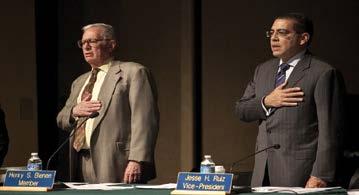
that our institutions hold dear,” McGuire says. “Some people say that’s political. I say it’s not political, it’s moral. I do not believe in institutional neutrality or in presidential silence. We have to speak about what’s important, and I would hope that Northwestern’s president could speak about what’s important for Northwestern.”
McGuire calls the current attacks on academic freedom “anti-American.” Additionally, she says universities — the board of trustees, president and everyone at the institution — must be united in support of that freedom.
“Higher education is in the fight of its life right now,” McGuire says, “and the fight is being carried on against the most elite, wealthy institutions in the country.”
As the trustees consider who to appoint as Schill’s full-time replacement, McGuire hopes they do not succumb to pressure to choose a president who will bow to administration demands.
Botstein believes boards often select the wrong kind of person to the office of university president. He says the bestsuited candidates are those who do not actively seek out the role.
“They shouldn’t choose people who do not stand for anything about the university. They shouldn’t choose someone who is not willing to fight for the core values of higher education, whether at Northwestern, my institution, Bard or at a state university,” Botstein says. “At the current moment, they need to find someone who can propel Northwestern into a leadership position on the vital issues that face all colleges and universities.”
“They shouldn’t choose people who do not stand for anything about the university.”
Leon Botstein President of Bard College
Those issues? Autonomy, academic freedom, academic excellence, the defense of democracy and the “preservation of America’s preeminence as a place … with
protection from the weaponizing of government, without putting a boot on the neck of the university,” he says.
In the midst of that fight, Botstein emphasizes the importance of a president who is accessible to constituents. He calls it a vocation, not a job. He has never taken a vacation in his 50 years as president and does not want to.
The Wednesday-morning interview with Botstein was supposed to last 20 minutes. He stayed on the Zoom call for nearly an hour.
The same is true for McGuire. At the end of the call, McGuire said she was willingly in her office on a holiday weekend because she had work to do.
“Everybody likes to paint these jobs as terrible,” McGuire says. “Being a college president is one of the best jobs in the world. You need somebody who also can see the joy and can feel the joy and has love for the students. The other stuff will go into proportion if you can see what the good parts are.”
Part of that love is building an institution where students can flourish. She says the next president of Northwestern will play an essential role in the school’s future.
“I hope every single Northwestern trustee reads this and hears me say it,” McGuire says. “It is vitally important for the boards of our institutions to be cohesive, and to support the president, and to support the values and mission of the institution, and not to sell out to political points of view. Higher education is independent of government.”
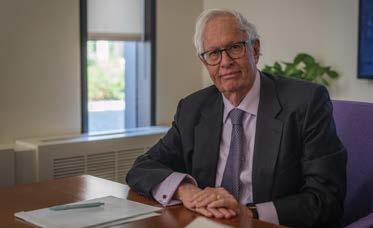
Behind the scenes of one of Northwestern’s most intense preprofessional environments.
WRITTEN BY SEYCHELLE MARKS-BIENEN // DESIGNED BY CAROLINE GOULD

Fall on campus breeds tradition. Leaves turn gold; College students flood the football stadium on Saturday mornings; A new freshman class buzzes with energy as they acclimate to their new environment. For a subset of the Northwestern population, though, the autumn rhythm looks a little different as another ritual quietly unfolds: consulting recruitment season.
On any given day, clusters of students wearing pressed suits and formal business attire can be spotted rushing to interviews, coffee chats and info sessions. It can appear oddly corporate against the backdrop of college life, but for many Northwestern students, this is common practice as they compete to join one of the various consulting clubs on campus.
At Northwestern, consulting isn’t just a career path: it’s a culture. Long considered a target school for the three most prestigious firms — McKinsey, Boston Consulting Group (BCG) and Bain (collectively referred to as “MBB”) — Northwestern alumni make up 19% of entry-level hires in MBB’s Chicago offices, more than any other university. 16% of the 2021-24 graduating classes went into consulting, second only to business and financial services, according to Northwestern data.
The consulting pipeline has become a defining structure of pre-professional life at Northwestern. Freshmen and sophomores of all majors flock to consulting clubs to build resumes that help them land internships and, hopefully, return offers.
However, consulting is an elusive concept; few people arrive on campus actually knowing what it is. Despite this, and its cutthroat nature, consulting remains omnipresent. Armed with a variety of incentives — whether that be a clean answer to the messy question, “What’s next?”, a passion for problem solving or simply a desire for monetary compensation — many find consulting’s gravitational pull hard to ignore.
“Coming into college, I was super lost. I had no idea what consulting even was,” Oliva says. “I have a friend who did a program with McKinsey freshman year. He would talk about what consultants do and how they were focused on problem solving, which I had chosen engineering for.”
Oliva knew he wanted to combine his Industrial Engineering degree with a focus in business, and consulting sounded vaguely interesting. He applied and was accepted into BCG’s Bridge to Consulting program in January of his freshman year.
After months of interview preparations and case practice — which entail solving a pseudo client’s complex business dilemma — Oliva landed two internships at BCG’s Chicago office and later a return offer for a permanent position in the New York city area.
“I think we were slightly naive to the club culture. It’s very intense.”
Saraphina Wambi Weinberg second-year
Like Oliva, Weinberg second-year Saraphina Wambi arrived at Northwestern unfamiliar with consulting, but was drawn to the field’s promise of problemsolving.
Last fall, she and her roommate decided to check out the consulting club scene, but were not expecting the high level of competitiveness they found.
“I think we were slightly naive to the club culture,” Wambi says. “It’s very intense.”
For those wanting to enter the profession, joining a consulting club is a natural first step, as they give students real-world experience working with companies.
The range of consulting club options on campus is uniquely extensive. Clubs like the Institute for Student Business Education (ISBE) Analytics; Students Consulting for Nonprofit Organizations (SCNO); Global Research and Consulting (GRC); Lambda Strategy; and Consultants Advising Student Enterprises (CASE) are specifically focused on consulting and provide these services to a range of clients. Pre-professional business fraternities like Delta Sigma Pi (DSP) and Alpha Kappa Psi (AKPsi) also do consulting case practice.
Northwestern deviates from other schools in the number of consulting club options, says McCormick second-year Devan Harrison. Harrison went through the recruitment process last fall, and is a current member of ISBE Analytics.
“Most other schools only have a couple consulting clubs,” Harrison says. “Here, there are a ton of them, which dilutes a lot of the projects for every single club … It’s very decentralized, and everywhere else it’s streamlined.”
For those just starting out, the process often proves to be daunting, Harrison says, especially since the majority of students come in with little experience and feel disadvantaged compared to those who already know someone in a club or have previous experience. Combined with early timelines on career recruitment processes, which leave students anxious to get a head start, the fall quarters of freshman and sophomore year can become a rat race to enter the pre-professional world.
Students rarely paint their desire to pursue consulting as a lifelong goal. At Northwestern, they are often introduced to the concept through proximity or word of mouth, according to now-BCG associate analyst Juan Oliva (McCormick ‘25).
The intensity partially comes from the sheer volume of Northwestern students who pursue consulting paths. Because the University has no official business major, those interested in business have two main options: investment banking or consulting. The broader of the two, consulting provides more flexibility because students can pursue it with a background in almost any other field.
Club application processes mirror those of real firms, involving interviews, essays, slideshows and case evaluations. But the clubs, which are meant to introduce people to consulting, can seem impossible to get into.
“The process is stressful and takes a lot of time,” Harrison says. “It’s almost like college application season again but with more interviews.”
Weinberg second-year Tobenna Egwuatu is trying to break into the consulting scene as a pre-med student. This fall, he showed up to a 400-person DSP info session at the Technological
group casing interview for 180 Degrees Consulting, requiring each person to solve a business problem in real time.
Egwuatu says he left the recruitment process feeling overwhelmed.
“I know there’s a large population in this school that are business oriented, but to see the sheer number of people there was jarring,” he says. “They were all wearing nice, new tailored suits and using vocabulary I didn’t know. I felt like I couldn’t even get a word in sometimes.”
Oliva, too, experienced difficulties with the consulting club scene on campus. He applied to several of the major pre-professional clubs as an undergrad, seeking case work practice. After significant preparation, Oliva was denied from every club he applied to, but a week later received his return offer from BCG — a story he would later recount in several job interviews as a testament to his perseverance. His experience, Oliva says, is proof that acceptance into a consulting club is not a requirement for securing a job in the industry.
For Oliva, receiving a job offer at one of the most prestigious firms days after getting denied from pre-professional clubs represented a flaw in the system.
“It felt kind of unbelievable to be denied, and it was just very ironic, because it’s a job that a lot of the consulting clubs want to get,” he says. “They’re really good clubs because they’re very exclusive, but they’re also undergraduate clubs that are exclusive to low percentage points, which I think is a little bit ridiculous.”
Oliva’s situation was unique in that he worked at BCG before applying to clubs, but for other students, the door to consulting can feel closed before they’ve even knocked.
“I know that these clubs are pretty competitive. That’s not on purpose, but because of the nature of our club,” Derrij says. “It’s really to make sure that we’re able to mentor every single person, know every single person and have good quality projects. That’s what drives the small number of people we take each quarter.”
Despite the competitiveness, Derrij believes there is a space in the consulting club world for everyone who wants to get involved. Furthermore, he says, the resources and skills people gain from ISBE Analytics are invaluable, even for those who don’t end up going into consulting. The club provides opportunities to socialize, leverage ISBE Analytics’ alumni network, learn how to work in teams and practice casing. Most of all, the work can provide clarity.
“We want you to grow as a person, to understand whether you’re interested in consulting,” he says. “All of those skills are really useful, whether you want to pursue a career in consulting or not.”
Other students say their consulting clubs have also provided opportunities to hone in on their passions and perform fulfilling work, especially within the nonprofit sector.
Medill second-year Zoe Otto was initially hesitant about joining a consulting club; she didn’t want to be
A look at the data
in an environment that was focused on buffing up her resume rather than gaining real world experience. But after joining Kellogg’s Global Research and Consulting Group — which provides pro bono services to nonprofits — and becoming the Vice President of Recruitment, she has found her experience fulfilling.
“These are people who actually don’t have the bandwidth to hire consultants so they hire students,” she says. “That part is really cool; you get to work with people who need your help.”
The prevalence of pro bono work is another area where Northwestern consulting clubs deviate from the norm. While the majority of on-campus clubs conduct pro-bono work, those at other elite universities, such as Harvard, bring in revenue, according to TheHarvardCrimson.
Harrison speculates that Northwestern’s pro bono trend is likely due to the competitiveness of the club scene and the limited number of clients. He also points out that not getting paid can cause issues for some of the bigger clubs, such as ISBE Analytics, which work with multinational corporations and startups. For example, clients may not feel as compelled to work closely with students or take their suggestions.
“There is a little less connection with the client,” he says. “I also think the club itself, at some point, wonders, ‘How much work are we going to put into this?’ … Because you’re not necessarily obligated to put your best work in.”
To some extent, the level of competitiveness in Northwestern’s consulting circle is inevitable. Weinberg third-year Ghali Derrij, co-president of ISBE Analytics, pinpoints several reasons behind low acceptance rates, including an overall lack of clients and a desire to work closely with every club member. Open events and general resource distribution, he says, is a role for the University to take on.
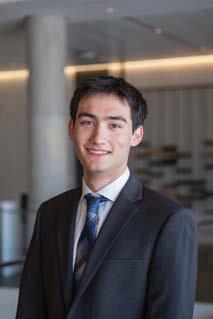
McCormick second-year Devan Harrison.
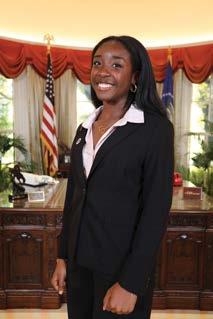
Weinberg second-year Saraphina Wambi.
59% of pre-experience student hires into MBB’s Chicago offices graduated with one of these degrees 30% Economics Degree 16%
Two colleges provided 62% of MBA hires to MBB’s Chicago offices Booth School of Business Kellogg School of Management
Consulting involvement is not limited to the club scene. Northwestern’s Career Advancement Center (NCA) hosts panels and workshops, partnering with large firms. In its four-year consulting plan, NCA suggests attending on-campus events and speaking with upperclassmen to learn more about the industry.
NCA Executive Director Mark Presnell says the office is aware a majority of undergraduate students have little exposure to the field prior to recruitment. Because of this, he says, they place an emphasis on educating students about early consulting career paths.
“Interest in consulting is strong and steady at Northwestern,” Presnell said in an email. “To help students better understand the field of consulting, NCA, along with many of our employer partners, create a number of different programs and services to educate and prepare students for careers in consulting.”
The majority of services offered, such as panels, roundtable discussions and information sessions, primarily take place in the winter and spring — after the first round of club recruitment has occurred.
However, many students identify gaps in the school’s resources that leave them to fend for themselves. Wambi, who is studying Economics, has been dissatisfied with the lack of non-competitive opportunities to explore the integration of graduate degrees with consulting careers.
“I don’t think we talk about pre-Ph.D. stuff enough — like what does it look like to get a Ph.D. in Economics? What doors can that open for you?” she says. “I had to do a lot of investigating on my own.”
Oliva also found there was room for improvement within Northwestern’s recruitment offices. As a Latino student, he says the information about the diversity, equity and inclusion (DEI) programs designed to help students break into the industry was not up to standard. Application deadlines were difficult to follow and information on topics like resume-building was fuzzy.
Luckily, Oliva was surrounded by friends who were interested in the same field and willing to help him. But without them, he says he would have been completely lost.
“I think Northwestern, as a top10 university, needs to have a better recruitment office to help people, especially people that don’t know what is going on,” he says. “You don’t always get friends who are that committed to recruitment, to helping you or are interested in the same thing you are.”
Having identified a lack of support for Hispanic and Latino students in the consulting world, Oliva and two of his friends started their own club on campus: the Hispanic Latino Business Group (HLBC).
The club intentionally maintained barrier-free entry for anyone who wanted to join. HLBC provided resume building assistance, mentorship and guidance through various DEI undergraduate programs offered by big firms.
“We just wanted [applicants] who were interested, excited to be there and excited to be helped,” Oliva says.
“We just wanted [applicants] who were interested, excited to be there and excited to be helped.”
Juan Oliva McCormick ‘25
Career crossroads
The pressure doesn’t end once students make it past the recruitment process. For some, the consulting club scene feels like an early test — a smaller version of the industry’s demands. As students start to think about their next steps toward securing a consulting job, some raise concerns about the industry’s work environment.
Many students identified money as a primary reason for entering the industry
but acknowledged there are serious tradeoffs, whether that be sacrificing mental health, free time or the pursuit of other passions.
“It’s all about the money, … but in the grand scheme of things, what are you actually doing? What are you actually gaining from it?” Wambi says. “What I want to do is help people. We’re not put on this earth to go through the motions and be robotic in how we’re living.”
The demanding time commitment is often a caveat. Even if an exit opportunity — such as leaving a big consulting firm to go work for a smaller company or creating your own startup — is the end goal, it can take years of long hours and hard work to secure.
Oliva notes that on any given weekday, he can be on call until as late as 2 a.m.
“During the week, you don’t always have a life outside of work,” Oliva says. “In the beginning you have to bear with it. You don’t have much say in how much you work, sadly.”
On the plus side, Oliva says BCG and other consulting firms are increasingly prioritizing mental health and wellbeing, compared to a few decades ago when the environment was considerably more toxic.
But because of the major commitment this career requires, many students are still unsure if consulting is something they want to pursue.
For all the talk of offers and case preparation, indecision remains a real undercurrent. Students quietly grapple with what consulting represents — financial security but also sacrifice. The choice may become less centered on what they want to do and more about who they want to be.
Otto is one of many students dealing with indecision about the career path in front of her. Ultimately, she plans to go through the recruitment process to develop valuable skills such as problem solving and logical thinking but has not decided if being a consultant is what her future holds.
“I’m not gung-ho about consulting,” Otto says. “But I’m still trying to figure out how big of a motivator money is for me, and whether I’ll let it sway me in ways that might go against what I actually want to do or go against my passion.”
The library turns accessible, but is it enough?
WRITTEN BY SOFIA HARGIS-ACEVEDO
DESIGNED BY GRACE WANG AND JESSICA CHEN
PHOTOS BY CARTER NISHI
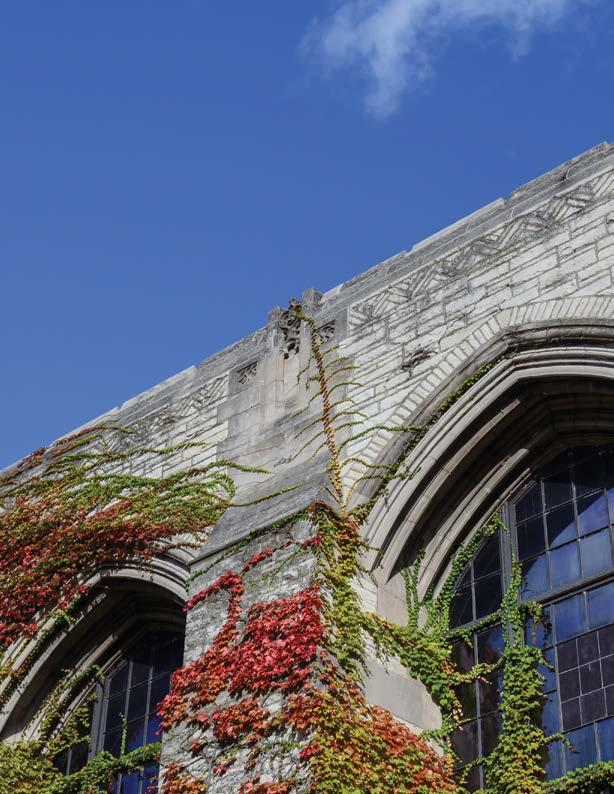
Overlooking Sheridan with gothic prominence, the Charles Deering Memorial Library rises before a vast, emerald lawn — an iconic symbol of Northwestern’s campus.
Ivy delicately crawls up the ivory stone walls, creating a labyrinth that wraps around each corner. Sunlight bounces off the intricate stained-glass windows. Colors dance across the sidewalk as blue and purple lights illuminate the building like a prize to be won each evening.
In the sun, it glistens. In the snow, it’s magical. In the rain, its presence ominously looms over campus.
There is a lingering mystery encompassing Deering. The library remained untouched by students as it underwent renovations during the 202425 academic year. Its interior, which is oftentimes compared to the darkacademia aesthetic of the Harry Potter franchise, was unknown to all nowsecond-year students.
What happened to Deering that year? What changed?
The mystery was thought to be solved when students were allowed to enter the library on Sept. 16, the first day of classes for Fall Quarter, but to the average onlooker, it seemed almost the same.
While there were cosmetic updates to the library, the biggest change has to do with something much more impactful: increased accessibility, as part
of a larger plan to make Northwestern’s campus more navigable for students with physical disabilities.
In June 2024, the University began making changes to Deering. The renovation included updating the Eloise W. Martin Reading Room and restoring the third-floor library. The most notable updates to Deering include an elevator spanning all three floors and improvements to the bathrooms, since the original restrooms were not accommodating to wheelchair users.
When construction crews built the library in 1933, accessibility was not a priority compared to its recent renovation. Deering Project Manager D.J. Hoek says he is ecstatic to have been involved in implementing these updates. He hopes this renovation will mean all students can experience the Northwestern landmark.
“We’re just really recognizing that this is a historic building,” Hoek says. “It’s a campus icon. The image of Deering is used in so much of Northwestern’s promotional materials, and we know that it serves as a symbol for the University. So we wanted to really lean into those unique historical features that the building has and make them as beautiful as we can.”
Deering’s renovation process began
much earlier than 2022, when the recent project was approved. Talks of renovating the library began in 2008 and 2009, but it wasn’t until 2012 that improving the building’s accessibility was put on the table. With this project, they made the front doors open to students and expanded the outdoor ramps to make them more wheelchair accessible.
In 2017, the University began planning a complete renovation of the library, and by 2020, those plans were fully developed. The renovation focused on updating popular public study spaces such as the Martin Reading Room, the multipurpose Devereaux Room and Deering’s exhibit gallery but also prioritized accessibility.
The restrooms in Deering — which had not been updated since their original construction in 1933 — were entirely torn out and redone to be more wheelchair accessible. While the original restrooms met the code criteria for that time, they needed to make changes to meet current requirements. There were already wheelchair-accessible stalls in the original restrooms, but the renovation added clearer pathways, adjusted countertop heights and installed automatic door openers, Hoek explains.
Half of the yearlong renovation was dedicated to installing a new elevator for people with handicaps and disabilities to access all floors.
“As far as accessibility goes, this is a big step forward,” Hoek says. “We’ve really met the challenges that a historic building like that presents for accessibility. There’s more work to always be done — this is not a complete renovation. And so there are other aspects of the building that we hope to address in [future] projects.”
The University’s intentionality toward improving accessibility with projects like Deering is important, especially for students who rely on these types of renovations to move freely around campus.
Alec Cabacungan (Medill ‘24) has Osteogenesis Imperfecta, otherwise known as Brittle Bone Disease. In his lifetime, he has broken more than 60 bones and had over 20 surgeries.
Growing up, Cabacungan collaborated with Shriners Hospital for Children, doing national commercials for them when he was 12 and 13 years old. He realized shortly after entering Northwestern to study journalism that his real passion was disability advocacy.
“I went to Northwestern wanting to be a sports journalist,” Cabacungan says, “but then realized that a lot of my story … my history … and what I’m interested in has to do with disability rights and
disability advocacy. At Northwestern, I did everything I could to try to do both.”
But Cabacungan quickly learned that Northwestern’s campus was not accessible to him, considering he was in a wheelchair throughout his college years. For example, he couldn’t take classes in Locy Hall, since there was no elevator in the building.
“This is a big step
D.J. Hoek
Deering’s lack of accessibility left him especially disappointed.
“I remember as a sophomore during my first year living on campus, I tried to go to the Deering Library, and I was told by an employee that there was no elevator there,” he says. “If I was told there was no elevator, I just decided not to go to those buildings.”
During his time at the University, Cabacungan collaborated with former
Presidents Morton Schapiro and Michael Schill to improve campus accessibility. Though Schapiro was on his way out of office when Cabacungan began this journey, he was able to work closely with Schill to formulate plans and discuss updates to facilities that would increase the amount of wheelchair-accessible buildings on campus.
Cabacungan is pleased to see the partnership he began with university leadership is leading to meaningful changes for Northwestern’s future.
“I’m really glad that Deering is becoming more wheelchair accessible,” he says. “I remember even as a high school student going on a tour to Deering, and the tour guides said it had accessibility problems.”
Medill professor Bradley Hamm worked closely with Cabacungan during his time at the University. While he too sees the recent Deering renovation as progress, it has not left him fully satisfied.
“I think the updates in the library were important,” Hamm says. “I guess the main question is, why does it take a huge renovation to make things accessible? We can’t wait for every residence hall to be fully renovated. There are ways to retrofit buildings, and that’s where the attention should be spent, because otherwise we’re waiting 10 or 20 years to have key buildings be accessible.”
Prior to Deering, the University made multiple improvements to accessibility for those with injuries or disabilities that affect their mobility. For example, in 2011, an accessible ramp and elevator were added to Harris Hall, and the Josephine Louis Theatre in Wirtz was updated with a wheelchair lift and more accessible seating. In 2021, the Black House renovation also included the addition of an elevator and gender neutral restrooms.
However, even though the University has made important changes, there is still work to be done.
“I have looked at these kinds of issues before, but we need people like Alec and others to tell us what is missing, what can be fixed,” Hamm says. “We can’t see what a lot of people go through to just get accessibility to spaces. But once we know … then we need to address it. The progress has been slow except for in new buildings, but even new buildings come with basic flaws.”
Weinberg second-year Udo Elleh doesn’t normally have mobility issues. But that changed in October, when he
sprained his ankle during a club rugby game — serving as a reminder that campus inaccessibility can become a problem for anyone, at any time.
“Why does it take a huge renovation to make things accessible? ”
Bradley Hamm Professor of Journalism
While Elleh’s recovery was originally only supposed to take a couple of days, he says the lack of accessibility on campus — specifically regarding transportation — extended his recovery time to about a week. “Whenever I would [take the] bus if I wanted to get down south, it just didn’t line up with my schedule, so I had to walk,” Elleh says. “That probably added three days to my recovery because I was supposed to stay off, but I had to still go to class.”
Elleh says the fraternity house he lives in, Zeta Beta Tau, does not have an elevator. Constantly having to walk up four flights of stairs was also very difficult for him while trying to recover.
The injury also made Elleh realize how hard it is to navigate Main Library. He
says to get into the building or to any of the study spaces, he had to go up or down stairs, ultimately leading him to avoid the building altogether.
The experiences have brought Elleh to one vital conclusion: Northwestern’s campus is not accessible.
“It was just a really crappy few days, and all I had was the sprained ankle,” he says. “I actually can’t imagine how I would get around in a wheelchair.”
The Northwestern Facilities Department declined to comment on future plans to improve accessibility all over campus. The Deering renovation was a positive improvement, but many say the University is far from where it needs to be.
“I struggle saying that Northwestern [is] a super wheelchair-accessible campus because it has its problems,” Cabacungan says. “It created a lot of solutions and it definitely made it possible for me to have an educational experience there. I trust Northwestern will continue to do more to help disabled students. I just
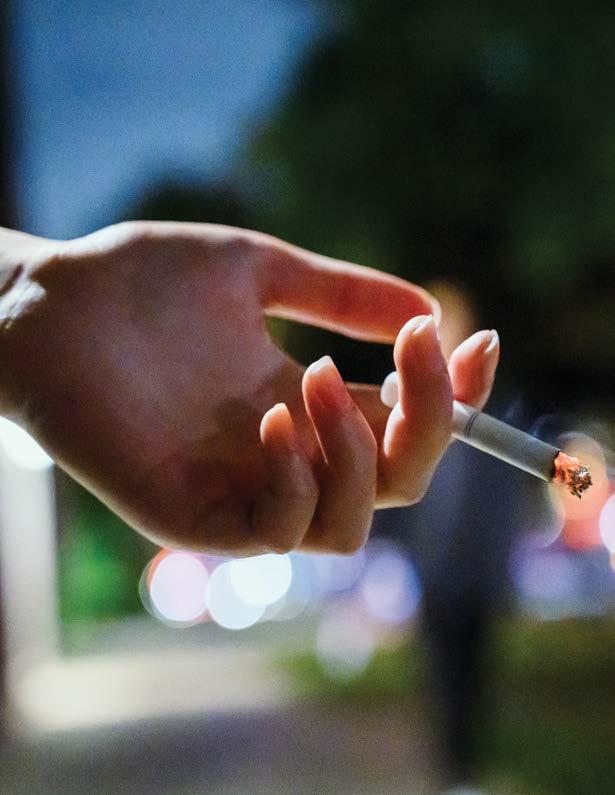
Photographing the novelty of nostalgia.
WRITTEN BY GAVIN FISK // DESIGNED BY LENA ROCK // PHOTOS BY CARTER NISHI
Islide a cigarette out of a box of Marlboro Reds, then flick at my lighter. It takes, finally, after a few tries with the wind crashing against it. I pull one drag before tossing it on the ground, just to let the embers scatter. Quickly, with the feeling that my lungs just got T-boned, I snatch a digital camera I purchased earlier in the day out of my back pocket to get a picture before the flecks of orange on the sidewalk fade to black.
The photo, I decide, is cool enough, saturated with the slightly grainy mysticism of a time from which my memories are shapeless, if existent at all. I think about old pictures of NBA arenas with a smoky haze hovering above Michael Jordan’s head as he levitates toward the rim; Joan Didion balancing an elbow on a crossed arm so the photographer could squeeze in a shot between her taking puffs of the cigarette; walking into my favorite breakfast restaurant as a child and seeing a group of strangers laugh loudly amongst themselves in the indoor smoking section. Suddenly, I see the tubes of tobacco confidently cradled back between the fingers of so many young people, invoking this imagery all at once.
As vinyl record sales soar, despite the much easier and cheaper option of streaming music, thrift and secondhand stores with counterintuitively high prices appear in orbit of college campuses and on the streets of the hip parts of town. Digital camera lights flash while phone cameras rest comfortably in the back pocket of a pair of jeans that just barely survived the
‘90s, but now sag on the waist of someone who barely remembers the aughts. Old is new and new is old. While technology companies rapidly hurl the world into the future, many college students who have never known any different fabricate something Edenistic out of the fossils of the past.
Indeed, these throwback trends have made measurable gains. Forbes reports a return in smoking, citing 2020 as the first single-year rise in cigarette sales in decades, even while more alternative means of nicotine consumption like vapes and Zyn appear. Meanwhile, a Statista report finds a dramatic increase in the month-to-month sales of thrift stores in the past decade. Record store sales, according to Luminate, have nearly quadrupled since 2016. The obsolete and out-of-fashion have dug their way back into a youth culture marked by its access to rapidly advancing technology and social media.
“Vaping is inhaling technology,” says Weinberg third-year Eliza Marcus, as if “technology” had become a swear word. She explains her accumulating fears of the future: Trump, fascism, dwindling job markets, unstable access to the medication her family needs, artificial intelligence — the list goes on. Even her hopes often come with an asterisk, as her eagerness for adulthood is undermined by increasing socioeconomic uncertainty.


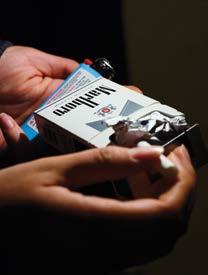

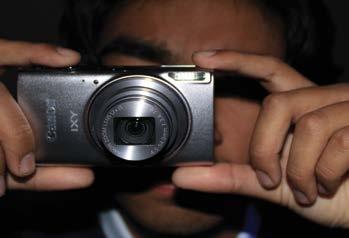
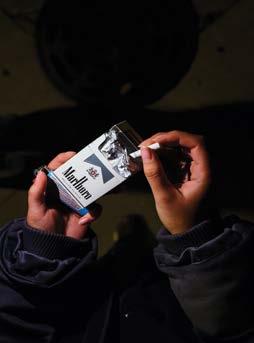
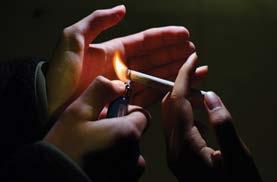

She, like 79% of Gen Z women according to an NBC poll, is concerned about an economy that seems to be veering off course under a president 64% of her generation disapproves of.
Then, she remembers her childhood with a glimmer of tranquility. The nostalgia seems to re-center her.
“Even the current political situation can’t take away my general sense of excitement that has persisted since I was a child,” she says.
She is still eager to make a place for herself in the world.
My friends and I take a group picture on my digital camera in the mirror hung next to our front door. We step into the night, not sure if the place we’re headed is still worth going to. We tell ourselves it will wait a little longer for us, and I ask everyone if they think much about getting old. Someone responds flippantly
that they look forward to the freedom and stability of adulthood, though they fear becoming ugly. Like a distracted toddler, the conversation doesn’t stay here long. None of us want to think about that.
As if to advance my march toward getting old, I nudge the box of Marlboros just barely out of my pocket for a splash of red to peek out against my black jeans and pallid blue shirt. It balances on a tangled pair of wired earbuds.
As a non-smoker, I have no legitimate expectation of finishing the box — not anytime soon, at least. But I still took care to arbitrarily select one to flip upsidedown, deciding it would be my lucky cigarette. I would save it and smoke it last, let it become something almost divine. If the day ever comes when it is the only cigarette still standing in the box, I don’t know if I would smoke it or just let my luck linger inside the cardboard, waiting
for worse to come to worst; or if I would waste it altogether out of indecision. I have often relied on the relics of the past, mine or otherwise, as assurances for a better future.
Greg Allen, owner of local record store Animal Records, makes me feel better about my backward gaze. He tells me he has always shared my affinity for old things. In fact, he’s excited about the ways the future opens up the past, providing young people with more opportunities to learn about history through the internet. He waxes about curiosity while spinning a virtually unheard-of steel guitar record by Lloyd Green (who has around 7,000 monthly listeners on Spotify).
“The internet’s changed everything, but it’s definitely changed people’s
ability to do super deep rabbit hole dives into shit,” he says. “Back in the day, you know, before the internet, when I used to be really into records, it wasn’t really possible to do as deep a dive as you can do today. Unless you were living next door to, like, the person who was the main progenitor of whatever it was.”
He describes learning about the past as a means of individualized world-building. No longer are young people confined to the interests defined for them by the local “junk shops,” he says, but rather they are able to conveniently and confidently create a sense of self.
Marcus agrees, finding eccentricity in her personal style not through highvolume online shopping, but in the disorganized racks of clothing in thrift stores. As she sees it, thrifting is a form of resistance against externally-determined conformist trend cycles abetted by the modern world.
“There is a general desire with the youth to find oneself,” she says. “In a commodified society, the easiest and most straightforward way to do so is through your clothing.”
Both Allen and Marcus see an opportunity to build a personality out
of pieces of history. I get to the interview with Allen early, so I would have time to pick through his store. I don’t buy anything, but the more time I spend flipping through squares of cardboard, the more of myself I remember. I’d forgotten about the time I’d spent in high school playing and replaying Emmylou Harris’ “Pieces of the Sky” on my phone through the dying stretches of fall. I wonder how many records in the store I don’t know yet but will one day come to love. I almost buy a Bob Dylan record — only $5, since it’s warped. It’s a familiar one, but I’m curious as to how time has distorted the music I know.
cigarette and ask to take her picture for the magazine. She agrees. I find someone else, a friend of a friend, who is smoking a cigarette. I ask her, too, if she would like a photo. She declines; she tells me she is not a real smoker.
“The internet’s changed everything, but it’s definitely changed people’s ability to do super deep rabbit hole dives into shit.”
I spoke on the phone with my good friend Marcus for the first time since she left for her quarter abroad. We discuss the end of the world and her on-againoff-again relationship with social media. Currently being on-again, she describes an AI Instagram reel she saw and how she herself could barely tell if it was real.
Upon being graciously rerouted from the dead party we never made it to toward one that survived it, I hand my friend a
Greg Allen Owner of Animal Records
Cigarettes, she says, are reserved only for Fridays and Saturdays. I laugh. I eventually find Medill fourth-year Zach Oliva, who is also the president of the rock show block of WNUR. He tells me about the importance of finding authenticity. College radio “is probably

the closest thing you can get to it” without relying on a billion-dollar business like Spotify to recommend music, he says.
He laments the rise of “slop content” and “industry plants,” and even components of alternative culture that he says “feel really performative” (he mentions the large-scale “manufacture” of brat summer).
“Trying to fit some sort of standard, and a lot of that image is generated by social media, leads to a kind of a cheapening of what makes some of these things special,” he says.
Though I find him with a cigarette in hand, he believes the recent rise in young people smoking falls squarely in this category of phoniness, and of course, at a high cost. He would quit, he says, if he could.
Allen says he finds importance in actively engaging with the world. He hopes to put record players in the basement of his store that customers can use and listen to records they otherwise never would. But, he says, that is neither the beginning nor the end of searching for the feeling of materiality beyond what mass culture might allow.
“The amount of music that made it onto some kind of recorded format is certainly less than 10% of all music that’s been created in these past hundreds of years. Probably even less than 5%.” He continues, “So, you know, when you think about it, it’s like the real discovery of music is not just to listen to the old stuff, but to listen to live music.”
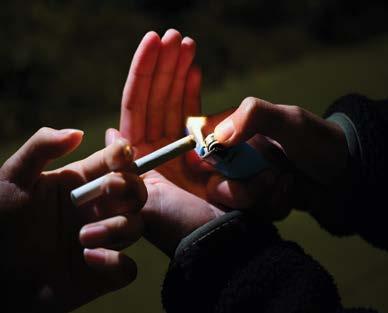
Allen hosts events in his store to provide live music to customers, to create that sense of community wherein the ephemeral could last forever, even if not glued down to a piece of plastic, a set of clothes or a photo for the Instagram story — regardless of the camera that took it.
“I think in a lot of ways social media has made a lot of people more antisocial,” Oliva says, corralling them into echo chambers away from the real world.
I’m reminded of a piece of theory I read for a film class by Eduardo Navas, talking about the photograph as a recognition that the moment it depicts has passed; has died. Camera lights flicker more than they ever have, leaving every moment inescapably in the past. I go out into the
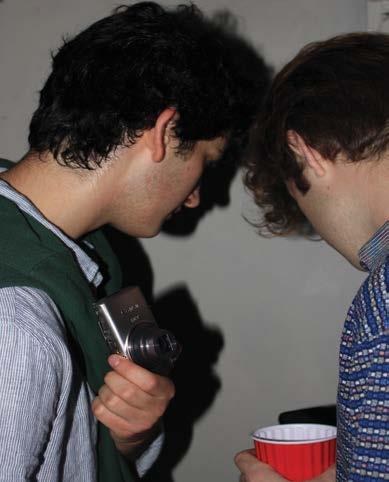

night trying to get the perfect picture, and then it’s over. In front of my eyes, the present never looks quite as cool as a low-quality photo, though even these will scatter and fade as I forget them too.
I flick embers off the end of a cigarette and watch them burn out on the ground.
“There is a general desire with the youth to find oneself. in a commodified society, the easiest and most straightforward is through your clothing.” way to do so
Eliza Marcus Weinberg third-year

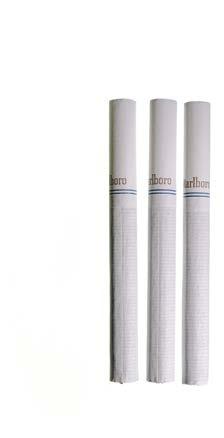
R.I.P. rezas Schill’s last stand
The Winter I Turned Ugly Hangover how-to: sex
Quiz: are you a Northwestern performative male?
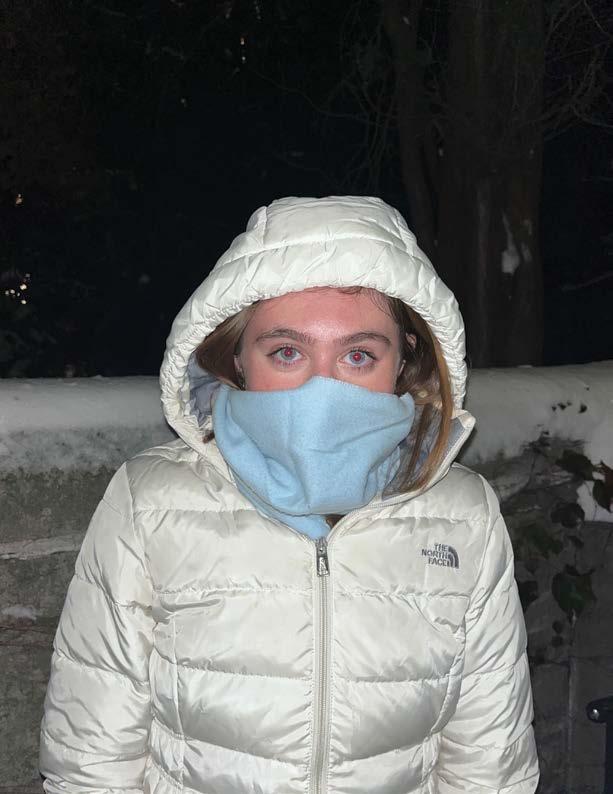

COURTESY OF MITRA NOURBAKHSH
A sneak peek into what former NU President Michael Schill REALLY wanted to say.
WRITTEN BY HANGOVER EDITORS // DESIGNED BY NEHA PARAMESWARAN
On Sept. 4, former Northwestern President Michael Schill emailed his resignation letter to the community, but the NBN SpecialOpsCyberTeamrecentlydiscoveredwhatwebelievetobeadraftofhisrealresignationletterinanabandonedfile cabinetfullofpurpletiesandabooktitled“WritingEngagingEmailsforDummies.”Thefulllettercanbefoundbelow—an NBNexclusive.
Dear members of the Northwestern community,
Over the past three years, I’ve lost more strands of hair than my dog has shed in his lifetime and have not slept more than three hours a night. Republicans attacked me like vultures to a carcass. And holy shit the amount of scandals (can’t students just go to class, go home and, as the kids these days say, “STFU?”). I cannot fathom another year of this, so I’m resigning — effectively immediately — yes, just two weeks before classes begin. I’d like to reflect on the many achievements of these past three years and the incredible job I’ve done. I am profoundly grateful to my colleagues as we’ve worked hand in foot with the Board of Trustees to navigate these unprecedented times. Here is an exhaustive list of our achievements together:
First, we built an incomplete pub on the lawn of Norris University Center. Now, onto my grievances.
Over the past nine months, I fell victim to unconscionable attacks from Republicans that felt absolutely violating — both as a scholar and as a socially liberal and fiscally conservative citizen. I’ve been forced to decide between safeguarding Northwestern’s values of academic integrity or caving to restore funding. Like any good leader, I chose both. I told departments to scrub diversity, equity and inclusion (DEI) content from their websites, fired 400 people, instituted a thoroughly vetted antisemitism training module and, somehow, our funding is still frozen. But at least we have the magical winter lights to look forward to, right. Right? Oh shit, we don’t have the funds for that either
Anyway, to put it shortly, MAGA is waging war on higher education, but they really need to hire education. I call that a #SchillServe. MAGA aside, it has been an extraordinary privilege to usher in a new era for Northwestern, one defined by a diverse student body with talents and skills unlike any other university. But, my God, have the students been a thorn in my side. When tents popped up all over Deering Meadow in April 2024, I thought Sigma Alpha Epsilon finally scored an L.L. Bean sponsorship. Much to my dismay, it was anything but.
My desired course of action: send the Evanston Police Department to arrest these students practicing their First Amendment rights. “Get them off my lawn,” I told Mayor Daniel Biss. He never did. However, the University was able to come to a historic agreement with protesters. The Deering Meadow Accords are a commitment to (*checks notes…* ummm still not sure; need a refresher).
Serving as President has been the honor of my life. It has been a privilege to work alongside some of the world’s most brilliant people: the professors and researchers, including myself, who make Northwestern one of the most valuable academic institutions in the world. Three years ago, I unexpectedly assumed this position. Maybe it was a sign I really shouldn’t have taken this job. Well kids, you live and you learn; I’ve learned to never serve as a university president ever again. President of the United States, however, that’s a separate consideration.
After a sabbatical, which will include a couple Old Fashioneds a night, I will move on to a better place — Northwestern Pritzker School of Law — to hopefully find some peace.
Michael H. Schill
President (not anymore)
Professor of Law (what I actually like to do)
Professor of Finance & Real Estate (any students need pro bono housing counsel?)
P.S. The Board of Trustees loved me so much they told me to go back to being a professor. Also, did anyone notice how we went from #6 to #7 when I left?
P.P.S. Can you rename Bobb after me once it’s renovated? Schill Hall has a nice ring to it.







WRITTEN BY HANGOVER EDITORS // DESIGNED BY SABEEN SHARIFF
In memoriam
Where to now?
RReza’s is no more. Every Northwestern student — from Willard warriors
“I went back with a guy on night one of Wildcat Welcome only to realize he lived right across the hall from me. I saw him every day for the rest of the year. I had no choice but to transfer.” – ex-Northwestern student, current Brownstudent.
Reza’s is gone, but we are not. NBNhas curated a list of alternate options:
1. Mark II Lounge (The Deuce). Expect to see freshmen saying they’re at “Deuce’s.” We were never that embarrassing… right?

“I went to Rezas and watched TikToks under a table in the dining room because I was overstimulated. A waiter stepped on me.” – McCormick third-year.
“I peed in my shoe in the alley waiting to get into Rezas one night.” –Weinbergsecond-year.
“I snuck behind the bar, and the bartender tried to throw me out then threatened me when I tried to order a shot 10 minutes later.” –SESPsecond-year.
“I had to walk to Rezas at 8 a.m, to get my roommate’s wallet after she lost it the night before.” –Medillsecond-year.
“I came back to Bobb from Rezas to find my roommate asleep in my bed with a UChicago guy.” – Weinberg third-year.

2. The Red Room Comedy Club — a karaoke room inside The Deuce where you and your friends can scream and sing anything you want (even Hamilton).
3. Sailing team functions. To partake in these, you first have to gain admission to Northwestern’s most exclusive club, allegedly with a sub-2% acceptance rate.
4. Tao. Another restaurant/nightclub that has been host to Playboi Carti, the Weeknd and Metro Boomin. Still can’t compare to Reza’s.
5. The Red Line. Don’t make eye contact with anyone. Ever.
6. South Beach ragers.
7. The basement in Jones.
8. Mumbai Grill (according to Fizz, this is the new Rezas).
9. Rez College Board formal.

WRITTEN BY JESSICA CHEN // DESIGNED BY EVELYN WON
Well, The Summer I Turned Pretty is over, and I’m missing the most chaotic family of all time. Thank God I found a newer, better version which will be released on our very own Northwestern campus! Some girl named Abdomen Conkers seemed to have
dropped her diary, and BOY am I having a great time reading this.
Welcome to the world of The Winter I Turned Ugly, where the Lake Michigan wind turns your skin flaky-dry, your Aquaphor addiction is at an all-time high, and your roster of two isn’t responding to your texts anymore. Follow the chronicles of Abdomen (Abby) and her two favorite frat-brothers-turned-lovers!


The fucking heat in my dorm won’t turn on, and I have to go to my Econ 310-1 and 311 lectures. Not excited to listen to Professor Sinitsyn talk about maple syrup tariffs. At least I can see Jeremy and his dreamy crystal aquiline eyes again. He’s sooo hot
November 8th November 10th
Omg the weirdest thing happened today. I was walking around InfoComms, and I saw Jeremy sitting with his frat brothers at a table. I went up to say hi bc like obviiii, but he literally just totally and completely blew me off??!?!?!?!?! I was like,

December 1st


JEREMY. ISN’T. TEXTING. ME. BACK. He literally PROMISED me Thanksgiving break wouldn’t change anything between us, but I guess SOMEONE from his hometown probably slid her stupid little “heyyyyys” into his Instagram DMs. I swear to God if Jeremy is no longer committed to our short-distance-mediumterm-semi-exclusive situationship then I’m going to tear his fucking frat down. Also, is Connor avoiding me??????????? Two days ago at 11:34 a.m., I asked him, “Heyyyyy back on campus! Do you wanna grab lunch at Sarge sometime?” and he replied at 3 p.m. TODAY “ig, I’m busy tho.” Is he mad at me? I hope he isn’t mad at me. I really need a back-up option to date party this year if Jeremy is going to dip on me. Ugh this fucking sucks.






December 3rd
I woke up this morning with the biggest pimple on my forehead. None of my moisturizers are working anymore bc it’s so cold outside and the only thing on my face is dirty snow and ground salt. Literally why is Evanston so fucking wet all the time? My limited edition pink UGGs get soggy the second I step onto the ground and all my Aerie crossover flare leggings have salt stains on them. This morning the most EMBARASSING thing happened to me. I was rushing to my Econ lecture in Tech and the minute I stepped inside, I slipped and fell on the stupid floors. To top things off, Jeremy AND Connor AND the Tech clanker were all there and saw me. NONE of them helped me up.

December 6th
DOES JEREMY EVEN WANT ME ANYMORE????. Yesterday at the Sigma Alpha Phi Epsilon Delta x Pi Alpha Phi Alphi Pi mixer we were dancing together and I TRIED to go in for a kiss but he just swerved away and told me my lips were TOO DRY. TOO FUCKING DRY. I’M SORRY MY EXTRA STRENGTH AQUAPHOR ISN’T WORKING, JEREMY. I CAN’T CONTROL THIS SHITTY STUPID WINTER. ALSO YOUR FROSTED TIPS ARE CRACKING YOUR STUPID HAIR, AND YOU’RE UGLY. And THEN he had the AUDACITY to go over and hangout with CONNOR even though he knows it’s super awkward for me to see my former talking stage and current situationship interact!! I need another shot of Smirnoff.
December 8th
Jeremy texted me yesterday saying “i don’t think this is working out, i need to focus on school.” BFFR. I literally gave him ALL my Econ notes. TF do you mean “focus on school????” He doesn’t even show up to lecture! Ugh I guess now that I’m done with his ass I can try talking to Connor again. Maybe if I ask him to walk around the Shakespeare Garden with me he’ll remember the times we used to go to the TNDs together for Wildcat Welcome.
December 10th
I cannot believe the audacity of men. I tried to ask Connor to go to the A&O show with me, but he said he had to run a frat rush event with Jeremy. I SWEAR they are conspiring to make my life worse. I literally ran into them both in Norris the other day and they both turned away awkwardly without even saying hi. Like HELLO?? I was literally your go-to person to ask for Econ help, but now you’re just AVOIDING ME???


December 14th
CONNOR KISS AT THE SIGMA ALPHA PHI EPSILON DELTA FORMAL LAST NIGHT???












WRITTEN BY JESSICA CHEN // DESIGNED BY LENA ROCK // PHOTOS BY
Do you have sex? Of course not. You go to Northwestern! On campus, I always hear someone complaining about how they have no game, no girls, no play, no love life, no sex. As a result, your trusty Hangover editor has taken on the task of making an introductory guide to this elusive campus activity. I’m an expert in this field because I definitely have sex. Like, a lot. I swear. So. Much. Sex.
In order to procure sex, we need to know what we’re dealing with. Sex is intimate, sex is loving, sex is the binding life force that makes us human. Sex is a lifechanging experience.
Before I became the sex master I am now, I was sad and sullen. There was no hope in life for me because I was not able to feel the rush of endorphins that only the sweet, sweet act of love can provide.
Always make sure that your partner gives an enthusiastic yes for consent. To be certain my partner knows that I REALLY want to have sex, I do an interpretive dance, just like how the birds do it in the real world. The last girl I had over in my Plex single said she had to go catch the train when I pulled out the consent macarena, but she said she’d definitely be back for more after her study abroad in the USSR (That’s still a place, right…?).


Sometimes, when your GCal invite gets denied or all the girls from your Math 220-1 discussion have blocked your email, you need to resort to everyone’s favorite: dating apps.
To match with as many people as possible, I recommend setting your first picture as a large group photo with all of your most attractive friends. That way, you cover a broad range of types a potential match might be interested in. Worried about coming off as a catfish? Never fear. Just sweet-talk your way into their DMs with some charming ChatGPT pick-up lines.

They say that sex has many positive benefits for your body, like boosting your mood and increasing your health! This doesn’t happen to me anymore, of course, because I’ve simply had sex too many times to notice a difference.
Some people say size doesn’t matter, but we all know that it definitely helps. Through my extensive research on sexhelp forums, I’ve found that a lot of protein powder and daily Bulgarian split squats can add up to three inches in length. (I can attest — I’m up to a whole 3.2!)
Ah, the age-old question. Picture this: Someone in your Math 220-1 discussion catches your eye. Maybe they leave too quickly for you to talk to them after class, maybe you’re scared they’re way out of your league, maybe you can never catch them alone because that other guy, Trevor, always has some new YouTube short to show them.
Well, never fear, that’s what the student email list on Canvas is for! My suggestion is always a Google Calendar invite. It’s perfectly subtle yet gets you straight to the point.
Here’s a list of some of my most successful subject lines if you ever need inspiration:
• Live Anatomy Demonstration @ Plex
• Weekly Check-In(side of you)
• URGENT: Sexual Health Training
• PLEASEEEEEEEEEEEEEE



Ask about their day, tell them they look beautiful or mention you have a Plex single and are ALWAYS looking for more study buddies ;))))))))))))))))))))))).
Matches aren’t responding? Nothing to worry about! Use the power of the internet to reverse image search their photos and find their Instagram or LinkedIn. Then, send them a personal reminder to check their Hinge likes! This never fails to get a reaction — whether it’s a date or a restraining order, at least they’re thinking about you! And that’s all we need to work with.




We’ll buy you a matcha from Cafe Bergson if you score full points.
WRITTEN BY HANGOVER EDITORS // DESIGNED BY RAINEE LI
Close your eyes and imagine: The Performative Male. What are you seeing? Wired earbuds with Clairo playing? Matcha and feminist literature? But Northwestern has its own invasive species of performative males. You may be one (or even worse, dating one) without realizing it. Find out whether you or your loved ones fall under that category by taking the quiz below! If you receive a score of more than 10 points, you just might be part of Northwestern’s most manipulative affinity group.
1. Wears an “I Heart Campus Workers” pin. Preferably on a tote bag. (1 point)
2. In an a cappella group. (1 point)
3. Gets drunk and talks geopolitics. (1/2 point... don’t we all do this?)
4. In Bienen. (1 point)
5. Pursuing a niche career path. Constantly going on “coffee chats.” (1 point)
6. Hammocks on the Lakefill. (1 point)
7. Posts Instagram stories of Deering during sunset. (1 point)
8. Doesn’t use AI for “environmental reasons.” (1 point)
9. Reads a print copy of TheDaily.(1 point)
10. Attends History Department luncheons. (1 point)
11. Has philosophy books on his dorm room bookshelf that he’s only read the Sparknotes version of. (1 point)
12. Takes girls to the Shakespeare Garden. (5 points)

13. Lives on South Campus. (1 point)
14. Frequents Heyday and Crossroads second-hand clothing stores. (1 point)
15. Went to Bookends & Beginnings. Took photos. Posted to Instagram. Left. (3 points)
16. Buys groceries from the Evanston Farmers’ Market. (1 point)
17. Has taken Gary Saul Morson’s Russian literature class. (1 point)
18. Orders oat milk in his coffee at Cafe Bergson. (1 point)
19. Gets other people to take photos of them looking at Monet paintings at the Art Institute. (3 points)
20. Takes up more than one washing machine to clean thrifted clothes. (1 point)