27
Craft Performs NAMITA GUPTA WIGGERS
The most valuable feature of the concept of culture is the concept of difference, a contrastive rather than a substantive property of certain things. Although the term difference has now taken on a vast set of associations (principally because of the special use of the term by Jacques Derrida and his followers), its main virtue is that it is a useful heuristic that can highlight points of similarity and contrast between all sorts of categories: classes, genders, roles, groups, and nations. When we therefore point to a practice, a distinction, a conception, an object, or an ideology as having a cultural dimension (notice the adjectival use), we stress the idea of situated difference, that is, difference in relation to something local, embodied, and significant. This point can be summarized in the following form: culture is not usefully regarded as a substance but is better regarded as a dimension of phenomena, a dimension that attends to situated and embodied difference. Stressing the dimensionality of culture rather than its substantiality permits our thinking of culture less as a property of individuals and groups and more as a heuristic device that we can use to talk about difference. Arjun Appadurai1
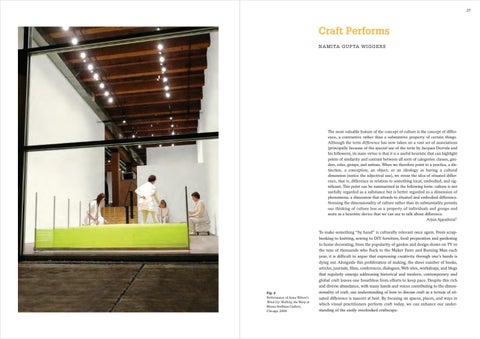
Fig. 0 Performance of Anne Wilson’s Wind-Up: Walking the Warp at Rhona Hoffman Gallery, Chicago, 2008
To make something “by hand” is culturally relevant once again. From scrapbooking to knitting, sewing to DIY furniture, food preparation and gardening to home decorating, from the popularity of garden and design shows on TV to the tens of thousands who flock to the Maker Faire and Burning Man each year, it is difficult to argue that expressing creativity through one’s hands is dying out. Alongside this proliferation of making, the sheer number of books, articles, journals, films, conferences, dialogues, Web sites, workshops, and blogs that regularly emerge addressing historical and modern, contemporary and global craft leaves one breathless from efforts to keep pace. Despite this rich and diverse abundance, with many hands and voices contributing to the dimensionality of craft, our understanding of how to discuss craft as a terrain of situated difference is nascent at best. By focusing on spaces, places, and ways in which visual practitioners perform craft today, we can enhance our understanding of the easily overlooked craftscape.