A.I. is ruining our future society’s chance of success
by Alonn Matthews
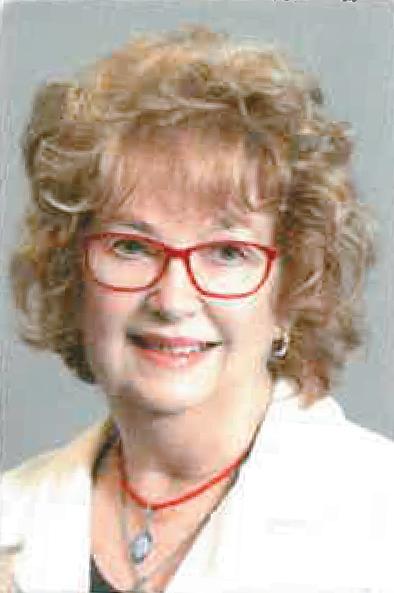
Alonn Matthews was a freshman at Unity Christian Academy, where she participated in tennis and Student Ambassadors, when she wrote this essay. Alonn loves spending time with her family, studying and riding roller coasters.
There are a great deal of movies like Blade Runner, Wall-e, Avengers, Megan, etc. that depict how robots and A.I. will one day take over the world. Well what if that day is already here? A.I. has been getting more advanced in the last few years and is now popping up everywhere. A.I. assistants like iPhone’s Siri, ChatGPT, Meta A.I., Alexa, and more are becoming more pervasive in our daily lives. Most people use them every day in their homes, workplaces, and in school and many people rely on them. A.I. agents are artificial intelligence that have the ability to perform tasks similarly to humans, like learning and problem solving. This includes being able to perform human jobs. A big issue with A.I. is it could make it harder for future generations to make a living, especially in Chicago. This could collapse the economic system. A solution can be to decrease education costs to get more people to work in fields like journaling, construction, and cooking and find ways for A.I. and humans to collaborate.
A.I. robots are already in restaurants. Companies are starting to use them as waiters and cooks. An expert A.I. company, Proven Robotics says, “Waiter robots use a combination of sensors and artificial intelligence to navigate around the restaurant and interact with customers.” This reveals that engineers have created A.I. robots that work around people and have advanced their technology so humans can interact with them. Proven Robotics also says that A.I. robots can use language and speech processing to communicate with people by having customers voice their order, relay info on the menu, and respond with a generated or pre-recorded voice. This development shows that robots could very well replace humans in the workplace and reduce the need for human workers. This will disrupt the economy.
In particular, Illinois is one state that shows a lot of robot advancements and growth.
The Century Foundation says, “states in the Midwest (the East North Central, or ENC census division) - Michigan, Ohio Indiana, Illinois, and Wisconsin - consistently have the highest robot intensities, typically at least twice the intensity of all other regions.” This reveals that Illinois is among the states with large advancements in the robotic workforce. According to CNBC, Chicago, Naperville, and Joliet, Illinois are the second most impacted areas where robots take over jobs. So, people who live in the Chicago area will start being impacted by A.I. disrupting the economic system. And the more that A.I. robots advance, the more future generations will be impacted. So, A.I.’s large impact on the Chicago area and their advancements are starting to take up workspaces and disrupt the economy. Fewer job opportunities means more people will be unable to make a living and buy necessities and wants. Not only does it affect consumers and buyers, but also the sellers as the ones selling these needs and wants won’t get the profit they expect if the buyers are not able to buy their products. This all cycles back to the workers. Companies not making profit affects their workers greatly because they are not able to get their salary. This can lead to workers getting laid off and needing to find jobs again. One solution to this problem is to decrease the cost of education. This is so companies can find more people to learn and do the work that machines do and help them do those jobs more efficiently. Decreasing the cost of education gets more people more educated on multiple topics. This leads to another opportunity - getting humans and A.I. robots to work collaboratively rather than letting robots take up all the jobs. According to Forbes, the hybrid workforce corrects an issue of people spending unnecessary time at work. They say that 54% of workers’ time is spent on busy work. This information gives us the benefits of A.I. and humans working together. Forbes explains that A.I. Assisting humans in the workplace can help complete tasks efficiently.
This essay is part of a series of perspectives written by students at Unity Christian Academy in South Holland. The topics cover some of the most pressing issues of our times and the opinions are of the writers themselves. We are grateful to UCA English Educator Hannah Morgan for organizing this partnership.
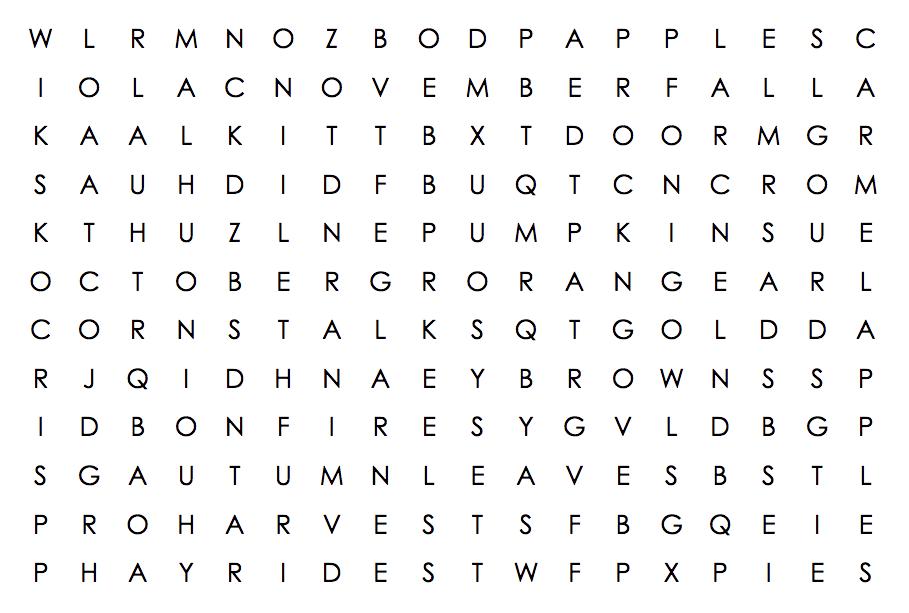
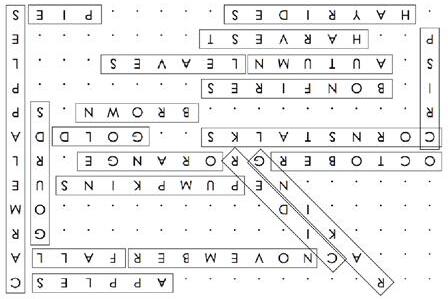
Autumn is Here!
How Social media can expose younger generations to dangerous and sensitive content
by Chase J. Neither Chase J. Neither is a student at Unity Christian Academy who takes his writing seriously. His hobbies include late-night drives, finding new ways and opportunities to earn money, and saving, and reviewing films.
Have you ever thought about how social media will influence the younger generation?
Well you should.
Because according to cyberbullying.org, cyberbullying is related to low self esteem, suicidal ideation, anger, frustation, and psychological problems to the young minds of our generation. It also cited how cyberbullying can be related to real world issues including school problems, due to classmates cyberbullying their fellow classmates, antisocial behavior with younger minds making their Instagram account, or TikTok account private so they won’t be ashamed of posting themselves for people who follow them.
Along with cyberbullying, access to the internet allows substance abuse and delinquency due to how Instagram, TikTok, and X have videos or information on who to contact to buy perks, lean, molly, weed, ecstacy, and edibles from online drug dealers, or where the location is to purchase these substances.
Now you might be wondering why is a child telling the audience all of this information? Well it’s simple, I don’t want little kids to be taken advantage of by social media and the Internet. I’m concerned that they can become victims of cyberbullying. I don’t want anyone to feel put down at a young age like I did when I was younger. When I was between 9- and 12-years-old I was bullied for my looks, people would call me ugly and tease me about my facial features. That led me to feeling insecure and alone. This is why I want the younger generation to be more aware, ESPECIALLY with the internet or social media.
Now after knowing all of this information, you might be wondering, is this all we need
Giannoulias Takes Aim at Financial Scammers
Illinois Secretary of State Alexi Giannoulias has strengthened the state’s Securities Department with four high-level hires charged with protecting and safeguarding the financial interests of Illinoisans and their investments.
The office has hired a new Deputy Director, Chief of Enforcement, Chief of Examinations, and Senior Investigator, each of whom bring a wealth of knowledge in financial law, litigation and investigations to their respective positions.
In addition, Giannoulias was also reappointed earlier this month as Co-Chair of the Securities Committee of the National Association of Secretaries of State, and his Department Director Chet Taylor was elected to the Board of Directors of the North American Securities Administrators Association.
The Illinois Secretary of State’s Securities Department regulates the investment industry in Illinois, registering more than 250,000 securities salespeople and 25,000 investment advisor representatives statewide, while cracking down on instances of fraud, scams and financial abuse. The Securities Department has 37 employees and generates more than $60 million each year in fees, fines and penalties for the state. Like that of the U.S. Securities and Exchange Commission (SEC), the Illinois Securities Department’s budget is funded by its collection of fees from the securities industry and money recovered from administrative fines to fund its operations, rather than relying on taxpayer dollars.
By devoting more resources to increase the number of
attorneys, investigators, and examiners and enhancing its financial literacy efforts, the state will better safeguard citizens’ financial interests and small investors. Additionally, these efforts pay for themselves while bringing in more revenue.
The new hires include:
Kristine Kolky joins the Securities Department as its Deputy Director. In this role, Kris oversees monitoring and investigating claims of financial exploitation, targeting seniors and other vulnerable individuals. She also provides educational resources to help residents prevent and report financial fraud.
Prior to joining the department, Kris was a partner at Taft, Stettinius & Hollister in Chicago, where she specialized in complex commercial litigation. Kolky graduated from the University of Michigan before earning her law degree from DePaul University School of Law.
Victor Turla joins the Securities Department as Chief of Enforcement. In this role, Victor oversees investigations involving violations of Illinois securities law, initiating enforcement actions and ensuring compliance with laws and regulations.
Prior to his appointment, Victor served for 11 years with the Illinois Attorney General’s office, including three years as Deputy Bureau Chief in the Special Prosecutions Bureau. While there, he handled complex criminal and financial investigations. Victor earned his undergraduate degree at the University of Illinois Urbana-Champaign and received his Juris
to know on why social media is dangerous to the younger generations?
Well no, this is just the tip of the iceberg of how social media is a bad influence on the younger generation. Social media can show extremely explicit content, like gory fights, deaths, porn, and etc. It can also contain websites where the youth can interact with strangers online from apps like Discord and Omegle where people go to meet strangers who might be predators, criminals, and psychos.
Another issue would be scammers that would want to take your personal information, so they can hack your data and steal or leak your personal information like your address, name and age. One other issue would be like weirdos on the Internet who could be asking for nudes, or videos of you doing inappropriate things or to meet up with you to see you in person to “hang out.”
According to a recent report from Yale Medicine, exposure to these types of content can normalize bad behaviors, and in some cases, people who target adolescents are “adults seeking to sexually exploit children. For example, 12-year-old Maria Gomez-Perez went missing from her Georgia home when she was found in Ohio with a man she met online.” This is an example of why we should keep the younger generation away from social media because if we continue to let this happen they will sooner or later, they might become victims like Maria Gomez-Perez.
One way for parents to handle this is to wait until their children are a certain age to know about these types of people, make sure you moderate your kids so they won’t know all this sensitive content, and information, and warn them on the types of people that are on social media. Lastly, make sure you know their password to check on them just in case.
This essay is part of a series of perspectives written by students at Unity Christian Academy in South Holland. The topics cover some of the most pressing issues of our times and the opinions are of the writers themselves. We are grateful to UCA English Educator Hannah Morgan for organizing this partnership.
Doctor from Saint Louis University School of Law.
Frank Ronis will serve as Chief of Examinations, overseeing department’s efforts to examine the books, records, and sales practices of Illinois-registered investment firms to assess compliance under state and federal laws.
Frank began his securities career as an examiner with the Illinois Securities Department, followed by more than two decades as a Senior Examiner with the Securities & Exchange Commission. He holds a B.B.A degree from Roosevelt University, an M.B.A. from Dominican University, and is a Certified Fraud Examiner.
Jordan Frieberg assumes the role of Senior Securities Investigator with the department. As an investigator, Jordan conducts complex investigations of possible violations of the anti-fraud provisions of the Illinois Securities Law. Jordan has extensive expertise related to cyber and crypto fraud, including a deep understanding of the new forms of technology that scammers leverage to swindle Illinois residents. Jordan has been responsible for taking down numerous fraudulent websites that had attempted to scam investors through the sale of fake investments.
Jordan spent nearly three years as an investigator with the Arizona Securities Division. He earned a master’s degree from Michigan State University in Law Enforcement Intelligence and Analysis, and an undergraduate degree from the University of Minnesota in Criminal Justice.
Published every week covering the towns of South Holland/Thornton, Lansing, Dolton/Calumet City, Munster, Highland, and Schererville. Our circulation is independently audited by CAC.
ERRORS
We proofread all Classified ads. However, should a mistake occur, it can easily be corrected, provided it is brought to our attention. Call 708-271-8971 to rectify an error. We cannot be responsible for more than one incorrect insertion. Adjustment for error is limited to republication. In any event, adjustment for errors or omissions is limited to the cost of the space occupied.
CLASSIFIED ADS
The Shopper offers FREE non-business Classified Ads (20 word maximum). Business Classifieds are $25 for 20 words, $1.00 per word over. Place ads online at www.myshopper.biz
NEWS
Email news items to general@myshopper.biz
Some content courtesy of Family Features and Capital News Illinois.
DEADLINE
Friday 4:00 pm for the following week’s issue.
PUBLISHER’S NOTICE
The Shopper reserves the right to edit any content supplied for publication as it sees fit, including but not limited to clarity, grammatical and factual accuracy, and to accommodate available space. All real estate advertising in this newspaper is subject to Fair Housing Laws which makes it illegal to advertise “any preference, limitation or discrimination based on race, color, religion, sex, national origin, familial status, sexual orientation, marital status, military status, age, ancestry, parental status, source of income, military discharge status or housing status,” no matter how large or small the property. This newspaper will not knowingly accept any advertising for real estate which is in violation of the law. Our readers are hereby informed that all dwellings advertised in this newspaper are available on an equal opportunity basis. To complain of discrimination call HUD toll-free at 1-800-669-9777. The toll-free telephone number for the hearing impaired is 1-800-927-9275.
Buddy Walk and Fall Family Day Scheduled by Down Syndrome Association Northwest Indiana
The Down Syndrome Association Northwest Indiana announced that they will be holding their annual Buddy Walk and Fall Family Day on October 19 at the Lake County Fairgrounds. The doors open at 8 a.m. and the event ends at 3 p.m.
The event consists of the Buddy Walk, Buddy Dash, a beer garden, food trucks, tailgating, and other activities throughout.
The Down Syndrome Association serves the community and those with Down Syndrome and their families. They provide services and resources and host events that prompt community involvement.
Cost is $15 per person and $50 for families up to five. To register to walk, donate, sponsor, or find out information, visit dsanwi.org or call (219) 838-3656.
Strut Your Style and Support a Cause at the “Heels for Meals” FUNdraiser
MERRILLVILLE, Indiana — Meals on Wheels of Northwest Indiana will host its upcoming fundraising event, Heels for Meals, on Friday, October 10, 2025, from 5:30 pm to 8:30 pm at The Design Barn, located at 312 N. Madison St., Hebron, IN 46341.
Heels for Meals is where glam meets giving. The ticketed fundraising event is welcoming all to rock their boldest and fiercest shoes. The event features a game night, lights, action, live music, and a themed footwear competition. Signature cocktails and beverages, including an array of gourmet bites, will be prepared by Chef Jorge Sullen.
Whether strutting for the cause, dressing to impress, or just there for the entertainment, Heels for Meals invites all.
Guests are encouraged to compete in the “Swanky Soles and Socks” competition featuring categories like Hot Heels, Sassy Sneakers, Swanky Socks, and Fab Flats. Tickets are priced at $100. Those who are unable to attend but wish to support Meals on Wheels of Northwest Indiana may donate online. All proceeds support Meals on Wheels of Northwest Indiana’s mission to prepare and deliver essential, nutritious meals to the community, promoting health, wellness, and independence of all, with the support of a diverse and engaged community network. Registration for the event is available at www.mownwi.org
For additional information, call (219) 756-3663 or contact Jen@mownwi.org Melissa@mownwi.org
LIBRARY HAPPENINGS
Calumet City Public Librar y
Address: 660 S Manistee Ave, Calumet City, IL 60409
Phone: (708) 862-6220
Email: info@calumetcitypl.org
Website: http://www calumetcitypl.org/index.html
Dolton Public Libr ar y
Address: 14037 Lincoln Ave, Dolton, IL
Phone: 708-849-2385
Email: lincoln@doltonpubliclibrary.org
Website: www.doltonpubliclibrary.org
OCTOBER PROGRAMS
AFTER HOURS ADULT GAME NIGHT
Friday, October 10, 2025, from 4-7 pm. Come play Bid Whist, Spades, and UNO. Refreshments will be served. Call 708-849-2385 to register.
BEGINNERS COMPUTER CLASSES
Every Monday, from 1-2 pm. Call to register 708-849-2385
THRIVE ON TUESDAYS W/ MARIO KOONCE
Every 4th Tuesday from 10-11 am. Nutrition Tips, Fitness & Exercise Guidance, Preventive Care, and the Importance of Sleep and Rest.
OCTOBER FEST
Friday, October 24, 2025, from 4-7:30 pm. Bring the kiddos for a night of fun! Scary Slime! Trunk-or-Treat! Thrilling Tells! Cookie Decorating! Spooky Cinema! and Costume Contest! For more information, call 708-849-2385 ext. 4.
Sponsored by: The Dolton Public Library, The Dolton Park District, The Village of Dolton, Thornridge High School District 205, and Celebration of Life Foundation.
DFFL FLAG FOOTBALL TOURNAMENT October 4th & 11th, 12 pm, at the Dolton Park District. Ages 18 & Up, Co-Ed. Call: Danny 708-890-5183, or Courtney 708-841-2111. Proudly Sponsored by: The Dolton Park District, The Dolton Public Library, and The Village of Dolton.
ONGOING PROGRAMS
EVERY MONDAY: STAY FIT with SHEENA STINSON: In-house workout program from 9:30-10:30 am. Register by calling 708-849-2385.
EVERY THIRD SATURDAY OF THE MONTH: BETWEEN THE PAGES: A VIRTUAL STORY TIME!Register by calling 708-849-2385 the link will be emailed to you.
EVERY SECOND TUESDAY OF THE MONTH: TODDLER TIME with Ms. Brooks: 10:45-11:45 AM. No registration is necessary. Daycares are welcome!
EVERY THIRD WEDNESDAY OF THE MONTH, SIMON SAYS..GET UP AND MOVE with Ms. Lottie Maria: 11:30-12 PM. Jump, Clap, and Dance. Toddlers and Daycares are welcome! Call to register at 708-849-2385 ext 4.
HOMEWORK HELP: Call 708-849-2385 ext. 4 to make an appointment with Ms. Brooks on Fridays or Saturdays. Ages 5-12.
EVERY MONDAY: LINE DANCING WITH DAWN THE DANCING DEVA: From 1-2 pm. Call 708-849-2385 ext 3 to register.
EVERY WEDNESDAY: LINE DANCING WITH DAWN THE DANCING DIVA: BECAUSE IT WAS SO GOOD THEY ASKED FOR TWO! From 3-4 pm. Call to register at 708-849-2385 ext 4
FREE online Line Dancing with Dawn the Diva, Tuesdays at 6:30pm
Join Us For Vir tual Programs : Each day at 4:00 pm, “stop” in for online family-fun at the Harvey Library Tuesday: Craft Wednesday: Story Time Thursday: Bacon Bits & Cooking Tips Monthly Virtual Music Class (Friday, check calendar each month)
Homewood Public Librar y
Address: 17917 Dixie Hwy, Homewood, IL 60430
Phone: (708) 798-0121
Email: hplhelp@homewoodlibrary.org
Website: www.homewoodlibrary.org/
PUMPKIN PAINTING
Oct. 13 | 1pm | Grades PreK-6
Registration Required
FUN3: HPL'S RUBIK'S EVENT
Oct. 13 | 3pm | Grades 3 - 12
INTRODUCTION TO ANCESTRY Oct. 14 | 6:30pm | ZOOM
Registration Required
MOVIE NIGHT
Oct. 20 | 6:30pm | Ages 13+
MORBID HISTORY
Oct. 22 | 6:30pm | Ages 13+
HOCUS POCUS INTERACTIVE MOVIE
Oct. 29 | 6:30pm | All Ages
Registration Required
INDOOR S'MORES & SCARES
Oct. 30 | 6pm | Grades 7-12
Registration Required
Riverdale Public Librar y
Address: 208 W 144th St Riverdale, IL 60827
Phone: (708) 841-3311
Email: library@rpld.org
Website: www.rpld.org
Riverdale Public Library District Food Pantry
Our food pantry is open to everyone and is located in the entryway of library. Donations are also welcome and can be dropped off at the Circulation Desk. Please ensure that food items are non-perishable, non-glass containers and not expired.
Weekly Walking Group
9 – 10 am Ages: Adults/Seniors This walking program is for everyone interested in achieving a healthier lifestyle. What better way to start your path to better physical and emotional health, than on your feet making strides to help your heart and improve your general health.
CRANE-VIEW-ARCHER AVE HOME ADDITION TO CHICAGO, A SUBDIVISION OF PART OF THE WEST 1/2 OF THE WEST 1/2 OF SECTION 9, TOWNSHIP 38 NORTH, RANGE 13 EAST OF THE THIRD PRINCIPAL MERIDIAN, COOK COUNTY, IL PINS: 19-09-102-006-0000; 19-09-102-007-0000; 19-09-102-008-0000.2.
Terms of Sale: All payments shall be made in cash or certified funds payable to the Sheriff of Cook County. Prospective bidders are admonished to check the Court file to verify all information.
Thomas J. Dart Sheriff of Cook County, Illinois I3269990
It’s hot. Do you feel it?
Heart Smart
JOSH BOOTSMA
As I write this column on Monday morning, here’s the heat I’m feeling: The discourse around Charlie Kirk’s death and funeral service continues. ICE agents days ago walked through downtown Chicago wearing automatic weapons, further sparking fears in Chicagoland immigrant communities. The death toll continues to rise after a Michigan LDS church was shot up and set ablaze.
Fifty Palestinians in Gaza were killed in the last 24 hours as Israel continues its onslaught, and international efforts to end the conflict continue to swirl.
And if these facts weren’t enough, it’s all hashed out online in ways that alienate and demonize.
In this heat, isn’t unity impossible?
The Apostle Paul must’ve asked himself the same question as he wrote a letter to an early Christian church in the city of Colossae. Paul cites some of the differing groups that had claimed Jesus Christ as their savior: Greek, Jew, circumcised, uncircumcised, barbarian, Scythian, slave, free. That list includes divisions of race, religion, and livelihood that put our modern divisions to shame. Divisions are nothing new!
But how can unity be found among these diverse groups? Paul says it’s not
found in a political party, a unified language, a government program, a shared skin color, or anything else. He says, “Christ is all, and in all” (Col. 3:11).
Jesus Christ is the only foundation upon which ultimate unity can be built. That was true for the deeply divided Colossian church 2,000 years ago, and it’s true now in deeply-divided America. Amid this declaration, Paul calls us to put to death our “old self.” And he adds, “Put on then, as God’s chosen ones, holy and beloved, compassionate hearts, kindness, humility, meekness, and patience, bearing with one another and, if one has a complaint against another, forgiving each other; as the Lord has forgiven you, so you also must forgive. And above all these put on love, which binds everything together in perfect harmony.” (Col. 3.12-14).
I always need to ask myself this question, so I’d guess you might too: Am I responding to the heat of our cultural moment out of my new identity as a child of God — in love, humility, and forgiveness?
Josh Bootsma Director
of Ministries, Covenant Fellowship Church cfcsh.org
Real Estate Specialists Real Estate Questions &
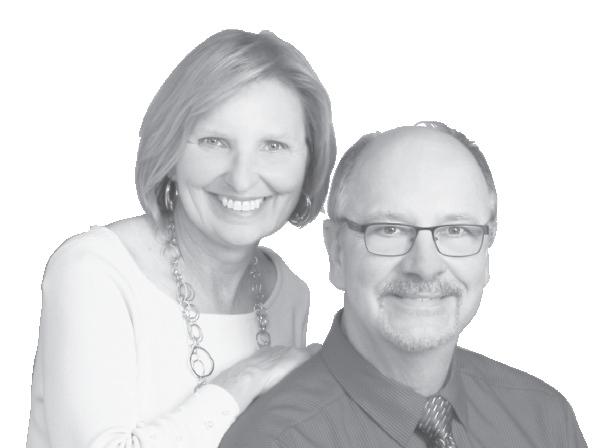
CATHY & JIM HIGGINS
Question: My wife and I are selling our home and now my wife has changed her mind about moving. We have a signed sales contract, with earnest money, between us and the buyer. Is there any way to back out of the sale?
Answer: To start, sales agreements can fall through due to reasons of financing, condition, title, etc, so the deal could still fall through. However, if the buyer has a valid purchase agreement accepted by both you and your wife, and it sounds like they do, then you are expected to fulfill your end of the agreement. It may be that the buyer would accept a cash buyout to discontinue the purchase. However, you need to consider that the Brokers have found a ready, willing and able buyer and are likely to be entitled to a commission for their work. If you simply refuse to complete the transaction, then the buyers may sue for damages as well as “specific performance,” a requirement to complete the sale.
Answers
We suggest that you speak to an attorney.
Question: I recently sold my home. The buyers have applied for a loan, but the Buyer refuses to give me a copy of the appraisal. As the seller, shouldn’t I get a copy?
Answer: No. The appraisal was ordered by the lender and paid for by the borrowers. As long as the loan is approved, it’s none of your business. However, if the appraisal comes in below the sales price and the purchaser asks you for a price reduction, you would then be on good grounds to ask for a copy.
E-mail us your Real Estate questions at Cathyah@aol.com. Thinking of selling your home? Call Cathy & Jim Higgins, Licensed Broker/Realtors in Indiana & Illinois. IN: 219-865-4361 IL: 708-828-3304. McColly Real Estate. Website: www.Cathyhiggins. com. Personal Real Estate Journal: www. Higginshousechat.blogspot.com
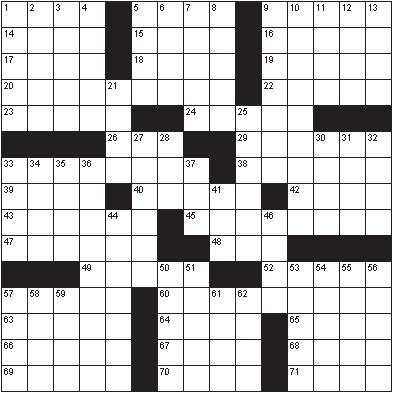
ACROSS
Medication
Anagram of “Dash”
Weighing machine
Move upward
One who prefers solitude
Being nothing more than
Not inner
Braid
Master of Literature
Shout of derision
Created untidyness
Made ready
Bind
The back end
French for “Love”
To press clothes
Bury
Intrusion
Related to the mail service
Utmost degree
Expel
Collection of maps
Cut
Former
Emcees
Lion sound
Precipitation
Cove
Male singing range
Historical periods
Impoverished
Sleigh 71. Nature of being
AUTUMNAL EQUINOX
DOWN
1. Place casually
2. Annoys
3. Utilizers
4. Ganders
5. Expletive
6. City in Yemen
7. Place for concubines and wives
8. Fragrance
9. Scheduled
10. Wooing
11. Initial wager
12. Sediment from fermentation
13. Goes astray
21. Occupational Safety and Health Administration
25. A Turkish hostel
27. Tillable
28. Turn down and sew
30. Anagram of “Ares”
31. God of love (Greek mythology)
32. Hideouts
33. Preparation (abbrev.)
34. City in Nevada
35. Consumes food
36. Secured
37. Point
41. Vase
44. Loftiness
46. Playwright George Bernard ____ (1856-1950)
50. Anagram of “Races”
51. A supernatural creature
53. 3
54. Tellers of untruths
55. Also Known As
56. Feel
57. Front part of a lower leg
58. Solitary
59. Small island
61. Satisfy
62. Stepped
The Autumnal Equinox in September ushers in a change of season. It is observed annually when the sun can be seen directly overhead along the equator. The day marks the end of summer and beginning of fall in the Northern Hemisphere. The autumn equinox is one of two days when all points on Earth except the polar regions see the sunrise and set at due east and due west. With few exceptions, all latitudes see almost precisely 12 hours of daylight and 12 of darkness. Source: nationaldaycalendar.com
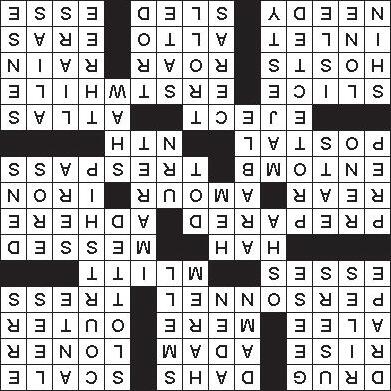
SOLUTIONS
Zakat Foundation of America Launches 10,000
Orphan Campaign to Empower Orphans
CHICAGO, IL — Zakat Foundation of America has launched an ambitious global initiative to sponsor a total of 10,000 orphaned children by December 31, 2025, as part of its growing commitment to protect the most vulnerable and uphold their right to a future filled with hope and opportunity.
The campaign launched on September 15, 2025, with 6,000 orphans already sponsored. In the first few weeks, supporters helped bring that number to over 6,500 across 19 countries. With an estimated 150 million orphans worldwide, Zakat Foundation of America has spent the past two decades working to close this critical gap in care and support.
These children, many of whom have lost one or both parents or live in extreme vulnerability due to absent, incapacitated, or missing caregivers from war, disaster, or poverty, face overwhelming challenges, including malnutrition, lack of access to education, and psychological trauma.
Each child is carefully vetted through a local verification process, in partnership with trusted community leaders and organizations, to ensure the integrity and accuracy of every sponsorship. From refugee camps in Türkiye and Palestine to rural villages in East Africa, the need is both widespread and deeply personal.
With a goal of reaching 10,000 total sponsored orphans by the end of 2025, Zakat Foundation of America is scaling its efforts, mobilizing donors, and expanding its Orphan Care Program to meet the growing demand.
The Orphan Care Program goes far beyond providing financial assistance. It delivers comprehensive, compassionate support, including food, clothing, education, healthcare, and emotional
well-being, through a communitybased model that prioritizes stability, local guardianship, and long-term empowerment.
This campaign is rooted in Zakat Foundation of America’s mission and is directly aligned with the United Nations Sustainable Development Goals (SDGs), particularly: SDG 1 – No Poverty, SDG 2 – Zero Hunger, SDG 3 – Good Health and Well-being, SDG 4 – Quality Education, and SDG 10 – Reduced Inequalities.
By supporting orphaned children with a holistic care model, Zakat Foundation of America addresses systemic barriers to growth and self-reliance while creating pathways to education, improved health, and long-term opportunity.
The Orphan Care Program currently operates in 19 countries, including Ghana, Palestine, Syria, Türkiye, Kenya, and Pakistan, adapting to each community’s cultural and social needs, and ensuring care is locally led and personally meaningful.
With more than 20 years of experience in humanitarian relief and sustainable development, Zakat Foundation of America has become a trusted name in transparent, people-first giving. The Orphan Care Program is one of its fastest growing initiatives, empowering generous donors to build futures, not just fund aid. How to Get Involved
Sponsoring an orphan through Zakat Foundation of America costs just $50/ month and provides life-changing, personal support. Donors receive updates about their sponsored child and become part of a journey that brings lasting change.
To sponsor a child today, visit ZAKAT. org/orphan or call 1-888-ZAKAT-US.
Richard G. Sartori, age 85, of Schererville, IN, passed away on Wednesday, September 24, 2025. Beloved husband of Theresa A. Sartori, nee Terrell. Loving father of Richard S. (Shari) Sartori, Laura (Chuck) Quinn, Dana Guerra and Adam Guerra. Cherished grandfather of Richard Luke Sartori, Christopher Kacich, Alex Kacich, Mackenzie Kacich, Shyanne Chase, Michael Guerra, Jacob Sawyer, Matthew Guerra, Ezabell Guerra, Adam Jr. Guerra, and Andrew Guerra. Dear brother of Gloria (Ed) Lucas. Son-in-law of Annie Elizabeth Terrell. Preceded in death by his parents Bruno and Angeline Sartori, and Michael Guerra.
Visitation Tuesday, September 30, 2025 from
4:00 p.m. until time of the funeral service at 7:00 p.m. at Smits Funeral Home 2121 Pleasant Springs Lane (Rt.30/Pleasant Springs Ln.), Dyer, IN. For further information, please contact 219-3227300 or visit our online obituary and guest book at www.SMITSFH.com
Nancy E. Witvoet, nee Van Hattem, age 84, of Crete, IL, passed away Thursday, September 25, 2025. Beloved wife of the late Boyd “Pete” Witvoet Jr. Loving mother of Barbara (Paul) Kooy, Thomas (Lorri) Witvoet and David (Trudy) Witvoet. Cherished grandmother of Katelyn (Dan) Balash, Dan (Catie) Witvoet, Matthew (Lia) Kooy, Ashley (Nick) Frederick, Kelsey (Sam) Boss, Sarah (Ben)
Stonewall, Sadie Witvoet, Renee (Israel) Martinez, Rebecca Witvoet, and Rachel Witvoet; greatgrandmother of Colten, Taytum, Madison, Bryant, Garrett, Charlie, Boyd, K.J., Ozzie and one on the way. Dear sister of Donna (John) Jonkman and Marilyn (Fred) Neumeyer. Preceded in death by her parents Ernest and Hazel Van Hattem. Nancy was loved by many and will be dearly missed.
Visitation Wednesday, October 1, 2025 from 3:00 –8:00 p.m. at Smits Funeral Home 2121 Pleasant Springs Lane, Dyer, IN. Funeral service Thursday, October 2, 2025 at 11:00 a.m. at Crete Church, 24755 S. Country Lane, Crete, IL with Pastor Brett Revlett and Rev. Mark Prestriedge officiating. Private interment Skyline Memorial Park - Monee, IL. Memorials may be give to Sheltered91(www. sheltered91.org) or National Right to Life (www.nrlc.org). For further information, please contact 219-322-7300 or visit our online obituary and guest book at www. SMITSFH.com
When investing, one of the best abilities is durability
SUBMITTED BY PATRICK ZAMKIN
You’ve probably heard about “genius” investors or those who got in on the “ground floor” of a company that grew to be a huge success. These stories may be interesting, but they are also rare — and sometimes not even true.
The truth is that successful investing isn’t glamorous, and it isn’t necessarily quick. Instead, a well-founded investing strategy is a durable one — one that can withstand the test of time.
Here are some actions that can help you build durability.
Take your time: Most individual investors make their money over time, not overnight. Despite stories about fortunes made on one or two trades, you’re more likely to be successful making money over time. You’ll want to own a well-diversified portfolio of quality investments — and plan to own those investments for the long term.
A long-term perspective can help you ignore the constant noise in the markets and stay invested. When you hear about the latest “hot” investment tip, especially if it’s already performed well, the best advice is this: Ignore it. Although it may be tempting to buy a popular investment, it may not fit with the rest of your portfolio, it may have already peaked and it may be riskier than you expect. If it sounds too good to be true, it probably is.
Invest in quality: When building your investment portfolio, quality should be a top priority. For stocks, quality is frequently measured by the steadiness of earnings and dividend growth over time. For bonds, one measure of quality is an investment-grade credit rating, which indicates that the borrower has a good track record of making its promised interest and principal payments and the bond has a relatively low risk of default.
Quality investments are more likely to overcome temporary challenges, which is why a good track record can be an indication of quality. Don’t reach for yield by looking for investments offering
the highest dividend or interest rate without considering the risk. Remember, there is no perfect investment — a higher rate generally means higher risk.
Stick to your strategy: Building a long-term strategy can anchor your decisions and provide a roadmap for your investment choices. Your strategy should consider your goals, tolerance for risk and the time needed to save toward each goal.
Within that strategy, you can be flexible. Buy and hold, for example, doesn’t mean buy and forget. Over time, your goals may change, or you may choose to hold more conservative investments. But it’s important to make changes for the right reasons, not simply because stocks or your other investments may have dropped in price.
Perhaps one of the biggest mistakes you can make is trying to time the markets, moving in and out in response to short-term declines or the latest prediction. This often results in getting into and out of the market at the wrong times, costing time and money — and resulting in lower returns over time.
Remember that investments don’t all move up or down at the same time but portfolio diversification can help smooth the ups and downs of the market. A long-term perspective can help you see past short-term fluctuations in some investments.
Successful investing isn’t about making dramatic moves or chasing the latest trends. It’s about developing a durable strategy personalized for your life, then sticking with it through market ups and downs. In investing, as in life, slow and steady could help win the race.
This article was written by Edward Jones for use by your local Edward Jones Financial Advisor, Patrick Zamkin, located at 18735 Dixie Hwy, Homewood, IL 60430. Contact us at (708) 798-9066. Edward Jones. Member SIPC.
For information, examine the court file, CODILIS & ASSOCIATES, P.C. Plaintiff’s Attorneys, 15W030 NORTH FRONTAGE ROAD, SUITE 100, BURR RIDGE, IL, 60527 (630) 794-9876
THE JUDICIAL SALES CORPORATION
One South Wacker Drive, 24th Floor, Chicago, IL 60606-4650 (312) 236-SALE
You can also visit The Judicial Sales Corporation at www.tjsc.com for a 7 day status report of pending sales.
CODILIS & ASSOCIATES, P.C. 15W030 NORTH FRONTAGE ROAD, SUITE 100
BURR RIDGE IL, 60527 630-794-5300
E-Mail: pleadings@il.cslegal.com
Attorney File No. 14-22-00336
Attorney ARDC No. 00468002
Attorney Code. 21762
Case Number: 2022CH00995
TJSC#: 45-2395
NOTE: Pursuant to the Fair Debt Collection Practices Act, you are advised that Plaintiff’s attorney is deemed to be a debt collector attempting to collect a debt and any information obtained will be used for that purpose.
Case # 2022CH00995 I3273878
IN THE CIRCUIT COURT OF COOK COUNTY, ILLINOIS COUNTY DEPARTMENT - CHANCERY DIVISION NATIONSTAR MORTGAGE LLC
Plaintiff, -v.SHAKIA GREENLEAF, CITY OF CALUMET CITY, UNKNOWN HEIRS AND LEGATEES OF ROSIE GREENLEAF, ASHLEY HARMAN, SHELBY HARMAN, STEVIE BIVENS, JAMIN PURTHA, ROSEMARY GREENLEAF, LINZY GREENLEAF JR., JEROME GREENLEAF, BARBARA GREENLEAF, LAVENDER GREENLEAF, TYRONE GREENLEAF, ERIC GREENLEAF, DERRICK GREENLEAF, UNKNOWN OWNERS AND NONRECORD CLAIMANTS, STATE OF ILLINOIS - DEPARTMENT OF REVENUE, GERALD NORDGREN, AS SPECIAL REPRESENTATIVE FOR ROSIE GREENLEAF (DECEASED) Defendants 2024 CH 08023
503 YATES AVENUE CALUMET CITY, IL 60409
NOTICE OF SALE PUBLIC NOTICE IS HEREBY GIVEN
of the unit at the foreclosure sale other than a mortgagee shall pay the assessments required by The Condominium Property Act, 765 ILCS 605/18.5(g-1). IF YOU ARE THE MORTGAGOR (HOMEOWNER), YOU HAVE THE RIGHT TO REMAIN IN POSSESSION FOR 30 DAYS AFTER ENTRY OF AN ORDER OF POSSESSION, IN ACCORDANCE WITH SECTION 15-1701(C) OF THE ILLINOIS MORTGAGE FORECLOSURE LAW.
You will need a photo identification issued by a government agency (driver’s license, passport, etc.) in order to gain entry into our building and the foreclosure sale room in Cook County and the same identification for sales held at other county venues where The Judicial Sales Corporation conducts foreclosure sales.
For information, examine the court file, CODILIS & ASSOCIATES, P.C. Plaintiff’s Attorneys, 15W030 NORTH FRONTAGE ROAD, SUITE
100, BURR RIDGE, IL, 60527 (630) 794-9876 THE JUDICIAL SALES CORPORATION
One South Wacker Drive, 24th Floor, Chicago, IL 60606-4650 (312) 236-SALE
You can also visit The Judicial Sales Corporation at www.tjsc.com for a 7 day status report of pending sales.
CODILIS & ASSOCIATES, P.C.
15W030 NORTH FRONTAGE ROAD, SUITE
100 BURR RIDGE IL, 60527
630-794-5300
E-Mail: pleadings@il.cslegal.com
Attorney File No. 14-24-05252
Attorney ARDC No. 00468002
Attorney Code. 21762
Case Number: 2024 CH 08023
TJSC#: 45-1638
NOTE: Pursuant to the Fair Debt Collection Practices Act, you are advised that Plaintiff’s attorney is deemed to be a debt collector attempting to collect a debt and any information obtained will be used for that purpose.
Case # 2024 CH 08023
I3273921
Get Off the Porch
by Janice R Newman
Mr. Rogers on television would sing, questioning, “Do you know the people in your neighborhood?” Do you spend time with your neighbors, or do you limit your interactions to a wave from the porch? A 2018 Pew Research Center survey concluded that 57% of Americans know some of their neighbors and about a quarter know most of them; however, a casual recognition is not the same as truly knowing someone. Learning a name or exchanging greetings does not build a relationship. In fact, most people never engage socially with their neighbors beyond that quick wave or hello. Compared to 20, 30, or even 50 years ago, far fewer people invest time in building neighborhood connections. Many are vocal about local issues or needed improvements but can’t talk to their closest neighbors.
There are several reasons for low neighbor engagement, including a lack of trust, busy lives, social barriers, and changing social norms.
Lack of Trust: Many people today live with fear, anxiety, and a lack of trust when it comes to forming relationships with the stranger next door. Trust levels are often lower with those outside of one’s family, and there is a common fear of being vulnerable to people we do not know well. News stories often highlight mistrust in government officials, professionals, workplaces, and society, reinforcing these concerns. Knowing your neighbors can build trust and security. Neighbors should be able to look out for one another, offer needed help, and work together in their community.
Too Busy: People are often too busy to get to know their neighbors. Between work, children, family obligations, friends, and social activities, there seems to be little time left for connecting with anyone. For many, a simple wave from the porch is the extent of neighborly interaction. Most don’t know the names of the people they’re waving at.
It’s important to carve out time to build these connections. Knowing your neighbors helps create a stronger, safer, and more supportive community. One way to do this is by hosting a
block party. These events provide a way to meet new people, exchange stories, and share a meal—turning neighbors into friends.
Social Barriers: Many people are hesitant to engage with others because of struggles with accepting diversity and cultural differences. A lack of understanding often prevents openness and connection with neighbors. Instead of love and acceptance, biases, fears, and avoidance occur in many communities. Yet, as Jesus reminds us in Matthew 22:39 (MEV), “And the second is like unto it, thou shalt love thy neighbor as thyself.” We cannot truly love our neighbors if we are unwilling to get to know them and extend genuine kindness.
Changing Social Norms: Times have changed drastically. Thirty or forty years ago, cell phones, television, and computers were not predominant in our lives as they are now. Then, most socializing happened in person. Children played outside with kids in the neighborhood, often with families who already knew one another. Today, people can connect instantly with someone across the world, yet struggle to engage with the person living next door. Modern technology and shifting social norms have drawn people indoors, creating distance and isolation.
But it’s important to engage inperson activity for some type of human touch, real presence, and authentic relationships. Building connections with neighbors requires breaking down barriers, challenging changing norms, and intentionally making time. Hosting block parties, planning small gatherings, or simply stopping to chat face-to-face can foster friendships, strengthen trust, and enrich lives. So, get off the porch and take the first step in getting to know your neighbors. It’s important to connect with your neighbors to create bonds by building trust, making time in our busy lives, breaking social barriers, and challenging social norms. Enjoy while you engage in a block party or have an in-person social interaction. Y? Why Not!
Like us on Facebook at https://www. facebook.com/ywhynotshow/
Mark your calendar for the Beta Rho Tri Kappa Chapter’s 4th Annual Bingo fundraiser, “TOUCHDOWN BINGO,” on Thursday, October 16, from 5:30-9:00pm at the Croation Center, 8550 Taft St. in Merrillville. Tickets are $45 per person including dinner, music, cash bar, raffles and 9 games of Bingo! (All cash prizes!) Guests must be 18 years or older.
To purchase tickets, table sponsorships or for more information: betarhotrikappa.org/bingo Please RSVP by October 6th.
“TOUCHDOWN BINGO” proceeds benefit Northwest Indiana organizations including Meals on Wheels, Sojourner Truth House, Food Bank of NWI,
Wanted
Looking for room to rent with own bathroom. NW Indiana/Lansing area. Elderly care experience. 40+ Non-drinking/smoking male w/ maintnenance skills. Prefer kitchenette & garage space. 708-898-8668
219-616-3281
SMITH PAINTING 30
YRS EXP - FREE ESTIMATES Mention Sherry, get 5% off job. Call Mike 2197429867
Assembly: Furniture & exercise equipment (Ikea, Office Depot, etc.) Call Rob daily until 9pm 708-898-8668
JUNK REMOVAL Time to make space! Cleanouts (garage attic, basement, shed). Hauling away appliances, furniture, trash. WE RECYCLE! Call ‘til 8pm. 708-898-8668
CAR / TRUCK
TROUBLE?
Vehicle shopping? Onlocation diagnosis: Will find needed repairs / maintenance. Uncertain of mechanic estimate? 32 years exper. Any day! 708-898-8668
Looking for Older Chevy or Ford Truck in good condition, Low Miles and Price from ‘99-2004. Also older Toyota Car, in good condition, Low Miles and Price from ‘95-2000. Also in search of a Wringer Washer in working condition. Call 219-801-0955
For Rent
HOUSES FOR RENT IN PHOENIX. THREE AND FOUR BEDROOMS, SECTION 8 WELCOME. $1650 / mo. One month security deposit and background check required. Have yards. Extra charge for appliances. Available immediately. Pets negotiable. Driveway parking available. Call Renetta Thomas for more information 708-417-8384.
APARTMENT FOR RENT- 2 BEDROOMS 2ND FLOOR. CALUMET CITY IL. $1200 RENT and one month security. No smoking, no pets and no section 8. Street parking. Serious inquiries only. Call 708 466-7272
BEAUTIFUL SOUTH
HOLLAND ROOM FOR RENT IN A SINGLE
FAMILY HOME. King size bed, semi private bathroom with Jacuzzi tub. No cooking, full size refrigerator and microwave in room. Free lights, free gas. Only $225 a week, $500 move in fee. Background check required. Call 708-8433932 for more info.
APARTMENT FOR RENT- Available Now$900 a month. - 2 beds, 1 bath, live-in kitchen. Private parking. No pets. One month security and rent required. 17701 Commercial Ave in Lansing. Apartment 2W on second floor. Seniors welcome. Call Winston708-251-8266
GARAGE SALES
10/2, 10/3 and 104 8:00AM to 5:00PM except Saturday closed at 1:00 pm 18131 Crystal Lane in Lansing. Small appliances, houseware goods, baby items, home and office furniture, collector comic’s and sports memorabilia.
For Sale
A few Bully Pups (5 months old) are looking for their forever homes. They are friendly, active, and love being around people.Good with families, up to date on care and ready to bond with their new people.We are asking a modest rehoming fee. ($300) Serious inquiries only (773)457-9616
For sale, TKO five piece drum set, A1 condition, high hat, cymbals, etc. All hardware included. $300 O.B.O. Call 708-598-5136
Large indoor steel dog cage, 48” x 36” x 30”, good condition, $75; 1965 Ladies Schwinn Hollywood Bike, All Original, Rideable, Good Condition, $90 Leggert & Platt Metal Bed Frame New in box. $90 new, asking $30. Galvinized Pipe - 9 pc, 8’ x 2” - $10 ea, or 6 pc, 6’ x 2” $7 ea. Call Phil 708-877-1228. No calls after 6pm please!
3 RESMED AIRTOUCH F20 Medium Cushions +Frame With Headgear #63401 FACTORY SEALEDIT INCLUDES 1 EXTRA CUSHION #63468 ALSO FACTORY SEALED. $165.004 Attends IPO400A, Incontinence Liner 16.5” L Moderate to Heavy 36 Ct x4=144ct. $76.004 Attends Briefs Adult Brief Diapers
Large 44” To 58” Extra Heavy 18 ct x4 =72ct. $68.00Call my cell 773-936-3444 South HollandItems can be picked up from me at the South Holland Police Dept. if preferred
Chicago Bear glasses, 6 for $15.00. Ann Taylor Loft sweater/coat, long, medium, caramel, $30.00, originally $90.00. 708-645-4245
Couch, table and chair. Dining table and chairs. Extra large undergarments. African art statues. Avon bottles. DVDs. Call Maxine in Calumet Park at 773-226-1478 for more information. Vehicles 2009 Chevy Silverado, 1GCEK39069Z164494b. Extended Cab, 4WD, 6.5’ bed. V8 5.3L Flex Fuel. New Battery &Alternator, April 2025. Tires, 1 year old. Some Rust on Driver’s Rear Quarter Panel. 149k miles Asking $4,000. If interested, Call 708-9138624