

The Weeds of Inequality in Education

by Abraham Bowie Abe is a sophomore at Unity Christian Academy who’s an aspiring entrepreneur. He finds writing as a way to express his creativity through short stories and recently became a playwright.
“Kids in disadvantaged neighborhoods end up behind the starting line even when they get to kindergarten.” This is a direct quote from Sean Reardon, a professor of poverty and inequality in education at the Stanford Graduate School of Education. According to his perspective, inequality is like a weed. A weed is any wild plant that grows in an unwanted place, especially in a garden or field that prevents cultivated plants from growing freely. The time has come to reverse the effect of inequality to equality. “Until we get equality in education, we won’t have an equal society,” said Sonia Sotomayor, a Supreme Court justice. Sotomayor acted on this because she believes that we all have a role in creating equality in education.
Understand that inequality prohibits cultivated young learners in America from flourishing in their educational endeavors. A study on educational inequality conducted by the Ballard organization revealed that kids from lower-income families do worse academically across various subjects. According to assessments conducted by Ballard, low-income adolescents typically lag behind their peers by an average of three academic years. By the time they enter high school, the poorest children are regrettably frequently up to five years behind their wealthier peers in reading proficiency. Because of this, low-income pupils lag 20–26 percentage points behind high-income students in reading and math performance. This issue must be addressed and resolved immediately by tax relief and income support or transfers (programs like
welfare, free health care, and food stamps).
Students with low income have more severe issues with education than those with high or medium incomes because of the unequal distribution of resources, such as school funding and access to tutoring that higher-income schools provide. The result of having restrictions on education is: missed opportunities and reduced critical thinking. I propose increasing funding for students from high-poverty and low-income families and concentrating government resources on the current problems.
The U.S. Department of Education conducted a study in 2015 that assessed how the wealth gap between affluent and poor schools grew over ten years, from 2001–2012. Furthermore, a paper published by the American Research Institutes reported that 34 of 50 states showed no statistically significant change in income achievement disparities from 2003 to 2017. Finally, research from the Illinois report card shows that 65.6% percent of students in South Holland are low-income students and Illinois low-income students percentage is 49.8%. Perhaps structural problems and financing gaps in education are the root cause of the widening economic, achievement, and educational discrepancies gaps. Possibly granting more financial support for teachers, such as higher salaries and benefits, can help to improve commitment. Invest more resources in low-income, underfunded schools, such as hiring more special education specialists and counselors to help with inequality and low income in education. These issues with low-income struggles for students have been here for decades now. Each year, schools do not receive adequate support or investment to assist low-income students -thus not breaking the cycle of inequity.
Another factor to consider is the ones who teach us.
A study on teacher quality in low-income schools by the National Library of Medicine determined that low-income teachers of low-income schools have significantly higher afternoon cortisol levels, lower self-reported health, higher body mass index, and higher teaching stress. Compared to their high-income school district counterparts, factors
such as limited resources, challenging student behavior, demanding workloads, and insufficient support can contribute to burnout and worse employment retention. But what if I told you that these educators are revolutionizing education in low-income schools? Merrimack College says that teachers at low-income schools have a tremendous impact on student lives, inspiring their students while they learn their lessons. From my perspective, teachers love teaching students, making them great, and helping them with life. However, teachers have a lot of stress due to workloads and student behaviors. I see it as extremely vital to care for your teachers because they are the ones who teach you and prepare you for the next stage of education.
In conclusion, low-income students struggle with different issues than higher-income students because of the funding gap between schools. Furthermore, inequality in income hasn’t changed significantly in 34 out of 50 states. Additionally, low-income students can be behind by 3-5 years academically compared to their peers. Teachers in low-income schools have significantly more stress because of limited resources. An element to destroying the weed of inequality is donating to the organizations of Ascendium Philanthropy and the William T. Grant Foundation. Enhancing commitment can be achieved by providing teachers with greater financial support, such as increased pay and benefits. Increase funding for underfunded, lowincome schools by, for example, recruiting more special education teachers. Tax relief and income support or transfers (programs like welfare, free health care, and food stamps) can stop the weeds of inequality. In summary, income inequality is a powerful and harmful issue that we must address. Embracing equality is vital, so, let’s all work towards realizing that goal.
This essay is part of a series of perspectives written by students at Unity Christian Academy in South Holland. The topics cover some of the most pressing issues of our times and the opinions are of the writers themselves. We are grateful to UCA English Educator Hannah Morgan for organizing this partnership.

by Simon Ezra Blom
Simon is a student at Unity Christian Academy in South Holland, IL. He is passionate about soccer, basketball, volleyball, and working hard in school. He is 15, and spends most of his time with his family or friends, mainly his twin brother, Jonas.
At age 16, Korey Wise was wrongfully convicted of assault, sexual abuse, and rioting during the Central Park 5 case in 1989. He was tried as an adult and sentenced to a maximum of 15 years. He spent 14 of those years in prison until he was exonerated for being falsely accused. Arguably the most pivotal years in his life were stripped away from him, wasted, because of the injustice of the criminal justice system. And it’s not just him. According to writing from Joshua Rovner, this happens to about 228 black teens out of 100,000 every year.
Black teenagers in the U.S. are much more likely to be incarcerated than their white peers. In addition, they tend to be arrested with much more frequency, wait much longer for trial, are tried unjustly, and face more serious charges for similar offenses. This is because of the racial injustice and prejudice of the criminal justice system as a whole. Although this topic is often cautiously toed around,
or even blatantly ignored, it is more important than ever that we bring to light the corruption and injustice for the black teenagers and their families who are devastated by this process.
Because of the prejudice within the criminal justice system, Black youth wait far too long for trial – sometimes years – they are also pulled over more, arrested with more frequency, are tried unfairly, and incarcerated at a higher rate. According to research by Nazgol Ghandnoosh, Ph.D. and Celeste Barry from the Sentencing Project, which is a non-profit organization dedicated to researching and advocating for criminal justice reform, black youth are more likely to receive harsher sentences than white youth for similar offenses.
This unjust practice applies to all types of crime, however big or small. For example, say a black teenager needs some food, so he takes something from the gas station. Suppose a white teenager does this same thing for whatever reason. The black teenager might get arrested or go to jail for years, whereas many white teens get let off with a warning or fine. In fact, according to the New York Times Editorial Board, in 2016, two teenagers were charged in the same county with armed robbery, with the white teenager getting off with a plea agreement and probation, while the black teen was sentenced to 4 years in prison.
Black teenagers in the U.S. are much more likely to be incarcerated than their white peers. As stated by Joshua Rovner, as of 2021, Black youth were 4.7 times more likely to be placed in juvenile facilities as their white peers. In addition, this can significantly affect people when they get
out of prison, often causing them to turn to crime anyway, which would have all been avoided if they were treated fairly. So not only does it affect their lives, but it affects the community they live in.
From the beginning of the process to the end, the system is set up for African American teenagers to fail. Being pulled over by a prejudiced police officer could result in an arrest, and some people spend half their life in jail for a crime they are later found innocent of, and now their future is tainted and it is almost impossible to find a way forward. A change needs to be made at every step of the discriminatory journey, and the beginning of that process is to spread awareness and bring more of these circumstances to light. We should urge those around us to change this way of life in order to better all of our lives and our communities.
Many people don’t discuss this topic, although it is becoming increasingly important, especially as it impacts the future of those who are shaping the future of our country. This all goes to show just how unjust the criminal justice system actually is. Ways to combat this include speaking against specific injustice, raising awareness, and being present for families affected by systematic injustice. Whether this is personal or not, we all have a part to play. This essay is part of a series of perspectives written by students at Unity Christian Academy in South Holland. The
cover some of the most pressing issues of our
themselves. We
An independent newspaper serving this area since 1957. ©The Shopper 924 E. 162nd Street • South Holland, IL 60473
HOW TO REACH US
Phone: 708-271-8971 • www.myshopper.biz • Email: general@myshopper.biz
CIRCULATION
Published every week covering the towns of South Holland/Thornton, Lansing, Dolton/Calumet City, Munster, Highland, and Schererville. Our circulation is independently audited by CAC.
ERRORS
We proofread all Classified ads. However, should a mistake occur, it can easily be corrected, provided it is brought to our attention. Call 708-271-8971 to rectify an error. We cannot be responsible for more than one incorrect insertion. Adjustment for error is limited to republication. In any event, adjustment for errors or omissions is limited to the cost of the space occupied.
CLASSIFIED ADS
The Shopper offers FREE non-business Classified Ads (20 word maximum). Business Classifieds are $25 for 20 words, $1.00 per word over. Place ads online at www.myshopper.biz
NEWS
Email news items to general@myshopper.biz
Some content courtesy of Family Features and Capital News Illinois.
DEADLINE
Friday 4:00 pm for the following week’s issue.
PUBLISHER’S NOTICE
The Shopper reserves the right to edit any content supplied for publication as it sees fit, including but not limited to clarity, grammatical and factual accuracy, and to accommodate available space. All real estate advertising in this newspaper is subject to Fair Housing Laws which makes it illegal to advertise “any preference, limitation or discrimination based on race, color, religion, sex, national origin, familial status, sexual orientation, marital status, military status, age, ancestry, parental status, source of income, military discharge status or housing status,” no matter how large or small the property. This newspaper will not knowingly accept any advertising for real estate which is in violation of the law. Our readers are hereby informed that all dwellings advertised in this newspaper are available on an equal opportunity basis. To complain of discrimination call HUD toll-free at 1-800-669-9777.
The toll-free telephone number for the hearing impaired is 1-800-927-9275.


A Job Versus A Calling
by Janice R Newman
In elementary school, teachers often ask students what they want to be when they grow up. Common answers include doctor, lawyer, nurse, police officer, actor, or teacher. These responses reflect the early aspirations that many of us had. They were shaped by the professions we saw in our community or family tree. Deciding on a career involves multiple factors, including salary, educational requirements, family history, and job stability. Often, the decision comes down to money. Show me the money!
However, choosing a job solely for financial reasons may not lead to longterm happiness or fulfillment. A job does not bring happiness because as soon as it becomes boring you look for another position to bring excitement, joy, or to fill the missing void. A calling, on the other hand, brings deep satisfaction to your work and deepens your purpose and passion. There are several differences between a job versus a calling.
A job is a position of employment with a focus on monetary income. It provides financial support and stability. It’s a trade of working and giving your time in exchange for money. Jobs typically offer stable income, benefits, and allow for a good work-life balance to keep your work separate from your personal life. The downsides to a job are that it can lead to burnout and lack satisfaction. They can become monotonous, tedious, and feel like a daily routine without impact or motivation.
A calling connects your work with a deep purpose and passion. It’s more than just earning a living; it brings meaning and direction. It’s typically rewarding and brings satisfaction. A work calling inspires you to contribute to a high sense of purpose by helping others, creating something, or working toward a cause. It is part of your identity. The downside to a calling is it may not have the financial stability of a regular job. It can be emotionally exhausting or stressful as you are deeply committed to the work.
It is hard to maintain a healthy work-life balance because a call can be time and life-consuming.
Which one is best: a job or a calling? This is based on your needs and desires at the time. Sometimes despite our desires to achieve worthy goals, ambitions, or passions, our basic needs must be fulfilled. If the need is money and a stable work-life balance, then a job serves the purpose. Working a calling offers significant long-term benefits such as a sense of purpose, greater job satisfaction, and happiness. When you devote passion to your work, you are more likely to excel, enjoy, and stay committed to the work until it is accomplished.
Ephesians 4:1 states for us to “live a life worthy of the calling you have received”. A calling is not just what we do, but who we are meant to be. It’s tied to our identity, journey, and focuses on a higher purpose. It leads to a positive outlook and fulfillment. A calling can inspire others and contribute to a positive work environment.
You can pursue your calling by identifying your passions. Reflect on what excites and motivates you. Focus on what captivates your thoughts and actions to bring you joy. Seek advice. Be patient while working on discovering your calling. Callings can vary depending on your passions and talents. You may feel called to a career in healthcare, education, social work, entrepreneurship, advocacy, sports, or spiritual calling in ministry.
The choice between a job and a calling is personal and can shape your life. A job provides financial security and stability, whereas a calling offers fulfillment and purpose beyond material success. Align your work with your passions for a meaningful life to seek your path. Remember to seek your path and live a life worthy of your calling. Y? Why Not!
Like us on Facebook at https://www. facebook.com/ywhynotshow/
LIBRARY HAPPENINGS
Calumet City Public Librar y
Address: 660 S Manistee Ave, Calumet City, IL 60409
Phone: (708) 862-6220
Email: info@calumetcitypl.org
Website: http://www calumetcitypl.org/index.html
Dolton Public Libr ar y
Address: 14037 Lincoln Ave, Dolton, IL
Phone: 708-849-2385
Email: lincoln@doltonpubliclibrary.org
Website: www.doltonpubliclibrary.org
SEPTEMBER PROGRAMS
DOLTON PUBLIC LIBRARY: BOOKED BY SELF CARE EVENT: Friday, September 19, 2025, from 12 pm - 3 pm. It's so important to prioritize our self-care these days. Register for our Self-Care event and find informative and fun ways to Take Care of You! Our vendor will address the physical, mental, and emotional aspects of Self-Care.
708-849-2385 x 3 to register.
ONGOING PROGRAMS
EVERY MONDAY: STAY FIT with SHEENA STINSON: In-house workout program from 9:30-10:30 am. Register by calling 708-849-2385.
EVERY THIRD SATURDAY OF THE MONTH: BETWEEN THE PAGES: A VIRTUAL STORY TIME!Register by calling 708-849-2385 the link will be emailed to you.
EVERY SECOND TUESDAY OF THE MONTH: TODDLER TIME with Ms. Brooks: 10:45-11:45 AM. No registration is necessary. Daycares are welcome!
EVERY THIRD WEDNESDAY OF THE MONTH, SIMON SAYS..GET UP AND MOVE with Ms. Lottie Maria: 11:30-12 PM. Jump, Clap, and Dance. Toddlers and Daycares are welcome! Call to register at 708-849-2385 ext 4.
HOMEWORK HELP: Call 708-849-2385 ext. 4 to make an appointment with Ms. Brooks on Fridays or Saturdays. Ages 5-12.
EVERY MONDAY: LINE DANCING WITH DAWN THE DANCING DEVA: From 1-2 pm. Call 708-849-2385 ext 3 to register.
EVERY WEDNESDAY: LINE DANCING WITH DAWN THE DANCING DIVA: BECAUSE IT WAS SO GOOD THEY ASKED FOR TWO! From 3-4 pm. Call to register at 708-849-2385 ext 4
Hammond Public Librar y
Address: 564 State St., Hammond
Phone: (219) 931-5100, ext. 310 or 307
Email: swishl@hammond.lib.in.us Website: www.hammond.lib.in.us

Har vey Public Libr ar y
Address: 15441 Turlington, Harvey, IL 60426
Phone: 708-331-0757x3200
Email: has@harvey.lib.il.us Website:www.harvey.lib.il.us
FREE online Line Dancing with Dawn the Diva, Tuesdays at 6:30pm Join Us For Vir tual Programs : Each day at 4:00 pm, “stop” in for online family-fun at the Harvey Library Tuesday: Craft Wednesday: Story Time Thursday: Bacon Bits & Cooking Tips Monthly Virtual Music Class (Friday, check calendar each month)
Homewood Public Librar y
Address: 17917 Dixie Hwy, Homewood, IL 60430
Phone: (708) 798-0121
Email: hplhelp@homewoodlibrary.org Website: www.homewoodlibrary.org/
BONE HEALTH
Sept. 22 | 6:30 PM | Ages 18+
FALL COSTUME SWAP
Sept. 27 | 10am - 1pm | All Ages
Riverdale Public Librar y
Address: 208 W 144th St
Riverdale, IL 60827
Phone: (708) 841-3311
Email: library@rpld.org Website: www.rpld.org
Riverdale Public Library District Food Pantry Our food pantry is open to everyone and is located in the entryway of library. Donations are also welcome and can be dropped off at the Circulation Desk. Please ensure that food items are non-perishable, non-glass containers and not expired.
Weekly Walking Group
9 – 10 am Ages: Adults/Seniors This walking program is for everyone interested in achieving a healthier lifestyle. What better way to start your path to better physical and emotional health, than on your feet making strides to help your heart and improve your general health.
Lansing Public Libr ar y
Address: 2750 Indiana Ave., Lansing IL
Phone: 708-474-2447
Email: shari@lansingpl.org
Website: www.lansingpl.org
South Holland Public Librar y
Address: 16250 Wausau Ave., South Holland IL Phone: 708-527-3160 or 708-580-6161
Email: library@southhollandlibrary.org
Website: shlibrary.org/events-calendar
Thor nton Public Librar y
Address: 115 E. Margaret St. Thornton, IL.
Email: library@thorntonil us
Website: https://www thorntonlibrary org/
LOCAL CHURCHES
JESUS
CHRIST COMMUNITY CHURCH, COGIC
1151 E. 170th St., South Holland
708-331-8389
FAX 708.331.8374
Admin@ChristCommunityCOGIC.org
ChristCommunityCOGIC.org
PASTOR DR. CARL E. KING, SR. WORSHIP SERVICES SUNDAY
School 9:15 a.m.
Worship Services 10:30 a.m.
WEDNESDAY Bible Study…… 7:00 p.m.
COVENANT UNITED CHURCH OF CHRIST 1130 East 154th St., South Holland
708-333-5955
www.covucc.org
PASTOR REV. DR. PATRICK L. DAYMOND WORSHIP SERVICES
Sunday Worship 7:30 a.m. 11:00 a.m. Wed. Bible Study Noon
FIRST CHURCH (PCA) 3134 Ridge Rd, Lansing
708-474-9610
www.firstchurchpca.org
FIRST ORTHODOX PRESBYTERIAN CHURCH OF SOUTH HOLLAND
16248 South Park Ave., South Holland
708-333-8211
www.firstchurchsh.org
PASTOR REV. DANIEL SVENDSEN WORSHIP SERVICES
Sunday 9:30 a.m. & 5:30 p.m. Sunday School 11:00 a.m.
GRACE LUTHERAN CHURCH, LCMS
8303 Sheffield Avenue Dyer, IN 46311 (219) 865-1137
gracedyer.org
PASTOR REV. DALE HETHERINGTON
PASTOR EL CID ZOLLICOFFER PASTOR SHONNI ZOLLICOFFER
RECONCILIATION CHURCH
833 East 168th St., South Holland
708-331-7755 www.reconciliationchurch.org
PASTOR GLEN MCCARTHY
WORSHIP SERVICES Sunday Worship 10:00 a.m. Wednesday Bible Study 7:00 p.m.
REDEEMER LUTHERAN CHURCH
651 East 166th St., South Holland
708-331-4100
redeemer-lutheran@sbcglobal.net
WORSHIP SERVICES
Sunday 9:30 a.m.
Sunday School 10:45 a.m.
Channel 6 Tues. 10:00 a.m.
ST. PAUL’S EVANGELICAL LUTHERAN
CHURCH & SCHOOL
8601 Harrison Avenue, Munster, In. 46321
219-838-6720 stplmunster.com
Pastors: Peter Speckhard, Adrian Krebs
WORSHIP SERVICES: Monday: ..........................................6:30 p.m. Sunday: .....................8:00 a.m. & 10:15 a.m.
Bible Study: Sundays at ........9:15am (Sunday school at this time too) 2nd & 4th Tuesdays of the month (Ladies’ Bible Study)
Wednesdays at 10am Thursdays at 10am (Nursery available for Sunday morning services)
ESPIRITU DE DIOS
16400 S. State St., South Holland
708-439-1220 sogfchurch.com
PASTORES Jose & Paula Lopez
SERVICIOS:
Grupo de Oracion de Hombres
Jueves ........................................... 7:30 p.m.
Sabado Alabanza y Predicacion.....6:00 p.m.
UNITY OF NORTHWEST INDIANA
Plum Creek Center
2138 Moeller Street Dyer, IN 46311 (219) 931-5284 www.unitynwi.org ALL WELCOME
MINISTER: REV. GERALDINE COLVIN
SUNDAY SERVICE.......................10:00 AM

Heart Smart
JOSH BOOTSMA
Indiana Jones will do just about anything to get that golden idol in Raiders of the Lost Ark. He risks being impaled by arrows and crushed by a giant rock. He’s willing to give his life for it. He’s worshiping it.
Wait, you say, he’s not kneeling down before it and praying to it. You’re right. But he’s devoted his life to following it. It’s become what his livelihood is about in this iconic moment.
People in our day don’t physically bow down to their work computer, but they do give their lives to pursuing their professional dreams. People don’t lay out their cosmetic products and pray to them, but they do spend their lives obsessed with how others see them. Parents may not bow down to worship their children, but they might be consumed with seeing them succeed.
You, too, might have an idol. It’s not something as tangible as Indiana Jones’, but every person who’s ever lived has
something that they’re living for. If you’re not sure what you’re worshiping, ask yourself this question: what’s the thing that, if I lost it, I wouldn’t want to live anymore?
That’s what your idol is. And if that thing is anything other than Jesus Christ, it will destroy you. Your business may go bankrupt, your beauty will fade, your loved ones will disappoint you. Worshiping these gods will let you down. But worshiping THE God, the God who created the world, and loves you, and gave his own Son to die so that you can now enter into His family — THAT God will never let you down.
What are the good things in life that you’re worshiping? Ask the Lord to help you re-order the things that you love so that He is first. Only then will your other loves give you real joy.
Josh Bootsma Member, Covenant Fellowship Church cfcsh.org
VERSE OF THE WEEK
If I rise on the wings of the dawn, if I settle on the far side of the sea, even there your hand will guide me, your right hand will hold me fast. Psalm 139:9-10


Attend the church of your choice.
Real Estate Specialists
Real Estate Questions & Answers
CATHY & JIM HIGGINS
Question: We are going to sell our home next year. Any suggestions for improvements that will get our home sold without breaking the bank?
Answer: Fast-selling homes share predictable characteristics that go far beyond price and location. The best part is that many of these sale-accelerating factors are completely within your control to address before listing.
These specific elements represent how quickly buyers will make offers and how aggressively they’ll compete.
A well-maintained exterior with thoughtful landscaping can mean the difference between someone scheduling a showing or driving right past. Neat lawns, trimmed bushes, and colorful flower beds signal potential buyers that the home has been cared for.
Nothing refreshes a home like a new coat of paint. Fresh paint also eliminates scuffs, marks, and evidence of wear that can make a home feel dated or poorly maintained. The smell of new paint, even contributes to the perception of cleanliness and newness.


Kitchen features that appeal to today’s buyers, like quartz or granite countertops, stainless steel appliances, and modern cabinetry. Even without a complete renovation, more minor updates can make a big difference. New hardware on existing cabinets, updated lighting fixtures, or a modern backsplash can transform the space.
Buyers look for clean, updated bathrooms with modern fixtures and adequate lighting. Simple updates
like new faucets, fresh caulking, and sparkling clean grout can make a bathroom feel newer without a complete remodel.
Empty homes typically take longer to sell. Staging highlights a home’s best features while minimizing potential flaws. The goal of staging isn’t just to make rooms look pretty. It’s to help buyers imagine their life in the home.
Nothing slows a sale like dirt and grime. Sparkling windows, dust-free ceiling fans, and spotless grout in bathrooms and kitchens signal to buyers that the property has been meticulously maintained.
Perhaps nothing impacts the speed of sales more than pricing. Properties priced even slightly too high, often sit while others in the same neighborhood sell quickly.
Location remains the one-factor sellers can’t change. Buyers evaluate a neighborhood’s appeal regarding school quality, crime statistics, proximity to amenities, and future development plans. Homes in highly sought-after neighborhoods typically sell faster regardless of condition.
E-mail us your Real Estate questions at Cathyah@aol.com. Thinking of selling your home? Call Cathy & Jim Higgins, Licensed Broker/Realtors in Indiana & Illinois. IN: 219-865-4361 IL: 708-828-3304. McColly Real Estate. Website: www.Cathyhiggins.com. Personal Real Estate Journal: www. Higginshousechat.blogspot.com


ACROSS

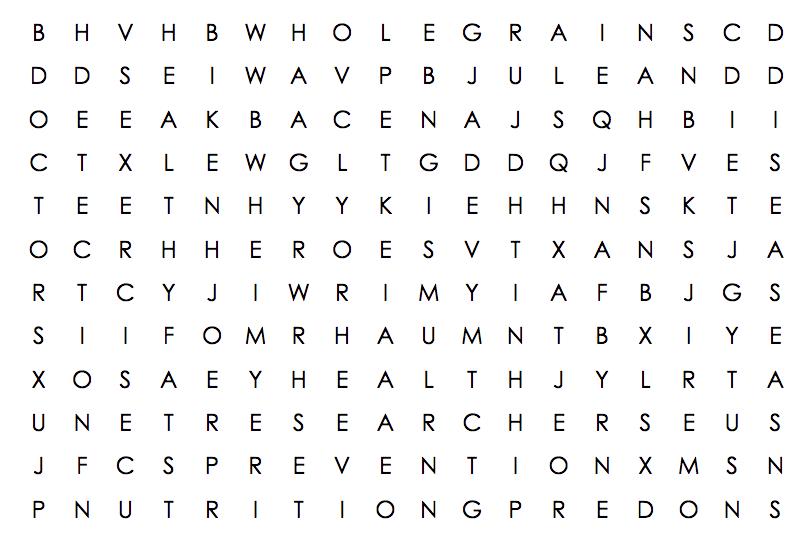

DOWN
South southeast
Ancient Hebrew unit of liquid measure
Finish
Self-importance
Fragrance
Assist
10 cent coin
Mid-month days
Even (poetic)
Completely 11. Locate and correct programming errors
12. Muse of lyric poetry
13. Burdened
18. Ooze
22. Away from the wind
23. Fogs
24. Putting in data
25. Frightening
26. Maize
27. A slender woodwind instrument 29. Love intensely 30. Majestic 31. Intense
34. Walks through shallow water
35. Get up
36. Slag
38. Deviate
39. Wordplays
41. A Jewish prayer of mourning 42. Mindless
43. A swindle
44. A short theatrical episode
45. Courageous
46. One who prefers solitude
47. Not inner
50. Beige
51. Hindlimbs
52. Without charge
55. Prefix indicating recent or new
56. Woolen Scottish cap
57. Function or role
58. Former vice-president ___ Quayle
59. Old age (archaic)
WORLD HEART DAY
Every year World Heart Day on September 29 strives to increase awareness of cardiovascular disease, including how to prevent it. Heart disease is the leading cause of death in the world. According to the World Health Organization (WHO), nearly 18 million people die each year from heart-related issues. About 85% of these deaths are due to heart attack and stroke. Source: nationaldaycalendar.com



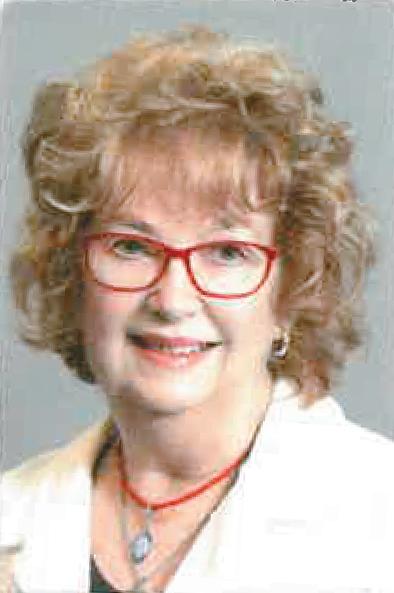
Dorothy J. Jacobsma, nee Evans, age 88, of Lansing, IL, went home to her Lord and Savior on Saturday, September 20, 2025. Beloved wife of the late Alfred G. Jacobsma. Dear mother of the late Kandace (late John) Davis. Loving grandmother of Rebecca (Chad) Hayes and Tyler (Lucy) Davis. Devoted great-grandmother of Anna Leigh (Mac) Jones, Caroline (David) Morris, Lydia Hayes, Jacob Davis, and Jace Davis; and a great-great granddaughter Rowan Jones. Dear sister of the late Fred (Ruth) Evans and the late Betty (late Fred) Beyler. Cherished sister-in-law of Grace (late Chuck) Jacobsma. The family will receive friends for a visitation on Wednesday, September 24, 2025 from 9:30 a.m. until time of the funeral service at 10:30a.m. at the First Reformed Church of South Holland Chapel, 15924 South Park Ave, South Holland, IL. Interment at Skyline Memorial Park - Monee, IL. Memorial contributions may be given to Elim Christian Services (Elim Christian Services). For further information, please contact 219-3227300 or visit our online obituary and guest book at www.SMITSFH.com

Daniel James Van Vuren (July 26, 1994) of Downers Grove, IL, passed away on September 19, 2025, at age 31.
Daniel is survived by his loving parents Rich and Kathy (Maher) Van Vuren and sister Meghan Phillips (Scott), as well as adoring nieces, Holland and Laine. He is also survived by his half brother Rich Van Vuren (Cynthia), nephews Nathan and Corban and nieces annah and Eliana. Throughout his life, Daniel showed strong devotion to both his family and his Lord and Savior Jesus Christ. Daniel is forever remembered by his large and loving family that enjoyed spending time with him through meals, holidays and gatherings. It was natural for Daniel to make conversation
and gain friends in almost any situation thanks to his easygoing demeanor and gentle soul.
Growing up in Dyer, IN, Daniel graduated from Lake Central High School in 2013. After high school, he also spent time in Michigan, Southern California and Central Indiana before eventually settling in the Chicagoland area.
Dinosaurs and the Titanic were childhood fixations for Daniel before eventually focusing on politics, music and his role as a doting uncle. Memorably, Daniel volunteered for Hillary Clinton’s 2008 presidential campaign as a young teenager. Spirited political debates with family members helped Daniel maintain his political passion throughout life.
Daniel’s love and dedication to Jesus brought stability and helped him forge a positive path in life. The Bible was always with Daniel. Writing scriptures by hand and social media helped him maintain peace. He worked hard to overcome obstacles and triumphed over darkness by finding light in the Lord.
Lifelong creativity, natural curiosity and a colorful personality paved the way for Daniel to become an incredible uncle. His niece Holland regularly proclaimed Daniel as her best friend and the inseparable duo spent countless hours coloring, playing with toys and creating new games.
Visitation Thursday, September 25, 2025 from 3:00—8:00 p.m. at Smits Funeral Home 2121 Pleasant Springs Lane (Rt.30/Pleasant Springs Ln.), Dyer, IN. Funeral service to be held Friday, September 26, 2025 at 10:00 a.m. at First Reformed Church 15924 South Park Ave, South Holland, IL. Interment Assumption Cemetery— Glenwood, IL. For further information, please contact 219-3227300 or visit our online obituary and guest book at www.SMITSFH.com

Paul B. Gundlach, age 62, suddenly, late of Hammond, IN, passed away Friday, September 19, 2025. Loving husband of Grace Gundlach, nee Mazon. Devoted son of Marilyn and the late John Gundlach. Dear brother of Karen (Herb) Priebe, Sharon (Joseph)
Garner, Rose (Gregory) Siemsen, the late John Gundlach, and the late Michael Gundlach. Kind uncle of many nieces and nephews. Paul was loved by his family, and friends, and will be dearly missed. “Tall Paul” was a bartender at Glenwood Oaks Restaurant for many years, a sales rep for Lippert’s Supply Company, and Tri-Mark Food Supply’s. Paul loved his dogs, enjoyed music, and watching crime stories.
Memorial visitation Thursday, September 25, 2025 from 10:00 a.m. until the time of Paul’s memorial service at 11:00 a.m. at Smits Funeral Home 2121 Pleasant Springs Lane (Rt.30/ Pleasant Springs Ln.), Dyer, IN, with Deacon Gary Blue officiating. Inurnment St. Mary Catholic Cemetery –Evergreen Park, IL. In lieu of flowers, memorial donations c/o Grace Gundlach, appreciated. For further information, please contact 219-3227300 or visit our online obituary and guest book at www.SMITSFH.com
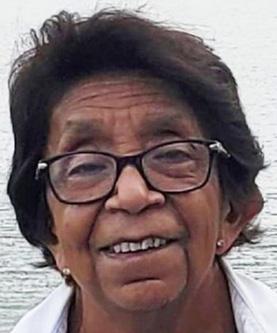
Rosalinda “Rosie” Ortega, age 73, of Hammond, IN, passed away Thursday, September 18, 2025. Dearest sister of Ramon (Mary) Ortega, Jose (Christine) Ortega, Tony (Maria) Ortega, late Susan (late Joseph) Mudy, the late George (Kimberly) Ortega, and the late David Ortega. Kind aunt of Tony Jr. (Alison), Ray (Martha), Tomas (Jackie), and Nina (Ryan) Bischoff. Preceded in death by her parents Ramon and Dolores Ortega. Rosie was loved by her family, friends, and neighbors, and will be dearly missed.
Visitation Monday, September 29, 2025 from 3:00 p.m. until the time of Rosie’s prayer service at 6:00 p.m. at Smits Funeral Home James E. Janusz - Director 2121 Pleasant Springs Lane (Rt.30/Pleasant Springs Ln.), Dyer, IN. Inurnment Thursday, October 2, 2025, directly at St. John/ St. Joseph Cemetery –Hammond, IN. In lieu of flowers, memorial donations to the Humane Indiana Shelter and Adoption Center 421 45th St, Munster, IN 46321, appreciated. For further information, please contact 219-322-7300 or visit our online obituary and guest book at www. SMITSFH.com




Photos by Paul Bourné
assessments required by The Condominium Property Act, 765 ILCS 605/18.5(g-1).
IF YOU ARE THE MORTGAGOR (HOMEOWNER), YOU HAVE THE RIGHT TO REMAIN IN POSSESSION FOR 30 DAYS AFTER ENTRY OF AN ORDER OF POSSESSION, IN ACCORDANCE WITH SECTION 15-1701(C) OF THE ILLINOIS MORTGAGE FORECLOSURE LAW.
You will need a photo identification issued by a government agency (driver’s license, passport, etc.) in order to gain entry into our building and the foreclosure sale room in Cook County and the same identification for sales held at other county venues where The Judicial Sales Corporation conducts foreclosure sales.
For information, contact CHAD LEWIS, ROBERTSON ANSCHUTZ SCHNEID CRANE & PARTNERS, PLLC Plaintiff’s Attorneys, 6400 SHAFER CT, STE 325, ROSEMONT, IL, 60018 (561) 241-6901. Please refer to file number 24-233161. THE JUDICIAL SALES CORPORATION
One South Wacker Drive, 24th Floor, Chicago, IL 60606-4650 (312) 236-SALE
You can also visit The Judicial Sales Corporation at www.tjsc.com for a 7 day status report of pending sales.
CHAD LEWIS
ROBERTSON ANSCHUTZ SCHNEID CRANE & PARTNERS, PLLC
6400 SHAFER CT, STE 325 ROSEMONT IL, 60018 561-241-6901
E-Mail: ILMAIL@RASLG.COM
Attorney File No. 24-233161
Attorney ARDC No. 6306439
Attorney Code. 65582
Case Number: 2024 CH 08531
TJSC#: 45-1009
NOTE: Pursuant to the Fair Debt Collection Practices Act, you are advised that Plaintiff’s attorney is deemed to be a debt collector attempting to collect a debt and any information obtained will be used for that purpose.
Case # 2024 CH 08531 I3272693
IN THE CIRCUIT COURT OF COOK COUNTY, ILLINOIS COUNTY DEPARTMENT - CHANCERY DIVISION
U.S. BANK TRUST NATIONAL ASSOCIATION, NOT IN ITS INDIVIDUAL CAPACITY BUT SOLELY AS TRUSTEE OF GREAT LAKE FUNDING I TRUST
Plaintiff,
-v.CA HOMES & PROPERTIES, LLC, CHRISTOPHER URBAN, ANETA URBAN, UNKNOWN OWNERS AND NONRECORD CLAIMANTS
Defendants 2025CH01263 16317 ASHLAND AVENUE MARKHAM, IL 60428 NOTICE OF SALE
PUBLIC NOTICE IS HEREBY GIVEN that pursuant to a Judgment of Foreclosure and Sale entered in the above cause on August 19, 2025, an agent for The Judicial Sales Corporation, will at 10:30 AM on October 2, 2025, at The Judicial Sales Corporation, One South Wacker, 1st Floor Suite 35R, Chicago, IL, 60606, sell at public in-person sale to the highest bidder, as set forth below, the following described real estate: Commonly known as 16317 ASHLAND AVENUE, MARKHAM, IL 60428 Property Index No. 29-20-300-047-0000 The real estate is improved with a commercial property.
Sale terms: If sold to anyone other than the Plaintiff, 25% down of the highest bid by certified funds at the close of the sale payable to The Judicial Sales Corporation. No third party checks will be accepted. The balance, in certified funds/ or wire transfer, is due within twenty-four (24) hours. The subject property is subject to general real estate taxes, special assessments, or special taxes levied against said real estate and is offered for sale without any representation as to quality or quantity of title and without recourse to Plaintiff and in ‘’AS IS’’ condition. The sale is further subject to confirmation by the court.
Upon payment in full of the amount bid, the purchaser will receive a Certificate of Sale that will entitle the purchaser to a deed to the real estate after confirmation of the sale.
The property will NOT be open for inspection and plaintiff makes no representation as to the condition of the property. Prospective bidders are admonished to check the court file to verify all information.
If this property is a condominium unit, the purchaser of the unit at the foreclosure sale, other than a mortgagee, shall pay the assessments and the legal fees required by The Condominium Property Act, 765 ILCS 605/9(g)(1) and (g)(4).
If this property is a condominium unit which is part of a common interest community, the purchaser of the unit at the foreclosure sale other than a mortgagee shall pay the assessments required by The Condominium Property Act, 765 ILCS 605/18.5(g-1).
IF YOU ARE THE MORTGAGOR (HOMEOWNER), YOU HAVE THE RIGHT TO REMAIN IN POSSESSION FOR 30 DAYS AFTER ENTRY OF AN ORDER OF POSSESSION, IN ACCORDANCE WITH SECTION 15-1701(C) OF THE ILLINOIS MORTGAGE FORECLOSURE LAW.
You will need a photo identification issued by a government agency (driver’s license, passport, etc.) in order to gain entry into our building and the foreclosure sale room in Cook County and the same identification for sales held at other county venues where The Judicial Sales Corporation conducts foreclosure sales.
For information, examine the court file, CODILIS & ASSOCIATES, P.C. Plaintiff’s Attorneys, 15W030 NORTH FRONTAGE ROAD, SUITE 100, BURR RIDGE, IL, 60527 (630) 794-9876
THE JUDICIAL SALES CORPORATION
One South Wacker Drive, 24th Floor, Chicago, IL 60606-4650 (312) 236-SALE
You can also visit The Judicial Sales Corporation at www.tjsc.com for a 7 day status report of pending sales.
CODILIS & ASSOCIATES, P.C.
15W030 NORTH FRONTAGE ROAD, SUITE
100
BURR RIDGE IL, 60527
630-794-5300
E-Mail: pleadings@il.cslegal.com
Attorney File No. 14-25-00422
Attorney ARDC No. 00468002
Attorney Code. 21762
Case Number: 2025CH01263
TJSC#: 45-2158
NOTE: Pursuant to the Fair Debt Collection Practices Act, you are advised that Plaintiff’s attorney is deemed to be a debt collector attempting to collect a debt and any information obtained will be used for that purpose.
Case # 2025CH01263
I3272747
IN THE CIRCUIT COURT OF COOK COUNTY, ILLINOIS
COUNTY DEPARTMENT - CHANCERY
DIVISION
CROSSCOUNTRY MORTGAGE, LLC
Plaintiff,
-v.-
LALISSA L. WATSON, UNITED STATES OF AMERICA
Defendants 25 CH 2266
25 EAST 141ST STREET
RIVERDALE, IL 60827
NOTICE OF SALE
PUBLIC NOTICE IS HEREBY GIVEN that pursuant to a Judgment of Foreclosure and Sale entered in the above cause on July 14, 2025, an agent for The Judicial Sales Corporation, will at 10:30 AM on October 17, 2025, at The Judicial Sales Corporation, One South Wacker, 1st Floor Suite 35R, Chicago, IL, 60606, sell at public in-person sale to the highest bidder, as set forth below, the following described real estate:
Commonly known as 25 EAST 141ST STREET,
RIVERDALE, IL 60827
Property Index No. 29-04-226-023-0000
The real estate is improved with a single family residence.
The judgment amount was $128,431.96.
Sale terms: If sold to anyone other than the Plaintiff, 25% down of the highest bid by certified funds at the close of the sale payable to The Judicial Sales Corporation. No third party checks will be accepted. The balance, in certified funds/ or wire transfer, is due within twenty-four (24) hours. The subject property is subject to general real estate taxes, special assessments, or special taxes levied against said real estate and is offered for sale without any representation as to quality or quantity of title and without recourse to Plaintiff and in ‘’AS IS’’ condition. The sale is further subject to confirmation by the court.
Upon payment in full of the amount bid, the purchaser will receive a Certificate of Sale that will entitle the purchaser to a deed to the real estate after confirmation of the sale.
Where a sale of real estate is made to satisfy a lien prior to that of the United States, the United States shall have one year from the date of sale within which to redeem, except that with respect to a lien arising under the internal revenue laws the period shall be 120 days or the period allowable for redemption under State law, whichever is longer, and in any case in which, under the provisions of section 505 of the Housing Act of 1950, as amended (12 U.S.C. 1701k), and subsection (d) of section 3720 of title 38 of the United States Code, the right to redeem does not arise, there shall be no right of redemption. The property will NOT be open for inspection and plaintiff makes no representation as to the condition of the property. Prospective bidders are admonished to check the court file to verify all information.
If this property is a condominium unit, the purchaser of the unit at the foreclosure sale, other than a mortgagee, shall pay the assessments and the legal fees required by The Condominium Property Act, 765 ILCS 605/9(g)(1) and (g)(4).
If this property is a condominium unit which is part of a common interest community, the purchaser of the unit at the foreclosure sale other than a mortgagee shall pay the assessments required by The Condominium Property Act, 765 ILCS 605/18.5(g-1).
IF YOU ARE THE MORTGAGOR (HOMEOWNER), YOU HAVE THE RIGHT TO REMAIN IN POSSESSION FOR 30 DAYS AFTER ENTRY OF AN ORDER OF POSSESSION, IN ACCORDANCE WITH SECTION 15-1701(C) OF THE ILLINOIS MORTGAGE FORECLOSURE LAW.
You will need a photo identification issued by a government agency (driver’s license, passport, etc.) in order to gain entry into our building and the foreclosure sale room in Cook County and the same identification for sales held at other county venues where The Judicial Sales Corporation conducts foreclosure sales.
For information, contact The sales clerk, LOGS Legal Group LLP Plaintiff’s Attorneys, 2801 LAKESIDE DRIVE, SUITE 207, Bannockburn, IL, 60015 (847) 291-1717 For information call between the hours of 1pm - 3pm.. Please refer to file number 25-102604.
THE JUDICIAL SALES CORPORATION
One South Wacker Drive, 24th Floor, Chicago, IL 60606-4650 (312) 236-SALE
You can also visit The Judicial Sales Corporation at www.tjsc.com for a 7 day status report of pending sales.
LOGS Legal Group LLP 2801 LAKESIDE DRIVE, SUITE 207 Bannockburn IL, 60015
847-291-1717
E-Mail: ILNotices@logs.com
Attorney File No. 25-102604
Attorney Code. 42168
Case Number: 25 CH 2266
TJSC#: 45-2070
NOTE: Pursuant to the Fair Debt Collection
Practices Act, you are advised that Plaintiff’s attorney is deemed to be a debt collector attempting to collect a debt and any information obtained will be used for that purpose.
Case # 25 CH 2266
I3272931
IN THE CIRCUIT COURT OF COOK COUNTY, ILLINOIS COUNTY
Giannoulias Launches Self-Service Emissions Testing Kiosk at Chicago South DMV
Chicagoans now have a new city-based option for getting their vehicle’s emissions test completed. Following the success of the vehicle emissions Mobile Testing Unit pilot at the Chicago South DMV, Illinois Secretary of State Alexi Giannoulias moved forward with installation of a permanent emissions testing self-service kiosk at the facility. This is in partnership with the Illinois Environmental Protection Agency (Illinois EPA).
The initiative is part of Giannoulias’ continued push to meet residents where they are to fit services into their busy schedules while reducing costs. The self-service emissions testing kiosk is available from 7:30 a.m. to 5 p.m. Monday through Friday and 7:30 a.m. to Noon on Saturdays at the Chicago South DMV located at 9901 S. Dr. Martin Luther King Jr. Drive.
After passing an emissions test, customers have the
opportunity to purchase their vehicle registration sticker at the DMV’s annex building without having to pay an additional $9.50 charged by outside vendors.
“After years of traveling long distances for routine vehicle emissions testing, the positive feedback we’ve heard from Chicagoans, who are now able to get it done quickly and conveniently at our Chicago South DMV, has inspired us to make this convenience permanent,” Giannoulias said. “This initiative exemplifies our modernization vision at work. Bringing services to people where they need them most, reducing the hassle of a trip to the suburbs and putting more money back into their pocketbooks is improving the lives of Chicago area drivers and vehicle owners.”
“Illinois EPA appreciates the continued partnership with the Illinois Secretary of State’s office to offer
additional conveniences to Chicago motorists,” said Illinois EPA Acting Director James Jennings. “Vehicle owners in Chicago now have access to a full-service drivethru station, five Inspection and Repair facilities, a Mobile Testing Unit, and three self-service kiosks.”
In August, the Secretary of State’s office began partnering with the Illinois EPA to pilot mobile unit vehicle emissions testing at the Chicago South DMV to assess the community need for this service and explore permanent solutions moving forward.
The ultimate goal of the partnership is to expand to include future locations.
This new kiosk is in addition to two other self-service emissions testing kiosks available in Chicago, which are open 24-hours a day. Those can be found at 6959 W. Forest Preserve Drive and 2560 W. Cermak Road.
The property will NOT be open for inspection and plaintiff makes no representation as to the condition of the property, prospective bidders are admonished to check the court file to verify all information. If this property is a condominium unit, the purchaser of the unit at the foreclosure sale, other than a mortgagee, shall pay the assessments and the legal fees required by the Condominium property Act, 765 ILCS 605/9 (g)(l) and (g)(4). If this property is a condominium unit which is part of a common interest community, the purchaser of the unit at the foreclosure sale other than a mortgagee shall pay the assessments required by the Condominium Property Act, 765 ILCS 605/18.5(g-1).
IF YOU ARE THE MORTGAGOR (HOMEOWNER), YOU HAVE THE RIGHT TO REMAIN IN POSSESSION FOR 30 DAYS AFTER ENTRY OF AN ORDER OF POSSESSION, IN ACCORDANCE WITH SECTION 15-1701 (C) OF THE ILLINOIS MORTGAGE FORECLOSURE LAW.
For information, contact Plaintiffs attorney: CODILIS & ASSOCIATES PC (630) 794-5300 please refer to file number 14-24-05772. Auction.com, LLC 100 N LaSalle St., Suite 1400 Chicago, IL 60602 - 872-225-4985 You can also visit www.auction.com.
Attorney File No. 14-24-05772 Case Number: 2024CH08925
NOTE: PURSUANT TO THE FAIR DEBT COLLECTION PRACTICES ACT, YOU ARE ADVISED THAT PLAINTIFF’S ATTORNEY IS DEEMED TO BE A DEBT COLLECTOR ATTEMPTING TO COLLECT A DEBT AND ANY INFORMATION OBTAINED WILL BE USED FOR THAT PURPOSE. I3271869
IN THE CIRCUIT COURT OF COOK COUNTY, ILLINOIS COUNTY DEPARTMENT - CHANCERY DIVISION WELLS FARGO BANK, N.A. Plaintiff, -v.DEBRA A. GILES; Defendants.
25 CH 2046 14500 Dobson Avenue, Dolton, IL 60419
NOTICE OF SALE PUBLIC NOTICE IS HEREBY GIVEN that pursuant to a Judgment of Foreclosure and Sale entered in the above cause on 7/16/2025, an agent of Auction.com, LLC will
For information call Sales Department at Plaintiff’s Attorney, Diaz Anselmo & Associates P.A., 1771 West Diehl Road, Suite 120, Naperville, IL 60563. (630) 453-6960. 6706-208854
INTERCOUNTY JUDICIAL SALES CORPORATION intercountyjudicialsales.com I3273420
IN THE CIRCUIT COURT OF COOK COUNTY, ILLINOIS COUNTY DEPARTMENT - CHANCERY DIVISION
U.S. BANK TRUST NATIONAL ASSOCIATION, NOT IN ITS INDIVIDUAL CAPACITY BUT SOLELY AS TRUSTEE OF GREENE STREET FUNDING TRUST II Plaintiff, -v.CA HOMES & PROPERTIES, LLC, CHRISTOPHER URBAN, ANETA URBAN, UNITED GAP FUNDING LLC, UNKNOWN OWNERS AND NONRECORD CLAIMANTS
Defendants 2025CH01116
110 NORTH OAK LANE GLENWOOD, IL 60425
Condominium
Act, 765 ILCS 605/9 (g)(l) and (g)(4). If
is a condominium unit which is part of a common interest community, the purchaser of the unit at the foreclosure sale other than a mortgagee shall pay the assessments required by the Condominium Property Act, 765 ILCS 605/18.5(g-1). IF YOU ARE THE MORTGAGOR (HOMEOWNER), YOU HAVE THE RIGHT TO REMAIN IN POSSESSION FOR 30 DAYS AFTER ENTRY OF AN ORDER OF POSSESSION, IN ACCORDANCE WITH SECTION 15-1701 (C) OF THE ILLINOIS MORTGAGE FORECLOSURE LAW. For information, contact Plaintiffs attorney: LOGS Legal Group LLP (847) 291-1717 please refer to file number 25-102680-FC01. Auction.com, LLC 100 N LaSalle St., Suite 1400 Chicago, IL 60602 - 872-225-4985 You can also visit www. auction.com. Attorney File No. 25-102680-FC01 Case Number: 25 CH 2046 NOTE: PURSUANT TO THE FAIR DEBT COLLECTION PRACTICES ACT, YOU ARE ADVISED THAT PLAINTIFF’S ATTORNEY IS DEEMED TO BE A DEBT COLLECTOR ATTEMPTING TO COLLECT A DEBT AND ANY INFORMATION OBTAINED WILL BE USED FOR THAT PURPOSE. I3273396
IN THE CIRCUIT COURT OF COOK COUNTY, ILLINOIS COUNTY DEPARTMENT - CHANCERY DIVISION
LAKEVIEW LOAN SERVICING, LLC,
Plaintiff vs. STERLING SERINO A.K.A. STERLING D. SERINO; SARAI SERINO; SECRETARY OF HOUSING AND URBAN DEVELOPMENT; VILLAGE OF SOUTH HOLLAND; UNKNOWN OWNERS AND NON-RECORD CLAIMANTS
Defendant 25 CH 922
CALENDAR 64
NOTICE OF SALE PUBLIC NOTICE is hereby given that pursuant to a Judgment of Foreclosure entered in the above entitled cause Intercounty Judicial Sales Corporation will on October 29, 2025, at the hour 11:00 a.m., Intercounty’s office, 120 West Madison
Commonly known as 17263 Dobson Ave., South Holland, IL 60473.
Big Sister Hour Announces its Official Home for Community Workshops
MUNSTER, Indiana— Non-profit organization, Big Sister Hour announces its official partnership with SuiteLux, a premier coworking and event space for professionals and entrepreneurs starting this fall.
As part of this partnership, SuiteLux will now serve as the official home for Big Sister Hour’s cohort meetings, workshops, and programming— including the highly anticipated Elevate Entrepreneurial Circle.
The Elevate Entrepreneurial Circle is an 8-10 week bi-weekly program designed for women who are ready to scale with intention and lead with impact. This cohort-based experience will focus on workshops that feature the process of hands-on advanced branding and positioning. strategic scaling opportunities, financial mastery, leadership development, guest speaker sessions, guided lesson plans, and peer collaboration. Whether you’re a founder, creative, or nonprofit leader, this program offers the
structure, tools, and support needed to elevate your business and your mindset.
“This partnership with SuiteLux is more than just a new venue—it’s a new chapter for Big Sister Hour,” said Founder of Big Sister Hour, Illiana Melgoza. “We’re excited to grow our vision in a space that reflects the professionalism, warmth, and innovation our community deserves.”
Together, SuiteLux and Big Sister Hour are building more than events— a movement of empowered women who are scaling their dreams, supporting one another, and redefining what’s possible.
For more information or to join the Elevate Entrepreneurial Circle: Visit: https://bsh.myflodesk.com or https:// www.thesuietlux.com
Join the BSH app: https://nas.io/big-sister-hour
Location: SuiteLux Coworking & Event Space— 8231 Hohman Ave, Munster, IN, United States, Indiana
NOTICE OF SALE PUBLIC NOTICE IS HEREBY GIVEN that pursuant to a Judgment of Foreclosure and
IF YOU ARE THE MORTGAGOR (HOMEOWNER), YOU HAVE THE RIGHT TO REMAIN IN POSSESSION FOR 30 DAYS AFTER ENTRY OF AN ORDER OF POSSESSION, IN ACCORDANCE WITH SECTION 15-1701(C) OF THE ILLINOIS MORTGAGE FORECLOSURE LAW.
You will need a photo identification issued by a government agency (driver’s license, passport, etc.) in order to gain entry into our building and the foreclosure sale room in Cook County and the same identification for sales held at other county venues where The Judicial Sales Corporation conducts foreclosure sales.
For information, examine the court file, CODILIS & ASSOCIATES, P.C. Plaintiff’s Attorneys, 15W030 NORTH FRONTAGE ROAD, SUITE 100, BURR RIDGE, IL, 60527 (630) 794-9876 THE JUDICIAL SALES CORPORATION
One South Wacker Drive, 24th Floor, Chicago, IL 60606-4650 (312)
You
CODILIS & ASSOCIATES, P.C. 15W030 NORTH FRONTAGE ROAD, SUITE 100 BURR RIDGE

Financial tips for first-time college students
BY PATRICK ZAMKIN
Sending your child to college is an exciting milestone filled with new experiences, friendships and opportunities for them to grow. For many families, it’s also the first time your student will be managing their own money independently.
The good news is that helping your child develop smart money habits doesn’t have to be overwhelming. With a few simple strategies, you can guide them to take control of their finances and avoid common pitfalls that trip up many college students.
Start with a budget. Creating a budget might sound boring, but it’s instrumental in helping your student take control of their finances. Many people use the 50/30/20 rule, which calls for putting 50% of income toward needs, 30% toward wants and 20% toward savings and other financial goals. So, if your child has $1,000 per month from financial aid, work or family support, they’d spend $500 on essentials like textbooks and food, $300 on fun activities and $200 on savings or paying down debt.
Encourage them to track their spending and subtract anything they pay out from their total monthly funds. This helps them know exactly how much money they have at any given time. There are plenty of free apps to help monitor expenses, or they can simply use a notebook to write down what they spend each day.
Guide them toward smart credit habits. That first credit card in college can be both exciting and scary for parents. The key is helping students understand how to use credit wisely by paying off their balance on time every month. This helps build a positive credit history that will help them qualify for better rates on car loans, apartments and eventually a home mortgage.
Make sure your student understands that credit cards aren’t free money. It takes discipline to charge only what they can afford to pay off completely when
the bill arrives. Otherwise, late fees and interest charges can be substantial.
Pay attention to everyday expenses. College life doesn’t have to break the bank. Remind your child to take advantage of student discounts available at restaurants, clothing and grocery stores and entertainment venues. Help them set spending limits for discretionary categories like entertainment, dining out and personal expenses. Here’s where that budget can help set clear limits to prevent overspending. It’s easier to say no to that expensive coffee or designer clothing when they know it would put them over their weekly limit.
Think about the future. While it might seem early to worry about life after college, making smart financial moves now can benefit them later. If your student has loans, consider encouraging them to make small payments while they’re still in school, even though they’re not required to do so. This reduces the amount of interest that builds up over time.
Encourage an emergency fund, even if they can only save $25 per week. Having money set aside can give them flexibility after graduation, whether they want to move to a new city for a job, take time to travel, purchase a used car or pursue graduate school.
Teaching your child to manage money in college isn’t just about helping them survive until graduation. The habits they develop now will shape their financial future for decades to come. By guiding them to start with a simple budget, use credit responsibly and make thoughtful spending choices, you’re helping set the stage for success in college and beyond.
This article was written by Edward Jones for use by your local Edward Jones Financial Advisor, Patrick Zamkin, located at 18735 Dixie Hwy, Homewood, IL 60430. Contact us at (708) 798-9066. Edward Jones. Member SIPC.
SUBMITTED








up/ Delivery Service. Small moves; in-house move; store-to-home. Assembly: Furniture & exercise equipment (Ikea, Office Depot, etc.) Call Rob daily until 9pm 708-898-8668
JUNK REMOVAL Time to make space! Cleanouts (garage attic, basement, shed). Hauling away appliances, furniture, trash. WE RECYCLE! Call ‘til 8pm. 708-898-8668
CAR / TRUCK TROUBLE?
Vehicle shopping? Onlocation diagnosis: Will find needed repairs / maintenance. Uncertain of mechanic estimate? 32 years exper. Any day! 708-898-8668
Wanted
Looking for room to rent with own bathroom. NW Indiana/Lansing area. Elderly care experience. 40+ Non-drinking/smoking male w/ maintnenance skills. Prefer kitchenette & garage space. 708-898-8668
Looking for Older Chevy or Ford Truck in good condition, Low Miles and Price from ‘99-2004. Also older Toyota Car, in good condition, Low Miles and Price from ‘95-2000. Also in search of a Wringer Washer in working condition. Call 219-801-0955
For Rent
BEAUTIFUL SOUTH HOLLAND ROOM FOR RENT IN A SINGLE FAMILY HOME. King size bed, semi private bathroom with Jacuzzi tub. No cooking, full size refrigerator and microwave in room. Free lights, free gas. Only $225 a week, $500 move in fee. Background check required. Call 708-8433932 for more info.
APARTMENT FOR RENT- 2 BEDROOMS 2ND FLOOR. CALUMET CITY IL. $1200 RENT and one month security. No smoking, no pets and no section 8. Street parking. Serious inquiries only. Call 708 466-7272
APARTMENT FOR RENT- Available Now$900 a month. - 2 beds, 1 bath, live-in kitchen. Private parking. No pets. One month security and rent required. 17701 Commercial Ave in Lansing. Apartment 2W on second floor. Seniors welcome. Call Winston708-251-8266
For Sale
For sale, like new TOTAL GYM. Burnham. $50. Call 708-891-4798
New Coffee Maker w/2 Stainless Steel Travel Cups from J.P. Penny’s$20.00 Heavy Duty Skinny Mini Ladder Multi Purpose Tray $20.00call 708-474-9568
Grandpa’s golf collection - PING putters $49, golf balls $6/dozen and up, kids sets $39, senior TI-Drivers $49, display sports shadow boxes, $39. Call 708-3393429 for more info. South Holland
A few Bully Pups (5 months old) are looking for their forever homes. They are friendly, active, and love being around people.Good with families, up to date on care and ready to bond with their new people.We are asking a modest rehoming fee. ($300) Serious inquiries only (773)457-9616
Conduit 70’ x 1/2 EMT
$20, Cuisinart Bread Machine $35; Butterball Turkey Fryer $25; George Forman Grill $20; Dell Printer $30; tools. 708877-6088
Large indoor steel dog cage, 48” x 36” x 30”, good condition, $75; 1965 Ladies Schwinn Hollywood Bike, All Original, Rideable, Good Condition, $90 Leggert & Platt Metal Bed Frame New in box. $90 new, asking $30. Galvinized Pipe - 9 pc, 8’ x 2” - $10 ea, or 6 pc, 6’ x 2” $7 ea. Call Phil 708-877-1228. No calls after 6pm please!
Chicago Bear glasses, 6 for $15.00. Ann Taylor Loft sweater/coat, long, medium, caramel, $30.00, originally $90.00. 708-645-4245
For sale, TKO five piece drum set, A1 condition, high hat, cymbals, etc. All hardware included. $300 O.B.O. Call 708-598-5136
Vehicles
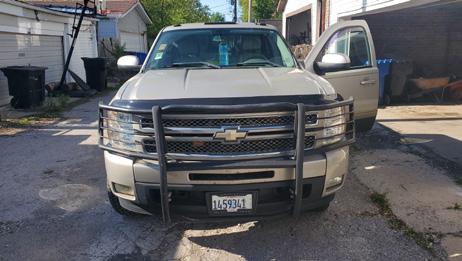

2009 Chevy Silverado, 1GCEK39069Z164494b. Extended Cab, 4WD, 6.5’ bed. V8 5.3L Flex Fuel. New Battery &Alternator, April 2025. Tires, 1 year old. Some Rust on Driver’s Rear Quarter Panel. 149k miles Asking $4,000. If interested, Call 708-9138624
For Sale:2010 Ford Fusion SEL Tux Black Original adult owner, highway 208000 miles, 2.5 L. 4 cylinder. Well maintained, rust at rockers,many new parts, everything works. Looks Good, Runs and drives excellent.$2800 or Best... (708) 710-6253