Connecting the Community Since 1957


(Family Features) Don’t let cooking for a crowd add undue stress to summer fun. Barbecues are meant to bring joy, excitement and delicious foods to the table - without leaving hosts frantically flipping meat on the grill.
To help make your next cookout a success without the sweat, chef Trimell Hawkins and Current - on a mission to break down barriers to outdoor cooking with electric technology that’s smarter, cleaner and more sustainable - offer these tips and tricks for hosting (and feeding) large groups.
Think In Themes - Giving your menu a theme, like street food, helps set the tone for the party. Portable, flavorful and easy to prep in bulk, street foods such as tacos are perfect for large gatherings. Hawkins’ signature move is combining mini street foods - think tacos, gyros or bao - with skewers to create “bundle skewers.” These Bundle Skewer Street Tacos are an ideal example of a playful, practical solution for portioning and presentation.
Portion Planning - Assume about two tacos per guest when other dishes are served alongside. This taco recipe yields around 50 tacos at 3 ounces each or closer to 80 if sized down to 2 ounces, making it a practical way to serve buffet-style meals with multiple offerings.
Temperature and Texture - Diversify your table with hot, cold and room-temperature options. Fruit and cheese plates, veggie platters and salads are “set and forget” staples that free up time while satisfying guests. Master Make-Ahead Dishes - Success starts a day in advance by preparing marinades, salads, grilled veggies and sides. The more you prep early, the more you can enjoy the party.
Trust in Technology - If the thought of grilling for a crowd keeps you up at night, skip the messy charcoal and turn to the Current Model G Dual Zone Electric Grill. It allows hosts to grill promptly and eliminates the need for pauses to refuel or adjust flames. With sensing technology that precisely monitors and controls temperature at the grate level, it ensures accurate cooking - hosts can even monitor progress from afar and enjoy the party thanks to its app and Wi-Fi connectivity.
Plus, its patented cooking system and dual-zone flexibility are crucial for preparing large batches of food or simultaneously accommodating varied cooking preferences - like medium-rare versus medium-well steak - so hosts can confidently grill at different temperatures at the same time. Reduced flareups and no open flames

or briquettes improve safety, comfort and cleanliness, all welcome benefits when managing large events. After grilling, simply wipe down surfaces rather than handling ashes or residue.
Offer Inclusive Options - Hawkins recommends including universally friendly dishes like hummus with veggies, fruit salads, grilled vegetables with chimichurri and gluten-free proteins like wings or tacos on corn tortillas to make sure there’s something for everyone.
Be Present - Design your menu with the goal of enjoying your event - not dreading it. One of Trimell’s favorite tricks is hot-holding proteins like chicken in stock and butter, which enhances flavor while reducing stress. The result: A more relaxed host and better opportunities to enjoy time with guests.
To find more summer hosting tips and recipes that can feed a crowd, visit CurrentBackyard.com.
Bundle Skewer Street Tacos
Recipe courtesy of chef Trimell Hawkins on behalf of Current
5 cloves garlic, minced
1 onion, diced
1 tablespoon cumin
1 tablespoon onion powder
1 tablespoon garlic powder
2 tablespoons salt
1 tablespoon pepper
1 teaspoon coriander
1/4 cup lime juice
1/4 cup vegetable oil
10 pounds chicken or beef shoulder steak, sliced thin taco shells or tortillas salsa (optional) shredded lettuce (optional) diced tomatoes (optional)
Combine garlic, onion, cumin, onion powder, garlic powder, salt, pepper, coriander, lime juice and vegetable oil. Coat meat thoroughly. Cover and refrigerate at least 1 hour, or up to 24 hours.
Preheat grill to 400 F. Thread small bundles (about 3 ounces each) onto skewers. Aim for three per skewer to streamline portioning.
Grill chicken until it reaches internal temperature of 165 F. For steak, grill to desired doneness.
Transfer bundles to small taco shells and serve with salsa, lettuce and tomatoes, as desired.





About 40 million people move every year in the United States. Nearly half of all moves occur in just four months between May and August. If you’re among those taking the big leap to a new home, you can minimize chaos by organizing ahead of time and breaking your move down into a series of manageable steps. Here is your 10-step game plan to help moving day go smoothly:
1. Map it out. Plan your new layout on paper so that you know everything fits and where it will go. Get all the measurements of your new home, including placement of doors, windows, staircases and electrical outlets. If your furniture won’t all fit, label what goes and what stays. Give your future floor plan to your movers so they can see what goes where on moving day.
2. Label, label, label. Label every box with all contents and identify the room the box belongs in. Color coding can help immensely after moving day: red-marked boxes in dining room, green in living room, etc.
3. Find a reliable moving company. Moving heavy furniture is exhausting, and accidents can occur that harm people and belongings. Reputable, professional movers can save you a ton of aggravation, but if that isn’t in your budget, enlist plenty of strong, capable helpers and make sure they know the full scope of the job ahead of time.
4. Protect your mattresses and foundation. The best way is to fully encase them in plastic mattress protectors. Truck rental companies sometimes provide these, but you can easily find them on Amazon or at your local moving truck rental store in a variety of sizes. Ideally, transport a mattress flat and don’t place heavy boxes or furniture on top. If you
move the mattress on its side, surround it with large pieces of cardboard to help stabilize the mattress and prevent it from folding or wobbling. Casper has a terrific blog devoted to moving mattresses. Any mattresses that are more than eight-to-ten years old should probably be replaced rather than moved. The Better Sleep Council has tips on disposing of old mattresses. Another reason to replace a mattress? If it’s more than fifteen years old, it probably wasn’t made with CertiPUR-US® certified foam. Start fresh in your new home with mattresses that contain certified foam that is made without chemicals of concern and has been analyzed and tested by independent laboratories for content and low Volatile Organic Compound emissions (less than 0.5 ppm) for indoor air quality.
5. Safeguard your furniture. Take photographs of expensive or precious items to have a record if a moving company breaks something. If this is a DIY move, stock up on furniture blankets or used blankets and tape them securely around your furniture. (Avoid taping the furniture itself.) Add a layer of stretch wrap around the whole “package” for further protection and to give movers something to grip onto.
6. De-assemble furniture before the big day. Cabinets, bed frames and many other pieces require de-assembling before moving. Be sure to do this ahead of time — and record a video of the process so that you’ll have a quick guide for reassembling. Keep all nuts, bolts and screws together in a resealable bag and attach it to the larger pieces with stretch wrap.
7. Stock up on sliders. All hardware stores carry plastic-


and-felt sliders that stick to the bottom of chair, sofa and table legs. They can prevent damage to flooring on both ends of your move.
8. Have proper moving tools. Professional movers usually bring specialized moving equipment, but if your movers aren’t pros, you’ll need to properly equip them. Hand trucks or “dollies” come in various sizes, depending on the weight load they must carry (appliances and sofas call for heavy-duty). Straps and shoulder dollies enable people to lift and haul heavy objects without straining their necks and backs.
9. Check the weather. If you think there is a chance of a storm on moving day, have tarps and towels on hand to protect your furniture. Keep your furniture and mattresses as dry as possible by going through the garage or another path that minimizes exposure before going into the truck.
10. Clear the path. Clear a route for the movers and anticipate what could present a challenge. If some items seem too big for the doorway, removing the doorstop or even the door itself can create the needed space. Many sliding doors have a special release to temporarily remove one door to create a larger opening.
One of the best moving-day survival tips we’ve heard is to pack a small overnight bag with essentials and have your pillows, sheets and blankets handy for the first night in your new home. Set up and make your bed as soon as it’s unloaded. Get a bite to eat and then call it a night — the tedious chore of unpacking can wait until you’re rested.
An independent newspaper serving this area since 1957. ©The Shopper 924 E. 162nd Street • South Holland, IL 60473
HOW TO REACH US
Phone: 708-271-8971 • www.myshopper.biz • Email: general@myshopper.biz
CIRCULATION
Published every week covering the towns of South Holland/Thornton, Lansing, Dolton/Calumet City, Munster, Highland, and Schererville. Our circulation is independently audited by CAC.
We proofread all Classified ads. However, should a mistake occur, it can easily be corrected, provided it is brought to our attention. Call 708-271-8971 to rectify an error. We cannot be responsible for more than one incorrect insertion. Adjustment for error is limited to republication. In any event, adjustment for errors or omissions is limited to the cost of the space occupied.
The Shopper offers FREE non-business Classified Ads (20 word maximum). Business Classifieds are $25 for 20 words, $1.00 per word over. Place ads online at www.myshopper.biz
NEWS
Email news items to general@myshopper.biz
Some content courtesy of Family Features and Capital News Illinois.
DEADLINE
Friday 4:00 pm for the following week’s issue.
PUBLISHER’S NOTICE
The Shopper reserves the right to edit any content supplied for publication as it sees fit, including but not limited to clarity, grammatical and factual accuracy, and to accommodate available space. All real estate advertising in this newspaper is subject to Fair Housing Laws which makes it illegal to advertise “any preference, limitation or discrimination based on race, color, religion, sex, national origin, familial status, sexual orientation, marital status, military status, age, ancestry, parental status, source of income, military discharge status or housing status,” no matter how large or small the property. This newspaper will not knowingly accept any advertising for real estate which is in violation of the law. Our readers are hereby informed that all dwellings advertised in this newspaper are available on an equal opportunity basis. To complain of discrimination call HUD toll-free at 1-800-669-9777.
The toll-free telephone number for the hearing impaired is 1-800-927-9275.


SUBMITTED
BY
There’s a quote about the importance of setting goals that says, “If you don’t know where you’re going, any path will take you there.” You probably have dreams about retirement, vacations, hobbies and more. But if you don’t have a strategy with financial goals in place, you may not make the choices that can best set you on the path to achieve those dreams.
Setting goals helps define and showcase your purpose, passions and priorities. And establishing your own strong financial goals can help you earn and enjoy a wide variety of short- and longterm achievements throughout your life. When you reach your financial goals, you can feel a sense of accomplishment in seeing your efforts literally pay off. But how do you get started?
Prioritize your needs and wants. Think about the things that are most important to you and then outline them as financial “must-haves” and “wishlist” targets. Start with the big-ticket items and work through to ideas that may not cost as much. A must-have for many people is having enough to live comfortably through retirement. Being able to afford the college of your child’s choice, without incurring mounds of debt, is another. Your wish list, on the other hand, may include things like saving for vacations, hobbies or entertainment expenses.
Create detailed short- and long-term goals within your financial strategy. It’s important to be specific about the goals you want to achieve and how much you’ll need to achieve them. One way to do this is by making your goals measurable. Assign estimated dates and costs to each goal so you can plan how much to save and how much time you have before you need the money. For example, for your retirement goal, be specific about how many years before
PATRICK ZAMKIN
you want to retire. And once you do, how you plan to spend your time — perhaps traveling the world, turning your hobby into a business or taking your grandkids on outings. These can have vastly different price tags. Be willing to compromise. Reaching one, or more, of your goals may mean compromising. If your must-have is building your dream home but it’s not looking quite affordable, you may need to make a trade-off — build it a bit smaller, work a year or two longer or trade in some of your wish-list goals so you can stay focused on your must-haves. Hold yourself accountable to stay on track. Once your strategy is in place, it’s not a set-and-forget exercise. Actively tracking your progress and managing your decisions and actions can help you be better positioned to reach your goals. Use time-tested principles for making financial decisions, not predictions. Diversify, own quality investments and keep a realistic perspective, especially for your long-term goals. Maintain your focus and don’t let your emotions control your investment decisions. It can be helpful to meet with a financial advisor at least annually to review your full financial strategy, address any changes in your life or your goals, and discuss your progress and new ideas. As you achieve certain milestones, celebrate them. You may even want to refresh your outlook with new goals. Take pride in your ability to strategize and accomplish a personal financial goal for yourself by following the path you envisioned and created.
This article was written by Edward Jones for use by your local Edward Jones Financial Advisor, Patrick Zamkin, located at 18735 Dixie Hwy, Homewood, IL 60430. Contact us at (708) 798-9066. Edward Jones. Member SIPC.
Calumet City Public Librar y
Address: 660 S Manistee Ave, Calumet City, IL 60409
Phone: (708) 862-6220
Email: info@calumetcitypl.org
Website: http://www calumetcitypl.org/index.html
Dolton Public Libr ar y
Address: 14037 Lincoln Ave, Dolton, IL
Phone: 708-849-2385
Email: lincoln@doltonpubliclibrary.org
Website: www.doltonpubliclibrary.org
ONGOING PROGRAMS
EVERY MONDAY: STAY FIT with SHEENA STINSON: In-house workout program from 9:30-10:30 am. Register by calling 708-849-2385.
EVERY THIRD SATURDAY OF THE MONTH: BETWEEN THE PAGES: A VIRTUAL STORY TIME!Register by calling 708-849-2385 the link will be emailed to you.
EVERY SECOND TUESDAY OF THE MONTH: TODDLER TIME with Ms. Brooks: 10:45-11:45 AM. No registration is necessary. Daycares are welcome!
EVERY THIRD WEDNESDAY OF THE MONTH, SIMON SAYS..GET UP AND MOVE with Ms. Lottie Maria: 11:30-12 PM. Jump, Clap, and Dance. Toddlers and Daycares are welcome! Call to register at 708-849-2385 ext 4.
HOMEWORK HELP: Call 708-849-2385 ext. 4 to make an appointment with Ms. Brooks on Fridays or Saturdays. Ages 5-12.
EVERY MONDAY: LINE DANCING WITH DAWN THE DANCING DEVA: From 1-2 pm. Call 708-849-2385 ext 3 to register.
EVERY WEDNESDAY: LINE DANCING WITH DAWN THE DANCING DEVA: BECAUSE IT WAS SO GOOD THEY ASKED FOR TWO! From 3-4 pm. Call to register at 708-849-2385 ext 4
Hammond Public Librar y
Address: 564 State St., Hammond
Phone: (219) 931-5100, ext. 310 or 307
Email: swishl@hammond.lib.in.us
Website: www.hammond.lib.in.us
Har vey Public Libr ar y
Address: 15441 Turlington, Harvey, IL 60426
Phone: 708-331-0757x3200
Email: has@harvey.lib.il.us Website:www.harvey.lib.il.us
FREE online Line Dancing with Dawn the Diva, Tuesdays at 6:30pm
Join Us For Vir tual Programs : Each day at 4:00 pm, “stop” in for online family-fun at the Harvey Library Tuesday: Craft Wednesday: Story Time Thursday: Bacon Bits & Cooking Tips Monthly Virtual Music Class (Friday, check calendar each month)

Homewood Public Librar y
Address: 17917 Dixie Hwy, Homewood, IL 60430
Phone: (708) 798-0121
Email: hplhelp@homewoodlibrary.org
Website: www.homewoodlibrary.org/
PARK STORYTIME
Tuesdays, starting June 3 10:30 AM | Ages 0-8
Registration Required
SUMMER READING
June 7 - July 31 | All Ages Summer Reading starts June 7! Sign up at https://bit.ly/beanstacksignuphere
TRIVIA NIGHT
July 10 | 7 PM | Ages 18+
ART BATTLE
July 12 | 1 PM | Ages 13+
Registration Required
BABY-SITTERS CLUB PARTY
July 18 | 4 PM | Grades 3-6
Registration Required
NAME THAT TUNE
July 22 | 7 PM | Ages 18+
Lansing Public Libr ar y
Address: 2750 Indiana Ave., Lansing IL
Phone: 708-474-2447
Email: shari@lansingpl.org
Website: www.lansingpl.org
Riverdale Public Librar y
Address: 208 W 144th St
Riverdale, IL 60827
Phone: (708) 841-3311
Email: library@rpld.org
Website: www.rpld.org
Riverdale Public Library District Food Pantry
Our food pantry is open to everyone and is located in the entryway of library. Donations are also welcome and can be dropped off at the Circulation Desk. Please ensure that food items are non-perishable, non-glass containers and not expired.
Weekly Walking Group
9 – 10 am Ages: Adults/Seniors This walking program is for everyone interested in achieving a healthier lifestyle. What better way to start your path to better physical and emotional health, than on your feet making strides to help your heart and improve your general health.
South Holland Public Librar y
Address: 16250 Wausau Ave., South Holland IL
Phone: 708-527-3160 or 708-580-6161
Email: library@southhollandlibrary.org
Website: shlibrary.org/events-calendar
Thor nton Public Librar y
Address: 115 E. Margaret St. Thornton, IL.
Email: library@thorntonil us
Website: https://www thorntonlibrary org/
CHRIST COMMUNITY CHURCH, COGIC
1151 E. 170th St., South Holland
708-331-8389
FAX 708.331.8374
PASTOR DR. CARL E. KING, SR.
COVENANT UNITED CHURCH OF CHRIST 1130 East 154th St., South Holland
708-333-5955
www.covucc.org
PASTOR REV. DR. PATRICK L. DAYMOND
FIRST CHURCH (PCA) 3134 Ridge Rd, Lansing
708-474-9610
www.firstchurchpca.org
FIRST ORTHODOX PRESBYTERIAN CHURCH OF SOUTH HOLLAND 16248 South Park Ave., South Holland
708-333-8211
www.firstchurchsh.org
PASTOR REV. DANIEL SVENDSEN WORSHIP SERVICES Sunday 9:30 a.m. & 5:30 p.m. Sunday School 11:00 a.m.
GRACE LUTHERAN CHURCH, LCMS
8303 Sheffield Avenue Dyer, IN 46311 (219) 865-1137 gracedyer.org
PASTOR REV. DALE HETHERINGTON
By ELIOT CLAY
Executive Director, Association

ZOLLICOFFER
RECONCILIATION CHURCH
833 East 168th St., South Holland
708-331-7755
www.reconciliationchurch.org
PASTOR GLEN MCCARTHY
WORSHIP SERVICES Sunday Worship 10:00 a.m. Wednesday Bible Study 7:00 p.m.
REDEEMER LUTHERAN CHURCH
651 East 166th St., South Holland
708-331-4100
redeemer-lutheran@sbcglobal.net
WORSHIP SERVICES
Sunday 9:30 a.m.
Sunday School 10:45 a.m.
Channel 6 Tues. 10:00 a.m.
ST. PAUL’S EVANGELICAL LUTHERAN
CHURCH & SCHOOL
8601 Harrison Avenue, Munster, In. 46321 219-838-6720 stplmunster.com
Pastors: Peter Speckhard, Adrian Krebs
WORSHIP SERVICES: Monday: ..........................................6:30 p.m. Sunday: .....................8:00 a.m. & 10:15 a.m.
Bible Study: Sundays at ........9:15am (Sunday school at this time too) 2nd & 4th Tuesdays of the month (Ladies’ Bible Study) Wednesdays at 10am Thursdays at 10am (Nursery available for Sunday morning services)
ESPIRITU DE DIOS
16400 S. State St., South Holland
708-439-1220 sogfchurch.com
PASTORES Jose & Paula Lopez
SERVICIOS: Grupo de Oracion de Hombres
Jueves ........................................... 7:30 p.m.
Sabado Alabanza y Predicacion.....6:00 p.m.
UNITY OF NORTHWEST INDIANA
Plum Creek Center
2138 Moeller Street Dyer, IN 46311 (219) 931-5284
www.unitynwi.org ALL WELCOME
MINISTER: REV. GERALDINE COLVIN SUNDAY SERVICE.......................10:00 AM
of Illinois Soil & Water Conservation
Districts
For the second year in a row, the State of Illinois has chosen to underfund the backbone of its conservation infrastructure. This year’s state budget once again provides only $4.5 million in operational funding for the state’s 97 Soil and Water Conservation Districts (SWCDs) — comparable to levels from the 1990s. It represents a 48 percent cut from Fiscal Year 2024 and leaves each district with just enough to scrape together one staff salary and benefits, if that.
This isn’t just a budget issue. It’s a public health, environmental, and economic crisis in the making. SWCDs are boots-on-the-ground conservation partners in every corner of Illinois. Our mission is to connect farmers and landowners with the tools, science, and technical assistance needed to protect soil health and water quality while maintaining productive agriculture. These aren’t abstract goals. Our staff help farmers plant cover




JOSH BOOTSMA
I once saw a TV ad for some kind of lotion. Smiling people with perfect skin danced around. And then I was taken by surprise — the last message of the commercial, in bold letters: “WORSHIP YOURSELF.”
What a statement!
Ridiculous, right? But as I thought more about it, I almost began to respect the truthfulness of the marketing. How many messages do we see every day that are telling us to do the same thing?
This resort will change your life. This car will make you feel amazing about yourself. This new treatment will give you your confidence back. The implicit message: “Go on, just worship yourself a little.” And so many people spend their whole lives doing so!
The problem is our Father God is the only one worthy of our worship, and He calls us to something different. He asks us to sacrifice ourselves — not worship ourselves.
In Philippians 3, the Apostle Paul says, “I consider everything a loss because of
the surpassing worth of knowing Christ Jesus my Lord, for whose sake I have lost all things. I consider them garbage, that I may gain Christ and be found in him, not having a righteousness of my own that comes from the law, but that which is through faith in Christ…”
Not only will the things of the world not satisfy, Paul says they’re ultimately “garbage!”
Make no mistake — you are worshiping something. If it’s not Jesus Christ, it’s something else — most likely yourself. If you worship yourself, you will always let you down. But God never will.
If you’re interested in joining a community of men seeking to worship God and not ourselves, email me at joshbootsma@gmail.com. We’re committed to healthy masculinity, sexual accountability, and Christ-like fidelity, and I’d love to talk to you about joining!
Josh Bootsma Member, Covenant Fellowship Church cfcsh.org


crops that prevent erosion, implement no-till practices that improve carbon retention, and design conservation systems that reduce nutrient runoff into our rivers.
That work is now at risk of disappearing, especially in rural communities where SWCDs are often one of the only technical resources available for land and water management. Some districts might be forced to lay off staff or shut down entirely. Others will reduce services, turning away farmers who are eager to meet environmental goals but can’t do it alone.
In the past month alone, we’ve seen stark reminders of what happens when conservation is neglected. In late May, communities south of Chicago were warned not to give tap water to infants due to high nitrate levels — likely the result of fertilizer runoff into the Kankakee River. Just weeks earlier, Chicago experienced its worst dust storm in nearly a century, shutting down major highways and endangering lives. These are not isolated events; they are signs of a fragile ecological system under strain.


In response to last year’s devastating budget cuts, AISWCD launched a grassroots petition campaign to demonstrate public support for our work. Volunteers gathered thousands of signatures from farmers, families, and local leaders who understand the importance of what we do. We also introduced Senate Bill 2387, a bipartisan, tax-neutral proposal that would have created a dedicated revenue stream for SWCDs without costing Illinois taxpayers a dime. By the end of May, more than half the Senate had signed on as

co-sponsors, with strong support from both Democrats and Republicans.
Despite that momentum, the Legislature adjourned without acting. It’s disappointing, not just because of what it means for our organization, but because of what it signals about the state’s long-term vision. Illinois cannot afford to treat conservation as optional, especially at a time when climate volatility, rising input costs, and new federal standards are making sustainable farming both harder and more essential.
We often say that Illinois’ greatest natural asset is its soil. That’s not just rhetoric — it’s reality. Our soil feeds families, fuels industry, and anchors an entire economy. But soil doesn’t protect itself. Without adequate conservation infrastructure, we risk losing the foundation of everything that makes Illinois strong.
AISWCD remains committed to finding a path forward. We will continue to work with the General Assembly, state agencies, and the governor’s office to create sustainable funding models that ensure every community has access to the tools they need to protect their land and water. But we can’t do it alone.
We call on state leaders to listen to their constituents, revisit SWCD funding during the next legislative session, and recommit to investing in the long-term health of Illinois. Conservation isn’t just about protecting nature — it’s about protecting our people, our economy, and our future. Eliot Clay is executive director of the Association of Illinois Soil & Water Conservation Districts. Learn more at https://aiswcd.org.

Betty Jean Schoon (nee Thomas) age 96 passed away on July 5th surrounded by family. Beloved wife of the late Neil Schoon. Loving Mother of Vaughn (Leslie) Schoon, Sharon (David) Boomstra, Pamela (Thomas) O’Leary, and the late Peter Schoon. Cherished grandmother of Michael (Kristin) Schoon, Gregory Schoon, Amy (Brian) Olthoff, Megan (Nathan) Donovan, Ryan Boomstra, Maureen (Chris) Crescenza, Robert (Amanda) O’Leary, Daniel O’Leary, Patrick O’Leary, Heather O’Leary, and many great grandchildren. Dear sister of Patricia Thomas. Preceded in death by her parents Eugene and Agnes Thomas. Betty was born on February 25, 1929 in St Joseph, Missouri.
Betty spent most of her life in Lansing, Illinois and later Lowell, Indiana. She enjoyed spending time with family, playing the organ, singing, crocheting, baking, and was an avid reader. Together in retirement, Neil and Betty spent time in Florida, Arizona, and on Pleasant Lake in Three Rivers, Michigan. The Michigan cottage was Betty’s favorite place to be and there are endless wonderful memories by all at the cottage over the years. While we mourn our loss and will miss her dreadfully, we celebrate her amazing 96 years of life. We will take comfort in remembering the many stories she often shared of her life experiences.
Visitation with family will be Tuesday, July 8, 2025 from 9:00 a.m. until time of Christian Service 11:00 a.m. at Smits Funeral Home 2121 Pleasant Springs Lane, Dyer Indiana 46311.Graveside interment to follow at the Schoon Family Cemetery in Munster, Indiana. For further information, please contact 219-3227300 or visit our online obituary and guestbook at www.SMITSFH.com
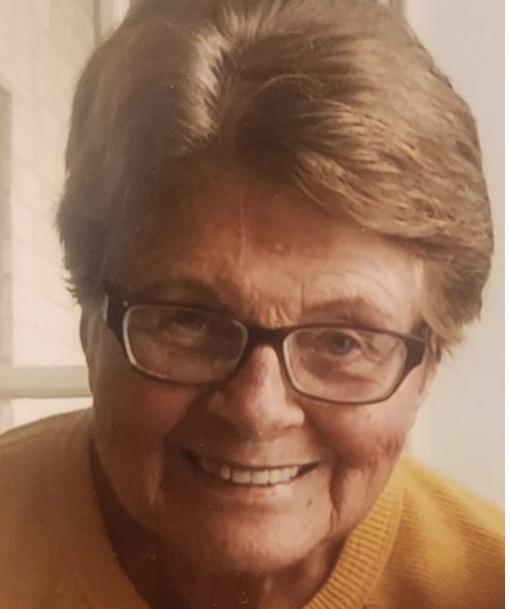
Marilyn Wahlstrom, nee Bergstrom, age 89, of Tinley Park, IL. formerly of South Holland, IL, went to be with her Lord and Savior on Friday, July 4, 2025. Beloved wife of the late Merle Wahlstrom. Loving mother of Audrey (Doug) Van Vuren, Andrew (Nancy) Wahlstrom, and Ann (Stan) Fit. Cherished grandmother of seven grandchildren, and nine great grandchildren. Arrangements entrusted to, Smits Funeral Home 2121 Pleasant Springs Lane (Rt.30/Pleasant Springs Ln.) Dyer, IN.For further information, please contact 219-322-7300 or visit our online obituary and guestbook at www. SMITSFH.com

Philip J. Meuzelaar, age 74, of Cedar Lake, IN, went home to his Lord and Savior on Wednesday, July 2, 2025. Beloved husband of the late Pamela Sue Meuzelaar, nee Shilling. Loving father of Christopher (Michelle) Meuzelaar, Jonathan (Jill) Meuzelaar, Rae Meuzelaar and Karen (Kevin) Krygsheld. Proud grandfather of Luc, Bini, Calvin, Ally, Ben, Nate, Kate, Noah and Sam. Dear brother of Nancy (Kent) Kuipers, David (Norma) Meuzelaar, Mary (Daryl)
Pommer, Calvin (Mary) Meuzelaar, Gretchen (late Darrell) Kuipers, and Faith (Richard) Larson. Uncle of many nieces and nephews. Preceded in death by his parents Isaac and Gwendolyn Meuzelaar.
When Philip was 12 years old, the nurses at the rehab hospital he was in for hip replacement brought the kids on that unit in to see the adult rehab patients. They told the kids that when they went home, they could either ask everyone for help, complain, and have no friends, or they could have a good attitude, be independent, and have friends. Phil vividly remembered choosing friends. Anyone that knows him is not surprised by this.
He was known for his positive attitude, and people adored him everywhere he went, often to his embarrassment and the nausea of his family. He may have had 2 bad hips, chronic pain and a neurological disease, but he was determined to enjoy life. When he was able, he biked, fished, swam, baked bread no one would eat, cooked meals most were skeptical of, and told endless stories. In fact, he talked so much that he was known to say “I’m running out of air.”
Something he never ran out of was a love for life. He truly got every drop he could out of it.
Visitation Monday, July 7, 2025 from 9:00 a.m. until the time of the funeral service at 11:00 a.m. at Smits Funeral Home, 2121 Pleasant Springs Lane, Dyer, IN. Private interment Homewood Memorial Gardens – Homewood, IL. Memorial contributions may be given to Hospice of the Calumet Area (www.hospicecalumet.org)
For further information, please contact 219-3227300 or visit our online guestbook and obituary at www.SMITSFH.com

SPRINGFIELD –Summer is here, and when our furry friends are outdoors, it is important to remember that every season has its hazards.
“The heat from sunlight coupled with humidity is just as tough on our pets and outdoor animals as can be on us,” says Matt Bussan, DVM, President, ISVMA Board of Directors. “When we plan to go outside in the heat, don’t forget your responsibility to ensure your pet or outdoor animal is protected and supplied with what they need to survive in summer weather.”
Dr. Bussan suggests following these suggestions as the temperature rises and outdoor activities get into full swing:
• Get your pet a summer checkup: Now is the time to visit your veterinarian to get them tested for heartworm if they’re not on a year-round medication. Flea and tick prevention should be on the check list, as well. Make sure they have updated ID tags and microchips in case they become lost.
• Hot pavement, hot paws: If you won’t walk barefoot on a hot sidewalk or street, it’s too hot for your pet, too. Stroll through the cooler grass, if possible. Take walks early in the morning or later in evening. Limit intense exercise, take more frequent breaks.
• Shade is always cooler: Always take the cooler path or the shady side of the street. If your pet is outside for extended periods of time, make sure they have shelter from the hot sun.
• Fresh, clean water: A basic essential for life! Keep your animals hydrated and change the water frequently.
• Avoid pets in hot cars: Triple digit temperatures rise in a parked, non-airconditioned vehicle in minutes … even with windows rolled down! Consider leaving pets at home on hot days.
• Seek attention: If your pet shows any signs of heat stroke (stumbling, vomiting/diarrhea,

In the Matter of the Marriage of Patricia Buie and Victor Buie Case # 25D630304
Persuant to 735 ILCS 5/2-206 - service by publication: affidavit; mailing certificate, Patricia Buie, on oath states as to Defendant Victor Buie that defendant cannot be ascertained after diligent inquiry. His last known place of residence is: 14726 Indiana Ave, Dolton, IL 60419
very red gums, increased respiratory/cardiac rates), seek veterinary attention immediately.
• Backyard hazards: Know what plants are dangerous to your pet, as well as fertilizers and pools that are chlorinated or filled with salt water. Drowning in pools, whether for swimming, wading or as a feature, can be dangerous, as well.
• Breathing Issues: Animals with flat faces, like pugs, Boxers or Persian cats are more susceptible to heat stroke since they can’t pant as effectively. The same holds true for senior and overweight pets.
• Looking cool: Consider a summer cut for your long-furred friend, but make sure the cut is right for the type of pet you have. Consult with your veterinarian or groomer.
• Outdoor picnics mean risks for poisoning. Human food can be high in fat and contain chemicals your pet may not be able to digest. Some foods are simply poisonous. Be sure to keep alcohol away from your pet and clean up spills asap.
• Fireworks: Exposure to loud explosions and toxic chemicals used in fireworks can result in mental trauma and possible physical injury. Keep animals in quiet environments and let them know they won’t be hurt if you take part in celebrations.
The Illinois State Veterinary Medical Association (ISVMA) predicts, monitors and confronts issues that affect the licenses of Illinois veterinarians. More than 1,900 ISVMA member veterinarians, veterinary students and Certified Veterinary Technicians depend upon the representation and services provided by the ISVMA. Their participation ensures the continued strength of the veterinary profession in Illinois, advancing the well-being of veterinary medical professionals, the public and the environment.








Notice is hereby given, pursuant to “An Act in relation to the use of an Assumed Business Name in the conduct or transaction of Business in the State,” as amended, that a certification was registered by the undersigned with the County Clerk of Cook County. Registration Number: M25000621 on










CATHY & JIM HIGGINS
Question: We are purchasing our first home. We are assuming homeownership is the right way to go for us. What are your thoughts?
Answer: Your assumptions are probably correct, but here are some assumptions you should not make:
A home is likely the largest purchase you will ever make. That’s why it’s so important to understand the ins and outs of the buying process, as well as how to know if a home is a good investment for you personally. Yet, many Americans buy homes without fully understanding what they are getting themselves into.
Many buyers assume that if they receive a preapproval for a mortgage, they can comfortably afford the maximum amount they are allowed to borrow. However, this is typically not the case.
Just because a lender gives you the green light doesn’t mean it’s smart to stretch that far — especially when interest rates, insurance, taxes, and maintenance costs can all creep up over time. You don’t want to live just for your home. Buyers should build in a buffer, just in case, so they’re not house-poor six months after moving in.
Generally, home values will go up over time, but you can’t rely on this being an absolute truth.
I’ve seen people bank their future on appreciation, only to be hit hard when
the market softens or a neighborhood doesn’t grow the way they expected. Real estate is a great long-term investment, but banking on fast equity gains can backfire if life throws a curveball and you need to sell quickly.
First-time homebuyers often assume that if a monthly mortgage payment is equal to or less than what they’ve been paying for rent, then buying is the smarter financial option. However, the mortgage payment is not the only cost you have to contend with when transitioning from renting to owning.
What they are not factoring in are property taxes, insurance, HOA payments, maintenance and repairs. Homeownership costs add up quickly. I have seen people struggle financially after closing because they did not factor in things like a bad furnace or rising taxes.
If you are prepared for this, then you can ‘assume’ that you are ready to purchase a home!
E-mail us your Real Estate questions at Cathyah@aol.com. Thinking of selling your home? Call Cathy & Jim Higgins, Licensed Broker/Realtors in Indiana & Illinois. IN: 219-865-4361 IL: 708-8283304. McColly Real Estate. Website: www.Cathyhiggins.com. Personal Real Estate Journal: www.Higginshousechat. blogspot.com


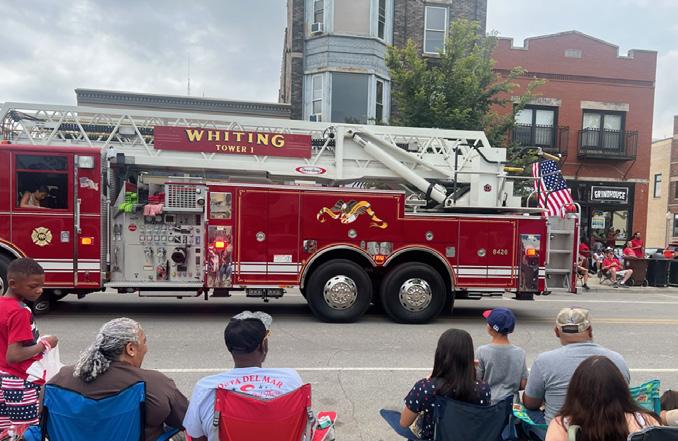
Banner girls of SSEVV taking part in the 4th of July 2025 Parade in Whiting, IN!

Dave Cosgrove and the SSEVV veterans in the Whiting Parade Friday July 4, 2025. A great time was had by all!
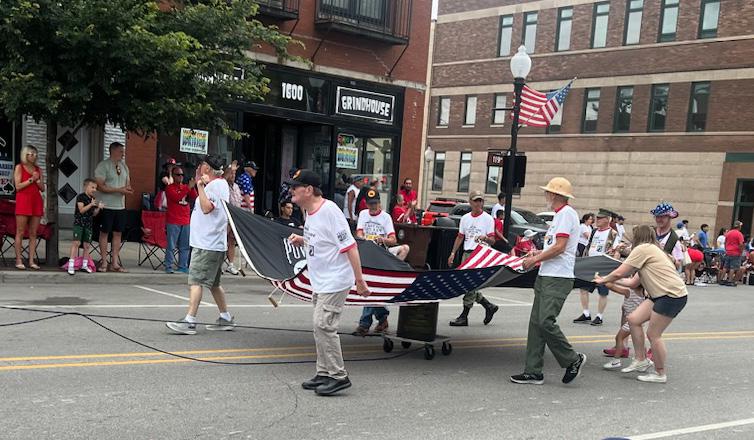
The flag with the money. The SSEVV was inverted and hundreds of dollars were donated to the SSEVV charities. The flag was part of the Whiting Parade on Friday July 4th ,2025. The veterans donate the money back to their charities.

- most advanced gutter protection, backed by a no-clog guarantee & lifetime warranty. 833-610-1936 to schedule free inspection & estimate. Get 20% off! Seniors/military save extra 10%. Restrictions apply, see rep for warranty & details
Dental insurance from Physicians

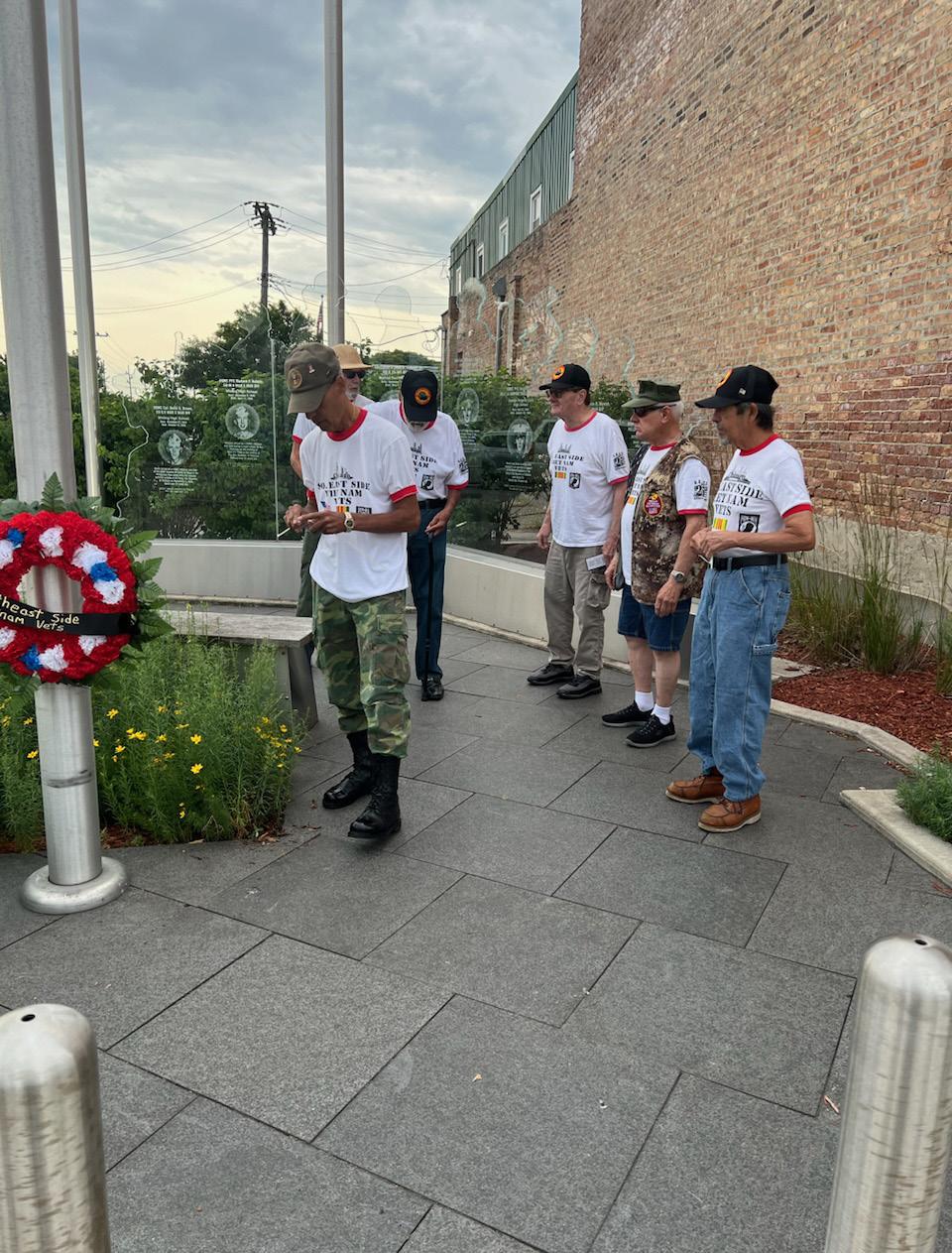
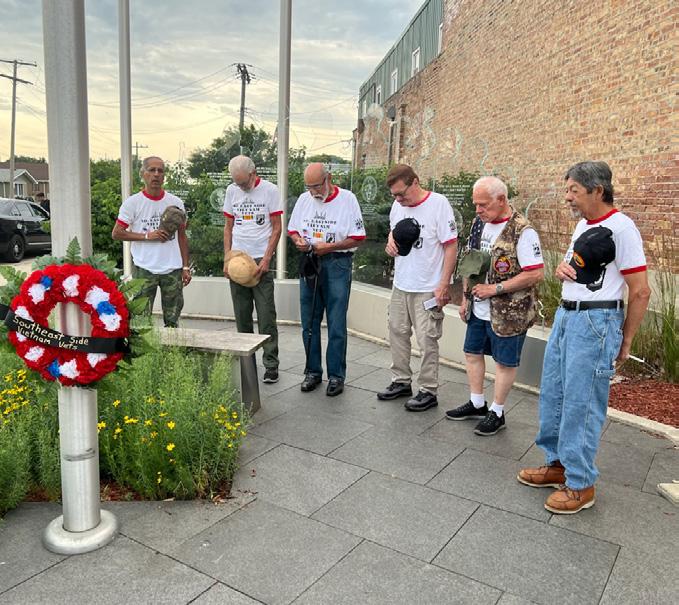

in Whiting. The Soldiers memorialize the corner every year in honor of those who lost their lives in the rice paddies of Vietnam.






Services
AC/HEATING SERVICES: Summer Special! Furnaces or A/C’s , Clean & check $59.95. Furnaces, A/C’s, Boilers, water heaters, sump pumps, humidifiers, installations, repairs, furnaces installed from $1495.00 R/D Heating & Cooling. IL. and IN. 219-616-3281
SMITH PAINTING 30 YRS EXP - FREE ESTIMATES Mention Sherry, get 5% off job. Call Mike 2197429867
MOVING SERVICES: Pick up/ Delivery Service. Small moves; in-house move; store-to-home. Assembly: Furniture & exercise equipment (Ikea, Office Depot, etc.) Call Rob daily until 9pm
708-898-8668
JUNK REMOVAL Time to make space! Cleanouts (garage attic, basement, shed). Hauling away appliances, furniture, trash. WE RECYCLE! Call ‘til 8pm. 708-8988668
CAR / TRUCK TROUBLE?
Vehicle shopping?
On-location diagnosis: Will find needed repairs / maintenance. Uncertain of mechanic estimate? 32 years exper. Any day! 708-898-8668
Wanted
Looking for room to rent with own bathroom. NW Indiana/Lansing area. Elderly care experience. 40+ Non-drinking/ smoking male w/ maintnenance skills. Prefer kitchenette & garage space. 708-898-8668

In search of a Vintage Company Wall Clock. it would be square framed in background and the iconic blue snake and lettering. Cobra used to give these to local Cb shops selling their products back in the day. Call Dan 312-720-
BEAUTIFUL SOUTH HOLLAND ROOM FOR RENT IN A SINGLE FAMILY
HOME. King size bed, semi private bathroom with Jacuzzi tub. No cooking, full size refrigerator and microwave in room. Free lights, free gas. Only $225 a week, $500 move in fee. Background check required. Call 708-8433932 for more info.

APARTMENT FOR RENT- Available Now - $900 a month. - 2 beds, 1 bath, live-in kitchen. Private parking. No pets. One month security and rent required. 17701 Commercial Ave in Lansing. Apartment 2W on second floor. Seniors welcome. Call Winston708-251-8266
SPACIOUS AND QUIET
2-BEDROOM, 2-BATH CONDO AVAILABLE IN A 55+ BUILDING
LOCATED AT 18855 BURNHAM AVE #135, LANSING, IL 60438. This well-maintained unit features a patio off the living room, an ample dining area, and a master bedroom with two closets and a private bath. The building offers convenient elevator access, a heated underground garage with storage, and a peaceful living environment. Rent is $1,600 per month with a $1,600 move-in fee. Don’t miss out on this great opportunity! For more information or to schedule a viewing, contact Wyomia Ellison at 708-250-2228 or Samuel Ellison at 708-915-9466.
NEWLY RENOVATED
2 BEDROOM, 1 BATHROOM IN CALUMET CITY.
Craftsman weed trimmer 2 cycle (gas& oil mix) needs tune up comes with spool of extra line
$20craftsman 1/2 hp garage door motor (no rail) needs worm gear inside comes with doorbell switch,visor remote ,door safety sensors with wiring $20. 312-720-0844
7” Portable DVD P craftsman weed trimmer 2 cycle (gas& oil mix) needs tune up comes with spool of extra line
$20craftsman 1/2 hp garage door motor (no rail) needs worm gear inside comes with doorbell switch,visor remote, door safety sensors with wiring $20 layer AC/DC Power Car Carrying Case New $20.00. Coffee Maker New W/2 Stainless Steel Travel Cups from Penny’s $20.00. Beverage Set Insulated Server Set Hot or Cold w/2 glasses & Tray. $10.00 - 708-4749568
Little Tykes basketball rim and stand. 6 feet tall. Unassembled for easy transport. Excellent condition. $18 Call or text 708-673-9361
3-Step Skinny Mini Step Ladder w/multi purpose tray Used Once$25.00 Heavy Duty Dolly Can move Furn. $20.00 708-474-956
Vera Bradley Purses $3-$8 each, New Butterball Turkey Fryer
$35, 3 Bucket Fountain $30, Cuisinart Bread Maker $35 New, Beach Towels $2 each, Scotts Spreader $10, Tools, Conduit. 708-877-6088
Office Chair New--In Box--Modway EEI-757 $95. Mathching Buffet Lamps --New $30. 2 movie projectors, a movie screen and tripod. Beleek China Plate--New in Box $20 708-448-5672
Fisher-Price Power Wheels Barbie Jeep. In original box. Excellent condition. Needs battery and charger. $50 Call or text 708-673-9361


WANTED - Tall Ladders,

roll roof for (4) car garage.

Does not have to pass emission test if the price is right - Call 219-801-0955
For Rent
LANSING
APARTMENT, REMODELED FIRST FLOOR, 2 BEDROOMS, QUIET BUILDING, NO PETS. No smoking. Heat and Water included. Seniors welcome. Call 708-895-0628 for more information.
$1,350/MONTH, one month security deposit, background check required. Owner pays gas, tenant pays electric. Laundry onsite, parking offsite. Quiet building. Call 708-288-5358 for more information
Used Kenmore 5 Burner gas stove. Model #79073433314. Stainless steel and black in color. $225 or reasonable offer. Used Frigidaire Double Clean Dishwasher. Model # FFCD2413UB2A. $225 or reasonable offer.
Brand New! Rheem 29 gallon, 60,000 BTU power vent water heater. $700 or reasonable offer. Call 312-339-7716
TWO BURIAL PLOTS IN CEDAR PARK CEMETERY, Calumet Park. Call 708-567-4475 for details.
Black and Decker electric lawn mower. Great condition. $110 Call or text 708-673-9361
For sale, TKO five piece drum set, A1 condition, high hat, cymbals, etc. All hardware included. $300 O.B.O. Call 708-598-5136
ELIZABETH SETON HS (SOUTH HOLLAND, IL) CLASS of 1975 REUNION
Hope you can join usSaturday, September 13, 2025 Oak Brook, IL. Hosted by the Senior Class Officers and 50th Reunion Committee. Please pass this information to any classmates you keep in touch with. For details go to: Facebook- Seton Academy 50th Reunion Class of 1975 Or email Betsy atSeton50reunion2025@ gmail.com