Wednesday • February 11, 2026

Take our short audience survey and help us better understand the people we serve — and ENTER TO WIN A $100 GIFT CARD.



Wednesday • February 11, 2026
Take our short audience survey and help us better understand the people we serve — and ENTER TO WIN A $100 GIFT CARD.
By HANNAH SPANGLER
Applications open Feb. 6 for Illinois’ new $1.5 million Farm to Food Bank Capacity-Building Grant Program, designed to strengthen the state’s local food system and expand access to fresh protein and produce.
“We’re looking for farmers, ag producers, food banks, food pantries and community partners all looking for help with infrastructure,” said Sharon Dodd, an administrator of the program, about who can apply for the grants of $1,000 to $100,000. The goal is to help farmers and food providers build the capacity they need to move more Illinois-grown, raised or processed agricultural products to “neighbors” facing food insecurity, especially in underserved areas and communities.
The announcement came on the first day of the From Food to Flowers: Everything Local Conference Jan. 28 in Springfield. Specialty and conventional growers gathered at the three-day event, along with state officials, food bank representatives and other stakeholders who could be part of the capacity grant program.
The set of grants is part of the Illinois Farm to Food Bank (IL-F2FB) Program, supported by funding from the State of Illinois through the Illinois Department of Human Services (IDHS). Originally developed through state legislation in 2017 and 2018, the program evolved into a statewide pilot by 2020 and laid the groundwork for partnerships that helped Illinois move surplus food from farms to food banks.
In its first three years, from 2020 to 2023, the program helped move 3 million pounds of food that otherwise
might have gone to waste, according to Feeding Illinois, which partnered with the state and Illinois Farm Bureau during the pilot. Dodd said the effort proved farmers were willing to participate, but many lacked basic infrastructure needed to harvest, store, process or transport food destined for donation.
Those capacity gaps are what the new grants aim to address. Farmers in the pilot often struggled with cold storage, aggregation space or equipment to efficiently collect and move surplus goods. Food banks, for their part, relied on temporary systems that weren’t built for long-term use. Dodd said the new funding is meant to support permanent infrastructure, whether at a farm, a food pantry or elsewhere in the supply chain.
“Whoever gets the grant money will implement something that will last,” Dodd told FarmWeek. “It has to be sustainable.”
Eligible projects focus on infrastructure that improves the movement of Illinois-grown food, including refrigerated vehicles or trailers, cold storage, racking, temperature-monitoring systems, packaging equipment and scheduling or traceability tools that reduce waste and improve flow. Routine operating costs, debt repayment, land acquisition and fundraising or administrative expenses are not allowable.
Frequently asked questions and detailed guidelines can be found at feedingillinois.org/capacitygrant. Feeding Illinois will host three virtual office-hour sessions on its social media channels from 11 a.m. to noon Feb. 11, 18 and 25, where participants can ask questions about the capacity-grant process, eligibility, timelines and allowable costs. Additional questions may be directed
The Towle Theater is pleased to open their 2026 Season with The Marvelous Wonderettes written and created by Roger Bean. The production is Directed by TJ Bird, Music Direction by John Phillips and Choreography by Melanie Greyson.
The Marvelous Wonderettes is a jukebox musical comedy bursting with close harmonies and nonstop ‘50s and ‘60s hits. Set at the 1958 Springfield High School prom, the show follows four girls—Betty Jean, Cindy Lou, Missy, and Suzy—as they dream big, sing bigger, and charm the audience with classics like “Mr. Sandman,” “Lollipop,”and “It’s My Party.” What begins as an innocent night of teenage hopes unfolds into a heartfelt celebration of friendship, love, and the power of music as the Wonderettes reunite years later to revisit their past. Sweet, funny, and irresistibly toe-tapping, The Marvelous Wonderettes is a nostalgic treat for all ages. Making her Towle debut is Mai Hartwich (Chicago, IL). Returning to the
Towle are Madison Meeron (Chicago, IL ) Taylor Morris (Chicago, IL), and Lauren Reece (Chicago, IL).
The Marvelous Wonderettes runs Feb 27–28, March 1, 6–8, 13–15. Fridays 7:30pm, Saturdays 7:30pm & Sundays 2pm.The box office opens 1 hour prior to performance time. Tickets are $30 in advance and $35 at the door. Reservations must be paid for in advance. They are non-refundable and non-exchangeable. Group rates are available. There is no late seating. Please arrive no later than 15 minutes prior to curtain. If you arrive after curtain, you will not be seated until intermission.
The Towle Theater is located in beautiful downtown Hammond at 5205 Hohman Avenue. Due to major renovations happening in Downtown Hammond parking is available right in front of the building on Hohman Avenue as well as the gravel lot located on Sibley. For more information call 219-937-8780 or visit www.towletheater.org.

to grants@feedingillinois.org.
The application for 2026 grants will be available on Feeding Illinois’ website through March 6, with awards announced April 10. Once awarded, grantees must pay eligible project costs upfront and will be reimbursed afterward.
Michelle Hansen with IDHS said although the application process can feel tedious, working through it and putting a detailed plan in place can ultimately benefit farms and other businesses in the long run. “You’re making sure you’re going to get this money in hope that the pounds you’re producing now will double or triple in the years to come,” she told FarmWeek.
A McLean County farmer attending the conference to learn more about the grants has been direct-marketing meat for more than 20 years. James Toohill, who raises cattle and pigs, said it is “nice to finally see” a program like this becoming a priority.
“That’s awesome that there’s that much money being floated to this kind of stuff,” he said. “Whoever gets this grant is going to put it to some good use. That’s what farmers do.”
This story was distributed through a cooperative project between Illinois Farm Bureau and the Illinois Press Association. For more food and farming news, visit FarmWeekNow.com.
This story was distributed through a cooperative project between Illinois Farm Bureau and the Illinois Press Association. For more food and farming news, visit FarmWeekNow.com.
The second petition of the Lord’s Prayer is “Your kingdom come.” God has always been High King, the Absolute Monarch, over his world. He made it, so he owns it and everything in it. That includes you and me. “The earth is the LORD’s and everything in it, the world, and all who live in it” (Psalm 24:1, NIV84).
God created our first parents, Adam and Eve, in his image to represent him on earth and to rule creation in his name, under him. This includes the call to cultivate creation and culture for the glory of God and the good of all.
Then Satan showed up and said, “All this I will give you... if you bow down and worship me” (Matthew 4:9, NIV84). Actually, he said these words to Jesus centuries later, to tempt him to claim God’s throne for himself. But that’s essentially what Satan tempted Adam and Eve to do as well. When they listened to Satan, they handed
themselves and their God-given authority over to him. That day, Satan became the oppressive occupier of earth and its kingdoms.
An illustration from World War II: In the early 1940’s, Adolf Hitler conquered most of Europe. Millions came under his oppressive rule. But on June 6, 1944, paratroopers dropped from the sky onto Hitler’s turf. Thus began the invasion to liberate millions from Hitler’s tyranny to live under their rightful rulers again. In the same way the birth of Jesus in Bethlehem was a D-Day invasion. Like a paratrooper, Jesus dropped into occupied territory to confront Satan and to liberate us and all creation to thrive under God’s rightful rule again. He will complete his kingdom mission on V-Day, when he returns at the end of time.
Richard Zekveld, Pastor Covenant Fellowship Church cfcsh.org

Q. My home has been on the market for 5 months. No offers, few showings, yet my agent promised me he could get more money for my home than anyone else. Any suggestions?
A. When you sit down with an agent, you are most likely going to get a pretty folder with a list of their awards, pictures of really happy people and a price of what your home should sell for. And that price is most likely inflated for at least one out of the three agents.
You start thinking, I wouldn’t want to give up $20,000 just because those other two agents don’t understand how special my house is.
Without offending you, I am here to tell you this doesn’t translate. Offering an unrealistically higher value is a crude tool used to excite a seller into thinking “hey, this person is going to know how to squeeze out some extra cash”. However, your agent doesn’t set the selling price, they only help determine an asking price. A ready, willing, and able buyer has the most control over the maximum value; and these buyers aren’t going to be throwing in an extra $20k because your agent promised you a higher value, in an attempt to gain
more listings.
Because I am a whole financial picture sort of guy, let’s look at the costs to a seller who allows the price to be set too high:
• Your house stays on the market without much activity.
• Your expenses continue to add up: Taxes, utilities, insurance, mortgage, etc.
• You are maintaining a structure that nature is relentlessly attempting to tear down.
• And finally, new buyers start to think that there may be something wrong with the house as it’s been on the market for months.
Be as wise as your age. Pick a realtor who lives or works locally. Be sure the realtor you pick is experienced with a proven track record. In real estate, experience is everything.
E-mail us your Real estate questions at: Cathyah@aol.com. Thinking of Selling? Call Cathy & Jim Higgins: Ind: 219-577-5905 Ill: 708828-3304.Licensed Broker/Realtors in Indiana & Illinois. McColly Real Estate. Website: www. Cathyhiggins.com. Personal Real estate Journal: www.Higginshousechat.blogspot.com
VERSE OF THE WEEK

1 John 3:22
Attend the church of your choice.
CHRIST COMMUNITY CHURCH, COGIC
1151 E. 170th St., South Holland
708-331-8389
FAX 708.331.8374
Admin@ChristCommunityCOGIC.org ChristCommunityCOGIC.org
PASTOR DR. CARL E. KING, SR. WORSHIP SERVICES SUNDAY Church School 9:15 a.m.
Worship Services 10:30 a.m.
WEDNESDAY Bible Study…… 7:00 p.m.
COVENANT UNITED CHURCH OF CHRIST 1130 East 154th St., South Holland
708-333-5955
www.covucc.org
PASTOR REV. DR. PATRICK L. DAYMOND
WORSHIP SERVICES Sunday Worship 7:30 a.m. 11:00 a.m. Wed. Bible Study Noon
FIRST CHURCH (PCA) 3134 Ridge Rd, Lansing
708-474-9610
www.firstchurchpca.org
Morning Worship 9:30 a.m.
Sunday School 11:00 a.m.
Evening Worship 5:30 p.m.
FIRST ORTHODOX PRESBYTERIAN
CHURCH OF SOUTH HOLLAND
16248 South Park Ave., South Holland
708-333-8211
www.firstchurchsh.org
PASTOR REV. DANIEL SVENDSEN WORSHIP SERVICES
Sunday 9:30 a.m. & 5:30 p.m. Sunday School 11:00 a.m.
PASTOR EL CID ZOLLICOFFER
PASTOR SHONNI ZOLLICOFFER
RECONCILIATION CHURCH
833 East 168th St., South Holland
708-331-7755 www.reconciliationchurch.org
PASTOR GLEN MCCARTHY WORSHIP SERVICES Sunday Worship 10:00
REDEEMER LUTHERAN CHURCH 651 East 166th St., South Holland 708-331-4100
redeemer-lutheran@sbcglobal.net
WORSHIP SERVICES
ESPIRITU DE DIOS
16400 S. State St., South Holland
708-439-1220 sogfchurch.com
PASTORES Jose & Paula Lopez
SERVICIOS: Grupo de Oracion de Hombres Jueves ........................................... 7:30 p.m. Sabado Alabanza y Predicacion.....6:00 p.m.
UNITY OF NORTHWEST INDIANA Plum Creek Center 2138 Moeller Street Dyer, IN 46311 (219) 931-5284 www.unitynwi.org ALL WELCOME
MINISTER: REV. GERALDINE COLVIN SUNDAY SERVICE.......................10:00 AM
An independent newspaper serving the area since 1957.
©The Shopper
924 E. 162nd Street • South Holland, IL 60473
HOW TO REACH US
Phone: 708-271-8971 • www.myshopper.biz
Email: general@myshopper.biz
Published every week covering the towns of South Holland/Thornton, Lansing, Dolton/ Calumet City, Munster, Highland, and Schererville. Our circulation is independently audited by CAC.
We proofread all Classified ads. However, should a mistake occur, it can easily be corrected, provided it is brought to our attention.
Call 708-271-8971 to rectify an error. We cannot be responsible for more than one incorrect insertion.
Adjustment for error is limited to republication. In any event, adjustment for errors or omissions is limited to the cost of the space occupied.
The Shopper offers FREE non-business Classified Ads (20 word maximum). Business Classifieds are $25 for 20 words, $1.00 per word over.
Place ads online at www.myshopper.biz
Email news items to general@myshopper.biz
Some content courtesy of Family Features and Capital News Illinois.
Friday 4:00 pm for the following week’s issue.
The Shopper reserves the right to edit any content supplied for publication as it sees fit, including but not limited to clarity, grammatical and factual accuracy, and to accommodate available space. All real estate advertising in this newspaper is subject to Fair Housing Laws which makes it illegal to advertise “any preference, limitation or discrimination based on race, color, religion, sex, national origin, familial status, sexual orientation, marital status, military status, age, ancestry, parental status, source of income, military discharge status or housing status,” no matter how large or small the property. This newspaper will not knowingly accept any advertising for real estate which is in violation of the law. Our readers are hereby informed that all dwellings advertised in this newspaper are available on an equal opportunity basis.
To complain of discrimination call HUD toll-free at 1-800-669-9777. The toll-free telephone number for the hearing impaired is 1-800-927-9275.



Philip Claud Rietveld, age 94, of Crete, IL, passed away peacefully on February 1, 2026. He was preceded in death by wife, Audrey (Veld), parents Cornelius and Nellie (Prince), brothers David, Robert (Joyce) and Jay (Sherry). He is survived by his four children, Lisa Rietveld (Trilby White), Renee Malm (John), Linda Van Drunen (Kevin), and Jenny Mack. Grandfather to Jordan (Kerianne) Malm, Dane (Sydney) Malm, Noah (Morgan) Malm, Daniel VanDrunen, Elizabeth Van Drunen (Carson Nicola), Katherine Van Drunen, and Kate O’Brien. Great Grandfather to Finn, Mila, Margot, Haven, Olive, Cash, Ozzy and Parker Malm.
He graduated Thornton High School in Harvey, IL, went on to attain his Bachelor’s degree at the Chicago Conservatory of Music in 1953.
Phil married Audrey (Veld) in 1958 and started his family on the farm in South Holland, where they grew onion sets and tomatoes for Campbell’s Soup.
He loved playing his piano and pipe organ and was a lifelong supporter of Chicago’s Lyric Opera and Symphony. Phil and Audrey were avid bridge partners, hosting games in their home f or decades.
After selling the family farm in 1977, Phil went on to own and operate apartment buildings, giving him time to enjoy his passion for raising Saddlebred Show horses and awardwinning Standardbred Race horses.
Phil was known for his homemade pies and concord grape j am. He was a curious baker, always researching and collecting recipes throughout his life. His cookies, bars and pies were much anticipated additions to every gathering
Phil loved to be social, spend time with friends, tackle a new project and work hard. Phil was always engaging and his mischievous spirit will be sorely missed.
Private burial at
Oak Ridge Cemetery, Lansing, IL. Arrangements entrusted to Smits Funeral Home – Dyer, IN. For further information, please contact 219-322-7300 or visit our online obituary and guest book at www. SMITSFH.com
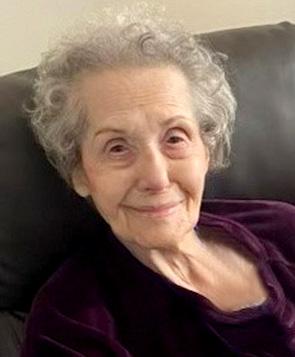
Catherine J. Borst, nee LaRocca, age 102, of Dyer, IN, passed away on Saturday, January 31, 2026. Beloved wife of the late Robert C. Borst Sr. Loving mother of the late Robert C. (Patricia) Borst Jr., late Timothy (Victoria) Borst, Catherine (Bruce) Delbovo, and Mitchell (Tina) Borst. Cherished grandmother of 10 grandchildren and many great-grandchildren. Dear sister of the late Dr. Vincent (late Anne) LaRocca and the late Lucas (late Rosemary) LaRocca. Kind aunt of many nieces and nephews. Preceded in death by her parents Joseph and Josephine LaRocca.
Visitation Monday, February 9, 2026 from 9:00 a.m. until the time of the funeral service at 10:30 a.m. at Smits Funeral Home, 2121 Pleasant Springs Lane Dyer, IN. Private interment Holy Sepulchre Catholic Cemetery—Alsip, IL. Memorial contributions may be given to St. Jude Children’s Research Hospital (www.stjude. org) For further information, please contact 219-322-7300 or visit our online obituary and guestbook at www. SMITSFH.com
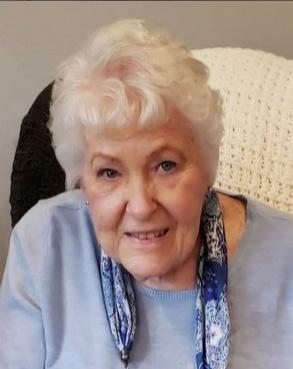
Harriet Beezhold, nee Kramer, age 96, of Grandville, MI, formerly of Lansing, IL, went home to her Lord and Savior on Sunday, February 1, 2026. Beloved wife of the late William
“Bill” P. Beezhold. Loving mother of Phil (Julie) Beezhold, Don (Deborah) Beezhold, Cynthia (Dave) Voss, Diane (David) Guerrin, Timothy (Rebecca) Beezhold, David (Jill) Beezhold, Paul (Trisch) Beezhold, and Lynn (Kevin) Lanting. Proud grandmother of 30; great-grandmother of 53. Dear sister of the late Carolyn (late Louis) Bommelje. Loving sisterin-law of Christine Beezhold and Joe Greenwood. Preceded in death by two greatgrandchildren, Olive Guerrin and Jackson Beezhold, her daughterin-law Elizabeth (Verwoerd) Beezhold, and by her parents Harry and Ella Kramer. Harriet was a graduate of Calvin College and studied oil painting at the Chicago Art Institute. She was a gifted artist and taught 4th grade at Roseland Christian School and art at Lansing Christian School. She taught oil painting out of her home until she was 84. Many of her art works are enjoyed by her family and the community including one of her paintings that won a national contest to represent the US space program and was displayed at NASA in Houston, TX. Harriet was a woman of deep faith with a gentle servant heart, and her humble attitude was expressed by her loving devotion to the Lord. Her greatest joy was her family, and her most heartfelt desire was for her children, grandchildren, and great-grandchildren to find faith in Jesus and follow Him.
Visitation Monday, February 16, 2026 from 4:00 – 8:00 p.m. at Smits Funeral Home, 2121 Pleasant Springs Lane, Dyer, IN. Funeral service Tuesday, February 17, 2026 at 11:30 a.m. at Oak Glen United Reformed Church – 2244 Indiana Ave. Lansing, IL with services conducted by Rev. John Vermeer. Interment will be held prior to the funeral service at Chapel Hill Gardens South – Alsip, IL. Memorial contributions may be made to Georgetown and Cambridge Manor Assisted Living (Georgetown and Cambridge - Resident Memorial Fund). For further information, please contact 219-3227300 or visit our online obituary and guestbook at www.SMITSFH.com
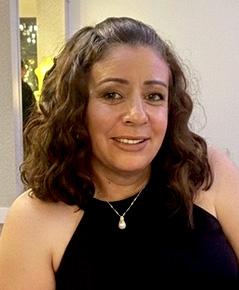
Norma Evelia Martin Guzman, age 49, of Calumet City, IL, passed away Tuesday, February 3, 2026. Beloved wife of the late Francisco Javier Padilla-Gutierrez. Devoted mother of Juanita (Manuel Estrada) Padilla, Ana Elizabet (Gustavo Araiza) Araiza, and Lupita (Juan Barrera) Padilla. Grandmother of Leandro Emilio Barrera and Javier Alexander Barrera. Loving daughter of Jose Asuncion Martin Munos and Maria Del Carmen Guzman Perez. Dear sister of Juana Martin, Cristina Martin, Ana Elia Martin, Jose Joel Martin, and Esgar Gael Martin. Visitation Thursday, February 5, 2026 from 4:00 – 8:00 p.m. at Smits Funeral Home, 2121 Pleasant Springs Lane (Rt.30/Pleasant Springs Ln.), Dyer, IN. Prayer service Friday, February 6, 2026 at 9:15 a.m. from Smits Funeral Home to Our Lady Of Knock 501 163rd St, Calumet City, IL. for a 10:00 a.m. funeral Mass. Interment at Holy Cross Catholic Cemetery –Calumet City, IL. For further information, please contact 219-322-7300 or visit our online guestbook and obituary at www.SMITSFH.com
Norma Evelia Martín Guzmán, de 49 años, de Calumet City, IL, falleció el Martes, 3 de febrero de 2026. Esposa del fallecido Francisco Javier Padilla-Gutiérrez. Madre de Juanita (Manuel Estrada) Padilla, Ana Elizabet (Gustavo Araiza) Araiza, y Lupita (Juan Barrera) Padilla. Abuelita de Leandro Emilio Barrera y Javier Alexander Barrera. Hija de Jose Asuncion Martin Munos y Maria Del Carmen Guzman Perez. Hermana de Juana Martin, Cristina Martin, Ana Elia Martin, Jose Joel Martin, y Esgar Gael Martin.
Visitación jueves, 5 de febrero de 2026, de 4:00 a 8:00 p. m. en Smits Funeral Home, 2121 Pleasant Springs Lane (Rt.30/Pleasant Springs Ln.), Dyer, IN. Servicio de oración el viernes, 6
de febrero de 2026, a las 9:15 a. m. desde Smits Funeral Home hasta Our Lady Of Knock 501 163rd St, Calumet City, IL. para una misa funeral a las 10:00 a. m. Entierro en Holy Cross Catholic Cemetery –Calumet City, IL. Para obtener más información, comuníquese al 219322-7300 o visite nuestro libro de visitas y obituario en línea en www.SMITSFH.com

Myra Hope Altgilbers, 77, of Schererville, Indiana traded her earthly angel wings for heavenly wings on February 6, 2026. She was born on February 4th, 1949 in Gary, the loving daughter of Zyla Mae and Richard Opasik.
Myra was a passionate gardener whose love for nurturing plants mirrored the love she gave to her family. Her garden was not just a space filled with flowers and vegetables; it was a sanctuary where she spent countless hours, finding joy and serenity in the beauty of nature.
Myra’s greatest joy was her family. She cherished her family. She created a warm and loving home, where laughter and kindness thrived. Her unwavering support, wisdom, and love were the cornerstones of our lives. Whether it was sharing stories during family gatherings or tending to her beloved garden, she always made those around her feel cherished and special.
Myra will deeply be missed, but her spirit will live on in the love she shared with her family and the beauty she cultivated in her garden.
We will forever hold her memories in our hearts.
She is the beloved wife of William “Bill” Altgilbers. Loving mother of Crystale Lynn (Robert) Pierce, and Angela Lee (Matthew) Lipkin. Cherished grandmother of Kaitlynn (Daniel) Magdaleno, Kelly Pierce, and Raymond Lipkin.
Great-grandmother of Milo Magdaleno. Dear sister of the late Richard Opasik Jr., Joyce (John) Bennett, Michelle (Ken) Banaszak, Gayla Pressner, and Tim White. Preceded in death by her parents Richard and Zyla Mae Opasik. Visitation with family and friends on Monday, February 9, 2026 from 4:00—8:00 p.m. at Smits Funeral Home, 2121 Pleasant Springs Lane, Dyer, IN. For further information, please contact 219-322-7300 or visit our online guestbook and obituary at www.SMITSFH.com
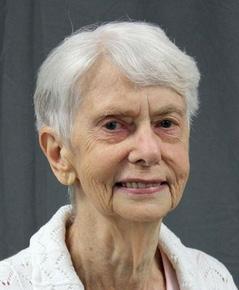
Eleanor Derks, nee Harmsen, age 91, went peacefully home to her Lord and Savior on Saturday, February 7, 2026. Beloved wife of the late Robert “Bob” Derks. Loving mother of Dan (Marilyn), Craig (Marisa), Jerry (Karen), and Linda (Jeffrey) Colvin. Loving grandmother of 13; great-grandmother of 25. Dear sister of the late Dorothy (late George) DeVries, late John (late Jennie) Harmsen, and late Marvin Harmsen. Preceded in death by her parents George and Catherine Harmsen. Her greatest joy was spending time with her family and hosting family get-togethers. She was an avid Cubs fan and grew up playing softball in the parks of Chicago. Visitation Tuesday, February 10, 2026 from 9:00 a.m. until time of the funeral service at 10:30 a.m. at Smits Funeral Home 2121 Pleasant Springs Lane (Rt.30 & Pleasant Springs Ln.) Dyer, IN with Rev. Kyle Beckrich officiating. Interment at Abraham Lincoln National Cemetery –Elwood, IL. Memorial contributions may be given to Illiana Christian High School (www. illianachristian.org). For further information, please contact 219-322-7300 or visit our online guestbook and obituary at www.SMITSFH.com





get 5% off job. Call Mike 2197429867
MOVING SERVICES: Pick up/ Delivery Service. Small moves; in-house move; store-to-home. Assembly: Furniture & exercise equipment (Ikea, Office Depot, etc.) Call Rob daily until 9pm 708-898-8668
JUNK REMOVAL Time to make space! Cleanouts (garage attic, basement, shed). Hauling away appliances, furniture, trash. WE RECYCLE! Call ‘til 8pm. 708-898-8668 CAR / TRUCK
TROUBLE?
Vehicle shopping? Onlocation diagnosis: Will find needed repairs / maintenance. Uncertain of mechanic estimate? 32 years exper. Any day! 708-898-8668
2022 Jeep Cherokee 4x4, Trail-rated V6, Leather Seats, Only 5,000 miles. $37,000. 708-796-5331

2009 Chevy Silverado, 1GCEK39069Z164494b. Extended Cab, 4WD, 6.5’ bed. V8 5.3L Flex Fuel. New Battery &Alternator, April 2025. Tires, 1 year old. Some Rust on Driver’s Rear Quarter Panel. 149k miles Asking $4,000. If interested, Call 708-9138624
1997 Lincoln Mark 8, low miles 53,000. Super clean. $5,000. 708-668-3851. Silver grey, third owner. Shererville, Indiana.IN For Rent
HOUSES FOR RENT IN PHOENIX. THREE AND FOUR BEDROOMS, SECTION 8 WELCOME. $1650 / mo. One month security deposit and background check required. Have yards. Extra charge for appliances. Available immediately. Pets negotiable. Driveway parking available. Call Renetta Thomas for more information 708-417-8384.

CONDO FOR RENT IN LANSING. SPACIOUS 2-BEDROOM, NEWLY DECORATED, $1600/ MONTH, 1 month security, no smoking, no pets. Section 8 welcome. Private parking for one car. Serious Inquiries only. Call 708-646-8652. Ask for Mr or Mrs. Jones.
APARTMENT FOR RENT- Spacious 2 bedroom, 1 bath, 2nd floor of duplex in East Chicago, IN. $1300/month. Call (708) 968-0788, or search for 4925 Walsh Avenue on Zillow for more details and pictures.
3 BED 1BATH RANCH HOUSE, COMPLETELY RENOVATED WITH LARGE PRIVATE, FENCED YARD IN SOUTH HAMMOND ON THE BORDER WITH MUNSTER. All new appliances including washer and dryer. 12 month lease. Pets negotiable. Tenant pays utilities. Off-street parking, nice neighbors, close to the expressway. Call 323-4730673. $1,995 per month, with one month security deposit.
BEAUTIFUL SOUTH HOLLAND ROOM FOR RENT IN A SINGLE FAMILY HOME. King size bed, semi private bathroom with Jacuzzi tub. No cooking, full size refrigerator and microwave in room. Free lights, free gas. Only $225 a week, $500 move in fee. Background check required. Call 708-8433932 for more info.
APARTMENT FOR RENT- 2 BEDROOMS
2ND FLOOR. CALUMET CITY IL. $1200 RENT and one month security. No smoking, no pets and no section 8. Street parking. Serious inquiries only. Call 708 466-7272
For Sale
Four cemetery lots next to each other in Oakland Memory Lanes in Dolton. Price negotiable. Call 407-709-5285
Late 1940s mahogany Lane hope chest. good condition. The lock is removed for safety and legal reasons. 708-8776157
Snow Blower 5hp Two Stage, Like New, Runs Great $150; Snow Blower Single Stage, Like-new, Runs great $115; Both have electric start. Dyer area 708-837-9814. Please leave message.
Grandpa’s golf collection - PING putters $49, golf balls $6/dozen and up, kids sets $39, senior TI-Drivers $49, display sports shadow boxes, $39. Call 708-3393429 for more info. South Holland
Wheelchair, 18” wide seat, 2024 Cardinal Health model, $75 asking price. Call 219397-4649
KEROSUN Omni 105
kerosene heater. 23,000 BTU. Excellent condition. No rust or damage. Very little use, $89.00. Leave message 773-225-6908, Homewood.
Wanted
DESPARATE NEED
SMALL CAR FOR 80 YEAR OLDECONOMICAL CAR CAN BE DAMAGED IF RUNNING FOR LOW INCOME SR. CITIZ. Does not have to pass emission test if the price is right - Call 219-801-0955
Small trailer to fit 14 foot fishing boat. Needing repairs ok . Reasonably priced call or text 219-9237716
Looking for room to rent with own bathroom. NW Indiana/Lansing area. Elderly care experience. 40+ Non-drinking/smoking male w/ maintnenance skills. Prefer kitchenette & garage space. 708-898-8668
REHOMING 7 MONTH OLD AMERICAN BULLY PUPS. Pet Home Only. Great Temperaments, Friendly, Playful, Social and Very Healthy. Up to date on Vaccinations. 2 Males, 2 Females serious Inquiries Only. Parents on Premises. $250 Obo. 773-457-9616
Looking for DEGAN OR MUSSER VIBRAPHONE CALL 219-801-0955
WANTED - As many can of salmon fish as you have. 219-801-0955
WANTED: Electric chainsaws and as many chains as you have. Exterior Brown Paint. 219-801-0955
Anyone selling old coins at a low price or just want to get rid of some old coins - call (708) 937-5462