
Cottonwood Heights See
City’s general plan
Will be city’s first update to plan since incorporation Page 4
Brighton football reaches semis
Schedule gauntlet in preseason prepared team for playoff run Page 17

City’s general plan
Will be city’s first update to plan since incorporation Page 4
Brighton football reaches semis
Schedule gauntlet in preseason prepared team for playoff run Page 17
By Jerry S. Christensen | j.christensen@mycityjournals.com
Brighton High School has four alumni active in the NFL.
Brighton High School received the honor of being named a Super Bowl High School in 2004. The trophy that designates Brighton as a school that produced an athlete who competed in a Super Bowl, football’s highest level, sits snugly among the 125 state championship trophies in Brighton’s athletic building.
The athlete that brought said honor to Brighton was Reno Mahe who played for the 2004 Philadelphia Eagles in Super Bowl XXXIX. Bryan Kehl was the next Brighton Bengal to represent in the National Football League (NFL). He was drafted in the fourth round of the 2008 NFL draft and played from 2008 to 2012 for the New York Giants, St. Louis Rams and Kansas City Chiefs.
But what are Brighton’s rooting interests in the current NFL? Brighton boasts four players and coaches currently active in the NFL. Two of them replicated Reno Mahe’s feat of playing and coaching in Super Bowls with championship rings as proof.
Jackson Barton is a 6-foot-7, 310-pound offensive tackle who graduated from Brighton in 2013 before playing for the University of Utah. He was drafted by the Indianapolis
Colts in 2019 before being acquired by the Kansas City Chiefs. It was there where he garnered a Super Bowl championship ring in 2020. Subsequently, he played for the New York Giants, the Las Vegas Raiders, the Arizona Cardinals and currently is in the Cleveland Browns organization.
Alongside Jackson Barton at Kansas City in that 2020 Super Bowl LIV was Alex Whittingham (BHS class of ’10) who also played college football at the University of Utah before signing on with Kansas City on the defensive coaching staff. He has been on the team for four Super Bowl appearances and has three Super Bowl rings to his credit. Whittingham continues to be active in the Kansas City Chiefs organization as the defensive line coach.
Simi Fehoko was a standout wide receiver at Brighton in 2015. He set a state record for career receiving touchdowns at 41. He continued to set records in the PAC-12 playing for the Stanford Cardinal. His gateway to the NFL was in the fifth round of the 2021 draft. The Dallas Cowboys added Fehoko to their wide receiver cohort. He has played for the Pittsburgh Steelers, the Los Angeles Chargers and is currently playing
page 13





















The current plan, drafted 20 years ago, doesn’t represent the city anymore says mayor.
By Cassie Goff c.goff@mycityjournals.com
It’s been 20 years since Cottonwood Heights was incorporated and 20 years since the city had an updated General Plan. City leadership began to embark on the daunting task of overhauling the over 200page General Plan document over two years ago but to no avail.
The General Plan Update Project was called Cottonwood Heights Tomorrow. Under council direction, planning contractors and architects were to work alongside city planners to draft a more suitable General Plan for the existing neighborhoods of the city. However, when the date on the proposed timeline where the draft was supposed to be reviewed and adopted, the city council was unsatisfied.
“The current document doesn’t represent the city and it feels a little boiler plate,” said Mayor Mike Weichers. “We aren’t going to start completely over. But almost.”
With a we-can-do-it-ourselves attitude, the city council is in agreement of working through the process of updating the city’s General Plan before July 2026. They invited the Cottonwood Heights Planning Commission to a joint meeting in order to begin the drafting process on Oct. 21.
“We have picked this up and put it down at a frustratingly slow pace,” said Commissioner Dan Mills. “We are having similar discussions from when the city started and it’s hard in an election cycle.”
“This document is too important for it to be done in a bubble,” countered Commissioner Lucy Anderson.
Before jumping into any details, the two governing bodies making up Cottonwood Heights’s leadership needed to get on the same page about the specific function of the General Plan within the city’s operations.
“This should be a working, living, document with resilience to withstand constant change over time,” said Councilmember Shawn Newell.
Commissioner Mike Shelton had a similar sentiment, “A general plan should not function like a State of the Union Address…. Instead, it telegraphs to the (city) planning staff and land owners what we, as a city, want to see happen.”
In agreement, Councilmember Matthew Holton challenged city leadership to think about how the document can serve in the preservation of existing neighborhoods and protection of a lasting scar in the gravel pit development within a 30-year lifespan.
“Forecasting a bunch of years out is an
almost impossible challenge,” said Commissioner Gary Barnes. “We want to identify measurable and quantifiable objectives with the ability to adapt for the… ‘tomorrow’ we desire.”
Two main objectives were set for the Joint Meeting between the Cottonwood Heights City Council and Planning Commission: finalize the vision/mission statement and settle on guiding community goals.
Councilmember Suzanne Hyland mentioned how Cottonwood Heights residents have a mountain-suburban lifestyle. “We are a suburban gateway city and acknowledging that, and what we want to do with it, is really important.”
Councilmember Ellen Birrell referred to the city as being an “urban wildland interface.”
“The Small Town USA ship has sailed,” Hyland said. “We should take advantage of the visitor economy…we could serve a lot of residents if we do this right.”
“We are a gateway city and with that comes the responsibility and challenges related to transportation,” Birrell said.
Planning Commissioner Vice Chair Sean Steinman chimed in to intertwine the relevance of these visions to establishing community goals. “Thoughtful development and transportation are the two areas where the city can really begin to grow. We need the economic development with the roads and vice versa.”
Listening to the conflicting terms for overlapping city visions and community goals, Shelton attempted to reel the conversation back to his main overarching point about function.
“Does this come together for a better understanding of what the city is to do? That’s the question we should be keeping in mind with every sentence.” He encouraged his fellow city leaders to think about how to explain these ideas in clarifying language that is easily understood in lieu of drafting out good prose.
“The audience has to be people coming to this document with a fresh pair of eyes like new volunteers and new staff members,” Mills said.
After a two-hour conversation, there seemed to be a loose consensus on the functionality of the General Plan, wording of the mission statement and top community goals to guide the overall city vision. The next step in the process was to begin tackling updating individual chapters of the General Plan document including (but not limited to) Water, Moderate Income Housing, Economic Development, Recreation, Land Use and Transportation.
“I look forward to slowing down the
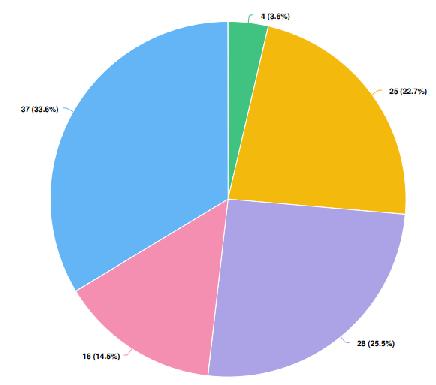
“It is interesting to note that about half of the survey participants have lived in Cottonwood Heights for 10 years or less and half for more than 10 years,” wrote Economic and Development Director Mike Johnson in 2021. (Photo courtesy of Cottonwood Heights)
process,” said Commissioner Rusty Lugo.
The group decided it would be best to divide into subcommittees so each chapter could be fully broken down before coming back together. Individual members of the council and commission mentioned what they would like the group to keep in mind while working through this process of updating the city document over the next few months.
Birrell asked her fellow city leaders to take on some homework and review all the previously adopted Master Plans (i.e., Fort Union Area Master Plan (2017), Wasatch Boulevard Area Master Plan (2019), Bicycle and Trails Master Plan (2016), Affordable Housing Plan (2019), Interlocal Sustainability Action Plan (2021)) so a more cohesive vision would be incorporated throughout all planning documents.
“We have different Master Plans that don’t agree with each other,” Mills said.
“We are figuring out where in the plan there are holes with policy disagreements,” said Community and Economic Development Director Jim Spung.
Steinman suggested compiling an inventory of those disagreements but also the previous successes between those documents in order to figure out how to keep pushing those forward in the new General Plan updates. In addition, he would like to conduct
some informal research to figure out what is actually valued within the city by surveying staff members and residents for comparisons. He also emphasized the importance of the city council and planning commission to continue calibrating and reflecting in order to redirect the General Plan as the guiding light of the city. Birrell added to the encouragement of open communication by wanting to talk with surrounding cities for their values and planning documents as well.
Commissioner Mike Smith asked for the group to have a better understanding of the city’s budgetary constraints. He also requested clarification on the state requirements for municipal planning especially as it pertains to water policy and moderate income housing adaptations.
“Water may be one of the first things we get started on pretty quickly,” Weichers said and explained how the state is requiring updated water policy plans from local municipalities by the end of the year.
Because of that, the Cottonwood Heights City Council and Planning Commission are planning to come back together for a consecutive joint meeting on one of the first two Tuesdays in December.
“We are going to make this a priority from here on out,” Weichers said. “We want to be really specific about what we want to accomplish.”l





Four residential properties and one business won awards for best landscapes within Cottonwood Heights
By Cassie Goff c.goff@mycityjournals.com
Cottonwood Heights has been recognizing residents and businesses dedicated to beautifying their community for almost as long as they’ve been a city. (It’s the last month of Cottonwood Heights celebrating the 20th year as a city.)
“These are properties that exhibit waterwise conservation efforts, beauty and landscaping that is appealing to our entire community,” Mayor Mike Weichers said.
Every year, an open call for nominations is posted in late summer. Residents are asked to nominate their neighbors who add character to the community with their beautiful, and sustainable, landscapes. Nominations are then categorized by district so each city councilmember can go out and judge the landscapes. That means, each winner is hand-selected by their local city councilmember.
The 2025 Cottonwood Heights Landscape Awards are:
1918 E. Siesta Drive wins the Landscape Award for District 1.
“I loved that they used flowers that are blooming,” said Councilmember Matthew Holton. “They’ve obviously put a ton of effort into it. It’s a beautiful area.”
The winning property of the Landscape Award in District 2 is 2118 Stream View Drive.
“The complementary architecture of the house, use of native plants, and thoughtful design really enhances the character of the neighborhood,” said Councilmember Suzanne Hyland.
District 3’s Landscape Award goes to 2560 E. Cavalier Drive.

The Cottonwood Heights Journal is a monthly publication distributed directly to residents via the USPS as well as locations throughout Cottonwood Heights.
For information about distribution please email hello@thecityjournals.com or call our offices. Rack locations are also available on our website. The views and opinions expressed in display advertisements do not necessarily reflect or represent the views and opinions held by Loyal Perch Media or the City Journals. This publication may not be reproduced in whole or in part without the express written consent of the owner. © 2019 Loyal Perch Media, Inc.
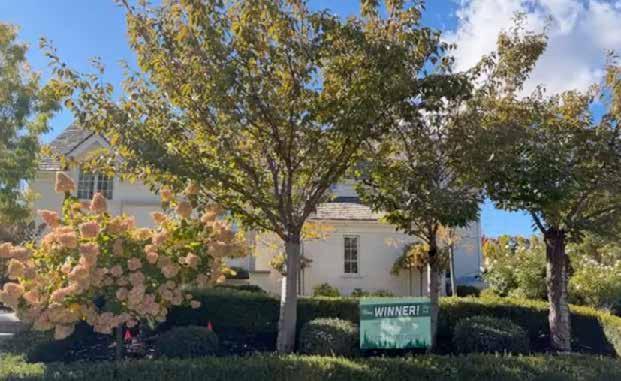
“I look for the waterwise thing. I also look for folks much smarter than I getting native plants into the property,” Shawn Newell said. “It caught my eye for the way it has the mountain desert view.”
8803 Alpen Way wins the Landscape Award for District 4.
“It looked great a couple of months ago,” joked the Kuspersons, who are the homeowners. “A lot of things died. There were a lot more wildflowers.”
“The homeowner has thoughtfully landscaped for both beauty and utilitarian purposes,” said Councilmember Ellen Birrell. “The selection for this award takes into account the drip watering, mixed use of wood and rock mulch, and sprawling ivy that holds water in the soil and reduces water consumption.”
Lastly, White Peak Dental along 7110 S. Highland Drive won the Landscape Award for the business property.
“This made me think of the work of a
dentist who has to manicure and keep things so neat,” Weichers said. “We are so grateful they are in the city.”
All of the property owners for the 2025 Landscape Awards won a Home Depot gift card and a yard sign to display within their landscaping area.
The annual awards were presented by the Cottonwood Heights City Council and Community Development staff during the city council meeting on Oct. 21.l
PUBLISHER
Bryan Scott | bryan.s@thecityjournals.com
EDITOR
Travis Barton | travis.b@thecityjournals.com
ADVERTISING EXECUTIVES
Mieka Sawatzki | mieka.s@thecityjournals.com
Lindsay Andreasen | lindsay.a@thecityjournals.com
Ryan Casper | ryan.c@thecityjournals.com
Marc Davis | marc.d@thecityjournals.com
CIRCULATION COORDINATOR
Lydia Rice | lydia.r@thecityjournals.com 385-557-1022
Rack locations are also available on our website.
EDITORIAL & AD DESIGN
Stacey LaMont Ty Gorton
COTTONWOOD HEIGHTS CITY JOURNAL
9500 South 500 West, Suite 205 Sandy, UT 84070
PHONE: 801-254-5974
& Distributed

“That’s kind of on point for this time of year.”
By Cassie Goff c.goff@mycityjournals.com
Dave did locate about 8.5 pounds of meth and over 30,000 fentanyl pills in our community,” said Police Support Specialist Candie Smith during the Cottonwood Heights Police Department (CHPD) quarterly report in October.
That’s only one incident out of the many causing an uptick in CHPD’s crime statistics during the month of September 2025. To break it down:
Out of 57 total reported crimes in September: 38 were thefts, 12 were assaults, four were burglaries, two were rapes, one was a robbery and one was a stolen automobile.
“That’s kind of on point for this time of year,” Smith said.
However, those 57 crimes were only a portion of the CHPD’s total calls for service in September. A total of 1,390 calls for service is down from last year’s 1,431 calls for service. However, that’s a spike up from August 2025 with 1,292 calls for service.
“Code enforcement has been very busy,” Smith said. “They’ve been trying to work with everybody instead of going straight to citations.”
Outside of code enforcement, the CHPD gave out a total of 667 tickets: 350 were traffic citations; 312 were warnings; five were DUIs.
Those numbers, however, are down from August where 461 tickets accounted for 276 traffic citations, 177 warnings and eight DUIs.
“Accidents are right in line from September of 2024. Last year we had 44: this year we have 43,” Smith said.
The average response time for a CHPD officer to respond to a Priority 1 call has been four minutes and nine seconds. Responses to Priority 2 calls have been taking a little longer with an average of six minutes and eight seconds.
Overall, there were three unattended and two attended deaths throughout the city during the entire month of September.
In other news, Smith talked about winning in softball. “In September, we challenged UFA to a softball game,” Smith said. “(CHPD) Chief (Robby) Russo purchased an award for UFA. It says: Unified Fire Authority Guns N’ Hoses - 2025 Second Place.”
CHPD won 19 to UFA’s 13.
Lastly, CHPD said farewell to Assistant Chief Paul Brenneman as he retired in the middle of September.
“He spent over 40 years in law enforcement. He is missed,” Smith said. l
PTA asks residents to join
Council dedicates October as Utah PTA Centennial Celebration Month.
By Cassie Goff c.goff@mycityjournals.com
“Ourresolutions are what give us a voice.
They’re how we can walk into the Capitol, sit down with lawmakers, and say, ‘Here’s what our members want for Utah’s kids,” Utah PTA President Julie Cluff told the City Journals.
The voice of Utah PTA grows even stronger as the city of Cottonwood Heights follows suit from Gov. Spencer Cox to designate the entire month of October as Utah PTA Centennial Celebration Month.
“We don’t do this very often. The only time we do is when we feel strongly as a council about an organization,” Mayor Mike Weichers said.
“Cottonwood Heights is where I learned how to advocate for my children through PTA,” Cluff said. “I know there are parents in every one of these schools – all the way up and down Bengal Boulevard – quietly getting the work done because they love all the kids in their schools.”
“Utah PTA has been instrumental in establishing programs and services that improve children’s lives,” Weichers read from the drafted document, noting how the organization has defended public education, ensured stable funding, promoted child-labor laws, and strengthened the juvenile-justice system.
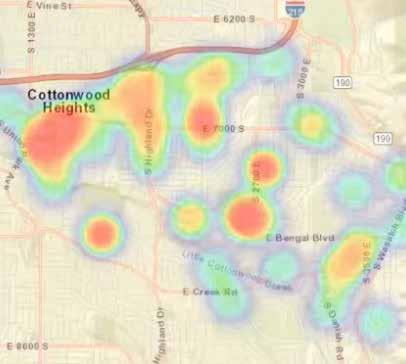
This work is in addition to their efforts protecting Public Trust Lands, family engagement, lunch programs, kindergarten support and arts and safety programs in schools.
“I want to thank you for being one of the few cities in the state to recognize this and support the parents in our communities who are doing so much in our schools quietly and every day,” Cluff said.
Weichers recognized Selena Sloan Butler, founder of Georgia’s Congress of Colored Parents and Teachers, along with Phoebe Apperson Hearst and Alice McLellan Birney as visionary women who continue to inspire. “Their courage broke through the barriers of their time to improve the lives of children and families, leaving a legacy.”
“Today, Utah PTA is the largest volunteer child-advocacy organization in Utah, uniting parents, caregivers, grandparents, educators and other caring adults in a shared mission to make every child’s potential a reality,” Weichers said.
The city council and manager encouraged city residents to join a local PTA or PTSA organization as reaffirmation of the commitment to Make Every Child’s Potential a Reality. The PTA’s goal is to get 100,000 members. If unable, residents are encouraged to, at least, celebrate this milestone with Utah PTA by supporting family engagement with local students.
Proclamation 2025-03 designating October 2025 as Utah PTA Centennial Celebration Month was unanimously signed and recognized by the council on Oct. 21. l
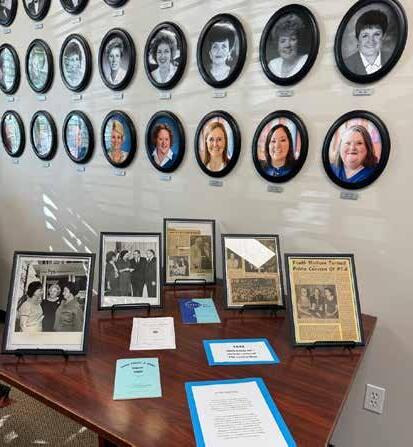

Midvale Middle’s Nora Goodman repeats as District cross country champion.
By Julie Slama j.slama@mycityjournals.com
Midvale Middle eighth-grader Nora Goodman took a commanding lead early and never let up in the recent Canyons School District middle school intramural cross country meet.
“Nora Goodman took the top spot for the second year in a row,” said Taylor Hansen, who coordinates the intramurals for middle schools.
Goodman crossed the finish line in 14:45.44, more than 15 seconds ahead of Butler Middle eighth-grader Myken Menlove, who placed second. Albion Middle eighth-grader Emmeline Nielsen, Indian Hills sixth-grader Kathleen Mullen and Draper Park seventh-grader Sydney Glod rounded out the top five.
Albion claimed the overall girls’ title, followed by Butler, Indian Hills and Midvale.
In the boys’ race, Albion dominated the top of the leaderboard with eighth-graders Matthew Coop and Joshua Baker finishing first and second. Matthew
clocked in at 14:14.22 while Joshua came in at 14:27.85. Draper Park eighth-grader Felipe Tapicha, Butler seventh-grader Callen Wright and Mt. Jordan seventh-grader Chase Twitchell completed the top five.
Butler earned the boys’ team championship, ahead of Eastmont, Albion and Mt. Jordan.
Hansen expressed his gratitude to Jordan High School and its cross country team for hosting the event and to the coaches for supporting the athletes this season.
Top eighth-grade girl finishers were Nora Goodman, Midvale; Myken Menlove, Butler; and Emmeline Nielsen, Albion. Top seventh-grade girl finishers were Sydney Glod, Draper Park; Payson Julian, Albion; and Hazel Dance, Butler. Top sixth-grade girl finishers were Kathleen Mullen, Indian Hills; Kinlee Hawkins, Albion; and Aspen Aguero, Butler.
Top eighth-grade boy finishers were Matthew Coop, Albion; Joshua Baker, Albion; and Felipe Tapicha, Draper Park. Top seventh-grade boy finishers were Callen Wright, Butler; Chase Twitchell, Mt. Jordan; and Benson Ward, Butler. Top sixth-grade boy finishers were Moses Adams, Mt. Jordan; James Wimmer, Mt. Jordan; and Wallace Davis, Butler. l
A creative twist on the traditional fun run helped fund school programs and strengthen community ties.
By Julie Slama j.slama@mycityjournals.com
Drea Derricott was cheering her first-grader Sydney during Butler Elementary’s Bobcat Fun Run as she raced from Arches’ tunnel crawl Zion’s zig zag.
“Sydney likes to run, so it’s nice to see her participate, but with all the fun, different activities, it keeps all the kids excited,” Derricott said.
The fun run circled the school playground with uniquely Utah-themed stations — from the Bonneville balance beam and Salt Lake’s slackline to RSL’s penalty kick, Bees’ homerun hustle, Utah Jazz jostle, Red Rock gymnastics, a slalom ski race, a rodeo — and more.
Principal Tracy Stacy said the variety kept students motivated.
“The kids like the obstacles; it makes it more engaging and they keep moving,” she said.
It was all part of the no-fuss fundraiser, which met its $18,000 goal, to support everything from Red Ribbon Week to teacher grants to installing gaga ball pits on the playground. Every student also received a school T-shirt.
Donations came from family, friends and neighbors.
“There was a challenge to see which grade could bring in the most money and third grade won and will get a doughnut party,” school PTA President Millie Minton said.
“The kids like the obstacles; it makes it more engaging and they keep moving”
Tracy Stacy
She praised the “super creative” Utah theme. Last year’s run was inspired by the 2034 Salt Lake City Olympics, and this year’s version tied back to that idea, with uniquely Utah events and complete with a homemade Olympic banner featuring hula hoop rings.
About 50 volunteers helped students complete the course and then, they celebrated the finish with Popsicles.
“My favorite part is where a lot of parents come or volunteer at one of the stations, just having community involvement,” Minton said. “Butler Elementary is a fabulous community of people who want to come and help and it’s fun to see everybody there to support the students.”l





Canyons District students made pleas to keep their schools open, turning public hearings into lessons in advocacy and civic action.
By Julie Slama j.slama@mycityjournals.com
Among the hundreds of parents, grandparents and community members who spoke up about possible school closures at Canyons School District’s public hearings, Granite Elementary fifth-grader Molly Fenton took her turn at the microphone.
She told the Canyons Board of Education she met her best friend, Brielle, at school and they spent recesses playing together for two years. Brielle, a special education student, died six months ago.
“She loved to laugh with people; she was always there with a hug and if someone said ‘hi’ to her, it meant the world to her,” she said. “I promised myself that to remember her, I would try to be a voice for kids like her who don’t have one like I do. So, this is me, keeping that promise.”
Molly said Brielle and her peers teach “kindness and compassion” and are part of rotations with STEM, art and recess.
see it stay open.”
Harper also was inspired to advocate for her elementary school after hearing neighbors talk and seeing yard signs.
“I felt I needed to do anything I could to keep this school open,” she said. “We both do debate, so that gave us the confidence to speak in front of all those people.”
Harper told the school board, “Park Lane was such an important part of my life. It’s where I learned to love learning, where my teachers encouraged me, and where I made friends who have been by my side for years. It’s more than just a school — it’s a community.”
She said keeping Park Lane open also would help Eastmont, which struggles with low enrollment.
“Because of that, we don’t have as many class options — like honors program and advanced electives,” she said. “If Park Lane students stayed on the path to Eastmont, it wouldn’t just help Eastmont grow, it would give students more opportunities.”
“It’s hard being in the same room and fighting for something that other people are fighting against... no one’s choosing to have their schools [close] but you still want to fight for your school.”
“They are happy in these halls that are their home away from home,” she said. “I have some letters written from kids at this school that I want to give you. Will you please read them like you do all the adult emails?”
Molly was one of dozens of students who spoke at public hearings concerning possible closures of Granite, Bella Vista and/or Park Lane elementaries.
Canyons school board shared closure and boundary proposals Sept. 2 to address declining enrollment and optimize resources. A final vote is expected in December, though the school board could delay the decision for further study.
What the school board may not have anticipated is how it has become a lesson in civic engagement and advocacy for students.
A first grader pleaded with the school board not to close Bella Vista, which is a national Blue Ribbon School.
“I’ll miss my friends and my teachers,” she said.
Eastmont seventh-graders Tilly Mannion and Harper Williams spoke for Park Lane.
“My little brothers go to Park Lane Elementary right now, and I really love that school,” Tilly said. “We both went there, and it’s close to our hearts, so we’d really like to
Tilly agreed and told the board: “The negative impact of fewer students is that there are fewer teachers, making the electives and the arts less accessible to students. For example, if I wanted to take choir, I would be unable to take debate because those classes are only offered once a day since the teachers teach multiple other subjects. As members of the school board you have the opportunity to make decisions that directly impact students like me. You can make decisions that support more balanced enrollment at all the middle schools and give the same access and advantages to all the kids in your district.”
Tilly said it was a learning experience to speak at the hearing.
“It’s hard being in the same room and fighting for something that other people are fighting against, because no one’s choosing to have their schools have the possibility of closing, so you feel bad for everyone, but you still want to fight for your school. Everyone’s emotions were running high,” she said. “We wanted to point out we loved Park Lane and Eastmont has good programs, and that we’re a nationally recognized AVID school. Everyone loves their school, but one person said, ‘please base the decision off of evidence and data’ and that makes sense.”
Speakers also raised concerns about the timing of closures, boundary changes, transparency, financial responsibility, special education, safety, walkability, class sizes, community identity, school buildings’ condition, students’ well-being and more.l



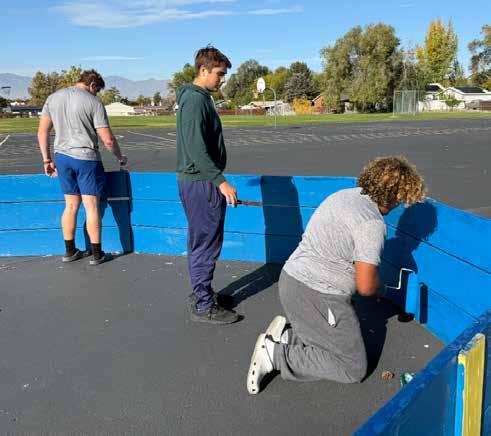
Brighton football players score community points at East Midvale Elementary.
By Julie Slama j.slama@mycityjournals.com
Scrubbing, painting, weeding, cleaning that’s how 80 Brighton High varsity football players spent a few hours of their fall break as they spruced up East Midvale Elementary.
“We had a good practice, then a pancake breakfast and boarded a bus to come help,” said head coach Casey Sutera about his team in the playoffs. “I love coaching football and I love the game, but we’re also molding our players to be people with character and work ethic. There’s a need here and it’s an opportunity for our team to give service.”
Working alongside East Midvale’s Community School Facilitator Shelley McCall, the team tackled the list: take down outdated banners, weed gardens, clean up playground of debris, wash and touch up welcome wall, repaint gaga ball pits and hopscotch, deep wash cafeteria tables and benches, organize monthly food backpacks, hang banners in multipurpose room, reorganize storage closets, move furniture — and more. They even left a chalk message,
“East Midvale Eagles Soar,” to inspire the younger students.
“The players all arrived knowing what team they were on and what they were supposed to do,” McCall said. “I was impressed with the hard work, attention to detail and focus that all the young men showed while working. With 160 hands, a lot got done.”
Sophomore Rush Larsen said the experience went beyond service.
“We’re making a difference in our community; it’s a good feeling,” he said.
Offensive line coach Tyson Aldridge said it’s a two-way learning street.
“When our players give back, they are learning there is more than football and the elementary kids are learning that too,” he said. “They see these guys as NFL players who are giving to their community.”
The players felt the connection as well.
“They come and support us at games so we’re supporting them,” senior Marshall Huber said.
Senior Loklan Cruz added: “We’re helping and as a result, their school and playground will be ready for the kids when they come back after break.”
For sophomore Sam Tauvao, it’s simple.
“I love giving back to the community,” he said. “It gives me a good heart, and I become a better individual.”l
Amongst the 11 honorees is Eastmont Middle’s Trevan Cole, a cafeteria volunteer whose big heart and daily positivity made him this year’s Volunteer of the Year.
By Julie Slama j.slama@mycityjournals.com
Hesmiled broadly as he received a standing ovation at Canyons School District’s 16th annual APEX awards ceremony.
“Everyone loves him and he loves everyone,” said Eastmont Middle School Principal Stacy Kurtzhals. “He knows everyone by name and says every day, ‘Hi, my good friend.’”
Canyons’ Volunteer of the Year Trevan Cole was one of 11 honorees recognized Oct. 14 at Butler Middle School.
Other award recipients included Teacher of the Year Lucia de la Cruz Rodriguez of Midvale Elementary; School Administrator of the Year Shelly Karren of Indian Hills Middle; District Administrators of the Year Kirsten Stewart, communications associate director, and Shana Lowe, accounting assistant director; Elected Official of the Year Troy Walker, mayor of Draper; Education Support Professionals of the Year Kathy Hilton of Corner Canyon High and Charlotte Graham of East Midvale Elementary; Student Support Services Professional of the Year Denise Haycock, Canyons Education Foundation Canyons Education Foundation development officer; and Community Partner of the Year Dan Jorgensen, a Jordan High alumnus.
The evening’s top honor, the Legacy Award, went to former Canyons Board of Education President Nancy Tingey, who served on the board for a decade and guided the District through the COVID-19 pandemic.
“Everyone loves him and he loves everyone. He knows everyone by name and says every day, ‘Hi, my good friend.’”
Stacy Kurtzhals
“Nancy’s levelheadedness and insights are unmatched,” said current Canyons Board of Education President Amber Shill. “Through the ups and downs of the past 10 years, Nancy has remained a steady, positive influence on the district. The District owes her much, and her impact will be felt for generations by both employees, families and students.”
Performances by the Alta High Ballroom Dance Team, the cast of Corner Canyon’s upcoming “Mary Poppins” and Hillcrest theater student Avery Rinke, a national Shake-
speare competition winner, rounded out the celebration.
But it was Cole’s genuine enthusiasm that lit up the night — just as it does in Eastmont’s cafeteria.
“We all should be like Trevan; he’s truly dedicated,” said Eastmont Nutrition Services Manager Suly Morris. “He comes every day he’s scheduled and offers to come in on his days off or come in early to do more. He’s always asking, ‘What can I do to help?’ He does everything he needs to do and more — and is proud of what he does.”
Morris, who came from Brazil and learned the ropes at Eastmont 12 years ago, still remembers his kindness.
“He showed me a lot of things about the kitchen; he was always by my side helping me, telling me how the kitchen works, teaching me words, he accepted me,” she said. “He loves to serve the kids and he’s always friendly with them. Really, he’s the most beautiful person; He’s happy to be here and he never complains. He’s like the sun every morning, bringing happiness to everyone.”
Known as Eastmont’s sandwich maker, Cole’s specialty is turkey.
“Turkey is my favorite because I like the taste of it,” he said. “I like how it’s cold and I like how it looks too; I think the kids like it too. They always are asking for it and never complain about it.”
Cole first joined Eastmont’s cafeteria in 2007, when the school was part of Jordan School District. When his wages affected his federal disability benefits, he chose to continue as a volunteer in 2013.
“When Miss Stacy came to the cafeteria and said, ‘We have a big surprise. Trevan; You’re getting the APEX award for volunteering,’ I was excited, but I didn’t know how big of an award it was. I got the Patriot Award when I was a student here in 1992,” he said. “I like working here because I like serving people and making friendships. We have a great team, and I get to work with my boss, Suly — and Miss Stacy. I like working hard and trying my best in life so I can achieve whatever I can in life. I learned that from Ms. (Marlene) Skinner, my home economics, homeroom and special ed teacher here, and my family.”
Cole said the recognition is for everyone who supports students.
“I love my job, but with any job you do, principal, boss, teacher, helper, whatever you do, we all work hard for same reason; we all achieve the same goal — working and trying our best for the students and our community,” he said.
Superintendent Rick Robins was grateful for the dedication of those recognized.
“This is always a very emotional night for us in Canyons School District, and one that is such a great tradition to honor the people who embody everything about Canyons School District, especially all they do for our students,” he said. “It’s important to recognize their value and what they’ve contributed.”l

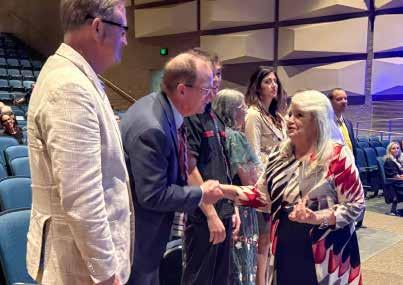

A little light and a lot of heart turned Oakdale’s fundraiser into a glowing celebration of school spirit and community connection.
By Julie Slama j.slama@mycityjournals.com
Oakdale parent Emily Gull had just bought tickets for her son, Kallen, to enjoy a hot dog dinner and get a school T-shirt.
“I might use them (the tickets) to play hockey before the outdoor movie tonight,” he said.
The event capped Oakdale Elementary’s week-long fundraiser, which exceeded its $15,000 goal by raising $17,737.68. Students celebrated the achievement with a glow party.
“We asked for donations, but tonight’s event with the silent auction helps with the final push,” Oakdale PTA President Olivia Morrison said. “Plus, it brings together our community.”
That community included members of the Mammoth Street Hockey team, who joined Brighton High’s hockey players to teach students how to play and scrimmage with them.
“We knew that would excite the kids and introduce them to the NHL community,” she said.
Many of the school’s 330 students e njoyed free Raising Cane’s lemonade, Farr’s ice cream and popcorn donated by
Macey’s. Some handed the DJ tickets to request favorite songs.
“It’s a fun community night; our kids love seeing their friends here and getting to hang out and play,” PTA Vice President Andrea Hebdon said. “We have built a strong community with a bunch of families from different cultures and backgrounds.”
PTA volunteer Jennifer White, one of 30 helping with the fundraiser, said the sense of connection is what makes the night special.
“It’s our one big family event where everyone is invited, community, grandparents, cousins and everyone shows up,” she said. “We’ve bonded, we enjoy hanging out, eating cotton candy and dinner and watching a movie together. Plus, we have the support of our business community, with so many of them offering silent auction items and goodies for the kids.”
Third-grade teacher Danielle Wheeler said she loves seeing both current and former students at the event.
“I get to see my students I’ve had in years prior and then see the students I have now outside of the learning environment, and also visit with the parents, so it’s just a fun celebration to come together as the Oakdale community,” she said. “It’s magical to see how all of the parents come together and create this. There’s so much hard work that goes into this. And every year this is one of the biggest events we have, and it’s so much fun.”l
for the Arizona Cardinals.
And the fourth Brighton alumnus currently active in the NFL is Cody Barton, team captain of the Tennessee Titans. Known for his solo tackles and pick-six interceptions, Barton was drafted out of the University of Utah by the Seattle Seahawks in the third round – the same draft that took his brother Jackson to Indianapolis. He played for the Washington Commanders and the Denver Broncos before coming to the Titans as a captain.
In a recent interview with Jim Briscoe, who was Canyons School District superintendent when these athletes came through Brighton, Briscoe was quick to point out that “while Brighton has been a source for many NFL quality athletes, the school district as a whole has also prepared its elite athletes for the NFL. Corner Canyon has Zach Wilson with the Miami Dolphins, Jaxson Dart with the New York Giants and Jackson Powers-Johnson with the Las Vegas Raiders.” Jordan High School alumnus Tyler Larsen is also currently playing for the Washington Commanders.
Brighton is likely to add another Barton to the NFL ranks as Lander Barton (BHS class of ’21), the younger brother of Jackson and Cody, is now scoring touchdowns on defense and offense for the University of Utah as a standout junior. Of her three sons, Mikki Barton says, “Each level of football has been
amazing – from little league at 8 to Brighton to Utah to the NFL. What impresses me most is how hard they work to make the most of their natural abilities. The consistent, everyday things they do to keep their minds and bodies prepared to be the best is something that a mother (and a school community) can be proud of.”l





More than 2,000 student-athletes participated in the largest-ever unified soccer tournament in Utah, showing teamwork and inclusion are the true goals of the game.
By Julie Slama j.slama@mycityjournals.com
Morethan 2,000 student-athletes from 73 schools comprising of 170 teams took to the field this fall for high school unified soccer, a record-setting number for a program that continues to grow at an incredible pace.
Only a few years ago, unified soccer had about 24 teams competing statewide. This year, 24 teams alone advanced to the finals, held at America First Field in Sandy.
For the first year, unified soccer, which is promoted by both the Utah High School Activities Association and Special Olympics Utah, provided an avenue for 48 $500 scholarships — two per team — for continued education, awarded by America First Charitable Foundation.
While several area teams won state titles — Bingham, Herriman, Hunter blue, Murray, Skyline — or were runners-up Highland, Hunter gray, Jordan, West Jordan — most participants agree unified soccer is about much more than winning. It’s about inclusion, friendship and giving every student the chance to be part of a team.
Alexis Brown understands that mission, both as a former partner and as a coach of three teams at Riverton High.
“The bigger that it grows, the more it shows that students with disabilities are just as capable of doing things as everyone else,” Brown said. “It gets the gen ed population more involved and less scared of what’s stigmatized about disabilities — they start to see that they’re just normal people having a good time.”
Riverton’s unified club, Wolf Buddies, is central to that effort. “We go to football games, school plays, dances; the goal is to get our students as involved in the high school experience as possible,” Brown said. “High school is fun, and they deserve to be included.”
Senior Kevin Perez said his Riverton team has bonded on and off the field.
“We’re a good team and we prepared,” he said. “We play two times per week. I like scoring goals and kicking the ball. I like my team too — we’re great together.”
Riverton senior Mac Wall, who once played varsity volleyball, said unified sports have meant even more.
“The fun I have in unified sports is way more exciting than anything I found in varsity programs,” Wall said. “The connection between people is completely unmatched. Everyone’s kind; there’s no drama. We’re a

tight-knit group.”
Across the field, Bingham sophomore Eliza Millet shared similar feelings.
“I like to play together with my team; they’re special to me,” she said. “I like kicking the ball, running with the team and celebrating.”
Ryann Jensen, another Bingham sophomore and president of Bingham Buddies, added, “It brings everyone together. Sometimes people get overlooked so this kind of brings awareness to them. We’re all here to have a fun time.”
Hillcrest High senior Yadiel Rodriguez said playing unified soccer and basketball “is fun because we play with our friends; we go out to the movies, hang out, go bowling. It’s special to be part of the team.”
His teammate, senior Ella Blackbourn, agreed: “I find a lot of joy being around these people who are always happy and positive; they’re amazing people. The bond we’ve formed is really cool.”
Jordan High coach Jenna Fox and her players emphasized teamwork and connection.
“With freshmen new to the team, we’ve had to learn to build new relationships, learn skills and include new kids; they’ve really connected,” she said.
One of her players, junior Dimas Deleon, added, “I like soccer, playing with friends. It’s fun to get them involved and play side by side.”
Jordan senior Caden Crocker chimed in: “I like the teamwork and how the team is positive. It’s fun for everyone.”l





From school lunches to student safety, Utah PTA volunteers have spent 100 years making a difference in schoolchildren’s lives.
By Julie Slama j.slama@mycityjournals.com
Thisyear, Utah’s students, families and schools are celebrating a milestone: Utah Parent Teacher Association turns 100. For a century, this volunteer-driven organization has been shaping education, student well-being and community engagement across the state.
Utah PTA President Julie Cluff says the organization’s century-long mission goes far beyond classroom parties.
“PTA volunteers sometimes get pegged as the ‘party moms,’ but our work has changed lives and we’ve shaped education policy in Utah for generations,” she said. “Our programs are the heart of what we do, but advocacy is why we started.”
The roots of Utah PTA stretch back to 1897 when three Utah delegates attended the first meeting of the nationwide parent-teacher movement, then called the National Congress of Mothers. A year later, Mrs. C.E. Allen established the Utah Congress of Mothers, laying the groundwork for organized parent advocacy. Though that early group dissolved by 1901, momentum continued. By 1910, the state formed a chapter of the National Education Association’s Department of School Patrons, and by October 1925, the Utah PTA officially began with Lucille Young Reid as the first president. In 1951, every school in the state had a PTA.
The mission established then remains at the heart of the organization: “To make every child’s potential a reality by engaging and

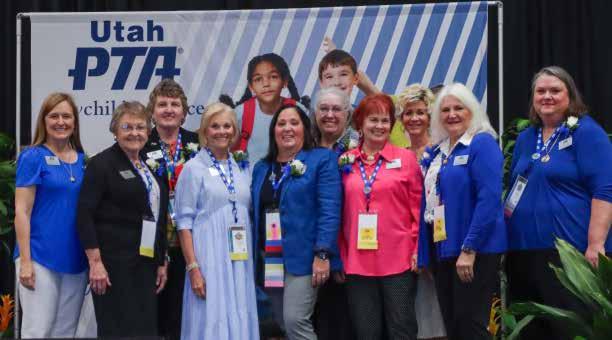
empowering families and communities to advocate for all children.”
Utah PTA President 2023-25 Corey Fairholm loves the mission.
“When they first started in 1925, they were worried about some of same things we’re worried about — making sure children don’t have access to smoke shops and here we are 100 years later, and we’re worried about vape shops,” she said. “At the legislature, they realize I’m representing 70,000–80,000 members who are concerned so the legislators are listening. Because the power of PTA, we have kindergarten, school lunches, support for students with disabilities and so many things beneficial to schoolchildren.”
Through the decades, volunteers have donated more than 1 million hours in 605 schools, bridging families and educators while supporting programs which enhance children’s health, safety and education.
Utah PTA’s impact can be seen in nearly every corner of school life. In the 1930s, it advocated for school lunches, paving the way for the National School Lunch Program in 1941. In Utah, longtime PTA member Tibby Milne remembers its start.
“I was a first grader in Richfield Elementary, and they started hot lunch there in this little cabin on the school grounds,” she said. “Mrs. Rowley did it, and she went on to run it nationally. She cooked the best food. I still remember her homemade bread and peanut butter cookies.”
PTA helped establish school libraries through legislation signed in 1956 and introduced the Reflections arts program in 1969. Utah was the first to introduce categories of theater, 3D visual arts and film and to advocate for a special needs division.
Last year, Utah had more than 17,000 Reflections entries statewide, with nearly half of its national submissions receiving awards. The state is also one of the few to have developed its own online submission portal, now a model for others across the country, Cluff said.
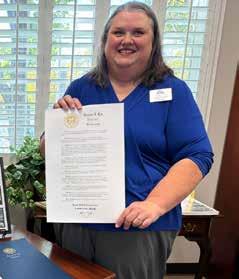
PTA promoted student safety in partnership with national organizations in the 1980s, including seat belt campaigns and bus safety programs.
“Our PTA worked on helmets, which was part of our safety campaign, and getting seat belts into cars — that was not easy,” said Milne, who helped shape initiatives such as the DARE program and the National Child Protection Act. “We had to change attitudes, but it was for the safety of children.”
One of Utah PTA’s most enduring accomplishments began in the 1980s, when a group of PTA parents discovered Utah’s trust lands — public lands granted by the federal government at statehood to benefit schools — were being mismanaged.
Those PTA parents put in motion a 30year advocacy effort which completely transformed the handling of funds, Cluff said.
“Today, those efforts bring millions of dollars every year to Utah’s schoolchildren,” she said. “What’s even better is that it’s not just today’s kids who benefit, it’s tomorrow’s kids too.”
Utah PTA was among the first in the nation to create a state-level special needs committee. Led by PTA advocate Karen Conder, the committee successfully passed a national resolution in 2018 establishing “high expectations for students with special needs.”
Utah has since added new resolutions supporting students with dyslexia and learning disabilities and continues to update them every seven years to reflect current research.
“Our resolutions are what give us a voice,” Cluff said. “They’re how we can walk into the Capitol, sit down with lawmakers, and say, ‘Here’s what our members want for Utah’s kids.’”
State PTA President 2013-15 Liz Zentner discovered her passion for advocacy.
“The first time as a PTA president, I went up to the Capitol for PTA Day at the Capitol and I realized this is where I can make a difference,” she said. “Now I encourage all members to send your representative and
your senator emails and tell them what you think about something.”
Utah PTA also runs unique programs such as the Battle of the Bands, a 23-year tradition which gives student musicians a stage to shine.
“It might not reach every kid, but it reaches kids who need that connection the most,” Cluff said. “Some of these students are not just talented musicians, they’re amazing and polite kids.”
Beyond education, the Utah PTA has tackled broader community issues which affect children’s ability to learn, including affordable housing, homelessness and food insecurity. Cluff has authored resolutions on these topics after seeing firsthand how unstable housing impacts students in her Midvale community.
“If kids don’t have a safe place to live, they can’t focus on learning,” she said.
Utah has hosted the National PTA convention twice, in 1938 and 1988, reflecting its leadership on a national stage. Most recently, in 2022, Utah PTA received the National PTA Outstanding State PTA Award and Gov. Spencer Cox has declared October 2025 as Utah PTA Centennial Celebration Month.
Through all its initiatives, Utah PTA teaches students to advocate for themselves. Each year, secondary students participate in PTSA Day at the Legislature, meeting lawmakers, discussing issues and even learning how to draft bills.
“I really believe the kids can make a difference,” Milne said.
After 100 years, Utah PTA remains a powerful advocate for children, families and educators.
“When our community comes together with a shared mission, we can do a lot of good to ensure every child has the support and opportunities needed to thrive,” Cluff said. l
Early on, the team gained experience and grit playing some of its toughest competition.
By Jerry S. Christensen j.christensen@mycityjournals.com
Brighton football head coach Casey Sutera went on record last August in an article in the City Journal (published in September) that the Brighton football team would be battle tested this season by the time the playoffs roll around in November. The Sutera hypothesis was that exposing the Bengal team early in the season to the toughest competition in the state would yield grit, toughness and confidence for the Region 6 competition that would follow and for the playoffs leading to Rice Eccles Stadium.
“I need my players to know who they are and what they are capable of,” noted Sutera.
August and September were brutal months on the gridiron as Brighton traveled to St. George to play No. 1 ranked 4A Crimson Cliffs and to No. 10 in the nation ranked Corner Canyon – the 6A powerhouse where Sutera coached prior to coming to Brighton (Corner Canyon honored Sutera at Charger Stadium for the three state championships he helped Corner Canyon win). Back at home in Freestone Field, Sutera hosted the 5A state champions of 2024, Bountiful, 4A standout and nationally ranked Ridgeline and 6A Davis. Predictably, Brighton lost each of those early games. But they did win confidence and self-awareness. The team rallied in Region 6 play, as Sutera predicted, to hoist the region trophy at the end of the season and win the crucial first-round bye in the state playoffs.
But the spotted record of 5-5 came back to haunt Brighton when the state playoff seedings were determined. Brighton was going to have to earn its return to the coveted Rice Eccles final four games. The No. 7 seeding in the 29-team 5A playoff pitted the Granger Lancers against the Bengals for the last time the seniors would play on the home turf. Marshall Huber, a three-sport senior OL and team captain recalled, “I am so proud of my boys.
We played the best teams in the state and we got better each week. We were going to make it to the ‘turf’ two years in a row to end my four years at Brighton. After all the stiff challenges, we were playing our best football in the playoffs.”
Brighton prevailed in the second playoff round but drew No. 2 ranked Fremont in the quarter finals – the last obstacle before the promised land at Rice Eccles Stadium turf. Down at the half, the underdog Bengals leaned heavily on Sutera strategy. The August and September losses to powerful teams paid off. Brighton dug deep and outscored Fremont 18-3 in the final 24 minutes of play. The parade to Rice Eccles began.
“I am so proud of my boys. We played the best teams in the state and we got better each week. After all the stiff challenges, we were playing our best football in the playoffs.”
Marshall Huber
One four-year football player’s mother remarked: “I am proud to be a part of the Brighton football family where athletes demonstrate dedication to both sport and academics. Coach Sutera has taught our boys valuable life lessons.”
Brighton ended a stellar season as a topfour team in the semifinals against Springville. With six minutes left in the game the Bengals were down only two points. The hope of a finals appearance came to an end on an errant quarterback throw that was intercepted.
The Sutera strategy continues into next year as each of those power teams completes a “one and one” commitment to play Brighton again next season. This time around, the team and the Brighton community will know the value of being battle tested. l



Salt Lake County’s proposed 2026 budget includes a 19.6% property tax adjustment—about $7 a month for the average homeowner—to maintain essential services and fund public safety.
By Shaun Delliskave s.delliskave@mycityjournals.com
Salt Lake County Mayor Jenny Wilson says the County’s first tax adjustment since 2019 is needed to keep up with inflation and rising service demands. Voters will get their say Dec. 9 at a Truth-inTaxation hearing.
According to Mayor Wilson, Salt Lake County’s property-tax rate has effectively declined for 15 years due to Utah’s Truth-in-Taxation law, which automatically reduces the certified rate as property values rise—keeping overall County revenue roughly flat unless leaders formally vote for an increase. While this prevents hidden tax hikes, it also means County revenues haven’t kept pace with inflation, population growth, or the rising costs of public safety and health services. Over that same 15-year period, inflation has eroded nearly 30% of the County’s purchasing power, even as average home values have soared from roughly $250,000 in 2010 to about $638,000 today.
The mayor’s proposed 19.63% adjustment would restore part of that lost ground, adding about $7.28 per month—or roughly $90 per year—for the average homeowner. Importantly, the increase affects only the County’s portion of the total property-tax bill—about 17%—with the remainder going to cities, school districts and service districts
such as fire, water and sewer. In practical terms, the proposal adjusts just the County’s “slice” of the tax pie, not the full amount residents pay each year.
“Salt Lake County is a community that addresses vital needs, invests in parks and open spaces, enriches our lives through arts and culture, and protects public safety,” Wilson said in her October newsletter. “After years of tightening budgets and absorbing inflation, this adjustment is needed to sustain essential services and maintain a balanced budget.”
Where the money would go
Wilson emphasized that public safety consumes about 74% of the County’s general fund, supporting the sheriff’s office, the County Jail, the District Attorney and indigent defense. The increase, she said, would also preserve regional programs such as flood control, Meals on Wheels and public health initiatives.
The proposed budget also expands evidence-based alternatives to incarceration, such as mental-health treatment, early-intervention programs and community supervision—efforts the mayor says “make communities safer and stronger.”
Public input and the road to approval
The Salt Lake County Council is now reviewing Wilson’s proposal through a series of public meetings. The Council will vote on a preliminary budget Nov. 25, followed by a Truth-in-Taxation hearing on Dec. 9 at 6 p.m. at the Salt Lake County Government Center, 2001 S. State St. in Salt Lake City.
Residents can attend in person or submit comments online before the Council votes on the final budget later that evening.

Utah’s Truth-in-Taxation law requires local governments to hold such a public hearing whenever they propose collecting more property-tax revenue than the previous year.
Public safety remains the flash point
The proposal comes one year after Salt Lake County voters rejected a $507-million public-safety bond that would have raised property taxes to expand jail capacity and build a new justice center. Roughly 52% of voters opposed the bond, citing confusion about its scope and overall costs. After the defeat, the County shifted to a smaller 0.2% sales-tax increase earlier this year to fund limited jail-expansion efforts.
That rejection still looms large in the background of this year’s debate. County officials argue that while voters turned down the bond, the need for additional funding to maintain core public-safety operations remains.
Salt Lake County isn’t alone in revisiting property taxes. Across Utah, 59 cities, school districts and local entities have held or scheduled Truth-in-Taxation hearings this year—many citing inflation and unfunded state mandates. Neighboring counties such as Davis and Utah counties have also warned that they may consider rate adjustments next year to offset rising costs.
At the same time, the Utah State Tax Commission recently denied 35 requests for property-tax increases statewide, amounting to nearly $50 million in rejected revenue proposals—underscoring both the legal and political hurdles facing local governments seeking more funds.
Supporters of Wilson’s plan argue that

Graphic on proposed tax increase on the impact on a $638,000 home. (Shaun Delliskave/City Journals)
the County’s budget has reached a breaking point. “Public safety, public health and regional services simply can’t keep running on 2019 dollars,” one budget analyst said. Critics counter that government should “tighten its belt” before asking residents for more, particularly as homeowners already face higher housing costs and assessments. Residents who want to weigh in can find full budget details and a comment link at slco.to/rate. l
The annual Festival of Trees to benefit Intermountain Primary Children’s Hospital will be held Dec. 3-6 at the Mountain America Expo Center in Sandy. This traditional holiday event, now in its 55th year, has raised millions of dollars throughout its history in support of the hospital, one of the nation’s top children’s medical facilities.
As always, festival-goers can enjoy scones, live music and dance performances, visits with Santa and lots of tasty treats. Perhaps best known is the Festival’s fudge, made and donated by volunteers. Over 5,000 pounds of fudge have been sold in
the event’s history.
The highlight of the festival is decorated trees, nearly 550 last year adorned with half a million lights. Many trees are decorated with themes—perhaps tributes to a loved one or to another Utah tradition, and many are in honor of a former patient at Primary. The trees are also donated, sold at an invitation-only silent auction, and then proceeds go to the hospital. Last year, the Festival of Trees raised over $3.4 million.
In addition to the trees, the Festival features wreaths, nativities, gingerbread houses, quilts and other holiday decorations.
More information is available online at FestivalofTreesUtah.org. l
Nominations open for 2026 employer recognition award honoring Utah companies.
Energage, the HR technology company
powering the Top Workplaces employer recognition program, recently announced a partnership with the publisher of the Salt Lake Business Journal to create a new home for Utah Top Workplaces in 2026.
The partnership with Top Workplaces marks a shift in Utah; the awards had been published since 2014 by The Salt Lake Tribune. Now, City Journals, the publisher of Salt Lake Business Journal and 13 community newspapers, offers employers statewide the opportunity to earn trusted, credible recognition for companies that prioritize people-first cultures and the workplace experience. Nominations for the 2026 Utah Top Workplaces award will be accepted through May, and the winners will be announced in the fall of 2026.
“We are excited to offer the Utah Top Workplaces award in partnership with Energage,” said Bryan Scott, publisher of City Journals. “We’re committed to serving our community, and this initiative gives us a powerful way to celebrate the organizations making Utah a fantastic place to work and do business. By shining a light on companies that prioritize their employees, we’re not only providing valuable insights for job seekers but also strengthening the business community.”
All organizations with 35 or more employees in Utah are eligible to participate, including public, private, nonprofit and government employers. There is no cost to nominate, participate or win the award.
Top Workplaces winners are determined by employee feedback collected through the confidential, science-backed Energage Workplace survey. This trusted survey measures key culture drivers proven to predict organizational success and employee engagement, and it has been refined by insights from millions of em-



ployees across more than 70,000 organizations over the past two decades.
“We’re thrilled to partner with City Journals to spotlight companies where employees feel truly seen, heard and valued,” said Dan Kessler, president of Energage.
“This partnership ensures that deserving employers across Utah receive the visibility and credibility they’ve earned, helping them stand out to both top talent and customers.”
In addition to statewide recognition, participating companies may also be eligible for national Top Workplaces awards across culture excellence and industry categories — all based on the same single survey.
To nominate your organization for the 2026 Utah Top Workplaces award, visit www.topworkplaces.com/nominate/saltlake. l










Every small donation helps create a big result.
By Peri Kinder peri.k@thecityjournals.com
Thousands of teens in Salt Lake County face a Christmas holiday in emergency shelters, temporary housing or foster homes, but the County has partnered with the ShelterKids nonprofit organization to ensure these youth have new clothes, toys, school supplies and more.
The Gifting Tree is a historically impactful program that allows residents, businesses and organizations in Salt Lake County to provide gifts for these teens. Gifting Trees are located in County libraries and local businesses, displaying tags that include a wish list or essential needs for children in programs through Salt Lake County Youth Services.
“The Gifting Tree supports youth in our community who are in crisis,” said Noelle Reymond, Salt Lake County Youth Services communications manager. “These are children who are in emergency shelters, who have been removed from their home by DCFS from an unsafe home environment.”
Each year, more than 9,000 kids in Salt Lake County experience abuse, neglect or foster care disruption. The Gifting Tree provides gifts for children in the ShelterKids emergency shelter, transitional living, after-school programs or short-term crisis placement.
Residents are asked to select a tag from a Gifting Tree, purchase the items listed and return the unwrapped gifts to any of the 18 libraries in The County Library system, participating business or directly to
ShelterKids at 177 W. Price Avenue in Salt Lake City. “ShelterKids helps bring in all the extra donations for these kids and that’s everything from gifts for the holidays to new clothing,” Reymond said. “It includes toys and gifts for birthdays, hygiene products and school supplies, so pretty much anything that those kids need.”
Reymond said this year is especially difficult with inflation, higher prices and the government shutdown that affected SNAP benefits. The most requested items are comfortable sweatpants and sweatshirts in all sizes, journals, art supplies, books, LEGO kits, sports balls, card games, full-size hygiene products, toiletries, makeup, snacks and treats.
The goal of the Gifting Tree Program is to provide teens with the simple joys that can make a significant difference in their lives. Children and teens who experience the holiday season in crisis situations often feel isolated and lonely. Reymond stresses that even small donations are greatly appreciated.
“The most amazing part of the annual Gifting Tree donation drive is that it’s made up of many, many, many small donations,” she said. “When we see all of those small donations come together, it has a huge impact. That is the beauty of this project, so every little bit helps.
“Everyone doing their small part to support this program helps create a huge effort that supports the thousands of youth that we serve every year. We couldn’t be more grateful for that tremendous community support.”
New and unwrapped items can be dropped off through Monday, Dec. 22. For more information, and for a list of suggested items, visit ShelterKids.org. l

Waterford School’s youth coxed quad, that trains in the Jordan River, earned third place at the world-renowned Head of the Charles regatta.
By Julie Slama j.slama@mycityjournals.com
In mid-October, during Boston’s Head of the Charles Regatta, two Draper teens, Suzy Reardon and Jessica Miller, both juniors at the Waterford School in Sandy, helped their boat achieve a third-place finish in the Youth Coxed Quad event.
Despite never racing in this boat configuration or at this prestigious national regatta before, the crew—up against year-round rowers familiar with the course—relied on disciplined training (two practices per day starting at 6 a.m. rowing on the surplus canal off Jordan River) and exceptional focus to deliver a remarkable performance. Only the teams from California and England finished ahead of them.
“To be the second American crew and the

Waterford School’s youth coxed quad, that trains in the Jordan River, earned third place at the world-renowned Head of the Charles regatta.
third overall finishing boat in this boat class is an incredible accomplishment,” said Waterford coach Dan Salerno about the boat that also included senior Zoe Chou, of Cottonwood
Heights;, junior Emma Molnar, of Lehi; and junior Sophia Wojcikowski, of Park City. Waterford also sent a novice girls’ double boat made up of sophomores Adele
Barshied, of Cottonwood Heights, and Kaleigh Joslin, of Sandy, which placed seventh in the U17 category, and a boys’ coxed quad that both qualified for next year. l
Local shops create their own spin on a classic favorite.
By Peri Kinder peri.k@thecityjournals.com
InUtah, hot chocolate season starts in September and doesn’t end until the daffodils bloom. Next to dirty Dr. Pepper, hot chocolate could be the state beverage.
Thanks to its popularity, gourmet hot chocolate is easy to find in local shops that offer myriad recipes for the chocolate gourmand. Here are some spots to get you through the winter months.
Black Bow Chocolates, 13 W. Center Street, Kaysville
Jessica Sunderland’s award-winning chocolates are the first reason to stop by this cozy shop in Davis County. With recipes handed down from her grandmother, Sunderland creates hand-dipped chocolates in flavors like coconut cream and cherry cordial. But the Black Bow Hot Cocoa is a treat you don’t want to miss.
“We use the best cocoa and dipping chocolate, plus the finest cream, sugar and milk,” she said. “I would say our hot chocolate is somewhere between sipping chocolate and a normal hot chocolate.”
Customers can add flavors to their hot cocoa for a personalized taste and finish it off with made-from-scratch cream flavored with Mexican vanilla. The shop also offers a
non-coffee drink, a Choffy, made from brewed cacao beans. To learn more, visit BlackBowChocolates.com.
Sir Walter Candy Co., 3828 S. Main Street, South Salt Lake
This candy store is a chocolate-lover’s dream. The family-operated business features hand-dipped chocolates, popcorns, brittles and more, but its Frozen Hot Chocolate offers a unique flavor and crunchy chocolate shell.
Customers choose between Belgian milk, dark or white chocolate, which is run through a slushie machine. Then they select a flavor of chocolate to line the cup. The chocolate slushie is poured into the cup, which freezes the chocolate lining. Once broken up, the chocolate adds a nice crunch.
Sir Walter Candy Co. Frozen Hot Chocolate is popular year-round. For traditionalists, a regular hot chocolate is available, made with melted Belgian chocolate. Visit SirWalterCandy.com for more information.
“You come here for the experience because it’s more than just a treat,” said Amir Porras, son of the founders and vice president of the Sir Walter Candy Co. “There’s a nostalgic feel, like if your grandma made candy during the holidays. It’s a great place to come and have a good treat.”
Hatch Family Chocolates, 376 E. 8th Ave., Salt Lake City
The Decadent Hot Chocolate at Hatch Family Chocolates is reminiscent of sitting in an outdoor European cafe. With a taste de-

Chocolate comes with luscious chocolate, whipped cream and glitter.
“Our hot cocoa is not just hot cocoa,” said Janet Wall, Sacred Energy owner. “We make it with a rich chocolate syrup, no powders, and a sprinkling of pink and lavender glitter for a magical experience. It’s so delicious and creamy.”
Sacred Energy’s heated patio is the perfect place to enjoy a hot chocolate as the temperatures drop or sip a Divine Decadence Latte (with white chocolate and pistachio) and wander the store that features crystals in all sizes and colors. To see Sacred Energy’s menu, visit SacredEnergySLC.com
Tulie Bakery, 1510 S. 1500 East and 863 E. 700 South, Salt Lake City
scribed as “drinking melted chocolate,” the signature beverage is made to be enjoyed slowly.
The drink is mixed with either milk or dark chocolate (or a combination of the two), combined with steamed milk (dairy, almond, coconut, oat or soy) and topped with housemade whipped cream.
Hatch Family Chocolates is a local favorite, specializing in hand-dipped chocolates, hot fudge, toffee and more. For information, visit HatchFamilyChocolates.com.
Sacred Energy Crystals, Coffee & Cafe, 296 E. 4500 South, Murray
If you like your hot chocolate accompanied by crystals and tarot cards, Sacred Energy is a must-stop shop. The cafe’s Fairy Hot
Hot chocolate and pastries go hand-inhand at Tulie Bakery, featuring classic items made with high-quality ingredients.
After a day of shopping or skiing, a cup of hot chocolate is a rich reminder to enjoy the simple pleasures of life. Steamed and frothed milk is whisked into a cup of melted chocolate and topped with cream and chocolate shavings. The result is a delicious confection that calls for a fireplace and a good book.
The bakery has gained popularity as customers are drawn to its modest storefront and delicious bakery items (including gluten-free options). Tulie Bakery serves sustainably-sourced coffee, sandwiches, breakfast items, cakes and cookies. Visit TulieBakery.com to learn more. l
In the 12 years I’ve been on the Salt Lake County Council, this was the most intense budget season I’ve ever encountered. It began when Salt Lake County Mayor Jenny Wilson proposed a 19.6% property tax increase. As we see the economy softening, some of us on the council vowed to dig in, realign the county spending with top priorities, and find ways to be more efficient and effective with your tax dollars so we could lower that property tax ask. I’ve since learned that while it may feel good to give people government perks, it is sure painful when it’s time to take them away.
I’ll start with daycare. It’s a big issue throughout the state and while there are fewer daycare waiting lists in Salt Lake County, it’s still unaffordable for many families. Somehow Salt Lake County has been subsidizing four daycares to the tune of $6000-$10,000 per child. That means that property taxpayers, like you, are paying half the tuition for about 271 kids.
I had many people contact me and say they were fine with their tax dollars to go to low-income families, but this program had no income qualifications. We certainly had many families who were making more than

the median household income, yet they were being subsidized by those on low or fixed incomes. We made the decision to get out of the daycare business.
Another tough decision was related to a senior center. We voted to close a senior center on 10th East in SLC that is currently vacant and only 1.8 miles away from another senior center. Not every city has a senior center, so to have two so close did not make sense. It saves taxpayers $6-7 million in one-time costs and $400,000 in ongoing costs each year. The empty building was in the process of being renovated and the $3 million funds spent thus far to remove asbestos would’ve needed to happen regardless of the use.




We hope those who love the 10th East Senior Center will be able to continue attending activities at the Liberty Senior Center, as I’m a big believer in the value of the human connection that seniors can get by interacting with others. We love all of our seniors, and this decision was made recognizing that we have many on fixed incomes who feel that the more we rein in government spending, the better. Our taxpayers have made it clear that they are stretched to the limit and the county needs to focus on core services.
Budgets are tricky and Salt Lake County has one of the most complicated budgets. While the overall budget is $2 billion, $500 million of that is just pass-through taxes that go from the state to cities or UTA. Another $1 billion make up restricted funds, enterprise funds, and tourism taxes – which can only fund certain things or those that are tourist-related. Have you ever wondered why we justify spending money on arts, culture, parks, golf, recreation, and convention centers? Those entire budgets either generate their own revenue sources or they use tourism taxes from hotels, car

rentals and restaurants. They do not use any property tax.
About $500 million of the budget is the General Fund. That is where we have total flexibility to use the funds however we please. This is where your property taxes go -- $220 million from residential property taxes. Currently 74% of our General Fund expenditures are public safety related – jail, prosecution, criminal justice services, etc. The rest covers things like elections, audits, etc. Because we capture the same amount of money as the previous year (minus new construction), the county does tax increases every few years just to keep up with inflation. To read my FAQs about the budget, visit tinyurl.com/SLCObudget
During this year’s budget I’ve tried hard to look at programs that are out of the county’s scope (daycare) or items that seem duplicative or unnecessary (two senior centers within 2 miles of each other). We’ve also cut positions that aren’t fulfilling the county’s overall mission or that we don’t believe are necessary. Rest assured that we are going to bat for you so you can keep more of your hard-earned money.



Ebeneezer Scrooge sits on the edge of his vast four-poster bed, wondering what the heck just happened. Three ghosts have shown him his greedy behavior and how, because of his miserly ways, he’ll die hated and alone.
“Oh, well,” he says, as he jumps off the bed and heads to his vault, where he swims through stacks of gold coins like Scrooge McDuck. “It’s not my fault there are poor people.”
Jacob Marley’s ghost hovers nearby, rattling his heavy chains. “Remorse is a heavy burden,” he cries. Scrooge tells him to get lost and skips downstairs to count his money.
The jolly Ghost of Christmas Present jumps out from behind the couch, reminding Scrooge of the two ghastly children hidden in his robes, representing poverty and ignorance. “You have so much,” the ghost says. “You could help so many.”
“They should get jobs,” Scrooge replies. “It’s not my problem.”
The spirit starts to disagree, but Scrooge calls in officers from Interstellar Creature Enforcement to haul the ghost away. Christmas Present mutters something about corporate greed as he gets zip-tied.
Scrooge runs to the window and sees a young boy on the street below. “Hello, fine
Peri Kinder Life and Laughter

fellow! Run to the Cratchit house and tell Bob to come to work. I gave him the day off, but there are debts to collect!”
“But it’s Christmas,” the boy responds.
“Humbug! Christmas is just an excuse for sloth. Remind him that although I didn’t give him a raise or bonus this year, I put a ping-pong table in the break room and, because it’s Christmas, he can use the Keurig one time today. He should be grateful.”
The Ghost of Christmas Past taps Scrooge on the shoulder. “Old Fezziwig shared his wealth with employees and friends. He was greatly mourned.”
“Well, Fezziwig is dead,” Scrooge says. “Where did compassion get him?”
He dismisses the spirit, then calls his maid to bring him weak tea (“I’m not wasting money on sugar!”), plain, toasted bread (“Jam is a luxury!”) and a hard-boiled egg (because it is Christmas, after all).
Scrooge slurps his tea, the sound echoing through the cavernous room as the grandfather clock ticks away the final moments of his miserly life.
Meanwhile, across the city, Bob Cratchit and his family wake up to a vast display of gifts and food. Knowing exactly how stingy Scrooge would be, friends and neighbors quietly pooled their money to create the perfect Christmas morning for the family.
The Cratchit children are awed by the generosity. Peter eagerly opens the latest Dickens novel, Martha admires her fashionable scarf and the baby toddles around with a new doll.
Neighbors even started a GoFundMe for Tiny Tim so he could see a doctor and the town carpenter made him a new crutch. The home is filled with laughter and friendship as everyone roasts Ebeneezer Scrooge with Victorian cocktails. Even the dog gets tipsy.
While Scrooge and Cratchit live just miles apart, their life experiences are vastly different. Although poor, the Cratchits love each other and are cared for by the people around them. Communities take care of each other.
It’s something Scrooge will never understand. All his wealth won’t save him.
He sees the Ghost of Christmas Yet to

Come dramatically using his bony finger to beckon Scrooge to follow. Time’s up.
“Fine,” Scrooge says, “but I’m taking my egg. Eggs are expensive, you know.”
Marley moans from the hall, “Mankind was your business.”
“Gold was my business!” Scrooge yells as he stomps after the ghost, wishing he could roll around in his money just one more time.