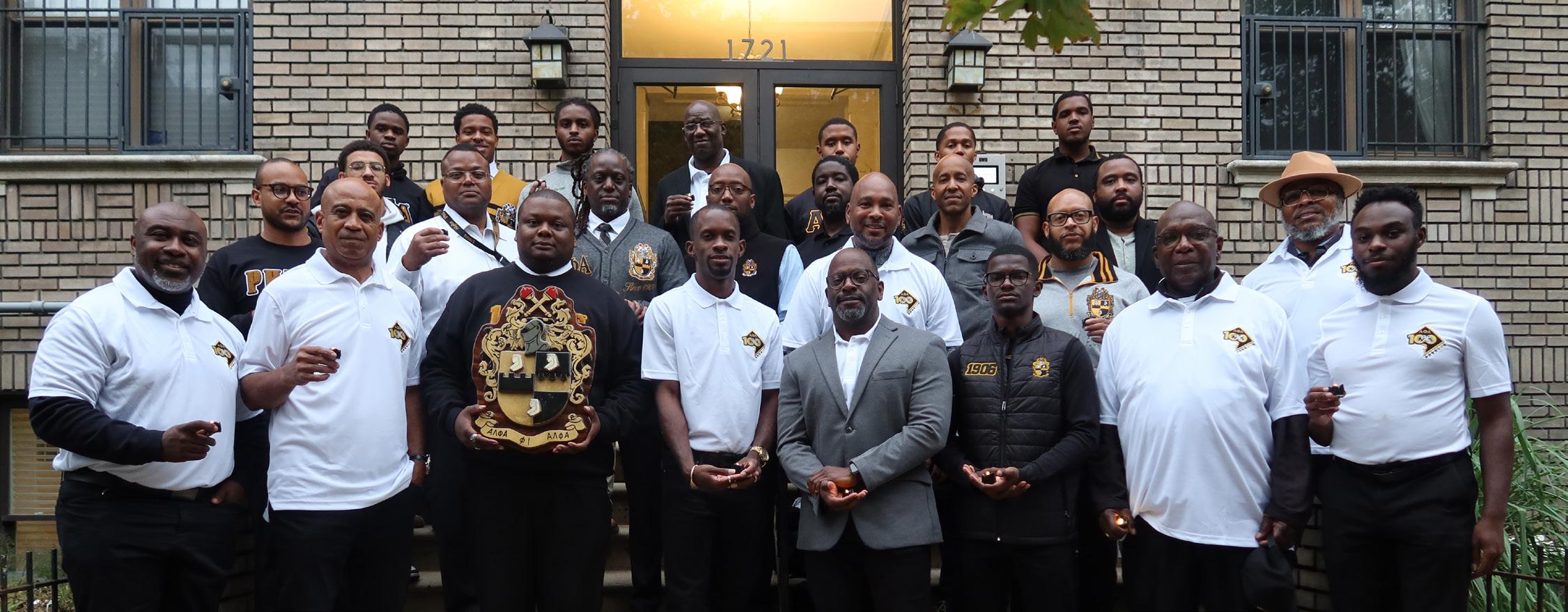
Mu Lambda is Alpha's eleventh alumni chapter, chartered October 1, 1923, in Washington D.C. The chapter was established, in part, in response to the desire of graduate brothers, many whom were initiated into Beta Chapter at Howard University, to give aid to the undergraduate brothers and continue the work of Alpha. Chartered by 22 distingushed men of Alpha which included Jewel Nathaniel Allison Murray and Jewel Robert Harold Ogle.
There has been six members who served as the General President of Alpha Phi Alpha Fraternity, Inc. and two whom served as the Eastern Region Vice President. Mu Lambda is equally proud of our current brothers making their mark in the Washington D.C. community and beyond. Our chapter has many entrepreneurs, activists, political leaders, philanthropists, academicians, ministers and so much more. Our diverse brotherhood age range is between the ages of 25 and 98. We all work together to maximize the brotherhood of Alpha by following the Objective, Mission and AIMS of our Fraternity.
The officers elected at the first meeting were Brother Harold StrattonPresident, Brother John Lowery-Vice President, Brother Victor DalySecretary, Brother Daniel W. EdmondsTreasurer, and Brother Nathaniel Allison Murray (Jewel)-Chaplain. Mu Lambda was thus established and was on its way into history!
www.mulambda.org
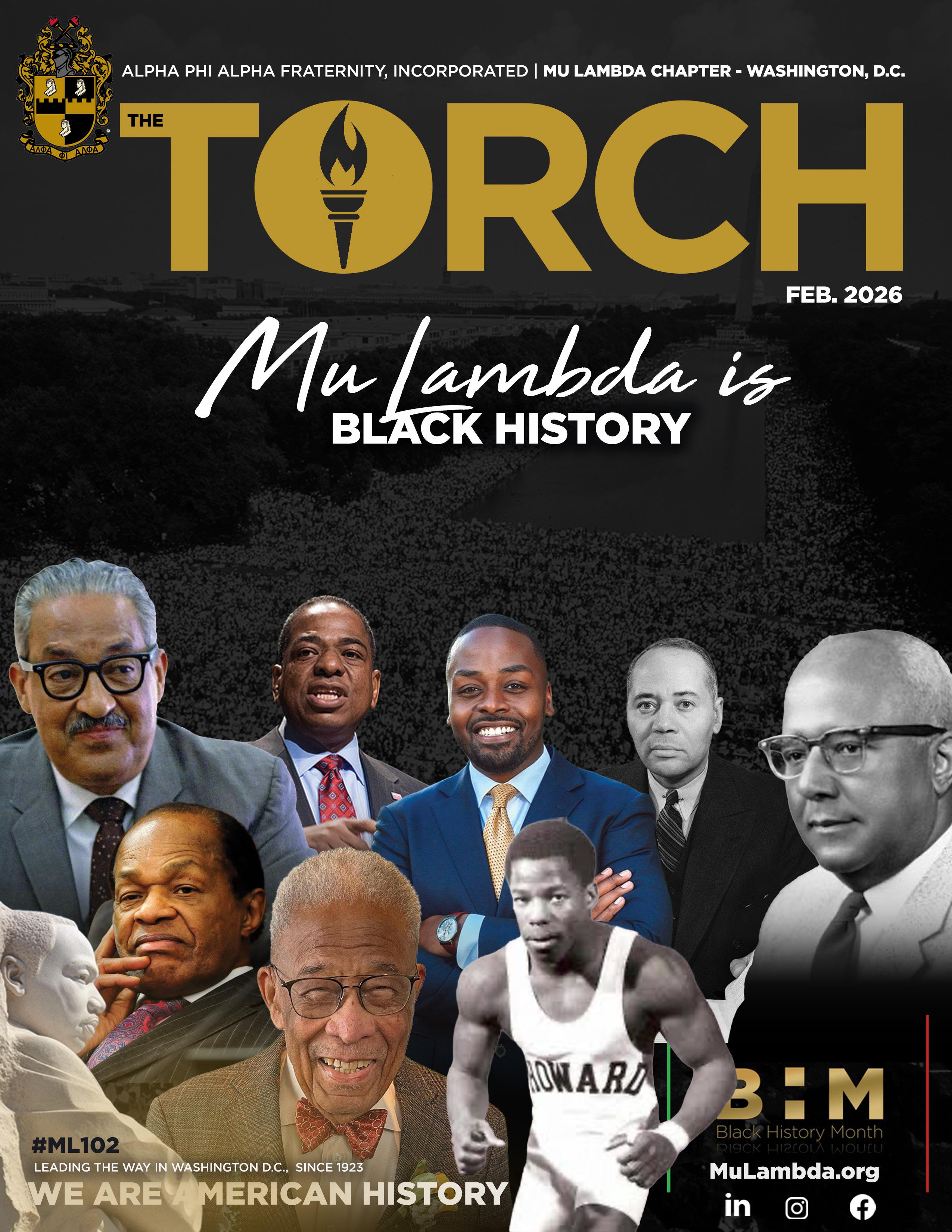
1. Torch Cover - February 2026 - Mu Lambda is Black History
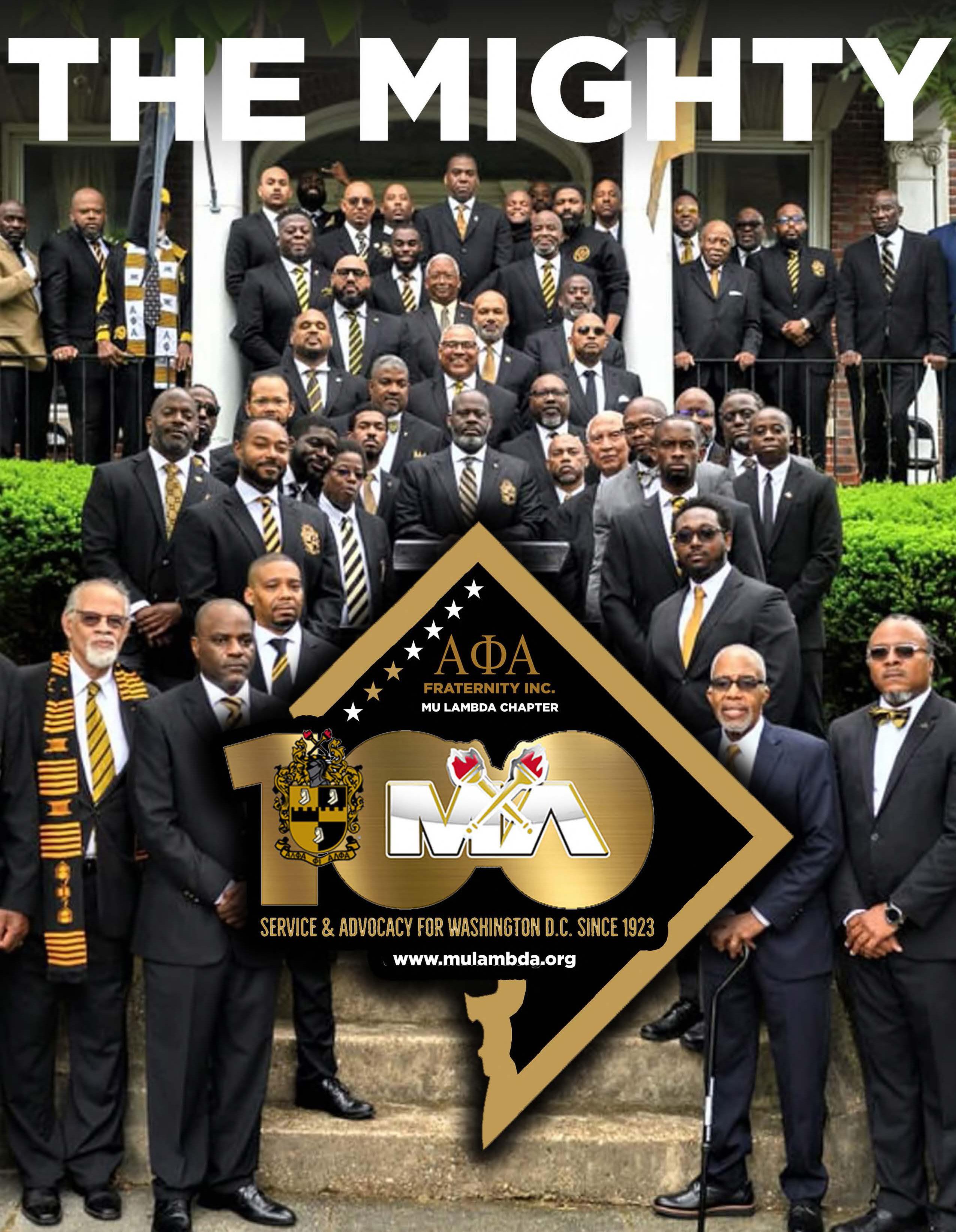
2. Chapter Cover Image - The MIGHTY
3. In this Issue
4. Executive Board, Committee Chairs, Charter Members, Past Presidents
5. The Presidents’ Message
6. The Vice-Presidents’ Message
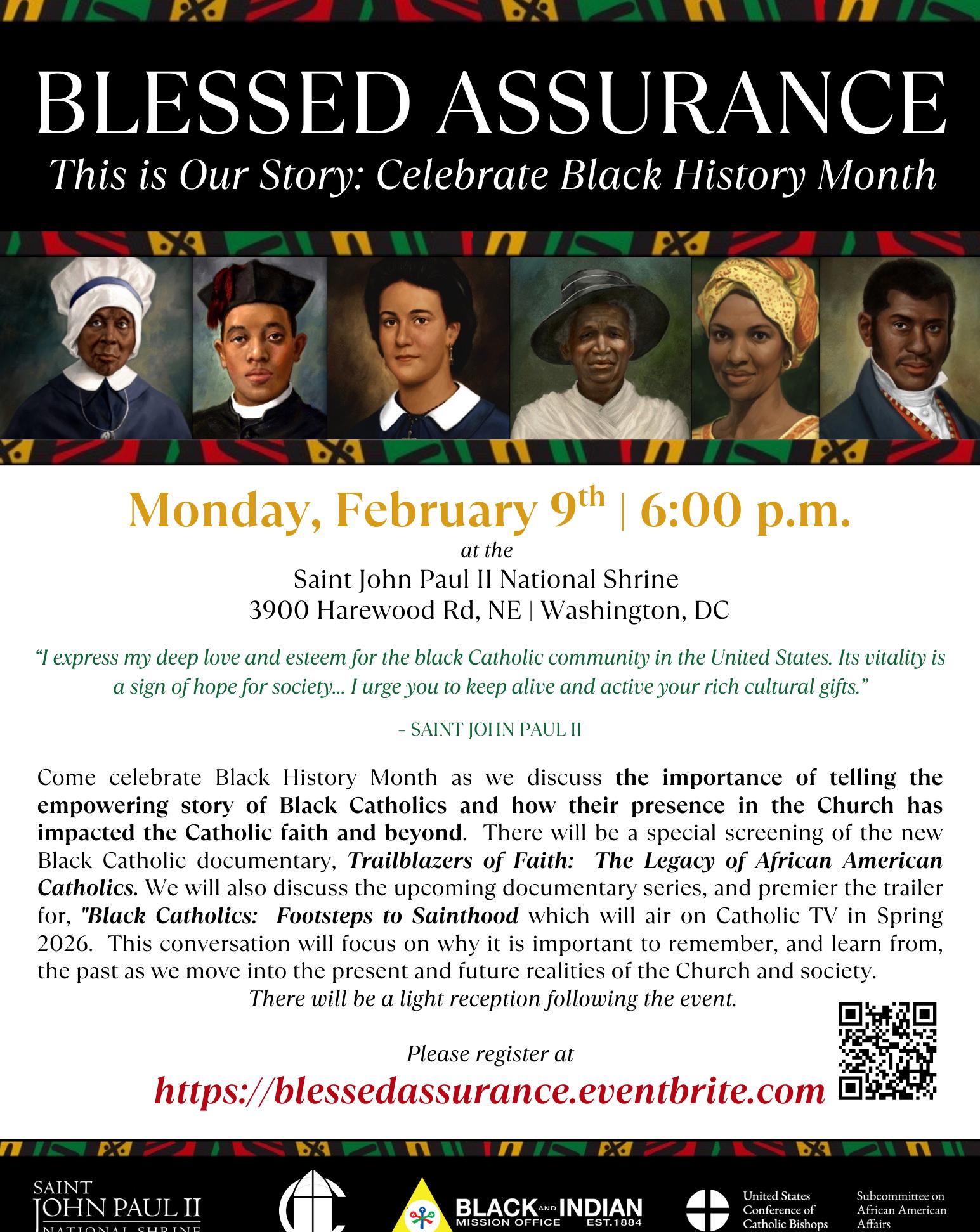
7. Blessed Assurance
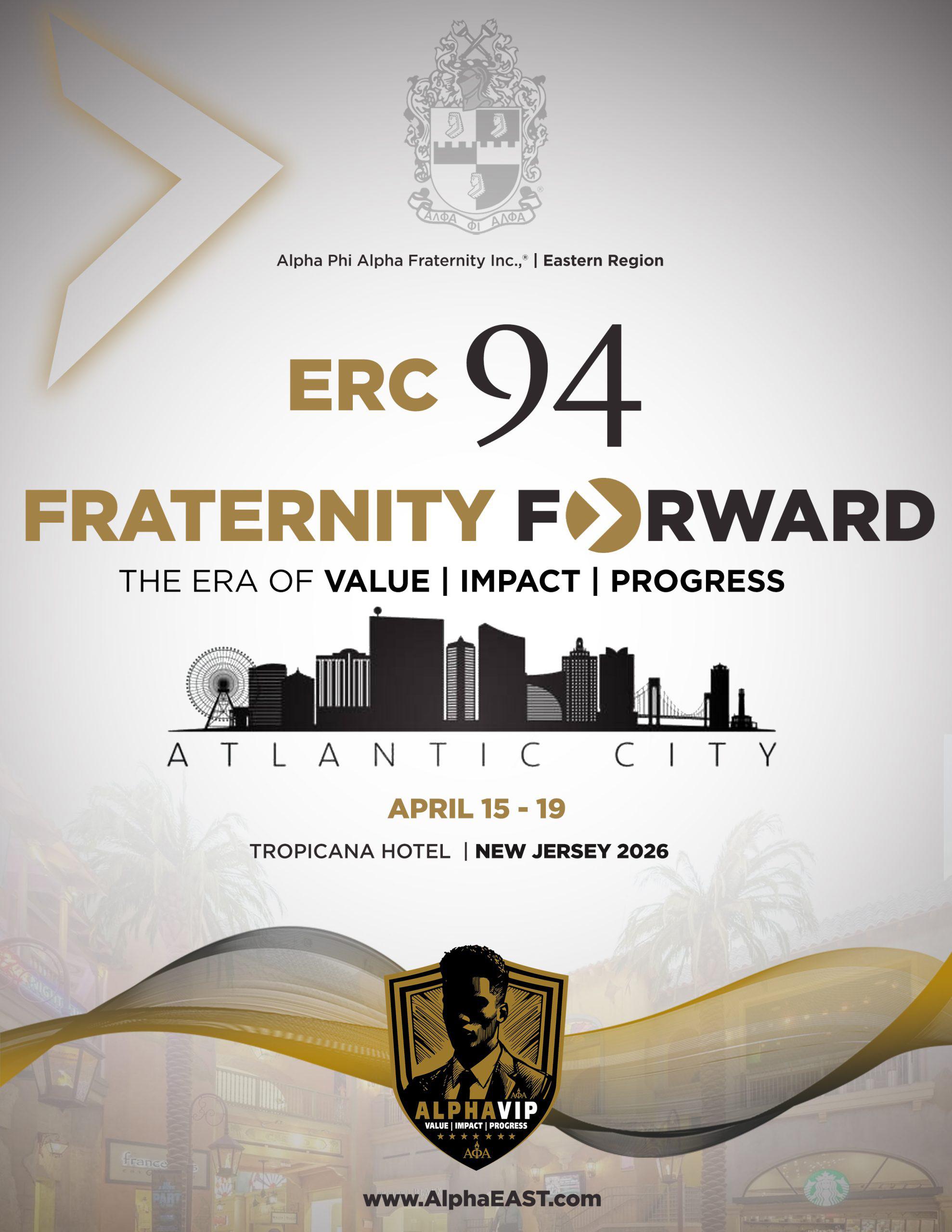
8. Eastern Region Convention
9. Mu Lambda Brother’s Birthdays
10. Fatherhood Reflections
12. The Many Tongues of Blackness
14. The New Orleans Black Masking Indians
18. Bro. Paul Cotton, A Life Poured Out
20. Black History is Alive Here
24. Beta Chapter Update
26. Mu Lambda Mixtape
27. Next on Your Reading List
28. Henry Arther Callis Academy
29. Chapter Brother Business Advertisements
40. Message from the Editor
41. Espirt De. Fraternite
President
Mikael E. LaRoche
Vice President
Karl Bruce
Recording Secretary
Marcus Spells
Corresponding Secretary
Swain Riley
Financial Secretary
Lloyd Ross
Treasurer Michael Young
Chaplain
William “Tony” Hawkins
Historian
Ameer Baker
Archivist
James Heck
Intake Coordinator
Mark Jones
Assoc. Editor/Sphinx
Randall Clarke
Dir. Ed. Activities
Sean Perkins
Sergeant-at-Arms
Frank King
Parliamentarian
Pierre Boynton
Director of Technology
Garrett Miller
Editor of the Torch
Christopher Butts
Member at Large
Jason Jefferson
Risk Management Officer
Joseph Gibbs
General Council
Vacant
Immediate Past President
John “Tony” Wilson
Brother’s Keeper
Joseph Housey III
Budget and Finance
Ross Lloyd
Communications
Randell Clarke
Technology
Garrett Miller
Constitution
Jason Jefferson
DC National Pan Hellenic Council
James Morgan III
Auditing
Juan Powell
Health & Wellness
Ted Darlington
Membership
Timothy Fitzgerald / Jonathan Brown
Hospitality/Men Who Cook
Swain Riley
Beta Chapter Advisor
James Harmon III
Ritual
Ryle Bell / Garrett Miller
Nominating
Samuel Armstrong
Programs/Chapter of the Year
Christopher Butts
Public Policy
George Walker
Social
Xavier Thompson
Community Service
Jeffery Taylor
Fundraising
Antonio King
Archival and History
James Heck / Ameer Baker
Intake
Mark Jones
Arthur Curtis*
Merrill H. Curtis*
Victor R. Daly*
Eugene L. C. Davidson*
Arnold Donawa*
Walter Garvin*
William L. Hansberry*
Charles H. Houston*
Edward Howard*
Joseph R. Jones*
R. Frank Jones*
J Edward Lowery*
Clarence H. Mills*
Jewel Nathaniel Allison Murray*
Norman L. McGhee* FN4
Jewel Robert Harold Ogle*
Louis H. Russell*
James N. Saunders*
Emory B. Smith*
Harold C. Stratton*
J.H.N. Waring*
Charles H. Wesley* FN3
CHARTERED ON MONDAY OCTOBER 1, 1923
WASHINGTON, D.C.
FN1
6th General President 1915-1916
FN2
General Secretary 1915-1916
7th General President 1916-1917
FN3
14th General President 1931-1940
FN4 General Secretary 1920-1926
FN5
8th Eastern Regional Vice-President 1950-1953
FN6
23rd Eastern Regional Vice-President 2000-2001
Executive Director MLK Memorial
1. Harold Stratton* 1923 - 1924
2. Howard H. Long* FN2
3. Charles H. Wesley* 1926 - 1928
4. Frank Adams*
5. R. Frank Jones*
6. James B. Browning*
7. Jewel Henry Arthur Callis* FN1
8. U. Simpson Tate*
9. Claude Ferebee*
10. George O. Butler*
11. C.C. House* 1938 - 1940
12. Verdie L. Robinson*
13. Walter M. Booker* FN5
14. Jack Bond*
15. Millard R. Dean*
16. Frank Davis*
17. Clifton Hardy*
18. Herman Johnson*
19. Howard Jenkins*
20. C.C. House* 1952 - 1954
21. William F. Nelson*
22. Aubrey E. Robinson*
23. Joseph Waddy*
24. Edward J. Austin*
25. Elgy Johnson* 1964 - 1965
26. George H. Windsor* 1965 - 1967
27. James T. Speight* 1967 - 1969
28. Harold Sims* 1969 - 1970
29. Eddie L. Madison* 1970 - 1972
30. Wilbur Sewell* 1972 - 1974
31. Charles Walker Thomas* 1974 - 1976
32. Theodore Taylor* 1976 - 1978
33. Elmer Moore* 1978 - 1981
34. William E. Calbert* 1981 - 1983
35. Osmond Brown* 1983 - 1986
36. Vernon Gill 1986 - 1988
37. LeRoy Lowery, III 1988 - 1990
38. Morris Hawkins* 1990 - 1992
39. C.C. Jones 1992 - 1995
40. Vincent Orange 1995 - 1997
41. Melvin White 1997 - 1999
42. LeRoy Lowery, III FN6 1999 - 2001
43. James Haynes 2001 - 2002
44. Rudolph Harris* 2002 - 2004
45. Edwin Norwood 2004 - 2006
46. James McDonald 2006 - 2008
47. Timothy Fitzgerald 2008 - 2010
48. Kwame Ulmer 2010 - 2011
49. LeRoy Lowery, III 2011 - 2013
50. Eddie Neal 2013 - 2015
51. LeRoy Lowery, III 2015 - 2017
52. Joel Grey 2017 - 2018
53. Eddie Neal 2018 - 2020
54. John “Tony” Wilson 2020 - 2023
* Omega Chapter Brothers Footnote (FN)
Brothers of Mu Lambda,
Mu Lambda is Black History. We are living, breathing, and continuously being written through the work and witness of Alpha men who have shaped our chapter, our city, and this nation.
Our chapter stands on the shoulders of giants. Brothers such as Dr. Reginald Salter, DDS, PhD, whose professional excellence and scholarship exemplify Alpha at its best in his work ushering the future of Black Dentistry at Howard University, and Brother Marcus Ware, Esq., whose leadership as Executive Director of the National Dental Association continues a proud legacy of advocacy, equity, and service for African American Dentists around the U.S. Their impact is not confined to our chapter rolls, t is felt nationally.
We are forever connected to the lineage of Alpha greatness that includes Brothers Thurgood Marshall, Charles Hamilton Houston, and DC’s Mayor for Life Marion Barry—men whose courage, intellect, and commitment to justice reshaped America itself. Closer to home, Mu Lambda brothers such as Brothers Horace G. Dawson III, DC Council-member Zachary Parker, and former DC Council-member Vincent Orange remind us that leadership rooted in service can transform communities and influence generations.
This past weekend, I had the distinct joy of celebrating our second centenarian, Brother Horace G. Dawson III, at his 100th birthday celebration. Being in his presence was a blessing. His legacy as an Alpha man. In the words of his list of distinguished speakers such as Alpha’s 29th President Brother Milton Davis, he is defined by perseverance, dignity, and unwavering commitment to our aims, which goes beyond measure. Brother Dawson is not simply part of our history; he is a living testament to what it means to live a life of purpose.
At the same time, our hearts are heavy as we honor the life and legacy of Brother Paul Cotton, PhD. A threetime Howard University graduate, former Trustee of Howard University, and a man deeply loved and widely respected, Brother Cotton’s service spanned many callings from Alpha, Freemasonry, MEAC coach, wrestler, and proud Howard alumnus. His impact on students, athletes, brothers, and institutions will endure long after his transition. We extend our deepest condolences to his family, friends, and all whose lives he touched.
As a chapter, we have also navigated real challenges in recent weeks. Severe and unpredictable weather across Washington, DC and the DMV has disrupted plans, delayed projects, and tested our flexibility. The irony is not lost on us that while we battle ice in the literal sense, “ICE” dominates the national conversation amid recent tragedies that have shaken the country. These moments remind us that our work remains as urgent as ever.
Yet, even in the coldest seasons, Mu Lambda continues to move forward. Our impact is undeniable. Our service is necessary. Our brotherhood is strong. History does not pause, and neither do we.
Spring needs to fight back, and it will. When it does, Mu Lambda will be ready: energized, committed, and firmly grounded in the legacy we honor and the future we are building together.
Mu Lambda is Black History. And the work continues. Fighting on ICE.
With Alpha spirit and gratitude,
Brother Mikael E. LaRoche, (10-Mu Lambda-13)
President 2024 - 2026
Alpha Phi Alpha Fraternity, Inc.- Mu Lambda Chapter
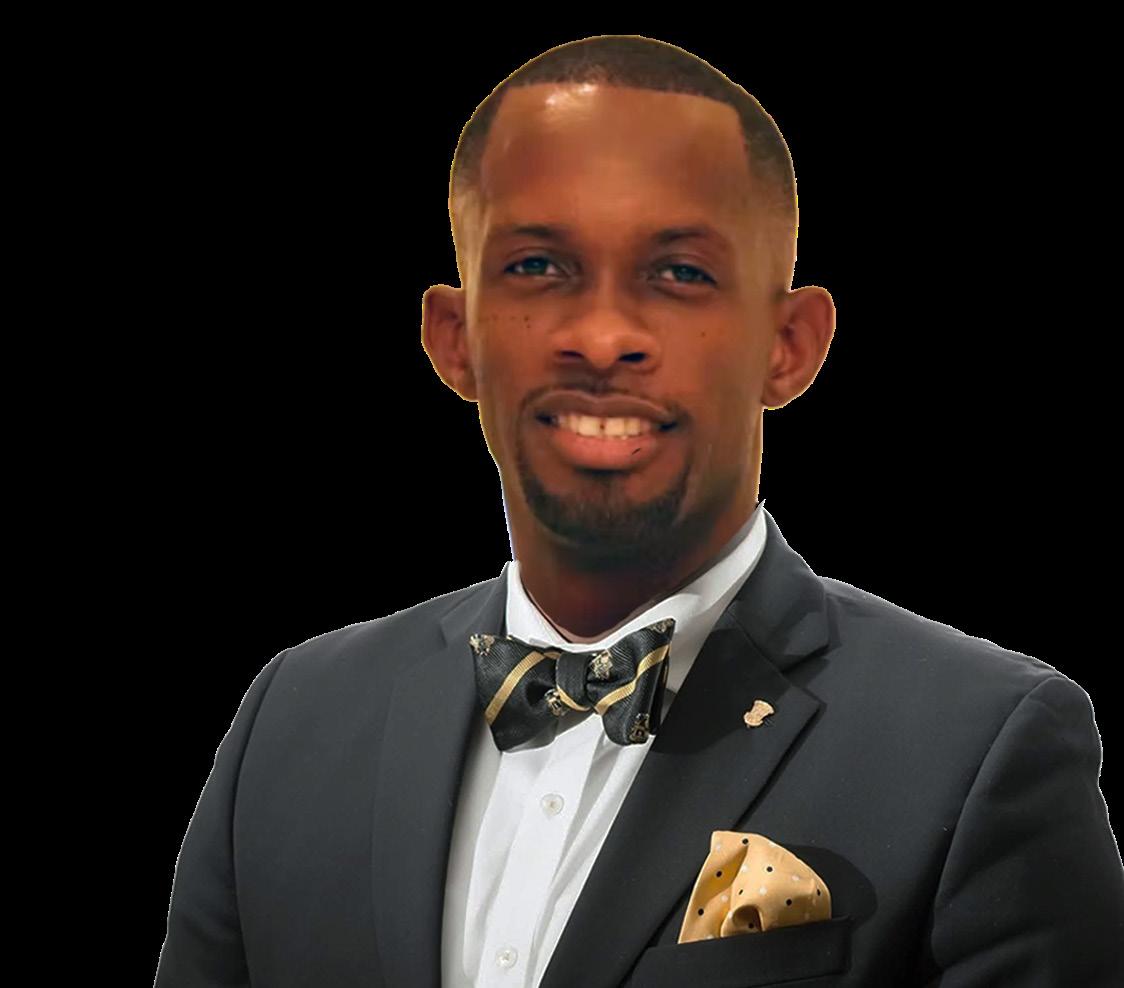
Greetings. This month marks the 100th anniversary of Black History Month (formerly Black History Week). I would just like to say I am in awe of everything that we are. May we walk in our richness and pass our greatness on to somebody else. May we teach those to come behind us just how gifted they are and plant a seed that grows to someday edify the world.
I make no excuses for my nose, broad as the span of the transatlantic, My lips: full all by themselves no collagen injected.
I give no explanations for my hair, woolen and coarse, My brown eyes deep set with unmentioned words.
I have no retractions for my Southern drawl, Midwestern lexes, or East Coast expressions, The spiritual sensibilities that rouse my soul as the ancestors speak great lessons.
I have no shame in my Ebony, no blame in my bold, Standing in all my truths a right to be told.
I give you no justification for the splendor of my skin tone, Which speaks of overcoming all the hell on its own.
I grant no reasons for the melody in my walk, the syncopation in my smile, When my melanin meets a space, it can’t help but linger in the air for a while.
I gift you no shucks, no jives; I’ve earned this audacity, The pain and strain of my grandaddy’s granddaddy saw to it that it should be passed to me
Unapologetically. Audacious and Threateningly. Brash and Brazenly. Fearfully and Flagrantly. What you thought you could but only aimed to be. In love with God’s gift the very shade of me. Truly yours and Unashamedly. For all I was made to be, Blatantly Black.
Fraternally,
Brother Karl Bruce Vice President (12-Mu Lambda-13)
Bro. Jonathan Brown - 2nd
Bro. David Gaston - 2nd
Bro. Daniel Mushala - 4th
Bro. Legand Burge III - 5th
Bro. Brent Gilmore - 9th
Bro. Glorie Chiza - 10th
Bro. Sylvester Booker - 16th
Bro. Talmadge Roberts - 16th
Bro. Coy Lindsay - 26th
Bro. Barrington Ross - 26th
Bro. William Rice III - 27th
There’s something holy about a father sitting with his child, telling a story that didn’t come from a textbook but from the bloodline.
Black History Month arrives each year like an invitation, an open door to stories that deserve to be told again, especially to our children. As fathers, we often feel the weight of responsibility to prepare our sons and daughters for the world ahead. Yet in that responsibility lives a quieter, more joyful calling: to introduce them to the pioneers whose courage, brilliance, and imagination made our journey possible.
It’s a reminder that our children are walking miracles, carrying the echoes of people who dared to dream when dreaming was dangerous. And when we share those stories with them, something shifts. Their shoulders straighten. Their eyes get brighter. They begin to understand even more where they come from.
I love telling my children about pioneers like Madam C.J. Walker, who built an empire when the world told her she didn’t belong in the room. Or George Washington Carver, who found purpose in the soil and taught us that brilliance can grow anywhere it’s nurtured. Or Katherine Johnson, who calculated futures while history tried to overlook her.
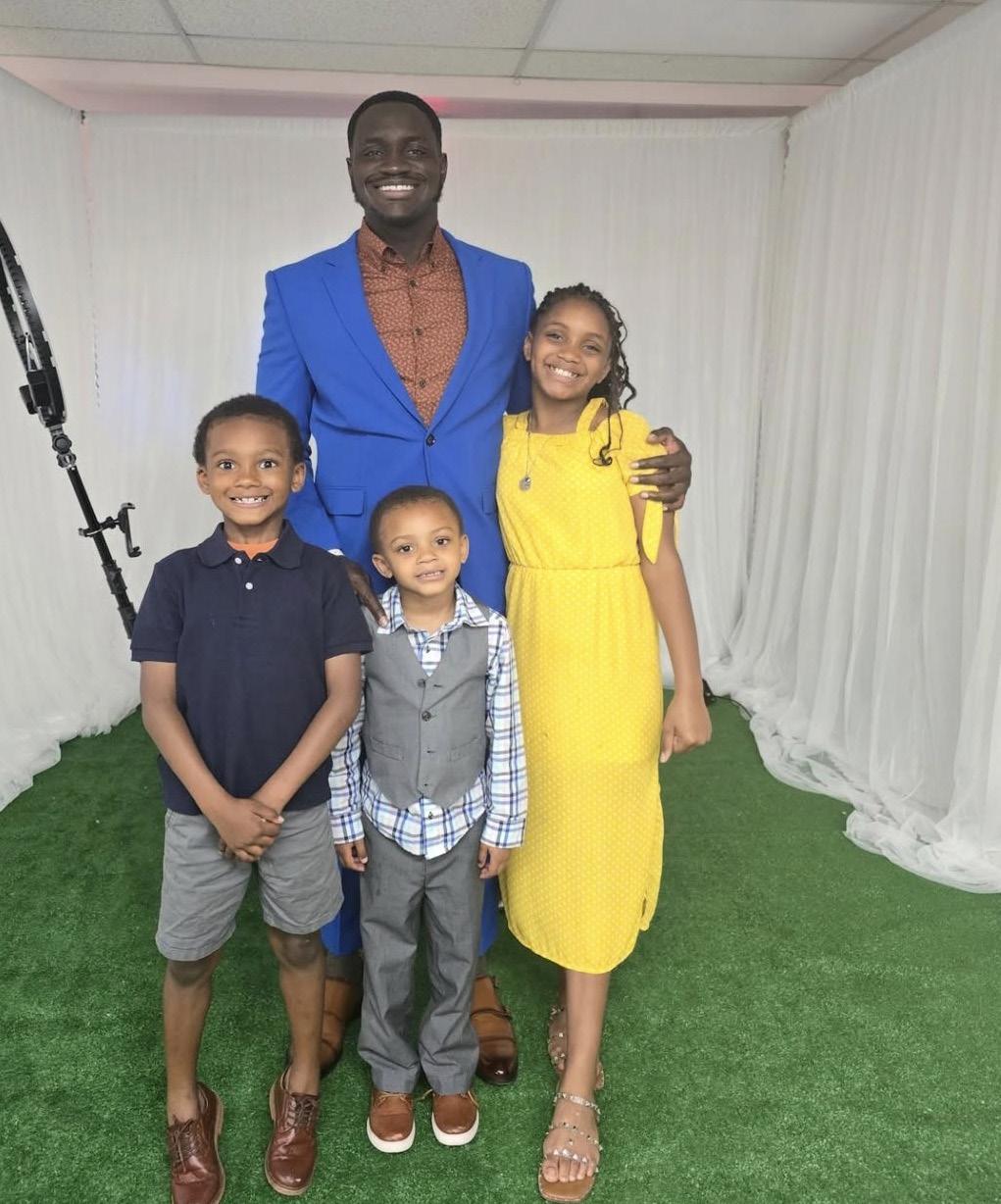
But just as important, maybe even more important, I tell them about their grandparents. Their great-grandparents. The aunt who held the family together. The uncle who worked two jobs and still showed up. The first in the family to graduate. The one who never got the chance, but made sure someone else did.
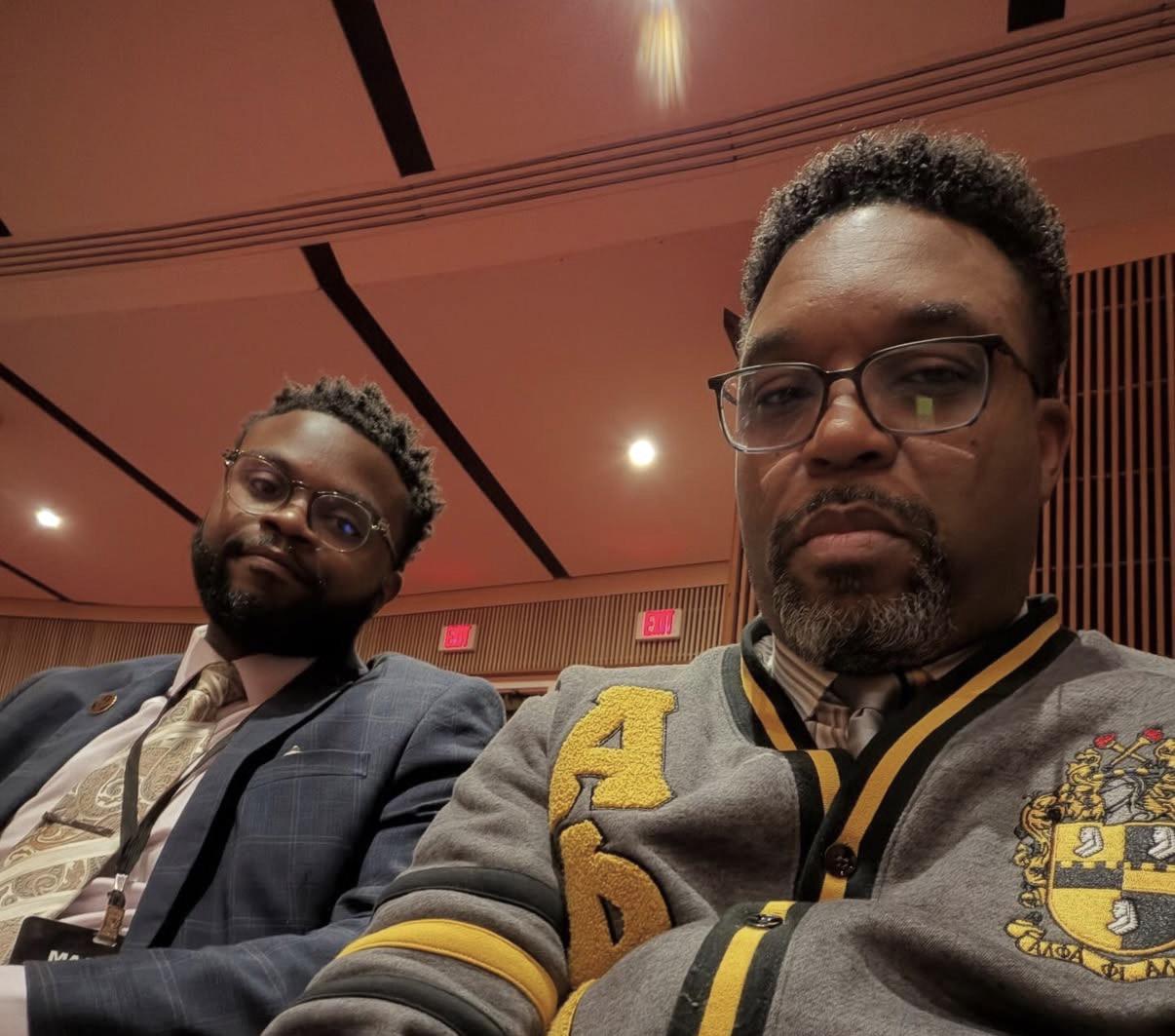
Davide Edgerton Jr. and his son Bro. Davide Edgerton III
As fathers, we also discover something unexpected: in teaching our children, we are often re-learning ourselves. We reconnect with the joy of discovery, the pride of belonging, and the gratitude that comes from understanding whose shoulders we stand on. Black History Month reminds us that our legacy is not only what we achieve, but what we pass on. The values, stories, and a sense of rootedness that helps our children walk confidently into the future.
Because family history is Black History.
When we share those stories, our children learn that courage didn’t just live in famous names, it lived in their living room. That resilience wasn’t only on the front lines of movements, it was in kitchens, classrooms, churches, and long car rides home from work. They learn that they come from people who survived, who sacrificed, who loved deeply even when the world was unkind.
As fathers, we don’t just pass down knowledge we pass down identity. We give our children roots so they won’t be shaken when life tries to move them. And in the telling, we find joy. Real joy. The kind that reminds us we are part of something bigger than ourselves.
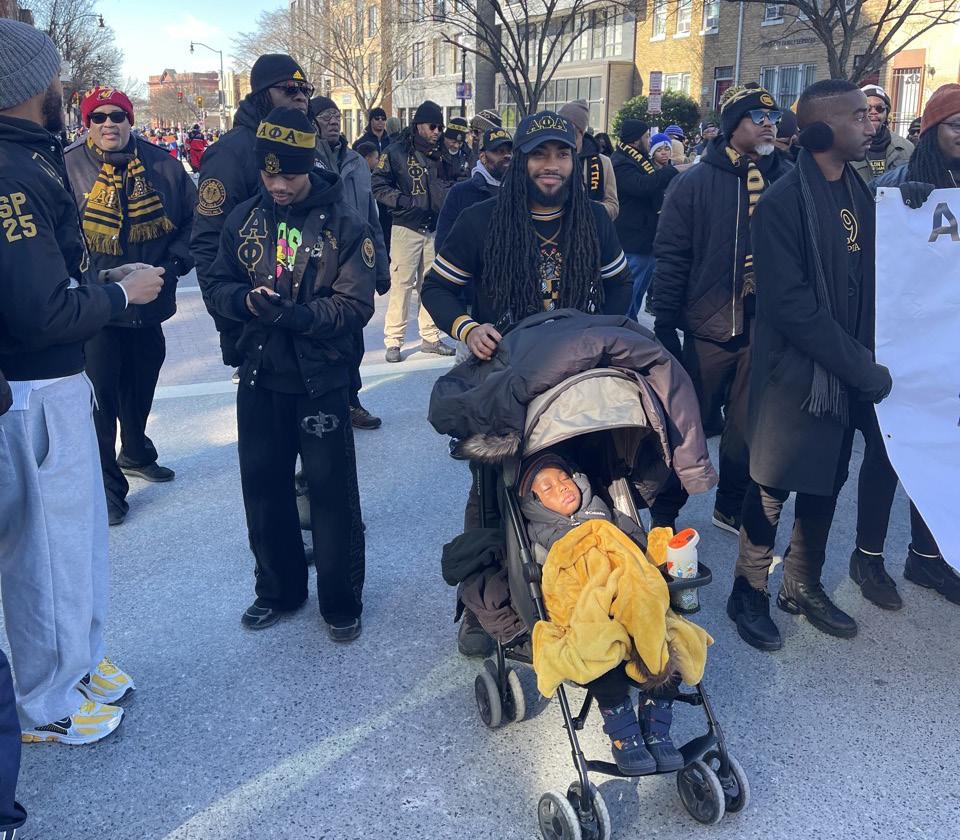
and his son
So, this Black History Month, tell the big stories. Tell the famous ones. But don’t forget the quiet legends, your people. Because when our children know where they come from, they walk differently toward where they’re going.
And that, right there, is light for the journey.
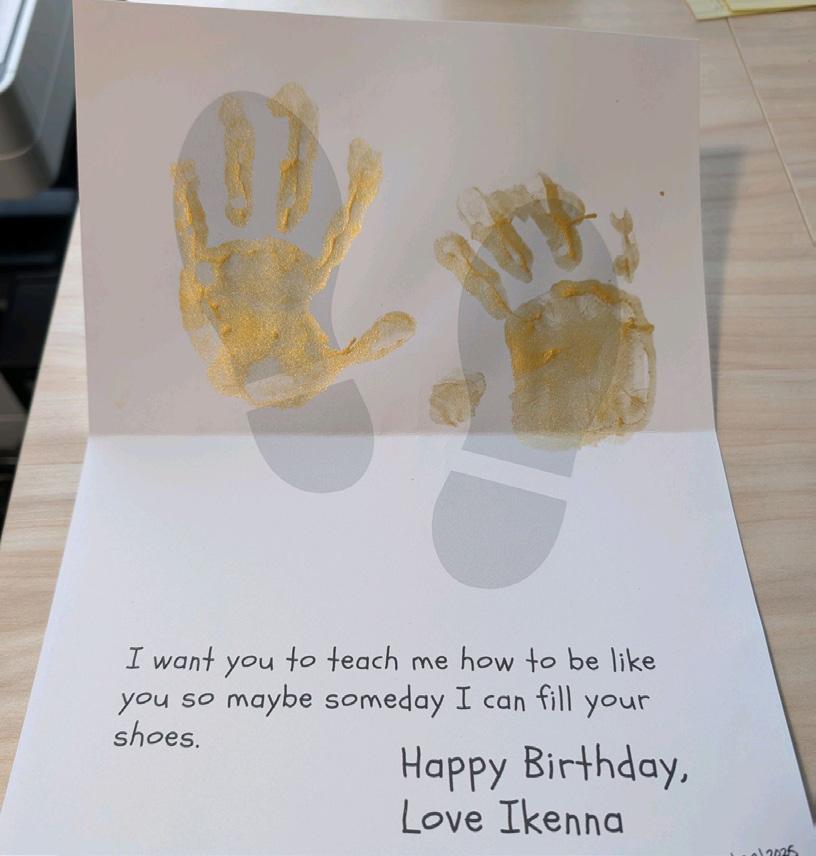
Bro. Okey Enya’s son writes him a letter
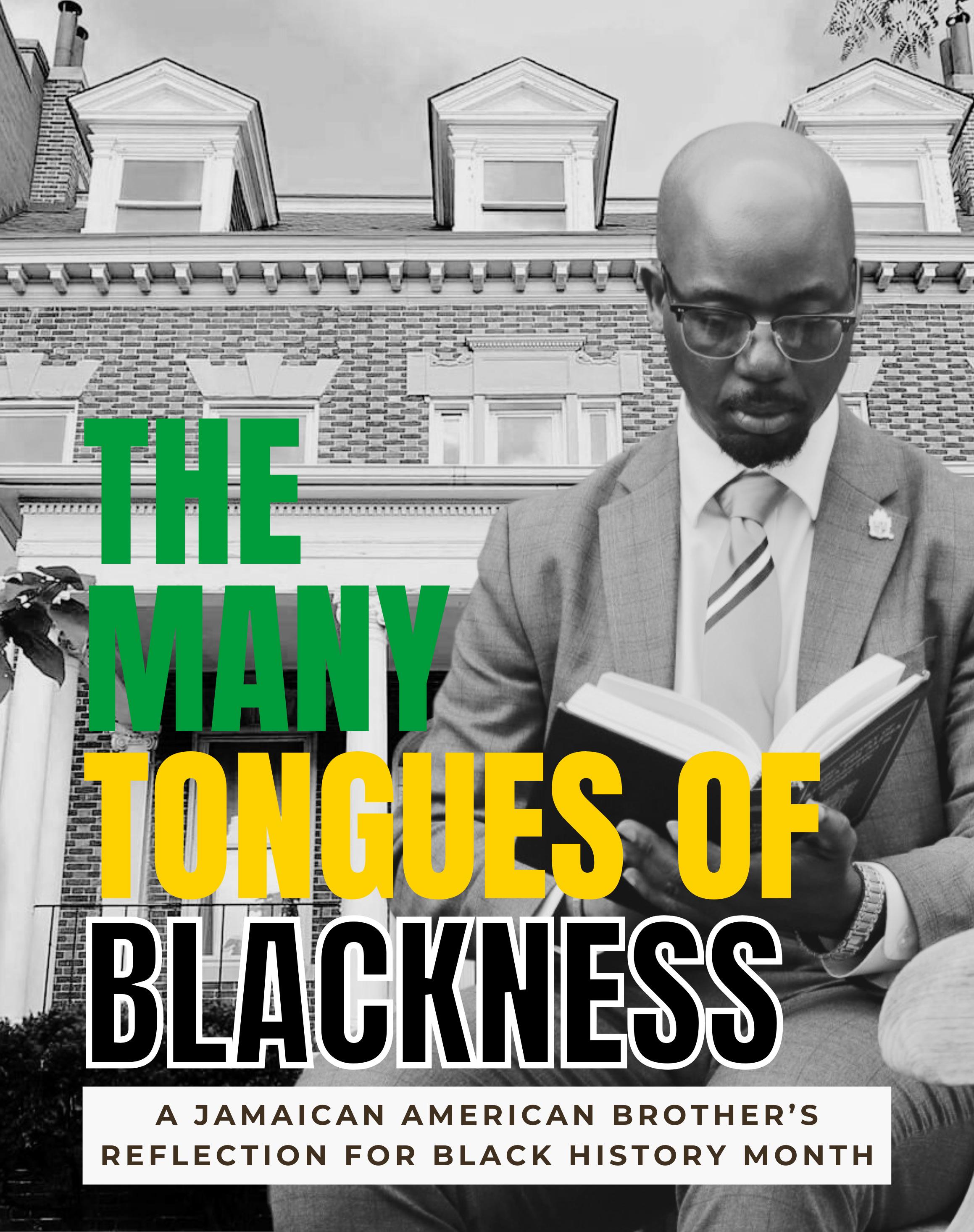
To be a Black man in America is to carry a history that precedes you, but to be a Black immigrant man in America is to carry that history in a different tongue: a tongue shaped by memories of home, laughter with family, and the sound of my mother calling me in the evening. My Blackness meets the world first through my skin, then again through the rhythm of my accent, the story of my birthplace, and the questions and assumptions that always seem to follow. Every day, I feel the weight of being seen and heard, sometimes celebrated, often scrutinized. In a time when Black and Brown people are increasingly targeted not just for how we look, but for how we sound, I find the immigrant experience adds yet another layer to an already complex, deeply personal identity.
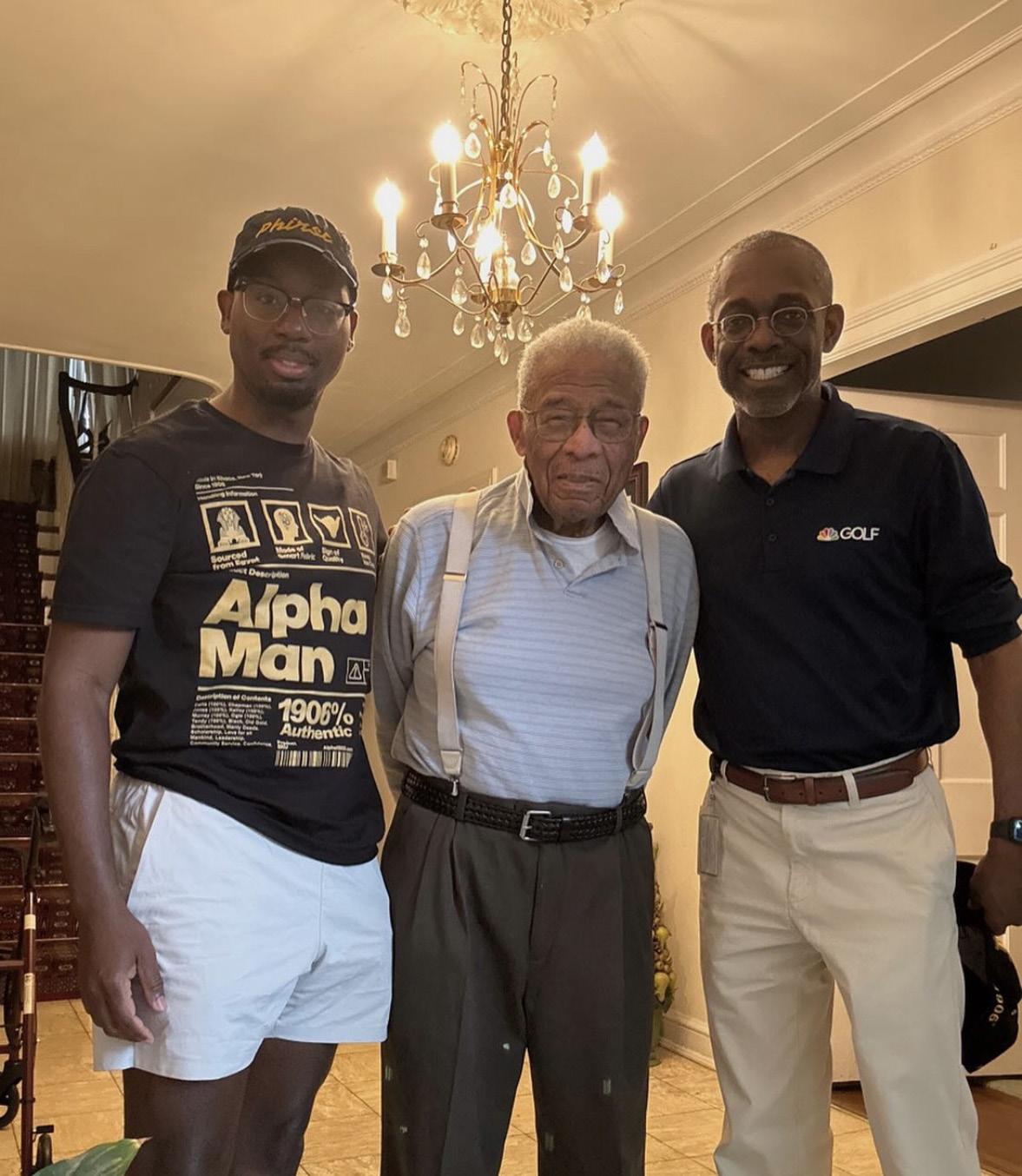
Navigating America as a Black immigrant means learning quickly that race is not a single story. I remember the first time someone asked me, “But where are you really from?” The sting in the question and the expectation to explain myself lingered. I’ve been told to soften my accent at times, even as I long for the familiar lilt of home. My heritage is both a badge of pride and, sometimes, a point of prejudice. Yet, within these moments, I’ve found a profound
truth: Blackness is global, interconnected, and strengthened by its diversity. Black immigrants continue to enrich the cultural and social landscape of this country. Our growing visibility in politics, sports, public service, film, and other fields reflects a rising influence that extends far beyond our numbers.
America has long been shaped by Black men whose immigrant roots expanded the meaning of leadership and liberation. I think of the men, some who look like my uncles, some who could be my neighbors, of Caribbean and African descent who marched, legislated, organized, and uplifted. Our fraternity has been enriched by those who brought (or their parents brought) the world with them, who carried dreams, recipes, and hopes in their suitcases. Their journeys remind us that the fight for justice has always been a collective one, fought in many accents, carried across many shores.
As we honor Black History Month, I stand proudly in that lineage. My Jamaican identity does not separate me from the Black American struggle; it deepens my commitment to it. I carry both the warmth of the Kingston sun and the urgency of American streets in my heart. Our stories, whether born in Kingston, Lagos, or Detroit, are threads of the same tapestry. And together, we must continue to build a future where every brother’s voice, in every accent, is heard, valued, and powerful.
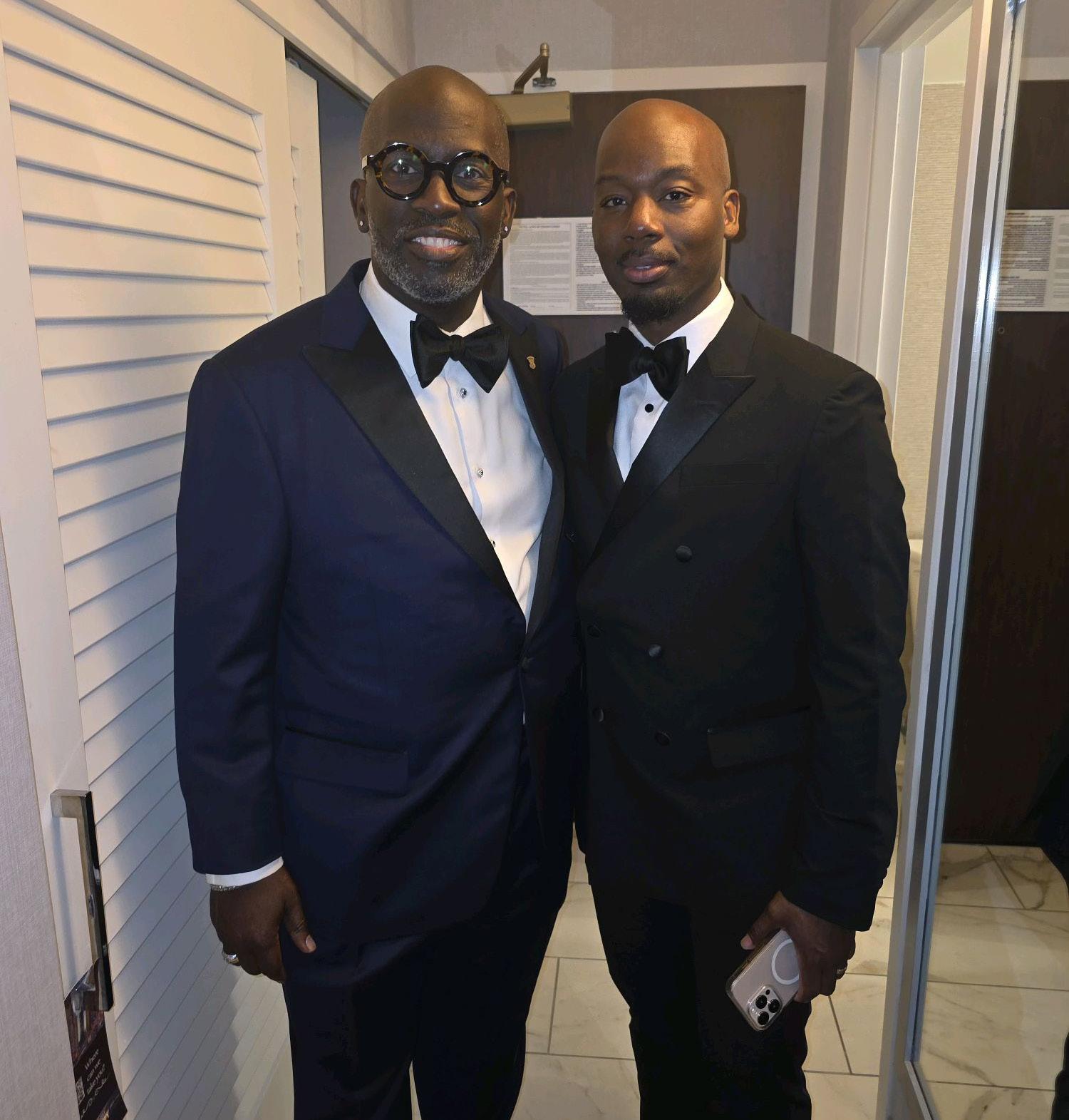
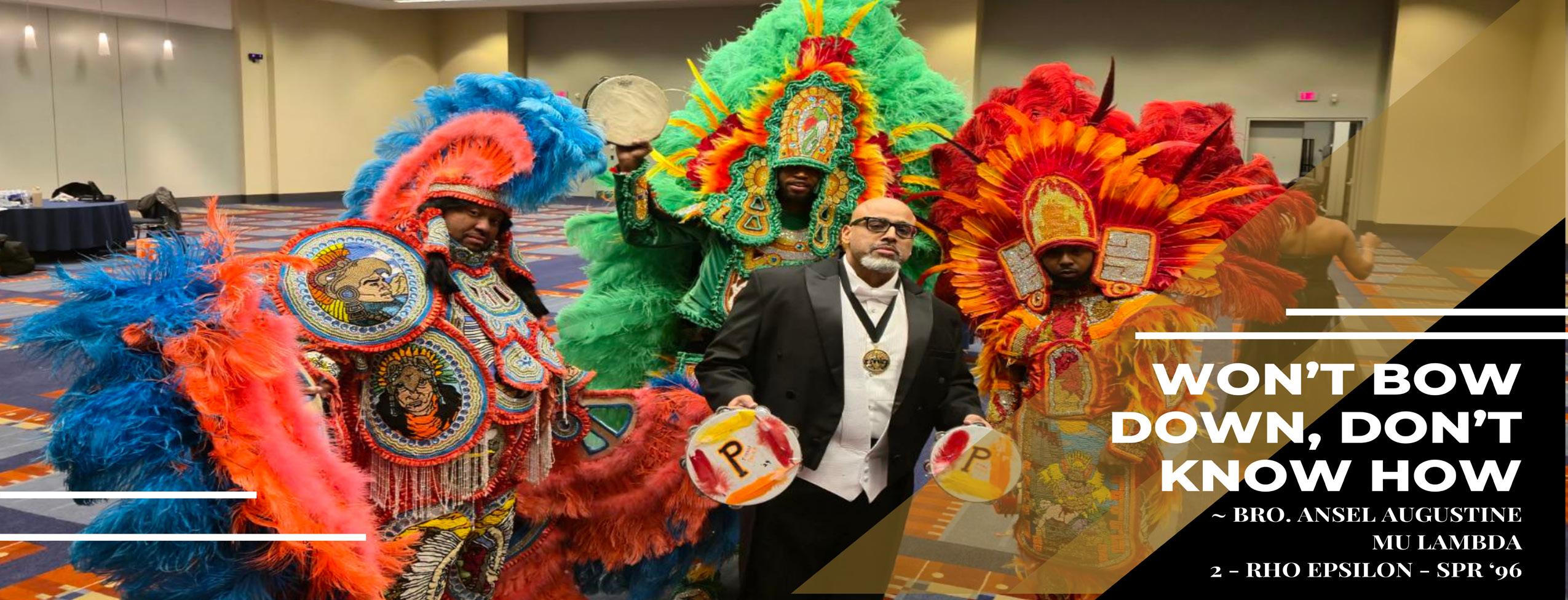
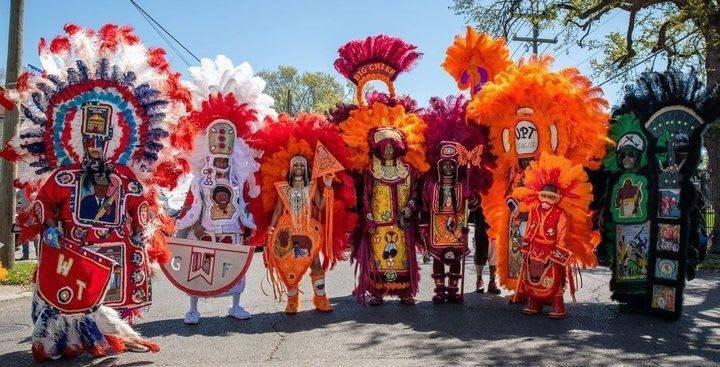
My hometown of New Orleans is known for many things; food, jazz, 2nd line gatherings, conventions, the Saints football team, etc., but my favorite thing about my city is Carnival Season, more commonly known as Mardi Gras. This time of celebration, starting on the Feast of the Epiphany (January 6th) and ending on Ash Wednesday, is a festive period for locals in New Orleans and extends throughout the Gulf Coast. I remember, when I was younger, waking up early on Mardi Gras morning to catch the parades in my neighborhood, but what I wanted to see most was the Black Masking Indians, more commonly known as Mardi Gras Indians because the various tribes display our new suits on Marid Gras morning, but the history goes much deeper than Mardi Gras itself and is a story of faith, cultural preservation and resilience.
I remember I would hear the echo of, and be enchanted by, the drums, tambourines, and chants that flowed through the Interstate 10 overpass that ran through my neighborhood.
I remember running toward the colorful feathers that I would see in the distance to join the revelry and crowds that surrounded the tribes as they searched the city streets looking for other tribes to enter the sacred meeting rituals that go back hundreds of years. It was a dream fulfilled, years later, following Hurricane Katrina, when I would become a culture bearer myself by singing, sewing, and chanting with the tribes, and eventually donning my own suit and participating in this sacred tradition.
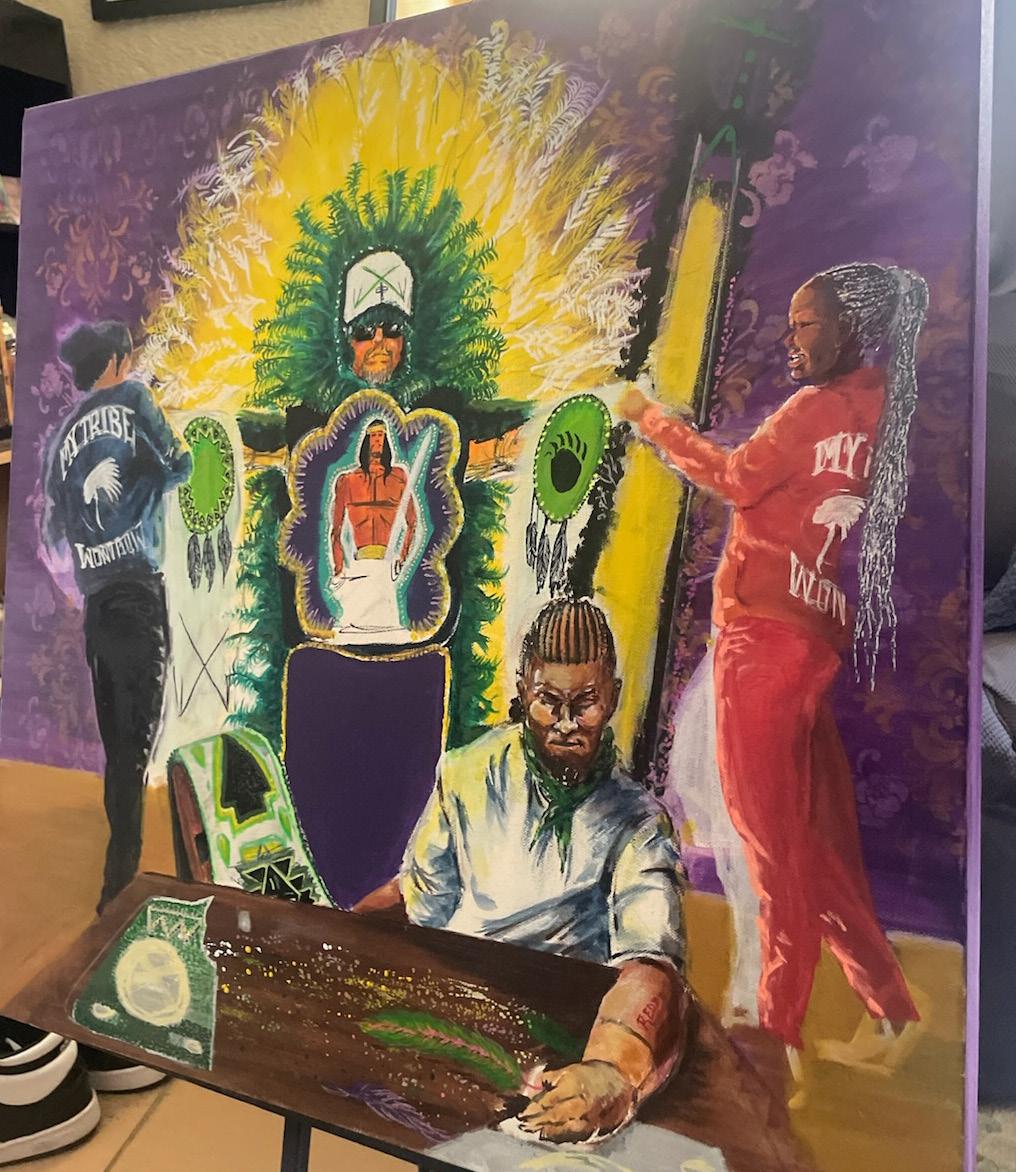
In the living cultural tapestry of New Orleans, few traditions embody resilience and perseverance as vividly as the Black Masking Indians. Known for our hand-sewn suits of intricate beadwork and towering plumes of feathers, Black Masking Indians are far more than a carnival curiosity. They represent a centuries-long story of survival, dignity, and faith—an Afro-Indigenous expression forged in the crucible of enslavement, segregation, poverty, and spiritual endurance. When viewed through a faith lens, the tradition resonates deeply with themes of suffering and redemption, sacrifice and hope, ritual and resurrection. This culture has been an integral part of my journey in rebuilding my hometown following the devastation of Hurricane Katrina in 2005.
The Black Masking Indian tradition traces its origins to the encounters between enslaved Africans and Indigenous peoples in colonial Louisiana and has Diasporic vestiges in Africa, South America, and the Caribbean. As Africans fled bondage, many found refuge among Native tribes who offered protection, knowledge of the land, and pathways to freedom. Over time, African Americans in New Orleans honored that solidarity by “masking Indian,” forming tribes named after Native nations or symbolic virtues— Yellow Pocahontas, Wild Magnolias, Wild Tchoupitoulas, Guardians of the Flame.
This honoring was itself an act of resistance. In a city where Black expression was policed and criminalized, Black Masking Indians claimed public space through beauty and ceremony. Masking was not simply performance; it was proclamation. Each bead sewn, each feather placed, testified to a people who refused erasure. Perseverance here was communal and generational: skills passed down, songs taught by ear, and codes of respect learned in the streets. This connected with the struggle for self-identity that Black Catholics in the area were trying to create and maintain. I
wonder how many of my ancestors participated in the gatherings in Congo Square in my neighborhood where this tradition originated.
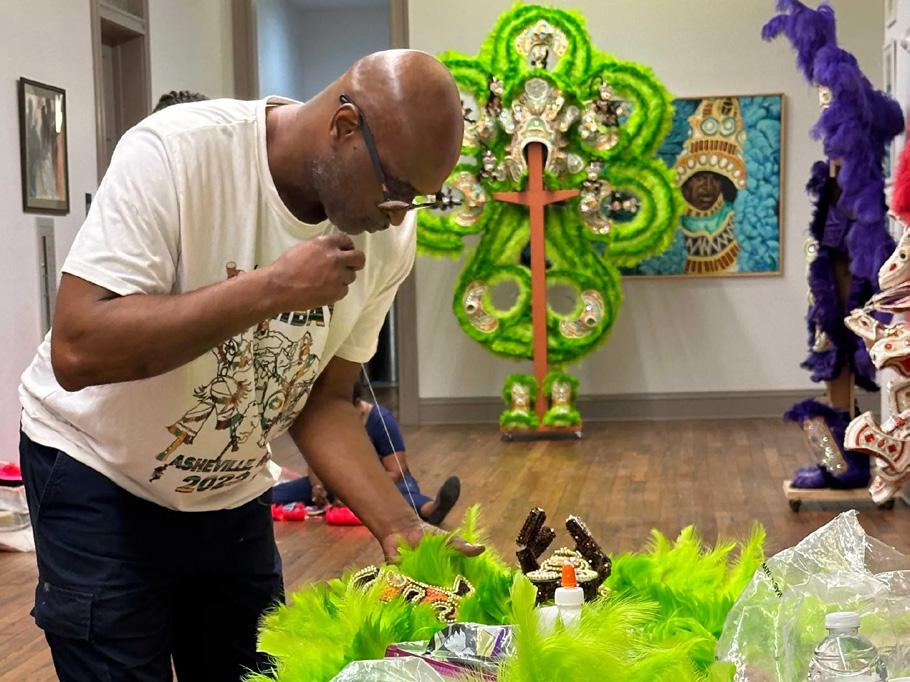
A single Black Masking Indian suit can take a year—or more—to complete. Chiefs and queens spend thousands of hours hand-sewing beads into complex tableaux: biblical scenes, African symbols, Native iconography, neighborhood stories. The labor is intense, often done at night after long workdays, sacrificing rest and resources for a moment of public revelation. Much of my free time, when I lived back home, was spent with fellow culture bearers preparing for Mardi Gras morning.
This discipline echoes notions of sacrifice and vocation. Masking demands patience, humility, and perseverance. The suit is unveiled on Mardi Gras Day, Super Sunday, or St. Joseph’s Night— moments that feel liturgical in their rhythm. Suffering gives way to splendor; hidden labor blooms into communal joy. Over the years, the struggle has been educating folks that this, along with other Black Masking traditions (including Baby Dolls and Skull and Bones), are sacred. This is why places like Backstreet Cultural Museum, where I volunteer when I am home, are sacred. Spaces like these allow culture bearers to tell our story authentically from our perspective. Yes, our cultures are entertaining, but they are not entertainment. They are sacred.
Though not a church rite, Black Masking Indian processions follow a ritual calendar that mirrors sacred time. Mardi Gras Day itself precedes Ash Wednesday, the threshold between feasting and fasting. St. Joseph’s Night—March 19—is especially significant. Tribes emerge again, often at dusk. Due to the limiting of Black expression under the Code Noir that regulated the lives of people of color in the New Orleans area, it was safe for Black Maskers to practice our culture on these days because crowds were in the streets (everyone on Mardi Gras Day and Italians on the Feast of St. Joseph), and Black Maskers could be in the streets as well engaging in their cultures without fear of punishment. As is the way of life in New Orleans, the sacred mingles with the everyday, and public devotion is as important as private prayer.
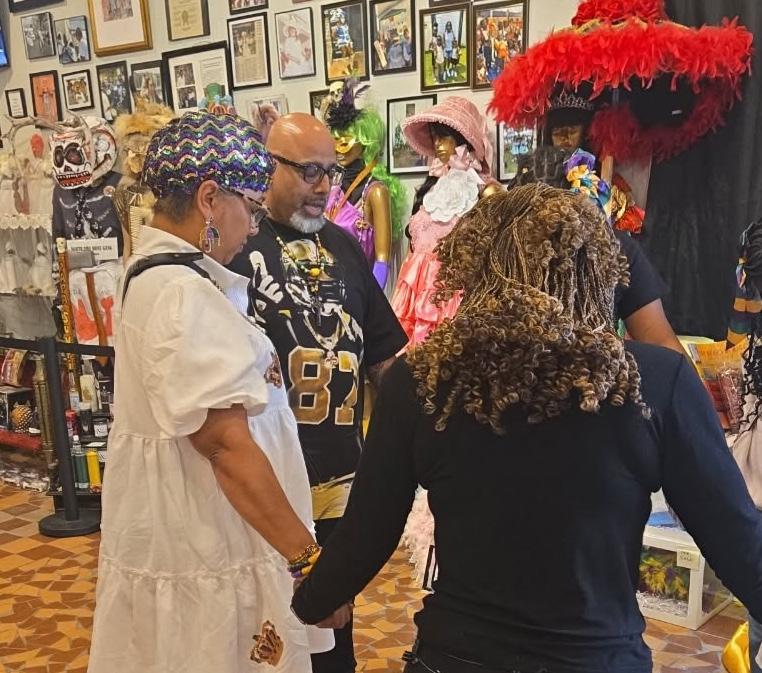
Bro. Augustine leading a prayer with some of the Baby Dolls on Mardi Gras morning at Backstreet Cultural Museum
The chants of Black Masking Indians—“Indian
Red,” “Shallow Water,” “Two-Way-PockyWay”—function as communal prayers. Calland-response patterns recall African spirituals and the responsorial psalms of church worship. Rhythm binds the group together, aligning breath and step, voice and movement.
Historically, these songs also mediated conflict. Where violence once occurred between tribes, a code evolved: disputes would be settled through song, dance, and visual magnificence. “Who’s the prettiest?” became a nonviolent contest of creativity. This transformation—from conflict to artistry. Many of these songs and ritual dancing are still practiced on Sunday evenings around the city during various Indian Practices which are extensions of the gatherings that took place on Sundays in Congo Square centuries ago.
The resilience of Black Masking Indians is inseparable from the realities of Black life in New Orleans. Hurricanes, economic inequality, mass incarceration, and neighborhood disinvestment have all threatened the continuity of the tradition. After Hurricane Katrina, many feared that masking would disappear as communities were scattered and homes destroyed.
Instead, perseverance prevaile d. Tribes reassembled, suits were rebuilt, and processions returned—sometimes with fewer resources but greater resolve. This mirrors christian theology after catastrophe: lamentation followed by rebuilding, ashes giving way to renewal. The Indians’ return to the streets was a kind of resurrection, a declaration that culture and faith endure even when structures collapse.
One of most revered Black Masking Indians, and was Big Chief Allison Tootie Montana. As a master plasterer that designing many of the intricate decorations of buildings throughout the city, including St. Louis Cathedral in the French Quarter, he revolutionized the Black Masking Indian tradition by incorporating these
designs into his suit. He had many notable accomplishments in the culture that made him a revered Chief, but he will forever be remembered because he gave his life fighting for the culture. In the Summer of 2005, a few months before Hurricane Katrina would hit New Orleans, the Indian Nation would gather in the City Council chambers to decry the harassment they experienced from NOPD during St. Joseph’s Night earlier that year. During his impassioned speech advocating for the culture and documenting his years of harassment from NOPD during his years of masking, Big Chief Montana suffered a heart attack and died at the podium in the City Council Chambers which is presently dedicated to him via the plaque that is there. In his memory, a statue of him stands in Congo Square. His sacrifice is reminiscent of the fight that still occurs around the world to keep Black Culture authentic, safe, and sacred. In fact, The Feast of the Epiphany, the start of Carnival Season, is also known as “Big Chief Tootie Montana Day” in New Orleans where I used to gather the Indians at his statue and lead a prayer service blessing our drums for the season.
A defining mark of resilience is transmission. Today, youth are being mentored into the tradition through sewing circles, school
programs, and neighborhood practices. Elders teach not only technique but values: respect, patience, nonviolence, pride in heritage. This catechesis-by-culture ensures continuity. Each new masker learns that perseverance is communal: you do not mask alone, and you do not survive alone.
The New Orleans Black Masking Indians stand as a living witness to resilience and perseverance rooted in history, community, and faith. Our tradition proclaims that beauty can rise from suffering, that discipline can yield joy, and that public ritual can heal private wounds. Seen through a Catholic lens, masking becomes an embodied theology—one that honors ancestors, sanctifies time, and insists on hope.
In a world that too often prizes speed over patience and spectacle over substance, the Black Masking Indians remind us that perseverance is slow, costly, and luminous. Like our beloved fraternity at its best, we endure by remembering who we are, honoring those who came before, and stepping into the future adorned with faith. This is why our sacred saying, “Won’t Bow Down, Don’t Know How!” is something that reminds us to keep pressing on, as our fraternity does, to “to the youths who march onward and upward toward the light.”
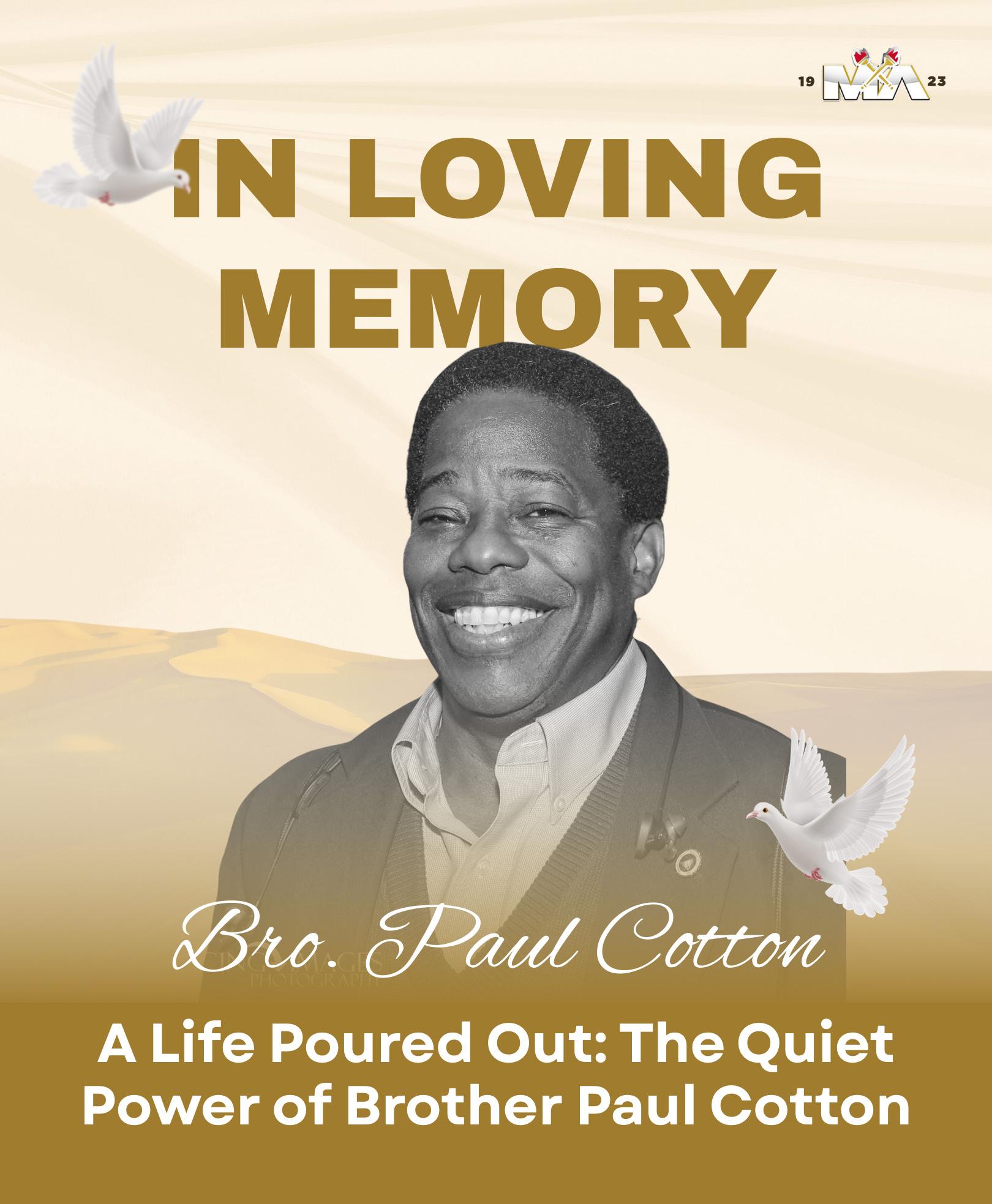
"He heals the brokenhearted and binds up their wounds" (Psalm 147:3)
Some men enter a room and announce themselves.
Others enter the world and leave it better without ever needing applause.
Brother Paul Cotton was that kind of man.
If you didn’t know him well, you might miss the depth of what he carried. He wasn’t loud. He didn’t boast. He didn’t lead with ego. But when he spoke, you leaned in because his words were thoughtful, informed, and rooted in something deeper than the moment. He lived his life the way strong men often do: focused on the work in front of them and the people coming behind them.
To hear Mu Lambda Brother James Morgan III tell it, Brother Cotton was the embodiment of servant leadership. He didn’t talk about people, he talked about history, community, and education. He didn’t dwell on past accolades, he stayed locked into how he could help students, mentees, and brothers become who they were meant to be. His excellence wasn’t performative; it was purposeful.
And purpose showed up everywhere.
At Howard University, Brother Cotton poured decades of his life into coaching, scholarship, and leadership, shaping young men on the wrestling mat and off of it, and later ensuring equity and integrity in health research at the national level. He lived by Howard’s motto, Veritas et Utilitas—Truth and Service—not as words on a seal, but as a daily practice.
That same spirit followed him into the bonds of Alpha Phi Alpha Fraternity, Inc.
As a sponsor, Brother Cotton did not merely usher Brother Morgan into the Fraternity, he covered him. He taught him the power of reputation, the responsibility that comes with being associated with greatness, and the quiet discipline of showing up prepared, informed, and on time. “Beat me to the meetings and keep your dues paid,” he said not as a joke, but as a life lesson. Excellence begins with consistency.
He also taught something rare and beautiful: the importance of remembering our elders. Brother Cotton made a point to capture moments with stalwarts of Mu Lambda and Beta Chapter not for nostalgia, but for preservation. He understood that memory is a form of leadership, and that photos become proof that legacy once stood in the room.
Even now, in the days following his transition to Omega Chapter, stories continue to surface. Each one revealing another life he touched, another door he quietly opened, another student or young Alpha he uplifted without ever mentioning it. He didn’t do good deeds for recognition. He did them because he could. Because it was right. Because that’s what brotherhood demands.
And perhaps that is the greatest lesson he leaves us with.
Brother Paul Cotton lived Esprit de Fraternité. He asked what he could do for Alpha, never what Alpha could do for him. He invested in youth. He invested in history. He invested in the future ensuring, through his generosity and vision, that generations yet unborn would have clear models of excellence to follow.
He believed in people.
He believed in us.
And he showed that belief every single day.
In the end, his life stands as a living definition of our highest call: Manly Deeds. Scholarship. Love for All Mankind
Rest well, Brother. Your work on this side is done, but your light continues to guide the journey.
~ Bro. Christopher Butts with contributions from Bro. James Morgan III
** Services for Bro. Cotton will take place at Howard University Law School on February 14, 2026; 10:00 am for Family, 11:00 am Service
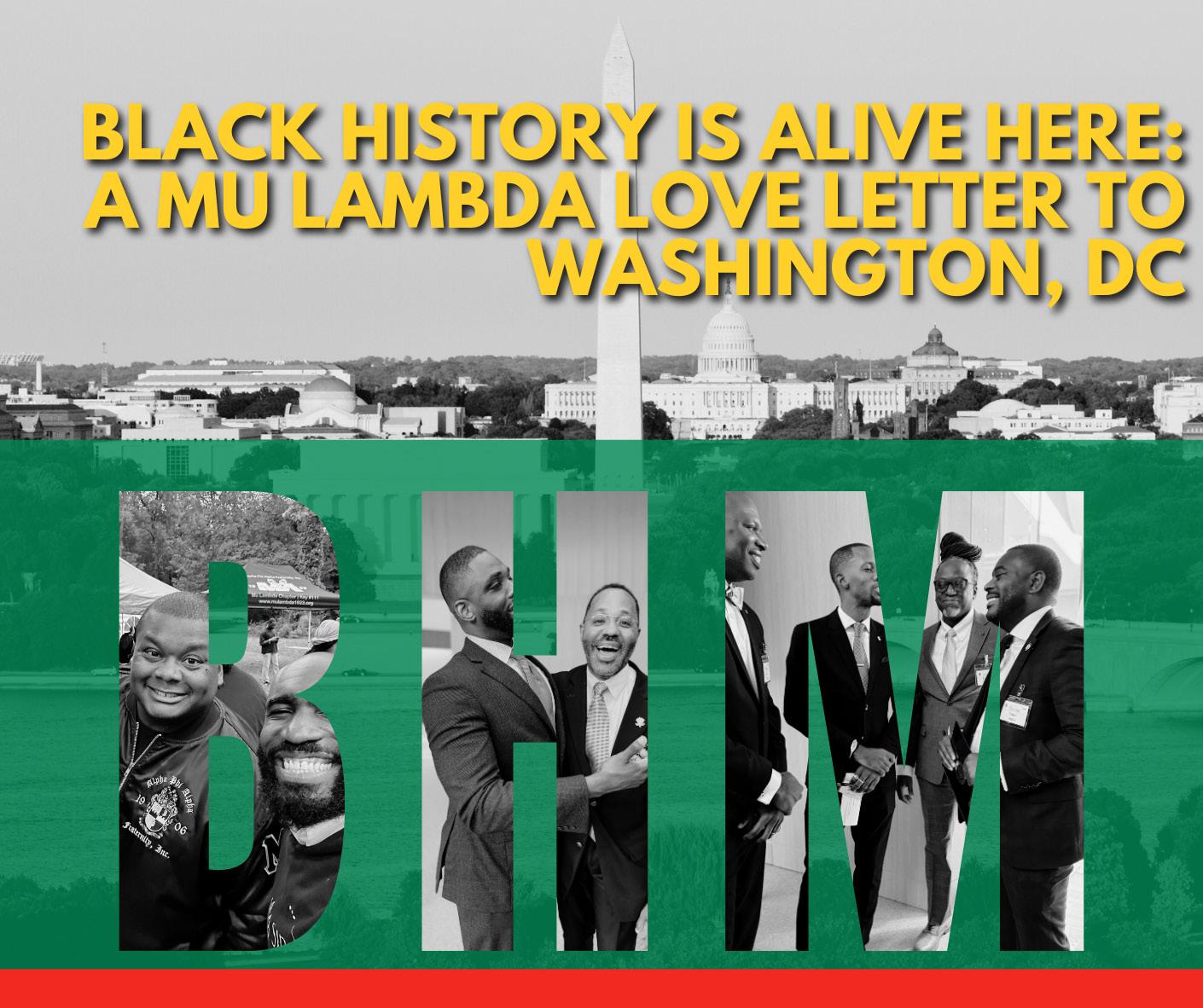
Before Black History Month became something we marked on calendars, it was already being lived right here in Washington, DC. This city has always been more than monuments and marble. It has been a proving ground for Black courage, Black intellect, and Black resistance. Every block holds a story. Every neighborhood remembers a fight that helped bend this nation closer to justice.
Washington, DC is where enslaved people once labored in the shadow of the Capitol, and where their descendants later marched, organized, legislated, and led. It is where Howard University rose as a sanctuary for Black genius when the doors of opportunity were slammed shut
elsewhere. It is where courtrooms, classrooms, churches, and city council chambers became battlegrounds for civil rights, voting rights, and economic justice. From the March on Washington to the everyday work of community builders who never made headlines, DC has always been a heartbeat of Black America.
Black History Month matters because it reminds us that these stories are not footnotes, they are foundations. It calls us to slow down, remember, and recognize that the freedoms we enjoy were paid for by sacrifice, strategy, and unshakable faith. In a city that has shaped presidents and policies, Black men and women have shaped possibility.
And in this place, where history is not behind glass but alive in the people who walk these streets, the brothers of Mu Lambda stand in a long line of men who answered history’s call. Black History Month doesn’t live only in the past, it breathes, walks, votes, argues cases, teaches classed, builds policy, and dares us to be better. And nowhere is that more evident than in Washington, DC, a city built on Black brilliance, struggle, faith, intellect, and unrelenting hope.
What follows is not just a tribute to the past, but a celebration of Black history still being made in Washington, DC by men who understood that to whom much is given, much is required.
This is where the story begins.
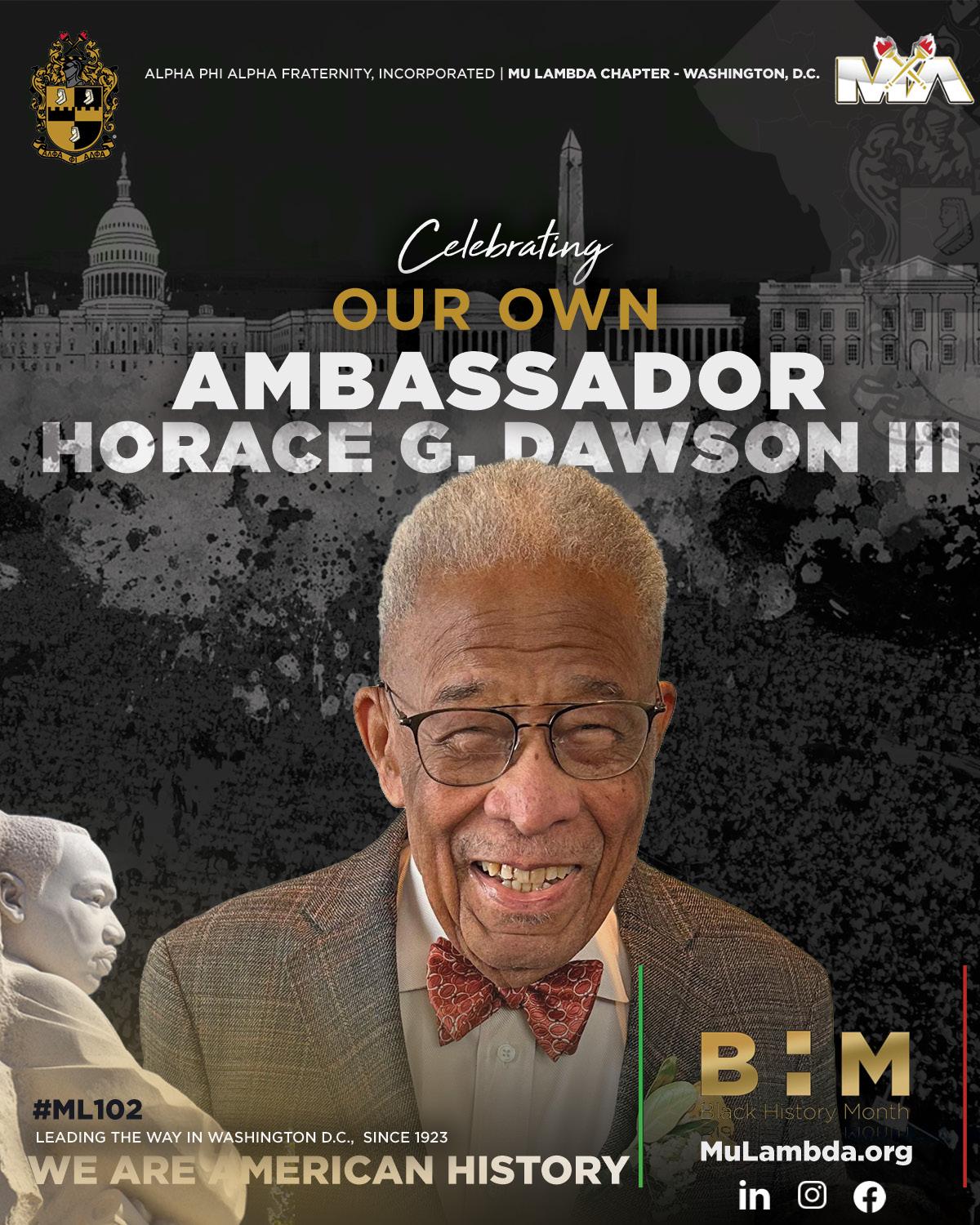
Ambassador Horace G. Dawson III
Some men build bridges with steel. Others do it with diplomacy, wisdom, and a deep understanding of power. Brother Ambassador Horace G. Dawson III represents the global reach of Black excellence, showing the world that leadership grounded in integrity can move nations. His service reminds us that our voice matters not just in DC, but across borders.
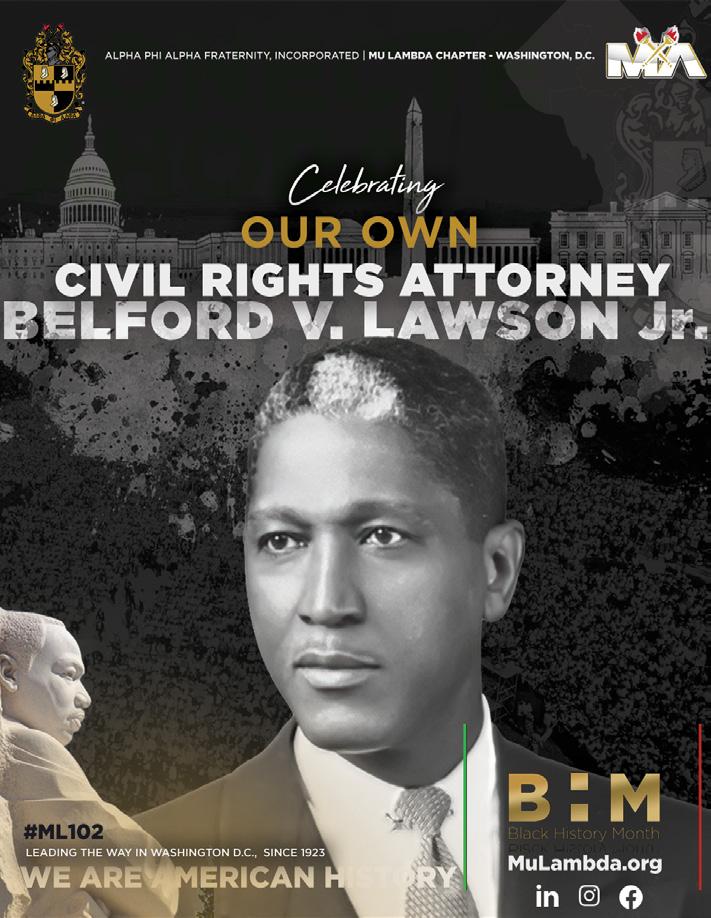
Civil Rights Attorney Belford V. Lawson Jr.
There are lawyers, and then there are liberators in suits. Brother Belford V. Lawson Jr. didn’t just argue cases; he argued for dignity. In courtrooms where justice was never guaranteed, he stood firm, using the law as a tool for freedom when the streets were already burning with injustice.
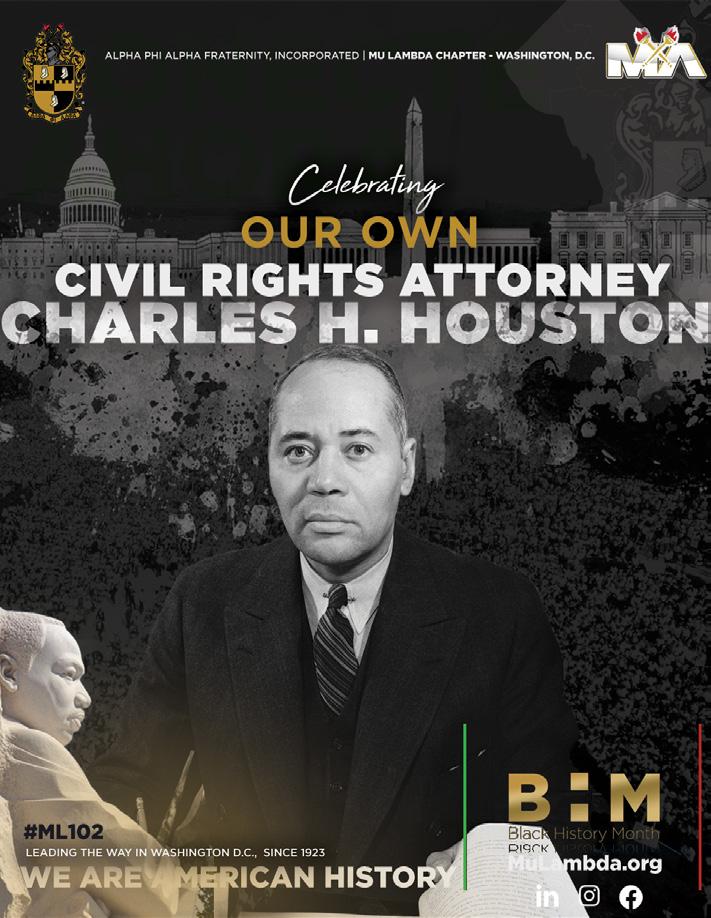
Civil Rights Attorney Charles H. Houston
If justice had a blueprint, Charles Hamilton Houston helped draw it. Often called “The Man Who Killed Jim Crow,” Brother Houston trained generations of lawyers to dismantle segregation brick by brick. He believed the law could be a weapon, or a shield, and he taught us how to wield it responsibly.
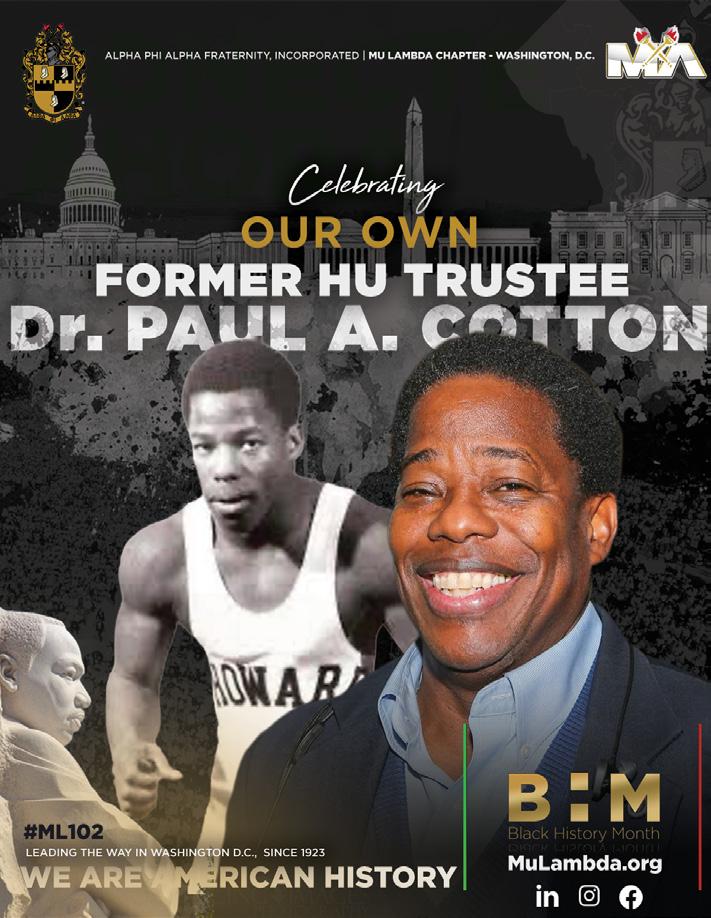
Dr. Paul A. Cotton
Brother Paul A. Cotton lived his life quietly pouring into others and somehow managed to leave a thunderous legacy. Coach, scholar, trustee, mentor, and historian, he believed Black history had to be preserved, protected, and passed on. From Howard University to Mu Lambda, his life proved that service doesn’t seek applause, it leaves impact.
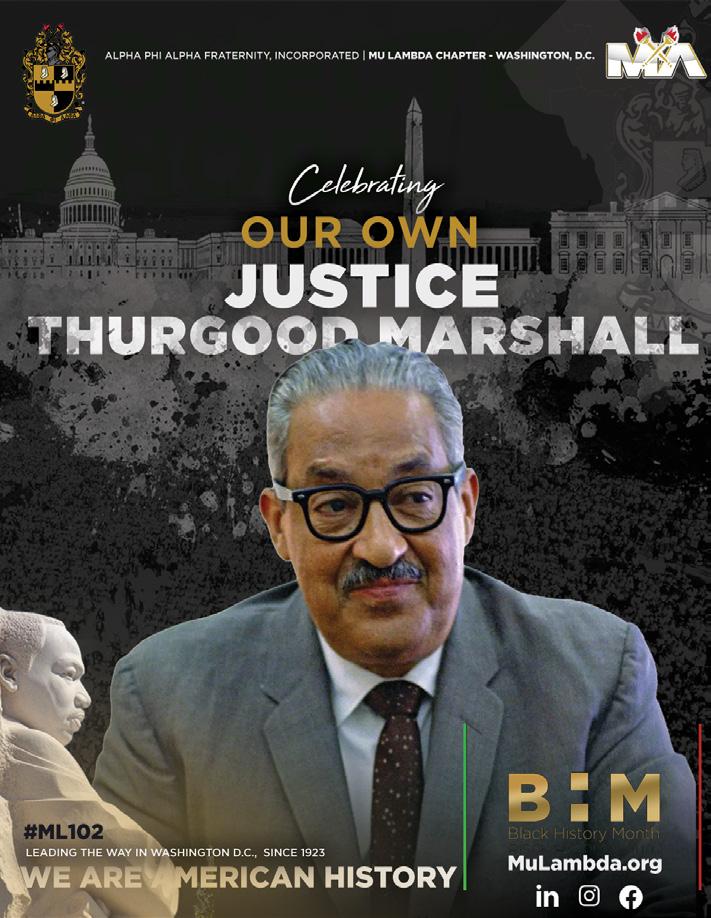
Justice Thurgood Marshall
Before he wore the robe, Brother Thurgood Marshall wore the weight of a nation on his shoulders. He argued cases knowing the cost of winning and the danger of losing. As the first Black Supreme Court Justice, he didn’t just change the law, he changed what was possible. And DC felt every ripple.
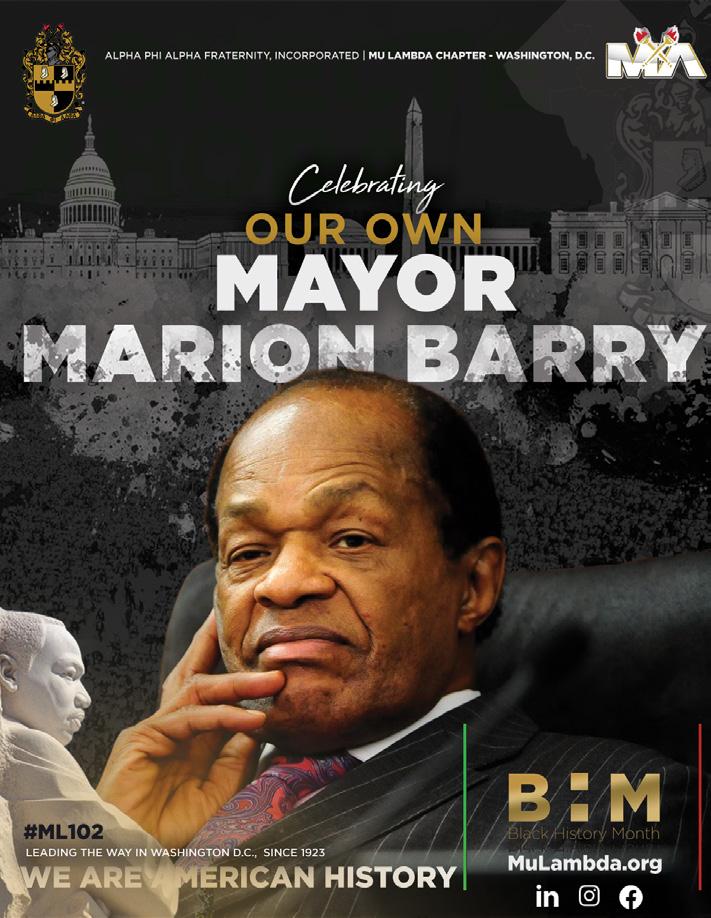
Mayor Marion Barry Love him or challenge him, you cannot deny him. Brother Marion Barry was the embodiment of a complicated city flawed, fierce, and deeply committed to Black people. He believed DC should work for its residents, not around them. His imprint on the city remains undeniable.
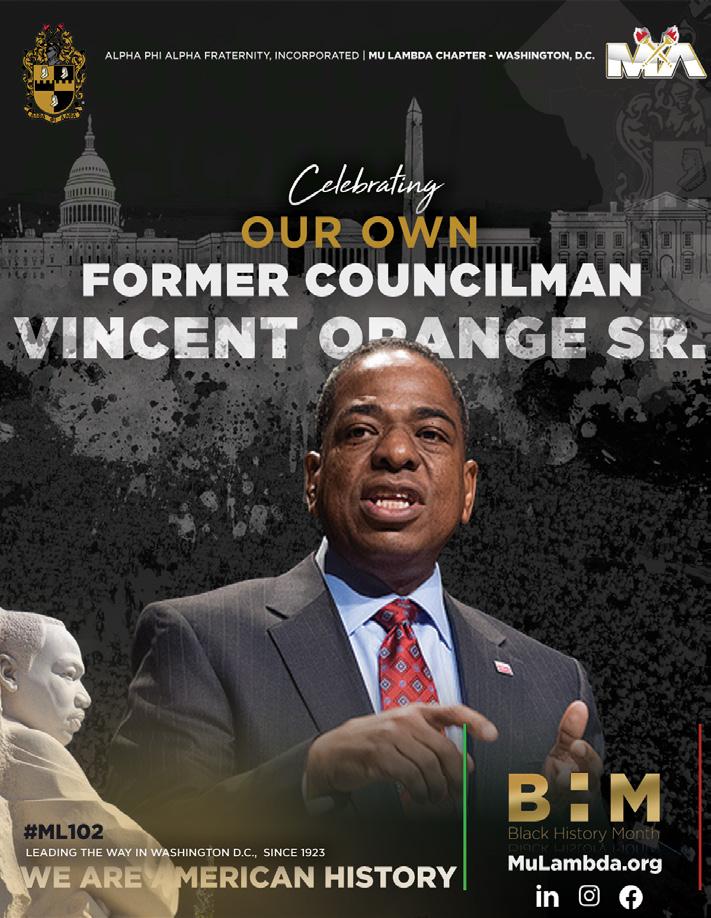
Councilman Vincent Orange Sr. Brother Vincent Orange Sr. believed that government should be accessible, visible, and accountable. He showed that public service isn’t about perfection, it’s about presence. About showing up for your people, again and again, even when the road is hard.
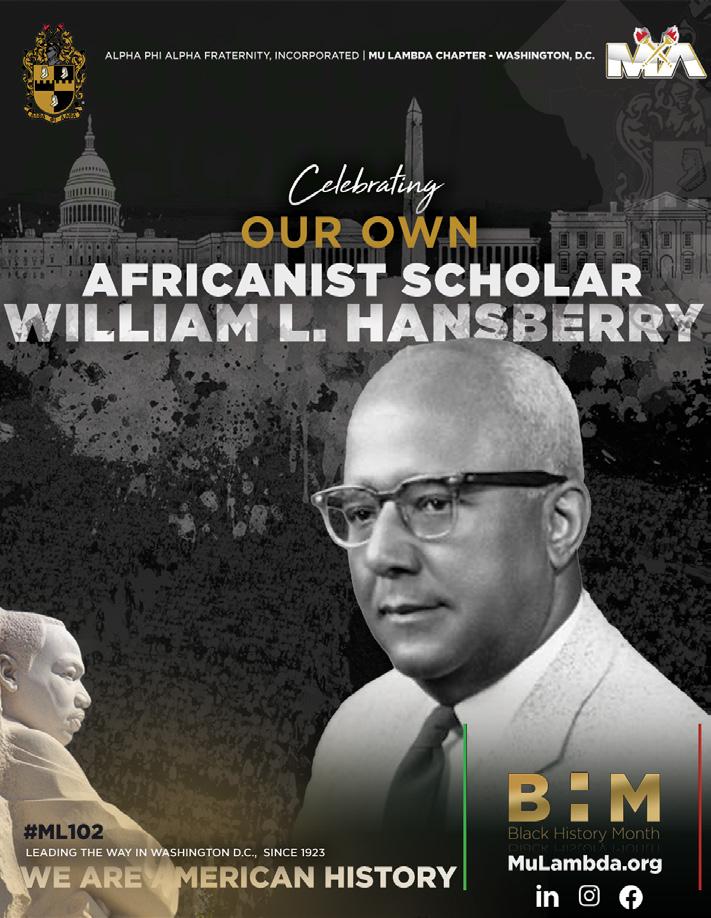
Before “Black Studies” was a department, Brother William Leo Hansberry was already teaching us who we were. He connected Africa to the diaspora and reminded us that our story did not begin in chains. His scholarship gave us roots, and roots change how you stand.
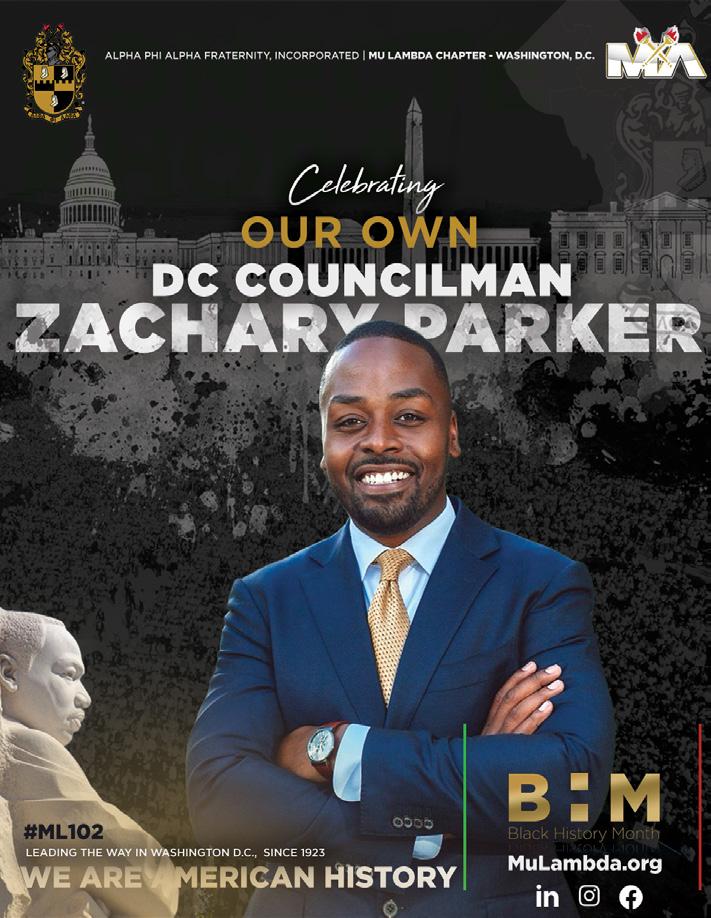
Brother Zachary Parker represents the now and the next. A leader grounded in community, education, and equity; he proves that legacy is not just something we inherit, it’s something we actively build. His work reminds us that Black history is still unfolding, still voting, still organizing.
Black History Month is not about looking back with nostalgia. It’s about looking around with clarity and forward with courage. These brothers are proof that DC’s Black history is alive, evolving, and unapologetically powerful.
They teach us this simple truth: When you serve your people with integrity, history doesn’t forget your name.
And Mu Lambda stands proud in that lineage honoring the past, shaping the present, and preparing the future.
Because Black history didn’t end.
It showed up to the meeting.
And it’s still doing the work.
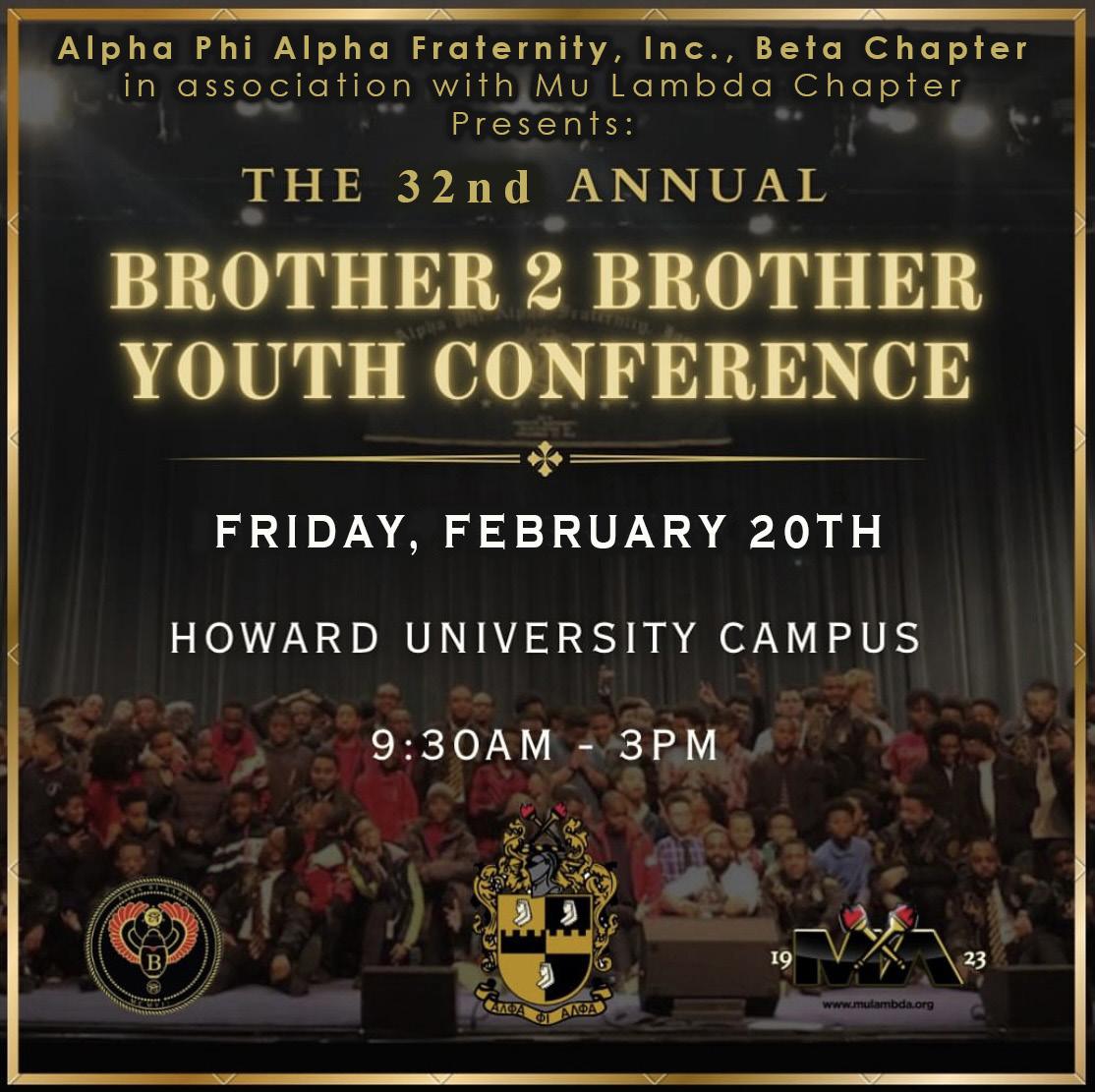
The 32nd Annual Brother 2 Brother Youth Conference aims to inspire African-American male youth in the DMV area to pursue higher education. Throughout the day, participants will engage in various workshops, hear from impactful speakers, and take part in a tour of HU’s campus.
This year’s theme, “Health Is Wealth: Understanding Male Wellness, Healing Ourselves and Communities,” emphasizes the importance of cultivating healthy lifestyles and sustainable practices. It focuses on both physical and mental health, with particular attention to the needs of African American and other historically disenfranchised communities.
The chapter will be looking for brothers who are Healthcare professionals and experts to help with the Conference in February. If you are interested in assisting please send an email to: JamesEharmon@gmail.com, aphiabeta1907@gmail.com or garymccalljr@gmail.com
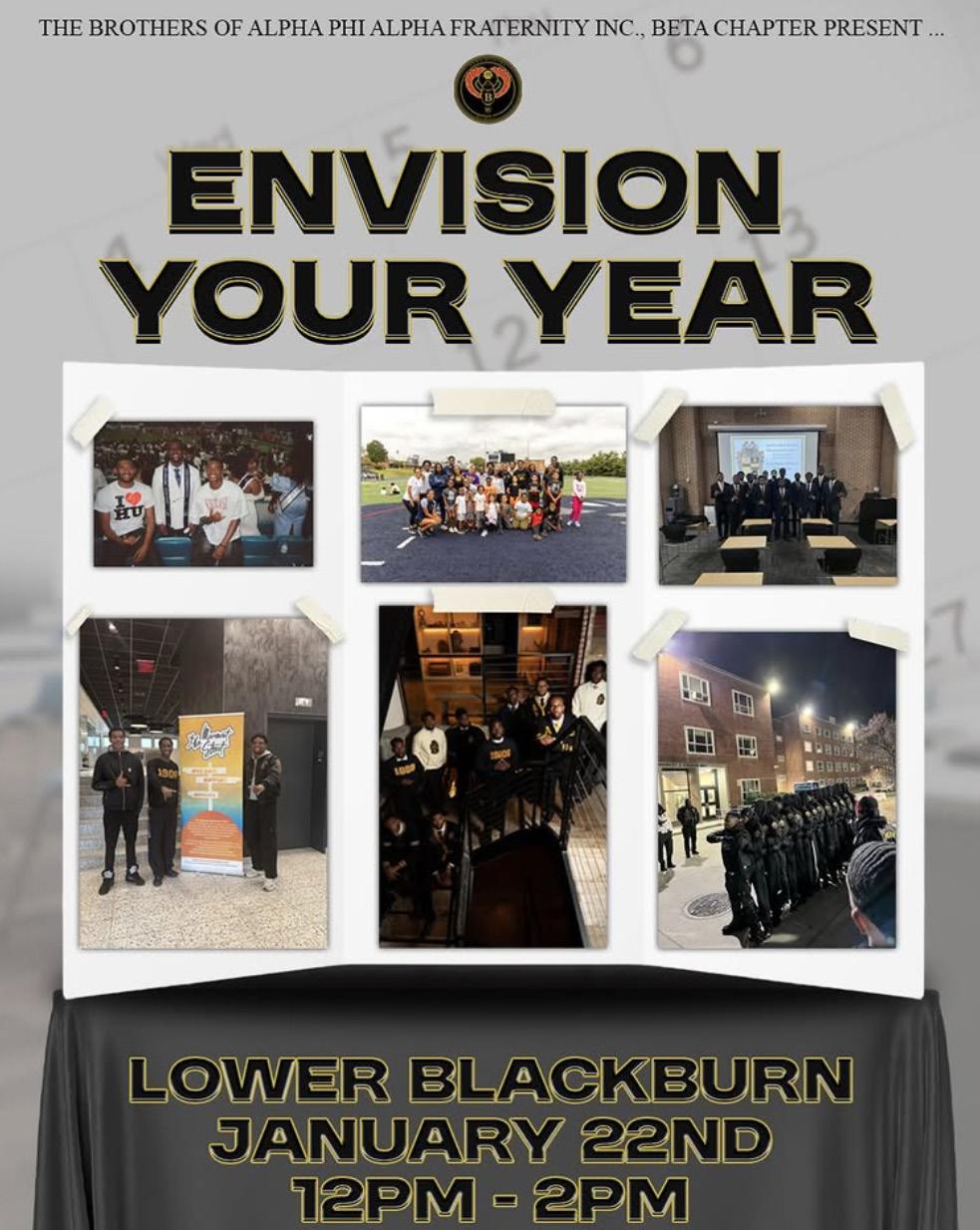
On January 22nd, The Chapter held Envision Your Year.v The Program was an interactive vision board experience designed to help students reflect on your goals, clarify your purpose, and intentionally design the future they want to create. Through guided affirmations and personal goal-setting, participants will mapped out their academic, financial, emotional, and spiritual aspirations, turning vision into action.
Tickets are limited! Scan the QR code to secure your spot and join us as we celebrate 119 years of brotherhood, brilliance, and Black excellence.

This month’s Mu Lambda Mixtape is a love letter to the Dirty South, the sound that raised us, shaped us, and taught the world how to feel the truth. From bass lines that rattle your chest to lyrics soaked in struggle, pride, and resilience, Southern hip-hop has always been about more than music, it’s been about storytelling, survival, and soul. This playlist celebrates the artists and anthems that turned regional voices into global movements, reminding us that the South didn’t just have something to say, it said it with style, swagger, and undeniable impact. Turn it up, ride the wave, and let the South speak.

As Black History Month is in full swing, it cannot be overstated that this time is not just about reflecting on our past, but about examining the stories that shape today and the years to come. February’s featured reading selection showcases Black trailblazers in business, sports, and digital spaces from the past to contemporary times. Specifically, what ties these titles together is the unadulterated fashion of the Black experience as the subject matter for each book. The most important thing is as one reads any of the titles selected, at least one of these things happen; 1. Learn something new; 2. Provoke thought; 3. Inspire you. I, for one, hope it’s all three; enjoy!
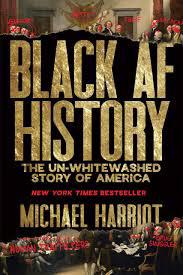
Author(s): Michael Harriott
Why it’s a must-read: American history looks very different when told without polish or permission. Harriott dismantles long-held myths and replaces them with sharp, often uncomfortable truths. Its humor keeps the lessons cutting but accessible.
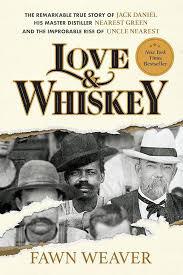
Author(s): Fawn Weaver
Why it’s a must-read: A buried story sits at the center of one of America’s most recognizable brands. Weaver restores Nearest Green to his rightful place while tracing the impact of truth on legacy and ownership. The narrative moves easily between history and modern entrepreneurship.
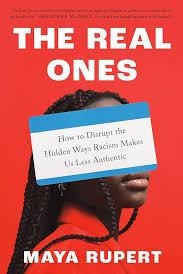
Author(s): Maya Rupert (Note: Slated for February 10th release)
Why it’s a must-read: Everyday choices are often shaped by systems we are taught not to name. Rupert examines how racism pressures people to self-edit at work and in life, while pushing readers toward the type of honesty that is both personal and political.
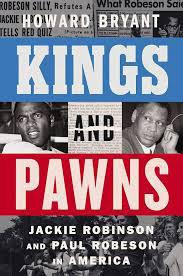
Author(s): Howard Bryant
Why it’s a must-read: Two legends followed radically different paths through power and protest. Their stories reveal how their home country rewards certain challenges while suppressing others, forcing a hard look at who controls legacy.

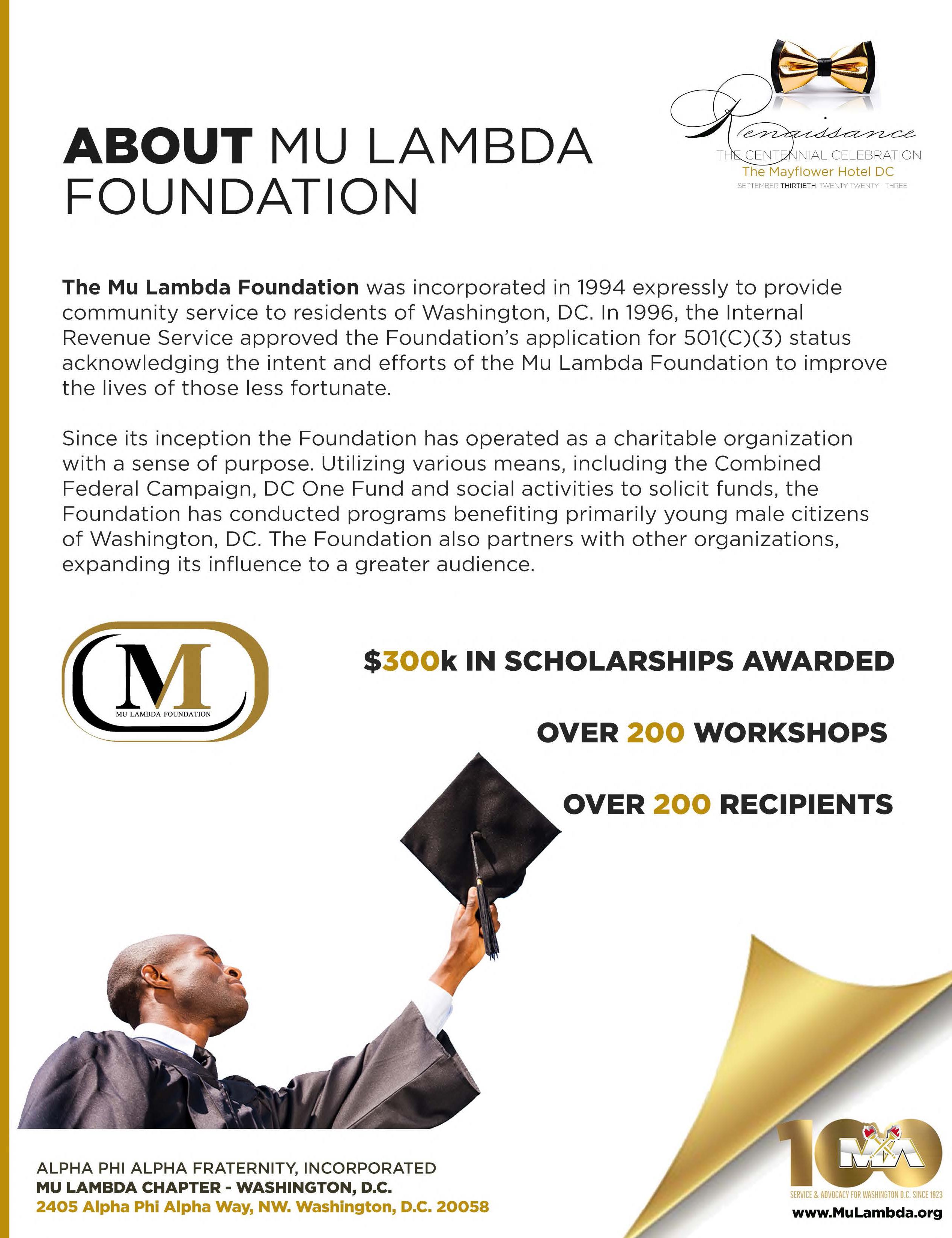
Brothers, it is that time of year when we begin to think in the spirit of giving and giving thanks. In that spirit, the Mu Lambda Foundation participates in two key funding programs through which federal and District of Columbia employees can share the gift of the giving.
The Combined Federal Campaign - CFC (https://www.opm.gov/combined-federal-campaign) is a resource that allows U.S. government employees to make regular payroll deductions in support of the Mu Lambda Foundation and its charitable and community service programs.
The DC One Fund (https://os.dc.gov/page/dc-one-fund-each-one-give-one) provides an opportunity for employees of the District of Columbia to do the same. All donations through these funds are tax deductible and deducted from your paycheck regularly. What could be an easier or better way to support the programs you care about?
As open season begins for 2023, you may plan your weekly, biweekly, or monthly contributions to the Mu Lambda Foundation by contributing to charity number 66770 in the CFC, and number 9556 in the DC One Fund.
Let’s make 2023 the best year yet for supporting youth and abused women in the DC area. Thank you for your continued support.
Bro. Kent Benjamin
The Mu Lambda Foundation meetings are monthly on the third Thursday of the month.
meeting is February 19, 2026

Thursday, January 8
Saturday, January 10
Wednesday, January 21
Thursday, February 5
Saturday, February 7
Wednesday, February 18
Chapter Meeting
Alpha Wives Meeting
Eboard Meeting
Chapter Meeting
Alpha Wives Meeting
Eboard Meeting
Thursday, February 19 Foundation Meeting
Thursday, March 5
Saturday, March 7
Wednesday, March 18
Thursday, April 2
Saturday, April 4
Wednesday, April 15
Thursday,April 16
Chapter Meeting
Alpha Wives Meeting
Eboard Meeting
Chapter Meeting
Alpha Wives Meeting
Eboard Meeting
Foundation Meeting
Wednesday, April 15 -19 Eastern Region Convention
Thursday, May 7
Saturday, May 9
Wednesday, May 20
Chapter Meeting
Alpha Wives Meeting
Eboard Meeting
Thursday, May 21 Foundation Meeting
Thursday, June 4
Saturday, June 6
Chapter Meeting
Alpha Wives Meeting
Thursday, June 18 Foundation Meeting
Friday, June 19
July 2026
Juneteenth Day
Chapter Vacation
Saturday, August 15
Thursday, September 4
Chapter Retreat
Chapter Meeting
Friday, September 5 ICED or Neat
Saturday, September 6
Alpha Wives Meeting
Wednesday, September 17 Eboard Meeting
Thursday, September 18 Foundation Meeting
Thursday, September 25 The F1RST Breakfast
Wednesday, October 1
102nd Charter Day
Thursday, October 2 Chapter Meeting
Saturday, October 11
Chapter Cookout
Wednesday, October 15 Eboard Meeting
Thursday, October 16 Foundation Meeting
Thursday, November 6
Chapter Meeting Fri-Sat, Novembr 7-8 Annual District Conference
Saturday, November 8
Alpha Wives Meeting
Wednesday, November 19 E-board Meeting
Thursday, November 20 Foundation Meeting
Thursday, November 27 Thanksgiving Day
Thursday, December 4
Thursday,December 4
Founders’ Day
Chapter Meeting
Saturday , December 6 Founder’s Day Breakfast
Saturday , December 6 Karaoke Fundraiser
Wednesday, December 17 E-Board Meeting
Thursday, December 18 Foundation Meeting
Thurssday, December 25 Christmas








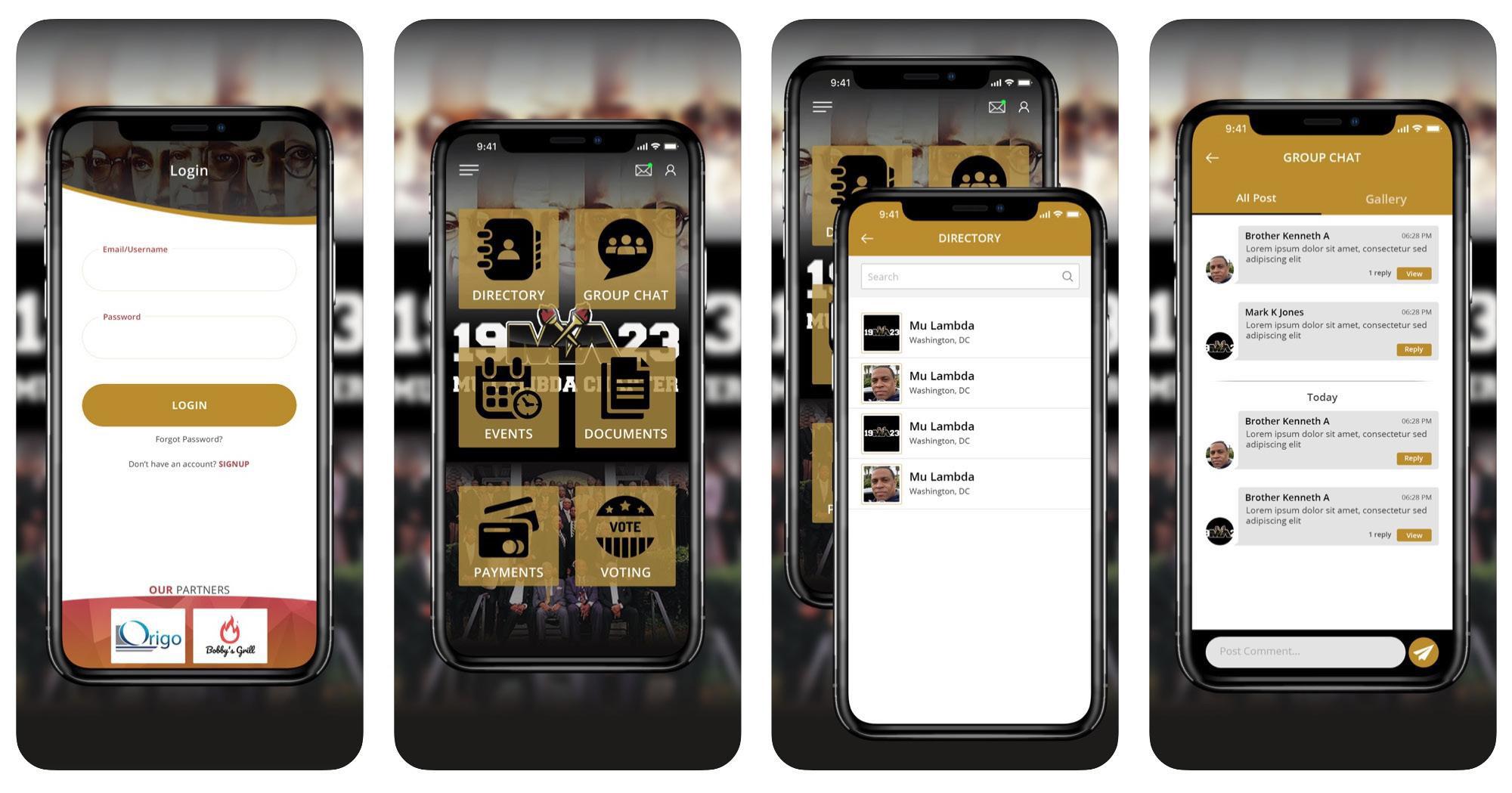
This official Mu Lambda Chapter App is for members of the chapter to find out about our events, chat with Chapter members, View Chapter Documents, View Chapter Directory, View our monthly magazine (The Torch) Pay Chapter Dues and much more. The ability to effectively communicate with Chapter members will help us continue to develop leaders, promote brotherhood and academic excellence while providing service and advocacy for our community.

Founded in 1976, House of Ruth empowers women, children and families to rebuild their lives and heal from trauma, abuse and houselessness. Our continuum of services encompasses enriched housing for families and single women, trauma-informed childcare, and free counseling to empower anyone who is a survivor of trauma and abuse.
Mission: House of Ruth empowers women, children and families to rebuild their lives and heal from trauma, abuse and houselessness.
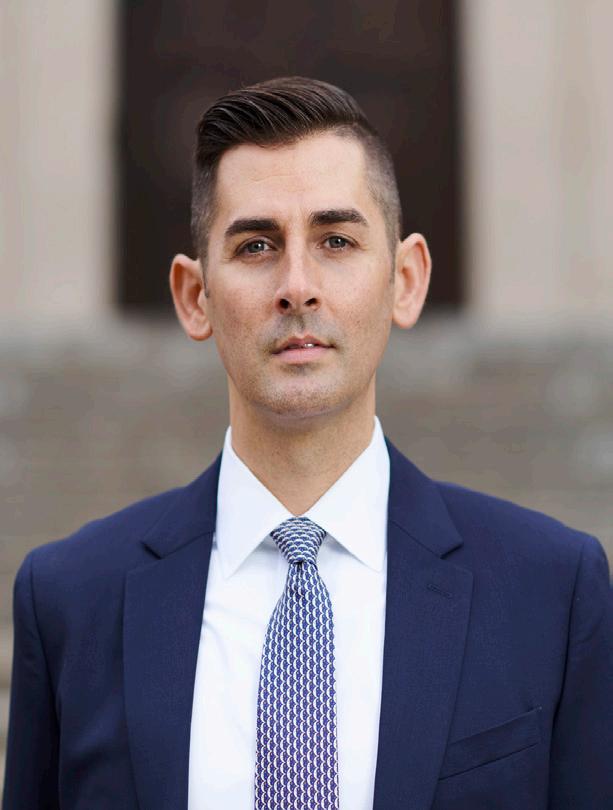
BRO. CHRISTOPHER BUTTS EDITOR OF THE TORCH TORCH@MULAMBDA.ORG
There are moments when history feels distant sealed in archives, framed on walls, softened by time. And then there are moments when history presses close, reminding us that legacy is not something we inherit quietly, but something we are asked to carry forward with intention.
This issue of The Torch is one of those moments.
As I reflect on the stories within these pages, I am struck by a recurring truth: light does not arrive by accident. It is lit by men and women who choose service over silence, purpose over comfort, and brotherhood over self. The men of Mu Lambda stand in that tradition as guardians of a legacy that demands more than remembrance; it demands action.
Like any good mystery, our journey as Alphas is layered. There is what is visible, the programs, the recognitions, the milestones and then there is what lies beneath: the quiet mentoring, the disciplined preparation, the daily decisions to show up informed and engaged. It is in these unseen moments that character is revealed and legacy is formed.
ALPHA QUOTE TO SERVE BY...
“Now is the accepted time, not tomorrow, not some more convenient season. It is today that our best work can be done and not some future day or future year.”
Brother W.E.B. DuBois,
This issue invites you to pause and consider your own role in the larger story. What knowledge are you preserving? Who are you preparing? What light are you passing forward? History, as we know, favors those who are deliberate, those who read closely, listen carefully, and understand that meaning is rarely found on the surface.
May this edition of The Torch challenge you to look deeper, to move with intention, and to remember that every Alpha is both a student of history and an author of what comes next.
The story continues. Let us write it well.
Brothers,
It is that time of year again.
The fraternity’s fraternal year runs January 1st to December 31st.
Mu Lambda’s 2025-2026 fraternal year runs September 1, 2025 to June 30, 2026. The chapter does not meet during July and August.
It is now time to pay your 2025-2026 dues which will cover you from January 1, 2026 to December 31, 2026.
Ways to make payment:
1. You can pay your dues on mulambda.org by clicking the dues tab at the bottom left of every web page.
2. Bring a check to the chapter meeting.
3. You can pay on the Mu Lambda App
4. Mail it to:
Financial Team
Alpha Phi Alpha Fraternity, Inc.
Mu Lambda Chapter 2405 First Street, NW Washington, DC 20001

An Alpha Phi Alpha man’s attitude should not be “how much can I derive from the Fraternity” but “how much can I do for the Fraternity?” In proportion to what he does for his Chapter and for Alpha Phi Alpha will a member receive lasting benefits from the Fraternity to himself in the way of self-development by duty well done, and the respect of the Brothers well served.
A member’s duties should be:
1. Prompt payment of all financial obligations, the prime requisite for successful fraternal life.
2. The doing of good scholastic work in his chosen vocation, thereby accomplishing the real end of a college course.
3. The reasonable endeavor to participate in general college activities and social service and to excel therein.
4. The proper consideration of all things with appropriate attention to the high moral standard of Alpha Phi Alpha.