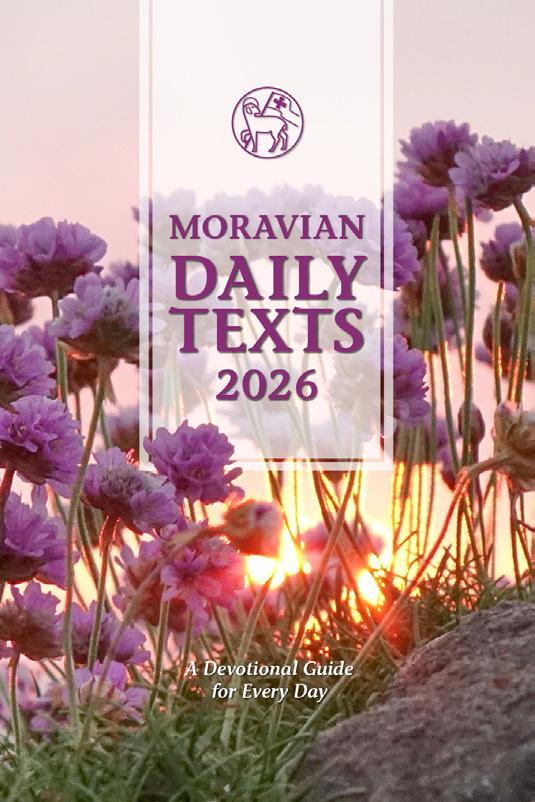
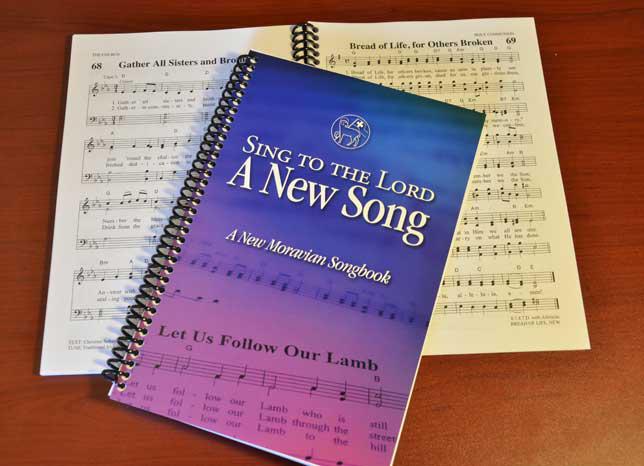
The 2026 edition of The Moravian Daily Texts continues a nearly 300-year-long tradition of offering an inspirational connection to the Holy Scriptures every day.
Each entry in this beloved daily devotional includes “watchwords”—Old and New Testament verses to accompany readers throughout the day— combined with beautiful hymn texts and heartfelt prayers selected and written by Moravians across North America.
The Moravian Daily Texts 2026 hardcover, paperback, large print and journal editions, along with German, Spanish and French translations, are in-stock now. Order yours—or one for a friend or family member—at store.moravian.org or by calling 1.800.732.0591, ext. 703.
PONDERINGS
Find the light in the darkness
Ah, late November and early December. As the daylight shortens and the winter winds make themselves felt, the increasing darkness can make us wonder, “where is the light?”
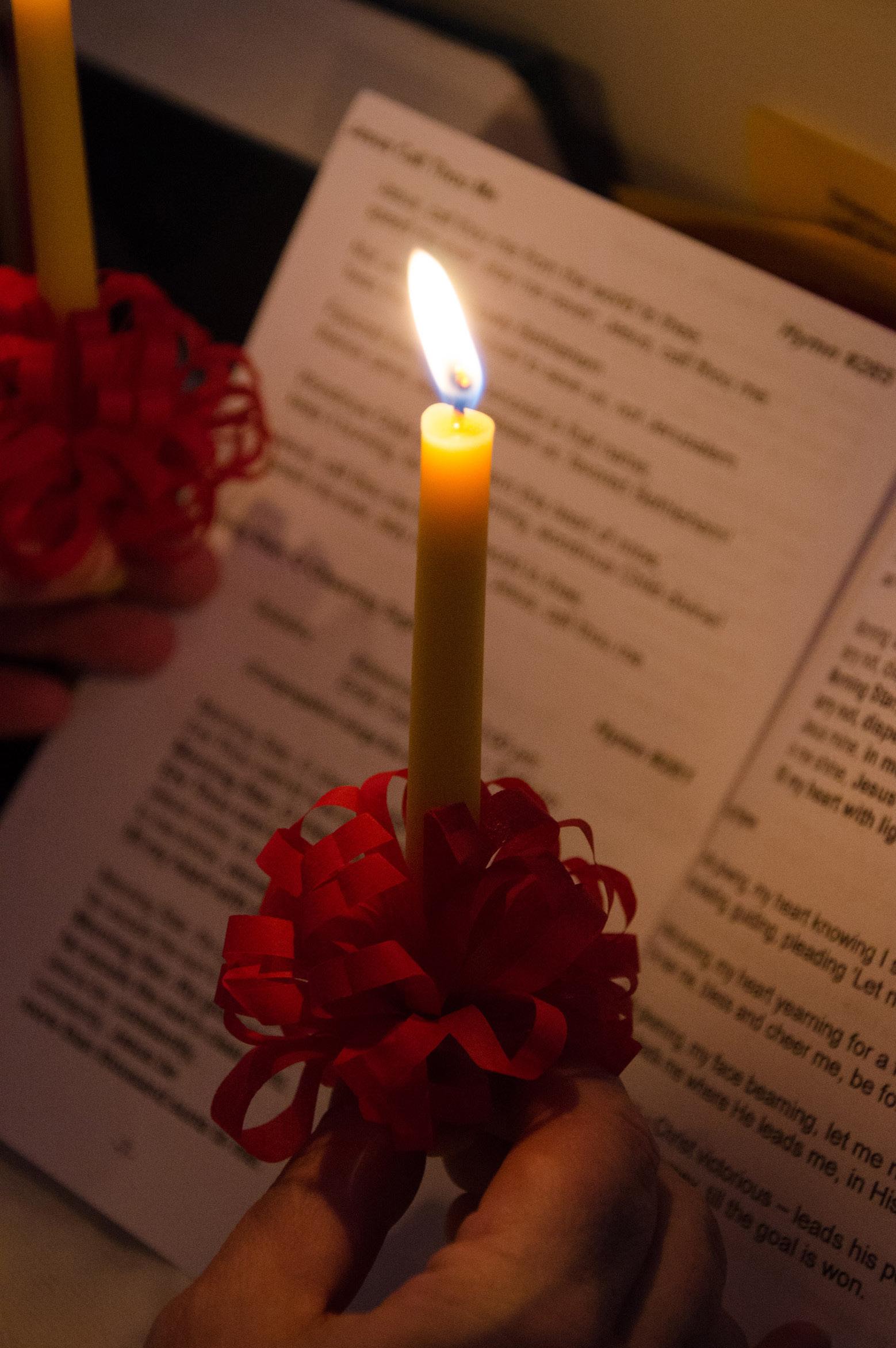
Fortunately, for Christians, this darkest time of the year coincides with Advent: a time of hope and promise of light to come. As Moravians, we have traditions that point us to that light—the lovefeast candle, the thoughts of the bright Morningstar, and songs that invite us to find, and share, the light.
At this time of year, I often find myself humming the opening strains of one of my favorite Advent hymns, “People in Darkness Are Looking for Light” (hymn 266 in our Moravian Book of Worship). I know this piece is a favorite of many Moravians during Advent for the hope and light it brings.
“People in darkness are looking for light, come, come, come Jesus Christ,” wrote the hymn’s composer, Dosia Carlson. Throughout its four stanzas, Carlson shares the many ways people are hopeful for the coming of Jesus: “people with sickness praying for health,” “people in trouble would like to be free,” “people with arguments want to agree,” all followed by the lines “come, come, come Jesus Christ.” Then, each stanza closes with “These days of adventure when all people wait are days for the advent of Love/Hope/ Peace/Joy.”
I had the joy of speaking with Ms. Carlson in 2020, a year before she passed. I’ll never forget that conversation with the bright and cheerful 90-year-old with a lifelong service to the church (she was an ordained UCC pastor). She was so pleased to know her words were still inspiring people and proud that her work was part of our Moravian hymnal.
If you’re one of those “people in darkness looking for light,” I think you’ll see some of that light in the pages of this issue of the Moravian Magazine—in the work of ministries, missionaries, educators and dedicated Moravian Christians making a difference in the world. I look forward to sharing more of those bright spots in the coming year, too.
I hope as you celebrate the coming of Jesus during the coming weeks and prepare to begin a new year, you, too, find ways to push aside the darkness and be a light to others.
Peace,
Mike Riess, Editor
(ISSN 1041-0961)
Issue 4 2025, Vol. 56, No. 4
Return Undeliverable Canadian Addresses to: OnTrac International, 41 Northern Stacks Drive, Suite 200 Fridley, MN 55421 email: file@ontrac.com
Official Journal, The Moravian Church in North America, Northern and Southern Provinces
Published by the Interprovincial Board of Communication, 1021 Center St., Bethlehem, PA 18018.
Subscription rates:
$15.00 per year, U.S.A. & Canada; $18.00 per year, all other countries.
Individual copies available for $3.00 each.
The Moravian is sent to the families of the Moravian Church as a privilege of membership. Non Profit postage paid at Bethlehem, PA. Circulation: 14,000
Continuing The North American Moravian, The Moravian and The Wachovia Moravian.
Amy Frantz Gross, chair. Dave Bennett, Christy Clore, Shana Angel, Peggy Carter, Austin Craver, Lynnette Delbridge, Bruce Nelson, Dominique Richards, John D. Rights
Design by Michael Riess, IBOC.
Address all correspondence regarding articles, subscriptions, or advertising to The Moravian, 1021 Center St., Bethlehem, PA 18018 Phone: 610.867.0593, x702 800.732.0591
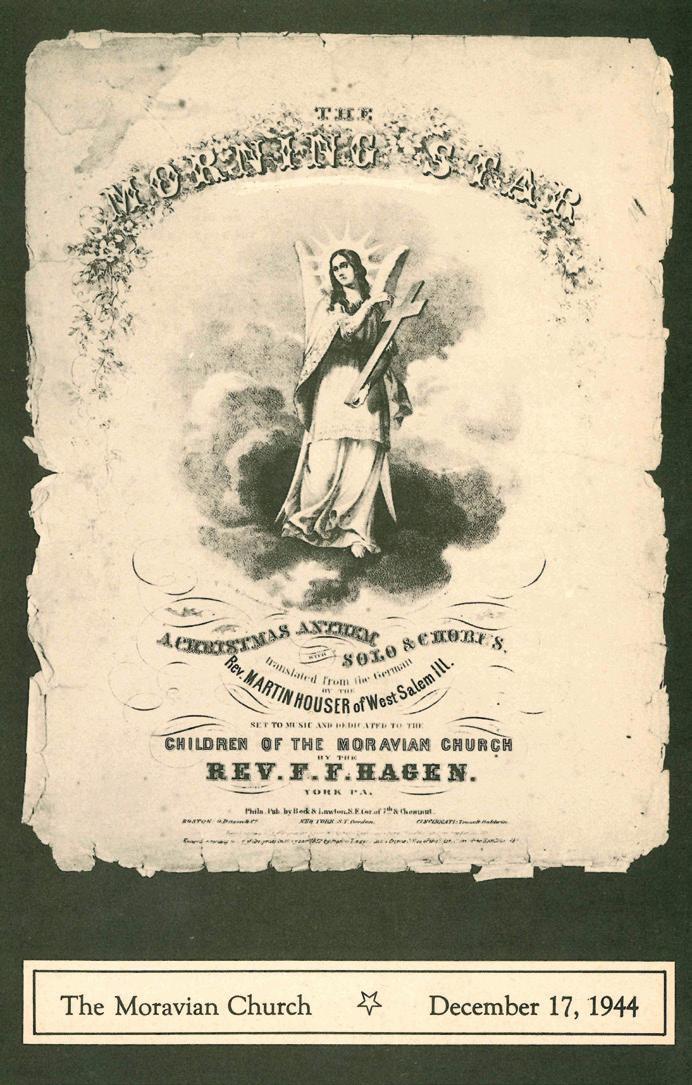
Ed. Note: While digging through our collection of old Moravian Church bulletins, we came across this from December, 1944, describing the traditional Christmas hymn, Morning Star, O Cheering Sight. While definitely a piece of its time (more than 80 years ago!) it highlights the history and meaning of this tradition still sung today in many Moravian congrega tions.
December 17, 1944
Anyone who has ever heard the performance of the Moravian hymn Morning Star during the Christmas season will agree that it is an experience not soon to be forgotten. This music was composed more than a century ago by Francis Florentine Hagen. It is said to have been composed in Salem in 1842. It is based on an alternating solo and chorus.
was published in the Moravian hymnbook in 1876, but accompaniment which adds to its charm was not included.
Custom in some Moravian congregations decrees that a child, singing the solo, with the answering responses either by choir or Sunday-school children.
This anthem is referred to in 1856 as having acquired a traditional place in the Christmas service of the Moravian Church. It quickly gained as affectionate place in the hearts of those to whom it was familiarly and to this day Moravians never seem to tire of hearing it. A version for soprano solo and mixed chorus
The composer, Francis F. Hagen, was born in Salem, North Carolina, October 30, 1815. He was educated in Salem, then in Nazareth Hall at Nazareth, Pa., and finally at the Theological Seminary at Nazareth. He became a teacher in Salem and later at Nazareth Hall. In 1844, he was ordained to the ministry of the Moravian Church and served several places in the Southern Province, then York, Pa.; New Dorp, Staten Island, NY; and Harmony, Iowa. Injured in an accident, he was forced to retire to Lititz, Pa., where he devoted his time to literary and musical pursuits. Mr. Hagen died at Lititz on July 7, 1907, at the age of ninety-one.
Well sung, Morning Star will hold its own with any of the popular Christmas songs. That grand old anthem, pride of Christmas even Around yon churches’ arches caroled near and far; Such songs the angelic hosts, hailing on orient heaven
That Morning Star!
—General William E. Doster
A MORAVIAN EDUCATION
An interview with Dr. Christian Rice Moravian University’s new Vice President and Dean of School of
Theology
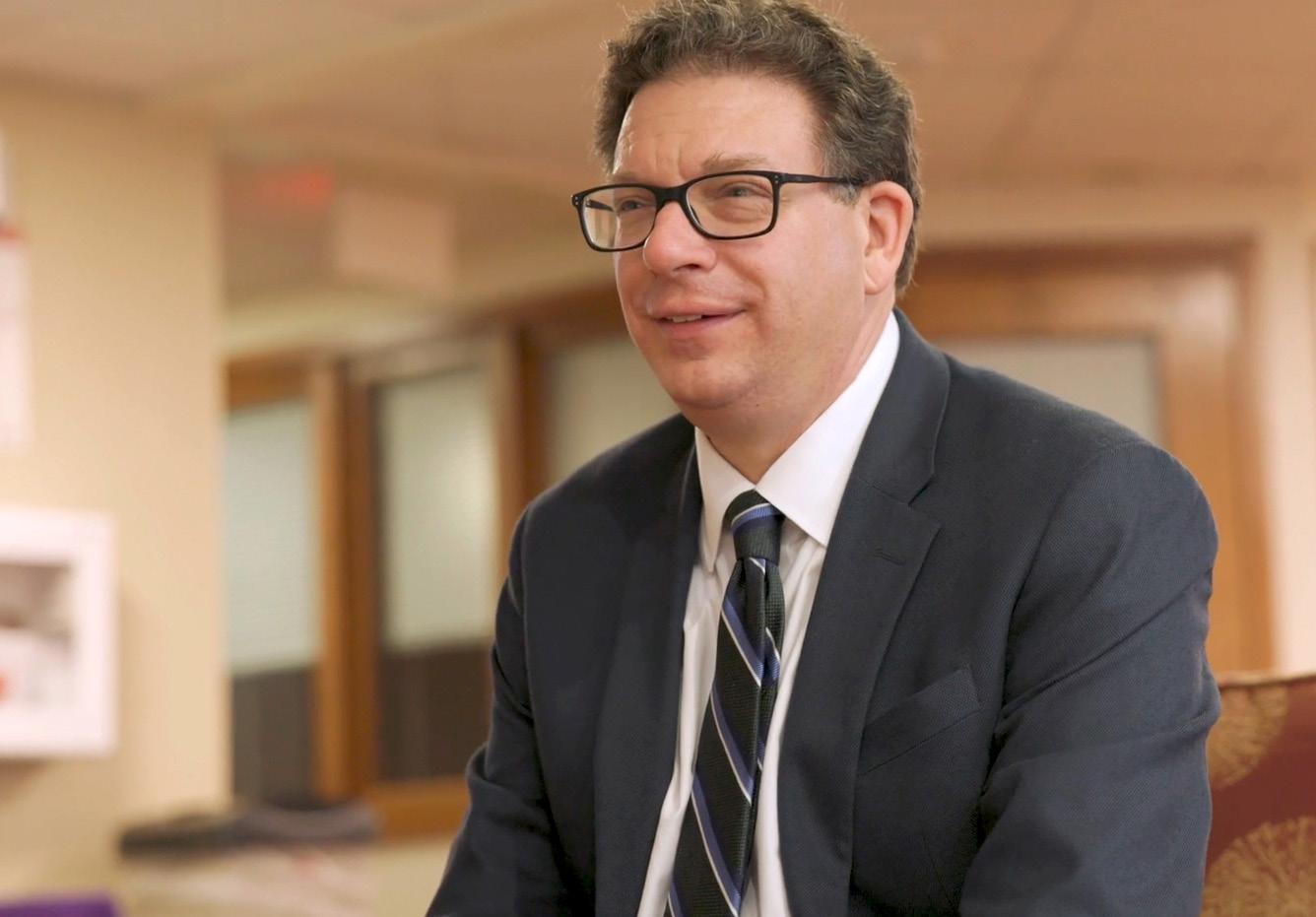
Earlier this year, Moravian University welcomed Dr. Christian Rice as its new vice president and dean of the School of Theology. This role includes oversight of both Moravian Theological Seminary in Bethlehem and Lancaster Theological Seminary in Lancaster — two schools with deep commitments to theological education and service to the church.
Rice joins Moravian University at a time of exciting transformation and renewed vision. With over two decades of experience in higher education and theological leadership, Dr. Rice’s appointment continues a long line of influential and innovative Moravian educational leaders, each of
whom left a lasting mark on the seminary and its culture.
Before his appointment, he served at Ursinus College in Collegeville, Pennsylvania, where he held positions as Assistant Dean for Civic Engagement, Associate Dean for Civic Learning, and Assistant Professor of Philosophy and the Humanities. His tenure there included the co-founding of the Melrose Center for Global Civic Engagement, a hub for students to explore social justice issues in both local and global contexts.
A committed lay leader in the Moravian Church, Rice has also served on the board of trustees of Moravian Academy since 2014
and played a key role in its 2020 merger with the Swain School.
Craig Larimer, director of communications and marketing for Seminary and World Heritage at Moravian University, sat down with Dr. Rice to learn more about his background, his vision for seminary education, and the future of Moravian University’s theological mission.
Larimer: Could you share a bit about your academic journey — what degrees and experiences have shaped your path into higher education and theological leadership?
Rice: I had the privilege of receiving a theological education from Harvard Divinity School, which opened my eyes to many new ideas. My doctorate is in Christian Ethics, and my scholarship has examined the foundations of human rights. Harvard Divinity School also made me much more aware of systemic injustice, and I’ve carried that passion with me through my career up to this point, which has focused on building community partnerships and nurturing the vocational discernment of my students.
What drew you specifically to the world of seminary education and to Moravian University at this moment in your career? After a fairly long career of college teaching, I felt that I was ready for a new leadership challenge. I’m a lifelong Moravian and have a desire to serve my Church in a professional capacity.
As you step into your role as Vice President and Dean of the School of Theology, what are your initial goals or expectations for the first year?
One of my initial goals is to focus on ensuring that the School of Theology is a vibrant community that attracts many different
types of students and serves as a meeting place for the communities it serves.
I’m very excited about the new degree that we now offer: the Master’s in Religion and Public Life. During this first year, I hope to meet alumni from both seminary communities and learn from them about what has been so meaningful about these institutions.
We are at an exciting inflection point, as the two schools have come together under a new curriculum. I look forward to learning from the past and having that inform us as we move forward into this new chapter!
“The School of Theology needs to continue to be creative and offer degrees and certificates that address society’s challenges, while also honoring the importance the seminaries hold in educating future clergy.”
What is your philosophy of education — especially in a theological and spiritual context?
I see all education, to some degree, as part of an individual’s vocational discernment process. Theological education often does this more intentionally by inviting the head into a dialogue with the heart. The goal is to shape the person holistically and not just to equip them with skills and knowledge.
What do you see as the biggest opportunities for seminary education today? What are the most pressing challenges we face in theological education — locally and nationally?
I think it’s safe to say that right now our society is suffering from a deficit of compas-
(Continued on next page)
Christian Rice
(Continued from previous page)
sion. Kindness has been put on notice as signifying weakness. In this environment, a seminary education is exactly what is needed. I like to think of a seminary education as the place where intellectual curiosity meets moral creativity. We need more members of our society equipped to challenge narratives that demonize those who have been marked as different.
A challenge we are facing is that fewer people are pursuing the ordained ministry
“In order for our churches to be strong years from now, it’s absolutely essential for the seminaries to attract students and provide a dynamic and transformative education.”
these days. The School of Theology needs to continue to be creative and offer degrees and certificates that address society’s challenges, while also honoring the importance the seminaries hold in educating future clergy.
Are there specific programs at Moravian or Lancaster Theological Seminary that you’re particularly excited about?
I am very excited about the new Master of Religion and Public Life degree. This affords professionals who are not necessarily interested in church leadership a way to engage our curriculum and improve their religious literacy — knowledge that is helpful in any number of professional settings, like health care and nonprofit management.
The integration of Moravian and Lancaster seminaries is a historic and evolving partnership. What potential do you see in this relationship?
I see great potential in this relationship! In fact, a large part of my enthusiasm for seeking this position is due to the synergy I can see unfolding between both seminaries. Both seminaries have very unique historical perspectives and traditions, as well as very talented faculty. We are just at the beginning of understanding the many ways in which each can inform the other.
What role do you hope the seminaries will play in outreach to churches, alumni, and the wider community?
In order for our churches to be strong years from now, it’s absolutely essential for the seminaries to attract students and provide a dynamic and transformative education. The School of Theology has plans to be more intentional about outreach to our churches and alumni. In particular, we need our youth to learn about theological education and ministry as a possible vocation, and, to that end, we are planning on traveling to youth convos and churches to get the word out.
You’ve had a long connection with the Moravian Church. How has your faith tradition shaped your approach to leadership and service?
I was born into the Moravian Church, and it has shaped me in countless ways. We know the Moravians are committed to servant leadership, even going to places around the world where no one else would.
Witnessing the selfless dedication of the church’s leaders is something that has shaped me since I was young. I was blessed to spend nearly 15 years working with the late Bishop C. Hopeton Clennon on service
projects in Jamaica. He was the model for me of love in action.
What does it mean to you personally to be in Bethlehem and to serve in this role within the Moravian community?
Bethlehem is a very special place to me personally. Central Moravian Church is my home church, so this feels like I’m coming home to serve the community and church that I love so dearly. It is the fulfillment of a lifelong dream for me to serve in this role.
With Moravian University located in the heart of a UNESCO World Heritage site, how do you see theological education connecting with this historic designation?
One of the interesting things about our World Heritage site designation is that it is a recognition of the living Moravian community that still inhabits these historic sites. A World Heritage site within a liv-
ing church community allows a platform to share a faith narrative that often is not available to churches. As people enter these sites, the church, as well as the greater Moravian community, including the Seminary and University, has an opportunity to share our own sacred stories and actions of compassion and justice as we welcome visitors.
What gives you the most hope as you look ahead to the future of Moravian’s theological programs?
I have already been amazed at the warmth of both seminary communities. The spirit is flowing abundantly, and this provides a foundation for us to flourish as the new School of Theology. There is so much to be excited about!
Craig Larimer is director of communications and marketing for Seminary and World Heritage at Moravian University,
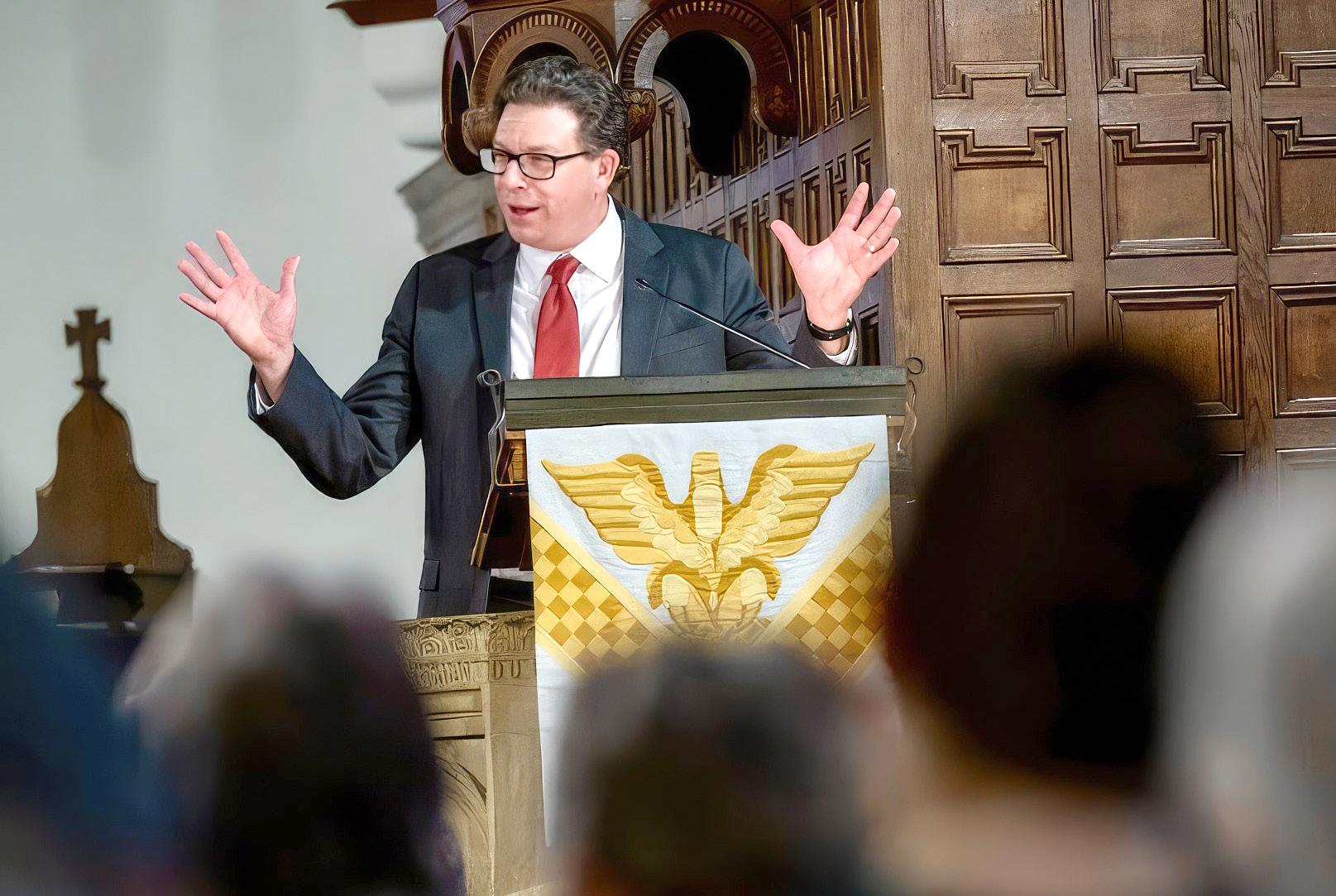
Dr. Christian Rice, vice president and dean of Moravian University School of Theology, presents at Lancaster Theological Seminary
Preparing
A MORAVIAN EDUCATION
COMPASS
Preparing leaders for ministry and service
Moravian’s School of Theology launches new program for leadership and ministry
Moravian University’s School of Theology has launched Compass: Preparing Leaders for Ministry and Service, a comprehensive lifelong learning program designed to equip leaders for effective service in today’s evolving religious landscape.
of our existing programs, we’re creating a more comprehensive and sustainable pathway for ministry preparation.”
COMPASS
Program structure and features
Preparing leaders for ministry and service
Compass offers two certificate tracks to accommodate diverse learning goals:
Following extensive consultation with denominational leaders, program alumni and faculty, the innovative program launched this fall, representing a thoughtful integration of ministry preparation and service leadership development.
Compass combines the proven strengths and foundational principles of the former Crossroads Lay Leadership Program and The Pennsylvania Academy of Ministry (PAM), creating a unified approach that builds upon decades of successful leadership training.
“This program reflects our commitment to nurturing leaders who can navigate the evolving landscape of faith-based service with wisdom, competence, and compassion,” said the Rev. Dr. Lindsey Scott, Director of Strategic Programs, Lifelong Learning, and the Doctor of Ministry Program. “By combining the best elements
• Certificate in Ministry Formation: A foundational program consisting of 12 six-week classes designed to equip participants with essential knowledge for effective ministry service.
• Certificate in Ministry and Leadership Formation: An enhanced program featuring the foundational classes plus five specialized “deeper dive” classes for advanced learning.
Compass provides the following features designed to enhance the learning experience:
• Flexible format: Classes are structured in six-week blocks, allowing participants to complete a full certificate in one year by taking two classes simultaneously, or to progress at their own pace
• Evening classes: Classes meet in the evenings on weekdays
• Advance planning: Course offerings will be published well in advance on a
regular rotation, enabling participants to plan their studies and completion timeline effectively
• Online learning: All classes are offered fully online, typically gathering participants for 1.5 to 2 hours per week via Zoom, with approximately three hours of additional work outside synchronous class time each week
• Continuing Education Units: Each class awards approximately three CEUs upon successful completion
Denominational collaboration
Compass has been developed in close collaboration with denominational partners. The Certificate in Ministry Formation has been designed with Moravian denominational leaders to address their specific needs, while the Certificate in Ministry and Leadership Formation aligns with the Marks of Faithful and Effective Ministry of the United Church of Christ. The program also meets the needs of participants from Lutheran, Presbyterian, and other denominational contexts.
“We’re already working with participants from multiple denominational backgrounds,” noted the Rev. Dr. Darryl Stephens, Director of the new Compass program and former Director of PAM, “This ecumenical approach reflects the collaborative spirit that has always characterized our ministry preparation programs.”
“This new program integrates a Moravian ethos of humble, relational theology into an ecumenical curriculum,” reflects the Rev. Dr. Jennika Eckhaus, Director of Moravian Church Relations. “It welcomes diverse leaders preparing them for varied ministry contexts.”
Continued commitment to excellence Compass preserves the core elements that made the previous programs successful while enhancing sustainability and accessibility:
• Calling exploration: An ideal environment for individuals exploring a sense of call to ministry or seeking to deepen their faith journey
• Practical skills development: Focus on essential, practical skills for effective church leadership
• Accessible learning: Welcomes individuals from diverse educational backgrounds and denominational contexts
• Manageable workload: Designed for busy schedules, accommodating those currently working or volunteering in other capacities
• Community Connection: Emphasizes strong participant connections and experiential, applied learning within a supportive community of learning
The collaboration between Moravian University and the two seminaries builds upon their successful partnership in joint Master’s and Doctoral degree programs, which began in Fall 2024. This expanded cooperation in non-credit classes strengthens the institutions’ collective capacity to prepare leaders for ministry and service.
To register and learn more, visit https:// learn.moravian.edu/browse/compass. For more information, email compass@ moravian.edu.
Note: Significant financial support is available for Moravians in the Northern Province to participate in Compass offerings. To learn more, contact your district office or visit their websites.
IN OUR COMMUNITIES
Tricklebee Café introduces a “community-powered refrigerator”
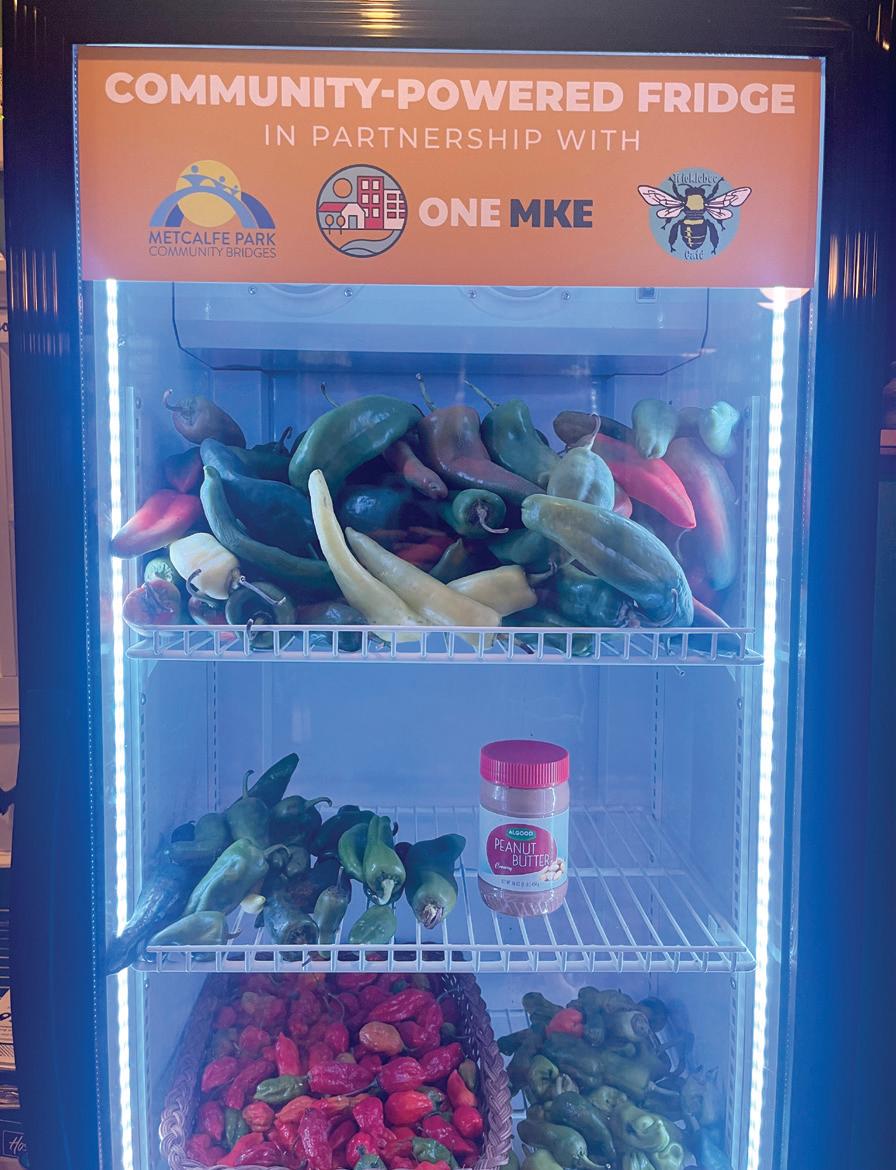
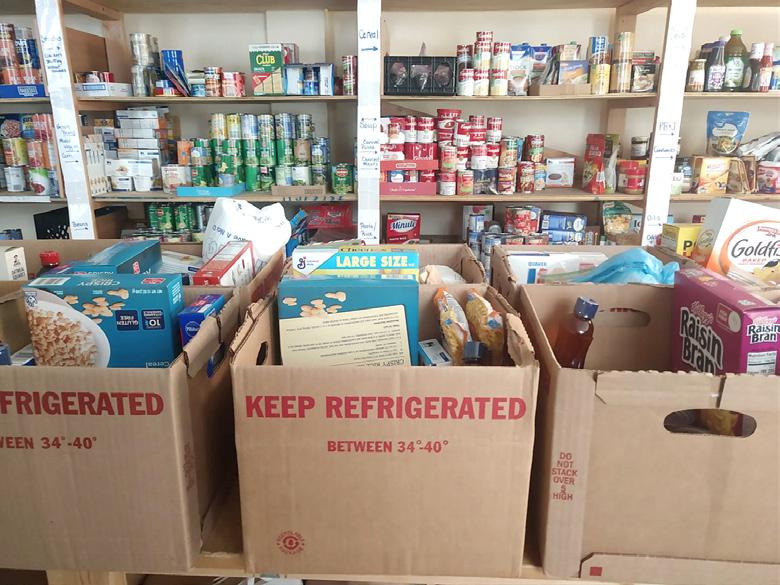
When a local grocery store closed in Tricklebee Café’s Milwaukee, Wis., neighborhood, exacerbating the food desert in their area, the café decided to help widen food access by creating and hosting a “community-powered refigerator” for anyone who is hungry to stop by and “shop” groceries for their homes.
Working in partnership with local nonprofits, Metcalfe Park Community Bridges and One MKE, this new resource for community members is stocked by neighbors, local businesses and farms to be shared with anyone in need. All are welcome to give and take fresh produce, deli items, drinks and anything else that needs refrigeration.
Tricklebee Café has a mission to offer healthy meals, food-service training and spiritual nourishment to the community in which they are located. They have an inclusive space that fosters connections, health and goodwill—all while creating a place for the food insecure to gather, eat and learn
about healthy food choices. Not only does the café help with the physical needs from hunger but also serves as a gathering place for neighbors to find peace and reconciliation. The new refrigerator ministry is an extension of their work.
Anytime access
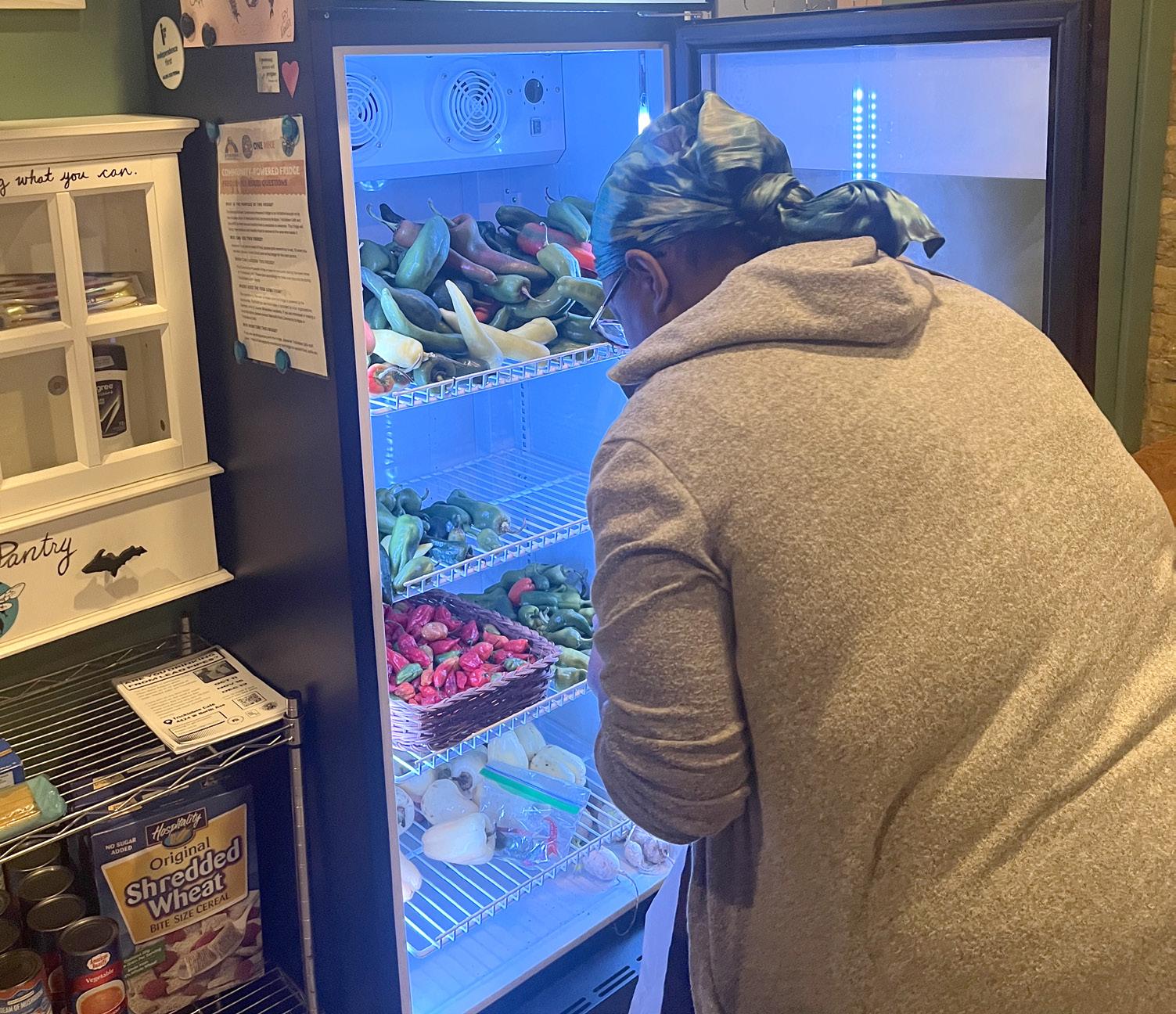
Neighbors can stop by anytime Tricklebee is open to access the fridge, The community-powered fridge (CPF) is stocked with excess produce donations from the West Allis Farmers Market and items donated by the Outpost Natural Foods Co-op. Additionally, generous neighbors bring produce from their gardens and purchase extra food when they go grocery shopping to help stock the CPF.
“It is a delight to watch people come in with their bags of food to fill up the fridge while smiling,” said Rev. Christie MelbyGibbons, executive director of Tricklebee Café. “The only challenge so far, if you want to call it that, is the fridge gets SO full! We
need to check on the produce daily and make sure to remove anything that is beginning to spoil.”
The new CPF is bringing new people into Tricklebee Café. “We are seeing neighbors we’ve never served meals to before come in and get groceries,” said Christie. “They love to learn about our mission and many of them become customers. We’ve also seen several of our customers utilize the fridge.”
This new ministry has become the focal point of the front dining room. Moving furniture around, the fridge is located under the antique communion table that is mounted above the café kitchen window.
Christie reflected, “I see the café ministry and the addition of the community-
powered fridge as an extension of Holy Communion. When Jesus of Nazareth gave thanks and broke bread and shared drink with friends and neighbors, he said, ‘Do this.’ The ‘this’ is breaking bread and sharing drinks until our neighbors become family.”
LaToya Russell, a fridge “shopper” said, “I like that there is a variety in the fridge. Every time I come here there is something different in there. The food is fresh and delicious.” LaToya continued, “I like when there are prepared meals in there. There’s even food in there for people who don’t follow a vegan diet and that works because everyone is welcome.”
To learn more about this ministry, visit http://tricklebeecafe.org/ and check out their ‘Café in the news’ page.
MORAVIAN MUSIC
Translating Moravian chorales into “Banjo”
When we think of Moravian music traditions, it’s typically the organ or trombone or choirs that spring to mind; if one is from New York, steel drums might enter the picture. The banjo, on the other hand, is not one usually associated with Moravian chorales.
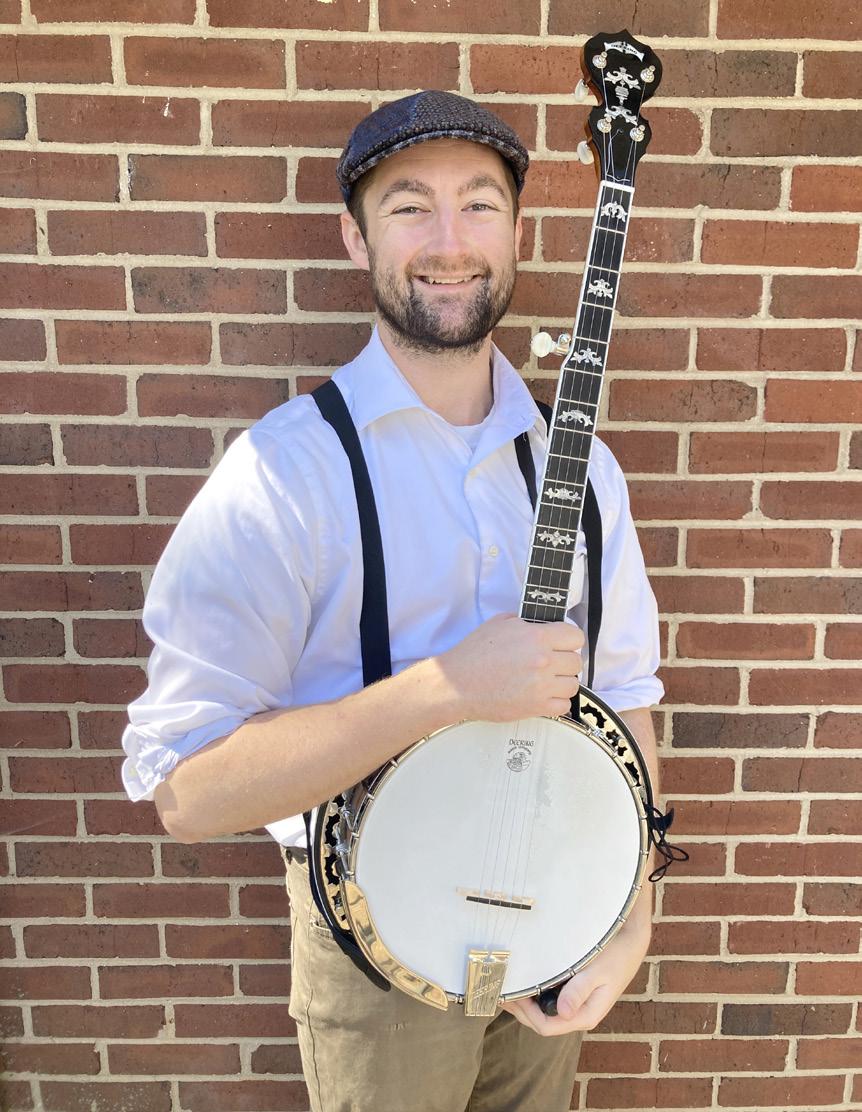
That changed this year at the hands of the Rev. Adam Goodrich, pastor of Union Cross Moravian Church in Winston-Salem, N.C. This fall, Adam completed an album entitled “Fierce Was the Wild Billow,” which collects his recordings of more than 50 Moravian chorales played on the banjo.
“The banjo is often considered a folk instrument, and Moravian chorales are in a way a kind of folk music,” explains Adam. “They are tunes people know by heart, they represent important aspects of life, and they have been passed down by a small community of people over the years.”
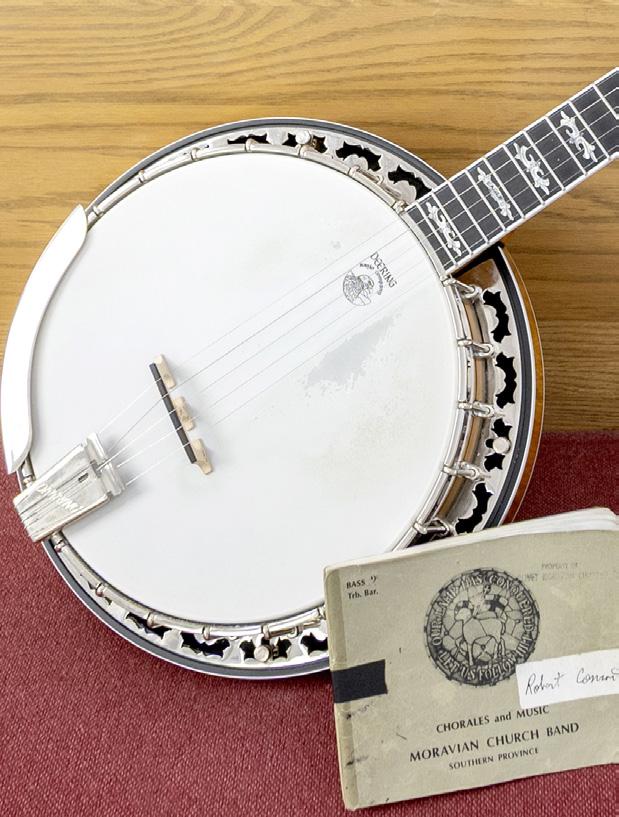
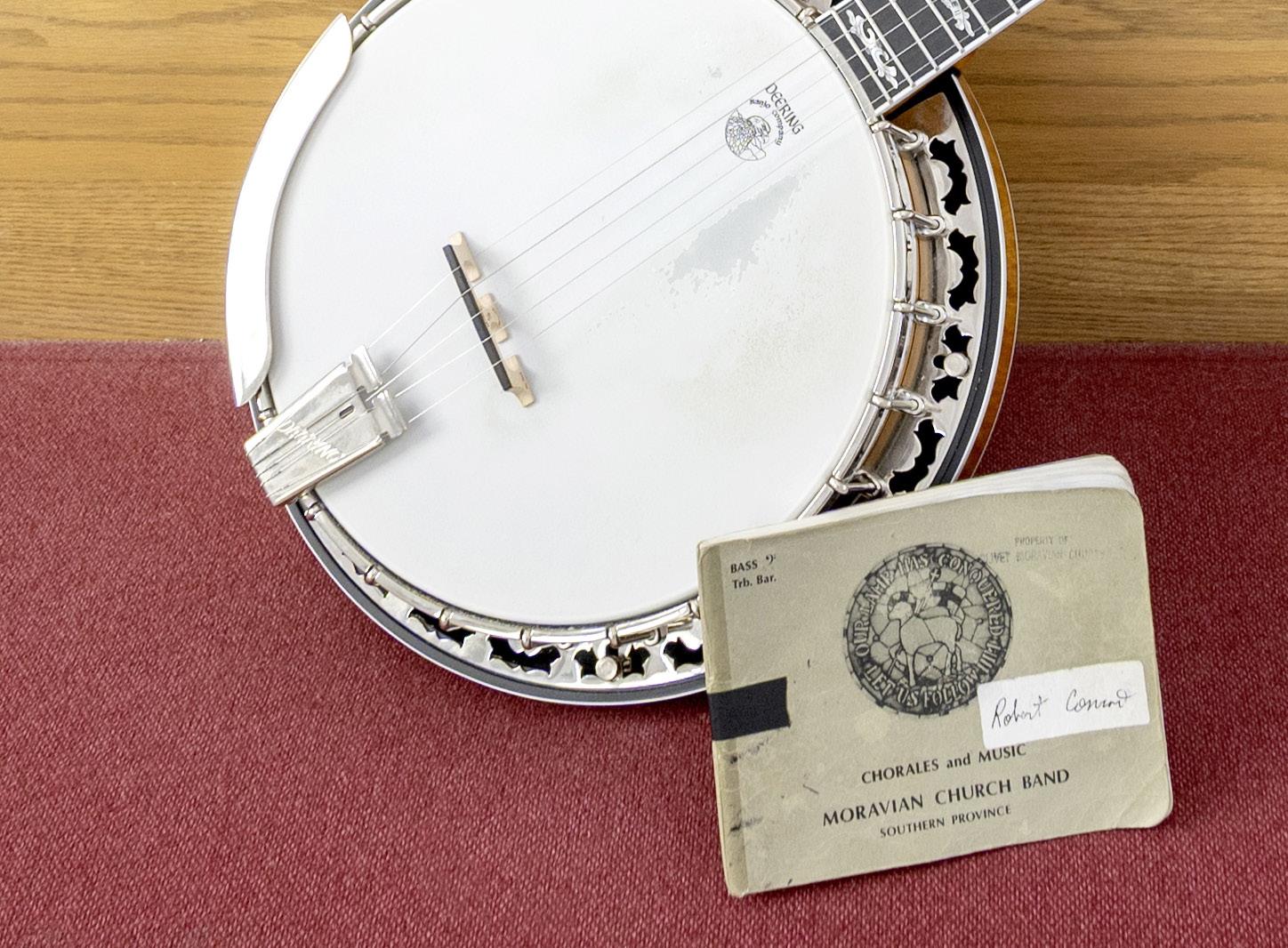
Adam took inspiration for this fivestringed effort from his grandfather, Robert Conrad. “My grandfather was a band director at Olivet Moravian Church in WinstonSalem, N.C. for more than 50 years,” says
Adam. “He was an active trombone player in the Moravian funeral band, the Bethabara concert band, and the Salem band.
“In addition to a variety of brass instruments, my grandfather also played the mandolin, and was quite skilled at playing by ear. He lived and breathed music and immersed me in music from an early age as well,” continues Adam. “He would often hum chorale tunes, and when I went anywhere with him in his pickup truck, we would usually listen to classical music and recordings from the low brass together.”
Robert got Adam started playing the baritone horn, and he planted some seeds that would later grow into Adam’s passion for stringed instruments. After teaching himself to play guitar, mandolin, and banjo, Adam eventually discovered that the open tuning of the banjo lends itself well to the Moravian chorale tunes his grandfather loved.
Translating into “Banjo”
Adam took a two-step approach to bring Moravian chorales to the banjo. “I started by recording the chorales on my baritone horn,”
explains Adam. “I then used those recordings to figure out how to play the chorales by ear.”
According to Adam, banjo playing is generally divided into two main styles — clawhammer style and three-finger style — each with different musical philosophies that are often at odds with one another. “This album features some songs back-to-back in both styles,” says Adam. “This represents the Moravian commitment to unity in diversity, and is a nod to the Moravian Easter tradition of playing hymns antiphonally.”
“Fierce Was the Wild Billow” includes chorales taken almost exclusively from the Green Book of chorales. “However, the title track for this album was one of my grandfather’s favorite hymns. The tune and its words especially resonated with him as one who served in the Navy. I wanted to include it in honor of him, so I used the 1969 (Red) Hymnal of the Moravian Church for that one.”
Becoming a CD
Adam began recording his banjo interpretations earlier this year in his home studio.
The resulting CD of those recordings is being produced by the Moravian Music Foundation. Adam dedicates it to the glory of God and in memory of Robert, who entered into the more immediate presence of the Lord in 2024. Two of the tracks feature Robert’s own mandolin that he gave Adam years ago.
The album cover, illustrated by Moravian artist Andrew David Cox, is full of Moravian imagery, including a lamb playing the banjo, a Moravian star on the bow, and Roman numbers for 8 and 13 on the mast, signifying August 13, the “spiritual birthday” of the renewed Moravian Church. Adam’s favorite tune in this collection is Latrobe (581A), which is used in Hymn 349, “Go to Dark Getshsemane.”
While an exact release date has not been determined, CDs will be available at the Moravian Music Foundation in Winston-Salem and on the MMF website, www.moravianmusic.org, once received from the manufacturer, n
The Rev. Adam Goodrich and his banjo.
The cover of “Fierce Was the Wild Billow,” created by Andrew David Cox, includes several nods to Moravian heritage
MORAVIAN MINISTRIES
The Philia award honors love in action
In a world that frequently celebrates achievements with great fanfare, The Philia aims for something deeper and more meaningful: love expressed through selfless service.
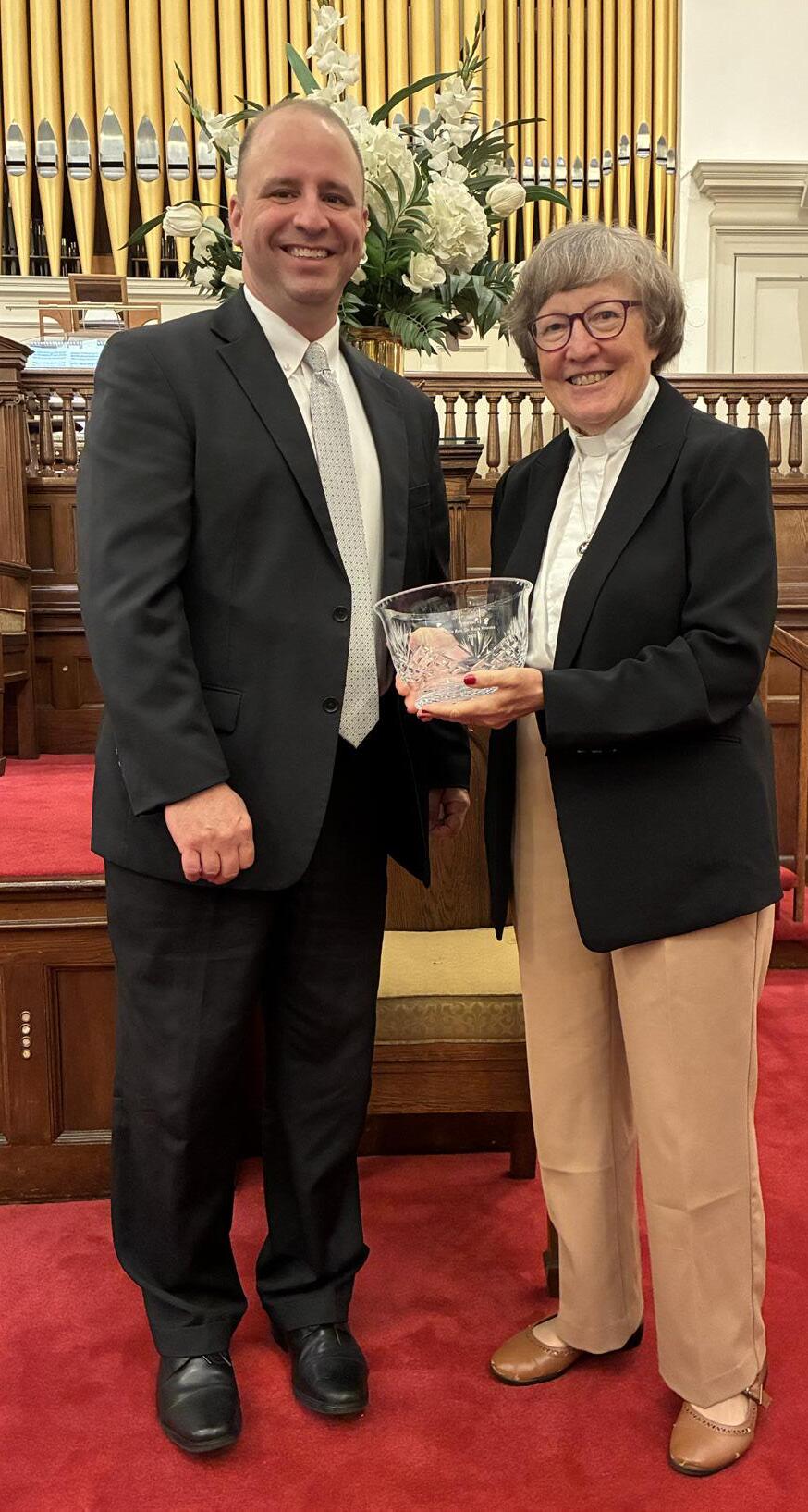
The Moravian Ministries Foundation in America is excited to announce that The Rev. Dr. Nola Reed Knouse is the first recipient of the Susan R. and Paul D. McLaughlin
Award for Faithful Selflessness: The Philia. This recognition truly highlights the power of compassion and dedication in our community.
A new award rooted in ancient love Paul McLaughlin served as the founding president and CEO of the Moravian Ministries Foundation from 1997 to 2017. Although he was unfamiliar with the Moravian Church when he was hired, he quickly developed a deep appreciation for our Moravian community. He felt that his time with the Foundation was a calling and wished to maintain his connection to the church.
To express their heartfelt gratitude to the Moravian Church and to those whose lives reflect the love described by Jesus to Peter in John 21, the McLaughlins established The Philia Award. The word “philia,” which is Greek for love, represents the bond that connects friends, supports community, and is demonstrated selflessly without seeking any reward.
This award honors individuals or ministries that, “without fanfare, stand above the rest in the conduct of their lives—quietly, gently, humbly, generously, and without intended self-promotion.”
Each recipient receives an engraved glass Revere Bowl and a $500 gift to the ministry of their choice, symbolizing both gratitude and the continuation of generosity.
MMFA President and CEO Chris Spaugh presents the inaugural Philia award to the Rev. Dr. Nola Reed Knouse.
Love that sounds like music
If ever a person truly reflected philia, it is Nola Knouse. For nearly three decades, she served as director of the Moravian Music Foundation, preserving, performing, and sharing the musical treasures of the Moravian Church. Under her leadership, centuries of hymnals and compositions were carefully archived and digitized, allowing Moravians around the world to reconnect with their rich heritage. She also initiated the Moravian Star Anthem Series, now featuring over 100 published works, many of which are by living composers. Her incredible influence helped shape the sound of worship itself. Nola also played a key role in editing the 1995 Moravian Book of Worship, making sure that music would continue to be a meaningful expression of faith for generations to come.
Though officially “retired,” Nola continues to live out her calling. She now serves at Calvary Moravian Church in WinstonSalem, North Carolina, as Pastor for Congregational Care and Visitation, offering compassion and presence to those in need. A flutist, composer, and band leader, she continues to fill sanctuaries and hearts with song. Away from the pulpit and the podium, she enjoys gardening, woodworking, and traveling with her husband, Paul. Her ministry may have changed venues, but her faithfulness has not. “She strives to do everything at 110%,” said Chris Spaugh, MMFA president and CEO. “I can think of no one more deserving of this award.”
Lifting the few to inspire the many
The McLaughlins created The Philia to celebrate the genuine spirit of love in action. Their vision was beautifully defined: “The
“Nola is among the first in a room to greet and welcome you. She genuinely cares about those in her path and always has a smile. Interacting with her brightens your day.”
— Chris Spaugh, MMFA President and CEO
purpose is to uplift a select few individuals to inspire many.” This award isn’t given out annually or through competition; instead, it is presented whenever someone’s life truly exemplifies selflessness. In this way, The Philia honors its recipients while reminding us that love, expressed humbly and consistently, is the most profound testament to faith.
In honoring The Rev. Dr. Nola Reed Knouse, The Philia recognizes not just a lifetime of extraordinary service, but a heart that reflects Christ’s command: “Love one another. as I have loved you.” Her music, her ministry, and her presence all bear witness to that love. As the first recipient of this new award, Nola sets a high and beautiful standard, reminding us that in every note, every act of kindness, and every quiet moment of care, God’s love continues to sing. n
Hanna Cheek Jackson is director of marketing and communications for the Moravian Ministries Foundation in America. Learn more at www. mmfa.com.
MORAVIAN MINISTRIES
Get ready for the 6th Moravian Day of Giving
When we give together, something extraordinary happens
Something amazing happens when Moravians come together. The Moravian Day of Giving has become a day when generosity unites us and reminds us of what we can do as one faithful community. On February 17, 2026, we will celebrate six years of this growing tradition!
Since 2021, the Moravian Day of Giving has inspired collaboration and joyful competition. It has encouraged congregations to rally their members, think big, and work together to see how far their collective generosity can take them. 2026 brings two exciting new ways to make gifts go even further!
• Top Donor Award: Six churches or organizations with the highest number of individual donors will each receive $2,026. This prize is all about participa-
grantmaking funds will match up to $2,026 per fund. This means your gift to a field of interest fund on Moravian Day of Giving will have double the impact!
These incentives encourage generous giving while keeping our focus on what matters most: strengthening ministry across the Moravian Church.
A shining example of community spirit can be found at New Philadelphia Moravian Church in Winston-Salem, NC. When the church youth discovered that prize money would benefit their ministry, they came together with enthusiasm to compete for it. They took over the Sunday morning announcements and even put together a short skit that had the whole congregation laughing and paying attention. Their energy helped build momentum throughout thepactful it can be when young people are given a chance-
son, Wis., had a remarkable impact. Their incentive prize not only enhanced community events but also forged stronger partnerships with local schools and expanded a garden for their food pantry, aiding neighbors in need. As Rev. Staci Marrese-Wheeler shared, “The joy of giving became a ministry in itself.” It’s inspiring to see how these initiatives can uplift and unite communities!
Stories like these remind us that giving is not only about money. It is about inspiration, teamwork, and the joy of seeing God at work in our shared efforts.
Impact you can see
Every gift to MMFA’s Field of Interest (FOI) Funds directly supports the grant program. These funds are dedicated to fostering vibrant and impactful ministries by funding projects that address critical needs within the communities served by Moravians. This includes areas such as hunger, housing, health, environmental stewardship, and racial equity. Our grant programs are made possible through generous contributions and a portion of MMFA’s income.
This past year, Field of Interest grants helped ministries meet real needs in practical ways. Hunger and Thirst funding supported Bethabara Moravian’s food pantry, which provides groceries to about 160
neighbors each month. Housing and Shelter grants assisted Sturgeon Bay Moravian as they renovate a house to provide transitional housing for the growing number of people experiencing housing insecurity in Door County, Wisconsing. Clothing grants enhanced ministries like Tricklebee Café by supplying sturdy racks, hangers, signage, and bags for shoppers at their clothes closet. Additionally, Healing and Health funding supported Christ (N.C.) Moravian’s youth as they assembled hygiene kits and cleaning buckets for neighbors experiencing homelessness. These are just a few of the many ways your generous gifts are already changing lives!
Be part of something bigger February 17, 2026 is a day to celebrate who we are as Moravians. Start spreading the word. Invite your congregation to take part. Encourage your youth, your boards, and your friends. Every gift, no matter the size, makes a difference as we work to move ministries forward, together, for God’s work in the world. n
For updates, stories, and resources, visit mmfa.com and follow the Moravian Ministries Foundation on social media.
MMFA Field of Interest Grants supported a food pantry at Bethabara Moravian in North Carolina and a transitional housing effort with Sturgeon Bay (Wisconsin) Moravian Church.
MORAVIANS IN MISSION
Celebrating the work of God in Zambia
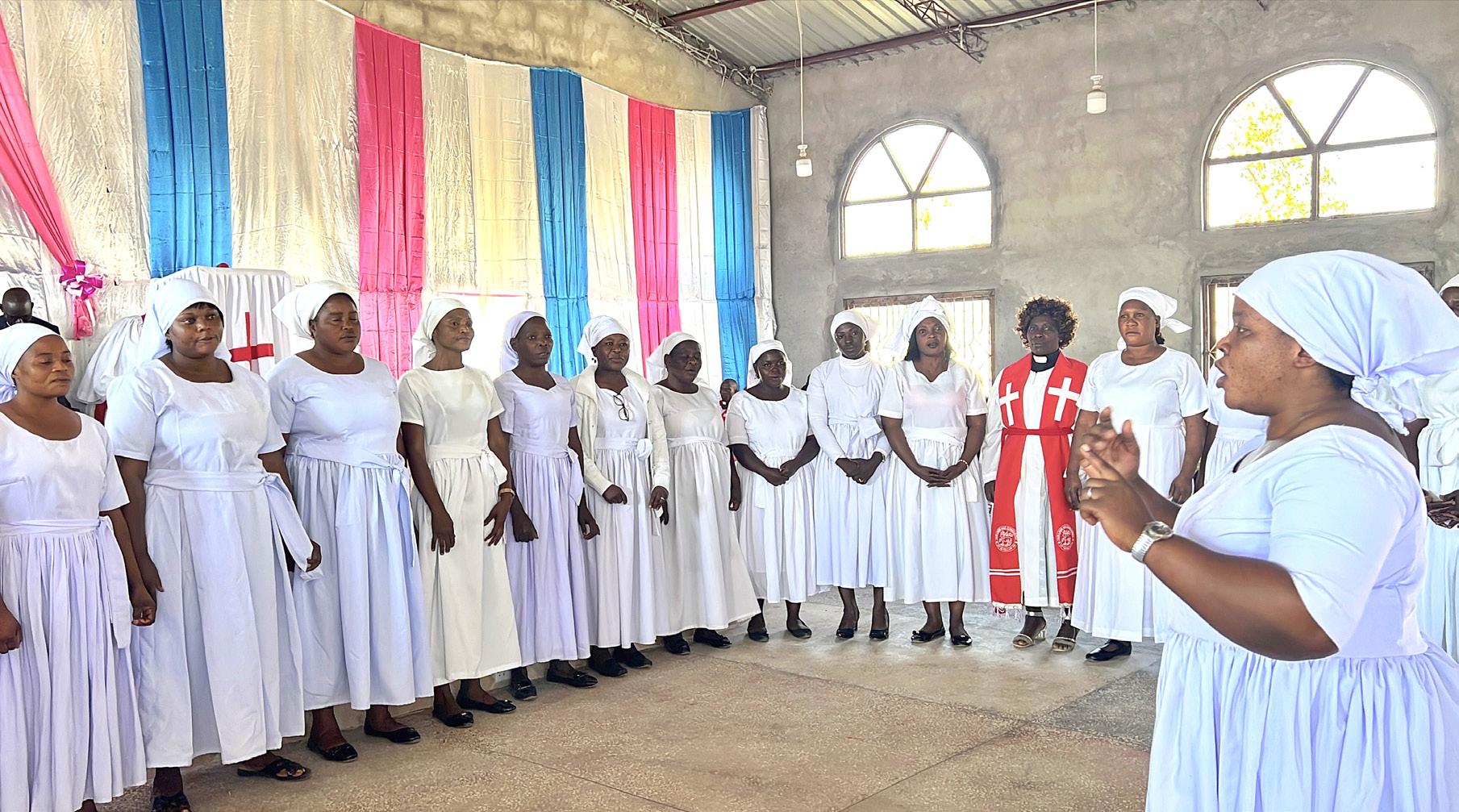
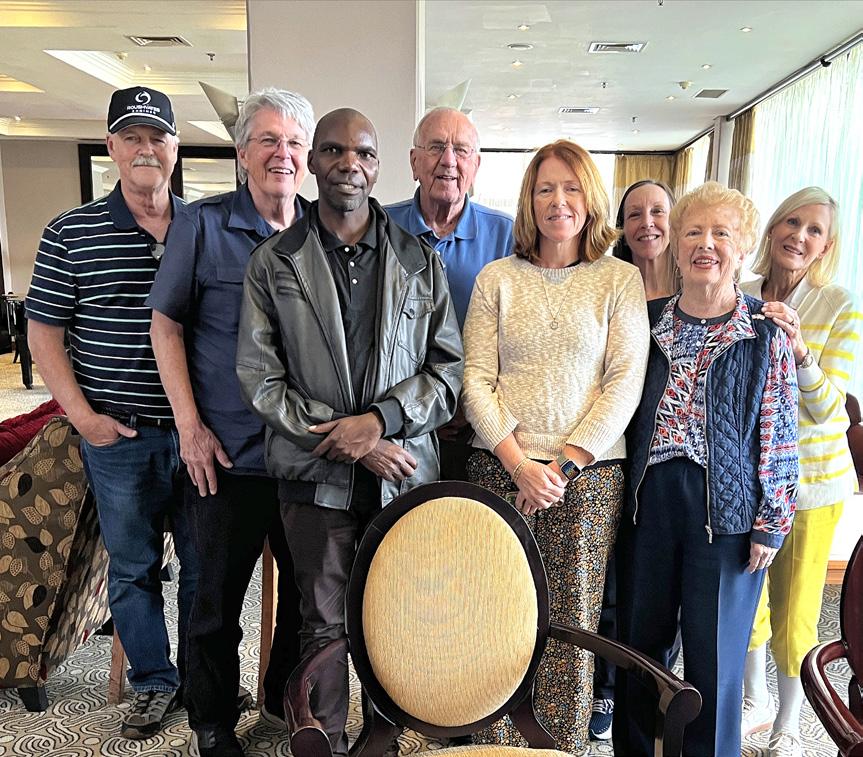
Two hundred and ninety-eight years after the first Moravian Pentecost, a group of Moravian missionaries set out to attend the 4th Synod of Moravian Church Zambia and to see God at work. The seven-member team traveled from the Southern Province to the other side of the world- Lusaka, Zambia. Their mission was simple: build relationships and celebrate the work of God in Zambia.
The mission team included Patricia Atkins, John Dyer, Sallie Greenfield, Mike Lambeth, and Regina Lambeth, all members of Friedberg Moravian in Winston Salem, NC; Bishop Tom Shelton of Deleon Springs, FL; and Felicia Joyce of Mountain Laurel Moravian in Laurel Springs, NC.
Relationship-building may seem like an unusual mission focus but going places has always been crucial to the Moravian understanding of mission. As team member Sallie
Greenfield said, “If you don’t go, you don’t know.” So this team went and they got to KNOW! Patricia Atkins described how she experienced authentic and heartfelt worship among the Zambian Moravians. “They are unfettered by many of the things that distract us from worship,” she shared.
Team leaders John Dyer and Mike Lambeth were thrilled to reconnect with friendships cultivated on a prior trip to Zambia and to celebrate the amazing growth and progress of the congregations and their leaders. Regina Lambeth was touched deeply during worship as old, familiar hymns were heartily sung together in multiple languages.
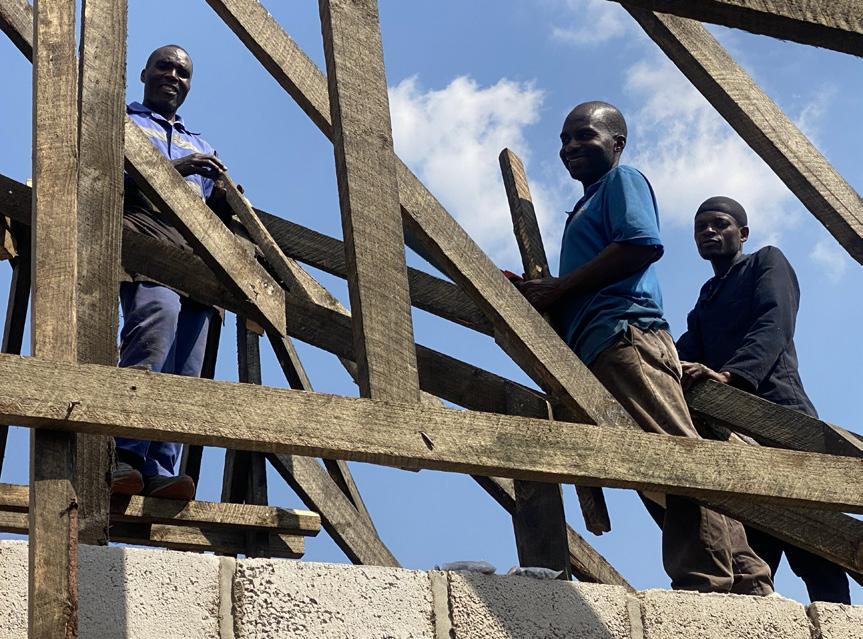
The mission team toured the Moravian Education Center in Lusaka, an almost complete student housing facility, and the Canaan congregation church and parsonage which had its roof completed during
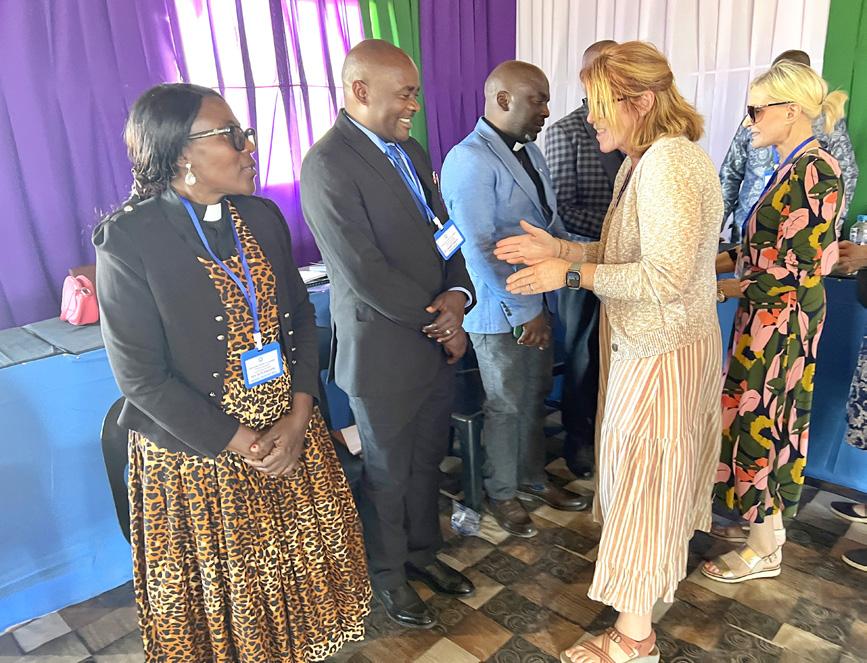
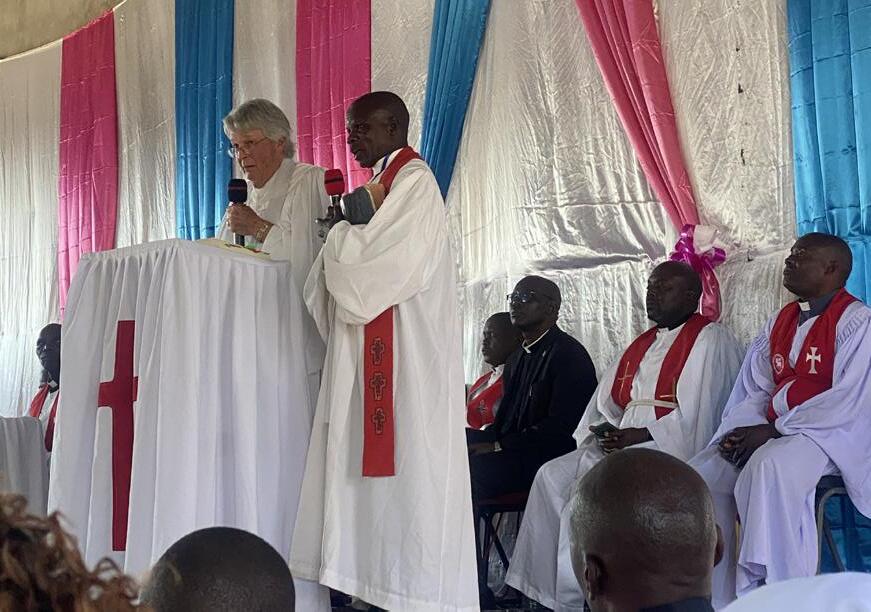
the group’s visit. They also met pastors and Synod delegates from all over Zambia, as well as visitors from Tanzania, Zimbabwe, and South Africa, and Unity Board Administrator Rev. Dr. Jorgen Boytler. They attended the Synod proceedings and witnessed the election of the new leadership board and the very first Moravian Bishop from Zambia, Rev. John Sichilima.
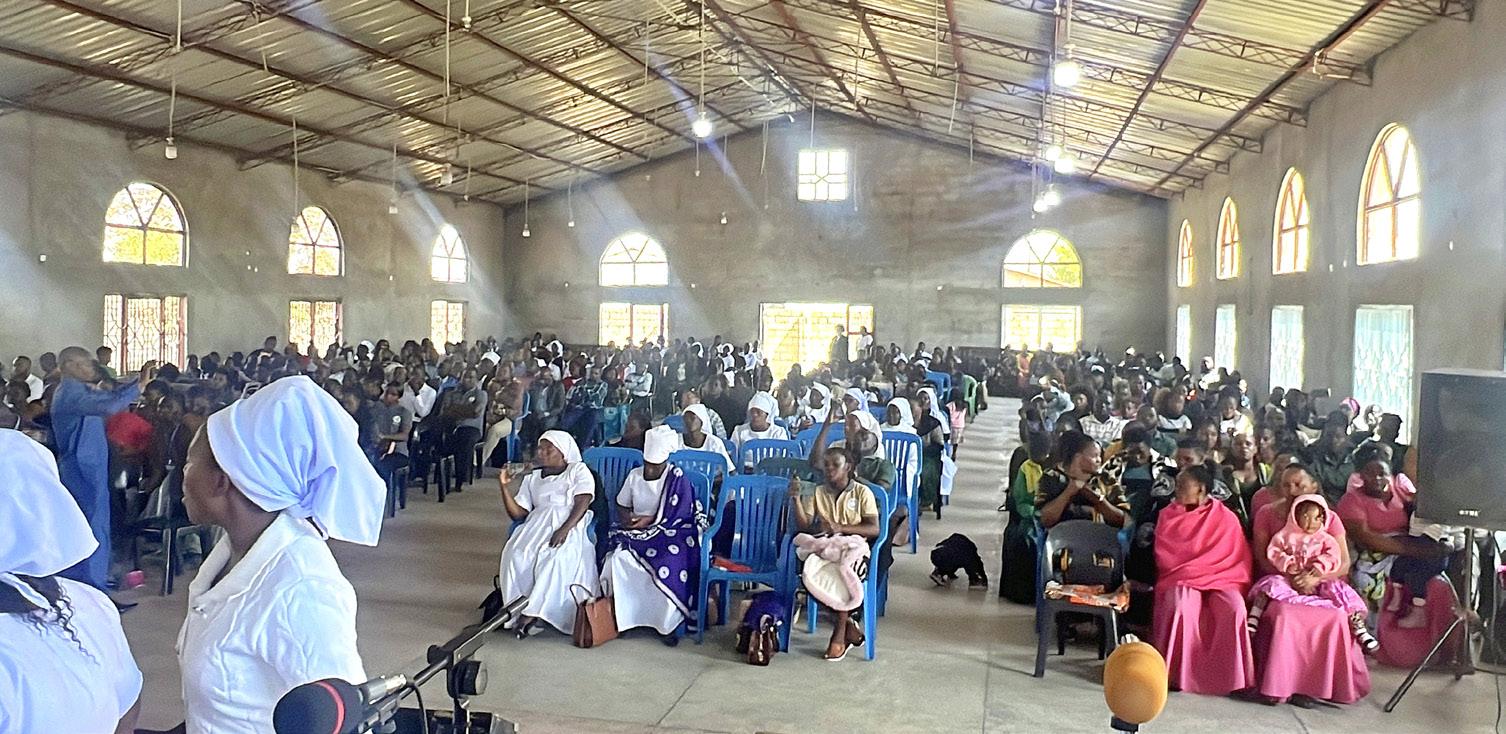
A highlight of the trip for Felicia Joyce was worshipping on Sunday morning at the John Hus Moravian Congregation with an estimated 500 Moravians from all over Zambia. “There were hours of singing, dancing, prayer, and fellowship; everyone was just so genuinely happy to be together and worshipping Jesus!” said Joyce.
Bishop Shelton brought the message during the worship service and compared the outpouring of the Holy Spirit in Zambia to the power of the Spirit in Berthelsdorf in 1727. “For generations, Moravians will be telling the stories of the movement of God in Africa!” proclaimed Bishop Shelton.
The mission team met with various ministry partners each evening to get to know them, share a meal, learn about the work of God in which they were involved, and to encourage one another. “The focus is very much reciprocal; by learning where God is at work, we are able to facilitate connections and resources,” says Dyer. Some of those connections include books donated to the Zambian Seminary effort and helping worship leaders in Zambia connect to musical training through the Moravian Music Foundation.
For Mike Lambeth the opportunity to get to know the pastors in Zambia and encourage them is paramount. Lambeth and Dyer have maintained contact with the Moravian Church Zambia Board, especially (Continued on next page)
Zambia
(Continued from previous page)
Chairperson Rev. John Sichilima, and have enjoyed mutually enriching relationships. The hard work of the Board is testified to by the fact that outgoing Chairperson Sichilima was elected as the first Bishop from Moravian Church Zambia and many board members were entrusted to serve again. The new Board Chairperson is Rev. Benjamin Siwanzi. Some of the many works of God that were celebrated at the 4th Synod of Moravian Church Zambia were:
• Construction and infrastructure at several churches including Zinzendorf, Kasesha, Mount Olive, Gethsemane, and Canaan
• Early childhood education and vocational education programs including a women’s tailoring program which empowers women economically
• Tremendous work to support ministry leaders including an increase in pastoral stipends and increased access to seminary training
• Bible distribution within Lusaka and plans to expand throughout Zambia.
• Ordination of nine pastors and heartfelt recognition of those who have served in the past
“The mission was life-changing; I brought back much more than I offered,” said Atkins.
Back at home, the relationships continue to grow. Mission team members are now connected to their friends on the other side of the world through the miracle of technology and can share the joys and cares of everyday life. Team members are sharing their experiences in Zambia with congregations throughout the Southern Province in hopes of sharing that God is still at work in this world and in the Moravian Church!
“It is important to go, and it is important to know, but it also important to tell,” says Joyce. “While in Zambia, we experienced John 13:34-35, ‘Just as I have loved you, you also should love one another. By this everyone will know that you are my disciples, if you have love for one another.’ We praise God for this experience, for our sisters and brothers in Zambia, and for the opportunity to tell others about the love of Christ.” n
Felicia Joyce is a member of Mountain Laurel Fellowship in Laurel Springs, N.C. Photos contributed by John Dyer.
MORAVIAN HISTORY
Uncovering a piece of Moravian mission and music heritage
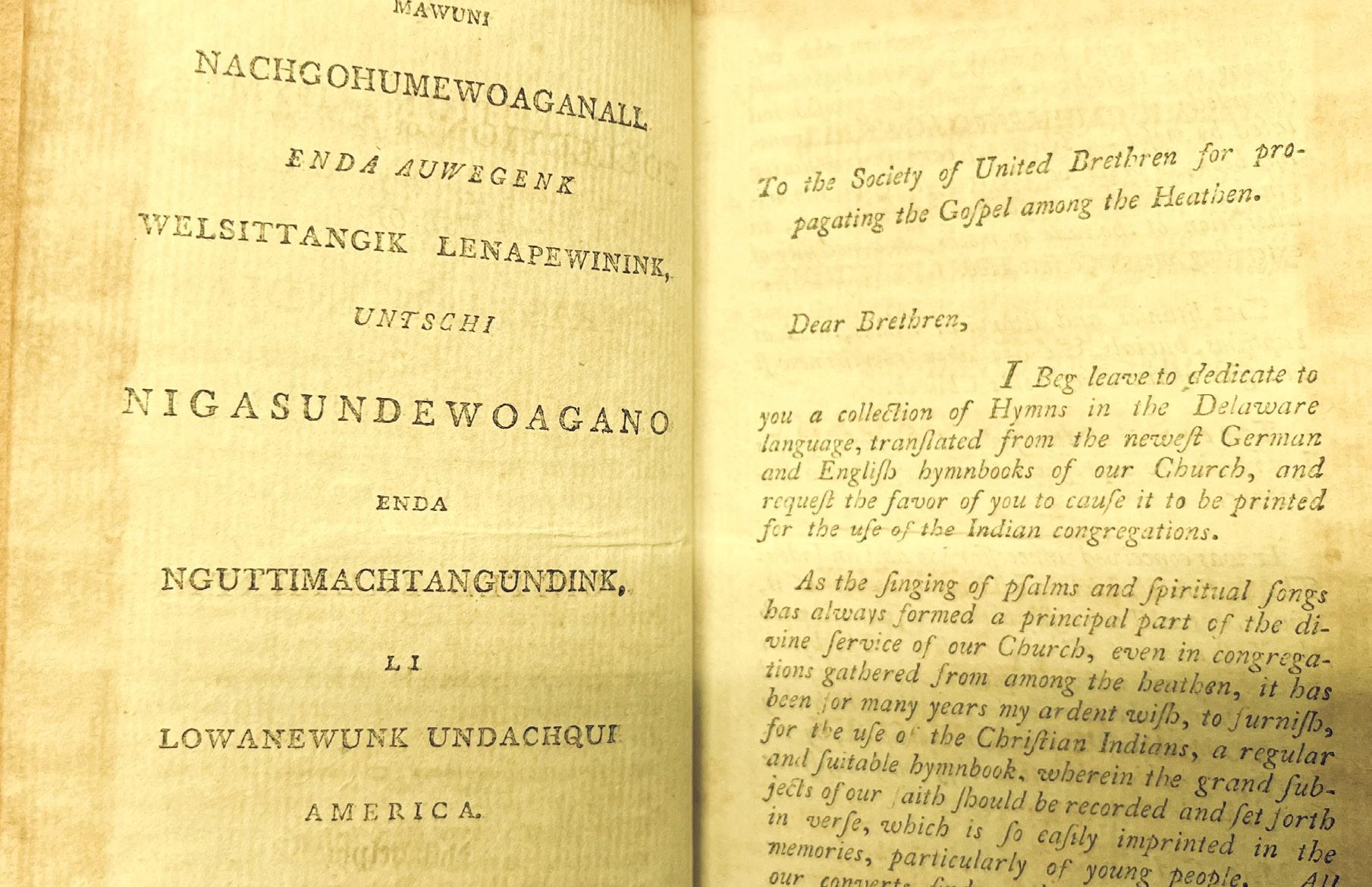
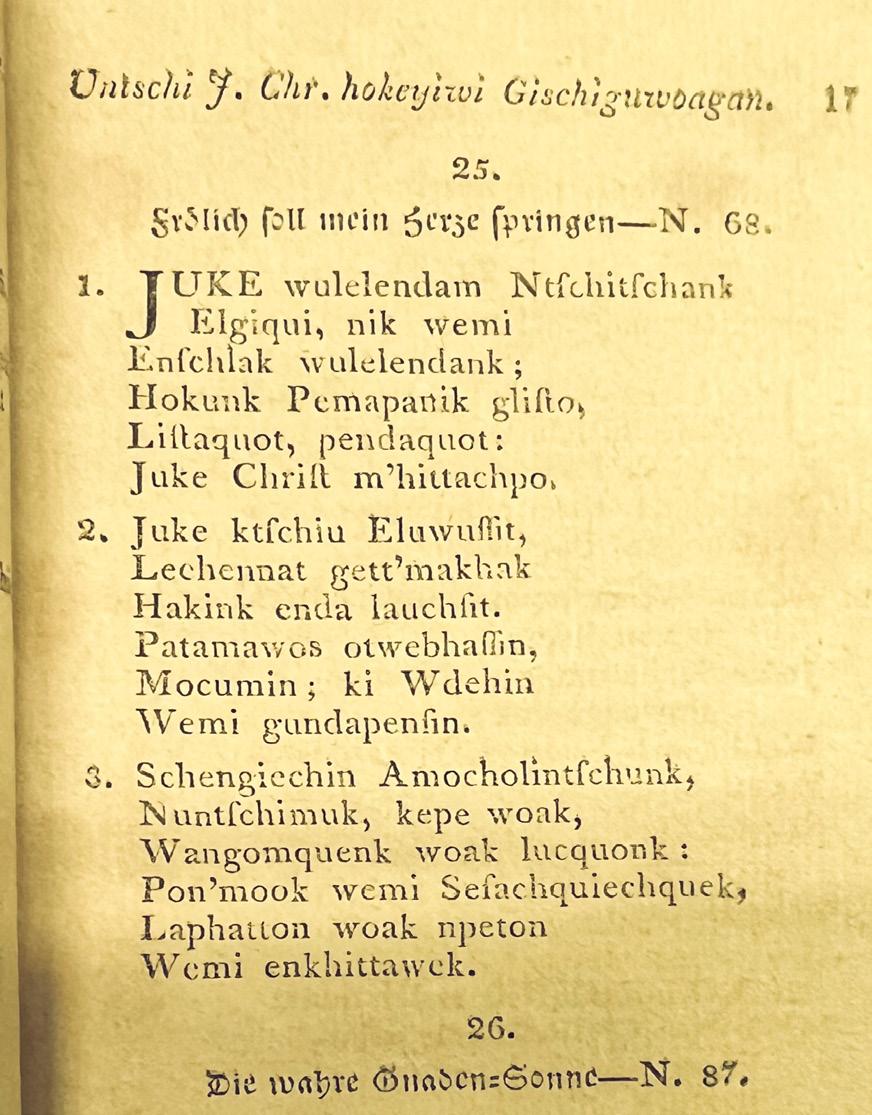
Dr. Christopher Ogburn, executive director of the Moravian Music Foundation, recently revisited a treasure from their vault.: A Collection of Hymns for the use of the Christian Indians of the Missions of the United Brethren, in North America. In this “Dispatch from the Vault,” Chris highlights the story of this 200-plusyear-old hymnal.
David Zeisberger (1721–1808) was born in Suchdol nad Odrou (German: Zauchtenthal) in the present-day Czech Republic. With the founding and expansion of Herrnhut in the early 1720s, many residents of Suchdol sought refuge in the new community, including Zeisberger’s parents, David and Rosina, who soon arrived with their children. In the following years, the church
turned towards missionary work, sending members of the congregation out into the world.
In 1736, David and Rosina joined this movement and traveled to Georgia, becoming part of the first foray of Moravians into the American colonies. Two years later, Zeisberger reunited with his parents, having spent the intervening years in the Netherlands and England. The family later migrated to Pennsylvania, where they helped to build Bethlehem.
In 1745, the younger David began the work that would become his life’s mission. Traveling to Onondaga, he began preaching to Indigenous communities. In his travels, he also gained some familiarity with the
(Continued on next page)
Zeisberger
(Continued from previous page)
culture and languages of the people with whom he met, which made him an important translator and mediator between these communities and European settlers.
Eventually, he met the Lenape people, who were the original inhabitants of the Delaware Valley in what now comprises areas of Delaware, New Jersey, Pennsylvania and New York. Europeans began to refer to the Lenape as “Delaware Indians” based on where they lived (the Delaware River had derived its European name from Thomas West, 3rd Baron De La Warr, the first governor of the Colony of Virginia). As the Lenape were forced to move westward into Ohio and Canada, the Moravian missionaries traveled with them, forming missionary communities in these new regions. It was here that Zeisberger’s work with the Lenape primarily took place.
Translating hymns
This hymnal by Zeisberger was not the first one translated into the language of the Lenape people. In 1763, Bernhard Adam Grube published Dellawärishes Gesang-Büchlein. This collection contained favorite hymns of the converted Lenape. In 1772, the task of revising the hymnal was given to Zeisberger, who worked on the project from 1772 to 1803 with the assistance of fellow missionaries and a group of Indigenous people.
One of the copies found in the MMF vault is inscribed with the name Jacob Van Vleck (1751–1831). A prominent figure in the Moravian Church, Van Vleck has the distinction of being the first American-born bishop of the Church. In addition to the numerous positions he held, he was also an accomplished composer and musician, who reportedly played the organ during Washington’s visit to Bethlehem in 1782. Beginning in 1812, he served as the pastor of Salem congregation, where he remained for a decade before returning to Bethlehem.
A complicated legacy
The legacy of the Moravians and Zeisberger’s work with the Lenape people is complicated. From the beginning, there was tribal support for this missionary work, which resulted in prominent figures within the tribe converting to Christianity. There was also an effort on the part of the missionaries to preserve some Lenape cultural practices. Zeisberger, who demonstrated an interest in preserving the languages of Indigenous communities, worked to create dictionaries and translations of hymns, the Bible, and other types of educational materials. This is where the hymnal found in our collection derives.
Looking back on the impact of these efforts, the Lenape have expressed a certain ambivalence towards the Moravian mis-
sionaries. On the one hand, there was a lot of good work done towards the preservation of the language and the creation of invaluable resources towards that goal, many of which are still used today. On the other hand, the Lenape have questioned whether the practice of teaching reading and writing skills only to those Lenape who had converted, rather than to all the Lenape people, suppressed the flourishing of a vibrant literary culture and tradition.
In spreading their message, the Moravians may also have damaged the preservation of some cultural practices owing to the strict rules and codes of conduct that were customary among missionaries and mission communities at the time. While some practices remained, there were many others that were prohibited. As a case in point, Zeisberger recorded a set of statutes that were agreed upon at Lagundo Utenunk and WelhikThuppeek in August 1772. The list included the banning of several expressions of Indigenous culture, such as attending “heathen feasts and dances held at other places,” using “objects of heathen superstition in hunting or in curing diseases,” and forbidding the use of paint or hanging “wampum, silver or
anything on himself.” These codes of behavior had the effect of suppressing certain acts of cultural expression, including dance and dress, which may have contributed to their decline over the years.
This hymnal stands as a powerful reminder of this complex legacy.
Continuing a mission of music
Music has always served as a vital tool for the Moravian missionaries, forming a significant bridge between the two cultures, both of which placed a high value on the act of music making. It also functioned as a means of transmitting theology, which was even more important when surmounting linguistic and cultural barriers.
In 2022, MMF published a collection of Mohican hymns researched and edited by Sarah Eyerly and Rachel Wheeler. A very interesting study of the collaborative hymn-writing practice, the booklet Strong Wounds is available from the MMF Shop at https://moravianmusic.org/ eight-mohican-moravian-hymns/
To read more from the Moravian Music Foundation, visit www.moravianmusic.org.
MORAVIANS IN MISSION
Building friendships across borders: a summer of exchange camping
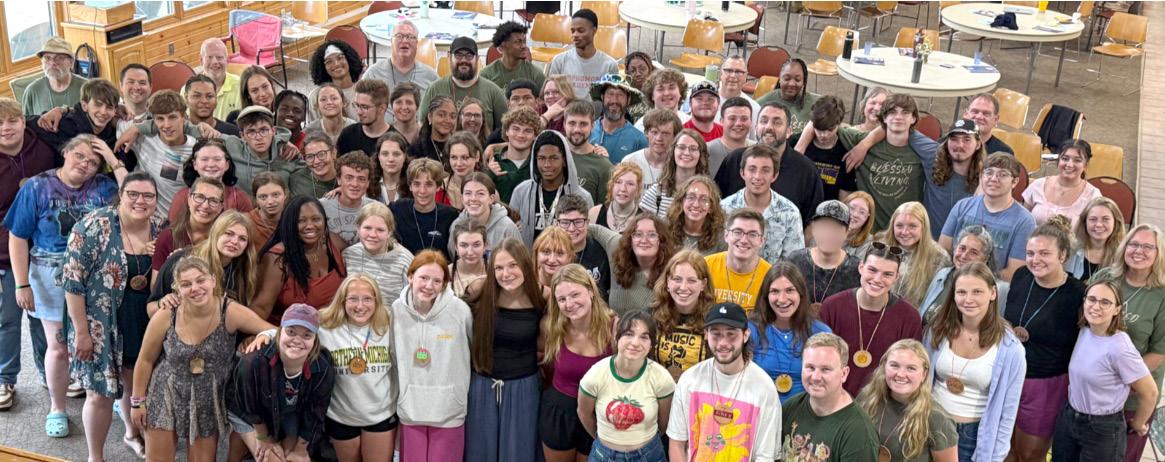
This summer, the Board of World Mission (BWM) supported 40 exchange campers and leaders as they traveled across six Unity Provinces and nine states and countries to attend Moravian youth gatherings in North America. These journeys helped youth and young adults experience the global Moravian Unity in a tangible way.
At Chetek Senior and Post-High Camp at Mt. Morris in Wisconsin, exchange campers included groups from Germany, Jamaica, Pennsylvania, and Florida. Youth Convo in Miami brought youth and leaders from Antigua, Trinidad, Jamaica, St. Thomas, and Barbados to join youth from across North America. Finally, a group of youth and leaders from Labrador had the opportunity to attend a week of camp at Camp Van Es in Alberta.
At each camp, the energy of these exchanges was palpable. Campers shared
songs, traditions, and stories, often finding that even minor differences—like the motions to familiar songs—opened the door to new understanding.
“Sending young people to Moravian camps and youth events around the world opens our eyes to the global family we belong to, builds friendships across borders and cultures, and brings fresh energy and curiosity to these gathered camp and Convo communities,” said the Rev. Dan Miller, BWM’s Director of Mission Service.
These exchanges don’t happen by accident. The Board of World Mission plays a central role in coordinating travel, fostering partnerships across provinces and providing financial support that enables international participation. By pairing sending and hosting camps, helping leaders prepare groups for cross-cultural exchange, and covering some of the costs of flights and visas, BWM ensures that distance and ex-
Campers at Chetek Camp at Mt. Morris in Wisconsin included groups from Germany, Jamaica, Pennsylvania and Florida.
pense don’t become barriers for young people to encounter the wider Moravian Unity.
For many youth participating in the exchange camping program, it is their first time visiting a new state or country, as well as experiencing the travel process. McKinley Winters, one of the leaders from Labrador who traveled to Camp Van Es, shared, “This makes it easier for our youth who might decide to go to university or travel. To give you an idea, one of the new youth was amazed at the Edmonton airport alone. We all said, ‘Wait until we get to the city.’ You should have seen her facial expression! Priceless.”
These experiences don’t just impact the campers who travel. Local campers and staff are equally enriched by getting to know peers from other places. One Chetek camper became so close with a German exchange camper that he is now planning to study abroad in Germany to deepen that connection. Stories like this show how exchange camping fosters relationships that can shape futures—and strengthen our church.
Emmaleigh Rein, one of this summer’s BWM interns, reflected on her experience with exchange camping, both as a local camper at Mt. Morris this summer and as an exchange camper to Camp Hope in 2023:
“This summer at Chetek, I built relationships with campers and counselors from Florida, Pennsylvania, Jamaica, and Germany. I saw lifelong friendships forming right in front of me. Having participated in the exchange camping program myself, I’ve gained a deeper understanding of the Moravian Church and its diversity. These experiences showed me that differences matter, and they should be explored and celebrated.”
This program builds on generations of Moravian camping, which has always been central to faith formation and leadership development. Over the past four summers, 70 exchange campers and counselors have been supported by the Board of World Mission. Each summer brings new stories of friendship, growth, and renewal as our camps welcome perspectives from near and far.
The Board of World Mission extends its gratitude to the donors and partners who make these opportunities possible, as well as to the campers and leaders who step out of their comfort zones to embrace new experiences. As Justin Rabbach, BWM’s Executive Director, reflected, “This program isn’t just about sending campers somewhere new. It’s about planting seeds of connection that bear fruit in our church for years to come.” As we look to future summers, the Board of World Mission is committed to nurturing these relationships—supporting more youth to step out in faith, cross borders, and build friendships that last a lifetime.
If you would like to contribute to the camper exchange program of the Board of World Mission, you can do so by giving online at MoravianMission.org/Give. Please designate your gift to “camper exchange” to ensure that funds can be used to support youth and leaders as needs arise. Please make checks payable to “Board of World Mission” and send to: U.S. Donors: Board of World Mission, 1021 Center Street, Bethlehem, PA 18018
Canadian Donors: Moravian Church in Canada, 600 Acadia Drive SE, Calgary, AB T2J 0B8. Interac e-Transfer donations may be sent to treasurer@moravian.ca. Include your name and address in the comments section of the transfer to receive tax receipts. n
MORAVIANS IN MISSION
AMoravian Disaster Response: a year in review
s we near the end of 2025, the Board of World Mission gives thanks for all that has been made possible through the prayers, generosity, and partnership of Moravians around the world. Through our Moravian Disaster Response (MDR) program, hundreds of families affected by storms, earthquakes, and conflict received immediate aid, long-term support, and hope in 2025. This year, MDR continued to be a vital lifeline for many communities facing crises:
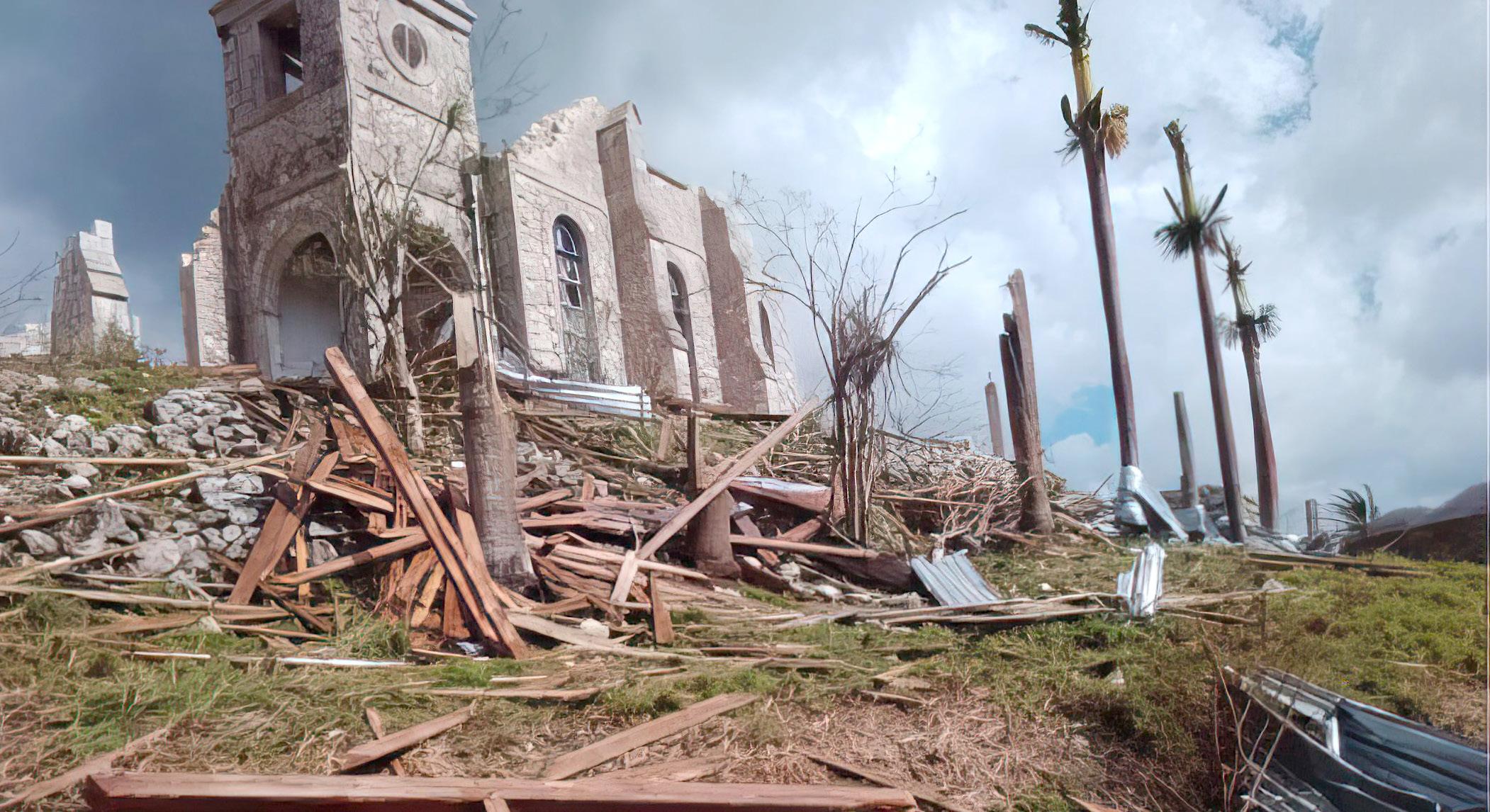
• Hurricane Melissa in Jamaica: Following this category 5 hurricane in October, MDR provided immediate relief funds and maintained close communication with church leadership as damage assessments were made. The impact on homes, churches, and other Moravian facilities is extreme, and our response will continue well into the future through continued disbursement of funds, as well as through the coordination of mission teams once our siblings in Jamaica are ready to receive us.
• Typhoon Halong in Alaska: After this devastating storm in October, Moravians in Alaska responded immediately by housing displaced families in several church facilities. MDR provided prompt financial support of this ministry and oth-
er community efforts, and stands ready to provide ongoing support as communities continue in the long process of rebuilding and recovery.
• Earthquake in Myanmar: After a catastrophic earthquake in March, MDR sent funds to Moravian siblings in the area to support immediate needs. Our contributions were used to provide 500 families with essential items such as rice, eggs, cooking oil, and noodles, offering a sense of comfort to those struggling in the aftermath of the disaster.
• Hurricane Helene: Following Hurricane Helene’s devastation of western North Carolina in September 2024, MDR volunteers have helped restore homes, clear debris, and provide essential supplies, with Laurel Ridge Camp serving as a hub for housing and distribution. One notable project included completely rebuilding a home damaged by floodwaters, enabling the resident to return to a safe, renewed space. The need in this area remains great, and MDR efforts will continue into 2026.
• Continued support for Ukraine: Ever since the 2022 invasion of Ukraine, MDR has maintained a relationship with a
school in Kyiv. In 2025, we sponsored the salaries of four teachers who are doing incredible work under impossible circumstances. Daily life remains a struggle in Kyiv, and MDR will continue to support the needs as identified by our partners.
Through your generosity, MDR acts as a bridge between the church and communities in urgent need, ensuring that Moravian love and care are present in moments of greatest crisis. As so many of the needs listed above continue into 2026, your support is more critical than ever. A gift to Moravian Disaster Response ensures that we can continue to walk alongside affected communities, offering relief, recovery, and the promise that they are not alone. Thank you for making this ministry possible and for putting your faith into
action in such meaningful ways.
100% of donations received for our MDR Fund are directed toward providing relief for these disasters. You can support our disaster response efforts by giving online at MoravianMission.org/Give. Please designate your gift to “MDR.”
Please make checks payable to:
• U.S. Donors: Board of World Mission, 1021 Center Street, Bethlehem, PA 18018
Canadian Donors: Moravian Church in Canada, 600 Acadia Drive SE, Calgary, AB T2J 0B8. Interac e-Transfer donations may be sent to treasurer@moravian.ca. Include your name and address in the comments section of the transfer to receive tax receipts. n
An appeal from Laurel Ridge
For more than 60 years, Laurel Ridge has formed disciples of Jesus Christ - living and learning in community to serve in the world. The generous support of volunteers, donors, and friends who give the gift of time, talent, and treasure means children, youth and adults can come together for transformative, year-round Mountain-top experiences: experiences that shine through us, are shared in our congregations, and shape our communities.
Laurel Ridge has experienced many challenges over the past year. At this time, we do not have the funds needed to repair the dam. In addition, several maintenance needs have been postponed due to larger, more urgent issues— including major septic repairs at the Conference Center and the significant costs of removing trees damaged by both a hurricane and an ice storm.
We invite you to consider making a gift to help us continue being a mountain place set apart for forming disciples of Jesus Christ to serve in the world. You may give stock, make an IRA gift, or donate other assets. Many employers also match charitable gifts. You can give in honor or memory of someone. To learn more about legacy giving for Laurel Ridge contact Tres Fordham tres@laurelridge.org.
Donations can be made and/or scheduled securely online at www.laurelridge.org
MORAVIAN WRITINGS
Reflections on Matthew 1:18-25
The birth of Jesus the Messiah
Each week, Moravians across the U.S., Canada and the Caribbean share a common message through their Sunday bulletins. This month, we share insights which expound on Matthew 1:18-25 for the Fourth Sunday of Advent.. Thanks to writers past and present for their contributions to the Moravian bulletin series.
The Name of Jesus
Hermann Weinlick, retired pastor, Minneapolis, Minnesota • December 18, 2022
Expecting an addition to the family, parents ask, “How should we name her or him?” After a favorite uncle or aunt? A name we make up, never used before? The family name of some ancestor? A biblical name? A name unique to our ethnic group?
Today’s Gospel is about Joseph having a dream that tells him what to name the child Mary is expecting. Naming is not up to Mary or Joseph: “You are to name him Jesus.” This is a form of the common Jewish name Joshua, which means “God saves.”
God wants to bring humanity back to God, since we have chosen to separate ourselves from God and God’s hopes for us.
But this story is not just about Joseph. It is also about us and Jesus, the one who will be born to Mary. This story is telling us that Jesus is God’s plan to save us, to fix our broken ways of living. Jesus shows us what God looks like in human form. Jesus shows what humans may be capable of. Jesus shows God’s willingness to accept the worse from human systems of religion and government. Jesus invites us to follow him into a fuller, richer life, in tune with God’s hopes to see God’s reflection in those God has created.
The Birth of Jesus the Messiah Matthew 1:18-25 NRSV
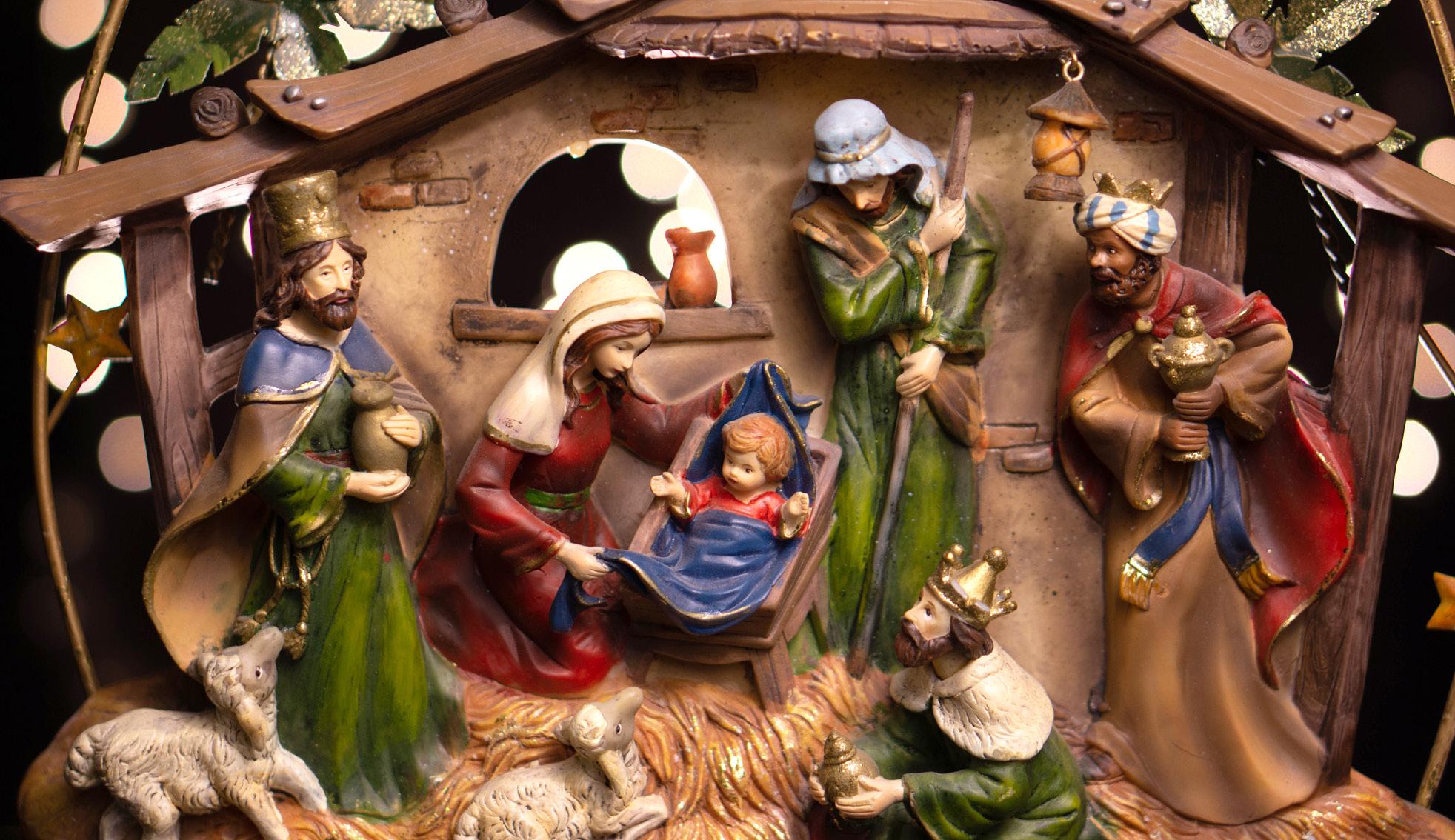
Now the birth of Jesus the Messiah took place in this way. When his mother Mary had been engaged to Joseph, but before they lived together, she was found to be pregnant from the Holy Spirit. Her husband Joseph, being a righteous man and unwilling to expose her to public disgrace, planned to divorce her quietly. But just when he had resolved to do this, an angel of the Lord appeared to him in a dream and said, “Joseph, son of David, do not be afraid to take Mary as your wife, for the child conceived in her is from the Holy Spirit. She will bear a son, and you are to name him Jesus, for he will save his people from their sins.” All this took place to fulfill what had been spoken by the Lord through the prophet: “Look, the virgin shall become pregnant and give birth to a son and they shall name him Emmanuel,” which means, “God is with us.” When Joseph awoke from sleep, he did as the angel of the Lord commanded him; he took her as his wife but had no marital relations with her until she had given birth to a son, and he named him Jesus.
Moravian hymn writer Benjamin LaTrobe declared,
Jesus’ name, Jesus’ name, Source of life and happiness . . .
None need sink in hopeless sadness, for Immanuel is now with us, God with us, God with us.
(Moravian Book of Worship, #324)
Not only in one season but every day, let us celebrate the message that came to Joseph. And may we allow that Jesus truly to touch and reshape our lives, so that we live in ways closer to God’s hopes for us.
God is with us
Beth Rohn-Habhegger, pastor, Canaan Moravian Church, Davenport, North Dakota • December 22, 2013
Shakespeare once asked, “What’s in a name? That which we call a rose by any other name would smell as sweet.” For God, a name was extremely important. So important, in fact, that God sent an angel to the man who would raise Messiah as his son, to reveal to Joseph the name chosen by God. God chose the name Jesus, “for he will save his people from their sins.”
The child conceived by the power of the Holy Spirit would grow to be the man who offered us salvation through his death
and resurrection. The prophet referred to him as Emmanuel, “God is with us.”
How right that prophet was! In Jesus, God dwelt with us; through Jesus, God reached into our world to bring us into God’s. We find we are a part of God’s world. We are wanted, we are fought for. God isn’t just WITH us; God is with US. God wants us enough to become one of us and to die for us. God wants US, God is with US.
As Advent transitions into Christmas, we celebrate the gift of Jesus, who came to save us from our sins and remind us that God is with us—then, now, and forever.
The God Who Acts
Author unknown December 20, 1992
According to the Matthean tradition, the announcement of the birth of Jesus Christ was a supernatural event: Mary was found with child by the Holy Spirit (Matthew 1:18). The ultimate purpose of this diving act was to demonstrate to the world that God has taken the initiative to redeem lost humanity. God has not forgotten his creation. He has sent his very best into the world to bring about the divine/human reconciliation.
The coming of the Messiah, the Anointed of God, is the commencement of a new
(Continued on next page)
Birth of Jesus
(Continued from previous page)
era for all human beings. The world was sending an SOS, announcing desperately a tragedy of great proportions. It was the precise moment for God to act and he acted.
When Joseph found out that Mary was pregnant, he decided to dismiss her quietly, not realizing that God was behind his courtship and relationship. So when Joseph resolved to abandon Mary, God sent his angel to tell him in a dream, “Joseph, son of David, do not be afraid to take Mary as your wife, for the child conceived in her is from the Holy Spirit” (Matthew 1:20).
This divine declaration was a clear indication that God was in control of the situation. And when we permit God to take control of our situation in the midst of the ordeals of life, when everything seems so gloomy and dark, the spark of hope will always appear, as Joseph experienced in his despairing moment.
The same God that Joseph served, we are serving today. God is always at our disposal, always available. He just wants us to trust him.
To Us a Child is Born this Night
Author unknown December 24, 1989
Most Bible students believe that Mark was the first of the gospels to be written. How eagerly his manuscripts must have been copied and circulated among early Christians! But many readers must have had questions, such as “But when, and where, and under what circumstances was Jesus born?”
To answer these and other questions, Matthew and Luke wrote the gospels that
bear their names. Today’s gospel lesson is a part of Matthew’s story. He tells us of a young woman named Mary, and of Joseph, to whom she is engaged. He records the divine announcement of the effect that the child she is about to bear is “of the Holy Spirit,” and is to be named Jesus. He says that this Jesus will be a son of Abraham and David, thus linking him to the people of Israel; he tells us of the visit of the wise men from the East, thus linking him to the Gentile world. He speaks of Herod the King, thus placing him in history. He tells how God intervenes to save him from the sword of that Jealous king, because he is “Emmanuel, God with us.”
And now once more Christ is being born into our world, and for all people, for in his kingdom there is “neither Jew nor Gentile, slave nor free, male nor female.” Just as he came long ago into the outwardly mighty, inwardly troubled world, so he comes today into our outwardly rich, inwardly poor world. To you he comes, and to you, and to me, to make us his people so that he may save us from our sins.
(Hymn 55, Paul Gerhardt)
All glory, worship, thanks, and praise, That thou art come in these our days!
Thou heavenly Guest, expecting long, We hail thee with a joyful song.
Ad Policy for The Moravian — The Moravian accepts paid advertising that is consistent with the magazine’s objectives and editorial convictions as they are stated in the purpose and mission of the Interprovincial Board of Communication. Advertisements for activities, services and products of specific interest to members of the Moravian Church have priority. The Moravian does not accept purely editorial advertisements that advocate specific ideas or issues. Articles, columns and letters to the editor are the appropriate vehicles for the presentation of ideas and issues. The Interprovincial Board of Communication is responsible for the content and design of the magazine, including advertisements. Ad rates and specifications are available www.moravian.org
OFFICIAL PROVINCIAL ELDERS’ NEWS
NORTHERN PROVINCE
Presbyterial Consecration
The Rev. Rebecca Sisley, presently serving as pastor of First Moravian Church, Riverside, will be consecrated a Presbyter on Saturday, February 7, 2026, at 2:00 p.m. ET. The Rt. Rev. Christian Giesler will officiate at the service, which will be held at First Moravian Church, Riverside. Further information regarding the service will be posted as it becomes available in The Moravian Monthly and with a provincial update by email.
SOUTHERN PROVINCE
Rev. John D. Rights
The Rev. John D. Rights requested and was granted permission to retire from active ministry effective November 2, 2025. Brother Rights was ordained a deacon in the Moravian Church on June 6, 1985, and consecrated a presbyter December 20, 1998. Brother Rights served as associate pastor at Calvary Moravian, Winston-Salem, N.C. from 1985 - 1989. He also has served as pastor at Bethania Moravian, Bethania, N.C., 1989-1994, and Konnoak Hills, Winston-Salem, N.C. beginning in 1999 until his retirement in 2025. We express deep appreciation to John for his faithful and dedicated service to the Moravian Church and wish him many blessings in retirement.
A reception celebrating the retirement of Rev. Rights was held on Sunday, November 2 at Konnoak Hills Moravian Church.
Rev. Tony Hayworth
The Provincial Elders’ Conference (PEC) of the Moravian Church in America, Southern Province, has called The Rev. Tony Hayworth to Provincial Service. In this new role, Rev. Hayworth will serve under the Commission on Ministry (COM), where he will focus on researching and developing ministry tools to support the COM’s ongoing efforts to enhance, nurture, and care for clergy and other church professionals across the Southern Province.
Rev. Hayworth brings a commitment to pastoral care and experience from his service as an ordained ministry in the MCSP, and most recently as pastor of Fairview Moravian Church. His transition into provincial service is a step in the mission of the MCSP to strengthen and sustain its leadership through thoughtful and compassionate support.
As Rev. Hayworth and the Fairview congregation enter this time of transition, let us surround them with our prayers and support. May this new chapter be filled with grace, growth, and continued witness to the Living Christ.
Rev. Elizabeth A. Corney
The Provincial Elders’ Conference announced The Rev. Elizabeth A. Corney has accepted the call to serve as Pastor of Hopewell Moravian Church in WinstonSalem, N.C.. Elizabeth was installed on Sunday, November 9, at Hopewell Moravian Church. The installation service included Elizabeth’s reception as a Deacon of
(Continued on next page)
Official PEC News
(Continued from previous page)
the Moravian Church. Elizabeth has been engaged in a two-year process with the province to transfer her ordination from the Cooperative Baptist Fellowship to the Moravian Church, Southern Province.
Elizabeth completed her Master of Divinity at Wake Forest University and was ordained in the Cooperative Baptist Fellowship in 2016. She recently completed Moravian studies at Moravian Theological Seminary and Clinical Pastoral Education at Atrium Wake Forest Baptist Health. She has served in pastoral roles at Wake Forest Baptist Church and as director of two preschools. Elizabeth’s ministry interests include preaching, teaching, and administration. Elizabeth lives in Winston-Salem with her husband, The Rev. Reed Lawson, pastor of Christ Moravian Church, and their children, Emmett, Virginia and Lilah.
Mr. Allen Casstevens
The Provincial Elders’ Conference is pleased to announce that Mr. Allen Casstevens will be installed as a Provincial Acolyte to serve the Moravia Moravian congregation in Oak Ridge, N.C. on Sunday, November 16, 11:00 a.m. Allen comes to us from the Presbyterian Church, USA where he received training to become a Commissioned Ruling Elder which is the equivalent of a Provincial Acolyte in our tradition.
Please remember Allen and the Moravia congregation as they begin a journey of service together.
Obituary: Mrs. Lillian Shelton
Sister Lillian Shelton, wife of The Rt. Rev. G. Thomas Shelton, entered into the more immediate presence of her Savior on Tuesday evening, October 21, 2025.
Lillian was born on July 30, 1944, to Sidney Price Phillips and Lillian Carolyn Bell Phillips of Eustis, Florida. She and her husband, Tom, faithfully served Moravian congregations in Clemmons, North Carolina, and Longwood, Florida, before answering the call to Friedberg Moravian Church in Winston-Salem, North Carolina, in 1984.
At Friedberg, Lillian served her church family with deep devotion—teaching an adult Sunday School class, playing in the handbell choir, singing in the choir, and supporting her husband’s ministry in countless loving ways. Following their retirement in 2013, Lillian and Tom made their home in DeLeon Springs, Florida.
Lillian is survived by her husband, The Rt. Rev. G. Thomas Shelton; her son, Thomas Christian Shelton, and his wife, Mara Grace Milano Shelton; her daughter, Lillian Sidney Shelton Youngs, and her husband, Bobby Youngs; and eight cherished grandchildren.
A memorial service was held at Rolling Hills Moravian Church in Longwood, Florida, on Sunday, November 2, with a second service held at Friedberg Moravian Church in Winston-Salem, North Carolina, on Saturday, November 8.
THOUGHTFUL OFFERINGS FROM THE IBOC
One of Everything Tricklebee Cookbook
“One of Everything” includes 15 delicious vegan recipes developed by the creative chefs at Tricklebee Café in Milwaukee, Wisconsin. You’ll find Peanut Stew, Roasted Cheezy Hummus, and yummy vegan takes on lasagna, chili Mac and cheeze and samosas. Sprinkled throughout are “Crumby Prayers” written by the Rev. Brian Dixon. The cookbook is spiral bound, on sturdy coated card stock designed to hold up in the kitchen. Proceeds from “One of Everything” go to help Tricklebee continue their work in Milwaukee.
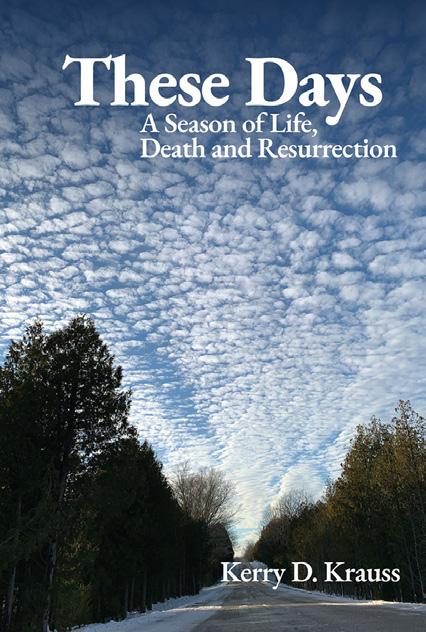
These Days •A Season of Life, Death and Resurrection
When COVID hit in 2020, Pastor Kerry D. Krauss took to the keyboard and sent daily messages of comfort to his congregation to help them through the uncertainty ahead. Kerry’s use of humor and thought-provoking stories made a time of isolation feel a little less lonely as he shared both current and past life experiences. Now you too can be inspired by the musing of Kerry through this entertaining book now available through the IBOC. Those days may be behind us, but our need for depth, comfort, insight and inspiration are not.
A unique opportunity to reach Moravians across North America!
When developing marketing and promotional plans for your event, product or service, be sure to include The Moravian Magazine in the mix!
Advertising in The Moravian gets your message to more than 13,000 Moravian households in the U.S., Canada and around the world. Our cost-effective advertising options offer a unique opportunity to spread your message, promote your event and offer products and services to a Moravian audience.
For more information and to get started advertising in The Moravian, visit www.moravian.org or e-mail pubs@mcnp.org.
the musical gifts of today’s Moravian Church in North America with