STUDENTS READY FOR SUCCESS.
STUDENTS READY FOR SUCCESS.
Newly accredited STEM program opening dynamic career paths
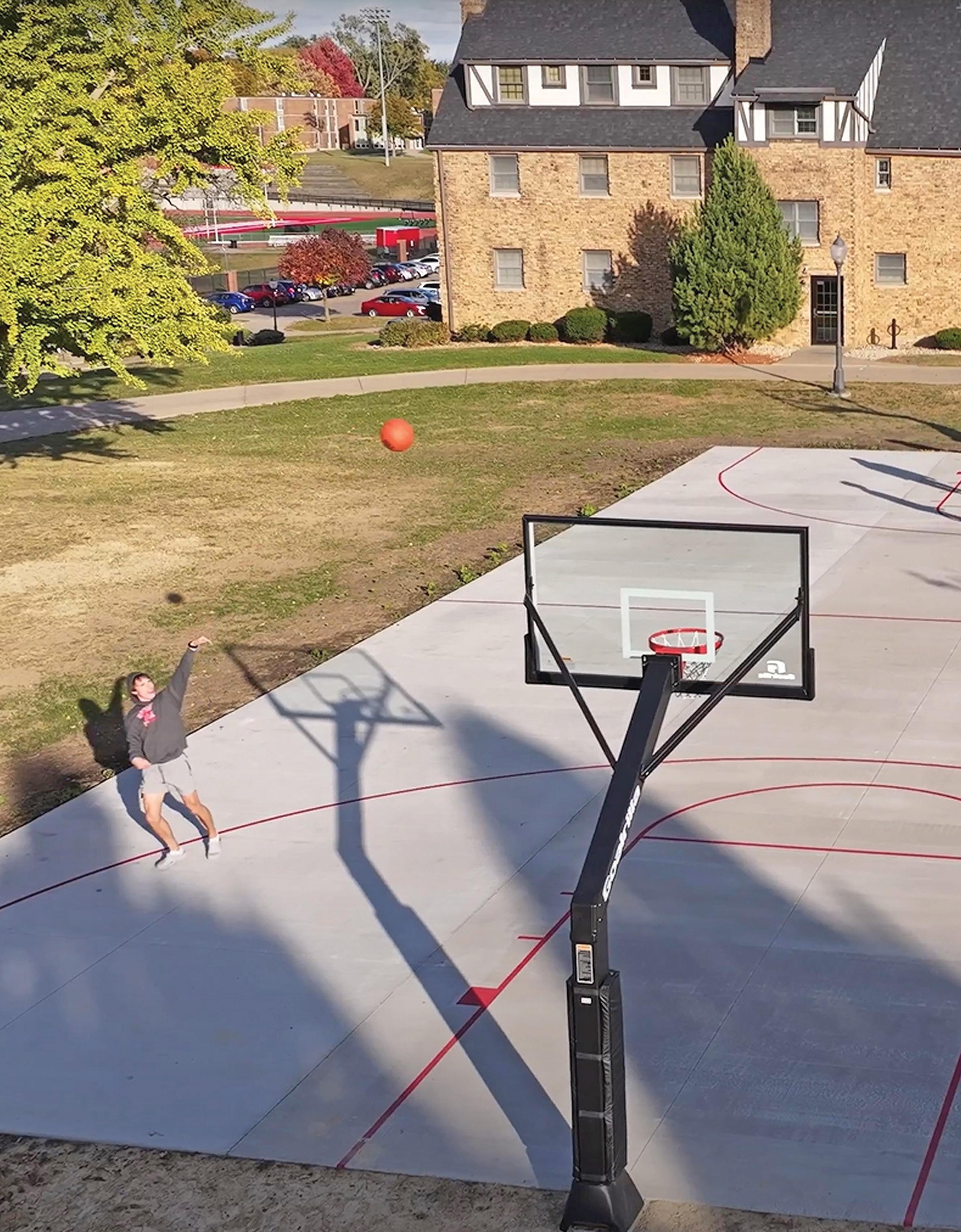
Anew outdoor basketball court, the senior class gift of the Class of 2025, is now in place on the northern end of “the new Quad”— the area between Monmouth’s relatively new west side residence halls and the former western edge of campus. In addition to funds raised by the class itself, the initiative also benefitted from the record-setting Scots Day of Giving in April.
WINTER 2025 VOL. 40, NO. 2
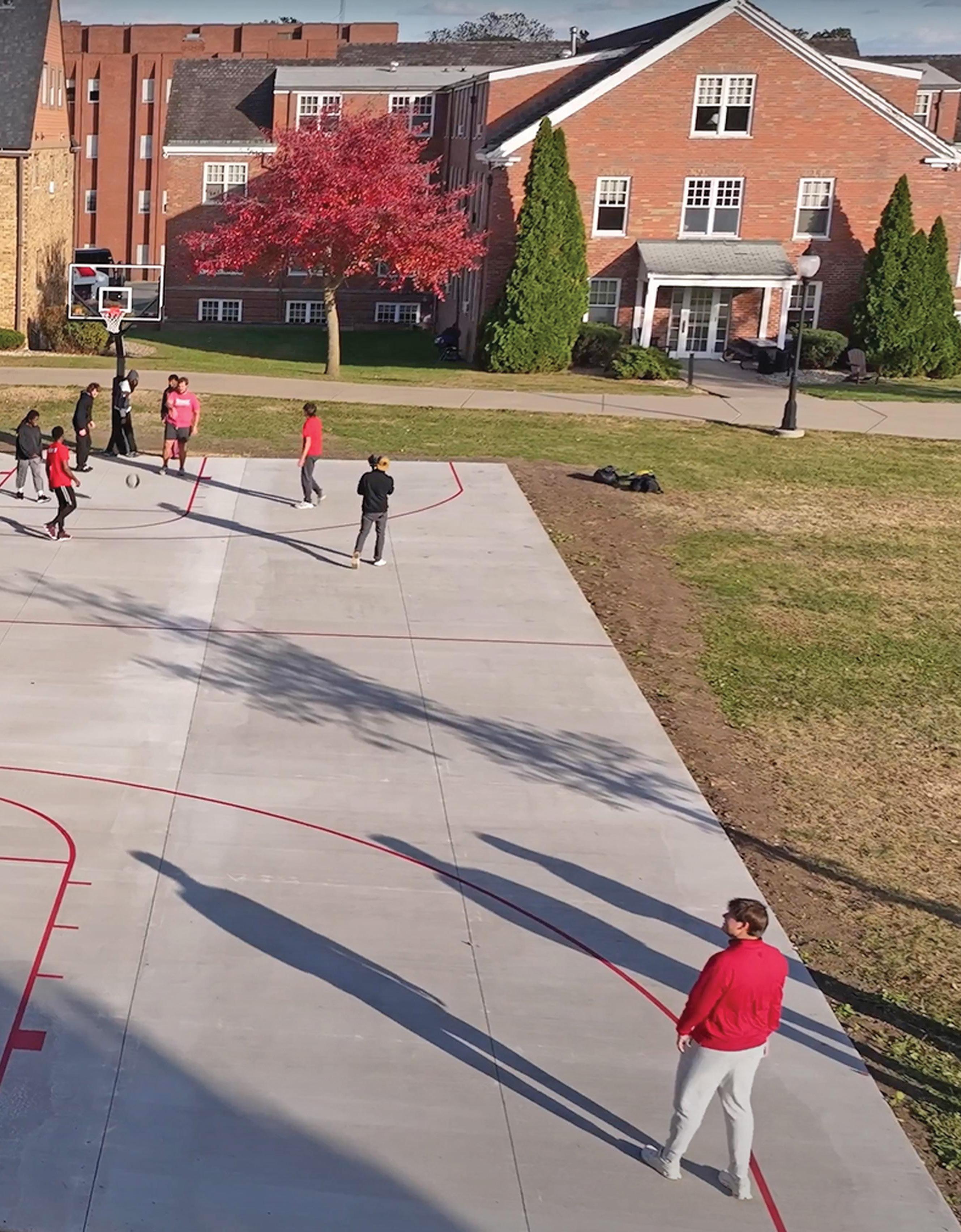
PHOTO BY KENT KRIEGSHAUSER
VICE PRESIDENT FOR DEVELOPMENT AND COLLEGE RELATIONS
Hannah Maher
SENIOR MARKETING DIRECTOR
Keri Dodson ’18
ASSOCIATE DIRECTOR OF COLLEGE COMMUNICATIONS, EDITOR
Barry McNamara
GRAPHIC DESIGN
Jeff Rankin
PRESIDENT
Dr. Patricia Draves
BOARD OF TRUSTEES
Mark Kopinski ’79, Chairman
Dr. Ralph Velazquez Jr. ’79, Vice Chairman
Douglas R. Carlson ’66
Daniel A. Cotter ’88
Dan Dickson ’89
Dr. Harvey Echols ’81
Christine Beiermann Farr ’90
Robin Ottenad Galloway ’90
William J. Goldsborough ’65
Kevin Goodwin ’80
Augustin “Gus” Hart ’68
Mahendran Jawaharlal ’86
F. Austin Jones
The Rev. Robert C. McConnell ’72
Pamela Malone Meanes ’90
Bradley C. Nahrstadt ’89
Gail Simpson Owen ’74
Anthony J. Perzigian ’66
Dennis M. Plummer ’73
Anita Ridge ’88
Tim Salier ’96
The Hon. John J. Scotillo ’72
Dr. Carlos F. Smith ’90
Nancy L. Snowden
Mark E. Taylor ’78
Jean Peters Witty ’88
ALUMNI BOARD REPRESENTATIVES TO THE BOARD OF TRUSTEES
Marybeth Dues Johnson ’93
Jacob McLean ’15
Mark Tupper ’94
ALUMNI BOARD EXECUTIVE COMMITTEE
Mark Tupper ’94, President
Wade Brown ’07, Vice President
Tessa Jones ’18, Secretary
Maggie Ramirez ’09, Member at Large
Monmouth College Magazine is published for alumni, students, parents and friends of Monmouth College. All opinions expressed in signed articles are those of the author and do not necessarily reflect those of the editorial staff or the college.
Monmouth College does not discriminate on the basis of race, religion, color, sex, national origin, ancestry, disability, age, military service, marital status, sexual orientation, pregnancy or other factors as prohibited by law. The college admits students of any race, religion, color, sex, and national or ethnic origin to all rights, privileges, programs, and activities generally accorded or made available to Monmouth students. Monmouth is an Equal Opportunity Employer and complies with all applicable federal and state laws regarding non-discrimination. Any inquiries regarding Title IX or the college’s Policy Prohibiting Discrimination, Harassment and Retaliation (www.monmouthcollege.edu/nondiscriminationpolicy) should be directed to the
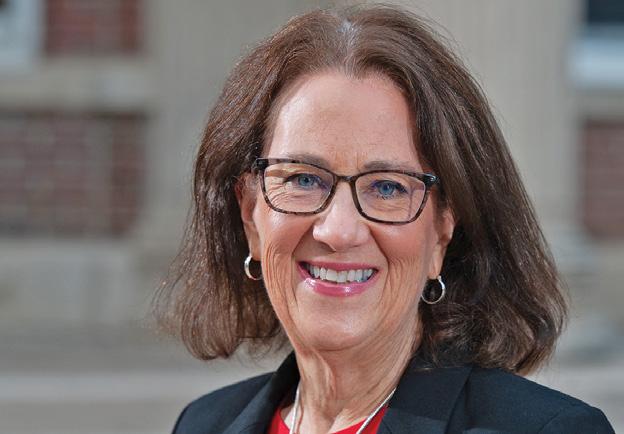
I’m delighted to share with you some of the remarkable highlights that have taken place on campus since the start of the fall semester—accomplishments made possible by the hard work of our students, faculty and staff, and by the continued support of our alumni and friends.
This fall brought one of the most impactful milestones for our engineering program: ABET accreditation. This national recognition affirms the rigor and impact of the program our faculty have built and ensures that our graduates step into their careers with confidence and distinction.
We were also awarded several major grants that will strengthen opportunities for our students.
A $999,764 National Science Foundation S-STEM grant is launching our initiative to support academically talented, Pell-eligible STEM students, and a $1.3 million TRIO Student Support Services grant will enhance resources for firstgeneration, low-income students, and those with disabilities. These awards underscore the trust national partners place in Monmouth’s mission and in the potential of our students.
And speaking of students
—they continue to inspire us every day. This fall, our scholars and athletes alike demonstrated what it means to be a Monmouth Fighting Scot. Our football team brought home the Midwest Conference championship, earning a berth in the NCAA Division III playoffs for the first time since 2019. Across campus, students have presented research at regional and national conferences, showcasing work in fields from neuroscience to environmental science to educational studies. Others completed internships at standout organizations— Fermilab, John Deere, Ronald McDonald House Charities, and at leading healthcare systems, law offices and major nonprofits — putting their learning into action and representing Monmouth with excellence.
As I’ve shared with colleagues recently, one of the great joys of my role is hearing from alumni who return to campus or reconnect from afar. This semester, the feedback has been overwhelmingly positive. You are energized by where Monmouth is heading, and that enthusiasm fuels us. Your support—through gifts, mentorship, advocacy and
simple words of encouragement —helps create the vibrant, welcoming, forward-looking community that defines Monmouth College.
On the following page, you will find updates on the five strategic pillars I have introduced this year, highlighting the thoughtful, forward-looking work underway to strengthen enrollment, enhance the personalized Scots education, deepen our culture of connection, support our people, and build the systems that ensure every student can thrive. These efforts will guide efforts for sustained growth, innovation and impact in the years ahead.
Thank you for believing in this college and in the people who make it special. Together, we are shaping a future for Monmouth College that honors our history, celebrates our present successes, and prepares us to meet the opportunities of tomorrow with confidence and ambition.
More to come,

PATRICIA DRAVES PRESIDENT MONMOUTH COLLEGE

The last issue of this magazine announced the adoption of five strategic pillars that would challenge the campus community to think boldly and creatively about guiding the growth of Monmouth College in the coming months and years.
The midpoint of this academic year provides an opportunity to reflect on progress to date and share with readers some of the strategies adopted to address these goals.
This fall, Monmouth welcomed an incoming class that was 35 students larger than last year, marking the college’s first enrollment increase in a decade. Student retention also improved. This growth reflects the work of the entire campus community and includes alumni support. Additionally, the college had a strong fundraising year—including a record-breaking Scots Day of Giving—all while increasing overall revenue and decreasing operating expenses. The college continues to enjoy a strong endowment but will work to grow endowed student scholarships, professorships and programs to ensure offering a high-quality Monmouth education at a manageable cost for students.
“Our mission and Monmouth superpower is to help students realize their potential,” said President Patricia Draves. “Each student’s educational journey will be personalized to provide academic and outside-the-classroom experiences designed just for them.” Monmouth faculty are innovating new opportunities for students and new ways of teaching to help students learn. They’re currently engaged in a thoughtful review of the core curriculum to embody the college’s liberal arts commitment, teaching durable skills for the quickly evolving job market. Today’s graduates must be nimble thinkers, strong communicators and creative problem-solvers. Monmouth faculty are working collaboratively to build that type of curriculum not only for today, but for the
future. New majors, certificates, applied experiences and internships during a students’ education are all being updated to address employers’ and graduate programs’ demands in our digital economy.
This year, Monmouth launched the Tartan Network, a collaboration between admission and advancement that encourages referrals from alumni, families and friends of the college. The Tartan Network, which is already helping the college strengthen those personal pathways, has a goal of collecting 100+ referrals from alumni (see the QR code on the inside back cover). Additionally, more alumni have stepped up on the professional front with invaluable interactions, offering networking, job shadowing, internships, guest lectures, advising and informational interviews for current students.
This fall marked the official launch of six academic schools, each shaped to enhance collaboration, support innovation and better serve students. Much of the innovation will lie between the traditional disciplines as the new structure brings together Monmouth’s intelligent, student-centered and energetic faculty in new ways. What will happen? Stay tuned. “I’m grateful for the leadership the inaugural chairs are providing as we transition into this new structure,” said Draves. “This model allows faculty across related disciplines to work more closely together, coordinate resources, and support student learning in ways that reflect best practices across higher education.”
To make the student experience even more seamless and supportive, the college recently transitioned its Office of Financial Aid into the Office of Student Financial Services. This shift brings billing, financial aid and financial counseling into one accessible, student-centered location, an important step in ensuring that every student and family feels informed, welcomed and supported from their first conversation with the college through graduation. Additionally, a digital transformation continues with a focus on final steps of the hardware infrastructure moving toward the strategic planning for how AI and digital tools help advance Monmouth’s enrollment, revenue, and teaching and learning environments.
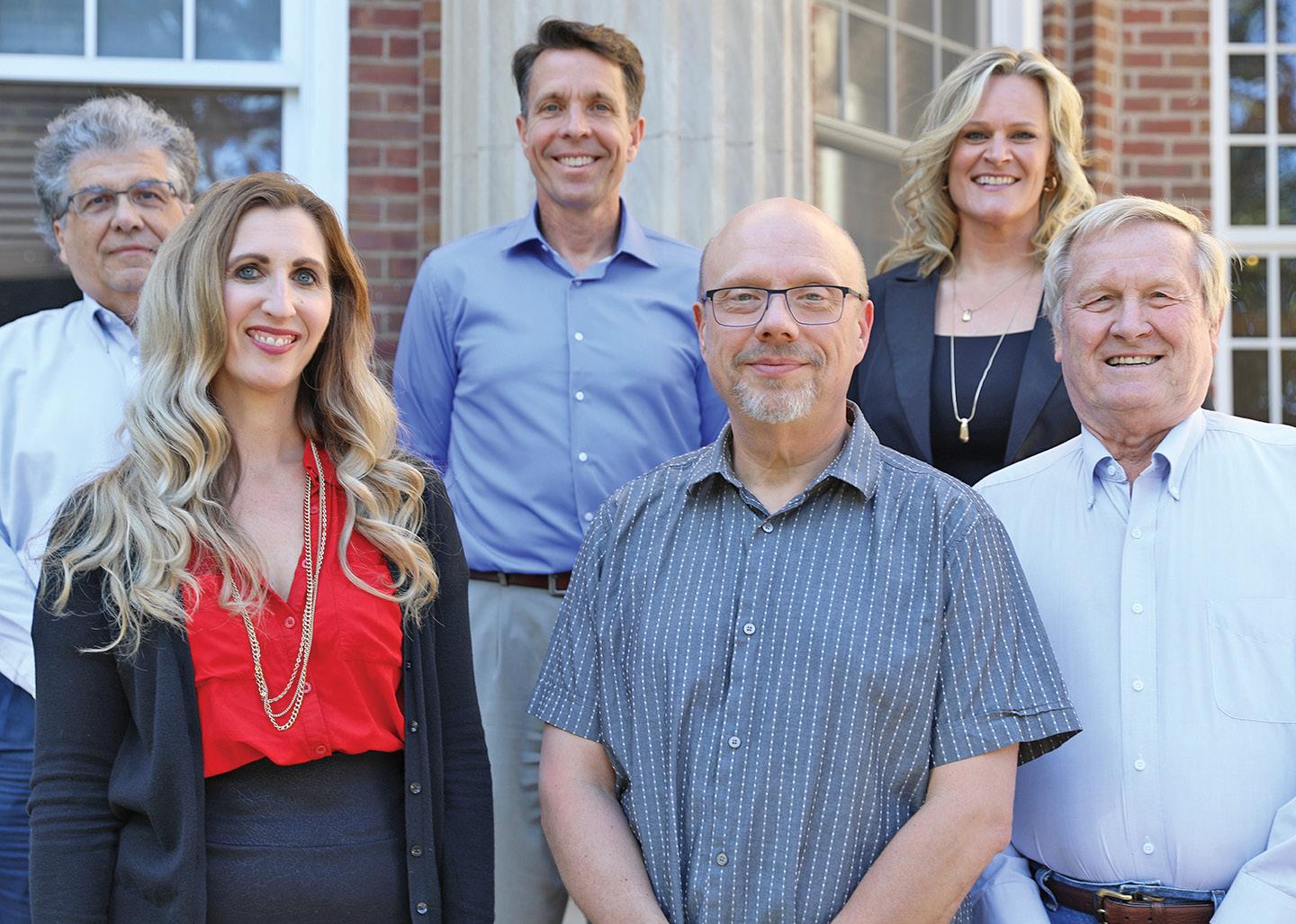
During the summer, Monmouth announced the creation of six academic schools to better align its strengths and create new opportunities for collaboration and student success. In October, after a competitive process, the college announced the appointment of the schools’ six inaugural chairs:
• Mike Connell, Chair of the School of Business
• Chris Fasano, Chair of the School of Engineering, Sciences, and Innovation
• Audra Goach, Chair of the School of Health and Natural Sciences
• Chris Goble, Chair of the School of Communication and Creative and Performing Arts
• Robert Simmons, Chair of the School of Humanities and Civic Engagement
• Tiffany Springer, Chair of the School of Education and Human Development
“I’m excited to see how this new structure fosters deeper connections both within and between disciplines,” said Goble, a longtime member of the communication studies faculty. “We have a great tradition of that already at Monmouth, and I think this is only going to make it stronger. This is a great group of faculty, and I look forward to working closely with them to serve our students. And that is ultimately what this is all about—the students.”
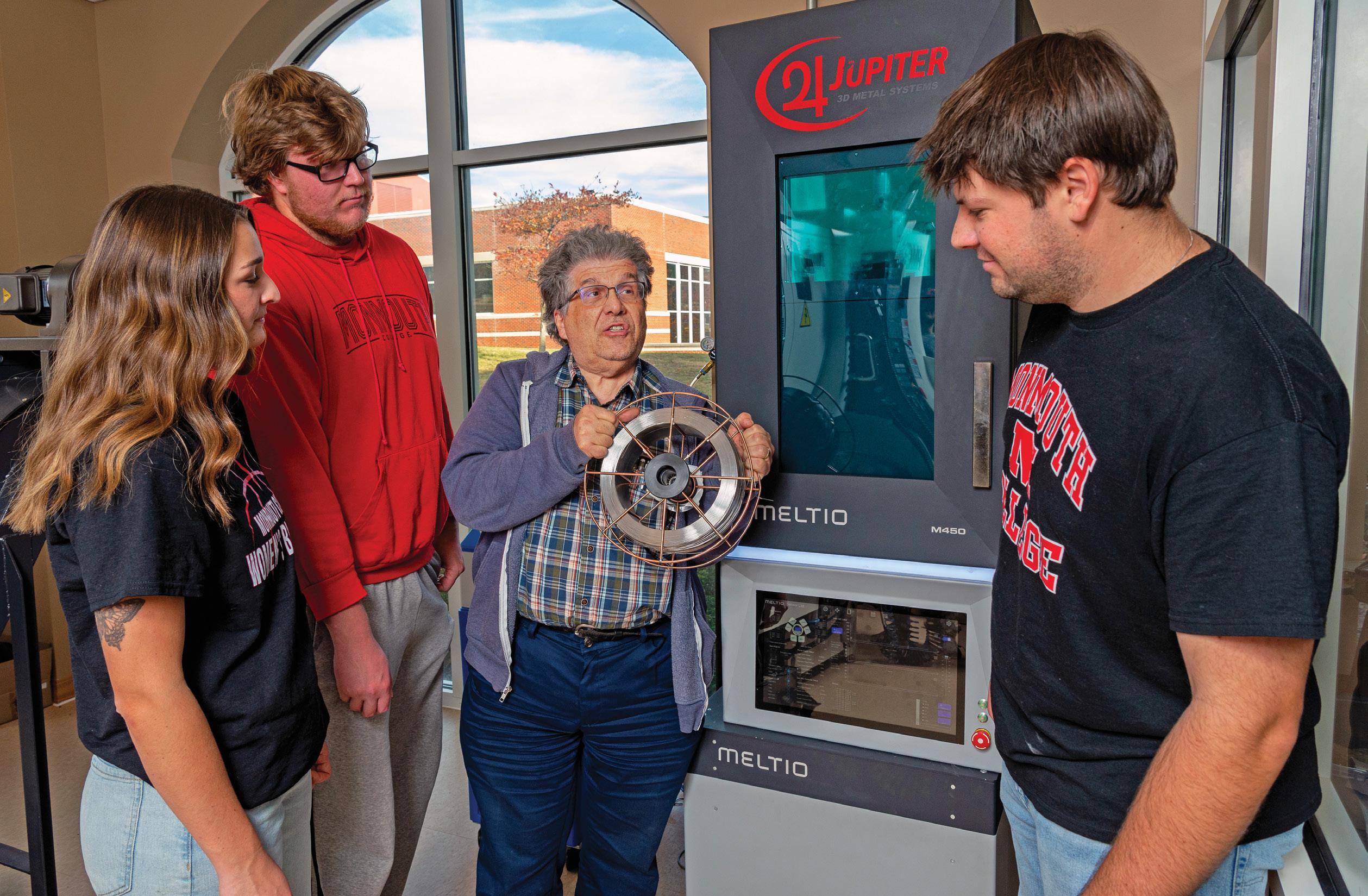
“I’m looking forward to building new collaborations both inside our school and between the schools,” said Fasano. “We’re already talking about things like quantum engineering, quantum computing, advanced manufacturing, robotics, energy.”
Under the umbrella of the School of Health and Natural Sciences that Goach chairs are the majors of chemistry, which she teaches, as well as biology, biochemistry, nursing, health science and human movement, exercise science, neuroscience, physical education, nursing, health education and kinesiology.
“There will be lots of brainstorming with my talented colleagues about the programming that will encompass the best of what each of those majors currently has to offer, from research projects to courses to internships,” she said. She said grouping those programs into one school provides “targeted mentoring for discovering the best path for their desired careers,” be it health-related positions or academic or industrial careers in biology, chemistry and biochemistry.
On a personal note, Goach said her new role will allow her to expand her leadership experience, a sentiment echoed by Springer.
“This new leadership role presents a unique opportunity to support the work of the colleagues within my school and across the college campus,” said Springer, an educational studies professor, who reports that her school has already met a handful of times. “We are excited about the energy of the group and potential opportunities to collaborate with one another across disciplines.”
A 2003 Monmouth graduate, Springer has the shortest time on the faculty, returning in 2023. The longest tenure belongs to Connell, who joined the faculty in 1992 as a business and economics professor.
“I’ve always believed that business is the liberal art of the 21st century,” he said. “I think everyone should know about the core principles of business and economics. These changes will allow more students to see the power of liberal arts values in new and exciting contexts.”
A classics professor, Simmons has long been a proponent of the liberal arts through the humanities.
“It is a pleasure to have this opportunity to shape the School of Humanities and Civic Engagement with colleagues across disciplines with whom I have worked closely for years on different projects,” said Simmons. “We share essential values and approaches, which will expedite our efforts at innovation.”
“We had many dedicated, gifted faculty apply for these important leadership roles,” said Dean of the Faculty Mark Willhardt. “Their willingness to step forward reflects their commitment and enthusiasm and speaks to the rich pool of talent across campus.”
The six new chairs meet regularly as the Dean’s Council with Willhardt.
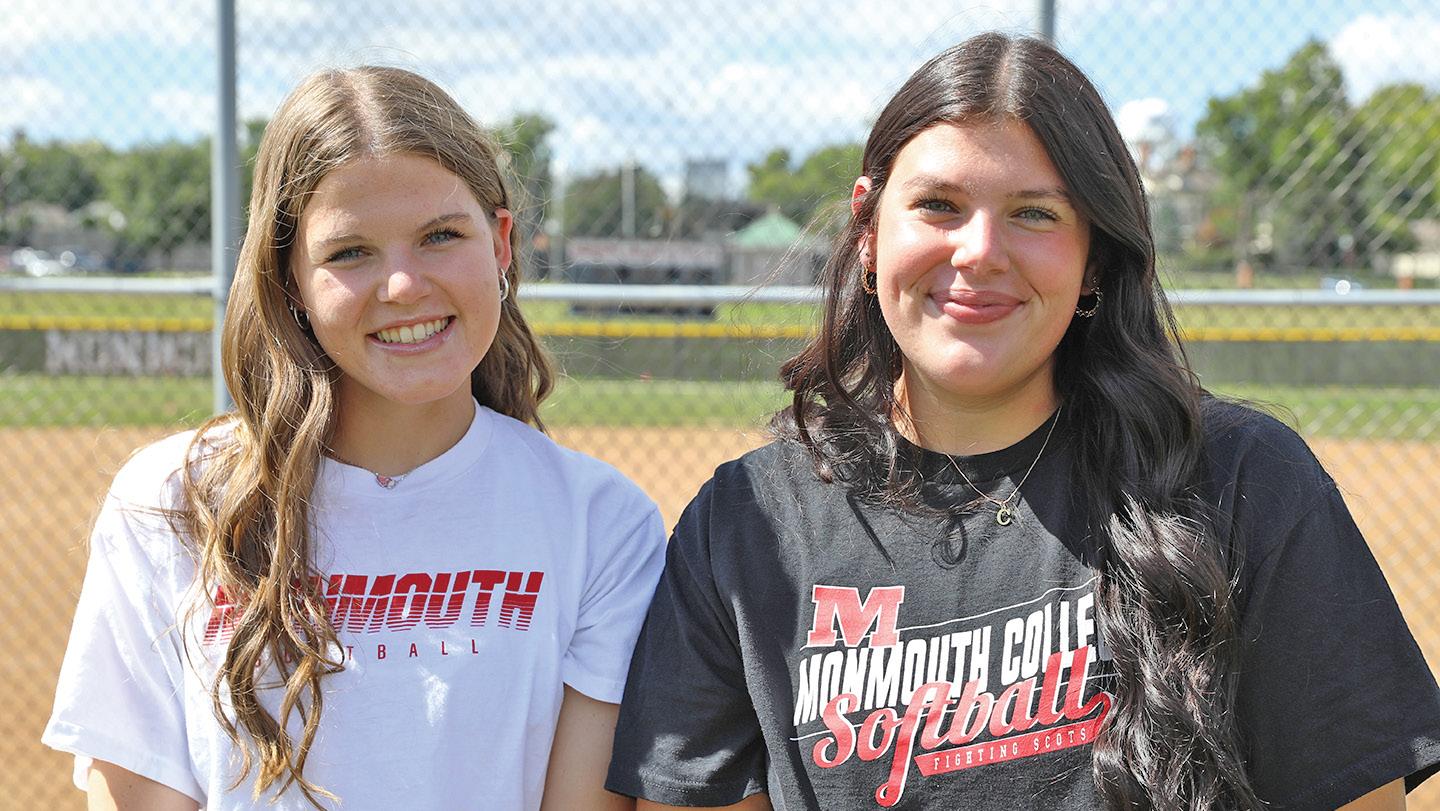
If this year’s Fighting Scots softball team finds itself short on athletic trainers, the squad can take comfort in the fact that it boasts two members of Monmouth’s inaugural class of nursing students.
The concept of a nursing student having the time and opportunity to pursue such a cocurricular activity as intercollegiate sports might be novel, but it’s a major appeal of Monmouth’s new program.
“I am going to be a part of the softball team, which is one thing that was very important to me,” Lydia Overcash, one of 24 students enrolled in the program, said at the start of the fall semester. “I haven’t decided yet if I want to do sororities and different clubs, but I know I have the option to do so.”
In 2024, administrators from Monmouth and OSF HealthCare signed a letter of commitment, officially launching the innovative 3+1 nursing program that will combine Monmouth’s residential college experience with the Saint Francis Medical Center College of Nursing’s excellent curriculum and regional healthcare facilities.
Overcash knows that balancing her academics and activities will be a challenge, but she’s happy to have the
opportunity and believes she’ll benefit in the long run.
“Another thing that influenced me is that the program is accelerated, which could be difficult in the moment but, overall, I think will be the better option in the end,” she said. “Also, with the program being paired with OSF, it gives me job opportunities and more experience in a real-world setting.”
One of Overcash’s softball teammates will be Ava Landon, who chose Monmouth because it was close to home and she could continue her athletic career. She cited a passion for helping people as a reason she’s attracted to nursing.
Last spring, Monmouth made news by receiving a National Science Foundation grant worth nearly $1 million, which was part of the NSF’s competitive Scholarships in Science, Technology, Engineering, and Mathematics (S-STEM) program.
The funds launched an ambitious new FLASH program at Monmouth aimed at increasing the success of Pell Grant-eligible students pursuing STEM degrees. Over six years, the program will provide scholarships and robust academic and career support to approximately 15 academically talented students with exceptional financial need, as determined by the Department of Education.
need, a population historically underrepresented in these fields. It builds on Monmouth’s continuing emphasis on STEM and is the latest in a series of strategic investments by the college to expand access to high-impact STEM education and to prepare students for in-demand careers in the region and beyond.
“This award is a transformative investment in our students and in the region,” said chemistry professor Laura Moore, who served as the proposal’s principal investigator. She said the program will open doors and provide support for students who have the talent but may not have the means to pursue a STEM education.
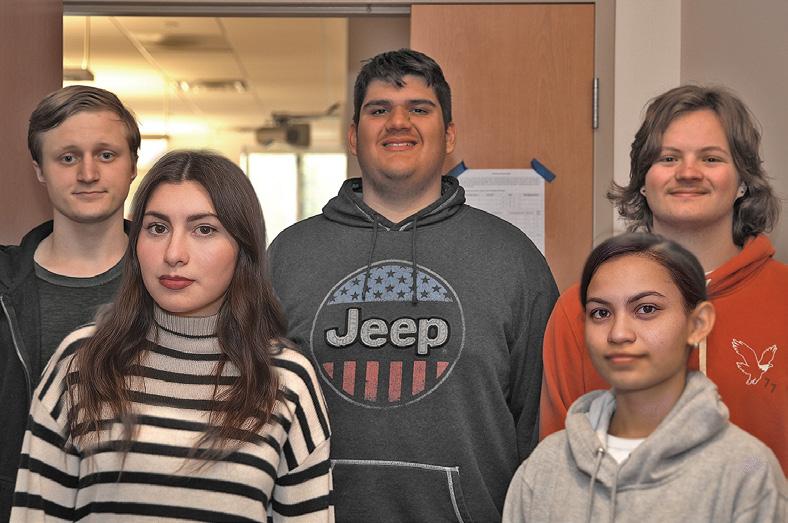
“FLASH” forward to this fall’s semester, and the college announced the first group of students that are part of the new Focus on Learning for All with STEM as a Home initiative, also known as FLASH.
Those students are engineering majors Ellis Kircher and Gavin Streets Wood, biochemistry major Hailey Garcia, computer science major Dylan Marr and biology major Camila Taguado-Martinez
FLASH is especially focused on increasing STEM participation among rural students with exceptional financial
Physics professor Chris Fasano, a longtime advocate of creating pathways for students to pursue an interest in STEM, said, “We are delighted to support these students in their quest to become STEM professionals.”
He added, “Monmouth College’s strong ties with regional high schools, community colleges and growing partnerships with STEM employers in many disciplines and national laboratories make us uniquely positioned to build a local pipeline of talented STEM professionals and support economically disadvantaged students.”
Internships are more than résumé builders—they’re moments when students discover what excites them, what challenges them and where they might go after graduation. For Monmouth students, the Yahnke Business and Economics Endowed Internships Fund—established through the generosity of Dick ’66 and Lee Yahnke—helps turn those moments into reality by providing financial support for housing, living expenses or other costs tied to summer work experiences.
This past summer, Alana Robertson, Andrew Johnson, McKealey Klokkenga and Warren Reed received funds from the endowment, with Klokkenga noting, “I think this internship will stay with me forever, and that is invaluable.”
She spent her summer working in Monmouth’s Alumni Office, creating Instagram Reels to promote events—including the Fighting Scots Society Golf Outing—helping with the Golden Scots Celebration and designing mass emails using the office’s new outreach system.
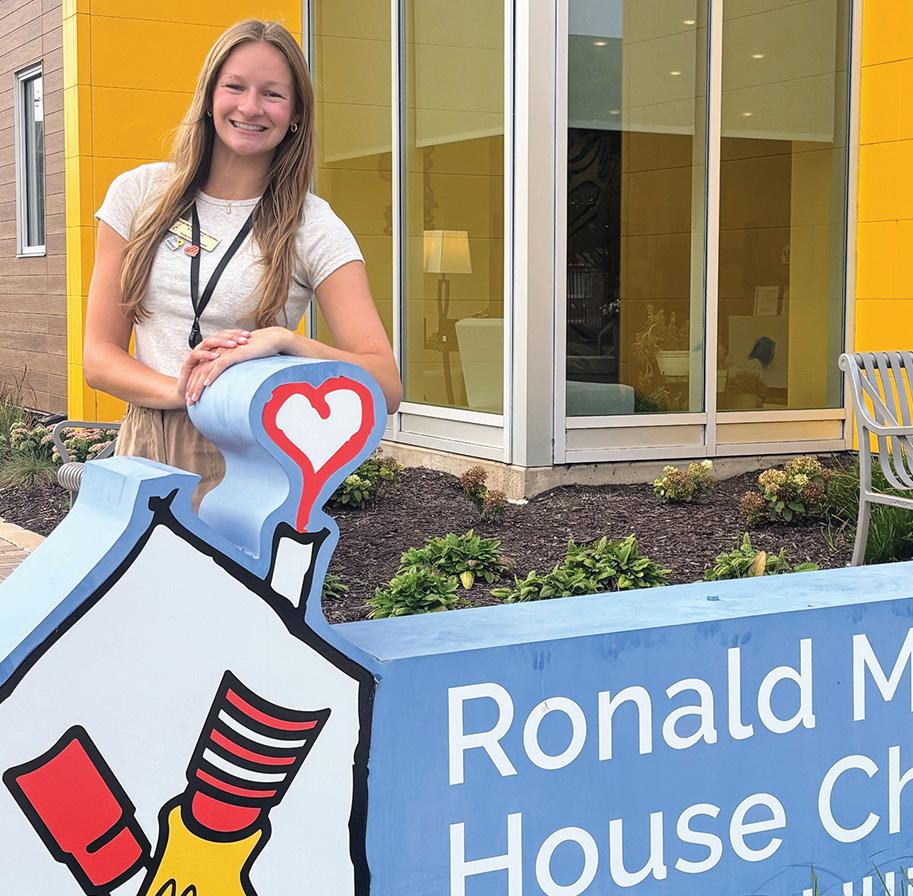
At Ronald McDonald House Charities of Central Illinois in Peoria, Robertson stepped into the role of marketing and operations intern. Her main project was to spread the word about the non-profit’s day program, which provides support to families with hospitalized children.
Johnson joined Flexsteel Industries as a sales intern, where he collaborated with fellow interns on competitive research, product development and market analysis. He also had the chance to shadow sales representatives in the field and present findings every two weeks to company leaders.
“What surprised me most was how smoothly I was able to transition from college work to working in the internship,” he said. “I felt adequately prepared because of my experiences at Monmouth.”
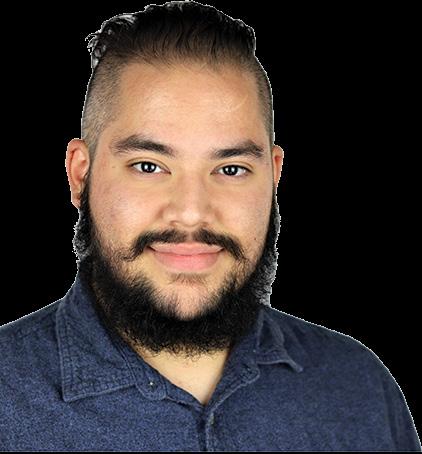
Edrass Chávez-Alvarado knows that not everything happens on schedule. It didn’t happen with his college education, with his career decision or even with his desire to showcase the work of contemporary Puerto Rican playwright José Rivera.
But in September, the time was finally right for Chávez-Alvarado, a semi-nontraditional senior, to not only bring Rivera’s work to campus, but to direct it, as well. Monmouth staged Rivera’s Marisol to open its theatre season. Chávez-Alvarado was uniquely qualified on campus to direct the production, thanks to his Puerto Rican heritage and the two years after high school he spent living and working in New York City, albeit not the post-apocalyptic NYC where Marisol takes place.
By the time he was in his seventh year beyond his
high school graduation, Chávez-Alvarado planned to be somewhere in the midst of medical school on his way to becoming a pediatric neurosurgeon, a plan set in place when he was in fourth grade. It was still his path after choosing Monmouth, but he gradually pulled away from it and then, thanks to a life-altering conversation with professor Todd Quick, embraced theatre completely.
“I could do what I was doing in neuroscience and do A and B work, but it wasn’t fun,” he said. “I realized, ‘This isn’t it.’”
But what was? He really couldn’t say, after believing for many years that his Plan A was going to stick.
“I was talking with Professor Quick, and I said, ‘I might as well drop out.’ He said, ‘What do you want to do?’ I said, ‘I just told you, I don’t know.’ He said, ‘You’re not listening to me. What do you really want to do?’ Finally, I just threw my hands up and I said, ‘I guess I want to be a famous actor.’ It just clicked for me right then. I don’t have to be a neurosurgeon. Why not make it theatre if that’s what I want to do?”
In her concluding remarks after September’s Ninth Annual Wiswell-Robeson Lecture—which features a speaker from the agriculture community who explores issues, challenges and innovations in the industry—President Patricia Draves neatly summarized the presentation by alumna Robin Ottenad Galloway ’90, a member of Monmouth’s Board of Trustees and chair of its finance committee.
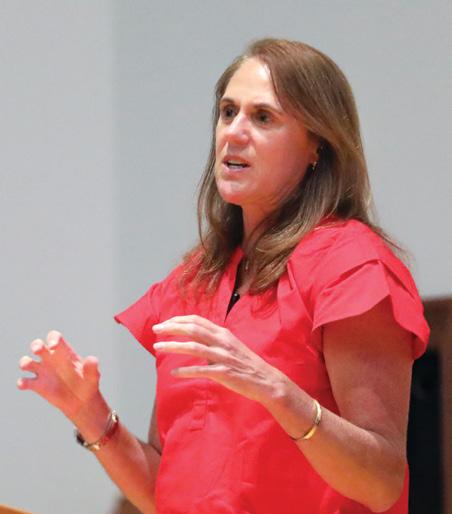
“There’s a lot that goes into what we put in our bodies, and there’s a lot of people involved, (starting with) people who are at the farm and sitting here (in the audience),” she said. “There’s a lot that it takes to get food on our tables, and to make sure that food is safe and that it tastes good.”
Galloway, who has more than three decades of executive experience in the food industry, elaborated on some of those details in a talk she titled “Consumer Food Trends, Food Labeling and the Supply Chain.”
Throughout her career, Galloway has specialized in helping to turn around stagnant businesses. She is currently working on doing just that as the CEO of Dr. G’s Ingredients, a food seasoning manufacturer based in Georgia.
She also shared how Monmouth provided her a second chance at higher education. “I took a gap year before it was a ‘thing,’ ” she said. “I looked at a bunch of different schools in the Midwest, and Monmouth was the one that made me feel welcomed.”
Galloway majored in accounting and was active in Kappa Kappa Gamma. She said her experience helped give her the confidence to embark on her career journey, which has seen her change jobs 15 times and work in 11 states.
“It was the perfect experience for me, and I’m so grateful for what I learned here,” she said. “Quite honestly, I’ve had to be a little bit brave in my career, and that’s something I learned here at Monmouth.”
Taylor Whitaker ’26 has already built a strong foundation for a future career in politics and public service. This fall, she added another layer to her résumé when she was named a 2025–26 Newman Civic Fellow by Campus Compact.
Newman Civic Fellows are a group of communitycommitted students who are already impacting communities where they live, learn and serve. Campus Compact says it is “pleased to recognize such an inspiring group of emerging public problem solvers.”
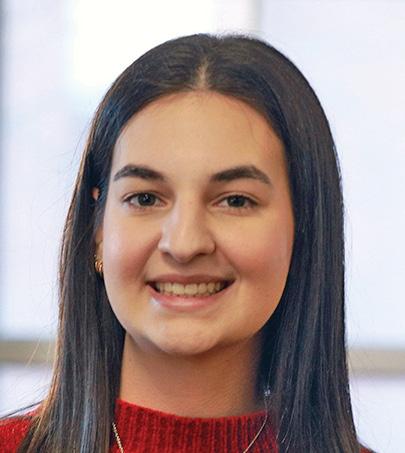
“Making meaningful connections, networking and learning about the ways I can show up for my college and my classmates is something I’m very excited about,” said Whitaker, a political science major with a minor in psychology. “Monmouth has given me so much, and I’m just very grateful for all the opportunities that keep coming my way.”
Whitaker has interned in the office of Illinois State Sen. Dave Koehler (IL-46) since her freshman year at Monmouth.
Monmouth’s moot court competition— called “an academic exercise and an exercise in professionalism” by its faculty adviser, political science professor Mike Nelson crowned a new Top Advocate in October.
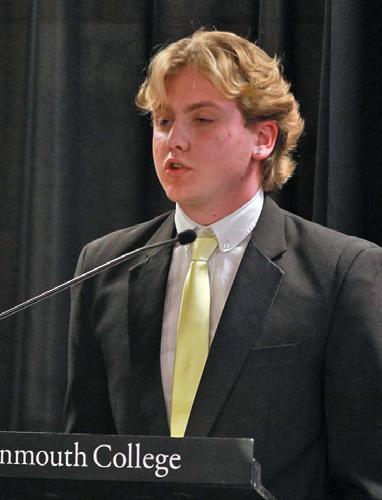
The winner of the college’s 15th annual competition was sophomore Calvin Wellman. In previous competitions, his class year might have made him the youngest to reach the four-student final round, but it was actually an all-underclassman field. Sophomores Andrew Himpsl and Emily Leshin and freshman Nora Collins joined Wellman in the final.
“I really poured my heart into preparing for this case,” said Wellman. “I think in total I must’ve spent no less than 20 hours reading and annotating the case, in addition to the writing and reading. All that to say that being diligent is a big part of moot court, and getting direction from Professor Nelson and others was a big part in making sure I was on the right track.”
Leshin was a winner on the night, as well, writing the top legal brief.
The judges for the final round included Associate Judge James G. Baber of the 9th Judicial Circuit of Illinois, who served as chief justice of Monmouth’s simulation of the Supreme Court. The justices were faculty members Vanessa Campagna and Mike Connell.
The preliminary round was held three days earlier and featured 14 students battling for a spot in the finals. Judges for that round and for the legal brief writing competition were Dan Cotter ’88 , Kate Fitzsimmons Cross ’08 , Brad Nahrstadt ’89 and his wife, Debra Nahrstadt
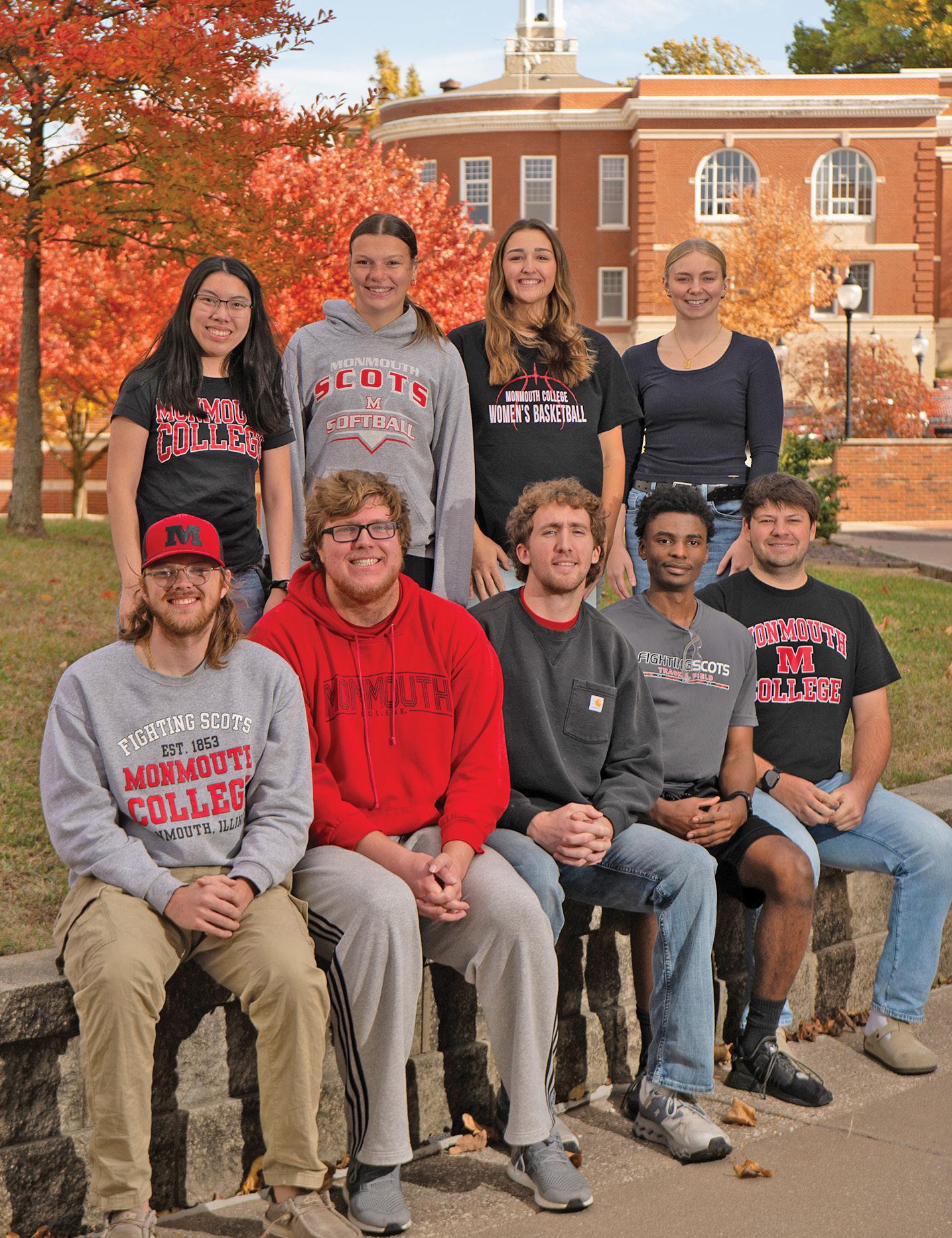
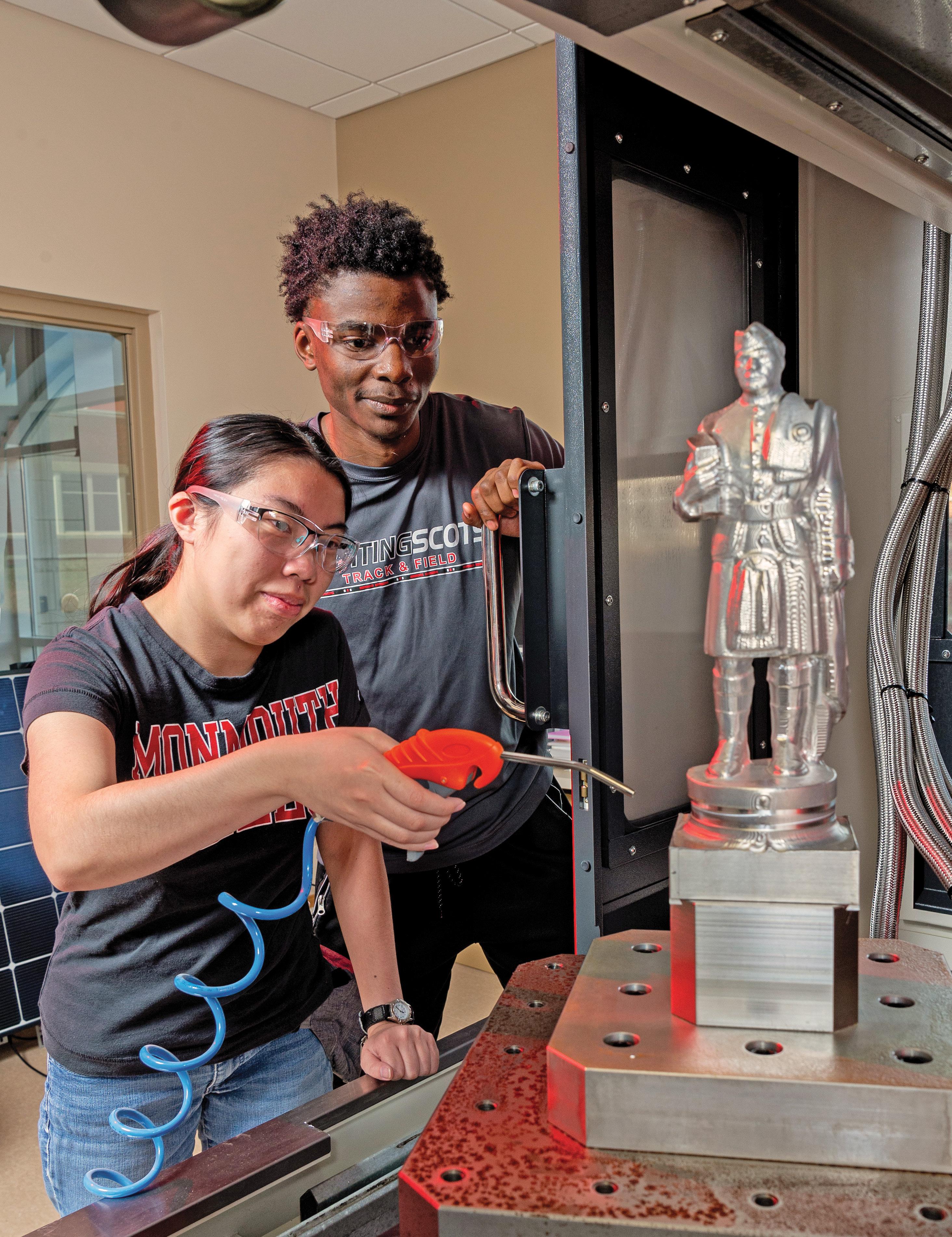
Google the phrase “top majors in college” and the very first one you’ll see in the upper lefthand corner is engineering. So it was good news that Monmouth College launched it as a major in 2019, and plenty more good news has followed, including several developments in the past few months alone.
The headline news was that the relatively young program achieved a major milestone—official accreditation by ABET, the global standard in engineering and technology education—marking a significant moment for both the college and its STEM ambitions.
ABET accreditation affirms that Monmouth’s engineering curriculum meets the rigorous standards necessary to prepare graduates for leadership in essential STEM fields, from advanced manufacturing to clean energy to national research labs.
“This is a tremendous step forward for Monmouth and for our students,” said Chris Fasano, the Martha S. Pattee Professor of Science and a founding faculty member of the engineering program. “ABET accreditation confirms what we’ve known all along—that we’re delivering an engineering education that’s both academically rigorous and deeply personal.”
Monmouth graduated its first class of three engineering majors in 2023. In May of this year, Noelle Faulk became the college’s first female engineering graduate. Students benefit from small class sizes, close faculty mentorship and hands-on learning experiences that prepare them for advanced opportunities.
President Patricia Draves praised the accreditation as both a validation and a point of emphasis.
“This recognition reflects years of thoughtful planning, hard work and commitment from our faculty and staff,” she said. “It also positions us to continue growing a program that serves both our students and the broader needs of the region and the world.”
The ABET review process included a comprehensive on-site evaluation last fall. The college engaged external consultants from the University of North Florida and Monmouth alum Kevin Truman ’79 from the University of Missouri-Kansas City to refine its assessment processes. Since its launch, the program has evolved to focus on mechanical and electrical engineering—two of the most in-demand fields.
One hallmark of Monmouth’s program is the individual attention students receive.
‘ABET accreditation confirms what we’ve known all along –that we’re delivering an engineering education that’s both academically rigorous and deeply personal.”
—Professor Chris Fasano
“In large programs, it’s easy for students to feel like just another face,” said engineering and physics professor Shahed Quadir. “Here at Monmouth, we know them by name, we know their goals and we get to celebrate their progress. That close connection makes a difference in their success, both now and in the future.”
Monmouth engineering majors are already making their mark after graduation, contributing their skills at respected organizations across the country, including Farnsworth Group, Halliburton, Navistar, The Hill Group and the U.S. Army Corps of Engineers.
The program’s growing reputation is attracting top students, as 25% of the college’s full-ride scholarship recipients

for the 2025–26 academic year have declared engineering as their major.
“ABET accreditation is not just a credential. It’s a signal to students and families that Monmouth is serious about preparing engineers who are ready to lead,” said Draves. “This is a proud day for the college, and an exciting one for our future.”
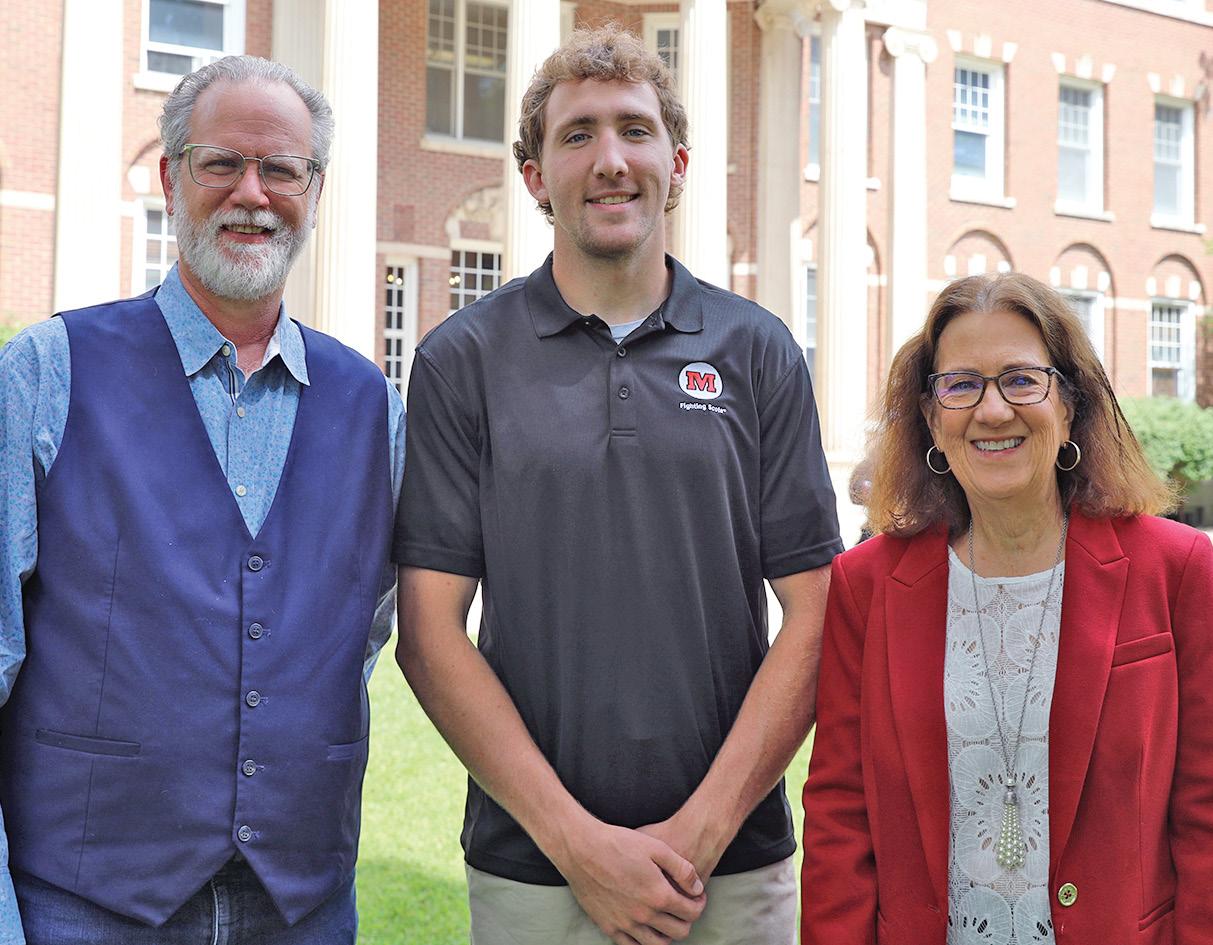
One of the engineering program’s top students was chosen as the college’s top student, as well. Dubbed “the most interesting man in the world” by his Fighting Scots basketball teammates, Turner Plumer ’26 now has another nickname that could stick—“The Laureate.”
Earlier this year, Plumer was named the college’s Student Laureate of the Lincoln Academy of Illinois. In conjunction with the honor, he will be one of the speakers at next May’s Commencement ceremony. Each fall, an outstanding senior from each of the four-year degree-granting institutions of higher learning in Illinois is awarded the Abraham Lincoln Civic Engagement Award. Student Laureates are honored for their overall excellence in curricular and cocurricular activities.
Despite studying in the rigorous new engineering program and participating in intercollegiate athletics, Plumer carries a near-perfect 3.986 grade-point average. The exceptional student leader and scholar has consistently earned recognition on the Dean’s List and was named to the College Sports Communications All-District team for his excellence in both academics and athletics.
Relationships are part of what makes his academic experience special.
“There’s hardly a day that goes by that I don’t talk to one of my professors, and it’s not always about classes—it could be about college, or life, or future endeavors,” he said. “I just enjoy making all the connections I have, both with my professors and the staff, and with the other students, too—my colleagues.”
‘The
30 miles each summer to raise funds for St. Jude Children’s Research Hospital and participating in home construction with Habitat for Humanity.
Plumer would seem to be a great catch for any company seeking talented, well-rounded employees, and that’s the direction he’s leaning, with an emphasis on staying relatively close to his hometown of Canton, Ill.
“I’m still thinking about it,” he said of his post-Monmouth options. “I want to apply to Caterpillar, as well as other big companies in the Peoria area like Komatsu.”
If you were given $3,000 and told you could create anything, what would you make?
engineering and physics faculty are very personable – you can tell they really care. They will sit with you until you really understand the concept.”
Deeply engaged in campus life, Plumer has served as a physics and engineering tutor and as a resident assistant, where he’s promoted a safe and supportive residential environment. The All-Midwest Conference hoopster was also named captain of his Fighting Scots squad. Plumer’s commitment to service goes beyond the classroom and hardwood. He has worked as a mechanical engineering intern at KEDbluestone and as an engineering intern with the Illinois Department of Transportation, gaining hands-on experience in infrastructure and HVAC design. He also volunteers regularly, including running over
—Lizzie Durfee ’26
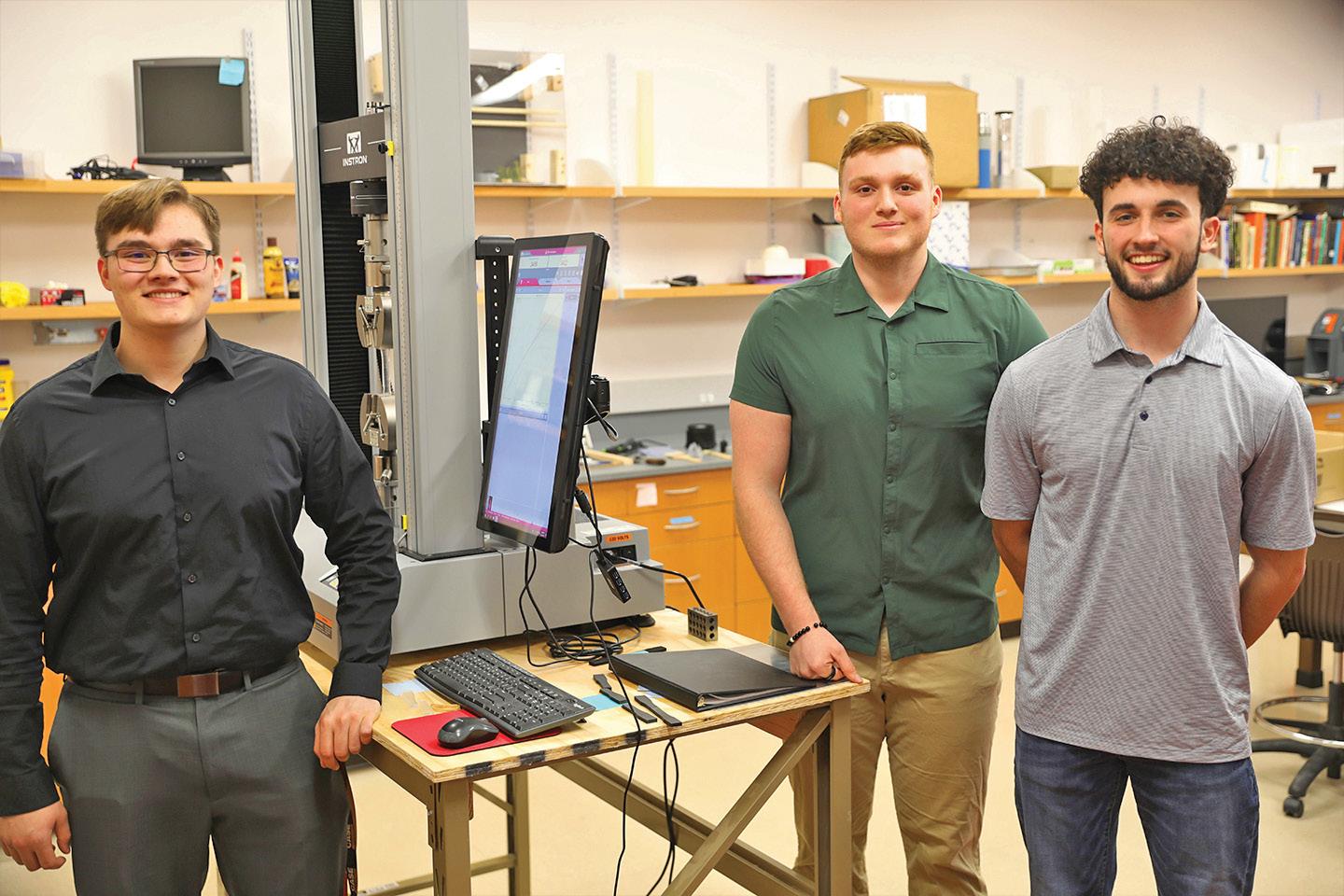
For Plumer and the eight other engineering majors in Monmouth’s senior design class, the answer is a Roomba for a golf course’s driving range.
“That’s essentially what it is,” said one of the seniors, Thomas Henson, a member of the Fighting Scots golf team. The official name he and his classmates gave for their creation is “an autonomous golf ball picker”—an electric vehicle connected with GPS.
“We hit a lot of golf balls on the range, and the issue we run into is that there’s not a sufficient amount of range balls,” said Henson. “We run out pretty quickly.”
Golf course personnel are able to hop into their handy vehicle and scoop up the hundreds of balls scattered across the range, but there’s only so many hours in a day,

and that can’t be their top priority.
Enter the senior design project, which can work around the clock, doesn’t require a paycheck, and won’t take it personally if the golfers in the tee boxes are intentionally aiming at it.
The students have broken off into a trio of three-member teams, handling the areas of mechanical engineering, electrical engineering and software.
In addition to the challenge of simply creating such a machine, they also have to do so with a budget attached.
“We were told we could spend about $3,000 without asking for additional funds,” said Plumer.
Once it’s emerged from Monmouth’s “laboratory,” the golf ball picker will have a permanent home at nearby Gibson Woods Golf Course.
“That’s the goal,” said Henson. When interviewed in early November, the seniors had nothing physical to show yet, noting that it will take them every bit of both the fall and spring semesters to see their project through to completion.
The mechanical team was in the process of creating a chassis design, using computer-aided design (CAD) software.
“We’ve also been getting quotes for the materials for the chassis,” said Henson.
Once the project is a little farther down the road, Plumer has called in a connection.
“I know an outside welder from around Canton who’s going to come out of retirement and help us out,” he said.
The electrical team was busy making calculations, including how to make the golf ball picker move and keep it moving.
“We’ve got to find the right battery for it, supplying the power to run the thing,” said Braeden Brauman. Quadir is overseeing the students’ work, and he’s impressed by their breadth of knowledge and work ethic.
“They’re all pretty good students with a strong background in engineering,” he said. “They’re really enjoying ‘Senior Design’ because of that good background. It’s an experience that can be pretty helpful with their professional careers. They work pretty hard, and they have a good relationship with the faculty.”
Lizzie Durfee said the feeling is mutual.
“The engineering and physics faculty are very personable—you can tell they really care,” she said. “They will sit with you until you really understand the concept.”
“They try to get us involved,” said Plumer, noting that Fa-
sano “has about 10 different experiments that he’s working on with students.”
A year after Faulk became the first female graduate of the program, Gianna Maughan of suburban Chicago is one of four in the senior group.
“I was looking for small colleges that offer engineering,” she said. “Monmouth was one of the smallest I could find, and it’s close to home. I also liked that it wasn’t a 3:2 program. I didn’t want to have to transfer.”
Ella Goodrich said her decision came down to continuing her basketball career while studying engineering.
“Not many Division III liberal arts schools offer engineering,” said the 5-foot-9 forward and four-year starter for the Scots. “I plan to use my mechanical engineering degree in the construction field.”
Quadir said his students’ breadth of knowledge goes beyond science.
“The liberal arts have made them good communicators, getting them ready for industry.”
Durfee and Maughan will undoubtedly gain valuable engineering and teamwork experience as they do their part on the mechanical portion of the design project.
But the experience they had over the summer was even more impactful.
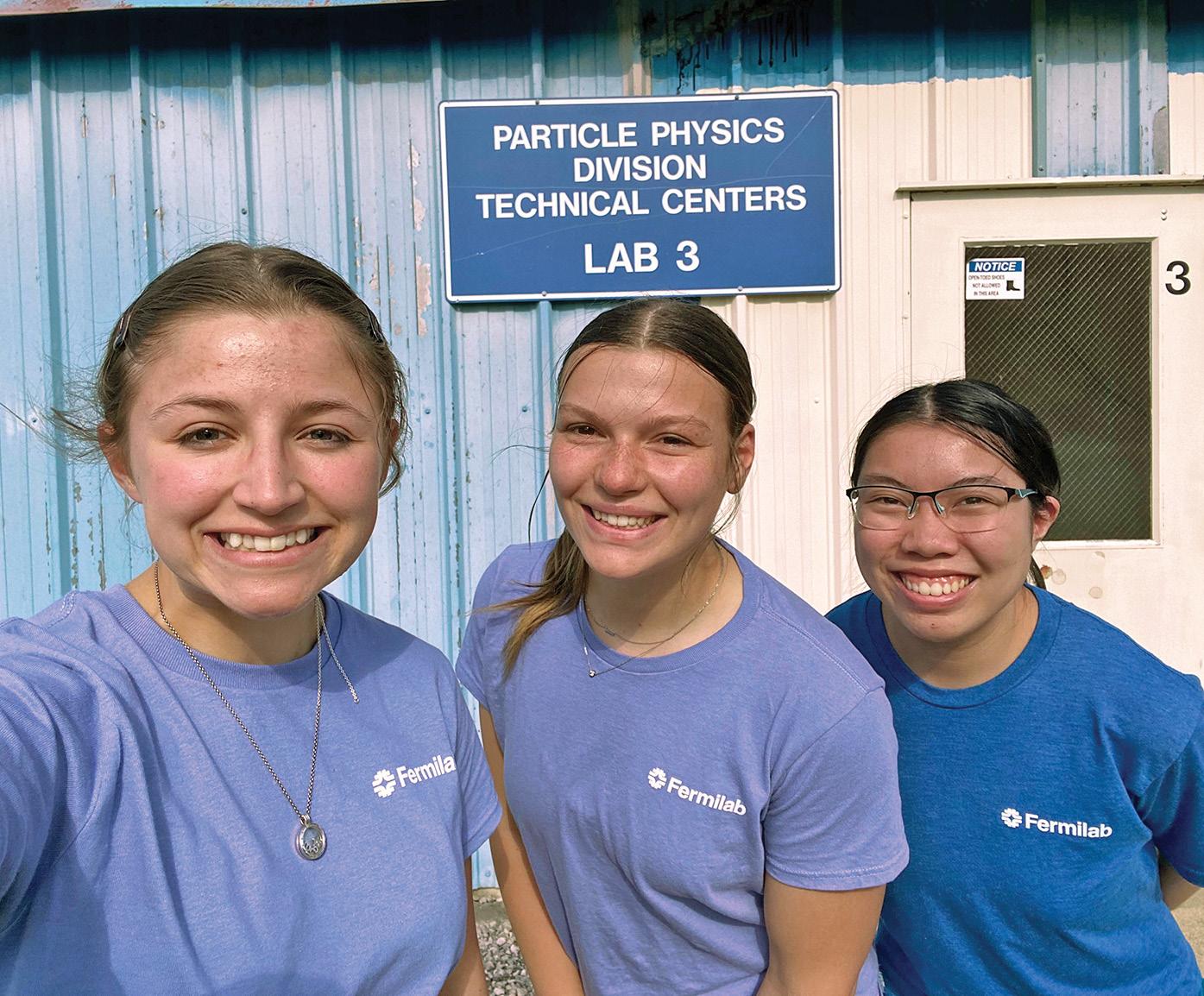
Along with their classmate, physics and mathematics major Brontë de Zwart , they spent their summer contributing to one of the largest and most ambitious physics experiments in the country—the Mu2e project at the Fermi National Accelerator Laboratory near Chicago.
The three students lived and worked on-site at Fermilab,
helping to build the intricate electronics behind the Mu2e detector, which will search for rare particle interactions that could redefine our understanding of the universe.
“I haven’t narrowed down the area of physics I want to pursue in grad school yet,” said de Zwart. “Exploring the day in the life of a particle physicist seemed like a great way to help guide my decision. I’m grateful Professor Fasano offered me the opportunity.”
‘
the experience. “Everyone we’ve met here has been so nice and welcoming.”
de Zwart echoed that sentiment, adding that Fermilab fosters a strong sense of community.
We’ve been able to work with undergraduates, graduate students, Ph.D. candidates and post-docs.”
Maughan also credited Fasano for introducing her to the “exciting” opportunity, made possible through the Department of Energy’s RENEW initiative.
“I am beyond proud of Brontë, Gianna and Lizzie and a little envious of their summer,” said Fasano. “They are definitely the ‘A-Team’ and are excellent representatives of the college. We have some great opportunities in physics and engineering at Monmouth, doing things on a big stage.”
The trio stayed in a furnished three-bedroom house on Fermilab’s sprawling campus, a surprising upgrade from what they expected.
“It has a stocked kitchen and a washer and dryer, and it’s just a short walk to where we work,” said Maughan during
—Brontë de Zwart ’26
“It’s very welcoming to people at all stages of their careers, as well as international students,” she said. “We’ve been able to work with undergraduates, graduate students, Ph.D. candidates and post-docs.”
Before departing for Fermilab, the students spent a week on campus preparing for their summer research.
“Professor Fasano gave us a crash course in particle physics and explained the goals of the Mu2e experiment,” said Maughan. “We practiced soldering and worked with some Python code.”
“We learned about the Standard Model (of Particle Physics), particle interactions and how our work will help visualize decays in the detector,” said de Zwart. “We also completed safety training and a research ethics course.”
The Mu2e (Muon-to-Electron Conversion) experiment seeks to observe a rare process in which a muon converts into an electron without emitting neutrinos—something
not predicted by the current Standard Model.
“If we observe it, it could be evidence for charged lepton flavor violation, which would be huge,” said de Zwart, who described the project as a puzzle made up of thousands of specialized pieces.
The students helped to build the tracker, the part of the detector that will sense and record electron data.
“We’re dealing with a lot of electronics and sensors,” explained Maughan. “We’ve installed preamp chips, cleaned and organized components, run diagnostic tests, and observed panels for sparks.”
de Zwart said their daily work included soldering, epoxying, ultrasonic cleaning and mechanical tasks.
“I’ve been learning a lot of new technical skills. I didn’t know what sonicating or epoxying was before this.”
One of the biggest surprises was the scale of collaboration, said Maughan. “There are so many people involved, some in person and some remote. Every contribution big or small makes a difference.”
As a group of women from a small liberal arts college contributing to a high-level physics and engineering project, the students recognize the significance of their role.
“It’s humbling,” said de Zwart. “The tracker team has entrusted us with responsibility, and we’ve been able to lead tasks independently. Our Monmouth education has prepared us well.”
Maughan added, “Being a female in a male-dominated field, this experience is not only about academics, but also about social growth. We’re building connections, learning from others and understanding different cultures and perspectives. That’s invaluable.”
“Everyone is an expert in their own part,” said de Zwart. “And things never go exactly as planned. We’ve had to troubleshoot and solve problems constantly.”
Via Zoom, the students also joined the international collaboration meeting held in Frascati, Italy.
“We listened to progress updates from teams around the world,” said de Zwart. “Our team leader even gave us a shoutout for our work repairing preamp parts. Thousands are still needed to complete the detector.”
“They’re getting to work on a world-class experiment at a world-class laboratory, and they are doing great,” said Fasano during the summer. “I know the team at Fermilab is very pleased have them working to make Mu2e a reality. There will be exciting physics that comes out of this, and they are getting to see all that goes into really making an experiment work.”
The experience has also shaped their views on the future.
“I’m definitely considering particle physics for my Ph.D.,” said de Zwart. “The math involved is exciting, and I want to find a path that combines both my majors.”
“I still plan to find a job after graduation—not grad school, at least not yet,” said Maughan. “I’m not sure if particle physics is for me, but I’m glad I tried it. Engineering has so many branches. I want to explore them to find what truly fits me.”
Fasano is not only proud of the students and his department, but is grateful, as well.
“I must thank our collaborators at Fermilab, Bob Bernstein and Brendan Kiborn, for being such thoughtful and welcoming partners,” he said. “And, of course, the Department of Energy RENEW grant has made this possible and provides support for continuing research during the academic year and for three students next summer at Fermilab, as well.”
On a related note, in October, a group of nine students— including the four female senior engineering majors —attended the annual conference hosted by the Society of Women Engineers in New Orleans, where the brightest minds and trailblazers in engineering and technology of all genders representing 85 countries came together to connect, innovate and inspire.
Maughan even had a memorable moment that tied into her liberal arts background.
“One of my favorite lecture sessions was ‘The Art of Breath Support: Acing Speeches and Karaoke Night,’” said the aspiring engineer. “It was a very informative and interactive session. … I learned that breath support can help make your voice stronger, sound more controlled, and thus help give you confidence.”
“The keynote speakers did a wonderful job capturing the theme of embracing your story,” said Goodrich. “They shared the challenges they’ve faced as women in engineering and how they learned to overcome those obstacles. I learned so much during this trip and had the opportunity to speak with many amazing companies. I even received a second interview from one of the companies I met. Overall, it was such a special experience and one I wouldn’t trade for the world.”
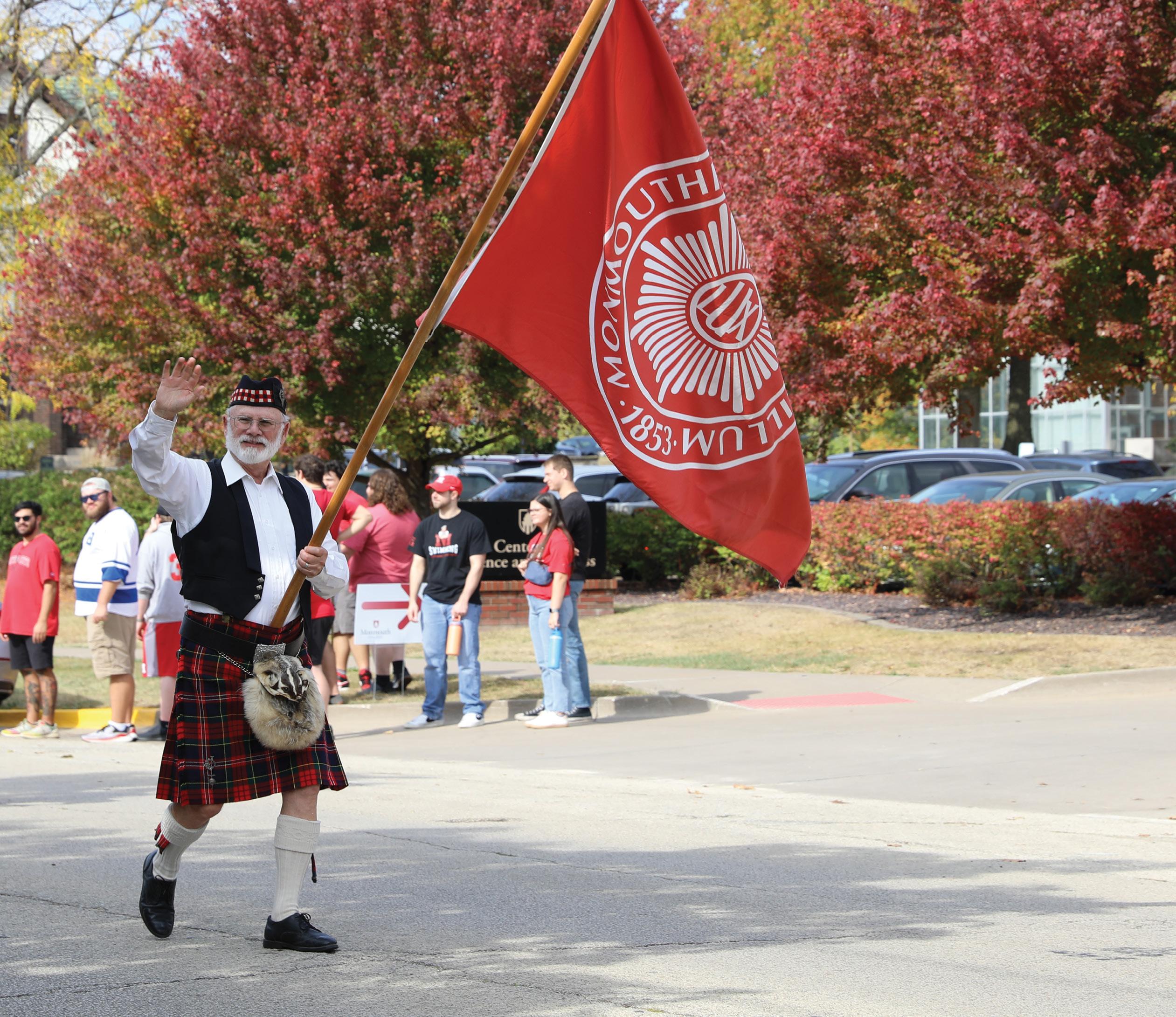
With themes of women in science, the value of Greek life, and Monmouth College being a welcoming home, the school welcomed home alumni young and old for another successful and memorable Homecoming weekend, Oct. 17–18.
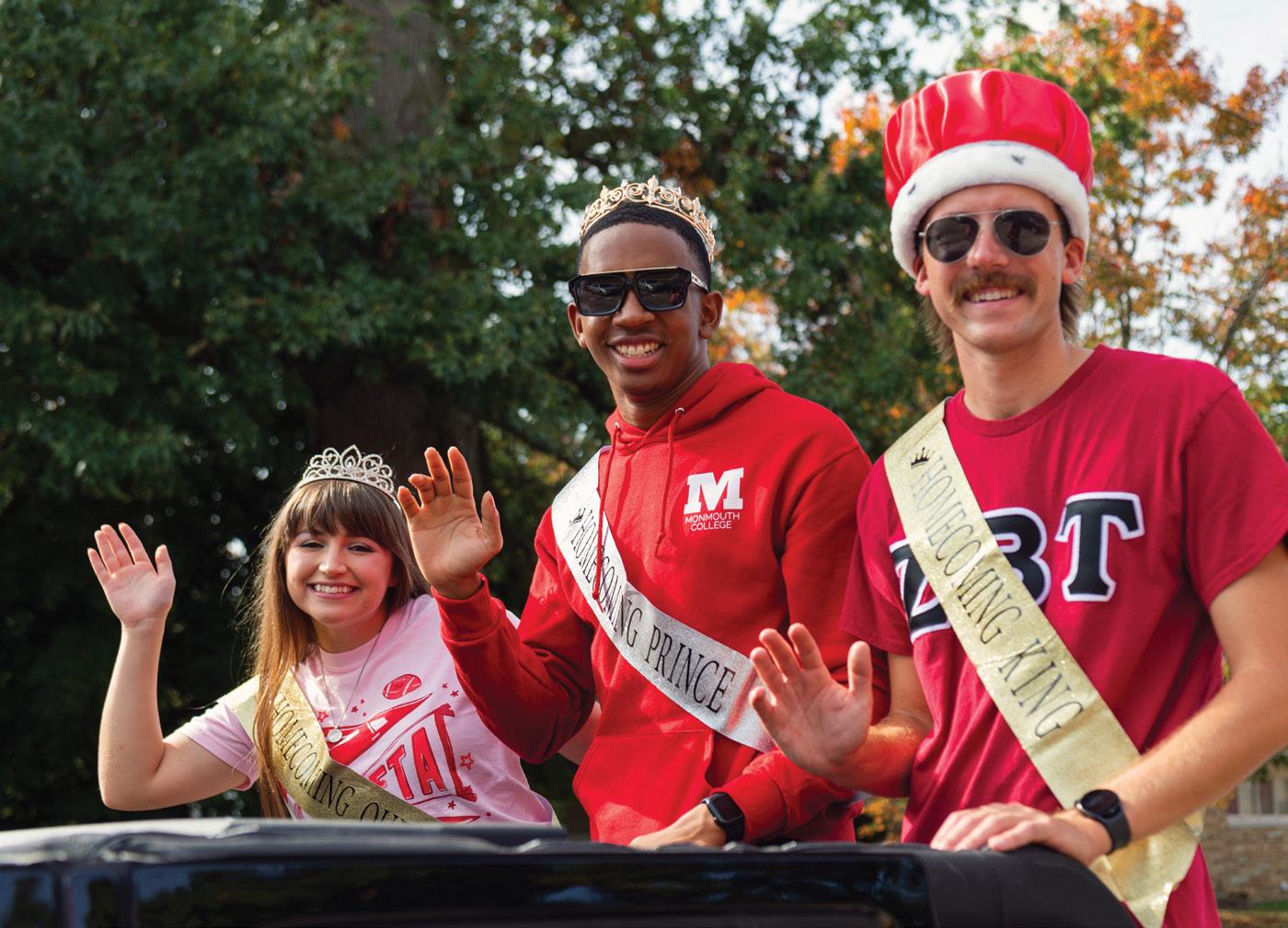
There was also a theme of amateur meteorology, and that was a success, too, as most of the rain that had been forecast all week fell after the last Spirit Shout firework had exploded Friday night and before Saturday morning’s first event, the M Club Hall of Fame and Fighting Scots Champions Club induction. It was at the Spirit Shout where Brontë de Zwart ’26, a representative of both women in science and Greek life, was crowned the Homecoming queen. A double major in math and physics, de Zwart is past president of Monmouth’s Order of Omega chapter, which also held a hall of fame induction ceremony. The Homecoming king was Joey Twardowski ’26, and the princess and prince were Zoe Nizzia ’27 and Payton Crims ’27.
de Zwart came to Monmouth from Adelaide, Australia, and another member of Monmouth’s family with roots in a distant country is this year’s Young Alumnus Award recipient, Mariela Shaker ’15, a Syrian refugee, who detailed what her alma mater means to her in her Alumni Impact Awards acceptance speech, which she recorded from London.
Shaker described her pre-college days as a time of “uncertainty, fear and longing for safety. When I stepped foot on campus, I felt an overwhelming sense of peace. I knew I had found more than a college—I’d found a home and a second chance at life.”
She worked with the late Monmouth professor David Suda and his wife, Carolyn, and continued to blossom as a talented violinist, her instrument having taken her around the world, where she has used her music to build bridges, to promote peace and to raise awareness for the plight of Syrian people.
“Monmouth College does not just change lives,” she said. “It gives wings to dreams that were once thought not possible.”
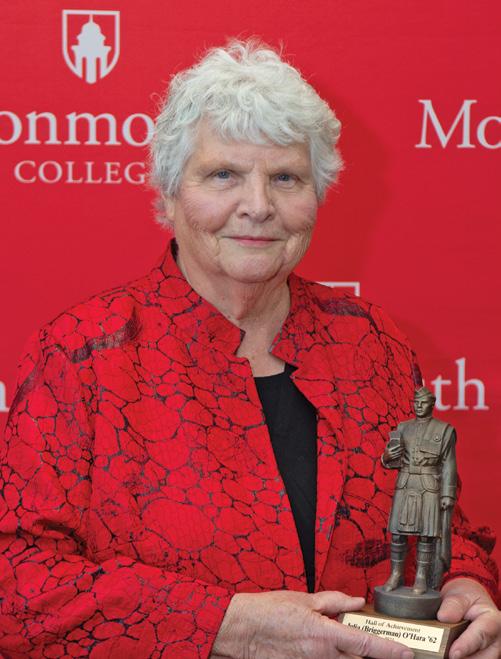
Julia Briggerman O’Hara ’62 knows the feeling. As she was completing her studies six decades ago, “women in science” was not a popular path. But she went on to receive her Ph.D. at Dartmouth College—at the time an all-male school for undergraduates—and become a trailblazer in biomedical research.
“Ignore all the critics,” she said of advice she received early in her doctoral studies. “Keep on working and you’ll find success.”
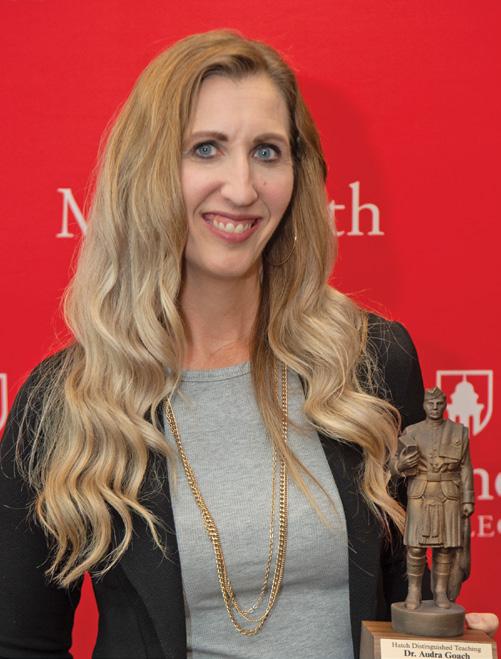
Also honored at the Alumni Impact Awards was Monmouth chemistry professor Audra Goach, who received the college’s prestigious Hatch Academic Excellence Award for Distinguished Teaching. Referring to her nomination for the honor, which was written by a former student, Goach said, “When I read, ‘She didn’t just teach me chemistry; she created a safe, nurturing environment where I could grow,’ I know that what I am trying to accomplish as an educator is happening.”
Goach was mentored at Monmouth by the chemistry professor she replaced, Richard “Doc” Kieft. In his
introduction of Goach, Mark Willhardt—a former English professor at the college who now serves as vice president for academic affairs and dean of the faculty—shared that Kieft had mentored him, too. The power of “and,” indeed.
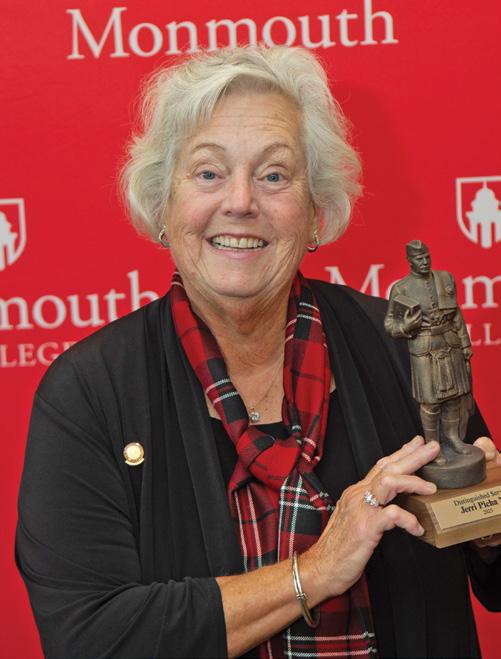
Another Monmouth slogan showed up in the acceptance speech of Jerri Picha ’75, recipient of the Distinguished Service Award.
“Monmouth College helped me to be ready to accomplish more than I could ever imagine,” she said.
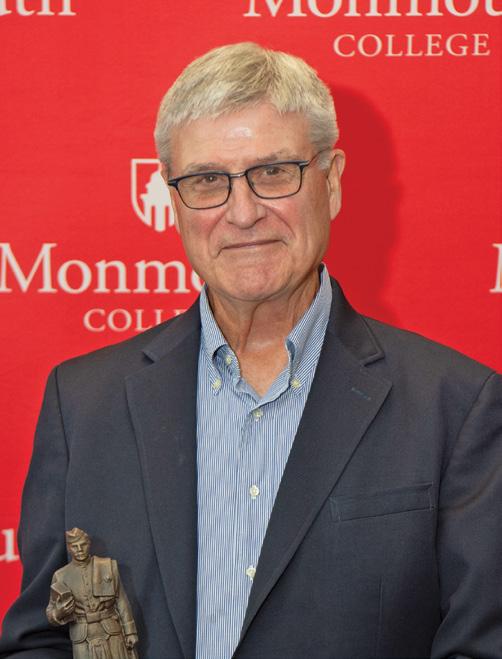
The other honorees at the ceremony were Distinguished Alumnus Award recipient Payson Wild ’67, whose career spans education, philanthropy and transportation planning, and the Smith family, who were honored as Family of the Year. They include Mary Uhler Smith ’41 and her sons, Sherm Smith ’72 and Greg Smith ’75.
“To hear the impact of this place is really heartwarming,” said President Patricia Draves—herself a woman in science as a former chemistry professor—as she closed the ceremony. “Monmouth provides the skills to succeed and the support to help you get there. In my first year as president, I’ve heard countless stories of grit, focus and kindness—tonight embodied that.”
Draves also commented on how Monmouth has remained in the hearts of so many alumni, noting, “When you come to Monmouth College, you’re not just signing up for four years, you’re signing up for life.”
In a pair of ceremonies on either side of the Alumni Impact Awards, Greek life took center stage. Friday afternoon, the men of Monmouth’s chapter of the Zeta Beta Tau fraternity were presented with a major award from the North American Interfraternity Conference. ZBT’s Delta Lambda chapter received one of five Chapter Award of Distinction honors the NIC presents nationally, an award not just for ZBT chapters, but for all fraternities. Hundreds of chapters were nominated, reported Ricky Kirby, NIC’s chief experience officer.
“I’ve just got to tell you how proud we are at the national level of y’all,” said Kirby.
In his remarks, Andrew Kerr ’73 noted that ZBT members achieved the feat while living in a dorm, as opposed to a
fraternity house, a situation that will change when the men move into their renovated house on Broadway.
“But it isn’t the house that makes the fraternity,” said Kerr. “It’s the brotherhood where they reside.”
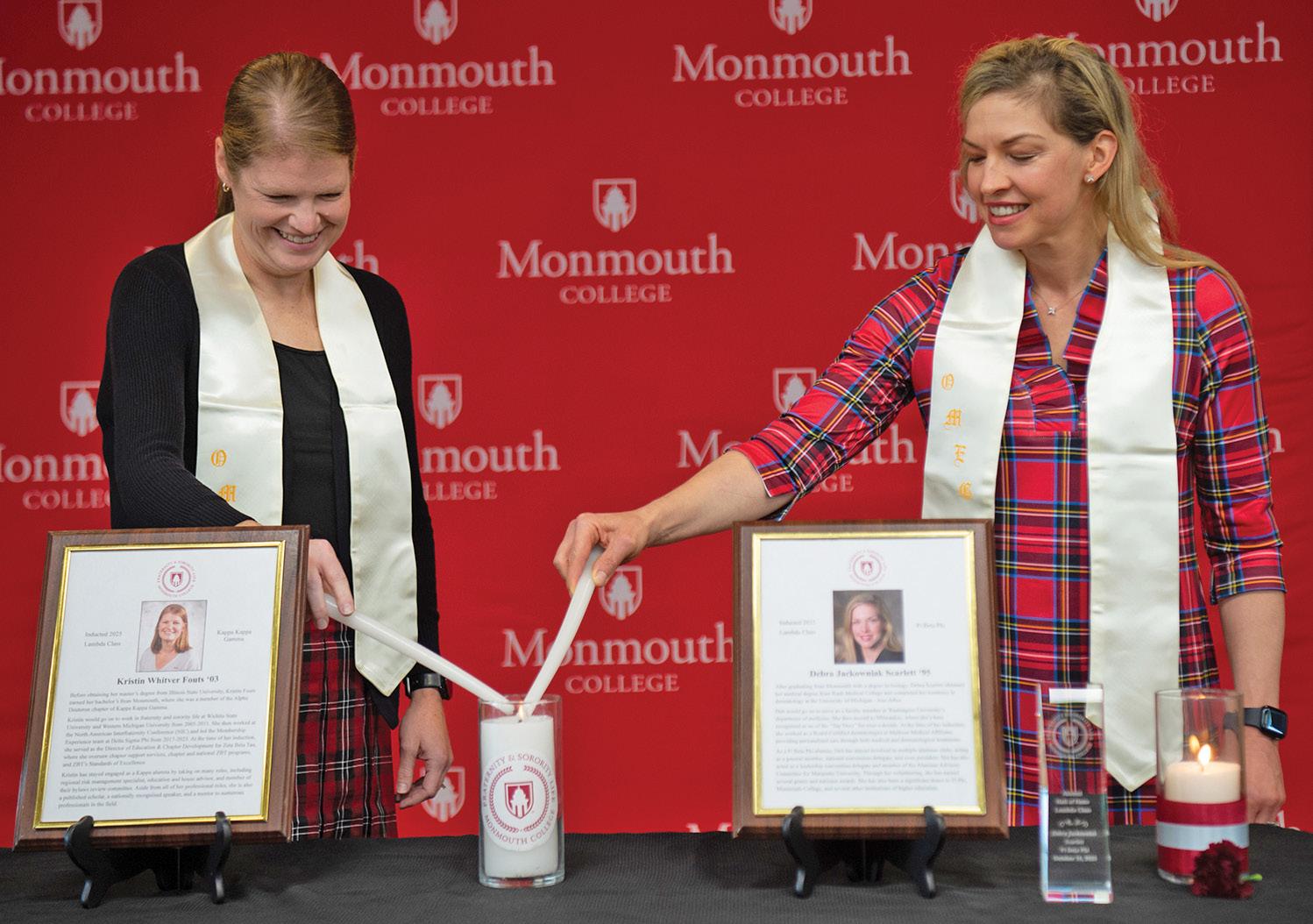
Sisterhood was the focus at Saturday’s Fraternity and Sorority Hall of Fame ceremony, where Debra Jackowniak Scarlett ’95 and Kristin Whitver Fouts ’03 were the inductees. Scarlett is an award-winning dermatologist, while Fouts serves as national director of education and chapter development for ZBT. (See story on pages 24-25)
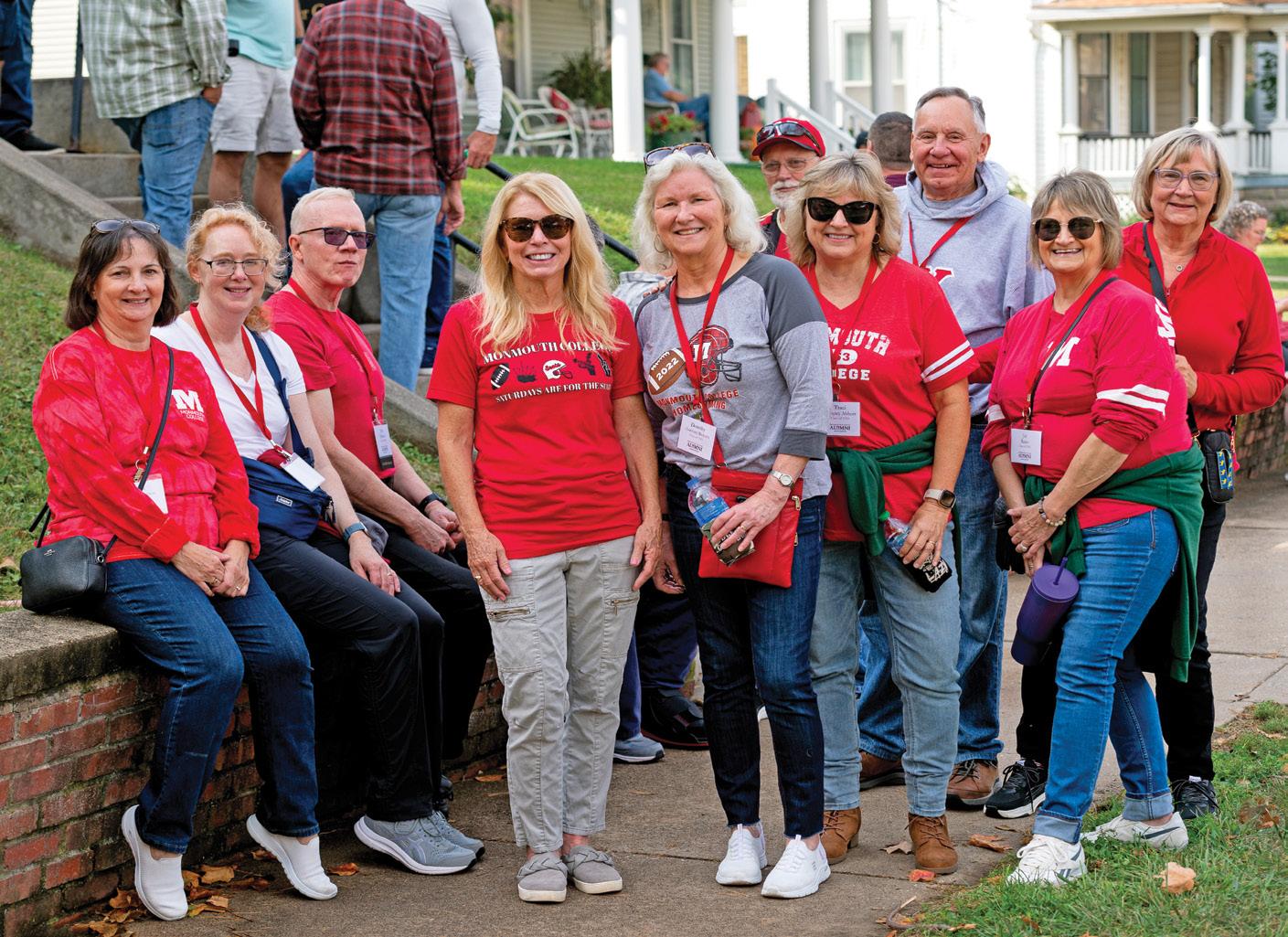
said Scarlett. “This honor is as much about the people who shaped me as it is about me.”
Presenter Claudia Delgado ’97 called Scarlett the “glue” that kept their group connected, praising her for having “grit and grace in equal measure. As a doctor, she heals the body. As a friend, she heals the soul.”
“Here today are some of my most cherished friends,”
Like several of the award recipients during the weekend, Fouts became choked up momentarily, despite a reminder in her notes to “breathe.”
“Say ‘Yes’ to opportunities,” she told the large number of current students in the Mellinger Commons audience. “They can be scary sometimes, but they will help you grow. Each ‘Yes’ took me further down a path that I wouldn’t trade for anything. … I love it because of the difference I can make, member by member.”
In the first ceremony of the morning, four Fighting Scots greats were inducted into the Hall of Fame—baseball ace pitcher Dan Dunn ’06; national champion high jumper Tyler Hannam ’11, speedy softball standout Lauren Bergstresser-Petoskey ’12 and cross country All-American Mary Kate Beyer Black ’12. Black also choked up while mentioning her family, then commented on the “grit, hard work and humor” that make distance running enjoyable, even “freezing Monsanto runs” in the Monmouth countryside.
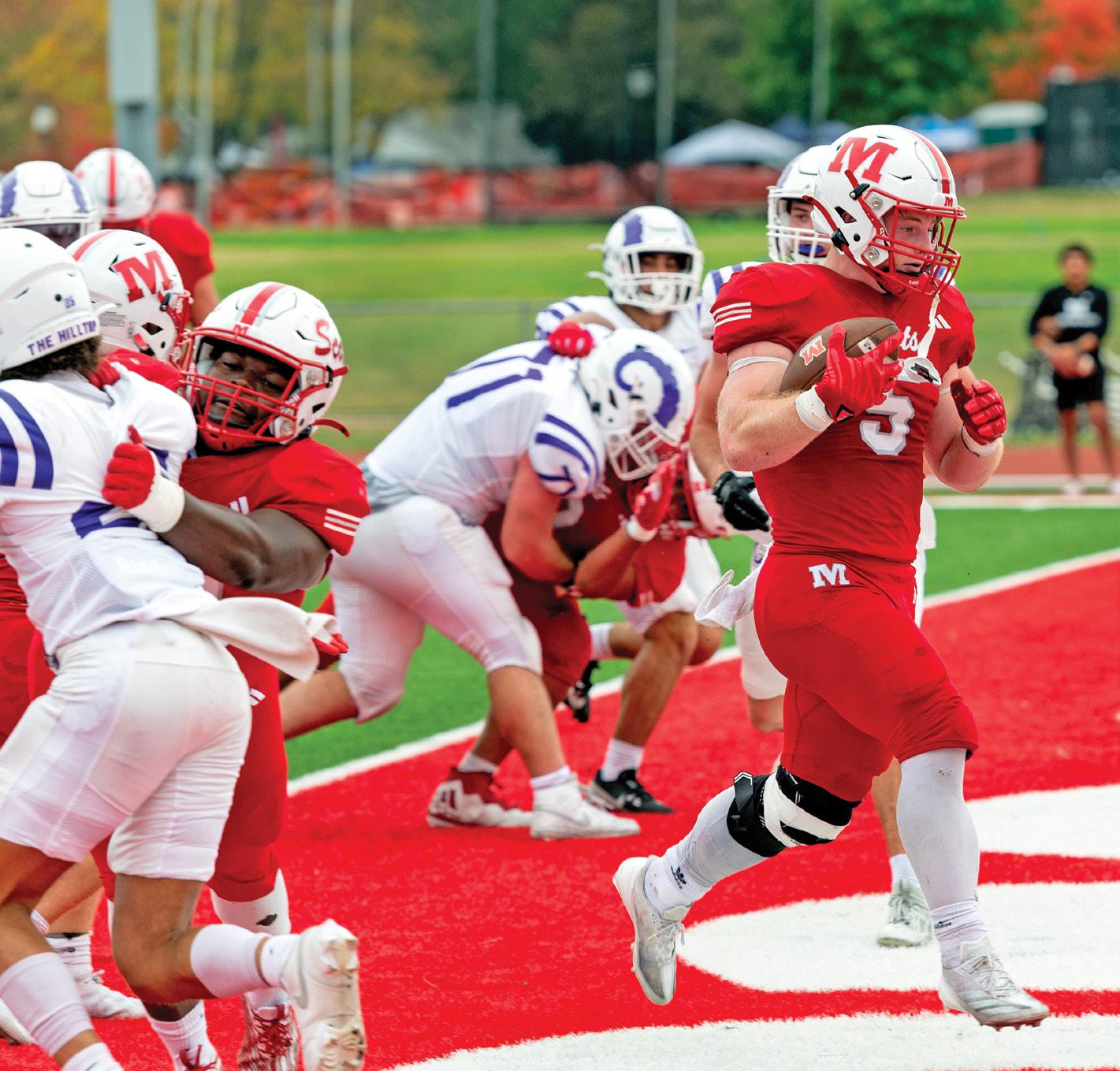
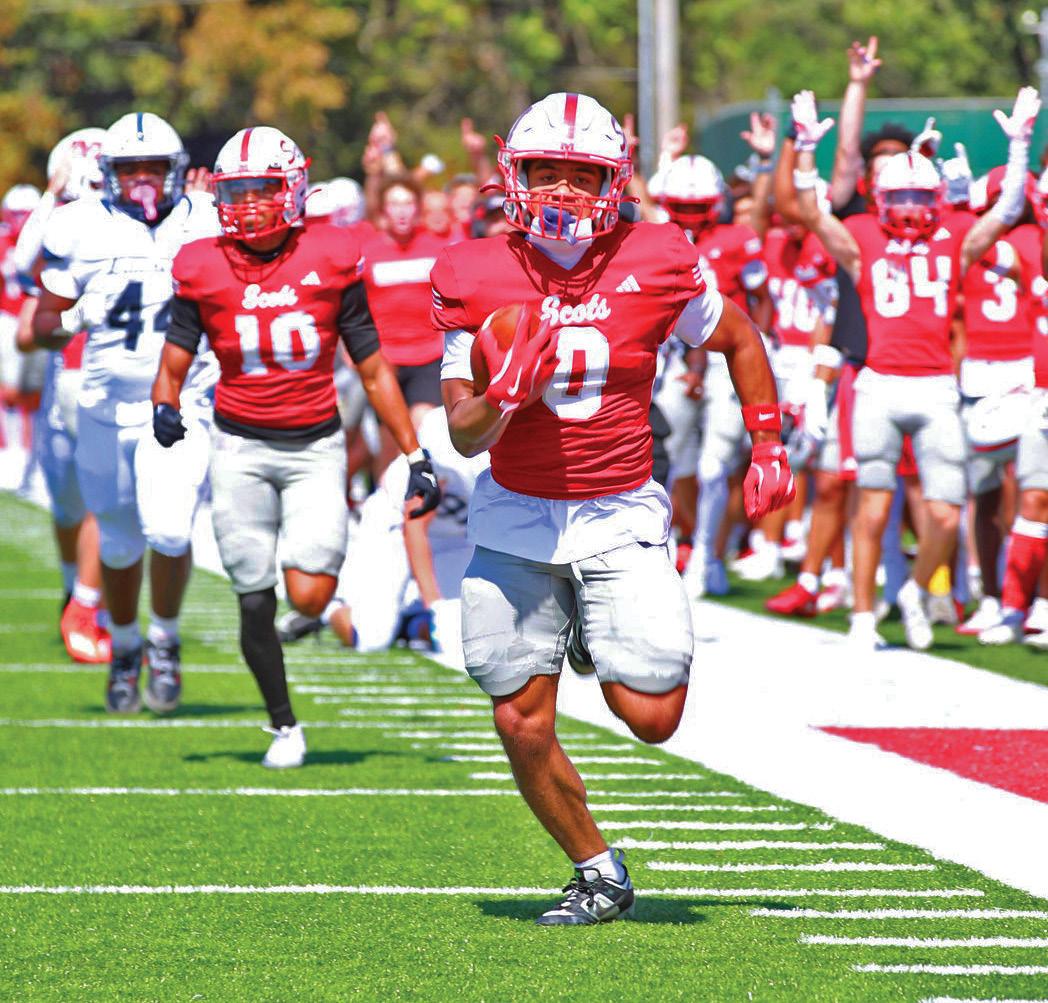
Running back Nate Wrublik carries the ball into the end zone for one of his school-record five rushing touchdowns in Monmouth’s 45–3 Homecoming victory over Cornell.
“The amount of love we shared with each other fostered our success,” she said of her teammates.
Hannam picked up on that theme.
“My teammates made the work more fun and the memories last longer,” he said. “It was rewarding to be involved with something bigger than myself.”
In his introduction of Hannam, his former coach, Director of Athletics Roger Haynes ’82, pointed out Hannam’s high
jump progression in his four years of Midwest Conference outdoor meets, which saw him win three titles as he added nearly a foot to his freshman mark. Hannam addressed that, as well.
“In whatever you do, keep striving, keep learning and keep raising the bar,” he told the large crowd assembled in the fieldhouse of the Huff Athletic Center.
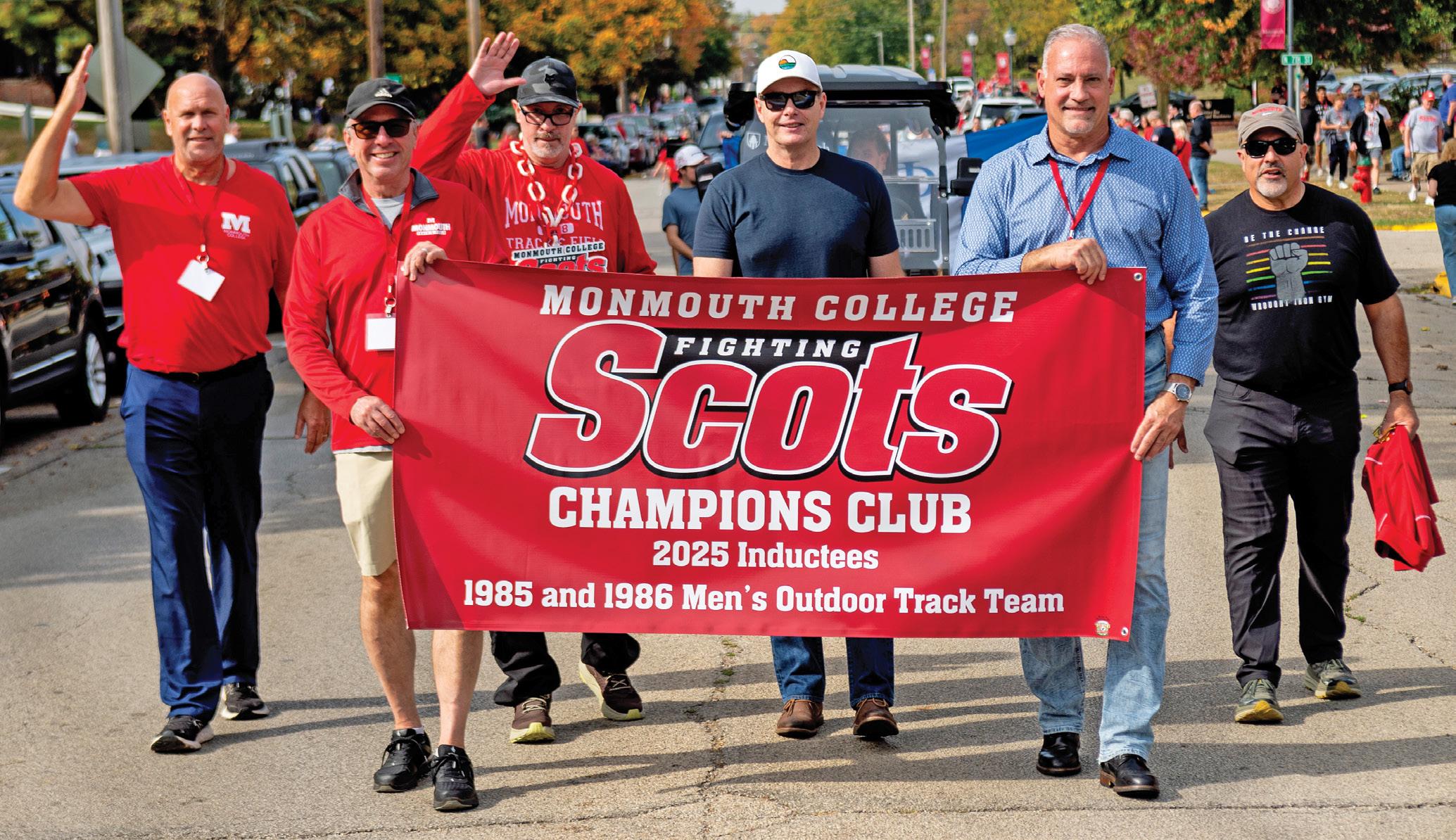
Two of Haynes’s track and field teams—the 1985 and 1986 squads— were honored with induction into the Champions Club.
“My career would’ve never taken off without this group,” said Haynes, who was just in his second year as head coach when the ’85 team won the MWC title, the first of a combined 83 track titles that Monmouth men and women had under the legendary Hall of Fame coach.
The undefeated 1925 football team—known as “The Trick a Minute Machine”—was also honored.
In the afternoon, Monmouth’s gridiron team of a century later posted its fifth consecutive victory of at least 30 points, topping Cornell 45–3 behind a school-record five rushing touchdowns by Nate Wrublik ’27. Coach Chad Braun’s squad has undoubtedly punched its ticket to join the Champions Club at a future Hall of Fame induction.
At press time, few football teams in the nation were hotter than the Fighting Scots. Monmouth completed its 9–1 regular season on a ninegame winning streak, with each of those victories coming by at least 29 points. In all, the average margin of victory for the Scots was nearly 57 points. The lone blemish on their record was a season-opening 21–7 nonconference loss to Wartburg, which won its first 10 games and ended the regular season ranked No. 5 in the nation.
Appearances in the Cousins Sub Lakefront Bowl the past three seasons have been nice, but Monmouth’s winning ways this fall booked an appearance on an even bigger stage. The Scots’ outright Midwest Conference title enabled them to return to the NCAA playoffs for the first time since 2019.
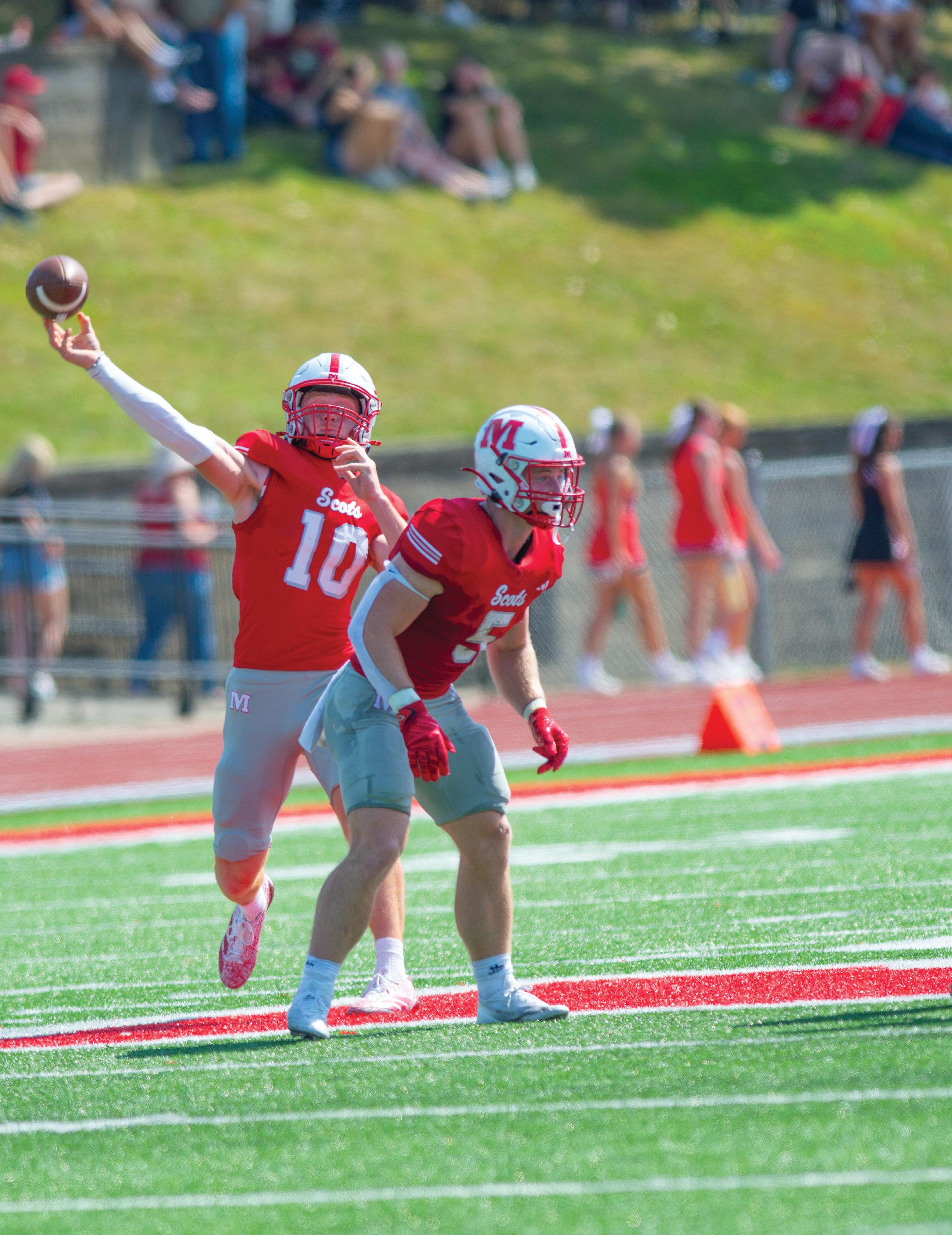
As quarterback Brayden Deem releases a deep ball, running back Nate Wrublik waits for someone to block. Deem set Monmouth’s single-game passing record with 453 yards in a victory against Illinois College.
Entering the playoffs (which began after this issue went to press), the rankings finally acknowledged the Scots as the No. 25 team, but that doesn’t mean Monmouth wasn’t getting national recognition throughout the season. Four times, the Scots placed a player on the national D3 team of the week, starting with Mylee Hansen, who became the first female to ever receive that honor. The sophomore kicker booted a pair of field goals and three extra points in Monmouth’s 78–7 victory over Lawrence.
Up next was senior defensive back Derek Chandler, who was honored for a big game on special teams that saw him block two punts. He also forced a fumble and made four tackles in Monmouth’s convincing 49–6 victory over defending MWC champion Lake Forest.
Chase Newman took his national team of the week turn, but not thanks to a standout
receiving day against Lake Forest that saw him catch 12 passes for 163 yards and equal a school-record with four TD receptions. Rather, it was for his efforts against Illinois College two games later, when he caught 13 passes for a school-record shattering 301 yards—the old mark was 251— and four more TDs.
In that game, Newman and quarterback Brayden Deem combined on a 98-yard catch-and-run, which set a new record for the Scots’ longest play from scrimmage, breaking a mark set by Dennis Plummer ’73 in 1971. Deem, too, made the top line of the record book, finishing with 453 passing yards, a figure that no Scots QB—not even current Indianapolis Colts assistant coach Alex Tanney ’11, whose best was 451—had reached.
He didn’t earn national recognition, but running back Nate Wrublik followed that game with a record-breaking performance in Monmouth’s 45-3 Homecoming victory over Cornell, rushing for five TDs. He finished with 163 yards on 24 carries.
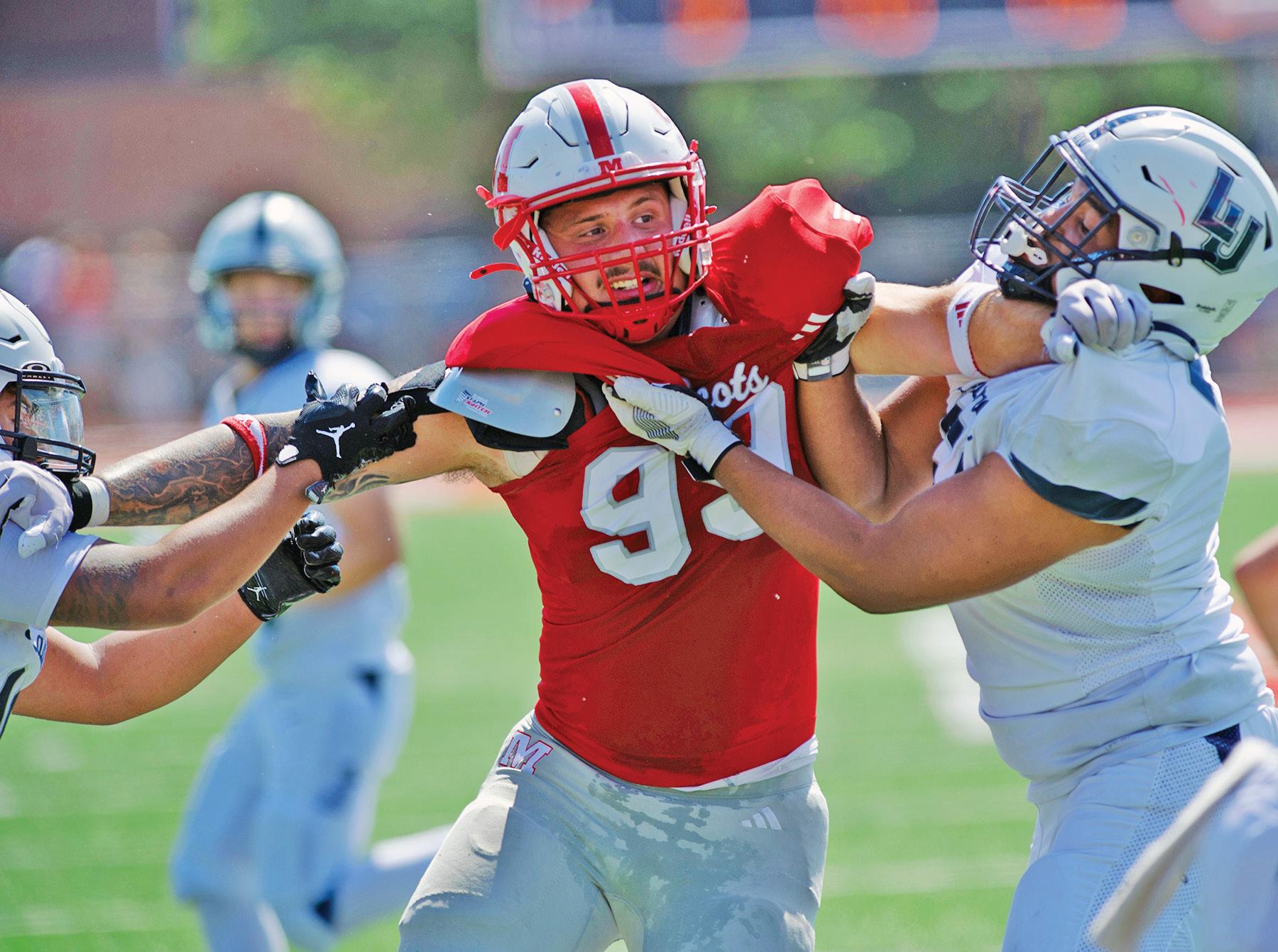
Two weeks later, the Scots met the University of Chicago in what was the de facto MWC title game. Defensive end Anthony Cikauskas earned the Scots’ fourth national team of the week honor by making 4.5 tackles for loss, including two sacks, among his eight tackles as the defense pitched a 29-0 shutout. In the process, Cikauskas established the new career sacks record, which he’d improved to 37 by the end of the regular season.
In the title-clinching victory over Ripon, it was Deem’s turn in the spotlight, as he threw six TD passes to five different receivers—one short of the school-record of seven— as the Scots won 58–3.
The following week, Monmouth won the Bronze Turkey game by the largest margin in the history of the storied rivalry,
posting a 69–0 victory. The Scots also learned their playoff fate that weekend—a first-round bye and a second-round contest at Saint John’s.
Twenty Scots earned All-MWC honors, including all four MVP selections—Deem and James Conner on offense and Cikauskas and James on defense. They were among 11 firstteam picks and Braun was named Coach of the Year.
—BARRY McNAMARA
BY BARRY McNAMARA
We hope that former Monmouth assistant coach Mitch Russell at least got something similar in quality to the Chicago-style Italian beef from the television series The Bear when he made a deal involving future pro football player Joe Krall ’20
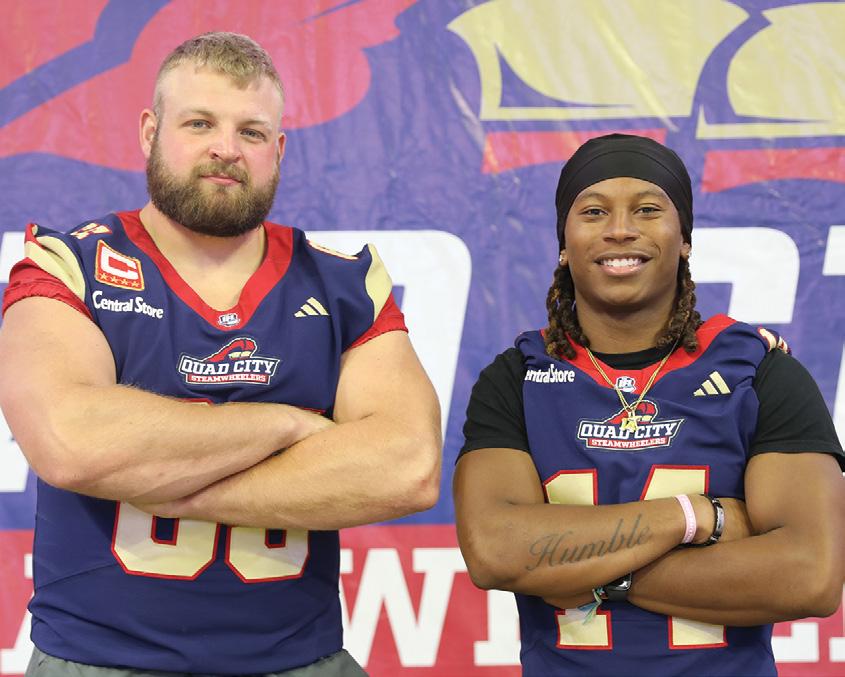
“I was a defensive lineman when I came to Monmouth,” said Krall, who is the center and a team captain for the Indoor Football League’s Quad City Steamwheelers, which just completed another strong season, winning its division.
But Krall’s first Monmouth squad in 2016 was chock full of defensive lineman and short on depth in the trenches on the other side of the ball.
“There’s a running joke that Coach Russell sold me for a sandwich to Coach (Joe) Freitag,” quipped Krall, who’d go on to be an All-American offensive tackle as the Scots won three Midwest Conference titles. He was also an All-American thrower on the track and field team.
“Everyone’s itching to play,” said Krall, who saw a clear path to his way onto the field by making the switch from one side of the ball to the other.
Nick Harris ’24 knows the feeling, as he also had a position switch his freshman year with the Scots. It’s incorrect to call it his freshman “season,” as COVID wiped out the 2020 campaign. The following spring, when college programs were allowed to return to team activities, Harris initially practiced as a wide receiver, but head coach Chad Braun had a surprise in store.
“I had one practice at receiver in the spring,” said Harris. “Before the next practice, Coach Braun shot me a text and asked ‘Do you wanna try corner today?’ I was trying to get on the field any way I can, so I was willing to learn a new position.”
There’s no word if Freitag was on the receiving end of a sandwich for relinquishing a player who would go on to be a three-time All-MWC defensive back. Those accolades provided a collegiate highlight for Harris, and so did taking a measure of revenge by defeating defending MWC champion Lake Forest in 2023. Harris returned to the Scots as a fifth-year senior last fall, when another memorable win came on Homecoming against another defending conference champion, Illinois College.
Still, Harris had something to prove when he signed on with the Steamwheelers last spring, eventually working his way into the defensive back rotation and starting two games.
“I try to be more physical than some guys, and I’ve got some
cover skills,” he said. “I can shut down anybody.”
That was never more evident than his exploits in a June 7 game in San Antonio. With QC protecting a slim 33–30 lead with three minutes to play, Harris picked off a Gunslingers pass and took it 42 yards to the house for a game-clinching pick six.
“That whole game was just fun from beginning to end,” said Harris, who also tipped a San Antonio pass that led to an interception and added another pick of his own. “All those highlights showed me I’m supposed to be playing this game.”
Steamwheelers head coach Cory Ross was full of praise for the Monmouth duo, calling that performance by Harris “one of the best games in defensive back history” for an arena football player.
“His teammate mentality is off the charts, and he’s working every day and getting better every day. When he gets to his second year in this, he’s going to be a problem (for opponents). Just the fun-ness he brings—the coaches love him. He never gets down.”
Of Krall, whom Ross has coached the past four seasons, he said, “Joe works extremely hard. He refuses to get beat, and if it happens, he’ll find a way on the next play.”
In 2022, Ross led Krall and the Steamwheelers to the IFL title game, where the team fell two points short against the Northern Arizona Wranglers, 47–45.
“I made the all-rookie team in 2022, and I had a blast playing,” said Krall. “We were just a ragtag bunch of guys, but we came to work every day. Everyone in the league was talking about us. We were just some D2 and D3 guys, but we were putting guys on the ground.”
Interviewed with part of the ’25 season still remaining, both Krall and Harris still see themselves in football uniforms in 2026. Krall has flirted with the next level before but has been the odd man out, sometimes strictly the victim of poor timing, such as when the Xtreme Football League and the United States Football League merged to form the United Football League.
Harris’s star is on the rise, and he, too, has hopes of reaching a higher level, such as the UFL or Canadian Football League.
“I want to turn things up a notch and come back a little harder a year from now,” he said.
“I’m super happy for both guys,” said Braun. “Joe has had a great career up there. Nick was patient. He didn’t travel with the team at first, but I told him, ‘Just keep being you,’ and ultimately he got his opportunity.”
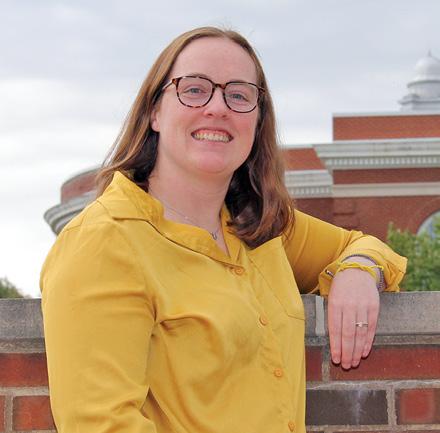
bout 60 years ago, a song by the legendary Johnny Cash detailed how he’d been “everywhere, man”—“Reno, Chicago, Fargo, Minnesota, Buffalo, Toronto, Winslow, Sarasota” and on and on.
Emily Siefken Garrett ’16 can relate. In the span of about a month from late August to late September, her travels took her to (say it fast) Fort Worth, Fort Myers, Jonesboro, Austin, College Station and Omaha, along with a stop in Monmouth to catch up with faculty members Kari Shimmin ’97 and Jen Braun, and her Fighting Scots basketball teammate, Keri Dodson ’18. Florida, Alabama and Tennessee were on the horizon.
Why all the moving around? Garrett is the director of volleyball operations at the University of Missouri, and she follows the Tigers spikers on the road. She does the job so well that she was recently named by the American Volleyball Coaches Association as one of its Thirty Under 30 Award recipients. The program recognizes up-and-coming coaches in different sectors of the sport who serve in a range of roles.
Even Garrett’s side trip to Monmouth provided only a temporary reprieve from the rigors of her job.
“I’m not going to lie,” she said. “I’ll be up until midnight tonight,” compiling the information and video she collected from watching a match at the Leatherneck Classic in Macomb, where Missouri was part of the field. “There are sacrifices you have to make, but my love for the game and for the players makes all the difference.”
And maybe some of Garrett’s notes and observations deserve a partial credit, as Mizzou rolled through the
event, downing Valparaiso, Chicago State and host Western Illinois. She passed along any credit to her “tribe.”
“I’m a wife and a mom now. Having a partner, having a good support system allows me to do this job. Having supportive family and friends.”
Garrett arrived at Monmouth with plans to become an elementary school physical education teacher, but eventually discovered she “didn’t love the classroom aspect,” so she thought about becoming an athletic trainer or physical therapist, but found science classes were not her thing, either.
“I remember going to Jen and Kari and telling them that I was stuck— essentially, ‘I don’t know what I’m doing,’” said Garrett. “They said, ‘Why don’t you explore a business class?’”
That suggestion took hold, and Garrett had a new plan—studying “the business side of sports.” She actually received a sneak preview of her future career while working all four of her years at Monmouth in Shimmin’s office. In addition to her faculty role, Shimmin was the Scots’ volleyball coach at the time.
“One day, she asked, ’Do you know how to cut video?’” Garrett recalled. “I said, ‘No, but I bet I’ll figure it out.’”
She certainly did, and that’s been part of the job description at her three post-Monmouth stops—Illinois State, Texas Tech and Missouri.
In her early days at ISU, where she completed a master’s degree in sports management, Garrett didn’t have a graduate assistant role lined up. That changed when the golf coach, Ray Kralis, expressed a need for help.
“That was an opportunity to get my foot in the door and leave my master’s
program debt-free,” said Garrett.
A volleyball coaching vacancy opened at the end of her first year, and ISU’s senior woman administrator asked Garrett if she’d be willing to take it on.
“I had a phone interview with the new coach, and I got hired,” said Garrett. “From there, the rest is history.”
And travel—lots of travel. But at least Garrett has some say in the matter, as she’s the staff member who lines up all of Mizzou volleyball’s road trips.
“I honestly love it,” she said. “I was just a small-town kid (West Burlington, Iowa) who went to a small-town college. I never thought I’d be in the SEC, let alone working in the Valley and Big 12.”
—BARRY McNAMARA
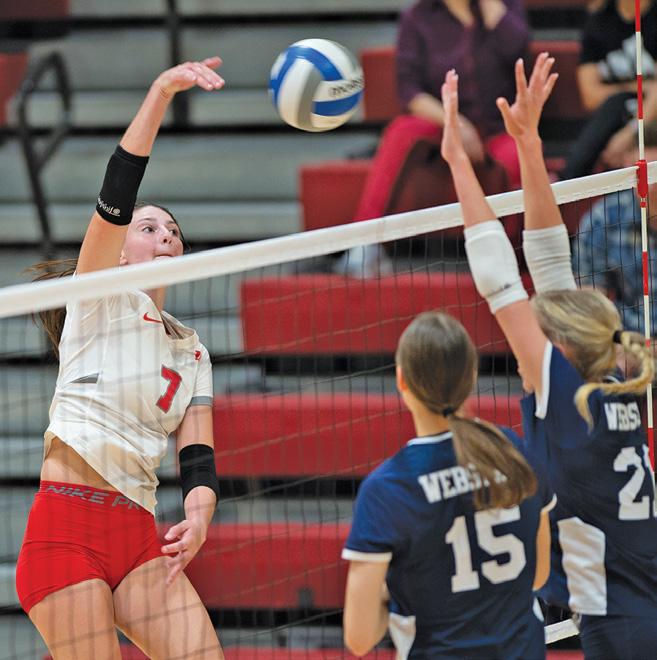
SCOTS FIRST-EVER POY SPIKER
Sophomore Kaylee Celus was named the Midwest Conference Player of the Year, the first Fighting Scot so honored in the history of the program. Celus led the MWC in kills, points and kills per set in conference matches as the Scots finished tied for second.
BY BARRY MCNAMARA
Just call him “Will the Thrill.”
Former Fighting Scots standout Will Carius ’20 hit a shot that basketball fans will be talking about in Slovakia for years to come.
Need a hoops comparison? It was very similar to the lastsecond shot that Duke’s Christian Laettner made in the 1992 NCAA tournament to lift the Blue Devils past Kentucky, a shot hoops fanatics still talk about today. The three-pointer by Carius—off a shorter inbounds pass than Laettner’s but with only 1.0 on the clock and from around 10 feet farther back on the floor—gave him 33 points and lifted his professional team, Patrioti Levice, to new heights—the FIBA Champions League—thanks to a 100–98 double-overtime win.
The main difference, however, is public perception. Much of the country was rooting against Duke and Laettner in 1992, so much so that ESPN later produced a documentary titled I Hate Christian Laettner
But the shot by Carius on Sept. 25 lifted an entire nation, as Patrioti Levice became the first team from Slovakia to reach the high-level competition organized by FIBA Europe, which is similar to the Europa League in soccer. Maybe an I Love Will Carius documentary was spawned? At press time, Patrioti Levice was 2–2 in the elite league, but held the top spot in its domestic league.
“It was definitely the biggest shot I’ve ever made…but really nothing even compares to this one, so it was very surreal,” said Carius. “It was a lot more than just a game-winner. It was a financial boost for our club in terms of funds allotted to Basketball Champions League clubs as well as an historical
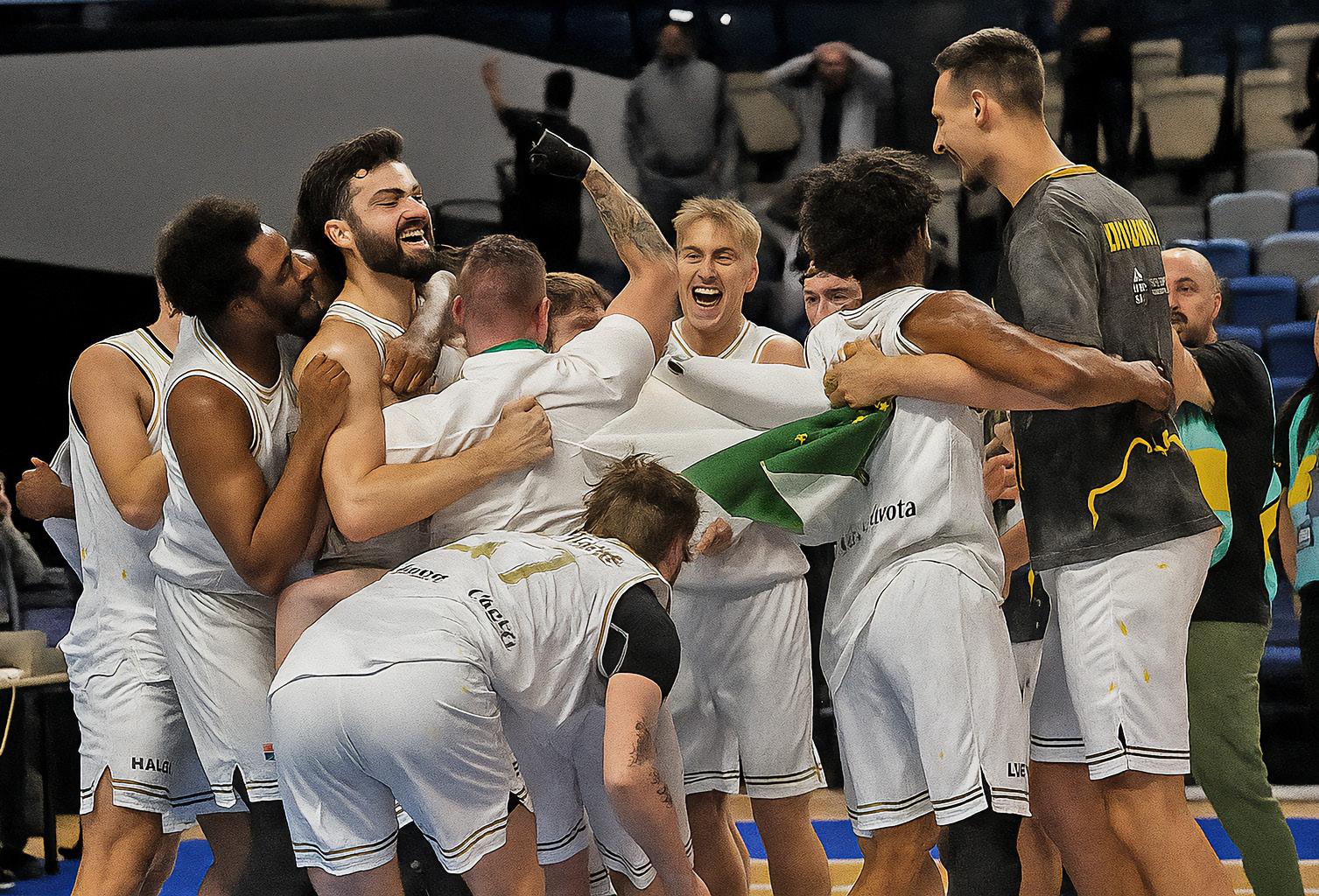
landmark in Slovakian basketball, which made it incredibly special. It’s a goal they’ve been chasing for some time, and it’s been very cool to see how much it’s meant to the staff, owners and fans.”
What Carius has done since completing his college eligibility is not completely uncommon. Many players go abroad to extend their careers professionally, and Carius played on teams based in Australia and Austria before landing in Slovakia.
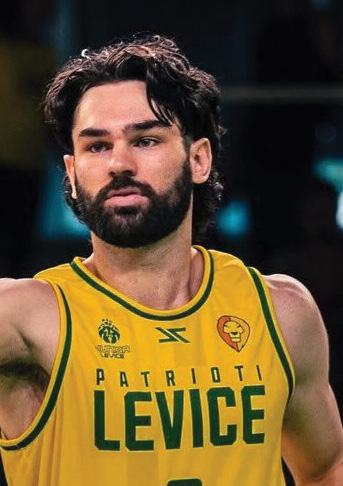
What makes his career unique is the traveling he did prior to turning pro. In today’s era of the transfer portal, many players suit up for several different collegiate programs, but Carius is believed to be just one of two who’ve played at the Division I, II and III level. And not just played, but found success, as he scored 450 points in two seasons at Northern Michigan, 827 points in a season and six games with the Fighting Scots and 766 points in two years at Western Illinois University. Add it all up, and that’s more than 2,000 points in his collegiate career.
Carius spoke about his stop at Monmouth, where his father and grandfather attended.
“I think my favorite takeaway from Monmouth was being able to enjoy all aspects of college,” he said. “Basketball, of course, was at the forefront of my mind, but it gave me a chance to enjoy college as a student and have a life off the court as well as on. That was something I really didn’t have the chance to do at the DII level. And due to heavy practice schedules, long seasons and injuries, my relationship with basketball had become pretty unhealthy.”
The rules of a DIII program are different from a scholarship school, and Carius relished that opportunity.
“I finally got a chance to better take advantage of the extra time in both the classroom and on the social side of college,” he said. “I learned many valuable lessons and skills that have really translated well to my professional basketball career. I will always be grateful for my time at Monmouth, thankful for Coach Skriv (Todd Skrivseth) for taking me in without a second thought, and thankful for my teammates that helped me find a better and healthier balance between life and basketball.”
1956 The Rev. Carolyn Cammenga has authored a new book, Tails of Kitten Finn, described as “a charming series of poems that imagine the author’s kitten in all sorts of humorous situations.”
1966
60th REUNION JUNE 4-7, 2026
1969 Greg Young of Sarasota, Fla., is self-employed as an author and legal consultant.
1970 Leith Swanson of Laguna Woods, Calif., has published A Tribute to Charles Spurgeon’s The Treasury of David: Exposition of the Psalms. In condensing and assembling the book, Swanson brought Spurgeon’s 3,000-page text down to a well-organized 425 pages.
1971
55th REUNION JUNE 4-7, 2026
1972
William Daniel hosted the 36-member Monmouth Chorale on its spring break tour, providing two meals for all, including lunch in Alton, Ill., at the Brown Bag Bistro, owned by Chris Adams Velloff ’82
1975
After living in New York for 60 years, Barb Orville, a former teacher for the homebound for the New York City Department of Education, has retired to the Berkshires in western Massachusetts.
1976
50th REUNION JUNE 4-7, 2026
Priscilla “PJ” McIntyre has retired from working as a special education administrator with the Anchorage (Alaska) Independent School District and moved to Webster, Texas.
1978 Holly Beck Riordan of Naperville, Ill., is a therapist for Little Friends, Inc.
1980 Carl Forkner of Mesa, Ariz., was inducted into the Arizona Veterans Hall of Fame in October. The organization recognizes Arizona veterans who have honorably served their country and who continue to serve and inspire fellow American citizens with civic deeds and accomplishments outside their military service. Forkner is the
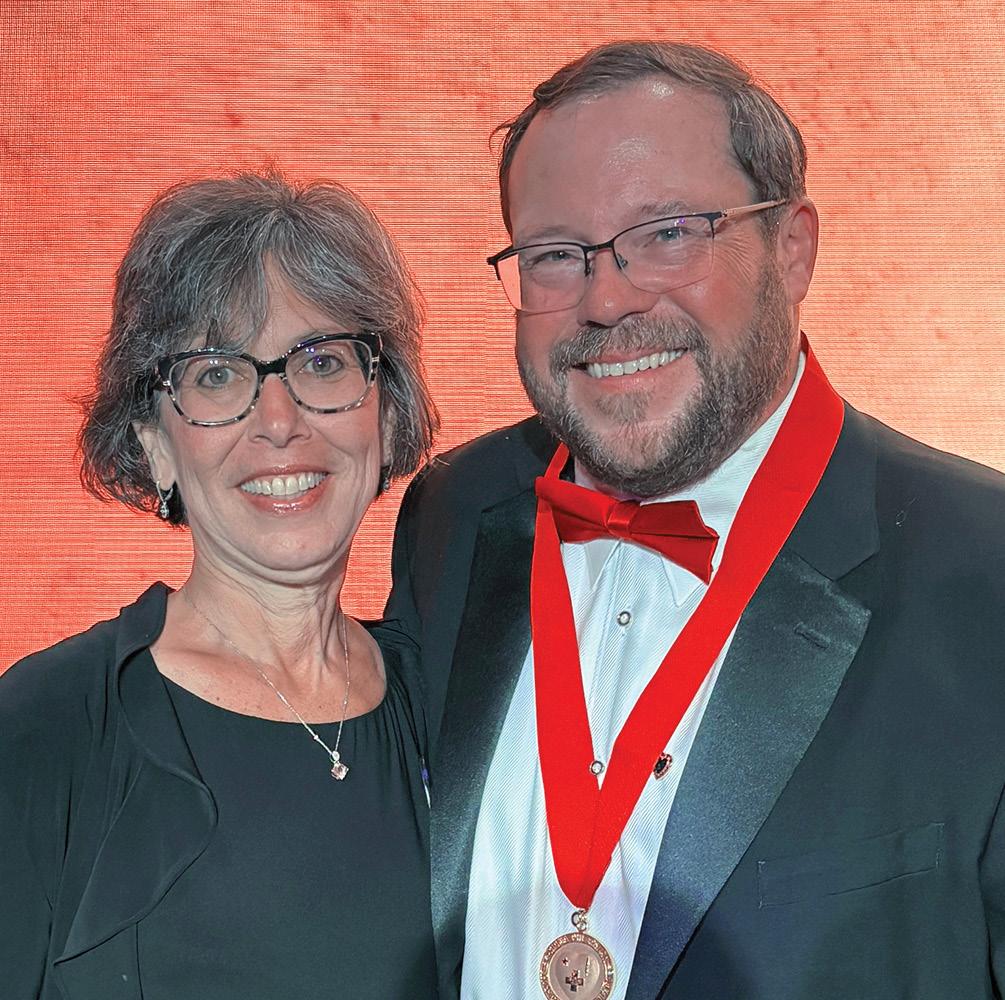
Brad Nahrstadt ’89 and his wife, Debra, celebrated his induction into Sigma Phi Epsilon’s Order of the Golden Heart in July. A retired attorney and award-winning author, he was elected to the SigEp’s national board of directors in 2015 and was elected grand president of the fraternity in 2023.
CEO of Arizona’s Department of Disabled American Veterans.
Robin Johnson, who is on the political science faculty at his alma mater, was inducted into the MonmouthRoseville Education Foundation’s Hall of Achievement in September.
1981
45th REUNION JUNE 4-7, 2026
Linda Hilst Mayes of Currie, N.C., is a tax analyst for H&R Block.
1984
Debby Blatzer of Lemont, Ill., has retired from Moraine Valley Community College, where she served as an assistant dean of advising and orientation. After serving on the Lemont Village Board for 20 years, she’s been elected to her second full term as a Lemont Township Trustee.
Susan Fundenberger Thor has retired from serving as a reading specialist in the Galesburg (Ill.) school district. She credits Monmouth’s education department as a foundation for her career success, calling her professors “a godsend to me and other older students that were in my classes.”
1989
Brad Nahrstadt was inducted into Sigma Phi Epsilon’s Order of the Golden Heart, the highest honor the fraternity can confer upon a member. It is reserved for a select few who have given their time and talents for at least 30 years, making a difference in SigEp and the fraternity experience. Since the honor was initially awarded in 1959, only 182 men have received it out of 360,000 initiated members. Nahrstadt’s latest book, The Democrats in Turmoil: The Bitter Fights to Select a Presidential Nominee, 1896-1924, was published in June.
BY BARRY MCNAMARA
The date Nov. 4, 2000, is a special one for Kristin Whitver Fouts ’03 . It’s also proof that college—and life—can be full of surprises.
Today, Fouts serves as the director of education and chapter development for Zeta Beta Tau fraternity. It’s an interesting position to hold for someone who entered college with no thoughts at all of being in a sorority.
“I never planned to go Greek,” said Fouts, who was initiated into Kappa Kappa Gamma on the aforementioned date, well into her sophomore year. She went on to be named Greek Woman of the Year as a senior.
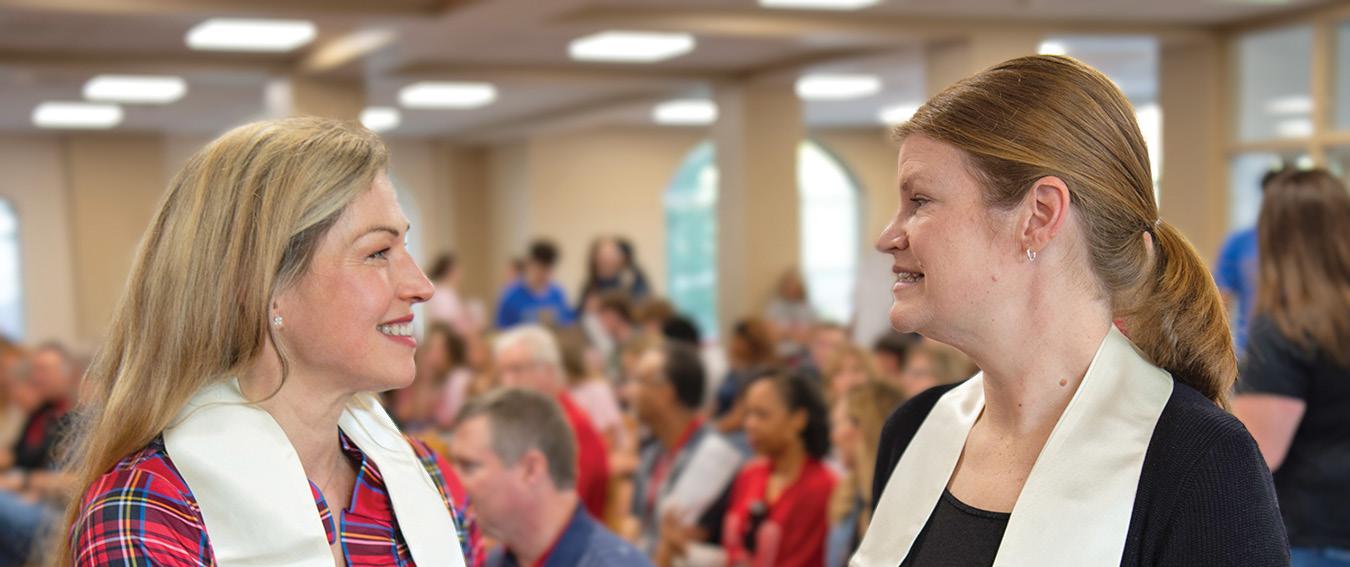
The date Oct. 18, 2025, is also a special one. That’s when she and Pi Beta Phi member Debra Jackowniak Scarlett ’95 were inducted into Monmouth’s Fraternity and Sorority Hall of Fame.
Scarlett hasn’t devoted her career to Greek life, but she is still very much involved in her sorority when her time is not being devoted to her substantial community service or her successful medical career as a dermatologist with Madison Medical Affiliates, a private practice with around 70 physicians in multiple areas, including a dozen in dermatology.
“We see the worst, including burns,” she said in late summer of this year. “One of my patients had a life-threatening rash. I just checked in with her and she’s doing well. That’s a rewarding part of the work I do.”
Scarlett may see the worst, but she’s one of the best. She’s been honored as one of the “Top Docs” of Milwaukee for over a decade. And she’s found a way to give back within her profession, organizing and providing her expertise in annual skin cancer screenings, at no cost to the participants.
Lifelong connections
Even though Scarlett quit throwing the shot put and discus during her time as a Monmouth student, she has eight marathons under her belt—completing the first a week before graduating from medical school at the University of Michigan, one of the top dermatology programs in the nation.
“But my favorite marathon was one with Brandy Hidalgo Vargas ,” said Scarlett of her 1995 classmate and Pi Phi sorority sister who had battled and beaten Hodgkin’s lymphoma twice. In an effort to prioritize her health and wellness, Vargas began working out and running and asked Scarlett to do the Houston marathon with her.
“As we got to the start line, she was expecting me to run it at my own pace and just see her at the finish line, but I was not going to let her do it by herself. I told her I will always stick by her and always have her back.”
That sentiment continued as the two Pi Phi sisters neared the end of their 26-mile run.
“We completed it in about seven hours,” said Scarlett. “At that pace, we were some of the last to finish. Brandy didn’t want to be the last finisher, and I said I will always have her back. After that, I stayed behind and watched her hold hands with her four kids, crossing the finish line. Thinking about it still brings me to tears. As I reflect on it, it’s the work and the process that are more important than the finish line sometimes.”
Vargas died suddenly in December 2023.
“I believe it was around 15 years after her diagnosis, and she lived life to the fullest until her last day,” said Scarlett. “That day, her mom called me, and quickly we mobilized all of our Pi Beta Phi sisters. We started a GoFundMe for her children.”
Along with classmate Amy Bradshaw ’95, Scarlett organized a memorial for Brandy at their 30-year reunion at Homecoming. It’s by far not the first time that Scarlett has donated her time and resources, and it certainly won’t be the last.
“I grew up in Chicago, the child of immigrants,” she said. “The reason I got to go to Monmouth was a Presidential Scholarship. Someone gave money to let me go to college. I don’t like to owe anyone, so I want to give back financially and through service.”
She stuck with that mindset even in her earliest career days when she was fairly deeply in debt. “Even when we were at our lowest,” she said, “we gave back. And I’ve always felt it was important to donate my time, as well.”
That includes Monmouth, to which she’s a frequent donor, including a significant gift to support the Center for Science and Business, as well as a gift toward the construction in 2016 of the Pi Phi house. The college, in general, and Pi Beta Phi, specifically, are proud to be in Scarlett’s web of worthy causes. IN THE SCOTLIGHT
Donating her time is something she can also trace back to her pre-Monmouth days.
“My volunteering began in (Argo) high school with my English professor, Mr. Johnson,” she said. “He took us to a soup kitchen to volunteer on Thanksgiving, and that started my love for volunteering.”
A Monmouth biology professor sparked another flame that still burns brightly in Scarlett.
“My first day of zoology, I was in a class with about 60 students, which was actually very large for Monmouth,” she said. “But I remember the professor, Ken Peterson , saying that only three of us would likely get A’s. Well, I took that as a challenge, and it’s something that I still carry with me today. I like adversity and challenges. I got that A, and it was a good start to my academic career.”
Fouts also looked back on her time at Monmouth, calling it “a perfect fit” for her at the time.
“The slogan when I first started here was ‘What college was meant to be,’ and for me, it truly was,” she said in her acceptance speech. “It was a perfect fit—small enough for it to feel like home and bold enough to help me grow. Monmouth College taught me how to think deeply and to challenge the status quo.”
Coming to campus from Chenoa, Ill., Fouts was part of the first wave of students in the new public relations program, and she was also an Honors Program participant. After graduating, she earned a master’s degree from Illinois State University.
From 2005–11, she served as the fraternity and sorority life adviser at Wichita State University and Western Michigan University before moving to the Indianapolis area to work at the North American Interfraternity Conference. She led the membership experience team at Delta Sigma Phi’s headquarters from 2017–23.
Throughout her career, Fouts has trained student leaders, advised campus fraternities and sororities, and implemented transformative leadership experiences across multiple campuses and national organizations. Some of her tasks have included developing community wellness reviews, supporting coalition building around hazing prevention, and leading professional staff development workshops.
She also got to be on hand during Homecoming as the men of Monmouth’s Delta Lambda chapter of Zeta Beta Tau officially received the prestigious Chapter Award of Distinction,
Representing, respectively, Pi Beta Phi and Kappa Kappa Gamma—the two women’s fraternities founded at Monmouth and famously known as the Monmouth Duo—Scarlett (left) and Fouts enjoy a chat just before their induction into the Fraternity and Sorority Hall of Fame.
given by the North American Interfraternity Conference to only five fraternity chapters across the country.
“Say ‘Yes’ to opportunities,” Fouts told the large number of current students at her hall of fame ceremony. “They can be scary sometimes, but they will help you grow. Each ‘Yes’ took me further down a path that I wouldn’t trade for anything. I love my career because of the difference I can make, member by member. I’m eternally grateful that I said ‘Yes’ to Monmouth College and ‘Yes’ to Kappa Kappa Gamma.”
Scarlett feels the same about her Greek life decision. During her undergraduate years, she was very active in Pi Phi, holding the executive positions of secretary, social chair and recruitment chair. She’s remained very active since.
“I’ve really enjoyed the diversity of friendships I have through Pi Phi,” she said. “One of my best friends is my mom’s age, and I met her through Pi Phi. I’ve joined alumnae clubs in the cities I’ve lived (including serving as president of the Milwaukee club), and I’ve always found it’s a great way to connect with people.”
Her numerous contact points with Pi Phi over the years include attending multiple national conventions, serving in multiple positions on Marquette University’s Alumni Advisory Committee, and co-chairing the college’s 150th anniversary celebration of Pi Phi’s founding at Monmouth in 1867.
In addition to running, Scarlett has another escape from the rigors of her profession. She identifies as “a self-taught gardener,” and she apparently is a very good teacher, as her garden has been showcased on multiple local tours and with the Nature Conservancy, helping to raise money for a variety of organizations.
“I’m proudest of the design element of my gardening,” she said. “I’ve got a good visual eye—dermatology has done that for me.”
But even though she said she “loves being around and enjoying beautiful things,” that doesn’t include cosmetic work as part of her dermatology practice. “I don’t put Botox on people’s faces,” she said.
When she’s not working, gardening, serving or enjoying her family, Scarlett even has time for what she called her “side hustle” of planning parties and getting people together, a skill she developed during her time leading Pi Phi’s social and recruitment efforts.
BY BARRY McNAMARA
Before Susan Smallwood
Schilson ’78 was ever a student at Monmouth, both of these statements were true. She had a connection to the school, as her parents, Bill ’52 and Erma Norris Smallwood ’49, and her sister, Mary Ann ’73, were Monmouth alumni.
Also true: Even at a young age, Schilson dreamed of traveling.
“Growing up, I answered a question about what I wanted to be by writing ‘stewardess,’ even though I had no idea at the time how to actually spell it,” she said.
And that’s exactly what Schilson did for 23 years with Delta Airlines, although that’s getting ahead in the story.
As a Monmouth High School student, Schilson took a course at the college with psychology professor Dean Wright, “which I loved,” and she also played the trumpet in the college’s jazz band under the direction of Steve Terrones. Despite those experiences and her family’s history with the hometown college, Schilson’s first choice was to leave Monmouth for a change of scenery. But after one semester at Bradley University in Peoria, Ill., she learned that the grass isn’t necessarily greener 60 miles away.
Although she majored in voice, Schilson enjoyed other classes, as well.
“I loved the accessibility of the professors,” she said. “I particularly remember (classics professor) Bernice Fox. I loved to pop in and talk to her. And after I graduated, any time that I came back to town, I’d visit her.”
Planes, boats and
When Schilson graduated, she needed a job, and she found that “Delta Is Ready When You Are.” The airline hired her to be a flight attendant and, after a month of training, she was cleared for take-off. Delta later changed its slogan to “We Love to Fly and It Shows,” and that must’ve been true for Schilson, whose schedule could consist of flying from Chicago to St. Louis to Memphis to Jackson, Miss., and then back, all on the same day.
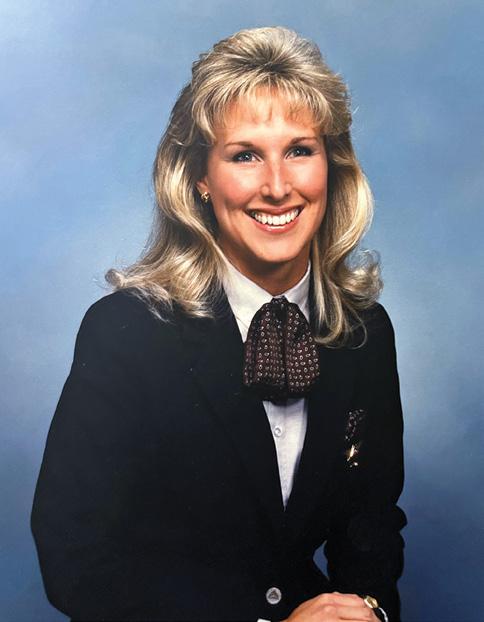
But after paying her dues, there was a payoff—international flights, including her favorite destination, Paris, which she enjoyed exploring on walks.
A frequent statement by alumni of the college is that they found their voice at Monmouth, and that’s certainly true of Schilson, who took it literally by majoring in it. After years in the air and on the water, she returned to singing after attending a church service where the St. Mary of the Hills Choir—the musical ensemble of St. Mary of the Hills Episcopal Church in nearby Blowing Rock—performed. Schilson thought, “This is where I want to be. … I spent the next six months re-training my voice.”
Schilson successfully auditioned for the choir, and that means more travel, including to Durham—not the North Carolina city east of Blowing Rock but, rather, Durham, England, where the St. Mary of the Hills ensemble has served as the choir-in-residency.
“I found it was very impersonal at Bradley,” she said. “And I felt that the things I’d been into in Monmouth were things I couldn’t do until my junior year at Bradley.”
Her adviser, music professor Dick Griffiths, got her involved immediately “in all the choral groups and The Sound of Five. I’d like to give a lot of credit to him for my love of choral music. His conducting was amazing.”
Upon retiring from Delta—the place where Schilson said she “took a gap year that lasted 23 years”—her travels were far from over. Schilson and her husband purchased a 39-foot trawler, the Kia Ora, which is a Māori-language greeting “kind of like ‘aloha,’” she said. “We made a five-year plan of living out on the water,” returning to their Florida home only around the holiday season.
After four-and-a-half years, the Schilsons sold Kia Ora and settled in North Carolina, where they still live today.
“After all these years, the thing that really sticks with me is the liberal arts education I received at Monmouth,” said Schilson. “Between my classes and rehearsals, there was a lot packed in a day, but I loved the busy-ness. And I felt the professors really urged you to learn more. I love learning. When I was in an airplane, I’d look out the window, see an unusual land formation and wonder why it was shaped like that. So I’d try to find out. That would take me back to studying geology with (professor) Jim Wills. I’d also seek out music in all the different places I traveled.”
1990 Theresa Downs McClaughry of Canton, Ill., is an English teacher in the Spoon River Valley school district.
1991
Steve Klien of Columbia, Mo., was promoted to the rank of teaching professor in the University of Missouri’s department of communication. He’s married to 1993 alumna Laura Zangori
Dave Hillis of Oxford, Miss., took on a new role as vice president of operations with a new company, ACI Building Systems.
1997 Sarah Vayo Pendry of Geneva, N.Y., is an instructional designer for online learning at Finger Lakes Community College.
Merry Vue Vang of Thornton, Colo., is a registered nurse with InnovAge. In August, she graduated with a master’s degree of nursing-family nurse practitioner.
2001 Sarah Crummy Wolek of Arlington Heights, Ill., is a technical director at Stepan Company, a manufacturer of specialty chemicals headquartered in nearby Northbrook.
2010
Emily Belrichard Peace of Huntley, Ill., is an early intervention service coordinator for Options and Advocacy for McHenry County.
2011 Mark Hoyert is the chief deputy assessor for Downers Grove (Ill.) Township.
2012
Dan Steamer of Elgin, Ill., is a senior fraud analyst for Wintrust Financial.
2015 Emily Holt founded Pen and Purpose Collective, a boutique ghostwriting and content-strategy studio in Davenport, Iowa. She partners with transformation coaches in business, career, health, wellness, relationships and personal growth industries, building conversion-ready content that turns expertise into booked calls that are strategic, empathetic and results-driven.
2017 Eva Gonzalez Delahunt of Colorado Springs, Colo., is assistant vice president of Stockmens Bank.
Rachel Masch Perez of Glendale, Ariz., is a community engagement coordinator for Catholic Charities Community Services.
2018 Brody Anderson (pictured above) was named one of the top Scholastic Bowl coaches of the year in Illinois for the 2024-25 year. A social studies teacher, Anderson coaches the Princeton High School team, which has become a powerhouse in the region under his guidance. He’s become wellknown as “an unflaggingly enthusiastic and energetic coach.”
2019 Ashley Maurer Balagna of Morton, Ill., is a senior finance analyst at State Farm.
2020 Brennan White has been promoted at Illinois State University to assistant athletic director/ general manager and NIL administration. “The future of college athletics is here with NIL and revenue sharing, and our team at Illinois State is embracing it head-on,” said White. “Our focus remains on empowering student-athletes to maximize their opportunities while building programs that compete for championships.”
2021 Will Fox of Columbia, Mo., has completed his degree from the University of Illinois College of Medicine in Rockford and is now a firstyear urology resident at the University of Missouri.
2023
Addison Cox is a Ph.D. student at the Universi ty of Minnesota. Her archival research there led her to create a small exhibit titled
“Listening for Blackness,” which explores what it means to “sound Black.”
Gabriela Peterson has joined the New Hampshire Superior Court as a judicial law clerk through 2028.
Nicholas Robertson of Covington, Ga., is director of athletics at Champions Christian Academy.
2024 Emma Wolfe Bradburn of Galesburg, Ill., is a second grade teacher in the United school district. She recently married Luke Bradburn, Monmouth’s director of intramurals and recreation.
2025
Jeff and Megan Dailey Schnetzler were married just after graduation and have settled in Casey, Ill. The couple met on their first day on campus as part of the SOFIA program. They are both teaching social studies, with Megan working at Paris-Crestwood Middle School and Jeff at Casey-Westfield Junior-Senior High School.
Karli Strom has started a po sition as an assistant director with the Association of Illinois Rural and Small Schools. One of her charges is to review career and technical education, helping to create pathways to prepare students for their future careers.
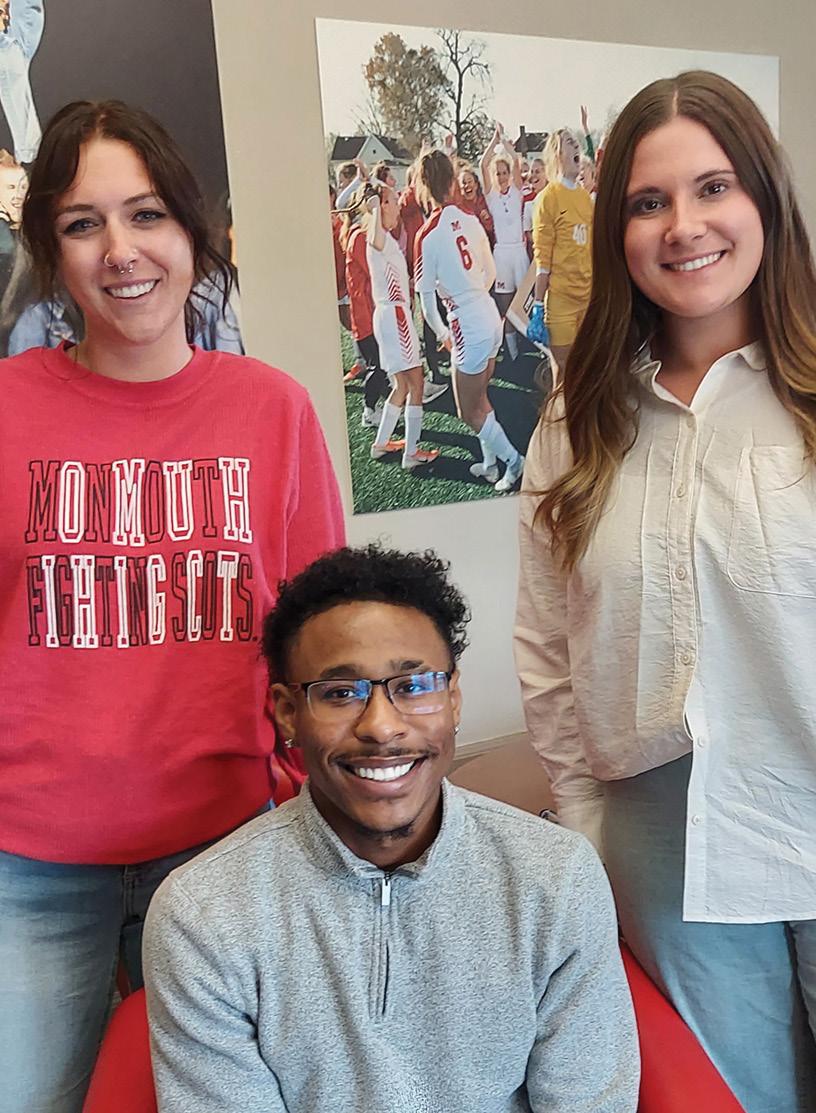
3 FOR ’30
The alumni trio of, from left, AJ Furness ’24, Damarian Stark ’25 and Kenzie Russell ’25 are helping to recruit the next class of Monmouth students.
1990 Theresa Downs and Eric McClaughry ’89
August 30, 2025
2017 Eva Gonzalez and Stephen Delahunt II
November 15, 2025
Rachel Masch and Ignacio Perez
November 18, 2023
2019 Ashley Maurer and Maxwell Balagna
May 10, 2025
2021 Ashley Qualls and Will Fox
April 27, 2024
2024 Emma Wolfe and Luke Bradburn
July 18, 2025
2025 Megan Dailey and Jeff Schnetzler
September 21, 2024
2011 Michele and Mark Hoyert a daughter, Isabella February 15, 2024
2009 Amy Kerulis Schmucker and John a son, Patrick June 18, 2024
2016 Alexis Aurelio-Aumuller and Joseph a son, Elijah James May 20, 2025
2017 Rachel Masch Perez and Ignacio a son, Ignacio Cornelius May 22, 2025
2018 Kelci Foss Osborn and Tyler ’16 a son, Jamieson Sawyer March 21, 2025


1943 Mary Young McConnell, 102, of Highland, Calif., died Feb. 10, 2024. She was active in Kappa Kappa Gamma and Crimson Masque before becoming a librarian, first in Bellefontaine, Ohio, and then San Bernardino, Calif. Survivors include 13 great-grandchildren.
1949
Dorothy Kern Behnke, 97, of Ely, Minn., died Aug. 21, 2025. A member of Pi Beta Phi, she graduated with a degree in English. Behnke was a teacher before becoming a beloved children’s librarian at the Warren County Public Library in Monmouth. She was preceded in death by her husband, Gene Behnke ’51. Survivors include a sister, Marcia Kern Hoffmeister ’58
1950 Martha Muirhead Felmley, 97, of Woodbridge, Va., died Oct. 2, 2025. She graduated with a degree in business administration and was a member of Crimson Masque and Pi Beta Phi. She taught school and was heavily involved in Potomac Hospital, serving on its board from its inception and serving as director of community relations. Her late husband, Robert Felmley ’50, serenaded her beneath her Monmouth dorm window to propose.
Marian Kinney Hand, 97, of Columbus, Ohio, died Oct. 4, 2025. She studied biology for two years before earning a degree from the University of Iowa College of Nursing. For more than 30 years, she worked on the renal medicine/transplant unit at Ohio State University Hospitals.
1951 Harriet McCullough Fahnert, 96, of Sebring, Ohio, died July 4, 2025. She graduated with a degree in elementary education and went on to have a remarkable teaching career, with stops in Japan, Norway and England at U.S. Air Force bases, as well as Colorado Springs. She also taught in Pennsylvania before a 40-year career in Alliance, Ohio, primarily as a second-grade teacher, where she had a profound impact on countless young lives.
Rita Pool Snow, 96, of Holland, Mich., died Sept. 13, 2025. A member of Kappa Delta, she graduated with a degree in English. In addition to volunteering at her church and in the community, she set up a grade school library and oversaw its program for eight years.
1952
Barbara Watt Johnson, 95, of Moline, Ill., died Sept. 17, 2025. A member of Kappa Kappa Gamma, she graduated with a degree in elementary education, and she taught early in her post-Monmouth years. In 1993, she joined Monmouth’s Board of Trustees, and she
helped guide her alma mater’s strategic direction during a time of significant growth. Johnson also served on the advisory board of KKG’s Minnie Stewart Foundation, with her leadership helping the Stewart House become part of the National Register of Historic Places.
Robert Lafferty, 95, of Monmouth, died Sept. 19, 2025. He was president of Martha Brown, Ltd., a chain of women’s apparel stores, part of his 40-year career with Brown Lynch Scott Co.
Jane Clark Sanderson, 94, of Cadillac, Mich., died July 4, 2025. She studied home economics for two years before completing a degree in that subject at Iowa State Teacher’s College. Sanderson taught in the Illinois communities of Stronghurst and Fairbury before moving to Michigan for the majority of her life. Survivors include a daughter, Kathy Sanderson Fila ’80
1953
Carolyn Emons Maxwell Hinton, 92, of Santa Rosa, Calif., died July 16, 2025. Hinton came to Monmouth from Alton (Ill.) High School, where she was the first female student body president. She studied English and was a member of Pi Beta Phi before transferring as a junior to the University of Illinois, where she majored in speech and language pathology. She held a trio of related jobs before beginning a private practice upon moving to Santa Rosa in 1960. Hinton was also a gifted amateur oil painter.
Laurie Winz Sailer, 92, of Eau Claire, Wis., died June 22, 2025. A first-generation American after her parents moved from France following World War I, she studied sociology and was a member of Kappa Delta. She had the opportunity to live abroad through her husband’s Army service, with stops in Germany, Japan and Belgium. In Eau Claire, where she lived for 50 years, she completed her bachelor’s degree in sociology and held positions as a social worker, salesperson and substitute teacher.
1954
Esther Jones Bethel, 92, of Grinnell, Iowa, died June 26, 2025. A member of Kappa Kappa Gamma and Crimson Masque, she graduated with a degree in elementary education. Bethel was a teacher, first in Whittier, Calif., then returned to her childhood hometown of Grinnell, where she ran an in-home daycare. She also taught a dozen years at Davis Elementary School, coached the Grinnell High School drama and speech programs and, for 14 years, worked for Iowa Valley Continuing Education, where she founded its leadership program. Bethel was part of the Austin-Jones-Campbell family honored
as Monmouth’s Family of the Year in 2017.
1953 Carolyn Bovard Callaway, 92, of Grove City, Pa., died Aug. 10, 2021. She graduated with a degree in elementary education. A pastor’s wife, she also taught at Grove City Junior High, was a dorm parent at Grove City College and was the organist at Grace Methodist Church.
1955
John Romine of Farmington, N.M., died Sept. 30, 2025. He graduated with a degree in chemistry and was a member of the swim team and Alpha Tau Omega. He was preceded in death by his wife, Diana Payne Romine ’56. Survivors include a brother, William Romine ’63
1956
Glenn Beall, 91, of Lake Forest, Ill., died July 4, 2025. A member of Alpha Tau Omega, he studied science before becoming a globally recognized innovator in the plastics industry. His first stop after Monmouth was completing his engineering degree at Bradley University. Beall worked at Abbott Laboratories, securing 12 patents for medical devices, before founding Glenn Beall Engineering Inc. in 1968, obtaining an additional 23 patents. Beyond his inventions, he was an educator, editor, author, expert witness and industry activist. Beall was inducted into the Plastics Hall of Fame, as well as the Stark County Community School District Alumni Hall of Fame.
Jean Cook White, 94, of Burlington, Iowa, died Aug. 5, 2025. She was a U.S. Air Force veteran, serving during the Korean War. A member of the synchronized swim team and Pi Beta Phi, she graduated with a degree in physical education. White, who sang in several choirs, retired from the Burlington school district after many years of teaching music. Prior to that, she ran the Macrame Mill in Burlington.
Larry Sterett, 92, of Biggsville, Ill., died Sept. 6, 2025. After transferring from the University of Illinois, he was a member of Tau Kappa Epsilon, graduating from Monmouth with a degree in mathematics. He taught advanced math, chemistry and physics for 37 years at Biggsville High School, which later became Union High School. Sterett also coached three sports, including 33 years with the track team.
1957
Nancy Peters Clinnin, 89, of Marengo, Ill., died May 31, 2025. A member of Crimson Masque, she graduated with a degree in biology. She earned a master’s degree in education from DePaul University and taught in McHenry County for 33 years. Her travels took her to 21 countries and all 50 states.
William Hankins of Glasford, Ill., died April 21, 2025. He graduated with a degree in religious studies.
1960
Bob Gamer, 86, of Kansas City, Mo., died March 7, 2025. He graduated with a degree in government and was a member of Alpha Tau Omega. The son of longtime Monmouth political science professor Carl Gamer, the distinguished scholar had a long and esteemed career at the University of Missouri-Kansas City, where he inspired countless students with his profound insights and passion for understanding the complexities of political systems. His focus was on developing nations, urban development in Singapore, and contemporary China.
Between Monmouth and UMKC, he earned his Ph.D. in political science and government from Brown University. In addition to his academic contributions, he was the founder and proprietor of Temple Slug, a beloved and iconic retail store in Kansas City. He was also co-proprietor of Teahouse and Coffeepot.
Linda Love McNeill Clark of Buffalo, Wyo., died in February 2025. She studied biology and was a member of Kappa Delta. A hallmark of her life was service to others, especially children, through her career in mental health and through her church, which she served as a deacon. She began her career as a speech pathologist before earning a Ph.D. and enjoying a long and successful career as a psychologist.
Jack Stankrauff, 86, of Ann Arbor, Mich., died June 29, 2025. He graduated with a degree in English and was a member of The Oracle staff and Alpha Tau Omega. He served in the Army at White Sands Missile Range, then earned a master’s degree in library science from Syracuse University. He held related positions at Southern Illinois University and Case Western Reserve University, as well as two public libraries, before spending 26 years at Ford Motor Company.
John and Joan Schilthuis Wageknecht of Wildwood, Mo., died less than two years apart on July 28, 2024, and Dec. 24, 2022, respectively. They were married 61 years. Joan graduated with a degree in religious studies and was a healer and a 40-year supporter of Girls Scouts, serving as a mother figure to many. John graduated with a degree in chemistry and was a member of Tau Kappa Epsilon. A chemist, he had more than 40 patents to his name.
1961
Richard Crockett, 89, of Monmouth, died July 20, 2025. He graduated with a degree in history and earned a master’s degree from the University of Illinois and a Ph.D. in political science from the University of Washington. An Army veteran, Crockett worked as an editor at Scott Foresman Publishing in Chicago before serving
as a political science professor at Western Illinois University from 1974 to 2003. Lynn Stewart Grove, 86, of Mount Airy, N.C., died on Aug. 26, 2025, after complications due to Alzheimer’s disease. She graduated with a degree in sociology and was a member of Alpha Xi Delta. She also started Nehemiah Helping Hands Ministries, a nonprofit that assisted those facing financial hardships. After teaching for two years, she took on the role of homemaker and stay-at-home mom. Survivors include her husband of 63 years, Judson Grove ’64 Claire Hagg, 86, of Richland Center, Wis., died July 4, 2025. He graduated with a degree in physical education and was a member of the football and track teams. A military policeman during his service in the Army, Hagg earned a master’s degree from Northern Illinois University and was a longtime teacher and coach in the Richland Center school district, retiring in 2000. His 1983 girls track team won a state championship.
Larry Greer, 85, of East Moline, Ill., died Aug. 23, 2025. He graduated with a degree in economics and was a member of the cross country, track and baseball teams and Theta Chi. Greer earned a master’s degree in counseling from Western Illinois University and was a teacher, counselor and coach at United Township High School in East Moline for 37 years. For his community service, he was named East Moline’s Citizen of the Year. Survivors include his wife of 65 years, his twin brother, Jerry Greer ’62, and a sister, Joanne Greer Stipp ’64 Rick Goodale Jr., 83, of Loveland, Colo., died Aug. 5, 2025. He graduated with a degree in biology and was a member of the tennis team and Alpha Tau Omega. Goodale worked in insurance before moving into commercial real estate. He managed the Fort Collins, Colo., office of Van Schaak and Co. for three years before opening his own office in 1981. Five years later, he was named the Realtor of the Year by the Fort Collins Board of Realtors, and he was very active with Fort Collins organizations.
Bill Hubbard of Swannanoa, N.C., died Sept. 15, 2025. He was born and raised in Monmouth, living across the street from campus next door to the Theta Chi house, a fraternity he ultimately joined. Upon the deaths of his parents—who were both Monmouth graduates—the family gave the home to the college. Today, a plaque remains. Beginning with Hubbard’s grandmother, the family rented rooms to college students, and more than 70 lived there over the years. The Hubbard family, which includes Bill’s wife of 61 years, Marilyn Kessinger Hubbard ’64 —whom he met in French class his senior year—received Monmouth’s Family
of the Year Award in 2007. Hubbard earned a master’s degree in library science from the University of Illinois and another in political science from Southern Illinois University. He began his career in SIU’s Science Library, then served as library director at the following colleges: Eureka, Stephens, Gettysburg and Warren Wilson, where upon retirement he was named library director emeritus.
1963 Courtney Munson, 84, of Little York, Ill., died Aug. 27, 2025. While a Monmouth student, he was on the football team and joined Alpha Tau Omega. In 1961, he bought his first truck and started Munson Trucking soon after with his brother. Eventually, that company grew into the successful long-haul trucking company Munson Transportation, which was a pioneer in satellite communication and dispatching. Heartland Express purchased the company in 1994, allowing Munson to pursue a variety of business ventures in construction, real estate and restaurants. He also raced boats for a number of years.
Dee Ann Smith Shuff, 84, , formerly of Reno, Nev., died in Monmouth on Aug. 22, 2025. A member of Pi Beta Phi, she graduated with a degree in sociology and was Homecoming queen her senior year. She served as a foreign service officer in Kenya and Somalia with the United States Agency for International Development and later worked as a department head with the Social Security Administration Appeals. Shuff was also an agent with Monmouth Farm and Home Realty.
1965
Sharon Zipse Fesler, 81, of DeKalb, Ill., died June 19, 2025. A member of Alpha Xi Delta, she graduated with a degree in chemistry before earning a master’s degree in teaching from Duke University. Early on, she was a teacher before doing coursework at Miami University in Oxford, Ohio, to prepare her to take and pass the CPA exam. She became the first female trust officer at the National Bank and Trust in Sycamore, Ill., where she worked from 1978 until her retirement in 2001. She spent the next two decades involved in volunteer work with several community organizations. Her granddaughter wrote that Fesler “was full of rich, stubborn love.”
Karen Brunke Hehn, 81, of Paris, Tenn., died June 27, 2025. A member of Alpha Xi Delta, she graduated with a degree in English. She earned a master’s degree from Northern Illinois University and dedicated her life to education, serving as both a teacher and a librarian. She was involved in both civic engagement and singing in choirs. Survivors include her husband of 60 years, Robert Hehn ’65
Dan Sedwick, 83, of New Windsor, Ill., died
Sept. 13, 2025. He graduated with a degree in mathematics. After receiving his master’s degree in education from Western Illinois University, he taught for 36 years in three western Illinois school districts—Alexis, Winola and Sherrard. Sedwick was also a crop claims adjuster for Country Financial for 13 years. Survivors include a granddaughter, Erin Degelman ’09
1966 Robert Rose of Phoenix, Ariz., died Jan. 17, 2025. He was a member of Tau Kappa Epsilon.
1968
William Bentley, 80, of Los Angeles, Calif., died June 6, 2025, after a short but brave battle with cancer. After transferring from the University of Illinois, he was a member of the football team and Theta Chi, graduating with a degree in English. He served as a first lieutenant in the Army during the Vietnam War, receiving the Bronze Star and the Vietnamese Cross of Gallantry. His diverse career included operating The Forge Club in Park City, Utah, working in advertising, managing Yellow Cab Company, tending bar and running a branch of his family’s travel agency. The true passion for the jack of many trades was writing, and he became a screenwriter in Hollywood, writing scripts for MacGyver and M*A*S*H, among other shows. He also had a newspaper column for 31 years and wrote nearly 175 shows for the Bohemian Club in San Francisco.
1969
David Frary, 78, of Greenwood, Ark., died June 26, 2025. He studied physical education. Barbara Sharp of Aurora, Colo., died Sept. 9, 2025. A member of the synchronized swim team, she graduated with a degree in biology. She had a successful career working for OEA Aerospace and Optima Batteries as a certified lead auditor, quality engineer and manager, safety engineer, and health and safety coordinator.
1972 Robert “Bobb” Belfrom, 75, of Fishers, Ind., died Sept. 22, 2025. He studied philosophy and psychology and, after graduating, began working at GTE, which later became Verizon, where he had a distinguished 35-year career, retiring as a logistics manager. Survivors include his wife of 52 years, Cathy Belfrom
1974
Michael Dickens, 72, of Chicago, died in August 2025. He graduated with a degree in history and was a member of the football team and Black Action Affairs. His obituary reads that his life was “marked by love, compassion, humor and wisdom.” Survivors include his wife of 51 years, Debra Whitaker Dickens ’74.
1977
Joy Volz Ellison, 74, of Wheaton, Ill., died on Jan. 15, 2025.
She graduated with a degree in physical education and later earned a degree from the Lutheran Hospital School of Nursing in Moline, Ill. Ellison held several positions in the healthcare field and also worked for the College of DuPage and Oakton Community College, teaching at the latter school. Later in her career, she served as a nursing coordinator and care team member supporting retired clergy at Our Lady of Sorrows Basilica in Chicago.
Ron Nelson, 74, of Kirkwood, Ill., died April 6, 2025. He graduated with a degree in physics and was a member of Alpha Tau Omega. Nelson also earned a degree from the University of Illinois. He spent most of his career as a certified financial planner and founded Nelson Sports Collectibles. His passion for golf led him to play 245 holes in one day, and he memorably hit a prize-winning hole-in-one during a tournament at Gibson Woods.
1973
Barbara Fields, 73, of Ojai, Calif., died Feb. 21, 2025. She studied philosophy at Monmouth for one year before eventually completing her degree at the University of California-Santa Barbara. She was a video and TV news producer and, later, the executive director of the Association for Global New Thought, an area of her career that was launched by serving as the program director for the 1993 Parliament of the World’s Religions in Chicago. Among many awards, Fields received Religious Science International’s first Peace Award.
1974
Robert Taylor, 73, of Ballston Lake, N.Y., died Nov. 12, 2024. He attended Monmouth briefly before discovering, in his 30s, a love for the restaurant business. Taylor became a chef and, in his later years, a mentor for disabled individuals who wanted to work in the kitchen.
1975
Rick Levine, 75, of Monmouth, died April 5, 2025. He studied business administration. A six-year member of the Illinois Army National Guard, Levine worked as the Monmouth Township Supervisor for 21 years, retiring in 2015.
1977
Tom Condon, 79, of Glendive, Mont., died June 30, 2025. He graduated with a degree in government and was a member of Sigma Alpha Epsilon. For many years, he was a diamond buyer at the corporate office of K’s Merchandise in Decatur, Ill., He most recently worked in the Block Management Program for Fish, Wildlife and Parks in Ekalaka, Mont. Survivors include a sister, Cathy Condon Rees ’81.
1982
Mary Jones Hannigan, 63, of Kenosha, Wis., died June 4, 2024, after a long battle with cancer. She was a member of Kappa Delta and studied elementary education.
1985
Brian Meyer, 61, of Edwardsville, Ill., died of a heart attack on Aug. 1, 2025. He spent one year at Monmouth, participating in soccer, before enlisting in the Marine Corps with his brother and serving at Camp Pendleton. Meyer spent much of his career as an over-the-road truck driver for Southern Products Co.
1986
Mark Melville, 61, of Pearl City, Ill., died Sept. 29, 2025. After transferring from Highland Community College, he studied business administration and was a member of the baseball team and Tau Kappa Epsilon. A former member of the Pearl City Fire Department, he worked for Process Screw Products for 33 years, and he won 133 games as a softball coach.
1989
Timothy Beiermann, 58, of Carrollton, Ill., died Aug. 2, 2025. A member of the football team, he graduated with a degree in business administration. His obituary said “he had a loud, fun-loving personality and a gift for bringing people together.” Survivors include a sister, Christine Beiermann Farr ’90.
Lisa Leverton Greiner of Albia, Iowa, died July 27, 2025, after a two-year battle with cancer. She graduated with a degree in sociology and was a member of Pi Beta Phi. In the Albia area, she owned several businesses and was a pillar of the community.
1995
Pamela Reinholm Carlino, 60, of McHenry, Ill., died unexpectedly on Feb. 6, 2025, from complications of multiple sclerosis, a disease she fought bravely and inspirationally for four decades. A member of the basketball and softball teams and Crimson Masque, she graduated with a degree in speech/communication/theatre.
1999
Julie Trent Chatterton, 48, of Hanna City, Ill., died Aug. 9, 2025. She graduated with an art degree but later returned to school to become a nurse, working in the pediatric intensive care unit at the Children’s Hospital of Illinois. Survivors include her husband, Zac Chatterton ’99.
2001
Lindsey Sandage Hale, 45, of El Paso, Ill., died Oct. 21, 2025. She graduated with a degree in communication and theatre and was a member of the cheerleading squad and Pi Beta Phi. She was a vice president for Park Lane Jewelry and a national executive director with Thirty-One Gifts.
When our daughter, Hannah, first toured Monmouth College, she already knew the campus by heart. While her Scot Ambassador enthusiastically shared details about new facilities and programs, we were just as eager to provide the “vintage” version of campus life from our own Monmouth days. I graduated in 1996, and Jeff graduated in 1994. Hannah had grown up hearing our stories—some sweet, some funny and a few that made us grateful phones didn’t come with cameras back then.
That afternoon became a crash course in both old and new Monmouth. Hannah learned that the steep hill behind Wallace Hall, now replaced by steps, once served as the ultimate sledding run when paired with cafeteria trays from Stockdale, which were used as makeshift sleds. McMichael once housed business classes, Haldeman-Thiessen (HT) served as the science building, and the Wells Theater had just opened when Jeff was a freshman. He saw the very first production performed there, and two years later, I worked on that same stage as a student director and work-study employee. Today, Hannah carries on that legacy, performing in multiple productions on that same stage where our Monmouth story began.
That sense of connection between past and present is what defines Monmouth for our family. Buildings, majors and even dining options may change, but the heart of Monmouth remains the same.
I majored in elementary education and joined Kappa Kappa Gamma in 1992. The friendships I formed with my Kappa sisters are among my most cherished memories. Seeing Hannah walk across campus wearing the same letters and being part of her initiation was a full-circle experience I will treasure forever. Jeff’s best friends are still the brothers he met at the SigEp house. Those friendships carried us through graduations, weddings, raising families and now watching the next generation of Scots find their place here. There’s something incredibly special about seeing your child
“We appreciate seeing that the personal connection and care we received is still the Monmouth way.”
walk the same paths you once did, meeting lifelong friends of her own.
The memories extend beyond student life. As an undergrad, I had professors who not only challenged me academically but also believed in me before I believed in myself. That hasn’t changed. Monmouth professors still know their students by name and invest in them as people. The mentorship and guidance Hannah has received have shaped her confidence and opened doors for her future. She has had fantastic educational opportunities while also pursuing her passions in music and theatre. As parents, we couldn’t have asked for a better college experience for her. We appreciate seeing that the personal connection and care we received is still the Monmouth way.
So much has changed since we graduated; the buildings are more modern, and the technology is far more advanced. However, what hasn’t changed is the feeling you get when you hear the bagpipes echo across campus. Monmouth is more than a school—it’s your home.
Generations may study in different dorms or pursue different majors, but one constant endures – the people. The friends, mentors, professors and classmates who become family are the true heart of Monmouth. You always leave this place with more family than you arrived with.
And for the McGhees, that family connection runs deep. Because once you wear the tartan, you never really leave.
Roll Scots!
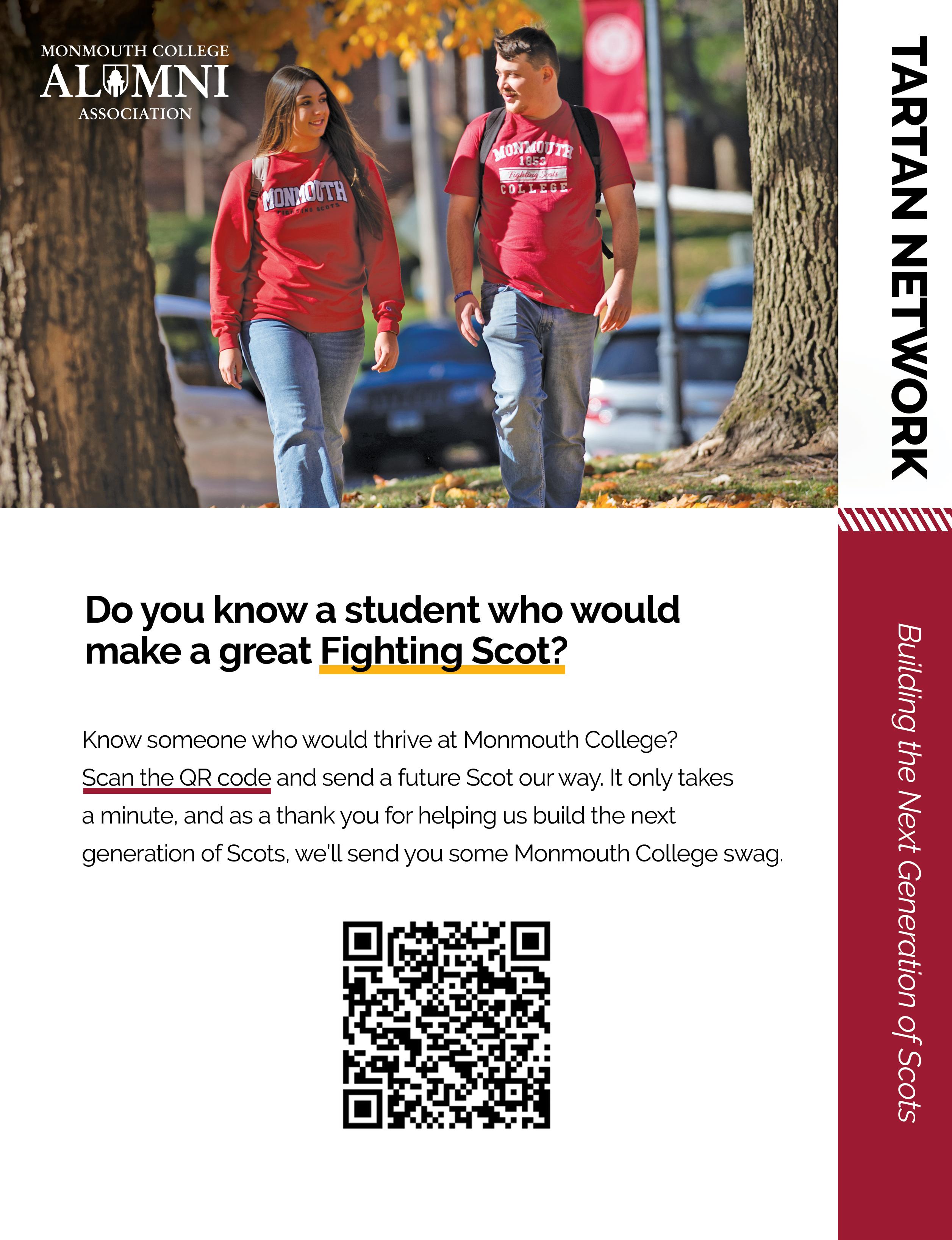


Monmouth College
Monmouth College Athletics
Monmouth College Alumni
@MCFightingScots
@MonmouthCollege @MonmouthCollegeAthletics @MonmouthCollege_Alumni
Monmouth College
@MonmouthCollege
Monmouth.College
#MonmouthCollege #RollScots #ItsGreatToBeAScot
CONTACT US:
MAGAZINE EDITOR
mcnamara@monmouthcollege.edu
309-457-2117
ADDRESS CHANGE
monmouthcollege.edu/update
309-457-2231
Monmouth College 700 East Broadway Monmouth IL 61462-1998
www.monmouthcollege.edu
CHANGE SERVICE REQUESTED