Tulsa Race Massacre survivor Viola Ford Fletcher can finally rest
By Liz Courquet-Lesaulnier
or more than a century, rest never came easily to Viola Ford Fletcher. When she closed her eyes, the horror of what she experienced in 1921 in the Greenwood section of Tulsa haunted her dreams.
“When I sleep, it is never very deep or for very long because of the anxiety and the things I see,” she explained in “Don’t Let Them Bury My Story,” her 2023 memoir. “Imagine having the same horrible nightmare every night for 100 years.”
On Monday, “Mother Fletcher,” as she was called, the oldest living survivor of the Tulsa Race Massacre, died surrounded by family. She was 111.
Her grandson, Ike Howard, told CNN that she left this world with “a beautiful smile” on her face. “She loved life, she loved people,” he said.
The child who watched Black Wall Street burn Fletcher was just seven when 10,000 angry white Tulsans — armed with guns and biplanes, fueled by alcohol and envy, driven by talk that
a Black man had accosted a white woman — descended on Greenwood, a thriving African American community known as Black Wall Street, on the evening of May 31.
By noon on June 1, when the Oklahoma National Guard reclaimed the streets, an estimated 300 men, women and children lay dead or dying, and 1,200 homes had been looted, destroyed or both.
A Justice Department report issued in January, just days before President Joe Biden left office, marked the first time the federal agency
■ See TULSA on page 5
ICE escalates in MN as Trump demeans Somalis
By Clint Comb Contributing Writer
.S. immigration agents staged operations Dec. 4 in the parking lot of a Minneapolis Target store, just days after President Donald Trump escalated his rhetoric against Somali Minnesotans, calling them “garbage” and saying they “contribute nothing.”
The operations sparked protests at Minneapolis St. Paul International Airport, highlighting growing concerns over local immigration enforcement.
Video reviewed by the Minnesota Spokesman Recorder shows ICE vehicles leaving the Target store on East Lake Street, with bystanders shout-
ing in frustration. “Are they police?” one observer asks. As the vehicles depart, another responds: “Thanks for f***ing it up.”
Activists say the Target operations were coordinated with similar activity at a store in nearby Richfield. “Target has shown that it’s a two faced corporation,” civil rights activist Nekemi Levy Armstrong said at a press conference in front of the Lake Street store. “Think about what happened in 2020 after the murder of George Floyd. People were running into Target trying to get milk as law enforcement was spraying us with chemical weapons.”
The East Lake Street Target became a symbol of com-
munity resilience after it was rebuilt following the Floyd protests. A mural spanning 52 feet features the faces of five Black and brown women.
Now the site sits across from the former 3rd Police Precinct, which once hosted Vice President J.D. Vance and has been used to stage ICE operations, a move critics say is deeply unsettling.
“If you go into the men’s section in Target, you would see Houston White, a local designer,” said Luis Argueta of UnidosMN. “And then when you roll back, that is just another way they took away what they were already putting in the media.”
■ See ICE on page 5
Black and Somali MCTC students call for solidarity
By Scott Selmer Assignment Editor
n a bitterly cold evening at Minneapolis Community and Technical College, conversations among students drifted from homework and jobs to a more urgent topic: fear.
MCTC, a campus known for its racial and cultural diversity, enrolls a large number of African American and Somali students. Amid a national climate of heightened political rhetoric and immigration enforcement, students say they feel that fear in their daily lives.
During interviews conducted by the Minnesota Spokesman Recorder, students were asked whether the African American community should stand in solidarity with Somali students and families.
Kameron White, a second year pre med student, answered without hesitation. “What Trump is doing right now is just wrong overall, no matter what community you’re a part of,” he said. “Because he’s attacking Latinos and now Somalis, too.
“This is like modern day Hitler. Wherever you come from, that shouldn’t be acceptable. If someone is trying to eradicate certain people because of where they come from, we shouldn’t be silent.”
White, who is African American, connected the threats facing Somali communities to historical trauma in his own community. “Being Black, I
know what that feels like,” he said. “So, we absolutely should stand up for Somali people, Latinos, anyone experiencing this kind of oppression.”
Some Somali students were hesitant to speak on record, citing concerns for their families’ safety. One male student said quietly, “It’s just not right. That’s all I can really say.”
Another said fear permeates every part of life. “Yeah, we feel fear,” he said.
“Not just immigrants — citizens too. It affects our daily life.
We’re always being watched.
My uncles, everyone, they’re afraid … especially for girls going out at night. They’re scared of ICE. They’re scared somebody could just be taken.”
For many students, solidarity is both moral and practical.
J’Hakeem Scott, a freshman majoring in health science, said African American and Somali students share a minority experience in the United States.
“We can help another brother out,” he said.
“People come here for better lives … same with Latinos and all that. And I think it’s super unfair for people who came for refuge to make better lives for themselves to be treated like criminals and get deported.” Scott said he is unsure how communities can effectively support one another under current laws. “I see stuff in the media where people try to stop deportations,” he said. “But if you interfere, you could go to jail, too. So, I honestly don’t know what the safest way is, but I know we should care.”
Others framed solidarity as a connection rooted in shared history. Sabria Kadir said, “We should stand together. Either way, we all came from Africa at some point.” Sharina Mudd said it is a matter of self preservation. “After them, it’ll be us,” she said. “If you’re African American, they’ll say we’re not from here originally either.”
■ See STUDENTS on page 5
Emergency housing fills as more seek shelter
By Jasmine McBride Editor
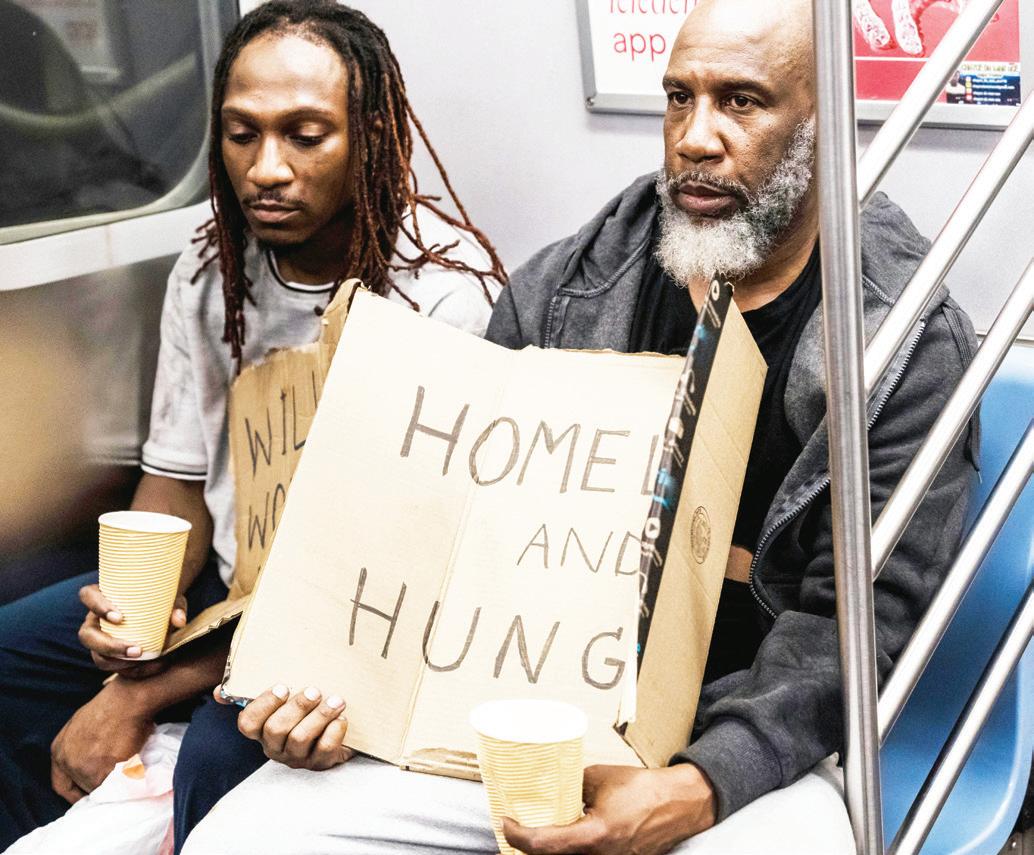
s winter’s cold tightens its grip, homeless shelters in Minnesota are facing a mounting crisis, mirroring a sharp increase in homelessness nationwide. Local providers say demand is soaring while resources shrink, threatening to leave many without safe shelter.
On a recent call, staff at People Serving People, a Minneapolis nonprofit that runs two family shelters and an early‑learning center, said their shelter system is stretched beyond capacity.
Minneapolis organizations are struggling to meet the growing demand for shelter and support as families and individuals face rising homelessness and limited resources.
“We have 150 rooms, and it’s only going to get worse,” said Chief Executive Officer Hoang Murphy. “If families run out of housing‑support dollars, they are going to need shelter. There are no shelter spaces left.”
Founded in the 1980s and restructured as a family shelter in 2002, People Serving People serves dozens of families, many of them Black,
African American or Native, offering child care, health care, meals, and help transitioning into stable housing. But Murphy says the center hasn’t had a major renovation since 2002, even as the average stay for families has grown from about 30 days then to over 100 days today. She blames long‑term housing unaffordability, the fallout from the 2008 housing‑market collapse, and further strain brought by the pandemic.
Across town, Catholic Charities, one of Minnesota’s largest providers of emergency shelter, reports the same pressure. “Shelters, both youth and adult, are consistently at
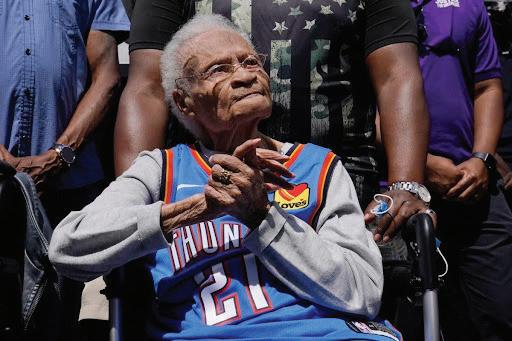
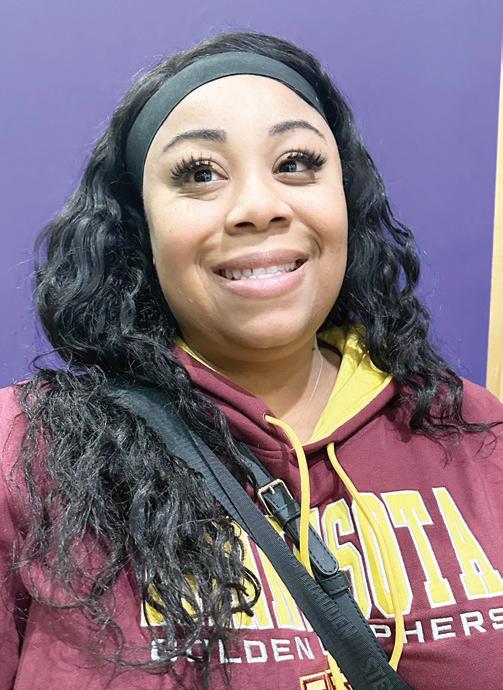
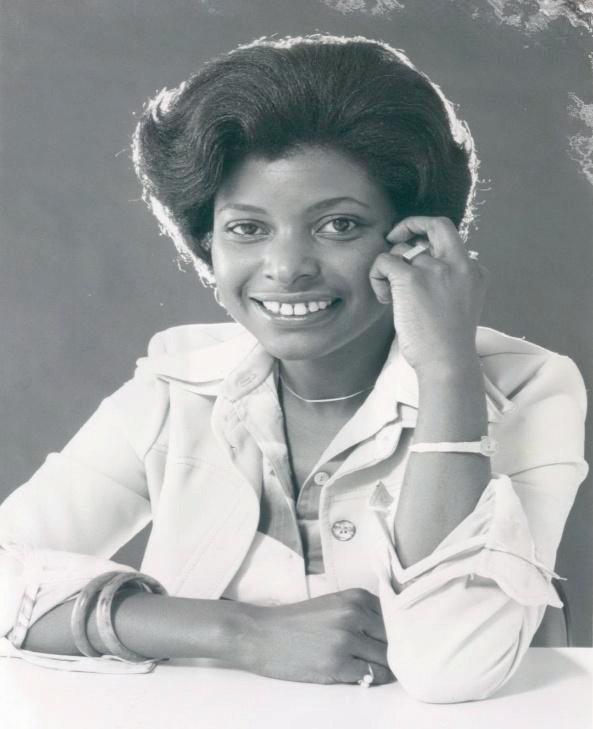
Tulsa Race Massacre survivor Viola Ford Fletcher listens during a rally marking centennial commemorations of a two-day assault by armed white men on Tulsa’s prosperous Black community of Greenwood, May 28, 2021, in Tulsa, Okla. AP Photo/Sue Ogrocki
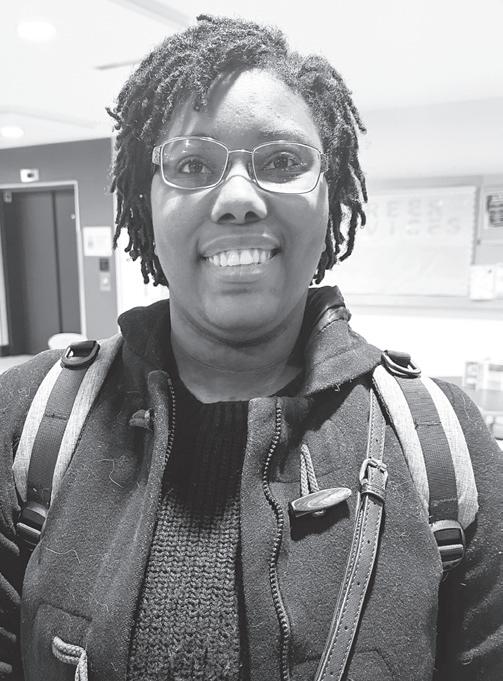
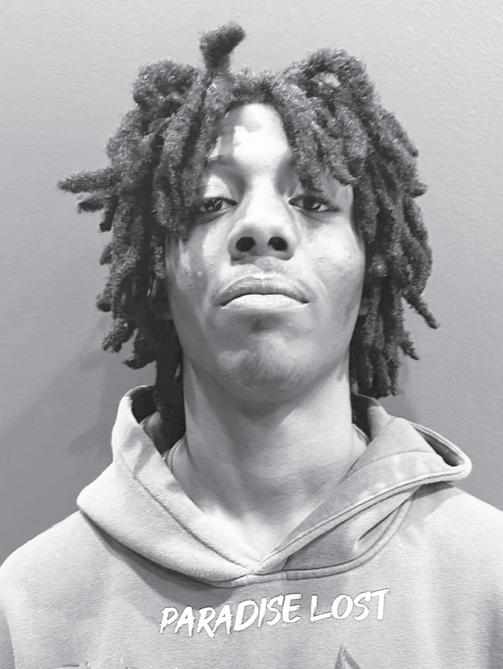
J’Hakeem Scott
Sabria Kadir
Metro
Residents unite to resist ICE raids
By Izzy Canizares
Contributing writer
After more than 100 ICE agents were sent into Minnesota this week, following President Donald Trump’s attack on the state’s Somali population, Minneapolis residents have begun to fight back. Many residents are patrolling the streets in their cars, hoping to run agents out of their neighborhoods.
On Tuesday, Trump made racist comments, criticizing the Somali population in Minnesota, calling them “garbage” and saying he doesn’t “want them in our country, I’ll be honest with you… Their country is no good for a reason.”
This comes at the same time hundreds of new ICE agents have been deployed into the state, a move that Kristi Noem said would be coming during her press conference in Minneapolis at the end of October.
Minnesota has the highest concentration of Somalis in the country, despite them making up only 1.5% of the state’s residents. Since Trump’s latest attacks, agents have been seen more frequently in the metro area, particularly in neighborhoods with a high Somali and Latino population.
However, Minnesotans are refusing to let these officers be at peace, with multiple residents organizing patrol efforts in their neighborhood to chase ICE away before they can take any more of their neighbors.
“I’ve watched people rise to
the occasion over and over,”
said one Phillips resident who has been patrolling the downtown Minneapolis area this week. “I knew it was my time to do my part. I work from home and oftentimes have lulls in work. I can get up and respond at a moment’s notice.
“I kept thinking, ‘When will it be my friend, my daughter’s teachers, my own child? I can’t sit and do nothing, hoping it doesn’t affect me. Every person who is impacted is important.”
Born in Minnesota, this res-
such as Karmel Mall, the Target on Lake Street, and others.
“I drive the neighborhood looking for the vehicles we know are ICE,” the Phillips resident said. “We also keep a lookout for the kidnappers outside their vehicles or approaching homes, cars, people.
“I was there for the attempted raid near 32nd and Park [on Thursday]. The community quickly assembled a group and blew whistles, honked horns, filmed, etc. The more pressure we can put on them
ident is among the hundreds of Minnesotans taking to the streets to chase out these agents. Residents have begun to organize locally, using secure channels to share live updates on the roads quickly. They search for cars that are identifiable as ICE and follow them around to make their job more difficult. They also patrol areas where agents have been frequently sighted,
the better, because it makes it harder for them to steal people. We need more homeowners to not allow trespassing. It helps to limit their resources.”
Despite being an entirely volunteer effort, people gathered within minutes at the home, effectively driving the ICE agents away without taking anyone. Once could be considered lucky, but throughout this week, the daily citizen
patrols have been effectively shutting down attempted arrests and chasing them away, at least for a couple of hours.
On Wednesday night, Hola Arepa, a popular Venezuelan restaurant, had an ICE scare when officers entered the establishment and showed a picture on their phone of someone they said they were looking for. When told they couldn’t come in without a warrant, they said, “We don’t need a warrant,” according to the restaurant’s general manager, Naomi Rathke.
Workers refused to let them in, called the police, and asked the community for support, with both responding within a matter of minutes. Despite a worker saying ICE claimed they would stay “all night” if need be, they left after 10 minutes when multiple community members arrived. After the encounter the restaurant closed early, and workers were escorted to their cars.
“I knew I had to take action because those are our neighbors.”
Despite the dangers of being harassed or arrested by ICE for their work, Minneapolis residents are continuing to show up every day.
“I have had interactions with ICE, but thankfully there were
Hennepin County considers reparations for Blacks, Indigenous
By Clint Combs
Contributing Writer
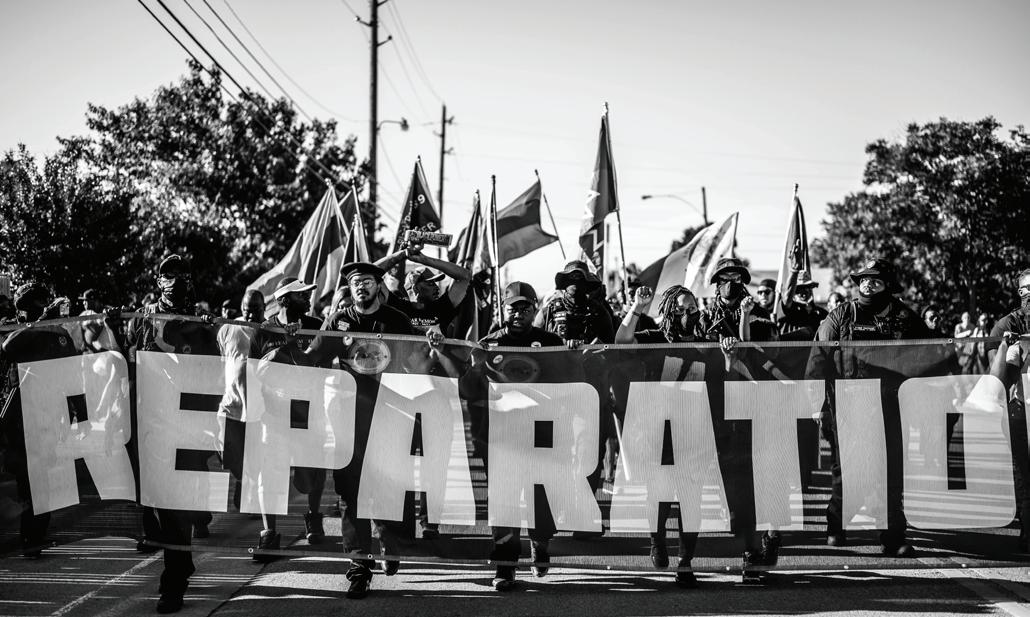
The Hennepin County Board of Commissioners is considering a proposal to create a Reparations Research Task Force to document historical racial harms and recommend ways to address injustices against Black and Indigenous residents. The commissioners have approved advancing the proposal to a full vote on Dec. 11.
Stemming from recommendations by the county’s Race Equity Advisory Council (REAC), the proposal is part of broader efforts to confront structural
during the Dec. 2 board meeting. “Reparations is something that municipalities and jurisdictions across the country are starting to name explicitly and do the work that it takes to repair harm in our communities.”
inequity, transportation policies that displaced Black and Indigenous residents, and labor discrimination.
“The conversation about reparations and reparative justice began for me when
leased last month, calls for partnerships with academic institutions and historians to detail policies that have perpetuated racial inequality in the county.
“For many, many years, people who look like me, regardless of socioeconomic status or zip code, have not had the same access that others do,” Conley said.
a lot of people, and they were on a busy street, so I wasn’t
afraid at that moment,” the Phillips resident volunteer said.
“Do I worry in general that they will harm or arrest me? Yes. But I won’t let that stop me from protecting my community.”
It’s not just these patrollers who are willing to stand up against ICE. Minneapolis resident Lydia Nomad was heading home on Tuesday morning when she witnessed an arrest on Portland Avenue, immediately got out of her car, and began filming and asking the man being arrested for his name.
“I knew I had to take action because those are our neighbors,” Nomad said. “And so I parked my car in El Kevin’s Tacos parking lot, and I ran across the street, texted my
Indigenous relatives,” Conley said. “This is Dakota land that we are on.”
District 7 Commissioner Kevin Anderson warned that federal shifts under the Trump administration, which redirected enforcement and oversight roles of agencies like the Equal Employment Opportunity Commission and the Office of Federal Contract Compliance Programs, could threaten local reparations work.
“Individually, we live in a current political environment where this type of work is
group to say the feds are here right now. I got my phone camera out, and I was shaking.”
Despite the overwhelming number of officers and dropping temperatures, these residents are not stopping their resistance efforts anytime soon, with Nomad echoing the sentiment many residents are feeling: that these arrests are illegal and immoral.
“It’s the morally right thing that if someone is doing something wrong, you should speak up about it, regardless of the outcome,” Nomad said. “I’m really proud of myself and others who, regardless of whether it’s going to work, are trying it.”
Izzy Canizares welcomes reader responses at icanizares@ spokesman-recorder.com.
Other cities and states provide examples of reparations efforts. In 2021, Evanston, Illinois, launched the Restorative Housing Program to compensate Black residents and their descendants harmed by discriminatory housing, zoning and lending practices. The program has faced legal challenges, including a 2024 lawsuit claiming race based eligibility violates the U.S. Constitution’s Equal Protection Clause.
California’s Reparations Task Force produced a report
Minnesota began automatically expunging 57,000 marrelated cases after the state legalized cannabis under the Adult Use Cannabis Act in 2023. Greene said decriminalizing marijuana is part of repaying Black Minnesotans who were disproportionately affected by the criminal legal
“There are examples of jurisdictions around the country using cannabis revenue to support community programming, racial justice efforts, and reparations,” Greene said.
REAC also recommended that the county develop and publish a County Action Report, providing a framework with timelines and measurable goals for strengthening relationships with Indigenous
“You can’t really have a conversation about reparative justice without including our
often targeted by the federal government,” Anderson said.
About one in seven people in Hennepin County is Black. Historical practices such as restrictive covenants limited Black homeownership. By the 1960s, one third of the county’s Black residents were concentrated in Minneapolis’ North Side.
outlining ways to address injustices against Black Californians, including expanding access to education and career training, investing in communities, and addressing past property seizures. In 2025, lawmakers introduced bills based on the task force’s recommendations, though widespread direct cash payments were not included.
“What existed in Hennepin County that was disastrous and deserves a reparative framework?” Conley asked. “I’m really excited for the future of what is to come, but the scope and research are important.”
Locally, St. Paul’s Recovery Act and Community Reparations Commission, formed in January 2023, has not yet resulted in direct payments to Black residents. Advocates note that the U.S. Supreme Court’s 2023 decision striking down race conscious admissions programs has created a legal climate that complicates the implementation of reparations.
Clint Combs welcomes reader responses at combs0284@ gmail.com.
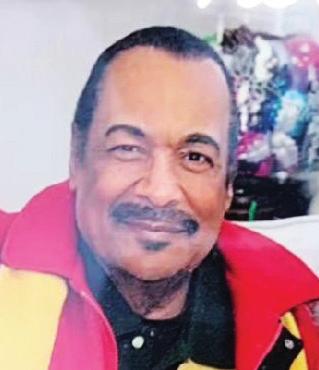
Courtesy photos
Courtesy photos
Clint Combs/MSR
The Hennepin County Board of Commissioners advanced the creation of a Reparations Research Task Force, with a final vote scheduled for Dec. 11.
Metro
Sister Spokesman participants pause to breathe and heal
By Scott Selmer Assignment Editor
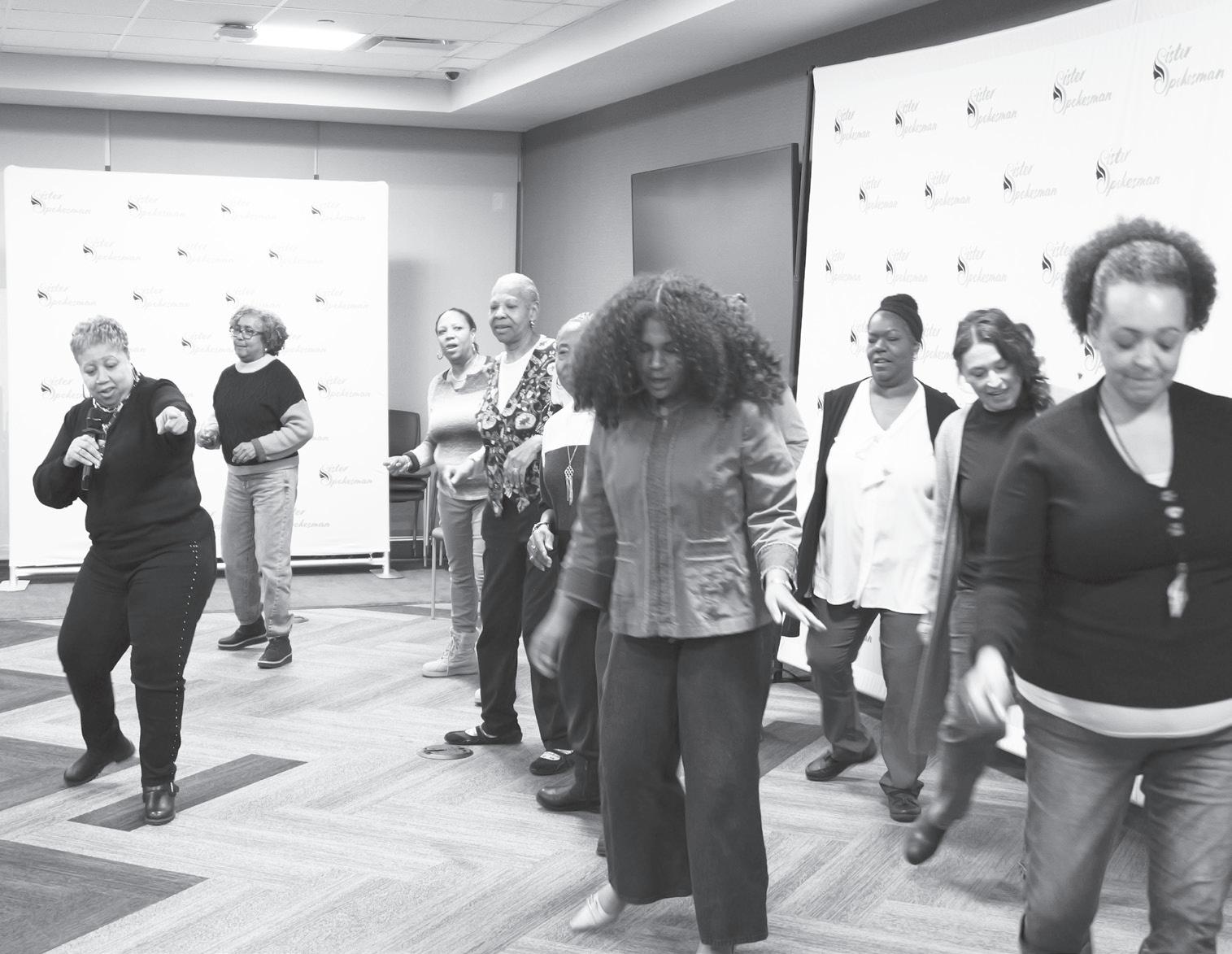
On a cold, damp, overcast Saturday afternoon, warmth gathered behind glass. From 12 to 3 p.m. on December 6, dozens of attendees filled a bright, glass lined community space just kitty corner from NorthPoint Health & Wellness Center in Minneapolis.
Outside, winter pressed in. Inside, Sister Spokesman unfolded as a festival of kinship, healing, laughter and truth.
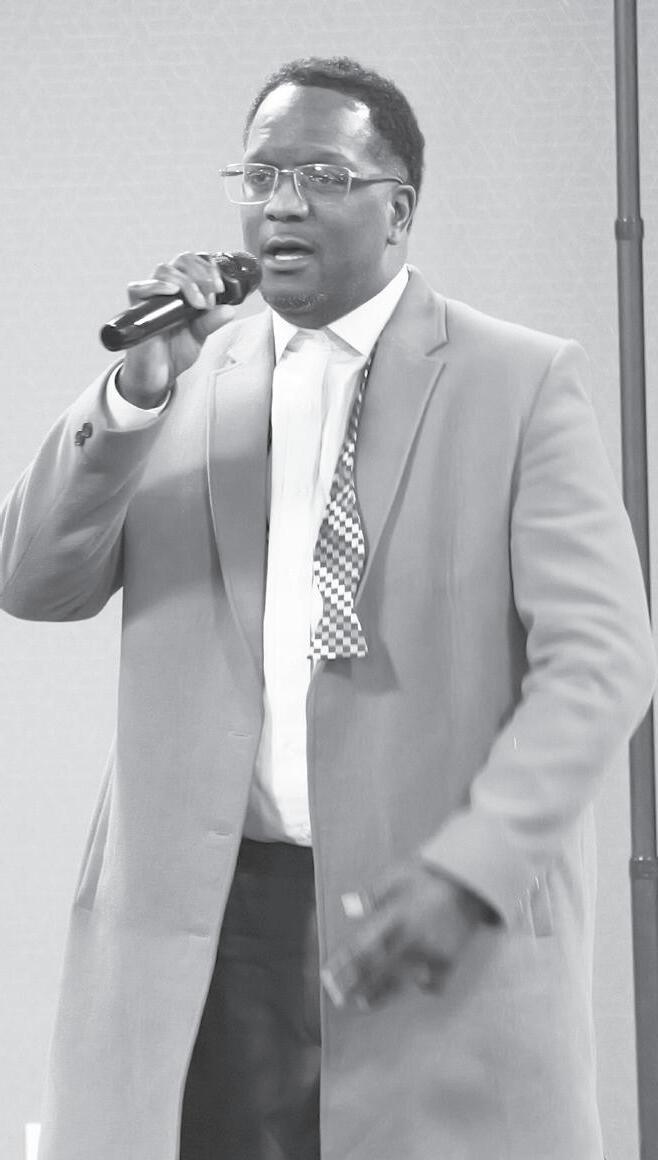
Hosted by the Minnesota Spokesman Recorder and its publisher, Tracey Williams Dillard, Sister Spokesman was built around one central theme: Pause. Breathe. Heal. What followed was not simply a program, but more a communal exhale.
From the moment Williams Dillard took the microphone, the room pulsed with energy. “Hey sisters!” she called. The response“Soul sisters!” ricocheted through the glass walls and into the winter air. Games, prizes, vendor spotlights, food, music, and movement set a festive tone. But beneath the celebration, something deeper unfolded.
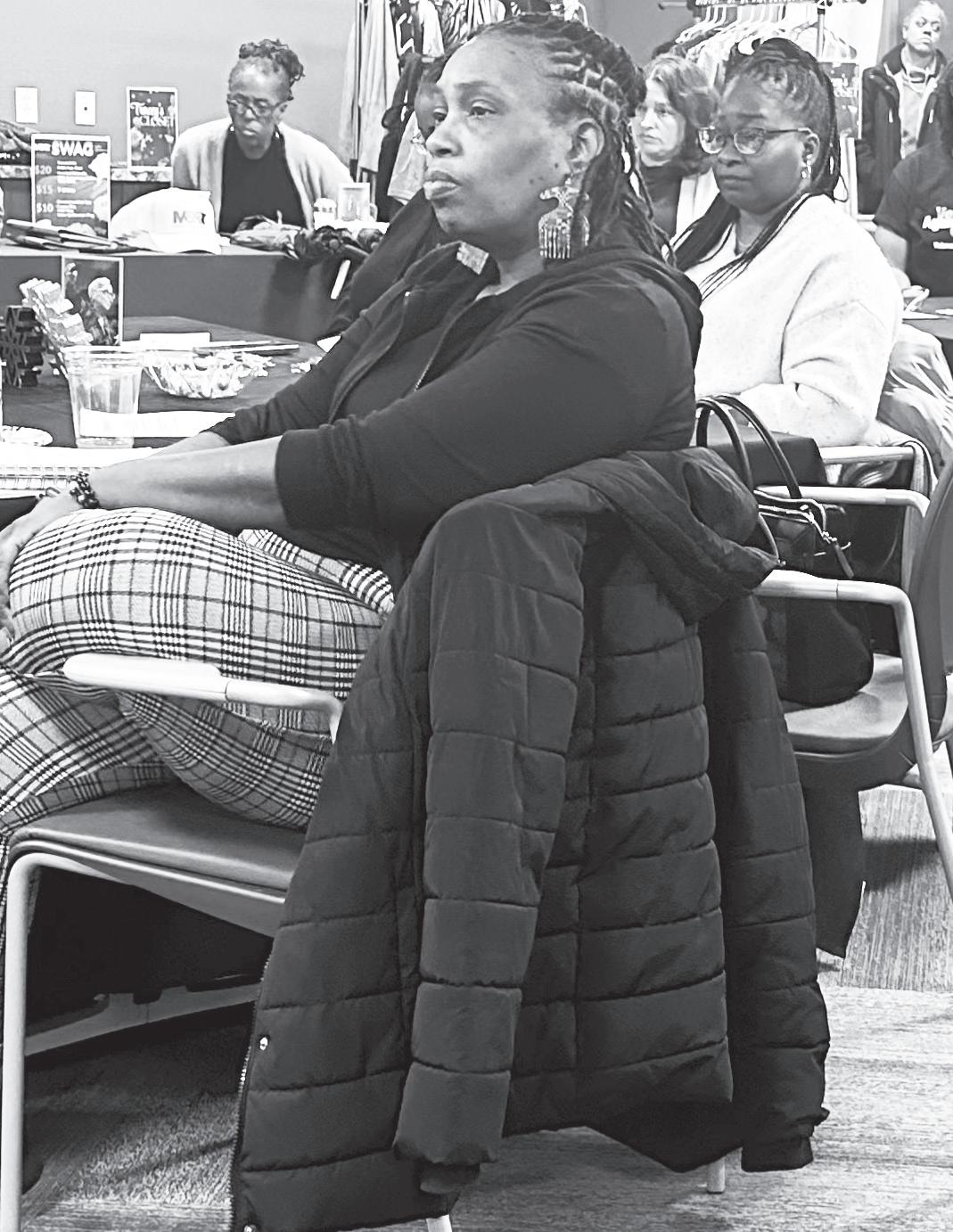
For many women in attendance, Sister Spokesman was less about entertainment and more about survival. “I’m in my healing season,” said one attendee who had come alone. “This focus on stress, emotions and support — it’s exactly where I am.”
Another participant, Gladys Irving, shared that it was the atmosphere and the honesty of the topics that keep bringing her back. “And honestly,” she added, “I like the way Tracey runs it.”
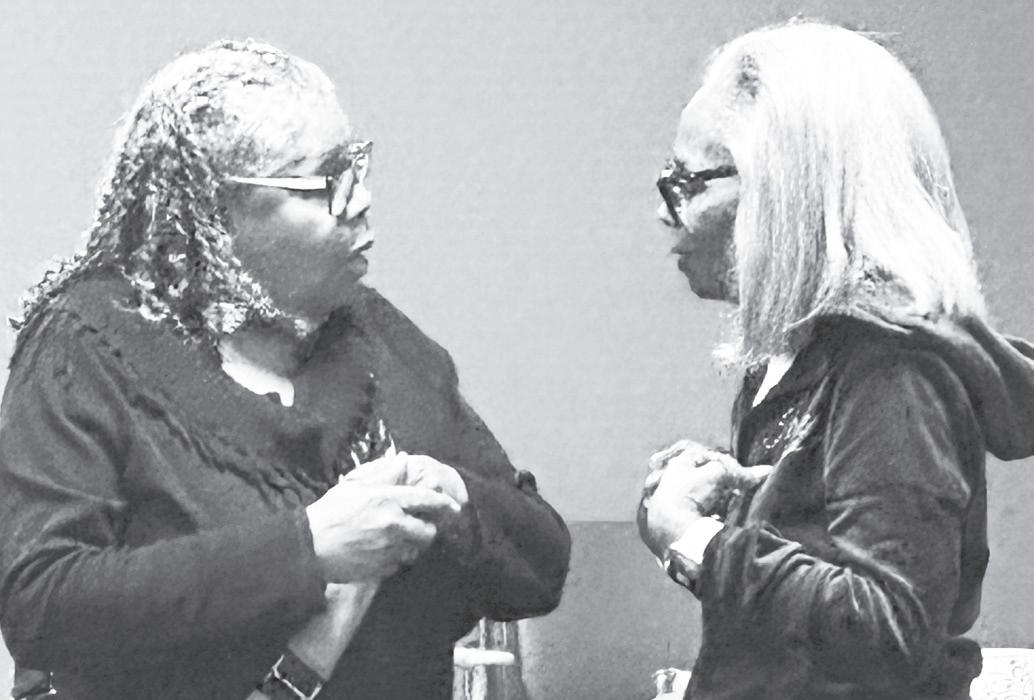
Staci Suddith, attending on her cousin Carolyn’s recommendation, said she came simply to learn — open to whatever the day would bring. By the time the panel began, she had already found connection.
That is the quiet power of
Sister Spokesman. It meets participants where they are.
The weight Black bodies carry Midway through the afternoon, Williams Dillard shared a personal testimony that reframed everything that came afterward. She described a recent moment when stress overtook her so completely that she struggled to breathe or think clearly.
“I had to pause,” she told the audience. “I had to breathe.”
Her vulnerability opened the door for the heart of the program: a dialogue led by two respected healing voices, Venus Burney, a licensed therapist and director of mental health services at Cornerstone Advocacy Services, and Dr. Resmaa Menakem, a therapist, trauma specialist, and author of “My Grandmother’s Hands.”
Rather than offering surface level self care advice, both speakers addressed
the deep rooted realities that shape how Black bodies, women’s in particular, experience stress, rest and survival.
Menakem spoke plainly about why pausing feels dangerous for so many. “To stop can feel like death,” he said, “so we keep moving. But what we’re really being asked to do in those moments is not fix ourselves, but tend to ourselves.”
He challenged the idea that exhaustion is a personal failure. “We think shame, laziness and overwork are individual problems,” he said. “But when every Black woman in the room recognizes those same feelings, that tells us it’s a communal wound.”
Burney echoed that truth through a clinical lens. “So many of us were never taught how to stop,” she said. “We learned how to perform, how to survive, how to be useful. Pausing feels wrong because it was never modeled as safe.”
Together, they reframed rest not as laziness but as resistance. “One of the most revolutionary things in the world,” Menakem said, “is a Black woman who rests.”
Healing lives in the community
The questions that followed from the audience were raw. A Black educator asked how she could heal from the secondhand trauma of hearing her students’ stories every day. An elder wondered
how to protect children from the long term effects of the trauma they witness before they can even name it. Another person asked whether it was normal to feel unable to speak about the death of a loved one.
Burney addressed safety and support. “There has to be emotional safety before the words can come,” she said. “Sometimes the inability to speak is protection, not weakness.”
Menakem elaborated, reminding the room that modern pain is often layered atop ancestral and historical pain.
“Sometimes what’s showing up isn’t new,” he said. “It’s old. Older than our bodies. And when it shows up, that’s not a defect, it’s something asking to be tended to.”
“One of the most revolutionary things in the world is a Black woman who rests.”
For both speakers, community itself emerged as a central medicine. Not just therapy rooms but laughter, movement, witnessing, and shared silence.
“The most healing thing I
know,” Menakem told the audience, “is watching Black people belly laugh together. That’s not small. That’s technology for survival.”
Burney added that healing doesn’t always look like productivity. “Some days, being present is the work,” she said. “Not performing. Not fixing. Just being.”
More than a program
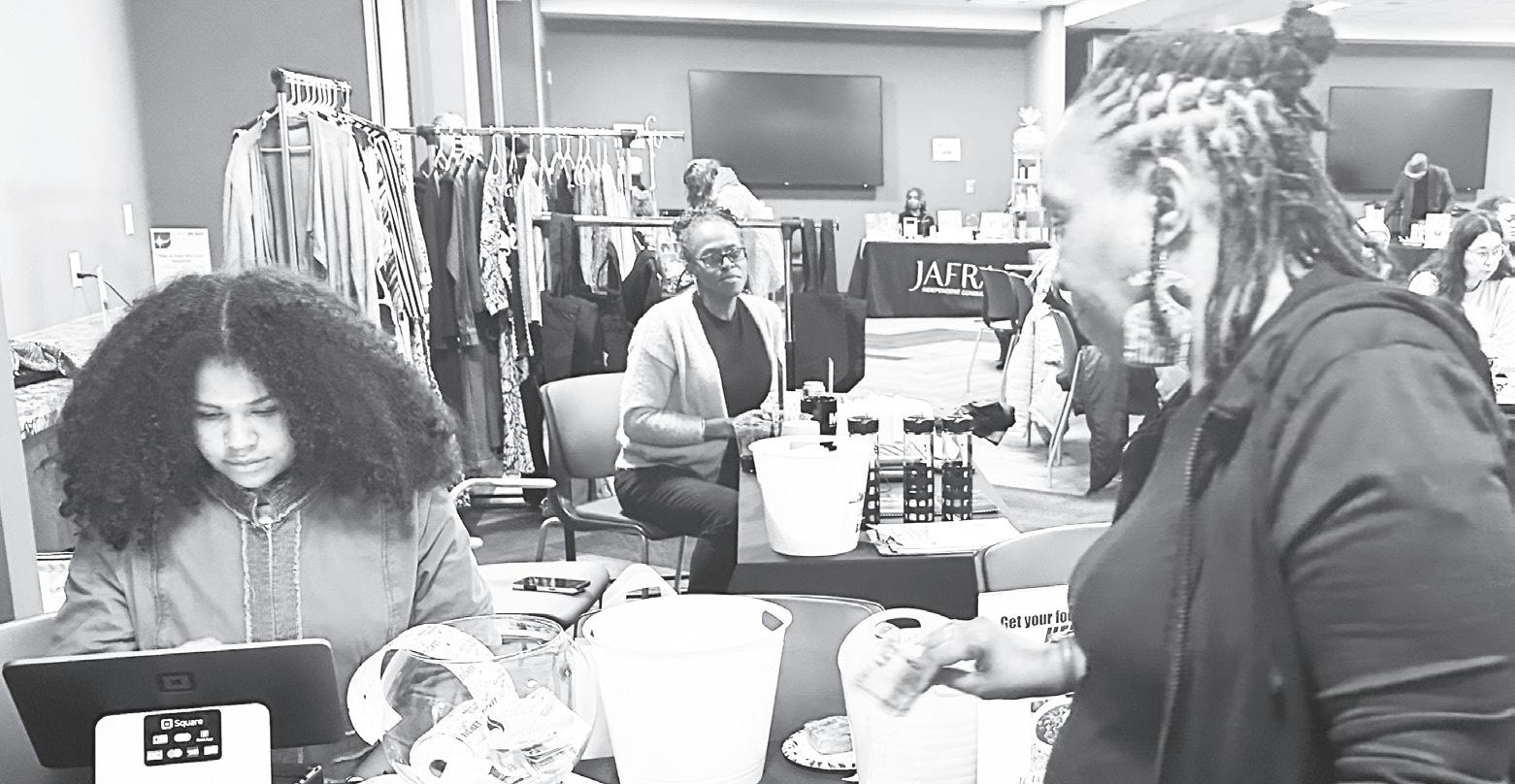
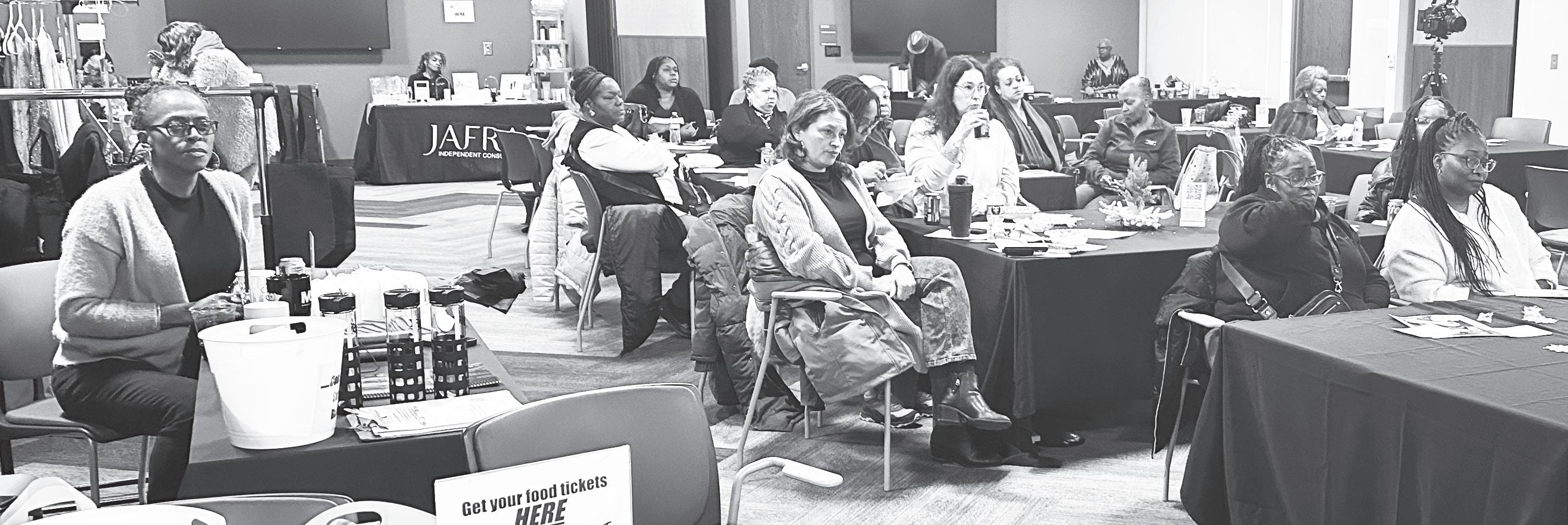
Beyond the panel, Sister Spokesman unfolded as a living marketplace of wellness and creativity. Vendors offered financial advising, skincare, herbal healing, meal service, books, poetry, and self care products. Attendees shopped, shared meals, exchanged hugs, and posed for photos.
Security for the event, a role held by the same man for years, called the gathering “a beautiful operation” and “very informative for the community.”
That evolution speaks to the quiet reach of Sister Spokesman. It is not just about women talking. It is about families healing. It is about cycles shifting.
As the afternoon drew to a close, Williams Dillard reminded the room that an afternoon is never enough, but it can be a beginning. “All of us have to pause,” she said lovingly in closing.
Scott Selmer welcomes reader responses at sselmer@ spokesman-recorder.com.
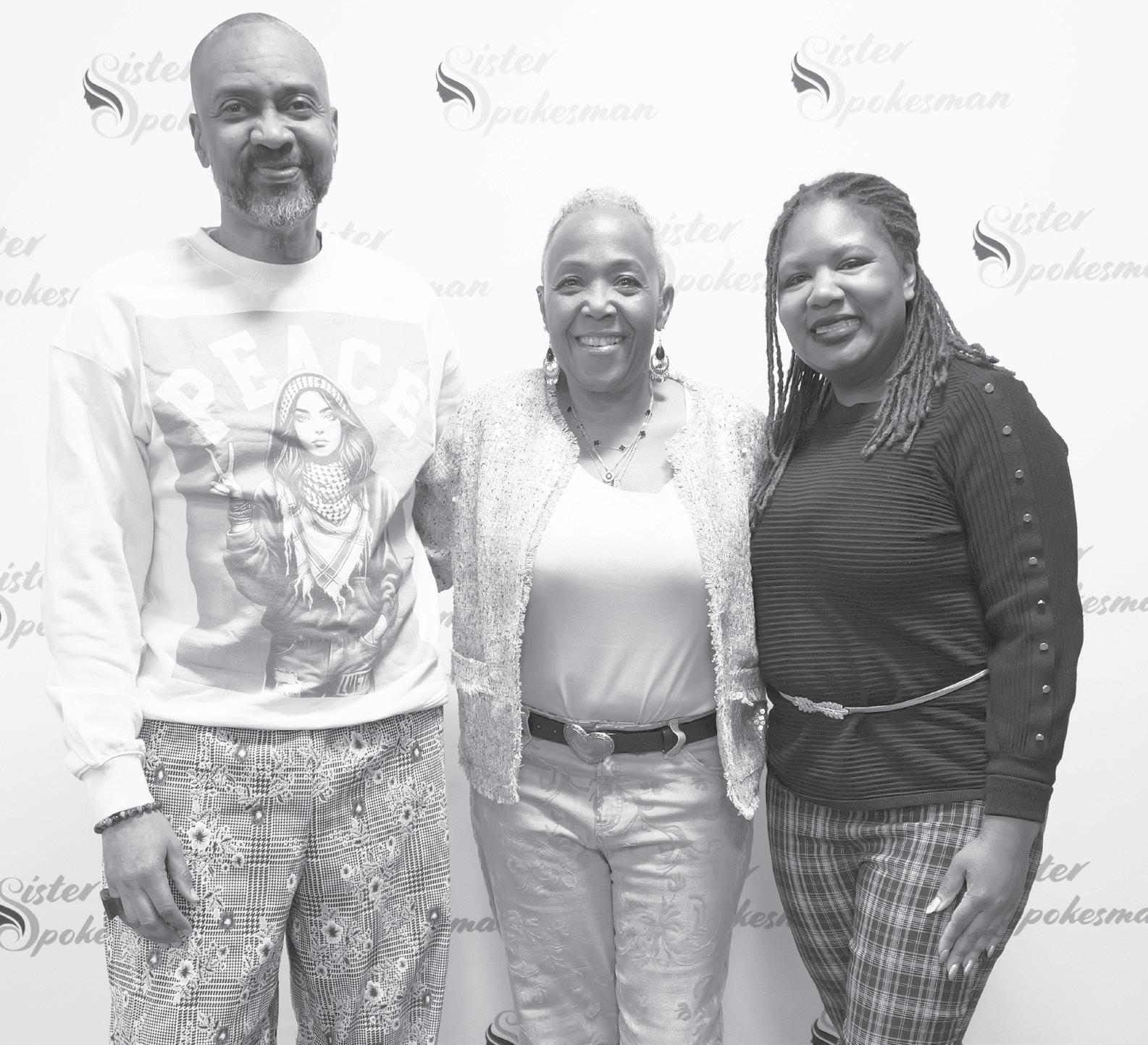
(l–r) Therapist and trauma specialist Dr. Resmaa Menakem, Minnesota Spokesman-Recorder publisher and CEO Tracey Williams-Dillard, and psychotherapist Venus Burney.
TULSA
Continued from page 1
publicly acknowledged how the white mob “murdered hundreds of residents of Greenwood, burned their homes and churches, looted their belongings, and locked the survivors in internment camps.”
Nearly every Black family in Greenwood — about 10,000 people — was left homeless.
That the DOJ finally spoke the truth is due to Fletcher and other survivors who testified before Congress in May 2021, 100 years after the terror they endured.
“I will never forget the violence of the white mob when we left our home,” she told lawmakers. “I still see Black
Continued from page 1
The fears voiced at MCTC echo broader national trends. Somali Americans, especially in Minnesota, the state with the largest Somali population in the U.S., have faced increasing scrutiny in public discourse and immigration enforcement. Students say even rhetoric alone can destabilize daily life.
Despite the tension, students
ICE
Continued from page 1
The confrontations came less than 24 hours after hundreds of Minnesotans gathered at MSP’s Terminal 2, marching to Signature Aviation, a private terminal where deportation flights refuel. Participants included George Mullins, a Black janitor with decades of local experience, and immigrant rights leaders who say federal agents are intentionally transferring detainees far from home.
Signature Aviation allows deportation charters to operate discreetly, bypassing commercial terminals and standard airline security. Many flights stop first in Omaha before reaching detention centers in Alexandria, Louisiana. Immigration attorneys say the routing favors courts known for rulings that support ICE, a practice advocates call “venue shopping.”
“We know that many of our neighbors are taken from here
men being shot, Black bodies lying in the street. I still smell smoke and see fire. I still see Black businesses being burned. I still hear airplanes flying overhead. I hear the screams,” Fletcher testified. “I have lived through the massacre every day. Our country may forget this history, but I cannot.”
The courage to tell the truth Having told the truth that Tulsa — and America — attempted to bury, Fletcher sought justice. She and other survivors sued the city in 2020, seeking reparations for what they said was the complicity of local officials in the massacre.
Indeed, the Justice Department report found that “the massacre was the result not of uncontrolled mob
violence, but of a coordinated, military style attack on Greenwood” — a ruthless assault plotted in part by real estate speculators, businessmen, and elected city leaders. Their case went all the way to the Oklahoma Supreme Court, which upheld a lower court’s dismissal in 2024.
massacre’s 105th anniversary, to compensate the survivors’ descendants.
Viola Ford Fletcher entered this world in 1914, the daughter of sharecroppers, and died as one of the most important eyewitnesses to American history. The night of the massacre, she and her family fled in
“I have lived through the massacre every day. Our country may forget this history, but I cannot.”
In June, Mayor Monroe Nichols IV announced that the city would attempt to raise $105 million by 2026, the
a horse and buggy — through gunfire. She remembered seeing a white man shoot a Black man in the head, point blank.
hallways, student lounges, and cautious conversations where mutual recognition crosses cultural lines.
“The neighborhood I fell asleep in that night was rich — not just in terms of wealth, but in culture, community, heritage. Within a few hours, all that was gone,” she told Congress in 2021.
A legacy of survival and courage
With Fletcher’s death, just one living survivor remains: Lessie Evelyn Benningfield Randle, also 111, six months younger than Fletcher. When Fletcher fell ill, Randle sent word through her granddaughter: “She was sorry it was happening and that she loved her.”
As news of her death spread, tributes flooded social media.
“I will miss you, Mother Viola Fletcher. So triumphant. So gracious. So cou -
rageous. So present. Thank you,” Dr. Bernice King wrote on Threads. Fletcher witnessed what no child should, yet died knowing that no one was held accountable for the trauma she carried through a lifetime. She saw the election of the nation’s first Black president, Barack Obama, traveled to Ghana at age 107, and met Biden at the centennial observance of the massacre. But the justice she and her community deserved eluded her. Now, after 111 years, the nightmare that stalked her is over. At long last, Viola Ford Fletcher can finally rest.
This article first appeared in Word in Black. For more information, visit www.wordinblack.com.
capacity,” said Chief Program Officer Keith Kozerski. He noted that as cuts swell and government‑funded programs tighten, many clients are left choosing between basic necessities.
“People we serve are barely making ends meet,” Kozerski said. “With government pauses, it’s not like our folks have a savings account to draw on. They have to make real choices. Can they afford to stay in their apartment? Can they afford a meal today?” He added that the consequences can ripple far, increasing the risk of emergency‑room visits when people with chronic
at MSP to detention centers in the South where they are far from legal help, their families and advocates,” Mullins said. “Just like back then, we cannot let fear and hatred win.”
Iman Yusef Abdulle emphasized the link between recent political attacks and the protest. “Over the past week, as we have seen, increasing hateful rhetoric and aggressive action is targeting immigrants, especially and specifically Somalis,” Abdulle said. “When leaders attack immigrants, they are hoping we turn against each other, but we are united.”
“When leaders attack immigrants, they are hoping we turn against each other, but we are united.”
Other demonstrators noted the broader context of discrimination. Karen Willis, repre-
health conditions lose access to regular meals or shelter.
The national scale These local struggles align with troubling national data. According to the National Alliance to End Homelessness, 2024 counts by the U.S. Department of Housing and Urban Development (HUD) estimated that 771,480 people, or roughly 23 out of every 10,000 Americans, experienced homelessness on a single night, an 18 % increase from the previous year. Of those, about 64 % were staying in shelters or temporary housing, while 36 % were unsheltered — sleeping outdoors, in cars, or in other places not meant for habitation, according to the National Low Income Housing Coali-
“I feel like even though we’re from different places we can still come together.”
report a quiet solidarity on campus. It appears not in protest chants or viral videos but in
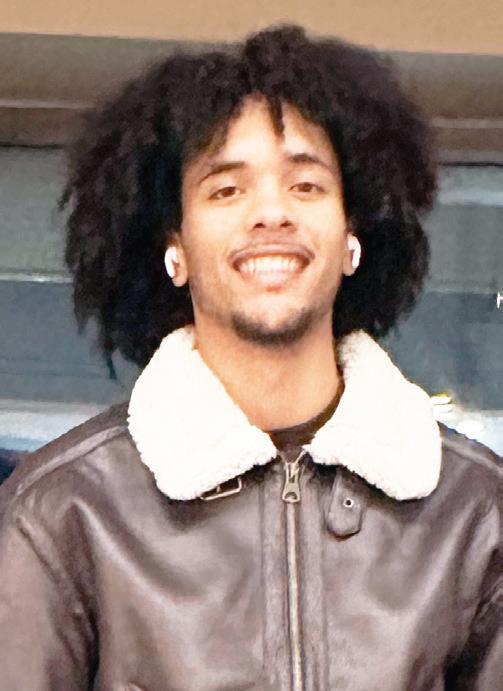
For Labryan Young, 19, the principle of solidarity is simple.
“I think we should support each other, help each other out as a Black community. I feel like even though we’re from different places, they’re from Somalia, we’re from America, I feel like we can still come together.”
The consensus among students is clear: Unity is not optional but rather a necessity for safety and belonging. For Af-
As
for them, it is not just political: It is about survival.
Scott Selmer welcomes reader responses at sselmer@spokesman-recorder.com.
senting a Bloomington based solidarity group, compared current actions to the 2017 bombing of the Dar Al Farooq Islamic Center. “We have been seeing hatred toward Muslim, Somali, and Black people for far too many years,” she said. “The escalation of unreasonable, excessive, violent kidnapping of our neighbors and friends is intolerable.”
Nikolai Shimak, carrying a protest banner, highlighted both immigration and labor issues at the airport. “The cold isn’t going to stop ICE. They’re driving families apart,” Shimak said. “We’re also marching for working conditions for people at MSP, including Uber and Lyft drivers, who don’t have a place to pray or use the bathroom.”
Flight data monitored by volunteer analyst Nick Benson of Minnesota 5051 shows changes in ICE flight operations. “Many deportation flights had begun operating with a special call sign,” Benson said. “Most of the deportation fleet had been added to the FAA privacy list.” He add-
tion. These numbers are the highest in the U.S. since systematic counts began in 2007.
ed that detainees are often shackled on icy tarmacs before being loaded onto aircraft. Target has faced criticism on multiple fronts. The company recently laid off 1,800 workers, saw sales decline, and contributed $1 million to Trump’s inauguration committee. Jaylani Hussein, executive director of the Minnesota Council for American Islamic
look like what people think of when they hear ‘homeless.’”
In Minnesota, that invis-
“Shelter is both life‑saving and life‑affirming. We have to invest in it if we truly care about our communities.”
Despite the scale of the crisis, many families remain “hidden homeless” — living doubled up, couch‑surfing, or staying in unsafe housing, especially during winter or when resources — like social services, state benefits, or shelter access — shrink. “Family homelessness can be invisible,” Murphy said. “If you’re a family on the street, you don’t
ibility can mask serious need. Kozerski said his organization and others have seen more people seeking help, especially adults barely earning enough to survive. “As living costs rise, without savings or stable income, people fall behind quickly,” he said. Many of those turned away from full shelters are placed in “overflow,” temporary housing
Relations, urged socially conscious consumers to consider alternatives.
“You know you can buy your milk somewhere else, because Target does not own us,” Hussein said. “We are the neighbors. We are the peacekeepers. We are the trusted people.”
The combination of federal enforcement, corporate involvement, and community
such as hotels, or emergency‑only shelters operated by local authorities. In Hennepin County alone, People Serving People estimates about 115 families are currently in overflow housing. Still, such alternatives are widely regarded as inadequate.
Real solutions
Both Murphy and Keith say real solutions require systemic change and long‑term investment. That means expanding supportive housing, shelter capacity, affordable housing stock — and strengthening wrap around services for vulnerable populations, including families with children, people with health conditions, and those exiting incarceration or treatment.
“Shelter is both life‑saving
protest underscores a tense moment in Minneapolis. Residents and activists say they will continue to organize to protect local immigrant communities while holding corporate and governmental actors accountable. Clint Combs welcomes reader responses at combs0284@ gmail.com.
and life‑affirming,” Murphy said. “We have to invest in it if we truly care about our communities.” Keith added: “Homelessness isn’t just about a bed for the night. We also need health care, food, mental‑health support, long‑term housing access. Without that, shelters are a Band‑Aid, not a solution.” As winter deepens and federal and state funding remains uncertain, shelters that once offered refuge are now overwhelmed. For Minnesota’s unhoused residents — and the agencies trying to help them — the trajectory points toward a winter of desperation unless support increases substantially.
Jasmine McBride welcomes reader responses at jmcbride@ spokesman-recorder.com.
rican American students, fear gripping their Somali peers is painfully familiar. For Somali students, the support of Black classmates provides reassurance in a moment of uncertainty.
the nation debates immigration, race and democracy, MCTC students remind us that solidarity is not a slogan: It is lived experience. And
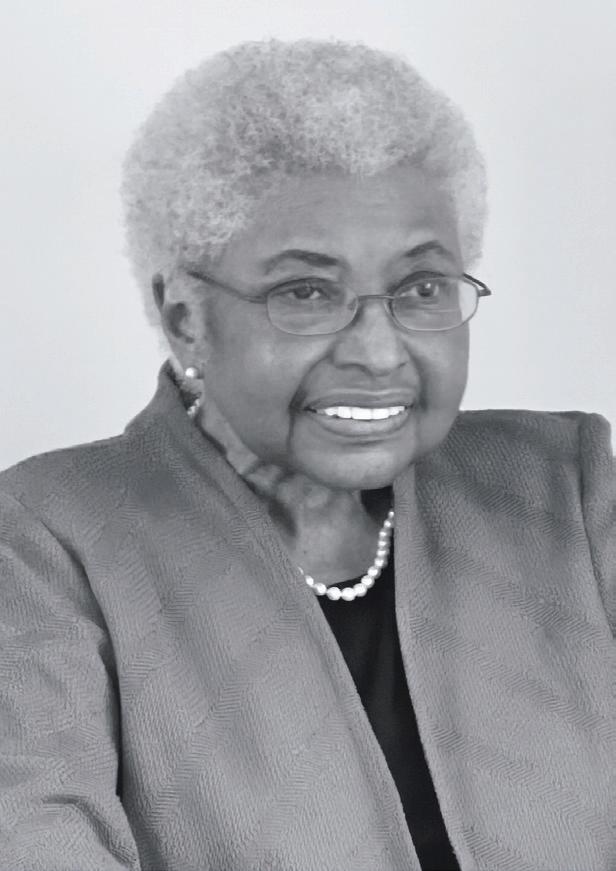
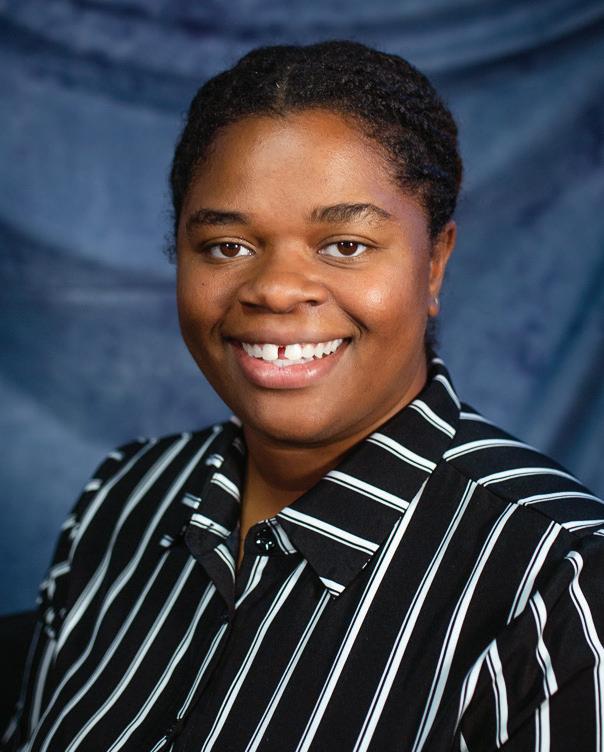
Labryan Young Sabria Kadir All photos courtesy of Scott Selmer/MSR
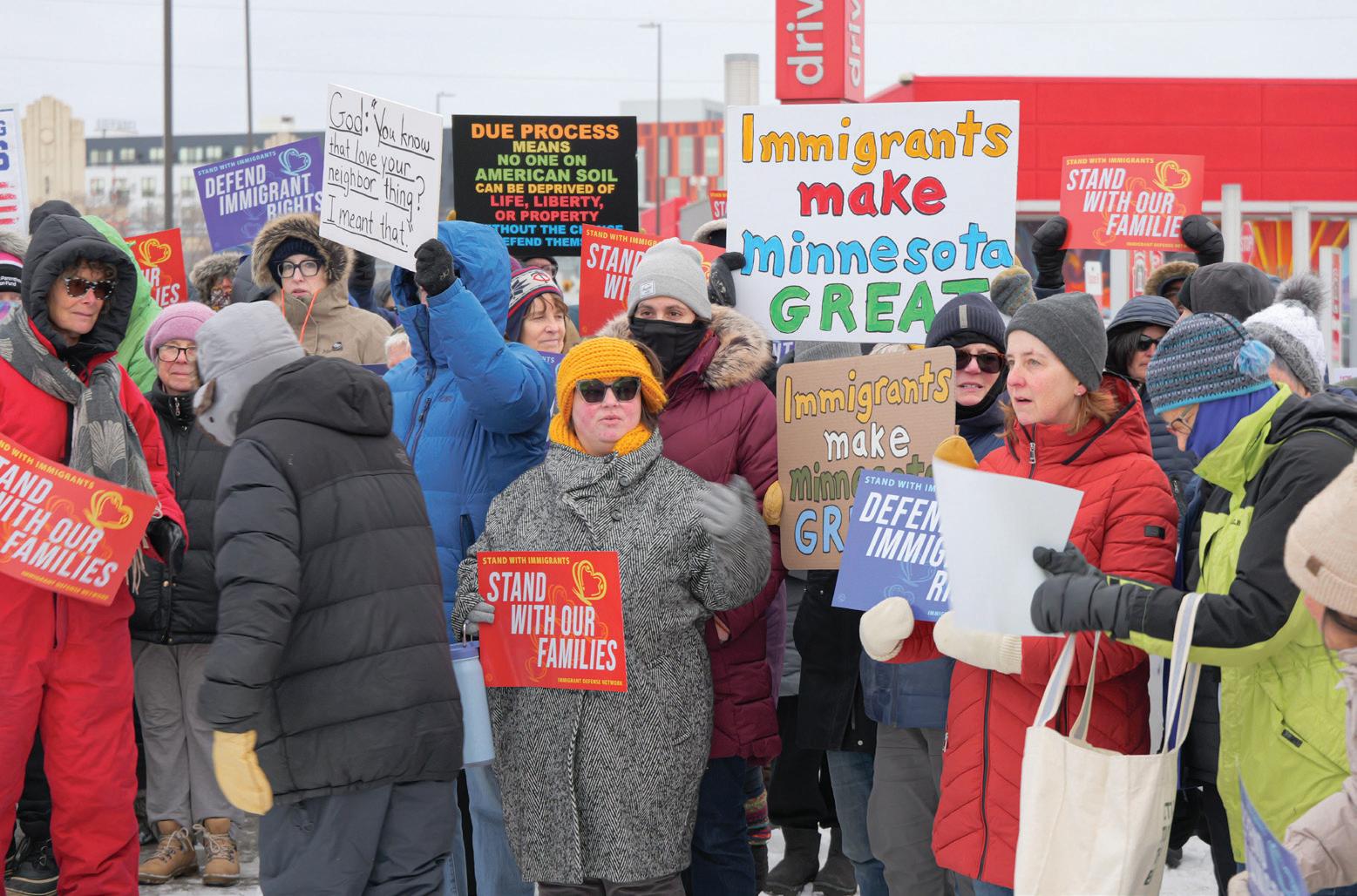
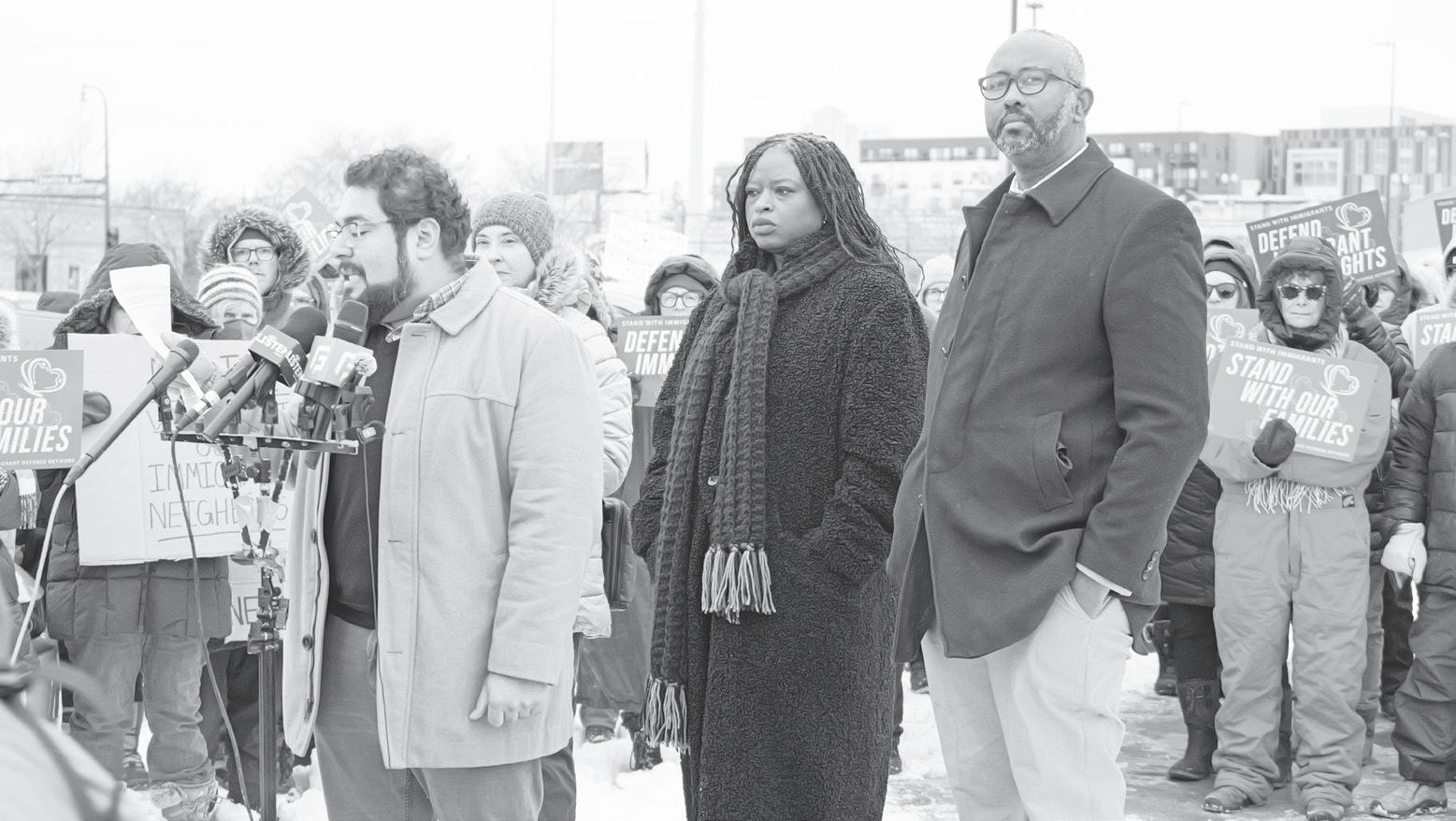
(l-r) Luis Argueta of UnidosMN speaks, alongside Target boycott organizers Nekima Levy Armstrong and Jaylani Hussein, in front of protesters Emmanuel Duncan/MSR
Health
Fossil fuels are poisoning Black America
By Willy Blackmore
It’s by no means new news that there are myriad ways that extracting and burning fossil fuels — or making them into other products, like plastics — is bad for public health, and particularly so for Black and brown Americans. But we still continue to burn methane, gasoline, and even coal, so the point bears being made again (and again).
The latest to do so is a broad coalition of medical and health organizations that released a new report last week titled “Fueling Sickness: The Hidden Health Costs of Fossil Fuel Pollution.” It makes the case that society’s ongoing reliance on fossil fuels is severely damaging public health already — particularly demographics overburdened by such pollutions, including Black and brown Americans —and it will only get worse as the effects of climate change get worse.
“Fossil fuels harm our health in more ways than most people realize,” said Dr. Mark
Vossler, board president of Physicians for Social Responsibility, one of the organizations that put out the report, in a statement. “This report makes it clear that every stage of the fossil fuel process, from extraction, to transportation, to burning for energy causes widespread damage to the heart, lungs, brain, and other organs … Rapidly transitioning away from fossil fuels is not just an environmental necessity; it’s a public health imperative.”
“Rapidly transitioning away from fossil fuels is not just an environmental necessity; it’s a public health imperative.”
“Fueling Sickness” shows that fossil fuel pollution is everyone’s problem, while also making it clear that it is even more of a problem for some groups, including Black Ameri-
cans.
“A complex array of interconnected factors (including but not limited to historical redlining, lending discrimination, exclusionary land use policies, disinvestment, and urban renewal projects) have resulted in low income [communities] and communities of color disproportionally living in areas with a greater concentration of polluting sources, like highways and factories, and thus have greater exposure to multiple pollutants from multiple sources,” the report reads.
“As a result, a higher percentage of racial minorities are exposed to particulate matter and ozone, contributing to a greater incidence of childhood asthma and other respiratory conditions.”
As the report notes, fossil fuels harm public health at every point of their production and use cycle, from extraction to refining to transportation to combustion — and the waste products made along the way, like coal ash, can also make people sick.
Effects of breathing polluted air
Respiratory diseases like asthma are some of the most obvious effects of breathing polluted air. Fine particulate matter and other emissions generated by extracting and burning fossil fuels can damage other parts of the body, too, including the cardiovascular system and the brain, increasing the risk of neurological diseases.
Like so many of the negative consequences of fossil
Loss of Obamacare subsidies puts more hurt on chiropractic patients
By Izzy Canizares
Contributing writer
Racial disparities among Black Americans in the health care system are unfortunately not new. Still, the Affordable Care Act, known as Obamacare, has slowly tried to close the gap since its introduction in 2010. However, with the program’s tax subsidies set to expire at the end of this year, it threatens to significantly raise insurance premiums for Minnesotans, making certain health care out of reach for many.
One of the benefits that could be substantially affected is chiropractic care, which many Black patients use for pain management. It has historically been a “luxury” many couldn’t afford until Obamacare came into effect.
tic care, often used for pain management, physical therapy, and more. The percentage of Americans seeking chiropractic care has increased significantly since the Affordable Care Act was introduced, rising from 15.8% in 2010 to 17.9% by 2018.
This same data shows a dis-
of our patients, and it will affect patients of color. It would affect some white patients as well, but not as many,” Dr Hanson said. “The only recommendation that Medicare has given us is that they can ‘pay out of pocket.’ Of course, patients who are on Medicare can’t afford the health care, so they are not able to afford care.”
Dr. Hanson says of her Black patients, 25% of them are on Medicaid, which means at least a quarter of those patients would have to pay out of pocket come the new year.
From 2019 to 2023 alone, the number of uninsured Black Minnesotans has gone from 10% to 6.5%, with data showing that 41.9% of Black patients are insured through Medicaid. If the Obamacare subsidies were to expire in Congress, that would leave around 138,497 Black Minnesotans who rely on Medicaid unable to afford the out of pocket fees.
“We have some patients that we are the only resource they can easily get to, and so it’s gonna affect a lot of their pain, a lot of their mobility, and now there’s just gonna be a lot more of a barrier,” Dr. Hanson said.
with hospitals becoming overbooked, and then it could lead to more patients being on pain medication because the ER or the urgent care isn’t really set up to manage pain or musculoskeletal issues like a chiropractor office is.”
fuel pollution, the neurodegenerative effects are not evenly felt. “The neurocognitive harms of fossil fuel pollution disproportionately impact children, older adults, and communities already facing environmental and health inequities,” according to the report.
“People living near busy roadways, diesel truck routes, or polluting industries are exposed to higher levels of PM2.5 and other air pollutants. These communities are
Despite this threat looming over the heads of thousands of patients around the country, a deal still has not been reached, with the latest news being that lawmakers in the House want to introduce legislation for Republicans to vote on as early as next week, according to Deseret News. However, nothing concrete has been introduced yet.
“As a health care provider, we obviously go into this
more likely to be low income or communities of color, compounding the risks.”
Air pollution and birth outcomes
Similarly, mental health, kidney health, hormonal health, and reproductive health are all also negatively affected by fossil fuel pollution. According to the report, “one of the strongest associations between air pollution and negative birth outcomes like low birth weight and preterm birth are with power plants and petrochemical industries” — facilities that Black Americans are much more likely to live alongside than other people are.
There is at least some good news about the damage to public health caused by fossil fuel pollution, including in Black and brown communities: We know how to stop it. As the report puts it, “the most powerful health protection strategy is to reduce climate pollution by transitioning away from fossil fuels.”
This article first appeared in the New York Amsterdam News. For more information, visit www. amsterdamnews.com.
health care field to help people, and now we have to look at the people that I feel I get the most purpose from helping, and tell them ‘Oh, I can’t help you and there’s actually nowhere for you to go … I’m really dreading that conversation with patients,” Dr. Hanson said.
Izzy Canizares welcomes reader responses at icanizares@ spokesman-recorder.com.
The tax subsidies, which will expire at the end of this year, were created in 2021 during the Covid 19 pandemic under former President Joe Biden. The subsidies were extended until the end of 2025, but Congress has yet to reach a deal to continue them into 2026.
Since the enactment of Obamacare and the additional subsidies in 2021, the number of uninsured Americans has slowly decreased, with the Minnesota Budget Project reporting that “Since February 2020 (just before the pandemic hit our state), the number of Minnesotans enrolled in Medicaid managed care has increased by over 19%.”
One branch of care that was made more accessible to Black patients was chiroprac-
parity between white and Black patients, with only 9.9% of Black patients seeking chiropractic care, compared to the national average. However, that gap will only grow when Obamacare’s tax subsidies expire.
“I think it’s gonna be a big barrier to a lot of patients, unfortunately,” said Dr. Jasmine Hanson of Pure Health Chiropractic, located in downtown Minneapolis. According to Hanson, while they see a diverse amount of patients, she says, “About 25 30%” are Black. The number of these patients has gone up in recent years, Dr. Hanson said, but now that her office has been told it can no longer accept Medicare, she fears many patients will lose care.
“It will affect a good portion
While patients may still need to see an MD for physical therapy, which requires a referral, chiropractors in Minnesota are considered primary care providers, making the process easier. Chiropractors primarily focus on diagnosing and treating musculoskeletal and nervous system disorders and performing manual adjustments.
“I think a lot more patients will end up going to urgent care and the ER for pain issues,” Dr. Hanson said. “This could lead to more issues
Ron Lach
Dr. Jasmine Hanson Pure Health Chiropractic
By Boyd Koehler
Associate Professor and Librarian Emeritus
Roger Clarke’s life was a testament to courage, vision, and the qui et power of one person determined to change the world around him. When he passed on October 22, 2025, Augsburg Univer sity and all who knew him lost a leader whose influence reso nated far beyond his years on campus.
Roger arrived at Augsburg in the late 1960s as a decorated Vietnam War veteran, carrying with him both the discipline of service and a deep sense of responsibility to his community. At a time when the nation, and its campuses, were fractured by racial tension, Roger stepped forward as one of the first presidents of the Black Student Union. He was not content to simply call for change; he built it. Through steady collaboration with an all white student government, he helped secure support for programs that brought prominent African American leaders, including Dick Gregory, to the Augsburg campus. His work created rare and meaningful spaces for dialogue, under standing, and shared learning.
Educators and peers saw clearly the strength of Roger’s character. Vivian Jenkins Nelsen, director of the F.A.M.E. pro gram that welcomed Augsburg’s first African American students, re called him as “a scholar who excelled academically and raised the standard of student life for both African American and white students… a talented and committed mentor.” His presence in the library, his diligence as an honor student, and his willingness to question inequities opened pathways for African American students who had not always felt seen or supported in academic spaces.
voted himself to mentoring young African American men, helping them build confidence, acquire life skills, and see possibility in their futures. “He was an outstanding citizen,” remembered classmate Murray Kelly, “who worked tirelessly with young men to improve their confidence and acquire lifetime skills.”
Creativity and entrepreneurship also marked Roger’s path. He founded a business dedicated to helping African American men develop and present their professional strengths, another way he empowered others to step into the lives they deserved.
He showed what is possible when someone chooses not only to succeed personally but to lift others with them.
Roger’s commitment to uplifting others did not end with his college years. He de-
Today, as Augsburg reflects on its own ongoing journey toward equity and justice, the university recognizes Roger Clarke as one of the pivotal figures who helped set that journey in motion. His work during a crucial era shaped campus race relations, nurtured community, and laid a foundation that continues to support students of color decades later. Roger’s legacy is one of service, intellect, and unwavering conviction. He showed what is possible when someone chooses not only to succeed personally but to lift others with them. His life remains a reminder that courageous acts, large and small, create lasting change.
Joyce A. Hughes left behind her earthly constraints on November 13th. Born in Gadsden, Alabama, she moved North with parents who wanted more for their children. Joyce seized every opportunity, opening doors for herself and others along the way.
A 1957 Valedictorian, honors graduate, and tuba-playing marching band member of Minneapolis Central High School, Joyce was Minnesota’s first Black girl to be elected Governor at Girls State. While attending Carleton College, Joyce’s writing and fashion design skills led to a two-time stint as student guest editor for Mademoiselle magazine in New York. After graduating magna cum laude and Phi Beta Kappa in 1961, she studied at the University of Madrid on a Fulbright Scholarship. Joyce went on to serve as a Carleton Board Trustee for 30 years and was elected Trustee Emerita. In 2001, the college awarded Joyce with an Honorary Doctor of Laws for her body of work.
A prestigious law school recruiter who questioned her capacity to succeed motivated Joyce to pursue a law career. She was on Law Review and graduated from the University of Minnesota Law School cum laude and Order of the Coif in 1965, making her the institution’s first Black woman to earn a J.D. In 1971 she was the first Black woman to join the university’s faculty, and to become a tenure-track law professor at any majority law school in the country.
Joyce received notable attention in 1965 after her selection as the first woman and African American to clerk for a Minnesota federal district court judge. She also worked in private
Obituary
Joyce Hughes
Sunset November 13, 2025
practice at a small Minneapolis law firm achievements were spotlighted at the St. Paul Federal Courthouse in 2015 when she was recognized as one of several “leaders of Minnesota women lawyers and judges.”
Northwestern Law School invited Joyce to teach as a visiting professor in 1975. She earned tenured full professorship four years later, the first Black woman to do so at any school of Northwestern University or majority law school in the nation. Her expertise included evidence, civil procedure, constitutional law, refugees and asylum, real estate and banking law.
For more than 40 years, Joyce poured herself into teaching and mentoring students, some who attributed their eventual careers to seeing possibility in her presence. Said one student of her classroom: “(it) was one of the few places where I did not feel out of place.”
In 1991, she took a brief Sabbatical to teach at Hastings College of Law in San Francisco.
Joyce published many articles in national law review journals and contributed the chapter, “Neither a Whisper Nor a Shout” in the book titled, Rebels in Law. Upon retiring from Northwestern Pritzker Law School as Professor Emerita in 2021-2, a scholarship was endowed by a senior administrator and small group of alumni donors in her name.
Joyce found community in Chicago, focusing her interests on public service and justice. She served as the first woman and Black General Counsel for the Chicago Transit Authority and was appointed to the city’s Board of
Education. She co-chaired the Lawyers Committee for Harold Washington, Chicago’s first Black mayor. Her service also included sitting on the Illinois Supreme Court’s Committee on Rules of Evidence; membership on the Federal Home Loan Board; Vice Chair of the National Urban League board and Director of Girl Scouts USA, among other appointments.
Always modest, Joyce believed that “one must define for oneself what success is,” even as she received numerous honors and public service awards from the American, National, and Cook County Bar Associations; American Constitution Society; and other professional affiliations and civic organizations. Her lived experience was a quiet arc: Joyce was featured in Ebony Magazine, a recent Northwestern University documentary, newspapers, books and periodicals. As a Jimmy Carter appointee, she traveled to Yugoslavia with the Helsinki Accord delegation to address human rights. Following an emotional trip to the House of Slaves in Senegal, she remarked: “although trained in a rational tradition, I am certain I felt the spirits of souls with whom I am connected.” Wherever her many visits took her, Joyce always returned with mementos for family.
Joyce is preceded in death by parents Solomon Hughes Sr. and Bessie Cunningham Hughes, uncle Fern Hughes and sister A. Antoinette (Toni) Hughes. She is survived by sister Shirley J. Hughes, brother Solomon (Soli) Hughes (Mary), niece Roxanne S. Allen, Nephews Bryan S. Allen of Atlanta (Yolanda) and Solomon (Chaz) Hughes III, great niece Alexis A. Allen, great nephews Ari A. Allen, and Earl S. Branch (Emily) and children. She also leaves behind loving friends, beloved book club circles, and her esteemed colleagues.
Devoted to family, faith, and the daily reading of the New York Times, her sudden humor, probing conversations, stubborn resolve, selfless pragmatism and unconditional love are already missed. Celebration of Joyce’s singular life will be announced in Spring. Endless gratitude is extended to all who cared for her.
Arts & Culture
‘Nothing to prove, only to share’ The legacy of Toni Pierce-Sands
By Jasmine McBride Editor
In every story shared about Toni Pierce Sands, who passed away Nov. 26 at the wise age of 63, there is a moment when a dancer describes feeling “seen.” Not just corrected or coached, but understood. For many, that is the experience of walking into TU Dance for the first time: an invisible shift, as if the room itself is leaning in to witness your becoming.
Toni built that feeling.
Though she was a towering figure in Minnesota’s dance landscape — co founder of TU Dance, internationally renowned performer, and keeper of the Alvin Ailey lineage — those who knew her describe something more intimate than prestige. They describe a presence that wrapped itself around a room like a hug; an artistic standard rooted not in perfection but in honesty; a leadership style that felt ma
ternal, intuitive, and grounded.
Laurel Keen, Toni’s former student and later artistic associate, puts it simply: “She had this beautiful gift of finding each person’s unique key — the key that could unlock their deepest, most authentic, most beautiful self.”
Destiny Anderson remembers the first time she saw Toni in rehearsal as a teenager new to formal dance training.
“She felt 100 feet tall,” she says. “But she always found a way to come down and meet you at your level.”
As a young Black dancer from St. Paul entering the field later than most of her peers, Destiny held the vulnerability of feeling behind. But watching Toni — powerful, poised, deeply rooted in her culture — revealed a path she hadn’t imagined could belong to her. “She gave me the confidence to keep going,” Destiny says. “She made me believe I could expand my world and still return home to pour into my community.”
“Her last words to us were about abundance and gratitude. That is very, very Toni.”
Representation wasn’t a mission statement at TU Dance, it was atmosphere. Destiny remembers seeing portraits of Toni, Uri (Toni’s husband), Abdo (Toni’s longtime friend and colleague), and company dancers on the walls; diverse bodies rehearsing as she entered the studio; teachers from multiple traditions guiding her. “It wasn’t performative,” she says. “You felt whole in that space.”
Abdo Sayegh Rodríguez, who met Toni in 1999 and worked beside her for decades, says that atmosphere was intentional. “She didn’t see artists of color on stage, and she didn’t see audiences of color in the seats,” he explains. “She decided to change that. TU Dance started as a platform to elevate artists of
color, and to welcome communities that had never been welcomed before.”
One phrase surfaced again and again when dancers spoke about Toni: “Everyone has a lock, and you just have to find their key.” Anna Pinault, one of the school’s earliest students, still carries that lesson into her own teaching.
“She somehow intuitively knew the exact key for each person,” Anna explains. “She knew when to let you work and when to give you exactly one sentence that changed everything.”
Anna remembers being 15 when Toni stopped her mid combination and asked if she wanted to dance for Alvin Ailey one day. When Anna said yes, Toni told her to try the phrase again “because that wasn’t it.” It wasn’t reprimand. It was recognition.
“Now I hear myself giving that same tough love,” Anna says. “I’m becoming that piece of her — in the best possible way.”
For choreographer Marcus Willis, who first trained with Toni as a teenager and later reconnected while dancing with the Ailey company, the relationship became something like family. “She was less a mentor and more like a big sister,” he says.
She championed his choreographic work, commissioning him in 2017 and supporting him through its full length expansion five years later. Throughout the creative process, she stood beside him,
helping both him and the dancers articulate meaning with the smallest shifts of intention.
“She could pinpoint the smallest detail — is that movement a period or a comma?” he recalls. “She understood what I wanted before I even found the words.”
turning point.
“I felt like I had everything to prove,” she says. “But Toni reminded me: You’re not here to prove who you are. You’re here to embody who you already are.”
That philosophy reveals the heart of her influence: Toni didn’t mold people into something else; she revealed them to themselves.
Even now, dancers say the feeling of TU Dance remains shaped by her spirit. Marcus
Some of Marcus’ most vivid memories weren’t from rehearsal at all but from the quiet moments in Toni’s car before entering the studio.
“Sometimes we talked about everything we wanted to build. Sometimes we sat in silence,” he says. “But I always felt she was in my corner, and I was in hers.”
Across dancers, one mantra emerged as a core piece of her legacy: “nothing to prove, only to share.” Toni said it before performances, and her students still repeat it years later — in some cases passing it on to their own dancers. For Destiny, that phrase was a
Jazz masters, grammy picks, and a standout night at Orchestra Hall
By Robin James
describes walking through the doors as feeling a “big hug” wrap around him. There is expectation, rigor, discipline — yes — but also safety, warmth, and permission to be fully human.
“She is community,” he says. “And that community is embedded in everyone who ever stepped foot into TU Dance.”
Laurel says she’s seeing that community carry one another now, as the company grieves. “Although Toni is no longer earthbound, people will experience the seeds she planted, and plant their own, simply by coming into the space,” she says.
The dancers decided to
move forward with their Winter Showcase because they knew it’s what Toni would have wanted: for dance to continue, for the body to move grief through instead of around it.
Abdo remembers one final moment — one he and Laurel have both held close. They visited Toni the night before she passed. “Her last words to us were about her feelings,” he says softly. “What was coming forward for her most was abundance and gratitude. That is very, very Toni.” If you never met Toni Pierce Sands, those who loved her want you to understand this: She cared. Constantly, fiercely, often beyond measure. She loved dance, she loved people, and she poured herself into both with a generosity that exceeded logic and expectation. She created a place where possibility feels alive.
Though she is no longer here in body, her dancers speak of her in the present tense — not out of denial, but because her presence still moves through their teaching, their choreography, their leadership, their breath before a performance. In that quiet moment before music begins, many still whisper what she taught them:
“Nothing to prove, only to share.”
TU Dance’s spring artist showcase will commemorate Toni Pierce-Sands with a celebration of life. For more information, visit www.tudance.org/ company/performances.
Jasmine McBride welcomes reader responses at jmcbride@ spokesman-recorder.com.
It’s an exciting season for jazz and music overall. Grammy Award nominations were recently announced, the National Endowment for the Arts named its 2026 Jazz Masters, and the Jazz at Lincoln Center Orchestra with Wynton Marsalis delivered an outstanding performance Nov. 1 at Orchestra Hall in Minneapolis.
The 68th Annual Grammy Awards are scheduled for Feb. 1, 2026, at the Crypto.com Arena in Los Angeles. The program will air live on CBS and stream on Paramount.
Here are some 2026 jazz Grammy nominees I predict will win big:
• Best Jazz Performance: “Peace of Mind/Dreams Come True,” Samara Joy
• Best Jazz Vocal Album: “Elemental,” Dee Dee Bridgewater and Bill Charlap
• Best Jazz Instrumental Album: “Southern Nights,” Sullivan Fortner featuring Peter Washington and Marcus Gilmore
• Best Large Jazz Ensemble Album: “Without Further Ado, Vol. 1,” Christian McBride Big Band
• Best Latin Jazz Album: “La Fleur de Cayenne,” Paquito
D’Rivera and the Madrid–New York Connection Band
• Best Alternative Jazz Album: “Ride into the Sun,” Brad Mehldau
• Best Contemporary Instrumental Album: “Ones & Twos,” Gerald Clayton Good luck to all the deserving nominees.
On Nov. 21, the NEA an-
nounced its 2026 Jazz Masters: Carmen Lundy, Airto Moreira, Patrice Rushen and Rhonda Hamilton, who will receive the A.B. Spellman NEA Jazz Masters Award for Jazz Advocacy.
The sold out crowd welcomed the Jazz at Lincoln Center Orchestra with a standing ovation before the first note.
The NEA Jazz Masters Fellowship is the highest honor the United States bestows on jazz musicians and advocates. “As we celebrate America’s 250th anniversary in 2026, the NEA is proud to also honor these individuals who have played a significant role in jazz, considered one of our country’s greatest cultural gifts to the world,” NEA Senior Advisor Mary Anne Carter said. “As with our nation, jazz is an art form with a rich heritage that
continues to evolve, thanks to those who have dedicated their lives and creativity to this music over generations.”
Hamilton, a jazz broadcaster, currently hosts a weekday show on KKJZ FM in Los Angeles. She played a key role in launching the jazz station WBGO FM.
Lundy, a vocalist, composer and arranger, has been a major force in modern jazz for more than five decades and has published more than 150 songs.
Moreira is a drummer, percussionist, educator and composer whose work spans tambourine, bongos, and numerous percussion instruments.
Rushen, a pianist, composer, musical director and educator, is celebrated for bridging jazz, classical, pop and R&B with a distinct, sophisticated sound.
The NEA will honor the 2026 recipients at a free concert April 18, 2026, at the John F. Kennedy Center for the Performing Arts. The
event will also stream online. For more information and to reserve tickets, visit arts.gov.
The Jazz at Lincoln Center Orchestra with Marsalis returned to Orchestra Hall on Nov. 1. The sold out crowd welcomed the band with a standing ovation before the first note. It marked the orchestra’s second appearance at the hall in 2025.
The concert opened with “2/3’s Adventure,” composed by bassist Carlos Henriquez and featured on the “Live in Cuba” album. Pianist Dan Nimmer, trumpeter Marcus Printup and Henriquez delivered dynamic solos that drew strong applause.
Another highlight of the first set was “Joe’s Concerto: Mvt. IV,” named for original band member Joe Temperley, who died in 2016 at age 86. Baritone saxophonist Paul Nedzela led the piece. Marsalis once called Temperley “the most soulful thing to come out of Scotland.”
The second set featured
works by South African jazz musicians, including pianists Nduduzo Makhathini and Bheki Mseleku. Sherman Irby’s arrangement of “Lulu in Adderley Street” highlighted tenor saxophonist Julian Lee.
The final piece, “Timelessness,” showcased trombonist Chris Crenshaw, who arranged the work in three hours as a favor to multi instrumentalist Chris Lewis. Solos by Irby on alto saxophone, Ryan Kisor on trumpet, and Obed Calvaire on drums were standout moments, along with a rhythm section break that prompted an enthusiastic “Yeah!” from an audience member.
The encore, “Big Fat Alice’s Blues,” again featured Irby with the rhythm section and ended with a second full standing ovation.
Robin James welcomes reader responses at jamesonjazz@ spokesman-recorder.com.
Toni Pierce-Sands
TU Dance
Photo by Glenn A. Gordon
Saint Paul’s Benjamin E. Mays School is preparing for a major transformation as it transitions to an Afrocentric model, a move school and community leaders say is rooted in identity, culture, and the historic legacy of the Rondo neighborhood.
Principal Danielle Hughes, who began her role last summer, is leading the initiative ahead of the program’s fall 2026 launch. “I am the principal of Benjamin E. Mays,” Hughes said. “I was hired to take on the new Afrocentric program coming in 2026.”
The program’s location in the heart of Rondo carries deep historical significance. Hughes explained that the neighborhood was heavily impacted by the displacement of Black families and businesses during highway con-
struction decades ago.
“Having the school be the center of this new program is important,” she said. “Many of the students we serve aren’t familiar with Rondo’s history or the impact the highway had on families. This program will highlight the excellence of African Americans in history and lift up voices that have been left out.”
The Afrocentric program is designed to center African and African American history, culture and pedagogy in the school day.
“It highlights collectivism, cultural pride, and serves all students through a culturally responsive lens,” Hughes said. “It’s about understanding who you are as an individual and how you show up in your community.”
Teaching through an Afrocentric framework means presenting Black history not just through events or famous figures, but through the lens of their lived experiences. “We get to highlight voices that have been left out of American history,” Hughes said.
“Students of all racial backgrounds can see the brilliance of the African American experience and the diaspora, and under-
By SAGE GRAY
The rising unemployment rate for Black women in 2025 reflects more than a troubling economic trend. It reveals the core values driving the modern MAGA movement.
Bureau of Labor Statistics data shows clear job losses for Black women this year. While national news has largely focused on attacks on immigrants, including recent incidents in East St. Paul, few in the mainstream press are acknowledging an organized push to force Black women out of public and private sector employment.
This dynamic echoes the backlash against Kamala Harris’ presidential campaign, but it also exposes a deeper ideological stance among radical conservatives. For generations, Black women have been targeted by social policies designed to destabilize Black families and undermine community success.
Even when most African Americans were registered Republicans before 1964, the conservative movement rarely advocated ending structural discrimination between 1877 and 1961. From 1961 to 2025, it was the Democratic Party that consistently supported the Civil Rights Movement.
Bipartisan efforts advanced equal rights for a decade, but that momentum changed when Richard Nixon courted segregationists in 1968. What followed were the War on Drugs and decades of mass incarceration that reshaped Black communities between 1972 and 2022.
Barack Obama’s 2008 election showed how a coalition of Black middle and working class voters, traditional Democrats, and new immigrant populations could reshape American politics. But the 2016 election revealed deep discomfort among many white voters with that vision.
work for the Development of Children of African American Descent, called the vision “a way for students to explore who they are within the broader story of their community and history.”
Jerry Webb, an intervention specialist at Benjamin E. Mays, added that being rooted in Rondo helps draw students and connects them to a legacy of resilience.
stand how all of us have lineages connected to Africa.”
The program also emphasizes experiential learning and cultural climate. Hughes noted that while many St. Paul Public Schools staff are white, this approach allows educators to deepen their cultural competence and better serve students of all backgrounds.
Community leaders say the school’s location and program will help restore a sense of pride and belonging. Gevonee Ford, executive director of the Net-
The idea for an Afrocentric public school program emerged after years of advocacy from community members. Hughes explained that a work group formed two years ago to brainstorm ways to better serve Black students and families. “The district was responsive, and Benjamin E. Mays was chosen because it already serves a predominantly Black student population,” she said.
Hughes hopes the program will deepen students’ racial awareness and cultural pride. “I want students to see themselves in their community, to build a sense of purpose and identity, and to learn about the contributions of African Americans and people of African descent,” she said.
Students are already noticing
the impact of cultural representation. Third grader Rhilee mentioned that seeing Hughes wear traditional African clothing made a strong impression. Hughes said moments like this underscore the importance of representation and belonging in daily school life.
Mary K. Boyd, a retired Saint Paul Public Schools administrator, emphasized that the school’s approach strengthens the community itself. “Education is both a school and family effort,” Boyd said. “Parents should be welcomed as partners and valued for the knowledge they bring. The team builds the community.”
The Afrocentric program is open to students of all backgrounds, Hughes said. “I do not make promises, but I can guarantee the work I bring will create change.”
Families can learn more at the school’s Choice Fair on Dec. 13 at www.apply.spps.org/school_choice_ fair, or schedule a tour through the school’s website.
For more information on Benjamin E. Mays Afrocentric program, visit www.benmays.spps.org/ about/new-for-2025-26-afrocentric-program.
Resist MAGA’s efforts to disempower Black women
The 2020 election exposed the limits of an administration committed to a mythology of white Christian individualism. Then Harris’ 2024 campaign fell short after tech billionaires aligned with the MAGA coalition to send a clear message: Many Americans still reject the possibility of Black women holding national leadership roles. That rejection has deep historical roots. Thurgood Marshall’s legal work, from Brown v. Board of Education to his Supreme Court tenure, expanded civil and human rights and inspired the scholarship of Derrick Bell and Kimberlé Crenshaw. Critical Race Theory (CRT), contrary to political distortions, offered a framework for identifying and challenging structural injustice. Black women scholars brought this work to life, shaping modern understandings of systemic inequality.
unemployment remain persistent, yet Minnesota is also home to longstanding Black middle class and professional families who have built institutions dedicated to social justice and equal opportunity. This multi racial democratic framework, a community working collectively for shared prosperity, stands in direct opposition to the ethnic nationalism animating the MAGA movement.
The conservative strategy is clear: Elevate individual Black figures who reject CRT and distance themselves from the traditions of the Civil Rights and Black Power movements. Condoleezza Rice’s ascent in federal leadership was used as proof that structural racism was no longer relevant. Colin Powell’s military career was positioned similarly until his credibility was damaged by the false claims that led to the Iraq War.
It was that intellectual legacy that conservatives sought to undermine by elevating Clarence Thomas to the Supreme Court to reverse Marshall’s vision. For decades, Thomas has been central to efforts to restore segregationist legal principles under the banner of individualism and wealth privilege. Today, this debate makes Justice Ketanji Brown Jackson’s insights crucial to restoring Marshall’s legacy and charting a future legal path that defends the freedoms of all people.
Impact in Minnesota
These national tensions are felt sharply in Minnesota. Black communities here are diverse and far from monolithic, yet they share a commitment to justice across ethnic lines. Despite a long history of segregation, documented extensively by the University of Minnesota’s Mapping Prejudice project, state residents broadly support legal interventions that expand opportunities in employment, housing and business ownership. The economic landscape shows stark divides. Poverty and
The myth at the center of this ideology is meritocracy, a narrative rooted in imperial power and corporate privilege. It ignores the truth that the most meaningful progress in America has come not from individual exceptionalism, but from collective struggles for labor rights, civil rights and human rights. The fullest expression of that legacy is embodied in the generations of Black women who built and sustained organizations under conditions designed to silence them.
A call to action
Historian Michael Katz documented how Black employment has shaped social justice movements throughout U.S. history. His research showed that momentum for civil rights legislation faltered only when the Black middle class was weakened after 1981. Conservative leaders dismantled social service infrastructure under the guise of cost cutting, when the real target was the stability those civil service jobs provided for millions of Black families and the political organizations they funded.
Despite segregation, Black communities built churches, schools, colleges and service organizations that guided the United States through the Great Depression, World War II and the Cold War. Today, as the political pendulum swings back against MAGA extremism, the question is whether Minnesota will again recognize the leadership of those who have always sustained the fight for democracy. If Minnesotans want to expand the traditions of freedom and justice that shaped the state’s civic identity, Black women must be placed in leadership roles in 2026 and beyond. Their voices carry the lessons of generations, from Ida B. Wells Barnett and Zora Neale Hurston to Angela Davis and Octavia Butler. This moment demands nothing less than a new Black Reconstruction of democracy, one grounded in truth, collective struggle, and the leadership of the Black women who have always pointed the way forward. Walter D. Greason, Ph.D., is a Twin Cities metro historian and Dewitt Wallace Professor of History at Macalester College. For more information, visit www.walterdgreason.com.
(Walter D. Greason, Ph.D.)
Columnist
Opinion
DevSecOps Engineer: Plymouth, MN
IT Company seeks DevSecOps Engineer to integrate security practices into DevOps workflows, automate security checks, and ensure the safety of cloud infrastructure. Work closely with development and security teams to enhance the security posture of applications and systems. Build and Configure delivery environments by using CD/CI, Agile delivery methodologies. Create and assist in performing various types of tests. Perform troubleshooting. Generate customized reports. Offered Salary: $116,480.00 to $116,500.00/yr. Send resumes to: HRD, VITS Consulting Corp., 14264 23rd Ave N, Plymouth, MN 55447.
By Herb Boyd
I was returning home on 146th Street in Harlem when three ICE agents swooped by me and accosted a young man. He was as stunned as I was, and one of them flashed a photo supposedly of him on their cell phone.
After being convinced that the photo they had was not the man they apprehended, they walked away. He was still a bit shaken as he walked with me toward a nearby building where he lived.
“I
By Frances Murphy (Toni) Draper
Every family has its holiday routines. In many Black households, the music starts early — Stevie Wonder’s “Someday at Christmas,” the Temptations’ “Silent Night,” and that one cousin who insists on singing lead every year despite no one ever assigning them the role.
The kitchen hums before sunrise, and depending on the house you grew up in, the “children’s table” is still very much alive. And let’s be honest: Some of the people relegated there are fully grown, paying rent, and filing taxes. Yet there they sit, knees squeezed under a folding table, pretending this is normal.
Most families laugh about it. But something less funny happens when the “grown ups” table gradually stops making room — not for the young adults, but for the older adults who helped establish these traditions in the first place.
It doesn’t happen all at once. It happens in moments. People talk around them. Talk over them. Move faster than they can respond. Or assume they’re no longer interested in certain conversations or decisions. And yes, sometimes they repeat themselves — occasionally twice, sometimes three times. But repetition is part of family life. Many of us have told the same story repeatedly to the same people; elders shouldn’t be singled out for something the rest of us do regularly.
Besides, none of us knows how many more holidays we get together. Why rush anyone? Why treat the stories that shaped us as interruptions instead of gifts?
The cost
Some elders respond by shrinking back. They “stick to their knitting,” keep quiet, and fade into the background so they won’t be in the way. Others do the opposite and become self appointed experts on everything from politics to potato salad technique.
And younger relatives don’t escape blame either — many smile politely, nod at convenient moments, and wait for conversations to wrap up. But polite toleration is not the same as genuine connection.
How to include elders
This Christmas, include elders in your conversations. Ask about the traditions that mattered to them. Invite them to weigh in on the menu or the music.
Let them finish their stories, even if you can recite the ending yourself. These stories are family history delivered in real time, not something you can look up later.
And while you’re buying gifts for children, godchildren, nieces, nephews, or the adults still stuck at the kids’ table, remember the elders in your family. They don’t need anything expensive. A framed photo. A handwritten note. A promise to stop by once a month. A breakfast outing. These gestures carry
When I began closing in on the situation, concerned that he might be roughed up, one of the agents stepped in front of me and advised me to keep my distance. I obeyed, moved a few steps away, but began recording the encounter on my phone. Once more, he approached me and asked me to stop recording. I moved further away but continued recording.
“I told them I was an American citizen and showed them my identification,” he explained. “I have no idea why they believed I looked like the man they were looking for.”
I never got the young man’s name, but earlier that morn-
ing, I had read an article about how the Department of Homeland Security had diverted agents from their normal duties and focused on arresting undocumented immigrants. Fortunately, this young man, unlike thousands who have been detained, was able to make it home safely, though visibly upset.
I wondered to what degree he had been accosted before and how prepared he was to avoid being taken into custody. During the stop, he remained calm and presented his ID. He did not run away, they did not search him, and it was a good example of how immigrants should conduct themselves when forced to endure such encounters. It was also a lesson for me.
This commentary first appeared in New York Amsterdam. For more information, visit www. amsterdamnews.com.
And connection is exactly what this season requires.
This year, with so much noise in the world — conflict abroad, debate at home, and more confusion than clarity — Christmas offers us a rare and necessary chance to slow down. To breathe. To notice the people who sit right in front of us.
Peace isn’t only the absence of conflict; peace is the presence of care. And one of the clearest ways to create it is by tending to the relationships that anchor our families, especially the ones that stretch across generations.
submissions@spokesman-recorder.com
submissions@spokesman-recorder.com
ads@spokesman-recorder.com
submissions@spokesman-recorder.com.
far more weight than anything wrapped in shiny paper.
Elders have a responsibility too. Don’t assume your voice has expired. Speak when you have something to contribute. Laugh freely. Join the fun. You helped build these traditions — your presence is part of the celebration.
Whether you are quiet by nature or fond of offering commentary, there is room for you. Take your seat. It’s yours.
Every generation matters
Black families have always relied on strength across generations. Our history shows that the bonds we nurture — around kitchen tables, church pews, and living rooms — are the ones that steady us when the world feels unsteady. Unity does not happen by accident. It takes intention, attention and affection.
So this Christmas, as music fills our homes and the scent of holiday cooking fills the air, may we pause long enough to notice the wisdom sitting among us. May every elder feel valued. May younger adults slow down long enough to listen.
And may every family — however big or small — find a peace that pushes back against the confusion of the world outside.
Christmas isn’t complete until every generation is seen, welcomed and included. And the celebration is always richer when the people who helped build the family are fully part of the joy.
Dr. Frances Murphy Draper is CEO and publisher of The AFRO-American Newspapers.
By Aswad Walker
“I’m no longer accepting the things I cannot change. I’m changing the things I cannot accept.” — Angela Davis
In a political moment defined by backlash, fearmongering, and organized assaults on truth, equity, and Black life, many believe the only way to fight back is through sheer outrage. Anger is understandable, even necessary, in the face of anti Black, anti democracy, anti science, anti women, anti children, and anti justice forces that seem to multiply by the week.
“You
But anger alone is not a sustainable strategy. The truth, supported by research, history, and lived testimony, is that gratitude, love, and higher aspirations create deeper and longer lasting resistance.
Gratitude is often dismissed as soft or naïve, but it is an energy — a force that strengthens focus, sharpens courage, and fuels longevity. Far from being a retreat into personal positivity, gratitude has always been part of the Black freedom tradition. At its best, gratitude is a revolutionary practice.
Gratitude strengthens long-term resistance
Research shows that those who cultivate gratitude experience greater resilience, improved mood, and stronger motivation. Movements require endurance, not bursts of intensity. As Ruby Sales said, “You can’t build a movement on
hate. You build a movement on the deep love of our people.”
Gratitude for Black humanity — our creativity, survival, and brilliance — provides stamina long after anger burns out.
Love-based motivation outlasts outrage
Dr. Martin Luther King Jr. taught that “power at its best is love implementing the demands of justice.” This was not sentimentality; it was the type of power that endures without becoming what it fights.
Anger gets us into the streets, but love keeps us there — organizing, educating, protecting children, building institutions,
must shift to a new level of consciousness — “That time is now.” Joy opens that consciousness, clearing space for imagination, and imagination is critical for resistance.
Higher purpose combats burnout, fuels unity
Gratitude reorients us toward purpose — the children we protect, the elders we honor, the futures we secure. It interrupts despair. Community gratitude deepens unity by dissolving ego and competition.
Even Jesus, the revolutionary Black Messiah, paused his movement to attend a wedding and “got the party started” by turning water into wine. Communal fellowships fuel gratitude, and gratitude fuels freedom fighters. As Amílcar Cabral taught, “Tell no lies, claim no easy victories.”
Hope guides strategic action
Hope is discipline, not optimism, and gratitude strengthens that discipline by grounding hope in what is real: our people, our gifts, our history.
Cultivating gratitude-based resistance
the greatest staying power.
Appreciation for ancestors inspires courage
Naming Ida B. Wells, Kwame Ture, Ella Baker, Thomas Sankara, Steve Biko, Fannie Lou Hamer, and countless unnamed ancestors is gratitude in action. It reminds us we come from people who faced worse odds and refused to surrender.
As Hamer said, “Nobody’s free until everybody’s free.”
Joy is a political resource
Across the African diaspora, joy has never been escapism; it has been strategy. Freedom songs, dance, communal meals, and shared laughter have been technologies of survival. Wangari Maathai said humanity
Name three things you’re grateful for daily. Incorporate gratitude into meetings and gatherings. Study gratitude rooted movements like SNCC, Freedom Summer, the Freedom Charter, and Maathai’s Green Belt Movement.
Read bell hooks, adrienne maree brown, Mandela, and Barbara Holmes. Practice “gratitude pauses” and celebrate wins, even small ones.
Resistance rooted in gratitude is powerful, clear eyed, and the path to longevity, unity and liberation.
This commentary appeared first in the Houston Defender. It has been edited for length. For more information, visit www. defendernetwork.com.
imagining new futures. Movements driven by higher aspirations, from the Montgomery Bus Boycott to Pan African liberation struggles, have shown
Employment & Legals
A/1
Contract No. 26-138
INVITATION TO BID
From Ads Department/MN Spokesman-Recorder
Sealed bids will be received by the Public Housing Agency of the City of Saint Paul at 200 East Arch Street St. Paul, Minnesota 55130 for FILTER REPLACEMENT SERVICES AT PHA PROPERTIES, CONTRACT 26-138, until 10:00 am, local Time, on January 13, 2026, at which time they will be publicly opened and read aloud. at which time they will be publicly opened and read aloud via the Teams App. Bids may be submitted electronically, in a pdf format, to Northstar Imaging, www.northstarplanroom.com, or may be delivered to the address above.
Phone: 612-827-4021
A complete set of bid documents are available by contacting Northstar Imaging at 651-686-0477 or www.northstarplanroom.com , under public plan room, FILTER REPLACEMENT SERVICES AT PHA PROPERTIES, CONTRACT 26-138, Digital downloads are no charge, contact Northstar for hard copy pricing.
FOR BILLING INQUIRIES & TEARSHEETS
PLEASE CONTACT
will be required to furnish both a performance bond and a separate payment bond.
PRE-BID CONFERENCE WILL BE HELD ON THURSDAY, DECEMBER 18, 2025, 1:00 PM AT 200 EAST ARCH STREET, ST. PAUL, MN 55130. The PHA reserves the right to reject any or all bids or to waive any informalities in the bidding.
AN EQUAL STEVE AHNER OPPORTUNITY AGENCY PROJECT LEADER (651) 775-0945
Minnesota Spokesman-Recorder December 11, 2025
SOE - TSU
Continued from page 12
guard Zaire Hayes, a 6’2” graduate student from Houston. He was picked all SWAC preseason, all SWAC second team, and averaged 10.5 ppg, three points above his career scoring average. Troy Haywood (15.4 ppg) and Drayce Roberts (15.0 ppg) are the Tigers’
other players averaging double figures.
“This team is going to be fast — we play quick. We like to push the ball and transition defensively,” stressed Jones, who said he’s looking forward to playing in The Barn.
“At the end of the day, we let the chips fall where they may.”
Charles Hallman welcomes reader comments to challman@ spokesman-recorder.com.
SOE - A&M
Continued from page 12
vironment, something new,” she pointed out. “It’s going to be a great atmosphere.
“We have a good brand of basketball. So, I think that playing a team like Minnesota, being in that environment, we’re going to be able to see exactly how strong we’ll be on the road this year,” stated Thorton.
Even more importantly, it gives young girls, especially Black youth, a great chance to see a Black female coach in action. Thornton is the only Black female HC coaching a visiting team at The Barn this season.
“I’ve been very intention-
al about being an advocate for our women’s basketball programs that are represented by all HBCUs,” said Thornton. “It’s about our kids. It’s about representing young women all across the country. I believe in pouring into my young women who they are as individuals as they’re growing up into adulthood. You never know who’s looking and who’s watching, who wants to be just like you.
“I take that wholeheartedly,” concluded Thornton. “That assignment is something I know that God has blessed me with the opportunity to do, and I don’t take that lightly.”
Charles Hallman welcomes reader comments to challman@ spokesman-recorder.com.
Bids must be accompanied by a $500 bid guarantee, A MN Responsible Contractor Compliance Affidavit, and an Equal Employment Opportunity submittal. The successful bidder will be required to furnish both a performance bond and a separate payment bond.
ACCOUNTING DEPT BILLING@SPOKESMAN-RECORDER.COM
PRE-BID CONFERENCE WILL BE HELD ON THURSDAY, December 18, 2025, 10:00 AM AT 200 EAST ARCH STREET, ST. PAUL, MN 55130. The PHA reserves the right to reject any or all bids or to waive any informalities in the bidding. AN EQUAL STEVE AHNER OPPORTUNITY AGENCY PROJECT LEADER (651) 292-6069 Minnesota Spokesman-Recorder December 11, 2025
LEGAL NOTICES
SIZE: 2 COL X 5”
RATE $18.10 PCI (1ST RUN)
SUBTOTAL: $181
Please proof, respond with email comfirmation to ads@spokesman-recorder.com
The MSR handles billing digitally. This means you will get e-tears and emailed invoices unless you specifically request a hard copy.
thorn in the side of HBCU athletic departments for more than a century,” HBCU Gameday pointed out. “All media coverage is important.”
HBCU Money last month stressed the historical importance and significance of Black owned media, such as MSR: “For generations, Black owned media has served as a counterbalance to the marginalization found in mainstream outlets,” said the Nov. 11 article.
MSR has historically covered Black schools whenever they come to town. According to Howard University Assistant Athletic Director Derek W. Bryant, our reporting has not gone unnoticed in HBCU circles.
“I know any HBCU that comes out that way will 100% appreciate it,” said Bryant. “They love that they can come out there and at least you are covering HBCUs win or lose.”
“They love that they can come out there and at least the MSR is covering HBCUs win or lose.”
Furthermore, as a very competitive veteran reporter, I love it that if local PWMs snub the visiting Black coaches and teams; it only gives me ample room to conduct pre and post game interviews exclusively.
Bryant pointed out that Minnesota isn’t an exception in inequitable HBCU coverage: “I think definitely that a lot of HBCUs experience [this] when they play the different PWIs. I think it does happen a lot.”
SWAC Commissioner Dr. Charles McClelland, the first person from an HBCU conference to chair the Division I men’s basketball committee, praised fellow committee member and Minnesota Athletic Director Mark Coyle for regularly signing game contracts with Black schools to play at Minnesota.
“I think Mark Coyle understands the significance of HBCUs,” surmised the SWAC Commish. “Hats off to AD Coyle for opening up the University of Minnesota to host our schools.”
Read our pregame previews on Alabama A&M and Texas Southern in this week’s MSR.
Finally…
ESPN’s Andscape last week recognized the 30th anniversary of Central State (Ohio) University as the last football team from a historically Black college or university to win a national title. Central State defeated Northeastern State 37 7 in the 1995 NAIA Division I national championship game.
Charles Hallman welcomes reader comments to challman@ spokesman-recorder.com.
HOCKEY
Continued from page 12
The Hamline first year forward pointed out that making new friends has been the most rewarding part of her playing hockey. Her quickness is one of her best attributes, she added.
“I think definitely speed — I feel that I have a pretty good hockey IQ as well,” said Thorson. “I use my speed a lot and that really helps me.”
“Yes,” she acknowledged matter of factly as HU’s only woman of color and possibly the only Black female playing this season in the MIAC.
“Obviously this is a predominately white sport, and I grew up in a very predominately white area. But I do think that over the years, it will begin to grow more and we’ll see more people [of color] out there,” Thorson stressed.
legiate season thus far. “It’s been an easier transition than I thought. We have a great coaching staff. Just getting to know for the most part the [college] game, and the other girls have helped me in my transition. They have been really helpful.”
Her current plans are to study sports management and marketing. “I love talking with people and interacting with sports,” Thorton said, adding that she wouldn’t mind working in some capacity in the PWHL one day “to make the sport better,” she said.
Finally…
St. Thomas last week held its first Field Trip Day game at Lee & Peggy Anderson Arena as the Tommies’ women’s basketball team defeated Northern Arizona 74 66 Dec. 3 in front of 500 students from St. Paul’s Maxfield Elementary School.
“To have our young women be able to be role models was a wonderful experience,” said UST Coach Ruth Sinn afterwards, who added that the teachers told her beforehand that many youngsters were attending their first ever basketball game.
The Duluth native chose Hamline to attend college:
“I definitely wanted to stay close to home,” said Thorson.
“But it was really the team that drew me into the school.
“It definitely has been a lot different from high school,” Thorson said of her first col-
“My hope and my plan” is to hold an annual youth game such as last week’s, Sinn pointed out.
Charles Hallman welcomes reader comments to challman@ spokesman-recorder.com.
“I definitely wanted to stay close to home, but it was really the team that drew me into the school.”
HBCU coaches eager to play in The Barn
Veteran TSU coach expects a fast game
exas Southern has played most of its 11 game non conference slate this season on the road. The Tigers visit Minnesota Dec. 14, a Sunday noontime contest at Williams Arena, for the first time since 1995. The four year public university based in Houston and founded in 1927 thus far has traveled and played at Gonzaga, Texas A&M and Vanderbilt. North Carolina State will be next on the Tigers’ road itinerary (Dec. 17) before SWAC play begins Jan. 3 at Southern.
“Gopher fans will see a very competitive team in Texas Southern when we get to Minnesota.”
“It’s important for us to compete at a high level, but [Gopher fans] will see a very competitive team in Texas Southern when we get to Minnesota,” TSU Coach
Johnny Jones told MSR during the annual SWAC media days in October. The veteran coach pointed out that a tough schedule early on is “a measuring stick for us to
his week’s Fab Five photos features boys basketball players who competed in the Big Stage Classic sponsored by Breakdown at Hopkins High School last Saturday.
Although the feature game between Hopkins and Tartan was stopped at the 9:13 mark of the second half
’m not a betting man, but it’s a safe bet that the Twin Cities’ mainstream newspapers, or for that matter all other local media, will barely mention the two upcoming Gopher basketball opponents featuring HBCUs.
Alabama A&M is the only Black school the Gopher women will play this season (7 pm, Dec. 10), while the Minnesota men will play Texas Southern at noon Dec. 14, the second HBCU squad on this year’s schedule (after Alcorn State, Nov. 8). A&M and TSU are both members of the SWAC. HBCU basketball historically in these parts doesn’t get much PWM love; the Gophers have yet to play a Black school in football, which is the most popular Black college sport.
go play that caliber competition to help us grow as a team.”
Jones is in his seventh season at TSU. The veteran coach began his stellar coaching resume after his college playing career at LSU under legendary coach Dale Brown, and was a member of the school’s 1981 Final Four squad. Jones then joined Brown’s staff as an assistant coach and helped recruit such legends as HOFer Shaquille O’Neal and overlooked two time
All American Chris Jackson
(now Mahmoud Abdul Rauf), among others.
Jones also was interim HC at Memphis (1999 2000), North Texas head coach (2001 12), and spent five seasons at LSU (2012 17), finishing as the fourth winningest coach in school history.
Overall, Jones has 35 years of Division I coaching experience, including nearly 20 seasons as a head coach. He is widely respected around the SWAC and elsewhere.
This year’s Tigers feature
This ‘Diva’ can coach
labama A&M is the only HBCU on Minnesota WBB’s schedule this season. The Black public university from Huntsville, AL will play at The Barn on Wednesday Dec. 10.
This is the first time the Bulldogs and the Gophers will meet since 2010, when visiting Minnesota lost to the hosts 75 68.
This time around, Gopher fans will see for the first time Dawn E. Thornton on the visiting sidelines. She is commonly known as the “Diva Coach” for her on court fashion sense. But the second year head coach, who was hired in April 2024 after five seasons at Arkansas Pine Bluff, has over a decade of coaching experience, including HC stops at Arkansas Pine Bluff, Prairie View A&M (two seasons), and Division II Shorter University, along with assistant coaching stops at several schools, rightly earning a reputation as
“I’ve
been very intentional about being an advocate for our women’s basketball programs that are represented by all HBCUs.”
an excellent recruiter. Thornton played her college ball at Jackson State, where she earned her sociology degree in 2008 and helped JSU to consecutive SWAC regular season co championships in her junior and senior seasons. But be forewarned, Thornton is more than a fashion flashpoint — she can coach.
The Bulldogs in her first season went 21 11 and 14 4 in the conference, and reached the WNIT first round.
Alabama A&M was picked to finish second in the SWAC this season.
Preseason SWAC Player
of the Year Kalia
led the conference in scoring last season, when she also scored her 1,000th career points. She (10.7 ppg),
Beck (11.2 ppg), and Moses Davenport (11.7 ppg) are the team leaders.
Jaida Belton, who finished 10th last season in the SWAC in rebounding, was selected second team all SWAC in the preseason poll
The Bulldogs HC said she can’t wait to play in the Twin Cities. “It helps us with recruiting … I love to have the opportunity to be in a different en-
Fab Five photos The Big Stage in boys basketball
due to a fight breaking out — resulting in a 60 50 Tartan victory — sophomore guard KJ Wilson (Tartan), senior guard Tyrel Pride (Tartan), junior guard Malachi Hill (Totino Grace), sophomore guard Tre Moore (Hopkins), and Dre Collins (Richfield), along with their teammates, played some good basketball.
Dr. Mitchell Palmer McDonald welcomes reader comments to mcdeezy05@gmail.com.
Rare Black hockey forward started young
By Charles Hallman
It’s problematic how Black college football is treated as far as equitable media coverage is concerned. “I don’t dig the fact that Black schools, such as the MEAC had decided that if you’re a Black school, you get to handle the production costs for your TV that ESPN gets to distribute for free,” complained multi media journalist and longtime Black college announcer/ host Mark Gray. “Schools having to pay for their own production cost — that don’t happen in the SEC, that don’t happen in the Big Ten, that don’t happen in what was once the Pac 12.
“It just don’t go down like that,” said Gray. “This conversation isn’t new,” added Randell Barnes in his
Clutchpoints.com article in May. “HBCU football isn’t just about the game on the field. It’s the entire cultural experience … It’s the bands performing during the zero quarter, halftime and fifth quarter.”
Getting “solid sports coverage” from mainstream media as far as Black sports is concerned, has been “a major
ina Thorson is in her first season as a women’s college hockey player. She got off to an impressive start with five goals and two assists in her first five games of her collegiate career, helping Hamline to a top 10 ranking in the country.
Thorson, a Duluth Marshall High School graduate in action last Saturday against St. Scholastica, had an unassisted goal in the Pipers’ 4 2 victory at downtown St. Paul’s TRIA Rink, the school’s home ice.
“I got set up pretty nice for a shot and I put it in the net,” she said afterwards. “I think I did pretty well.” The 5’3” forward finished with three shots on goal, and had a perfect faceoff percentage (4 for 4).
Thorson perhaps had her best game as a collegiate with two power play goals in a 5 0 victory at Saint Mary’s in Winona Nov. 15. Thus far, the freshman has six goals and
two assists, and 25 shots on goal (.240) for eight points as Hamline (8 1 0; 5 1 0 MIAC).
The college player admitted that she’s a longtime skater, thanks to her parents. “I was put there when I was like two years old,” said Thorson. “My parents were like, ‘You are going to go skate.’ So, I’ve been skating for a long time. I love it.”
Thorson also played soccer and lacrosse.
“Overall, I played the other two sports just because my
dad coached soccer at the high school. We had a new lacrosse team program started, so I decided to join. Having hockey and soccer as a background definitely helped in my speed and agility, and stick work overall” to play lacrosse, she pointed out. Thorson’s high school hockey stats include 111 goals and 100 assists. She also played for the North Shore Storm, a youth hockey cooperative between Silver Bay and Two Harbors.