Muhammad Iqbal Tawakal / MITawPortfolioArchitecturePortfolio

06/2014 - 09/2016 Urbane Indonesia, PT Architectural Assistant Creating conceptual ideas and schematic designs for numerous commercial and residential tower projects. Won 1st place in the Song Terus Archeology Museum design competition as an assistant architect in the team.
Master Architecture Typology. 09/2016 - 11/2017 University College London (London, United Kingdom)
Master Dissertation (Distinction): The Serpentine Summer Pavilions Codes, The Studies of Spatial Principles of Pavilions in Relation to The Visitor Movement Pattern.
01/2019 - 05/2020 Airmas Asri, PT Intermediate Architect Responsible for managing junior architects in the team and creating conceptual ideas with schematic design for several mixed-use projects and office towers in Indonesia.
MSc Spatial Design: Architecture and Cities with Specialisation:Merit Space Syntax & E-merging Design Research
Supervisor: Dr Sophia Psarra
Final project: Re-imagining Jakarta’s Monorail, an Infill Sky Garden Corridor.
11/2017 - 02/2018 Ong and Ong, PT Architectural Designer Creating a conceptual idea and schematic design for a high-rise residential project.
06/2014 - 09/2016 LABO. Architecture + Design Internship Software Skills CAD: SketchUp (advance), AutoCAD (advance), Rhinoceros (intermediate), Revit (basic) Graphic: Adobe Photoshop (advance), Adobe Illustrator (advance), Adobe Indesign (advance), Vray (intermediate), Lumion (basic), Enscape (basic)
Spatial Analysis: Space Syntax Depthmap X (advance), QGIS (basic), Tableau & SPSS (basic)
Muhammad Iqbal Tawakal : tawakaliqbal@outlook.com Tel : +49 176 68875917
Tawakal / Portfolio
Muhammad Iqbal Tawakal / PortfolioMuhammad Iqbal
Employment history startingEducation10/2022 Technische Universität Berlin (Berlin, Germany)
07/2008 - 10/2013 Universitas Sebelas Maret (Surakarta, Indonesia) Bachelor of Architecture Engineering GPA: 3.11
CV
Muhammad Iqbal Tawakal / PortfolioMuhammad Iqbal Tawakal / ContentPortfolio Generative Productive Module: Reinventing Tallinn Lasnamäe Mikrorayon The study of shared design principles and the relation to the visitor pattern in pavilion spaces: The Serpentine Summer Pavilion Codes Legacy and Vision : The Pos Indonesia Mixed-use Development. TheVerticalism:AstraTower facade. A Thegroundscraper:PertaminaHeadquarter54321
Generative
Year:
Muhammad Iqbal Tawakal / PortfolioMuhammad Iqbal Tawakal / Portfolio
mention,
Mikrorayon2022 / Competition 1
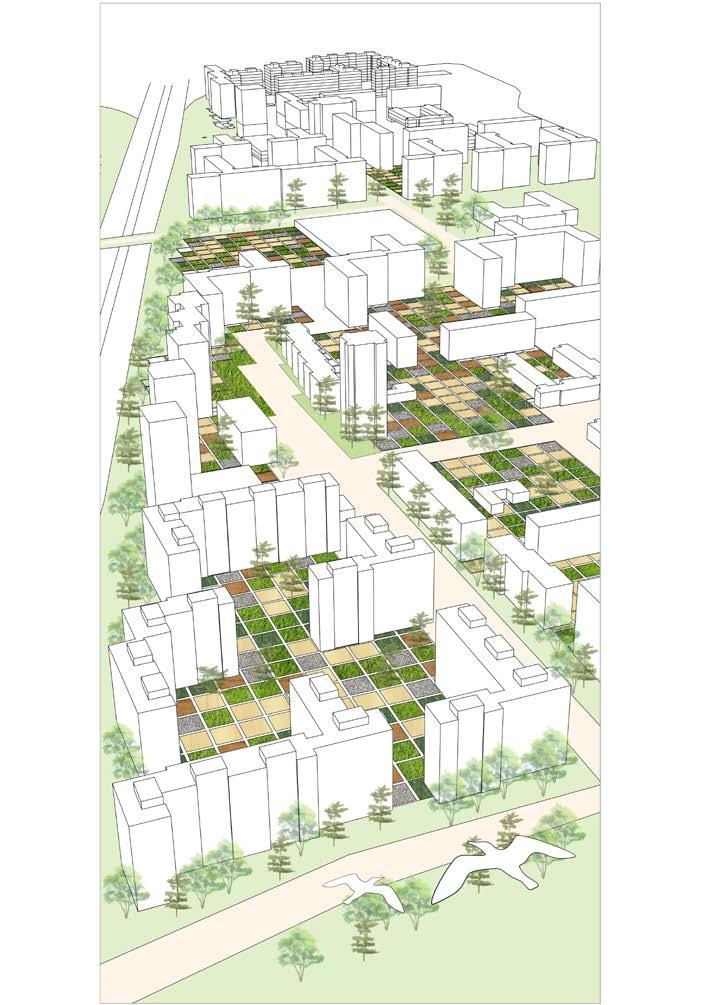
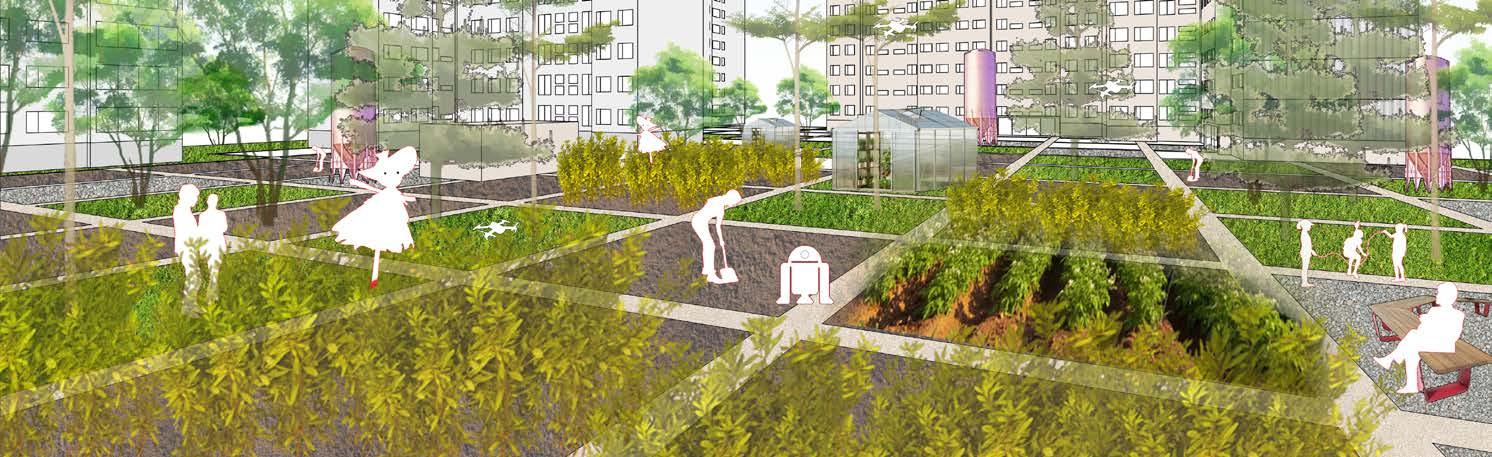
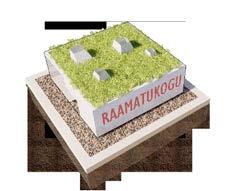
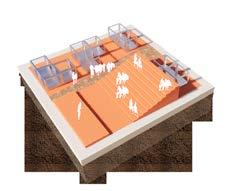
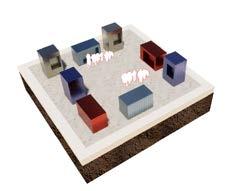
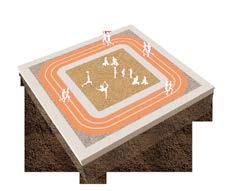
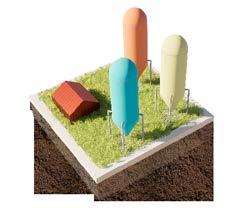
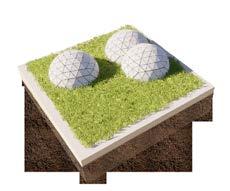
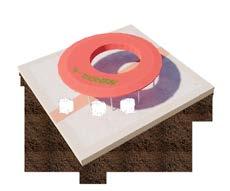
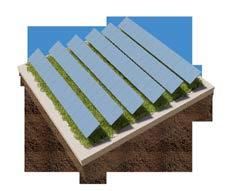
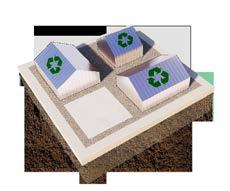
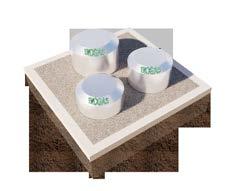
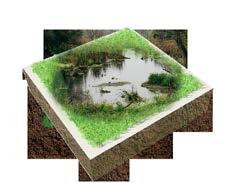
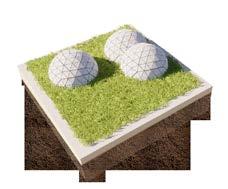
For decades, mass development of housing blocks area (Mikrorayon) focused only on the functionality and density, creates urban voids that are formed by high-density blocks. The proposal will be reconsidering urban void to become productive spaces that generate community resilience and a circular economy. By eliminating massive parking lots, the proposal brings the module filled with productive functions generates by the community and for the community itself. The parameters measurement adjusts the configuration of the productive functions determined by solar radiation, the ages and types of population, and the physical layout of the block. Hence, the configuration of the module in each void block will be variant and create inter-relation of circular exchange of resources and production between the Mikrorayons. It is a strategy to create not only the community scale self-sufficient resilience but also mutualism link between each block bringing circular economy in a broader urban scale. Status:2022Honorable prospective participant at Tallinn Architecture Biennale 2022 Reinventing the Mikrorayon, Tallinn Architecture Biennale 2022 Productive Module: Reinventing Tallinn Lasnamäe
Competition:
Muhammad Iqbal Tawakal / PortfolioMuhammad Iqbal Tawakal / Portfolio Mikrorayon Productive Void System CentreData CropsLivestockGreenhouse NatureNature Compost PV FieldMicro-Library Biogas RainwaterStorageGreywater Purification Mobility Point harvestingRainwaterHousehold TallinnMikrorayonSmartDatabaseCentreUrbanData CentreData Crops Crops NatureNatureCompostMarketCommunitySilo Mobility Point Household Households harvestingRainwater harvestingRainwater Greywater Purification TallinnMikrorayonDataUrbanSmartDatabaseCentre
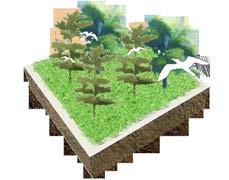
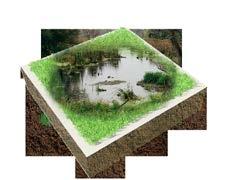
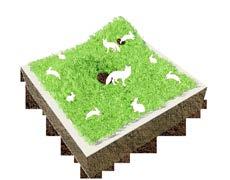
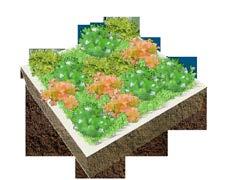
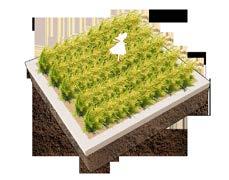
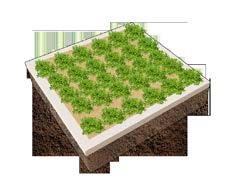
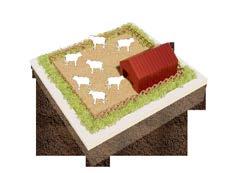
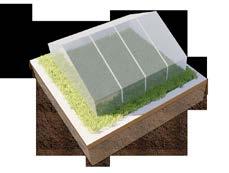
Muhammad Iqbal Tawakal / PortfolioMuhammad Iqbal Tawakal / Portfolio Small forest ecosystem Wetland ecosystem Small animals ecosystem Wild flowers & bushes, hives metropolis Crops field Vegetable & flowers field Livestock / urban ranch Greenhouse / hydroponic Micro-library & communal SportCommunityWorkshopschoolopenspace&communalstagemarket/plaza&playground Community silo & mill Command & data centre (agriculture,E-mobilityenergy)point Photovoltaic field RecyclingBiogaspoint Greywater purification & rainwater storage Organic composting EquilibriumEcosystem Productive Crops Community Spaces Living Utilities Energy and Waste Utilities
2017 / Academic / 1st Master Degree Dissertation 2
Utilising Space Syntax methodology along with observation in a real site, this research focuses on finding the pattern of spatial configuration among pavilion. Following the theory of Espace Synthetique by Davalon (2003), this research looks for the possibility of pavilions to become a participatory element with visitors. It is shown from the comparative study of pavilions that several shared principles among pavilions emerged from specific variables. Moreover, by adopting Psarra’s (2009) idea of narrative and sequence in the spatial configuration of exhibition space, the present research looks at the possibility of changing visitor narrative affected by the pavilion presence. By the data resulted from Space Syntax and observation, the case study of 2017 Serpentine’s Summer Pavilion shows that pavilion has a strategy to distribute visitor movement from all entrances affecting the access of visitors to the Serpentine Gallery.
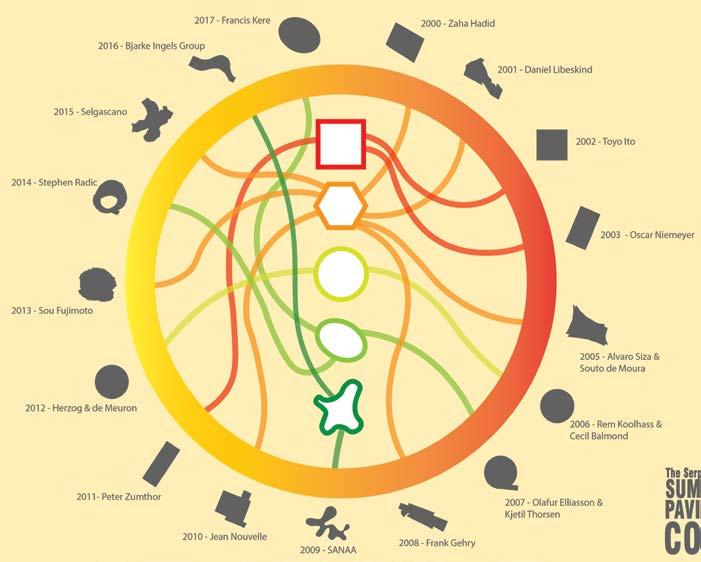
The research project comprises two studies i.e. comparative and case study, which seek the shared principles and the relation of geometry with visitor movement in the Serpentine Summer Pavilions as temporary exhibition space. Serpentine Summer Pavilion as an architecture laboratory has many spatial configuration and geometry since 2000. The comparative study compares 17 pavilions and the case study focused only on 2017 Serpentine’s Summer Pavilion with on-site observation.
Muhammad Iqbal Tawakal / PortfolioMuhammad Iqbal Tawakal / Portfolio
Furthermore, the two studies found a range of architectural spatial codes on the site. The study of shared design principles and the relation to the visitor pattern in pavilion spaces: The Serpentine Summer Pavilion Codes
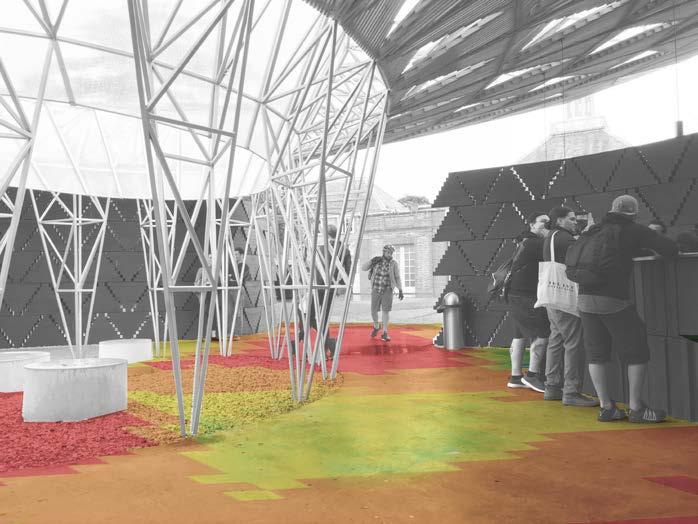
Muhammad Iqbal Tawakal / Portfolio High Intensity A.I Steps. Low Intensity A.I Steps.
Muhammad Iqbal Tawakal / Portfolio Visual Graph Analysis, Depthmap X Space Syntax.
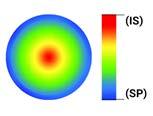
Agent analysis A.I Space Syntax. The analysis shows the character of each pavilion in a response to creating user behaviour patterns. This is also related to the hotspot area, which is denser by the user occupying space. The hotter colour indicates that the high-intensity numbers of A.I pass the space than the cooler space which has less A.I movement.
The hotter colour indicates that the space ability to drive visitor movements by high visibility while the cold colour shows less integrated and more secluded.
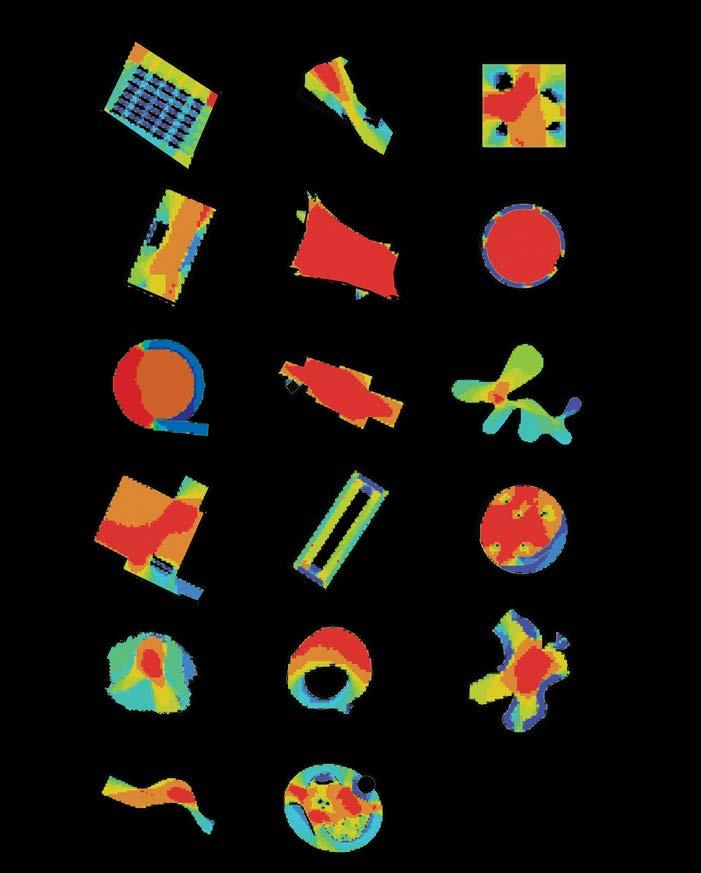
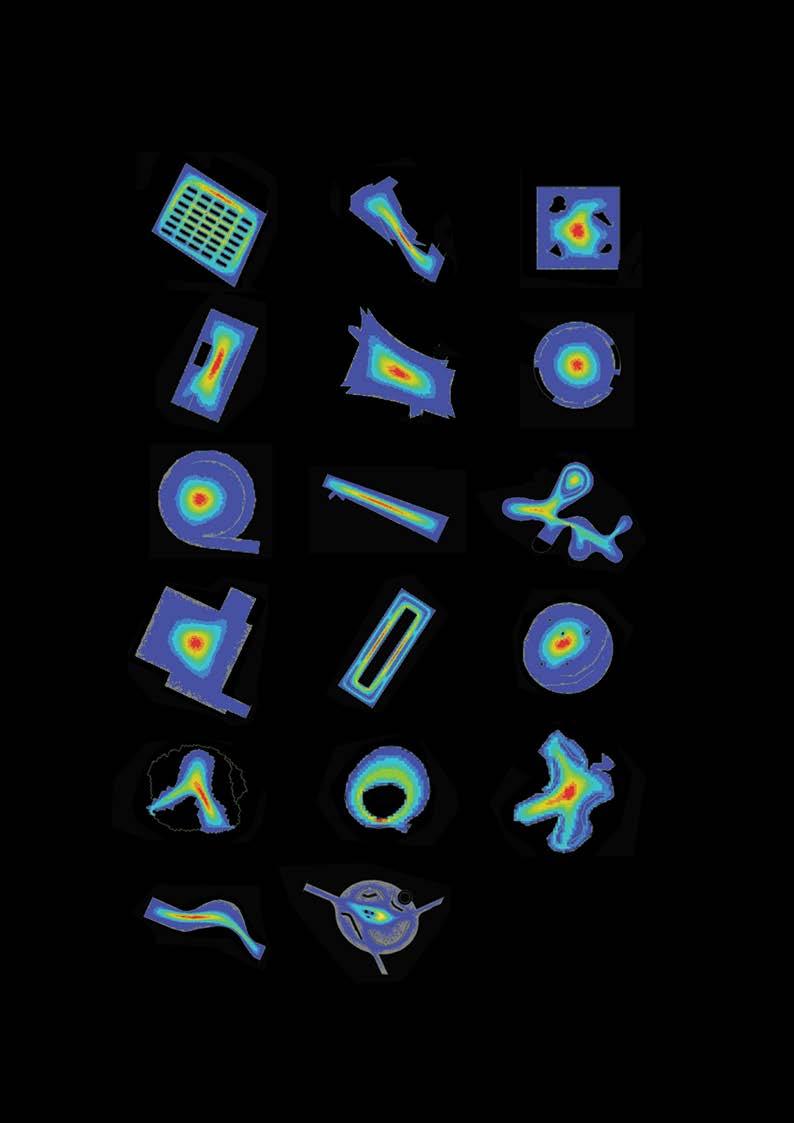
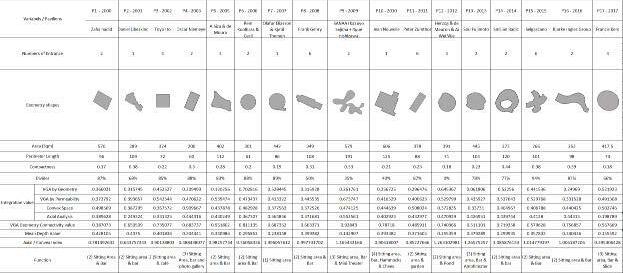
The classification of pavilions by shape and geometric form.
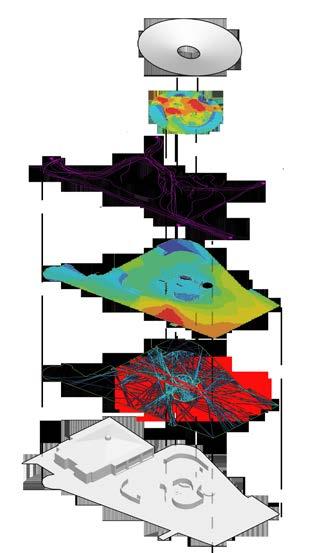
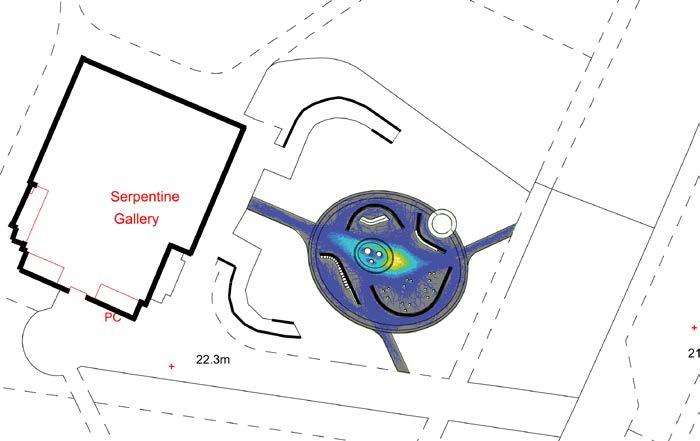
Superimposed analysis for the 2017 pavilion. The axial analysis shows that only two entrance facing each other that has better visual for interaction to the Serpentine Gallery (indicated by the red line). However, the people movement analysis shows that many people come from the entrance which does not have a direct visual connection to the gallery instead it’s connected to the entrance gate of the Serpentine lawn.
Muhammad Iqbal Tawakal / PortfolioMuhammad Iqbal Tawakal / Portfolio
The image above shows the Artificial Intelligent (AI) analysis from Depthmap X for the 2017 pavilion. The analysis shows the possibilities of human behaviour and the movement through the spaces. It is shown that the centre space of the pavilion has more human interaction and move towards just only to two exit ways.
The classification table based on tangible and intangible parameters.
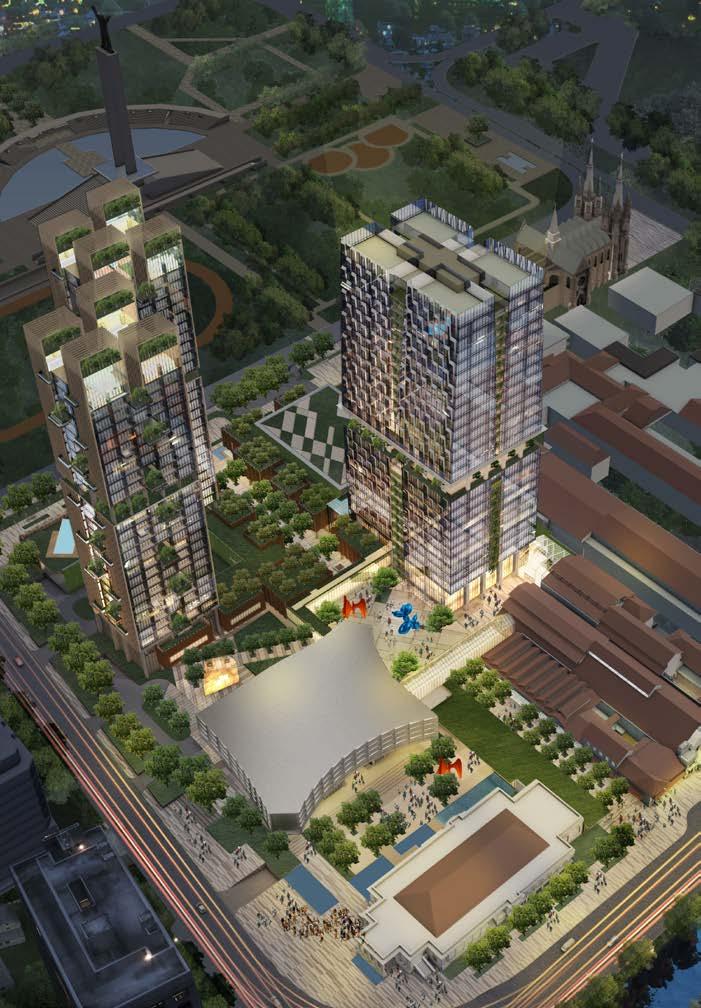
Muhammad Iqbal Tawakal / PortfolioMuhammad Iqbal Tawakal / Portfolio Legacy and Vision : The Pos Indonesia Mixed-use Development. Pos Indonesia mixed-use is a project to re-visioning Pos Indonesia Jakarta Headquarter. Combining heritage building and modern development, the master plan consists of a new office tower with two high-rises residential and retail strips. The site is located in the heritage district of Sawah Besar, formerly named Weltvreden in the colonial ages. Year: Status:2019Conceptual and schematic design Location: Jakarta, Indonesia Floor Area: 128.000 Sqm Type: Mixed-Use Building Role in the project: Lead architect, assist director & principal architect for conceptual designs. Responsible to manage architecture conceptual presentation with Adobe Suite. Managing drawing and 3D modelling with advanced SketchUp. Maintain the project calculation scale (GFA, FAR). 2019 / Professional Project 3
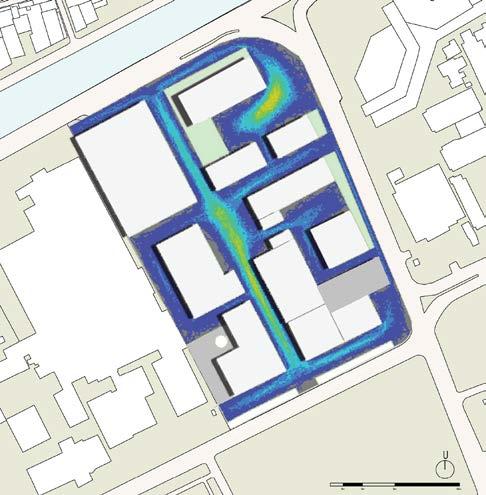
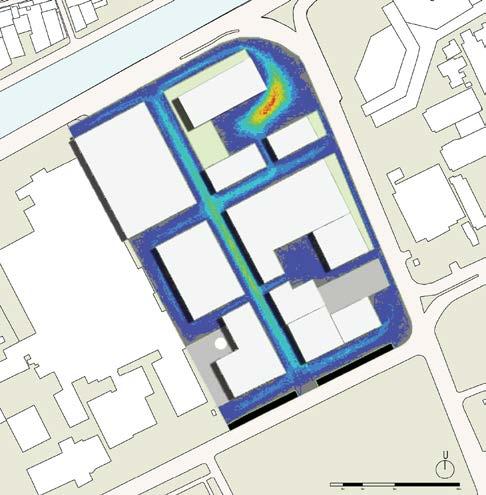
Spatial analysis Space Syntax Enhancing plaza creating opportunities The models run in Space Syntax analysis shows that making a plaza creates a possibility of agglomeration of people in between the heritage and new development. The open space plaza in the centre could distribute the opportunity for shops to grow in the inner space.
Equally spaceagglomerationdistributedofoccupied How to create equal opportunities for the commercial strip within the new development? The answer was to distribute the agglomeration of people occupied spaces and pedestrian movement equally. With the centre plaza within the precinct, pedestrians will distribute better to the surrounding precinct and equal opportunities for the commercial as in the corner plaza.High Intensity A.I Steps. Fig.1 Fig.2 Low Intensity A.I Steps.
Optimal views to surrounding heritage district
Muhammad Iqbal Tawakal / Portfolio City Visual Connection
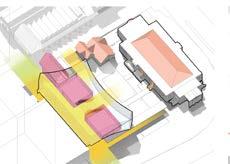
Connecting Nodes Generates pedestrian paths between development. Human Scale Facades Shaping podium frontages on the human scale create a harmonious heritage district.
Micro Open Space Creates enclave micro human space for festive activities Green Urban Void Contribute to the city green urban park and public spaces.
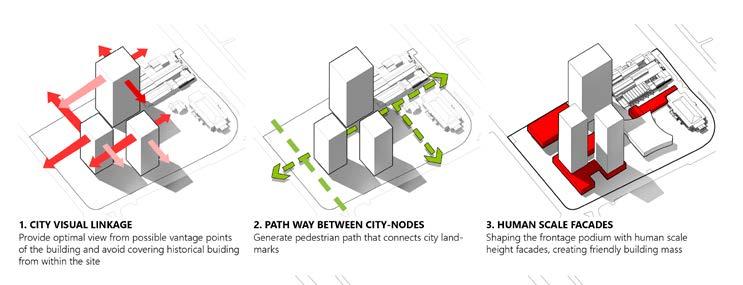
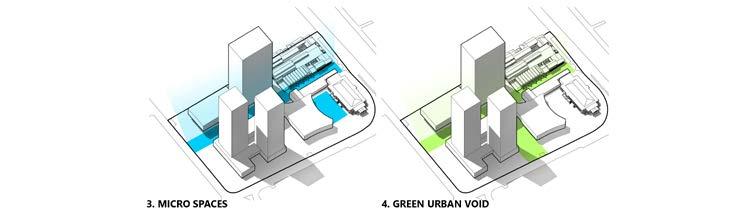
Visual Nodes
Muhammad Iqbal Tawakal / PortfolioMuhammad Iqbal Tawakal / Portfolio
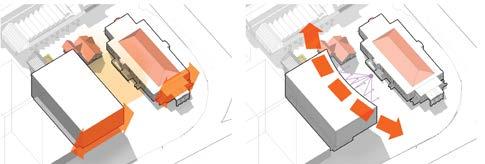
Shaping pedestrian connection axis to enhance wayfinding and urban pathway within new precinct, connected inner plaza to the surrounding heritage district.
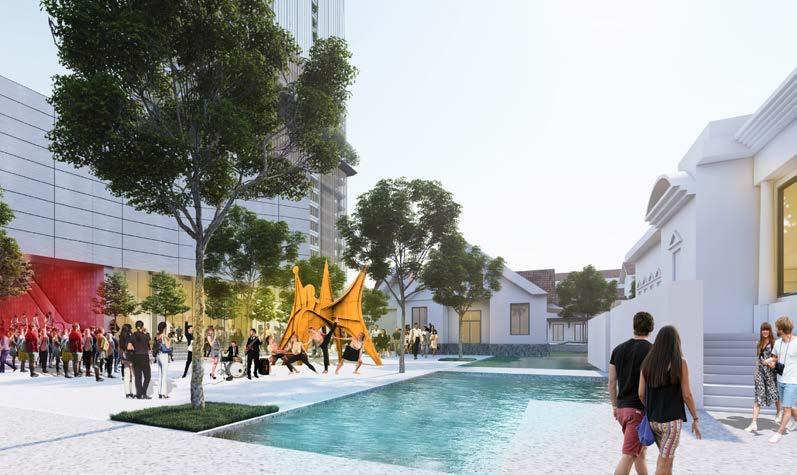
Creating an in-between space between heritage building and new development aims to create a simultaneous communication between two-generation, shaping public understanding of the time era of architectural legacy. The space will provide an open space for cultural performance in an open-air amphitheatre and a public plaza. Cultural Space Lumion + Adobe Photosop Old and new cultural space
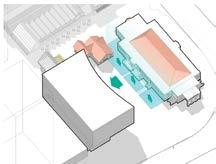
Keeping the new frontage building on the same street level to maintain the scale and harmony. Creating new spaces in between the heritage and the new theatre building.
Pedestrian Connection
Respect The Heritage
A 500 sqm reflecting pond is designed as a reflecting element to emphasise the heritage theatre building. Moreover, reflecting pond as an element to reduce heat from the pavement and plaza in the midday.
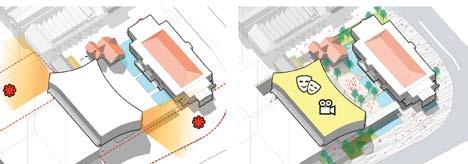
The new theatre building is shaped in a curvy form inspired by the Roman amphitheatre. The concave parabolic form can improve the sound by reflecting sound waves to the centre.
The new theatre building mass stretched on each opposite corner, responded to the two activities nodes, The public plaza in front of the heritage theatre and the central plaza in the development. Cultural Hub
Reflection
Sound Echoes
The new development has potential for a cultural hub with the new modern theatre and amphitheatre plaza supporting existing heritage theatre.
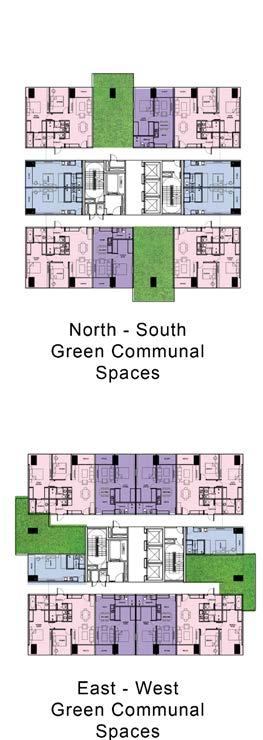
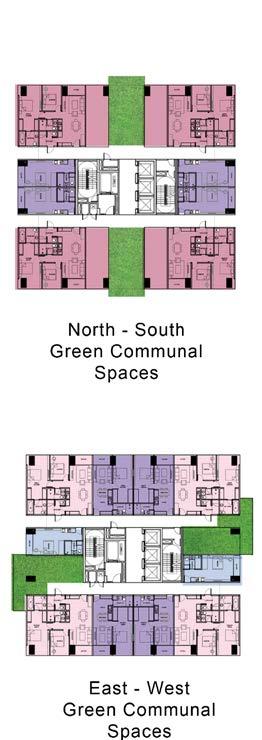
Muhammad Iqbal Tawakal / PortfolioMuhammad Iqbal Tawakal / Portfolio NorthCondominiumCommunalSouthGardenTypeAPlan NorthCondominiumCommunalSouthGardenTypeBPlan 2 Bedroom 1 EnsuiteBedroomStudio EastCondominiumCommunalWestGardenTypeBPlanEastCondominiumCommunalWestGardenTypeAPlan
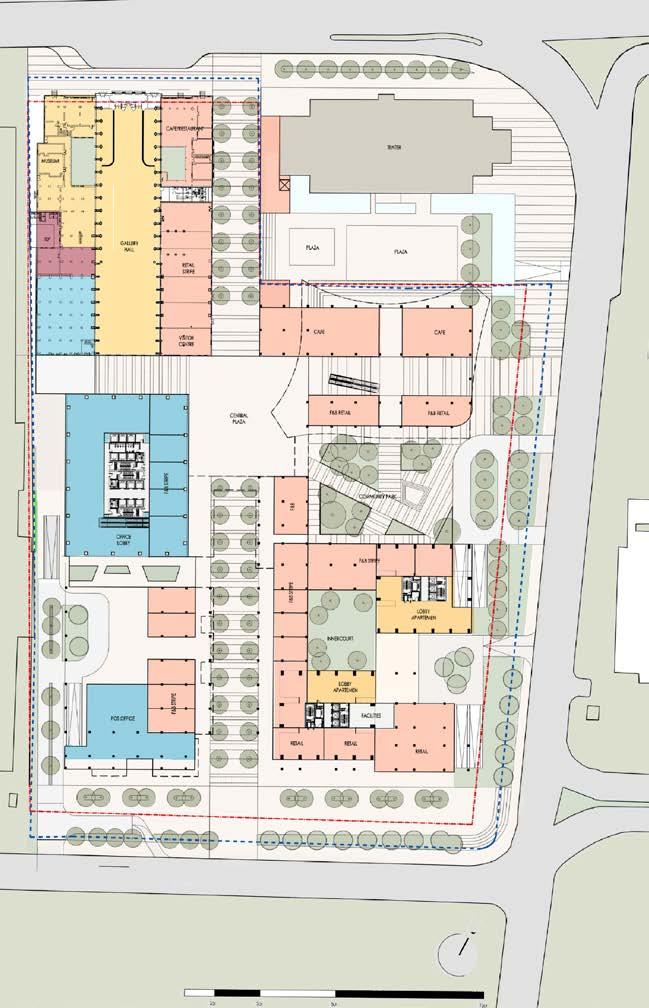
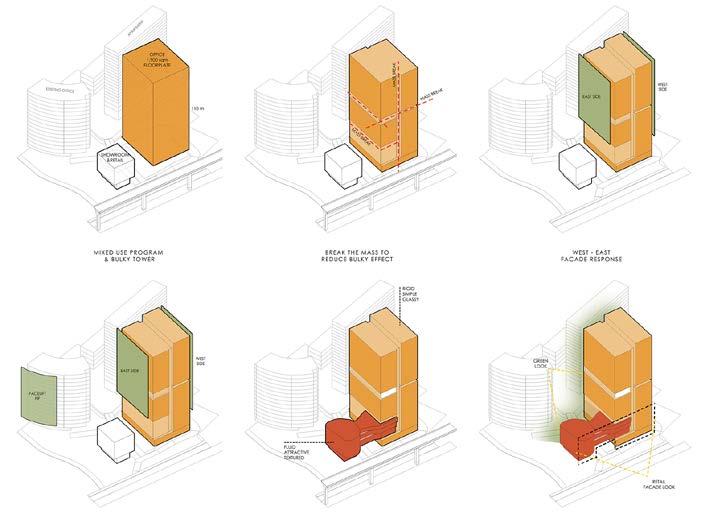
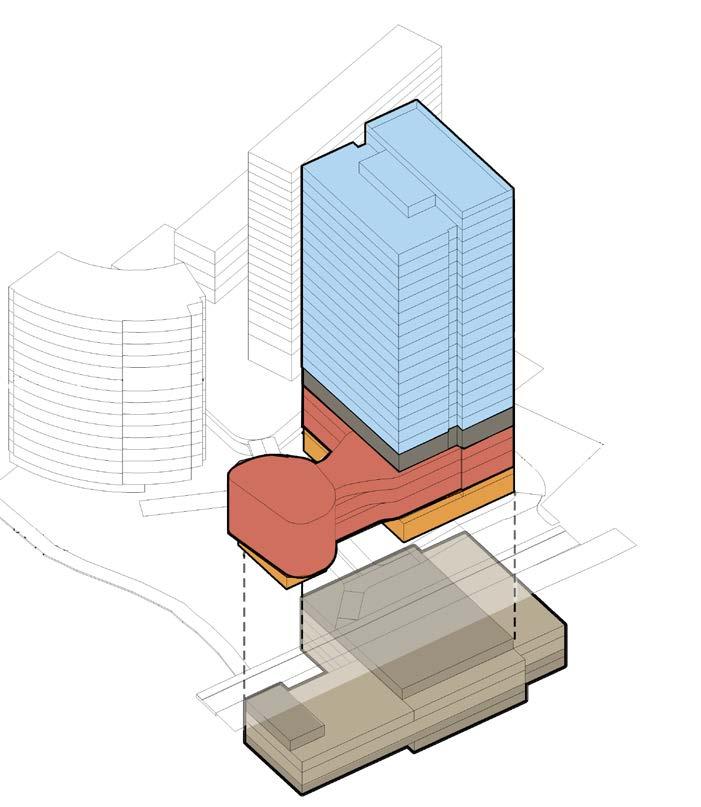
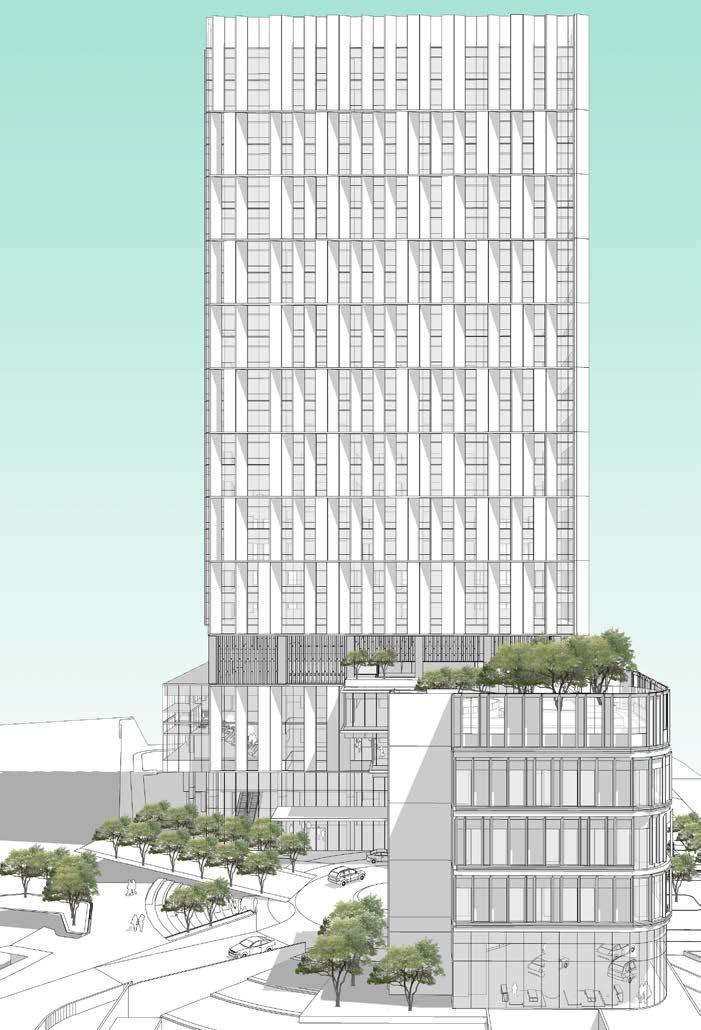
Muhammad Iqbal Tawakal / PortfolioMuhammad Iqbal Tawakal / Portfolio 3 Retail Floors Total GFA 9,266 sqm 3 Basement Parking. 18 Office Floors Total GFA 34,416 sqm 2 MEP Floors Office Lobby, Retails, & Car Showrooms
Muhammad Iqbal Tawakal / PortfolioMuhammad Iqbal Tawakal / Portfolio
Muhammad Iqbal Tawakal / Portfolio

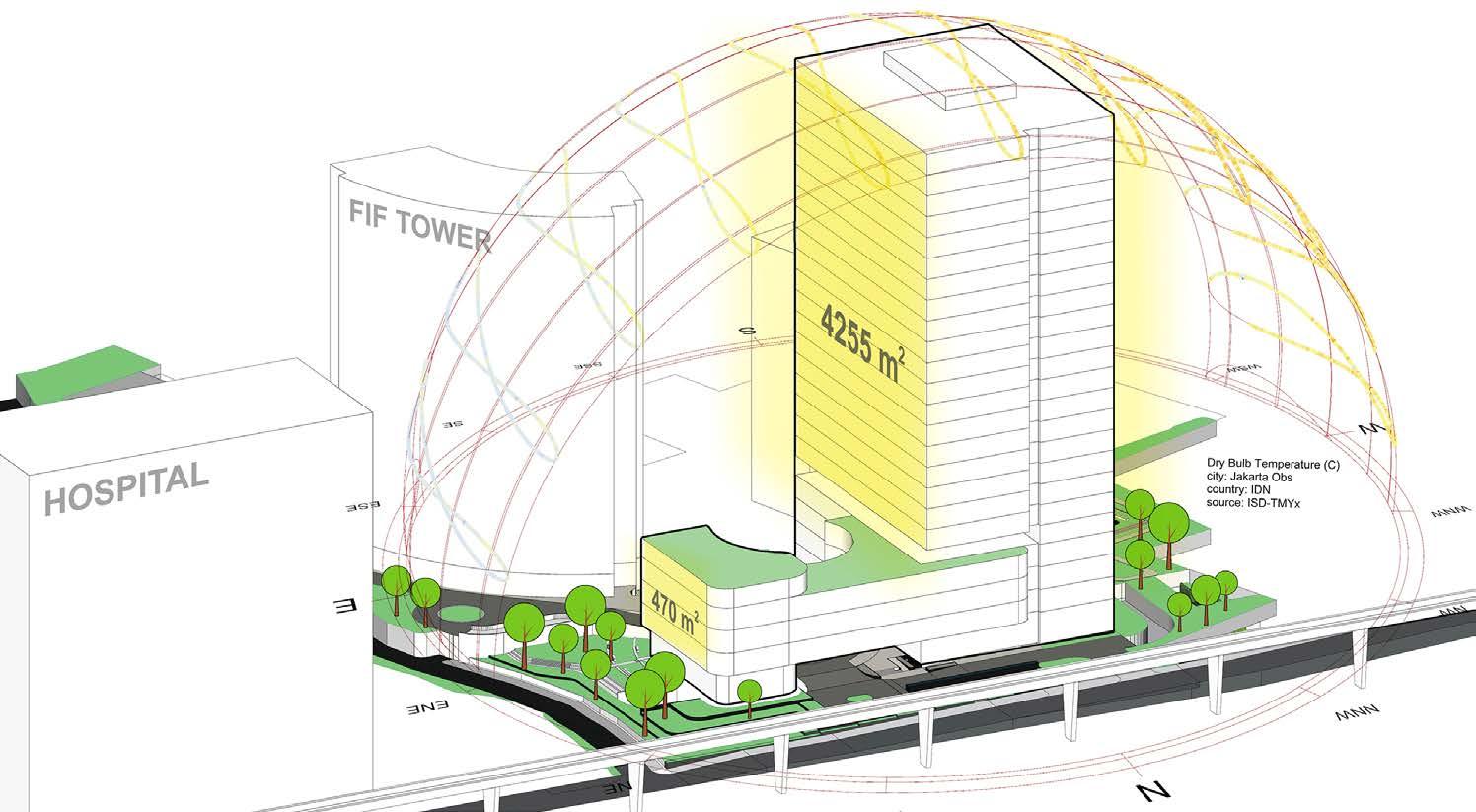
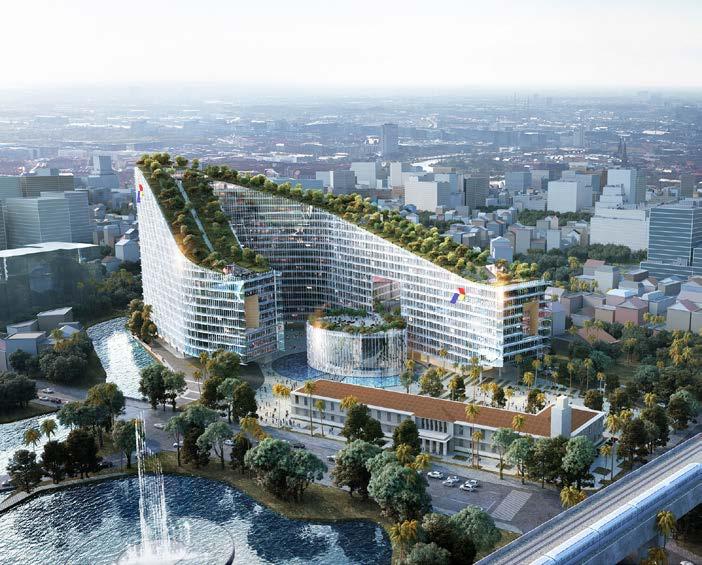
Year: Status:2019Conceptual Design, Closed Competition 2nd Position Location: Jakarta, Indonesia Type: Office headquarter. My Role in the project: Successfully propose conceptual ideas and assist the principal architect in terms of building form. Responsible for preparing a conceptual document with Advance 3d modelling and Adobe CS. Responsible for managing 3D models with a junior architect.
2019 / Professional Project / Invitational Competition
A Thegroundscraper:PertaminaHeadquarter
Pertamina Headquarters is a project to design headquarter of the Indonesian energy company, Pertamina. The concept is a ground scraper, a horizontal building that arises from the floor requirements while the heights are restricted to 21 storeys and respond to the heritage building in the street side. The new building stands on the same former building footprint but with a plaza in the centre as an open square.
Rendered by Frontop CGI
Maintain FAR and GFA requierement achivable.
5
Muhammad Iqbal Tawakal / PortfolioMuhammad Iqbal Tawakal / Portfolio
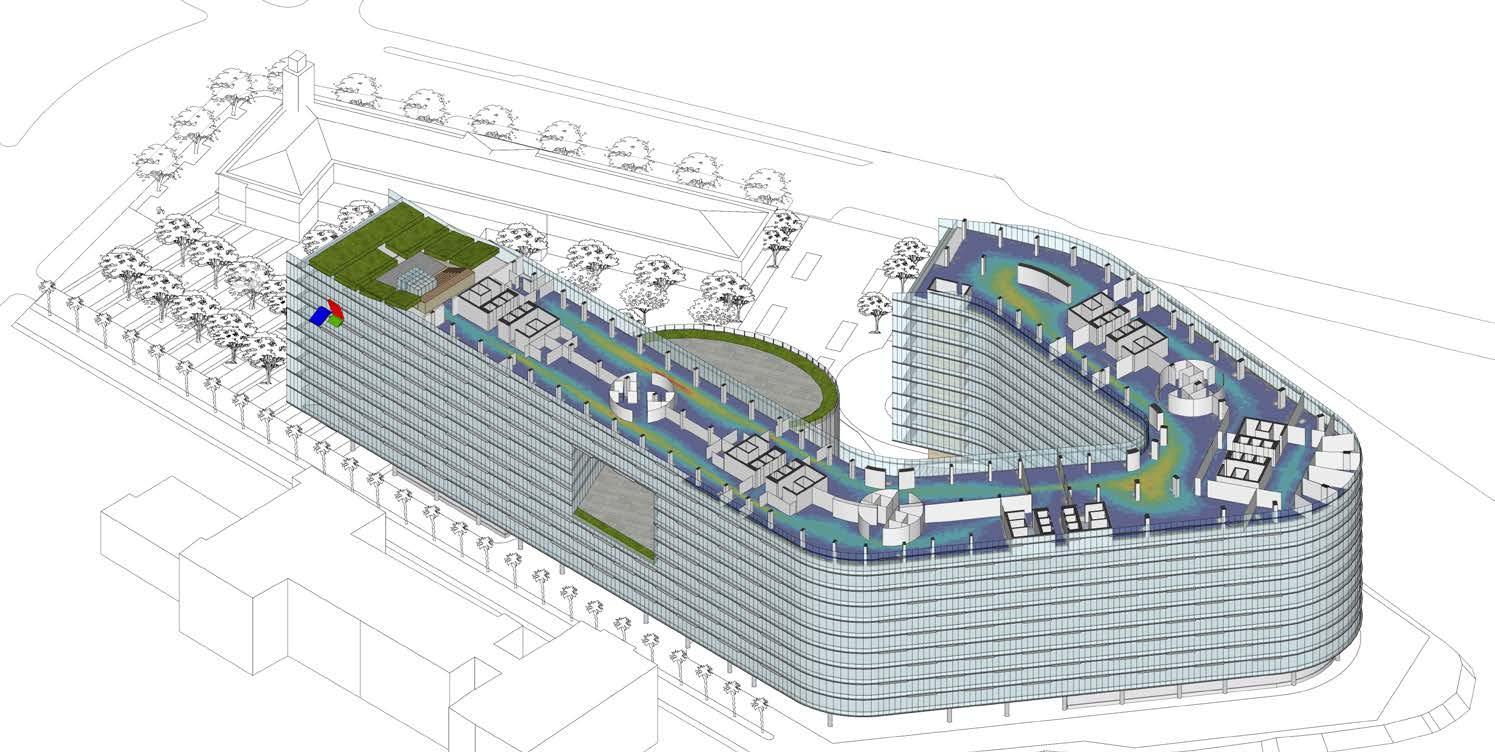
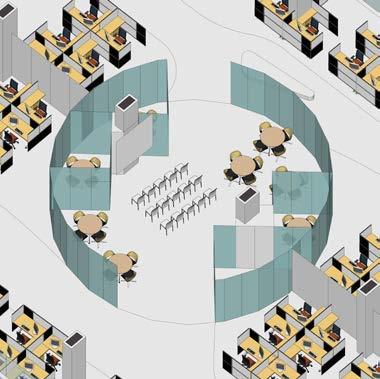
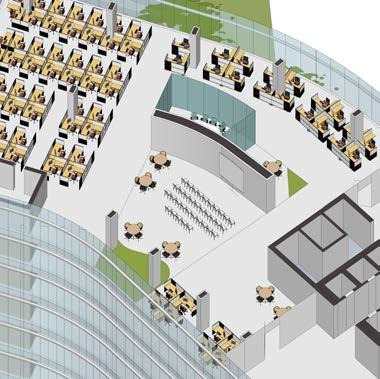
Muhammad Iqbal Tawakal / PortfolioMuhammad Iqbal Tawakal / Portfolio High Intensity A.I A.ILowSteps.IntensitySteps. Core Zone 1 Collaboration Pod Outdoor Terrace Collaboration Pod & Breakout Room Type1 Core Zone 5 Core Zone 3 Core ZoneCollaboration4 Pod High Intensity User Movement CollaborationCorePodZone 2 Executive Executiveexecutives.suitableThisanduserLow-IntensityLoungemovementhighprivacy.spaceisforRoom Collaboration Space Communication.InterdisciplinaryCreating Based on Space Syntax agent analysis, several spots on a typical office floor have user agglomeration steps. Those spaces are suitable for gathering and less privacy which potentially to shaping collaboration spaces connecting inter-division in one typical office floor. Collaboration Pod & Breakout Room Type 2
Muhammad Iqbal Tawakal / Portfolio