soybean farmer
Calculating Conservation ROI p. 16
Focus on Fall Prep p. 20

SOYBEAN FARMER Staff Contacts
CEO/Executive Director
Casey Wasser cwasser@mosoy.org
Chief Financial & Information Officer
Kim Hill khill@mosoy.org
Director of Communications & Marketing
Samantha Turner sturner@mosoy.org
Marketing Communications Manager
Ryan Siegel rsiegel@mosoy.org
Comms & Outreach Coordinator
Devyn Keller dkeller@mosoy.org
Director of Market Development
Matt Amick mamick@mosoy.org
Director of Research & Agronomy
Blake Barlow bbarlow@mosoy.org
Director of Licensing & Commercialization
Bryan Stobaugh bstobaugh@mosoy.org
Director of Conservation Ag & Farm Operations
Clayton Light clight@mosoy.org
Assoc. Director of Conservation Agronomy Brady Lichtenberg blichtenberg@mosoy.org
Director of Operations & Engagement Baylee Asbury basbury@mosoy.org
Field Services Manager
Dylan Anderson danderson@mosoy.org
Director of Policy Ben Travlos btravlos@mosoy.org
Accounting Manager Jeff Bruemmer jbruemmer@mosoy.org
Finance Manager
Stephanie Rackers srackers@mosoy.org
Senior Executive Specialist
Mary Kever mkever@mosoy.org
Office Manager
Amber Meyer ameyer@mosoy.org
Portfolio and Project Lifecycle Manager Faith Smith fsmith@mosoy.org
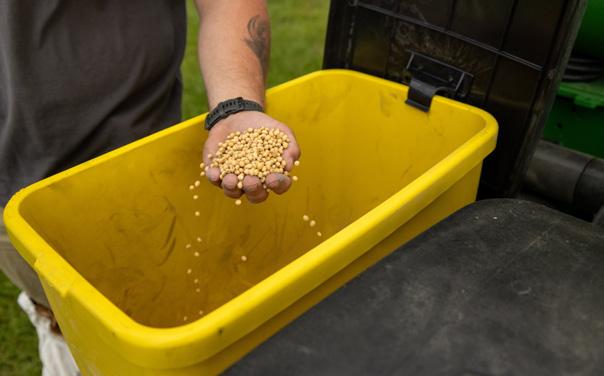
Learn how stacked programs turn cover crops and conservation practices into revenue for your operation.

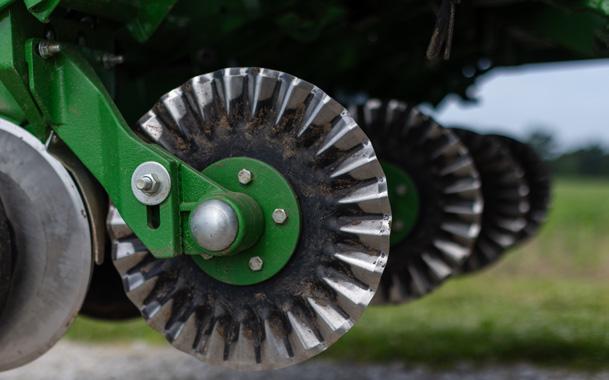
A strategic approach to fall prep — fertility, structure, water and cover crops — pays off all season long.
Guidance on structuring lease agreements that balance profitability, risk and longterm landowner relationships.
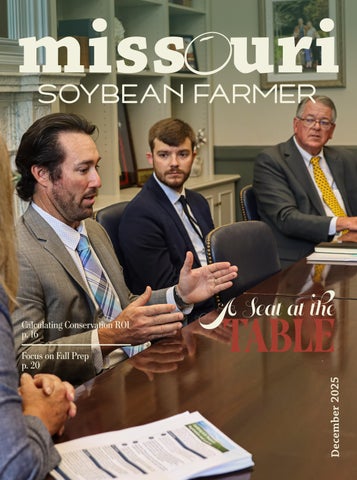
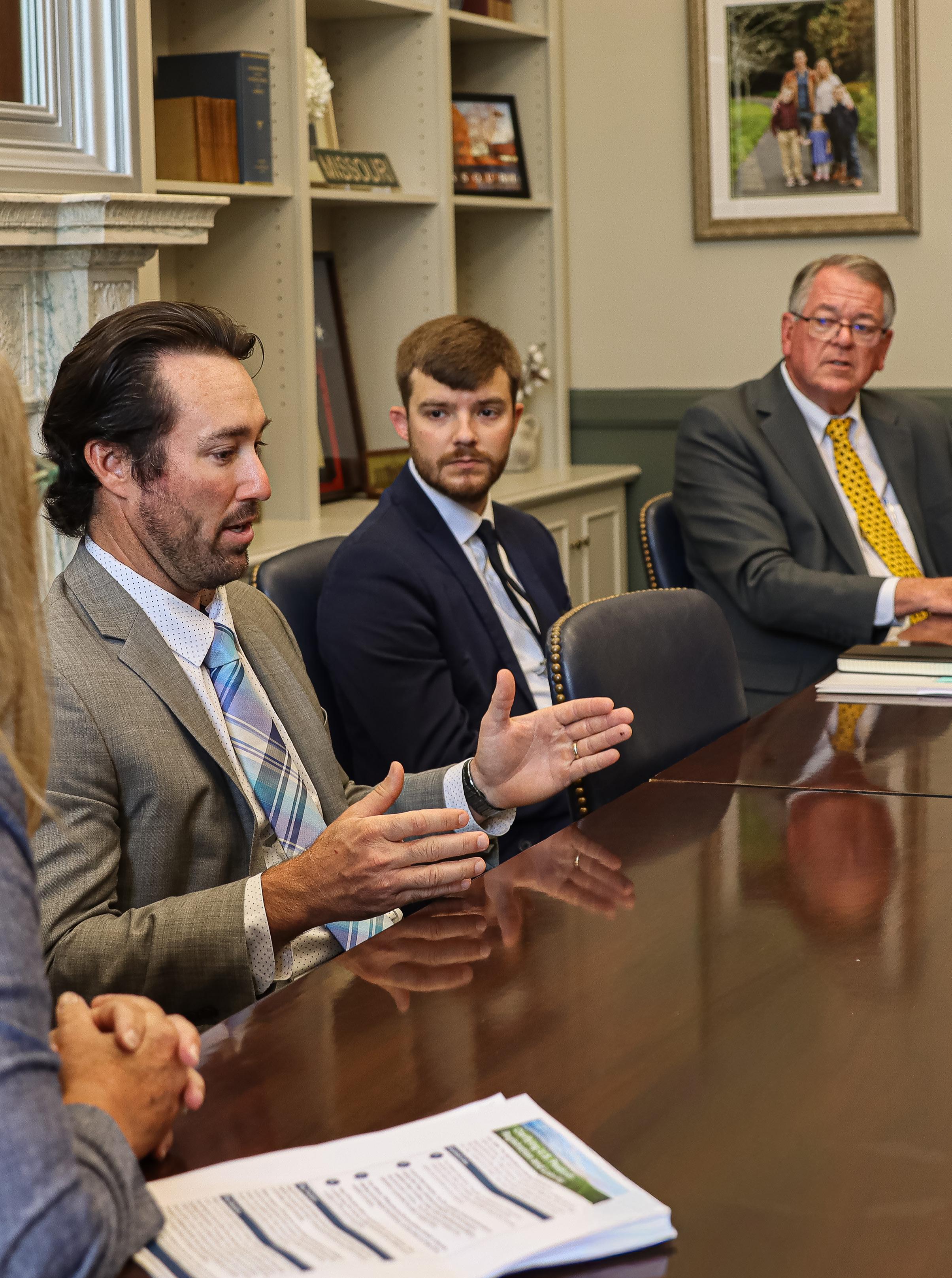
On The Cover...
From The Field
Notes from Missouri Soybeans’ Leadership Team

Renee Fordyce Mark Lehenbauer

President's Letter Chairman's Letter
Aswe wrap up another year, it’s natural to pause and reflect on all that’s transpired — celebrating our successes, learning from our challenges and gathering the stories that shaped this season. Much like the harvest, where the rewards of months of effort become visible, a year in review invites us to take stock: What milestones did we reach? Which goals came to fruition? Where did we discover new opportunities for growth?
This reflection is not only an exercise in gratitude but also a practical step that sets the stage for the tasks ahead, especially when preparing for tax season.
Tax preparation, like planning for next year’s harvest, requires careful attention and thoughtful organization. Diligent preparation helps maximize deductions and credits, ensures compliance and minimizes stress as deadlines approach. Setting aside time to review last year’s strategies and consulting with tax professionals may reveal new opportunities and streamline the filing process.
With a clear picture of the past and your financial house in order, you are well positioned to look ahead. Just as farmers plan their next season based on lessons learned and resources at hand, reviewing your year lays the groundwork for progress. Establishing new goals, budgeting wisely and adapting strategies ensure that the coming year is met with confidence and clarity.
Every year brings its harvest of experiences and its season of planning. By thoughtfully reviewing the year behind and preparing for the obligations ahead, we honor our efforts, learn from our journey and nurture the seeds of the future.
Let us not forget, however, that our most important blessing is family. Enjoy the Christmas season and cherish the memories.
“Oh give thanks to the Lord, for he is good, for his steadfast love endures forever!” Psalm 107:1
God bless,
Renee Fordyce Missouri Soybean Association President
As I look back on this past year, I can’t help but reflect on where we stood just 12 months ago. Many of us were uncertain about the future — concerned about profitability, market pressures and unpredictable weather that seems to challenge us a little more each season. Yet here we are, another harvest behind us and another year ahead. The challenges were real but so was the resilience of Missouri’s farmers.
As we turn our attention to planning for the 2026 crop, I’m reminded that agriculture has always been an industry built on faith and perseverance. Our work as farmers has never been easy but, it has always been worthwhile. Every season brings new opportunities to grow, adapt and strengthen the future of our operations and our communities.
This time of year also gives us a chance to pause. Amid the busyness of harvest, the holiday season invites us to slow down and appreciate what matters. Around the dinner table, surrounded by family and friends, we are reminded that our blessings go far beyond bushels and balance sheets. The relationships we build, the faith that carries us and the community that surrounds us — those are the things that last.
Your farmer-leaders at the Missouri Soybean Merchandising Council are working hard to make sure the future remains bright. From developing new markets to supporting agronomic research, every decision we make is driven by the goal of keeping Missouri’s soybean industry strong, innovative and sustainable. We’re investing in opportunities that will help ensure continued profitability and stability for farm families across the state.
From my family to yours, Merry Christmas and Happy New Year. May the year ahead bring peace, prosperity and renewed purpose to every acre you plant and every hand that helps tend it.
God bless,
Mark Lehenbaeur Missouri Soybean Merchandising Council Chairman
Letter from the CEO

To be candid, this year was a struggle — a constant battle, push and pull, stateside and overseas. My heart wants this letter to fill you with positivity and well wishes for the holidays, but my head knows you want realism. To capture both, I will openly share the strategic moves we made as an organization to make an actual impact to your bottom line.
This year, we leaned into opportunity while standing strong against headwinds. From securing support for next-generation farmers and supporting rural infrastructure to protecting access to crop-protection tools, Missouri Soybeans was in the room advocating for you. Despite one of the most challenging years in recent memory, we showed up and we spoke up.
We also expanded our investment in conservation agronomy, scaled partnerships and continued to bring checkoff-funded innovation directly to the farm through our Farm for Soy Innovation.
In 2025, we welcomed new talent to the team, launched new grower-facing field days and deepened corporate and trade relationships that will pay dividends for years to come. Our work is never done, but the impact is growing.
We remain focused on helping you make informed, profitable decisions — whether that’s through on-farm trials, market updates, conservation cost-share programs or grassroots policy engagement. Your voice drives our priorities, and your participation ensures we remain farmer-led and future-focused.
On behalf of the entire Missouri Soybeans team, thank you for the work you do, the legacy you’re building and the future you’re helping to shape. We encourage you to check in with yourself, friends and neighbors during this season. We will continue to face these headwinds together.
Wishing you a safe and joyful holiday season,
Sincerely,
Casey Wasser
CEO & Executive Director
Missouri Soybeans
Our Boards
MSA Board Members:
Andrew Lance, Barnard
C. Brooks Hurst, Tarkio
Renee Fordyce, Bethany
Cody Brock, Norborne
Daniel Carpenter, Norborne
Clint Prange, Shelbyville
Matt Wright, Emden
Dane Diehl, Butler
Garrett Riekhof, Higginsville
Russell Wolf, Tipton
Terry Schwoeppe, Labadie
Jason Mayer, Dexter
Wesley Hodges, New Madrid
Tory Meyr, Jackson
Ryan Wilson, Portageville
MSMC Board Members:
Darrell Aldrich, Excelsior Springs
Nathan White, Norborne
Marc Zell, Meadville
Kyle Durham, Norborne
Mark Lehenbauer, Palmyra
Chris Mallett, Memphis
Brad Arnold, Harrisonville
Robert Alpers, Prairie Home
Denny Mertz, Chesterfield
Aaron Porter, Dexter
Trent Haggard, Kennett
Justin Rone, Portageville
Kevin Mainord, East Prairie
USB Board Members:
Meagan Kaiser, Bowling Green
Neal Bredehoeft, Alma
Kyle Durham, Norborne
Robert Alpers, Prairie Home
ASA Board Members:
Renee Fordyce, Bethany
Andrew Lance, Barnard
Matt McCrate, Cape Girardeau
Russell Wolf, Tipton

SOYBEAN POLICY UPDATE

CAUTIOUSLY OPTIMISTIC
Being cautiously optimistic is a state of mind I often find myself in when thinking about current agricultural policy matters. At the time of writing, China has agreed to purchase 12 million metric tons of soybeans by the end of the year. According to the Trump Administration, China committed to buying 25 million metric tons annually for the next several years.
It sounds like great news — much better than the goose egg we've been seeing from our top international buyer for some time now. So why the “caution?” As a good Missourian from the Show-Me State, I’ll believe it when I see it.
At this point, the agreement between China and the U.S. is just that, an agreement. It is not a trade deal until it is in writing. The 12 million metric tons and 25 million metric tons are reported numbers, mainly from the administration.
When looking at the communications China is reporting back in-country, those specific totals are not included in their messaging. Also, when we say 12 million by the end of the year, is that the end of the calendar year or the marketing year? There are still many details to be sorted out, so I will adopt cautious optimism.
I continue to receive other questions from policymakers. Is this enough? Are soybean farmers made whole now? The answer is a resounding no. I remind policymakers that many farmers with limited or no storage capacity had to sell their crops before this trade agreement was announced, thereby accepting lower prices. I also point back to the inflated input costs, which are pushing
the breakeven level higher than before. Is it better than what we had a couple of months ago? Yes, it’s certainly better than zero purchases. But what will it take to ensure the family farmer can continue into next year?

We need short-term economic relief because there is still a gap between yesterday’s closing price on the Chicago Board and the breakeven cost for most soybean farmers. We need finalized Renewable Volume Obligation (RVOs) numbers under the Renewable Fuel Standard (RFS).
We are still elated that the proposed biomass-based diesel volume for 2026 is 5.61 billion gallons, a 67% increase from the 2025 volume. This is a clear indication that the administration is serious about more domestic utilization of agricultural products and less dependence on overseas markets.
However, with the government shutdown, this progress is now delayed. We need the China trade agreement in writing, ideally with the reported figures being minimums with room for growth. We need more trade deals with other countries. We need a serious look at the constantly increasing input prices for our family farmers.
When looking at the state level, the same sentiment comes to mind — cautiously optimistic. We had a successful year in the 2025 state legislative session. From the passage of the Water Preservation Act, Farm Bureau Health Plans, the elimination of state capital gains, investment in soybean cyst nematode research and more, there was a lot to celebrate.
In retrospect, the session concluded with the utilization of the Previous Question
(PQ) in the Senate on controversial issues. This is a procedural maneuver usually viewed as a nuclear option in the Missouri capitol. We then subsequently saw a couple of special sessions called, again on controversial issues, where the Previous Question was invoked.
This means there is resentment, especially in the Senate chamber, amongst senators, particularly from Senate Democrats toward Senate Republicans. The minority party feels it was never allowed to truly make its arguments or find common ground on matters debated on the Senate floor. Rather, debate was cut short and the issues put to a vote, with the measures largely passing on partisan lines. This is a recipe for the 2026 state legislative session to feel like a trudge. Will the tensions die down? I certainly hope so, because there are still agricultural issues that need to be addressed.
The agricultural tax credit programs are set to expire soon. These programs must remain available if we are to continue to see economic development in the rural parts of the state. Without these programs, we would not have biodiesel plants or other value-added agricultural processing facilities in Missouri.
We also need the legislature to seriously consider the ongoing litigation that is forcing registrants to consider pulling key agricultural products from the shelf, such as glyphosate. This weed killer is paramount to agricultural production. Without this critical tool, the war on weeds becomes incredibly more difficult. To someone outside the agricultural industry, “the war on weeds” may sound comical. In truth, it is what stands between a family farm from continuing into next year or throwing in the towel. A solution must be found to relieve the flood of litigation that threatens the availability of these vital tools to family farmers.
What happens if the tools are removed from the shelf? American farmers find themselves at another disadvantage to their counterparts in South America, who would still have access. This would enable South American farmers to farm at an even lower cost than they already do, giving them another competitive advantage over Americans in international trade — namely with China. It never ceases to amaze me how intertwined state policy matters truly are with federal and even international dealings.

Cautiously optimistic. My ongoing demeanor and approach. Will the China trade agreement turn out to be as good as we hope? Will economic relief come to family farmers to enable them to carry on next year? Will other trade agreements be enacted? Will the state senate’s icy sentiments thaw to enable critical topics to be debated?
All these questions plague my mind as I write. Knowing the resilience of the farmers we at Missouri Soybeans represent, and their own personal cautious optimism, we know we too must be resilient and cautiously optimistic.
WANT TO KNOW MORE?
MSA federal and state PAC contributors gain access to an exclusive newsletter for updates during the state legislative session on policy and regulatory movement in Jefferson City and anywhere Missouri soybean farmers stand to be affected. The newsletter also provides more details on Missouri elections and the role MSA and you can play to impact the outcomes. Visit MoSoy.org or scan our QR code for more details.
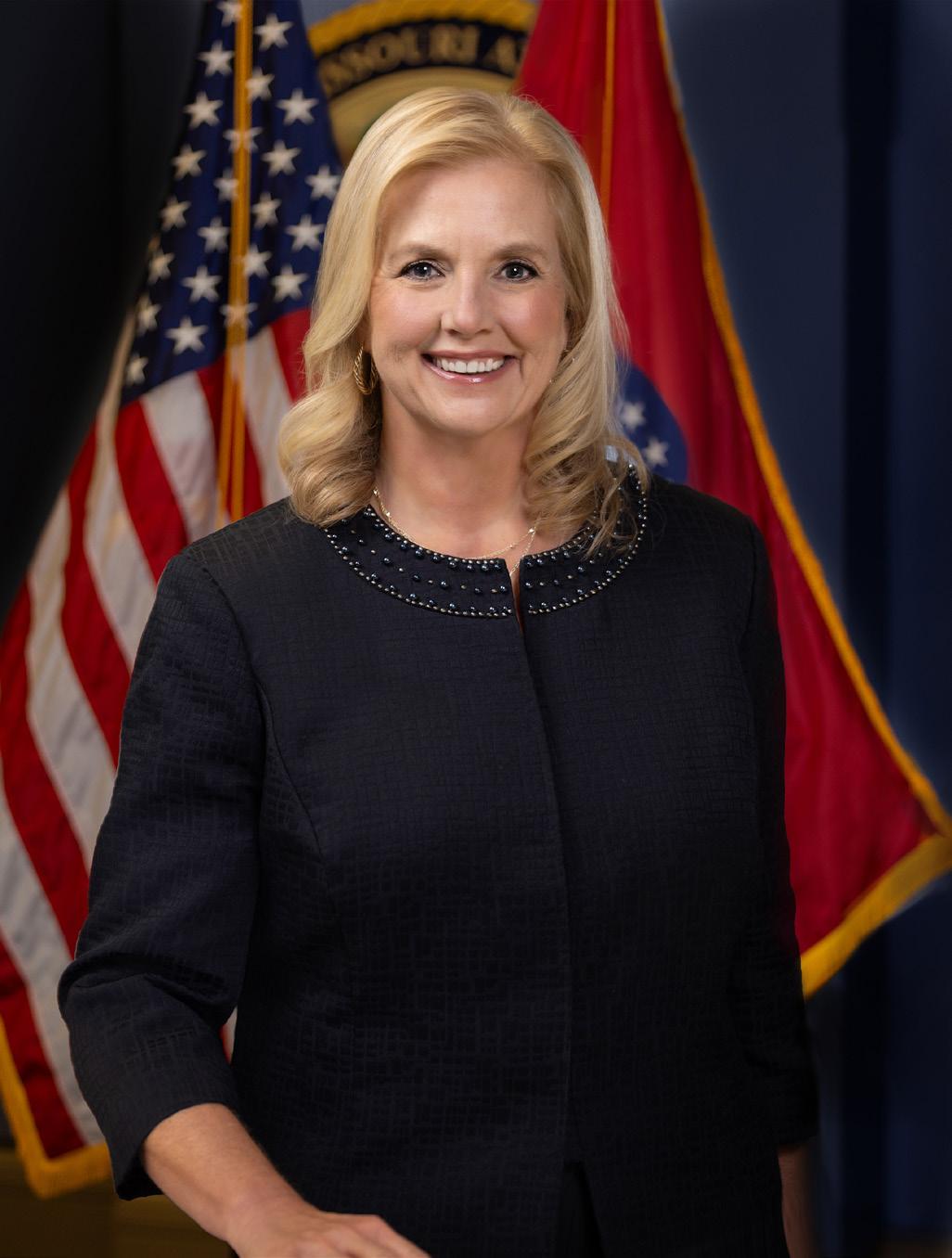
MEET CATHERINE HANAWAY
MISSOURI'S 45TH ATTORNEY GENERAL
OnSept. 8, Catherine L. Hanaway was sworn in as Missouri’s 45th attorney general. Hanaway first entered public service as a member of the Missouri House of Representatives, where she made history as the first and only woman elected speaker of the House. There, she advanced legislation to strengthen public safety, protect Second Amendment rights and promote government accountability, establishing her reputation as a strong defender of Missourians’ freedoms.
Hanaway previously served as the U.S. Attorney for the Eastern District of Missouri. She personally tried cases to jury verdicts and led the development of new prosecution strategies in complex healthcare, fraud and white-collar crime cases.
Before accepting the role of attorney general, Hanaway led Husch Blackwell LLP, a national law firm headquartered in Kansas City, Missouri, as the first woman to become chair of the firm. She built a reputation for excellence in handling high-stakes litigation, including cases involving fraud, financial misconduct and regulatory compliance. Hanaway resides in St. Louis with her husband, Chris, and is a devoted mother to two children, Lucy and John.
“Agriculture is and always will be the backbone of Missouri — growing crops and livestock, supporting communities and most importantly, feeding Missourians," Hanaway said. "As attorney general, I am eager to defend and protect the industry that keeps food on our tables and fuel in our vehicles. Soybeans drive our state’s economy, and I will do anything to defend this sector and protect your way of life.
"Many know me from my time in the private sector in St. Louis or at the legislature, but my roots stretch back to rural Nebraska," she recalls. "Growing up off a dirt road is where I learned just how important agriculture is to our community. I grew up on a farm showing horses through the local 4-H club and spending long hours hoeing beans.
"As attorney general, it is my priority to stand in the gap to protect your industry from out-of-state, special-interest groups who have, time and again, attacked our farmers and landowners with lawsuits, prioritizing profit over your well-being," she says. "Missouri farmers and ranchers know how to best manage their harvests and farmland, not unelected bureaucrats in D.C., who have little understanding of Missouri’s agricultural realities.
"I am particularly focused on holding scammers accountable who go after and put our farmers and farm families at risk," she continues. "Scammers will attack anyone, even in the agriculture industry they scheme to harm and cause havoc within your markets. We saw this play out horribly just recently when false information was spread about the New World screwworm. My office will use every tool we have available to us to root out bad actors and safeguard your consumers and product.
"I am proud to live in one of the few states blessed with abundant water resources. For me, protecting Missourians’ water resources and private property rights is paramount," she says. "Unfortunately, we are constantly facing large-scale export opposition from other states, as well as independent actors. The passage of Missouri’s Water Export Law (SB 82) is something my office is proud to support and is a great start in regulating water withdraw rates from our great state. Additionally, safeguarding crop-protection tools such as glyphosate is very important, as they play a vital role in your operations. It is my goal to keep products including glyphosate available to prepare the way for the generations of farmers who will come after us.
"I look forward to working with you, Missouri soybean farmers and the Missouri Soybean Association, advancing our priorities in the legislature and protecting you from government overreach, market manipulations, scams and criminal activity," Hanaway concludes. "I want to extend my deepest gratitude to famers across our state who go above and beyond to ensure our economy thrives and families are fed.”
The Modern Ag Alliance unites farmers with a common goal: Protect the future of American agriculture.
That means fighting for Missouri farmers’ access to essential crop protection tools, so our farms can continue to compete and thrive.
When farmers face fewer weeds, lower costs, and higher yields, every Missourian wins.

EPA OPENS CORE MAPPING FOR ENDANGERED AND THREATENED SPECIES
By Kaitlin Flick-Dinsmore, Technical Conservation Agronomist
The United States Environmental Protection Agency (EPA) has taken a significant step toward protecting endangered and threatened (“ESA-listed”) species by opening its core mapping process to the public. This initiative allows anyone — farmers, pesticide applicators, researchers, conservationists and concerned citizens — to be part of a crucial step in the process that identifies geographic areas where additional pesticide mitigation is required to protect populations of ESA-listed species. When EPA determines that additional mitigations are required for a given pesticide, those are communicated through Bulletins on EPA’s website, known as Bulletins Live! Two (BLT). For pesticide labels that have instructions to access BLT, this must be done at least six months before making an application and documented. Bulletins contain Pesticide Use Limitation Areas (PULAs), which are based on core maps.
Core maps delineate geographic areas that are important to the conservation of ESA-listed species and are relevant to pesticide mitigations. The process to develop and submit an interim core map to the EPA is outlined in EPA’s process document. It consists of collecting information on species locations and occurrences; researching species biological information such as their foraging range, preferred soil type and elevation; identifying the core map type; and using spatial data and tools such as GIS to delineate these areas.
Previously, the responsibility of developing core maps fell into the hands of agency personnel and specific stakeholders who had the training and expertise to create core maps.
Opening Core Maps to the Public:
As a result of a sense of urgency at the agency to get maps developed — and feedback from stakeholders related to the need to better define where pesticide mitigations are needed to protect ESA-listed species — the EPA has now made its core mapping process and tools accessible to everyone. Through an online portal, users who are compelled to work on maps can check out a species on the EPA website then begin to view, search and analyze biological and spatial data related to the chosen species following EPA’s process document.
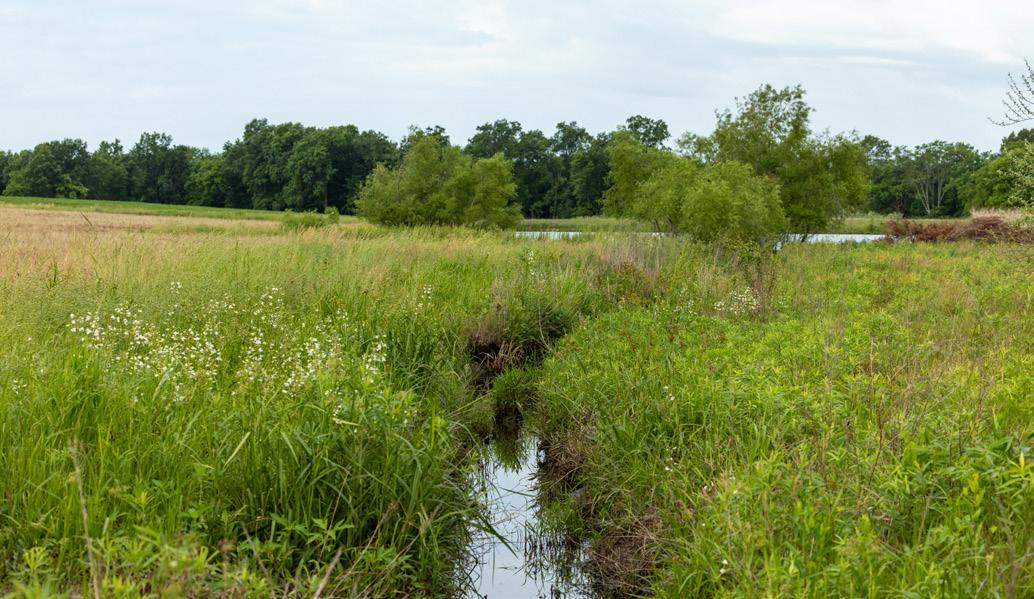
Both the Missouri and federal soybean checkoff prioritized core map development for species that are in areas with row-crop production, and Missouri Soybeans reserved the species relevant to Missouri. We’ve partnered with Compliance Services International to develop core maps.
Virginia Sneezeweed was the first specifies developed in collaboration with Missouri Soybeans, United Soybean Board and Compliance Services International (CSI). These partners then submitted an interim core map to the EPA.
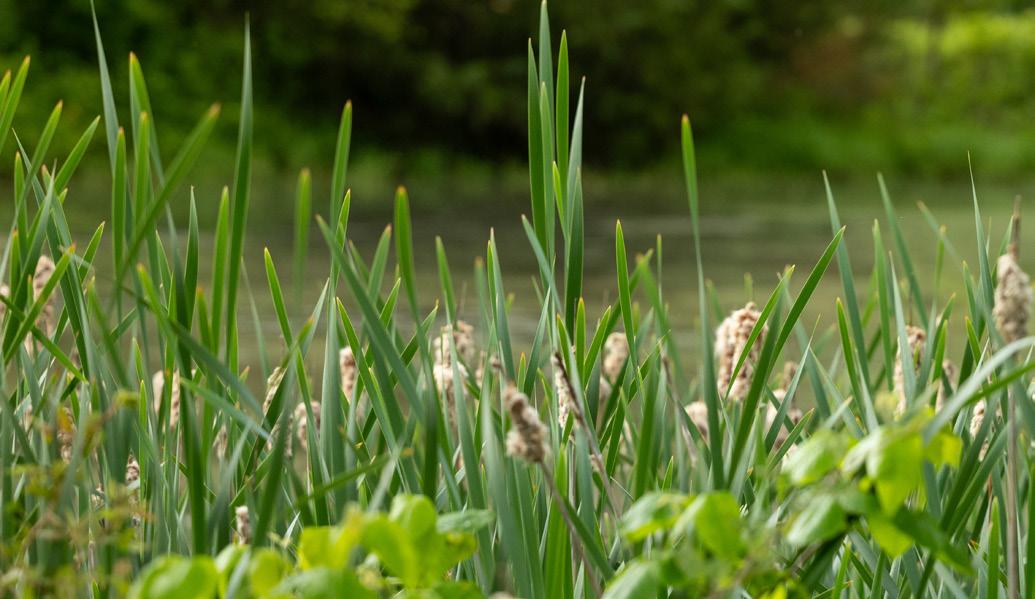
Virginia sneezeweed (Helenium virginicum) is a state and federally threatened perennial herb primarily found in sinkhole ponds and wet meadows of the Ozark Highlands. Due to its restricted habitat, the species is especially vulnerable to changes in hydrology, land development and invasive species. The current range of the map from the U.S. Fish and Wildlife Service for the Virginia sneezeweed is 5.7 million acres.
After applying the first steps in EPA’s core mapping process, the interim core map spanned 15,815 acres. After CSI’s diligent work to refine the area relevant to conservation of the species and relevant to pesticide mitigations, the resulting interim core map for the Virginia sneezeweed covers only 327 acres, significantly reducing the area of potential impact to soybean growers compared to the range.
The EPA’s decision to open its core mapping for endangered and threatened species marks a transformative moment in environmental protection and pesticide management. By granting public participation in this process and to vital tools, the agency empowers all stakeholders to play a direct role in safeguarding America’s natural heritage while ensuring the safe and sustainable use of pesticides.
As of November 2025, EPA had prioritized core map development for 500 species, of which EPA has published 111 interim core maps. These interim core maps have been developed by individuals, entities, pesticide registrants and the EPA itself. At Missouri Soybeans, it’s a priority to be involved in the actions impacting our growers.
A HOME-GROWN LEGACY
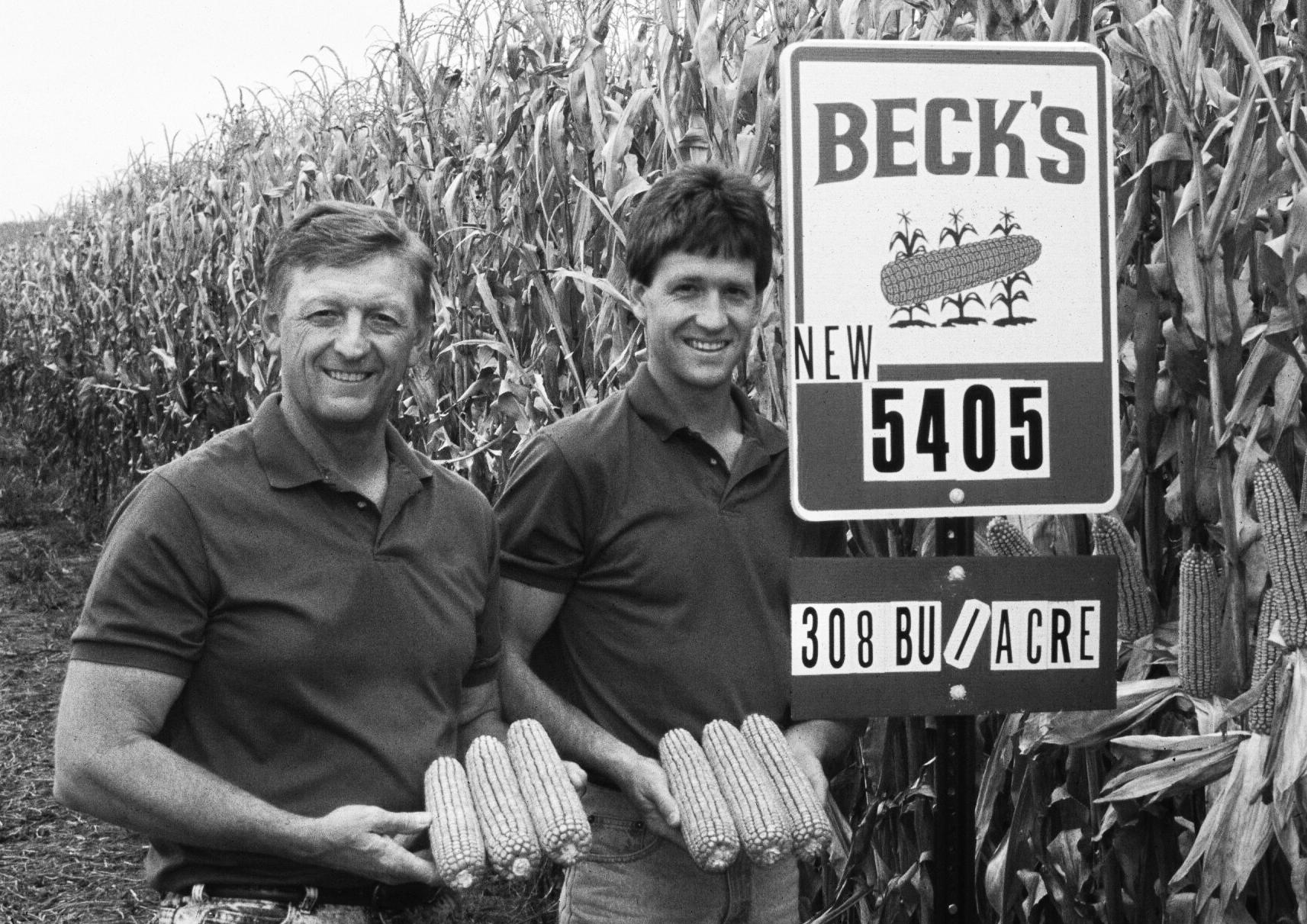
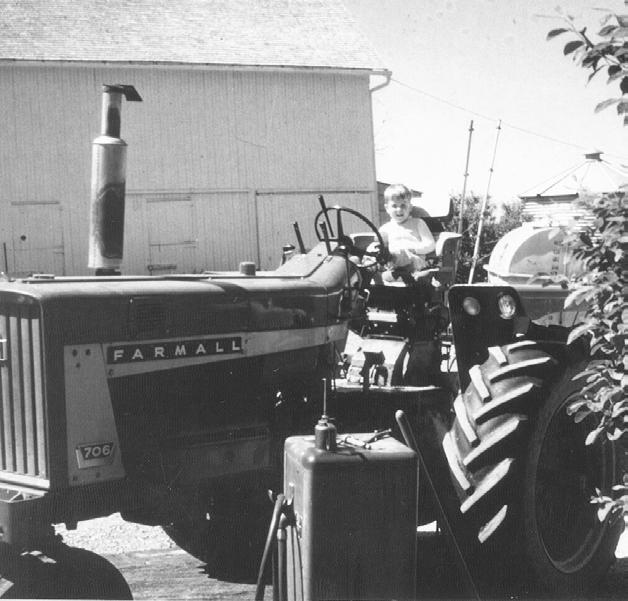
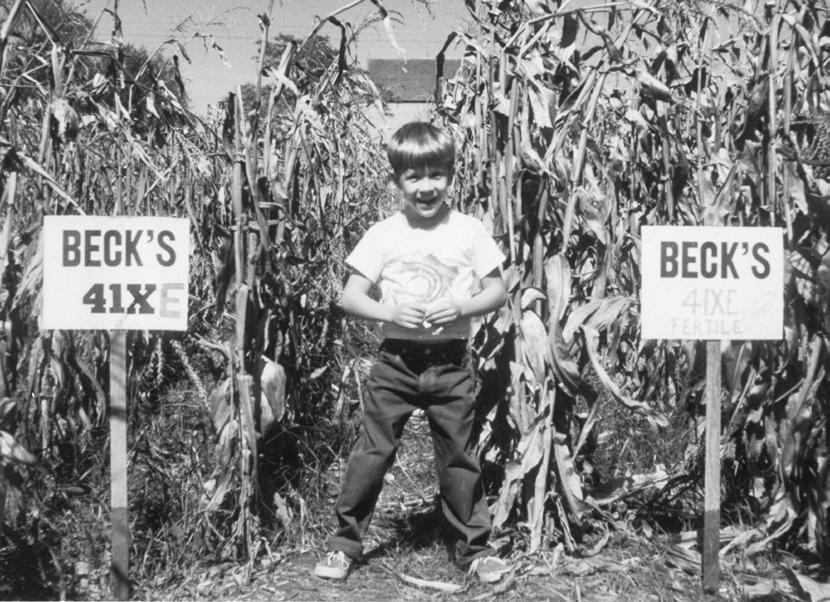
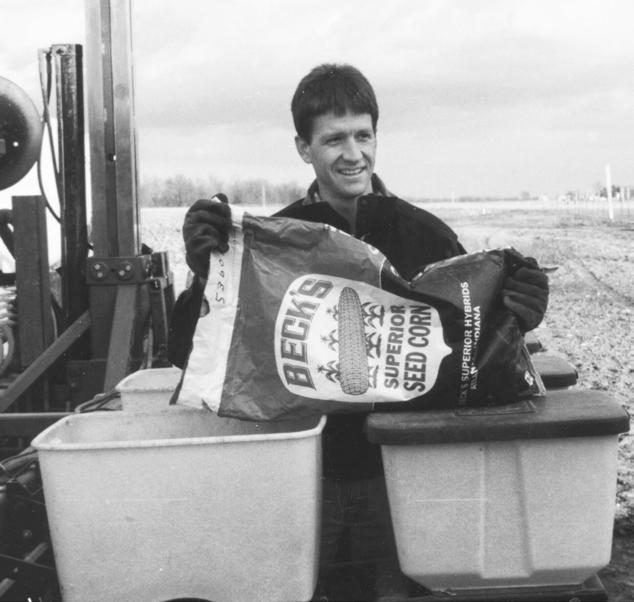
A legacy of faith. A tradition of farming. A future rooted in both.

MOSOY WELCOMES
STEPHANIE RACKERS AS FINANCE MANAGER
Missouri Soybeans is pleased to welcome Stephanie Rackers as the organization’s new finance manager, bringing expanded expertise and dedicated support to the organization’s accounting and financial operations.
In this role, Rackers will assist with financial reporting, reconciliation and compliance monitoring, working closely with longtime finance director Kim Hill to maintain accuracy, transparency and efficiency across both the Missouri Soybean Association and Missouri Soybean Merchandising Council.
“Stephanie brings a strong foundation in accounting, paired with firsthand experience in agriculture and agribusiness,” said Hill. “Her precision, efficiency and proactive mindset are exactly what this role demands.”
Rackers joins Missouri Soybeans with more than five years of accounting experience, most recently serving as director of accounting at Bobby Medlin CPA Group. She earned her MBA in accounting from Columbia College and holds a bachelor’s degree in agribusiness with a minor in accounting from Missouri Valley College.
“I am proud to join Missouri Soybeans where innovation, sustainability and agriculture come together to shape the future of farming,” said Rackers. “I’ve come to realize just how much Missouri Soybeans does to support and strengthen the agriculture community, and I’m proud to be a part of that mission and the soybean family.”
Her addition strengthens the organization’s ongoing commitment to operational excellence and service to Missouri’s soybean farmers.
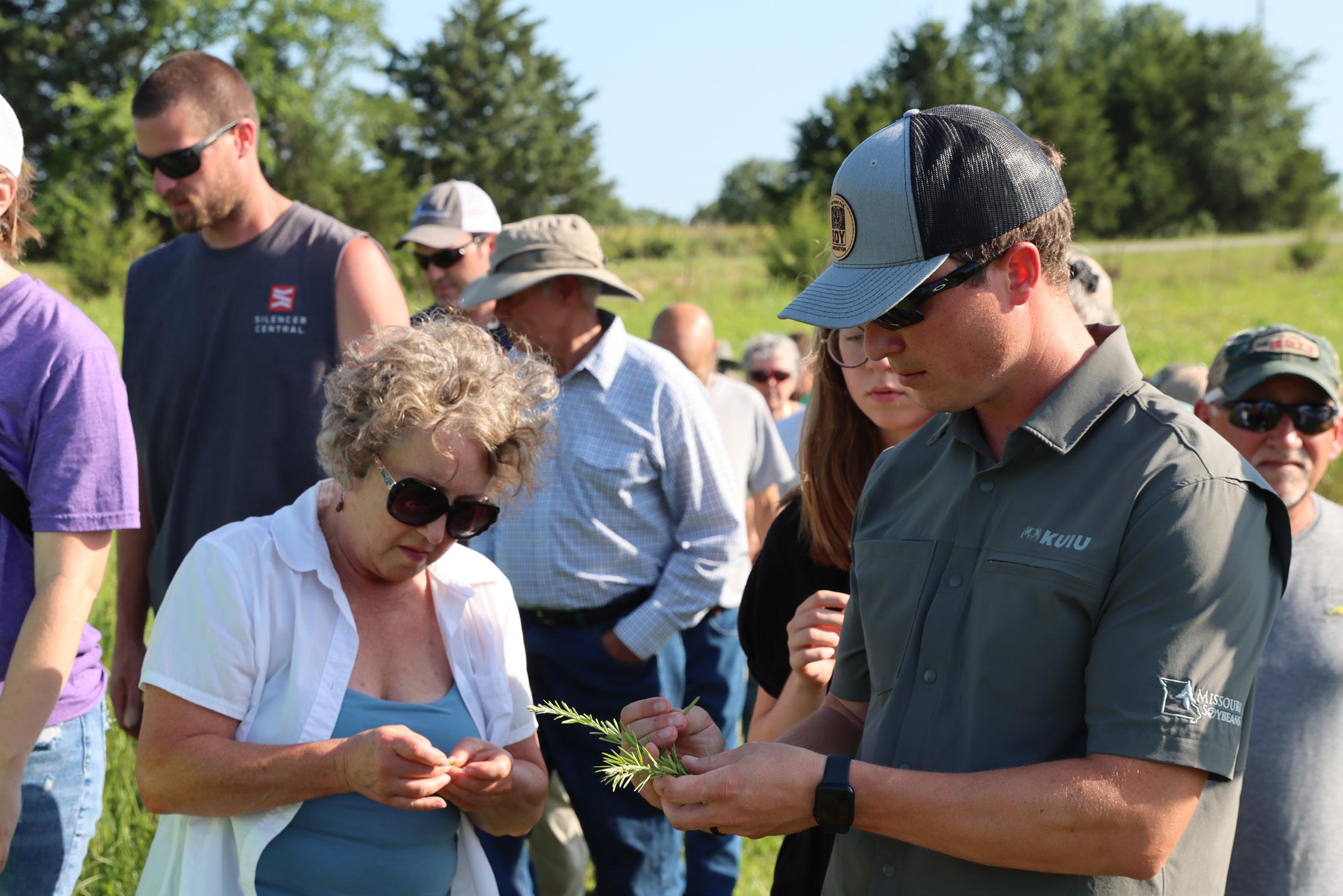
LICHTENBERG NAMED
ASSOCIATE DIRECTOR OF CONSERVATION AGRONOMY
Missouri
Soybeans is proud to announce the promotion of Brady Lichtenberg to associate director of conservation agronomy. In this role, Lichtenberg will lead efforts at the intersection of conservation and agronomic innovation, helping Missouri farmers adopt practices that increase productivity while improving soil, water and wildlife health.
As associate director, he will collaborate with Missouri Soybeans’ research and conservation teams to expand field-level impact through grower outreach, research trials and regenerative systems demonstrations at the Farm for Soy Innovation in Columbia. His work will include increasing engagement with conservation programs, supporting agronomic research, organizing field days and events, and overseeing implementation of practices such as cover crops, nutrient stewardship and edge-of-field habitat.
“Brady has shown a deep commitment to Missouri farmers and the sustainability of our working lands,” said Blake Barlow, Missouri Soybeans’ director of research and agronomy. “His expertise and passion for production agriculture make him a natural fit to lead in this role.”
Lichtenberg brings hands-on experience in crop production, conservation planning and technical research to the position. He previously served as the conservation programs manager, contributing to the development of education programs and demonstration plots statewide. His promotion reflects Missouri Soybeans’ desire to deliver measurable value to soybean producers across the state.
For more information about Missouri Soybeans, visit mosoy.org.

MANAGING INSECT PRESSURE IN MISSOURI SOYBEANS
By Kaitlin
Flick-Dinsmore, Technical Conservation Agronomist
Soybeans
are a vital crop in Missouri, playing a significant role in the state’s economy. But like any major crop, soybean production faces persistent pressure from insect pests that threaten plant health, yield and seed quality. Understanding which insects are most problematic, and when they strike, is key to effective management and long-term sustainability.
Several insect species are known to impact soybean fields across the state. Their feeding behaviors vary, but each can inflict economic losses if left unchecked. The following pests represent some of the most common and damaging insects in Missouri soybean production systems.
BEAN LEAF BEETLE
Bean leaf beetles are among the earliest pests to appear each growing season. Adults chew small, round holes in young soybean leaves and may also scar pods later in the season, leading to seed discoloration and reduced market value. Populations typically peak twice per year — first in spring, then again in late summer as a new generation emerges. Consistent scouting and seed treatments can help suppress early infestations.
SOYBEAN APHID
Although less common in southern regions, soybean aphids continue to be a management concern in northern Missouri. These small, soft-bodied insects feed on plant sap, causing leaf curling, stunted growth and the production of honeydew — a sticky substance that promotes sooty mold. High populations can reduce pod development and yield, and aphids are known vectors for soybean mosaic virus. Economic thresholds are based on aphid counts per plant, making regular field monitoring essential.
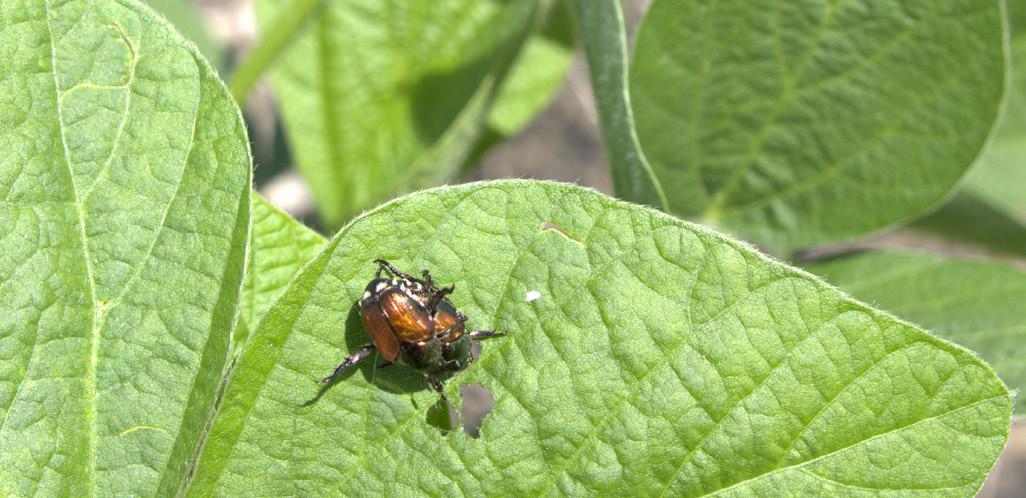
JAPANESE BEETLE
Japanese beetles are metallic green with bronze wing covers and are notorious for skeletonizing soybean leaves. Heavy infestations can significantly reduce canopy leaf area, particularly during mid to late summer. These insects overwinter as grubs in the soil, feeding on grass roots before pupating and emerging as adults in early summer. Managing grassy field borders and timely foliar treatments can help mitigate outbreaks.
CORN EARWORM /
SOYBEAN PODWORM
Often migrating from corn or other host crops, corn earworms (also known as soybean podworms) feed directly on soybean pods,
damaging seeds and reducing yields. Infestations tend to be more severe in late-planted soybeans and during hot, dry conditions. Scouting for eggs and larvae during the R3–R6 growth stages helps determine whether treatment thresholds have been reached.
STINK BUGS (VARIOUS SPECIES)
Several stink bugs can cause extensive pod and seed injury by piercing the pod wall and feeding on developing seeds. Damaged seeds often shrivel or become discolored, reducing quality and marketability. Stink bug pressure tends to peak during the reproductive growth stages, emphasizing the importance of lateseason scouting.
EMERGING CONCERN: TENTIFORM LEAFMINER
A relatively new pest in Missouri soybean fields, the tentiform leafminer was confirmed in central Missouri during late summer 2025. This small larva begins as white and turns pale green as it matures. Leafminers feed internally within leaves, creating visible “mines” or tunnels that do not cross the midrib — a key distinguishing feature when scouting for damage. Injury is most often concentrated along field edges and near wooded areas. Though not yet widespread, this pest warrants monitoring as populations establish.
INTEGRATED MANAGEMENT AND SCOUTING PRACTICES
Successful insect management begins with regular, systematic field scouting. Weekly inspections throughout the growing season allow early detection and identification of insect activity. Using sweep nets, visual observations and pheromone traps can help farmers make timely and informed decisions.
Integrated pest management (IPM) strategies combining cultural practices, resistant varieties, biological control and targeted pesticide use remain the most effective approach for long-term control. Understanding pest life cycles and environmental conditions helps ensure treatments are applied when most beneficial.
Insect management continues to be a critical component of soybean production in Missouri. By identifying key pests, monitoring infestations and adopting integrated control practices, farmers can reduce crop losses and maintain profitability. Continued research, field trials and extension outreach will remain essential to protecting Missouri soybean yields for years to come.
Photos from MU Integrated Pest Management.
CalCulating Conservation roi
By Clayton light, DireCtor of Conservation agriCulture anD farm operations
It’sno surprise to soybean farmers that agriculture is a business of highs and lows. Market fluctuations, unpredictable weather and rising input costs are constant realities. In today’s challenging economic climate, Missouri soybean farmers are looking more closely than ever at ways to diversify their operations and strengthen profitability. One opportunity gaining momentum is the use of conservation practices — not only as tools for resource concerns but also as potential sources of additional revenue. Evaluating the return on investment (ROI) for these practices is an important step in determining how they can fit into a farm’s overall business plan.
Understanding Conservation FUnding
Traditionally, conservation practices have been implemented with the support of federal or state cost-share programs. These programs are designed to encourage the adoption of conservation measures by offsetting some of the up-front costs. In a typical cost-share arrangement, the landowner installs the practice — such as cover crops, terraces or grass waterways — and is then reimbursed for a portion of the expenses, usually between 50% and 90%, depending on the county and the practice involved.
While these programs remain valuable tools for addressing resource concerns such as soil erosion, nutrient loss and water quality, they have not historically been viewed as additional income sources. That dynamic is beginning to change. In recent years, large corporations
and global supply chains have set ambitious sustainability goals, and many are now investing private funds in conservation initiatives. These new revenue streams can significantly improve the ROI of conservation practices on the farm.
a PraCtiCal examPle: Cover CroPs in Central missoUri
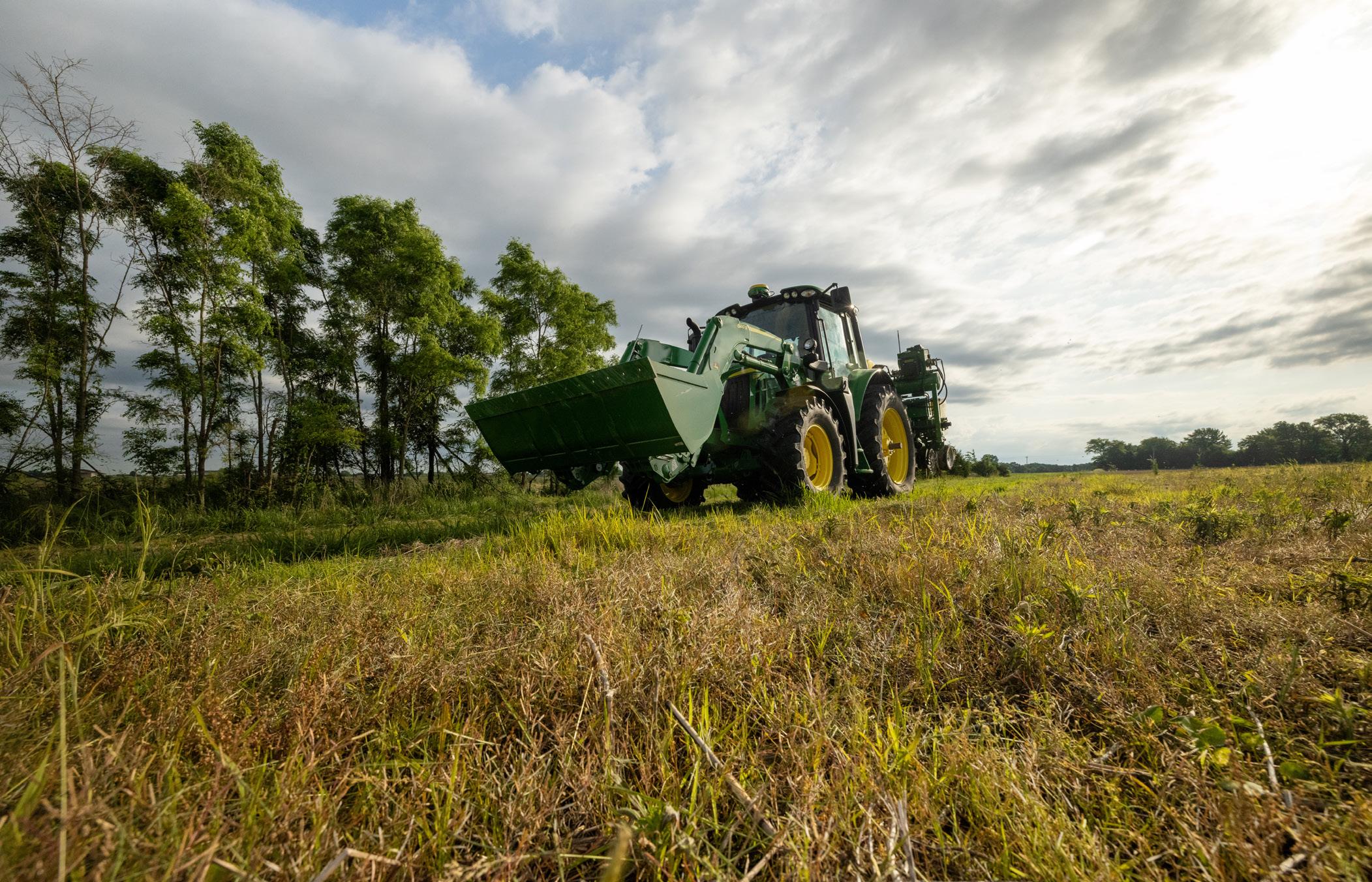
To better understand how this works, let’s consider a practical example. Imagine a soybean farmer in central Missouri managing a 100-acre field prone to erosion. The field already has established grass waterways, but the farmer wants to further protect the soil by planting a cereal rye cover crop.
The first step is to look at traditional funding options, such as the Environmental Quality Incentives Program (EQIP) offered through the Natural Resources Conservation Service (NRCS). In 2024, the average EQIP payment rate for cover crops in this part of Missouri was approximately $62.45 per acre. On a 100-acre field, that equates to $6,245 in cost-share assistance.
Next, the farmer calculates total implementation costs. Establishing a cereal rye cover crop — considering seed, planting and termination — typically ranges from $30 to $70 per acre, depending on input prices and management methods. Using the high end of that range to reflect current costs, total expenses would be about $7,000. After
receiving the EQIP reimbursement, the farmer’s out-of-pocket cost is reduced to $755.
From a financial standpoint, EQIP covers nearly 89% of the cost. However, the true ROI extends far beyond the immediate costshare payment. Over time, cover crops can improve soil health, increase water infiltration and reduce nutrient loss, leading to better yields and lower input needs. Those long-term benefits — while harder to quantify — represent a meaningful return that continues to grow year after year.
exPanding oPPortUnities with Private PartnershiPs
Now let’s revisit the same example, but add a private-sector funding layer. Increasingly, programs are emerging that allow farmers to “stack” payments from both federal and private sources for the same conservation practice. One such option is the Soil and Water Outcomes Fund (SWOF), which uses private investments to pay farmers for environmental outcomes such as improved soil health and reduced nutrient runoff. Participating companies can then use these outcomes to meet their own sustainability targets.
Suppose our Missouri farmer enrolls the same 100-acre field in SWOF and receives an additional $33.30 per acre, the average estimated payment in Missouri for 2025. (Disclaimer: Payment rates can be highly variable depending on soil type, crop history and other factors. This example uses the Missouri average payment.) By combining EQIP and SWOF payments, the farmer can increase overall revenue while still addressing the original resource concern. The key, however, lies in careful coordination — aligning contract timelines, management plans and reporting requirements to ensure compliance with both programs.
making Conservation work For YoUr Farm
This example demonstrates how strategic planning can transform conservation practices from a means of addressing resource concerns to an opportunity to increase the overall bottom line. The potential combinations are numerous, as new programs continue to emerge at both the public and private levels. That said, the process can be complex. What works for one farmer may not work for another due to differences in soil types, cropping systems, geography and management goals.
To maximize ROI, farmers should take the time to research available programs, understand eligibility requirements and plan implementation carefully. Local NRCS offices, Soil and Water Conservation Districts and commodity organizations including Missouri Soybean can provide valuable guidance. Partnering with trusted conservation professionals can also help ensure that the chosen practices deliver both conservation and financial benefits.
the Bottom line
Incorporating conservation practices into a farm’s business strategy is no longer just about stewardship — it’s about sustainability in every sense of the word. With proper planning and the right mix of programs, Missouri soybean farmers can address resource concerns, improve soil health and enhance profitability. Conservation may start with protecting the land, but when managed wisely, it can also protect the bottom line.
For more information about conservation programs and ROI opportunities, contact Clayton Light at clight@mosoy.org
Leaving a Legacy: Three Tips to Help Succession Planning Actually Work
by Robert Guinn, Chief Executive Officer, FCS Financial
The end of the year is a time of reflection and planning. As you sit down to work on your balance sheet and map out your business plan for the upcoming season, you're likely thinking about everything from crop rotations to equipment upgrades. But there's another critical investment that's just as important as any new tractor or land purchase: your farm's future. I’m talking about succession planning.
For more than 30 years, I’ve had the honor of working with Missouri farm families in a variety of roles with FCS Financial. I’ve seen firsthand how a well-thought-out plan can secure a family’s legacy for generations. I’ve also seen the devastating fallout when a plan doesn’t exist or isn’t executed.
Every farmer knows succession planning is important. But if you’re like most, it’s one of those things that’s easy to put off until another day. We’re all busy, and it's much easier to focus on the immediate tasks in front of us. But a successful transition isn’t something that happens on its own — it requires intention and effort. Based on my experience, there are three critical steps I’ve seen families take that make all the difference.
1. Communicate and Communicate Often
When most people think about a succession plan, they think about a will or a trust. But a legal document is just one piece of the puzzle. The most successful farm families I’ve seen are committed to ongoing communication. This means regularly discussing the plan — and the reasoning behind it — with everyone who will be impacted, including your children, their spouses and any other family members.
Leaving your family to guess your intentions after you're gone is a recipe for conflict. I’ve seen families torn apart by assumptions and unspoken expectations. It’s far better to be clear and honest. Have open conversations about your decisions while you’re still in control. While it might feel difficult or uncomfortable at first, having these discussions now prevents surprises and hurt feelings down the road. It ensures everyone is on the same page and helps preserve family relationships.
2. Take Action on Your Decisions
Conversations are a vital first step, but they’re only effective if you follow through. After these family meetings — which should be scheduled and happen regularly — you’ll almost always have a list of “to-do” items. Maybe someone brought up a detail that needs to be revisited, or a tax implication that needs to be addressed. The critical part is actually doing the follow-up work.
Don’t let your plan gather dust in a drawer. You should revisit it any time there are major life events, such as births, deaths, marriages or divorces. These changes can significantly impact your plan, and it's
When a father or mother makes every business decision up until their death, they leave the next generation unprepared to take the reins.
-Robert Guinn
essential to adjust it accordingly. A great plan is a living document, and it requires consistent action to keep it up to date and relevant. I also encourage you to bring your key advisers into these conversations. Your accountant, attorney and lender are vital partners in this process. Not only can they provide expert guidance but involving them also ensures they are familiar with the next generation and their roles in the business. A strong working relationship with these professionals is a crucial component of any successful transition.
3. Transition Management Long Before You Transition Assets
Some of the biggest wrecks I’ve seen are when a farm transitions assets without first transitioning management. When a father or mother makes every business decision up until their death, they leave the next generation unprepared to take the reins.
A successful succession plan includes more than just the transfer of assets. It also requires a clear, intentional timeline for growing the next generation into capable managers. This means giving them opportunities to make decisions, lead projects and gain the skills they’ll need to run the operation. They need to understand the business from top to bottom, from balance sheets and cash flow to production and marketing.
Building this transition period into your plan gives the next generation the confidence and experience they need to succeed. It also allows you to mentor them and guide them through challenges, ensuring the farm continues to thrive for years to come.
Succession planning isn't just about preserving your farm; it's about preserving your family and your legacy. It’s an investment that pays dividends for generations. I encourage you to take the time this winter to start the conversation, take action on your plan and intentionally prepare the next generation. Your family, and your farm, will be better for it.
Guinn joined FCS Financial in 1993 as a loan officer in southwest Missouri and now serves as the Chief Executive Officer for the cooperative. He was raised on a dairy and cow-calf operation in southwest Missouri and graduated from University of Missouri with a degree in agricultural economics.





Focus on Fall Prep
by Blake Barlow, Director of Research & Agronomy
Fallfield preparation is the time when a little extra effort pays off in a big way for next year’s soybean crop. We have plenty of data in Missouri that tells us what really matters this time of year, and it starts with the soil.
Fall is the best window to pull soil samples and see where you stand on your soil’s pH, phosphorus and potassium levels. University of Missouri data continues to show that if pH isn’t right, nothing works the way it should. Your crop will not be able to uptake the nutrients, and herbicides may not be as effective.
Lime applications should be made in the fall, as the lime has several months to react and neutralize acidity before planting season rolls around. Those same long-term trials across Missouri also make it clear that for phosphorus and potassium, hitting the right soil-test levels matters far more than exactly when you apply it. The key is to build up to those agronomic critical values and maintain them, especially in fields that have been mined down after a few years of high yields. Beyond fertility, this is also the season to think about compaction and water management. Missouri’s claypan soils are a constant balancing act: They hold water when you do not want them to and crack when it gets dry.
Research out of the University of Missouri shows that running equipment on wet ground can cause long-term yield drag from compaction, especially in the top 8 inches of those heavy soils. If you have a field that has been rutted up from harvest or spraying during the season, plan to fix it while it’s dry and stable, not during the spring rush. If your fields have drainage issues, this is the best time to get tile installed or repaired. Missouri studies on tile and drainage have shown approximately a 20% yield bump in soybeans and far more consistency across wet and dry seasons.
Once you have handled the basics of your soil’s fertility, it is time to think about cover crops. Data shows that fall-seeded cereal rye is the most reliable cover crop ahead of soybeans in Missouri. When planted early enough and allowed to build some fall biomass, rye does a great job suppressing our most troublesome weeds including waterhemp and Palmer amaranth. It also is a big help in keeping our soils in our fields rather than moving to our creeks and rivers.
University of Missouri weed science research has shown that a good stand of rye can reduce early-season waterhemp emergence nearly as much as a pre-emerge herbicide program. The trick is
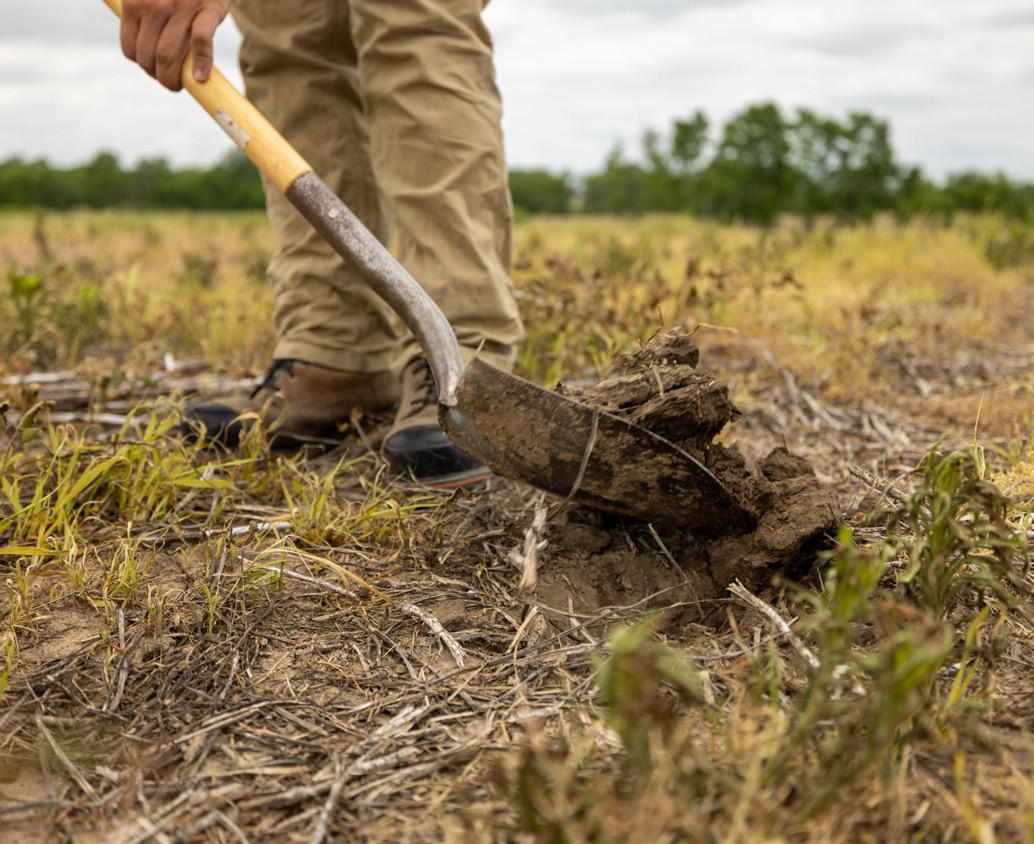
timing; plant the rye as soon as possible after harvest to give it time to grow before winter sets in. Farmers can also seed cover crops with a drone while the cash crop is still in the field. If you have used residual herbicides late in the season, you will need to double-check the label or the University of Missouri’s herbicide carryover data before planting covers. Some chemistries can knock back certain species, but rye usually plays well with most of them.
Beyond the weed control and keeping our soils in place, cover crops play the long game for soil health. Missouri field studies have shown real improvements in microbial activity, enzyme function and soil structure after just a few years in a consistent cover system. The soil organic matter starts to increase, infiltration improves and soils become more resilient to both drought and heavy rains.
These benefits do not happen in just one season. Profitability and soil benefits start to show up after about four years, so it’s something to stick with, not just test once. Fall is also the right time to make a call on tillage. The research continues to back reducedtill and no-till systems for improving soil health, holding moisture and keeping nutrient loss in check. The heavy conventional tillage might look clean, but the long-term impact on structure, erosion and compaction is hard to justify. If you have residue management issues, handle them in fall, but otherwise let that residue protect the soil through winter.
Another important part of fall preparation is keeping notes on what has been applied, what fields are limed and where cover crops are seeded. That way you are not guessing when it comes time to bring the planter back out in the spring. It is also worth pulling fall soil health samples if you’re in a multiyear cover crop program, so you can measure your soil improvements instead of just guessing.
The bottom line is this: Fall prep isn’t about doing more; it’s about doing the right things at the right time. Take advantage of the cool, dry weeks ahead to get your soils balanced, your fields decompacted and your cover crops established.
Missouri research gives us clear direction: Get the fundamentals right now, and the next growing season will be smoother. You don’t need to overhaul everything at once. Take care of what the data says matters most: pH, structure, water and biology. The rest will follow.
Managing Costs While Navigating Global Uncertainty
Rising input costs remain top of mind for Missouri soybean producers, but this season’s challenges extend beyond the field. While seed, fertilizer, fuel and chemical expenses continue to strain budgets, global trade tensions are adding another layer of uncertainty.
Export Outlook: Why It Matters for Missouri
The U.S. Department of Agriculture (USDA) reports Missouri consistently ranks among the nation’s top soybean producers, yielding roughly 265 million bushels in 2024 with an average of 48 bushels per acre. The Missouri Soybean Merchandising Council reported about 87 million bushels were exported during the 2023-24 marketing year.
The state’s soybean economy is linked closely to international demand, particularly from China, which once bought more than half of all U.S. soybean exports. That connection has weakened amid renewed tariff disputes and suspended import deals. Analysts estimate national soybean exports could fall by up to 20% without a new U.S.–China trade agreement. Lower export volumes typically pressure prices at harvest, leaving growers with less room to absorb high input costs.
In response, Missouri’s checkoff program is investing in local crush facilities, biodiesel production and soy-based manufacturing to reduce reliance on exports and strengthen in-state demand. Expanding domestic markets can help stabilize prices and give growers more marketing flexibility when global sales fluctuate.
What to Include in Your Planning
Benchmark input costs using MU Extension’s 2025 budgets but update figures with your supplier quotes. Build flexibility into crop plans to account for volatile markets and variable fuel prices. Treat efficiency as a year-round priority — from nutrient management to logistics — and document savings to measure what works.
With global markets in flux, Missouri’s soybean farmers have limited control over prices, but they can control how efficiently they produce each bushel. By refining management, investing in soil health and capitalizing on local demand, they can maintain profitability even when trade winds shift.
Strategies to Minimize Input Cost
SOIL FIRST, THEN FERTILIZER SEED AND VARIETY SPEND
Regular soil testing remains the most effective way to cut unnecessary fertilizer costs. MU Extension specialists recommend basing phosphorus, potassium and lime applications on current test results rather than fixed schedules. Maintaining near-neutral pH supports nodulation and nitrogen fixation, and spreading nutrient purchases over multiple years can help avoid buying at peak prices.
Seeding rates can be adjusted without hurting yield in most Missouri fields. Research from MU Extension shows that final stands between 100,000 and 120,000 plants per acre often achieve maximum yield potential. Matching trait packages to field-specific weed and pest pressure prevents overspending on technology that doesn’t deliver added value. On-farm strip trials provide reliable data to guide those decisions.
FUEL, FIELD OPERATIONS AND PASSES
Fuel and labor costs are often underestimated. Tracking field passes and gallons used per acre highlights opportunities to combine operations, such as pairing herbicide and foliar fertilizer applications. Precision technology, including section control and auto-steer, reduces overlap and saves both time and fuel.
HERBICIDE AND CHEMICAL PROGRAMS
Weed scientists continue to caution against cutting herbicide rates. Skipping residuals or delaying postemergence sprays can lead to escapes and resistance, which are more expensive to fix than prevent. A layered, fullrate herbicide program applied on schedule remains the most cost-effective approach. Consistent scouting helps growers target applications only where needed.
LEVERAGE CHECKOFF AND LOCAL DEMAND
Missouri Soybeans’ checkoff programs fund research and market development aimed at lowering production costs and expanding domestic demand. Growers can access regional plot data, efficiency research and market updates through Missouri Soybeans and MU Extension. Participation in these programs ensures local dollars return as practical solutions on Missouri farms.
RICHARD FORDYCE NAMED
TO USDA LEADERSHIP
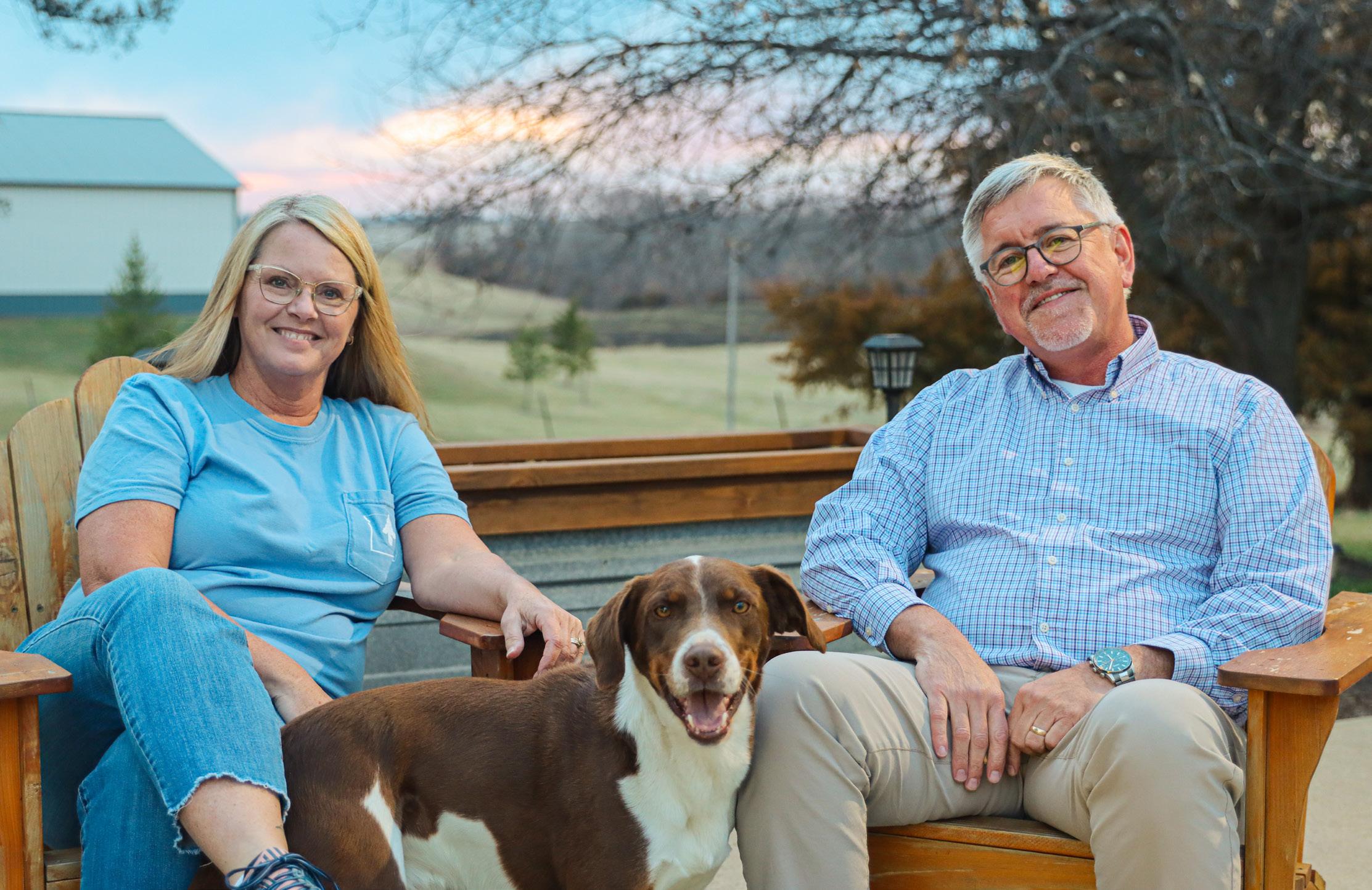
Missouri’s soybean industry is once again represented at the highest levels of U.S. agriculture, as longtime farmerleader Richard Fordyce was confirmed by the U.S. Senate on Sept. 19, 2025, as the undersecretary for Farm Production and Conservation at the U.S. Department of Agriculture (USDA).
Fordyce, a lifelong farmer from Bethany, Missouri, brings decades of experience in both production agriculture and public service. He is married to Renee Fordyce, who currently serves as president of the Missouri Soybean Association, making their family deeply rooted in Missouri’s soybean leadership.
He previously served as Missouri’s director of agriculture and as the administrator of USDA’s Farm Service Agency, where he led implementation of the 2018 Farm Bill and played a key role in delivering support programs during COVID-19.
In his new role as undersecretary, Fordyce will oversee USDA agencies that directly serve farmers and ranchers — including the Farm Service Agency, Natural Resources Conservation Service and Risk Management Agency. His responsibilities will include
guiding federal conservation efforts, supporting risk management programs and ensuring timely delivery of farm support payments across the country.
“Richard’s steady leadership, deep understanding of ag policy and unwavering commitment to farmers make him a perfect fit for this critical position,” said Casey Wasser, CEO and executive director of Missouri Soybeans. “He’s one of us — and he knows firsthand the challenges our producers face.”
Fordyce is also a longtime supporter of Missouri Soybeans, having served as a board member on the Missouri Soybean Merchandising Council and as a consistent advocate for rural communities, innovation and conservation efforts. His confirmation as USDA undersecretary ensures that Missouri’s voice will be heard in key decisions impacting crop insurance, conservation programs and farm income support.
Missouri Soybeans congratulates Richard and looks forward to working with him to advance policies that support profitability and sustainability for soybean growers across the country.
RONNIE RUSSELL TAPPED
FOR STATE EXECUTIVE DIRECTOR OF THE FARM SERVICE AGENCY
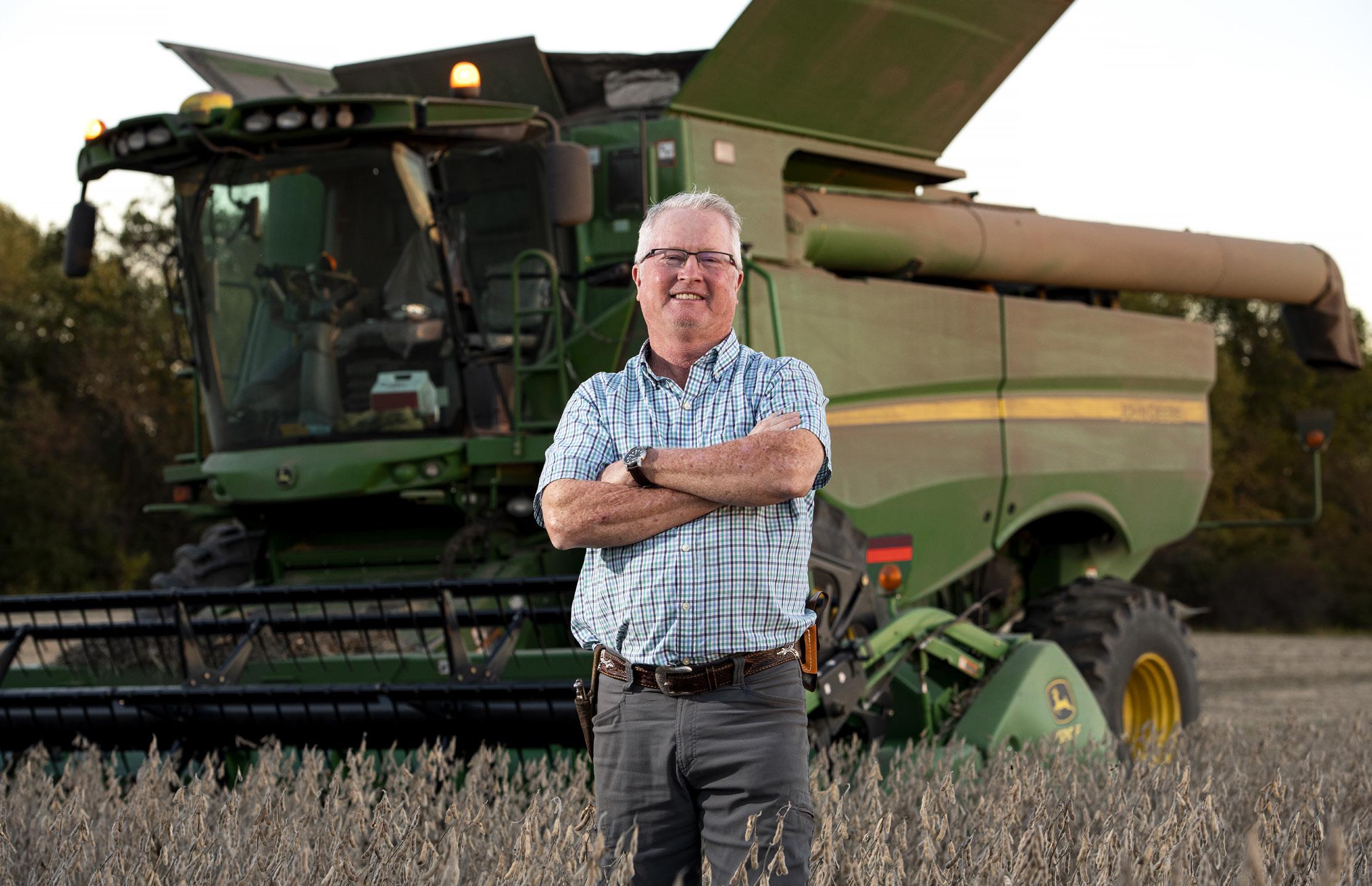
TheTrump administration recently appointed Ronnie Russell as the new State Executive Director (SED) for the USDA Farm Service Agency (FSA) in Missouri.
“When America’s farming communities prosper, the entire nation thrives. This new group of USDA appointees will ensure President Trump’s America First agenda is a reality in rural areas across the country. I am grateful for the leadership of these new state directors and look forward to their work reorienting the agency to put Farmers First again,” said Agriculture Secretary Brooke Rollins.
“FSA state executive directors serve in a critical role carrying out USDA’s mission at the state level — ensuring that our focus is on meeting the needs of local agricultural producers by putting farmers and ranchers first,” said FSA Administrator Bill Beam. “Rural communities need our support now more than ever. Our newly appointed state leaders bring a wealth of knowledge and expertise to their position as SED, and they will play an integral role in shaping the future of agriculture in their states.”
Originally from Richmond, Missouri, Russell has farmed corn, soybeans, wheat and hay, in addition to operating a cow/calf
operation and retail commercial fertilizer business. He recently served on the boards of directors for the American Soybean Association, the Missouri Soybean Association and the Missouri Fertilizer Control Board. He also has been involved in his local community, serving on the Ray County Hospital Board of Trustees and on his local extension council.
As SED, Russell is responsible for overseeing the delivery of FSA programs to agricultural producers in Missouri. These commodity, conservation, credit and disaster assistance programs ensure a safe, affordable, abundant and nutritious food, fiber and fuel supply for all Americans.
FSA helps America’s farmers, ranchers and forest landowners invest in, improve, protect and expand their agricultural operations through the delivery of agricultural programs for all Americans. FSA implements agricultural policy, administers credit and loan programs, and manages conservation, commodity, disaster recovery and marketing programs through a national network of state and county offices and locally elected county committees. For more information, visit fsa.usda.gov.
From the Midwest to the Northeast: How Missouri Soybeans Are Heating Homes and Building a Low-Carbon Legacy
By: Heather Buechter, Director of Communications, Clean Fuels Alliance America
Data is necessary. Science is critical. Logistics are essential. But stories move people.
For Missouri soybean farmers, the story of Bioheat fuel is one of innovation, opportunity and ownership. It’s about how the soybeans grown in fields across this state are helping families in the Northeast stay warm through the winter, while helping the nation move toward a low-carbon future.
Nearly three decades ago, U.S. soybean farmers saw the potential to transform their crop into a cleaner, renewable fuel. Through checkoff investments in Clean Fuels Alliance America, farmers helped establish the biodiesel industry and have continued to expand its reach into new markets. Today, that investment is paying off in a powerful way through Bioheat fuel.
Bioheat fuel, a blend of traditional heating oil with biodiesel made from excess soybean oil and other renewable sources, is heating homes, schools and businesses from New York to Maine, cutting carbon emissions without changing any equipment. When homeowners in the Northeast choose Bioheat fuel, they’re choosing fuel made possible by Midwest farmers. They’re part of a renewable energy story rooted in rural America.
Policy Progress and Market Growth
Momentum for Bioheat fuel continues to build as states in the Northeast adopt ambitious renewable heating standards. In 2025 alone, several states took major steps forward:
• Rhode Island increased its Bioheat fuel requirement to B20.
• Connecticut and New York advanced to B10, doubling their renewable blend levels.
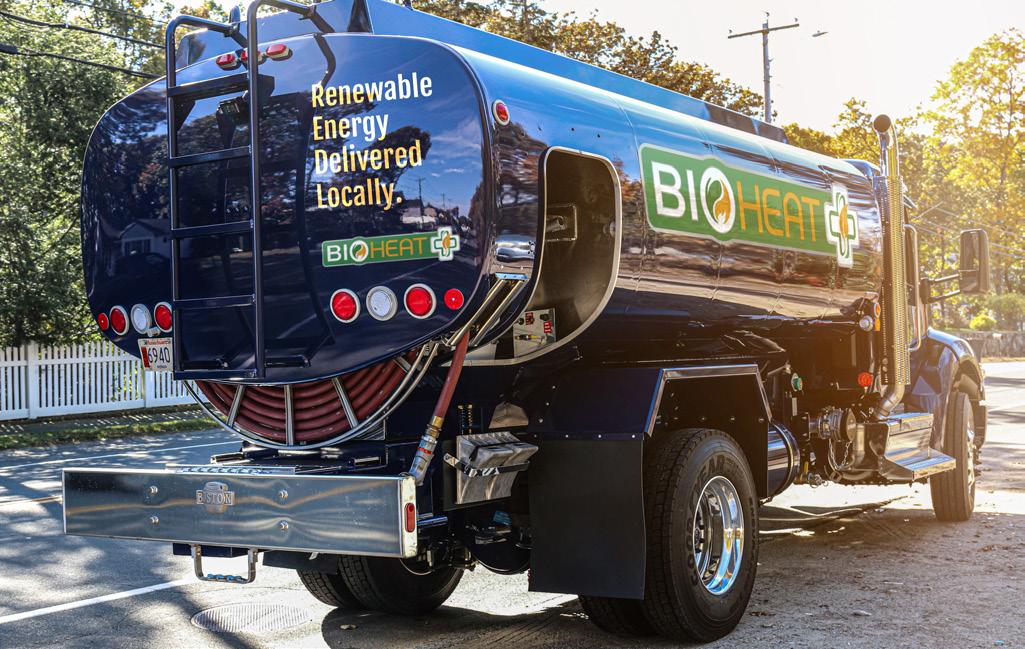

These policies are transforming the heating oil industry. They’re also creating a growing market for soy-based biodiesel, demand that ripples all the way back to farms in Missouri. That momentum continues to grow. Efforts are underway to expand renewable heating policies through Clean Heat Standards and other complementary measures, keeping Bioheat fuel at the forefront of the low-carbon energy transition.
Cold Weather Confidence
One of the most common misconceptions about biodiesel and Bioheat fuel is that they can’t perform in cold weather. The truth? They can, and they do.
All diesel fuels, whether petroleum- or bio-based, must be properly managed for cold weather. That’s nothing new to fuel distributors or heating professionals. By understanding properties such as Cloud Point and Pour Point, and by following established best practices, Bioheat fuel blends perform reliably in even the most challenging winter climates. Clean Fuels, through its partnerships with international molecule manufacturers, also worked on developing next-generation cold flow technology that helps reduce outside fuel tank winter challenges, another success story made possible thanks to Qualified State Soybean Board (QSSB) funding.
Confidence in biodiesel’s performance is also being reinforced by leading equipment manufacturers. Weil-McLain, a trusted name in heating systems, has introduced B100-compatible residential oil boilers designed to run entirely on biodiesel. R.W. Beckett, a leading burner manufacturer, and Energy Kinetics, an innovator in heating technology, have also rolled out burners and systems designed to operate on 100% biodiesel. These advances are making it easier than ever for homeowners and fuel dealers to transition seamlessly to Bioheat fuel.
Behind this progress are strong partnerships. Checkoff investments from QSSBs into Clean Fuels have helped support collaborations with organizations such as the National Oilheat Research Alliance (NORA), a federally authorized organization that represents the heating oil industry and promotes research, training and education. Together, these organizations are demonstrating how Bioheat fuel can decarbonize home heating today using existing infrastructure.
This collaboration helps fuel dealers and consumers understand not only the environmental benefits of Bioheat fuel but also its reliability, safety and performance. NORA’s field research and educational outreach complement Clean Fuels’ policy and technical work — together helping the entire industry move confidently toward higher biodiesel blends.
Farmers: The Storytellers Behind the Movement
Every movement starts with a story, and every story starts with someone who believes in what they’re building.
Midwest soybean farmers are the storytellers behind Bioheat fuel’s success. Through their checkoff investments and leadership within Clean Fuels, they are helping turn renewable fuel innovation into real-world impact. Each new policy and each new homeowner choosing Bioheat fuel is another chapter in the story Missouri farmers helped write.
When we talk to homeowners, we don’t just say that “B20 reduces lifecycle greenhouse gases by more than 70% on average.” That’s accurate, but it’s not what moves people.
Instead, we tell them:
“When you choose Bioheat fuel, you’re heating your home with fuel made from America’s soybean farms. Fuel that lowers emissions, supports local jobs and strengthens energy security without changing a single thing in your home. You’re part of the solution.”
That’s the kind of message that sticks — shared at the dinner table, at the soccer field and across communities. It’s how the renewable energy movement grows.
For soybean farmers, Bioheat fuel represents more than a market. It represents a legacy. It’s proof that when farmers invest in innovation, they can shape the nation’s energy future. From the fields of the Midwest to the homes of the Northeast, soy is helping America stay warm and sustainable. And that’s a story worth telling.
MISSOURI SOYBEANS
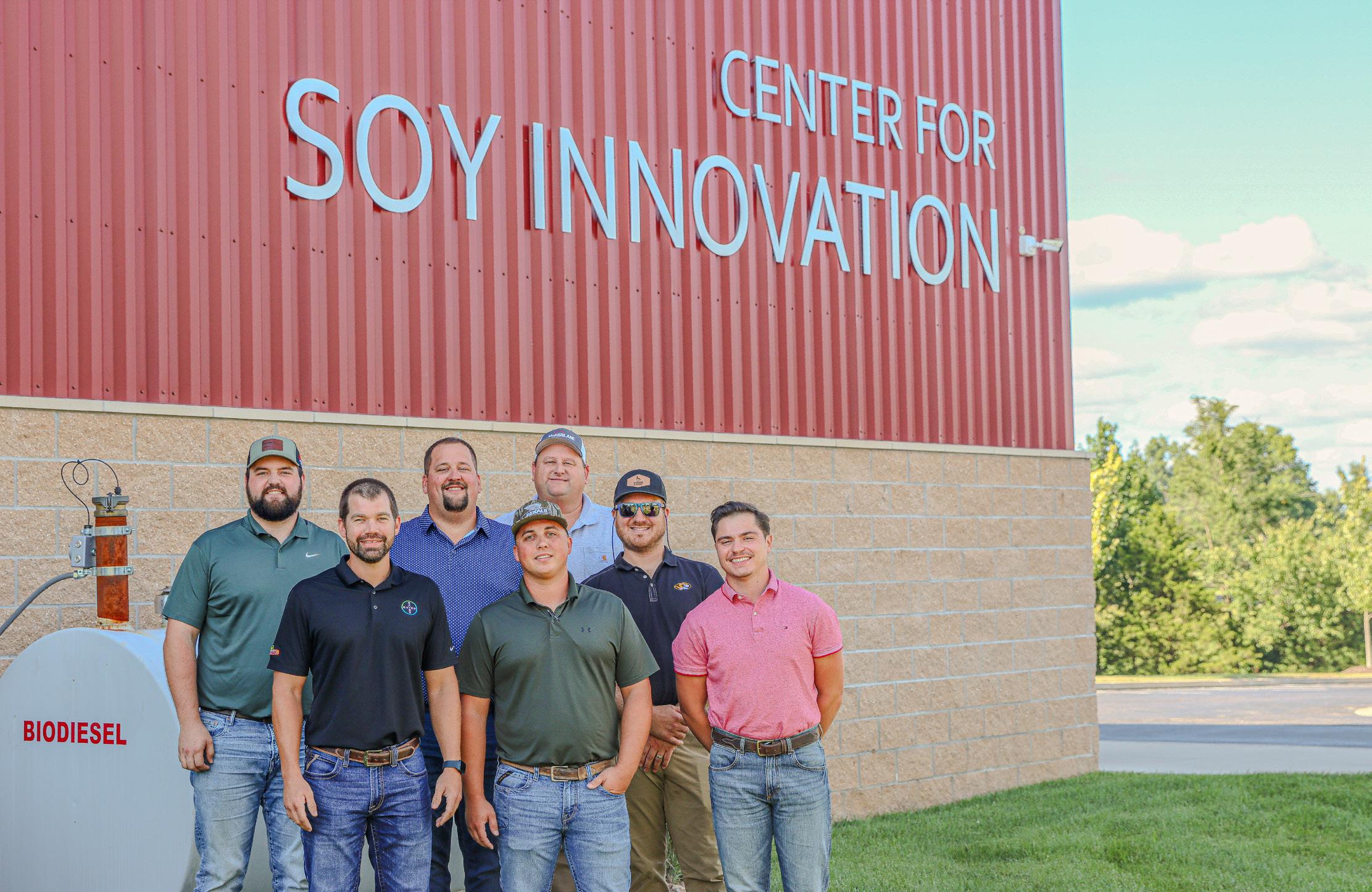
WELCOMES NEW CLASS OF
GRASSROOTS FELLOWS
TheMissouri Soybean Association and Missouri Soybean Merchandising Council are proud to announce the newest class of the Missouri Grassroots Fellowship program. Now in its fifth year, the fellowship prepares young farmers to be strong advocates and leaders through policy training, advocacy experiences and global market development opportunities.
This year’s fellows represent soybean farmers from across the state, bringing fresh perspectives and leadership potential to the future of Missouri agriculture.
The 2025 Missouri Grassroots Fellows include:
• Seth Gibson, Richmond — District 1
• Luke Hopper, Chillicothe — District 2
• Michael Crowley, Sturgeon — District 3
• Zachary Nixon, Kahoka — District 3
• Casey Heiman, Butler — District 4
• Gregory Koetting, Henley — District 5
• Craig Schneider, Warrenton — District 6
The Missouri Grassroots Fellowship is designed to prepare young farmers, ages 25–45, to be strong advocates for agriculture and leaders in their communities. Fellows participate in a yearlong program featuring in-depth sessions on policy, media training and grassroots engagement. They also take part in advocacy trips to Jefferson City and Washington, D.C., and learn about international trade opportunities through global market development.
“Investing in the next generation of leaders is essential for the future of Missouri agriculture,” said Renee Fordyce, MSA president. “This fellowship equips farmers with the skills, relationships and experiences they need to represent their peers and strengthen the voice of agriculture.”
Since its inception, the Missouri Grassroots Fellowship has built a strong track record of shaping future leaders who step into roles on local boards, commodity organizations and statewide initiatives.
For more information on the Missouri Grassroots Fellowship program, visit mosoy.org.

Generators pose electrical risks, especially when used during inclement weather. Missouri Electric Cooperatives reminds farmers to:
• READ AND FOLLOW all manufacturer operating instructions to properly ground the generator.
• NEVER use a generator in a puddle or standing water and never touch with wet hands.
• TURN OFF portable generators and let them cool down before refueling. Never refuel a generator while it is running.
• STORE FUEL for your portable generator in a container that is intended for the purpose and is correctly labeled as such.
• KEEP CHILDREN AND PETS away from the generator, as it could burn them.
• OPERATE your generator once a month for 10 minutes to ensure it is running properly.
Learn more at moelectriccoops.com
Missouri’s Distinctive Crop Insurance Landscape: Understanding HighRisk Ratings, Subsidy Changes and New Opportunities for Producers
By Brian Long, Senior Director, UnCommon
Farms
Insurance
Solutions
Missouriagriculture has always operated in a landscape defined by diversity. From the rolling acres of the northwest to the deep, fertile stretches of the Bootheel, and with the Missouri and Mississippi Rivers cutting through the state along with countless tributaries, the growing environment is anything but uniform. That variability explains why Missouri stands out nationally when it comes to crop insurance. No other state has quite the same combination of river systems, flood-prone areas and irregular risk patterns, and the Federal Crop Insurance Corporation recognizes this by assigning a wide range of High-Risk classifications across the state.
Producers in Missouri are familiar with the intricacies of managing risk, but the details behind High-Risk land, county maps and evolving premium structures are worth revisiting, especially as changes from USDA’s Risk Management Agency (RMA) have begun to influence policy choices and affordability for 2025 and beyond.
Missouri’s High-Risk Map Structure: A System Unlike Anywhere Else
High-Risk land is often misunderstood as interchangeable with Highly Erodible Land, or HEL, but the two are not the same. HEL focuses on soil erosion and conservation compliance; High-Risk classifications are strictly tied to crop insurance loss potential. In Missouri, that risk is shaped largely by river systems, low-lying ground and repetitive flooding patterns that vary dramatically over short distances.
RMA identifies these areas through High-Risk maps labeled with codes such as AAA through RRR. While many states have some High-Risk designations, Missouri’s range is unusually broad. Counties across the state exhibit very different classifications, even within the same region.
Lettered classifications signal how ground is treated for rating purposes. They influence premium cost, accessibility to certain policies and how coverage levels are calculated or adjusted. For producers, understanding these codes is important because they directly affect insurability and farm-level risk management decisions.
How Rating Methodologies Work
Within the High-Risk framework, RMA uses several rating methodologies that determine how premiums are calculated. These include:
• Additive Ratings: A fixed surcharge added to the base premium for land considered more prone to losses.
• Replacement Ratings: Used when standard rates do not adequately reflect actual risk, often substituting one rating approach for another.
• Multiplicative Ratings: A percentage-based adjustment that scales premiums based on estimated loss potential.
With High-Risk maps evolving, subsidy structures shifting, and program adoption trends changing across the state, Missouri farmers will continue facing a dynamic crop insurance environment. Staying informed is essential.
-Brian Long
There are also areas classified as Unrated, meaning RMA has insufficient data to assign a standard rate. In these cases, insurability requires written approval, and additional review is often necessary before coverage is granted.
For Missouri farmers, the combination of diverse terrain and shifting river impacts means maps and classifications can and do change, and producers should review their High-Risk designations each year rather than assume they remain static.
Increased Subsidies and Premium Assistance in 2026
Alongside the unique risk landscape, one of the major changes entering 2026 is the increase in premium assistance across several crop insurance programs. These adjustments are designed to enhance affordability and broaden access to higher levels of protection.
One notable improvement applies to Revenue Protection (RP) and other common policies. Subsidy increases are expected to reduce producer-paid premiums for 2026.
Another area seeing meaningful change is the Enhanced Coverage Option (ECO). Historically, ECO adoption in Missouri has been limited by the farmers’ reluctance to insure county yields in place of their individual farm yields. The increased subsidy level introduced for 2025 has already led to a noticeable rise in policies purchased with this option. With additional premium assistance for 2026, ECO is expected to become even more attractive going forward. This policy allows coverage from 86%-90% or 95% of expected revenue based on county yields.
Support for Beginning Farmers and Ranchers
Missouri also stands to benefit from improvements to the Beginning Farmer and Rancher (BFR) program. BFR provisions offer expanded premium subsidies along with administrative advantages such as fee waivers and enhanced yield substitutions. For new operators working in areas with High-Risk designations, these benefits can be
especially valuable. Entering production agriculture in Missouri often means operating on land where historical flooding, variable soil types or previous loss experience influence insurability.
The updated BFR assistance provides a more attainable starting point for risk management and helps new producers secure coverage that aligns with real exposure.
Navigating a Changing Insurance Environment
With High-Risk maps evolving, subsidy structures shifting and program adoption trends changing across the state, Missouri farmers will continue facing a dynamic crop insurance environment. Staying informed is essential, particularly given how localized risk can be in a state defined by rivers, lowlands and narrow bands of flood-prone ground.
Missouri’s uniqueness does not complicate production agriculture so much as it emphasizes the importance of understanding risk and choosing coverage that reflects it. The expanded support available for 2026 gives producers new tools to manage uncertainty while maintaining the flexibility needed for farms spread across one of the country’s most geographically varied agricultural

Brian joined UnCommon Farms in May 2024, bringing more than 20 years of crop insurance experience spanning agency and provider roles, including leadership of a national crop insurance agency. Raised on a corn and soybean farm in Morgan County,
Harvest at the Lodge
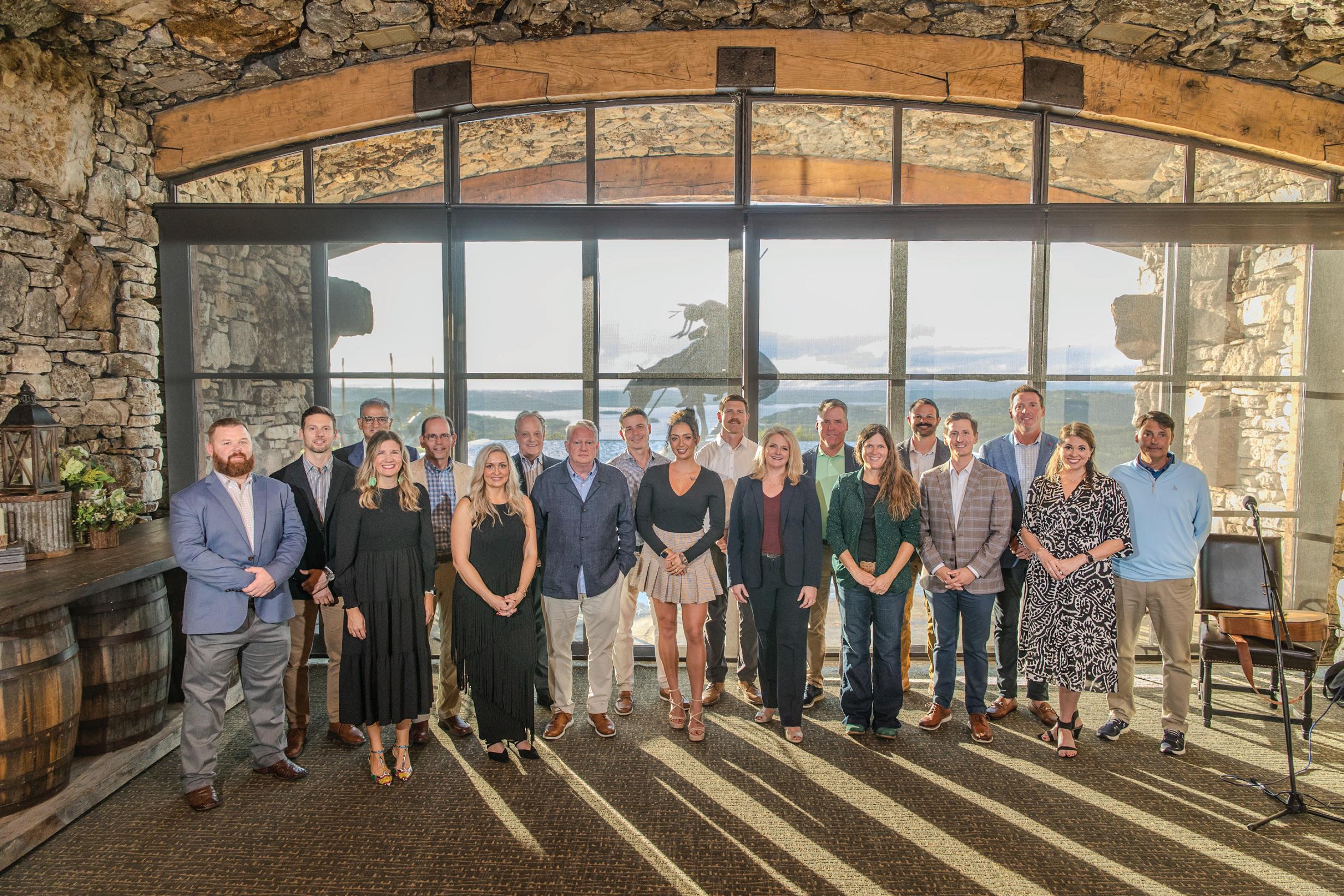
Missouri’s rich food and agriculture story came to life in the heart of the Ozarks for Harvest at the Lodge, a symposium that brought together national leaders in site selection with Missouri’s leaders in food, agriculture, and economic development.
Learn more about Missouri Partnership’s efforts to attract new food and beverage business to Missouri at missouripartnership.com.
Missouri Experts Weigh In SEED DECISIONS START HERE:
EDDIE HOFF
Beck's Hybrids
“Farmers should choose a dealer who challenges them to set a much higher yield goal and give them the necessary information to help them achieve it,” said Eddie Hoff, a Beck’s Hybrids seed dealer. “It’s about identifying the limiting factors in your production system — step by step — and solving what’s holding you back. Every company has good products. The difference is having someone in your corner who helps you raise your yields year after year.”
Eddie emphasizes that seed selection is just one piece of the puzzle. “A good dealer isn’t just selling seed — they’re helping you look at the whole operation,” he said. “What are you short on agronomically? Where can you improve your fertility plan or your stand count? That’s what we’ve done on our own farm — diagnose the weak spots and build on them season after season. The goal is to make your system stronger, not just your seed lineup.”
According to Eddie, the best dealer relationships are rooted in honest conversations and shared goals. “When you have someone willing to challenge you, that’s when you start unlocking real yield potential,” he said.
Crop Partners CLINT DEITCH
“Fall is really the prime window for farmers to capture the largest seed savings of the entire year. This is when the most aggressive early-order discounts are available — and when you can stack multiple programs together to really drive down cost per acre,” said Clint Deitch, owner of Crop Partners, selling Channel seed and agricultural chemicals for local farmers.
“Planning ahead this time of year not only locks in better pricing, but it also ensures access to the topperforming varieties before supplies tighten. When growers take advantage of these fall incentives, they’re setting themselves up for both economic and agronomic success come spring.”
Pioneer Seed Sales DANIEL CARPENTER
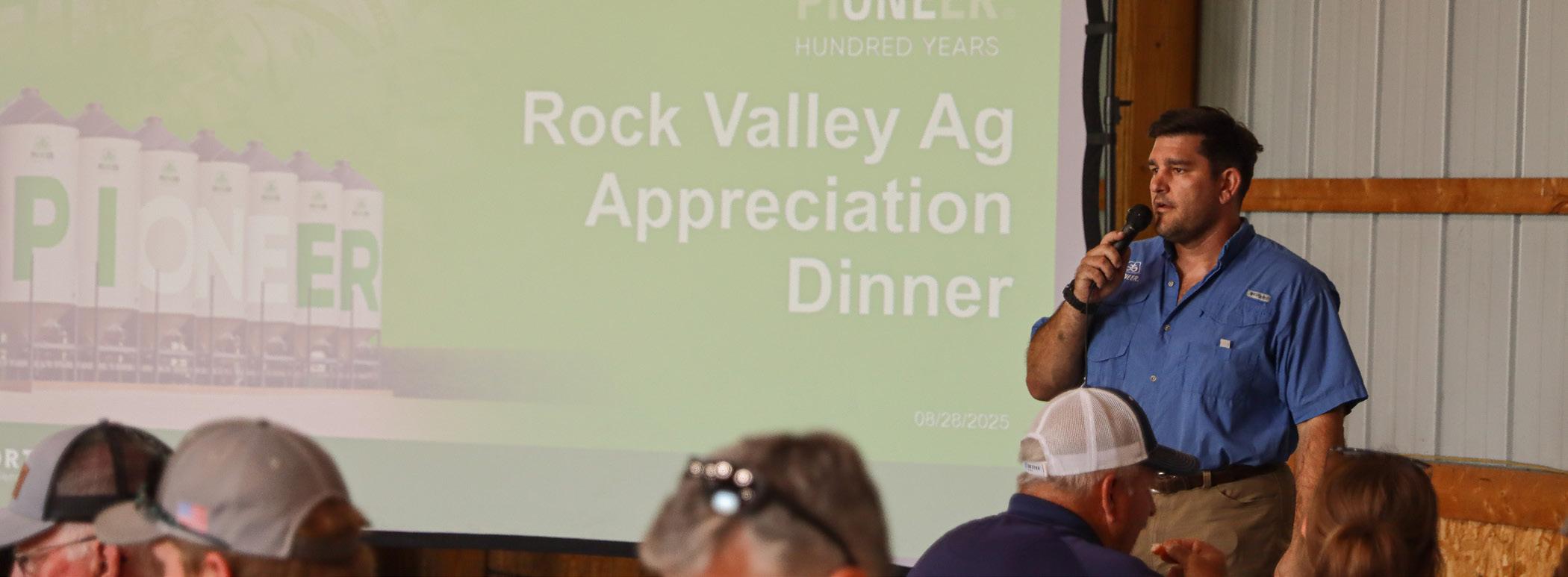
“As we head into winter, farmers are at varying stages in their seed selection process. Some have already started making decisions for next year, often based on an analysis of this year’s harvest,” said Daniel Carpenter, Missouri Soybean Association board member, Pioneer Seed sales representative and owner of Rock Valley Ag. “We look at a range of factors — from yield potential in our environment to agronomic packages that offer protection from pests and diseases. Stress emergence, standability and late-season plant health in Missouri fields help narrow the list down to the varieties that fit each operation best.”
Carpenter noted that soybean variety selection is evolving rapidly. “Seed companies are advancing soybean technology at an impressive pace,” he said. “New varieties consistently offer stronger agronomics and better yields. It can be tough to let go of a favored variety, but the advantage of adopting new soybean technology is clear and often pays off.”
Carpenter added that whether you’re just starting out or farming for 40 years, steady decision-making remains key. “We’ll face peaks and valleys, but if you stay focused on what improves your operation year after year, you’ll keep moving forward.”
Turner Ag Solutions SAMUEL TURNER
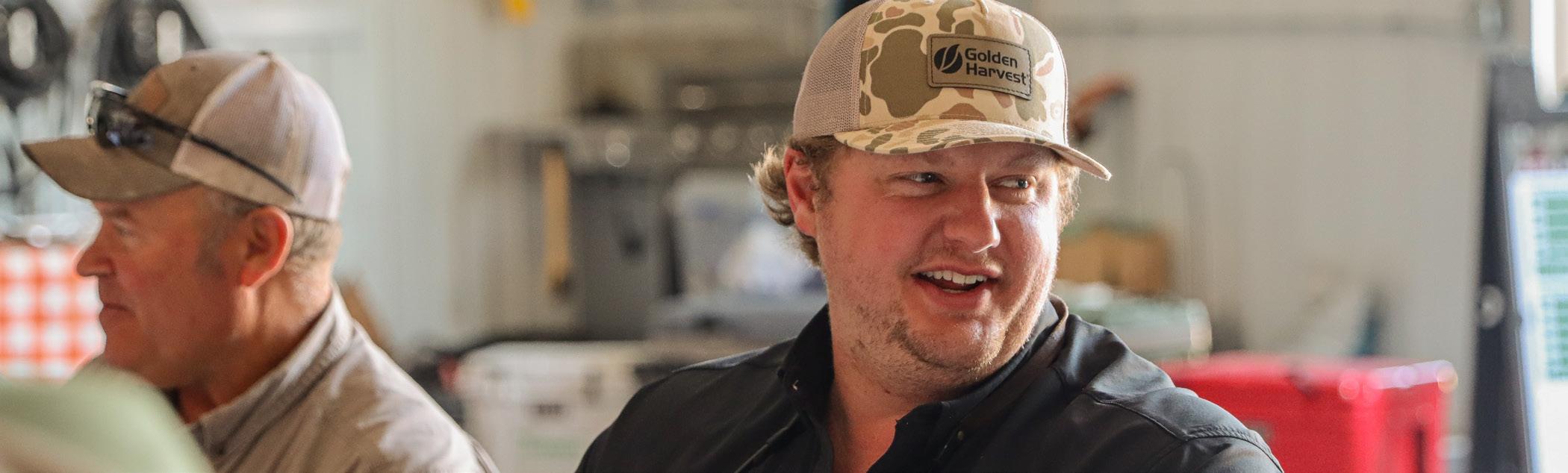
“As a seed dealer, I know winter is decision season,” said Sam Turner, Golden Harvest seed salesman and owner of Turner Ag Solutions, LLC. “Right now, growers are digging into yield maps, soil sampling and reflecting on what worked — and what didn’t — in 2025. My job is to help them take that information and turn it into a plan that’s built for Missouri’s diverse conditions.”
Turner emphasized the importance of variety selection that meets not just yield expectations, but agronomic realities. “We’re looking at disease pressure, emergence consistency, standability at harvest — all the things that make or break a season,” he said. “Our goal is to match varieties to specific acre needs, factoring in everything from soil type to planting window.”
He also noted the rapid pace of innovation in soybean genetics. “With soybeans, we’re seeing year-over-year gains that are hard to ignore. I always tell my customers — don’t be afraid to try a new variety. These new genetics and trait packages are built to perform and protect.”
Whether advising next-generation farmers or longtime growers, Turner encourages steady, data-driven planning. “This is the season to ask questions, lean into local knowledge and build a seed plan that sets you up for success.”
Faith, Family and Fieldwork
Meet MSMC board member and Harrisonville farmer Brad Arnold as he shares the principles that guide his decision-making.
Q: Tell us a little about yourself.
A: I grew up on a multigenerational family farm. I worked for my dad growing up on the family’s dairy farm and then for Archer Daniel’s Midland (ADM) for 10 years after college until June of 2019, when I had the opportunity to farm full time with my family. I have a degree from the University of Missouri in agriculture systems management and a minor in ag economics.
Q: Who is your biggest influence?
A: My parents and my Catholic faith.
Q: What would you tell your kids or next generations to encourage them to be involved in agriculture?
A: Jump in and work hard. Find a good mentor that has your best interests in mind.
Q: Does your family implement any sustainable practices?
A: We grid sample every four years and variable rate apply our fertilizer. Also use minimum till as well as crop rotation between soybean, corn and wheat.
Q: Who is your favorite farm influencer to follow?
A: Welker Farms, the millennial farmer, Rob Sharkey and Ag PhD.
Q: Tell us about your involvement in agriculture.
A: I farm with my parents and my wife works full time away from the farm but helps me out from time to time.
Q: Tell us about your favorite memory on the farm.
A: Growing up working together with my family on the farm.
Q: What is your favorite planting or harvest snack?
A: Ritz peanut butter crackers and Diet Coke or water.
Q: Tell us about your farm.
A: We operate a diversified farm consisting of soybeans, corn, wheat, hay and cow-calf operation.
Q: How do you take your coffee?
A: If I drink coffee, it would probably be black or a little cream.
Q: What are you listening to while working?
A: Depends … sometimes silence. Sometimes podcasts. Sometimes country music.
Q: Should tractors be red or green?
A: We have both, but it’s starting to look more green.
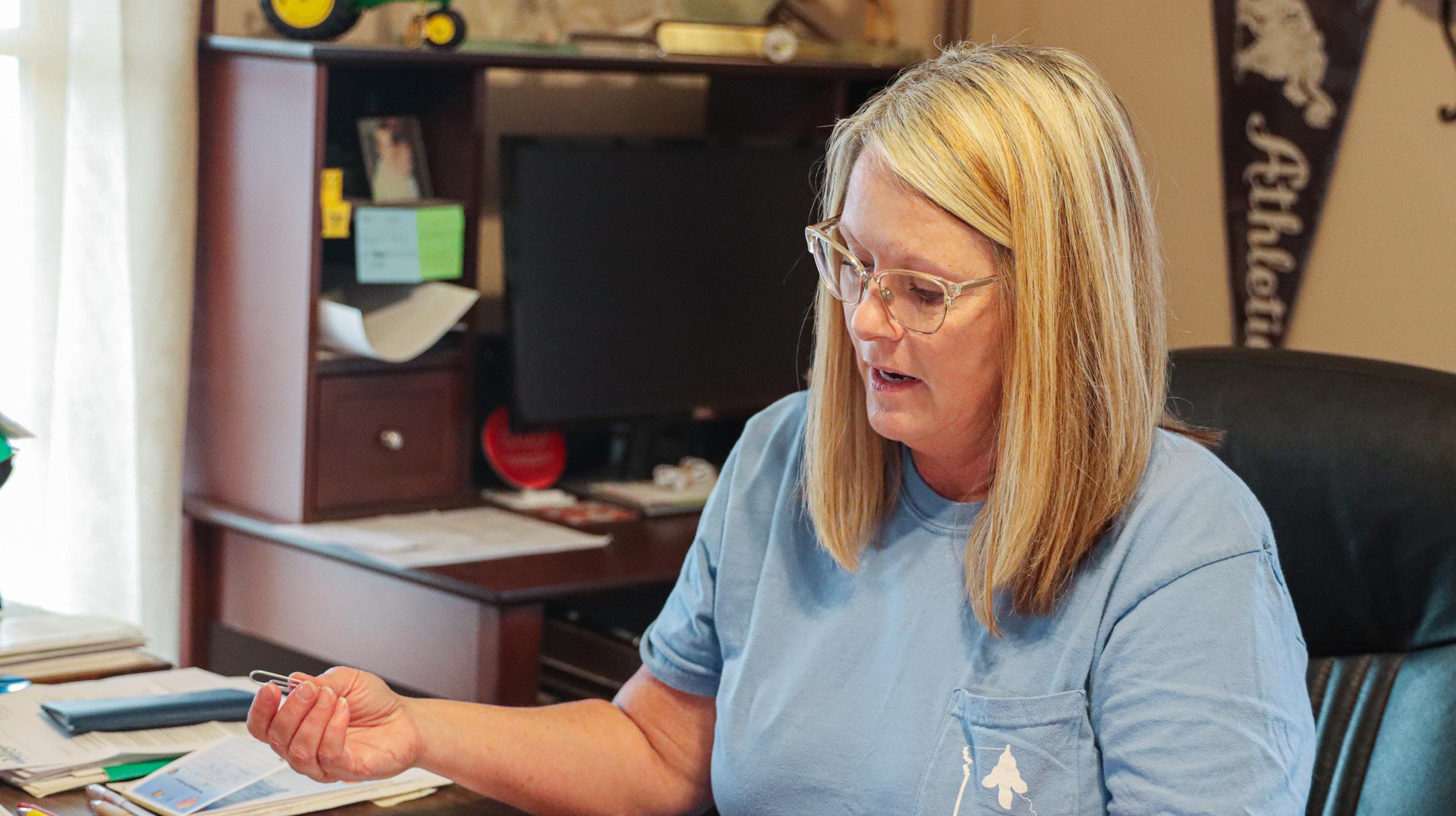
TAKING TIME FOR TAX PREP from StePhAnie rackERS, Fi NancE MaNaGer
As2025 unfolds, farmers across America face another year of fluctuating markets, unpredictable weather and evolving tax rules. Amid uncertainty, one thing remains steady: Smart tax planning can make a big difference in keeping more of your hardearned income on the farm.
This tax year brings both new opportunities and challenges for agricultural producers. Farmers have a variety of tools to manage taxable income. At the same time, shifting commodity prices and rising input costs make timing income and expenses more important than ever.
A major win for farmers this year is the reinstatement of 100% bonus depreciation for qualified property purchased and placed in service after Jan. 19, 2025. This means new or used tractors, combines, irrigation systems or other eligible farm equipment can be fully deducted — a powerful tool for managing taxable income.
In addition to bonus depreciation, Section 179 expensing remains one of the most flexible and valuable tools for farmers. For 2025, the limit is $2.5 million, with a phase-out beginning once total purchases exceed $4 million. Unlike bonus depreciation, Section 179 allows you to select which assets to expense, offering greater control over taxable income. This flexibility can help farmers smooth out fluctuations in annual profits and avoid moving into higher tax brackets.
Cash-basis farmers can manage income by prepaying for inputs such as feed, fertilizer, seed and chemicals before year-end. These prepaid expenses are deductible in the year paid, even if the supplies are used the following year. The IRS limits prepaid expenses to no more than 50% of total deductible farm expenses,
and the prepayment must serve a legitimate business purpose beyond tax avoidance.
Because farm income often fluctuates due to weather, markets and yields, the IRS allows you to average your current year’s income over the previous three years using Schedule J on Form 1040. This rule helps reduce taxes in high-income years by spreading the income across years when your tax rate may have been lower. It’s especially useful after a strong harvest or livestock sale that pushes you into a higher tax bracket.
The recently passed One Big Beautiful Bill Act introduced that if a farmer has sold qualified farmland property to qualified farmers, the farmer can elect to pay the tax on the gain in four equal installments over four years instead of the entire tax liability in the year of the sale. This can improve cash flow with the payments being spread out, where a lump sum tax bill would be burdensome.
For Missouri farmers, 2025 brings a major change in how the state taxes capital gains. Beginning with the 2025 tax year, individuals who sell farmland to a beginning farmer can subtract 100% of the capital gains from their Missouri adjusted gross income, up to $2 million. This effectively means that many farmers will pay no state income tax on those gains for the first time, making it easier to plan land sales, farm transitions and retirement.
Farm taxation is full of opportunities — and pitfalls — that can significantly affect your bottom line. Early planning is essential. Working with a CPA or tax preparer who understands agricultural operations can ensure you take full advantage of available deductions, credits and deferrals.


Costsare a big deal when feeding cattle. Recent trends in soybean markets have led to more discussions between cattle producers and their nutritionists about using soybeans in their rations. These conversations are critical to maximizing farm profits, which, at times, can be optimized by capturing the value of on-farm resources across multiple enterprises (e.g., beef or dairy cattle feeding, soybean production).
Livestock nutritionists – at least the good ones – wake up every morning and ask themselves, “How can I optimize ration costs relative to the value of products produced?”
This is why most beef cattle nutritionists try to formulate rations for growing cattle that meet essential nutrient requirements and minimize feed costs per unit of gain. In contrast, dairy nutritionists work to maximize milk income. This approach prevents nutritionists and producers from tripping over dollars to save pennies — a problem that has occurred more than once when rations formulated on a least-cost basis reduce revenue from cattle gains or milk production by more than feed costs.
When formulating rations, most nutritionists use a series of mathematical equations to predict cattle performance by estimating nutrient intake and projected nutrient requirements. Like most other animals, cattle require calories and functional amino acids provided by proteins to support growth and lactation. Consequently, nutritionists often seek ingredients that provide both calories and functional amino acids to the ration at the least cost. The ingredient that provides both functional amino acids and calories at the best price is then included in the ration until predictions of performance are limited only by calories. The remaining ration is then formulated using the ingredient that provides calories at the least cost after all other essential nutrient requirements have been satisfied.
Currently, the most accurate way to determine the breakeven price of ingredients for use in cattle rations is to use a statistically based approach that considers ingredient market prices and their nutrient profiles to calculate average fair market prices for the specific nutrients most needed for growth or lactation. Another way to think of the breakeven price of an ingredient is the price at which it provides the most critical nutritional components to a ration at current average market prices. After the market price of each nutrient is calculated, the breakeven price of an ingredient can be determined based on the value of each nutrient and the amount of those nutrients in the ingredient. This can be complex, but freely available software can help simplify these calculations.
Using this approach and published prices from 89 different feed ingredients with known nutrient compositions, the market price of a megacalorie of metabolizable energy was between $0.047 and $0.216 for a pound of crude protein on Nov. 6, 2025. Using these values, the breakeven price of a bushel of soybeans would be $9.23 for use in cattle rations, while the breakeven price of roasted soybeans and hi-pro soybean meal would be $9.73 per bushel and $337.91 per ton, respectively.
In other words, these would be the prices at which soybeans or soybean meal could be sold to beef or dairy producers to cover feed costs of gain or milk income, less feed costs, equal to using the average market price of other ingredients to provide the nutritional components most needed for growth or lactation. Using soybeans or soybean meal at prices above these would result in poorer feed costs of gains or milk income less feed costs compared to the average market pricing of alternative ingredients.
At the time this article was written, soybean meal was trading slightly below the calculated breakeven price, while delivered prices on soybeans were greater than the breakeven price for their use in cattle rations. Yet factors such as interest in feed, shrink, palatability and availability also play an essential role in determining which ingredients should be used in a ration. These factors can lead to decisions to use certain ingredients in the ration that are not the most favorably priced for feed cost of gains or milk income less feed costs. When these decisions are made, however, it is essential to realize that a portion of the revenues from cattle gains or milk production is being used to subsidize this choice indirectly.

CAN CATTLE UPGRADE THE VALUE OF MY SOYBEANS?
By: Derek Brake, Ph.D.
Manage Deer and Feed Families From Missouri Department
of Conservation

Deer Management in Missouri
White-tailed deer are an important natural resource in Missouri, generating more than $1.5 billion for the economy each year and supporting more than 13,000 jobs. The Missouri Department of Conservation (MDC) is entrusted with managing the herd, striving to keep deer numbers in line with Missourians' desires. To do this, MDC frequently solicits input from the public. Each year, surveys are sent to thousands of Missourians, including hunters and agricultural producers, to assess their opinions of the deer population and MDC’s efforts to manage the herd. This public input helps MDC set deer seasons and regulations to ensure that deer management goals are being met.
During the past decade, deer numbers have increased in many Missouri counties. Because of this, MDC has made several changes to deer seasons and bag limits to allow hunters to harvest more deer. These changes have included extending the late antlerless portion of firearms deer season and increasing the number of open counties. MDC also recently established an early antlerless season that allows hunters to harvest deer with a firearm in early-to-mid October. In many counties, MDC has also increased the number of antlerless permits that landowners and hunters can fill.
Although deer seasons and bag limits have been liberalized to provide landowners and hunters with more opportunity to harvest deer, MDC recognizes that some landowners need more deer harvested than county-level bag limits allow. Additionally, landowners and hunters that harvest more deer than their families can consume need a place to donate deer. MDC offers two practical and rewarding ways to achieve both: Share the Harvest and the Deer Management Assistance Program.
Share the Harvest
Started in 1992, Missouri’s Share the Harvest has resulted in more than 6 million pounds of venison donations to communities in need. The program is a partnership between hunters, meat processors, MDC, the Conservation Federation of Missouri, other conservation partners and local food banks. Hunters can bring whole or partial deer to participating meat processors for donation, where the processing costs are covered in full or in part thanks to program supporters. Share the Harvest allows hunters and landowners to turn deer management into protein for Missourians in need, which is a win for all. With the increased liberalizations to deer seasons
and bag limits, and many landowners wishing to harvest additional deer, Share the Harvest has become an increasingly important program in Missouri.
Deer Management Assistance Program
The Deer Management Assistance Program (DMAP) helps landowners address local deer management challenges, such as crop damage, all while promoting a healthier deer population. By enrolling in the program, landowners obtain DMAP permits that allow the landowner (and other hunters they designate) to harvest additional antlerless deer during deer season to meet their deer management goals. Any private property of at least 250 acres (or 25 acres within a municipal boundary) is eligible to enroll. Individual parcels of land, regardless of ownership, may be combined to satisfy the acreage requirement as long as each parcel is no more than half a mile from the boundary of another parcel being combined to form an enrolled DMAP property.
Deer management goals, as they pertain to DMAP, include addressing deer damage concerns, such as damage to crops, or achieving recreational deer management goals, such as balancing the buck-to-doe ratio. MDC staff determine the number of DMAP permits that will be allocated to the property and can assist landowners during the program enrollment period, which runs from May 1 through Sept. 1 each year. DMAP costs the same as an archery or firearms antlerless permit and can be used during the archery and firearms deer seasons. Each permit allows for the harvest of one antlerless deer, and deer harvested on DMAP permits do not count towards county-level antlerless deer limits, thus allowing landowners and their designees to harvest more deer than would be allowed without DMAP. DMAP is a great tool for landowners to harvest additional deer to ensure that deer numbers on their properties are aligned with their goals.
A Winning Combination
Although each program can help hunters and landowners achieve their deer management goals, pairing Share the Harvest and DMAP is an effective combination that results in healthier deer, healthier habitat and healthier Missourians. This results in a win-win combo for landowners, communities and conservation. To learn more or participate in these programs, visit mdc.mo.gov/share or mdc. mo.gov/dmap. With your involvement, landowners and hunters can manage deer and feed families, making a big impact for all.
The Fertilizer SqUeeze
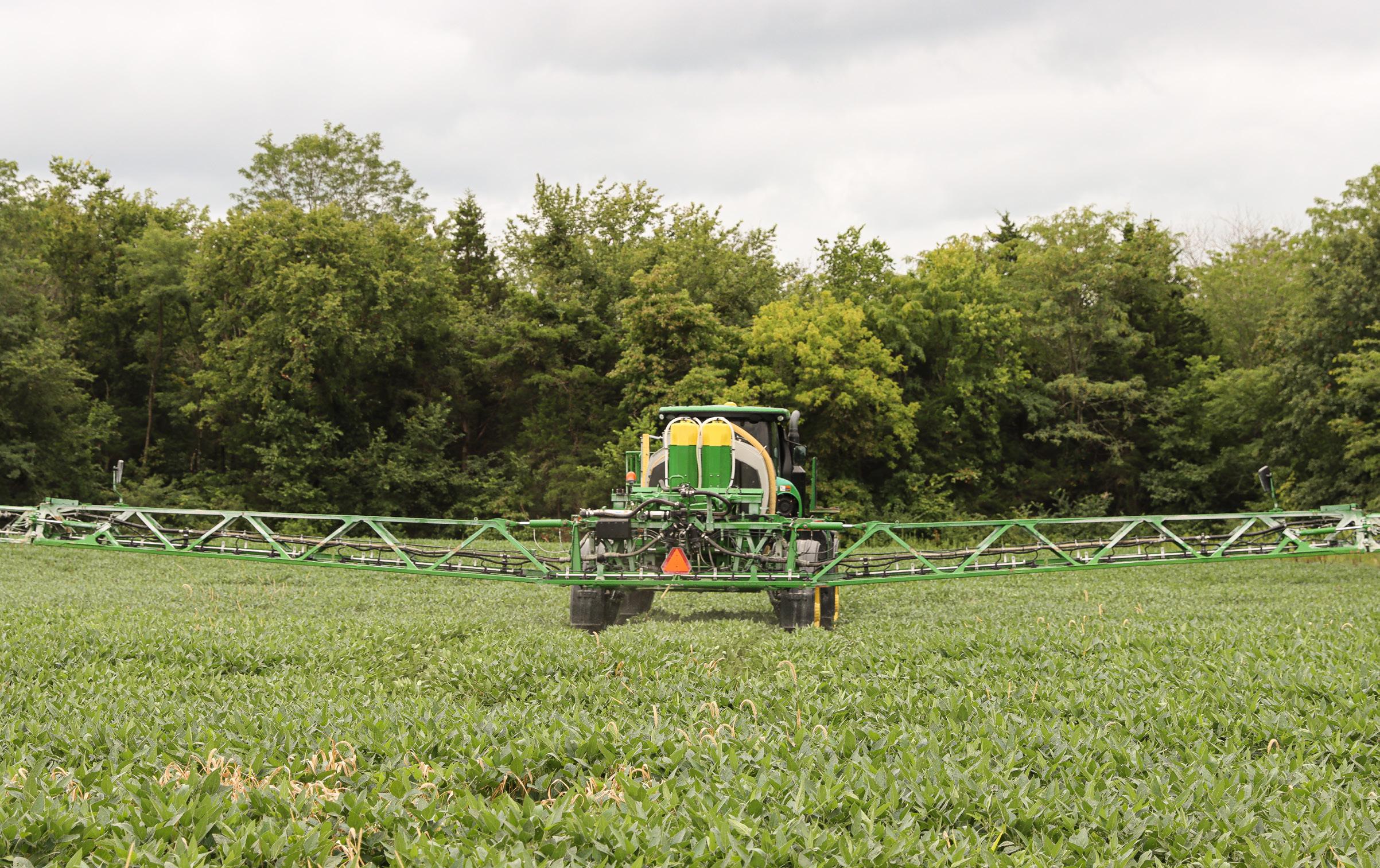
Ag markets tend to go in cycles. There are good times. There are hard times.
It might help if someone reminded fertilizer that good times are still an option.w
Fertilizer markets continue to suffer from global and domestic issues that have kept prices elevated in the face of lower grain values. Each product is unique in why it is where it is, but they all share the common theme that values feel high.
Urea
The global urea market has seen improvements versus the same time last year. Common issues such as European production rates remaining around 75% of normal, North American planned production downtime for repairs and slow imports due to tariffs have eaten into “normal” supplies. India is also buying more than last year, but this year looks to be normal versus last year's dropback.
On the positive side:
• Chinese exports will far surpass 2024 levels. 2024 only saw 262,000 tons exported, a far cry from their normal 5 million to 5.5 million tons. Through September of this year, China has already exported around 2.8 million tons and that total should grow. Our hope is they can surpass 4.5 million tons for the year. A great step higher.
• Russian exports are not likely to change much versus last year, but last year saw them exporting 8.8 million tons versus their normal 7 million tons. No change but still a much bigger supplier.
• The Middle East region is quiet. If this holds, it should help boost supplies. The early 2025 war between Israel and Iran saw a couple weeks of production downtime for Iran and Egypt. If peace holds, that should be removed this year.
Our hope is that the longer this improved outlook continues, the higher the chance that prices could fall.
Uan
Unfortunately, the UAN market has worsened. Last spring saw the nightmare scenario come true: Spring supplies could not be found for many areas across North America. Just because it happened one time does not make it a common occurrence going forward, but the market is much closer to that event:
• Very low starting inventories to start the fertilizer year after the spring season.
• Exports could be larger as European production remains at 75% and Trinidad production suffers, which causes European farmers to compete with North American farmers for supply.
• Imports could be cut in half if President Trump includes fertilizer in the next round of sanctions on Russia.
• The nitrogen demand outlook remains high for 2026 with the StoneX forecast currently sitting at 93 million acres.
• Multiple domestic nitrogen plants have planned production downtime for repairs this year.
Make no mistake, the UAN market is in a hard place.
nh3
Global events continue to support NH3 price ideas:
• Russian exports, normally the world’s largest, remain a shell of their former self after invading Ukraine and losing access to their export channels.
• European production remains at 75%.
• Trinidad gas supply problems continue to plague nitrogen producers.
Here at home, we continue to expect a very healthy fall application run. While NH3 values were never cheap, they were in comparison to alternatives. That, combined with big corn acres for 2026, and this fall could be huge if Mother Nature allows. As of early November, there are already reports of allocation from some northern supply points.
PhosPhate
Phosphate continues to lead fertilizers in terms of the worst situation product for farmers. Current extreme high prices can mostly be blamed on two countries:
• China, normally the world’s largest exporter with 8 million to 10 million tons per year, will be lucky to export 4.5 million tons due to government export restrictions.
• India, who allowed domestic stockpiles to fall to dangerously low levels, had to play catch up in a world without its largest supplier. The market took advantage.
Here at home, domestic policies continue to hinder the supply outlook. With five countries controlling 85 to 90% of global exports, it is a much easier market to track:
• China – Tariffs imposed during the first Trump administration remain in place, and fertilizer shipments have ceased.
• Morocco – A combination of tariffs and countervailing duties has cut supply routes.
• Russia – Countervailing duties and now sanction fears make it near impossible to increase supplies.
• Saudi Arabia – This is our most likely supplier, but 10% tariffs make it harder.
The U.S. rounds out the Top 5 list, but domestic production rates continue to suffer. Normal ranges are in the 80 to 90% range. The fourth quarter of 2024 saw rates drop to a record low 58%. The first quarter of 2025 matched the record low. The second quarter improved only to 61%, and the third quarter is expected at 63%.
All in all, the combination of global supply and demand problems and domestic policies have pushed phosphate prices to near record levels versus grain prices, putting a tremendous amount of pressure on farmers trying to decide what cuts can be made.
PoTaSh
Fortunately, potash has been relatively calm and decently priced. Global supplies continue to appear plentiful, and we continue to expect increased production that could have the world conversations teetering on oversupplied, which would keep prices in check.
• Laos continues to increase production rates with Chinese backing.
• Russian expansions continue to be expected when the RussiaUkraine war ends.
• A new mine in Michigan is getting government support and should help build domestic supplies.
• BHP, a major global mining company, is still planning a new, large-scale mine in Jansen, Saskatchewan, Canada. However, cost overruns and a solid medium-term supply outlook have the project delayed.
Of all the fertilizers, potash remains the best valued versus its own historical pricing and against grain values.
While some improvements have been seen, fertilizer remains a touchy subject for farmers who are struggling with their operations. No doubt application reductions/cuts are being considered. We just ask that when considering that approach to keep in mind any 2026 yield impacts it may have. Short-term cuts can have larger next year impacts.
Josh Linville is the vice president of fertilizer at StoneX. He oversees the global fertilizer department, which includes the fertilizer trade desk as well as in-depth analysis of fertilizer markets around the world. Josh is an experienced broker with a demonstrated history of working in the financial services industry with skills in commodity risk management, sales, pricing strategy and market research.
Lease Negotiations in 2026: A MISSOURI PRODUCER’S GUIDE
By Ben Brown and Katy Parcell, University of Missouri Extension
InMissouri’s evolving agricultural landscape, rental contracts for farmland are central to farm profitability and resilience. As of 2022, approximately 9.7 million acres, about 36% of the state’s agricultural land, were rented to farmers. Lease agreements have gradually shifted in both scale and structure, with cash rent agreements becoming more common, crop share leases declining and flexible lease arrangements gaining popularity. The average lease term is 11 years, but nearly one-third of leases are renegotiated annually or biennially, reflecting a dynamic and responsive leasing environment.
Rental expenses are a major cost in farm management, and selecting the right contract type can help align with production risks, income variability and management style. Rental terms tend to adjust gradually due to multiyear lease structures, local market conditions and negotiation dynamics. The “endowment effect,” where landowners assign higher value to land simply because they own it, can make rent reductions difficult, even when justified by economic realities.
As economic pressures mount and landowners increasingly prioritize conservation, choosing the most suitable rental arrangement is more critical than ever. Setting rates too high can erode profitability, while well-structured agreements can improve cash flow, reduce financial stress and support long-term sustainability. Missouri producers have three primary lease options to consider:
CASH RENTAL AGREEMENTS
Cash rental agreements are popular for their simplicity and predictability. Tenants pay a fixed amount per acre, providing landowners with steady income and minimal involvement in farm operations. This structure is especially attractive in areas with high land values. However, tenants bear greater financial risk, as rent is due regardless of crop yields or market prices. Cash rent is ideal for producers who want full control over management decisions and the ability to retain all profits from high yields or favorable markets.
When considering a cash rental agreement, producers should evaluate land productivity, market volatility, lease terms, payment schedules and any required maintenance or fertility standards. Clear written contracts outlining responsibilities and restrictions are essential. MU Extension’s guide sheet G427 offers a summary of cash rental rates and lease term frequencies to support these discussions.
CROP SHARE RENTAL AGREEMENTS
Once common in Missouri, crop share rental agreements have declined due to their complexity and the shift toward simpler lease structures. These agreements involve sharing both crop output and input costs, typically in 50/50 or 2/3–1/3 splits based on each party’s contributions. While crop share leases can foster long-term relationships and reduce upfront costs for tenants, they carry risks such as disagreements over management decisions and the need for detailed recordkeeping.
Crop share leases remain useful when landowners wish to stay engaged in production or when tenants lack capital for cash rent. Producers should carefully evaluate the division of input costs, expected yields and the long-term nature of the relationship. Exceptional communication is crucial, especially during abnormal production challenges such as herbicide damage or weatherrelated losses. MU Extension’s guide sheet G424 provides a detailed summary of crop share lease terms.
FLEXIBLE LEASE RENTAL AGREEMENTS
Flexible cash lease agreements offer a middle ground between fixed cash rent and crop share leases. They allow rental payments to adjust based on actual farm performance, such as crop yield and market price. Unlike crop share agreements, flexible leases provide a fixed base rent with additional payments that vary based on performance, enabling shared financial risk without dividing the crop itself.
These leases help tenants manage financial risk during poor production years while allowing landowners to benefit from strong market conditions. Risks include the need for accurate recordkeeping, potential disputes over yield and price data, and the complexity of calculating rent. Flexible leases are particularly useful in volatile markets or competitive rental environments. Producers should negotiate base and maximum payments, choose transparent sources for price data and ensure the lease clearly outlines rent calculation and reporting procedures. MU Extension’s guide sheet G422 offers county-level rental rate factors based on average yields.
BEST PRACTICES FOR WRITTEN LEASES
Creating a well-structured farm lease is essential for clear communication and long-term success. Best practices include drafting a written lease that outlines:
• Names of all parties
• Legal property descriptions
• Lease duration and renewal terms
• Rental rates and payment schedules
• Responsibilities for operating expenses
• Conservation practices and land-use restrictions
• Procedures for handling improvements and repairs
• Recordkeeping expectations
• Dispute resolution and arbitration clauses
Written leases help prevent misunderstandings, especially when incorporating conservation provisions. These may involve longterm commitments, outside contracts and shared responsibilities for implementation and maintenance. Including clear language about conservation goals, reimbursement schedules and termination clauses ensure both parties are protected and aligned in their objectives. Fillable lease templates and resources are available at https://aglease101.org, a collaborative platform supported by landgrant institutions.
CONSIDERATIONS FOR 2026
Looking ahead to 2026, Missouri producers should consider several economic and market factors. Continued low farm returns since 2023 are placing downward pressure on cash rental rates, with similar trends observed in neighboring states. However, adjustments have been slow and inconsistent across Missouri, with some areas reporting increased values in 2025.
Producers should assess whether current rental rates align with expected profitability, especially for high-productivity land where rent reductions may be more justified. Smaller, incremental adjustments are more realistic than large cuts. Flexible lease and crop share structures may help balance risk between landowners and tenants.
Ultimately, clear written leases that reflect economic conditions, production risks and shared goals will be essential for navigating the 2026 rental market.
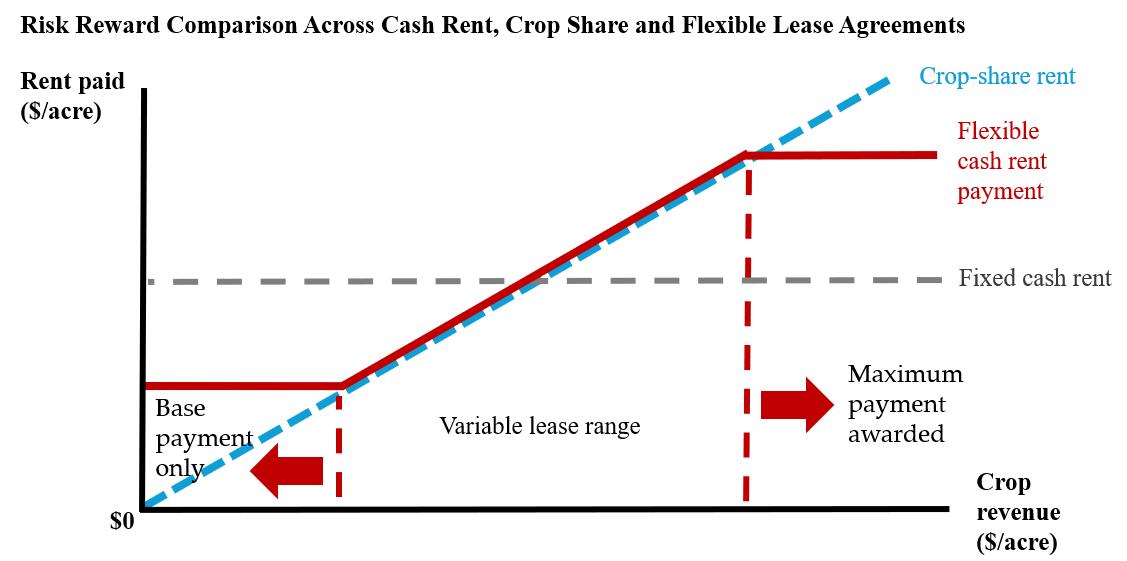
Missouri Soybean Association Members
Receive a
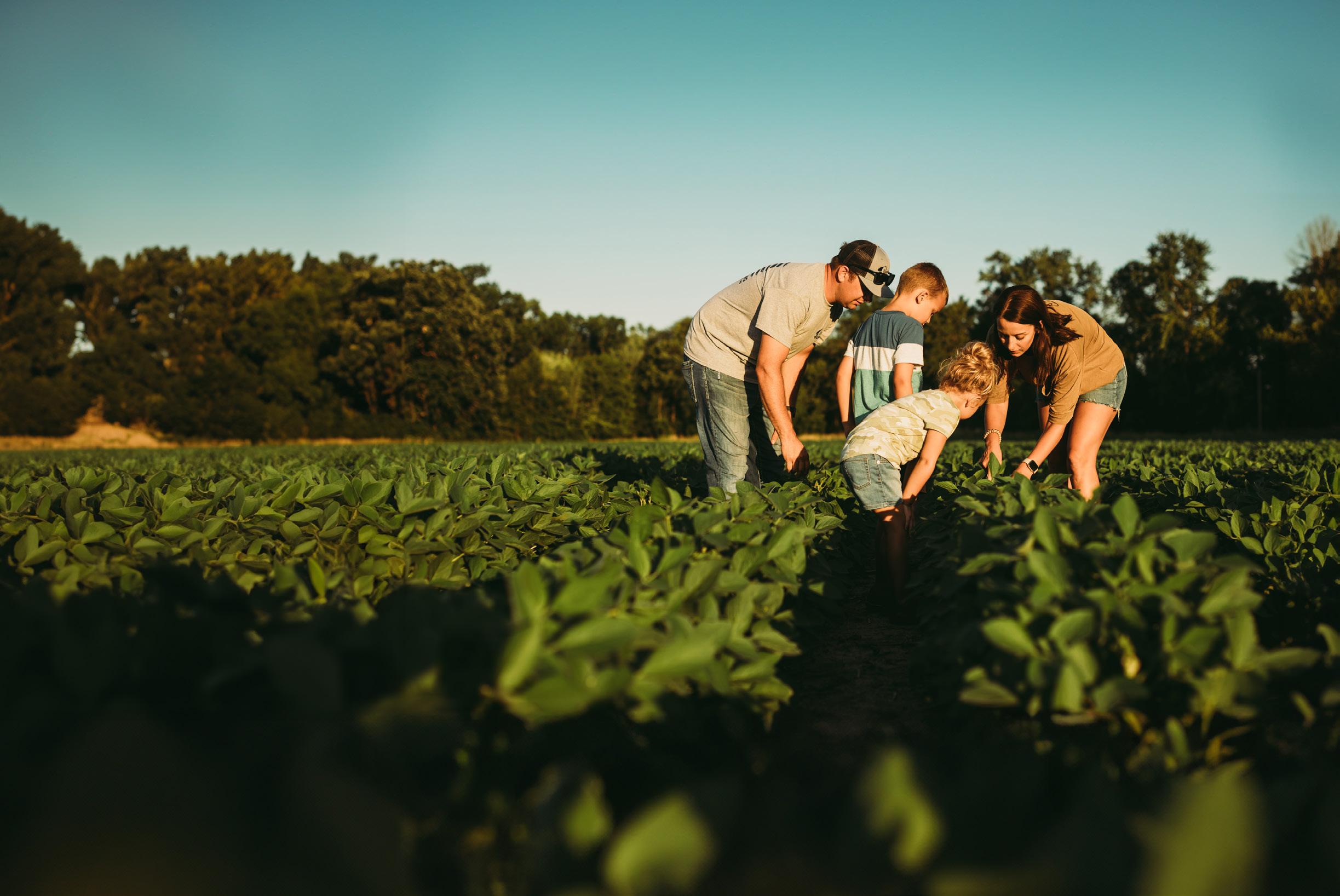
At CFM, we know your worth. And we are committed to rewarding it, one discount at a time. It’s a mutual thing.
Contact your local agent to learn more.

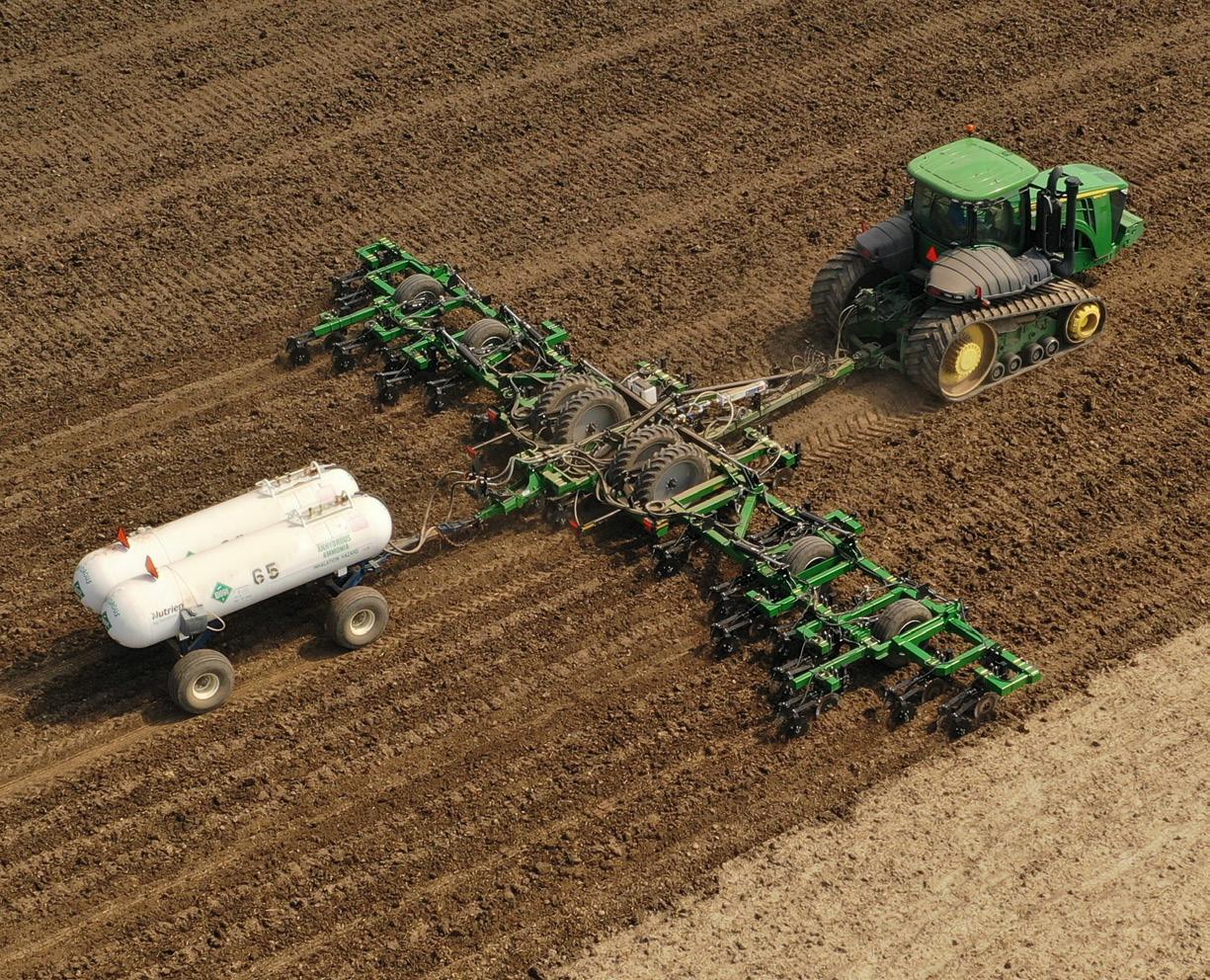
ANHYDROUS APPLICATORS BUILT FARMER TOUGH

The Unverferth Renegade NH3 applicator is built farmer tough for timely application of high-value anhydrous ammonia. Toolbar sizes range from 25 rows down to 11 rows with 30" row spacing, and standard wing flex ensures consistent application. The heavy-duty row unit features a 20" lead coulter with 6-bolt hub, 1,500 pounds of downforce, 2" edge-bent shank and CoverMax
HIGH-QUALITY APPLICATION FOR HIGH-QUALITY FARM OPERATIONS.
› Visit UMequip.com or see your nearest dealer today.
closing coulters with independent vertical travel for consistent placement. A standard Raven stainless steel Vortex cooler and ISOBUS rate controller accurately power the NH3 distribution system.
Soy Stocking Stuffers
Stockings are where the practical meets the fun — the place for small things people actually use but still feel like a little holiday treat. And for those of us connected to Missouri agriculture, soy-based gifts offer a subtle nod to the crop that supports so much of our state. Here are a few soy-based stocking stuffers that strike the right balance between useful and festive.

Soy candles have become a gifting standby, and for good reason. They burn clean, last longer and don’t come with the chemical smell some paraffin candles carry. A straightforward scent — cedar, vanilla bean or something lightly herbal — makes the perfect stocking filler. No gimmicks, just a solid candle with Missouri soy at the heart of it.

Soy crayons are a fun pick for kids, teachers and anyone who still enjoys a bit of old-fashioned coloring. They’re less brittle, create bright color and feel a little more substantial in the hand. Add a small notebook or sketchpad, and you’ve got an instant, screen-free activity for holiday downtime.

By mid-December, everyone’s knuckles are feeling the Missouri cold. A soy-based hand balm or lotion bar is one of those items people are genuinely grateful to find in a stocking. These formulas tend to be unscented or mildly scented, absorb quickly and actually help — which sets them apart from the overly greasy options you find at most checkout lines.

Small bottles of soy-glycerin soaps, cleansers or moisturizers make easy, practical stocking stuffers. They’re gentle, hydrating and travel well — perfect for trying something new without committing to a full-sized product.

Soy-based lip balms offer a smoother, more consistent texture than many wax-heavy alternatives. They stay put, don’t leave residue and are easy to slip into a coat pocket. A practical, no-drama stocking stuffer that people end up using immediately.

You don’t have to break tradition to include soy. Most chocolates — from fancy truffles to the classic foil-wrapped Santas — use soy lecithin as a natural emulsifier. It keeps chocolate smooth, stable and melt-in-yourmouth consistent. So when you toss a few chocolate coins or peppermint bark squares into a stocking, you’re still giving a little nod to soy’s behind-the-scenes role.
THOUGHT LEADER
It has been seven years since the last farm bill was signed into law. Difficulties in returning to the regularity of passing a farm bill every five years keep sidelining congressional efforts either because of politics or legislative timing. While Congress is on track for another yearlong extension, ASA continues to apply pressure on Capitol Hill, especially given the financial hardships facing rural America. Any more certainty we can provide farmers for their business decision-making is needed more now than ever.
Fortunately, some of ASA’s top farm bill priorities were passed into law in July through the partisan process of budget reconciliation. This came in the form of the One Big Beautiful Bill Act (OBBA), which included an improved reference price of $10.00 for soybeans, an effective reference price increase from 85% to 88% of the average price of the five most recent marketing year averages, expanded access to more affordable crop insurance, improvements to Agricultural Risk Coverage (ARC) and Price Loss Coverage (PLC), doubling of Market Access Program (MAP) and Foreign Market Development (FMD) program funding, ag research funding increases, and improved credit access for young and beginning farmers. Several tax policy provisions were also in the bill to encourage new and beginning farmers and ensure that farms can efficiently be passed on to the next generation.
There are still a number of outstanding issues that will need to be addressed in a “skinny” farm bill. This unfinished business includes conservation programs, such as the Conservation Reserve Program and the Environmental Quality Incentives Program, as well as concerns under the credit title’s jurisdiction such as loan limits. ASA has endorsed a handful of marker bills to highlight improvements that can be made such as the PRECISE Act, the PACE Act, the Agricultural Labeling Modernization Act and the Plant Biostimulant Act.
Bipartisan political appetite for a new five-year bill and the lack of available floor time before Congress goes home for Christmas are the most influential factors that come up in conversation with House and Senate Agriculture Committee staff when asked about where they are in the process. Chairman Thompson of the House Ag Committee remains confident that if Republican leadership communicates a five-year bill is a top priority, it is possible to pass it out of the House before the end of the year as most of the bill text drafting is already completed. It is important to note the dynamics of the reconciliation process. Because House Republican leadership carried farm bill programs through using this partisan move, Democrats will more than likely try to draw back some of the Supplemental Nutrition Assistance Program (SNAP) cuts that were made in reconciliation as soon as negotiations begin. With another extension seemingly on the horizon, ASA will need to work diligently to communicate the urgency required to get a fully improved five-year farm bill across the line.

An Update on the Farm Bill
by Joe Prosser, Manager of Government Affiars, American Soybean Association
A NEW LOOK FOR FSI
Soybeans is proud to unveil an updated webpage for the Farm for Soy Innovation (FSI), featuring an enhanced design and an interactive map that showcases the breadth of soybean checkoff-funded research, conservation practices and demonstration projects.
Available now at mosoy.org/farm, the new platform reflects Missouri Soybeans’ continued commitment to innovation, transparency and farmer-focused education. The refreshed site is designed to serve farmers, researchers, educators and industry partners by offering a deeper look into the work happening at the farm just south of Columbia.
“The Farm for Soy Innovation is one of our most powerful tools for demonstrating the value of our investments,” said Clayton Light, Missouri Soybeans director of conservation agriculture and farm operations. “This updated webpage lets us tell that story more effectively — in a way that’s interactive, visual and farmer-first. It reflects how Missouri farmers are leading in innovation, sustainability and stewardship, and it helps us share that story with a wider audience.”
Key Features:
• Interactive Map: Explore every section of the farm — from cover crop plots to smart technologies — through a guided, clickable map.
• Up-to-Date Content: Highlights current research trials, soil and water stewardship, biodiversity initiatives and more.
• Partner Spotlights: Demonstrates collaborative impact through featured partners and project highlights.
The new online experience will support outreach efforts across media, policy, education and agronomic channels. Whether giving virtual tours to students or helping policymakers understand on-farm practices, the updated site ensures Missouri Soybeans stays at the forefront of engagement and innovation.
Visit Now: https://mosoy.org/farm.
WATCH THE FARM VIDEO
VISIT THE FARM PAGE
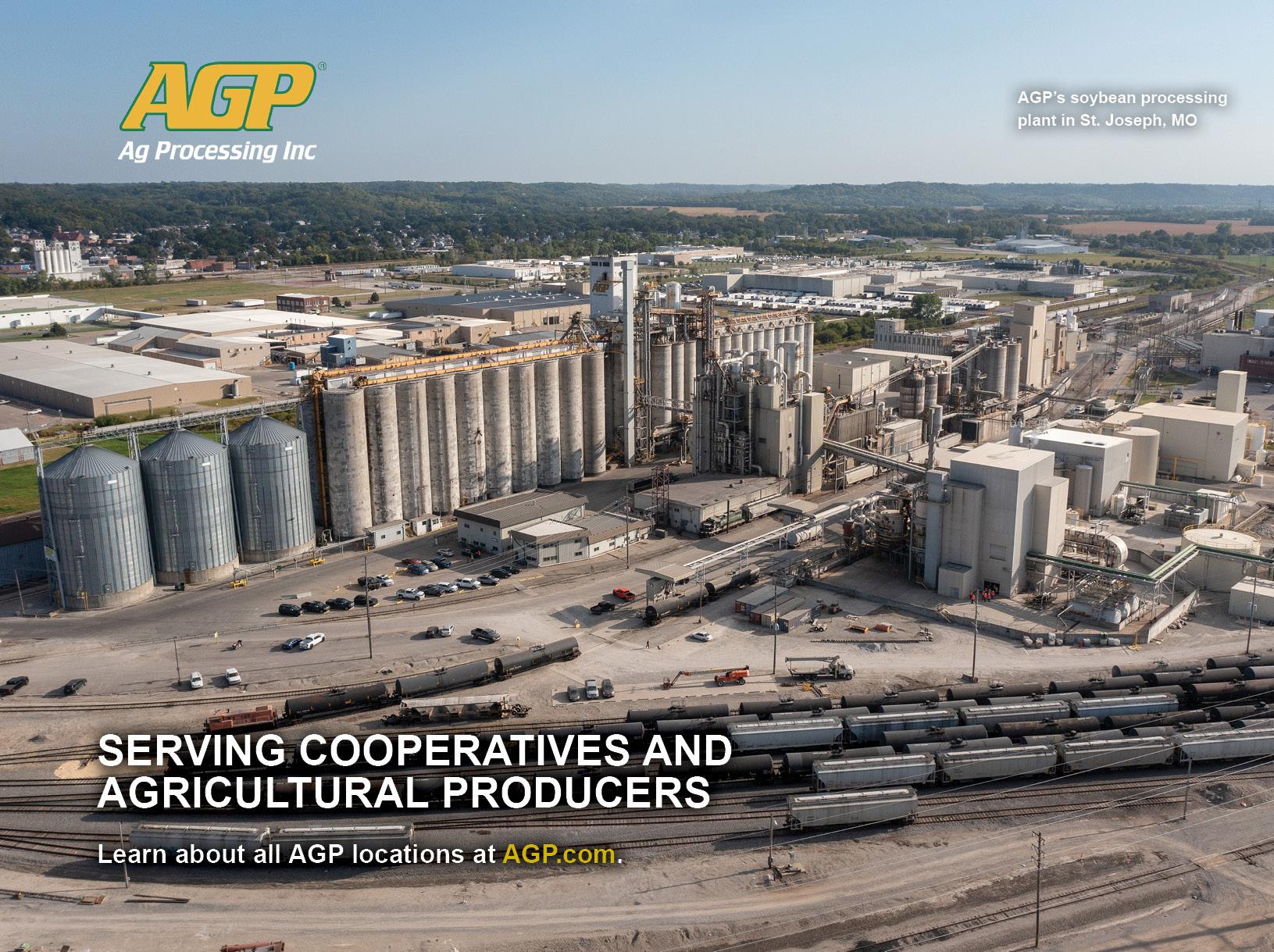
Your Land, Covered

Cover crops have many benefits, including water retention—even in drought years. But, knowing when to terminate the cover crop is key in responding to overly dry or wet seasons.
When you enroll in Farmers for Soil Health, you gain access to individualized support through a technical advisor who can help you navigate a wide range of cover crop questions. From seed selection through termination—we’ve got you covered
An election will be held to elect five (5) soybean producers to the 13-member Missouri Soybean Merchandising Council, which manages the funds collected through the soybean checkoff program. The terms of office will be for three (3) years and the election will be as follows: five (5) members are to be elected; one (1) each from Districts 4, 5, 6 and two (2) from District 7. Ballots will be mailed by the Missouri Department of Agriculture on March 6, 2026, to each registered producer in the four (4) Districts. Ballots must be returned to the Missouri Department of Agriculture in Jefferson City, by mail, postmarked no later than April 3, 2026.

LegaL Notice to Missouri soybeaN Producers 2026 WINTER MEETING DATES
Any duly registered commercial producer of soybeans is eligible to vote for the Council candidates from his/her District. Producers must be registered to vote. Current registered producers whose address has changed in the last five (5) years should re-register or contact the Missouri Department of Agriculture at 573-751-5611 or P.O. Box 630, Jefferson City, MO 65102 by Feb. 3, 2026, to receive a ballot. Non-registered producers must register prior to Feb. 3, 2026, at the USDA County FSA Office or online at: www.agriculture.mo.gov/councils/ to receive a ballot for this election.
District 1: Maryville NWMSU Ag Learning Center | Feb. 19, 6 p.m.
District 2: Chillicothe
Litton Ag Center | Feb. 5, 6 p.m.
District 3: Canton
Casebier Ag | Jan. 6, 6 p.m
District 4: Appleton City Vintage View by Sue | Feb. 12, 6 p.m
District 5: Malta Bend
Marshall & Fenner Farms | Jan. 8, 6 p.m
District 6: Hawk Point Prairie View Seed | Feb. 10, 6 p.m
District 7: Gideon
Ryan Riley Farms | Jan. 15, 6 p.m.
Any qualified producer may be nominated and have his/her name placed on the ballot, provided he/she presents the director of the Missouri Department of Agriculture a nominating petition signed by at least 100 soybean producers prior to Feb. 3, 2026. Such petitions are available at the Missouri Department of Agriculture in Jefferson City, MO. Please direct any questions to Missouri Department of Agriculture, P.O. Box 630, Jefferson City, MO 65102, or 573-751-5611.
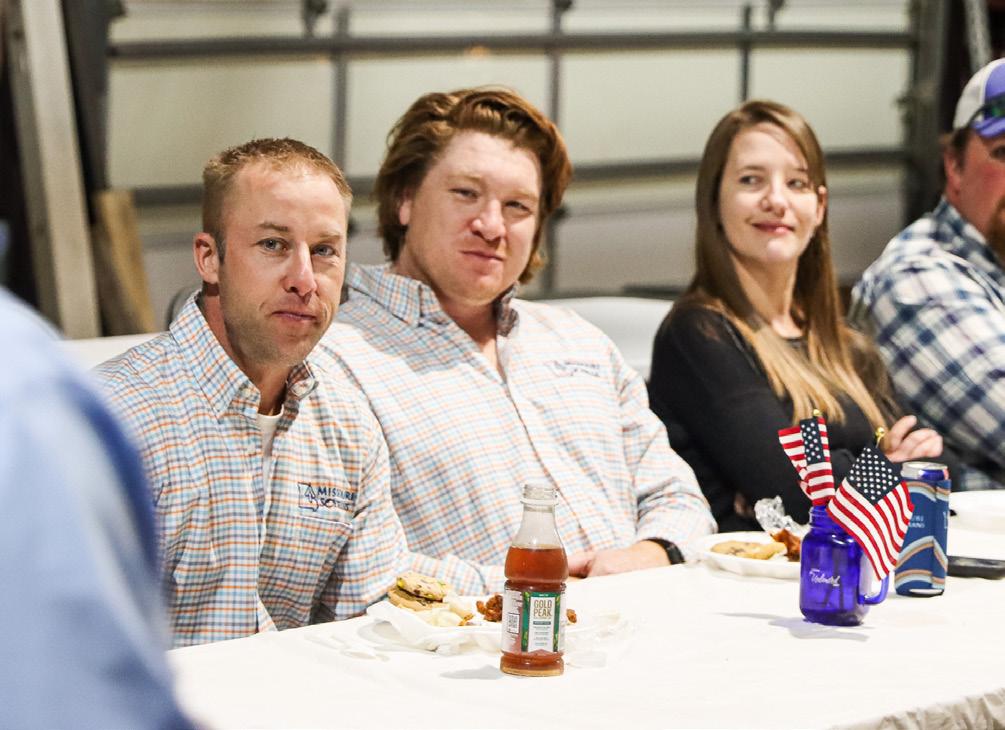

GET MORE FROM MOSOY
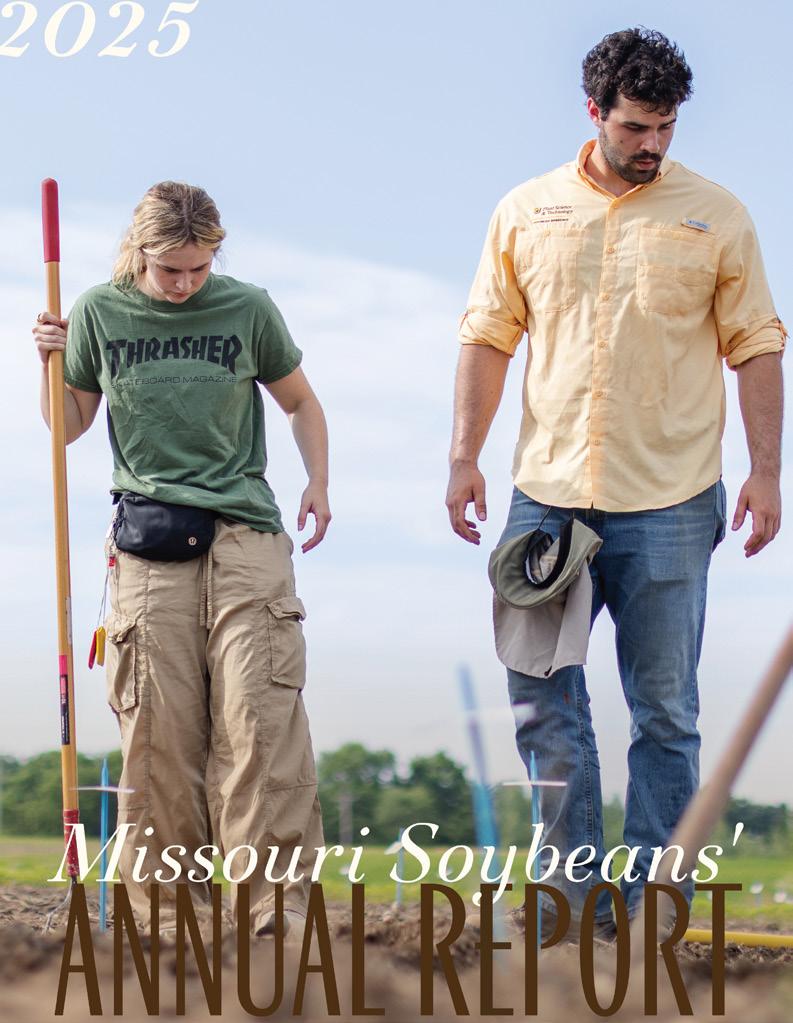
MISSOURI SOYBEANS' ANNUAL REPORT
Learn more about what the Missouri Soybean Association and Missouri Soybean Merchandising Council have been doing during the past year!

U.S. SOYBEAN GENETICS
COLLABORATIVE SEED GUIDE
Check out the USSGC Seed Guide to learn more about the varieties created through publicly funded breeding programs!

We put soybeans first because you put performance first.
At Asgrow® brand, not only are we all about the beans, we’re all about your success as well. That’s why we offer localized products with leading genetics, weed management systems and maximum profit potential – all developed by soybean experts who put soybeans first.
DISCOVER HOW IT’S ALL ABOUT THE BEANS. Asgrow.com