The Miscellany News
Vassar College’s student newspaper of record since 1866
Volume 165 | Issue 4
Vassar College’s student newspaper of record since 1866
Volume 165 | Issue 4
relocate the Office of Admission. Bingham shared that the idea Bartlett liked best was to have a brand new space.
At the start of the Spring 2026 semester, the new Dede Thompson Bartlett Center for Admission and Career Education officially opened to students. Last spring, President of the College Elizabeth Bradley broke ground at the site of the soon-to-be admissions building and career center, announcing a big change coming to Vassar College. Construction has taken place throughout the year, and the building will officially be finished by March 2026. This new site houses admissions operations, hosts information sessions for prospective students and provides career education services, such as resume review and interview preparation for Vassar students and alumnae/i.
In the summer of 2021, plans for a new admissions building had already been put in motion. However, following a $10 million donation from Dede Thompson Bartlett ’65, Associate Dean of the College for Career Education (CCE) Stacy Bingham also looked to expand her office’s space. The architects presented three options to the CCE. The first was to rebuild the interior of Main Building’s south wing, the CCE’s former location. The second was to renovate the Carol and James Kautz House, where the Office of Admission was formerly housed. The third was to add a space for the CCE to the ongoing building project to
“It’s a very different change, but a nice change,” said Career Counselor Azeeza Saafir, of the Bartlett Center. The new building provides a more open and spacious work environment compared to the previous location. “It’s also a more open space. It was pretty dark and cramped in Main,” stated CCE intern Lucas LaFleur ’29.
According to Bingham, the new building has upgraded its ability to provide admissions and career-related services: “We’re doing 150 events a year, they’re [admissions] doing two info sessions a day, five days a week. So, we were always beg, borrowing and stealing space on campus, so this is amazing because now there’s just dedicated space.”
Many see the new building’s unique architecture as a positive. Saafir shared, “My most favorite part of the building is all of the natural light. It’s hard to be in a bad mood if you are walking past all of the windows.” Sahar Abassi ’28, a CCE intern, said, “I love the wood infrastructure. I think it’s so pretty.” Also in reference to the architecture, Thomas Millem ’29 expressed, “It’s really interesting. I think it’s a cool contrast to the dorms and it adds a lot of character to the campus.”
Having a dedicated building has made the CCE more visible on campus. “I feel like there’s a lot more traction now. There’s a lot
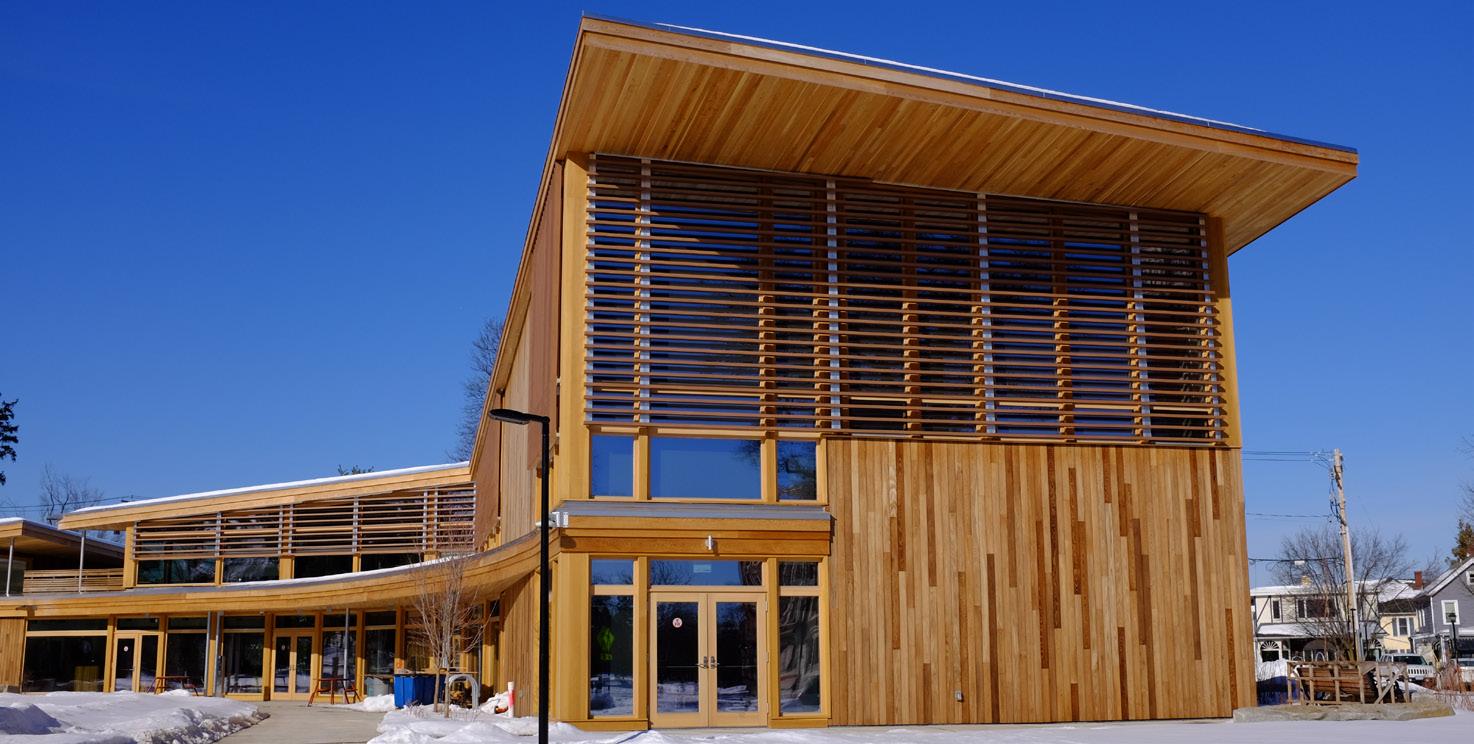
more students coming in because I think the outside of the building is attracting them. Before we were, like, pretty closed off in the [south] wing [of Main], so people didn’t really know where to find us. But now, we have a whole building dedicated to us, so more people are coming in,” Abassi expressed. Similarly, LaFleur said, “I feel like this building is a better attraction for students. Nobody really came to us when we were [in] a side hallway in Main.”
Students interviewed by the Miscellany agreed with CCE workers’ assessment that the new center has brought more traffic. Milem shared, “I didn’t even know where the CCE was before, so it’s really cool that I now have a noticeable building to go to do things for the career center.” Vera Bronshvag ’29 also commented, “I had a lot of
concerns about getting an internship over the summer, but now I definitely feel like I will go to the new building so they can help me figure it out. I didn’t really know that we even had a resource like that on campus. Wasn’t it in Main or something?”
According to Bingham, the new building will ease student anxieties and provide future-related care. “We came up with these plans and these ideas to really create this space that would be very open and inviting. We know that the college search process and the process of figuring out what you want to do with your life after college are both really heavy stressful things,” she explained. “So we wanted to essentially create a building that would really be one with nature and peace and calm, to help people sort of feel their blood pressure go down a bit.”
Julian Balsley News Editor
Afire is raging. Since 2000, nearly 3,500 U.S. newspapers—almost 40 percent— have shuttered, leaving a quarter of the people in this country with limited or no access to a local print paper. Print circulation has fallen 70 percent since 2005. In my home state of Oregon, 68 percent of cit-
ies and three entire counties have no local news. Three-quarters of Oregon newspaper jobs have disappeared since 2001.
Nationally, The Washington Post owner Jeff Bezos recently ordered the paper to fire 300 reporters, a third of its staff. Hundreds of local radio stations are in jeopardy since the Corporation for Public Broadcasting voted itself out of existence in August 2025 after Congress rescinded $9 billion in al-
3
Hadley Amato and Samuel Eisenberg report on Work Study struggles.

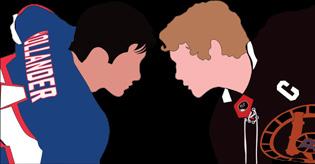
Hannah Wells gives a lesbian perspective on "Heated Rivalry."
ready-allocated funds to public media at President Donald Trump’s behest.
This fire eats through newsprint, and in its wake, news deserts spread from town to town, but also in our thoughts and conversations about far-flung places—Gaza, Khartoum, Jakarta. Amid this smoke, I set out to ask Miscellany News staffers about the state of American journalism.
I met Editor-in-Chief Alli Lowe ’26 outside of Express. She was wearing a blue and white striped blouse, and I was a little late. “What I like to think of journalism is more of a public service, making information available to people,” Alli told me. “Access to TV and information is the same as, like, electricity and water.”
Earlier that day, I sat in the sun-filled living room of Features Editor Yaksha Gummadapu ’26 and Managing Editor Luke Jenkins ’26. The weak winter sunlight felt warmer inside. Yaksha said she had heard many people describe journalism—especially print journalism—as dying. But she did not feel that dying was the right word: “I think it’s being murdered as opposed to dying.” Luke added, “I definitely think it’s a slow death.” His own local paper sputtered out before COVID-19. A new paper recently began printing, but for years, Luke’s Ohio county had no high-quality local coverage. I also spoke to my former Co-News Editor
Emma Brown ’27. She is currently studying abroad in Dublin, so I called her the other day while we were both doing our laundry. She quickly rattled off a long list of murder victims: local papers that closed; reporters and international desks hemorrhaged by large papers; topics, like the genocide against Gaza, that national papers seem incapable of covering honestly; reporting increasingly dictated by billionaire owners.
“I think that local journalism is the cornerstone of a functioning democracy,” Emma told me. National politics fill our screens and discourse, but local politics—city councils, school boards—shape our daily lives. “When we don’t have local newspapers, people aren’t informed about the events that are happening in their community,” she explained. “When we don’t have local journalists who are doing the due diligence—or don’t have the bandwidth to do the due diligence because there’s one or two reporters in the newsroom—I think that things don’t get uncovered.”
I asked my current Co-News Editor, Hadley Amato ’28, what happens to a community without a local news source. “People know less,” he responded. “Without local news, there is the ability for the people in power to have more harm against the people, because you have no body in the populace that will expose what people in power
Luke Jenkins and Chloe Rogers investigate the Arlington Bucks mystery.

EDITOR-IN-CHIEF
MANAGING EDITOR
SENIOR EDITORS
CONTRIBUTING EDITORS
NEWS EDITORS
ARTS EDITOR
ASSISTANT ARTS EDITORS
FEATURES EDITORS
OPINIONS EDITOR
ASSISTANT OPINIONS EDITORS
HUMOR EDITORS
ASSISTANT HUMOR EDITORS
SPORTS EDITORS
DESIGN EDITORS
ASSISTANT DESIGN EDITORS
COPY EDITORS
GRAPHICS EDITOR
PHOTO EDITOR GAMES EDITORS
SOCIAL MEDIA MANAGER LIVE EVENTS CHAIR WEBMASTER REPORTERS/COLUMNISTS
PHOTOGRAPHER
CARTOONIST
COPY STAFF
Allison Lowe
Luke Jenkins
Kathryn Carvel
Darja Coutts
Madeleine Nicks
Clara Alger
Carina Cole
Soren Fischer
Hadley Amato
Julian Balsley
Grace Finke
Aurelia Harrison
Brendan Kennedy
Yaksha Gummadapu
Sydney Jones
Jacob Cifuentes
Ian Watanabe
Zoe Rodriguez
Emma daRosa
Wren Buehler
Noah Daube-Valois
Henry France
Casey McMenamin
Molly Delahunty
Lucas Seguinot
Teresa Garcia-Green
Hannah Wells
Sadie
Bakken-Durchslag
Paige Hahn
Anabel Lee
Annie McShane
Makenna Brown
Sadie Keesbury
Felix Mundy-Mancino
Mia Liloia
Denver Brown
Hunter Farhat
Eduardo Culmer
Armaan Desai
Noah Duncan
Jackson Hrebin
Lora Janczewski
Evan Seker
Erin Thatcher
Amritha Dewan
Andrew Chu
Nikola Parker Cooperman
Elliott Evans
Cooper Jaffe
Gabrielle Lyman
Ren Nicolau
Tess Novack
Julia Weber
• New Sophomore Senator Matthias Veith ’28 participated in his first meeting.
• Director of Sustainability Ken Foster spoke to the Senate about the Office of Sustainability’s upcoming three-year Climate Action Plan.
• Election filing began Monday, Feb. 16.
• The President updated the Senate on the recent Board of Trustees and Alumnae/i Association meetings, including that the Asset Preservation budget was increased from $10.8 million to $12.8 million and that over $930 million in repairs need to be made to all buildings on campus.
Many Work Study students at Vassar College have difficulty finding jobs on campus. Several have cited JobX, the site that all Vassar employers must use to hire students, as being central to the problem. In the wake of rising tuition costs and a 2025 Worker Student Coalition (WSC) petition that called for guaranteed employment for all Work Study students, Vassar students and administrators are exploring different ways to fix this system.
According to the Vassar website, Work Study students are given “priority” in the job search process by being awarded exclusive access to JobX for the first month of every semester before it opens up to the rest of the campus. The website states, “Work Study is a need-based student employment program which provides students with part-time jobs on or near campus.”
The Miscellany News spoke to multiple students who described struggling with JobX. Julia Haggerty ’28, a Work Study and First-generation, Low Income (FLI) student, explained, “I would just put in probably anywhere from 15 to 20 applications, and maybe hear back from one or two, and sometimes not hear back at all. And, of the couple that I would get interviews for, they would end up picking…somebody who had worked there before.” She reported that, despite being a FLI and Work Study student, it took her from the beginning of her freshman year to the spring of her sophomore year to find a job.
Other Work Study students expressed similar experiences applying for work on JobX. Ryan Santos ’29, a Work Study and QuestBridge student, reflected on the system as a whole: “The employment system in place is inconsistent and unreliable, and employment seems to be based on luck rather than need. I am not the only student who has been affected by the current system; more action needs to be taken.”
WSC Co-Chair Gilana Steckel ’26 also expressed frustrations with the hiring system. She said of JobX, “The system has basically no regulation. There are many, many jobs listed on the system that are already taken that are still up there. Students apply and don’t receive responses from employers.” According to Director of Human Resources Operations Linda Wessberg, “When students inform us that an employer has not communicated with them, or that a job posting is incorrectly listed as available, we do engage supervisors to assist.”
For many Vassar students, not being able to find employment poses several material challenges. FLI Director Cyrenius Fitzjohn commented, “I know lots of students who work additional jobs off campus on top of
finding a Work Study position, so making all of those things work into a schedule. I think [it] is an added burden that isn’t necessarily always taken into consideration.”
Haggerty echoed this experience. “It’s definitely made every semester very tough…because instead of having to not worry about money constantly, I do have to worry about money constantly,” she explained. “So, it’s definitely made my experience here more difficult than it should be.”
WSC is dedicated to making employment opportunities easier for Work Study students. In Spring 2025, the organization released a petition calling for reforms to student labor on campus. A central demand of WSC’s petition was to: “Ensure that all students with work-study allotments are guaranteed campus employment and placed in a position before applications open to all students.” The petition received over 700 signatures from Vassar students, faculty, staff, parents and community members.
Steckel told the Miscellany, “It is the responsibility of the College to make sure that every single student with a Work Study award has the opportunity if they want to have a job. Further, students should be able to find a job as soon as they arrive on campus… Many students don’t earn the full allotment because they’re not able to find a job immediately.”
The College has recently been experimenting with potential changes to the current hiring system. Wessberg explained
"I am not the only student who has been affected by the current system; more action needs to be taken."
some possible alternatives. “Last semester, we introduced a pilot Job Slotting Program for First-Year students, which placed approximately 70 students directly into jobs and received overwhelmingly positive feedback.”
This program gives first-year students the ability to apply directly to student employment, where they are then directly matched with available positions. VSA Senator and Student Financial Affairs Committee Chair Alexander Swift ’26 commented, “[Pilot Job Slotting], I think, is a great way that human resources is moving to centralize the issue of granting students Work Study and moving towards helping students circumvent JobX in order to get work.”
Members of WSC appreciated that the Pilot Job Slotting program is being pushed by the College, but argued that it is not

enough. Steckel said, “This year, 60 or 70 students were placed in jobs through the program, but it’s not enough, and it’s not guaranteed employment for Work Study students. So, there needs to be a way for the College to be in touch with every student on Work Study, and if they can’t find a job for any reason, [there should be] a new system to offer them one.”
Wessberg explained that Student Employment has committed to work towards replacing JobX by Fall 2027. The College has not officially commented on what will replace JobX, but Swift explained, “In addition to [Pilot Job slotting], they are currently looking at potentially shifting to Workday as a form of applying for jobs instead of JobX.”
To others, the issue has broader implications. Fitzjohn commented, “I appreciate the idea of Work Study, of giving students the opportunity to earn more funds while they’re on campus, but, in some regards, it’s also limiting… It feels somewhat counterintuitive to me to be like, ‘Here is this benefit you get, but you have to work for it.’”
Members of the Vassar community are also focusing on tangible ways for struggling students to overcome these issues. Fitzjohn concluded, “I think a big first step would just be giving FLI students or Pell-eligible students an opportunity to share what would improve their experience, and then try to implement those where we can.” Swift also pointed to Human Resources (HR) as an important avenue students should use to speak up about their concerns: “I think they should absolutely make their opinions heard, because HR is listening… The more that students make their opinions heard, the more that an informed change can occur.”
Steckel thought differently about HR. She stated: “HR listened last semester because we forced them to listen through our petition. We were backed by massive support. We hosted a rally where, for weeks, the administration did not reach out to us
to respond to our petition, despite our direct demand for them to do so. We delivered the petition to their door, demanding that they listen to us.”
Steckel continued, “We need students across campus to be talking about student
"The system has basically no regulation. There are many, many jobs listed on the system that are already taken that are still up there."
labor with each other, to share experiences, to find common experiences, common struggles that we’ve had with student labor. It’s through these conversations and forms of building solidarity across workplaces that student workers can realize the fundamental problems with the student employment system here and build momentum together, and begin to affect change.”
In an email to The Miscellany News, President of the College Elizabeth Bradley wrote, “Student input and feedback has been essential to these improvements, and Human Resources, which oversees Student Employment, continues to dialogue with students as they advance their efforts.”
As the struggle for Work Study students to find campus jobs continues, the Miscellany asked WSC if they had a message for Vassar’s student workers who feel discouraged by the current system. In response, WSC Co-Chair Mae Buck ’26 addressed student workers directly: “It’s important to remember that your work generates the value of this college…Nothing is a stronger demonstration of our collective labor power than us all banding together and saying, at once, our work has value, our work generates this value.”
Annie McShane Graphics Editor
With another Valentine’s Day having come and gone, I, much like Rihanna, have got love on the brain. After completing my annual viewing of the 2010 star-studded classic “Valentine’s Day,” I was itching for another lighthearted yet meaningful movie with that perfect balance of romance and comedy.
I scrolled for what felt like hours through the endless rows of Amazon Prime, Netflix, Hulu and more, hunting for my next romcom watch. Of course, there are the classics—“When Harry Met Sally,” “How to Lose a Guy in 10 Days,” “10 Things I Hate About You,” etc.—but I wanted something more modern. It seems that we have found ourselves in somewhat of a rom-com drought. However, there is hope for us yet. After days of extensive research poring over my Letterboxd reviews, I have compiled a list of the 10 best rom-coms from the past decade that you should add to your watch list this Valentine’s season. Starting off strong, I want to take it all the way back to 2018 with the Netflix original “Set It Up.” In my “professional” opinion, this is the best modern rom-com. The movie follows Harper (Zoey Deutch) and Charlie (Glen Powell), two overworked assistants, as they try to set their bosses up with each other in an attempt to regain a work-life balance. As the two of them work together to play Cyrano, they might just find love with one another. With the classic journalist-in-the-big-city protagonist, a couple with undeniable chemistry and the perfect balance between intimate and laugh-out-loud moments, this is one rom-com that you should definitely add to your watch list.
Next up, we have “Juliet, Naked,” also from
2018. The film follows Annie (Rose Byrne), an English museum curator who, by chance, meets her boyfriend’s idol, American rock star Tucker Crowe (Ethan Hawke). Although at the surface, the film might seem to be lacking in the “com” factor, “Juliet, Naked” is quietly funny in a way that is reminiscent of movies like “Dan in Real Life” and “Begin Again.” It also has that classic rock-starmeets-regular-girl dynamic for fans of “Notting Hill” and “Music and Lyrics.” Plus, who does not love Ethan Hawke and Rose Byrne?
Moving on to 2019 and the Christmas season, I recommend taking a trip to Laurel, Illinois, for “Let It Snow.” This movie follows a group of teens on Christmas Eve during a major snowstorm. There is a rock star/regular girl storyline, a secret lesbian relationship, a friends-to-lovers will they/won’t they, and somehow, every plotline leads to Waffle Town, the town’s local breakfast spot. I am a sucker for a holiday ensemble cast movie, and this one truly has something for everyone.
My fourth recommendation, and first of the 2020s, is “The Half of It,” which follows Ellie (Leah Lewis) as she ghostwrites love letters for her neighbor Paul (Daniel Diemer). However, there is a twist: Ellie and Paul are in love with the same girl. With its more serious tone, I would place this movie into a category with modern rom-coms like “Eternity” and “Materialists,” both of which I also recommend. It is a beautiful representation of all different kinds of love, whether that be queer love, platonic love or familial love. Jumping ahead two years, I implore you to watch “Look Both Ways.” For fans of “Sliding Doors” or anyone who saw “Superman” and thought, Gee, David Corenswet sure would be great in a rom-com: This is the movie for you. It follows Natalie (Lili Reinhart) on two possible paths of her life after taking a preg-
nancy test in the bathroom at a college party. What I love the most about this movie is that neither path is the “right” one—in both storylines, Natalie creates a life for herself full of love, success and happiness. I also believe that Reinhart is a highly underrated actress. Up next, I have a bit of a controversial pick with 2023’s “Anyone But You.” I know what you are thinking: But Annie, didn’t this movie get terrible reviews? Yes, dear reader, it did. However, I encourage you to look past Sydney Sweeney and Glen Powell’s corny press tour romance and give this movie a chance. It follows mortal enemies Bea and Ben, who reunite against their will at a destination wedding. Leading up to the festivities, they attempt to convince their friends and family that they are dating in an effort to make their respective exes jealous. I am a lover of Shakespeare adaptations, and although it does not quite reach the greatness of “She’s The Man”— because, let us be honest, few movies do—this is a fun and fairly faithful version of “Much Ado About Nothing.”
Next on my list, and also from 2023, I would like to bring “Love at First Sight” to the table. Based on the novel “The Statistical Probability of Love at First Sight” by Jennifer E. Smith, this movie tells the tale of Hadley (Haley Lu Richardson) and Oliver (Ben Hardy), who meet on a flight to London and keep finding each other by chance over the next 24 hours. Basically, take “Serendipity,” cut out the frustrating seven-year gap, get Jameela Jamil to narrate, and boom: perfect rom-com. In all seriousness, this movie has a unique plot, two charming leads and—as someone who read this novel three times in seventh grade—is a faithful book adaptation. I download it on Netflix every time I fly on a plane, and I urge you to try the same.
My next pick, “The Fall Guy,” is one that some people might not consider a rom-com.
However, I saw this movie three times in theaters and have seen it seven times in total since it was released to Peacock in 2024, so I feel comfortable knighting it with rom-com status. The film follows stuntman Colt (Ryan Gosling) as he attempts to solve the mystery of the missing action star Tom Ryder (Aaron Taylor-Johnson) and save the directorial debut of his ex-flame, Jodi (Emily Blunt), hopefully winning back her love in the process. I would recommend it to anyone who is a fan of action-oriented rom-coms like “Romancing the Stone.” It is hilarious, has a great soundtrack and—in my educated opinion—is the best that Ryan Gosling has ever looked. Also released in 2024, I suggest you watch “Sweethearts,” which follows Jamie (Kiernan Shipka) and Ben (Nico Hiraga) in their efforts to end their respective high school relationships over their first Thanksgiving break home from college. I think Thanksgiving is an untapped genre, and it was about time we had a film to join “Planes, Trains and Automobiles.” Perfect for fans of the 2025 TV show “Overcompensating,” this movie is charming and hilarious with a surprising yet satisfying end.
Last, but most certainly not least, we have “People We Meet on Vacation,” which was released about a month ago. It tells the story of unlikely friends Poppy (Emily Bader) and Alex (Tom Blyth) reuniting at a wedding after a falling-out. We see scenes of their friendship over the years through flashbacks of the annual summer trip they take together, slowly discovering what went wrong between them and whether they can mend their relationship. Adapted from Emily Henry’s book of the same name, this movie captures the essence of classic rom-coms with a bubbly main character, a fun soundtrack and a wedding setting. This movie is a quality pick for your Valentine’s season.
Darja Coutts Senior Editor
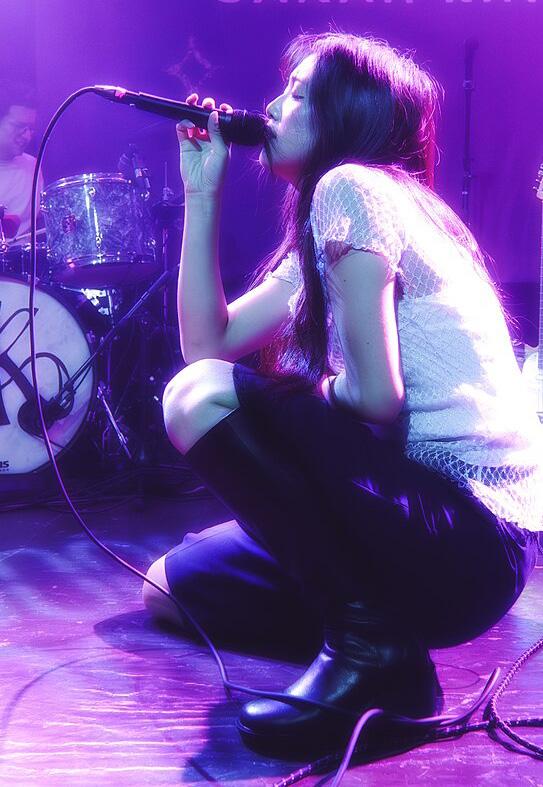
Valentine’s Day may have passed, but for a true yearner, the season of longing is never over—at least, according to alternative pop singer-songwriter Sarah Kinsley. On Sept. 26 of last year, Kinsley dropped her new single,“Fleeting,” two long years after the release of her debut album, “Escaper.” The album boasted Kinsley’s heavenly-sounding voice, ethereal instrumentation and beautiful lyricism, and ever since then, I have been craving even more from her. Finally, on Friday, Feb. 13, Kinsley dropped her fifth EP. Also named “Fleeting,” the work adds to her already stellar discography. While classically-trained Kinsley has been writing, producing and releasing music since 2019, for myself and many others, our first introduction to her was in 2021 when her track “The King” blew up on TikTok. The iconic song features a dizzying piano accompaniment, a driving drum beat, stunning synths and, of course, Kinsley’s soaring high notes. “The King” is the epitome of Kinsley’s sound, showing off what she does best—but I promise, it only goes up from here.
In 2022, Kinsley’s music transformed forever. Before the release of her EP “Cypress,” Kinsley started posting TikToks flaunting the use of her contact microphone. In one TikTok, she asserted, “My contact mic has changed everything about how I make this new record.” Many of Kinsley’s videos feature her with piezoelectric disk sensors taped to her throat or her light switch-fitted contact mic pressed to her mouth or neck; as Kinsley sings, the device helps create an unbelievable,
siren-like effect that truly transforms her voice. From then on, Kinsley and her contact mic have been inseparable. In a 2025 interview for the Grammy Recording Academy’s series “It Goes to 11,” Kinsley explains more about her contact mic and her relationship to the device: “I find that the sound of it and the way that it represents me helps me to evoke feeling that I can’t express through language sometimes.” The use of her contact mic is subtle throughout “Fleeting,” but I find that this is the power of the device—it only enhances her incredible talent.
The opening track, “Lonely Touch,” released as a single on Jan. 9, starts like most of Kinsley’s other songs with a punchy drum beat, otherworldly synths and striking piano chords. But the meaning of “Lonely Touch” is best expressed through its music video: Kinsley, dressed in white, is surrounded by dancers wearing black, trying to mimic their flowing movements and connect through touch. The song builds and builds to finally explode in satisfying payoff as Kinsley sings about the all-consuming nature of longing for another: “I want to feel it all / The edges of your soul / One body in the dark / Where do I put my heart?” This is my favorite song off the EP because it demonstrates what Kinsley does best: alluring vocals balanced with unique instrumentation, climbing to a gorgeous climax. While I was worried the other tracks would not hold a candle to “Lonely Touch,” Kinsley managed to surpass my expectations. Unlike the previous track, Kinsley is alone in the music video for ’80s-inspired “Truth of Pursuit.” As the listener is drawn in by her enchanting high voice, Kinsley is shown tangled in the cords of her numerous synths. The
lyrics portray the aftermath of a relationship that ended despite the rush of emotion that Kinsley expressed in “Lonely Touch,” full of “what ifs” and “if onlys.” In the background, powerful drums drive the track forward, fitting in with the rest of the EP flawlessly.
“Fleeting” continues with “Reverie,” beginning with a quiet but heavenly piano solo. As the title suggests, “Reverie” is dreamy and perfect for getting lost in one’s thoughts. Usually, the more somber pieces of an album are never my favorite, but there is something raw and real about “Reverie” that tugs on my heartstrings. The ending is gut-wrenching as Kinsley sings, “You were a scapegoat for my life to unravel / It’s just a dream, don’t you get it? / It’s all a dream, just forget it.”
If your heart was broken by “Reverie,” “After All” will offer you no remorse. This song features Paris Paloma, the British singer-songwriter behind the popular 2023 female rage-fueled track “labour.” Both singers’ sweet voices meld together perfectly as they show off their full vocal range. Kinsley and Paloma describe the complex mixed feelings after the end of a relationship with sickening lyrics like “Love is not enough, after all / Love is just a man I used to call.” What makes this track the most unique from the EP is the heavenly string instruments threaded throughout, complementing Kinsley and Paloma’s distinctive and powerful vocal qualities.
After the devastation of the previous two songs, Kinsley offers up the title track, “Fleeting,” which is fun, dancey and optimistic. In the “Lonely Touch”-like music video, Kinsley pauses the dancing crowd and stops time when she puts on her glasses, dancing to her heart’s content without judgment. With this
song, the journey of the EP is complete. Kinsley implores her listeners to own their full range of emotions, promising us that “It’s not forever / It’s only fleeting.” Even when you are in the midst of a difficult time, know that things will change.
Longing and heartbreak are universally felt emotional experiences, and Sarah Kinsley does an impeccable job of representing these complex feelings through “Fleeting.” The EP has everything: songs for daydreaming, for crying and for dancing. But, of course, as always, all of the tracks—and her discography as a whole!—are perfect for yearning, especially during this chilly, snow-filled February. Even as we move into the spring, I know Kinsley’s “Fleeting” will be an essential part of my music rotation, and I hope it will be for you, too.
Hannah Wells Assistant Design Editor
It would be hard to find something that interests me less than naked men and hockey. Yet here I stand, a lesbian at my historically women’s college, about to write a glowing review of “Heated Rivalry,” a show that almost exclusively features naked men and hockey.
If “the cottage” means nothing to you and sports still come to mind when you hear “hockey,” do not fret: I will fill you in on Gen Z’s newest obsession. “Heated Rivalry” is a television series released in November 2025 on Crave in Canada and HBO Max in the United States. It currently has one season with just six episodes. Based on Rachel Reid’s book series “Game Changers,” the show follows fictional hockey rivals Shane Hollander (Hudson Williams) and Ilya Rozanov (Connor Storrie) as they navigate a “heated” secret affair and growing feelings for one another. While the show mainly focuses on Shane and Ilya, there is a side plot about veteran hockey star Scott Hunter (François Arnaud) and local smoothie barista Kip Grady (Robbie Graham-Kuntz). As the show progresses, Scott and Kip’s romance acts as a pivotal influence on Ilya and Shane and the development of their own relationship.
I was introduced to “Heated Rivalry” as “the gay porn show,” and after watching interviews with the co-stars, I have seen an overwhelming focus on their bodies and the sex scenes in the show. However, watching “Heated Rivalry” without any interest in those parts of the series showed me that, at its core, “Heated Rivalry” is a much-needed story about queer love in the modern day.
Contrary to popular belief, the overlap in experience and culture of lesbians and gay men is slim to none. Personally, I have found that I generally do not relate to the experiences of gay men, which is not to say
that you should only consume media that reflects your own experiences. However, I have found that the majority of mainstream LGBTQ+ media is about cisgender gay and bisexual men. Admittedly, I did not think I would gain much from “Heated Rivalry.” Despite this, my wonderful best friend promised me that the show was so good that even if I could not relate to it, I would still love it. I cannot say no to her, so I began my journey into the world of “Heated Rivalry” with both low expectations and an enthusiastic bisexual at my side.
The first two episodes were generally what I expected, and I almost stopped watching after the second. The episodes had strong acting and some substance, but I felt that my initial hypothesis, that the show was not for me, was correct. Episodes one and two matched my vision of what a “gay porn show” would be like, which was not exactly appealing for a lesbian. I decided to give it one more try with the third episode, “Hunter.” Looking back, the third episode is probably the least thought-out and the most rushed because of the accelerated timeline of Scott and Kip’s relationship. The book “Game Changers” focuses on their relationship, so I understand that it is hard to fit an entire book into an episode. Yet, to me, it gave a glimpse into what “Heated Rivalry” would become in its second act.
The third episode turns away from the Ilya and Shane plot and is almost exclusively about Scott and Kip. Here, the narrative favors romance over lust and starts to dive into the complexities of being a gay professional athlete. The pressure and anxiety around coming out are something that binds almost everyone in the LGBTQ+ community. While the “coming out story” is usually prevalent in LGBTQ+ media, I found it interesting to see the way those pressures affect queer athletes, especially for men.
After the third episode, the show reached a new level, with a real focus on
the development of Shane and Iliya’s relationship and an emphasis on the queer experience. While there are devastating moments, what makes “Heated Rivalry” stand out is its undeniable celebration of queerness, which, of course, hits home for me. There is so much pain and suffering in the LGBTQ+ community, and there are many members who never get their happy ending. People need to understand that. But to watch a series that shows not only the struggle, but also what comes after the struggle, was almost more meaningful. “Heated Rivalry” perfectly captured why all of the hardships and complexities of navigating the world as a queer person are worth it.
While I applaud “Heated Rivalry” for doing an excellent job capturing the queer experience, I was perhaps even more impressed by the show’s portrayal of women. The main female characters include a love interest, Rose Landry (Sophie Nélisse), Ilya’s best friend Svetlana Vetrova (Ksenia Daniela Kharlamova), and Kip’s friend Elena Rygg (Nadine Bhabha). The women in “Heated Rivalry” are all strong and empathetic. They are not portrayed as selfish, homophobic villains who want the men all to themselves: Instead, they are supportive without minimizing their own feelings. The women of “Heated Rivalry” are perfect examples of allies and are sometimes the only characters with any common sense. I could go on and on about the show itself, but my analysis of “Heated Rivalry” would not be complete without addressing the audience reaction to it. “Heated Rivalry” received overwhelming audience approval, and its popularity extended beyond viewership. There were “Heated Rivalry”-themed look-alike contests, themed nights at clubs, and Williams and Storrie quickly became stars. The two actors even presented at the Golden Globes. I am so happy to see an LGBTQ+ show become truly mainstream, and I am certain that it has changed lives for audiences. For instance,
former hockey player Jesse Kortuem publicly came out after watching “Heated Rivalry,” and I am sure he will not be the last. While I absolutely do not want to take away from the importance of the representation in “Heated Rivalry,” I cannot help but wonder why non-male LGBTQ+ media never seems to get similar amounts of attention. Being a lesbian is a unique experience because it requires a complete rejection of male validation and a total decentering of men. This is almost impossible to do as a woman in today’s world. Ultimately, it becomes even harder to separate yourself from a male-dominated culture when lesbian media, especially set in the modern day, is scarce and often goes unsupported.
I have noticed that a large fan base of queer male media is women, often straight women. While there is nothing inherently wrong about this, sometimes I worry that the support comes from a place of fetishization of gay men rather than genuine allyship. Not only that, but this same fan base does not seem to show up for LGBTQ+ shows about women. I know there are shows in the works similar to “Heated Rivalry” but about queer women, and I hope that we can give these shows the same recognition and importance. While I wish there were more female-centered LGBTQ+ shows, that does not take away from the importance of “Heated Rivalry.” It is not a groundbreaking masterpiece, but it does not need to be. To have a series that displays the nuances of queer relationships, while also just being a fun romance show, is exactly the kind of representation I have been looking for. Watching “Heated Rivalry” reminded me that representation comes in many forms, and you can find reflections of yourself in places you would never expect. I never thought I would say this, but I am finally ready to admit that I am both a proud sports-hating lesbian and a “Heated Rivalry” superfan.
Marius Kruse Guest Columnist
“An Urban Allegory” by Alice Rohrwacher makes no secret of its inspiration from Plato’s “Allegory of the Cave,” but what makes it compelling is its superimposition of the old text onto modern living. The short-film, at only 21 minutes long, argues that those in power, both in terms of laws and the monopoly over attention, subjugate the masses, keeping them in a sedated, non-thinking state of being.
In French, there is a saying, “La vérité sort de la bouche des enfants,” which translates as “the truth is spoken from the mouth of children.” It is from this idiom that Rohrwacher chooses her narrator: a young child, Jay, who accompanies his mother to her dance audition before running away and eventually revealing the true nature of reality, literally “tearing” a layer of plaster covering a seemingly regular wall. Children and education are important topics for Plato, and the film treats them with a similarly critical lens. From the moment we are introduced to Jay, we are plunged into his view of illusions. Jay carries a kaleidoscope around with him, and cinematic shots cut between the refractions and reflections seen through it. These refractions parallel how Plato views our understanding of the world around us: the images we see are mere shadows of the “real.” Hence, Jay’s adventure begins when
a stranger bumps into him, breaking his kaleidoscope and forcing him to confront reality.
But what is reality? We, as human beings, are easily molded by our surroundings. In his Kallipolis, or “the beautiful city,” Plato argues that the environment should be controlled to produce better people. Rohrwacher’s portrayal of phones makes it clear she believes they are a corrupting influence. Throughout the short film, people walk blindly through the streets, eyes glued to their screens. While Jay’s mom is desperately searching for the theater, she asks an idle man for directions, and he responds, “Don’t you have a GPS?” Plato may pardon him, arguing that the theater itself is a form of deception, but I do not think the theater’s role is one of entertainment. The significance of this scene lies in the historical importance of the theater as the center of community life: We have not lost touch with culture as long as we have connections with others within our community.
The director of the theater is one who has not fallen for the lies of the senses. When we are introduced to him, he is undergoing a treatment for his eyesight, and wears dark sunglasses throughout the rest of the film, a reference to Plato’s suggestion that those ascended to higher knowledge will struggle with blindness when returning to the darkness of the cave. It is this philos-
opher, we could call him, who completes Jay’s awakening. Jay then escapes and discovers the deception of the outside world, reaching the walls of the city and tearing away a layer of wrapping paper concealing the mouth of the cave.
The unpeeling is stunning in itself, but the visuals become even more impressive. Jay transcends from the physical, three-dimensional version of himself into a stop-motion paper that walks within the walls of the buildings. A moment must be taken to appreciate the beauty within the short itself. Starting from the establishing shots of the gray city of Paris to the intimate scenes within the theater, the beauty of the camerawork is evident, even to viewers like me who have not spent a tremendous amount of time studying film. Even more, there is the dance choreography that becomes increasingly spliced within scenes as the film progresses. Arranged within a vertical grid, each dancer is part of the composition of an abstract show of images and forms that is as captivating as it is laden, referencing Plato’s theory that forms are superior to the senses. This sequence comes to an end when Jay—or the poster of Jay—gets covered up by city workers.
I have already discussed the role of social media, but there is a second power that Rohrwacher’s film appears to warn of. The hint can be found in the words painted on many of the buildings portrayed: “défense
d’afficher,” or “posting prohibited.” This is a reference to the old French law from 1881, which was designed to protect public spaces from being overwhelmed by advertisements or fliers. However, rather than being protective, as intended in the original law, the film portrays them as stifling. It is these words written on the wall that Jay tears up to reveal the cave’s mouth. The saying is also present on the wall where his two-dimensional form is located, when it eventually gets covered up by the government workers. Not only are we meant to question social media—which has blinded us from being in contact with public spaces—but also the authorities that have taken away our ability to make these spaces our own. We should question the laws that keep us bound like prisoners, unable to see reality.
What does this mean for us? Personally, I take it as a call to action. Observation is rebellion, and every act of finding truth and the cracks in the parchment masking our vision is important. Humans are social animals, and the spaces we inhabit should be owned by us, both in terms of our attentiveness and the ability to shape them into the sort of world we want to be in. Ultimately, Rohrwacher ends on an optimistic note. Jay’s first bit of unraveling leads to the whole community stopping and realizing the truth: Every change begins with the actions of one person.
Madeleine Nicks Senior Editor
It is rare that a period piece film ever takes over the conversation of the movie industry. Of course, period pieces and adaptations of classic novels still absolutely hold a certain level of cultural capital, and the best actors of our time often find their way into such films in order to prove their chops by associating their image and career with that of a beloved character. But no recent period piece has had quite the dialogue surrounding it as Emerald Fennell’s new take on Emily Brontë’s epic novel “Wuthering Heights.” Perhaps it was the inclusion of Charli xcx, the highly contested casting, the themed press junket, the Kate Bush song or the fact that the director is openly admitting to how loose her adaptation is. No matter what drew you into “Wuthering Heights,” it has cemented itself as an undeniably magnetic must-see feature. I must begin my review with a disclaimer: I have never read “Wuthering Heights.” I know, I know, it is a blasphemous admission for an English major, but according to my friends who have read the novel, it seems that I am the target audience to actually enjoy the movie. Ignorance, in this case, is bliss. I came into the theater with a healthy dose of hesitation—mainly due to the casting of Jacob Elordi as Heathcliff, a character who is a well-established person of color. However, people have begun to label Heathcliff as “ethnically ambiguous,” which allows just enough of a gray area for the possibility that he could be white. It is important to understand that this label was given not because his race is unknown but because Brontë did not specify his direct place of origin. Margot Robbie as Catherine “Cathy” Earnshaw was also criticized for miscasting, as the novel de-
scribes the character as a dark-haired teenager. Fennell has validated her decision by explaining that she is bringing to life the vision of “Wuthering Heights” that her 14-year-old self had upon reading the novel for the first time. Elordi and Robbie are, seemingly, the personification of Fennell’s childhood idea of Heathcliff and Cathy. Do I strongly disagree with her? Yes. Do I think the world needs yet another brooding monosyllabic Elordi performance? Nope.
With all this in mind, there are many parts of the movie that I did enjoy. At almost every turn of the story, I was surprised, confused, uncomfortable, fascinated, grossed out and emotional. The aesthetic—both in terms of set design and costumes—the pacing of the movie and the highly dramatized dialogue felt as though Fennell watched Yorgos Lanthimos’s “Poor Things” and Joe Wright’s “Anna Karenina” and decided to mash them together with a sprinkle of Brontë. “Wuthering Heights” made no attempt to be period-accurate but rather played with all the ways in which its lack of accuracy could aid in creating a specifically theatrical approach and energy. The first images that Fennell released of the film gave a peek into the costume design, done by Jacqueline Durran, and set the expectation of a highly stylized film. This remains true, but it is set in conflict with the undeniable body horror elements of the movie. Close-up shots of slugs, a pig carcass, leeches, an excessive amount of blood and other grotesque moments ensure that the audience never feels comfortable for long. The sweeping and tragic relationship between Heathcliff and Cathy is sporadic, and Fennell creates that sense of instability through the disturbing elements that surround their romance.
Robbie, alongside her husband, is also a producer on the film. She has a long-time
partnership with Fennell, producing all three of Fennell’s feature films. As much criticism as Fennell has gotten for her outlandish decision for “Wuthering Heights,” it is essential to know that Robbie is endorsing those choices. The well-deserved criticism around Elordi’s casting has quieted the conversation that should be happening about the entire cast. This is not to say that everyone did not give excellent performances because they absolutely did. It was a deliciously camp film that abandoned the constraints of 19th-century literary conventions and had fun doing so.
The film begins with Heathcliff and Cathy as young children, played by Owen Cooper (of “Adolescence” fame) and Charlotte Mellington, respectively. For a film that has been advertised as so explicit and dark, it has a surprisingly tender beginning—a necessary chapter to establish the true love between our protagonists. The twisted and abusive dynamic that eventually takes over their relationship is as complex as it is because, at their core, they are devoted but never quite reach a maturation beyond that of their childhood feelings.
This immaturity is pervasive throughout the film. Cathy and her husband’s ward, Isabella (Alison Oliver), have an obsession with dolls and use them to mirror their own lives, their increasing hatred for each other and their delight at violent acts. The longer that Cathy stays in her husband’s house without Heathcliff’s presence, the more she begins to look like a doll herself, dressed up in frilly, overpowering gowns, her freckles more pronounced, her blush brighter and brighter. She is villainous and confused, stemming from her horrific upbringing and emotional dysregulation. Heathcliff is equally narcissistic and traumatized, enduring endless abuse
as a child and pinning his self-worth entirely on Cathy. Their identities are wound up, tangled beyond help, with each other. Fennell plays out this relationship and their enduring tie through physical acts, quickly running the audience through their months-long, guilt-ridden affair. Heathcliff is, however, guilt-free and instead becomes consumed with an even more villainous desire to have Cathy all to himself, no matter how despicable the path to winning her might be. He corrupts Isabella in the process and drives himself to ruin as Cathy begins to slowly die from preeclampsia.
Though Fennell has situated her film as a romance, and Robbie encourages movie-goers to bring their friends and grab a cocktail for the best viewing experience, this story is, in no way, a happy one. Unlike Jane Austen, who ensures her characters end up happily married and their stories are tied up with a bow, Brontë makes no such conclusion. Heathcliff loses Cathy, Cathy loses her life and they both lose their sanity. The character that seems to be the moral backbone of the narrative, Nelly (Hong Chau), turns out to be as villainous as the rest of the motley crew. It is an epic and evil novel, and Fennell has made a movie that is true to that description. She has reopened the conversation on what defines an adaptation as true and loose but remains steadfast in the fact that the creative liberties she takes are in pursuit of bringing forth her “Wuthering Heights,” quotations included. The audience in theater 14 of the Regal Galleria Mall undoubtedly laughed, gasped and cried through the film, just as readers of Brontë’s novel would have done. So I say, put on some Charli and Kate Bush, tune out your literary criticisms and take this film as a piece of work independent of its source material.
Noah Duncan Columnist
Two months ago, as we returned home for winter break, my high school best friend asked me if I wanted to binge the final season of “Stranger Things” together. We had watched the show together when the fourth season came out in 2022. We also had not, before this plan, seen one other for close to a year.
To watch in this manner was perhaps a fitting environment for a show so built around high school nostalgia, even if our COVID-19-era high school felt a lot different from ’80s Hawkins, Indiana. Like my own high school experience, though, the “Stranger Things” finale was confused and frustrating, and the only thing that made it better was having someone to commiserate with. My friend and I spent a lot of time complaining, watching the ring-lit faces and CGI tentacles roll on past.
The world of “Stranger Things” has had something of a chokehold on the public consciousness ever since we saw Will Byers’ disappearance 10 years ago. The artful and mysterious horror of that first season has given way, gradually, to something grander—and perhaps more “Avengers”-y. In the first season, we had no idea what the monsters were or what they were capable of. By now, though, we get a whole taxonomy of the Upside Down—Demogorgons, Demo-dogs, flying demon bats, the Mind Flayer and Vecna. Season Five caps it off with a cosmology, introducing The Abyss as a parallel universe from which the Upside Down came. There is now a Broad-
way show, marketed as a prequel to the TV series, which, in exploring Vecna’s past, seems to contradict the TV show’s canon— though the Duffer Brothers insist it does not. But hey! This is entertainment.
Here is a sequence that happens at least eight times in the new season of “Stranger Things”: First, our beloved crew, quite inevitably, find themselves up against an impossible challenge. They do not know what to do. They wander around and argue. Eventually, one of them sees something—a vinyl record or popcorn in the microwave— that gives them an amazing and brilliant idea. They explain this to the rest of the group, using their object of inspiration as a prop, with the energy of a fifth-grade science teacher explaining the orbit of the planets. The rest of the group, after some amount of further argument, agrees to go along with the plan. The characters split up, and this lets them have their disagreements and emotional moments. Nancy and Jonathan will have an important conversation concerning their relationship as an energy orb of dubious physics threatens to drown them in goo. Steve and Dustin will have a physical fist fight in the epicenter of the Upside Down, distracting them from investigating said energy orb. This season tells us everything and shows nothing. Somewhere along the way, these characters have become lovable action figures with backstories, here for the express purpose of fighting slime-monsters or electrocuting Demogorgons or pulling tentacles out of other people’s mouths. With their nervous nodding and penchant for dubious adventure at the slightest conve-
nience of plot, they are perfect scaffolding for what has become a very different kind of story.
In Season One, Winona Ryder’s performance as the bereaved mother of a missing child, nearly driven insane by her search for him, gave the entire season its emotional stakes. We knew—through Joyce’s frantic movements, the look in her eye and what she did—how much Will meant to people. Now we are just told. That mother-son relationship is reduced to the constant repetition of lines like “I’ll never lose you again,” meant to signify affection instead of showing it. Add in all the plot-explaining dialogue and that rote structure, and the show begins to build up a kind of artificial sheen, like some Disney World animatronic unable to convince you it is real.
Season Five puts us neck-deep in the Upside-Down: giant tentacle walls, malevolent energy orbs, a Godzilla-sized spider monster being attacked by a lone gun and the picture of a world crashing down on another. Season Five has the visual appeal of a disaster movie or a comic book exhaustively come to life. There is something gratifying—and broadly appealing—about a definite cast of characters doing grand CGI battle together. Marvel milked that formula ultra-successfully through the 2010s. What is strange is that the strategy of a superhero movie has been so adopted by a show that once shared the aesthetics of an indie horror film.
And, hey—just like “Avengers: Endgame”—the strategy worked. “Stranger Things 5” is one of the most expensive seasons of TV ever made, and on track to be
one of the most-watched, landing as Netflix’s biggest-ever English-language TV debut with over 100 million views in its first week. And, to be honest, no matter how predictable, frustrating or shallow the season might be at times, it is also really, really watchable. As I watched it with my friend, I felt frustrated, but in no world was I going to leave before finishing it.
The fifth season’s most annoying quality is its constant need to re-explain its own plot. Characters never seem to understand what is going on, and over and over again, they—along, conveniently, with us viewers at home—get reminded of the problem and the plan to fix it. This is not a unique problem to “Stranger Things.” Matt Damon, on a recent press tour for his own Netflix movie, has complained that company executives push for this kind of restatement in dialogue “because people are on their phones while they’re watching.”
The media landscape is changing, obviously. Social media and short-form video have changed our relationship with attention. Film professors are worried their students can no longer sit through a whole movie without pulling out their phones. And Netflix is changing its game accordingly.
“Stranger Things 5” is watchable and shallow. It does not want you to think about it too much. It gives the viewer no leeway, nor trust, nor food for thought. It is a beautifully-engineered and factory-processed entertainment product. If this is the model for cinema in post-brainrot America, I do not like where things are heading. Is this the content we deserve?
are doing if they are doing harm.”
We are seeing that here in Poughkeepsie. The Poughkeepsie Journal, for instance, has been part of the USA Today Network since 1977. The vast majority of the articles on its website are transplanted from national USA Today reporters, or, if they are local stories, were written by reporters from other papers. The Journal appears to have only three staffers: a sports reporter who covers high school basketball; a breaking news reporter who writes a lot about local restaurants and crime; and a photographer.
In its place, the Miscellany has been increasingly covering news outside Vassar’s stone walls. This semester, for instance, we have covered Poughkeepsie residents’ calls for free buses and Immigration and Customs Enforcement’s plans to open a detention center in Chester.
“I feel like the effects when we’re at the Miscellany and doing student journalism are so directly tangible,” Alli told me. Emma’s and my article on Vassar’s plans to demolish and redevelop Arlington forced a Letter to the Editor from David Kaminski, who runs the Vassar subsidiary behind the plan, as well as a campus-wide email from President of the College Elizabeth Bradley.
We have since heard that administrators have met with business owners. And my coverage with Hadley of Vassar employees’ discontent with their treatment by the administration prompted a conciliatory internal email from administrators. These are tangible impacts our reporting has made: We have forced the administration to directly address serious community concerns. That would not have happened without the Miscellany. But this is only a sliver of what we publish. Most of it is about campus events.
So can our student paper stand in where a local one has fallen?
“I think that student journalism is absolutely able to fill the void of local newspapers,” Emma argued. “I’m hopeful that student journalists in particular have good intentions, and especially at a school like Vassar, where we don’t have a journalism program, you’re…donating your time to write an article that benefits the community.” Senior Editor Kathryn Carvel ’26 said, similarly, “We’re not being paid to do it… We’re just trying to provide a service to the community and help educate people and connect our community with the people around them and the places around them.”
Others were more skeptical.
“I think [student journalism] is local
journalism, but I don’t think it can be a total replacement,” Alli said, “just because I think there needs to be a bit more stability. We have such a turnover of leadership and writers that it’s harder to have an established culture and quality.” Hadley agreed: “I care a lot about local news as a college student, especially in a place like Poughkeepsie. The retention rate of people who go to Vassar staying in Poughkeepsie is so low. Most people are gonna be here for four years and then leave. So how much are you really part of this community?”
Speaking quietly in the Rose Parlor from a chair that may once have been overstuffed, Contributing Editor Carina Cole ’26 explained, “Local papers fill an important role that student journalists will never be able to fill because we are, at the end of the day, students, and people at local papers, that was their entire livelihood.” Carina was Editor-in-Chief last semester and now contributes to the Hudson Valley magazine Chronogram. “Every day, when they woke up to when they went to sleep, they were worrying about an article,” Carina said. “Student journalists will never be able to do that, and they shouldn't be expected to do that.”
As student journalists, we work to provide the best possible reporting while
knowing that we can never devote ourselves completely to the job. The people I spoke to for this piece—people I spend many hours every week with producing the paper in your hands, people who are passionate, stunningly intelligent, kind and interesting—held this tension throughout our conversations. Perhaps what defines student journalism is that we strive to bring a little more of the world into the College and report how the College affects the world.
But from inside the Vassar bubble, we cannot be a real local newspaper. Our responsibility is first to cover Vassar, and to cover Poughkeepsie when we can. “I don’t think it’s an exclusive thing for the Vassar community, especially as what’s happening at Vassar applies to what’s happening in the community,” Kathryn continued. “As things are becoming more contentious around the country and in our local communities, student journalism is becoming more and more important, and there’s more of a need for young people to step up and share these stories and educate the people around them.” All of my colleagues are right. We can, and often do, provide reliable investigative coverage that no one else will. But it will never be enough. We can keep the fire at bay, but cannot put it out.
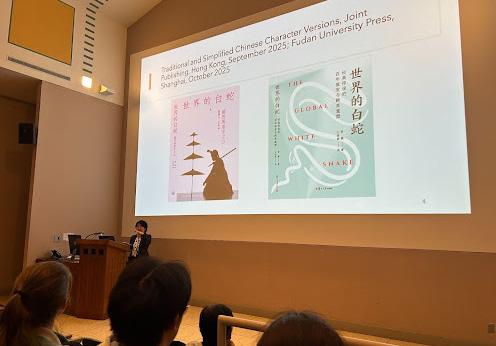
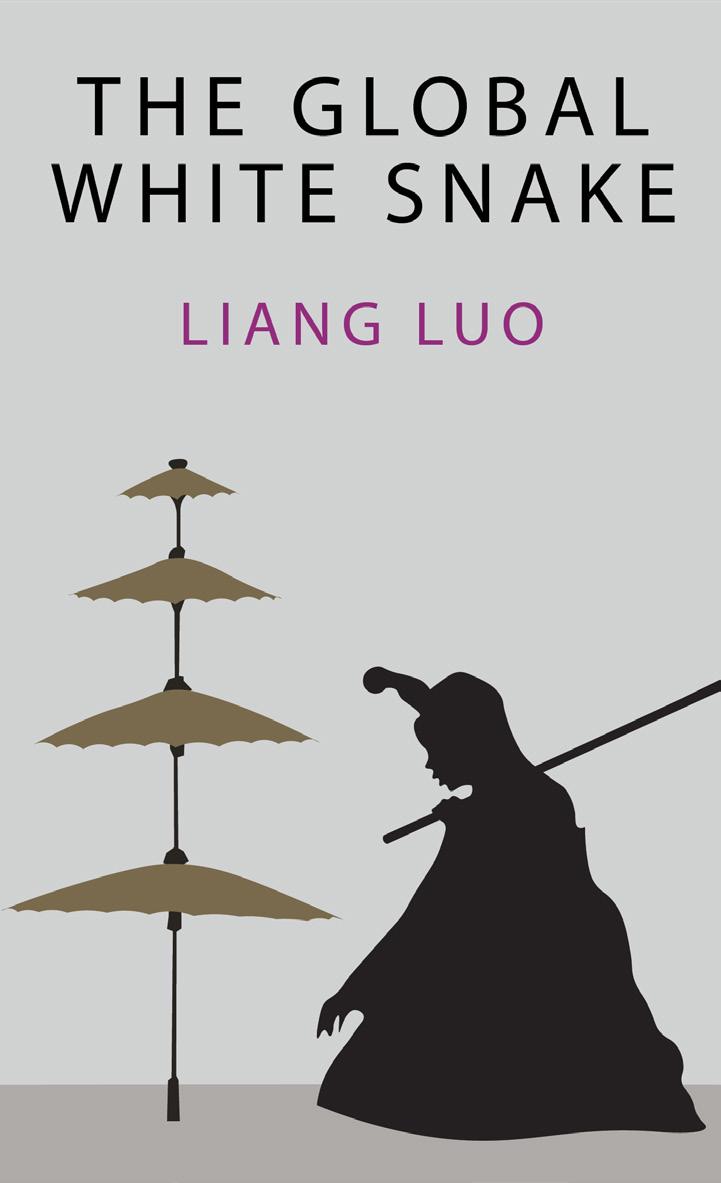
The final rendition of Liang Luo’s monograph “The Global White Snake” was wholly different from what she originally intended. Luo, Professor of Chinese Studies and Chair of the Department of Modern and Classical Languages at George Mason University, recalled, “My initial thought is, I'm going to write about the Chinese, Japanese, Korean and English language productions to the extent possible from the late 19th century to the present.” She elaborated, “But that has taken a really new shape, because the pandemic worsened existing xenophobia, fear and oppression in terms of the minority population." In her lecture on Feb. 9, Luo shared the works that inspired the global digital archival project that became “The Global White Snake.” The lecture was sponsored by the Asian Studies Program and co-sponsored by the International Studies Program, the Department of Chinese and Japanese, Drama, Film and the Office of the Dean of the Faculty.
“The Legend of The White Snake” is a Chinese oral folk tale that has been passed down for hundreds, if not thousands, of years. In
the story, a white snake named Bai Suzhen incarnates into the form of a woman and forms an interspecies romantic relationship with a handsome young man named Xu Xian. In the human realm, Bai Suzhen also meets a green snake, Xiao Qing, who also transforms into a human. Eventually, the Buddhist monk Fa Hai discovers White Snake’s identity; she then returns to her snake form and is imprisoned by Fa Hai. While earlier iterations of the tale take on a moralistic lens that paints Bai Suzhen as a demoness who seduced a good-natured young man, later versions of the story, beginning in the 18th century, foreground the profound love between the two protagonists.
While we typically think of legends as preserving a historical message, Luo’s observations highlight that the meaning within folk tales like “White Snake” are continuously remade over time according to shifting societal values. Amidst the global rise of racist attitudes during the COVID-19 pandemic, Luo came across various creative productions that adapted the Chinese legend of The White Snake into a symbol of resistance. Referencing scholar Wilt Idema, who wrote “The White Snake and Her Son,” Luo commented, “If you are assuming these stories embody
a single, unchanging, essential meaning, you’re wrong.”
But what is it about this ancient Chinese story that has attracted contemporary Anglophone audiences? To Luo, the identities of White Snake and Green Snake are powerful symbols of the experiences of minority groups living in the western world. As she put it, “Living as a resident alien in the human realm, the snake woman has always been subject to fear, suspicion, suppression and exclusion.”
After orienting the audience with the background of her project, Luo introduced some of the western projects that inspired her book. She shared the Singaporean-American librettist Cerise Lim Jacobs’ 2010 opera “Madame White Snake,” which won the Pulitzer Prize for Music in 2011. In 20th century Chinese film adaptations of the legend, Green Snake was positioned as a background character. In Jacobs’ iteration, the Green Snake is elevated as the narrator of the legend who has the power to tell White Snake’s story as well as her own. Thus, the story took on a new shape, centered on the sisterly bond that emerged between the two snake-women who are ostracized by the human world. “They became the new female protagonists of this very male-centered, didactic story from the past,” Luo observed.
Additionally, in line with Chinese operatic traditions, Green Snake in Jacobs’ opera is performed by a male artist. Thus, Jacobs further subverts audiences’ expectations of the conservative gender dynamics in the original story and creates a space for minority representation that extends to queer and trans identities. Luo concluded, “You can see the legend really came to argue strongly for the tolerance of the strange, the uncanny, the human frailty, but also understanding yourself as you are, and there is something to be said about found family rather than first family.”
The 2013 retelling “Legend of Lady White Snake” by Indian-Canadian director Indrani Pal-Chaudhuri refigures the image of the White Snake. In Pal-Chaudhuri’s iteration, White Snake, portrayed by Daphne Guinness, is dressed in an extravagant gown of
shiny snake scales designed by the late Alexander McQueen that took inspiration from Chinese and Indian fashion. By displacing the legend from its original cultural context, Pal-Chaudhuri’s work imagines White Snake as a global symbol of feminist, queer and environmental activism.
After the success of her opera “Madame White Snake,” Jacobs co-founded White Snake Projects, a Boston-based organization that produces operas with a social justice focus. The organization took off after the COVID-19 pandemic in 2020 because it provided a digital platform for creatives to convene and speak out against the rise of racist and discriminatory rhetoric that followed the pandemic. In particular, White Snake Projects hosted the online event series “Sing Out Strong: Decolonized Voices,” which spotlighted short-form opera produced by immigrant students in the Boston area. Luo’s archival project chronicles the powerful artistic and digital afterlives of the legend of the White Snake as a dynamic symbol for global activism.
sound of the native bee; their prevalence in daily life became integral to indigeneity.
On Oct. 27, 2025, the Provincial Municipality of Satipo, Peru issued an ordinance granting the native stingless bees of Peru legal rights. These bees are the first and, currently, only group of insects to have been given legal rights. This may seem bizarre, but it is doubtlessly a momentous step in protecting biodiversity and preserving native species in times of climate change. More than just legislation, it is a scientific effort that aims to create a more sustainable future for our Earth.
One hundred seventy-five species of the stingless bee reside in Peru, and their significance in the country is tremendous. They are the most effective pollinators of the country, pollinating upwards of 90 percent of the plant species of the area, wild species and crops alike.
These bees have been a part of Indigenous culture for hundreds of years. The Indigenous peoples of the Amazon have countless legends about the bees and have been using traditional methods to harvest their honey for food and medicinal purposes. People have used the honey in beverages, drinking it both at home and selling it for profit in markets. Communities such as the Shawi, Kichwa and Maijuna people have been using the stingless bee honey to cure countless ailments from the flu to bronchitis to infertility and arthritis. Bee pollen also has medicinal properties, and beeswax has been used for building and repair, such as waxing the strings of bows or patching up leaky spots in boats. The Maijuna people even have a song that imitates the buzzing
These bees used to be abundant enough to continue pollinating plants and supporting native communities; however, their presence now is incredibly sparse. Multiple threats like climate change, deforestation, pesticides and competition with imported European bee species are causing the stingless bee population to grow smaller and smaller, faster and faster. It was no surprise then that the researchers and indigenous leaders of Peru gathered to fight for a preservation effort that could guarantee the bees’ safety.
The regional law gave the stingless bees a “legal right to exist,” to live in a suitable environment that is free of pesticides, habitat loss, pollution and human activity impeding their natural behaviors and overall survival. Furthermore, people are able to act as representatives for the bees and file lawsuits on their behalf.
This effort not only directly affects the bee population but the environment as well. It directly ensures that the surrounding environment is protected from the aforementioned threats to biodiversity, which preserves not only the health and abundance of the bees but also that of other organisms in the area. This helps increase overall biodiversity and protect it, despite other organisms not having the same rights as the bees. It also means that the bees can continue to provide services that help pollinate and enhance the health of the region’s ecosystems.
A few months have passed since the ordinance, so why does this matter now? The new year does not mean that climate change
has stopped. It does not mean that pesticide and invasive species growth has stopped. It does not mean that the need to protect biodiversity has stopped. Countless plant and animal species continue to be under severe anthropogenic pressure. The question of what we can do should remain at the forefront of activism efforts. If we want to ensure a future that is sustainable and resilient, we must work to protect native species whose very existence helps regulate the
health of their environments and provides us with numerous ecosystem services. It is not only a scientific or conservation effort; as seen with the stingless bees, sometimes it is a matter of politics and public policy. Sometimes it is writing or art, expressing what matters to you through words or visuals. Sometimes it is a matter of history, economics or philosophy. The ways in which to get involved and make a change are endless—and they are necessary.
There we were, sitting atop Main Building’s roof doing thesis research. The objective: chuck ice at the groups of traveling freshmen who take up the entire sidewalk. Our thesis aims to study their dispersal patterns for a future multimedia exhibition in the Frances Lehman Loeb Art Center. Sorry for the “falling ice” email and scattered signage—that’s our B. Senior tings.
But our chucking wasn’t going as planned. Usually, screams emerge outside the building. That day was different. Yelps were vibrating the ceiling we sat on; the screams were coming from inside. In every line for Tasty Tuesday, disaster was striking. Arlington Bucks were down.
Concerned divas sent up our bat signal: a backlit castrato dressed as Nonno from “Nonno’s Pasta Bar” at the Deece. He’s seen singing with a text bubble declaring, “Nonno Deece Nuts.” We had been summoned. Our asses had to get down there, fast.
We slid down the roof on PB’s slay toboggans. Our descent happened in slo-mo, our throats sexily screaming because we didn’t really know how to sled. Our falling bodies
looked like a two-man luge team minus the skin-tight body suits (we were naked). Our bodies crashed into Main Circle with a ploop With groin muscles pulled, and spirits high, the hunt had begun.
Our first tip (hehe), came to us from a discarded Misc copy, tattered with footprints and melted snow. Traced with what looked like blood, but was really just ketchup from Street Eats, was a cryptic phrase atop Noah Baumbach’s dewy, unblemished skin: “Follow the money to my honey. We got your food, bitch.” The font was pink. Barbie pink. “Not much to go on,” we thought together. Woke mind virus af. But the film connection was clear; Greta was near.
We headed to the lobby of Vogelstein and crawled up the elephant’s butt to the secret film lounge. In that small intestine, amidst vape smoke and a Premiere Pro instruction manual, we found our next clue: a redacted memo from the parent company of EAccounts (Meta).
The memo read like a poem: “College broke lolllllllllllllllll Baumbach bribe lol lol lol lol lol lol lol pay in Arlington funds lol lol lol lol lol haha students lol l skinty summer ahead ol lol dumb as hell lol lol lol lol never know. Best, PB.”
We were gagged. Our precious My Market wine funds were being used to bring a Brooklyn Boy back to PK. We already have enough of those. They disappoint us enough.
Thoughts swirled in our minds, like the geese shit mixed with snow. Should we tell people about our discovery and keep the College accountable? Nah. We had other plans: We would wrest control from administrators, raise money for Arlington Bucks ourselves and institute our own program.
To collect funds, we needed the masses on our side. We needed a cool, baddie af fundraiser. Who could garner enough attention and Fizz popularity for our mission? Vassar Burlesque.
We pulled up to their house, unannounced. The Chapel looks great this time of year. To capture their attention and introduce our dilemma, we performed a “Fantastic Mr. Fox” routine, red tails flapping against our buttocks. We constructed a den of sticks on the Chapel stage, exploding it with water and gyrating in the resulting stream. They flocked to us immediately, as if they were standing in line to get tickets to their own show. After filling them in on the deets, Burlesque was all in.
The pro bono performance would take
place in the Nircle Igloo, colloquially known as the “Snort.” $10 tickets were sold under the heading: “Snort with us to dismantle Baumbachery.” The foundation was laid, cash set to flow in, journalistic integrity within reach. All that was left to do was to enjoy a monumentous, Fizz-worthy event (and, of course, get our wine rights returned).
On a rando Tuesday night, bodies huddled in the Snort, threatening to melt the creation with intense heat. Local penguins were pissed at the use of the structure, but they showed up anyway and were lowkey into it, likeeeee
The most popular routine was a “Heated Rivalry”-esque battle between Jason Blum and Baumbach. We obviously portrayed each of them, using boom mics as hockey sticks and slapping each other’s cookies.
The grand finale? Marriage Story 2: PB and John’s final epoch. We unfortunately weren’t present for this performance, because we were loading t-shirt guns with loose cash. At dawn, it was time. Instead of chucking ice, we blasted envelopes of $200 to unsuspecting students from the roof of Main. Our goals had changed, niceness was in, big backs were gettin’ bigger. And just like that, in the dead of a lusty midwinter, EAccounts swelled again.

On Wednesday, Feb 18, Vassar College alumnus Steven Cash ’84 announced he would join Ellen DeGeneres and Alec Baldwin on a global comeback tour this summer. Citing admiration for the stars, Cash said both of them, especially Baldwin, have been “killing it” lately.
Steven Cash became a spectacle on campus earlier this month, after hosting an event that called on Americans to ignore their differences and agree that President Trump is a grave threat to the country. However, Vassar students have condemned Cash for his role in writing the PATRIOT Act, which allowed government surveillance of texts and calls that disproportionately targeted law-abiding Muslim Americans. Cash publicly stated that he was expecting resistance. “I have received word from the government that a number of Muslim students have texted and called each other about it.”
Both the PATRIOT Act and the Department of Homeland Security, which Cash played a role in founding, strengthened the “war on terror,” which culminated in an estimated 4.5 million deaths in the Middle East. When it became clear that his original anti-Trump message wouldn’t calm protesters, he pivoted to something he knew would unify the audience: “The U.S. is a force for global good.”
Following the failure of that, he pulled a Hail Mary, yelling that pineapple doesn’t belong on pizza and that the Patriots deserved to lose the Super Bowl. The efforts were moot—the event was cancelled after 30 minutes.
Afterwards, Cash expressed disappointment in the event’s cancellation. “We need to avoid in-fighting if we want to defeat Trump,” Cash said. “With today’s cancellation, I felt the metaphorical deaths of four to five million of our country’s moderates.”
Cash founded The Steady State in 2016, an organization of over 300 former intelligence officers who agree that Trump is the greatest threat American Democracy has ever faced. However, the organization will reconvene over the next few weeks to discuss if that
claim is still true, or if their biggest concern is now leftist protesters. “It could be either,” commented Cash. Regardless of their verdict, Cash is expected to release a statement classifying the protest as the greatest threat the world has ever seen to him receiving his paycheck.
In the meantime, Cash will join a group of cancelled celebrities who are seeking comebacks. Alec Baldwin, the famous comedian and actor who starred in “30 Rock” and was a frequent host of Saturday Night Live, lost several roles after fatally shooting a crew member with what he believed to be a prop gun while filming the movie “Rust” in 2021. Baldwin’s relationship with Cash is not yet established. When asked on Wednesday what he saw in Cash, Baldwin hesitated, before responding that he was at a loss of words and would only be “shooting blanks.”
Cash’s relationship with Ellen DeGeneres was likely what landed him a spot on the tour. Ellen, whose fame resulted in her mononymous title, retreated from the public eye after being accused of widespread workplace harassment by dozens of employees. Reportedly, a PR consulting firm founded by Ellen has regularly advised Vassar over the past several years on how to deal with crises such as the revealed gender pay gap at Vassar and the backlash surrounding the school’s investment into weapons manufacturers.
It’s likely that Vassar will be forced to either spend thousands hiring adequate security or cancel future Cash events that the school had already committed to and paid for. This is expected to result in less money for investments. The following worry was represented in the stock market: The values of Lockheed Martin and Raytheon cratered by almost 10 percent on Thursday.
While he certainly wasn’t happy with the news, Cash voiced understanding of the student response. “I want the best for students, I want to help them out,” Cash said. “I’m committed to leveraging my new relationships with celebrities to help students: I’ve already offered to provide students with recommendations to work on the set of ‘Metal,’ Alec Baldwin’s upcoming movie.”



ARIES March 21 | April 19
Yaksha Gummadapu Buddies with the Crystal Ball
So Valentine’s Day didn’t go as planned, who cares! Get ready for April Fools! I communed with The Council of Fools and they said it was YOUR day. You are the patron saint of April Fools this year.

TAURUS April 20 | May 20
Doc Martens aren’t snow shoes. And neither are your thrifted boots/loafers/ mary janes.You will eat shit in these icy times. Wear something with traction! Join a reformer pilates class, they’ll give you little grippy socks then you’ll have better luck with staying upright. Otherwise, I see an embarrassing slip in your future.

GEMINI May 21 | June 20
You are at a major crossroads. And for advice, you should get drunk with some dear friends and then run to the bathroom to text your ex. They will block you and the embarrassment will help because no matter what you do, it can’t get worse than this.

CANCER June 21 | July 22
It’s been rough for you, sorry. But have no fear! I sense a gooooooooood spring break in the works. Take a trip, eat new food, pray you don’t get food poisoning and dance. It’ll change your attitude and maybe even inspire you to change your hair. I’m seeing a mullet. Maybe even a baby blue buzz cut.

LEO July 23 | Aug. 22
A nemesis is about to have their downfall and you will be able to enjoy it. I’m talking about getting caught using ChatGPT for a Moodle post graded on completion. I’m talking about messing up the words to Hotel Room Service by Pitbull. Karma is your boyfriend/girlfriend/partner/platonic buddy.

Aug. 23 | Sept. 22
I think you have a new beginning coming your way. Even if you’re nervous, take a leap of faithhhhh! I mean it. Push down those nerves. Compartmentalise those fears. Swallow the anxious throw-up. Future you will thank you. And me.
LIBRA Sept. 23 | Oct. 22

SCORPIO Oct. 23 | Nov. 21
You are going to hear back from any job you apply to on LinkedIn so don’t stop! Apply to work at Goldman Sachs! Or Blackrock! It doesn’t matter that you are a philosophy major… they want YOU. They probably could use a Socratic seminar on morality.
Introduce yourself to the person sitting next to you, a new friendship shall blossom! Maybe even a torrid love affair. Take a sweet treat to class with you, besides yourself of course! Your attendance will be 100 percent, and you’ll also have a new person to Deece with.

SAGITTARIUS Nov. 22 | Dec. 21
Pick up a Winter Olympic sport, like luging! The campus snow situation is ideal. Document the whole thing on TikTok or something. Fame and fortune will follow—along with millions of people. Hope to see you luging straight into Sunset Lake soon. I’ll take a 35 percent commission on all brand deals, thank you.

CAPRICORN Dec. 22 | Jan. 19
Stop dilly-dallying with your situationship and COMMIT. If you do, a fairytale-like love story is on the horizon. Go on a romantic five dollar açaÍ date at SoBol on Wednesday, hard launch your new boo and propose in the Shakespeare Garden.
AQUARIUS Jan. 20 | Feb. 18
I’m so over the grindset you’ve been in. Take a nap. Skip a class. Craft, maybe. Fake a tummy ache, get a health advisory. I’m so worried about you I can feel your cortisol levels from here. Love ya!

PISCES Feb. 19 | March 20
Rihanna is a Pisces. Bad Bunny is a Pisces. Get ready, start stretching and doing some vocal runs because for the 2027 Super Bowl, you’re up. Go Sports and God Bless America!
Anonymous
Derogatory language has no place in society, let alone in the classroom.
I sincerely hope that this is not, by any means, a controversial claim. However, time and time again, I have heard of unfortunate encounters with works such as Harper Lee’s “To Kill a Mockingbird,” where the reader would stumble upon a hateful word. The classroom is accompanied by a moment of hesitation—everyone waiting to see if the teacher would acknowledge the impact of the word’s usage or perhaps suggest an alteration to the language to avoid reading the word out loud. Unfortunately, the reason why I have heard so many of these classroom tales is not due to a respectful omission but because of the teacher’s loud and proud proclamation of the slur for the sake of “education.” I believe this is entirely counterproductive; it not only makes students uncomfortable but also dismisses their concerns about the impact of derogatory language.
This topic seems to become more controversial when discussing etymology and the pejoration of words. I always feel uncomfortable encountering a word that has been recontextualized; I am well aware that the
perceived racism, ableism or other microaggression may not have been the intention of the author. However, I believe it is more important to listen to the concerns of the students who may be uncomfortable with the language in its modern usage than to attempt to justify its usage in the classroom. These words that have evolved are the main focus of my argument. I have been met with the argument that when evaluating the history of words that have semantically drifted, their original usage had no connotation with any marginalized group. Their inclusion in literature was not due to any sort of prejudice but is rather a reflection of how the English language was used in that time. I argue that while it is important to discuss the context of the work and how the word has evolved, it is imperative to acknowledge that using this class of words will cause discomfort, given how they are commonly used today.
One of the most basic facts about language is that it naturally evolves with cultural and political shifts. The Merriam-Webster Dictionary defines linguistics as “the study of human speech including the units, nature, structure, and modification of language.” I would like to place emphasis on the modification aspect of this definition. Words can be reclaimed: Where
“queer” was once an insult, it is now an inclusive term for people whose sexuality and gender identities do not fit the societal standard. Where “dude” once referred to a man overly focused on his appearance, its usage in the African-American and Mexican-American communities has allowed it to become a colloquial form of address, used among people of all races. In the same way, words that were once relatively inoffensive can become pejorative, such as the r-slur and the c-slur. If we would like to focus on etymology, it is equally relevant to discuss contemporary contexts and usages of such words as it is to educate on their origins and history.
From an educational standpoint, I understand the concerns that may come with modifying language to an extensive degree. If we need to begin censoring all literature out of fear that it will offend someone, will centuries of creativity become irrelevant? I am not arguing for the eradication of the Western canon. I simply think that an acknowledgement of context and the impact of vocabulary should be integrated into discussions about literature and culture. It may be easy to dub students as overly sensitive or easily triggered when they find themselves taken aback by the inclusion of a word in the materials they are studying.
However, I think that quickly placing those labels onto someone who raises a concern is dismissive. I believe that the role of an educator should be to inform students while being sensitive to their individual backgrounds and understandings of language. I agree that it is important to discuss controversial works to understand how different opinions and attitudes have shaped our society over time, but there is a difference between challenging a student intellectually and making them uncomfortable. I think back to the phrase, “perception is reality.” Every single person has a different understanding of language, and certain words will carry a different meaning depending on the context in which they know them to be used. Regardless of a given word’s origin and historical usage, it is never okay to use language that has become derogatory, especially in a classroom setting. I understand that the authors’ original intentions were not to discriminate, and I do not think that we should dismiss them as racist or prejudiced, as they could not predict the semantic shift of their work. Though I agree there is merit in studying the original context in which these words arose and how they came to be, it is incredibly important to be sensitive to what connotations they may now carry.
Emma Brown Guest Columnist
More than 100 Trinity College Dublin (TCD) students packed into a single room on a Thursday night, surrounding a long, wooden table where members of The Phil, TCD’s oldest debating society, as well as student and professional journalists sat. On a cold, rainy night in Ireland, I made the trek back to campus after a day of classes to watch the upcoming debate on the question “Is journalism dead?” As a student journalist, I feel deeply invested in the continued success of journalism as an institution. Yet, while listening to the debaters’ speeches, it became difficult not to acknowledge that journalism is, at the very least, on life support.
On Feb. 4, Jeff Bezos, the owner of The Washington Post, laid off nearly one-third of the newspaper’s staff, making significant cuts to the metro and international desks and closing the sports and books sections. More than 300 reporters were fired. The Post, known for breaking the news of the Watergate scandal and its local approach to its coverage of politics in Washington, D.C., is almost certainly dead.
But this piece is not an obituary for The Post. It is far from the only paper that has hemorrhaged reporters in recent years. Researchers at Northwestern University’s Medill School of Journalism announced that, between 2005 and 2025, nearly 40 percent of local newspapers across America have closed. In 2024 alone, 130 newspapers ceased production. Today, more than 50 million Americans have limited or no access to local news coverage, creating what are effectively news deserts.
With fewer people paying for print subscriptions to newspapers—the circulation of print newspapers has declined by nearly 70 percent since 2005—outlets have transitioned from print coverage to online publishing. Yet, their efforts to modernize have not saved them. Though local outlets have been uniquely impacted in recent years, larger newspapers are not immune to the
plague affecting the journalism industry. Since 2021, viewership of individual online articles published by 100 of the largest newspapers has declined by approximately 40 percent. This suggests that, as a country, we are simply reading the news less. We might scan the headlines on The New York Times’s website on our way to play the crossword or follow The Post on Instagram, but we do not take the time to read an article, gather all the necessary information or fully educate ourselves.
Corporate ownership of newspapers also contributes to the scarcity of reliable, local reporting. It has resulted in the consolidation of coverage, thereby limiting the public’s access to diverse perspectives. However, individual newspaper owners pose their
"Journalism has always been under attack and has always needed the help of both good journalists and critical readers to improve and defend it."
own unique issues. Billionaires’ ownership of news outlets has impacted newspapers’ abilities to impartially cover issues that affect their owners. For example, in February 2025, Bezos announced a change to The Post’s opinion desk’s policies via X, writing: “We are going to be writing every day in support and defense of two pillars: personal liberties and free markets. We’ll cover other topics too of course, but viewpoints opposing those pillars will be left to be published by others.” Bezos’ attempt to limit discourse about and critiques of capitalism is a blatant attempt at censorship, aimed at serving his own interests. Bezos’ ability to control the media—such as when the Amazon founder
blocked The Post’s endorsement of Kamala Harris ahead of the 2024 presidential election—is a sign of the dangers that arise when news outlets fall into the hands of the uberwealthy.
There is no shortage of reasons why journalism is currently under attack. When confronted with the death of many newspapers, the future seems bleak. Without a doubt, we are in the midst of an international crisis. But we have to remember that journalism has seen dark days in the past: the era of yellow journalism in the late nineteenth century, Judith Miller’s inaccurate coverage of the Iraq War and the passage of the Sedition Act in 1918, which limited news outlets’ ability to publish stories that criticized the U. S. government. We should not be nostalgic for a utopic era of journalism that has never existed. Journalism has always been under attack and has always needed the help of both good journalists and critical readers to improve and defend it.
This is yet another moment when the journalism industry needs support. But seeking to revitalize American journalism does not just benefit news outlets; it improves all of our lives. A public without access to news coverage does not have the information necessary to form educated opinions, cast principled votes or accurately evaluate the state of the world. The Post, known for its slogan “Democracy Dies in Darkness,” offers an ironic yet grim prophecy of what is to come. I am concerned about what a future without reliable journalism looks like, as we all should be, but it feels defeatist to accept that journalism is dying without putting up a fight.
While issues plaguing national newspapers are harder for individual people to address, those looking to contribute to the revival of local journalism have several options. The first is to subscribe to your local newspaper, if you have one––the price to subscribe to my hometown’s newspaper is only $1 a week. Given that financial strain is a major contributor to the current state of the journalism industry, the most direct way to address the diminishing news
landscape is to financially support outlets in need. Because advertising, not subscriptions, has historically supported newspapers financially, those who are able to should advertise in a local outlet. Though this is not an option accessible to everyone, it provides business owners and those seeking to promote events with a way to benefit
"I am concerned about what a future without reliable journalism looks like, as we all should be, but it feels defeatist to accept that journalism is dying without putting up a fight."
themselves, their communities and their local newspaper. Most importantly, people have to pick their local paper up and actually read the articles. They have to discuss the news with family, friends and neighbors. They have to care. When owners of newspapers feel that no one reads the paper, it becomes easier to let it die. By caring about and supporting your local newspaper, you support the journalism industry as a whole. These are small steps in the right direction, but they will not solve the issues the journalism industry is facing. Other larger-scale projects, such as the transfer of newspaper ownership from for-profit to non-profit organizations or increased community involvement in reporting, are important and worthwhile endeavors. As we take on the project of reviving journalism, we have to remember that the process is long and requires sustained effort. But it is well worth that effort. If we ignore the issue, hoping that it will go away, we condemn future generations to a future filled with darkness.
Jake Schachter Guest Columnist
WhenI saw the news on Dec. 28, 2025, of uprisings in Iran, I was not surprised. For Supreme Leader Ali Khamenei, 2025 had been catastrophic. Militarily, Iran’s so-called “axis of resistance” has been severely degraded by Israel in the aftermath of the Gaza War. Its prized nuclear facilities have also been heavily damaged by the United States. As a result, the Iranian currency, the rial, has fallen dramatically, spurring an economic crisis unseen by the nation. As the crisis worsened, protests against Khamenei erupted and rapidly spread throughout the country, as Iran faced the biggest crisis of its nearly 50-year history that had to be dealt with harshly. In the aftermath of these protests, I could not help but think whether the United States had a role in creating the current situation for the Iranian people.
During the protest on Jan. 8, President Trump put out a statement in support of the protesters, saying, “I have let them know that if they start killing people, which they tend to do during their riots - they have lots of riots - if they do it, we are going to hit them very hard.” In the aftermath of protests, local health officials cited by TIME have put the death toll at 30,000, reporting that Islamic Revolutionary Guard Corps officials have warned protesters, “if…a bullet hits you, don’t complain.” Whether Trump’s statements caused the level of repression seen in the recent protests is unclear; however, regimes tend to respond more aggressively when they perceive foreign interference. His statements did, however, make me wonder if the United States does have a responsibility to the Iranian people. While the United States does bear partial responsibility for creating the current Iranian regime, this responsibility does not justify direct military intervention today. To understand why, we must
first examine the uneasy history between the United States and Iran.
Any discussion of American responsibility must begin in 1953, with the CIA/ MI6-sponsored coup, known as Operation Ajax, against democratically elected Iranian Prime Minister Mohammad Mosaddegh in response to his attempt to nationalize Iranian oil, replacing him with the former Shah Mohammad Reza Pahlavi. Resentment of Pahlavi grew, culminating in what we now know as the 1979 Iranian Revolution, in which a violent uprising forced the Shah to flee to the United States, which granted him asylum. Anger at the United States exploded in response to this decision to rescue the Shah, causing the infamous 1979-1981 Iran hostage crisis, in which the revolutionaries took American embassy staff as hostages. Despite the hostages being released in 1981, relations between the two nations have been poor since the ousting of the Shah.
Now I believe there is a certain U.S. impact that helped to form the oppressive regime the Iranian people live under currently. If President Eisenhower had not ordered the coup to reinstate the unpopular Shah, the political trajectory of Iran would be fundamentally different today. But instead, a dictatorial monarch was reinstated under U.S. approval, a grave mistake that led to the bloody 1979 revolution. The Shah’s oppressive regime was so pro-Western that it caused a heavy anti-Western ideology to emerge in the form of the current Islamic Republic of Iran. Its theocratic government’s strict interpretation of Islam causes heavy oppression for women, LGBTQ+ individuals and Jewish people. But besides the governing practices of the regime, the question still remains: what could be done by the United States to rectify the current situation?
Unlike past foreign debacles such as the Iraq War, the United States did help to create the political conditions that shaped the
current regime. So, would some form of military intervention be justified to rectify the wrong? The protests clearly demonstrated deep levels of dissatisfaction with the regime, but they do not necessarily advocate for foreign invasion. Personally, I believe the President irresponsibly raised the Iranian people’s expectations to a level he could not possibly meet, leading them to be killed by Khamenei. However, at this current moment, this is only speculation. As the leader of the free world, the President’s rhetoric carries significant weight and responsibility, a lesson he should learn. Looking at current economic measures, the sanctions, while effective on its economy, have not motivated the repression to cease. Historically speaking, dictatorial regimes do get fearful when the possibility of foreign intervention arises, which could explain the recent high death toll. Possible indirect solutions could be to fund advisory groups opposed to the regime or somehow convince China and Russia to completely abandon their relations with Iran with trade deals. But these are simply what-ifs
that could easily backfire on the United States and drag us into a long-term conflict. However, I do believe that it is worth thinking about, not just for the sake of us as taxpayers, but also for the sake of the Iranian people who suffer deeply under Khamenei. America cannot undo 1953, nor can it dictate the direction Iran should head in without repeating its Cold War arrogance. However, what America can do is refuse to be silent. America must not look away from the killings under Khamenei just because it is the easy path. The United States must become more diplomatically aggressive towards the regime by incentivizing Iran’s allies to abandon the regime. It must also begin supporting dissidents if the right opportunity arises whether by amnesty or military protection. Although at the current moment, neither of these options are currently plausible, the United States should be exploring all the pathways to make these options accessible. If the United States continues to remain passive, repression may only increase as the regime tightens its noose on the people.

T o President Bradley, the Vassar Student Association (VSA) and my co-members of the Class of 2026, Several people have suggested to me that Vassar College’s diplomas are in Latin to honor the purportedly “traditional” roots of academia in the “West,” rooted in the thought of Ancient Greece and Rome that continued into Christian Europe and later into the United States.
In reality, people outside of this “West" were essential to modern academic thought, but their academic contributions were minimized by American academics who wanted to exclude who they deemed non-Westerners, like Jews and Muslims, from American universities. It is time to end this practice that furthers the trivialization of Jews and Muslims in world history.
Despite the notions of the “Western” origins of academia, people outside this constructed “West,” like Muslim and Jewish scholars, were critical to forming present-day academic thought— most famously, our numbers are Arabic numerals. The university itself is another example, with the oldest one in existence being founded in Muslim Morocco in 859 C.E. In math, algebra
stems from the Arabic al-jabr, and the chemistry term alkali derives from the Arabic al-qaly; these concepts were both first posited by Muslim scholars. Jewish philosophers, too, like Baruch Spinoza and Moses Maimonides, made significant contributions to theories of rationalism and medicine, respectively. These are some of the more well-known examples.
Early antisemitic and Islamophobic American academics in the 1600s and 1700s, however, often classified Jews and Muslims as outside their West, an “Other” who could be excluded from admission to colleges and universities. Early presidents and founders of Princeton, Harvard, Yale and the University of Virginia, deemed Muslims “an ignorant and barbarous sort of people” or “monsters” and Jews as infidels or people in a “degraded state.” The printing of diplomas in Latin was another way in which American scholars reaffirmed their “Westernness” and their conceptualization of Jews and Muslim people as an “Other,” which took place next to more directly harmful practices that included quotas for Jewish students, the direct or indirect banning of reli-
gious minorities from admission and the forced conversions of professors to Christianity.
This othering had harmful results for hundreds of years. Vassar College excluded Jewish and Muslim people from equal status for decades. In addition to the College printing Latin diplomas and mandating college-wide Christian-only prayer until the 1920s, Matthew Vassar himself declared that he wanted all of his College's students to be "cultivated Christian women," united under "one God [and] one Gospel.”
To President Bradley and the VSA, traditions like these that explicitly other Jewish and Muslim people should not stand. To truly be democratic and pluralist, as it aspires to be, Vassar should print its diplomas in a language that all students can read. I call on President Bradley and the VSA to print our diplomas in each student's preferred language, or if that is not financially feasible, in English.
I am aware that the VSA took a vote last year in which the majority of seniors surveyed voted for Latin diplomas. In my opinion, no vote makes supporting the exclusion of Jewish and
Muslim people any more moral. An unjust tradition backed by a majority vote is still unjust.
Vassar is now, more than ever, committed to democracy and justice. The College has recognized that it stands on Munsee Lenape land, celebrates religious pluralism and has established a task force dedicated to understanding and countering the history of injustice on campus. It fits in well with our values to democratize the language of our diplomas so students from all backgrounds can read them.
Class of 2026, we have the power to change the very degree our institution gives us. Applying your knowledge to your diploma is the ultimate cultivation of your education in critical thinking. Let us start making the real world a more equal place the moment we graduate.
Benjamin Savel, Class of 2026
Our goal with Brewers Ballin’ is to feature Vassar athletes who starred for their team the week previous to publishing. If you would like to nominate an athlete, please email hfrance@vassar.edu.
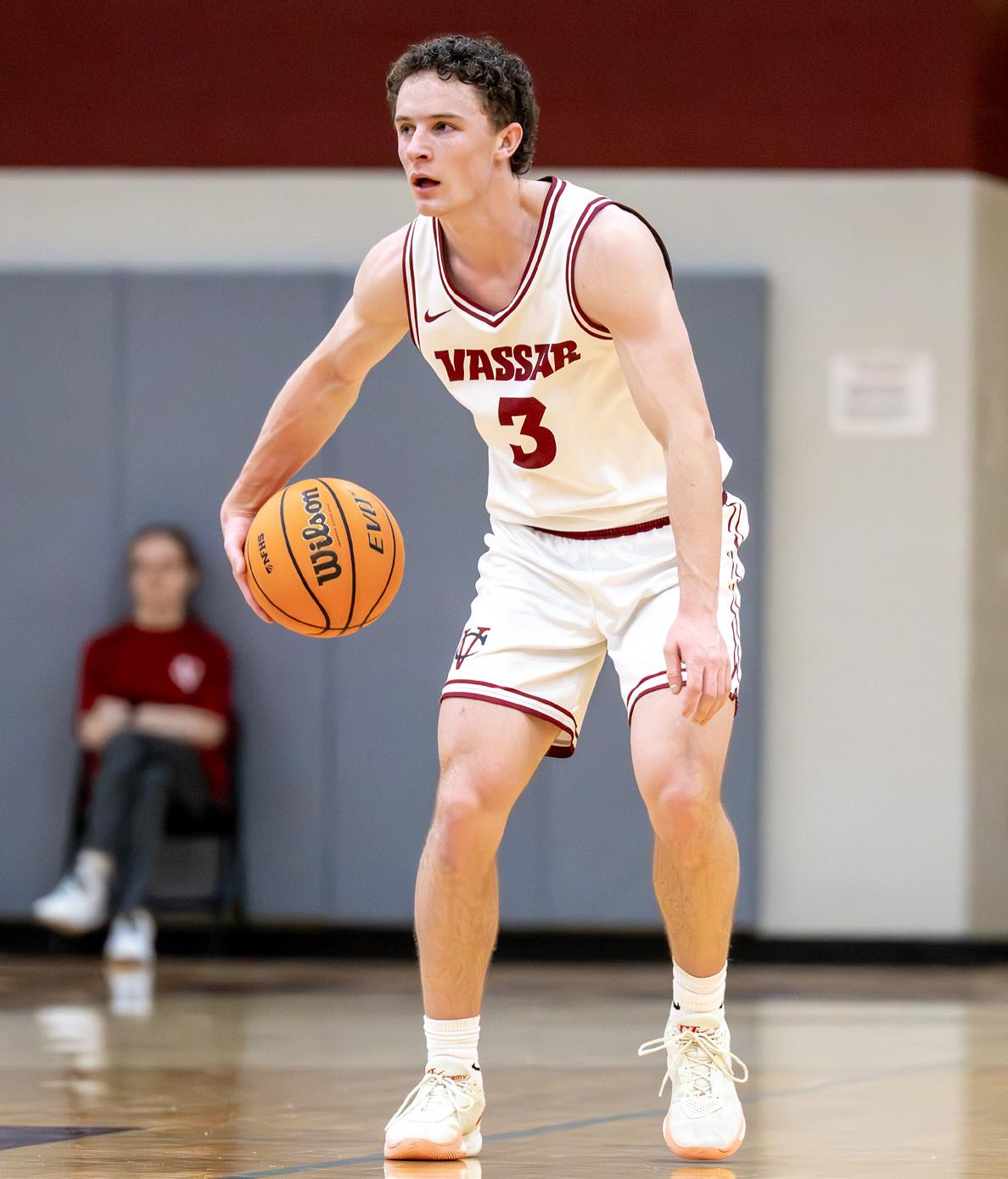
Image courtesy of Shea Fitzgerald '27.
Women's Tennis vs. Smith College W, 5-2
Women's Basketball vs. RIT L, 45-56
Women's Squash vs. Haverford L, 2-7
Name: Shea Fitzgerald
Team: Men's Basketball
Year: Junior
Stats: Fitzgerald continued a dominant season this past weekend when he tabbed 36 total points across two overtime thrillers. The junior guard was instrumental in the first of two Brewer victories, knocking down a fadeaway three-pointer with just nine seconds left against Union College to send the game to overtime, where the Brewers would eventually win.
Statement: “If I could describe the season so far in one word it would be sacrifice. Every member of the team is committed to doing what is asked of them to put us in the best position to be successful. One aspect of this year I have really enjoyed is our ability to win in different ways. Whether it's a high-scoring game, a defensive battle, a late comeback, or a slower, methodical performance, we have been figuring out different ways to win. I think that this ability is our greatest strength and makes us a very tough team to beat. We are super excited for the playoffs and the opportunity to compete for a Liberty League Championship.”
Men's Tennis vs. Manhattanville University W, 7-0
Men's Basketball vs. RIT W,67-61 (OT)
Men's Squash vs. Haverford L, 3-6
Three Brewers earn Liberty League Honors
McCusker ’26, Li ’26 of Women's Tennis and Gray ’29 of Men's Basketball were each recognized by the Liberty League for their performance against Bard College.
Field Hockey tabbed for team academic award
The 2025 Liberty League Champion Field Hockey team continues to win trophies, but this time for their efforts in the classroom. The NFHCA honored the Brewers with the 2025 National Academic Team Award for a cumulative GPA over 3.5.
Parker Neuenhaus ’28 wins Liberty League Award
The sophomore Forward led the Brewers to a 2-0 weekend, averaging 19.5 points, 10 rebounds, 2.5 assists and 2.5 blocks per game on an efficient 47.1 percent shooting.
Men's Volleyball vs. Hobart College
Kenyon Hall @ 6:00 p.m. Friday, February 20th
Armaan Desai Columnist
The NBA trade deadline has passed, and the league has been completely shaken up once again. For those unfamiliar, the NBA has a trade deadline of Feb. 5, 2026, at 3 p.m. Before this deadline, NBA executives are allowed to make deals and trades of any kind, before the rosters are locked for the rest of the season. Which teams will be reformed and ready to push for the playoffs, and which teams will be selling out and hoping to rebuild? I will be grading each NBA team’s trades and evaluating which teams won and lost this year's deadline.
Golden State Warriors trade F Jonathan Kuminga and G Buddy Hield to Atlanta Hawks for C Kristaps Porzingis
Warriors Grade: C
Hawks Grade: B+
The Golden State Warriors have been searching for a stretch 5 for many years. On top of that, Jimmy Butler’s season-ending ACL injury has only made the Warriors' desires more dire. Porzingis is seven feet and two inches, can shoot the ball from limitless range and is an NBA champion. Ideally, Porzingis fulfills the exact needs to keep the Warriors in the mix for a championship as Steph Curry gets closer to retirement. However, Porzingis has only played 17 games all season, and is currently suffering from Achilles Tendonitis and POTS—which is a dysfunction of the nervous system. Not the type of setbacks you want to see if you are a Warriors fan.
The Hawks are now fully embracing the rebuild, after also trading away their franchise player, Trae Young. It also made sense for them to move on from Porzingis, as he did not have a team-friendly contract. Kuminga is also seven years younger, so he presents the Hawks with some fresh potential.
New York Knicks land G Jose Alvarado from New Orleans Pelicans for F Dalen Terry, two second-round picks and cash considerations
Knicks Grade: A
Pelicans Grade: B
This was exactly what the Knicks needed to replace the injured Deuce McBride, and provide great depth to the point guard position. Alvarado was a sensation in his rookie season, as he went viral for his tactic of hiding near his team's bench, then sneaking up on opposing ball handlers and stealing the ball from behind, which was dubbed “Grand Theft Alvarado.” Alvarado has also developed his outside shooting in year two, making him a great two-way option for the Knicks as they hope to pursue their first finals appearance since 1999.
Philadelphia 76ers send G Jared McCain to Oklahoma City Thunder for 2026 first round pick, 2027 second round pick, 2028 second round pick (OKC) and 2028 second round pick (Milwaukee)
Thunder Grade: B+
76ers Grade: D
The OKC Thunder are fresh off the NBA Championship, and are still sitting at the top of the league with a record of 42-14. Reigning MVP Shai Gilgeous-Alexander has been sidelined for multiple weeks with an abdominal strain, so the Thunder require guard depth. McCain was the 14th pick in the 2024 draft and came into the league on fire—averaging 15.3 points per game for the Sixers and leading every poll in the Rookie of the Year race. Unfortunately, he underwent season-ending meniscus surgery, and
a thumb injury in the preseason set him back even further. In his second season, he struggled to obtain the numbers he was putting up pre-injury. However, in his past six games, he has shot 58 percent from three—a hopeful sign that he can get back to his rookie self.
The Philadelphia 76ers successfully kept themselves under the luxury tax line with this trade; however, the cons heavily outweigh the pros. The 2026 first round pick will likely be in the late 20’s, so they essentially traded their 2024 14th overall pick for multiple later picks. The Sixers are pretty guard-heavy, after drafting stud VJ Edgecombe with the third pick this year, but McCain is 21 years old and one of the only bright spots on this injury-riddled team. Former MVP Joel Embiid has been injured on and off for the past three years, and Paul George was just suspended 25 games for using performance enhancing drugs. The future is not bright for Philly, and losing McCain makes it even dimmer.
Los Angeles Clippers trade G James Harden to Cleveland Cavaliers for G Darius Garland and 2026 second round pick
Cavaliers Grade: B+
Clippers Grade: F
The Cleveland Cavaliers have been one of the top teams in the East for the past few years, but they have not made it out of the second round of the playoffs since the departure of LeBron James. Superstar Donovan Mitchell has taken the bulk of the offensive load, so adding a pure scorer like Harden definitely balances out the Cavs offense. At 36, Harden has averaged 25.4 points per game with the Los Angeles Clippers. On the negative side, Harden has been known as a defensive liability, and has been on some very talented teams that have all failed to win a championship. First year coach Kenny Atkinson led the Cavs to the East’s number one seed last year, so we will see if the Beard can provide what Cleveland needs to reach the NBA finals.
The Clippers have been a completely dysfunctional franchise, and they continue to be with this trade. The entire Clippers team for the past six years has been centered around league veterans with a winnow strategy, yet the Clippers have failed to even reach the NBA finals once. Two-time champion Kawhi Leonard and Harden have been the backbone of the team this year, but in December, they found themselves well below .500. However, stellar performances from Leonard and Harden led the Clippers to win 16 out of 19 games in the past month. The timing of this trade makes absolutely no sense. If they wanted to give up on the win-now strategy and hedge for the 2026-27 season, they could have flipped Harden in December for a nice haul of draft picks. Instead, they went on a large winning streak, lowering their chances at a good draft pick, just to trade Harden anyway—and for a small return.
Washington Wizards acquire Anthony Davis and Trae Young, among others
Wizards Grade: A-
Washington received F Anthony Davis (Mavericks), G D’Angelo Russell (Mavericks), G Jaden Hardy (Mavericks), G Dante Exum (Mavericks) and G Trae Young (Hawks)
Mavericks Grade: A
Dallas received F Khris Middleton, G AJ Johnson, G Malaki Branham, F Marvin Bagley III, 2026 first round pick, 2030 first round pick, 2026 second round pick, 2027 second round pick and 2029 second round
pick
Hawks Grade: C
Atlanta received G CJ McCollum and F Corey Kispert
These were definitely the biggest two trades of the deadline, with the Wizards giving up a massive haul for Anthony Davis and Trae Young. Davis is an NBA champion, a 10-time All-Star, and a 4-time All-NBA first team. However, this is the second time he has been traded in the past two seasons. He has had a tough history with injuries, and is slated to miss the entire 25-26 season with ligament damage in his left hand and a groin injury. Young is a four-time AllStar and was the league leader in assists last season. He was the franchise cornerstone for the Hawks, leading them to an Eastern Conference finals appearance in 2021. However, this would turn out to be the peak of the Young Hawks era, as his defensive liability and lack of surrounding talent led to minimal success. The pairing of Young and Davis won’t play together until next season, but it is the first time since 2017 (John Wall and Bradley Beal) that the Wizards have had such a dynamic duo. I predict they will complement each other well, as Young’s scoring and playmaking skills will work nicely with the seven-foot-tall Davis as a lob threat, and Davis’s elite defense will help offset Young’s lack thereof.
The Mavericks have gone fully away from their blockbuster trade last season and are going all in on building around 19-year old rookie Cooper Flagg. This trade actually makes up pretty well for last year's blunder, as they have increased their draft capital immensely. With the return of Kyrie Irving looming, the Mavericks should definitely be in contention soon.
Winner: Washington Wizards
Although I only gave the Wizards an
A-, I am ranking them as the winners of this year's NBA trade deadline due to the immense nature of their trades. The Wizards have been a complete joke for the past nine years, almost always ending up at the bottom of the league. They have had some decent talent pass through, but have nothing to show for it. On top of that, they have gotten extremely unlucky with the draft lottery, losing out on a top-five pick last year, and drafting Alex Sarr with the second overall pick the year before. These trades finally put the Wizards into some sort of relevance in the league. Trae Young is only 27, and he hasn’t played with a star as good as Anthony Davis in his career. I still don’t think the Wizards are in contention with the Big Dogs of the East, like the Celtics, Knicks, Pistons or Cavs, but they have upgraded from bottom-feeder to possibly middle of the pack.
The Los Angeles Clippers have done nothing but lose in every aspect of basketball for the past decade. In 2019, the Clippers traded future 2025 MVP, Finals MVP and Scoring Champion Shai Gilgeous-Alexander, along with Danilo Gallinari, five firstround picks, and two pick swaps to the OKC Thunder for Paul George, and signed Kawhi Leonard. The pairing of George and Leonard was meant to be the next big duo in the league and set up the Clippers for a winnow period. The Clippers certainly did not win now, as they have one Western Conference Finals appearance to show for it. The Thunder, who entered a clear rebuild after trading Paul George—third in MVP voting at the time—just won the 2025 NBA championship. The Clippers continue to take L after L, adding another one with this disastrous James Harden trade. I highly doubt the Clippers will make a run in the next few years, and it might be time to demote them to the Western Conference’s bottom feeders.
By: Sadie Keesbury

ACROSS
ACROSS
1. Bottom
5. 651
9. Things not yet told, for short
13. White and Blue rivers in Africa
14. Galoshes
16. Van Gogh city
17. Dry up, as a puddle
18. 124 Raymond Ave, for example
20. Meat sauce
21. Food sch. in the Hudson Valley
22. Suffix with social or egalitarian
24. Put clogs (for example) back on
28. Hallucinogenic cactus
31. Location for a wedding
33. Rower
34. Slide downhill like an Olympian
35. Freudian agents
36. Expected, or what this puzzle's starred clues reference
42. Tree cutter
43. Org. for a car breakdown
44. Something that might end with
.edu
45. Eavesdrop
48. What falls in fall
52. Something real?
53. Org. for water conservation
55. There or then, in Latin
56. What a recent holiday celebrated
58. Head, maybe
61. See you again soon
65.. Perky
66. "Sure, food sounds good!"
67. *Bald bird, famously
68. Jump, like a year
69. Regarding
70. Clarified butter
DOWN
1. *Shuttlecock
2. "All night, _____" (Big Thief song)
3. Fortune teller
4. To be, for Caesar
5. Enrobe
6. Cleveland hooper, for short
7. Pinocchio, for one
8. Especially
9. "No need _____!" (Take your time)
10. _____ constrictor
11. T-Mobile competitor
12. Opposite of NNW
13. Racial justice org.
15. *_____ man (scary creature)
19. California mountain range
23. Annie of The Miscellany News
25. Head topper
26. Opposite of youths
27. Or _____! (threat)
29. Sound from one who has been punched
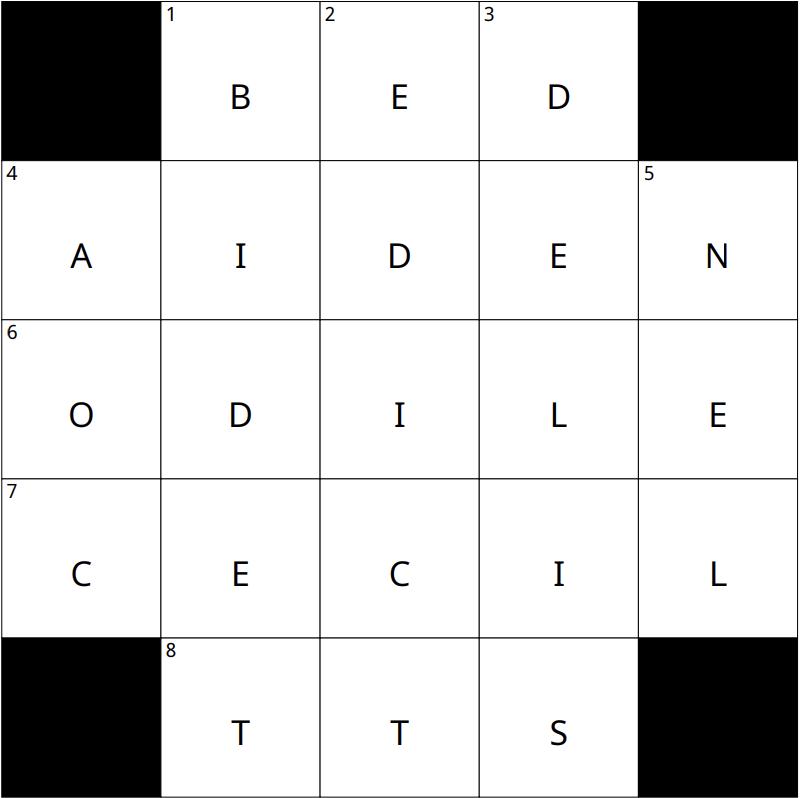
30. _____ Te Ching
32. Dwight Eisenhower, casually
36. Light
37. What the world turns on
38. Musical silence
39. _____ chi
40. Miner's find
41. Last three letters of a couple leg bones
46. Hype
47. E-ZPass, for one
49. Face
50. Jordan of the Seattle Kraken
51. Fencing position
54. Portugal city known for its wine
57. Summers in Paris
59. Take her down _____ (humble her)
60. Jacob's wife, in the Bible
61. Reddit acronym for new facts
62. *What can be high or low, in cards
63. Mauna _____, (volcano)
64. Consume