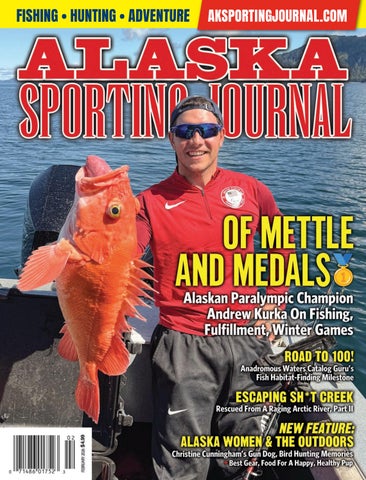
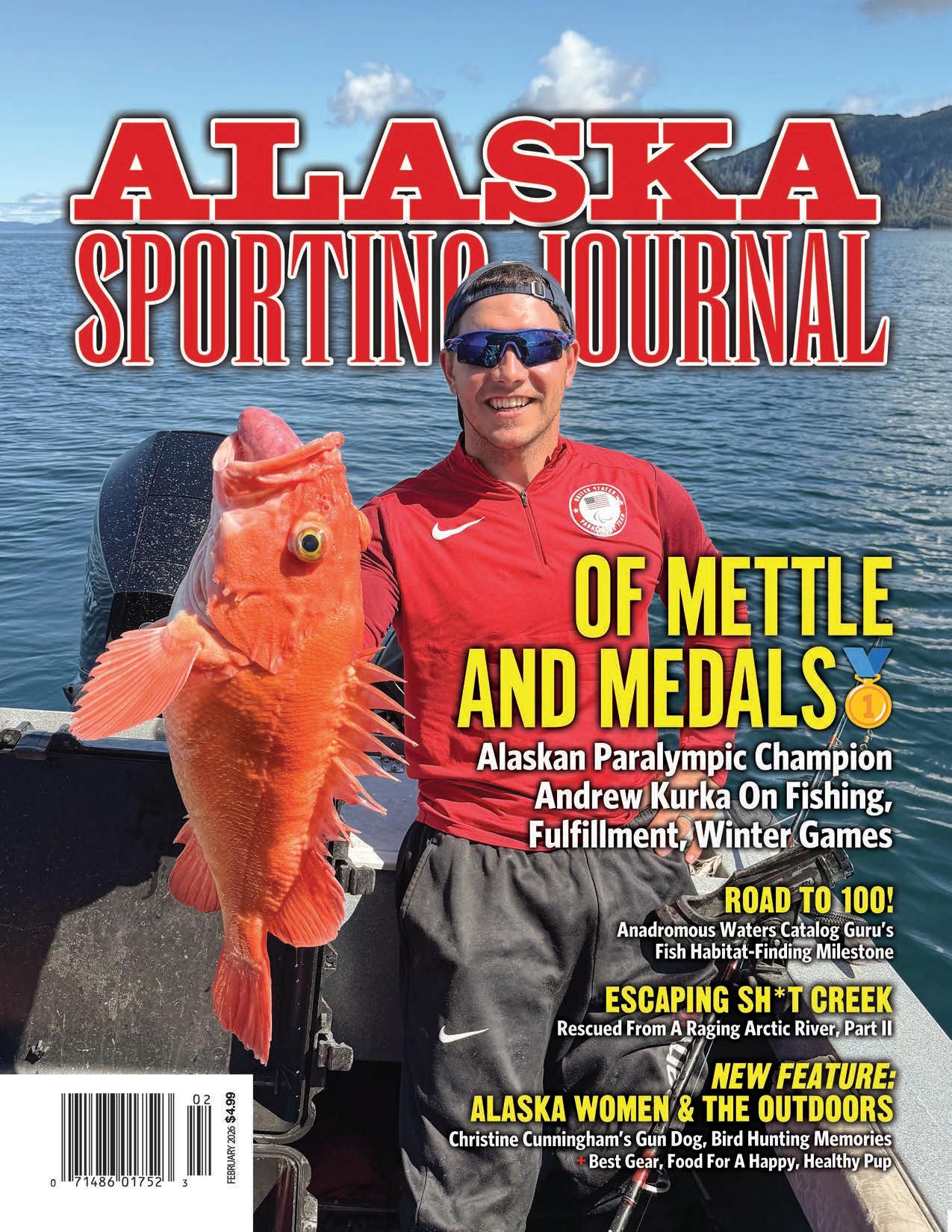
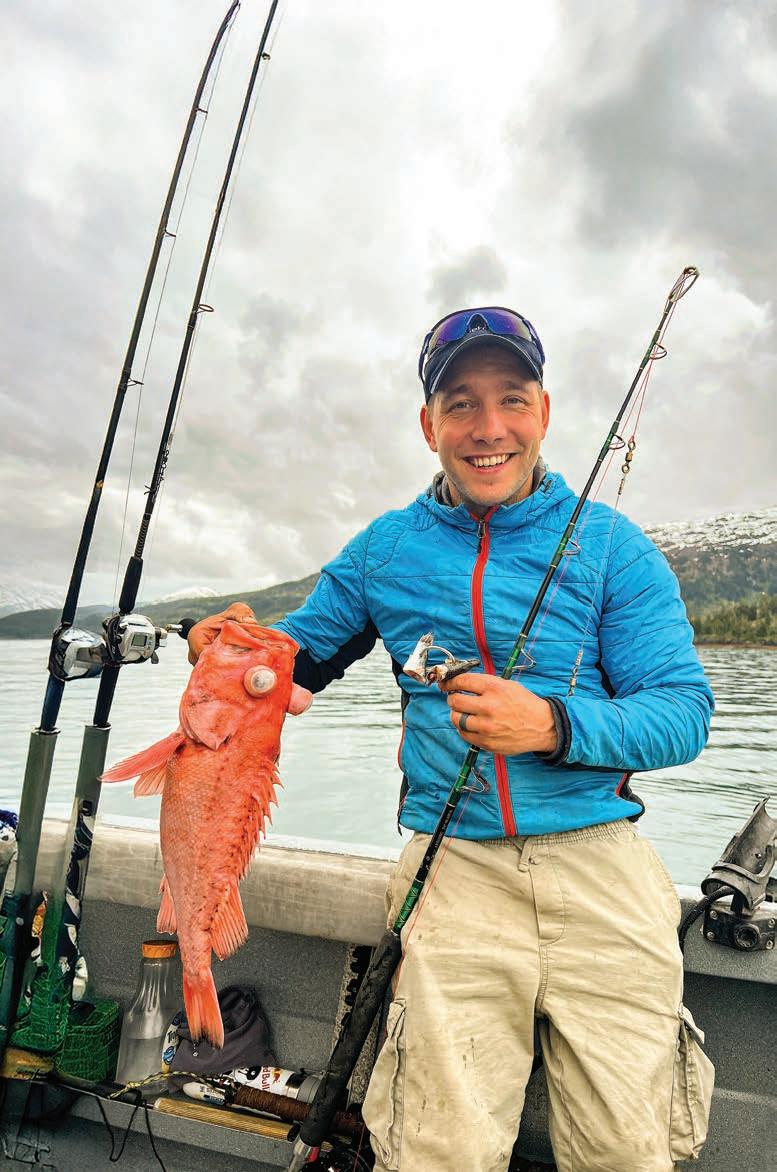
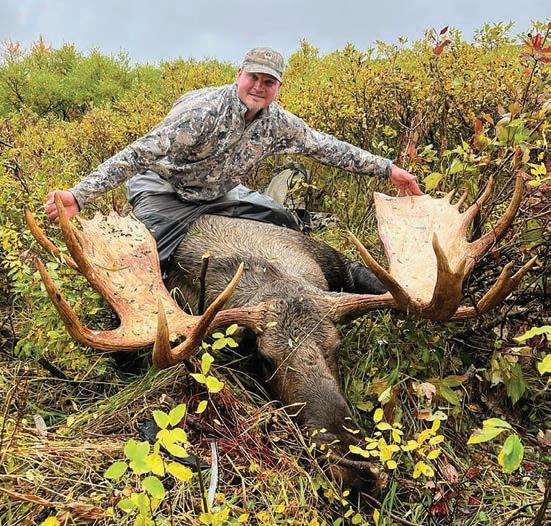
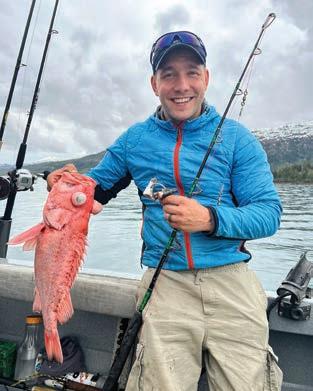
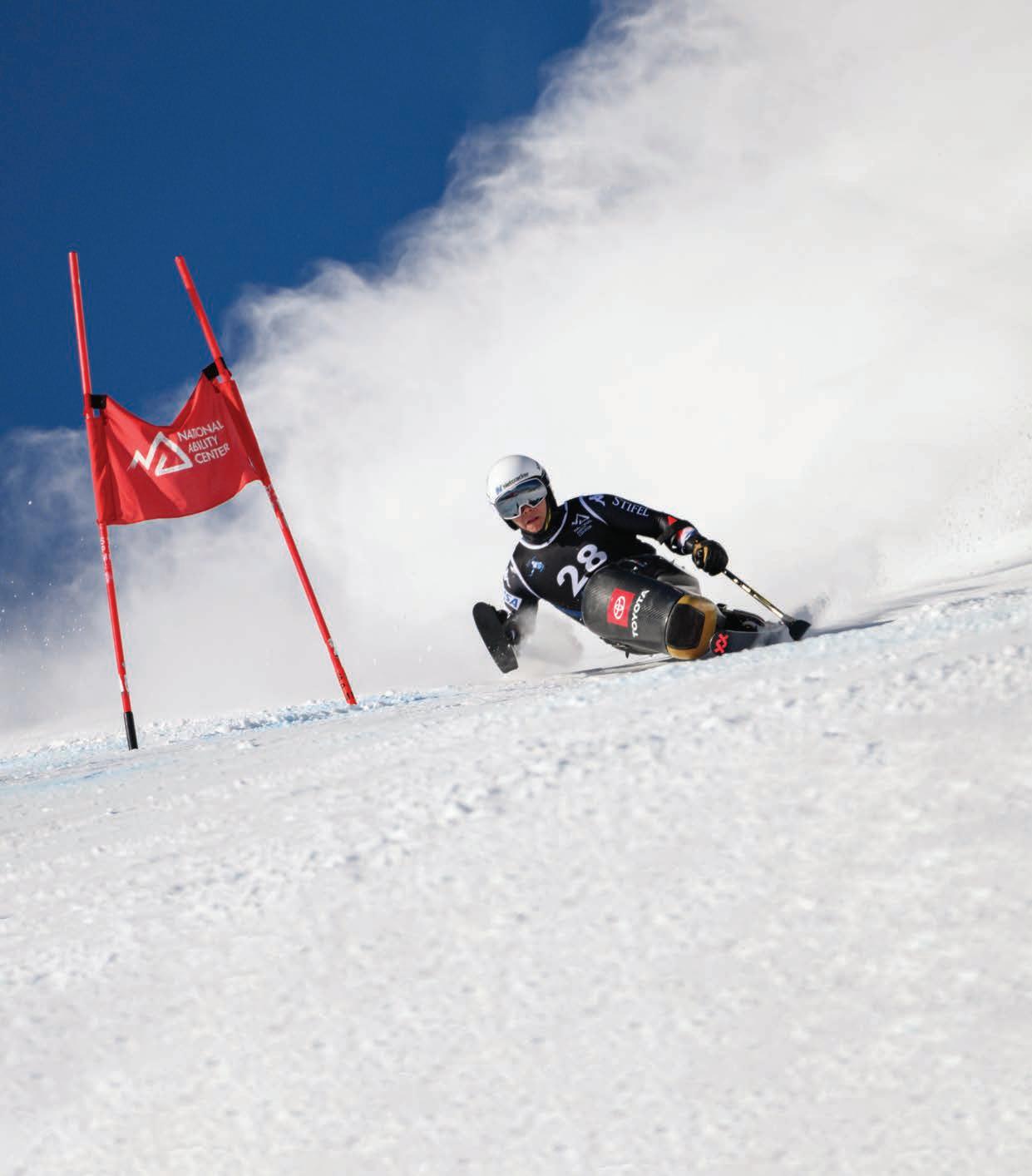
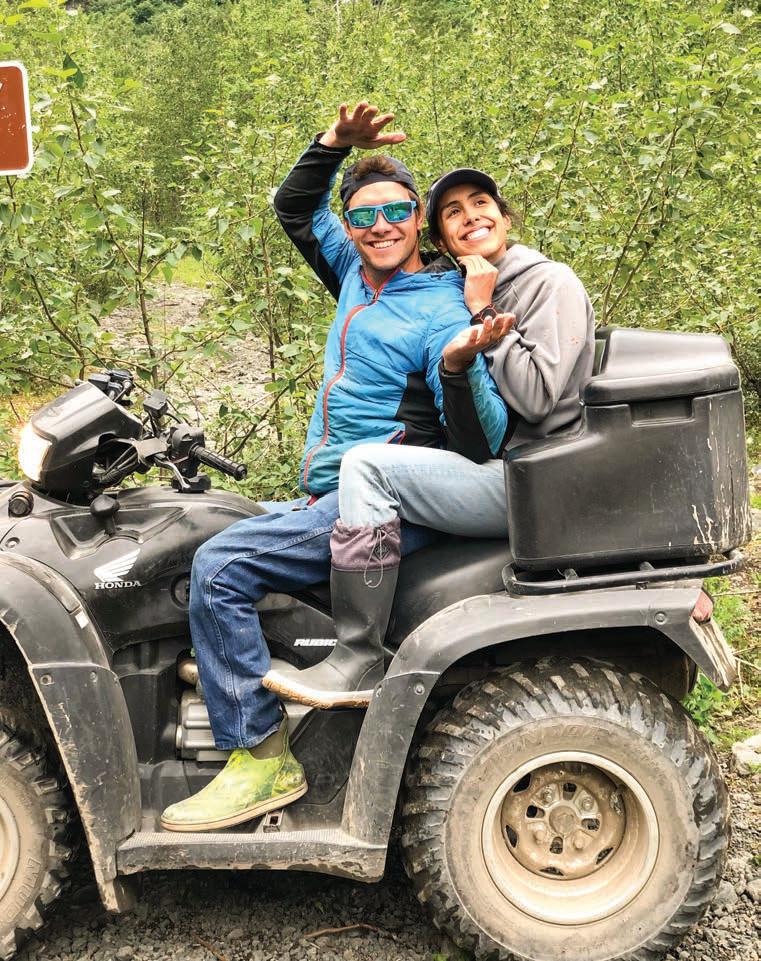
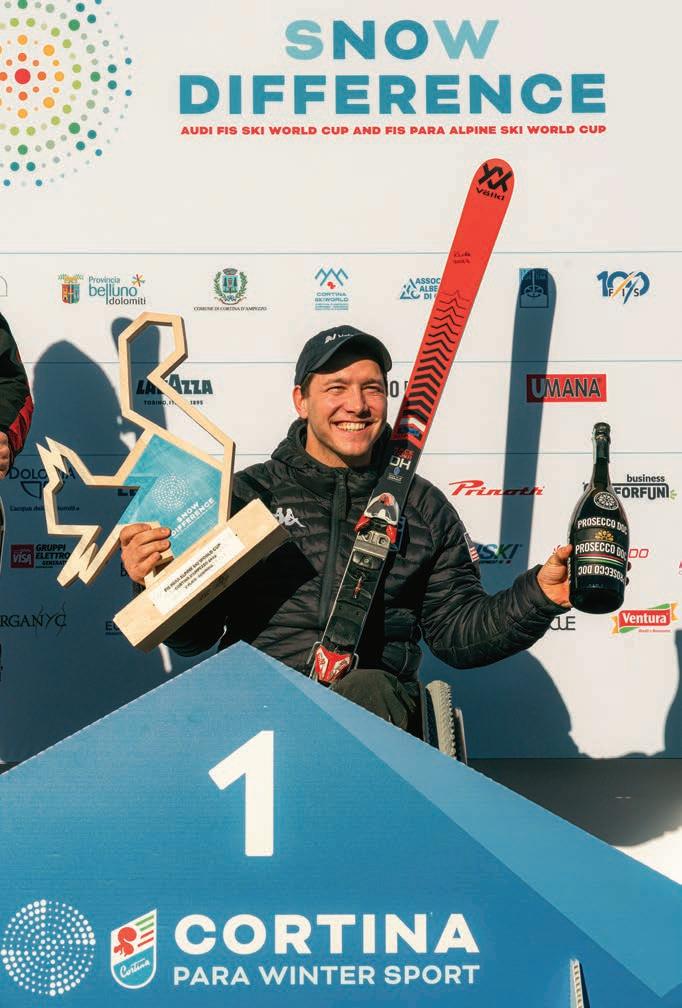
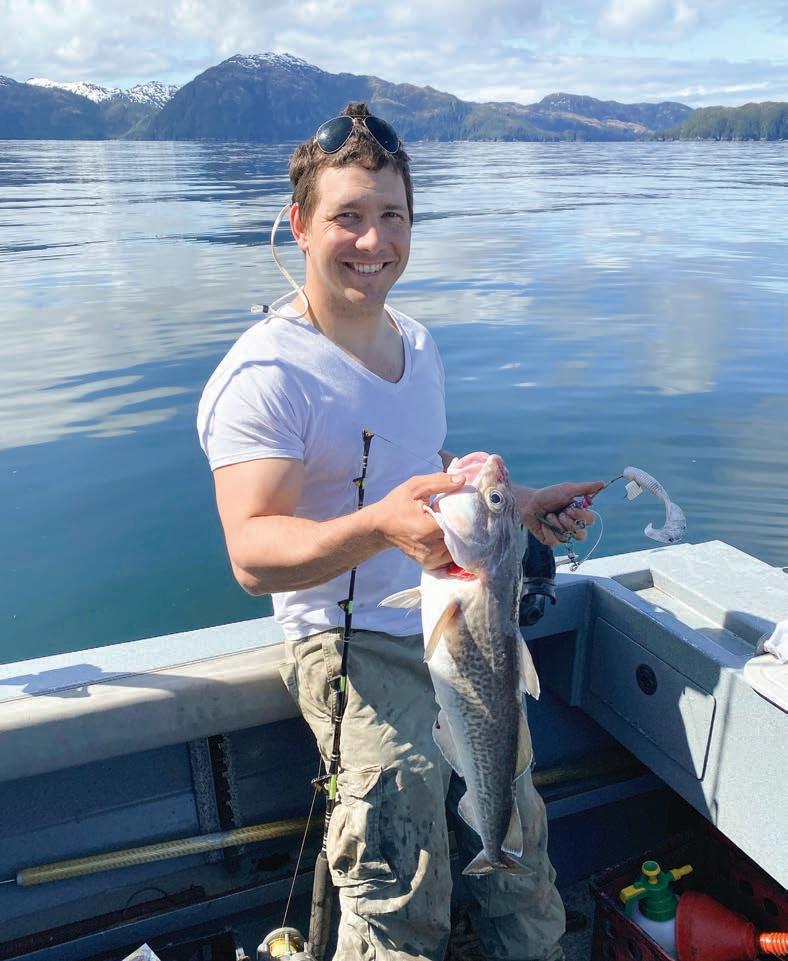
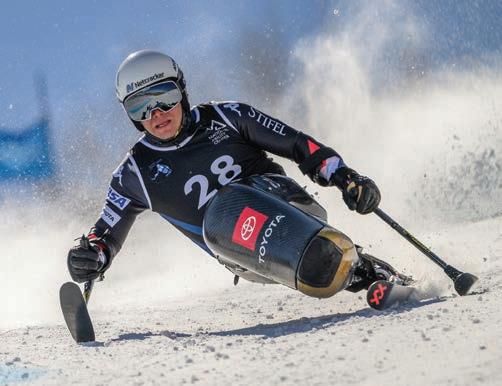
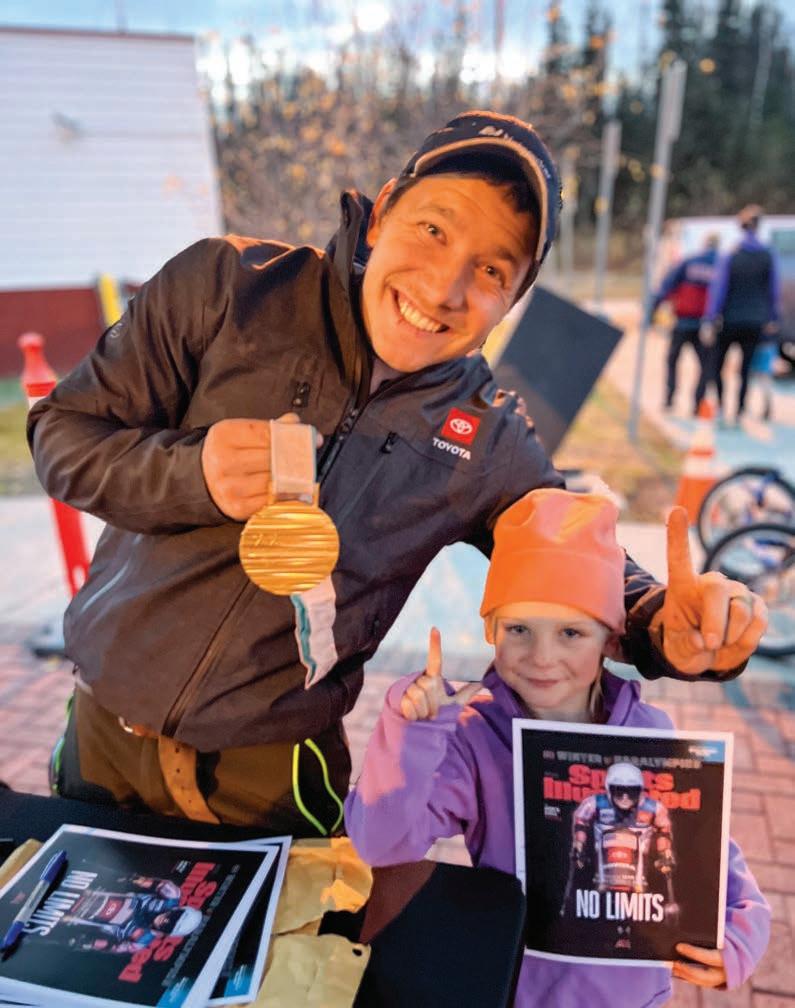
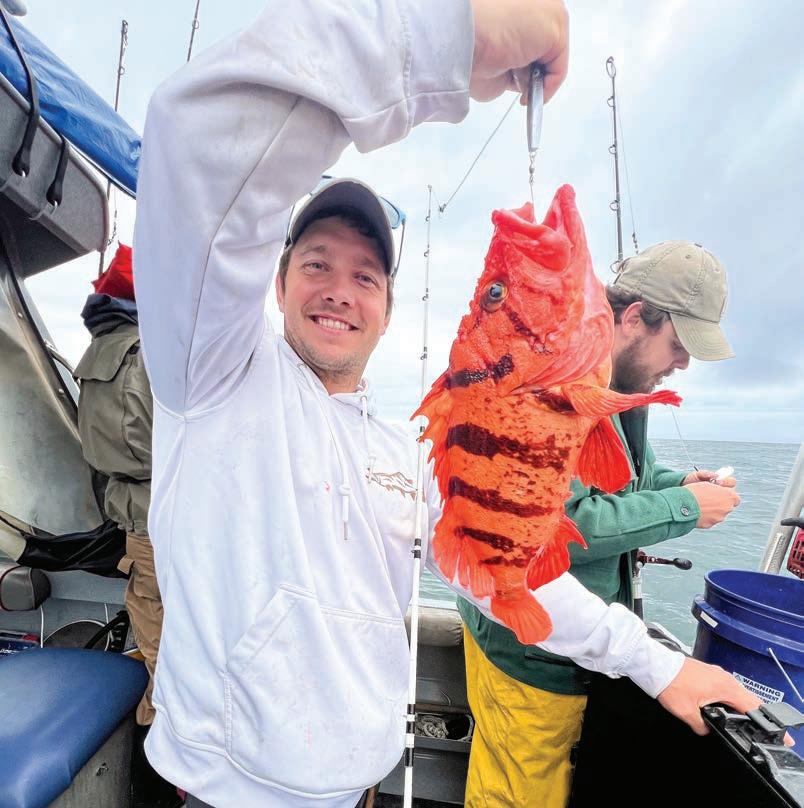
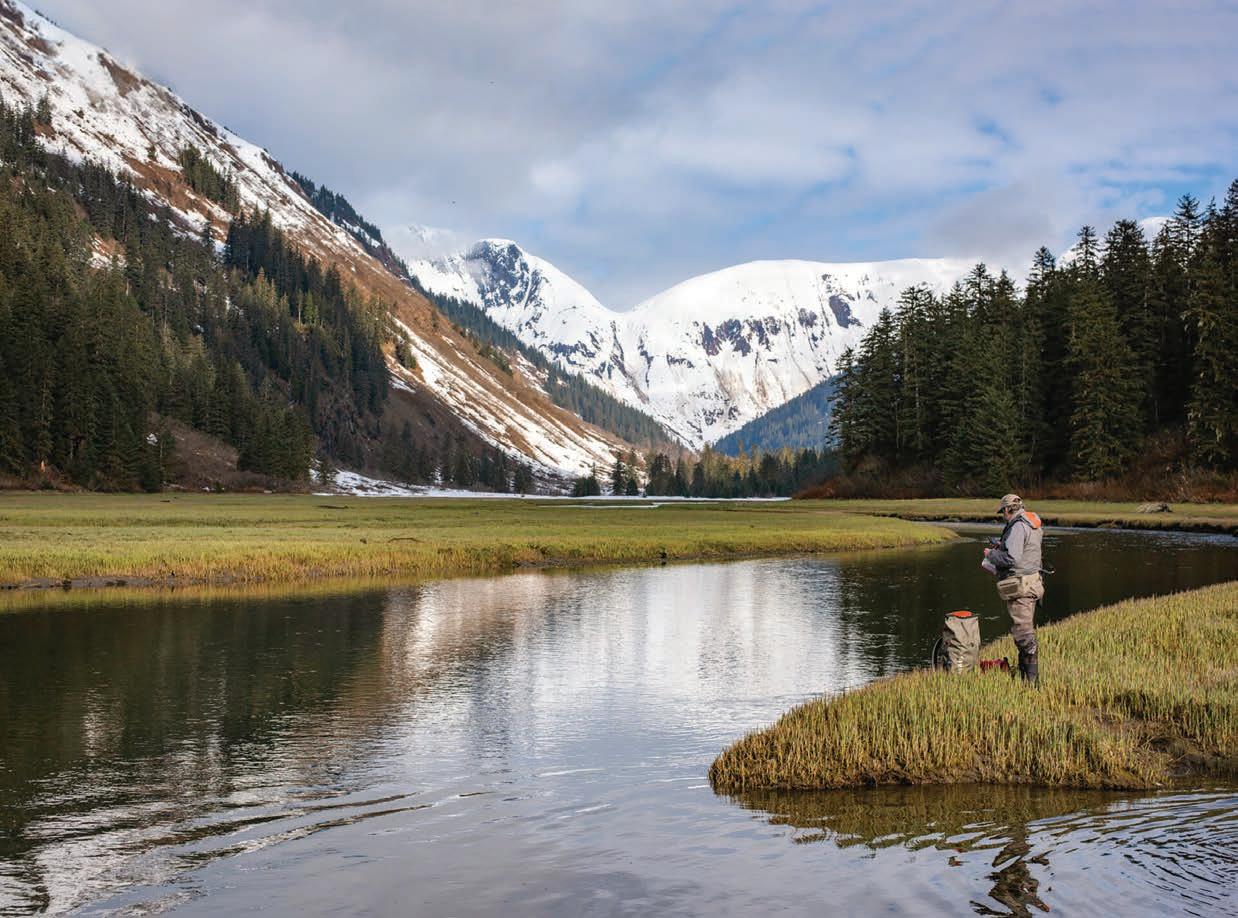
A tragic ATV accident when Andrew Kurka was just 13 years old left the aspiring wrestler partially paralyzed due to a broken back, but he never gave up on his sports dreams, nor fishing Alaska’s waters, a passion to this day. Kurka is now a Paralympic skiing gold medalist and will participate in his fourth Paralympic Winter Games next month in Italy. (ANDREW KURKA)
CORRESPONDENCE
X @AKSportJourn Facebook.com/alaskasportingjournal aksportingjournal.com Email ccocoles@media-inc.com
17 SETTING A GOLD STANDARD
An ATV accident at just 13 years old cost Alaskan Andrew Kurka a promising wrestling career, but partial paralysis didn’t slow him down – he found a new sport to dominate. Kurka became a world-class skier who’s won multiple World Cup medals and Paralympic gold at the 2018 Winter Games. He’s also an avid outdoorsman and owns a Palmer bed and breakfast with his wife, and as he prepares to compete for one last medal at the Paralympics in Italy this March, we caught up with Kurka to share his inspirational tale.
28
GUN DOGS AND GRAND MEMORIES
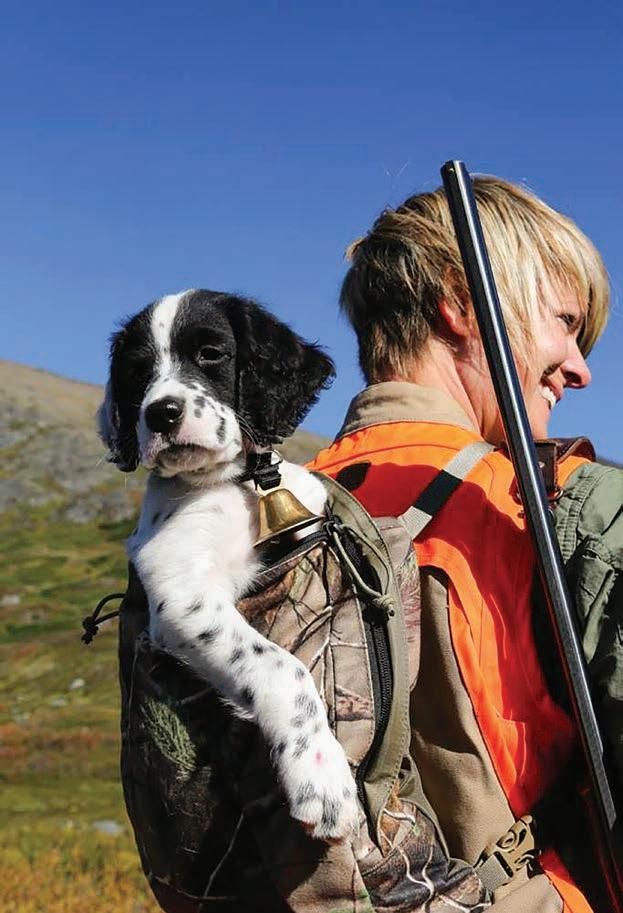
Our Tiffany Herrington kicks off her new series, Alaskan Women and the Outdoors, in which she pays homage to those females who capture the spirit and wildness of the Last Frontier. First up is a familiar face, frequent ASJ contributor Christine Cunningham, whose bird hunting adventures and backstory are just as much about her beloved hunting dogs as Cunningham herself.
39
HUNTERS IN DISTRESS, PART II
Last month, Scott Haugen, no stranger to the dangers of backcountry trips in Alaska’s most desolate and teethchattering places, recalled a moose hunt with a friend that saw their Argo get stuck in a Brooks Range river, leaving Haugen stranded and starting to go numb as he stood helplessly midstream on the ATV. Find out how the exciting story ends!
55
CATALOGING UNKNOWN SALMON, STEELHEAD HABITAT
In 2020, we featured some of the work of Mark Hieronymus, who has spearheaded the Alaska chapter of Trout Unlimited’s Fish Habitat Mapping project to uncover streams and creeks that hold previously unknown habitat for anadromous fish like salmon and steelhead. Recently, Hieronymus’s efforts hit a milestone of more than 100 miles of streams entered into the state’s Anadromous Waters Catalog. TU’s Marian Giannulis chatted with Hieronymus about his interesting – and often frigid – calling.
9 Editor’s Note: Starting a new business, fulfilling a dream
11 The Alaska Beat: News and notes from around the Last Frontier
15 Outdoor Calendar
47 From Field to Fire: Gear and food to keep your gun dog happy; game burger recipe
(ANDREW KURKA)
EDITOR’S NOTE
As I’ve gotten a little older and inched a bit closer to retiring – someday; you’re still stuck with me for now! –I have thought about something that I’d still like to do, because I can’t see myself not having something constructive to pass the time with. My interview with Alaska outdoorsman and Paralympic skier Andrew Kurka (page 17) refueled a previous dream for the golden years of my life.
I love dogs, and not just mine but almost every pup I’ve ever encountered along the way. I’ve long fancied myself owning a resort in a beautiful rural area far away from the chaos of the big city. But these accommodations would cater to not just humans but their dogs.
Granted, my dogs over the years have shared a pet-friendly hotel room with me, but my idea would provide extra-special amenities and perks for both the two-legged and four-legged guests. Fenced-in porches? In-room crates? A large enclosed play area with a doggie swimming pool? Daily rawhide treats (with maybe an ice-cold beer or glass of wine for Mom and Dad)? Sounds like a business plan!
Kurka is a former Paralympic champion in the downhill sitting race. He is likely set for his last dance next month when Milan-Cortina hosts the Paralympics following this month’s Winter Olympic Games in Italy. He already has the next chapter of his and wife Verónica’s story in the form of their
bed and breakfast lodge – aptly named the Golden Standard – in Alaska’s rugged and gorgeous setting of Palmer. Kurka told me about his vision in my profile of a badass man who didn’t let a childhood ATV accident slow down his dreams of excelling in sports.
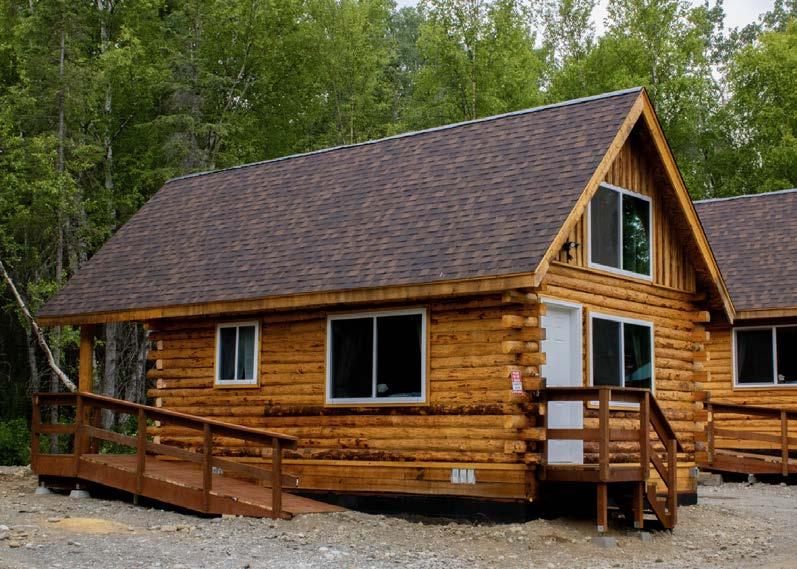
“I wanted to make this my passion, and it evolved into helping people with disabilities. As someone with a disability, one of the first things I wanted to do was to get back outside,” Kurka said of a property specifically designed to make it easier for disabled guests to get around and take advantage of wild Alaska as much as they can.
“And even though I can’t hike like I used to, I still find ways to configure a kayak on the top of my car and drag it out. I still make do; I still find ways to make it happen,” he said.
You can probably guess that my hour-plus conversation with Kurka moved me. After hearing his story – from the initial accident that killed his dreams of being a collegiate, Olympic and perhaps even a professional wrestler, his perseverance to not feel sorry for himself and develop into a world-class paraskier, and his positive attitude even after several skiing-related injuries – I felt a sense of shame. How dare I stress about irrelevant setbacks in my life given what Kurka has endured.
“I look back at the person that I was and think forward at the person I am now, and I’m just proud of the individual that I’ve been able to become,” he said.
Now if I can just kick butt like Kurka has in terms of starting a business, I’ll someday welcome all my doggo friends to my resort. Their humans can stay too! -Chris Cocoles
Paralympic skier Andrew Kurka and his wife Verónica have created a bed and breakfast resort in Palmer that caters to others like Kurka who have suffered from serious injuries. His story has inspired the editor. (ANDREW KURKA)
THE EXPERIENCE
THE BEST WAY TO FISH ALASKA,
IS FROM THE WATER
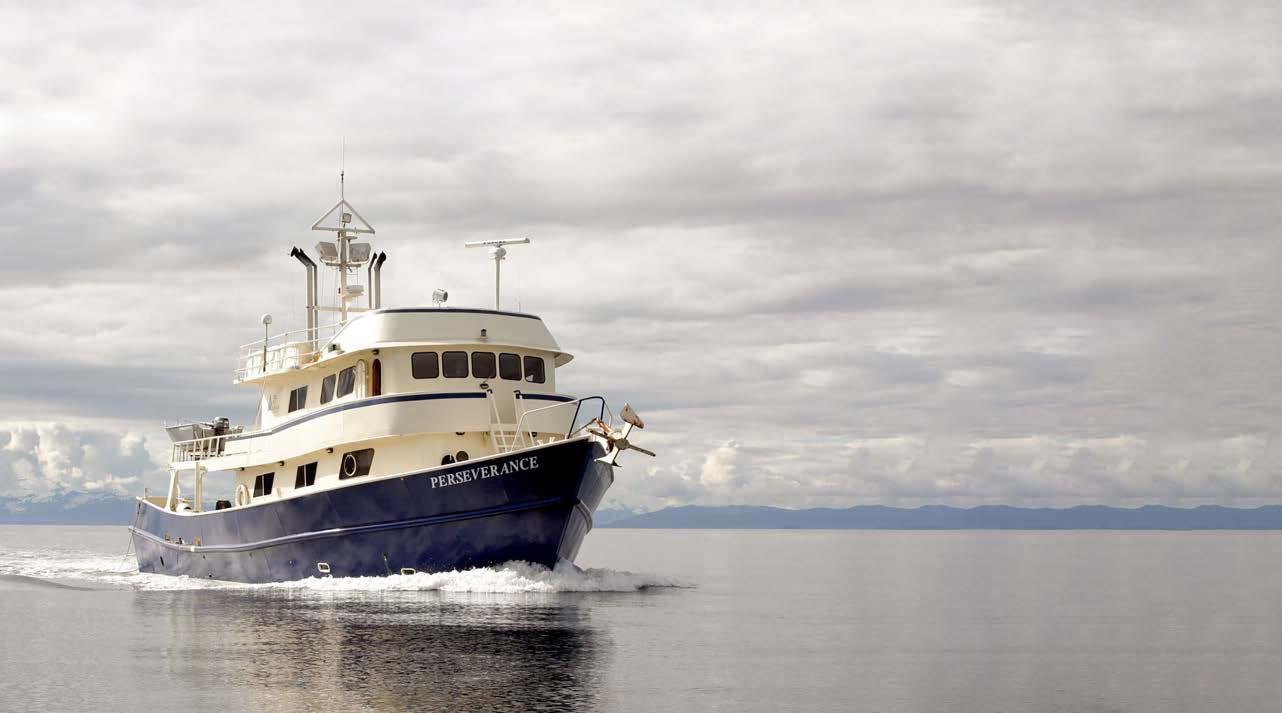
Wild Alaska offers an unmatched mothership sportfishing adventure in Southeast Alaska. With over 25 years of experience, we provide exclusive access to vast, untouched marine wilderness—far beyond the reach of traditional charter operations.
Immerse yourself completely in Southeast Alaska’s marine wilderness. Fish calm, sheltered waters of Frederick Sound, Stephens Passage, and Chatham Strait, surrounded by glaciers, wildlife, and breathtaking scenery. Our mobility ensures new waters and fresh opportunities every day—keeping you where the fish are.
LIFE ONBOARD
• Hot breakfast each morning
• Soup and sandwich lunch
• Fresh seafood dinners
• Relaxed evenings—or continue fishing and exploring
• Comfortable cruising in 50–70° temperatures
WHAT YOU’LL ENJOY
• World-class sportfishing
• Up-close wildlife viewing
• Photography opportunities found nowhere else
• Safe, warm, and welcoming onboard environment
• Exceptional crew and personalized service
Join Wild Alaska for the adventure of a lifetime! Pack a smile—and get ready for
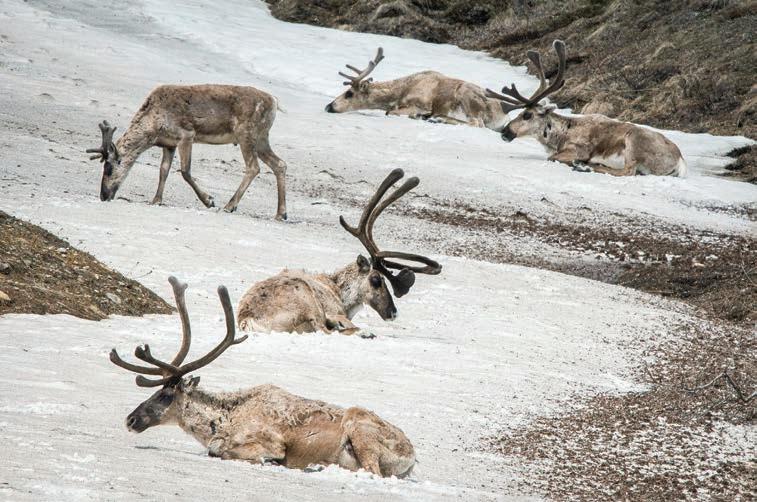
Alaska caribou numbers are dropping again, recent surveys of herds throughout the state show.
(NATIONAL PARK SERVICE)
ALASKA CARIBOU HERDS DECLINING AGAIN
Alaska’s once thriving caribou population continues to slide.
A 2025 survey of one of the state’s most important herds, the Western Arctic, estimated it at just 121,000 animals – the fewest since the 1970s, a far cry from 2003’s peak of 490,000 and a dip into the “critical” level under its management plan.
At a Western Arctic Caribou Herd Working Group meeting, Alaska Department of Fish and Game biologist Alex Hansen painted a somber picture of the herd’s status. Per the Alaska Beacon, Hansen told the crowd, “So, no end in sight at this point. Certainly, some concerns we all have, and not sure where this is going. But hopefully, we can get through it together.” The estimate likely leaves even fewer for harvest.
Then in early January, ADFG released results of photocensus surveys of the Porcupine and Central Arctic Caribou Herds, which were performed last summer. The Porcupine Herd, located in the extreme northeast corner of the state around Arctic National Wildlife Refuge, is experiencing a sharp decline. The latest estimate is 143,000 animals, down from 218,000 in a 2017 survey.
“This herd has experienced periods of growth and decline since photocensus efforts began. In 1979, the herd was around 106,000 caribou, grew to 178,000 in 1989, declined to 123,000 in 2001, and then increased to 218,000 in 2017,” ADFG reported in a press release. “This current period of decline is steeper than was observed during the decline in the 1990s.”
As for the adjacent and smaller Central Arctic Herd, the photocensus determined a new estimate of 26,600, a drop from 2022’s 34,600. The herd peaked at over 68,000 in 2010 before crashing to 22,600 only six years later.
The state has taken drastic measures to try and eliminate predators such as wolves and bears around caribou herds to help stop the population declines. But that has been challenged in court, with plaintiffs in those cases receiving six-figure awards as the eradication efforts have been blocked by judges’ rulings.
“We will continue to monitor the survival and parturition rates and conduct a photocensus on both herds when possible,” ADFG stated. “Large migratory caribou herds rarely remain stable over long periods of time and instead exhibit phases of population increases and declines.”
NOTABLE NUMBER
Inches of fish caught by tournament leaders the Hook Hustlers (Matt Weaver and Joseph Dombroski) after day one of the Still Cold Open at Big Lake. The ongoing ice fishing event’s January 3 opener went on despite anglers enduring temperatures as low as 37 degrees below zero!
AL ASKA BEAT
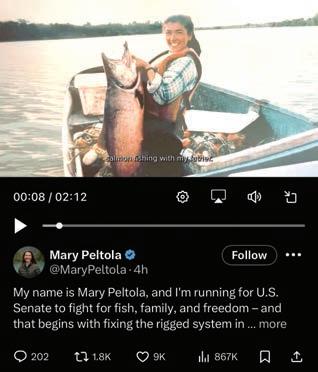
SOCIAL MEDIA POST OF THE MONTH
Former Alaska US Representative Mary Peltola (D) announced she will run for Senate in 2026. “I’m running to fight for fish, family and freedom,” she tweeted.
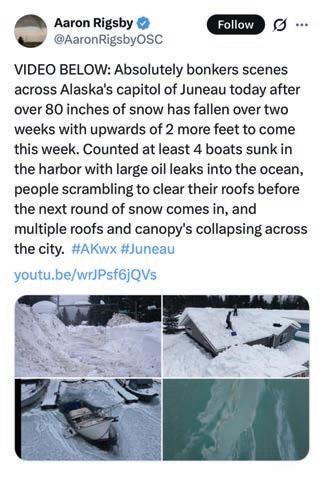
Eighty inches of snow in two weeks? A crazy winter already in Southeast Alaska!
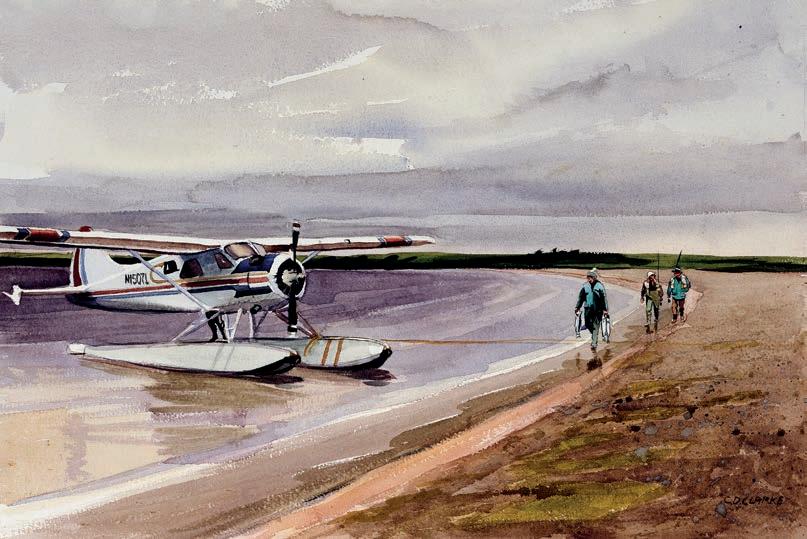
Many of outdoors artist C.D. Clarke’s most spectacular paintings have come about after experiencing the beauty of Alaska. (C.D.
MAKING ART FROM THE OUTDOORS
Two of C.D. Clarke’s favorite Alaska-based paintings reflect what the state typically means to outdoorsmen and -women, plus sporting artists alike.
“One is the painting called ‘Two Silvers.’ The general principle of showing a bright fish and a dark fish, and then the fact that I had that green background – I forget whether it was a dock or a deck – the whole idea of putting a red fish on a green background. Those being complementary colors, the whole thing kind of came together,” Clarke says of the watercolor painting. “You had one fish facing one way and one the other. It was one of those things that almost painted itself from the concept. And I think it was really effective.”
Clarke titled his other favorite Alaskan work “Jet Boats.” It’s an oil painting that depicts an overcast scene on a Last Frontier river. He says Alaska’s beauty can be shown in more subtle ways. Yes, there are snow-capped mountains glistening in sunshine, the kind of environment that would make painters salivate. But the jet boats represent something else entirely.
“For me anyway, it kind of captures that rugged, cold, misty side of Alaska. As an angler and outdoorsman I love that kind of weather. So many of my greatest experiences have happened in that kind of weather. If you’re really serious about the hunting and fishing stuff, you’re not always looking for bright sunny days,” he says. The 49th state’s weather may change in a blur, but you can create something magnificent in every condition.
“The concept of those having two or three little splashes of
THEY SAID IT
“ ”
color with the gas tank and the life vests, that was one of the things that drew me to it. Everything in that painting is sort of gray and mossy green, except those splashes of color. That kind of works from a purely painting perspective.”
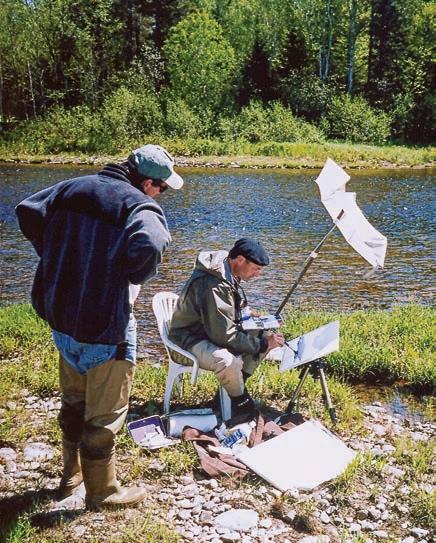
He’s been to Alaska a half-dozen times now (Clarke’s wife Tracey often joins him on many trips these days, along with their bird dogs, as she’s become a diehard bird hunter). He’d love to go back and experience a float down a river, perhaps in Southeast Alaska targeting the steelhead run. Think of the potential such a journey could inspire for a painter who’s created moments from similar adventures in Argentina, Canada, Scotland and more.
Clarke cites famous sporting artist Robert Abbott, who once said, “You’ve got to paint the football before you paint the stitches on the football.”
Clarke takes such advice to heart, citing that the football stitches represent the idea that such personal touches are “all about the details.”
“When you look at it from a sporting art lens, the thing that you absolutely have to do is to look at it as a painting first. And that means that you gotta have a painting that has an interesting composition and has some interesting colors and interesting textures. You can’t get hung up on the fact that everyone says a river is a beautiful river; that’s kind of the literary product,” Clarke says. “Anything like that has to come after you’ve determined that it’s going to make a good painting in terms of the nuts and bolts of composition and color and design.” -Chris Cocoles
“I support the Supreme Court’s decision to decline review, leaving in place longstanding precedent from the Katie John line of cases, which has guided federal subsistence management under ANILCA in Alaska for decades. Subsistence is a way of life that is essential to rural Alaskans who rely on hunting and fishing for food security and cultural continuity. I remain committed to defending this way of life and supporting practical, bipartisan solutions grounded in the needs of all Alaskans.”
–Alaska US Senator Lisa Murkowski (R), after the United States Supreme Court refused the state’s pleas to alter how subsistence fishing is managed on the Kuskokwim River.
CLARKE)
Indigenous Adventure offers:
Full/Half Day Trips
• Flyfishing
• Saltwater fishing
• Glacier tours
• Whalewatching
BOOKYOURTRIP TODA Y!
Fish Camps
• Guided all-inclusive camps
• Remote cabin locations on world class rivers
• All inclusive
ULTIMATE ALASKA HUNT!
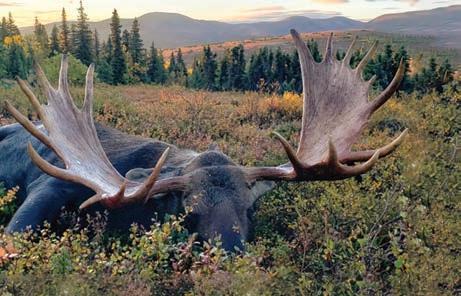
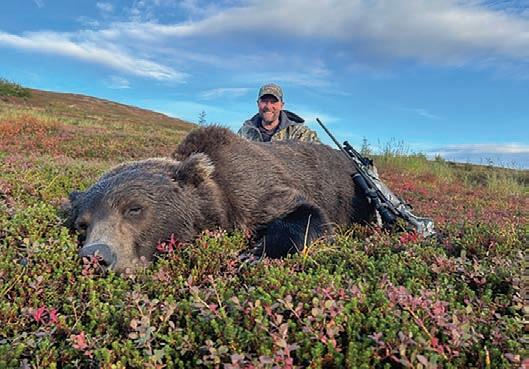
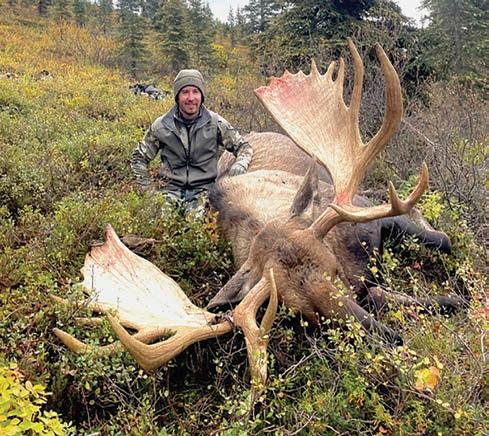
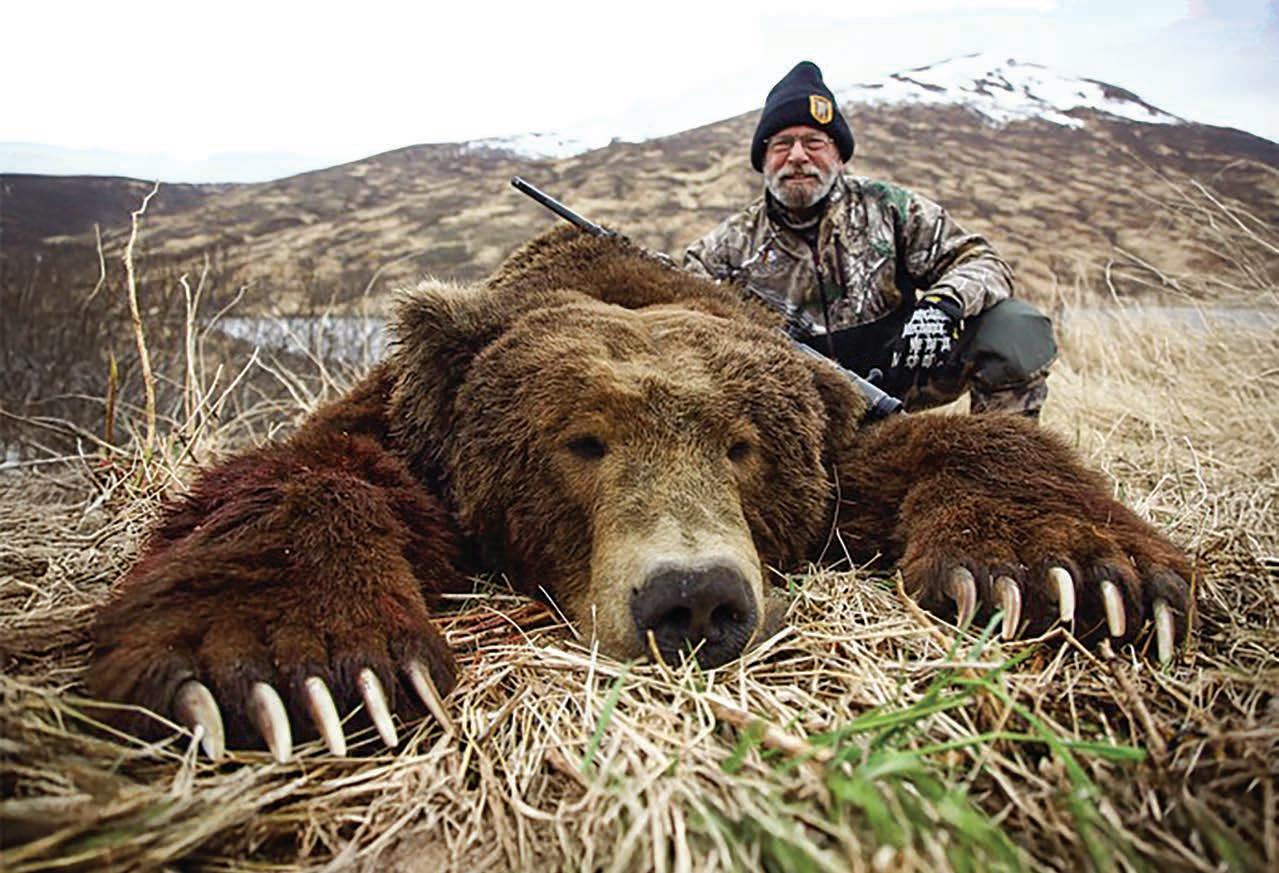
Experience the thrill of big game hunting in Alaska’s untamed wilderness with Deltana Outfitters—Alaska’s premier guide service. Whether you’re after Brown Bear, Grizzly, or Moose, our expert guides lead unforgettable Spring and Fall hunts in the remote, pristine Alaska Peninsula and Western Alaska.
Adventure. Expertise. Results. That’s what we do—and Deltana does it best.
90% Success Rate! Average Moose: 64” Grizzlies: 7’6” - 8’6” Black Bears: 6’ - 7’ Brown Bears: 9’ - 10’
OUTDOOR CALENDAR
FEBRUARY 1
Resident muskox and resident caribou seasons open in Game Management Unit 21D (Middle Yukon)
FEBRUARY 7
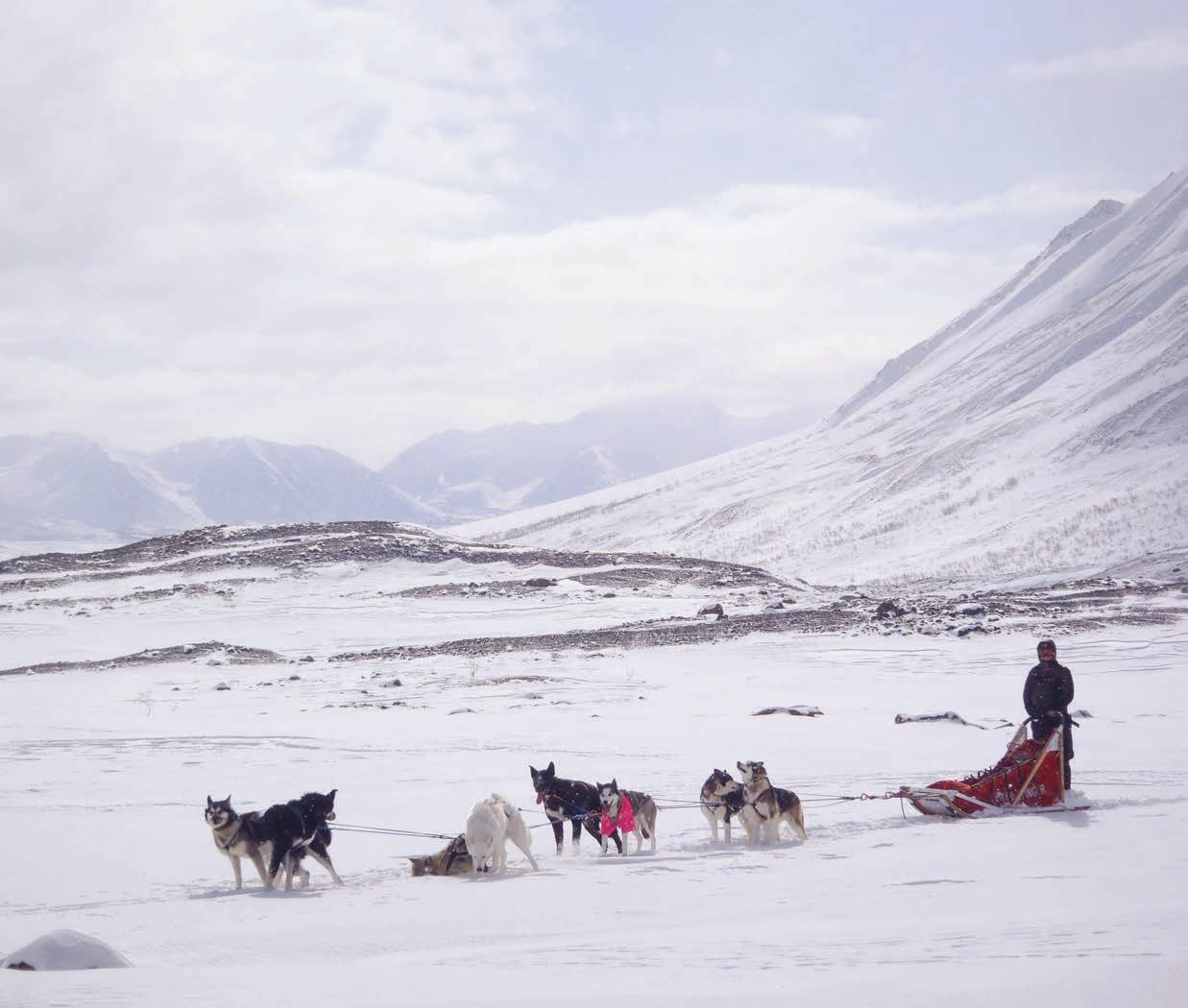
Start of Yukon Quest Alaska sled dog race, Fairbanks (yukonquestalaska.com)
FEBRUARY 20
Date draw results of the November 1 to December 16 Draw, Tier I/II and Community Subsistence Harvest application period are expected to be available online (adfg.alaska.gov/ index.cfm?adfg=huntlicense.draw)
MARCH 7
Scheduled ceremonial start of Iditarod sled dog race, downtown Anchorage (iditarod.com)
MARCH 15
Spring brown bear season opens in GMU 1 (Southeast Mainland)
MARCH 15
Resident spring brown bear season opens in GMU 3 (Petersburg/Wrangell)
MARCH 15
2026 SPORTSMEN’S SHOWS
FEBRUARY 11-15
Pacific Northwest Sportsmen’s Show, Expo Center, Portland (pnwsportsmensshow.com)
FEBRUARY 20-22
Jackson County Sportsmen’s & Outdoor Recreation Show, Jackson County Expo, Medford (exposureshows.com)
MARCH 6-8
Great Alaska Sportsman Show, Sullivan Arena, Anchorage (greatalaskasportsmanshow.com)
MARCH 19-22
Spring brown bear season opens in GMU 4 (AdmiraltyBaranof-Chichagof Islands)
MARCH 21
Homer Winter King Salmon Tournament (homerwinterking.com)
Big Horn Outdoor Adventure Show, Spokane Fair & Expo Center, Spokane (bighornshow.com)
APRIL 17-19
Mat-Su Outdoorsman Show, Menard Center, Wasilla (matsuoutdoorsmanshow.com)
APRIL 24-26
Fairbanks Outdoor Show, Carlson Center (fairbanksevents.com/fairbanksoutdoorshow)
For more information and season dates for Alaska hunts, go to adfg.alaska.gov/index.cfm?adfg=hunting.main.
The Yukon Quest Alaska sled dog race is set to start on February 7 in Fairbanks. (NATIONAL PARK SERVICE)
TROPHY MOOSE & BEAR HUNTING
River
MORE THAN A HUNT
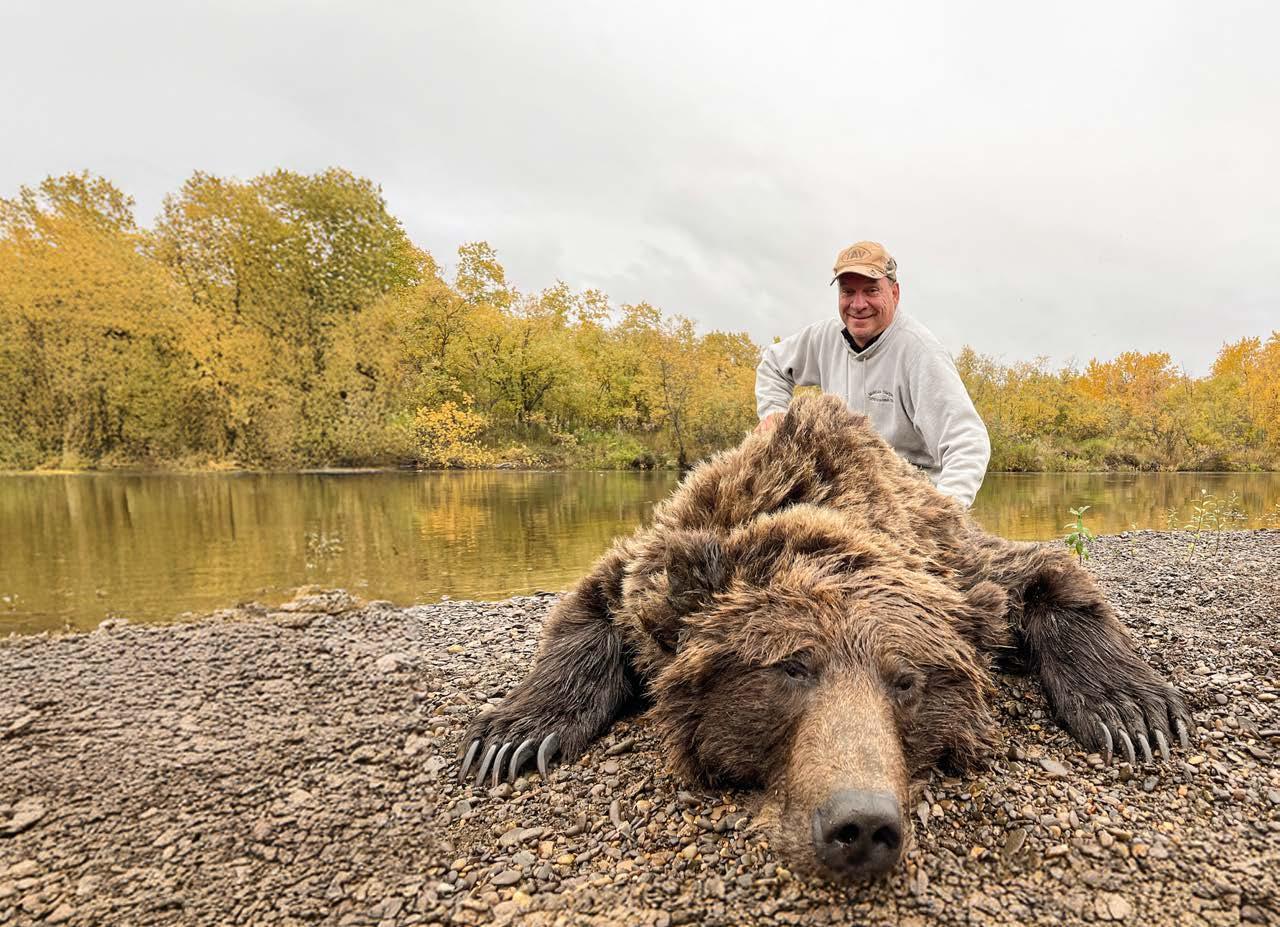
This is an unforgettable Alaskan adventure that blends raw wilderness, world-class game, and the thrill of pursuing some of North America’s most iconic animals in their natural environment. Long days on the river. Close encounters. The kind of moments you’ll talk about for the rest of your life.
WHY HUNT WITH US
• Trophy moose & bear hunts in prime river systems
• Regular 60”+ bull moose opportunities
• Near-100% opportunity rate on legal bulls
• High success on large Alaskan bears
• Fully guided & all-inclusive hunts
• Expert guides with deep local knowledge
• Carefully selected locations for consistent results
• 11–15 day hunts with 15-day combo moose & bear hunt available
Every hunt is carefully planned and professionally guided from start to finish. From scouting and calling to field care and logistics, your guide handles every detail so you can stay focused on the hunt.
Contact us today to secure your hunt and discuss available dates.
FOLLOWING A TEENAGE ACCIDENT, PARALYMPIC SKIING GOLD MEDALIST AND AVID ALASKA OUTDOORSMAN ANDREW KURKA NEVER GAVE UP ON HIS DREAMS
BY CHRIS COCOLES
One of Andrew Kurka’s coaches once had some sage if not preordained advice for the then promising preteen Alaskan wrestler, who seemed destined for success and even a career in his sport.
“My wrestling coach said, ‘Remember now in this moment that there’s always going to be someone better,’ and that’s one of those things that, especially as a young man, I thought, ‘Why am I even doing this?’” Kurka says. “Obviously, I wanted to do it to be the best; that’s why you compete in many things.”
He has indeed followed that advice to reach the absolute top of his competitions. But he sure never could imagine just how it would happen.
Yes, Kurka has achieved the ultimate level in sport – namely winning a gold medal as best of the world. Except it’s not as a wrestler, and it happened years after a devastating ATV accident
near his Mat-Su Valley home as a 13-year-old. Kurka’s crash resulted in a broken back, partial paralysis and the sudden end to becoming a college and Olympic wrestler, and even a professional wrestling gig, which all seemed so attainable before that fateful day. Rather, Kurka went to the 2018 Paralympic Winter Games in Pyeongchang, South Korea, where he was the Paralympic champion in sitting downhill skiing, one of the milestones in a life full of plot twists before and after the ATV accident. And he’ll appear in the Paralympic Games in March, likely his last, when the Italian cities of Milan and Cortina host after this month’s Winter Olympics.
“I’m a keynote speaker and give speeches, and I try to help people to realize those opportunities in their lives as well. You have these challenges, these pains and these issues, but it’s a lot easier
Alaskan Andrew Kurka, once a promising wrestler, was partially paralyzed after an ATV accident as a 13-year-old. But not only does he still savor his love of fishing and the outdoors, he developed into a world-class Paralympic skier. He’s now a Paralympic sitting downhill gold medalist and will compete again next month. (US SKI & SNOWBOARD; INSET: ANDREW KURKA)
for people to fathom them when I say to them, because I’m a young man who broke my back and became disabled,” Kurka says. “It’s either yes or no; I had two options. It’s either overcome or succumb to it. I had to overcome, and everyone has those same options in their lives – whatever it is.”
A LIFE-CHANGING MOMENT
Nothing about his wreck so many years ago is a blur for Kurka, who turned 34 on January 27. A lifelong outdoorsman who grew up on a family homestead property in the tiny village of Nikolaevsk, near Homer, Kurka moved to Palmer when he was 12 years old. The next year, Kurka
and a friend jumped onto their ATVs to fish in Jim Creek, a 15-minute ride from his Palmer home, and then down to where the creek confluences with the Knik River, 30 minutes further.
“I flipped the four-wheeler and it landed on my head, compressing my spine and breaking my back. There was instant pain but also instant paralysis. It affected my spine right away. I knew something was wrong, and I had cracked my skull and injured my head; – blood was pouring out into my eyes. I had fractured T10 through T12 in my spine,” he recalls.
“I was conscious through the whole thing – just a 13-year-old laying in the
sand scared for his life.”
Just like that, the aspiring wrestler had a whole new outlook on his life. He’d competed in the 135-pound weight class. But the effects of the accident would soon reduce Kurka to 90 pounds of body weight.
When something like this happens to anyone – let alone a talented 13-yearold athlete – the physical pain from the accident is one thing; the mental scars can be even worse.
“It’s the pain of the why me moments that help you to grow into someone who’s better. You can’t ever grow and be a better individual without first having pain,” Kurka says. “It’s the most important process to growth. The why me moment is the best teacher that you can have. And I had lots of ‘why me’ moments.”
For two years, the wrestler grappled with the consequences of his paralysis. Kurka was experiencing that physical and emotional growth process from boy to young man. Becoming that person was critical to not letting this worst of setbacks prevent anything more tragic from happening.
“Between 13 and 15 there was so much depression. ‘How did this happen? What did I do to deserve this? What’s the reason?’” he recalls. “When I was 15, 16, I started to realize that the reason is whatever I choose to make it. And I’m going to make it the best that I can.”
His mother Amy Weideman, a single parent, also proved crucial in not allowing apathy to win out.
“Mom said, ‘This happened to me for a reason; the reason is whatever you choose to make it.’ And when she told me that, it helped to understand that it doesn’t really matter what happens to me throughout my life; what matters is how I handle it,” Kurka says.
“I’ve met so many people who don’t have disabilities who are so much less capable than I am just because they aren’t willing to try or willing to work. That’s really all there is to it. That’s something that I’m proud of,” he adds.
HOMESTEAD ON THE RANGE
From an early age, Andrew Kurka learned toughness from the older generations of his family.
Growing up on a 640-acre homestead just outside of a tiny Russian-American village near Homer, the outdoors were a part of who Kurka (left) was and who he is today. (ANDREW KURKA)
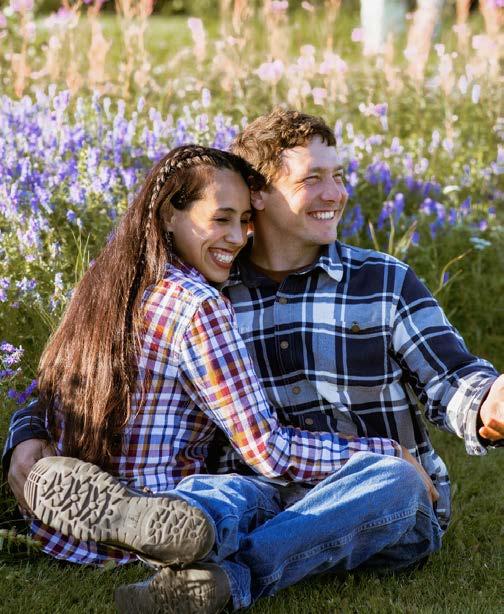
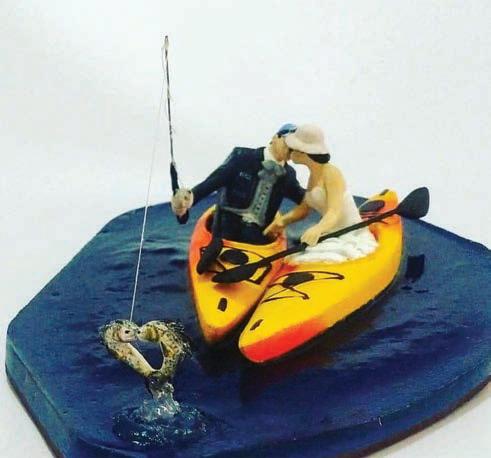
Andrew Kurka and his wife Verónica have savored the Alaska lifestyle (including the bride’s idea of a fishing-themed wedding cake topper). Andrew hopes to gain his pilot instructor’s license and wants to help disabled people learn to fly like he has. (ANDREW KURKA)
GETTING BACK OUTSIDE THE HARD WAY
When Andrew Kurka was recovering from a broken back that left him partially paralyzed, he was determined to find a way to get back outdoors. He’s an Alaskan, after all.
One day, while he was still wearing a back brace after returning home, a good friend, Daniel Bedwell, stopped by to visit Kurka.
“He came in and he picked me up out of my wheelchair, carried me out, set me in the truck, drove me to the river and he got his boat out, got it ready, picked me out of the truck and set me in the boat and said, ‘Next time you have to do this on your own,’” Kurka recalls.
“We had an adventure and went fishing. I was in excruciating pain but didn’t say a single word. But I enjoyed
it so much. It’s amazing when you go through something so traumatic and so painful, you take a moment where even a ray of sunshine on your face can mean the world.”
Kurka credits that kind of tough love for the adults and friends in his life during those challenging days after the ATV accident. A common battlecry as he tried to be normal again? “Figure it out.”
He has so many memories of the fishing and hunting in the Last Frontier, both before and after his injury. He remembers moose hunting with his grandpa post-accident as a 15-year-old.
“It was a 52-incher in a super secret spot. We were gutting the moose, and as he was gutting up from the belly, the genitals were attached, and as he tossed
the skin flap over, the genitals smacked me right in the face!”
So much of his identity is in his Alaska roots. When he married Verónica, their wedding cake topper featured the bride and groom smooching on two kayaks and a rod and reel in hand fighting a fish. “That was her idea,” he says.
But it’s a fitting tribute to an Alaska lifestyle the couple still savor these days, with their bed and breakfast in Palmer allowing for more fun in the field.
“I love it. Any opportunity when the weather’s nice, I fish here in Alaska and get out on the ocean,” he says. “Being able to fly a plane or get in a boat in Alaska, you can still go places where people haven’t been. It’s such a cool place. That’s why I’m here.” -CC
“My grandmother is 96 years old and going strong; still tough. She still walks two flights of stairs every day just to get to her bedroom. She has zero quit. My grandma, two years ago, fell on the ice and broke her hip, but she walked herself to the hospital,” Kurka says.
“My mom broke her ankle while golfing and continued her round of golf! So I don’t know if it’s genetic as much as it’s just ingrained in us, but there’s something there,” he says. “It definitely comes from them and it’s something that I’m super proud of, whether they taught it to me or they willed it into me.”
Nikolaevsk, in Kurka’s words, “was a Russian- and English-mixed town.” The family has Eastern European roots, but he spoke Russian as well as English growing up. (“My Russian has tapered a lot. I hardly speak it anymore.”)
The family lived on 640 acres just outside of town. Kurka and his brother had an almost 2-mile walk just to get to the school bus stop. He grew up around farm animals, the Alaska outdoor lifestyle and hard work. With a mom and grandmother as tough as sandpaper, excuses wouldn’t be tolerated.
“From the moment I was 5 years old, I was hauling 5-gallon buckets to go take care of the animals and chopping firewood,” he says. “It didn’t matter what the temperature outside was; if it was 40 below we had to chop even more wood to stay warm. Our house didn’t have conventional heat, so we heated it with wood.”
The kids made their own fun – literally. They’d handcraft board games and squiggly swords to play with. Ingenuity became a family trait. Work hard, play hard became more than a mantra; it was their narrative. “We constructed life skills by just figuring it out.”
As for the outdoor playgrounds at his disposal, Kurka was more than a willing participant. He proudly can tell the difference between the sound of a bear or moose taking steps in the woods.
The do-it-yourself, no-excuses existence the family lived, coupled with the easily accessible hunting, fishing and hiking in their backyard offered Kurka a sense of freedom as a child. The outdoors was “ingrained” in him.
“We killed a moose every year and we had that throughout the winter time. In the summers we fished, and I still do that,” he says, adding that all the aspects of his childhood – the grunt work, the creativity, the wrestling aggression –didn’t happen by accident.
“Both being raised on the homestead and being a wrestler, all of that came from the way that I was raised. It transcended into the way that I wrestled and into the way that I am now – to overcome my
injuries,” Kurka says. “What I think is the most important aspect to my successes in life is grit. Especially nowadays, there are so many people who aren’t raised to understand work ethic or hard work. They don’t understand it because they’ve never truly had to. That’s one of the things that I’m most truly grateful for.”
WHAT NOW?
For Kurka, wrestling wasn’t just a sport; it wasn’t just work; it was his opus.
Kurka celebrates after a podium finish in an event. He’s won a Paralympic gold and silver medal, two World Championship medals and been on the World Cup tour medal stand nine times, including for five golds. (FIS PARA SNOW SPORTS)
“I feel alive when I catch a fish, and when I go outside,” Kurka says. “But the moment when you’re ski racing (and) you start to feel the wind in your ears even with the helmet on, or you start to feel the helmet pick up because you’re going so fast and start to feel the wind pressure on your chest, it helps you to feel alive.”
(ANDREW KURKA; INSET: US SKI & SNOWBOARD)
“I had tried so many sports as a young man, but wrestling was really where I shined. I did well and it’s something that molded my future,” he says. “I had a good time with wrestling. To me that wasn’t work. It’s funny that so many people say, ‘You must have downtime; you have to have downtime.’ But you don’t have to. Yeah, downtime is nice, and a lot of people say it’s hard work, but if you love what you do, that’s your relaxing time.”
But all of that changed after the accident, the broken back, the prognosis, the uncertainty. By the time the initial shock waned and reality set in, there was no way Kurka wouldn’t pursue something challenging.
He actually tried wrestling again, but “I was getting my butt beat up … It was so hard – 10 times harder than it was before.”
to feel the wind in your ears even with the helmet on, or you start to feel the helmet pick up because you’re going so fast and start to feel the wind pressure on your chest, it helps you to feel alive.”
Even after crashing on that initial run, something clicked. Kurka was competitively wrestling all over again. He says, “I’ll never forget the instructor I had skied down with asked, ‘Do you feel OK?’ ‘Hell yeah!’ I just went straight and crashed and was loving it so much.”
At that point, 15-year-old Kurka may as well have been Ricky Bobby, Will Ferrell’s narcissistic but lovable NASCAR driver from his film Talladega Nights: The Legend of Ricky Bobby. His “I wanna go fast” mantra is one of the flick’s signature lines.
Fate would intervene in the form of a persistent physical therapist. Kurka was at a wrestling tournament when his PT picked him up and suggested skiing as an alternative to wrestling.
“I almost never skied. But (the physical therapist) believed in me,” he says. “She was like, ‘Look, I’m going to take you there and pay for your first ski lesson. You’re going to go out and ski because I think you’re going to do great.’”
They went to popular Alyeska Resort in Girdwood, outside Anchorage.
“My very first time on the mountain, I slid balanced straight down the mountain, hit the bottom, fell and said, ‘I love this. This is for me.’ I got to go fast and the biggest thing was I felt alive again,” he says.
“I feel alive when I catch a fish, and when I go outside. But the moment when you’re ski racing (and) you start
Ferrell’s Bobby also poetically would say, “If you ain’t first, you’re last.” And Kurka was that kind of competitor, whether it was working the homestead, chasing outdoor adventures or excelling at sports.
“At the beginning of my career I was just fast. I asked people, ‘How do I go fast?’” Kurka says. “No one had really taught me tactics. So I didn’t know how to stay safe on the mountain, when to do what, or how to even do certain safety tactics. I just didn’t know. But I learned, and I learned quickly. I really took the time to learn those things.”
OLYMPIC DREAMS
As he became more adept as a competitive sitting skier, those preaccident Olympic wrestling goals were churning inside again. Could he get there via the Paralympics?
Alaska’s Preeminent Float Fishing Trips
After winning the 2018 Paralympic sitting downhill gold in Pyeongchang, South Korea, Kurka hopes he can inspire others who also endured life-changing injuries like this. “People throw the word inspiration around in life a little too much,” he says. “But I think a little inspiration in life is so important. It was these moments that made me say, ‘OK, I want to do that.’ I wanted to do these things.” (ANDREW KURKA)
When Vancouver, Canada, hosted the 2010 Winter Olympics and Paralympics, then 16-year-old Kurka got to attend as part of the Future Paralympians program as his skiing career was about to blow up.
Around that same time, he competed in his first Paralympic Nationals event in Big Sky, Montana.
“When I was sent to Vancouver to watch the Paralympics, I thought, ‘Man, I can beat these guys.‘ I hadn’t had any professional training or anything. It was just like, ‘Good. So fast,‘” he says. “That motivation in life that gives you those moments; it was one of those for me. ‘I can do this.’ And I did.”
Four years later, in Sochi, Russia, he was supposed to get that chance to prove himself.
NOT AGAIN!
Kurka was coming into his own –competing in several World Cup races and qualifying when Sochi hosted the world in the 2014 Paralympic Winter Games. But in a training run for the men’s downhill, he crashed. No big deal, right? This guy’s been in the darkest corners and deepest crevices and rebounded.
“I didn’t know that I had broken my back until the doctors came in and told me. I said, ‘Oh, I can still go down. I’ll be fine.’ But they were like, ‘No, you can’t go back out,’ and they sent me home,” he says.
Talk about a terrible break – literally. And if that wasn’t enough, after rehabbing his latest back injury, when back on the slopes Kurka took another bad spill, suffering a compound fracture
and broken femur.
How much can one man take? Apparently, a lot.
“People throw the word inspiration around in life a little too much. But I think a little inspiration in life is so important. It was these moments that made me say, ‘OK, I want to do that.’ I wanted to do these things,” he says. “I just needed to be shown that, ‘Hey, you can; just figure it out.’ There are so many people going through those same instances in life and simply don’t believe in themselves. So many situations in life, especially when you have a disability, where people tell you what you can’t do anymore. ‘You’ll never walk again. You should just give up on ever doing these things again.’ That’s not the case. In today’s day and age, you can figure it out and can find a way. It’s going to be difficult, but nothing is impossible.”
GOLD RUSH
After another four years, more podium finishes in World Cup races (golds in downhill, super-G and giant slalom races), Kurka would have another opportunity at the 2018 Paralympics in Pyeongchang, South Korea.
In the downhill race, Kurka seized that opportunity to ski the gold medalwinning race of his life.
“It was a reminder that, ‘Hey, maybe I am doing this for a reason.’ Kind of my life’s reason was to be as good as I could in something that I loved and I really wanted to do, and the moment I was able to get that gold, I was like, ‘OK: it’s worth it,’” he admits. “As an athlete, it’s really hard. So many athletes just quit being an athlete to go to school or go for something that’s more fathomable. Being an athlete is kind of a madeup dream that’s really, really hard to accomplish. And the moment I was able to win that gold medal, it was worth it. I did it, and all the broken bones were worth it. My story is now meaningful.”
And while actually receiving his medal and hearing the national anthem was amazing, and having family members on hand made it that much more special – Kurka also won silver that year in super-G sitting skiing –something else stands out.
Just before he knew he’d be a Paralympic champion, as each skier completed his run, the athletes in medal position waited together at the finish line. They’d get replaced if their spots were overtaken by faster times.
“I had a rival, Corey Peters from New Zealand (an eventual Paralympic gold medalist), and we’re sitting there on the podium, and Peters, he just talks sh*t and almost never said anything nice. But this was a moment when he said something nice to me. He said, ‘Kurka, you had a killer run; no one is going to beat you.’”
“In that moment, it was just, ‘OK; I won.’ It wasn’t the medal; it was Corey saying that to me. The recognition is cool and all, and the medal is cool, but it’s just a representation of who I am. I accomplished the dream of being the best in the world at something. No one can ever take that away from me. That’s so cool. On my deathbed, I can think about that.”
Peters would be that guy four years later in Beijing, China. Kurka crashed again 45 minutes before the race, suffering a broken arm, among other injuries, when a gust of wind blew him into the fence along the course. He still competed in the downhill and managed fourth place.
“After the two medals, I had a little bit of burnout, and I started focusing on the other things in life,” Kurka says. “I was planning on retiring after Beijing. I felt like I had a great career, I thought I was going to win another gold medal and I’m going to call it. I got fourth place – awesome – but it’s not a medal. I don’t need to win, but I just can’t go out like that.”
ONE MORE TRIP DOWN THE MOUNTAIN
Italy is set to be the last stop on Kurka’s skiing journey. He plans to hang up the gear after next month’s games. But he still has plans to go fast in life. He and his wife Verónica have built a bed and breakfast lodge in Palmer, the Golden Standard, which features rooms that are accessible to disabled guests (see more on page 9), something that the couple insisted upon in their plans for the business.
“Any opportunity when the weather’s nice, I fish here in Alaska and get out on the ocean,” Kurka says. “Being able to fly a plane or get in a boat in Alaska, you can still go places where people haven’t been. It’s such a cool place. That’s why I’m here.” (ANDREW KURKA)
Furthermore, Kurka has studied to be a licensed sport pilot and is now taking his lodging customers – many of whom have mobility issues – on adventures they’d otherwise may never get to experience.
He’ll soon work toward earning certification to be a flight instructor, with the hope that he’ll someday teach disabled pilots to fly.
“Oh man; that’s what I love to do and that’s where a good portion of my personal passions lie. Being a person who’s able to help people just like I was helped. Being that guy for other people; I want to be that person,” he says. “I own a boat and I’m able to take people with disabilities out on the ocean to go deep-sea fishing, or take them flying – things that they never thought they’d have a chance to do. I want to be able to inspire more people with disabilities. And that they can grow from them.”
He’s become in demand to be a keynote speaker at events, where he can share his remarkable tale of highs and lows. It’s been quite a ride, and
in March, he’ll ski down the peaks of Cortina d’Ampezzo’s Tofane Alpine Skiing Centre in the Italian Alps.
“Going in I have goals set. Medals are on the table; I’m good enough to get them. Do I need to get them? No. But I can’t go out with a broken arm,” he says of his performance in Beijing.
“I need to be able to say I gave it my all in my last games. I think I’m almost more (hungry), to be honest … I’ve got to work a bit harder, because I’m 34 years old, and a good portion of my competitors are 26 to 28 years old. But I have the experience to get through it, but I don’t have the physicality, so it takes much more mental determination to get through this. All of my competitors respect me. That’s all I can ask.” ASJ
Editor’s note: The Paralympic Games are March 6-15 in Milan-Cortina. For more on Team USA, see teamusa.com/milanocortina-2026/paralympics. For more info on the Kurkas’ Golden Standard Bed and Breakfast, go to goldenstandardbnb.com or call (907) 707-7613. Follow Andrew Kurka on Instagram (@andrewkurka).
HUNTING, HERITAGE RETRIEVERS, AND
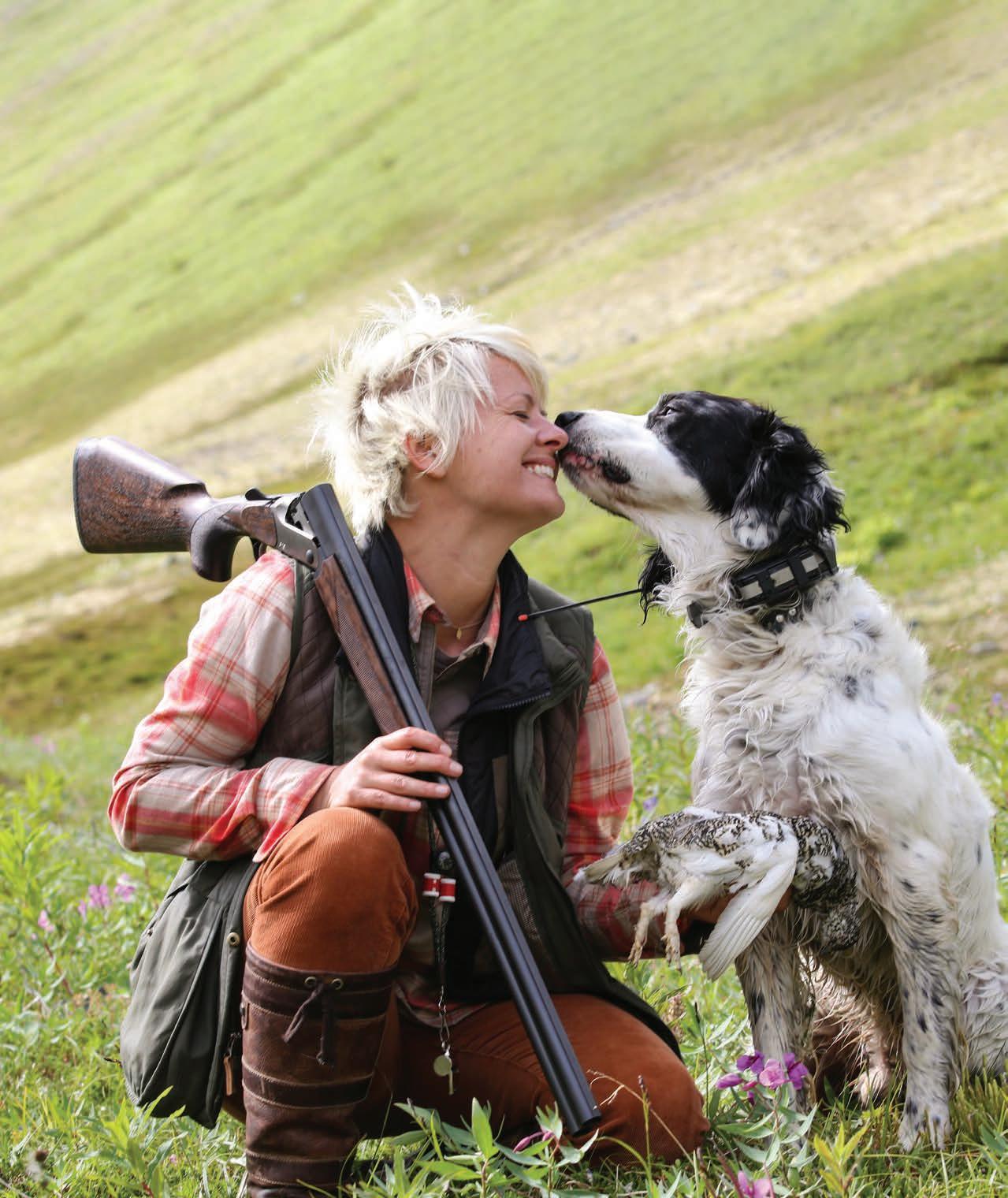
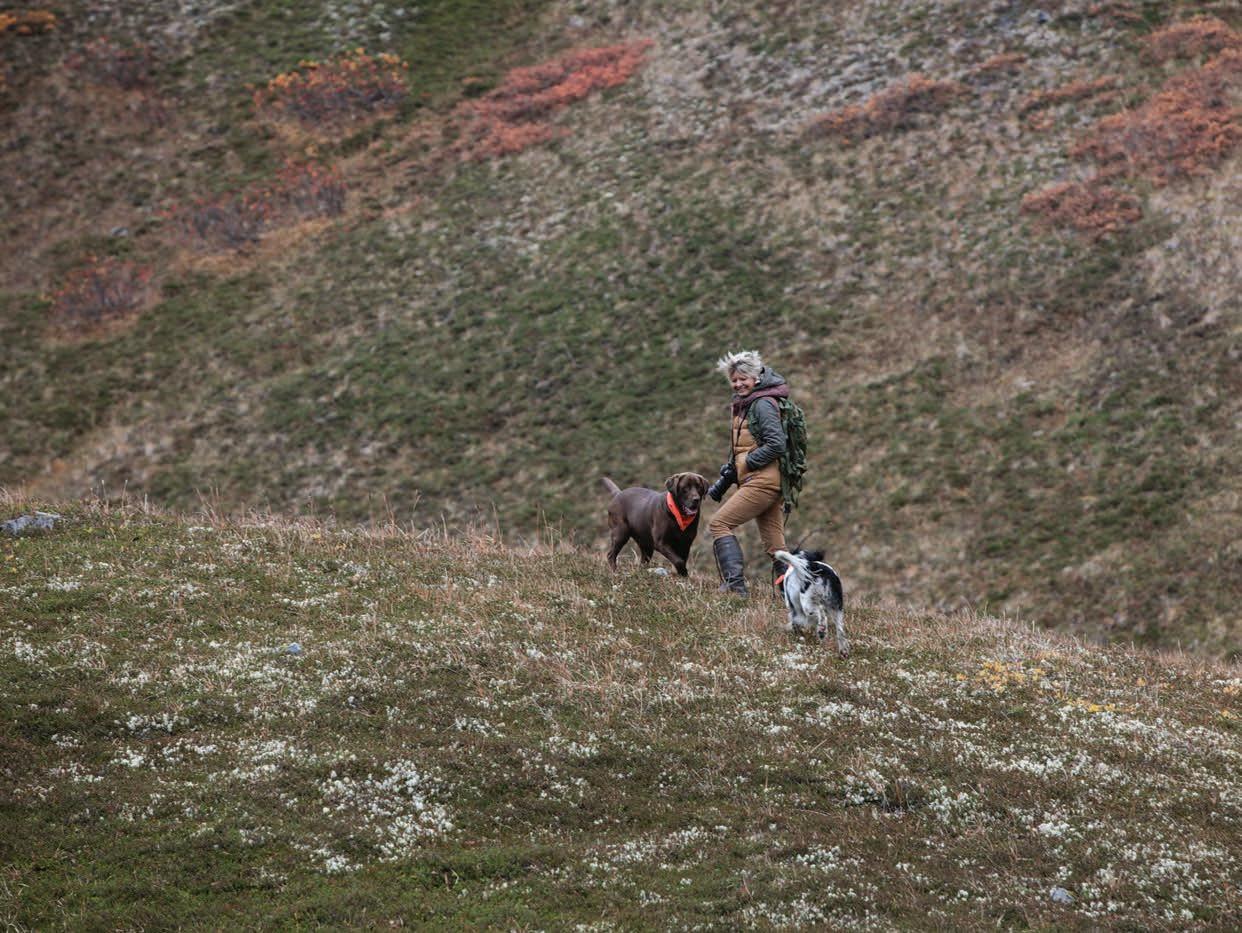
Longtime Alaskan outdoorswoman and writer Christine Cunningham (with her dog Winchester) continues to savor the Last Frontier’s vast hunting opportunities, but she’s also an advocate for introducing women to those same outdoor playgrounds. (CHRISTINE CUNNINGHAM)
HERITAGE AND HER
Editor's note: Across Alaska, women are shaping the outdoors through their work, their families and the time they spend on the land. They’re hunters, anglers, guides, artists, foragers, conservationists, and lifelong learners. Each profile in this series introduces readers to one woman whose relationship with Alaska’s wild places has influenced the way she works, lives and contributes to her community. These stories highlight a shared respect for the land and the many ways women connect with it. We begin the series with writer and hunter Christine Cunningham – a frequent Alaska Sporting Journal contributor over the years – whose life has been shaped by the dogs, landscapes and experiences that drew her into the field nearly two decades ago.
CHRISTINE CUNNINGHAM ON HER ALASKAN OUTDOORS ODYSSEY
BY TIFFANY HERRINGTON
Some hunters arrive in the outdoors through family tradition, mentorship or childhood memories. Christine Cunningham arrived in her late 20s with borrowed gear, a head full of questions and a willingness to crawl through wet grass toward a pair of wigeon on the Kasilof River Flats, shotgun in hand. What she experienced that day changed the course of her life.
In the years since that moment in time, Christine has become a highly respected Alaskan writer, a passionate bird hunter and someone whose days have been shaped by the dogs she’s trained, traveled with and loved. Her reflections on hunting, community, wild places and the role of women in the outdoors are honest and deeply felt. Her connection to the land isn’t sentimental; it’s lived, earned and rooted in a desire to give more than she takes.
The following conversation preserves Christine’s voice exactly as she shared it: real, reflective, funny and grounded in truth. Her perspective is a reminder of why these stories matter and why the people who live them deserve to be heard.
Tiffany Herrington How did your connection to the outdoors begin? Was there a particular moment or experience early in life that shaped your love for hunting, dogs and Alaskan landscapes? Christine Cunningham My first memory is of being outside, and my best memories are in the outdoors. Although I was born and raised in Alaska, no one in my family hunted. I was 27 when I invited myself along on a duck hunt with my hunting partner Steve [Meyer,
also a former Alaska Sporting Journal correspondent]. My reasons for going were somewhere between wanting to learn something new and feeling an intellectual responsibility for knowing something about where meat came from. I remember it was raining that morning, and I asked if we should still go in the rain. I had no clue.
The particular moment that changed me was crawling through the grass on the Kasilof River Flats. I had seen shrews darting into the grass, spider webs and a rotting salmon. When Steve said we had to crawl up to a pair of wigeon, I really thought he had to be kidding. I tucked my gloves into my sleeves and got down on my stomach, using my shotgun to flatten the grass as I crawled, and something took over in me. I loved it. I felt alive. I felt like I was participating in life in a way that was direct and real. It’s like I never knew myself before that. I never knew I was capable.
When I got to the pond and the wigeon flew, I shot just once – a sure miss and nothing like shooting at the range, where Steve had showed me how to shoot clays. I watched the two ducks fly away, and Steve picked up the spent shell, held it up to my nose and said, “This is what fall smells like to me.” I fell in love with it. The dogs and everything else that shaped my life came after that.
TH What originally brought you into hunting, and how has your relationship to the outdoors evolved over the years? CC After that initial duck hunt, I went duck hunting as much as I could – before and after work and on weekends. I read
everything I could about waterfowl – the old duck hunter stories, the conservation story, the bird identification and biology stuff. I joined a lot of organizations –Delta Waterfowl, Ducks Unlimited, Pheasants Forever. I have a big bag of stickers and patches. I signed up to teach hunter education with Steve through the state program. I got on forums back before everyone migrated to social media. Females were underrepresented in the literature and not online as much. It seemed like my interest was a novelty, even though nothing about me was exceptional. I was featured in my local newspaper under the headline “Duck-o-holic.” This was around 2006. The conversation in the outdoor arena then was about how women were the only hunting demographic that was growing and what could we bring? Would we ruin it for the boys? Were we more likely to normalize the hunting life in our families? Would we create a new market for gear? Most of what I felt was
a rally of support.
What has changed most for me is along that arc – from initial curiosity, to wild obsession, to group affiliation and self-exploration, to time with the Labs on the Flats, to time with the setters in the mountains, to personal moments of reflection. The relationship to the outdoors is like any relationship arc. You might start out wildly and maybe even blindly in love, and if it’s true love, it gets deeper, more emotional and aware, and it begins to include sacrifice. You start trying to give more than you take. And there are moments that shape you. I don’t have kids or a traditional family. I have a hunting partner and dogs that sleep in the bed.
TH For readers who may be new to your work, how would you describe the role the outdoors plays in your life today?
CC Participating in nature as a hunter rather than an observer changed me. For years I looked forward to going to
the duck blind and being immersed in the totality of that environment. I became aware of my small part in an integral whole. That’s still there even though I can’t feel the awe of it being brand new. I am haunted by a lot of memories – dogs that have passed, places that have changed. I love the outdoors, and I go to certain places like some people go to church. People talk about hunting being “sport,” but for me, it’s not like that. I have a spiritual need to connect to nature.
TH You’ve spent a great deal of time hunting in Alaska. What is it about the Alaskan landscape, wildlife or hunting culture that continues to draw you in?
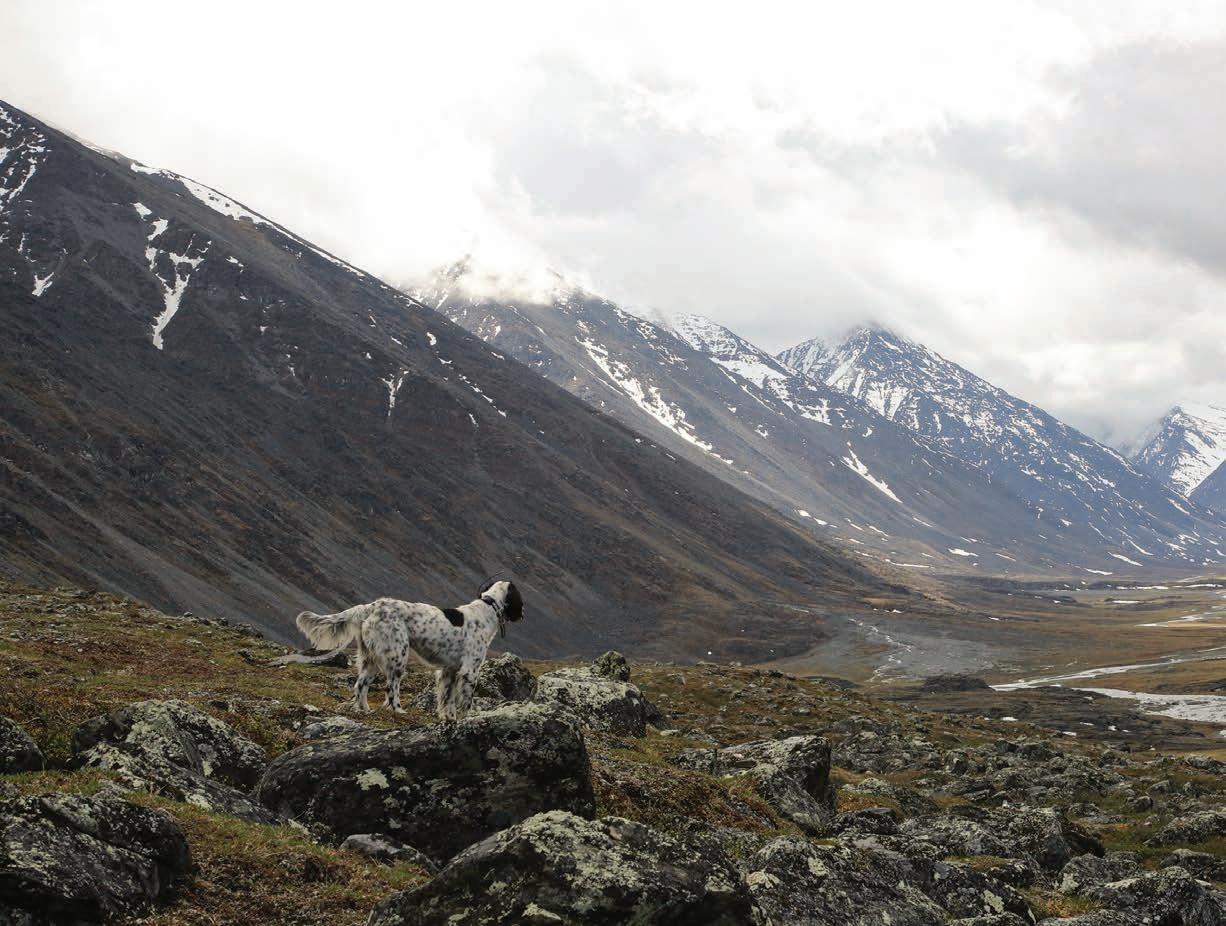
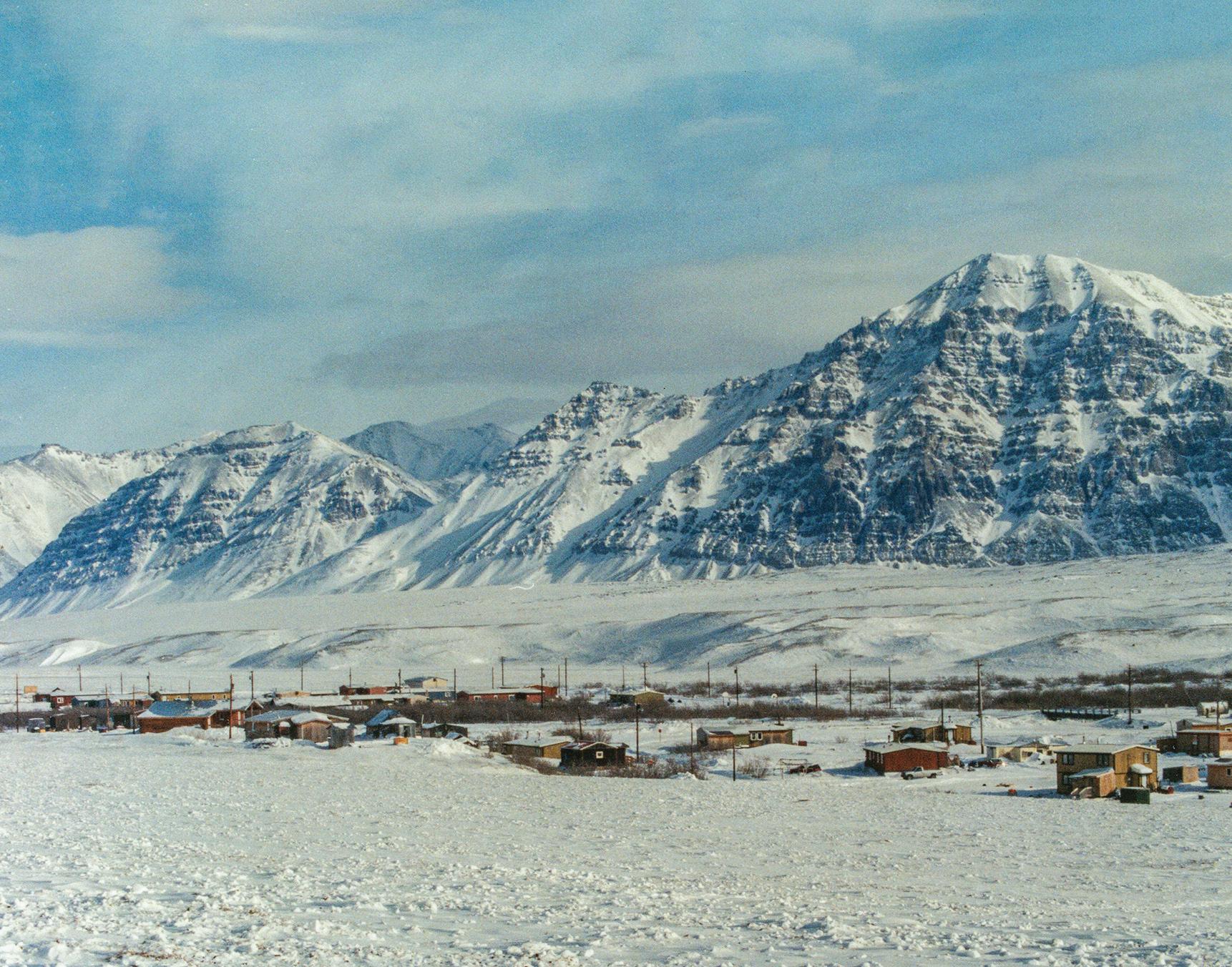
CC It’s my home. I love Alaska – the mountains, the flats. I loved being on the north side of the Brooks Range. We went there during the solstice one year – not even to hunt; just to get to know it better. That feeling of being remote is like nothing else. I don’t want to be in
Outings to iconic Alaska locations such as the Brooks Range have become commonplace for Cunningham, her dogs and longtime hunting partner Steve Meyer. “The mountains, the tidal flats – they’re just bigger than you,” she says. (CHRISTINE CUNNINGHAM)
“Watching a setter in the mountains is like what it might be for some people to watch an opera or a ballet,” Cunningham says of hunting with Meyer and their pups. “It’s so beautiful, so rich in life, like a work of art that is alive.” (CHRISTINE CUNNINGHAM)
traffic. I don’t want to be a part of the human problems. But it’s not escape; it’s going deeper in. If you have just a bit of that desire to be wild and free, it draws you in. People will talk about that moment when the bush plane flies away, like there is a bit of fear or something. I have never felt that. I love when the plane flies away.
TH Are there certain hunts or locations in Alaska that hold special significance for you?
CC The mountains, the tidal flats – they’re just bigger than you. They’re beautiful and terrible. Not everyone loves to be exhausted or bug-bitten or wet and cold. Some people need it. For me, the price of admission is not too much; it’s worth everything it takes, even if it takes my life, and it absolutely can.
Why? I’m not sure there’s a why. We live in a world of stuff and things. It’s not
very fulfilling for me. You can’t take it with you.
TH How have you seen hunting culture in Alaska change or stay the same over the years you’ve been involved?
CC A lot has changed and stayed the same. There’s more specialized gear and technology.
TH You’re well-known for your writing about retrievers and hunting dogs. What first drew you to working with dogs, and what do you love most about the human-dog partnership in the field?
CC It was early in my hunting life that I went to North Dakota to hunt pheasant with Steve, his dad and his dad’s best friend Eddie. Eddie had an English cocker named Windsor, and I loved watching him work the pheasant fields. I’d never seen a hunting dog at work before. At the tailgate with Eddie, we
talked about Windsor – what a good boy he was – and Eddie said that he was getting older and he only went for the dog anymore. I didn’t understand that. It seemed backwards because I was thinking about getting a dog to help me retrieve ducks.
It’s probably taken me 20 years to really understand what he meant. Yeah, you go for the dog sometimes. Especially in upland hunting, because you’re watching the dog (as opposed to the sky or the next bend, as Leopold says). When you watch the dogs and see what they’re capable of, it’s inspiring. I’ll never run that far or fast. I’ve said before that they are like a medium between the wild and domestic, and that may sound overly romantic, but it’s there for me. Watching a setter in the mountains is like what it might be for some people to watch an opera or a ballet – it’s so beautiful, so rich in life, like a work of
art that is alive. The dogs want to go there and do what they were born to do more than anything, and I want to take them there. I’m a total dog mom. Their pictures are all over the house.
TH Do you have a memorable story about a particular dog or hunt that stands out as especially meaningful?
CC One of my favorite stories of Cheyenne (a small chocolate Lab) is from a day Steve and I were duck hunting. Midday, we left the blind to walk the flats in search of ducks. I saw some wigeon about 400 yards away on a pond and asked Steve to hold Cheyenne back so I could crawl up on the ducks. As I was crawling, I could hear that she broke loose – she’d slipped her collar. I figured she was going to charge the pond and flush the ducks out of range. But instead of running past me, she tucked in next to me, and we
crawled to the ducks together.
That’s something people who train dogs to follow commands might not realize about a good hunting dog, that there’s something better than a dog doing what you tell it to do. A hunting dog brings their gifts, often superior to ours, to the hunt, pays attention to what is going on, and becomes a true hunting partner.
TH What inspired you to begin writing about hunting and life in the outdoors?
Was there a turning point when you realized storytelling would be part of your life?
CC Shortly after my first time duck hunting, I was telling a girlfriend about it. I told her about the rain, the ill-fitting borrowed gear, the smell of rotting salmon. She would react to every detail with a head shake and wince. She’d say, “Oh, honey,” or “Oh, no.” I told her about cutting my finger and not having a Band-
Aid. (Steve would say, “If a Band-Aid would fix it, it’s not that bad.”)
Later that night, I was thinking about how funny it was that she gave me so much sympathy, and in the field I was getting no sympathy. I got up and wrote a humor piece about duck hunting titled “No Sympathy.” I felt really confident about it and emailed it to a magazine that same night. In the morning, I felt like I should have edited it, I shouldn’t have been so confident. I had a Jerry Maguire moment – “What did I just do?” I wondered.
For months I heard nothing – back then print was slower. Then the editor responded and said the story had merit. It was eventually published in Alaska magazine, and it really gave me confidence in the idea that I could write for publication. I kept it up.
TH When you sit down to write about a
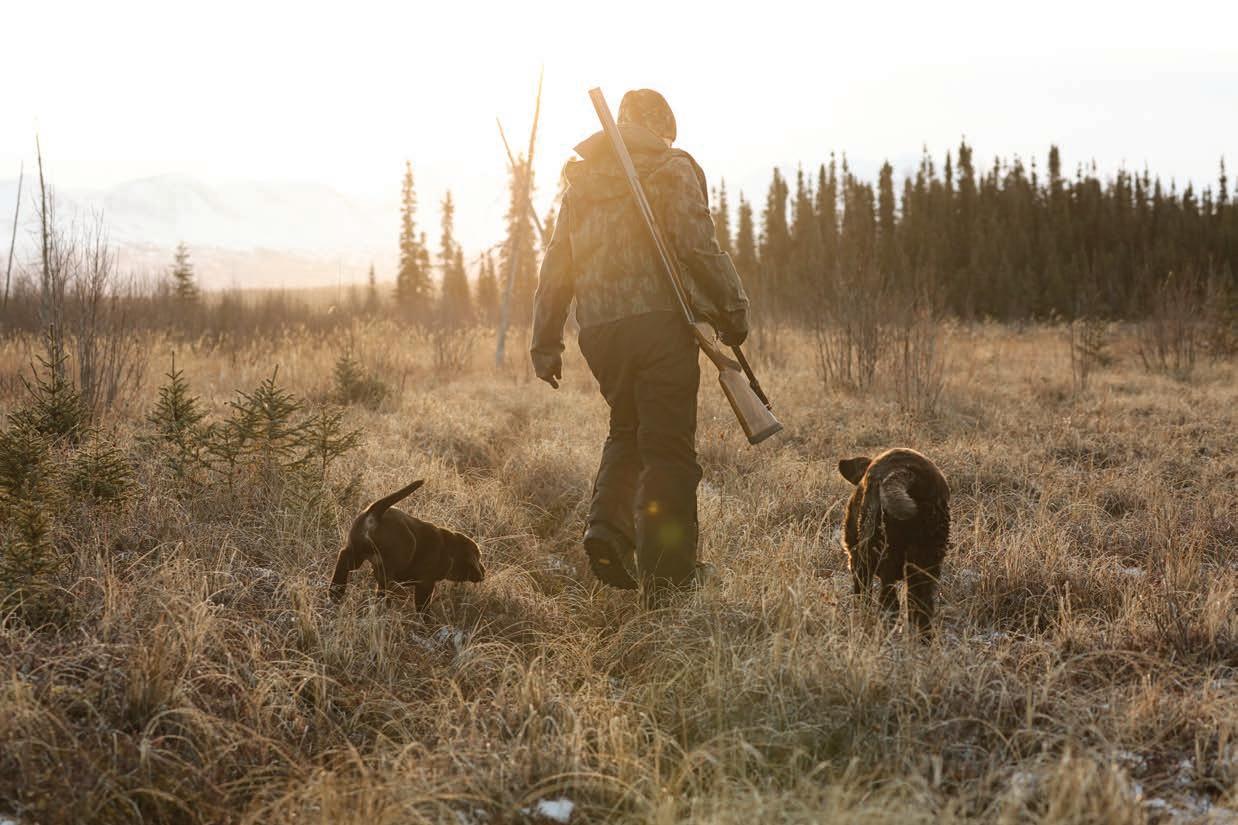
Cunningham (with dogs Rigby and Hugo) covers a lot of ground on her Alaska adventures. (CHRISTINE CUNNINGHAM)
hunt, a dog or an experience in Alaska, what are you hoping readers take away from your stories?
CC I love to read a good story. For me, that means a story that sounds like it’s being shared with a friend. I want to know what someone saw, what they felt, what is worth remembering. I quote a lot of what I read. So when I write, it’s like I’m talking to a friend, sharing what matters. Readers have written to me and become friends. That’s all storytelling is; as Jim Harrison said, “Death steals everything except our stories.”
TH What has your experience been like as a woman in Alaska’s hunting community? Have you noticed any shifts in how women are represented or included in the outdoors?
CC I love the way that women include and support each other in the outdoors. That has always been important to me and has been a constant. We’re not all lucky enough to have a trusted person
introduce us to hunting, and many women are interested in hunting as adults, maybe for the initial reasons I was – healthy food, an interest in learning self-sufficiency, being capable of caring for ourselves and our families in a first-hand way.
There are a lot of great communities of women supporting each other in Alaska. How women are represented has shifted since I started hunting, but representation is never the real thing. We have a lot of the real thing in Alaska. A lot of phenomenal role models who don’t worry about how they are described.
TH What advice would you give to women who want to explore hunting, fieldwork or outdoor writing but may feel intimidated or unsure of where to start?
CC That’s tough for me to answer because I had Steve to help me get started. I have experience with the Becoming an Outdoors Woman program, and it offers a great
environment to start, but you might really need someone to take you under (his or her) wing and be there to answer questions. That’s where finding a community can really make a difference. It might look different depending on where you live, but if there’s a local chapter of a hunting or conservation organization or a gun club, that can be a place to start making connections.
TH What do you feel is most misunderstood about hunting or outdoor life in Alaska, especially among people who haven’t experienced it firsthand?
CC I think Sidney Huntington describes it best in Shadows on the Koyukuk. It’s a great read for anyone interested in hunting in Alaska. I don’t have my copy close enough to grab, but he talks about the scarcity of game here. The land is big, but it’s not like there’s a lot of game – not like deer in the Lower 48. It’s poor country in many places. If you’re
Encouraging other female hunters inside and outside of Alaska has become important to Cunningham. “I love the way that women include and support each other in the outdoors. That has always been important to me and has been a constant,” she says. (CHRISTINE CUNNINGHAM)
“I am haunted by a lot of memories – dogs that have passed, places that have changed. I love the outdoors, and I go to certain places like some people go to church,” Cunningham says. “People talk about hunting being ‘sport,’ but for me, it’s not like that. I have a spiritual need to connect to nature.” (CHRISTINE CUNNINGHAM)
going to hunt or spend time outdoors in Alaska, it’s going to help to know as much as you can about what to expect. That can be big changes in weather and the experience of terrain that cannot be captured in a photo or video.
TH Looking ahead, what are you excited about – either in your writing, your time outdoors or future hunts?
CC These days, I look forward to adventures closer to home with the dogs. We have five English setters that are all over the age of 11, a 5-year-old Lab named Rigby, who was diagnosed with a T-cell lymphoma, and an adopted springer-setter that needs to run 10 miles a day and splash in water. Every day I get to be outside with them is a gift, even if it’s our daily walk or an hour on the flats, preferably at sunrise or for last light. ASJ
Editor’s note: Follow Christine Cunningham on Facebook (@christine.cunningham.98) and Instagram (@cunningham_christine).
Tiffany Herrington is a Seattle-based writer.
RESCUED FROM A RAGING RIVER
HUNTERS CHEAT DEATH IN THE BROOKS RANGE SECOND OF TWO PARTS
BY SCOTT HAUGEN
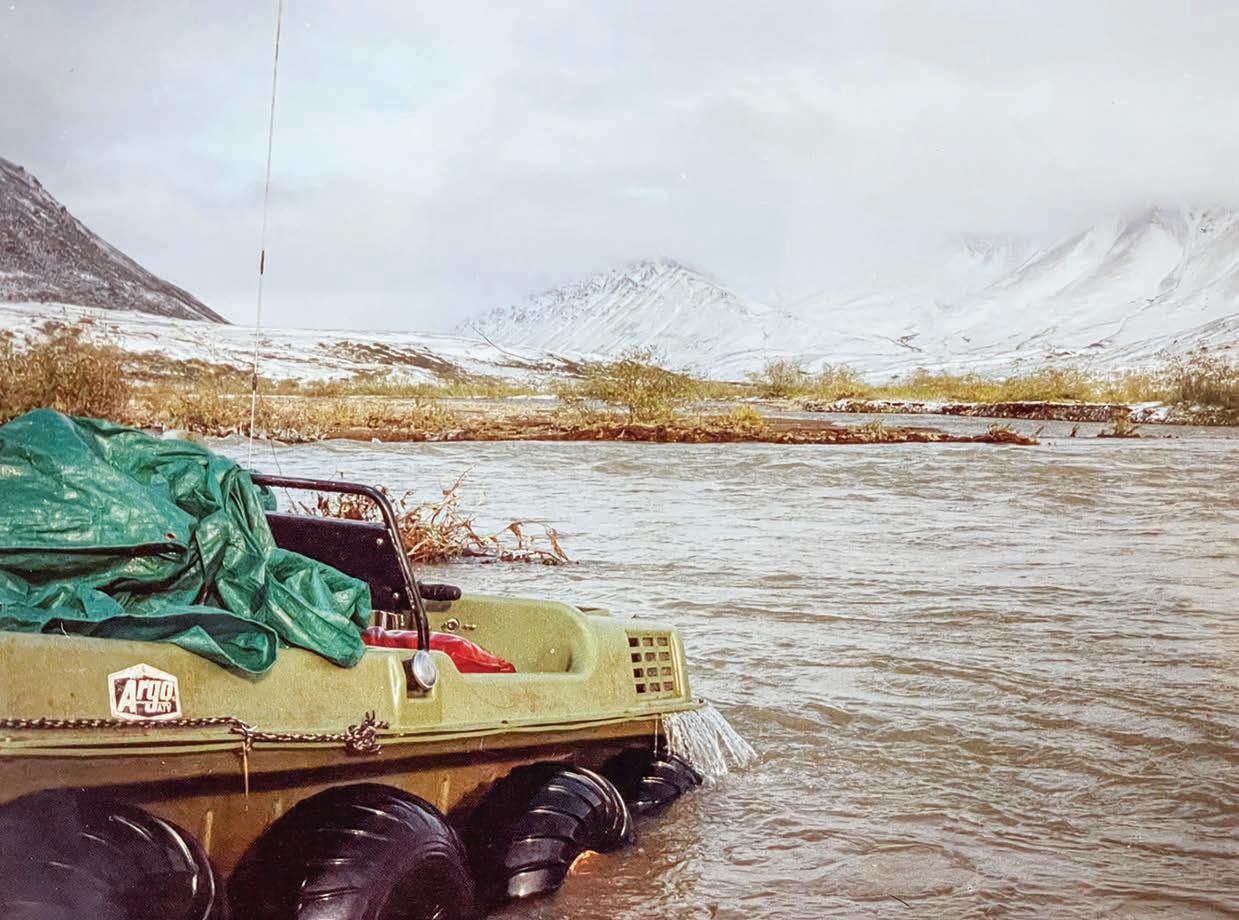
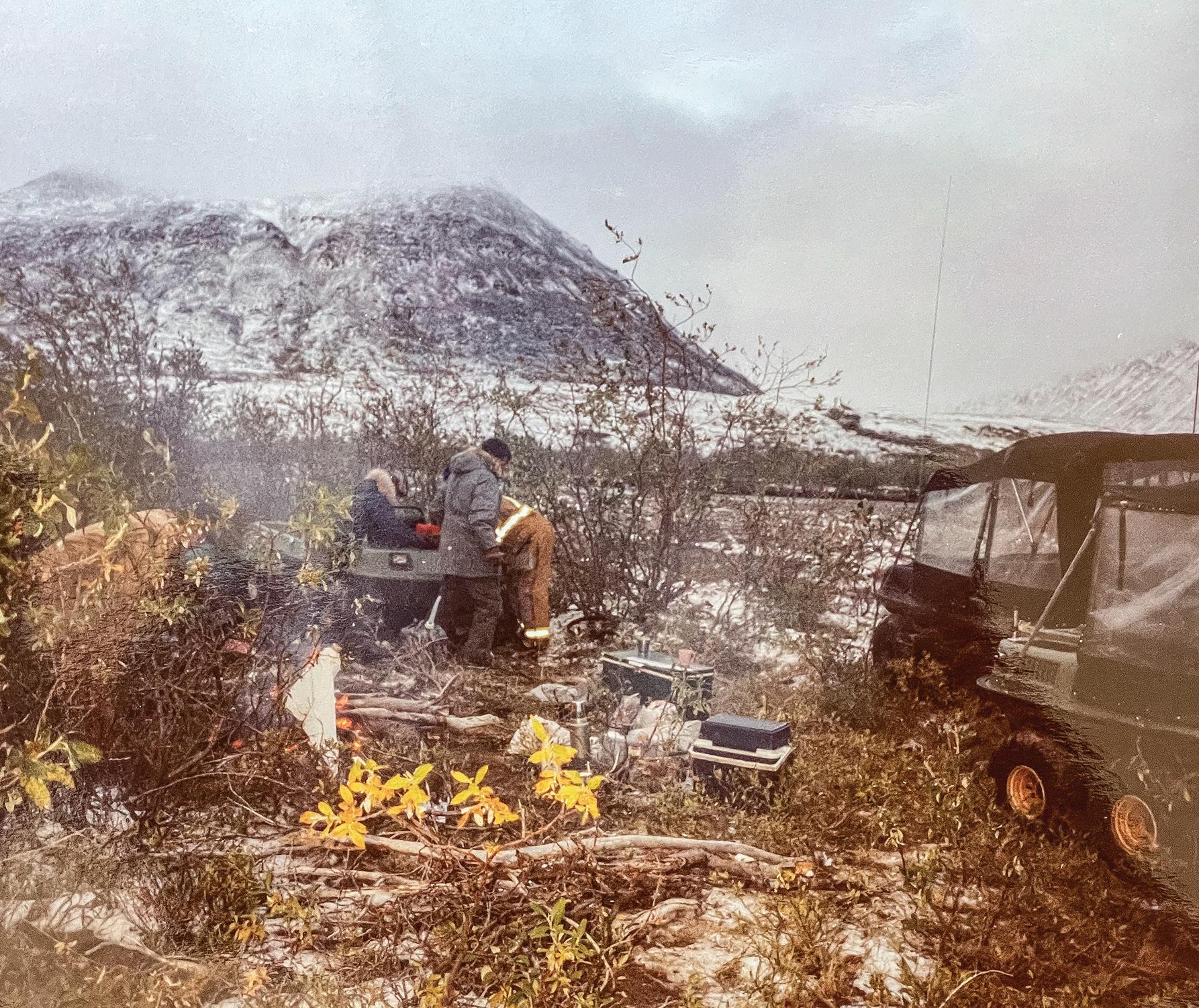
Editor’s note: In part one of this story, which ran in last month’s issue of Alaska Sporting Journal, during a late August 1994 snowstorm near their home in Anaktuvuk Pass, Scott Haugen and his moose hunting partner, the late Ben Hopson, faced a major crisis after trying to drive Hopson’s Argo across the rushing, bone-chilling waters of the Kalutagiaq River. The ATV became stuck in the stream, and they couldn’t be sure that their desperate calls for help over the CB radio had actually transmitted out.
Ben Hopson and I stood in the icy waters of the Brooks Range river with his disabled Argo and planned our next move. We knew our future would be determined in the next few minutes. Snow began falling more intensely and temperatures continued to plunge. Rapidly, the bone-chilling water made its way into our boots. A few minutes later our feet turned numb, our boots now full of water. We both wore insulated rain gear, so our calves and knees remained somewhat warm
despite being submerged in the river. Knowing we would have to make a move soon, Hopson elected to take his pack and attempt wading the river to get a fire going on the far shoreline.
As he eased into the stream, Hopson began shuffling across the speedy current to the gravel bar. After a few yards it became evident the challenge was more taxing than anticipated. Underestimating the power of the raging river, Hopson struggled with all his might to maintain his balance. The water
Eight-wheeled Argos are a usually reliable way for Alaska hunters to get around the tundra and cross rivers – at least when the amphibious vehicles are not experiencing mechanical difficulties that leave them powerless and drifting out of control downstream. (SCOTT HAUGEN)
curled up around his chest, slamming into his 6-foot, 1-inch frame and creating a wall of water that made it difficult for me to see anything but his head. Miraculously, he made it to the other side, his legs wobbling from the strain of fighting the current and frigid water.
While Hopson walked around the gravel bar trying to invigorate his circulation and regain some coordination, I began feeling the numbness making its way up my calves. I would soon have to make a decision.
I HELD MY RIFLE, a pack and another bag of accessories. Hopson knew I could not ford the river with such a load, as the current was simply too powerful. He shouted as loud as he could, but I could barely hear him over the roaring river. He said he was going to try making
his way back to me and help carry the survival gear to shore. Less than halfway to me, the rapids became too strong and Hopson was forced to retreat back to the gravel bar. My legs were numb. I had to make a move.
Suddenly, a flash of light from a knoll 1 mile downriver from where I stood caught my eye. The setting sun managed to cast light through the cloud-choked sky, and I miraculously happened to glance in the right direction at the right moment as it reflected off the windshield of an oncoming Argo. I hollered to Hopson, but he couldn’t see the Argo from where he stood. I shouted that I had spotted an Argo and would try staying where I was until it arrived. Five slow minutes passed. I had been in the water for over 15 minutes. The numbness in my legs turned to a
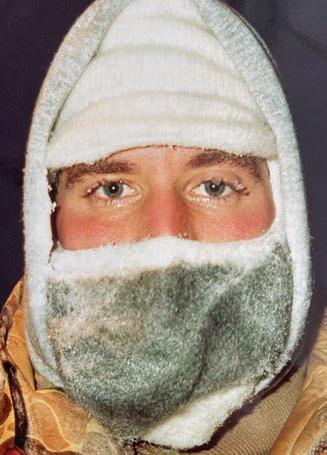
When winterlike temperatures hit the Arctic, moisture quickly turns to ice, regardless of the month. (SCOTT HAUGEN)
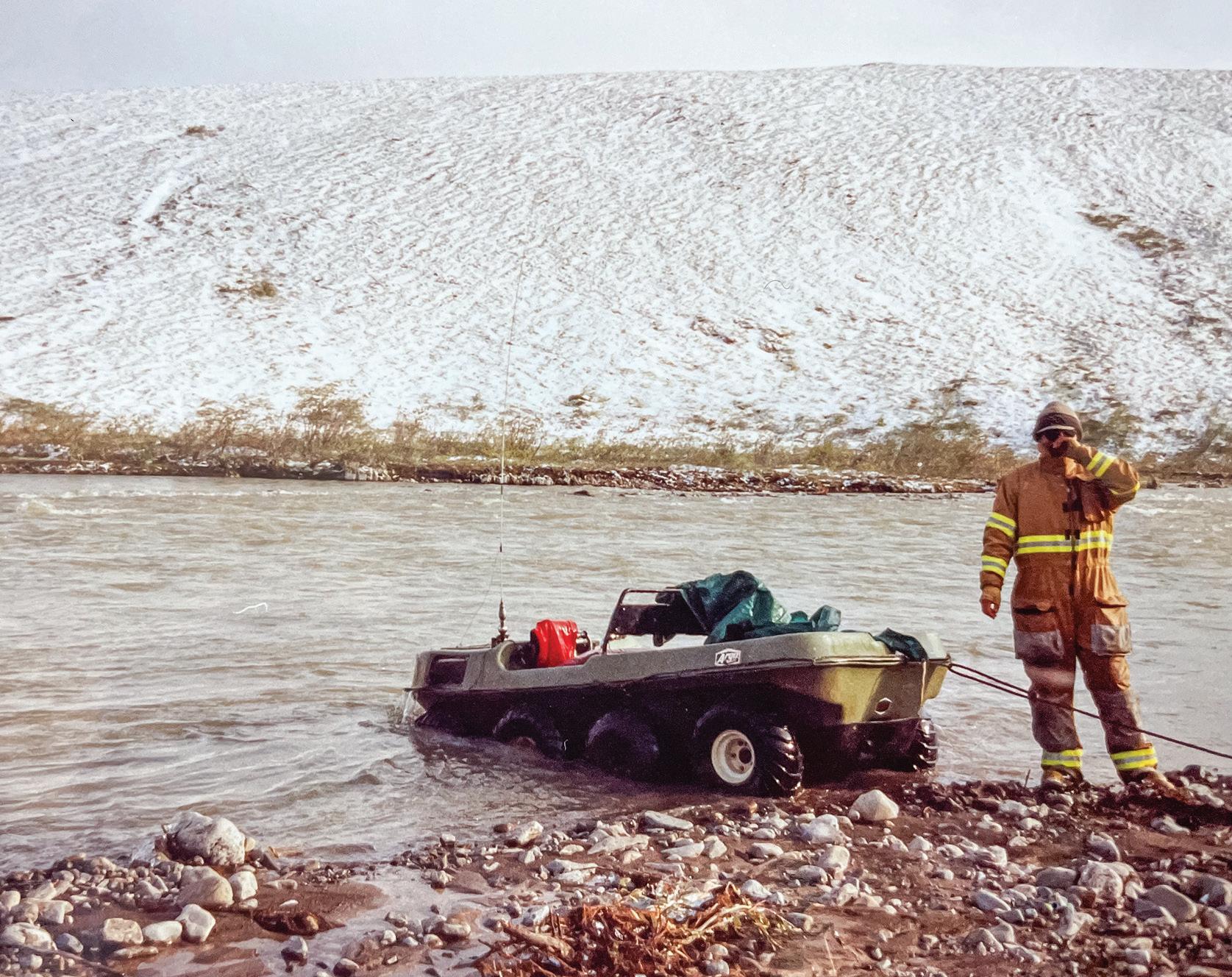
Thankfully, help was nearby, and the Argo was able to be winched ashore. (SCOTT HAUGEN)
From 1993-97, the author and his wife lived in the isolated village of Anaktuvuk Pass, in the northern Brooks Range, and it was a relief to make it back there after his mishap. “As had happened so many times upon my tardy return from hunting trips,” Haugen writes,
“I was greeted at the door by my lovely wife and hot food.” (SCOTT HAUGEN)
throbbing, aching pain as I prayed the Argo would quickly appear.
I was overjoyed when I saw the Argo burst through the willows about 50 yards behind Hopson. Cause for still more elation was the fact I spotted a winch on their front end. It’s a good thing I was able to remain in the river as long as I did, for there was no way a person could have waded the river and attached a winch line to the Argo, which I stood on, as the current engulfing it was too strong.
Our rescuers, Jimmy Jack and Raymond Paneak, began unreeling cable as Hopson grabbed the end of the line and waded in my direction. Ten yards from me was as close as Hopson could get. After gathering a bunch of slack cable in his hand, Hopson whirled the hooked end around in the air and let it fly. I caught it and instantly kneeled on the back of the Argo. I reached underneath and attached the hook to the frame. Water slapped my face and torso, and it rushed into my jacket. I was soaking wet, but a surge of adrenaline kept me going.
WITH THE CABLE FIRMLY secured and Hopson back on the bank, they turned the winch on. Not knowing if it could handle the weight of the Argo and the force of the rampaging river, I held on and hoped to feel movement. The cable grew taut and the Argo slowly crept toward the bank. I turned my back so as not to catch the end of the cable in the face should it snap. I struggled to maintain my balance against the rapids and erratically moving Argo.
Within minutes I was pulled to safety. As the Argo emerged from the river, water poured out of it from everywhere. Once on dry land, we let the Argo continue draining and Hopson and I joined Raymond beside a fire he’d built while I was being towed to safety.
The time was after 6 p.m.; the temperature was 12 degrees. We stripped off our ice-covered clothes, boots and socks and hung them on willow branches around the fire to dry. We huddled around the blaze and had some hot coffee. The warmth of the fire engulfing us stung at first. The hot coffee was a comfort I’ll
never forget. We felt safe while gazing at burning embers of fire as they spiraled into thin air. The fear of hypothermia, even death, had dissipated.
As we stood around the fire, Jimmy and Raymond told us how they had heard my distress call on the CB and how we got cut off in midsentence. They immediately headed our way. Fortunately for us they were still in CB range. It was a true miracle.
Ten minutes later another Argo arrived. Riley Morry and Roosevelt Paneak had also heard our cries for help and had been following the river for over half an hour trying to find us.
Within minutes our Argo was completely covered in ice and already an inch thick in places. Within 30 minutes our clothes were dried and we slithered back into them. We did all we could to thaw out the Argo. We chipped away ice on the outside with large river rocks. We placed several round river rocks in the fire, and they turned red-hot. Then we placed them in the hull of the frozen Argo to try melting
Cumberland’s Northwest Trappers Supply is your onestop trapping supply headquarters, featuring one of the largest inventories in the U.S. We are factory direct distributors on all brands of traps and equipment which allows us to offer competitive prices. Give us a try. Our fast, friendly service will keep you coming back.
We are the new home of “Trappers Hide Tanning Formula” in the bright orange bottle.
Retail & dealer inquiries are welcome.
If you are in the area, visit our store!
Place an order by phone, mail or on our website.
the ice-entombed engine.
While waiting for the engine to thaw, we investigated the machine to learn why it had stalled in the middle of the river. Hopson discovered a clump of squirrel hair that had made its way into the fuel line and clogged it. Squirrel hair! Of all things, and how it got in there was beyond us.
For over an hour we tried to thaw the frozen Argo, but to no avail. It was simply too cold and the ice too thick. It was getting late and we figured it best to leave the Argo behind and start home, back to Anaktuvuk Pass. After traveling a quarter-mile upstream, we safely crossed the river and arrived back in the village shortly after 2 a.m. On our way home we radioed Ben’s wife, Dorothy Hopson, who called my wife, Tiffany,
and told her what had taken place and that we were OK but going to be home late. As had happened so many times upon my tardy return from hunting trips, I was greeted at the door by my lovely wife and hot food.
WE CAME HOME EMPTY-HANDED without having seen any moose, Dall sheep or caribou. But most importantly, Hopson and I returned home alive. Had we been forced to spend the night in the chilling conditions – just the two of us – who knows what the outcome would have been. The challenges faced on every venture into this unforgiving part of Alaska made it such that I considered it a successful trip every time I safely returned home. This day was no different. We had cheated death, and we knew it.
With late summer’s temperatures still above freezing during the day, it wouldn’t take long for the Argo to thaw. A decrease in snow and rainfall ensued and the river level dropped to the point where crossing it was safe. A few days later Hopson and a couple other men made the 15-mile ride back to the Argo. Though they couldn’t get it running, they were able to tow it back to the village.
Once the Argo was cleaned up, Hopson and I were back on the hunt, as we were in need of meat for winter. ASJ
Editor’s note: For signed copies of Scott Haugen’s best-selling book, Hunting The Alaskan High Arctic, visit scotthaugen .com. Follow Scott’s adventures on Instagram and Facebook.
When help arrived they immediately built a fire for the author and his friend to get warm, as hypothermia was a concern. “Had we been forced to spend the night in the chilling conditions – just the two of us – who knows what the outcome would have been.”
(SCOTT HAUGEN)
HOW TO PAMPER, PERK UP THE PUP
HUNTER OFFERS UP GREAT GEAR, EATS FOR YOUR GUN DOG
BY SCOTT HAUGEN
In the past couple issues we’ve highlighted gear for big game and waterfowl hunters. This one’s for gun dog owners. As with all of the gear I feature, this is stuff I’ve personally tested over extended periods, and I’ll keep using it.
ORIVS SHOTSHELL DOG COLLAR
I was pleased with the collar. I’ve been pleased with other Orvis dog gear in recent years. This led me to getting a new dog bed; actually two.
ORVIS RECOVERYZONE COUCH DOG BED
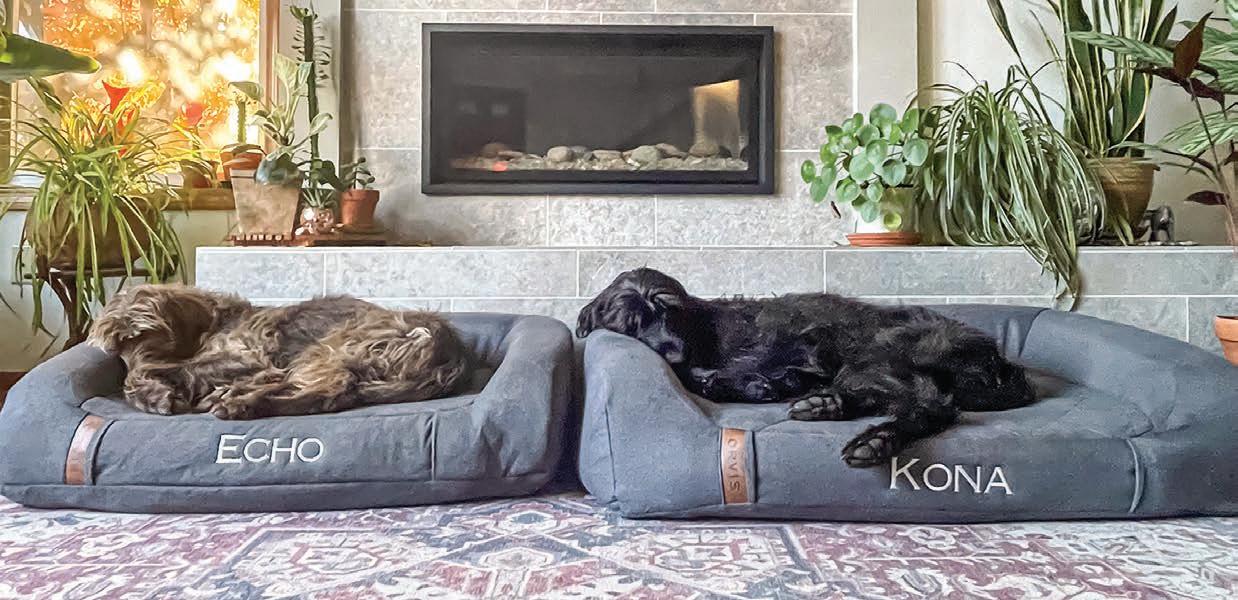
Shortly after my female pudelpointer Echo turned 11 years old, I got her an Orvis RecoveryZone dog bed. A fellow trainer told me how much he loved this bed for his aging Lab. He was right. Soon after, I got another bed for Kona, 9. I’ve owned a lot of dog beds over the years. This is the best I’ve found.
Last fall, Kona, my male pudelpointer, was in need of a new collar. I got him an Orvis Shotshell dog collar. It was inscribed with a contact phone number, and above that in all capital letters, the word REWARD. Never inscribe your dog’s name on a collar. Thieves capitalize on this by forming a quick bond that can calm the dog, and just like that you may never see your hunting buddy again. It happens.
First comes the heightened level of all-around support the RecoveryZone bed offers. Thanks to two solid foam layers, support is maximized across the entire bed. This means no sagging at the
hips and chest. The top 1 inch is temperature regulating, making it comfortable on cold winter nights or hot summer days. The result is reduced pressure on joints and muscles, which equates to a faster, more complete recovery for your dog. I immediately noticed the difference following a hard hunt with Echo, when she sprang from the bed rather than lethargically pulling herself out of it.
Also, no matter where your dog lays its head on the three-sided bolster, there’s full support. The gently sloped edges are specifically designed to fit the angle of your dog’s head when at rest. Whether your dog is curled up or sprawled out, it will experience full support.
The functional design of the RecoveryZone bed is efficient and durable. The
Author Scott Haugen was so impressed with one Orvis RecoveryZone Dog Bed, he got a second one for his other dog. He quickly noticed the difference of quick recovery times and decreased soreness in his aging female dog Echo. (SCOTT HAUGEN)
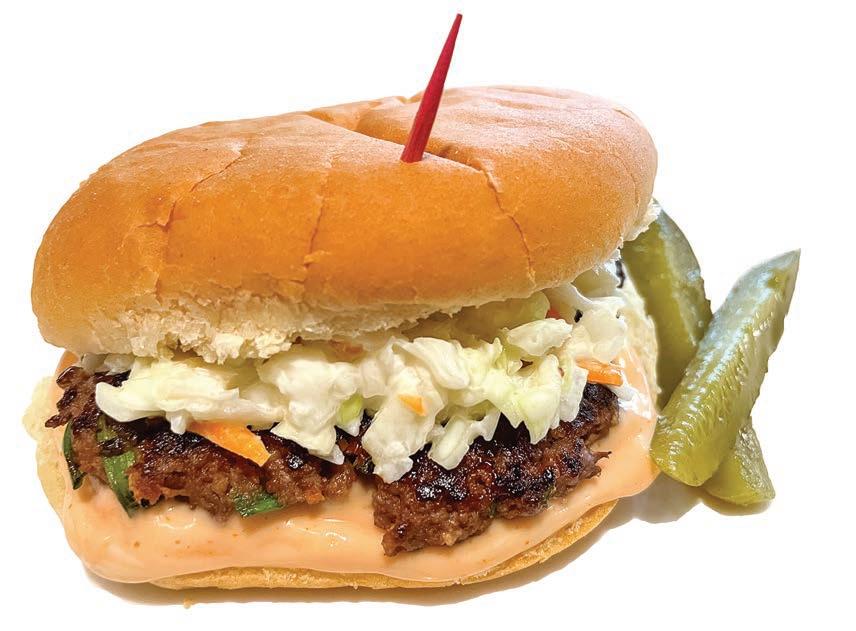
Grinding up big game meat – even a mixture from multiple harvested animals – can create a delicious combination for a unique-tasting burger. Chef Tiffany Haugen has you covered with instructions. (TIFFANY HAUGEN)
BOOST YOUR GROUND GAME FOR A GREAT WILD MEAT BURGER
BY TIFFANY HAUGEN
Whether you’re looking to cook up that caribou, moose, sheep or deer meat that’s in the freezer, this recipe works with all sorts of wild game.
One of the most versatile ways to cook ground game is in patty form. The shape and size can be customized from super big, triple-decker burgers to bite-sized sliders for appetizers. Several types of ground game can be mixed together for some fun combinations, or something as simple as ground pork can be added to make the game burgers a little more juicy.
Feel free to be creative with the addins, as well as the toppings and sauces. Coleslaw and burger sauce (below) turns this burger into a family favorite regardless of what kind of game meat is used.
1 pound ground game
1 tablespoon olive or coconut oil
One egg
¼ cup green onions, finely chopped
2 tablespoons grated carrot
2 tablespoons pickle relish
1 tablespoon fresh parsley, finely chopped
1 to 2 cloves garlic, minced
1 teaspoon black pepper
1 teaspoon salt
1 teaspoon smoked paprika
In a medium bowl, mix egg, onions, carrot, relish, parsley, garlic, pepper, salt and paprika until thoroughly combined. Rub spice mixture through meat and let sit at room temperature for 30 minutes. Divide meat mixture and form into patties of desired size. Cover the bottom of a nonstick pan
with a thin layer of oil and heat on medium-high heat. Gently place burgers in the pan and cook for two to three minutes or until lightly browned. Flip burgers and finish cooking on the other side. Serve on a toasted bun with burger sauce and coleslaw, or your favorite condiments and toppings.
BURGER SAUCE MIXTURE
2 tablespoons mayonnaise
1 tablespoon ketchup
1 tablespoon chili sauce
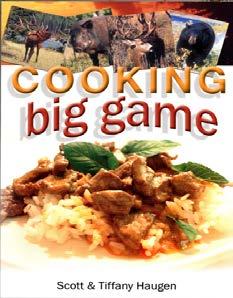
Editor’s note: For signed copies of Tiffany Haugen’s popular cookbook, Cooking Big Game, visit scotthaugen.com.
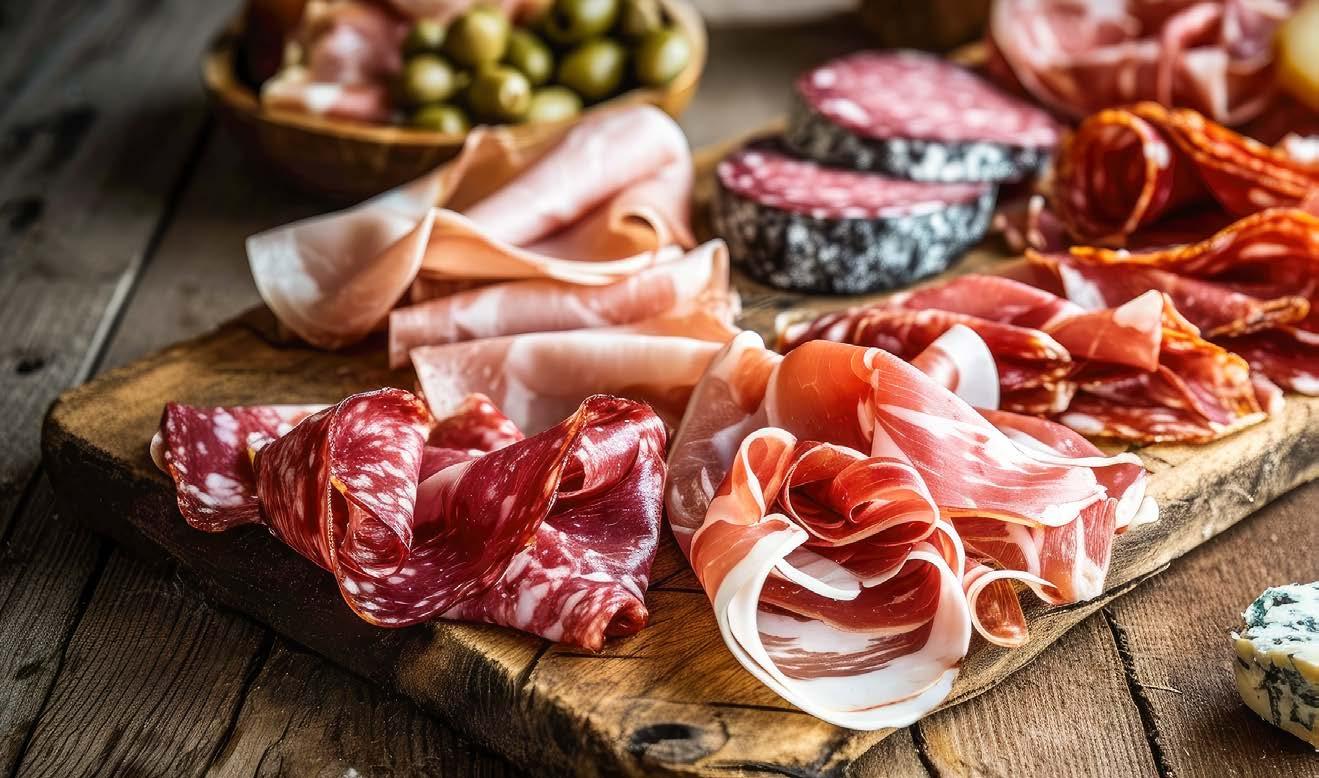
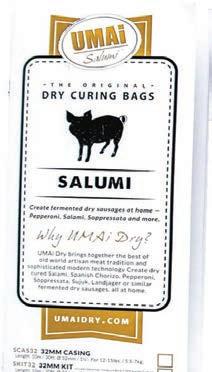
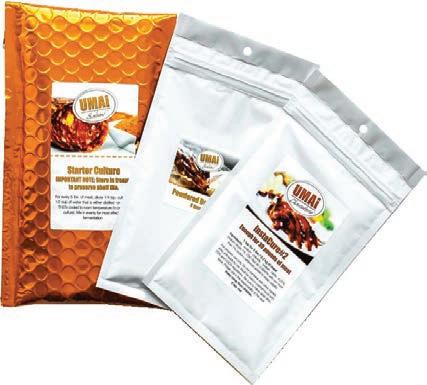
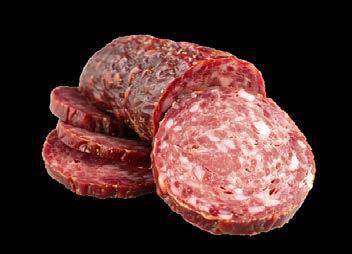
Create dry aged steak and cured meats from home!
Whether you’re preserving whole muscle for charcuterie or grinding coarse for fermented salumi, our time-honored spice blends, easy starter kits, and UMAi Dry® technology make it safe and simple to cure like a pro!
water-resistant liner is easy to remove and machine wash. If concerned about incontinence in an aging dog, slip some puppy pads between the cover and cushion. The quilted, recycled polyester cover repels dog fur, keeping it clean and long lasting. The recessed handles make it easy to move these beds – even the largest size. Having your dog’s name embroidered on the bed is a fun touch. My dogs can’t get in these beds fast enough after dinner or following a hard day afield. And they wake up less stiff and sore, noticeably reducing their recovery time.
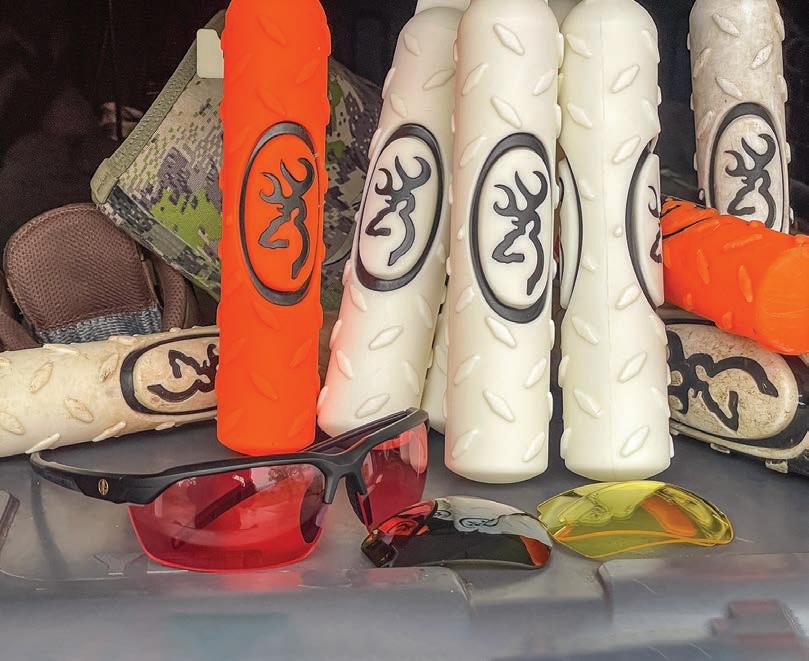
BROWNING VINYL TRAINING DUMMIES
I’ve tried loads of bumpers over the years and keep coming back to Browning’s Vinyl Training Bumpers. I’ve had some for five years and they’ve seen thousands of tosses and retrieves. They’re perfect for water and field training. I have over nearly two dozen of them in orange, white and white/black. I keep some on the porch at home for quick fetch sessions, some in the shop for special training drills and some in the truck for impromptu training oppor-
tunities when we’re out and about. I once had a gentleman say he didn’t like these bumpers because his dog chewed them up. That’s an owner/dog issue, not a bumper issue. Bumpers are training tools and not chew toys, so that’s something a dog owner must immediately get a handle on when they acquire a pup. These bumpers are tough, yet pliable where a dog can get a good, quick hold on them no matter the condition in which they’re being retrieved. They’re also heavy enough to toss long distances.
LEUPOLD TRACER SUNGLASSES
I got Leupold’s Tracer glasses for eye protection when shooting. I wore them during a gun training session with my dogs, then we went right into a bumper training segment. Usually I take off the shades when training because eye contact is vital. But I didn’t this time. That’s because the instant I grabbed the bumpers, both dogs were as usual by my side, locked on my eyes to see what move I’d make next. Through the light gray lenses they could obviously read my eyes. I was pleased, as it was a bright, sunny afternoon.
The Tracer frame comes with light gray-, yellow- and orange-colored lenses. The dogs will be able to see your eyes through all three of them, and you’ll be able to see better in all lighting conditions. These glasses are comfortable, hold on firmly with zero slipping no matter how active you are, and they wrap around the face, offering full wind and glare protection.
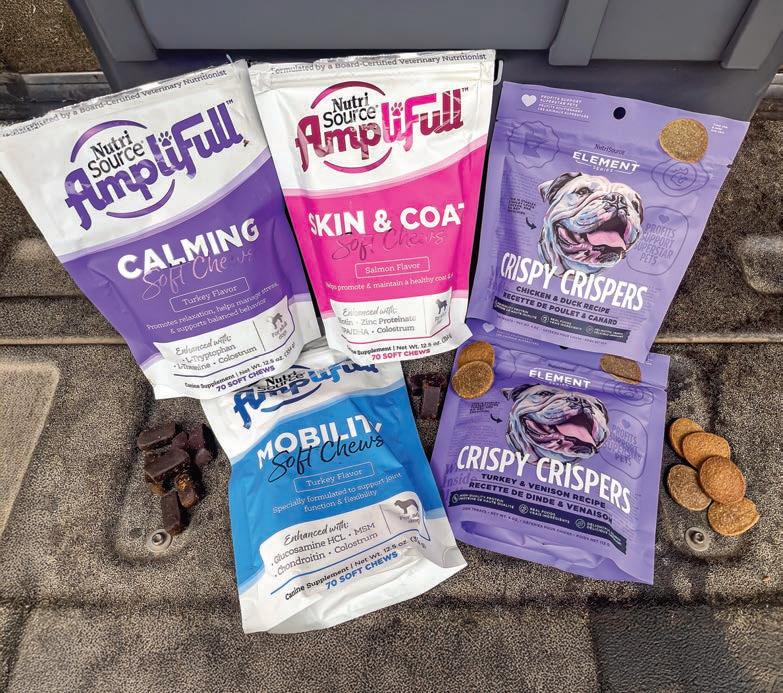
NUTRISOURCE CRISPY CRISPERS AND AMPLIFULL
Over the years I’ve advocated NutriSource food for dogs. They don’t pay me a dime to endorse them. I spent years trying various dog food brands and researching what’s best for a hunting dog. Once I settled on NutriSource, there was no turning back. It’s extremely high-quality food and the difference in my dogs’ performance and health with this food is above and beyond what it was with other dog foods – something my vet continues to confirm with every annual checkup.
Upon initial glance, NutriSource dog food is not cheap, but because of the quality ingredients, you feed less, which means you save more. Read labels, educate yourself on what’s good and not good for dogs and do some math. Quality dog food can add a year or more to a dog’s life.
I don’t use treats when training; I tried it and didn’t like it. I want a dog’s drive to achieve a task be to please me, not for a reward. But I do give them treats at times, usually when letting them out for a late-night potty, when I want to keep them close because skunks might be in our back field (Kona has three to his credit). When my folks or our sons are dog sitting, I let them give the dogs treats. This selective treat distribution excites the dogs and keeps them close and easier to manage.
Enter NutriSource’s new line of Crispy Crispers dog treats. My dogs love these crunchy, high-protein treats. They utilize real food in order to maintain high quality. Healthy snacks are essential to a dog’s life. One bad treat or table scrap with the wrong ingredients can make a dog very sick; it can even be fatal.
AmpliFull is a new health supplement
Leupold’s Tracer sunglasses are very comfortable. They come with three interchangeable lens colors, and your dog will be able to see your eyes through all of them. (SCOTT HAUGEN)
developed by NutriSource specifically for dogs. Each soft chew is boardcertified and veterinarian-formulated to promote calming relief, provide digestive support, maintain joint function and mobility, promote healthy skin and coat, and provide support for overall health. These are given in moderation as situational treats in the aforementioned scenarios. Knowing the high level of nutritional bonuses, these soft chews have made it comforting to know I’m giving the right treats to my dogs. Put these treats under the tree and your dog will want to get their paws on them fast.
With spring training looming in the not too distant future, now’s the time to gear up. You and your pup will enjoy these items for years to come. ASJ
Editor’s note: Scott Haugen is a full-time writer. See his puppy training videos and learn more about his many books at scotthaugen.com and follow him on Instagram and Facebook.
Quality treats are as important as quality food, and NutriSource has two great options. (SCOTT HAUGEN)
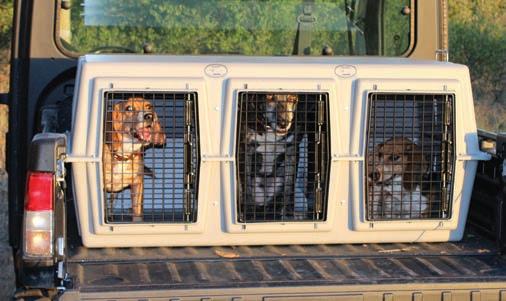
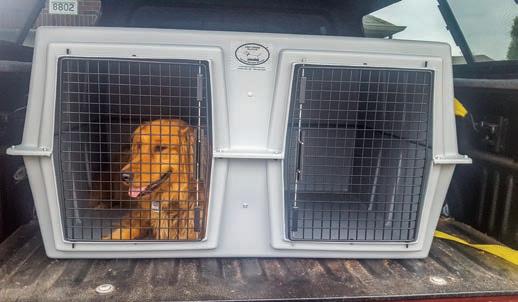
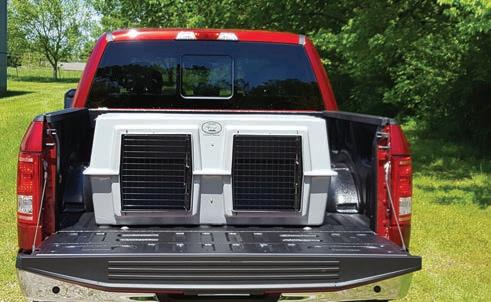
• Easy Loader & Deuce accommodate 2 dogs up to 65 lbs each
• EZ-XL accommodates 2 dogs over 65 lbs each
• Made from High Density Polyethylene with UV protection
• Easy Loader fits most full size pickups, SUVs & large UTVs
• Deuce fits smaller pickups, SUVs & UTVs
• EZ-XL is for larger breed dogs & full size vehicles
• Vents, cold weather door covers, insulated covers & custom kennel pads available
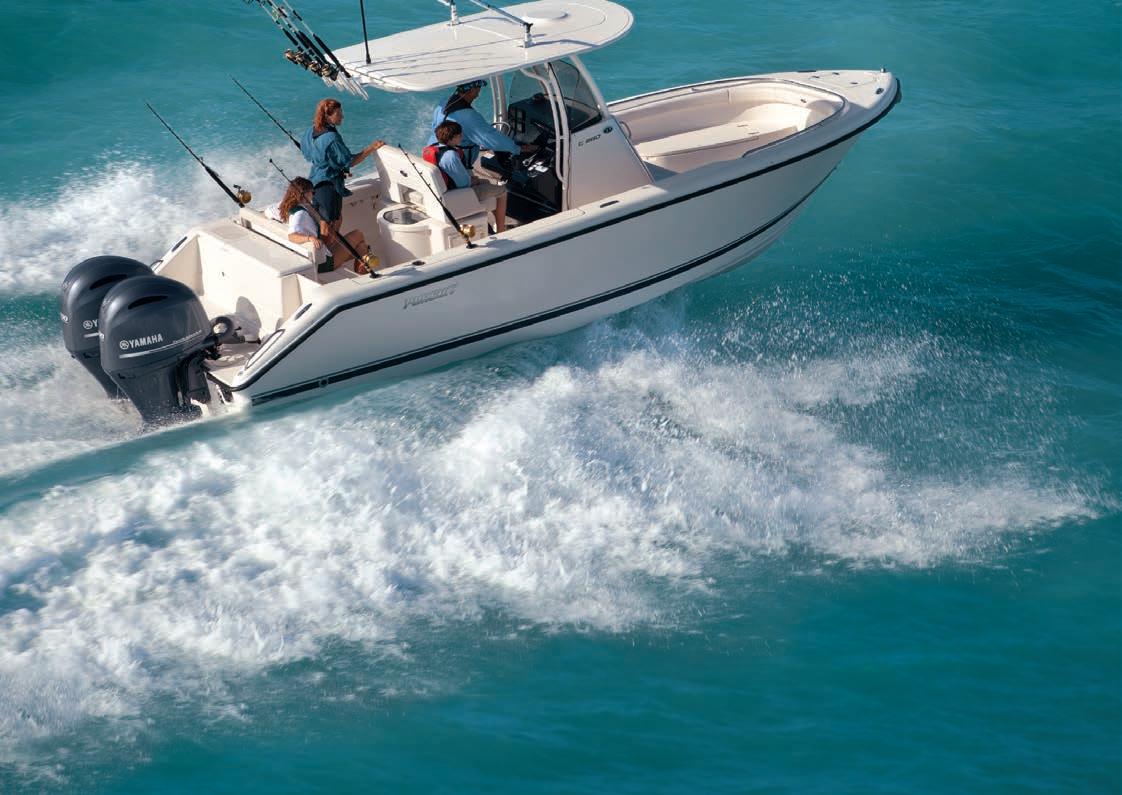
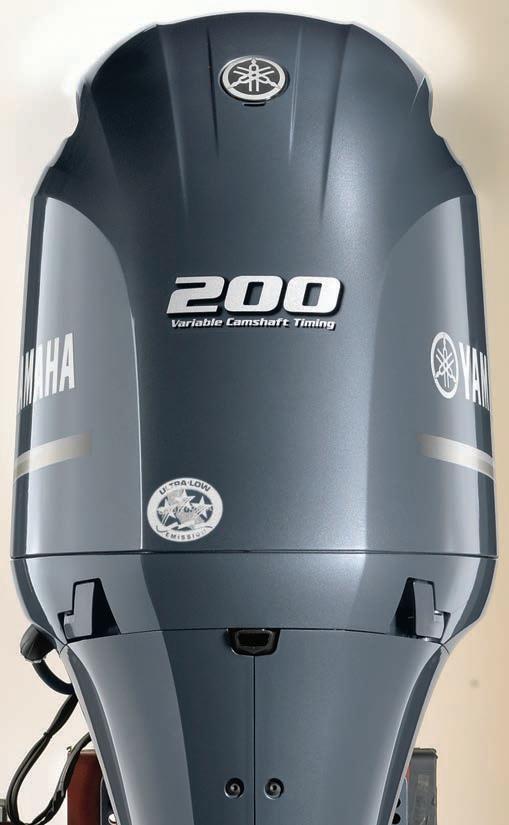
The lightest 200-hp four stroke on the market
2.8L displacement and Variable Camshaft Timing give it the best power-to-weight ratio of any 200-hp four stroke
Nearly 120 pounds lighter than our four-stroke V6 F200
Show the water who’s boss with the F200 In-Line Four. Incredibly light, responsive and fuel efficient, it serves up plenty of muscle to handily propel a variety of boats. On top of that, its 50-amp alternator offers the power to add a range of electronics, and its 26-inch mounting centers and compatibility with either mechanical or digital controls give you the flexibility to easily upgrade your outboard or rigging. Experience legendary Yamaha reliability and the freedom of forward thinking, with the F200 In-Line Four. THE F200 IN-LINE FOUR.
A COOL 100: FISH HABITAT FINDER HITS MILESTONE
Q&A WITH MARK HIERONYMUS, ALASKA’S PROLIFIC ANADROMOUS WATERS CATALOG EXPANDER
BY MARIAN GIANNULIS
For the past seven years, Mark Hieronymus has been on a mission to explore and document previously unknown anadromous waters in Southeast Alaska for Trout Unlimited’s Fish Habitat Mapping project.
Waters listed in the Alaska Department of Fish and Game’s Anadromous Waters Catalog (AWC) are protected under Alaska law (see Alaska Sporting Journal, November 2020). Once streams are included in the catalog, anyone looking to develop in that waterway must adhere to conservation measures, such as timing activities to avoid spawning and migration, so fish resources aren’t harmed in the construction process.
In Southeast Alaska there are over 7,500 cataloged anadromous streams, but ADFG and others, including Mark, believe this only represents about 50 percent of the habitat anadromous species use. With the average length of a cataloged stream being just over a mile, that means there may be thousands of miles of anadromous fish habitat in the region without the conservation measures they deserve.
That’s why Mark has spent the last seven years documenting habitat and getting critical habitat protections, stream by stream. This year he hit an incredible milestone of over 100 miles added to the AWC. That’s 100-plus miles of habitat supporting steelhead and salmon that now have their habitat officially recognized and conserved.
This work is incredibly important,
Mark Hieronymus, Trout Unlimited’s Fish Habitat Mapping project’s frontman, continues to uncover more and more previously undocumented habitat used by salmon, steelhead and other species for the state’s Anadromous Waters Catalog. (TROUT UNLIMITED)
Sometimes you never know where fish will turn up. Hieronymus found coho fry in this seemingly irrelevant Southeast Alaska roadside ditch. “At least two adult coho made it all the way up to that relief ditch the previous fall and decided that’s where they were gonna spawn,” he says. “Fish are awesome.” (MARK HIERONYMUS)
as proposed changes threaten highvalue fish habitat across the Tongass National Forest.
In celebration of those 100 miles, we sat down with Mark to hear highlights from his time in the field.
Marian Giannulus Where was the most surprising place you documented habitat?
Mark Hieronymus In a roadside relief ditch. Seriously.
I was assisting ADFG with a steelhead survey on a road-accessible stream in Juneau when I noticed some juvenile fish in what appeared to be a relief ditch. I proceeded to document coho young-ofyear (YoY), little fellas around 1.4 inches long, in about 660 feet of ditch.
The super interesting thing about that particular nomination is the flow eventually ends up in a mainstem stream about a half mile away and
Spawning grounds deserve protection, but they can’t be protected if they aren’t known, which is where Hieronymus enters the chat. (TROUT UNLIMITED)
through two culverts, only one of which is a “fish-pass” culvert – the other is a relief culvert, about a foot in diameter and not really installed to pass aquatic organisms, just excess water. The presence of YoY coho in May means that at least two adult coho made it all the way up to that relief ditch the previous fall and decided that’s where they were gonna spawn. Fish are awesome.
MG What was your most challenging day in the field?
MH In May 2021, I conducted a pair of steelhead surveys on back-to-back days. I was accompanied by a donor and a “super volunteer” friend with lots of woods experience. I surveyed two mainland streams in far-less-than-ideal conditions – mid-30s air temps, slushy “rain” coming down by the bucketload and snowmelt-swollen rivers making upstream travel rather difficult.
Long story short, we were successful in establishing steelhead presence in both streams, but the surveys themselves were physically and
mentally challenging. The upstream travel and “fish detection potential” on the first stream was complicated by a recent windstorm, which left timber scattered in the channel for much of the surveyed length, so much so it took us the better part of half an hour to travel 100 yards. Water levels and the addition of many drowning hazards made snorkeling an unwise choice, but we managed to locate four steelhead on that day, including three I photographed by belly-crawling out on a spanning log so I could get close enough for an underwater photo.
The very next day, under similar conditions on a stream in close proximity, we pretty much repeated the grueling march up a brush- and timberchoked stream corridor while gallons of near-freezing water cascaded from the sky. I elected to snorkel this stream, as its size was slightly more manageable than the first, but the water temperature was 35.6 degrees – brrr. To make matters worse, I managed to tear not one but both wrist seals on my drysuit while navigating logjams early on in the snorkel, so I spent the better part of four hours in an ice water bath inside my drysuit while getting Maytagged
around in the stream … But in all that excitement, I managed to locate and document two adult steelhead, making that particular exercise in Type II fun a success.
As a sidenote, these two physically taxing days were the reason I now leave a “recovery cushion” of time between surveys. No two ways about it; these surveys are strenuous, especially the snorkel portion. If you don’t believe me, fill up your bathtub with ice and turn the shower on the coldest setting, then get in and do a combination of burpees and contortions for a few hours. It sucks, but some days that’s what is required to get the data.
And yeah, even after that experience, I still love it. I’m kinda goofy that way.
MG What is your most memorable day in the field?
MH That’s a tough one, because each and every day I get to take folks out in the field and look for fish in places they haven’t been documented is pretty memorable … But if I had to narrow it down, I would say the first three days of this project in 2018 are burned indelibly into my brain, for both good and bad reasons.
After months of prep spent pouring over maps and data and hours spent on the phone with the two donors who would be both financing the first portion of the project (and) accompanying me in the field, the plane dropped us off at a remote river for the first adult steelhead presence survey … which turned up a goose egg. We scoured nearly the entire river during what should have been the heart of the steelhead run, and despite documented runs in close geographic proximity, we couldn’t find a single fish. I spent the 40-minute plane ride back to Juneau wondering if I really knew what I was doing or if I was just wasting these folks’ time and money … This was not the auspicious start to a new program I was looking for.
The next day we went to a smaller stream nearby, one in which I had seen steelhead previously, but they still lacked documentation. After about 3 difficult miles and six fishless hours, I found myself on a gravel bar really second-guessing myself and my decision-making process … and that’s when I saw them: two adult steelhead just off the hip of the bar. In an instant, all the worry and second-guessing evaporated. We had accomplished what we set out to do, at least on this
The prize Hieronymus is constantly searching for – a wild steelhead in once undocumented waters. It makes all the hard and tedious work worthwhile. (MARK HIERONYMUS)
This is Hieronymus’s favorite spot where he’s documented fish, a stream located in a spectacular valley. “My records show there were over 600 fish either visually observed or captured by fish trap or hand net,” he says. “So yeah, that tiny little valley holds a special place for me.” (SAM ROCHE)
particular stream. As an added bonus, we documented two more steelhead on the way downstream, and that night I slept the sleep of the truly contented.
The very next day, we were at it again in a river a few miles away from the beautiful but steelhead-less stream we had looked at two days prior. Buoyed by the success of the previous day, we began what would be a difficult slog upstream. I’m not gonna lie: We looked at a lot of really good yet oddly fishless water in the first few miles, but before the second-guessing and doubt could really begin in earnest, we found a pair of steelhead at the head of a long run. After documentation, we continued upstream, where we found three more fish before time constraints made us turn around and head back to the pickup beach.
I spent most of that plane ride home trying to wrap my brain around the ramifications of what we had just accomplished, and to this day I still think about how those first few trips shaped the next several years of my work.
MG Is there a specific stream that you’ve documented that means the most to you?
MH There is a mainstem stream and tributary that I have fished and guided anglers on for decades; both lie within an obscenely beautiful valley. I first surveyed the mainstem stream in 2022 and successfully documented adult steelhead use, as well as juvenile coho rearing and the presence of anadromous cutthroat.
My next visit to that stream was in 2024 to map out a tributary that, by all metrics, should have been included in the AWC but was somehow overlooked. On that long and productive day, we documented anadromous fish in not only the main tributary, but four other small but productive rearing streams and eight ponds as well. My records show there were over 600 fish either visually observed or captured by fish trap or hand net. The bulk of those were rearing juvenile coho salmon, but I also documented rearing chum salmon and anadromous cutthroat trout.
So yeah, that tiny little valley holds a
special place for me. When we started, the catalog had one stream, which measured about 3 miles long, with pink and chum presence, and when we finished the pair of surveys, there were an additional six streams with 5 miles and eight lakes with 6.25 acres – that’s nearly five full football fields! – of demonstrated anadromous use by pink and chum as well as steelhead, anadromous cutthroat trout and coho salmon. Not a bad couple of days at the office.
MG What is the highest number of steelhead you’ve found in a previously undocumented stream?
MH With the help of a friend with a jetboat, we made an overnight excursion to a remote stream in which I had previously caught steelhead, but knew they weren’t listed in the AWC. The stream is typically difficult to access during May, as the lake where one would normally land a floatplane usually doesn’t ice out until June, but the jetboat worked like a charm to get us to the
mouth of the stream. From there we were able to hike about 2 miles of water, in which we observed over 20 steelhead.
To be clear, every place where the AK Fish Habitat Mapping Project has documented steelhead has been previously listed in the AWC, they were just absent from the official species assemblage. As steelhead (and cutthroat, the other true Pacific trout) spawning, rearing and migration timing is very different from the rest of the Pacific salmon species, this omission leads to gaps in habitat conservation measures – not only does the stream need to be listed in the AWC, but the species does as well. ASJ
Editor’s note: For more info on the AWC, including an interactive map of all currently listed waters, go to adfg.alaska.gov/ sf/SARR/AWC/index.cfm?ADFG=main. home. This interview originally appeared on the Trout Unlimited Alaska website (tu.org/chapters/alaska). Marian Giannulis is Trout Unlimited’s communications and engagement director.
Coho fry like this one need their habitat documented so it can receive critical habitat protections. It’s why Hieronymus’s work is so critical to Trout Unlimited Alaska’s cause. (TROUT UNLIMITED)