GISTM DRIVES MULTIDISCIPLINARY FOCUS TO BOOST TAILINGS SAFETY
AI-ENABLED ORE INCLUSION SORTING
KRUX ANALYTICS: DRIVING THE FUTURE OF DRILLING THROUGH
Giving you access to oppor tunities in Af rica’s dynamic energy sector!
3 - 5 MARCH 2026
CTICC , Cape Town, South Af rica
Editor’s Note
The push for local beneficiation
For too long mining in Africa has been purely extractive leaving local populations impoverished and bearing the environmental brunt of mining practices.
African states are finally waking up to this fact and many are looking to ways in which Africans can benefit more from the minerals being mined in their backyard.
Ghana through its Gold Board plans to build a state-owned gold refinery next to the airport in its capital, Accra. It is the highest-ranking African state in terms gold production and is ranked sixth worldwide. Gold refining takes place on a small scale in the country, but its government is looking to increase refining capacity countrywide.
Botswana has also negotiated better terms for Botswanans in its latest 10-year deal with diamond producer, De Beers. This agreement calls for the establishment of the Diamond Development Fund into which De Beers must invest 10 billion pula over 10 years. The aim of the fund is to promote economic diversification through investment in agriculture, tourism, water and energy. The government is also developing legislation to, in the words of President Duma Boko, ensure that “no diamond leaves this country raw. All will be cut and polished here”.
Zimbabwe’s lithium beneficiation policy, introduced in December 2022, includes among others a ban on the export of raw lithium and incentives for the establishment of local refineries and battery manufacturing plants. The Chinese firms dominating lithium mining in Zimbabwe have not taken well to these policies, which seem to have exacerbated smuggling and corruption.
Greater beneficiation in and of itself will however not bring about the economic transformation so desperately needed on the continent. It must form part of a greater industrialisation that has been long overdue in Africa.
Nick Barnes editor@miningbusinessafrica.com
Editor Nick Barnes editor@miningbusinessafrica.co.za
The Good and the Bad of SA Mining’s Performance in 2024
Two recently published reports – #MiningMatter2025 released by the Minerals Council South Africa and the Department of Mineral Resources and Petroleum’s Mining Sector Performance 2024 – reflect mining’s vital contribution to the South African economy in 2024.
Mining industry contributed 6.1% to the country’s R6.4 trillion gross domestic product in 2024, recording a slight decrease from 6.3% in the previous year. This was revealed by the Directorate Mineral Economics and Statistics within the Department of Mineral and Petroleum Resources (DMPR) in its report titled Mining Sector Performance 2024.
The Minerals Council South Africa in its #2025MiningMatter says that this translated to a R470 billion contribution to South African household income as mining companies footed a
wage bill of R195 billion, accounting for 5% of all wages and salaries paid in South Africa last year.
The two reports reflect a difference in mining’s 2024 employment figure with the Minerals Council stating one of 473 484 versus DMPR’s 474 736. The Department goes on to say that it’s figure reflects a 1.2% drop compared to 2023, and added that the decrease was notable from the diamond, platinum metals group (PGM) and gold sectors, which respectively shed 7.2%, 5.2% and 2.4% of jobs.
The #2025MiningMatters overview – a
fact-based independent study into the impact of mining in South Africa – claims a number of 1.9 million livelihoods are supported by mining’s direct employment. It also mentions a further 400 000 people employed by direct suppliers of goods and services to the sector bringing the total of livelihoods supported by mining to 3.5 million.
Women make up 19% of the full-time mining work force, which according to the Minerals Councils shows “steady progress in diversity and inclusivity to address the industry’s legacy before
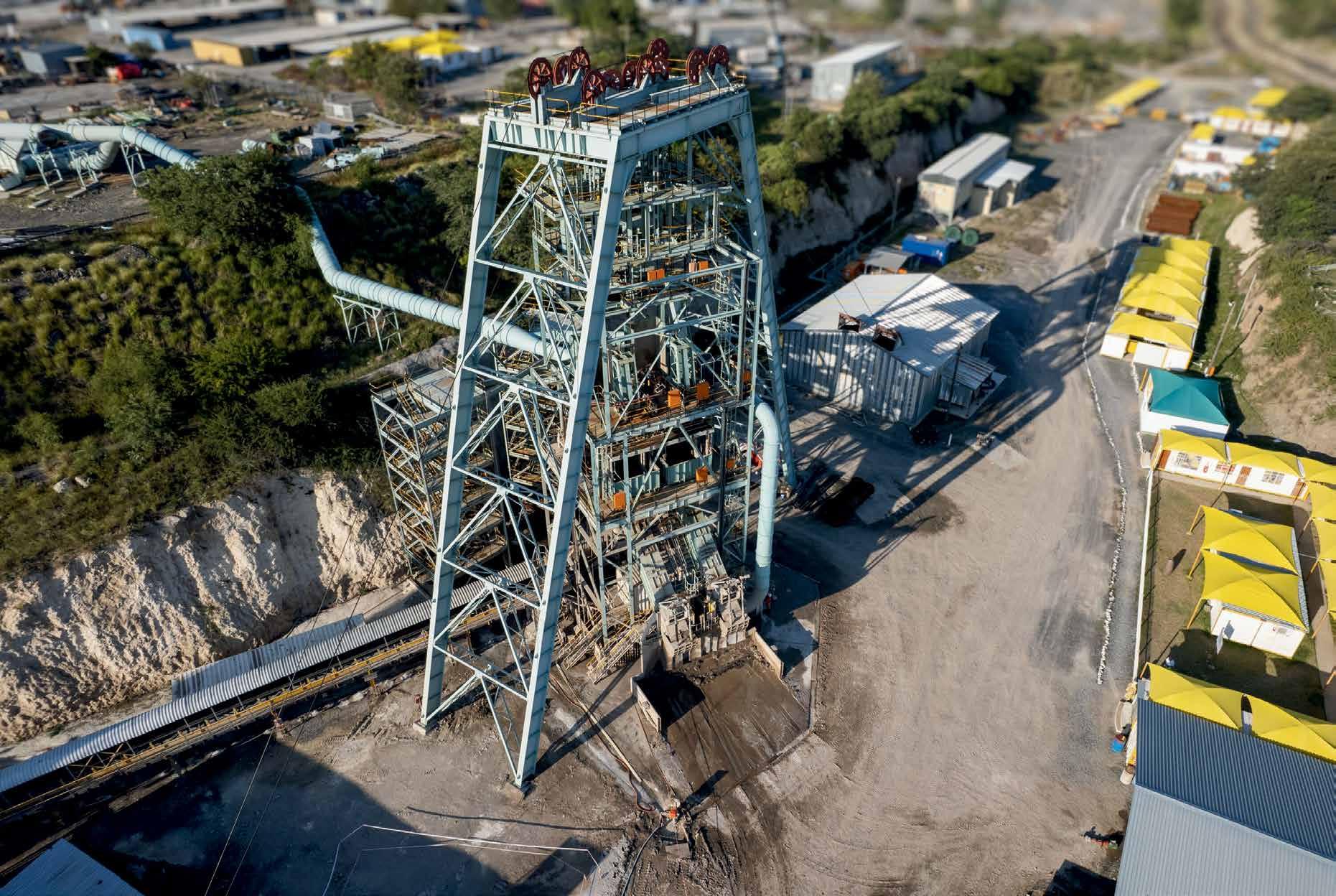
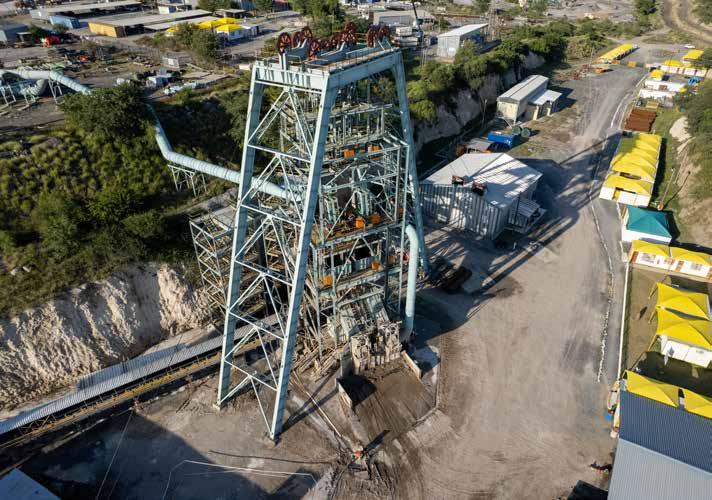
A large, steel mine shaft headgear structure, also known as a headframe.
1994, when women were prevented by law from working underground”.
Mining Wages Compare Favourably
The Minerals Council also revealed the average annual wages for high-skilled, semi-skilled and low- or unskilled workers in the sector to be R577 597, R328 996 and R246 924, respectively. These are considerably higher than the national average wages in these categories, which are reported to be R400 958, R205 851 and R113 083, respectively.
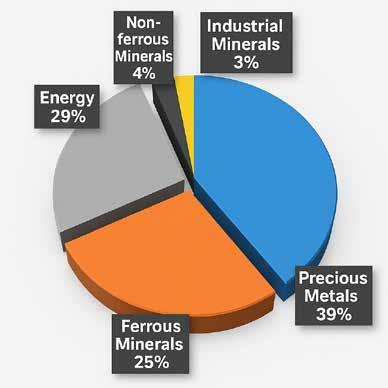
The precious minerals sector contributed 59% to total mining employment in 2024, followed by the energy and ferrous sectors at 21% and 12%, respectively. Non-ferrous and industrial minerals sectors contributed 4.0% each.
In terms of the top five revenue contributors by commodity, the coal, PGM, gold, and iron ore sectors remain the largest contributors at 27%, 20%, 17% and 11%, in that order.
The top five employers contributors by commodity are the PGM, gold, coal, chrome and iron ore sectors at 37%, 21%, 19%, 5.4% and 4.5%, in that order.
The Minerals Council reports that in 2024 mining companies and the entire value chain of businesses servicing mines, including taxes on wages of all employees, contributed a total of R342 billion to the South African fiscus.
This contribution was equivalent to:
• building 213,974 houses of approximately 80 square metres
• constructing 17,100 kilometres of tarred road
• paying the annual salaries of 978,166 high school teachers at a salary level of R350,000 per year.
“The industry invested R160 billion in machinery, equipment, vehicles, and construction, accounting for 15% of South Africa’s national gross fixed capital formation. When suppliers are included capital formation rises to R193 billion,” the Minerals Council states, adding that capital formation is critical to sustaining economic growth.
According to DMPR mining’s overall economic contribution was limited by 1) subdued commodity prices; and 2) rising operational costs. “Declining commodity prices have eroded gains due to elevated prices, achieved during 2022 and 2023,” states the department.
Percentage contribution to value per sector.
Production and Sales
DMPR reported an overall decline in mining production in 2024, which was driven by contractions in the following sectors; gold, diamond, coal, non-ferrous minerals as well as industrial minerals.
Precious metals production decreased by 2.1% to about 383.4 t, with gold and silver being the most significant contributors. Diamond also a recorded a 1.2 % decline in 2024 to about 5.83 Mcts. Coal production declined marginally by 0.2% to 256.6Mt, driven by curtailed production prompted by continued inefficiencies in rail transport. Ferrous minerals production increased by 3.4% in 2024 to about 105.4 Mt, with chrome and manganese being the most significant contributors. Iron ore however recorded a 0.6 % drop in the same period.
Non-ferrous metals production registered a slight year-on-year contraction of 1.0%, reaching a total output of 2.7Mt. The decline was primarily driven by significant reductions in the production of lead and zinc. Industrial minerals production decreased by 0.2% to 89.6 Mt in 2024 compared with 89.7 Mt in 2023. This decline is attributed
to the sluggish demand, with industrial minerals being reliant on demand.
Sales and Value
According to the #2025MiningMatters report the mining industry sold minerals into the local economy worth R248 billion, a record high as domestic purchases have become more diverse.
Coal for energy generation has dominated mineral sales, accounting for R135 billion or 54% of the total. Eskom supplies more than 80% of South Africa’s electricity from its coal-fired power plants, while Sasol uses coal to make liquid fuel, a key source of diesel and petrol for the local economy.
In 2024, diamonds used for jewellery and industrial applications accounted for R7.7 billion (3.1%) of local sales, gold for jewellery and technological applications for R5.8 billion (2.3%), PGMs for production of autocatalysts, jewellery and industrial applications for R4.97 billion (2%), and iron ore for steel making for R5.3 billion (2.1%). Other minerals and metals made up R71 billion, contributing 28.6%, while other mining activities added R18.8 billion, or 7.6%.
Africa’s
mining future hinges on unity –Mining Indaba 2026
Regional integration is no longer a policy aspiration, but the engine that will determine whether Africa captures the full economic, industrial, and societal value of its mineral endowments.
This was the urgent message delivered at a media briefing held ahead of Investing in African Mining Indaba 2026.
Frans Baleni, Chairman of the Mining Indaba Executive Advisory Board, was among speakers who underscored that Africa’s next decade of mining-led growth hinges on political alignment, cross-border collaboration, industrial connectivity, and a decisive shift from dialogue to action.
Andrada shows strong operational performance
Namibian miners, Andrada reported improved operations for its second quarter, which it believes places the company in a good position for continued growth in the upcoming half-year.
Highlights from the second quarter include a 17% year-on-year (YoY) increase in tin concentrate production. Contained tin increased 14% YoY to 273 tonnes, while the tin recovery rate improved to 73% in the Quarter (Q1 FY2026: 69%).
First
ever fully electric mobile crushing plant in Africa
The African mining and aggregate industries are marking a major milestone with the arrival of the first fully electric Sandvik UJ443E mobile crushing plant on the continent.
“This is the first time Africa will see a Sandvik mobile plant built from the ground up on a fully electric track platform,” Jaco Benade, Distributor Manager at Sandvik Rock Processing, says. “It is a gamechanging development that helps customers cut operating costs while advancing their sustainability goals.”
Electricity minister endorses Africa Energy Indaba
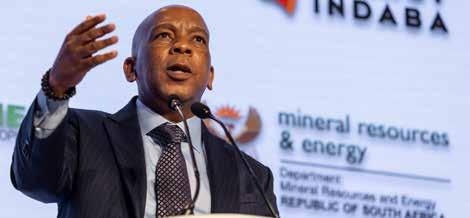
Dr. Kgosientsho Ramokgopa, South African minister of electricity and energy, endorsed the Africa Energy Indaba 2026, reaffirming the event’s critical role in shaping Africa’s sustainable energy future. The Indaba will take place from 3–5 March 2026 at the Cape Town International Convention Centre and is recognized as
the continent’s premier platform for dialogue, investment, and collaboration across the energy sector. Minister Ramokgopa’s endorsement highlights the South African government’s commitment to fostering strategic partnerships that drive energy security, industrial growth, and a just energy transition.
FEDA invests in mining and industrial transformation in Africa
The Fund for Export Development in Africa (FEDA), the development equity impact investment arm of African Export-Import Bank (Afreximbank), invested US$300 million the Africa Minerals and Metals Processing Platform (A2MP).
Rooted in over a decade of successful mining ventures, A2MP has evolved into a diversified
Deep Yellow appoints new Namibian MD
Zebra Kasete will serve as Managing Director: Namibia for uranium developer, Deep Yellow, starting on 5 January 2026.
In this role Kasete will support the construction of the Tumas Project and be accountable for running the Namibian operations post-construction of Tumas. He will also serve as Deep Yellow’s country head for Namibia and be based in Swakopmund.
Kasete is a Namibian mining executive with more than 35 years’ experience, having held senior roles in diverse commodities, including uranium, diamonds, copper and gold.
pan-African platform focused on mining and processing. The platform aims to unlock and scale minerals and metals value chains sustainably across the continent. The platform currently operates a robust pipeline of twelve mineral assets and four processing hubs, with a diversified portfolio spanning nine countries on the continent.
Commercial production starts at Newmont’s new Ghanian mine
Newmont’s Ahafo North project in Afrisipakrom, Ghana has achieved commercial production, marking the successful completion of one of West Africa’s most significant recent mining developments. Ahafo North is expected to produce approximately 50,000 ounces of gold in 2025, with production ramping up through 2026 to achieve full operational capacity. Over the next five years, the operation is positioned to deliver between 275,000 and 325,000 ounces of gold annually over a 13-year mine life, making it a cornerstone asset in Newmont’s global portfolio.
Women from the ‘world’s most polluted town’ tell their stories
Areport from Action for Southern Africa (ACTSA) and Environment Africa exposes the true scale of the harm caused to 140,000 women and children in Kabwe district, Zambia from lead contamination by Anglo American ‘s historic
mining operations. Titled ‘Life in the world’s most polluted town’ it features first-hand accounts from mothers living in Kabwe for the first time, addressing their difficult pregnancies, their children’s daily health struggles and their hopes for justice.
AVIATION SAFETY ENGINEERED FOR AFRICA’S RESOURCE SECTOR: SAFER, SMARTER, INNOVATIVE
Aoperations,
but it is also one of the highest-
viation is the lifeline of African mining risk activities The industry grapples with catastrophic exposure Mining operations are often executed in remote, inaccessible terrain, the airstrips are often very basic and changing weather conditions can have a considerable impact on the safety of operations Sustainable Safety Assurance remains a primary challenge to the Mining Sector
The Litson Group provides comprehensive solutions aimed at improving Aviation Safety, enhancing Quality, and reducing Risks The Litson Group is an Aviation Safety Organisation composed of Aviation Safety Advisors (ASA), Risk Management Systems (RMS) and the Aerospace Academy for Safety & Quality (AASQ) The group offers a robust suite of advisory services, training, and innovative software systems, carefully designed to meet the strict and evolving demands of aviation
Litson & Associates (L&A)'s Risk Management Systems (RMS) develops and designs bespoke Safety & Quality Management Software Solutions Their range of eSYSTEMS is designed to optimise aviation safety, enhance compliance, and minimise risk While primarily focused on aviation, their infrastructure directly supports mining operations globally, where air transport is a critical logistical component
L&A RMS supports mining aviation logistics through specialised, innovative software modules that manage the safety and operational efficiency of non-scheduled, rotarywing (helicopter), and RPAS services essential for remote mine sites By enforcing compliance with global standards (e g , ICAO, BARS, IOGP) and providing tools for advanced risk processing, the systems help ensure that air transport a high-risk yet necessary element of mining logistics is as safe as possible RMS’s eSYSTEMS include the following Risk Management Solutions:
eSMS-S® - Aviation Safety Management System: eSMS-S® offers enhanced reporting capabilities enabling the user to create Hazard, Occurrence, and OHSE Reports with ease The collected data provides statistics for tracking and trending The system, compliant with
ICAO 9859 SMS specifications, allows for advanced Predictive and Proactive Risk Management and Continuous Improvement
It is used by non-scheduled aircraft and drone operators, who form the backbone of mining logistics RMS’s eSYSTEMS are created according to a “Simplified” philosophy (-S) The systems are designed to be comprehensive yet easy to implement and operate, promoting greater user adoption and consistency in safety reporting
eFLITE-S™ - Aviation Management Planning System: This platform provides direct and real-time access to critical operational data, including aircrew license and training currencies, aircraft airworthiness and technical information, and tracking of approvals of any and all contracted service providers registered on the platform This ensures that the air service providers supporting the mining operations are always compliant and operationally ready This is specifically useful and focused on contracted flights and charter operations Essentially, it provides a virtual “eye” on the service providers’ supply of conformant critical requirements on an ongoing basis
eREP-S® - Auditing and Compliance Support: Through its report hosting capabilities, Clients and Operators are presented with comprehensive operational and safety reports with the in-system capability to address comments and findings to closure eREP-S® supports inspections for Aircraft Operators, Airfields, Aircraft, Onshore Helipads/Offshore Helidecks and adherence to international standards like FSF BARS Audits (Basic Aviation Risk Standard), which are essential for resource companies to vet their aviation contractors
eREVIEW-S – Smarter Operations through Digitalisation: eREVIEW-S is a checklisthosting system that is used by L&A to perform remote Operational and Safety reviews where the L&A Aviation Safety Advisors cannot conduct tasks in person The platform enables smarter operations by providing real-time access to operational data, digitalising the auditing process and centralising reporting to move beyond
reactive safety to proactive risk reduction
This tool is an ideal method for any mining organisation to perform oversight functions of any aviation organisation, including the performance of its own Business Units, on a remote and sustainable basis, resulting in significant cost savings for travel and associated expenses
eSCHED-S™ - Scheduled Airline Assessment Platform: Safe Scheduled airline travel is a central concern for the Mining and Resource industry eSCHED-S™ is used to assess scheduled airlines for ticketed fly-in/fly-out operations The system provides clients of the Oil & Gas and Resource industry with access to an extensive list of assessed commercial airlines based on data from reputable sources (ICAO, Flight Safety Foundation, L&A RMS eSYSTEMS and public aviation databases) It provides three “Tier Levels” of assessed airlines, allowing the mining company to make risk-based decisions on which carriers to utilise
The Litson Group is based in Somerset West, South Africa and provides professional Worldwide Aviation Safety & Quality support for every aspect of Mining operations, ensuring online technical and training support for our eSYSTEMS-S We provide virtual and in-classroom Safety & Quality ground training, complemented by a range of specialised Advisory and Safety Management skills - From Planning to Landing, the Litson Group strives to remain the key contributor to Safety and Quality Management in the African resource sector Contact us to request a quotation or request a live demonstration www litson co za
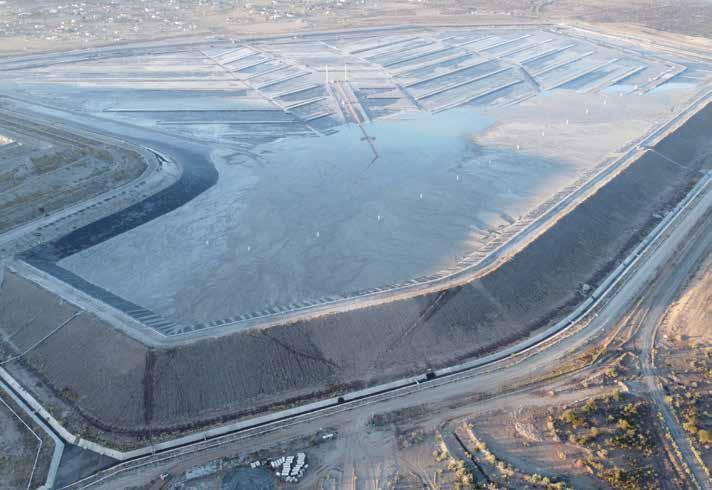
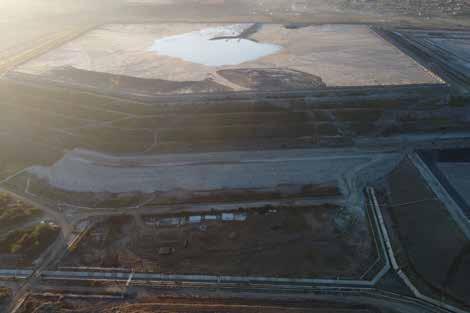
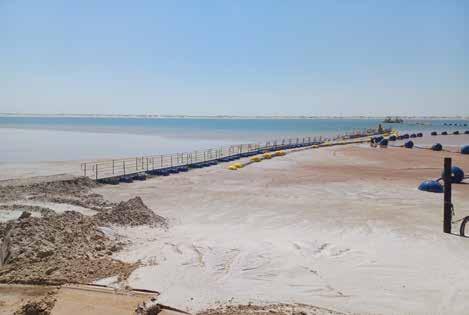
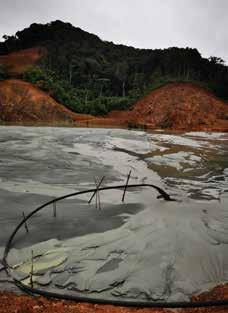
GISTM Drives Multidisciplinary Focus to Boost Tailings Safety
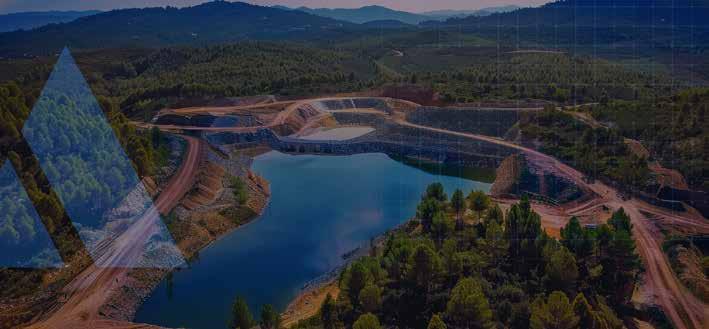
Among the requirements of the GISTM is a breach analysis that models where tailings will flow in the case of a TSF breach. This analysis forms the basis of predicting the extent of the inundation zone, which in turn guides decisions about the technical design and siting of the TSF
It is five years since the launch of the Global Industry Standard on Tailings Management (GISTM) to improve the safety of mines’ tailings facilities, and the mining sector has been working on integrating more disciplines towards this goal.
This is leading to wider range of professions being involved in GISTM alignment efforts when mines plan, construct, manage and close their tailings storage facilities (TSFs), according to Franciska Lake, partner and principal environmental scientist at SRK Consulting (South Africa).
“The GISTM specifically requires a multidisciplinary knowledge base that integrates social, environmental, local economic, and technical inputs throughout a TSF’s lifecycle,” said Lake. “GISTM compliance demands cohesive, cross-disciplinary collaboration, which allows the merging of environmental,
social, technical, local economic and emergency-response expertise into a dynamic, living knowledge base that can guide every stage of TSF management.”
More Monitoring
Digital technology has been playing an important role in facilitating this advance, through near-real-time monitoring of various aspects of TSF behaviour, explained SRK Consulting (South Africa) associate partner and principal engineering geologist James Dutchman.
“Modern equipment and instrumentation now enable more accurate data acquisition methods, allowing monitoring systems to better support and align to the GISTM’s monitoring and surveillance requirements,” said Dutchman. “Digital transformation in the sector has also enabled us to move from manual, single-point
data collection to high-frequency big data platforms.”
This provides the opportunity to examine micro-trends and the inter-relationships between the metrics that govern TSF safety and other conformance aspects, he said. Among the disciplines required to forge the collaborative workflows envisaged by the GISTM are geotechnical engineering, hydrology, geochemistry, climate science, water stewardship, stakeholder engagement and disaster management.
Respecting Rights
Importantly, the mining sector has been able to leverage its experience in environmental, social and governance (ESG) practices to respond to the GISTM’s sharper focus on the social and environmental impacts of potential dam
failures. SRK Consulting (South Africa) principal environmental scientist Kavandren Moodley emphasised that risk mitigation decisions must respect the rights of project-affected people. This involves ongoing, meaningful engagement with communities through to mine closure and beyond.
“The GISTM highlights human rights in its very first principle, specifically mandating meaningful engagement with affected communities; in addition, Principle 15 explicitly underscores the right to access to information,” said Moodley. “A critical part in achieving these requirements is building a knowledge base by integrating local knowledge, engaging with potentially affected communities, and sharing clear information about tailings management.”
Among the requirements of the GISTM is a breach analysis that models where tailings will flow in the case of a TSF breach. This analysis forms the basis of predicting the extent of the inundation zone, which in turn guides decisions about the technical design and siting of the TSF. It also informs assessments of environmental and socio-economic risks associated with the inundation zone, as well as the mine’s engagement strategies with affected communities.
Weather and Climate
Looking ahead to where improvements will need to be made in tailings-related practice, one area of concern is the significant lack of meteorological monitoring on many mine sites, according to Philippa Burmeister, partner and principal environmental scientist at SRK Consulting (South Africa). A vital aspect of the TSF knowledge base is accurate weather data, including the site-specific rainfall levels, but many TSFs were still being managed without the necessary detailed information.
“This monitoring of meteorological parameters is perhaps one of the most significant current gaps in meeting GISTM requirements – from a climate change perspective,” said Burmeister. “It is more than just having a functional weather station on site; it is also about regularly analysing and acting on the weather data received.”
She highlighted that water management is a crucial aspect of preventing TSF failures, which requires detailed meteorological monitoring that could trigger appropriate responses to observed trends. Insufficient data exacerbates the challenge of predicting future key weather conditions like rainfall, as projections tend to be a ‘best guess’. She emphasised the need to improve the reliability of projections by comparing them regularly to current data collected from monitoring activities.
Sharing Data Between Disciplines
“Integration of data remains another central challenge, as the monitoring data really needs
to be available to other disciplines,” she argued.
“The GISTM requires climate change to be built into our TSF and water management designs, and for these designs to be regularly reviewed and assessed as the implications of the changing climate become better understood.”
Lake concurred, emphasising the need for continuous innovation in data integration and monitoring, and also highlighting the constant changes that occur over the lifecycle of a TSF. These could range from shifts in nearby
populations to evolving environmental conditions.
“The GISTM clearly emphasises that the knowledge base must be a living document, to be updated at least every five years, and whenever there is a material change either to the tailings facility or to the social, environmental and local economic context,” she said. “It is also expected that the TSF operator and stakeholders use the knowledge base in an interactive way – enabling all parties to make informed decisions throughout its lifecycle.”
Building GISTM Capability with In-House Geotechnical Lab
Geotechnical testing facilities globally have been under considerable work pressure arising from the drive by mining companies to comply with the Global Industry Standard on Tailings Management (GISTM). This has led SRK Consulting (South Africa) to set up its own geotechnical laboratory at its Johannesburg office, purely for its own internal purposes – supporting projects with test validations for clients, conducting its own research, and upskilling staff.
“Our lab improves the services that we deliver by allowing us to speed up testing where necessary, and to quickly verify results that we request from commercial laboratories,” said John Stiff, partner, engineering geologist and department lead at SRK Consulting (South Africa). This makes the company one of only few international consulting firms with such a facility.
The dedicated laboratory was launched in February 2025 to streamline and verify testing – especially in the demanding field of tailings
management. Stiff highlighted that the laboratory was also used for SRK Consulting’s applied research and skills development.
“As a company, SRK is always pushing the boundaries of science and engineering in the design and management of tailings storage facilities (TSFs),” he said. “To do this, we need specialist expertise, infrastructure and flexibility to try new approaches.”
The new laboratory provides valuable tools for this ongoing strategy and attracts skilled and curious professionals to advance the geotechnical discipline as it relates to TSFs. The laboratory also makes SRK Consulting more attractive to those researchers and practitioners who want to explore new ideas, he said.
“The specialised professionals employed within the SRK geotechnical laboratory will help make their colleagues more familiar with the nuances of the testwork they specify,” noted Stiff, “allowing them to fine-tune their instructions and gain more valuable results from these tests.”
The GISTM requires climate change to be built into our TSF and water management designs, and for these designs to be regularly reviewed and assessed as the implications of the changing climate become better understood.” - Franciska Lake, partner and principal environmental scientist at SRK Consulting SA.
Progress Continues in TSF Design and Monitoring, but Challenges Persist
It has been remarkable to witness over the years the amount of focus placed on Tailings Storage Facilities (TSFs) brought on by several significant failures that captured the attention of mainstream media. The same level of focus could be felt being shifted within the mining industry.
TSFs are where, in most cases, the bulk of the processed ore will end-up. It is generally spent, processed material with little to no economic value, and it must be managed to remain safe for people and the environment throughout its operational life and in perpetuity after closure.
The challenge with this framework is that the risks associated with tailings mismanagement can have disastrous consequences such as the 2019 Brumadinho TSF failure in Brazil, which was captured on camera while it occurred, and closer to home in South Africa, the Jagersfontein TSF failure in 2022.
TSF failures have motivated for new standards, such as the Global Industry Standard for Tailings Management (GISTM), which is mandatory for member mines of the International Council on Mining and Metals (ICMM) to comply with. However, it is encouraged for non-members to also align with. It is worth noting that the intention for this standard is not to replace any regulatory requirements that may be applicable to a TSF in any country, and more to provide
a robust standard were gaps in regulation, or local tailings practices could exist. The overarching principle of the standard remains to encourage a culture of “Zero-Harm” with tailings management, which it promotes through its 77 Principles covered under 6 key topics. What is important to draw from GISTM is the protection of project affects persons and communities, and impetus on the full cycle of a TSFs life – from conceptualisation to post-closure.
Advancements in Investigation and Monitoring Methods
Exciting areas of advancement have been in the investigation methods and in the monitoring of tailings dams, most of which were facilitated by innovations in technology and analysis methodologies as well as telecommunication expansion.
From the design of TSFs, we have seen the adoption of “undrained” soil models becoming more widely adopted, as well as the testing methodologies for determining the potential for tailings “liquefaction”. This is a phenomenon of
rapid strength reduction caused by the increase in pore-water pressure that cannot dissipate quickly enough, and by the nature of soil material which tends to “contract” while shearing which causes the tailings mass volume to decrease thus further increasing the pore-water pressure.
The liquefied tailings, if not correctly designed for with adequate confinement, could result on flow slide from the TSF with near water-like behaviour under triggering events, such as seen from the dramatic footage captured at Brumadinho. Applying undrained behaviour to soils that are susceptible to undrained shear properties where they could be applicable, and where there is potential for liquefaction, has allowed better insight into potential failure mechanisms and critical slip surfaces.
Encouragingly, geotechnical laboratories in South Africa have seen a significant increase in capacity to test tailings material for its Critical State, as well specialist contractors with improved capabilities with in-situ testing, especially with Cone Penetration testing (CPTu).
The past several years has seen an
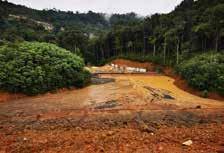
The tailings dam burst at Jagersfontein in 2022 demonstrates the disastrous consequences of tailings mismanagement.
improvement in the efficiency and accuracy with local geotechnical laboratories increasing their capacity with specialised testing equipment, including Triaxial Compression, Direct Simple Shear, and Rowe Cell apparatus. This has significantly reduced the turnaround time and cost of these tests, and improvement in the quality of test results leading to fewer test repeats and overall improved project efficiency.
This has been especially useful for Critical State test work which requires many tests under varying conditions.
Increased Data Analysis Capabilities
Advancements in the testing methodologies, and the equipment used have improved how operational and closed TSFs are investigated. This includes advancements in the following simultaneous testing with CPTu:
• Shear wave velocity testing (Seismic) for better characterization of the in-situ tailings small strain stiffness (Gmax) and dynamic response under cyclic loading.
• Resistivity testing, which can with accuracy determine the degree of saturation of tailings material, and locate the water table in a tailings stack, and identify potentially liquefiable zones of tailings.
The application of these methods has been well-supported by increased computing power, that can support highly detailed and complex analyses more efficiently than before. However, more recently, the potential to include artificial intelligence and machine learning in streamlining the analysis of data and classification of tailings material in almost live-time. And even collate Critical State test work and derive solutions, identify outliers, all with far superior efficiency than human effort. While caution, and the human touch is still strongly advocated in these cases, a more widespread advantage to machine learning applications is its use in TSF monitoring, which may include:
• Optimising a monitoring plan based on the interpretation from field data, and slope stability assessments, including instrumentation type, and location
• Live analysis, and interpretation of monitoring telemetry data
• Development and updating of trigger limits. These tools should be used in support of the engineer’s judgement, and never to replace it, and therefore a good understanding, and close oversight with the use of any technology is still required.
Compliance Still a Challenge
As much as technology, understanding, and methodologies have been developed that align with the principles of GISTM adoption of these, and even complete compliance remains a challenge for many mines. In the context of African operations, challenges to complete adoption are often affected by:
• Skill shortages and retention
• Capital investment
• Accessibility
• Telecommunications
• Limited historical hydroclimatic and seismic monitoring record.
Complete GISTM adoption requires a plethora of skills, the availability of which is limited in Africa, which has also been victim to
skills emigration to other parts of the world, and has placed greater reliance on the import of skills from more developed parts of the world or left knowledge gaps in key positions in the tailing’s lifecycle. This impact extends to the capacity and capabilities of tailings consultancies in Africa.
In addition, telecommunication connection and physical access remain a challenge in Africa, where many of the mining developments are in rural, under-developed areas. Implementing TSF live monitoring systems rely on access to some data capturing and upload system, usually reliant on stable internet access, or direct access to a server. Furthermore, electronic and mechanical instrumentation require calibration by the instrument manufacturer. The remoteness of many mining operations also limits the availability of reliable historical hydroclimatic (rainfall, evaporation, and flood), and seismic monitoring data is highly limited. These are critical components to the development of a TSF design basis – a GISTM requirement. There is heavy reliance on satellite monitoring, and climate models that are calibrated on limited data.
It is important to remain practical in designing TSFs and implementing monitoring plans when considering site-specific challenges and constraints, and engineering solutions around these – this philosophy is at the core of Entail’s service delivery.
Tailings Engineering & GISTM Compliance
Specialists In Conventional And Filtered Tailings
Engineering The Future Of Mine Tailings Management
Entail Consulting is engineering the future of mine tailings management through innovation, precision, and a commitment to safety and sustainability. As specialists in conventional and filtered tailings, the firm provides comprehensive GISTM-compliant solutions across the entire tailings facility lifecycle, from feasibility and design to construction oversight and closure.
The Mine Lifecycle: An Integrated Approach
Achieving GISTM Compliance in African Mining
Despite regulatory hurdles in some countries, drone adoption is adding a new dimension to how mining is conducted across Africa.
Mining operations across Africa face pressure to comply with the Global Industry Standard on Tailings Management (GISTM). This standard emphasises governance, early warning, and stakeholder transparency alongside continuous monitoring and reporting.
IOTDC, in partnership with Sentinel, helps embed these requirements into operations. With robust field sensors and satellite data, Sentinel delivers round-the-clock visibility of tailings
dams, turning raw data into actionable alerts and compliance-ready reports.
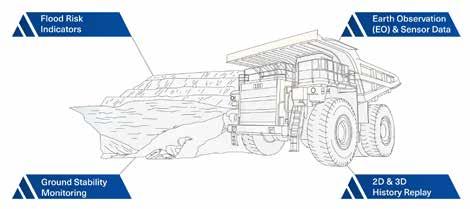
• Continuous monitoring: Sentinel combines sensors, satellite and drone data on one platform to track dam water levels, seepage and ground stability in real-time.
• Predictive alerts: AI analysis detects anomalies and long-term trends. Instant alerts meet GISTM’s early-warning requirement.
• Mobile data capture: A mobile
application allows field teams to log geotagged measurements on-site, even offline.
• Role-Based dashboards: Secure dashboards give executives and boards clear TSF status overviews, while regulators and communities can access approved data.
Governance and accountability. GISTM requires designated leadership and board oversight for tailings safety. Sentinel supports this by streaming up-to-date dam data to management dashboards. Its approval workflows and audit trail reinforce accountability – for example, each reading is time-stamped and manager-approved. This transparency directly supports GISTM’s governance principles. Real-time monitoring and risk management. Sentinel continuously monitors key factors with live sensor feeds and satellite imagery. The system analyses these inputs to detect any deviations from safe norms. For example, a rapid rise in reservoir level after heavy rain will trigger an immediate alert. These proactive warnings
enable early remedial action – directly aligning with GISTM’s emphasis on prevention.
Stakeholder engagement and transparency. GISTM stresses open communication with affected communities. IOTDC’s platform supports this by sharing live TSF data via secure portals. Clients and regulators can log in anytime to view geo-tagged measurements and dam status. Automated alerts and summaries ensure stakeholders receive the same information promptly, building trust and meeting GISTM’s transparency goals.
Emergency preparedness and early warning. GISTM requires specific emergency response plans and early warning systems. Sentinel underpins this by linking sensor alarms to incident workflows. For example, if a stability sensor exceeds a safe threshold, the system automatically notifies on-call staff and triggers a response plan. Incident logs and drill outcomes are recorded in the platform to improve future readiness.
Streamlined reporting and ESG credibility. Sentinel dramatically cuts the compliance burden. Automated data collection and report templates keep tailings performance logs current, rather than relying on delayed spreadsheets. This transparency meets GISTM’s reporting requirements and strengthens a mine’s ESG credibility. Demonstrating real-time TSF oversight improves safety, reassures insurers, and shows investors that risk is actively managed.
Tiaan Coetsee, CEO and co-founder of IOTDC.
Ensuring Mining Benefits from the Latest Software Developments
HCLSoftware, the software division of HCLTech, is a global force providing software solutions in 60 countries to over 20 000 organisations, which include more than half of the Fortune 1000. Africa is one of its strategic focus areas due to its high growth and its potential for innovation and economic resilience.
Mining Business Africa recently sat down with Rajiv Shesh, HCLSoftware’s Chief Revenue Officer, to find out what HCLSoftware is doing for the mining sector and going forward how it plans to provide to the ever-changing software needs of the industry.
MBA: What software solutions does HCLSoftware provide to the mining sector?
RS: The mining sector makes use of a range of equipment for its operations. One of the largest equipment suppliers to mining companies uses
our e-commerce platform, HCL Commerce+, for the sale of aftermarket equipment and services.
A robust platform is essential for such business-to-business commerce. This means that HCL Commerce+ must be available 24/7, it must be secure and it must be reliable. The capabilities of the platform must ensure that transactions are initiated, tracked and completed successfully. Search capabilities must also be of the highest quality.
Our platform also provides a virtual marketplace, wherein people providing products and services can announce themselves, can meet and come together.
MBA: Where else do you see HCLSoftware supporting mines?
RS: A phenomenon occurring in my many sectors, including mining, is softwarisation. More and more equipment has more and more software in them. The maintenance of said
equipment can now be done remotely because the functionality of the equipment is being provided through software.
The moment you move into a digital asset, it becomes very important to make sure that you are at the right level of patching, which is the right version of software that is in the equipment and is compliant with the guidelines and standards that have been stipulated. All those capabilities we offer through our operations technology, our HCL Commerce+ platform.
With softwarisation comes our ability to capture data. Once we capture data, we make sure, how relevant that data is to be able to come up with inferences, which we then apply to large or small language models for making use of artificial intelligence – another area in which we can contribute to the mining industry in a big way.
We are also investing in better data management, which enables better management of data lineage and the establishment of data
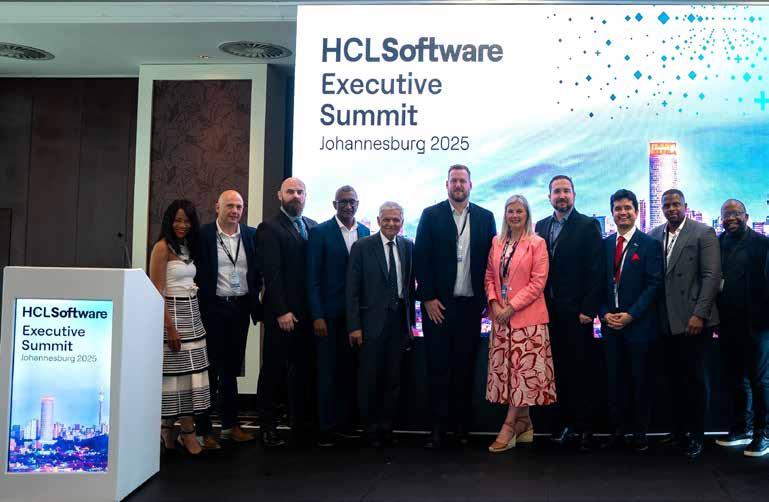
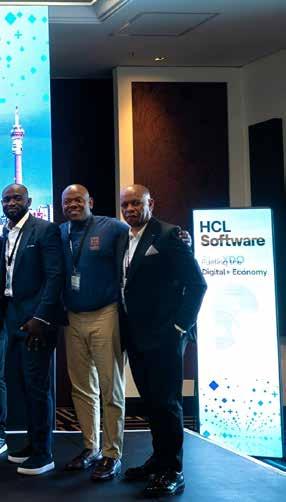
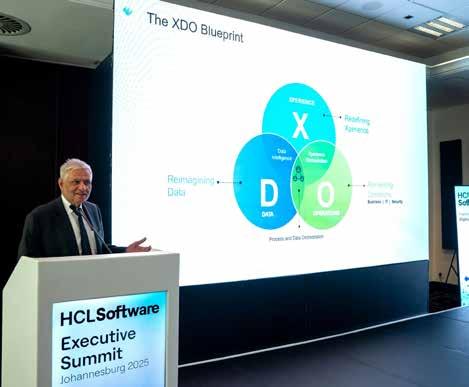
HCLSoftware executives, partners, and customers at the successful Executive Summit in Johannesburg
contracts. As mining companies adopt more artificial intelligence techniques our relevance in terms of helping them manage their traditional data, which has been there for a long time, will become very meaningful.
We are able to support mining in all aspects, whether it is maintaining uptime of equipment, making sure that their data analytics allow them to come up with right inferences, being able to predict and come to inferences in terms of their operational support.
MBA: What strategies is HCLSoftware deploying to gain mining business?
RS: We will approach the mining industry from three specific areas:
1. Cybersecurity
2. Observability
3. Agentic Technology and AI
MBA: What is observability?
RS: When you have a workflow, you expect an outcome from that workflow. What you want to do is to make sure that your work is going as per the workflow and that the workflow is going quickly. Or are there certain external factors that are creating choke points in that workflow? You’re observing that business workflow to make sure that it is running efficiently.
We believe that in the mining industry that would be of great relevance to make sure that the maintenance of equipment is done correctly. So there are no bottlenecks in that process. And to make sure all the security precautions were taken before any activity is performed. All of those are business workflows in which you would need an element of observability to make sure you know how your operation is going – getting some statistical insights. For example, your tolerance in terms of deviation from your stated process may be less than half a percent. How would you know it is that? You have to observe the process. That is where we have solutions that come from regulated industries. AI is an industry that will be untasked. The mining industry actually uses software technology packages from all kinds of sources. We believe that these organisations will have agentic technology from all sources; there would be need for the orchestration of this agentic technology.
MBA: Please explain what Agentic Technology entails.
RS: Think of Agentic Tech as agents of action. Imagine a workflow. Let us say, one of getting approval to start mining in a particular area. An agency will be engaged to determine that the area where you want to mine is secure. Another agency will be engaged to determine whether you can mine in that area in an environmentally sound way. Data analysis must take place before
any recommendations are made. This work is currently being done by people.
Now, with AI, if you’re capturing environmental data, you can actually run that data through a large language model and then ask a question, is it safe? You will get a report on whether it is safe or not. That work can be packaged into an agent, software agent, and an AI agent to perform that work.
As more and more data comes in, if you start then giving it feedback in terms of this was the inference and this was the outcome, you start getting into what is known as regenerative learning, which is an AI technique. The moment you do this you actually make your agent more learned and more intelligent. One of the characteristics of an AI agent would be that it should have learning ability. You put that together and now you’ve got work being performed by an AI agent which is continuously learning.
This means the existing workflow can be redone in a very different way – using AI – which can deliver tremendous amount of operational efficiency and cost savings, amongst others, to the mining industry. Some of it is being worked upon and tried but some of it is going to be evolving. That is where the approach that we have towards this will be extremely useful. You would look at it from this angle which is observability. Agentic AI technologies dealing with multiple AI agents that the mining industry will get exposed to, to help them orchestrate it.
Rajiv Shesh, Chief Revenue Officer, HCLSoftware, addressing the audience at the HCLSoftware Executive Summit in Johannesburg
BME and Strayos Alliance Optimises Blasting with AI-Driven Insights
Omnia Holdings company BME has strengthened its blasting software offering beyond its premium Blastmap™ blast planning platform through a new partnership with technology leader Strayos. This alliance brings together BME’s blasting expertise and Strayos’ advanced image processing and artificial intelligence (AI) capabilities, delivering enhanced functionality, precision, and nextgeneration software solutions to the mining industry.
XPLOSMART™, the new AI-enabled suite of software for integrated mine-to-mill solutions from BME will empower mines, quarries and construction companies with geospatial tools and AI-driven modelling across a single data platform, according to Nishen Hariparsad, BME General Manager for Technology and Marketing.
“This collaboration marks an important milestone for BME in strengthening our value proposition to customers,” said Hariparsad. “With XPLOSMART™, we empower our customers and partners through streamlined workflows that integrate geospatial, time-series, and visual data with intelligent analytics. The result is powerful predictive insights, post-blast analysis, and optimisation across the mine-to-mill value chain — all while further enhancing safety and reducing risk..”
He highlighted that the new system also provides more insight for customers, allowing them to define pain points in their operations, both upstream and downstream of the blasting circuit. With a footprint across over 5,000 sites and growing, the alliance with Strayos brings a proven track record and reputation for quality and a 24/7 customer service support network.
Best of Both
“Our new premium software offering is aligned with BME’s brand identity and reputation, ensuring that we leverage the ‘best of both’ technologies from a symbiotic relationship between BME and Strayos,” he explained.
XPLOSMART™, powered by Strayos technology includes 3D photogrammetry, drone fragmentation, rock mass analysis and smart drill analytics, as well as geotechnical analysis and modelling. Hariparsad said that this enhances
Nishen Hariparsad , General Manager Techology and Maketing BME
BME’s offering as a future-fit, mine-to-mill solution with modular and integrated solutions underpinned by AI – extending our capabilities into ore body movement, haul-road intelligence, highwall safety and rock mass AI.
“Significant advantages can be gained within the comminution circuit, enabling mine-to-mill benefits to be realised,” he said. “Each blast is designed to achieve the best outcome on the bench and downstream.”
Customers have access to improved data, allowing them the opportunity to interrogate their benches from the perspective of geology, drilling, blasting, and mill throughput. Hariparsad noted that the benefit extends beyond financial performance to the ESG imperatives of customers – such as the wellbeing of communities and the environment.
Cutting Edge Innovation Driving Strategic Global Growth
“Automation integration is now possible with AI technologies, where doing more with less has always been the target,” he said. “This has been achieved by pairing AI-enabled technologies with premium blasting solutions.”
As a leader in the field of AI, Strayos continually invests and grows in this sector, which aligns with BME’s value proposition of staying ahead of the innovation curve.
“This alliance presents an excellent strategic fit between our two companies, with significant growth opportunities through various streams,” concluded Hariparsad. “These avenues include digitisation, digital twinning, AI-technologies, infrastructure optimisation, cost savings, improved efficiency, automation and others, that our customers will reap the benefits from. There is also scope in terms of our technical services and shared resourcing, providing a platform for continual innovation to expedite global growth and strategic expansion initiatives, adding to the excitement this alliance provides.”
Mining runs on precision and the pursuit of productivity
Every minute of downtime can have significant financial consequences, which is why proactive maintenance is crucial in this high-stakes environment.
WearCheck’s advanced oil, fuel, and coolant analysis enables you to identify hidden issues before they escalate. By detecting early signs of wear, mechanical , we help you reduce maintenance costs, extend equipment life, and
Partner with us today — and keep your operation
Less downtime. More production.
marketing@wearcheck.co.za www.wearcheck.co.za
Ravi Sahu, Strayos CEO
AI-Enabled Ore Inclusion Sorting
Despite regulatory hurdles in some countries, drone adoption is adding a new dimension to how mining is conducted across Africa.
What makes the entry of CONTAIN™ significant is the current development within the continent’s mining sector, which mirrors trends in other regions. The African mining industry faces the challenge of depleting high-grade ore at shallow levels, unlike in the past.
In an interview with Mining Business Africa (MBA), Stefan Jürgensen, responsible for developing and integrating software and machine learning solutions for TOMRA Mining, explains how CONTAIN™ will enhance efficiency by complementing the company’s X-ray transmission (X-RT) sorters to recover more valuable ore that would otherwise be condemned to tailings waste.
MBA: Why are inclusion-type ores difficult to classify with traditional sorting technologies? How does this impact mining operations?
SJ: Inclusion-type ores present a unique challenge for traditional sorting systems because their valuable mineral content is often embedded within host rock structures that appear visually similar in X-ray imaging. Differentiating between benign inhomogeneities and economically valuable inclusions requires a level of pattern recognition that conventional rule-based systems struggle to achieve.
This limitation has historically constrained the application of sensor-based sorting to high-grade ores or narrowly defined grain size ranges. As a result, valuable material is either lost to waste or diluted in the product stream, directly impacting recovery rates, concentrate quality, and overall profitability.
TOMRA has addressed this challenge by developing advanced XRT sorting techniques, and now, with the introduction of CONTAIN™, we are redefining what is possible in the classification of complex ores.
MBA: CONTAIN™ sorts based on what “it understands, not sees,” improving the classification of inclusion-type ores. Please elaborate, particularly on the role of AI and deep learning.
SJ: Traditional sorting systems rely on predefined rules to interpret X-ray images, but the variability of mineralisation across ore types makes this approach inherently limited.
CONTAIN™ uses deep learning to overcome this barrier. Trained on tens of thousands of ore samples, it has developed a statistical understanding of how inclusion-type ores manifest in X-ray imagery - something that would be virtually impossible to encode manually.
Rather than applying rigid logic, CONTAIN™ identifies subtle visual patterns and assigns probability scores to each particle based on its likelihood of containing valuable inclusions. This enables highly accurate, real-time classification - even for ores with complex or low-grade mineralisations. It represents a fundamental shift from deterministic sorting to intelligent, datadriven decision-making.
MBA: How is CONTAIN™ relevant to the current challenges (or obligations) facing the mining sector?
SJ: The mining industry is under increasing pressure to maintain profitability amid declining head grades, rising operational
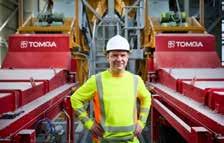
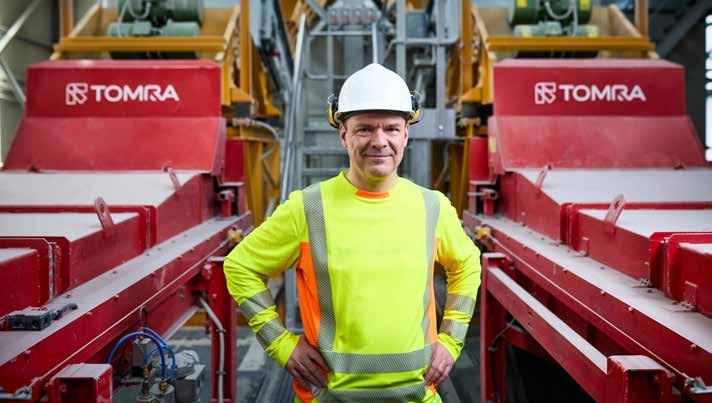
Stefan Jürgensen is a software team leader at TOMRA.
costs, and growing environmental scrutiny. Many operations have already optimised their existing processes, leaving little room for further gains without technological innovation.
CONTAIN™ directly addresses this challenge. By enabling the accurate recovery of valuable inclusions that would otherwise go undetected, it unlocks new efficiencies in ore processing. This not only improves yield and reduces waste but also extends the economic viability of deposits previously considered marginal. In short, CONTAIN™ empowers mining operations to do more with less - an imperative in today’s market.
MBA: Briefly illustrate how CONTAIN™ enables real-time classification.
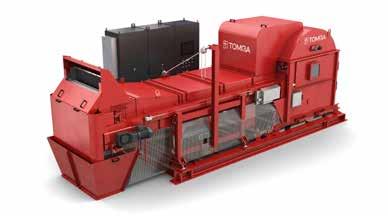
SJ: CONTAIN™ is embedded within TOMRA’s COM XRT sorters and operates at industrial scale. As each particle passes through the X-ray beam, CONTAIN™ analyses the image in milliseconds, classifies the ore content, and informs the ejection decision in real time. This data is not only used for immediate sorting but is also aggregated and made available to SCADA systems and TOMRA Insight. This provides operators with a continuous, highresolution view of material composition, enabling dynamic process optimisation across the plant.
MBA: Beyond accuracy, time is critical. Does CONTAIN™ only analyse static ore, or can it accurately process moving ore?
SJ: CONTAIN™ is not a standalone analysis tool; it is an integral component of TOMRA’s COM XRT sorting system. It is purpose-built for high-throughput environments and processes moving ore streams with pinpoint accuracy. The system maintains performance even under dense, fast-paced conditions, making it ideal for real-world mining operations where speed and consistency are critical.
MBA: CONTAIN™ will support TOMRA’s new sorting equipment. Can it also be integrated into existing systems? Please clarify this aspect.
SJ: While CONTAIN™ is not a default feature on all new sorters, TOMRA has designed its latest COM XRT models to fully support this advanced AI capability. This ensures that customers who require enhanced classification for inclusion-type ores can easily activate CONTAIN™ without hardware replacement. For many existing systems, retrofitting is also possible. Most previous-generation COM XRT sorters can be upgraded with the necessary deep learning hardware to run both OBTAIN™ and CONTAIN™, unlocking significant performance gains.
We encourage customers to consult with their TOMRA Sales or Service representative to determine the best upgrade path for their specific application and to maximise the potential of their sorting equipment.
MBA: Is CONTAIN™ interoperable with competitor sorting brands (i.e., brand-agnostic)? If so, under what conditions?
SJ: No. CONTAIN™ is a proprietary deep learning solution developed specifically for TOMRA’s COM XRT sorting platform. It is deeply integrated into our hardware and software ecosystem and is not compatible with third-party sorting systems.
MBA: What has been the industry’s response so far, particularly from TOMRA’s current customers?
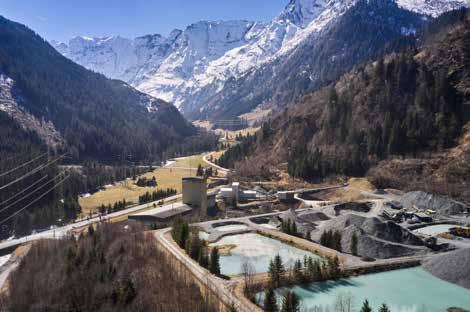
SJ: The response has been overwhelmingly positive. At Wolfram Bergbau in Austria, for example, CONTAIN™ delivered immediate and measurable improvements: an 8% increase in plant throughput, a 33% reduction in ore mineral losses, and the lowest tails grade in the operation’s history.
In several cases, customers have opted to purchase CONTAIN™ after just a few hours of trial operation, citing performance levels previously thought unattainable at industrial throughputs. The ability to detect deeply embedded inclusions with such precision is seen as a game-changer.
MBA: What else can you share with mining operations in Africa about purchasing TOMRA’s sorting machines with CONTAIN™?
SJ: Africa’s mining sector is rich in complex ore bodies, many of which contain inclusiontype mineralisations that have historically been difficult to process efficiently. With CONTAIN™, TOMRA offers a transformative solution that expands the range of viable deposits and improves the economics of ore recovery. By combining decades of sensor-based sorting expertise with cutting-edge AI, TOMRA is not just enhancing performance - we are redefining the boundaries of what is possible in mineral processing. For mining operations seeking to future-proof their plants and maximise resource efficiency, CONTAIN™ represents a strategic investment in long-term competitiveness.
K KRUX ANALYTICS: DRIVING THE FUTURE OF DRILLING THROUGH DATA
rux Analytics is transforming the way
mining companies manage and optim-
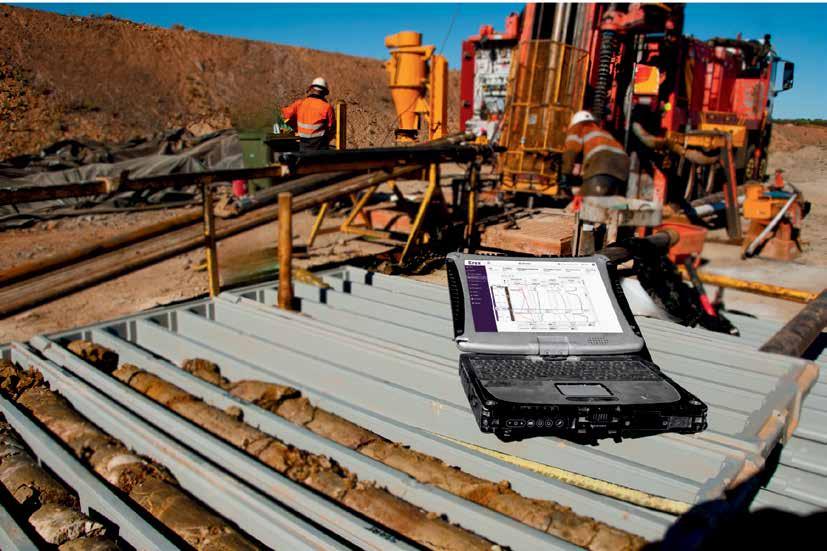
mize drilling operations. Built by drillers, for drillers, Krux delivers a powerful cloudbased platform that turns raw drilling data – collected at the rig – into actionable insights. Krux technology is helping drilling teams make smarter, faster decisions both in the field and head office.
At the heart of Krux’s technology platform is KruxMetrix, the central engine that powers data analysis, performance tracking, and strategic decision-making. It enables mining operations to monitor drilling efficiency, manage costs, and ensure safety and compliance, in real time.
Complementing this is KruxLog, the intuitive field-based data entry tool designed for drillers and supervisors. KruxLog streamlines workflows by capturing accurate drilling data and validating it directly at the source, reducing manual entry (often days or weeks later) and inevitable human error.
Together, KruxMetrix and KruxLog create a connected ecosystem that empowers mining teams to be more efficient, informed, and future-ready.
“We’re unapologetically obsessed with data quality – because without it, nothing else works. In mining, every decision, every dollar, and every safety call depends on the integrity of the data behind it. It’s time for the industry to stop treating data quality as a nice-to-have and start seeing it as mission-critical. At Krux, we’re leading that charge.”
members on the ground and a strong commitment to regional partnerships. The platform is already helping operators in Africa modernize their drilling workflows and unlock new value from their data.
The company’s vision is clear: to push the industry forward through digital optimization, enabling smarter drilling and better understanding of what’s happening at the rig.
Presence in Africa
Krux is proud to support mining operations across Africa, with local team
Krux will be attending Mining Indaba 2026 in Cape Town alongside strategic partner, IMDEX, showcasing how integrated technologies can drive safer, more productive, and more sustainable mining across the continent.
To learn more about Krux and how it’s shaping the future of drilling, visit https://www.kruxanalytics.com
Unit 3 ,Sj Industrial Park 144 Ganymede Street, Gosforth Park, Germiston, 1419
Field-based data entry tool, KruxLog can be used on mobile or tablet, and is designed for drillers and supervisors.
Krux Analytics delivers a powerful cloud-based platform that turns raw drilling data into actionable insights.
Krux technology keeps drilling programs to plan with real-time dashboards and analytics
African Mines Gearing up for Green Transition
Mining companies are contributing to Africa’s transition to green energy by increasingly deploying wind, solar and hydropower to supply their considerable energy needs.
First Quantum Minerals seeks to reduce its carbon footprint by 30% through a $500 million investment in renewable energy to power its Kansanshi and Sentinel mines in Zambia. The project includes the establishment of a 230MW solar Photovoltaic (PV) plant and a 200MW wind farm with partners, Total Eren and Chariot.
In the DRC CMOC and green energy firm Lualaba Power have sped up development of the 200MW Nzilo II hydropower and floating solar project. This while the Angolan government, in partnership with Trafigura and engineering firm ProMarks, is developing a 2 000MW highvoltage electricity interconnector that will provide hydropower from northern Angola to mines in Zambia and DRC, as well as the Southern African Power Pool regional grid.
In South Africa Tronox Holdings will by
2027 have 70% of its energy needs met by NOA Group and SOLA Group. The mining and chemicals firm has secured over 400MW of renewable energy for its South African mining and smelting operations. The agreement between the three firms is set to deliver 497GWh of electricity annually.
Hybrid Microgrids
The B2Gold Fekola Mine in West Mali has reduced its reliance on heavy fuel oil (HFO) by adding to its energy mix a combination of solar PV and battery storage. No fewer than 46 200 solar panels came online this year at the Fekola Solar Plant, increasing the total panel count to 142 912.
Considered to be one of the largest off-grid solar/HFO hybrid power plants in the world the expanded Fekola Solar Plant provides a total of 52 MW of power and 27.7 MWh battery capacity. Furthermore, it is expected to eventually supply approximately 30% of the mine’s total electricity demand.
Ken Jones, Director of Sustainability for B2Gold, commented, “The expansion of the Fekola Solar Plant is a significant initiative in support of B2Gold’s emission reduction target.
“The expanded facility will allow the Fekola site team to turn off the HFO plant for a portion of the day during times of sufficient solar radiation, a tremendous achievement for B2Gold and a testament to our commitment to implementing renewable energy solutions.”
Energy Storage Lagging
Karabo Mokgonyana, a renewable energy campaigner at Power Shift Africa, warns however that the storage of renewable energy is not keeping pace with generation capacity. She explains that the intermittent nature of renewable energy necessitates the use of battery energy storage systems (Bess).
“The global demand for batteries has surged in recent years and original equipment manufacturers are struggling to keep up with the needs.
“The bulk of the world’s battery storage technology is being produced in and sold to developed markets in the Global North and China,” she adds.
Ironically, the raw materials - lithium, cobalt and nickel – used to make these batteries are mined in Africa. Mokgonyana argues that it is imperative that Africa develops “its own storage infrastructure”.
“With abundant reserves of critical minerals, the continent has the potential to become a key player in the global battery storage market.
“African countries must, therefore, invest in local manufacturing capacity, including building factories for battery production and developing the expertise needed to maintain and repair storage systems,” Mokgonyana concludes.
NAVACHAB GOLD MINE IS
INVESTING IN MODERNISED SORTING TECHNOLOGIES TO INCREASE GOLD RECOVERY AND REDUCE OPEX BY INSTALLING STEINERT KSS EVO 6.0 SORTERS
Navachab Gold Mine, a low-grade gold ore operation, upgrades its very low-grade ore resources using STEINERT’s suite of innovative dry sorting processes.At Navachab it has been possible to double the gold grade. As the STEINERT machines require a minimum of water the technology is very environmentally friendly. The very low operating costs (a quarter of DMS costs) and modularity make the machine very easy to integrate into existing circuits. Navachab has been using STEINERT XSS T sorters since 2016. Over the last decade, these sorters have preconcentrated over 10 million tons of low-grade stockpiles and turned it into valuable ore, which were previously considered uneconomical to process. Navachab Gold Mine has now installed the next generation of STEINERT’s sorting systems.
riday morning 9 o’clock Swakopmund,
west coast Namibia. Hildbrand Wilhelm
welcomed STEINERT into his office. His role has changed – after decades of performing various senior management roles at the mine, he is now responsible for proposing the future of the mine. “As a young engineer, I was forced to question the status quo. That was how I was brought up.” This mindset was applied to the unique circumstances that Navachab Gold Mine finds itself in to create a future. In 2024 the mine contributed meaningful percentage of the gross domestic product of Namibia. A deep understanding of the technologies and holistic thinking enables one to select promising routes of treatment. Hildebrand Wilhelms states: “The more of a holistic view you have, the better you can decide what technologies can work, as long as you understand these technologies.” The next evolution being considered is a doubling of current treatment capability. Compared to previous processes using Dense Media Separation (DMS), dry, sensor-based sorting now runs at 1/4 of the overall operational costs, while doubling throughput. For these reasons, and because this process does not require water, it plays a key role in the future.
From single sensor to multi-sensor sorting
and share knowledge, for example John Knouwds, STEINERT’s Solution Manager in Mining. John Knouwds has also been in the mining business for a very long time and first crossed paths with Hildebrand Wilhelm as a student 25 years ago. ”Having somebody available that can help develop your thoughts and that you can bounce ideas off helps a lot.”
Hildebrand Wilhelm would never support an idea which he does not understand the science behind. As STEINERT’s detectors developed, the opportunity was taken to test the Navachab ore response to a combination of sensors in order to improve gold recovery. The testwork results indicated that improvements were possible and when the time finally came to replace the single-sensor machine, it was decided to incorporate the new technology.
Sensor-based sorting combined with Intelligent.Declustering for more throughput
STEINERT KSS EVO 6.0: easy to maintain, time-saving and safe
The concept of the STEINERT KSS itself is not new. What’s new is that the Navachab Gold Mine has opted for a multi-sensor sorting solution and is now benefitting from updating the STEINERT KSS to the EVO 6.0 version. Regular maintenance keeps performance at the highest level and reduces wear, and the EVO 6.0 generation significantly improves sorting system handling. The operator can simply walk into the machine to inspect it and the integrated rolling platform permits quick and safe access to the valve bar and conveyor belt. Better access to the system components speeds up maintenance work. During sorting, the valve bar ensures that the sorted material is ejected. To prevent the valve bank from becoming clogged during maintenance work, the valve bar can now be swung up. The pneumatic unit has also been re-arranged and is easy to access. The operator also benefits from a permanently integrated railing with ladders, allowing the 3D and colour sensors to be accessed quickly and safely without requiring climbing gear.
The metallurgist is amazed by the detection rate per second – and the fact that the dry sorting plant sorts 200 tons per hour to detect material falling below the CIP plant cut-off grade. “That is where the value is generated because then – with the doubled grade – the material can be profitably treated by the downstream processes,” he emphasises. The former sorting systems were robust, reliable and withstood 10 years of harsh and dusty mining conditions. “But I think the computer programs hold the key to sorting. The most important thing is that the machines can be taught which is what STEINERT has done very well.” This statement is a compliment to STEINERT’s engineers – for their ability and desire to explain technology
STEINERT has a new solution in the field of data interpretation. Particle sorting technology typically analyses and makes decisions regarding individual defined particles on the conveyor belt. When increasing throughputs, there is a higher chance for composite objects to be identified as only one particle. This can result in incorrect sorting decisions such as valuable ore being classified as waste, or waste being classified as a valuable material. During the gold ore detection process, declustering ensures individual particles are detected separately for proper classification. This feature improves the accuracy and efficiency of the sorting system, while allowing higher throughputs to be processed. With STEINERT's Intelligent.Declustering, the software extracts the individual rock from the cluster, even if the particles are very close together, and analyses it. The benefit of this process is that it now makes goals which were previously mutually exclusive compatible. Besides this, it is possible to upgrade existing units, quickly and easily.
Profitability comes with responsibility
“We are now working to ensure that the mine has a very long life. One of the big concerns is how to empower the youngsters who are going to take over from us. We are supporting schools and universities and giving bursaries to people. Navachab will carry on running as long as we are smart about things,” says Hildebrand Wilhelm at the end of the visit. “After all, the gold is there.” After an hour of sharing his thoughts, he makes a prediction: “In 25 years there will be sorting technology in every processing plant because sorting technology is the cheapest technology of all the technologies that are available in terms of operating costs. Ore bodies are becoming lower in grade, meaning sorting will only gain in importance.” www.steinertglobal.com/mining
After the low-grade stockpiles are processed in the preconcentration plant, the material has doubled its grade.
The new STEINERT KSS comes with faster and safer service, maintenance and accessibility. Railings and ladders are now a permanent feature of the machine design and vastly improve handling.
John Knouwds, STEINERT’s mining expert in Namibia, is responsible for the project at Navachab Gold Mine where the new “STEINERT KSS EVO 6.0” generation has been successfully installed.
Custom Compliant Flammable Storage Units
Spill Doctor recently tackled one of its most complex projects— designing and installing a compliant flammable store for a client with very limited space. The challenge was to safely store 48 IBCs (1000L each) or 192 drums (210L each) containing various flammable liquids while adhering to strict safety regulations. Working closely with engineers, the local Fire Department, and Environmental Authorities, it was agreed to double stack the largest unit we manufacture, the SD96 Model. To ensure the unit was compliant and to enhance safety, a 2-hour fire-rated spacer was installed between the units and a nearby building. Another
challenge we faced during the installation was craning both units over 30 metres in the air and across 50 metres from an adjacent property, as the site had limited direct access. To further improve accessibility, we incorporated 6 metre remote-operated roller shutter doors, making storage and handling more efficient. Within just four months the unit was successfully approved, installed, signed off by all relevant authorities, and is now fully operational. This project showcases Spill Doctor’s expertise, adaptability, and commitment to providing custom flammable storage solutions that meet the highest safety standards.
Mining and AI Go Hand-In-Hand
By Reginald Letsholo
Mining is where the world’s heftiest problems meet the world’s heaviest machines and that means it has always been at the cutting edge of technology.
From the early adoption of mechanised drilling rigs to today’s sophisticated geological modelling, few industries are as reliant on engineering and digital innovation. Artificial Intelligence (AI) is the latest chapter in this history and is used to predict ore grades, optimise supply chains, improve worker safety, and even run autonomous trucks and robots deep underground. The mining industry is where applied AI learns some of its most useful lessons and many of those lessons have been learned inside mines in South Africa.
South Africa, with its mineral wealth and deep-level mines, became a natural testing ground for these technologies. Anglo American, one of the world’s most powerful mining houses, invested heavily in AI applications to improve efficiency and sustainability. For engineers and data scientists trained in Johannesburg, Rustenburg, or Kathu, mining is as much about extracting resources as it is about working at the frontier of applied AI.
Our mines in Africa have been the classrooms, the laboratories, and the launchpads for a new generation of technological skill and innovation. Our African brothers and sisters have been at the forefront of that progress.
But what happens when an industry giant like Anglo American suddenly decides to pull out and relocate its headquarters in Canada?
There is a long colonial lineage in which resource wealth was telescoped into foreign profit and dependency back home. But the story of modern mining in South Africa has also offered the country something better.
When global mining houses embedded deep research teams, engineering hubs and digital labs here, they also created many ecosystems of skills across the board. The machines and the people who operate them create a learning curve on the upward trajectory.
Likewise, the associated apprenticeships, university partnerships and on-site labs have produced expertise that travelled in both directions, from global headquarters to the veld, and from the South African office desks back into the company’s global playbook.
So, when a titan like Anglo American does depart to Canada, how do we prepare also for the departure of one of the country’s most powerful platforms for developing practical, applied AI and various technologies?
The proposed departure may take with it the balance sheets, but more importantly will this mean a reduction in knowledge ecosystems and the lived experience of scientists, engineers and AI technicians working on real-world problems.
Anglo American CEO Duncan Wanblad is surely a mentor to many veteran and young industry players, and is certainly an inspiration to many young black entrepreneurs who aspire to make such a massive impact in South Africa. But, if we have a drain of mentors then we erase many apprenticeship pathways, and that too could be a massive interruption of datasets that taught AI how to work at scale and inspire
African youth to excel.
AI evolves where there is messy, stubborn, real-world data and users who need it to perform under immense pressure – nowhere is this better than in the vast depths underground. The complexity of mining operations, supply a perfect environment for AI to be put to the ultimate test and if the users of this kind of technology advancement start to disappear, then AI loses its testbeds and the learning cycle changes.
Lessons from Elsewhere
We have seen this story before, when General Motors left Australia in 2017, the immediate impact was factory closures and job losses. But the deeper consequence was the collapse of an entire ecosystem of automotive engineering, robotics, and technical apprenticeships. In South Africa, the closure of textile mills and the decline of rail manufacturing left similar voids with whole generations of skill development and technological adaptation simply evaporated.
Consider Sasol, South Africa’s long-standing petrochemicals and energy giant. Though it has not abruptly abandoned its roots, Sasol has restructured its U.S. operations, shedding roles in its Lake Charles plant, taking multi-billionrand impairments in its American chemical division, and exploring a revival or spin-off of its international chemical business as margins weaken.
If South Africa loses another industrial giant we lose our place in the global chain of innovation, and rebuilding that place is far harder than attracting investment capital.
South Africa’s Critical Juncture
When Anglo American fulfils its proposed move to Vancouver, can the country retain and redeploy the knowledge base that Anglo helped cultivate? Can universities, smaller mining houses, or even state-owned companies step in to keep AI applications alive in the sector? Or will the expertise disperse with engineers and data scientists leaving for Canada, Australia, the UK or Chile, taking with them the South Africa’s future potential?
At precisely the moment when AI requires diverse, global application to avoid becoming the narrow preserve of Silicon Valley, South Africa risks being written out of a narrative we have been contributing to on African soil.
Reginald Letsholo is a youth development activist and works with civil society originations from various sectors in South Africa, including mining affected communities. He is a CoFounder of the Tlou Mogale Foundation.
Reginald Letsholo
PROSPECTORS & DEVELOPERS ASSOCIATION OF CANADA
Don’t miss the world’s premier mineral exploration and mining convention
27,000+ attendees
400+ hours of programming
1,300+ exhibitors
Delegates from 125+ countries
Meet investors & senior executives
Unrivaled networking
pdac.ca/convention | Toronto, Canada
mining products and
collaborative delivery model value-added products and services, including: