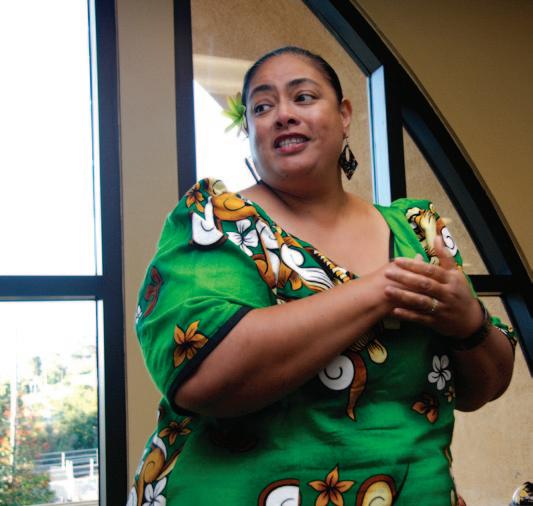
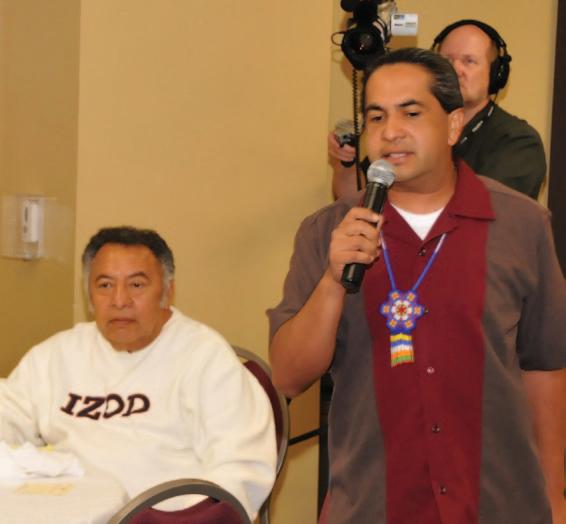
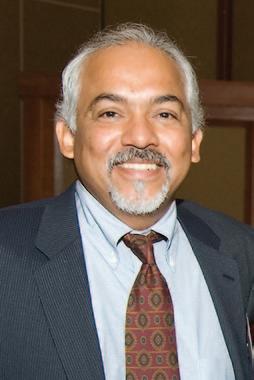
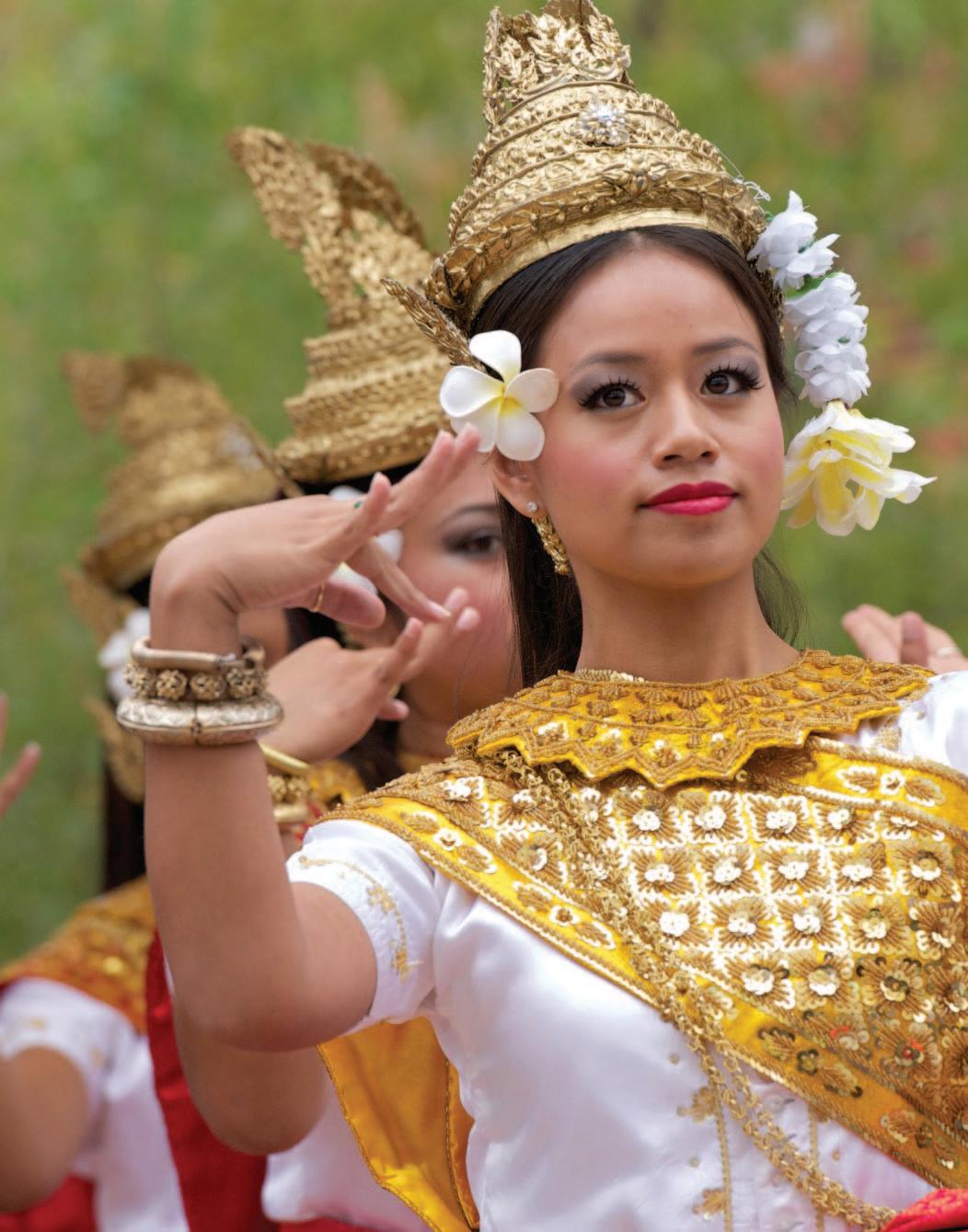
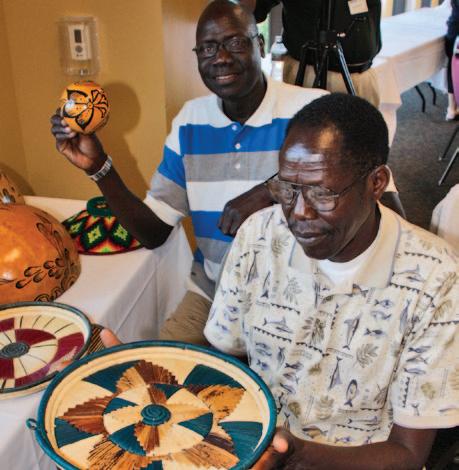
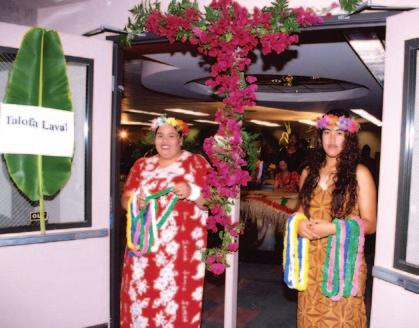
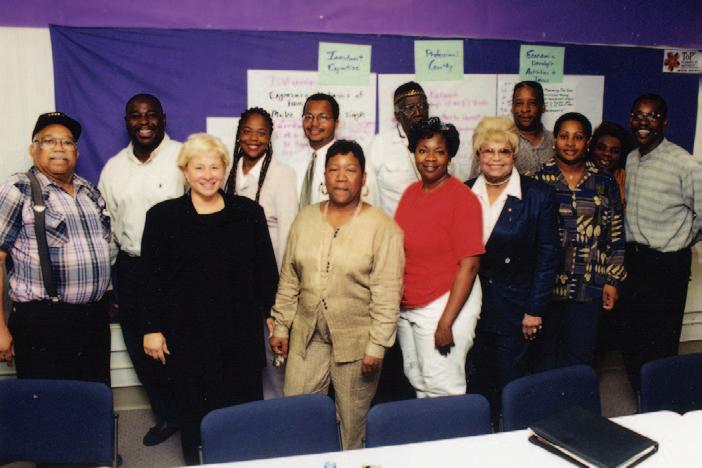
People are working for the opportunity to contribute to the common good. That’s my answer to how I know we’re making a difference.
– Bevelynn Bravo Community Resident
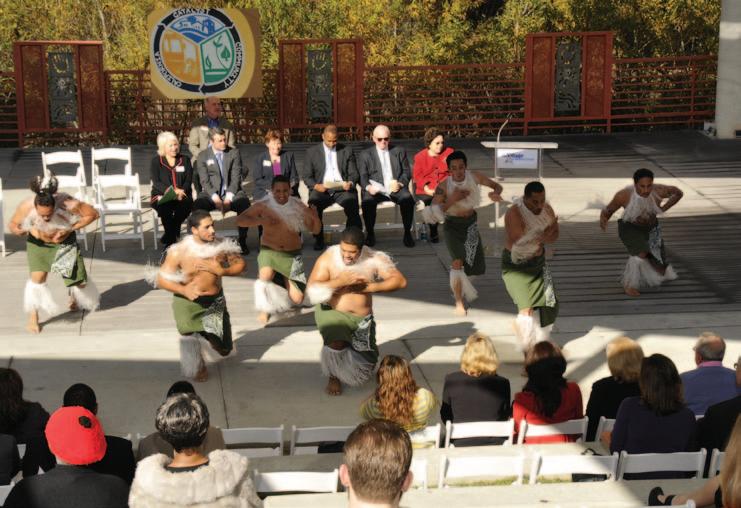
This kind of success buys involvement. It’s like really loving a movie and when you come out, you can’t wait to see the sequel. We are paving the road for those that will take it.
– Kiki Sotoa Solia Community
Resident
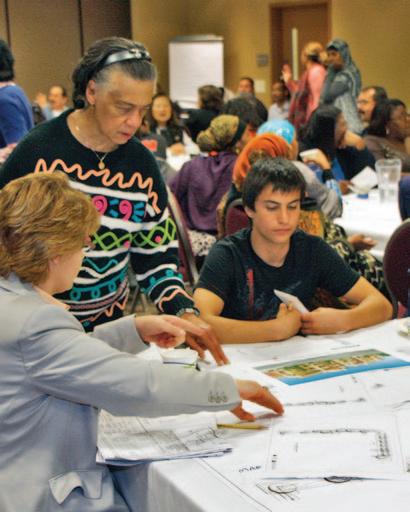
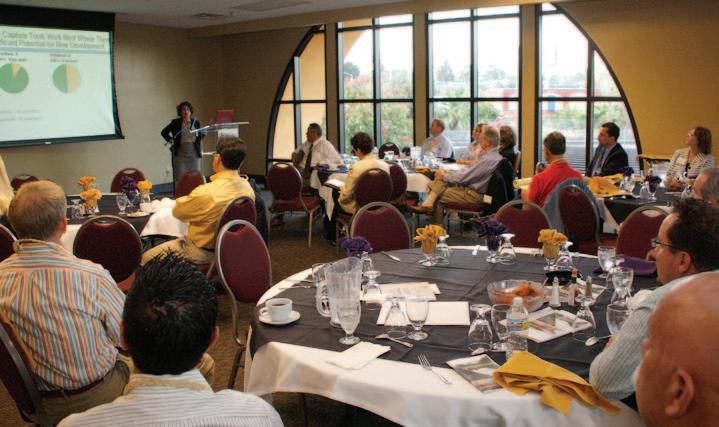
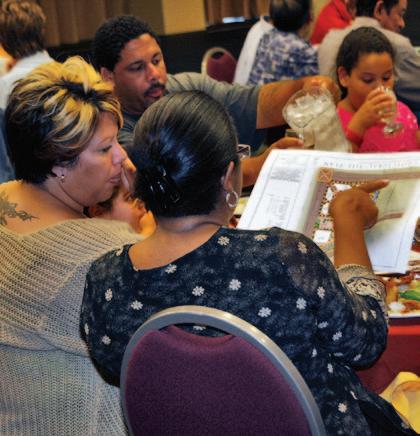
When I told my dad that our meetings had all these ethnicities, he said ‘that’s impossible!’ Then he came to the meeting. Now he found his voice. It opened a door.
– Macedonio Arteaga Community Resident
Letter from Roque Barros, Interim President & Chief Programs Officer
Jacobs Family Foundation
Jacobs Center for Neighborhood Innovation
Dear Friends and Partners,
In 1997, we started our work by knocking on doors and building relationships and connections to deepen our understanding of how to learn and work with the community. As we worked together, a vision started to develop and the residents began to unite around this new outlook for themselves and their community. In order to achieve the vision, it was vital that we build our capacity and the community’s capacity as well. This capacity building created new roles for the residents and for the Jacobs Center as we partnered in designing Market Creek Plaza.
We adopted a double-bottom line approach that required us to address the economic and social deficits that existed in the community. People needed jobs, but we didn’t have enough business to provide the jobs. People needed healthy fruits and vegetables, but we didn’t have the grocery stores to provide them. People wanted a safe place to live, but we had violence in the community. Working together with the residents over the last 13 years, new economic opportunities have been created, healthy options are now available, and programs are in place that are making our community a safer place to live.
Shared leadership and the sharing of resources have produced new networks that allow us to grow the vision and build The Village – The Village at Market Creek. We have come a long way and still have a long way to go. The journey is light and heavy at times; sometimes we celebrate and sometimes we reflect. In 2010 we had many successes and some challenges. As you read the following report, you will gain a thorough understanding of the successes and challenges we faced during the year:
• Economic activity in The Village was $94.6 million, up 30% from 2009, having more than tripled since 2004.
• At Market Creek Plaza, retail sales of $45.9 million were down 9% in 2010, but still far above projections of $31 million.
• Job counts in the Village have grown from the original seven to 590, but fell 18% in 2010 from their high in 2009.
• Guiding key land-use and program decisions, 826 residents participated on working teams, a 33% increase from the prior year.
• 300 youth participated in Village development activities, including internships, college touring, “green” initiatives, and health outreach.
• Nearly 49,000 residents and visitors attended events and participated in planning and programming in The Village in 2010, a 6% increase from 2009. The work is not over and in many cases it has just begun. We are in the process of looking at the work and roles involved in doing comprehensive, resident-led work and making sure that the capacity and resources necessary to sustain this work are in place. We thank our partners, investors, collaborators, and friends for supporting us and helping us get this far. We look forward to your continued support and guidance in making Resident Ownership of Neighborhood Change a reality!
2010 Hilights
The V
Village at Market Creek
The Village at Market Creek
Built on the strength of citizen action
Overview
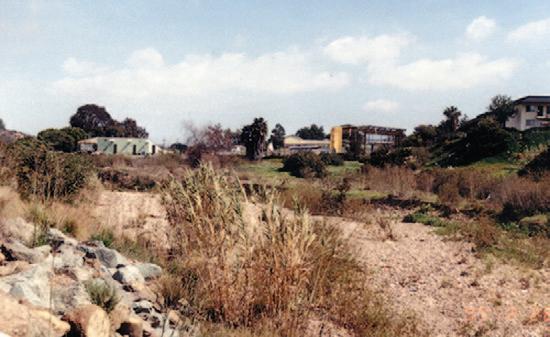
Market Creek Plaza was developed as a high-impact anchor project in an area of severe blight. Its original goal was to secure the community’s first grocery store, something that had been missing for more than 30 years.
Inspired by joint efforts and early successes, resident teams quickly expanded their vision to include a full commercial and cultural center. The project became a powerful platform for collective action and investment, with “resident ownership of neighborhood change” growing to mean ownership of the design, implementation, and assets of projects within The Village.
Market Creek shows that engaged residents can find the pathway to change and build communities of opportunity and caring. In teams, people develop strong and dynamic networks and build bridges to the broader region. This teamwork creates cross-cultural understanding, instills a sense of pride and ownership, and promotes problem solving. This opens doors to economic opportunity and improves the health, education, and safety of the community.
Today, Market Creek’s teams are putting the building blocks in place for a vibrant cultural village built on the strength of citizen action. As a learning resource for communities across the country, these teams are harnessing the markets, inspiring change throughout the country, and placing community ownership and resident voice at the center of social advancement.
The Village at Market Creek overview
The Cornerstones of The Village
Ownership — Residents own the planning, implementation, and assets. As such, they build the vision, skills, networks, and resources needed for change to be sustaining.
Partnership — New solutions require new voices and new ways to partner across sectors. Partnership provides a powerful platform for problem solving, shared risk, and strategic joint action.
Innovation — Creativity, risk-taking, and a can-do spirit must be nurtured for people to realize their dreams. Innovation emerges when teamwork fosters creativity and breakthroughs.
Learning — Learning together builds trust and understanding. It helps us see what is working and what isn’t, so we can accelerate change.
The Village Residents Envision
The Village at Market Creek is envisioned as a vibrant residential, commercial, and cultural district built upon the extraordinary strength of diverse residents working together on issues of common concern. Planned, owned, and operated by community stakeholders, The Village will provide residents a direct economic stake in neighborhood change.
Centered around a major transit hub, The Village will transform more than 60 acres of blighted land into productive use; replace substandard housing with nearly 1,000 quality, affordable homes; and restore nearly 5,500 linear feet of wetlands. Over 1.6 million square feet of new construction will bring more than $300 million in contracts to the community, attracting over 250 new businesses and 2,000 jobs.
As they plan, Village teams are focused on sustainability social, economic, and environmental. Challenged to think long term about health, green buildings, solar energy generation, and water usage side by side with the financial structures to sustain parks, support cultural venues, and build jobs, teams work at the intersection of long-term community ownership and smart growth.
Planning Circles
This report documents movement toward resident ownership and community capacity in six interconnected planning areas: civic engagement, arts & culture, physical development, social infrastructure, economic opportunity, and shared learning.
Community Vision & Voice
Partnerships & Shared Learning
Community & Cultural Arts
The Village at Market Creek Planning Circles
Community Enterprise & Ownership
A Comprehensive View of Change
The Village at Market Creek encompasses six interconnected planning circles
1. Community Vision & Voice
Family & Community Networks
The Built Environment
Residents actively engaged across cultures, neighborhoods, generations, and faiths in planning, implementing, and owning change in their community, and celebrating the rich multicultural traditions that form the foundation of the cultural village.
2. Community & Cultural Arts
Residents igniting the creative spirit through arts and culture, honoring and celebrating traditions, and shaping a dynamic sense of place reinforced by a spirit of unity.
3. The Built Environment
Residents reclaiming wide-scale blight and transforming the heart of their community into a vibrant, mixed-use, transit-oriented village that fosters environmental sustainability, social equity, and the local ownership of assets.
4. Family & Community Networks
Residents weaving a strong social infrastructure connecting as neighbors, bridging organizations and institutions, and forming the collaborative leadership needed to create safe and vibrant places, energize learning, promote health, and support the full potential of young people.
5. Community Enterprise & Ownership
Residents expanding economic opportunity by developing community-owned, socially responsible enterprises that bring essential services, create jobs, expand contracting opportunities, and build community wealth.
6. Partnerships & Shared Learning
Residents engaged in learning by doing, connecting with other teams from across the country to share approaches, lessons, and impact, and stimulating ongoing innovation in resident-led community change.
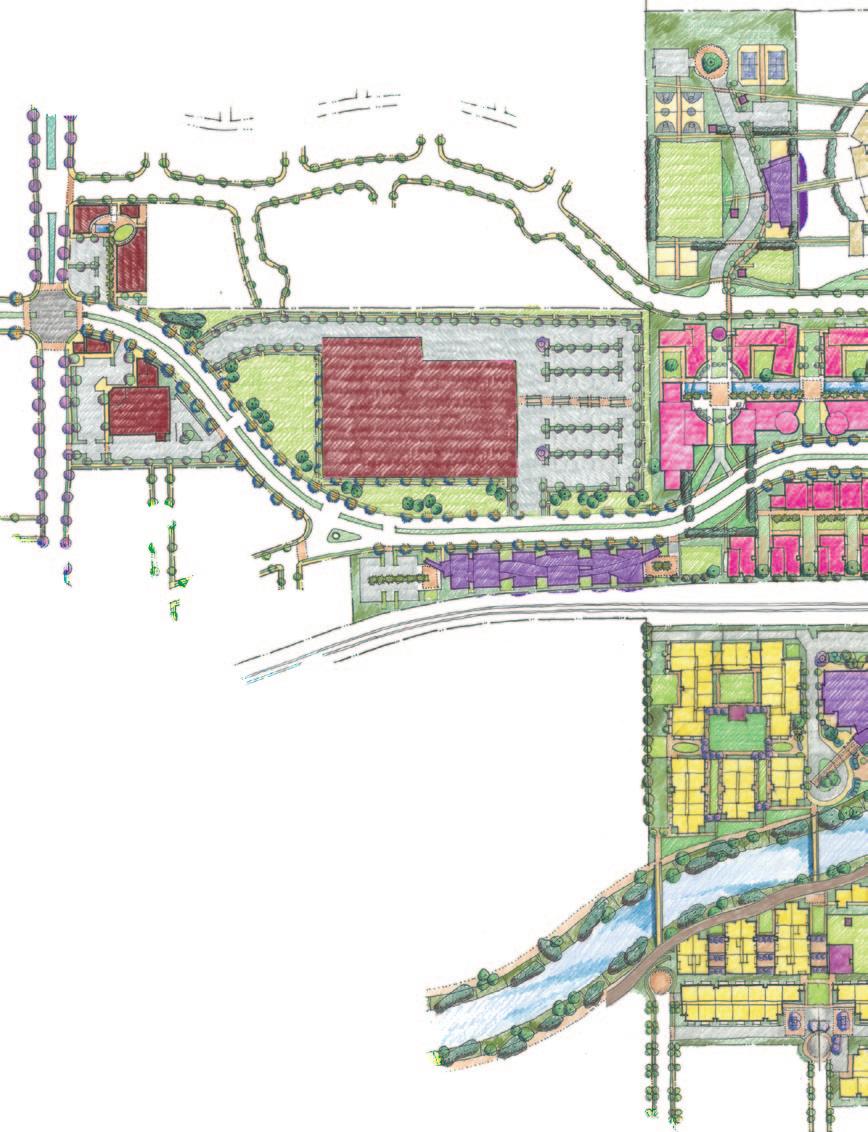
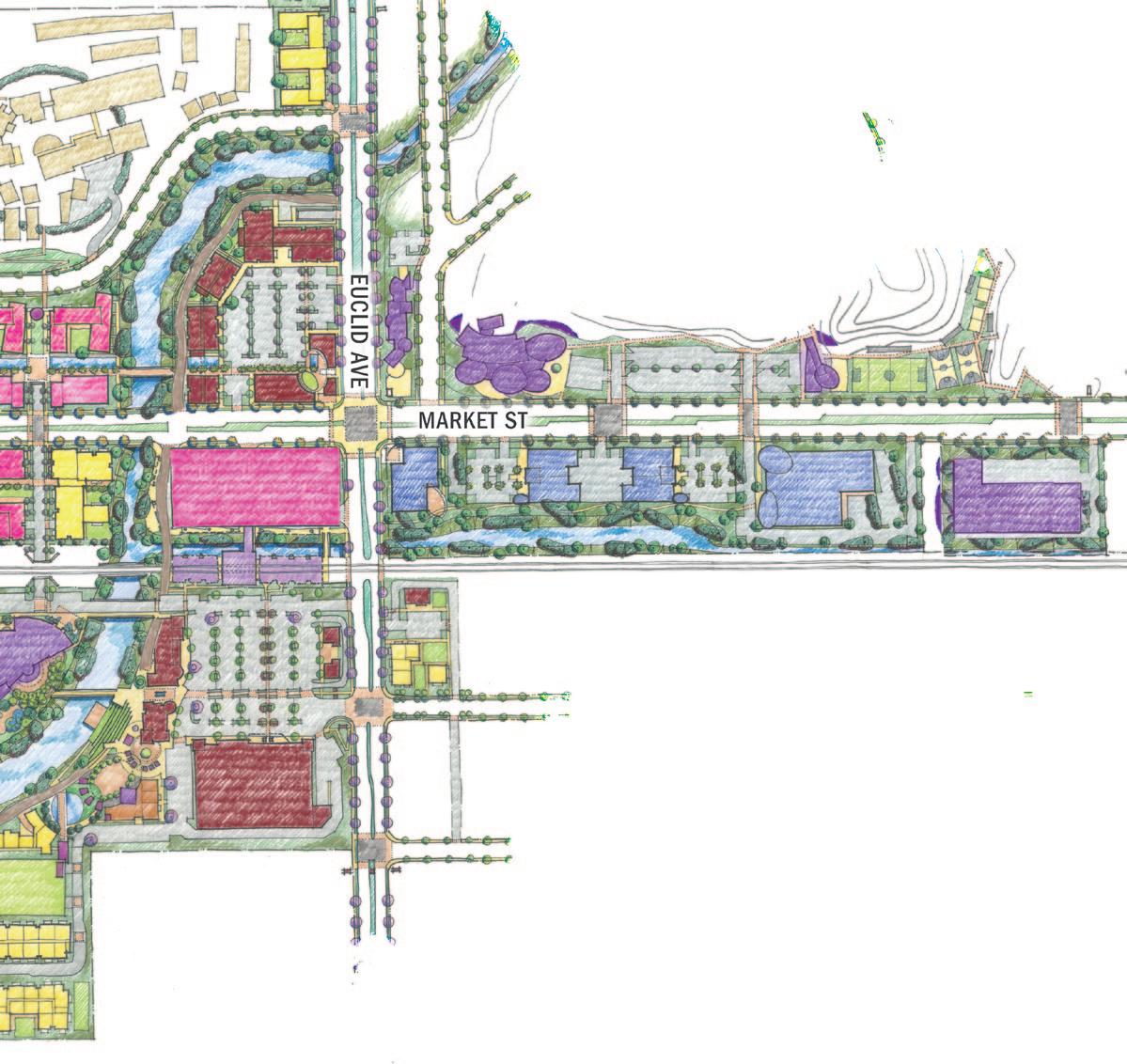
Map of The Village at Market Creek
The Village at Market Creek
The Village: 2010
Commercial & Industrial
Projects
Market Creek Plaza
BRYCO Business Park
Non-Profit & Public Facilities
Elementary Institute of Science
Horton Elementary School
Joe & Vi Jacobs Center
Valencia Park/Malcolm X Library
Tubman-Chavez
Multicultural Center
The Old Globe Technical Center
Amenities
Chollas Creek River Parkway (Phase 1)
Festival Park
Market Creek Amphitheater
World Courtyard
Art Installations
See Community & Cultural Arts on Page 21
The Village at Market Creek
The Village Development (When
Re sident Voice
Community Vision & Voice
Engaged citizens driving change
Overview
The Village at Market Creek is about neighbors creating the change they want to see.
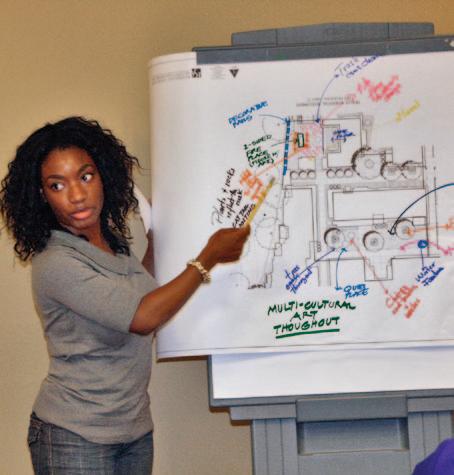
Market Creek’s working teams unite residents across neighborhoods, cultures, faiths, and generations to strengthen joint action and increase the ability of people to break down barriers, engage in the creative exchange of ideas, and get things done .
As engaged citizens, residents are creating their dynamic vision of a village built on the rich cultural diversity of their community, a commitment to joint action, and a strong youth voice. Working together in teams, residents promote understanding, encourage creativity and problem solving, share risk, strengthen relationships, and build leadership.
Market Creek is built on the belief that a high level of participation by all stakeholders is needed to tackle today’s complex issues. Ultimately, these relationships and networks are the foundation for the long-term sustainability of community change.
GUIDING
goal Community Vision & Voice principles
• Look to people for solutions to problems in their community
• Never stop listening, never stop engaging
• Listen to all voices and embrace differences
• Honor the community’s pace
48,932
involved in activities and events in The Village — up 6% from previous year.
residents were involved in 44 working teams 916
civic engagement
Large-scale, cross-cultural resident participation in the planning, decision-making, implementation, and ownership of change.
What We Are Trying to Accomplish
to support large-scale civic work in The Village focuses achieving the following:
Civic Participation
• A critical mass of residents, representing the diversity of the community, working on issues of common concern
• An increasing number of people participating in Village activities and events, growing The Village brand as a vibrant cultural gathering place and regional hub
Outreach & Organizing
• Networks that can organize within and across neighborhoods, cultures, faiths, and generations
• Resident capacity to develop ongoing leadership and expand community involvement in civic life
Youth Development
• Systems for strengthening and expanding youth leadership
• Networks that ensure broad youth inclusion in community issues and planning
How the Work Has Grown The Beginning
The Village resident engagement work began in 1998 with an Outreach Team that was formed to survey other residents about what businesses and services they wanted in their neighborhood. Quarterly Open Houses offered open forums for community residents to ask questions, provide feedback, learn how to get more involved, and stay connected to the work.
The initial Outreach Team became the model for resident Working Teams
Each time a new phase of the work was launched, a new team was created to address the planning, and smaller groups of residents were hired as consultants to help implement the goals. These teams were time-specific and had a clear goal to be achieved.
The Movement to Community Coordinators
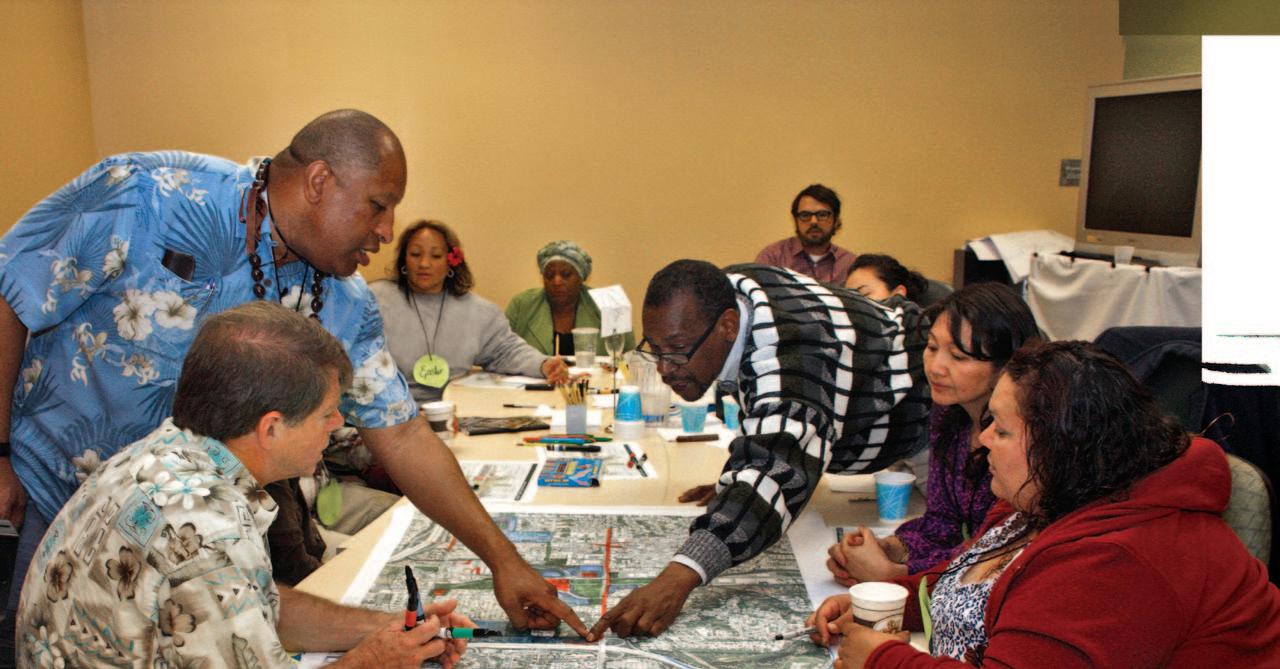
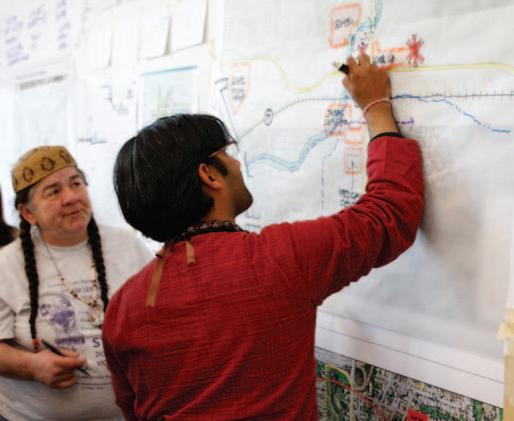
As the need for deeper community listening expanded, residents hosted “living room meetings” with their neighbors to listen to their vision for their community and find issues of common concern. Resident leaders were identified
through this process for a Community Coordinators training program. The Outreach Team, which had been a survey group, phased out, and these Community Coordinators assumed the role of fulltime community organizers.
As Working Teams grew, a Working Teams Council was launched to provide an open forum for all teams to keep updated about the broader work and promote accountability to the larger community. To ensure that representatives of each team could take active roles in the larger forums, a Village Teams Luncheon was hosted. Representatives from each Working Team reported at these open forums.
Organizing through International Outreach
To ensure that issue-specific teams did not disconnect from each other and the work stayed coordinated, Mix-andMatch Teams were formed to distribute expertise. This provided a way for residents to share differing opinions and perspectives and make decisions that achieved both social and economic goals. To deepen the engagement of specific cultural communities and work to strengthen cross-cultural understanding, an International Outreach Team was formed that included residents from each major cultural group from the community.
As the work expanded from Market Creek Plaza to The Village at Market Creek, the Working Teams Council name shifted to Village Teams Council and continued as the town hall forum for large cross-team interaction
VOCAL and The Village Planning Circles
In 2009, the International Outreach Team expanded to form the VOCAL Network (Voices of Community at All Levels). VOCAL included the nine cultural groups from the International Outreach team and representatives from nine additional community networks. VOCAL once again expanded outreach and resident voice in the planning and decisionmaking for The Village work.
Resident Working Teams were consolidated into the Village Planning Circles, covering civic, cultural, physical, social, and economic development. The town hall meetings were renamed Village Center Meetings and VOCAL did the organizing to ensure large network turnout. The Community Coordinators planned and conducted the meetings.
Looking Ahead
In the coming year, this network of resident teams will discover the next generation of structures and team formats to advance resident skills, involvement, and decision-making in all aspects of The Village. The goal is for these teams to arrive at a governance framework and sustaining structure for large-scale citizen action, ensuring ongoing Community Vision and Voice.
Community Vision & Voice 2010 Progress
Civic Participation
• Community listening, conducted through surveys and focus groups, documented 3,801 responses to various Village planning efforts to ensure a strong resident voice in the vision of The Village 2 ½ times the number of people reached from the previous year.
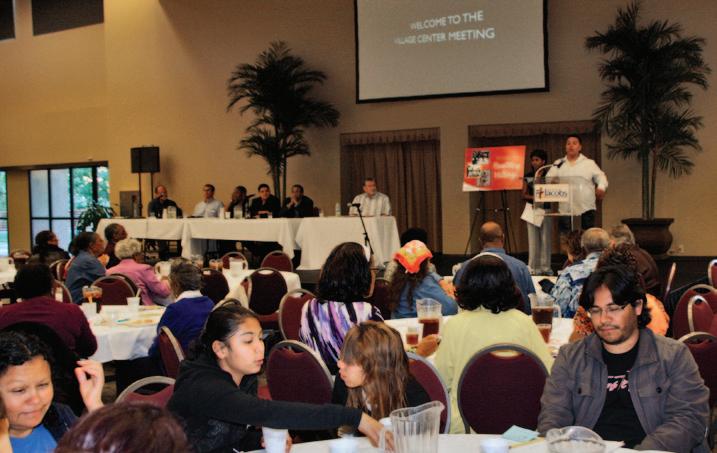
• Participation in Village Center Meetings totaled 1,965, up 9% from the previous year. These town hall meetings provided a forum for feedback from a broad range of community residents representing the various community networks and cultural groups.
• Demonstrating the growing vibrancy of The Village, participation in Village activities and events grew 6% from the prior year to nearly 49,000 people. This is an increase of over 600% since 2005, when Market Creek Plaza was first completed.
Outreach & Organizing
• The VOCAL Network Voices of Community at All Levels formed in 2009 and activated in 2010 as a group of 18 community and cultural networks, including representation from major cultural groups, neighborhood councils, school networks, Market Creek ownership networks, the Youth Movement, and other community organizations.
• Going beyond providing feedback on issues and plans, 826 residents actively participated on working teams, many of them convening weekly in order to achieve key deadlines and move Village planning forward a 33% increase from the prior year.
• Since 1998, Working Teams have served as the primary platform for residents to lead change in revitalizing their neighborhood. The purpose and make-up of these teams vary depending on the work to be accomplished. To date, 44 distinct teams have been initiated to plan and implement Village work.
Youth Development
• To ensure a strong youth voice in all Village planning, two full-time Youth Movement staff and five part-time interns received training in outreach and organizing. Once the training was completed, the youth were assigned to work with VOCAL and each of the Village planning circles, covering civic, social, economic, and physical development.
• Over 300 youth participated in Village development activities and events, including a college campus tour, the youth health initiative, the Lincoln High School campus recycling initiative, a youth-organized investment club, training in digital storytelling, various fundraisers, and resident youth meetings.
Community Activities and Events Attendance
2010 Highlights
Community Vision & Voice
Members of the VOCAL Network took a leadership role in ensuring broad representation from the various community and cultural groups and kept people connected and informed.
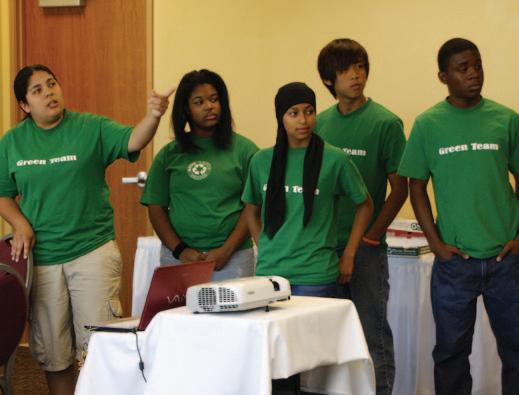
The Youth Movement organized a collaborative effort with the Lincoln High School Green Team, an afterschool student group dedicated to environmental issues and education. Together they created a video to raise awareness among students on the benefits of recycling on their campus.
The VOCAL Network
CHE’LU, Inc. (Chamorro Hands in Education Links Unity)
Chollas View Neighborhood Council
Diamond Community Investors
Emerald Hills Neighborhood Council
Izcalli
Jacobs Center for Neighborhood Innovation Community Coordinators
Kumeyaay Historical Society
Lao Community Cultural Center
Lincoln High School, School of Social Justice
Neighborhood Unity Foundation
PASACAT (Philippine American Society and Cultural Arts Troupe)
Project Safe Way
Samoan Community Council of San Diego
Somali Youth United
South Sudan Development Association
UAAMAC (United African American Ministerial Action Council)
Valencia Park Elementary School PTA
The Youth Movement
Village Center meetings were planned and organized by residents.
VOCAL met once a week and held three day-long retreats to work on updating the comprehensive Village Master Plan.
Arts & Culture
Community & Cultural Arts
Igniting the Creativity for Change
Overview
Market Creek is about advancing a global community.
Arts and culture has been the galvanizing force for residents who would have otherwise kept to themselves. It has brought people together to vision and plan, to create, and to develop stronger bonds. What started as a diverse group of community members engaged in planning the art and design of Market Creek Plaza is now a regional platform for cross-cultural and cross-generational understanding through the arts.
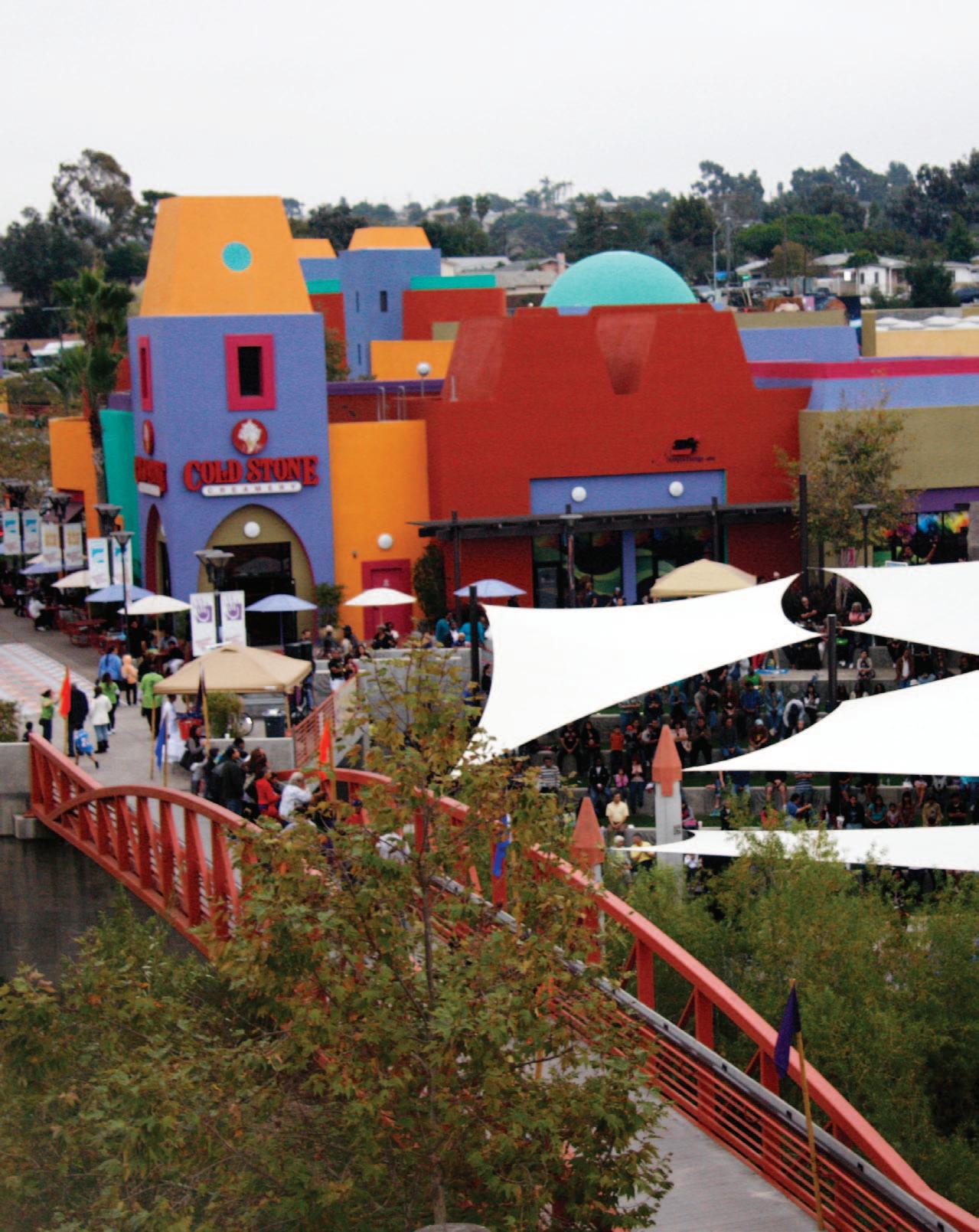
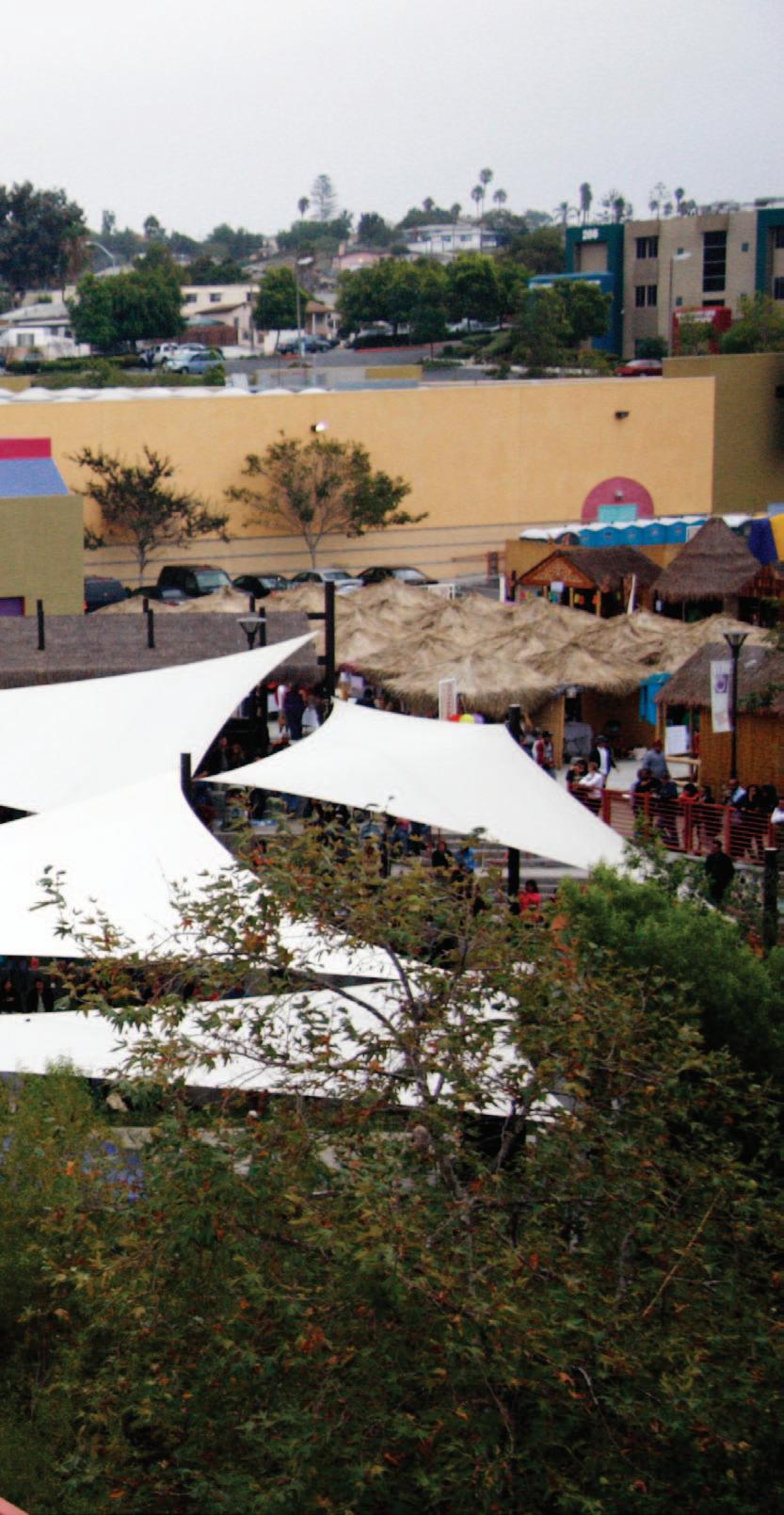
The Village at Market Creek is emerging as a cultural destination for the San Diego region. Award-winning architecture, cultural art integrated into concrete and canvas, indoor and outdoor stages, arts venues, and galleries have attracted many of San Diego’s cultural communities to make Market Creek home to their cultural celebrations.
From resident teams engaged in “placemaking” by creating unique public spaces and cultural venues, to those partnering with San Diego’s great art institutions on performances and exhibits, Market Creek is a place where people of all backgrounds enjoy a platform for discussion that crosses gender, generation, race, and income to address social issues of concern in an atmosphere of creativity and human connection.
Community & Cultural Arts arts & culture
Connecting people across cultures, bridging understanding, promoting creative expression, shaping a dynamic sense of place that honors and celebrates traditions, and building economic opportunity reinforced by a spirit of unity.
What We Are Trying to Accomplish
In order to support the cultural development of The Village, work focuses on achieving the following:
Village Art & Identity
• A strong community identity as a dynamic cultural destination
How the Work Has Grown The Beginning
• Build on the cultural and artistic strengths of the community
• Nurture the natural creativity of people in all undertakings and support artistic expression
• Provide platform for exploring human experience and bridging differences
• Build understanding by celebrating together, sharing stories, and uplifting traditions
24,550
• A sense of place built on the strength of diverse cultural traditions and art as part of everyday life
Cultural Celebrations & Understanding
• Cultural groups working and celebrating their diverse traditions together
• Platform for showcasing and strengthening the role and contribution of The Village in San Diego’s broader arts and culture community
The Center for Community & Cultural Arts
• Creation of a gallery space and conceptual framework that bridge cultures, generations, communities, and art forms
• Venues and programming that engage people through arts and culture in conversations about key social issues that impact their daily lives
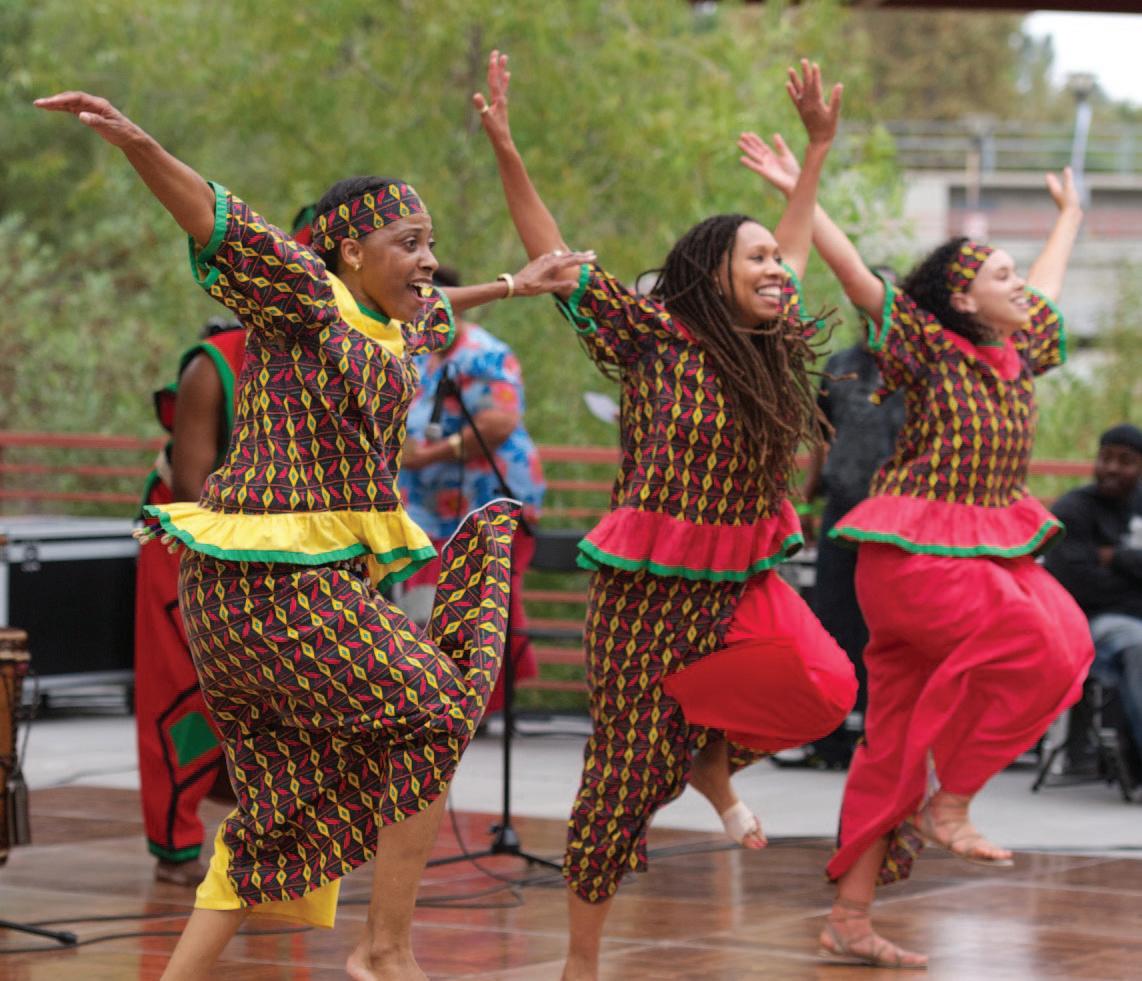
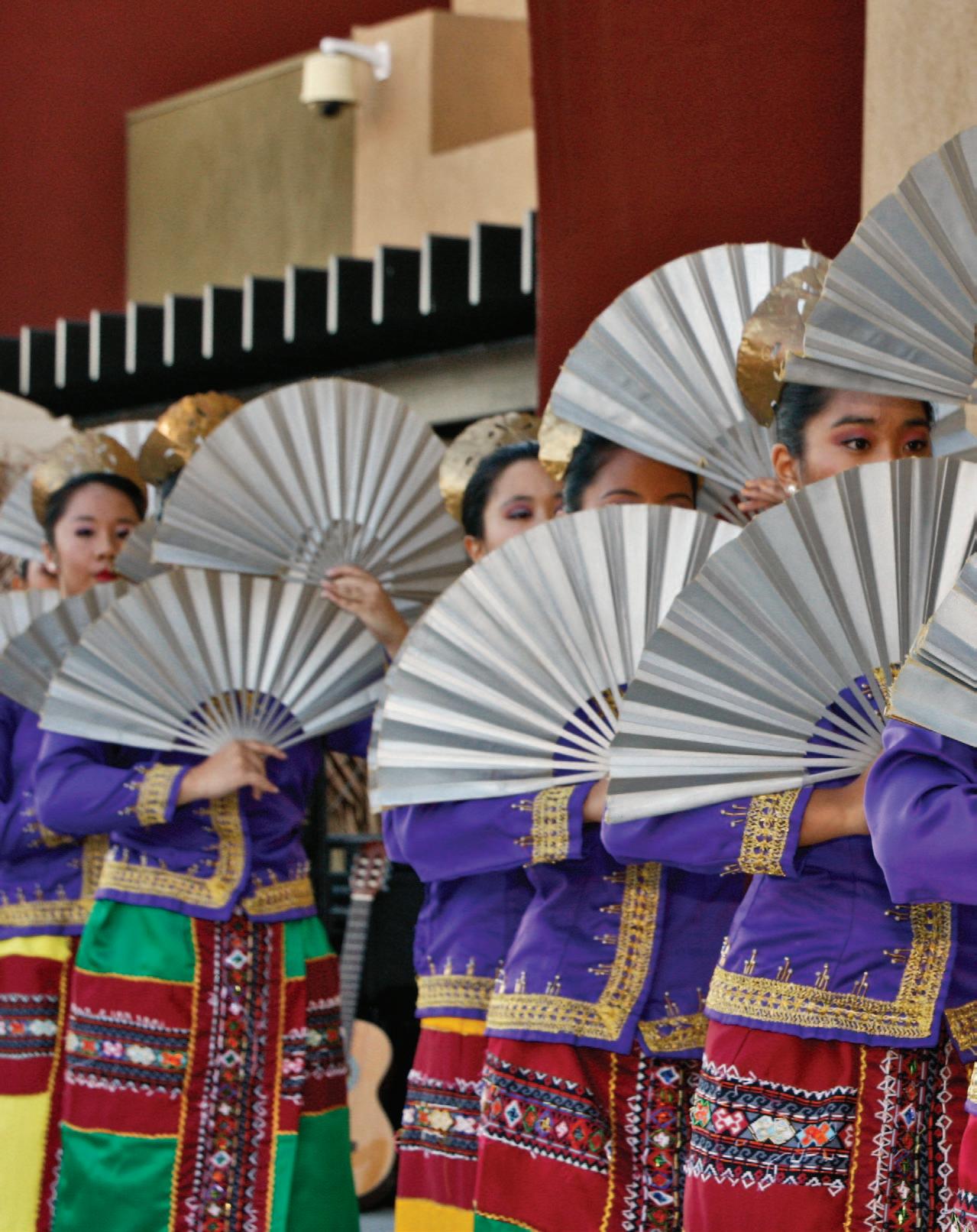
The Diamond Neighborhoods are rich with diverse cultures, art, and traditions. From the earliest organizing efforts, the Outreach Team sought ways to create cross-cultural understanding and unity. Among the first activities was a series of Ethnic Nights, monthly events put on by residents from each of the major cultural groups. These evening events showcased and celebrated the history and heritage of people who lived in the community through art, displays, cultural song, dance, and traditional food.
Following quickly on this momentum, an Art and Design Team became one of Market Creek Plaza’s first Working Teams, created to guide the development of the architectural character and colors of the supermarket and other buildings. Residents brought forth their artistic heritage designs, textiles, tapestries, patterns, and architecture unique to
People attended Village cultural celebrations
their cultures and by doing this discovered their commonality. The result was a unique, award-winning design that captured the beauty and spirit of the community’s diverse backgrounds, while reflecting the aspirations of a united multicultural community.
The Emergence of a Cultural Village
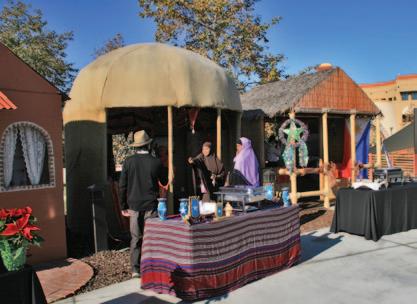
The site dedication for Market Creek Plaza in 1999 marked the beginning of the physical transformation of The Village and gave rise to discussions of Market Creek as a cultural village. Following the series of Ethnic Nights, teams held a Unity Night at which all the cultures joined together in sharing and learning. As part of this celebration, each cultural group built a replica of a shelter from their native land, and shared blessings and celebratory entertainment. Called a Cultural Village, these temporary houses brought a heightened sense of place to the site that was being dedicated.
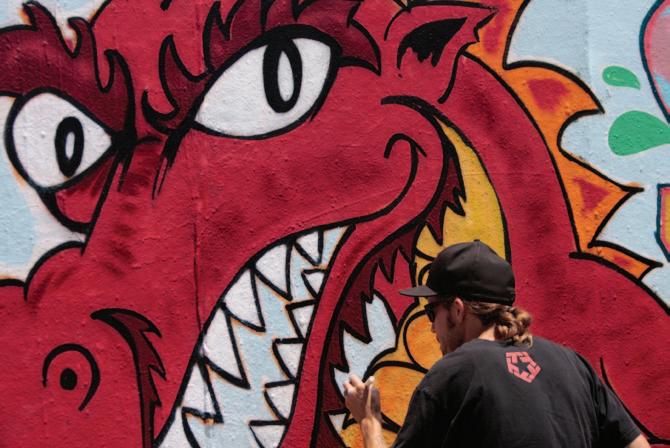
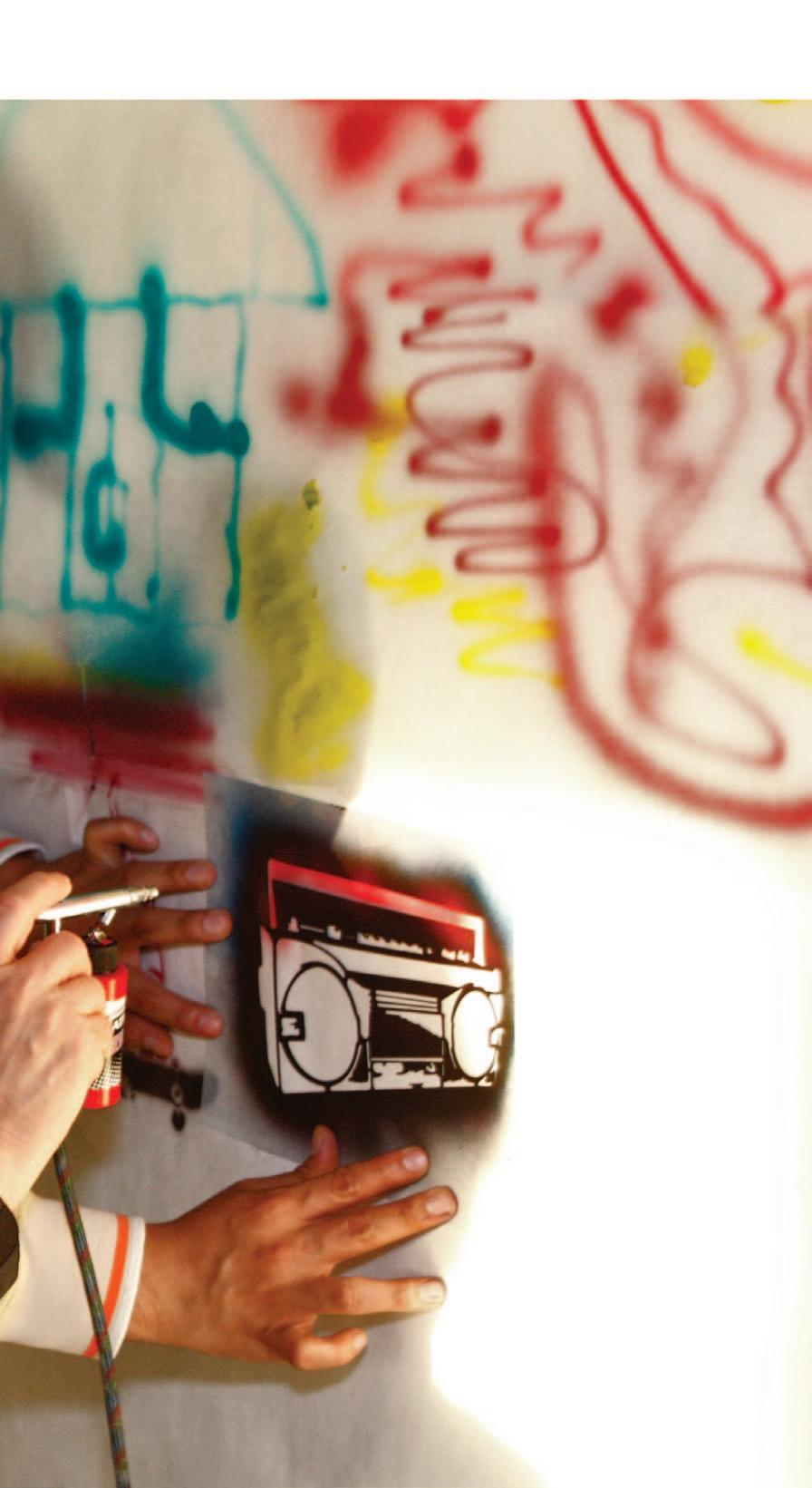
Young people also got involved creating murals to reflect a “world village” through graffiti art. The momentum generated by this project led to dedicating an adjacent lot for art panels and free spray paint. Youth formed the “Graff Creek” team to oversee the fledgling art park and encourage youth to learn about graffiti as an art form.
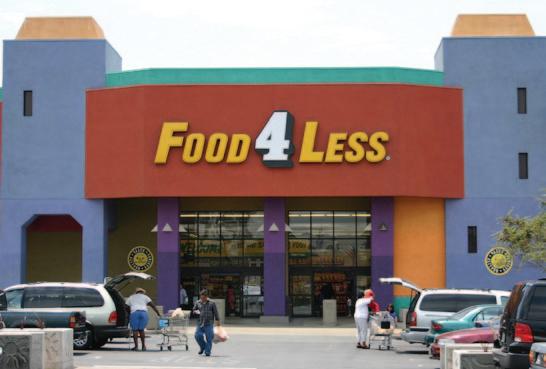
At the heart of Market Creek Plaza, resident teams wanted a performance venue for the ongoing expression of dance and song. The 500-seat outdoor Market Creek Amphitheater was built as a venue to showcase both local and international performing arts talent, as well as to create a gathering place for community celebrations and cultural events. In 2001, soon after the dedication of the Food 4 Less grocery store, a resident team conducted a talent search and held the first major event in the amphitheater, showcasing the artistic creativity in the community.
Art as Part of Everyday Life
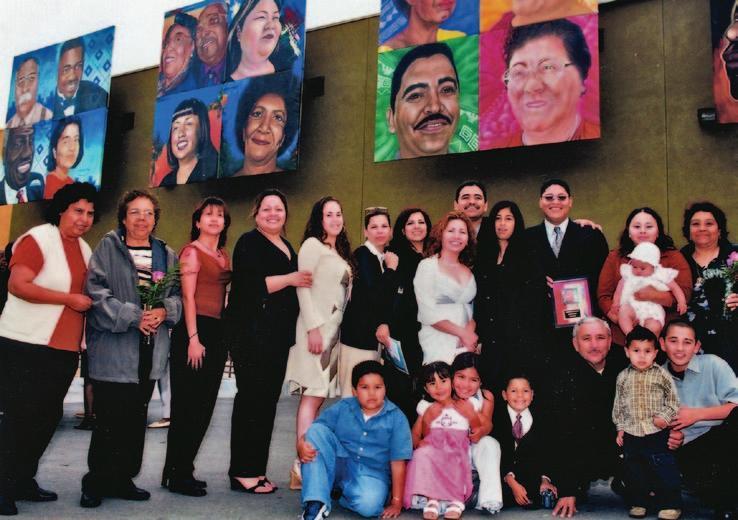
One of the goals of the Art and Design Team was to make art central to the everyday experience at Market Creek Plaza. To begin implementing this goal, the team transitioned into an Arts and Culture Team and began working on Market Creek’s first major public art project, Community Faces. Twentyfour panels, eight feet in scale, feature community members in portraits created by community artists and displayed on the sides of Food 4 Less.
Community & Cultural Arts
The project involved 12 community artists, 27 honorees, and 20 youth who were trained in videography and storytelling and created an award-winning video of the lives of the honorees.
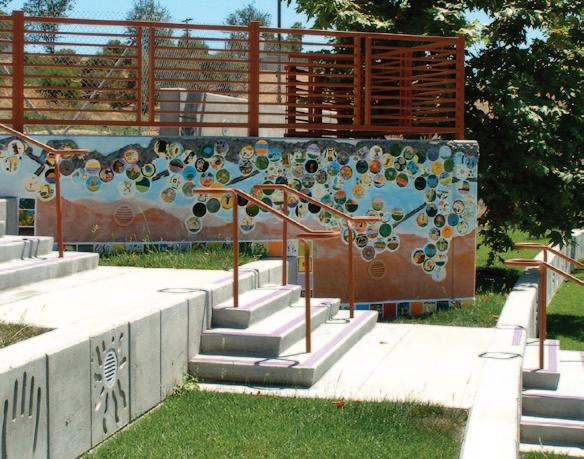
The Arts and Culture Team also coordinated the Children’s Wall project. Funded by Sempra Energy, a team of community artists worked with over 600 neighborhood children to create their own signature hand-painted tiles. These
arts institutions and community arts and cultural groups involved in the Cultural Learning Partnership
tiles were then blended into a mosaic of a tree on a retaining wall overlooking Chollas Creek at the Amphitheater.
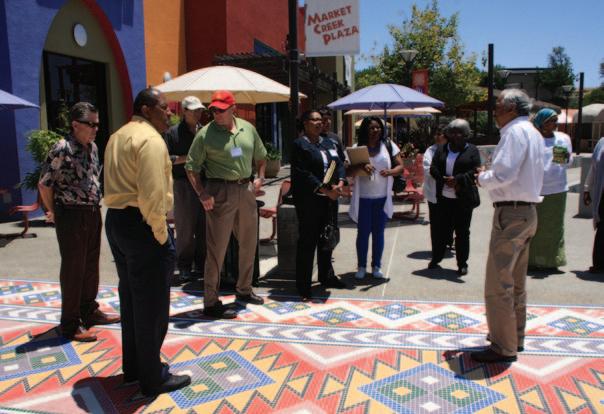
To spotlight the individual cultures, the Arts and Culture Team also planned for cultural tapestries to be built into the Plaza’s walkways. With funding in place, the African Batik Tile Tapestry and Lao Walkway Tile Tapestry were created, installed, and dedicated.
As the Graff Creek team grew its participation, the graffiti art park moved to a site that could provide for over 13,000 square feet of art panels. The team changed its name to Writerz Blok and expanded to teaching mural art and training youth in graphic design, silk screening, and poster printing, and eventually added a range of incomeproducing activities, putting young people’s gifts and talents to work.
A Center of Arts and Culture
In 2005, the formation of the International Outreach Team deepened and broadened the cultural outreach
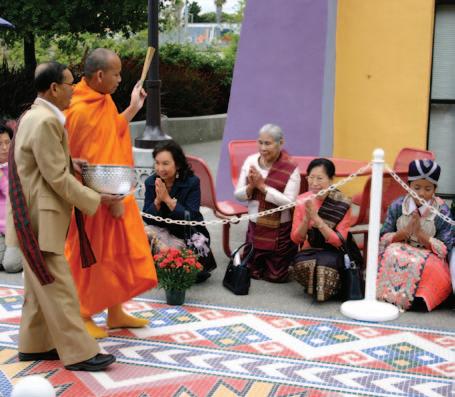
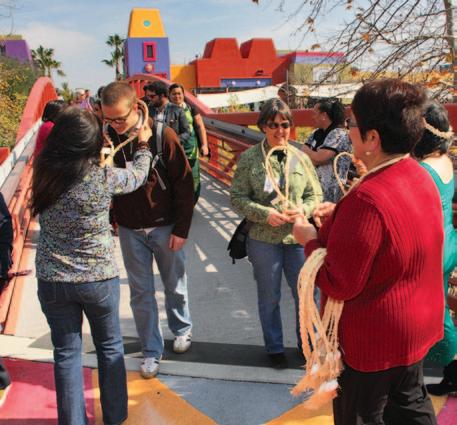
and organizing and strengthened the cross-cultural learning. This team brought the momentum and magic of the early Unity Night and the village of cultural houses together into an annual signature event for Market Creek — the Arts & Culture Fest . Originally, seven temporary cultural houses became permanent and were placed around a World Courtyard next to the Amphitheater. During the festival, residents hosted workshops on their cultures and celebrated with cultural entertainment and food. As cross-cultural organizing expanded, participation in the Fest grew into the thousands
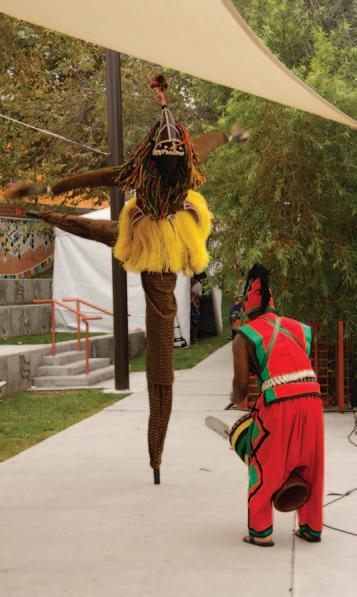
Over time, the Plaza grew into a cultural gathering place. Every month from January through September, a different culture celebrates its heritage in The Village, culminating with the Arts & Culture Fest. Along with these celebrations, a Family Summer Series was launched featuring weekly Friday Family Movie Nights, Saturday Cultural Celebrations, and Gospel Sundays.
By 2007, Market Creek teams had expanded the focus from 10 acres to 60 and envisioned a cultural destination. The Joe & Vi Jacobs Center was being planned as the centerpiece of The Village at Market Creek. Within this new Center, planning teams wanted a 10,000-square-foot events venue to host larger events. A new social enterprise was created to support this activity and brand Market Creek’s venues as a premier arts and culture destination.
Community & Cultural Arts
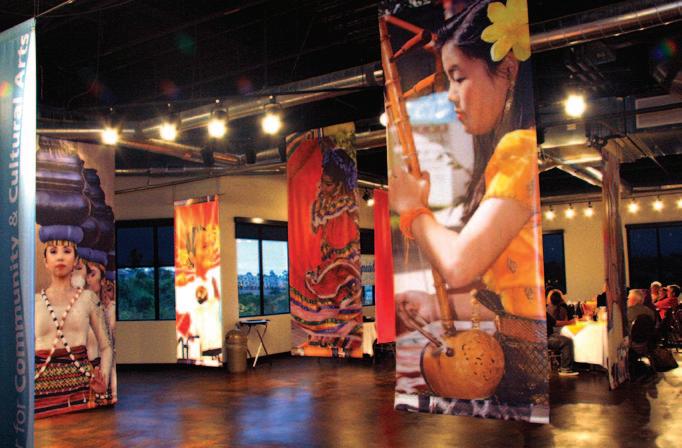
An additional outdoor stage was added and community artists created cultural art banners and filled its 27 cultural niches with dynamic art and artifacts. Under the leadership of The Legler Benbough Foundation and the San Diego Museum of Art, 2010 gave rise to a larger network called the Cultural Learning Partnership. Nine major cultural groups and five of San Diego’s leading art museums came together to create the Center for Community & Cultural Arts. Envisioned as a “cultural bridge” between the community and Balboa Park (San Diego’s art mecca), joint programming and exhibits were launched.
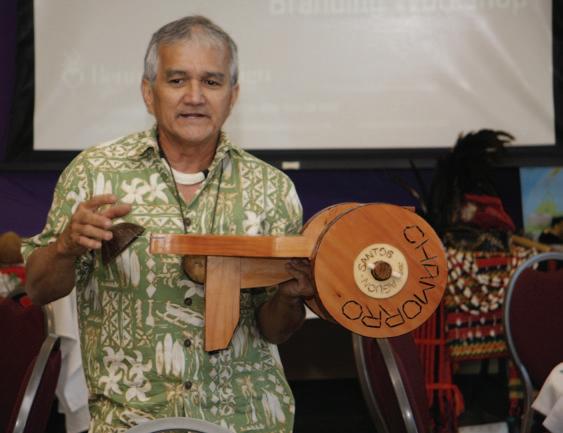
2010 also saw the addition of the eighth cultural house to the World Courtyard, the Chamorro House, and the work of
the VOCAL Network to strengthen plans for the cultural branding of The Village.
Looking Ahead
Next year, the launch of a major arts overlay to The Village Master Plan with funding from the National Endowment for the Arts, planning for a cultural arts district, the first cross-cultural museum-community exhibition, and the continued growth of the arts and culture momentum, are all on the agenda.
Major Cultural Celebrations Held in The Village (Cumulative)
Asian Film Fest
Chamorro Cultural Fest
Cinco de Mayo Celebration
Fiestas Patrias
Filipino Fiesta
Heritage Day Parade & Festival
Juneteenth
Lao New Year Festival
Martin Luther King, Jr. Community Breakfast
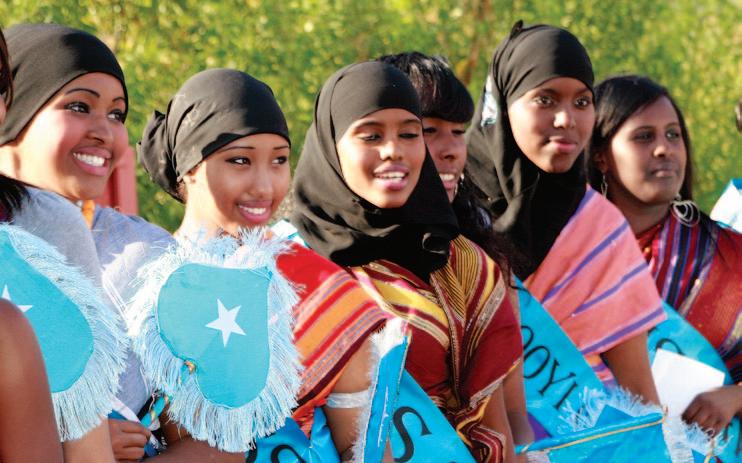
Somali Independence Day 50th Anniversary Dinner
Somali American Cultural Day
Samoan Festival
The Village Arts & Culture Fest
Parol Festival
Art Installations and Cultural Venues in The Village
African Batik Tile Tapestry
Celebration Hall & Outdoor Stage
Community Faces Mural Project
Cultures of the Diamond Mural
Firefly Dreams Bronze Sculpture
Jacobs Center Cultural Banners
Lao Walkway Tile Tapestry
Market Creek Amphitheater
Sempra Energy Children’s Wall
Writerz Blok Graffiti Art Park
World Courtyard and Cultural Houses
Community & Cultural Arts 2010 Progress
Village Art & Identity
• The 40-member VOCAL team initiated planning for cultural branding of The Village, holding a series of cross-cultural learning sessions involving more than 500 people to lay the foundation for arts district planning.
• Writerz Blok, the innovative urban art park and social enterprise, drew an estimated 1,255 people to its activities and events, ranging from aerosol art and mural painting, graphic design, silk screening, exhibits, and video events.
• Writerz Blok deepened its relationship with the Balboa Park museums this year. The Old Globe theater invited them to create backdrops for a hip-hop drama called Welcome to Arroyo’s
Cultural Celebrations & Understanding
• 14 major cultural events brought an estimated 24,550 people to The Village.
• Up 63% from the prior year, 196 community artists participated in Village activities and projects and 120 residents participated in in-depth cross-cultural training
• More than 5,000 people attended the 2010 Arts & Culture Fest, a six-month planning and capacitybuilding effort with multiple stages, exhibits, cultural food, arts activities, and cross-cultural learning.
196 people attended activities at Writerz Blok Urban Art Park
community artists involved in Village events and projects
1,255
The Center for Community & Cultural Arts
• The Center for Community & Cultural Arts was launched by a group of arts institutions and community arts and cultural groups as part of the Cultural Learning Partnership.
• Through the leadership and support of The Legler Benbough Foundation, a 4,700-squarefoot gallery was built on the second floor of the Joe & Vi Jacobs Center to showcase exhibits put together by the Partnership.
The Cultural Learning Partnership, a group of five San Diego arts institutions, nine cultural groups from The Village, and other southeastern San Diego residents, worked together to initiate the Center for Community & Cultural Arts. The team initiated construction on the exhibit and arts programming space on the second floor of the Joe & Vi Jacobs Center.
2010 HighlightsCommunity & Cultural Arts
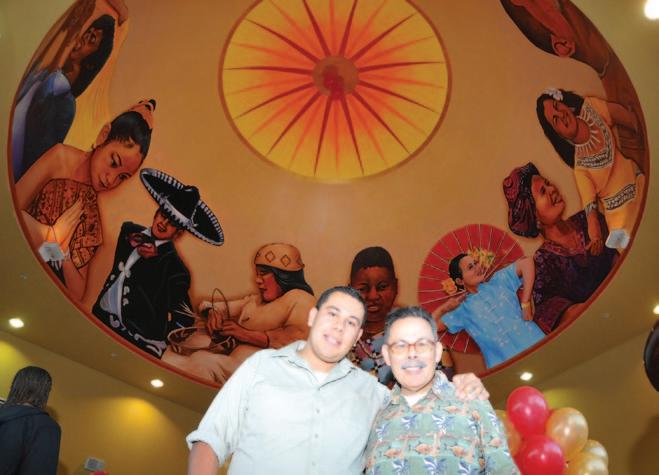
A new mural on the dome inside Asia Work restaurant celebrates culture with 8-foot figures designed and painted by local artist Sal Barajas and his son, Sal Junior.
In July, national and international graffiti artists drew more than 400 people to the Writerz Blok Urban Art Park for a graffiti art showcase, promoting the positive aspects of the art form.
Organizations in the Cultural Learning Partnership
The Legler Benbough Foundation
Casa del Rey Moro African Museum
CHE’LU, Inc.
Fiestas Patrias Committee
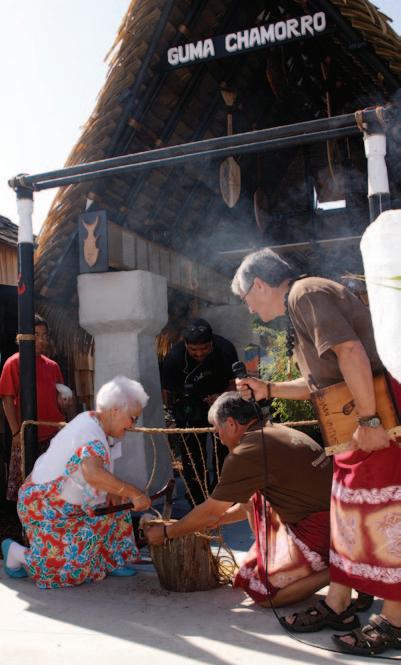
The Chamorro Cultural House, the eighth house to be constructed in the World Courtyard, was dedicated in May during an event that attracted more than 2,500 San Diegans.
Izcalli
Jacobs Center for Neighborhood Innovation
Jacobs Family Foundation
Lao American Council
Lao Community Cultural Center
Mingei International Museum
Museum of Photographic Arts
PASACAT
Samoan Community Council of San Diego
Samoan Festival Committee
San Diego History Center
San Diego Museum of Art
San Diego Museum of Man
Somali Youth United
South Sudan Development Association
The Youth Movement
Writerz Blok
Physical Development
The Built Environment Skills to implement change
Overview
The Village at Market Creek is about changing the landscape of a community.
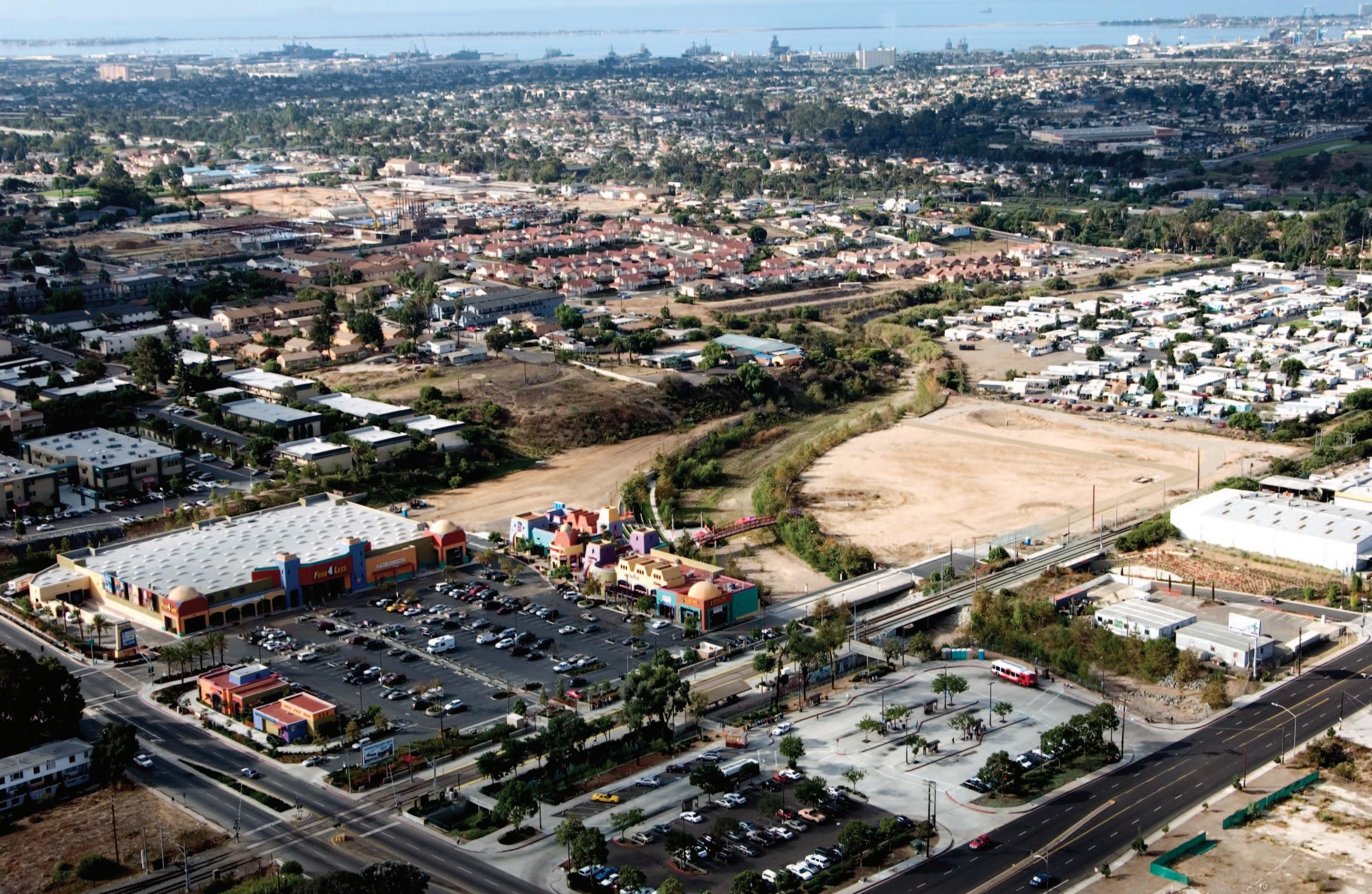
Resident working teams are reclaiming blighted land and restoring vitality to their neighborhoods, starting with the revitalization of a central transportation and civic hub.
With an eye toward mixed land use, environmental sustainability, and community benefits, The Village will put more than 60 acres of blight back into productive use. Built on a strategic growth model that puts residents at the forefront of who plans and benefits, the project will ultimately replace substandard housing with 1,000 quality, affordable homes; support 250 new businesses with 2,000 jobs; restore nearly 5,500 linear feet of wetlands; yield more than $300 million in construction contracts; and create an integrated network of parks, cultural venues, and public facilities within The Village.
The Built Environment physical development goal
GUIDING
principles
• Ensure residents have a strong voice in all land planning and development decisions
• Keep decisions grounded in the social, economic, political, and cultural needs of the community
• Balance several bottomlines — social, economic, and environmental — to ensure sustainability
• Return maximum benefits to the local community
A mixed-use, family-friendly, transit-oriented cultural village that fosters environmental sustainability, social responsibility, and resident ownership of assets.
What We Are Trying to Accomplish
In order to support physical development and transformation, work in The Village focuses on achieving the following:
Land Planning
• Site control of undeveloped, neglected, and blighted properties surrounding the Market Creek/Euclid Avenue multi-modal Transit Station
• Resident-guided land planning that is informed by the community’s needs and aspirations, reflects a unified vision, builds on the assets and strength of their diversity, and ensures a healthy and vibrant village
Building Sustainable Communities
• A mixed-use, transit-oriented cultural village that is family-friendly and showcases the rich multicultural traditions of the community with a vibrant “sense of place”
• A network of commercial, industrial, and residential developments that are owned individually or collectively by residents, with integrated childcare, playgrounds, and family enhancement services
• A sustainable Village economically, environmentally, socially, and from a management perspective
Community Benefits
• Maximum benefit from development returned to community residents and locally-owned businesses
• Stakeholder capacity built into every aspect of development, including land planning, residential and commercial development, construction, financing, and ownership
• A fully-sustaining, communitybased company with the capacity to develop and manage projects that are designed, built, owned, and serviced by the community 32 acres of blight removed
How the Work Has Grown
The Beginning
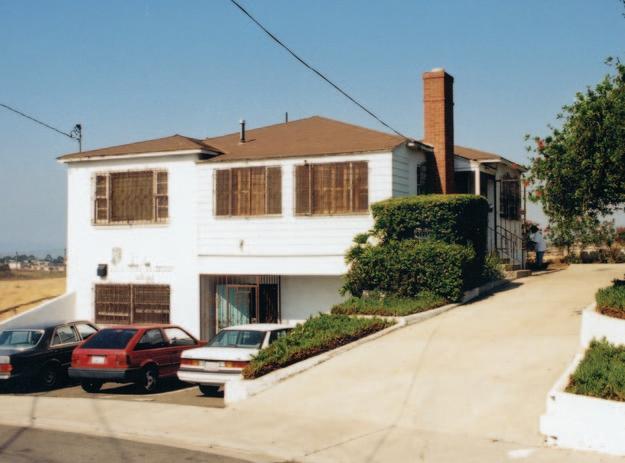
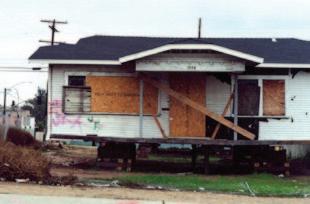
The physical transformation of the Market-Euclid hub began with an old Social Security building being renovated by the City and becoming the Tubman-Chavez Center, a vacant lot becoming the site of the new Valencia Park/Malcolm X Library, the Elementary Institute of Science building a state-ofthe-art science and technology center, and state-funded land-planning at this important community intersection. These early efforts inspired resurgence. Residents of all ages began to work together to make their dreams a reality. They envisioned a beloved community with quality facilities, award-winning design, a vibrant sense of place, and networks that could nurture children as the highest priority.
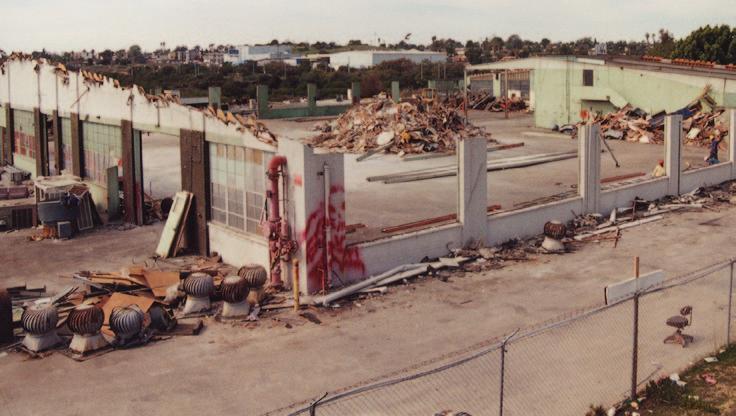
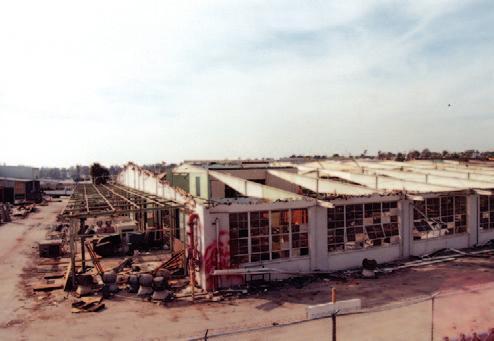
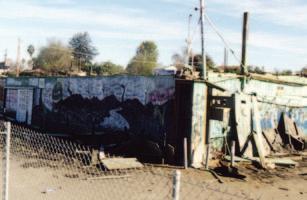
In the spotlight was a 20-acre abandoned factory. The Langley factory represented large-scale blight in the middle of what was envisioned as a civic hub. The Jacobs Family Foundation purchased the site, considered undevelopable, and in 1998 hired residents to survey their neighbors to see what should be done with it. Six hundred residents and 200 businesses were queried and overwhelmingly requested a grocery store there hadn’t been a major chain in the community for 30 years. They also wanted a sit-down restaurant, bank, coffee shop, drugstore, place to gather, and jobs. Basically, they wanted what other communities had .
An economic impact study revealed that residents were spending more than $60 million outside the area simply because there were no businesses providing needed goods and services. Residents posed the question, “could this potential be further tapped to create jobs in our own community?”
Resident-Guided Development
The Jacobs Family Foundation provided the resources to purchase the site and asked residents to plan, design, and build the project they envisioned. Divided in half along a natural boundary provided by Chollas Creek, the first ten acres once known only by its barbed wire fencing became Market Creek Plaza Physical development of the site gave rise to the concept of resident Working Teams and provided the foundation for the Plaza as a “double bottom line” project. Diverse teams kept financial sustainability balanced with community benefits. Goals were set for capacitybuilding, training, involvement, jobs, contracts, and ownership.
The Art & Design Team brought architects and community artists together to create a look for the center that was reflective and respectful of the community’s rich cultural diversity.
A Construction Collaboration set and surpassed its unprecedented goal for awarding at least 65 percent of contracts to local minority- and women-owned firms.
Residents formed a Business & Leasing Team to identify and recruit the businesses they wanted. Their work resulted in a Spirit of Partnership Agreement that maximized community benefits like local hiring and purchasing from local businesses.
An Employment Development Team built a partnership to provide workforce preparation and training, resulting in 91 percent of the grocery store’s initial employees being community residents.
A Resource Team traveled the country with Jacobs staff and trustees to secure needed financial investment.
2,100 linear feet of Chollas Creek restored
As the grocery neared completion, an Ownership Design Team began to explore a mechanism for resident investment and literal ownership of the project. This team’s “theory of thirds” called for balancing individual benefit, community benefit, and ongoing investment in revitalization efforts. After hundreds of hours of team planning over six years and three submissions to the California Department of Corporations, this team gave birth to the Community Development IPO for individual ownership, the Neighborhood Unity Foundation for community ownership, and Diamond Management, Inc. for investment in ongoing revitalization.
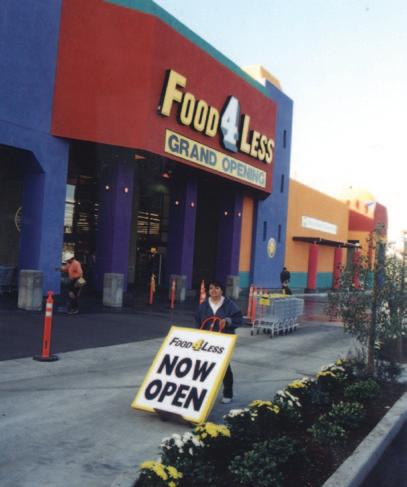
The Plaza’s first business, Food 4 Less, opened in 2001 and quickly became one of the chain’s best performing stores in the region and continues to be so to this day. The major restoration of Chollas Creek from a hazardous liability to a natural greenbelt asset, and the building of a community amphitheater, gave life to outdoor spaces.
By 2005, the Plaza was fully leased, with all of its stores and restaurants open for business.
EMAT and The Village Center
Sparked in a catalytic and controversial moment (when a produce distribution center was proposed on a site next to their community’s civic buildings), residents and businesses came together as the Euclid-Market Action Team (EMAT) and created a vision for transforming the acres of under-utilized and contaminated land at this important intersection. The vision was a livework-play environment built around the transit hub. This team identified approximately 60 acres to be targeted for revitalization.
Between 2005 and 2008, the painstaking work of assembling land was undertaken by the Jacobs Family Foundation in partnership with The Annie E. Casey Foundation and two banks. A nearby warehouse was transformed into a smallbusiness environment with a mix of office and warehouse space.
During this time, EMAT won a competitive bid as one of San Diego’s “pilot villages” to test the smart growth principles of mixed-use, compact design in a transit-oriented village atmosphere.
Outdated land-use designations in the community plan called for work by the Southeastern Economic Development Corporation (SEDC) and the City Planning Department. This work culminated in the approval of the Fifth Amendment to the Community Plan in April 2009 by the City Council with hundreds of residents participating in public hearings.
The Community Plan Amendment opened the door for development of the village center.
The Village Today
With the ability to develop mixed-use projects, teamwork focused on updating the master plan to incorporate the latest
thinking about economic, social, and environmental sustainability, including an assessment of Village plans against LEED-ND (Leadership in Energy and Environmental Design for Neighborhood Development) criteria.
Assistance from the Urban Land Institute on infrastructure finance, and the U.S. Environmental Protection Agency (EPA) on brownfields clean-up, helped advance the planning.
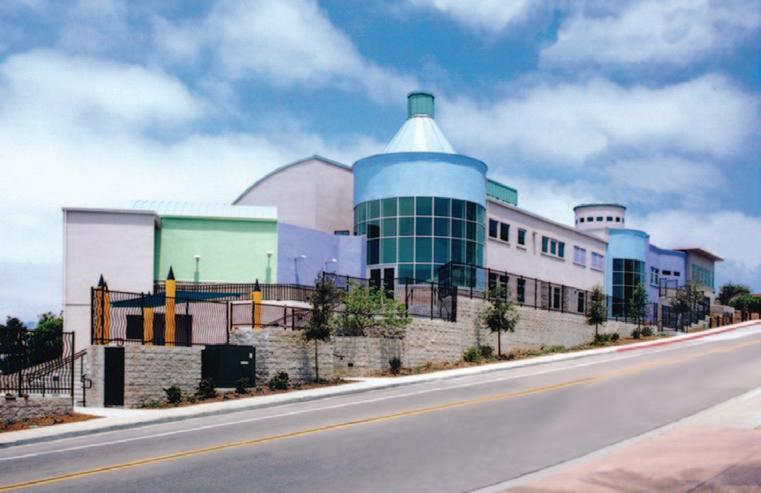
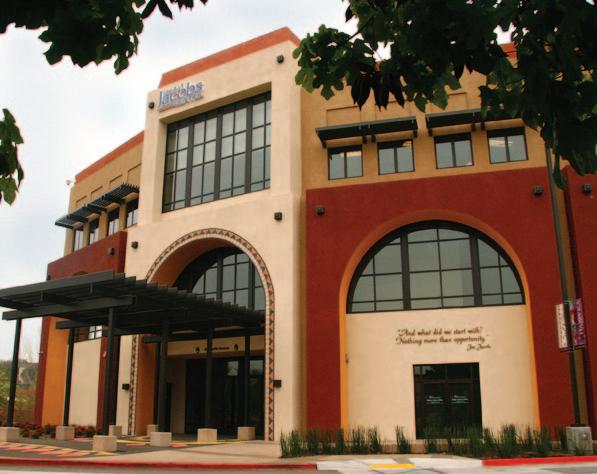
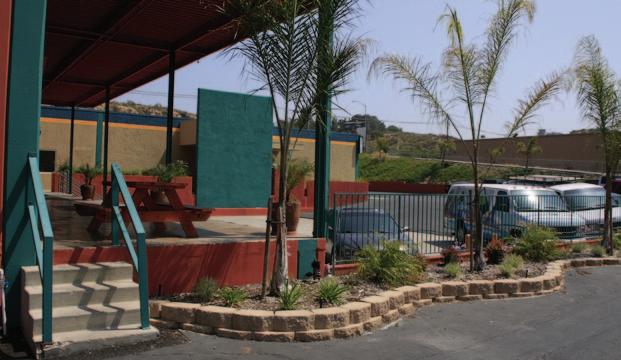
2010 saw the finished buildout of the second floor of the Joe & Vi Jacobs Center, creating space for partner agencies and local nonprofits to have a new and improved presence in The Village. SEDC, Home Start, San Ysidro Health Center, and the Center for Community & Cultural Arts moved in, bringing the 78,000-squarefoot building to full occupancy.
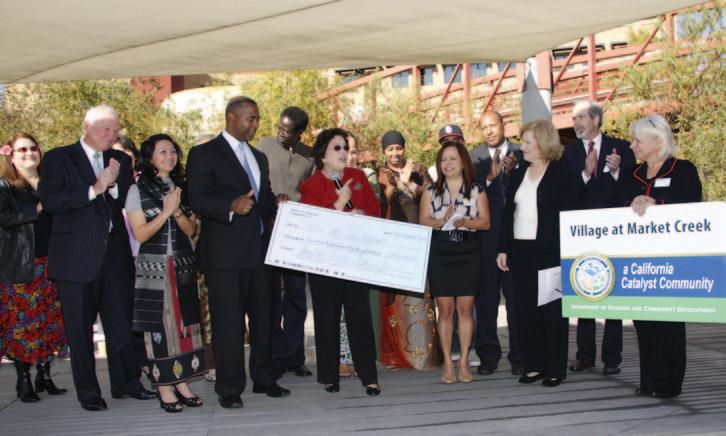
In November 2010, The Village was selected as one of five gold-level Catalyst Communities by the California Sustainable Communities Council to receive priority points in the bid process for State Housing and Community
The Built Environment
Development, Caltrans, and urban greening grants as a model for building liveable communities.
Looking Ahead
In the coming year, work will begin on Northwest Village. Anchored by a Walgreens drugstore and enhanced by the next phase of the Chollas Creek restoration, the Northwest Village will get underway. Following quickly behind is the planning for the housing portion of the project.
Also on the drawing board is the groundbreaking for Market & 47th, making way for a new 23,000-squarefoot community clinic to be built by Family Health Services of San Diego. Resident teams will complete the update of the master plan for The Village, debate arrival of a “big box” in The Village, and implement new methods for clean-up of brownfields sites.
The Village at Market Creek
Gold-level Catalyst Community
Housing and Community Development Department, State of California
Excellence in Economic Development — Neighborhood Development Initiatives
International Economic Development Council
Community Vision Award San Diego Architectural Foundation
Market Creek Plaza
Outstanding Brownfield Transformation
U.S. Environmental Protection Agency (EPA)
ULI Social Equity Award
Urban Land Institute San Diego/ Tijuana District Council
Excellence in Economic Development — Real Estate Development & Reuse
International Economic Development Council
Joe & Vi Jacobs Center
Award of Merit
American Society of Civil Engineers, San Diego Section
Chollas Creek Encanto Tributary
Orchid Award
San Diego Architectural Foundation
Project of the Year Award
American Public Works Association, San Diego & Imperial Counties Chapter
Village Infrastructure: Gateway Underpass
Award of Merit
American Society of Civil Engineers, San Diego Section
Concrete Structure/Bridge Project of the Year
American Concrete Institute, San Diego International Section
Engineering Excellence
Consulting Engineers and Land Surveyors of California Village
Completed Projects The Built Environment
The Built Environment
Joe & Vi Jacobs Center
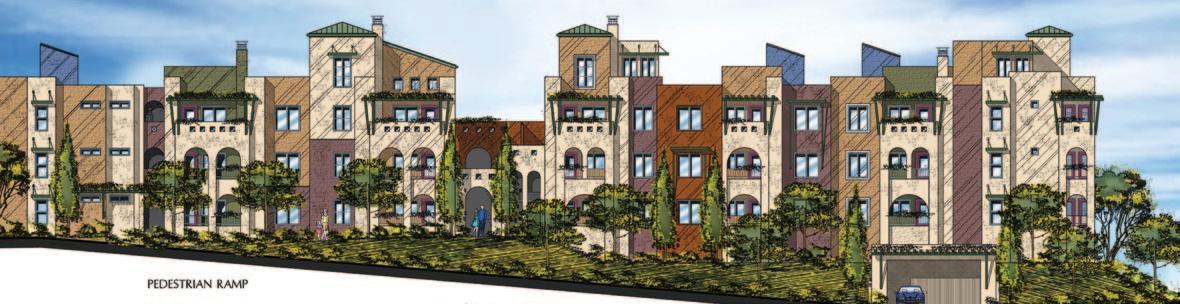
Housing – Creek Terrace Townhomes (proposed)
BRYCO Business Park
The Built Environment
Land Planning
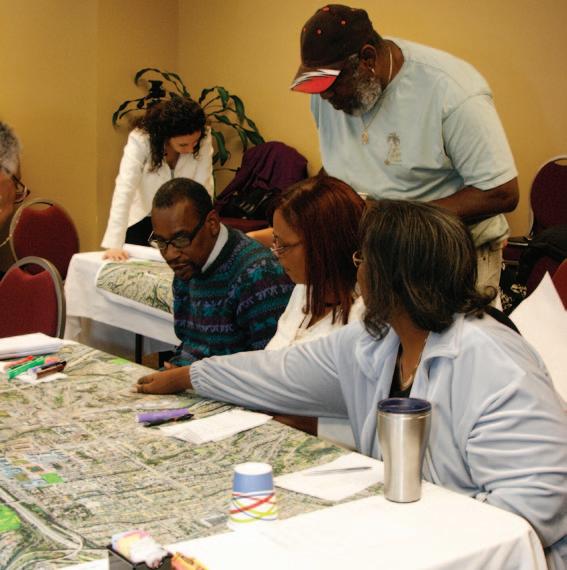
• Under the leadership of the VOCAL Network, 570 residents participated in updating the master plan for The Village, covering land use, connectivity, urban design, and cultural branding.
• An additional 7.3 acres was assembled for Village planning for a total of 52 acres; to date, 22 acres have been developed and an additional 30 acres are being held for future development.
• The City of San Diego awarded a $400,000 SANDAG Smart Growth Incentive Program Grant to conduct mobility/walkability studies at the Market-Euclid hub, a key component of The Village Master Plan.
Building Sustainable Communities
• The State of California awarded The Village $1,350,000 as a statewide “Gold-Level Catalyst Community” under the Catalyst Projects for California Sustainable Strategies Pilot Program. The Village will be eligible for priority points in the bid for resources to eliminate blight, improve job creation, expand affordable housing, preserve open space, promote healthy environments, and increase energy conservation.
• Resident teams moved planning forward on two housing and two commercial projects. At the end of 2010, Walgreens signed a lease to anchor Northwest Village Commercial, the next phase of Village development.
$29.7 million in contracts awarded to HUBE contractors
$104.9 million
Total investment in The Village — up 3% since previous year
Community Benefits
• Total investment in buildings and building improvements now totals $61.4 million, up $909,000 from the prior year; of this new investment, 92% of the contracts where secured by minority- and women-owned businesses.
• To date, contracts in The Village total $39.8 million; of this amount, $29.7 million were contracts awarded to HUBE (Historically Underutilized Business Enterprises) contractors.
• The percentage of contracts to minority- and women-owned businesses to date is 75%, up 1% from prior year.
• Of the 42 employees of Diamond Management, Inc. (DMI), the development, construction, and property management company for The Village, 29% are residents and 71% are people of color.
• DMI provided 2,468 hours of training and capacity building to its employees and on-call staff in a range of areas from customer service to emergency evacuations, first aid, and CPR.
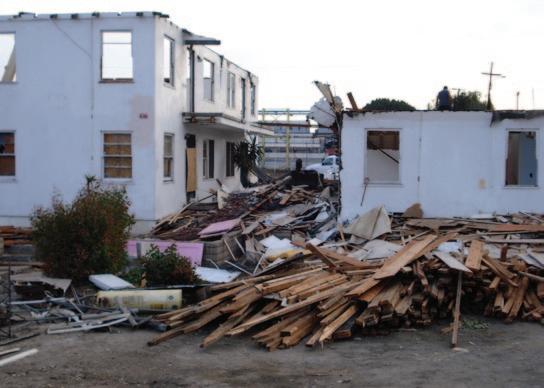
Diamond Management, Inc. worked with community contractors to demolish deteriorating apartments on Naranja Street.
Using The Village at Market Creek as a case study, the Urban Land Institute 2010 Technical Assistance Panel (TAP) Workshop focused on infrastructure deficits and the capital challenges of revitalizing underinvested neighborhoods.
The Built Environment
Residents in VOCAL and the Physical Development Team learned about green design standards and LEED-ND (Leadership in Energy and Environmental Design for Neighborhood Development) certification for The Village at Market Creek. With support from Global Green and a grant of $25,000 from the U.S. Green Building Council and Bank of America, the LEED-ND application process was initiated as part of the updated Village Master Plan.
Land Acquisition Partners
The Annie E. Casey Foundation
Jacobs Center for Neighborhood Innovation
Pacific Western Bank
U.S. Bank
Market Creek Investment Advisory Board
The Legler Benbough Foundation
California Southern Small Business Development Corporation
California State Water Resources Control Board
The Annie E. Casey Foundation
Chase Clearinghouse Community Development Financial Institution
Diamond Community Investors
Diamond Management, Inc.
Evelyn & Walter Haas, Jr. Fund
The F.B. Heron Foundation
Jacobs Center for Neighborhood Innovation
Jacobs Family Foundation
Neighborhood Unity Foundation
Pacific Western Bank
The Rockefeller Foundation
Southeastern Economic Development Corporation
U.S. Bank
Wells Fargo and Company
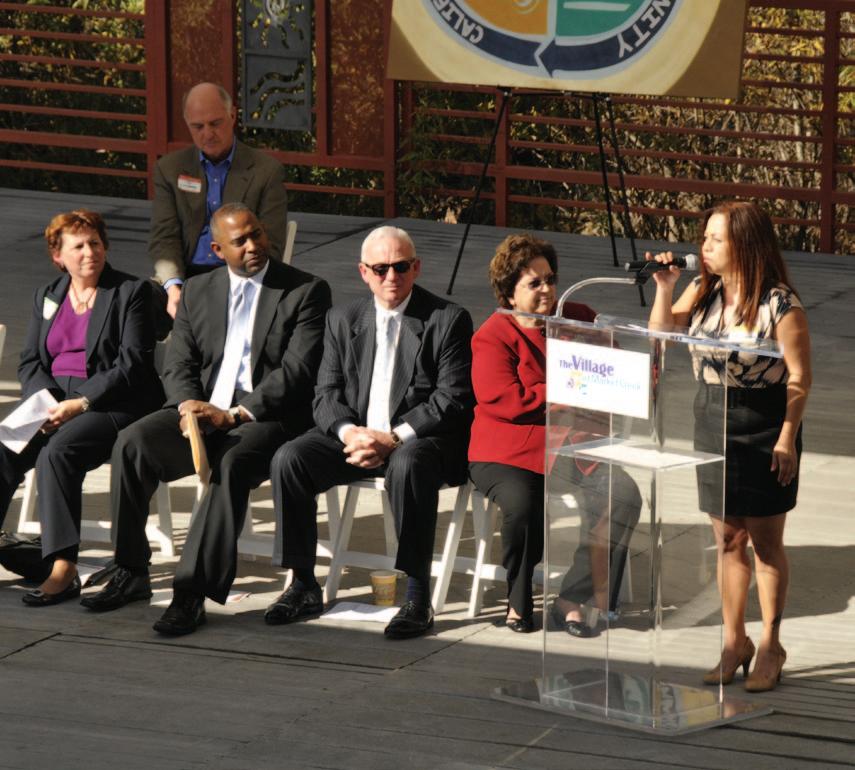
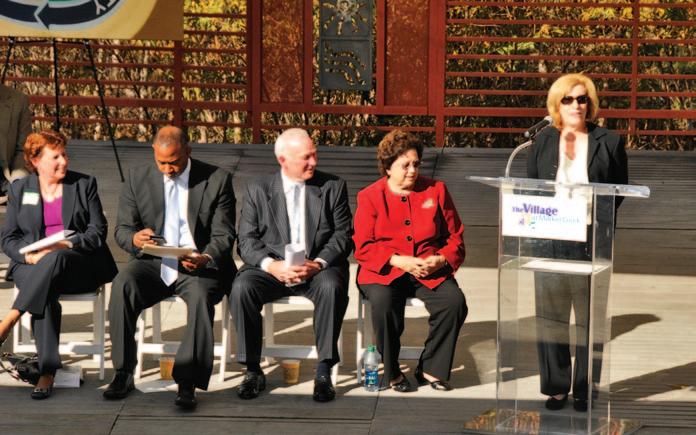
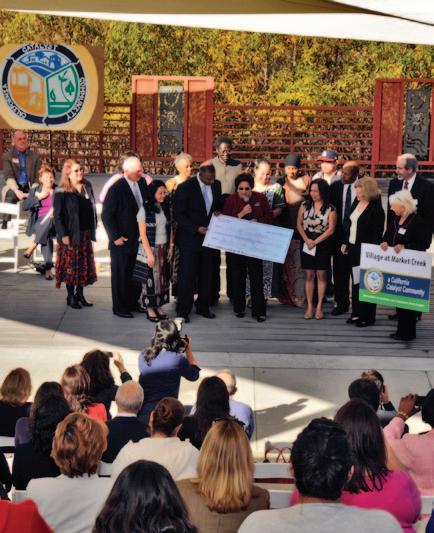
Residents, City officials, and partners celebrated the selection of The Village at Market Creek as a Gold-Level Catalyst Community.
Education, Health & Safety
Family & Community Networks Networks to sustain change
Overview
The Village at Market Creek is about building strong networks from the inside out.
A collaborative effort of people inside and outside the community, bringing together a range of expertise and resources, is needed to address the complex issues our communities face, whether it’s school performance, health disparities, or gang violence. Partnerships focused on health, education, family services, and youth development are important to the long-term sustainability of programs that enhance quality of life for children and families.
Identifying and connecting existing organizations and natural networks, opening access to systems and services, and establishing a culture of community listening these help us discover what is needed, get at real barriers, and design better ways to address the concerns of residents. They also form the foundation for sustainable change.
If it takes a village to raise a child, it takes a network of dedicated people and organizations to raise a village. These interconnected networks which place a high value on the voice of residents create the fabric of our community.
education, health & safety
Family & Community Networks goal
GUIDING
principles
• Lead with parents and youth to identify issues important to them, and the practical actions they can take to address them
• Use a learn, plan, and do strategy to strengthen resident capacity and connect existing resources and services
• Include a broad range of stakeholders to build joint action and strong networks
• Connect policy and decision makers to identify and address policy barriers and issues
• Create long-term plans and partnerships with short-term goals and results
Strong social networks that promote learning, support children in achieving their full potential, and enhance health and safety.
What We Are Trying to Accomplish
In order to support large-scale social infrastructure in the community, work focuses on achieving the following:
Quality Schools
• A strong learning community among the eight Village schools and their principals, teachers, parents, and students
• A community-based education and family support network to meet the needs of students and families
Health & Wellness
• Networks that enhance access and connect people to programs and services that build and promote health and wellness
• A safe, walkable community with access to fresh foods
• The elimination of toxic brownfields and substandard housing
Safe Neighborhoods
• Resident networks that can identify unsafe areas and resolve unsafe situations, improving the overall safety in their neighborhoods
• A coordinated support network to facilitate the smooth re-entry of formerly incarcerated residents into the community
• Events and networks that celebrate, recognize, and connect families throughout The Village
How the Work Has Grown
The Beginning
In planning Market Creek Plaza, residents included a child care center. However, when child care providers were convened to help design the center, they recommended supporting programs already in the community instead of building a new center. A Childcare Learning Partnership was formed to link resources, strengthen referrals networks, and enhance training opportunities.
A Youth Learning Partnership, formed by program directors and youth, was established to strengthen youth services and coordinate work. This led to the piloting of a youth-led teen center.
Responding to resident concerns about access to healthcare, representatives from the Euclid Health Center, Paradise Valley and Children’s Hospitals, the County of San Diego Health and Human Services, and the neighborhood nonprofit Project New Village came together to form the Partnership for Excellence in Health, with the goal of addressing the healthcare needs of the medically underserved.
All three of these learning partnerships were supported by a newly formed San Diego Neighborhood Funders.
Listening Teams become Learning Collaborations
These Learning Partnerships led to broader listening strategies.
A Youth Violence Listening Project conducted outreach to former gang members, parents, and youth being
impacted, along with community, regional, and national youth violence practitioners. A Youth Violence Team was then formed to move from listening to strategy.
A Schools Listening Project connected principals, teachers, parents, and students from the ten schools that surround The Village.
A third important listening project was conducted by San Diego Grantmakers as it formed its Work Group on Prisoner Re-entry
The teams that grew out of the listening work formed collaborations to use what they had learned and began working on solutions.
The Youth Violence Team became a Safe Neighborhoods Collaborative The Schools Listening Project became a Principals Collaborative. The San Diego Grantmakers’ Working Group formed a Prisoner Re-entry Collaboration Design Team
Pilot Projects
By 2009, these collaborations had launched Pilot Projects to implement and evaluate their strategies.
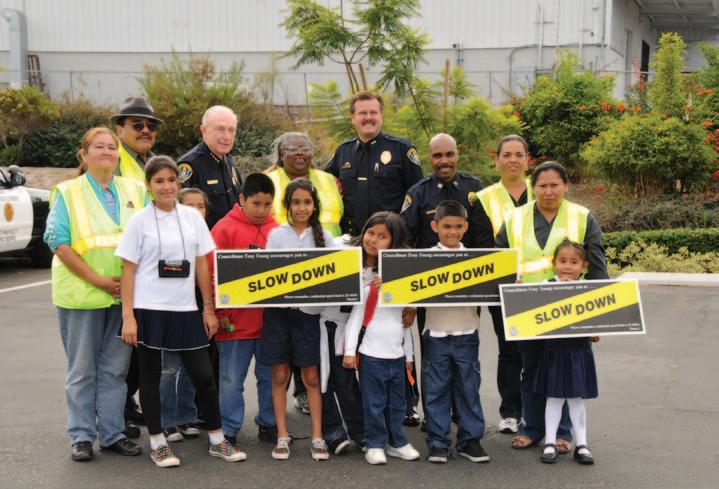
The Safe Neighborhoods Collaborative launched Project Safe Way . Residents led a Safe Passage to School program, a Safe Talk Program geared to improve relationships with the police, a Safe Places Program to transform unsafe places, and Residents Against Predators (RAP) to inform parents of the presence of predators and ways to protect their children.
The Principals Collaborative set learning goals and values for its eight schools, renamed itself the Diamond Learning Community, and initiated Opening Doors to Learning, linking families from six elementary schools
to three social service agencies and a network of community resources to support their success.
The Prisoner Re-entry Collaboration Design Team launched Coming Home to Stay, a project that uses a community resource network to serve residents returning to the Diamond Neighborhoods and City Heights.
Looking Ahead
Building on the momentum of the pilot projects, a 40-member Village planning circle, called the Family and Community Networks Team, is now bringing these groups together to develop comprehensive goals for health, education, and safety, and find ways to measure impact. In the coming year, their charge is to develop the strong and sustaining networks needed for a healthy, safe and vibrant Village community.
Family & Community Networks 2010 Progress
Quality Schools
• Participation in the Opening Doors to Learning pilot project included six schools with assigned teams, 31 students and family members, 27 teachers, three social service agencies, three local community agencies serving youth, and three members of the San Diego Neighborhood Funders.
• The 31 students participating in Opening Doors and 11 of their siblings received 795 hours of tutoring for an average of 19 hours each (six month figures).
• After six months, 50% of the students improved in student engagement and attitude toward learning, 19% improved school standing in student performance, and 13% improved skill proficiency.
Health and Wellness
• San Ysidro Health Center, with support from The California Endowment, surveyed over 1,500 residents and assembled an advisory group of over 100 organizations and individuals to create a Southeastern San Diego Community Strategic Health Plan.
• The California Endowment also provided funding for a 40-member team of residents to implement a Health Indicators Project for The Village.
• The EPA selected The Village for a Brownfields AreaWide Planning Pilot Program grant of $175,000 to engage resident teams in developing reuse and remediation strategies for eight Village properties.
$175,000 grant from the EPA to engage resident teams in developing reuse and remediation strategies
• 60 units of substandard, mold-infested housing were eliminated, 52 units of new housing are ready for financing, and an additional 100 are in planning.
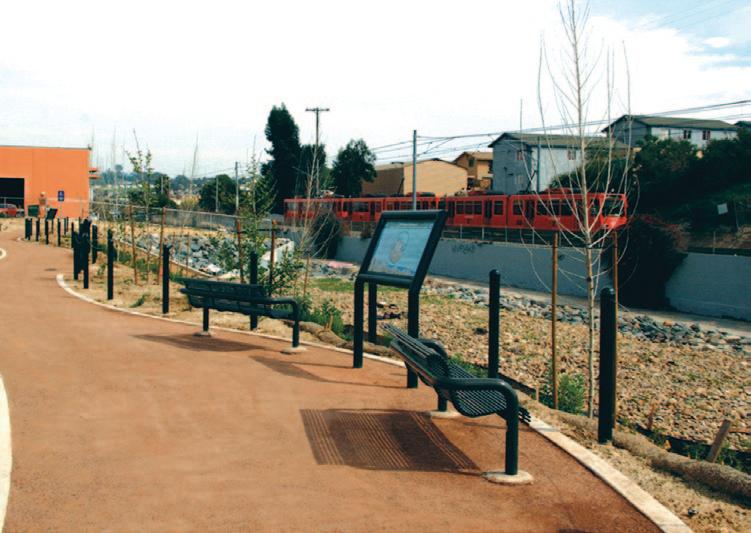
• 2,100 linear feet of Chollas Creek and its tributaries have been cleaned up and restored to natural vegetation with walking trails.
Safe Neighborhoods
• In the three safety zones within The Village created by Project Safe Way, the number of gang and school violence interventions was down 40% from the prior year.
• The expanded effort by Project Safe Way in 2010 led to 121 public safety issues being corrected up 51% from previous year.
• Civic participation in public safety meetings and events was up from previous year 16% to 1,971.
• 23 residents received 898 hours of public safety training, and 67 people volunteered in the safe neighborhoods network.
• In the Coming Home to Stay prisoner re-entry program, of the 53 participants from the Diamond Neighborhoods, 73% were successfully placed in jobs. The national benchmark for employment is 9%.
• Wraparound services and 1,200 hours of peer mentoring resulted in reducing the recidivism rate for the community participants in Coming Home to Stay to 7.7%, compared to the state average of 75%.
2010 Highlights
Family & Community Networks
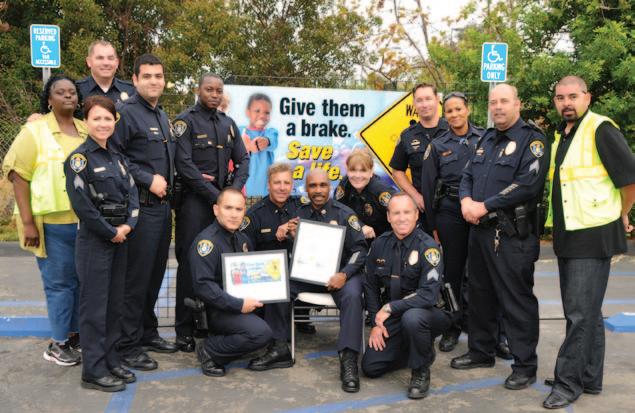
Project Safe Way kicked off a safety campaign with the San Diego Police Department after a rise in child-related traffic accidents.
JCNI partnered with the San Diego Police Department for the 3rd Annual Jerry Griffen Toy Drive to distribute toys to southeastern San Diego families. The drive, assisted by Toys for Tots, served more than 60 families with 200 children, providing more than 1,000 toys ranging from bicycles to iPods.
Coming Home to Stay Partners
The California Endowment
Community Connection Resource Center (CCRC)
County of San Diego Probation Department
Jacobs Center for Neighborhood Innovation
Jacobs Family Foundation
Metro United Methodist Urban Ministry
Overcoming Gangs & Beyond
The Parker Foundation
Price Charities
Richard J. Donovan Correctional Facility
San Diego County Bar Foundation
San Diego County Sheriff’s Department
San Diego Grantmakers
San Ysidro Health Center
Second Chance STRIVE
Reverend Edward Thompson
UAAMAC (United African American Ministerial Action Council)
Kenneth Wilson
Diamond Learning Community Partners
Chollas-Mead Elementary School
Elementary Institute of Science
Gompers Preparatory Academy
Horton Elementary School
Jackie Robinson Family YMCA
Jacobs Center for Neighborhood Innovation
Jacobs Family Foundation
Meg Jacobs
Johnson Elementary School
Knox Elementary School
Lincoln High School Ninth Grade Academy
PAZZAZ
The Parker Foundation
Porter Elementary School
San Diego Unified School District
University of California San Diego CREATE
Valencia Park Elementary School
Coming Home to Stay shared encouraging statistics at the One-Year Report Back meeting in City Heights.
Economic Development
Community Enterprise & Ownership Assets to leverage future change
Overview
The Village at Market Creek is about collective community investment in change.
As an anchor project for reinvigorating an urban marketplace, Market Creek Plaza is designed to give residents a financial stake in their community, put their gifts and talents to work, build individual and community assets while rebuilding neighborhoods, and keep social responsibility at the forefront of business.
Resident teams work to harness local retail dollars, build an emerging market, and develop a network of community-owned enterprises. Collectively, these triple-bottom-line business ventures unite diverse communities and capture the benefits of an expanding economy through community contracting and ownership. Pioneering tools enable residents to own a piece of their block and achieve together what they cannot do alone.
economic development
goal Community Enterprise & Ownership
GUIDING
principles
• Maximize economic impact in every phase of community development, from local hiring and contracting to leasing and ownership
• Develop mechanisms for residents to build wealth while redeveloping their neighborhood
• Promote the circulation of money in the neighborhood and build economic capacity
• Involve residents in business, financial, and asset management to build working knowledge and expertise
Community-owned enterprises that bring essential services, create jobs, expand contracting opportunities, and build assets.
What We Are Trying to Accomplish
In order to support large-scale economic opportunity in the community, work focuses on achieving the following:
Business & Social Enterprise
• A vibrant business environment with a strong economic base and the types of products and services residents want and need
• A network of triple-bottom-line business ventures that create community jobs, offer training and support, and fill community needs
Jobs & Employment Development
• Job growth with systems to support residents in capturing and retaining a significant percentage of these positions
• Strong networks that provide employment development, training, and job placement in partnership with employers
Ownership & Asset Building
• Ownership structures for direct individual resident investment in the revitalization of their community for returning profits to broader community benefit and expanding the ongoing development of The Village
• Programs and tools that enhance residents’ financial health and build wealth through savings and investment
How the Work Has Grown
The Beginning
In 1997, residents identified the abandoned Langley factory site as an opportunity to turn blighted land into economic value. The goal was to provide needed goods and services, recapture retail leakage, and create local business ownership and employment for residents. An Outreach Team conducted surveys to create the community’s “Top Ten List” of businesses and select the name for the new commercial center Market Creek Plaza (MCP).
To set the criteria and oversee the selection of tenants, a resident Business and Leasing Team was formed. In order to achieve a balance of financially-secure tenants and local entrepreneurs, the team decided on a “theory of thirds” strategy: one-third national and regional tenants, one-third franchises for potential resident ownership, and one-third local entrepreneurs. The initial tenant mix included 2 national/regional tenants, 2 franchises, 1 manage-to-own business, and 3 locally owned. All tenants signed “Spirit of Partnership” agreements committing to local resident hiring.
Contracting and Employment
The Business and Leasing Team set a goal of 65 percent resident employment for jobs created by Market Creek Plaza construction and businesses.
A Construction Collaboration was formed with contractor associations to recruit and provide capacity building to Diamond Neighborhoods contractors so they could secure bids to build Market
Creek Plaza. This resulted in 79 percent of contracts going to local and minorityowned businesses. Contracts included commitments to hire residents for labor.
A resident employment consultant worked with the major national tenant Food 4 Less to secure 85 percent resident employment of its initial jobs. MCP’s security and maintenance operations were launched as Learn-and-Earn businesses with residents recruited and trained for the positions. The Cold Stone Creamery franchise store also developed a youth employment training program. BRYCO Business Park created inexpensive space for local small businesses in a renovated light-industrial building.
Social Enterprise
Two double-bottom-line social enterprises were also created. Where the World Meets, a retail microenterprise program, was opened to provide local entrepreneurs a place to showcase cultural products and to grow their businesses. Writerz Blok, which began as a graffiti arts program for youth, also developed product lines including mural art projects and urban wear.
Diamond Management, Inc., incorporated in 2005, was launched as a training business to provide development, construction, and property management to The Village.
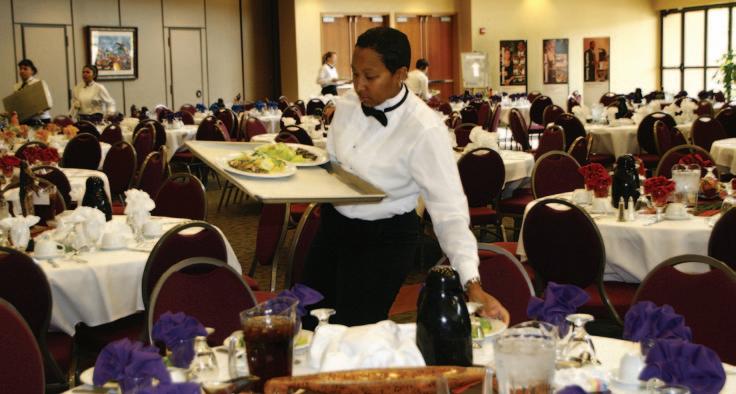
In 2008, Market Creek Events & Venues, a banquet and conference center enterprise, began operating to serve the new Joe & Vi Jacobs Center as a training
business for residents in the food and hospitality industry.
Ownership & Asset Building
In 2000, a resident Ownership Design Team was formed to explore ways to create ownership opportunities for community members, including the Community Development IPO strategy which resulted in 415 residents buying units of ownership in Market Creek Partners, the company which owns the Plaza. These Diamond Community Investors own 20 percent of the company. The Neighborhood Unity Foundation, a resident-led community foundation, was created. It also owns 20 percent of Market Creek Partners and uses its returns to operate a mini-grants program in the community.
Looking Ahead
A Village Enterprise and Ownership Team has been formed to develop business, employment, asset building, and resident ownership goals and strategies for future development. The team is exploring local business ownership opportunities for the next two Village commercial developments. Market Creek Partners is developing a plan for the Diamond Community Investors (DCI) and Neighborhood Unity Foundation (NUF) to purchase full ownership of the company in 2018. A group of 193 DCI members has reinvested their returns in a Community Investment Fund with the purpose of continuing to invest in improving their community.
• Economic activity for The Village at Market Creek to-date was up 30% from pervious year for a total of $94.6 million.
• The total number of businesses in The Village now stands at 35, up from two in 1997.
Market Creek Plaza
• Market Creek Plaza’s economic activity for 2010 was down 5% from previous year for a total of $47.8 million. Originally projected at $31 million, Market Creek Plaza holds steady above its benchmark by more than 50%.
• The total number of businesses at Market Creek Plaza now stands at 12, up from zero in 1997.
• Market Creek Partners, LLC, the community-owned company that owns Market Creek Plaza, generated $1,700,000 in gross revenue, holding steady from the prior year.
Market Creek Plaza Economic Activity
Social Enterprise
• Market Creek Events & Venues (MCEV), the training business that manages the conference and banquet center at the Joe & Vi Jacobs Center and Market Creek’s other event venues, generated $1,400,000 in gross revenue, an increase of 8% from previous year.
• MCEV generated 66% of its sustainability from earned income and 34% from grants. Its goal is to operate 80% earned income and 20% training grants.
• Diamond Management, Inc. (DMI), the training business that manages the development, construction, and property management for The Village, generated $602,000 in gross revenue, an increase of 4% from previous year.
• DMI generated 57% of its operations from earned income and 44% from Program Related Investments (PRIs are below-market-rate foundation investments) from the Jacobs Center for Neighborhood Innovation. Its goal is to achieve sustainability in the coming year, operating 100% from earned income and able to begin repayment of its PRIs.
• In the various social enterprises in The Village, employees, on-call staff, and training program participants received 7,728 hours of paid training .
The Village at Market Creek Overall Economic Activity
2010 Highlights
Community Enterprise & Ownership
Partnering with
As part of Writerz Blok’s growing social enterprise, the retail store offers printed merchandise as well as paint supplies for visiting artists.
Market Creek Events & Venues hosted the 2010 Diversity Health Fair, bringing several hundred new visitors to Celebration Hall.
Market Creek Events & Venues
Sampling of 2010 Clients
The California Endowment
Cheer San Diego
Comic-Con International
Community Campership Council, Inc.
Community HousingWorks
Council on Foundations
County of San Diego Health and Human Services Agency
Cox Communications
Environmental Health Coalition
Eveoke Dance Theatre
Girl Scouts of San Diego
The Grandparents’ Connection
Home Start
Hospitality Sales and Marketing Association International (HSMAI)
Jack and Jill of America, Inc.
Kaiser Foundation
King Chavez Public School
Lambda Kappa Mu Sorority
Leadership California
Let’s Play
Lincoln High School
MANA de San Diego
Mingei International Museum
Move San Diego
Mr. Black San Diego
National Conflict Resolution Center
National Council of Negro Women
PASACAT
Pilgrim Progressive Baptist Church
Project Concern
Promise Charter Schools
San Diego County Regional Airport Authority
San Diego Grantmakers
San Diego Regional Minority Suppliers Network
San Ysidro Health Center
Sempra Energy
St. Jude Fiesta Group
Toys for Tots
UAAMAC
Urban Land Institute
The Urban League
Womens Inc.
YMCA
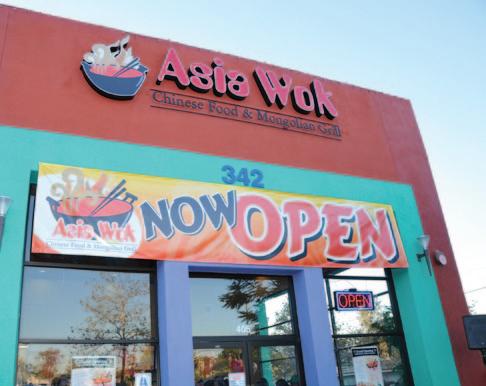
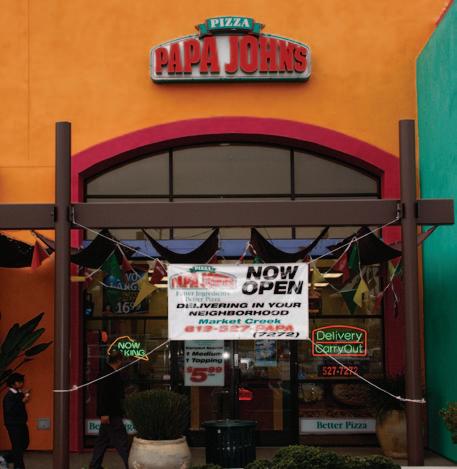
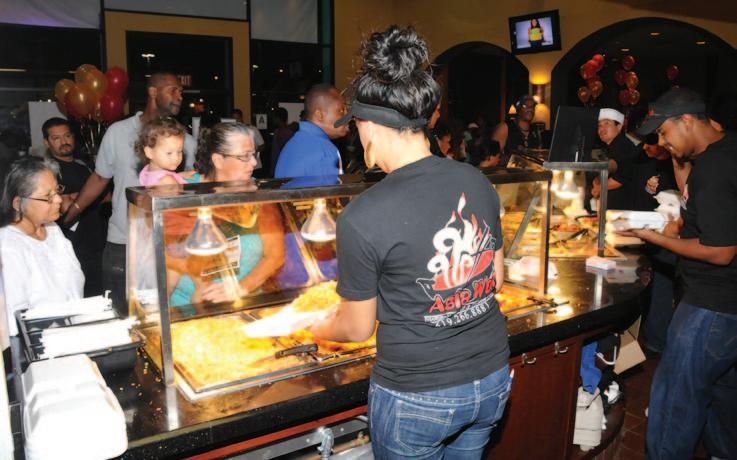
Asia Wok’s grand opening brought new jobs, as well as new flavors to Market Creek Plaza.
Lincoln High School, Asia Wok helped raise over $2,000 for the Class of 2012.
Community Enterprise & Ownership 2010 Progress
The Village at Market Creek Overall Jobs
Job & Employment Development
The Village at Market Creek
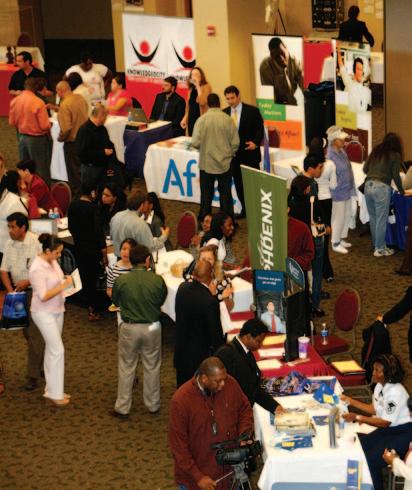
• Job counts in the planning area have grown from the original seven jobs to its current 590 jobs. The jobs total, however, is down 18% from its high of 717 the prior year.
• Full-time jobs in The Village increased by 14 jobs (6%) from the prior year to 245, while part-time jobs decreased by 141 (29%) to 345.
• Jobs within The Village stand at 30% of the overall goal projected for The Village when complete of 2,000 jobs.
• Of the 590 employees in The Village, 49% are from the community and 73% are people of color. Both originally projected at 65%, community employment continues below its benchmark for a second year, and minority employment continues to beat its benchmark by 8%.
Market Creek Plaza
• When planning was launched on the 10-acre factory site that would become Market Creek Plaza, there was only one job: a security guard. At the end of 2010, the total number of jobs at the Plaza stood at 215. The jobs total, however, is down 14% from its high of 251 the prior year.
• For the past 5 years, full-time jobs have decreased and part-time jobs have increased. In 2010, this trend reversed. Full-time jobs at the Plaza increased to a 5-year high of 91 (a 25% increase), while part-time jobs decreased by 30% to 124.
• Originally projected to create 166 jobs, the Plaza continues above its benchmark by 30%.
• Of the 215 employees at Market Creek Plaza, 66% are from the community and 84% are people of color. Both originally projected at 65%, community employment continues at its benchmark, and minority employment exceeds its benchmark by 19%.
Ownership & Asset-Building
• Returns to investors in Market Creek Partners, LLC were steady:
> Diamond Community Investors (422 stakeholders), 10%
> Neighborhood Unity Foundation, 10%
> JCNI, DMI, and PRI Partners, 3%
• 193 investors are participating in the Community Investment Fund, reinvesting dividends from Market Creek Partners in preparation for future ownership opportunities, this is up 7% from previous year. The Fund now totals $77,000, up 28% from previous year.
• 788 youth and 939 adults participated in financial education.
2010 Highlights
Community Enterprise & Ownership
It has been four years since the offering of 50,000 shares to “preferred investors” and partners of Market Creek Partners, LLC. Known as Diamond Community Investors, 416 community members are still in it for the long term. Community residents and stakeholders are staying aboard and riding out the waves of economic uncertainty.
Neighborhood Unity Foundation provided a mini-grant to Block Party San Diego (BPSD) Neighbors Project. BPSD assists residents with planning block parties so they can learn how to organize neighborhoods, engage residents, and take an active role in improving their community. Over 125 residents from the Fourth District participated.
Women Entrepreneur Empowerment (WEE) launched its first luncheon for women entrepreneurs and business owners. Over 100 women attended the luncheon with the excitement of gaining the encouragement and knowledge they need to create or grow their businesses. The keynote speaker was motivational speaker Dee Sanford, CEO of Dee Sanford International.
Diamond Community Investors
2010 Advisory Council
Dajahn Blevins
Bobby Carney
Thomas Cartwright
Narri Cooper
Priscilla Ford
Jessie Jimenez
John Johnson
Eddie Price
Neighborhood Unity Foundation
2010 Board of Directors
Kathy Beas
Laura Benavidez
Shirleen Freeman
Kathie Hardie
Nancy Johnson
Elaine Kennedy
Midge LeClair
Ardise Rawlins
Charlene Charles Smith
Rodney A. Williams
Partnerships & Learning
Partnerships & Shared Learning Learning to accelerate change
Overview
The Village at Market Creek is about connecting communities and sharing lessons. Market Creek is built on the belief that for change to be sustainable, residents must own it. Everyone must be willing to learn their way. Every voice matters. Staying open to new ideas matters. Testing ideas matters. Partners committed to learning matter. Success depends on it.
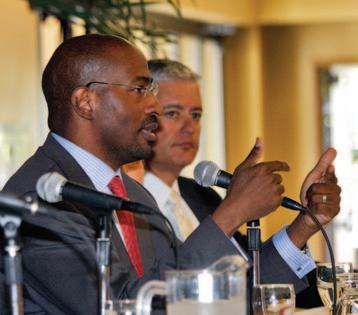
Platforms for learning are essential. Hands-on opportunities for resident-to-resident learning help those working at a grassroots level understand their role in a larger movement. These learning exchanges provide forums for people to share the lessons and stories of change, provide a vision of what is possible, and let residents know they are not alone.
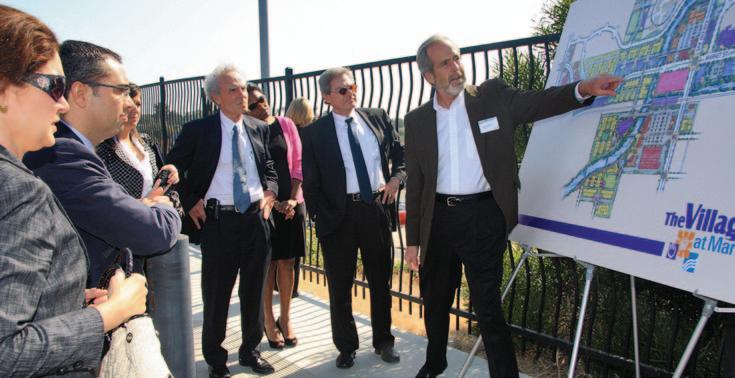
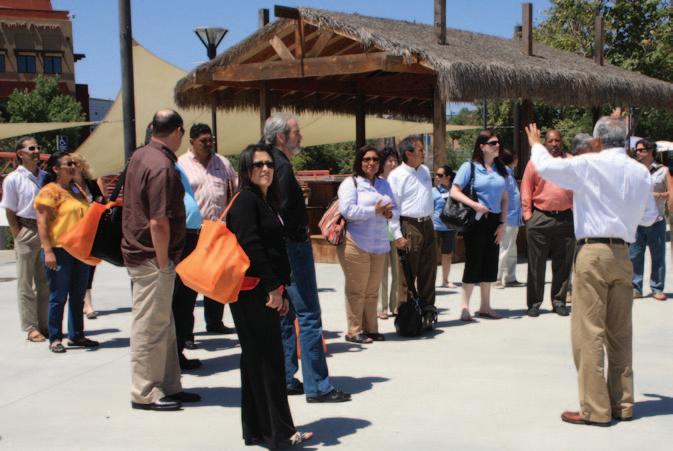
Each year, hundreds of people visit The Village at Market Creek to participate in site visits and learning exchanges. It has become a gathering place for groups from around the country to share ideas, develop learning relationships, and enhance efforts to create strong communities. This feeds innovation and informs the broader community development field of the lessons, practices, principles, and policies that either stand in the way or facilitate change.
Partnerships & Shared Learning shared learning
GUIDING
principles
• Promote the exchange of ideas, strategies, and tools that are central to communities managing their own change
• Foster hands-on, applied learning and encourage partnerships that recognize the benefits of shared risks, truthful communication, and equity in decision making
• Honor the gifts and talents everyone brings to the table
• Embrace risk and the possibility of failure as key pillars of learning
goal
A platform for connecting people committed to advancing innovative approaches to building communities, which place resident learning and leadership at the forefront of change.
What We Are Trying to Accomplish
In order to support shared learning across the country and in the community, work focuses on achieving the following:
The Learning Center
• A network of communities committed to advancing the learning and leadership of residents creating change in their communities
• Systems for documenting, evaluating, and sharing the principles, practices, processes, and policies that facilitate or stand in the way of change
Public-Private Partnerships
• A network of public and private partners committed to advancing innovation in the field of neighborhood revitalization
• Community capacity to align strategically across sectors and organize across the region to secure a voice in area-wide decision making, advocacy, and planning
Collaborative Investments
• A collaborative platform for linking “inside/outside” resources and types of capital for stronger implementation of change
• Community capacity to work collaboratively to develop financing strategies and to access and control capital
How the Work Has Grown
The Beginning
The Market Creek story has always been one of learning and partnering. From the first days, we saw the tremendous value in sharing lessons, asking questions, lifting up what works, and learning from what didn’t so partners from around the block to across the nation could benefit. Through hosting site visits, conferences, and symposiums, we sought to bring the story to life with hands-on learning for visitors. And by sending local residents the true stakeholders in this endeavor to panels, events, and meetings around the country, their capacity has grown and our partners have had the chance to learn directly from those who need, drive, and sustain the change that is underway.
In 2010, The James Irvine Foundation and The Annie E. Casey Foundation expanded ongoing partnerships with JFF and JCNI specifically in support of our Shared Learning agenda.
Following the receipt of the prestigious Irvine Foundation Leadership Award in 2009, JCNI sought to expand and formalize opportunities for place-based funders and individual community organizers to convene and learn from each other. Planning thus began for the inaugural Connecting Communities Learning Exchange (CCLE), a platform for resident-to-resident learning. Even while in its earliest planning stages, the CCLE attracted funding from both the Irvine and the Casey foundations, with
Casey additionally supporting our efforts to capture and chronicle key lessons from our first 13 years of community change work.
2010 also saw the Jacobs’ work highlighted and chronicled in the third edition of the acclaimed Voices from the Field series published by The Aspen Institute. Along with some of our most esteemed partners, the Jacobs’ model for community building and resident engagement was outlined, examined, and dissected in this book, providing us and our peers with a new lens through which to view the Foundation’s role as a catalyst for change.
When confronting issues such as outdated sewer systems, inadequate park space, inefficient street design, and contaminated brownfields, private philanthropy usually has no role. In our case, we have learned that we can help community members identify problems, and then leverage our relationships with politicians and policy makers to make sure residents are heard. 2010 saw the launch of our Public/Private
Policy Team, as a consistent forum for exploring the intersection of planning, land-use, and policy-making at the local, regional, and state levels. In addition, enhanced coordination led to success with several grant applications, the most important of which was a $1.3 million award for “innovative housing solutions” and Gold-level Catalyst Community designation from the State of California’s Housing and Community Development department. Market Creek also solidified key relationships at the federal level, receiving support from the Environmental Protection Agency to undertake clean-up and reuse planning for polluted lots in The Village.
Looking Ahead
As the work continues and the challenges shift, we seek to stay in a learning position with public, private, corporate, and nonprofit partners, tracking what does and does not work, what gets stuck, and what needs a little push. 2011 will see the launch of our resident-to-resident learning exchange and additional outreach to public sector partners at all levels. We will accelerate resident leadership training through volunteer involvement in “sunset planning” retreats that will bring together members of the Jacobs family with members of the broader neighborhood “family,” as they grapple to create a smooth transition and pathway for residents to take over the responsibilities and the assets associated with this grand endeavor.
Site Visits AT A GLANCE
January 2010
Bill & Melinda Gates Foundation
Youth development (10 people)
The San Francisco Foundation –Koshland Program
Development of community leaders (45 ppl)
February 2010
Council on Foundations
Family Philanthropy Conference
Joined by The Annie E. Casey Foundation, The Russell Family Foundation, Flintridge Operating Foundation, and Rasmuson Foundation, JFF led a workshop called “Social Innovation: The Role of Philanthropy in Creating Sustainable Change” (50 ppl)
Opportunity Finance Network
Tour of The Village (20 ppl)
March 2010
Portland State University and Springfield-Clark County, Ohio (2 days)
Social dimensions of sustainability into development policies and practices (60 ppl)
April 2010
San Diego State University –Social Entrepreneurship Class
Social equity and environmental sustainability (30 ppl)
May 2010
Conversation wtih Van Jones, San Diego Foundation, and Grantmakers Green jobs (140 ppl)
June 2010
Stocktonians Taking Action to Neutralize Drugs (STAND)
Partnering with community (40 ppl)
July 2010
Urban Land Institute’s Technical Assistance Panel (TAP) Workshop
Transit Oriented Development (TOD) Infrastructure financing (40 ppl)
August 2010
U.S. Housing and Urban Development (HUD) and counterparts from federal Government in Mexico (50 ppl)
Ford Foundation “Metro Opportunity”
Address social justice initiatives (85 ppl)
October 2010
Institute of the Americas
Engaging green municipal agenda (10 ppl)
November 2010
American Planning Association –California Chapter “Mobile Workshop Tour”
Transit oriented development (30 ppl)
December 2010
Citizen Diplomacy Council of San Diego
Introduce Afghanistan delegation to work at The Village (15 ppl)
Partnerships & Shared Learning 2010
The Learning Center
• Village teams hosted 80 conferences, trainings, learning exchanges, and site visits, committing time each week to sharing what has been learned and encouraging residents from across the country to take leadership roles in community change.
• 112 residents participated as trainers, presenters, or discussion group leaders in learning exchanges.
• 3,767 visitors from 31 states and 17 countries participated in conferences, trainings, learning exchanges, site visits, and other events held in The Village.
• The Annie E. Casey and The James Irvine Foundations committed multi-year funding totaling $450,000 to formalize the Connecting Communities Learning Exchange and to document and disseminate The Village’s practices and principles.
Public-Private Partnerships
• The Village Public-Private Partnership Team established stronger cross-sector alignment, resulting in $4 million in public sector support for The Village matched by the private sector.
• The State of California awarded The Village $1,350,000, a statewide “Gold-Level Catalyst Community” under the Catalyst Projects for California Sustainable Strategies Pilot Program.
• EPA awarded $175,000 for innovative brownfield reuse planning as part of the federal government’s Partnership for Sustainable Communities.
Collaborative Investments
• In 2001, San Diego Neighborhood Funders formed the region’s first cross-disciplinary funder collaborative. Today, it has committed $5.7 million to collaborative private sector grants for resident-led projects, working teams, and pilot programs in The Village.
• Capital investment in The Village increased 3% from previous year to $105 million. This investment includes tax credit financing, equity investments, bank working lines of credit for predevelopment and land acquisition, grants and PRIs from charitable foundations, and public sector support.
Council on Foundations’ Next Generation Workshop discussed programs and services supporting the next generation of philanthropists and philanthropic leaders.
2010 Highlights
Partnerships & Shared Learning
The Village at Market Creek hosted the presentation of the California Department of Housing and Community Development’s Catalyst awards. The Village earned “Gold” status as a sustainable, economically vibrant community.
Southwest Key Programs, a national nonprofit organization serving children and their families, visited The Village to learn about positioning residents at the center of community revitalization.
Council on Foundations’ Family Philanthropy Conference learning exchange brought residents and partners together to share how they do community building work.
San Diego Neighborhood Funders
Bank of America
The Legler Benbough Foundation
The California Endowment
California Southern Small Business Development Corporation
Cox Communications
Alice and Doug Diamond
Girard Foundation
Jacobs Center for Neighborhood Innovation
Jacobs Family Foundation
Kaiser Permanente
Neighborhood Unity Foundation
The Parker Foundation
San Diego Foundation for Change
San Diego Grantmakers
San Diego National Bank
Wells Fargo
Thank You to Our Partners!
Learning, Training & Investment Partners
Associations
Asian Business Association of San Diego
Association of Raza Educators
Balboa Park Cultural Partnership
Black Contractors Association
Community Investment Fund Members
Council on Foundations
Diamond Community Investors Members
Embedded Funders
Grassroots Grantmakers
Pacific Islander Festival Association
Pacific Islander Student Association
San Diego Convention & Visitors Bureau
San Diego Grantmakers
San Diego Housing Federation
San Diego Regional Chamber of Commerce
STAND (Stocktonians Taking Action to Neutralize Drugs)
Urban Land Institute (ULI), San Diego/Tijuana District Council
Businesses
A-1 Fire Protection
Abundantia Consulting
Ashlon Realty
Asia Wok
Baker Electric
Business Matters
CATS Excavating
Coca-Cola Bottling Company of San Diego
Cold Stone Creamery
Cox Communications
Joe Davis & Associates
Kevin deFreitas Architect
Diamond Management, Inc.
El Pollo Grill
First America Title Company
Food 4 Less
Hawkins Realty
Home Depot
John Todd General Contractors
L&L Hawaiian Barbecue
Luce, Forward, Hamilton & Scripps, LLP
M.A.N.D.A.T.E. Records
Magnolias Authentic Southern Dining
Manpower, Inc.
McCormack Baron Salazar, Inc.
Money Management, Inc.
New York Life Insurance Company
Papa John’s
Philliber Research Associates
Rick Engineering
Rodriguez Associates Architects & Planners, Inc.
San Diego Printers
Sempra Energy
Starbucks Coffee Company
T-Mobile
Todd Construction
Where the World Meets
Financial Institutions
Bank of America
California Bank & Trust
California Southern Small Business Development Corporation
Chase
Clearinghouse Community Development Financial Institution
Northwestern Mutual
Pacific Western Bank
Union Bank
U.S. Bank
Wells Fargo
Wells Fargo & Company
Foundations/Grantmakers
The Thomas C. Ackerman Foundation
Alliance Healthcare Foundation
Bank of America Merrill Lynch
The Legler Benbough Foundation
Charles & Ruth Billingsley Foundation
Boeing California –
Employees Community Fund
The California Endowment
The Annie E. Casey Foundation
Center for the Study of Social Policy (CSSP)
Cox Kids Foundation
Joe Davis
Alice and Doug Diamond
Doris and Peter Ellsworth
Louise Engleman
Flintridge Operating Foundation
Ford Foundation
Girard Foundation
Evelyn & Walter Haas, Jr. Fund
Valerie Jacobs Hapke and Norm Hapke
The F.B. Heron Foundation
The James Irvine Foundation
Partnerships & Shared Learning
Jacobs Center for Neighborhood Innovation
Jacobs Family Foundation
Meg Jacobs
Vi Jacobs
Jewish Community Foundation of San Diego
Robert Wood Johnson Foundation
Kaiser Permanente
Dr. Edmond Kassouf
Kearny Mesa Rotary Club –Arthur Pratt Memorial Fund
Kurt Kicklighter
Evelyn Lutfy
Masserini/French Trust at Wells Fargo
Neighborhood Unity Foundation
Nice Guys San Diego
Dr. William Norcross
The Parker Foundation
The Pettus Foundation
The Arthur and Jeanette Pratt Memorial Fund
Vasundhara Prabhu
Price Charities
Rasmuson Foundation
The Rockefeller Foundation
The Russell Family Foundation
San Diego Architectural Foundation
San Diego County Bar Foundation
The San Diego Foundation
San Diego Foundation for Change
San Diego Grantmakers’ Coming Home to Stay Funders Group (Prisoner Reentry)
San Diego Neighborhood Funders
San Diego Women’s Foundation
San Francisco Foundation – Koshland Program
SANA Art Foundation
The Skillman Foundation
Mina and Ned Smith
United Way of San Diego County
The Patricia and Christopher Weil Family Foundation
Non-Profits
ACCIÓN New Mexico
ACCIÓN San Diego
The AjA Project
All Congregations Together
Alpha Project
Alternative Healing Network, Inc.
American Friends Service Committee
Aquatic Adventures Science Education
The Aspen Institute
Bayview Community Development Corporation, San Diego
Black Infant Health
Black Storytellers of San Diego
Boys & Girls Club of Greater San Diego - Encanto Branch
Casa del Rey Moro African Museum
Center Stage Theatrical Academy
CHE’LU, Inc.
Child Development Associates
Coalition of Neighborhood Councils
Common Ground Theatre
Community Housing Works
Community Health Improvement Partners
CRASH, Inc. (Community Resources and Self Help)
Elementary Institute of Science
Environmental Health Coalition
Family Health Centers of San Diego
Girl Scouts San Diego - Imperial Council
Global Green USA
The Grandparents’ Connection
Groundwork San Diego – Chollas Creek
Home Start
House of Metamorphosis
Inner City Youth of San Diego
Izcalli
Jackie Robinson Family YMCA
Junior Achievement of San Diego and Imperial Counties
Junior League of San Diego
KPBS
Kumeyaay Historical Society
Lao American Coalition
Lao Community Cultural Center
LEAD San Diego
Leadership California
Metro United Methodist Urban Ministry
Mind Treasures
Mingei International Museum
Multicultural Arts Leadership Institute (MALI)
Museum of Photographic Arts
National Conflict Resolution Center
Neighborhood House Association
The New Children’s Museum
Nu-Way Operation BHILD
The Old Globe
Omega Boys Club
Outdoor Outreach
Overcoming Gangs & Beyond
The Palavra Tree, Inc.
PASACAT (Philippine American Society and Cultural Arts Troupe)
PAZZAZ
The People’s Produce Project
PolicyLink
PRO Neighborhoods
Project New Village
Samoan Community Council of San Diego
Samoan Heritage Foundation
San Diego Children’s Choir
San Diego Futures Foundation
San Diego History Center
San Diego Museum of Art
San Diego Museum of Man
San Diego Organizing Project
San Diego Urban Economic Corporation
San Diego Urban League
San Diego Urban Warriors
San Diego Women’s History Museum & Education Center
San Diego Youth Action Board
San Diego Youth Services
San Ysidro Health Centers
SAY San Diego
Second Chance
Sierra Club
Somali Family Services
Partnerships & Shared Learning
Somali Youth United
South Bay Community Services
South Sudan Development Association
Southern Sudanese Community Center of San Diego
Southwest Key Programs
Springboard
TASK (Tupulaga a Samoa i Kalefonia)
Turning the Hearts Center
UJIMA Institute of Civic Responsibility
Union of Pan Asian Communities
UAAMAC (United African American Ministerial Action Council)
U.S. Green Building Council
Victory Outreach
Welcome Home Ministries
Youth Empowerment Center
Public Sector
California Department of Corrections and Rehabilitation
California Department of Housing and Community
California Department of Transportation (Caltrans)
California Department of Water Resources Integrated Regional Water Management (IRWM)
California Natural Resources Agency
California State Water Resources Control Board
City of San Diego City Planning and Community Investment
City of San Diego Commission for Arts and Culture
City of San Diego Commission for Gang Prevention and Intervention
City of San Diego Development Services
City of San Diego Fire-Rescue Department
City of San Diego Fourth District Council Office
City of San Diego Office of the Mayor
City of San Diego Police Department
City of San Diego Redevelopment Agency
County of San Diego District Attorney
County of San Diego Health and Human Services Agency
County of San Diego Probation Department
County of San Diego Sheriff’s Department
Encanto Neighborhoods Community Planning Group
Mountain View Recreation Center
San Diego Association of Governments (SANDAG)
San Diego Housing Commission
San Diego Job Corps Center
San Diego Metropolitan Transit System (MTS)
San Diego Workforce Partnership
Southeastern Economic Development Corporation (SEDC)
Southern Economic Development Council Agency
State of California – Business, Transportation and Housing Agency
U.S. Census Bureau
U.S. Environmental Protection Agency (USEPA)
Schools & Universities
Chollas-Mead Elementary School
CSU San Marcos
Gompers Preparatory Academy
Horton Elementary School
Johnson Elementary School
Keiller Leadership Academy
Knox Elementary School
Lincoln High School
Morse High School
Mt. Erie Christian Academy
Porter Elementary School
Portland State University
San Diego State University
San Diego Unified School District
San Diego Unified School District, Mental Health Resource Center
San Diego Unified School District, Police Department
SDSU - Institute for Public Health
Springfield College
UCSD – Calit2 (California Institute for Telecommunications and Information Technology)
UCSD – CREATE (Center for Research on Educational Equity, Assessment, and Teaching Excellence)